
8 hours ago
Ahead of the release of Zach Cregger's reboot today, there were already seven Resident Evil movies — six of them in a more action-oriented series starring Milla Jovovich, four of which were directed by her husband, Paul W.S. Anderson, plus an unrelated "reboot" in 2021 called Welcome to Raccoon City that went for more of a John Carpenter vibe and was an attempt to truly "adapt" the games. There's also a Netflix TV show version that ran for a single season in 2022. Countless other works in the horror genre have unofficially cribbed from the Resident Evil games over the years. It's an incredibly influential series.
And yet, Zach Cregger, hot off his Oscar-winning original horror film Weapons, is the first filmmaker to truly feel like he's adapting the experience of playing the games, arguably the scariest survival-horror ones ever made, rather than simply incorporating story and plot elements to explain the outbreak of infected people. In Cregger's hands, Resident Evil is pure crowd-pleasing popcorn cinema, best experienced in a packed movie theater with dozens of other people reacting loudly to the madness.
The premise couldn't be simpler — and the runtime a brisk 90ish minutes — as we follow a medical courier named Bryan (Austin Abrams, proving himself to be the Bruce Campbell for a new generation) who unwittingly finds himself fighting for survival as one fateful, horrifying night collapses around him in a swirl of chaos. Fans of the video games will recognize various easter eggs and nods to game mechanics, including the importance of conserving ammo and checking every last drawer for more of it.
But you don't need to be familiar with the games at all to enjoy the movie, which is an efficient horror set-piece machine that just keeps putting Abrams in increasingly concerning situations. I can't stress enough how much this is a one-man show anchored by Abrams, and he crushes it. He's in every scene, earning tons of laughs simply by reacting as a normal person would in this situation; he's a true audience-surrogate character, ushering us through the chaos. His comedic timing, paired with Cregger's ****** ured camerawork and editing, is a match made in genre-movie heaven.
I didn't expect it to be so heavily inspired by genre classics like The Thing and Evil Dead. In fact, it's a better Evil Dead movie than the last several movies with "Evil Dead" in the ****** le, nailing the horror-comedy tone that only Sam Raimi and a few others can pull off with aplomb. Cregger has a ton of fun with the various monstrous forms that the infected take here, from fusing multiple humans together to crafting his own horror take on a big, scary guy like Dune's Baron Harkonnen. Resident Evil movies have thus far treated the zombies as pretty traditional movie zombies; Cregger's version gets at the attempt to create the next stage of human evolution.
#resident #dead
And yet, Zach Cregger, hot off his Oscar-winning original horror film Weapons, is the first filmmaker to truly feel like he's adapting the experience of playing the games, arguably the scariest survival-horror ones ever made, rather than simply incorporating story and plot elements to explain the outbreak of infected people. In Cregger's hands, Resident Evil is pure crowd-pleasing popcorn cinema, best experienced in a packed movie theater with dozens of other people reacting loudly to the madness.
The premise couldn't be simpler — and the runtime a brisk 90ish minutes — as we follow a medical courier named Bryan (Austin Abrams, proving himself to be the Bruce Campbell for a new generation) who unwittingly finds himself fighting for survival as one fateful, horrifying night collapses around him in a swirl of chaos. Fans of the video games will recognize various easter eggs and nods to game mechanics, including the importance of conserving ammo and checking every last drawer for more of it.
But you don't need to be familiar with the games at all to enjoy the movie, which is an efficient horror set-piece machine that just keeps putting Abrams in increasingly concerning situations. I can't stress enough how much this is a one-man show anchored by Abrams, and he crushes it. He's in every scene, earning tons of laughs simply by reacting as a normal person would in this situation; he's a true audience-surrogate character, ushering us through the chaos. His comedic timing, paired with Cregger's ****** ured camerawork and editing, is a match made in genre-movie heaven.
I didn't expect it to be so heavily inspired by genre classics like The Thing and Evil Dead. In fact, it's a better Evil Dead movie than the last several movies with "Evil Dead" in the ****** le, nailing the horror-comedy tone that only Sam Raimi and a few others can pull off with aplomb. Cregger has a ton of fun with the various monstrous forms that the infected take here, from fusing multiple humans together to crafting his own horror take on a big, scary guy like Dune's Baron Harkonnen. Resident Evil movies have thus far treated the zombies as pretty traditional movie zombies; Cregger's version gets at the attempt to create the next stage of human evolution.
#resident #dead


11 hours ago
In the end, Kevin Warsh's Federal Reserve acquitted itself well. For all the uncertainty he had sparked at the previous meeting of the Federal Open Market Committee, when he refused to provide any indication of what he was prepared to do to tame stubborn inflation, the chair on Wednesday presided over a unanimous decision to raise interest rates for the first time in three years.
"Today's action starts to show that we're serious about this," he said at the press conference after the meeting, with "this" meaning inflation in excess of the Fed's 2% target for over five years. Welcome though it was, his embrace of economic orthodoxy nonetheless did little to dispel the Keystone Cops quality of governance in Donald Trump's US.
Warsh's resolve – raising rates just a few weeks before elections that will determine whether Republicans retain control of Congress – appeared even more resolute in the face of a veiled threat from White House economic adviser Kevin Hassett, who pointed out to his chums on Fox that "if you want an independent Fed, then one thing the Fed does is it stays out of the way of elections".
The central bankers' parsimonious comments in the press conference following the meeting made a sharp contrast with the more unhinged commentary from other members of the administration, including the president himself, who earlier this month celebrated the resilience of the labor market with a mind-boggling threat to "STOP TRADING WITH COUNTRIES WITH WHICH WE HAVE A DEFICIT" unless the Fed cut interest rates.
Trump has yet to turn on Warsh in the way he did on his predecessor, Jerome "numbskull" Powell. But the signs are ominous. After the rate hike, Trump went ballistic – spewing more of the random, incoherent thoughts that have become his trademark. "Interest Rates in the United States should be 1%, or less, because we are the Best Credit in the World," he wrote on social media, despite recalcitrant inflation and a budget deficit that is likely to exceed $2tn this year. He again demanded the powers that be to "LOWER THE INTEREST RATES FOR THE UNITED STATES OF AMERICA, AND FAST!"
#rates #federal #states
"Today's action starts to show that we're serious about this," he said at the press conference after the meeting, with "this" meaning inflation in excess of the Fed's 2% target for over five years. Welcome though it was, his embrace of economic orthodoxy nonetheless did little to dispel the Keystone Cops quality of governance in Donald Trump's US.
Warsh's resolve – raising rates just a few weeks before elections that will determine whether Republicans retain control of Congress – appeared even more resolute in the face of a veiled threat from White House economic adviser Kevin Hassett, who pointed out to his chums on Fox that "if you want an independent Fed, then one thing the Fed does is it stays out of the way of elections".
The central bankers' parsimonious comments in the press conference following the meeting made a sharp contrast with the more unhinged commentary from other members of the administration, including the president himself, who earlier this month celebrated the resilience of the labor market with a mind-boggling threat to "STOP TRADING WITH COUNTRIES WITH WHICH WE HAVE A DEFICIT" unless the Fed cut interest rates.
Trump has yet to turn on Warsh in the way he did on his predecessor, Jerome "numbskull" Powell. But the signs are ominous. After the rate hike, Trump went ballistic – spewing more of the random, incoherent thoughts that have become his trademark. "Interest Rates in the United States should be 1%, or less, because we are the Best Credit in the World," he wrote on social media, despite recalcitrant inflation and a budget deficit that is likely to exceed $2tn this year. He again demanded the powers that be to "LOWER THE INTEREST RATES FOR THE UNITED STATES OF AMERICA, AND FAST!"
#rates #federal #states


11 hours ago
On August 6, Targa Resources Corp. (NYSE:TRGP) reported a record second quarter. Adjusted EBITDA reached $1.60 billion, a 38% jump from the same period a year earlier, and management now expects full-year results near the top of its guidance range. Targa moves and processes natural gas and natural gas liquids out of the Permian Basin, and these numbers suggest that system is running fuller than ever.
The strength came from volume, not just price. Adjusted EBITDA also climbed 14% from the first quarter, helped by Permian gas volumes that added over 450 million cubic feet of daily throughput. Some producers held back output because Waha gas prices went negative, and Targa still set a volume record. Volumes for NGL pipelines, fractionation, and LPG exports also hit records, helped by Train 11, a new fractionator in Mont Belvieu, Texas, that started up early in the quarter.
Construction is also landing on time. East Driver, a new processing plant serving the Midland side of the Permian, started up late in the quarter and ahead of schedule, and the other gathering and logistics projects are tracking their plans. Shareholders get a cut too. On July 16, Targa declared a $1.25 per share quarterly dividend, 25% above the payout for the second quarter of 2025, payable August 14 to holders of record on July 31. It also spent $80 million buying back shares during the quarter.
Growth at this pace costs real money. Targa plans about $4.5 billion in net growth spending this year, and its consolidated debt stood at $19,578 million on June 30. About $3.2 billion of liquidity gives it a cushion. In July, it also extended its receivables securitization facility to July 30, 2027 and raised the size to as much as $800 million. More borrowing capacity helps, but it is still borrowing.
Not every dollar of the profit surge is as steady as a pipeline volume. Management tied the higher outlook partly to strong marketing margin and optimization work in the first two quarters, and the quarter's jump in marketing margin came from greater optimization opportunities. That kind of income can be lumpy. Meanwhile, lower natural gas prices trimmed margins in the gathering business, and the Waha curtailments showed that producers can pull back when local prices turn ugly.
#record
The strength came from volume, not just price. Adjusted EBITDA also climbed 14% from the first quarter, helped by Permian gas volumes that added over 450 million cubic feet of daily throughput. Some producers held back output because Waha gas prices went negative, and Targa still set a volume record. Volumes for NGL pipelines, fractionation, and LPG exports also hit records, helped by Train 11, a new fractionator in Mont Belvieu, Texas, that started up early in the quarter.
Construction is also landing on time. East Driver, a new processing plant serving the Midland side of the Permian, started up late in the quarter and ahead of schedule, and the other gathering and logistics projects are tracking their plans. Shareholders get a cut too. On July 16, Targa declared a $1.25 per share quarterly dividend, 25% above the payout for the second quarter of 2025, payable August 14 to holders of record on July 31. It also spent $80 million buying back shares during the quarter.
Growth at this pace costs real money. Targa plans about $4.5 billion in net growth spending this year, and its consolidated debt stood at $19,578 million on June 30. About $3.2 billion of liquidity gives it a cushion. In July, it also extended its receivables securitization facility to July 30, 2027 and raised the size to as much as $800 million. More borrowing capacity helps, but it is still borrowing.
Not every dollar of the profit surge is as steady as a pipeline volume. Management tied the higher outlook partly to strong marketing margin and optimization work in the first two quarters, and the quarter's jump in marketing margin came from greater optimization opportunities. That kind of income can be lumpy. Meanwhile, lower natural gas prices trimmed margins in the gathering business, and the Waha curtailments showed that producers can pull back when local prices turn ugly.
#record


1 day ago
For the recently reported second quarter, PicS N.V. (NASDAQ:PICS) outperformed relative to its previous guidance across all profitability metrics. The total account base for the company went up to 70.4 million during the second quarter, showcasing a 10% jump from the prior year. Moving on to the bottom line figures, the adjusted earnings before tax, without factoring in costs ****** ociated with stock-based compensation came in at R$291 million for the quarter. This represented a 2.1% outperformance relative to the company's R$285 million guidance. Similarly, compared to the R$245 million projection, adjusted net income for the period actually stood 15.5% higher at R$283 million.
welcomia/Shutterstock.com
The second quarter concluded with strong financial and operating momentum for PicS. The company recorded a 9% annual and 2% sequential growth in its client base, which went up to 45.4 million active users. The total credit portfolio jumped to R$31.9 billion, exceeding management's guidance by 3%. This outperformance came due to a higher number of mature credit card cohorts, and accelerated origination within secured and partly secured categories. An additional factor that accounted for the credit portfolio growth was management's measured expansion into higher risk areas such as newer platform credit and private payroll lending.
Managerial revenue rose to R$3,730 million, topping guidance by 3.6%, and net interest income reached R$2,002 million, 5.4% above projections, boosted by growing credit income. Total cash in totaled R$136.4 billion, up 17% from a year earlier and 9% from the previous quarter, with customers bringing in an average of approximately R$45.4 billion to the platform each month. Total deposits climbed to R$35.8 billion, a 45% yearly jump and 10% quarterly rise.
Some concerns related to the company's loan portfolio emerged during the quarter. Non-performing loans more than 90 days overdue increased to 9.8% of the credit portfolio during the quarter, up 93 basis points sequentially. Stage 3 exposure, which includes a broader set of credit-impaired loans, reached 12.9% of the total credit portfolio.
#million #total
welcomia/Shutterstock.com
The second quarter concluded with strong financial and operating momentum for PicS. The company recorded a 9% annual and 2% sequential growth in its client base, which went up to 45.4 million active users. The total credit portfolio jumped to R$31.9 billion, exceeding management's guidance by 3%. This outperformance came due to a higher number of mature credit card cohorts, and accelerated origination within secured and partly secured categories. An additional factor that accounted for the credit portfolio growth was management's measured expansion into higher risk areas such as newer platform credit and private payroll lending.
Managerial revenue rose to R$3,730 million, topping guidance by 3.6%, and net interest income reached R$2,002 million, 5.4% above projections, boosted by growing credit income. Total cash in totaled R$136.4 billion, up 17% from a year earlier and 9% from the previous quarter, with customers bringing in an average of approximately R$45.4 billion to the platform each month. Total deposits climbed to R$35.8 billion, a 45% yearly jump and 10% quarterly rise.
Some concerns related to the company's loan portfolio emerged during the quarter. Non-performing loans more than 90 days overdue increased to 9.8% of the credit portfolio during the quarter, up 93 basis points sequentially. Stage 3 exposure, which includes a broader set of credit-impaired loans, reached 12.9% of the total credit portfolio.
#million #total


1 day ago
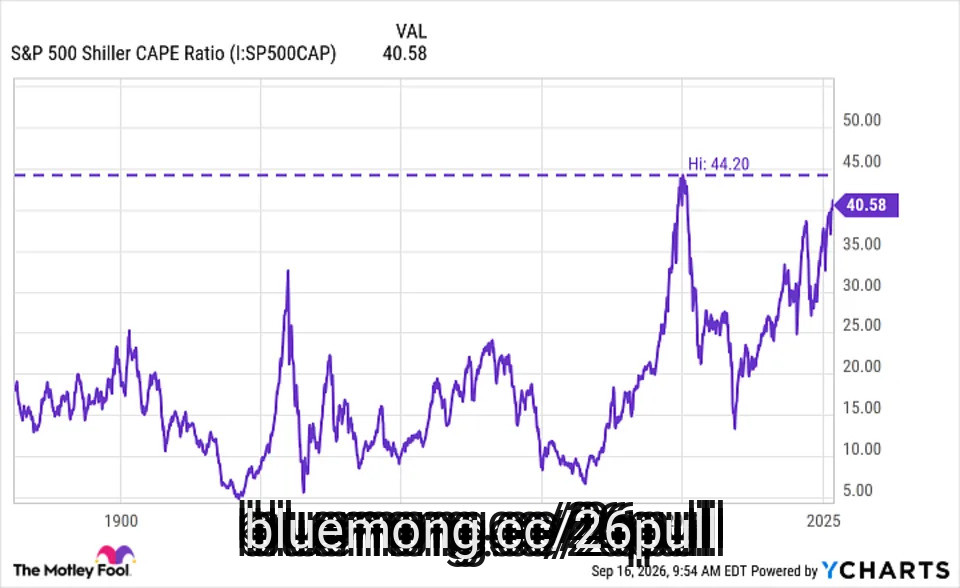
With just over three months left in the year, the S&P 500 (SNPINDEX: ^GSPC) is up 11% year to date. If it manages to stay there, it will end 2026 with four consecutive years of double-digit gains, a feat not accomplished since 1999 -- incidentally, right before it crashed and lost nearly 50% of its value. It lost that over three years, and it didn't reach a new high until mid-2007. Many companies went out of business then as the dot-com bubble burst.
If history is any indication of what's about to happen, every investor should be doing this one thing right now.
Missed AI's "Act 1"? Act 2 Could Be 15x Bigger. Most investors think they missed the AI boat because they didn't buy Nvidia in 2005. But according to our ***** ysts, we're only at the end of "Act 1"—the R&D phase. "Act 2" is the global rollout. Continue »
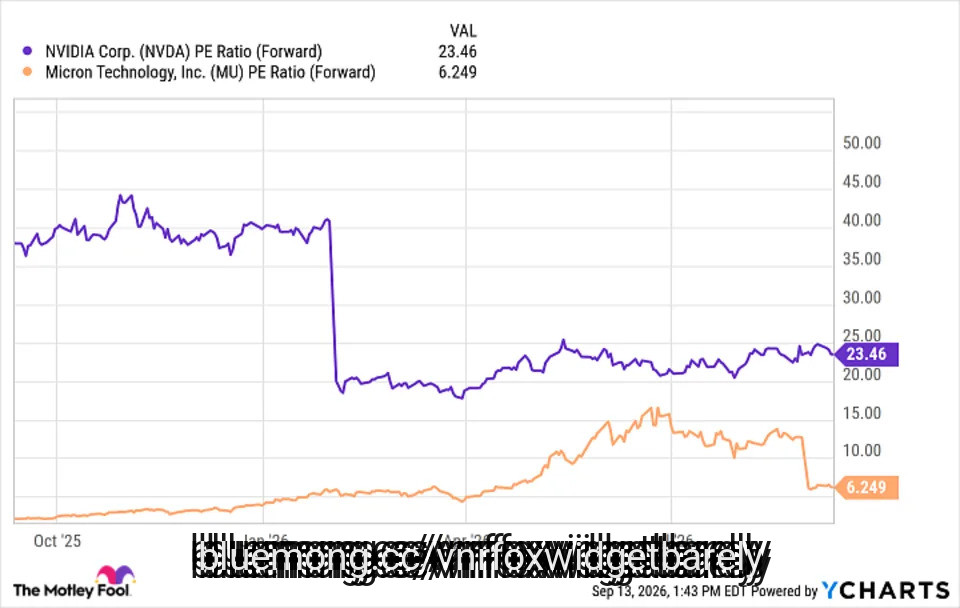
The artificial intelligence (AI) revolution is real, but the hype might not exactly align with reality. Some well-established AI powerhouses, like Nvidia and Alphabet, don't look expensive at today's prices. They trade at 14 and 23 times forward, one-year earnings, respectively. However, other, smaller stocks look riskier as their valuations soar.
Bloom Energy, for example, trades at 53 times forward, one-year earnings, and only recently became profitable, while Marvell Technology trades at 33 times earnings. CoreWeave isn't yet profitable. It appears that investors are willing to take a chance on these stocks for the massive expected payoff as they grow.
#years #right #lost
If history is any indication of what's about to happen, every investor should be doing this one thing right now.
Missed AI's "Act 1"? Act 2 Could Be 15x Bigger. Most investors think they missed the AI boat because they didn't buy Nvidia in 2005. But according to our ***** ysts, we're only at the end of "Act 1"—the R&D phase. "Act 2" is the global rollout. Continue »
The artificial intelligence (AI) revolution is real, but the hype might not exactly align with reality. Some well-established AI powerhouses, like Nvidia and Alphabet, don't look expensive at today's prices. They trade at 14 and 23 times forward, one-year earnings, respectively. However, other, smaller stocks look riskier as their valuations soar.
Bloom Energy, for example, trades at 53 times forward, one-year earnings, and only recently became profitable, while Marvell Technology trades at 33 times earnings. CoreWeave isn't yet profitable. It appears that investors are willing to take a chance on these stocks for the massive expected payoff as they grow.
#years #right #lost



1 day ago
When developers hand governance to residents at build-out, HOA fees spike as homeowners absorb true amenity costs and cover reserve underfunding through special ****** sments.
HOA fee increases in post-transition communities routinely outpace the 2027 Social Security COLA of roughly 3%, squeezing retirees on fixed incomes.
Demand the reserve study, CC&Rs, and community development district bond balance before signing. If the sales office stalls, the pitch was rehearsed, not substantiated.
Two retirees, same $1 million, same 4% rule, buy one finished with $1.4 million, the other hit $0 in 12 years. Our free reader guide explains the flaw that separated them, and the income-first method built to avoid it.
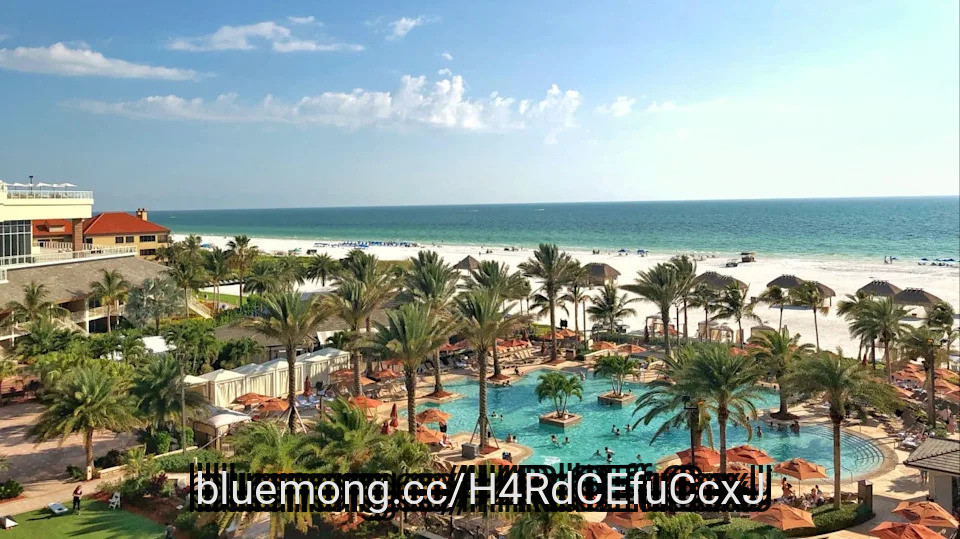
Readers in their late fifties and early sixties ask weekly: Can I retire to a Margaritaville community, and what will it cost over twenty or thirty years? The brochure sells one version, while the sales center sells another. The real question a retiree should ask is what happens once marketing wears off and the structural issue the sales presentation almost never covers emerges.
#retirees #community #years #sells
HOA fee increases in post-transition communities routinely outpace the 2027 Social Security COLA of roughly 3%, squeezing retirees on fixed incomes.
Demand the reserve study, CC&Rs, and community development district bond balance before signing. If the sales office stalls, the pitch was rehearsed, not substantiated.
Two retirees, same $1 million, same 4% rule, buy one finished with $1.4 million, the other hit $0 in 12 years. Our free reader guide explains the flaw that separated them, and the income-first method built to avoid it.
Readers in their late fifties and early sixties ask weekly: Can I retire to a Margaritaville community, and what will it cost over twenty or thirty years? The brochure sells one version, while the sales center sells another. The real question a retiree should ask is what happens once marketing wears off and the structural issue the sales presentation almost never covers emerges.
#retirees #community #years #sells

2 days ago
On September 14, during the episode of Mad Money, Jim Cramer said CrowdStrike Holdings, Inc. (NASDAQ:CRWD) is emerging as a beneficiary of growing concerns over the cybersecurity risks created by artificial intelligence, as he said:
Over the weekend, the co-founder and CEO of Anthropic published an essay where he pushed for a slowdown among the frontier AI labs in order to handle newfound security concerns. In response to that, the cybersecurity cohort just went crazy because there are the companies that can prevent AI agents from randomly hacking into networks all over the world, and it's the cybersecurity companies. Take CrowdStrike, which shot up nearly 14% today, leading the S&P 500, something I feel great about, of course, because we own it big for the Charitable Trust. These guys have been adamant that AI represented a great opportunity for their business, and now Wall Street's finally gotten the memo.
CrowdStrike Holdings, Inc.'s (NASDAQ:CRWD) second-quarter fiscal 2027 revenue increased 26% year over year to $1.47 billion, while ending annual recurring revenue rose 25% to $5.84 billion. Net new ARR reached a record $332.8 million, and free cash flow was $377.4 million. The company also raised its full-year fiscal 2027 net new ARR growth outlook to 34% at the midpoint, up 630 basis points. CEO George Kurtz said the company believes securing AI is its "largest market opportunity in our history."
Kurtz said on September 14 that AI-driven threats are already operating at machine speed, describing the emerging threat as autonomous campaigns rather than individual hackers. He identified endpoints, cloud workloads and SaaS as key battlegrounds and said "enforcement at machine speed" is needed to stop AI agents in motion. CrowdStrike has responded by expanding into AI-agent, model and infrastructure protection, including Continuous Identity for AI Agents and Falcon AI Detection and Response.
CrowdStrike Holdings, Inc.'s (NASDAQ:CRWD) valuation leaves little room for a meaningful slowdown in growth. Yahoo Finance currently shows a forward P/E of approximately 188.7 times and a price-to-sales ratio of roughly 44.6 times. Those multiples leave little room for a material slowdown in ARR growth, weaker adoption of newer products, or greater competitive pressure. The company also remains much less profitable on a GAAP basis than its adjusted results suggest. The company reported a $33.2 million GAAP operating loss in the latest quarter against $371.6 million of non-GAAP operating income, while stock-based compensation and related employer payroll taxes totaled $399 million.
#crwd
Over the weekend, the co-founder and CEO of Anthropic published an essay where he pushed for a slowdown among the frontier AI labs in order to handle newfound security concerns. In response to that, the cybersecurity cohort just went crazy because there are the companies that can prevent AI agents from randomly hacking into networks all over the world, and it's the cybersecurity companies. Take CrowdStrike, which shot up nearly 14% today, leading the S&P 500, something I feel great about, of course, because we own it big for the Charitable Trust. These guys have been adamant that AI represented a great opportunity for their business, and now Wall Street's finally gotten the memo.
CrowdStrike Holdings, Inc.'s (NASDAQ:CRWD) second-quarter fiscal 2027 revenue increased 26% year over year to $1.47 billion, while ending annual recurring revenue rose 25% to $5.84 billion. Net new ARR reached a record $332.8 million, and free cash flow was $377.4 million. The company also raised its full-year fiscal 2027 net new ARR growth outlook to 34% at the midpoint, up 630 basis points. CEO George Kurtz said the company believes securing AI is its "largest market opportunity in our history."
Kurtz said on September 14 that AI-driven threats are already operating at machine speed, describing the emerging threat as autonomous campaigns rather than individual hackers. He identified endpoints, cloud workloads and SaaS as key battlegrounds and said "enforcement at machine speed" is needed to stop AI agents in motion. CrowdStrike has responded by expanding into AI-agent, model and infrastructure protection, including Continuous Identity for AI Agents and Falcon AI Detection and Response.
CrowdStrike Holdings, Inc.'s (NASDAQ:CRWD) valuation leaves little room for a meaningful slowdown in growth. Yahoo Finance currently shows a forward P/E of approximately 188.7 times and a price-to-sales ratio of roughly 44.6 times. Those multiples leave little room for a material slowdown in ARR growth, weaker adoption of newer products, or greater competitive pressure. The company also remains much less profitable on a GAAP basis than its adjusted results suggest. The company reported a $33.2 million GAAP operating loss in the latest quarter against $371.6 million of non-GAAP operating income, while stock-based compensation and related employer payroll taxes totaled $399 million.
#crwd


2 days ago
McDonald's (MCD) stock fell 14.2% over the past 12 months, versus roughly 14.3% for the S&P 500, and now sits near its 52-week low. Over roughly the same stretch, management changed how it explains weak traffic. It used to point at customers outside its control. It now points at its own restaurants, and that makes the stock a different bet.
Who Did McDonald's Say Was Pulling Back?
About a year ago, on the second-quarter 2025 call, the lead worry sat outside the company. The CEO put it this way: "Visits across the industry by low-income consumers once again declined by double digits." The value message of that period leaned on core menu pricing, which management said shapes how customers judge value most.
So What Does McDonald's Say Went Wrong Instead?
In the latest call, for the second quarter of 2026, low-income consumers did not come up by name. The backdrop still comes up: industry traffic in several of its largest markets stayed flat to negative. The lead, though, is a miss of its own making. U.S. comparable sales grew 0.8%, and the CEO said the company did not execute at the level it needed.
#TRAFFIC
Who Did McDonald's Say Was Pulling Back?
About a year ago, on the second-quarter 2025 call, the lead worry sat outside the company. The CEO put it this way: "Visits across the industry by low-income consumers once again declined by double digits." The value message of that period leaned on core menu pricing, which management said shapes how customers judge value most.
So What Does McDonald's Say Went Wrong Instead?
In the latest call, for the second quarter of 2026, low-income consumers did not come up by name. The backdrop still comes up: industry traffic in several of its largest markets stayed flat to negative. The lead, though, is a miss of its own making. U.S. comparable sales grew 0.8%, and the CEO said the company did not execute at the level it needed.
#TRAFFIC

2 days ago
Elon Musk's ***** eX has been talking, internally, about buying the leftover customer files of startups that already went under. Not licensing data from companies that are still operating and can say no. Buying the digital estate of companies that no longer exist to say anything at all.
The discussions are happening inside ***** eXAI, the artificial intelligence division born in February when ***** eX merged with xAI. People familiar with the talks told Bloomberg they're informal and might go nowhere. But the idea makes sense from the perspective of an AI lab racing for the frontier.
The goal is basically cheap fuel for Grok. AI models learn from training data—the text, code, and records an algorithm studies to get better at predicting what comes next—and the good stuff, real business records instead of scraped web pages, is getting expensive. A dead company's file cabinet is apparently a bargain by comparison.
Google already did the same. The search giant paid $10 million in a bankruptcy auction for the internal records of Spirit Airlines, the discount carrier that shut down for good this year. They got around 100 million emails, 500 million Microsoft Teams messages, decades of employee files, all headed into an AI training pipeline.
That data belonged to real employees who signed up for a job, not an AI experiment. A flight attendants' union objected in bankruptcy court, arguing that scrubbing names off records—what companies call "de-identifying" data—doesn't stop someone from piecing together who said what in a decade of internal chats. The court fight is still ongoing.
#million #buying #still #training
The discussions are happening inside ***** eXAI, the artificial intelligence division born in February when ***** eX merged with xAI. People familiar with the talks told Bloomberg they're informal and might go nowhere. But the idea makes sense from the perspective of an AI lab racing for the frontier.
The goal is basically cheap fuel for Grok. AI models learn from training data—the text, code, and records an algorithm studies to get better at predicting what comes next—and the good stuff, real business records instead of scraped web pages, is getting expensive. A dead company's file cabinet is apparently a bargain by comparison.
Google already did the same. The search giant paid $10 million in a bankruptcy auction for the internal records of Spirit Airlines, the discount carrier that shut down for good this year. They got around 100 million emails, 500 million Microsoft Teams messages, decades of employee files, all headed into an AI training pipeline.
That data belonged to real employees who signed up for a job, not an AI experiment. A flight attendants' union objected in bankruptcy court, arguing that scrubbing names off records—what companies call "de-identifying" data—doesn't stop someone from piecing together who said what in a decade of internal chats. The court fight is still ongoing.
#million #buying #still #training


2 days ago
Autodesk (ADSK) stock has 23.6% of room above it before it meets a ceiling that has turned it back three times, and 5% below it before the reason to be there stops being true. In dollars: $272.34 overhead, $220.31 Wednesday, $209.29 underneath. The stock has lost about 31% over the past twelve months, so the easy read is that the business broke. Its own numbers say it did not.
Would You Have Made Money Buying Autodesk Here Before?
Buyers have stepped in at this price zone eight times before. Three of those eight produced a completed advance, averaging a 34.3% gain to the peak that followed, with a median of 459 days from the defense to that peak. The other five have not yet risen above their own starting price, so they are not in that average at all. The ceiling overhead asks for less than that average of the three that paid.
The last two years are the problem. Autodesk entered this price band on five separate occasions over the last twenty-four months, and counting only a 20% gain before any 5% fall as a defense, one held and four broke 5% lower first. The path up is not clear either: the stock has to get through $248.16 and $261.04, both pauses rather than proven ceilings.
Is Autodesk In Better Shape Than The Last Time It Sat Here?
#last #Stock #above #times
Would You Have Made Money Buying Autodesk Here Before?
Buyers have stepped in at this price zone eight times before. Three of those eight produced a completed advance, averaging a 34.3% gain to the peak that followed, with a median of 459 days from the defense to that peak. The other five have not yet risen above their own starting price, so they are not in that average at all. The ceiling overhead asks for less than that average of the three that paid.
The last two years are the problem. Autodesk entered this price band on five separate occasions over the last twenty-four months, and counting only a 20% gain before any 5% fall as a defense, one held and four broke 5% lower first. The path up is not clear either: the stock has to get through $248.16 and $261.04, both pauses rather than proven ceilings.
Is Autodesk In Better Shape Than The Last Time It Sat Here?
#last #Stock #above #times

2 days ago
On September 2, 2026, Snowflake Inc. (NYSE:SNOW) reported second-quarter fiscal 2027 results for the period ended July 31, 2026. Revenue rose 35% to $1.55 billion against a $1.48 billion consensus, product revenue grew 37% to $1.49 billion, and adjusted earnings came in at $0.62 per share versus the $0.45 ******* ysts expected. Management raised full-year product revenue guidance to $6.07 billion from $5.84 billion. Shares surged more than 20% in extended trading, and within 48 hours eight firms had rewritten their models.
The size of the target revisions tells the story.
Argus ******* yst Joseph Bonner moved to $450 from $300, keeping a Buy rating and arguing that new AI products are driving sales, customer conversion, and retention while Snowflake Inc. (NYSE:SNOW) grows well above management's 30% north star target with expanding margins.
Goldman Sachs also went to $436 from $300, noting product revenue landed 5% above the Street and EBIT margins 270 basis points ahead, and said the stock reaction reflects a setup where estimates keep moving higher over the next 18 months.
JPMorgan lifted its target to $426 from $285 on a third straight quarter of product revenue acceleration, while Raymond James ******* yst Adam Tindle went to $425 from $275, framing Snowflake Inc. (NYSE:SNOW) as an AI-native control plane for enterprise workflows beyond ******* ytics.
#target
The size of the target revisions tells the story.
Argus ******* yst Joseph Bonner moved to $450 from $300, keeping a Buy rating and arguing that new AI products are driving sales, customer conversion, and retention while Snowflake Inc. (NYSE:SNOW) grows well above management's 30% north star target with expanding margins.
Goldman Sachs also went to $436 from $300, noting product revenue landed 5% above the Street and EBIT margins 270 basis points ahead, and said the stock reaction reflects a setup where estimates keep moving higher over the next 18 months.
JPMorgan lifted its target to $426 from $285 on a third straight quarter of product revenue acceleration, while Raymond James ******* yst Adam Tindle went to $425 from $275, framing Snowflake Inc. (NYSE:SNOW) as an AI-native control plane for enterprise workflows beyond ******* ytics.
#target


3 days ago
On September 11, a caller praised The Boeing Company's (NYSE:BA) CEO and asked when the company would overcome the ongoing labor uncertainty and finally move beyond years of sideways stock performance. Mad Money host Jim Cramer replied:
I think that Boeing is ready to go up. But here's the problem. Every time crude goes up a dollar, the stock goes down a dollar. And that, think about it, that was actually the ratio. I did some work on this. And because today crude was down, Boeing went up $5... No, it's so stupid because, in truth, the airlines need more planes because the planes are more fuel-efficient. So they actually do better in this environment, but ******* ody cares. They know that airlines have to borrow money to buy planes and rates are higher, and they think that oil somehow's bad. But what ends up happening is the stock does nothing. I think it's about to go up because I think oil might be peaking unless there's some catastrophe over there.
The Boeing Company's (NYSE:BA) second-quarter results showed improving cash generation, but profitability remained weak. Revenue rose 8% year over year to $24.6 billion, while operating cash flow reached $1.4 billion and free cash flow was $631 million. Its total backlog reached a record $715 billion, including more than 6,200 commercial airplanes. CEO Kelly Ortberg said, "We're ramping up production just as we planned. That's driving higher revenues and improved cash flow." He also said there's more work ahead to ramp production, complete commercial-aircraft certifications and uphold customer commitments. Boeing said the 737-7 and 737-10 had completed flight testing, with deliveries expected to begin in 2027.
The Boeing Company's (NYSE:BA) large backlog has yet to translate into consistent commercial-aircraft profitability, leaving execution and margins as important concerns for investors. Commercial Airplanes delivered 171 aircraft in the second quarter but still posted a $322 million operating loss and a negative 2.7% operating margin. It also reported a $428 million GAAP net loss.
The balance sheet leaves less room for further setbacks. The company ended June with $45.9 billion of consolidated debt against $20 billion of cash and investments in marketable securities. The FAA certified the 737-7 on August 3, while Boeing continues working toward certification of the 737-10. First deliveries of the variants are expected in 2027. The company also recorded $280 million of losses on the VC-25B program in the quarter.
#boeing #cash #commercial
I think that Boeing is ready to go up. But here's the problem. Every time crude goes up a dollar, the stock goes down a dollar. And that, think about it, that was actually the ratio. I did some work on this. And because today crude was down, Boeing went up $5... No, it's so stupid because, in truth, the airlines need more planes because the planes are more fuel-efficient. So they actually do better in this environment, but ******* ody cares. They know that airlines have to borrow money to buy planes and rates are higher, and they think that oil somehow's bad. But what ends up happening is the stock does nothing. I think it's about to go up because I think oil might be peaking unless there's some catastrophe over there.
The Boeing Company's (NYSE:BA) second-quarter results showed improving cash generation, but profitability remained weak. Revenue rose 8% year over year to $24.6 billion, while operating cash flow reached $1.4 billion and free cash flow was $631 million. Its total backlog reached a record $715 billion, including more than 6,200 commercial airplanes. CEO Kelly Ortberg said, "We're ramping up production just as we planned. That's driving higher revenues and improved cash flow." He also said there's more work ahead to ramp production, complete commercial-aircraft certifications and uphold customer commitments. Boeing said the 737-7 and 737-10 had completed flight testing, with deliveries expected to begin in 2027.
The Boeing Company's (NYSE:BA) large backlog has yet to translate into consistent commercial-aircraft profitability, leaving execution and margins as important concerns for investors. Commercial Airplanes delivered 171 aircraft in the second quarter but still posted a $322 million operating loss and a negative 2.7% operating margin. It also reported a $428 million GAAP net loss.
The balance sheet leaves less room for further setbacks. The company ended June with $45.9 billion of consolidated debt against $20 billion of cash and investments in marketable securities. The FAA certified the 737-7 on August 3, while Boeing continues working toward certification of the 737-10. First deliveries of the variants are expected in 2027. The company also recorded $280 million of losses on the VC-25B program in the quarter.
#boeing #cash #commercial


3 days ago
Stocks slid Wednesday afternoon after Federal Reserve Chair Kevin Warsh followed the central bank's first rate hike in three years with a press conference that hinted it wouldn't be the last.
The S&P 500 dropped 1%, heading toward its lowest close since July. The Dow Jones Industrial Average fell 1.7%, or more than 700 points, with financial shares leading the decline. The Nasdaq Composite fell 0.8%. The 10-year Treasury yield held near 5% a day after touching its highest level since 2007, and the dollar index climbed 0.6% to its strongest since late July.
Markets had priced in the quarter-point increase itself and initially took it in stride. All three indexes were higher before the 2 p.m. decision. The selling started during the press conference.
Warsh was on a tightrope going in. The question was whether he'd frame the hike as a one-off adjustment—which risked the bond market reading it as too little to deter inflation—or as the start of a longer cycle. He did neither, and instead went in a more hawkish direction. "I would be hard pressed to describe broad financial conditions as restrictive," he said in his opening remarks. "This view was widely shared by the committee, so we removed a dose of accommodation."
That's a new way of describing a rate hike, and one investors aren't used to. Under his predecessor, Jerome Powell, the Fed called policy "modestly restrictive," meaning rates were already high enough to slow the economy. Warsh was saying that at 3.5%–3.75%, they weren't—and by implication, one quarter point may not have gotten them there either. Asked directly, he declined to say whether policy is restrictive now.
#hike #press
The S&P 500 dropped 1%, heading toward its lowest close since July. The Dow Jones Industrial Average fell 1.7%, or more than 700 points, with financial shares leading the decline. The Nasdaq Composite fell 0.8%. The 10-year Treasury yield held near 5% a day after touching its highest level since 2007, and the dollar index climbed 0.6% to its strongest since late July.
Markets had priced in the quarter-point increase itself and initially took it in stride. All three indexes were higher before the 2 p.m. decision. The selling started during the press conference.
Warsh was on a tightrope going in. The question was whether he'd frame the hike as a one-off adjustment—which risked the bond market reading it as too little to deter inflation—or as the start of a longer cycle. He did neither, and instead went in a more hawkish direction. "I would be hard pressed to describe broad financial conditions as restrictive," he said in his opening remarks. "This view was widely shared by the committee, so we removed a dose of accommodation."
That's a new way of describing a rate hike, and one investors aren't used to. Under his predecessor, Jerome Powell, the Fed called policy "modestly restrictive," meaning rates were already high enough to slow the economy. Warsh was saying that at 3.5%–3.75%, they weren't—and by implication, one quarter point may not have gotten them there either. Asked directly, he declined to say whether policy is restrictive now.
#hike #press


3 days ago
PepsiCo (PEP) has gone nowhere for a year, down 1.8% over the past twelve months while the S&P 500 returned 16.6%. At about $135 a share it trades at 17.7 times earnings, against an S&P 500 median of 22.5. A big cash generator priced below the market is what value buyers hunt for, so is this discount impatience or a verdict?
PepsiCo sells snacks and drinks everywhere consumer staples get sold: grocery aisles, convenience and gas stations, and the away-from-home locations it keeps adding. That reach turns into cash: free cash flow over the trailing twelve months was $9.28 billion, a 5.0% yield.
None of the recent numbers look like a business in trouble. Revenue over the trailing twelve months grew 5.6%, and the operating margin is holding at 15.0% against an S&P 500 median of 18.6%. Management says global volumes grew in both foods and beverages in the first half of 2026, the fastest growth in volume since 2022.
Widen the window and the picture changes. PepsiCo's revenue grew 5.6% over the trailing twelve months against an S&P 500 median of 8.3%, and its three-year average is just 2.5% a year. The trailing twelve months ran hotter, but one window is not a pace, and the pace is what the market pays for.
The company lowered prices in the U.S. early in 2026 to get volume moving. Management says salty snacks went from falling volume to rising volume and PepsiCo gained share, but volume in the second quarter of 2026 fell short of what it expected, which it blames on a consumer hurt by higher gas prices and on delays executing the price investment at some customers. None of this is lost on the market: it is pricing a company that grows slowly and has just spent money trying to grow faster. The problem sits in North America, while the international business stayed strong.
#months #trailing
PepsiCo sells snacks and drinks everywhere consumer staples get sold: grocery aisles, convenience and gas stations, and the away-from-home locations it keeps adding. That reach turns into cash: free cash flow over the trailing twelve months was $9.28 billion, a 5.0% yield.
None of the recent numbers look like a business in trouble. Revenue over the trailing twelve months grew 5.6%, and the operating margin is holding at 15.0% against an S&P 500 median of 18.6%. Management says global volumes grew in both foods and beverages in the first half of 2026, the fastest growth in volume since 2022.
Widen the window and the picture changes. PepsiCo's revenue grew 5.6% over the trailing twelve months against an S&P 500 median of 8.3%, and its three-year average is just 2.5% a year. The trailing twelve months ran hotter, but one window is not a pace, and the pace is what the market pays for.
The company lowered prices in the U.S. early in 2026 to get volume moving. Management says salty snacks went from falling volume to rising volume and PepsiCo gained share, but volume in the second quarter of 2026 fell short of what it expected, which it blames on a consumer hurt by higher gas prices and on delays executing the price investment at some customers. None of this is lost on the market: it is pricing a company that grows slowly and has just spent money trying to grow faster. The problem sits in North America, while the international business stayed strong.
#months #trailing
3 days ago
On September 14, Dave & Buster's Entertainment (NASDAQ:PLAY) reported second-quarter fiscal 2026 results that read like two different companies at once. Revenue fell, and the company posted a net loss for the period ended August 4, yet comparable sales, which had been sliding for more than a year, kept getting less bad every month from June through the first five weeks of the third quarter. New CEO Darin Harper is betting that improvement compounds into something bigger.
The clearest evidence is the trend line itself. Comparable store sales fell 5.4% in the first quarter of fiscal 2026, then 2.9% in the second quarter, then just 1.6% in July after a 5% decline in June, and Harper said trends improved further over the first five weeks of the third quarter. Food and beverage sales are moving in the opposite direction entirely, up 7.6% in the quarter and positive for five straight quarters, helped by the Eat & Play Combo, a bundled meal and game credit offer sold through kiosks. Special event sales have now grown for seven consecutive quarters.
Behind that shift sits a rebuilt leadership bench. Dave & Buster's went more than a year without a chief marketing officer, and Harper has since added a CMO, a chief operations officer, a chief technology officer, and a chief legal officer since taking over. The company also leaned on new content, launching 10 games and attractions this year, including tie-ins with Mandalorian and Grogu, John Wick and Stranger Things, after research found more than 70% of guests said new games would bring them back more often. Changes to game pricing pushed play and dwell time up 16% to 20% or more. Six remodeled stores are already outperforming the rest of the chain, and management says the newest remodel template costs less to build than the last one. Net capital spending dropped to $127.6 million through the first half of the year from $155.4 million, and adjusted free cash flow swung to positive $19.5 million from negative $36.5 million, a $56 million improvement.
The headline figures were still rough. Total revenue slipped 2.4% to $544.1 million from $557.4 million a year earlier, and adjusted EBITDA dropped to $98.9 million, an 18.2% margin, from $129.8 million and a 23.3% margin. On a GAAP basis, the company posted a net loss of $12.5 million, or $0.36 per diluted share, versus net income of $11.4 million in the same quarter last year. About $15 million of the EBITDA decline came from items management calls non-normalized, including a $10 million noncash deferral adjustment that did not repeat this year, $3 million in extra preopening costs and $2 million in higher insurance expenses, but even stripped of those, the underlying decline was still roughly $16 million.
#year #first #harper #play
The clearest evidence is the trend line itself. Comparable store sales fell 5.4% in the first quarter of fiscal 2026, then 2.9% in the second quarter, then just 1.6% in July after a 5% decline in June, and Harper said trends improved further over the first five weeks of the third quarter. Food and beverage sales are moving in the opposite direction entirely, up 7.6% in the quarter and positive for five straight quarters, helped by the Eat & Play Combo, a bundled meal and game credit offer sold through kiosks. Special event sales have now grown for seven consecutive quarters.
Behind that shift sits a rebuilt leadership bench. Dave & Buster's went more than a year without a chief marketing officer, and Harper has since added a CMO, a chief operations officer, a chief technology officer, and a chief legal officer since taking over. The company also leaned on new content, launching 10 games and attractions this year, including tie-ins with Mandalorian and Grogu, John Wick and Stranger Things, after research found more than 70% of guests said new games would bring them back more often. Changes to game pricing pushed play and dwell time up 16% to 20% or more. Six remodeled stores are already outperforming the rest of the chain, and management says the newest remodel template costs less to build than the last one. Net capital spending dropped to $127.6 million through the first half of the year from $155.4 million, and adjusted free cash flow swung to positive $19.5 million from negative $36.5 million, a $56 million improvement.
The headline figures were still rough. Total revenue slipped 2.4% to $544.1 million from $557.4 million a year earlier, and adjusted EBITDA dropped to $98.9 million, an 18.2% margin, from $129.8 million and a 23.3% margin. On a GAAP basis, the company posted a net loss of $12.5 million, or $0.36 per diluted share, versus net income of $11.4 million in the same quarter last year. About $15 million of the EBITDA decline came from items management calls non-normalized, including a $10 million noncash deferral adjustment that did not repeat this year, $3 million in extra preopening costs and $2 million in higher insurance expenses, but even stripped of those, the underlying decline was still roughly $16 million.
#year #first #harper #play


3 days ago
Is there anything prettier than a consistently uptrending stock price chart? I'm drawn to these types of charts. I've always thought a consistent uptrend is an indication of strong buying power for a stock. However, while I can tell you if a chart looks like a consistent, methodical trend, it's hard to define it using data, which is necessary to create an indicator. That's why, until now, I've never put numbers behind my theory.
I won't go into the details, but using moving averages over various time frames, I've created a ranking system for stocks with the most consistent uptrends and downtrends over the past three months. Using this ranking system, Docusign (DOCU) is one of the top uptrending stocks. That's a pretty chart, if I do say so myself. When I see a chart like this, I think, why would it stop now?
In this week's article, I'll test my theory with actual numbers and see if DOCU and other stocks like it are good bets, like my instincts have always led me to believe.
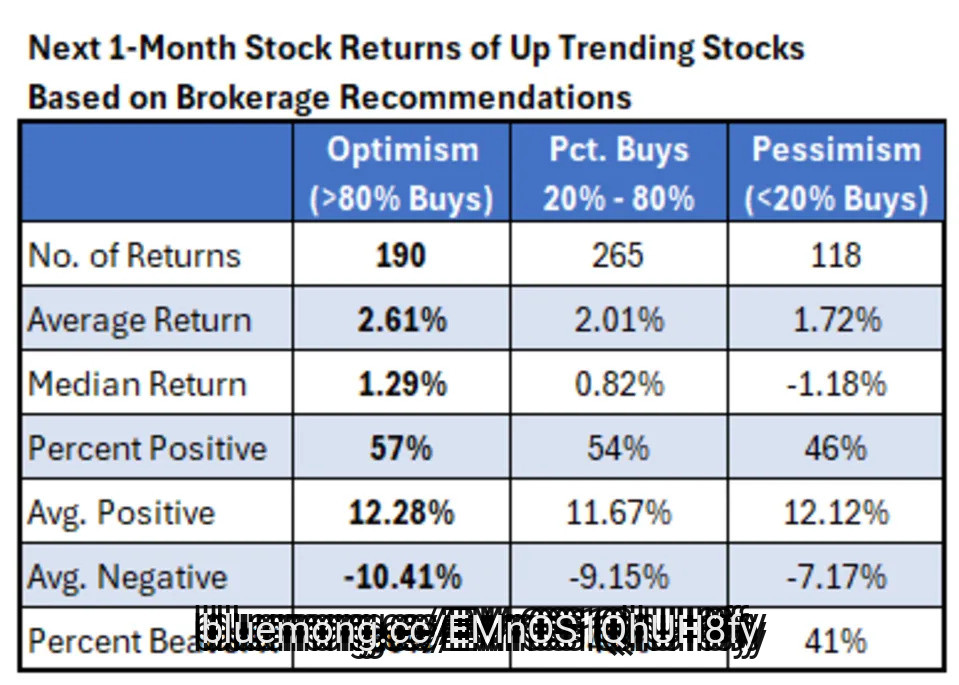
For this study, I went back to 2024 and picked the 18th of each month, which corresponds to the end of this week. I used my trend ranking system to find the 30 stocks in the strongest uptrends and the 30 in the most consistent downtrends. Then, I tracked how each group performed over the next month of trading. The table below summarizes the results.
My instincts look correct based on the average returns of the stocks. The top uptrending stocks averaged a return of 2.15% over the next month, while the most consistently downtrending stocks averaged a return of 1.57%. The other stocks averaged 1.84%, falling between the two groups.
#like #using
I won't go into the details, but using moving averages over various time frames, I've created a ranking system for stocks with the most consistent uptrends and downtrends over the past three months. Using this ranking system, Docusign (DOCU) is one of the top uptrending stocks. That's a pretty chart, if I do say so myself. When I see a chart like this, I think, why would it stop now?
In this week's article, I'll test my theory with actual numbers and see if DOCU and other stocks like it are good bets, like my instincts have always led me to believe.
For this study, I went back to 2024 and picked the 18th of each month, which corresponds to the end of this week. I used my trend ranking system to find the 30 stocks in the strongest uptrends and the 30 in the most consistent downtrends. Then, I tracked how each group performed over the next month of trading. The table below summarizes the results.
My instincts look correct based on the average returns of the stocks. The top uptrending stocks averaged a return of 2.15% over the next month, while the most consistently downtrending stocks averaged a return of 1.57%. The other stocks averaged 1.84%, falling between the two groups.
#like #using


3 days ago
A small, spotted tiger cat from Bolivia may just be
the beginning of a wave of new small cat species.
In 2016, Paola Nogales-Ascarrunz, a biologist and National Geographic Explorer working in Bolivia, received a call from a local wildlife sanctuary that had just been given what they described as “a weird cat.” It came from a local man who found it as a kitten on a road near a forest. The man took the animal home, believing it to be a domestic breed. But after about a year of living with the clearly wild animal, he realized it would be better off at a sanctuary.
As the lead scientist and founder of the Bolivian Felids Research Program (Programa de Investigación de Félidos Bolivia), Nogales-Ascarrunz was intrigued. The animal had a small, scrunched-up face, short and round ears, and long whiskers. It was, indeed, too small to be a housecat, and, most notably, it was covered in leopard-like spots. So she went to visit the creature at the Senda Verde wildlife sanctuary on the subtropical flank of the Bolivian Andes.
“I took a hundred pictures of it,” remembers Nogales-Ascarrunz. “I was so fascinated.”
What she couldn’t know at the time was that this curious cat had a secret. It would become the first new species of felid (i.e. the cat family) discovered in over 100 years, according to a study published today in the journal Current Biology. What’s exciting is the discovery is not a validation of a species proposed in the distant past, nor a previously recognized subspecies raised to species status—which are both more commonly reported and important findings. No, this cat was something totally new to science.
#ascarrunz #bolivian
the beginning of a wave of new small cat species.
In 2016, Paola Nogales-Ascarrunz, a biologist and National Geographic Explorer working in Bolivia, received a call from a local wildlife sanctuary that had just been given what they described as “a weird cat.” It came from a local man who found it as a kitten on a road near a forest. The man took the animal home, believing it to be a domestic breed. But after about a year of living with the clearly wild animal, he realized it would be better off at a sanctuary.
As the lead scientist and founder of the Bolivian Felids Research Program (Programa de Investigación de Félidos Bolivia), Nogales-Ascarrunz was intrigued. The animal had a small, scrunched-up face, short and round ears, and long whiskers. It was, indeed, too small to be a housecat, and, most notably, it was covered in leopard-like spots. So she went to visit the creature at the Senda Verde wildlife sanctuary on the subtropical flank of the Bolivian Andes.
“I took a hundred pictures of it,” remembers Nogales-Ascarrunz. “I was so fascinated.”
What she couldn’t know at the time was that this curious cat had a secret. It would become the first new species of felid (i.e. the cat family) discovered in over 100 years, according to a study published today in the journal Current Biology. What’s exciting is the discovery is not a validation of a species proposed in the distant past, nor a previously recognized subspecies raised to species status—which are both more commonly reported and important findings. No, this cat was something totally new to science.
#ascarrunz #bolivian

3 days ago
NBC4's helicopter was one of several news aircraft flying over the scene of a deadly bus crash in Chatsworth Tuesday evening at sunset.
It's common for multiple news choppers to arrive at the scene of breaking news, beaming live images for newscasts and streaming.
But around 7 p.m., something went horribly wrong and in a matter of seconds the NBC4 chopper dropped out of the sky, crashing into shipping containers and vehicles outside a warehouse a few blocks away, bursting into flames. Two station journalists, reporter Eliana Moreno and pilot George Marciniw, were killed along with a bystander on the ground.
Federal investigators are now trying to figure out what went wrong. The Times interviewed several experts, who reviewed recordings of the chopper's final moments. They offered insights into the helicopter itself, its movements that afternoon and what is known about how its mechanics work.
Here's what they had to say:
#went #wrong #tuesday #nbc4
It's common for multiple news choppers to arrive at the scene of breaking news, beaming live images for newscasts and streaming.
But around 7 p.m., something went horribly wrong and in a matter of seconds the NBC4 chopper dropped out of the sky, crashing into shipping containers and vehicles outside a warehouse a few blocks away, bursting into flames. Two station journalists, reporter Eliana Moreno and pilot George Marciniw, were killed along with a bystander on the ground.
Federal investigators are now trying to figure out what went wrong. The Times interviewed several experts, who reviewed recordings of the chopper's final moments. They offered insights into the helicopter itself, its movements that afternoon and what is known about how its mechanics work.
Here's what they had to say:
#went #wrong #tuesday #nbc4

3 days ago
Updated on: September 16, 2026 / 5:45 PM EDT / CBS/AP
Scientists have discovered a crater on the moon that's bigger than the Roman Colosseum and is the result of a powerful impact two years ago that initially went undetected.
The steep-sided hole measured about 728 feet across, the length of two football fields, and up to 141 feet deep, equivalent to three vertically stacked yellow school buses, according to NASA. It's the solar system's biggest known impact crater carved out in recent times.
Such a large-scale event is estimated to occur only once every 132 years, researchers said, making this a treasure trove of information as NASA prepares to build a base for astronauts on the moon.
"This event constitutes a statistically rare, effectively once-in-a-lifetime observation," the scientists wrote in one of two studies appearing on the subject Wednesday in the journal Science Advances.
#crater
Scientists have discovered a crater on the moon that's bigger than the Roman Colosseum and is the result of a powerful impact two years ago that initially went undetected.
The steep-sided hole measured about 728 feet across, the length of two football fields, and up to 141 feet deep, equivalent to three vertically stacked yellow school buses, according to NASA. It's the solar system's biggest known impact crater carved out in recent times.
Such a large-scale event is estimated to occur only once every 132 years, researchers said, making this a treasure trove of information as NASA prepares to build a base for astronauts on the moon.
"This event constitutes a statistically rare, effectively once-in-a-lifetime observation," the scientists wrote in one of two studies appearing on the subject Wednesday in the journal Science Advances.
#crater


4 days ago
It was a night of devastation in Chatsworth that began with a deadly Metro bus collision and ended with the fiery crash of an NBC4 helicopter covering the news that left two journalists and, on the ground, a bystander dead.
Tuesday's scene was a mixture of confusion and chaos, with first responders fanned out across two catastrophes and television news teams desperately trying to find out whether their journalists were safe. The crashes claimed the lives of five people and left others with various degrees of injury.
Investigators with the National Transportation Safety Board and the Federal Aviation Administration were trying Wednesday to determine exactly what caused the news helicopter, a Eurocopter AS350 B2, to go down.
NTSB Investigator Fabian Salazar said officials are searching through the wreckage, combing through maintenance logbooks, security footage, weather reports and witness interviews, and reviewing the pilot's training to figure out what went wrong.
But the most critical information so far has been audio captured from the helicopter during a live broadcast of reporter Eliana Moreno and pilot George Marciniw's final moments before it crashed.
#journalists #nbc4
Tuesday's scene was a mixture of confusion and chaos, with first responders fanned out across two catastrophes and television news teams desperately trying to find out whether their journalists were safe. The crashes claimed the lives of five people and left others with various degrees of injury.
Investigators with the National Transportation Safety Board and the Federal Aviation Administration were trying Wednesday to determine exactly what caused the news helicopter, a Eurocopter AS350 B2, to go down.
NTSB Investigator Fabian Salazar said officials are searching through the wreckage, combing through maintenance logbooks, security footage, weather reports and witness interviews, and reviewing the pilot's training to figure out what went wrong.
But the most critical information so far has been audio captured from the helicopter during a live broadcast of reporter Eliana Moreno and pilot George Marciniw's final moments before it crashed.
#journalists #nbc4


4 days ago
Between 2023 and 2025, Nvidia (NASDAQ: NVDA) was the market's most obvious artificial intelligence (AI) trade. During this period, the stock went parabolic, surging by 1,180% and turning the chipmaker into the world's most valuable company by market cap. On a split-adjusted basis, that was a climb from about $14 per share to $186 by the end of 2025.
Currently, Nvidia stock sits around $218, up another 17% year to date. This is what it looks like when a company owns a scarce product that's in heavy demand -- in this case, graphics processing units (GPUs).
Missed Nvidia in 2009? This Rare Signal Is Flashing Again. In 2009, a "Double Down" signal flashed for a little-known chipmaker called Nvidia. For the first time in years, that same "Total Conviction" signal is flashing for a company 1/100th the size of Nvidia. Continue »
Micron Technology's (NASDAQ: MU) rocket-like move came a bit later, but hit much harder. Memory chips were an afterthought during the initial GPU gold rush. But as training clusters got larger and inference workloads got hungrier, supplies of high bandwidth memory (HBM) started running short. Prices for HBM soared, and Micron stock responded epically -- rising 239% in 2025 and another 242% so far this year. This type of price action indicates the market has recognized that memory is no longer just another tech commodity -- its supply is one of the key bottlenecks dictating the pace at which data centers can be built.
Nvidia and Micron are not the same bet. While Nvidia sells engines, Micron is selling the tanks for the fuel these engines cannot operate without. This begs the question: At this point, which of these AI chip stocks would be the better one to buy and hold for the next five years?
#signal #Stock #chipmaker
Currently, Nvidia stock sits around $218, up another 17% year to date. This is what it looks like when a company owns a scarce product that's in heavy demand -- in this case, graphics processing units (GPUs).
Missed Nvidia in 2009? This Rare Signal Is Flashing Again. In 2009, a "Double Down" signal flashed for a little-known chipmaker called Nvidia. For the first time in years, that same "Total Conviction" signal is flashing for a company 1/100th the size of Nvidia. Continue »
Micron Technology's (NASDAQ: MU) rocket-like move came a bit later, but hit much harder. Memory chips were an afterthought during the initial GPU gold rush. But as training clusters got larger and inference workloads got hungrier, supplies of high bandwidth memory (HBM) started running short. Prices for HBM soared, and Micron stock responded epically -- rising 239% in 2025 and another 242% so far this year. This type of price action indicates the market has recognized that memory is no longer just another tech commodity -- its supply is one of the key bottlenecks dictating the pace at which data centers can be built.
Nvidia and Micron are not the same bet. While Nvidia sells engines, Micron is selling the tanks for the fuel these engines cannot operate without. This begs the question: At this point, which of these AI chip stocks would be the better one to buy and hold for the next five years?
#signal #Stock #chipmaker


4 days ago
Once upon a time, the 'space race' meant the grand strategic competition between the USA and the USSR to gain control of the heavens. The superpowers designed and built satellites, manned capsules, orbital **** ecraft and long-endurance **** e stations, and NASA even sent the Apollo landers to put men on the Moon.
Today, the **** e race is heating up again, but in a very different way. Yes, the governments are still involved – NASA's Artemis program is targeting the Moon, the Russians have a Soyuz escape ship docked at the International **** e Station, and other powers such as the EU, China, and India have large-scale **** e programs. But the real difference – and a lot of the innovation – is coming from commercial players working alongside government **** e agencies.
This past summer, Elon Musk's **** eX went public, in Wall Street's largest ever IPO. The company is pioneering reusable large rockets, and has already made history with privately launched and/or publicly funded missions of the Falcon 9 rocket and Crew Dragon capsule.
Promotion
55% Off TipRanks
#once
Today, the **** e race is heating up again, but in a very different way. Yes, the governments are still involved – NASA's Artemis program is targeting the Moon, the Russians have a Soyuz escape ship docked at the International **** e Station, and other powers such as the EU, China, and India have large-scale **** e programs. But the real difference – and a lot of the innovation – is coming from commercial players working alongside government **** e agencies.
This past summer, Elon Musk's **** eX went public, in Wall Street's largest ever IPO. The company is pioneering reusable large rockets, and has already made history with privately launched and/or publicly funded missions of the Falcon 9 rocket and Crew Dragon capsule.
Promotion
55% Off TipRanks
#once


4 days ago
The exchange-traded fund (ETF) market's August numbers look flawless on the surface, until you look at where the money actually went.
The industry held $16.4 trillion in ******* ets through August 31, 2026, with $180 billion in fresh capital pouring in that month alone, 3.8 times the historical August average and the strongest August on record for fund inflows, State Street reported.
New fund creation has been equally prolific, with 1,023 ETFs debuting in the first eight months of 2026, a 52% jump from the previous year's pace.
Active strategies represent more than 80% of the year's new products, and about 25% of August's 134 launches used leveraged or inverse structures, FactSet noted.
Among August's new launches were 18 single-stock ETFs, most of them targeting semiconductor companies to tap into the artificial intelligence infrastructure buildout.
#august #state #street #exchange
The industry held $16.4 trillion in ******* ets through August 31, 2026, with $180 billion in fresh capital pouring in that month alone, 3.8 times the historical August average and the strongest August on record for fund inflows, State Street reported.
New fund creation has been equally prolific, with 1,023 ETFs debuting in the first eight months of 2026, a 52% jump from the previous year's pace.
Active strategies represent more than 80% of the year's new products, and about 25% of August's 134 launches used leveraged or inverse structures, FactSet noted.
Among August's new launches were 18 single-stock ETFs, most of them targeting semiconductor companies to tap into the artificial intelligence infrastructure buildout.
#august #state #street #exchange

4 days ago
On September 10, Imperial Petroleum Inc. (NASDAQ:IMPP), a company involved in seaborne transportation of crude oil, dry bulk, and petroleum products, released its second quarter results. With a topline figure of $87.1 million, the company delivered record quarterly revenue, which also resulted in 139.9% year-over-year growth. Imperial's adjusted EBITDA for the second quarter stood at $41.7 million, while the Q2 adjusted net income of $35.3 million exhibited around 163% growth in comparison with Q2 FY25.
Ralf Gosch/Shutterstock.com
Several factors contributed to the second quarter topline growth. A 6.9 vessel rise in the company's average fleet size was the primary growth enabler. Other factors include encouraging dynamics across the drybulk segment, and higher rates for both drybulk and tankers amid the geopolitical uncertainties. Operating income for the quarter jumped to a near-record level of $33.4 million, which translates into a 307.3% growth relative to Q2 FY25. Imperial posted an adjusted EPS of $0.76 for the reported quarter, which almost doubled compared to the same quarter a year prior.
At the back of efficient fleet management, management remained focus on strengthening its financial position. The company ended the quarter with no debt, and its liquidity position also remained resilient. Cash and cash equivalents, including time deposits, increased from $179.1 million at the end of 2025 to $245.2 million as of June 30, 2026. The company added that its cash base had increased further to approximately $260 million as of the September 10 results release.
Certain areas of weakness warrant a closer examination. During the reported quarter, fleet operational utilization went down from 83.1% in prior year's second quarter to 73.5%. There was a substantial increase in some of the underlying operating expenses. For instance, the vessel operating expense stood at $14.4 million compared to $8.4 million during Q2 FY25. This $6 million rise can be attributed to Imperial's larger fleet size. Similarly, the voyage expenses also jumped from $10.7 million in last year's Q2 to $22.1 million for Q2 FY26. The incremental voyage expenses stemmed from higher bunkers' rates, as well as a 58.4% jump in spot days.
#fleet
Ralf Gosch/Shutterstock.com
Several factors contributed to the second quarter topline growth. A 6.9 vessel rise in the company's average fleet size was the primary growth enabler. Other factors include encouraging dynamics across the drybulk segment, and higher rates for both drybulk and tankers amid the geopolitical uncertainties. Operating income for the quarter jumped to a near-record level of $33.4 million, which translates into a 307.3% growth relative to Q2 FY25. Imperial posted an adjusted EPS of $0.76 for the reported quarter, which almost doubled compared to the same quarter a year prior.
At the back of efficient fleet management, management remained focus on strengthening its financial position. The company ended the quarter with no debt, and its liquidity position also remained resilient. Cash and cash equivalents, including time deposits, increased from $179.1 million at the end of 2025 to $245.2 million as of June 30, 2026. The company added that its cash base had increased further to approximately $260 million as of the September 10 results release.
Certain areas of weakness warrant a closer examination. During the reported quarter, fleet operational utilization went down from 83.1% in prior year's second quarter to 73.5%. There was a substantial increase in some of the underlying operating expenses. For instance, the vessel operating expense stood at $14.4 million compared to $8.4 million during Q2 FY25. This $6 million rise can be attributed to Imperial's larger fleet size. Similarly, the voyage expenses also jumped from $10.7 million in last year's Q2 to $22.1 million for Q2 FY26. The incremental voyage expenses stemmed from higher bunkers' rates, as well as a 58.4% jump in spot days.
#fleet


4 days ago
This story was originally published on CFO Dive. To receive daily news and insights, subscribe to our free daily CFO Dive newsletter.
Stewart Grierson took the fifth CFO seat of his career this summer, joining Austin, Texas-based AI development company Anaconda.
In addition to his two decades of experience in the data infrastructure sector, Grierson brings to his new post all the experience gained after helping to complete multiple initial public offerings: Like when serving as the CFO of the security management company ArcSight, which went public and then was acquired in 2010 by HP in a $1.5 billion transaction.
Yet Grierson in a recent interview said taking Anaconda or any company public has never been an end goal for him, **** erting that it is just one path that any company may take as it evolves and grows.
"We have shareholders who will want liquidity at some point and I think my background gives [Anaconda] the optionality" of either looking at public markets in the futuure or taking other routes, including private equity investments or acquisitions, Grierson told CFO Dive.
#taking
Stewart Grierson took the fifth CFO seat of his career this summer, joining Austin, Texas-based AI development company Anaconda.
In addition to his two decades of experience in the data infrastructure sector, Grierson brings to his new post all the experience gained after helping to complete multiple initial public offerings: Like when serving as the CFO of the security management company ArcSight, which went public and then was acquired in 2010 by HP in a $1.5 billion transaction.
Yet Grierson in a recent interview said taking Anaconda or any company public has never been an end goal for him, **** erting that it is just one path that any company may take as it evolves and grows.
"We have shareholders who will want liquidity at some point and I think my background gives [Anaconda] the optionality" of either looking at public markets in the futuure or taking other routes, including private equity investments or acquisitions, Grierson told CFO Dive.
#taking


4 days ago
Jim Cramer raised concerns about The TJX Companies, Inc. (NYSE:TJX) during the September 10 episode of Mad Money, as he said:
We had our CNBC Investing Club meeting today… I review each of the Charitable Trust positions on the call. This time, it was pretty clinical until I got to TJX, the off-price retailer. Candidly, I lost it on TJX. I've owned the stock for the Trust for as long as I can remember, and I've never felt so worried about this franchise. They have a bunch of divisions, but the biggest one, Marmaxx, consisting of TJ Maxx and Marshalls, really blew it. Management told us that they had figured out what had gone wrong and they've already fixed it, but because of competitive reasons or whatever, they wouldn't tell us what went wrong and they wouldn't tell us how they fixed it. I found that infuriating…
I came close to saying, forget it, Jim, it's retail. Sometimes retail is seductive. I love my local TJ Maxx, and I think Home Goods is a fun place to shop. The company's almost always about the best in the industry, crushing Burlington and Ross Stores. But this time, shockingly, Ross Stores upside surprised. It crushed TJX, much better than expected... So why bother sticking your neck out for something in this group? Simple. Because some of the greatest stories of all time have come from retail. Costco's been an incredible long-term performer. Walmart's been terrific. And TJX, it's been a wonder, one of the best stocks ever.
Could they really suddenly have lost it? Did they go all LULU? I don't think so. What happens, though, is you have to be conscious that TJX is right now being buffeted by its group, which is trading down because of the decline in discretionary income from the tax that is higher gasoline. We can't tell how much of its underperformance comes from that alone or maybe the mistakes that management made and says they've corrected. In other words, these retail stocks are very hard to own, even as they seem so easy to grasp.
TJX Companies, Inc. (NYSE:TJX) reported second-quarter fiscal 2027 sales of $15.18 billion, up 5% year over year, while consolidated comparable sales increased 4%. Adjusted diluted EPS rose 11% to $1.22, and the company raised its full-year diluted EPS outlook to $5.31-$5.36, or $5.15-$5.20 excluding an expected $0.16 net benefit from tariff refunds. The weakness was concentrated in Marmaxx, which includes TJ Maxx, Marshalls and Sierra. Comparable sales increased just 1%, down from 6% in the first quarter, while HomeGoods, TJX Canada and TJX International each posted comparable-sales growth of 6% or more.
#year
We had our CNBC Investing Club meeting today… I review each of the Charitable Trust positions on the call. This time, it was pretty clinical until I got to TJX, the off-price retailer. Candidly, I lost it on TJX. I've owned the stock for the Trust for as long as I can remember, and I've never felt so worried about this franchise. They have a bunch of divisions, but the biggest one, Marmaxx, consisting of TJ Maxx and Marshalls, really blew it. Management told us that they had figured out what had gone wrong and they've already fixed it, but because of competitive reasons or whatever, they wouldn't tell us what went wrong and they wouldn't tell us how they fixed it. I found that infuriating…
I came close to saying, forget it, Jim, it's retail. Sometimes retail is seductive. I love my local TJ Maxx, and I think Home Goods is a fun place to shop. The company's almost always about the best in the industry, crushing Burlington and Ross Stores. But this time, shockingly, Ross Stores upside surprised. It crushed TJX, much better than expected... So why bother sticking your neck out for something in this group? Simple. Because some of the greatest stories of all time have come from retail. Costco's been an incredible long-term performer. Walmart's been terrific. And TJX, it's been a wonder, one of the best stocks ever.
Could they really suddenly have lost it? Did they go all LULU? I don't think so. What happens, though, is you have to be conscious that TJX is right now being buffeted by its group, which is trading down because of the decline in discretionary income from the tax that is higher gasoline. We can't tell how much of its underperformance comes from that alone or maybe the mistakes that management made and says they've corrected. In other words, these retail stocks are very hard to own, even as they seem so easy to grasp.
TJX Companies, Inc. (NYSE:TJX) reported second-quarter fiscal 2027 sales of $15.18 billion, up 5% year over year, while consolidated comparable sales increased 4%. Adjusted diluted EPS rose 11% to $1.22, and the company raised its full-year diluted EPS outlook to $5.31-$5.36, or $5.15-$5.20 excluding an expected $0.16 net benefit from tariff refunds. The weakness was concentrated in Marmaxx, which includes TJ Maxx, Marshalls and Sierra. Comparable sales increased just 1%, down from 6% in the first quarter, while HomeGoods, TJX Canada and TJX International each posted comparable-sales growth of 6% or more.
#year


4 days ago
A company that specializes in autonomous power deployment said it has raised $31.8 million to scale its operations, with investments from major groups including Google and Bill Gates-founded Breakthrough Energy Ventures (BEV). California-based Planted said the new capital expands its robotic fleet. The company said the funding also supports the launch of Sage, its next-generation robot, as demand outpaces the company's current capacity.Planted on September 15 said the funding round was led by Piva Capital and RA Capital Management Planetary Health, with participation from Gigascale Capital and Open AI-backer Khosla Ventures, along with Google and BEV. Gigascale Capital was founded by former Meta executive Mike Schroepfer."Globally, solar needs to be deployed about five times faster than it is today to hit the scale experts project we'll need by 2050, and the gap is growing as the industry confronts constraints involving supply chains, land, interconnection, and skilled labor," said Eric Brown, CEO of Planted. "The way to close that gap is to turn the construction of a power plant into a manufacturing problem: building robots and deployment systems, not just projects. We have robots in the field proving the model works today. This round is how we scale it."
Brown's group on Tuesday said a record 664 GW of solar photovoltaic power was installed worldwide last year, but noted terawatts of new generation capacity are needed to meet projected demand. The company said it combines planning software, high-density terrain-following solar arrays, storage, and field robotics into one system, which enables Planted to build on parcels of land that legacy trackers cannot use. The company said its system also delivers twice the energy per acre, resulting in smaller project footprints and a lower profile on the landscape.Planted said its array "is simplified, designed for automation, and defined in software," and thus can deliver new power generation capacity in months rather than years. Planted's most recent build, a 28-MW behind-the-meter project serving a neocloud data center, went from first call to power in 10 months, with field construction completed in under three months.Planted on Tuesday said the company's development model "is proven and bankable," and noted its projects carry independent engineering validation and project financing. The company completed Bowes Solar, an 11-MW project in Illinois for Cultivate Power, and will next build Aligned Climate Capital's Armoracia project on 16 acres, 10 fewer than the original design required. The denser redesign moved the project through local review after the initial layout was rejected, according to the company. Planted, which deployed more than 10 MW in 2025, is on track for 100 MW in 2026, a 10x jump in a single year, with a project pipeline of more than 20 GW.The company said Sage, the next-generation robot, will be deployed later this year.
#Solar
Brown's group on Tuesday said a record 664 GW of solar photovoltaic power was installed worldwide last year, but noted terawatts of new generation capacity are needed to meet projected demand. The company said it combines planning software, high-density terrain-following solar arrays, storage, and field robotics into one system, which enables Planted to build on parcels of land that legacy trackers cannot use. The company said its system also delivers twice the energy per acre, resulting in smaller project footprints and a lower profile on the landscape.Planted said its array "is simplified, designed for automation, and defined in software," and thus can deliver new power generation capacity in months rather than years. Planted's most recent build, a 28-MW behind-the-meter project serving a neocloud data center, went from first call to power in 10 months, with field construction completed in under three months.Planted on Tuesday said the company's development model "is proven and bankable," and noted its projects carry independent engineering validation and project financing. The company completed Bowes Solar, an 11-MW project in Illinois for Cultivate Power, and will next build Aligned Climate Capital's Armoracia project on 16 acres, 10 fewer than the original design required. The denser redesign moved the project through local review after the initial layout was rejected, according to the company. Planted, which deployed more than 10 MW in 2025, is on track for 100 MW in 2026, a 10x jump in a single year, with a project pipeline of more than 20 GW.The company said Sage, the next-generation robot, will be deployed later this year.
#Solar


4 days ago
Jim Cramer raised concerns about The TJX Companies, Inc. (NYSE:TJX) during the September 10 episode of Mad Money, as he said:
We had our CNBC Investing Club meeting today… I review each of the Charitable Trust positions on the call. This time, it was pretty clinical until I got to TJX, the off-price retailer. Candidly, I lost it on TJX. I've owned the stock for the Trust for as long as I can remember, and I've never felt so worried about this franchise. They have a bunch of divisions, but the biggest one, Marmaxx, consisting of TJ Maxx and Marshalls, really blew it. Management told us that they had figured out what had gone wrong and they've already fixed it, but because of competitive reasons or whatever, they wouldn't tell us what went wrong and they wouldn't tell us how they fixed it. I found that infuriating…
I came close to saying, forget it, Jim, it's retail. Sometimes retail is seductive. I love my local TJ Maxx, and I think Home Goods is a fun place to shop. The company's almost always about the best in the industry, crushing Burlington and Ross Stores. But this time, shockingly, Ross Stores upside surprised. It crushed TJX, much better than expected... So why bother sticking your neck out for something in this group? Simple. Because some of the greatest stories of all time have come from retail. Costco's been an incredible long-term performer. Walmart's been terrific. And TJX, it's been a wonder, one of the best stocks ever.
Could they really suddenly have lost it? Did they go all LULU? I don't think so. What happens, though, is you have to be conscious that TJX is right now being buffeted by its group, which is trading down because of the decline in discretionary income from the tax that is higher gasoline. We can't tell how much of its underperformance comes from that alone or maybe the mistakes that management made and says they've corrected. In other words, these retail stocks are very hard to own, even as they seem so easy to grasp.
TJX Companies, Inc. (NYSE:TJX) reported second-quarter fiscal 2027 sales of $15.18 billion, up 5% year over year, while consolidated comparable sales increased 4%. Adjusted diluted EPS rose 11% to $1.22, and the company raised its full-year diluted EPS outlook to $5.31-$5.36, or $5.15-$5.20 excluding an expected $0.16 net benefit from tariff refunds. The weakness was concentrated in Marmaxx, which includes TJ Maxx, Marshalls and Sierra. Comparable sales increased just 1%, down from 6% in the first quarter, while HomeGoods, TJX Canada and TJX International each posted comparable-sales growth of 6% or more.
#sales #time #NYSE
We had our CNBC Investing Club meeting today… I review each of the Charitable Trust positions on the call. This time, it was pretty clinical until I got to TJX, the off-price retailer. Candidly, I lost it on TJX. I've owned the stock for the Trust for as long as I can remember, and I've never felt so worried about this franchise. They have a bunch of divisions, but the biggest one, Marmaxx, consisting of TJ Maxx and Marshalls, really blew it. Management told us that they had figured out what had gone wrong and they've already fixed it, but because of competitive reasons or whatever, they wouldn't tell us what went wrong and they wouldn't tell us how they fixed it. I found that infuriating…
I came close to saying, forget it, Jim, it's retail. Sometimes retail is seductive. I love my local TJ Maxx, and I think Home Goods is a fun place to shop. The company's almost always about the best in the industry, crushing Burlington and Ross Stores. But this time, shockingly, Ross Stores upside surprised. It crushed TJX, much better than expected... So why bother sticking your neck out for something in this group? Simple. Because some of the greatest stories of all time have come from retail. Costco's been an incredible long-term performer. Walmart's been terrific. And TJX, it's been a wonder, one of the best stocks ever.
Could they really suddenly have lost it? Did they go all LULU? I don't think so. What happens, though, is you have to be conscious that TJX is right now being buffeted by its group, which is trading down because of the decline in discretionary income from the tax that is higher gasoline. We can't tell how much of its underperformance comes from that alone or maybe the mistakes that management made and says they've corrected. In other words, these retail stocks are very hard to own, even as they seem so easy to grasp.
TJX Companies, Inc. (NYSE:TJX) reported second-quarter fiscal 2027 sales of $15.18 billion, up 5% year over year, while consolidated comparable sales increased 4%. Adjusted diluted EPS rose 11% to $1.22, and the company raised its full-year diluted EPS outlook to $5.31-$5.36, or $5.15-$5.20 excluding an expected $0.16 net benefit from tariff refunds. The weakness was concentrated in Marmaxx, which includes TJ Maxx, Marshalls and Sierra. Comparable sales increased just 1%, down from 6% in the first quarter, while HomeGoods, TJX Canada and TJX International each posted comparable-sales growth of 6% or more.
#sales #time #NYSE

4 days ago
A company that specializes in autonomous power deployment said it has raised $31.8 million to scale its operations, with investments from major groups including Google and Bill Gates-founded Breakthrough Energy Ventures (BEV). California-based Planted said the new capital expands its robotic fleet. The company said the funding also supports the launch of Sage, its next-generation robot, as demand outpaces the company's current capacity.Planted on September 15 said the funding round was led by Piva Capital and RA Capital Management Planetary Health, with participation from Gigascale Capital and Open AI-backer Khosla Ventures, along with Google and BEV. Gigascale Capital was founded by former Meta executive Mike Schroepfer."Globally, solar needs to be deployed about five times faster than it is today to hit the scale experts project we'll need by 2050, and the gap is growing as the industry confronts constraints involving supply chains, land, interconnection, and skilled labor," said Eric Brown, CEO of Planted. "The way to close that gap is to turn the construction of a power plant into a manufacturing problem: building robots and deployment systems, not just projects. We have robots in the field proving the model works today. This round is how we scale it."
Brown's group on Tuesday said a record 664 GW of solar photovoltaic power was installed worldwide last year, but noted terawatts of new generation capacity are needed to meet projected demand. The company said it combines planning software, high-density terrain-following solar arrays, storage, and field robotics into one system, which enables Planted to build on parcels of land that legacy trackers cannot use. The company said its system also delivers twice the energy per acre, resulting in smaller project footprints and a lower profile on the landscape.Planted said its array "is simplified, designed for automation, and defined in software," and thus can deliver new power generation capacity in months rather than years. Planted's most recent build, a 28-MW behind-the-meter project serving a neocloud data center, went from first call to power in 10 months, with field construction completed in under three months.Planted on Tuesday said the company's development model "is proven and bankable," and noted its projects carry independent engineering validation and project financing. The company completed Bowes Solar, an 11-MW project in Illinois for Cultivate Power, and will next build Aligned Climate Capital's Armoracia project on 16 acres, 10 fewer than the original design required. The denser redesign moved the project through local review after the initial layout was rejected, according to the company. Planted, which deployed more than 10 MW in 2025, is on track for 100 MW in 2026, a 10x jump in a single year, with a project pipeline of more than 20 GW.The company said Sage, the next-generation robot, will be deployed later this year.
#project #next
Brown's group on Tuesday said a record 664 GW of solar photovoltaic power was installed worldwide last year, but noted terawatts of new generation capacity are needed to meet projected demand. The company said it combines planning software, high-density terrain-following solar arrays, storage, and field robotics into one system, which enables Planted to build on parcels of land that legacy trackers cannot use. The company said its system also delivers twice the energy per acre, resulting in smaller project footprints and a lower profile on the landscape.Planted said its array "is simplified, designed for automation, and defined in software," and thus can deliver new power generation capacity in months rather than years. Planted's most recent build, a 28-MW behind-the-meter project serving a neocloud data center, went from first call to power in 10 months, with field construction completed in under three months.Planted on Tuesday said the company's development model "is proven and bankable," and noted its projects carry independent engineering validation and project financing. The company completed Bowes Solar, an 11-MW project in Illinois for Cultivate Power, and will next build Aligned Climate Capital's Armoracia project on 16 acres, 10 fewer than the original design required. The denser redesign moved the project through local review after the initial layout was rejected, according to the company. Planted, which deployed more than 10 MW in 2025, is on track for 100 MW in 2026, a 10x jump in a single year, with a project pipeline of more than 20 GW.The company said Sage, the next-generation robot, will be deployed later this year.
#project #next

4 days ago
Anthropic is moving forward with plans for an initial public offering that could value the company at $2 trillion, with signs pointing to the listing remaining on track, according to Bloomberg. Nasdaq has been selected as the venue for the listing, and Nvidia is reportedly weighing a contribution of around $10 billion to the offering.
Bloomberg reports Anthropic's annualized revenue at $65 billion, with the company's margins underpinned by investor confidence in where AI capabilities are headed rather than by today's cash generation.
The IPO comes as Anthropic chief executive officer Dario Amodei has published an essay calling on AI companies to manage the pace of frontier model development. Amodei's essay calls on firms "must slow the pace" of capability improvements, yet frames the goal as "a balanced rate" of progress, with the ****** urance that "progress will still seem fast," Bloomberg notes. When CFO Krishna Rao shared the piece on LinkedIn, his commentary centered on the themes of "pacing" and "common standards."
Anthropic is preparing to tell IPO investors that its potential revenue opportunity exceeds $30 trillion, according to The Wall Street Journal. The company more than doubled its revenue to $11.6 billion in the second quarter and could seek to raise as much as $100 billion in its offering — both figures that would surpass what ****** eX achieved when it went public in June at a $1.77 trillion valuation.
Investors have projected that Anthropic's annualized revenue will reach between $100 billion and $120 billion before year's end, representing more than tenfold growth from the $47 billion annualized revenue the company reported in May, according to the Financial Times as cited in earlier reporting. Morgan Stanley, Goldman Sachs, and JPMorgan are leading the offering. The company filed paperwork with the Securities and Exchange Commission in June.
#billion #bloomberg #trillion #according
Bloomberg reports Anthropic's annualized revenue at $65 billion, with the company's margins underpinned by investor confidence in where AI capabilities are headed rather than by today's cash generation.
The IPO comes as Anthropic chief executive officer Dario Amodei has published an essay calling on AI companies to manage the pace of frontier model development. Amodei's essay calls on firms "must slow the pace" of capability improvements, yet frames the goal as "a balanced rate" of progress, with the ****** urance that "progress will still seem fast," Bloomberg notes. When CFO Krishna Rao shared the piece on LinkedIn, his commentary centered on the themes of "pacing" and "common standards."
Anthropic is preparing to tell IPO investors that its potential revenue opportunity exceeds $30 trillion, according to The Wall Street Journal. The company more than doubled its revenue to $11.6 billion in the second quarter and could seek to raise as much as $100 billion in its offering — both figures that would surpass what ****** eX achieved when it went public in June at a $1.77 trillion valuation.
Investors have projected that Anthropic's annualized revenue will reach between $100 billion and $120 billion before year's end, representing more than tenfold growth from the $47 billion annualized revenue the company reported in May, according to the Financial Times as cited in earlier reporting. Morgan Stanley, Goldman Sachs, and JPMorgan are leading the offering. The company filed paperwork with the Securities and Exchange Commission in June.
#billion #bloomberg #trillion #according