
3 days ago
Rates stuck in a holding pattern, inflation still above target and the Fed hinting it may not be done yet. That mix keeps pressure on growth stories and puts steady cash payers back in the spotlight. Investors hunting for resilience and reliable income are watching this closely, because moments like this can reshape portfolios for years. This article walks through 3 dividend stocks exposed to this macro story.
The stocks covered next are just a sample to illustrate the idea. The full screen surfaced 18 more large-cap defensive dividend companies with income profiles and risk characteristics that also fit this tighter brief. If you want to identify and ******* yze your own shortlist of higher-conviction defensive payers right now, head straight into the Large-Cap Defensive Dividend Stocks (US) screener.
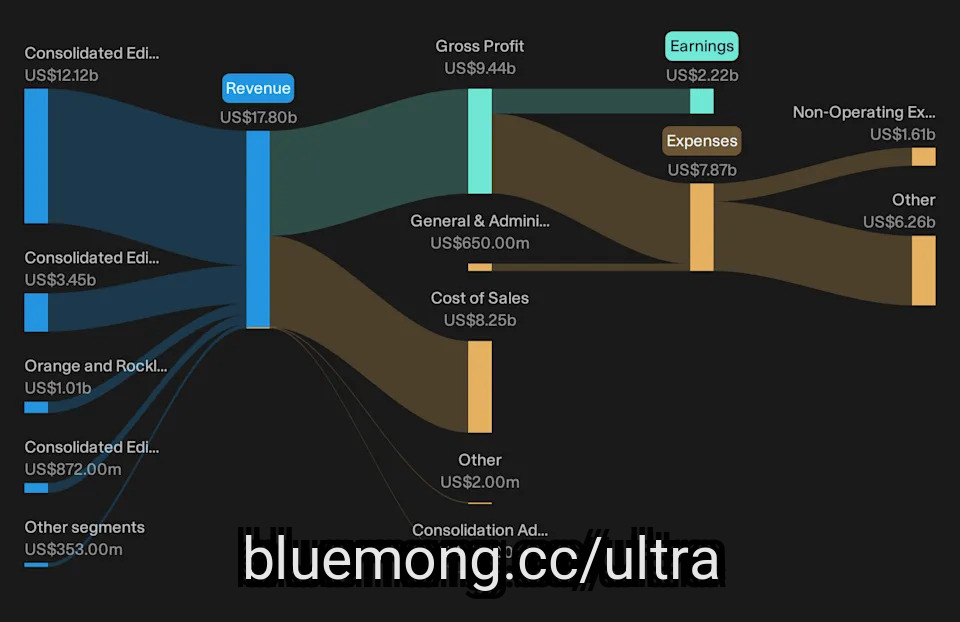
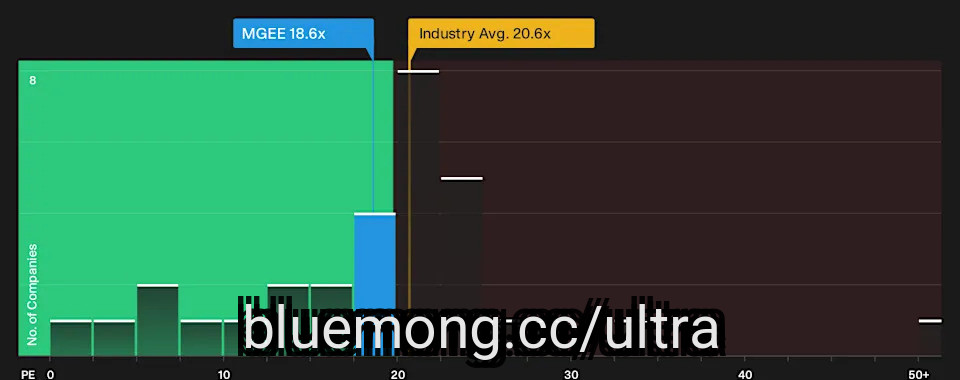
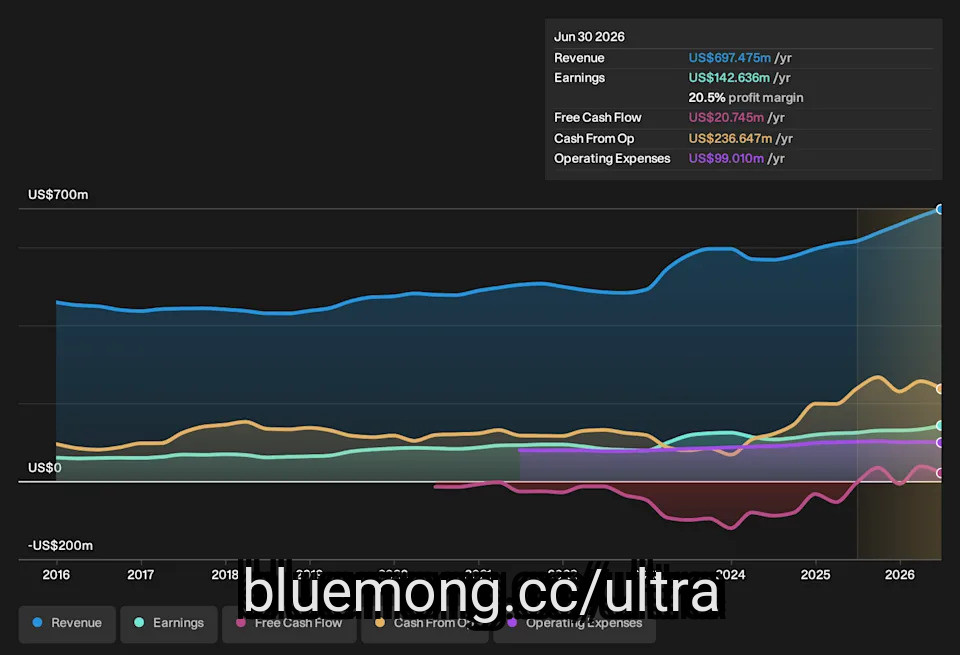
Overview: Consolidated Edison is a regulated utility that delivers electric, gas and steam services to customers across New York and parts of New Jersey.
Operations: Consolidated Edison generates almost all of its roughly US$17.7b revenue from US$12.1b CECONY electric, US$3.4b CECONY gas and US$872 million steam operations in the United States.
#edison #income

3 days ago
PORT HURON, Mich. (AP) — President Donald Trump intensified his anti-Muslim rhetoric against Michigan Senate candidate Abdul El-Sayed on Sunday, portraying him as a threat to national security and questioning his loyalty to the United States in remarks that drew a sharp rebuke from a former top Arab American ally.
Trump called El-Sayed, a former Detroit health official, a "jihadist" who was "on the side of the terrorists" and would "have to go through a metal detector before he's allowed to go into the Senate." He also repeatedly invoked the Sept. 11, 2001, terrorist attacks, drawing a comparison between stopping El-Sayed from entering the Senate chamber and the passengers who fought back against the hijackers aboard United Flight 93.
El-Sayed, who would become the nation's first Muslim senator if elected, has called attacks on his loyalty to the country "shameful" and repeatedly denied any ties to extremist groups. The Republican president's remarks were condemned by Bishara Bahbah, a founder of Arab Americans for Trump, the group that helped lead the president's outreach to Arab American voters in 2024.
"The president's statements are out of line," he said in a phone interview. "They are crossing a red line. They are racist."
With Republicans on the defensive over inflation, soaring fuel prices and the Iran war, the president has been trying to generate turnout by claiming that El-Sayed and other Democrats are existential threats to America, instead of electoral rivals. Michigan's Senate race between El-Sayed and Republican Mike Rogers is among a handful of contests that could determine control of the chamber.
#senate #Trump #muslim #united




3 days ago
Suze Orman favors quality dividend-paying stocks over bonds for retirees, arguing rising dividends better protect income from inflation than fixed coupons.
A $500,000 Treasury at 4.96% yields $24,800 annually, but a dividend portfolio growing 6% yearly surpasses that income after roughly nine years.
Retirees with a spending gap should hold five years of that gap in Treasuries, TIPS, or CDs to avoid selling stocks during a downturn.
Read More: Learn 7 ways to generate income with a $1,000,000+ portfolio (sponsor)
Suze Orman has spent years nudging retirees toward stocks that pay them. On her podcast episode Suze's Projections for 2026, released January 11, 2026, she described the income approach she prefers: "as time goes on and you are older and you're looking for income, dividend-paying stocks that are good quality, that pay you a good dividend along with some of your money invested purely for growth."
#income #stocks #retirees


3 days ago
Some offers on this page are from advertisers who pay us, which may affect which products we write about, but not our recommendations. See our Advertiser Disclosure.
If you've dreamed of becoming a millionaire, you're not alone. To many, hitting this financial milestone signals you've "made it." With ******* ets valued at seven figures, you can wave goodbye to many of the financial stressors that nagged at you when you had less.
However, with inflation eroding the value of the dollar with each passing year, being a millionaire doesn't mean what it used to. As a result, there are more millionaires today than there used to be, and becoming one might be more within your reach.
Read on to learn more about how many millionaires there are in the U.S. today and ways you can grow your net worth to become a millionaire too.
The term "millionaire" can have a range of different meanings depending on who you ask. Some people may define a millionaire as someone who earns a seven-figure income each year. But the most widely accepted definition is someone with a net worth of at least $1 million.
#millionaire #financial #seven #used


21 days ago
SCHD yields 3.82% with principal at risk daily, while VIG targets dividend growers built to outpace inflation over a long horizon.
Qualified dividends face tax rates between 0% and 20%, compared to up to 37% for savings interest, a gap that can exceed the difference in yields.
High-yield savings protect dollars with FDIC coverage up to $250,000, but rates float and can drop the moment the Fed cuts.
Just released. Our ****** ysts combed the entire stock market and named the ten best stocks to buy right now. The report is free. Enter your email and see if any of your stocks made the cut.
High-yield savings rates were holding steady on Oct. 8, 2026, according to Forbes. They are holding at a higher level than a month ago because the Federal Reserve raised its target range in September. Online banks use the federal funds rate's upper bound to price their accounts, and it moved from 3.75% to 4.00% on Sept. 16, 2026 and was unchanged as of Oct. 7. On that date the 4-week Treasury bill, the closest market benchmark for overnight cash, yielded 3.95%. Typical banks pay much less. The FDIC national average 12-month CD rate was 1.73% as of Sept. 1, 2026, and top online banks routinely pay a multiple of that average. Rates differ from bank to bank, so the posted APY at your own bank is the number that applies to you.
#savings #sept


21 days ago
For an average single person planning to stop working at 64, a $1.2 million 401(k) account and $2,800 Social Security benefit could provide enough income to make ends meet during retirement. Widely used guidelines suggest your annual income may be around $81,600, which may or may not be more than your annual expenses. Much depends on individual circumstances, including the kind of retirement lifestyle you desire, your location and future trends of inflation, taxes and investment returns. To get a comprehensive workup of your retirement budget, take the question to a financial advisor.
Income and expenses represent the two sides of your retirement budget. Both are equally important and decisions you make regarding either can affect the overall accuracy and dependability of the budget.
You can estimate expenses by using averages for typical retirees or by considering specifics of your situation with estimate for categories such as housing, healthcare and taxes. Similarly, you can estimate future income with general guidelines or by accounting for specifics such as your personal investment preferences.
In your case, we'll start with income since we have information about that. Despite the possibility that Social Security benefits will be cut by about 20% after 2035, your $2,800 Social Security benefit can probably be relied upon. And benefits are indexed to a cost-of-living benchmark, providing protection against inflation.
Note, however, that if you wait to claim benefits, your monthly amount will increase every year until you are 70. By claiming at age 64 rather than waiting until your full retirement age of 67, you are receiving 20% less. If you wait until age 70, you'll get 24% more than at 67. And you'll receive the higher amount, adjusted annually for cost of living, as long as you live.
#Retirement #benefits


21 days ago
Despite the S&P 500's (SNPINDEX: ^GSPC) 13.3% gain thus far in 2026, there's still plenty bubbling beneath the surface that could trigger a sharp and sudden market crash. Stubborn inflation, the U.S. national debt sitting above $40 trillion, and fears of an artificial intelligence bubble are just a few concerns.
As one of the most successful investors of all time, Warren Buffett has some sage advice. It's found in the 1996 Berkshire Hathaway shareholder letter, which offered one of the top strategies for handling a market crash. The good news is that it can be followed before a crash even starts.
Missed Nvidia in 2009? This Rare Signal Is Flashing Again. In 2009, a "Double Down" signal flashed for a little-known chipmaker called Nvidia. For the first time in years, that same "Total Conviction" signal is flashing for a company 1/100th the size of Nvidia. Continue »
It's easy to feel panicked when the market starts tumbling, and making any kind of move, even if it's a knee-jerk reaction, can initially feel better than making no move at all. While that small voice whispering to "sell" may never go away during the initial waves of a market crash, it can be countered by being prepared in advance.
Buffett shared exactly how to counter it. In Berkshire's 1996 shareholder letter, he said, "If you aren't willing to own a stock for ten years, don't even think about owning it for ten minutes."
#crash #NVIDIA #even #shareholder


21 days ago
Moneywise and Yahoo Finance LLC may earn commission or revenue through links in the content below.
If you've been worried sick about higher prices, one of Wall Street's most-watched bulls has a message for you: relief may be on the way.
"I think the probabilities are really high. It's going to drop," Tom Lee, co-founder of Fundstrat Global Advisors, said of inflation in a Sept. 25 interview.
Jeff Bezos backs a platform that lets anyone invest in rental homes for as little as $100 — 6 ways to build wealth like a landlord without actually being one
A single line on your car insurance policy could be inflating your premium by up to 30% — here's what to change
#finance #earn

21 days ago
Kohl's is rolling out steep discounts for customers as it struggles to turn around its sales.
The department store chain revealed in its most recent earnings report that its comparable sales decreased 0.9% year over year in the second quarter of 2026, while recent Placer.ai data showed overall visits to Kohl's stores declined 1.4%.
Kohl's CEO Michael Bender said on the August earnings call that the company is "operating in a challenging macroeconomic environment" where customers are "experiencing persistent financial pressures from inflation in their everyday expenses, like gas and food."
Against this backdrop, Kohl's has taken several steps to make its merchandise more affordable. It introduced Deal Bar and Toy Towers in stores earlier this year, featuring products priced below $10. It also priced thousands of back-to-school items under $25 in July.
In its latest effort to win over price-conscious customers, Kohl's has made its annual Kohl's Deal Days savings event more generous this year.
#year #deal #recent #placer


21 days ago
Minutes from the Federal Reserve's September policy meeting reflect unanimous agreement among officials that interest rates needed to be higher to combat persistent inflation.
"Participants generally emphasized that inflation remained elevated while the labor market appeared to be near full employment, with some signs of strengthening, and that economic activity was expanding at a solid pace. Furthermore, almost all participants ****** sed that, while inflation risks were tilted to the upside, risks to the labor market had diminished and were now broadly balanced," minutes from the Sept. 16 meeting released Wednesday stated.
"Based on the outlook and the changing balance of risks, all participants viewed a higher target range for the federal funds rate as appropriate."
The Fed voted unanimously on Sept. 16 to raise rates, the first hike in three years. And at the time, most Federal Open Market Committee members saw a need for at least one more 25 basis point rate hike this year.
Markets were banking on a hike and expecting more to come.
#federal #hike #rates


21 days ago
The 2020s will go down in history as one of the best times to be a stock market investor. After a brief dip in 2022, the benchmark S&P 500 (SNPINDEX: ^GSPC) has soared by an average of roughly 21% per year -- double its 100-year average annual return of 10%.
That said, history shows us that significant drawdowns often follow periods of unusually elevated stock market gains as the market reverts to its long-running mean. Let's discuss some of the challenges facing this bull market to try to figure out what might come next.
Missed AI's "Act 1"? Act 2 Could Be 14x Bigger. Most investors think they missed the AI boat because they didn't buy Nvidia in 2005. But according to our ******* ysts, we're only at the end of "Act 1"—the R&D phase. "Act 2" is the global rollout. Continue »
By now, most investors have probably heard about the cyclically adjusted price-to-earnings (CAPE) ratio. This metric compares the price of the S&P 500 with its average inflation-adjusted earnings over the past decade. The long time frame smooths out short-term fluctuations, providing a clearer picture of the market's value relative to historical norms.
Right now, the CAPE ratio stands at 40.5, which is well above its average of 17.4. The other two major peaks occurred before the Great Depression in 1929 and during the dot-com bubble in 1999, when it hit its all-time high of 44.19. Both milestones were followed by substantial declines in equity prices over the subsequent years as the speculative bubbles deflated.
#missed #Stock #long #investors


21 days ago
WASHINGTON (AP) — Most Federal Reserve officials expect that another interest rate increase will likely be needed this year to combat inflation, according to minutes released Wednesday from the central bank's most recent meeting.
The officials unanimously agreed that inflation was still elevated and had not made much progress toward their 2% target in recent months, the minutes said. The Fed increased its key interest rate at the Sept. 15-16 meeting by a quarter-point to about 3.9%, its first increase in three years.
The increase defied President Donald Trump's repeated calls for the Fed to cut rates and prompted the president to criticize the Fed's rate-setting committee, though he still expressed support for Chairman Kevin Warsh, whom he appointed earlier this year. The rate increase comes as Americans are already struggling with high costs for groceries, gas and housing, and as affordability has taken on a leading role in the upcoming midterm elections, just seven weeks away.
Longer-term interest rates for mortgages and other borrowing have also jumped in the past few months for a range of reasons, including rising government debt, heavy borrowing by tech firms to finance data center construction, climbing oil and gas prices, and signs that growth and inflation remain elevated. The Fed's rate hike has likely played only a limited role in the increase.
Still, key policymakers have said since the meeting that the Fed can take some time to monitor the economy and the impact of last month's rate hike before making another move. Wall Street investors now forecast the Fed will keep its rate unchanged at its next meeting Oct. 28-29, according to futures pricing, and raise it when they meet in December.
#officials



21 days ago
Moneywise and Yahoo Finance LLC may earn commission or revenue through links in the content below.
The annual Social Security cost-of-living adjustment (COLA) can make or break the finances of retirees, as it determines how much benefits will increase to keep pace with inflation.
Since COLAs are very important to beneficiaries, advocacy groups make predictions throughout the year, offering insight into how much extra money (if any) Social Security recipients will collect in the coming year.
Jeff Bezos backs a platform that lets anyone invest in rental homes for as little as $100 — 6 ways to build wealth like a landlord without actually being one
A single line on your car insurance policy could be inflating your premium by up to 30% — here's what to change
#make #moneywise #since

21 days ago
Generating $6,550 a month requires $2.25M at a 3.5% yield, $1.31M at 6%, or just $786,000 at 10%.
A blended portfolio of VYM, DIVO, VICI, JEPQ, ARCC, and SGOV yields 5.6%, requiring $1.4M while preserving some dividend growth.
A 3.5% yield growing 8% annually reaches $249,000 in income by year 15, while a static 10% yield stays flat and loses ground to inflation.
Read More: Learn 7 ways to generate income with a $1,000,000+ portfolio (sponsor)
A target of $6,550 a month equals $78,600 a year. For a 66-year-old, that income must cover housing, healthcare premiums, travel, and decades of other retirement expenses. The amount you need to invest to generate $78,600 from portfolio income alone varies widely by yield. Here's what the numbers look like at three yield levels, using six income holdings as examples.
#yield



21 days ago
When you buy through links on our articles, Future and its syndication partners may earn a commission.
Some might think $4 million guarantees a life of luxury, but with market volatility and inflation, it makes sense to ask how far that money will actually go.
One of the trickiest elements of retirement planning is figuring out a savings target. It's virtually impossible to estimate what retirement will cost because there are too many unknowns, from inflation to longevity to healthcare costs.
When it comes to setting a savings target, the best thing many of us can do is estimate a number and run with it.
Some data shows how much money it might take to afford a comfortable retirement. Northwestern Mutual found that $1.46 million was the magic number. There's also guidance that you can adjust for your personal situation. Fidelity, for example, recommends having 10 times your ending salary saved by age 67.
#savings #many


22 days ago
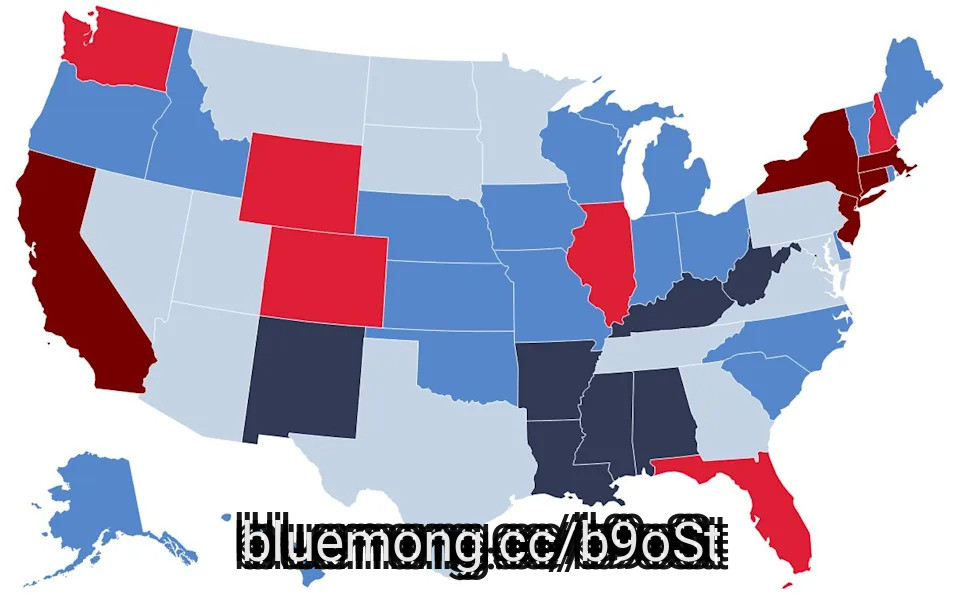
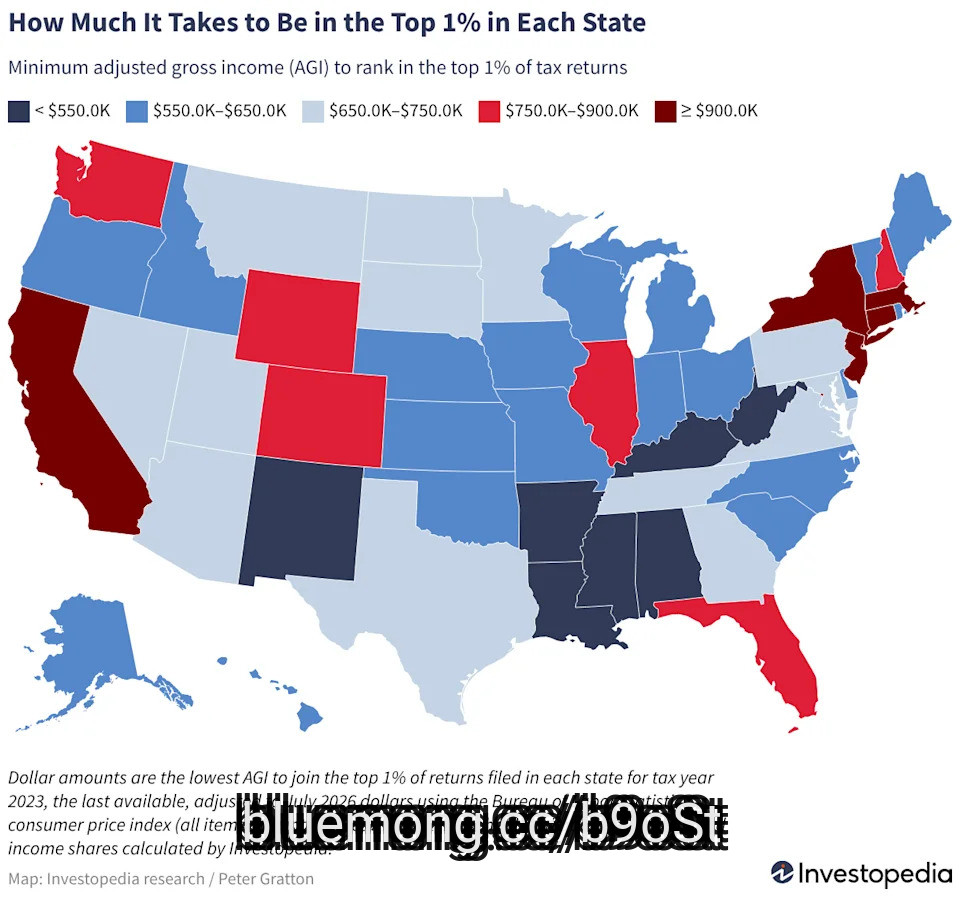
Newly released IRS data put the top-1% cutoff at about $748,000 nationally, ranging from about $426,000 in West Virginia to $1.1 million in Washington, D.C.
Only D.C. and Connecticut clear $1 million; nationally, the cutoff rose less than inflation in the latest year.
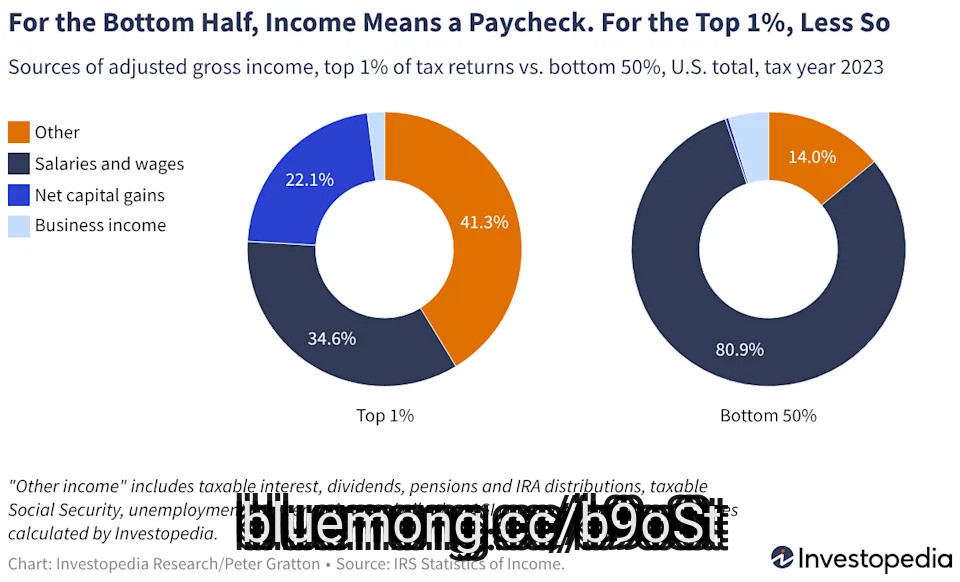
Wages make up 81% of income for the bottom half of filers, but just 35% for the top 1%, with capital gains accounting for another 22%.
The top 1% starts in a very different place depending on where you file your taxes.
The IRS's newly released state data put the income floor for the top 1% nationally at about $748,000 in adjusted gross income (AGI), according to an Investopedia **** ysis. The data was from 2023 but adjusted to 2026 dollars. In D.C., it takes about $1.1 million, while in West Virginia, it's about $426,000.
#income

22 days ago
A key gauge of where the market thinks rates are headed is the CME FedWatch survey, which polls interest rate traders. In the days leading up to the September Federal Open Market Committee (FOMC) meeting, almost 60% of those polled expected a 25-basis-point rate hike, which the FOMC delivered on Sept. 16.
While most, 78%, expect rates to stay the same at the Oct. 28 Fed meeting, an overwhelming majority of traders anticipate a rate hike when the FOMC meets on Dec. 9. Specifically, 67% expect a 25-basis-point increase, and 17% say rates will be 50 basis points higher by then.
Missed AI's "Act 1"? Act 2 Could Be 14x Bigger. Most investors think they missed the AI boat because they didn't buy Nvidia in 2005. But according to our **** ysts, we're only at the end of "Act 1"—the R&D phase. "Act 2" is the global rollout. Continue »
They may be taking cues from FOMC members themselves, like Fed Governor Michael Barr. In a speech on Sept. 29 in Detroit, Barr said eight words that gave a decent clue as to what he is thinking about rates.
"Further policy adjustments are likely to be needed," Barr said in Detroit last week, "to ensure inflation comes down to target in a timely fashion."
#missed

22 days ago
By Ann Saphir
Oct 7 (Reuters) - The interest rate on the most common US home loan jumped last week to its highest in almost three years, worsening affordability for buyers four weeks before elections that will decide if President Donald Trump's Republicans keep control of Congress.
The average 30-year fixed-rate mortgage surged 19 basis points to 7.49% in the week ended October 2, the Mortgage Bankers **** ociation said on Wednesday. It was last higher in November 2023.
Mortgage rates are tied closely to the yield on US 10-year Treasury notes, which earlier this week hit a 24-year high, driven by worries over inflationary pressures from soaring oil prices and data showing stronger US economic growth.
The cost of living is the top issue on Americans' minds as they decide how they will vote on November 3, a Reuters/Ipsos poll completed on Monday showed, and is one reason why Trump's approval rating is at a record low of 32%.
#week #rate

22 days ago
Social Security is the only income that automatically beats inflation, making it the anchor of any retirement plan built on $540,000 in savings.
Delaying Social Security past 64 and bridging expenses with Treasury bills yielding above 4% produces a larger lifetime benefit and a smaller tax bill.
The 4% withdrawal rule applied to $540,000 yields about $21,600 annually, and claiming Social Security early permanently cuts that check by roughly 20%.
Building a portfolio and living off one are two completely different skills, and almost ***** ody teaches the second. This problem is what The Definitive Guide to Retirement Income helps, and it is free today. Read more here. (Sponsor)
A 64-year-old with $540,000 saved and a $2,600 monthly Social Security estimate has two very different kinds of money. One is a government check that rises with prices for life, while the other is a portfolio that has to survive market drops, inflation and possibly 30 years of withdrawals. The income you can count on depends almost entirely on how you connect those two pieces over the next three years.
#security #income #almost #years


22 days ago
SmartAsset and Yahoo Finance LLC may earn commission or revenue through links in the content below.
During most of the decades you are preparing financially for retirement, you are likely focused on saving as close as you can get to the recommended amount, without worrying too much about the details. As you approach retirement, however, it's a good idea to look more closely at what might be a realistic retirement budget. At age 62, with $890,000 in a 401(k) account, $115,000 in a Roth IRA and accounting for Social Security benefits, you can likely generate enough income to cover typical retiree lifestyle expenses. Your individual needs may vary, of course, but there are likely moves you can make now and in retirement to give you the flexibility you'll need to fund a comfortable and secure retirement.
Consider speaking with a financial advisor for help building an effective retirement strategy.
A typical retirement budget starts with the income side and Social Security benefits represent an important part of that for a large majority of retirees. Social Security is lifelong, guaranteed by the U.S. government and includes annual cost-of-living adjustments to keep up with inflation. The amount of your specific benefit is controlled by your work history and age at claiming. ****** uming your current income is $90,000 annually, here are estimates of your annual Social Security benefit based on your age when you start claiming benefits:
Age
#annual


23 days ago
The US economy is stacking up wins, even if it doesn't feel that way for many households because of the resurgence in inflation.
The economy has now posted 78 consecutive months of expansion, the sixth-longest business cycle since 1854, per new ***** ysis from The Kobeissi Letter. This is well above the long-term average of 49 months and the median of 38 months.
By comparison, the longest period for the US economy without a recession was between 2009 and 2020, at 128 months. The record of course was broken by the aftershocks of the COVID-19 pandemic, which ground the economy to a halt.
Read more: Scaramucci: Lots of Americans 'feel left out of the system'
"Unconventional monetary policy, historically large budget deficits, alongside the AI investment boom, appear to be extending the duration of business cycles. The data says the US economy is remarkably strong," The Kobeissi Letter team said.
Meanwhile, the US economy is nearing an impressive achievement on the unemployment front.
The US unemployment rate is nearing a record number of consecutive months below 5%, Truist chief strategist Keith Lerner said in a note on Monday. The longtime record dates back to the mid-1960s.
#letter #consecutive



23 days ago
Investors aren't exactly short on reasons to worry.
The Shiller cyclically adjusted price-to-earnings (CAPE) ratio, which measures stock prices against 10-year inflation-adjusted earnings, and the Buffett indicator, the ratio of stock prices to GDP, show that the S&P 500 (SNPINDEX: ^GSPC) is historically expensive. Leadership has been extraordinarily concentrated in megacap tech stocks. Inflation is well above 3%. Long-term Treasury yields are at multidecade highs. And beneath the surface of the major indexes, market breadth has weakened considerably.
Missed AI's "Act 1"? Act 2 Could Be 14x Bigger. Most investors think they missed the AI boat because they didn't buy Nvidia in 2005. But according to our ******* ysts, we're only at the end of "Act 1"—the R&D phase. "Act 2" is the global rollout. Continue »
Any one of those could sound like a reason to prepare for the next market crash. But decades of stock market history suggest investors may be obsessing over the wrong things.
Instead of asking if and when stock prices will fall next, I'd ask a much simpler question: How long can you stay invested?
#earnings


23 days ago
Benzinga and Yahoo Finance LLC may earn commission or revenue on some items through the links below.
The top 1% of Americans now control one-third of all U.S. net worth as inflation erodes purchasing power and the Federal Reserve's first rate hike since 2023 pushes borrowing costs higher.
The top 1% of U.S. households hold $60.3 trillion, a record 32.5% share of net worth, according to The Kobeissi Letter, citing Federal Reserve data.
Meanwhile, the bottom 50% hold $4.3 trillion, with the richest holding 14 times as much.
Don't Miss:
#federal #americans #reserve


23 days ago
Rising interest rates have the US on a collision course with the need to finally deal with its bloated debt pile, Goldman Sachs warns.
"Persistently higher rates would boost interest expense as a share of GDP — a key gauge of the cash outflows needed to service the debt — and push the debt-to-GDP ratio up to 132% by 2035, 10 percentage points above our baseline, raising the odds that deficit reduction becomes necessary sooner to stabilize the debt," Goldman Sachs strategist Pierfrancesco Mei wrote in a new note on Tuesday.
US Treasury yields have climbed aggressively this year, effectively pushing up the country's debt servicing costs. The benchmark 10-year Treasury yield (^TNX) has surged more than 115 basis points, from around 4.10% late last year to a 24-year high of around 5.28% at present.
Read more: How soaring Treasury yields could hit your finances
This sustained sell-off across the bond market has been fueled by inflation brought on by the US war on Iran, which prompted the Federal Reserve to hike interest rates last month. The economy's resilience in the face of pricing pressures has also contributed to the sell-off.
#points #yields



23 days ago
What if I told you that the biggest risk from the next market crash isn't the crash itself? It might be what investors do to their portfolios to try to avoid the crash.
In today's economic environment, there are legitimate reasons for concern. Inflation is high. Oil prices have soared. Interest rates are on the rise. The Shiller CAPE ratio, which measures stock prices relative to inflation-adjusted earnings over the past 10 years, is at its second-highest level of all time.
Missed AI's "Act 1"? Act 2 Could Be 14x Bigger. Most investors think they missed the AI boat because they didn't buy Nvidia in 2005. But according to our ****** ysts, we're only at the end of "Act 1"—the R&D phase. "Act 2" is the global rollout. Continue »
But selling stocks and moving to cash to avoid the decline creates a whole new set of problems. First, you have to be correct in your prediction that a crash is coming and the timing of it. Second, you have to decide when the right time is to get back into stocks (and have the actual discipline to do it).
I'd rather own an ETF that gives me the confidence to remain invested in stocks through the crash.
#missed #investors #prices


23 days ago
Rising interest rates have the US on a collision course with finally having to deal with its bloated debt pile, warns Goldman Sachs.
"Persistently higher rates would boost interest expense as a share of GDP—a key gauge of the cash outflows needed to service the debt—and push the debt-to-GDP ratio up to 132% by 2035, 10 percentage points above our baseline, raising the odds that deficit reduction becomes necessary sooner to stabilize the debt," said Goldman Sachs strategist Pierfrancesco Mei in a new note on Tuesday.
US Treasury yields have climbed aggressively this year, effectively pushing up the country's debt servicing costs. The benchmark 10-year Treasury yield has surged more than 115 basis points, from around 4.10% late last year to a 24-year high of around 5.28% at present.
This sustained sell-off across the bond market has been fueled by inflation brought on by the US war on Iran, which prompted the Federal Reserve to hike interest rates last month. The economy's resilience in the face of pricing pressures has also contributed to the sell-off.
What's happening in the bond market couldn't come at a worse time for US debt watchers.
#interest




26 days ago
US bond yields have surged upward over the past month, as yields on both the 10-year Treasury (^TNX) and 30-year Treasury (^TYX) have reached levels not seen since 2002, surpassing 2007 high-water marks in the lead-up to the financial crisis.
Investors have attributed the run-up in yields to a variety of concerns, from the artificial intelligence build-out and the competition for capital to changing foreign ownership of gold versus fixed income.
Read more: How soaring Treasury yields could hit your finances
One overlooked source of upward pressure, argued Macquarie's Thierry Wizman, is not just the impact of the Iran war on the energy market but uncertainty about when the war will end or what the conflict will look like going forward.
"The perception that global conflict is endemic may also be causing long-term inflation expectation[s] to stay elevated," Wizman wrote to clients.
#conflict


1 month ago
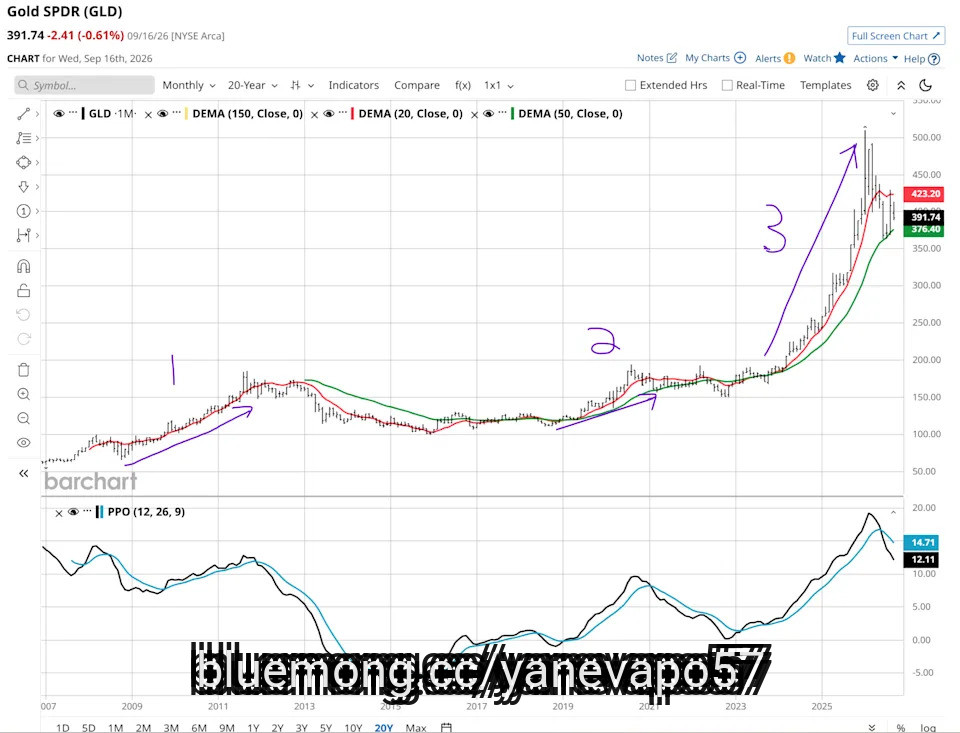
Is there any investment market segment more debated than gold (XAUUSD)? I'm not sure there is. We have "gold bugs," including those who see the yellow metal as the ***** et to own when the world goes haywire.
Then, there are the "we're going back on the gold standard" types. The ones that preceded crypto bros in believing fiat currencies weren't for this world. It follows that gold would return to its former role as the reserve currency.
Get exclusive insights with the FREE Barchart Brief newsletter. Subscribe now for quick, incisive midday market ***** ysis you won't find anywhere else.
Of course, there are also plenty of investors who don't really think about gold investing very much, and who will simply trade it when there's a good opportunity. I'm in this camp.
Financial media pundits routinely tout gold as some sort of bulletproof allocation. Inflation worries? Own gold. Currency debasement? Own gold. Want your kitchen to be decorated like the Oval Office? You'll need a lot of gold.
#Gold #free #barchart #brief

1 month ago
No matter how well you plan for retirement, there are surprises that could throw you for a loop. The stock market might crash unexpectedly. Your healthcare costs might increase. Or, worse yet, you could end up needing long-term care at some point.
But one hiccup you should know to plan for is inflation. Over time, the cost of living is likely to rise. And if you aren't prepared, you could easily end up losing out on buying power. These two adjustments to your retirement plan could help you avoid that fate.
Missed AI's "Act 1"? Act 2 Could Be 15x Bigger. Most investors think they missed the AI boat because they didn't buy Nvidia in 2005. But according to our ******* ysts, we're only at the end of "Act 1"—the R&D phase. "Act 2" is the global rollout. Continue »
It's fairly common for retirees to reduce their stock holdings to minimize risk in their portfolios. But while it's OK to de-risk to some degree, you don't want to dump your stocks completely. Doing so could cause your portfolio to trail inflation, leading you to lose buying power and putting your savings at risk of being depleted.
If you're not comfortable holding individual stocks in retirement, buy shares of an S&P 500 exchange-traded fund (ETF). This effectively gives you exposure to the market. Or load up on dividend ETFs that generate steady income.
#plan #market


1 month ago
In the end, Kevin Warsh's Federal Reserve acquitted itself well. For all the uncertainty he had sparked at the previous meeting of the Federal Open Market Committee, when he refused to provide any indication of what he was prepared to do to tame stubborn inflation, the chair on Wednesday presided over a unanimous decision to raise interest rates for the first time in three years.
"Today's action starts to show that we're serious about this," he said at the press conference after the meeting, with "this" meaning inflation in excess of the Fed's 2% target for over five years. Welcome though it was, his embrace of economic orthodoxy nonetheless did little to dispel the Keystone Cops quality of governance in Donald Trump's US.
Warsh's resolve – raising rates just a few weeks before elections that will determine whether Republicans retain control of Congress – appeared even more resolute in the face of a veiled threat from White House economic adviser Kevin Hassett, who pointed out to his chums on Fox that "if you want an independent Fed, then one thing the Fed does is it stays out of the way of elections".
The central bankers' parsimonious comments in the press conference following the meeting made a sharp contrast with the more unhinged commentary from other members of the administration, including the president himself, who earlier this month celebrated the resilience of the labor market with a mind-boggling threat to "STOP TRADING WITH COUNTRIES WITH WHICH WE HAVE A DEFICIT" unless the Fed cut interest rates.
Trump has yet to turn on Warsh in the way he did on his predecessor, Jerome "numbskull" Powell. But the signs are ominous. After the rate hike, Trump went ballistic – spewing more of the random, incoherent thoughts that have become his trademark. "Interest Rates in the United States should be 1%, or less, because we are the Best Credit in the World," he wrote on social media, despite recalcitrant inflation and a budget deficit that is likely to exceed $2tn this year. He again demanded the powers that be to "LOWER THE INTEREST RATES FOR THE UNITED STATES OF AMERICA, AND FAST!"
#rates #federal #states