
3 days ago
Titan International, Inc. (NYSE:TWI) announced a definitive agreement on September 21 to sell its Italtractor ITM undercarriage business to USCO S.p.A. The initial purchase price is approximately $207 million, while the stated total cash value reaches up to approximately $285 million. Understanding that difference is central to ******* sing the financial flexibility the disposal could create.
Titan International, Inc. (NYSE:TWI) expects approximately $23 million from closing adjustments and $11 million in dividends before closing. A further $6 million depends on ITM meeting specified 2026 performance criteria. The headline also includes $38 million in dividends received in earlier years.
Subtracting those historical dividends leaves approximately $247 million in potential future gross receipts, including the earnout, or $241 million without it. These calculations use the announced estimates and span different payment dates. Final adjustments, taxes, and transaction costs will determine how much cash becomes available for deployment.
The disclosed dollar amounts were translated at €1.00 to $1.148, the September 18, 2026 exchange rate. Currency movements could increase or reduce the eventual dollar receipts.
Titan International, Inc. (NYSE:TWI) intends to use part of the proceeds to reduce debt and pursue growth investments, including acquisitions and partnerships. The disposal would also concentrate resources on wheel and tire operations.
#september #announced
Titan International, Inc. (NYSE:TWI) expects approximately $23 million from closing adjustments and $11 million in dividends before closing. A further $6 million depends on ITM meeting specified 2026 performance criteria. The headline also includes $38 million in dividends received in earlier years.
Subtracting those historical dividends leaves approximately $247 million in potential future gross receipts, including the earnout, or $241 million without it. These calculations use the announced estimates and span different payment dates. Final adjustments, taxes, and transaction costs will determine how much cash becomes available for deployment.
The disclosed dollar amounts were translated at €1.00 to $1.148, the September 18, 2026 exchange rate. Currency movements could increase or reduce the eventual dollar receipts.
Titan International, Inc. (NYSE:TWI) intends to use part of the proceeds to reduce debt and pursue growth investments, including acquisitions and partnerships. The disposal would also concentrate resources on wheel and tire operations.
#september #announced


10 days ago
IonQ (IONQ) is a quantum computing company whose stock has been a favorite among speculative buyers and high-volatility traders, thanks to its high beta (3.30 over the last 60 months) and news-driven price action. It's not uncommon to see the stock swinging by double-digit percentages around news, earnings, partnership announcements, or sector sentiment shifts.
But today, we have a rare event.
Domino's Pizza Stock Is Dirt Cheap, With 30% Potential Upside - What's the Best Play?
Markets move fast. Keep up by reading our FREE midday Barchart Brief newsletter for exclusive charts, ***** ysis, and headlines.
IonQ, the volatile quantum stock, is now sitting at 0% IV rank. That means options on IONQ are priced much cheaper than they have been historically, creating an opportunity to go long.
#quantum #high #pizza #best
But today, we have a rare event.
Domino's Pizza Stock Is Dirt Cheap, With 30% Potential Upside - What's the Best Play?
Markets move fast. Keep up by reading our FREE midday Barchart Brief newsletter for exclusive charts, ***** ysis, and headlines.
IonQ, the volatile quantum stock, is now sitting at 0% IV rank. That means options on IONQ are priced much cheaper than they have been historically, creating an opportunity to go long.
#quantum #high #pizza #best



10 days ago
On September 9, 2026, Independence Realty Trust, Inc. (NYSE:IRT) and Centerspace announced a definitive all-stock merger agreement. It creates a combined middle-market apartment REIT with a pro forma equity market capitalization of about $5.0 billion and a total enterprise value of approximately $8.1 billion, encompassing more than 44,000 units.
The combined company will retain the Independence Realty Trust name and NYSE ticker "IRT." IRT's Scott Schaeffer continues as Chairman and CEO. The management projects the deal will be roughly 5% accretive to 2027 Core FFO per share for shareholders of both companies.
The merger gives Independence Realty Trust, Inc. (NYSE:IRT) higher scale and significantly broader geographic diversification. The combined company will own 44,354 apartment units across 163 communities in 17 states, with 58% of pro forma NOI coming from Sunbelt markets, 27% from the Midwest, and 15% from the Mountain West. The overall footprint reduces reliance on any single regional apartment market while keeping substantial exposure to markets with strong population and employment growth.
IRT can apply its existing value-creation strategy across a much larger portfolio. Its value-add renovation program has delivered about a 16% historical return on investment. The firm expects to grow its Wi-Fi initiative and other technology and income-generating programs across Centerspace's properties. Management also expects approximately $24 million in annualized synergies. It supports roughly 5% accretion to 2027 Core FFO per share on a leverage-neutral basis.
The all-stock structure allows the companies to chase greater scale without adding acquisition debt. IRT and Centerspace expect the combined company to retain BBB/BBB investment-grade credit ratings and maintain a well-laddered debt maturity profile. Centerspace shareholders will receive IRT shares and own approximately 22% of the combined company. It gives them exposure to the larger platform. Management also expects the transaction to improve access to capital markets and reduce the combined firm's cost of capital over time.
#management
The combined company will retain the Independence Realty Trust name and NYSE ticker "IRT." IRT's Scott Schaeffer continues as Chairman and CEO. The management projects the deal will be roughly 5% accretive to 2027 Core FFO per share for shareholders of both companies.
The merger gives Independence Realty Trust, Inc. (NYSE:IRT) higher scale and significantly broader geographic diversification. The combined company will own 44,354 apartment units across 163 communities in 17 states, with 58% of pro forma NOI coming from Sunbelt markets, 27% from the Midwest, and 15% from the Mountain West. The overall footprint reduces reliance on any single regional apartment market while keeping substantial exposure to markets with strong population and employment growth.
IRT can apply its existing value-creation strategy across a much larger portfolio. Its value-add renovation program has delivered about a 16% historical return on investment. The firm expects to grow its Wi-Fi initiative and other technology and income-generating programs across Centerspace's properties. Management also expects approximately $24 million in annualized synergies. It supports roughly 5% accretion to 2027 Core FFO per share on a leverage-neutral basis.
The all-stock structure allows the companies to chase greater scale without adding acquisition debt. IRT and Centerspace expect the combined company to retain BBB/BBB investment-grade credit ratings and maintain a well-laddered debt maturity profile. Centerspace shareholders will receive IRT shares and own approximately 22% of the combined company. It gives them exposure to the larger platform. Management also expects the transaction to improve access to capital markets and reduce the combined firm's cost of capital over time.
#management


11 days ago
The Vanguard Bond Market ETF (NASDAQ:BND) is the largest bond ETF with nearly $162.3 billion in ***** ets. If you invested $10,000 into BND today, it could grow into over $18,000 in 20 years, given its historical 3% annualized return since inception (assuming you reinvest your interest payments). That's likely a lot less than you'd earn if you invested the same amount in an S&P 500 index fund. However, bonds are income generators and portfolio stabilizers, not wealth-building tools.
Here's a look at why you might still want to consider investing in this top bond ETF, despite its low historical returns.
Missed AI's "Act 1"? Act 2 Could Be 15x Bigger. Most investors think they missed the AI boat because they didn't buy Nvidia in 2005. But according to our ***** ysts, we're only at the end of "Act 1"—the R&D phase. "Act 2" is the global rollout. Continue »
Image source: Getty Images.
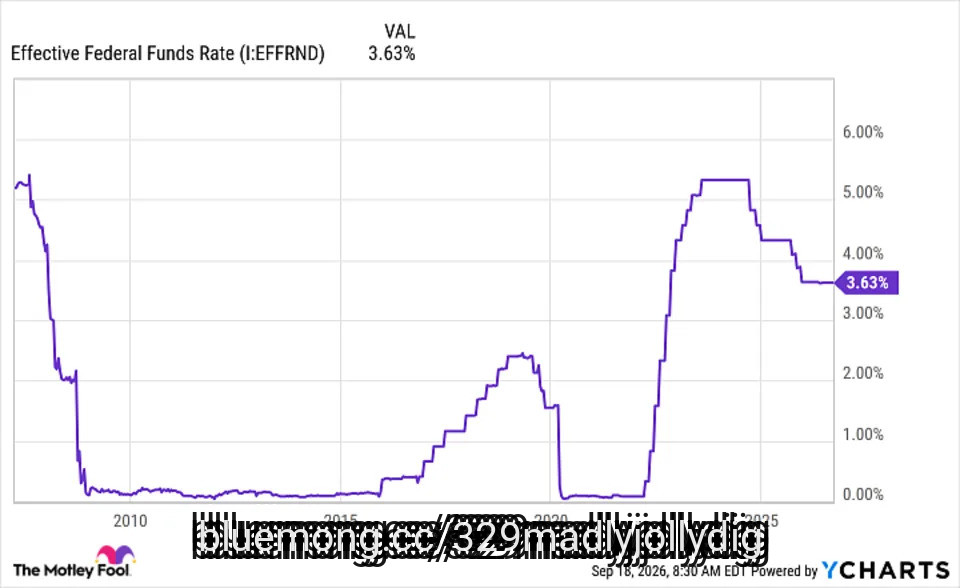
Vanguard launched BND in early 2007, right before the financial crisis, when interest rates were at their peak:
#bond
Here's a look at why you might still want to consider investing in this top bond ETF, despite its low historical returns.
Missed AI's "Act 1"? Act 2 Could Be 15x Bigger. Most investors think they missed the AI boat because they didn't buy Nvidia in 2005. But according to our ***** ysts, we're only at the end of "Act 1"—the R&D phase. "Act 2" is the global rollout. Continue »
Image source: Getty Images.
Vanguard launched BND in early 2007, right before the financial crisis, when interest rates were at their peak:
#bond


11 days ago
Definium Therapeutics, Inc. (NASDAQ:DFTX) has now delivered a third consecutive positive Phase 3 readout for its LSD-based medication, the second in generalized anxiety disorder. The result puts the company on a viable route toward a potential FDA approval of an LSD-based treatment for generalized anxiety disorder, and considering how closely psychedelic stocks have historically traded on each other's data, the reading carries far more weight than Definium's own ticker.
On September 14, Definium Therapeutics, Inc. (NASDAQ:DFTX) announced that its drug DT120, an orally disintegrating tablet formulation of LSD, was successful in Panorama, the company's second late-stage anxiety trial. Over 12 weeks, patients who received a 100-microgram dose experienced a 9.8-point decline on the Hamilton Anxiety Rating Scale, a typical clinical measure, compared to a 4.7-point drop with placebo.
The resulting 5.1-point placebo-adjusted improvement is similar to what the company's first pivotal anxiety trial, Voyage, showed back in August: an 11.6-point improvement versus 6.2 for placebo, a 5.4-point separation that Jefferies called one of the strongest placebo-adjusted efficacy results ever seen in generalized anxiety disorder, and that Stifel simply described as "a clean win."
Psychedelic equities have a history of trading as a group rather than as individual names, and this tendency applies both ways. In February 2026, when Compass Pathways, the sector's other clinical leader developing a psilocybin-based drug for treatment-resistant depression, reported positive late-stage data, shares of Definium Therapeutics, Inc. (NASDAQ:DFTX), Atai Beckley, GH Research, and Helus Pharma all rose, some by double digits.
That correlation is significant here because Definium's win is an independent validation of the broader therapeutic argument on which Compass and others are betting: a single dose of a classic psychedelic, administered in a controlled clinical setting, can produce lasting improvements in serious mental health conditions via pathways different from existing SSRIs and other standard-of-care drugs.
#definium #placebo
On September 14, Definium Therapeutics, Inc. (NASDAQ:DFTX) announced that its drug DT120, an orally disintegrating tablet formulation of LSD, was successful in Panorama, the company's second late-stage anxiety trial. Over 12 weeks, patients who received a 100-microgram dose experienced a 9.8-point decline on the Hamilton Anxiety Rating Scale, a typical clinical measure, compared to a 4.7-point drop with placebo.
The resulting 5.1-point placebo-adjusted improvement is similar to what the company's first pivotal anxiety trial, Voyage, showed back in August: an 11.6-point improvement versus 6.2 for placebo, a 5.4-point separation that Jefferies called one of the strongest placebo-adjusted efficacy results ever seen in generalized anxiety disorder, and that Stifel simply described as "a clean win."
Psychedelic equities have a history of trading as a group rather than as individual names, and this tendency applies both ways. In February 2026, when Compass Pathways, the sector's other clinical leader developing a psilocybin-based drug for treatment-resistant depression, reported positive late-stage data, shares of Definium Therapeutics, Inc. (NASDAQ:DFTX), Atai Beckley, GH Research, and Helus Pharma all rose, some by double digits.
That correlation is significant here because Definium's win is an independent validation of the broader therapeutic argument on which Compass and others are betting: a single dose of a classic psychedelic, administered in a controlled clinical setting, can produce lasting improvements in serious mental health conditions via pathways different from existing SSRIs and other standard-of-care drugs.
#definium #placebo


11 days ago
If you're trying to choose between the Vanguard S&P 500 ETF (NYSEMKT: VOO) and the State Street SPDR S&P 500 ETF (NYSEMKT: SPY), it might seem they're essentially interchangeable. They're both huge and track the same index.
At a high level, that's probably true. But if you want to dive deep and get picky, a few factors set them apart.
Missed AI's "Act 1"? Act 2 Could Be 15x Bigger. Most investors think they missed the AI boat because they didn't buy Nvidia in 2005. But according to our **** ysts, we're only at the end of "Act 1"—the R&D phase. "Act 2" is the global rollout. Continue »
The State Street SPDR S&P 500 ETF has an expense ratio of 0.0945%. The Vanguard S&P 500 ETF charges just 0.03%. Given that the index has historically returned about 10% per year, this fee difference may seem immaterial. But I will take any advantage I can get.
Because of their sizes, trading spreads (the difference between the buying (ask) price and the selling (bid) price of a stock) are virtually nothing, so spreads aren't really a consideration here. But if you can own the exact same index for a third of the cost, why not?
#index #same
At a high level, that's probably true. But if you want to dive deep and get picky, a few factors set them apart.
Missed AI's "Act 1"? Act 2 Could Be 15x Bigger. Most investors think they missed the AI boat because they didn't buy Nvidia in 2005. But according to our **** ysts, we're only at the end of "Act 1"—the R&D phase. "Act 2" is the global rollout. Continue »
The State Street SPDR S&P 500 ETF has an expense ratio of 0.0945%. The Vanguard S&P 500 ETF charges just 0.03%. Given that the index has historically returned about 10% per year, this fee difference may seem immaterial. But I will take any advantage I can get.
Because of their sizes, trading spreads (the difference between the buying (ask) price and the selling (bid) price of a stock) are virtually nothing, so spreads aren't really a consideration here. But if you can own the exact same index for a third of the cost, why not?
#index #same


11 days ago
Intel Corporation (NASDAQ:INTC) is targeting a potentially significant opportunity through its strategic Terafab partnership with companies **** ociated with Elon Musk, including **** eX, Tesla, and xAI. The initiative is part of an ambitious semiconductor manufacturing project focused on producing advanced chips for artificial intelligence (AI), robotics, autonomous vehicles, and other compute-intensive applications.
On September 15, Tigress Financial highlighted the strategic importance of the alliance to Intel's turnaround prospects. The research firm reiterated its Buy rating on Intel and raised its price target to $145 from $118, citing the company's long-term growth opportunity.
The Terafab partnership could provide Intel's foundry business with exposure to customers that have substantial AI and high-performance computing requirements. Securing external customers could help Intel increase manufacturing scale while improving the utilization and economics of its foundry operations.
The partnership could also support Intel Corporation (NASDAQ:INTC)'s efforts to improve its semiconductor manufacturing technology. Greater production volumes and engagement with demanding customers could provide opportunities to improve manufacturing economics, yields, and scalability as Intel works to strengthen its competitive position in advanced chip manufacturing.
Beyond manufacturing scale, Terafab could expand Intel's role in the broader AI semiconductor supply chain. The company has historically been heavily **** ociated with CPUs, but growing its foundry business could give it greater exposure to AI accelerators, custom silicon, and other specialized compute applications. A relationship with major AI-focused customers could also help provide greater visibility into future manufacturing demand.
#Intel
On September 15, Tigress Financial highlighted the strategic importance of the alliance to Intel's turnaround prospects. The research firm reiterated its Buy rating on Intel and raised its price target to $145 from $118, citing the company's long-term growth opportunity.
The Terafab partnership could provide Intel's foundry business with exposure to customers that have substantial AI and high-performance computing requirements. Securing external customers could help Intel increase manufacturing scale while improving the utilization and economics of its foundry operations.
The partnership could also support Intel Corporation (NASDAQ:INTC)'s efforts to improve its semiconductor manufacturing technology. Greater production volumes and engagement with demanding customers could provide opportunities to improve manufacturing economics, yields, and scalability as Intel works to strengthen its competitive position in advanced chip manufacturing.
Beyond manufacturing scale, Terafab could expand Intel's role in the broader AI semiconductor supply chain. The company has historically been heavily **** ociated with CPUs, but growing its foundry business could give it greater exposure to AI accelerators, custom silicon, and other specialized compute applications. A relationship with major AI-focused customers could also help provide greater visibility into future manufacturing demand.
#Intel

11 days ago
Some offers on this page are from advertisers who pay us, which may affect which products we write about, but not our recommendations. See our Advertiser Disclosure.
When the stock market dips and investors are concerned about inflation, gold's price tends to increase.
Gold has historically held its value and increased in price over time, making it a useful long-term investment tool.
Investors can use gold as a safe-haven ****** et by buying physical gold coins or bars, gold exchange-traded funds (ETFs), or gold mining stocks.
Gold is a safe-haven investment, meaning its value remains steady or even increases during periods of economic uncertainty. Unlike stocks, the price of gold isn't tied to a single country or company, and gold has been a valuable ****** et for centuries.
#investors #investment #safe #advertiser
When the stock market dips and investors are concerned about inflation, gold's price tends to increase.
Gold has historically held its value and increased in price over time, making it a useful long-term investment tool.
Investors can use gold as a safe-haven ****** et by buying physical gold coins or bars, gold exchange-traded funds (ETFs), or gold mining stocks.
Gold is a safe-haven investment, meaning its value remains steady or even increases during periods of economic uncertainty. Unlike stocks, the price of gold isn't tied to a single country or company, and gold has been a valuable ****** et for centuries.
#investors #investment #safe #advertiser



12 days ago
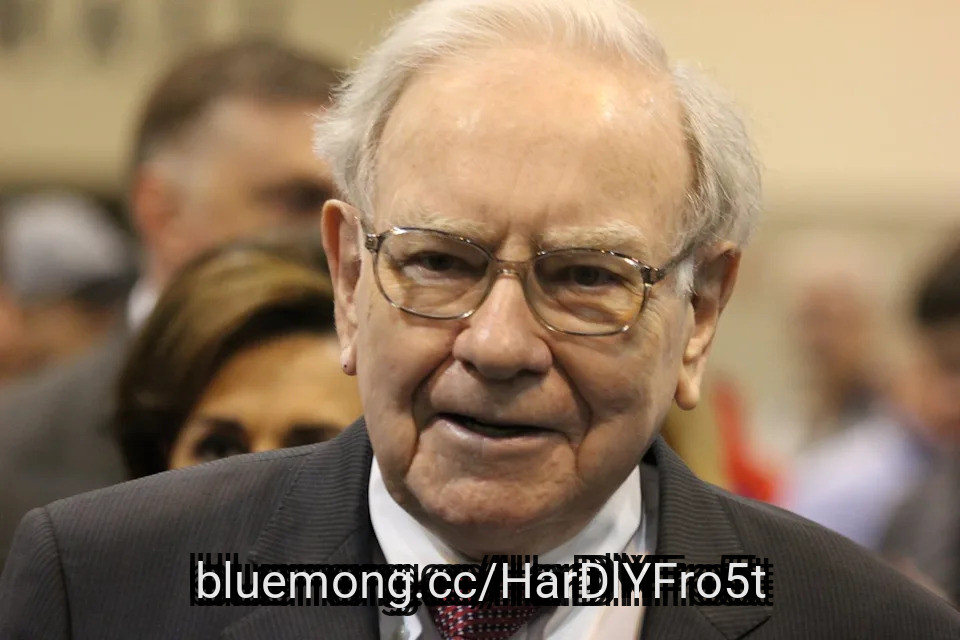
Nearly 10 years ago, Warren Buffett told Berkshire Hathaway (NYSE: BRKA) (NYSE: BRKB) investors that he had made a mistake for not buying Google when he had the opportunity many years earlier. He had become quite familiar with the business because GEICO, Berkshire's consumer insurance company, was paying $10 or $11 per click for advertising on the search engine owned by Alphabet (NASDAQ: GOOG) (NASDAQ: GOOGL). At the 2017 shareholder meeting, Buffett said he'd missed the opportunity, but he wouldn't bet against Google.
The stock climbed significantly while Buffett sat on the sidelines. He finally pulled the trigger on the stock in the third quarter of last year. Since then, he and newly appointed CEO Greg Abel have plowed tens of billions into the stock, making it one of Berkshire's biggest investments. But Buffett arguably missed out on a 9,000% gain by not buying into the stock sooner.
Missed Nvidia in 2009? This Rare Signal Is Flashing Again. In 2009, a "Double Down" signal flashed for a little-known chipmaker called Nvidia. For the first time in years, that same "Total Conviction" signal is flashing for a company 1/100th the size of Nvidia. Continue »
It's hard to blame Buffett for not buying Alphabet, then known as Google, when it made its initial public offering (IPO) in 2004. Buffett historically avoids both IPO stocks and tech stocks.
Buffett thinks IPOs are typically overvalued, at least relative to many other stocks, because underwriters are incentivized to secure the highest possible price for the company issuing shares. An IPO like Google's also comes with a lot of hype and media attention that can drive prices higher without any fundamental basis.
#buffett #NVIDIA #years #company
The stock climbed significantly while Buffett sat on the sidelines. He finally pulled the trigger on the stock in the third quarter of last year. Since then, he and newly appointed CEO Greg Abel have plowed tens of billions into the stock, making it one of Berkshire's biggest investments. But Buffett arguably missed out on a 9,000% gain by not buying into the stock sooner.
Missed Nvidia in 2009? This Rare Signal Is Flashing Again. In 2009, a "Double Down" signal flashed for a little-known chipmaker called Nvidia. For the first time in years, that same "Total Conviction" signal is flashing for a company 1/100th the size of Nvidia. Continue »
It's hard to blame Buffett for not buying Alphabet, then known as Google, when it made its initial public offering (IPO) in 2004. Buffett historically avoids both IPO stocks and tech stocks.
Buffett thinks IPOs are typically overvalued, at least relative to many other stocks, because underwriters are incentivized to secure the highest possible price for the company issuing shares. An IPO like Google's also comes with a lot of hype and media attention that can drive prices higher without any fundamental basis.
#buffett #NVIDIA #years #company

12 days ago
Property and casualty insurer Progressive (NYSE: PGR) is probably best known for selling auto insurance. That's a highly competitive segment of the industry, but the company has proven its chops, reporting a strong combined ratio of 87.3% in the second quarter of 2026. Is the roughly 10% pullback from the 52-week high, and about 25% drawdown from 2025's peak, as of this writing, enough to make the stock a buy? Probably not if you are a value investor.
The combined ratio is a measure of profitability in the insurance sector, with numbers below 100% indicating that a company is earning more from premiums than it costs to support those premiums and cover claims. Progressive has a strong history of running its business well on this front. Basically, it is a good business. But paying too much for a good business can turn it into a bad investment, as Benjamin Graham was fond of saying (Graham notably helped train Warren Buffett).
Missed Nvidia in 2009? This Rare Signal Is Flashing Again. In 2009, a "Double Down" signal flashed for a little-known chipmaker called Nvidia. For the first time in years, that same "Total Conviction" signal is flashing for a company 1/100th the size of Nvidia. Continue »
So the real question here is whether the drawdowns noted above were sufficient to make Progressive's valuation attractive. The answer there isn't clean cut. For example, the price-to-sales ratio of 1.4x is in the middle of the historical range of roughly 0.5x to 2.2x. If anything, the P/S ratio is kind of toward the high side. The same general story holds with the price-to-book ratio. So these two metrics hint at a stock that isn't expensive, but it also isn't trading at bargain-basement prices.
The price-to-earnings ratio is a bit more positive, with the 11.1x P/E toward the lower end of its historical range. And the average insurance company has a P/E ratio of around 11.8x, so this makes Progressive look reasonably priced. Only Progressive's P/B ratio is 3.7x compared to the industry average of 1.7x, so the broader industry comparison still isn't a clear-cut win.
#ratio #progressive
The combined ratio is a measure of profitability in the insurance sector, with numbers below 100% indicating that a company is earning more from premiums than it costs to support those premiums and cover claims. Progressive has a strong history of running its business well on this front. Basically, it is a good business. But paying too much for a good business can turn it into a bad investment, as Benjamin Graham was fond of saying (Graham notably helped train Warren Buffett).
Missed Nvidia in 2009? This Rare Signal Is Flashing Again. In 2009, a "Double Down" signal flashed for a little-known chipmaker called Nvidia. For the first time in years, that same "Total Conviction" signal is flashing for a company 1/100th the size of Nvidia. Continue »
So the real question here is whether the drawdowns noted above were sufficient to make Progressive's valuation attractive. The answer there isn't clean cut. For example, the price-to-sales ratio of 1.4x is in the middle of the historical range of roughly 0.5x to 2.2x. If anything, the P/S ratio is kind of toward the high side. The same general story holds with the price-to-book ratio. So these two metrics hint at a stock that isn't expensive, but it also isn't trading at bargain-basement prices.
The price-to-earnings ratio is a bit more positive, with the 11.1x P/E toward the lower end of its historical range. And the average insurance company has a P/E ratio of around 11.8x, so this makes Progressive look reasonably priced. Only Progressive's P/B ratio is 3.7x compared to the industry average of 1.7x, so the broader industry comparison still isn't a clear-cut win.
#ratio #progressive


12 days ago
While it's extremely difficult to predict a stock market pullback, there are certainly harbingers that the market could be in for a rough ride over the coming month. The September-October period ahead of U.S. mid-term elections is historically a volatile one. In fact, Cantor Fitzgerald notes that the S&P 500 index has fallen by 5% or more during these two months in 15 of the past 24 midterm election cycles.
At the same time, two major market valuation indicators point to stocks being at extremely frothy valuations. The S&P 500 Shiller CAPE (cyclically adjusted price-to-earnings) ratio is at over 40 times for the first time since before the dot.com market crash. The so-called Buffett indicator (U.S. stock market value divided by gross domestic product), named after Warren Buffett, is over 230%, well above the 120% where the market is considered overvalued. Throw in a war and a stressed consumer, and the ingredients for a market pullback are there.
Missed Nvidia in 2009? This Rare Signal Is Flashing Again. In 2009, a "Double Down" signal flashed for a little-known chipmaker called Nvidia. For the first time in years, that same "Total Conviction" signal is flashing for a company 1/100th the size of Nvidia. Continue »
There is no guarantee of a big market dip, and even if there were one, I wouldn't panic. Instead, I'd view it as a strong buying opportunity. AI has changed the equation, leading to big productivity gains that are just beginning, and stocks are generally cheap on a forward basis. The market today is very different than in the past. The S&P 500 is no longer led by cyclical and financial companies. Instead, it's dominated by large tech companies with strong balance sheets that produce enormous operating cash flow.
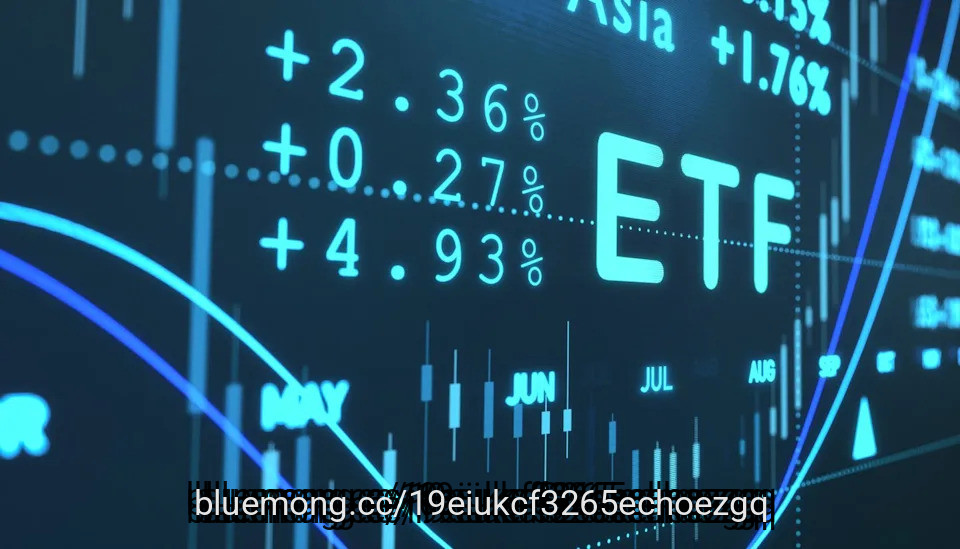
Let's look at five exchange-traded funds (ETFs) to scoop up if the market dips in the coming month.
#NVIDIA #time #pullback
At the same time, two major market valuation indicators point to stocks being at extremely frothy valuations. The S&P 500 Shiller CAPE (cyclically adjusted price-to-earnings) ratio is at over 40 times for the first time since before the dot.com market crash. The so-called Buffett indicator (U.S. stock market value divided by gross domestic product), named after Warren Buffett, is over 230%, well above the 120% where the market is considered overvalued. Throw in a war and a stressed consumer, and the ingredients for a market pullback are there.
Missed Nvidia in 2009? This Rare Signal Is Flashing Again. In 2009, a "Double Down" signal flashed for a little-known chipmaker called Nvidia. For the first time in years, that same "Total Conviction" signal is flashing for a company 1/100th the size of Nvidia. Continue »
There is no guarantee of a big market dip, and even if there were one, I wouldn't panic. Instead, I'd view it as a strong buying opportunity. AI has changed the equation, leading to big productivity gains that are just beginning, and stocks are generally cheap on a forward basis. The market today is very different than in the past. The S&P 500 is no longer led by cyclical and financial companies. Instead, it's dominated by large tech companies with strong balance sheets that produce enormous operating cash flow.
Let's look at five exchange-traded funds (ETFs) to scoop up if the market dips in the coming month.
#NVIDIA #time #pullback

12 days ago
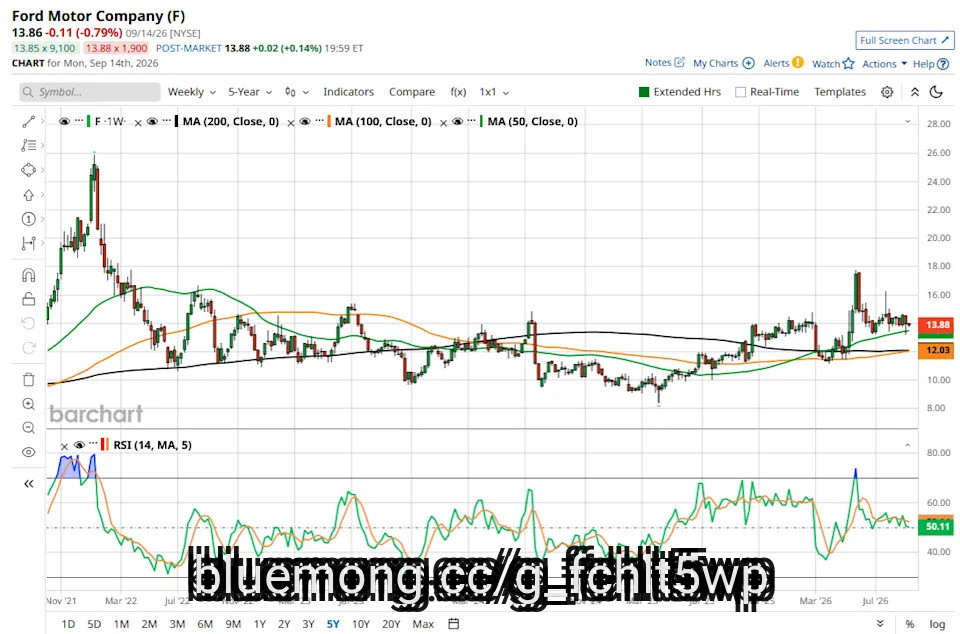
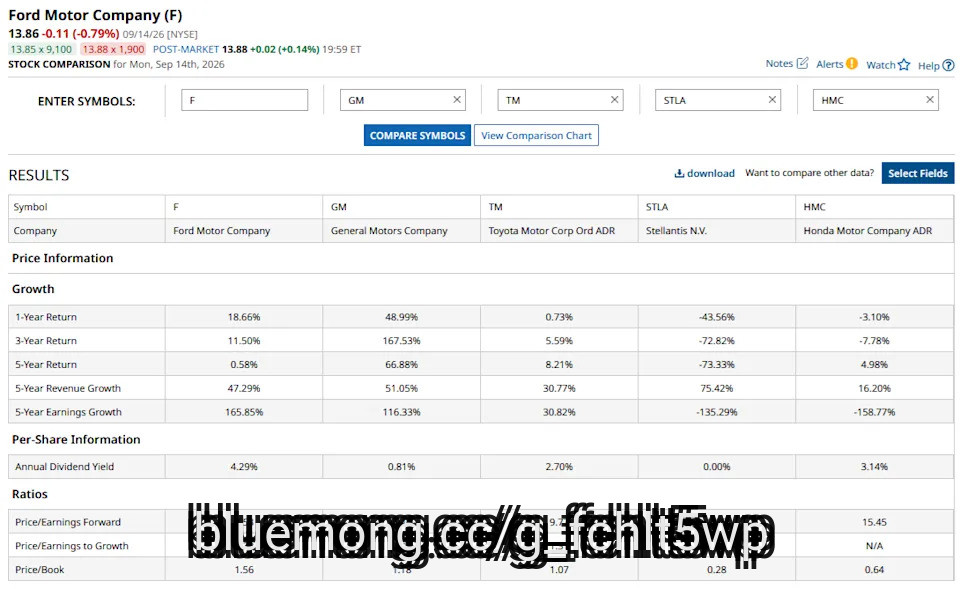
With a dividend yield of 4.3%, Ford (F) is among the highest-yielding constituents of the S&P 500 Index ($SPX). That number would look even more compelling considering Ford's dividend yield is over four times what an average S&P 500 Index constituent pays.
However, a bit of number-crunching tells a different picture. Dividend yield is basically a function of the per-share dividend, which is the numerator in the equation, and the stock price, which is the denominator. Dividend yield rises when the company raises its dividends or the share price falls. More often than not, the latter is true for companies that have a very high dividend yield.
Get exclusive insights with the FREE Barchart Brief newsletter. Subscribe now for quick, incisive midday market ****** ysis you won't find anywhere else.
The S&P 500's dividend yield is near its historical lows. Two factors can be blamed for the dip in the world's most popular index's dividend yield. First, tech companies' share in the market-cap-weighted index has soared amid the artificial intelligence (AI) driven rally. Mega-cap tech companies are known to be frugal with dividends, and their rising weightage in the index pulls down its dividend yield. Second, while the annualized dividend per share of the S&P 500 has continued to rise over the years, the increase has been much lower compared to the surge in stock prices.
In contrast, Ford's quarterly dividend has been static since July 2022, when the company raised the payout by 50% to $0.15. Notably, while Ford paid special dividends in the preceding three years to reach its payout targets, it hasn't raised its payout for over four years. Its dividend yield is still high because of its underperforming stock, which has essentially gone nowhere in the last five years and trades 46% below its October 2022 highs.
#Dividend #yield #Share #dividends
However, a bit of number-crunching tells a different picture. Dividend yield is basically a function of the per-share dividend, which is the numerator in the equation, and the stock price, which is the denominator. Dividend yield rises when the company raises its dividends or the share price falls. More often than not, the latter is true for companies that have a very high dividend yield.
Get exclusive insights with the FREE Barchart Brief newsletter. Subscribe now for quick, incisive midday market ****** ysis you won't find anywhere else.
The S&P 500's dividend yield is near its historical lows. Two factors can be blamed for the dip in the world's most popular index's dividend yield. First, tech companies' share in the market-cap-weighted index has soared amid the artificial intelligence (AI) driven rally. Mega-cap tech companies are known to be frugal with dividends, and their rising weightage in the index pulls down its dividend yield. Second, while the annualized dividend per share of the S&P 500 has continued to rise over the years, the increase has been much lower compared to the surge in stock prices.
In contrast, Ford's quarterly dividend has been static since July 2022, when the company raised the payout by 50% to $0.15. Notably, while Ford paid special dividends in the preceding three years to reach its payout targets, it hasn't raised its payout for over four years. Its dividend yield is still high because of its underperforming stock, which has essentially gone nowhere in the last five years and trades 46% below its October 2022 highs.
#Dividend #yield #Share #dividends


13 days ago
BILLINGS, Mont. (AP) — Killing endangered animals while logging a forest or building a dam would not be considered illegal unless the animals were specifically targeted, under a new interpretation of the Endangered Species Act by President Donald Trump's administration that marks a sea change in how the landmark environmental law is enforced.
A directive sent to U.S. Fish and Wildlife Service employees this week says imperiled animals or plants must be intentionally targeted for their killing to be considered illegal.
That's a sharp turnaround from past practice at the wildlife service, which historically held people liable even for accidentally harming protected species such as grizzly bears, manatees and spotted owls.
Experts said the change would allow timber companies to log forests in the Pacific Northwest even if they knew that doing so could kill imperiled birds nesting in the trees, or for developers to build a dam knowing it would kill salmon.
"This cuts against the entire history of the Endangered Species Act," said Dan Ashe, who led the Fish and Wildlife Service under former President Barack Obama.
#species #president #killing
A directive sent to U.S. Fish and Wildlife Service employees this week says imperiled animals or plants must be intentionally targeted for their killing to be considered illegal.
That's a sharp turnaround from past practice at the wildlife service, which historically held people liable even for accidentally harming protected species such as grizzly bears, manatees and spotted owls.
Experts said the change would allow timber companies to log forests in the Pacific Northwest even if they knew that doing so could kill imperiled birds nesting in the trees, or for developers to build a dam knowing it would kill salmon.
"This cuts against the entire history of the Endangered Species Act," said Dan Ashe, who led the Fish and Wildlife Service under former President Barack Obama.
#species #president #killing



13 days ago
Some offers on this page are from advertisers who pay us, which may affect which products we write about, but not our recommendations. See our Advertiser Disclosure.
The Federal Reserve — the country's central bank — periodically adjusts its target rate to keep the economy running smoothly and consumer prices in check. When the federal funds rate moves up or down, so do the interest rates on bank accounts and loans.
In other words, changes in the Fed's rate impact how much your savings can grow and how much you pay to borrow money.
So how does today's federal funds rate compare to past years? Here's a look at historical Fed interest rates so you can better understand how your bottom line is affected.
The federal funds rate is set by the Federal Reserve and dictates what a bank can charge another bank for ultra-short-term loans (usually overnight) in order to meet reserve requirements. It's expressed as a range, and financial institutions can negotiate a specific rate between each other within that range.
#reserve #funds #rates #range
The Federal Reserve — the country's central bank — periodically adjusts its target rate to keep the economy running smoothly and consumer prices in check. When the federal funds rate moves up or down, so do the interest rates on bank accounts and loans.
In other words, changes in the Fed's rate impact how much your savings can grow and how much you pay to borrow money.
So how does today's federal funds rate compare to past years? Here's a look at historical Fed interest rates so you can better understand how your bottom line is affected.
The federal funds rate is set by the Federal Reserve and dictates what a bank can charge another bank for ultra-short-term loans (usually overnight) in order to meet reserve requirements. It's expressed as a range, and financial institutions can negotiate a specific rate between each other within that range.
#reserve #funds #rates #range




13 days ago
Bunker fuel prices for ships remain at historically elevated levels, keeping pressure on vessel operating costs even as the marine-fuel supply squeeze that followed disruption around the Strait of Hormuz has eased at major fueling hubs.
In Singapore, the world's largest bunkering center, very-low-sulphur fuel oil, or VLSFO, was ******* sed at about $908 per metric ton this week, while marine gasoil (MGO) stood at $1,448 per ton and high-sulphur fuel oil at roughly $770 per ton, according to ******* yst Ship & Bunker.
At Rotterdam, Europe's busiest port, VLSFO was about $731 per ton, compared with $804 per ton in Houston and $1,005 per ton in Fujairah, United Arab Emirates.
The premium at Fujairah, the Middle East's principal bunker hub, shows the continuing impact of constrained traffic and supply-chain disruption in and around the Strait of Hormuz. Bunkering activity at Fujairah has recovered to about 40% of its prewar level, according to industry comments reported from the Asia Pacific Petroleum Conference, but remains well below normal.
Costs still far above January
#fuel #strait #hormuz #supply
In Singapore, the world's largest bunkering center, very-low-sulphur fuel oil, or VLSFO, was ******* sed at about $908 per metric ton this week, while marine gasoil (MGO) stood at $1,448 per ton and high-sulphur fuel oil at roughly $770 per ton, according to ******* yst Ship & Bunker.
At Rotterdam, Europe's busiest port, VLSFO was about $731 per ton, compared with $804 per ton in Houston and $1,005 per ton in Fujairah, United Arab Emirates.
The premium at Fujairah, the Middle East's principal bunker hub, shows the continuing impact of constrained traffic and supply-chain disruption in and around the Strait of Hormuz. Bunkering activity at Fujairah has recovered to about 40% of its prewar level, according to industry comments reported from the Asia Pacific Petroleum Conference, but remains well below normal.
Costs still far above January
#fuel #strait #hormuz #supply


13 days ago
Some offers on this page are from advertisers who pay us, which may affect which products we write about, but not our recommendations. See our Advertiser Disclosure.
The Federal Reserve — the country's central bank — periodically adjusts its target rate to keep the economy running smoothly and consumer prices in check. When the federal funds rate moves up or down, so do the interest rates on bank accounts and loans.
In other words, changes in the Fed's rate impact how much your savings can grow and how much you pay to borrow money.
So how does today's federal funds rate compare to past years? Here's a look at historical Fed interest rates so you can better understand how your bottom line is affected.
The federal funds rate is set by the Federal Reserve and dictates what a bank can charge another bank for ultra-short-term loans (usually overnight) in order to meet reserve requirements. It's expressed as a range, and financial institutions can negotiate a specific rate between each other within that range.
#federal #funds #rates
The Federal Reserve — the country's central bank — periodically adjusts its target rate to keep the economy running smoothly and consumer prices in check. When the federal funds rate moves up or down, so do the interest rates on bank accounts and loans.
In other words, changes in the Fed's rate impact how much your savings can grow and how much you pay to borrow money.
So how does today's federal funds rate compare to past years? Here's a look at historical Fed interest rates so you can better understand how your bottom line is affected.
The federal funds rate is set by the Federal Reserve and dictates what a bank can charge another bank for ultra-short-term loans (usually overnight) in order to meet reserve requirements. It's expressed as a range, and financial institutions can negotiate a specific rate between each other within that range.
#federal #funds #rates




13 days ago
Teck Resources Ltd (NYSE:TECK) stock's pullback from its Sept. 8 record high of $72.56 has found support at the 60-, 80-, and 100-day moving averages. The 100-day trendline in particular is a historically bullish signal that presents an intriguing 'buy the dip' angle.
Per Schaeffer's Senior Quantitative ******* yst Rocky White, TECK has traded within 0.75 times the 100-day moving average's 20-day average true range (ATR) after spending at least 80% of the previous two weeks and 80% of the prior 42 trading sessions above the trendline. This setup has occurred eight other times over the last decade, after which the stock was higher one month later 75% of the time, averaging a large 13.8% gain.
Short interest accounts for a healthy 7.5% of the stock's available float, leaving ample sideline buying power should some of these bearish bets begin to unwind. TECK's 14-day Relative Strength Index (RSI) of 28.4 also sits in "oversold" territory, which often precedes a short-term bounce.
Plus, TECK's Schaeffer's Volatility Scorecard (SVS) sits at 81 out of 100, suggesting the shares have tended to outperform options traders' volatility expectations during the past year.
#resources
Per Schaeffer's Senior Quantitative ******* yst Rocky White, TECK has traded within 0.75 times the 100-day moving average's 20-day average true range (ATR) after spending at least 80% of the previous two weeks and 80% of the prior 42 trading sessions above the trendline. This setup has occurred eight other times over the last decade, after which the stock was higher one month later 75% of the time, averaging a large 13.8% gain.
Short interest accounts for a healthy 7.5% of the stock's available float, leaving ample sideline buying power should some of these bearish bets begin to unwind. TECK's 14-day Relative Strength Index (RSI) of 28.4 also sits in "oversold" territory, which often precedes a short-term bounce.
Plus, TECK's Schaeffer's Volatility Scorecard (SVS) sits at 81 out of 100, suggesting the shares have tended to outperform options traders' volatility expectations during the past year.
#resources


13 days ago
Brace for minor market tremors now that the Fed has hiked interest rates by 0.25%.
Although if history holds up, any losses could prove short-lived.
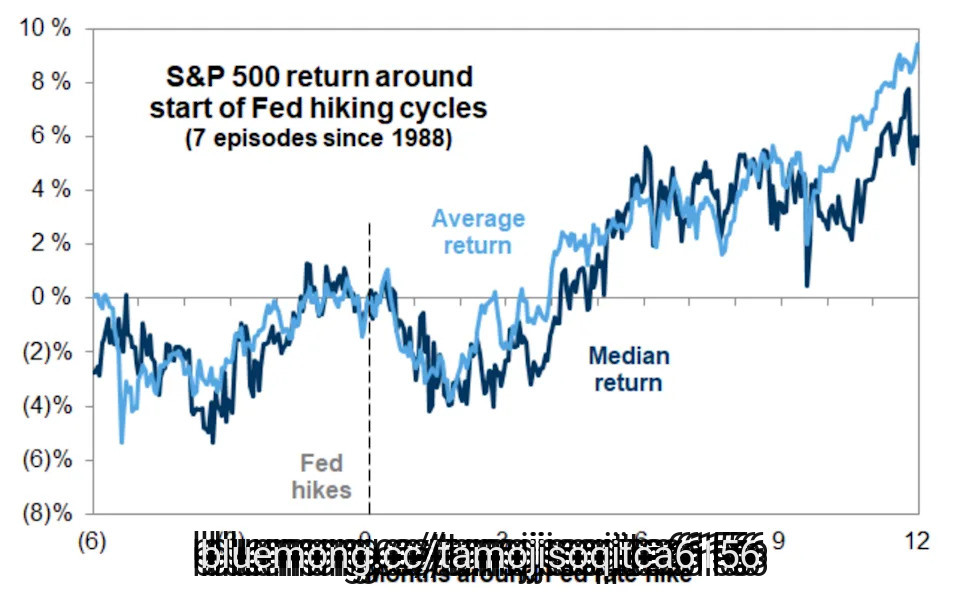
The S&P 500 (^GSPC) has declined by an average of 4.0% over the six weeks following the first Fed rate hike of a cycle across seven such episodes since 1988, per new ****** ysis from strategists at The Kobeissi Letter.
Stocks recovered all of those losses over the next five to six weeks on average.
In the six months following the first interest rate hike, the S&P 500 returned 4% on average. After 12 months, the S&P 500's average gain tallied 9%. Positive returns have occurred in every episode except 2022 over the 12 months.
"Fed rate hikes have historically been great buying opportunities," the strategists added.
Read more: Follow live coverage of the Fed meeting
The decision by the Fed to lift rates comes as sticky inflation readings — from the CPI to PPI — and rising energy costs force central bankers back into tightening mode. The rate hike marks the central bank's first interest rate increase since July 2023.
Investors are also focused on the updated economic projections and the Fed's "dot plot" to gauge future moves on rates — said dot plot didn't rule out one more hike this year. A hawkish dot plot as was received and follow up commentary from Fed Chairman Kevin Warsh could further elevate borrowing costs and pressure stocks initially around the world.
#rate #hike #first #plot
Although if history holds up, any losses could prove short-lived.
The S&P 500 (^GSPC) has declined by an average of 4.0% over the six weeks following the first Fed rate hike of a cycle across seven such episodes since 1988, per new ****** ysis from strategists at The Kobeissi Letter.
Stocks recovered all of those losses over the next five to six weeks on average.
In the six months following the first interest rate hike, the S&P 500 returned 4% on average. After 12 months, the S&P 500's average gain tallied 9%. Positive returns have occurred in every episode except 2022 over the 12 months.
"Fed rate hikes have historically been great buying opportunities," the strategists added.
Read more: Follow live coverage of the Fed meeting
The decision by the Fed to lift rates comes as sticky inflation readings — from the CPI to PPI — and rising energy costs force central bankers back into tightening mode. The rate hike marks the central bank's first interest rate increase since July 2023.
Investors are also focused on the updated economic projections and the Fed's "dot plot" to gauge future moves on rates — said dot plot didn't rule out one more hike this year. A hawkish dot plot as was received and follow up commentary from Fed Chairman Kevin Warsh could further elevate borrowing costs and pressure stocks initially around the world.
#rate #hike #first #plot



14 days ago
Lam Research Corporation (NASDAQ: LRCX) stock has struggled recently, shedding 16.6% in the last week alone. The shares have seen some volatility since their April-June rally peaked at a June 30 record high of $438.50. LRCX was last seen down 2.3% at $267.22 today, though it still boasts a roughly 56% year-to-date lead. Plus, the recent pullback has found support at the 200-day moving average, a trendline with historically bullish implications.
Per Schaeffer's Senior Quantitative ***** yst Rocky White, LRCX has traded within 0.75 times the 200-day moving average's 20-day average true range (ATR) after spending at least 80% of the previous two weeks and 80% of the prior 42 trading sessions above the trendline. This setup has occurred five other times over the last decade, after which the stock was higher one month later 80% of the time, averaging a 6.9% gain.
Furthermore, LRCX's 14-day Relative Strength Index (RSI) of 28.7 sits in "oversold" territory, which often precedes a short-term bounce.
#Stock #Research
Per Schaeffer's Senior Quantitative ***** yst Rocky White, LRCX has traded within 0.75 times the 200-day moving average's 20-day average true range (ATR) after spending at least 80% of the previous two weeks and 80% of the prior 42 trading sessions above the trendline. This setup has occurred five other times over the last decade, after which the stock was higher one month later 80% of the time, averaging a 6.9% gain.
Furthermore, LRCX's 14-day Relative Strength Index (RSI) of 28.7 sits in "oversold" territory, which often precedes a short-term bounce.
#Stock #Research


14 days ago
Shares of Nvidia Corp (NASDAQ:NVDA) stock are inching 0.4% higher to trade at $211.72 this afternoon, taking a breather after five-straight losing sessions, including yesterday's AI-induced selloff of 3.4%. The equity is still up 13.3% in 2026, however, and a rebound could soon be on the way, per a historically bullish trendline.
According to Schaeffer's Senior Quantitative ***** yst Rocky White, NVDA is trading within 0.75 times the 126-day moving average's 20-day average true range (ATR), after spending at least 80% of the previous two weeks and 80% of the prior 42 trading sessions above that trendline.
This setup has appeared 11 times over the last decade, after which the stock was higher one month later 82% of the time, averaging a 6.2% gain. From its current perch, a move of this caliber would put the equity just shy of $225.
NVDA sports a 50-day put/call volume ratio at the International Securities Exchange (ISE), Cboe Options Exchange (CBOE), and NASDAQ OMX PHLX (PHLX) that stands higher than 83% of readings from the past year. Should this bearish sentiment begin to unwind, it could trigger a new round of tailwinds for the shares.
Options are looking affordable as well. The stock's Schaeffer's Volatility Index (SVI) of 34% stands higher than just 2% of all other readings from the past year. In other words, near-term option traders are pricing in low volatility expectations at the moment.
#NASDAQ #cboe #phlx
According to Schaeffer's Senior Quantitative ***** yst Rocky White, NVDA is trading within 0.75 times the 126-day moving average's 20-day average true range (ATR), after spending at least 80% of the previous two weeks and 80% of the prior 42 trading sessions above that trendline.
This setup has appeared 11 times over the last decade, after which the stock was higher one month later 82% of the time, averaging a 6.2% gain. From its current perch, a move of this caliber would put the equity just shy of $225.
NVDA sports a 50-day put/call volume ratio at the International Securities Exchange (ISE), Cboe Options Exchange (CBOE), and NASDAQ OMX PHLX (PHLX) that stands higher than 83% of readings from the past year. Should this bearish sentiment begin to unwind, it could trigger a new round of tailwinds for the shares.
Options are looking affordable as well. The stock's Schaeffer's Volatility Index (SVI) of 34% stands higher than just 2% of all other readings from the past year. In other words, near-term option traders are pricing in low volatility expectations at the moment.
#NASDAQ #cboe #phlx


14 days ago
On September 10, a caller outlined a detailed financial thesis showing Micron Technology, Inc. (NASDAQ:MU) reaching $1,400 and asked whether the **** ysis held water. In response, Mad Money host Jim Cramer said:
I mean, that's a remarkable **** ysis. It's spot on in every single number. Every single thing you said is true, which is why my Charitable Trust owns it, and why we are buying it aggressively. And by the way, can I just say if you listen to what… [the caller] said, he put some money away. He was fortunate enough to have money, which I know not everybody can have, but he had money. He put it in an individual stock. Now, if he put it in an index fund, he'd make some money, but he got really rich. And part of my job is not just to get you rich, but to hopefully get you really rich.
Micron Technology, Inc. (NASDAQ:MU) stands as one of three primary global manufacturers of dynamic random-access memory (DRAM) and NAND flash memory, positioning it at the center of the ongoing expansion in artificial intelligence infrastructure. Because advanced AI workloads require significantly higher memory bandwidth, demand has surged for Micron's High-Bandwidth Memory (HBM3E) architecture, which is integrated directly into top-tier AI graphics processors and data center accelerators. With memory production capacity for advanced AI chips remaining constrained industry-wide, Micron has secured long-term purchase agreements that cover its HBM output through 2026 and into 2027, providing visibility into top-line revenue growth.
Driven by accelerated AI server adoption and broader pricing recovery across traditional DRAM and NAND markets, it reported extraordinary growth in fiscal Q3. Revenue surged to $41.46 billion, more than quadrupling the $9.30 billion generated in the same period last year and stepping up sharply from $23.86 billion in the prior quarter. The company demonstrated exceptional operating leverage during the period, posting GAAP net income of $28.24 billion ($24.67 per diluted share) and non-GAAP net income of $28.86 billion ($25.11 per diluted share). Operating cash flow also scaled quickly, reaching $25.39 billion compared to $11.90 billion in the prior quarter and $4.61 billion in the prior-year period.
Despite its strong position in the AI supply chain, Micron Technology, Inc. (NASDAQ:MU) operates in a historically cyclical memory industry with some operational and market risks. Memory chip pricing remains sensitive to industry-wide supply-and-demand imbalances, where oversupply can rapidly compress profit margins during broader downturns in consumer electronics demand or corporate IT spending.
#billion #memory #NASDAQ #industry
I mean, that's a remarkable **** ysis. It's spot on in every single number. Every single thing you said is true, which is why my Charitable Trust owns it, and why we are buying it aggressively. And by the way, can I just say if you listen to what… [the caller] said, he put some money away. He was fortunate enough to have money, which I know not everybody can have, but he had money. He put it in an individual stock. Now, if he put it in an index fund, he'd make some money, but he got really rich. And part of my job is not just to get you rich, but to hopefully get you really rich.
Micron Technology, Inc. (NASDAQ:MU) stands as one of three primary global manufacturers of dynamic random-access memory (DRAM) and NAND flash memory, positioning it at the center of the ongoing expansion in artificial intelligence infrastructure. Because advanced AI workloads require significantly higher memory bandwidth, demand has surged for Micron's High-Bandwidth Memory (HBM3E) architecture, which is integrated directly into top-tier AI graphics processors and data center accelerators. With memory production capacity for advanced AI chips remaining constrained industry-wide, Micron has secured long-term purchase agreements that cover its HBM output through 2026 and into 2027, providing visibility into top-line revenue growth.
Driven by accelerated AI server adoption and broader pricing recovery across traditional DRAM and NAND markets, it reported extraordinary growth in fiscal Q3. Revenue surged to $41.46 billion, more than quadrupling the $9.30 billion generated in the same period last year and stepping up sharply from $23.86 billion in the prior quarter. The company demonstrated exceptional operating leverage during the period, posting GAAP net income of $28.24 billion ($24.67 per diluted share) and non-GAAP net income of $28.86 billion ($25.11 per diluted share). Operating cash flow also scaled quickly, reaching $25.39 billion compared to $11.90 billion in the prior quarter and $4.61 billion in the prior-year period.
Despite its strong position in the AI supply chain, Micron Technology, Inc. (NASDAQ:MU) operates in a historically cyclical memory industry with some operational and market risks. Memory chip pricing remains sensitive to industry-wide supply-and-demand imbalances, where oversupply can rapidly compress profit margins during broader downturns in consumer electronics demand or corporate IT spending.
#billion #memory #NASDAQ #industry

14 days ago
The exchange-traded fund (ETF) market's August numbers look flawless on the surface, until you look at where the money actually went.
The industry held $16.4 trillion in ******* ets through August 31, 2026, with $180 billion in fresh capital pouring in that month alone, 3.8 times the historical August average and the strongest August on record for fund inflows, State Street reported.
New fund creation has been equally prolific, with 1,023 ETFs debuting in the first eight months of 2026, a 52% jump from the previous year's pace.
Active strategies represent more than 80% of the year's new products, and about 25% of August's 134 launches used leveraged or inverse structures, FactSet noted.
Among August's new launches were 18 single-stock ETFs, most of them targeting semiconductor companies to tap into the artificial intelligence infrastructure buildout.
#august #state #street #exchange
The industry held $16.4 trillion in ******* ets through August 31, 2026, with $180 billion in fresh capital pouring in that month alone, 3.8 times the historical August average and the strongest August on record for fund inflows, State Street reported.
New fund creation has been equally prolific, with 1,023 ETFs debuting in the first eight months of 2026, a 52% jump from the previous year's pace.
Active strategies represent more than 80% of the year's new products, and about 25% of August's 134 launches used leveraged or inverse structures, FactSet noted.
Among August's new launches were 18 single-stock ETFs, most of them targeting semiconductor companies to tap into the artificial intelligence infrastructure buildout.
#august #state #street #exchange

14 days ago
If you bought Meta Platforms (META) for its advertising engine, the engine still runs: revenue rose 28% year over year in the June 2026 quarter, and its Advantage+ automated campaigns keep growing. What has changed is where the cash goes afterward. The question for a holder is whether Meta is still the business you bought.
Over the twelve months through the June 2026 quarter, capital spending took 39.1% of revenue, against 18.5% across Meta's history. That money buys servers, data centers and network infrastructure. In late July 2026, Meta also announced a venture with BlackRock to develop a 1 gigawatt data center in El Paso, Texas. The plan is to keep going: management narrowed its 2026 capital-spending range by lifting the bottom of it.
Less cash is left over. TTM free-cash-flow margin is 18.0%, against 32.8% across its history, so on each dollar of sales Meta keeps a little more than half the free cash it used to.
Borrowing fills part of the gap. Debt has risen to 25.0% of total ******* ets, against a historical 7.0%, and the CFO says Meta is adding more debt to lower its cost of capital. Meta still holds more cash and marketable securities than debt.
Together, those three readings are the most unusual combination Meta has shown in 14 years. Taken with the 2026 spending floor that management has raised, the combination reads as a change in the business rather than one quarter of noise.
#quarter #spending #bought #engine
Over the twelve months through the June 2026 quarter, capital spending took 39.1% of revenue, against 18.5% across Meta's history. That money buys servers, data centers and network infrastructure. In late July 2026, Meta also announced a venture with BlackRock to develop a 1 gigawatt data center in El Paso, Texas. The plan is to keep going: management narrowed its 2026 capital-spending range by lifting the bottom of it.
Less cash is left over. TTM free-cash-flow margin is 18.0%, against 32.8% across its history, so on each dollar of sales Meta keeps a little more than half the free cash it used to.
Borrowing fills part of the gap. Debt has risen to 25.0% of total ******* ets, against a historical 7.0%, and the CFO says Meta is adding more debt to lower its cost of capital. Meta still holds more cash and marketable securities than debt.
Together, those three readings are the most unusual combination Meta has shown in 14 years. Taken with the 2026 spending floor that management has raised, the combination reads as a change in the business rather than one quarter of noise.
#quarter #spending #bought #engine

14 days ago
Listen and subscribe to Power Players with Brian Sozzi on Apple Podcasts, Amazon Music, Spotify, YouTube, or wherever you find your favorite podcasts.
The ballooning US debt pile is akin to a ticking time bomb for the country, in part because it weakens national security, billionaire Carlyle Group (CG) co-founder David Rubenstein warned.
"We have, as everybody now knows, $40 trillion of debt. Now, historically, if you go back over the last, let's say, 300 or 400 years, whenever a country paid more interest on its debt than it did for its national security, that's a sign of weakness in the country. Right now, we've crossed that threshold," Rubenstein said in a new episode of the Power Players with Brian Sozzi podcast (see video above or listen below).
"We're now paying more in interest every year than we are paying on our national defense, and we're paying a trillion dollars in interest, a little bit more than that now, but we pay about a trillion dollars in national defense," he added. "And as that continues, the interest goes up, and the money available for defense goes down. That tends to weaken your national security."
The numbers surrounding the debt situation are ever more staggering.
#country #defense
The ballooning US debt pile is akin to a ticking time bomb for the country, in part because it weakens national security, billionaire Carlyle Group (CG) co-founder David Rubenstein warned.
"We have, as everybody now knows, $40 trillion of debt. Now, historically, if you go back over the last, let's say, 300 or 400 years, whenever a country paid more interest on its debt than it did for its national security, that's a sign of weakness in the country. Right now, we've crossed that threshold," Rubenstein said in a new episode of the Power Players with Brian Sozzi podcast (see video above or listen below).
"We're now paying more in interest every year than we are paying on our national defense, and we're paying a trillion dollars in interest, a little bit more than that now, but we pay about a trillion dollars in national defense," he added. "And as that continues, the interest goes up, and the money available for defense goes down. That tends to weaken your national security."
The numbers surrounding the debt situation are ever more staggering.
#country #defense


14 days ago
If you bought Meta Platforms (META) for its advertising engine, the engine still runs: revenue rose 28% year over year in the June 2026 quarter, and its Advantage+ automated campaigns keep growing. What has changed is where the cash goes afterward. The question for a holder is whether Meta is still the business you bought.
Over the twelve months through the June 2026 quarter, capital spending took 39.1% of revenue, against 18.5% across Meta's history. That money buys servers, data centers and network infrastructure. In late July 2026, Meta also announced a venture with BlackRock to develop a 1 gigawatt data center in El Paso, Texas. The plan is to keep going: management narrowed its 2026 capital-spending range by lifting the bottom of it.
Less cash is left over. TTM free-cash-flow margin is 18.0%, against 32.8% across its history, so on each dollar of sales Meta keeps a little more than half the free cash it used to.
Borrowing fills part of the gap. Debt has risen to 25.0% of total **** ets, against a historical 7.0%, and the CFO says Meta is adding more debt to lower its cost of capital. Meta still holds more cash and marketable securities than debt.
Together, those three readings are the most unusual combination Meta has shown in 14 years. Taken with the 2026 spending floor that management has raised, the combination reads as a change in the business rather than one quarter of noise.
#meta #cash
Over the twelve months through the June 2026 quarter, capital spending took 39.1% of revenue, against 18.5% across Meta's history. That money buys servers, data centers and network infrastructure. In late July 2026, Meta also announced a venture with BlackRock to develop a 1 gigawatt data center in El Paso, Texas. The plan is to keep going: management narrowed its 2026 capital-spending range by lifting the bottom of it.
Less cash is left over. TTM free-cash-flow margin is 18.0%, against 32.8% across its history, so on each dollar of sales Meta keeps a little more than half the free cash it used to.
Borrowing fills part of the gap. Debt has risen to 25.0% of total **** ets, against a historical 7.0%, and the CFO says Meta is adding more debt to lower its cost of capital. Meta still holds more cash and marketable securities than debt.
Together, those three readings are the most unusual combination Meta has shown in 14 years. Taken with the 2026 spending floor that management has raised, the combination reads as a change in the business rather than one quarter of noise.
#meta #cash

14 days ago
Listen and subscribe to Power Players with Brian Sozzi on Apple Podcasts, Amazon Music, Spotify, YouTube, or wherever you find your favorite podcasts.
The ballooning US debt pile is akin to a ticking time bomb for the country, in part because it weakens national security, billionaire Carlyle Group (CG) co-founder David Rubenstein warned.
"We have, as everybody now knows, $40 trillion of debt. Now, historically, if you go back over the last, let's say, 300 or 400 years, whenever a country paid more interest on its debt than it did for its national security, that's a sign of weakness in the country. Right now, we've crossed that threshold," Rubenstein said in a new episode of the Power Players with Brian Sozzi podcast (see video above or listen below).
"We're now paying more in interest every year than we are paying on our national defense, and we're paying a trillion dollars in interest, a little bit more than that now, but we pay about a trillion dollars in national defense," he added. "And as that continues, the interest goes up, and the money available for defense goes down. That tends to weaken your national security."
The numbers surrounding the debt situation are ever more staggering.
#interest #power
The ballooning US debt pile is akin to a ticking time bomb for the country, in part because it weakens national security, billionaire Carlyle Group (CG) co-founder David Rubenstein warned.
"We have, as everybody now knows, $40 trillion of debt. Now, historically, if you go back over the last, let's say, 300 or 400 years, whenever a country paid more interest on its debt than it did for its national security, that's a sign of weakness in the country. Right now, we've crossed that threshold," Rubenstein said in a new episode of the Power Players with Brian Sozzi podcast (see video above or listen below).
"We're now paying more in interest every year than we are paying on our national defense, and we're paying a trillion dollars in interest, a little bit more than that now, but we pay about a trillion dollars in national defense," he added. "And as that continues, the interest goes up, and the money available for defense goes down. That tends to weaken your national security."
The numbers surrounding the debt situation are ever more staggering.
#interest #power



17 days ago
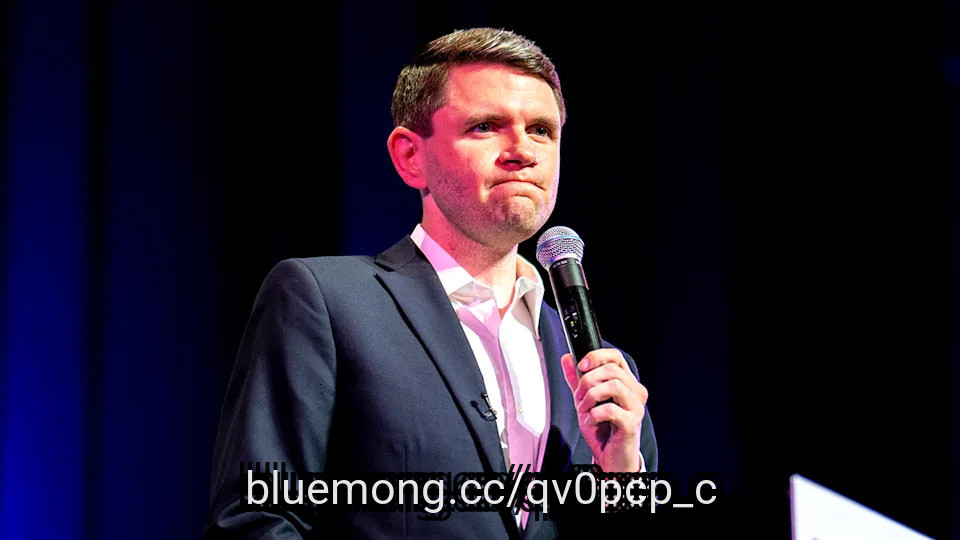
James Talarico, the Democratic candidate for U.S. Senate in Texas, once described parents who refused to acknowledge their children's gender identity as potentially engaging in "abusive" behavior.
"I think there are some folks that would think that if you deny your child's gender identity, that's incredibly harmful. And whether or not we label it with the term abuse, it's abusive for sure," Talarico said while speaking at a committee hearing in the Texas Legislature in 2019.
Talarico's resurfaced comments add to a growing pile of past remarks that cut against his efforts to paint himself as a moderate on issues like gender, policing and border security as he attempts to win over Texas, a historically Republican-leaning state.
Talarico Says He 'Missed The Mark' As He Backtracks On Controversial Woke Statements
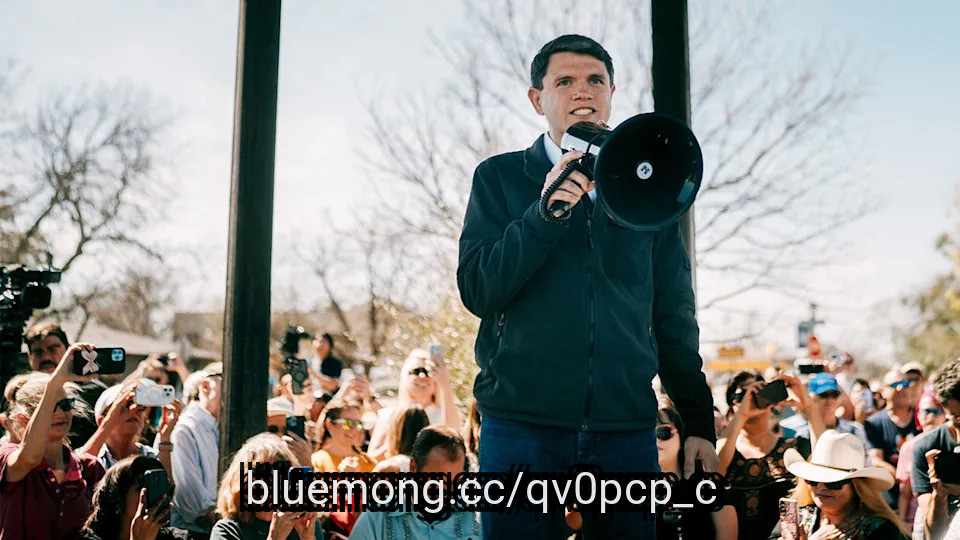
Democratic U.S. Senate candidate James Talarico speaks during a campaign rally at the Cailloux Theater on Aug. 31, 2026, in Kerrville, Texas. Talarico is in a close race against Republican Ken Paxton ahead of the Nov. 3 general election.
#gender #democratic #senate #abusive
"I think there are some folks that would think that if you deny your child's gender identity, that's incredibly harmful. And whether or not we label it with the term abuse, it's abusive for sure," Talarico said while speaking at a committee hearing in the Texas Legislature in 2019.
Talarico's resurfaced comments add to a growing pile of past remarks that cut against his efforts to paint himself as a moderate on issues like gender, policing and border security as he attempts to win over Texas, a historically Republican-leaning state.
Talarico Says He 'Missed The Mark' As He Backtracks On Controversial Woke Statements
Democratic U.S. Senate candidate James Talarico speaks during a campaign rally at the Cailloux Theater on Aug. 31, 2026, in Kerrville, Texas. Talarico is in a close race against Republican Ken Paxton ahead of the Nov. 3 general election.
#gender #democratic #senate #abusive


17 days ago
A pre-Christmas visit from Ed Cooley. A New Year's trip out West.
A Super Bowl Sunday showdown at Villanova. A Friday night fight at Madison Square Garden with Rick Pitino and St. John's.
For all the talk about the UConn men's basketball team's historically difficult non-conference schedule, it's easy to forget that the Huskies' Big East slate will yield plenty of challenges as well. Thanks to improved spending by several teams, the league figures to be deeper and more talented than last season, when it earned just three NCAA Tournament bids for the second time in three years.
The Huskies' 2026-27 Big East schedule was released on Monday. Here's a breakdown, with times and venues still to be determined:
Hoyas are the only Big East team whose 2026-27 roster still isn't up on their website, fwiw.
#east #christmas #cooley #bowl
A Super Bowl Sunday showdown at Villanova. A Friday night fight at Madison Square Garden with Rick Pitino and St. John's.
For all the talk about the UConn men's basketball team's historically difficult non-conference schedule, it's easy to forget that the Huskies' Big East slate will yield plenty of challenges as well. Thanks to improved spending by several teams, the league figures to be deeper and more talented than last season, when it earned just three NCAA Tournament bids for the second time in three years.
The Huskies' 2026-27 Big East schedule was released on Monday. Here's a breakdown, with times and venues still to be determined:
Hoyas are the only Big East team whose 2026-27 roster still isn't up on their website, fwiw.
#east #christmas #cooley #bowl


17 days ago
Oil prices (BZ=F, CL=F) are solidly back over the $100 per barrel mark. The August payrolls report showed the US economy added three times as many jobs as expected. Consumer pricing data showed "core" pricing ticking up faster than expected.
In other words, the case has grown increasingly strong for the Federal Reserve to issue its first rate hike in three years on Wednesday, as markets price in roughly a 90% probability of a quarter-point hike.
If equity market performance remains true to historical precedent, that could spell an upcoming trough for stocks, Goldman Sachs **** ysts led by Ben Snider wrote over the weekend.
Looking at history, the benchmark S&P 500 (^GSPC) index has seen an average three-month return of negative 2% at the start of a Fed hiking cycle throughout the past few decades, Goldman noted over the weekend.
That's primarily for three reasons.
#goldman
In other words, the case has grown increasingly strong for the Federal Reserve to issue its first rate hike in three years on Wednesday, as markets price in roughly a 90% probability of a quarter-point hike.
If equity market performance remains true to historical precedent, that could spell an upcoming trough for stocks, Goldman Sachs **** ysts led by Ben Snider wrote over the weekend.
Looking at history, the benchmark S&P 500 (^GSPC) index has seen an average three-month return of negative 2% at the start of a Fed hiking cycle throughout the past few decades, Goldman noted over the weekend.
That's primarily for three reasons.
#goldman

18 days ago
Lululemon Athletica Inc. (NASDAQ:LULU) recently issued its second guidance cut of the year, and investors responded immediately by sending shares down roughly 18%. That selloff came despite an EPS beat, but the headline result was heavily supported by a tariff refund rather than underlying business strength. Brand sentiment, traffic, and leggings sales are all weakening across the company's two largest markets. The key issue for investors is no longer whether the quarter was weak, but whether the stock's low valuation and new CEO can provide the catalyst for a meaningful recovery.
Lululemon shares dropped 18% after the company lowered its full-year guidance for the second time this year. Revenue is now projected to range from $10.35 billion to $10.5 billion, while EPS guidance was reduced to $9.48 to $9.73. Both represent sharp reductions from its earlier guidance ranges. Second-quarter revenue was particularly weak, falling 4% to $2.4 billion and coming in below consensus estimates, while comparable sales dropped 9%, or 10% on a constant-dollar basis. According to the company, negative commentary had affected traffic in both the U.S. and China, while leggings sales slowed more than expected. Although reported EPS beat estimates, nearly all of that upside came from an $0.86 per share tariff refund. For the third quarter, management expects revenue to decline another 10% to 11%.
Lululemon still has several financial advantages that could support the business through its current slowdown. The company has no outstanding borrowings and maintains $1.4 billion in cash. First-half operating cash flow climbed to $589 million, more than double the prior year. Inventory per unit also declined roughly 7% year over year, reducing the risk of a margin-damaging clearance event. Meanwhile, shares have fallen over 50% year-to-date and now trade at a historically depressed valuation, potentially creating an out-of-favor-setup for investors. At the same time, management continued its buyback program, repurchasing $330 million worth of shares during the quarter.
The weakness in traffic and leggings sales cannot be ignored, and both remain serious concerns. However, the company has a debt-free balance sheet, stronger cash generation, and a valuation that already reflects much of the recent bad news. That gives Lululemon room to prove that its current struggles are mainly execution-related rather than signs of a structural decline.
#year #shares #company
Lululemon shares dropped 18% after the company lowered its full-year guidance for the second time this year. Revenue is now projected to range from $10.35 billion to $10.5 billion, while EPS guidance was reduced to $9.48 to $9.73. Both represent sharp reductions from its earlier guidance ranges. Second-quarter revenue was particularly weak, falling 4% to $2.4 billion and coming in below consensus estimates, while comparable sales dropped 9%, or 10% on a constant-dollar basis. According to the company, negative commentary had affected traffic in both the U.S. and China, while leggings sales slowed more than expected. Although reported EPS beat estimates, nearly all of that upside came from an $0.86 per share tariff refund. For the third quarter, management expects revenue to decline another 10% to 11%.
Lululemon still has several financial advantages that could support the business through its current slowdown. The company has no outstanding borrowings and maintains $1.4 billion in cash. First-half operating cash flow climbed to $589 million, more than double the prior year. Inventory per unit also declined roughly 7% year over year, reducing the risk of a margin-damaging clearance event. Meanwhile, shares have fallen over 50% year-to-date and now trade at a historically depressed valuation, potentially creating an out-of-favor-setup for investors. At the same time, management continued its buyback program, repurchasing $330 million worth of shares during the quarter.
The weakness in traffic and leggings sales cannot be ignored, and both remain serious concerns. However, the company has a debt-free balance sheet, stronger cash generation, and a valuation that already reflects much of the recent bad news. That gives Lululemon room to prove that its current struggles are mainly execution-related rather than signs of a structural decline.
#year #shares #company