

12 days ago
Shares of Nvidia Corp (NASDAQ:NVDA) stock are inching 0.4% higher to trade at $211.72 this afternoon, taking a breather after five-straight losing sessions, including yesterday's AI-induced selloff of 3.4%. The equity is still up 13.3% in 2026, however, and a rebound could soon be on the way, per a historically bullish trendline.
According to Schaeffer's Senior Quantitative ***** yst Rocky White, NVDA is trading within 0.75 times the 126-day moving average's 20-day average true range (ATR), after spending at least 80% of the previous two weeks and 80% of the prior 42 trading sessions above that trendline.
This setup has appeared 11 times over the last decade, after which the stock was higher one month later 82% of the time, averaging a 6.2% gain. From its current perch, a move of this caliber would put the equity just shy of $225.
NVDA sports a 50-day put/call volume ratio at the International Securities Exchange (ISE), Cboe Options Exchange (CBOE), and NASDAQ OMX PHLX (PHLX) that stands higher than 83% of readings from the past year. Should this bearish sentiment begin to unwind, it could trigger a new round of tailwinds for the shares.
Options are looking affordable as well. The stock's Schaeffer's Volatility Index (SVI) of 34% stands higher than just 2% of all other readings from the past year. In other words, near-term option traders are pricing in low volatility expectations at the moment.
#NASDAQ #cboe #phlx
According to Schaeffer's Senior Quantitative ***** yst Rocky White, NVDA is trading within 0.75 times the 126-day moving average's 20-day average true range (ATR), after spending at least 80% of the previous two weeks and 80% of the prior 42 trading sessions above that trendline.
This setup has appeared 11 times over the last decade, after which the stock was higher one month later 82% of the time, averaging a 6.2% gain. From its current perch, a move of this caliber would put the equity just shy of $225.
NVDA sports a 50-day put/call volume ratio at the International Securities Exchange (ISE), Cboe Options Exchange (CBOE), and NASDAQ OMX PHLX (PHLX) that stands higher than 83% of readings from the past year. Should this bearish sentiment begin to unwind, it could trigger a new round of tailwinds for the shares.
Options are looking affordable as well. The stock's Schaeffer's Volatility Index (SVI) of 34% stands higher than just 2% of all other readings from the past year. In other words, near-term option traders are pricing in low volatility expectations at the moment.
#NASDAQ #cboe #phlx


18 days ago
Lyft Inc (NASDAQ:LYFT) is slightly lower this afternoon, down 0.2% at $14.86. Heading for a fifth-straight daily drop, the Uber Technologies (UBER) rival is trading near its late-July lows, sporting a grim 23.3% year-to-date deficit. All may not be lost, however, as this pullback looks to be placing Lyft stock near a trendline with historically bullish implications.
According to Schaeffer's Senior Quantitative ****** yst Rocky White, LYFT shares are within 0.75 of their 126-day moving average's 20-day average true range (ATR), after remaining below it 80% of the time in the past two weeks and in 80% of the last 42 trading sessions.
This signal has occurred five times in the last 10 years, after which Lyft stock was higher one month later 60% of the time, averaging a 9.4% gain. From its current perch, a surge of this magnitude would put the shares back above the $16 area.
Put traders have been circling, per LYFT's 10-day put/call volume ratio at the International Securities Exchange (ISE), Chicago Board Options Exchange (CBOE), and NASDAQ OMX PHLX (PHLX), which stands higher than 76% of all other readings from the past year. Echoing this, the stock's Schaeffer's put/call open interest ratio (SOIR) of ranks higher than all other readings from the past 12 months. Should this bearish sentiment begin to unwind, it could trigger tailwinds for the shares.
Options are attractively priced as well, per the stock's Schaeffer's Volatility Index (SVI) of 51%, which stands higher than just 18% of all other readings from the past year, implying that near-term option traders are pricing in relatively low volatility expectations.
#lyft #higher #uber
According to Schaeffer's Senior Quantitative ****** yst Rocky White, LYFT shares are within 0.75 of their 126-day moving average's 20-day average true range (ATR), after remaining below it 80% of the time in the past two weeks and in 80% of the last 42 trading sessions.
This signal has occurred five times in the last 10 years, after which Lyft stock was higher one month later 60% of the time, averaging a 9.4% gain. From its current perch, a surge of this magnitude would put the shares back above the $16 area.
Put traders have been circling, per LYFT's 10-day put/call volume ratio at the International Securities Exchange (ISE), Chicago Board Options Exchange (CBOE), and NASDAQ OMX PHLX (PHLX), which stands higher than 76% of all other readings from the past year. Echoing this, the stock's Schaeffer's put/call open interest ratio (SOIR) of ranks higher than all other readings from the past 12 months. Should this bearish sentiment begin to unwind, it could trigger tailwinds for the shares.
Options are attractively priced as well, per the stock's Schaeffer's Volatility Index (SVI) of 51%, which stands higher than just 18% of all other readings from the past year, implying that near-term option traders are pricing in relatively low volatility expectations.
#lyft #higher #uber

0.00$ raised of 0.00$ goal
0 donations
0.00$
to go

24 days ago
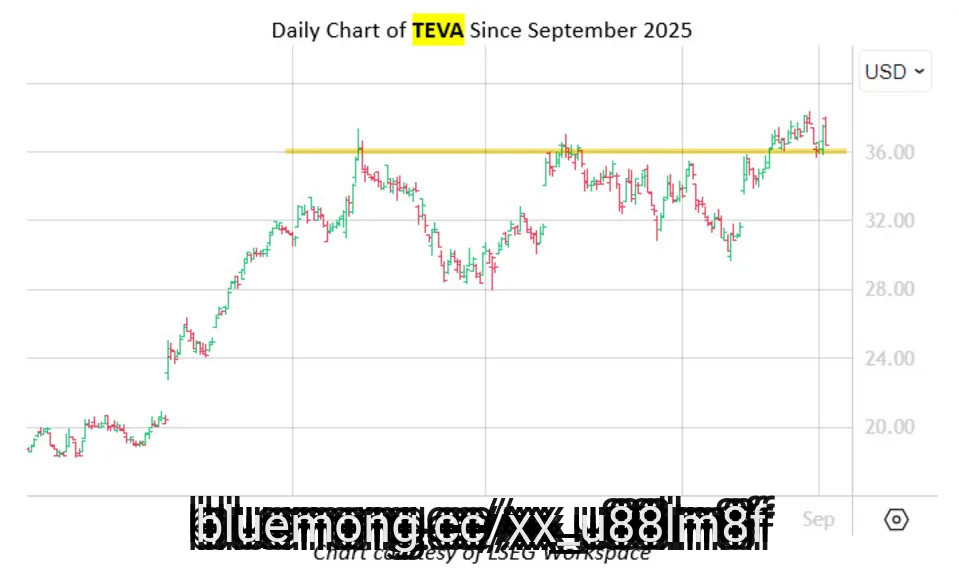
Teva Pharmaceuticals Industries (NYSE:TEVA) is moving 2.9% lower to trade at $36.41, pulling back from its Aug. 27, nearly nine-year high of $38.36. The $36 level looks to have moved in as a floor of support, a former level of resistance for the shares since late January. More gains could be on the table, however, with a fresh bull signal now flashing for the drug maker.
TEVA's long-term outperformance comes amid historically low implied volatility (IV). Specifically, the equity's current SVI of 29% stands in the low 5th percentile of its annual range.
According to data from Schaeffer's Senior Quantitative ******* yst Rocky White, there have been five instances in the past five years when the equity traded within 2% of its 52-week high, while its Schaeffer's Volatility Index (SVI) ranked in the 20th percentile of its annual range or lower.
TEVA was higher one month later 80% of the time after those signals, averaging a 5.5% gain. From its current perch, a shift of this amount would put the equity back above $38 -- within a chip-shot of its August peak.
Options traders are still not convinced. This is per the equity's 10-day put/call volume ratio at the International Securities Exchange (ISE), Cboe Options Exchange (CBOE), and NASDAQ OMX PHLX (PHLX), which sits higher than 96% of readings from the past year. Should this bearish sentiment begin to unwind, it could trigger more tailwinds for the shares.
#exchange
TEVA's long-term outperformance comes amid historically low implied volatility (IV). Specifically, the equity's current SVI of 29% stands in the low 5th percentile of its annual range.
According to data from Schaeffer's Senior Quantitative ******* yst Rocky White, there have been five instances in the past five years when the equity traded within 2% of its 52-week high, while its Schaeffer's Volatility Index (SVI) ranked in the 20th percentile of its annual range or lower.
TEVA was higher one month later 80% of the time after those signals, averaging a 5.5% gain. From its current perch, a shift of this amount would put the equity back above $38 -- within a chip-shot of its August peak.
Options traders are still not convinced. This is per the equity's 10-day put/call volume ratio at the International Securities Exchange (ISE), Cboe Options Exchange (CBOE), and NASDAQ OMX PHLX (PHLX), which sits higher than 96% of readings from the past year. Should this bearish sentiment begin to unwind, it could trigger more tailwinds for the shares.
#exchange

25 days ago
Broadcom (AVGO) reported fiscal third-quarter results after the close on Wednesday, September 2, delivering a beat on both revenue and earnings but failing to impress investors with its forward outlook.
The stock fell more than 3% in after-hours trading, extending what has been a disappointing year for shareholders, with AVGO up only about 1% year-to-date against a 64% gain for the broader PHLX Semiconductor Index.
Nvidia CEO Jensen Huang Says His $3.5 Billion MediaTek Deal Is 'Not Circular' Because 'They Do Their Own Business'
Strategy's Strategy Appears to Have Failed, and the Outlook of MSTR Stock Is Unfavorable
A Potential ******* eX Deal Could Meaningfully Accelerate Growth for Technip Stock
#wednesday #phlx
The stock fell more than 3% in after-hours trading, extending what has been a disappointing year for shareholders, with AVGO up only about 1% year-to-date against a 64% gain for the broader PHLX Semiconductor Index.
Nvidia CEO Jensen Huang Says His $3.5 Billion MediaTek Deal Is 'Not Circular' Because 'They Do Their Own Business'
Strategy's Strategy Appears to Have Failed, and the Outlook of MSTR Stock Is Unfavorable
A Potential ******* eX Deal Could Meaningfully Accelerate Growth for Technip Stock
#wednesday #phlx


26 days ago
Broadcom stock reports third-quarter results after Wednesday's close and has climbed 4% from last week's low to $370.34.
Wall Street rates it a Strong Buy, with 25 buy ratings, three holds, and no sells, despite a major money flow warning.
Broadcom shares still sit 23% below the record they set on June 2, up 7% this year, compared with 63% for the PHLX Semiconductor Index.
This is the season's last big AI print, after 36 **** ysts backed Nvidia into its own results.
Analysts expect $29.241 billion of revenue and $3.215 in adjusted earnings.
#results #last #june
Wall Street rates it a Strong Buy, with 25 buy ratings, three holds, and no sells, despite a major money flow warning.
Broadcom shares still sit 23% below the record they set on June 2, up 7% this year, compared with 63% for the PHLX Semiconductor Index.
This is the season's last big AI print, after 36 **** ysts backed Nvidia into its own results.
Analysts expect $29.241 billion of revenue and $3.215 in adjusted earnings.
#results #last #june


26 days ago
As September gets underway, we want to help you stay ahead of the game with our monthly list of stocks to buy and avoid. We've hit the best Dow stock to own in September, but below we're going to take a look at where you might want to avoid putting your money in what historically tends to be the worst trading month of the year.
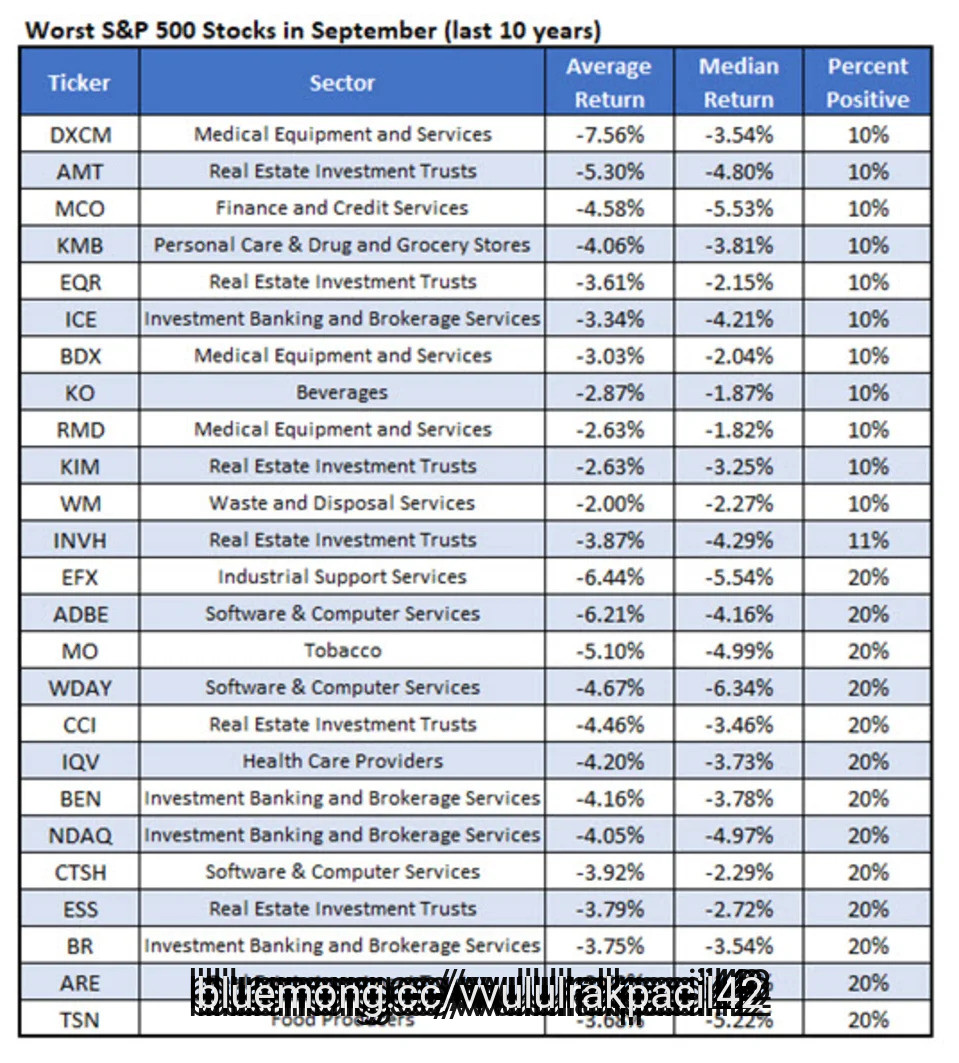
Below is a list of the 25 worst-performing S&P 500 stocks in September over the last 10 years, per data from Schaeffer's Senior Quantitative ******* yst Rocky White. Among the historical underperformers is Adobe Inc (NASDAQ:ADBE).
According White's data, ADBE averaged a loss of 6.2% over the last 10 years, and has finished higher only twice. From its current perch, a pullback of this magnitude could put the software name back near $271. The stock is already living up to the data, down 1.6% to trade at $288.04 at last check today and looking to snap a three-day win streak.
The stock's recent rebound appears to be losing steam at the $300 level, while long-term pressure at the descending 320-day moving average lingers above as well. Year to date, ADBE is down 17.7%.
Options traders are still buying into the hype, however. This is per the equity's 50-day call/put volume ratio of 2.21 over at the International Securities Exchange (ISE), Cboe Options Exchange (CBOE), and NASDAQ OMX PHLX (PHLX), which sits higher than 82% of readings from the past year. Should this bullish sentiment begin to unwind, it could trigger more headwinds for the shares.
#september #exchange #phlx
Below is a list of the 25 worst-performing S&P 500 stocks in September over the last 10 years, per data from Schaeffer's Senior Quantitative ******* yst Rocky White. Among the historical underperformers is Adobe Inc (NASDAQ:ADBE).
According White's data, ADBE averaged a loss of 6.2% over the last 10 years, and has finished higher only twice. From its current perch, a pullback of this magnitude could put the software name back near $271. The stock is already living up to the data, down 1.6% to trade at $288.04 at last check today and looking to snap a three-day win streak.
The stock's recent rebound appears to be losing steam at the $300 level, while long-term pressure at the descending 320-day moving average lingers above as well. Year to date, ADBE is down 17.7%.
Options traders are still buying into the hype, however. This is per the equity's 50-day call/put volume ratio of 2.21 over at the International Securities Exchange (ISE), Cboe Options Exchange (CBOE), and NASDAQ OMX PHLX (PHLX), which sits higher than 82% of readings from the past year. Should this bullish sentiment begin to unwind, it could trigger more headwinds for the shares.
#september #exchange #phlx

1 month ago
Nvidia's 7-day losing streak, its longest since 2022, arrives as Wall Street expects $92 billion in revenue and 95% year-over-year growth.
Nvidia stock has fallen after earnings in 6 of the last 8 quarters, including 4 straight, making a post-report rally far from guaranteed.
Despite a consensus Buy rating and a $308 price target, Nvidia has gained just 12% in 2026 while the PHLX Semiconductor Index surged 61%.
Don't wait: the ****** yst who called NVIDIA in 2010 just revealed his top 10 AI stocks. See the full list FREE now.
The stock market has entered a stretch where merely delivering strong earnings is no longer enough for many of its biggest winners. Investors have grown accustomed to companies beating expectations, raising guidance, and then watching their shares struggle anyway as the bar keeps moving higher.
#earnings #wall
Nvidia stock has fallen after earnings in 6 of the last 8 quarters, including 4 straight, making a post-report rally far from guaranteed.
Despite a consensus Buy rating and a $308 price target, Nvidia has gained just 12% in 2026 while the PHLX Semiconductor Index surged 61%.
Don't wait: the ****** yst who called NVIDIA in 2010 just revealed his top 10 AI stocks. See the full list FREE now.
The stock market has entered a stretch where merely delivering strong earnings is no longer enough for many of its biggest winners. Investors have grown accustomed to companies beating expectations, raising guidance, and then watching their shares struggle anyway as the bar keeps moving higher.
#earnings #wall


1 month ago
The world's largest chipmaker, Taiwan Semiconductor Manufacturing Company Limited (NYSE:TSM) reported July revenue of NT$467.58 billion, or about $14.5 billion, up by 45% from a year earlier. That's actually ahead of the company's own recently raised full-year guidance of slightly above 40% growth in dollar terms. Chairman C.C. Wei called AI-related demand "extremely robust." European chip stocks, including ASML, rose on the news even as the broader PHLX Semiconductor index sits roughly 15% below its June high.
TSMC's July numbers ran ahead of its own aggressive full-year guidance right as the rest of the chip sector has been selling off on worries about AI overspending.
That raises a fair question: is TSMC proving AI demand is still real, or is one strong month masking real cracks elsewhere?
July's 44.7% growth already outpaces Taiwan Semiconductor Manufacturing Company Limited (NYSE:TSM)'s own raised guidance, which Quilter Cheviot **** yst Ben Barringer called "no mean feat," easing pressure on the rest of the summer. High-performance computing, the segment that houses AI chip production for customers like Nvidia and Google, made up 66% of TSMC's second-quarter revenue, showing AI is now the core business rather than a side bet. TSMC also raised its 2026 capital spending guidance to a record $60 billion to $64 billion, a clear signal it expects demand to keep growing rather than plateau.
Separately, TSMC and Sony are reportedly in talks to invest a combined $6.4 billion in a **** an image sensor plant targeting 2029 production, aimed at demand from AI robots and self-driving cars. It is a second long-term growth avenue beyond AI chips.
#semiconductor #tsmc #year #taiwan
TSMC's July numbers ran ahead of its own aggressive full-year guidance right as the rest of the chip sector has been selling off on worries about AI overspending.
That raises a fair question: is TSMC proving AI demand is still real, or is one strong month masking real cracks elsewhere?
July's 44.7% growth already outpaces Taiwan Semiconductor Manufacturing Company Limited (NYSE:TSM)'s own raised guidance, which Quilter Cheviot **** yst Ben Barringer called "no mean feat," easing pressure on the rest of the summer. High-performance computing, the segment that houses AI chip production for customers like Nvidia and Google, made up 66% of TSMC's second-quarter revenue, showing AI is now the core business rather than a side bet. TSMC also raised its 2026 capital spending guidance to a record $60 billion to $64 billion, a clear signal it expects demand to keep growing rather than plateau.
Separately, TSMC and Sony are reportedly in talks to invest a combined $6.4 billion in a **** an image sensor plant targeting 2029 production, aimed at demand from AI robots and self-driving cars. It is a second long-term growth avenue beyond AI chips.
#semiconductor #tsmc #year #taiwan


1 month ago
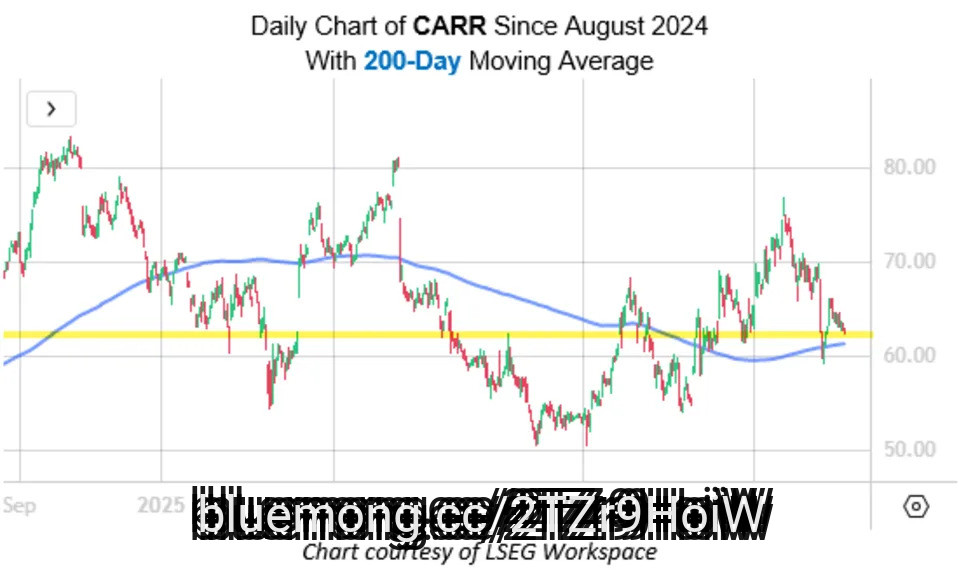
Climate and energy solutions stock Carrier Global Corporation (NYSE:CARR) has taken a breather since its June 25 nearly 52-week high of $76.76, last seen flat at $62.73 today. The underlying $62.50 level has been a key level of support and resistance, however, while the shares are also nearing a trendline with historically bullish implications.
According to Schaeffer's Senior Quantitative **** yst Rocky White, CARR is trading within 0.75 times the 200-day moving averages' 20-day average true range (ATR), after spending at least 80% of the previous two weeks and 80% of the prior 42 trading sessions above that trendline. This setup has appeared six other times over the last decade, after which the stock was higher one month later 100% of the time, averaging an 8.1% gain.
An unwinding of pessimism amongst options traders could provide tailwinds as well. At the International Securities Exchange (ISE), Cboe Options Exchange (CBOE), and NASDAQ OMX PHLX (PHLX), Carrier Global stock's 10-day put/call volume ratio of 1.18 sits higher than 85% of readings from the past year.
#global
According to Schaeffer's Senior Quantitative **** yst Rocky White, CARR is trading within 0.75 times the 200-day moving averages' 20-day average true range (ATR), after spending at least 80% of the previous two weeks and 80% of the prior 42 trading sessions above that trendline. This setup has appeared six other times over the last decade, after which the stock was higher one month later 100% of the time, averaging an 8.1% gain.
An unwinding of pessimism amongst options traders could provide tailwinds as well. At the International Securities Exchange (ISE), Cboe Options Exchange (CBOE), and NASDAQ OMX PHLX (PHLX), Carrier Global stock's 10-day put/call volume ratio of 1.18 sits higher than 85% of readings from the past year.
#global

2 months ago
Chip stocks rallied Thursday, with the PHLX Semiconductor Sector nearing a new bull market.
Bank of America ***** ysts expect faster growth in the AI server chip market.
Nvidia, a key player in AI, is close to its May highs and reports earnings on Aug. 26.
After a steep July sell-off, investors are chipping in again.
Chip stocks were some of the biggest gainers in the S&P 500 and Nasdaq Thursday, a day when markets rose broadly. Shares of SanDisk (SNDK) popped 14%, while Micron Technology (MU) jumped 4% and Arm (ARM) added close to 3%. Intel (INTC) and Qualcomm (QCOM) also climbed, driving the PHLX Semiconductor Sector (SOX) up 0.5%.
#phlx
Bank of America ***** ysts expect faster growth in the AI server chip market.
Nvidia, a key player in AI, is close to its May highs and reports earnings on Aug. 26.
After a steep July sell-off, investors are chipping in again.
Chip stocks were some of the biggest gainers in the S&P 500 and Nasdaq Thursday, a day when markets rose broadly. Shares of SanDisk (SNDK) popped 14%, while Micron Technology (MU) jumped 4% and Arm (ARM) added close to 3%. Intel (INTC) and Qualcomm (QCOM) also climbed, driving the PHLX Semiconductor Sector (SOX) up 0.5%.
#phlx

2 months ago
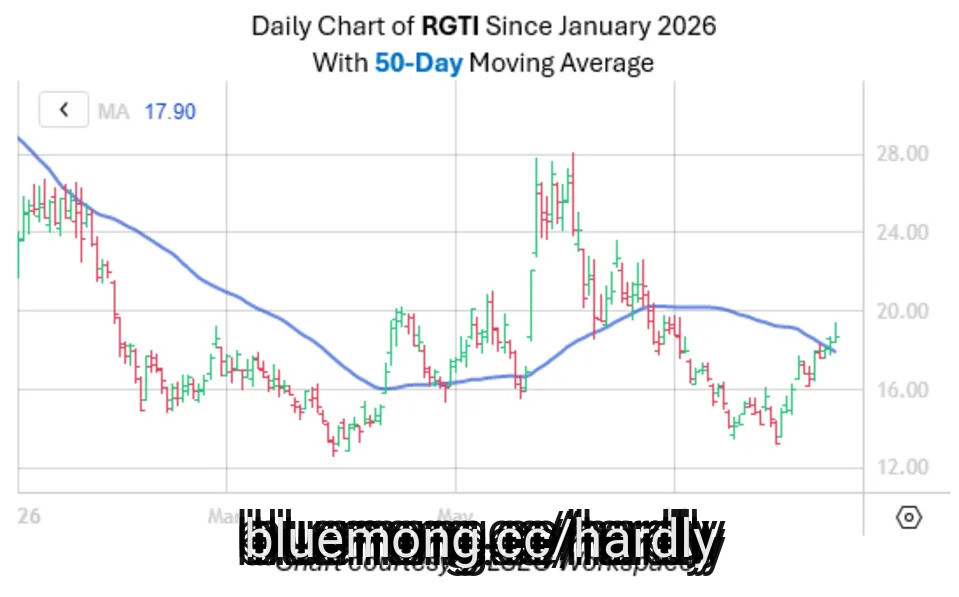
Rigetti Computing Inc (NASDAQ:RGTI) stock is clearing a trendline with historically bullish implications. The trendline in question is the stock's 50-day moving average. Per Schaeffer's Senior Quantitative ***** yst Rocky White, this "crossover" event happened nine other times in the last 10 years, after which the equity was higher 56% of the time, averaging a 19.19% gain.
The shares are pacing for their third straight daily win, continuing uphill and away from late-July lows. Plus, the 19.3% of Rigetti's available float sold short leaves plenty of room for short covering should the stock's momentum continue.
Rigetti sports a 50-day call/put volume ratio of 4.09 on the International Securities Exchange (ISE), Chicago Board Options Exchange (CBOE), and NASDAQ OMX PHLX (PHLX). This ratio stands higher than 98% of all other readings from the past year, hinting at strong bullish sentiment from long-term traders.
Options are incredibly affordable, per RGTI's Schaeffer's Volatility Index (SVI) of 82%, which stands higher than just 2% of all other readings from the past year, implying that near-term option traders are pricing in relatively low volatility expectations.
#higher #options #bullish
The shares are pacing for their third straight daily win, continuing uphill and away from late-July lows. Plus, the 19.3% of Rigetti's available float sold short leaves plenty of room for short covering should the stock's momentum continue.
Rigetti sports a 50-day call/put volume ratio of 4.09 on the International Securities Exchange (ISE), Chicago Board Options Exchange (CBOE), and NASDAQ OMX PHLX (PHLX). This ratio stands higher than 98% of all other readings from the past year, hinting at strong bullish sentiment from long-term traders.
Options are incredibly affordable, per RGTI's Schaeffer's Volatility Index (SVI) of 82%, which stands higher than just 2% of all other readings from the past year, implying that near-term option traders are pricing in relatively low volatility expectations.
#higher #options #bullish
2 months ago
E-commerce platform Wayfair Inc (NYSE:W) enjoyed a massive 30% post-earnings bull gap last week. The stock has managed to hold on to most of those gains, with support emerging at the $104 level, and an unwinding of pessimism amongst options traders could help push it even higher.
W sports a 50-day put/call volume ratio of 1.71 at the International Securities Exchange (ISE), Cboe Options Exchange (CBOE), and NASDAQ OMX PHLX (PHLX) that stands higher than 99% of readings from the past year.
There have been three instances in the last three years that the equity's 50-day buy-to-open put/call ratio crossed over 1.0 and moved into the 90th percentile. Per Schaeffer's Senior Quantitative ****** yst Rocky White, Wayfair was higher one month later 100% of the time after these signals with an average 11.1% return. From its current perch, this would put the stock back near $587.
Plus, short interest represents 14.2% of the stock's available float. It would take shorts nearly four days to cover their bets, at W's average pace of trading.
#exchange
W sports a 50-day put/call volume ratio of 1.71 at the International Securities Exchange (ISE), Cboe Options Exchange (CBOE), and NASDAQ OMX PHLX (PHLX) that stands higher than 99% of readings from the past year.
There have been three instances in the last three years that the equity's 50-day buy-to-open put/call ratio crossed over 1.0 and moved into the 90th percentile. Per Schaeffer's Senior Quantitative ****** yst Rocky White, Wayfair was higher one month later 100% of the time after these signals with an average 11.1% return. From its current perch, this would put the stock back near $587.
Plus, short interest represents 14.2% of the stock's available float. It would take shorts nearly four days to cover their bets, at W's average pace of trading.
#exchange


2 months ago
Tech stocks boosted the major indexes on Tuesday morning as markets eyed Middle East talks and earnings rolled in, with the arrival of ****** eX's (SPCX) earnings after the bell in focus.
The tech-heavy Nasdaq Composite (^IXIC) led stocks higher, surging over 2%, while the S&P 500 (^GSPC) added 1.5%, pacing for a record high close. The blue-chip Dow Jones Industrial Average (^DJI) built on its own record high on Monday with a 1.7% gain.
A slew of important earnings updates helped lift stocks on Tuesday. Caterpillar (CAT), the Dow's second-largest component by weight and an industrial beneficiary of the AI build-out, gained 6% after its sales and revenue topped $20 billion for the first time.
Palantir (PLTR) stock also soared 26% following what CEO Alex Karp deemed an "otherworldly" quarter. In the second quarter, Palantir's commercial revenue from the US government surged 90% year over year.
That helped propel a rally in chip and tech stocks, as the PHLX Semiconductor Index (^SOX) jumped 6% and stocks such as Intel (INTC), Micron (MU), and Nvidia (NVDA) gained momentum.
#tuesday #industrial #high #second
The tech-heavy Nasdaq Composite (^IXIC) led stocks higher, surging over 2%, while the S&P 500 (^GSPC) added 1.5%, pacing for a record high close. The blue-chip Dow Jones Industrial Average (^DJI) built on its own record high on Monday with a 1.7% gain.
A slew of important earnings updates helped lift stocks on Tuesday. Caterpillar (CAT), the Dow's second-largest component by weight and an industrial beneficiary of the AI build-out, gained 6% after its sales and revenue topped $20 billion for the first time.
Palantir (PLTR) stock also soared 26% following what CEO Alex Karp deemed an "otherworldly" quarter. In the second quarter, Palantir's commercial revenue from the US government surged 90% year over year.
That helped propel a rally in chip and tech stocks, as the PHLX Semiconductor Index (^SOX) jumped 6% and stocks such as Intel (INTC), Micron (MU), and Nvidia (NVDA) gained momentum.
#tuesday #industrial #high #second

2 months ago
Updated 2026년 7월 30일 오후 11:43 New York 시간
Stocks bounced back after yesterday’s punishing session, with chip stocks rebounding and Microsoft turning in its best day in nearly two decades.
Nasdaq surged 2.8%, while the Dow industrials and S&P 500 added 1.2% and 1.7% respectively. The PHLX Semiconductor Index jumped 8%, driven by momentum in Micron, Applied Materials, Intel and others.
Microsoft stock meanwhile shot up 16%, its biggest percentage gain since 2008. The rally added $450 billion to the company's market cap, a record for any U.S. company. Microsoft's surge followed earnings late Wednesday that beat expectations thanks to robust cloud growth and resilient free cash flow.
#stocks #york
Stocks bounced back after yesterday’s punishing session, with chip stocks rebounding and Microsoft turning in its best day in nearly two decades.
Nasdaq surged 2.8%, while the Dow industrials and S&P 500 added 1.2% and 1.7% respectively. The PHLX Semiconductor Index jumped 8%, driven by momentum in Micron, Applied Materials, Intel and others.
Microsoft stock meanwhile shot up 16%, its biggest percentage gain since 2008. The rally added $450 billion to the company's market cap, a record for any U.S. company. Microsoft's surge followed earnings late Wednesday that beat expectations thanks to robust cloud growth and resilient free cash flow.
#stocks #york
2 months ago
Semiconductor stocks are falling out of bed and flashing red. Under the market's hood, the rally is still running green.
The PHLX Semiconductor Index (^SOX) briefly broke below 11,000 Tuesday, now down over 25% from its June peak, as another wave of selling swept from South Korea through US chip stocks.
The test marks the latest failure for a group that was already testing a make-or-break level earlier this month. The Roundhill Memory ETF (DRAM) fell roughly 11% Tuesday and is down over 40% from its June high.
The damage runs through some of the biggest memory names.
SK Hynix (SKHY) fell to an all-time low in US trading after dropping below the $149 offering price from its blockbuster US debut earlier this month.
#tuesday
The PHLX Semiconductor Index (^SOX) briefly broke below 11,000 Tuesday, now down over 25% from its June peak, as another wave of selling swept from South Korea through US chip stocks.
The test marks the latest failure for a group that was already testing a make-or-break level earlier this month. The Roundhill Memory ETF (DRAM) fell roughly 11% Tuesday and is down over 40% from its June high.
The damage runs through some of the biggest memory names.
SK Hynix (SKHY) fell to an all-time low in US trading after dropping below the $149 offering price from its blockbuster US debut earlier this month.
#tuesday


2 months ago
What happened: Semiconductor stocks declined on Wednesday as a record profit from memory maker SK Hynix (000660.KS, SKHY) failed to lift the sector, further unwinding the AI trade.
The PHLX Semiconductor Index (^SOX) fell more than 3%, extending losses from the prior session. AI chip heavyweight Nvidia (NVDA) stock dropped more than 2% while peer AMD (AMD) fell roughly 5%.
Memory and storage makers Micron (MU) and Sandisk (SNDK) dropped 5% and 7%, respectively.
What's behind the move: SK Hynix reported a record second quarter operating profit, which rose 557% from a year earlier but fell short of lofty expectations, fueling investor concerns about whether AI-related spending can sustain its rapid pace.
The earnings miss reflected a less favorable product mix rather than weakening demand for AI memory chips. Management reiterated that demand is expected to outpace supply through 2030.
#semiconductor
The PHLX Semiconductor Index (^SOX) fell more than 3%, extending losses from the prior session. AI chip heavyweight Nvidia (NVDA) stock dropped more than 2% while peer AMD (AMD) fell roughly 5%.
Memory and storage makers Micron (MU) and Sandisk (SNDK) dropped 5% and 7%, respectively.
What's behind the move: SK Hynix reported a record second quarter operating profit, which rose 557% from a year earlier but fell short of lofty expectations, fueling investor concerns about whether AI-related spending can sustain its rapid pace.
The earnings miss reflected a less favorable product mix rather than weakening demand for AI memory chips. Management reiterated that demand is expected to outpace supply through 2030.
#semiconductor



2 months ago
What happened: Semiconductor stocks fell on Tuesday, with the PHLX Semiconductor Index (^SOX) falling more than 3% as investors continued to unwind positions in one of the market's hottest AI-driven sectors this year.
US-listed shares of memory and storage leaders Micron Technology (MU), SK Hynix (SKHY), and Sandisk (SNDK) all fell more than 8% and 13%, respectively. Among the semiconductor equipment makers, ASML (ASML), Applied Materials (AMAT), and Lam Research (LRCX) also dropped.
AI chip heavyweight Nvidia (NVDA) stock reversed early morning losses to climb into green territory following a 5% drop on Monday. Peer AMD (AMD) fell more than 7%. Chip maker Intel (INTC), along with Marvell (MRVL) and Qualcomm (QCOM), also slid.
What's behind the move: The sell-off followed declines in semiconductor stocks abroad. In South Korea, SK Hynix fell more than 14%, while Samsung Electronics (005930.KS) dropped more than 13%.
European semiconductor stocks also moved lower as concerns about circular financing and intensifying competition from China have weighed on the sector.
#fell #asml
US-listed shares of memory and storage leaders Micron Technology (MU), SK Hynix (SKHY), and Sandisk (SNDK) all fell more than 8% and 13%, respectively. Among the semiconductor equipment makers, ASML (ASML), Applied Materials (AMAT), and Lam Research (LRCX) also dropped.
AI chip heavyweight Nvidia (NVDA) stock reversed early morning losses to climb into green territory following a 5% drop on Monday. Peer AMD (AMD) fell more than 7%. Chip maker Intel (INTC), along with Marvell (MRVL) and Qualcomm (QCOM), also slid.
What's behind the move: The sell-off followed declines in semiconductor stocks abroad. In South Korea, SK Hynix fell more than 14%, while Samsung Electronics (005930.KS) dropped more than 13%.
European semiconductor stocks also moved lower as concerns about circular financing and intensifying competition from China have weighed on the sector.
#fell #asml

2 months ago
The Dow Jones Industrial Average climbed 659 points, or 1.3%, on Tuesday as strong earnings from Coca-Cola and Sherwin-Williams lifted blue-chip stocks while falling oil prices added support. The S&P 500 rose 0.3%, and the Nasdaq Composite finished little changed.
Sherwin-Williams stock surged 8% to pace the Dow after the paint maker topped second-quarter estimates. Coca-Cola stock climbed 5% after the beverage giant beat on both revenue and earnings and lifted its full-year guidance. Salesforce stock also gained 5%.
A broad rotation out of technology and into other sectors drove much of the day's action. The Technology Select Sector SPDR Fund hit its lowest level since May 7, while the State Street Health Care Select Sector SPDR ETF and Financials ETF surged to record highs. Consumer-staples stocks led the S&P 500 with a 2.7% gain.
The VanEck Semiconductor ETF dropped more than 3%, marking a fourth straight session of losses for chip stocks. Micron shares declined roughly 8% and AMD shed 7%. A drop of nearly 6% in the PHLX semiconductor index pushed the Nasdaq-100 into correction territory at its session low, though the index recovered to close above that threshold, according to the Wall Street Journal. Software names provided a partial cushion, as Microsoft advanced nearly 2% and the iShares Expanded Tech-Software ETF added close to 2%.
Mounting anxiety over AI spending levels and China's accelerating advances in the sector have pressured chip stocks, according to the Journal. The weakness extended across the Pacific, where South Korea's Kospi finished down 10% and ****** an's Nikkei lost 4%.
#Stock #williams
Sherwin-Williams stock surged 8% to pace the Dow after the paint maker topped second-quarter estimates. Coca-Cola stock climbed 5% after the beverage giant beat on both revenue and earnings and lifted its full-year guidance. Salesforce stock also gained 5%.
A broad rotation out of technology and into other sectors drove much of the day's action. The Technology Select Sector SPDR Fund hit its lowest level since May 7, while the State Street Health Care Select Sector SPDR ETF and Financials ETF surged to record highs. Consumer-staples stocks led the S&P 500 with a 2.7% gain.
The VanEck Semiconductor ETF dropped more than 3%, marking a fourth straight session of losses for chip stocks. Micron shares declined roughly 8% and AMD shed 7%. A drop of nearly 6% in the PHLX semiconductor index pushed the Nasdaq-100 into correction territory at its session low, though the index recovered to close above that threshold, according to the Wall Street Journal. Software names provided a partial cushion, as Microsoft advanced nearly 2% and the iShares Expanded Tech-Software ETF added close to 2%.
Mounting anxiety over AI spending levels and China's accelerating advances in the sector have pressured chip stocks, according to the Journal. The weakness extended across the Pacific, where South Korea's Kospi finished down 10% and ****** an's Nikkei lost 4%.
#Stock #williams


2 months ago
The PHLX Semiconductor Sector index has jumped by an impressive 68% this year despite the recent sell-off in this sector. These impressive gains have been fueled by the terrific demand for chips, which play a critical role in powering artificial intelligence (AI) infrastructure.
However, shares of Taiwan Semiconductor Manufacturing (NYSE: TSM) have underperformed the semiconductor sector in 2026, gaining just 33% as of this writing. This is even though TSMC is one of the most important companies in the AI infrastructure ecosystem. Its latest results provide further indication that it is winning big from the massive spending on AI data centers.
Missed Nvidia in 2009? This Rare Signal Is Flashing Again. In 2009, a "Double Down" signal flashed for a little-known chipmaker called Nvidia. For the first time in years, that same "Total Conviction" signal is flashing for a company 1/100th the size of Nvidia. Continue »
More importantly, TSMC is well-positioned to continue benefiting from the AI infrastructure boom. Let's look at the reasons why it seems like a bad idea to overlook this solid semiconductor stock.
TSMC released its second-quarter 2026 earnings report on July 16. The company's revenue increased 34% year over year to $40.2 billion, while earnings per share jumped by an even more impressive 77% from the year-ago period to $4.31. The numbers exceeded ****** ysts' expectations, and its guidance was the icing on the cake.
#year
However, shares of Taiwan Semiconductor Manufacturing (NYSE: TSM) have underperformed the semiconductor sector in 2026, gaining just 33% as of this writing. This is even though TSMC is one of the most important companies in the AI infrastructure ecosystem. Its latest results provide further indication that it is winning big from the massive spending on AI data centers.
Missed Nvidia in 2009? This Rare Signal Is Flashing Again. In 2009, a "Double Down" signal flashed for a little-known chipmaker called Nvidia. For the first time in years, that same "Total Conviction" signal is flashing for a company 1/100th the size of Nvidia. Continue »
More importantly, TSMC is well-positioned to continue benefiting from the AI infrastructure boom. Let's look at the reasons why it seems like a bad idea to overlook this solid semiconductor stock.
TSMC released its second-quarter 2026 earnings report on July 16. The company's revenue increased 34% year over year to $40.2 billion, while earnings per share jumped by an even more impressive 77% from the year-ago period to $4.31. The numbers exceeded ****** ysts' expectations, and its guidance was the icing on the cake.
#year

2 months ago
What happened: Semiconductor stocks jumped on Monday in early trading, recovering from a rout that left the PHLX Semiconductor Index (^SOX) down more than 9% last week.
AI chip heavyweight Nvidia (NVDA) rose more than 2%, while AMD (AMD) jumped 4% on ****** yst price target calls. Broadcom (AVGO) and Intel (INTC) also gained on Monday. Marvell (MRVL) and Qualcomm (QCOM) rose as well, reversing Friday's losses.
Memory and storage leaders Micron Technology (MU) and SK Hynix (SKHY), meanwhile, jumped 5%. Highflier Sandisk (SNDK) gained more than 3%. Among the semiconductor equipment makers, ASML (ASML), Applied Materials (AMAT), and Lam Research (LRCX) edged higher.
What's behind the move: Chipmaker AMD was selected as a "top pick" by Rosenblatt, which raised its price target on the stock to $665 from $490. UBS ****** ysts also raised their price target on the stock to $700, maintaining a Buy rating ahead of the chipmaker's annual AI conference this week.
Despite the semiconductor pullback, Wall Street sees the AI trade intact with the semiconductor index 20% decline over the past month signaling "a positioning unwind following a 90% year-to-date rally," according to UBS ****** ysts.
AI chip heavyweight Nvidia (NVDA) rose more than 2%, while AMD (AMD) jumped 4% on ****** yst price target calls. Broadcom (AVGO) and Intel (INTC) also gained on Monday. Marvell (MRVL) and Qualcomm (QCOM) rose as well, reversing Friday's losses.
Memory and storage leaders Micron Technology (MU) and SK Hynix (SKHY), meanwhile, jumped 5%. Highflier Sandisk (SNDK) gained more than 3%. Among the semiconductor equipment makers, ASML (ASML), Applied Materials (AMAT), and Lam Research (LRCX) edged higher.
What's behind the move: Chipmaker AMD was selected as a "top pick" by Rosenblatt, which raised its price target on the stock to $665 from $490. UBS ****** ysts also raised their price target on the stock to $700, maintaining a Buy rating ahead of the chipmaker's annual AI conference this week.
Despite the semiconductor pullback, Wall Street sees the AI trade intact with the semiconductor index 20% decline over the past month signaling "a positioning unwind following a 90% year-to-date rally," according to UBS ****** ysts.



2 months ago
US stocks declined on Friday, putting the major indexes on track for weekly losses, as the semiconductor sector continued to drag markets lower.
The Dow Jones Industrial Average (^DJI) dropped 1%, while the S&P 500 (^GSPC) fell roughly 0.8%. The Nasdaq Composite (^IXIC) shed around 1.6% following a downbeat day on Wall Street and the release of the world's most powerful open AI model.
Chip stocks, as tracked by the PHLX Semiconductor Index (^SOX), tumbled over 3% on Friday, entering a bear market after Asian stocks fell, with ****** an's Nikkei 225 (^N225) falling 4%.
The market's tech-driven rally from March lows has stalled as investors reassessed companies' spending on artificial intelligence, clouding optimism for the AI trade. Adding to AI jitters on Friday, Chinese AI startup Moonshot on Friday unveiled Kimi K3, a powerful open AI model that it says is the world's largest, rivaling Anthropic's frontier Fable model.
Netflix stock (NFLX), meanwhile, declined by 12% in the first minutes of trading after the company's third quarter revenue forecast disappointed the Street as the streaming giant battles a "dynamic and competitive" entertainment landscape.
The Dow Jones Industrial Average (^DJI) dropped 1%, while the S&P 500 (^GSPC) fell roughly 0.8%. The Nasdaq Composite (^IXIC) shed around 1.6% following a downbeat day on Wall Street and the release of the world's most powerful open AI model.
Chip stocks, as tracked by the PHLX Semiconductor Index (^SOX), tumbled over 3% on Friday, entering a bear market after Asian stocks fell, with ****** an's Nikkei 225 (^N225) falling 4%.
The market's tech-driven rally from March lows has stalled as investors reassessed companies' spending on artificial intelligence, clouding optimism for the AI trade. Adding to AI jitters on Friday, Chinese AI startup Moonshot on Friday unveiled Kimi K3, a powerful open AI model that it says is the world's largest, rivaling Anthropic's frontier Fable model.
Netflix stock (NFLX), meanwhile, declined by 12% in the first minutes of trading after the company's third quarter revenue forecast disappointed the Street as the streaming giant battles a "dynamic and competitive" entertainment landscape.


3 months ago
Global chip stocks have lost roughly $2.7 trillion in market value since the PHLX Semiconductor Index (^SOX) peaked on June 22.
Wall Street still expects Micron (MU), Nvidia (NVDA), and the rest of the industry to generate about $700 billion in profit in 2027.
The damage from the recent stock weakness has spread from Micron and Nvidia to Samsung (005930.KS) and SK Hynix (SKHY), which just debuted in the US on Friday, even as earnings estimates keep climbing.
Micron offers the most dramatic example. The memory maker, whose stock fell more than 4% over the past month, is projected to earn $83 billion in fiscal 2026 and $176 billion in fiscal 2027, according to Bloomberg consensus estimates, after earning about $9 billion in fiscal 2025.
The surge reflects AI's growing appetite for advanced memory.
Wall Street still expects Micron (MU), Nvidia (NVDA), and the rest of the industry to generate about $700 billion in profit in 2027.
The damage from the recent stock weakness has spread from Micron and Nvidia to Samsung (005930.KS) and SK Hynix (SKHY), which just debuted in the US on Friday, even as earnings estimates keep climbing.
Micron offers the most dramatic example. The memory maker, whose stock fell more than 4% over the past month, is projected to earn $83 billion in fiscal 2026 and $176 billion in fiscal 2027, according to Bloomberg consensus estimates, after earning about $9 billion in fiscal 2025.
The surge reflects AI's growing appetite for advanced memory.


3 months ago
Memory stocks are in a bear market. But the Magnificent Seven are back on offense — leading the market higher once again.
Since the late-June turn in growth stocks, the Roundhill Magnificent Seven ETF (MAGS) is up 8%, while the S&P 500 minus the Mag Seven — tracked by the Defiance Large Cap ex-Mag 7 ETF (XMAG) — is basically flat. Meanwhile, the PHLX Semiconductor Index (^SOX) is down 12%.
The chart below, built using Yahoo Finance's AlphaSpace, shows that same split over the past five trading days, with megacaps gaining ground while semiconductors break down.
That is a sharp reversal from late June, when the market's biggest AI stocks had just absorbed a $2.7 trillion wipeout and investors were questioning whether megacap leadership had finally cracked.
Instead, Big Tech is back in charge — and the rebound is not limited to seven stocks.
Since the late-June turn in growth stocks, the Roundhill Magnificent Seven ETF (MAGS) is up 8%, while the S&P 500 minus the Mag Seven — tracked by the Defiance Large Cap ex-Mag 7 ETF (XMAG) — is basically flat. Meanwhile, the PHLX Semiconductor Index (^SOX) is down 12%.
The chart below, built using Yahoo Finance's AlphaSpace, shows that same split over the past five trading days, with megacaps gaining ground while semiconductors break down.
That is a sharp reversal from late June, when the market's biggest AI stocks had just absorbed a $2.7 trillion wipeout and investors were questioning whether megacap leadership had finally cracked.
Instead, Big Tech is back in charge — and the rebound is not limited to seven stocks.



3 months ago
Broad U.S. stock indexes were all down on Tuesday, with tech-hardware stocks seeing especially sharp pullbacks.
The S&P 500 SPX declined 1.4%, while its information-technology sector XX:SP500.45 was down 3.7%.
Is Wendy's the next meme stock? Everyday traders are trying to 'save' the fast-food chain.
'We are habitually frugal': My wife and I have money. How do we help our children without ruining their independence?
Digging further into tech, the iShares Semiconductor ETF SOXX was down 7.9% on the day. This exchange-traded fund holds 30 stocks tracking the PHLX Semiconductor Index SOX — and all of them declined on Tuesday.
The S&P 500 SPX declined 1.4%, while its information-technology sector XX:SP500.45 was down 3.7%.
Is Wendy's the next meme stock? Everyday traders are trying to 'save' the fast-food chain.
'We are habitually frugal': My wife and I have money. How do we help our children without ruining their independence?
Digging further into tech, the iShares Semiconductor ETF SOXX was down 7.9% on the day. This exchange-traded fund holds 30 stocks tracking the PHLX Semiconductor Index SOX — and all of them declined on Tuesday.


3 months ago
Cloudflare Inc (NYSE:NET) shares were last seen down 4.8% to trade at $213.35, heading for a fourth-straight loss. Despite a June 4 record high of $276.63, Cloudflare has suffered an 11.7% drawdown in June. The upside, however, is the stock is testing support at the 50-day moving average, which has a history of yielding strong positive returns.
According to Schaeffer's Senior Quantitative ****** yst Rocky White, NET is trading within 0.75 times the 50-day moving average's 20-day average true range (ATR), after spending at least 80% of the previous two weeks and 80% of the prior 42 trading sessions above that trendline. This setup has appeared nine times over the last decade, after which the stock was higher one month later 67% of the time, averaging an impressive 9.6% gain. A comparable rally from current levels would place Cloudflare stock at $233.83.
An unwinding of pessimism amongst options traders could provide tailwinds as well. NET's 10-day call/put volume ratio of 0.91 at the International Securities Exchange (ISE), Cboe Options Exchange (CBOE), and NASDAQ OMX PHLX (PHLX) ranks higher than 86% of readings from the past year, so while calls are still winning out on an absolute basis, puts have been much more popular than usual.
Cloudflare stock could also be an attractive premium-selling candidate per its Schaeffer's Volatility Scorecard (SVS) of 4 out of 100. This means the shares have consistently realized lower volatility than options traders have priced in over the past 12 months.
According to Schaeffer's Senior Quantitative ****** yst Rocky White, NET is trading within 0.75 times the 50-day moving average's 20-day average true range (ATR), after spending at least 80% of the previous two weeks and 80% of the prior 42 trading sessions above that trendline. This setup has appeared nine times over the last decade, after which the stock was higher one month later 67% of the time, averaging an impressive 9.6% gain. A comparable rally from current levels would place Cloudflare stock at $233.83.
An unwinding of pessimism amongst options traders could provide tailwinds as well. NET's 10-day call/put volume ratio of 0.91 at the International Securities Exchange (ISE), Cboe Options Exchange (CBOE), and NASDAQ OMX PHLX (PHLX) ranks higher than 86% of readings from the past year, so while calls are still winning out on an absolute basis, puts have been much more popular than usual.
Cloudflare stock could also be an attractive premium-selling candidate per its Schaeffer's Volatility Scorecard (SVS) of 4 out of 100. This means the shares have consistently realized lower volatility than options traders have priced in over the past 12 months.