7 days ago
Morgan Stanley met privately with Gilead Sciences (GILD) leadership at its 2026 Global Healthcare Conference this month, and the feedback strengthened the bank's positive view on the stock.
Morgan Stanley's biopharma team hosted a meeting and a management dinner with Gilead Chairman and CEO Daniel O'Day and Chief Commercial and Corporate Affairs Officer Johanna Mercier. According to a Morgan Stanley research note shared with me, the discussion reinforced its Overweight rating on Gilead and singled out one franchise as the biggest reason to stay positive.
Gilead trades around $150.89, up about 24% year to date and roughly 111% over five years. That kind of run in a biotech stock usually needs a catalyst, and Morgan Stanley points to HIV prevention. The bigger question for investors now is whether the new HIV prevention business built around Yeztugo can keep growing at the pace of the last few quarters.
Terence Flynn, a Morgan Stanley equity **** yst who covers Gilead and other healthcare stocks has held an Overweight rating on the stock since January 2025.
According to the note, Gilead management described the company as being at "an important inflection point, supported by what it views as the most robust portfolio in the company's history," with no patent expiring until 2036.
#gilead #healthcare #management #note
Morgan Stanley's biopharma team hosted a meeting and a management dinner with Gilead Chairman and CEO Daniel O'Day and Chief Commercial and Corporate Affairs Officer Johanna Mercier. According to a Morgan Stanley research note shared with me, the discussion reinforced its Overweight rating on Gilead and singled out one franchise as the biggest reason to stay positive.
Gilead trades around $150.89, up about 24% year to date and roughly 111% over five years. That kind of run in a biotech stock usually needs a catalyst, and Morgan Stanley points to HIV prevention. The bigger question for investors now is whether the new HIV prevention business built around Yeztugo can keep growing at the pace of the last few quarters.
Terence Flynn, a Morgan Stanley equity **** yst who covers Gilead and other healthcare stocks has held an Overweight rating on the stock since January 2025.
According to the note, Gilead management described the company as being at "an important inflection point, supported by what it views as the most robust portfolio in the company's history," with no patent expiring until 2036.
#gilead #healthcare #management #note


8 days ago
On September 15, Jazz Pharmaceuticals plc (NASDAQ:JAZZ) completed its acquisition of privately held Actio Biosciences for $820 million upfront, adding a clinical-stage epilepsy drug called ABS-1230 to its rare disease pipeline. The deal lands weeks after Jazz posted its highest quarterly revenue ever on August 3, and raised its full-year guidance, so a fresh acquisition now sits on top of a business that was already accelerating. The question for investors is whether that combination adds up to durable growth or just a bigger bill.
ABS-1230 targets KCNT1-related epilepsy, a rare and hard-to-treat form of the disease. In an early clinical proof-of-concept trial, children who received the drug experienced meaningful seizure reductions, and preclinical testing showed it inhibited KCNT1 across every pathogenic mutation researchers evaluated, hinting it could work across the whole patient population rather than a narrow subset. The FDA has already granted ABS-1230 Orphan Drug, Rare Pediatric Disease and Fast Track designations, and accepted it into the agency's Rare Disease Evidence Principles process, a set of regulatory advantages that can speed a drug toward approval.
The acquisition also arrives while Jazz's existing business is firing on multiple cylinders. Second-quarter revenue climbed 16% year over year to $1.2 billion, the company's highest quarterly total on record, and management raised full-year 2026 revenue guidance to a range of $4.6 billion to $4.75 billion. Growth was not confined to one product. Xywav sales rose 13% to $471 million on 525 net new patients, Epidiolex grew 16% to $292 million, and Zepzelca jumped 42% to $106 million. Zanidatamab, sold as Ziihera in biliary tract cancer, also received Breakthrough Therapy designation from the FDA for a form of colorectal cancer, adding another avenue for the oncology franchise Jazz has been building beyond its epilepsy and sleep businesses.
None of that came free. The $820 million upfront payment for Actio lands on top of $4.4 billion in long-term debt that Jazz already carried as of June 30, even after the company used part of its cash to repay $1.0 billion of exchangeable notes that matured this year. Cash, equivalents and investments stood at $2.2 billion at that point, meaning the Actio payment alone accounts for a meaningful share of the company's liquid resources.
Jazz's recent history also shows how acquisitions can distort the bottom line before they pay off. A $905.4 million in-process research and development charge tied to the 2025 Chimerix acquisition pushed second-quarter 2025 GAAP earnings to a loss of $11.74 per share, and a smaller $77 million IPR&D charge from the AbCellera and Werewolf deals still dented second-quarter 2026 results. ABS-1230 itself remains early, with only proof-of-concept data in hand and no late-stage trial results yet. The portfolio is not without setbacks, either. Jazz is moving to voluntarily drop the second-line indication for Zepzelca in meta
ABS-1230 targets KCNT1-related epilepsy, a rare and hard-to-treat form of the disease. In an early clinical proof-of-concept trial, children who received the drug experienced meaningful seizure reductions, and preclinical testing showed it inhibited KCNT1 across every pathogenic mutation researchers evaluated, hinting it could work across the whole patient population rather than a narrow subset. The FDA has already granted ABS-1230 Orphan Drug, Rare Pediatric Disease and Fast Track designations, and accepted it into the agency's Rare Disease Evidence Principles process, a set of regulatory advantages that can speed a drug toward approval.
The acquisition also arrives while Jazz's existing business is firing on multiple cylinders. Second-quarter revenue climbed 16% year over year to $1.2 billion, the company's highest quarterly total on record, and management raised full-year 2026 revenue guidance to a range of $4.6 billion to $4.75 billion. Growth was not confined to one product. Xywav sales rose 13% to $471 million on 525 net new patients, Epidiolex grew 16% to $292 million, and Zepzelca jumped 42% to $106 million. Zanidatamab, sold as Ziihera in biliary tract cancer, also received Breakthrough Therapy designation from the FDA for a form of colorectal cancer, adding another avenue for the oncology franchise Jazz has been building beyond its epilepsy and sleep businesses.
None of that came free. The $820 million upfront payment for Actio lands on top of $4.4 billion in long-term debt that Jazz already carried as of June 30, even after the company used part of its cash to repay $1.0 billion of exchangeable notes that matured this year. Cash, equivalents and investments stood at $2.2 billion at that point, meaning the Actio payment alone accounts for a meaningful share of the company's liquid resources.
Jazz's recent history also shows how acquisitions can distort the bottom line before they pay off. A $905.4 million in-process research and development charge tied to the 2025 Chimerix acquisition pushed second-quarter 2025 GAAP earnings to a loss of $11.74 per share, and a smaller $77 million IPR&D charge from the AbCellera and Werewolf deals still dented second-quarter 2026 results. ABS-1230 itself remains early, with only proof-of-concept data in hand and no late-stage trial results yet. The portfolio is not without setbacks, either. Jazz is moving to voluntarily drop the second-line indication for Zepzelca in meta


10 days ago
Broyhill **** et Management, a Charlotte-based firm, issued its second-quarter 2026 investor letter, which is available for download here. The Broyhill Equity Composite gained 8.8% in Q2, trailing the MSCI All Country World Index's 15.1% and the MSCI ACWI Value Index's 10.8%. For the first half, the Composite returned 2.3%, versus 11.5% for the Index. The letter highlights that a significant portion of the shortfall occurred in April due to market dynamics and geopolitical events, with tech, particularly semiconductors, driving recent gains. Broyhill notes its lack of direct semiconductor exposure but acknowledges potential interest in the sector if opportunities arise, maintaining its investment philosophy focused on capital protection in fragile market conditions. Also, check the fund's top five holdings to see its best picks in 2026.
In its second-quarter 2026 investor letter, Broyhill **** et Management highlighted IQVIA Holdings Inc. (NYSE:IQV). IQVIA Holdings Inc. (NYSE:IQV) is a US-based provider of clinical research services, commercial insights, and healthcare intelligence to the life sciences and healthcare industries. On September 14, 2026, IQVIA Holdings Inc. (NYSE:IQV) closed at $265.67 per share. Over the past month, IQVIA Holdings Inc. (NYSE:IQV) returned 10.68%, and its shares are up 42.21% over the past year. IQVIA Holdings Inc. (NYSE:IQV) has a market capitalization of $43.73 billion, and its stock has traded within a 52-week range of $154.50 to $271.80.
Broyhill **** et Management stated the following regarding IQVIA Holdings Inc. (NYSE:IQV) in its Q2 2026 investor letter:
"IQVIA Holdings Inc. (NYSE:IQV) gained 14% after being our largest detractor in the first quarter. We set out our full case last quarter and will not repeat it here. The second quarter added evidence: results came in ahead, and request-for-proposal flow and award timing both improved. We trimmed the position in June and rolled the proceeds into Thermo Fisher, an exercise in portfolio management rather than a statement about our conviction."
IQVIA Holdings Inc. (NYSE:IQV) is not on our list of the 40 Most Popular Stocks Among Hedge Funds. According to our database, 58 hedge fund portfolios held IQVIA Holdings Inc. (NYSE:IQV) at the end of the second quarter, down from 64 in the previous quarter. While we acknowledge the potential of IQVIA Holdings Inc. (NYSE:IQV) as an investment, we believe certain AI stocks offer greater upside potential and carry less downside risk. If you're looking for an extremely undervalued AI stock that also stands to benefit significantly from Trump-era tariffs and the onshoring trend, see our free report on the best short-term AI stock.
#iqvia
In its second-quarter 2026 investor letter, Broyhill **** et Management highlighted IQVIA Holdings Inc. (NYSE:IQV). IQVIA Holdings Inc. (NYSE:IQV) is a US-based provider of clinical research services, commercial insights, and healthcare intelligence to the life sciences and healthcare industries. On September 14, 2026, IQVIA Holdings Inc. (NYSE:IQV) closed at $265.67 per share. Over the past month, IQVIA Holdings Inc. (NYSE:IQV) returned 10.68%, and its shares are up 42.21% over the past year. IQVIA Holdings Inc. (NYSE:IQV) has a market capitalization of $43.73 billion, and its stock has traded within a 52-week range of $154.50 to $271.80.
Broyhill **** et Management stated the following regarding IQVIA Holdings Inc. (NYSE:IQV) in its Q2 2026 investor letter:
"IQVIA Holdings Inc. (NYSE:IQV) gained 14% after being our largest detractor in the first quarter. We set out our full case last quarter and will not repeat it here. The second quarter added evidence: results came in ahead, and request-for-proposal flow and award timing both improved. We trimmed the position in June and rolled the proceeds into Thermo Fisher, an exercise in portfolio management rather than a statement about our conviction."
IQVIA Holdings Inc. (NYSE:IQV) is not on our list of the 40 Most Popular Stocks Among Hedge Funds. According to our database, 58 hedge fund portfolios held IQVIA Holdings Inc. (NYSE:IQV) at the end of the second quarter, down from 64 in the previous quarter. While we acknowledge the potential of IQVIA Holdings Inc. (NYSE:IQV) as an investment, we believe certain AI stocks offer greater upside potential and carry less downside risk. If you're looking for an extremely undervalued AI stock that also stands to benefit significantly from Trump-era tariffs and the onshoring trend, see our free report on the best short-term AI stock.
#iqvia


10 days ago
Broyhill **** et Management, a Charlotte-based firm, issued its second-quarter 2026 investor letter, which is available for download here. The Broyhill Equity Composite gained 8.8% in Q2, trailing the MSCI All Country World Index's 15.1% and the MSCI ACWI Value Index's 10.8%. For the first half, the Composite returned 2.3%, versus 11.5% for the Index. The letter highlights that a significant portion of the shortfall occurred in April due to market dynamics and geopolitical events, with tech, particularly semiconductors, driving recent gains. Broyhill notes its lack of direct semiconductor exposure but acknowledges potential interest in the sector if opportunities arise, maintaining its investment philosophy focused on capital protection in fragile market conditions. Also, check the fund's top five holdings to see its best picks in 2026.
In its second-quarter 2026 investor letter, Broyhill **** et Management highlighted IQVIA Holdings Inc. (NYSE:IQV). IQVIA Holdings Inc. (NYSE:IQV) is a US-based provider of clinical research services, commercial insights, and healthcare intelligence to the life sciences and healthcare industries. On September 14, 2026, IQVIA Holdings Inc. (NYSE:IQV) closed at $265.67 per share. Over the past month, IQVIA Holdings Inc. (NYSE:IQV) returned 10.68%, and its shares are up 42.21% over the past year. IQVIA Holdings Inc. (NYSE:IQV) has a market capitalization of $43.73 billion, and its stock has traded within a 52-week range of $154.50 to $271.80.
Broyhill **** et Management stated the following regarding IQVIA Holdings Inc. (NYSE:IQV) in its Q2 2026 investor letter:
"IQVIA Holdings Inc. (NYSE:IQV) gained 14% after being our largest detractor in the first quarter. We set out our full case last quarter and will not repeat it here. The second quarter added evidence: results came in ahead, and request-for-proposal flow and award timing both improved. We trimmed the position in June and rolled the proceeds into Thermo Fisher, an exercise in portfolio management rather than a statement about our conviction."
IQVIA Holdings Inc. (NYSE:IQV) is not on our list of the 40 Most Popular Stocks Among Hedge Funds. According to our database, 58 hedge fund portfolios held IQVIA Holdings Inc. (NYSE:IQV) at the end of the second quarter, down from 64 in the previous quarter. While we acknowledge the potential of IQVIA Holdings Inc. (NYSE:IQV) as an investment, we believe certain AI stocks offer greater upside potential and carry less downside risk. If you're looking for an extremely undervalued AI stock that also stands to benefit significantly from Trump-era tariffs and the onshoring trend, see our free report on the best short-term AI stock.
#holdings #letter #investor
In its second-quarter 2026 investor letter, Broyhill **** et Management highlighted IQVIA Holdings Inc. (NYSE:IQV). IQVIA Holdings Inc. (NYSE:IQV) is a US-based provider of clinical research services, commercial insights, and healthcare intelligence to the life sciences and healthcare industries. On September 14, 2026, IQVIA Holdings Inc. (NYSE:IQV) closed at $265.67 per share. Over the past month, IQVIA Holdings Inc. (NYSE:IQV) returned 10.68%, and its shares are up 42.21% over the past year. IQVIA Holdings Inc. (NYSE:IQV) has a market capitalization of $43.73 billion, and its stock has traded within a 52-week range of $154.50 to $271.80.
Broyhill **** et Management stated the following regarding IQVIA Holdings Inc. (NYSE:IQV) in its Q2 2026 investor letter:
"IQVIA Holdings Inc. (NYSE:IQV) gained 14% after being our largest detractor in the first quarter. We set out our full case last quarter and will not repeat it here. The second quarter added evidence: results came in ahead, and request-for-proposal flow and award timing both improved. We trimmed the position in June and rolled the proceeds into Thermo Fisher, an exercise in portfolio management rather than a statement about our conviction."
IQVIA Holdings Inc. (NYSE:IQV) is not on our list of the 40 Most Popular Stocks Among Hedge Funds. According to our database, 58 hedge fund portfolios held IQVIA Holdings Inc. (NYSE:IQV) at the end of the second quarter, down from 64 in the previous quarter. While we acknowledge the potential of IQVIA Holdings Inc. (NYSE:IQV) as an investment, we believe certain AI stocks offer greater upside potential and carry less downside risk. If you're looking for an extremely undervalued AI stock that also stands to benefit significantly from Trump-era tariffs and the onshoring trend, see our free report on the best short-term AI stock.
#holdings #letter #investor


14 days ago
On August 13, a federal appeals court ruled in favor of Gilead Sciences, Inc. (NASDAQ:GILD), upholding a preliminary injunction that bars the defendants from importing or facilitating the sale of foreign-market Gilead-branded medications in the US. The US Court of Appeals for the Fourth Circuit found that the differences between Gilead's HIV medication for the US market and the foreign versions being imported were "material, not theoretical." The controversy began in December 2024 when Gilead Sciences, Inc. (NASDAQ:GILD) filed suit against a number of companies, including third-party administrator Meritain Health, pharmacy benefit manager ProAct, and pharmacies Rx Valet and Advanced Pharmacy, alleging illegal imports of its best-selling HIV drug Biktarvy.
The dispute dates back to December 2024, when Gilead Sciences, Inc. (NASDAQ:GILD) sued a group of companies, including third-party administrator Meritain Health, pharmacy benefit manager ProAct, and pharmacies Rx Valet and Advanced Pharmacy, alleging illegal imports of its top-selling HIV drug Biktarvy. The lawsuit arose from a specific instance in which a patient in Maryland received the medicine in the mail from Turkey, with label instructions written in Turkish.
A federal district court in Baltimore ruled in Gilead's favor and ordered a preliminary injunction, determining that the company was likely to succeed on its Lanham Act trademark violation and unfair competition arguments. As the case continued, the injunction was increased to include new sellers like CanaRx, ElectRx, and ScriptSourcing. The defendants filed an appeal with the Fourth Circuit, and the district judge declined to suspend the injunction while the appeal was pending, thus the import restriction has been in effect the entire time. The recent ruling maintains the order rather than overturning it.
In court documents, Rx Valet stated that the Turkish-sourced Biktarvy was chemically identical to the US version, which was offered at a significantly higher price. Meritain, for its part, said that it has never supported getting non-FDA-approved pharmaceuticals from outside the US and denies the claims, despite being named as a defendant.
The Fourth Circuit rejected the defendants' main argument that the imported and domestic versions of Biktarvy are interchangeable. The court's judgment that the two versions differ materially, not just in packaging or labeling, but also in the quality-control protocols that each version goes through before reaching a patient, challenges the basic argument that these alternative funding programs have used to support their business model.
#gild
The dispute dates back to December 2024, when Gilead Sciences, Inc. (NASDAQ:GILD) sued a group of companies, including third-party administrator Meritain Health, pharmacy benefit manager ProAct, and pharmacies Rx Valet and Advanced Pharmacy, alleging illegal imports of its top-selling HIV drug Biktarvy. The lawsuit arose from a specific instance in which a patient in Maryland received the medicine in the mail from Turkey, with label instructions written in Turkish.
A federal district court in Baltimore ruled in Gilead's favor and ordered a preliminary injunction, determining that the company was likely to succeed on its Lanham Act trademark violation and unfair competition arguments. As the case continued, the injunction was increased to include new sellers like CanaRx, ElectRx, and ScriptSourcing. The defendants filed an appeal with the Fourth Circuit, and the district judge declined to suspend the injunction while the appeal was pending, thus the import restriction has been in effect the entire time. The recent ruling maintains the order rather than overturning it.
In court documents, Rx Valet stated that the Turkish-sourced Biktarvy was chemically identical to the US version, which was offered at a significantly higher price. Meritain, for its part, said that it has never supported getting non-FDA-approved pharmaceuticals from outside the US and denies the claims, despite being named as a defendant.
The Fourth Circuit rejected the defendants' main argument that the imported and domestic versions of Biktarvy are interchangeable. The court's judgment that the two versions differ materially, not just in packaging or labeling, but also in the quality-control protocols that each version goes through before reaching a patient, challenges the basic argument that these alternative funding programs have used to support their business model.
#gild


15 days ago
Durham, North Carolina-based IQVIA Holdings Inc. (IQV) provides healthcare research services. Valued at $42.3 billion by market cap, the company offers ******* ytics, technology solutions, and clinical research services to the life sciences industry which helps them in the clinical development and commercialization of medical treatments that improve healthcare outcomes for patients.
Companies worth $10 billion or more are generally described as "large-cap stocks," and IQV perfectly fits that description, with its market cap exceeding this mark, underscoring its size, influence, and dominance within the diagnostics & research industry. With strong revenue growth and a global presence in over 100 countries, IQVIA's expertise and scale provide a competitive edge that is hard to replicate.
'Not Tens Of Billions, But Tens Of Trillions': Nvidia CEO Jensen Huang Says AI Is Like the New Electricity and the Scale Is Unlike Any Tech in History
What It Means for MSFT Stock Investors as Microsoft Switches to 2 Business Segments
RKLB Stock Jumps as Rocket Lab Debuts New Solar Cell for ******* e
#Research #Stock #healthcare
Companies worth $10 billion or more are generally described as "large-cap stocks," and IQV perfectly fits that description, with its market cap exceeding this mark, underscoring its size, influence, and dominance within the diagnostics & research industry. With strong revenue growth and a global presence in over 100 countries, IQVIA's expertise and scale provide a competitive edge that is hard to replicate.
'Not Tens Of Billions, But Tens Of Trillions': Nvidia CEO Jensen Huang Says AI Is Like the New Electricity and the Scale Is Unlike Any Tech in History
What It Means for MSFT Stock Investors as Microsoft Switches to 2 Business Segments
RKLB Stock Jumps as Rocket Lab Debuts New Solar Cell for ******* e
#Research #Stock #healthcare



16 days ago
On September 3, AbbVie Inc. (NYSE:ABBV) finalized its acquisition of clinical-stage biotech Apogee Therapeutics, Inc. (NASDAQ:APGE) for $135.11 per share in cash. The $10.9 billion buyouts immediately fold Apogee's promising inflammatory and immunology (I&I) pipeline into AbbVie's commercial engine. On the exact same day, AbbVie separately reported positive Phase 3 Cervino trial results for its bispecific T-cell engager, etentamig, in relapsed/refractory multiple myeloma. Together, the dual catalysts emphasize how mega-cap pharmaceutical giants are deploying cash flow from legacy franchises to lock in next-generation immunology and oncology ***** ets.
In Q2 2026, AbbVie Inc. (NYSE:ABBV) posted $16.99 billion in net revenue, up 10.2% year over year, while adjusted diluted EPS increased 22.9% to $3.65. Growth was driven by its immunology blockbusters, Skyrizi and Rinvoq, which generated $5.505 billion and $2.525 billion in revenue, respectively, representing growth of 24.4% and 24.5%. These gains more than offset the continued decline in Humira revenue, which fell 35.9% to $756 million amid biosimilar competition. AbbVie reiterated its full-year 2026 adjusted EPS guidance of $13.87–$14.07, including a $0.14 dilutive impact from the Apogee transaction.
As a clinical-stage biotech, Apogee Therapeutics, Inc. (NASDAQ:APGE) generated no product revenue in Q2 2026, while R&D expenses reached $67.3 million and G&A expenses totaled $24.3 million, resulting in a quarterly net loss of $85.9 million. Despite the cash burn, the company maintained a strong liquidity position, with $1.3 billion in cash and marketable securities, alongside a $1.3 billion non-dilutive credit collaboration with Blackstone Life Sciences to support Phase 3 trials of its lead ***** et, zumilokibart.
Financially, AbbVie is vastly superior in immediate cash generation and profitability, whereas Apogee represented pure clinical optionality backed by robust liquidity.
For AbbVie, acquiring Apogee's optimized antibody portfolio, including zumilokibart for atopic dermatitis, strengthens its post-Humira immunology franchise. Combined with internal R&D advances such as etentamig, which achieved statistically significant overall response rate and progression-free survival results in the Phase 3 Cervino study, along with an 87.9% 12-month overall survival rate, AbbVie demonstrates potential to sustain strong organic growth.
#phase #revenue #Growth
In Q2 2026, AbbVie Inc. (NYSE:ABBV) posted $16.99 billion in net revenue, up 10.2% year over year, while adjusted diluted EPS increased 22.9% to $3.65. Growth was driven by its immunology blockbusters, Skyrizi and Rinvoq, which generated $5.505 billion and $2.525 billion in revenue, respectively, representing growth of 24.4% and 24.5%. These gains more than offset the continued decline in Humira revenue, which fell 35.9% to $756 million amid biosimilar competition. AbbVie reiterated its full-year 2026 adjusted EPS guidance of $13.87–$14.07, including a $0.14 dilutive impact from the Apogee transaction.
As a clinical-stage biotech, Apogee Therapeutics, Inc. (NASDAQ:APGE) generated no product revenue in Q2 2026, while R&D expenses reached $67.3 million and G&A expenses totaled $24.3 million, resulting in a quarterly net loss of $85.9 million. Despite the cash burn, the company maintained a strong liquidity position, with $1.3 billion in cash and marketable securities, alongside a $1.3 billion non-dilutive credit collaboration with Blackstone Life Sciences to support Phase 3 trials of its lead ***** et, zumilokibart.
Financially, AbbVie is vastly superior in immediate cash generation and profitability, whereas Apogee represented pure clinical optionality backed by robust liquidity.
For AbbVie, acquiring Apogee's optimized antibody portfolio, including zumilokibart for atopic dermatitis, strengthens its post-Humira immunology franchise. Combined with internal R&D advances such as etentamig, which achieved statistically significant overall response rate and progression-free survival results in the Phase 3 Cervino study, along with an 87.9% 12-month overall survival rate, AbbVie demonstrates potential to sustain strong organic growth.
#phase #revenue #Growth

16 days ago
On August 5, Cytek Biosciences (NASDAQ:CTKB) reported financial results for the second quarter ended June 30, and the report reads like two different companies at once. Revenue climbed, margins widened, and the installed base of instruments kept expanding. At the same time, the net loss more than doubled from a year earlier and adjusted EBITDA swung negative. For a company selling hardware into cell ***** ysis labs, that split between growing revenue and growing losses is the story investors need to untangle.
Total revenue reached $48.1 million in the second quarter of 2026, up 6% from the second quarter of 2025, and the growth came from more than one source. Cytek expanded its installed base to 3,933 instruments as of June 30, 2026, adding 142 units in the quarter, and each new machine tends to pull in service and reagent sales over time. That dynamic already shows up in the numbers: recurring revenue from service and reagents hit $18.5 million in the quarter, and on a trailing 12-month basis it now makes up 35% of total revenue, up from 32% a year earlier.
Gross profit told a similar story, climbing 19% to $28.3 million, with GAAP gross margin rising to 59% from 52% and adjusted gross margin reaching 61% from 56%. Some of that lift came from a one-time tariff refund, but even stripped of it, adjusted gross margin still improved to 56%. Cytek also launched the Borealis, a 7-laser flow cytometer built for 60-color panels, and rolled out more automated configurations of its Aurora Evo line, giving the sales team new hardware to sell into the rest of 2026. Full-year revenue guidance moved up to a range of $207 million to $212 million, raising the midpoint by $1 million.
The same quarter that grew revenue also widened the losses. Operating expenses rose 15% year over year to $39.7 million, with general and administrative costs jumping 24% to $16.8 million because of litigation-related expenses, severance, and other personnel costs. R&D spending grew 10% to $9.7 million, and sales and marketing rose 9% to $13.2 million, so the increase was not confined to one line item. The loss from operations widened to $11.4 million from $10.6 million a year earlier, and net loss more than doubled to $12.2 million from $5.6 million.
Adjusted EBITDA, which strips out stock-based compensation and currency swings, swung to a $1.5 million loss from a positive $1.3 million a year earlier, after also adjusting for a write-off tied to an early-stage technology investment. The tariff refund that boosted this quarter's headline gross margin also means the underlying figures, 53% GAAP and 56% adjusted, are the more honest baseline going forward. Cash and marketable securities held roughly flat at $262.0 million as of June 30, 2026, down only slightly from $262.2 million three months earlier, so the balance sheet has not yet felt the strain.
#quarter #adjusted
Total revenue reached $48.1 million in the second quarter of 2026, up 6% from the second quarter of 2025, and the growth came from more than one source. Cytek expanded its installed base to 3,933 instruments as of June 30, 2026, adding 142 units in the quarter, and each new machine tends to pull in service and reagent sales over time. That dynamic already shows up in the numbers: recurring revenue from service and reagents hit $18.5 million in the quarter, and on a trailing 12-month basis it now makes up 35% of total revenue, up from 32% a year earlier.
Gross profit told a similar story, climbing 19% to $28.3 million, with GAAP gross margin rising to 59% from 52% and adjusted gross margin reaching 61% from 56%. Some of that lift came from a one-time tariff refund, but even stripped of it, adjusted gross margin still improved to 56%. Cytek also launched the Borealis, a 7-laser flow cytometer built for 60-color panels, and rolled out more automated configurations of its Aurora Evo line, giving the sales team new hardware to sell into the rest of 2026. Full-year revenue guidance moved up to a range of $207 million to $212 million, raising the midpoint by $1 million.
The same quarter that grew revenue also widened the losses. Operating expenses rose 15% year over year to $39.7 million, with general and administrative costs jumping 24% to $16.8 million because of litigation-related expenses, severance, and other personnel costs. R&D spending grew 10% to $9.7 million, and sales and marketing rose 9% to $13.2 million, so the increase was not confined to one line item. The loss from operations widened to $11.4 million from $10.6 million a year earlier, and net loss more than doubled to $12.2 million from $5.6 million.
Adjusted EBITDA, which strips out stock-based compensation and currency swings, swung to a $1.5 million loss from a positive $1.3 million a year earlier, after also adjusting for a write-off tied to an early-stage technology investment. The tariff refund that boosted this quarter's headline gross margin also means the underlying figures, 53% GAAP and 56% adjusted, are the more honest baseline going forward. Cash and marketable securities held roughly flat at $262.0 million as of June 30, 2026, down only slightly from $262.2 million three months earlier, so the balance sheet has not yet felt the strain.
#quarter #adjusted

0.00$ raised of 0.00$ goal
0 donations
0.00$
to go

20 days ago
MELBOURNE, Australia - You might think this game between the San Francisco 49ers and the Los Angeles Rams is an important season opener between rivals that is oddly being played in Australia.
But for sleep scientists this is an intriguing real-world experiment in what works and what doesn't for elite athletes.
"It is a fascinating situation that everyone is going to watch," said Dr. Cheri D. Mah, a sleep physician and performance specialist who is an adjunct professor at the Stanford Sleep Institute and has worked with several professional teams, including the Seattle Seahawks. "I do feel like often in these scenarios, it's like, whoever wins then that was the right strategy."
Will it be the long-term planning 49ers? Or the slap-dash, in-and-out Rams?
"This is fascinating: a test of two completely different approaches to coping with long-haul travel and a big time zone change," wrote Greg Roach, a professor at the Appleton Institute for Behavioural Sciences' Sleep Lab in Adelaide, Australia, in an email. "I am looking forward to seeing the outcome."
#institute #melbourne
But for sleep scientists this is an intriguing real-world experiment in what works and what doesn't for elite athletes.
"It is a fascinating situation that everyone is going to watch," said Dr. Cheri D. Mah, a sleep physician and performance specialist who is an adjunct professor at the Stanford Sleep Institute and has worked with several professional teams, including the Seattle Seahawks. "I do feel like often in these scenarios, it's like, whoever wins then that was the right strategy."
Will it be the long-term planning 49ers? Or the slap-dash, in-and-out Rams?
"This is fascinating: a test of two completely different approaches to coping with long-haul travel and a big time zone change," wrote Greg Roach, a professor at the Appleton Institute for Behavioural Sciences' Sleep Lab in Adelaide, Australia, in an email. "I am looking forward to seeing the outcome."
#institute #melbourne


21 days ago
On August 25, EPAM Systems (NYSE:EPAM) announced a partnership with Wiz, the cloud and AI security platform now owned by Google Cloud, joining the Wiz Partner Alliance to help large organizations turn cloud risk data into actual engineering fixes. The timing is notable. Just weeks earlier, on August 6, EPAM reported second-quarter revenue growth of only 4.5% and pointed to a much slower pace ahead. A cybersecurity push gives the company a fresh growth story just as its core business decelerates.
The Wiz deal pairs Wiz's AI Application Protection Platform with EPAM's AI-native engineering and cloud modernization work, aiming to move clients from simply spotting cloud risks to actually remediating them across Google Cloud, AWS, Azure, and other environments. White Hat, an EPAM company, adds an offensive security layer of defensive, offensive, and incident response specialists to test whether flaws found by Wiz are actually exploitable, rather than just theoretical. EPAM says this formalizes work already underway, having delivered Wiz implementation programs across six industries: media and entertainment, transportation and logistics, life sciences and healthcare, financial services, automotive, and retail and consumer goods. That existing footprint gives the partnership a running start rather than a cold launch.
The financial backdrop supports the case that EPAM has room to invest here. Second quarter GAAP income from operations rose to 10.8% of revenue from 9.3% a year earlier, while non-GAAP operating margin climbed to 16.4% from 15%. GAAP diluted EPS reached $1.97, up 26.3% year over year, and non-GAAP diluted EPS hit $3.38, up 22%. The company also returned $409 million to shareholders through buybacks in the first half of 2026, including $85 million in the second quarter alone.
The numbers behind the Wiz announcement tell a more cautious story. EPAM's full-year revenue growth guidance now sits at 3.2% to 4.2%, with organic constant currency growth pegged at just 2.0% to 3.0%. The third quarter outlook is softer still: revenue of $1.410 billion to $1.425 billion implies year-over-year growth of roughly 1.7% at the midpoint, a sharp step down from the 4.5% posted in the second quarter.
Cash flow moved in the wrong direction too. EPAM used $38.8 million in operating activities during the first half of 2026, compared with $77.4 million generated over the same period in 2025. Total cash, equivalents and restricted cash fell 39% to $794.3 million as of June 30, from $1.301 billion at the end of 2025, a decline driven in part by continued share repurchases. Headcount growth was modest as well, with delivery professionals up just 0.3% from the prior quarter, suggesting a company being deliberate rather than aggressive about scaling capacity even as it adds new service lines like Wiz implementation.
#epam #cloud #year #company
The Wiz deal pairs Wiz's AI Application Protection Platform with EPAM's AI-native engineering and cloud modernization work, aiming to move clients from simply spotting cloud risks to actually remediating them across Google Cloud, AWS, Azure, and other environments. White Hat, an EPAM company, adds an offensive security layer of defensive, offensive, and incident response specialists to test whether flaws found by Wiz are actually exploitable, rather than just theoretical. EPAM says this formalizes work already underway, having delivered Wiz implementation programs across six industries: media and entertainment, transportation and logistics, life sciences and healthcare, financial services, automotive, and retail and consumer goods. That existing footprint gives the partnership a running start rather than a cold launch.
The financial backdrop supports the case that EPAM has room to invest here. Second quarter GAAP income from operations rose to 10.8% of revenue from 9.3% a year earlier, while non-GAAP operating margin climbed to 16.4% from 15%. GAAP diluted EPS reached $1.97, up 26.3% year over year, and non-GAAP diluted EPS hit $3.38, up 22%. The company also returned $409 million to shareholders through buybacks in the first half of 2026, including $85 million in the second quarter alone.
The numbers behind the Wiz announcement tell a more cautious story. EPAM's full-year revenue growth guidance now sits at 3.2% to 4.2%, with organic constant currency growth pegged at just 2.0% to 3.0%. The third quarter outlook is softer still: revenue of $1.410 billion to $1.425 billion implies year-over-year growth of roughly 1.7% at the midpoint, a sharp step down from the 4.5% posted in the second quarter.
Cash flow moved in the wrong direction too. EPAM used $38.8 million in operating activities during the first half of 2026, compared with $77.4 million generated over the same period in 2025. Total cash, equivalents and restricted cash fell 39% to $794.3 million as of June 30, from $1.301 billion at the end of 2025, a decline driven in part by continued share repurchases. Headcount growth was modest as well, with delivery professionals up just 0.3% from the prior quarter, suggesting a company being deliberate rather than aggressive about scaling capacity even as it adds new service lines like Wiz implementation.
#epam #cloud #year #company

22 days ago
Gilead Sciences (NASDAQ: GILD) has no major concerns about its HIV franchise until the next decade. That hasn't kept the pharmaceutical company from preparing for the loss of exclusivity for its legacy HIV therapies. Gilead has spent heavily on its pipeline, and that's paying off.
The company has received three Food and Drug (FDA) approvals over the past four months, and not coincidentally, its shares are up more than 21% so far this year, nearly doubling the S&P 500 index's rise. The most recent approval was on Aug. 27 for Bixlenvo as a daily pill to treat virologically suppressed adults with HIV.
Missed Nvidia in 2009? This Rare Signal Is Flashing Again. In 2009, a "Double Down" signal flashed for a little-known chipmaker called Nvidia. For the first time in years, that same "Total Conviction" signal is flashing for a company 1/100th the size of Nvidia. Continue »
Prior to that, on June 24, Trodelvy received two new approvals to treat triple-negative breast cancer. On May 22, the FDA granted Hepcludex accelerated approval to treat chronic hepatitis delta virus (HDV) infection in adults without cirrhosis or with compensated cirrhosis.
Despite the stock's rise and all the good news on the pipeline front, Gilead may be underrated. There are three reasons why I feel that is the case.
#gilead #NVIDIA #three
The company has received three Food and Drug (FDA) approvals over the past four months, and not coincidentally, its shares are up more than 21% so far this year, nearly doubling the S&P 500 index's rise. The most recent approval was on Aug. 27 for Bixlenvo as a daily pill to treat virologically suppressed adults with HIV.
Missed Nvidia in 2009? This Rare Signal Is Flashing Again. In 2009, a "Double Down" signal flashed for a little-known chipmaker called Nvidia. For the first time in years, that same "Total Conviction" signal is flashing for a company 1/100th the size of Nvidia. Continue »
Prior to that, on June 24, Trodelvy received two new approvals to treat triple-negative breast cancer. On May 22, the FDA granted Hepcludex accelerated approval to treat chronic hepatitis delta virus (HDV) infection in adults without cirrhosis or with compensated cirrhosis.
Despite the stock's rise and all the good news on the pipeline front, Gilead may be underrated. There are three reasons why I feel that is the case.
#gilead #NVIDIA #three


22 days ago
On August 13, Legence Corp. (NASDAQ:LGN) reported second-quarter results that more than doubled the company's revenue from a year earlier, a jump big enough to make even seasoned investors do a double take. Strip out the contribution from the company's Bowers acquisition and the underlying business still grew 60%. But dig one line deeper into the same report and a less flattering picture shows up: profitability per dollar of revenue actually shrank, and the bottom line posted a wider loss than it did last year. That contrast, blistering growth paired with thinning margins, is the story investors now have to sort out.
The headline number was revenue of $1.26 billion for the quarter, up 110.7% from $598.9 million a year ago. Adjusted EBITDA climbed even faster in percentage terms, rising 114.1% to $154.6 million, which tells you the company managed to grow its cash-generating profit measure roughly in step with the top line even during a period of heavy acquisition-driven expansion. Backlog and awarded contracts, effectively the pipeline of future work already on the books, reached $5.67 billion, more than double the $2.77 billion Legence held a year earlier.
That backlog is not concentrated in one place either. While data centers and technology remained the biggest driver, management pointed to healthy activity across life sciences and healthcare, state and local government, and education as well, spreading the growth across several end markets rather than resting it on a single customer type. The Installation & Maintenance segment did the heavy lifting, with revenue up 162% to $1.06 billion, and even after removing the Bowers acquisition's impact, that segment still grew 86.6% on its own.
Management also used the quarter to raise its full-year guidance, now targeting $4.7 billion to $4.8 billion in revenue, up from a prior range of $4.1 billion to $4.3 billion, alongside adjusted EBITDA guidance lifted to $565 million to $585 million from $470 million to $490 million.
The same report shows profitability moving in the opposite direction of revenue. Gross margin fell to 17.4% from 21.5% a year ago, and the non-GAAP adjusted version slipped to 18.5% from 21.8%, a shift the company attributed to a revenue mix leaning more heavily toward lower-margin installation and maintenance work. The Engineering & Consulting segment felt this directly, with gross profit down 12.4% to $56.1 million even as its revenue grew, a sign that pricing and cost pressure in that business outpaced its sales growth. Net loss attributable to Legence widened to $27.8 million from $5.3 million a year earlier, and the company's total net loss grew to $34.6 million from $3.9 million.
#year #grew #adjusted
The headline number was revenue of $1.26 billion for the quarter, up 110.7% from $598.9 million a year ago. Adjusted EBITDA climbed even faster in percentage terms, rising 114.1% to $154.6 million, which tells you the company managed to grow its cash-generating profit measure roughly in step with the top line even during a period of heavy acquisition-driven expansion. Backlog and awarded contracts, effectively the pipeline of future work already on the books, reached $5.67 billion, more than double the $2.77 billion Legence held a year earlier.
That backlog is not concentrated in one place either. While data centers and technology remained the biggest driver, management pointed to healthy activity across life sciences and healthcare, state and local government, and education as well, spreading the growth across several end markets rather than resting it on a single customer type. The Installation & Maintenance segment did the heavy lifting, with revenue up 162% to $1.06 billion, and even after removing the Bowers acquisition's impact, that segment still grew 86.6% on its own.
Management also used the quarter to raise its full-year guidance, now targeting $4.7 billion to $4.8 billion in revenue, up from a prior range of $4.1 billion to $4.3 billion, alongside adjusted EBITDA guidance lifted to $565 million to $585 million from $470 million to $490 million.
The same report shows profitability moving in the opposite direction of revenue. Gross margin fell to 17.4% from 21.5% a year ago, and the non-GAAP adjusted version slipped to 18.5% from 21.8%, a shift the company attributed to a revenue mix leaning more heavily toward lower-margin installation and maintenance work. The Engineering & Consulting segment felt this directly, with gross profit down 12.4% to $56.1 million even as its revenue grew, a sign that pricing and cost pressure in that business outpaced its sales growth. Net loss attributable to Legence widened to $27.8 million from $5.3 million a year earlier, and the company's total net loss grew to $34.6 million from $3.9 million.
#year #grew #adjusted


22 days ago
Our ***** ysts just identified a stock with the potential to be the next Nvidia. Tell us how you invest and we'll show you why it's our #1 pick. Tap here.
Research publishing momentum is driven by record submission levels, up 31%, and a widening scale advantage that management believes creates a structural moat for large-scale publishers.
The 'Wiley Flywheel' strategy integrates proprietary research content with AI and data ***** ytics, where publishing fuels AI training and AI tools subsequently increase researcher productivity.
AI revenue growth is shifting toward a more favorable mix, with recurring revenue growing 2x to 3x over the prior year as the company expands beyond life sciences into chemistry and finance.
The Emerald acquisition is performing ahead of schedule, providing immediate scale in business and finance disciplines while contributing to research margin expansion through early cost synergies.
#Research #finance #NVIDIA #tell
Research publishing momentum is driven by record submission levels, up 31%, and a widening scale advantage that management believes creates a structural moat for large-scale publishers.
The 'Wiley Flywheel' strategy integrates proprietary research content with AI and data ***** ytics, where publishing fuels AI training and AI tools subsequently increase researcher productivity.
AI revenue growth is shifting toward a more favorable mix, with recurring revenue growing 2x to 3x over the prior year as the company expands beyond life sciences into chemistry and finance.
The Emerald acquisition is performing ahead of schedule, providing immediate scale in business and finance disciplines while contributing to research margin expansion through early cost synergies.
#Research #finance #NVIDIA #tell


22 days ago
Eagle Capital Management, an investment management company, released its second quarter 2026 investor letter. A copy of the letter can be downloaded here. In the quarter, Eagle Capital Management discussed how enthusiasm around AI capital spending has driven strong S&P 500 earnings growth while also increasing risks from elevated valuations, concentrated demand, and aggressive investment ***** umptions. Eagle remains a strong believer in AI but prefers constructing a portfolio that can perform across multiple outcomes rather than relying on one forecast. The firm believes current earnings can overstate underlying economics because semiconductor equipment is depreciated over several years, while free cash flow growth remains much weaker. It also expects competition and additional capacity across AI labs, hyperscalers, and semiconductors to eventually create winners and losers. These dynamics are encouraging Eagle to recycle capital toward attractive opportunities outside the most crowded AI trades while maintaining selective exposure to high-quality beneficiaries. The portfolio trades at a 20% market discount with faster expected EPS growth. Please review the Strategy's top five holdings for key selections in 2026.
In its second-quarter 2026 investor letter, Eagle Capital Management highlighted Danaher Corporation (NYSE:DHR). Danaher Corporation (NYSE:DHR) is a healthcare and life science tools company operating through Biotechnology, Life Sciences, and Diagnostics segments. On September 02, 2026, Danaher Corporation (NYSE:DHR) closed at $209.91 per share. Over the past month, Danaher Corporation (NYSE:DHR) returned 4.97%, and its shares gained 5.47% over the past 52 weeks. Danaher Corporation (NYSE:DHR) has a market capitalization of $147.56 billion.
Eagle Capital Management stated the following regarding Danaher Corporation (NYSE:DHR) in its Q2 2026 investor letter:
"High quality with low volatility (24% of capital): London Stock Exchange, Danaher Corporation (NYSE:DHR), S&P Global, Mastercard, A.J. Gallagher: Approximately a quarter of Eagle's portfolio is spread across a handful of superb businesses that exhibit high and stable margins, strong returns on capital, wide competitive advantages, and well above GDP growth. We expect the group to deftly navigate the integration of AI into their markets. Most operate with a combination of oligopoly/monopoly ***** ets, network effects, or regulatory moats. Danaher is a leading life sciences company, selling a broad mix of consumables and tooling for biological R&D and drug production.
A few years ago, these stocks were priced for perfection. Their attractive characteristics were prized, and the group traded at more than 30x earnings. Over the past five years, the businesses have grown significantly, while the stocks have de rated. Today, the group trades at a high teen multiple. In a market that is growing EPS at nearly 20%, their steady growth isn't scarce. However, as earnings in the economy nor
In its second-quarter 2026 investor letter, Eagle Capital Management highlighted Danaher Corporation (NYSE:DHR). Danaher Corporation (NYSE:DHR) is a healthcare and life science tools company operating through Biotechnology, Life Sciences, and Diagnostics segments. On September 02, 2026, Danaher Corporation (NYSE:DHR) closed at $209.91 per share. Over the past month, Danaher Corporation (NYSE:DHR) returned 4.97%, and its shares gained 5.47% over the past 52 weeks. Danaher Corporation (NYSE:DHR) has a market capitalization of $147.56 billion.
Eagle Capital Management stated the following regarding Danaher Corporation (NYSE:DHR) in its Q2 2026 investor letter:
"High quality with low volatility (24% of capital): London Stock Exchange, Danaher Corporation (NYSE:DHR), S&P Global, Mastercard, A.J. Gallagher: Approximately a quarter of Eagle's portfolio is spread across a handful of superb businesses that exhibit high and stable margins, strong returns on capital, wide competitive advantages, and well above GDP growth. We expect the group to deftly navigate the integration of AI into their markets. Most operate with a combination of oligopoly/monopoly ***** ets, network effects, or regulatory moats. Danaher is a leading life sciences company, selling a broad mix of consumables and tooling for biological R&D and drug production.
A few years ago, these stocks were priced for perfection. Their attractive characteristics were prized, and the group traded at more than 30x earnings. Over the past five years, the businesses have grown significantly, while the stocks have de rated. Today, the group trades at a high teen multiple. In a market that is growing EPS at nearly 20%, their steady growth isn't scarce. However, as earnings in the economy nor



22 days ago
On August 24, ePlus (NASDAQ:PLUS) announced it had completed the acquisition of the **** ets of Daymark Solutions, a Massachusetts-based IT services provider, with the deal having closed three days earlier on August 21. The announcement landed three weeks after the company posted first-quarter fiscal 2027 results on August 4, showing sales climbing even as profit slipped. Together, the two headlines capture where ePlus stands right now: reaching for new growth in cloud and security while working through pressure on its existing business.
Daymark, founded in 2001, built its business serving highly regulated, data-intensive industries including energy and utilities, healthcare, life sciences, defense, and financial services. Its core capabilities span modern data center infrastructure, cloud, Microsoft 365, Microsoft 365 Copilot, and cybersecurity, and its status as a Microsoft Tier 1 Cloud Solution Provider slots directly alongside ePlus' existing Azure and Microsoft 365 professional and managed services work. The acquisition also gives ePlus a deeper foothold in the New England region, particularly metropolitan Boston. CEO Mark Marron framed it as a way to gain a specialized Microsoft team that could serve as a catalyst for growth across Azure, Microsoft 365, security, and Copilot.
The timing lines up with what was already ePlus' fastest-growing segment. Managed services revenue rose 15.1% to $51.3 million in the first quarter, the segment's first quarter above $50 million, with gross profit up 11.3% on that growth. The balance sheet backs further moves like this one: cash and equivalents reached $448.9 million as of June 30, up from $410.8 million three months earlier, giving ePlus room for additional acquisitions, dividends, and buybacks. Management also pointed to record sales and a significant rise in booked and open orders, positioning the company for what it called a stronger second half.
The first quarter numbers show a company growing on top but shrinking underneath. Net earnings from continuing operations fell 5.4% to $30.3 million, adjusted EBITDA dropped 9.2% to $47.8 million, and operating income declined 9.6% to $38.8 million. Gross margin slipped to 23.3% from 23.9% a year earlier, with margin compression showing up across all three business segments rather than just one.
The professional services segment, the part of the business closest to the consulting and implementation work Daymark specializes in, fell 5.1% to $68.1 million, and its margin dropped to 36.9% from 39.2%. The product segment saw its own margin decline, to 21.0% from 21.3%, as an ongoing memory chip shortage extended lead times and delayed shipments. Terms of the Daymark transaction were not disclosed, leaving no visibility into what ePlus paid or how the deal affects near-term results.
#Microsoft #million #august #first
Daymark, founded in 2001, built its business serving highly regulated, data-intensive industries including energy and utilities, healthcare, life sciences, defense, and financial services. Its core capabilities span modern data center infrastructure, cloud, Microsoft 365, Microsoft 365 Copilot, and cybersecurity, and its status as a Microsoft Tier 1 Cloud Solution Provider slots directly alongside ePlus' existing Azure and Microsoft 365 professional and managed services work. The acquisition also gives ePlus a deeper foothold in the New England region, particularly metropolitan Boston. CEO Mark Marron framed it as a way to gain a specialized Microsoft team that could serve as a catalyst for growth across Azure, Microsoft 365, security, and Copilot.
The timing lines up with what was already ePlus' fastest-growing segment. Managed services revenue rose 15.1% to $51.3 million in the first quarter, the segment's first quarter above $50 million, with gross profit up 11.3% on that growth. The balance sheet backs further moves like this one: cash and equivalents reached $448.9 million as of June 30, up from $410.8 million three months earlier, giving ePlus room for additional acquisitions, dividends, and buybacks. Management also pointed to record sales and a significant rise in booked and open orders, positioning the company for what it called a stronger second half.
The first quarter numbers show a company growing on top but shrinking underneath. Net earnings from continuing operations fell 5.4% to $30.3 million, adjusted EBITDA dropped 9.2% to $47.8 million, and operating income declined 9.6% to $38.8 million. Gross margin slipped to 23.3% from 23.9% a year earlier, with margin compression showing up across all three business segments rather than just one.
The professional services segment, the part of the business closest to the consulting and implementation work Daymark specializes in, fell 5.1% to $68.1 million, and its margin dropped to 36.9% from 39.2%. The product segment saw its own margin decline, to 21.0% from 21.3%, as an ongoing memory chip shortage extended lead times and delayed shipments. Terms of the Daymark transaction were not disclosed, leaving no visibility into what ePlus paid or how the deal affects near-term results.
#Microsoft #million #august #first

22 days ago
Microsoft announced a new financial reporting structure on Wednesday, collapsing its three operating segments into two as artificial intelligence reshapes how the company organizes its business. The change takes effect in fiscal year 2027.
The two new segments are Agents and Infra, and Devices and Consumer. Those three categories — Productivity and Business Processes, Intelligent Cloud, and More Personal Computing — dated to 2015, according to CNBC.
Agents and Infra will include Azure cloud infrastructure, Microsoft 365, GitHub, productivity and server licensing, industry solutions, and frontier and support services. Devices and Consumer will cover search and advertising, Xbox, Windows operating system licenses, and device sales. The restructuring brings Microsoft's advertising businesses together under one segment, the company said.
"There's no question AI represents a profound shift in both technology and business," Chairman and Chief Executive Officer Satya Nadella wrote in the presentation. "It is changing what we build and how we operate, and it is blurring the boundaries between our products and reshaping our business models."
As part of the changes, Microsoft will begin reporting quarterly Azure revenue figures — a disclosure it has not previously made. Under the new, narrower definition of Azure, which excludes GitHub cloud services, developer cloud services, the Security Copilot **** istant, and healthcare and life sciences cloud products, Azure revenue grew 42% to $29.42 billion in the June quarter. That compares with 43% growth under the old Azure and other cloud services metric. Azure represented roughly 33% of Microsoft's total revenue in that period.
#Services #agents
The two new segments are Agents and Infra, and Devices and Consumer. Those three categories — Productivity and Business Processes, Intelligent Cloud, and More Personal Computing — dated to 2015, according to CNBC.
Agents and Infra will include Azure cloud infrastructure, Microsoft 365, GitHub, productivity and server licensing, industry solutions, and frontier and support services. Devices and Consumer will cover search and advertising, Xbox, Windows operating system licenses, and device sales. The restructuring brings Microsoft's advertising businesses together under one segment, the company said.
"There's no question AI represents a profound shift in both technology and business," Chairman and Chief Executive Officer Satya Nadella wrote in the presentation. "It is changing what we build and how we operate, and it is blurring the boundaries between our products and reshaping our business models."
As part of the changes, Microsoft will begin reporting quarterly Azure revenue figures — a disclosure it has not previously made. Under the new, narrower definition of Azure, which excludes GitHub cloud services, developer cloud services, the Security Copilot **** istant, and healthcare and life sciences cloud products, Azure revenue grew 42% to $29.42 billion in the June quarter. That compares with 43% growth under the old Azure and other cloud services metric. Azure represented roughly 33% of Microsoft's total revenue in that period.
#Services #agents


22 days ago
On August 13, Kodiak Sciences Inc. (NASDAQ:KOD) reported second-quarter financial results for the period ended June 30, alongside an update on its three late-stage eye disease programs. The clinical-stage biotech told investors it now sits within months of three separate Phase 3 readouts, a stretch CEO Victor Perlroth called the payoff of years of disciplined execution. For a company with no approved products and a widening cash burn, those trial results are about to decide a lot.
Kodiak's near-term story rests on Zenkuda and KSI-501, both being tested in the Phase 3 DAYBREAK study for treatment-naive wet age-related macular degeneration, with one-year primary endpoint topline data due in September 2026. Zenkuda already has four completed Phase 3 studies behind it. In GLOW1 and GLOW2, every patient remained on extended six-month dosing at one year, and in BEACON, nearly half of Zenkuda patients needed no further treatment in the second six months while matching aflibercept on vision and anatomical outcomes. That durability comes from a mean ocular half-life of 20 days, roughly three times longer than approved anti-VEGF drugs.
Behind DAYBREAK sits PEAK, evaluating KSI-101 in macular edema secondary to inflammation, where Kodiak finished enrolling the first 300-patient cohort during the quarter and expects Pivotal ***** ysis 1 data in December 2026. Earlier Phase 1b data showed more than half of MESI patients gaining at least 15 letters of vision, with over 90% resolution of retinal fluid by week eight. Kodiak also began enrolling patients in the roughly 910-patient ALTO study testing KSI-501 against aflibercept in diabetic macular edema, its second registrational trial for that molecule. Zenkuda and KSI-501 together are aimed at a $15 billion anti-VEGF market.
None of that comes cheap. Kodiak's net loss widened to $65.6 million in the second quarter of 2026, or $1.05 per share, up from $54.3 million and $1.03 per share a year earlier. R&D spending jumped to $56.1 million from $42.8 million, as the company ramped up clinical activity across PEAK and PINNACLE and stepped up manufacturing for its Phase 3 programs. General and administrative costs eased slightly to $10.8 million from $12.8 million, but that was not enough to offset the R&D increase.
Kodiak ended the quarter with $125.9 million in cash and equivalents, which management says covers operations into 2027, but working capital fell from $169.3 million at the end of 2025 to $78.6 million by June 30, and stockholders' equity dropped from $157.4 million to $61.1 million over the same stretch. With three separate trials due to report between September and December, any delay or disappointing result would hit a balance sheet that already has less room to absorb it.
#data
Kodiak's near-term story rests on Zenkuda and KSI-501, both being tested in the Phase 3 DAYBREAK study for treatment-naive wet age-related macular degeneration, with one-year primary endpoint topline data due in September 2026. Zenkuda already has four completed Phase 3 studies behind it. In GLOW1 and GLOW2, every patient remained on extended six-month dosing at one year, and in BEACON, nearly half of Zenkuda patients needed no further treatment in the second six months while matching aflibercept on vision and anatomical outcomes. That durability comes from a mean ocular half-life of 20 days, roughly three times longer than approved anti-VEGF drugs.
Behind DAYBREAK sits PEAK, evaluating KSI-101 in macular edema secondary to inflammation, where Kodiak finished enrolling the first 300-patient cohort during the quarter and expects Pivotal ***** ysis 1 data in December 2026. Earlier Phase 1b data showed more than half of MESI patients gaining at least 15 letters of vision, with over 90% resolution of retinal fluid by week eight. Kodiak also began enrolling patients in the roughly 910-patient ALTO study testing KSI-501 against aflibercept in diabetic macular edema, its second registrational trial for that molecule. Zenkuda and KSI-501 together are aimed at a $15 billion anti-VEGF market.
None of that comes cheap. Kodiak's net loss widened to $65.6 million in the second quarter of 2026, or $1.05 per share, up from $54.3 million and $1.03 per share a year earlier. R&D spending jumped to $56.1 million from $42.8 million, as the company ramped up clinical activity across PEAK and PINNACLE and stepped up manufacturing for its Phase 3 programs. General and administrative costs eased slightly to $10.8 million from $12.8 million, but that was not enough to offset the R&D increase.
Kodiak ended the quarter with $125.9 million in cash and equivalents, which management says covers operations into 2027, but working capital fell from $169.3 million at the end of 2025 to $78.6 million by June 30, and stockholders' equity dropped from $157.4 million to $61.1 million over the same stretch. With three separate trials due to report between September and December, any delay or disappointing result would hit a balance sheet that already has less room to absorb it.
#data


22 days ago
Foster City, California-based Gilead Sciences, Inc. (GILD) discovers, develops, and commercializes medicines in the areas of unmet medical need in the United States and internationally. The company has a market cap of $185.9 billion and provides Biktarvy, Descovy, Genvoya, Odefsey, Sunlenca, Symtuza, and Yeztugo for the treatment of HIV-1 infection in patients, as well as other related drugs.
Companies with a market cap of $10 billion or more are typically referred to as "large-cap stocks." GILD fits perfectly into that category, with its market cap exceeding this threshold and reflecting its substantial size and influence in the general drug manufacturers industry.
Nvidia CEO Jensen Huang Says His $3.5 Billion MediaTek Deal Is 'Not Circular' Because 'They Do Their Own Business'
Strategy's Strategy Appears to Have Failed, and the Outlook of MSTR Stock Is Unfavorable
A Potential ******* eX Deal Could Meaningfully Accelerate Growth for Technip Stock
#gild #deal #Stock #sciences
Companies with a market cap of $10 billion or more are typically referred to as "large-cap stocks." GILD fits perfectly into that category, with its market cap exceeding this threshold and reflecting its substantial size and influence in the general drug manufacturers industry.
Nvidia CEO Jensen Huang Says His $3.5 Billion MediaTek Deal Is 'Not Circular' Because 'They Do Their Own Business'
Strategy's Strategy Appears to Have Failed, and the Outlook of MSTR Stock Is Unfavorable
A Potential ******* eX Deal Could Meaningfully Accelerate Growth for Technip Stock
#gild #deal #Stock #sciences

23 days ago
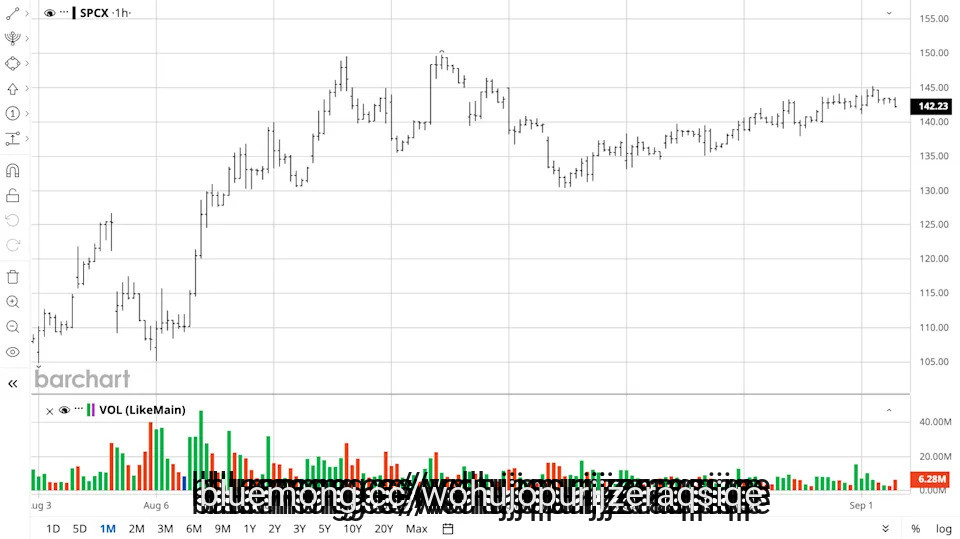
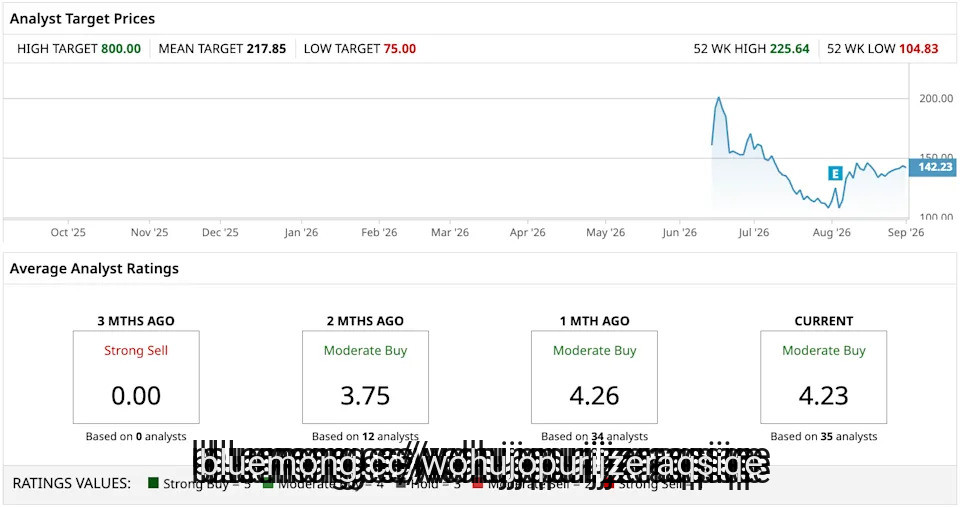
Analyst Doug Anmuth reiterated JPMorgan's Overweight rating and a $240 price target for ***** eX (SPCX) last week. This wasn't a new upgrade, but JPMorgan showed that it remains bullish on ***** eX and, by extension, its AI operations, which account for most of ***** eX's valuation.
The new development was the firm's growing confidence in Grok after ***** eX completed its acquisition of Cursor. Cursor reached $4 billion in annual recurring revenue in the most recent quarter, and it gives ***** eX solid enterprise revenue alongside the short-to-medium-term revenue coming from Alphabet (GOOG) (GOOGL) and Anthropic.
Dear GameStop Stock Fans, Mark Your Calendars for September 8
Why ***** ysts Think Sellas Life Sciences Stock Can Gain 150% From Here
Jensen Huang: Nvidia's Vera Rubin Platform Turns Electricity Into a $40 Billion Cash Machine
#Stock #analyst #doug #anmuth
The new development was the firm's growing confidence in Grok after ***** eX completed its acquisition of Cursor. Cursor reached $4 billion in annual recurring revenue in the most recent quarter, and it gives ***** eX solid enterprise revenue alongside the short-to-medium-term revenue coming from Alphabet (GOOG) (GOOGL) and Anthropic.
Dear GameStop Stock Fans, Mark Your Calendars for September 8
Why ***** ysts Think Sellas Life Sciences Stock Can Gain 150% From Here
Jensen Huang: Nvidia's Vera Rubin Platform Turns Electricity Into a $40 Billion Cash Machine
#Stock #analyst #doug #anmuth

23 days ago
Investors are awaiting the fourth-quarter earnings release of cybersecurity firm Zscaler (ZS), which is scheduled for Sept. 3, after the market closes. Ahead of that, investors have lifted the company's stock, expecting the earnings to provide tailwinds.
Cybersecurity spending is expected to be a priority in this era of artificial intelligence (AI). Recently, a series of AI hacking incidents brought the importance of cybersecurity to the forefront. Therefore, there's a chance that while chips and data centers were the biggest beneficiaries of the first wave of the AI boom, cybersecurity could steal that spot in the next wave and experience a spending boom.
Dear GameStop Stock Fans, Mark Your Calendars for September 8
Why ***** ysts Think Sellas Life Sciences Stock Can Gain 150% From Here
Jensen Huang: Nvidia's Vera Rubin Platform Turns Electricity Into a $40 Billion Cash Machine
#spending
Cybersecurity spending is expected to be a priority in this era of artificial intelligence (AI). Recently, a series of AI hacking incidents brought the importance of cybersecurity to the forefront. Therefore, there's a chance that while chips and data centers were the biggest beneficiaries of the first wave of the AI boom, cybersecurity could steal that spot in the next wave and experience a spending boom.
Dear GameStop Stock Fans, Mark Your Calendars for September 8
Why ***** ysts Think Sellas Life Sciences Stock Can Gain 150% From Here
Jensen Huang: Nvidia's Vera Rubin Platform Turns Electricity Into a $40 Billion Cash Machine
#spending



23 days ago
Although Bitcoin (BTCUSD) rallied in August and Strategy (MSTR) recently resumed buying Bitcoin after a two-month hiatus, Strategy's strategy has mostly been a failure. As of Sept. 1, the average price at which the company acquired Bitcoin stood at about $75,412. Even after President Donald Trump boosted Bitcoin prices with positive remarks about crypto last month and Treasury Secretary Scott Bessent pitched in with his bond buyback plan, the cryptocurrency was changing hands overnight on Sept. 2 at about $77,275. In other words, after a big rally by Bitcoin, its prices are still only slightly below Strategy's average purchase price. And after all the company's compensation, interest, and dividend costs, it certainly appears to be losing a great deal of money, not only on paper, but also in terms of its overall investment approach.
Reflecting this situation, MSTR stock, despite its recent rally, has still slumped 19% so far in 2026 and 63% in the year that ended on Sept. 1. Further, Strategy Executive Chairman Michael Saylor, by repeatedly selling Bitcoin earlier this year and indicating that the company will start lending on a massive scale, has implicitly admitted that the firm's current business model, which is basically entirely dependent on buying Bitcoin and hoping it goes up, is broken.
Dear GameStop Stock Fans, Mark Your Calendars for September 8
Why ******* ysts Think Sellas Life Sciences Stock Can Gain 150% From Here
Jensen Huang: Nvidia's Vera Rubin Platform Turns Electricity Into a $40 Billion Cash Machine
#Bitcoin #buying #month #company
Reflecting this situation, MSTR stock, despite its recent rally, has still slumped 19% so far in 2026 and 63% in the year that ended on Sept. 1. Further, Strategy Executive Chairman Michael Saylor, by repeatedly selling Bitcoin earlier this year and indicating that the company will start lending on a massive scale, has implicitly admitted that the firm's current business model, which is basically entirely dependent on buying Bitcoin and hoping it goes up, is broken.
Dear GameStop Stock Fans, Mark Your Calendars for September 8
Why ******* ysts Think Sellas Life Sciences Stock Can Gain 150% From Here
Jensen Huang: Nvidia's Vera Rubin Platform Turns Electricity Into a $40 Billion Cash Machine
#Bitcoin #buying #month #company

23 days ago
Chances are, if you have watched a YouTube video, you have come across one where the creator is recording their experiences through a small, handheld camera. Usually, it is a GoPro (GPRO). And it is in the news now because prominent YouTuber and filmmaker Markiplier (also known as Mark Fischbach) has become the single largest shareholder of the company. Additionally, the company has now entered into a $285 million merger agreement with photonics company Starman Optical.
Aimed at expanding GoPro's reach in the AI and defense market, Starman CEO Charles Tebele said, "Advanced optics and imaging are essential to AI, national security, and the broader economy, yet much of the critical hardware supporting these technologies continues to be manufactured overseas. The combination of GoPro's world-class optical expertise and intellectual property with Starman's advanced transceiver capabilities and U.S. manufacturing platform creates a unique opportunity. Together, we intend to bring production of these critical components back to the United States."
Dear GameStop Stock Fans, Mark Your Calendars for September 8
Why **** ysts Think Sellas Life Sciences Stock Can Gain 150% From Here
Jensen Huang: Nvidia's Vera Rubin Platform Turns Electricity Into a $40 Billion Cash Machine
#advanced #platform #critical
Aimed at expanding GoPro's reach in the AI and defense market, Starman CEO Charles Tebele said, "Advanced optics and imaging are essential to AI, national security, and the broader economy, yet much of the critical hardware supporting these technologies continues to be manufactured overseas. The combination of GoPro's world-class optical expertise and intellectual property with Starman's advanced transceiver capabilities and U.S. manufacturing platform creates a unique opportunity. Together, we intend to bring production of these critical components back to the United States."
Dear GameStop Stock Fans, Mark Your Calendars for September 8
Why **** ysts Think Sellas Life Sciences Stock Can Gain 150% From Here
Jensen Huang: Nvidia's Vera Rubin Platform Turns Electricity Into a $40 Billion Cash Machine
#advanced #platform #critical


23 days ago
After a brutal stretch, Strategy (MSTR) is winning back some believers. Canaccord Genuity recently raised its price target from $130 to $175 and kept a "Buy" rating on MSTR stock. ******* yst Joseph Vafi said the company's balance sheet is now "war-chested" with enough cash to do more than just cover its dividends. The stock, which is essentially a bet on Bitcoin (BTCUSD), jumped about 12% on Aug. 27 as the cryptocurrency rallied above $80,000. Formerly known as MicroStrategy and chaired by Michael Saylor, Strategy is the world's largest corporate holder of Bitcoin.
Strategy is coming off a rough patch. From mid-May to late June, MSTR stock was cut by well over half. When BTC crashed to around $58,000 in late June, Strategy sat on a paper loss of roughly $13 billion, about a fifth of what it paid for its coins. The recent rally flipped that loss back into a profit, with Bitcoin now trading above Strategy's average purchase price but below the $80,000 mark again, currently changing hands at around $77,300 per coin.
Dear GameStop Stock Fans, Mark Your Calendars for September 8
Why ******* ysts Think Sellas Life Sciences Stock Can Gain 150% From Here
Jensen Huang: Nvidia's Vera Rubin Platform Turns Electricity Into a $40 Billion Cash Machine
#mstr #price
Strategy is coming off a rough patch. From mid-May to late June, MSTR stock was cut by well over half. When BTC crashed to around $58,000 in late June, Strategy sat on a paper loss of roughly $13 billion, about a fifth of what it paid for its coins. The recent rally flipped that loss back into a profit, with Bitcoin now trading above Strategy's average purchase price but below the $80,000 mark again, currently changing hands at around $77,300 per coin.
Dear GameStop Stock Fans, Mark Your Calendars for September 8
Why ******* ysts Think Sellas Life Sciences Stock Can Gain 150% From Here
Jensen Huang: Nvidia's Vera Rubin Platform Turns Electricity Into a $40 Billion Cash Machine
#mstr #price



23 days ago
Michael Burry, the investor made famous by "The Big Short," told readers of his Substack in February that there was "one specific aspect of their financials that I find troubling" about Nvidia (NVDA). The number he pointed at was purchase obligations of $95.2 billion in the company's fiscal 2026 annual report, "up from $16.1 billion the same time last year." Six months later, Nvidia has filed again, and the comparable commitment line is far larger.
The Feb. 26, 2026 post was ******* led "Short Thought: Nvidia Ratchets Up the Risk." Burry's summary of what the figure meant, quoted at the time by CNBC and Business Insider, was blunt: "This is not business as usual. This is risk." He wasn't describing a crash in progress, just a balance sheet he thought had taken on a new kind of exposure, and Barchart reported the post when it landed.
Dear GameStop Stock Fans, Mark Your Calendars for September 8
Why ******* ysts Think Sellas Life Sciences Stock Can Gain 150% From Here
Jensen Huang: Nvidia's Vera Rubin Platform Turns Electricity Into a $40 Billion Cash Machine
#Stock #risk #business
The Feb. 26, 2026 post was ******* led "Short Thought: Nvidia Ratchets Up the Risk." Burry's summary of what the figure meant, quoted at the time by CNBC and Business Insider, was blunt: "This is not business as usual. This is risk." He wasn't describing a crash in progress, just a balance sheet he thought had taken on a new kind of exposure, and Barchart reported the post when it landed.
Dear GameStop Stock Fans, Mark Your Calendars for September 8
Why ******* ysts Think Sellas Life Sciences Stock Can Gain 150% From Here
Jensen Huang: Nvidia's Vera Rubin Platform Turns Electricity Into a $40 Billion Cash Machine
#Stock #risk #business


23 days ago
The Securities and Exchange Commission (SEC) has proposed a new way for crypto projects to raise as much as $5 million from the public without providing investors a single financial statement.
There would be no per-investor limit. Non-accredited investors could participate. General solicitation would be allowed. The securities generally could be resold without the one-year restriction that applies to securities sold under Regulation Crowdfunding. The issuer would not need to conduct the offering through a registered crowdfunding platform.
Dear GameStop Stock Fans, Mark Your Calendars for September 8
Why ****** ysts Think Sellas Life Sciences Stock Can Gain 150% From Here
Jensen Huang: Nvidia's Vera Rubin Platform Turns Electricity Into a $40 Billion Cash Machine
#general
There would be no per-investor limit. Non-accredited investors could participate. General solicitation would be allowed. The securities generally could be resold without the one-year restriction that applies to securities sold under Regulation Crowdfunding. The issuer would not need to conduct the offering through a registered crowdfunding platform.
Dear GameStop Stock Fans, Mark Your Calendars for September 8
Why ****** ysts Think Sellas Life Sciences Stock Can Gain 150% From Here
Jensen Huang: Nvidia's Vera Rubin Platform Turns Electricity Into a $40 Billion Cash Machine
#general


23 days ago
The markets had a bad day on Tuesday. Two of the three main indices lost ground -- the S&P 500 lost 0.71% while the Nasdaq was down 1.03% -- while the Dow Jones Industrial Average managed to finish unchanged on the day.
As a result, the NYSE had 181 securities hitting new 52-week highs compared to 48 new 52-week highs. Meanwhile, on the Nasdaq, new 52-week lows outnumbered the new 52-week highs fivefold, 317 to 65.
Dear GameStop Stock Fans, Mark Your Calendars for September 8
Why **** ysts Think Sellas Life Sciences Stock Can Gain 150% From Here
Jensen Huang: Nvidia's Vera Rubin Platform Turns Electricity Into a $40 Billion Cash Machine
#highs
As a result, the NYSE had 181 securities hitting new 52-week highs compared to 48 new 52-week highs. Meanwhile, on the Nasdaq, new 52-week lows outnumbered the new 52-week highs fivefold, 317 to 65.
Dear GameStop Stock Fans, Mark Your Calendars for September 8
Why **** ysts Think Sellas Life Sciences Stock Can Gain 150% From Here
Jensen Huang: Nvidia's Vera Rubin Platform Turns Electricity Into a $40 Billion Cash Machine
#highs


23 days ago
During the August 31 episode of Mad Money, Jim Cramer examined the sharp rotation back into enterprise software following the forced unwinding of bearish hedge fund positions. Mentioning Veeva Systems Inc. (NYSE:VEEV) and Salesforce, Inc. (NYSE:CRM) as examples of sector leaders, he commented:
Situational Awareness just despised enterprise software and Veeva Systems, number three, up 40%, is enterprise software writ large for the healthcare industry. I think it's bounced back in conjunction with all the other enterprise software companies that Situational Awareness believed would be destroyed by AI that haven't been. Once that hedge fund blew up, the whole group came roaring back as Situational was no longer there to put pressure on them. Hey, Salesforce had a similar rally, up nearly 40%. Now, here's one that openly took on the short sellers first with rhetoric and then with numbers which have not been hurt at all by… the SaaS-pocalypse. His blowout quarter obliterated the shorts. I don't think they still know what hit them.
For months, bearish macro funds aggressively shorted enterprise software providers, on the belief that emerging artificial intelligence platforms would easily replicate proprietary workflows and trigger severe pricing compression.
Salesforce, Inc. (NYSE:CRM) and Veeva Systems Inc. (NYSE:VEEV) proved the exact opposite. Salesforce showed that autonomous enterprise features act as expansion engines. Similarly, Veeva Systems, which powers critical clinical and commercial operations for the heavily regulated life sciences sector, integrated advanced data capabilities directly into its platform. Rather than cannibalizing software licenses, artificial intelligence features reinforced the massive switching costs embedded in both platforms.
Despite solid execution, market skeptics continue to scrutinize the growth limits and valuation multiples of both companies. Salesforce, Inc. (NYSE:CRM) trades at a forward P/E of 19x, showing market hesitation over macroeconomic budget tightening and the necessity for the company to rapidly monetize its heavy artificial intelligence investments.
#salesforce #situational #artificial #intelligence
Situational Awareness just despised enterprise software and Veeva Systems, number three, up 40%, is enterprise software writ large for the healthcare industry. I think it's bounced back in conjunction with all the other enterprise software companies that Situational Awareness believed would be destroyed by AI that haven't been. Once that hedge fund blew up, the whole group came roaring back as Situational was no longer there to put pressure on them. Hey, Salesforce had a similar rally, up nearly 40%. Now, here's one that openly took on the short sellers first with rhetoric and then with numbers which have not been hurt at all by… the SaaS-pocalypse. His blowout quarter obliterated the shorts. I don't think they still know what hit them.
For months, bearish macro funds aggressively shorted enterprise software providers, on the belief that emerging artificial intelligence platforms would easily replicate proprietary workflows and trigger severe pricing compression.
Salesforce, Inc. (NYSE:CRM) and Veeva Systems Inc. (NYSE:VEEV) proved the exact opposite. Salesforce showed that autonomous enterprise features act as expansion engines. Similarly, Veeva Systems, which powers critical clinical and commercial operations for the heavily regulated life sciences sector, integrated advanced data capabilities directly into its platform. Rather than cannibalizing software licenses, artificial intelligence features reinforced the massive switching costs embedded in both platforms.
Despite solid execution, market skeptics continue to scrutinize the growth limits and valuation multiples of both companies. Salesforce, Inc. (NYSE:CRM) trades at a forward P/E of 19x, showing market hesitation over macroeconomic budget tightening and the necessity for the company to rapidly monetize its heavy artificial intelligence investments.
#salesforce #situational #artificial #intelligence

23 days ago
Nvidia (NVDA) CEO Jensen Huang was asked on Monday whether the company's newest investment is the kind of circular financing investors keep worrying about, and he said it was not. "This is not circular because obviously they do their own business and we do our own business, and MediaTek is already incredibly profitable, incredibly successful," Huang told Bloomberg's Ed Ludlow in an interview alongside MediaTek CEO Rick Tsai on Aug. 31.
The deal that prompted the question is worth $3.5 billion, and one detail about it has been widely flattened. Nvidia is not buying MediaTek shares. It bought $3.5 billion of convertible bonds issued by the company, part of an overseas convertible offering of roughly $3.9 billion in which Alphabet (GOOGL) also participated at an undisclosed size. Nvidia holds debt that can convert later, not equity today, and the release names no conversion price, no valuation, and no resulting stake.
Dear GameStop Stock Fans, Mark Your Calendars for September 8
SMCI vs. CoreWeave: 1 AI Infrastructure Model Has the Bigger Opportunity
Why ***** ysts Think Sellas Life Sciences Stock Can Gain 150% From Here
#NVIDIA #mediatek #incredibly
The deal that prompted the question is worth $3.5 billion, and one detail about it has been widely flattened. Nvidia is not buying MediaTek shares. It bought $3.5 billion of convertible bonds issued by the company, part of an overseas convertible offering of roughly $3.9 billion in which Alphabet (GOOGL) also participated at an undisclosed size. Nvidia holds debt that can convert later, not equity today, and the release names no conversion price, no valuation, and no resulting stake.
Dear GameStop Stock Fans, Mark Your Calendars for September 8
SMCI vs. CoreWeave: 1 AI Infrastructure Model Has the Bigger Opportunity
Why ***** ysts Think Sellas Life Sciences Stock Can Gain 150% From Here
#NVIDIA #mediatek #incredibly

23 days ago
The defense industry is undergoing a major transformation, with governments increasing spending on drones, autonomous systems, counter-UAS technologies, and precision weapons. This creates a favorable backdrop for AeroVironment (AVAV), which is positioned at the forefront of next-generation defense.
With the BlueHalo acquisition last year, AeroVironment broadened its capabilities across air, land, sea, ***** e, and cyber, giving it exposure to multiple areas of rising defense demand. This positioning has been reinforced by several recent developments.
Dear GameStop Stock Fans, Mark Your Calendars for September 8
SMCI vs. CoreWeave: 1 AI Infrastructure Model Has the Bigger Opportunity
Why ***** ysts Think Sellas Life Sciences Stock Can Gain 150% From Here
#defense #aerovironment #dear #mark
With the BlueHalo acquisition last year, AeroVironment broadened its capabilities across air, land, sea, ***** e, and cyber, giving it exposure to multiple areas of rising defense demand. This positioning has been reinforced by several recent developments.
Dear GameStop Stock Fans, Mark Your Calendars for September 8
SMCI vs. CoreWeave: 1 AI Infrastructure Model Has the Bigger Opportunity
Why ***** ysts Think Sellas Life Sciences Stock Can Gain 150% From Here
#defense #aerovironment #dear #mark
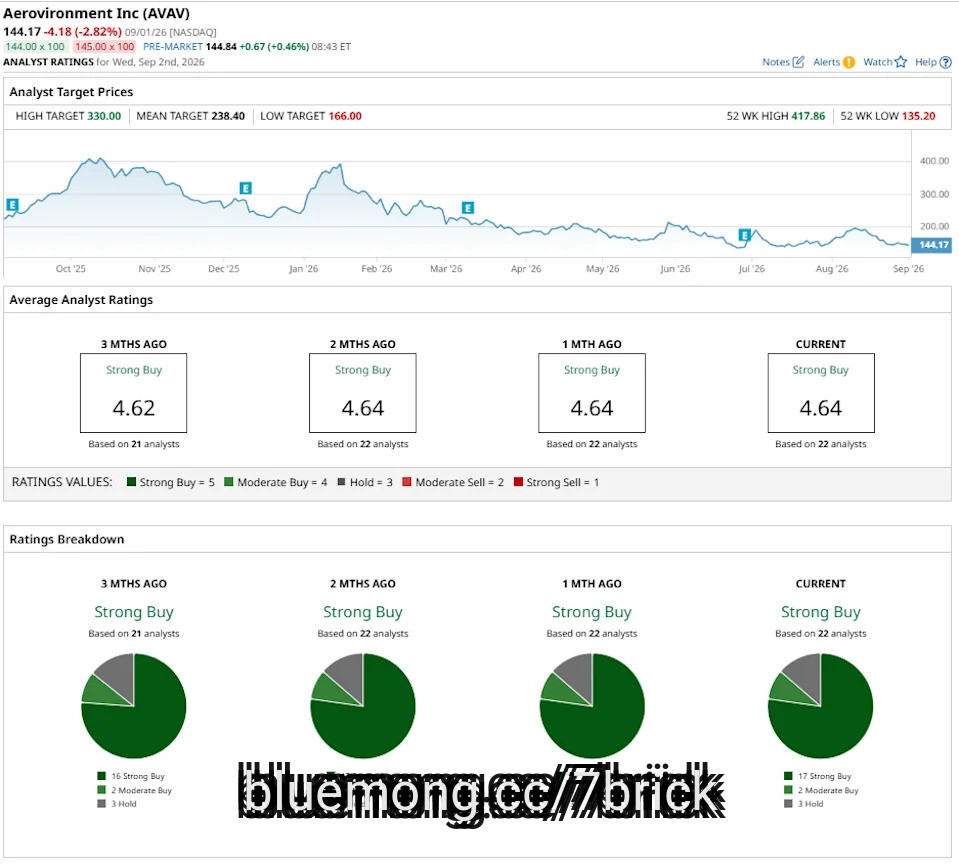
23 days ago
SK hynix (SKHY) is giving investors a fresh reason to watch its artificial intelligence (AI)-driven memory growth story as the South Korean chipmaker weighs expanding its manufacturing footprint into ****** an. The company is reportedly exploring a potential memory-chip joint venture, with Miyagi Prefecture among the locations seeking to attract the investment. SK hynix looks to capitalize on surging AI-driven demand while deepening relationships with ****** anese customers and suppliers, including through its indirect stake in Kioxia Holdings.
The potential ****** an expansion could become another important piece of SK hynix's global capacity strategy. The company is already investing heavily in South Korea and recently broke ground on a $4 billion advanced packaging facility in Indiana, underscoring its effort to secure supply as the memory shortage is expected to persist through 2030. Amid this, ****** an could be strategically attractive because it has an established semiconductor ecosystem, and its willingness to subsidize semiconductor investments could further support SK hynix's expansion plans.
Dear GameStop Stock Fans, Mark Your Calendars for September 8
SMCI vs. CoreWeave: 1 AI Infrastructure Model Has the Bigger Opportunity
Why ****** ysts Think Sellas Life Sciences Stock Can Gain 150% From Here
#Japan #driven
The potential ****** an expansion could become another important piece of SK hynix's global capacity strategy. The company is already investing heavily in South Korea and recently broke ground on a $4 billion advanced packaging facility in Indiana, underscoring its effort to secure supply as the memory shortage is expected to persist through 2030. Amid this, ****** an could be strategically attractive because it has an established semiconductor ecosystem, and its willingness to subsidize semiconductor investments could further support SK hynix's expansion plans.
Dear GameStop Stock Fans, Mark Your Calendars for September 8
SMCI vs. CoreWeave: 1 AI Infrastructure Model Has the Bigger Opportunity
Why ****** ysts Think Sellas Life Sciences Stock Can Gain 150% From Here
#Japan #driven