

2 days ago
AbbVie (ABBV) grew revenue 10.4% over the past twelve months and turned 33.9% of it into operating profit, second only to Eli Lilly among its peers on both counts. Its stock returned 24.9% over the same twelve months, fifth of the six. What the business delivered and what the market paid for it have come apart.
Johnson & Johnson makes the contrast sharpest. JNJ grew revenue 8.1% over the same twelve months on an operating margin of 26.8%—edging out Pfizer's 26.7%—while its stock returned 53.9%. It also trades at 30.5 times earnings, where AbbVie trades at 71.5.
ABBV
JNJ
PFE
#abbvie #grew #operating
Johnson & Johnson makes the contrast sharpest. JNJ grew revenue 8.1% over the same twelve months on an operating margin of 26.8%—edging out Pfizer's 26.7%—while its stock returned 53.9%. It also trades at 30.5 times earnings, where AbbVie trades at 71.5.
ABBV
JNJ
PFE
#abbvie #grew #operating


4 days ago
On September 3, AbbVie Inc. (NYSE:ABBV) finalized its acquisition of clinical-stage biotech Apogee Therapeutics, Inc. (NASDAQ:APGE) for $135.11 per share in cash. The $10.9 billion buyouts immediately fold Apogee's promising inflammatory and immunology (I&I) pipeline into AbbVie's commercial engine. On the exact same day, AbbVie separately reported positive Phase 3 Cervino trial results for its bispecific T-cell engager, etentamig, in relapsed/refractory multiple myeloma. Together, the dual catalysts emphasize how mega-cap pharmaceutical giants are deploying cash flow from legacy franchises to lock in next-generation immunology and oncology ***** ets.
In Q2 2026, AbbVie Inc. (NYSE:ABBV) posted $16.99 billion in net revenue, up 10.2% year over year, while adjusted diluted EPS increased 22.9% to $3.65. Growth was driven by its immunology blockbusters, Skyrizi and Rinvoq, which generated $5.505 billion and $2.525 billion in revenue, respectively, representing growth of 24.4% and 24.5%. These gains more than offset the continued decline in Humira revenue, which fell 35.9% to $756 million amid biosimilar competition. AbbVie reiterated its full-year 2026 adjusted EPS guidance of $13.87–$14.07, including a $0.14 dilutive impact from the Apogee transaction.
As a clinical-stage biotech, Apogee Therapeutics, Inc. (NASDAQ:APGE) generated no product revenue in Q2 2026, while R&D expenses reached $67.3 million and G&A expenses totaled $24.3 million, resulting in a quarterly net loss of $85.9 million. Despite the cash burn, the company maintained a strong liquidity position, with $1.3 billion in cash and marketable securities, alongside a $1.3 billion non-dilutive credit collaboration with Blackstone Life Sciences to support Phase 3 trials of its lead ***** et, zumilokibart.
Financially, AbbVie is vastly superior in immediate cash generation and profitability, whereas Apogee represented pure clinical optionality backed by robust liquidity.
For AbbVie, acquiring Apogee's optimized antibody portfolio, including zumilokibart for atopic dermatitis, strengthens its post-Humira immunology franchise. Combined with internal R&D advances such as etentamig, which achieved statistically significant overall response rate and progression-free survival results in the Phase 3 Cervino study, along with an 87.9% 12-month overall survival rate, AbbVie demonstrates potential to sustain strong organic growth.
#phase #revenue #Growth
In Q2 2026, AbbVie Inc. (NYSE:ABBV) posted $16.99 billion in net revenue, up 10.2% year over year, while adjusted diluted EPS increased 22.9% to $3.65. Growth was driven by its immunology blockbusters, Skyrizi and Rinvoq, which generated $5.505 billion and $2.525 billion in revenue, respectively, representing growth of 24.4% and 24.5%. These gains more than offset the continued decline in Humira revenue, which fell 35.9% to $756 million amid biosimilar competition. AbbVie reiterated its full-year 2026 adjusted EPS guidance of $13.87–$14.07, including a $0.14 dilutive impact from the Apogee transaction.
As a clinical-stage biotech, Apogee Therapeutics, Inc. (NASDAQ:APGE) generated no product revenue in Q2 2026, while R&D expenses reached $67.3 million and G&A expenses totaled $24.3 million, resulting in a quarterly net loss of $85.9 million. Despite the cash burn, the company maintained a strong liquidity position, with $1.3 billion in cash and marketable securities, alongside a $1.3 billion non-dilutive credit collaboration with Blackstone Life Sciences to support Phase 3 trials of its lead ***** et, zumilokibart.
Financially, AbbVie is vastly superior in immediate cash generation and profitability, whereas Apogee represented pure clinical optionality backed by robust liquidity.
For AbbVie, acquiring Apogee's optimized antibody portfolio, including zumilokibart for atopic dermatitis, strengthens its post-Humira immunology franchise. Combined with internal R&D advances such as etentamig, which achieved statistically significant overall response rate and progression-free survival results in the Phase 3 Cervino study, along with an 87.9% 12-month overall survival rate, AbbVie demonstrates potential to sustain strong organic growth.
#phase #revenue #Growth


4 days ago
Interested in AbbVie Inc.? Here are five stocks we like better.
SKYRIZI and RINVOQ remain AbbVie's main growth drivers, with additional opportunities in inflammatory bowel disease, vitiligo, alopecia and hidradenitis suppurativa. The company expects a subcutaneous SKYRIZI induction approval for Crohn's disease in the fourth quarter and plans further combination-therapy data.
AbbVie is advancing a broad pipeline, including the BCMA-directed cancer therapy etentamig, which showed strong early multiple-myeloma results and could support a rapid regulatory filing. Neuroscience programs such as bretisilocin for depression are also expected to deliver additional data this year.
The company is taking a selective approach to acquisitions and partnerships, having invested about $20 billion in roughly 30 transactions while increasing annual R&D spending toward $10 billion. Management maintained its outlook for high-single-digit annual revenue growth through the decade.
Moderna Just Doubled Overnight, and 2 More Healthcare Stocks Could Follow It
#disease #company #Therapy
SKYRIZI and RINVOQ remain AbbVie's main growth drivers, with additional opportunities in inflammatory bowel disease, vitiligo, alopecia and hidradenitis suppurativa. The company expects a subcutaneous SKYRIZI induction approval for Crohn's disease in the fourth quarter and plans further combination-therapy data.
AbbVie is advancing a broad pipeline, including the BCMA-directed cancer therapy etentamig, which showed strong early multiple-myeloma results and could support a rapid regulatory filing. Neuroscience programs such as bretisilocin for depression are also expected to deliver additional data this year.
The company is taking a selective approach to acquisitions and partnerships, having invested about $20 billion in roughly 30 transactions while increasing annual R&D spending toward $10 billion. Management maintained its outlook for high-single-digit annual revenue growth through the decade.
Moderna Just Doubled Overnight, and 2 More Healthcare Stocks Could Follow It
#disease #company #Therapy


14 days ago
North Chicago, Illinois-based AbbVie Inc. (ABBV) is a global, research-driven biopharmaceutical company focused on developing and commercializing medicines for complex and serious diseases. Valued at a market cap of $386.3 billion, its key therapeutic areas include immunology, neuroscience, oncology and aesthetics, with operations spanning more than 75 countries.
Companies with a market capitalization of $200 billion or more are typically referred to as "mega-cap stocks." ABBV fits right into that category, with its market cap exceeding this threshold, reflecting its substantial size and influence in the general drug manufacturers industry. AbbVie combines a large established pharmaceutical portfolio with a rapidly expanding immunology franchise and a broad pipeline.
Wu-Tang Clan Member Raekwon Is a Palantir 'OG,' Visiting Headquarters 16 Years After Receiving His Custom PLTR Jacket
Tesla Just Killed Its Solar Roof After Years of Struggling to Scale. What It Means for TSLA Stock.
Tesla Stock Could Benefit as Trump Locks Down the U.S. Power Grid
#abbvie #abbv #billion
Companies with a market capitalization of $200 billion or more are typically referred to as "mega-cap stocks." ABBV fits right into that category, with its market cap exceeding this threshold, reflecting its substantial size and influence in the general drug manufacturers industry. AbbVie combines a large established pharmaceutical portfolio with a rapidly expanding immunology franchise and a broad pipeline.
Wu-Tang Clan Member Raekwon Is a Palantir 'OG,' Visiting Headquarters 16 Years After Receiving His Custom PLTR Jacket
Tesla Just Killed Its Solar Roof After Years of Struggling to Scale. What It Means for TSLA Stock.
Tesla Stock Could Benefit as Trump Locks Down the U.S. Power Grid
#abbvie #abbv #billion

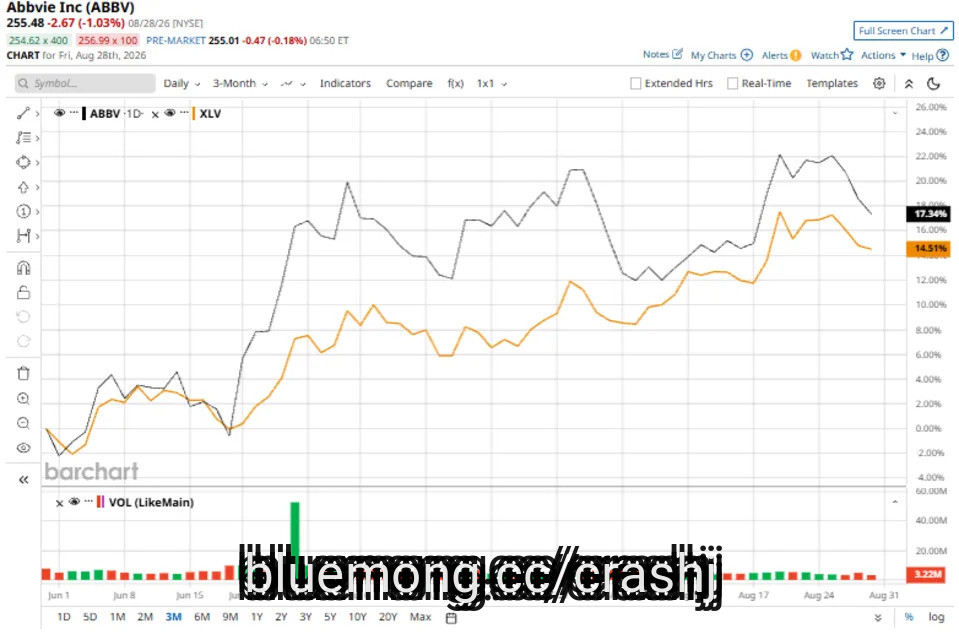


18 days ago
Pharmaceutical giant Johnson & Johnson (NYSE:JNJ) is one of Jim Cramer's favorite stocks in the sector. Over the course of this year, the CNBC TV host has praised the firm on multiple occasions. Among the reasons that he has been optimistic about Johnson & Johnson (NYSE:JNJ) include the firm's cancer drug portfolio and its Triple A balance sheet. For instance, in his July 6th appearance on Mad Money, Cramer remarked that "P&Gs and the J&Js in your portfolio allow you to safely own the techs." With tech stocks struggling recent due to concerns about the data center buildout, it was unsurprising that Johnson & Johnson (NYSE:JNJ) popped up on his radar once again on August 24th:
"I've been using that one stock JNJ to be able to [example] becuase it has a better balance sheet at this point than the US government, it doesn't need money, it's got very good science. It's not hostage to the government right now. It's got more new drugs than any of the, 18 new compounds, could be a billion dollars. And I come back and say, all right, well that's the treasury, plus the upside."
Johnson & Johnson (NYSE:JNJ)'s shares are up by more than 50% over the past year. Cramer's optimism about the firm covers several, but not all, aspects of the debate surrounding the firm. While Johnson & Johnson (NYSE:JNJ) has raised its full-year revenue guidance to a midpoint of $101 billion, removed headwinds related to its longstanding talcum powder lawsuits and posted strong growth with its Darzalex and Tremfya drugs for myeloma and psoriasis, concerns about its MedTech growth, flat profits growth and a 55.7% sales hit to its immune system disorders drug Stelara continue to raise the potential for headwinds.
For instance, Johnson & Johnson (NYSE:JNJ)'s MedTech business grew by a mere 3.6% in the second quarter as it was impacted by a slowdown in sales of heart-recovery devices following a study in the United Kingdom. Additionally, for a firm that's struggling on the net income growth front, $5.5 billion in talc powder settlements will continue to be a headwind to the cash flow. Johnson & Johnson (NYSE:JNJ) is due to pay $3 billion out of the $5.5 billion in 2027. Yet, at the same time, the diversified business nature means that some segments are growing. One example is the Innovative Medicine Business, which grew by 6.8% to $16.4 billion revenue, due to Darzalex and Tremfya.
Looking at hedge fund sentiment, while 113 out of the 1,022 funds part of Insider Monkey's Q1 database had held a stake in Johnson & Johnson (NYSE:JNJ), the figure jumped to 117 out of 1,006 funds in Q2. Among the notable additions was Polar Capital's $199 million stake, while Fisher ****** et Management ****** ped its stake by 44% to $3.3 billion. On the valuation front, Johnson & Johnson (NYSE:JNJ) trades at a forward P/E ratio of 23.4,2 which is lower than MRK's 56.82 and higher than AbbVie's 18.83. Shares short as a percentage of float are negligible at roughly 1%.
#billion #tremfya
"I've been using that one stock JNJ to be able to [example] becuase it has a better balance sheet at this point than the US government, it doesn't need money, it's got very good science. It's not hostage to the government right now. It's got more new drugs than any of the, 18 new compounds, could be a billion dollars. And I come back and say, all right, well that's the treasury, plus the upside."
Johnson & Johnson (NYSE:JNJ)'s shares are up by more than 50% over the past year. Cramer's optimism about the firm covers several, but not all, aspects of the debate surrounding the firm. While Johnson & Johnson (NYSE:JNJ) has raised its full-year revenue guidance to a midpoint of $101 billion, removed headwinds related to its longstanding talcum powder lawsuits and posted strong growth with its Darzalex and Tremfya drugs for myeloma and psoriasis, concerns about its MedTech growth, flat profits growth and a 55.7% sales hit to its immune system disorders drug Stelara continue to raise the potential for headwinds.
For instance, Johnson & Johnson (NYSE:JNJ)'s MedTech business grew by a mere 3.6% in the second quarter as it was impacted by a slowdown in sales of heart-recovery devices following a study in the United Kingdom. Additionally, for a firm that's struggling on the net income growth front, $5.5 billion in talc powder settlements will continue to be a headwind to the cash flow. Johnson & Johnson (NYSE:JNJ) is due to pay $3 billion out of the $5.5 billion in 2027. Yet, at the same time, the diversified business nature means that some segments are growing. One example is the Innovative Medicine Business, which grew by 6.8% to $16.4 billion revenue, due to Darzalex and Tremfya.
Looking at hedge fund sentiment, while 113 out of the 1,022 funds part of Insider Monkey's Q1 database had held a stake in Johnson & Johnson (NYSE:JNJ), the figure jumped to 117 out of 1,006 funds in Q2. Among the notable additions was Polar Capital's $199 million stake, while Fisher ****** et Management ****** ped its stake by 44% to $3.3 billion. On the valuation front, Johnson & Johnson (NYSE:JNJ) trades at a forward P/E ratio of 23.4,2 which is lower than MRK's 56.82 and higher than AbbVie's 18.83. Shares short as a percentage of float are negligible at roughly 1%.
#billion #tremfya


19 days ago
Altria (MO) and Chevron (CVX) anchor a three-stock dividend ladder that blends to a 4% yield and delivers a paycheck every month.
AbbVie's Skyrizi and Rinvoq each grew roughly 24% in Q2, fueling raised full-year EPS guidance and supporting a growing $1.73 quarterly dividend.
Read More: Learn 7 secret wealth tips high net worth investors use that most investors miss (sponsor)
Building a monthly income stream from quarterly dividend payers requires just a little scheduling. Three blue chips, staggered on different quarterly calendars, can deliver a paycheck in every month of the year. Altria (NYSE:MO) pays in January, April, July, and October. AbbVie (NYSE:ABBV) pays in February, May, August, and November. Chevron (NYSE:CVX) pays in March, June, September, and December. Together, these three tickers cover all 12 months while offering attractive dividends along the way.
Here is what each leg of the ladder actually pays, how it has grown, and where the risks sit.
#pays #Dividend #chevron #paycheck
AbbVie's Skyrizi and Rinvoq each grew roughly 24% in Q2, fueling raised full-year EPS guidance and supporting a growing $1.73 quarterly dividend.
Read More: Learn 7 secret wealth tips high net worth investors use that most investors miss (sponsor)
Building a monthly income stream from quarterly dividend payers requires just a little scheduling. Three blue chips, staggered on different quarterly calendars, can deliver a paycheck in every month of the year. Altria (NYSE:MO) pays in January, April, July, and October. AbbVie (NYSE:ABBV) pays in February, May, August, and November. Chevron (NYSE:CVX) pays in March, June, September, and December. Together, these three tickers cover all 12 months while offering attractive dividends along the way.
Here is what each leg of the ladder actually pays, how it has grown, and where the risks sit.
#pays #Dividend #chevron #paycheck


28 days ago
For years, AbbVie (NYSE: ABBV) was known primarily for immunology. Humira built the company into a pharmaceutical giant, and newer blockbusters Skyrizi and Rinvoq have helped replace much of the revenue lost to biosimilar competition. Now the company's got another iron in the fire -- neuroscience -- and it's no slouch.
Management now expects its neuroscience portfolio to generate approximately $12.7 billion in revenue during 2026, raising guidance by another $100 million after a strong first half of the year. That's a remarkable figure when you consider that the portfolio generated $10.8 billion last year and continues to grow at a double-digit pace.
Missed Nvidia in 2009? This Rare Signal Is Flashing Again. In 2009, a "Double Down" signal flashed for a little-known chipmaker called Nvidia. For the first time in years, that same "Total Conviction" signal is flashing for a company 1/100th the size of Nvidia. Continue »
Unlike some pharmaceutical franchises that depend on a single blockbuster, AbbVie's neuroscience business has become increasingly diversified. During the second quarter, neuroscience revenue climbed 20.3% year over year to $3.23 billion. Schizophrenia and bipolar disorder drug Vraylar generated $1.07 billion, therapeutic Botox contributed $1.04 billion, and migraine drugs Ubrelvy and Qulipta combined for $742 million in quarterly sales. Parkinson's disease therapy Vyalev added another $256 million.
The fastest-growing part of AbbVie's neuroscience business may be migraine. Combined sales rose 22.6% year over year as Ubrelvy and Qulipta continued gaining traction with physicians addressing both acute migraine attacks and migraine prevention.
#year #billion #revenue #million
Management now expects its neuroscience portfolio to generate approximately $12.7 billion in revenue during 2026, raising guidance by another $100 million after a strong first half of the year. That's a remarkable figure when you consider that the portfolio generated $10.8 billion last year and continues to grow at a double-digit pace.
Missed Nvidia in 2009? This Rare Signal Is Flashing Again. In 2009, a "Double Down" signal flashed for a little-known chipmaker called Nvidia. For the first time in years, that same "Total Conviction" signal is flashing for a company 1/100th the size of Nvidia. Continue »
Unlike some pharmaceutical franchises that depend on a single blockbuster, AbbVie's neuroscience business has become increasingly diversified. During the second quarter, neuroscience revenue climbed 20.3% year over year to $3.23 billion. Schizophrenia and bipolar disorder drug Vraylar generated $1.07 billion, therapeutic Botox contributed $1.04 billion, and migraine drugs Ubrelvy and Qulipta combined for $742 million in quarterly sales. Parkinson's disease therapy Vyalev added another $256 million.
The fastest-growing part of AbbVie's neuroscience business may be migraine. Combined sales rose 22.6% year over year as Ubrelvy and Qulipta continued gaining traction with physicians addressing both acute migraine attacks and migraine prevention.
#year #billion #revenue #million


1 month ago
AbbVie Inc. (NYSE:ABBV) reported its first-quarter 2026 financial results, delivering worldwide net revenues of $15.002 billion, an increase of 12.4% on a reported basis (10.3% operationally). The company posted GAAP diluted EPS of $0.39 and adjusted diluted EPS of $2.65, which exceeded internal expectations despite including a $0.41 per share unfavorable impact from acquired IPR&D and milestone expenses. Grounded in this solid operational momentum, ABBV raised its full-year 2026 adjusted diluted EPS guidance range to $14.08–$14.28.
Adding to its commercial trajectory, AbbVie's Allergan Aesthetics announced on July 17 that the European Commission approved Boey (trenibotulinumtoxinE) across all 30 European Economic Area countries. Marked as the first and only rapid-onset, short-duration botulinum neurotoxin serotype E in Europe, Boey targets the temporary improvement of moderate to severe frown lines with an onset as fast as eight hours and results lasting two to three weeks. This regulatory milestone follows approval in Canada earlier in the year and expands AbbVie's high-margin aesthetic portfolio beyond traditional Botox offerings.
Following these catalysts, Wall Street **** yst revisions have turned increasingly positive. On July 22, Canaccord raised its price target on AbbVie to $282 from $273 while maintaining a Buy rating. The firm updated its financial model ahead of Q2 earnings, citing expected strength across core prescription volume trends and recent positive developmental wins.
This momentum brings up a pivotal question: Does AbbVie's successful pivot away from legacy reliance justify higher valuation multiples, or do long-term debt levels and margin pressures cap future upside?
Proponents of the bullish case emphasize AbbVie Inc. (NYSE:ABBV)'s high-performing post-Humira growth engine. Top-line expansion is overwhelmingly driven by its flagship immunology **** ets, Skyrizi and Rinvoq, which generated $4.483 billion (+30.9% reported) and $2.119 billion (+23.3% reported) in Q1 net revenues, respectively. Rapid, durable share gains across multiple indication rollouts highlight a strong product-market fit that effectively absorbs legacy biosimilar erosion.
#diluted
Adding to its commercial trajectory, AbbVie's Allergan Aesthetics announced on July 17 that the European Commission approved Boey (trenibotulinumtoxinE) across all 30 European Economic Area countries. Marked as the first and only rapid-onset, short-duration botulinum neurotoxin serotype E in Europe, Boey targets the temporary improvement of moderate to severe frown lines with an onset as fast as eight hours and results lasting two to three weeks. This regulatory milestone follows approval in Canada earlier in the year and expands AbbVie's high-margin aesthetic portfolio beyond traditional Botox offerings.
Following these catalysts, Wall Street **** yst revisions have turned increasingly positive. On July 22, Canaccord raised its price target on AbbVie to $282 from $273 while maintaining a Buy rating. The firm updated its financial model ahead of Q2 earnings, citing expected strength across core prescription volume trends and recent positive developmental wins.
This momentum brings up a pivotal question: Does AbbVie's successful pivot away from legacy reliance justify higher valuation multiples, or do long-term debt levels and margin pressures cap future upside?
Proponents of the bullish case emphasize AbbVie Inc. (NYSE:ABBV)'s high-performing post-Humira growth engine. Top-line expansion is overwhelmingly driven by its flagship immunology **** ets, Skyrizi and Rinvoq, which generated $4.483 billion (+30.9% reported) and $2.119 billion (+23.3% reported) in Q1 net revenues, respectively. Rapid, durable share gains across multiple indication rollouts highlight a strong product-market fit that effectively absorbs legacy biosimilar erosion.
#diluted


1 month ago
AbbVie (NYSE:ABBV) just moved a step closer to expanding one of its most recognizable brands. On August 4, the FDA accepted for review a supplemental Biologics License Application for Botox Cosmetic to treat masseter muscle prominence, the jaw-muscle bulge that can give a face a wider, squarer look. If cleared, Botox Cosmetic would become the first and only neurotoxin approved for that use in the US and the fifth aesthetic indication for a drug that already anchors AbbVie's fastest-growing units.
The filing rests on two Phase 3 studies, M21-416 and M21-417, both of which hit their main goal and showed statistically significant improvement in masseter prominence against a placebo, with p-values of 0.0046 and 0.0014. Twice as many treated patients called themselves satisfied compared with the placebo group, and the safety data lined up with Botox's long track record, with no new red flags. That is the AbbVie playbook in miniature: squeeze another approved use out of a drug it already owns rather than starting from zero.
The broader business backs that pattern up. In the quarter ended June 30, net revenue came in just under $17 billion, up more than 10% year over year, with immunology sales climbing 15% on Skyrizi and Rinvoq and neuroscience revenue jumping more than 20%. Management raised its full-year outlook for the second time this year, and the Humira patent-cliff drag that weighed on results for two years now looks largely behind the company.
Most of AbbVie's US product sales still flow through just three wholesale distributors, McKesson, Cardinal Health, and Cencora, a concentration that leaves the company exposed if any one relationship sours. The balance sheet carries real leverage too: a debt-to-equity ratio of roughly -21.1x as of its December 2025 filing means liabilities outweigh shareholder equity outright, and a current ratio near 0.7x offers less short-term cushion than many healthcare peers hold.
Patent protection for Skyrizi and Rinvoq remains a multi-year risk, and the Inflation Reduction Act already allows government price negotiation on products including Imbruvica and, notably, Botox itself. The pending $10.9 billion Apogee Therapeutics acquisition adds fresh debt and integration risk on top of that. Oncology revenue slipped almost 2% in the latest quarter, and the stock's 8% gain this year has trailed the S&P 500's 13%, with a trailing P/E near 70 that mostly reflects acquisition-related charges rather than the underlying business.
#revenue
The filing rests on two Phase 3 studies, M21-416 and M21-417, both of which hit their main goal and showed statistically significant improvement in masseter prominence against a placebo, with p-values of 0.0046 and 0.0014. Twice as many treated patients called themselves satisfied compared with the placebo group, and the safety data lined up with Botox's long track record, with no new red flags. That is the AbbVie playbook in miniature: squeeze another approved use out of a drug it already owns rather than starting from zero.
The broader business backs that pattern up. In the quarter ended June 30, net revenue came in just under $17 billion, up more than 10% year over year, with immunology sales climbing 15% on Skyrizi and Rinvoq and neuroscience revenue jumping more than 20%. Management raised its full-year outlook for the second time this year, and the Humira patent-cliff drag that weighed on results for two years now looks largely behind the company.
Most of AbbVie's US product sales still flow through just three wholesale distributors, McKesson, Cardinal Health, and Cencora, a concentration that leaves the company exposed if any one relationship sours. The balance sheet carries real leverage too: a debt-to-equity ratio of roughly -21.1x as of its December 2025 filing means liabilities outweigh shareholder equity outright, and a current ratio near 0.7x offers less short-term cushion than many healthcare peers hold.
Patent protection for Skyrizi and Rinvoq remains a multi-year risk, and the Inflation Reduction Act already allows government price negotiation on products including Imbruvica and, notably, Botox itself. The pending $10.9 billion Apogee Therapeutics acquisition adds fresh debt and integration risk on top of that. Oncology revenue slipped almost 2% in the latest quarter, and the stock's 8% gain this year has trailed the S&P 500's 13%, with a trailing P/E near 70 that mostly reflects acquisition-related charges rather than the underlying business.
#revenue


1 month ago
Baron Capital, an investment management company, released its Q2 2026 investor letter for the "Baron Health Care Fund". A copy of the letter is available to download here. The Fund gained 11.99% during the quarter, compared with the 10.48% gain for the Russell 3000 Health Care Index and the 15.44% gain for the Russell 3000 Index. Since inception, the Fund appreciated 10.61% on an annualized basis, compared with 10.02% for the Benchmark and 14.83% for the Index. Strong stock selection in pharmaceuticals, biotechnology, health care equipment, and life sciences tools and services supported the Fund's outperformance, although limited exposure to managed care stocks reduced relative returns. The Fund remains positive on health care due to improving biotechnology funding, strong acquisition activity, recovering managed care margins, and growth from an aging population, chronic disease, medical innovation, and higher health care spending. In addition, please check the Fund's top five holdings to know the best picks in 2026.
In its second-quarter 2026 investor letter, Baron Health Care Fund highlighted Apogee Therapeutics, Inc. (NASDAQ:APGE). Apogee Therapeutics, Inc. (NASDAQ:APGE) a clinical stage biotechnology company, develops novel biologics for the treatment of atopic dermatitis, asthma, eosinophilic esophagitis, chronic obstructive pulmonary disease, and other inflammatory and immunology indications. On August 04, 2026, Apogee Therapeutics, Inc. (NASDAQ:APGE) closed at $134.19 per share. One-month return of Apogee Therapeutics, Inc. (NASDAQ:APGE) was 1.05% and its shares gained 269.47% over the past 52 weeks. Apogee Therapeutics, Inc. (NASDAQ:APGE) has a market capitalization of $10.11 billion with a 52-week trading range between $34.34 - $134.46.
Baron Health Care Fund stated the following regarding Apogee Therapeutics, Inc. (NASDAQ:APGE) in its Q2 2026 investor letter:
"Favorable stock selection in biotechnology, mostly attributable to acquisition target Apogee Therapeutics, Inc. (NASDAQ:APGE), was partly offset by higher exposure to this underperforming sub-industry. In June, Apogee announced an agreement to be acquired by AbbVie Inc. for $135.11 per share, representing a 49.5% premium over the prior day's closing stock price. We sold Apogee Therapeutics, Inc. following announcements that it was being acquired by AbbVie Inc."
Apogee Therapeutics, Inc. (NASDAQ:APGE) is not on our list of the 40 Most Popular Stocks Among Hedge Funds. As per our database, 44 hedge fund portfolios held Apogee Therapeutics, Inc. (NASDAQ:APGE) at the end of the first quarter which was 35 in the previous quarter. While we acknowledge the potential of Apogee Therapeutics, Inc. (NASDAQ:APGE) as an investment, we believe certain AI stocks offer greater upside potential and carry less downside risk. If you're looking for an extremely undervalued AI stock that also stands to benefit significantly from Trump-era tariffs and the onshoring trend, see our free report on the
In its second-quarter 2026 investor letter, Baron Health Care Fund highlighted Apogee Therapeutics, Inc. (NASDAQ:APGE). Apogee Therapeutics, Inc. (NASDAQ:APGE) a clinical stage biotechnology company, develops novel biologics for the treatment of atopic dermatitis, asthma, eosinophilic esophagitis, chronic obstructive pulmonary disease, and other inflammatory and immunology indications. On August 04, 2026, Apogee Therapeutics, Inc. (NASDAQ:APGE) closed at $134.19 per share. One-month return of Apogee Therapeutics, Inc. (NASDAQ:APGE) was 1.05% and its shares gained 269.47% over the past 52 weeks. Apogee Therapeutics, Inc. (NASDAQ:APGE) has a market capitalization of $10.11 billion with a 52-week trading range between $34.34 - $134.46.
Baron Health Care Fund stated the following regarding Apogee Therapeutics, Inc. (NASDAQ:APGE) in its Q2 2026 investor letter:
"Favorable stock selection in biotechnology, mostly attributable to acquisition target Apogee Therapeutics, Inc. (NASDAQ:APGE), was partly offset by higher exposure to this underperforming sub-industry. In June, Apogee announced an agreement to be acquired by AbbVie Inc. for $135.11 per share, representing a 49.5% premium over the prior day's closing stock price. We sold Apogee Therapeutics, Inc. following announcements that it was being acquired by AbbVie Inc."
Apogee Therapeutics, Inc. (NASDAQ:APGE) is not on our list of the 40 Most Popular Stocks Among Hedge Funds. As per our database, 44 hedge fund portfolios held Apogee Therapeutics, Inc. (NASDAQ:APGE) at the end of the first quarter which was 35 in the previous quarter. While we acknowledge the potential of Apogee Therapeutics, Inc. (NASDAQ:APGE) as an investment, we believe certain AI stocks offer greater upside potential and carry less downside risk. If you're looking for an extremely undervalued AI stock that also stands to benefit significantly from Trump-era tariffs and the onshoring trend, see our free report on the


1 month ago
SKYRIZI supplies close to a third of guided company revenue, which puts an unusual amount of AbbVie's future behind one patent estate.
AbbVie (ABBV) has guided total 2026 revenue to roughly $67.6 billion. About $21.7 billion of that, close to one-third, is expected to come from a single medicine, SKYRIZI. That share is the number a holder should sit with before anything else in this story.
The quarterly picture has the same shape. SKYRIZI sold $5.5 billion in the second quarter of 2026, up 24% operationally, against total net revenues of nearly $17 billion, and the next largest product AbbVie broke out, RINVOQ, sold more than $2.5 billion. Immunology as a whole brought in nearly $8.8 billion, more than half the company, on 14.6% operational growth. What makes that concentration matter is what sits beside it: oncology revenue of more than $1.6 billion fell 2.4% operationally in the same three months, and aesthetics, at nearly $1.3 billion, slipped 0.9%. Neuroscience did grow, at more than $3.2 billion and roughly 20%. So the growth you are paying for sits in immunology and neuroscience, and inside the bigger of the two it leans mostly on one molecule.
AbbVie does not have to imagine what biosimilar entry does to a large immunology franchise, because it is happening on its own income statement right now. HUMIRA sold $756 million in the second quarter of 2026, down 36% operationally, which the company puts down to biosimilar competition. A franchise shedding better than a third of its sales year over year is the shape of the risk, not its timing, because the two products sit on very different clocks.
SKYRIZI's clock is public and much further out. The company says the US composition-of-matter patent expires in 2033, that later-expiring patents embodying the product are granted or in process and run into the mid twenty-thirties and later, that regulatory data protection does not lapse until 2031, and that it does not expect biosimilar applications before the end of the decade. That is a long runway by any standard. It is also why the question keeps coming back, because close to a third of today's guided revenue eventually sits behind that later intellectual property rather than behind the original patent.
#billion #skyrizi #abbvie #behind
AbbVie (ABBV) has guided total 2026 revenue to roughly $67.6 billion. About $21.7 billion of that, close to one-third, is expected to come from a single medicine, SKYRIZI. That share is the number a holder should sit with before anything else in this story.
The quarterly picture has the same shape. SKYRIZI sold $5.5 billion in the second quarter of 2026, up 24% operationally, against total net revenues of nearly $17 billion, and the next largest product AbbVie broke out, RINVOQ, sold more than $2.5 billion. Immunology as a whole brought in nearly $8.8 billion, more than half the company, on 14.6% operational growth. What makes that concentration matter is what sits beside it: oncology revenue of more than $1.6 billion fell 2.4% operationally in the same three months, and aesthetics, at nearly $1.3 billion, slipped 0.9%. Neuroscience did grow, at more than $3.2 billion and roughly 20%. So the growth you are paying for sits in immunology and neuroscience, and inside the bigger of the two it leans mostly on one molecule.
AbbVie does not have to imagine what biosimilar entry does to a large immunology franchise, because it is happening on its own income statement right now. HUMIRA sold $756 million in the second quarter of 2026, down 36% operationally, which the company puts down to biosimilar competition. A franchise shedding better than a third of its sales year over year is the shape of the risk, not its timing, because the two products sit on very different clocks.
SKYRIZI's clock is public and much further out. The company says the US composition-of-matter patent expires in 2033, that later-expiring patents embodying the product are granted or in process and run into the mid twenty-thirties and later, that regulatory data protection does not lapse until 2031, and that it does not expect biosimilar applications before the end of the decade. That is a long runway by any standard. It is also why the question keeps coming back, because close to a third of today's guided revenue eventually sits behind that later intellectual property rather than behind the original patent.
#billion #skyrizi #abbvie #behind


2 months ago
This story was originally published on BioPharma Dive. To receive daily news and insights, subscribe to our free daily BioPharma Dive newsletter.
Sarepta Therapeutics has found the leader it hopes can engineer a desperately needed turnaround.
The company on Monday announced that Michael Severino, an executive with leadership experience at startups as well as large drugmakers, will become its next CEO effective July 28. He'll replace longtime leader Doug Ingram, who in February announced plans to retire after a tumultuous run.
Severino has been working in the biopharmaceutical industry for more than two decades, including stops at AbbVie and Amgen. At AbbVie, Severino helped bring to market multiple drugs for psoriasis, arthritis, cancer and hepatitis C. At Amgen, he oversaw research and development as the company's senior vice president of development and corporate chief medical officer.
In 2022, Severino left AbbVie to run Tessera Therapeutics, a buzzy "gene writing" startup backed by Flagship Pioneering. Tessera recently brought its first drug prospect, a gene editing treatment for alpha-1 antitrypsin deficiency, into clinical testing. Last week, Tessera announced that Severino had joined a "commercial stage" biotech company and that former Merck & Co. executive Joseph Romanelli would serve as its next leader.
#abbvie #tessera #biopharma #amgen
Sarepta Therapeutics has found the leader it hopes can engineer a desperately needed turnaround.
The company on Monday announced that Michael Severino, an executive with leadership experience at startups as well as large drugmakers, will become its next CEO effective July 28. He'll replace longtime leader Doug Ingram, who in February announced plans to retire after a tumultuous run.
Severino has been working in the biopharmaceutical industry for more than two decades, including stops at AbbVie and Amgen. At AbbVie, Severino helped bring to market multiple drugs for psoriasis, arthritis, cancer and hepatitis C. At Amgen, he oversaw research and development as the company's senior vice president of development and corporate chief medical officer.
In 2022, Severino left AbbVie to run Tessera Therapeutics, a buzzy "gene writing" startup backed by Flagship Pioneering. Tessera recently brought its first drug prospect, a gene editing treatment for alpha-1 antitrypsin deficiency, into clinical testing. Last week, Tessera announced that Severino had joined a "commercial stage" biotech company and that former Merck & Co. executive Joseph Romanelli would serve as its next leader.
#abbvie #tessera #biopharma #amgen


2 months ago
Just when we thought things were going in a good direction, tensions in the Middle East escalated again. If things worsen, it may eventually impact broader equities. Even if that doesn't happen, it's always useful for investors to buy shares in solid, dividend-paying corporations that can perform relatively well -- and continue raising their payouts -- regardless of economic conditions.
Let's consider two excellent stocks that fit the bill: AbbVie (NYSE: ABBV) and Johnson & Johnson (NYSE: JNJ). Both are Dividend Kings, or companies with at least 50 consecutive years of dividend increases. Here's why they are among my favorite stocks in this elite group to buy right now.
Missed Nvidia in 2009? This Rare Signal Is Flashing Again. In 2009, a "Double Down" signal flashed for a little-known chipmaker called Nvidia. For the first time in years, that same "Total Conviction" signal is flashing for a company 1/100th the size of Nvidia. Continue »
AbbVie, a pharmaceutical leader, boasts a deep portfolio of medicines across several therapeutic areas. The company is best-known for its work in immunology, with its two growth pillars, Skyrizi and Rinvoq, performing even better than management had anticipated. They should maintain sales growth for a while, and by the time they run into patent cliffs, the drugmaker will almost certainly have found new growth drivers. AbbVie is developing promising products, including an investigational weight-loss medicine, ABBV-295, that performed well in early stage studies.
The anti-obesity market is growing rapidly, and AbbVie's candidate could prove a highly differentiated **** et, as it can be administered monthly (the current leaders are taken weekly).
Let's consider two excellent stocks that fit the bill: AbbVie (NYSE: ABBV) and Johnson & Johnson (NYSE: JNJ). Both are Dividend Kings, or companies with at least 50 consecutive years of dividend increases. Here's why they are among my favorite stocks in this elite group to buy right now.
Missed Nvidia in 2009? This Rare Signal Is Flashing Again. In 2009, a "Double Down" signal flashed for a little-known chipmaker called Nvidia. For the first time in years, that same "Total Conviction" signal is flashing for a company 1/100th the size of Nvidia. Continue »
AbbVie, a pharmaceutical leader, boasts a deep portfolio of medicines across several therapeutic areas. The company is best-known for its work in immunology, with its two growth pillars, Skyrizi and Rinvoq, performing even better than management had anticipated. They should maintain sales growth for a while, and by the time they run into patent cliffs, the drugmaker will almost certainly have found new growth drivers. AbbVie is developing promising products, including an investigational weight-loss medicine, ABBV-295, that performed well in early stage studies.
The anti-obesity market is growing rapidly, and AbbVie's candidate could prove a highly differentiated **** et, as it can be administered monthly (the current leaders are taken weekly).

2 months ago
Just when we thought things were going in a good direction, tensions in the Middle East escalated again. If things worsen, it may eventually impact broader equities. Even if that doesn't happen, it's always useful for investors to buy shares in solid, dividend-paying corporations that can perform relatively well -- and continue raising their payouts -- regardless of economic conditions.
Let's consider two excellent stocks that fit the bill: AbbVie (NYSE: ABBV) and Johnson & Johnson (NYSE: JNJ). Both are Dividend Kings, or companies with at least 50 consecutive years of dividend increases. Here's why they are among my favorite stocks in this elite group to buy right now.
Missed Nvidia in 2009? This Rare Signal Is Flashing Again. In 2009, a "Double Down" signal flashed for a little-known chipmaker called Nvidia. For the first time in years, that same "Total Conviction" signal is flashing for a company 1/100th the size of Nvidia. Continue »
AbbVie, a pharmaceutical leader, boasts a deep portfolio of medicines across several therapeutic areas. The company is best-known for its work in immunology, with its two growth pillars, Skyrizi and Rinvoq, performing even better than management had anticipated. They should maintain sales growth for a while, and by the time they run into patent cliffs, the drugmaker will almost certainly have found new growth drivers. AbbVie is developing promising products, including an investigational weight-loss medicine, ABBV-295, that performed well in early stage studies.
The anti-obesity market is growing rapidly, and AbbVie's candidate could prove a highly differentiated ***** et, as it can be administered monthly (the current leaders are taken weekly).
Let's consider two excellent stocks that fit the bill: AbbVie (NYSE: ABBV) and Johnson & Johnson (NYSE: JNJ). Both are Dividend Kings, or companies with at least 50 consecutive years of dividend increases. Here's why they are among my favorite stocks in this elite group to buy right now.
Missed Nvidia in 2009? This Rare Signal Is Flashing Again. In 2009, a "Double Down" signal flashed for a little-known chipmaker called Nvidia. For the first time in years, that same "Total Conviction" signal is flashing for a company 1/100th the size of Nvidia. Continue »
AbbVie, a pharmaceutical leader, boasts a deep portfolio of medicines across several therapeutic areas. The company is best-known for its work in immunology, with its two growth pillars, Skyrizi and Rinvoq, performing even better than management had anticipated. They should maintain sales growth for a while, and by the time they run into patent cliffs, the drugmaker will almost certainly have found new growth drivers. AbbVie is developing promising products, including an investigational weight-loss medicine, ABBV-295, that performed well in early stage studies.
The anti-obesity market is growing rapidly, and AbbVie's candidate could prove a highly differentiated ***** et, as it can be administered monthly (the current leaders are taken weekly).

2 months ago
Alibaba (BABA) shares ripped higher on Wednesday following an interim corporate update that signaled robust AI growth and clear signs of operational stabilization.
The bullish momentum even saw BABA break above its 20-day moving average (MA), signaling bulls are now starting to take back control for the near term.
AbbVie vs Eli Lilly: 1 Is Clearly the Better Dividend Stock to Buy and Hold for the Next 10 Years
SpaceX Has Massive Multiyear Put Options Volume As SPCX Falls Below IPO Price
The Nasdaq-100 Could Be Forming a Textbook Diamond Top. Here's What to Watch on the QQQ Chart Now.
The bullish momentum even saw BABA break above its 20-day moving average (MA), signaling bulls are now starting to take back control for the near term.
AbbVie vs Eli Lilly: 1 Is Clearly the Better Dividend Stock to Buy and Hold for the Next 10 Years
SpaceX Has Massive Multiyear Put Options Volume As SPCX Falls Below IPO Price
The Nasdaq-100 Could Be Forming a Textbook Diamond Top. Here's What to Watch on the QQQ Chart Now.



2 months ago
Citi's latest call on Micron Technology (MU) comes down to one clear tailwind. The firm added MU to its upside Catalyst Watch because it expects stronger DRAM pricing in the second half of 2026.
That view looks even more interesting when you look at Citi's bigger pricing outlook. The bank expects DRAM prices to nearly triple next year, which would be a big win for Micron since its revenue and margins move closely with memory prices.
Nasdaq Futures Plunge as Samsung Sparks Chip Selloff
AbbVie vs Eli Lilly: 1 Is Clearly the Better Dividend Stock to Buy and Hold for the Next 10 Years
The Nasdaq-100 Could Be Forming a Textbook Diamond Top. Here's What to Watch on the QQQ Chart Now.
That view looks even more interesting when you look at Citi's bigger pricing outlook. The bank expects DRAM prices to nearly triple next year, which would be a big win for Micron since its revenue and margins move closely with memory prices.
Nasdaq Futures Plunge as Samsung Sparks Chip Selloff
AbbVie vs Eli Lilly: 1 Is Clearly the Better Dividend Stock to Buy and Hold for the Next 10 Years
The Nasdaq-100 Could Be Forming a Textbook Diamond Top. Here's What to Watch on the QQQ Chart Now.



2 months ago
The electric vehicle (EV) industry has been going through turmoil, and barring market leader Tesla (TSLA), no other player has been able to make money in the U.S. market. Legacy automakers, which announced ambitious vehicle electrification plans, have lately been licking their wounds and booking massive losses.
The quantum of losses the Detroit Big 3 have announced is gigantic. Ford (F) announced a $19.5 billion write-down in its EV business in December 2025. General Motors (GM), which had once declared that it wouldn't sell gasoline cars after 2035, has written down $7.6 billion. Stellantis (STLA), meanwhile, leads the pack with a charge of $26.5 billion.
Nasdaq Futures Plunge as Samsung Sparks Chip Selloff
AbbVie vs Eli Lilly: 1 Is Clearly the Better Dividend Stock to Buy and Hold for the Next 10 Years
The Nasdaq-100 Could Be Forming a Textbook Diamond Top. Here's What to Watch on the QQQ Chart Now.
The quantum of losses the Detroit Big 3 have announced is gigantic. Ford (F) announced a $19.5 billion write-down in its EV business in December 2025. General Motors (GM), which had once declared that it wouldn't sell gasoline cars after 2035, has written down $7.6 billion. Stellantis (STLA), meanwhile, leads the pack with a charge of $26.5 billion.
Nasdaq Futures Plunge as Samsung Sparks Chip Selloff
AbbVie vs Eli Lilly: 1 Is Clearly the Better Dividend Stock to Buy and Hold for the Next 10 Years
The Nasdaq-100 Could Be Forming a Textbook Diamond Top. Here's What to Watch on the QQQ Chart Now.



2 months ago
Louisiana-based Entergy Corporation (ETR) is an integrated electric utility that generates, transmits, and distributes electricity to more than 3 million customers across Arkansas, Louisiana, Mississippi, and Texas. The company focuses on delivering reliable and affordable power while continuing to modernize its energy infrastructure to meet evolving customer demand. To support long-term growth, Entergy is investing in a more resilient and lower-emission power system, expanding its portfolio of natural gas, nuclear, and renewable energy ******* ets.
Beyond its core utility operations, the company contributes more than $100 million annually in economic benefits to the communities it serves through philanthropic initiatives, employee volunteer programs, and community advocacy efforts. Currently valued at a market capitalization of about $53.74 billion, the utility company plans to lift the curtain on its fiscal 2026 second-quarter earnings report on Wednesday, July 29.
Nasdaq Futures Plunge as Samsung Sparks Chip Selloff
AbbVie vs Eli Lilly: 1 Is Clearly the Better Dividend Stock to Buy and Hold for the Next 10 Years
The Nasdaq-100 Could Be Forming a Textbook Diamond Top. Here's What to Watch on the QQQ Chart Now.
Beyond its core utility operations, the company contributes more than $100 million annually in economic benefits to the communities it serves through philanthropic initiatives, employee volunteer programs, and community advocacy efforts. Currently valued at a market capitalization of about $53.74 billion, the utility company plans to lift the curtain on its fiscal 2026 second-quarter earnings report on Wednesday, July 29.
Nasdaq Futures Plunge as Samsung Sparks Chip Selloff
AbbVie vs Eli Lilly: 1 Is Clearly the Better Dividend Stock to Buy and Hold for the Next 10 Years
The Nasdaq-100 Could Be Forming a Textbook Diamond Top. Here's What to Watch on the QQQ Chart Now.



2 months ago
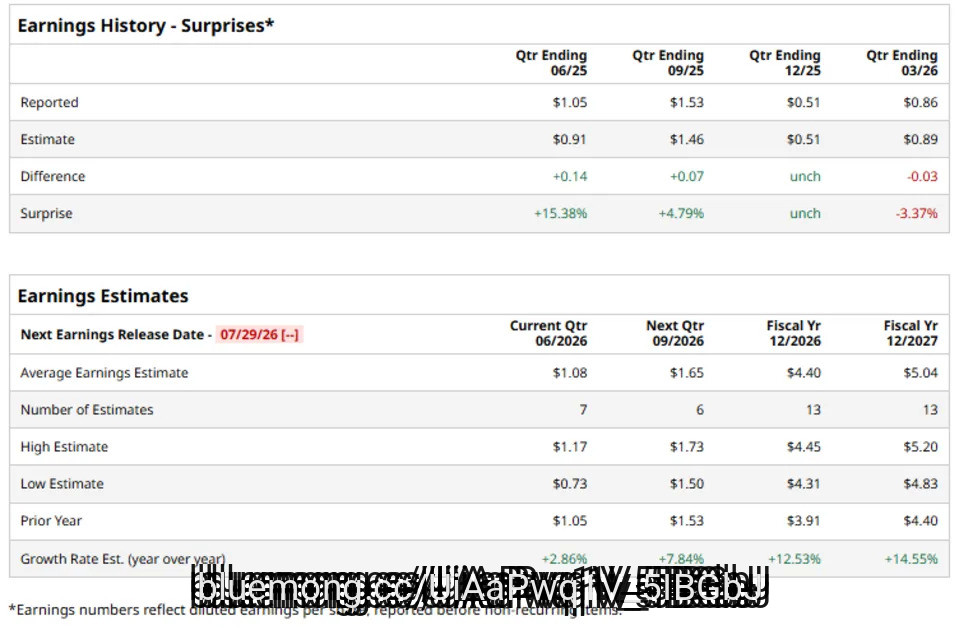
The S&P 500 Index ($SPX) (SPY) today is down -0.79%, the Dow Jones Industrial Average ($DOWI) (DIA) is down -1.44%, and the Nasdaq 100 Index ($IUXX) (QQQ) is down -0.61%. September E-mini S&P futures (ESU26) are down -0.77%, and September E-mini Nasdaq futures (NQU26) are down -0.60%.
Stock indexes are sliding today as crude oil prices and bond yields jumped after President Trump declared the ceasefire with Iran is over. Mr. Trump called the ceasefire "a waste of time" after the US launched strikes against Iran in response to attacks on ships transiting the Strait of Hormuz. The escalation of hostilities has prompted a flight from risk and some stock selling. Limiting losses in the broader market is today's strength in chipmakers and AI-infrastructure stocks, which are recovering some of Tuesday's sell-off.
Nasdaq Futures Plunge as Samsung Sparks Chip Selloff
AbbVie vs Eli Lilly: 1 Is Clearly the Better Dividend Stock to Buy and Hold for the Next 10 Years
The Nasdaq-100 Could Be Forming a Textbook Diamond Top. Here's What to Watch on the QQQ Chart Now.
Stock indexes are sliding today as crude oil prices and bond yields jumped after President Trump declared the ceasefire with Iran is over. Mr. Trump called the ceasefire "a waste of time" after the US launched strikes against Iran in response to attacks on ships transiting the Strait of Hormuz. The escalation of hostilities has prompted a flight from risk and some stock selling. Limiting losses in the broader market is today's strength in chipmakers and AI-infrastructure stocks, which are recovering some of Tuesday's sell-off.
Nasdaq Futures Plunge as Samsung Sparks Chip Selloff
AbbVie vs Eli Lilly: 1 Is Clearly the Better Dividend Stock to Buy and Hold for the Next 10 Years
The Nasdaq-100 Could Be Forming a Textbook Diamond Top. Here's What to Watch on the QQQ Chart Now.


2 months ago
We recently compiled a list of the 10 Best Innovative Healthcare Stocks to Buy Now. Genmab A/S (NASDAQ:GMAB) is one of the best healthcare stocks on our list.
TheFly reported on July 2 that H.C. Wainwright **** yst Raghuram Selvaraju increased the price target on GMAB to $40 from $38 while reaffirming a Buy rating on the shares. The revision followed the company's announcement that the EPCORE DLBCL-4 trial achieved its primary endpoint. Based on the trial outcome, the firm raised its estimated likelihood of regulatory approval for Epkinly to 70% in the first-line setting and 95% in the second-line setting.
In a major secondary development on July 6, Genmab A/S (NASDAQ:GMAB) announced that the European Commission approved marketing authorization for TEPKINLY in combination with lenalidomide and rituximab for adults with relapsed or refractory follicular lymphoma. The approval was supported by findings from the Phase 3 EPCORE FL-1 trial, which evaluated a fixed-duration TEPKINLY plus R2 regimen against the standard R2 treatment. GMAB highlighted that the results demonstrated the therapy's potential to deliver durable responses through a chemotherapy-free approach for patients with limited treatment options. Epcoritamab is being jointly developed with AbbVie (ABBV) through their oncology partnership, with both companies sharing commercial responsibilities in the U.S. and **** an, while AbbVie manages additional global commercialization.
Genmab A/S (NASDAQ:GMAB) is a global biotechnology company headquartered in Copenhagen, Denmark, focused on developing innovative antibody-based therapies for cancer and other serious diseases. The company uses advanced AI, computational science, and proprietary platforms to create next-generation medicines, including DuoBody bispecific antibodies, HexaBody immune-enhancing technology, and ADC platforms expanded through its acquisition of ProfoundBio.
While we acknowledge the potential of GMAB as an investment, we believe certain AI stocks offer greater upside potential and carry less downside risk. If you're looking for an extremely undervalued AI stock that also stands to benefit significantly from Trump-era tariffs and the onshoring trend, see our free report on the best short-term AI stock.
TheFly reported on July 2 that H.C. Wainwright **** yst Raghuram Selvaraju increased the price target on GMAB to $40 from $38 while reaffirming a Buy rating on the shares. The revision followed the company's announcement that the EPCORE DLBCL-4 trial achieved its primary endpoint. Based on the trial outcome, the firm raised its estimated likelihood of regulatory approval for Epkinly to 70% in the first-line setting and 95% in the second-line setting.
In a major secondary development on July 6, Genmab A/S (NASDAQ:GMAB) announced that the European Commission approved marketing authorization for TEPKINLY in combination with lenalidomide and rituximab for adults with relapsed or refractory follicular lymphoma. The approval was supported by findings from the Phase 3 EPCORE FL-1 trial, which evaluated a fixed-duration TEPKINLY plus R2 regimen against the standard R2 treatment. GMAB highlighted that the results demonstrated the therapy's potential to deliver durable responses through a chemotherapy-free approach for patients with limited treatment options. Epcoritamab is being jointly developed with AbbVie (ABBV) through their oncology partnership, with both companies sharing commercial responsibilities in the U.S. and **** an, while AbbVie manages additional global commercialization.
Genmab A/S (NASDAQ:GMAB) is a global biotechnology company headquartered in Copenhagen, Denmark, focused on developing innovative antibody-based therapies for cancer and other serious diseases. The company uses advanced AI, computational science, and proprietary platforms to create next-generation medicines, including DuoBody bispecific antibodies, HexaBody immune-enhancing technology, and ADC platforms expanded through its acquisition of ProfoundBio.
While we acknowledge the potential of GMAB as an investment, we believe certain AI stocks offer greater upside potential and carry less downside risk. If you're looking for an extremely undervalued AI stock that also stands to benefit significantly from Trump-era tariffs and the onshoring trend, see our free report on the best short-term AI stock.


2 months ago
With a market cap of $26.2 billion, Mettler-Toledo International Inc. (MTD) is a leading global provider of precision instruments and services, recognized for its innovation and strong market leadership across a wide range of industries, including life sciences, food, and chemicals. With products sold in more than 140 countries and a direct presence in approximately 40 countries, the company supports critical research, quality control, and manufacturing processes through an extensive global sales and service network.
The Greifensee, Switzerland-based company is set to unveil its fiscal Q2 2026 results after the market closes on Thursday, Jul. 30. Ahead of the event, ******* ysts forecast MTD to post an adjusted EPS of $10.78, a growth of 6.8% from $10.09 in the same quarter last year. The company has surpassed Wall Street's bottom-line projections in each of the past four quarters.
Nasdaq Futures Plunge as Samsung Sparks Chip Selloff
AbbVie vs Eli Lilly: 1 Is Clearly the Better Dividend Stock to Buy and Hold for the Next 10 Years
The Nasdaq-100 Could Be Forming a Textbook Diamond Top. Here's What to Watch on the QQQ Chart Now.
The Greifensee, Switzerland-based company is set to unveil its fiscal Q2 2026 results after the market closes on Thursday, Jul. 30. Ahead of the event, ******* ysts forecast MTD to post an adjusted EPS of $10.78, a growth of 6.8% from $10.09 in the same quarter last year. The company has surpassed Wall Street's bottom-line projections in each of the past four quarters.
Nasdaq Futures Plunge as Samsung Sparks Chip Selloff
AbbVie vs Eli Lilly: 1 Is Clearly the Better Dividend Stock to Buy and Hold for the Next 10 Years
The Nasdaq-100 Could Be Forming a Textbook Diamond Top. Here's What to Watch on the QQQ Chart Now.



2 months ago
Micron Technology (MU) has been one of the market's biggest winners over the past year, and the chipmaker just added another catalyst. The company unveiled a new long-term memory supply agreement with Ford Motor (F), extending its push into the fast-growing automotive market.
The announcement comes shortly after Micron delivered another blockbuster quarterly report, beating Wall Street's expectations on both revenue and earnings. Those results only tell one thing: that AI-driven demand and higher memory prices continue to fuel record profitability.
Nasdaq Futures Plunge as Samsung Sparks Chip Selloff
AbbVie vs Eli Lilly: 1 Is Clearly the Better Dividend Stock to Buy and Hold for the Next 10 Years
The Nasdaq-100 Could Be Forming a Textbook Diamond Top. Here's What to Watch on the QQQ Chart Now.
The announcement comes shortly after Micron delivered another blockbuster quarterly report, beating Wall Street's expectations on both revenue and earnings. Those results only tell one thing: that AI-driven demand and higher memory prices continue to fuel record profitability.
Nasdaq Futures Plunge as Samsung Sparks Chip Selloff
AbbVie vs Eli Lilly: 1 Is Clearly the Better Dividend Stock to Buy and Hold for the Next 10 Years
The Nasdaq-100 Could Be Forming a Textbook Diamond Top. Here's What to Watch on the QQQ Chart Now.


2 months ago
The S&P 500 Index ($SPX) (SPY) today is down -0.49%, the Dow Jones Industrial Average ($DOWI) (DIA) is down -0.96%, and the Nasdaq 100 Index ($IUXX) (QQQ) is down -0.19%. September E-mini S&P futures (ESU26) are down -0.49%, and September E-mini Nasdaq futures (NQU26) are down -0.21%.
Stock indexes are moving lower today as crude oil prices and bond yields jumped after President Trump declared the ceasefire with Iran is over. Mr. Trump called the ceasefire "a waste of time" after the US launched strikes against Iran in response to attacks on ships transiting the Strait of Hormuz. The escalation of hostilities has prompted a flight from risk and some stock selling. Limiting losses in the broader market is today's strength in chipmakers and AI-infrastructure stocks, which are recovering some of Tuesday's sell-off.
Nasdaq Futures Plunge as Samsung Sparks Chip Selloff
AbbVie vs Eli Lilly: 1 Is Clearly the Better Dividend Stock to Buy and Hold for the Next 10 Years
The Nasdaq-100 Could Be Forming a Textbook Diamond Top. Here's What to Watch on the QQQ Chart Now.
Stock indexes are moving lower today as crude oil prices and bond yields jumped after President Trump declared the ceasefire with Iran is over. Mr. Trump called the ceasefire "a waste of time" after the US launched strikes against Iran in response to attacks on ships transiting the Strait of Hormuz. The escalation of hostilities has prompted a flight from risk and some stock selling. Limiting losses in the broader market is today's strength in chipmakers and AI-infrastructure stocks, which are recovering some of Tuesday's sell-off.
Nasdaq Futures Plunge as Samsung Sparks Chip Selloff
AbbVie vs Eli Lilly: 1 Is Clearly the Better Dividend Stock to Buy and Hold for the Next 10 Years
The Nasdaq-100 Could Be Forming a Textbook Diamond Top. Here's What to Watch on the QQQ Chart Now.


2 months ago
For years, Strategy (MSTR), formerly MicroStrategy, built its reputation on one simple idea: buy Bitcoin (BTCUSD) and never sell it. That changed last week when the company disclosed it sold $216 million worth of Bitcoin to help fund preferred stock dividends. The move surprised investors because it marked a shift from the company's long-standing buy-and-hold strategy.
Strategy said it sold 3,588 Bitcoin last week under a new treasury framework aimed at supporting preferred stock obligations and boosting liquidity. The sale reduced its holdings to 843,775 Bitcoin, acquired at an average cost of $74,476 per token.
Nasdaq Futures Plunge as Samsung Sparks Chip Selloff
AbbVie vs Eli Lilly: 1 Is Clearly the Better Dividend Stock to Buy and Hold for the Next 10 Years
The Nasdaq-100 Could Be Forming a Textbook Diamond Top. Here's What to Watch on the QQQ Chart Now.
Strategy said it sold 3,588 Bitcoin last week under a new treasury framework aimed at supporting preferred stock obligations and boosting liquidity. The sale reduced its holdings to 843,775 Bitcoin, acquired at an average cost of $74,476 per token.
Nasdaq Futures Plunge as Samsung Sparks Chip Selloff
AbbVie vs Eli Lilly: 1 Is Clearly the Better Dividend Stock to Buy and Hold for the Next 10 Years
The Nasdaq-100 Could Be Forming a Textbook Diamond Top. Here's What to Watch on the QQQ Chart Now.



2 months ago
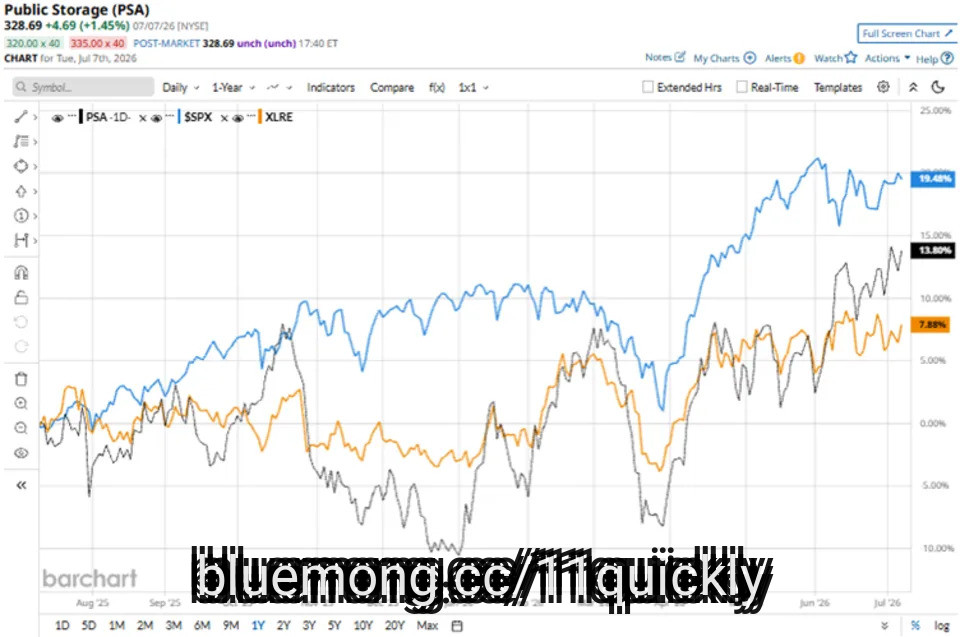
Public Storage (PSA) is a leading real estate investment trust (REIT) that acquires, owns, develops, and operates self-storage facilities across the U.S. Its business centers on renting storage ******* e for personal and commercial use, along with related services such as merchandise sales and tenant protection. The company's headquarters is in Frisco, Texas and has a market capitalization of $57.71 billion.
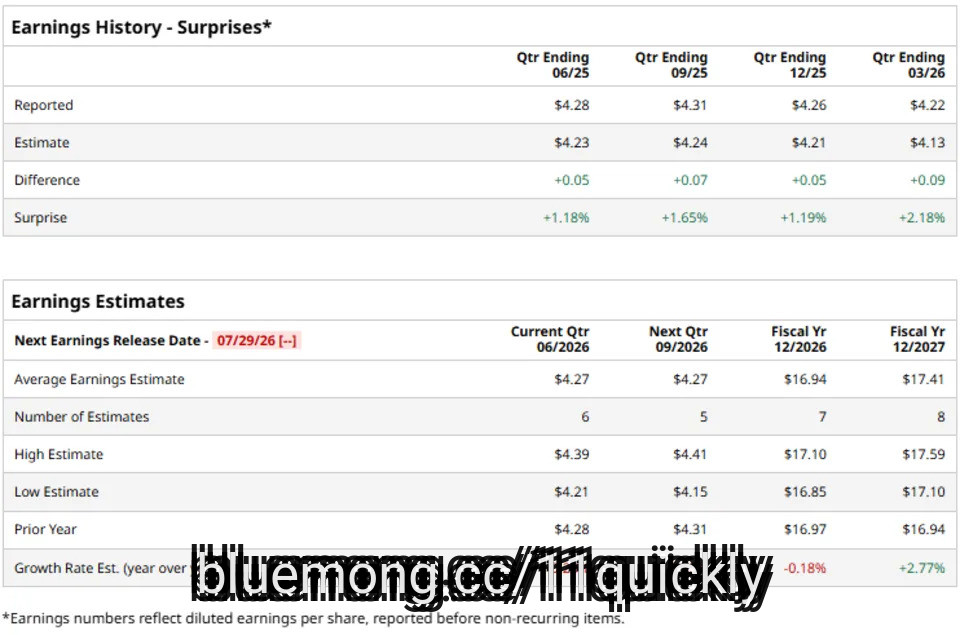
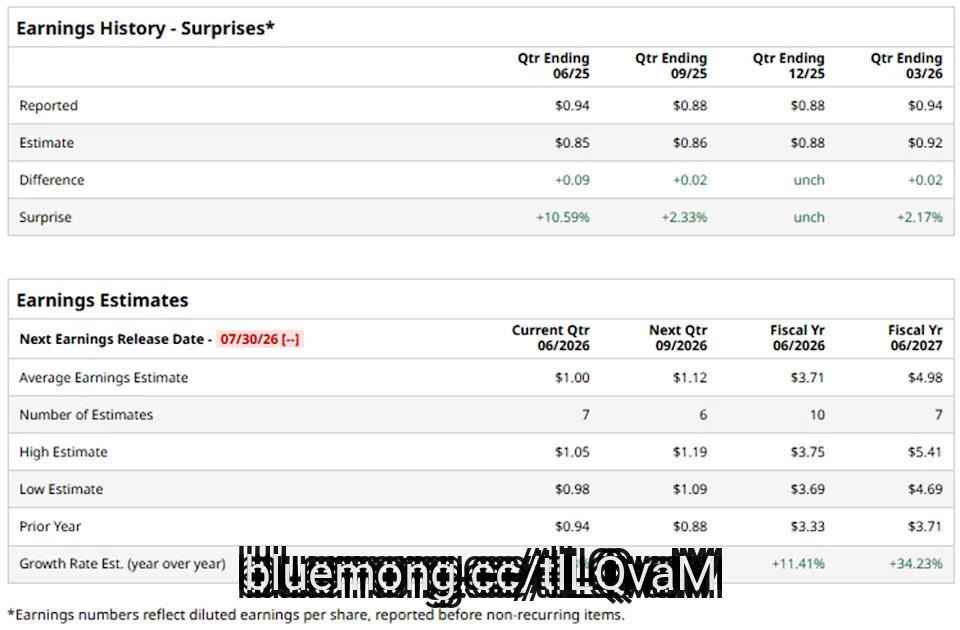
Public Storage is set to report its second-quarter results for fiscal 2026 soon. Ahead of the results, Wall Street ******* ysts expect the company to report a profit of $4.27 per diluted share for Q2, down marginally year-over-year (YOY). However, the company has a solid track record of exceeding consensus estimates, topping them in all four of the trailing quarters. For the full fiscal year 2026, Wall Street ******* ysts expect Public Storage's profit to decrease slightly to $16.94 per share, followed by a 2.8% YOY improvement to $17.41 per share in fiscal 2027.
Nasdaq Futures Plunge as Samsung Sparks Chip Selloff
AbbVie vs Eli Lilly: 1 Is Clearly the Better Dividend Stock to Buy and Hold for the Next 10 Years
The Nasdaq-100 Could Be Forming a Textbook Diamond Top. Here's What to Watch on the QQQ Chart Now.
Public Storage is set to report its second-quarter results for fiscal 2026 soon. Ahead of the results, Wall Street ******* ysts expect the company to report a profit of $4.27 per diluted share for Q2, down marginally year-over-year (YOY). However, the company has a solid track record of exceeding consensus estimates, topping them in all four of the trailing quarters. For the full fiscal year 2026, Wall Street ******* ysts expect Public Storage's profit to decrease slightly to $16.94 per share, followed by a 2.8% YOY improvement to $17.41 per share in fiscal 2027.
Nasdaq Futures Plunge as Samsung Sparks Chip Selloff
AbbVie vs Eli Lilly: 1 Is Clearly the Better Dividend Stock to Buy and Hold for the Next 10 Years
The Nasdaq-100 Could Be Forming a Textbook Diamond Top. Here's What to Watch on the QQQ Chart Now.


2 months ago
September Euro currency (E6U26) futures present a selling opportunity on more price weakness.
See on the daily bar chart for the September Euro currency futures that prices are trending lower and are not far above the recent multi-month low. The bears have the firm near-term technical advantage as the price trend is their friend.
Nasdaq Futures Plunge as Samsung Sparks Chip Selloff
AbbVie vs Eli Lilly: 1 Is Clearly the Better Dividend Stock to Buy and Hold for the Next 10 Years
The Nasdaq-100 Could Be Forming a Textbook Diamond Top. Here's What to Watch on the QQQ Chart Now.
See on the daily bar chart for the September Euro currency futures that prices are trending lower and are not far above the recent multi-month low. The bears have the firm near-term technical advantage as the price trend is their friend.
Nasdaq Futures Plunge as Samsung Sparks Chip Selloff
AbbVie vs Eli Lilly: 1 Is Clearly the Better Dividend Stock to Buy and Hold for the Next 10 Years
The Nasdaq-100 Could Be Forming a Textbook Diamond Top. Here's What to Watch on the QQQ Chart Now.


2 months ago
Wolfspeed (WOLF) has spent the last year trying to convince investors that its turnaround story is real. Its overhaul included new leadership, a reorganized go-to-market plan, and a major debt deal — all supposed to change the narrative. However, Wall Street does not appear to be buying it. Not yet, anyway.
A growing crowd of short sellers is betting the silicon carbide wafer maker still has a long way to go before it proves it can turn profitable. Let's take a closer look.
Nasdaq Futures Plunge as Samsung Sparks Chip Selloff
AbbVie vs Eli Lilly: 1 Is Clearly the Better Dividend Stock to Buy and Hold for the Next 10 Years
The Nasdaq-100 Could Be Forming a Textbook Diamond Top. Here's What to Watch on the QQQ Chart Now.
A growing crowd of short sellers is betting the silicon carbide wafer maker still has a long way to go before it proves it can turn profitable. Let's take a closer look.
Nasdaq Futures Plunge as Samsung Sparks Chip Selloff
AbbVie vs Eli Lilly: 1 Is Clearly the Better Dividend Stock to Buy and Hold for the Next 10 Years
The Nasdaq-100 Could Be Forming a Textbook Diamond Top. Here's What to Watch on the QQQ Chart Now.



2 months ago
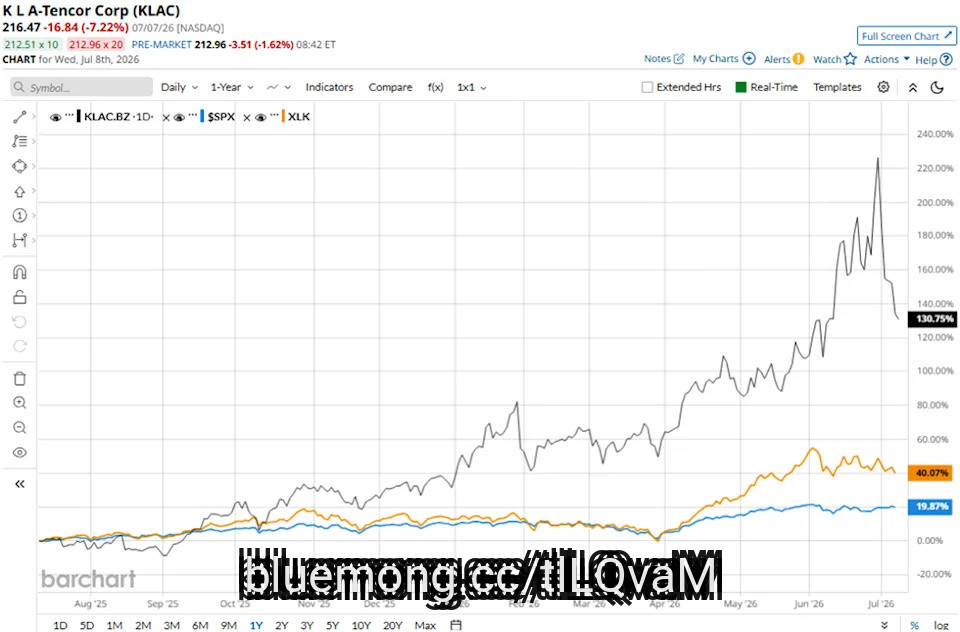
With a market cap of $282.8 billion, KLA Corporation (KLAC) is a global leader in advanced process control and process-enabling solutions for the electronics and semiconductor manufacturing industry. Working closely with customers worldwide, KLA's teams of scientists, engineers, and data experts develop innovative equipment and services that drive advancements in wafer, reticle, integrated circuit, packaging, and printed circuit board manufacturing.
The Milpitas, California-based company is slated to announce its fiscal Q4 2026 results soon. Ahead of this event, ******* ysts expect KLAC to report an adjusted EPS of $1, a 6.4% rise from $0.94 in the year-ago quarter. It has exceeded or met Wall Street's earnings expectations in the past four quarters.
Nasdaq Futures Plunge as Samsung Sparks Chip Selloff
AbbVie vs Eli Lilly: 1 Is Clearly the Better Dividend Stock to Buy and Hold for the Next 10 Years
The Nasdaq-100 Could Be Forming a Textbook Diamond Top. Here's What to Watch on the QQQ Chart Now.
The Milpitas, California-based company is slated to announce its fiscal Q4 2026 results soon. Ahead of this event, ******* ysts expect KLAC to report an adjusted EPS of $1, a 6.4% rise from $0.94 in the year-ago quarter. It has exceeded or met Wall Street's earnings expectations in the past four quarters.
Nasdaq Futures Plunge as Samsung Sparks Chip Selloff
AbbVie vs Eli Lilly: 1 Is Clearly the Better Dividend Stock to Buy and Hold for the Next 10 Years
The Nasdaq-100 Could Be Forming a Textbook Diamond Top. Here's What to Watch on the QQQ Chart Now.

2 months ago
Memory chips have become costly, owing to the high demand and limited supply of high-bandwidth memory (HBM). As a result, AI infrastructure deployments have also become more costly — that is if companies can get their hands on memory in the first place. Back in October 2025, Nvidia (NVDA) CEO Jensen Huang traveled to South Korea to meet with executives and secure memory supply. When the world first woke up to memory as a bottleneck, Nvidia already had a head start.
Still, while Huang did something similar in June of this year, he hasn't been able to make the company immune to the memory supply shock. AI server racks are becoming hard to build with limited memory, and the problem is now finally knocking on Nvidia's door.
Nasdaq Futures Plunge as Samsung Sparks Chip Selloff
AbbVie vs Eli Lilly: 1 Is Clearly the Better Dividend Stock to Buy and Hold for the Next 10 Years
The Nasdaq-100 Could Be Forming a Textbook Diamond Top. Here's What to Watch on the QQQ Chart Now.
Still, while Huang did something similar in June of this year, he hasn't been able to make the company immune to the memory supply shock. AI server racks are becoming hard to build with limited memory, and the problem is now finally knocking on Nvidia's door.
Nasdaq Futures Plunge as Samsung Sparks Chip Selloff
AbbVie vs Eli Lilly: 1 Is Clearly the Better Dividend Stock to Buy and Hold for the Next 10 Years
The Nasdaq-100 Could Be Forming a Textbook Diamond Top. Here's What to Watch on the QQQ Chart Now.


2 months ago
The two most common types of criticism that neoclouds receive are that they have too much debt and that they're just renting GPUs. While these concerns may seem like genuine red flags, they miss the whole point of what a neocloud does. By definition, neclouds offer GPU-as-a-Service (GPUaaS). They're the middlemen who buy compute and then resell it. Since compute is in extremely high demand, they can charge a premium, resulting in a hefty profit over their cost of capital.
This is also the reason why neoclouds have so much debt. Raising capital isn't just part of the business model — it is practically the whole thing. Neoclouds take money from debt and equity investors and invest it into GPUs, much like a bank takes people's money and invests it into ******* ets.
Nasdaq Futures Plunge as Samsung Sparks Chip Selloff
AbbVie vs Eli Lilly: 1 Is Clearly the Better Dividend Stock to Buy and Hold for the Next 10 Years
The Nasdaq-100 Could Be Forming a Textbook Diamond Top. Here's What to Watch on the QQQ Chart Now.
This is also the reason why neoclouds have so much debt. Raising capital isn't just part of the business model — it is practically the whole thing. Neoclouds take money from debt and equity investors and invest it into GPUs, much like a bank takes people's money and invests it into ******* ets.
Nasdaq Futures Plunge as Samsung Sparks Chip Selloff
AbbVie vs Eli Lilly: 1 Is Clearly the Better Dividend Stock to Buy and Hold for the Next 10 Years
The Nasdaq-100 Could Be Forming a Textbook Diamond Top. Here's What to Watch on the QQQ Chart Now.