8 mins. ago
By Jason Lange
WASHINGTON, Sept 14 (Reuters) - President Donald Trump's public approval rating rose from a record low, while Americans voiced growing support for Democrats gaining power in the U.S. Congress in a Reuters/Ipsos poll taken in the days after the Republican Party's first-ever midterm convention last week.
The four-day poll showed 63% of Americans - including four in 10 Republicans and nine in 10 Democrats - disapproved of Trump's offer made in his convention speech that he would ensure all Americans get a $5,000 dividend if Republicans retain control of the U.S. Congress in November's midterm elections.
The survey gathered responses from 1,143 Americans nationwide and had a margin of error of 3 percentage points in either direction.
Some 35% of Americans give Trump a thumbs up for his performance in the White House, up from 33% in an August 28 to 31 Reuters/Ipsos poll, the lowest of his political career.
#ipsos #convention
WASHINGTON, Sept 14 (Reuters) - President Donald Trump's public approval rating rose from a record low, while Americans voiced growing support for Democrats gaining power in the U.S. Congress in a Reuters/Ipsos poll taken in the days after the Republican Party's first-ever midterm convention last week.
The four-day poll showed 63% of Americans - including four in 10 Republicans and nine in 10 Democrats - disapproved of Trump's offer made in his convention speech that he would ensure all Americans get a $5,000 dividend if Republicans retain control of the U.S. Congress in November's midterm elections.
The survey gathered responses from 1,143 Americans nationwide and had a margin of error of 3 percentage points in either direction.
Some 35% of Americans give Trump a thumbs up for his performance in the White House, up from 33% in an August 28 to 31 Reuters/Ipsos poll, the lowest of his political career.
#ipsos #convention


3 hours ago
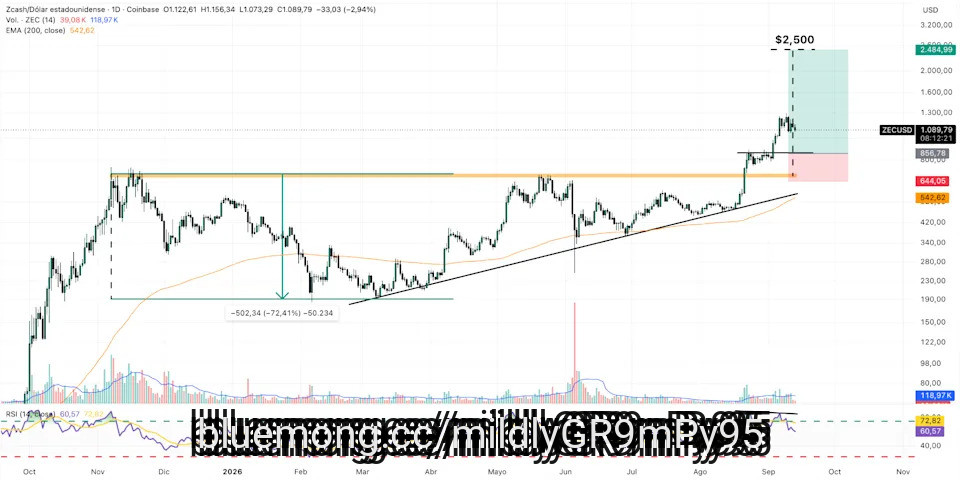
Zcash (ZEC) has dropped by nearly 6% in the past 7 days following a massive rally that pushed the token to its highest levels in a decade.
Trading volumes remain quite high at $1.4 billion, accounting for over 7% of the ******* et's circulating market cap.
The price hit a strong sell wall at $1,300 as macroeconomic conditions in the United States deteriorated.
A stable inflation print on Friday kickstarted a short-lived rally across crypto ******* ets but quickly faded, as odds of a rate hike during the next FOMC meeting rose to nearly 90%.
The Federal Open Market Committee (FOMC) is expected to convene on September 16. Comments from the new Chairman of the central bank, Kevin Warsh, will be scrutinized to get a sense of how the institution plans to curb inflation.
#inflation #zcash #trading #states
Trading volumes remain quite high at $1.4 billion, accounting for over 7% of the ******* et's circulating market cap.
The price hit a strong sell wall at $1,300 as macroeconomic conditions in the United States deteriorated.
A stable inflation print on Friday kickstarted a short-lived rally across crypto ******* ets but quickly faded, as odds of a rate hike during the next FOMC meeting rose to nearly 90%.
The Federal Open Market Committee (FOMC) is expected to convene on September 16. Comments from the new Chairman of the central bank, Kevin Warsh, will be scrutinized to get a sense of how the institution plans to curb inflation.
#inflation #zcash #trading #states


3 hours ago
Changing jobs is looking lucrative again.
Base pay for job changers in the private sector increased 4.7% in August, compared to 3% for job stayers, according to the latest report from payroll provider ADP.
When you consider gross pay, which includes tips, commissions, and bonuses, wages for job stayers rose 4.4% year over year, while gross pay for job changers increased substantially more: 7.3%.
In another recent report, the job-jumping news was just as promising.
The median pay increase for workers switching jobs rose to 5% last month from 4.4% in July, according to new data from the Atlanta Fed. For those who stay put, the average pay increase was 3.6%, the same as in July.
#Jobs #rose
Base pay for job changers in the private sector increased 4.7% in August, compared to 3% for job stayers, according to the latest report from payroll provider ADP.
When you consider gross pay, which includes tips, commissions, and bonuses, wages for job stayers rose 4.4% year over year, while gross pay for job changers increased substantially more: 7.3%.
In another recent report, the job-jumping news was just as promising.
The median pay increase for workers switching jobs rose to 5% last month from 4.4% in July, according to new data from the Atlanta Fed. For those who stay put, the average pay increase was 3.6%, the same as in July.
#Jobs #rose


4 hours ago
On August 4, Willis Lease Finance Corporation (NASDAQ:WLFC) reported second-quarter results that pulled in two directions at once. The lessor of commercial aircraft engines grew its operating business at a healthy clip, yet net income fell by more than half, a split that makes this quarter harder to read than the headline suggests.
Income from operations climbed 20.2% to $34.0 million in the quarter ended June 30, 2026, and the engine underneath that number is lease rent revenue, which rose 6.7% to $77.1 million as the average size of Willis Lease's portfolio expanded from a year earlier. Over the first six months of 2026, lease rent revenue is up 10.4% to $154.5 million, a steadier pace than the quarterly figure alone implies.
The company's trading business added to that. Willis Lease booked a $32.0 million gain on the sale of leased equipment, up 16.2%, after selling 21 engines and other parts and equipment during the quarter, compared with 14 engines and two airframes a year earlier. That kind of turnover matters for a leasing company, since selling ****** ets at a gain confirms that engine values in the market are holding up.
The bigger story sits in how Willis Lease is expanding beyond its own balance sheet. ****** ets under management, which folds in the company's on-balance-sheet fleet along with its Willis Aviation Capital business, grew 21% year over year to $4.4 billion. CEO Austin C. Willis tied that growth directly to building out Willis Aviation Capital, and the fee income backs that up: management and advisory fees jumped 113.4% to $5.5 million in the quarter and 194.9% to $13.4 million over six months. Two new investment fund partnerships, one with Liberty Mutual Investments that began operating in March 2026 and one with Blackstone Credit & Insurance that started in April 2026, are the mechanics behind that shift toward managing other people's capital rather than only deploying its own.
Net income attributable to common shareholders fell 51.2% to $28.7 million, and diluted earnings per share dropped from $2.81 to $1.31. Some of that gap traces to a tough comparison rather than a weaker quarter, since the second quarter of 2025 included a $43.0 million gain from the sale of the BAML business that had no counterpart this year. Willis Lease also recognized a $5.4 million loss on debt extinguishment in the quarter, and $12.4 million over six months, a cost tied to refinancing that simply was not there in 2025.
#lease #capital #months
Income from operations climbed 20.2% to $34.0 million in the quarter ended June 30, 2026, and the engine underneath that number is lease rent revenue, which rose 6.7% to $77.1 million as the average size of Willis Lease's portfolio expanded from a year earlier. Over the first six months of 2026, lease rent revenue is up 10.4% to $154.5 million, a steadier pace than the quarterly figure alone implies.
The company's trading business added to that. Willis Lease booked a $32.0 million gain on the sale of leased equipment, up 16.2%, after selling 21 engines and other parts and equipment during the quarter, compared with 14 engines and two airframes a year earlier. That kind of turnover matters for a leasing company, since selling ****** ets at a gain confirms that engine values in the market are holding up.
The bigger story sits in how Willis Lease is expanding beyond its own balance sheet. ****** ets under management, which folds in the company's on-balance-sheet fleet along with its Willis Aviation Capital business, grew 21% year over year to $4.4 billion. CEO Austin C. Willis tied that growth directly to building out Willis Aviation Capital, and the fee income backs that up: management and advisory fees jumped 113.4% to $5.5 million in the quarter and 194.9% to $13.4 million over six months. Two new investment fund partnerships, one with Liberty Mutual Investments that began operating in March 2026 and one with Blackstone Credit & Insurance that started in April 2026, are the mechanics behind that shift toward managing other people's capital rather than only deploying its own.
Net income attributable to common shareholders fell 51.2% to $28.7 million, and diluted earnings per share dropped from $2.81 to $1.31. Some of that gap traces to a tough comparison rather than a weaker quarter, since the second quarter of 2025 included a $43.0 million gain from the sale of the BAML business that had no counterpart this year. Willis Lease also recognized a $5.4 million loss on debt extinguishment in the quarter, and $12.4 million over six months, a cost tied to refinancing that simply was not there in 2025.
#lease #capital #months

5 hours ago
On August 6, The RealReal (NASDAQ:REAL) reported second quarter results that beat its own outlook and pushed the resale luxury marketplace to raise its full year guidance. Gross merchandise value hit an all time high of $617 million, up 22% from a year earlier, and management pointed to four straight quarters of GMV growth above 20%. But a wider net loss sitting next to those record numbers complicates the story for anyone weighing the stock today.
The headline number is GMV of $617 million for the quarter ended June 30, up 22% year over year, with total revenue climbing 17% to $193 million. Consignment revenue grew 15% while Direct Revenue, the company's owned inventory channel, grew 26%, showing both sides of the business contributing to the acceleration. Profitability moved in the same direction. Gross margin reached 74.4%, up 10 basis points from a year ago, and Adjusted EBITDA margin jumped to 7%, a 290 basis point improvement that management called nearly 300 basis points of expansion.
The buyer base backs up the growth story rather than just the pricing. Trailing twelve-month active buyers rose 11% to 1,107,000, and average order value climbed 13% to $659, meaning existing shoppers are spending meaningfully more per transaction, not just showing up more often. That combination gave management enough confidence to raise full-year guidance to $2.54 billion to $2.57 billion in GMV and $788 million to $797 million in total revenue, alongside third-quarter Adjusted EBITDA guidance of $13.5 million to $14.5 million.
Despite the operating improvements, GAAP losses widened. Net loss came in at $27 million, or 14.1% of total revenue, compared to $11 million, or 6.9% of total revenue, a year earlier. GAAP basic net loss per share was $0.23 versus $0.10 in the prior year period, and diluted net loss per share was $0.23 versus $0.13. Much of that swing traces to a $(18.6) million non-cash adjustment tied to the change in fair value of warrant liability, a factor unrelated to how the underlying business performed. On a non-GAAP basis, basic and diluted net loss per share actually narrowed to $0.01 from $0.06, underscoring how much of the GAAP gap is accounting rather than operations.
There is also a transparency wrinkle in the guidance itself. The RealReal said it has not reconciled its forward-looking Adjusted EBITDA figures to GAAP net income or loss, citing components like payroll tax expense on employee stock transactions that it cannot predict with reasonable certainty. That leaves investors trusting a non-GAAP target without the usual bridge back to the bottom line.
#adjusted
The headline number is GMV of $617 million for the quarter ended June 30, up 22% year over year, with total revenue climbing 17% to $193 million. Consignment revenue grew 15% while Direct Revenue, the company's owned inventory channel, grew 26%, showing both sides of the business contributing to the acceleration. Profitability moved in the same direction. Gross margin reached 74.4%, up 10 basis points from a year ago, and Adjusted EBITDA margin jumped to 7%, a 290 basis point improvement that management called nearly 300 basis points of expansion.
The buyer base backs up the growth story rather than just the pricing. Trailing twelve-month active buyers rose 11% to 1,107,000, and average order value climbed 13% to $659, meaning existing shoppers are spending meaningfully more per transaction, not just showing up more often. That combination gave management enough confidence to raise full-year guidance to $2.54 billion to $2.57 billion in GMV and $788 million to $797 million in total revenue, alongside third-quarter Adjusted EBITDA guidance of $13.5 million to $14.5 million.
Despite the operating improvements, GAAP losses widened. Net loss came in at $27 million, or 14.1% of total revenue, compared to $11 million, or 6.9% of total revenue, a year earlier. GAAP basic net loss per share was $0.23 versus $0.10 in the prior year period, and diluted net loss per share was $0.23 versus $0.13. Much of that swing traces to a $(18.6) million non-cash adjustment tied to the change in fair value of warrant liability, a factor unrelated to how the underlying business performed. On a non-GAAP basis, basic and diluted net loss per share actually narrowed to $0.01 from $0.06, underscoring how much of the GAAP gap is accounting rather than operations.
There is also a transparency wrinkle in the guidance itself. The RealReal said it has not reconciled its forward-looking Adjusted EBITDA figures to GAAP net income or loss, citing components like payroll tax expense on employee stock transactions that it cannot predict with reasonable certainty. That leaves investors trusting a non-GAAP target without the usual bridge back to the bottom line.
#adjusted


5 hours ago
For much of the past year, the "AI trade" has been focused on infrastructure: processors, data centers, and cloud capacity. Snowflake Inc. (NYSE:SNOW)'s blowout quarter, which was reported after the market closed on September 2, provided something unique: clear evidence that AI is translating into real, incremental spending within software companies that are closer to the end customer. The reaction echoed throughout corporate software the next morning, adding to a rally that, for Salesforce, Inc. (NYSE:CRM) in particular, had already begun for its own reasons.
Snowflake Inc. (NYSE:SNOW) boosted its fiscal 2027 product revenues target to $6.07 billion from $5.84 billion, following a 37% increase in second-quarter product revenue to $1.49 billion. CEO Sridhar Ramaswamy stated that the company's AI products accounted for around half of that growth acceleration, which ****** ysts took as implying that AI demand is increasing Snowflake's core data platform, instead of just adoption of standalone AI add-ons. UBS ****** yst Karl Keirstead said the figures, together with Palantir and Databricks' rapid growth, gave compelling proof of robust enterprise AI adoption.
Snowflake's beat rippled across enterprise software, with ServiceNow, Atlassian, Adobe, Intuit, and Salesforce, Inc. (NYSE:CRM) all up 3.5% to 6% on the same day, while the sector-wide iShares Expanded Tech-Software ETF rose 3%.
That Snowflake-driven spike was piled on top of a much bigger adjustment made by Salesforce, Inc. (NYSE:CRM) on its own. The company released its second-quarter fiscal 2027 results on August 26, a week before Snowflake Inc. (NYSE:SNOW), with revenue of $11.35 billion, up 11% year-over-year, with current remaining performance obligations up 14% to $33.5 billion and adjusted EPS of $5.90, exceeding the $3.27 consensus. Along with those results, Salesforce and Anthropic announced Claudeforce, an expanded partnership that initially brings Salesforce data, workflows and business logic directly into Claude through a plugin with 37 prebuilt sales skills. The companies plan additional integrations across Claude, Salesforce and Slack. That said, Salesforce recorded $2.61 billion in net gains on strategic investments during the quarter, which added $2.53 per share to non-GAAP EPS.
Taken together, the two events suggest that enterprise AI adoption can increase the value and consumption of established software platforms when AI is connected to existing corporate data and workflows
#billion #software #data #quarter
Snowflake Inc. (NYSE:SNOW) boosted its fiscal 2027 product revenues target to $6.07 billion from $5.84 billion, following a 37% increase in second-quarter product revenue to $1.49 billion. CEO Sridhar Ramaswamy stated that the company's AI products accounted for around half of that growth acceleration, which ****** ysts took as implying that AI demand is increasing Snowflake's core data platform, instead of just adoption of standalone AI add-ons. UBS ****** yst Karl Keirstead said the figures, together with Palantir and Databricks' rapid growth, gave compelling proof of robust enterprise AI adoption.
Snowflake's beat rippled across enterprise software, with ServiceNow, Atlassian, Adobe, Intuit, and Salesforce, Inc. (NYSE:CRM) all up 3.5% to 6% on the same day, while the sector-wide iShares Expanded Tech-Software ETF rose 3%.
That Snowflake-driven spike was piled on top of a much bigger adjustment made by Salesforce, Inc. (NYSE:CRM) on its own. The company released its second-quarter fiscal 2027 results on August 26, a week before Snowflake Inc. (NYSE:SNOW), with revenue of $11.35 billion, up 11% year-over-year, with current remaining performance obligations up 14% to $33.5 billion and adjusted EPS of $5.90, exceeding the $3.27 consensus. Along with those results, Salesforce and Anthropic announced Claudeforce, an expanded partnership that initially brings Salesforce data, workflows and business logic directly into Claude through a plugin with 37 prebuilt sales skills. The companies plan additional integrations across Claude, Salesforce and Slack. That said, Salesforce recorded $2.61 billion in net gains on strategic investments during the quarter, which added $2.53 per share to non-GAAP EPS.
Taken together, the two events suggest that enterprise AI adoption can increase the value and consumption of established software platforms when AI is connected to existing corporate data and workflows
#billion #software #data #quarter


5 hours ago
On August 10, Red Violet Inc. (NASDAQ:RDVT) reported second-quarter 2026 results for the period ended June 30 that showed the company converting growth into profit at an accelerating clip. Revenue rose 23% to $26.7 million, and net income nearly doubled to $5 million. For a company built on selling identity intelligence to businesses, watching net margin move from 12% to 19% says that growth is not costing more to produce.
Gross profit climbed 29% to $20.2 million, pushing gross margin to 76% from 72%, while adjusted EBITDA jumped 48% to $11.2 million as its margin widened to 42% from 35%. Adjusted net income rose 58% to $7.2 million. Cash generation told the same story: operating cash flow increased 42% to a record $10.6 million for the quarter. None of that came from adding customers who barely move the needle. Red Violet signed on 447 new IDI customers in the quarter, a company record, ending with 10,869 customers on the platform.
FOREWARN, its product built for real estate agents, picked up 25,493 new users to reach 443,173, and 660 REALTOR ****** ociations across the country are now under contract to use it. The company also closed an underwritten public offering in August that sold 1,916,667 shares, including 250,000 shares from the underwriters' full exercise of their option, generating net proceeds of about $109.0 million. Between the funds already on hand and this new raise, Red Violet says it holds over $160 million in cash and carries no debt, money earmarked for working capital and possible acquisitions.
CEO Derek Dubner called it what he described as "the strongest pipeline of strategic initiatives" in the company's history. The company also repurchased 74,500 shares by June 30, paying $41.87 per share on average, and had $15.5 million left on its buyback authorization.
The August offering that padded Red Violet's cash balance also added 1,916,667 new shares to the count, arriving in the same year that per-share profit is climbing fastest. Diluted earnings came in a penny below basic at $0.34, and adjusted diluted earnings landed at $0.50 versus $0.51 on a basic basis, a gap new shares will only widen going forward. There is also a timing tension worth sitting with: Red Violet spent part of the quarter buying back its own stock at an average of $41.87 a share, then turned around weeks later and sold new shares to the public.
#million
Gross profit climbed 29% to $20.2 million, pushing gross margin to 76% from 72%, while adjusted EBITDA jumped 48% to $11.2 million as its margin widened to 42% from 35%. Adjusted net income rose 58% to $7.2 million. Cash generation told the same story: operating cash flow increased 42% to a record $10.6 million for the quarter. None of that came from adding customers who barely move the needle. Red Violet signed on 447 new IDI customers in the quarter, a company record, ending with 10,869 customers on the platform.
FOREWARN, its product built for real estate agents, picked up 25,493 new users to reach 443,173, and 660 REALTOR ****** ociations across the country are now under contract to use it. The company also closed an underwritten public offering in August that sold 1,916,667 shares, including 250,000 shares from the underwriters' full exercise of their option, generating net proceeds of about $109.0 million. Between the funds already on hand and this new raise, Red Violet says it holds over $160 million in cash and carries no debt, money earmarked for working capital and possible acquisitions.
CEO Derek Dubner called it what he described as "the strongest pipeline of strategic initiatives" in the company's history. The company also repurchased 74,500 shares by June 30, paying $41.87 per share on average, and had $15.5 million left on its buyback authorization.
The August offering that padded Red Violet's cash balance also added 1,916,667 new shares to the count, arriving in the same year that per-share profit is climbing fastest. Diluted earnings came in a penny below basic at $0.34, and adjusted diluted earnings landed at $0.50 versus $0.51 on a basic basis, a gap new shares will only widen going forward. There is also a timing tension worth sitting with: Red Violet spent part of the quarter buying back its own stock at an average of $41.87 a share, then turned around weeks later and sold new shares to the public.
#million


5 hours ago
On August 5, Clear Channel Outdoor Holdings Inc. (NYSE:CCO) reported second-quarter results that showed the billboard and airport advertising company accelerating just as it prepares to leave the public markets. On February 9, Clear Channel agreed to be acquired by an investor consortium advised by Mubadala Capital for $2.43 per share, a deal stockholders approved on May 12, and one expected to close by the end of the third quarter of 2026. Because of the pending Merger, Clear Channel skipped its usual earnings call and offered no forward guidance.
Consolidated revenue climbed 8.7% to $438.0 million in the quarter and 10.2% to $811.9 million over the first half, with the 2026 FIFA World Cup pulling in extra advertising spend across both of Clear Channel's segments. The America division, which houses the roadside billboard and street furniture business, grew revenue 7% to $324.3 million as demand from technology advertisers in the San Francisco/Bay Area market broadened out and digital billboard revenue rose 7.2% to $122 million. Airports revenue jumped 14% to $113.6 million, helped by strong demand at San Francisco
International Airport and digital sales that climbed 15.6% to $73.4 million, with national advertisers now accounting for 57.8% of that segment's revenue. Profitability grew even faster than the top line. Adjusted EBITDA rose 11.6% to $143.4 million for the quarter and 19% to $247.3 million for the first half, while Airports Segment Adjusted EBITDA jumped 22.8% to $29.9 million. Adjusted Funds From Operations climbed 61.6% to $44.9 million in the quarter, and for the first half it went from just $5 million a year ago to $51.5 million. On August 4, Clear Channel also closed the sale of its Spain business for about $132.3 million, proceeds it plans to put toward paying down debt.
The growth did not reach the bottom line. Clear Channel posted a loss from continuing operations of $10 million in the quarter, reversing a $6.3 million profit a year earlier, and the consolidated net loss came to $5 million versus net income of $10.6 million in the same period of 2025. Over six months, the loss from continuing operations widened 21.4% to $59.4 million. Costs rose alongside revenue. Direct operating and SG&A expenses increased 5.9% for the quarter, and Airports site lease expense alone jumped 12.0% to $67.1 million on higher minimum guaranteed payments and the renewed contract with the Metropolitan Washington Airports Authority.
#channel #revenue #airports #operations
Consolidated revenue climbed 8.7% to $438.0 million in the quarter and 10.2% to $811.9 million over the first half, with the 2026 FIFA World Cup pulling in extra advertising spend across both of Clear Channel's segments. The America division, which houses the roadside billboard and street furniture business, grew revenue 7% to $324.3 million as demand from technology advertisers in the San Francisco/Bay Area market broadened out and digital billboard revenue rose 7.2% to $122 million. Airports revenue jumped 14% to $113.6 million, helped by strong demand at San Francisco
International Airport and digital sales that climbed 15.6% to $73.4 million, with national advertisers now accounting for 57.8% of that segment's revenue. Profitability grew even faster than the top line. Adjusted EBITDA rose 11.6% to $143.4 million for the quarter and 19% to $247.3 million for the first half, while Airports Segment Adjusted EBITDA jumped 22.8% to $29.9 million. Adjusted Funds From Operations climbed 61.6% to $44.9 million in the quarter, and for the first half it went from just $5 million a year ago to $51.5 million. On August 4, Clear Channel also closed the sale of its Spain business for about $132.3 million, proceeds it plans to put toward paying down debt.
The growth did not reach the bottom line. Clear Channel posted a loss from continuing operations of $10 million in the quarter, reversing a $6.3 million profit a year earlier, and the consolidated net loss came to $5 million versus net income of $10.6 million in the same period of 2025. Over six months, the loss from continuing operations widened 21.4% to $59.4 million. Costs rose alongside revenue. Direct operating and SG&A expenses increased 5.9% for the quarter, and Airports site lease expense alone jumped 12.0% to $67.1 million on higher minimum guaranteed payments and the renewed contract with the Metropolitan Washington Airports Authority.
#channel #revenue #airports #operations


5 hours ago
On September 10, Adobe (NASDAQ:ADBE) posted record third-quarter revenue of $6.76 billion, up 13% year over year, and raised its full-year revenue and profit targets. Non-GAAP EPS climbed 15% to $6.13, while GAAP EPS rose 11% to $4.62. Buried inside those headline numbers was a sharper story: AI-first ending ARR topped $650 million, growing more than 150% year over year. The same call brought a leadership change, with Anil S. Chakravarthy set to take over as CEO from Shantanu Narayen on December 1. Investors got a lot to digest in one afternoon.
Adobe's AI tools are no longer just a demo. Firefly ending ARR, which spans the Firefly app and its credit packs, grew 40% quarter over quarter, and the Acrobat AI ******* istant doubled its monthly active users over the same three months. Total monthly active users across Adobe's businesses surpassed 1 billion in the quarter, up more than 20% year over year, and creative premium MAU crossed 100 million, up more than 70%. Business professionals and consumers MAU passed 900 million, up more than 25%. That kind of user growth, concentrated in free and freemium tiers, is what feeds the paid AI upgrades now showing up in ARR.
The company backed that growth with cash. Operating cash flow hit a third-quarter record of $2.52 billion, and Adobe bought back roughly 9.5 million shares during the quarter, leaving $24.55 billion still authorized for repurchases. Management raised its full-year revenue target to a range of $26.58 billion to $26.63 billion and its non-GAAP EPS target to $24.45 to $24.50. On the product side, Adobe struck a deal to acquire Topaz Labs, whose AI enhancement models for image and video work would slot directly into Firefly and Creative Cloud. Enterprise demand held up too, with ending ARR growing more than 20% year over year at each of Adobe Experience Manager, Adobe Gen Studio, and Adobe Experience Platform.
Not every metric moved as fast. Remaining performance obligations, the backlog of contracted but unrecognized revenue, grew 8% year over year to $22.16 billion, trailing both the 13% revenue growth and the 11.2% growth in total ending ARR. Current RPO grew 9%, also behind the topline. Interim CFO Steven Day flagged a separate issue heading into the fourth quarter: a foreign-exchange headwind that partly offset the benefit of the third-quarter beat when management updated its full-year guidance.
AI-first ARR, for all its 150% growth rate, is still just over $650 million against a total ARR base of $27.50 billion, so it remains a small slice of the business even as it scales. The transition arrives at a pivotal moment too, with Chakravarthy set to take the CEO seat on Dec. 1 just as the company leans harder into an unproven agentic-software strategy, and the Topaz Labs deal still needs to clear regulatory approval before it adds anything to the numbers.
#adobe #billion #million
Adobe's AI tools are no longer just a demo. Firefly ending ARR, which spans the Firefly app and its credit packs, grew 40% quarter over quarter, and the Acrobat AI ******* istant doubled its monthly active users over the same three months. Total monthly active users across Adobe's businesses surpassed 1 billion in the quarter, up more than 20% year over year, and creative premium MAU crossed 100 million, up more than 70%. Business professionals and consumers MAU passed 900 million, up more than 25%. That kind of user growth, concentrated in free and freemium tiers, is what feeds the paid AI upgrades now showing up in ARR.
The company backed that growth with cash. Operating cash flow hit a third-quarter record of $2.52 billion, and Adobe bought back roughly 9.5 million shares during the quarter, leaving $24.55 billion still authorized for repurchases. Management raised its full-year revenue target to a range of $26.58 billion to $26.63 billion and its non-GAAP EPS target to $24.45 to $24.50. On the product side, Adobe struck a deal to acquire Topaz Labs, whose AI enhancement models for image and video work would slot directly into Firefly and Creative Cloud. Enterprise demand held up too, with ending ARR growing more than 20% year over year at each of Adobe Experience Manager, Adobe Gen Studio, and Adobe Experience Platform.
Not every metric moved as fast. Remaining performance obligations, the backlog of contracted but unrecognized revenue, grew 8% year over year to $22.16 billion, trailing both the 13% revenue growth and the 11.2% growth in total ending ARR. Current RPO grew 9%, also behind the topline. Interim CFO Steven Day flagged a separate issue heading into the fourth quarter: a foreign-exchange headwind that partly offset the benefit of the third-quarter beat when management updated its full-year guidance.
AI-first ARR, for all its 150% growth rate, is still just over $650 million against a total ARR base of $27.50 billion, so it remains a small slice of the business even as it scales. The transition arrives at a pivotal moment too, with Chakravarthy set to take the CEO seat on Dec. 1 just as the company leans harder into an unproven agentic-software strategy, and the Topaz Labs deal still needs to clear regulatory approval before it adds anything to the numbers.
#adobe #billion #million

5 hours ago
On September 10, Copart (NASDAQ:CPRT) held its fourth-quarter earnings call and used it to unveil a deal that could reshape its business: an all-cash agreement to acquire ACV, a digital auto marketplace that moved roughly $10 billion of vehicles last year without owning a single lot. The announcement landed alongside a quarter that captured the company's central tension. Revenue rose, but net income fell, and management is now betting that pairing its junkyards with someone else's software can fix that.
The ACV deal is the headline, and for good reason. ACV brings more than 22,000 active buyers and inspection and valuation technology, while Copart contributes over 275 locations, roughly 4 million vehicles sold annually, and about 1 million members across more than 185 countries. Management structured it as an all-cash tender offer funded from cash on hand, with a close targeted by the end of the calendar year and earnings accretion expected in fiscal 2028. Executives framed the fit as physical scale meeting digital liquidity, giving dealers, banks, and fleet sellers a single partner for disposing of vehicles.
That diversification push is already showing up in the numbers. International revenue grew 11.7% to $222.1 million on 15% service revenue growth, and international buyers accounted for 45.7% of total US sales dollars despite making up only 38.2% of units, a sign they are chasing pricier vehicles. Domestically, non-insurance units returned to growth of 0.2% in the quarter after a full-year decline, dealer units rose 5.8%, and BluCar, which serves banks and fleets, expanded nearly 20%. Global average selling prices climbed 3.5%, evidence that Copart's auctions still command pricing power even as volumes soften.
The quarter's numbers show where the strain is. Consolidated revenue grew 2.4% to $1.2 billion, yet net income dropped 17.4% to $327.4 million and diluted earnings per share fell 14.6% to $0.35. Operating expense per car jumped 12.7% year over year as the company poured money into long-haul delivery, **** leExpress, and dedicated wholesale facilities, and US facility costs alone rose 7.7% in the quarter. Lower interest income, a byproduct of the $1.63 billion spent on buybacks earlier in the fiscal year, added to the squeeze.
The core insurance business is also cooling. Global insurance units fell 4.2%, with domestic insurance **** ignments down 7.5%, though management noted that figure would have been up 2.3% excluding the loss of a single customer. Collision claim frequency declined 3.4% even as total loss frequency hit a record 23.3% for a second quarter and severity topped $6,300 per claim, up 8.8%. And the ACV deal itself carries integration risk, since management expects only breakeven results before accretion arrives in fiscal 2028.
#quarter #vehicles #insurance
The ACV deal is the headline, and for good reason. ACV brings more than 22,000 active buyers and inspection and valuation technology, while Copart contributes over 275 locations, roughly 4 million vehicles sold annually, and about 1 million members across more than 185 countries. Management structured it as an all-cash tender offer funded from cash on hand, with a close targeted by the end of the calendar year and earnings accretion expected in fiscal 2028. Executives framed the fit as physical scale meeting digital liquidity, giving dealers, banks, and fleet sellers a single partner for disposing of vehicles.
That diversification push is already showing up in the numbers. International revenue grew 11.7% to $222.1 million on 15% service revenue growth, and international buyers accounted for 45.7% of total US sales dollars despite making up only 38.2% of units, a sign they are chasing pricier vehicles. Domestically, non-insurance units returned to growth of 0.2% in the quarter after a full-year decline, dealer units rose 5.8%, and BluCar, which serves banks and fleets, expanded nearly 20%. Global average selling prices climbed 3.5%, evidence that Copart's auctions still command pricing power even as volumes soften.
The quarter's numbers show where the strain is. Consolidated revenue grew 2.4% to $1.2 billion, yet net income dropped 17.4% to $327.4 million and diluted earnings per share fell 14.6% to $0.35. Operating expense per car jumped 12.7% year over year as the company poured money into long-haul delivery, **** leExpress, and dedicated wholesale facilities, and US facility costs alone rose 7.7% in the quarter. Lower interest income, a byproduct of the $1.63 billion spent on buybacks earlier in the fiscal year, added to the squeeze.
The core insurance business is also cooling. Global insurance units fell 4.2%, with domestic insurance **** ignments down 7.5%, though management noted that figure would have been up 2.3% excluding the loss of a single customer. Collision claim frequency declined 3.4% even as total loss frequency hit a record 23.3% for a second quarter and severity topped $6,300 per claim, up 8.8%. And the ACV deal itself carries integration risk, since management expects only breakeven results before accretion arrives in fiscal 2028.
#quarter #vehicles #insurance


5 hours ago
On September 10, Shoe Station Group (NASDAQ:SHOE) held its first earnings call under its new name, and the numbers told a story of a company still finding its footing. Second quarter net sales fell 7.2% to $284.3 million from $306.4 million a year earlier, with comparable sales down 7.1%. But buried in the report was a sharper signal: August comparable sales improved to a 2.7% decline, a real jump from the second quarter's pace, and management is pointing to store-by-store product changes as the reason why.
Shoe Station's turnaround argument rests on giving up the idea that every store should look the same. Interim CEO Clifton Sifford said the company had been running nearly identical ***** ortments across its stores even though its two banners serve very different customers, and that approach stopped working. The shift already shows up in the numbers. Once the company localized its athletic ***** ortments ahead of back-to-school, adult athletic sales moved from a low single-digit decline in the second quarter to a low single-digit increase in August.
Running shoes comped positive in both men's and women's categories, and men's work boots, a replenishment category with loyal repeat buyers, grew 2%. Management believes this fall's boot lineup is the best it has fielded in years, heading into what Sifford expects to be a bigger nonathletic fashion cycle. E-commerce sales grew 18.8% even as store traffic fell, and in-store conversion actually improved, evidence that customers who show up are buying; they just are not showing up in the same numbers yet. The company also ended the quarter debt-free with $131.6 million in cash, up $39.7 million from a year ago, giving it room to fund the localized rollout without straining the balance sheet.
The flip side is that the entire second quarter was ugly across the board. Shoe Carnival branded stores, still 63% of revenue, saw sales fall 6.5%, while the newly converted Shoe Station banner dropped 8.4%. Gross profit margin fell 690 basis points to 31.9%, a mix of a promotional footwear market and management's decision to accelerate liquidation of aged inventory, trading margin for cash. That combination cut net income to $6.3 million, or $0.23 per diluted share, down from $19.2 million and $0.70 a year earlier.
Management is not projecting relief anytime soon. Sifford said plainly, "We are not ***** uming the environment improves," and CFO Kerry Jackson noted that gross margins in fiscal August were still running below last year's levels at a pace comparable to the second quarter. Full-year gross margin guidance of 32.5% to 32.7% implies 390 to 410 basis points of compression for the year. Store impairment charges reached $6.7 million on 11 stores year to date, and management has already conceded that the core problem is not price, since conversion rates rose while total customer visits kept falling. That points to a marketing and trust problem rather than a demand problem, and fixing it will take more tha
Shoe Station's turnaround argument rests on giving up the idea that every store should look the same. Interim CEO Clifton Sifford said the company had been running nearly identical ***** ortments across its stores even though its two banners serve very different customers, and that approach stopped working. The shift already shows up in the numbers. Once the company localized its athletic ***** ortments ahead of back-to-school, adult athletic sales moved from a low single-digit decline in the second quarter to a low single-digit increase in August.
Running shoes comped positive in both men's and women's categories, and men's work boots, a replenishment category with loyal repeat buyers, grew 2%. Management believes this fall's boot lineup is the best it has fielded in years, heading into what Sifford expects to be a bigger nonathletic fashion cycle. E-commerce sales grew 18.8% even as store traffic fell, and in-store conversion actually improved, evidence that customers who show up are buying; they just are not showing up in the same numbers yet. The company also ended the quarter debt-free with $131.6 million in cash, up $39.7 million from a year ago, giving it room to fund the localized rollout without straining the balance sheet.
The flip side is that the entire second quarter was ugly across the board. Shoe Carnival branded stores, still 63% of revenue, saw sales fall 6.5%, while the newly converted Shoe Station banner dropped 8.4%. Gross profit margin fell 690 basis points to 31.9%, a mix of a promotional footwear market and management's decision to accelerate liquidation of aged inventory, trading margin for cash. That combination cut net income to $6.3 million, or $0.23 per diluted share, down from $19.2 million and $0.70 a year earlier.
Management is not projecting relief anytime soon. Sifford said plainly, "We are not ***** uming the environment improves," and CFO Kerry Jackson noted that gross margins in fiscal August were still running below last year's levels at a pace comparable to the second quarter. Full-year gross margin guidance of 32.5% to 32.7% implies 390 to 410 basis points of compression for the year. Store impairment charges reached $6.7 million on 11 stores year to date, and management has already conceded that the core problem is not price, since conversion rates rose while total customer visits kept falling. That points to a marketing and trust problem rather than a demand problem, and fixing it will take more tha


5 hours ago
On September 10, Designer Brands (NYSE:DBI) reported second-quarter results that pushed full-year earnings guidance sharply higher, even as net sales slipped 1% year over year to $730.6 million. Adjusted operating income reached $39.4 million for the quarter, and management raised its adjusted diluted earnings per share outlook to a range of $0.47 to $0.52, up from $0.28 to $0.38. That kind of upward revision usually calms skeptics. Here, more than a third of the float is still sold short.
The clearest story in this report is a company reorganizing itself around its own brands rather than its stores. Brand portfolio sales climbed 18% in the quarter to $86.3 million, and the growth showed up on the bottom line too, with year-to-date adjusted operating income of $58.8 million, more than doubling what Designer Brands produced over the same stretch last year. Topo grew revenue more than 24% during the quarter, and management now expects the brand to clear $100 million in 2027. Jessica Simpson sales rose about 24% as well, with growth across every major account, and intercompany sales between the brand and retail segments rose by double digits, a sign the two sides of the business are reinforcing each other rather than splitting the same customer dollar.
Profitability improved even where the headlines are less flashy. Gross margin expanded 430 basis points to 47.9%, and while $20.2 million in tariff refunds accounted for much of that, the company still added 150 basis points of margin from better ***** ortment and inventory management alone. Merchandise margin in retail widened 140 basis points, with 100 of those points coming from less markdown activity, meaning more inventory is selling at full price. Debt fell by $93 million to $423.1 million compared with a year earlier, and total liquidity stood at roughly $198 million, funding room for projects like the Topo sourcing integration and the new Edit at DSW store-within-a-store pilot without leaning further on the balance sheet.
The retail side of the business is still the drag. CEO Doug Howe said sandals, the company's largest seasonal category, "were pressured by early weather-related headwinds and never fully rebounded," and that alone accounted for roughly 200 basis points of the retail segment's 2% sales decline. Comparable sales fell 2.6% in retail and 2.4% companywide, and the segment battled a sequential traffic headwind even as average unit retail and average dollars per sale held firm. Strip out the brand portfolio's 18% growth, and the underlying store business is still shrinking.
#million #brands
The clearest story in this report is a company reorganizing itself around its own brands rather than its stores. Brand portfolio sales climbed 18% in the quarter to $86.3 million, and the growth showed up on the bottom line too, with year-to-date adjusted operating income of $58.8 million, more than doubling what Designer Brands produced over the same stretch last year. Topo grew revenue more than 24% during the quarter, and management now expects the brand to clear $100 million in 2027. Jessica Simpson sales rose about 24% as well, with growth across every major account, and intercompany sales between the brand and retail segments rose by double digits, a sign the two sides of the business are reinforcing each other rather than splitting the same customer dollar.
Profitability improved even where the headlines are less flashy. Gross margin expanded 430 basis points to 47.9%, and while $20.2 million in tariff refunds accounted for much of that, the company still added 150 basis points of margin from better ***** ortment and inventory management alone. Merchandise margin in retail widened 140 basis points, with 100 of those points coming from less markdown activity, meaning more inventory is selling at full price. Debt fell by $93 million to $423.1 million compared with a year earlier, and total liquidity stood at roughly $198 million, funding room for projects like the Topo sourcing integration and the new Edit at DSW store-within-a-store pilot without leaning further on the balance sheet.
The retail side of the business is still the drag. CEO Doug Howe said sandals, the company's largest seasonal category, "were pressured by early weather-related headwinds and never fully rebounded," and that alone accounted for roughly 200 basis points of the retail segment's 2% sales decline. Comparable sales fell 2.6% in retail and 2.4% companywide, and the segment battled a sequential traffic headwind even as average unit retail and average dollars per sale held firm. Strip out the brand portfolio's 18% growth, and the underlying store business is still shrinking.
#million #brands


6 hours ago
On September 10, 1-800-Flowers.com Inc. (NASDAQ:FLWS) reported fiscal 2026 results that read like a company still finding its footing after a hard year. Full year revenue fell 10.8% to $1.5 billion, and the fourth quarter alone dropped 12.9% to $293.1 million, as consumers stayed selective with discretionary spending on gifts and gourmet food. Buried under those declines, though, is a different story: inventory shrank, free cash flow improved by $55 million, and the company hit a two-year cost savings target a full year early. The question now is whether that discipline can outrun the sales slide.
1-800-Flowers spent fiscal 2026 tearing down the walls between its brands. Instead of separate teams running each brand in silos, the company shifted to functional teams built around marketing, merchandising, and the digital shopping experience, with one team now acting as store manager for every website. That shift already shows up in products: the floral business combined its florist-fulfilled and direct-ship merchandising teams, so the same popular arrangements are available either way, instead of competing against itself on one landing page. Harry & David rolled out a redesigned, mobile-first website with AI-powered search that is currently in A/B testing, and several low-traffic standalone sites were folded into harryanddavid.com to concentrate traffic rather than split it.
The financial discipline behind that reorganization is real. The company reached its $50 million cost savings run rate a full year ahead of schedule and has already lined up another $15 million to $20 million in savings for fiscal 2027, with the full benefit landing in fiscal 2028. That, combined with tighter working capital management, pushed free cash flow up $55 million year over year and cut inventory to $153 million from $177 million. Average order value rose 5.5%, third-party marketplace sales through Amazon, Walmart, and DoorDash are growing at double-to-triple-digit rates and are already contribution margin positive, and BloomNet grew 1.9% on the back of local delivery partnerships with apps like DoorDash and Instacart.
The rest of the story is bleaker. Total transactions fell 17.6% for the year, and the fourth quarter's decline was broad-based: consumer floral and gifts dropped 13.4% to $182.8 million as the company pulled back on promotional discounting, and gourmet foods and gift baskets fell 15.4% to $85.8 million, a decline made worse by the timing of Easter. Adjusted EBITDA for the year collapsed to $2.9 million from $29.2 million, and adjusted gross margin slipped 110 basis points to 38%. Even the fourth quarter's 34.7% gross margin leaned on a one-time $7 million tariff refund.
#fiscal
1-800-Flowers spent fiscal 2026 tearing down the walls between its brands. Instead of separate teams running each brand in silos, the company shifted to functional teams built around marketing, merchandising, and the digital shopping experience, with one team now acting as store manager for every website. That shift already shows up in products: the floral business combined its florist-fulfilled and direct-ship merchandising teams, so the same popular arrangements are available either way, instead of competing against itself on one landing page. Harry & David rolled out a redesigned, mobile-first website with AI-powered search that is currently in A/B testing, and several low-traffic standalone sites were folded into harryanddavid.com to concentrate traffic rather than split it.
The financial discipline behind that reorganization is real. The company reached its $50 million cost savings run rate a full year ahead of schedule and has already lined up another $15 million to $20 million in savings for fiscal 2027, with the full benefit landing in fiscal 2028. That, combined with tighter working capital management, pushed free cash flow up $55 million year over year and cut inventory to $153 million from $177 million. Average order value rose 5.5%, third-party marketplace sales through Amazon, Walmart, and DoorDash are growing at double-to-triple-digit rates and are already contribution margin positive, and BloomNet grew 1.9% on the back of local delivery partnerships with apps like DoorDash and Instacart.
The rest of the story is bleaker. Total transactions fell 17.6% for the year, and the fourth quarter's decline was broad-based: consumer floral and gifts dropped 13.4% to $182.8 million as the company pulled back on promotional discounting, and gourmet foods and gift baskets fell 15.4% to $85.8 million, a decline made worse by the timing of Easter. Adjusted EBITDA for the year collapsed to $2.9 million from $29.2 million, and adjusted gross margin slipped 110 basis points to 38%. Even the fourth quarter's 34.7% gross margin leaned on a one-time $7 million tariff refund.
#fiscal


6 hours ago
On September 10, MasterCraft Boat Holdings (NASDAQ:MCFT) reported a fiscal fourth quarter that looked nothing like the one a year earlier. Adjusted EBITDA more than doubled, margins expanded across the legacy business, and the company closed out a year defined by its May 15 acquisition of Marine Products Corporation. But buried inside those same results was a $10.1 million writedown that tells a very different story about one corner of the business.
MasterCraft's core boat business is the reason the quarter worked at all. Legacy net sales, meaning the business before the acquisition, climbed 21.5% year over year to $96.6 million in the fourth quarter, powered by the next generation X Series lineup and less discounting at the dealer level. That combination of volume and pricing pushed legacy adjusted EBITDA margin up 730 basis points to 19.3%, up from 12% a year earlier. Once the newly acquired Chaparral and Robalo brands are added in, which contributed for only six weeks after the deal closed on May 15, consolidated fourth quarter net sales reached $129.9 million, up 63.4%, and adjusted EBITDA hit $20.5 million, up 114.9%.
The company also cleaned up its channel. Dealer field inventory for the legacy business fell 30% year over year, with turnover now running ahead of pre-pandemic levels, a sign dealers are selling boats rather than sitting on them. Full-year adjusted net income reached $30.2 million, or $1.76 per diluted share, up from $15.1 million, or $0.92 per share, in fiscal 2025. The company generated $22.3 million in free cash flow for the year and, as of June 30, held $43.9 million in cash, zero debt, and a fully available $75 million credit line. MasterCraft's own retail sales grew low single digits for the year even as the broader powerboat industry fell mid to high single digits, and the newer Robalo brand posted high single-digit retail growth in the fishing boat category.
The picture gets murkier once you look past the flagship brand. The Leisure segment, home to the Crest and Balise pontoon boats, saw fourth-quarter sales fall 11.2% year over year to $12.1 million, and the company booked a $10.1 million non-cash impairment against Crest brand ******* ets tied to what management called current category conditions. On a GAAP basis, that charge combined with acquisition costs and purchase accounting adjustments turned the quarter into a net loss of $7 million, or $0.35 per diluted share, compared to net income of $5.5 million a year earlier. Operating expenses rose $23.1 million in the quarter, including $5.9 million in transaction costs tied to the acquisition.
#million #legacy
MasterCraft's core boat business is the reason the quarter worked at all. Legacy net sales, meaning the business before the acquisition, climbed 21.5% year over year to $96.6 million in the fourth quarter, powered by the next generation X Series lineup and less discounting at the dealer level. That combination of volume and pricing pushed legacy adjusted EBITDA margin up 730 basis points to 19.3%, up from 12% a year earlier. Once the newly acquired Chaparral and Robalo brands are added in, which contributed for only six weeks after the deal closed on May 15, consolidated fourth quarter net sales reached $129.9 million, up 63.4%, and adjusted EBITDA hit $20.5 million, up 114.9%.
The company also cleaned up its channel. Dealer field inventory for the legacy business fell 30% year over year, with turnover now running ahead of pre-pandemic levels, a sign dealers are selling boats rather than sitting on them. Full-year adjusted net income reached $30.2 million, or $1.76 per diluted share, up from $15.1 million, or $0.92 per share, in fiscal 2025. The company generated $22.3 million in free cash flow for the year and, as of June 30, held $43.9 million in cash, zero debt, and a fully available $75 million credit line. MasterCraft's own retail sales grew low single digits for the year even as the broader powerboat industry fell mid to high single digits, and the newer Robalo brand posted high single-digit retail growth in the fishing boat category.
The picture gets murkier once you look past the flagship brand. The Leisure segment, home to the Crest and Balise pontoon boats, saw fourth-quarter sales fall 11.2% year over year to $12.1 million, and the company booked a $10.1 million non-cash impairment against Crest brand ******* ets tied to what management called current category conditions. On a GAAP basis, that charge combined with acquisition costs and purchase accounting adjustments turned the quarter into a net loss of $7 million, or $0.35 per diluted share, compared to net income of $5.5 million a year earlier. Operating expenses rose $23.1 million in the quarter, including $5.9 million in transaction costs tied to the acquisition.
#million #legacy


6 hours ago
On September 10, Tsakos Energy Navigation (NYSE:TEN) reported a first half of 2026 that reads like a fantasy year for a decades-old tanker operator. Net income hit $228 million, more than triple what the company earned over the same six months a year earlier, while diluted EPS climbed to $7.12 from $1.70. Behind those numbers sits a rare combination: a fleet locked into billions in forward earnings, war-driven cargo detours pushing rates higher, and a newbuilding bet that has already paid off before half the ships have even hit the water.
The earnings power came from two directions at once. The average time charter equivalent rate rose 41% to $43,503 a day in the first half, and profit-sharing contracts on nine large vessels brought in $71 million, up from just $10 million a year earlier. Even with six vessels pulled from service for scheduled dry docks, the fleet still ran at 96.5% utilization. Second-quarter results followed the same pattern, with net income of $139.3 million, which included a $38 million gain on ******* et sales, and earnings per share of $4.40 against $0.67 in last year's second quarter.
Tsakos is also sitting on a fleet renewal bet that already worked out. Since the start of 2023, the company has sold 20 tankers averaging 17.3 years old and replaced them with 35 vessels averaging just half a year old. Its 26-ship newbuilding program, contracted for about $3.1 billion, is now valued roughly 30% above that cost, and CEO Nikolas Tsakos said the VLCCs in that order book have nearly doubled in price since they were placed. With $466 million in cash and forward committed earnings of roughly $3.5 billion, management has room to raise its dividend, which already paid out $1.60 per share this year, and is weighing whether to redeem $120 million of 9.25% preferred shares, a move it estimates could add $0.30 to $0.40 to EPS.
That performance came against a backdrop the company would rather not have. President George Saroglou said vessels have been attacked, and seafarers hurt or killed trying to keep global trade moving through the Strait of Hormuz, where a ceasefire unraveled roughly halfway through its planned 60-day run and a US naval presence now tries to manage safe passage. Tsakos has chosen to route around the strait entirely rather than put crews through the toll those attacks take.
The cost side is climbing too. Bunker prices jumped about 25%, pushing first-half voyage expenses to $82 million from $68 million, and operating expenses rose to $111 million from $102 million on higher dry-docking costs and inflation. Total debt reached $2.1 billion at the end of June, up from $1.8 billion a year earlier, as the company finances its newbuilding program. And while profit-sharing revenue jumped, the operating days tied to those market-related contracts actually fell 22%, meaning a smaller slice of the fleet is left exposed to capture further spot-rate gains if the tanker market keeps running hot.
#billion
The earnings power came from two directions at once. The average time charter equivalent rate rose 41% to $43,503 a day in the first half, and profit-sharing contracts on nine large vessels brought in $71 million, up from just $10 million a year earlier. Even with six vessels pulled from service for scheduled dry docks, the fleet still ran at 96.5% utilization. Second-quarter results followed the same pattern, with net income of $139.3 million, which included a $38 million gain on ******* et sales, and earnings per share of $4.40 against $0.67 in last year's second quarter.
Tsakos is also sitting on a fleet renewal bet that already worked out. Since the start of 2023, the company has sold 20 tankers averaging 17.3 years old and replaced them with 35 vessels averaging just half a year old. Its 26-ship newbuilding program, contracted for about $3.1 billion, is now valued roughly 30% above that cost, and CEO Nikolas Tsakos said the VLCCs in that order book have nearly doubled in price since they were placed. With $466 million in cash and forward committed earnings of roughly $3.5 billion, management has room to raise its dividend, which already paid out $1.60 per share this year, and is weighing whether to redeem $120 million of 9.25% preferred shares, a move it estimates could add $0.30 to $0.40 to EPS.
That performance came against a backdrop the company would rather not have. President George Saroglou said vessels have been attacked, and seafarers hurt or killed trying to keep global trade moving through the Strait of Hormuz, where a ceasefire unraveled roughly halfway through its planned 60-day run and a US naval presence now tries to manage safe passage. Tsakos has chosen to route around the strait entirely rather than put crews through the toll those attacks take.
The cost side is climbing too. Bunker prices jumped about 25%, pushing first-half voyage expenses to $82 million from $68 million, and operating expenses rose to $111 million from $102 million on higher dry-docking costs and inflation. Total debt reached $2.1 billion at the end of June, up from $1.8 billion a year earlier, as the company finances its newbuilding program. And while profit-sharing revenue jumped, the operating days tied to those market-related contracts actually fell 22%, meaning a smaller slice of the fleet is left exposed to capture further spot-rate gains if the tanker market keeps running hot.
#billion


7 hours ago
Amid the chaos of New York Fashion Week, Demi Moore is stopping to smell the roses.
The Oscar-nominated actress surprised guests when she made an appearance at the Magda Butrym NYFW show on Sunday, Sept. 13. Held at the Starrett-Lehigh Building in Manhattan's Chelsea neighborhood, the luxury ready-to-wear brand was not only celebrating its spring–summer 2027 collection; the show also marked the Polish brand's first runway presentation in New York.
Moments before the show began, Moore slipped into the designer's front row, joining Kelly Rutherford, Anna Van Patten and Nara Smith. Sitting in between Smith and Rutherford, Moore greeted both women with friendly hugs and handshakes before taking her seat.
With majority of the front row crew garbed in grey and black ensembles, the "St. Elmo's Fire" actress stood out in an all-white Magda Butrym look featuring an ivory crochet halter top styled with a white oversized blazer and matching column maxi skirt. Moore topped off the look with a mini white top-handle bag and pointed-toe crochet pumps that matched her top.
As guests awaited the start of the show, Moore admired the runway lined with pale pink rose petals, at one point taking a moment to smell the roses — literally — by bringing a few petals to the tip of her nose as she chatted with Rutherford.
#white #smith #roses
The Oscar-nominated actress surprised guests when she made an appearance at the Magda Butrym NYFW show on Sunday, Sept. 13. Held at the Starrett-Lehigh Building in Manhattan's Chelsea neighborhood, the luxury ready-to-wear brand was not only celebrating its spring–summer 2027 collection; the show also marked the Polish brand's first runway presentation in New York.
Moments before the show began, Moore slipped into the designer's front row, joining Kelly Rutherford, Anna Van Patten and Nara Smith. Sitting in between Smith and Rutherford, Moore greeted both women with friendly hugs and handshakes before taking her seat.
With majority of the front row crew garbed in grey and black ensembles, the "St. Elmo's Fire" actress stood out in an all-white Magda Butrym look featuring an ivory crochet halter top styled with a white oversized blazer and matching column maxi skirt. Moore topped off the look with a mini white top-handle bag and pointed-toe crochet pumps that matched her top.
As guests awaited the start of the show, Moore admired the runway lined with pale pink rose petals, at one point taking a moment to smell the roses — literally — by bringing a few petals to the tip of her nose as she chatted with Rutherford.
#white #smith #roses




8 hours ago
BERLIN (AP) — Germany's federal prosecutor's office said Monday it had filed charges against a German-Ukrainian woman suspected of acting on behalf of Russian intelligence.
The woman, who was only identified as Ilona W. in line with German privacy rules, is accused of having been in contact with a full-time intelligence officer at the Russian Embassy in Berlin at least since Oct. 2023, the prosecutor's statement said.
The defendant ran a marketing agency in Berlin and was also the chairwoman of a lobbying group. As a result, she had an extensive network in military and political circles, prosecutors said.
Over the course of several years, the woman provided the intelligence officer at the Russian embassy with numerous tips about high-profile events and ensured that he could attend them — sometimes under a false name. This was intended to enable him to build his own network for intelligence purposes, the statement said.
To identify contacts and potential targets, she also attended such events herself. Furthermore, the defendant attempted to recruit individuals from the German Ministry of Defense and the defense industry for her own purposes, prosecutors alleged.
#defense #statement
The woman, who was only identified as Ilona W. in line with German privacy rules, is accused of having been in contact with a full-time intelligence officer at the Russian Embassy in Berlin at least since Oct. 2023, the prosecutor's statement said.
The defendant ran a marketing agency in Berlin and was also the chairwoman of a lobbying group. As a result, she had an extensive network in military and political circles, prosecutors said.
Over the course of several years, the woman provided the intelligence officer at the Russian embassy with numerous tips about high-profile events and ensured that he could attend them — sometimes under a false name. This was intended to enable him to build his own network for intelligence purposes, the statement said.
To identify contacts and potential targets, she also attended such events herself. Furthermore, the defendant attempted to recruit individuals from the German Ministry of Defense and the defense industry for her own purposes, prosecutors alleged.
#defense #statement


9 hours ago
We've already seen what Ayo Edebiri has delivered at the Toronto International Film Festival, but she isn't the only Chanel ambassador in town. Lily-Rose Depp, Penélope Cruz and Margaret Qualley have also been representing the house across premieres, dinners and the TIFF Tribute Awards.
Courtesy of Chanel
This mini tweed Chanel dress couldn't be more Lily-Rose Depp coded. The fitted silhouette, contrast trim and prominent double-C logo all sit firmly within her usual Chanel vocabulary, but the red earrings give the black-and-white look the pop of colour it needed. It's familiar territory for Lily-Rose, and it always works so well.
Rodin Eckenroth/EveryStory2026/Getty Images
This pale-yellow Chanel Fall 2026 dress does feel like a step outside Lily-Rose's comfort zone, both in terms of style and colour. That quintessentially French-girl quality we've long ****** ociated with her Chanel wardrobe isn't as apparent in Matthieu Blazy's designs, which is allowing us to see another side of her style.
#isn 't #edebiri
Courtesy of Chanel
This mini tweed Chanel dress couldn't be more Lily-Rose Depp coded. The fitted silhouette, contrast trim and prominent double-C logo all sit firmly within her usual Chanel vocabulary, but the red earrings give the black-and-white look the pop of colour it needed. It's familiar territory for Lily-Rose, and it always works so well.
Rodin Eckenroth/EveryStory2026/Getty Images
This pale-yellow Chanel Fall 2026 dress does feel like a step outside Lily-Rose's comfort zone, both in terms of style and colour. That quintessentially French-girl quality we've long ****** ociated with her Chanel wardrobe isn't as apparent in Matthieu Blazy's designs, which is allowing us to see another side of her style.
#isn 't #edebiri



9 hours ago
By David French
NEW YORK, Sept 13 (Reuters) - The death toll in Pennsylvania's measles outbreak rose this weekend with a county coroner's report of a woman's death from complications related to the disease.
The coroner's office of western Pennsylvania's Jefferson County reported that a 40-year-old woman died on Saturday from complications ******* ociated with measles. The commonwealth has seen an outbreak of the highly-infectious disease, adding to a resurgence of measles in the United States as official data shows declining U.S. vaccination rates.
The coroner's office said it was working with the Pennsylvania Department of Health.
"This is a heartbreaking loss for the family and an unfortunate reminder that measles can be a serious and potentially life-threatening disease," Coroner Greg Furlong said in a statement posted on Facebook.
#county #outbreak #office
NEW YORK, Sept 13 (Reuters) - The death toll in Pennsylvania's measles outbreak rose this weekend with a county coroner's report of a woman's death from complications related to the disease.
The coroner's office of western Pennsylvania's Jefferson County reported that a 40-year-old woman died on Saturday from complications ******* ociated with measles. The commonwealth has seen an outbreak of the highly-infectious disease, adding to a resurgence of measles in the United States as official data shows declining U.S. vaccination rates.
The coroner's office said it was working with the Pennsylvania Department of Health.
"This is a heartbreaking loss for the family and an unfortunate reminder that measles can be a serious and potentially life-threatening disease," Coroner Greg Furlong said in a statement posted on Facebook.
#county #outbreak #office


9 hours ago
The Justice Department's push to pursue a sweeping conspiracy probe into former officials behind investigations targeting President Donald Trump has descended into turmoil and possibly new delays following the abrupt resignation of the top prosecutor overseeing the probe.
Joe diGenova, the Washington lawyer and former top prosecutor leading the South Florida-based investigation, resigned a day after a tense phone call Wednesday with Attorney General Todd Blanche, according to two people familiar with the matter. The final clash centered on diGenova's effort to block lawyers dispatched by Justice Department headquarters from ***** isting the probe, following broader disagreements with top Justice officials over its pace.
Among the disputes that added to tensions between diGenova and his bosses in Washington was diGenova's request for a high-security room known as a SCIF to be built at the Fort Pierce office, to make it easier for the prosecution team to store highly classified materials, two people familiar with the investigation told CNN. The team worked in an office with a special room where sensitive, but not the highest-classified, evidence could be handled. Justice Department officials told diGenova he and his team should use a SCIF at an FBI office miles away, two people familiar with the investigation told CNN.
DiGenova also pressed for more lawyers for his team. Justice officials pushed back on any claims that he was denied resources, according to two people familiar with the investigation.
For more than a year, Justice Department officials have pushed to bring criminal charges against former CIA director John Brennan, who is accused of making false statements to Congress and has been the subject of the president's ire for years. Since diGenova joined the probe in April, he's chosen to pursue a broader set of charges against several of Trump's political critics — including Brennan — who were involved in investigations of him over the past decade.
#officials #familiar #department
Joe diGenova, the Washington lawyer and former top prosecutor leading the South Florida-based investigation, resigned a day after a tense phone call Wednesday with Attorney General Todd Blanche, according to two people familiar with the matter. The final clash centered on diGenova's effort to block lawyers dispatched by Justice Department headquarters from ***** isting the probe, following broader disagreements with top Justice officials over its pace.
Among the disputes that added to tensions between diGenova and his bosses in Washington was diGenova's request for a high-security room known as a SCIF to be built at the Fort Pierce office, to make it easier for the prosecution team to store highly classified materials, two people familiar with the investigation told CNN. The team worked in an office with a special room where sensitive, but not the highest-classified, evidence could be handled. Justice Department officials told diGenova he and his team should use a SCIF at an FBI office miles away, two people familiar with the investigation told CNN.
DiGenova also pressed for more lawyers for his team. Justice officials pushed back on any claims that he was denied resources, according to two people familiar with the investigation.
For more than a year, Justice Department officials have pushed to bring criminal charges against former CIA director John Brennan, who is accused of making false statements to Congress and has been the subject of the president's ire for years. Since diGenova joined the probe in April, he's chosen to pursue a broader set of charges against several of Trump's political critics — including Brennan — who were involved in investigations of him over the past decade.
#officials #familiar #department



9 hours ago
AVAV surged 6% on delayed earnings digestion after posting record Q1 revenue of $481M and a $1.5B funded backlog up 37% year over year.
ONDS gained just 2% and RCAT slipped 0.6% while the drone ETF DRNZ rose only 0.4%, confirming today's move belongs entirely to AeroVironment.
Despite the rally, AVAV remains 36% below its year-start price, and investors should watch for follow-through sessions before sizing up exposure.
Read More: Avoid these 13 retirement mistakes before they derail your future (sponsor)
AeroVironment (NASDAQ:AVAV) stock is up 6% to $155.22 midday Monday, extending a post-earnings recovery the rest of the drone group hasn't joined. The move follows the defense contractor's fiscal first-quarter results reported earlier this month. The gain still leaves AeroVironment shares down 36% year to date.
#avav #move
ONDS gained just 2% and RCAT slipped 0.6% while the drone ETF DRNZ rose only 0.4%, confirming today's move belongs entirely to AeroVironment.
Despite the rally, AVAV remains 36% below its year-start price, and investors should watch for follow-through sessions before sizing up exposure.
Read More: Avoid these 13 retirement mistakes before they derail your future (sponsor)
AeroVironment (NASDAQ:AVAV) stock is up 6% to $155.22 midday Monday, extending a post-earnings recovery the rest of the drone group hasn't joined. The move follows the defense contractor's fiscal first-quarter results reported earlier this month. The gain still leaves AeroVironment shares down 36% year to date.
#avav #move


10 hours ago
Legendary music and film fashion and costume designer Bob Mackie died Monday at the age of 87. His team confirmed his passing on his official Instagram page. The cause of death is still unconfirmed.
"It is with a heavy heart that we share the news that Mr. Bob Mackie passed away today," the post announced. "He lived his 87 years to the fullest, fulfilling his dream of being a Fashion and Costume Designer, which is all he ever wanted to do. His genius and extraordinary designs will live on forever, continuing to bring beauty into this world."
Born in 1939 in Monterey Park, California, Mackie is best known for designing iconic costumes for musical stars like Cher, Elton John, Diana Ross and Barbra Streisand. He was raised throughout most of his youth by his maternal grandparents after his parents divorced when he was just two years old. He eventually began living with his father after he moved to Rosemead, California, where he attended Rosemead High School.
Mackie left Chouinard Art Institute early after he was hired to sketch for Frank Thompson at Paramount Studios. He spent part of the early 1960s working at the studio as an ****** istant designer under Ray Aghayan. He scored his first big break when Mitzi Gaynor hired him to create the costumes for her Las Vegas Revue. He continued to be a go-to collaborator for Gaynor over the years and raked in Emmys for his contributions to her 1976 and 1978 TV specials.
He became even more well-known in the Hollywood scene in the late 1960s and through the late 1970s for his work as the costume designer for "The Carol Burnett Show," which asked him to design upwards of 50 costumes a week. It was on the set of that iconic sketch variety series that Mackie met Cher. He went on to serve as the costume designer for "The Sonny & Cher Comedy Hour" and continued to design pieces for the star in the decades that followed.
#designer #cher #gaynor
"It is with a heavy heart that we share the news that Mr. Bob Mackie passed away today," the post announced. "He lived his 87 years to the fullest, fulfilling his dream of being a Fashion and Costume Designer, which is all he ever wanted to do. His genius and extraordinary designs will live on forever, continuing to bring beauty into this world."
Born in 1939 in Monterey Park, California, Mackie is best known for designing iconic costumes for musical stars like Cher, Elton John, Diana Ross and Barbra Streisand. He was raised throughout most of his youth by his maternal grandparents after his parents divorced when he was just two years old. He eventually began living with his father after he moved to Rosemead, California, where he attended Rosemead High School.
Mackie left Chouinard Art Institute early after he was hired to sketch for Frank Thompson at Paramount Studios. He spent part of the early 1960s working at the studio as an ****** istant designer under Ray Aghayan. He scored his first big break when Mitzi Gaynor hired him to create the costumes for her Las Vegas Revue. He continued to be a go-to collaborator for Gaynor over the years and raked in Emmys for his contributions to her 1976 and 1978 TV specials.
He became even more well-known in the Hollywood scene in the late 1960s and through the late 1970s for his work as the costume designer for "The Carol Burnett Show," which asked him to design upwards of 50 costumes a week. It was on the set of that iconic sketch variety series that Mackie met Cher. He went on to serve as the costume designer for "The Sonny & Cher Comedy Hour" and continued to design pieces for the star in the decades that followed.
#designer #cher #gaynor


10 hours ago
Bob Mackie, the nine-time Emmy-winning costume designer known as the "Sultan of Sequins" for the spectacular, over-the-top outfits he created for the likes of Cher, Diana Ross, Mitzi Gaynor and Carol Burnett, died Monday. He was 87.
His death was announced on his Instagram page: "It is with a heavy heart that we share the news that Mr. Bob Mackie passed away today. He lived his 87 years to the fullest, fulfilling his dream of being a Fashion and Costume Designer, which is all he ever wanted to do. His genius and extraordinary designs will live on forever, continuing to bring beauty into this world."
More from The Hollywood Reporter
Jeremy Thomas, Producer of Oscar-Winning 'The Last Emperor,' Dies at 77
Bill Kerby, Screenwriter on 'The Rose,' 'The Last American Hero' and 'Hooper,' Dies at 88
#last #dies
His death was announced on his Instagram page: "It is with a heavy heart that we share the news that Mr. Bob Mackie passed away today. He lived his 87 years to the fullest, fulfilling his dream of being a Fashion and Costume Designer, which is all he ever wanted to do. His genius and extraordinary designs will live on forever, continuing to bring beauty into this world."
More from The Hollywood Reporter
Jeremy Thomas, Producer of Oscar-Winning 'The Last Emperor,' Dies at 77
Bill Kerby, Screenwriter on 'The Rose,' 'The Last American Hero' and 'Hooper,' Dies at 88
#last #dies

10 hours ago
Broadcom's AI revenue surged 221% year over year with a forward P/E of 19, making it cheaper than Nvidia despite a similar growth trajectory.
TSMC revenue rose 53% year over year at a forward P/E of 20, and Dell booked a record $61B in AI orders last quarter.
Just released. Our ******* ysts combed the entire stock market and named the ten best stocks to buy right now, and NVIDIA didn't make the cut. Enter your email to see the names that beat NVDA. The report is free. Enter your email and see if any of your stocks made the cut.
On a recent Earn Your Leisure episode, hosts Troy Millings and Rashaad Bilal split openly on where the next dollar of AI value accrues. Millings argued for names outside the Magnificent 7 and made Broadcom's custom accelerator business the centerpiece of the case. Bilal countered that "you have to go with the people who are on the leaderboard," naming Taiwan Semiconductor (NYSE:TSM), Nvidia (NASDAQ:NVDA), Micron (NASDAQ:MU), Apple (NASDAQ:AAPL), Alphabet (NASDAQ:GOOG, NASDAQ:GOOGL), Microsoft (NASDAQ:MSFT), and the Nasdaq 100.
I find Millings the more persuasive of the two. Broadcom (NASDAQ:AVGO) posted AI semiconductor revenue of $16.7 billion in the third quarter of fiscal 2026, up 221% year over year, and guided the fourth quarter to $21.7 billion, up 236%. On the earnings call, Hock Tan sketched a trajectory to roughly $115 billion in fiscal 2027 and $230 billion in fiscal 2028.
#NVIDIA #billion #enter
TSMC revenue rose 53% year over year at a forward P/E of 20, and Dell booked a record $61B in AI orders last quarter.
Just released. Our ******* ysts combed the entire stock market and named the ten best stocks to buy right now, and NVIDIA didn't make the cut. Enter your email to see the names that beat NVDA. The report is free. Enter your email and see if any of your stocks made the cut.
On a recent Earn Your Leisure episode, hosts Troy Millings and Rashaad Bilal split openly on where the next dollar of AI value accrues. Millings argued for names outside the Magnificent 7 and made Broadcom's custom accelerator business the centerpiece of the case. Bilal countered that "you have to go with the people who are on the leaderboard," naming Taiwan Semiconductor (NYSE:TSM), Nvidia (NASDAQ:NVDA), Micron (NASDAQ:MU), Apple (NASDAQ:AAPL), Alphabet (NASDAQ:GOOG, NASDAQ:GOOGL), Microsoft (NASDAQ:MSFT), and the Nasdaq 100.
I find Millings the more persuasive of the two. Broadcom (NASDAQ:AVGO) posted AI semiconductor revenue of $16.7 billion in the third quarter of fiscal 2026, up 221% year over year, and guided the fourth quarter to $21.7 billion, up 236%. On the earnings call, Hock Tan sketched a trajectory to roughly $115 billion in fiscal 2027 and $230 billion in fiscal 2028.
#NVIDIA #billion #enter



11 hours ago
Coinbase jumped 6% on a Compass Point upgrade to Neutral, while MARA slid 2% after JPMorgan cut it to Underweight with an $11 target.
IBIT rose 1% as Bitcoin lifted crypto stocks, while SPY fell 0.8%, splitting crypto-linked equities from the broader AI-led tech selloff.
The Senate's CLARITY Act vote this week is the binary catalyst for Coinbase, though ****** yst Ed Engel expects the bill to fail.
Just released. Our ****** ysts combed the entire stock market and named the ten best stocks to buy right now, and Coinbase didn't make the cut. Enter your email to see the names that beat COIN. The report is free. Enter your email and see if any of your stocks made the cut.
Coinbase Global (NASDAQ:COIN) shares are up 6% to $185.34 Monday morning after Compass Point ****** yst Ed Engel upgraded the exchange operator to Neutral from Sell ahead of a scheduled Senate floor vote on crypto market-structure legislation. The bounce for Coinbase stock trims an 18% year-to-date decline that had made the exchange one of the sector's most bruised names heading into this week.
#Coinbase #engel #vote
IBIT rose 1% as Bitcoin lifted crypto stocks, while SPY fell 0.8%, splitting crypto-linked equities from the broader AI-led tech selloff.
The Senate's CLARITY Act vote this week is the binary catalyst for Coinbase, though ****** yst Ed Engel expects the bill to fail.
Just released. Our ****** ysts combed the entire stock market and named the ten best stocks to buy right now, and Coinbase didn't make the cut. Enter your email to see the names that beat COIN. The report is free. Enter your email and see if any of your stocks made the cut.
Coinbase Global (NASDAQ:COIN) shares are up 6% to $185.34 Monday morning after Compass Point ****** yst Ed Engel upgraded the exchange operator to Neutral from Sell ahead of a scheduled Senate floor vote on crypto market-structure legislation. The bounce for Coinbase stock trims an 18% year-to-date decline that had made the exchange one of the sector's most bruised names heading into this week.
#Coinbase #engel #vote




11 hours ago
Marriott International, Inc. (NASDAQ:MAR)'s Middle East business showed a meaningful improvement in July, with revenue per available room (RevPAR) declining 12% year over year, a sharp improvement from the 43% decline in the second quarter. The improvement came despite continued regional conflict, suggesting that demand is proving more resilient than initially feared. More importantly, Marriott's global business remains strong: global room revenue increased 7% in July, with the U.S. and Canada up 8%.
However, the Middle East remains a risk to Marriott International, Inc. (NASDAQ:MAR)'s growth strategy. The region represents only about 3% of Marriott's global fees but 6% of its development pipeline, meaning prolonged conflict can have an outsized impact on future hotel openings. Supply-chain disruptions and restricted capital flows have already delayed projects, pushing Marriott toward the lower end of its full-year net unit growth target.
The biggest positive is that the Middle East headwind appears to be easing faster than expected. Moving from a 43% RevPAR decline in the second quarter to just 12% in July suggests travel demand can recover even as geopolitical risks remain elevated. If the conflict stabilizes, Marriott International, Inc. (NASDAQ:MAR) could see a relatively quick rebound in regional occupancy and room rates.
More importantly, the Middle East is not large enough to overwhelm Marriott's broader global performance. The company generated a 7% increase in global room revenue in July, while U.S. and Canadian room revenue rose 8%. RevPAR growth was also broad-based across luxury, premium/select and mid-scale brands, suggesting that Marriott's strength is not dependent solely on wealthy travelers.
Marriott also benefits from an ***** et-light, fee-driven model, meaning stronger hotel demand can translate into attractive cash generation without requiring the company to own most of the underlying properties. Barron's has highlighted the resilience of this model, alongside the strength of Marriott Bonvoy and additional growth opportunities from its credit-card partnerships.
#marriott #middle #room
However, the Middle East remains a risk to Marriott International, Inc. (NASDAQ:MAR)'s growth strategy. The region represents only about 3% of Marriott's global fees but 6% of its development pipeline, meaning prolonged conflict can have an outsized impact on future hotel openings. Supply-chain disruptions and restricted capital flows have already delayed projects, pushing Marriott toward the lower end of its full-year net unit growth target.
The biggest positive is that the Middle East headwind appears to be easing faster than expected. Moving from a 43% RevPAR decline in the second quarter to just 12% in July suggests travel demand can recover even as geopolitical risks remain elevated. If the conflict stabilizes, Marriott International, Inc. (NASDAQ:MAR) could see a relatively quick rebound in regional occupancy and room rates.
More importantly, the Middle East is not large enough to overwhelm Marriott's broader global performance. The company generated a 7% increase in global room revenue in July, while U.S. and Canadian room revenue rose 8%. RevPAR growth was also broad-based across luxury, premium/select and mid-scale brands, suggesting that Marriott's strength is not dependent solely on wealthy travelers.
Marriott also benefits from an ***** et-light, fee-driven model, meaning stronger hotel demand can translate into attractive cash generation without requiring the company to own most of the underlying properties. Barron's has highlighted the resilience of this model, alongside the strength of Marriott Bonvoy and additional growth opportunities from its credit-card partnerships.
#marriott #middle #room


12 hours ago
Nicole Kidman's younger daughter is still rarely seen in public, but the gaps between appearances are getting shorter.
The 59-year-old actor brought 15-year-old Faith Margaret to the U.S. Open in New York on Sept. 11, with the mother and daughter arriving at the USTA Billie Jean King National Tennis Center hand in hand before watching the men's semifinals.
Faith has generally maintained a lower public profile than her older sister Sunday Rose, who has already built a modeling résumé. That made the relaxed outing particularly noticeable as Faith walked beside her mother in a polka-dot maxi dress while Kidman traded her recent premiere gowns for jeans, sneakers and a pale blue shirt.
Faith has also joined Kidman at several public events over the past year, appeared with her in a beauty campaign and traveled with her to Australia earlier this month, although most of those appearances have remained tied to her mother's work.
Kidman and Faith attended Day 13 of the tournament at Arthur Ashe Stadium on Friday. E! News reported that the pair entered the venue holding hands before settling in for the men's semifinal action.
#hand
The 59-year-old actor brought 15-year-old Faith Margaret to the U.S. Open in New York on Sept. 11, with the mother and daughter arriving at the USTA Billie Jean King National Tennis Center hand in hand before watching the men's semifinals.
Faith has generally maintained a lower public profile than her older sister Sunday Rose, who has already built a modeling résumé. That made the relaxed outing particularly noticeable as Faith walked beside her mother in a polka-dot maxi dress while Kidman traded her recent premiere gowns for jeans, sneakers and a pale blue shirt.
Faith has also joined Kidman at several public events over the past year, appeared with her in a beauty campaign and traveled with her to Australia earlier this month, although most of those appearances have remained tied to her mother's work.
Kidman and Faith attended Day 13 of the tournament at Arthur Ashe Stadium on Friday. E! News reported that the pair entered the venue holding hands before settling in for the men's semifinal action.
#hand

12 hours ago
The family of Celeste Rivas Hernandez, who would have turned 16 this week, has named D4vd in a wrongful death lawsuit.
The Withered artist was ordered to stand trial in Celeste's murder back in July, with prosecutors accusing him of "brutally killing [the 14-year-old] because he feared their illicit ***** ual relationship would ruin his aspiring career." In addition to the murder, D4vd, born David Burke, is charged with continuous ***** ual abuse of a child and unlawful mutilation of human remains.
Separately, per this report from Los Angeles Times, Celeste's parents, Mercedes Martinez and Jesus Rivas, have now hit D4vd with a wrongful death lawsuit. The suit finds the family seeking damages from the singer, who has pleaded not guilty in the criminal case. Also named are managers, his mother, and others close to him.
Complex has reached out to a rep for Celeste's family for comment on the lawsuit. This story may be updated.
COMPLEX SHOP: Shop the brands you love, anytime and anywhere. Uncover what's next. Buy. Collect. Obsess.
#d4vd #wrongful #death #murder
The Withered artist was ordered to stand trial in Celeste's murder back in July, with prosecutors accusing him of "brutally killing [the 14-year-old] because he feared their illicit ***** ual relationship would ruin his aspiring career." In addition to the murder, D4vd, born David Burke, is charged with continuous ***** ual abuse of a child and unlawful mutilation of human remains.
Separately, per this report from Los Angeles Times, Celeste's parents, Mercedes Martinez and Jesus Rivas, have now hit D4vd with a wrongful death lawsuit. The suit finds the family seeking damages from the singer, who has pleaded not guilty in the criminal case. Also named are managers, his mother, and others close to him.
Complex has reached out to a rep for Celeste's family for comment on the lawsuit. This story may be updated.
COMPLEX SHOP: Shop the brands you love, anytime and anywhere. Uncover what's next. Buy. Collect. Obsess.
#d4vd #wrongful #death #murder





13 hours ago
Good morning. Stocks fell on Monday as oil prices jumped ahead of a key Fed meeting this week.
(BZ=F) crude rose to $109 per barrel, stoking worries of persistent inflation as diesel prices remain above an all-time high of $6 per gallon.
Bond yields remained elevated, with the 10-year Treasury (^TNX) just a few basis points away from the 5% threshold.
The 2-year yield to 4.64%, signaling that markets expect Fed policymakers to raise rates. Investor bets that the Federal Reserve will hike rates on Wednesday stood at 80% on Polymarket.
Here's a check of the markets in the first few minutes of trading, based on a heat map powered by Yahoo Finance AlphaSpace data.
#year #good
(BZ=F) crude rose to $109 per barrel, stoking worries of persistent inflation as diesel prices remain above an all-time high of $6 per gallon.
Bond yields remained elevated, with the 10-year Treasury (^TNX) just a few basis points away from the 5% threshold.
The 2-year yield to 4.64%, signaling that markets expect Fed policymakers to raise rates. Investor bets that the Federal Reserve will hike rates on Wednesday stood at 80% on Polymarket.
Here's a check of the markets in the first few minutes of trading, based on a heat map powered by Yahoo Finance AlphaSpace data.
#year #good


13 hours ago
Dell Technologies (DELL) and Hewlett Packard Enterprise (HPE) found themselves at the top of the S&P 500 on the back of Oracle's (ORCL) forceful reminder of how much money is still flowing into AI infrastructure.
Dell's stock soared 12% on Sept. 11, while HPE was another of the index's best performers. Investors quickly saw the connection: Oracle needs plenty of servers, networking gear, and other data center hardware to keep up with surging AI demand.
Oracle's fiscal first-quarter results supported this trend. Total revenue rose 30% to $19.3 billion, while cloud infrastructure revenue surged 121% to $7.4 billion. Even more impressive, remaining performance obligations rose $209 billion to $664 billion.
That backlog presents a potential strong read-through for Dell and HPE.
But there is another side to this tale. The businesses fueling the AI boom are more and more fixated on the costs of borrowing and the next actions by the Federal Reserve as they pour unusual amounts of resources into building enough data centers to translate Oracle's contracts into income.
#infrastructure #revenue
Dell's stock soared 12% on Sept. 11, while HPE was another of the index's best performers. Investors quickly saw the connection: Oracle needs plenty of servers, networking gear, and other data center hardware to keep up with surging AI demand.
Oracle's fiscal first-quarter results supported this trend. Total revenue rose 30% to $19.3 billion, while cloud infrastructure revenue surged 121% to $7.4 billion. Even more impressive, remaining performance obligations rose $209 billion to $664 billion.
That backlog presents a potential strong read-through for Dell and HPE.
But there is another side to this tale. The businesses fueling the AI boom are more and more fixated on the costs of borrowing and the next actions by the Federal Reserve as they pour unusual amounts of resources into building enough data centers to translate Oracle's contracts into income.
#infrastructure #revenue