

5 hours ago
At the start of September, the global network of transportation partners that retail giant Amazon relies upon to process an average of between 15 and 17.2 million delivery orders per day was suddenly thrust into public attention.
A cargo plane operated by 21 Air ran off the runway at Miami International in a major accident that killed five people traveling in a van on a nearby road.
Since the Sept. 6 crash, Amazon suspended its operations with 21 Air, pending an ongoing investigation by the National Transportation Safety Board (NTSB). The retail platform said it made the choice after it "spent time supporting the investigation and reviewing some of the surrounding circumstances."
While operating with an unblemished safety record, another of Amazon's network of thousands of transportation partners ended up in the limelight this week when it filed for Chapter 11 protection in a Florida court, Tampa Bay Business Journal reported.
Launched out of Winter Haven in Polk County in 2005, CLJ Transporting is a cargo carrier and dedicated Amazon Freight Partner that had been running deliveries for Amazon within a 200-mile radius of Davenport in the central part of the state for more than a decade.
#amazon #network
A cargo plane operated by 21 Air ran off the runway at Miami International in a major accident that killed five people traveling in a van on a nearby road.
Since the Sept. 6 crash, Amazon suspended its operations with 21 Air, pending an ongoing investigation by the National Transportation Safety Board (NTSB). The retail platform said it made the choice after it "spent time supporting the investigation and reviewing some of the surrounding circumstances."
While operating with an unblemished safety record, another of Amazon's network of thousands of transportation partners ended up in the limelight this week when it filed for Chapter 11 protection in a Florida court, Tampa Bay Business Journal reported.
Launched out of Winter Haven in Polk County in 2005, CLJ Transporting is a cargo carrier and dedicated Amazon Freight Partner that had been running deliveries for Amazon within a 200-mile radius of Davenport in the central part of the state for more than a decade.
#amazon #network


8 hours ago
The State Department's approval of two potential arms sales to Saudi Arabia totaling $5.75 billion, including JDAM-ER munitions and AGT-1500 tank engines, offers a modest but meaningful data point for two very different defense players. For The Boeing Company (NYSE:BA), the potential sale represents an additional international defense opportunity as the company continues working through margin pressure elsewhere. For Honeywell Aerospace Inc. (NASDAQ:HONA), the package reinforces a stable business line while the firm tackles its first quarter as a standalone public company.
The State Department approved a potential $5 billion sale of JDAM-ER guidance kits and bombs to Saudi Arabia, along with a separate potential $750 million deal for AGT-1500 tank engines. The JDAM package consists of 5,004 KMU-572 and 5,000 KMU-556 JDAM guidance kits and 5,004 BLU-111 and 5,000 BLU-117 bombs. Boeing has been identified as the principal contractor for the JDAM-ERs, with Honeywell handling the engines. The State Department said the sales would strengthen Saudi Arabia's airborne defense capabilities and improve interoperability with U.S. and Gulf partner forces.
Boeing stands to gain only modestly from the deal, given its roughly $85 billion Defense, ******* e and Security backlog. International orders already account for 27% of that total. The segment reported a second-quarter operating loss, largely due to charges tied to the VC-25B (Air Force One) program. That makes mature, lower-risk munitions programs such as JDAM-ER a more dependable part of the portfolio, though the deal is unlikely to have a meaningful impact on margins. For Honeywell Aerospace, the contract is smaller, but the AGT-1500 fits within its established defense propulsion business. It also adds to the company's international defence business, which makes up about 30% of its total Defense and ******* e revenue.
Honeywell Aerospace is owned by 74 hedge funds as of Q2 2026, which is consistent with Honeywell (NASDAQ:HON) hedge fund ownership prior to the spinoff. Unlike Honeywell, the number of hedge funds holding Boeing stock dropped from 99 at the end of the first quarter of fiscal 2026 to 90 at the end of Q2 2026.
Neither potential sale is large enough to have a meaningful impact on either company's short-term results by itself. Still, each supports a different investment story. For Boeing, the potential sales add to international defense exposure if finalized, as its defense unit continues dealing with fixed-price losses. For Honeywell, they support the steady flow of high-margin legacy revenue across its broader defense franchise.
#international #saudi
The State Department approved a potential $5 billion sale of JDAM-ER guidance kits and bombs to Saudi Arabia, along with a separate potential $750 million deal for AGT-1500 tank engines. The JDAM package consists of 5,004 KMU-572 and 5,000 KMU-556 JDAM guidance kits and 5,004 BLU-111 and 5,000 BLU-117 bombs. Boeing has been identified as the principal contractor for the JDAM-ERs, with Honeywell handling the engines. The State Department said the sales would strengthen Saudi Arabia's airborne defense capabilities and improve interoperability with U.S. and Gulf partner forces.
Boeing stands to gain only modestly from the deal, given its roughly $85 billion Defense, ******* e and Security backlog. International orders already account for 27% of that total. The segment reported a second-quarter operating loss, largely due to charges tied to the VC-25B (Air Force One) program. That makes mature, lower-risk munitions programs such as JDAM-ER a more dependable part of the portfolio, though the deal is unlikely to have a meaningful impact on margins. For Honeywell Aerospace, the contract is smaller, but the AGT-1500 fits within its established defense propulsion business. It also adds to the company's international defence business, which makes up about 30% of its total Defense and ******* e revenue.
Honeywell Aerospace is owned by 74 hedge funds as of Q2 2026, which is consistent with Honeywell (NASDAQ:HON) hedge fund ownership prior to the spinoff. Unlike Honeywell, the number of hedge funds holding Boeing stock dropped from 99 at the end of the first quarter of fiscal 2026 to 90 at the end of Q2 2026.
Neither potential sale is large enough to have a meaningful impact on either company's short-term results by itself. Still, each supports a different investment story. For Boeing, the potential sales add to international defense exposure if finalized, as its defense unit continues dealing with fixed-price losses. For Honeywell, they support the steady flow of high-margin legacy revenue across its broader defense franchise.
#international #saudi


8 hours ago
GE Vernova Inc. (NYSE:GEV) is trying to recover after an 8.5% decline, with Bernstein defending the stock as "wired to win" and highlighting that data centers account for only 38% of its electrification order book. This supports the argument that the company's utility exposure extends beyond AI power demand alone. That diversification is a real consideration, but it does not directly address the concern raised by GLJ Research. The firm's Sell rating is not based on doubts about AI-driven power demand. Instead, GLJ Research argues that GE Vernova is still a fundamentally cyclical gas-turbine manufacturer, while its current valuation reflects an **** umption that the ongoing boom can remain permanent.
GE Vernova shares stabilized after an 8.5% decline triggered by GLJ Research's new Sell rating and broader concerns that a slowdown in AI spending could weigh on the company's order book. Bernstein **** yst Sunaina Ocalan directly challenged the view that GE Vernova's outlook depends mainly on AI infrastructure spending:
While data center orders were $5 billion in H1 2026, or about 38% of electrification orders, the remaining 62% was utility-driven. Utility spend should continue to grow, supported by grid reliability and resilience investments. A slowdown in data center demand may alleviate generation bottlenecks but would do little to address existing grid constraints.
Bernstein continues to rate the stock a Buy with a $1,298 price target, while nearly 80% of **** ysts covering GE Vernova also have a Buy rating. In a separate development, the company announced a wind turbine supply agreement with Eurus Energy Holdings in **** an.
GLJ Research's Gordon Johnson argued that GE Vernova's turbines being sold out does not justify the stock trading at roughly 38.9x forward EV/EBITDA at the time the report was released. Johnson described the company as "a cyclical gas turbine manufacturer priced as a secular compounder," highlighting the premium valuation placed on a fundamentally cyclical business. His model estimates 2027 EBITDA at $7.42 billion, which is 22% below Wall Street consensus. The lower forecast is partly based on the timing of turbine orders, as equipment scheduled for 2027 delivery was ordered in 2024, before the company introduced its more recent price increase.
#bernstein #turbine #Stock #data
GE Vernova shares stabilized after an 8.5% decline triggered by GLJ Research's new Sell rating and broader concerns that a slowdown in AI spending could weigh on the company's order book. Bernstein **** yst Sunaina Ocalan directly challenged the view that GE Vernova's outlook depends mainly on AI infrastructure spending:
While data center orders were $5 billion in H1 2026, or about 38% of electrification orders, the remaining 62% was utility-driven. Utility spend should continue to grow, supported by grid reliability and resilience investments. A slowdown in data center demand may alleviate generation bottlenecks but would do little to address existing grid constraints.
Bernstein continues to rate the stock a Buy with a $1,298 price target, while nearly 80% of **** ysts covering GE Vernova also have a Buy rating. In a separate development, the company announced a wind turbine supply agreement with Eurus Energy Holdings in **** an.
GLJ Research's Gordon Johnson argued that GE Vernova's turbines being sold out does not justify the stock trading at roughly 38.9x forward EV/EBITDA at the time the report was released. Johnson described the company as "a cyclical gas turbine manufacturer priced as a secular compounder," highlighting the premium valuation placed on a fundamentally cyclical business. His model estimates 2027 EBITDA at $7.42 billion, which is 22% below Wall Street consensus. The lower forecast is partly based on the timing of turbine orders, as equipment scheduled for 2027 delivery was ordered in 2024, before the company introduced its more recent price increase.
#bernstein #turbine #Stock #data


13 hours ago
Amazon (AMZN) has spent the bulk of 2026 giving investors tons to debate, from its growing cloud business to the enormous bill for its AI ambitions. Now, it's putting another spending decision in the spotlight, one that goes directly into workers' household budgets.
Amazon has announced more than $1.5 billion in higher pay for U.S. operations employees, alongside benefits aimed at everyday expenses.
For workers, the appeal is the obvious, immediate financial breathing room.
For Amazon, the calculation goes further. Keeping experienced employees helps the business built around getting orders to doorsteps a lot quickly. The details point to how Amazon is trying to make those interests meet, even as its broader efficiency push leaves questions about job security.
For perspective, Amazon's pay ******* p adds $2,080 to an eligible worker's annual earnings before taxes, ******* uming 40 paid hours weekly for 52 weeks.
#amazon #goes #employees #amzn
Amazon has announced more than $1.5 billion in higher pay for U.S. operations employees, alongside benefits aimed at everyday expenses.
For workers, the appeal is the obvious, immediate financial breathing room.
For Amazon, the calculation goes further. Keeping experienced employees helps the business built around getting orders to doorsteps a lot quickly. The details point to how Amazon is trying to make those interests meet, even as its broader efficiency push leaves questions about job security.
For perspective, Amazon's pay ******* p adds $2,080 to an eligible worker's annual earnings before taxes, ******* uming 40 paid hours weekly for 52 weeks.
#amazon #goes #employees #amzn

14 hours ago
An anonymous trader known only by their wallet address 0x3bca had their $7.19 million short position on the S&P 500 fully liquidated on Hyperliquid as the broader market rebounded on Wednesday. The liquidation was tracked via onchain data on Hypurrscan.
A short position is a trade that profits when an ***** et's price falls. The trader was betting the S&P 500 would decline, and when it moved in the opposite direction, the position was forcibly closed at a loss.
Related: Kevin O'Leary has a warning on Washington's tax plans
Liquidation happens when a leveraged trade moves far enough against the trader that the exchange automatically closes it to prevent further losses. Hyperliquid is a decentralized exchange that lets users trade perpetual contracts, derivatives that track an ***** et's price without an expiration date, on crypto, equities and commodities.
The Hypurrscan data shows the wallet held a total portfolio value of roughly $7.85 million at the time, with exposure to S&P 500, XYZ100, BTC and gold contracts. The transaction history reveals a flurry of activity in the seconds surrounding the liquidation, including multiple "Close Long" orders on Robinhood stock (xyz:HOOD) at $109.48 and fresh "Open Long" positions on BTC at approximately $76,568.
#trader #position #hyperliquid #short
A short position is a trade that profits when an ***** et's price falls. The trader was betting the S&P 500 would decline, and when it moved in the opposite direction, the position was forcibly closed at a loss.
Related: Kevin O'Leary has a warning on Washington's tax plans
Liquidation happens when a leveraged trade moves far enough against the trader that the exchange automatically closes it to prevent further losses. Hyperliquid is a decentralized exchange that lets users trade perpetual contracts, derivatives that track an ***** et's price without an expiration date, on crypto, equities and commodities.
The Hypurrscan data shows the wallet held a total portfolio value of roughly $7.85 million at the time, with exposure to S&P 500, XYZ100, BTC and gold contracts. The transaction history reveals a flurry of activity in the seconds surrounding the liquidation, including multiple "Close Long" orders on Robinhood stock (xyz:HOOD) at $109.48 and fresh "Open Long" positions on BTC at approximately $76,568.
#trader #position #hyperliquid #short


18 hours ago
Hub Group, Inc. (NASDAQ:HUBG) disclosed on September 14 that preliminary, unaudited first-half 2026 revenue was expected to reach $1.7 billion to $1.8 billion, near management's expectations. Yet management anticipated an operating loss before one-time charges. This non-GAAP presentation excludes those charges, but neither the loss nor the exclusions were quantified.
Hub Group, Inc. (NASDAQ:HUBG) identified higher fuel, rail, and drayage costs, excess warehouse capacity, and accounting-review and restatement expenses. The central issue is whether pricing and efficiency improvements can restore profitability on the revenue already moving through the business.
Hub Group, Inc. (NASDAQ:HUBG) began implementing rate increases in the third quarter, after transportation costs had pressured first-half results. Relatively stable intermodal volume trends suggest an existing customer base on which better pricing could improve margins. If increases hold without significant volume losses, revenue could become more profitable without requiring a broad freight recovery.
Hub Group, Inc. (NASDAQ:HUBG) also launched additional efficiency initiatives in the second quarter, including warehouse consolidation and improvements in driver and warehouse-worker productivity. These actions address specific weaknesses: underused ***** e spreads fixed costs across fewer orders, while low productivity raises the cost of each shipment or handling task. Better utilization could reinforce the benefit of higher rates.
Hub Group, Inc. (NASDAQ:HUBG) is also targeting order-to-cash processes, which cover the steps from taking orders through billing and collection. Improvements could reduce administrative friction and accelerate cash collection. That would support liquidity while operational changes take effect, although faster collections alone would not repair an operating loss.
#improvements #better
Hub Group, Inc. (NASDAQ:HUBG) identified higher fuel, rail, and drayage costs, excess warehouse capacity, and accounting-review and restatement expenses. The central issue is whether pricing and efficiency improvements can restore profitability on the revenue already moving through the business.
Hub Group, Inc. (NASDAQ:HUBG) began implementing rate increases in the third quarter, after transportation costs had pressured first-half results. Relatively stable intermodal volume trends suggest an existing customer base on which better pricing could improve margins. If increases hold without significant volume losses, revenue could become more profitable without requiring a broad freight recovery.
Hub Group, Inc. (NASDAQ:HUBG) also launched additional efficiency initiatives in the second quarter, including warehouse consolidation and improvements in driver and warehouse-worker productivity. These actions address specific weaknesses: underused ***** e spreads fixed costs across fewer orders, while low productivity raises the cost of each shipment or handling task. Better utilization could reinforce the benefit of higher rates.
Hub Group, Inc. (NASDAQ:HUBG) is also targeting order-to-cash processes, which cover the steps from taking orders through billing and collection. Improvements could reduce administrative friction and accelerate cash collection. That would support liquidity while operational changes take effect, although faster collections alone would not repair an operating loss.
#improvements #better


18 hours ago
Ondas Inc. (NASDAQ:ONDS) completed its acquisitions of GATE Technologies Ltd. and Bron Technologies on September 14, adding electronic safety and fuzing components used across precision weapons. GATE supplies the technology, while Bron provides manufacturing and certification capabilities in Poland.
Base consideration comprises $105 million in cash and $100 million in equity. The SEC filing specifies an additional $25 million working-capital adjustment. Of the stock consideration, approximately $22.5 million is scheduled for issuance within nine months, subject to conditions. Performance payments could add up to $185 million.
The investment question is whether owning qualified components can improve supply reliability and profitability enough to justify the purchase price and manufacturing investment.
GATE's technology is integrated into dozens of weapons systems. Qualification and integration requirements can make replacing a supplier difficult, supporting repeat demand as customer programs enter production. Ondas Inc. (NASDAQ:ONDS) can therefore participate in orders across multiple manufacturers alongside sales of its own systems.
Management says approximately 80% of GATE's revenue comes from outside the Middle East. The combination of Israeli engineering and Polish production provides an established international base. U.S.-produced finished products and integrated systems are targeted for the first half of 2027, potentially expanding access to programs with domestic sourcing requirements.
#ondas
Base consideration comprises $105 million in cash and $100 million in equity. The SEC filing specifies an additional $25 million working-capital adjustment. Of the stock consideration, approximately $22.5 million is scheduled for issuance within nine months, subject to conditions. Performance payments could add up to $185 million.
The investment question is whether owning qualified components can improve supply reliability and profitability enough to justify the purchase price and manufacturing investment.
GATE's technology is integrated into dozens of weapons systems. Qualification and integration requirements can make replacing a supplier difficult, supporting repeat demand as customer programs enter production. Ondas Inc. (NASDAQ:ONDS) can therefore participate in orders across multiple manufacturers alongside sales of its own systems.
Management says approximately 80% of GATE's revenue comes from outside the Middle East. The combination of Israeli engineering and Polish production provides an established international base. U.S.-produced finished products and integrated systems are targeted for the first half of 2027, potentially expanding access to programs with domestic sourcing requirements.
#ondas

1 day ago
AeroVironment, Inc. (NASDAQ:AVAV) reported on September 9, 2026, that revenue for fiscal Q1 2027, ended August 1, 2026, increased 6% to $480.5 million. Funded backlog reached approximately $1.5 billion at quarter-end, up from $1.2 billion at April 30, 2026. This represents remaining work under firm customer orders with funding already appropriated, providing a concrete base for future revenue.
Non-GAAP adjusted diluted earnings were $0.59 per share, excluding acquired-intangible amortization, purchase-accounting adjustments, acquisition expenses, and net gains and losses on equity-method and equity-security investments. Adjusted EPS retains net interest income. The GAAP result was a $5.1 million net loss, or $0.10 per diluted share. The question is whether the expanding order base can produce stronger operating earnings and cash generation.
Bookings reached $683 million, producing a book-to-bill ratio of 1.4, calculated as bookings divided by revenue. Bookings measure authorized contract awards and modifications and can include work whose funding has not yet been obligated. The ratio indicates that new business exceeded revenue recognized during the quarter.
AeroVironment, Inc. (NASDAQ:AVAV) is also translating demand into sales in Autonomous Systems, where revenue rose 21% to $346 million. That provides operating evidence behind the opportunity in unmanned aircraft and precision-strike systems.
Management maintained fiscal 2027 revenue guidance of $2.125 billion to $2.225 billion, and non-GAAP adjusted EBITDA of $305 million to $325 million. Adjusted EBITDA excludes net interest income or expense, taxes, depreciation and amortization from net income and further adjusts for stock compensation, acquisition expenses, cloud-computing amortization, net gains and losses on equity-method and equity-security investments, and other specified items.
#Equity
Non-GAAP adjusted diluted earnings were $0.59 per share, excluding acquired-intangible amortization, purchase-accounting adjustments, acquisition expenses, and net gains and losses on equity-method and equity-security investments. Adjusted EPS retains net interest income. The GAAP result was a $5.1 million net loss, or $0.10 per diluted share. The question is whether the expanding order base can produce stronger operating earnings and cash generation.
Bookings reached $683 million, producing a book-to-bill ratio of 1.4, calculated as bookings divided by revenue. Bookings measure authorized contract awards and modifications and can include work whose funding has not yet been obligated. The ratio indicates that new business exceeded revenue recognized during the quarter.
AeroVironment, Inc. (NASDAQ:AVAV) is also translating demand into sales in Autonomous Systems, where revenue rose 21% to $346 million. That provides operating evidence behind the opportunity in unmanned aircraft and precision-strike systems.
Management maintained fiscal 2027 revenue guidance of $2.125 billion to $2.225 billion, and non-GAAP adjusted EBITDA of $305 million to $325 million. Adjusted EBITDA excludes net interest income or expense, taxes, depreciation and amortization from net income and further adjusts for stock compensation, acquisition expenses, cloud-computing amortization, net gains and losses on equity-method and equity-security investments, and other specified items.
#Equity


2 days ago
GE Vernova Inc (NYSE:GEV) rebounded with Bernstein's backing after an earlier sell-off that followed broader concerns about technology infrastructure spending.
Shares were up 6% at $933.94 during afternoon trading on Wednesday, outpacing the utilities sector's reported 1.24% advance.
GE Vernova also ranked among the three leading stocks by turnover in the utilities sector as its shares recovered from prior-session declines.
Bernstein reaffirmed its "outperform" rating, highlighting electrification demand beyond immediate artificial intelligence data center needs.
The brokerage said utility-driven power grid upgrades, energy security and decarbonization initiatives accounted for the majority of electrification orders.
#backing
Shares were up 6% at $933.94 during afternoon trading on Wednesday, outpacing the utilities sector's reported 1.24% advance.
GE Vernova also ranked among the three leading stocks by turnover in the utilities sector as its shares recovered from prior-session declines.
Bernstein reaffirmed its "outperform" rating, highlighting electrification demand beyond immediate artificial intelligence data center needs.
The brokerage said utility-driven power grid upgrades, energy security and decarbonization initiatives accounted for the majority of electrification orders.
#backing


2 days ago
(Bloomberg) -- When Aon Inc. on Monday priced $2 billion of notes maturing in 2056 as part of a debt package to fund an acquisition, investors rushed to buy it, placing orders more than seven times the size of the offering.
Most Read from Bloomberg
Zuckerberg Has an AI Empire to Build. Meet the Adviser Who Handles the Details
EU Proposes Canada Become the Bloc's First 'Associate Member'
Bond Market's 'Extreme' Short Counts on Fed to Deliver Hike
#bloomberg #zuckerberg #details #proposes
Most Read from Bloomberg
Zuckerberg Has an AI Empire to Build. Meet the Adviser Who Handles the Details
EU Proposes Canada Become the Bloc's First 'Associate Member'
Bond Market's 'Extreme' Short Counts on Fed to Deliver Hike
#bloomberg #zuckerberg #details #proposes



2 days ago
Amazon raised minimum starting pay for its U.S. full-time core operations employees to $20 an hour on Wednesday, a $1-per-hour increase for front-line workers who sort, pack, and transport orders.
Amazon said the typical hourly rate for those workers climbs to nearly $24, and that when benefits are counted, total compensation comes out to more than $32 an hour. Amazon said its minimum starting pay has risen more than 17% over the past three years.
The announcement arrives as Amazon approaches the peak holiday shopping season. According to The Wall Street Journal, Amazon hired 250,000 full-time, part-time, and seasonal workers in advance of last year's holiday period.
Along with the pay increase, Amazon announced two new benefits. Beginning Oct. 1, all U.S. Amazon employees will receive a grocery discount — 10% off eligible groceries and everyday essentials on Amazon.com and Whole Foods Market online, and 20% off in-store at Whole Foods. The discount can be combined with existing Prime member discounts, the company said.
Amazon also said it is launching a banking benefit called Day 1 Financial, through which qualified employees and their families can obtain a lifelong membership in First Tech Federal Credit Union. The benefit includes accounts with no overdraft fees, no monthly maintenance fees, and no account minimums, as well as access to credit cards, auto loans, and home loans for those who qualify. The company said the rollout will start in late 2026, with broad availability expected in 2027.
#time #employees #credit #starting
Amazon said the typical hourly rate for those workers climbs to nearly $24, and that when benefits are counted, total compensation comes out to more than $32 an hour. Amazon said its minimum starting pay has risen more than 17% over the past three years.
The announcement arrives as Amazon approaches the peak holiday shopping season. According to The Wall Street Journal, Amazon hired 250,000 full-time, part-time, and seasonal workers in advance of last year's holiday period.
Along with the pay increase, Amazon announced two new benefits. Beginning Oct. 1, all U.S. Amazon employees will receive a grocery discount — 10% off eligible groceries and everyday essentials on Amazon.com and Whole Foods Market online, and 20% off in-store at Whole Foods. The discount can be combined with existing Prime member discounts, the company said.
Amazon also said it is launching a banking benefit called Day 1 Financial, through which qualified employees and their families can obtain a lifelong membership in First Tech Federal Credit Union. The benefit includes accounts with no overdraft fees, no monthly maintenance fees, and no account minimums, as well as access to credit cards, auto loans, and home loans for those who qualify. The company said the rollout will start in late 2026, with broad availability expected in 2027.
#time #employees #credit #starting

2 days ago
With a market cap of $18.8 billion, Zimmer Biomet Holdings, Inc. (ZBH) is a global medical technology company specializing in musculoskeletal healthcare solutions. The company designs, manufactures, and markets products ranging from orthopedic reconstructive implants to sports medicine, spine, craniomaxillofacial, and thoracic solutions.
Companies worth more than $10 billion are generally labeled as "large-cap" stocks and Zimmer Biomet fits this criterion perfectly. Its innovations support surgeons and healthcare providers worldwide in treating disorders and injuries of bones, joints, and soft tissues.
Billionaire Charlie Munger, Who Died at 99, Skipped Insurance on His Mansion Since He Could Just Write a Check to Rebuild — 'All Intelligent People Do It My Way'
Why It's Time to Load Up on Nvidia Stock
The Case for Selling CrowdStrike Stock
#Stock
Companies worth more than $10 billion are generally labeled as "large-cap" stocks and Zimmer Biomet fits this criterion perfectly. Its innovations support surgeons and healthcare providers worldwide in treating disorders and injuries of bones, joints, and soft tissues.
Billionaire Charlie Munger, Who Died at 99, Skipped Insurance on His Mansion Since He Could Just Write a Check to Rebuild — 'All Intelligent People Do It My Way'
Why It's Time to Load Up on Nvidia Stock
The Case for Selling CrowdStrike Stock
#Stock


2 days ago
Uber Technologies (NYSE:UBER) and Costco Wholesale (NASDAQ:COST) have expanded their US delivery partnership to 47 states, up from 17, making nearly 600 Costco locations available through the Uber Eats platform.
The companies said the expanded service allows Costco members to place orders for on-demand or scheduled delivery through the Uber Eats app.
Customers can purchase fresh produce, bulk groceries and household products, link their Costco membership during checkout and track their deliveries in real time.
The expansion increases the geographic reach of Costco's delivery service through Uber Eats, giving members access to products from participating warehouses.
Nearly 600 Costco locations are now available on the platform, according to the companies' joint statement.
#costco #expanded #available #platform
The companies said the expanded service allows Costco members to place orders for on-demand or scheduled delivery through the Uber Eats app.
Customers can purchase fresh produce, bulk groceries and household products, link their Costco membership during checkout and track their deliveries in real time.
The expansion increases the geographic reach of Costco's delivery service through Uber Eats, giving members access to products from participating warehouses.
Nearly 600 Costco locations are now available on the platform, according to the companies' joint statement.
#costco #expanded #available #platform


2 days ago
Financial infrastructure provider Fin.com has "emerged from stealth" with $20m in seed funding.
In a statement, the New York-based firm said the round was led by venture firm Expa and Uber co-founder Garrett Camp.
Coinbase Ventures, Tenet Fund, Second Sight Ventures, and various sovereign and family offices across the Gulf and Africa, among others, also participated.
Fin.com, co-founded by Nabeel Alamgir and Mustafa Dar, operates a "single orchestration layer" to allow clients to receive, convert, and move money across borders using local payment rails.
The platform also integrates SWIFT messaging, USD virtual accounts, stablecoin settlement, liquidity management, and compliance tools into a single network, the company added.
#expa #camp
In a statement, the New York-based firm said the round was led by venture firm Expa and Uber co-founder Garrett Camp.
Coinbase Ventures, Tenet Fund, Second Sight Ventures, and various sovereign and family offices across the Gulf and Africa, among others, also participated.
Fin.com, co-founded by Nabeel Alamgir and Mustafa Dar, operates a "single orchestration layer" to allow clients to receive, convert, and move money across borders using local payment rails.
The platform also integrates SWIFT messaging, USD virtual accounts, stablecoin settlement, liquidity management, and compliance tools into a single network, the company added.
#expa #camp

3 days ago
The CoinEx crypto exchange is shutting down its operations after nine years, citing a "prolonged" crypto market downturn, shrinking trading activity and rising compliance costs across major jurisdictions.
The exchange said the wind-down will begin on Sep. 15, with services being withdrawn in stages before the platform closes completely on Dec. 22.
Related: Coinbase CEO doubles down on bullish Bitcoin target
CoinEx will immediately stop new user registrations, referral commissions and several new product subscriptions. Futures markets are moving into reduce-only mode, while no new orders will be accepted for margin trading, loans, staking, earn products and several other services.
All non-spot services are scheduled to end on Sep. 22. On-chain deposits will also close that day, with the exception of deposits in CoinEx Token, or CET, which will remain available until Sep. 29.
#Services #exchange #trading
The exchange said the wind-down will begin on Sep. 15, with services being withdrawn in stages before the platform closes completely on Dec. 22.
Related: Coinbase CEO doubles down on bullish Bitcoin target
CoinEx will immediately stop new user registrations, referral commissions and several new product subscriptions. Futures markets are moving into reduce-only mode, while no new orders will be accepted for margin trading, loans, staking, earn products and several other services.
All non-spot services are scheduled to end on Sep. 22. On-chain deposits will also close that day, with the exception of deposits in CoinEx Token, or CET, which will remain available until Sep. 29.
#Services #exchange #trading

3 days ago
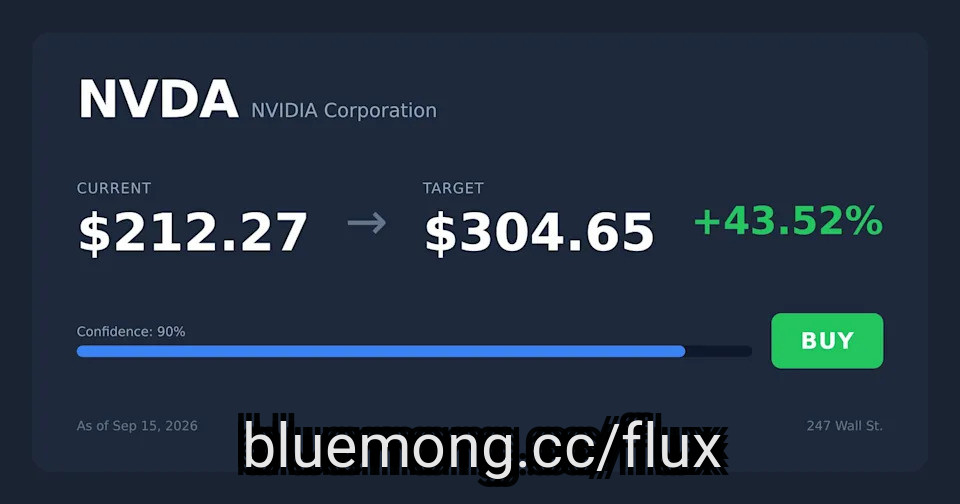
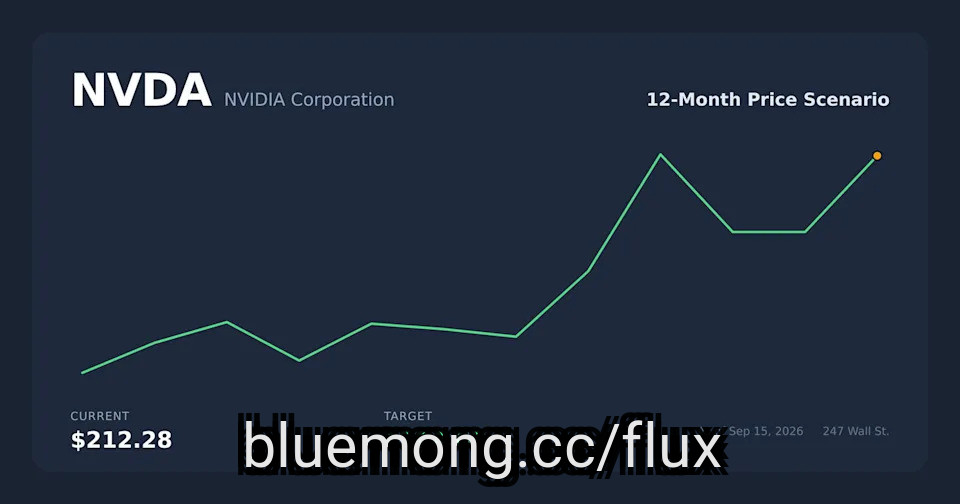
Nvidia's (NVDA) Vera Rubin GPUs claim 70% of the $4M VR200 rack bill of materials, while Micron (MU) benefits from the 22% memory slice.
Jensen Huang expects 70% revenue growth in fiscal 2028, supply-constrained despite purchase orders already secured from every major hyperscaler for Vera Rubin.
Just released. Our ****** ysts combed the entire stock market and named the ten best stocks to buy right now, and NVIDIA didn't make the cut. Enter your email to see the names that beat NVDA. The report is free. Enter your email and see if any of your stocks made the cut.
Inside an NVIDIA (NASDAQ:NVDA) VR200 NVL72 rack-scale AI supercomputer, 70% of the roughly $4 million bill of materials goes to one line item: the Rubin GPUs themselves, excluding their high-bandwidth memory. That figure comes from an HSBC estimated bill of materials for the VR200 NVL72 platform, and it is the cleanest single data point yet on where the AI infrastructure dollar actually lands. DRAM adds another 13%, HBM 9%, NAND 2%, NVLink 2%, cooling 2%, power supply 1%, and the CPU 1%.
In an era where every hyperscaler is trying to bend the AI capex curve, the VR200 breakdown says the GPU is still where the value concentrates. Nvidia is selling the rack, and the silicon it designs takes seven of every ten dollars a customer spends to fill it. That maps to what CEO Jensen Huang told investors on the fiscal Q2 2027 call: "Today, we're not just selling the best chips. We're selling a full-stack AI factory platform."
#rack #materials #vera
Jensen Huang expects 70% revenue growth in fiscal 2028, supply-constrained despite purchase orders already secured from every major hyperscaler for Vera Rubin.
Just released. Our ****** ysts combed the entire stock market and named the ten best stocks to buy right now, and NVIDIA didn't make the cut. Enter your email to see the names that beat NVDA. The report is free. Enter your email and see if any of your stocks made the cut.
Inside an NVIDIA (NASDAQ:NVDA) VR200 NVL72 rack-scale AI supercomputer, 70% of the roughly $4 million bill of materials goes to one line item: the Rubin GPUs themselves, excluding their high-bandwidth memory. That figure comes from an HSBC estimated bill of materials for the VR200 NVL72 platform, and it is the cleanest single data point yet on where the AI infrastructure dollar actually lands. DRAM adds another 13%, HBM 9%, NAND 2%, NVLink 2%, cooling 2%, power supply 1%, and the CPU 1%.
In an era where every hyperscaler is trying to bend the AI capex curve, the VR200 breakdown says the GPU is still where the value concentrates. Nvidia is selling the rack, and the silicon it designs takes seven of every ten dollars a customer spends to fill it. That maps to what CEO Jensen Huang told investors on the fiscal Q2 2027 call: "Today, we're not just selling the best chips. We're selling a full-stack AI factory platform."
#rack #materials #vera


3 days ago
Ocean Power Technologies Inc (NYSE-A:OPTT) reported first-quarter fiscal 2027 revenue of $1.7 million, up 44% from a year earlier, as the company expanded its work with US defense and security customers and moved forward with a strategic review process.
Ocean Power Technologies ran three PowerBuoy systems off Southern California for a U.S. Department of Homeland Security maritime domain awareness program, integrated with Anduril's Lattice platform and including a deployment beyond 1,000 meters depth, calling it the company's largest deployment and recurring revenue contract to date.
Ocean Power Technologies also deployed a PowerBuoy system off New Jersey for Rutgers University and delivered a WAM-V unmanned surface vehicle to Stevens Institute of Technology within five weeks of receiving the order.
The company demonstrated autonomous docking, charging and redeployment of a WAM-V, a capability it is working to integrate with the PowerBuoy platform to support longer autonomous missions. It also acquired subsea developmental technology ****** ets from Columbia Power Technologies, extending its capabilities from the ocean surface to the seabed.
Ocean Power Technologies achieved Cybersecurity Maturity Model Certification Level 2 compliance, positioning it to pursue defense programs requiring protection of controlled unclassified information. After the quarter ended, the company was selected as one of six potential awardees under a $40 million multiple-award contract supporting the Naval Oceanographic Office, creating an opportunity to compete for ocean-floor mapping task orders using unmanned surface vehicles.
#ocean #power #technologies #powerbuoy
Ocean Power Technologies ran three PowerBuoy systems off Southern California for a U.S. Department of Homeland Security maritime domain awareness program, integrated with Anduril's Lattice platform and including a deployment beyond 1,000 meters depth, calling it the company's largest deployment and recurring revenue contract to date.
Ocean Power Technologies also deployed a PowerBuoy system off New Jersey for Rutgers University and delivered a WAM-V unmanned surface vehicle to Stevens Institute of Technology within five weeks of receiving the order.
The company demonstrated autonomous docking, charging and redeployment of a WAM-V, a capability it is working to integrate with the PowerBuoy platform to support longer autonomous missions. It also acquired subsea developmental technology ****** ets from Columbia Power Technologies, extending its capabilities from the ocean surface to the seabed.
Ocean Power Technologies achieved Cybersecurity Maturity Model Certification Level 2 compliance, positioning it to pursue defense programs requiring protection of controlled unclassified information. After the quarter ended, the company was selected as one of six potential awardees under a $40 million multiple-award contract supporting the Naval Oceanographic Office, creating an opportunity to compete for ocean-floor mapping task orders using unmanned surface vehicles.
#ocean #power #technologies #powerbuoy

3 days ago
On September 14, Coda Octopus Group (NASDAQ:CODA) reported third-quarter fiscal 2026 results that quietly crossed a threshold the company had never reached in its public history: positive retained earnings, after years of operating at an accumulated deficit. Revenue rose 9.2% year over year to $7.7 million, and pretax income climbed 16% to $1.8 million, even as instability in the Middle East knocked down the marine technology unit that has long been the company's calling card. The reason the quarter held together anyway comes down to where the growth actually showed up.
Defense engineering revenue jumped 68.3% to $2.7 million during the quarter, and the momentum did not look like a one-time ****** p. Sustainment spares orders have already topped $2.4 million year to date, and one prime contractor customer's new multiyear repair and sustainment award has since fed additional subcontract work back to Coda Octopus. On the newer end of the business, the company's US defense engineering team is now supporting several prime contractors building rugged, deployable RF electronic warfare systems for unmanned platforms, helicopters, airborne pods, and ground vehicles.
The DAVID diving system added its own proof points. Coda Octopus has delivered 24 DAVID systems to the US Navy to date, including 16 untethered units earlier in the year, and the Navy's authorization for use ****** sment on that untethered system was completed during the year, clearing it for full operational deployment. Since the quarter closed, the Navy has placed about $1.4 million in additional orders covering tethered systems and DAVID Flex adoption, including four units bought specifically for diving school and academy training. A European navy that already bought in is also expected to firm up a procurement roadmap later this year, while the new Nano sonar is being tested by subsea robotics OEMs and research groups for next-generation autonomous platforms. All of that arrived alongside $31.7 million in cash, no debt, and a balance sheet management says can fund acquisitions.
None of that offsets what happened in marine technology, the segment that still generates the largest share of revenue. Marine tech sales fell 15.2% to $3.4 million as customer activity slowed across the Middle East and parts of Asia, and hardware revenue specifically dropped 17.8% to $2.3 million. Improved rental utilization, with rental revenue up 131.1%, cushioned the blow but did not reverse it, and management has tied the weakness directly to geopolitical conditions it cannot control.
#revenue #david
Defense engineering revenue jumped 68.3% to $2.7 million during the quarter, and the momentum did not look like a one-time ****** p. Sustainment spares orders have already topped $2.4 million year to date, and one prime contractor customer's new multiyear repair and sustainment award has since fed additional subcontract work back to Coda Octopus. On the newer end of the business, the company's US defense engineering team is now supporting several prime contractors building rugged, deployable RF electronic warfare systems for unmanned platforms, helicopters, airborne pods, and ground vehicles.
The DAVID diving system added its own proof points. Coda Octopus has delivered 24 DAVID systems to the US Navy to date, including 16 untethered units earlier in the year, and the Navy's authorization for use ****** sment on that untethered system was completed during the year, clearing it for full operational deployment. Since the quarter closed, the Navy has placed about $1.4 million in additional orders covering tethered systems and DAVID Flex adoption, including four units bought specifically for diving school and academy training. A European navy that already bought in is also expected to firm up a procurement roadmap later this year, while the new Nano sonar is being tested by subsea robotics OEMs and research groups for next-generation autonomous platforms. All of that arrived alongside $31.7 million in cash, no debt, and a balance sheet management says can fund acquisitions.
None of that offsets what happened in marine technology, the segment that still generates the largest share of revenue. Marine tech sales fell 15.2% to $3.4 million as customer activity slowed across the Middle East and parts of Asia, and hardware revenue specifically dropped 17.8% to $2.3 million. Improved rental utilization, with rental revenue up 131.1%, cushioned the blow but did not reverse it, and management has tied the weakness directly to geopolitical conditions it cannot control.
#revenue #david

3 days ago
Financial infrastructure provider Fin.com has "emerged from stealth" with $20m in seed funding.
In a statement, the New York-based firm said the round was led by venture firm Expa and Uber co-founder Garrett Camp.
Coinbase Ventures, Tenet Fund, Second Sight Ventures, and various sovereign and family offices across the Gulf and Africa, among others, also participated.
Fin.com, co-founded by Nabeel Alamgir and Mustafa Dar, operates a "single orchestration layer" to allow clients to receive, convert, and move money across borders using local payment rails.
The platform also integrates SWIFT messaging, USD virtual accounts, stablecoin settlement, liquidity management, and compliance tools into a single network, the company added.
#expa
In a statement, the New York-based firm said the round was led by venture firm Expa and Uber co-founder Garrett Camp.
Coinbase Ventures, Tenet Fund, Second Sight Ventures, and various sovereign and family offices across the Gulf and Africa, among others, also participated.
Fin.com, co-founded by Nabeel Alamgir and Mustafa Dar, operates a "single orchestration layer" to allow clients to receive, convert, and move money across borders using local payment rails.
The platform also integrates SWIFT messaging, USD virtual accounts, stablecoin settlement, liquidity management, and compliance tools into a single network, the company added.
#expa


5 days ago
Starbucks Corporation (NASDAQ:SBUX) is betting $1 billion that leather armchairs, rugs, and bookshelves can turn a recovering coffee business into a more profitable one. The company plans to upgrade as many as 9,000 North American stores into warmer, more comfortable **** es designed to bring back customers who stopped treating Starbucks as a place to sit and stay. The strategy arrives as CEO Brian Niccol's turnaround gains traction, but investors still need to see whether higher traffic can translate into stronger margins.
Pixabay/Public Domain
The store upgrades are part of Niccol's broader "Back to Starbucks" strategy, which has already helped reverse a prolonged sales slump. Global comparable-store sales increased 7.9% in the latest quarter, with transactions up 4.2% and average ticket up 3.5%. U.S. comparable sales also rose 7.9%, indicating that the recovery is being driven by more than higher prices.
Starbucks Corporation (NASDAQ:SBUX) is spending roughly $150,000 per store on the new uplifts, far below the cost of previous renovations, and the work can generally be completed overnight without closing stores. The company expects about 1,500 upgrades to be finished by the end of September and ultimately wants to reach 8,000 to 9,000 company-operated North American locations.
That matters because Starbucks Corporation (NASDAQ:SBUX) has gradually become optimized for transactions rather than lingering. Mobile orders now account for roughly one-third of U.S. transactions, more than twice their share in 2019. The new design is therefore an attempt to restore the "third place" concept without abandoning the convenience that has become central to the business.
#corporation #NASDAQ #sales #transactions
Pixabay/Public Domain
The store upgrades are part of Niccol's broader "Back to Starbucks" strategy, which has already helped reverse a prolonged sales slump. Global comparable-store sales increased 7.9% in the latest quarter, with transactions up 4.2% and average ticket up 3.5%. U.S. comparable sales also rose 7.9%, indicating that the recovery is being driven by more than higher prices.
Starbucks Corporation (NASDAQ:SBUX) is spending roughly $150,000 per store on the new uplifts, far below the cost of previous renovations, and the work can generally be completed overnight without closing stores. The company expects about 1,500 upgrades to be finished by the end of September and ultimately wants to reach 8,000 to 9,000 company-operated North American locations.
That matters because Starbucks Corporation (NASDAQ:SBUX) has gradually become optimized for transactions rather than lingering. Mobile orders now account for roughly one-third of U.S. transactions, more than twice their share in 2019. The new design is therefore an attempt to restore the "third place" concept without abandoning the convenience that has become central to the business.
#corporation #NASDAQ #sales #transactions


5 days ago
Fourteen years ago, Ken Jouppi, who had operated a charter airplane business in Alaska since the 1970s, agreed to fly a passenger from Fairbanks to Beaver, one of the state's dry jurisdictions. The passenger's luggage included 72 cans of Budweiser and Bud Light, which she planned to share with her husband on his birthday. Although most of the beer was boxed, a six-pack "was packed only in a grocery bag and would have been in plain view to Jouppi as he was loading the airplane," the Alaska Supreme Court noted last year.
State troopers discovered the beer before the plane took off, and Jouppi was convicted of a misdemeanor. The trial court, which concluded that Jouppi had been "willfully blind" to the six-pack, sentenced him to three days in jail and a $1,500 fine. But state law mandated another punishment that was 63 times as severe: forfeiture of Jouppi's $95,000 airplane. Although that penalty seemed grossly disproportionate, the Alaska Supreme Court ruled that it did not violate the Eighth Amendment's ban on excessive fines.
In July, responding to a petition filed by the Institute for Justice, the U.S. Supreme Court agreed to review that decision. It will hear oral argument in Jouppi v. Alaska on December 1. In a brief supporting Jouppi's appeal that it filed last week, the Cato Institute argues that the Alaska Supreme Court erred by failing to consider the gravity of his conduct and the financial consequences of the forfeiture. Both of those factors, Cato attorney Matthew Cavedon says, have been central to the common-law understanding of excessive fines for eight centuries.
"The Eighth Amendment was designed to prevent this kind of abuse by limiting excessive fines," Cavedon writes. "Long before the United States was founded, the common law protected people from extreme monetary penalties. But the Alaska Supreme Court's view is that challenges to excessive fines 'should rarely succeed.' This dismissive view led it to conclude that there is nothing excessive about the forfeiture of an airplane worth 'only 9.5 times the maximum fine'—and over 60 times the fine actually imposed. The decision below cannot be reconciled with this Court's precedent or the Excessive Fines Clause's original meaning."
In weighing the proportionality of the airplane forfeiture, the Alaska Supreme Court thought the relevant consideration was the harm caused by excessive drinking. "Alcohol abuse in rural Alaska leads to increased crime; disorders, such as alcoholism; conditions, such as fetal alcohol spectrum disorder; and death, imposing substantial costs on public health and the administration of justice," Justice Jude Pate wrote in the majority opinion. "Within this context, it is clear that the illegal importation of even a six-pack of beer causes grave societal harm."
#court #excessive #jouppi
State troopers discovered the beer before the plane took off, and Jouppi was convicted of a misdemeanor. The trial court, which concluded that Jouppi had been "willfully blind" to the six-pack, sentenced him to three days in jail and a $1,500 fine. But state law mandated another punishment that was 63 times as severe: forfeiture of Jouppi's $95,000 airplane. Although that penalty seemed grossly disproportionate, the Alaska Supreme Court ruled that it did not violate the Eighth Amendment's ban on excessive fines.
In July, responding to a petition filed by the Institute for Justice, the U.S. Supreme Court agreed to review that decision. It will hear oral argument in Jouppi v. Alaska on December 1. In a brief supporting Jouppi's appeal that it filed last week, the Cato Institute argues that the Alaska Supreme Court erred by failing to consider the gravity of his conduct and the financial consequences of the forfeiture. Both of those factors, Cato attorney Matthew Cavedon says, have been central to the common-law understanding of excessive fines for eight centuries.
"The Eighth Amendment was designed to prevent this kind of abuse by limiting excessive fines," Cavedon writes. "Long before the United States was founded, the common law protected people from extreme monetary penalties. But the Alaska Supreme Court's view is that challenges to excessive fines 'should rarely succeed.' This dismissive view led it to conclude that there is nothing excessive about the forfeiture of an airplane worth 'only 9.5 times the maximum fine'—and over 60 times the fine actually imposed. The decision below cannot be reconciled with this Court's precedent or the Excessive Fines Clause's original meaning."
In weighing the proportionality of the airplane forfeiture, the Alaska Supreme Court thought the relevant consideration was the harm caused by excessive drinking. "Alcohol abuse in rural Alaska leads to increased crime; disorders, such as alcoholism; conditions, such as fetal alcohol spectrum disorder; and death, imposing substantial costs on public health and the administration of justice," Justice Jude Pate wrote in the majority opinion. "Within this context, it is clear that the illegal importation of even a six-pack of beer causes grave societal harm."
#court #excessive #jouppi


5 days ago
On September 10, LightPath Technologies (NASDAQ:LPTH) reported fiscal fourth-quarter and full-year results that turned a multiyear strategic bet into a financial statement. Revenue nearly doubled for the year, margins expanded, and the company walked away from its last manufacturing ties to China. For a small-cap optics supplier that spent years explaining a strategy, this was the quarter the strategy started explaining itself.
Annual revenue climbed 92.7% to $71.7 million from $37.2 million, and the fourth quarter alone hit a record $21.2 million, up 73.8% year over year. That growth is not just volume. Full-year gross margin expanded to 36% from 27.2%, and the fourth quarter came in even higher at 39.4%, because ****** emblies, modules and cameras now make up 44% of annual sales instead of being sold as raw components.
CEO Sam Rubin said the shift reflects both a change in what LightPath sells and better execution on what it already made, noting every one of its four product groups improved margin for the year. Backlog finished at $110.9 million, up 197% from $37.4 million a year earlier, with $85.6 million of it scheduled for delivery within 12 months. Weeks after the fiscal year closed, the company booked another $24 million in counter-UAS orders, and some of those programs have already moved to monthly delivery cadences of tens of units.
LightPath also completed its exit from China, selling its subsidiary there for $4.5 million paid out over five years, leaving the company with no manufacturing footprint in a country that increasingly can't supply the defense primes it depends on. That matters because defense programs face a deadline this decade to source optics away from covered nations, and qualification cycles run two to three years, meaning the sourcing decisions being made now will determine who wins contracts in 2029 and 2030.
The company's fourth-quarter net loss narrowed to $4.1 million from $7.1 million a year earlier, but full-year operating expenses jumped to $45.5 million from $22 million, and $15.6 million of that was a noncash charge tied to G5 Infrared outperforming the earnout targets set at acquisition. Management called that charge mostly behind the business now that the final G5 payout has been accrued for January 2027, but it is a reminder that acquisition accounting can swing the income statement even when operations are healthy.
#year #quarter #China
Annual revenue climbed 92.7% to $71.7 million from $37.2 million, and the fourth quarter alone hit a record $21.2 million, up 73.8% year over year. That growth is not just volume. Full-year gross margin expanded to 36% from 27.2%, and the fourth quarter came in even higher at 39.4%, because ****** emblies, modules and cameras now make up 44% of annual sales instead of being sold as raw components.
CEO Sam Rubin said the shift reflects both a change in what LightPath sells and better execution on what it already made, noting every one of its four product groups improved margin for the year. Backlog finished at $110.9 million, up 197% from $37.4 million a year earlier, with $85.6 million of it scheduled for delivery within 12 months. Weeks after the fiscal year closed, the company booked another $24 million in counter-UAS orders, and some of those programs have already moved to monthly delivery cadences of tens of units.
LightPath also completed its exit from China, selling its subsidiary there for $4.5 million paid out over five years, leaving the company with no manufacturing footprint in a country that increasingly can't supply the defense primes it depends on. That matters because defense programs face a deadline this decade to source optics away from covered nations, and qualification cycles run two to three years, meaning the sourcing decisions being made now will determine who wins contracts in 2029 and 2030.
The company's fourth-quarter net loss narrowed to $4.1 million from $7.1 million a year earlier, but full-year operating expenses jumped to $45.5 million from $22 million, and $15.6 million of that was a noncash charge tied to G5 Infrared outperforming the earnout targets set at acquisition. Management called that charge mostly behind the business now that the final G5 payout has been accrued for January 2027, but it is a reminder that acquisition accounting can swing the income statement even when operations are healthy.
#year #quarter #China

5 days ago
On September 10, Lovesac (NASDAQ:LOVE) reported record second quarter revenue of $161.2 million, its highest Q2 total ever, even as its entry-level furniture shopper kept pulling back. The 0.4% sales increase came almost entirely from showrooms rather than higher-margin online orders, and the quarter's real profit boost was traced to a one-time source. A $20 million tariff refund lifted gross margin by 1,200 basis points to 68.4%, masking an underlying business that actually lost money once that windfall is stripped out.
Configurations priced above $6,000 grew by double digits during the quarter, even against a strong comparison from a year earlier, and management pointed to that segment as the clearest sign the brand's value proposition still resonates. Showroom net sales climbed 4.6% to $114.1 million, helped by 14 net new locations opened over the past year and a double-digit jump in conversion rates that offset softer foot traffic.
The Snugg platform, a smaller and more digitally oriented sofa line, helped push "other products" revenue up 198.2%, with more than half of Snugg sales happening online, giving Lovesac a lower-priced entry point into the brand. The Loved by Lovesac resale program is doing similar work, with 70% of its customers new to the company.
Behind all of this sits a pipeline of four major launches set for the second half: a personalized comfort feature for Sactionals, an entirely new large-format premium seating platform, Snugg accessories including a corner piece and swivel base, and the start of onshore Sactionals seat manufacturing, alongside a national rollout of White Glove and Room of Choice delivery. The balance sheet backs it up, with $68.8 million in cash, no debt, $34 million in unused borrowing capacity, and $7.2 million in buybacks with $46.9 million left under the current authorization.
Omni-channel comparable sales fell 1.9%, driven by demand pressure below $6,000, where management said inflation, higher interest rates, and a spike in gas prices have hit the same buyers for several quarters running. Internet sales dropped 5.3%, Sacs sales fell 8.6%, and the exit of the Best Buy shop-in-shop partnership cut "other" net sales by 23.2%. Strip out the tariff refund and adjusted EBITDA was actually a loss of $1.3 million, compared with income of $0.8 million a year earlier, a sign the core business is less profitable than the headline numbers suggest.
#million #quarter #revenue
Configurations priced above $6,000 grew by double digits during the quarter, even against a strong comparison from a year earlier, and management pointed to that segment as the clearest sign the brand's value proposition still resonates. Showroom net sales climbed 4.6% to $114.1 million, helped by 14 net new locations opened over the past year and a double-digit jump in conversion rates that offset softer foot traffic.
The Snugg platform, a smaller and more digitally oriented sofa line, helped push "other products" revenue up 198.2%, with more than half of Snugg sales happening online, giving Lovesac a lower-priced entry point into the brand. The Loved by Lovesac resale program is doing similar work, with 70% of its customers new to the company.
Behind all of this sits a pipeline of four major launches set for the second half: a personalized comfort feature for Sactionals, an entirely new large-format premium seating platform, Snugg accessories including a corner piece and swivel base, and the start of onshore Sactionals seat manufacturing, alongside a national rollout of White Glove and Room of Choice delivery. The balance sheet backs it up, with $68.8 million in cash, no debt, $34 million in unused borrowing capacity, and $7.2 million in buybacks with $46.9 million left under the current authorization.
Omni-channel comparable sales fell 1.9%, driven by demand pressure below $6,000, where management said inflation, higher interest rates, and a spike in gas prices have hit the same buyers for several quarters running. Internet sales dropped 5.3%, Sacs sales fell 8.6%, and the exit of the Best Buy shop-in-shop partnership cut "other" net sales by 23.2%. Strip out the tariff refund and adjusted EBITDA was actually a loss of $1.3 million, compared with income of $0.8 million a year earlier, a sign the core business is less profitable than the headline numbers suggest.
#million #quarter #revenue


5 days ago
An AI ****** istant that orders your groceries and renews subscriptions on its own might hit the market soon.
Visa (V) and Mastercard (MA) want to make sure that payment still runs through their networks when that happens.
This week, the two card giants said they are working with global fintech Ant International to build a shared way to identify and trust AI shopping agents.
For anyone holding the two stocks or considering them, this plan gives a hint on how both companies could grow in the future.
It also raises a fair question. If software does your spending, who makes sure it spends wisely?
#mastercard #subscriptions
Visa (V) and Mastercard (MA) want to make sure that payment still runs through their networks when that happens.
This week, the two card giants said they are working with global fintech Ant International to build a shared way to identify and trust AI shopping agents.
For anyone holding the two stocks or considering them, this plan gives a hint on how both companies could grow in the future.
It also raises a fair question. If software does your spending, who makes sure it spends wisely?
#mastercard #subscriptions

5 days ago
Broadcom's AI revenue surged 221% year over year with a forward P/E of 19, making it cheaper than Nvidia despite a similar growth trajectory.
TSMC revenue rose 53% year over year at a forward P/E of 20, and Dell booked a record $61B in AI orders last quarter.
Just released. Our ******* ysts combed the entire stock market and named the ten best stocks to buy right now, and NVIDIA didn't make the cut. Enter your email to see the names that beat NVDA. The report is free. Enter your email and see if any of your stocks made the cut.
On a recent Earn Your Leisure episode, hosts Troy Millings and Rashaad Bilal split openly on where the next dollar of AI value accrues. Millings argued for names outside the Magnificent 7 and made Broadcom's custom accelerator business the centerpiece of the case. Bilal countered that "you have to go with the people who are on the leaderboard," naming Taiwan Semiconductor (NYSE:TSM), Nvidia (NASDAQ:NVDA), Micron (NASDAQ:MU), Apple (NASDAQ:AAPL), Alphabet (NASDAQ:GOOG, NASDAQ:GOOGL), Microsoft (NASDAQ:MSFT), and the Nasdaq 100.
I find Millings the more persuasive of the two. Broadcom (NASDAQ:AVGO) posted AI semiconductor revenue of $16.7 billion in the third quarter of fiscal 2026, up 221% year over year, and guided the fourth quarter to $21.7 billion, up 236%. On the earnings call, Hock Tan sketched a trajectory to roughly $115 billion in fiscal 2027 and $230 billion in fiscal 2028.
#NVIDIA #billion #enter
TSMC revenue rose 53% year over year at a forward P/E of 20, and Dell booked a record $61B in AI orders last quarter.
Just released. Our ******* ysts combed the entire stock market and named the ten best stocks to buy right now, and NVIDIA didn't make the cut. Enter your email to see the names that beat NVDA. The report is free. Enter your email and see if any of your stocks made the cut.
On a recent Earn Your Leisure episode, hosts Troy Millings and Rashaad Bilal split openly on where the next dollar of AI value accrues. Millings argued for names outside the Magnificent 7 and made Broadcom's custom accelerator business the centerpiece of the case. Bilal countered that "you have to go with the people who are on the leaderboard," naming Taiwan Semiconductor (NYSE:TSM), Nvidia (NASDAQ:NVDA), Micron (NASDAQ:MU), Apple (NASDAQ:AAPL), Alphabet (NASDAQ:GOOG, NASDAQ:GOOGL), Microsoft (NASDAQ:MSFT), and the Nasdaq 100.
I find Millings the more persuasive of the two. Broadcom (NASDAQ:AVGO) posted AI semiconductor revenue of $16.7 billion in the third quarter of fiscal 2026, up 221% year over year, and guided the fourth quarter to $21.7 billion, up 236%. On the earnings call, Hock Tan sketched a trajectory to roughly $115 billion in fiscal 2027 and $230 billion in fiscal 2028.
#NVIDIA #billion #enter



5 days ago
Walmart Inc. (NASDAQ:WMT) is expanding its restaurant-delivery business through a partnership with Papa John's, allowing customers in select U.S. markets to order pizzas, sides, and desserts through Walmart's app and website. The service is expected to launch this fall before expanding to thousands of participating Papa John's locations nationwide. Customers will be able to order restaurant food either separately or alongside Walmart groceries and household products, with Walmart's delivery network handling fulfillment.
The move builds on Walmart's broader push into fast delivery. The company recently reported that U.S. e-commerce sales increased 24% in its latest quarter, while fast-delivery services for groceries and general merchandise grew 48%. Walmart also said 30-minute-or-less delivery was available in 38 U.S. markets, highlighting the infrastructure it can potentially leverage for restaurant orders.
The Papa John's partnership could strengthen Walmart Inc. (NASDAQ:WMT)'s position as a broader consumer-delivery platform rather than simply a retailer. Adding restaurant meals gives shoppers another reason to open Walmart's app, while the ability to combine a pizza order with groceries and household products creates an opportunity to increase basket sizes and order frequency. This is particularly attractive because Walmart already has a large store network that increasingly functions as a last-mile fulfillment system; roughly 80% of its e-commerce orders are fulfilled from stores.
The deal could also improve the economics of Walmart's existing delivery infrastructure. Instead of building a completely separate restaurant-delivery network, Walmart can utilize its established fulfillment capabilities and Spark driver network to serve incremental demand. The Papa John's relationship also expands Walmart's restaurant offering beyond earlier partnerships, helping the company build a more comprehensive alternative to dedicated delivery platforms such as DoorDash and Uber Eats.
More importantly, restaurant delivery could become another engagement tool for Walmart Inc. (NASDAQ:WMT)'s increasingly digital customer base. With e-commerce approaching a quarter of Walmart's overall sales and growing substantially faster than traditional store sales, initiatives that increase digital traffic could support Walmart's broader ecosystem of e-commerce, memberships and advertising.
#walmart #network #fulfillment
The move builds on Walmart's broader push into fast delivery. The company recently reported that U.S. e-commerce sales increased 24% in its latest quarter, while fast-delivery services for groceries and general merchandise grew 48%. Walmart also said 30-minute-or-less delivery was available in 38 U.S. markets, highlighting the infrastructure it can potentially leverage for restaurant orders.
The Papa John's partnership could strengthen Walmart Inc. (NASDAQ:WMT)'s position as a broader consumer-delivery platform rather than simply a retailer. Adding restaurant meals gives shoppers another reason to open Walmart's app, while the ability to combine a pizza order with groceries and household products creates an opportunity to increase basket sizes and order frequency. This is particularly attractive because Walmart already has a large store network that increasingly functions as a last-mile fulfillment system; roughly 80% of its e-commerce orders are fulfilled from stores.
The deal could also improve the economics of Walmart's existing delivery infrastructure. Instead of building a completely separate restaurant-delivery network, Walmart can utilize its established fulfillment capabilities and Spark driver network to serve incremental demand. The Papa John's relationship also expands Walmart's restaurant offering beyond earlier partnerships, helping the company build a more comprehensive alternative to dedicated delivery platforms such as DoorDash and Uber Eats.
More importantly, restaurant delivery could become another engagement tool for Walmart Inc. (NASDAQ:WMT)'s increasingly digital customer base. With e-commerce approaching a quarter of Walmart's overall sales and growing substantially faster than traditional store sales, initiatives that increase digital traffic could support Walmart's broader ecosystem of e-commerce, memberships and advertising.
#walmart #network #fulfillment


5 days ago
Howmet Aerospace Inc. (NYSE:HWM) is facing a mixed outlook after GE Aerospace agreed to acquire Consolidated Precision Products (CPP) for about $11.75 billion to secure more control over critical engine castings and expand production capacity. The announcement initially hit Howmet shares, which fell about 10%, as investors worried that GE could eventually rely less on outside suppliers such as Howmet.
However, Howmet CEO John Plant said he is comfortable with the deal and remains confident in Howmet's ability to grow. The bigger issue for Howmet right now appears to be how quickly it can expand capacity to keep up with soaring demand. Commercial aircraft production, defense activity and aftermarket demand are all increasing, while Howmet is also benefiting from demand for turbine components used in data centers. Plant said the scale of the required capital expansion is itself "testing" the company.
The strongest bullish argument for Howmet Aerospace Inc. (NYSE:HWM) is that GE's decision to spend nearly $12 billion on CPP validates how strategically valuable aerospace castings and engine components have become. The acquisition is aimed at addressing a supply bottleneck rather than signaling weak demand. GE expects airfoil demand to rise by more than 30% through 2030, while aircraft manufacturers and defense customers continue to push production higher. That creates a favorable industry backdrop for Howmet as well.
Howmet also has an opportunity to benefit from customers looking for additional capacity outside GE's newly integrated supply chain. If demand continues to exceed available casting capacity, Howmet's existing manufacturing footprint and expertise could give it significant pricing power and support further investment. Plant's comments that the company is being "tested" by the sheer scale of expansion suggest that Howmet is dealing with a capacity problem caused by strong demand, rather than a lack of orders.
Another positive is that Howmet Aerospace Inc. (NYSE:HWM)'s exposure extends beyond commercial aircraft. Its blades and vanes are also used in gas turbines serving the rapidly expanding data-center market, providing another avenue for growth alongside aerospace. Plant has also indicated that the company intends to revisit its longer-term revenue targets, after previously saying revenue could potentially double from 2025 levels within three to five years.
#commercial
However, Howmet CEO John Plant said he is comfortable with the deal and remains confident in Howmet's ability to grow. The bigger issue for Howmet right now appears to be how quickly it can expand capacity to keep up with soaring demand. Commercial aircraft production, defense activity and aftermarket demand are all increasing, while Howmet is also benefiting from demand for turbine components used in data centers. Plant said the scale of the required capital expansion is itself "testing" the company.
The strongest bullish argument for Howmet Aerospace Inc. (NYSE:HWM) is that GE's decision to spend nearly $12 billion on CPP validates how strategically valuable aerospace castings and engine components have become. The acquisition is aimed at addressing a supply bottleneck rather than signaling weak demand. GE expects airfoil demand to rise by more than 30% through 2030, while aircraft manufacturers and defense customers continue to push production higher. That creates a favorable industry backdrop for Howmet as well.
Howmet also has an opportunity to benefit from customers looking for additional capacity outside GE's newly integrated supply chain. If demand continues to exceed available casting capacity, Howmet's existing manufacturing footprint and expertise could give it significant pricing power and support further investment. Plant's comments that the company is being "tested" by the sheer scale of expansion suggest that Howmet is dealing with a capacity problem caused by strong demand, rather than a lack of orders.
Another positive is that Howmet Aerospace Inc. (NYSE:HWM)'s exposure extends beyond commercial aircraft. Its blades and vanes are also used in gas turbines serving the rapidly expanding data-center market, providing another avenue for growth alongside aerospace. Plant has also indicated that the company intends to revisit its longer-term revenue targets, after previously saying revenue could potentially double from 2025 levels within three to five years.
#commercial



5 days ago
Actress, TV show host and Golden Globe and Emmy winner Drew Barrymore has partnered with a bagel shop with locations in Charleston and beyond.
In honor of the Sept. 14 premiere of the latest season of the "Drew Barrymore Show," the celebrity's new "Drew Berry-More ******* er," which includes salted ******* er, light brown sugar, strawberries, blackberries, maple syrup, raspberries, blueberries and gooseberries, will soon be available nationwide. The recipe was concocted by Barrymore herself.
In Charleston, it will be for sale as of Sept. 17 at PopUp Bagels at 83 Mary St. to go along with their freshly made bagels in a variety of flavors, from poppyseed to sesame to everything to salted.
Alissa Kuemmeth and Leah Brown pack orders at PopUp Bagels, Friday, July 3, 2026, in Charleston. Grace Beahm Alford/Staff
On that day, the first 50 customers to order a three-pack of bagels will get their order for free, paired with the Drew Berry-More ******* er. Customers can order in person or through the DoorDash app.
#drew #barrymore #popup #show
In honor of the Sept. 14 premiere of the latest season of the "Drew Barrymore Show," the celebrity's new "Drew Berry-More ******* er," which includes salted ******* er, light brown sugar, strawberries, blackberries, maple syrup, raspberries, blueberries and gooseberries, will soon be available nationwide. The recipe was concocted by Barrymore herself.
In Charleston, it will be for sale as of Sept. 17 at PopUp Bagels at 83 Mary St. to go along with their freshly made bagels in a variety of flavors, from poppyseed to sesame to everything to salted.
Alissa Kuemmeth and Leah Brown pack orders at PopUp Bagels, Friday, July 3, 2026, in Charleston. Grace Beahm Alford/Staff
On that day, the first 50 customers to order a three-pack of bagels will get their order for free, paired with the Drew Berry-More ******* er. Customers can order in person or through the DoorDash app.
#drew #barrymore #popup #show


7 days ago
Dell Technologies (DELL) stock more than quadrupled over the past year, a 323% gain, against about 18% for the S&P 500, and even Hewlett Packard Enterprise (HPE), up 130.6%, finished far behind. Management had described most of the drivers before the run began: customers sitting on old servers, AI orders that had outrun shipments earlier in the year, and costs falling while sales rose. Those signs could not tell you how far the stock would go.
What Was Dell Seeing In Its Customers' Data Centers?
In February 2025, management said customers still ran a very large base of Dell's 13th and 14th generation servers, ready to be replaced. AI demand, already under discussion then, was exceptionally strong by May 2025, with $12.1 billion of AI server orders in fiscal Q1 2026, more than Dell's AI server shipments for all of fiscal 2025.
In August 2025, management said over 70% of its installed base was running on 14th generation servers or older, and that one 17th generation server could replace six or seven old ones. The results were uneven. In fiscal Q2 2026, traditional server revenue rose again and international demand grew, but demand in North America, its most profitable region, was weak.
Why Were Dell's Costs Falling While Its Sales Rose?
#server
What Was Dell Seeing In Its Customers' Data Centers?
In February 2025, management said customers still ran a very large base of Dell's 13th and 14th generation servers, ready to be replaced. AI demand, already under discussion then, was exceptionally strong by May 2025, with $12.1 billion of AI server orders in fiscal Q1 2026, more than Dell's AI server shipments for all of fiscal 2025.
In August 2025, management said over 70% of its installed base was running on 14th generation servers or older, and that one 17th generation server could replace six or seven old ones. The results were uneven. In fiscal Q2 2026, traditional server revenue rose again and international demand grew, but demand in North America, its most profitable region, was weak.
Why Were Dell's Costs Falling While Its Sales Rose?
#server

7 days ago
Fashion designer Todd Snyder remembers the first time he learned a celebrity was a fan of his work. It was 2013, just two years after he launched his eponymous menswear brand following career-making turns at Ralph Lauren, Gap Inc. and J. Crew.
"We were all sitting there together because it was maybe only five of us in the company. We were still very small," Snyder recalls. "The guy who runs our e-comm said, 'Oh my God, Ryan Gosling just ordered from us!' We were small enough that we could see orders when they came in."
More from Variety
'The Uprising' Star Woody Norman on the 'Power Trip' Playing King Richard II and Going Meatless at Age 10 After Working With Joaquin Phoenix
Emmys 2026 Party Guide With Katherine LaNasa, Quinta Brunson and Richard Gadd
#snyder #crew
"We were all sitting there together because it was maybe only five of us in the company. We were still very small," Snyder recalls. "The guy who runs our e-comm said, 'Oh my God, Ryan Gosling just ordered from us!' We were small enough that we could see orders when they came in."
More from Variety
'The Uprising' Star Woody Norman on the 'Power Trip' Playing King Richard II and Going Meatless at Age 10 After Working With Joaquin Phoenix
Emmys 2026 Party Guide With Katherine LaNasa, Quinta Brunson and Richard Gadd
#snyder #crew