

4 days ago
On September 15, Digital Realty (NYSE:DLR) made ServiceFabric MCP available, a software layer that lets AI agents design, monitor and troubleshoot network connections across more than 800 data centers, including third-party sites. That nudges a real estate company toward becoming a control panel for enterprise AI. It arrives after second quarter results reported on July 23, when Core FFO per share, the company's preferred earnings yardstick, excluding net promote rose to $2.13 from $1.87 a year earlier. Here is what the launch does, and what it has yet to prove.
The pitch is that enterprise AI needs more than servers. It needs power, cooling, and sovereign placement that software can control. ServiceFabric MCP handles four jobs: designing and provisioning connections, spotting capacity and watching live network health, managing access through OAuth 2, and handing troubleshooting to agents with links into chat and monitoring tools. It is also open by design. Customers do not have to live only in Digital Realty buildings or commit to a single AI model. An IDC research VP argues that public cloud interfaces alone cannot give enterprises enough control over data movement and policy, which favors providers that pair global reach with programmable interconnection. Digital Realty runs the system on its own AI workloads, and See All AI, a medical imaging developer, leans on the Boston campus and ServiceFabric to move large datasets quickly and securely.
The financial engine underneath is running hot. Renewal leases in the second quarter were signed at rates 25.4% higher on a cash basis, which shows customers will pay more to stay put. Signed leases waiting to start added up to a $1.9 billion backlog of annualized base rent at 100% share, so future revenue is already lined up. Management responded by lifting its 2026 Core FFO per share outlook, excluding net promote, to $8.15 to $8.20.
Start with what the launch has not shown yet. Digital Realty itself calls MCP an emerging standard, and ServiceFabric MCP is still being validated across internal, enterprise, and partner deployments. The announcement puts no dollar figure on what it could add to revenue, and the company describes it only as the first programmable surface of a larger architecture that may later stretch into ***** e, power and inventory. Until customers pay for this layer, it is a promising idea more than a line item.
Then there is the bill for the physical side. Digital Realty carried about $18.6 billion of debt at June 30, 2026, and its 2026 development spending outlook, net of partner contributions, now sits at $4.25 billion to $4.75 billion. The outlook also ***** umes new long-term debt priced at 4.5% to 5.5%, up from the earlier 4.0% to 4.5%. To help pay for growth, the company has sold roughly 13.5 million shares this year for about $2.5 billion, which spreads future earnings across more owners. And the quarter's headline flattered a bit: Core FFO per share of $2.65 included a $18
The pitch is that enterprise AI needs more than servers. It needs power, cooling, and sovereign placement that software can control. ServiceFabric MCP handles four jobs: designing and provisioning connections, spotting capacity and watching live network health, managing access through OAuth 2, and handing troubleshooting to agents with links into chat and monitoring tools. It is also open by design. Customers do not have to live only in Digital Realty buildings or commit to a single AI model. An IDC research VP argues that public cloud interfaces alone cannot give enterprises enough control over data movement and policy, which favors providers that pair global reach with programmable interconnection. Digital Realty runs the system on its own AI workloads, and See All AI, a medical imaging developer, leans on the Boston campus and ServiceFabric to move large datasets quickly and securely.
The financial engine underneath is running hot. Renewal leases in the second quarter were signed at rates 25.4% higher on a cash basis, which shows customers will pay more to stay put. Signed leases waiting to start added up to a $1.9 billion backlog of annualized base rent at 100% share, so future revenue is already lined up. Management responded by lifting its 2026 Core FFO per share outlook, excluding net promote, to $8.15 to $8.20.
Start with what the launch has not shown yet. Digital Realty itself calls MCP an emerging standard, and ServiceFabric MCP is still being validated across internal, enterprise, and partner deployments. The announcement puts no dollar figure on what it could add to revenue, and the company describes it only as the first programmable surface of a larger architecture that may later stretch into ***** e, power and inventory. Until customers pay for this layer, it is a promising idea more than a line item.
Then there is the bill for the physical side. Digital Realty carried about $18.6 billion of debt at June 30, 2026, and its 2026 development spending outlook, net of partner contributions, now sits at $4.25 billion to $4.75 billion. The outlook also ***** umes new long-term debt priced at 4.5% to 5.5%, up from the earlier 4.0% to 4.5%. To help pay for growth, the company has sold roughly 13.5 million shares this year for about $2.5 billion, which spreads future earnings across more owners. And the quarter's headline flattered a bit: Core FFO per share of $2.65 included a $18


5 days ago
Super Micro Computer (SMCI) stock rose 9.5% on Thursday, September 17, closing just over $40. The move followed a bullish call on how big the market for AI servers gets. That call may well be right. But it answers a question Super Micro's own results never raised. That is why one big session tells you less than it looks like it does.
Analysts at Goldman Sachs said the addressable market for AI servers will expand aggressively through the end of the decade. That is a forecast about an industry rather than about one manufacturer. Another account of Thursday morning's climb credited a broader equity rebound after Wednesday afternoon's Federal Reserve rate decision, not the forecast. Hewlett Packard Enterprise (HPE) jumped 8.0% the same day against the S&P 500's 1.1% gain, showing that capital was rotating heavily into primary AI server makers.
Company-specific headlines that day ran the other way: after the close, a shareholder rights law firm issued a press release soliciting clients for a potential investigation into company management.
A bigger market is not what this company is short of. In its fiscal fourth quarter, ended June 2026, Super Micro booked over $60 billion of new orders. That backlog underpins management's fiscal 2027 revenue guidance of $65 billion to $72 billion—up sharply from the $39 billion booked over the prior twelve months, but spread out as delivery and deployment constraints allow customers to take delivery.
What it is short of is customers ready to take delivery. Super Micro sells data center building block solutions, which bundle the servers with the power, cooling, networking and software around them. The company's manufacturing capability is on track to include more than 3,000 direct liquid-cooled racks a month.
#forecast
Analysts at Goldman Sachs said the addressable market for AI servers will expand aggressively through the end of the decade. That is a forecast about an industry rather than about one manufacturer. Another account of Thursday morning's climb credited a broader equity rebound after Wednesday afternoon's Federal Reserve rate decision, not the forecast. Hewlett Packard Enterprise (HPE) jumped 8.0% the same day against the S&P 500's 1.1% gain, showing that capital was rotating heavily into primary AI server makers.
Company-specific headlines that day ran the other way: after the close, a shareholder rights law firm issued a press release soliciting clients for a potential investigation into company management.
A bigger market is not what this company is short of. In its fiscal fourth quarter, ended June 2026, Super Micro booked over $60 billion of new orders. That backlog underpins management's fiscal 2027 revenue guidance of $65 billion to $72 billion—up sharply from the $39 billion booked over the prior twelve months, but spread out as delivery and deployment constraints allow customers to take delivery.
What it is short of is customers ready to take delivery. Super Micro sells data center building block solutions, which bundle the servers with the power, cooling, networking and software around them. The company's manufacturing capability is on track to include more than 3,000 direct liquid-cooled racks a month.
#forecast


5 days ago
It's no secret that Arm Holdings (NASDAQ: ARM) is a crucial piece of the artificial intelligence (AI) puzzle. But how often do you think of Arm as a top-shelf AI investment? It's easy to forget this impressive compounder amid the glitzy hypergrowth of Nvidia's and AMD's expensive AI accelerators.
Arm doesn't build the chips that train large language models. The company doesn't actually build chips at all. Instead, Arm designs fundamental instruction sets and CPU cores. It licenses those designs to anyone with a fab contract and an ambition and collects a royalty on every unit shipped. It's basically a toll booth on a road that keeps getting wider.
Missed Nvidia in 2009? This Rare Signal Is Flashing Again. In 2009, a "Double Down" signal flashed for a little-known chipmaker called Nvidia. For the first time in years, that same "Total Conviction" signal is flashing for a company 1/100th the size of Nvidia. Continue »
Arm's toll road used to run almost entirely through smartphones. Now it runs through the data center too. Nvidia's Vera CPU pairs Arm cores with its accelerators. Amazon's Graviton, Microsoft's Cobalt, and Alphabet's Google Axion are all Arm-based, built in-house by companies that spend like nation-states on server capacity.
Every AI cluster on the planet needs general-purpose compute to feed the high-speed AI accelerators, handle networking, and run the orchestration layer. A growing share of that work sits on Arm designs.
#signal #flashing #build #chips
Arm doesn't build the chips that train large language models. The company doesn't actually build chips at all. Instead, Arm designs fundamental instruction sets and CPU cores. It licenses those designs to anyone with a fab contract and an ambition and collects a royalty on every unit shipped. It's basically a toll booth on a road that keeps getting wider.
Missed Nvidia in 2009? This Rare Signal Is Flashing Again. In 2009, a "Double Down" signal flashed for a little-known chipmaker called Nvidia. For the first time in years, that same "Total Conviction" signal is flashing for a company 1/100th the size of Nvidia. Continue »
Arm's toll road used to run almost entirely through smartphones. Now it runs through the data center too. Nvidia's Vera CPU pairs Arm cores with its accelerators. Amazon's Graviton, Microsoft's Cobalt, and Alphabet's Google Axion are all Arm-based, built in-house by companies that spend like nation-states on server capacity.
Every AI cluster on the planet needs general-purpose compute to feed the high-speed AI accelerators, handle networking, and run the orchestration layer. A growing share of that work sits on Arm designs.
#signal #flashing #build #chips


6 days ago
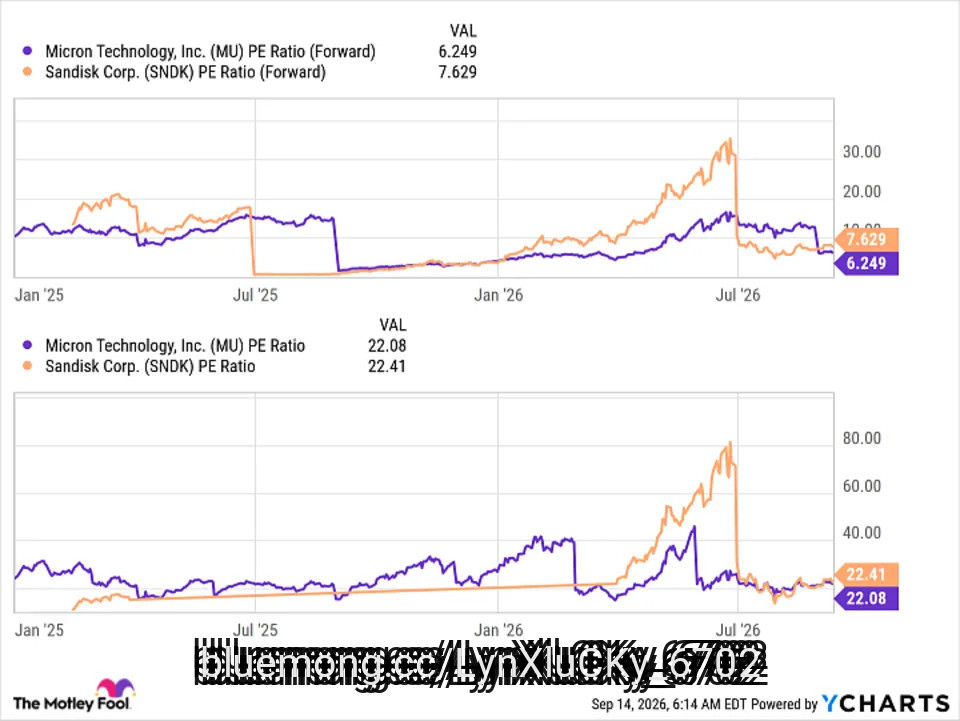
Micron (NASDAQ: MU) and Sandisk (NASDAQ: SNDK) have been two of the best-performing stocks in the S&P 500 (SNPINDEX: ^GSPC) so far this year. Sandisk is leading the way with an incredible 550% gain. Micron is in fourth place, up by over 220%. That means both of these stocks have tripled (or more than tripled in Sandisk's case), but I think that's just the beginning. In fact, if you invested $2,500 in each of these stocks, for a total of $5,000, I think that the combined value of those stakes will rise to $15,000 by the time 2028 arrives.
While that may sound far-fetched, the math backs it up, suggesting that these are two of the best investments you could make in the stock market right now.
Missed Nvidia in 2009? This Rare Signal Is Flashing Again. In 2009, a "Double Down" signal flashed for a little-known chipmaker called Nvidia. For the first time in years, that same "Total Conviction" signal is flashing for a company 1/100th the size of Nvidia. Continue »
The reason these two have done so well in 2026 is that there is no spare memory chip production capacity left. Micron and Sandisk are two of just three big players in this industry, and all of their production is being eaten up by massive demand for additional artificial intelligence computing power. AI processors and servers need heavy volumes of memory to function efficiently, and as a result, there's now a serious shortage of memory, so prices are skyrocketing.
This supply-and-demand imbalance is the culprit behind rising prices for consumer computing hardware, as these devices all require memory chips, too.
#NVIDIA #memory #flashing #best
While that may sound far-fetched, the math backs it up, suggesting that these are two of the best investments you could make in the stock market right now.
Missed Nvidia in 2009? This Rare Signal Is Flashing Again. In 2009, a "Double Down" signal flashed for a little-known chipmaker called Nvidia. For the first time in years, that same "Total Conviction" signal is flashing for a company 1/100th the size of Nvidia. Continue »
The reason these two have done so well in 2026 is that there is no spare memory chip production capacity left. Micron and Sandisk are two of just three big players in this industry, and all of their production is being eaten up by massive demand for additional artificial intelligence computing power. AI processors and servers need heavy volumes of memory to function efficiently, and as a result, there's now a serious shortage of memory, so prices are skyrocketing.
This supply-and-demand imbalance is the culprit behind rising prices for consumer computing hardware, as these devices all require memory chips, too.
#NVIDIA #memory #flashing #best

6 days ago
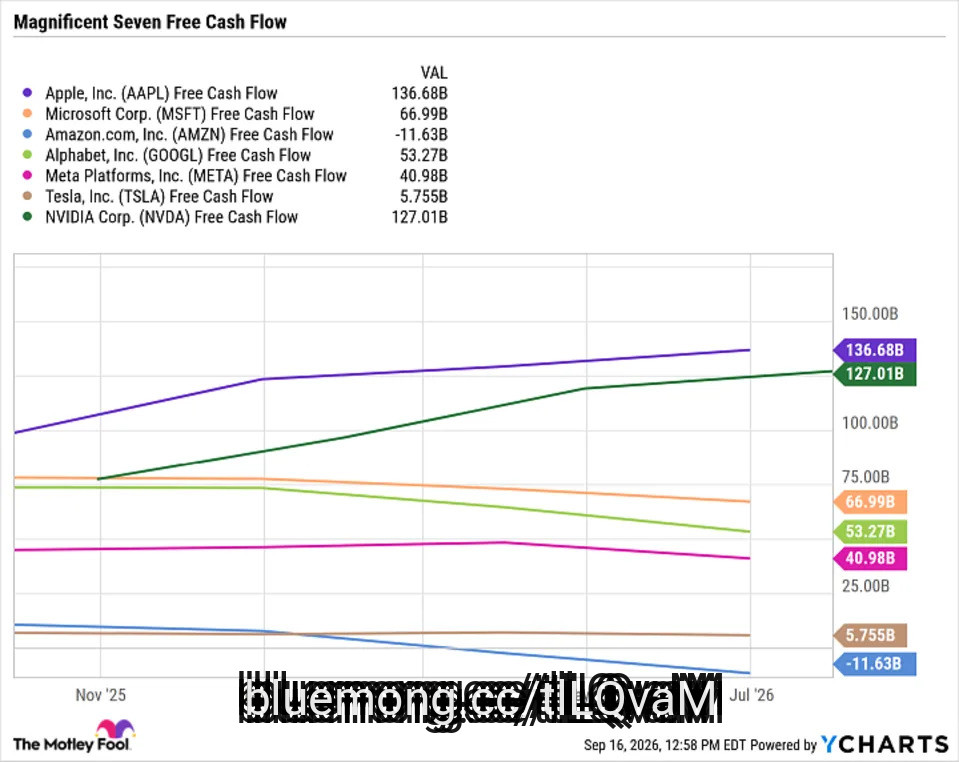
Apple (NASDAQ:AAPL) is reportedly considering a big move that could reshape the company. The Information reported on Wednesday that the iPhone maker was considering developing its own artificial intelligence server, which would be Apple's first activity in the enterprise server market since 2011.
The proposal would combine Apple's custom silicon with networking technology supplied by Nvidia (NASDAQ:NVDA) to develop AI servers that could be offered with either two or four M8 Ultra chips, which are Apple's top-performing processors, and geared specifically for AI inference.
Missed Nvidia in 2009? This Rare Signal Is Flashing Again. In 2009, a "Double Down" signal flashed for a little-known chipmaker called Nvidia. For the first time in years, that same "Total Conviction" signal is flashing for a company 1/100th the size of Nvidia. Continue »
Such a move, the first major action under new CEO John Ternus, would signal that Apple is ready to invest in AI architecture to use its custom-made chips in products beyond its consumer devices, which would be a significant shift in company strategy.
Image source: Getty Images.
#flashing
The proposal would combine Apple's custom silicon with networking technology supplied by Nvidia (NASDAQ:NVDA) to develop AI servers that could be offered with either two or four M8 Ultra chips, which are Apple's top-performing processors, and geared specifically for AI inference.
Missed Nvidia in 2009? This Rare Signal Is Flashing Again. In 2009, a "Double Down" signal flashed for a little-known chipmaker called Nvidia. For the first time in years, that same "Total Conviction" signal is flashing for a company 1/100th the size of Nvidia. Continue »
Such a move, the first major action under new CEO John Ternus, would signal that Apple is ready to invest in AI architecture to use its custom-made chips in products beyond its consumer devices, which would be a significant shift in company strategy.
Image source: Getty Images.
#flashing


7 days ago
Berkshire Hathaway (NYSE: BRKA) (NYSE: BRKB) is no artificial intelligence (AI) stock, but it may be closer to one than most casual observers think. The exact percentage is also very broad. Amid the higher electricity demand driven by AI, one could argue that Berkshire Hathaway Energy is an AI company.
However, that does not help average investors, who cannot invest directly in that specific part of Berkshire. Instead, we only have its stock holdings with which to contend, but even when measured by those, the AI exposure is about 31%. Here are the two stocks and their role in Berkshire's portfolio.
Missed Nvidia in 2009? This Rare Signal Is Flashing Again. In 2009, a "Double Down" signal flashed for a little-known chipmaker called Nvidia. For the first time in years, that same "Total Conviction" signal is flashing for a company 1/100th the size of Nvidia. Continue »
Google-parent Alphabet (NASDAQ: GOOGL) (NASDAQ: GOOG) is the growth name among the two and the largest purchase during the Greg Abel era.
The purchases began under Warren Buffett in the third quarter of 2025, but most of the buying occurred after Abel took over, albeit with Buffett's encouragement. Between its two tickers, the company has bought nearly 106 million shares, increasing its portfolio share from 0% to just under 10% in less than one year.
#berkshire #NVIDIA
However, that does not help average investors, who cannot invest directly in that specific part of Berkshire. Instead, we only have its stock holdings with which to contend, but even when measured by those, the AI exposure is about 31%. Here are the two stocks and their role in Berkshire's portfolio.
Missed Nvidia in 2009? This Rare Signal Is Flashing Again. In 2009, a "Double Down" signal flashed for a little-known chipmaker called Nvidia. For the first time in years, that same "Total Conviction" signal is flashing for a company 1/100th the size of Nvidia. Continue »
Google-parent Alphabet (NASDAQ: GOOGL) (NASDAQ: GOOG) is the growth name among the two and the largest purchase during the Greg Abel era.
The purchases began under Warren Buffett in the third quarter of 2025, but most of the buying occurred after Abel took over, albeit with Buffett's encouragement. Between its two tickers, the company has bought nearly 106 million shares, increasing its portfolio share from 0% to just under 10% in less than one year.
#berkshire #NVIDIA


7 days ago
On September 11, Elastic (NYSE:ESTC) rolled out Elasticsearch Vector Database, a new serverless offering the company says lets developers ship large-scale vector search and AI applications without stitching together the usual pile of infrastructure themselves. The launch landed less than three weeks after Elastic posted first-quarter fiscal 2027 results on August 27, for the period ended July 31, giving investors a fresh product story to weigh against a quarter that already showed accelerating growth.
The new database automates what used to require manual **** embly: chunking documents, hosting embedding and reranking models, configuring indexes, and wiring query-time retrieval. Elastic built in expert-tuned defaults, a single field type that handles indexing, embeddings, and chunking together, and hybrid search that combines full-text and vector retrieval in one query. The system scales to hundreds of billions of vectors using Elastic's Better Binary Quantization, which the company says shrinks vector memory by up to 32 times while keeping recall high, and pricing is based on data and search capacity rather than the opaque compute units the company says define most pure-play vector database pricing.
That product push follows a quarter that was already running hot. Total revenue reached $478 million in the first quarter of fiscal 2027, up 15% year over year, while current remaining performance obligations grew 21% and remaining performance obligations grew 27%. Sales-led subscription revenue, which strips out Monthly Elastic Cloud, grew 18% year over year to $399 million, outpacing the company's overall subscription growth.
Elastic added more customers with annual contract value above $100,000 than in any prior quarter, pushing that cohort past 1,800 from over 1,720 in the fourth quarter of fiscal 2026 and over 1,550 a year earlier. Net expansion rate held around 111%, and the company generated $143 million in adjusted free cash flow during the quarter. Guidance for the second quarter of fiscal 2027, ending October 31, calls for revenue of $486 million to $487 million and a swing to positive GAAP operating margin, with full fiscal 2027 non-GAAP operating margin guided to roughly 19.4%, up from 16.2% in the quarter just reported.
Growth came with a reminder that Elastic has not fully crossed into GAAP profitability. The company posted a GAAP operating loss of $24 million in the first quarter of fiscal 2027, a -5% operating margin, and a GAAP net loss per share of $0.16. Non-GAAP figures told a healthier story, with $77 million in non-GAAP operating income and $0.70 in non-GAAP diluted earnings per share, but the gap between the two measures shows how much of Elastic's reported profitability still depends on excluding real costs like stock-based compensation.
#elastic #vector #company
The new database automates what used to require manual **** embly: chunking documents, hosting embedding and reranking models, configuring indexes, and wiring query-time retrieval. Elastic built in expert-tuned defaults, a single field type that handles indexing, embeddings, and chunking together, and hybrid search that combines full-text and vector retrieval in one query. The system scales to hundreds of billions of vectors using Elastic's Better Binary Quantization, which the company says shrinks vector memory by up to 32 times while keeping recall high, and pricing is based on data and search capacity rather than the opaque compute units the company says define most pure-play vector database pricing.
That product push follows a quarter that was already running hot. Total revenue reached $478 million in the first quarter of fiscal 2027, up 15% year over year, while current remaining performance obligations grew 21% and remaining performance obligations grew 27%. Sales-led subscription revenue, which strips out Monthly Elastic Cloud, grew 18% year over year to $399 million, outpacing the company's overall subscription growth.
Elastic added more customers with annual contract value above $100,000 than in any prior quarter, pushing that cohort past 1,800 from over 1,720 in the fourth quarter of fiscal 2026 and over 1,550 a year earlier. Net expansion rate held around 111%, and the company generated $143 million in adjusted free cash flow during the quarter. Guidance for the second quarter of fiscal 2027, ending October 31, calls for revenue of $486 million to $487 million and a swing to positive GAAP operating margin, with full fiscal 2027 non-GAAP operating margin guided to roughly 19.4%, up from 16.2% in the quarter just reported.
Growth came with a reminder that Elastic has not fully crossed into GAAP profitability. The company posted a GAAP operating loss of $24 million in the first quarter of fiscal 2027, a -5% operating margin, and a GAAP net loss per share of $0.16. Non-GAAP figures told a healthier story, with $77 million in non-GAAP operating income and $0.70 in non-GAAP diluted earnings per share, but the gap between the two measures shows how much of Elastic's reported profitability still depends on excluding real costs like stock-based compensation.
#elastic #vector #company

7 days ago
Spring, Texas-based Hewlett Packard Enterprise Company (HPE) develops intelligent solutions in the United States, the Americas, and internationally. The company has a market cap of $74.2 billion and operates in five segments: Server, Hybrid Cloud, Networking, Financial Services, and Corporate Investments and Other, and offers general-purpose servers, workload-optimized servers, and integrated systems, among others.
Companies with a market cap of $10 billion or more are typically called "large-cap stocks." HPE fits squarely into that category, with its market cap exceeding this threshold and reflecting its substantial size and influence in the communication equipment industry.
Billionaire Charlie Munger, Who Died at 99, Skipped Insurance on His Mansion Since He Could Just Write a Check to Rebuild — 'All Intelligent People Do It My Way'
The Case for Selling CrowdStrike Stock
Nvidia CEO Jensen Huang Just Dropped Huge News for This Cybersecurity Stock
#packard
Companies with a market cap of $10 billion or more are typically called "large-cap stocks." HPE fits squarely into that category, with its market cap exceeding this threshold and reflecting its substantial size and influence in the communication equipment industry.
Billionaire Charlie Munger, Who Died at 99, Skipped Insurance on His Mansion Since He Could Just Write a Check to Rebuild — 'All Intelligent People Do It My Way'
The Case for Selling CrowdStrike Stock
Nvidia CEO Jensen Huang Just Dropped Huge News for This Cybersecurity Stock
#packard



7 days ago
Hewlett Packard Enterprise Company (HPE) is becoming a major beneficiary of the enterprise artificial intelligence (AI) infrastructure growth. While many companies are working on AI applications, Hewlett Packard primarily focuses on infrastructure, supplying servers, networking, and other technology essential for large-scale AI deployment.
The company's latest quarterly results showed rising demand, with both revenue and profit exceeding **** yst expectations and robust growth across all segments. Its integration of Juniper Networks has further strengthened the company's position in AI networking, giving the company greater access to the infrastructure needs driven by AI's rapid growth.
Billionaire Charlie Munger, Who Died at 99, Skipped Insurance on His Mansion Since He Could Just Write a Check to Rebuild — 'All Intelligent People Do It My Way'
Nvidia CEO Jensen Huang Just Dropped Huge News for This Cybersecurity Stock
How to Play GME Stock as GameStop CEO Ryan Cohen Buys $20.3 Million in Shares
#infrastructure #company #juniper
The company's latest quarterly results showed rising demand, with both revenue and profit exceeding **** yst expectations and robust growth across all segments. Its integration of Juniper Networks has further strengthened the company's position in AI networking, giving the company greater access to the infrastructure needs driven by AI's rapid growth.
Billionaire Charlie Munger, Who Died at 99, Skipped Insurance on His Mansion Since He Could Just Write a Check to Rebuild — 'All Intelligent People Do It My Way'
Nvidia CEO Jensen Huang Just Dropped Huge News for This Cybersecurity Stock
How to Play GME Stock as GameStop CEO Ryan Cohen Buys $20.3 Million in Shares
#infrastructure #company #juniper



7 days ago
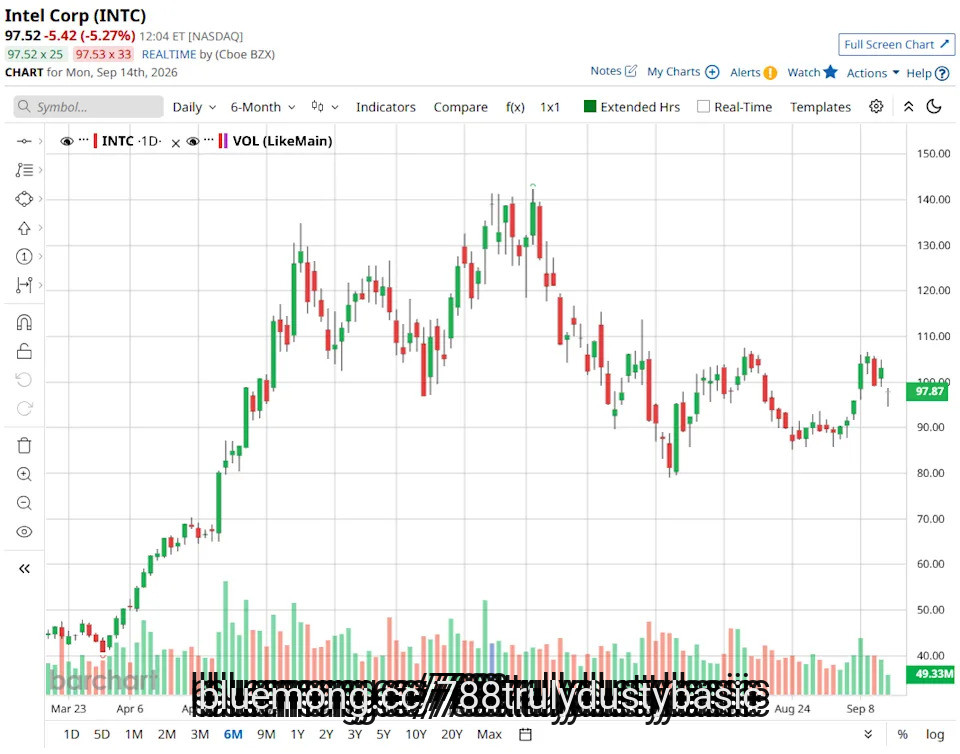
Mizuho has identified four clear tailwinds for Intel (INTC): ongoing CPU supply shortages, a stronger PC refresh cycle, accelerating demand for agentic AI, and growth in advanced packaging. Normally, such a setup would provide a reason to raise a price target. Instead, the firm cut its price target from $109 to $92, citing short-term multiple compression across Agentic AI stocks, and maintained a "Neutral" rating. The contradiction becomes more important because Intel's re-rating still depends on a foundry turnaround that has yet to prove itself.
Mizuho remains cautious on INTC stock despite outlining four separate tailwinds that could support the company's growth. The firm lowered its price target from $109 to $92 on Sept. 3, pointing to short-term multiple compression across agentic AI companies while keeping its "Neutral" rating unchanged. Mizuho **** yst Vijay Rakesh highlighted four developments that could support Intel's outlook. According to the **** yst, accelerating agentic AI demand could improve CPU-to-GPU ratios and drive additional server refreshers. Ongoing CPU supply constraints could also leave the company unable to fully meet demand through 2027. In addition, advanced packaging revenue is expected to reach $3.5 billion by 2029, with external foundry revenue potentially reaching a similar level through the 14A node. Finally, a stronger PC cycle could extend the upgrade cycle as corporate refreshes combine with ongoing memory tightness.
Goldman Sachs Expects Fed Chair Kevin Warsh to Raise Rates This Week — But Not Because of Oil Prices.
Billionaire Charlie Munger, Who Died at 99, Skipped Insurance on His Mansion Since He Could Just Write a Check to Rebuild — 'All Intelligent People Do It My Way'
The EV Bubble Has Burst. How to Play Rivian Stock Now.
#four
Mizuho remains cautious on INTC stock despite outlining four separate tailwinds that could support the company's growth. The firm lowered its price target from $109 to $92 on Sept. 3, pointing to short-term multiple compression across agentic AI companies while keeping its "Neutral" rating unchanged. Mizuho **** yst Vijay Rakesh highlighted four developments that could support Intel's outlook. According to the **** yst, accelerating agentic AI demand could improve CPU-to-GPU ratios and drive additional server refreshers. Ongoing CPU supply constraints could also leave the company unable to fully meet demand through 2027. In addition, advanced packaging revenue is expected to reach $3.5 billion by 2029, with external foundry revenue potentially reaching a similar level through the 14A node. Finally, a stronger PC cycle could extend the upgrade cycle as corporate refreshes combine with ongoing memory tightness.
Goldman Sachs Expects Fed Chair Kevin Warsh to Raise Rates This Week — But Not Because of Oil Prices.
Billionaire Charlie Munger, Who Died at 99, Skipped Insurance on His Mansion Since He Could Just Write a Check to Rebuild — 'All Intelligent People Do It My Way'
The EV Bubble Has Burst. How to Play Rivian Stock Now.
#four


8 days ago
On September 10, a caller outlined a detailed financial thesis showing Micron Technology, Inc. (NASDAQ:MU) reaching $1,400 and asked whether the **** ysis held water. In response, Mad Money host Jim Cramer said:
I mean, that's a remarkable **** ysis. It's spot on in every single number. Every single thing you said is true, which is why my Charitable Trust owns it, and why we are buying it aggressively. And by the way, can I just say if you listen to what… [the caller] said, he put some money away. He was fortunate enough to have money, which I know not everybody can have, but he had money. He put it in an individual stock. Now, if he put it in an index fund, he'd make some money, but he got really rich. And part of my job is not just to get you rich, but to hopefully get you really rich.
Micron Technology, Inc. (NASDAQ:MU) stands as one of three primary global manufacturers of dynamic random-access memory (DRAM) and NAND flash memory, positioning it at the center of the ongoing expansion in artificial intelligence infrastructure. Because advanced AI workloads require significantly higher memory bandwidth, demand has surged for Micron's High-Bandwidth Memory (HBM3E) architecture, which is integrated directly into top-tier AI graphics processors and data center accelerators. With memory production capacity for advanced AI chips remaining constrained industry-wide, Micron has secured long-term purchase agreements that cover its HBM output through 2026 and into 2027, providing visibility into top-line revenue growth.
Driven by accelerated AI server adoption and broader pricing recovery across traditional DRAM and NAND markets, it reported extraordinary growth in fiscal Q3. Revenue surged to $41.46 billion, more than quadrupling the $9.30 billion generated in the same period last year and stepping up sharply from $23.86 billion in the prior quarter. The company demonstrated exceptional operating leverage during the period, posting GAAP net income of $28.24 billion ($24.67 per diluted share) and non-GAAP net income of $28.86 billion ($25.11 per diluted share). Operating cash flow also scaled quickly, reaching $25.39 billion compared to $11.90 billion in the prior quarter and $4.61 billion in the prior-year period.
Despite its strong position in the AI supply chain, Micron Technology, Inc. (NASDAQ:MU) operates in a historically cyclical memory industry with some operational and market risks. Memory chip pricing remains sensitive to industry-wide supply-and-demand imbalances, where oversupply can rapidly compress profit margins during broader downturns in consumer electronics demand or corporate IT spending.
#billion #memory #NASDAQ #industry
I mean, that's a remarkable **** ysis. It's spot on in every single number. Every single thing you said is true, which is why my Charitable Trust owns it, and why we are buying it aggressively. And by the way, can I just say if you listen to what… [the caller] said, he put some money away. He was fortunate enough to have money, which I know not everybody can have, but he had money. He put it in an individual stock. Now, if he put it in an index fund, he'd make some money, but he got really rich. And part of my job is not just to get you rich, but to hopefully get you really rich.
Micron Technology, Inc. (NASDAQ:MU) stands as one of three primary global manufacturers of dynamic random-access memory (DRAM) and NAND flash memory, positioning it at the center of the ongoing expansion in artificial intelligence infrastructure. Because advanced AI workloads require significantly higher memory bandwidth, demand has surged for Micron's High-Bandwidth Memory (HBM3E) architecture, which is integrated directly into top-tier AI graphics processors and data center accelerators. With memory production capacity for advanced AI chips remaining constrained industry-wide, Micron has secured long-term purchase agreements that cover its HBM output through 2026 and into 2027, providing visibility into top-line revenue growth.
Driven by accelerated AI server adoption and broader pricing recovery across traditional DRAM and NAND markets, it reported extraordinary growth in fiscal Q3. Revenue surged to $41.46 billion, more than quadrupling the $9.30 billion generated in the same period last year and stepping up sharply from $23.86 billion in the prior quarter. The company demonstrated exceptional operating leverage during the period, posting GAAP net income of $28.24 billion ($24.67 per diluted share) and non-GAAP net income of $28.86 billion ($25.11 per diluted share). Operating cash flow also scaled quickly, reaching $25.39 billion compared to $11.90 billion in the prior quarter and $4.61 billion in the prior-year period.
Despite its strong position in the AI supply chain, Micron Technology, Inc. (NASDAQ:MU) operates in a historically cyclical memory industry with some operational and market risks. Memory chip pricing remains sensitive to industry-wide supply-and-demand imbalances, where oversupply can rapidly compress profit margins during broader downturns in consumer electronics demand or corporate IT spending.
#billion #memory #NASDAQ #industry


8 days ago
On September 11, Dell Technologies Inc. (NYSE:DELL) shares jumped more than 11% after RBC Capital Markets initiated coverage of the company with an Outperform rating and a price target of $640.
The latest rally adds to an already strong year for Dell Technologies Inc. (NYSE:DELL), with the stock having gained over 300% so far in 2026. The company has become one of the biggest vendors for Nvidia-based servers and related equipment, benefiting from strong demand for AI infrastructure from cloud companies and enterprises.
Photo by Pok Rie on Pexels
RBC ***** yst David Paige wrote in a note that Dell Technologies Inc. (NYSE:DELL) is showing no signs of slowing. RBC believes that the company "continues to be well positioned to benefit from a multi-year AI infrastructure spending cycle."
Paige pointed out that "Dell Technologies Inc.'s (NYSE:DELL) best-in-class supply chain represents a competitive moat that differentiates the company during periods of supply disruption, as customers increasingly turn to Dell Technologies Inc. (NYSE:DELL) for a 'calming hand' during periods of supply volatility/constraints."
#paige
The latest rally adds to an already strong year for Dell Technologies Inc. (NYSE:DELL), with the stock having gained over 300% so far in 2026. The company has become one of the biggest vendors for Nvidia-based servers and related equipment, benefiting from strong demand for AI infrastructure from cloud companies and enterprises.
Photo by Pok Rie on Pexels
RBC ***** yst David Paige wrote in a note that Dell Technologies Inc. (NYSE:DELL) is showing no signs of slowing. RBC believes that the company "continues to be well positioned to benefit from a multi-year AI infrastructure spending cycle."
Paige pointed out that "Dell Technologies Inc.'s (NYSE:DELL) best-in-class supply chain represents a competitive moat that differentiates the company during periods of supply disruption, as customers increasingly turn to Dell Technologies Inc. (NYSE:DELL) for a 'calming hand' during periods of supply volatility/constraints."
#paige


8 days ago
If you bought Meta Platforms (META) for its advertising engine, the engine still runs: revenue rose 28% year over year in the June 2026 quarter, and its Advantage+ automated campaigns keep growing. What has changed is where the cash goes afterward. The question for a holder is whether Meta is still the business you bought.
Over the twelve months through the June 2026 quarter, capital spending took 39.1% of revenue, against 18.5% across Meta's history. That money buys servers, data centers and network infrastructure. In late July 2026, Meta also announced a venture with BlackRock to develop a 1 gigawatt data center in El Paso, Texas. The plan is to keep going: management narrowed its 2026 capital-spending range by lifting the bottom of it.
Less cash is left over. TTM free-cash-flow margin is 18.0%, against 32.8% across its history, so on each dollar of sales Meta keeps a little more than half the free cash it used to.
Borrowing fills part of the gap. Debt has risen to 25.0% of total ******* ets, against a historical 7.0%, and the CFO says Meta is adding more debt to lower its cost of capital. Meta still holds more cash and marketable securities than debt.
Together, those three readings are the most unusual combination Meta has shown in 14 years. Taken with the 2026 spending floor that management has raised, the combination reads as a change in the business rather than one quarter of noise.
#quarter #spending #bought #engine
Over the twelve months through the June 2026 quarter, capital spending took 39.1% of revenue, against 18.5% across Meta's history. That money buys servers, data centers and network infrastructure. In late July 2026, Meta also announced a venture with BlackRock to develop a 1 gigawatt data center in El Paso, Texas. The plan is to keep going: management narrowed its 2026 capital-spending range by lifting the bottom of it.
Less cash is left over. TTM free-cash-flow margin is 18.0%, against 32.8% across its history, so on each dollar of sales Meta keeps a little more than half the free cash it used to.
Borrowing fills part of the gap. Debt has risen to 25.0% of total ******* ets, against a historical 7.0%, and the CFO says Meta is adding more debt to lower its cost of capital. Meta still holds more cash and marketable securities than debt.
Together, those three readings are the most unusual combination Meta has shown in 14 years. Taken with the 2026 spending floor that management has raised, the combination reads as a change in the business rather than one quarter of noise.
#quarter #spending #bought #engine

8 days ago
With Agentic AI accelerating CPU server chip demand, Wall Street believes Advanced Micro Devices, Inc. (NASDAQ:AMD) is one of the primary beneficiaries taking share. On September 9, Piper Sandler ******* yst David O'Connor initiated coverage on AMD (NASDAQ: AMD) with an Overweight rating and a $600 price target.
Analyst O'Connor estimates revenue for FY26-30 to grow at a 50% CAGR, while earnings per share compound at 65%.
The server-CPU share gain story for AMD is simple, Agentic AI is expected to increase demand for server CPUs. This is because the workloads require continuous control-plane activity, API calls, database queries and tool execution. AMD will benefit from this use based on its high-frequency and general-purpose processors with its Venice portfolio.
Even AMD executives have highlighted that AMD is now transitioning from merely a semiconductor supplier to a provider of rack-scale systems and software. It is also positioning its server CPU portfolio for increased demand from agentic AI workloads.
The company reported second-quarter revenue of $11.5 billion, beating ******* yst estimates. This includes $6.7 billion from data centers, up 107% year-over-year. The segment performance was attributed to EPYC processors and Instinct GPUs.
#workloads
Analyst O'Connor estimates revenue for FY26-30 to grow at a 50% CAGR, while earnings per share compound at 65%.
The server-CPU share gain story for AMD is simple, Agentic AI is expected to increase demand for server CPUs. This is because the workloads require continuous control-plane activity, API calls, database queries and tool execution. AMD will benefit from this use based on its high-frequency and general-purpose processors with its Venice portfolio.
Even AMD executives have highlighted that AMD is now transitioning from merely a semiconductor supplier to a provider of rack-scale systems and software. It is also positioning its server CPU portfolio for increased demand from agentic AI workloads.
The company reported second-quarter revenue of $11.5 billion, beating ******* yst estimates. This includes $6.7 billion from data centers, up 107% year-over-year. The segment performance was attributed to EPYC processors and Instinct GPUs.
#workloads

8 days ago
If you bought Meta Platforms (META) for its advertising engine, the engine still runs: revenue rose 28% year over year in the June 2026 quarter, and its Advantage+ automated campaigns keep growing. What has changed is where the cash goes afterward. The question for a holder is whether Meta is still the business you bought.
Over the twelve months through the June 2026 quarter, capital spending took 39.1% of revenue, against 18.5% across Meta's history. That money buys servers, data centers and network infrastructure. In late July 2026, Meta also announced a venture with BlackRock to develop a 1 gigawatt data center in El Paso, Texas. The plan is to keep going: management narrowed its 2026 capital-spending range by lifting the bottom of it.
Less cash is left over. TTM free-cash-flow margin is 18.0%, against 32.8% across its history, so on each dollar of sales Meta keeps a little more than half the free cash it used to.
Borrowing fills part of the gap. Debt has risen to 25.0% of total **** ets, against a historical 7.0%, and the CFO says Meta is adding more debt to lower its cost of capital. Meta still holds more cash and marketable securities than debt.
Together, those three readings are the most unusual combination Meta has shown in 14 years. Taken with the 2026 spending floor that management has raised, the combination reads as a change in the business rather than one quarter of noise.
#meta #cash
Over the twelve months through the June 2026 quarter, capital spending took 39.1% of revenue, against 18.5% across Meta's history. That money buys servers, data centers and network infrastructure. In late July 2026, Meta also announced a venture with BlackRock to develop a 1 gigawatt data center in El Paso, Texas. The plan is to keep going: management narrowed its 2026 capital-spending range by lifting the bottom of it.
Less cash is left over. TTM free-cash-flow margin is 18.0%, against 32.8% across its history, so on each dollar of sales Meta keeps a little more than half the free cash it used to.
Borrowing fills part of the gap. Debt has risen to 25.0% of total **** ets, against a historical 7.0%, and the CFO says Meta is adding more debt to lower its cost of capital. Meta still holds more cash and marketable securities than debt.
Together, those three readings are the most unusual combination Meta has shown in 14 years. Taken with the 2026 spending floor that management has raised, the combination reads as a change in the business rather than one quarter of noise.
#meta #cash

8 days ago
International Business Machines (IBM) has risen 6.0% over the last five trading days while the S&P 500 fell 1.3%. A run like that in a weak market pulls money in, but the five-day move is not the question worth answering. What matters is what IBM does to your money when the market moves. Most of what IBM does has little to do with the market.
On days the S&P 500 rose over the past year, IBM captured about 83% of the gain. On days the index fell, IBM took about 102% of the loss. That is a one-year reading of daily moves. For investors evaluating a recent breakout, an asymmetric downside capture ratio warrants closer inspection.
IBM is not a quiet stock. Over the past five years it ran 30.3% annualized volatility against 17.2% for the S&P 500. Its daily moves have tracked the index with a correlation of only 0.36 across those five years, so most of that movement is IBM's own. Independence like that comes from what IBM sells, and when its customers buy.
Software is nearly 45% of IBM's revenue, and about 80% of that software revenue is recurring, coming from subscription and consumption products like Red Hat, HashiCorp and Confluent. The other 20% is transactional. Large clients buy the mainframe and its software stack on enterprise license agreements, generally treated as capital spending.
That last 20% is what slipped in the second quarter of 2026. Management says many clients redirected spending toward servers, storage and memory to secure supply-constrained infrastructure ahead of expected price increases. Tens of large deals did not close on time, and transaction processing revenue fell 9% while data grew 18%.
#revenue
On days the S&P 500 rose over the past year, IBM captured about 83% of the gain. On days the index fell, IBM took about 102% of the loss. That is a one-year reading of daily moves. For investors evaluating a recent breakout, an asymmetric downside capture ratio warrants closer inspection.
IBM is not a quiet stock. Over the past five years it ran 30.3% annualized volatility against 17.2% for the S&P 500. Its daily moves have tracked the index with a correlation of only 0.36 across those five years, so most of that movement is IBM's own. Independence like that comes from what IBM sells, and when its customers buy.
Software is nearly 45% of IBM's revenue, and about 80% of that software revenue is recurring, coming from subscription and consumption products like Red Hat, HashiCorp and Confluent. The other 20% is transactional. Large clients buy the mainframe and its software stack on enterprise license agreements, generally treated as capital spending.
That last 20% is what slipped in the second quarter of 2026. Management says many clients redirected spending toward servers, storage and memory to secure supply-constrained infrastructure ahead of expected price increases. Tens of large deals did not close on time, and transaction processing revenue fell 9% while data grew 18%.
#revenue


8 days ago
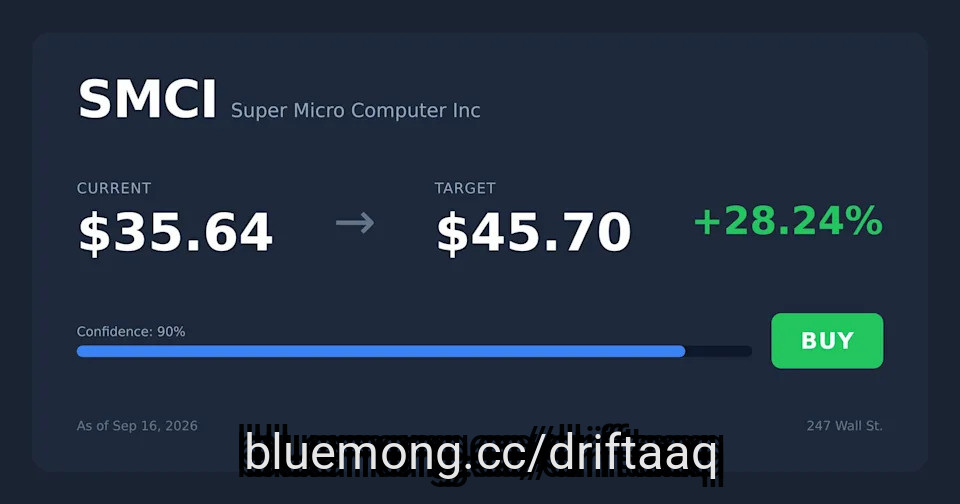
SMCI trades at just 8x FY2027 EPS despite a record $60 billion order backlog and a 78% Q4 earnings beat, supporting a $60 price target by 2027.
Unlike NVDA, which only designs chips, SMCI builds complete AI factories covering rack servers, liquid cooling, and deployment, giving it a one-stop infrastructure moat.
FY2027 EPS estimates jumped 33% in 90 days with 16 upward revisions and zero cuts, yet Wall Street's consensus price target still sits at just $42.
Read More: Learn 7 secret wealth tips high net worth investors use that most investors miss (sponsor)
Super Micro Computer (NASDAQ:SMCI) has quietly become one of the more interesting rebound stories in AI infrastructure. Shares are up 21.76% year to date, but the stock is still down 21.46% over the past year as investors work through governance overhangs and margin whiplash.
#fy2027 #target #unlike
Unlike NVDA, which only designs chips, SMCI builds complete AI factories covering rack servers, liquid cooling, and deployment, giving it a one-stop infrastructure moat.
FY2027 EPS estimates jumped 33% in 90 days with 16 upward revisions and zero cuts, yet Wall Street's consensus price target still sits at just $42.
Read More: Learn 7 secret wealth tips high net worth investors use that most investors miss (sponsor)
Super Micro Computer (NASDAQ:SMCI) has quietly become one of the more interesting rebound stories in AI infrastructure. Shares are up 21.76% year to date, but the stock is still down 21.46% over the past year as investors work through governance overhangs and margin whiplash.
#fy2027 #target #unlike


8 days ago
This story was originally published on CRE Daily. Join 70,000+ commercial real estate professionals getting daily news, market insights, and industry ******* ysis delivered straight to their inbox with the free CRE Daily newsletter.
A $420 million CMBS loan backed by the 893,000-square-foot office tower at 51 West 52nd Street will exit special servicing after Harbor Group closed a negotiated extension.
Morningstar reported occupancy fell from 99% to 86% and cash flow dropped 37% below underwritten levels, though a source close to the deal says the building is now fully leased.
Harbor Group bought the Midtown tower from ViacomCBS for $760 million in 2021, the largest investment sale that year, and has since invested $150 million in upgrades.
A $420 million CMBS loan backed by 51 West 52nd Street, a 38-story, 893,000-square-foot Midtown office tower, will exit special servicing after sponsor Harbor Group International closed a negotiated loan extension, according to Commercial Observer. The loan, which backs the single-asset, single-borrower DBGS 2021-W52 deal, was transferred to special servicing ahead of its October 2026 maturity even though it still carried a 12-month extension option, per an alert from Morningstar Credit ******* ytics.
#group #extension
A $420 million CMBS loan backed by the 893,000-square-foot office tower at 51 West 52nd Street will exit special servicing after Harbor Group closed a negotiated extension.
Morningstar reported occupancy fell from 99% to 86% and cash flow dropped 37% below underwritten levels, though a source close to the deal says the building is now fully leased.
Harbor Group bought the Midtown tower from ViacomCBS for $760 million in 2021, the largest investment sale that year, and has since invested $150 million in upgrades.
A $420 million CMBS loan backed by 51 West 52nd Street, a 38-story, 893,000-square-foot Midtown office tower, will exit special servicing after sponsor Harbor Group International closed a negotiated loan extension, according to Commercial Observer. The loan, which backs the single-asset, single-borrower DBGS 2021-W52 deal, was transferred to special servicing ahead of its October 2026 maturity even though it still carried a 12-month extension option, per an alert from Morningstar Credit ******* ytics.
#group #extension


8 days ago
On September 11, Elastic (NYSE:ESTC) rolled out Elasticsearch Vector Database, a new serverless offering the company says lets developers ship large-scale vector search and AI applications without stitching together the usual pile of infrastructure themselves. The launch landed less than three weeks after Elastic posted first-quarter fiscal 2027 results on August 27, for the period ended July 31, giving investors a fresh product story to weigh against a quarter that already showed accelerating growth.
The new database automates what used to require manual ***** embly: chunking documents, hosting embedding and reranking models, configuring indexes, and wiring query-time retrieval. Elastic built in expert-tuned defaults, a single field type that handles indexing, embeddings, and chunking together, and hybrid search that combines full-text and vector retrieval in one query. The system scales to hundreds of billions of vectors using Elastic's Better Binary Quantization, which the company says shrinks vector memory by up to 32 times while keeping recall high, and pricing is based on data and search capacity rather than the opaque compute units the company says define most pure-play vector database pricing.
That product push follows a quarter that was already running hot. Total revenue reached $478 million in the first quarter of fiscal 2027, up 15% year over year, while current remaining performance obligations grew 21% and remaining performance obligations grew 27%. Sales-led subscription revenue, which strips out Monthly Elastic Cloud, grew 18% year over year to $399 million, outpacing the company's overall subscription growth.
Elastic added more customers with annual contract value above $100,000 than in any prior quarter, pushing that cohort past 1,800 from over 1,720 in the fourth quarter of fiscal 2026 and over 1,550 a year earlier. Net expansion rate held around 111%, and the company generated $143 million in adjusted free cash flow during the quarter. Guidance for the second quarter of fiscal 2027, ending October 31, calls for revenue of $486 million to $487 million and a swing to positive GAAP operating margin, with full fiscal 2027 non-GAAP operating margin guided to roughly 19.4%, up from 16.2% in the quarter just reported.
Growth came with a reminder that Elastic has not fully crossed into GAAP profitability. The company posted a GAAP operating loss of $24 million in the first quarter of fiscal 2027, a -5% operating margin, and a GAAP net loss per share of $0.16. Non-GAAP figures told a healthier story, with $77 million in non-GAAP operating income and $0.70 in non-GAAP diluted earnings per share, but the gap between the two measures shows how much of Elastic's reported profitability still depends on excluding real costs like stock-based compensation.
#quarter #fiscal #year #operating
The new database automates what used to require manual ***** embly: chunking documents, hosting embedding and reranking models, configuring indexes, and wiring query-time retrieval. Elastic built in expert-tuned defaults, a single field type that handles indexing, embeddings, and chunking together, and hybrid search that combines full-text and vector retrieval in one query. The system scales to hundreds of billions of vectors using Elastic's Better Binary Quantization, which the company says shrinks vector memory by up to 32 times while keeping recall high, and pricing is based on data and search capacity rather than the opaque compute units the company says define most pure-play vector database pricing.
That product push follows a quarter that was already running hot. Total revenue reached $478 million in the first quarter of fiscal 2027, up 15% year over year, while current remaining performance obligations grew 21% and remaining performance obligations grew 27%. Sales-led subscription revenue, which strips out Monthly Elastic Cloud, grew 18% year over year to $399 million, outpacing the company's overall subscription growth.
Elastic added more customers with annual contract value above $100,000 than in any prior quarter, pushing that cohort past 1,800 from over 1,720 in the fourth quarter of fiscal 2026 and over 1,550 a year earlier. Net expansion rate held around 111%, and the company generated $143 million in adjusted free cash flow during the quarter. Guidance for the second quarter of fiscal 2027, ending October 31, calls for revenue of $486 million to $487 million and a swing to positive GAAP operating margin, with full fiscal 2027 non-GAAP operating margin guided to roughly 19.4%, up from 16.2% in the quarter just reported.
Growth came with a reminder that Elastic has not fully crossed into GAAP profitability. The company posted a GAAP operating loss of $24 million in the first quarter of fiscal 2027, a -5% operating margin, and a GAAP net loss per share of $0.16. Non-GAAP figures told a healthier story, with $77 million in non-GAAP operating income and $0.70 in non-GAAP diluted earnings per share, but the gap between the two measures shows how much of Elastic's reported profitability still depends on excluding real costs like stock-based compensation.
#quarter #fiscal #year #operating


8 days ago
Some offers on this page are from advertisers who pay us, which may affect which products we write about, but not our recommendations. See our Advertiser Disclosure.
Silver (SI=F) December futures opened at $64.18 per ounce on Wednesday, September 16, 2026, up 0.5% from Tuesday's closing price. Silver prices rose this morning, reaching $65.08 as of 6:42 a.m. ET.
This morning, silver prices have lifted out of the $63 to $64 range they maintained all week ahead of one of the most anticipated Fed meetings in some time. Market observers are anticipating the first Fed rate increase in three years.
According to the CME Group's FedWatch tool, there is still a 92.5% chance the Fed will raise the target range for the fed funds rate by 25 basis points, the same as yesterday. On Monday, the chances were pegged at 86.5%. On Friday, the percentage was 69.4%.
Higher interest rates are a headwind for precious metals and crypto prices since these investments do not pay interest.
#morning #rate #disclosure
Silver (SI=F) December futures opened at $64.18 per ounce on Wednesday, September 16, 2026, up 0.5% from Tuesday's closing price. Silver prices rose this morning, reaching $65.08 as of 6:42 a.m. ET.
This morning, silver prices have lifted out of the $63 to $64 range they maintained all week ahead of one of the most anticipated Fed meetings in some time. Market observers are anticipating the first Fed rate increase in three years.
According to the CME Group's FedWatch tool, there is still a 92.5% chance the Fed will raise the target range for the fed funds rate by 25 basis points, the same as yesterday. On Monday, the chances were pegged at 86.5%. On Friday, the percentage was 69.4%.
Higher interest rates are a headwind for precious metals and crypto prices since these investments do not pay interest.
#morning #rate #disclosure



10 days ago
Back in April, Morgan Stanley had highlighted how accelerating Agentic AI demand could boost demand for central processing units (CPUs) beyond the graphic chips that have dominated the AI theme so far.
"As AI transitions from generation to autonomous action, the computing bottleneck is shifting towards CPU and memory, driving a step-change in general-purpose compute intensity."
The firm estimated that agentic AI could add $32.5–60 billion to a data-center CPU market already exceeding $100 billion by 2030.
Piper Sandler now backs this claim, ******* erting that Agentic AI is driving demand for Intel Corporation (NASDAQ:INTC)'s CPU server products amid limited supply. On September 9, Piper Sandler ******* yst David O'Connor initiated coverage on Intel with a Neutral rating and a $110 price target.
Egorov Artem/Shutterstock.com
#agentic #piper #morgan
"As AI transitions from generation to autonomous action, the computing bottleneck is shifting towards CPU and memory, driving a step-change in general-purpose compute intensity."
The firm estimated that agentic AI could add $32.5–60 billion to a data-center CPU market already exceeding $100 billion by 2030.
Piper Sandler now backs this claim, ******* erting that Agentic AI is driving demand for Intel Corporation (NASDAQ:INTC)'s CPU server products amid limited supply. On September 9, Piper Sandler ******* yst David O'Connor initiated coverage on Intel with a Neutral rating and a $110 price target.
Egorov Artem/Shutterstock.com
#agentic #piper #morgan

10 days ago
Welcome to the Observer-Dispatch reader poll for the Mohawk Valley's second Football Player of the Week for the 2026 season, sponsored by Carbone's at The Fitness Mill.
Dolgeville Blue Devil Wyatt Eggleston won the voting for Week 1. Who performed best in the second weekend of the 2026 high school football season in eastern Section III?
Listed below are eight nominees, and the polls will be open until noon on Friday, September 18.
Here are the nominees:
MARK BARONE, Rome Free Academy: Senior quarterback passed for 291 yards and five touchdowns against New Hartford.
#second #season #welcome
Dolgeville Blue Devil Wyatt Eggleston won the voting for Week 1. Who performed best in the second weekend of the 2026 high school football season in eastern Section III?
Listed below are eight nominees, and the polls will be open until noon on Friday, September 18.
Here are the nominees:
MARK BARONE, Rome Free Academy: Senior quarterback passed for 291 yards and five touchdowns against New Hartford.
#second #season #welcome


10 days ago
Another round of layoffs has brought dramatic cuts to a city's local newspaper.
On Monday, Hornets beat reporter Rod Boone of the Charlotte Observer shared on social media that the paper eliminated his position, along with seven colleagues, in the latest round of McClatchy cuts.
Boone said that the news came "less than 48 hours after being told corporate had given the green light to bring back my podcast they whacked two years earlier." He also noted that the cuts meant that the paper will no longer have a writer dedicated to covering the Hornets, a first since the team's inception in 1987.
The cuts are just the latest in a series of layoffs made at papers controlled by McClatchy. The Miami Herald also laid off staffers this week, including sportswriter Greg Cote, who went back five decades with the paper. The Sacramento Bee was also caught in the wreckage, losing its sports department entirely.
Media layoffs have only become more common in recent years, and local newspapers are especially suffering. They have also often come with a shocking lack of respect from those in charge of deciding who stays and who goes. As Boone says, he got the news of his release just days before his fifth anniversary at the paper, and just days after he was ****** ured that he was clear to bring his podcast back on the air. Similarly, Cote's dismissal from the Herald came after 54 years of service, and he got the news on his birthday.
#cuts #boone #paper
On Monday, Hornets beat reporter Rod Boone of the Charlotte Observer shared on social media that the paper eliminated his position, along with seven colleagues, in the latest round of McClatchy cuts.
Boone said that the news came "less than 48 hours after being told corporate had given the green light to bring back my podcast they whacked two years earlier." He also noted that the cuts meant that the paper will no longer have a writer dedicated to covering the Hornets, a first since the team's inception in 1987.
The cuts are just the latest in a series of layoffs made at papers controlled by McClatchy. The Miami Herald also laid off staffers this week, including sportswriter Greg Cote, who went back five decades with the paper. The Sacramento Bee was also caught in the wreckage, losing its sports department entirely.
Media layoffs have only become more common in recent years, and local newspapers are especially suffering. They have also often come with a shocking lack of respect from those in charge of deciding who stays and who goes. As Boone says, he got the news of his release just days before his fifth anniversary at the paper, and just days after he was ****** ured that he was clear to bring his podcast back on the air. Similarly, Cote's dismissal from the Herald came after 54 years of service, and he got the news on his birthday.
#cuts #boone #paper


10 days ago
Dell Technologies (DELL) and Hewlett Packard Enterprise (HPE) found themselves at the top of the S&P 500 on the back of Oracle's (ORCL) forceful reminder of how much money is still flowing into AI infrastructure.
Dell's stock soared 12% on Sept. 11, while HPE was another of the index's best performers. Investors quickly saw the connection: Oracle needs plenty of servers, networking gear, and other data center hardware to keep up with surging AI demand.
Oracle's fiscal first-quarter results supported this trend. Total revenue rose 30% to $19.3 billion, while cloud infrastructure revenue surged 121% to $7.4 billion. Even more impressive, remaining performance obligations rose $209 billion to $664 billion.
That backlog presents a potential strong read-through for Dell and HPE.
But there is another side to this tale. The businesses fueling the AI boom are more and more fixated on the costs of borrowing and the next actions by the Federal Reserve as they pour unusual amounts of resources into building enough data centers to translate Oracle's contracts into income.
#infrastructure #revenue
Dell's stock soared 12% on Sept. 11, while HPE was another of the index's best performers. Investors quickly saw the connection: Oracle needs plenty of servers, networking gear, and other data center hardware to keep up with surging AI demand.
Oracle's fiscal first-quarter results supported this trend. Total revenue rose 30% to $19.3 billion, while cloud infrastructure revenue surged 121% to $7.4 billion. Even more impressive, remaining performance obligations rose $209 billion to $664 billion.
That backlog presents a potential strong read-through for Dell and HPE.
But there is another side to this tale. The businesses fueling the AI boom are more and more fixated on the costs of borrowing and the next actions by the Federal Reserve as they pour unusual amounts of resources into building enough data centers to translate Oracle's contracts into income.
#infrastructure #revenue

12 days ago
Dell Technologies (DELL) stock more than quadrupled over the past year, a 323% gain, against about 18% for the S&P 500, and even Hewlett Packard Enterprise (HPE), up 130.6%, finished far behind. Management had described most of the drivers before the run began: customers sitting on old servers, AI orders that had outrun shipments earlier in the year, and costs falling while sales rose. Those signs could not tell you how far the stock would go.
What Was Dell Seeing In Its Customers' Data Centers?
In February 2025, management said customers still ran a very large base of Dell's 13th and 14th generation servers, ready to be replaced. AI demand, already under discussion then, was exceptionally strong by May 2025, with $12.1 billion of AI server orders in fiscal Q1 2026, more than Dell's AI server shipments for all of fiscal 2025.
In August 2025, management said over 70% of its installed base was running on 14th generation servers or older, and that one 17th generation server could replace six or seven old ones. The results were uneven. In fiscal Q2 2026, traditional server revenue rose again and international demand grew, but demand in North America, its most profitable region, was weak.
Why Were Dell's Costs Falling While Its Sales Rose?
#server
What Was Dell Seeing In Its Customers' Data Centers?
In February 2025, management said customers still ran a very large base of Dell's 13th and 14th generation servers, ready to be replaced. AI demand, already under discussion then, was exceptionally strong by May 2025, with $12.1 billion of AI server orders in fiscal Q1 2026, more than Dell's AI server shipments for all of fiscal 2025.
In August 2025, management said over 70% of its installed base was running on 14th generation servers or older, and that one 17th generation server could replace six or seven old ones. The results were uneven. In fiscal Q2 2026, traditional server revenue rose again and international demand grew, but demand in North America, its most profitable region, was weak.
Why Were Dell's Costs Falling While Its Sales Rose?
#server
12 days ago
By Noel Randewich
Sept 11 (Reuters) - Wall Street ended higher on Friday as oil prices retreated and strong consumer price data reinforced expectations the Federal Reserve will raise interest rates next week to fight inflation.
AI server maker Dell soared 12% to a record high. Hewlett Packard Enterprise jumped 12% and HP gained 8.4% after Oracle's quarterly results topped estimates. Oracle dipped 1.8%.
U.S. consumer prices accelerated last month as the cost of gasoline rebounded after two straight monthly declines, adding pressure on the Fed to tighten monetary policy to fight inflation.
Interest rate futures now reflect a nearly 90% probability that the central bank will raise rates at its policy meeting on Wednesday, according to the CME FedWatch tool. That is up from a 72% likelihood on Thursday.
#raise #rates
Sept 11 (Reuters) - Wall Street ended higher on Friday as oil prices retreated and strong consumer price data reinforced expectations the Federal Reserve will raise interest rates next week to fight inflation.
AI server maker Dell soared 12% to a record high. Hewlett Packard Enterprise jumped 12% and HP gained 8.4% after Oracle's quarterly results topped estimates. Oracle dipped 1.8%.
U.S. consumer prices accelerated last month as the cost of gasoline rebounded after two straight monthly declines, adding pressure on the Fed to tighten monetary policy to fight inflation.
Interest rate futures now reflect a nearly 90% probability that the central bank will raise rates at its policy meeting on Wednesday, according to the CME FedWatch tool. That is up from a 72% likelihood on Thursday.
#raise #rates


12 days ago
As artificial intelligence matures, investors must decide between the high-growth niche players and the foundational giants. Choosing between Astera Labs Inc (NASDAQ:ALAB) and Taiwan Semiconductor Manufacturing Co (NYSE:TSM) involves weighing explosive potential against established dominance.
Astera Labs provides the critical connectivity infrastructure that allows AI chips to communicate within data centers. Meanwhile, Taiwan Semiconductor Manufacturing operates as the world's largest dedicated chip foundry, producing the actual processors for almost every major tech firm. Both companies are central to the future of semiconductor stocks.
Astera Labs specializes in connectivity solutions designed to remove bottlenecks in high-performance data centers. The company sells hardware and software that helps AI accelerators, such as those made by major chip designers, communicate efficiently across servers. Its customer base is highly concentrated, primarily consisting of the largest cloud providers and system manufacturers. In 2025, one end customer accounted for over 70% of total revenue. Customer concentration like this adds a layer of risk to the business.
In FY 2025, revenue reached more than $852.5 million, representing an impressive increase of roughly 115% compared to the prior year. This rapid growth helped the company pivot from a loss in previous years to a net income of approximately $219 million. The net margin, which measures how much of each dollar of sales remains as profit, stood at nearly 26%. This trajectory highlights the surging demand for the specialized connectivity chips required for large-scale AI deployments.
As of its December 2025 balance sheet, the company reported a debt-to-equity ratio of 0.0x, indicating it holds no debt relative to its shareholder equity. Its so-called current ratio, which compares short-term ******* ets to short-term liabilities, was a robust 10.2x. Free cash flow, or the cash left over after paying for operations and equipment, was approximately $282 million. Note that stock-based compensation represented roughly 50% of operating cash flow, which inflates reported cash generation since this is a non-cash expense added back in the cash flow statement.
#company
Astera Labs provides the critical connectivity infrastructure that allows AI chips to communicate within data centers. Meanwhile, Taiwan Semiconductor Manufacturing operates as the world's largest dedicated chip foundry, producing the actual processors for almost every major tech firm. Both companies are central to the future of semiconductor stocks.
Astera Labs specializes in connectivity solutions designed to remove bottlenecks in high-performance data centers. The company sells hardware and software that helps AI accelerators, such as those made by major chip designers, communicate efficiently across servers. Its customer base is highly concentrated, primarily consisting of the largest cloud providers and system manufacturers. In 2025, one end customer accounted for over 70% of total revenue. Customer concentration like this adds a layer of risk to the business.
In FY 2025, revenue reached more than $852.5 million, representing an impressive increase of roughly 115% compared to the prior year. This rapid growth helped the company pivot from a loss in previous years to a net income of approximately $219 million. The net margin, which measures how much of each dollar of sales remains as profit, stood at nearly 26%. This trajectory highlights the surging demand for the specialized connectivity chips required for large-scale AI deployments.
As of its December 2025 balance sheet, the company reported a debt-to-equity ratio of 0.0x, indicating it holds no debt relative to its shareholder equity. Its so-called current ratio, which compares short-term ******* ets to short-term liabilities, was a robust 10.2x. Free cash flow, or the cash left over after paying for operations and equipment, was approximately $282 million. Note that stock-based compensation represented roughly 50% of operating cash flow, which inflates reported cash generation since this is a non-cash expense added back in the cash flow statement.
#company


12 days ago
Raphinha has received another major accolade after his outstanding display against Feyenoord earned him a place in UEFA's Team of the Week, adding to his recent recognition in LaLiga.
The Barcelona captain was singled out by UEFA's technical observers following a performance in which he scored twice, with his opening goal particularly catching the eye.
Raphinha used a clever feint to beat two Feyenoord defenders before finishing the move in style.
UEFA's **** sment also highlighted the Brazilian's work away from the ball and his influence in several areas of the pitch.
"Against Feyenoord, the Barcelona captain led the press with impressive intensity and made runs behind the defence to create danger from deep, as well as playing between the lines, capping off his performance with two magnificent goals," the UEFA website explains.
#feyenoord #week #uefa
The Barcelona captain was singled out by UEFA's technical observers following a performance in which he scored twice, with his opening goal particularly catching the eye.
Raphinha used a clever feint to beat two Feyenoord defenders before finishing the move in style.
UEFA's **** sment also highlighted the Brazilian's work away from the ball and his influence in several areas of the pitch.
"Against Feyenoord, the Barcelona captain led the press with impressive intensity and made runs behind the defence to create danger from deep, as well as playing between the lines, capping off his performance with two magnificent goals," the UEFA website explains.
#feyenoord #week #uefa


13 days ago
Digital Realty Trust, Inc. (NYSE:DLR) announced the opening of its 6.4-megawatt NBO2 data center in Nairobi on September 7, expanding the campus alongside NBO1. The opening coincides with subsidiary iColo's transition to the parent's brand in Kenya and Mozambique.
The attraction extends beyond additional server ****** e. Customers can access the campus's community of more than 100 networks, two internet exchanges and a satellite teleport, which connects terrestrial networks with satellite services. These are connectivity options, not a disclosure of NBO2's leased capacity or customer count.
For Digital Realty Trust, Inc. (NYSE:DLR), the opportunity is to turn that concentration of networks into recurring customer relationships. The opening announcement did not disclose development cost, pre-leasing, occupancy, or expected revenue, leaving the financial payoff unresolved.
Interconnection can give customers a reason to choose a facility beyond price. Physical connections between customers and network providers can reduce latency and support more reliable data exchange. For businesses serving several markets, having carriers and partners close together can simplify how traffic moves between them.
That creates a potential network effect for Digital Realty Trust, Inc. (NYSE:DLR). More useful connections can attract additional customers, making the location more valuable to others. Once customers build several connections into their operations, relocating can become more disruptive. The resulting retention advantage could support recurring revenue, although it remains an investment thesis rather than a demonstrated NBO2 result.
#digital #connections
The attraction extends beyond additional server ****** e. Customers can access the campus's community of more than 100 networks, two internet exchanges and a satellite teleport, which connects terrestrial networks with satellite services. These are connectivity options, not a disclosure of NBO2's leased capacity or customer count.
For Digital Realty Trust, Inc. (NYSE:DLR), the opportunity is to turn that concentration of networks into recurring customer relationships. The opening announcement did not disclose development cost, pre-leasing, occupancy, or expected revenue, leaving the financial payoff unresolved.
Interconnection can give customers a reason to choose a facility beyond price. Physical connections between customers and network providers can reduce latency and support more reliable data exchange. For businesses serving several markets, having carriers and partners close together can simplify how traffic moves between them.
That creates a potential network effect for Digital Realty Trust, Inc. (NYSE:DLR). More useful connections can attract additional customers, making the location more valuable to others. Once customers build several connections into their operations, relocating can become more disruptive. The resulting retention advantage could support recurring revenue, although it remains an investment thesis rather than a demonstrated NBO2 result.
#digital #connections
13 days ago
On August 31, Advanced Micro Devices, Inc. (NASDAQ:AMD), Cisco Systems, Inc. (NASDAQ:CSCO), and Humain announced that their joint AI infrastructure buildout in Saudi Arabia is officially live. The deployment links AMD's Instinct MI355X GPUs and EPYC CPUs directly with Cisco's Silicon One-based 800G switches, giving Humain a foundation to offer GPU-as-a-service across the Middle East. Beyond this immediate launch, the trio plans to deploy up to 250 MW of capacity powered by next-gen AMD MI400 Series GPUs starting in 2027, staying on track for a massive 1 GW platform by 2030.
The milestone highlights how compute and networking have fused into a single market. But financially, AMD and Cisco present two very different investment profiles.
Advanced Micro Devices, Inc. (NASDAQ:AMD)'s Q2 2026 results demonstrated massive top-line expansion, driven almost entirely by data center demand. Revenue surged 50% year-over-year to $11.5 billion, while non-GAAP EPS rose 82% to $1.66. Its Data Center segment alone more than doubled to $6.7 billion (+107% YoY), accounting for 58% of total revenue as EPYC server chips and Instinct GPUs continue to gain enterprise traction.
Cisco Systems, Inc. (NASDAQ:CSCO)'s Q4 and full-year FY2026 report reflected a mature cash-flow powerhouse capturing an architectural transition. Q4 revenue grew 18% YoY to a record $17.3 billion, pushing full-year revenue up 12% to $63.3 billion. Non-GAAP EPS for Q4 reached $1.22 (+23%), with FY2026 non-GAAP EPS hitting $4.33. Cisco logged $9.3 billion in AI infrastructure orders for the fiscal year (up 4.5x YoY) and maintained a non-GAAP operating margin of 35.9%, generating $14.2 billion in annual operating cash flow.
While AMD clearly leads on top-line growth velocity, Cisco holds the upper hand in raw profitability, structural gross margins (66.3%), and shareholder return via capital repurchases and dividends.
#revenue #advanced
The milestone highlights how compute and networking have fused into a single market. But financially, AMD and Cisco present two very different investment profiles.
Advanced Micro Devices, Inc. (NASDAQ:AMD)'s Q2 2026 results demonstrated massive top-line expansion, driven almost entirely by data center demand. Revenue surged 50% year-over-year to $11.5 billion, while non-GAAP EPS rose 82% to $1.66. Its Data Center segment alone more than doubled to $6.7 billion (+107% YoY), accounting for 58% of total revenue as EPYC server chips and Instinct GPUs continue to gain enterprise traction.
Cisco Systems, Inc. (NASDAQ:CSCO)'s Q4 and full-year FY2026 report reflected a mature cash-flow powerhouse capturing an architectural transition. Q4 revenue grew 18% YoY to a record $17.3 billion, pushing full-year revenue up 12% to $63.3 billion. Non-GAAP EPS for Q4 reached $1.22 (+23%), with FY2026 non-GAAP EPS hitting $4.33. Cisco logged $9.3 billion in AI infrastructure orders for the fiscal year (up 4.5x YoY) and maintained a non-GAAP operating margin of 35.9%, generating $14.2 billion in annual operating cash flow.
While AMD clearly leads on top-line growth velocity, Cisco holds the upper hand in raw profitability, structural gross margins (66.3%), and shareholder return via capital repurchases and dividends.
#revenue #advanced