
18 days ago
A handshake agreement. That's the term I saw all weekend regarding the College Football Playoff expanding from 12 teams to 24 beginning next year, with ESPN remaining the sole rights holder. There are positives and negatives to the reported deal, and it was refreshing to hear discourse on both sides of the argument across ESPN's networks this weekend. That's something college football fans didn't get with the network's coverage of the Protect College Sports Act.
However, in the end, ESPN owns all the goods. Again. The network has been the exclusive rights holder since the playoff began just 12 years ago. Fans can debate whether expanding the playoff to 24 teams will diminish the weekly must-win stakes of college football or lead to the elimination of conference championship games for major conferences. One thing remains clear: ESPN controls the entire package. That raises a question: If the sport wants to expand on the field, why can't it expand how those games are broadcast?
The old saying goes, "Follow the money." After signing a six-year, $7.8 billion exclusive extension in 2024, ESPN received an exclusive 30-day window to negotiate with the College Football Playoff over expansion. That window expired, but a handshake agreement was reportedly reached in the days that followed.
As a result, FOX Sports, CBS Sports/TNT Sports/Skydance, NBC Sports, and others never had an opportunity to compete for the expanded package during that window. Has ESPN dominated college football coverage for generations? Of course. Is watching College GameDay part of the average fan's Saturday routine during the fall? Absolutely.
But imagine if the NFL, MLB, NBA and NHL handled their biggest events the same way. Imagine if Kevin Burkhardt and Tom Brady were left out of the NFL's biggest games. What if Kenny Albert and Eddie Olczyk never got the opportunity to call the Stanley Cup Final?
#college #exclusive


1 month ago
The US trade deficit jumped to more than $100 billion in August as importers wrestled with a new round of President Trump's tariffs and continued to bring in billions of dollars' worth of components for AI data centers.
The total gap: $105.6 billion, a 13.8% increase from July's revised $92.8 billion deficit, the highest level since early 2025, when importers stocked up ahead of Trump's "Liberation Day" and a later four-month surge in imports that pushed average monthly trade deficits north of $120 billion.
Imports rose in August by 4.3%, compared with a 1.4% increase in exports. The US brought in $420.8 billion in total imports in August against $315.2 billion in exports.
In an **** ysis, Capital Economics said the "sharp rise in imports suggests third quarter GDP growth will be well below our current forecast of 4.0%," suggesting that the final annualized figure could be closer to 2.5%."
"The relatively broad-based rise in goods imports mean net trade was still a drag overall," the group added.
#billion #imports #total #increase


1 month ago
Tom Cruise paid homage his memorable Risky Business scene during his appearance on The Jennifer Hudson Show this week.
While visiting to promote his new film Digger, the actor took "old records off the shelf" while dancing to the cover of 1978 Bob Seger & The Silver Bullet Band classic "Old Time Rock & Roll." While playing Joel Goodsen in Risky Business, released in 1983, Cruise danced to the song in a crisp shirt, his underwear and a pair of black sunglasses.
While he wore jeans this time around, the actor pulled out a similar pair of sunnies for his Spirit Tunnel experience, and even danced with a crew members before hitting the stage.
COMPLEX SHOP: Shop the brands you love, anytime and anywhere. Uncover what's next. Buy. Collect. Obsess.
Cruise wears heavy prosthetics as protagonist Digger Rockwell in the ****** ular satrical black comedy, which comes out this week.
#cruise #digger #time



1 month ago
"It just occurred to me that you were the second man in her life. I'm not quite sure how to take that."
That's how French President Emmanuel Macron opened the Legion of Honor ceremony Friday night honoring Nicolas Ghesquière, whose long, acclaimed tenure as artistic director of women's collections at Louis Vuitton was headlined by dressing First Lady Brigitte Macron.
More from WWD
EXCLUSIVE: LVMH Promotes Leather Goods Executive to CEO of Pucci
Cartier Adds Jewelry to Annual Emerging Talent Award
#legion #Friday #ghesqui #louis

1 month ago
WASHINGTON (AP) — The Group of Seven wealthy democracies said Friday that they plan to release 100 million barrels of oil and fuel products in the coming weeks, starting with "substantial" amounts of diesel after the fuel recently hit record high prices in the United States.
President Donald Trump said the diesel release would happen "immediately," echoing a G7 promise to start "immediately" with a "frontloaded substantial release" of diesel within the next 20 days and the rest over four months.
Trump and his Republican Party face pressure to address surging prices ahead of the Nov. 3 midterm elections, and Trump announced the action Friday on social media. The president's approval ratings on the economy hit a new low, according to an AP-NORC poll, as the Iran war and his trade battles have increased U.S. prices for oil and other goods.
Gas prices in the U.S. and abroad have soared during the eight-month-long war, a cost Trump has repeatedly said is worth it for making sure Iran does not obtain nuclear weapons. The national average for a gallon of diesel in the U.S. was $6.37 on Friday, according to AAA, after hitting a record $6.52 on Sept. 22. Diesel prices have hit records in Europe, too.
France holds the rotating presidency of the G7 group and made the announcement in a statement released after videoconference talks that Macron presided over. The G7 countries are Canada, France, Germany, Italy, ******* an, the U.K. and the U.S., plus EU representation.
#Diesel #prices #release #substantial



1 month ago
An Australian woman went viral after sharing a video of an unusually pristine frozen food section at her local supermarket. The clip showcased rows of products stacked with near-perfect uniformity, with the meticulous organization extending across multiple freezers and different types of frozen goods.
Sarah Mae Ahern, or sarahmaeahern on Instagram, is an Australian musician and content creator whose posts primarily focus on her music career, along with occasional glimpses into life with her husband Alex and their child.
Ahern's breakout viral video, however, came from an unexpected trip to the supermarket. While grocery shopping with her husband, the pair encountered a frozen food section where seemingly every item had been arranged perfectly in place.
They filmed the display and shared it online, where the video amassed nearly 11 million views, more than 610,000 likes and roughly 7,500 comments over the following three months.
"We are looking at how perfectly stacked everything is in this freezer section," Alex says, while Ahern films him as she laughs, before she pans over to said freezers, which display frozen desserts, pastries and ice cream, every product in it neatly organized.
#freezers



2 months ago
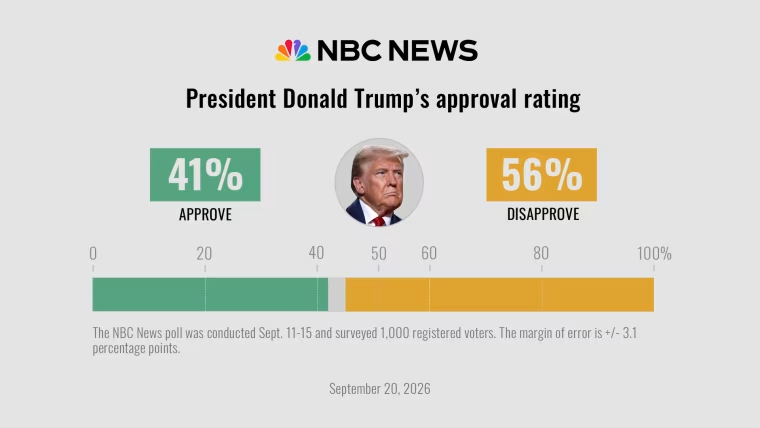
President Donald Trump’s sinking ratings threaten to drag down Republicans in November’s midterm elections, as voters blame him for high prices and a shaky economy, according to a new NBC News poll.
The president’s approval rating stands at 41% among registered voters, a second-term low in the poll, with a majority (55%) of voters saying they believe Trump’s policies have hurt the economy. That’s up from 48% in March, before the Iran war pushed up prices on gas and other goods and cemented the rising cost of living as voters’ most pressing issue.
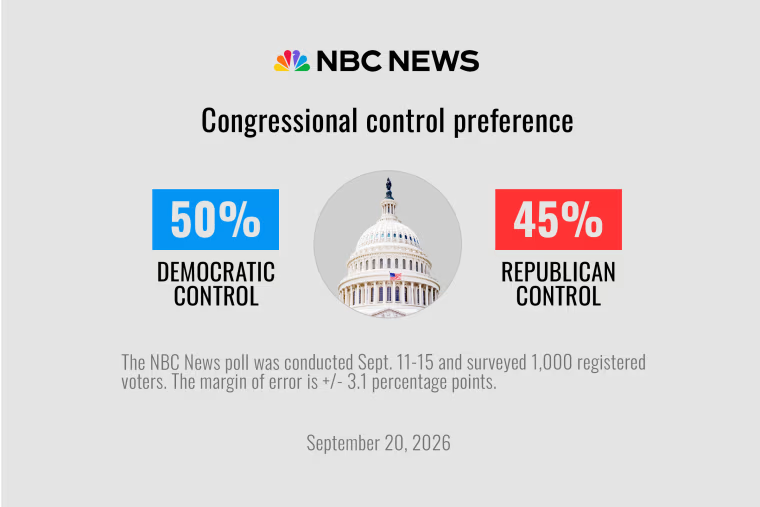
Democrats hold a 5-point edge in the battle for control of Congress, 50%-45% — not nearly as large a lead as the 12-point advantage the party enjoyed at this point before the 2018 election, when Democrats rode an anti-Trump wave to the House majority in his first midterm as president. Despite that lead, the Democratic Party is still viewed more negatively than Trump and the GOP.
That could help Republicans, along with the fact that the fight for control of the House and especially the Senate is playing out in traditionally Republican parts of the country. Democrats would have to flip multiple states Trump carried by double digits in 2024 to win the Senate.
“We have a classic battle between these numbers and the political geography in which this campaign will be decided,” said Republican pollster Bill McInturff of Public Opinion Strategies, whose firm conducted the survey alongside Democratic firm Hart Research ***** ociates. “And the Republicans are still standing because of the geography in which this election will be won or lost.”
#president

2 months ago
Costco is expanding its same-day delivery network as it looks to grow e-commerce sales and compete with retailers like Walmart and Target.
The retailer this week launched collaborations with DoorDash (NASDAQ: DASH) and Uber (NYSE: UBER) to pick up online orders at U.S. stores and drive them to the customer's door. The arrangements give Costco more channels to reach customers through ultra-fast delivery, made possible by gig drivers who use the platforms to select ******* ignments.
DoorDash, best known for delivering restaurant food, announced that Costco (NASDAQ: COST) members can now order groceries, dry goods, household essentials and other products from its marketplace and then arrange fast delivery from their local store, all through the DoorDash app. The U.S. launch extends the existing relationship between the companies in Australia, New Zealand, Sweden, Iceland and Puerto Rico.
DoorDash now serves eight of the 10 largest food retailers in North America.
On Wednesday, Uber announced a major expansion of its partnership with Costco to deliver products in 47 states, up from 17 states. Nearly 600 Costco locations are now available on the Uber Eats app, where shoppers can arrange on-demand and scheduled delivery.
#Food #announced


2 months ago
BuyWander says it plan to use the fresh capital to drive its expansion throughout the US, support technological upgrades, and bolster its executive team.
The investment was headed by Madrona Venture Group and Inspired Capital. Past supporters of the company include Triple Impact Capital, Silence Ventures, Animal Capital, as well as several angel investors.
The business currently has eight locations and has lately entered the Denver and Chicago markets, with a new warehouse site scheduled to open soon in Minneapolis.
BuyWander co-founder and CEO Jordan Allen said: "Retailers are sitting on billions of dollars in returned and overstocked inventory every year, and buyers are hungry for a better way to access it. We've seen that appetite play out in every market we've entered. This funding lets us bring that experience to more cities, faster, and put BuyWander in front of the next wave of buyers who are done with the old returns model."
Founded in 2023 by Jordan Allen and Brock Kowalchuk, BuyWander is an auction-based marketplace that links buyers with returned and surplus goods from retailers such as Amazon, Target and Walmart.
#capital #buyers #allen


2 months ago
This story was originally published on Supply Chain Dive. To receive daily news and insights, subscribe to our free daily Supply Chain Dive newsletter.
TJX Companies is confident in navigating weather-related events such as El Niño due to its warehouse distribution model, CEO Ernie Herrman said in a Q2 earnings call on Aug. 19.
Herrman said since the company keeps its liquidity and shipping out of its warehouses, it has better control than traditional retailers. Inventory doesn't need to go straight to the stores if the off-price retailer thinks there's going to be an unusual weather pattern in a certain region, he added.
"[T]his is a benefit of our model where we stage goods in our warehouses versus goods at most brick-and-mortar retailers come into the warehouse and have to go out," Herrman told **** ysts. He added that the company's "planning organization is really good at reacting to any wild swings in weather or natural disasters or any of those red flags."
Off-price retailers and classic retailers tend to have different supply chain models when it comes to how they manage their inventory, but it's not one-size fits all, Dheera Anand, a partner at Bain and Co., told Supply Chain Dive in an interview. The supply chain strategy Hermann described in TJX's earnings call is known as the hold and flow, or staged, model, Anand said.
#supply


2 months ago
On August 18, Amer Sports (NYSE:AS) reported second-quarter results that beat its own guidance and then raised the bar for the rest of the year. Revenue climbed 32% to $1.63 billion, adjusted operating profit nearly tripled, and every region and segment posted double-digit growth. Diluted earnings per share reached $0.18, up from a much smaller figure a year earlier. What stands out about August 18 is not just the size of the beat but how broad it was.
Technical Apparel grew 32% to $674 million, led by Arc'teryx and backed by a 17% omni-comp gain across owned stores and e-commerce. Outdoor Performance grew even faster, up 37% to $569 million, driven by Salomon Softgoods. Ball & Racquet Sports rose 24% to $390 million on the strength of Wilson Tennis 360. CEO James Zheng pointed to strong double-digit growth across every segment, geography, and channel as the reason for confidence in the outlook.
That confidence showed up in the numbers: Amer Sports raised full-year 2026 guidance to roughly 24% reported revenue growth, a gross margin of 60.5% to 61.0%, an operating margin of 14.2% to 14.5%, and diluted EPS of $1.27 to $1.30. The balance sheet backs up the reinvestment CFO Andrew Page described, with $573 million in net cash and $720 million in cash and equivalents at quarter-end.
Some of the second quarter's biggest numbers lean on a one-time tailwind. Gross margin expanded 710 basis points to 65.6%, but 390 of those points came from net tariff refunds. Operating margin's 820 basis point jump included the same 390-point benefit. The effect is largest in Ball & Racquet Sports, where adjusted segment operating margin rose 1,300 basis points to 17.2%, yet 970 of those points came from tariff refunds alone. Selling, general and administrative expenses rose 30% to $909 million, and on an adjusted basis SG&A grew 33%, faster than revenue itself.
Inventories climbed 19% year over year to $1,897 million. The guidance for the next quarter also points to a slower pace: third quarter revenue growth is guided at 18% to 20%, well below the 32% just reported, with gross margin guided down to about 59.0% and net finance cost alone guided to $15 million to $20 million, against roughly $85 million for the entire year.
#revenue #basis

2 months ago
Aristotle International Equity Fund, sub-advised by Aristotle Capital Management, LLC, released its second-quarter 2026 investor letter. The letter can be downloaded here. Global equity markets reached record highs in Q2, with the MSCI ACWI Index rising 14.93%, while global fixed income grew modestly by 0.87%. Geopolitical tensions, particularly in the Middle East, affected energy markets and investor sentiment, highlighting volatility and fragility in global supply. Central banks reacted variably to inflationary pressures, with the ECB raising rates amidst concerns of stagflation, while the Fed and Bank of England held rates steady. Despite economic challenges, robust earnings continued in Europe and Asia, driven by AI infrastructure demand. The Aristotle International Equity Fund (Class I-2) recorded an 8.40% return in the quarter, underperforming both the MSCI EAFE Index, which returned 10.82%, and the MSCI ACWI ex USA Index, which returned 14.49%. Going forward, the fund remains focused on quality investments as geopolitical and macroeconomic complexities make forecasting returns challenging. Additionally, reviewing the Fund's top five holdings could help identify its best picks for 2026.
In its second-quarter 2026 investor letter, Aristotle International Equity Fund highlighted Unilever PLC (NYSE:UL). Unilever PLC (NYSE:UL) is a British consumer goods giant, that sell products across food, homecare, beauty, and personal care categories. On September 17, 2026, Unilever PLC (NYSE:UL) closed at $62.22 per share. Over the past month, Unilever PLC (NYSE:UL) declined 2.99%, but its shares are down 5.09% over the past year. Unilever PLC (NYSE:UL) has a market capitalization of $133.98 billion, and its stock has traded within a 52-week range of $54.75 to $74.98.
Aristotle International Equity Fund stated the following regarding Unilever PLC (NYSE:UL) in its Q2 2026 investor letter:
"We first invested in Unilever PLC (NYSE:UL), the global consumer staples company, in the second quarter of 2013. We have long been attracted to the company's broad portfolio of leading personal care and food brands (such as Dove, Knorr and Axe), global scale, significant emerging markets exposure and strong position across everyday use categories. Over our more than decade-long holding period, Unilever strengthened and simplified its portfolio, divesting lower-growth food ***** ets, improving efficiency, increasing focus behind its largest brands and shifting the business toward faster-growing, higher-margin beauty, wellbeing, personal care and home care categories. More recently, the separation of the ice cream business and continued reshaping of the food portfolio have further narrowed Unilever's strategic focus. While we continue to view the remaining Unilever franchise as high quality, we believe the more compelling opportunity now resides in the independent ice cream business, where dedicated management and a category-specific strategy should provide a clearer pa

2 months ago
By Lucia Mutikani
WASHINGTON, Sept 16 (Reuters) - U.S. retail sales rebounded sharply in August as households boosted purchases of a range of goods while also spending more at restaurants and bars, reinforcing the economy's resilience even as consumers grow more anxious about high inflation.
The stronger-than-expected report from the Commerce Department on Wednesday prompted economists to upgrade their gross domestic product growth estimates for the third quarter. Inflation jitters were underscored by news of a surge in import prices last month amid strong increases in the costs of capital and consumer goods.
The reports followed data this month showing producer and consumer prices accelerated in August, while the labor market regained its poise after wobbling through much of summer.
The Federal Reserve on Wednesday raised its benchmark overnight interest rate by a quarter of a percentage point to the 3.75%-4.00% range and flagged further increases in borrowing costs in the months ahead.
#inflation #quarter


2 months ago
On September 14, Radiant Logistics (NYSEAMERICAN:RLGT) held its fourth fiscal quarter earnings call, and the headline numbers landed harder than a typical logistics update. Net income jumped 53.1% to $7.5 million for the quarter ended June 30, while revenue climbed 18.5% to $261.4 million. Look past that one quarter, though, and the picture gets more complicated, because full-year adjusted profitability actually fell. That gap between a blowout quarter and a softer year is what makes this name worth a closer look.
The fourth fiscal quarter was strong from top to bottom. Adjusted EBITDA rose 31.6% to $10.4 million, margin expanded 240 basis points to 15.5%, and adjusted net income climbed 34.5% to $7.4 million, all against organic revenue growth of 8%. Management credited the acceleration to US forwarding operations and international airfreight, including work supporting disaster relief after typhoon activity hit the Western Pacific earlier this year, plus airfreight demand tied to capital flows into global data center buildouts.
The balance sheet backs up the story. Radiant enters fiscal 2027 with zero net debt, $25.6 million in cash as of June 30, and a $200 million senior credit facility that was extended and restated in August, pushing maturity out to August 7, 2031, while its acquisition-focused accordion grew to $100 million from $75 million. On the domestic side, capacity has been exiting the truckload and intermodal markets, and spot rates and tender rejections moved higher late in the quarter. Radiant also launched a new independent agent program at Radiant Road & Rail during the quarter, extending its freight forwarding agent network into truck brokerage and intermodal, while Navegate is gaining traction, with one enterprise customer now managing more than 1,400 vendors on the platform.
The full-year numbers tell a different story than the quarter does. Revenue rose just 3.5% to $934.4 million from $902.7 million, a fraction of the fourth quarter's 18.5% pace, and full-year net income grew a modest 8.7% to $18.8 million. Full-year adjusted EBITDA actually fell 5.4% to $36.7 million from $38.8 million, and that figure included a $1.3 million First Brands adjustment. Strip that out and normalized adjusted EBITDA comes in at $35.4 million, an even steeper decline than the headline number suggests.
The operating backdrop stays complicated too. Ocean shipping routes remain disrupted by the closure of the Strait of Hormuz and continued Houthi activity affecting Suez Canal transits, keeping capacity tight on key trade lanes. US tariff policy is generating elevated IEEPA-related filing activity, and Canada put new retaliatory tariff measures into effect in early September, adding fresh complexity for shippers moving goods across that border. Management itself acknowledged that the domestic truck brokerage improvement seen late in the fourth quarter is not yet fully reflected in the reported results.
#quarter #revenue


2 months ago
Walk into a Burlington Stores (NYSE:BURL) location on a Saturday afternoon, and you will see the mechanism of the company's business model in action. It's a literal hunt for value: a customer finds a name-brand jacket at a steep discount, checks the tag, and takes it to the register. Burlington operates as an off-price retailer of apparel, footwear, and home goods. With the stock priced at $228.73 as of Sept. 15, 2026, it has fallen by 15% over the past 12 months, a period marked by significant operational expansion and active navigation of the retail sector.
Our proprietary Hidden Gems scoring system ****** igns Burlington Stores an overall Superscore of 78 out of 100, placing it in the Strong category. The Superscore is an AI-powered metric that evaluates a company's overall strength by combining financial performance, product-market position, technological capabilities, leadership quality, and relative valuation. It represents the unification of all our scores into a single score for public companies, with five rating bands: Exceptional (90-100), Strong (75-89), Above Average (60-74), Average (40-59), and Cautious (0-39).
This 78 Superscore places the company in the Top ~14% of every company we score. This ****** ysis provides a data-driven signal to help you weigh the company's operational strengths against its risks as part of your own due diligence.
Accelerated store growth: Management successfully opened 104 net new stores in fiscal 2025, executing a long-term strategy to reach 2,000 total locations.
Operational efficiency gains: Gross margin reached 46% in Q2 fiscal 2026, driven by improved inventory turnover and a sophisticated supply chain that distributes goods from six regional centers.
#strong


2 months ago
Steel and materials markets fluctuated between rallies and pullbacks as the US-Canada trade relationship shifted from near agreement to open dispute. Nucor Corporation (NYSE:NUE) and Cleveland-Cliffs Inc. (NYSE:CLF) rose on August 25, after discussions between the two countries broke down, a turnaround from the week before, when several of the same stocks fell on hopes that a new deal would decrease steel and aluminum tariffs. The VanEck Steel ETF gained 1.6% on the day, while the State Street Materials Select Sector SPDR reached an intraday high. The rise didn't last: by the end of the week, the materials ETF had slipped to negative territory, while the steel ETF was about flat, though, both remain substantially up for 2026.
The volatility traces a rapid escalation. On August 19, Bloomberg reported that the US and Canada had tentatively agreed to reduce tariffs on Canadian steel and aluminum to 25% and vehicle charges to 15%. That optimism was dashed within days: on August 22, the US imposed 50% tariffs on a wide variety of Canadian exports, and Canadian Prime Minister Mark Carney responded by declaring Canada officially "at war" with the United States, saying "You're at war when you're attacked, and we got attacked."
On August 25, Ottawa announced counter-tariffs of C$27.6 billion on American goods, which took effect on September 8 at rates ranging from 15% to 50%. The dispute has continued to escalate since then, with Washington announcing additional restrictions and tariffs on Canadian goods in September, reinforcing the view that a quick resolution remains unlikely.
Atsi Sheth, Moody's chief credit officer, put it bluntly: "Expect much more of this uncertainty for some time to come." Investors initially welcomed tariffs as good news for US steelmakers facing less Canadian competition, but the back-and-forth negotiations, as well as Canada's reaction, have made predicting a steady outcome difficult.
The more intriguing story is how differently the aforementioned companies are positioned. Nucor Corporation (NYSE:NUE) relies primarily on scrap-based electric arc furnace steelmaking, while Cleveland-Cliffs Inc. (NYSE:CLF) operates a vertically integrated model with internally sourced iron ore, scrap and other raw materials. Both have meaningful domestic raw-material exposure, although their production models differ substantially. Nucor Corporation (NYSE:NUE) is up more than 50% year-to-date, while Cleveland-Cliffs Inc. (NYSE:CLF), despite similar structural insulation, remains negative for 2026, which **** ysts attribute to balance sheet stress rather than tariffs.
#august #nucor #corporation #cleveland

2 months ago
Dick's Sporting Goods has been one of the big success stories in the brick-and-mortar retail ***** e.
At a time when many rivals have been shrinking their physical store counts, the sporting goods giant has leaned into stores, creating new experiential concepts and generally rethinking its retail strategy.
The chain has selectively built House of Sport locations that offer running tracks, batting cages, golf simulators, and other interactive options.
"House of Sport locations now seeing 5-6 times the number of visits per location compared to the rest of the chain. For reference, the average ***** 's Sporting Goods store is roughly 50K square feet square feet compared to 100K-120K square feet for House of Sport, indicating that House of Sport is also outperforming on a visit per square foot basis," according to 2024 data from Placer.ai.
That's a win, and the overall company delivered a nearly 5% comparable store sales gain in the second quarter. Chairman Edward Stack celebrated that success during the chain's second-quarter earnings call.
#square


2 months ago
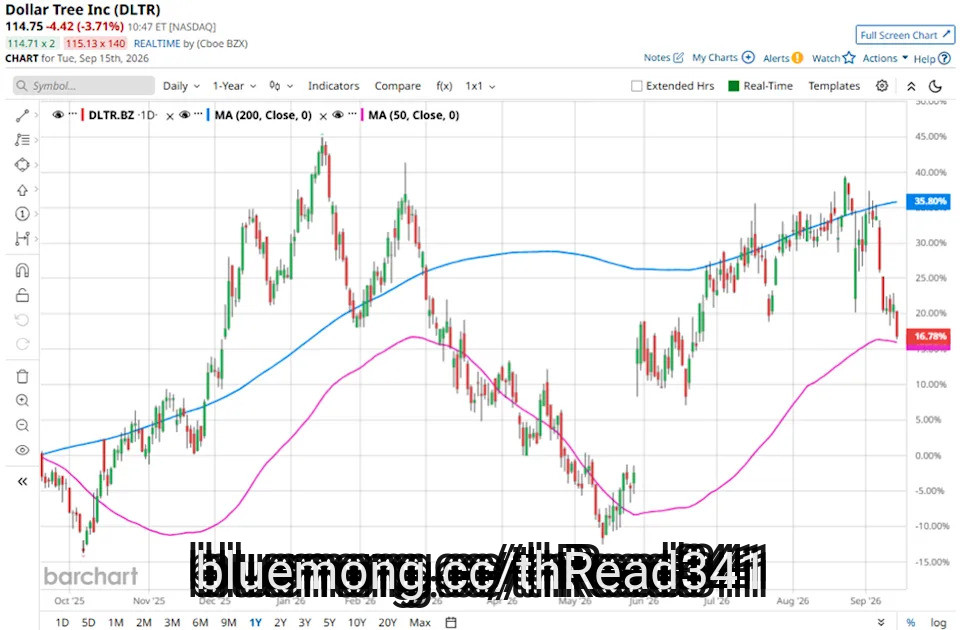
With a market cap of $22.4 billion, Dollar Tree, Inc. (DLTR) operates discount variety stores across the United States and Canada under the Dollar Tree and Dollar Tree Canada brands. The company offers a wide range of consumables, variety merchandise, and seasonal goods, catering to everyday needs as well as holidays and special occasions.
Companies worth more than $10 billion are generally labeled as "large-cap" stocks and Dollar Tree fits this criterion perfectly. Supported by a nationwide logistics network and its e-commerce platform, DollarTree.com, the retailer serves individuals, small businesses, and organizations with affordable products and bulk purchasing options.
Goldman Sachs Expects Fed Chair Kevin Warsh to Raise Rates This Week — But Not Because of Oil Prices.
Morgan Stanley Doubles Down on Apple Stock as New Offerings Become 'More Exciting'
The EV Bubble Has Burst. How to Play Rivian Stock Now.
#Stock #variety


2 months ago
Jim Cramer raised concerns about The TJX Companies, Inc. (NYSE:TJX) during the September 10 episode of Mad Money, as he said:
We had our CNBC Investing Club meeting today… I review each of the Charitable Trust positions on the call. This time, it was pretty clinical until I got to TJX, the off-price retailer. Candidly, I lost it on TJX. I've owned the stock for the Trust for as long as I can remember, and I've never felt so worried about this franchise. They have a bunch of divisions, but the biggest one, Marmaxx, consisting of TJ Maxx and Marshalls, really blew it. Management told us that they had figured out what had gone wrong and they've already fixed it, but because of competitive reasons or whatever, they wouldn't tell us what went wrong and they wouldn't tell us how they fixed it. I found that infuriating…
I came close to saying, forget it, Jim, it's retail. Sometimes retail is seductive. I love my local TJ Maxx, and I think Home Goods is a fun place to shop. The company's almost always about the best in the industry, crushing Burlington and Ross Stores. But this time, shockingly, Ross Stores upside surprised. It crushed TJX, much better than expected... So why bother sticking your neck out for something in this group? Simple. Because some of the greatest stories of all time have come from retail. Costco's been an incredible long-term performer. Walmart's been terrific. And TJX, it's been a wonder, one of the best stocks ever.
Could they really suddenly have lost it? Did they go all LULU? I don't think so. What happens, though, is you have to be conscious that TJX is right now being buffeted by its group, which is trading down because of the decline in discretionary income from the tax that is higher gasoline. We can't tell how much of its underperformance comes from that alone or maybe the mistakes that management made and says they've corrected. In other words, these retail stocks are very hard to own, even as they seem so easy to grasp.
TJX Companies, Inc. (NYSE:TJX) reported second-quarter fiscal 2027 sales of $15.18 billion, up 5% year over year, while consolidated comparable sales increased 4%. Adjusted diluted EPS rose 11% to $1.22, and the company raised its full-year diluted EPS outlook to $5.31-$5.36, or $5.15-$5.20 excluding an expected $0.16 net benefit from tariff refunds. The weakness was concentrated in Marmaxx, which includes TJ Maxx, Marshalls and Sierra. Comparable sales increased just 1%, down from 6% in the first quarter, while HomeGoods, TJX Canada and TJX International each posted comparable-sales growth of 6% or more.
#year

2 months ago
Colgate-Palmolive Company (NYSE:CL) is reportedly exploring the sale of several mass-market personal care brands, including Softsoap, Irish Spring and Speed Stick, in a portfolio reshaping effort that could generate more than $1 billion. The company is working with Goldman Sachs on the potential divestiture. Personal care accounted for roughly 17% of Colgate-Palmolive's 2025 net sales, or about $3.5 billion, while oral care remains the company's largest business.
The move comes as Colgate faces pressure in its North American business. Although the company recently reported a 4.9% increase in net sales, organic sales in North America declined 3%, highlighting competitive pressure in a mature market. The strategy is also consistent with a broader consumer-goods shift toward simplifying portfolios and concentrating capital on higher-growth categories. Unilever, Nestlé, and other major consumer companies have similarly been selling slower-growing or non-core businesses.
The biggest positive is that Colgate-Palmolive Company (NYSE:CL) could become a more focused and potentially higher-quality business. Selling brands that no longer fit its highest-priority growth areas would allow management to concentrate capital, marketing spending, and management attention on oral care, pet nutrition, and other businesses where Colgate has stronger competitive advantages. The company's decision would therefore be less about abandoning personal care altogether and more about improving the quality of the remaining portfolio.
A sale could also unlock meaningful shareholder value. If the divestitures generate more than $1 billion, Colgate would have additional capital that could be used for debt reduction, share repurchases, acquisitions, or investment behind its strongest brands. In a mature consumer-staples company, disciplined capital allocation can have an outsized impact on earnings growth and shareholder returns. There is also evidence that portfolio simplification is becoming increasingly attractive across the consumer-goods industry. The Wall Street Journal has highlighted how companies such as Unilever and Nestlé are shedding businesses that add complexity without providing sufficient growth. The underlying argument is that the benefits of owning a very broad portfolio have diminished as consumer preferences become more fragmented and smaller brands become better at responding to trends.
Most importantly, the divestiture could improve Colgate-Palmolive Company (NYSE:CL)'s strategic focus at a time when North American competition is challenging. Rather than allocating resources to defend slower-growing personal-care brands, management could direct investment toward categories and geographies with better long-term growth prospects. That could ultimately support margins and organic growth even if the immediate revenue base becomes smaller.
#personal #NYSE #Portfolio

2 months ago
With a market cap of $22.4 billion, Dollar Tree, Inc. (DLTR) operates discount variety stores across the United States and Canada under the Dollar Tree and Dollar Tree Canada brands. The company offers a wide range of consumables, variety merchandise, and seasonal goods, catering to everyday needs as well as holidays and special occasions.
Companies worth more than $10 billion are generally labeled as "large-cap" stocks and Dollar Tree fits this criterion perfectly. Supported by a nationwide logistics network and its e-commerce platform, DollarTree.com, the retailer serves individuals, small businesses, and organizations with affordable products and bulk purchasing options.
Goldman Sachs Expects Fed Chair Kevin Warsh to Raise Rates This Week — But Not Because of Oil Prices.
Morgan Stanley Doubles Down on Apple Stock as New Offerings Become 'More Exciting'
The EV Bubble Has Burst. How to Play Rivian Stock Now.
#tree #canada #united #Companies



2 months ago
Jim Cramer raised concerns about The TJX Companies, Inc. (NYSE:TJX) during the September 10 episode of Mad Money, as he said:
We had our CNBC Investing Club meeting today… I review each of the Charitable Trust positions on the call. This time, it was pretty clinical until I got to TJX, the off-price retailer. Candidly, I lost it on TJX. I've owned the stock for the Trust for as long as I can remember, and I've never felt so worried about this franchise. They have a bunch of divisions, but the biggest one, Marmaxx, consisting of TJ Maxx and Marshalls, really blew it. Management told us that they had figured out what had gone wrong and they've already fixed it, but because of competitive reasons or whatever, they wouldn't tell us what went wrong and they wouldn't tell us how they fixed it. I found that infuriating…
I came close to saying, forget it, Jim, it's retail. Sometimes retail is seductive. I love my local TJ Maxx, and I think Home Goods is a fun place to shop. The company's almost always about the best in the industry, crushing Burlington and Ross Stores. But this time, shockingly, Ross Stores upside surprised. It crushed TJX, much better than expected... So why bother sticking your neck out for something in this group? Simple. Because some of the greatest stories of all time have come from retail. Costco's been an incredible long-term performer. Walmart's been terrific. And TJX, it's been a wonder, one of the best stocks ever.
Could they really suddenly have lost it? Did they go all LULU? I don't think so. What happens, though, is you have to be conscious that TJX is right now being buffeted by its group, which is trading down because of the decline in discretionary income from the tax that is higher gasoline. We can't tell how much of its underperformance comes from that alone or maybe the mistakes that management made and says they've corrected. In other words, these retail stocks are very hard to own, even as they seem so easy to grasp.
TJX Companies, Inc. (NYSE:TJX) reported second-quarter fiscal 2027 sales of $15.18 billion, up 5% year over year, while consolidated comparable sales increased 4%. Adjusted diluted EPS rose 11% to $1.22, and the company raised its full-year diluted EPS outlook to $5.31-$5.36, or $5.15-$5.20 excluding an expected $0.16 net benefit from tariff refunds. The weakness was concentrated in Marmaxx, which includes TJ Maxx, Marshalls and Sierra. Comparable sales increased just 1%, down from 6% in the first quarter, while HomeGoods, TJX Canada and TJX International each posted comparable-sales growth of 6% or more.
#sales #time #NYSE

2 months ago
Colgate-Palmolive Company (NYSE:CL) is reportedly exploring the sale of several mass-market personal care brands, including Softsoap, Irish Spring and Speed Stick, in a portfolio reshaping effort that could generate more than $1 billion. The company is working with Goldman Sachs on the potential divestiture. Personal care accounted for roughly 17% of Colgate-Palmolive's 2025 net sales, or about $3.5 billion, while oral care remains the company's largest business.
The move comes as Colgate faces pressure in its North American business. Although the company recently reported a 4.9% increase in net sales, organic sales in North America declined 3%, highlighting competitive pressure in a mature market. The strategy is also consistent with a broader consumer-goods shift toward simplifying portfolios and concentrating capital on higher-growth categories. Unilever, Nestlé, and other major consumer companies have similarly been selling slower-growing or non-core businesses.
The biggest positive is that Colgate-Palmolive Company (NYSE:CL) could become a more focused and potentially higher-quality business. Selling brands that no longer fit its highest-priority growth areas would allow management to concentrate capital, marketing spending, and management attention on oral care, pet nutrition, and other businesses where Colgate has stronger competitive advantages. The company's decision would therefore be less about abandoning personal care altogether and more about improving the quality of the remaining portfolio.
A sale could also unlock meaningful shareholder value. If the divestitures generate more than $1 billion, Colgate would have additional capital that could be used for debt reduction, share repurchases, acquisitions, or investment behind its strongest brands. In a mature consumer-staples company, disciplined capital allocation can have an outsized impact on earnings growth and shareholder returns. There is also evidence that portfolio simplification is becoming increasingly attractive across the consumer-goods industry. The Wall Street Journal has highlighted how companies such as Unilever and Nestlé are shedding businesses that add complexity without providing sufficient growth. The underlying argument is that the benefits of owning a very broad portfolio have diminished as consumer preferences become more fragmented and smaller brands become better at responding to trends.
Most importantly, the divestiture could improve Colgate-Palmolive Company (NYSE:CL)'s strategic focus at a time when North American competition is challenging. Rather than allocating resources to defend slower-growing personal-care brands, management could direct investment toward categories and geographies with better long-term growth prospects. That could ultimately support margins and organic growth even if the immediate revenue base becomes smaller.
#colgate #company #care


2 months ago
By Lucia Mutikani
WASHINGTON, Sept 16 (Reuters) - U.S. retail sales rebounded sharply in August as households boosted purchases of a range of goods while also spending more at restaurants and bars, reinforcing the economy's resilience even as consumers grow more anxious about high inflation.
The stronger-than-expected report from the Commerce Department on Wednesday prompted economists to upgrade their gross domestic product growth estimates for the third quarter. Together with other data on Wednesday showing a surge in import prices last month, strong demand sealed the argument for a widely anticipated interest rate increase from the Federal Reserve later in the day, economists said.
The reports followed data this month showing producer and consumer prices accelerated in August, while the labor market regained its poise after wobbling through much of summer.
"This reaffirms that the economy is more than capable of handling higher interest rates, providing the Fed plenty of scope to hike to get inflation under control," said Bradley Saunders, North America economist at Capital Economics.
#economists #data #month


2 months ago
Critics are slamming Norway over new legislation that they say singles out Jews. The proposed law could send individuals to prison for up to three years for knowingly conducting certain forms of business with Israeli communities in the West Bank.
The proposal, introduced by Norway's Ministry of Foreign Affairs, would prohibit the importation of goods originating in Israeli communities in the West Bank, including East Jerusalem and the exportation of goods to those communities. It would also restrict certain real estate transactions, construction and engineering services and investments in businesses headquartered and operating there.
Intentional violations could result in fines, imprisonment for up to three years or both, while negligent violations could carry fines, imprisonment for up to six months or both, according to Section 7 of the Norwegian Ministry of Foreign Affairs' official consultation document.
Israel's E1 Plan Explained: The Jerusalem-area Corridor Sparking International Backlash
(L-R) Palestinian Prime Minister Mohammad Mustafa, EU High Representative for Foreign Affairs and Security Policy Kaja Kallas, and Norwegian Foreign Minister Espen Barth Eide addressed the media following the 9th Global Alliance for the Two-State Solution Meeting and the Ad Hoc Liaison Committee (AHLC) Meeting, focusing on international aid for Palestinians and the revitalization of the peace process.
#west



2 months ago
On September 14, Radiant Logistics (NYSEAMERICAN:RLGT) held its fourth fiscal quarter earnings call, and the headline numbers landed harder than a typical logistics update. Net income jumped 53.1% to $7.5 million for the quarter ended June 30, while revenue climbed 18.5% to $261.4 million. Look past that one quarter, though, and the picture gets more complicated, because full-year adjusted profitability actually fell. That gap between a blowout quarter and a softer year is what makes this name worth a closer look.
The fourth fiscal quarter was strong from top to bottom. Adjusted EBITDA rose 31.6% to $10.4 million, margin expanded 240 basis points to 15.5%, and adjusted net income climbed 34.5% to $7.4 million, all against organic revenue growth of 8%. Management credited the acceleration to US forwarding operations and international airfreight, including work supporting disaster relief after typhoon activity hit the Western Pacific earlier this year, plus airfreight demand tied to capital flows into global data center buildouts.
The balance sheet backs up the story. Radiant enters fiscal 2027 with zero net debt, $25.6 million in cash as of June 30, and a $200 million senior credit facility that was extended and restated in August, pushing maturity out to August 7, 2031, while its acquisition-focused accordion grew to $100 million from $75 million. On the domestic side, capacity has been exiting the truckload and intermodal markets, and spot rates and tender rejections moved higher late in the quarter. Radiant also launched a new independent agent program at Radiant Road & Rail during the quarter, extending its freight forwarding agent network into truck brokerage and intermodal, while Navegate is gaining traction, with one enterprise customer now managing more than 1,400 vendors on the platform.
The full-year numbers tell a different story than the quarter does. Revenue rose just 3.5% to $934.4 million from $902.7 million, a fraction of the fourth quarter's 18.5% pace, and full-year net income grew a modest 8.7% to $18.8 million. Full-year adjusted EBITDA actually fell 5.4% to $36.7 million from $38.8 million, and that figure included a $1.3 million First Brands adjustment. Strip that out and normalized adjusted EBITDA comes in at $35.4 million, an even steeper decline than the headline number suggests.
The operating backdrop stays complicated too. Ocean shipping routes remain disrupted by the closure of the Strait of Hormuz and continued Houthi activity affecting Suez Canal transits, keeping capacity tight on key trade lanes. US tariff policy is generating elevated IEEPA-related filing activity, and Canada put new retaliatory tariff measures into effect in early September, adding fresh complexity for shippers moving goods across that border. Management itself acknowledged that the domestic truck brokerage improvement seen late in the fourth quarter is not yet fully reflected in the reported results.
#million #quarter #revenue #fiscal


2 months ago
On September 14, American Battery Technology Company (NASDAQ:ABAT) held its fiscal year 2026 earnings call, and for once the numbers matched the ambition. Revenue at its flagship recycling facility jumped more than 400% to $21.7 million, and the company posted its first-ever adjusted gross profit. But on the same call, CEO Ryan Melsert disclosed a federal directive that could choke off exports of one of the plant's key products, black mass, a reminder that ABAT's fortunes are still tied tightly to Washington.
Revenue jumped over 400% year over year to $21.7 million, fueled by higher throughput at the company's first recycling facility and increased sales of byproducts. Cost of goods sold rose only 67% over the same stretch, evidence that fixed costs are spreading across a much bigger volume of material. Even more telling, operating cash spend actually fell 16% even as throughput at the plant more than quadrupled. That combination pushed American Battery Technology to an adjusted gross profit of $1.7 million, a sharp turnaround from the $6.2 million loss it posted a year earlier.
The balance sheet tells a similar story. Cash climbed to $49.5 million as of June 30, 2026, and total ***** ets reached $133 million, up sharply from the prior year. The company also erased all of its long-term debt during the year, leaving it with a clean balance sheet heading into a period of heavy capital spending.
Growth plans are already in motion. A second recycling facility planned for the Southeast U.S., designed to process 100,000 tons of batteries a year, is backed by a $150 million grant from the Department of Energy, and a separate $10 million DOE grant is funding three next-generation recycling technologies. On the mining side, the Bureau of Land Management certified the company's plan of operations for its Tonopah lithium project in Nevada, home to an identified 21.3 million tons of lithium hydroxide, including 2.7 million tons of proven and probable reserves. The project also won a FAST-41 priority designation, intended to speed up federal permitting.
The clearest risk surfaced on the call itself. The US Department of Commerce issued a directive that effectively bans the export of black mass, the concentrated metal byproduct of battery recycling, unless a company obtains a specific exception. American Battery Technology has submitted a request for that exception, but as of the call, Commerce had not issued a formal response, and the company is storing black mass at its facility in the meantime.
#company #recycling #black


2 months ago
WASHINGTON, Sept 16 (Reuters) - U.S. retail sales rebounded more than expected in August as households stepped up purchases of motor vehicles and stocked up for the new school year, reinforcing the economy's resilience even as consumers grow more anxious about high inflation.
Retail sales jumped 1.2% last month after a revised 0.5% drop in July, which was the first decline in nine months, the Commerce Department's Census Bureau said on Wednesday. Economists polled by Reuters had forecast retail sales, which are mostly goods and are not adjusted for inflation, rebounding 0.8% after a previously reported 0.6% drop in July. Estimates ranged from as low as a 0.2% gain to as high as a 1.1% increase.
Last month's increase also partially reflected higher gasoline prices, which lifted receipts at service stations.
Households have continued to spend despite stubbornly high inflation because of the oil price shock and supply chain strains from the U.S.-led war with Iran. Consumers have, however, become more selective and are seeking lower-priced goods. Consumer sentiment deteriorated this month.
Spending is being supported by steady wage growth and recent stock market gains. Households are also saving less and tapping into their nest eggs. The strength in retail sales, together with elevated price pressures and a labor market that is regaining its poise after wobbling through much of summer, further strengthens financial market expectations that the Federal Reserve will raise interest rates later on Wednesday.
#sales #wednesday

2 months ago
Jean Silva had to push through some early adversity earlier tonight (Sat., Sept. 12, 2026) at Noche UFC 4 LIVE on Paramount+ from inside Desert Diamond Arena in Glendale, Arizona, but the featherweight powerhouse eventually scored a main event submission finish over Jose Delgado (see it HERE).
In addition to the featherweight headliner, Noche UFC 4 produced a long list of memorable performances, highlight-reel finishes, and exciting wars. Take a look at the key moments below and let us know who stood out the most!
Sean King III delivered the goods in his Octagon debut with a monstrous knockout slam just 36 seconds into the fight (see it HERE)
Undefeated lightweight Tommy Gantt captured the biggest win of his career so far with a reverse triangle choke against veteran Drakkar Klose
Alex Pereira's training partner, former kickboxing standout Yousri Belgaroui, pushed his UFC record to 3-0 with a nasty TKO stoppage (highlights HERE)
#noche #featherweight


2 months ago
Oxford Industries, Inc. (NYSE:OXM) reported fiscal second-quarter net sales of $394.4 million, down 2.2%. Full-price direct-to-consumer sales declined 1%, while wholesale sales fell 14%, primarily reflecting lower off-price sales.
GAAP gross margin increased to 73.8% from 61.4% after Oxford Industries, Inc. (NYSE:OXM) recognized approximately $42 million of tariff refund claims as a reduction of cost of goods sold. Company-defined non-GAAP adjusted gross margin, excluding tariff refunds and LIFO effects, still improved to 63.1% from 61.7%. Updated **** ortment, sourcing, and pricing strategies increased initial markups, while lower off-price wholesale sales improved the sales mix.
Oxford Industries, Inc. (NYSE:OXM) lowered full-year sales guidance to $1.43 billion to $1.47 billion from $1.475 billion to $1.505 billion. Company-defined non-GAAP adjusted EPS guidance fell to $1.60 to $2.00 from $2.30 to $2.70, reducing the midpoint by 28%. Adjusted EPS excludes LIFO effects, tariff refunds and related interest, Johnny Was amortization, distribution-center relocation costs, merchandising initiatives, store-closure impairments and related taxes.
Underlying margin expansion suggests Oxford Industries, Inc. (NYSE:OXM) improved product economics beyond the one-time refund. Company-defined non-GAAP adjusted operating income, which excludes LIFO effects, tariff refunds and related interest, Johnny Was amortization, and specified distribution-center, merchandising, and store-closure costs, increased to $29.3 million from $28.3 million. Adjusted operating margin rose to 7.4% from 7.0%.
Tommy Bahama remained the strongest major brand for Oxford Industries, Inc. (NYSE:OXM), with sales increasing 0.8% and adjusted gross margin rising to 63.6% from 60.7%. FIFO inventory fell $9 million, or 4%, from one year earlier, reducing markdown exposure.
#gaap