

1 day ago
WASHINGTON, Sept 16 (Reuters) - U.S. homebuilder sentiment dropped to a one-year low in September as rising mortgage rates dampen demand for housing, a survey showed on Wednesday.
The National **** ociation of Home Builders/Wells Fargo Housing Market index fell three points to 32 this month, the lowest reading since September 2025, from 35 in August. The decline also reflected labor shortages amid an immigration crackdown as well as rising costs because of tariffs on imports.
Economists polled by Reuters had forecast the index easing to 34. Sentiment is likely to remain subdued in the months ahead as mortgage rates have been rising in tandem with the 10-year U.S. Treasury yield.
The 30-year fixed mortgage rate averaged 6.76% last week, the highest level in more than a year, up from 6.71% in the prior week, data from mortgage finance firm Freddie Mac showed.
The 10-year government bond yield on Tuesday hit 5.041%, the highest since July 2007, driven in part by expectations that the Federal Reserve would on Wednesday start raising interest rates to quell inflation that is being driven by the U.S.-Israel war with Iran. Longer-dated yields have also risen amid concerns over the nation's ballooning debt.
#housing
The National **** ociation of Home Builders/Wells Fargo Housing Market index fell three points to 32 this month, the lowest reading since September 2025, from 35 in August. The decline also reflected labor shortages amid an immigration crackdown as well as rising costs because of tariffs on imports.
Economists polled by Reuters had forecast the index easing to 34. Sentiment is likely to remain subdued in the months ahead as mortgage rates have been rising in tandem with the 10-year U.S. Treasury yield.
The 30-year fixed mortgage rate averaged 6.76% last week, the highest level in more than a year, up from 6.71% in the prior week, data from mortgage finance firm Freddie Mac showed.
The 10-year government bond yield on Tuesday hit 5.041%, the highest since July 2007, driven in part by expectations that the Federal Reserve would on Wednesday start raising interest rates to quell inflation that is being driven by the U.S.-Israel war with Iran. Longer-dated yields have also risen amid concerns over the nation's ballooning debt.
#housing


5 days ago
On August 13, a federal appeals court ruled in favor of Gilead Sciences, Inc. (NASDAQ:GILD), upholding a preliminary injunction that bars the defendants from importing or facilitating the sale of foreign-market Gilead-branded medications in the US. The US Court of Appeals for the Fourth Circuit found that the differences between Gilead's HIV medication for the US market and the foreign versions being imported were "material, not theoretical." The controversy began in December 2024 when Gilead Sciences, Inc. (NASDAQ:GILD) filed suit against a number of companies, including third-party administrator Meritain Health, pharmacy benefit manager ProAct, and pharmacies Rx Valet and Advanced Pharmacy, alleging illegal imports of its best-selling HIV drug Biktarvy.
The dispute dates back to December 2024, when Gilead Sciences, Inc. (NASDAQ:GILD) sued a group of companies, including third-party administrator Meritain Health, pharmacy benefit manager ProAct, and pharmacies Rx Valet and Advanced Pharmacy, alleging illegal imports of its top-selling HIV drug Biktarvy. The lawsuit arose from a specific instance in which a patient in Maryland received the medicine in the mail from Turkey, with label instructions written in Turkish.
A federal district court in Baltimore ruled in Gilead's favor and ordered a preliminary injunction, determining that the company was likely to succeed on its Lanham Act trademark violation and unfair competition arguments. As the case continued, the injunction was increased to include new sellers like CanaRx, ElectRx, and ScriptSourcing. The defendants filed an appeal with the Fourth Circuit, and the district judge declined to suspend the injunction while the appeal was pending, thus the import restriction has been in effect the entire time. The recent ruling maintains the order rather than overturning it.
In court documents, Rx Valet stated that the Turkish-sourced Biktarvy was chemically identical to the US version, which was offered at a significantly higher price. Meritain, for its part, said that it has never supported getting non-FDA-approved pharmaceuticals from outside the US and denies the claims, despite being named as a defendant.
The Fourth Circuit rejected the defendants' main argument that the imported and domestic versions of Biktarvy are interchangeable. The court's judgment that the two versions differ materially, not just in packaging or labeling, but also in the quality-control protocols that each version goes through before reaching a patient, challenges the basic argument that these alternative funding programs have used to support their business model.
#gild
The dispute dates back to December 2024, when Gilead Sciences, Inc. (NASDAQ:GILD) sued a group of companies, including third-party administrator Meritain Health, pharmacy benefit manager ProAct, and pharmacies Rx Valet and Advanced Pharmacy, alleging illegal imports of its top-selling HIV drug Biktarvy. The lawsuit arose from a specific instance in which a patient in Maryland received the medicine in the mail from Turkey, with label instructions written in Turkish.
A federal district court in Baltimore ruled in Gilead's favor and ordered a preliminary injunction, determining that the company was likely to succeed on its Lanham Act trademark violation and unfair competition arguments. As the case continued, the injunction was increased to include new sellers like CanaRx, ElectRx, and ScriptSourcing. The defendants filed an appeal with the Fourth Circuit, and the district judge declined to suspend the injunction while the appeal was pending, thus the import restriction has been in effect the entire time. The recent ruling maintains the order rather than overturning it.
In court documents, Rx Valet stated that the Turkish-sourced Biktarvy was chemically identical to the US version, which was offered at a significantly higher price. Meritain, for its part, said that it has never supported getting non-FDA-approved pharmaceuticals from outside the US and denies the claims, despite being named as a defendant.
The Fourth Circuit rejected the defendants' main argument that the imported and domestic versions of Biktarvy are interchangeable. The court's judgment that the two versions differ materially, not just in packaging or labeling, but also in the quality-control protocols that each version goes through before reaching a patient, challenges the basic argument that these alternative funding programs have used to support their business model.
#gild


5 days ago
During the September 8 episode of Mad Money, Jim Cramer turned his attention to Enbridge Inc. (NYSE:ENB), examining escalating geopolitical tensions. He commented:
As long as the war with Iran drags on, it's easy to recommend the refiners like a Valero or a Marathon. I don't see it ending any time soon, not with the US and Iran trading volleys this evening at islands and ships in the Strait. But how about a pipeline that moves about 30% of all crude produced in North America? Now, I'm talking about Enbridge which has a 5.5% yield. Also has a natural gas, you know, it transports 20% of the natural gas that's consumed in America. Okay, it's Canadian, but it's not caught up in the tariff fight because slapping tariffs on Canadian energy would be economic suicide for our country.
Cramer's focus on Enbridge Inc. (NYSE:ENB) highlights the structural dominance of its midstream network. The company operates as a significant transport network for North American energy, moving approximately 30% of all crude produced on the continent. Moreover, its vast utility and transmission network handles 20% of the natural gas consumed in the United States. The company's toll-road business model generates highly predictable cash flows, supporting an attractive dividend yield of roughly 5.6%. For income-focused investors, the combination of essential operational volume and reliable capital return creates a defensive cushion during volatile market cycles.
The company's defensive moat goes into cross-border trade and regional security. As Cramer pointed out, imposing punitive tariffs on Canadian energy imports would amount to severe economic self-harm for the United States, given the deep interdependence of North American energy grids.
Even with steady toll revenues, Enbridge Inc. (NYSE:ENB) carries a heavy debt load that comes with the territory of running massive pipeline networks, with long-term debt sitting at approximately C$104 billion. Because building and maintaining energy infrastructure requires heavy borrowing, higher interest rates hit financing costs, which can occasionally weigh on income-seeking investors.
#enbridge #natural #Iran #America
As long as the war with Iran drags on, it's easy to recommend the refiners like a Valero or a Marathon. I don't see it ending any time soon, not with the US and Iran trading volleys this evening at islands and ships in the Strait. But how about a pipeline that moves about 30% of all crude produced in North America? Now, I'm talking about Enbridge which has a 5.5% yield. Also has a natural gas, you know, it transports 20% of the natural gas that's consumed in America. Okay, it's Canadian, but it's not caught up in the tariff fight because slapping tariffs on Canadian energy would be economic suicide for our country.
Cramer's focus on Enbridge Inc. (NYSE:ENB) highlights the structural dominance of its midstream network. The company operates as a significant transport network for North American energy, moving approximately 30% of all crude produced on the continent. Moreover, its vast utility and transmission network handles 20% of the natural gas consumed in the United States. The company's toll-road business model generates highly predictable cash flows, supporting an attractive dividend yield of roughly 5.6%. For income-focused investors, the combination of essential operational volume and reliable capital return creates a defensive cushion during volatile market cycles.
The company's defensive moat goes into cross-border trade and regional security. As Cramer pointed out, imposing punitive tariffs on Canadian energy imports would amount to severe economic self-harm for the United States, given the deep interdependence of North American energy grids.
Even with steady toll revenues, Enbridge Inc. (NYSE:ENB) carries a heavy debt load that comes with the territory of running massive pipeline networks, with long-term debt sitting at approximately C$104 billion. Because building and maintaining energy infrastructure requires heavy borrowing, higher interest rates hit financing costs, which can occasionally weigh on income-seeking investors.
#enbridge #natural #Iran #America


6 days ago
India needs to expand biofuel production and consumption to boost its energy security as crude oil prices soar amid the Middle East crisis, according to Tarun Kapoor, an adviser in India's Prime Minister's Office.
"The future of biofuels is about maximizing value from every available resource," Kapoor said at the India Sugar and Bio-Energy Conference.
"From ethanol and compressed biogas to new applications in transport, industry and energy, we must expand the market and fully utilize the capacity we have created," the PM office's adviser said.
India, the world's third-largest crude oil importer, which depended on the Middle East for nearly half of its crude oil imports before the war, has been paying a high price for alternative crude supplies since the Iran war began.
India launched in June a new fuel blend with an 85% ethanol component as part of the fuel flex mobility program to reduce dependence on imported oil.
#kapoor
"The future of biofuels is about maximizing value from every available resource," Kapoor said at the India Sugar and Bio-Energy Conference.
"From ethanol and compressed biogas to new applications in transport, industry and energy, we must expand the market and fully utilize the capacity we have created," the PM office's adviser said.
India, the world's third-largest crude oil importer, which depended on the Middle East for nearly half of its crude oil imports before the war, has been paying a high price for alternative crude supplies since the Iran war began.
India launched in June a new fuel blend with an 85% ethanol component as part of the fuel flex mobility program to reduce dependence on imported oil.
#kapoor

7 days ago
WASHINGTON (AP) — Donald Trump's pitch to send Americans $5,000 checks should Republicans prevail in the November midterms is drawing scorn from some members of Congress — the very people who have constitutional authority over federal spending.
Economists and other political observers are voicing concerns about the potential effects on inflation and the national balance sheet. Taken together, it's a swift reaction that makes clear that Trump's dubious election-year gambit is likely little more than another grand promise from a politician with a long history of them.
"Donald Trump is a known liar. This is the biggest liar to ever serve in government. Period," said Rep. Robert Garcia, a California Democrat who was in Dallas on Thursday as part of his party's effort to counter Republicans' midterm convention. "The dividend is not happening."
Trump previously pledged to use savings from the Department of Government Efficiency and revenue from tariffs on foreign imports to distribute payments of $2,000 or more, but none of that came to pass.
His latest idea comes as the U.S. economy is reckoning with persistent inflation and rising interest rates, two forces that have politically undermined Republicans after previously helping them reclaim power from Democrats. Trump claimed the payments would be possible because of the economy's strength, yet consumer sentiment is weak as gasoline prices are increasing because of the war with Iran and wages are struggling to keep pace with inflation.
#inflation
Economists and other political observers are voicing concerns about the potential effects on inflation and the national balance sheet. Taken together, it's a swift reaction that makes clear that Trump's dubious election-year gambit is likely little more than another grand promise from a politician with a long history of them.
"Donald Trump is a known liar. This is the biggest liar to ever serve in government. Period," said Rep. Robert Garcia, a California Democrat who was in Dallas on Thursday as part of his party's effort to counter Republicans' midterm convention. "The dividend is not happening."
Trump previously pledged to use savings from the Department of Government Efficiency and revenue from tariffs on foreign imports to distribute payments of $2,000 or more, but none of that came to pass.
His latest idea comes as the U.S. economy is reckoning with persistent inflation and rising interest rates, two forces that have politically undermined Republicans after previously helping them reclaim power from Democrats. Trump claimed the payments would be possible because of the economy's strength, yet consumer sentiment is weak as gasoline prices are increasing because of the war with Iran and wages are struggling to keep pace with inflation.
#inflation

0.00$ raised of 0.00$ goal
0 donations
0.00$
to go

7 days ago
Chinese independent refiners may be about to start reducing their processing rates as international oil prices rise and supply from major exporters such as Venezuela and Iran dries up as a result of U.S. foreign policy decisions.
"Teapots are unlikely to be able to afford a full shift to mainstream grades," an Energy Aspects ***** yst said this week, as quoted by Bloomberg. The so-called teapots are more sensitive to adverse oil market changes due to their refining margins being slimmer than those of state-owned majors. These margins have already fallen to breakeven, from around $10 per barrel in early July, Jianan Sun also said.
China imported 37.93 million tons, or 8.93 million barrels per day of crude oil in August, up by 6.2% compared to July, and further recovering from the decade-low seen in June, official Chinese customs data showed on Tuesday. The August import level was still 23.4% lower compared to the same month last year, but it's a marked improvement from the June lows of just 7.1 million bpd.
China slashed its total crude oil imports to a decade low in June, culminating three months of very low import levels amid high prices and constrained supply from the Middle East. This affected refinery output, which in turn contributed to the global fuel squeeze that is now set to deepen and extend in time as fighting in the Middle East continues and intensifies, pushing oil prices higher and sapping some refiners' appetite for the commodity.
With Venezuelan and Iranian crude all but gone, Chinese refiners will probably lean more heavily on Russian crude in the coming weeks. However, Russian crude prices are also on the rise on the futures market, in tune with all the other blends that trade internationally, which will likely put a lid on demand.
#june #july #China #middle
"Teapots are unlikely to be able to afford a full shift to mainstream grades," an Energy Aspects ***** yst said this week, as quoted by Bloomberg. The so-called teapots are more sensitive to adverse oil market changes due to their refining margins being slimmer than those of state-owned majors. These margins have already fallen to breakeven, from around $10 per barrel in early July, Jianan Sun also said.
China imported 37.93 million tons, or 8.93 million barrels per day of crude oil in August, up by 6.2% compared to July, and further recovering from the decade-low seen in June, official Chinese customs data showed on Tuesday. The August import level was still 23.4% lower compared to the same month last year, but it's a marked improvement from the June lows of just 7.1 million bpd.
China slashed its total crude oil imports to a decade low in June, culminating three months of very low import levels amid high prices and constrained supply from the Middle East. This affected refinery output, which in turn contributed to the global fuel squeeze that is now set to deepen and extend in time as fighting in the Middle East continues and intensifies, pushing oil prices higher and sapping some refiners' appetite for the commodity.
With Venezuelan and Iranian crude all but gone, Chinese refiners will probably lean more heavily on Russian crude in the coming weeks. However, Russian crude prices are also on the rise on the futures market, in tune with all the other blends that trade internationally, which will likely put a lid on demand.
#june #july #China #middle

0.00$ raised of 0.00$ goal
0 donations
0.00$
to go

9 days ago
Copper prices (HG=F) hit new highs on Tuesday as investors anticipated near-term supply tightenings and escalating tariffs.
Futures on the Comex exchange in New York traded near $6.85 a pound, while copper on the London Metal Exchange touched $14,617 a metric ton to hit a second intraday record in a row.
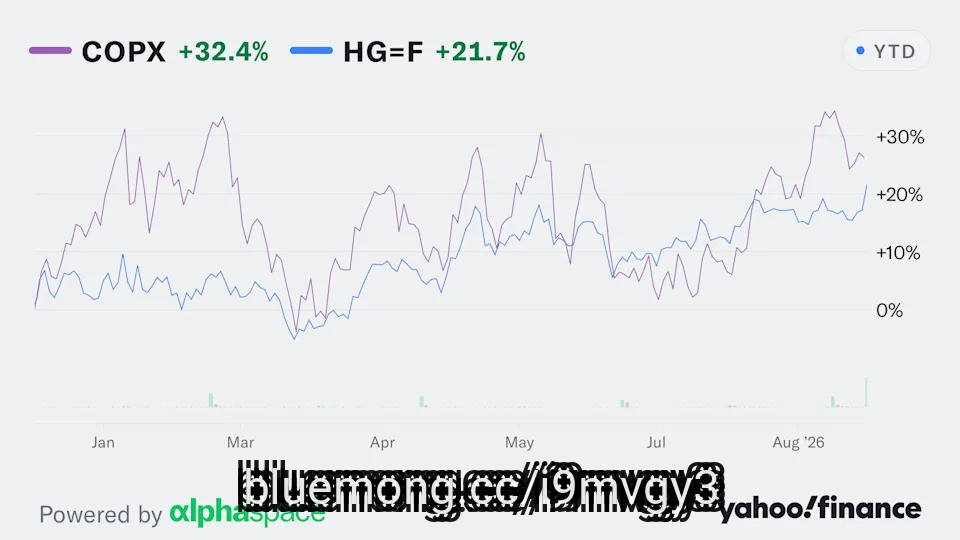
Copper prices are up 21% year to date. Copper Miners (COPX) have also rallied 32% during the same period, according to Yahoo Finance's AlphaSpace data.
US buyers have been snapping up more of the commodity in expectation of higher tariffs. The energy transition and AI build-out are also sucking up supply.
On Tuesday, Canada increased levies on certain US imports to 50%, including certain US-made copper products, in response to American tariffs on Canadian products.
#products #futures
Futures on the Comex exchange in New York traded near $6.85 a pound, while copper on the London Metal Exchange touched $14,617 a metric ton to hit a second intraday record in a row.
Copper prices are up 21% year to date. Copper Miners (COPX) have also rallied 32% during the same period, according to Yahoo Finance's AlphaSpace data.
US buyers have been snapping up more of the commodity in expectation of higher tariffs. The energy transition and AI build-out are also sucking up supply.
On Tuesday, Canada increased levies on certain US imports to 50%, including certain US-made copper products, in response to American tariffs on Canadian products.
#products #futures

10 days ago
China's crude oil imports rose for the second consecutive month in August as refiners turned to additional non-Middle Eastern supply and boosted overseas fuel shipments amid eased export restrictions.
China imported 37.93 million tons, or 8.93 million barrels per day (bpd) of crude oil in August, up by 6.2% compared to July, and further recovering from the decade-low seen in June, official Chinese customs data showed on Tuesday.
The August import level was still 23.4% lower compared to the same month last year, but it's a marked improvement from the June lows of just 7.1 million bpd.
China slashed its total crude oil imports to a decade low in June, culminating three months of very low import levels amid high prices and constrained supply from the Middle East.
Beijing, having amassed about 1.4 billion barrels of crude before the war, could afford to dramatically reduce its crude buying, slashing import volumes in June by an estimated 4.4 million bpd compared to the 2025 average.
#compared
China imported 37.93 million tons, or 8.93 million barrels per day (bpd) of crude oil in August, up by 6.2% compared to July, and further recovering from the decade-low seen in June, official Chinese customs data showed on Tuesday.
The August import level was still 23.4% lower compared to the same month last year, but it's a marked improvement from the June lows of just 7.1 million bpd.
China slashed its total crude oil imports to a decade low in June, culminating three months of very low import levels amid high prices and constrained supply from the Middle East.
Beijing, having amassed about 1.4 billion barrels of crude before the war, could afford to dramatically reduce its crude buying, slashing import volumes in June by an estimated 4.4 million bpd compared to the 2025 average.
#compared


10 days ago
CNBC reported that The Goodyear Tire & Rubber Company (NASDAQ:GT) has extended the timeline for its "Goodyear Forward" turnaround plan after key financial targets went unmet.
CEO Mark Stewart told CNBC the company is trying to reach a 10% operating margin and generate meaningful cash flow, but debt remained above $7 billion at the end of the second quarter. Goodyear posted a $453 million net loss through the first half of the year against operating income of just $131 million, a 1.6% margin. The business has been hit by tariffs, elevated raw material costs, and expanding competition from cheaper Chinese tire imports. Capital expenditures, which ran roughly $2 billion combined in 2024 and 2025, are expected to fall to $725 million this year as the company prioritizes debt paydown and refinancing.
Copyright: baranq / 123RF Stock Photo
The core business is still generating a positive operating margin even amid a large net loss. Operating income of $131 million over six months shows The Goodyear Tire & Rubber Company (NASDAQ:GT)'s core tire operations are not losing money at the operating level, suggesting the much larger net loss stems mainly from the cost of servicing its debt rather than the core business itself failing.
Management is showing real capital discipline and not just promises since cutting planned capital expenditures to $725 million this year from roughly $1 billion annually in 2024 and 2025 combined is a measurable step toward freeing up cash for debt reduction. Moreover, tangible customer-facing investments, like the new retail concept store Stewart showcased in Detroit.
#goodyear #tire
CEO Mark Stewart told CNBC the company is trying to reach a 10% operating margin and generate meaningful cash flow, but debt remained above $7 billion at the end of the second quarter. Goodyear posted a $453 million net loss through the first half of the year against operating income of just $131 million, a 1.6% margin. The business has been hit by tariffs, elevated raw material costs, and expanding competition from cheaper Chinese tire imports. Capital expenditures, which ran roughly $2 billion combined in 2024 and 2025, are expected to fall to $725 million this year as the company prioritizes debt paydown and refinancing.
Copyright: baranq / 123RF Stock Photo
The core business is still generating a positive operating margin even amid a large net loss. Operating income of $131 million over six months shows The Goodyear Tire & Rubber Company (NASDAQ:GT)'s core tire operations are not losing money at the operating level, suggesting the much larger net loss stems mainly from the cost of servicing its debt rather than the core business itself failing.
Management is showing real capital discipline and not just promises since cutting planned capital expenditures to $725 million this year from roughly $1 billion annually in 2024 and 2025 combined is a measurable step toward freeing up cash for debt reduction. Moreover, tangible customer-facing investments, like the new retail concept store Stewart showcased in Detroit.
#goodyear #tire


10 days ago
SEOUL, Sept 7 (Reuters) - South Korea and the United States have agreed on the size of Seoul's planned investment in a gas project in Texas at around $22.3 billion, Korean media outlet Edaily reported on Monday, citing unidentified officials and politicians.
The project, which would be Seoul's first U.S. investment under last year's trade agreement, aims to build a 6.3-gigawatt gas plant in Encinal, Texas, to meet rising power demand for AI data centres, according to the media reports.
The investment would be part of the trade deal signed by the two allies last year, under which Seoul pledged $350 billion worth of U.S. investments in exchange for favourable U.S. tariffs on imports of South Korean goods.
The reports did not say whether Seoul would shoulder the whole cost of the Texas project.
Seoul is also considering other potential projects in the United States, including building a large-scale nuclear power plant or a liquefied natural gas project in Alaska, the reports said.
#states
The project, which would be Seoul's first U.S. investment under last year's trade agreement, aims to build a 6.3-gigawatt gas plant in Encinal, Texas, to meet rising power demand for AI data centres, according to the media reports.
The investment would be part of the trade deal signed by the two allies last year, under which Seoul pledged $350 billion worth of U.S. investments in exchange for favourable U.S. tariffs on imports of South Korean goods.
The reports did not say whether Seoul would shoulder the whole cost of the Texas project.
Seoul is also considering other potential projects in the United States, including building a large-scale nuclear power plant or a liquefied natural gas project in Alaska, the reports said.
#states


12 days ago
VLADIVOSTOK, Sept 4 (Reuters) - Igor Sechin, chief of Russia's top oil producer Rosneft, said on Thursday that China, not OPEC, has stabilized global oil markets by reducing crude imports by 5.5 million barrels per day this year.
Sechin, the most influential Russian energy manager and a long-standing ally of President Vladimir Putin, was speaking at a Russian - Chinese business forum in the far eastern city of Vladivostok.
"This year, China has effectively taken the lead from OPEC and, without being a member of any cartel, has managed to stabilise the global oil market by cutting its oil imports by 5.5 million barrels per day," Sechin said.
Sechin, known for his skepticism towards OPEC, said China will get more influence on the energy markets as the number of OPEC members is declining.
"I believe that further growth in China's reserves will strengthen China's role in the energy market, against a backdrop of OPEC's waning influence and a reduction in the number of its members," Sechin said.
#sechin #energy #vladivostok
Sechin, the most influential Russian energy manager and a long-standing ally of President Vladimir Putin, was speaking at a Russian - Chinese business forum in the far eastern city of Vladivostok.
"This year, China has effectively taken the lead from OPEC and, without being a member of any cartel, has managed to stabilise the global oil market by cutting its oil imports by 5.5 million barrels per day," Sechin said.
Sechin, known for his skepticism towards OPEC, said China will get more influence on the energy markets as the number of OPEC members is declining.
"I believe that further growth in China's reserves will strengthen China's role in the energy market, against a backdrop of OPEC's waning influence and a reduction in the number of its members," Sechin said.
#sechin #energy #vladivostok


13 days ago
Big Tech is betting trillions of dollars on artificial intelligence, with a lot of that to be spent on building the data centers that would power large language models. Stock markets are reflecting this in Big Tech stocks, but that's not the only industry riding the artificial intelligence wave. Because that wave runs on electricity and the equipment that brings it from generator to consumer.
There have been reports about a chip shortage caused by the AI rush, and higher compute prices overall resulting from AI-related demand growth in electronics. But a more serious shortage is unfolding in power equipment, as the companies pledging hundreds of billions in AI investments want everything ready yesterday if possible. Alas, it is not.
Transformers, a vital component of the grid, have been in increasingly short supply for at least two years. The shortage has been driven by the fast growth in electricity demand, mostly coming from the tech sector, and the inability to respond to that growth with equally fast grid expansion.
Related: Europe's Low Gas Stocks Set Stage for Winter LNG Battle
Transformers are used to convert the high-voltage electricity that runs from power plants to substations along transmission lines to a lower-voltage electric current that can be used by end consumers, including data centers. According to Wood Mackenzie, the shortfall in transformers this year is 15%. Yet there is also a shortage of substations, highlighting the essential nature of power equipment. Per Wood Mackenzie estimates, the substation deficit is 8%. This situation will be aggravated further by a recent executive order by President Trump that banned imports of bulk power equipment from China.
#Growth #wood #stocks
There have been reports about a chip shortage caused by the AI rush, and higher compute prices overall resulting from AI-related demand growth in electronics. But a more serious shortage is unfolding in power equipment, as the companies pledging hundreds of billions in AI investments want everything ready yesterday if possible. Alas, it is not.
Transformers, a vital component of the grid, have been in increasingly short supply for at least two years. The shortage has been driven by the fast growth in electricity demand, mostly coming from the tech sector, and the inability to respond to that growth with equally fast grid expansion.
Related: Europe's Low Gas Stocks Set Stage for Winter LNG Battle
Transformers are used to convert the high-voltage electricity that runs from power plants to substations along transmission lines to a lower-voltage electric current that can be used by end consumers, including data centers. According to Wood Mackenzie, the shortfall in transformers this year is 15%. Yet there is also a shortage of substations, highlighting the essential nature of power equipment. Per Wood Mackenzie estimates, the substation deficit is 8%. This situation will be aggravated further by a recent executive order by President Trump that banned imports of bulk power equipment from China.
#Growth #wood #stocks


13 days ago
Chinese refiners are paying a hefty premium for Russia's ESPO crude to replace Iranian crude that independent refiners were importing before the U.S. installed its naval blockade on the country.
East Siberia-Pacific Ocean crude, or ESPO, for delivery in November is trading at a premium of over $7 per barrel, with offers reaching as high as $10 per barrel over Brent crude, Bloomberg reported today, citing traders. The blend is loaded from Russia's Far East coast and can reach the buyers in China in less than a week, the publication noted.
China is the biggest buyer of ESPO crude, with a market share of 83% for the first seven months of the year. However, this share is down from 88% a year earlier. The change came amid stronger ESPO buying from Indian refiners, whose market share for the Far Eastern Russian crude blend went up from 12% to 16% for the first seven months of the year, according to data from Kpler and Vortexa. Total oil exports from Russia's Far Eastern port of Kozmino ticked up by 6% over the first seven months of the year.
India raised its ESPO imports due to the slump in overall Chinese oil imports between May and June, and the supply disruptions in the Middle East, which delayed many term cargoes Indian refiners were expecting in the early summer.
Normally, Indian refiners prefer the Urals blend but have now warmed up to ESPO even though it takes longer to reach its destinations in India and is costlier than Urals. However, the Far Eastern blend is a good backup option for Indian buyers in times of disruption, according to energy ***** ysts.
#year
East Siberia-Pacific Ocean crude, or ESPO, for delivery in November is trading at a premium of over $7 per barrel, with offers reaching as high as $10 per barrel over Brent crude, Bloomberg reported today, citing traders. The blend is loaded from Russia's Far East coast and can reach the buyers in China in less than a week, the publication noted.
China is the biggest buyer of ESPO crude, with a market share of 83% for the first seven months of the year. However, this share is down from 88% a year earlier. The change came amid stronger ESPO buying from Indian refiners, whose market share for the Far Eastern Russian crude blend went up from 12% to 16% for the first seven months of the year, according to data from Kpler and Vortexa. Total oil exports from Russia's Far Eastern port of Kozmino ticked up by 6% over the first seven months of the year.
India raised its ESPO imports due to the slump in overall Chinese oil imports between May and June, and the supply disruptions in the Middle East, which delayed many term cargoes Indian refiners were expecting in the early summer.
Normally, Indian refiners prefer the Urals blend but have now warmed up to ESPO even though it takes longer to reach its destinations in India and is costlier than Urals. However, the Far Eastern blend is a good backup option for Indian buyers in times of disruption, according to energy ***** ysts.
#year


14 days ago
India raised its purchases of Russia's Far East crude blend ESPO in the first seven months of the year as China backed out of the spot market in the first months of the Iran war and deliveries to India from the Middle East slumped with the closure of the Strait of Hormuz.
Total exports of the ESPO grade from Russia's Far Eastern port of Kozmino rose by 6% in January-July from a year earlier, Russian daily Kommersant reported on Wednesday, citing a report by Argus.
China remained the key buyer of ESPO crude, but its share of the shipments from Kozmino fell to 83% from 88%. At the same time, India's share of the ESPO exports increased to 16% to 12% in the first seven months of 2026, per data from Vortexa and Kpler cited in the report.
India raised its ESPO imports due to the slump in Chinese oil imports between May and June, and the supply disruptions in the Middle East, which delayed many term cargoes Indian refiners were expecting in the early summer.
The rise in Indian ESPO imports are due to logistics reasons and the Chinese pullback between April and June, according to Dmitry Prokofiev, director of external communications at NEFT Research.
#imports
Total exports of the ESPO grade from Russia's Far Eastern port of Kozmino rose by 6% in January-July from a year earlier, Russian daily Kommersant reported on Wednesday, citing a report by Argus.
China remained the key buyer of ESPO crude, but its share of the shipments from Kozmino fell to 83% from 88%. At the same time, India's share of the ESPO exports increased to 16% to 12% in the first seven months of 2026, per data from Vortexa and Kpler cited in the report.
India raised its ESPO imports due to the slump in Chinese oil imports between May and June, and the supply disruptions in the Middle East, which delayed many term cargoes Indian refiners were expecting in the early summer.
The rise in Indian ESPO imports are due to logistics reasons and the Chinese pullback between April and June, according to Dmitry Prokofiev, director of external communications at NEFT Research.
#imports


14 days ago
Named Regulatory Navigator, the free tool enables organisations to receive an instant, indicative summary of relevant legal requirements based on their specific business profile.
The launch comes amid a period of expanding global regulation in areas such as sustainability reporting and forced labour, creating uncertainty for companies over which obligations affect them and when.
With rules varying by headquarters country, revenue, employee numbers, markets served, and whether a company imports goods, Sedex said companies often struggle to keep up with changing thresholds and deadlines.
The Regulatory Navigator aims to address this by guiding users through a short series of questions about their headquarters location, revenue, workforce size, market presence, and import activity.
The tool **** ses responses and highlights which of eight key regulations are likely to impact the business. These include the EU Corporate Sustainability Due Diligence Directive (CSDDD), the EU Corporate Sustainability Reporting Directive (CSRD), the EU Forced Labour Regulation, Canada's S-211 Act to combat forced and child labour in supply chains, and Australia's Modern Slavery Act.
#Sustainability #labour #corporate #regulation
The launch comes amid a period of expanding global regulation in areas such as sustainability reporting and forced labour, creating uncertainty for companies over which obligations affect them and when.
With rules varying by headquarters country, revenue, employee numbers, markets served, and whether a company imports goods, Sedex said companies often struggle to keep up with changing thresholds and deadlines.
The Regulatory Navigator aims to address this by guiding users through a short series of questions about their headquarters location, revenue, workforce size, market presence, and import activity.
The tool **** ses responses and highlights which of eight key regulations are likely to impact the business. These include the EU Corporate Sustainability Due Diligence Directive (CSDDD), the EU Corporate Sustainability Reporting Directive (CSRD), the EU Forced Labour Regulation, Canada's S-211 Act to combat forced and child labour in supply chains, and Australia's Modern Slavery Act.
#Sustainability #labour #corporate #regulation


15 days ago
UK retailers selling online to EU consumers face new customs costs and data requirements as the bloc reforms its treatment of low-value imports, adding complexity to post-Brexit cross-border trade ahead of the Golden Quarter.
UK retailers selling goods directly to EU consumers face a new customs cost following the introduction of a temporary €3 duty on low-value imports.
The EU measure took effect on 1 July 2026 and applies to qualifying goods in consignments worth up to €150 imported from outside the EU. It replaces the previous customs duty exemption for low-value consignments and is scheduled to remain in place until 1 July 2028.
The duty is charged at €3 for each tariff category represented in a consignment, rather than per parcel or physical unit. For example, five T-shirts in the same tariff category would attract a €3 duty, while a T-shirt and a watch could attract €6 because they fall into different categories.
The reform is not aimed specifically at the UK. It applies to low-value imports from non-EU countries regardless of their country of origin.
#value #duty #customs
UK retailers selling goods directly to EU consumers face a new customs cost following the introduction of a temporary €3 duty on low-value imports.
The EU measure took effect on 1 July 2026 and applies to qualifying goods in consignments worth up to €150 imported from outside the EU. It replaces the previous customs duty exemption for low-value consignments and is scheduled to remain in place until 1 July 2028.
The duty is charged at €3 for each tariff category represented in a consignment, rather than per parcel or physical unit. For example, five T-shirts in the same tariff category would attract a €3 duty, while a T-shirt and a watch could attract €6 because they fall into different categories.
The reform is not aimed specifically at the UK. It applies to low-value imports from non-EU countries regardless of their country of origin.
#value #duty #customs

15 days ago
Listen
(4 min)
The latest Market Talks covering Energy and Utilities. Published exclusively on Dow Jones Newswires at 4:20 ET, 12:20 ET and 16:50 ET.
1552 ET – Mexico’s pipeline imports of U.S. natural gas were a record near 7.9 billion cubic feet a day in August, with gas for electricity generation in Mexico last month at an all-time high 5.8 Bcf/d, Wood Mackenzie says in a release. The firm projects that exports to Mexico have reached their 2026 peak. While volumes remain strong in early September, “Mexican gas and power markets are set to enter a gradual seasonal decline, driven by easing cooling loads, shoulder-season maintenance windows, and holiday-related demand softness.” The medium-term trend remains upward, however, as Mexico continues expanding its fleet of combined-cycle power plants, Wood Mackenzie adds. (anthony.harrupwsj.com)
#wood #power #talks
(4 min)
The latest Market Talks covering Energy and Utilities. Published exclusively on Dow Jones Newswires at 4:20 ET, 12:20 ET and 16:50 ET.
1552 ET – Mexico’s pipeline imports of U.S. natural gas were a record near 7.9 billion cubic feet a day in August, with gas for electricity generation in Mexico last month at an all-time high 5.8 Bcf/d, Wood Mackenzie says in a release. The firm projects that exports to Mexico have reached their 2026 peak. While volumes remain strong in early September, “Mexican gas and power markets are set to enter a gradual seasonal decline, driven by easing cooling loads, shoulder-season maintenance windows, and holiday-related demand softness.” The medium-term trend remains upward, however, as Mexico continues expanding its fleet of combined-cycle power plants, Wood Mackenzie adds. (anthony.harrupwsj.com)
#wood #power #talks


16 days ago
Venezuela has the largest proven oil reserves in the world, and its heavy crude is particularly well suited to the sophisticated refineries lining the U.S. Gulf Coast. More Venezuelan oil should help U.S. refiners, but that doesn't translate directly into lower prices at the pump.
Trump announced Friday that the U.S. had secured majority control over Venezuelan fields containing more than 65 billion barrels of oil, saying the agreement would greatly increase U.S. supply and substantially lower gasoline prices "long into the future." On Sunday, he added another destination for Venezuelan crude, saying Washington would soon start using it to refill the Strategic Petroleum Reserve.
The deal gives the U.S. access to an enormous oil resource, but the effect on gasoline prices will depend on how much additional Venezuelan crude can actually be produced and where those barrels go.
Venezuela is currently producing roughly 1.25 million bpd, while the new projects are targeting production above 1.5 million bpd. Getting substantially beyond that will require more drilling, extensive workovers, improved infrastructure, reliableF access to diluents and significantly more drilling rigs, according to Rystad.
Venezuelan crude's role in American refining is already substantial. U.S. imports from Venezuela averaged 637,000 bpd over the four weeks through Aug. 21, according to the EIA, reaching 662,000 bpd in the latest week. Venezuela was the second-largest U.S. crude supplier behind Canada during that period. Those barrels have become more useful as the U.S.-Iran war has disrupted crude and heavy fuel oil flows from the Middle East.
#venezuelan
Trump announced Friday that the U.S. had secured majority control over Venezuelan fields containing more than 65 billion barrels of oil, saying the agreement would greatly increase U.S. supply and substantially lower gasoline prices "long into the future." On Sunday, he added another destination for Venezuelan crude, saying Washington would soon start using it to refill the Strategic Petroleum Reserve.
The deal gives the U.S. access to an enormous oil resource, but the effect on gasoline prices will depend on how much additional Venezuelan crude can actually be produced and where those barrels go.
Venezuela is currently producing roughly 1.25 million bpd, while the new projects are targeting production above 1.5 million bpd. Getting substantially beyond that will require more drilling, extensive workovers, improved infrastructure, reliableF access to diluents and significantly more drilling rigs, according to Rystad.
Venezuelan crude's role in American refining is already substantial. U.S. imports from Venezuela averaged 637,000 bpd over the four weeks through Aug. 21, according to the EIA, reaching 662,000 bpd in the latest week. Venezuela was the second-largest U.S. crude supplier behind Canada during that period. Those barrels have become more useful as the U.S.-Iran war has disrupted crude and heavy fuel oil flows from the Middle East.
#venezuelan

16 days ago
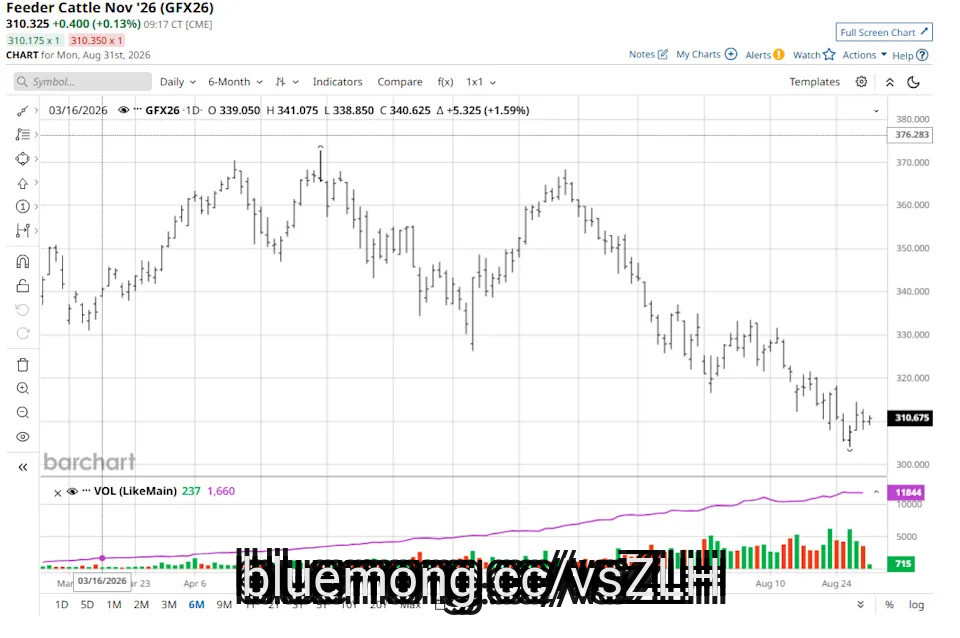
October live cattle (LEV26) futures on Friday fell $1.20 to $211.725 and for the week were down $6.20. November feeder cattle (GFX26) futures lost $1.55 to $309.925 and on the week lost $6.325. The cattle futures markets have seen steady technical selling over the past four weeks as both markets remain trapped in price downtrends on the daily bar charts.
Cattle traders this week will digest the implications of President Donald Trump's administration trying to bring down the price of beef at the meat counter. Trump Friday said on social media that his administration will seek changes to allow farmers and ranchers to slaughter and process their own products in response to calls to loosen the grip of the big companies that dominate U.S. meat processing. "I am authorizing legal documents to be drawn in order to allow Farmers and Ranchers to be given the right to PROCESS THEIR OWN FOOD," Trump said in a post on Truth Social. "This should move quickly." The southern U.S. border reopening and Trump's move to allow tariff-free beef imports aimed at lowering beef prices have weighed on cattle markets recently, pushing live and feeder futures near nine-month lows.
Was the Commodity Complex a Case of More of the Same Monday?
Arabica Coffee Consolidates Recent Losses
Rip-Roaring Bull Markets Are Taking Corn, Soybean, and Wheat Prices Higher
#cattle
Cattle traders this week will digest the implications of President Donald Trump's administration trying to bring down the price of beef at the meat counter. Trump Friday said on social media that his administration will seek changes to allow farmers and ranchers to slaughter and process their own products in response to calls to loosen the grip of the big companies that dominate U.S. meat processing. "I am authorizing legal documents to be drawn in order to allow Farmers and Ranchers to be given the right to PROCESS THEIR OWN FOOD," Trump said in a post on Truth Social. "This should move quickly." The southern U.S. border reopening and Trump's move to allow tariff-free beef imports aimed at lowering beef prices have weighed on cattle markets recently, pushing live and feeder futures near nine-month lows.
Was the Commodity Complex a Case of More of the Same Monday?
Arabica Coffee Consolidates Recent Losses
Rip-Roaring Bull Markets Are Taking Corn, Soybean, and Wheat Prices Higher
#cattle

18 days ago
On August 28, Frontline (NYSE:FRO) posted the best quarter in company history, with net income of $659 million and adjusted profit of $580 million for the second quarter of 2026, up $235 million from the prior quarter. The gains came from tanker rates that climbed across every vessel class Frontline operates, from its largest crude carriers to its smaller product tankers. CEO Lars Barstad described a market with no playbook, one where geopolitical disruption is reshaping how oil moves around the world. The bigger question left hanging on the call is how much of that strength holds once the disruptions ease.
VLCC rates hit $153,000 per day in the second quarter of 2026, while Suezmax and LR2/Aframax vessels earned $111,000 and $92,400 per day. That strength has carried into the third quarter, where Frontline has already booked 86% of VLCC days at $157,000 per day, 79% of Suezmax days at $117,000 per day, and 70% of LR2 days at $81,000 per day, evidence that rates are holding rather than sliding back. The fleet backing those numbers is young and efficient, averaging 6.6 years old, fully eco-designed, and 69% scrubber-fitted, which keeps cash breakeven costs between $22,200 and $25,700 per day, well under what the ships are currently earning.
That spread between cost and rate is throwing off real cash. Management estimated annual cash generation potential at $2.3 billion, or $10.35 per share, based on rates as of August 28, a 24% yield against the current share price. The balance sheet has room to match it: $1.2 billion in liquidity, no debt maturities until 2030, and a refinancing that cut the average interest rate margin by 52 basis points to 1.26%. Frontline also collected $270 million selling two VLCCs at about $135 million apiece, with Barstad noting some buyers are paying premiums for older tankers just to control their own logistics chains.
Much of the current rate strength traces back to friction rather than growth in oil demand. Crude exports from inside the Strait of Hormuz are down 82% amid recent disruptions, and China's crude imports have fallen 35%, cushioned by inventory drawdowns rather than fresh buying. Barstad pointed to a 23% increase in VLCC idling days, driven by ship-to-ship transfers off Fujairah and Malaysia that can triple the distance a cargo travels before reaching its final buyer. That inefficiency is tightening effective fleet supply even as actual volumes shrink, which is a different story than genuine demand growth.
#million #vlcc #strength #rather
VLCC rates hit $153,000 per day in the second quarter of 2026, while Suezmax and LR2/Aframax vessels earned $111,000 and $92,400 per day. That strength has carried into the third quarter, where Frontline has already booked 86% of VLCC days at $157,000 per day, 79% of Suezmax days at $117,000 per day, and 70% of LR2 days at $81,000 per day, evidence that rates are holding rather than sliding back. The fleet backing those numbers is young and efficient, averaging 6.6 years old, fully eco-designed, and 69% scrubber-fitted, which keeps cash breakeven costs between $22,200 and $25,700 per day, well under what the ships are currently earning.
That spread between cost and rate is throwing off real cash. Management estimated annual cash generation potential at $2.3 billion, or $10.35 per share, based on rates as of August 28, a 24% yield against the current share price. The balance sheet has room to match it: $1.2 billion in liquidity, no debt maturities until 2030, and a refinancing that cut the average interest rate margin by 52 basis points to 1.26%. Frontline also collected $270 million selling two VLCCs at about $135 million apiece, with Barstad noting some buyers are paying premiums for older tankers just to control their own logistics chains.
Much of the current rate strength traces back to friction rather than growth in oil demand. Crude exports from inside the Strait of Hormuz are down 82% amid recent disruptions, and China's crude imports have fallen 35%, cushioned by inventory drawdowns rather than fresh buying. Barstad pointed to a 23% increase in VLCC idling days, driven by ship-to-ship transfers off Fujairah and Malaysia that can triple the distance a cargo travels before reaching its final buyer. That inefficiency is tightening effective fleet supply even as actual volumes shrink, which is a different story than genuine demand growth.
#million #vlcc #strength #rather


20 days ago
JOHANNESBURG: A top State Department official has hit out at China for what **** ysts are calling "the China shock wave" effect now crippling African economies.
African manufacturing is reportedly being battered by a surge of Chinese imports. It's a triple whammy — China takes raw materials, including critical minerals, from the continent and floods Africa with state-subsidized products. And Beijing isn't importing anywhere near an equal amount of African products.
The China Global South Project reported that in 2025, Chinese exports to Africa hit $225 billion in value, whereas imports from Africa were roughly only half that — $123 billion.
Putin Using Africa As 'Purse' For Ukraine War While Us Faces 'Intelligence Black Hole': Commander
China's Xi Jinping with President of the Comoros Azali **** oumani (L), South African President Cyril Ramaphosa and Senegalese President Macky Sall attend the China-Africa Leaders' Roundtable Dialogue on the last day of the 2023 BRICS Summit in Johannesburg on Aug.24, 2023.
#state
African manufacturing is reportedly being battered by a surge of Chinese imports. It's a triple whammy — China takes raw materials, including critical minerals, from the continent and floods Africa with state-subsidized products. And Beijing isn't importing anywhere near an equal amount of African products.
The China Global South Project reported that in 2025, Chinese exports to Africa hit $225 billion in value, whereas imports from Africa were roughly only half that — $123 billion.
Putin Using Africa As 'Purse' For Ukraine War While Us Faces 'Intelligence Black Hole': Commander
China's Xi Jinping with President of the Comoros Azali **** oumani (L), South African President Cyril Ramaphosa and Senegalese President Macky Sall attend the China-Africa Leaders' Roundtable Dialogue on the last day of the 2023 BRICS Summit in Johannesburg on Aug.24, 2023.
#state


20 days ago
Canada Goose Holdings Inc. (NYSE:GOOS) shares closed at $8.28 on August 24, down 5.3%, after Wells Fargo downgraded the stock to Underweight. The call followed a new 50% U.S. duty on certain Canadian imports, including apparel. The duties were originally scheduled for August 19 but took effect on August 22 after a three-day suspension. The question for Canada Goose Holdings Inc. (NYSE:GOOS) is whether luxury pricing and direct distribution can absorb the added cost without weakening demand.
The duty applies to the customs value of covered products, making product-level exposure—not U.S. revenue alone—the key number. Canada Goose Holdings Inc. (NYSE:GOOS) generated C$385.1 million in the United States during fiscal 2026, equal to 25.2% of C$1.53 billion in total revenue.
Canada Goose Holdings Inc. (NYSE:GOOS) has not disclosed how much of its U.S. ****** ortment falls under the tariff or the customs-value base subject to the duty. However, the company reported that most of its goods were manufactured in Canada during fiscal 2026, including nearly all of its down-filled outerwear. More than 80% of those down-filled products were manufactured directly in company facilities.
Canada Goose Holdings Inc. (NYSE:GOOS) has more flexibility than a mass-market apparel supplier. Direct-to-consumer revenue reached C$1.16 billion in fiscal 2026, or 75.7% of total sales. That model gives the company greater control over retail pricing, promotions, product allocation and channel mix.
Canada Goose Holdings Inc. (NYSE:GOOS) also entered the tariff period with evidence that its brand can support higher-value purchases. In the first quarter of fiscal 2027, management reported improved conversion and average order value, while gross margin increased to 62.4% from 61.4% a year earlier. Fiscal 2026 gross margin was 69.7% despite higher freight and duty costs.
#holdings #duty #value
The duty applies to the customs value of covered products, making product-level exposure—not U.S. revenue alone—the key number. Canada Goose Holdings Inc. (NYSE:GOOS) generated C$385.1 million in the United States during fiscal 2026, equal to 25.2% of C$1.53 billion in total revenue.
Canada Goose Holdings Inc. (NYSE:GOOS) has not disclosed how much of its U.S. ****** ortment falls under the tariff or the customs-value base subject to the duty. However, the company reported that most of its goods were manufactured in Canada during fiscal 2026, including nearly all of its down-filled outerwear. More than 80% of those down-filled products were manufactured directly in company facilities.
Canada Goose Holdings Inc. (NYSE:GOOS) has more flexibility than a mass-market apparel supplier. Direct-to-consumer revenue reached C$1.16 billion in fiscal 2026, or 75.7% of total sales. That model gives the company greater control over retail pricing, promotions, product allocation and channel mix.
Canada Goose Holdings Inc. (NYSE:GOOS) also entered the tariff period with evidence that its brand can support higher-value purchases. In the first quarter of fiscal 2027, management reported improved conversion and average order value, while gross margin increased to 62.4% from 61.4% a year earlier. Fiscal 2026 gross margin was 69.7% despite higher freight and duty costs.
#holdings #duty #value

21 days ago
Japan is today set to announce an energy import diversification plan that will include stipulations about support for pipelines in the Middle East aimed at diverting export oil flows away from the Strait of Hormuz.
The plan also features a push to reduce the country's reliance on oil and gas overall, and also reduce its reliance on Middle Eastern oil and gas specifically, Reuters has reported, citing ****** anese media. The government also plans to make energy companies share the higher costs of importing crude from places other than the Middle East.
Before the U.S.-Israeli war with Iran broke out, ****** an relied on the Middle East for almost all of its crude oil imports, which are vital for the resource-poor country. After the war, the ****** anese government rushed to secure alternative suppliers. These include the United States, Canada, African oil producers, and Azerbaijan.
This diversification has carried a hefty price tag, however. Last month, ****** an's total import bill hit an all-time high of $76.39 billion because of higher international oil prices. That monthly import figure beat the previous record set a month earlier, suggesting this month's import bill could be record-breaking as well.
Japan is also one of the world's biggest LNG importers, and earlier this summer reduced gas-fired generation in favor of coal as the price of liquefied natural gas remained elevated. ****** an has been burning more coal and less gas for power generation since the war in the Middle East started, and it is not the only one. Many Asian countries have been forced to make the switch from gas to coal on affordability and availability grounds.
#Japan #east #coal #energy
The plan also features a push to reduce the country's reliance on oil and gas overall, and also reduce its reliance on Middle Eastern oil and gas specifically, Reuters has reported, citing ****** anese media. The government also plans to make energy companies share the higher costs of importing crude from places other than the Middle East.
Before the U.S.-Israeli war with Iran broke out, ****** an relied on the Middle East for almost all of its crude oil imports, which are vital for the resource-poor country. After the war, the ****** anese government rushed to secure alternative suppliers. These include the United States, Canada, African oil producers, and Azerbaijan.
This diversification has carried a hefty price tag, however. Last month, ****** an's total import bill hit an all-time high of $76.39 billion because of higher international oil prices. That monthly import figure beat the previous record set a month earlier, suggesting this month's import bill could be record-breaking as well.
Japan is also one of the world's biggest LNG importers, and earlier this summer reduced gas-fired generation in favor of coal as the price of liquefied natural gas remained elevated. ****** an has been burning more coal and less gas for power generation since the war in the Middle East started, and it is not the only one. Many Asian countries have been forced to make the switch from gas to coal on affordability and availability grounds.
#Japan #east #coal #energy

22 days ago
By Bo Erickson and David Shepardson
WASHINGTON, Aug 26 (Reuters) - U.S. President Donald Trump said on Wednesday that it was "time to teach Canada you can't do this anymore," just days after trade talks between the neighboring countries broke down.
"I had a deal, that was a pretty good deal, you know, quite good," Trump told Glenn Beck in an interview. "They don't have anything that we have to have, okay, we can get by. I mean, there are a couple of things that would make it a little inconvenient, but we can get them elsewhere. And it's time to teach Canada you can't do this anymore."
Trump imposed new 50% tariffs on $20 billion of Canadian imports on Saturday after talks between the two countries collapsed.
Canada hit back on Tuesday with retaliatory tariffs on about $20 billion worth of U.S. annual imports and rolled out aid for businesses and workers, matching Washington's latest duties dollar for dollar. They take effect on September 8.
#can 't #countries #good
WASHINGTON, Aug 26 (Reuters) - U.S. President Donald Trump said on Wednesday that it was "time to teach Canada you can't do this anymore," just days after trade talks between the neighboring countries broke down.
"I had a deal, that was a pretty good deal, you know, quite good," Trump told Glenn Beck in an interview. "They don't have anything that we have to have, okay, we can get by. I mean, there are a couple of things that would make it a little inconvenient, but we can get them elsewhere. And it's time to teach Canada you can't do this anymore."
Trump imposed new 50% tariffs on $20 billion of Canadian imports on Saturday after talks between the two countries collapsed.
Canada hit back on Tuesday with retaliatory tariffs on about $20 billion worth of U.S. annual imports and rolled out aid for businesses and workers, matching Washington's latest duties dollar for dollar. They take effect on September 8.
#can 't #countries #good


23 days ago
Altria Group, Inc. (NYSE:MO) and Philip Morris International Inc. (NYSE:PM) have entered into reciprocal contract manufacturing arrangements designed to improve manufacturing efficiency and expand their operational flexibility. The first shipments are expected in 2027, while both companies said the agreements are not expected to have a material impact on their 2026 results.
The deal is particularly relevant for Altria Group, Inc. (NYSE:MO) because it is looking to increase cigarette imports and exports and capitalize on the U.S. "double duty drawback" system. The tax mechanism allows tobacco companies to recover certain federal excise taxes previously paid on products that are later exported, potentially improving the economics of international tobacco trade.
For Philip Morris International Inc. (NYSE:PM), the agreement provides access to Altria's manufacturing capabilities while allowing PMI to maintain its existing international-focused cigarette strategy. PMI has emphasized that the arrangement does not mean it plans to sell cigarettes in the U.S.
Jonathan Weiss/Shutterstock.com
The biggest positive for Altria Group, Inc. (NYSE:MO) is the potential to generate additional economic value from its existing manufacturing infrastructure. Rather than relying entirely on the declining U.S. cigarette market, Altria can use manufacturing relationships and international trade flows to create additional opportunities.
#altria #philip #Companies
The deal is particularly relevant for Altria Group, Inc. (NYSE:MO) because it is looking to increase cigarette imports and exports and capitalize on the U.S. "double duty drawback" system. The tax mechanism allows tobacco companies to recover certain federal excise taxes previously paid on products that are later exported, potentially improving the economics of international tobacco trade.
For Philip Morris International Inc. (NYSE:PM), the agreement provides access to Altria's manufacturing capabilities while allowing PMI to maintain its existing international-focused cigarette strategy. PMI has emphasized that the arrangement does not mean it plans to sell cigarettes in the U.S.
Jonathan Weiss/Shutterstock.com
The biggest positive for Altria Group, Inc. (NYSE:MO) is the potential to generate additional economic value from its existing manufacturing infrastructure. Rather than relying entirely on the declining U.S. cigarette market, Altria can use manufacturing relationships and international trade flows to create additional opportunities.
#altria #philip #Companies


25 days ago
Nucor, Steel Dynamics, Cleveland-Cliffs and Century Aluminum are likely winners from U.S.-Canada trade talks breaking down. All four stocks were higher early Monday after tumbling last week on the prospect of a Canada trade deal that would lower U.S. tariffs on steel and aluminum.
New 50% tariffs on $20 billion worth of Canadian goods, including liquor, electrical equipment and hockey gear, took effect on Saturday. Prime Minister Mark Carney vowed to retaliate "dollar for dollar," with its retaliatory tariffs starting Sept. 8 U.S. officials have threatened further escalation if that happens.
Earlier in the week, a trade deal seemed likely, with President Donald Trump late Tuesday postponing the new Canada tariffs, hours before they were set to kick in.
The U.S. and Canada seemed poised to reach a deal that would cut existing 50% tariffs on Canadian steel and aluminum to 25%, though steel imports would face limits. The U.S. also reportedly would cut duties on Canadian autos to 15% and scrap a 10% lumber tariffs.
The prospective of lower tariffs slammed U.S. steel stocks. Nucor (NUE) fell 5.85% on Wednesday and 9.4% for the week, tumbling from near a buy point to below its 50-day moving average. Steel Dynamics (STLD) dived 7.5% on Wednesday and 10.6% for the week, even with Friday's 4.4% bounce. STLD stock is now far below its 50-day line. Cleveland-Cliffs (CLF) sank 6% on Wednesday and 5.3% for the week, regaining its 50-day line on Friday.
#week
New 50% tariffs on $20 billion worth of Canadian goods, including liquor, electrical equipment and hockey gear, took effect on Saturday. Prime Minister Mark Carney vowed to retaliate "dollar for dollar," with its retaliatory tariffs starting Sept. 8 U.S. officials have threatened further escalation if that happens.
Earlier in the week, a trade deal seemed likely, with President Donald Trump late Tuesday postponing the new Canada tariffs, hours before they were set to kick in.
The U.S. and Canada seemed poised to reach a deal that would cut existing 50% tariffs on Canadian steel and aluminum to 25%, though steel imports would face limits. The U.S. also reportedly would cut duties on Canadian autos to 15% and scrap a 10% lumber tariffs.
The prospective of lower tariffs slammed U.S. steel stocks. Nucor (NUE) fell 5.85% on Wednesday and 9.4% for the week, tumbling from near a buy point to below its 50-day moving average. Steel Dynamics (STLD) dived 7.5% on Wednesday and 10.6% for the week, even with Friday's 4.4% bounce. STLD stock is now far below its 50-day line. Cleveland-Cliffs (CLF) sank 6% on Wednesday and 5.3% for the week, regaining its 50-day line on Friday.
#week


26 days ago
Nucor, Steel Dynamics, Cleveland-Cliffs and Century Aluminum could be winners from U.S.-Canada trade talks breaking down. Last week those stocks tumbled on the prospect of a Canada trade deal that would lower U.S. tariffs on steel and aluminum.
New 50% tariffs on a $20 billion worth of Canadian goods, including liquor, electrical equipment and hockey gear, took effect on Saturday. Prime Minister Mark Carney has vowed to retaliate "dollar for dollar." U.S. officials threatened further escalation if that happens.
Earlier in the week, a trade deal seemed likely, with President Donald Trump late Tuesday postponing the new Canada tariffs, hours before they were set to kick in.
The U.S. and Canada seemed poised to reach a deal that would cut existing 50% tariffs on Canadian steel and aluminum to 25%, though steel imports would face limits. The U.S. also reportedly would cut duties on Canadian autos to 15% and scrap a 10% lumber tariffs.
The prospective of lower tariffs slammed U.S. steel stocks. Nucor (NUE) fell 5.85% on Wednesday and 9.4% for the week, tumbling from a near a buy point to below its 50-day moving average. Steel Dynamics (STLD) dived 7.5% on Wednesday and 10.6% for the week, even with Friday's 4.4% bounce. STLD stock is now far below its 50-day line. Cleveland-Cliffs (CLF) sank 6% on Wednesday and 5.3% for the week, regaining its 50-day line on Friday.
#tariffs #week #canadian #trade
New 50% tariffs on a $20 billion worth of Canadian goods, including liquor, electrical equipment and hockey gear, took effect on Saturday. Prime Minister Mark Carney has vowed to retaliate "dollar for dollar." U.S. officials threatened further escalation if that happens.
Earlier in the week, a trade deal seemed likely, with President Donald Trump late Tuesday postponing the new Canada tariffs, hours before they were set to kick in.
The U.S. and Canada seemed poised to reach a deal that would cut existing 50% tariffs on Canadian steel and aluminum to 25%, though steel imports would face limits. The U.S. also reportedly would cut duties on Canadian autos to 15% and scrap a 10% lumber tariffs.
The prospective of lower tariffs slammed U.S. steel stocks. Nucor (NUE) fell 5.85% on Wednesday and 9.4% for the week, tumbling from a near a buy point to below its 50-day moving average. Steel Dynamics (STLD) dived 7.5% on Wednesday and 10.6% for the week, even with Friday's 4.4% bounce. STLD stock is now far below its 50-day line. Cleveland-Cliffs (CLF) sank 6% on Wednesday and 5.3% for the week, regaining its 50-day line on Friday.
#tariffs #week #canadian #trade
27 days ago
WASHINGTON (AP) — President Donald Trump announced Friday that his administration will allow more beef to be temporarily imported into the U.S. without triggering higher tariffs, as he remains under pressure to cut costs and address affordability issues ahead of November's midterms.
Beef prices have climbed to record highs amid a sharp drop in the number of U.S. cattle, consistent consumer demand and limits on cattle from Mexico, where the animals are facing a flesh-eating pest. The U.S. president has also imposed 50% tariffs on Brazil, a major beef exporter.
The president's plan, however, drew immediate skepticism from agricultural experts and backlash from cattle ranchers and conservative rural-state Republicans. Ranchers, normally some of the president's biggest supporters, are enjoying some rare profitable years and worry cheap beef imports will reduce cattle prices — and with it, the incentive to increase herd sizes.
"We all want lower grocery prices, but as I've said for months, we cannot do it at the expense of American producers," Sen. Deb Fischer, R-Neb., said in a statement. "Flooding the market with foreign beef hurts our livestock industry and undermines the long-term solution: growing the U.S. cattle herd to meet demand."
Sen. Tim Sheehy, R-Mont., said in a social media post just hours after Trump's announcement that the president's "heart is in the right place," but importing beef will "harm our ranching families who feed the nation."
#cattle #demand #herd
Beef prices have climbed to record highs amid a sharp drop in the number of U.S. cattle, consistent consumer demand and limits on cattle from Mexico, where the animals are facing a flesh-eating pest. The U.S. president has also imposed 50% tariffs on Brazil, a major beef exporter.
The president's plan, however, drew immediate skepticism from agricultural experts and backlash from cattle ranchers and conservative rural-state Republicans. Ranchers, normally some of the president's biggest supporters, are enjoying some rare profitable years and worry cheap beef imports will reduce cattle prices — and with it, the incentive to increase herd sizes.
"We all want lower grocery prices, but as I've said for months, we cannot do it at the expense of American producers," Sen. Deb Fischer, R-Neb., said in a statement. "Flooding the market with foreign beef hurts our livestock industry and undermines the long-term solution: growing the U.S. cattle herd to meet demand."
Sen. Tim Sheehy, R-Mont., said in a social media post just hours after Trump's announcement that the president's "heart is in the right place," but importing beef will "harm our ranching families who feed the nation."
#cattle #demand #herd

27 days ago
Fox News's Tomi Lahren is giving "Twitter beef" a whole new meaning.
Taking to X on Friday morning, Lahren chided President Donald Trump over his new plan — announced hours earlier — to temporarily lift certain tariffs on ground beef imports.
"You know what won't help American ranchers?" she asked. "Importing a bunch of foreign beef."
In a follow-up post, she wrote:
If this is the plan the VERY LEAST that can be done is mandatory country of origin labeling so consumers know where the beef they're buying is coming from. Importing a bunch of foreign beef is just a giant gift to the meat packers who then get to undercut our American ranchers who cannot differentiate their product from the cheap foreign sh*t. The American cattlemen is being driven out of business so the land can be gobbled up for data centers and other bullsh*t.
#beef #plan #know #bunch
Taking to X on Friday morning, Lahren chided President Donald Trump over his new plan — announced hours earlier — to temporarily lift certain tariffs on ground beef imports.
"You know what won't help American ranchers?" she asked. "Importing a bunch of foreign beef."
In a follow-up post, she wrote:
If this is the plan the VERY LEAST that can be done is mandatory country of origin labeling so consumers know where the beef they're buying is coming from. Importing a bunch of foreign beef is just a giant gift to the meat packers who then get to undercut our American ranchers who cannot differentiate their product from the cheap foreign sh*t. The American cattlemen is being driven out of business so the land can be gobbled up for data centers and other bullsh*t.
#beef #plan #know #bunch


27 days ago
Hormuz traffic remains near a standstill as Trump's 'Economic D-Day' campaign pushes Brent closer to $100.
Friday, August 21, 2026
Transits through the Strait of Hormuz have been in single digits the entire week, with Trump's announcement of an 'Economic D-Day' campaign against Iran increasing geopolitical risk premia in the markets. With ICE Brent at $94 per barrel, Asian LNG prices at $24 per MMBtu and VLCC freight rates at exorbitant levels, this week's gradual upward creeping momentum towards $100-per-barrel oil should continue over the remaining days of August.
Trump Turns the Iran War Economic. US President Trump threatened sweeping penalties and 'tremendous consequences' against countries trading with Iran, putting China and its imports of Iranian oil in the crosshairs as the White House announced the start of 'economic warfare' against Tehran.
Iraq Targets 10 Million—If OPEC and Export Routes Allow. Despite current production restrictions that see output around 2.9 million b/d, the new Iraqi government claimed it plans to reach output of 8–10 million b/d within 6 years, seeking a larger OPEC quota and developing alternative export corridors.
#million
Friday, August 21, 2026
Transits through the Strait of Hormuz have been in single digits the entire week, with Trump's announcement of an 'Economic D-Day' campaign against Iran increasing geopolitical risk premia in the markets. With ICE Brent at $94 per barrel, Asian LNG prices at $24 per MMBtu and VLCC freight rates at exorbitant levels, this week's gradual upward creeping momentum towards $100-per-barrel oil should continue over the remaining days of August.
Trump Turns the Iran War Economic. US President Trump threatened sweeping penalties and 'tremendous consequences' against countries trading with Iran, putting China and its imports of Iranian oil in the crosshairs as the White House announced the start of 'economic warfare' against Tehran.
Iraq Targets 10 Million—If OPEC and Export Routes Allow. Despite current production restrictions that see output around 2.9 million b/d, the new Iraqi government claimed it plans to reach output of 8–10 million b/d within 6 years, seeking a larger OPEC quota and developing alternative export corridors.
#million