
3 days ago
Data centers have emerged as a national issue during this midterm election cycle, and candidates for the House and Senate have seized on it in their campaigns.
But state and local officials actually have more sway over data center construction and energy infrastructure, so the winners of lower-profile races may hold the economy's future in their hands.
Hyperscalers have been spending hundreds of billions of dollars a year, with forecasts for 2027 topping $1 trillion. JPMorgan has estimated AI-related investment was responsible for about one-fifth of GDP growth over the past year. ******* ysts at ING believe AI will account for a third of growth in 2026.
With Election Day just over a week away and early voting already in full swing in many states, expectations for big Democratic gains could weigh on the stock market, which has sold off in recent days on fears the AI boom will go bust.
If there is a further stock slump, it will be because a "blue wave" at the state and local levels will usher in lawmakers opposed to data centers, Thierry Wizman, global FX and rates strategist at Macquarie, said in a note on Monday.
#local #House


3 days ago
(Bloomberg) -- SK Hynix Inc. (SKHY) plans to return about 80% of the gains from selling down its stake in ***** an's Kioxia Holdings Corp. to shareholders through a special dividend of about 16 trillion won ($12 billion), the DongA Ilbo newspaper reported.
Most Read from Bloomberg
Trump Prepares for Iran Escalation After US, Israeli Polls
Apollo's Slok Says AI Has Delivered Zero Payoff Outside of Tech
Bitcoin Billionaires Are Racing to Ride a 3,000% Crypto Boom
#corp
Most Read from Bloomberg
Trump Prepares for Iran Escalation After US, Israeli Polls
Apollo's Slok Says AI Has Delivered Zero Payoff Outside of Tech
Bitcoin Billionaires Are Racing to Ride a 3,000% Crypto Boom
#corp




10 days ago
Notre Dame is now 6-1 and ranked No. 4 in the AP Top 25 after a weird, wild, and controversial loss to the BYU Cougars. Yes, I think the Irish got hosed out of one final play, but none of that matters now. We saw 59 minutes and 59 seconds of football, and there are some things we learned.
Last week Boomer called Boubacar Traore a renaissance man, and he was absolutely right. This week… we got five plays out of Traore before he was ejected for targeting Bear Bachmeier on a late hit. Despite Notre Dame's depth at the position, the loss of Traore was massive for the Irish in the game —particularly in the first half when the defense was on its heels and needed better play up front to slow down what BYU was doing. The loss of Traore might very well be the essence of the full reason for Notre Dame's loss.
This second thing was supposed to be about Jonaz Walton and I went looking for snap counts. While the entire deal about Walton is valid and should be talked about after only getting 10 of the 81 snaps after rushing for 181 yards last week… the wide receiver situation might be the most heinous thing about the offense. On a night where Notre Dame's receivers couldn't get much separation from Cougar defenders, maybe they were gassed? The elevation was well over 5000 feet and Notre Dame only used 4 wide receivers all night. Jordan Faison, Micah Gilbert, and Jaden Greathouse were out there for almost every snap, and the fourth… well that was Mylan Graham with a whopping two snaps for the night.
For a good part of the first half, Notre Dame's defense didn't just play poorly — they looked confused. Presnap lineups and adjustments had several defenders running to the spot they were supposed to be, and BYU was snapping the ball before they got there. It looked very much like the Miami game last year, and some of that confusion led to slow and soft play. This, of course, is a Chris Ash problem and they made the proper adjustments at halftime to hold BYU to just 126 yards and 7 points in the final 29 minutes and 59 seconds of play. But… this is still a thing and will kill the Irish in a few weeks against Miami if it's not fixed for a full 59 minutes and 59 seconds — or do we play 60 minute games now?
Sign up for a user account and get:
#notre #play #irish #last




20 days ago
For a subset of young workers, the name of the game is to squirrel away enough savings and investments so retirement can come early, substituting strategic personal finance for a lifetime of labor. (FIRE!)
It turns out that the post-pandemic boom and explosion of stock prices has already gifted many older Americans with a version of that lifestyle, according to Bank of America — and it's affecting the economy.
Labor force participation — which measures the share of people employed or seeking work among the total population — never recovered after the shock of the pandemic.
According to BofA's economics team, led by Aditya Bhave, the biggest driver behind the decline in overall labor force participation has been workers over age 55 leaving the workforce.
"This debunks a popular bearish narrative on the labor market: 'the u-rate would have been higher if participation hadn't fallen,'" Bhave wrote.
#according #workers #FIRE #americans



21 days ago
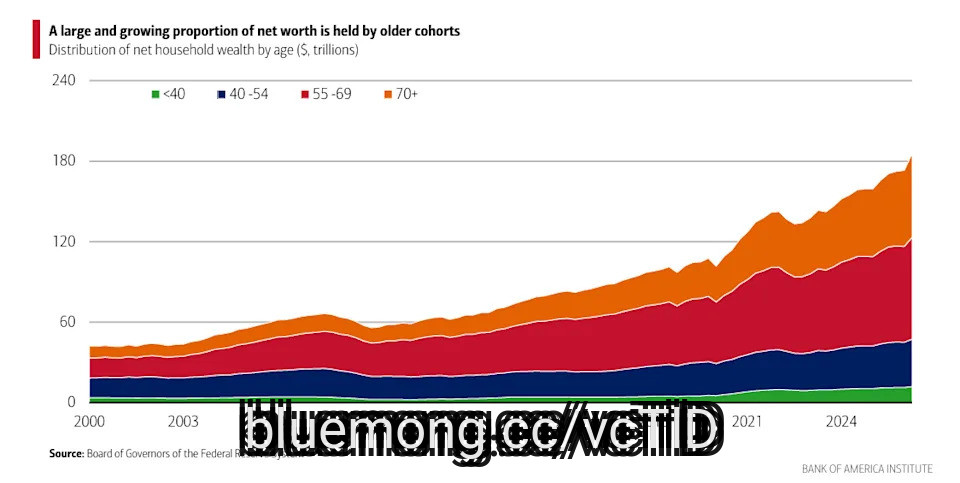
America's older households sit on nearly $140 trillion in wealth, and much of it showed up recently.
Households age 55 and over held around three-quarters of the nation's total net worth in the second quarter of 2026, according to an Oct. 1 report from Bank of America Institute, based on ******* ysis of Federal Reserve data. "With equity markets rising strongly," wrote senior economist David Michael Tinsley, those households have seen "a more than 20% increase in their net worth over the past two years."
That rally has run on AI. The Magnificent Seven accounted for more than half of the S&P 500's gains last year, Fortune reported in April, and Goldman Sachs strategists found technology stocks drove 85% of the index's return through mid-May this year. "AI-driven return has been the single most important structural driver of equity performance," Capgemini's Luca Russignan told Yahoo Finance in June. Boomers own 54% of all U.S. stocks.
That's a lopsided split. Americans 55 and over make up about 31% of the population, according to Census Bureau estimates, but control roughly 75% of its net worth.
The pile gives many older Americans what the institute calls "considerable capacity to spend on travel and other leisure categories." Add their growing share of the population and their extra free time, and they become an increasingly influential market for businesses chasing consumer dollars. The BofA report focused mainly on the economic implications of a growing mass of older consumers, but the generational wealth composition was striking.
#households #institute #according #report

22 days ago
XOM has raised its dividend for 43 straight years, while CVX yields 3.45% with Hess acquisition synergies running 50% above initial targets.
EPD's distributable cash flow covered its 6% distribution 1.9x last quarter, with a trailing payout ratio of just 56% on adjusted cash flow.
Read More: Learn 7 ways to generate income with a $1,000,000+ portfolio (sponsor)
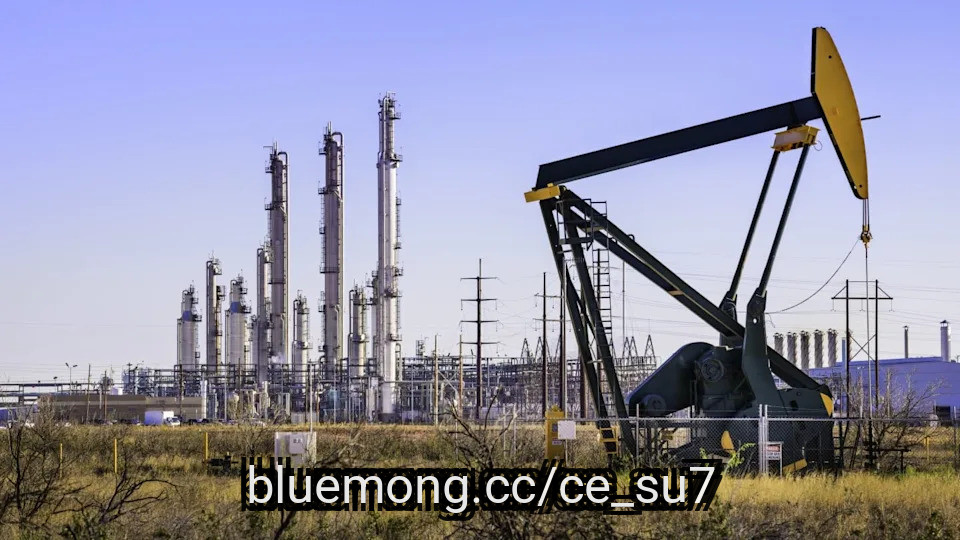
Energy has a reputation for boom and bust, yet the sector's largest companies have turned volatile commodities into some of the market's most reliable income. Exxon Mobil (NYSE:XOM) alone has grown its annual dividend per share for 43 consecutive years. The four large caps below split into two integrated oil majors and two midstream toll-road operators. Each pairs a well-covered payout with strong cash generation, making them natural candidates for a long-term income portfolio.
At a recent price of $163.83, Exxon's annualized forward dividend of $4.12 per share works out to a 2.51% yield. The quarterly payout is $1.03, up from $0.99 after a 4% raise late last year.
#income

22 days ago
Dividend-paying stocks are taking a beating as surging Treasury yields make bonds a more competitive income source, creating a difficult environment for baby boomers who lean on dividend funds and individual stocks to cover living expenses in retirement.
Utilities, real estate, and materials have all experienced share-price declines as climbing bond yields have drawn income-seeking investors away from dividend stocks. The 10-year Treasury yield has remained north of 5%, recently hovering between 5.2% and 5.3%, while the 20-year has hit 5.68% and the 30-year has reached 5.62% — marks last seen more than two decades ago, according to Benzinga.
The pain shows up clearly in fund performance. The Invesco S&P 500 High Dividend Low Volatility ETF (SPHD) lost 7.59% over the trailing month, and the iShares Select Dividend ETF (DVY) shed 6.02% in the same window, according to CNBC. The Vanguard High Dividend Yield Index ETF (VYM) gave back 3.85% over the past month. The WisdomTree U.S. Quality Dividend Growth Fund (DGRW) stands apart, with its heavy tilt toward technology helping limit its one-month loss to just 0.81%.
The Federal Reserve raised its overnight rate by a quarter percentage point on Sept. 16, and markets are pricing in additional increases, keeping pressure on rate-sensitive dividend sectors. The 10-year yield touched 5.342% and the 30-year reached 5.683%, their highest marks in 24 years, driven in part by rising public debt, geopolitical tensions, and the prospect of a prolonged high-rate environment.
Despite the pressure, financial advisors caution retirees against making reactive moves. "The worst thing that a retiree could do is sell a high-quality dividend payer at depressed prices to chase income somewhere else in the stock market just to get higher yield," Timothy Chubb, chief investment officer at Girard, a Univest Wealth Division, told CNBC. Chubb said he would rather own a company growing 4% to 5% annually with a 3% dividend yield than pursue an 8% yield from a deteriorating business.
#Dividend #yield #month #treasury


22 days ago
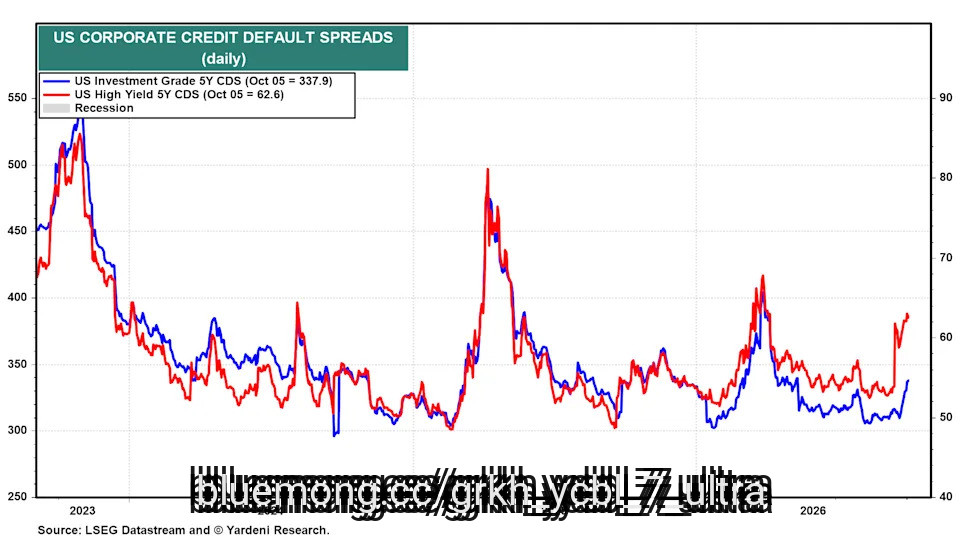
JPMorgan Chase (JPM) CEO Jamie Dimon sharpened his warning about the risks of a global bond sell-off on Tuesday, saying the world's massive competition for capital could begin squeezing corporate borrowers.
Dimon warned that the combination of rising government borrowing costs and spending on the AI boom could spill into corporate credit markets, pushing up the costs for companies to refinance or raise new debt.
"There will be a point where the market will ask for more and more and more, and yeah, at one point that'll feed into corporate debt, corporate credit spreads, and things like that, which is how it normally happens," Dimon said in a Bloomberg interview on the sidelines of a JPMorgan event in London.
"The best thing to do with any of these things is deal with it before it becomes a crisis. If it becomes a crisis, we will deal with it. It just will be in a much less pleasant way," he added.
The warning comes as a global rout in bonds has pushed longer-term borrowing costs sharply higher in recent weeks, with the benchmark US 10-year Treasury yield recently surpassing heights not seen since 2002.
#credit


22 days ago
The US economy is stacking up wins, even if it doesn't feel that way for many households because of the resurgence in inflation.
The economy has now posted 78 consecutive months of expansion, the sixth-longest business cycle since 1854, per new ***** ysis from The Kobeissi Letter. This is well above the long-term average of 49 months and the median of 38 months.
By comparison, the longest period for the US economy without a recession was between 2009 and 2020, at 128 months. The record of course was broken by the aftershocks of the COVID-19 pandemic, which ground the economy to a halt.
Read more: Scaramucci: Lots of Americans 'feel left out of the system'
"Unconventional monetary policy, historically large budget deficits, alongside the AI investment boom, appear to be extending the duration of business cycles. The data says the US economy is remarkably strong," The Kobeissi Letter team said.
Meanwhile, the US economy is nearing an impressive achievement on the unemployment front.
The US unemployment rate is nearing a record number of consecutive months below 5%, Truist chief strategist Keith Lerner said in a note on Monday. The longtime record dates back to the mid-1960s.
#letter #consecutive



23 days ago
Wealthy baby boomers have spent decades building their fortunes—and the foundations, donor-advised funds, and giving traditions that come with them. But as the $124 trillion Great Wealth Transfer gets underway, a growing share of the older generation isn't so sure their kids will carry on tradition the way they hope.
Fewer than half of wealthy Americans (47%) believe the next generation is prepared to take on family philanthropic causes, down from 55% in 2024, according to research from Bank of America released last week. The share of parents who believe their children share their commitment to giving back fell even more sharply to 65% from 76%. The bank surveyed more than 1,430 wealthy individuals in the U.S. aged 21 or older with at least $3 million in investable ******* ets, excluding primary residence.
The confidence gap in philanthropy mirrors a broader anxiety wealth advisors have noticed about whether heirs are ready for any of it.
"This is a very real concern I'm hearing from ultra-affluent families right now," Tom Thiegs, managing director of leadership and legacy at Ascent Private Capital Management with U.S. Bank, told Fortune of parents' fears that wealth could dampen their children's drive. Trent Von Ahsen of Cedar Point Capital Partners also told Fortune his clients are leaning on mentorship and phased wealth transfers rather than lump-sum inheritances.
But the irony is younger donors are, by several of the study's measures, more engaged donors than older generations. Gen Z and millennial donors support an average of 12 charitable causes, compared with eight among wealth donors overall. They're also roughly twice as likely to use a donor-advised fund, and 87% say honoring their family's philanthropic tradition is important. Meanwhile, 86% say it's equally important to establish their own charitable identity.
#advised


23 days ago
Investors have rushed to get in on artificial intelligence (AI) stocks over the past few years as they've identified AI as the next big thing in technology. AI is exciting as it helps companies streamline processes, lower costs, make better decisions, and so much more. This is why some see it as a true revolution. Jensen Huang, chief of AI leader Nvidia, has even likened it to the Industrial Revolution, saying it will reshape the job market as that period once did.
This year, AI stocks have met with some headwinds, from concerns about the pace of AI infrastructure spending to general worries about the economy. And that has weighed on the performance of some. Still, the overall industry and the S&P 500 have been on the rise, and demand for AI products and services remains high. ****** ysts expect the AI market to reach into the trillions of dollars in a few years, suggesting there is still plenty of growth to come.
Missed Nvidia in 2009? This Rare Signal Is Flashing Again. In 2009, a "Double Down" signal flashed for a little-known chipmaker called Nvidia. For the first time in years, that same "Total Conviction" signal is flashing for a company 1/100th the size of Nvidia. Continue »
Now, looking ahead, if I could only buy one AI stock before 2027, I know exactly which one to choose. It would be the following...
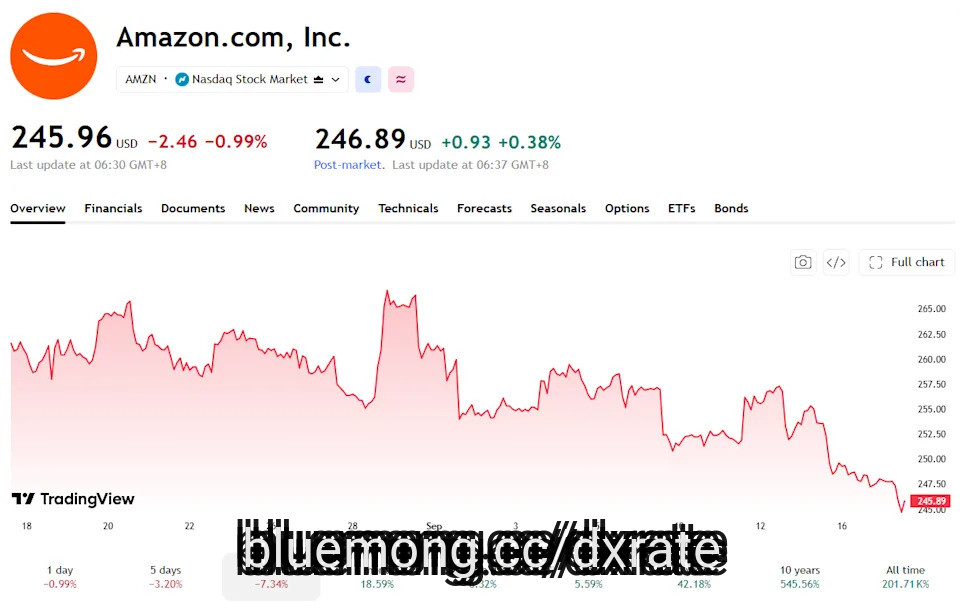
This particular stock is one I already own, but today, I would be happy to increase my position. I like this company because it is a leader in two booming markets, has an established track record of earnings growth, and could see a new burst of growth moving forward due to its strength in AI. The company I'm talking about is Amazon (NASDAQ: AMZN), a significant player in the e-commerce and cloud computing markets.
#years #stocks



23 days ago
Burry is mitigating near-term tax selling in underperforming holdings.
The investor foresees an early end to the artificial intelligence boom, positioning for a 2000–2003 style value equity revival.
Significant capital is being directed into discounted Chinese equities like BYD, while maintaining a cautious stance on Alibaba amidst its infrastructure spending.
Renowned value investor Michael Burry outlined his fourth-quarter portfolio maneuvers in an update on his Cassandra Unchained Substack platform on Monday, revealing how he is positioning around tax-loss harvesting headwinds while building long-term exposure to deeply discounted sectors.
Burry noted that the final quarter routinely brings heightened selling pressure on underperforming equities as investors sell underperforming ***** ets at a loss to offset capital gains.
#burry #positioning #capital #equities


23 days ago
Anson Williams has a very important message for baby boomers.
The 77-year-old Happy Days star posted a shirtless bathroom mirror selfie to Instagram on Oct. 3. He is seen smiling and flexing one arm in the photo.
He captioned the post, "My yearly reminder to every Boomer: NEVER let anyone diminish us because of our age."
"I'm 77. More creative, healthier, busier, more curious — and more alive than I was at 40," the actor wrote. "Why? A partner who sees the best in me. Good lovin.'"
Photo credit: OConnor / AFF-USA.com / MEGA
#happy #mega



24 days ago
Umberto Pizzi, who has died aged 88, was a paparazzo who documented Italy's Dolce Vita era, specialising in candid shots of the actors, television personalities, politicians and ***** orted hangers-on who made up the emerging class of nouveau riche.
Pizzi himself spurned the term "paparazzi", which he thought conveyed an attitude of hostility towards photojournalists. He preferred to think of his role as a kind of modern-day Petronius, documenting the spectacles and excesses of the era through its best-known personalities. He photographed stars of Italian cinema such as Marcello Mastroianni and Vittorio Gassman, as well as Hollywood golden couple Elizabeth Taylor and Richard Burton.
In the 1970s and 1980s he ventured into the realms of Italian culture, politics and the global aristocracy. He photographed John Paul Getty III during his time in Rome and trod on bullets on his way to the scene where the former prime minister Aldo Moro was kidnapped in 1978. His archive, comprising around two million images, spanned two republics and more than 60 years of history, from economic boom to the season of protest, through to the modern era of mass communication.
The film-maker Tinto Brass pictured by Pizzi with the actress Sandra Milo, 1987 - UMBERTO PIZZI DA/Fotogramma
From the early 2000s he worked for the web publication Dagospia, which became notorious for its section headed "Cafonal": roughly, the uncouth, ostentatious rich. One Pizzi image that encapsulated the new era showed a table of important people stuffing themselves with food. Another was of Northern League and Forza Italia members dousing a reclining woman with champagne during a birthday party.
#dolce #vita #petronius


1 month ago
Nvidia (NVDA) CEO Jensen Huang is challenging the people warning that AI could end humanity, suggesting their alarming predictions may serve another purpose.
Speaking with CBS News, Huang rejected the 'AI apocalypse' debate and questioned the motives behind those spreading that fear, adding a sharper edge to an increasingly public industry split.
OpenAI and Anthropic leaders, alongside Elon Musk, have backed calls to slow advanced AI development over safety concerns and fears that the technology might be advancing quicker than companies can control it, as reported by Financial Times.
For Nvidia investors, that debate carries financial weight. Shares have returned 20% year-to-date and 23% over the six months, according to Seeking Alpha data.
A coordinated slowdown could complicate the spending boom supporting its chip business. Huang's response, however, reaches beyond defending continued investment.
#NVIDIA #anthropic


1 month ago
Bloom Energy Corporation (NYSE:BE) garnered significant investor attention after it unveiled a new 800V DC-native fuel-cell power architecture on September 16, designed to supply continuous direct current to the next generation of AI data centers.
These solid-oxide fuel cells can generate continuous 800V DC power natively, rather than producing AC power that then has to be converted into DC that AI computing equipment ultimately consumes. This potentially removes several conversion stages, such as transformers and switchgear, thus lowering capital cost and energy losses.
Bloom claims that its technology can cut non-compute capital expenditures for a 1 GW data center by $3.6 billion, or 27%, and lower five-year total cost of ownership by $5.5 billion, or 9%, compared to traditional AC-based infrastructure.
With this technology, Bloom Energy is targeting one of the biggest bottlenecks in the ongoing AI boom – securing large amounts of reliable power quickly and economically. If 800V DC becomes widely adopted across AI data centers, the company will benefit not only from the soaring power demand, but also from a broader shift in how that power is generated and delivered.
Bloom Energy pointed to Nvidia's planned adoption of 800V DC architecture beginning with Rubin Ultra and Kyber systems as an indication of where data center power infrastructure is heading. In its 2026 Mid-Year Data Center Power Report, Bloom claimed that data center leaders expect DC-based architectures to account for 58% of new deployments by 2030, potentially creating a significant market for technologies designed around direct-current power delivery.
#energy #architecture


1 month ago
NextEra Energy, Inc. (NYSE:NEE) announced on September 8 that it had secured a loan of up to $1.9 billion from the U.S. Department of Energy to support the restart of a shuttered nuclear power plant in Iowa. The Duane Arnold Energy Center ceased operations in 2020 after 45 years of service. The plant is now expected to resume operations in early 2029, pending regulatory approvals.
The federal funding is intended to help restore the facility and add reliable generation capacity as the US electricity demand soars to record levels amid the AI boom. To help meet the growing demand, President Trump is making efforts to accelerate the expansion of nuclear energy. He has signed an executive order to get 10 large conventional reactors under construction by 2030 and has also called for federal funding to support the restart of shuttered nuclear plants.
John Ketchum, Chairman, President, and CEO of NextEra Energy, commented:
"Restarting Duane Arnold is about delivering new power to meet new demand while generating billions of dollars in economic value for Iowans. Just as importantly, it shows how America can support rapid economic growth and rising electricity demand while helping keep power affordable for existing customers. By bringing new generation online to serve new demand, we can strengthen the grid, create hundreds of good-paying jobs and help ensure Iowa families and businesses are not asked to bear the costs of growth. We appreciate the Administration's leadership in advancing America's nuclear renaissance and share its commitment to an all-of-the-above energy strategy that expands supply, strengthens energy security and keeps America competitive."
Photo by Frédéric Paulussen on Unsplash
#duane #arnold
1 month ago
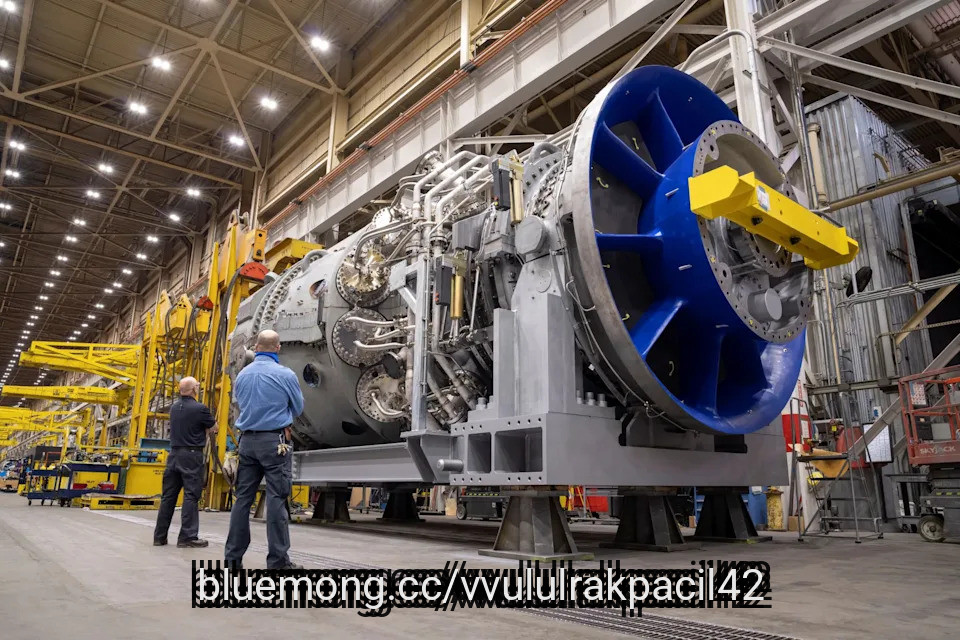
GE Vernova Inc. (NYSE:GEV) received a boost on September 16 after CEO Scott Strazik stated that the company's backlog could hit the $200 billion mark "very early" in 2027, sooner than Wall Street had expected. The company expects the "strong and durable demand" to drive accelerated growth after its backlog had reached $167 billion at the end of the second quarter of 2026.
GEV has gained by almost 50% over the last year but is down by more than 14% over the last month, reflecting growing investor concerns surrounding the AI trade. The stock also came under pressure on September 14 when GLJ Research slammed it with a 'Sell' rating and a Street-low price target of $470, describing the company as "a cyclical gas turbine manufacturer priced as a secular compounder".
The update builds on extraordinarily strong momentum for GE Vernova, powered by the incredibly strong demand for its power equipment amid the AI data center boom. The company's backlog of $176 billion at the end of Q2 grew $13 billion from the previous quarter and was up 37% YoY, providing it with visibility into earnings well into the 2030s.
Notably, GE Vernova is translating this demand into financial improvement rather than simply a very large order book. The company's revenue grew by 22% YoY to $11.1 billion in the second quarter, while its free cash flow reached $5.1 billion, already exceeding its full-year 2025 level. Given the high demand, GEV raised its 2026 revenue forecast to $45.5 billion-$46.5 billion, up from its previous range of $44.5 billion-$45.5 billion.
The ongoing AI boom has been a major growth catalyst for GE Vernova, as its data center-related orders exceeded $5 billion in the first half of this year, more than double 2025's total. According to Barron's, power availability has become a key constraint for data center operators, and this strong demand has effectively constrained GEV's turbine capacity, which can support pricing and the value of scarce delivery slots.
#billion #year #data #center


1 month ago
A 2022 Nasdaq crash turned $10,000 into just $2,100 with TQQQ but preserved $3,900 with QLD's lower 2x leverage.
Recovering from TQQQ's 79% loss requires a 376% gain just to break even, making the extra leverage a costly bet.
QLD's 5-year annualized return of 17% beat TQQQ's 15% as volatility drag quietly eroded the extra leverage's advantage.
Just released. Our ****** ysts combed the entire stock market and named the ten best stocks to buy right now. The report is free. Enter your email and see if any of your stocks made the cut.
Leveraged ETFs have become an increasingly popular way to participate in the recent AI-driven technology boom. One such fund favored by investors and traders alike is the ProShares UltraPro QQQ (NASDAQ:TQQQ), an ETF that targets three times the Nasdaq's daily return. For investors who are uncomfortable with the 3x target, the ProShares Ultra QQQ (NYSEARCA:QLD) offers similar exposure but targets 2x the Nasdaq-100's daily move. When the Nasdaq is advancing higher, TQQQ seems like the obvious choice, but during a serious selloff, the reduced leverage of QLD can dramatically change the amount of capital left standing when the decline is over.
#leverage


1 month ago
Looking for passive income and a lot of it? Who wouldn't like that? Passive income can come from multiple sources, such as certificates of deposit (CDs), pensions, annuities, royalty checks, rental properties, and dividends, to name a few. I think dividend income is particularly compelling because:
Healthy and growing dividend payers tend to increase their payouts over time, often helping shareholders keep up with inflation.
Such companies also tend to keep paying no matter whether the economy is booming or in a slump.
Dividend payers are simply great investments, in general. Check it out:
Dividend-Paying Status
#tend

1 month ago
GE Vernova Inc. (NYSE:GEV) is one of Jim Cramer's favorite stocks. Throughout 2025, the CNBC TV host continued to heap praise on the firm. Cramer's praise came at a time when new-age nuclear power and quantum computing stocks were experiencing strong gains. Throughout this period, he continued to **** ert that GE Vernova Inc. (NYSE:GEV) was the only nuclear firm with a stable delivery timeline and the capacity to deliver. In his morning appearance on the 15th, Cramer discussed the recent dip in shares and worries about a slowdown in the AI buildout:
"One company, GE Vernova, which was hit incredibly hard, which actually builds these, was saying they're seeing an order acceleration. So I really doubt the idea there's going to be a decel. Now that stock got hammered yesterday, it's been a horrendous stock since we started getting this political controversy. But again I point out that you just hear no one say anything about pullback."
For GE Vernova Inc. (NYSE:GEV), as perhaps indicated by the share price movement, the narrative is driven by its backlog and overall exposure to AI's power generation demand. On this front, CEO Scott Strazik, another Cramer favorite, outlined during the firm's second quarter earnings that data center orders of $5 billion for H1 2026 had already doubled over the full year 2025 figures. Additionally, during Q2, the firm's total orders touched $24 billion to mark an 88% growth driven by its Power and Electrification segment. As a whole, GE Vernova Inc. (NYSE:GEV)'s Q2 revenue grew by 22% annually, while its overall backlog and electrification backlogs sat at $176 billion and $446 billion.
At the same time, with GE Vernova Inc. (NYSE:GEV) also relying on gas turbines for its business, the debate is also about whether exposure to AI can remove the inherent cyclicality in the business. Additionally, with data centers accounting for 40% of the Electrification business's orders, any slowdown in capex spending by big tech players could generate tailwinds for GE Vernova Inc. (NYSE:GEV). Similarly, while the data center business is booming and the gas generation business remains tied to prices and interest rates, the firm's wind business is a drag and expected to hurt the bottom line throughout 2026.
In Q2, 106 out of the 1,006 funds tracked by Insider Monkey had held a stake in GE Vernova Inc. (NYSE:GEV), which marked a dip over the 118 out of 1,022 funds in Q1. Whether the dip was due to the order mix and AI sentiment or due to profit taking, your guess is as good as ours. On the valuation front, GE Vernova Inc. (NYSE:GEV) trades at a forward P/E ratio of 35, while short interest as a percentage of float is 3.29%.
#vernova #business #throughout #data


1 month ago
The days of Meta Platforms (NASDAQ:META) being a laggard in cutting-edge technology may be over.
The social media giant's new personal AI agent, Muse, reached nearly 600,000 downloads in just its first five days after launching, according to data from SensorTower.
Missed Nvidia in 2009? This Rare Signal Is Flashing Again. In 2009, a "Double Down" signal flashed for a little-known chipmaker called Nvidia. For the first time in years, that same "Total Conviction" signal is flashing for a company 1/100th the size of Nvidia. Continue »
That puts Muse on a similar trajectory to ChatGPT, the breakthrough app that ignited the AI boom, and Muse could be a major disruptor as well.
Image source: The Motley Fool.
#signal #meta #flashing #NASDAQ


1 month ago
Margin debt hit $1.45 trillion in August, up 140% since 2022 and outpacing the S&P 500's 98% gain, which leaves the market carrying far more forced-selling risk.
At roughly 4.5% of GDP, margin debt now exceeds the dot-com bubble's peak, meaning a routine correction could cascade into broker-forced liquidations across the market.
The real danger isn't high leverage itself but the simultaneous forced selling that erupts when overleveraged investors all need cash at once.
Just released. Our ***** ysts combed the entire stock market and named the ten best stocks to buy right now. The report is free. Enter your email and see if any of your stocks made the cut.
The longer-term comparison is even more striking. Since the end of 2022 -- and the start of the current AI-dominated era -- investor borrowing has increased by $847 billion, or 140%, versus a 98% gain for the S&P 500 over the same period. That means leverage has grown faster than the market value investors have accumulated, presumably as they took on debt to buy into the AI boom.
#market #leverage #investors

1 month ago
Gov. Abbott says Texas data centers "dug their own grave" by expanding too fast, with fewer than 10% responding to a state electricity demand survey.
Claiming Social Security at 63 instead of 67 permanently locks in just 75% of the full benefit, costing a $2,500 earner roughly $625 monthly.
A long-term ground lease can bridge the income gap to delay Social Security claiming, and passive rental income generally avoids the Social Security earnings test.
Two retirees, same $1 million, same 4% rule, buy one finished with $1.4 million, the other hit $0 in 12 years. Our free reader guide explains the flaw that separated them, and the income-first method built to avoid it.
Texas spent years courting the data-center boom. Now Gov. Greg Abbott says the industry "dug their own grave" by expanding too quickly without winning over the communities expected to host the projects. The backlash is real.
#texas #grave

1 month ago
GE Vernova Inc. (NYSE:GEV) is trying to recover after an 8.5% decline, with Bernstein defending the stock as "wired to win" and highlighting that data centers account for only 38% of its electrification order book. This supports the argument that the company's utility exposure extends beyond AI power demand alone. That diversification is a real consideration, but it does not directly address the concern raised by GLJ Research. The firm's Sell rating is not based on doubts about AI-driven power demand. Instead, GLJ Research argues that GE Vernova is still a fundamentally cyclical gas-turbine manufacturer, while its current valuation reflects an **** umption that the ongoing boom can remain permanent.
GE Vernova shares stabilized after an 8.5% decline triggered by GLJ Research's new Sell rating and broader concerns that a slowdown in AI spending could weigh on the company's order book. Bernstein **** yst Sunaina Ocalan directly challenged the view that GE Vernova's outlook depends mainly on AI infrastructure spending:
While data center orders were $5 billion in H1 2026, or about 38% of electrification orders, the remaining 62% was utility-driven. Utility spend should continue to grow, supported by grid reliability and resilience investments. A slowdown in data center demand may alleviate generation bottlenecks but would do little to address existing grid constraints.
Bernstein continues to rate the stock a Buy with a $1,298 price target, while nearly 80% of **** ysts covering GE Vernova also have a Buy rating. In a separate development, the company announced a wind turbine supply agreement with Eurus Energy Holdings in **** an.
GLJ Research's Gordon Johnson argued that GE Vernova's turbines being sold out does not justify the stock trading at roughly 38.9x forward EV/EBITDA at the time the report was released. Johnson described the company as "a cyclical gas turbine manufacturer priced as a secular compounder," highlighting the premium valuation placed on a fundamentally cyclical business. His model estimates 2027 EBITDA at $7.42 billion, which is 22% below Wall Street consensus. The lower forecast is partly based on the timing of turbine orders, as equipment scheduled for 2027 delivery was ordered in 2024, before the company introduced its more recent price increase.
#bernstein #turbine #Stock #data

1 month ago
When Ray Dalio speaks, investors tend to listen, and likely for good reason. He ran Bridgewater **** ociates, the hedge fund he founded, for half a century, and over that time, he was one of the most successful investment managers in history.
In fact, he has long used history as a guide for deploying capital, and today, he believes history offers lessons for how investors should approach the AI boom. Specifically, he sees echoes of 1929 and 2000 in the current situation, and is urging investors to approach AI stocks with caution. Here is what he said and why investors may want to heed his advice.
Missed Nvidia in 2009? This Rare Signal Is Flashing Again. In 2009, a "Double Down" signal flashed for a little-known chipmaker called Nvidia. For the first time in years, that same "Total Conviction" signal is flashing for a company 1/100th the size of Nvidia. Continue »
First of all, investors should remember that Dalio has stepped down from Bridgewater. Thus, the fund's investments in AI stocks like ServiceNow and Nutanix were likely made without his input.
Given what he has said recently, he may even disagree with those purchases. When Dalio appeared on the podcast The Diary of a CEO in August, he said that AI shows "classic signs" of a bubble.
#dalio #signal #flashing #likely



1 month ago
Elon Musk is getting serious about putting artificial intelligence (AI) into orbit. The ***** eX (SPCX) CEO is reportedly confident the company can launch Nvidia (NVDA) powered AI systems into ***** e in 2027. ***** eX and Nvidia are working on a ***** e-optimized version of Nvidia's Vera Rubin NVL72 platform, and Musk says the system should be lighter, denser, and cheaper than a traditional data-center rack. That matters because ***** eX is trying to turn orbital computing into a major business, while Nvidia could gain another market for its AI hardware.
The opportunity is much bigger than a headline. ***** eX could eventually sell computing capacity from satellites just as it sells broadband through Starlink. Meanwhile, Nvidia could supply the chips behind that infrastructure. Investors should still remember that this is an emerging business, and commercial scale is not expected immediately. Still, the plan gives both companies another way to capitalize on the AI spending boom.
Why It's Time to Load Up on Nvidia Stock
Mark Cuban Says He Was Dizzy for Months, So He Built a VR Fix That Does at Home 'Much Of What A 180k Machine' Does
Bank of America Just Declared a 'Generational Entry Point' in U.S. Bonds. Why Investors Should Be Backing Up the Truck on Treasuries Here.
#NVIDIA #SpaceX #much #still


1 month ago
Apollo Global Management warned Wednesday that credit default swaps on hyperscaler debt are pricing in more risk. Chief economist Torsten Slok tied the shift to weakening credit fundamentals rather than routine bond-dealer hedging.
Hyperscalers are the cloud computing giants, including Amazon, Microsoft, Google, and Meta, that run the infrastructure behind the AI boom. They face a credit default swap (CDS) gap against bank debt, widened to about 60 basis points since October 2025.
Slok made the case in a Wednesday note reported by CNBC.
"What the market is repricing is hyperscaler credit fundamentals, namely a debt-financed AI capex cycle with rising leverage, negative free cash flow and uncertain payback on depreciating ****** ets."
Dan Alpert, founding managing partner of Westwood Capital, compared the setup to the run-up to the 2008 mortgage crisis. He said banks have since built far bigger equity buffers and are more diversified than they were then.
#slok

1 month ago
Argentina's controversial right-wing president, Javier Milei, slashed inflation with a brutal dose of economic austerity, but this came at a steep social cost. The cost of living is spiraling higher, fueling household debt, loan delinquencies, and economic hardship. Industrial output, since Milei took office, has declined sharply, with local companies closing at an alarming rate. While parts of the economy are falling into chaos, Argentina's oil and gas sector is experiencing a generational boom driven by the Vaca Muerta shale.
Argentina's vital hydrocarbon sector continues to surge, with oil production hitting yet another record in July 2026. Output reached 902,920 barrels per day, almost 1% above June and 12% higher than a year earlier, marking the country's highest oil production on record. Natural gas production has also expanded strongly, although output slipped 0.5% month over month and 1.6% year over year in July to average 5.6 billion cubic feet per day. That modest setback barely dents the bigger picture: economically crucial gas production has surged 21% over the past five years.
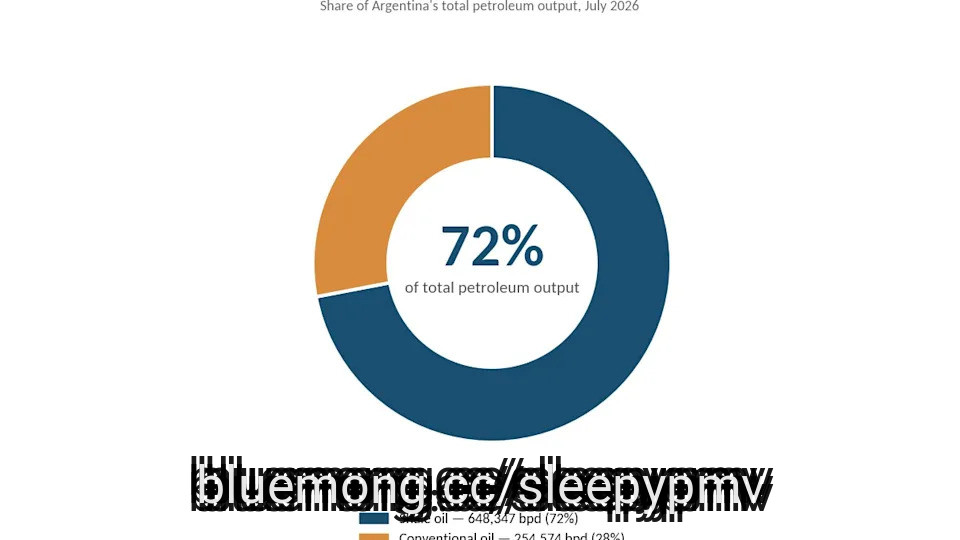
It is the ongoing and growing exploitation of the Vaca Muerta shale, situated in northern Patagonia in Neuquén Province which is responsible for Argentina's booming oil and natural gas complex. For July 2026, shale oil production rose by 1.2% month over month and a whopping 26% year over year to an all-time high of 648,347 barrels per day. As a result, shale oil now comprises a record 72% of Argentina's total petroleum output. This is also responsible for bolstering energy security in the Americas.
Shale gas production is also expanding at a healthy clip. For July 2026, Argentina lifted an average of 3.9 billion cubic feet per day of the fossil, which, despite being nearly 1% less than a month prior, was almost 4% higher year over year. That is the second-highest monthly shale gas production ever recorded. It was only eclipsed by June 2026 output, which hit 3.94 billion cubic feet per day. Shale gas now makes up 70% of Argentina's natural gas output, which is the highest level ever recorded.
Shale oil and gas production will keep growing at a solid pace, with Argentina on track to become a pure unconventional producer. You see, conventional oil output is in decline and has been for over a decade. Argentina's conventional fields are well past their prime, in many cases having hit peak production a decade ago with output now truly in decline. Government data shows July 2026 conventional oil production of 254,574 barrels per day, which is 2% lower than a month prior and 13% less year over year, indicating conventional oil output is 50% lower than a decade ago.
#shale #july #higher #record

1 month ago
Nvidia (NVDA) has been powering the ongoing artificial intelligence (AI) boom. Its graphics processing units (GPUs), central processing units (CPUs), networking products, and increasingly integrated AI systems continue to benefit from enormous investments in data center infrastructure. As a result, NVDA has continued to deliver impressive financial results.
Notably, concerns about a potential slowdown in AI development have weighed on semiconductor stocks, raising fears that the enormous spending on AI infrastructure could eventually moderate. However, demand for Nvidia's products is unlikely to slow, and the company could continue delivering extraordinary growth.
Billionaire Charlie Munger, Who Died at 99, Skipped Insurance on His Mansion Since He Could Just Write a Check to Rebuild — 'All Intelligent People Do It My Way'
The Case for Selling CrowdStrike Stock
Dear Tesla Stock Fans, Mark Your Calendars for October 1
#nvda #processing #units #infrastructure