

1 hr. ago
Bloom Energy Corporation (NYSE:BE) garnered significant investor attention after it unveiled a new 800V DC-native fuel-cell power architecture on September 16, designed to supply continuous direct current to the next generation of AI data centers.
These solid-oxide fuel cells can generate continuous 800V DC power natively, rather than producing AC power that then has to be converted into DC that AI computing equipment ultimately consumes. This potentially removes several conversion stages, such as transformers and switchgear, thus lowering capital cost and energy losses.
Bloom claims that its technology can cut non-compute capital expenditures for a 1 GW data center by $3.6 billion, or 27%, and lower five-year total cost of ownership by $5.5 billion, or 9%, compared to traditional AC-based infrastructure.
With this technology, Bloom Energy is targeting one of the biggest bottlenecks in the ongoing AI boom – securing large amounts of reliable power quickly and economically. If 800V DC becomes widely adopted across AI data centers, the company will benefit not only from the soaring power demand, but also from a broader shift in how that power is generated and delivered.
Bloom Energy pointed to Nvidia's planned adoption of 800V DC architecture beginning with Rubin Ultra and Kyber systems as an indication of where data center power infrastructure is heading. In its 2026 Mid-Year Data Center Power Report, Bloom claimed that data center leaders expect DC-based architectures to account for 58% of new deployments by 2030, potentially creating a significant market for technologies designed around direct-current power delivery.
#energy #architecture
These solid-oxide fuel cells can generate continuous 800V DC power natively, rather than producing AC power that then has to be converted into DC that AI computing equipment ultimately consumes. This potentially removes several conversion stages, such as transformers and switchgear, thus lowering capital cost and energy losses.
Bloom claims that its technology can cut non-compute capital expenditures for a 1 GW data center by $3.6 billion, or 27%, and lower five-year total cost of ownership by $5.5 billion, or 9%, compared to traditional AC-based infrastructure.
With this technology, Bloom Energy is targeting one of the biggest bottlenecks in the ongoing AI boom – securing large amounts of reliable power quickly and economically. If 800V DC becomes widely adopted across AI data centers, the company will benefit not only from the soaring power demand, but also from a broader shift in how that power is generated and delivered.
Bloom Energy pointed to Nvidia's planned adoption of 800V DC architecture beginning with Rubin Ultra and Kyber systems as an indication of where data center power infrastructure is heading. In its 2026 Mid-Year Data Center Power Report, Bloom claimed that data center leaders expect DC-based architectures to account for 58% of new deployments by 2030, potentially creating a significant market for technologies designed around direct-current power delivery.
#energy #architecture


2 hours ago
Elon Musk has never shied away from ambitious timelines, and his most recent one connects two companies directly together. In a post on X dated September 13, Musk stated that he is "highly confident" that **** e Exploration Technologies Corp. (NASDAQ:SPCX) will transport NVIDIA Corporation (NASDAQ:NVDA) Vera Rubin NVL72 AI computers into orbit next year, repeating a plan that has already moved both companies' stock this year.
The comment strengthens **** eX's Starmind concept, which aims to establish AI data centers in orbit rather than on the ground. The first satellite, named Starmind AI1, will carry a **** e-optimized version of NVIDIA's Vera Rubin NVL72 rack-scale system. The standard terrestrial NVL72 combines 72 Rubin GPUs and 36 Vera CPUs, although **** eX and NVIDIA have not disclosed the final configuration of the orbital version. **** e Exploration Technologies Corp. (NASDAQ:SPCX) plans to launch the satellite in the fourth quarter of 2027 and reach substantial scale by 2028. Musk's plan isn't new; during **** eX's first earnings conference as a public company in August, he stated that the company would build exclusively on NVIDIA hardware in the future, calling the Vera Rubin architecture the best available AI computer design.
Musk's central point is that **** e is, in the long run, the most cost-effective area to develop AI computing. He cites solar power availability in orbit as a crucial advantage, and estimates that within two to three years, **** e might become the lowest-cost place for AI computing in general, describing the orbital architecture as simpler, less expensive, denser, and lighter than a standard data-center rack. Not everyone believes the physics and economics will align on Musk's timeframe. Microsoft President Brad Smith has publicly questioned the broader concept, telling reporters that he would be surprised if companies actually transferred computation from land to low-Earth orbit.
For NVIDIA Corporation (NASDAQ:NVDA), the read-through is simple: **** e-based computing would represent a new, if early-stage and speculative, source of demand for its Vera Rubin platform, on top of the company's strong position in terrestrial AI infrastructure. According to some **** yst models, **** eX accounts for approximately 5% of NVIDIA's revenue.
SpaceX's reasoning is more convoluted. The plan is entirely dependent on the success of Starship, **** eX's next-generation rocket system, which still needs to demonstrate its capacity to handle launch frequency and reliability on the scale Musk describes. When Musk said during **** eX's August earnings call that the company would build its future AI infrastructure exclusively on NVIDIA, NVDA shares rose more than 4%, while **** eX's shares fell more than 10% before paring losses, reflecting investor concerns about execution risk and capital intensity, despite the fact that the NVIDIA relationship was well received.
#Companies
The comment strengthens **** eX's Starmind concept, which aims to establish AI data centers in orbit rather than on the ground. The first satellite, named Starmind AI1, will carry a **** e-optimized version of NVIDIA's Vera Rubin NVL72 rack-scale system. The standard terrestrial NVL72 combines 72 Rubin GPUs and 36 Vera CPUs, although **** eX and NVIDIA have not disclosed the final configuration of the orbital version. **** e Exploration Technologies Corp. (NASDAQ:SPCX) plans to launch the satellite in the fourth quarter of 2027 and reach substantial scale by 2028. Musk's plan isn't new; during **** eX's first earnings conference as a public company in August, he stated that the company would build exclusively on NVIDIA hardware in the future, calling the Vera Rubin architecture the best available AI computer design.
Musk's central point is that **** e is, in the long run, the most cost-effective area to develop AI computing. He cites solar power availability in orbit as a crucial advantage, and estimates that within two to three years, **** e might become the lowest-cost place for AI computing in general, describing the orbital architecture as simpler, less expensive, denser, and lighter than a standard data-center rack. Not everyone believes the physics and economics will align on Musk's timeframe. Microsoft President Brad Smith has publicly questioned the broader concept, telling reporters that he would be surprised if companies actually transferred computation from land to low-Earth orbit.
For NVIDIA Corporation (NASDAQ:NVDA), the read-through is simple: **** e-based computing would represent a new, if early-stage and speculative, source of demand for its Vera Rubin platform, on top of the company's strong position in terrestrial AI infrastructure. According to some **** yst models, **** eX accounts for approximately 5% of NVIDIA's revenue.
SpaceX's reasoning is more convoluted. The plan is entirely dependent on the success of Starship, **** eX's next-generation rocket system, which still needs to demonstrate its capacity to handle launch frequency and reliability on the scale Musk describes. When Musk said during **** eX's August earnings call that the company would build its future AI infrastructure exclusively on NVIDIA, NVDA shares rose more than 4%, while **** eX's shares fell more than 10% before paring losses, reflecting investor concerns about execution risk and capital intensity, despite the fact that the NVIDIA relationship was well received.
#Companies


7 hours ago
On September 15, Digital Realty (NYSE:DLR) made ServiceFabric MCP available, a software layer that lets AI agents design, monitor and troubleshoot network connections across more than 800 data centers, including third-party sites. That nudges a real estate company toward becoming a control panel for enterprise AI. It arrives after second quarter results reported on July 23, when Core FFO per share, the company's preferred earnings yardstick, excluding net promote rose to $2.13 from $1.87 a year earlier. Here is what the launch does, and what it has yet to prove.
The pitch is that enterprise AI needs more than servers. It needs power, cooling, and sovereign placement that software can control. ServiceFabric MCP handles four jobs: designing and provisioning connections, spotting capacity and watching live network health, managing access through OAuth 2, and handing troubleshooting to agents with links into chat and monitoring tools. It is also open by design. Customers do not have to live only in Digital Realty buildings or commit to a single AI model. An IDC research VP argues that public cloud interfaces alone cannot give enterprises enough control over data movement and policy, which favors providers that pair global reach with programmable interconnection. Digital Realty runs the system on its own AI workloads, and See All AI, a medical imaging developer, leans on the Boston campus and ServiceFabric to move large datasets quickly and securely.
The financial engine underneath is running hot. Renewal leases in the second quarter were signed at rates 25.4% higher on a cash basis, which shows customers will pay more to stay put. Signed leases waiting to start added up to a $1.9 billion backlog of annualized base rent at 100% share, so future revenue is already lined up. Management responded by lifting its 2026 Core FFO per share outlook, excluding net promote, to $8.15 to $8.20.
Start with what the launch has not shown yet. Digital Realty itself calls MCP an emerging standard, and ServiceFabric MCP is still being validated across internal, enterprise, and partner deployments. The announcement puts no dollar figure on what it could add to revenue, and the company describes it only as the first programmable surface of a larger architecture that may later stretch into ***** e, power and inventory. Until customers pay for this layer, it is a promising idea more than a line item.
Then there is the bill for the physical side. Digital Realty carried about $18.6 billion of debt at June 30, 2026, and its 2026 development spending outlook, net of partner contributions, now sits at $4.25 billion to $4.75 billion. The outlook also ***** umes new long-term debt priced at 4.5% to 5.5%, up from the earlier 4.0% to 4.5%. To help pay for growth, the company has sold roughly 13.5 million shares this year for about $2.5 billion, which spreads future earnings across more owners. And the quarter's headline flattered a bit: Core FFO per share of $2.65 included a $18
The pitch is that enterprise AI needs more than servers. It needs power, cooling, and sovereign placement that software can control. ServiceFabric MCP handles four jobs: designing and provisioning connections, spotting capacity and watching live network health, managing access through OAuth 2, and handing troubleshooting to agents with links into chat and monitoring tools. It is also open by design. Customers do not have to live only in Digital Realty buildings or commit to a single AI model. An IDC research VP argues that public cloud interfaces alone cannot give enterprises enough control over data movement and policy, which favors providers that pair global reach with programmable interconnection. Digital Realty runs the system on its own AI workloads, and See All AI, a medical imaging developer, leans on the Boston campus and ServiceFabric to move large datasets quickly and securely.
The financial engine underneath is running hot. Renewal leases in the second quarter were signed at rates 25.4% higher on a cash basis, which shows customers will pay more to stay put. Signed leases waiting to start added up to a $1.9 billion backlog of annualized base rent at 100% share, so future revenue is already lined up. Management responded by lifting its 2026 Core FFO per share outlook, excluding net promote, to $8.15 to $8.20.
Start with what the launch has not shown yet. Digital Realty itself calls MCP an emerging standard, and ServiceFabric MCP is still being validated across internal, enterprise, and partner deployments. The announcement puts no dollar figure on what it could add to revenue, and the company describes it only as the first programmable surface of a larger architecture that may later stretch into ***** e, power and inventory. Until customers pay for this layer, it is a promising idea more than a line item.
Then there is the bill for the physical side. Digital Realty carried about $18.6 billion of debt at June 30, 2026, and its 2026 development spending outlook, net of partner contributions, now sits at $4.25 billion to $4.75 billion. The outlook also ***** umes new long-term debt priced at 4.5% to 5.5%, up from the earlier 4.0% to 4.5%. To help pay for growth, the company has sold roughly 13.5 million shares this year for about $2.5 billion, which spreads future earnings across more owners. And the quarter's headline flattered a bit: Core FFO per share of $2.65 included a $18


3 days ago
Apple (NASDAQ:AAPL) is reportedly considering a big move that could reshape the company. The Information reported on Wednesday that the iPhone maker was considering developing its own artificial intelligence server, which would be Apple's first activity in the enterprise server market since 2011.
The proposal would combine Apple's custom silicon with networking technology supplied by Nvidia (NASDAQ:NVDA) to develop AI servers that could be offered with either two or four M8 Ultra chips, which are Apple's top-performing processors, and geared specifically for AI inference.
Missed Nvidia in 2009? This Rare Signal Is Flashing Again. In 2009, a "Double Down" signal flashed for a little-known chipmaker called Nvidia. For the first time in years, that same "Total Conviction" signal is flashing for a company 1/100th the size of Nvidia. Continue »
Such a move, the first major action under new CEO John Ternus, would signal that Apple is ready to invest in AI architecture to use its custom-made chips in products beyond its consumer devices, which would be a significant shift in company strategy.
Image source: Getty Images.
#flashing
The proposal would combine Apple's custom silicon with networking technology supplied by Nvidia (NASDAQ:NVDA) to develop AI servers that could be offered with either two or four M8 Ultra chips, which are Apple's top-performing processors, and geared specifically for AI inference.
Missed Nvidia in 2009? This Rare Signal Is Flashing Again. In 2009, a "Double Down" signal flashed for a little-known chipmaker called Nvidia. For the first time in years, that same "Total Conviction" signal is flashing for a company 1/100th the size of Nvidia. Continue »
Such a move, the first major action under new CEO John Ternus, would signal that Apple is ready to invest in AI architecture to use its custom-made chips in products beyond its consumer devices, which would be a significant shift in company strategy.
Image source: Getty Images.
#flashing

4 days ago
During the September 10 episode of Mad Money, a caller inquired about Mad Money host Jim Cramer's confidence that Arista Networks, Inc. (NYSE:ANET) will not go down the same path as Ciena Corporation. He replied:
Okay, so let me just tell you, Arista is up a lot this year. My confidence is with Jayshree Ullall. I think she's amazing and I think it every time the stock has dipped, if you've noticed it. Since her tenure began, you have to buy it, and I'm not backing away from that. I feel the same way I do now, the way I did, oh man, how many years ago when we first met her. She is money, and the company's fantastic.
In its second quarter, the company shattered records by delivering its first-ever $3 billion quarter, reporting $3.036 billion in revenue, a 38% year-over-year and over 12% sequential increase. Management lifted its full-year 2026 revenue guidance to approximately $12.6 billion, representing roughly 40% annual top-line growth. The acceleration is supported by deep integration into cloud architectures, where Arista Networks, Inc. (NYSE:ANET) expects its dedicated AI fabrics revenue to reach at least $3.5 billion in 2026, supported by more than 100 **** ulative Etherlink customers.
Bottom-line performance remains equally strong, with non-GAAP diluted earnings per share reaching $1.02, driven by a 49.9% non-GAAP operating margin and $1.3 billion in non-GAAP quarterly net income. Arista Networks, Inc. (NYSE:ANET) ended the quarter with roughly $13.3 billion in cash and marketable securities, offering substantial liquidity. However, its $9.7 billion of non-cancellable purchase commitments also increase working-capital and inventory risk as the company secures components ahead of expected AI demand.
The company's financial results remain heavily tied to two hyperscale customers. According to its 10-K filings, Microsoft accounted for 26%, and Meta Platforms generated 16% of total revenue in fiscal 2025, bringing combined spending from these two cloud giants to 42%. It leaves Arista Networks, Inc. (NYSE:ANET) vulnerable to sudden capital expenditure adjustments, vendor diversification shifts, or project delays by its core buyers.
#billion #NYSE #year
Okay, so let me just tell you, Arista is up a lot this year. My confidence is with Jayshree Ullall. I think she's amazing and I think it every time the stock has dipped, if you've noticed it. Since her tenure began, you have to buy it, and I'm not backing away from that. I feel the same way I do now, the way I did, oh man, how many years ago when we first met her. She is money, and the company's fantastic.
In its second quarter, the company shattered records by delivering its first-ever $3 billion quarter, reporting $3.036 billion in revenue, a 38% year-over-year and over 12% sequential increase. Management lifted its full-year 2026 revenue guidance to approximately $12.6 billion, representing roughly 40% annual top-line growth. The acceleration is supported by deep integration into cloud architectures, where Arista Networks, Inc. (NYSE:ANET) expects its dedicated AI fabrics revenue to reach at least $3.5 billion in 2026, supported by more than 100 **** ulative Etherlink customers.
Bottom-line performance remains equally strong, with non-GAAP diluted earnings per share reaching $1.02, driven by a 49.9% non-GAAP operating margin and $1.3 billion in non-GAAP quarterly net income. Arista Networks, Inc. (NYSE:ANET) ended the quarter with roughly $13.3 billion in cash and marketable securities, offering substantial liquidity. However, its $9.7 billion of non-cancellable purchase commitments also increase working-capital and inventory risk as the company secures components ahead of expected AI demand.
The company's financial results remain heavily tied to two hyperscale customers. According to its 10-K filings, Microsoft accounted for 26%, and Meta Platforms generated 16% of total revenue in fiscal 2025, bringing combined spending from these two cloud giants to 42%. It leaves Arista Networks, Inc. (NYSE:ANET) vulnerable to sudden capital expenditure adjustments, vendor diversification shifts, or project delays by its core buyers.
#billion #NYSE #year


4 days ago
On September 10, a caller outlined a detailed financial thesis showing Micron Technology, Inc. (NASDAQ:MU) reaching $1,400 and asked whether the **** ysis held water. In response, Mad Money host Jim Cramer said:
I mean, that's a remarkable **** ysis. It's spot on in every single number. Every single thing you said is true, which is why my Charitable Trust owns it, and why we are buying it aggressively. And by the way, can I just say if you listen to what… [the caller] said, he put some money away. He was fortunate enough to have money, which I know not everybody can have, but he had money. He put it in an individual stock. Now, if he put it in an index fund, he'd make some money, but he got really rich. And part of my job is not just to get you rich, but to hopefully get you really rich.
Micron Technology, Inc. (NASDAQ:MU) stands as one of three primary global manufacturers of dynamic random-access memory (DRAM) and NAND flash memory, positioning it at the center of the ongoing expansion in artificial intelligence infrastructure. Because advanced AI workloads require significantly higher memory bandwidth, demand has surged for Micron's High-Bandwidth Memory (HBM3E) architecture, which is integrated directly into top-tier AI graphics processors and data center accelerators. With memory production capacity for advanced AI chips remaining constrained industry-wide, Micron has secured long-term purchase agreements that cover its HBM output through 2026 and into 2027, providing visibility into top-line revenue growth.
Driven by accelerated AI server adoption and broader pricing recovery across traditional DRAM and NAND markets, it reported extraordinary growth in fiscal Q3. Revenue surged to $41.46 billion, more than quadrupling the $9.30 billion generated in the same period last year and stepping up sharply from $23.86 billion in the prior quarter. The company demonstrated exceptional operating leverage during the period, posting GAAP net income of $28.24 billion ($24.67 per diluted share) and non-GAAP net income of $28.86 billion ($25.11 per diluted share). Operating cash flow also scaled quickly, reaching $25.39 billion compared to $11.90 billion in the prior quarter and $4.61 billion in the prior-year period.
Despite its strong position in the AI supply chain, Micron Technology, Inc. (NASDAQ:MU) operates in a historically cyclical memory industry with some operational and market risks. Memory chip pricing remains sensitive to industry-wide supply-and-demand imbalances, where oversupply can rapidly compress profit margins during broader downturns in consumer electronics demand or corporate IT spending.
#billion #memory #NASDAQ #industry
I mean, that's a remarkable **** ysis. It's spot on in every single number. Every single thing you said is true, which is why my Charitable Trust owns it, and why we are buying it aggressively. And by the way, can I just say if you listen to what… [the caller] said, he put some money away. He was fortunate enough to have money, which I know not everybody can have, but he had money. He put it in an individual stock. Now, if he put it in an index fund, he'd make some money, but he got really rich. And part of my job is not just to get you rich, but to hopefully get you really rich.
Micron Technology, Inc. (NASDAQ:MU) stands as one of three primary global manufacturers of dynamic random-access memory (DRAM) and NAND flash memory, positioning it at the center of the ongoing expansion in artificial intelligence infrastructure. Because advanced AI workloads require significantly higher memory bandwidth, demand has surged for Micron's High-Bandwidth Memory (HBM3E) architecture, which is integrated directly into top-tier AI graphics processors and data center accelerators. With memory production capacity for advanced AI chips remaining constrained industry-wide, Micron has secured long-term purchase agreements that cover its HBM output through 2026 and into 2027, providing visibility into top-line revenue growth.
Driven by accelerated AI server adoption and broader pricing recovery across traditional DRAM and NAND markets, it reported extraordinary growth in fiscal Q3. Revenue surged to $41.46 billion, more than quadrupling the $9.30 billion generated in the same period last year and stepping up sharply from $23.86 billion in the prior quarter. The company demonstrated exceptional operating leverage during the period, posting GAAP net income of $28.24 billion ($24.67 per diluted share) and non-GAAP net income of $28.86 billion ($25.11 per diluted share). Operating cash flow also scaled quickly, reaching $25.39 billion compared to $11.90 billion in the prior quarter and $4.61 billion in the prior-year period.
Despite its strong position in the AI supply chain, Micron Technology, Inc. (NASDAQ:MU) operates in a historically cyclical memory industry with some operational and market risks. Memory chip pricing remains sensitive to industry-wide supply-and-demand imbalances, where oversupply can rapidly compress profit margins during broader downturns in consumer electronics demand or corporate IT spending.
#billion #memory #NASDAQ #industry

4 days ago
Interested in NVIDIA Corporation? Here are five stocks we like better.
NVIDIA released CUDA-Q Logical, an open-source software layer that links GPUs with quantum processors to solve practical error correction challenges.
Early testing by Fermilab and Sandia National Laboratories shows dramatic efficiency gains, including a seven-fold faster design cycle and reduced physical qubit requirements.
Quantum hardware firms IonQ, Rigetti Computing, and D-Wave Quantum could benefit as standardized software lowers development costs and enables deeper integration with NVIDIA's infrastructure.
Many investors view quantum hardware developers and classical semiconductor leaders as competing forces in high-performance computing. Recent developments demonstrate that the two architectures are becoming deeply interdependent.
#hardware #here
NVIDIA released CUDA-Q Logical, an open-source software layer that links GPUs with quantum processors to solve practical error correction challenges.
Early testing by Fermilab and Sandia National Laboratories shows dramatic efficiency gains, including a seven-fold faster design cycle and reduced physical qubit requirements.
Quantum hardware firms IonQ, Rigetti Computing, and D-Wave Quantum could benefit as standardized software lowers development costs and enables deeper integration with NVIDIA's infrastructure.
Many investors view quantum hardware developers and classical semiconductor leaders as competing forces in high-performance computing. Recent developments demonstrate that the two architectures are becoming deeply interdependent.
#hardware #here


4 days ago
US-based accounting, tax and advisory practice PKF O'Connor Davies has appointed Mark Goldschmitt as a partner within its commercial tax practice, based at its office in Hauppauge, New York.
Goldschmitt brings close to 30 years of public accounting experience.
His work focuses on tax planning, regulatory compliance and business advisory services for corporate entities, partnerships, privately held enterprises and high-net-worth individuals.
His sector experience spans architecture, legal services, digital media, staffing and recruitment.
The appointment forms part of the company's plans to develop its commercial tax service capabilities across the New York metropolitan region.
#experience #o 'connor
Goldschmitt brings close to 30 years of public accounting experience.
His work focuses on tax planning, regulatory compliance and business advisory services for corporate entities, partnerships, privately held enterprises and high-net-worth individuals.
His sector experience spans architecture, legal services, digital media, staffing and recruitment.
The appointment forms part of the company's plans to develop its commercial tax service capabilities across the New York metropolitan region.
#experience #o 'connor


6 days ago
AMD and Intel compete for processor customers, but they have a common interest in making developers comfortable staying with x86. A September 2 GCC commit added initial support for their AI Compute Extensions, or ACE, bringing that shared strategy into a widely used compiler's development code.
For Advanced Micro Devices, Inc. (NASDAQ:AMD) and Intel Corporation (NASDAQ:INTC), the potential payoff is broader software adoption. The immediate event is much narrower: compiler infrastructure, followed by instruction-support commits. It is not evidence that compatible processors have shipped or that GCC 17 is a finished release.
The x86 Ecosystem Advisory Group's April whitepaper describes a common matrix-acceleration architecture shaped by both companies. Matrix multiplication is central to many AI workloads. A shared instruction interface could reduce the effort needed to target those operations across future processors.
That matters commercially because buyers consider the software work required to use hardware, alongside its price and performance. If developers can support both suppliers more easily, a processor purchase may depend more on execution and less on maintaining separate software paths.
For Advanced Micro Devices, Inc. (NASDAQ:AMD), the bull case is an easier route for compatible future CPUs into AI-related workloads. The risk is that a shared standard also improves the rival's appeal. Compiler support alone cannot demonstrate AMD's eventual performance advantage, customer adoption or incremental profit.
#Intel
For Advanced Micro Devices, Inc. (NASDAQ:AMD) and Intel Corporation (NASDAQ:INTC), the potential payoff is broader software adoption. The immediate event is much narrower: compiler infrastructure, followed by instruction-support commits. It is not evidence that compatible processors have shipped or that GCC 17 is a finished release.
The x86 Ecosystem Advisory Group's April whitepaper describes a common matrix-acceleration architecture shaped by both companies. Matrix multiplication is central to many AI workloads. A shared instruction interface could reduce the effort needed to target those operations across future processors.
That matters commercially because buyers consider the software work required to use hardware, alongside its price and performance. If developers can support both suppliers more easily, a processor purchase may depend more on execution and less on maintaining separate software paths.
For Advanced Micro Devices, Inc. (NASDAQ:AMD), the bull case is an easier route for compatible future CPUs into AI-related workloads. The risk is that a shared standard also improves the rival's appeal. Compiler support alone cannot demonstrate AMD's eventual performance advantage, customer adoption or incremental profit.
#Intel


6 days ago
Amal Clooney's opening-night look at the Venice Film Festival combined custom Tom Ford, hundreds of thousands of dollars in Cartier jewelry and the kind of polished beauty expected from a major red carpet. One part of the finished look was considerably easier to copy.
For the Sept. 2 opening ceremony, hairstylist and makeup artist Dimitris Giannetos used Charlotte Tilbury products on Clooney, including the brand's Hot Lips 2 lipstick in Dancefloor Princess. A new PEOPLE breakdown lists the pink-nude lipstick at $39 alongside products for her complexion, eyes and cheeks ranging from $28 to $52.
Clooney paired the makeup with a custom black Tom Ford gown by Haider Ackermann and Cartier jewelry worth approximately $375,000. She was in Venice with husband George Clooney, who received the Golden Lion for Lifetime Achievement during the festival's opening ceremony.
Giannetos kept the beauty considerably softer than the architecture of the dress. He described the overall effect as "soft and ethereal," pairing warm skin and defined eyes with a muted lip and long brunette waves that he had shifted into a richer "blurred brown" shade for fall.
Vogue Italia identified Clooney's gown as a custom Tom Ford design in black silk taffeta. The column silhouette was shaped by narrow sculptural panels and irregular razor-sharp pleats, while sheer black georgette panels ran along the sides.
#venice #look
For the Sept. 2 opening ceremony, hairstylist and makeup artist Dimitris Giannetos used Charlotte Tilbury products on Clooney, including the brand's Hot Lips 2 lipstick in Dancefloor Princess. A new PEOPLE breakdown lists the pink-nude lipstick at $39 alongside products for her complexion, eyes and cheeks ranging from $28 to $52.
Clooney paired the makeup with a custom black Tom Ford gown by Haider Ackermann and Cartier jewelry worth approximately $375,000. She was in Venice with husband George Clooney, who received the Golden Lion for Lifetime Achievement during the festival's opening ceremony.
Giannetos kept the beauty considerably softer than the architecture of the dress. He described the overall effect as "soft and ethereal," pairing warm skin and defined eyes with a muted lip and long brunette waves that he had shifted into a richer "blurred brown" shade for fall.
Vogue Italia identified Clooney's gown as a custom Tom Ford design in black silk taffeta. The column silhouette was shaped by narrow sculptural panels and irregular razor-sharp pleats, while sheer black georgette panels ran along the sides.
#venice #look


8 days ago
Salesforce (CRM) trades at 20.6 times earnings, below the S&P 500 median of 22.6, after losing 2.8% over the past twelve months while the index gained 17.9%. A profitable software company priced under the market is the setup value buyers wait for. The question is whether that is a good business on sale or a fair price for a legacy platform facing disintermediation from next-generation AI architectures.
Salesforce sells the customer relationship software that companies run their sales and service teams on, and it owns Slack. Deutsche Telekom and FIFA both expanded their AI spending with Salesforce in fiscal Q2 2027. Revenue over the trailing twelve months was $43.94 billion, up 11.2%. The three-year average revenue growth rate is 9.9% a year—ahead of the S&P 500 median of 8.3%—making the last twelve months the faster of the two.
Free cash flow over the same window was $15.15 billion, a 7.6% yield on the market value. Operating margin over those twelve months is 21.5% against an S&P 500 median of 18.6%, and the margin did not thin against the year before.
Free cash flow in fiscal Q2 2027 was $1.1 billion, up 81% from a year earlier. That is one quarter. For the whole of fiscal 2027 management guides free cash flow growth of 4% to 5%, against revenue guided up 11% to 12%, so cash is set to grow at less than half the pace of the top line.
License revenue is a headwind and integration and ******* ytics revenue is volatile, management says, though both only partially offset growth in the newer lines. Near $243, the stock is just 8% off its 52-week high, though it remains about 33% below its two-year peak of $363.22: while the recent rally closed the immediate valuation gap, the longer-term discount reflects that structural hesitation hasn't fully cleared.
#cash #billion
Salesforce sells the customer relationship software that companies run their sales and service teams on, and it owns Slack. Deutsche Telekom and FIFA both expanded their AI spending with Salesforce in fiscal Q2 2027. Revenue over the trailing twelve months was $43.94 billion, up 11.2%. The three-year average revenue growth rate is 9.9% a year—ahead of the S&P 500 median of 8.3%—making the last twelve months the faster of the two.
Free cash flow over the same window was $15.15 billion, a 7.6% yield on the market value. Operating margin over those twelve months is 21.5% against an S&P 500 median of 18.6%, and the margin did not thin against the year before.
Free cash flow in fiscal Q2 2027 was $1.1 billion, up 81% from a year earlier. That is one quarter. For the whole of fiscal 2027 management guides free cash flow growth of 4% to 5%, against revenue guided up 11% to 12%, so cash is set to grow at less than half the pace of the top line.
License revenue is a headwind and integration and ******* ytics revenue is volatile, management says, though both only partially offset growth in the newer lines. Near $243, the stock is just 8% off its 52-week high, though it remains about 33% below its two-year peak of $363.22: while the recent rally closed the immediate valuation gap, the longer-term discount reflects that structural hesitation hasn't fully cleared.
#cash #billion


8 days ago
NVIDIA Corporation (NASDAQ:NVDA) is expanding its global AI infrastructure ambitions, with Australia emerging as an important new market for its growing portfolio of GPUs, CPUs, networking products, and AI software.
On September 9, it announced strategic partnerships with Australian NVIDIA Cloud Partners (NCPs) and AI infrastructure providers as it works with local partners toward an AI infrastructure buildout of up to 2 gigawatts by 2027.
The initiative will expand the availability of land, power, and data center shell capacity designed to host multiple generations of Nvidia's DSX AI factory infrastructure. While the buildout is designed to meet Australia's growing demand for AI computing, it could also create a significant new source of demand for Nvidia's hardware and software ecosystem.
The Australian buildout could benefit NVIDIA Corporation (NASDAQ:NVDA) beyond the initial sale of GPUs. Nvidia will provide its DSX platform, accelerated computing, networking, software, and ecosystem support to the emerging network of AI factories. DSX is also compatible with Nvidia's CUDA ecosystem.
As enterprises, universities, government agencies, and startups increasingly build AI workloads around Nvidia's architecture, the company could strengthen CUDA's position as the underlying software platform for AI development and deployment.
#NASDAQ #australian
On September 9, it announced strategic partnerships with Australian NVIDIA Cloud Partners (NCPs) and AI infrastructure providers as it works with local partners toward an AI infrastructure buildout of up to 2 gigawatts by 2027.
The initiative will expand the availability of land, power, and data center shell capacity designed to host multiple generations of Nvidia's DSX AI factory infrastructure. While the buildout is designed to meet Australia's growing demand for AI computing, it could also create a significant new source of demand for Nvidia's hardware and software ecosystem.
The Australian buildout could benefit NVIDIA Corporation (NASDAQ:NVDA) beyond the initial sale of GPUs. Nvidia will provide its DSX platform, accelerated computing, networking, software, and ecosystem support to the emerging network of AI factories. DSX is also compatible with Nvidia's CUDA ecosystem.
As enterprises, universities, government agencies, and startups increasingly build AI workloads around Nvidia's architecture, the company could strengthen CUDA's position as the underlying software platform for AI development and deployment.
#NASDAQ #australian


9 days ago
The High Line has hosted forests, billboards, giant pigeons and enough public art to fill a small museum. Its newest resident, however, may be the flashiest yet: a monumental golden "snake" curling through the park in the Meatpacking District.
Bulgari has unveiled auruBOROS—Urban Memory and Collective Dream, a 33-foot pneumatic sculpture created by Berlin-based art and architecture duo Plastique Fantastique. The free installation is now open above Little West 12th Street, near The Standard, High Line, and will remain on view through September 20.
The work resembles a gleaming serpent or double helix, with massive coils rising from beneath the elevated park and wrapping around its concrete supports. Visitors can walk among and through the reflective forms, which shift in appearance as sunlight, shadows and passing New Yorkers bounce off the metallic surface.
The sculpture's name combines aurum, the Latin word for gold, with ouroboros, the ancient image of a serpent eating its own tail. Its location also fits the installation's themes of memory and transformation: the High Line, after all, turned an abandoned freight railway into one of the city's most popular public **** es.
Created by Plastique Fantastique artists Marco Canevacci and Yena Young, auruBOROS is Bulgari's first public art installation in the United States. The duo is known for large-scale inflatable environments, including a giant ring that encircled a Paris footbridge during Nuit Blanche in 2023 and an immersive installation at the 2019 Venice Biennale.
#plastique
Bulgari has unveiled auruBOROS—Urban Memory and Collective Dream, a 33-foot pneumatic sculpture created by Berlin-based art and architecture duo Plastique Fantastique. The free installation is now open above Little West 12th Street, near The Standard, High Line, and will remain on view through September 20.
The work resembles a gleaming serpent or double helix, with massive coils rising from beneath the elevated park and wrapping around its concrete supports. Visitors can walk among and through the reflective forms, which shift in appearance as sunlight, shadows and passing New Yorkers bounce off the metallic surface.
The sculpture's name combines aurum, the Latin word for gold, with ouroboros, the ancient image of a serpent eating its own tail. Its location also fits the installation's themes of memory and transformation: the High Line, after all, turned an abandoned freight railway into one of the city's most popular public **** es.
Created by Plastique Fantastique artists Marco Canevacci and Yena Young, auruBOROS is Bulgari's first public art installation in the United States. The duo is known for large-scale inflatable environments, including a giant ring that encircled a Paris footbridge during Nuit Blanche in 2023 and an immersive installation at the 2019 Venice Biennale.
#plastique


12 days ago
On August 6, Nova (NASDAQ:NVMI) reported second-quarter 2026 results for the three months ended June 30, and the numbers marked a new high point for the semiconductor metrology company. Revenue hit $255.0 million, up 8% from the first quarter of 2026 and 16% higher than the second quarter of 2025. GAAP net income reached $75 million, while non-GAAP net income climbed to $86.5 million. For a company built around measuring the tiniest details in chip manufacturing, the quarter itself was anything but small.
The headline figures tell part of the story, but the breakdown underneath is where the quarter gets interesting. GAAP earnings per diluted share reached $2.20 in the second quarter of 2026, up from $2.04 in the first quarter of 2026 and $2.14 a year earlier in the second quarter of 2025. Non-GAAP earnings per diluted share went further, hitting $2.51 in the second quarter of 2026 compared with $2.33 in the first quarter of 2026 and $2.20 in the second quarter of 2025. That is back-to-back sequential growth on both a GAAP and non-GAAP basis, not just a single strong quarter against an easy comparison.
Two product lines did the heavy lifting. Nova posted record revenue from its advanced logic devices business, which it tied to the industry's shift toward Gate-All-Around transistor architecture and rising demand for advanced process nodes. Advanced packaging solutions also hit a record, supported by capacity additions across both logic and memory manufacturing. Those are two distinct growth engines firing in the same quarter, which matters more than a single hot product line would.
Management is not treating this as a one-off. For the third quarter of 2026, the period ending September 30, Nova guided to revenue of $277 million to $287 million, GAAP diluted EPS of $2.46 to $2.61, and non-GAAP diluted EPS of $2.70 to $2.85. At the midpoint, that outlook points to another double-digit sequential jump in sales. President and CEO Gaby Waisman framed the quarter as validation of the company's long-term plan, citing broad-based customer demand, continued market share gains, and deeper engagement across leading-edge device segments as the drivers behind what he described as increased visibility into coming quarters.
The results were not clean across every line. Gross margin came in at 56.5% in the second quarter of 2026, down from 57.7% in the first quarter of 2026 and 57.8% in the second quarter of 2025. That is a decline on both a sequential and year-over-year basis even as revenue set records, which means the mix of what Nova sold this quarter carried lower profitability than what it sold a year ago.
#quarter #gaap
The headline figures tell part of the story, but the breakdown underneath is where the quarter gets interesting. GAAP earnings per diluted share reached $2.20 in the second quarter of 2026, up from $2.04 in the first quarter of 2026 and $2.14 a year earlier in the second quarter of 2025. Non-GAAP earnings per diluted share went further, hitting $2.51 in the second quarter of 2026 compared with $2.33 in the first quarter of 2026 and $2.20 in the second quarter of 2025. That is back-to-back sequential growth on both a GAAP and non-GAAP basis, not just a single strong quarter against an easy comparison.
Two product lines did the heavy lifting. Nova posted record revenue from its advanced logic devices business, which it tied to the industry's shift toward Gate-All-Around transistor architecture and rising demand for advanced process nodes. Advanced packaging solutions also hit a record, supported by capacity additions across both logic and memory manufacturing. Those are two distinct growth engines firing in the same quarter, which matters more than a single hot product line would.
Management is not treating this as a one-off. For the third quarter of 2026, the period ending September 30, Nova guided to revenue of $277 million to $287 million, GAAP diluted EPS of $2.46 to $2.61, and non-GAAP diluted EPS of $2.70 to $2.85. At the midpoint, that outlook points to another double-digit sequential jump in sales. President and CEO Gaby Waisman framed the quarter as validation of the company's long-term plan, citing broad-based customer demand, continued market share gains, and deeper engagement across leading-edge device segments as the drivers behind what he described as increased visibility into coming quarters.
The results were not clean across every line. Gross margin came in at 56.5% in the second quarter of 2026, down from 57.7% in the first quarter of 2026 and 57.8% in the second quarter of 2025. That is a decline on both a sequential and year-over-year basis even as revenue set records, which means the mix of what Nova sold this quarter carried lower profitability than what it sold a year ago.
#quarter #gaap

13 days ago
On August 6, Nova (NASDAQ:NVMI) reported second-quarter 2026 results for the three months ended June 30, and the numbers marked a new high point for the semiconductor metrology company. Revenue hit $255.0 million, up 8% from the first quarter of 2026 and 16% higher than the second quarter of 2025. GAAP net income reached $75 million, while non-GAAP net income climbed to $86.5 million. For a company built around measuring the tiniest details in chip manufacturing, the quarter itself was anything but small.
The headline figures tell part of the story, but the breakdown underneath is where the quarter gets interesting. GAAP earnings per diluted share reached $2.20 in the second quarter of 2026, up from $2.04 in the first quarter of 2026 and $2.14 a year earlier in the second quarter of 2025. Non-GAAP earnings per diluted share went further, hitting $2.51 in the second quarter of 2026 compared with $2.33 in the first quarter of 2026 and $2.20 in the second quarter of 2025. That is back-to-back sequential growth on both a GAAP and non-GAAP basis, not just a single strong quarter against an easy comparison.
Two product lines did the heavy lifting. Nova posted record revenue from its advanced logic devices business, which it tied to the industry's shift toward Gate-All-Around transistor architecture and rising demand for advanced process nodes. Advanced packaging solutions also hit a record, supported by capacity additions across both logic and memory manufacturing. Those are two distinct growth engines firing in the same quarter, which matters more than a single hot product line would.
Management is not treating this as a one-off. For the third quarter of 2026, the period ending September 30, Nova guided to revenue of $277 million to $287 million, GAAP diluted EPS of $2.46 to $2.61, and non-GAAP diluted EPS of $2.70 to $2.85. At the midpoint, that outlook points to another double-digit sequential jump in sales. President and CEO Gaby Waisman framed the quarter as validation of the company's long-term plan, citing broad-based customer demand, continued market share gains, and deeper engagement across leading-edge device segments as the drivers behind what he described as increased visibility into coming quarters.
The results were not clean across every line. Gross margin came in at 56.5% in the second quarter of 2026, down from 57.7% in the first quarter of 2026 and 57.8% in the second quarter of 2025. That is a decline on both a sequential and year-over-year basis even as revenue set records, which means the mix of what Nova sold this quarter carried lower profitability than what it sold a year ago.
#second #diluted #advanced
The headline figures tell part of the story, but the breakdown underneath is where the quarter gets interesting. GAAP earnings per diluted share reached $2.20 in the second quarter of 2026, up from $2.04 in the first quarter of 2026 and $2.14 a year earlier in the second quarter of 2025. Non-GAAP earnings per diluted share went further, hitting $2.51 in the second quarter of 2026 compared with $2.33 in the first quarter of 2026 and $2.20 in the second quarter of 2025. That is back-to-back sequential growth on both a GAAP and non-GAAP basis, not just a single strong quarter against an easy comparison.
Two product lines did the heavy lifting. Nova posted record revenue from its advanced logic devices business, which it tied to the industry's shift toward Gate-All-Around transistor architecture and rising demand for advanced process nodes. Advanced packaging solutions also hit a record, supported by capacity additions across both logic and memory manufacturing. Those are two distinct growth engines firing in the same quarter, which matters more than a single hot product line would.
Management is not treating this as a one-off. For the third quarter of 2026, the period ending September 30, Nova guided to revenue of $277 million to $287 million, GAAP diluted EPS of $2.46 to $2.61, and non-GAAP diluted EPS of $2.70 to $2.85. At the midpoint, that outlook points to another double-digit sequential jump in sales. President and CEO Gaby Waisman framed the quarter as validation of the company's long-term plan, citing broad-based customer demand, continued market share gains, and deeper engagement across leading-edge device segments as the drivers behind what he described as increased visibility into coming quarters.
The results were not clean across every line. Gross margin came in at 56.5% in the second quarter of 2026, down from 57.7% in the first quarter of 2026 and 57.8% in the second quarter of 2025. That is a decline on both a sequential and year-over-year basis even as revenue set records, which means the mix of what Nova sold this quarter carried lower profitability than what it sold a year ago.
#second #diluted #advanced

14 days ago
Stablecoins were supposed to route around the banking system. Instead, the companies scaling them are building deeper into it than anyone predicted.
Stripe paid $1.1 billion for Bridge, whose core product is orchestrating banks. Citi is launching crypto custody. Standard Chartered is testing stablecoin settlement in Singapore. One by one, the operators moving institutional volume keep landing on the same architecture.
An enterprise cross-border payment has three legs. The payer's money moves in local currency over local rails—a Brazilian importer paying in BRL via Pix. The payee receives local currency on their end—the supplier collecting dollars in their account.
Between them sits the middle leg: getting value across the border from one institution to the other. That leg used to run through correspondent banking, SWIFT messages hopping between intermediary banks, each holding accounts with the next, each adding a day and a fee. When both institutions accept a stablecoin, that leg settles on-chain in seconds. Banks still own the other two.
Citi to Launch Bitcoin Custody as Wall Street Pushes Deeper Into Crypto
#banking #stablecoin
Stripe paid $1.1 billion for Bridge, whose core product is orchestrating banks. Citi is launching crypto custody. Standard Chartered is testing stablecoin settlement in Singapore. One by one, the operators moving institutional volume keep landing on the same architecture.
An enterprise cross-border payment has three legs. The payer's money moves in local currency over local rails—a Brazilian importer paying in BRL via Pix. The payee receives local currency on their end—the supplier collecting dollars in their account.
Between them sits the middle leg: getting value across the border from one institution to the other. That leg used to run through correspondent banking, SWIFT messages hopping between intermediary banks, each holding accounts with the next, each adding a day and a fee. When both institutions accept a stablecoin, that leg settles on-chain in seconds. Banks still own the other two.
Citi to Launch Bitcoin Custody as Wall Street Pushes Deeper Into Crypto
#banking #stablecoin

14 days ago
There's a new scholarship program for those interested in golf-course design and it's being started by one of the best in the game: Tom Doak.
According to a story in golfcoursearchitecture.net, the Doak Award will go out every two years to students who have showcased a commitment to a career in golf-course architecture.
"The purpose of the award is to further the education of promising young architects who have already demonstrated their dedication to a career in golf course design," Doak the publication. "It is really a write-your-own-award set-up, so that it's tailored to the gaps in each applicant's experience, whatever they think they are."
Doak has modeled this after the Dreer Award which he earned while at Cornell in the early 1980s. That award paid for him to travel and study golf courses. The Doak Award requires applicants to propose their own program of study and inlcude travel and educational pieces.
"I do expect travel to be an important part of the award, but I am keenly aware that it is much more expensive to see great courses today than when I spent nine months in the UK for about $10,000 in 1982," says Doak. "To that end, I am enlisting a bunch of my former clients to provide lodging and food in key locations, and asking fellow architects to host a student for a day or two if travelling to their part of the country."
#Career #study
According to a story in golfcoursearchitecture.net, the Doak Award will go out every two years to students who have showcased a commitment to a career in golf-course architecture.
"The purpose of the award is to further the education of promising young architects who have already demonstrated their dedication to a career in golf course design," Doak the publication. "It is really a write-your-own-award set-up, so that it's tailored to the gaps in each applicant's experience, whatever they think they are."
Doak has modeled this after the Dreer Award which he earned while at Cornell in the early 1980s. That award paid for him to travel and study golf courses. The Doak Award requires applicants to propose their own program of study and inlcude travel and educational pieces.
"I do expect travel to be an important part of the award, but I am keenly aware that it is much more expensive to see great courses today than when I spent nine months in the UK for about $10,000 in 1982," says Doak. "To that end, I am enlisting a bunch of my former clients to provide lodging and food in key locations, and asking fellow architects to host a student for a day or two if travelling to their part of the country."
#Career #study


15 days ago
Nvidia rose only 0.8% on September 4, while Astera Labs jumped 9.8% and Marvell gained 7.1%. The comparison was consistent with investors broadening the AI trade beyond accelerators into connectivity suppliers. Astera's rally also coincided with speculation that the company could be added to the S&P 500, although it was ultimately not selected in the September rebalance. Bigger accelerator clusters need retimers, switches, optical links, and custom silicon to move data without leaving expensive processors idle. Astera Labs, Inc. (NASDAQ:ALAB) and Marvell Technology, Inc. (NASDAQ:MRVL) monetize that connectivity bottleneck from different positions.
Photo from Astera Labs
Astera is the focused rack-scale connectivity play. Its second-quarter update said a Q3 production ramp of the Scorpio X-Series 320-lane fabric switch was expected to drive the next revenue inflection, alongside growth opportunities across Aries, Taurus, and Leo. The bull case is content growth: each new generation of AI rack can require more connectivity silicon and software. The bear case is dependence on a concentrated group of hyperscale customers, product-transition timing, and a valuation that ***** umes strong adoption before every design win becomes revenue.
Hedge-fund breadth strengthened before the rally. Insider Monkey counted 73 funds holding Astera Labs, Inc. (NASDAQ:ALAB) at June 30, up from 53 at March 31. Lee Ainslie's Maverick Capital disclosed 1,067,215 shares, 12% more than in Q1. The quarter-end filing cannot show whether Maverick participated in the September move.
Marvell is more diversified. Its data-center business spans custom compute, electro-optics, switching, and interconnect, giving it multiple ways to benefit as cloud companies redesign AI systems. That breadth is the bull case because one customer's architecture can pull several product families. It is also the risk: custom programs can be lumpy, development costs arrive before revenue, and investors may overestimate the near-term contribution of announced wins.
#september #alab
Photo from Astera Labs
Astera is the focused rack-scale connectivity play. Its second-quarter update said a Q3 production ramp of the Scorpio X-Series 320-lane fabric switch was expected to drive the next revenue inflection, alongside growth opportunities across Aries, Taurus, and Leo. The bull case is content growth: each new generation of AI rack can require more connectivity silicon and software. The bear case is dependence on a concentrated group of hyperscale customers, product-transition timing, and a valuation that ***** umes strong adoption before every design win becomes revenue.
Hedge-fund breadth strengthened before the rally. Insider Monkey counted 73 funds holding Astera Labs, Inc. (NASDAQ:ALAB) at June 30, up from 53 at March 31. Lee Ainslie's Maverick Capital disclosed 1,067,215 shares, 12% more than in Q1. The quarter-end filing cannot show whether Maverick participated in the September move.
Marvell is more diversified. Its data-center business spans custom compute, electro-optics, switching, and interconnect, giving it multiple ways to benefit as cloud companies redesign AI systems. That breadth is the bull case because one customer's architecture can pull several product families. It is also the risk: custom programs can be lumpy, development costs arrive before revenue, and investors may overestimate the near-term contribution of announced wins.
#september #alab
15 days ago
Seagate gained 6.3% and Western Digital rose 5.9% on September 4 even as the S&P 500 fell 0.4%. The pairing was consistent with investors rotating toward profitable storage infrastructure rather than making a random defensive trade. Generative AI creates enormous data sets, checkpoints, logs, and retrieval stores, so the storage layer can benefit even when investors are less willing to pay for distant software profits. Seagate Technology Holdings plc (NASDAQ:STX) and Western Digital Corporation (NASDAQ:WDC) represent different ways to express that demand.
Source: Seagate
Seagate is the mass-capacity hard-drive specialist. In its latest fiscal-year release, management attributed performance to robust cloud data-center demand and argued that AI-driven data creation should support durable demand for high-capacity storage. The bull case is economic density: hyperscalers still need low-cost capacity behind expensive compute. The bear case is concentration and cyclicality. A few cloud buyers can change purchasing schedules quickly, and areal-density transitions can disrupt yields or costs.
Insider Monkey's filings database counted 131 hedge funds holding Seagate Technology Holdings plc (NASDAQ:STX) at June 30, up from 93 at March 31. Palestra Capital Management, managed by Andrew Immerman and Jeremy Schiffman, reported 386,123 shares, about 31% more than the 294,000 shares disclosed in Q1. That growing cohort indicates wider professional participation, not a guarantee that managers still held the shares when they rallied.
Western Digital offers exposure to hard drives after the Sandisk separation simplified its public-company story. Its appeal is similar: higher-capacity drives can monetize the expanding archive behind AI training and inference. The bear case is that cloud customers have purchasing leverage, while rapid shifts between flash, disk, and emerging architectures can change the mix more quickly than depreciation schedules do.
#digital #data #case
Source: Seagate
Seagate is the mass-capacity hard-drive specialist. In its latest fiscal-year release, management attributed performance to robust cloud data-center demand and argued that AI-driven data creation should support durable demand for high-capacity storage. The bull case is economic density: hyperscalers still need low-cost capacity behind expensive compute. The bear case is concentration and cyclicality. A few cloud buyers can change purchasing schedules quickly, and areal-density transitions can disrupt yields or costs.
Insider Monkey's filings database counted 131 hedge funds holding Seagate Technology Holdings plc (NASDAQ:STX) at June 30, up from 93 at March 31. Palestra Capital Management, managed by Andrew Immerman and Jeremy Schiffman, reported 386,123 shares, about 31% more than the 294,000 shares disclosed in Q1. That growing cohort indicates wider professional participation, not a guarantee that managers still held the shares when they rallied.
Western Digital offers exposure to hard drives after the Sandisk separation simplified its public-company story. Its appeal is similar: higher-capacity drives can monetize the expanding archive behind AI training and inference. The bear case is that cloud customers have purchasing leverage, while rapid shifts between flash, disk, and emerging architectures can change the mix more quickly than depreciation schedules do.
#digital #data #case


15 days ago
A federal judge ordered the Trump administration on Friday, Sept. 4, to provide 48 hours' notice before moving forward with work on the site of a planned 250-foot arch near Arlington National Cemetery.
U.S. District Judge Tanya Chutkan ruled that the administration must inform the court "before engaging in any activity on Memorial Circle other than on-site information gathering" to identify underground cultural artifacts.
Chutkan reinforced her order a day after Secretary of the Interior Doug Burgum announced plans on Sept. 3 to break ground at the site of the arch in the coming days.
"We are preparing to start, over the next two-week period, the excavation work necessary for the Great Triumphal Arch and Military Observation Deck, at Memorial Circle on Columbia Island between the Lincoln Memorial and Arlington National Cemetery," Burgum wrote on X. "This will be one of the Great Pieces of American Architecture, honoring the history and significance of Arlington Cemetery and befitting the most powerful Capital in the World."
The proposed arch, one of several projects Trump has launched in an effort to change the landscape of the nation's capital, has been controversial from the start. A group of three veterans and a historian filed a lawsuit in February to oppose the project.
#arlington #cemetery #site #sept
U.S. District Judge Tanya Chutkan ruled that the administration must inform the court "before engaging in any activity on Memorial Circle other than on-site information gathering" to identify underground cultural artifacts.
Chutkan reinforced her order a day after Secretary of the Interior Doug Burgum announced plans on Sept. 3 to break ground at the site of the arch in the coming days.
"We are preparing to start, over the next two-week period, the excavation work necessary for the Great Triumphal Arch and Military Observation Deck, at Memorial Circle on Columbia Island between the Lincoln Memorial and Arlington National Cemetery," Burgum wrote on X. "This will be one of the Great Pieces of American Architecture, honoring the history and significance of Arlington Cemetery and befitting the most powerful Capital in the World."
The proposed arch, one of several projects Trump has launched in an effort to change the landscape of the nation's capital, has been controversial from the start. A group of three veterans and a historian filed a lawsuit in February to oppose the project.
#arlington #cemetery #site #sept


15 days ago
Nvidia's (NVDA) big deal for Hugging Face makes strategic sense not only for Nvidia, but for a wider tech industry barreling right through the AI era.
"Jensen [CEO Jensen Huang] knows this [deal] is very strategic. So in the end, if he's helped accelerate the momentum of adoption [of AI] in enterprise, that's all good news," Hewlett Packard Enterprise (HPE) CEO Antonio Neri told Yahoo Finance in an interview.
The acquisition — confirmed on Thursday — gives the chip giant direct access to the world's largest repository of AI models and datasets. That repository is used by over 18 million developers and 200,000 enterprise organizations worldwide.
Strategically, the move gives Nvidia unparalleled real-time visibility into developer trends, popular model architectures, and emerging framework preferences across the global AI ecosystem.
Added Neri, "We need to find ways to continue to optimize the economics because the reality is that you're going to use different types of tokens from different types of models to deliver the outcome. You're looking at an AI agent process approach. So you're going to have frontier models, open-source models and open-weight models. But the reality is also that China obviously has been a big contributor to the open-source community and is leveraging the open-source community for their own needs. So we need to strike a balance, and therefore having a much stronger presence in the open source communities is incredible."
#open #enterprise #jensen #strategic
"Jensen [CEO Jensen Huang] knows this [deal] is very strategic. So in the end, if he's helped accelerate the momentum of adoption [of AI] in enterprise, that's all good news," Hewlett Packard Enterprise (HPE) CEO Antonio Neri told Yahoo Finance in an interview.
The acquisition — confirmed on Thursday — gives the chip giant direct access to the world's largest repository of AI models and datasets. That repository is used by over 18 million developers and 200,000 enterprise organizations worldwide.
Strategically, the move gives Nvidia unparalleled real-time visibility into developer trends, popular model architectures, and emerging framework preferences across the global AI ecosystem.
Added Neri, "We need to find ways to continue to optimize the economics because the reality is that you're going to use different types of tokens from different types of models to deliver the outcome. You're looking at an AI agent process approach. So you're going to have frontier models, open-source models and open-weight models. But the reality is also that China obviously has been a big contributor to the open-source community and is leveraging the open-source community for their own needs. So we need to strike a balance, and therefore having a much stronger presence in the open source communities is incredible."
#open #enterprise #jensen #strategic



16 days ago
Our ******* ysts just identified a stock with the potential to be the next Nvidia. Tell us how you invest and we'll show you why it's our #1 pick. Tap here.
Achieved record Q3 revenue of $1.7 billion and 22.5% operating margin, driven by an accelerating industry demand environment for data center infrastructure.
Management attributes the performance to Ciena's role in re-architecting networks for AI, which requires high-speed, low-latency optical connectivity for both training and inferencing workloads.
The company is seeing a fundamental shift where optics have become the 'indispensable element' for next-generation AI architectures across traditional WAN, AI-specific WAN, and intra-data center fabrics.
Market share gains are being driven by the WaveLogic 6 Extreme platform, which remains the only 1.6 terabit high-performance modem available after 18 months on the market.
#market #next
Achieved record Q3 revenue of $1.7 billion and 22.5% operating margin, driven by an accelerating industry demand environment for data center infrastructure.
Management attributes the performance to Ciena's role in re-architecting networks for AI, which requires high-speed, low-latency optical connectivity for both training and inferencing workloads.
The company is seeing a fundamental shift where optics have become the 'indispensable element' for next-generation AI architectures across traditional WAN, AI-specific WAN, and intra-data center fabrics.
Market share gains are being driven by the WaveLogic 6 Extreme platform, which remains the only 1.6 terabit high-performance modem available after 18 months on the market.
#market #next

16 days ago
Nvidia's less famous telecom investment had more than doubled on paper by midyear. In October 2025, NVIDIA Corporation (NASDAQ:NVDA) agreed to invest $1 billion in Nokia at $6.01 per share. Nvidia's Q2 13F valued the stake at about $2.2 billion as of June 30. The marked gain is impressive, but the strategic prize is larger: Nokia Corporation (NYSE:NOK) and Nvidia are developing AI-RAN technology intended to carry artificial intelligence from data centers into mobile networks and eventually 6G.
NVIDIA Corporation (NASDAQ:NVDA) wants the network itself to become accelerated computing infrastructure. If radio access networks adopt software-defined, AI-enabled architectures, Nvidia can sell computing, networking, and software into a market beyond hyperscale data centers. The bull case is that inference moves closer to users and telecom operators use spare network capacity for AI workloads. The bear case is timing. Standards, carrier budgets, and commercial rollouts move slowly, making near-term revenue difficult to separate from long-term vision.
Nokia Corporation (NYSE:NOK) gains a strategic partner, capital, and access to an AI platform that can make its radio portfolio more competitive. A successful AI-RAN transition could improve product differentiation and create recurring software opportunities. Yet Nokia must balance that promise with operator spending cycles, intense competition, and the risk that open architectures reduce hardware pricing power. A valuable Nvidia stake does not by itself repair telecom margins.
The partnership is therefore an option on convergence. Nvidia supplies the compute ecosystem; Nokia supplies carrier relationships and radio expertise. Each fills a gap the other cannot quickly build. However, investors should not treat the June valuation as a realized return or ***** ume 6G revenue is imminent. The commercial value emerges only when operators deploy systems at scale and disclose credible returns with attractive economics across multiple markets.
Hedge-fund participation increased in both names. Nvidia ownership rose to 285 funds in the second quarter from 275, while Nokia ownership increased to 81 funds from 66. Fisher ***** et Management raised its Nvidia stake 3% to 90.9 million shares, and Marshall Wace increased its Nokia position 232% to 33 million shares. As of August 14, 43.2 million Nokia shares were sold short, only 0.75% of the float and 0.6 days of average trading volume. The low reported short-interest percentage shows limited reported short positioning, but it does not identify the holders or tell us why those positions exist. Nvidia's paper gain rewards the entry price; the real upside depends on AI-RAN becoming a commercial bridge to 6G.
#nokia #stake
NVIDIA Corporation (NASDAQ:NVDA) wants the network itself to become accelerated computing infrastructure. If radio access networks adopt software-defined, AI-enabled architectures, Nvidia can sell computing, networking, and software into a market beyond hyperscale data centers. The bull case is that inference moves closer to users and telecom operators use spare network capacity for AI workloads. The bear case is timing. Standards, carrier budgets, and commercial rollouts move slowly, making near-term revenue difficult to separate from long-term vision.
Nokia Corporation (NYSE:NOK) gains a strategic partner, capital, and access to an AI platform that can make its radio portfolio more competitive. A successful AI-RAN transition could improve product differentiation and create recurring software opportunities. Yet Nokia must balance that promise with operator spending cycles, intense competition, and the risk that open architectures reduce hardware pricing power. A valuable Nvidia stake does not by itself repair telecom margins.
The partnership is therefore an option on convergence. Nvidia supplies the compute ecosystem; Nokia supplies carrier relationships and radio expertise. Each fills a gap the other cannot quickly build. However, investors should not treat the June valuation as a realized return or ***** ume 6G revenue is imminent. The commercial value emerges only when operators deploy systems at scale and disclose credible returns with attractive economics across multiple markets.
Hedge-fund participation increased in both names. Nvidia ownership rose to 285 funds in the second quarter from 275, while Nokia ownership increased to 81 funds from 66. Fisher ***** et Management raised its Nvidia stake 3% to 90.9 million shares, and Marshall Wace increased its Nokia position 232% to 33 million shares. As of August 14, 43.2 million Nokia shares were sold short, only 0.75% of the float and 0.6 days of average trading volume. The low reported short-interest percentage shows limited reported short positioning, but it does not identify the holders or tell us why those positions exist. Nvidia's paper gain rewards the entry price; the real upside depends on AI-RAN becoming a commercial bridge to 6G.
#nokia #stake

17 days ago
Autodesk Inc. (NASDAQ:ADSK)'s core business is growing at a healthy pace, profitability is improving, and management is confident about the long-term outlook. These are some of the factors that prompted Berenberg to reiterate a Buy rating on the stock on September 1, even as it trimmed its price target to $333 from $335.
The positive stance signals the research firm's confidence in the company's outlook following an impressive second quarter. Revenues increased 16% year over year to $2.05 billion, while billings increased 10% to $1.85 billion. Revenue exceeded the high end of guidance, powered by strong gains in key areas of Architecture, Engineering, Construction & Operations (AECO).
Photo by AlphaTradeZone on Pexels
Profitability is increasingly becoming one of Autodesk's major strengths. The company's non-GAAP operating margin increased to 41%, while non-GAAP earnings per share came in at $3.30, comfortably above Wall Street expectations of $3.12.
Autodesk is also generating substantial free cash flow. Free cash flow increased 24% year over year to $561 million, illustrating the company's ability to convert its recurring revenue base into significant cash generation.
#increased
The positive stance signals the research firm's confidence in the company's outlook following an impressive second quarter. Revenues increased 16% year over year to $2.05 billion, while billings increased 10% to $1.85 billion. Revenue exceeded the high end of guidance, powered by strong gains in key areas of Architecture, Engineering, Construction & Operations (AECO).
Photo by AlphaTradeZone on Pexels
Profitability is increasingly becoming one of Autodesk's major strengths. The company's non-GAAP operating margin increased to 41%, while non-GAAP earnings per share came in at $3.30, comfortably above Wall Street expectations of $3.12.
Autodesk is also generating substantial free cash flow. Free cash flow increased 24% year over year to $561 million, illustrating the company's ability to convert its recurring revenue base into significant cash generation.
#increased

17 days ago
Artisan Partners, an investment management company, released its second-quarter 2026 investor commentary for the "Artisan Global Opportunities Strategy". The letter can be downloaded here. Global equities rebounded sharply during the quarter, with the MSCI ACWI Index returning 15.3% as resilient economic growth, strong corporate earnings, and continued enthusiasm around artificial intelligence supported markets despite persistent inflation, higher bond yields, and geopolitical uncertainty. The portfolio reported strong absolute returns of 12.65% (net) but underperformed the benchmark, mainly because of its underweight exposure to information technology and overweight position in health care. Strong stock selection in technology and energy partially offset these headwinds. The fund continues to see attractive long-term opportunities across AI infrastructure, health care and consumer internet, while remaining disciplined on valuation as several AI-related stocks have appreciated sharply. Management remains focused on durable franchises with identifiable profit cycles and attractive long-term earnings potential. Also, check the Strategy's top five holdings to see its best picks in 2026.
In its second-quarter 2026 investor letter, Artisan Global Opportunities Strategy highlighted Corning Incorporated (NYSE:GLW) as a new position. Corning Incorporated (NYSE:GLW) is a technology company that operates through optical communication, display technologies, environmental technologies, specialty materials, and life sciences business segments. On September 01, 2026, Corning Incorporated (NYSE:GLW) closed at $145.56 per share. Corning Incorporated (NYSE:GLW) declined 8.08% over the past month, while its shares gained 107.73% over the past 52 weeks. Corning Incorporated (NYSE:GLW) has a market capitalization of $125.38 billion with a 52-week trading range between $66.14 - $271.78.
Artisan Global Opportunities Strategy stated the following regarding Corning Incorporated (NYSE:GLW) in its Q2 2026 investor letter:
"During the quarter, we initiated positions in Corning Incorporated (NYSE:GLW). Corning and STMicroelectronics represent earlier stage semiconductor supply chain opportunities that we believe will see growing demand as AI infrastructure spending broadens beyond today's most obvious beneficiaries. In both cases, we see a potential opportunity for higher value, higher margin products as data centers require greater optical connectivity, semiconductor content and related infrastructure. Corning is a leading global supplier of specialty glass and optical connectivity solutions. We initiated a GardenSM position because we believe Corning is well positioned to meet rising optical connectivity needs as AI infrastructure shifts toward larger clusters and scale-up architectures. While we are not early to the story, we believe the company's fiber capacity, US-based manufacturing footprint and ability to deliver higher complexity optical solutions to hyperscaler
In its second-quarter 2026 investor letter, Artisan Global Opportunities Strategy highlighted Corning Incorporated (NYSE:GLW) as a new position. Corning Incorporated (NYSE:GLW) is a technology company that operates through optical communication, display technologies, environmental technologies, specialty materials, and life sciences business segments. On September 01, 2026, Corning Incorporated (NYSE:GLW) closed at $145.56 per share. Corning Incorporated (NYSE:GLW) declined 8.08% over the past month, while its shares gained 107.73% over the past 52 weeks. Corning Incorporated (NYSE:GLW) has a market capitalization of $125.38 billion with a 52-week trading range between $66.14 - $271.78.
Artisan Global Opportunities Strategy stated the following regarding Corning Incorporated (NYSE:GLW) in its Q2 2026 investor letter:
"During the quarter, we initiated positions in Corning Incorporated (NYSE:GLW). Corning and STMicroelectronics represent earlier stage semiconductor supply chain opportunities that we believe will see growing demand as AI infrastructure spending broadens beyond today's most obvious beneficiaries. In both cases, we see a potential opportunity for higher value, higher margin products as data centers require greater optical connectivity, semiconductor content and related infrastructure. Corning is a leading global supplier of specialty glass and optical connectivity solutions. We initiated a GardenSM position because we believe Corning is well positioned to meet rising optical connectivity needs as AI infrastructure shifts toward larger clusters and scale-up architectures. While we are not early to the story, we believe the company's fiber capacity, US-based manufacturing footprint and ability to deliver higher complexity optical solutions to hyperscaler
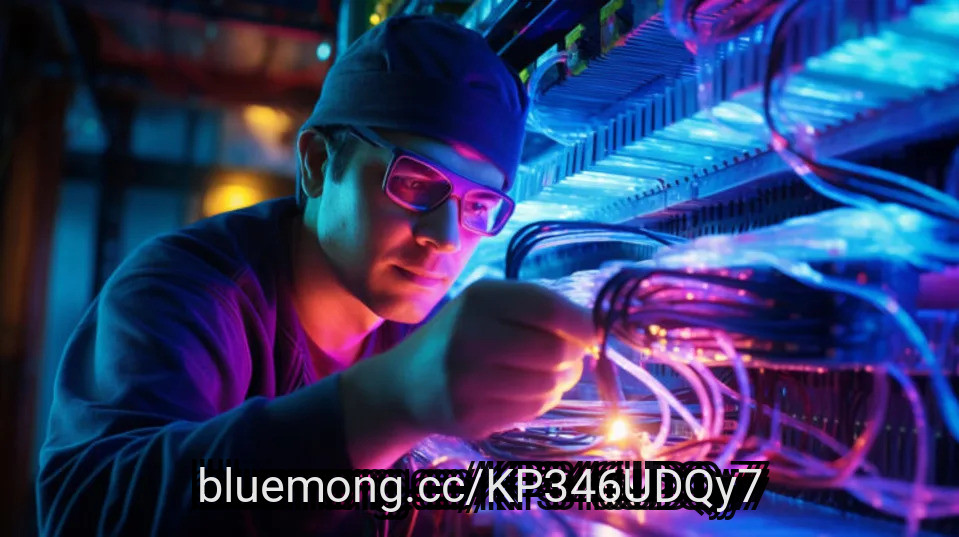

17 days ago
Digital infrastructure company Equinix Inc. (NASDAQ:EQIX) and AI chipmaker NVIDIA Corporation (NASDAQ:NVDA) have expanded their partnership today to target the next major phase of artificial intelligence spending: inference.
Shares of Equinix rose 2% on Wednesday following the announcement of Equinix Inference Exchange, which is a distributed AI inference program for global enterprises, together with a new collaboration with Together AI.
The distributed AI inference platform can leverage Nvidia's Enterprise Reference Architectures, Together AI's inference platform, and Equinix's global data center and networking infrastructure to enable enterprises to achieve a faster path from AI experimentation to production. The collaboration will provide connectivity to clouds, networks and AI providers through Equinix Fabric.
The market's modest response is worth looking at.
Nvidia's expanded collaboration with Equinix allows it to push its computing architecture deeper into corporate AI infrastructure. Inference Exchange can make Nvidia-based infrastructure easier to deploy alongside its existing cloud and data environments.
#equinix #NVIDIA #distributed
Shares of Equinix rose 2% on Wednesday following the announcement of Equinix Inference Exchange, which is a distributed AI inference program for global enterprises, together with a new collaboration with Together AI.
The distributed AI inference platform can leverage Nvidia's Enterprise Reference Architectures, Together AI's inference platform, and Equinix's global data center and networking infrastructure to enable enterprises to achieve a faster path from AI experimentation to production. The collaboration will provide connectivity to clouds, networks and AI providers through Equinix Fabric.
The market's modest response is worth looking at.
Nvidia's expanded collaboration with Equinix allows it to push its computing architecture deeper into corporate AI infrastructure. Inference Exchange can make Nvidia-based infrastructure easier to deploy alongside its existing cloud and data environments.
#equinix #NVIDIA #distributed


17 days ago
Equinix (NASDAQ:EQIX) shares rose 2% on Wednesday after the company announced Equinix Inference Exchange, a distributed artificial intelligence inference program developed in collaboration with Nvidia and Together AI.
The program brings together Nvidia Enterprise Reference Architectures, Together AI's inference platform and Equinix's global infrastructure for enterprises deploying AI workloads.
According to Equinix, the combination is designed to support deployment speed, flexibility and cost management. These benefits represent the company's stated objectives for the program rather than independently established performance outcomes.
Equinix said Inference Exchange will provide enterprises with connectivity to data, users and other parts of their technology ecosystems through Equinix Fabric.
The program integrates Nvidia's validated Enterprise Reference Architectures with Together AI's inference platform, which supports more than 200 open-source models, according to the company.
#equinix #exchange #NVIDIA #enterprise
The program brings together Nvidia Enterprise Reference Architectures, Together AI's inference platform and Equinix's global infrastructure for enterprises deploying AI workloads.
According to Equinix, the combination is designed to support deployment speed, flexibility and cost management. These benefits represent the company's stated objectives for the program rather than independently established performance outcomes.
Equinix said Inference Exchange will provide enterprises with connectivity to data, users and other parts of their technology ecosystems through Equinix Fabric.
The program integrates Nvidia's validated Enterprise Reference Architectures with Together AI's inference platform, which supports more than 200 open-source models, according to the company.
#equinix #exchange #NVIDIA #enterprise


17 days ago
Sands Capital, an investment management company, released its "Sands Capital Select Growth Fund" Q2 2026 investor letter. The letter can be downloaded here. Select Growth Fund targets U.S. businesses driving significant structural change through disruptive innovation. The fund returned 23.2% in the quarter, outperforming the Russell 1000 Growth Index's 16.7%. U.S. large-cap growth equities rebounded sharply, driven by improving corporate fundamentals and renewed investor confidence in AI, despite geopolitical uncertainties. However, the market's gains were narrow, concentrated among AI beneficiaries. The portfolio's success stemmed from strength in AI infrastructure holdings, especially memory and storage, supported by better pricing and tightening supply. As AI development advances, continuous demand for compute capacity is expected, prompting investments in memory, CPUs, AI chips, and semiconductor manufacturing to address emerging bottlenecks essential for scaling AI. Also, check the fund's top five holdings to see its best picks in 2026.
In its second-quarter 2026 investor letter, Sands Capital Select Growth Fund highlighted Lam Research Corporation (NASDAQ:LRCX), a leading semiconductor equipment company that supplies semiconductor processing equipment. Lam Research Corporation (NASDAQ:LRCX), with a 4.7% portfolio weight, contributed 2.2% to the Fund's performance this quarter. On September 1, 2026, Lam Research Corporation (NASDAQ:LRCX) closed at $290.20 per share. Over the past month, Lam Research Corporation (NASDAQ:LRCX) declined 5.60%, but its shares are up 196.91% over the past year. Lam Research Corporation (NASDAQ:LRCX) has a market capitalization of $363.13 billion.
Sands Capital Select Growth Fund stated the following regarding Lam Research Corporation (NASDAQ:LRCX) in its Q2 2026 investor letter:
"Lam Research Corporation (NASDAQ:LRCX) is a leading global provider of semiconductor fabrication equipment. Shares of the business benefited from renewed confidence in semiconductor capital spending and the rising complexity of chip manufacturing. In the first quarter, revenue grew 24 percent and adjusted earnings per share grew 42 percent year over year, while June-quarter guidance exceeded consensus expectations. The company is a critical supplier of etch and deposition equipment, both of which become increasingly important as memory architectures and leading-edge semiconductor manufacturing grow more complex. We believe Lam's exposure to high-bandwidth memory, advanced NAND, and a recovering memory investment cycle gives it a differentiated role within the AI infrastructure supply chain."
#NASDAQ #fund #select
In its second-quarter 2026 investor letter, Sands Capital Select Growth Fund highlighted Lam Research Corporation (NASDAQ:LRCX), a leading semiconductor equipment company that supplies semiconductor processing equipment. Lam Research Corporation (NASDAQ:LRCX), with a 4.7% portfolio weight, contributed 2.2% to the Fund's performance this quarter. On September 1, 2026, Lam Research Corporation (NASDAQ:LRCX) closed at $290.20 per share. Over the past month, Lam Research Corporation (NASDAQ:LRCX) declined 5.60%, but its shares are up 196.91% over the past year. Lam Research Corporation (NASDAQ:LRCX) has a market capitalization of $363.13 billion.
Sands Capital Select Growth Fund stated the following regarding Lam Research Corporation (NASDAQ:LRCX) in its Q2 2026 investor letter:
"Lam Research Corporation (NASDAQ:LRCX) is a leading global provider of semiconductor fabrication equipment. Shares of the business benefited from renewed confidence in semiconductor capital spending and the rising complexity of chip manufacturing. In the first quarter, revenue grew 24 percent and adjusted earnings per share grew 42 percent year over year, while June-quarter guidance exceeded consensus expectations. The company is a critical supplier of etch and deposition equipment, both of which become increasingly important as memory architectures and leading-edge semiconductor manufacturing grow more complex. We believe Lam's exposure to high-bandwidth memory, advanced NAND, and a recovering memory investment cycle gives it a differentiated role within the AI infrastructure supply chain."
#NASDAQ #fund #select


17 days ago
At three in the morning, an AI system can evaluate a trade flow, verify a contract and trigger a cross-border payout in seconds. The payment may still sit in a correspondent bank queue for days. Corporate software now operates at machine speed, while the financial infrastructure beneath it still keeps banking hours.
That timing gap is the structural challenge. The financial architecture underneath these autonomous workflows has failed to experience a corresponding modernization.
Sophisticated, automated software layers now sit on top of traditional banking rails that remain bound by manual processes, legacy clearing schedules, regional banking hours and standard multi-day settlement timelines. This systemic divergence creates an immediate operational mismatch.
An enterprise cannot maximize continuous, automated commerce when its settlement infrastructure relies on decades-old technology designs.
https://www.youtube.com/wa...
#automated #settlement #corporate #sophisticated
That timing gap is the structural challenge. The financial architecture underneath these autonomous workflows has failed to experience a corresponding modernization.
Sophisticated, automated software layers now sit on top of traditional banking rails that remain bound by manual processes, legacy clearing schedules, regional banking hours and standard multi-day settlement timelines. This systemic divergence creates an immediate operational mismatch.
An enterprise cannot maximize continuous, automated commerce when its settlement infrastructure relies on decades-old technology designs.
https://www.youtube.com/wa...
#automated #settlement #corporate #sophisticated

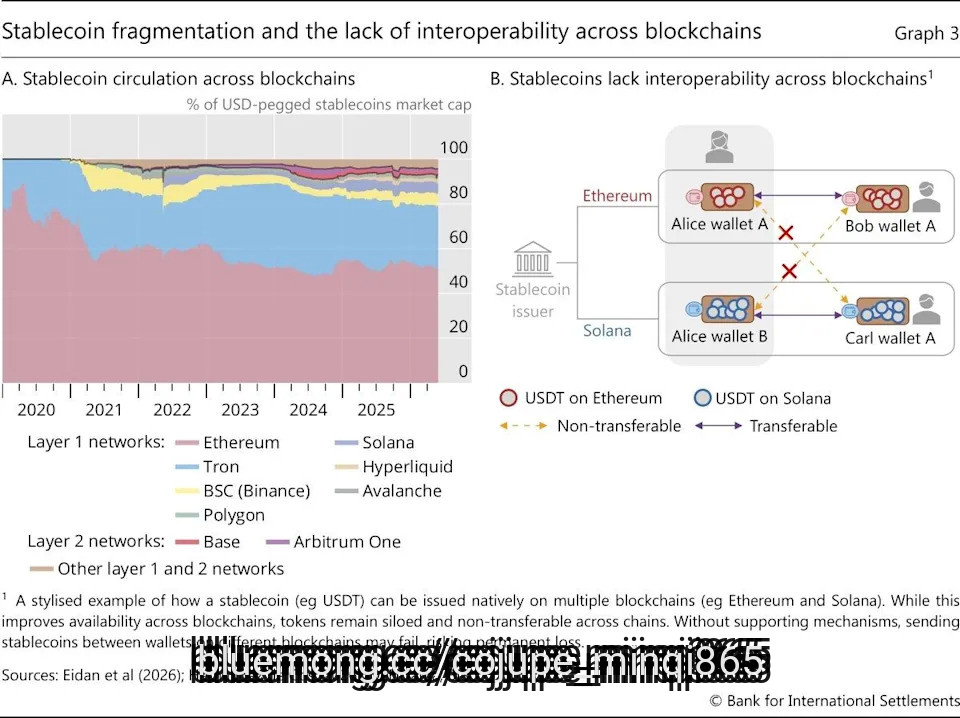

18 days ago
Nvidia has placed a large financial bet on the lasers that connect AI systems. On March 2, NVIDIA Corporation (NASDAQ:NVDA) invested $2 billion in Coherent Corp. (NYSE:COHR) common stock and entered a nonexclusive multiyear strategic arrangement covering optics development, purchase commitments, and access to manufacturing capacity. Coherent's August filing keeps attention on the capital required to meet that opportunity. The deal suggests bandwidth, not raw compute alone, may determine how quickly next-generation data centers scale.
Photo from Coherent website
NVIDIA Corporation (NASDAQ:NVDA) needs faster and more power-efficient connections as clusters grow to enormous numbers of accelerators. Strategic access to lasers and optical components can reduce supply risk and help Nvidia coordinate networking with its computing roadmap. The bull case is that Nvidia secures a critical input before demand peaks. The bear case is that purchase commitments could become less attractive if technologies shift or capacity expands faster than customers need.
Coherent Corp. (NYSE:COHR) gains capital, demand visibility, and validation from the AI industry's most influential platform company. Its lasers, transceivers, and materials can participate as data movement consumes a larger share of system power and cost. Yet scaling production requires capital expenditures and working capital well before all revenue is recognized. Customer concentration, manufacturing yields, pricing negotiations, and technology transitions can determine whether volume growth becomes attractive free cash flow.
The nonexclusive structure is important here. Nvidia can support capacity without surrendering alternative suppliers, while Coherent can sell beyond Nvidia. That makes the arrangement more resilient than an acquisition, but it also limits exclusivity as a competitive moat. The strongest thesis is not that one partner controls optics. It is that AI architectures need substantially more optical content, allowing both partners to benefit if execution holds.
#capital #nvda #NYSE
Photo from Coherent website
NVIDIA Corporation (NASDAQ:NVDA) needs faster and more power-efficient connections as clusters grow to enormous numbers of accelerators. Strategic access to lasers and optical components can reduce supply risk and help Nvidia coordinate networking with its computing roadmap. The bull case is that Nvidia secures a critical input before demand peaks. The bear case is that purchase commitments could become less attractive if technologies shift or capacity expands faster than customers need.
Coherent Corp. (NYSE:COHR) gains capital, demand visibility, and validation from the AI industry's most influential platform company. Its lasers, transceivers, and materials can participate as data movement consumes a larger share of system power and cost. Yet scaling production requires capital expenditures and working capital well before all revenue is recognized. Customer concentration, manufacturing yields, pricing negotiations, and technology transitions can determine whether volume growth becomes attractive free cash flow.
The nonexclusive structure is important here. Nvidia can support capacity without surrendering alternative suppliers, while Coherent can sell beyond Nvidia. That makes the arrangement more resilient than an acquisition, but it also limits exclusivity as a competitive moat. The strongest thesis is not that one partner controls optics. It is that AI architectures need substantially more optical content, allowing both partners to benefit if execution holds.
#capital #nvda #NYSE