
19 days ago
Argentina's controversial right-wing president, Javier Milei, slashed inflation with a brutal dose of economic austerity, but this came at a steep social cost. The cost of living is spiraling higher, fueling household debt, loan delinquencies, and economic hardship. Industrial output, since Milei took office, has declined sharply, with local companies closing at an alarming rate. While parts of the economy are falling into chaos, Argentina's oil and gas sector is experiencing a generational boom driven by the Vaca Muerta shale.
Argentina's vital hydrocarbon sector continues to surge, with oil production hitting yet another record in July 2026. Output reached 902,920 barrels per day, almost 1% above June and 12% higher than a year earlier, marking the country's highest oil production on record. Natural gas production has also expanded strongly, although output slipped 0.5% month over month and 1.6% year over year in July to average 5.6 billion cubic feet per day. That modest setback barely dents the bigger picture: economically crucial gas production has surged 21% over the past five years.
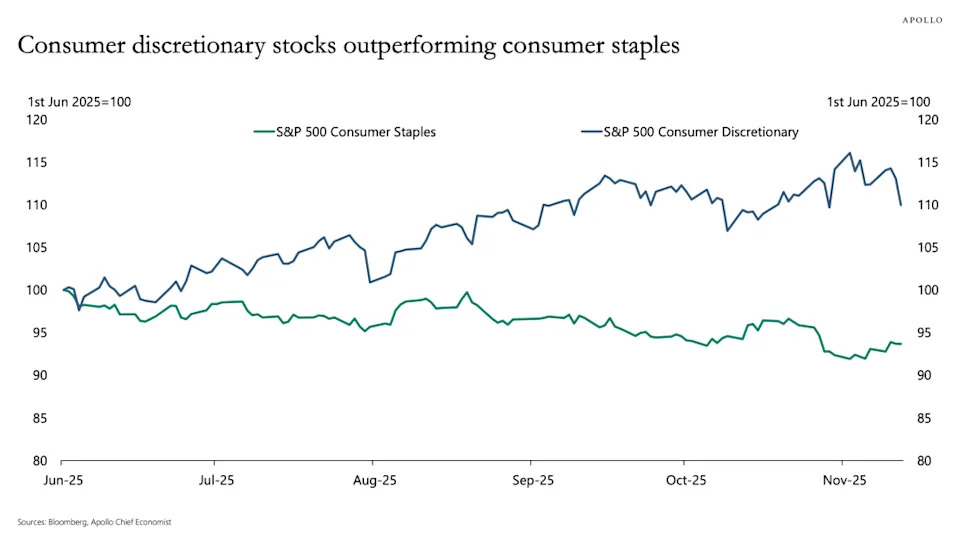
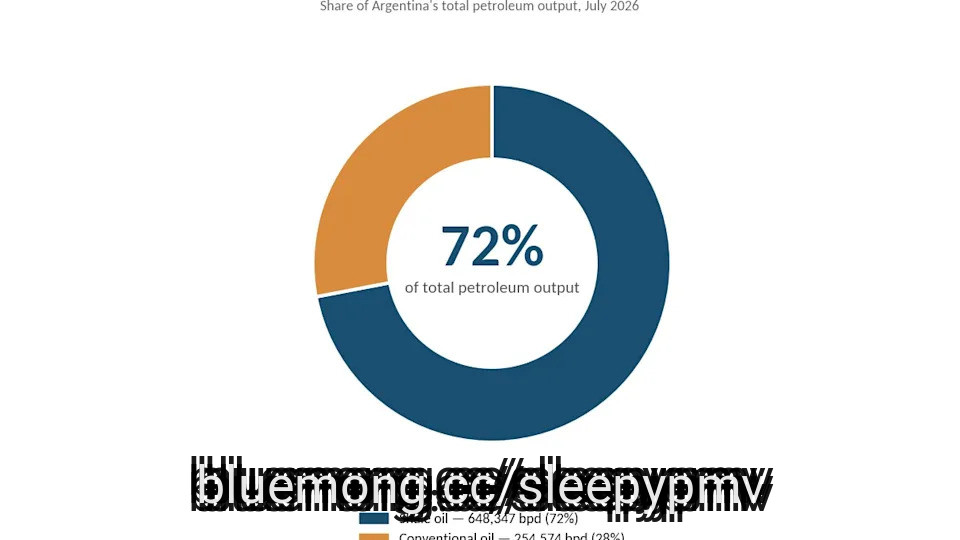
It is the ongoing and growing exploitation of the Vaca Muerta shale, situated in northern Patagonia in Neuquén Province which is responsible for Argentina's booming oil and natural gas complex. For July 2026, shale oil production rose by 1.2% month over month and a whopping 26% year over year to an all-time high of 648,347 barrels per day. As a result, shale oil now comprises a record 72% of Argentina's total petroleum output. This is also responsible for bolstering energy security in the Americas.
Shale gas production is also expanding at a healthy clip. For July 2026, Argentina lifted an average of 3.9 billion cubic feet per day of the fossil, which, despite being nearly 1% less than a month prior, was almost 4% higher year over year. That is the second-highest monthly shale gas production ever recorded. It was only eclipsed by June 2026 output, which hit 3.94 billion cubic feet per day. Shale gas now makes up 70% of Argentina's natural gas output, which is the highest level ever recorded.
Shale oil and gas production will keep growing at a solid pace, with Argentina on track to become a pure unconventional producer. You see, conventional oil output is in decline and has been for over a decade. Argentina's conventional fields are well past their prime, in many cases having hit peak production a decade ago with output now truly in decline. Government data shows July 2026 conventional oil production of 254,574 barrels per day, which is 2% lower than a month prior and 13% less year over year, indicating conventional oil output is 50% lower than a decade ago.
#shale #july #higher #record
Argentina's vital hydrocarbon sector continues to surge, with oil production hitting yet another record in July 2026. Output reached 902,920 barrels per day, almost 1% above June and 12% higher than a year earlier, marking the country's highest oil production on record. Natural gas production has also expanded strongly, although output slipped 0.5% month over month and 1.6% year over year in July to average 5.6 billion cubic feet per day. That modest setback barely dents the bigger picture: economically crucial gas production has surged 21% over the past five years.
It is the ongoing and growing exploitation of the Vaca Muerta shale, situated in northern Patagonia in Neuquén Province which is responsible for Argentina's booming oil and natural gas complex. For July 2026, shale oil production rose by 1.2% month over month and a whopping 26% year over year to an all-time high of 648,347 barrels per day. As a result, shale oil now comprises a record 72% of Argentina's total petroleum output. This is also responsible for bolstering energy security in the Americas.
Shale gas production is also expanding at a healthy clip. For July 2026, Argentina lifted an average of 3.9 billion cubic feet per day of the fossil, which, despite being nearly 1% less than a month prior, was almost 4% higher year over year. That is the second-highest monthly shale gas production ever recorded. It was only eclipsed by June 2026 output, which hit 3.94 billion cubic feet per day. Shale gas now makes up 70% of Argentina's natural gas output, which is the highest level ever recorded.
Shale oil and gas production will keep growing at a solid pace, with Argentina on track to become a pure unconventional producer. You see, conventional oil output is in decline and has been for over a decade. Argentina's conventional fields are well past their prime, in many cases having hit peak production a decade ago with output now truly in decline. Government data shows July 2026 conventional oil production of 254,574 barrels per day, which is 2% lower than a month prior and 13% less year over year, indicating conventional oil output is 50% lower than a decade ago.
#shale #july #higher #record

20 days ago
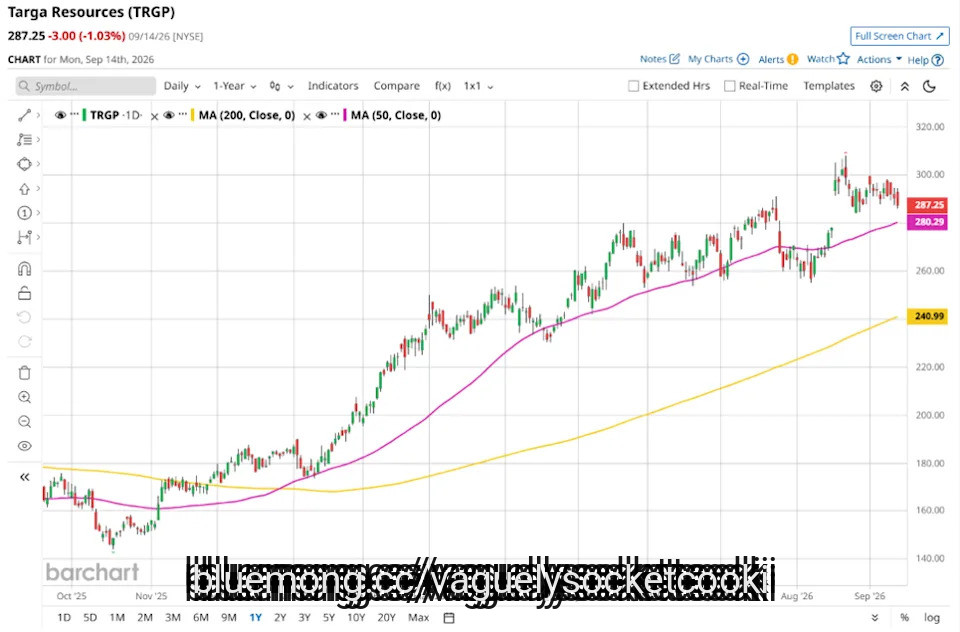
Targa Resources Corp. (TRGP), headquartered in Houston, Texas, owns, operates, acquires, and develops a portfolio of complementary domestic infrastructure ***** ets. Valued at $62.2 billion by market cap, the company's ***** ets connect natural gas and NGLs to domestic and international markets with growing demand for cleaner fuels and feedstocks.
Companies worth $10 billion or more are generally described as "large-cap stocks," and TRGP perfectly fits that description, with its market cap exceeding this mark, underscoring its size, influence, and dominance within the oil & gas midstream industry. TRGP benefits from strategic positioning in key shale plays including Permian, STACK, SCOOP, and Bakken, giving it a competitive edge in midstream. Its diversified service portfolio, including the Grand Prix NGL pipeline and Mont Belvieu fractionation capacity, underpins a strong market presence and stable revenue base.
Goldman Sachs Expects Fed Chair Kevin Warsh to Raise Rates This Week — But Not Because of Oil Prices.
Middle East Supply Constraints Lift Crude Oil Prices
Crude Prices Soar as Global Oil Supplies Continue to Tighten
#market
Companies worth $10 billion or more are generally described as "large-cap stocks," and TRGP perfectly fits that description, with its market cap exceeding this mark, underscoring its size, influence, and dominance within the oil & gas midstream industry. TRGP benefits from strategic positioning in key shale plays including Permian, STACK, SCOOP, and Bakken, giving it a competitive edge in midstream. Its diversified service portfolio, including the Grand Prix NGL pipeline and Mont Belvieu fractionation capacity, underpins a strong market presence and stable revenue base.
Goldman Sachs Expects Fed Chair Kevin Warsh to Raise Rates This Week — But Not Because of Oil Prices.
Middle East Supply Constraints Lift Crude Oil Prices
Crude Prices Soar as Global Oil Supplies Continue to Tighten
#market



20 days ago
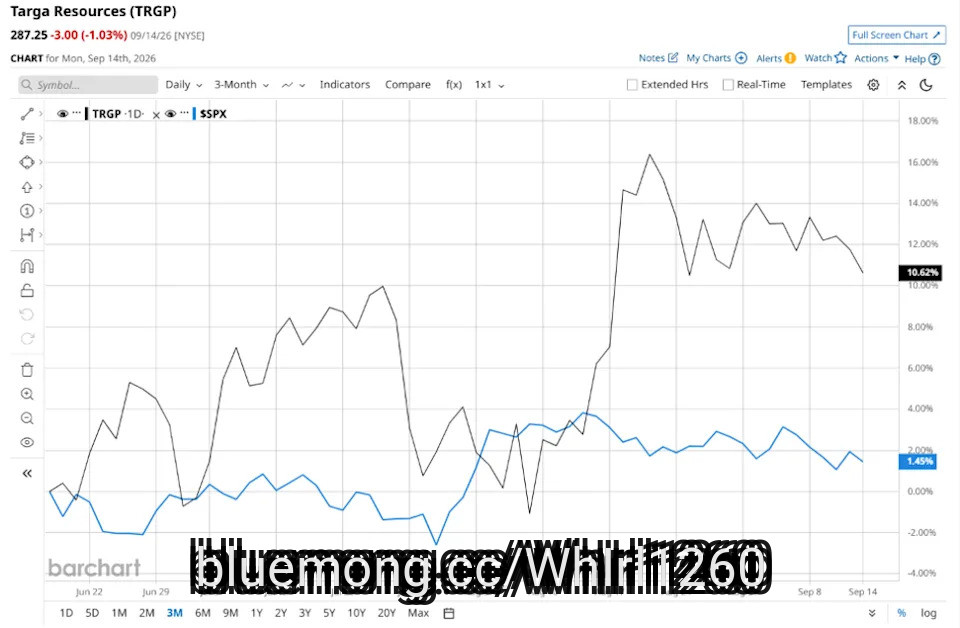
Targa Resources Corp. (TRGP), headquartered in Houston, Texas, owns, operates, acquires, and develops a portfolio of complementary domestic infrastructure ****** ets. Valued at $62.2 billion by market cap, the company's ****** ets connect natural gas and NGLs to domestic and international markets with growing demand for cleaner fuels and feedstocks.
Companies worth $10 billion or more are generally described as "large-cap stocks," and TRGP perfectly fits that description, with its market cap exceeding this mark, underscoring its size, influence, and dominance within the oil & gas midstream industry. TRGP benefits from strategic positioning in key shale plays including Permian, STACK, SCOOP, and Bakken, giving it a competitive edge in midstream. Its diversified service portfolio, including the Grand Prix NGL pipeline and Mont Belvieu fractionation capacity, underpins a strong market presence and stable revenue base.
Goldman Sachs Expects Fed Chair Kevin Warsh to Raise Rates This Week — But Not Because of Oil Prices.
Middle East Supply Constraints Lift Crude Oil Prices
Crude Prices Soar as Global Oil Supplies Continue to Tighten
#prices #market #assets #midstream
Companies worth $10 billion or more are generally described as "large-cap stocks," and TRGP perfectly fits that description, with its market cap exceeding this mark, underscoring its size, influence, and dominance within the oil & gas midstream industry. TRGP benefits from strategic positioning in key shale plays including Permian, STACK, SCOOP, and Bakken, giving it a competitive edge in midstream. Its diversified service portfolio, including the Grand Prix NGL pipeline and Mont Belvieu fractionation capacity, underpins a strong market presence and stable revenue base.
Goldman Sachs Expects Fed Chair Kevin Warsh to Raise Rates This Week — But Not Because of Oil Prices.
Middle East Supply Constraints Lift Crude Oil Prices
Crude Prices Soar as Global Oil Supplies Continue to Tighten
#prices #market #assets #midstream



23 days ago
Argentina's state-controlled energy company YPF is close to signing several LNG sales agreements for its planned Argentina LNG project as it races toward a final investment decision later this year.
YPF CEO Horacio Marín said at the Gastech conference in Bangkok that the company expects to sign two or three LNG contracts covering between 0.5 million and 1.5 million tonnes per year each. YPF aims to have the agreements secured before partners make a final investment decision in November.
The $24-billion Argentina LNG development, backed by YPF, Italy's Eni and Abu Dhabi's XRG, is designed to turn the vast Vaca Muerta shale formation into a major source of LNG for international markets.
The initial development will feature two floating LNG facilities with combined capacity of 12 million tonnes per year, with potential expansion to 18 million tonnes. A dedicated 527-kilometer pipeline will transport gas from Vaca Muerta to the Atlantic coast in Río Negro province. YPF says the development will also include gas treatment and liquids infrastructure.
Eni and XRG each hold approximately 32% interests in the upstream blocks feeding the development, with YPF holding 36%.
#development #year #tonnes #muerta
YPF CEO Horacio Marín said at the Gastech conference in Bangkok that the company expects to sign two or three LNG contracts covering between 0.5 million and 1.5 million tonnes per year each. YPF aims to have the agreements secured before partners make a final investment decision in November.
The $24-billion Argentina LNG development, backed by YPF, Italy's Eni and Abu Dhabi's XRG, is designed to turn the vast Vaca Muerta shale formation into a major source of LNG for international markets.
The initial development will feature two floating LNG facilities with combined capacity of 12 million tonnes per year, with potential expansion to 18 million tonnes. A dedicated 527-kilometer pipeline will transport gas from Vaca Muerta to the Atlantic coast in Río Negro province. YPF says the development will also include gas treatment and liquids infrastructure.
Eni and XRG each hold approximately 32% interests in the upstream blocks feeding the development, with YPF holding 36%.
#development #year #tonnes #muerta


1 month ago
Saudi Arabia's power stations, desalination plants, factories and farms consume more than 1 million barrels per day of liquid fuel that the kingdom aims to displace by 2030. Natural gas and renewables will provide most of the replacement energy. Nuclear power could reduce domestic oil consumption further after 2030 as electricity demand continues to grow.
On July 22, the United States and Saudi Arabia signed a 30-year civil nuclear cooperation agreement, clearing the way for U.S. companies to potentially supply the kingdom with reactors, nuclear materials and technical services. Similar agreements with Turkey and the UAE entered into force in June 2008 and December 2009, respectively.
The commercial opportunity is in Saudi Arabia's search for additional generating capacity. The IEA estimates that the kingdom's electricity demand grew by 3.8% in 2025 and forecasts average annual growth of 3.1% through 2030.
Related: U.S. Shale Producers Lose Bid to Kill Oil Price-Fixing Case
Saudi consumption of crude oil and fuel oil for power generation rises sharply during the summer, when air-conditioning demand peaks. Combined burn reached 1.42 million b/d in June 2024, according to the EIA. It fell to an average of 678,000 b/d in January and February 2025 (the lowest level for that period since 2016) with February alone registering an 11-year monthly low of 589,000 b/d. Reducing domestic oil-fired generation can leave more petroleum available for export or other uses.
#demand #february #million #fuel
On July 22, the United States and Saudi Arabia signed a 30-year civil nuclear cooperation agreement, clearing the way for U.S. companies to potentially supply the kingdom with reactors, nuclear materials and technical services. Similar agreements with Turkey and the UAE entered into force in June 2008 and December 2009, respectively.
The commercial opportunity is in Saudi Arabia's search for additional generating capacity. The IEA estimates that the kingdom's electricity demand grew by 3.8% in 2025 and forecasts average annual growth of 3.1% through 2030.
Related: U.S. Shale Producers Lose Bid to Kill Oil Price-Fixing Case
Saudi consumption of crude oil and fuel oil for power generation rises sharply during the summer, when air-conditioning demand peaks. Combined burn reached 1.42 million b/d in June 2024, according to the EIA. It fell to an average of 678,000 b/d in January and February 2025 (the lowest level for that period since 2016) with February alone registering an 11-year monthly low of 589,000 b/d. Reducing domestic oil-fired generation can leave more petroleum available for export or other uses.
#demand #february #million #fuel


1 month ago
There is always a winner in any major global oil crisis. In 1973/74, it was Saudi Arabia and its OPEC brothers who shifted the balance of power in the market away from the previous arrangement dominated by the West's 'Seven Sisters' to the oil producers of the Middle East. After the 2014-2016 Oil Price War, it was the U.S. whose earlier nascent shale oil sector resisted the threat to its very existence from Saudi Arabia and OPEC, reorganising into a meaner, leaner, lower-cost oil production machine. The U.S. was the winner again in the short-lived 2020 Oil Price War, and this, along with all the other major crises mentioned, is ****** ysed in full in my latest book on the global oil markets. The latest rupture in the global oil market order that followed the U.S.'s 'Operation Epic Fury' against Iran that began on 28 February has also produced a clear winner. It is neither the U.S., Saudi Arabia, nor the other OPEC states -- it is China. So, how inclined will Beijing be to heed Washington's newly announced sanctions on Iran ahead of the meeting of its President Xi Jinping with U.S. counterpart Donald Trump on 24 September at the White House?
The sanctions in question were announced on 20 August by U.S. Treasury Secretary Scott Bessent, who stated they would be "the toughest sanctions in history" on Iran, under the umbrella of 'Economic D-Day' for the country. The direct sanctions on Iran aim for the complete financial isolation and economic shutdown of the regime by cutting off all domestic and international revenue streams. To this end, the U.S. Treasury blacklisted five core sectors of Iran's economy -- Digital ****** ets/Crypto, Technology, Gold, Aviation, and Shipping -- making any business operating within them subject to immediate ****** et freezes. At the same time, all longstanding humanitarian, academic, athletic, and personal remittance exemptions were indefinitely suspended, including a complete ban on non-commercial family money transfers and joint research collaborations. In parallel with this, the state-run Islamic Republic of Iran Shipping Lines (IRISL) and commercial aviation fleets were put under a strict operational embargo, cutting off access to foreign ports, refuelling, and aircraft spare parts. Immediate ****** et freezes were also levied against procurement networks, cyber warfare units, and business syndicates tied to the Islamic Revolutionary Guard Corps (IRGC).
Related: Solar Has Crossed a Critical Economic Tipping Point
In tandem with this, the U.S. Treasury, along with sister organisations, will fully utilise secondary sanctions to force foreign governments and companies to choose between trading with Iran or trading with the U.S., under the umbrella of 'Operation Economic Outcast'. This aims to target the complete financial isolation of Tehran by cutting off its remaining economic lifelines. To that end, the U.S. Treasury has already blacklisted nearly 60 entities, individuals, and vessels, focusing heavily on thir
The sanctions in question were announced on 20 August by U.S. Treasury Secretary Scott Bessent, who stated they would be "the toughest sanctions in history" on Iran, under the umbrella of 'Economic D-Day' for the country. The direct sanctions on Iran aim for the complete financial isolation and economic shutdown of the regime by cutting off all domestic and international revenue streams. To this end, the U.S. Treasury blacklisted five core sectors of Iran's economy -- Digital ****** ets/Crypto, Technology, Gold, Aviation, and Shipping -- making any business operating within them subject to immediate ****** et freezes. At the same time, all longstanding humanitarian, academic, athletic, and personal remittance exemptions were indefinitely suspended, including a complete ban on non-commercial family money transfers and joint research collaborations. In parallel with this, the state-run Islamic Republic of Iran Shipping Lines (IRISL) and commercial aviation fleets were put under a strict operational embargo, cutting off access to foreign ports, refuelling, and aircraft spare parts. Immediate ****** et freezes were also levied against procurement networks, cyber warfare units, and business syndicates tied to the Islamic Revolutionary Guard Corps (IRGC).
Related: Solar Has Crossed a Critical Economic Tipping Point
In tandem with this, the U.S. Treasury, along with sister organisations, will fully utilise secondary sanctions to force foreign governments and companies to choose between trading with Iran or trading with the U.S., under the umbrella of 'Operation Economic Outcast'. This aims to target the complete financial isolation of Tehran by cutting off its remaining economic lifelines. To that end, the U.S. Treasury has already blacklisted nearly 60 entities, individuals, and vessels, focusing heavily on thir


2 months ago
With her name attached to two internet-breaking movies in 2026 — "The Devil Wears Prada 2" and "The Odyssey" — Anne Hathaway has been a regular on the red carpet and in conversation. But the attention should be nothing new to the star. She had a similarly big year back in 2013. Hathaway won a Best Supporting Actress Oscar for role in "Les Misérables," but when she walked the carpet ahead of the ceremony, she wore a pink satin Prada gown that got a lot of attention for all the wrong reasons. Between the dress' pale color, show-everything fabric, and the dart placement at the bust, Hathaway's, erm, nipples looked quite prominent and pointy. With the privilege of hindsight and time, Hathaway's dress has earned its proper place among the Oscars red carpet greats. But let's put a pin in the pink satin, shall we?
Larry Busacca/Getty
A few months later, on the first Monday in May, Hathaway walked the famous Met Gala steps, and the gown the actor wore that night flew a bit under the radar, but it's more than worth revisiting. That year's theme was "Punk: Chaos to Couture," and Hathaway fabulously nailed the vibe having draped her frame in an impossibly slinky black Valentino gown that read at once punk-rock and disco glam. Between the zig-zaggy shale-like print, the saucy sheer, and the dreamy feather details, this dress should've garnered way more headlines than the Prada "mishap." And we've been keeping our eye on Anne Hathaway's full beauty evolution via the photos, and this icy blond pixie cut was an especially fun high point.
Read more: The Worst-Dressed Celebs In Oscars History
Jamie McCarthy & Theo Wargo/Getty
#hathaway #carpet #getty
Larry Busacca/Getty
A few months later, on the first Monday in May, Hathaway walked the famous Met Gala steps, and the gown the actor wore that night flew a bit under the radar, but it's more than worth revisiting. That year's theme was "Punk: Chaos to Couture," and Hathaway fabulously nailed the vibe having draped her frame in an impossibly slinky black Valentino gown that read at once punk-rock and disco glam. Between the zig-zaggy shale-like print, the saucy sheer, and the dreamy feather details, this dress should've garnered way more headlines than the Prada "mishap." And we've been keeping our eye on Anne Hathaway's full beauty evolution via the photos, and this icy blond pixie cut was an especially fun high point.
Read more: The Worst-Dressed Celebs In Oscars History
Jamie McCarthy & Theo Wargo/Getty
#hathaway #carpet #getty



2 months ago
U.S. shale billionaire Harold Hamm is making a multibillion-dollar bet on Argentina's Vaca Muerta, becoming the latest high-profile American investor to target the rapidly expanding shale basin.
Hamm's Continental Resources has agreed to acquire a 50% interest in Phoenix Global Resources, creating an equal joint venture with commodities giant Mercuria Energy Group. The partners plan to invest more than $4 billion over five years and increase Phoenix's production from more than 28,000 barrels of oil equivalent per day to over 100,000 boed.
The combined portfolio will encompass approximately 163,000 net acres across six Vaca Muerta blocks. The proposed transaction remains subject to definitive agreements, closing conditions and regulatory approvals.
Continental is no stranger to the formation. The company entered Argentina last year by acquiring **** ets from Pluspetrol and subsequently bought interests in blocks operated by Pan American Energy. CEO Doug Lawler credited President Javier Milei's economic reforms with helping create the conditions for Continental's latest investment.
Hamm isn't the only American billionaire taking an interest.
#american #continental #shale #latest
Hamm's Continental Resources has agreed to acquire a 50% interest in Phoenix Global Resources, creating an equal joint venture with commodities giant Mercuria Energy Group. The partners plan to invest more than $4 billion over five years and increase Phoenix's production from more than 28,000 barrels of oil equivalent per day to over 100,000 boed.
The combined portfolio will encompass approximately 163,000 net acres across six Vaca Muerta blocks. The proposed transaction remains subject to definitive agreements, closing conditions and regulatory approvals.
Continental is no stranger to the formation. The company entered Argentina last year by acquiring **** ets from Pluspetrol and subsequently bought interests in blocks operated by Pan American Energy. CEO Doug Lawler credited President Javier Milei's economic reforms with helping create the conditions for Continental's latest investment.
Hamm isn't the only American billionaire taking an interest.
#american #continental #shale #latest


2 months ago
Permian Resources Corporation (NYSE:PR) was held by 56 hedge funds at the end of Q1 2026, remaining unchanged from the previous quarter. However, the total stake value of these hedge fund investors surged from just over $1.2 billion in Q4 2025 to around $1.8 billion in the first quarter.
Ken Griffin's Citadel Investment Group held the largest stake in PR at the end of Q1, with a total value of almost $266 million.
Permian Resources Corporation (NYSE:PR) has turned into one of the most important shale operators in the United States. The company delivered exceptional results for its Q2 2026 earlier this month, supported by higher oil prices, increasing production, and strong financial discipline.
Permian Resources reported a record free cash flow of $751 million during the quarter, up almost 50% sequentially, and translating into a record free cash flow per share of $0.88. Meanwhile, oil production also surged by 3% sequentially, and the company's updated oil output guidance of 199,000 bpd for the full year 2026 is 10% higher than 2025.
Notably, the energy firm expects to achieve the higher production target with approximately 1% lower spending compared to last year, highlighting the improving capital efficiency of its business.
#total
Ken Griffin's Citadel Investment Group held the largest stake in PR at the end of Q1, with a total value of almost $266 million.
Permian Resources Corporation (NYSE:PR) has turned into one of the most important shale operators in the United States. The company delivered exceptional results for its Q2 2026 earlier this month, supported by higher oil prices, increasing production, and strong financial discipline.
Permian Resources reported a record free cash flow of $751 million during the quarter, up almost 50% sequentially, and translating into a record free cash flow per share of $0.88. Meanwhile, oil production also surged by 3% sequentially, and the company's updated oil output guidance of 199,000 bpd for the full year 2026 is 10% higher than 2025.
Notably, the energy firm expects to achieve the higher production target with approximately 1% lower spending compared to last year, highlighting the improving capital efficiency of its business.
#total


2 months ago
Eagle Capital Management, an investment management company, released its second quarter 2026 investor letter. A copy of the letter can be downloaded here. In the quarter, Eagle Capital Management discussed how enthusiasm around AI capital spending has driven strong S&P 500 earnings growth while also increasing risks from elevated valuations, concentrated demand, and aggressive investment ***** umptions. Eagle remains a strong believer in AI but prefers constructing a portfolio that can perform across multiple outcomes rather than relying on one forecast. The firm believes current earnings can overstate underlying economics because semiconductor equipment is depreciated over several years, while free cash flow growth remains much weaker. It also expects competition and additional capacity across AI labs, hyperscalers, and semiconductors to eventually create winners and losers. These dynamics are encouraging Eagle to recycle capital toward attractive opportunities outside the most crowded AI trades while maintaining selective exposure to high quality beneficiaries. The portfolio trades at a 20% market discount with faster expected EPS growth. Please review the Strategy's top five holdings for key selections.
In its second-quarter 2026 investor letter, Eagle Capital Management highlighted EQT Corporation (NYSE:EQT). EQT Corporation (NYSE:EQT) engages in the exploration, production, gathering, and transmission of hydrocarbons and natural gas. On August 19, 2026, EQT Corporation (NYSE:EQT) closed at $53.64 per share. One-month return of EQT Corporation (NYSE:EQT) was 0.47% and its shares gained 3.05% over the past 52 weeks. EQT Corporation (NYSE:EQT) has a market capitalization of $33.55 billion with a 52-week trading range between $47.94 - $68.24.
Eagle Capital Management stated the following regarding EQT Corporation (NYSE:EQT) in its Q2 2026 investor letter:
"The energy & metals companies we own benefit from favorable multiyear supply/demand outlooks, management teams that are good capital allocators, and ***** et bases that are well-positioned on the global cost curve. EQT Corporation (NYSE:EQT) is the largest U.S. pure-play natural gas producer. Like ConocoPhillips, it has low-cost, long-lived ***** ets and management with an excellent track record allocating capital. Its position in the Marcellus shale and internally owned pipeline ***** ets give it a distinctive position compared to most peers. It earns good margins even when prices are low. In the coming years, as LNG export capacity is added and U.S. electricity demand increases due to data center buildouts, we think supply and demand are likely to tighten. Combined with moderate production growth and a large free cash flow yield, it offers good EPS growth and attractive skew. We expect EPS growth in the mid-teens over the next several years."
#letter
In its second-quarter 2026 investor letter, Eagle Capital Management highlighted EQT Corporation (NYSE:EQT). EQT Corporation (NYSE:EQT) engages in the exploration, production, gathering, and transmission of hydrocarbons and natural gas. On August 19, 2026, EQT Corporation (NYSE:EQT) closed at $53.64 per share. One-month return of EQT Corporation (NYSE:EQT) was 0.47% and its shares gained 3.05% over the past 52 weeks. EQT Corporation (NYSE:EQT) has a market capitalization of $33.55 billion with a 52-week trading range between $47.94 - $68.24.
Eagle Capital Management stated the following regarding EQT Corporation (NYSE:EQT) in its Q2 2026 investor letter:
"The energy & metals companies we own benefit from favorable multiyear supply/demand outlooks, management teams that are good capital allocators, and ***** et bases that are well-positioned on the global cost curve. EQT Corporation (NYSE:EQT) is the largest U.S. pure-play natural gas producer. Like ConocoPhillips, it has low-cost, long-lived ***** ets and management with an excellent track record allocating capital. Its position in the Marcellus shale and internally owned pipeline ***** ets give it a distinctive position compared to most peers. It earns good margins even when prices are low. In the coming years, as LNG export capacity is added and U.S. electricity demand increases due to data center buildouts, we think supply and demand are likely to tighten. Combined with moderate production growth and a large free cash flow yield, it offers good EPS growth and attractive skew. We expect EPS growth in the mid-teens over the next several years."
#letter


2 months ago
Argentina LNG, the liquefied natural gas project backed by YPF, Eni and Abu Dhabi-based XRG, has applied for inclusion in Argentina's Large Investment Incentive Regime, or RIGI, as the partners work toward a final investment decision by the end of 2026.
The proposed integrated development would connect natural gas production from Argentina's Vaca Muerta shale formation with processing, transportation and LNG export infrastructure. The project calls for two floating LNG vessels offshore Río Negro province with combined liquefaction capacity of 12 million tonnes per year.
YPF said in a separate project announcement that total spending over the life of Argentina LNG could reach $51 billion, making it the largest project submitted under the RIGI framework to date. The company expects the two floating LNG units to begin operations around 2031.
RIGI was established to encourage large-scale investments in Argentina by providing qualifying projects with long-term fiscal, customs and foreign-exchange benefits and greater regulatory stability. For Argentina LNG, securing those terms would help underpin the financing of a capital-intensive project intended largely for export markets.
The application follows several steps by the partners to deepen their involvement in the project. YPF, Eni and XRG signed a binding joint development agreement in February to advance engineering, commercial and financing work for the 12-million-tonne-per-year development.
#project #rigi #export
The proposed integrated development would connect natural gas production from Argentina's Vaca Muerta shale formation with processing, transportation and LNG export infrastructure. The project calls for two floating LNG vessels offshore Río Negro province with combined liquefaction capacity of 12 million tonnes per year.
YPF said in a separate project announcement that total spending over the life of Argentina LNG could reach $51 billion, making it the largest project submitted under the RIGI framework to date. The company expects the two floating LNG units to begin operations around 2031.
RIGI was established to encourage large-scale investments in Argentina by providing qualifying projects with long-term fiscal, customs and foreign-exchange benefits and greater regulatory stability. For Argentina LNG, securing those terms would help underpin the financing of a capital-intensive project intended largely for export markets.
The application follows several steps by the partners to deepen their involvement in the project. YPF, Eni and XRG signed a binding joint development agreement in February to advance engineering, commercial and financing work for the 12-million-tonne-per-year development.
#project #rigi #export


2 months ago
On the dividend front, the energy sector certainly isn't suffering from the summertime blues, as a plethora of pipeline stocks have delivered higher payouts in recent weeks.
Count Delek Logistics Partners (NYSE: DKL), which operates in some of the most coveted domestic shale regions, is among the recent dividend boosters. On July 22, this midcap midstream company upped its quarterly distribution by half a cent to $1.135 a share.
Missed Nvidia in 2009? This Rare Signal Is Flashing Again. In 2009, a "Double Down" signal flashed for a little-known chipmaker called Nvidia. For the first time in years, that same "Total Conviction" signal is flashing for a company 1/100th the size of Nvidia. Continue »
That doesn't sound like much, but it's worth noting that the July increase marked the third time this year Delek Logistics raised its dividend and the 54th consecutive quarter in which the pipeline stock has done so.
Slight quarterly payout boosts are seen elsewhere in the midstream segment, and smart investors enjoy the like-clockwork dependability of those increases because they know that, over time, all those small increases add up to something substantial. That's certainly the case with Delek Logistics, whose annual dividend in dollar terms is a stout $4.54 per share. To be sure, that's tempting, but there are some other factors to consider.
#NVIDIA #time #flashing #certainly
Count Delek Logistics Partners (NYSE: DKL), which operates in some of the most coveted domestic shale regions, is among the recent dividend boosters. On July 22, this midcap midstream company upped its quarterly distribution by half a cent to $1.135 a share.
Missed Nvidia in 2009? This Rare Signal Is Flashing Again. In 2009, a "Double Down" signal flashed for a little-known chipmaker called Nvidia. For the first time in years, that same "Total Conviction" signal is flashing for a company 1/100th the size of Nvidia. Continue »
That doesn't sound like much, but it's worth noting that the July increase marked the third time this year Delek Logistics raised its dividend and the 54th consecutive quarter in which the pipeline stock has done so.
Slight quarterly payout boosts are seen elsewhere in the midstream segment, and smart investors enjoy the like-clockwork dependability of those increases because they know that, over time, all those small increases add up to something substantial. That's certainly the case with Delek Logistics, whose annual dividend in dollar terms is a stout $4.54 per share. To be sure, that's tempting, but there are some other factors to consider.
#NVIDIA #time #flashing #certainly


2 months ago
BUENOS AIRES, Aug 15 (Reuters) - Palantir chair and co-founder Peter Thiel has bought a 1% stake in Argentina's Vista, one of the largest oil companies operating in the country's Vaca Muerta shale formation, according to a U.S. Securities and Exchange Commission filing.
The filing, published on Friday, comes four months after the tech billionaire met with Argentine President Javier Milei in the presidential palace, after which Milei told a local media outlet they discussed economic policies and his opposition to wealth taxes.
Thiel had recently bought a mansion in an upscale neighborhood of Buenos Aires, local media reported.
The billionaire's Thiel Macro LLC hedge fund bought around 1.2 million American Depositary Shares in Vista worth about $76 million, according to the SEC filing, equivalent to 1% of Vista's capital.
The fund declared a portfolio of $418.7 million, including stakes in Vistra, Amazon and power and energy firms American Electric Power, DTE Energy, FirstEnergy, CMS Energy and X-Energy.
#energy
The filing, published on Friday, comes four months after the tech billionaire met with Argentine President Javier Milei in the presidential palace, after which Milei told a local media outlet they discussed economic policies and his opposition to wealth taxes.
Thiel had recently bought a mansion in an upscale neighborhood of Buenos Aires, local media reported.
The billionaire's Thiel Macro LLC hedge fund bought around 1.2 million American Depositary Shares in Vista worth about $76 million, according to the SEC filing, equivalent to 1% of Vista's capital.
The fund declared a portfolio of $418.7 million, including stakes in Vistra, Amazon and power and energy firms American Electric Power, DTE Energy, FirstEnergy, CMS Energy and X-Energy.
#energy


2 months ago
By Laila Kearney
NEW YORK, Aug 11 (Reuters) - AI infrastructure company Alpha Compute has signed a binding term sheet to acquire land and natural gas rights in Pennsylvania for $55 million to develop a 200-megawatt data center campus, CEO Brittany Kaiser told Reuters on Tuesday.
Surging demand for artificial intelligence computing is driving a scramble for power supplies across the United States, prompting data center developers to secure their own energy sources rather than wait for grid connections.
Pennsylvania -- with its abundance of natural gas from the Marcellus shale basin, existing power infrastructure and proximity to major population centers on the East Coast -- has become one of the country's most sought-after locations for new data centers. Last year, Amazon announced $20 billion in planned investment in the state.
Alpha Compute expects the northern Pennsylvania site, which would include gas-fired power generation, to begin operating in the third quarter of 2027, Kaiser said. The facility could eventually be expanded to generate one gigawatt of power, Kaiser added.
#power #alpha #center
NEW YORK, Aug 11 (Reuters) - AI infrastructure company Alpha Compute has signed a binding term sheet to acquire land and natural gas rights in Pennsylvania for $55 million to develop a 200-megawatt data center campus, CEO Brittany Kaiser told Reuters on Tuesday.
Surging demand for artificial intelligence computing is driving a scramble for power supplies across the United States, prompting data center developers to secure their own energy sources rather than wait for grid connections.
Pennsylvania -- with its abundance of natural gas from the Marcellus shale basin, existing power infrastructure and proximity to major population centers on the East Coast -- has become one of the country's most sought-after locations for new data centers. Last year, Amazon announced $20 billion in planned investment in the state.
Alpha Compute expects the northern Pennsylvania site, which would include gas-fired power generation, to begin operating in the third quarter of 2027, Kaiser said. The facility could eventually be expanded to generate one gigawatt of power, Kaiser added.
#power #alpha #center


2 months ago
(By Oil & Gas 360) – This week underscored how quickly geopolitical uncertainty can reshape market sentiment, even as companies remain focused on long-term capital discipline. Oil prices strengthened on renewed uncertainty surrounding the Iran conflict, while producers continued investing in natural gas, offshore development, and high-quality shale **** ets.
At the same time, mergers and acquisitions slowed, balance sheets strengthened, and executive leadership changes signaled the industry's continued focus on creating shareholder value through disciplined growth rather than aggressive expansion.
Brent crude climbed as uncertainty surrounding the Iran conflict returned to the forefront. Goldman Sachs said Brent is likely to trade in an $80 to $90 per barrel range until markets receive clarity through either a U.S.–Iran agreement or a significant escalation. Meanwhile, reports indicated a proposed Strait of Hormuz agreement could give Iran greater control over inbound shipping traffic, adding another layer of uncertainty to global energy markets. ADNOC also issued a statement clarifying reports surrounding attacks on its facilities.
Why it matters:
Markets continue to trade on geopolitical expectations rather than purely on supply and demand. The future of Hormuz remains one of the most important variables influencing global oil prices.
U.S. upstream mergers and acquisitions declined sharply during the second quarter as commodity price volatility made buyers more cautious. Despite the slowdown, demand for high-quality Permian Basin **** ets remained strong. **** ex agreed to acquire U.S. tight oil and gas **** ets for $320 million, while bp expanded its natural gas portfolio by acquiring Woodside's stake in Trinidad's Calypso gas project.
#Iran #uncertainty #markets #surrounding
At the same time, mergers and acquisitions slowed, balance sheets strengthened, and executive leadership changes signaled the industry's continued focus on creating shareholder value through disciplined growth rather than aggressive expansion.
Brent crude climbed as uncertainty surrounding the Iran conflict returned to the forefront. Goldman Sachs said Brent is likely to trade in an $80 to $90 per barrel range until markets receive clarity through either a U.S.–Iran agreement or a significant escalation. Meanwhile, reports indicated a proposed Strait of Hormuz agreement could give Iran greater control over inbound shipping traffic, adding another layer of uncertainty to global energy markets. ADNOC also issued a statement clarifying reports surrounding attacks on its facilities.
Why it matters:
Markets continue to trade on geopolitical expectations rather than purely on supply and demand. The future of Hormuz remains one of the most important variables influencing global oil prices.
U.S. upstream mergers and acquisitions declined sharply during the second quarter as commodity price volatility made buyers more cautious. Despite the slowdown, demand for high-quality Permian Basin **** ets remained strong. **** ex agreed to acquire U.S. tight oil and gas **** ets for $320 million, while bp expanded its natural gas portfolio by acquiring Woodside's stake in Trinidad's Calypso gas project.
#Iran #uncertainty #markets #surrounding

2 months ago
Namibia is rapidly emerging as Africa's next major oil producer while neighboring South Africa, which controls roughly two-thirds of the same Orange Basin petroleum province, remains years behind in developing essentially the same petroleum system. The Orange Basin, an offshore deepwater petroleum province spanning the Atlantic maritime border between the two countries, is estimated to contain more than 20 billion barrels of oil equivalent. Yet while Namibia has attracted a succession of world-class discoveries and moved rapidly toward commercial development, South Africa has struggled to translate the same geological opportunity into producing **** ets.
TotalEnergies' (NYSE:TTE) deepwater Venus Project in offshore Namibia now targets an initial production capacity of roughly 150,000 barrels of oil per day, with first oil aimed for 2030. Venus-1X is estimated to contain 1.5 billion barrels of light crude and 4.8 trillion cubic feet of gas. TotalEnergies has also taken over operations of the massive Mopane discovery from Portugal's Galp Energia (OTCPK:GLPEF).
Last month, Shell Plc (NYSE:SHEL) and its JV partners reported a major oil discovery at the Merlin-1X exploration well within Petroleum Exploration Licence 39 (PEL 39). Located in Namibia's Orange Basin roughly 290 kilometers off the coast, the resource has recoverable reserves estimated at 750 million barrels for Phase 1. The success of Merlin-1X marks a critical turnaround for the consortium.
In early 2025, Shell booked a $400 million impairment on its Namibian offshore portfolio following engineering hurdles at older discovery wells with complex geology and high gas-to-oil ratios, including Graff-1X and Jonker-1X. Those challenges had initially slowed commercialization plans, but the Merlin-1X discovery has significantly improved the outlook for the company's Namibian acreage.
Related: Harold Hamm Bets Bigger on Argentina's Vaca Muerta Shale Boom
#petroleum #orange #roughly #offshore
TotalEnergies' (NYSE:TTE) deepwater Venus Project in offshore Namibia now targets an initial production capacity of roughly 150,000 barrels of oil per day, with first oil aimed for 2030. Venus-1X is estimated to contain 1.5 billion barrels of light crude and 4.8 trillion cubic feet of gas. TotalEnergies has also taken over operations of the massive Mopane discovery from Portugal's Galp Energia (OTCPK:GLPEF).
Last month, Shell Plc (NYSE:SHEL) and its JV partners reported a major oil discovery at the Merlin-1X exploration well within Petroleum Exploration Licence 39 (PEL 39). Located in Namibia's Orange Basin roughly 290 kilometers off the coast, the resource has recoverable reserves estimated at 750 million barrels for Phase 1. The success of Merlin-1X marks a critical turnaround for the consortium.
In early 2025, Shell booked a $400 million impairment on its Namibian offshore portfolio following engineering hurdles at older discovery wells with complex geology and high gas-to-oil ratios, including Graff-1X and Jonker-1X. Those challenges had initially slowed commercialization plans, but the Merlin-1X discovery has significantly improved the outlook for the company's Namibian acreage.
Related: Harold Hamm Bets Bigger on Argentina's Vaca Muerta Shale Boom
#petroleum #orange #roughly #offshore

2 months ago
If your portfolio has been riding the same cluster of mega-cap technology stocks since 2023, Morgan Stanley has a timely warning.
The S&P 500climbed about 20% from its April low to a record high near 7,620 on June 2, fueled by optimism over the U.S.–Iran ceasefire and persistent enthusiasm for artificial intelligence.
Since then, the benchmark has stalled, closing near 7,457 on July 17 and struggling to gain traction despite strong corporate earnings.
Giant stocks are pulling in opposite directions, and those offsetting moves are keeping the broader market locked in place.
Morgan Stanley Wealth Management chief investment officer Lisa Shalett laid out those dynamics in her July Global Investment Committee presentation.
#stanley #july #stocks
The S&P 500climbed about 20% from its April low to a record high near 7,620 on June 2, fueled by optimism over the U.S.–Iran ceasefire and persistent enthusiasm for artificial intelligence.
Since then, the benchmark has stalled, closing near 7,457 on July 17 and struggling to gain traction despite strong corporate earnings.
Giant stocks are pulling in opposite directions, and those offsetting moves are keeping the broader market locked in place.
Morgan Stanley Wealth Management chief investment officer Lisa Shalett laid out those dynamics in her July Global Investment Committee presentation.
#stanley #july #stocks


2 months ago
Argentina's massive shale oil and gas boom is going from strength to strength. The economically crisis-prone South American country yet again reported record monthly oil and natural gas production for May 2026. This couldn't come at a better time for Argentina and South America. Rising global geopolitical risks, notably due to war in the Middle East, and domestic economic hazards hold the potential to derail the significant economic gains Argentina has made over the last two years.
Ministry of Economy data shows May 2026 oil production hit an all-time high of 887,227 barrels per day. This represents a 0.6% increase month over month and is an impressive 19% greater than the same period a year earlier. Natural gas output also rose to 5.5 billion cubic feet per day, which was just shy of the record 5.7 billion cubic feet daily reported for July 2025. Indeed, May 2026 natural gas production was 5.4% greater than a month prior and a stunning 11% higher year over year.
It is the massive shale boom underway in the 8.6-million-acre Vaca Muerta formation that is responsible for this solid production growth. For May 2026, shale oil comprised 70.6% of Argentina's total oil production, while shale gas made up 69.8% of total output. Those ratios are at record highs for shale oil and gas as a proportion of Argentina's total hydrocarbon output. This is a game changer for Argentina, which recently overtook Colombia to cement its place as South America's fourth largest oil producer.
The Vaca Muerta shale formation, which is regularly compared to the Eagle Ford shale, is in the early stages of development. Drillers in the formation are still in that phase of deciding where the core producing areas are located. The Vaca Muerta is regarded as one of the most promising unconventional oil and gas plays globally, containing an estimated 16 billion barrels of recoverable oil and 308 trillion cubic feet of recoverable natural gas resources. This all points to tremendous future unconventional hydrocarbon production growth for Argentina.
Many of the Vaca Muerta shale formation's characteristics are superior to U.S. shales, even the prolific Permian, which is the largest oil-producing basin in the United States. The formation's shale is significantly thicker than the Permian, with it estimated to be at least double the width, allowing for more horizontal landings per pad and more frac stages per well. The Vaca Muerta's organic content exceeds that found in most U.S. shale plays, while its reservoir pressure is significantly higher.
#record
Ministry of Economy data shows May 2026 oil production hit an all-time high of 887,227 barrels per day. This represents a 0.6% increase month over month and is an impressive 19% greater than the same period a year earlier. Natural gas output also rose to 5.5 billion cubic feet per day, which was just shy of the record 5.7 billion cubic feet daily reported for July 2025. Indeed, May 2026 natural gas production was 5.4% greater than a month prior and a stunning 11% higher year over year.
It is the massive shale boom underway in the 8.6-million-acre Vaca Muerta formation that is responsible for this solid production growth. For May 2026, shale oil comprised 70.6% of Argentina's total oil production, while shale gas made up 69.8% of total output. Those ratios are at record highs for shale oil and gas as a proportion of Argentina's total hydrocarbon output. This is a game changer for Argentina, which recently overtook Colombia to cement its place as South America's fourth largest oil producer.
The Vaca Muerta shale formation, which is regularly compared to the Eagle Ford shale, is in the early stages of development. Drillers in the formation are still in that phase of deciding where the core producing areas are located. The Vaca Muerta is regarded as one of the most promising unconventional oil and gas plays globally, containing an estimated 16 billion barrels of recoverable oil and 308 trillion cubic feet of recoverable natural gas resources. This all points to tremendous future unconventional hydrocarbon production growth for Argentina.
Many of the Vaca Muerta shale formation's characteristics are superior to U.S. shales, even the prolific Permian, which is the largest oil-producing basin in the United States. The formation's shale is significantly thicker than the Permian, with it estimated to be at least double the width, allowing for more horizontal landings per pad and more frac stages per well. The Vaca Muerta's organic content exceeds that found in most U.S. shale plays, while its reservoir pressure is significantly higher.
#record

3 months ago
(By Oil & Gas 360) – For decades, the United States measured energy security by asking whether America could produce enough oil.
The shale revolution largely answered that question. The United States became the world's largest producer of crude oil and natural gas, reducing import dependence and reshaping global energy markets. But production is only one part of the system. Crude still must be transported, processed, and converted into gasoline, diesel, jet fuel, and petrochemicals.
That raises another question:
Who owns America's refining advantage, and whose capital will determine its future?
The issue becomes more important whenever tensions rise around the Strait of Hormuz. A disruption there can quickly lift crude prices, tanker rates, insurance costs, and refined product prices around the world.
#states #prices
The shale revolution largely answered that question. The United States became the world's largest producer of crude oil and natural gas, reducing import dependence and reshaping global energy markets. But production is only one part of the system. Crude still must be transported, processed, and converted into gasoline, diesel, jet fuel, and petrochemicals.
That raises another question:
Who owns America's refining advantage, and whose capital will determine its future?
The issue becomes more important whenever tensions rise around the Strait of Hormuz. A disruption there can quickly lift crude prices, tanker rates, insurance costs, and refined product prices around the world.
#states #prices


3 months ago
Chevron (NYSE:CVX) and Exxon Mobil (NYSE:XOM) are **** ans of the global energy landscape, but their diverging paths in a changing economy present a unique puzzle for retail investors today. This match-up explores which stock is a better buy.
Chevron is doubling down on operational efficiency in major basins while eyeing the power-hungry technology sector. Exxon Mobil is leveraging its massive scale to dominate traditional markets and lead the charge in carbon capture and storage. Both are navigating a transition toward cleaner energy while maintaining robust oil and gas production.
Chevron sells crude oil, natural gas, and refined products to industrial and consumer markets globally. The company operates in major regions like Kazakhstan, Australia, and the U.S. shale basins through partnerships with entities like Hess Midstream LP. While primarily focused on fossil fuels, the company also monitors developments in renewable energy stocks to stay competitive in a changing market.
In FY 2025, revenue reached nearly $184.4 billion, representing a decrease of approximately 4.6% from the previous year. The company reported net income of close to $12.3 billion for the same period, down from $17.7 billion in 2024. This resulted in a net margin of roughly 6.7%, which measures how much of every dollar of sales remains after all expenses are paid.
As of its December 2025 balance sheet, the debt-to-equity ratio was approximately 0.3x. This ratio measures total debt against shareholder equity, and a lower number indicates a lighter debt load. The current ratio, which compares short-term **** ets to short-term liabilities, was nearly 1.2x. Free cash flow for the year was close to $16.6 billion, representing the cash a company generates after accounting for capital expenditures.
Chevron is doubling down on operational efficiency in major basins while eyeing the power-hungry technology sector. Exxon Mobil is leveraging its massive scale to dominate traditional markets and lead the charge in carbon capture and storage. Both are navigating a transition toward cleaner energy while maintaining robust oil and gas production.
Chevron sells crude oil, natural gas, and refined products to industrial and consumer markets globally. The company operates in major regions like Kazakhstan, Australia, and the U.S. shale basins through partnerships with entities like Hess Midstream LP. While primarily focused on fossil fuels, the company also monitors developments in renewable energy stocks to stay competitive in a changing market.
In FY 2025, revenue reached nearly $184.4 billion, representing a decrease of approximately 4.6% from the previous year. The company reported net income of close to $12.3 billion for the same period, down from $17.7 billion in 2024. This resulted in a net margin of roughly 6.7%, which measures how much of every dollar of sales remains after all expenses are paid.
As of its December 2025 balance sheet, the debt-to-equity ratio was approximately 0.3x. This ratio measures total debt against shareholder equity, and a lower number indicates a lighter debt load. The current ratio, which compares short-term **** ets to short-term liabilities, was nearly 1.2x. Free cash flow for the year was close to $16.6 billion, representing the cash a company generates after accounting for capital expenditures.

3 months ago
Italian energy major Eni has signed an agreement to acquire a 32% stake in three unconventional gas blocks in Argentina's Vaca Muerta shale formation, strengthening its position in the country's flagship LNG export ambitions.
The sale and purchase agreement covers the Meseta Buena Esperanza, Aguada Villanueva, and Las Tacanas blocks. The transaction remains subject to regulatory approvals. Once completed, ownership of the ****** ets will be split between YPF (36%), Eni (32%), and XRG (32%).
The upstream ****** ets will supply gas to the Argentina LNG project, an integrated upstream and midstream development designed to monetize Vaca Muerta's vast shale gas resources. The project is expected to support 12 million metric tons per year (mtpa) of LNG export capacity through two floating LNG (FLNG) units, each capable of producing 6 mtpa.
Eni said the investment aligns with its strategy of building integrated gas value chains that combine upstream production with LNG exports and marketing. The company has increasingly focused on FLNG developments globally as demand for flexible LNG supply continues to grow.
"Our entry into Vaca Muerta... strengthens Eni's ability to develop world-scale gas resources and convert them into competitive LNG for international markets," said Guido Brusco, Eni's Chief Operating Officer for Global Natural Resources.
The sale and purchase agreement covers the Meseta Buena Esperanza, Aguada Villanueva, and Las Tacanas blocks. The transaction remains subject to regulatory approvals. Once completed, ownership of the ****** ets will be split between YPF (36%), Eni (32%), and XRG (32%).
The upstream ****** ets will supply gas to the Argentina LNG project, an integrated upstream and midstream development designed to monetize Vaca Muerta's vast shale gas resources. The project is expected to support 12 million metric tons per year (mtpa) of LNG export capacity through two floating LNG (FLNG) units, each capable of producing 6 mtpa.
Eni said the investment aligns with its strategy of building integrated gas value chains that combine upstream production with LNG exports and marketing. The company has increasingly focused on FLNG developments globally as demand for flexible LNG supply continues to grow.
"Our entry into Vaca Muerta... strengthens Eni's ability to develop world-scale gas resources and convert them into competitive LNG for international markets," said Guido Brusco, Eni's Chief Operating Officer for Global Natural Resources.

3 months ago
Expand Energy Corporation (EXE) is an independent energy company focused on the exploration, production, and marketing of natural gas, oil, and natural gas liquids. Headquartered in Oklahoma City, Oklahoma, the company's operations are concentrated in several prolific shale basins, including the Haynesville and Appalachia regions.
Companies with market capitalizations of $10 billion or more are generally classified as "large-cap stocks," and with a valuation of roughly $21.2 billion, Expand Energy easily clears that bar. Leveraging a large inventory of high-quality drilling locations and a diversified ****** et base, Expand Energy aims to deliver sustainable production growth while maintaining capital discipline and generating strong cash flows. The company also emphasizes operational efficiency and responsible resource development as it seeks to capitalize on the increasing role of natural gas in the global energy transition.
D-Wave Just Unveiled a Major Quantum Breakthrough. QBTS Stock Looks Ready for Another Surge.
Micron Technology Earnings: Bull Put Spread Trade
Marvell Technology Stock Has Skyrocketed, But Could MRVL Be Worth 24% More?
Companies with market capitalizations of $10 billion or more are generally classified as "large-cap stocks," and with a valuation of roughly $21.2 billion, Expand Energy easily clears that bar. Leveraging a large inventory of high-quality drilling locations and a diversified ****** et base, Expand Energy aims to deliver sustainable production growth while maintaining capital discipline and generating strong cash flows. The company also emphasizes operational efficiency and responsible resource development as it seeks to capitalize on the increasing role of natural gas in the global energy transition.
D-Wave Just Unveiled a Major Quantum Breakthrough. QBTS Stock Looks Ready for Another Surge.
Micron Technology Earnings: Bull Put Spread Trade
Marvell Technology Stock Has Skyrocketed, But Could MRVL Be Worth 24% More?



4 months ago
The first new oil sands project in Alberta since 2014 has started commercial production, aiming for a daily average of 80,000 barrels once it ramps up. The Blackrod project, led by International Petroleum Corp., moved to the first phase of production despite the peak oil demand narrative that has dominated the past decade, especially in Canada.
Canadian oil sands have been in the focus of transition attention as especially energy-intensive, meaning emission-intensive, and as a high-cost way of extracting crude oil from the ground. Under activist and political pressure, Canadian oil sands operators have invested more than most into reducing their carbon footprint and maximizing production efficiency to the point that breakeven costs have fallen below some parts of the U.S. shale patch, a report from Enverus recently revealed.
International Petroleum Corp's Blackrod project is a case in point. The project began commercial production at the end of May this year, and the operator plans to ramp up to 30,000 barrels daily by late 2027, Bloomberg reported this week, noting this would be earlier than originally planned. The start of commercial production came earlier than scheduled—the scheduled start date was the third quarter of this year—and the company stayed mostly within its budget of $1.2 billion, with the cost overrun at what is considered a moderate $5 million.
Related: Why the Moment for a Deal Could Not Be Better for Iran
The start of production coincides with a surge in interest in more oil pipeline capacity in Canada as the country becomes a focus of energy industry attention due to events in the Middle East. The return of energy security as the top priority for both energy producers and buyers has put the oil sands of Alberta in the spotlight, and even Big Oil, which sold and left a few years ago, is now returning.
Canadian oil sands have been in the focus of transition attention as especially energy-intensive, meaning emission-intensive, and as a high-cost way of extracting crude oil from the ground. Under activist and political pressure, Canadian oil sands operators have invested more than most into reducing their carbon footprint and maximizing production efficiency to the point that breakeven costs have fallen below some parts of the U.S. shale patch, a report from Enverus recently revealed.
International Petroleum Corp's Blackrod project is a case in point. The project began commercial production at the end of May this year, and the operator plans to ramp up to 30,000 barrels daily by late 2027, Bloomberg reported this week, noting this would be earlier than originally planned. The start of commercial production came earlier than scheduled—the scheduled start date was the third quarter of this year—and the company stayed mostly within its budget of $1.2 billion, with the cost overrun at what is considered a moderate $5 million.
Related: Why the Moment for a Deal Could Not Be Better for Iran
The start of production coincides with a surge in interest in more oil pipeline capacity in Canada as the country becomes a focus of energy industry attention due to events in the Middle East. The return of energy security as the top priority for both energy producers and buyers has put the oil sands of Alberta in the spotlight, and even Big Oil, which sold and left a few years ago, is now returning.


4 months ago
Keyera Corp. has completed the acquisition of the remaining 50% stake in the KAPS Pipeline from infrastructure investment firm Stonepeak for C$1.215 billion, consolidating ownership of one of Western Canada's most important natural gas liquids transportation systems.
The Calgary-based midstream company said the transaction closed immediately upon signing and gives Keyera full ownership and operational control of the pipeline network, which transports condensate and NGLs from the rapidly expanding Montney and Duvernay shale plays to downstream markets.
The KAPS system has become increasingly important as producers in the Montney and Duvernay continue to boost liquids-rich natural gas production. Keyera said it has secured more than 120,000 barrels per day of additional commitments across KAPS Zones 1 through 4 since 2025, supporting long-term contracted revenue growth.
The acquisition comes as construction of KAPS Zone 4 remains on schedule and on budget, with the expansion expected to enter service in mid-2027. The project is designed to accommodate growing volumes from Western Canada's most active unconventional resource basins.
Keyera expects the deal to be accretive to distributable cash flow per share over the next several years and said the pipeline should generate significant free cash flow through the end of the decade following completion of Zone 4. The company estimates the transaction represents an acquisition multiple of roughly 11 times projected 2029 EBITDA based on currently contracted volumes.
The Calgary-based midstream company said the transaction closed immediately upon signing and gives Keyera full ownership and operational control of the pipeline network, which transports condensate and NGLs from the rapidly expanding Montney and Duvernay shale plays to downstream markets.
The KAPS system has become increasingly important as producers in the Montney and Duvernay continue to boost liquids-rich natural gas production. Keyera said it has secured more than 120,000 barrels per day of additional commitments across KAPS Zones 1 through 4 since 2025, supporting long-term contracted revenue growth.
The acquisition comes as construction of KAPS Zone 4 remains on schedule and on budget, with the expansion expected to enter service in mid-2027. The project is designed to accommodate growing volumes from Western Canada's most active unconventional resource basins.
Keyera expects the deal to be accretive to distributable cash flow per share over the next several years and said the pipeline should generate significant free cash flow through the end of the decade following completion of Zone 4. The company estimates the transaction represents an acquisition multiple of roughly 11 times projected 2029 EBITDA based on currently contracted volumes.

4 months ago
ExxonMobil is ***** sing possible acquisition targets that include Australia-based Woodside Energy Group, according to a report from Bloomberg News, citing unnamed sources.
The US-based oil and gas company is said to be holding initial internal discussions as it seeks to expand further into the liquefied natural gas (LNG) sector and reinforce its foothold in Asian energy markets.
The sources, who requested anonymity as they are not authorised to speak publicly, stated that ExxonMobil has not made any decisions. There is also no certainty that these considerations will result in a formal bid for Woodside or any other entity, said the sources.
A prospective acquisition of Woodside, Australia's largest LNG exporter, would represent a strategic shift for ExxonMobil, which completed a $60bn deal for US shale producer Pioneer Natural Resources in 2024.
Bloomberg reported that the acquisition of Woodside would broaden ExxonMobil's operational reach outside the US. It would also give the company a greater stake in LNG, an area where it trails behind operators such as Shell and TotalEnergies, the publication said.
The US-based oil and gas company is said to be holding initial internal discussions as it seeks to expand further into the liquefied natural gas (LNG) sector and reinforce its foothold in Asian energy markets.
The sources, who requested anonymity as they are not authorised to speak publicly, stated that ExxonMobil has not made any decisions. There is also no certainty that these considerations will result in a formal bid for Woodside or any other entity, said the sources.
A prospective acquisition of Woodside, Australia's largest LNG exporter, would represent a strategic shift for ExxonMobil, which completed a $60bn deal for US shale producer Pioneer Natural Resources in 2024.
Bloomberg reported that the acquisition of Woodside would broaden ExxonMobil's operational reach outside the US. It would also give the company a greater stake in LNG, an area where it trails behind operators such as Shell and TotalEnergies, the publication said.


11 months ago
The narrative surrounding the “resilient U.S. consumer,” which has been a major upside surprise in 2025, is now facing significant headwinds, according to the Global Investment Committee (GIC) at Morgan Stanley Wealth Management. While consumer spending has maintained a steady nominal growth rate of 5% to 6%, underpinning a bullish outlook for US equities in 2026, the GIC is expressing caution.
Lisa Shalett, chief investment officer and head of the GIC, warned that although the broader macroeconomic picture remains cautiously optimistic, the “K-shaped” economy demands greater scrutiny. Specif
Lisa Shalett, chief investment officer and head of the GIC, warned that although the broader macroeconomic picture remains cautiously optimistic, the “K-shaped” economy demands greater scrutiny. Specif