

6 days ago
Prince Harry and Meghan Markle have announced their first international trip since moving back to the U.K. The Sussexes are reportedly heading to Brussels. The news comes amid serious allegations surrounding Meghan's estranged father, Thomas Markle Sr., and his alleged possession of CSAM, which have recently come to light.
Prince Harry and Meghan Markle will visit Brussels next week, on November 10, to open the Lost Screen Memorial. For those unversed, the Sussexes previously launched the installation, which paid tribute to child victims who lost their lives due to the harms of social media, in New York City in April last year.
The **** ss of Sussex then travelled to Switzerland in May this year to bring the Lost Screen Memorial to Geneva's Place des Nations (via PEOPLE). The Lost Screen Memorial consists of 50 smartphone screens. Every screen showcases the lock screen photo of a child who lost their life due to the harmful effects of social media.
This is done with the consent of the parents, who are members of the Archewell Foundation Parents' Network. Harry and Meghan are set to give a keynote address in the Belgian capital, advocating for the need for safer online **** es. Additionally, the Duke of Sussex will partake in a panel discussion in Belgium **** led "Beyond Promises: Building a Digital Future That Works for Children."
The update hardly comes as a surprise for fans, as the Sussexes have always spoken about the importance of creating safer online **** es for children. The Brussels trip marks Harry and Meghan's first public appearance following reports that Philippine authorities are investigating allegations that her father possessed CSAM.
#memorial
Prince Harry and Meghan Markle will visit Brussels next week, on November 10, to open the Lost Screen Memorial. For those unversed, the Sussexes previously launched the installation, which paid tribute to child victims who lost their lives due to the harms of social media, in New York City in April last year.
The **** ss of Sussex then travelled to Switzerland in May this year to bring the Lost Screen Memorial to Geneva's Place des Nations (via PEOPLE). The Lost Screen Memorial consists of 50 smartphone screens. Every screen showcases the lock screen photo of a child who lost their life due to the harmful effects of social media.
This is done with the consent of the parents, who are members of the Archewell Foundation Parents' Network. Harry and Meghan are set to give a keynote address in the Belgian capital, advocating for the need for safer online **** es. Additionally, the Duke of Sussex will partake in a panel discussion in Belgium **** led "Beyond Promises: Building a Digital Future That Works for Children."
The update hardly comes as a surprise for fans, as the Sussexes have always spoken about the importance of creating safer online **** es for children. The Brussels trip marks Harry and Meghan's first public appearance following reports that Philippine authorities are investigating allegations that her father possessed CSAM.
#memorial


6 days ago
Prince Harry and Meghan Markle are set to make an appearance in Brussels.
Now that the Duke and ******* ss of Sussex have settled into their new home across the pond, they are ready to get back to work and contribute to the community. The couple is set to make a joint appearance in Belgium's capital on Tuesday, Nov. 10.
During their visit, they will open the Lost Screen Memorial in the city center. The tribute consists of 50 smartphone screens that each display a photo of a child who lost their life to the negative effects of social media.
According to People, the Sussexes are expected to give a keynote address about the importance of children's digital safety. Prince Harry is also set to participate in a panel discussion ******* led "Beyond Promises: Buidling a Digital Future That Works for Children."
Harry and Meghan's Archewell Foundation Parents' Network created and launched the Lost Screen Memorial as part of the "No Child Lost to Social Media" campaign. In April 2025, the two unveiled the installation in New York City. Another had gone up in Switzerland this past May with the ******* ss of Sussex present for the opening in Geneva's Place des Nations.
#lost #prince #city #child
Now that the Duke and ******* ss of Sussex have settled into their new home across the pond, they are ready to get back to work and contribute to the community. The couple is set to make a joint appearance in Belgium's capital on Tuesday, Nov. 10.
During their visit, they will open the Lost Screen Memorial in the city center. The tribute consists of 50 smartphone screens that each display a photo of a child who lost their life to the negative effects of social media.
According to People, the Sussexes are expected to give a keynote address about the importance of children's digital safety. Prince Harry is also set to participate in a panel discussion ******* led "Beyond Promises: Buidling a Digital Future That Works for Children."
Harry and Meghan's Archewell Foundation Parents' Network created and launched the Lost Screen Memorial as part of the "No Child Lost to Social Media" campaign. In April 2025, the two unveiled the installation in New York City. Another had gone up in Switzerland this past May with the ******* ss of Sussex present for the opening in Geneva's Place des Nations.
#lost #prince #city #child



12 days ago
I'm a fan of David Samson. The former Marlins executive turned host at Meadowlark Media speaks candidly, and usually supports his positions with solid evidence. He's been gracious with his time to our writers over the years. His prior conversations with Pablo Torre and John Skipper on The Sporting Class always made me think. Whether Marlins and Expos fans like him or his opinions are right more than wrong doesn't change my position.
But earlier this week, David stepped on a landmine. He declared that we don't need baseball on the radio anymore. David said, "We all live by the clock that is kernels of sand through an hourglass. So, radio will go the way of Kodak and Blockbuster. It doesn't mean the voices will go away. The voices will find a different way to get into your brain because you have a different way of engaging with content."
In my opinion, David couldn't be more wrong. The response to those remarks has been huge across social media. Most feel similar to yours truly. I respect David's knowledge of the baseball business. He ran the Miami Marlins for 15 years. He spent a few years with the Expos too. He's been a part of media deals on the team's side pointing out that teams "buy a block of time, and then go out and sell ads." Some clubs do that. But most big brands don't. Let's examine the issue a little deeper.
Reach matters in today's media climate. Nielsen data shows AM/FM radio reaches 87% of U.S. adults every week. Those numbers aren't from 10-15 years ago. They are from the first quarter of 2026. That beat smartphones at 82%, TV-connected devices at 78% and live TV at 71%. Even among adults 18-34, radio reaches 81%.
Is radio's revenue down from its peak? Yes. The industry produced over 21 billion in 2006. BIA projects local radio will earn $12.2 billion in 2026. That's still a lot of money even if it's less than what existed 20 years ago. Still, Samson said there is no money in radio. Twelve billion Benjamin's suggests otherwise.
#still
But earlier this week, David stepped on a landmine. He declared that we don't need baseball on the radio anymore. David said, "We all live by the clock that is kernels of sand through an hourglass. So, radio will go the way of Kodak and Blockbuster. It doesn't mean the voices will go away. The voices will find a different way to get into your brain because you have a different way of engaging with content."
In my opinion, David couldn't be more wrong. The response to those remarks has been huge across social media. Most feel similar to yours truly. I respect David's knowledge of the baseball business. He ran the Miami Marlins for 15 years. He spent a few years with the Expos too. He's been a part of media deals on the team's side pointing out that teams "buy a block of time, and then go out and sell ads." Some clubs do that. But most big brands don't. Let's examine the issue a little deeper.
Reach matters in today's media climate. Nielsen data shows AM/FM radio reaches 87% of U.S. adults every week. Those numbers aren't from 10-15 years ago. They are from the first quarter of 2026. That beat smartphones at 82%, TV-connected devices at 78% and live TV at 71%. Even among adults 18-34, radio reaches 81%.
Is radio's revenue down from its peak? Yes. The industry produced over 21 billion in 2006. BIA projects local radio will earn $12.2 billion in 2026. That's still a lot of money even if it's less than what existed 20 years ago. Still, Samson said there is no money in radio. Twelve billion Benjamin's suggests otherwise.
#still


2 months ago
On September 9, 2026, Apple Inc. (NASDAQ:AAPL) unveiled the iPhone Duo, its first foldable smartphone and the biggest change to the iPhone's design in nearly 20 years, at the first product launch event led by new CEO John Ternus since he succeeded Tim Cook on September 1. The book-style, passport-shaped device opens into a 7.6-inch display, Apple's largest ever, starts at $1,999 for the 256-gigabyte model and rises to $3,199 for 2 terabytes of storage. This makes it the most expensive iPhone Apple has ever sold, with availability set for October 23.
The iPhone Duo gives Apple Inc. (NASDAQ:AAPL) a new premium growth opportunity in a mature smartphone market. Apple entered the foldable market with the $1,999 Duo. It creates a new high-end product category within its largest hardware franchise. ******* ysts expect Apple to take a real share of the foldable market. The firm's brand strength and large installed base could help speed up use of foldable smartphones.
The Duo creates a materially different iPhone experience that could encourage upgrades and attract Android users. The device opens to a 7.6-inch display, supports side-by-side multitasking, and offers a tablet-like experience in a pocketable design. Apple also shows the Duo's ******* anium frame, custom hinge, A20 Pro chip, and Apple Intelligence features. It gives customers several reasons to pay a substantial premium for the new form factor.
The launch solidifies Apple's hardware innovation strategy under new CEO John Ternus. The Duo represents Apple's most significant iPhone redesign since the iPhone X. It gives Ternus an opportunity to reignite enthusiasm around the company's hardware portfolio. The product also expands Apple's ability to monetize its ecosystem through higher-value hardware, services, and accessories as customers spend more time using a larger, more versatile iPhone.
The $1,999 starting price could keep the Duo a niche product. Reuters reported that the global foldable market could account for less than 3% of smartphone sales in 2026. ******* ysts expect only about 6 million Duo units as Apple Inc. (NASDAQ:AAPL) enters the category. Even strong market share would turn into a relatively small contribution compared with Apple's broader iPhone business.
#iphone #aapl
The iPhone Duo gives Apple Inc. (NASDAQ:AAPL) a new premium growth opportunity in a mature smartphone market. Apple entered the foldable market with the $1,999 Duo. It creates a new high-end product category within its largest hardware franchise. ******* ysts expect Apple to take a real share of the foldable market. The firm's brand strength and large installed base could help speed up use of foldable smartphones.
The Duo creates a materially different iPhone experience that could encourage upgrades and attract Android users. The device opens to a 7.6-inch display, supports side-by-side multitasking, and offers a tablet-like experience in a pocketable design. Apple also shows the Duo's ******* anium frame, custom hinge, A20 Pro chip, and Apple Intelligence features. It gives customers several reasons to pay a substantial premium for the new form factor.
The launch solidifies Apple's hardware innovation strategy under new CEO John Ternus. The Duo represents Apple's most significant iPhone redesign since the iPhone X. It gives Ternus an opportunity to reignite enthusiasm around the company's hardware portfolio. The product also expands Apple's ability to monetize its ecosystem through higher-value hardware, services, and accessories as customers spend more time using a larger, more versatile iPhone.
The $1,999 starting price could keep the Duo a niche product. Reuters reported that the global foldable market could account for less than 3% of smartphone sales in 2026. ******* ysts expect only about 6 million Duo units as Apple Inc. (NASDAQ:AAPL) enters the category. Even strong market share would turn into a relatively small contribution compared with Apple's broader iPhone business.
#iphone #aapl

2 months ago
Apple's (NASDAQ: AAPL) new iPhones are here, and this could be just the ticket to get the consumer tech ******* an back on top of the market cap throne. It doesn't have far to go to get there.
The stock's recent gains now place it within 2% of hitting a market cap of $5 trillion. Perhaps even more intriguingly, Apple is now less than 10% away from overtaking Nvidia (NASDAQ: NVDA) to become the market's most valuable company by market capitalization.
Missed Nvidia in 2009? This Rare Signal Is Flashing Again. In 2009, a "Double Down" signal flashed for a little-known chipmaker called Nvidia. For the first time in years, that same "Total Conviction" signal is flashing for a company 1/100th the size of Nvidia. Continue »
Apple's business isn't growing as quickly as Nvidia's these days, but it is closing the gap in market cap. Nvidia investors can't feel too bad, with the stock up 26% over the past year. It's just that Apple stock has soared by more than 40% in that time. Momentum is on its side, and that's before a bar-raising device hits the market.
For more than a dozen years, Apple has fallen into a predictable pattern. It delivers double-digit revenue growth in a fiscal year in which it rolls out a revolutionary iPhone model. Then it follows that with two -- and lately more than two -- years of single-digit or negative top-line growth, settling for merely evolutionary smartphone updates.
#NASDAQ
The stock's recent gains now place it within 2% of hitting a market cap of $5 trillion. Perhaps even more intriguingly, Apple is now less than 10% away from overtaking Nvidia (NASDAQ: NVDA) to become the market's most valuable company by market capitalization.
Missed Nvidia in 2009? This Rare Signal Is Flashing Again. In 2009, a "Double Down" signal flashed for a little-known chipmaker called Nvidia. For the first time in years, that same "Total Conviction" signal is flashing for a company 1/100th the size of Nvidia. Continue »
Apple's business isn't growing as quickly as Nvidia's these days, but it is closing the gap in market cap. Nvidia investors can't feel too bad, with the stock up 26% over the past year. It's just that Apple stock has soared by more than 40% in that time. Momentum is on its side, and that's before a bar-raising device hits the market.
For more than a dozen years, Apple has fallen into a predictable pattern. It delivers double-digit revenue growth in a fiscal year in which it rolls out a revolutionary iPhone model. Then it follows that with two -- and lately more than two -- years of single-digit or negative top-line growth, settling for merely evolutionary smartphone updates.
#NASDAQ

2 months ago
It's no secret that Arm Holdings (NASDAQ: ARM) is a crucial piece of the artificial intelligence (AI) puzzle. But how often do you think of Arm as a top-shelf AI investment? It's easy to forget this impressive compounder amid the glitzy hypergrowth of Nvidia's and AMD's expensive AI accelerators.
Arm doesn't build the chips that train large language models. The company doesn't actually build chips at all. Instead, Arm designs fundamental instruction sets and CPU cores. It licenses those designs to anyone with a fab contract and an ambition and collects a royalty on every unit shipped. It's basically a toll booth on a road that keeps getting wider.
Missed Nvidia in 2009? This Rare Signal Is Flashing Again. In 2009, a "Double Down" signal flashed for a little-known chipmaker called Nvidia. For the first time in years, that same "Total Conviction" signal is flashing for a company 1/100th the size of Nvidia. Continue »
Arm's toll road used to run almost entirely through smartphones. Now it runs through the data center too. Nvidia's Vera CPU pairs Arm cores with its accelerators. Amazon's Graviton, Microsoft's Cobalt, and Alphabet's Google Axion are all Arm-based, built in-house by companies that spend like nation-states on server capacity.
Every AI cluster on the planet needs general-purpose compute to feed the high-speed AI accelerators, handle networking, and run the orchestration layer. A growing share of that work sits on Arm designs.
#signal #flashing #build #chips
Arm doesn't build the chips that train large language models. The company doesn't actually build chips at all. Instead, Arm designs fundamental instruction sets and CPU cores. It licenses those designs to anyone with a fab contract and an ambition and collects a royalty on every unit shipped. It's basically a toll booth on a road that keeps getting wider.
Missed Nvidia in 2009? This Rare Signal Is Flashing Again. In 2009, a "Double Down" signal flashed for a little-known chipmaker called Nvidia. For the first time in years, that same "Total Conviction" signal is flashing for a company 1/100th the size of Nvidia. Continue »
Arm's toll road used to run almost entirely through smartphones. Now it runs through the data center too. Nvidia's Vera CPU pairs Arm cores with its accelerators. Amazon's Graviton, Microsoft's Cobalt, and Alphabet's Google Axion are all Arm-based, built in-house by companies that spend like nation-states on server capacity.
Every AI cluster on the planet needs general-purpose compute to feed the high-speed AI accelerators, handle networking, and run the orchestration layer. A growing share of that work sits on Arm designs.
#signal #flashing #build #chips


2 months ago
While he stepped down as CEO of Berkshire Hathaway at the end of last year, Warren Buffett's wealth, and thus his portfolio, is still tied to the conglomerate and its stock portfolio. On that end, Berkshire's top-three positions -- consisting of Apple (NASDAQ: AAPL), American Express (NYSE: AXP), and Alphabet (NASDAQ: GOOG) (NASDAQ: GOOGL) (Nasdaq) -- make up more than half of its equity portfolio.
All three are strong compounding businesses with wide moats, but which looks like the best of the group to buy today? Let's take a look at each.
Missed Nvidia in 2009? This Rare Signal Is Flashing Again. In 2009, a "Double Down" signal flashed for a little-known chipmaker called Nvidia. For the first time in years, that same "Total Conviction" signal is flashing for a company 1/100th the size of Nvidia. Continue »
Apple is Berkshire's largest holding, making up about 22% of its portfolio. The stock is a Buffett favorite because it has one of the best compounding business models out there.
Apple, of course, is best known for its iPhone and other devices. Smartphones and computers tend to have very predictable replacement cycles, which creates an almost recurring type of revenue stream for the company. However, the beauty of the business stems from its closed-garden ecosystem that helps lock in consumers, from which it then collects high-margin service revenue. This revenue comes from a variety of sources, including a search revenue-sharing deal with Alphabet, commissions on app downloads, Apple Pay, and subscriptions for things like cloud storage.
#NASDAQ #revenue #best #alphabet
All three are strong compounding businesses with wide moats, but which looks like the best of the group to buy today? Let's take a look at each.
Missed Nvidia in 2009? This Rare Signal Is Flashing Again. In 2009, a "Double Down" signal flashed for a little-known chipmaker called Nvidia. For the first time in years, that same "Total Conviction" signal is flashing for a company 1/100th the size of Nvidia. Continue »
Apple is Berkshire's largest holding, making up about 22% of its portfolio. The stock is a Buffett favorite because it has one of the best compounding business models out there.
Apple, of course, is best known for its iPhone and other devices. Smartphones and computers tend to have very predictable replacement cycles, which creates an almost recurring type of revenue stream for the company. However, the beauty of the business stems from its closed-garden ecosystem that helps lock in consumers, from which it then collects high-margin service revenue. This revenue comes from a variety of sources, including a search revenue-sharing deal with Alphabet, commissions on app downloads, Apple Pay, and subscriptions for things like cloud storage.
#NASDAQ #revenue #best #alphabet

2 months ago
Semiconductor rivalries rarely move stock prices the way headlines suggest they should. MediaTek unveiled a new flagship smartphone processor on Tuesday, Sept. 15, built to challenge Qualcomm directly in the premium handset market.
Qualcomm Inc (QCOM)'s stock rose anyway, closing up 4.25% at $187.80.
That is not a new pattern. MediaTek's market value first surpassed Qualcomm's earlier this year, according to Reuters. The new chip was meant to widen that lead, not just defend it.
The gap is real money. MediaTek's market capitalization stood near $223 billion on Sept. 15, PitchBook noted. Even after Qualcomm's 4.25% rally that same day, its market cap reached $200.6 billion, according to CompaniesMarketCap, leaving it about $22 billion behind MediaTek.
MediaTek said the Dimensity 9600 Pro is its first mobile processor built on TSMC's 2-nanometer process. Its neural processing unit delivers 51% faster prompt handling for on-device AI models than the prior generation. That lets phones run generative AI tasks without sending data to the cloud.
#market #qualcomm #built #according
Qualcomm Inc (QCOM)'s stock rose anyway, closing up 4.25% at $187.80.
That is not a new pattern. MediaTek's market value first surpassed Qualcomm's earlier this year, according to Reuters. The new chip was meant to widen that lead, not just defend it.
The gap is real money. MediaTek's market capitalization stood near $223 billion on Sept. 15, PitchBook noted. Even after Qualcomm's 4.25% rally that same day, its market cap reached $200.6 billion, according to CompaniesMarketCap, leaving it about $22 billion behind MediaTek.
MediaTek said the Dimensity 9600 Pro is its first mobile processor built on TSMC's 2-nanometer process. Its neural processing unit delivers 51% faster prompt handling for on-device AI models than the prior generation. That lets phones run generative AI tasks without sending data to the cloud.
#market #qualcomm #built #according


2 months ago
OpenAI acquired Glass Imaging, a startup developing AI-powered smartphone camera technology, in a deal valued at over $300 million, according to The Wall Street Journal. The purchase price represents a significant jump from the roughly $100 million valuation Glass Imaging carried in a funding round last year.
Glass Imaging was founded in 2019 by Ziv Attar and Tom Bishop, two former Apple engineers who worked on the company's Portrait Mode feature. The Los Altos, California-based company had raised about $30 million from investors including GV, Alphabet's venture arm, and Insight Partners before the acquisition.
Glass Imaging's approach differs from conventional AI photo editing: instead of processing images after the fact, the company teaches neural networks the specific optical properties of each camera system so that picture quality is improved as the shot is taken, according to The Wall Street Journal. The company's goal is to produce image quality comparable to a DSLR camera from a smartphone. Its zoom-imaging technology was featured in a line of phones from Chinese smartphone brand Honor.
OpenAI's plans for Glass Imaging are unclear. The company is also developing a device with Jony Ive, the former Apple designer behind the iPhone. OpenAI brought on Ive in 2025 through its $6.5 billion purchase of io Products, and his responsibilities span hardware development alongside broader efforts to define how AI products will look and function.
A spokesperson for OpenAI had not provided a statement by the time of publication, according to TechCrunch. The company has made several other acquisitions recently, including an internet talk show called TBPN and an open-source developer tools startup, according to The Wall Street Journal. OpenAI is also preparing for an initial public offering expected next year.
#according #journal
Glass Imaging was founded in 2019 by Ziv Attar and Tom Bishop, two former Apple engineers who worked on the company's Portrait Mode feature. The Los Altos, California-based company had raised about $30 million from investors including GV, Alphabet's venture arm, and Insight Partners before the acquisition.
Glass Imaging's approach differs from conventional AI photo editing: instead of processing images after the fact, the company teaches neural networks the specific optical properties of each camera system so that picture quality is improved as the shot is taken, according to The Wall Street Journal. The company's goal is to produce image quality comparable to a DSLR camera from a smartphone. Its zoom-imaging technology was featured in a line of phones from Chinese smartphone brand Honor.
OpenAI's plans for Glass Imaging are unclear. The company is also developing a device with Jony Ive, the former Apple designer behind the iPhone. OpenAI brought on Ive in 2025 through its $6.5 billion purchase of io Products, and his responsibilities span hardware development alongside broader efforts to define how AI products will look and function.
A spokesperson for OpenAI had not provided a statement by the time of publication, according to TechCrunch. The company has made several other acquisitions recently, including an internet talk show called TBPN and an open-source developer tools startup, according to The Wall Street Journal. OpenAI is also preparing for an initial public offering expected next year.
#according #journal


2 months ago
By Aditya Kalra
NEW DELHI, Sept 9 (Reuters) - India's Serious Fraud Office has recommended Xiaomi be investigated for alleged irregularities in its business model and compliance with foreign investment law, potentially intensifying scrutiny of the smartphone maker, a government document shows.
China's Xiaomi was once India's top-selling smartphone brand but has seen its market share dwindle amid intense competition from Apple and Samsung. It is also battling several tax demands and royalty payment disputes.
The recommendation from India's Serious Fraud Investigation Office (SFIO) said the investigation should examine movement of funds and whether Xiaomi sought mandatory investment approvals as required after India tightened scrutiny of Chinese investments following deadly border clashes between the two nations in 2020.
A person familiar with the matter said the government is examining the memorandum, which was drafted in May and reviewed by Reuters.
#serious #fraud #investigation #investment
NEW DELHI, Sept 9 (Reuters) - India's Serious Fraud Office has recommended Xiaomi be investigated for alleged irregularities in its business model and compliance with foreign investment law, potentially intensifying scrutiny of the smartphone maker, a government document shows.
China's Xiaomi was once India's top-selling smartphone brand but has seen its market share dwindle amid intense competition from Apple and Samsung. It is also battling several tax demands and royalty payment disputes.
The recommendation from India's Serious Fraud Investigation Office (SFIO) said the investigation should examine movement of funds and whether Xiaomi sought mandatory investment approvals as required after India tightened scrutiny of Chinese investments following deadly border clashes between the two nations in 2020.
A person familiar with the matter said the government is examining the memorandum, which was drafted in May and reviewed by Reuters.
#serious #fraud #investigation #investment


2 months ago
Interested in Qualcomm Incorporated? Here are five stocks we like better.
Qualcomm's Amazon agreement gives its data center strategy a major anchor beyond smartphones.
Amazon's warrants are tied to up to $60 billion in potential purchases over a decade, making the deal meaningful but gradual.
Qualcomm's valuation still trails many AI infrastructure peers, but dilution risk and execution timing remain important factors.
Investors continue to seek disciplined strategies to participate in the evolving artificial intelligence (AI) economy without paying inflated multiples for standard graphics hardware. Capital remains focused on businesses positioned to sustain steady enterprise workload expansion while maintaining reasonable valuation metrics.
#interested #qualcomm
Qualcomm's Amazon agreement gives its data center strategy a major anchor beyond smartphones.
Amazon's warrants are tied to up to $60 billion in potential purchases over a decade, making the deal meaningful but gradual.
Qualcomm's valuation still trails many AI infrastructure peers, but dilution risk and execution timing remain important factors.
Investors continue to seek disciplined strategies to participate in the evolving artificial intelligence (AI) economy without paying inflated multiples for standard graphics hardware. Capital remains focused on businesses positioned to sustain steady enterprise workload expansion while maintaining reasonable valuation metrics.
#interested #qualcomm


2 months ago
Qualcomm (QCOM) has spent years telling shareholders it is becoming more than a smartphone chip company. What changed is where the new growth is expected to come from. Two years ago the big non-handset targets were automotive and IoT. Today, the newest leg of the story runs through the data center, and management has already put a number on it.
Qualcomm Once Told You The Laptop Chip Had Redefined Computing
The Snapdragon X Series was the flagship of that older story. Two years ago management said those platforms had redefined personal computing.
Management no longer leads with that story. In the fiscal Q3 2026 call, delivered on July 29, 2026, the PC gets two passing lines: a growing share of design wins in AI-first laptops and Project Solara, a chip-to-cloud platform being built with Microsoft for agent-first enterprise devices. Both are real. Neither carries a revenue figure.
Qualcomm Nearly Doubled Its Non-Handset Target Without Naming The Laptop
#first
Qualcomm Once Told You The Laptop Chip Had Redefined Computing
The Snapdragon X Series was the flagship of that older story. Two years ago management said those platforms had redefined personal computing.
Management no longer leads with that story. In the fiscal Q3 2026 call, delivered on July 29, 2026, the PC gets two passing lines: a growing share of design wins in AI-first laptops and Project Solara, a chip-to-cloud platform being built with Microsoft for agent-first enterprise devices. Both are real. Neither carries a revenue figure.
Qualcomm Nearly Doubled Its Non-Handset Target Without Naming The Laptop
#first


2 months ago
Apple's (AAPL) stock historically likes the annual iPhone reveal day, at least in the months after the tech giant unveils its latest pricey whiz-bang product.
Shares of the tech giant have often exhibited a modest sell-the-news reaction immediately following launch events before recovering in the subsequent 30-60 days, according to new ***** ysis from Bank of America ***** yst Wamsi Mohan on Tuesday.
Apple's stock has gained in the 60 days following an iPhone reveal day 17 times, dating back to the 2007 smartphone launch, Mohan's research found.
The biggest gain was 20%, recorded 60 days after the iPhone 11 reveal in 2019.
Apple stock wavered on Wednesday ahead of its event.
#reveal #days #shares
Shares of the tech giant have often exhibited a modest sell-the-news reaction immediately following launch events before recovering in the subsequent 30-60 days, according to new ***** ysis from Bank of America ***** yst Wamsi Mohan on Tuesday.
Apple's stock has gained in the 60 days following an iPhone reveal day 17 times, dating back to the 2007 smartphone launch, Mohan's research found.
The biggest gain was 20%, recorded 60 days after the iPhone 11 reveal in 2019.
Apple stock wavered on Wednesday ahead of its event.
#reveal #days #shares

0.00$ raised of 0.00$ goal
0 donations
0.00$
to go

2 months ago
Corning (GLW) stock rose Tuesday after the provider of optical communications gear for telecom networks and artificial intelligence data centers announced a multibillion-dollar agreement with longtime customer Verizon Communications (VZ). Corning stock has advanced 70% in 2026, but shares have retreated from a 52-week high set on June 30.
Under the deal, Verizon will buy optical fiber and connectivity products from 2027 to 2032 for its landline broadband network. Verizon also is building a new long-distance backbone network for cloud computing companies.
On the stock market today, Corning stock rose more than 7% to 165.70 in morning trading. Corning stock hit a high of 271.78 on June 30. Meanwhile, Verizon stock climbed nearly 1% to 50.51.
Corning was long known for its flat-panel display business and Gorilla Glass used in smartphones. But the company has pivoted to become a provider of fiber, cables, connectors and networking components needed to link AI computer servers inside and between AI data centers.
Nvidia (NVDA) recently agreed to invest up to $3.2 billion in Corning under a warrant deal. Corning plans to expand production capacity for AI data centers.
#Stock #centers
Under the deal, Verizon will buy optical fiber and connectivity products from 2027 to 2032 for its landline broadband network. Verizon also is building a new long-distance backbone network for cloud computing companies.
On the stock market today, Corning stock rose more than 7% to 165.70 in morning trading. Corning stock hit a high of 271.78 on June 30. Meanwhile, Verizon stock climbed nearly 1% to 50.51.
Corning was long known for its flat-panel display business and Gorilla Glass used in smartphones. But the company has pivoted to become a provider of fiber, cables, connectors and networking components needed to link AI computer servers inside and between AI data centers.
Nvidia (NVDA) recently agreed to invest up to $3.2 billion in Corning under a warrant deal. Corning plans to expand production capacity for AI data centers.
#Stock #centers


2 months ago
CNBC and Reuters reported that Apple Inc. (NASDAQ:AAPL) will hold its next product launch event on September 9 at Apple Park in Cupertino, marking incoming CEO John Ternus's first major event since taking over from Tim Cook. He became executive chairman on September 1.
Analysts expect Apple to reveal the iPhone 18 Pro and Pro Max, its first foldable iPhone, and new Apple Watch models, along with a new AI-powered "Siri AI" **** istant. Bank of America **** ysts wrote in an August note that "Ternus could cement Apple's device dominance in an AI enabled era." Samsung Electronics currently dominates the still-niche foldable smartphone market, and a Samsung mobile executive told CNN that broader competition in the category would help, saying "the more visibility there is on the category, the better."
The foldable iPhone could become a genuine new revenue and margin driver rather than another incremental refresh. **** ysts expect the premium device to lift Apple's average selling prices and margins, giving the company a new high-end product category instead of another year of iterative Pro-model upgrades.
Even Apple Inc. (NASDAQ:AAPL)'s biggest foldable rival is publicly welcoming its entry. Samsung's own mobile product management executive said more players in the category would increase visibility and help the market overall. It suggests Apple's foldable could expand total demand rather than simply redistributing existing Samsung sales.
The iPhone 18 launch also gives new CEO John Ternus an opportunity to show Apple's hardware and AI strategy from the outset of his tenure. Expected upgrades such as the 2-nanometer A20 Pro chip could strengthen the iPhone's performance and AI capabilities. Bank of America described Ternus's leadership as an opportunity to cement "Apple's device dominance in an AI-enabled era." A successful launch could therefore give investors greater confidence in Apple's ability to compete in AI-powered devices.
#samsung #category
Analysts expect Apple to reveal the iPhone 18 Pro and Pro Max, its first foldable iPhone, and new Apple Watch models, along with a new AI-powered "Siri AI" **** istant. Bank of America **** ysts wrote in an August note that "Ternus could cement Apple's device dominance in an AI enabled era." Samsung Electronics currently dominates the still-niche foldable smartphone market, and a Samsung mobile executive told CNN that broader competition in the category would help, saying "the more visibility there is on the category, the better."
The foldable iPhone could become a genuine new revenue and margin driver rather than another incremental refresh. **** ysts expect the premium device to lift Apple's average selling prices and margins, giving the company a new high-end product category instead of another year of iterative Pro-model upgrades.
Even Apple Inc. (NASDAQ:AAPL)'s biggest foldable rival is publicly welcoming its entry. Samsung's own mobile product management executive said more players in the category would increase visibility and help the market overall. It suggests Apple's foldable could expand total demand rather than simply redistributing existing Samsung sales.
The iPhone 18 launch also gives new CEO John Ternus an opportunity to show Apple's hardware and AI strategy from the outset of his tenure. Expected upgrades such as the 2-nanometer A20 Pro chip could strengthen the iPhone's performance and AI capabilities. Bank of America described Ternus's leadership as an opportunity to cement "Apple's device dominance in an AI-enabled era." A successful launch could therefore give investors greater confidence in Apple's ability to compete in AI-powered devices.
#samsung #category

2 months ago
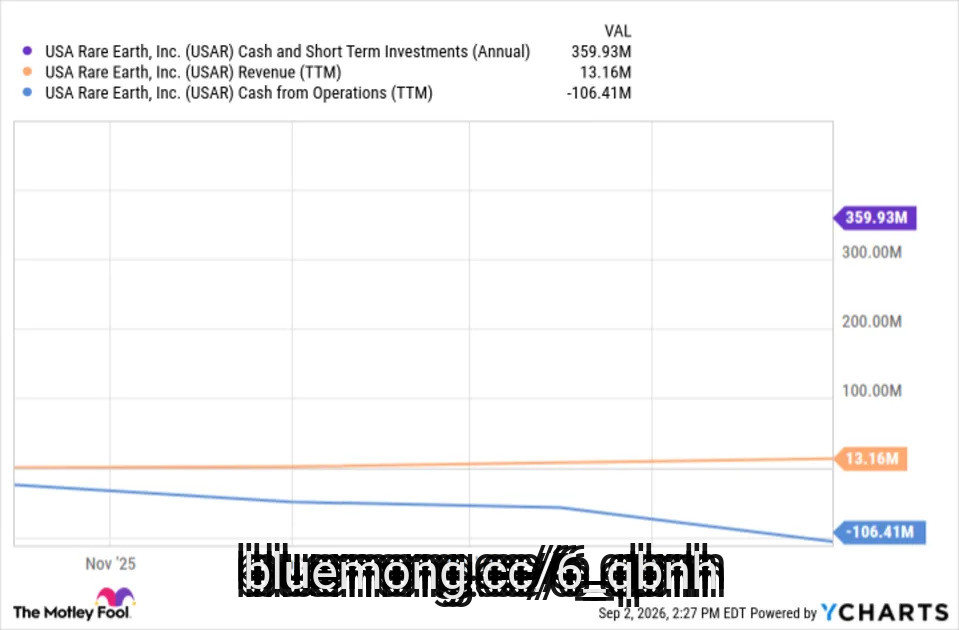
USA Rare Earth (NASDAQ: USAR) is quickly becoming one of America's most strategically important mining companies, at least if the economy, technology, and national security count for anything.
Why all the attention? Two words: rare earths. Indeed, rare-earth metals, as their name suggests, are a class of elements that are tough to find in economically useful deposits. They are essential to everything from smartphones and electric vehicles (EVs) to fighter jets and guided missiles, and China controls most of the world's capacity to process them.
Missed Nvidia in 2009? This Rare Signal Is Flashing Again. In 2009, a "Double Down" signal flashed for a little-known chipmaker called Nvidia. For the first time in years, that same "Total Conviction" signal is flashing for a company 1/100th the size of Nvidia. Continue »
USA Rare Earth is one of only a handful of American companies that control a rare-earth deposit on American soil. Its goal is to extract rare-earth elements from a deposit in Texas, process and separate them domestically, and turn them into permanent magnets for American companies out of its factory in Oklahoma.
For some time, this has been at the heart of USA Rare Earth's growth thesis; none of it is new. What is new, however, is its pending acquisition of Serra Verde, which could turn USA Rare Earth from a would-be miner with an uncertain start date into the owner of an operating rare-earth mine. That deal will likely close before its next earnings report -- expected in early November -- and could set the stage for a huge rally.
#american #Companies #time
Why all the attention? Two words: rare earths. Indeed, rare-earth metals, as their name suggests, are a class of elements that are tough to find in economically useful deposits. They are essential to everything from smartphones and electric vehicles (EVs) to fighter jets and guided missiles, and China controls most of the world's capacity to process them.
Missed Nvidia in 2009? This Rare Signal Is Flashing Again. In 2009, a "Double Down" signal flashed for a little-known chipmaker called Nvidia. For the first time in years, that same "Total Conviction" signal is flashing for a company 1/100th the size of Nvidia. Continue »
USA Rare Earth is one of only a handful of American companies that control a rare-earth deposit on American soil. Its goal is to extract rare-earth elements from a deposit in Texas, process and separate them domestically, and turn them into permanent magnets for American companies out of its factory in Oklahoma.
For some time, this has been at the heart of USA Rare Earth's growth thesis; none of it is new. What is new, however, is its pending acquisition of Serra Verde, which could turn USA Rare Earth from a would-be miner with an uncertain start date into the owner of an operating rare-earth mine. That deal will likely close before its next earnings report -- expected in early November -- and could set the stage for a huge rally.
#american #Companies #time


2 months ago
On August 5, Cirrus Logic (NASDAQ:CRUS) reported record first-quarter revenue of $459.7 million, up 13% year over year, alongside non-GAAP earnings per share of $1.84, a June quarter record for the company. Smartphone component demand carried the print, and executives struck a confident tone about content growth across cameras, batteries and power circuits. But that optimism sat next to a quieter admission: the company's PC segment outlook for fiscal 2027 just got smaller, and the reasons behind that cut matter for anyone weighing this stock's next chapter.
High-performance mixed-signal revenue climbed 26% year over year to $210.7 million, as Cirrus Logic expanded its footprint across camera, battery, and power applications inside smartphones. CEO John Forsyth pointed to a multi-generation collaboration with the company's largest customer on camera controllers, plus continued work on a Smart Power IC for 3D sensing that stayed on schedule through the quarter. Audio, the company's flagship business, still grew 3.7% to $249.0 million on demand for custom boosted amplifiers and smart codecs, and Forsyth said those parts should keep shipping across multiple future product generations.
The company is also pushing past smartphones. During the quarter, Cirrus Logic taped out a new family of ******* og front-end components aimed at smart meters, with sampling expected in the September quarter and potential spillover into EV charging, data center metrology and grid monitoring. On the PC side, a new low-power smart codec built for always-on wake word detection drew strong customer interest, and products using Nvidia's RTX Spark platform are expected to ship later in 2026 carrying Cirrus Logic amplifiers and codecs. A fresh wafer supply agreement with GlobalFoundries locks in capacity and pricing through calendar 2028 and advances a shift toward domestic manufacturing in Malta, New York. Underneath it all sits $1.2 billion in cash and investments, no debt, and $598.6 million in trailing 12-month operating cash flow, funding $34.5 million in share buybacks during the quarter and another $50.5 million afterward.
The company trimmed its fiscal 2027 PC segment outlook, and Forsyth laid out three specific culprits: constrained supply of a key industry platform, memory and component shortages pressuring pricing across the PC market, and OEMs responding by delaying new model launches and stretching the life of older platforms. Those delayed models typically carry higher content and higher volume for Cirrus Logic, so Forsyth said the slippage "pushes out some of the growth we would otherwise have seen in our PC business this year."
#cirrus #forsyth
High-performance mixed-signal revenue climbed 26% year over year to $210.7 million, as Cirrus Logic expanded its footprint across camera, battery, and power applications inside smartphones. CEO John Forsyth pointed to a multi-generation collaboration with the company's largest customer on camera controllers, plus continued work on a Smart Power IC for 3D sensing that stayed on schedule through the quarter. Audio, the company's flagship business, still grew 3.7% to $249.0 million on demand for custom boosted amplifiers and smart codecs, and Forsyth said those parts should keep shipping across multiple future product generations.
The company is also pushing past smartphones. During the quarter, Cirrus Logic taped out a new family of ******* og front-end components aimed at smart meters, with sampling expected in the September quarter and potential spillover into EV charging, data center metrology and grid monitoring. On the PC side, a new low-power smart codec built for always-on wake word detection drew strong customer interest, and products using Nvidia's RTX Spark platform are expected to ship later in 2026 carrying Cirrus Logic amplifiers and codecs. A fresh wafer supply agreement with GlobalFoundries locks in capacity and pricing through calendar 2028 and advances a shift toward domestic manufacturing in Malta, New York. Underneath it all sits $1.2 billion in cash and investments, no debt, and $598.6 million in trailing 12-month operating cash flow, funding $34.5 million in share buybacks during the quarter and another $50.5 million afterward.
The company trimmed its fiscal 2027 PC segment outlook, and Forsyth laid out three specific culprits: constrained supply of a key industry platform, memory and component shortages pressuring pricing across the PC market, and OEMs responding by delaying new model launches and stretching the life of older platforms. Those delayed models typically carry higher content and higher volume for Cirrus Logic, so Forsyth said the slippage "pushes out some of the growth we would otherwise have seen in our PC business this year."
#cirrus #forsyth


2 months ago
Qualcomm (QCOM) is down 32% over the past three months, and the cause is not a mystery. The smartphone market has contracted as memory prices climbed, and Apple is exiting faster than the company had guided. Management has a credible plan to replace that revenue. The harder question is what the replacement earns.
Qualcomm Is Losing Apple Faster Than It Planned To
By the company's own account, its share in the coming iPhone launch will be materially lower than the 20% it had previously estimated, and Apple product revenue is set to fall roughly 50% from the September quarter to the December quarter. Qualcomm's own supply constraints are part of the reason. A customer exit that was always coming has been pulled forward.
The bigger exposure is the phone business Apple sits inside. QCT handset revenue was $5.1 billion in fiscal Q3 2026, against $9.9 billion of revenue for the company as a whole, so handsets still account for roughly half of what Qualcomm sells. Management sizes the earnings hit from the weaker handset market at more than $1.50 a share for fiscal 2026, with QCT Android revenue down 20% year over year.
But Qualcomm Expects To Earn Less On Its Data Center Wins
#revenue
Qualcomm Is Losing Apple Faster Than It Planned To
By the company's own account, its share in the coming iPhone launch will be materially lower than the 20% it had previously estimated, and Apple product revenue is set to fall roughly 50% from the September quarter to the December quarter. Qualcomm's own supply constraints are part of the reason. A customer exit that was always coming has been pulled forward.
The bigger exposure is the phone business Apple sits inside. QCT handset revenue was $5.1 billion in fiscal Q3 2026, against $9.9 billion of revenue for the company as a whole, so handsets still account for roughly half of what Qualcomm sells. Management sizes the earnings hit from the weaker handset market at more than $1.50 a share for fiscal 2026, with QCT Android revenue down 20% year over year.
But Qualcomm Expects To Earn Less On Its Data Center Wins
#revenue


2 months ago
On September 1, Helios Technologies (NYSE:HLIO) announced that its Electronics segment had expanded the No Roads platform with Apple CarPlay and Android Auto, bringing familiar smartphone integration to boats, ATVs, and off-road rigs that never touch pavement. The announcement landed three weeks after Helios posted a second quarter in which that same Electronics segment expanded gross margin by more than 500 basis points, and it came alongside a raised full-year outlook. For a company known for hydraulic cylinders and industrial controls, chasing smartphone connectivity is a notable shift in emphasis.
No Roads was built jointly by Enovation Controls and i3 Product Development, pairing hardware built for rugged, integrated displays with i3's software and connected-product design work. Billy Aldridge, President of Electronics for Helios, described the Apple CarPlay and Android Auto rollout as a foundation for future connected capabilities rather than a standalone feature, and pointed to powersports, marine, overlanding, and specialty-vehicle OEMs as customers who now have a reason to look at Helios displays.
CEO Sean Bagan tied the move to a broader pattern of combining the company's operating units to build differentiated products, extending value to existing customers while pursuing new business in adjacent markets. The segment's own numbers back up that framing. Electronics sales climbed 19% in the second quarter of 2026 to $85.5 million, while gross margin expanded 530 basis points to 34.6%, pushing operating income up 90% to $11.2 million. That kind of margin expansion tends to show up when a business shifts from generic hardware toward harder-to-copy, differentiated products, which is exactly the case Helios is building for No Roads.
The company backed that story up at the corporate level too, raising its full-year 2026 sales outlook to $880 million to $900 million, up from a prior range of $840 million to $870 million, while cutting net debt to 1.4 times adjusted EBITDA from 2.6 times a year earlier.
Helios has not disclosed what No Roads, or the CarPlay and Android Auto features specifically, contribute to revenue, so the financial case for this rollout rests on management's framing rather than a number investors can independently verify. CFO Jeremy Evans tempered the company's own optimism when he flagged tougher year-over-year comparisons in the second half, along with geopolitical uncertainty, tariff dynamics, and broader inflationary pressures as ongoing headwinds.
#auto #expanded
No Roads was built jointly by Enovation Controls and i3 Product Development, pairing hardware built for rugged, integrated displays with i3's software and connected-product design work. Billy Aldridge, President of Electronics for Helios, described the Apple CarPlay and Android Auto rollout as a foundation for future connected capabilities rather than a standalone feature, and pointed to powersports, marine, overlanding, and specialty-vehicle OEMs as customers who now have a reason to look at Helios displays.
CEO Sean Bagan tied the move to a broader pattern of combining the company's operating units to build differentiated products, extending value to existing customers while pursuing new business in adjacent markets. The segment's own numbers back up that framing. Electronics sales climbed 19% in the second quarter of 2026 to $85.5 million, while gross margin expanded 530 basis points to 34.6%, pushing operating income up 90% to $11.2 million. That kind of margin expansion tends to show up when a business shifts from generic hardware toward harder-to-copy, differentiated products, which is exactly the case Helios is building for No Roads.
The company backed that story up at the corporate level too, raising its full-year 2026 sales outlook to $880 million to $900 million, up from a prior range of $840 million to $870 million, while cutting net debt to 1.4 times adjusted EBITDA from 2.6 times a year earlier.
Helios has not disclosed what No Roads, or the CarPlay and Android Auto features specifically, contribute to revenue, so the financial case for this rollout rests on management's framing rather than a number investors can independently verify. CFO Jeremy Evans tempered the company's own optimism when he flagged tougher year-over-year comparisons in the second half, along with geopolitical uncertainty, tariff dynamics, and broader inflationary pressures as ongoing headwinds.
#auto #expanded


2 months ago
DraftKings is available on Texans' smartphones - but not through the traditional online sportsbook that operates in states where sports betting is legal.
Founded in Massachusetts in 2012, DraftKings is a digital sports entertainment and gaming company offering products that include online sports betting, daily fantasy sports, online casino games and prediction markets.
After the U.S. Supreme Court struck down the Professional and Amateur Sports Protection Act in 2018, states were allowed to decide whether to legalize sports betting. As of 2026, 39 states and Washington, D.C., have legalized it.
Texas has not.
So how can Texans legally use DraftKings? The answer comes down to which DraftKings product they use.
#texans #founded
Founded in Massachusetts in 2012, DraftKings is a digital sports entertainment and gaming company offering products that include online sports betting, daily fantasy sports, online casino games and prediction markets.
After the U.S. Supreme Court struck down the Professional and Amateur Sports Protection Act in 2018, states were allowed to decide whether to legalize sports betting. As of 2026, 39 states and Washington, D.C., have legalized it.
Texas has not.
So how can Texans legally use DraftKings? The answer comes down to which DraftKings product they use.
#texans #founded


2 months ago
Baron Capital, an investment management company, released its second-quarter 2026 investor letter for its "Baron Fifth Avenue Growth Fund". The letter can be downloaded here. The fund achieved a strong quarter, gaining 24.6% (Institutional Shares), outperforming the Russell 1000 Growth Index (16.7%) and the S&P 500 (15.2%). Year to date, it's up 11.7%, surpassing its benchmarks. The first half of 2026 mirrored the previous year, with a 10.4% drawdown in Q1 due to geopolitical tensions, similar to last year's tariff-related decline. However, the fund rebounded with a 24.6% gain in Q2 after a cease-fire and declining oil prices. Stock selection drove the outperformance, contributing 940bps, while sector allocation detracted 152bps. In a volatile market, the firm remains focused on identifying high-quality, competitively advantaged companies and is optimistic about long-term prospects, investing when prices align with intrinsic values. Also, check the fund's top five holdings to see its best picks in 2026.
In its second-quarter 2026 investor letter, Baron Fifth Avenue Growth Fund highlighted Taiwan Semiconductor Manufacturing Company Limited (NYSE:TSM) as a notable contributor to performance. Taiwan Semiconductor Manufacturing Company Limited (NYSE:TSM) is the world's leading contract chip manufacturer, producing advanced semiconductors for major global technology companies. On August 31, 2026, Taiwan Semiconductor Manufacturing Company Limited (NYSE:TSM) closed at $415.32 per share. Taiwan Semiconductor Manufacturing Company Limited (NYSE:TSM) fell 0.44% over the past month, while its shares gained 81.85% over the past 52 weeks. Taiwan Semiconductor Manufacturing Company Limited (NYSE:TSM) has a market capitalization of $1.97 Trillion.
Baron Fifth Avenue Growth Fund stated the following regarding Taiwan Semiconductor Manufacturing Company Limited (NYSE:TSM) in its Q2 2026 investor letter:
"Taiwan Semiconductor Manufacturing Company Limited (NYSE:TSM) is the world's largest contract chipmaker and the leading manufacturer of advanced logic semiconductors used in modern AI accelerators. Shares rose 41.6% during the quarter as the company continues to report stellar financial results underpinned by AI demand with revenue growth of 35% year-on-year and EPS growth of 58%, with 66% gross margins and 58% operating margins. High-performance computing now represents the majority of TSMC's business. AI demand is consuming so much leading-edge capacity that smartphone and PC production is increasingly shifting to older technology nodes, reversing a dynamic that defined the foundry industry for much of the past decade. Management also raised its full-year outlook and increased capital spending to support demand that remains well above available supply. We retain long term conviction in TSMC and view its leading-edge manufacturing monopoly, pricing power, and technology roadmap as durable advantages that support a long duration of growth."
#baron
In its second-quarter 2026 investor letter, Baron Fifth Avenue Growth Fund highlighted Taiwan Semiconductor Manufacturing Company Limited (NYSE:TSM) as a notable contributor to performance. Taiwan Semiconductor Manufacturing Company Limited (NYSE:TSM) is the world's leading contract chip manufacturer, producing advanced semiconductors for major global technology companies. On August 31, 2026, Taiwan Semiconductor Manufacturing Company Limited (NYSE:TSM) closed at $415.32 per share. Taiwan Semiconductor Manufacturing Company Limited (NYSE:TSM) fell 0.44% over the past month, while its shares gained 81.85% over the past 52 weeks. Taiwan Semiconductor Manufacturing Company Limited (NYSE:TSM) has a market capitalization of $1.97 Trillion.
Baron Fifth Avenue Growth Fund stated the following regarding Taiwan Semiconductor Manufacturing Company Limited (NYSE:TSM) in its Q2 2026 investor letter:
"Taiwan Semiconductor Manufacturing Company Limited (NYSE:TSM) is the world's largest contract chipmaker and the leading manufacturer of advanced logic semiconductors used in modern AI accelerators. Shares rose 41.6% during the quarter as the company continues to report stellar financial results underpinned by AI demand with revenue growth of 35% year-on-year and EPS growth of 58%, with 66% gross margins and 58% operating margins. High-performance computing now represents the majority of TSMC's business. AI demand is consuming so much leading-edge capacity that smartphone and PC production is increasingly shifting to older technology nodes, reversing a dynamic that defined the foundry industry for much of the past decade. Management also raised its full-year outlook and increased capital spending to support demand that remains well above available supply. We retain long term conviction in TSMC and view its leading-edge manufacturing monopoly, pricing power, and technology roadmap as durable advantages that support a long duration of growth."
#baron

2 months ago
NVIDIA Corporation (NASDAQ:NVDA) is investing $3.5 billion in Taiwan-based MediaTek through convertible bonds, taking an existing AI partnership a step further. The two companies plan to work together on local AI computing and AI-powered vehicle platforms, while also bringing Nvidia's accelerated-computing technology into more markets.
The investment comes soon after Nvidia reported another strong quarter and projected roughly 70% revenue growth for fiscal 2028. That outlook suggests management still expects AI demand to grow rather than reach a peak. For NVDA investors, the key question is whether the MediaTek deal will create new demand for Nvidia's technology or is mainly another case of the company using its balance sheet to support the wider AI ecosystem.
The clearest positive is that the MediaTek partnership could expand NVIDIA Corporation (NASDAQ:NVDA)'s addressable market beyond traditional data centers. MediaTek has a strong presence in smartphones, consumer electronics, connectivity and automotive chips. Pairing that reach with Nvidia's accelerated-computing technology could help Nvidia bring AI computing to edge devices, PCs and vehicles. The companies also launched the RTX Spark PC chip in June, showing that the relationship goes beyond a financial investment.
The automotive opportunity could be especially important. Nvidia is trying to make its technology a broader computing platform rather than remain mainly a supplier of data-center GPUs. Working with a major chip designer such as MediaTek could give Nvidia another path into AI-powered vehicles and other edge applications.
Investing through convertible bonds also gives Nvidia a strategic benefit. The company is not simply providing MediaTek with capital. It is building a closer financial relationship while potentially gaining equity exposure. If MediaTek's business grows as a result of the partnership, Nvidia could benefit financially while also seeing greater demand for its own technology.
#computing #demand #corporation
The investment comes soon after Nvidia reported another strong quarter and projected roughly 70% revenue growth for fiscal 2028. That outlook suggests management still expects AI demand to grow rather than reach a peak. For NVDA investors, the key question is whether the MediaTek deal will create new demand for Nvidia's technology or is mainly another case of the company using its balance sheet to support the wider AI ecosystem.
The clearest positive is that the MediaTek partnership could expand NVIDIA Corporation (NASDAQ:NVDA)'s addressable market beyond traditional data centers. MediaTek has a strong presence in smartphones, consumer electronics, connectivity and automotive chips. Pairing that reach with Nvidia's accelerated-computing technology could help Nvidia bring AI computing to edge devices, PCs and vehicles. The companies also launched the RTX Spark PC chip in June, showing that the relationship goes beyond a financial investment.
The automotive opportunity could be especially important. Nvidia is trying to make its technology a broader computing platform rather than remain mainly a supplier of data-center GPUs. Working with a major chip designer such as MediaTek could give Nvidia another path into AI-powered vehicles and other edge applications.
Investing through convertible bonds also gives Nvidia a strategic benefit. The company is not simply providing MediaTek with capital. It is building a closer financial relationship while potentially gaining equity exposure. If MediaTek's business grows as a result of the partnership, Nvidia could benefit financially while also seeing greater demand for its own technology.
#computing #demand #corporation

2 months ago
With shares up by roughly 1,200% over the last five years, Micron Technology (NASDAQ: MU) is a standout performer in the generative artificial intelligence (AI) megatrend. But the company's rocketship rally has come under threat. And shares are down around 23% from their all-time high of $1,213 reached on June 25th as investors grow nervous about competition and the sustainability of its high margins.
Let's dig deeper into Micron's pros and cons to decide whether the dip is a long-term buying opportunity or a sign of more trouble to come.
Missed Nvidia in 2009? This Rare Signal Is Flashing Again. In 2009, a "Double Down" signal flashed for a little-known chipmaker called Nvidia. For the first time in years, that same "Total Conviction" signal is flashing for a company 1/100th the size of Nvidia. Continue »
Usually, large corporations find their raison d'etre early in their life cycles. But Micron has been a late bloomer. The company has spent most of the last few decades providing memory hardware for consumer markets, such as personal computers and smartphones, where it has endured brutal competition and low margins. Shares barely budged in the two decades between the dot-com bubble and the COVID-19 pandemic.
However, the arrival of generative AI gave the company a new lease on life as data center operators quickly realized that high bandwidth memory had become one of the primary bottlenecks in creating more powerful large language models (LLMs).
#company #years
Let's dig deeper into Micron's pros and cons to decide whether the dip is a long-term buying opportunity or a sign of more trouble to come.
Missed Nvidia in 2009? This Rare Signal Is Flashing Again. In 2009, a "Double Down" signal flashed for a little-known chipmaker called Nvidia. For the first time in years, that same "Total Conviction" signal is flashing for a company 1/100th the size of Nvidia. Continue »
Usually, large corporations find their raison d'etre early in their life cycles. But Micron has been a late bloomer. The company has spent most of the last few decades providing memory hardware for consumer markets, such as personal computers and smartphones, where it has endured brutal competition and low margins. Shares barely budged in the two decades between the dot-com bubble and the COVID-19 pandemic.
However, the arrival of generative AI gave the company a new lease on life as data center operators quickly realized that high bandwidth memory had become one of the primary bottlenecks in creating more powerful large language models (LLMs).
#company #years

2 months ago
Baron Capital, an investment management company, released its second-quarter 2026 investor letter for its "Baron Fifth Avenue Growth Fund". The letter can be downloaded here. The fund achieved a strong quarter, gaining 24.6% (Institutional Shares), outperforming the Russell 1000 Growth Index (16.7%) and the S&P 500 (15.2%). Year to date, it's up 11.7%, surpassing its benchmarks. The first half of 2026 mirrored the previous year, with a 10.4% drawdown in Q1 due to geopolitical tensions, similar to last year's tariff-related decline. However, the fund rebounded with a 24.6% gain in Q2 after a cease-fire and declining oil prices. Stock selection drove the outperformance, contributing 940bps, while sector allocation detracted 152bps. In a volatile market, the firm remains focused on identifying high-quality, competitively advantaged companies and is optimistic about long-term prospects, investing when prices align with intrinsic values. Also, check the fund's top five holdings to see its best picks in 2026.
In its second-quarter 2026 investor letter, Baron Fifth Avenue Growth Fund highlighted Taiwan Semiconductor Manufacturing Company Limited (NYSE:TSM) as a notable contributor to performance. Taiwan Semiconductor Manufacturing Company Limited (NYSE:TSM) is the world's leading contract chip manufacturer, producing advanced semiconductors for major global technology companies. On August 31, 2026, Taiwan Semiconductor Manufacturing Company Limited (NYSE:TSM) closed at $415.32 per share. Taiwan Semiconductor Manufacturing Company Limited (NYSE:TSM) fell 0.44% over the past month, while its shares gained 81.85% over the past 52 weeks. Taiwan Semiconductor Manufacturing Company Limited (NYSE:TSM) has a market capitalization of $1.97 Trillion.
Baron Fifth Avenue Growth Fund stated the following regarding Taiwan Semiconductor Manufacturing Company Limited (NYSE:TSM) in its Q2 2026 investor letter:
"Taiwan Semiconductor Manufacturing Company Limited (NYSE:TSM) is the world's largest contract chipmaker and the leading manufacturer of advanced logic semiconductors used in modern AI accelerators. Shares rose 41.6% during the quarter as the company continues to report stellar financial results underpinned by AI demand with revenue growth of 35% year-on-year and EPS growth of 58%, with 66% gross margins and 58% operating margins. High-performance computing now represents the majority of TSMC's business. AI demand is consuming so much leading-edge capacity that smartphone and PC production is increasingly shifting to older technology nodes, reversing a dynamic that defined the foundry industry for much of the past decade. Management also raised its full-year outlook and increased capital spending to support demand that remains well above available supply. We retain long term conviction in TSMC and view its leading-edge manufacturing monopoly, pricing power, and technology roadmap as durable advantages that support a long duration of growth."
#company #fund #
In its second-quarter 2026 investor letter, Baron Fifth Avenue Growth Fund highlighted Taiwan Semiconductor Manufacturing Company Limited (NYSE:TSM) as a notable contributor to performance. Taiwan Semiconductor Manufacturing Company Limited (NYSE:TSM) is the world's leading contract chip manufacturer, producing advanced semiconductors for major global technology companies. On August 31, 2026, Taiwan Semiconductor Manufacturing Company Limited (NYSE:TSM) closed at $415.32 per share. Taiwan Semiconductor Manufacturing Company Limited (NYSE:TSM) fell 0.44% over the past month, while its shares gained 81.85% over the past 52 weeks. Taiwan Semiconductor Manufacturing Company Limited (NYSE:TSM) has a market capitalization of $1.97 Trillion.
Baron Fifth Avenue Growth Fund stated the following regarding Taiwan Semiconductor Manufacturing Company Limited (NYSE:TSM) in its Q2 2026 investor letter:
"Taiwan Semiconductor Manufacturing Company Limited (NYSE:TSM) is the world's largest contract chipmaker and the leading manufacturer of advanced logic semiconductors used in modern AI accelerators. Shares rose 41.6% during the quarter as the company continues to report stellar financial results underpinned by AI demand with revenue growth of 35% year-on-year and EPS growth of 58%, with 66% gross margins and 58% operating margins. High-performance computing now represents the majority of TSMC's business. AI demand is consuming so much leading-edge capacity that smartphone and PC production is increasingly shifting to older technology nodes, reversing a dynamic that defined the foundry industry for much of the past decade. Management also raised its full-year outlook and increased capital spending to support demand that remains well above available supply. We retain long term conviction in TSMC and view its leading-edge manufacturing monopoly, pricing power, and technology roadmap as durable advantages that support a long duration of growth."
#company #fund #


2 months ago
The race to build more data centers for artificial intelligence is driving demand for more than chips and electricity.
It also requires vast networks of high-speed optical fiber to move data between servers, putting one of America's oldest manufacturers at the center of the boom.
Corning, the New York-based company best known to many Americans for its kitchenware and smartphone glass, is ramping up optical-fiber production as the data-center buildout accelerates. Nearly 175 years after its founding, the company is supplying a critical piece of the infrastructure behind the AI boom, the glass connections linking the servers inside the facilities powering it.
One Of The World's Hottest Industries Is Sparking A Blue-collar Jobs Boom
The company is partnering with NVIDIA to build three advanced optical-manufacturing facilities in North Carolina and Texas. The project is expected to create more than 3,000 jobs and expand Corning's U.S. optical-manufacturing capacity tenfold.
#boom
It also requires vast networks of high-speed optical fiber to move data between servers, putting one of America's oldest manufacturers at the center of the boom.
Corning, the New York-based company best known to many Americans for its kitchenware and smartphone glass, is ramping up optical-fiber production as the data-center buildout accelerates. Nearly 175 years after its founding, the company is supplying a critical piece of the infrastructure behind the AI boom, the glass connections linking the servers inside the facilities powering it.
One Of The World's Hottest Industries Is Sparking A Blue-collar Jobs Boom
The company is partnering with NVIDIA to build three advanced optical-manufacturing facilities in North Carolina and Texas. The project is expected to create more than 3,000 jobs and expand Corning's U.S. optical-manufacturing capacity tenfold.
#boom




2 months ago
Diana, Princess of Wales (1961 - 1997) attends a dinner at the British Embassy in Washington, DC, November 1985. She is wearing an evening dress by Murray Arbeid and the Queen Mary tiara. (Photo by Terry Fincher/Princess Diana Archive/Getty Images)
I was in the eighth grade, preparing to enter high school, when Lady Diana Spencer married Prince Charles.
Some of the girls from my junior high softball team spent the night at our house because we had the big television—the kind not every family had in 1981. My mother woke us at around five o'clock in the morning so we could watch the royal wedding live from London.
She made tea and crumpets, little tea sandwiches and all kinds of treats. We gathered around that television, sleepy and excited, waiting to see the prince, the carriage and the beautiful young woman in the enormous ivory dress.
There were no smartphones, no social media, and no livestreams we could replay later. There was simply the television and the shared experience of watching a real-life fairy tale unfold before our eyes.
#diana #around #wales #embassy
I was in the eighth grade, preparing to enter high school, when Lady Diana Spencer married Prince Charles.
Some of the girls from my junior high softball team spent the night at our house because we had the big television—the kind not every family had in 1981. My mother woke us at around five o'clock in the morning so we could watch the royal wedding live from London.
She made tea and crumpets, little tea sandwiches and all kinds of treats. We gathered around that television, sleepy and excited, waiting to see the prince, the carriage and the beautiful young woman in the enormous ivory dress.
There were no smartphones, no social media, and no livestreams we could replay later. There was simply the television and the shared experience of watching a real-life fairy tale unfold before our eyes.
#diana #around #wales #embassy

2 months ago
Aristotle Capital Management, LLC, an investment management company, released its "Value Equity Fund" Q2 2026 investor letter. A copy of the letter can be downloaded here. The Fund delivered a 4.32% total return in Q2 2026, underperforming the 13.87% gain for the Russell 1000 Value Index and the 15.20% return for the S&P 500, while its 1.99% year-to-date return also lagged the Russell 1000 Value Index's 16.26% and the S&P 500's 10.21%. The Fund attributed the performance gap largely to limited exposure to the AI infrastructure spending boom, noting that the U.S. has about 4,000 existing data centers and nearly 3,000 more planned or under construction, while AI-related demand has created bottlenecks in processors and memory. The letter highlighted the scale of the cycle, with industry cash flows in key AI hardware areas rising sharply, while the Russell 1000 Value Index's top 10 contributors gained an average 182% year to date and accounted for 9.29 percentage points of the index's 16.23% return. Looking ahead, the fund expects investors to eventually reassess the sustainability of current AI infrastructure earnings and valuations. In addition, please check the Fund's top five holdings to know its best picks in 2026.
In its second-quarter 2026 investor letter, Aristotle Value Equity Fund highlighted stocks like QUALCOMM Incorporated (NASDAQ:QCOM). QUALCOMM Incorporated (NASDAQ:QCOM) develops wireless technologies and semiconductor solutions powering smartphones, automotive systems, and connected devices worldwide. The one-month return of QUALCOMM Incorporated (NASDAQ:QCOM) was 11.63% while its shares traded between $121.99 and $259.92 over the last 52 weeks. On August 27, 2026, QUALCOMM Incorporated (NASDAQ:QCOM) stock closed at approximately $163.72 per share, with a market capitalization of about $176.00 billion.
Aristotle Value Equity Fund stated the following regarding QUALCOMM Incorporated (NASDAQ:QCOM) in its Q2 2026 investor letter:
QUALCOMM Incorporated (NASDAQ:QCOM), a leading semiconductor and communications technology company, was the largest contributor for the quarter. Shares recovered as management indicated that the inventory adjustments and production constraints resulting from higher memory costs were progressing largely as expected and that handset revenues from Chinese customers were expected to reach a bottom. As we noted last quarter, we believed these headwinds to be cyclical rather than structural and did not alter our long-term investment thesis. The company also continued to make progress on its long-term strategy of evolving from a handset-centric company into a broader provider of connected computing technologies. Automotive revenue reached another record high, while Internet of Things (IoT) and newer businesses such as AI-enabled PCs, industrial applications, and data center computing continue to represent a growing portion of the company and remain central to its long-term diversification strategy. We believe Qualco
In its second-quarter 2026 investor letter, Aristotle Value Equity Fund highlighted stocks like QUALCOMM Incorporated (NASDAQ:QCOM). QUALCOMM Incorporated (NASDAQ:QCOM) develops wireless technologies and semiconductor solutions powering smartphones, automotive systems, and connected devices worldwide. The one-month return of QUALCOMM Incorporated (NASDAQ:QCOM) was 11.63% while its shares traded between $121.99 and $259.92 over the last 52 weeks. On August 27, 2026, QUALCOMM Incorporated (NASDAQ:QCOM) stock closed at approximately $163.72 per share, with a market capitalization of about $176.00 billion.
Aristotle Value Equity Fund stated the following regarding QUALCOMM Incorporated (NASDAQ:QCOM) in its Q2 2026 investor letter:
QUALCOMM Incorporated (NASDAQ:QCOM), a leading semiconductor and communications technology company, was the largest contributor for the quarter. Shares recovered as management indicated that the inventory adjustments and production constraints resulting from higher memory costs were progressing largely as expected and that handset revenues from Chinese customers were expected to reach a bottom. As we noted last quarter, we believed these headwinds to be cyclical rather than structural and did not alter our long-term investment thesis. The company also continued to make progress on its long-term strategy of evolving from a handset-centric company into a broader provider of connected computing technologies. Automotive revenue reached another record high, while Internet of Things (IoT) and newer businesses such as AI-enabled PCs, industrial applications, and data center computing continue to represent a growing portion of the company and remain central to its long-term diversification strategy. We believe Qualco


2 months ago
Xiaomi Corporation (OTC:XIACF) is no longer content to compete through hardware design and pricing alone. The Chinese smartphone maker has unveiled the Xring O3, which is the second generation of its proprietary handset processor, as it seeks greater control over the technology powering its devices.
The strategy could improve product differentiation and bolster Xiaomi's negotiating position with outside chip suppliers, all the while supporting its expansion into premium smartphones. However, the investment comes as rising component costs and weakening global handset demand are already pressuring the company's core business. Let's dive deeper into it.
Developing processors internally could give Xiaomi greater control over several features that influence the smartphone experience. A system-on-chip integrates computing, graphics, artificial intelligence processing, and imaging functions, allowing the company to optimize important capabilities around its own hardware and software. Xiaomi launched its first proprietary smartphone processor, the Xring O1, in 2025. During its latest earnings call, the company said ******* ulative shipments of O1-powered smartphones, tablets, and watches had surpassed one million units. Although Reuters' sources estimated that only approximately 150,000 of those shipments were smartphones, the broader total shows Xiaomi has already deployed the technology across multiple product categories.
The O3 could also support Xiaomi's push into more expensive devices. According to two people familiar with the plans, TSMC will manufacture the processor using its 3-nanometre technology. One source said the chip is expected to power Xiaomi's next flagship foldable phone, with shipments targeted at between 200,000 and 300,000 units. Foldables offer Xiaomi an opportunity to compete more directly in a premium category currently dominated in China by Huawei. Huawei shipped 1.6 million foldable smartphones in China during the second quarter, accounting for 68% of the market, according to data cited by Reuters.
The company's ambitions also extend beyond smartphones. Reuters reported that Xiaomi contracted TSMC to produce the Xring O100, a 6-nanometre neural-processing chip designed to support its MiMo artificial-intelligence model on consumer devices, and the Xring D100, a 3-nanometre autonomous-driving processor. Xiaomi said both chips have completed development and are scheduled for deployment next year. Together, these projects show that Xiaomi is extending its chip-development strategy beyond smartphones into AI-enabled consumer devices and autonomous driving.
#shipments
The strategy could improve product differentiation and bolster Xiaomi's negotiating position with outside chip suppliers, all the while supporting its expansion into premium smartphones. However, the investment comes as rising component costs and weakening global handset demand are already pressuring the company's core business. Let's dive deeper into it.
Developing processors internally could give Xiaomi greater control over several features that influence the smartphone experience. A system-on-chip integrates computing, graphics, artificial intelligence processing, and imaging functions, allowing the company to optimize important capabilities around its own hardware and software. Xiaomi launched its first proprietary smartphone processor, the Xring O1, in 2025. During its latest earnings call, the company said ******* ulative shipments of O1-powered smartphones, tablets, and watches had surpassed one million units. Although Reuters' sources estimated that only approximately 150,000 of those shipments were smartphones, the broader total shows Xiaomi has already deployed the technology across multiple product categories.
The O3 could also support Xiaomi's push into more expensive devices. According to two people familiar with the plans, TSMC will manufacture the processor using its 3-nanometre technology. One source said the chip is expected to power Xiaomi's next flagship foldable phone, with shipments targeted at between 200,000 and 300,000 units. Foldables offer Xiaomi an opportunity to compete more directly in a premium category currently dominated in China by Huawei. Huawei shipped 1.6 million foldable smartphones in China during the second quarter, accounting for 68% of the market, according to data cited by Reuters.
The company's ambitions also extend beyond smartphones. Reuters reported that Xiaomi contracted TSMC to produce the Xring O100, a 6-nanometre neural-processing chip designed to support its MiMo artificial-intelligence model on consumer devices, and the Xring D100, a 3-nanometre autonomous-driving processor. Xiaomi said both chips have completed development and are scheduled for deployment next year. Together, these projects show that Xiaomi is extending its chip-development strategy beyond smartphones into AI-enabled consumer devices and autonomous driving.
#shipments


2 months ago
On August 11, 2026, Sony Group Corporation (NYSE:SONY) and Taiwan Semiconductor Manufacturing Company Limited (NYSE:TSM) agreed to form a $4.7 billion joint venture to develop and manufacture next-generation image sensors for smartphones. Mass production is expected to begin in 2029.
Why This Matters
Sony is trying to limit its own capital spending on next-generation chip manufacturing while still capturing AI-era demand for camera "eyes" in machines.
So does partnering with TSMC give Sony the best of both worlds, or does it mean sharing a strategic manufacturing edge with a partner that also serves every other chip customer in the world?
Sony Group Corporation (NYSE:SONY) will be the venture's sole controlling shareholder and will lead development of core image-sensor technology and product design, contributing about $2.92 billion partly by transferring its newly built **** amoto chip factory. The structure is designed specifically to limit Sony's own capital spending while positioning it to capture rising demand for the "eyes" of machines as AI adoption grows. The companies are also counting on **** anese government support to help fund the venture's full planned capacity.
#NYSE #corporation #next #generation
Why This Matters
Sony is trying to limit its own capital spending on next-generation chip manufacturing while still capturing AI-era demand for camera "eyes" in machines.
So does partnering with TSMC give Sony the best of both worlds, or does it mean sharing a strategic manufacturing edge with a partner that also serves every other chip customer in the world?
Sony Group Corporation (NYSE:SONY) will be the venture's sole controlling shareholder and will lead development of core image-sensor technology and product design, contributing about $2.92 billion partly by transferring its newly built **** amoto chip factory. The structure is designed specifically to limit Sony's own capital spending while positioning it to capture rising demand for the "eyes" of machines as AI adoption grows. The companies are also counting on **** anese government support to help fund the venture's full planned capacity.
#NYSE #corporation #next #generation

3 months ago
I bought Duolingo (NASDAQ: DUOL) stock shortly after it fell to its 52-week low of $90.03 in April, which marked a staggering 83% decline from last year's record high of $540.68. It has since recovered to around $146.84 as of the market close on Monday, Aug. 24, and while I am very bullish on its prospects from here, Wall Street isn't convinced.
The 27 **** ysts covering the stock tracked by The Wall Street Journal have put an average price target of $127.07 on it, which suggests the stock could decline by around 13% over the next 12 months. Duolingo operates the world's largest digital language education platform, and Wall Street is concerned about management's plan to focus on user growth at the expense of monetization over the next couple of years, which could hurt the company's financial performance.
Missed Nvidia in 2009? This Rare Signal Is Flashing Again. In 2009, a "Double Down" signal flashed for a little-known chipmaker called Nvidia. For the first time in years, that same "Total Conviction" signal is flashing for a company 1/100th the size of Nvidia. Continue »
However, if the strategy pays off, Duolingo's business could be in the strongest position in its history sometime around 2028. Here's why I plan to stick around to reap the potential rewards.
Duolingo designed a highly interactive mobile app that places fun language lessons at the fingertips of anybody with a smartphone. It had 58.7 million daily active users at the conclusion of the second quarter, a 23% increase from the year-ago period. Surprisingly, the company spends very little money on marketing, but it has an enormous social media following thanks to its quirky content, which generates roughly 1 billion impressions per quarter.
#wall #signal #flashing #next
The 27 **** ysts covering the stock tracked by The Wall Street Journal have put an average price target of $127.07 on it, which suggests the stock could decline by around 13% over the next 12 months. Duolingo operates the world's largest digital language education platform, and Wall Street is concerned about management's plan to focus on user growth at the expense of monetization over the next couple of years, which could hurt the company's financial performance.
Missed Nvidia in 2009? This Rare Signal Is Flashing Again. In 2009, a "Double Down" signal flashed for a little-known chipmaker called Nvidia. For the first time in years, that same "Total Conviction" signal is flashing for a company 1/100th the size of Nvidia. Continue »
However, if the strategy pays off, Duolingo's business could be in the strongest position in its history sometime around 2028. Here's why I plan to stick around to reap the potential rewards.
Duolingo designed a highly interactive mobile app that places fun language lessons at the fingertips of anybody with a smartphone. It had 58.7 million daily active users at the conclusion of the second quarter, a 23% increase from the year-ago period. Surprisingly, the company spends very little money on marketing, but it has an enormous social media following thanks to its quirky content, which generates roughly 1 billion impressions per quarter.
#wall #signal #flashing #next