
10 days ago
BURBANK, CALIFORNIA − Dhar Mann doesn't consider other digital content creators his competition.
The filmmaker behind Dhar Mann Studios, whose inspirational videos reach hundreds of millions of viewers each week, has his sights set on something bigger: Hollywood.
"I actually see other major studios as the competition," Mann tells USA TODAY during a tour of his Burbank, California, studios. "I don't really see a difference between any of the big studios and what they've built and the trajectory that we're on."
It's an ambitious outlook for a company that started nearly eight years ago in Mann's downtown LA apartment, where he filmed videos on iPhones.
Today, Dhar Mann Studios has more than 170 million followers across social media and a team of about 250 people. The content, drawing nearly 300 million views a week, has expanded beyond social platforms through partnerships with Samsung, Fox and Disney, including a recently announced 20-episode order from Disney.
#mann
The filmmaker behind Dhar Mann Studios, whose inspirational videos reach hundreds of millions of viewers each week, has his sights set on something bigger: Hollywood.
"I actually see other major studios as the competition," Mann tells USA TODAY during a tour of his Burbank, California, studios. "I don't really see a difference between any of the big studios and what they've built and the trajectory that we're on."
It's an ambitious outlook for a company that started nearly eight years ago in Mann's downtown LA apartment, where he filmed videos on iPhones.
Today, Dhar Mann Studios has more than 170 million followers across social media and a team of about 250 people. The content, drawing nearly 300 million views a week, has expanded beyond social platforms through partnerships with Samsung, Fox and Disney, including a recently announced 20-episode order from Disney.
#mann




24 days ago
On September 8, 2026, Reuters reported that ASML Holding N.V. (NASDAQ:ASML) plans to work with major customers. It includes Taiwan Semiconductor Manufacturing Company Limited (NYSE:TSM), Nvidia, Intel, Samsung, and SK Hynix to adapt its next-generation "High NA" extreme ultraviolet lithography tools so they can print larger data-center chips. It addresses a current limitation where the newer machines use a smaller mask than ASML's widely deployed standard EUV tools.
ASML targets a pilot production line using the larger masks by 2031 and high-volume manufacturing readiness by 2033. Chief technology officer Marco Pieters said these changes could lift the productivity of these systems by roughly 40%.
The larger-mask project could create a new growth opportunity for ASML Holding N.V. (NASDAQ:ASML) while helping TSMC manufacture larger AI chips more efficiently. ASML plans to use its High NA EUV tools to handle chips as large as today's biggest data-center processors. The business expects the larger masks to increase system productivity by 40%. It could scale up demand for its next-generation equipment and help TSMC improve the economics of producing increasingly large and complex chips.
Taiwan Semiconductor Manufacturing Company Limited (NYSE:TSM)'s planned use gives ASML a clear path toward commercializing the technology. TSMC plans to introduce High NA EUV into advanced-node high-volume production from 2030. ASML aims to show its larger-mask technology through a pilot line in 2031. TSMC's commitment could give ASML greater visibility into future equipment demand. Early use could help TSMC maintain its advanced-chip manufacturing advantage.
The collaboration could solidify both companies' positions as chipmakers develop larger and more powerful processors. ASML can extend its High NA roadmap beyond its current chip-size limitation. TSMC can prepare its manufacturing processes for the next generation of AI chips. The partnership gives ASML an opportunity to deepen its relationship with one of its largest customers and gives TSMC access to a technology that could support future advanced-chip production.
#asml #technology #plans #next
ASML targets a pilot production line using the larger masks by 2031 and high-volume manufacturing readiness by 2033. Chief technology officer Marco Pieters said these changes could lift the productivity of these systems by roughly 40%.
The larger-mask project could create a new growth opportunity for ASML Holding N.V. (NASDAQ:ASML) while helping TSMC manufacture larger AI chips more efficiently. ASML plans to use its High NA EUV tools to handle chips as large as today's biggest data-center processors. The business expects the larger masks to increase system productivity by 40%. It could scale up demand for its next-generation equipment and help TSMC improve the economics of producing increasingly large and complex chips.
Taiwan Semiconductor Manufacturing Company Limited (NYSE:TSM)'s planned use gives ASML a clear path toward commercializing the technology. TSMC plans to introduce High NA EUV into advanced-node high-volume production from 2030. ASML aims to show its larger-mask technology through a pilot line in 2031. TSMC's commitment could give ASML greater visibility into future equipment demand. Early use could help TSMC maintain its advanced-chip manufacturing advantage.
The collaboration could solidify both companies' positions as chipmakers develop larger and more powerful processors. ASML can extend its High NA roadmap beyond its current chip-size limitation. TSMC can prepare its manufacturing processes for the next generation of AI chips. The partnership gives ASML an opportunity to deepen its relationship with one of its largest customers and gives TSMC access to a technology that could support future advanced-chip production.
#asml #technology #plans #next


27 days ago
The U.S. has between 3,000 and 4,700 active data centers, with plans to build another 1,500. Globally, there are about 11,800, with plans to add about 100 gigawatts of new capacity by 2030. All of which creates substantial opportunity for beaten-down stocks such as ASML Holding (ASML). However, to run all of those data centers, the world needs advanced AI chips. Today's most advanced data-center AI processors, manufactured on 4nm, 5nm, and certain 7nm processes, depend heavily on ASML's lithography technology. And as the industry moves toward 2nm production, that dependence on ASML's EUV systems will become even more important.
Some of those companies include Samsung Electronics (SMSN.L.IX), Taiwan Semiconductor Manufacturing (TSM), and Intel (INTC). All of which are moving forward with ASML's High-Numerical Aperture extreme ultraviolet lithography systems, better known as High-NA EUV. In short, AI must have powerful chips to run. And those chips are becoming much harder to manufacture, with ASML producing the machines that make their production possible.
Billionaire Charlie Munger, Who Died at 99, Skipped Insurance on His Mansion Since He Could Just Write a Check to Rebuild — 'All Intelligent People Do It My Way'
The Case for Selling CrowdStrike Stock
Dear Tesla Stock Fans, Mark Your Calendars for October 1
#asml #advanced #lithography
Some of those companies include Samsung Electronics (SMSN.L.IX), Taiwan Semiconductor Manufacturing (TSM), and Intel (INTC). All of which are moving forward with ASML's High-Numerical Aperture extreme ultraviolet lithography systems, better known as High-NA EUV. In short, AI must have powerful chips to run. And those chips are becoming much harder to manufacture, with ASML producing the machines that make their production possible.
Billionaire Charlie Munger, Who Died at 99, Skipped Insurance on His Mansion Since He Could Just Write a Check to Rebuild — 'All Intelligent People Do It My Way'
The Case for Selling CrowdStrike Stock
Dear Tesla Stock Fans, Mark Your Calendars for October 1
#asml #advanced #lithography


28 days ago
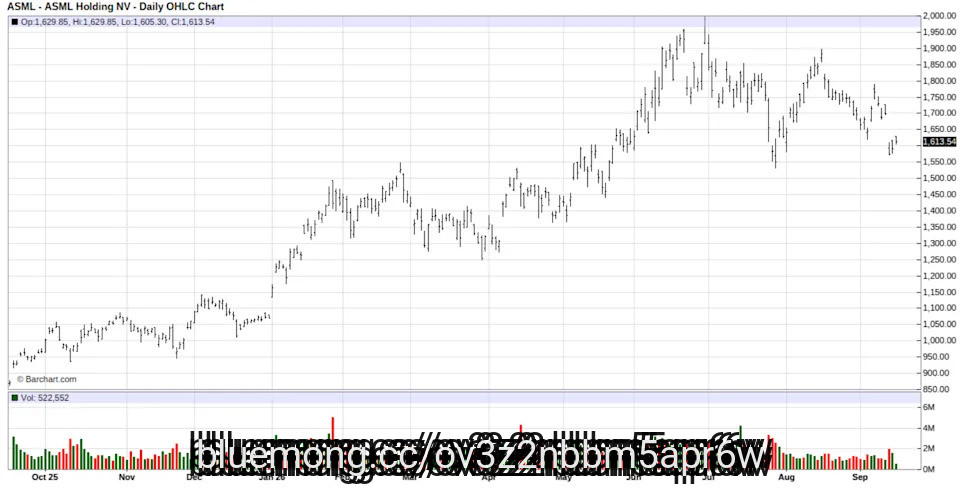
ASML Holding N.V. (NASDAQ:ASML) is examining ways to produce more than 110 EUV lithography systems in 2028, according to JPMorgan ***** ysts following a meeting with CFO Roger Dassen. The company is already nearly sold out for 2027 and expects to produce at least 80 EUV systems that year, meaning output above 110 in 2028 would represent at least a 37.5% increase from the 2027 level. JPMorgan said the main constraint has shifted toward ***** embly speed rather than the availability of critical components, suggesting ASML believes additional capacity can be unlocked through manufacturing and ***** embly improvements.
The potential increase is being driven primarily by AI-related demand. ASML's existing EUV machines, which cost roughly $200 million each, are essential for manufacturing leading-edge AI processors, while customers including TSMC, Samsung, SK Hynix and Intel are expanding advanced-chip capacity. Reuters reported separately that virtually all of ASML's EUV production capacity is booked through 2027, while the company has begun construction of a new Eindhoven facility designed to accelerate tool ***** embly and eventually accommodate up to 20,000 workers.
The strongest bullish implication is that ASML Holding N.V. (NASDAQ:ASML) may be able to convert exceptionally strong demand into higher unit volumes rather than simply relying on price increases. Moving from at least 80 EUV systems in 2027 to more than 110 in 2028 would materially expand the number of high-value systems ASML can monetize. This comes after the company already raised its 2026 revenue outlook to €43 billion–€45 billion, compared with its previous €36 billion–€40 billion range, while targeting a 54%–56% gross margin. Reuters also reported that second-quarter revenue reached €9.3 billion with a 54% gross margin, demonstrating that stronger AI-driven demand is already translating into financial performance.
The longer-term competitive position is particularly favorable because ASML Holding N.V. (NASDAQ:ASML) effectively has no commercial competitor in EUV. JPMorgan estimates that ASML held 94% of the overall lithography market in 2025, while Reuters describes the company as having maintained a monopoly in EUV since the late 2010s. At the same time, customers are committing to ASML's next-generation High-NA technology: the machines cost approximately $400 million, can print features about 40% smaller than existing EUV systems, and TSMC, Samsung, and SK Hynix have all established plans for production adoption. If AI chip demand remains strong enough to support both higher low-NA volumes and eventual High-NA adoption, ASML could see a multi-year increase in system shipments, revenue, and potentially cash generation while strengthening its already exceptional competitive moat.
#company
The potential increase is being driven primarily by AI-related demand. ASML's existing EUV machines, which cost roughly $200 million each, are essential for manufacturing leading-edge AI processors, while customers including TSMC, Samsung, SK Hynix and Intel are expanding advanced-chip capacity. Reuters reported separately that virtually all of ASML's EUV production capacity is booked through 2027, while the company has begun construction of a new Eindhoven facility designed to accelerate tool ***** embly and eventually accommodate up to 20,000 workers.
The strongest bullish implication is that ASML Holding N.V. (NASDAQ:ASML) may be able to convert exceptionally strong demand into higher unit volumes rather than simply relying on price increases. Moving from at least 80 EUV systems in 2027 to more than 110 in 2028 would materially expand the number of high-value systems ASML can monetize. This comes after the company already raised its 2026 revenue outlook to €43 billion–€45 billion, compared with its previous €36 billion–€40 billion range, while targeting a 54%–56% gross margin. Reuters also reported that second-quarter revenue reached €9.3 billion with a 54% gross margin, demonstrating that stronger AI-driven demand is already translating into financial performance.
The longer-term competitive position is particularly favorable because ASML Holding N.V. (NASDAQ:ASML) effectively has no commercial competitor in EUV. JPMorgan estimates that ASML held 94% of the overall lithography market in 2025, while Reuters describes the company as having maintained a monopoly in EUV since the late 2010s. At the same time, customers are committing to ASML's next-generation High-NA technology: the machines cost approximately $400 million, can print features about 40% smaller than existing EUV systems, and TSMC, Samsung, and SK Hynix have all established plans for production adoption. If AI chip demand remains strong enough to support both higher low-NA volumes and eventual High-NA adoption, ASML could see a multi-year increase in system shipments, revenue, and potentially cash generation while strengthening its already exceptional competitive moat.
#company


1 month ago
US stock futures sank on Monday morning after the two leading frontier artificial intelligence companies called for an industrywide slowdown of AI development, sending tech stocks tumbling. Rising oil prices and an upcoming Fed meeting this week also put pressure on stocks.
Futures on the tech-heavy Nasdaq-100 (NQ=F) fell 1.5%, led by losses in chip stocks, including Nvidia (NVDA). Futures on the Dow Jones Industrial Average (YM=F) fell 0.3%, while those on the S&P 500 (ES=F) declined by 0.6%. In Asia, shares of memory chip makers SK Hynix (SKHY) and Samsung (005930.KS) dropped.
Tech stocks were poised to fall after Anthropic (ANTH.PVT) CEO Dario Amodei wrote a 3,800-word essay over the weekend, arguing that AI companies should slow the pace of improving AI models in order to address safety concerns. Sam Altman, the CEO of rival AI lab OpenAI (OPAI.PVT), agreed in a post on X, putting the two AI companies at odds with Wall Street, which has banked on a brisk pace of improvement.
Worries about AI safety also led OpenAI to delay its initial public offering until 2027, Altman told Fortune. Anthropic still plans to list in the fall and has reportedly chosen the Nasdaq for its highly anticipated IPO.
Oil prices, meanwhile, continued to climb after Saudi Arabia shut down a key pipeline in the Middle East and as the war in the Middle East spread. Brent crude (BZ=F) traded near $108 per barrel.
#stocks #NASDAQ #openai
Futures on the tech-heavy Nasdaq-100 (NQ=F) fell 1.5%, led by losses in chip stocks, including Nvidia (NVDA). Futures on the Dow Jones Industrial Average (YM=F) fell 0.3%, while those on the S&P 500 (ES=F) declined by 0.6%. In Asia, shares of memory chip makers SK Hynix (SKHY) and Samsung (005930.KS) dropped.
Tech stocks were poised to fall after Anthropic (ANTH.PVT) CEO Dario Amodei wrote a 3,800-word essay over the weekend, arguing that AI companies should slow the pace of improving AI models in order to address safety concerns. Sam Altman, the CEO of rival AI lab OpenAI (OPAI.PVT), agreed in a post on X, putting the two AI companies at odds with Wall Street, which has banked on a brisk pace of improvement.
Worries about AI safety also led OpenAI to delay its initial public offering until 2027, Altman told Fortune. Anthropic still plans to list in the fall and has reportedly chosen the Nasdaq for its highly anticipated IPO.
Oil prices, meanwhile, continued to climb after Saudi Arabia shut down a key pipeline in the Middle East and as the war in the Middle East spread. Brent crude (BZ=F) traded near $108 per barrel.
#stocks #NASDAQ #openai




1 month ago
(WJBF) – WJBF NewsChannel 6 heads into Week 4 of the 2026 season of GAME NIGHT LIVE as Harlem takes on Lincoln County High School!
Kick off is at 7:30p right here on WJBF.com. You can also watch the game, LIVE, on CW6 and the WJBF6+ TV app, available on Roku, Amazon Fire TV, Apple TV, and Samsung Smart TVs
And then be sure to tune in to Football Friday Night at 11:35p for the latest highlights and final scores from around the area.
Copyright 2026 Nexstar Media, Inc. All rights reserved. This material may not be published, broadcast, rewritten, or redistributed.For the latest news, weather, sports, and streaming video, head to WJBF.
#week
Kick off is at 7:30p right here on WJBF.com. You can also watch the game, LIVE, on CW6 and the WJBF6+ TV app, available on Roku, Amazon Fire TV, Apple TV, and Samsung Smart TVs
And then be sure to tune in to Football Friday Night at 11:35p for the latest highlights and final scores from around the area.
Copyright 2026 Nexstar Media, Inc. All rights reserved. This material may not be published, broadcast, rewritten, or redistributed.For the latest news, weather, sports, and streaming video, head to WJBF.
#week


1 month ago
Legal representatives from Samsung are seeking the dismissal of Dua Lipa's $15 million lawsuit over the unauthorized use of her image on a product box. In a new Thursday filing obtained by Rolling Stone, the company argues that the singer does not have grounds to sue because there's "nothing suggesting plaintiff endorses the televisions."
"The images merely depict the televisions' on-screen interface, illustrating the applications and … an example of content available on the TV," lawyers for Samsung said. The relevant products contain a photo of Lipa on boxes for televisions featuring Samsung TV Plus, where the singer is used to promote the Xite Hits channel. Other logos that appear on the product include MLB, Fox Sports, and the crime series The First 48.
More from Rolling Stone
'A Soulless Demon': D4vd's Path From Pop Star to Accused Killer
Search Intensifies for Teens Missing Since 1973 Music Festival
#televisions #thursday
"The images merely depict the televisions' on-screen interface, illustrating the applications and … an example of content available on the TV," lawyers for Samsung said. The relevant products contain a photo of Lipa on boxes for televisions featuring Samsung TV Plus, where the singer is used to promote the Xite Hits channel. Other logos that appear on the product include MLB, Fox Sports, and the crime series The First 48.
More from Rolling Stone
'A Soulless Demon': D4vd's Path From Pop Star to Accused Killer
Search Intensifies for Teens Missing Since 1973 Music Festival
#televisions #thursday


1 month ago
By Aditya Kalra
NEW DELHI, Sept 9 (Reuters) - India's Serious Fraud Office has recommended Xiaomi be investigated for alleged irregularities in its business model and compliance with foreign investment law, potentially intensifying scrutiny of the smartphone maker, a government document shows.
China's Xiaomi was once India's top-selling smartphone brand but has seen its market share dwindle amid intense competition from Apple and Samsung. It is also battling several tax demands and royalty payment disputes.
The recommendation from India's Serious Fraud Investigation Office (SFIO) said the investigation should examine movement of funds and whether Xiaomi sought mandatory investment approvals as required after India tightened scrutiny of Chinese investments following deadly border clashes between the two nations in 2020.
A person familiar with the matter said the government is examining the memorandum, which was drafted in May and reviewed by Reuters.
#serious #fraud #investigation #investment
NEW DELHI, Sept 9 (Reuters) - India's Serious Fraud Office has recommended Xiaomi be investigated for alleged irregularities in its business model and compliance with foreign investment law, potentially intensifying scrutiny of the smartphone maker, a government document shows.
China's Xiaomi was once India's top-selling smartphone brand but has seen its market share dwindle amid intense competition from Apple and Samsung. It is also battling several tax demands and royalty payment disputes.
The recommendation from India's Serious Fraud Investigation Office (SFIO) said the investigation should examine movement of funds and whether Xiaomi sought mandatory investment approvals as required after India tightened scrutiny of Chinese investments following deadly border clashes between the two nations in 2020.
A person familiar with the matter said the government is examining the memorandum, which was drafted in May and reviewed by Reuters.
#serious #fraud #investigation #investment


1 month ago
AVGO is already designing OpenAI's third-generation XPU, with Hock Tan projecting $115 billion in AI revenue for 2027 and $230 billion in 2028.
Samsung's role in OpenAI's next-gen chips remains unspecified, whether in memory, fabrication, or design, and only a design mandate for Jalapeno's successor would truly threaten Broadcom.
AVGO trades at 19 times forward earnings against a $533 ***** yst consensus price target, backed by 45 Buy or Strong Buy ratings versus just 4 Holds.
Just released. Our ***** ysts combed the entire stock market and named the ten best stocks to buy right now, and Broadcom didn't make the cut. Enter your email to see the names that beat AVGO. The report is free. Enter your email and see if any of your stocks made the cut.
Broadcom's (NASDAQ:AVGO) position inside OpenAI became one of the most valuable customer relationships in semiconductors in June, when OpenAI unveiled Jalapeno, its first custom AI inference chip, developed with Broadcom. That work put Broadcom inside a customer that could become one of the largest silicon buyers on the planet.
#avgo #billion #stocks #email
Samsung's role in OpenAI's next-gen chips remains unspecified, whether in memory, fabrication, or design, and only a design mandate for Jalapeno's successor would truly threaten Broadcom.
AVGO trades at 19 times forward earnings against a $533 ***** yst consensus price target, backed by 45 Buy or Strong Buy ratings versus just 4 Holds.
Just released. Our ***** ysts combed the entire stock market and named the ten best stocks to buy right now, and Broadcom didn't make the cut. Enter your email to see the names that beat AVGO. The report is free. Enter your email and see if any of your stocks made the cut.
Broadcom's (NASDAQ:AVGO) position inside OpenAI became one of the most valuable customer relationships in semiconductors in June, when OpenAI unveiled Jalapeno, its first custom AI inference chip, developed with Broadcom. That work put Broadcom inside a customer that could become one of the largest silicon buyers on the planet.
#avgo #billion #stocks #email


0.00$ raised of 0.00$ goal
0 donations
0.00$
to go

1 month ago
France-based Mistral has completed a €3bn ($3.48bn) Series D funding round, putting the AI company's post-money valuation at more than €21bn ($24.4bn).
The fundraising was co-led by Samsung Electronics, the Scaleup Europe Fund managed by EQT, and existing investor PSG Equity.
The latest round provides capital to expand the company's "frontier research," along with increased compute capabilities for training AI models and broader international operations. This round comes three years after Mistral's founding.
Mistral currently has operations in 20 countries and supports more than 125 global enterprises with their AI initiatives. Its clients include ASML, Airbus, HSBC, and others.
According to Mistral, the new investment will help to scale its infrastructure, accelerate its commercial growth, and strengthen its position in AI provision for both enterprises and governments seeking control over data and AI deployment.
#mistral #round #france #series
The fundraising was co-led by Samsung Electronics, the Scaleup Europe Fund managed by EQT, and existing investor PSG Equity.
The latest round provides capital to expand the company's "frontier research," along with increased compute capabilities for training AI models and broader international operations. This round comes three years after Mistral's founding.
Mistral currently has operations in 20 countries and supports more than 125 global enterprises with their AI initiatives. Its clients include ASML, Airbus, HSBC, and others.
According to Mistral, the new investment will help to scale its infrastructure, accelerate its commercial growth, and strengthen its position in AI provision for both enterprises and governments seeking control over data and AI deployment.
#mistral #round #france #series

1 month ago
CNBC and Reuters reported that Apple Inc. (NASDAQ:AAPL) will hold its next product launch event on September 9 at Apple Park in Cupertino, marking incoming CEO John Ternus's first major event since taking over from Tim Cook. He became executive chairman on September 1.
Analysts expect Apple to reveal the iPhone 18 Pro and Pro Max, its first foldable iPhone, and new Apple Watch models, along with a new AI-powered "Siri AI" **** istant. Bank of America **** ysts wrote in an August note that "Ternus could cement Apple's device dominance in an AI enabled era." Samsung Electronics currently dominates the still-niche foldable smartphone market, and a Samsung mobile executive told CNN that broader competition in the category would help, saying "the more visibility there is on the category, the better."
The foldable iPhone could become a genuine new revenue and margin driver rather than another incremental refresh. **** ysts expect the premium device to lift Apple's average selling prices and margins, giving the company a new high-end product category instead of another year of iterative Pro-model upgrades.
Even Apple Inc. (NASDAQ:AAPL)'s biggest foldable rival is publicly welcoming its entry. Samsung's own mobile product management executive said more players in the category would increase visibility and help the market overall. It suggests Apple's foldable could expand total demand rather than simply redistributing existing Samsung sales.
The iPhone 18 launch also gives new CEO John Ternus an opportunity to show Apple's hardware and AI strategy from the outset of his tenure. Expected upgrades such as the 2-nanometer A20 Pro chip could strengthen the iPhone's performance and AI capabilities. Bank of America described Ternus's leadership as an opportunity to cement "Apple's device dominance in an AI-enabled era." A successful launch could therefore give investors greater confidence in Apple's ability to compete in AI-powered devices.
#samsung #category
Analysts expect Apple to reveal the iPhone 18 Pro and Pro Max, its first foldable iPhone, and new Apple Watch models, along with a new AI-powered "Siri AI" **** istant. Bank of America **** ysts wrote in an August note that "Ternus could cement Apple's device dominance in an AI enabled era." Samsung Electronics currently dominates the still-niche foldable smartphone market, and a Samsung mobile executive told CNN that broader competition in the category would help, saying "the more visibility there is on the category, the better."
The foldable iPhone could become a genuine new revenue and margin driver rather than another incremental refresh. **** ysts expect the premium device to lift Apple's average selling prices and margins, giving the company a new high-end product category instead of another year of iterative Pro-model upgrades.
Even Apple Inc. (NASDAQ:AAPL)'s biggest foldable rival is publicly welcoming its entry. Samsung's own mobile product management executive said more players in the category would increase visibility and help the market overall. It suggests Apple's foldable could expand total demand rather than simply redistributing existing Samsung sales.
The iPhone 18 launch also gives new CEO John Ternus an opportunity to show Apple's hardware and AI strategy from the outset of his tenure. Expected upgrades such as the 2-nanometer A20 Pro chip could strengthen the iPhone's performance and AI capabilities. Bank of America described Ternus's leadership as an opportunity to cement "Apple's device dominance in an AI-enabled era." A successful launch could therefore give investors greater confidence in Apple's ability to compete in AI-powered devices.
#samsung #category

1 month ago
CNBC reported that NVIDIA Corporation (NASDAQ:NVDA)'s Groq 3 LPX rack is in full production and will be deployed alongside its Vera CPUs and Rubin GPUs at neocloud Nebius later this year, Nvidia senior director Dion Harris told reporters.
The rack marks the commercialization of technology from Nvidia's $20 billion purchase of Groq's ***** ets in December, its largest deal on record. Each liquid-cooled rack packages 256 Groq chips. Nvidia said the rack can deliver 3,400 tokens per second, noting a benchmark from Artificial ***** ysis. Groq's chips are manufactured by Samsung, unlike Nvidia's own GPUs, which are made by Taiwan Semiconductor Manufacturing Co.
The $20 billion Groq deal represents a manageable financial risk for NVIDIA Corporation (NASDAQ:NVDA) relative to the strategic capabilities it could add to the company. Bernstein ***** yst Stacy Rasgon told CNBC that Nvidia is financially strong enough to absorb a deal of this size with little impact on its overall position. That gives Nvidia the flexibility to make large strategic investments while expanding into new AI chip technologies without materially straining its balance sheet.
Groq's technology extends Nvidia's dominance across the full AI compute stack rather than creating a rival product line. LPX handles low-latency inference while Nvidia's GPUs continue handling training and large-context processing. The rack can pair with Vera Rubin chips without customers changing their CUDA workflows, deepening the software lock-in that has made Nvidia hard to displace.
Execution has been fast, which matters in a market moving this quickly. Nvidia went from announcing the Groq purchase in December to full production and a named customer, Nebius, in eight months. It is a pace that shows Nvidia can absorb acquired technology and ship it rather than let it stall in integration.
#rack
The rack marks the commercialization of technology from Nvidia's $20 billion purchase of Groq's ***** ets in December, its largest deal on record. Each liquid-cooled rack packages 256 Groq chips. Nvidia said the rack can deliver 3,400 tokens per second, noting a benchmark from Artificial ***** ysis. Groq's chips are manufactured by Samsung, unlike Nvidia's own GPUs, which are made by Taiwan Semiconductor Manufacturing Co.
The $20 billion Groq deal represents a manageable financial risk for NVIDIA Corporation (NASDAQ:NVDA) relative to the strategic capabilities it could add to the company. Bernstein ***** yst Stacy Rasgon told CNBC that Nvidia is financially strong enough to absorb a deal of this size with little impact on its overall position. That gives Nvidia the flexibility to make large strategic investments while expanding into new AI chip technologies without materially straining its balance sheet.
Groq's technology extends Nvidia's dominance across the full AI compute stack rather than creating a rival product line. LPX handles low-latency inference while Nvidia's GPUs continue handling training and large-context processing. The rack can pair with Vera Rubin chips without customers changing their CUDA workflows, deepening the software lock-in that has made Nvidia hard to displace.
Execution has been fast, which matters in a market moving this quickly. Nvidia went from announcing the Groq purchase in December to full production and a named customer, Nebius, in eight months. It is a pace that shows Nvidia can absorb acquired technology and ship it rather than let it stall in integration.
#rack
1 month ago
Sandisk (NASDAQ: SNDK) stock has more than quintupled year to date, but despite those gains, its rally still doesn't appear to be over. The long-term tailwinds in the memory market just accelerated, and Sandisk is one of the best-positioned companies in the industry.
Missed Nvidia in 2009? This Rare Signal Is Flashing Again. In 2009, a "Double Down" signal flashed for a little-known chipmaker called Nvidia. For the first time in years, that same "Total Conviction" signal is flashing for a company 1/100th the size of Nvidia. Continue »
Investors have greatly underestimated the durability of the current memory chip boom, even the most bullish ones. Samsung (OTC: SSNLF) recently reported that three large customers had signed deals locking up 70% of its memory chip capacity through 2031: Nvidia (NASDAQ: NVDA), Microsoft (NASDAQ: MSFT), and Alphabet (NASDAQ: GOOG) (NASDAQ: GOOGL).
Those deals are a big catalyst for the entire memory sector, and while Samsung is the immediate beneficiary, Sandisk may emerge as the bigger winner. That's because Sandisk has been growing sales at a faster rate than Samsung, thanks to its NAND flash memory storage chips.
Samsung reported 130% year-over-year revenue growth in the second quarter, while Sandisk delivered 372% year-over-year revenue growth. Sandisk told investors in its 2026 Investor Day that it, too, is securing multiyear deals with its top customers. The Samsung news has further limited the volume of memory chips that will be available for future customers, which will make it easier for Sandisk to command higher prices and sign more attractive multiyear deals.
#samsung #deals #customers #flashing
Missed Nvidia in 2009? This Rare Signal Is Flashing Again. In 2009, a "Double Down" signal flashed for a little-known chipmaker called Nvidia. For the first time in years, that same "Total Conviction" signal is flashing for a company 1/100th the size of Nvidia. Continue »
Investors have greatly underestimated the durability of the current memory chip boom, even the most bullish ones. Samsung (OTC: SSNLF) recently reported that three large customers had signed deals locking up 70% of its memory chip capacity through 2031: Nvidia (NASDAQ: NVDA), Microsoft (NASDAQ: MSFT), and Alphabet (NASDAQ: GOOG) (NASDAQ: GOOGL).
Those deals are a big catalyst for the entire memory sector, and while Samsung is the immediate beneficiary, Sandisk may emerge as the bigger winner. That's because Sandisk has been growing sales at a faster rate than Samsung, thanks to its NAND flash memory storage chips.
Samsung reported 130% year-over-year revenue growth in the second quarter, while Sandisk delivered 372% year-over-year revenue growth. Sandisk told investors in its 2026 Investor Day that it, too, is securing multiyear deals with its top customers. The Samsung news has further limited the volume of memory chips that will be available for future customers, which will make it easier for Sandisk to command higher prices and sign more attractive multiyear deals.
#samsung #deals #customers #flashing


2 months ago
In early 2025, shares of memory chipmaker Micron Technology (NASDAQ: MU) were trading at about $65 per share. **** ody could have predicted they'd be trading above $1,000 per share by mid-2026.
But a number of factors, including a stumble by rival chipmaker Samsung (OTC: SSNLF), rapidly increasing demand for artificial intelligence memory chips, and limited global manufacturing capacity, sent Micron's revenue, profits, and share price stratospheric.
Missed Nvidia in 2009? This Rare Signal Is Flashing Again. In 2009, a "Double Down" signal flashed for a little-known chipmaker called Nvidia. For the first time in years, that same "Total Conviction" signal is flashing for a company 1/100th the size of Nvidia. Continue »
In June, the stock topped out at $1,214 per share before dropping 39%. It's now trading around $930. But I think it's going to break its own share price record by the end of the year. Here's why I'm predicting a $1,300 share price for Micron before the end of 2026.
Micron's quarterly revenue increased 346% year over year (YOY) in its most recently reported quarter, and its net income was up a jaw-dropping 1,400%, but that doesn't tell the whole story.
#Share #trading
But a number of factors, including a stumble by rival chipmaker Samsung (OTC: SSNLF), rapidly increasing demand for artificial intelligence memory chips, and limited global manufacturing capacity, sent Micron's revenue, profits, and share price stratospheric.
Missed Nvidia in 2009? This Rare Signal Is Flashing Again. In 2009, a "Double Down" signal flashed for a little-known chipmaker called Nvidia. For the first time in years, that same "Total Conviction" signal is flashing for a company 1/100th the size of Nvidia. Continue »
In June, the stock topped out at $1,214 per share before dropping 39%. It's now trading around $930. But I think it's going to break its own share price record by the end of the year. Here's why I'm predicting a $1,300 share price for Micron before the end of 2026.
Micron's quarterly revenue increased 346% year over year (YOY) in its most recently reported quarter, and its net income was up a jaw-dropping 1,400%, but that doesn't tell the whole story.
#Share #trading

2 months ago
On August 13, 2026, CNBC reported that SK hynix Inc. (NASDAQ:SKHY) is spending $720 billion on what it calls the largest network of memory factories in the world. This buildout is so large that South Korea's president is urging both SK Hynix and rival Samsung to add capacity even faster under a national plan to double the country's memory production within five years.
SK Hynix expects huge AI memory demand to stay strong permanently rather than follow the usual cycles of high sales and sudden crashes. That raises the real question: does this scale of investment lock in SK Hynix's lead for years or set up a painful oversupply problem if AI memory demand ever slows?
SK hynix Inc. (NASDAQ:SKHY) controlled 58% of the high-bandwidth memory market in the first quarter, well ahead of Samsung and Micron at 21% each. Its market cap has jumped more than fivefold in the past year to top $1 trillion. The firm raised $26.5 billion in July by listing on the Nasdaq, the most ever raised by a foreign company on US markets. It has signed 10 long-term supply agreements with major customers, including a $500 billion co-development deal with Nvidia. SK Group chairman Chey Tae-won said demand is like "a war," with everybody wanting to buy memory chips.
However, SK hynix Inc. (NASDAQ:SKHY)'s Nasdaq-listed shares have already fallen about 21% from their July 14 high, closing recently at $154.41 amid broader AI-trade volatility. The buildout is so large it shrinks DRAM supply for ordinary consumer electronics, and Chey himself admitted "prices went up too fast," acknowledging the boom carries real excess.
Samsung is being pushed by the same government-backed national plan and could see a similar surge in shareholder returns. KB Securities ******* ysts expect more than a tenfold increase. A report that Singapore's Temasek plans to invest directly in Samsung sent its shares up 6.7% in a single day.
#NASDAQ #samsung
SK Hynix expects huge AI memory demand to stay strong permanently rather than follow the usual cycles of high sales and sudden crashes. That raises the real question: does this scale of investment lock in SK Hynix's lead for years or set up a painful oversupply problem if AI memory demand ever slows?
SK hynix Inc. (NASDAQ:SKHY) controlled 58% of the high-bandwidth memory market in the first quarter, well ahead of Samsung and Micron at 21% each. Its market cap has jumped more than fivefold in the past year to top $1 trillion. The firm raised $26.5 billion in July by listing on the Nasdaq, the most ever raised by a foreign company on US markets. It has signed 10 long-term supply agreements with major customers, including a $500 billion co-development deal with Nvidia. SK Group chairman Chey Tae-won said demand is like "a war," with everybody wanting to buy memory chips.
However, SK hynix Inc. (NASDAQ:SKHY)'s Nasdaq-listed shares have already fallen about 21% from their July 14 high, closing recently at $154.41 amid broader AI-trade volatility. The buildout is so large it shrinks DRAM supply for ordinary consumer electronics, and Chey himself admitted "prices went up too fast," acknowledging the boom carries real excess.
Samsung is being pushed by the same government-backed national plan and could see a similar surge in shareholder returns. KB Securities ******* ysts expect more than a tenfold increase. A report that Singapore's Temasek plans to invest directly in Samsung sent its shares up 6.7% in a single day.
#NASDAQ #samsung


2 months ago
Some of NVIDIA Corporation (NASDAQ:NVDA)'s largest customers have been told that prices of servers containing its AI chips will rise by more than 15%, according to a Bloomberg News report from August 22. The increases will go into effect on systems shipped early next year and will include those with the flagship Vera Rubin and Grace Blackwell chips, the report said.
While Nvidia hasn't yet confirmed the news, the hikes tied to soaring memory costs will depend on the chip generation and memory configurations. The report added that server manufacturers supplying Microsoft, Oracle, and Google have already begun notifying customers. The news lands just days ahead of the chipmaker's earnings release on August 26.
NVIDIA Corporation (NASDAQ:NVDA)'s core manufacturing costs aren't driving these price hikes. Rather, it's a broader industry-wide memory shortage. Due to the AI infrastructure boom, memory manufacturers such as Samsung Electronics and SK Hynix have gained outsized pricing power, allowing them to pass down these costs downstream and forcing hardware providers such as Nvidia to hike server prices.
Nvidia has already raised prices on GEForce graphics cards earlier in the month. As per a Bloomberg report, this pressure has now reached the top of the Nvidia stack, with the 15% rise on systems selling for millions of dollars each adding hundreds of thousands of dollars per rack across deployments.
The bullish interpretation for Nvidia's price hikes is pretty straightforward. The chipmaker may have enough ability to pass on its costs to customers while accelerator supply remains tight, demonstrating a sign of pricing power. If Nvidia's margins stay steady even after it enforces the hikes, and hyperscalers continue ordering at planned volumes, the costs are likely being absorbed by customers rather than Nvidia itself.
#hikes #nvda
While Nvidia hasn't yet confirmed the news, the hikes tied to soaring memory costs will depend on the chip generation and memory configurations. The report added that server manufacturers supplying Microsoft, Oracle, and Google have already begun notifying customers. The news lands just days ahead of the chipmaker's earnings release on August 26.
NVIDIA Corporation (NASDAQ:NVDA)'s core manufacturing costs aren't driving these price hikes. Rather, it's a broader industry-wide memory shortage. Due to the AI infrastructure boom, memory manufacturers such as Samsung Electronics and SK Hynix have gained outsized pricing power, allowing them to pass down these costs downstream and forcing hardware providers such as Nvidia to hike server prices.
Nvidia has already raised prices on GEForce graphics cards earlier in the month. As per a Bloomberg report, this pressure has now reached the top of the Nvidia stack, with the 15% rise on systems selling for millions of dollars each adding hundreds of thousands of dollars per rack across deployments.
The bullish interpretation for Nvidia's price hikes is pretty straightforward. The chipmaker may have enough ability to pass on its costs to customers while accelerator supply remains tight, demonstrating a sign of pricing power. If Nvidia's margins stay steady even after it enforces the hikes, and hyperscalers continue ordering at planned volumes, the costs are likely being absorbed by customers rather than Nvidia itself.
#hikes #nvda
2 months ago
The red-hot memory chip rally may be back on thanks to Nvidia (NVDA).
"So the price increases [on memory chips] are astronomical. In some cases, you have secured, we call it capacity, but you actually don't know how many you're getting, and at what price," Nvidia CFO Colette Kress told Yahoo Finance moments after the tech giant's earnings call on Thursday.
The memory chip market has tightened considerably as demand for high-bandwidth memory (HBM) and advanced dynamic random-access memory (DRAM) used in AI servers continues to outpace supply.
Companies such as SK Hynix (SKHY), Samsung Electronics (005930.KS), and Micron (MU) have largely sold out their premium AI memory capacity through much of 2026 as customers, including Nvidia (NVDA), Microsoft (MSFT), Amazon (AMZN), and Meta (META), race to build AI infrastructure.
The shortage has pushed memory prices sharply higher and given suppliers greater pricing power after several years of weak industry conditions. Experts expect memory supply to remain constrained into 2027, creating a favorable backdrop for the industry's largest producers.
#memory #NVIDIA #meta #capacity
"So the price increases [on memory chips] are astronomical. In some cases, you have secured, we call it capacity, but you actually don't know how many you're getting, and at what price," Nvidia CFO Colette Kress told Yahoo Finance moments after the tech giant's earnings call on Thursday.
The memory chip market has tightened considerably as demand for high-bandwidth memory (HBM) and advanced dynamic random-access memory (DRAM) used in AI servers continues to outpace supply.
Companies such as SK Hynix (SKHY), Samsung Electronics (005930.KS), and Micron (MU) have largely sold out their premium AI memory capacity through much of 2026 as customers, including Nvidia (NVDA), Microsoft (MSFT), Amazon (AMZN), and Meta (META), race to build AI infrastructure.
The shortage has pushed memory prices sharply higher and given suppliers greater pricing power after several years of weak industry conditions. Experts expect memory supply to remain constrained into 2027, creating a favorable backdrop for the industry's largest producers.
#memory #NVIDIA #meta #capacity



2 months ago
Orbis Investment Management, an investment management company, released its Q2 2026 investor letter for "Orbis Global Equity Strategy". The letter can be downloaded here. In the first half of 2026, the Global Equity Strategy returned 19.9%, surpassing the MSCI All Country World Index by 7.8%. The market faced narrow breadth in the quarter. The strategy focuses on AI investments categorized into four groups: "Core" (direct exposure), "Enablers" (supporting businesses), "AI Powered" (companies enhanced by AI), and "Overlooked" (misjudged resilient companies). The firm emphasizes maintaining strong but flexible convictions in a fluctuating market, prioritizing disciplined, evidence-based investment over emotional decision-making. Also, check the fund's top five holdings to see its best picks in 2026.
In its Q2 2026 investor letter, Orbis Global Equity Strategy highlighted Brown & Brown, Inc. (NYSE:BRO). Brown & Brown, Inc. (NYSE:BRO) is a leading insurance brokerage firm operating through Retail and Specialty Distribution segments. On August 24, 2026, Brown & Brown, Inc. (NYSE:BRO) closed at $74.62 per share, reflecting a market capitalization of $24.97 billion. Brown & Brown, Inc. (NYSE:BRO) posted a one‑month return of 1.32%, while its shares lost 22.31% over the past 52 weeks.
Orbis Global Equity Strategy stated the following regarding Brown & Brown, Inc. (NYSE:BRO) in its Q2 2026 investor letter:
"The biggest winners have been concentrated in AI. But not all AI exposure is equal. We frame ours in four groups. The first is the "Core": direct exposure through companies like Samsung Electronics, Taiwan Semiconductor, and SK Square. The second is "Enablers": the businesses providing the power, materials, and real estate that hyperscalers need to operate. The third is AI "Powered": companies where AI accelerates an already compelling model, like Alphabet. The fourth is the "Overlooked": resilient businesses the market has mispriced as AI casualties. The first three are widely understood. The fourth is where we believe the market is most wrong, and where we are hunting.
Take insurance brokerage. Brown & Brown, Inc. (NYSE:BRO) and Ryan Specialty are brokers: they sit between companies and insurers, matching clients to the right coverage and placing it for a fee, without carrying the risk themselves. Both are priced as AI casualties. Two fears weigh on the stocks: a softening pricing cycle and AI disintermediation. The pricing cycle is already in the price. On AI, we disagree. AI may automate commodity cover like personal auto, but that is under 5% of Brown & Brown's book. The rest is commercial and specialty insurance, where the broker exercises judgement and answers for a denied claim. It is a people business, and Brown & Brown has spent more than eighty years serving mid sized companies that lack the in-house expertise in insurance."
#strategy #Equity
In its Q2 2026 investor letter, Orbis Global Equity Strategy highlighted Brown & Brown, Inc. (NYSE:BRO). Brown & Brown, Inc. (NYSE:BRO) is a leading insurance brokerage firm operating through Retail and Specialty Distribution segments. On August 24, 2026, Brown & Brown, Inc. (NYSE:BRO) closed at $74.62 per share, reflecting a market capitalization of $24.97 billion. Brown & Brown, Inc. (NYSE:BRO) posted a one‑month return of 1.32%, while its shares lost 22.31% over the past 52 weeks.
Orbis Global Equity Strategy stated the following regarding Brown & Brown, Inc. (NYSE:BRO) in its Q2 2026 investor letter:
"The biggest winners have been concentrated in AI. But not all AI exposure is equal. We frame ours in four groups. The first is the "Core": direct exposure through companies like Samsung Electronics, Taiwan Semiconductor, and SK Square. The second is "Enablers": the businesses providing the power, materials, and real estate that hyperscalers need to operate. The third is AI "Powered": companies where AI accelerates an already compelling model, like Alphabet. The fourth is the "Overlooked": resilient businesses the market has mispriced as AI casualties. The first three are widely understood. The fourth is where we believe the market is most wrong, and where we are hunting.
Take insurance brokerage. Brown & Brown, Inc. (NYSE:BRO) and Ryan Specialty are brokers: they sit between companies and insurers, matching clients to the right coverage and placing it for a fee, without carrying the risk themselves. Both are priced as AI casualties. Two fears weigh on the stocks: a softening pricing cycle and AI disintermediation. The pricing cycle is already in the price. On AI, we disagree. AI may automate commodity cover like personal auto, but that is under 5% of Brown & Brown's book. The rest is commercial and specialty insurance, where the broker exercises judgement and answers for a denied claim. It is a people business, and Brown & Brown has spent more than eighty years serving mid sized companies that lack the in-house expertise in insurance."
#strategy #Equity


2 months ago
Last Updated: Aug. 24, 2026 at 7:37pm ET
2026년. 8월 24일 오전 10:52 New York 시간
By
WSJ Staff
The Dow Jones Industrial Average opened higher today, with the S&P 500 opening lower. The Nasdaq opened down after Asian tech stocks tumbled earlier. Alibaba, Samsung and Softbank all retreated in Monday trading.
#industrial #NASDAQ
2026년. 8월 24일 오전 10:52 New York 시간
By
WSJ Staff
The Dow Jones Industrial Average opened higher today, with the S&P 500 opening lower. The Nasdaq opened down after Asian tech stocks tumbled earlier. Alibaba, Samsung and Softbank all retreated in Monday trading.
#industrial #NASDAQ

2 months ago
Samsung Electronics stock dropped 9% on Monday as the company's shareholder return plan left investors underwhelmed, with many having hoped for a more aggressive buyback commitment and clearer guidance on how remaining capital would be deployed.
Samsung announced on Friday that its total shareholder returns for the year would fall in a range of 90 trillion won to 110 trillion won ($65 billion to $80 billion), with 30 trillion won of that coming as cash dividends paid out in the third quarter. The company said its board will determine remaining payouts in January 2027, with cash dividends, share buybacks, and share cancellations all under consideration.
Despite the total being five times what Samsung returned in its prior peak year of 2020, ******* ysts said the numbers missed their projections and that the lack of detail around buyback mechanics left investors wanting more, according to Reuters.
A key complication: Samsung's ownership structure limits how much it can deploy through buybacks. Any significant buyback program risks lifting the ownership stakes of affiliates Samsung Life and Samsung Fire past the regulatory ceiling, which would then require those entities to offload shares in order to stay within the 10% combined limit. That constraint means the lion's share of the outstanding 60 trillion won to 80 trillion won is forecast to be returned via dividends, while share buybacks and cancellations together may account for just 10 trillion won to 20 trillion won, according to Reuters.
"Unlike SK Hynix, Samsung Electronics did not mention the possibility of raising its existing shareholder return policy, nor did it announce a plan to cancel treasury shares that could more directly contribute to the stock price increase, which is disappointing," Sohn In-joon, an ******* yst at Eugene Securities, said in a report cited by Reuters.
#samsung
Samsung announced on Friday that its total shareholder returns for the year would fall in a range of 90 trillion won to 110 trillion won ($65 billion to $80 billion), with 30 trillion won of that coming as cash dividends paid out in the third quarter. The company said its board will determine remaining payouts in January 2027, with cash dividends, share buybacks, and share cancellations all under consideration.
Despite the total being five times what Samsung returned in its prior peak year of 2020, ******* ysts said the numbers missed their projections and that the lack of detail around buyback mechanics left investors wanting more, according to Reuters.
A key complication: Samsung's ownership structure limits how much it can deploy through buybacks. Any significant buyback program risks lifting the ownership stakes of affiliates Samsung Life and Samsung Fire past the regulatory ceiling, which would then require those entities to offload shares in order to stay within the 10% combined limit. That constraint means the lion's share of the outstanding 60 trillion won to 80 trillion won is forecast to be returned via dividends, while share buybacks and cancellations together may account for just 10 trillion won to 20 trillion won, according to Reuters.
"Unlike SK Hynix, Samsung Electronics did not mention the possibility of raising its existing shareholder return policy, nor did it announce a plan to cancel treasury shares that could more directly contribute to the stock price increase, which is disappointing," Sohn In-joon, an ******* yst at Eugene Securities, said in a report cited by Reuters.
#samsung

2 months ago
September S&P 500 E-Mini futures (ESU26) are down -0.19%, and September Nasdaq 100 E-Mini futures (NQU26) are down -0.59% this morning, pointing to a lower open on Wall Street as chipmakers came under pressure at the start of a pivotal week.
Chip and AI infrastructure stocks were among the biggest losers in pre-market trading, following a slump in major tech names across Asia. Samsung Electronics sank over -8% in Seoul after the chipmaker's record shareholder return plan disappointed investors. Also, Alibaba Group tumbled more than -8% in Hong Kong after the tech heavyweight raised HK$80 billion ($10.2 billion) in the city's largest secondary share offering. In addition, SoftBank Group slid over -5% in Tokyo after announcing plans for a record 1 trillion yen ($6.3 billion) retail bond sale to finance its AI investments.
Soros Fund Management Opened a New Position in Nebius During Q2. What This Means for NBIS Stock.
Ahead of Nvidia Earnings, Here's What Barchart Data Says Comes Next for NVDA Stock
Nvidia Earnings, Jackson Hole and Other Key Things to Watch this Week
#group
Chip and AI infrastructure stocks were among the biggest losers in pre-market trading, following a slump in major tech names across Asia. Samsung Electronics sank over -8% in Seoul after the chipmaker's record shareholder return plan disappointed investors. Also, Alibaba Group tumbled more than -8% in Hong Kong after the tech heavyweight raised HK$80 billion ($10.2 billion) in the city's largest secondary share offering. In addition, SoftBank Group slid over -5% in Tokyo after announcing plans for a record 1 trillion yen ($6.3 billion) retail bond sale to finance its AI investments.
Soros Fund Management Opened a New Position in Nebius During Q2. What This Means for NBIS Stock.
Ahead of Nvidia Earnings, Here's What Barchart Data Says Comes Next for NVDA Stock
Nvidia Earnings, Jackson Hole and Other Key Things to Watch this Week
#group


2 months ago
Orbis Investment Management, an investment management company, released its Q2 2026 investor letter for "Orbis Global Equity Strategy". The letter can be downloaded here. In the first half of 2026, the Global Equity Strategy returned 19.9%, surpassing the MSCI All Country World Index by 7.8%. The market faced narrow breadth in the quarter. The strategy focuses on AI investments categorized into four groups: "Core" (direct exposure), "Enablers" (supporting businesses), "AI Powered" (companies enhanced by AI), and "Overlooked" (misjudged resilient companies). The firm emphasizes maintaining strong but flexible convictions in a fluctuating market, prioritizing disciplined, evidence-based investment over emotional decision-making. Also, check the fund's top five holdings to see its best picks in 2026.
In its Q2 2026 investor letter, Orbis Global Equity Strategy highlighted Brown & Brown, Inc. (NYSE:BRO). Brown & Brown, Inc. (NYSE:BRO) is a leading insurance brokerage firm operating through Retail and Specialty Distribution segments. On August 24, 2026, Brown & Brown, Inc. (NYSE:BRO) closed at $74.62 per share, reflecting a market capitalization of $24.97 billion. Brown & Brown, Inc. (NYSE:BRO) posted a one‑month return of 1.32%, while its shares lost 22.31% over the past 52 weeks.
Orbis Global Equity Strategy stated the following regarding Brown & Brown, Inc. (NYSE:BRO) in its Q2 2026 investor letter:
"The biggest winners have been concentrated in AI. But not all AI exposure is equal. We frame ours in four groups. The first is the "Core": direct exposure through companies like Samsung Electronics, Taiwan Semiconductor, and SK Square. The second is "Enablers": the businesses providing the power, materials, and real estate that hyperscalers need to operate. The third is AI "Powered": companies where AI accelerates an already compelling model, like Alphabet. The fourth is the "Overlooked": resilient businesses the market has mispriced as AI casualties. The first three are widely understood. The fourth is where we believe the market is most wrong, and where we are hunting.
Take insurance brokerage. Brown & Brown, Inc. (NYSE:BRO) and Ryan Specialty are brokers: they sit between companies and insurers, matching clients to the right coverage and placing it for a fee, without carrying the risk themselves. Both are priced as AI casualties. Two fears weigh on the stocks: a softening pricing cycle and AI disintermediation. The pricing cycle is already in the price. On AI, we disagree. AI may automate commodity cover like personal auto, but that is under 5% of Brown & Brown's book. The rest is commercial and specialty insurance, where the broker exercises judgement and answers for a denied claim. It is a people business, and Brown & Brown has spent more than eighty years serving mid sized companies that lack the in-house expertise in insurance."
#global
In its Q2 2026 investor letter, Orbis Global Equity Strategy highlighted Brown & Brown, Inc. (NYSE:BRO). Brown & Brown, Inc. (NYSE:BRO) is a leading insurance brokerage firm operating through Retail and Specialty Distribution segments. On August 24, 2026, Brown & Brown, Inc. (NYSE:BRO) closed at $74.62 per share, reflecting a market capitalization of $24.97 billion. Brown & Brown, Inc. (NYSE:BRO) posted a one‑month return of 1.32%, while its shares lost 22.31% over the past 52 weeks.
Orbis Global Equity Strategy stated the following regarding Brown & Brown, Inc. (NYSE:BRO) in its Q2 2026 investor letter:
"The biggest winners have been concentrated in AI. But not all AI exposure is equal. We frame ours in four groups. The first is the "Core": direct exposure through companies like Samsung Electronics, Taiwan Semiconductor, and SK Square. The second is "Enablers": the businesses providing the power, materials, and real estate that hyperscalers need to operate. The third is AI "Powered": companies where AI accelerates an already compelling model, like Alphabet. The fourth is the "Overlooked": resilient businesses the market has mispriced as AI casualties. The first three are widely understood. The fourth is where we believe the market is most wrong, and where we are hunting.
Take insurance brokerage. Brown & Brown, Inc. (NYSE:BRO) and Ryan Specialty are brokers: they sit between companies and insurers, matching clients to the right coverage and placing it for a fee, without carrying the risk themselves. Both are priced as AI casualties. Two fears weigh on the stocks: a softening pricing cycle and AI disintermediation. The pricing cycle is already in the price. On AI, we disagree. AI may automate commodity cover like personal auto, but that is under 5% of Brown & Brown's book. The rest is commercial and specialty insurance, where the broker exercises judgement and answers for a denied claim. It is a people business, and Brown & Brown has spent more than eighty years serving mid sized companies that lack the in-house expertise in insurance."
#global

2 months ago
Right now, there are two companies dominating the artificial intelligence (AI) memory discussion: Micron Technology (NASDAQ: MU) and Sandisk (NASDAQ: SNDK). ***** ysis of which of these memory specialists deserves a place in your portfolio often centers on the same talking points: soaring demand for high-bandwidth memory (HBM) and flash storage.
What receives far less attention, however, is the architecture of each company's long-term positioning. Examining the lesser-discussed strengths and vulnerabilities of Micron and Sandisk suggests that the smarter choice is not to pick a single winner.
Missed Nvidia in 2009? This Rare Signal Is Flashing Again. In 2009, a "Double Down" signal flashed for a little-known chipmaker called Nvidia. For the first time in years, that same "Total Conviction" signal is flashing for a company 1/100th the size of Nvidia. Continue »
Micron's competitive advantage stems from the company's history of treating memory as a connected system rather than a commodity. While competitors continue chasing density milestones, Micron spent decades refining its DRAM and NAND portfolios so that the two can be co-optimized. This strategy is paying off as AI workloads increasingly demand both ultra-low latency and massive sequential throughput.
While this cross-pollination is not featured in headlines, smart investors understand that this approach allows Micron to prototype hybrid memory solutions faster than pure-play rivals such as Samsung or SK Hynix. As a result, Micron can respond swiftly to shifts in AI model architecture without waiting for its external partners to catch up.
#flashing #demand
What receives far less attention, however, is the architecture of each company's long-term positioning. Examining the lesser-discussed strengths and vulnerabilities of Micron and Sandisk suggests that the smarter choice is not to pick a single winner.
Missed Nvidia in 2009? This Rare Signal Is Flashing Again. In 2009, a "Double Down" signal flashed for a little-known chipmaker called Nvidia. For the first time in years, that same "Total Conviction" signal is flashing for a company 1/100th the size of Nvidia. Continue »
Micron's competitive advantage stems from the company's history of treating memory as a connected system rather than a commodity. While competitors continue chasing density milestones, Micron spent decades refining its DRAM and NAND portfolios so that the two can be co-optimized. This strategy is paying off as AI workloads increasingly demand both ultra-low latency and massive sequential throughput.
While this cross-pollination is not featured in headlines, smart investors understand that this approach allows Micron to prototype hybrid memory solutions faster than pure-play rivals such as Samsung or SK Hynix. As a result, Micron can respond swiftly to shifts in AI model architecture without waiting for its external partners to catch up.
#flashing #demand
2 months ago
South Korean battery manufacturer Samsung SDI Company announced that it plans to sell down its stake in Samsung Display Company, an affiliated manufacturer of digital displays for the automotive and other end-user sectors, as it looks to free up capital for investment in future growth businesses.
In a regulatory filing, the company confirmed that it has agreed to reduce its stake in Samsung Display from 15.2% to 10.2%, by selling 13.09 million shares each priced at KRW 304,000, freeing up a total of KRW 4.45 trillion (US$ 3.2 billion) in new investment capital. Samsung Display said it would buy back the shares from Samsung SDI as treasury stock, with the final valuation subject to change during the repurchasing process.
Samsung SDI has faced rising investment demand in the US, reflecting falling sales of battery electric vehicles (BEVs) in the country following policy changes by the US government, including the withdrawal of BEV purchase incentives worth up to US$ 7,500 per vehicle last year.
This has prompted manufacturers such as Samsung SDI, LG Energy Solution and SK On to convert some of their newly-built capacity in North America from automotive batteries to energy storage systems (ESS), while also buying out their vehicle manufacturing joint venture partners for some of this capacity.
Samsung SDI recently agreed to take over General Motors' almost 50% stake in its Synergy Cells joint venture, which was established in 2024, giving the South Korean battery maker full control of the US$ 3.5 billion battery plant under construction in New Carlisle, Indiana.
#korean #energy
In a regulatory filing, the company confirmed that it has agreed to reduce its stake in Samsung Display from 15.2% to 10.2%, by selling 13.09 million shares each priced at KRW 304,000, freeing up a total of KRW 4.45 trillion (US$ 3.2 billion) in new investment capital. Samsung Display said it would buy back the shares from Samsung SDI as treasury stock, with the final valuation subject to change during the repurchasing process.
Samsung SDI has faced rising investment demand in the US, reflecting falling sales of battery electric vehicles (BEVs) in the country following policy changes by the US government, including the withdrawal of BEV purchase incentives worth up to US$ 7,500 per vehicle last year.
This has prompted manufacturers such as Samsung SDI, LG Energy Solution and SK On to convert some of their newly-built capacity in North America from automotive batteries to energy storage systems (ESS), while also buying out their vehicle manufacturing joint venture partners for some of this capacity.
Samsung SDI recently agreed to take over General Motors' almost 50% stake in its Synergy Cells joint venture, which was established in 2024, giving the South Korean battery maker full control of the US$ 3.5 billion battery plant under construction in New Carlisle, Indiana.
#korean #energy


2 months ago
BZZR has reached another streaming agreement, this time with the Los Angeles Rams, as the upstart free streamer eyes further expansion.
The Los Angeles Rams announced an agreement with BZZR to make the service its local preseason streaming home. According to Sportico, all three preseason games will stream free to fans in California, Alaska, Hawaii, Idaho, Nevada, New Mexico, and Utah, as well as in Australia and Mexico. Rams preseason games will also continue to air on local television.
The agreement is a first for an NFL team with a streamer, as teams were only allowed to stream preseason games directly to fans this season. BZZR believes that gives it a leg up in the free sports streaming ***** e.
BZZR was launched without much fanfare in April 2026. But it really burst onto the scene in July, when the Texas Rangers moved their direct-to-consumer streaming platform to BZZR after financial issues at the prior home: Victory+.
The launch drew criticism from some fans because BZZR initially lacked apps for Roku, Samsung, and LG smart TVs. An app on Roku has since been launched.
#Rams #games #angeles #Mexico
The Los Angeles Rams announced an agreement with BZZR to make the service its local preseason streaming home. According to Sportico, all three preseason games will stream free to fans in California, Alaska, Hawaii, Idaho, Nevada, New Mexico, and Utah, as well as in Australia and Mexico. Rams preseason games will also continue to air on local television.
The agreement is a first for an NFL team with a streamer, as teams were only allowed to stream preseason games directly to fans this season. BZZR believes that gives it a leg up in the free sports streaming ***** e.
BZZR was launched without much fanfare in April 2026. But it really burst onto the scene in July, when the Texas Rangers moved their direct-to-consumer streaming platform to BZZR after financial issues at the prior home: Victory+.
The launch drew criticism from some fans because BZZR initially lacked apps for Roku, Samsung, and LG smart TVs. An app on Roku has since been launched.
#Rams #games #angeles #Mexico

2 months ago
On August 13, Golar LNG (NASDAQ:GLNG) used its second-quarter earnings call to announce a fourth floating LNG unit, an order signed just hours before the call began. The Mark II vessel will be built at CIMC Raffles Shipyard in China and delivered within 2029, making it the earliest available liquefaction capacity anywhere in the world. Combined with an EBITDA backlog of $17 billion already locked in through Hilli, Gimi, and the FLNG Esperanza, the announcement reframes Golar as a company still adding capacity rather than one just running out its existing fleet.
The new order lifts Golar's controlled liquefaction capacity by 41%, from 8.6 million tonnes to more than 12 million tonnes once fully delivered. Management said that if the unit is chartered on terms similar to last year's Esperanza deal, annual earnings capacity could rise 50%, pushing run-rate EBITDA past $1.2 billion by 2030. That confidence rests on a shipyard bottleneck.
Samsung, the industry's biggest builder, isn't expected to have open capacity until 2031, and Wison in China is on track to book its next two large units, leaving it committed well into the next decade. Seatrium and CIMC, the only two yards actively converting FLNG units right now, have built exclusively for Golar. The operating record backs up the growth pitch. Hilli finished its eight-year Cameroon contract with 100% economic uptime and 156 cargoes delivered, Gimi produced 15% above its contracted volume in the quarter, and the Esperanza conversion is 74% complete and still on budget. Commodity-linked income is already showing up in the numbers: Hilli's contribution jumped to $37 million in the quarter from $10 million in the first quarter, helping push EBITDA up 20% sequentially to $127 million.
Growth at this pace isn't free. The CapEx budget for the fourth FLNG unit came in around $2.45 billion, roughly 10% above the $2.2 billion spent on Esperanza, a jump management tied to inflation in long-lead equipment like turbines and dual-fuel engines, parts now being bid up by AI data center and aircraft manufacturers too. That new unit also has no charter yet, so the 50% earnings boost management is pointing to is a target, not a locked-in number.
Meanwhile, Golar is still equity funding Esperanza, having put in $1.3 billion of its $2.2 billion budget, while carrying net interest-bearing debt of about $1.8 billion. Executives are counting on refinancing Hilli and locking in long-term financing for Esperanza to free up roughly $2.3 billion in liquidity, transactions that are still in progress rather than done. The commodity exposure that flatters earnings when LNG prices are high works the same way in reverse. Management's own sensitivity table shows EBITDA falling back toward $1.2 billion if prices settle near $8 per million BTU, well below the $1.9 billion implied by today's $15 forward price. And the disruption at Qatar's Ras Laffan facility, which knocked out an estimated 17 million tonnes of capacity for three
The new order lifts Golar's controlled liquefaction capacity by 41%, from 8.6 million tonnes to more than 12 million tonnes once fully delivered. Management said that if the unit is chartered on terms similar to last year's Esperanza deal, annual earnings capacity could rise 50%, pushing run-rate EBITDA past $1.2 billion by 2030. That confidence rests on a shipyard bottleneck.
Samsung, the industry's biggest builder, isn't expected to have open capacity until 2031, and Wison in China is on track to book its next two large units, leaving it committed well into the next decade. Seatrium and CIMC, the only two yards actively converting FLNG units right now, have built exclusively for Golar. The operating record backs up the growth pitch. Hilli finished its eight-year Cameroon contract with 100% economic uptime and 156 cargoes delivered, Gimi produced 15% above its contracted volume in the quarter, and the Esperanza conversion is 74% complete and still on budget. Commodity-linked income is already showing up in the numbers: Hilli's contribution jumped to $37 million in the quarter from $10 million in the first quarter, helping push EBITDA up 20% sequentially to $127 million.
Growth at this pace isn't free. The CapEx budget for the fourth FLNG unit came in around $2.45 billion, roughly 10% above the $2.2 billion spent on Esperanza, a jump management tied to inflation in long-lead equipment like turbines and dual-fuel engines, parts now being bid up by AI data center and aircraft manufacturers too. That new unit also has no charter yet, so the 50% earnings boost management is pointing to is a target, not a locked-in number.
Meanwhile, Golar is still equity funding Esperanza, having put in $1.3 billion of its $2.2 billion budget, while carrying net interest-bearing debt of about $1.8 billion. Executives are counting on refinancing Hilli and locking in long-term financing for Esperanza to free up roughly $2.3 billion in liquidity, transactions that are still in progress rather than done. The commodity exposure that flatters earnings when LNG prices are high works the same way in reverse. Management's own sensitivity table shows EBITDA falling back toward $1.2 billion if prices settle near $8 per million BTU, well below the $1.9 billion implied by today's $15 forward price. And the disruption at Qatar's Ras Laffan facility, which knocked out an estimated 17 million tonnes of capacity for three


2 months ago
Benzinga and Yahoo Finance LLC may earn commission or revenue on some items through the links below.
Samsung Electronics raised prices for some advanced chipmaking services by up to 15% for new orders, as surging AI demand fills key production lines and pushes customers toward alternatives to capacity-constrained Taiwan Semiconductor Manufacturing Co. (NYSE:TSM).
Prices for U.S. and Chinese customers using Samsung's 4-nanometer SF4 process rose 10% to 15% in July, while 5-nanometer wafers climbed by a similar amount, Reuters reported Wednesday. Samsung declined to comment.
Samsung's Seoul-listed shares tumbled 7.8% Wednesday as the KOSPI sank 5.8%, despite fresh evidence that AI infrastructure demand remains strong.
Investors are questioning the scale of AI spending even as chipmakers struggle to keep up with it.
#customers
Samsung Electronics raised prices for some advanced chipmaking services by up to 15% for new orders, as surging AI demand fills key production lines and pushes customers toward alternatives to capacity-constrained Taiwan Semiconductor Manufacturing Co. (NYSE:TSM).
Prices for U.S. and Chinese customers using Samsung's 4-nanometer SF4 process rose 10% to 15% in July, while 5-nanometer wafers climbed by a similar amount, Reuters reported Wednesday. Samsung declined to comment.
Samsung's Seoul-listed shares tumbled 7.8% Wednesday as the KOSPI sank 5.8%, despite fresh evidence that AI infrastructure demand remains strong.
Investors are questioning the scale of AI spending even as chipmakers struggle to keep up with it.
#customers

2 months ago
WICHITA, Kan. (KSNW) - In this episode of Double Coverage, KSN Sports Director Michael Emami recaps a packed day of high school football previews, Chiefs injury updates, and K‑State depth concerns as fall camp winds toward kickoff.
You can watch the entire episode in the video player above.
Double Coverage airs live on KSN+ at 2:30 p.m. Monday through Friday. You can download KSN+ on Roku, Apple TV, Fire TV and Samsung TV. Click here to learn more.
Copyright 2026 Nexstar Media, Inc. All rights reserved. This material may not be published, broadcast, rewritten, or redistributed.
For the latest news, weather, sports, and streaming video, head to KSN-TV.
#episode
You can watch the entire episode in the video player above.
Double Coverage airs live on KSN+ at 2:30 p.m. Monday through Friday. You can download KSN+ on Roku, Apple TV, Fire TV and Samsung TV. Click here to learn more.
Copyright 2026 Nexstar Media, Inc. All rights reserved. This material may not be published, broadcast, rewritten, or redistributed.
For the latest news, weather, sports, and streaming video, head to KSN-TV.
#episode

2 months ago
Micron Technology (NASDAQ:MU) has experienced strong AI-driven demand through 2026, helping offset its historical exposure to cyclical market downturns. Earlier, on July 16, Micron completed Strategic Customer Agreements with a group of automotive Tier 1 suppliers, a smaller but telling sign that its customer relationships are stretching longer and becoming more predictable across more than one industry.
The automotive agreements, completed with Qualcomm, Visteon, HARMAN, JOYNEXT, DENSO, Astemo and Hyundai Mobis, give Micron greater visibility into future memory and storage orders as vehicles add more advanced driver ******* istance and in-cabin computing power. Automotive platforms carry long production lifecycles and strict qualification standards, so locking in supply and pricing years ahead reduces the kind of order volatility that has hurt Micron during past downturns.
The bigger driver remains AI. Amazon (NASDAQ:AMZN) has lifted its 2026 outlay target to $220 billion, and Alphabet (NASDAQ:GOOGL) plans a $200 billion budget of its own, money that keeps flowing toward the memory chips inside AI servers. That demand already shows up in the numbers. In the nine months ended May 28, the first three quarters of fiscal 2026, Micron's revenue reached $79 billion, a 203% jump from the same stretch a year earlier, while net income hit $47 billion, a 60% net margin, versus just $5 billion the year before. ******* ysts expect revenue to grow 247% this fiscal year and another 85% in fiscal 2027, and Micron has pushed customers toward five-year price agreements instead of the one-year contracts that once left it exposed to sudden price swings.
Micron's stock climbed nearly 690% over the twelve months before peaking in June, then fell about 30% since, a pullback that reflects investors growing less willing to pay up for growth rather than any clear deterioration in the business. Some of that hesitation is historical memory. Memory chip supply has caught up with, and usually exceeded, demand in every prior upcycle, and when it has, prices and profits have reversed just as sharply as they rose. Competition adds to the risk. Beyond longtime rivals Samsung and SK Hynix, the Chinese firm ChangXin Memory Technologies could start turning out high-bandwidth memory before this year is out, a development that may chip away at the pricing power Micron currently enjoys. Early investors locking in gains after such a steep run have added to the selling as well.
#memory
The automotive agreements, completed with Qualcomm, Visteon, HARMAN, JOYNEXT, DENSO, Astemo and Hyundai Mobis, give Micron greater visibility into future memory and storage orders as vehicles add more advanced driver ******* istance and in-cabin computing power. Automotive platforms carry long production lifecycles and strict qualification standards, so locking in supply and pricing years ahead reduces the kind of order volatility that has hurt Micron during past downturns.
The bigger driver remains AI. Amazon (NASDAQ:AMZN) has lifted its 2026 outlay target to $220 billion, and Alphabet (NASDAQ:GOOGL) plans a $200 billion budget of its own, money that keeps flowing toward the memory chips inside AI servers. That demand already shows up in the numbers. In the nine months ended May 28, the first three quarters of fiscal 2026, Micron's revenue reached $79 billion, a 203% jump from the same stretch a year earlier, while net income hit $47 billion, a 60% net margin, versus just $5 billion the year before. ******* ysts expect revenue to grow 247% this fiscal year and another 85% in fiscal 2027, and Micron has pushed customers toward five-year price agreements instead of the one-year contracts that once left it exposed to sudden price swings.
Micron's stock climbed nearly 690% over the twelve months before peaking in June, then fell about 30% since, a pullback that reflects investors growing less willing to pay up for growth rather than any clear deterioration in the business. Some of that hesitation is historical memory. Memory chip supply has caught up with, and usually exceeded, demand in every prior upcycle, and when it has, prices and profits have reversed just as sharply as they rose. Competition adds to the risk. Beyond longtime rivals Samsung and SK Hynix, the Chinese firm ChangXin Memory Technologies could start turning out high-bandwidth memory before this year is out, a development that may chip away at the pricing power Micron currently enjoys. Early investors locking in gains after such a steep run have added to the selling as well.
#memory


2 months ago
Micron (NASDAQ: MU) stock got hit with a big pullback in July's trading. The memory-chip leader's share price fell 28.7% in a month that saw the S&P 500 trade roughly flat and the Nasdaq Composite's level fall by 2.6%, according to data from S&P Global Market Intelligence.
On the heels of massive gains across the first half of 2026, Micron stock suffered a huge sell-off in July in response to earnings reports and guidance from South Korean memory chip leaders and potential threats posed by the rise of competition from Chinese companies. In addition to those bearish catalysts, Micron's share price was also pressured by macroeconomic and geopolitical dynamics.
Missed Nvidia in 2009? This Rare Signal Is Flashing Again. In 2009, a "Double Down" signal flashed for a little-known chipmaker called Nvidia. For the first time in years, that same "Total Conviction" signal is flashing for a company 1/100th the size of Nvidia. Continue »
Micron stock moved lower in July due to broad concerns that artificial intelligence (AI) hardware stocks were overvalued, the market's negative reaction to Samsung's capital expenditures guidance, and fears that competition from Chinese companies could hurt pricing power. Then, South Korea's SK Hynix posted its second-quarter results on July 28 -- and the market was not happy with the results. While the company delivered robust sales and earnings growth in the period, the performance actually fell substantially short of ******* ysts' expectations. SK Hynix is another major player in the memory chip industry, and some investors interpreted the company's sales and earnings miss in Q2 as an indication that expectations for Micron may have been overly lofty as well.
Along with those pressures, Micron stock also lost ground last month due to concerns about the Iran war and inflationary trends. Strikes between the U.S. and Iran reescalated last month, creating another source of volatility for the broader market. While energy prices declined in June thanks to a drawdown in the conflict, they began climbing rapidly again last month. With oil prices rising due to disruptions in shipping through the Strait of Hormuz, investors became fearful of a reacceleration of inflation and potential moves to raise interest rates from the Federal Reserve.
#Stock
On the heels of massive gains across the first half of 2026, Micron stock suffered a huge sell-off in July in response to earnings reports and guidance from South Korean memory chip leaders and potential threats posed by the rise of competition from Chinese companies. In addition to those bearish catalysts, Micron's share price was also pressured by macroeconomic and geopolitical dynamics.
Missed Nvidia in 2009? This Rare Signal Is Flashing Again. In 2009, a "Double Down" signal flashed for a little-known chipmaker called Nvidia. For the first time in years, that same "Total Conviction" signal is flashing for a company 1/100th the size of Nvidia. Continue »
Micron stock moved lower in July due to broad concerns that artificial intelligence (AI) hardware stocks were overvalued, the market's negative reaction to Samsung's capital expenditures guidance, and fears that competition from Chinese companies could hurt pricing power. Then, South Korea's SK Hynix posted its second-quarter results on July 28 -- and the market was not happy with the results. While the company delivered robust sales and earnings growth in the period, the performance actually fell substantially short of ******* ysts' expectations. SK Hynix is another major player in the memory chip industry, and some investors interpreted the company's sales and earnings miss in Q2 as an indication that expectations for Micron may have been overly lofty as well.
Along with those pressures, Micron stock also lost ground last month due to concerns about the Iran war and inflationary trends. Strikes between the U.S. and Iran reescalated last month, creating another source of volatility for the broader market. While energy prices declined in June thanks to a drawdown in the conflict, they began climbing rapidly again last month. With oil prices rising due to disruptions in shipping through the Strait of Hormuz, investors became fearful of a reacceleration of inflation and potential moves to raise interest rates from the Federal Reserve.
#Stock