
53 mins. ago
Every major AI chip story seems to lead back to Arm Holdings (ARM) as the industry's biggest players rely on the company's architecture to build their processors. As ARM gears up for its fiscal Q1 earnings on July 29, investors are eager to see if the company can continue to translate strong demand into sustained growth needed to justify its premium valuation.
Valued at $277.7 billion, Arm Holdings develops the processor technology that powers billions of chips globally, licenses that technology to semiconductor firms, and gets royalties on each chip shipped. The company earns money through licensing revenue and royalty revenue. While historically, Arm's business was dominated by smartphones, today its processors power PCs and laptops, cloud servers, AI data centers, automotive chips, smart TVs, IoT devices, and much more. Thanks to AI, the company now has new growth opportunities in Cloud AI, Edge AI, and Physical AI.
Dear **** eX Stock Fans, Mark Your Calendars for August 6
Amazon Stock Just Hit a Major Hurdle Ahead of Earnings
Elon Musk Just Revealed a Quiet Win for Tesla's AI Ambitions
#Stock #chip #processors
Valued at $277.7 billion, Arm Holdings develops the processor technology that powers billions of chips globally, licenses that technology to semiconductor firms, and gets royalties on each chip shipped. The company earns money through licensing revenue and royalty revenue. While historically, Arm's business was dominated by smartphones, today its processors power PCs and laptops, cloud servers, AI data centers, automotive chips, smart TVs, IoT devices, and much more. Thanks to AI, the company now has new growth opportunities in Cloud AI, Edge AI, and Physical AI.
Dear **** eX Stock Fans, Mark Your Calendars for August 6
Amazon Stock Just Hit a Major Hurdle Ahead of Earnings
Elon Musk Just Revealed a Quiet Win for Tesla's AI Ambitions
#Stock #chip #processors



1 hr. ago
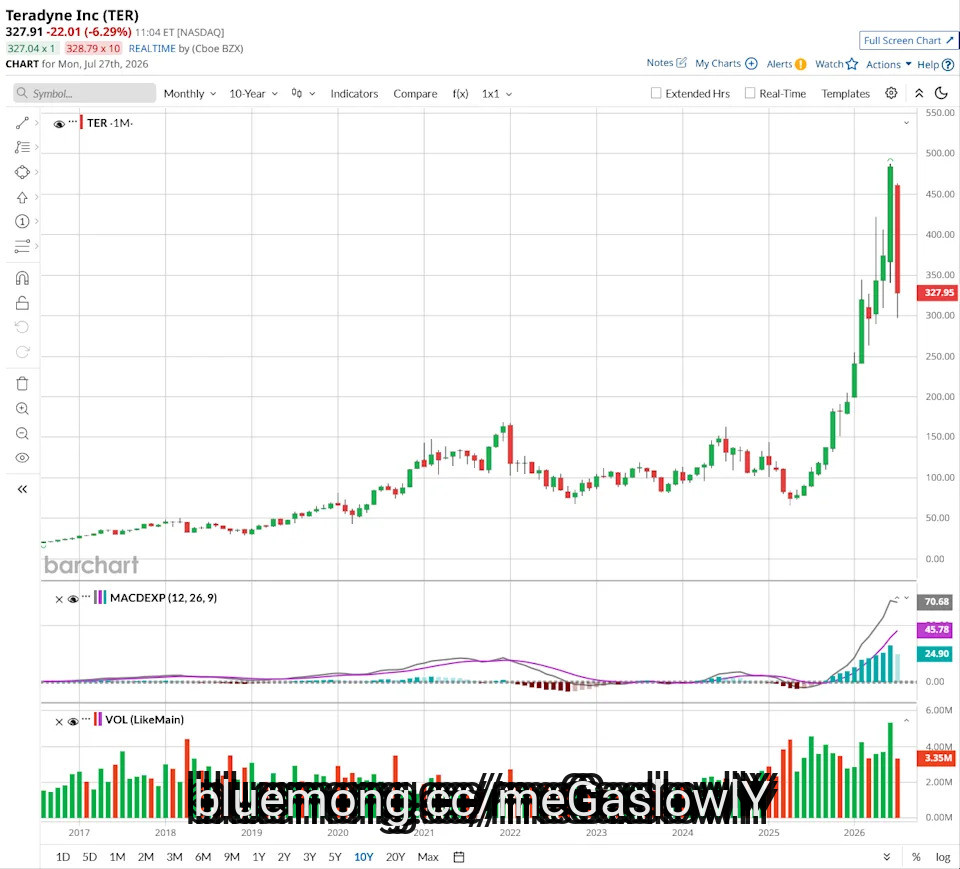
If you own Teradyne (TER) stock, or you're thinking about buying it, the last week of July could be critical. Teradyne, the company behind the machines that test AI chips, memory, and networking gear, is about to show investors whether its blistering growth pace from earlier this year can continue. And based on what management has said in recent weeks, there's a lot riding on the answer.
Teradyne has quietly become one of the more interesting AI plays on Wall Street, given it manufactures the equipment that proves AI chips work before they are shipped to data centers. As AI hardware gets more complex, that job is getting bigger and more expensive for customers to skip.
Dear ******* eX Stock Fans, Mark Your Calendars for August 6
Amazon Stock Just Hit a Major Hurdle Ahead of Earnings
Elon Musk Just Revealed a Quiet Win for Tesla's AI Ambitions
#Stock #chips #dear #fans
Teradyne has quietly become one of the more interesting AI plays on Wall Street, given it manufactures the equipment that proves AI chips work before they are shipped to data centers. As AI hardware gets more complex, that job is getting bigger and more expensive for customers to skip.
Dear ******* eX Stock Fans, Mark Your Calendars for August 6
Amazon Stock Just Hit a Major Hurdle Ahead of Earnings
Elon Musk Just Revealed a Quiet Win for Tesla's AI Ambitions
#Stock #chips #dear #fans



2 hours ago
WS Amati Global Innovation Fund, managed by a UK-based equity management firm from AMAti Global Investors, released its second quarter 2026 investor letter. A copy of the letter is available to download here. Financial market performance in the second quarter was dominated by geopolitical conflict and enthusiasm for AI. Significant investments across all elements of AI resulted in exceptional growth for related companies, ranging from chip producers to companies constructing data centres. The fund outperformed the MSCI ACWI benchmark due to its diversified exposure beyond headline AI firms, with semiconductor and equipment suppliers being major contributors. At the same time, software and IT services faced investor skepticism due to fears of automation despite long-term potential. The firm is confident in the innovation frontiers to capture long-term growth opportunities in automation, semiconductors, and advanced technologies. In addition, please check the Strategy's top five holdings to know its best picks in 2026.
In its Q2 2026 investor letter, WS Amati Global Innovation Fund highlighted MKS Inc. (NASDAQ:MKSI) as a notable contributor. MKS Inc. (NASDAQ:MKSI) is a leading technology company that offers advanced foundational technology solutions to semiconductor manufacturing, electronics and packaging, and specialty industrial applications. On July 24, 2026, MKS Inc. (NASDAQ:MKSI) closed at $329.18 per share, reflecting a market capitalization of $22.23 billion. MKS Inc. (NASDAQ:MKSI) posted a one-month return of -20.87%, while its shares gained 221.68% over the past 52 weeks.
WS Amati Global Innovation Fund stated the following regarding MKS Inc. (NASDAQ:MKSI) in its Q2 2026 investor update:
"The broadening of interest away from the highly concentrated AI headline companies, such as Nvidia, proved to be a helpful environment for the Fund, providing a period of material outperformance against the MSCI ACWI benchmark. Our four top contributors were all caught up in the excitement to some extent, with three being semiconductor producers and one being an equipment supplier into that industry. The latter,MKS Inc. (NASDAQ:MKSI), provided the biggest single boost to the Fund's returns and is a notable beneficiary of innovation in the design of modern chips. Rather than single layers of tiny transistors, many modern chips have multiple layers like a wafer biscuit, and electrons need to travel up and down through these layers. MKS' products help to make this possible. AI's insatiable appetite for memory, particularly High Band Memory (HBM), has created a wave of greater demand for the chips which MKS helps to create."
#NASDAQ #mksi #semiconductor
In its Q2 2026 investor letter, WS Amati Global Innovation Fund highlighted MKS Inc. (NASDAQ:MKSI) as a notable contributor. MKS Inc. (NASDAQ:MKSI) is a leading technology company that offers advanced foundational technology solutions to semiconductor manufacturing, electronics and packaging, and specialty industrial applications. On July 24, 2026, MKS Inc. (NASDAQ:MKSI) closed at $329.18 per share, reflecting a market capitalization of $22.23 billion. MKS Inc. (NASDAQ:MKSI) posted a one-month return of -20.87%, while its shares gained 221.68% over the past 52 weeks.
WS Amati Global Innovation Fund stated the following regarding MKS Inc. (NASDAQ:MKSI) in its Q2 2026 investor update:
"The broadening of interest away from the highly concentrated AI headline companies, such as Nvidia, proved to be a helpful environment for the Fund, providing a period of material outperformance against the MSCI ACWI benchmark. Our four top contributors were all caught up in the excitement to some extent, with three being semiconductor producers and one being an equipment supplier into that industry. The latter,MKS Inc. (NASDAQ:MKSI), provided the biggest single boost to the Fund's returns and is a notable beneficiary of innovation in the design of modern chips. Rather than single layers of tiny transistors, many modern chips have multiple layers like a wafer biscuit, and electrons need to travel up and down through these layers. MKS' products help to make this possible. AI's insatiable appetite for memory, particularly High Band Memory (HBM), has created a wave of greater demand for the chips which MKS helps to create."
#NASDAQ #mksi #semiconductor


2 hours ago
WS Amati Global Innovation Fund, managed by a UK-based equity management firm from AMAti Global Investors, released its second quarter 2026 investor letter. A copy of the letter is available to download here. Financial market performance in the second quarter was dominated by geopolitical conflict and enthusiasm for AI. Significant investments across all elements of AI resulted in exceptional growth for related companies, ranging from chip producers to companies constructing data centres. The fund outperformed the MSCI ACWI benchmark due to its diversified exposure beyond headline AI firms, with semiconductor and equipment suppliers being major contributors. At the same time, software and IT services faced investor skepticism due to fears of automation despite long-term potential. The firm is confident in the innovation frontiers to capture long-term growth opportunities in automation, semiconductors, and advanced technologies. In addition, please check the Strategy's top five holdings to know its best picks in 2026.
In its Q2 2026 investor letter, WS Amati Global Innovation Fund highlighted Allegro MicroSystems, Inc. (NASDAQ:ALGM). Allegro MicroSystems, Inc. (NASDAQ:ALGM) is a semiconductor company that develops sensor integrated circuits (ICs) and application-specific power ICs for sensing, motion control, and power management functions. On July 24, 2026, Allegro MicroSystems, Inc. (NASDAQ:ALGM) closed at $46.03 per share, reflecting a market capitalization of $8.58 billion. Allegro MicroSystems, Inc. (NASDAQ:ALGM) posted a one-month return of -32.12%, while its shares gained 31.09% over the past 52 weeks.
WS Amati Global Innovation Fund stated the following regarding Allegro MicroSystems, Inc. (NASDAQ:ALGM) in its Q2 2026 investor update:
"Allegro MicroSystems, Inc. (NASDAQ:ALGM) is perhaps better known as a sensor company, creating advanced position and movement sensors for use in areas such as robotics. However as a provider of specialist semiconductor chips into the datacentre market they too saw a sharp increase in demand, as well as share price performance."
Allegro MicroSystems, Inc. (NASDAQ:ALGM) is not on our list of 40 Most Popular Stocks Among Hedge Funds Heading Into 2026. According to our database, 34 hedge fund portfolios held Allegro MicroSystems, Inc. (NASDAQ:ALGM) at the end of the first quarter, up from 28 in the previous quarter. While we acknowledge the potential of Allegro MicroSystems, Inc. (NASDAQ:ALGM) as an investment, we believe certain AI stocks offer greater upside potential and carry less downside risk. If you're looking for an extremely undervalued AI stock that also stands to benefit significantly from Trump-era tariffs and the onshoring trend, see our free report on the best short-term AI stock.
#allegro #algm #investor
In its Q2 2026 investor letter, WS Amati Global Innovation Fund highlighted Allegro MicroSystems, Inc. (NASDAQ:ALGM). Allegro MicroSystems, Inc. (NASDAQ:ALGM) is a semiconductor company that develops sensor integrated circuits (ICs) and application-specific power ICs for sensing, motion control, and power management functions. On July 24, 2026, Allegro MicroSystems, Inc. (NASDAQ:ALGM) closed at $46.03 per share, reflecting a market capitalization of $8.58 billion. Allegro MicroSystems, Inc. (NASDAQ:ALGM) posted a one-month return of -32.12%, while its shares gained 31.09% over the past 52 weeks.
WS Amati Global Innovation Fund stated the following regarding Allegro MicroSystems, Inc. (NASDAQ:ALGM) in its Q2 2026 investor update:
"Allegro MicroSystems, Inc. (NASDAQ:ALGM) is perhaps better known as a sensor company, creating advanced position and movement sensors for use in areas such as robotics. However as a provider of specialist semiconductor chips into the datacentre market they too saw a sharp increase in demand, as well as share price performance."
Allegro MicroSystems, Inc. (NASDAQ:ALGM) is not on our list of 40 Most Popular Stocks Among Hedge Funds Heading Into 2026. According to our database, 34 hedge fund portfolios held Allegro MicroSystems, Inc. (NASDAQ:ALGM) at the end of the first quarter, up from 28 in the previous quarter. While we acknowledge the potential of Allegro MicroSystems, Inc. (NASDAQ:ALGM) as an investment, we believe certain AI stocks offer greater upside potential and carry less downside risk. If you're looking for an extremely undervalued AI stock that also stands to benefit significantly from Trump-era tariffs and the onshoring trend, see our free report on the best short-term AI stock.
#allegro #algm #investor


10 hours ago
The company spent the past year going from survival questions to one of the market's biggest gainers, which makes its retreat from the high the more interesting story.
What Changed To Send Intel (INTC) Up More Than Fourfold?
Over the past year, Intel stock more than quadrupled, climbing about 308%, while the broader market managed nearly 18%. The move was not built on hope. By the company's own account, the conversation flipped from whether Intel could survive to how fast it can add capacity to keep up with demand. Revenue over the last twelve months reached about $57 billion and grew 7.5%, an acceleration from a three-year average near 2%. The businesses tied to AI now make up about 60% of revenue and grew 40% year over year, and management says the CPU is reclaiming ground inside AI systems, with the ratio of processors to accelerators shifting from one-in-eight toward one-in-four.
Is This Just The AI Chip Trade Lifting Everything?
Only partly. AMD rode the same wave and roughly tripled, up about 222%, but Nvidia gained only about 19% and Qualcomm about 7% over the same stretch, a fraction of that. The gains concentrated in the two biggest movers, and Intel outran even AMD. What set it apart was progress in its own factories: management says its 18A manufacturing process is yielding ahead of internal plans, and the company has pointed to multiyear deals with customers such as Google, a slot for its Xeon server chips inside Nvidia's flagship AI systems, and a headline tie-up with Elon Musk's ventures.
#year #inside
What Changed To Send Intel (INTC) Up More Than Fourfold?
Over the past year, Intel stock more than quadrupled, climbing about 308%, while the broader market managed nearly 18%. The move was not built on hope. By the company's own account, the conversation flipped from whether Intel could survive to how fast it can add capacity to keep up with demand. Revenue over the last twelve months reached about $57 billion and grew 7.5%, an acceleration from a three-year average near 2%. The businesses tied to AI now make up about 60% of revenue and grew 40% year over year, and management says the CPU is reclaiming ground inside AI systems, with the ratio of processors to accelerators shifting from one-in-eight toward one-in-four.
Is This Just The AI Chip Trade Lifting Everything?
Only partly. AMD rode the same wave and roughly tripled, up about 222%, but Nvidia gained only about 19% and Qualcomm about 7% over the same stretch, a fraction of that. The gains concentrated in the two biggest movers, and Intel outran even AMD. What set it apart was progress in its own factories: management says its 18A manufacturing process is yielding ahead of internal plans, and the company has pointed to multiyear deals with customers such as Google, a slot for its Xeon server chips inside Nvidia's flagship AI systems, and a headline tie-up with Elon Musk's ventures.
#year #inside


10 hours ago
Just before last weekend kicked off, Nvidia (NASDAQ: NVDA) and SK Hynix (NASDAQ: SKHY) finished some business, signing the largest memory deal in history. As part of the partnership, SK Hynix's subsidiary, SK Telecom, will build a 2-gigawatt AI cloud data center in Korea using Nvidia's Vera Rubin Platform. Meanwhile, SK Hynix will supply Nvidia with high bandwidth memory (HBM) going forward, while the two companies will work together to co-develop future generations of AI memory.
One of the biggest bottlenecks in the AI infrastructure build-out right now is memory, especially HBM. To reduce latency and improve power efficiency, graphics processing units (GPUs) and other AI chips need to be packaged with HBM. Meanwhile, the need for HBM is only growing as inference increasingly focuses on fast memory access rather than raw compute power.
Missed Nvidia in 2009? This Rare Signal Is Flashing Again. In 2009, a "Double Down" signal flashed for a little-known chipmaker called Nvidia. For the first time in years, that same "Total Conviction" signal is flashing for a company 1/100th the size of Nvidia. Continue »
However, increasing HBM capacity is a challenge. It requires access to the same EUV (extreme ultraviolet lithography) machines that manufacture GPUs and other advanced logic chips, and the supply for these machines is limited, since the only company that makes them is ASML. At the same time, HBM needs upward of 3 times the wafer capacity of regular DRAM, adding another challenge if one wants to rapidly increase supply. HBM also must be manufactured in massive clean rooms, which can take years to build.
My prediction is that this deal will play an important role in both stocks being big winners over the next few years.
#supply
One of the biggest bottlenecks in the AI infrastructure build-out right now is memory, especially HBM. To reduce latency and improve power efficiency, graphics processing units (GPUs) and other AI chips need to be packaged with HBM. Meanwhile, the need for HBM is only growing as inference increasingly focuses on fast memory access rather than raw compute power.
Missed Nvidia in 2009? This Rare Signal Is Flashing Again. In 2009, a "Double Down" signal flashed for a little-known chipmaker called Nvidia. For the first time in years, that same "Total Conviction" signal is flashing for a company 1/100th the size of Nvidia. Continue »
However, increasing HBM capacity is a challenge. It requires access to the same EUV (extreme ultraviolet lithography) machines that manufacture GPUs and other advanced logic chips, and the supply for these machines is limited, since the only company that makes them is ASML. At the same time, HBM needs upward of 3 times the wafer capacity of regular DRAM, adding another challenge if one wants to rapidly increase supply. HBM also must be manufactured in massive clean rooms, which can take years to build.
My prediction is that this deal will play an important role in both stocks being big winners over the next few years.
#supply


20 hours ago
South Korean President Lee Jae Myung flew to San Francisco on July 24 for a summit with the most powerful names in artificial intelligence. Jensen Huang was there. Sam Altman was there. The heads of Samsung, SK Group, Hyundai Motor and Naver flew in. By the end of the day, roughly $950 billion in new AI agreements had been signed, and South Korea had positioned itself as the country most central to the next phase of the buildout.
Nvidia (NVDA) is not slowing down its global hunt for AI infrastructure partners. The chipmaker has spent much of 2026 signing deals across Asia, the Middle East and Europe to secure the chips, memory and power it needs to keep building AI systems.
On July 24, that hunt landed squarely on South Korea, with a cluster of new agreements announced within hours of each other.
Nvidia said on July 24 that it has locked down AI memory supply from SK Hynix, South Korea's second most valuable company, CNBC reported. The agreement, unveiled late that evening in San Francisco, could be worth $500 billion over a number of years, and it includes large-scale data centers expected to come online in 2027.
SK Hynix affiliate SK Telecom will build a cloud business using Nvidia's Vera Rubin systems as part of the deal.
#south #agreements #down
Nvidia (NVDA) is not slowing down its global hunt for AI infrastructure partners. The chipmaker has spent much of 2026 signing deals across Asia, the Middle East and Europe to secure the chips, memory and power it needs to keep building AI systems.
On July 24, that hunt landed squarely on South Korea, with a cluster of new agreements announced within hours of each other.
Nvidia said on July 24 that it has locked down AI memory supply from SK Hynix, South Korea's second most valuable company, CNBC reported. The agreement, unveiled late that evening in San Francisco, could be worth $500 billion over a number of years, and it includes large-scale data centers expected to come online in 2027.
SK Hynix affiliate SK Telecom will build a cloud business using Nvidia's Vera Rubin systems as part of the deal.
#south #agreements #down


1 day ago
For 22 years, Google generated more cash than it spent every quarter. That record broke between April and June this year.
Alphabet, Google's parent, spent $44.9 billion on AI infrastructure (chips, servers and data centers) over those three months — or about $490 million a day. The business generated $39.1 billion in cash during the same stretch. That left it $5.9 billion in the hole, its first ever quarter of negative free cash flow since the company went public in August 2004.
Jeff Bezos backs a platform that lets anyone invest in rental homes for as little as $100 — 6 ways to build wealth like a landlord without actually being one
Dave Ramsey warns nearly 50% of Americans are making 1 big Social Security mistake — here's what it is and 3 simple steps to fix it ASAP
Millionaires under 43 hold only 25% of their wealth in stocks. Here's where their money is actually going
#Google #april #june
Alphabet, Google's parent, spent $44.9 billion on AI infrastructure (chips, servers and data centers) over those three months — or about $490 million a day. The business generated $39.1 billion in cash during the same stretch. That left it $5.9 billion in the hole, its first ever quarter of negative free cash flow since the company went public in August 2004.
Jeff Bezos backs a platform that lets anyone invest in rental homes for as little as $100 — 6 ways to build wealth like a landlord without actually being one
Dave Ramsey warns nearly 50% of Americans are making 1 big Social Security mistake — here's what it is and 3 simple steps to fix it ASAP
Millionaires under 43 hold only 25% of their wealth in stocks. Here's where their money is actually going
#Google #april #june


1 day ago
Benzinga and Yahoo Finance LLC may earn commission or revenue on some items through the links below.
Elon Musk's ******* eX pitched orbital data centers as a central part of its record-breaking IPO, but geopolitical ******* yst Peter Zeihan says the physics may not cooperate.
In a recent video, Zeihan argued a one-gigawatt orbital data center would require roughly 500 Starship launches to ******* emble.
High-end chips cannot survive radiation in ******* e, Zeihan said, so the entire facility would need shielding. That shielding would weigh roughly 20 million pounds.
Don't Miss:
#zeihan #shielding #elon
Elon Musk's ******* eX pitched orbital data centers as a central part of its record-breaking IPO, but geopolitical ******* yst Peter Zeihan says the physics may not cooperate.
In a recent video, Zeihan argued a one-gigawatt orbital data center would require roughly 500 Starship launches to ******* emble.
High-end chips cannot survive radiation in ******* e, Zeihan said, so the entire facility would need shielding. That shielding would weigh roughly 20 million pounds.
Don't Miss:
#zeihan #shielding #elon


1 day ago
While markets data shows that the global market for dining out is projected to grow from $1.9 trillion now to more than $3 trillion by 2030, many individual chains that were popular in another era are struggling to survive amid changing consumer trends.
U.S. chains like Smokey Bones, Peet's Coffee, and Joe's Crab Shack have collectively closed dozens of locations this year. Meanwhile, over in the United Kingdom, Leon and The Real Greek both nearly halved their store locations in 2026 despite once going through a period of rapid expansion that made them well-recognized chains in the country's major cities.
With the first location opening in the Greater London borough of Enfield in 1974, the restaurant chain Beefeater has, over several generations, earned a reputation for being a family-friendly steakhouse chain serving grilled steak cuts, burgers, and fish and chips at more accessible prices.
At its peak, the chain had approximately 140 standalone and Brewers Fayre brewery-attached locations in the United Kingdom and Ireland. But amid soaring operating costs the hotel and dining company Whitbread confirmed plans to shutter all remaining 106 restaurants by September.
Earlier in the year, Whitbread announced a restructuring plan that aims to bring down annual costs down costs by £250 million ($333 million USD).
#kingdom
U.S. chains like Smokey Bones, Peet's Coffee, and Joe's Crab Shack have collectively closed dozens of locations this year. Meanwhile, over in the United Kingdom, Leon and The Real Greek both nearly halved their store locations in 2026 despite once going through a period of rapid expansion that made them well-recognized chains in the country's major cities.
With the first location opening in the Greater London borough of Enfield in 1974, the restaurant chain Beefeater has, over several generations, earned a reputation for being a family-friendly steakhouse chain serving grilled steak cuts, burgers, and fish and chips at more accessible prices.
At its peak, the chain had approximately 140 standalone and Brewers Fayre brewery-attached locations in the United Kingdom and Ireland. But amid soaring operating costs the hotel and dining company Whitbread confirmed plans to shutter all remaining 106 restaurants by September.
Earlier in the year, Whitbread announced a restructuring plan that aims to bring down annual costs down costs by £250 million ($333 million USD).
#kingdom


1 day ago
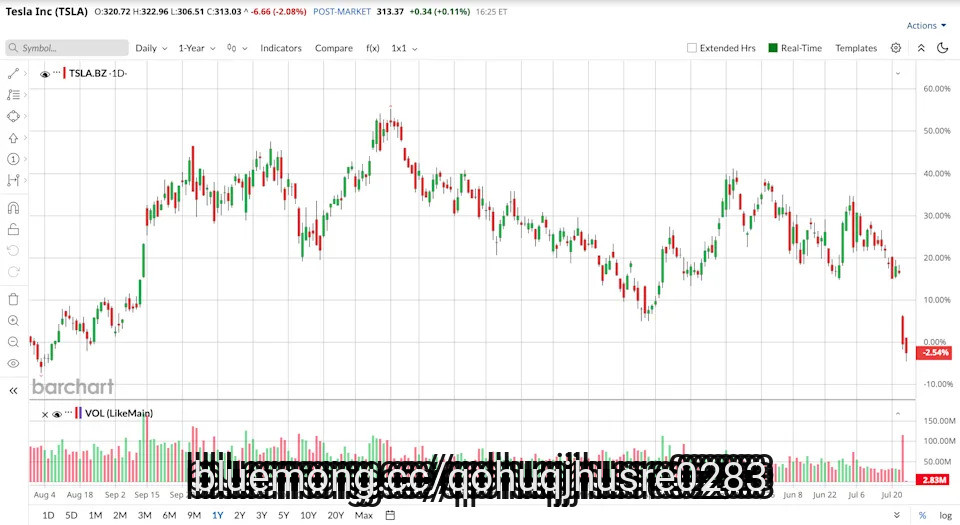
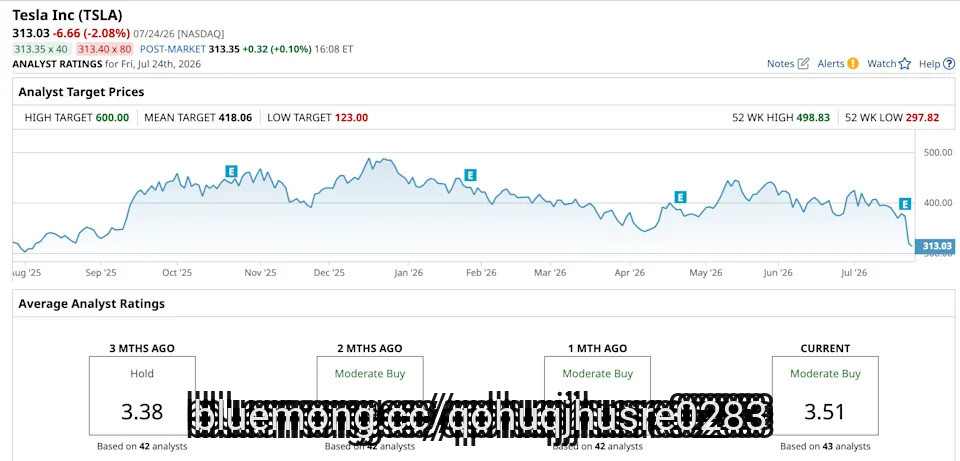
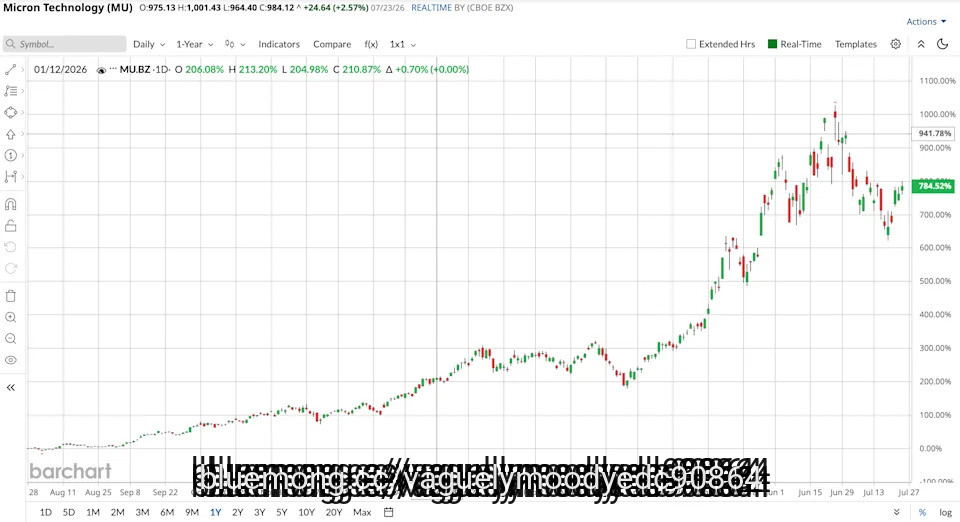
Elon Musk gave Tesla (TSLA) investors a clearer picture of a key supply issue on July 22. He said Micron (MU) recently gave Tesla a "very significant allocation" of memory chips on "reasonable terms," and added that Micron is "making room for Tesla in the years to come."
Musk also said memory prices across the industry are "pretty insane" and were "the biggest price jump in anything I've ever seen." That matters because this looks like more than a short-term fix.
Dear ***** eX Stock Fans, Mark Your Calendars for August 6
Amazon Stock Just Hit a Major Hurdle Ahead of Earnings
What a Major Anthropic Chip Deal Really Means for AMD Stock
#tesla #Stock #major
Musk also said memory prices across the industry are "pretty insane" and were "the biggest price jump in anything I've ever seen." That matters because this looks like more than a short-term fix.
Dear ***** eX Stock Fans, Mark Your Calendars for August 6
Amazon Stock Just Hit a Major Hurdle Ahead of Earnings
What a Major Anthropic Chip Deal Really Means for AMD Stock
#tesla #Stock #major


4 days ago
Marvell Technology (NASDAQ: MRVL) has emerged as a strong AI investment candidate throughout 2026. It has a great bull thesis and is right at the heart of the AI buildout.
Furthermore, Nvidia (NASDAQ: NVDA) has invested $2 billion into Marvell and announced several strategic partnerships to ensure that Nvidia's computing units function on Marvell's products. This is a big deal because Marvell is starting to grow its custom AI chip business, and this could be a major part of the company someday, especially with the two major clients that it has.
Missed Nvidia in 2009? This Rare Signal Is Flashing Again. In 2009, a "Double Down" signal flashed for a little-known chipmaker called Nvidia. For the first time in years, that same "Total Conviction" signal is flashing for a company 1/100th the size of Nvidia. Continue »
But is this enough to make Marvell the new Nvidia? Let's take a look.
Marvell makes connectivity devices for data centers and also ******* ists AI hyperscalers design custom chips. This is a great business to be in right now, as the AI buildout is full steam ahead. In its custom AI chip business, Marvel has captured two major clients: Amazon and Microsoft. These two companies operated the largest and second-largest cloud computing platforms in the world, and having these two as clients is a big deal for Marvell, as it gives them a major customer that wants to reduce reliance on Nvidia chips through designing their own.
#major #NASDAQ
Furthermore, Nvidia (NASDAQ: NVDA) has invested $2 billion into Marvell and announced several strategic partnerships to ensure that Nvidia's computing units function on Marvell's products. This is a big deal because Marvell is starting to grow its custom AI chip business, and this could be a major part of the company someday, especially with the two major clients that it has.
Missed Nvidia in 2009? This Rare Signal Is Flashing Again. In 2009, a "Double Down" signal flashed for a little-known chipmaker called Nvidia. For the first time in years, that same "Total Conviction" signal is flashing for a company 1/100th the size of Nvidia. Continue »
But is this enough to make Marvell the new Nvidia? Let's take a look.
Marvell makes connectivity devices for data centers and also ******* ists AI hyperscalers design custom chips. This is a great business to be in right now, as the AI buildout is full steam ahead. In its custom AI chip business, Marvel has captured two major clients: Amazon and Microsoft. These two companies operated the largest and second-largest cloud computing platforms in the world, and having these two as clients is a big deal for Marvell, as it gives them a major customer that wants to reduce reliance on Nvidia chips through designing their own.
#major #NASDAQ


4 days ago
July 23 (Reuters) - Amkor Technology said on Thursday it had entered a multi-year agreement with Nvidia worth $1.5 billion to expand advanced semiconductor packaging and test capacity in the U.S., as the chip industry races to build out AI infrastructure.
Shares of the semiconductor packaging company jumped 17% in extended trading.
Here are a few details on the partnership:
• Under the agreement, Nvidia will make a prepayment to support the expansion of Amkor's U.S. advanced packaging operations, including capacity in Arizona.
• The companies will jointly develop packaging and testing technologies for Nvidia's AI and accelerated-computing platforms, focusing on combining different types of chips in a single package.
#july
Shares of the semiconductor packaging company jumped 17% in extended trading.
Here are a few details on the partnership:
• Under the agreement, Nvidia will make a prepayment to support the expansion of Amkor's U.S. advanced packaging operations, including capacity in Arizona.
• The companies will jointly develop packaging and testing technologies for Nvidia's AI and accelerated-computing platforms, focusing on combining different types of chips in a single package.
#july


4 days ago
Erik McGregor/Getty Images
Blackstone does not expect growing competition to drive down returns on its new investments in AI infrastructure, at least not anytime soon, said COO Jon Gray.
Speaking during the firm's Q2 earnings call, Gray said demand for data centers, chips and the power to supply them is so great that the risk of oversupply and a subsequent collapse in valuations is minimal.
"It's very hard to get the chips today, it's very hard to get the power, it's very hard to get the entitlements [to build data centers]," he added. "That means the supply is not matching [demand]."
Data centers are sufficiently large and complicated to build that you don't see what Gray described as a "Miami condo effect," where developers speculatively build capacity in the hope of finding a buyer.
#hard #supply
Blackstone does not expect growing competition to drive down returns on its new investments in AI infrastructure, at least not anytime soon, said COO Jon Gray.
Speaking during the firm's Q2 earnings call, Gray said demand for data centers, chips and the power to supply them is so great that the risk of oversupply and a subsequent collapse in valuations is minimal.
"It's very hard to get the chips today, it's very hard to get the power, it's very hard to get the entitlements [to build data centers]," he added. "That means the supply is not matching [demand]."
Data centers are sufficiently large and complicated to build that you don't see what Gray described as a "Miami condo effect," where developers speculatively build capacity in the hope of finding a buyer.
#hard #supply

4 days ago
Two of the biggest heavyweights in the chip sector are Taiwan Semiconductor Manufacturing (NYSE: TSM) and Nvidia (NASDAQ: NVDA). They have a great working relationship in the real world, as Nvidia designs its logic chips and then sends them to TSMC to be fabricated. So, as one succeeds, so does the other. However, TSMC has plenty of other clients for which it does foundry work.
For those investors who may be curious about which of these behemoths is the better buy right now, let's compare them across a few key categories.
Missed Nvidia in 2009? This Rare Signal Is Flashing Again. In 2009, a "Double Down" signal flashed for a little-known chipmaker called Nvidia. For the first time in years, that same "Total Conviction" signal is flashing for a company 1/100th the size of Nvidia. Continue »
Taiwan Semiconductor has a large client list that includes Nvidia's primary competitors. It also has exposure to other industrial markets, and chips for everything from automobiles to smartphones. Nvidia, on the other hand, is at this point nearly a pure-play investment in artificial intelligence. While Nvidia has other products, the reality is that the vast majority of its revenue now comes from data center-related items. This focus is making Nvidia a boatload of money and has propelled it to the position of the world's largest company by market cap. So clearly, its bet on data center processors is paying off.
However, while that kind of business concentration can be incredible during boom times, it can be a disaster when spending in that focus area slows. There are no signs that will occur in the data center ****** e anytime soon, but when it does, it will hammer Nvidia.
#data #however
For those investors who may be curious about which of these behemoths is the better buy right now, let's compare them across a few key categories.
Missed Nvidia in 2009? This Rare Signal Is Flashing Again. In 2009, a "Double Down" signal flashed for a little-known chipmaker called Nvidia. For the first time in years, that same "Total Conviction" signal is flashing for a company 1/100th the size of Nvidia. Continue »
Taiwan Semiconductor has a large client list that includes Nvidia's primary competitors. It also has exposure to other industrial markets, and chips for everything from automobiles to smartphones. Nvidia, on the other hand, is at this point nearly a pure-play investment in artificial intelligence. While Nvidia has other products, the reality is that the vast majority of its revenue now comes from data center-related items. This focus is making Nvidia a boatload of money and has propelled it to the position of the world's largest company by market cap. So clearly, its bet on data center processors is paying off.
However, while that kind of business concentration can be incredible during boom times, it can be a disaster when spending in that focus area slows. There are no signs that will occur in the data center ****** e anytime soon, but when it does, it will hammer Nvidia.
#data #however



4 days ago
Nvidia Corporation's (NVDA) reported decision to delay the launch of its RTX 50 Super due to soaring GDDR7 memory prices may seem like bad news for the GPU market, but it could create an unexpected opportunity for Micron Technology (MU). According to Wedbush, the delay highlights just how tight the memory market has become, reinforcing the pricing power of memory suppliers like Micron rather than signaling weakening demand.
The reported issue is not with Nvidia's GPU chips themselves but with the cost of the new 3GB GDDR7 memory modules used in the upgraded graphics cards. Industry reports suggest these chips now cost roughly three times as much as traditional 2GB modules, making it difficult for Nvidia and its board partners to launch new products without significantly increasing retail prices. So, Nvidia has allegedly postponed the rollout despite hardware already being ready for distribution.
Dear ****** eX Stock Fans, Mark Your Calendars for July 23
The Biggest Risk to ****** eX Stock Comes After Earnings. Here Are The Numbers You Should Keep An Eye On.
Walmart Stock's Extended Downturn Could Trigger a Possible Comeback
#delay
The reported issue is not with Nvidia's GPU chips themselves but with the cost of the new 3GB GDDR7 memory modules used in the upgraded graphics cards. Industry reports suggest these chips now cost roughly three times as much as traditional 2GB modules, making it difficult for Nvidia and its board partners to launch new products without significantly increasing retail prices. So, Nvidia has allegedly postponed the rollout despite hardware already being ready for distribution.
Dear ****** eX Stock Fans, Mark Your Calendars for July 23
The Biggest Risk to ****** eX Stock Comes After Earnings. Here Are The Numbers You Should Keep An Eye On.
Walmart Stock's Extended Downturn Could Trigger a Possible Comeback
#delay


4 days ago
Broadcom's Hock Tan guided Q3 AI chip revenue to $16 billion, up over 200% year-over-year, while TSMC guided full-year 2026 revenue growth above 40%.
Laffont's five holdings form a closed AI infrastructure loop spanning power, fabrication, tools, and custom silicon, with four of the five currently rated BUY.
Act now: the **** yst who called NVIDIA in 2010 just named his top 10 AI stocks — and Taiwan Semiconductor Manufacturing didn't make the cut. Grab the names FREE today.
Philippe Laffont's Coatue Management just showed its hand: the latest 13F filing (holdings as of March 31, 2026) parks its biggest chips on a single trade: the AI infrastructure buildout. The five names below, all US-listed, represent Laffont's largest long common-stock and ADR positions. One of them just booked $10.80 billion in AI semiconductor revenue in a single quarter, growing 143% year-over-year. The setup is worth understanding before it reprices.
Every AI accelerator on this list is useless without electrons. That is why GE Vernova (NYSE:GEV) is the most surprising name in Laffont's tech basket: it sits one level upstream of the chips, building the gas turbines, grid equipment, and electrification hardware that hyperscalers are now ordering by the gigawatt. This is the AI trade one level upstream of NVIDIA. Q1 2026 revenue rose 15.8% year-over-year to $9.30 billion, but the real signal was orders: $18.30 billion, up 71% organically, with Electrification booking $2.4 billion in data center equipment orders in Q1 alone, more than all of 2025. CEO Scott Strazik put it plainly: "Demand is accelerating for our Power and Electrification solutions... backlog growing by more than $13 billion quarter-over-quarter."
#revenue #five #semiconductor
Laffont's five holdings form a closed AI infrastructure loop spanning power, fabrication, tools, and custom silicon, with four of the five currently rated BUY.
Act now: the **** yst who called NVIDIA in 2010 just named his top 10 AI stocks — and Taiwan Semiconductor Manufacturing didn't make the cut. Grab the names FREE today.
Philippe Laffont's Coatue Management just showed its hand: the latest 13F filing (holdings as of March 31, 2026) parks its biggest chips on a single trade: the AI infrastructure buildout. The five names below, all US-listed, represent Laffont's largest long common-stock and ADR positions. One of them just booked $10.80 billion in AI semiconductor revenue in a single quarter, growing 143% year-over-year. The setup is worth understanding before it reprices.
Every AI accelerator on this list is useless without electrons. That is why GE Vernova (NYSE:GEV) is the most surprising name in Laffont's tech basket: it sits one level upstream of the chips, building the gas turbines, grid equipment, and electrification hardware that hyperscalers are now ordering by the gigawatt. This is the AI trade one level upstream of NVIDIA. Q1 2026 revenue rose 15.8% year-over-year to $9.30 billion, but the real signal was orders: $18.30 billion, up 71% organically, with Electrification booking $2.4 billion in data center equipment orders in Q1 alone, more than all of 2025. CEO Scott Strazik put it plainly: "Demand is accelerating for our Power and Electrification solutions... backlog growing by more than $13 billion quarter-over-quarter."
#revenue #five #semiconductor


4 days ago
IBM (IBM) is pinning its hopes for a 2026 rebound in mainframe computing demand after a shock warning on the second quarter sent the stock reeling. But there's a lot left to be determined.
Quick insight: When IBM reported second quarter earnings Tuesday evening, one thing stood out more than most. Fresh off a major sales warning a week ago, the company didn't provide a complete reset of full-year sales guidance — instead, it gave a modest markdown.
The outlook appears to hinge on improved demand for mainframe computing after IBM's business was dented by business leaders allocating more capital to AI-centric infrastructure, such as servers and chips.
It's a bold **** umption by IBM, based on the strong demand for all things AI, which is likely to persist well into 2027.
"We do not see any evidence of clients getting off of mainframe," IBM CFO Jim Kavanaugh told Yahoo Finance. "So the key indicators for us that give us confidence in mainframe is that we expect a record year compared to prior programs in the high 120s. It's all driven off of what we're seeing capacity growth happening, the value proposition of AI inferencing that's happening, and the economic equation that will flip to us moving forward. So that's what gives us confidence."
#computing #year #business
Quick insight: When IBM reported second quarter earnings Tuesday evening, one thing stood out more than most. Fresh off a major sales warning a week ago, the company didn't provide a complete reset of full-year sales guidance — instead, it gave a modest markdown.
The outlook appears to hinge on improved demand for mainframe computing after IBM's business was dented by business leaders allocating more capital to AI-centric infrastructure, such as servers and chips.
It's a bold **** umption by IBM, based on the strong demand for all things AI, which is likely to persist well into 2027.
"We do not see any evidence of clients getting off of mainframe," IBM CFO Jim Kavanaugh told Yahoo Finance. "So the key indicators for us that give us confidence in mainframe is that we expect a record year compared to prior programs in the high 120s. It's all driven off of what we're seeing capacity growth happening, the value proposition of AI inferencing that's happening, and the economic equation that will flip to us moving forward. So that's what gives us confidence."
#computing #year #business



4 days ago
The PHLX Semiconductor Sector index has jumped by an impressive 68% this year despite the recent sell-off in this sector. These impressive gains have been fueled by the terrific demand for chips, which play a critical role in powering artificial intelligence (AI) infrastructure.
However, shares of Taiwan Semiconductor Manufacturing (NYSE: TSM) have underperformed the semiconductor sector in 2026, gaining just 33% as of this writing. This is even though TSMC is one of the most important companies in the AI infrastructure ecosystem. Its latest results provide further indication that it is winning big from the massive spending on AI data centers.
Missed Nvidia in 2009? This Rare Signal Is Flashing Again. In 2009, a "Double Down" signal flashed for a little-known chipmaker called Nvidia. For the first time in years, that same "Total Conviction" signal is flashing for a company 1/100th the size of Nvidia. Continue »
More importantly, TSMC is well-positioned to continue benefiting from the AI infrastructure boom. Let's look at the reasons why it seems like a bad idea to overlook this solid semiconductor stock.
TSMC released its second-quarter 2026 earnings report on July 16. The company's revenue increased 34% year over year to $40.2 billion, while earnings per share jumped by an even more impressive 77% from the year-ago period to $4.31. The numbers exceeded ****** ysts' expectations, and its guidance was the icing on the cake.
#year
However, shares of Taiwan Semiconductor Manufacturing (NYSE: TSM) have underperformed the semiconductor sector in 2026, gaining just 33% as of this writing. This is even though TSMC is one of the most important companies in the AI infrastructure ecosystem. Its latest results provide further indication that it is winning big from the massive spending on AI data centers.
Missed Nvidia in 2009? This Rare Signal Is Flashing Again. In 2009, a "Double Down" signal flashed for a little-known chipmaker called Nvidia. For the first time in years, that same "Total Conviction" signal is flashing for a company 1/100th the size of Nvidia. Continue »
More importantly, TSMC is well-positioned to continue benefiting from the AI infrastructure boom. Let's look at the reasons why it seems like a bad idea to overlook this solid semiconductor stock.
TSMC released its second-quarter 2026 earnings report on July 16. The company's revenue increased 34% year over year to $40.2 billion, while earnings per share jumped by an even more impressive 77% from the year-ago period to $4.31. The numbers exceeded ****** ysts' expectations, and its guidance was the icing on the cake.
#year


4 days ago
Taiwan Semiconductor Manufacturing Company Limited (NYSE:TSM) plans to raise chipmaking prices by up to 10% starting in 2027, according to Nikkei Asia, citing multiple people briefed on the talks. Reuters and Bloomberg both confirmed the report. Base price increases will range from 5% to 10% depending on the customer and product, and mature-node chips built on 12nm, 16nm, and 28nm technology face increases up to 10%. Negotiations ran from June to July, with new pricing taking effect at the start of 2027. TSMC's U.S listed shares surged 4.6% on the news (Tuesday).
TSMC is the main chipmaker for Nvidia and Apple, and it also makes processors for AMD and Broadcom. The company did not comment on pricing directly, but a spokesperson said its "pricing strategy is strategic, not opportunistic." CEO C.C. Wei said in June he wanted to raise prices, while adding that TSMC would avoid the kind of abrupt hikes some memory chipmakers have imposed. The move follows TSMC's second-quarter results, where profit jumped 77% to a record T$706.6 billion, or about $22 billion, beating market expectations.
That raises a real question. With customers unable to easily switch suppliers for the most advanced chips, does TSMC have so much pricing power that there's barely a bear case left, or does something still stand in the way?
Image: TSMC
BULL CASE
#pricing #raise #prices #increases
TSMC is the main chipmaker for Nvidia and Apple, and it also makes processors for AMD and Broadcom. The company did not comment on pricing directly, but a spokesperson said its "pricing strategy is strategic, not opportunistic." CEO C.C. Wei said in June he wanted to raise prices, while adding that TSMC would avoid the kind of abrupt hikes some memory chipmakers have imposed. The move follows TSMC's second-quarter results, where profit jumped 77% to a record T$706.6 billion, or about $22 billion, beating market expectations.
That raises a real question. With customers unable to easily switch suppliers for the most advanced chips, does TSMC have so much pricing power that there's barely a bear case left, or does something still stand in the way?
Image: TSMC
BULL CASE
#pricing #raise #prices #increases


4 days ago
Benzinga and Yahoo Finance LLC may earn commission or revenue on some items through the links below.
As investors prepare for Alphabet Inc.'s earnings, Wall Street is once again focused on AI spending, cloud growth and capital expenditures. But BlackRock Inc. CEO Larry Fink believes the industry's biggest constraint isn't chips or models anymore—it's electricity.
Speaking this week, Fink argued that the global AI race will ultimately be decided by whoever can build enough power to support it. He pointed to China's rapid expansion of nuclear and solar generation, saying the country is positioning itself to meet the enormous electricity demands of artificial intelligence while warning that the U.S. should focus on adding power capacity rather than imposing restrictions on data center development.
Google's reported next-generation AI chip, however, suggests there may be another way to attack the problem.
Don't Miss:
#fink #power #generation #blackrock
As investors prepare for Alphabet Inc.'s earnings, Wall Street is once again focused on AI spending, cloud growth and capital expenditures. But BlackRock Inc. CEO Larry Fink believes the industry's biggest constraint isn't chips or models anymore—it's electricity.
Speaking this week, Fink argued that the global AI race will ultimately be decided by whoever can build enough power to support it. He pointed to China's rapid expansion of nuclear and solar generation, saying the country is positioning itself to meet the enormous electricity demands of artificial intelligence while warning that the U.S. should focus on adding power capacity rather than imposing restrictions on data center development.
Google's reported next-generation AI chip, however, suggests there may be another way to attack the problem.
Don't Miss:
#fink #power #generation #blackrock

4 days ago
U.S.-listed shares of SK Hynix (NASDAQ:SKHY) climbed 6.6% in premarket trading on Thursday after fresh capital spending plans from Alphabet and Tesla strengthened expectations for continued investment in artificial intelligence infrastructure.
The gains reflected growing investor confidence that demand for advanced memory chips will remain strong as leading technology companies accelerate AI development.
Market sentiment improved after Alphabet raised its projected 2026 capital expenditure to between $195 billion and $205 billion, signalling continued heavy investment in data centres and artificial intelligence infrastructure.
Tesla also reaffirmed its commitment to substantial AI-related spending, reinforcing expectations that demand for high-performance semiconductors will continue expanding across the technology sector.
The announcements boosted optimism for suppliers involved in the AI supply chain, particularly companies producing advanced memory solutions.
#capital #investment #artificial #infrastructure
The gains reflected growing investor confidence that demand for advanced memory chips will remain strong as leading technology companies accelerate AI development.
Market sentiment improved after Alphabet raised its projected 2026 capital expenditure to between $195 billion and $205 billion, signalling continued heavy investment in data centres and artificial intelligence infrastructure.
Tesla also reaffirmed its commitment to substantial AI-related spending, reinforcing expectations that demand for high-performance semiconductors will continue expanding across the technology sector.
The announcements boosted optimism for suppliers involved in the AI supply chain, particularly companies producing advanced memory solutions.
#capital #investment #artificial #infrastructure
5 days ago
Dell Technologies (NYSE:DELL) surged by 9.32 percent on Wednesday to finish at $441.80 apiece as investors drew encouragement from the surging demand for AI servers using Nvidia chips.
The stock rallied alongside its counterparts, Super Micro Computer (SMCI) and Hewlett Packard Enterprises, helped buoyed by SMCI's record backlog of $60 billion in the fourth quarter of fiscal year 2026.
Investors took the backlog as a hint of strong demand for AI servers using Nvidia GPUs.
For illustration purposes only. Photo by Cookie Cutter on Pexels
For its part, Dell Technologies (NYSE:DELL) in May this year posted an 88 percent jump in revenues to $43.8 billion for the first quarter of the fiscal period ending May 28.
#percent #demand
The stock rallied alongside its counterparts, Super Micro Computer (SMCI) and Hewlett Packard Enterprises, helped buoyed by SMCI's record backlog of $60 billion in the fourth quarter of fiscal year 2026.
Investors took the backlog as a hint of strong demand for AI servers using Nvidia GPUs.
For illustration purposes only. Photo by Cookie Cutter on Pexels
For its part, Dell Technologies (NYSE:DELL) in May this year posted an 88 percent jump in revenues to $43.8 billion for the first quarter of the fiscal period ending May 28.
#percent #demand


5 days ago
If you're an investor in international stocks, you can thank Asia for powering your outperformance this year.
The Vanguard Total International Stock ETF (VXUS) is outpacing the Vanguard Total Stock Market ETF (VTI) for a second straight year, gaining 12% versus 10%. That follows an even bigger gap last year, when VXUS trounced its domestic counterpart 32.4% to 17.1%.
Last year's rally was fairly broad based. This year's gains are far more concentrated. More than 8 percentage points of VXUS's return, roughly two thirds of the total, traces back to the Asia Pacific region. Taiwan alone accounts for 3.3 percentage points, South Korea 2.7, and ******* an 2.2.
The common thread is artificial intelligence. All three markets sit at the heart of the semiconductor supply chain powering the AI boom. Taiwan is home to TSMC, the contract manufacturer building the most advanced AI chips. South Korea's Samsung and SK Hynix dominate the high-bandwidth memory those chips depend on. And ******* an supplies a big chunk of the equipment and materials that make chip production possible.
No other single country added more than 1 percentage point to VXUS's return. The only other region to clear that bar was Western Europe, which collectively contributed 3.3 percentage points.
#percentage #points #Stock
The Vanguard Total International Stock ETF (VXUS) is outpacing the Vanguard Total Stock Market ETF (VTI) for a second straight year, gaining 12% versus 10%. That follows an even bigger gap last year, when VXUS trounced its domestic counterpart 32.4% to 17.1%.
Last year's rally was fairly broad based. This year's gains are far more concentrated. More than 8 percentage points of VXUS's return, roughly two thirds of the total, traces back to the Asia Pacific region. Taiwan alone accounts for 3.3 percentage points, South Korea 2.7, and ******* an 2.2.
The common thread is artificial intelligence. All three markets sit at the heart of the semiconductor supply chain powering the AI boom. Taiwan is home to TSMC, the contract manufacturer building the most advanced AI chips. South Korea's Samsung and SK Hynix dominate the high-bandwidth memory those chips depend on. And ******* an supplies a big chunk of the equipment and materials that make chip production possible.
No other single country added more than 1 percentage point to VXUS's return. The only other region to clear that bar was Western Europe, which collectively contributed 3.3 percentage points.
#percentage #points #Stock


5 days ago
This has been an amazing year for Advanced Micro Devices (NASDAQ: AMD) investors so far, as shares of the semiconductor specialist have jumped by an impressive 144%.
This incredible rally in AMD stock is well deserved, as the company is gradually becoming more influential in the artificial intelligence (AI) chip market. The good news for investors is that AMD's rally could get a nice shot in the arm when the company releases its second-quarter results after the market closes on Aug. 4, following a new development.
Missed Nvidia in 2009? This Rare Signal Is Flashing Again. In 2009, a "Double Down" signal flashed for a little-known chipmaker called Nvidia. For the first time in years, that same "Total Conviction" signal is flashing for a company 1/100th the size of Nvidia. Continue »
It has been just over a year since AMD announced that it will offer a next-generation AI server rack, known as Helios, to hyperscalers and AI companies. This rack-scale system integrates the chip designer's data center graphics processing units (GPUs), Epyc server processors, Pensando networking chips, and enormous amounts of high-bandwidth memory (HBM) to quickly process AI workloads in data centers.
AMD has already landed a major hyperscaler in the form of Meta Platforms to deploy Helios. And now, the chip designer has just announced that Microsoft will also deploy the Helios rack-scale servers in its Azure data centers "to power frontier model AI inference for Microsoft, its AI customers and support Azure AI services."
#chip
This incredible rally in AMD stock is well deserved, as the company is gradually becoming more influential in the artificial intelligence (AI) chip market. The good news for investors is that AMD's rally could get a nice shot in the arm when the company releases its second-quarter results after the market closes on Aug. 4, following a new development.
Missed Nvidia in 2009? This Rare Signal Is Flashing Again. In 2009, a "Double Down" signal flashed for a little-known chipmaker called Nvidia. For the first time in years, that same "Total Conviction" signal is flashing for a company 1/100th the size of Nvidia. Continue »
It has been just over a year since AMD announced that it will offer a next-generation AI server rack, known as Helios, to hyperscalers and AI companies. This rack-scale system integrates the chip designer's data center graphics processing units (GPUs), Epyc server processors, Pensando networking chips, and enormous amounts of high-bandwidth memory (HBM) to quickly process AI workloads in data centers.
AMD has already landed a major hyperscaler in the form of Meta Platforms to deploy Helios. And now, the chip designer has just announced that Microsoft will also deploy the Helios rack-scale servers in its Azure data centers "to power frontier model AI inference for Microsoft, its AI customers and support Azure AI services."
#chip



5 days ago
With massive gains of 357% over the past year, Intel (NASDAQ: INTC) has emerged as a top semiconductor play due to the company's fast-improving financial health and its growing influence in artificial intelligence (AI) chips.
However, Intel stock has slipped 25% from the 52-week high it reached on June 30. The company will release its second-quarter 2026 earnings report after the market closes on July 23, and there is a good chance the stock will regain momentum, thanks to a recent revelation from foundry giant Taiwan Semiconductor Manufacturing.
Missed Nvidia in 2009? This Rare Signal Is Flashing Again. In 2009, a "Double Down" signal flashed for a little-known chipmaker called Nvidia. For the first time in years, that same "Total Conviction" signal is flashing for a company 1/100th the size of Nvidia. Continue »
Let's take a closer look at this potential development that could spark a rally in Intel's shares.
Foundry giant TSMC recently released its Q2 earnings report. Management noted on the earnings call that the "emergence of agentic AI is leading to a resurgence in the role of CPUs in AI data centers." It is worth noting that AI data centers have primarily relied on graphics processing units (GPUs) to handle AI workloads, such as training large language models (LLMs).
#report
However, Intel stock has slipped 25% from the 52-week high it reached on June 30. The company will release its second-quarter 2026 earnings report after the market closes on July 23, and there is a good chance the stock will regain momentum, thanks to a recent revelation from foundry giant Taiwan Semiconductor Manufacturing.
Missed Nvidia in 2009? This Rare Signal Is Flashing Again. In 2009, a "Double Down" signal flashed for a little-known chipmaker called Nvidia. For the first time in years, that same "Total Conviction" signal is flashing for a company 1/100th the size of Nvidia. Continue »
Let's take a closer look at this potential development that could spark a rally in Intel's shares.
Foundry giant TSMC recently released its Q2 earnings report. Management noted on the earnings call that the "emergence of agentic AI is leading to a resurgence in the role of CPUs in AI data centers." It is worth noting that AI data centers have primarily relied on graphics processing units (GPUs) to handle AI workloads, such as training large language models (LLMs).
#report

5 days ago
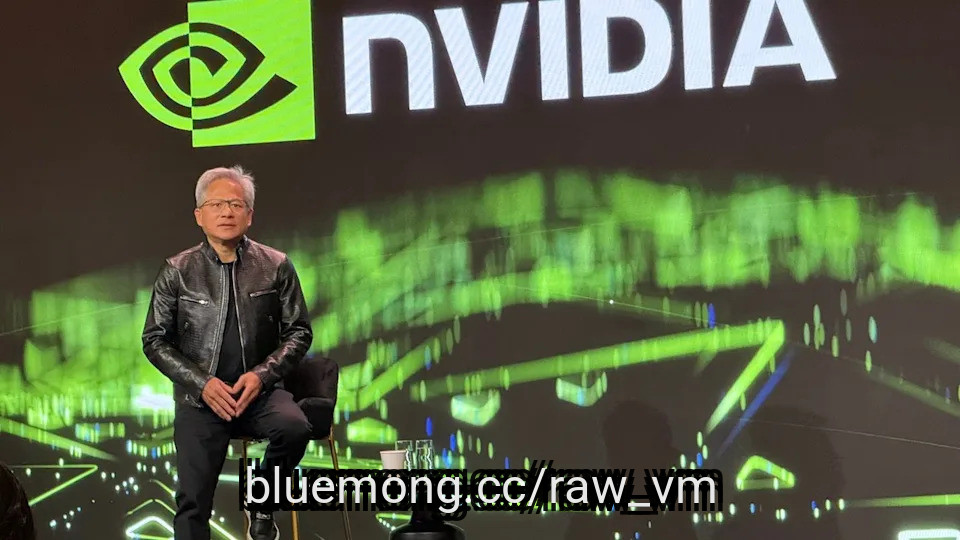
Nvidia CEO Jensen Huang said American companies should be free to use Chinese open-source artificial intelligence models, positioning himself against Trump administration officials and U.S. AI labs that have sought to restrict them.
"These Chinese models are excellent," Huang told Axios on Tuesday. "Open-source models that are excellent should be used." He said companies should "absolutely" be allowed to use them.
The remarks came as the release of Kimi K3, a model from Beijing-based Moonshot AI that combines near-frontier performance, lower prices, and open weights, has rattled chip and AI stocks, reviving concerns that cheaper models could undercut the case for large AI infrastructure spending. Huang argued Wall Street has the situation backward. "Free AI should be great for hardware," he said. "Free AI should be great for chips. Free AI should be great for data centers." Cheaper and more accessible models draw more people into AI ecosystems, he argued, and that broader adoption ultimately drives up demand for the chips and data centers that Nvidia provides.
Huang also rejected the argument that downloaded Chinese models create a security backdoor to Beijing. Companies can customize those models and run them inside secure environments, he said, and openness makes AI more secure because outside researchers can inspect models and identify weaknesses. "If everything just becomes one single model, one single point of attack, one single source of failure, I think the world is much, much more vulnerable," he said.
His comments came hours after Treasury Secretary Scott Bessent told Fox Business that the administration is examining Chinese AI models for evidence of stolen U.S. intellectual property and considering sanctions. "If we see ... that overseas models are stealing from our great companies, we have the ability to sanction them because of this theft," Bessent said, according to Axios. Huang said companies should still face consequences for violating privacy or contracts, but he argued the response should target misconduct, not the models themselves. "Distillation, learning from AI, learning from other sources of knowledge, is fundamental to intelligence," he said.
#Companies
"These Chinese models are excellent," Huang told Axios on Tuesday. "Open-source models that are excellent should be used." He said companies should "absolutely" be allowed to use them.
The remarks came as the release of Kimi K3, a model from Beijing-based Moonshot AI that combines near-frontier performance, lower prices, and open weights, has rattled chip and AI stocks, reviving concerns that cheaper models could undercut the case for large AI infrastructure spending. Huang argued Wall Street has the situation backward. "Free AI should be great for hardware," he said. "Free AI should be great for chips. Free AI should be great for data centers." Cheaper and more accessible models draw more people into AI ecosystems, he argued, and that broader adoption ultimately drives up demand for the chips and data centers that Nvidia provides.
Huang also rejected the argument that downloaded Chinese models create a security backdoor to Beijing. Companies can customize those models and run them inside secure environments, he said, and openness makes AI more secure because outside researchers can inspect models and identify weaknesses. "If everything just becomes one single model, one single point of attack, one single source of failure, I think the world is much, much more vulnerable," he said.
His comments came hours after Treasury Secretary Scott Bessent told Fox Business that the administration is examining Chinese AI models for evidence of stolen U.S. intellectual property and considering sanctions. "If we see ... that overseas models are stealing from our great companies, we have the ability to sanction them because of this theft," Bessent said, according to Axios. Huang said companies should still face consequences for violating privacy or contracts, but he argued the response should target misconduct, not the models themselves. "Distillation, learning from AI, learning from other sources of knowledge, is fundamental to intelligence," he said.
#Companies

5 days ago
By Aditya Soni and Rashika Singh
July 22 (Reuters) - Advanced Micro Devices will sell Anthropic tens of billions of dollars' worth of AI servers and invest as much as $5 billion in the Claude maker, in a deal that would strengthen its foothold in a market dominated by rival Nvidia.
The announcement on Wednesday marks the latest so-called circular deal in the AI industry, where chipmakers invest in AI firms that are among their biggest customers. Nvidia has been in talks to invest $30 billion in ChatGPT creator OpenAI.
Buying AMD chips would secure Anthropic much-needed AI computing capacity. The startup has emerged as one of the leaders in Silicon Valley's artificial intelligence race, thanks to strong adoption of its enterprise tools such as Claude Code.
"It's strategically significant, as each win deepens AMD's credibility as the number-two to Nvidia and supports the slow, steady share gains underpinning its AI growth story," said Emarketer ****** yst Jacob Bourne.
#NVIDIA #deal
July 22 (Reuters) - Advanced Micro Devices will sell Anthropic tens of billions of dollars' worth of AI servers and invest as much as $5 billion in the Claude maker, in a deal that would strengthen its foothold in a market dominated by rival Nvidia.
The announcement on Wednesday marks the latest so-called circular deal in the AI industry, where chipmakers invest in AI firms that are among their biggest customers. Nvidia has been in talks to invest $30 billion in ChatGPT creator OpenAI.
Buying AMD chips would secure Anthropic much-needed AI computing capacity. The startup has emerged as one of the leaders in Silicon Valley's artificial intelligence race, thanks to strong adoption of its enterprise tools such as Claude Code.
"It's strategically significant, as each win deepens AMD's credibility as the number-two to Nvidia and supports the slow, steady share gains underpinning its AI growth story," said Emarketer ****** yst Jacob Bourne.
#NVIDIA #deal


5 days ago
Alphabet (GOOG, GOOGL) earnings out later today will likely mark a moment of truth for tech investors.
That is, whether to stick with a renewed "Magnificent Seven" bull trade or buy the steep sell-off in semiconductor stocks and perhaps load back up on both by the year's end.
Quick insight: Over the past month, the performance gap between semiconductor stocks and Magnificent Seven stocks has expanded, as seen in the Yahoo Finance AlphaSpace chart below.
The Magnificent Seven comprises Apple (AAPL), Alphabet, Microsoft (MSFT), Amazon (AMZN), Meta (META), Tesla (TSLA), and Nvidia (NVDA).
The divergence reflects investor indecision on whether the previously virtuous circular relationship between chips and hyperscaler capex is sustainable, given that hyperscaler forward free cash flow is likely to turn negative in this quarter, Evercore ISI strategist Julian Emanuel explained in a new note on Wednesday.
#semiconductor
That is, whether to stick with a renewed "Magnificent Seven" bull trade or buy the steep sell-off in semiconductor stocks and perhaps load back up on both by the year's end.
Quick insight: Over the past month, the performance gap between semiconductor stocks and Magnificent Seven stocks has expanded, as seen in the Yahoo Finance AlphaSpace chart below.
The Magnificent Seven comprises Apple (AAPL), Alphabet, Microsoft (MSFT), Amazon (AMZN), Meta (META), Tesla (TSLA), and Nvidia (NVDA).
The divergence reflects investor indecision on whether the previously virtuous circular relationship between chips and hyperscaler capex is sustainable, given that hyperscaler forward free cash flow is likely to turn negative in this quarter, Evercore ISI strategist Julian Emanuel explained in a new note on Wednesday.
#semiconductor


5 days ago
Artificial intelligence has reshaped the stock market over the past two years, rewarding companies building the infrastructure behind the next generation of computing. Data centers, chips, power systems, and cloud platforms became the picks-and-shovels businesses of the AI boom. But history has shown that markets eventually separate real earnings power from expensive promises. Companies that spend aggressively during a technology transition can create enormous opportunities—but they can also leave investors questioning whether growth will justify the bill.
Few companies have experienced that shift more dramatically than Oracle (ORCL). After riding the AI wave to an all-time high of $345.72 in September 2025, the database and cloud giant has entered one of the steepest declines in its modern history.
PayPal Says a $53 Billion Takeover Offer from Stripe Undervalues It. How to Play PYPL Stock Here.
Billionaire Jeff Bezos Called Amazon's Customer Service to Prove a Point But Waited in Silence for More Than 10 Minutes — 'It Was Really Long'
Micron Stock Is Near Bear-Market Territory. Here's Why ASML's Guidance Says Buy the Dip.
#market
Few companies have experienced that shift more dramatically than Oracle (ORCL). After riding the AI wave to an all-time high of $345.72 in September 2025, the database and cloud giant has entered one of the steepest declines in its modern history.
PayPal Says a $53 Billion Takeover Offer from Stripe Undervalues It. How to Play PYPL Stock Here.
Billionaire Jeff Bezos Called Amazon's Customer Service to Prove a Point But Waited in Silence for More Than 10 Minutes — 'It Was Really Long'
Micron Stock Is Near Bear-Market Territory. Here's Why ASML's Guidance Says Buy the Dip.
#market