2 days ago
As per an author, Queen Camilla and Prince William's meeting has triggered an unforeseen development. The news emerges amid royal family tensions heightened since Prince Harry and Meghan Markle's UK return. The Duke of Sussex is now in the headlines after expressing his wish to reconcile with the royal family.
Queen Camilla's first meeting with Prince William reportedly left her so flustered that she instantly needed a gin and tonic. The claim comes from a royal biographer who detailed the seemingly awkward context of their first introduction.
In her biography "Queen Consort: The Life of Queen Camilla," author Penny Junor revisited the meeting. She wrote that the Queen Consort had even offered to step out of the house to avoid causing William any discomfort.
King Charles reportedly brushed off her worries, calling them "ridiculous," and went ahead with plans for her to meet his son after school. They scheduled the introduction for around 7 pm. But the royal heir showed up four hours ahead of time, giving her far less time to get ready than she had expected.
Rather than delaying the moment, Charles apparently urged them to face the unease head-on. However, after spending around 30 minutes with her future stepson, the former ***** ss of Cornwall reportedly came out of the meeting and said, "I need a gin and tonic."
#meeting #royal #reportedly #consort


29 days ago
When AI stocks rebounded last week, optical networking companies did not rebound equally.
Lumentum Holdings Inc. (NASDAQ:LITE) jumped nearly 10% in Wednesday trading and led the S&P 500, while Coherent rose 6.9%. Corning Incorporated (NYSE:GLW) managed only a 0.4% gain and remained down sharply for the week.
All three sit inside the same broad AI-connectivity buildout. The divergence suggests investors are beginning to distinguish between different pieces of that infrastructure rather than buying every optics name together.
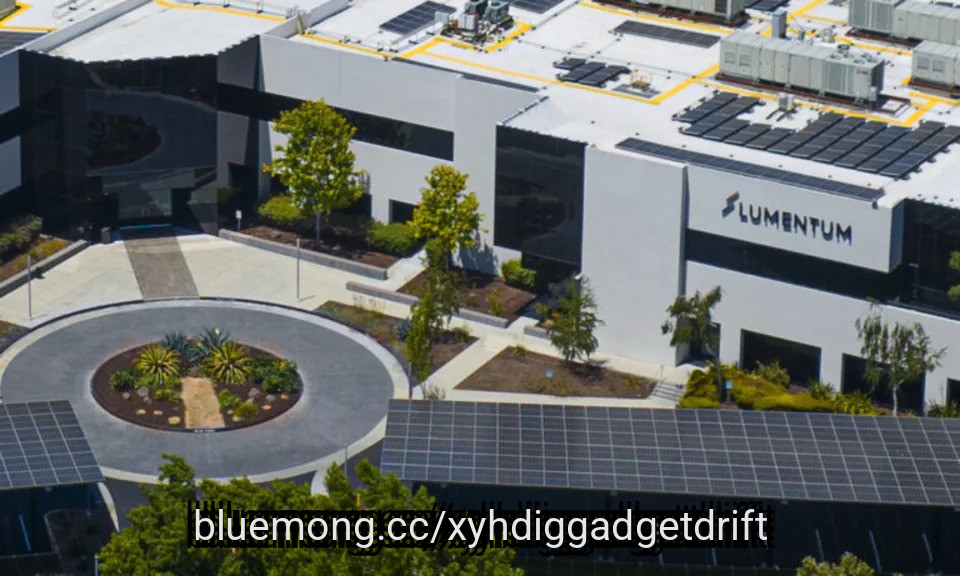
Photo from Lumentum Holdings website
AI clusters increasingly need optical connections as more accelerators communicate across larger physical distances. That drives demand for high-speed transceivers, lasers and other photonic components.
#NASDAQ #lite #wednesday #coherent

29 days ago
Former Intel CEO Pat Gelsinger is backing a startup that thinks AI's next bottleneck is not the accelerator. It is everything waiting for data to arrive.
Delos Data announced on September 15 that it raised more than $100 million to develop networking chips and software for increasingly heterogeneous AI data centers. Playground Global, where Gelsinger is a general partner, joined the round. Reuters reported that Delos is designing the network to work across different types of compute hardware rather than **** uming every accelerator comes from NVIDIA Corporation (NASDAQ:NVDA).
That makes Advanced Micro Devices, Inc. (NASDAQ:AMD) an important read-through even though AMD is not an investor in Delos.
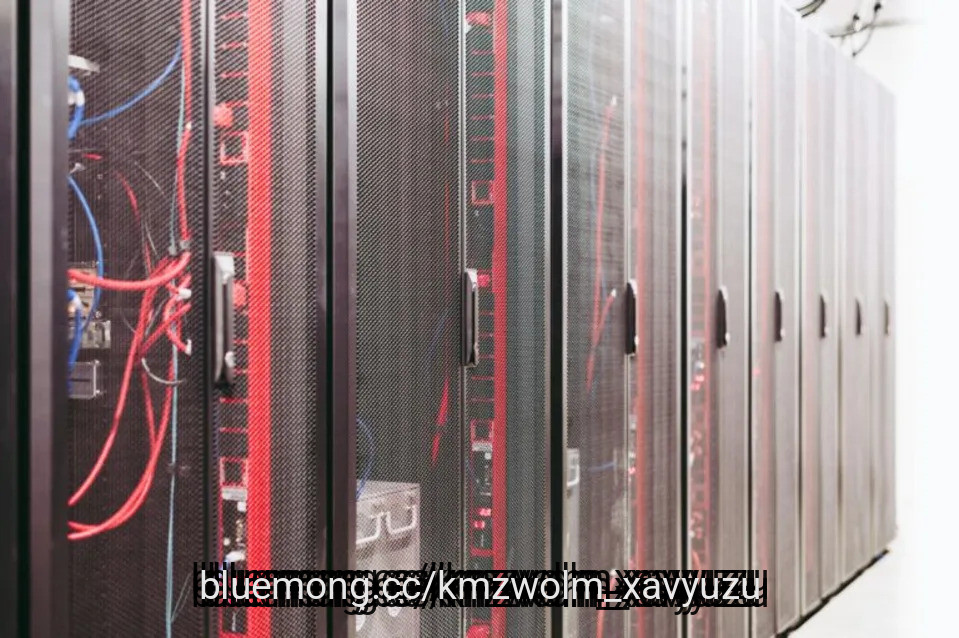
For illustration purposes only. Photo by Brett Sayles on Pexels
Nvidia does not dominate AI simply because its GPUs are fast. NVIDIA Corporation (NASDAQ:NVDA) sells a tightly integrated system of accelerators, networking, interconnects and software. That makes large clusters easier to deploy and gives customers fewer reasons to mix architectures.
#delos #data #Networking #software

29 days ago
MACOM Technology Solutions is suddenly giving investors two numbers to think about: its stock has more than doubled over the past year, and its newest optical components push data rates toward another doubling.
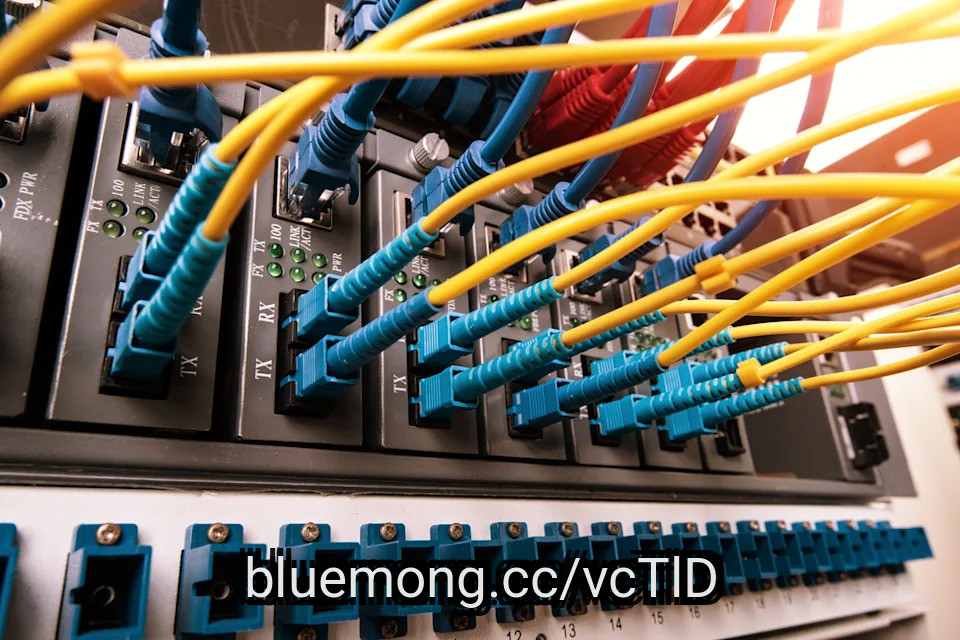
asharkyu/Shutterstock.com
MACOM Technology Solutions Holdings, Inc. (NASDAQ:MTSI) announced a 3.2-terabit optical chipset on September 17 built around eight 448-Gbps PAM-4 channels. A day later, BMO Capital upgraded the shares to Outperform with a $335 target, arguing that a 36% decline from the May peak had compressed MACOM's forward valuation to roughly 29 times earnings while data-center fundamentals remained intact.
That puts Coherent Corp. (NYSE:COHR) directly in the conversation because both companies supply the optical connectivity needed to keep larger AI clusters fed with data.
MACOM's new platform combines drivers, photodiodes and transimpedance amplifiers for next-generation optical modules. The company says the components are already available, rather than merely a research roadmap.
#data #macom #holdings #NASDAQ
1 month ago
On September 17, B. Riley initiated coverage of Nokia Oyj (NYSE:NOK), giving the stock a Buy rating and setting the price target at $15. The firm pointed to the company's position in telecom infrastructure, cloud software, and hardware networking solutions.
Riley noted that the company's networking businesses are seeing strong growth. In Q2 2026, Optical Networks revenue increased 20% year-over-year, while IP Networks grew 16%. Net sales to AI and cloud customers also surged 105%. The research firm noted that hyperscalers continue to purchase Nokia Oyj's (NYSE:NOK) AI networking products to support large-scale computing clusters.
The company's AI and cloud opportunity is also reflected in its order book. Nokia Oyj (NYSE:NOK) reported EUR 2.8 billion in AI and cloud order intake during the second quarter of 2026. B. Riley pointed out that this provides revenue visibility into 2027. The firm also noted that the carrier inventory correction cycle that had weighed on global capital expenditures has now concluded.
Riley derived its $15 price target using a sum-of-the-parts valuation that separates the company's legacy ****** ets from its data center business. The firm applied a premium hardware multiple to the data center segment, reflecting its view of the potential operating leverage in that business.
Profitability Remains a Concern
#riley #NYSE #firm


1 month ago
On September 16, Air Products (NYSE:APD) said it had signed a long-term deal to supply high-purity gases to a leading chipmaker, backed by roughly $250 million of its own money in Arizona. It is the company's second semiconductor supply win, and the two projects together carry more than $900 million of investment. That is a notable turn for a company that has been pulling back from big clean-energy projects.
The Arizona project plays to what Air Products already does. It will build, own, and operate the equipment, from hydrogen generation units and carbon dioxide purification to bulk supply for three gases: helium, hydrogen, and carbon dioxide. That means the customer's gas supply runs through equipment Air Products owns. Supply is targeted to start in phases, so the buildout can move alongside the customer's expansion plans. And this is familiar ground. Air Products has supplied electronics makers for more than 40 years, and its Chandler facility has served the Phoenix chip cluster since 1981, with a pipeline system carrying ultra-high purity nitrogen around the area.
The core business gives the deal a solid floor. In the fiscal third quarter, reported on July 30, adjusted earnings per share rose 12% to $3.47, and management lifted its full-year outlook to an adjusted $13.39 to $13.49 per share. Margins widened as well, so growth is showing up as profit. Chips appear elsewhere in the results too, since the company announced a deal to build four large air separation units to serve a chipmaker's growth in Taiwan.
The cost of the pivot is hard to ignore. On June 30, Air Products announced it would not go ahead with its Louisiana Clean Energy Complex and would discontinue a zero-carbon liquid hydrogen facility in Casa Grande, Arizona, plus other smaller clean energy distribution projects. The exits triggered roughly $2.9 billion in pre-tax charges, which is why the company posted a GAAP loss of $6.47 per share in the third quarter even as its underlying earnings grew. Adjusted results leave that hit out, but the GAAP numbers show what the retreat cost.
Owning the ****** ets also means funding them. Air Products expects about $3.5 billion of capital spending in fiscal 2026, and the Arizona plant alone is a commitment of approximately $250 million, with supply arriving in phases. The release also leaves gaps: it does not name the customer or say how long the contract runs, so the length of the revenue stream is unclear. Elsewhere, Europe's operating income rose only 2% as costs climbed, and management says it is still cautious about the economic backdrop.
#clean #adjusted


1 month ago
It's no secret that Arm Holdings (NASDAQ: ARM) is a crucial piece of the artificial intelligence (AI) puzzle. But how often do you think of Arm as a top-shelf AI investment? It's easy to forget this impressive compounder amid the glitzy hypergrowth of Nvidia's and AMD's expensive AI accelerators.
Arm doesn't build the chips that train large language models. The company doesn't actually build chips at all. Instead, Arm designs fundamental instruction sets and CPU cores. It licenses those designs to anyone with a fab contract and an ambition and collects a royalty on every unit shipped. It's basically a toll booth on a road that keeps getting wider.
Missed Nvidia in 2009? This Rare Signal Is Flashing Again. In 2009, a "Double Down" signal flashed for a little-known chipmaker called Nvidia. For the first time in years, that same "Total Conviction" signal is flashing for a company 1/100th the size of Nvidia. Continue »
Arm's toll road used to run almost entirely through smartphones. Now it runs through the data center too. Nvidia's Vera CPU pairs Arm cores with its accelerators. Amazon's Graviton, Microsoft's Cobalt, and Alphabet's Google Axion are all Arm-based, built in-house by companies that spend like nation-states on server capacity.
Every AI cluster on the planet needs general-purpose compute to feed the high-speed AI accelerators, handle networking, and run the orchestration layer. A growing share of that work sits on Arm designs.
#signal #flashing #build #chips


1 month ago
In technology, the loudest applause usually comes at the demo, not the delivery. A flashy prototype draws headlines. The unglamorous rollout that actually generates revenue often gets a shrug.
CoreWeave, Inc. (CRWV) just lived that gap. The AI cloud provider rents out Nvidia Corporation (NVDA) chips to companies building artificial intelligence systems.
On Wednesday, September 16, it said it had linked hundreds of Nvidia's newest Rubin GPUs into a single working cluster, not just a test rack, according to the announcement.
For investors, that business model makes CRWV one of the most direct public ways to bet on AI infrastructure demand, without owning a chipmaker outright.
Nvidia, by contrast, is best known as the company that designs the GPUs everyone in the AI race is trying to get their hands on.
#crwv #NVIDIA #corporation #rubin


1 month ago
Five covered-call ETFs yield 8% to 14% monthly by writing options against large-cap U.S. equity portfolios, putting them at double to triple the 10-year Treasury rate near 5%.
Nasdaq-100 funds post higher yields than S&P 500 funds because greater implied volatility generates fatter option premiums, but they cap upside during rallies.
QQQI delivers the group's top 14% yield with roughly 99% of 2025 distributions classified as return of capital, deferring taxes rather than creating current income.
Read More: Learn 7 secret wealth tips high net worth investors use that most investors miss (sponsor)
Income investors heading into the fourth quarter face a market where the 10-year Treasury yield is near 5%, yet a cluster of options-income ETFs still pays roughly double to triple that rate every month. The five funds on this list — JPMorgan Equity Premium Income ETF (NYSEARCA:JEPI), Global X S&P 500 Covered Call ETF (NYSEARCA:XYLD), Goldman Sachs Nasdaq-100 Premium Income ETF (NASDAQ:GPIQ), NEOS S&P 500 High Income ETF (NYSEARCA:SPYI), and NEOS Nasdaq-100 High Income ETF (NASDAQ:QQQI), all sit in an 8% to 14% trailing yield band while distributing cash monthly.
#NASDAQ #high #etfs #treasury


1 month ago
Nebius (NBIS) shares extended gains on Thursday as investors reacted to industry rumors that the artificial intelligence (AI) infrastructure giant is preparing to implement price hikes across its enterprise cloud computing contracts. According to unconfirmed reports, the Amsterdam-headquartered firm could increase GPU cluster pricing as much as 15% heading into the final quarter of 2026.
Nebius stock has been a blockbuster investment this year, currently up a whopping 135% versus the start of 2026.
Mark Cuban Says He Was Dizzy for Months, So He Built a VR Fix That Does at Home 'Much Of What A 180k Machine' Does
Bank of America Just Declared a 'Generational Entry Point' in U.S. Bonds. Why Investors Should Be Backing Up the Truck on Treasuries Here.
Nvidia, OpenAI, and Oracle's $745B Financing Circle Just Hit Its First Stress Test: A Fed Rate Hike
#mark #cuban



1 month ago
In late 2022, OpenAI released ChatGPT, and within months the bottom rung of the tech-industry career ladder started to disappear. Graduates who majored in computer science and other AI-exposed fields are increasingly missing out on the jobs they trained for, and a chunk of them are landing behind restaurant counters and retail registers instead, according to two Census Bureau papers.
An April 2026 Census paper tracked matched employer-employee records and found that hiring of workers ages 22 to 24 fell sharply in the industries most exposed to AI, while hiring in less-exposed industries held steady. Employment for early-career workers in the most AI-exposed fifth of industries dropped 12% over the ten quarters after ChatGPT's release. Lee Tucker, one of the coauthors of the paper, said "the decline in hires is the primary cause" of that rate of unemployment, not people losing jobs they already had.
That mattered most for one type of graduate. The most AI-exposed industries, Tucker found, cluster heavily around software and information-technology work, which are the very fields computer science and other highly AI-exposed majors are built to feed into.
A second paper from last week, also coauthored by Tucker, follows the graduates of the most AI-exposed decile of college majors. Their odds of holding a job one quarter after graduation fell by five percentage points, and full-quarter initial earnings dropped 13% following ChatGPT's release. A 13% earnings decline is roughly the size economists would expect from graduating into a severe recession—except there wasn't one, since the rest of the labor market held up fine.
Young grads still need to work and still have jobs, even if they've received highly exposed degrees. So the decline in earnings is less about a lack of employment and more about pursuing lower-wage occupations to make ends meet.
#graduates


1 month ago
NBIS revenue surged 454% to $582M with a $37.49B contracted backlog, while ALAB posted its eighth straight EPS beat on 104% revenue growth.
GPUs are worthless without high-speed interconnects, making cables, switches, and optical modules the AI industry's most critical and most overlooked bottleneck.
CRDO plunged 42% last month despite delivering 114.7% revenue growth and guiding for over 85% full-year growth in fiscal 2027.
Just released. Our ***** ysts combed the entire stock market and named the ten best stocks to buy right now, and Astera Labs didn't make the cut. Enter your email to see the names that beat ALAB. The report is free. Enter your email and see if any of your stocks made the cut.
The interconnect layer beneath AI clusters is the current bottleneck. GPUs are useless if they cannot exchange gradients and tokens at line rate, and the cables, switches, retimers, and optical modules that carry that traffic have become the constraint the industry is racing to relieve. One data point frames the pressure: (NASDAQ:ALAB) said PCIe 6 products already made up more than 50% of its total revenue in Q2, up from one third in Q1, evidence that the connectivity generation shift is happening in quarters, not years.
#gpus #cables



1 month ago
As the artificial intelligence revolution shifts from experimentation to industrial scale, choosing between Cerebras Systems (NASDAQ:CBRS) and CoreWeave (NASDAQ:CRWV) presents a unique choice for investors seeking infrastructure growth in 2026.
Cerebras builds massive chips designed to accelerate intensive workloads, while CoreWeave offers specialized cloud services for those same tasks. Both companies have seen rapid growth as businesses scramble for computing power, making them key names to watch among semiconductor stocks and infrastructure providers.
Cerebras Systems focuses on a single, bold hardware proposition: the Wafer-Scale Engine. This processor is the size of an entire silicon wafer, designed to train complex models much faster than traditional clusters. The company serves enterprise, government, and high-performance computing customers across North America, Europe, and the Middle East. While its latest annual report does not disclose specific major customers, its global reach continues to expand as it targets large-scale research and national security projects.
Financial performance has trended upward significantly in recent years. In its 2025 fiscal year (FY), revenue reached $510.0 million, representing growth of 75.7% compared to the prior year. The company also achieved profitability during this period, reporting net income of $237.8 million. This results in a net margin of 46.6%, which measures the percentage of revenue that remains as profit after all expenses are paid.
As of its December 2025 balance sheet, the company maintains a current ratio of 2.1x, indicating its ability to cover short-term obligations with short-term ***** ets while the debt-to-equity ratio is -0.5x. During FY 2025, free cash flow was negative at $392.8 million. Free cash flow is the cash a business generates after paying for its operations and capital expenditures to maintain the business.
#cerebras #million #cash #wafer


1 month ago
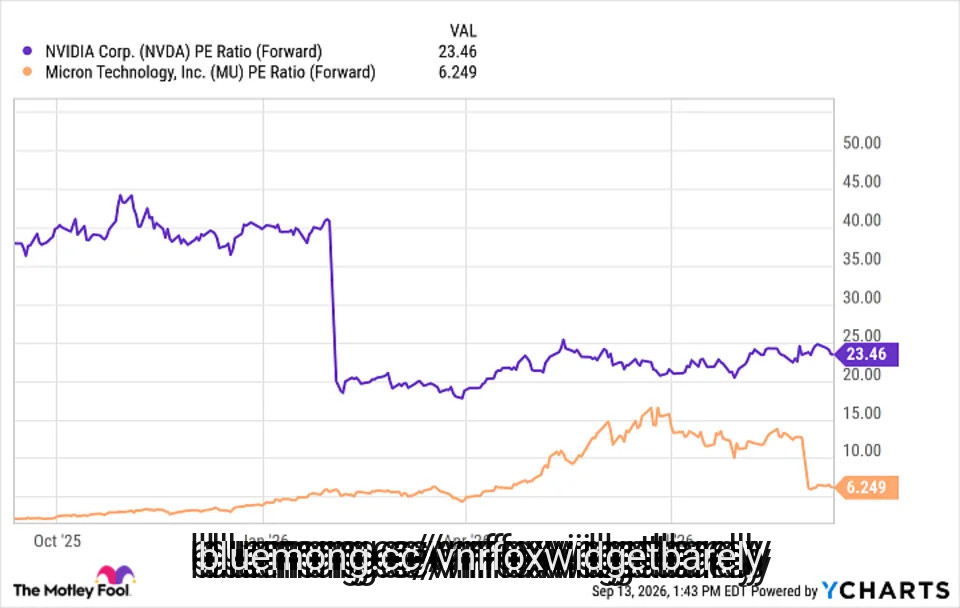
Between 2023 and 2025, Nvidia (NASDAQ: NVDA) was the market's most obvious artificial intelligence (AI) trade. During this period, the stock went parabolic, surging by 1,180% and turning the chipmaker into the world's most valuable company by market cap. On a split-adjusted basis, that was a climb from about $14 per share to $186 by the end of 2025.
Currently, Nvidia stock sits around $218, up another 17% year to date. This is what it looks like when a company owns a scarce product that's in heavy demand -- in this case, graphics processing units (GPUs).
Missed Nvidia in 2009? This Rare Signal Is Flashing Again. In 2009, a "Double Down" signal flashed for a little-known chipmaker called Nvidia. For the first time in years, that same "Total Conviction" signal is flashing for a company 1/100th the size of Nvidia. Continue »
Micron Technology's (NASDAQ: MU) rocket-like move came a bit later, but hit much harder. Memory chips were an afterthought during the initial GPU gold rush. But as training clusters got larger and inference workloads got hungrier, supplies of high bandwidth memory (HBM) started running short. Prices for HBM soared, and Micron stock responded epically -- rising 239% in 2025 and another 242% so far this year. This type of price action indicates the market has recognized that memory is no longer just another tech commodity -- its supply is one of the key bottlenecks dictating the pace at which data centers can be built.
Nvidia and Micron are not the same bet. While Nvidia sells engines, Micron is selling the tanks for the fuel these engines cannot operate without. This begs the question: At this point, which of these AI chip stocks would be the better one to buy and hold for the next five years?
#signal #Stock #chipmaker


1 month ago
The New York City Health Department has ordered 10 cooling towers in the South Bronx, including one at Yankee Stadium, to be cleaned and disinfected after preliminary testing found the presence of Legionella bacteria as officials investigate a cluster. NBC News medical contributor Natalie Azar discusses how the test was conducted the possible threat level to attendees.
#stadium
#stadium




1 month ago
MADRID (AP) — Changes are expected to the new Madring track next year after its lackluster debut at the Spanish Grand Prix this weekend.
Organizers said they are open to trying to improve the layout that produced virtually no overtaking opportunities and drew widespread criticism from Formula 1 drivers. The lack of track action was criticized by fans as well as F1 returned to Madrid after a 45-year absence.
Event director Luis García Abad said that governing body FIA has already indicated the changes that might be needed on the urban track that mixes existing roads and purpose-built sections. Madrid signed a 10-year contract to be on the F1 calendar.
"Well, to be honest, FIA has clearly defined how to improve the circuit layout, and we will be open to that because we will have to refurbish the circuit for next year," Abad told Motorsport.com.
Mercedes' Kimi Antonelli won Sunday's race after pole-sitter Lando Norris caught an unlucky break with the timing of the deployment of the virtual safety car. Norris ended third, behind Max Verstappen.
#track #improve



1 month ago
To summarize my investment approach, I prefer to buy companies with long histories of dividend increases and historically high yields. Those two traits don't come around all that often, and sometimes I find clusters of stocks in specific sectors. I need to think specifically about diversification, one of the simplest and most effective ways to reduce risk. Here's how I've done it as I've built my portfolio of around 34 investments.
The Motley Fool recommends that investors own 50 stocks. That's a perfectly fine number, but also a lot of work. And just owning 50 stocks doesn't actually mean you are diversified. You could own 50 technology stocks, for example, which would leave you with exposure to just a single sector. That's not diversification. Diversification is really about owning a reasonable number of investments across a wide range of sectors and ****** et classes.
Missed Nvidia in 2009? This Rare Signal Is Flashing Again. In 2009, a "Double Down" signal flashed for a little-known chipmaker called Nvidia. For the first time in years, that same "Total Conviction" signal is flashing for a company 1/100th the size of Nvidia. Continue »
My first step toward diversification was to take an honest look at what I want to achieve and what I'm capable of. My goal is a mixture of income and capital appreciation. I am fairly confident in my ability to select dividend stocks, though every investor makes mistakes from time to time, and I know I can only juggle so many stocks at once. In other words, 50 stocks are too many for me, so a core part of my diversification strategy is to outsource some of my work.
For example, I own two Baron mutual funds to gain exposure to growth stocks and smaller companies. I own several closed-end funds: one focused on healthcare stocks with an option income overlay, one investing in convertible securities, and one with a broadly diversified dividend portfolio. And I own three exchange-traded funds: one with an option income focus and two that use very different screening approaches to pick dividend stocks.
#Diversification #funds

2 months ago
Hewlett Packard Enterprise Company (NYSE:HPE) announced an expanded collaboration with Oracle Corporation (NYSE:ORCL) on September 2 to scale Oracle's global AI infrastructure using HPE Juniper Networking across Oracle Cloud Infrastructure (OCI) data centers. The partnership builds on over a decade of joint engineering, leveraging HPE's routing and switching platforms to support OCI's expanding gigawatt-scale GPU superclusters. To align long-term incentives, HPE issued stock warrants to Oracle.
Following the announcement, Wall Street delivered fast price target hikes: Barclays' Tim Long raised HPE's target by $12 to $79 (Overweight), citing server upside and robust margins, while Morgan Stanley's Sanjit Singh boosted Oracle's target by $3 to $210 (Equal Weight), noting a tactically positive setup driven by GPUaaS demand.
Hewlett Packard Enterprise Company (NYSE:HPE) and Oracle both delivered strong results, although Oracle operates at a significantly larger scale. HPE reported record Q3 2026 revenue of $12.2 billion, up 34% year over year, driven by strong server demand and a 74.9% increase in Networking revenue to $2.9 billion. GAAP diluted EPS reached $1.06, while strong execution led management to raise full-year FY26 revenue growth guidance to 34%-37% and its free cash flow target to at least $3.75 billion.
Oracle Corporation (NYSE:ORCL), meanwhile, ended fiscal 2026 with record Q4 revenue of $19.2 billion, up 21% year over year, and full-year revenue of $67.4 billion, up 17%. Q4 Cloud Infrastructure (IaaS) revenue surged 93% to $5.8 billion, while full-year GAAP EPS rose 34% to $5.83 and Remaining Performance Obligations (RPO) jumped 363% to $638 billion.
Overall, ORCL leads in hyper-growth and long-term backlog, reinforcing its position as the stronger software and cloud play, while HPE is demonstrating stronger near-term hardware momentum and attractive cash flow generation for value-oriented investors.
#billion #revenue #infrastructure


2 months ago
Credo Technology Group Holding Ltd (NASDAQ:CRDO) reported fiscal first-quarter 2027 revenue of $479.0 million, up 9.6% sequentially. Management said the company's connectivity portfolio now spans copper and optical products, while total revenue increased 114.7% year over year. GAAP gross margin fell to 64.5% from 68.2% in the preceding quarter and 67.4% one year earlier.
GAAP operating expenses increased to $188.4 million from $142.2 million sequentially, while GAAP operating income declined to $120.7 million from $155.8 million. Credo Technology Group Holding Ltd (NASDAQ:CRDO) nevertheless expects another quarter of growth, guiding fiscal second-quarter revenue to $525 million to $535 million. The $530 million midpoint implies approximately 10.6% sequential expansion.
The question is whether revenue growth and the broader AI connectivity portfolio can offset acquisition-related costs and rising operating expenses.
Revenue scale remains the central strength. Credo Technology Group Holding Ltd (NASDAQ:CRDO) offers active electrical cables, optical transceivers, digital signal processors, silicon-photonics components, retimers, and chip-to-chip connectivity. These products address connections spanning short distances inside AI systems through longer links across clusters.
Absolute GAAP gross profit still increased to $309.1 million from $298.1 million sequentially despite the lower margin. Credo Technology Group Holding Ltd (NASDAQ:CRDO) ended the quarter with $764.3 million in cash and short-term investments, down from approximately $1.44 billion following completion of the DustPhotonics acquisition during the quarter. The remaining liquidity supports research, product development, and capacity requirements.
#crdo
0.00$ raised of 0.00$ goal
0 donations
0.00$
to go

2 months ago
There aren't many grand conclusions to be drawn from what was for the most part a lackluster Week 1 college football schedule. Of course, that never stops professional and amateur pundits alike from attempting to do just that. We're back once again to bring a bit of perspective to the sport's weekly debates.
For the uninitiated, here's how this works. The following statements are hyperbolic to some degree. We'll discuss whether there's an element of truth to them or if they're serious overreactions.
PATH TO PLAYOFF: Sign up for our college football newsletter
We'll start with the result that caused the loudest commotion over the weekend from a game that undoubtedly wasn't on anybody's radar.
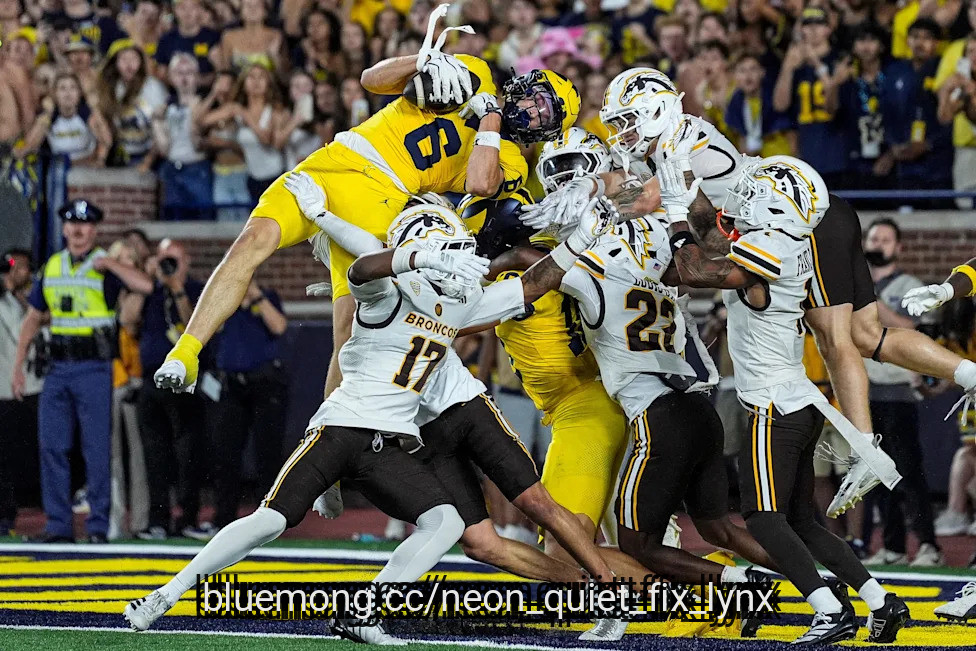
As someone once famously said, 'Playoffs? You kidding me? Playoffs?" Tainted or not, the Wolverines' victory against Western Michigan is in the books and the case is closed.
#playoffs #Football


2 months ago
MichaelPage may have reached the end of his Ultimate Fighting Championship run.
Page completed his current UFC contract with a unanimous decisionwin over NursultonRuziboev at UFC Paris on Sept. 5. Despite the victory, the former Bellatorstandout has now been removed from the promotion's latest round ofrankings eligibility, according to an email sent to rankingpanelists.
Longtime mixed martial arts reporter John Morgan shared an email he received from the UFCregarding the latest round of ranking updates.
"Dear Panelists, Michael Page has been removed from rankingseligibility effective immediately," the email read. "If you rankedhim in your middleweight division already, we ask that you pleasere-rank that division to make sure you have 15 athletes."
This comes after Page himself acknowledged that he may not beoffered another UFC contract after another lackluster decisionwin.
"They weren't happy with me before; they're not gonna be happy withme now," Page said following the fight. "If I put myself in theirshoes, it's like, same thing. 'We can sign him again, but are wegonna see much more?'"
Page joined the UFC in 2024 and has gone 5-1 inside the Octagon,with his only defeat coming against IanGarry.
#email #happy #michaelpage



2 months ago
Hewlett Packard Enterprise said on September 2 that Oracle may deploy its Juniper networking equipment across Oracle Cloud Infrastructure data centers under a multi-year collaboration. The potential footprint includes PTX and MX routing plus QFX and EX switching, along with support and financing. Hewlett Packard Enterprise Company (NYSE:HPE) also issued warrants to Oracle Corporation (NYSE:ORCL), making the arrangement strategically important without turning every possible deployment into booked revenue.
For HPE, the bull case is that AI clusters are becoming networking systems, not merely collections of GPUs. Training at enormous scale requires fast links inside a data center and between facilities. Juniper gives HPE credible routing and switching ******* ets, while Oracle supplies a demanding reference customer. Insider Monkey counted 85 hedge funds holding HPE at June 30, up from 58 at March 31. Elliott Management held 32,271,985 shares after increasing its disclosed position by 18% during the quarter.
The bear case is conversion. The release describes potential deployments and several product families but discloses neither guaranteed purchase volume nor revenue. Warrants can align the customer while diluting existing owners if exercised. HPE also must integrate Juniper, defend margins, and compete with entrenched networking vendors while customers bargain aggressively over large orders.
Oracle's advantage is supply-chain flexibility. Adding HPE gives OCI another route to build high-bandwidth infrastructure as AI demand strains capacity. Oracle can combine cloud contracts, database relationships, and financing to pull customers onto its infrastructure. Hedge-fund participation remained broad: 119 funds held Oracle Corporation (NYSE:ORCL) in Q2, up from 115 in Q1. Fisher ******* et Management reported 13,261,451 shares, 39% more than in the previous filing.
Oracle still carries the heavier capital burden. Data centers require chips, land, power, and debt-funded construction before contracted demand becomes cash. A networking partnership improves execution options but does not protect returns if utilization or pricing disappoints.
#oracle #Networking #NYSE #enterprise

2 months ago
The second AP Top 25 Football Poll will be released on Sept. 8. The lone remaining team to play is SMU, which faces Florida State in a Labor Day special.
Most of the top teams in the country enjoyed romps. Notre Dame pulled away from Wisconsin with a strong second half performance on Sunday.
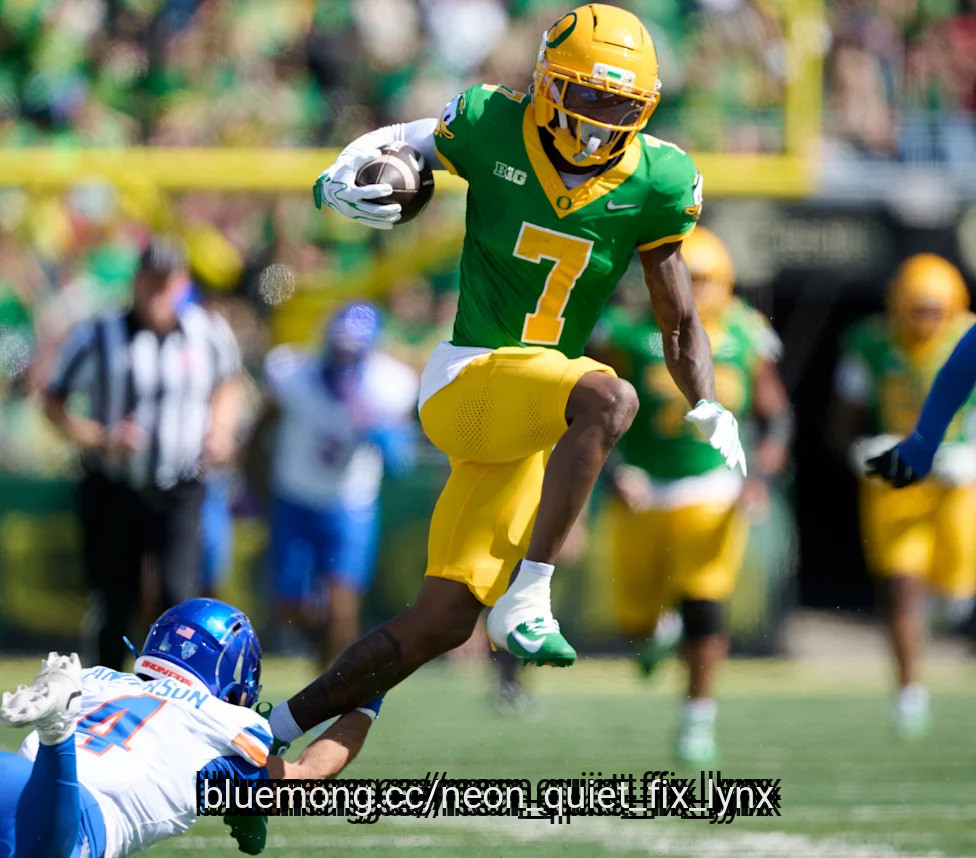
Top 10 teams that had a major struggle were Oregon, which managed to outlast Boise State in a tussle on Saturday between a Big 10 and Pac-12 school, and Ole Miss, which survived a slobberknocker against Louisville on a last-second field goal.
Michigan falls out of these predictions after its lackluster performance that needed a miracle to defeat MAC foe Western Michigan. The Wolverines get a chance to find a spot back in the rankings this week because they play host to Oklahoma at the Big House on Saturday.
Record: 1-0
#second #play #performance

2 months ago
ANN ARBOR, Mich. -- Embarrassing. An embarrassment. And more embarrassing beyond that.
The Kyle Whittingham era was supposed to embody toughness, discipline, playing smart, and doing things the right way. After saying all of the right things and appearing to be confident in what Michigan football would bring to the table in his debut in Ann Arbor, Whittingham's team was not only the opposite of everything he espouses, it was a debacle in every way. The Wolverines were a miracle away from, at best, the second-worst loss in program history, and given what the head coach's teams had been for two-plus decades in Salt Lake City, it's a head-scratcher.
The opening offensive drive was as impressive as the rest of the game was bad. Despite mistakes, quarterback Bryce Underwood sliced through the Western Michigan defense like a hot knife through ***** er, making what ended up being fall camp bluster look prescient. But that was it. 75 yards on the opening drive, and a 47-yard Hail Mary aside, it accounted for all but 154 yards accumulated all game. The offense, against a supposedly overmatched foe, made the Sherrone Moore-era offense look like the air raid by comparison. The defense got off the field, surrendering little in terms of points, sure, but it also allowed the Broncos to hold the ball for over 40 minutes, including a 13-minute, 40-second drive spanning from the third to fourth quarters. When the offense got the ball back, it quickly relinquished possession after three plays, managing seven yards on first down before deciding that moving the ball forward was anathema to its goals.
And then there were the other mistakes: missed ***** ignments, an ***** ortment of penalties, and all-around bad play. It wasn't just the opposite of what was expected; it was the opposite of how Whittingham's teams in Utah played for 21 years.
"I'm going to reserve judgment on that until I dissect the film," Whittingham said after the game. "But we talked about how we improved dramatically through fall camp. That's a fact. I mean, there's no one that attended practice that wouldn't tell you anything different. We had former players there, and everybody had the same ***** ysis. And so, and we're not -- I'm not saying that Bryce played a bad game. This isn't on Bryce Underwood. This is, like I said, it's on me, and I've got to figure out a way to have these guys better prepared and be able to get into a rhythm offensively. It's like we never got into a rhythm after that first drive. We always found a way to screw it up. We were like 0-for-5 or 0-for-6 before we converted on third down. And you just can't win football games like that. We were very fortunate to win, obviously."
#drive #whittingham


2 months ago
Manchester United clashed heads with Everton at the Hill ****** inson Stadium earlier today as they hoped to secure a win on the road in the Premier League. The Red Devils made a decent start to the game and managed to get to the half-time break with a goalless scoreline.
Bryan Mbeumo scored the opening goal for the visitors in the 47th minute before Tyrique George equalised for Everton with a great effort in the 83rd minute. Benjamin Sesko put his team 2-1 ahead just five minutes later, but Ainsley Maitland-Niles equalised for the Toffees with a great strike in injury time. The match ended with Michael Carrick's men securing a lackluster 2-2 draw away from home.
Let's take a look at how each Manchester United player fared during the clash against the Toffees.
GK: Senne Lammens – 6.5/10
He made his fair share of saves during the game, but couldn't do much about either of Everton's goals this afternoon.
#manchester #toffees #game #equalised


2 months ago
LSU Blowout of Clemson by the numbers: Kiffin's Tigers dismantle opponent in every facet of game originally appeared on The Sporting News. Add The Sporting News as a Preferred Source by clicking here.
In a relatively underwhelming slate of games for Week 1, Saturday night's showdown between the No. 11 LSU Tigers and Clemson was expected to make up for the overall lackluster day of games. To amp up the anticipation, the game was delayed over two hours thanks to lightning and storms in the area that pushed kickoff to 9:40 p.m. ET.
LSU entered as 10-point favorites but ended up winning by 41, winning by a final score of 51-10. If the final score wasn't indication enough, LSU completely dominated Clemson in virtually every statistical facet of this game.
Let's take a deeper look at the numbers to show just how dominant LSU was.
MORE:College football Week 1 overreactions: Is Dabo is done? Is Oregon a fraud?
#sporting #week #numbers #games



2 months ago
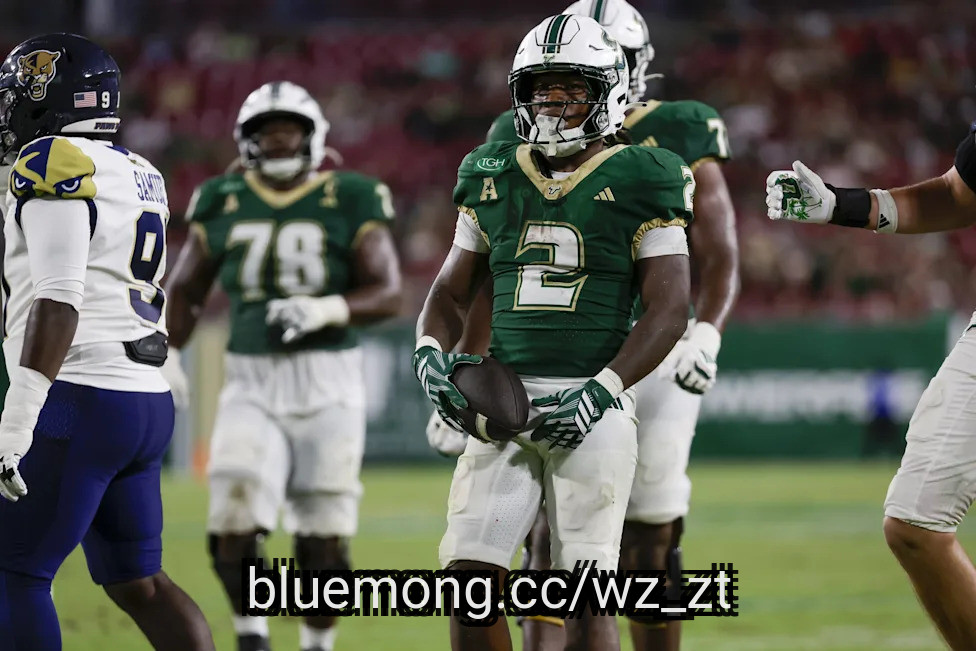
USF's defense dictated the game and aided the offense as the Bulls bested Florida International, 19-9, in Brian Hartline's head coaching debut Saturday at Raymond James Stadium.
The difference a year — or more accurately, a massive roster and staff overhaul — can make was clear.
In 2025, the Bulls boasted a high-octane offensive operation. Their lowest scoring effort at Raymond James last season was a 34-point performance in their season-opening win over Boise State, and they entered Saturday having won seven consecutive home games by at least 25 points.
On Saturday, they won by 10 and their longest play went for 14 yards.
The offensive performance was lackluster, but the defense, now led by Josh Aldridge, delivered three turnovers and four fourth-down stops to lift USF to a comfortable victory.
#saturday #Bulls #james #international

2 months ago
Nvidia rose only 0.8% on September 4, while Astera Labs jumped 9.8% and Marvell gained 7.1%. The comparison was consistent with investors broadening the AI trade beyond accelerators into connectivity suppliers. Astera's rally also coincided with speculation that the company could be added to the S&P 500, although it was ultimately not selected in the September rebalance. Bigger accelerator clusters need retimers, switches, optical links, and custom silicon to move data without leaving expensive processors idle. Astera Labs, Inc. (NASDAQ:ALAB) and Marvell Technology, Inc. (NASDAQ:MRVL) monetize that connectivity bottleneck from different positions.
Photo from Astera Labs
Astera is the focused rack-scale connectivity play. Its second-quarter update said a Q3 production ramp of the Scorpio X-Series 320-lane fabric switch was expected to drive the next revenue inflection, alongside growth opportunities across Aries, Taurus, and Leo. The bull case is content growth: each new generation of AI rack can require more connectivity silicon and software. The bear case is dependence on a concentrated group of hyperscale customers, product-transition timing, and a valuation that ***** umes strong adoption before every design win becomes revenue.
Hedge-fund breadth strengthened before the rally. Insider Monkey counted 73 funds holding Astera Labs, Inc. (NASDAQ:ALAB) at June 30, up from 53 at March 31. Lee Ainslie's Maverick Capital disclosed 1,067,215 shares, 12% more than in Q1. The quarter-end filing cannot show whether Maverick participated in the September move.
Marvell is more diversified. Its data-center business spans custom compute, electro-optics, switching, and interconnect, giving it multiple ways to benefit as cloud companies redesign AI systems. That breadth is the bull case because one customer's architecture can pull several product families. It is also the risk: custom programs can be lumpy, development costs arrive before revenue, and investors may overestimate the near-term contribution of announced wins.
#september #alab

2 months ago
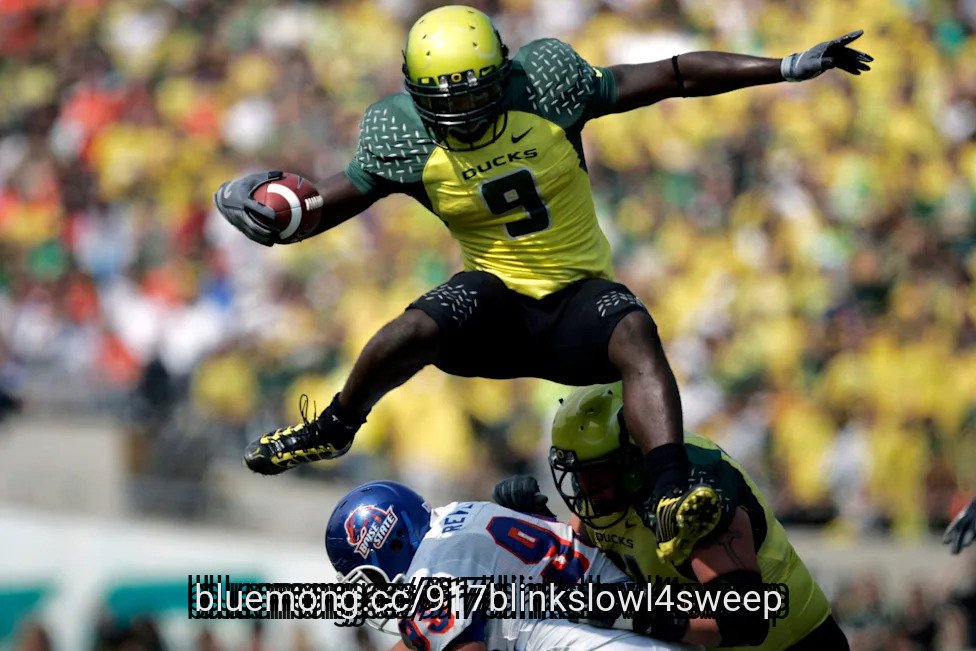
Week 1 is finally here. After all the bluster and hubbub of offseason noise, the No. 2 Oregon football team can finally put that preseason ranking to the test against regional power Boise State today, Sept. 5 at Autzen Stadium.
The Ducks will look to extend their 38-game home winning streak against nonconference opponents versus a Broncos squad hungry for an upset.
Watch Oregon Ducks football vs. Boise State
Get real-time updates, scoring plays, turning points and expert ***** ysis throughout Oregon's season-opening game against Boise State. Follow along for highlights, injury news, key plays and instant breakdown as the Ducks take on the Broncos in a pivotal showdown.
Buy Oregon Ducks football tickets
#plays



2 months ago
Cathie Wood appears to have made a sharp choice inside the same AI trade. ARK Invest's August 28 transaction disclosure showed sales of 156,286 shares of Advanced Micro Devices, Inc. (NASDAQ:AMD) and purchases of 243,707 shares of NVIDIA Corporation (NASDAQ:NVDA). Based on the August 28 closing prices, the moves were worth an estimated $72.8 million and $53.0 million, respectively. ARK also bought Broadcom, making the message look less like a retreat from AI chips than a reordering of which suppliers offer the best risk-adjusted exposure.
The bull case for the switch is execution. NVIDIA Corporation (NASDAQ:NVDA) reported quarterly revenue of $96.2 billion, including $89 billion from its data-center business. Its scale, software ecosystem, and ability to sell complete systems give it a clearer path to monetizing every new cluster. Advanced Micro Devices, Inc. (NASDAQ:AMD) is growing rapidly from a smaller base, with second-quarter revenue up 50% and data-center revenue up 107%, but it still has to convert product momentum into durable share gains against a rival that sets much of the market's pace.
That does not make AMD the obvious loser. Its Instinct accelerators and EPYC server processors give customers a credible second source, while hyperscalers have strong incentives to prevent one vendor from controlling their economics. If AMD keeps improving its software and wins larger deployments, its smaller revenue base could produce more upside. Nvidia's strength also creates its own bear case: enormous expectations, customer concentration, export restrictions, and the risk that buyers increasingly favor custom silicon can punish even excellent results.
ARK's filing does not disclose its rationale. The same-day trade reduced AMD exposure and increased Nvidia exposure, but it does not mean AMD's thesis has broken. Hedge-fund holder counts rose for both names. At the end of Q2, 164 hedge funds owned AMD, up from 134 one quarter earlier, while Nvidia ownership rose to 285 funds from 275. Marshall Wace increased its AMD common-share position 3% to 3.9 million shares, and Fisher **** et Management raised its Nvidia stake 3% to 90.9 million shares.
AMD's reported short positioning was not exceptionally high. As of the August 14 settlement date, 40.1 million shares were sold short, equal to 2.47% of the float and 1.5 days of average trading volume. The trade is striking, but the fuller picture is a two-winner market: Nvidia offers the cleaner execution story, while AMD offers the more demanding and potentially more explosive share-gain story.
#NASDAQ #revenue #trade #advanced