

8 hours ago
As the artificial intelligence revolution shifts from experimentation to industrial scale, choosing between Cerebras Systems (NASDAQ:CBRS) and CoreWeave (NASDAQ:CRWV) presents a unique choice for investors seeking infrastructure growth in 2026.
Cerebras builds massive chips designed to accelerate intensive workloads, while CoreWeave offers specialized cloud services for those same tasks. Both companies have seen rapid growth as businesses scramble for computing power, making them key names to watch among semiconductor stocks and infrastructure providers.
Cerebras Systems focuses on a single, bold hardware proposition: the Wafer-Scale Engine. This processor is the size of an entire silicon wafer, designed to train complex models much faster than traditional clusters. The company serves enterprise, government, and high-performance computing customers across North America, Europe, and the Middle East. While its latest annual report does not disclose specific major customers, its global reach continues to expand as it targets large-scale research and national security projects.
Financial performance has trended upward significantly in recent years. In its 2025 fiscal year (FY), revenue reached $510.0 million, representing growth of 75.7% compared to the prior year. The company also achieved profitability during this period, reporting net income of $237.8 million. This results in a net margin of 46.6%, which measures the percentage of revenue that remains as profit after all expenses are paid.
As of its December 2025 balance sheet, the company maintains a current ratio of 2.1x, indicating its ability to cover short-term obligations with short-term ***** ets while the debt-to-equity ratio is -0.5x. During FY 2025, free cash flow was negative at $392.8 million. Free cash flow is the cash a business generates after paying for its operations and capital expenditures to maintain the business.
#cerebras #million #cash #wafer
Cerebras builds massive chips designed to accelerate intensive workloads, while CoreWeave offers specialized cloud services for those same tasks. Both companies have seen rapid growth as businesses scramble for computing power, making them key names to watch among semiconductor stocks and infrastructure providers.
Cerebras Systems focuses on a single, bold hardware proposition: the Wafer-Scale Engine. This processor is the size of an entire silicon wafer, designed to train complex models much faster than traditional clusters. The company serves enterprise, government, and high-performance computing customers across North America, Europe, and the Middle East. While its latest annual report does not disclose specific major customers, its global reach continues to expand as it targets large-scale research and national security projects.
Financial performance has trended upward significantly in recent years. In its 2025 fiscal year (FY), revenue reached $510.0 million, representing growth of 75.7% compared to the prior year. The company also achieved profitability during this period, reporting net income of $237.8 million. This results in a net margin of 46.6%, which measures the percentage of revenue that remains as profit after all expenses are paid.
As of its December 2025 balance sheet, the company maintains a current ratio of 2.1x, indicating its ability to cover short-term obligations with short-term ***** ets while the debt-to-equity ratio is -0.5x. During FY 2025, free cash flow was negative at $392.8 million. Free cash flow is the cash a business generates after paying for its operations and capital expenditures to maintain the business.
#cerebras #million #cash #wafer


5 days ago
Interested in Lam Research Corporation? Here are five stocks we like better.
Lam Research raised its 2026 wafer-fabrication equipment spending outlook to the low-$150 billion range from $135 billion-$140 billion, driven by sustained AI demand and expectations for eight to 10 new leading-edge fabs through 2027.
AI hardware is increasing equipment intensity, while advanced chip designs and packaging are expanding Lam's addressable market. The company cited growing opportunities in gate-all-around transistors, backside power delivery, advanced packaging and dry-resist technology.
Lam is accelerating capacity expansion, including a second Malaysia facility, as clean-room availability and supply-chain capacity constrain the industry. The company also expects NAND upgrades to accelerate, while targeting mid-50% gross margins and reporting record customer-support revenue.
From High Dividend Growth to High Yield, These 3 Stocks Just Boosted Dividend Payouts
#billion #Research #equipment #advanced
Lam Research raised its 2026 wafer-fabrication equipment spending outlook to the low-$150 billion range from $135 billion-$140 billion, driven by sustained AI demand and expectations for eight to 10 new leading-edge fabs through 2027.
AI hardware is increasing equipment intensity, while advanced chip designs and packaging are expanding Lam's addressable market. The company cited growing opportunities in gate-all-around transistors, backside power delivery, advanced packaging and dry-resist technology.
Lam is accelerating capacity expansion, including a second Malaysia facility, as clean-room availability and supply-chain capacity constrain the industry. The company also expects NAND upgrades to accelerate, while targeting mid-50% gross margins and reporting record customer-support revenue.
From High Dividend Growth to High Yield, These 3 Stocks Just Boosted Dividend Payouts
#billion #Research #equipment #advanced

6 days ago
Intel Corporation (NASDAQ:INTC) and ASML Holding N.V. (NASDAQ: ASML) have recently provided fresh evidence that High-NA EUV lithography is advancing in commercial manufacturing. At the SPIE Photomask Technology + Extreme Ultraviolet Lithography conference, the two companies announced several updates related to this technology and next-generation chip production.
While the update offers evidence of High-NA's manufacturing readiness, Intel faces a financial test about whether production improvements translate into better foundry returns. For ASML, it is whether greater manufacturing readiness ultimately leads to broader customer adoption and demand.
According to the companies, more than one million wafers have now been processed using High-NA EUV across early tool certification and testing, research and development efforts, and volume production on select layers for a subset of Intel® Core™ Ultra Series 3 processors, code-named Panther Lake.
The products that have been manufactured on Intel 18A using High NA for select layers continue to deliver performance, the companies noted, meeting or exceeding comparable layers patterned using the NXE platform.
This offers Intel early production experience with the technology. Back in July, ASML noted how Intel was the first company to ship a high-volume logic product manufactured using ASML's High NA EUV lithography technology.
#Intel #asml #technology #production
While the update offers evidence of High-NA's manufacturing readiness, Intel faces a financial test about whether production improvements translate into better foundry returns. For ASML, it is whether greater manufacturing readiness ultimately leads to broader customer adoption and demand.
According to the companies, more than one million wafers have now been processed using High-NA EUV across early tool certification and testing, research and development efforts, and volume production on select layers for a subset of Intel® Core™ Ultra Series 3 processors, code-named Panther Lake.
The products that have been manufactured on Intel 18A using High NA for select layers continue to deliver performance, the companies noted, meeting or exceeding comparable layers patterned using the NXE platform.
This offers Intel early production experience with the technology. Back in July, ASML noted how Intel was the first company to ship a high-volume logic product manufactured using ASML's High NA EUV lithography technology.
#Intel #asml #technology #production


6 days ago
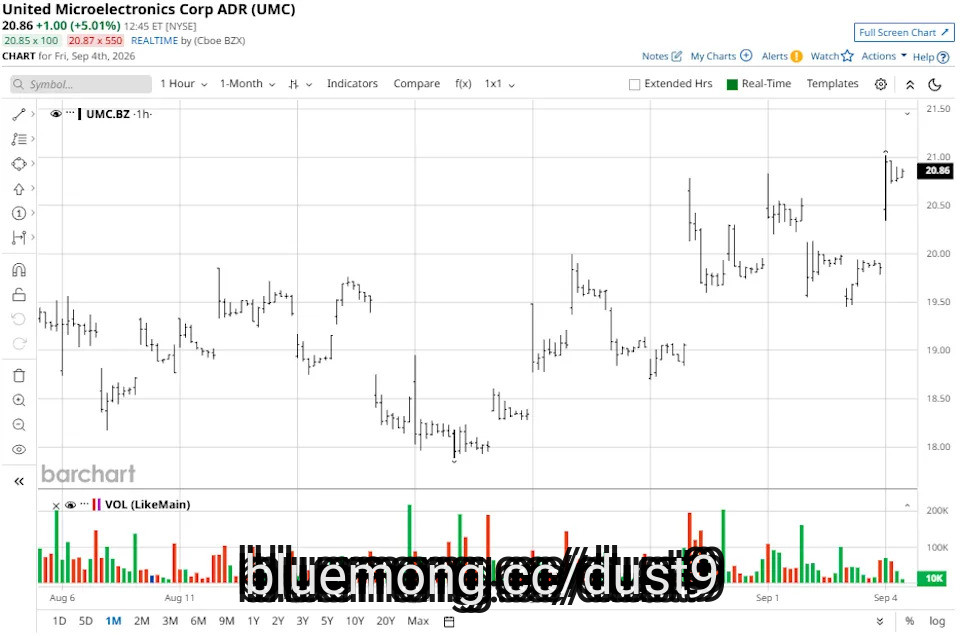
United Microelectronics (UMC) is a leading global semiconductor foundry founded in 1980 and headquartered in Hsinchu, Taiwan. The company specializes in advanced wafer fabrication, offering complementary metal-oxide semiconductor (CMOS) logic, mixed-signal, radiofrequency, embedded memory, high-voltage, and image sensor manufacturing services to a diverse global customer base. The company has increasingly focused on specialty semiconductor solutions spanning power management, connectivity, and advanced packaging, while expanding into silicon photonics to capture emerging demand related to artificial intelligence (AI).
UMC stock currently trades around $22, which is closer to the higher end of its 52-week range of $6.72 to $28.96, reflecting a dramatic rebound from multiyear lows earlier in the year. Shares have been volatile in recent sessions, popping on strong sales figures as investors weigh near-term margin pressures against long-term AI-driven capacity expansion plans.
Dear Nvidia Stock Fans, Mark Your Calendars for September 10
Rocket Lab Keeps Landing Defense Deals. Here's Why ***** ysts Aren't Getting More Bullish.
Why Stifel Just Revamped Its Price Target for Microsoft Stock
#semiconductor #united #taiwan
UMC stock currently trades around $22, which is closer to the higher end of its 52-week range of $6.72 to $28.96, reflecting a dramatic rebound from multiyear lows earlier in the year. Shares have been volatile in recent sessions, popping on strong sales figures as investors weigh near-term margin pressures against long-term AI-driven capacity expansion plans.
Dear Nvidia Stock Fans, Mark Your Calendars for September 10
Rocket Lab Keeps Landing Defense Deals. Here's Why ***** ysts Aren't Getting More Bullish.
Why Stifel Just Revamped Its Price Target for Microsoft Stock
#semiconductor #united #taiwan



12 days ago
On August 5, Cirrus Logic (NASDAQ:CRUS) reported record first-quarter revenue of $459.7 million, up 13% year over year, alongside non-GAAP earnings per share of $1.84, a June quarter record for the company. Smartphone component demand carried the print, and executives struck a confident tone about content growth across cameras, batteries and power circuits. But that optimism sat next to a quieter admission: the company's PC segment outlook for fiscal 2027 just got smaller, and the reasons behind that cut matter for anyone weighing this stock's next chapter.
High-performance mixed-signal revenue climbed 26% year over year to $210.7 million, as Cirrus Logic expanded its footprint across camera, battery, and power applications inside smartphones. CEO John Forsyth pointed to a multi-generation collaboration with the company's largest customer on camera controllers, plus continued work on a Smart Power IC for 3D sensing that stayed on schedule through the quarter. Audio, the company's flagship business, still grew 3.7% to $249.0 million on demand for custom boosted amplifiers and smart codecs, and Forsyth said those parts should keep shipping across multiple future product generations.
The company is also pushing past smartphones. During the quarter, Cirrus Logic taped out a new family of ******* og front-end components aimed at smart meters, with sampling expected in the September quarter and potential spillover into EV charging, data center metrology and grid monitoring. On the PC side, a new low-power smart codec built for always-on wake word detection drew strong customer interest, and products using Nvidia's RTX Spark platform are expected to ship later in 2026 carrying Cirrus Logic amplifiers and codecs. A fresh wafer supply agreement with GlobalFoundries locks in capacity and pricing through calendar 2028 and advances a shift toward domestic manufacturing in Malta, New York. Underneath it all sits $1.2 billion in cash and investments, no debt, and $598.6 million in trailing 12-month operating cash flow, funding $34.5 million in share buybacks during the quarter and another $50.5 million afterward.
The company trimmed its fiscal 2027 PC segment outlook, and Forsyth laid out three specific culprits: constrained supply of a key industry platform, memory and component shortages pressuring pricing across the PC market, and OEMs responding by delaying new model launches and stretching the life of older platforms. Those delayed models typically carry higher content and higher volume for Cirrus Logic, so Forsyth said the slippage "pushes out some of the growth we would otherwise have seen in our PC business this year."
#cirrus #forsyth
High-performance mixed-signal revenue climbed 26% year over year to $210.7 million, as Cirrus Logic expanded its footprint across camera, battery, and power applications inside smartphones. CEO John Forsyth pointed to a multi-generation collaboration with the company's largest customer on camera controllers, plus continued work on a Smart Power IC for 3D sensing that stayed on schedule through the quarter. Audio, the company's flagship business, still grew 3.7% to $249.0 million on demand for custom boosted amplifiers and smart codecs, and Forsyth said those parts should keep shipping across multiple future product generations.
The company is also pushing past smartphones. During the quarter, Cirrus Logic taped out a new family of ******* og front-end components aimed at smart meters, with sampling expected in the September quarter and potential spillover into EV charging, data center metrology and grid monitoring. On the PC side, a new low-power smart codec built for always-on wake word detection drew strong customer interest, and products using Nvidia's RTX Spark platform are expected to ship later in 2026 carrying Cirrus Logic amplifiers and codecs. A fresh wafer supply agreement with GlobalFoundries locks in capacity and pricing through calendar 2028 and advances a shift toward domestic manufacturing in Malta, New York. Underneath it all sits $1.2 billion in cash and investments, no debt, and $598.6 million in trailing 12-month operating cash flow, funding $34.5 million in share buybacks during the quarter and another $50.5 million afterward.
The company trimmed its fiscal 2027 PC segment outlook, and Forsyth laid out three specific culprits: constrained supply of a key industry platform, memory and component shortages pressuring pricing across the PC market, and OEMs responding by delaying new model launches and stretching the life of older platforms. Those delayed models typically carry higher content and higher volume for Cirrus Logic, so Forsyth said the slippage "pushes out some of the growth we would otherwise have seen in our PC business this year."
#cirrus #forsyth


13 days ago
On August 18, Himax Technologies (NASDAQ:HIMX) said its WiseEye palm vein biometric technology now powers the WAFERLOCK L322, a smart lock built by Taiwan-based WAFERLOCK Corporation that just went on sale. Instead of scanning a fingerprint or a face, the lock reads the vein pattern under a user's palm, a method Himax says still works when hands are wet, dirty, or full of groceries. The announcement lands less than two weeks after Himax posted a second quarter that beat its own guidance on revenue, margin, and profit, giving the palm vein rollout a stronger financial backdrop than it might otherwise have had.
The WAFERLOCK deal shows what Himax has been building toward with WiseEye, an ultralow-power AI platform that pairs an image sensor and processor to capture, match, and verify a palm vein image directly on the device, without sending anything to the cloud. That matters for a smart lock, where sending biometric data offsite would be a hard sell to homeowners. The L322 pairs palm vein recognition with RFID cards, PIN codes, mechanical keys, and compatibility with EasyCard, iPASS, and MIFARE, so the biometric layer sits on top of access methods people already use.
Himax said the underlying palm vein modules earned TÜV Rheinland verification during the quarter, validating their recognition accuracy, response speed, and liveness detection, and that the technology also complies with GDPR, one of the world's strictest privacy standards. Design-in activity is already spreading beyond locks into workforce management, computer monitors, and smart office equipment.
Automotive remains the larger story sitting underneath it. Automotive display drivers, timing controllers, and touch controllers made up well over half of Himax's revenue in the quarter ended June 30, and the company expects full-year 2026 automotive IC sales to grow by double digits from a year earlier as automakers pack more, larger, and higher-resolution screens into vehicle interiors.
Alongside that base, Himax pointed to two newer bets: a leading global brand launched smart glasses powered by WiseEye during the quarter, and the company's co-packaged optics products entered engineering production ramps in the third quarter, with 2027 shipments expected to significantly exceed 2026. Neither business moves the revenue needle yet, but together they give Himax more than one lever to pull.
#himax #wiseeye #waferlock #lock
The WAFERLOCK deal shows what Himax has been building toward with WiseEye, an ultralow-power AI platform that pairs an image sensor and processor to capture, match, and verify a palm vein image directly on the device, without sending anything to the cloud. That matters for a smart lock, where sending biometric data offsite would be a hard sell to homeowners. The L322 pairs palm vein recognition with RFID cards, PIN codes, mechanical keys, and compatibility with EasyCard, iPASS, and MIFARE, so the biometric layer sits on top of access methods people already use.
Himax said the underlying palm vein modules earned TÜV Rheinland verification during the quarter, validating their recognition accuracy, response speed, and liveness detection, and that the technology also complies with GDPR, one of the world's strictest privacy standards. Design-in activity is already spreading beyond locks into workforce management, computer monitors, and smart office equipment.
Automotive remains the larger story sitting underneath it. Automotive display drivers, timing controllers, and touch controllers made up well over half of Himax's revenue in the quarter ended June 30, and the company expects full-year 2026 automotive IC sales to grow by double digits from a year earlier as automakers pack more, larger, and higher-resolution screens into vehicle interiors.
Alongside that base, Himax pointed to two newer bets: a leading global brand launched smart glasses powered by WiseEye during the quarter, and the company's co-packaged optics products entered engineering production ramps in the third quarter, with 2027 shipments expected to significantly exceed 2026. Neither business moves the revenue needle yet, but together they give Himax more than one lever to pull.
#himax #wiseeye #waferlock #lock


14 days ago
Artisan Partners, an investment management company, released its second-quarter 2026 investor commentary for the "Artisan Global Opportunities Strategy". The letter can be downloaded here. Global equities rebounded sharply during the quarter, with the MSCI ACWI Index returning 15.3% as resilient economic growth, strong corporate earnings, and continued enthusiasm around artificial intelligence supported markets despite persistent inflation, higher bond yields, and geopolitical uncertainty. The portfolio reported strong absolute returns of 12.65% (net) but underperformed the benchmark, mainly because of its underweight exposure to information technology and overweight position in health care. Strong stock selection in technology and energy partially offset these headwinds. The fund continues to see attractive long-term opportunities across AI infrastructure, health care and consumer internet, while remaining disciplined on valuation as several AI-related stocks have appreciated sharply. Management remains focused on durable franchises with identifiable profit cycles and attractive long-term earnings potential. Also, check the Strategy's top five holdings to see its best picks in 2026.
In its second-quarter 2026 investor letter, Artisan Global Opportunities Strategy highlighted Lam Research Corporation (NASDAQ:LRCX), a leading semiconductor equipment company that supplies semiconductor processing equipment. Lam Research Corporation (NASDAQ:LRCX) accounted for 2.5% portfolio and contributed positively to the strategy's performance this quarter. On September 1, 2026, Lam Research Corporation (NASDAQ:LRCX) closed at $290.20 per share. Over the past month, Lam Research Corporation (NASDAQ:LRCX) declined 5.60%, but its shares are up 196.91% over the past year. Lam Research Corporation (NASDAQ:LRCX) has a market capitalization of $363.13 billion.
Artisan Global Opportunities Strategy stated the following regarding Lam Research Corporation (NASDAQ:LRCX) in its Q2 2026 investor letter:
"Our top contributors in Q2 were AMD, Lam Research Corporation (NASDAQ:LRCX) and Taiwan Semiconductor Manufacturing (TSMC). Lam is a leading supplier of semiconductor manufacturing equipment, with dominant positions in etching and deposition. The company delivered results that exceeded elevated expectations, with margins remaining above anticipated levels and guidance pointing to continued momentum. In response to rising semiconductor capital spending, particularly in memory, management increased its outlook for 2026 wafer fabrication equipment spending to approximately $140 billion, representing roughly 27% year-over-year growth. Given the stock's recent appreciation and valuation approaching the upper end of our target range, we trimmed the position to manage risk and position size."
#corporation #lrcx #semiconductor #strategy
In its second-quarter 2026 investor letter, Artisan Global Opportunities Strategy highlighted Lam Research Corporation (NASDAQ:LRCX), a leading semiconductor equipment company that supplies semiconductor processing equipment. Lam Research Corporation (NASDAQ:LRCX) accounted for 2.5% portfolio and contributed positively to the strategy's performance this quarter. On September 1, 2026, Lam Research Corporation (NASDAQ:LRCX) closed at $290.20 per share. Over the past month, Lam Research Corporation (NASDAQ:LRCX) declined 5.60%, but its shares are up 196.91% over the past year. Lam Research Corporation (NASDAQ:LRCX) has a market capitalization of $363.13 billion.
Artisan Global Opportunities Strategy stated the following regarding Lam Research Corporation (NASDAQ:LRCX) in its Q2 2026 investor letter:
"Our top contributors in Q2 were AMD, Lam Research Corporation (NASDAQ:LRCX) and Taiwan Semiconductor Manufacturing (TSMC). Lam is a leading supplier of semiconductor manufacturing equipment, with dominant positions in etching and deposition. The company delivered results that exceeded elevated expectations, with margins remaining above anticipated levels and guidance pointing to continued momentum. In response to rising semiconductor capital spending, particularly in memory, management increased its outlook for 2026 wafer fabrication equipment spending to approximately $140 billion, representing roughly 27% year-over-year growth. Given the stock's recent appreciation and valuation approaching the upper end of our target range, we trimmed the position to manage risk and position size."
#corporation #lrcx #semiconductor #strategy


16 days ago
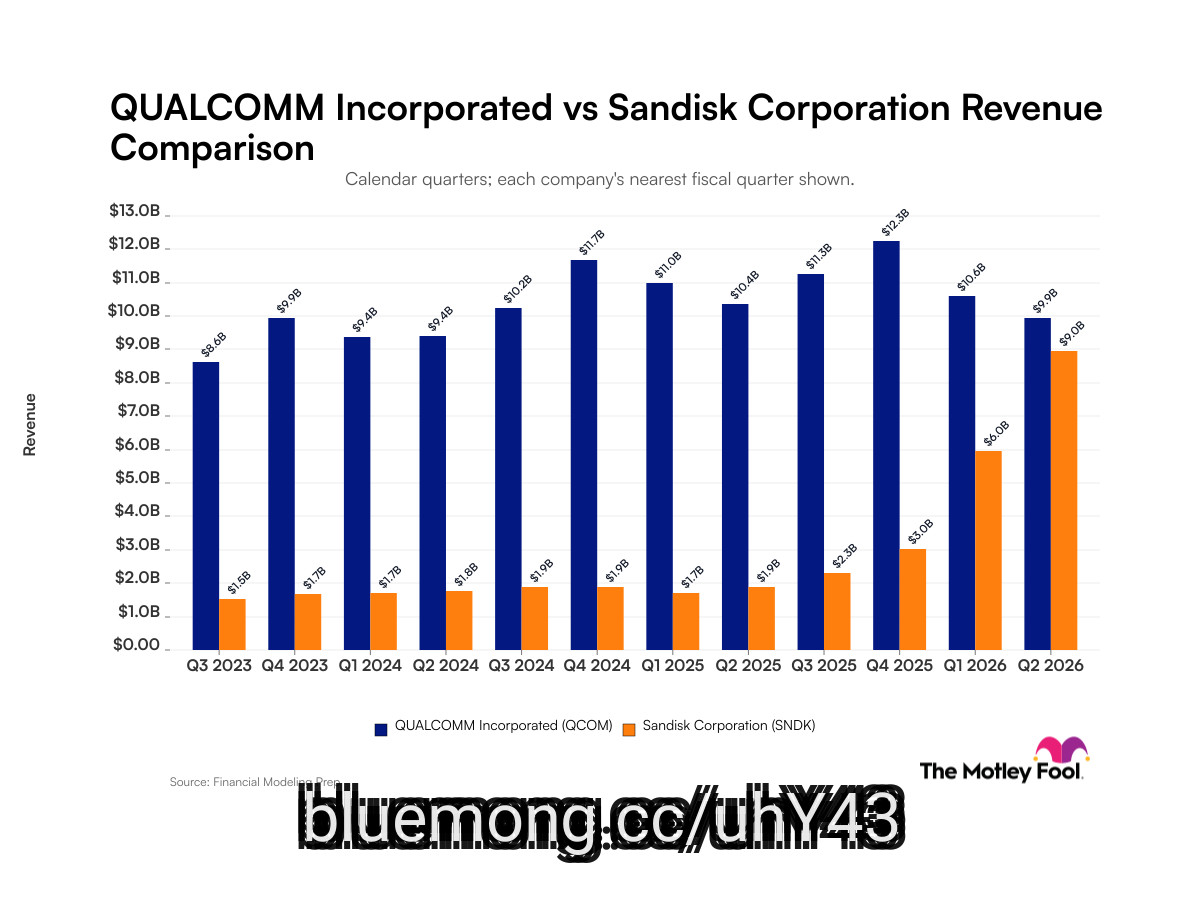
Through its various operating segments, Qualcomm (NASDAQ:QCOM) primarily generates revenue by developing integrated circuits and licensing its extensive foundational intellectual property portfolio for the global wireless communication industry across multiple technological standards. It recorded an operating margin of 17% for the quarter ended June 28, 2026.
Operating through multiple distinct product lines, Sandisk (NASDAQ:SNDK) primarily earns revenue by designing, manufacturing, and supplying data storage solutions, as well as various consumer devices, based on flash memory technology and foundational wafers.
It announced the commencement of production at a ****** anese fabrication facility. It released an open technical specification with SK Hynix and reported an operating margin of approximately 78% for the quarter ended July 3, 2026.
Revenue here refers to the standardized income-statement revenue line item. Watching this metric helps investors properly evaluate the amount of money a company brings in before any operational expenses or corporate taxes are finally subtracted.
Calendar quarter
#quarter #NASDAQ #Margin
Operating through multiple distinct product lines, Sandisk (NASDAQ:SNDK) primarily earns revenue by designing, manufacturing, and supplying data storage solutions, as well as various consumer devices, based on flash memory technology and foundational wafers.
It announced the commencement of production at a ****** anese fabrication facility. It released an open technical specification with SK Hynix and reported an operating margin of approximately 78% for the quarter ended July 3, 2026.
Revenue here refers to the standardized income-statement revenue line item. Watching this metric helps investors properly evaluate the amount of money a company brings in before any operational expenses or corporate taxes are finally subtracted.
Calendar quarter
#quarter #NASDAQ #Margin

16 days ago
Hennessy Fund's Q2 2026 investor letter for the Hennessy Equity and Income Fund. The letter can be downloaded here. The letter discusses portfolio changes, emphasizing opportunities in equity and fixed income markets that can withstand economic uncertainty. The portfolio held businesses with a 23.0% pre-tax return on invested capital versus 16.1% for the S&P 500. The letter notes a reversal in U.S. equities, driven by AI spending and strong earnings, despite cautious sentiment among lower-income households. The focus on high-quality firms with durable advantages is expected to yield positive outcomes as valuation pressures mount, indicating that future market performance may hinge on fundamentals rather than speculative trends. The portfolio aims to capitalize on the overlooked valuations of quality companies, presenting significant investment opportunities. Also, check the fund's top five holdings to see its best picks in 2026.
In its second-quarter 2026 investor letter, Hennessy Equity and Income Fund highlighted Entegris, Inc. (NASDAQ:ENTG) as a leading contributor. Headquartered in Billerica, Massachusetts, Entegris, Inc. (NASDAQ:ENTG) provides materials and process solutions for the semiconductor and other high-technology industries. On August 28, 2026, Entegris, Inc. (NASDAQ:ENTG) closed at $134.92 per share, reflecting a market capitalization of $20.62 billion. Entegris, Inc. (NASDAQ:ENTG) posted a one‑month return of 7.76%, while its shares gained 61.12% over the past 52 weeks.
Hennessy Equity and Income Fund stated the following regarding Entegris, Inc. (NASDAQ:ENTG) in its Q2 2026 investor letter:
"The largest contributor year-to-date based on relative performance vs. the benchmark was Entegris, Inc. (NASDAQ:ENTG), as it benefited from improving fab utilization and accelerating AI-driven semiconductor demand. The company continues to gain share as advanced node transitions increase materials intensity per wafer, while improving memory and logic markets support broader growth. With its investment cycle largely complete, margin expansion and improving free cash flow should drive the next phase of earnings growth. We remain attracted to Entegris' strong competitive positioning and high barriers to entry."
Entegris, Inc. (NASDAQ:ENTG) is not on our list of the 40 Most Popular Stocks Among Hedge Funds. As per our database, 47 hedge fund portfolios held Entegris, Inc. (NASDAQ:ENTG) at the end of the second quarter, the same as in the previous quarter. While we acknowledge the potential of Entegris, Inc. (NASDAQ:ENTG) as an investment, we believe certain AI stocks offer greater upside potential and carry less downside risk. If you're looking for an extremely undervalued AI stock that also stands to benefit significantly from Trump-era tariffs and the onshoring trend, see our free report on the best short-term AI stock.
#NASDAQ #income #hennessy
In its second-quarter 2026 investor letter, Hennessy Equity and Income Fund highlighted Entegris, Inc. (NASDAQ:ENTG) as a leading contributor. Headquartered in Billerica, Massachusetts, Entegris, Inc. (NASDAQ:ENTG) provides materials and process solutions for the semiconductor and other high-technology industries. On August 28, 2026, Entegris, Inc. (NASDAQ:ENTG) closed at $134.92 per share, reflecting a market capitalization of $20.62 billion. Entegris, Inc. (NASDAQ:ENTG) posted a one‑month return of 7.76%, while its shares gained 61.12% over the past 52 weeks.
Hennessy Equity and Income Fund stated the following regarding Entegris, Inc. (NASDAQ:ENTG) in its Q2 2026 investor letter:
"The largest contributor year-to-date based on relative performance vs. the benchmark was Entegris, Inc. (NASDAQ:ENTG), as it benefited from improving fab utilization and accelerating AI-driven semiconductor demand. The company continues to gain share as advanced node transitions increase materials intensity per wafer, while improving memory and logic markets support broader growth. With its investment cycle largely complete, margin expansion and improving free cash flow should drive the next phase of earnings growth. We remain attracted to Entegris' strong competitive positioning and high barriers to entry."
Entegris, Inc. (NASDAQ:ENTG) is not on our list of the 40 Most Popular Stocks Among Hedge Funds. As per our database, 47 hedge fund portfolios held Entegris, Inc. (NASDAQ:ENTG) at the end of the second quarter, the same as in the previous quarter. While we acknowledge the potential of Entegris, Inc. (NASDAQ:ENTG) as an investment, we believe certain AI stocks offer greater upside potential and carry less downside risk. If you're looking for an extremely undervalued AI stock that also stands to benefit significantly from Trump-era tariffs and the onshoring trend, see our free report on the best short-term AI stock.
#NASDAQ #income #hennessy

20 days ago
Qnity Electronics, Inc. (NYSE:Q) reported solid second-quarter 2026 financial results, driven by disciplined execution across its core segments and deep integration into high-performance technology roadmaps. On the back of strong demand momentum, the company raised its full-year 2026 financial guidance. Qnity now expects full-year adjusted EPS of $4.40 to $4.60 (up from its prior forecast of $3.80 to $4.14), net sales between $5.55 billion and $5.65 billion, adjusted operating EBITDA of $1.675 billion to $1.725 billion, and adjusted free cash flow of $600 million to $700 million.
For Q2 2026, Qnity Electronics, Inc. (NYSE:Q) generated net sales of $1.4 billion, up 22% year-over-year on a 23% volume increase. Growth was balanced across both operational divisions: Semiconductor Technologies produced $744 million in revenue (with adjusted operating EBITDA of $253 million), while Interconnect Solutions delivered $685 million (with adjusted operating EBITDA of $197 million). Adjusted EPS rose 53% year-over-year to $1.19, comfortably above Wall Street estimates. GAAP net income landed at $136 million ($0.59 per share), impacted by ongoing transformation, integration, and standing legacy costs.
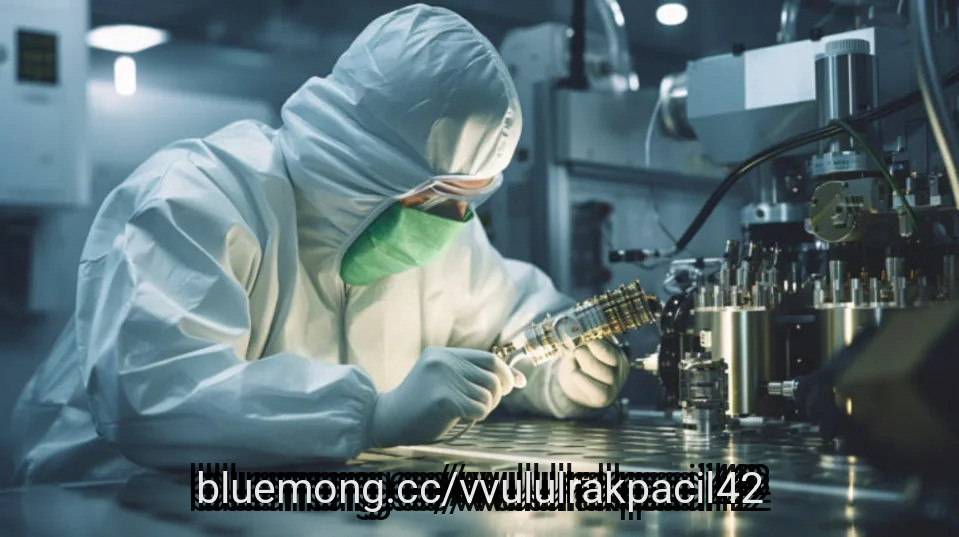
Close-up of Silicon Die are being Extracted from Semiconductor Wafer and Attached to Substrate by Pick and Place Machine. Computer Chip Manufacturing at Fab. Semiconductor Packaging Process.
At the same time, Qnity announced that Ken Rizvi will join as Senior Vice President and Chief Financial Officer, effective October 1. Rizvi brings extensive semiconductor leadership experience, having most recently served as CFO at Synaptics. Interim CFO Michael Goss will transition to Vice President, Finance and Controllership upon Rizvi's arrival.
This operational shift brings up a core question for investors: Does Qnity Electronics, Inc. (NYSE:Q)'s upwardly revised guidance signal a durable structural expansion powered by AI and advanced semiconductor nodes, or are lingering 2025 financial disruptions and elevated leverage going to cap long-term upside?
#qnity
For Q2 2026, Qnity Electronics, Inc. (NYSE:Q) generated net sales of $1.4 billion, up 22% year-over-year on a 23% volume increase. Growth was balanced across both operational divisions: Semiconductor Technologies produced $744 million in revenue (with adjusted operating EBITDA of $253 million), while Interconnect Solutions delivered $685 million (with adjusted operating EBITDA of $197 million). Adjusted EPS rose 53% year-over-year to $1.19, comfortably above Wall Street estimates. GAAP net income landed at $136 million ($0.59 per share), impacted by ongoing transformation, integration, and standing legacy costs.
Close-up of Silicon Die are being Extracted from Semiconductor Wafer and Attached to Substrate by Pick and Place Machine. Computer Chip Manufacturing at Fab. Semiconductor Packaging Process.
At the same time, Qnity announced that Ken Rizvi will join as Senior Vice President and Chief Financial Officer, effective October 1. Rizvi brings extensive semiconductor leadership experience, having most recently served as CFO at Synaptics. Interim CFO Michael Goss will transition to Vice President, Finance and Controllership upon Rizvi's arrival.
This operational shift brings up a core question for investors: Does Qnity Electronics, Inc. (NYSE:Q)'s upwardly revised guidance signal a durable structural expansion powered by AI and advanced semiconductor nodes, or are lingering 2025 financial disruptions and elevated leverage going to cap long-term upside?
#qnity


20 days ago
Cerebras Systems (NASDAQ: CBRS) and **** e Exploration Technologies (NASDAQ: SPCX), known as **** eX, are two prominent companies that went public in 2026. Cerebras started trading on May 14, while **** eX followed on June 12.
Cerebras builds wafer-scale artificial intelligence (AI) systems (computers built around a single large processor) and sells access to its computing power through the cloud. **** eX operates reusable rockets, the Starlink satellite network, and an AI segment that includes the Grok large language model and AI computing infrastructure.
Missed Nvidia in 2009? This Rare Signal Is Flashing Again. In 2009, a "Double Down" signal flashed for a little-known chipmaker called Nvidia. For the first time in years, that same "Total Conviction" signal is flashing for a company 1/100th the size of Nvidia. Continue »
Cerebras is much smaller than **** eX in terms of market capitalization. However, its cloud revenue is growing rapidly at a time when more AI spending is shifting from training models toward inference or running them in production.
SpaceX has already generated nearly $2.6 billion in revenue from the AI business in the second quarter of fiscal 2026 (ending June 30). But it also has its profitable Starlink-driven Connectivity business to help fund that expansion.
#SpaceX #NASDAQ #starlink #known
Cerebras builds wafer-scale artificial intelligence (AI) systems (computers built around a single large processor) and sells access to its computing power through the cloud. **** eX operates reusable rockets, the Starlink satellite network, and an AI segment that includes the Grok large language model and AI computing infrastructure.
Missed Nvidia in 2009? This Rare Signal Is Flashing Again. In 2009, a "Double Down" signal flashed for a little-known chipmaker called Nvidia. For the first time in years, that same "Total Conviction" signal is flashing for a company 1/100th the size of Nvidia. Continue »
Cerebras is much smaller than **** eX in terms of market capitalization. However, its cloud revenue is growing rapidly at a time when more AI spending is shifting from training models toward inference or running them in production.
SpaceX has already generated nearly $2.6 billion in revenue from the AI business in the second quarter of fiscal 2026 (ending June 30). But it also has its profitable Starlink-driven Connectivity business to help fund that expansion.
#SpaceX #NASDAQ #starlink #known


20 days ago
Our ****** ysts just identified a stock with the potential to be the next Nvidia. Tell us how you invest and we'll show you why it's our #1 pick. Tap here.
Revenue growth was driven by the recovery of semiconductor design releases that were previously delayed in fiscal Q2, with gradual improvement continuing through May and the remainder of Q3.
High-end IC revenue reached a record 44% of total IC sales as wafer fabs prioritized higher profitability projects and accelerated node migration to 28nm, 22nm, and 14nm.
Mainstream IC business declined to $86 million, reflecting a natural evolution toward higher ASP chip designs as customers transition to more advanced technology nodes.
FPD revenue remained near historical highs, supported by strong OLED demand for flagship consumer electronics in developed markets, despite memory constraints affecting emerging market launches.
#analysts
Revenue growth was driven by the recovery of semiconductor design releases that were previously delayed in fiscal Q2, with gradual improvement continuing through May and the remainder of Q3.
High-end IC revenue reached a record 44% of total IC sales as wafer fabs prioritized higher profitability projects and accelerated node migration to 28nm, 22nm, and 14nm.
Mainstream IC business declined to $86 million, reflecting a natural evolution toward higher ASP chip designs as customers transition to more advanced technology nodes.
FPD revenue remained near historical highs, supported by strong OLED demand for flagship consumer electronics in developed markets, despite memory constraints affecting emerging market launches.
#analysts


22 days ago
NVDA's $82B quarter dwarfs CBRS's $210M, but Cerebras's 103% growth and $25.4B backlog signal a credible inference speed challenger.
NVIDIA's 75% gross margins and $48B quarterly free cash flow cement it as the anchor, while Cerebras offers higher-variance upside on inference speed.
Don't wait: the **** yst who called NVIDIA in 2010 just revealed his top 10 AI stocks. See the full list FREE now.
Cerebras Systems (NASDAQ: CBRS) and NVIDIA (NASDAQ: NVDA) delivered post-earnings reports showing two distinct AI compute visions. NVIDIA reported a $81.61 billion quarter powered by full-stack AI factories. Cerebras, fresh off its IPO, bets on wafer-scale inference speed. The results make a direct comparison unusually relevant.
NVIDIA's Q1 FY27 earnings were dominated by Data Center revenue of $75.246 billion, up 92% year over year, with networking growing 199%. Jensen Huang stated "Demand has gone parabolic." Blackwell Ultra swept every MLPerf inference benchmark, and Vera Rubin production begins in the second half of fiscal 2027.
#NVIDIA #full #earnings
NVIDIA's 75% gross margins and $48B quarterly free cash flow cement it as the anchor, while Cerebras offers higher-variance upside on inference speed.
Don't wait: the **** yst who called NVIDIA in 2010 just revealed his top 10 AI stocks. See the full list FREE now.
Cerebras Systems (NASDAQ: CBRS) and NVIDIA (NASDAQ: NVDA) delivered post-earnings reports showing two distinct AI compute visions. NVIDIA reported a $81.61 billion quarter powered by full-stack AI factories. Cerebras, fresh off its IPO, bets on wafer-scale inference speed. The results make a direct comparison unusually relevant.
NVIDIA's Q1 FY27 earnings were dominated by Data Center revenue of $75.246 billion, up 92% year over year, with networking growing 199%. Jensen Huang stated "Demand has gone parabolic." Blackwell Ultra swept every MLPerf inference benchmark, and Vera Rubin production begins in the second half of fiscal 2027.
#NVIDIA #full #earnings


23 days ago
With a market cap of $240.4 billion, KLA Corporation (KLAC) develops advanced equipment and services that enable innovation across the global electronics industry. Its process control and process-enabling solutions support the manufacturing of wafers, reticles, integrated circuits, advanced packaging and printed circuit boards, helping leading customers improve semiconductor manufacturing.
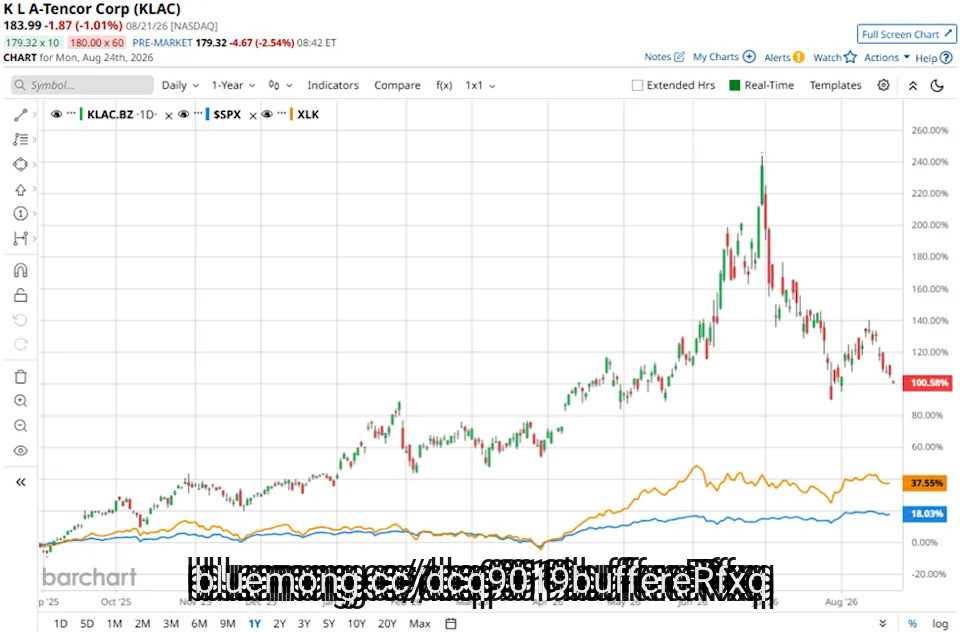
Shares of the Milpitas, California-based company have surpassed the broader market over the past 52 weeks. KLAC stock has surged 110.9% over this time frame, while the broader S&P 500 Index ($SPX) has gained 20.5%. Moreover, shares of the company have increased 51.4% on a YTD basis, compared to SPX's 12.1% rise.
Soros Fund Management Opened a New Position in Nebius During Q2. What This Means for NBIS Stock.
Nvidia Earnings, Jackson Hole and Other Key Things to Watch this Week
Ahead of Nvidia Earnings, Here's What Barchart Data Says Comes Next for NVDA Stock
#market #company
Shares of the Milpitas, California-based company have surpassed the broader market over the past 52 weeks. KLAC stock has surged 110.9% over this time frame, while the broader S&P 500 Index ($SPX) has gained 20.5%. Moreover, shares of the company have increased 51.4% on a YTD basis, compared to SPX's 12.1% rise.
Soros Fund Management Opened a New Position in Nebius During Q2. What This Means for NBIS Stock.
Nvidia Earnings, Jackson Hole and Other Key Things to Watch this Week
Ahead of Nvidia Earnings, Here's What Barchart Data Says Comes Next for NVDA Stock
#market #company

23 days ago
Guinness Global Innovators, an investment management company, recently released its Q2 2026 quarterly investor update for its "Guinness Global Innovators Fund". You can download the letter here. The Guinness Global Innovators Fund focuses on investing in global companies that benefit from innovation in technology, communication, globalization, and management strategies. In the second quarter of 2026, the Guinness Global Innovators Fund returned 13.8% in GBP, compared with 13.0% for the MSCI World Index and 13.1% for the IA Global sector average. Easing Middle East tensions, falling oil prices, and renewed enthusiasm for artificial intelligence helped reverse much of the caution seen earlier in the year, with investors rotating back toward growth stocks and AI infrastructure beneficiaries. The Fund benefited from its overweight position in the Information Technology sector, while its overweight position in Communication Services detracted. Avoiding weaker Utilities, Materials, and Energy also supported relative performance. Also, please check the Fund's top five holdings to see its best picks for 2026.
In its second-quarter 2026 investor letter, Guinness Global Innovators Fund highlighted KLA Corporation (NASDAQ:KLAC) as a notable contributor. KLA Corporation (NASDAQ:KLAC) designs, manufactures, and markets process control, process-enabling, and yield management solutions for the semiconductor and related electronics industries worldwide. On August 21, 2026, KLA Corporation (NASDAQ:KLAC) closed at $183.99 per share. The one-month return of KLA Corporation (NASDAQ:KLAC) was -9.52% and its shares gained 109.19% over the past 52 weeks. KLA Corporation (NASDAQ:KLAC) has a market capitalization of $240.39 billion.
Guinness Global Innovators Fund stated the following regarding KLA Corporation (NASDAQ:KLAC) in its Q2 2026 investor letter:
"The Fund holds three semiconductor equipment manufacturers, which provide wafer fabrication equipment (WFE). They were the top performers over the quarter: Applied Materials (+111.8% in USD) KLA Corporation (NASDAQ:KLAC) (+105.2%), and LAM Research (+103.0%). WFE companies sit at the heart of the semiconductor value chain, supplying the highly specialised tools needed to manufacture advanced chips. As demand for AI, high-performance computing and data centre infrastructure has accelerated, foundries and integrated device manufacturers have responded with record levels of capital expenditure, driving a strong upcycle in WFE spending. The AI infrastructure build-out is particularly supportive, as hyperscalers require not only more chips, but increasingly complex and advanced architectures, materially increasing equipment intensity across the manufacturing process. As a result, these companies have been printing strong quarterly earnings reports. KLA, the leader in process control and yield management, continues to play a critical role as semiconductor manufacturing becomes increasingly complex. Demand for its inspecti
In its second-quarter 2026 investor letter, Guinness Global Innovators Fund highlighted KLA Corporation (NASDAQ:KLAC) as a notable contributor. KLA Corporation (NASDAQ:KLAC) designs, manufactures, and markets process control, process-enabling, and yield management solutions for the semiconductor and related electronics industries worldwide. On August 21, 2026, KLA Corporation (NASDAQ:KLAC) closed at $183.99 per share. The one-month return of KLA Corporation (NASDAQ:KLAC) was -9.52% and its shares gained 109.19% over the past 52 weeks. KLA Corporation (NASDAQ:KLAC) has a market capitalization of $240.39 billion.
Guinness Global Innovators Fund stated the following regarding KLA Corporation (NASDAQ:KLAC) in its Q2 2026 investor letter:
"The Fund holds three semiconductor equipment manufacturers, which provide wafer fabrication equipment (WFE). They were the top performers over the quarter: Applied Materials (+111.8% in USD) KLA Corporation (NASDAQ:KLAC) (+105.2%), and LAM Research (+103.0%). WFE companies sit at the heart of the semiconductor value chain, supplying the highly specialised tools needed to manufacture advanced chips. As demand for AI, high-performance computing and data centre infrastructure has accelerated, foundries and integrated device manufacturers have responded with record levels of capital expenditure, driving a strong upcycle in WFE spending. The AI infrastructure build-out is particularly supportive, as hyperscalers require not only more chips, but increasingly complex and advanced architectures, materially increasing equipment intensity across the manufacturing process. As a result, these companies have been printing strong quarterly earnings reports. KLA, the leader in process control and yield management, continues to play a critical role as semiconductor manufacturing becomes increasingly complex. Demand for its inspecti

23 days ago
Guinness Global Innovators, an investment management company, recently released its Q2 2026 quarterly investor update for its "Guinness Global Innovators Fund". You can download the letter here. The Guinness Global Innovators Fund focuses on investing in global companies that benefit from innovation in technology, communication, globalization, and management strategies. In the second quarter of 2026, the Guinness Global Innovators Fund returned 13.8% in GBP, compared with 13.0% for the MSCI World Index and 13.1% for the IA Global sector average. Easing Middle East tensions, falling oil prices, and renewed enthusiasm for artificial intelligence helped reverse much of the caution seen earlier in the year, with investors rotating back toward growth stocks and AI infrastructure beneficiaries. The Fund benefited from its overweight position in the Information Technology sector, while its overweight position in Communication Services detracted. Avoiding weaker Utilities, Materials, and Energy also supported relative performance. Also, please check the Fund's top five holdings to see its best picks for 2026.
In its second-quarter 2026 investor letter, Guinness Global Innovators Fund highlighted Lam Research Corporation (NASDAQ:LRCX). Lam Research Corporation (NASDAQ:LRCX) is a leading semiconductor equipment company that supplies semiconductor processing equipment used in the fabrication of integrated circuits. On August 21, 2026, Lam Research Corporation (NASDAQ:LRCX) closed at $314.00 per share. The one-month return of Lam Research Corporation (NASDAQ:LRCX) was 7.68%, while its shares gained 210.03% over the past 52 weeks. Lam Research Corporation (NASDAQ:LRCX) has a market capitalization of $383.62 billion.
Guinness Global Innovators Fund stated the following regarding Lam Research Corporation (NASDAQ:LRCX) in its Q2 2026 investor letter:
"The Fund holds three semiconductor equipment manufacturers, which provide wafer fabrication equipment (WFE). They were the top performers over the quarter: Applied Materials (+111.8% in USD) KLA (+105.2%), and Lam Research Corporation (NASDAQ:LRCX) (+103.0%). WFE companies sit at the heart of the semiconductor value chain, supplying the highly specialised tools needed to manufacture advanced chips. As demand for AI, high-performance computing and data centre infrastructure has accelerated, foundries and integrated device manufacturers have responded with record levels of capital expenditure, driving a strong upcycle in WFE spending. The AI infrastructure build-out is particularly supportive, as hyperscalers require not only more chips, but increasingly complex and advanced architectures, materially increasing equipment intensity across the manufacturing process. As a result, these companies have been printing strong quarterly earnings reports. Lam, which specialises in etch and deposition, has been supported by accelerating DRAM and high-bandwidth memory demand, resilient China revenues, and faster-than-expected
In its second-quarter 2026 investor letter, Guinness Global Innovators Fund highlighted Lam Research Corporation (NASDAQ:LRCX). Lam Research Corporation (NASDAQ:LRCX) is a leading semiconductor equipment company that supplies semiconductor processing equipment used in the fabrication of integrated circuits. On August 21, 2026, Lam Research Corporation (NASDAQ:LRCX) closed at $314.00 per share. The one-month return of Lam Research Corporation (NASDAQ:LRCX) was 7.68%, while its shares gained 210.03% over the past 52 weeks. Lam Research Corporation (NASDAQ:LRCX) has a market capitalization of $383.62 billion.
Guinness Global Innovators Fund stated the following regarding Lam Research Corporation (NASDAQ:LRCX) in its Q2 2026 investor letter:
"The Fund holds three semiconductor equipment manufacturers, which provide wafer fabrication equipment (WFE). They were the top performers over the quarter: Applied Materials (+111.8% in USD) KLA (+105.2%), and Lam Research Corporation (NASDAQ:LRCX) (+103.0%). WFE companies sit at the heart of the semiconductor value chain, supplying the highly specialised tools needed to manufacture advanced chips. As demand for AI, high-performance computing and data centre infrastructure has accelerated, foundries and integrated device manufacturers have responded with record levels of capital expenditure, driving a strong upcycle in WFE spending. The AI infrastructure build-out is particularly supportive, as hyperscalers require not only more chips, but increasingly complex and advanced architectures, materially increasing equipment intensity across the manufacturing process. As a result, these companies have been printing strong quarterly earnings reports. Lam, which specialises in etch and deposition, has been supported by accelerating DRAM and high-bandwidth memory demand, resilient China revenues, and faster-than-expected

23 days ago
Guinness Global Innovators, an investment management company, recently released its Q2 2026 quarterly investor update for its "Guinness Global Innovators Fund". You can download the letter here. The Guinness Global Innovators Fund focuses on investing in global companies that benefit from innovation in technology, communication, globalization, and management strategies. In the second quarter of 2026, the Guinness Global Innovators Fund returned 13.8% in GBP, compared with 13.0% for the MSCI World Index and 13.1% for the IA Global sector average. Easing Middle East tensions, falling oil prices, and renewed enthusiasm for artificial intelligence helped reverse much of the caution seen earlier in the year, with investors rotating back toward growth stocks and AI infrastructure beneficiaries. The Fund benefited from its overweight position in the Information Technology sector, while its overweight position in Communication Services detracted. Avoiding weaker Utilities, Materials, and Energy also supported relative performance. Also, please check the Fund's top five holdings to see its best picks for 2026.
In its second-quarter 2026 investor letter, Guinness Global Innovators Fund highlighted Applied Materials, Inc. (NASDAQ:AMAT) as a notable contributor. Applied Materials, Inc. (NASDAQ:AMAT) provides materials engineering solutions, equipment, services, and software to the semiconductor and related industries. On August 21, 2026, Applied Materials, Inc. (NASDAQ:AMAT) closed at $492.32 per share. The one-month return of Applied Materials, Inc. (NASDAQ:AMAT) was -4.75%, and its shares gained 203.92% over the past 52 weeks. Applied Materials, Inc. (NASDAQ:AMAT) has a market capitalization of $390.7 billion .
Guinness Global Innovators Fund stated the following regarding Applied Materials, Inc. (NASDAQ:AMAT) in its Q2 2026 investor letter:
"The Fund holds three semiconductor equipment manufacturers, which provide wafer fabrication equipment (WFE). They were the top performers over the quarter: Applied Materials, Inc. (NASDAQ:AMAT) (+111.8% in USD) KLA (+105.2%), and LAM Research (+103.0%). WFE companies sit at the heart of the semiconductor value chain, supplying the highly specialised tools needed to manufacture advanced chips. As demand for AI, high-performance computing and data centre infrastructure has accelerated, foundries and integrated device manufacturers have responded with record levels of capital expenditure, driving a strong upcycle in WFE spending. The AI infrastructure build-out is particularly supportive, as hyperscalers require not only more chips, but increasingly complex and advanced architectures, materially increasing equipment intensity across the manufacturing process. As a result, these companies have been printing strong quarterly earnings reports. Applied Materials, as the broadest player across front-end, process control and advanced packaging, remains well positioned to capture share as chipmakers invest across the full ma
In its second-quarter 2026 investor letter, Guinness Global Innovators Fund highlighted Applied Materials, Inc. (NASDAQ:AMAT) as a notable contributor. Applied Materials, Inc. (NASDAQ:AMAT) provides materials engineering solutions, equipment, services, and software to the semiconductor and related industries. On August 21, 2026, Applied Materials, Inc. (NASDAQ:AMAT) closed at $492.32 per share. The one-month return of Applied Materials, Inc. (NASDAQ:AMAT) was -4.75%, and its shares gained 203.92% over the past 52 weeks. Applied Materials, Inc. (NASDAQ:AMAT) has a market capitalization of $390.7 billion .
Guinness Global Innovators Fund stated the following regarding Applied Materials, Inc. (NASDAQ:AMAT) in its Q2 2026 investor letter:
"The Fund holds three semiconductor equipment manufacturers, which provide wafer fabrication equipment (WFE). They were the top performers over the quarter: Applied Materials, Inc. (NASDAQ:AMAT) (+111.8% in USD) KLA (+105.2%), and LAM Research (+103.0%). WFE companies sit at the heart of the semiconductor value chain, supplying the highly specialised tools needed to manufacture advanced chips. As demand for AI, high-performance computing and data centre infrastructure has accelerated, foundries and integrated device manufacturers have responded with record levels of capital expenditure, driving a strong upcycle in WFE spending. The AI infrastructure build-out is particularly supportive, as hyperscalers require not only more chips, but increasingly complex and advanced architectures, materially increasing equipment intensity across the manufacturing process. As a result, these companies have been printing strong quarterly earnings reports. Applied Materials, as the broadest player across front-end, process control and advanced packaging, remains well positioned to capture share as chipmakers invest across the full ma

23 days ago
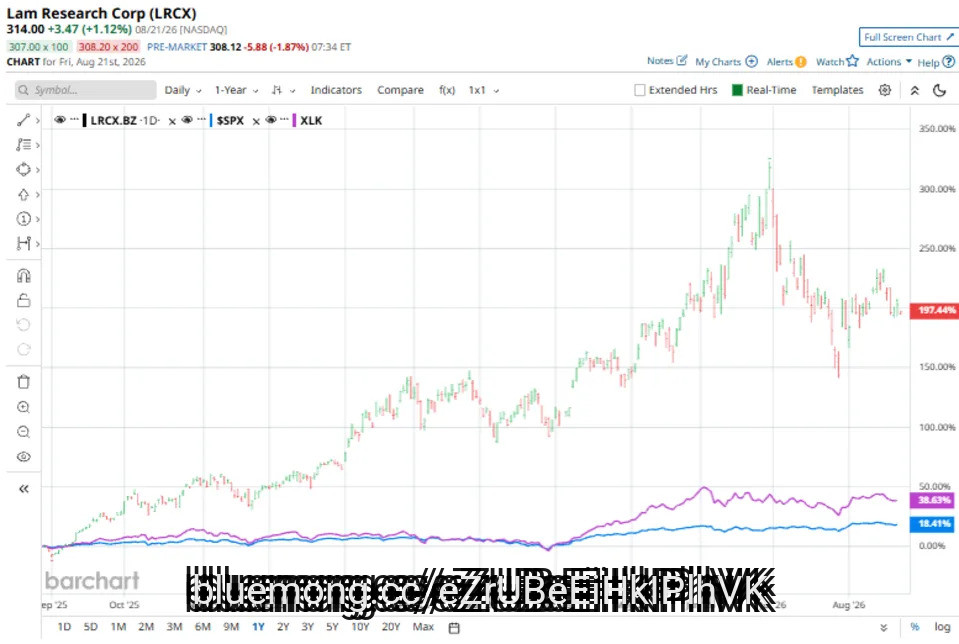
With a market cap of around $392.9 billion, Lam Research Corporation (LRCX) designs and manufactures the highly specialized equipment that chipmakers use to build advanced semiconductors. The Fremont, California-based company's systems play a critical role in key wafer-fabrication processes, including thin-film deposition, plasma etching, photoresist strip, wafer cleaning, and metrology, helping semiconductor manufacturers produce smaller, faster, and more powerful chips.
Lam Research has been one of the market's biggest winners, with its stock delivering eye-popping gains that have left the broader market behind. Over the past year, LRCX stock has jumped 219.5% while the broader S&P 500 Index ($SPX) has rallied 20.5%. The rally has remained red-hot in 2026, with shares climbing another 83.5% year to date, compared with the benchmark's 12.1% gain.
Soros Fund Management Opened a New Position in Nebius During Q2. What This Means for NBIS Stock.
Ahead of Nvidia Earnings, Here's What Barchart Data Says Comes Next for NVDA Stock
Nvidia Earnings, Jackson Hole and Other Key Things to Watch this Week
#lrcx
Lam Research has been one of the market's biggest winners, with its stock delivering eye-popping gains that have left the broader market behind. Over the past year, LRCX stock has jumped 219.5% while the broader S&P 500 Index ($SPX) has rallied 20.5%. The rally has remained red-hot in 2026, with shares climbing another 83.5% year to date, compared with the benchmark's 12.1% gain.
Soros Fund Management Opened a New Position in Nebius During Q2. What This Means for NBIS Stock.
Ahead of Nvidia Earnings, Here's What Barchart Data Says Comes Next for NVDA Stock
Nvidia Earnings, Jackson Hole and Other Key Things to Watch this Week
#lrcx



23 days ago
Cerebras Systems (CBRS) is giving investors another reason to pay attention to its ambitions in the rapidly expanding artificial intelligence (AI) accelerator market. On Aug. 18, the company unveiled its new CS-4 rack-scale platform, which it says can deliver up to 30 times faster AI inference than comparable GPU-based systems. Built around three new WSE-3 Turbo processors, CS-4 delivers 750 petaflops of AI compute, 7.2 terabits per second of I/O bandwidth, and 129.6 petabytes per second of memory bandwidth.
The launch comes at a critical time for Cerebras. The company is seeking to establish itself as a credible alternative to Nvidia (NVDA) in AI inference, where demand is rising as businesses deploy increasingly sophisticated generative AI and agentic applications. Cerebras says CS-4 can support models exceeding 50 trillion parameters and reduce wafer-to-wafer latency to as little as two microseconds, potentially giving customers a significant speed advantage for latency-sensitive workloads.
Soros Fund Management Opened a New Position in Nebius During Q2. What This Means for NBIS Stock.
Ahead of Nvidia Earnings, Here's What Barchart Data Says Comes Next for NVDA Stock
Nvidia Earnings, Jackson Hole and Other Key Things to Watch this Week
#earnings
The launch comes at a critical time for Cerebras. The company is seeking to establish itself as a credible alternative to Nvidia (NVDA) in AI inference, where demand is rising as businesses deploy increasingly sophisticated generative AI and agentic applications. Cerebras says CS-4 can support models exceeding 50 trillion parameters and reduce wafer-to-wafer latency to as little as two microseconds, potentially giving customers a significant speed advantage for latency-sensitive workloads.
Soros Fund Management Opened a New Position in Nebius During Q2. What This Means for NBIS Stock.
Ahead of Nvidia Earnings, Here's What Barchart Data Says Comes Next for NVDA Stock
Nvidia Earnings, Jackson Hole and Other Key Things to Watch this Week
#earnings



24 days ago
Guinness Global Innovators, an investment management company, recently released its Q2 2026 quarterly investor update for its "Guinness Global Innovators Fund". You can download the letter here. The Guinness Global Innovators Fund focuses on investing in global companies that benefit from innovation in technology, communication, globalization, and management strategies. In the second quarter of 2026, the Guinness Global Innovators Fund returned 13.8% in GBP, compared with 13.0% for the MSCI World Index and 13.1% for the IA Global sector average. Easing Middle East tensions, falling oil prices, and renewed enthusiasm for artificial intelligence helped reverse much of the caution seen earlier in the year, with investors rotating back toward growth stocks and AI infrastructure beneficiaries. The Fund benefited from its overweight position in the Information Technology sector, while its overweight position in Communication Services detracted. Avoiding weaker Utilities, Materials, and Energy also supported relative performance. Also, please check the Fund's top five holdings to see its best picks for 2026.
In its second-quarter 2026 investor letter, Guinness Global Innovators Fund highlighted KLA Corporation (NASDAQ:KLAC) as a notable contributor. KLA Corporation (NASDAQ:KLAC) designs, manufactures, and markets process control, process-enabling, and yield management solutions for the semiconductor and related electronics industries worldwide. On August 21, 2026, KLA Corporation (NASDAQ:KLAC) closed at $183.99 per share. The one-month return of KLA Corporation (NASDAQ:KLAC) was -9.52% and its shares gained 109.19% over the past 52 weeks. KLA Corporation (NASDAQ:KLAC) has a market capitalization of $240.39 billion.
Guinness Global Innovators Fund stated the following regarding KLA Corporation (NASDAQ:KLAC) in its Q2 2026 investor letter:
"The Fund holds three semiconductor equipment manufacturers, which provide wafer fabrication equipment (WFE). They were the top performers over the quarter: Applied Materials (+111.8% in USD) KLA Corporation (NASDAQ:KLAC) (+105.2%), and LAM Research (+103.0%). WFE companies sit at the heart of the semiconductor value chain, supplying the highly specialised tools needed to manufacture advanced chips. As demand for AI, high-performance computing and data centre infrastructure has accelerated, foundries and integrated device manufacturers have responded with record levels of capital expenditure, driving a strong upcycle in WFE spending. The AI infrastructure build-out is particularly supportive, as hyperscalers require not only more chips, but increasingly complex and advanced architectures, materially increasing equipment intensity across the manufacturing process. As a result, these companies have been printing strong quarterly earnings reports. KLA, the leader in process control and yield management, continues to play a critical role as semiconductor manufacturing becomes increasingly complex. Demand for its inspecti
In its second-quarter 2026 investor letter, Guinness Global Innovators Fund highlighted KLA Corporation (NASDAQ:KLAC) as a notable contributor. KLA Corporation (NASDAQ:KLAC) designs, manufactures, and markets process control, process-enabling, and yield management solutions for the semiconductor and related electronics industries worldwide. On August 21, 2026, KLA Corporation (NASDAQ:KLAC) closed at $183.99 per share. The one-month return of KLA Corporation (NASDAQ:KLAC) was -9.52% and its shares gained 109.19% over the past 52 weeks. KLA Corporation (NASDAQ:KLAC) has a market capitalization of $240.39 billion.
Guinness Global Innovators Fund stated the following regarding KLA Corporation (NASDAQ:KLAC) in its Q2 2026 investor letter:
"The Fund holds three semiconductor equipment manufacturers, which provide wafer fabrication equipment (WFE). They were the top performers over the quarter: Applied Materials (+111.8% in USD) KLA Corporation (NASDAQ:KLAC) (+105.2%), and LAM Research (+103.0%). WFE companies sit at the heart of the semiconductor value chain, supplying the highly specialised tools needed to manufacture advanced chips. As demand for AI, high-performance computing and data centre infrastructure has accelerated, foundries and integrated device manufacturers have responded with record levels of capital expenditure, driving a strong upcycle in WFE spending. The AI infrastructure build-out is particularly supportive, as hyperscalers require not only more chips, but increasingly complex and advanced architectures, materially increasing equipment intensity across the manufacturing process. As a result, these companies have been printing strong quarterly earnings reports. KLA, the leader in process control and yield management, continues to play a critical role as semiconductor manufacturing becomes increasingly complex. Demand for its inspecti


24 days ago
Guinness Global Innovators, an investment management company, recently released its Q2 2026 quarterly investor update for its "Guinness Global Innovators Fund". You can download the letter here. The Guinness Global Innovators Fund focuses on investing in global companies that benefit from innovation in technology, communication, globalization, and management strategies. In the second quarter of 2026, the Guinness Global Innovators Fund returned 13.8% in GBP, compared with 13.0% for the MSCI World Index and 13.1% for the IA Global sector average. Easing Middle East tensions, falling oil prices, and renewed enthusiasm for artificial intelligence helped reverse much of the caution seen earlier in the year, with investors rotating back toward growth stocks and AI infrastructure beneficiaries. The Fund benefited from its overweight position in the Information Technology sector, while its overweight position in Communication Services detracted. Avoiding weaker Utilities, Materials, and Energy also supported relative performance. Also, please check the Fund's top five holdings to see its best picks for 2026.
In its second-quarter 2026 investor letter, Guinness Global Innovators Fund highlighted Lam Research Corporation (NASDAQ:LRCX). Lam Research Corporation (NASDAQ:LRCX) is a leading semiconductor equipment company that supplies semiconductor processing equipment used in the fabrication of integrated circuits. On August 21, 2026, Lam Research Corporation (NASDAQ:LRCX) closed at $314.00 per share. The one-month return of Lam Research Corporation (NASDAQ:LRCX) was 7.68%, while its shares gained 210.03% over the past 52 weeks. Lam Research Corporation (NASDAQ:LRCX) has a market capitalization of $383.62 billion.
Guinness Global Innovators Fund stated the following regarding Lam Research Corporation (NASDAQ:LRCX) in its Q2 2026 investor letter:
"The Fund holds three semiconductor equipment manufacturers, which provide wafer fabrication equipment (WFE). They were the top performers over the quarter: Applied Materials (+111.8% in USD) KLA (+105.2%), and Lam Research Corporation (NASDAQ:LRCX) (+103.0%). WFE companies sit at the heart of the semiconductor value chain, supplying the highly specialised tools needed to manufacture advanced chips. As demand for AI, high-performance computing and data centre infrastructure has accelerated, foundries and integrated device manufacturers have responded with record levels of capital expenditure, driving a strong upcycle in WFE spending. The AI infrastructure build-out is particularly supportive, as hyperscalers require not only more chips, but increasingly complex and advanced architectures, materially increasing equipment intensity across the manufacturing process. As a result, these companies have been printing strong quarterly earnings reports. Lam, which specialises in etch and deposition, has been supported by accelerating DRAM and high-bandwidth memory demand, resilient China revenues, and faster-than-expected
In its second-quarter 2026 investor letter, Guinness Global Innovators Fund highlighted Lam Research Corporation (NASDAQ:LRCX). Lam Research Corporation (NASDAQ:LRCX) is a leading semiconductor equipment company that supplies semiconductor processing equipment used in the fabrication of integrated circuits. On August 21, 2026, Lam Research Corporation (NASDAQ:LRCX) closed at $314.00 per share. The one-month return of Lam Research Corporation (NASDAQ:LRCX) was 7.68%, while its shares gained 210.03% over the past 52 weeks. Lam Research Corporation (NASDAQ:LRCX) has a market capitalization of $383.62 billion.
Guinness Global Innovators Fund stated the following regarding Lam Research Corporation (NASDAQ:LRCX) in its Q2 2026 investor letter:
"The Fund holds three semiconductor equipment manufacturers, which provide wafer fabrication equipment (WFE). They were the top performers over the quarter: Applied Materials (+111.8% in USD) KLA (+105.2%), and Lam Research Corporation (NASDAQ:LRCX) (+103.0%). WFE companies sit at the heart of the semiconductor value chain, supplying the highly specialised tools needed to manufacture advanced chips. As demand for AI, high-performance computing and data centre infrastructure has accelerated, foundries and integrated device manufacturers have responded with record levels of capital expenditure, driving a strong upcycle in WFE spending. The AI infrastructure build-out is particularly supportive, as hyperscalers require not only more chips, but increasingly complex and advanced architectures, materially increasing equipment intensity across the manufacturing process. As a result, these companies have been printing strong quarterly earnings reports. Lam, which specialises in etch and deposition, has been supported by accelerating DRAM and high-bandwidth memory demand, resilient China revenues, and faster-than-expected


27 days ago
Benzinga and Yahoo Finance LLC may earn commission or revenue on some items through the links below.
Samsung Electronics raised prices for some advanced chipmaking services by up to 15% for new orders, as surging AI demand fills key production lines and pushes customers toward alternatives to capacity-constrained Taiwan Semiconductor Manufacturing Co. (NYSE:TSM).
Prices for U.S. and Chinese customers using Samsung's 4-nanometer SF4 process rose 10% to 15% in July, while 5-nanometer wafers climbed by a similar amount, Reuters reported Wednesday. Samsung declined to comment.
Samsung's Seoul-listed shares tumbled 7.8% Wednesday as the KOSPI sank 5.8%, despite fresh evidence that AI infrastructure demand remains strong.
Investors are questioning the scale of AI spending even as chipmakers struggle to keep up with it.
#customers
Samsung Electronics raised prices for some advanced chipmaking services by up to 15% for new orders, as surging AI demand fills key production lines and pushes customers toward alternatives to capacity-constrained Taiwan Semiconductor Manufacturing Co. (NYSE:TSM).
Prices for U.S. and Chinese customers using Samsung's 4-nanometer SF4 process rose 10% to 15% in July, while 5-nanometer wafers climbed by a similar amount, Reuters reported Wednesday. Samsung declined to comment.
Samsung's Seoul-listed shares tumbled 7.8% Wednesday as the KOSPI sank 5.8%, despite fresh evidence that AI infrastructure demand remains strong.
Investors are questioning the scale of AI spending even as chipmakers struggle to keep up with it.
#customers

28 days ago
Eagle Capital Management, an investment management company, released its second quarter 2026 investor letter. A copy of the letter can be downloaded here. In the quarter, Eagle Capital Management discussed how enthusiasm around AI capital spending has driven strong S&P 500 earnings growth while also increasing risks from elevated valuations, concentrated demand, and aggressive investment **** umptions. Eagle remains a strong believer in AI but prefers constructing a portfolio that can perform across multiple outcomes rather than relying on one forecast. The firm believes current earnings can overstate underlying economics because semiconductor equipment is depreciated over several years, while free cash flow growth remains much weaker. It also expects competition and additional capacity across AI labs, hyperscalers, and semiconductors to eventually create winners and losers. These dynamics are encouraging Eagle to recycle capital toward attractive opportunities outside the most crowded AI trades while maintaining selective exposure to high quality beneficiaries. The portfolio trades at a 20% market discount with faster expected EPS growth. Please review the Strategy's top five holdings for key selections.
In its second-quarter 2026 investor letter, Eagle Capital Management highlighted NVIDIA Corporation (NASDAQ:NVDA). NVIDIA Corporation (NASDAQ:NVDA) is a leading data center-scale AI infrastructure company that operates through Compute & Networking and Graphics segments. On August 18, 2026, NVIDIA Corporation (NASDAQ:NVDA) closed at $219.74 per share. The one-month return of NVIDIA Corporation (NASDAQ:NVDA) was 3.62% and its shares gained 25.28% over the past 52 weeks. NVIDIA Corporation (NASDAQ:NVDA) has a market capitalization of $5.32 trillion.
Eagle Capital Management stated the following regarding NVIDIA Corporation (NASDAQ:NVDA) in its Q2 2026 investor letter:
"NVIDIA Corporation (NASDAQ:NVDA) has dominated the market for Al accelerator chips and has become the most profitable company in the U.S. However, its largest customers have internal silicon programs that are likely to reduce NVIDIA's share over time. Google TPUs and Amazon's Trainium chips are the most competitive, but Microsoft, Meta, OpenAl, and Anthropic all have programs in various stages. When the market was small, custom programs were uneconomic. At today's scale, R&D can be amortized across the larger base. Moreover, NVIDIA's 75-80% gross margin implies it is marking up Taiwan Semiconductor ("TSMC") wafers by 4-5x. Custom programs don't have to be as good as NVIDIA to offer better price/performance to the end customer.
NVIDIA is investing in the neocloud industry to support demand for its chips and weaken hyperscalers' position. Ironically, by selling its chips at high prices, it makes the neoclouds high-cost operators, and therefore less likely to succeed against vertically integrated hyperscalers over the long term. As NVIDIA's market share crests and begins to fall, ma
In its second-quarter 2026 investor letter, Eagle Capital Management highlighted NVIDIA Corporation (NASDAQ:NVDA). NVIDIA Corporation (NASDAQ:NVDA) is a leading data center-scale AI infrastructure company that operates through Compute & Networking and Graphics segments. On August 18, 2026, NVIDIA Corporation (NASDAQ:NVDA) closed at $219.74 per share. The one-month return of NVIDIA Corporation (NASDAQ:NVDA) was 3.62% and its shares gained 25.28% over the past 52 weeks. NVIDIA Corporation (NASDAQ:NVDA) has a market capitalization of $5.32 trillion.
Eagle Capital Management stated the following regarding NVIDIA Corporation (NASDAQ:NVDA) in its Q2 2026 investor letter:
"NVIDIA Corporation (NASDAQ:NVDA) has dominated the market for Al accelerator chips and has become the most profitable company in the U.S. However, its largest customers have internal silicon programs that are likely to reduce NVIDIA's share over time. Google TPUs and Amazon's Trainium chips are the most competitive, but Microsoft, Meta, OpenAl, and Anthropic all have programs in various stages. When the market was small, custom programs were uneconomic. At today's scale, R&D can be amortized across the larger base. Moreover, NVIDIA's 75-80% gross margin implies it is marking up Taiwan Semiconductor ("TSMC") wafers by 4-5x. Custom programs don't have to be as good as NVIDIA to offer better price/performance to the end customer.
NVIDIA is investing in the neocloud industry to support demand for its chips and weaken hyperscalers' position. Ironically, by selling its chips at high prices, it makes the neoclouds high-cost operators, and therefore less likely to succeed against vertically integrated hyperscalers over the long term. As NVIDIA's market share crests and begins to fall, ma


28 days ago
Eagle Capital Management, an investment management company, released its second quarter 2026 investor letter. A copy of the letter can be downloaded here. In the quarter, Eagle Capital Management discussed how enthusiasm around AI capital spending has driven strong S&P 500 earnings growth while also increasing risks from elevated valuations, concentrated demand, and aggressive investment ****** umptions. Eagle remains a strong believer in AI but prefers constructing a portfolio that can perform across multiple outcomes rather than relying on one forecast. The firm believes current earnings can overstate underlying economics because semiconductor equipment is depreciated over several years, while free cash flow growth remains much weaker. It also expects competition and additional capacity across AI labs, hyperscalers, and semiconductors to eventually create winners and losers. These dynamics are encouraging Eagle to recycle capital toward attractive opportunities outside the most crowded AI trades while maintaining selective exposure to high quality beneficiaries. The portfolio trades at a 20% market discount with faster expected EPS growth. Please review the Strategy's top five holdings for key selections.
In its second-quarter 2026 investor letter, Eagle Capital Management highlighted NVIDIA Corporation (NASDAQ:NVDA). NVIDIA Corporation (NASDAQ:NVDA) is a leading data center-scale AI infrastructure company that operates through Compute & Networking and Graphics segments. On August 18, 2026, NVIDIA Corporation (NASDAQ:NVDA) closed at $219.74 per share. The one-month return of NVIDIA Corporation (NASDAQ:NVDA) was 3.62% and its shares gained 25.28% over the past 52 weeks. NVIDIA Corporation (NASDAQ:NVDA) has a market capitalization of $5.32 trillion.
Eagle Capital Management stated the following regarding NVIDIA Corporation (NASDAQ:NVDA) in its Q2 2026 investor letter:
"NVIDIA Corporation (NASDAQ:NVDA) has dominated the market for Al accelerator chips and has become the most profitable company in the U.S. However, its largest customers have internal silicon programs that are likely to reduce NVIDIA's share over time. Google TPUs and Amazon's Trainium chips are the most competitive, but Microsoft, Meta, OpenAl, and Anthropic all have programs in various stages. When the market was small, custom programs were uneconomic. At today's scale, R&D can be amortized across the larger base. Moreover, NVIDIA's 75-80% gross margin implies it is marking up Taiwan Semiconductor ("TSMC") wafers by 4-5x. Custom programs don't have to be as good as NVIDIA to offer better price/performance to the end customer.
NVIDIA is investing in the neocloud industry to support demand for its chips and weaken hyperscalers' position. Ironically, by selling its chips at high prices, it makes the neoclouds high-cost operators, and therefore less likely to succeed against vertically integrated hyperscalers over the long term. As NVIDIA's market share crests and begins to fall,
In its second-quarter 2026 investor letter, Eagle Capital Management highlighted NVIDIA Corporation (NASDAQ:NVDA). NVIDIA Corporation (NASDAQ:NVDA) is a leading data center-scale AI infrastructure company that operates through Compute & Networking and Graphics segments. On August 18, 2026, NVIDIA Corporation (NASDAQ:NVDA) closed at $219.74 per share. The one-month return of NVIDIA Corporation (NASDAQ:NVDA) was 3.62% and its shares gained 25.28% over the past 52 weeks. NVIDIA Corporation (NASDAQ:NVDA) has a market capitalization of $5.32 trillion.
Eagle Capital Management stated the following regarding NVIDIA Corporation (NASDAQ:NVDA) in its Q2 2026 investor letter:
"NVIDIA Corporation (NASDAQ:NVDA) has dominated the market for Al accelerator chips and has become the most profitable company in the U.S. However, its largest customers have internal silicon programs that are likely to reduce NVIDIA's share over time. Google TPUs and Amazon's Trainium chips are the most competitive, but Microsoft, Meta, OpenAl, and Anthropic all have programs in various stages. When the market was small, custom programs were uneconomic. At today's scale, R&D can be amortized across the larger base. Moreover, NVIDIA's 75-80% gross margin implies it is marking up Taiwan Semiconductor ("TSMC") wafers by 4-5x. Custom programs don't have to be as good as NVIDIA to offer better price/performance to the end customer.
NVIDIA is investing in the neocloud industry to support demand for its chips and weaken hyperscalers' position. Ironically, by selling its chips at high prices, it makes the neoclouds high-cost operators, and therefore less likely to succeed against vertically integrated hyperscalers over the long term. As NVIDIA's market share crests and begins to fall,


28 days ago
Brown Brothers Harriman, an investment management company, released its Q2 2026 investor letter for the "BBH Select Mid Cap ETF". A copy of the letter can be downloaded here. In the quarter, the fund increased 9.7% on a total return basis compared to the Russell Midcap Index's 13.8% return. Artificial intelligence is a key factor influencing market performance, with high-valuation and high-beta companies consistently outperforming others. The portfolio saw gains from being overweight in technology and industrials but missed opportunities due to underweighting more cyclical stocks. At the end of Q2 2026, the Fund held positions in 27 companies, with 48% of **** ets concentrated in the top 10 holdings. The Fund's strategy focuses on companies priced below intrinsic value to ensure a margin of safety, rather than on whether valuations are high or low. Additionally, reviewing the Fund's top five holdings could help identify its best picks for 2026.
In its Q2 2026 investor letter, BBH Select Series – Mid Cap ETF highlighted Entegris, Inc. (NASDAQ:ENTG). Headquartered in Billerica, Massachusetts, Entegris, Inc. (NASDAQ:ENTG) provides materials and process solutions for the semiconductor and other high-technology industries. On August 19, 2026, Entegris, Inc. (NASDAQ:ENTG) closed at $144.28 per share, reflecting a market capitalization of $22.05 billion. Entegris, Inc. (NASDAQ:ENTG) posted a one‑month return of 6.64%, while its shares gained 75.76% over the past 52 weeks.
BBH Select Series – Mid Cap ETF stated the following regarding Entegris, Inc. (NASDAQ:ENTG) in its Q2 2026 investor letter:
"For the quarter, the Fund's largest positive contributors were Entegris, Inc. (NASDAQ:ENTG) and Arista Networks Inc. (Arista), both clear beneficiaries of the AI infrastructure buildout. Entegris returned 53.5% during the quarter, ending with a weight of 6.4%. Entegris is a key supplier to the semiconductor industry of essential filtration products, materials, and related delivery equipment that enables the high precision fabrication of semiconductor chips. Entegris reported strong first quarter 2026 results and provided second quarter guidance above consensus with accelerating growth in second and third quarter 2026. This matches an upgraded view of industry end markets, with wafer volumes now expected to grow mid- to-high-single digits for 2026 and fab construction to grow high-single digits, both of which were low-single digits expectations just last quarter. Relatively new CEO Dave Reeder indicated a focus on gross margins when he started, and that is evident from the substantial im provement in first quarter 2026 that is expected to continue over the year. Gross margin of 46.9% was significantly above guidance of 44.5-45.5% and increased 310 basis points (bps)1 from fourth quarter 2025. Lastly, Entegris now aims to bring net leverage to 3.0x by year end, driven by robust free cash flow of at least $450m."
#entg #select
In its Q2 2026 investor letter, BBH Select Series – Mid Cap ETF highlighted Entegris, Inc. (NASDAQ:ENTG). Headquartered in Billerica, Massachusetts, Entegris, Inc. (NASDAQ:ENTG) provides materials and process solutions for the semiconductor and other high-technology industries. On August 19, 2026, Entegris, Inc. (NASDAQ:ENTG) closed at $144.28 per share, reflecting a market capitalization of $22.05 billion. Entegris, Inc. (NASDAQ:ENTG) posted a one‑month return of 6.64%, while its shares gained 75.76% over the past 52 weeks.
BBH Select Series – Mid Cap ETF stated the following regarding Entegris, Inc. (NASDAQ:ENTG) in its Q2 2026 investor letter:
"For the quarter, the Fund's largest positive contributors were Entegris, Inc. (NASDAQ:ENTG) and Arista Networks Inc. (Arista), both clear beneficiaries of the AI infrastructure buildout. Entegris returned 53.5% during the quarter, ending with a weight of 6.4%. Entegris is a key supplier to the semiconductor industry of essential filtration products, materials, and related delivery equipment that enables the high precision fabrication of semiconductor chips. Entegris reported strong first quarter 2026 results and provided second quarter guidance above consensus with accelerating growth in second and third quarter 2026. This matches an upgraded view of industry end markets, with wafer volumes now expected to grow mid- to-high-single digits for 2026 and fab construction to grow high-single digits, both of which were low-single digits expectations just last quarter. Relatively new CEO Dave Reeder indicated a focus on gross margins when he started, and that is evident from the substantial im provement in first quarter 2026 that is expected to continue over the year. Gross margin of 46.9% was significantly above guidance of 44.5-45.5% and increased 310 basis points (bps)1 from fourth quarter 2025. Lastly, Entegris now aims to bring net leverage to 3.0x by year end, driven by robust free cash flow of at least $450m."
#entg #select

28 days ago
CBRS slides 13% and AMD falls 5% in a classic buy-the-rumor unwind ahead of tonight's Supernova livestream at 6:30 PM ET.
Uniform selling in MU and COHR signals wholesale de-risking, not company-specific news, as the 30-year Treasury yield hits a 19-year high of 5.25%.
Act now: the **** yst who called NVIDIA in 2010 just named his top 10 AI stocks — and AMD didn't make the cut. Grab the names FREE today.
Shares of AI hardware names are broadly lower at midday Tuesday, hours ahead of Cerebras' flagship SUPERNOVA product event, which begins at 3:30 PM Pacific Time (6:30 PM ET). Cerebras Systems (NASDAQ:CBRS) is down 13% to $220, while Intel (NASDAQ:INTC) has slid 7% and AMD (NASDAQ:AMD) is off 5%.
The selloff is a classic buy-the-rumor, sell-the-news setup layered on top of a broader macro rotation. Cerebras surged into Tuesday's event on a Wedbush endorsement and OpenAI's confirmation that its GPT-5.6 Sol Ultrafast mode, capable of up to 750 output tokens per second, will run exclusively on Cerebras' Wafer-Scale Engine. Morgan Stanley also reaffirmed Overweight and raised its price target Monday, projecting core revenue to more than triple by 2027.
#NASDAQ #classic #ahead
Uniform selling in MU and COHR signals wholesale de-risking, not company-specific news, as the 30-year Treasury yield hits a 19-year high of 5.25%.
Act now: the **** yst who called NVIDIA in 2010 just named his top 10 AI stocks — and AMD didn't make the cut. Grab the names FREE today.
Shares of AI hardware names are broadly lower at midday Tuesday, hours ahead of Cerebras' flagship SUPERNOVA product event, which begins at 3:30 PM Pacific Time (6:30 PM ET). Cerebras Systems (NASDAQ:CBRS) is down 13% to $220, while Intel (NASDAQ:INTC) has slid 7% and AMD (NASDAQ:AMD) is off 5%.
The selloff is a classic buy-the-rumor, sell-the-news setup layered on top of a broader macro rotation. Cerebras surged into Tuesday's event on a Wedbush endorsement and OpenAI's confirmation that its GPT-5.6 Sol Ultrafast mode, capable of up to 750 output tokens per second, will run exclusively on Cerebras' Wafer-Scale Engine. Morgan Stanley also reaffirmed Overweight and raised its price target Monday, projecting core revenue to more than triple by 2027.
#NASDAQ #classic #ahead

30 days ago
Latest 13F filings show that billionaire Stanley Druckenmiller's family office fund and Brad Gerstner's Altimeter Capital both sold Broadcom Inc. (NASDAQ: AVGO) during the second quarter and opened new stakes in Lam Research Corporation (NASDAQ: LRCX) instead.
Bulls say Lam's multiple compression is due to the overall semiconductor selloff, not a fundamental issue. In fiscal Q4, the company beat earnings estimates and guided to a 52% gross margin for Q1, well above previous expectations. Wafer fab equipment demand remains strong, with memory and advanced packaging contributing more meaningfully. Industry-wide equipment spending guidance for fiscal 2027 was also raised. Advanced packaging growth guidance was raised. The company is expected to benefit from rising capex as companies spend to complete AI infrastructure buildouts.
However, bears point to risks that spending on wafer fab equipment will prove less durable. The company's EPS estimates ******* ume demand will stay strong, but customers can delay deliveries if memory prices weaken and utilization rates fall. Despite the multiple compression, its multiple of over 30x is still above the company's historical average, and cyclical volatility could create valuation issues if the AI capex cycle slows.
Brad Gerstner of Altimeter CapitalBroadcom Falling Out of Favor?
AVGO is up just about 13% so far this year. The stock recently wavered amid disclosure of a security vulnerability in VMware. In Q2, the company signed over $30 billion in AI orders during the quarter. For fiscal Q3, the company expects AI semiconductor revenue up 200% year over year. For fiscal 2027, Broadcom expects $100 billion in AI revenue.
#year #altimeter #broadcom
Bulls say Lam's multiple compression is due to the overall semiconductor selloff, not a fundamental issue. In fiscal Q4, the company beat earnings estimates and guided to a 52% gross margin for Q1, well above previous expectations. Wafer fab equipment demand remains strong, with memory and advanced packaging contributing more meaningfully. Industry-wide equipment spending guidance for fiscal 2027 was also raised. Advanced packaging growth guidance was raised. The company is expected to benefit from rising capex as companies spend to complete AI infrastructure buildouts.
However, bears point to risks that spending on wafer fab equipment will prove less durable. The company's EPS estimates ******* ume demand will stay strong, but customers can delay deliveries if memory prices weaken and utilization rates fall. Despite the multiple compression, its multiple of over 30x is still above the company's historical average, and cyclical volatility could create valuation issues if the AI capex cycle slows.
Brad Gerstner of Altimeter CapitalBroadcom Falling Out of Favor?
AVGO is up just about 13% so far this year. The stock recently wavered amid disclosure of a security vulnerability in VMware. In Q2, the company signed over $30 billion in AI orders during the quarter. For fiscal Q3, the company expects AI semiconductor revenue up 200% year over year. For fiscal 2027, Broadcom expects $100 billion in AI revenue.
#year #altimeter #broadcom

1 month ago
MKS Inc. (NASDAQ:MKSI) held its second-quarter earnings call on August 6, and the numbers described one of the company's strongest quarters in years. Revenue jumped 28% year-over-year to $1.25 billion while profit grew three times faster than sales. Yet on that same call, the company's own finance chief admitted growth is starting to cost something. That tension, blazing revenue growth paired with a quiet margin warning, defines where this AI-linked semiconductor supplier stands heading into the back half of the year.
Management described demand accelerating across the entire business. Semiconductor revenue climbed 28% year-over-year to $554 million, up from 13% growth just one quarter earlier, as NAND upgrade cycles and advanced logic investment pick up steam. Electronics and Packaging revenue jumped 44% to $381 million, powered by what executives called the strongest chemistry equipment demand the company has ever seen, tied directly to AI server buildouts. Specialty Industrial revenue rose 14% to $313 million on datacom and defense strength.
To keep pace, MKS is doubling capacity at its Guangzhou chemistry equipment factory, expected online in the third quarter of 2027, while its new Malaysia supercenter has been sized to handle industry-wide wafer fab equipment spending of $200 billion to $250 billion. That growth is reaching the bottom line too: non-GAAP earnings per share hit $3.30, up 86% year-over-year, as operating margin expanded 480 basis points to 25.6%. Free cash flow reached $188 million, part of which funded a $100 million voluntary debt prepayment in August 2026 that pulled leverage down a full turn to 3 times EBITDA.
Not every part of the story is as clean. CFO Ram Mayampurath acknowledged the equipment sales strategy is a "headwind temporarily to the gross margin," since equipment carries lower margins than MKS's proprietary chemistry and the company is absorbing facility ramp costs at the same time. Gross margin came in at 47.6% for the quarter, but that figure included a full percentage point of one-time tariff and duty refund benefits, meaning the underlying number was softer.
Guidance for the third quarter puts gross margin near 47%, essentially flat even as revenue climbs further, a sign the mix pressure isn't going away soon. Management also flagged that working capital and capital spending will keep rising through the rest of the year, adding another call on cash even as the company tries to keep deleveraging.
#revenue #Margin #billion
Management described demand accelerating across the entire business. Semiconductor revenue climbed 28% year-over-year to $554 million, up from 13% growth just one quarter earlier, as NAND upgrade cycles and advanced logic investment pick up steam. Electronics and Packaging revenue jumped 44% to $381 million, powered by what executives called the strongest chemistry equipment demand the company has ever seen, tied directly to AI server buildouts. Specialty Industrial revenue rose 14% to $313 million on datacom and defense strength.
To keep pace, MKS is doubling capacity at its Guangzhou chemistry equipment factory, expected online in the third quarter of 2027, while its new Malaysia supercenter has been sized to handle industry-wide wafer fab equipment spending of $200 billion to $250 billion. That growth is reaching the bottom line too: non-GAAP earnings per share hit $3.30, up 86% year-over-year, as operating margin expanded 480 basis points to 25.6%. Free cash flow reached $188 million, part of which funded a $100 million voluntary debt prepayment in August 2026 that pulled leverage down a full turn to 3 times EBITDA.
Not every part of the story is as clean. CFO Ram Mayampurath acknowledged the equipment sales strategy is a "headwind temporarily to the gross margin," since equipment carries lower margins than MKS's proprietary chemistry and the company is absorbing facility ramp costs at the same time. Gross margin came in at 47.6% for the quarter, but that figure included a full percentage point of one-time tariff and duty refund benefits, meaning the underlying number was softer.
Guidance for the third quarter puts gross margin near 47%, essentially flat even as revenue climbs further, a sign the mix pressure isn't going away soon. Management also flagged that working capital and capital spending will keep rising through the rest of the year, adding another call on cash even as the company tries to keep deleveraging.
#revenue #Margin #billion


1 month ago
By Akriti Shah
Aug 14 (Reuters) - Applied Materials shares fell about 4% in early trading on Friday, as the chip equipment maker's upbeat outlook failed to soothe investors worried about the threat from intensifying competition.
The muted reaction illustrates the high bar chip stocks have to clear and suggests that investors have little tolerance for any hint that a company may be falling behind peers.
After a sharp rally that has more than doubled Applied's shares this year, investors want clearer signals that the company's growth is outpacing rivals in the wafer-fab-equipment market.
Summit Insights Group said Applied's topline performance has lagged peers such as Dutch chip-equipment maker ASML and Lam Research.
#shares #akriti #materials
Aug 14 (Reuters) - Applied Materials shares fell about 4% in early trading on Friday, as the chip equipment maker's upbeat outlook failed to soothe investors worried about the threat from intensifying competition.
The muted reaction illustrates the high bar chip stocks have to clear and suggests that investors have little tolerance for any hint that a company may be falling behind peers.
After a sharp rally that has more than doubled Applied's shares this year, investors want clearer signals that the company's growth is outpacing rivals in the wafer-fab-equipment market.
Summit Insights Group said Applied's topline performance has lagged peers such as Dutch chip-equipment maker ASML and Lam Research.
#shares #akriti #materials


1 month ago
By Che Pan and Eduardo Baptista
BEIJING, Aug 13 (Reuters) - China's top foundry, Semiconductor Manufacturing International Corp, said on Friday that AI-related demand would continue to underpin orders for its production, and that it had raised prices for its most sought-after capacity.
Co-CEO Zhao Haijun said on an earnings call that SMIC raised prices following negotiations with customers in the first quarter, and that it would charge more for wafers processed in the third quarter.
"We believe we've reached top-tier industry standards in these areas," Zhao said. "Since there's still a big gap between industry-leading wafer prices and SMIC's current prices, we need to negotiate with customers for fairer pricing."
Silicon wafers serve as the base material onto which chip patterns are printed by SMIC through the fabrication process.
#raised #customers
BEIJING, Aug 13 (Reuters) - China's top foundry, Semiconductor Manufacturing International Corp, said on Friday that AI-related demand would continue to underpin orders for its production, and that it had raised prices for its most sought-after capacity.
Co-CEO Zhao Haijun said on an earnings call that SMIC raised prices following negotiations with customers in the first quarter, and that it would charge more for wafers processed in the third quarter.
"We believe we've reached top-tier industry standards in these areas," Zhao said. "Since there's still a big gap between industry-leading wafer prices and SMIC's current prices, we need to negotiate with customers for fairer pricing."
Silicon wafers serve as the base material onto which chip patterns are printed by SMIC through the fabrication process.
#raised #customers
