
1 hr. ago
To summarize my investment approach, I prefer to buy companies with long histories of dividend increases and historically high yields. Those two traits don't come around all that often, and sometimes I find clusters of stocks in specific sectors. I need to think specifically about diversification, one of the simplest and most effective ways to reduce risk. Here's how I've done it as I've built my portfolio of around 34 investments.
The Motley Fool recommends that investors own 50 stocks. That's a perfectly fine number, but also a lot of work. And just owning 50 stocks doesn't actually mean you are diversified. You could own 50 technology stocks, for example, which would leave you with exposure to just a single sector. That's not diversification. Diversification is really about owning a reasonable number of investments across a wide range of sectors and ****** et classes.
Missed Nvidia in 2009? This Rare Signal Is Flashing Again. In 2009, a "Double Down" signal flashed for a little-known chipmaker called Nvidia. For the first time in years, that same "Total Conviction" signal is flashing for a company 1/100th the size of Nvidia. Continue »
My first step toward diversification was to take an honest look at what I want to achieve and what I'm capable of. My goal is a mixture of income and capital appreciation. I am fairly confident in my ability to select dividend stocks, though every investor makes mistakes from time to time, and I know I can only juggle so many stocks at once. In other words, 50 stocks are too many for me, so a core part of my diversification strategy is to outsource some of my work.
For example, I own two Baron mutual funds to gain exposure to growth stocks and smaller companies. I own several closed-end funds: one focused on healthcare stocks with an option income overlay, one investing in convertible securities, and one with a broadly diversified dividend portfolio. And I own three exchange-traded funds: one with an option income focus and two that use very different screening approaches to pick dividend stocks.
#Diversification #funds
The Motley Fool recommends that investors own 50 stocks. That's a perfectly fine number, but also a lot of work. And just owning 50 stocks doesn't actually mean you are diversified. You could own 50 technology stocks, for example, which would leave you with exposure to just a single sector. That's not diversification. Diversification is really about owning a reasonable number of investments across a wide range of sectors and ****** et classes.
Missed Nvidia in 2009? This Rare Signal Is Flashing Again. In 2009, a "Double Down" signal flashed for a little-known chipmaker called Nvidia. For the first time in years, that same "Total Conviction" signal is flashing for a company 1/100th the size of Nvidia. Continue »
My first step toward diversification was to take an honest look at what I want to achieve and what I'm capable of. My goal is a mixture of income and capital appreciation. I am fairly confident in my ability to select dividend stocks, though every investor makes mistakes from time to time, and I know I can only juggle so many stocks at once. In other words, 50 stocks are too many for me, so a core part of my diversification strategy is to outsource some of my work.
For example, I own two Baron mutual funds to gain exposure to growth stocks and smaller companies. I own several closed-end funds: one focused on healthcare stocks with an option income overlay, one investing in convertible securities, and one with a broadly diversified dividend portfolio. And I own three exchange-traded funds: one with an option income focus and two that use very different screening approaches to pick dividend stocks.
#Diversification #funds


2 days ago
Wall Street has bid up defense contractors on geopolitical tensions alongside expanded missile-defense funding, but Northrop Grumman Corporation (NYSE:NOC) remains an outlier. On September 4, 2026, the company secured a $508.5 million Missile Defense Agency contract for ICBM and IRBM target flight-test support running through 2035. The non-competitive contract follows the $3 billion (approx.) in framework agreements to expand solid-rocket-motor production for PAC-3 and THAAD interceptors. Despite these bookings, stock slipped 2.5% to $515. The stock is trading near 16 times earnings and 33% below its peak, making Northrop one of the lowest-multiple prime defense contractors.
Northrop is one of the largest-cap defense contractors with exposure to Golden Dome through ******* e sensors and interceptors, while the Sentinel ICBM and the B-21 bomber provide additional exposure to broader U.S. strategic modernization. The recent bookings back that up: the $508.5 million MDA award, the ~$3 billion PAC-3 and THAAD agreements that will double and triple solid-rocket-motor capacity, and $1.4 billion of IBCS-related U.S. and Polish air-and-missile-defense awards announced in 2025. The latest MDA contract includes cost-plus, cost-reimbursable, and fixed-price-incentive elements, which reduce some financial exposure compared with purely fixed-price development work. Long-term missile-shield funding, however, remains tied to both political and defense bets. Legislative approval introduces timing risk, but the bull thesis is already working.
Execution problems explain the valuation discount. The Sentinel ICBM program triggered a critical Nunn-McCurdy breach after projected costs rose 81% to roughly $141 billion, forcing a Pentagon program restructuring. Concurrently, low-rate initial production on the B-21 bomber generated approximately $2 billion in pre-tax charges on fixed-price commitments. Management must demonstrate that these losses have ceased. Till then, multiple expansion will remain limited. Lockheed trades at roughly 19 times earnings compared with Northrop at about 16 times.
Institutional positioning does not point to aggressiveness in short trades. Our Insider Monkey database tracked 59 hedge funds holding NOC in the second quarter of 2026, compared to 62 in the first quarter. Short interest sits at 1.7% of the float, representing a low number of bets against the stock. Paired with -0.11 beta and a 1.9% dividend yield, the stock offers portfolio diversification at a discounted entry multiple.
#northrop
Northrop is one of the largest-cap defense contractors with exposure to Golden Dome through ******* e sensors and interceptors, while the Sentinel ICBM and the B-21 bomber provide additional exposure to broader U.S. strategic modernization. The recent bookings back that up: the $508.5 million MDA award, the ~$3 billion PAC-3 and THAAD agreements that will double and triple solid-rocket-motor capacity, and $1.4 billion of IBCS-related U.S. and Polish air-and-missile-defense awards announced in 2025. The latest MDA contract includes cost-plus, cost-reimbursable, and fixed-price-incentive elements, which reduce some financial exposure compared with purely fixed-price development work. Long-term missile-shield funding, however, remains tied to both political and defense bets. Legislative approval introduces timing risk, but the bull thesis is already working.
Execution problems explain the valuation discount. The Sentinel ICBM program triggered a critical Nunn-McCurdy breach after projected costs rose 81% to roughly $141 billion, forcing a Pentagon program restructuring. Concurrently, low-rate initial production on the B-21 bomber generated approximately $2 billion in pre-tax charges on fixed-price commitments. Management must demonstrate that these losses have ceased. Till then, multiple expansion will remain limited. Lockheed trades at roughly 19 times earnings compared with Northrop at about 16 times.
Institutional positioning does not point to aggressiveness in short trades. Our Insider Monkey database tracked 59 hedge funds holding NOC in the second quarter of 2026, compared to 62 in the first quarter. Short interest sits at 1.7% of the float, representing a low number of bets against the stock. Paired with -0.11 beta and a 1.9% dividend yield, the stock offers portfolio diversification at a discounted entry multiple.
#northrop


2 days ago
Our ******* ysts just identified a stock with the potential to be the next Nvidia. Tell us how you invest and we'll show you why it's our #1 pick. Tap here.
Management attributed the 7.3% revenue growth to outperforming the broader pet category by 2x to 3x, despite a consumer backdrop that has stabilized but not yet recovered.
Performance was bolstered by triple-digit revenue growth in Chewy Vet Care and triple-digit unit growth in the fresh and frozen portfolio, demonstrating successful diversification beyond core consumables.
Autoship customer sales reached 84.6% of total net sales, which management views as a critical foundation for revenue predictability and durable market share gains.
Profitability expansion was driven by a shift toward high-margin health categories, the scaling of the sponsored ads portfolio, and structural variable cost reductions through automation.
#digit #sales
Management attributed the 7.3% revenue growth to outperforming the broader pet category by 2x to 3x, despite a consumer backdrop that has stabilized but not yet recovered.
Performance was bolstered by triple-digit revenue growth in Chewy Vet Care and triple-digit unit growth in the fresh and frozen portfolio, demonstrating successful diversification beyond core consumables.
Autoship customer sales reached 84.6% of total net sales, which management views as a critical foundation for revenue predictability and durable market share gains.
Profitability expansion was driven by a shift toward high-margin health categories, the scaling of the sponsored ads portfolio, and structural variable cost reductions through automation.
#digit #sales


2 days ago
Gold has long served as a portfolio diversifier, often drawing renewed attention during periods of inflation, geopolitical uncertainty, and shifts in monetary policy. In recent years, gold has rallied sharply, reinforcing its reputation as both a store of value and a hedge against macroeconomic risk.
But gold's path has never been a straight line. While the metal has delivered strong returns in certain environments, it has also gone through extended stretches of sideways performance, contributing little to portfolio growth or income. That leaves investors with a familiar tradeoff: maintain gold exposure for its diversification benefits, or reallocate to ***** ets that can generate income along the way.
The NEOS Gold High Income ETF (IAUI) aims to combine gold's traditional store-of-value role with an income-generating options strategy, seeking to deliver high monthly income while preserving upside potential.
The fund's approach rests on two components:
Gold exposure: Up to 25% of the portfolio is allocated to low-cost physical gold ETPs, with the remaining 75% gained through synthetic exposure via GLD options, aiming to track gold's price movements directly. Limiting direct physical gold exposure to 25% also allows the fund to report taxes via Form 1099-DIV rather than a K-1, simplifying year-end tax reporting for investors.
#store
But gold's path has never been a straight line. While the metal has delivered strong returns in certain environments, it has also gone through extended stretches of sideways performance, contributing little to portfolio growth or income. That leaves investors with a familiar tradeoff: maintain gold exposure for its diversification benefits, or reallocate to ***** ets that can generate income along the way.
The NEOS Gold High Income ETF (IAUI) aims to combine gold's traditional store-of-value role with an income-generating options strategy, seeking to deliver high monthly income while preserving upside potential.
The fund's approach rests on two components:
Gold exposure: Up to 25% of the portfolio is allocated to low-cost physical gold ETPs, with the remaining 75% gained through synthetic exposure via GLD options, aiming to track gold's price movements directly. Limiting direct physical gold exposure to 25% also allows the fund to report taxes via Form 1099-DIV rather than a K-1, simplifying year-end tax reporting for investors.
#store

0.00$ raised of 0.00$ goal
0 donations
0.00$
to go
2 days ago
Our ****** ysts just identified a stock with the potential to be the next Nvidia. Tell us how you invest and we'll show you why it's our #1 pick. Tap here.
Delivered record Q2 sales outside of the holiday period despite a 'K-shaped' economy and aggressive industry-wide promotional activity.
Performance was bifurcated by price point, with double-digit growth in premium configurations over $6,000 while the under-$6,000 segment remained pressured by inflation and interest rates.
Management is pivoting from a single-platform focus to a multi-platform 'Sactionals sofa company' strategy to address broader market segments and aesthetic preferences.
Operational efficiency improved through the 'Fuel for Growth' program and sourcing diversification, helping to insulate the P&L from volatile ocean freight and domestic shipping costs.
#management
Delivered record Q2 sales outside of the holiday period despite a 'K-shaped' economy and aggressive industry-wide promotional activity.
Performance was bifurcated by price point, with double-digit growth in premium configurations over $6,000 while the under-$6,000 segment remained pressured by inflation and interest rates.
Management is pivoting from a single-platform focus to a multi-platform 'Sactionals sofa company' strategy to address broader market segments and aesthetic preferences.
Operational efficiency improved through the 'Fuel for Growth' program and sourcing diversification, helping to insulate the P&L from volatile ocean freight and domestic shipping costs.
#management

0.00$ raised of 0.00$ goal
0 donations
0.00$
to go

5 days ago
CNBC reported that OpenAI said it will end model access through Cursor on November 12, following **** e Exploration Technologies Corp. (NASDAQ:SPCX) $60 billion all-stock acquisition of Cursor's parent company, Anysphere, which closed on August 14.
OpenAI said it "cannot be confident that **** eX will use our technology within our terms of service, based on our experience with Elon Musk's companies violating contracts," pointing to disputes involving X and xAI, including Musk's own courtroom admission that xAI had trained on OpenAI's output. Cursor CEO Michael Truell said on X that OpenAI models handle about 5% of Cursor's user traffic and that the two companies are discussing the decision.
Musk responded on X, calling OpenAI's leadership "utterly untrustworthy." Anthropic co-founder Tom Brown said his company will instead increase compute to support Claude in Cursor.
The actual business disruption looks limited based on the numbers involved. Cursor's own CEO said OpenAI models account for only about 5% of user traffic. It means the vast majority of Cursor's usage already runs on other model providers, limiting how much this cutoff changes the product most users experience.
Cursor can reduce its dependence on OpenAI as **** e Exploration Technologies Corp. (NASDAQ:SPCX) expands its AI ecosystem. Losing access to OpenAI models could push Cursor to deepen its relationships with Anthropic and other providers, while **** eX can use its growing AI infrastructure to support the coding platform. That diversification could give Cursor more control over its model supply and reduce its exposure to decisions made by a direct competitor.
#space
OpenAI said it "cannot be confident that **** eX will use our technology within our terms of service, based on our experience with Elon Musk's companies violating contracts," pointing to disputes involving X and xAI, including Musk's own courtroom admission that xAI had trained on OpenAI's output. Cursor CEO Michael Truell said on X that OpenAI models handle about 5% of Cursor's user traffic and that the two companies are discussing the decision.
Musk responded on X, calling OpenAI's leadership "utterly untrustworthy." Anthropic co-founder Tom Brown said his company will instead increase compute to support Claude in Cursor.
The actual business disruption looks limited based on the numbers involved. Cursor's own CEO said OpenAI models account for only about 5% of user traffic. It means the vast majority of Cursor's usage already runs on other model providers, limiting how much this cutoff changes the product most users experience.
Cursor can reduce its dependence on OpenAI as **** e Exploration Technologies Corp. (NASDAQ:SPCX) expands its AI ecosystem. Losing access to OpenAI models could push Cursor to deepen its relationships with Anthropic and other providers, while **** eX can use its growing AI infrastructure to support the coding platform. That diversification could give Cursor more control over its model supply and reduce its exposure to decisions made by a direct competitor.
#space


6 days ago
With a total return of 57% over the last three years, the Schwab U.S. Dividend Equity ETF (NYSEMKT: SCHD) has been a boon for income-focused investors who value stability and diversification. Those who already own the fund should probably hold on to it for those two reasons.
That said, no investment exists in a vacuum. And potential new investors have a lot of other options to choose from. Let's dig deeper into the pros and cons of SCHD to decide what the next five years might have in store.
Missed Nvidia in 2009? This Rare Signal Is Flashing Again. In 2009, a "Double Down" signal flashed for a little-known chipmaker called Nvidia. For the first time in years, that same "Total Conviction" signal is flashing for a company 1/100th the size of Nvidia. Continue »
According to research from S&P Global, dividends accounted for a whopping 31% of the S&P 500's total return since 1926, making them a vital part of any long-term investment strategy. This might sound surprising considering blue chip stock yields tend to be relatively small. But these payouts benefit from compounding as they are reinvested into more shares that continue growing and paying more dividends.
And while returning cash directly to investors creates more tax exposure than other strategies like stock buybacks, investors can mitigate the impact by using a tax-advantaged account (such as a Roth IRA). Furthermore, the new cash can be invested in different ****** ets to boost portfolio diversification.
#signal
That said, no investment exists in a vacuum. And potential new investors have a lot of other options to choose from. Let's dig deeper into the pros and cons of SCHD to decide what the next five years might have in store.
Missed Nvidia in 2009? This Rare Signal Is Flashing Again. In 2009, a "Double Down" signal flashed for a little-known chipmaker called Nvidia. For the first time in years, that same "Total Conviction" signal is flashing for a company 1/100th the size of Nvidia. Continue »
According to research from S&P Global, dividends accounted for a whopping 31% of the S&P 500's total return since 1926, making them a vital part of any long-term investment strategy. This might sound surprising considering blue chip stock yields tend to be relatively small. But these payouts benefit from compounding as they are reinvested into more shares that continue growing and paying more dividends.
And while returning cash directly to investors creates more tax exposure than other strategies like stock buybacks, investors can mitigate the impact by using a tax-advantaged account (such as a Roth IRA). Furthermore, the new cash can be invested in different ****** ets to boost portfolio diversification.
#signal

7 days ago
Vertiv, Applied Optoelectronics, and Innodata entered September well below their 2026 highs despite strong operating growth. The pullbacks do not make them interchangeable bargains. Vertiv Holdings Co. (NYSE:VRT) sells power and cooling, Applied Optoelectronics, Inc. (NASDAQ:AAOI) supplies optical transceivers, and Innodata Inc. (NASDAQ:INOD) provides data engineering and model-evaluation services.
Vertiv's second-quarter sales rose 24% to $3.27 billion, adjusted operating margin expanded 410 basis points to 22.6%, and adjusted free cash flow reached $925 million. The bull case is rising power and thermal content per AI rack. The bear case is project timing, supply congestion, and expectations built around long-duration demand. Insider Monkey counted 112 hedge funds holding Vertiv Holdings Co. (NYSE:VRT) in Q2, up from 96 in Q1. Cliff Asness's AQR Capital reported 2,686,683 shares, 0.5% more sequentially.
Applied Optoelectronics posted record revenue of $191.9 million, while 800G volume more than doubled from Q1. Management expects 800G and 1.6-terabit demand to exceed production capacity through mid-2027. That capacity ramp is the bull case; a 27.7% GAAP gross margin, a $22.8 million GAAP loss, customer concentration, and execution are the bear case. Fifty-four hedge funds held Applied Optoelectronics, Inc. (NASDAQ:AAOI), down from 55. Value Aligned Research disclosed 1,595,124 shares, 26% more sequentially.
Innodata's revenue grew 58% to $92.1 million and adjusted EBITDA rose 92% to $25.4 million. Its reusable data sets and evaluation work can expand margins, but large-customer dependence and rapidly changing model-training methods create risk. Twenty-five hedge funds held Innodata Inc. (NASDAQ:INOD), up from 20. Mitch Rubin's RiverPark Advisors reported 2,042 shares, 18% more than in Q1.
AAOI's August 14 short-interest settlement showed 10,421,985 shares sold short, equal to 12.81% of float, with 0.69 days to cover..The elevated short-float percentage signals substantial bearish positioning, while the low days-to-cover ratio suggests shorts could cover relatively quickly at recent trading volumes.Vertiv has the strongest cash generation, AAOI the sharpest capacity upside, and Innodata the lightest physical footprint. A buying opportunity exists only if margins, customer diversification, and cash conversion justify each stock's remaining expectations. The risks also differ in timing. Vertiv can lose on delayed data-center construction, AAOI can lose during the manufacturing ramp, and Innodata can lose when a major customer changes vendors or training methods. Investors should therefore avoid using distance from a high as valuation ******* ysis. Order conversion, gross-margin durability, customer concentration, and diluted share growth are the comparable checkpoints. The pullback improves entry prices, but only operating evidence can establish value. Balance-sheet resilience matters most when capacity plans meet a weaker cycle.
#innodata
Vertiv's second-quarter sales rose 24% to $3.27 billion, adjusted operating margin expanded 410 basis points to 22.6%, and adjusted free cash flow reached $925 million. The bull case is rising power and thermal content per AI rack. The bear case is project timing, supply congestion, and expectations built around long-duration demand. Insider Monkey counted 112 hedge funds holding Vertiv Holdings Co. (NYSE:VRT) in Q2, up from 96 in Q1. Cliff Asness's AQR Capital reported 2,686,683 shares, 0.5% more sequentially.
Applied Optoelectronics posted record revenue of $191.9 million, while 800G volume more than doubled from Q1. Management expects 800G and 1.6-terabit demand to exceed production capacity through mid-2027. That capacity ramp is the bull case; a 27.7% GAAP gross margin, a $22.8 million GAAP loss, customer concentration, and execution are the bear case. Fifty-four hedge funds held Applied Optoelectronics, Inc. (NASDAQ:AAOI), down from 55. Value Aligned Research disclosed 1,595,124 shares, 26% more sequentially.
Innodata's revenue grew 58% to $92.1 million and adjusted EBITDA rose 92% to $25.4 million. Its reusable data sets and evaluation work can expand margins, but large-customer dependence and rapidly changing model-training methods create risk. Twenty-five hedge funds held Innodata Inc. (NASDAQ:INOD), up from 20. Mitch Rubin's RiverPark Advisors reported 2,042 shares, 18% more than in Q1.
AAOI's August 14 short-interest settlement showed 10,421,985 shares sold short, equal to 12.81% of float, with 0.69 days to cover..The elevated short-float percentage signals substantial bearish positioning, while the low days-to-cover ratio suggests shorts could cover relatively quickly at recent trading volumes.Vertiv has the strongest cash generation, AAOI the sharpest capacity upside, and Innodata the lightest physical footprint. A buying opportunity exists only if margins, customer diversification, and cash conversion justify each stock's remaining expectations. The risks also differ in timing. Vertiv can lose on delayed data-center construction, AAOI can lose during the manufacturing ramp, and Innodata can lose when a major customer changes vendors or training methods. Investors should therefore avoid using distance from a high as valuation ******* ysis. Order conversion, gross-margin durability, customer concentration, and diluted share growth are the comparable checkpoints. The pullback improves entry prices, but only operating evidence can establish value. Balance-sheet resilience matters most when capacity plans meet a weaker cycle.
#innodata


7 days ago
If you're looking to add some high-growth stocks to your portfolio, there is a trio of options I've been eying that look like an excellent addition. These are some of the fastest-growing stocks on the market, and their growth routes vary, which is important for portfolio diversification.
The three stocks I'm recommending are Nvidia (NASDAQ: NVDA), Micron Technology (NASDAQ: MU), and Nebius Group (NASDAQ: NBIS). These three stocks are some of the fastest-growing stocks available, and all are great buys now.
Missed Nvidia in 2009? This Rare Signal Is Flashing Again. In 2009, a "Double Down" signal flashed for a little-known chipmaker called Nvidia. For the first time in years, that same "Total Conviction" signal is flashing for a company 1/100th the size of Nvidia. Continue »
Nvidia may be a bit of a surprise, considering it's the world's largest company by market cap. But it just grew revenue by 106% year over year in its previous quarter. That shows demand for its GPU computing products remains high, and that any company involved in AI is utilizing Nvidia's products.
However, its growth isn't expected to slow down anytime soon. CFO Colette Kress dropped a bombshell during the Q2 earnings call that management expects 70% revenue growth in the next fiscal year. While that's just guidance, Nvidia has proven quarter after quarter that it tends to exceed its internal projections.
#NASDAQ
The three stocks I'm recommending are Nvidia (NASDAQ: NVDA), Micron Technology (NASDAQ: MU), and Nebius Group (NASDAQ: NBIS). These three stocks are some of the fastest-growing stocks available, and all are great buys now.
Missed Nvidia in 2009? This Rare Signal Is Flashing Again. In 2009, a "Double Down" signal flashed for a little-known chipmaker called Nvidia. For the first time in years, that same "Total Conviction" signal is flashing for a company 1/100th the size of Nvidia. Continue »
Nvidia may be a bit of a surprise, considering it's the world's largest company by market cap. But it just grew revenue by 106% year over year in its previous quarter. That shows demand for its GPU computing products remains high, and that any company involved in AI is utilizing Nvidia's products.
However, its growth isn't expected to slow down anytime soon. CFO Colette Kress dropped a bombshell during the Q2 earnings call that management expects 70% revenue growth in the next fiscal year. While that's just guidance, Nvidia has proven quarter after quarter that it tends to exceed its internal projections.
#NASDAQ



8 days ago
ADP's 92% client retention and $11.04 EPS covering a $6.64 dividend powers growth, while Aflac CEO Dan Amos confirmed 43 straight years of dividend increases.
Chevron leads the trio with a 3.49% yield, $15.4 billion in free cash flow, and a 20-year Microsoft power deal delivering returns independent of oil prices.
Owning all three Aristocrats together delivers genuine sector diversification across payroll fees, insurance capital, and integrated energy inside a single income strategy.
Just released. Our ******* ysts combed the entire stock market and named the ten best stocks to buy right now. The report is free. Enter your email and see if any of your stocks made the cut.
Dividend Aristocrats get lumped together as if they are one defensive blob of consumer staples names, but the label actually spans wildly different business models. The three companies below sit in payroll processing, supplemental insurance and integrated energy, and each has stacked annual dividend increases well past the 25-year bar the headline demands.
#Dividend
Chevron leads the trio with a 3.49% yield, $15.4 billion in free cash flow, and a 20-year Microsoft power deal delivering returns independent of oil prices.
Owning all three Aristocrats together delivers genuine sector diversification across payroll fees, insurance capital, and integrated energy inside a single income strategy.
Just released. Our ******* ysts combed the entire stock market and named the ten best stocks to buy right now. The report is free. Enter your email and see if any of your stocks made the cut.
Dividend Aristocrats get lumped together as if they are one defensive blob of consumer staples names, but the label actually spans wildly different business models. The three companies below sit in payroll processing, supplemental insurance and integrated energy, and each has stacked annual dividend increases well past the 25-year bar the headline demands.
#Dividend


9 days ago
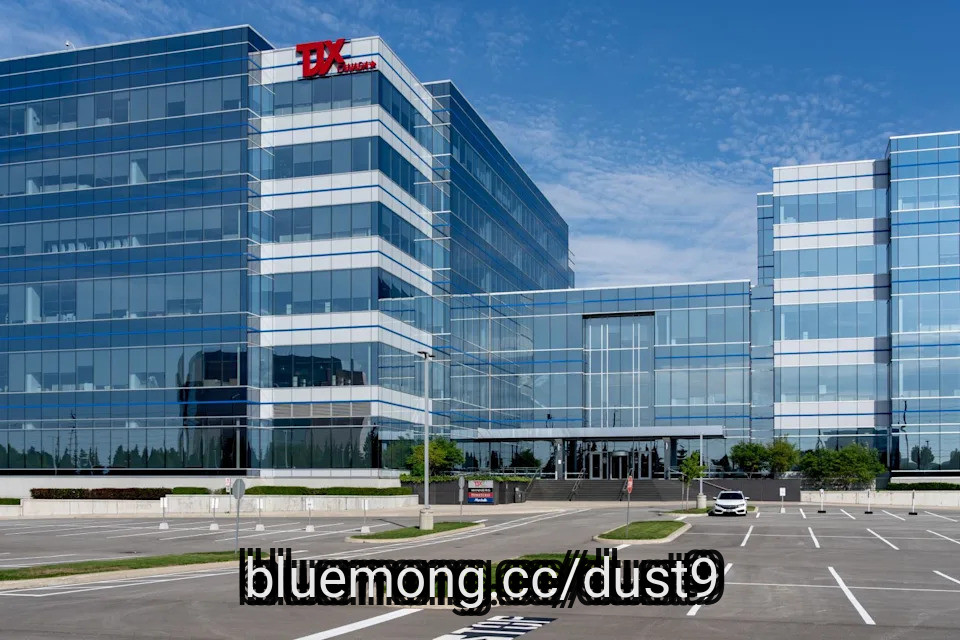
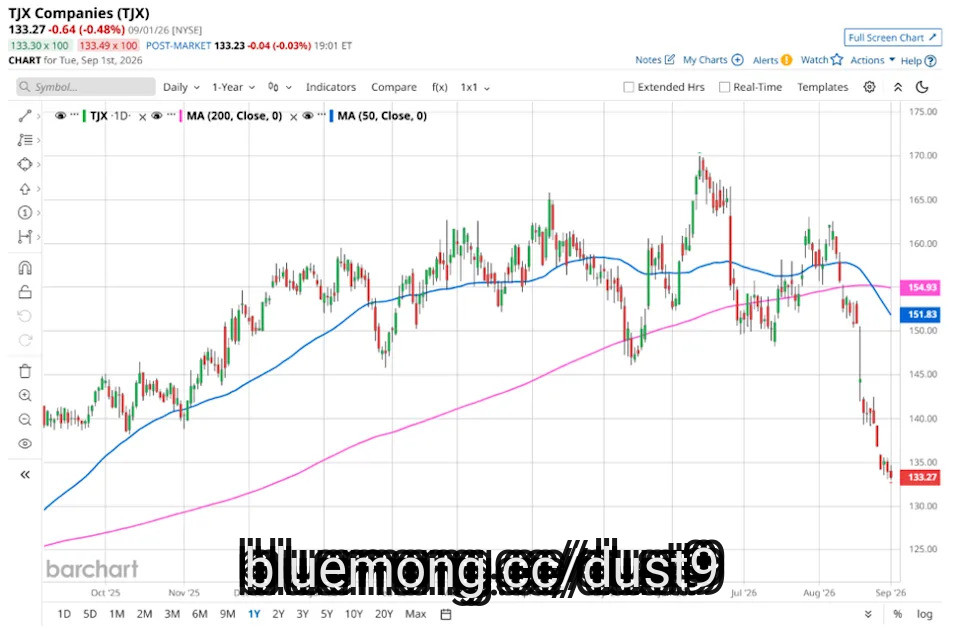
The TJX Companies, Inc. (TJX), headquartered in Framingham, Massachusetts, operates as an off-price apparel and home fashions retailer. With a market cap of $147.9 billion, the company operates off-price retail concepts and e-commerce sites in the U.S., Canada, and Europe that offer a wide range of brand name and designer merchandise.
Companies worth $10 billion or more are generally described as "large-cap stocks," and TJX definitely fits that description, with its market cap exceeding this threshold, reflecting its substantial size, influence, and dominance in the apparel retail industry. TJX has cemented its leadership in off-price retail by leveraging strong vendor relationships and efficient procurement to offer branded merchandise at significantly lower prices than traditional channels. Its treasure-hunt shopping experience, driven by a diverse and ever-changing ****** ortment, continues to resonate with cost-conscious consumers and build a loyal customer base, while strategic investments in Multibrand Outlet Stores in Mexico and Brands for Less in the Middle East underscore its focus on international expansion and geographic diversification.
Dear GameStop Stock Fans, Mark Your Calendars for September 8
SMCI vs. CoreWeave: 1 AI Infrastructure Model Has the Bigger Opportunity
Why ****** ysts Think Sellas Life Sciences Stock Can Gain 150% From Here
#price #Companies #market #billion
Companies worth $10 billion or more are generally described as "large-cap stocks," and TJX definitely fits that description, with its market cap exceeding this threshold, reflecting its substantial size, influence, and dominance in the apparel retail industry. TJX has cemented its leadership in off-price retail by leveraging strong vendor relationships and efficient procurement to offer branded merchandise at significantly lower prices than traditional channels. Its treasure-hunt shopping experience, driven by a diverse and ever-changing ****** ortment, continues to resonate with cost-conscious consumers and build a loyal customer base, while strategic investments in Multibrand Outlet Stores in Mexico and Brands for Less in the Middle East underscore its focus on international expansion and geographic diversification.
Dear GameStop Stock Fans, Mark Your Calendars for September 8
SMCI vs. CoreWeave: 1 AI Infrastructure Model Has the Bigger Opportunity
Why ****** ysts Think Sellas Life Sciences Stock Can Gain 150% From Here
#price #Companies #market #billion

10 days ago
While the State Street Technology Select Sector SPDR ETF (NYSEMKT:XLK) and Vanguard Information Technology ETF (NYSEMKT:VGT) both track the U.S. tech sector, the Vanguard fund offers significantly broader diversification through its multi-cap index.
These funds serve as foundational blocks for investors targeting the innovation-driven growth of the American tech sector, including exposure to the artificial intelligence boom. While they may appear identical at first glance, subtle differences in index construction and portfolio concentration can lead to different outcomes during various market cycles.
The Vanguard fund is larger, with $160.2 billion in ******* ets under management (AUM), compared to $119.3 billion for the State Street fund. This ******* ysis explores how their unique weighting methodologies influence risk and reward.
Metric
XLK
#sector #technology #nysemkt
These funds serve as foundational blocks for investors targeting the innovation-driven growth of the American tech sector, including exposure to the artificial intelligence boom. While they may appear identical at first glance, subtle differences in index construction and portfolio concentration can lead to different outcomes during various market cycles.
The Vanguard fund is larger, with $160.2 billion in ******* ets under management (AUM), compared to $119.3 billion for the State Street fund. This ******* ysis explores how their unique weighting methodologies influence risk and reward.
Metric
XLK
#sector #technology #nysemkt


11 days ago
Eli Lilly and Company (NYSE:LLY) has agreed to acquire privately held Merida Biosciences for up to $2.875 billion in cash, including an upfront payment and milestone-based payments. The deal is expected to close in the fourth quarter of 2026.
The acquisition expands Lilly's immunology pipeline and gives it access to Merida's antibody-engineering platform, which is designed to selectively eliminate disease-causing autoantibodies while preserving normal immune function. Merida's lead candidate, MER511, is in Phase 1 development for Graves' disease and thyroid eye disease (TED). Early data showed substantial reductions in disease-related antibodies along with a favorable initial safety profile.
The deal also fits Eli Lilly and Company (NYSE:LLY)'s broader strategy of using the cash generated by its obesity and diabetes franchises to diversify into additional therapeutic areas. Lilly has been active in acquisitions throughout 2026, making Merida the latest addition to its expanding pipeline.
The biggest benefit for Eli Lilly and Company (NYSE:LLY) is pipeline diversification. The company has generated significant growth from Mounjaro and Zepbound, but that success also increases its reliance on the obesity and diabetes markets. Adding Merida gives Lilly another potential growth platform in immunology.
Merida's technology could be particularly valuable if it works beyond its lead program. Rather than broadly suppressing the immune system, its approach is designed to target the antibodies responsible for specific autoimmune and allergic diseases. This could potentially offer a more targeted treatment strategy and create opportunities across several conditions.
#lilly #NYSE #immunology
The acquisition expands Lilly's immunology pipeline and gives it access to Merida's antibody-engineering platform, which is designed to selectively eliminate disease-causing autoantibodies while preserving normal immune function. Merida's lead candidate, MER511, is in Phase 1 development for Graves' disease and thyroid eye disease (TED). Early data showed substantial reductions in disease-related antibodies along with a favorable initial safety profile.
The deal also fits Eli Lilly and Company (NYSE:LLY)'s broader strategy of using the cash generated by its obesity and diabetes franchises to diversify into additional therapeutic areas. Lilly has been active in acquisitions throughout 2026, making Merida the latest addition to its expanding pipeline.
The biggest benefit for Eli Lilly and Company (NYSE:LLY) is pipeline diversification. The company has generated significant growth from Mounjaro and Zepbound, but that success also increases its reliance on the obesity and diabetes markets. Adding Merida gives Lilly another potential growth platform in immunology.
Merida's technology could be particularly valuable if it works beyond its lead program. Rather than broadly suppressing the immune system, its approach is designed to target the antibodies responsible for specific autoimmune and allergic diseases. This could potentially offer a more targeted treatment strategy and create opportunities across several conditions.
#lilly #NYSE #immunology


11 days ago
The order book that makes Cerebras look de-risked came from a single deal, and the hyperscaler partnerships meant to broaden it are not yet producing revenue.
Cerebras Systems (CBRS) shares sit at about 58% of their 52-week high after a three-month decline, and the reflex is to weigh that against a $25.4 billion order book and call the selling overdone. The order book is real. It is also the clearest statement of this stock's largest risk, and that risk does not resolve inside calendar 2026.
One Contract Built The Order Book
By the company's own account, Cerebras entered 2026 having won one of the largest technology deals ever, a contract that created more than $25 billion of remaining performance obligations. The balance stood at $25.4 billion at June 30, 2026, and management said in August that it carries no backlog from AWS or any other hyperscaler. Against raised 2026 core revenue guidance of $880 million to $890 million, that balance is a multi-year total rather than anything calendar 2026 collects; management expects to more than triple annual core revenue in 2027. So the number that reads as safety is also the number that measures the concentration. A backlog resting on one contract is a different proposition from the Trefis High Quality Portfolio, which does not depend on the handful of largest technology names to produce its returns.
Diversification Revenue Is Dated 2027
#order #book #high
Cerebras Systems (CBRS) shares sit at about 58% of their 52-week high after a three-month decline, and the reflex is to weigh that against a $25.4 billion order book and call the selling overdone. The order book is real. It is also the clearest statement of this stock's largest risk, and that risk does not resolve inside calendar 2026.
One Contract Built The Order Book
By the company's own account, Cerebras entered 2026 having won one of the largest technology deals ever, a contract that created more than $25 billion of remaining performance obligations. The balance stood at $25.4 billion at June 30, 2026, and management said in August that it carries no backlog from AWS or any other hyperscaler. Against raised 2026 core revenue guidance of $880 million to $890 million, that balance is a multi-year total rather than anything calendar 2026 collects; management expects to more than triple annual core revenue in 2027. So the number that reads as safety is also the number that measures the concentration. A backlog resting on one contract is a different proposition from the Trefis High Quality Portfolio, which does not depend on the handful of largest technology names to produce its returns.
Diversification Revenue Is Dated 2027
#order #book #high

12 days ago
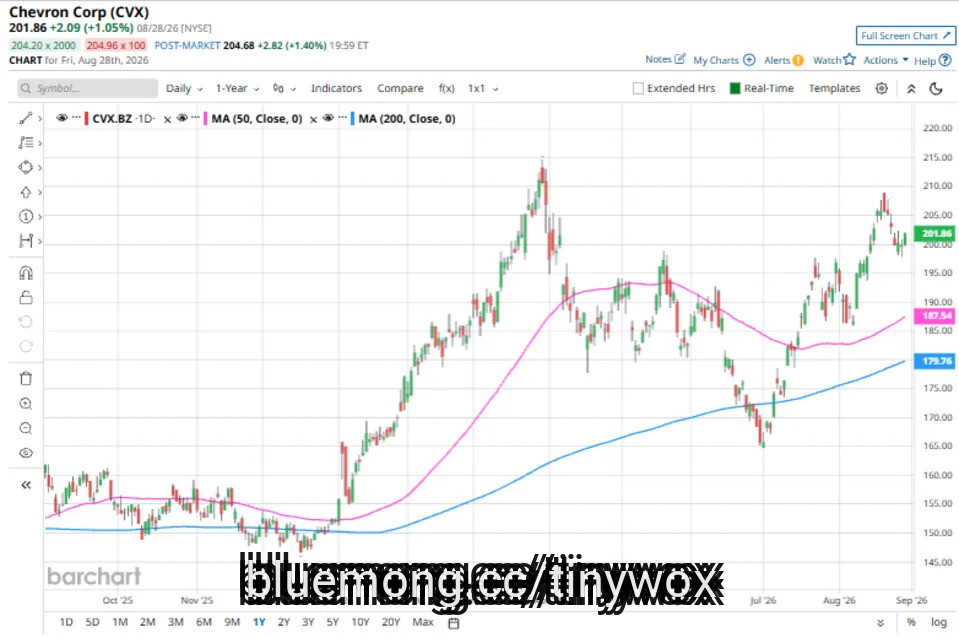
Houston, Texas-based Chevron Corporation (CVX) is one of the world's largest integrated energy companies, with operations spanning oil and natural gas exploration and production, refining, marketing, chemicals, and lower-carbon energy. Headquartered in Houston, Texas, Chevron operates across the U.S. and numerous international markets. The company has a market cap of $364.5 billion.
Companies with a market capitalization of $200 billion or more are typically referred to as "mega-cap stocks." CVX fits right into that category, with its market cap exceeding this threshold, reflecting its substantial size and influence in the integrated oil and gas industry. A major strength of Chevron is its vertically integrated and geographically diversified portfolio. The upstream business provides significant exposure to oil and gas prices, while refining, marketing and chemicals operations can provide earnings diversification when commodity prices or refining margins move in different directions.
Wu-Tang Clan Member Raekwon Is a Palantir 'OG,' Visiting Headquarters 16 Years After Receiving His Custom PLTR Jacket
Tesla Stock Could Benefit as Trump Locks Down the U.S. Power Grid
Tesla Just Killed Its Solar Roof After Years of Struggling to Scale. What It Means for TSLA Stock.
#market #texas #Stock
Companies with a market capitalization of $200 billion or more are typically referred to as "mega-cap stocks." CVX fits right into that category, with its market cap exceeding this threshold, reflecting its substantial size and influence in the integrated oil and gas industry. A major strength of Chevron is its vertically integrated and geographically diversified portfolio. The upstream business provides significant exposure to oil and gas prices, while refining, marketing and chemicals operations can provide earnings diversification when commodity prices or refining margins move in different directions.
Wu-Tang Clan Member Raekwon Is a Palantir 'OG,' Visiting Headquarters 16 Years After Receiving His Custom PLTR Jacket
Tesla Stock Could Benefit as Trump Locks Down the U.S. Power Grid
Tesla Just Killed Its Solar Roof After Years of Struggling to Scale. What It Means for TSLA Stock.
#market #texas #Stock
15 days ago
Aristotle Capital Management, LLC, an investment management company, released its "Value Equity Fund" Q2 2026 investor letter. A copy of the letter can be downloaded here. The Fund delivered a 4.32% total return in Q2 2026, underperforming the 13.87% gain for the Russell 1000 Value Index and the 15.20% return for the S&P 500, while its 1.99% year-to-date return also lagged the Russell 1000 Value Index's 16.26% and the S&P 500's 10.21%. The Fund attributed the performance gap largely to limited exposure to the AI infrastructure spending boom, noting that the U.S. has about 4,000 existing data centers and nearly 3,000 more planned or under construction, while AI-related demand has created bottlenecks in processors and memory. The letter highlighted the scale of the cycle, with industry cash flows in key AI hardware areas rising sharply, while the Russell 1000 Value Index's top 10 contributors gained an average 182% year to date and accounted for 9.29 percentage points of the index's 16.23% return. Looking ahead, the fund expects investors to eventually reassess the sustainability of current AI infrastructure earnings and valuations. In addition, please check the Fund's top five holdings to know its best picks in 2026.
In its second-quarter 2026 investor letter, Aristotle Value Equity Fund highlighted stocks like QUALCOMM Incorporated (NASDAQ:QCOM). QUALCOMM Incorporated (NASDAQ:QCOM) develops wireless technologies and semiconductor solutions powering smartphones, automotive systems, and connected devices worldwide. The one-month return of QUALCOMM Incorporated (NASDAQ:QCOM) was 11.63% while its shares traded between $121.99 and $259.92 over the last 52 weeks. On August 27, 2026, QUALCOMM Incorporated (NASDAQ:QCOM) stock closed at approximately $163.72 per share, with a market capitalization of about $176.00 billion.
Aristotle Value Equity Fund stated the following regarding QUALCOMM Incorporated (NASDAQ:QCOM) in its Q2 2026 investor letter:
QUALCOMM Incorporated (NASDAQ:QCOM), a leading semiconductor and communications technology company, was the largest contributor for the quarter. Shares recovered as management indicated that the inventory adjustments and production constraints resulting from higher memory costs were progressing largely as expected and that handset revenues from Chinese customers were expected to reach a bottom. As we noted last quarter, we believed these headwinds to be cyclical rather than structural and did not alter our long-term investment thesis. The company also continued to make progress on its long-term strategy of evolving from a handset-centric company into a broader provider of connected computing technologies. Automotive revenue reached another record high, while Internet of Things (IoT) and newer businesses such as AI-enabled PCs, industrial applications, and data center computing continue to represent a growing portion of the company and remain central to its long-term diversification strategy. We believe Qualco
In its second-quarter 2026 investor letter, Aristotle Value Equity Fund highlighted stocks like QUALCOMM Incorporated (NASDAQ:QCOM). QUALCOMM Incorporated (NASDAQ:QCOM) develops wireless technologies and semiconductor solutions powering smartphones, automotive systems, and connected devices worldwide. The one-month return of QUALCOMM Incorporated (NASDAQ:QCOM) was 11.63% while its shares traded between $121.99 and $259.92 over the last 52 weeks. On August 27, 2026, QUALCOMM Incorporated (NASDAQ:QCOM) stock closed at approximately $163.72 per share, with a market capitalization of about $176.00 billion.
Aristotle Value Equity Fund stated the following regarding QUALCOMM Incorporated (NASDAQ:QCOM) in its Q2 2026 investor letter:
QUALCOMM Incorporated (NASDAQ:QCOM), a leading semiconductor and communications technology company, was the largest contributor for the quarter. Shares recovered as management indicated that the inventory adjustments and production constraints resulting from higher memory costs were progressing largely as expected and that handset revenues from Chinese customers were expected to reach a bottom. As we noted last quarter, we believed these headwinds to be cyclical rather than structural and did not alter our long-term investment thesis. The company also continued to make progress on its long-term strategy of evolving from a handset-centric company into a broader provider of connected computing technologies. Automotive revenue reached another record high, while Internet of Things (IoT) and newer businesses such as AI-enabled PCs, industrial applications, and data center computing continue to represent a growing portion of the company and remain central to its long-term diversification strategy. We believe Qualco


15 days ago
CNBC reported on August 21, 2026, that Broadcom Inc. (NASDAQ:AVGO) is in talks to raise $70 billion to $80 billion in debt for a chip financing deal supporting AI companies, including Anthropic. The senior tranche, repaid first, is expected to be around $45 billion, with a junior tranche around $35 billion, though the figures remain flexible. Bloomberg first reported the deal could reach $100 billion in total, with Blackstone and Apollo Global Management among the firms in talks to participate. The raise would extend a partnership Broadcom, Apollo, and Blackstone unveiled in June, which committed $35 billion to expand Anthropic's computing infrastructure using Broadcom's custom chips. Broadcom shares rose about 1% on the news.
The deal strengthens Broadcom Inc. (NASDAQ:AVGO)'s position as critical infrastructure for AI labs beyond Nvidia's ecosystem. Broadcom designs custom chips for Alphabet, Meta, Anthropic, and OpenAI, and this financing extends its role in helping major AI labs reduce dependence on a single chip supplier. That diversification of demand sources gives Broadcom a structurally different customer relationship than a pure merchant chip seller.
The financing structure keeps this exposure off Broadcom's own balance sheet in its rawest form. A special-purpose vehicle raises the debt and leases the chips back to customers like Anthropic, rather than Broadcom borrowing the money directly. Structuring growth capital this way lets Broadcom participate in AI infrastructure buildout without carrying the full debt load on its own books.
The scale of plans shows durable demand rather than a one-off transaction. The original June partnership targeted delivering over 20 gigawatts of compute to top AI labs by 2028, and this expansion moves toward that target. A multi-year capacity commitment of that size shows Broadcom's AI customers are planning for sustained growth and not a short-term spending burst.
Broadcom Inc. (NASDAQ:AVGO) is still on the hook if its customers cannot pay, even with the debt structured off-balance-sheet. CNBC's Kristina Partsinevelos explained that "Broadcom's job is to guarantee part of that debt, and that guarantee is where the risk sits." It means a slowdown at Anthropic or another financed customer could still hit Broadcom directly despite the SPV structure.
#NASDAQ
The deal strengthens Broadcom Inc. (NASDAQ:AVGO)'s position as critical infrastructure for AI labs beyond Nvidia's ecosystem. Broadcom designs custom chips for Alphabet, Meta, Anthropic, and OpenAI, and this financing extends its role in helping major AI labs reduce dependence on a single chip supplier. That diversification of demand sources gives Broadcom a structurally different customer relationship than a pure merchant chip seller.
The financing structure keeps this exposure off Broadcom's own balance sheet in its rawest form. A special-purpose vehicle raises the debt and leases the chips back to customers like Anthropic, rather than Broadcom borrowing the money directly. Structuring growth capital this way lets Broadcom participate in AI infrastructure buildout without carrying the full debt load on its own books.
The scale of plans shows durable demand rather than a one-off transaction. The original June partnership targeted delivering over 20 gigawatts of compute to top AI labs by 2028, and this expansion moves toward that target. A multi-year capacity commitment of that size shows Broadcom's AI customers are planning for sustained growth and not a short-term spending burst.
Broadcom Inc. (NASDAQ:AVGO) is still on the hook if its customers cannot pay, even with the debt structured off-balance-sheet. CNBC's Kristina Partsinevelos explained that "Broadcom's job is to guarantee part of that debt, and that guarantee is where the risk sits." It means a slowdown at Anthropic or another financed customer could still hit Broadcom directly despite the SPV structure.
#NASDAQ


16 days ago
Archer Aviation Inc. (NYSE:ACHR)'s shares are up by over 36% in the past month, as of the close on August 14, amid growing optimism among investors over the company's future growth and revenue diversification as it moves beyond air-taxis towards a defense and AI story.
Photo by Arturo Añez on Unsplash
On August 10, the company announced that it was acquiring Boeing's Wisk Aero, SkyGrid, and Insitu business units, as part of a definitive agreement that will see the planemaker take a nearly 20% stake in Archer Aviation Inc. (NYSE:ACHR).
The deal will combine capabilities in autonomy, eVTOL aircraft, and uncrewed aircraft systems, resulting in an end-to-end physical AI platform for aerospace and defense, the firm said in a press release.
The agreement adds drone maker Insitu to the company's portfolio, a profitable business that generates over $200 million in annual revenue. Its takeover, along with those of Wisk Aero and SkyGrid, will provide access to Boeing's advanced autonomous flight technologies and strengthen Archer's position in defense and commercial logistics.
#wisk
Photo by Arturo Añez on Unsplash
On August 10, the company announced that it was acquiring Boeing's Wisk Aero, SkyGrid, and Insitu business units, as part of a definitive agreement that will see the planemaker take a nearly 20% stake in Archer Aviation Inc. (NYSE:ACHR).
The deal will combine capabilities in autonomy, eVTOL aircraft, and uncrewed aircraft systems, resulting in an end-to-end physical AI platform for aerospace and defense, the firm said in a press release.
The agreement adds drone maker Insitu to the company's portfolio, a profitable business that generates over $200 million in annual revenue. Its takeover, along with those of Wisk Aero and SkyGrid, will provide access to Boeing's advanced autonomous flight technologies and strengthen Archer's position in defense and commercial logistics.
#wisk

16 days ago
Our ******* ysts just identified a stock with the potential to be the next Nvidia. Tell us how you invest and we'll show you why it's our #1 pick. Tap here.
Operating profit growth of 118.9% significantly outpaced the 10% revenue increase, reflecting the release of operating leverage as earlier investments in employee capacity and store management began to materialize.
Management attributed the 3.9 turns per day table turnover rate to a decentralized strategy where regional teams autonomously adjust menus and marketing to local consumer trends while leveraging a centralized digital platform.
Revenue diversification improved as delivery and 'other' business segments doubled their contribution, now representing nearly 9.6% of total revenue compared to 5% in the prior year.
The 'Pomegranate Plan' has expanded to 12 brands and 22 restaurants, focusing on low-barrier, replicable models like the Hi Bowl Malatang and ******* anese Izakaya to capture local dining scenarios beyond traditional hotpot.
#bowl
Operating profit growth of 118.9% significantly outpaced the 10% revenue increase, reflecting the release of operating leverage as earlier investments in employee capacity and store management began to materialize.
Management attributed the 3.9 turns per day table turnover rate to a decentralized strategy where regional teams autonomously adjust menus and marketing to local consumer trends while leveraging a centralized digital platform.
Revenue diversification improved as delivery and 'other' business segments doubled their contribution, now representing nearly 9.6% of total revenue compared to 5% in the prior year.
The 'Pomegranate Plan' has expanded to 12 brands and 22 restaurants, focusing on low-barrier, replicable models like the Hi Bowl Malatang and ******* anese Izakaya to capture local dining scenarios beyond traditional hotpot.
#bowl


16 days ago
Japan is today set to announce an energy import diversification plan that will include stipulations about support for pipelines in the Middle East aimed at diverting export oil flows away from the Strait of Hormuz.
The plan also features a push to reduce the country's reliance on oil and gas overall, and also reduce its reliance on Middle Eastern oil and gas specifically, Reuters has reported, citing ****** anese media. The government also plans to make energy companies share the higher costs of importing crude from places other than the Middle East.
Before the U.S.-Israeli war with Iran broke out, ****** an relied on the Middle East for almost all of its crude oil imports, which are vital for the resource-poor country. After the war, the ****** anese government rushed to secure alternative suppliers. These include the United States, Canada, African oil producers, and Azerbaijan.
This diversification has carried a hefty price tag, however. Last month, ****** an's total import bill hit an all-time high of $76.39 billion because of higher international oil prices. That monthly import figure beat the previous record set a month earlier, suggesting this month's import bill could be record-breaking as well.
Japan is also one of the world's biggest LNG importers, and earlier this summer reduced gas-fired generation in favor of coal as the price of liquefied natural gas remained elevated. ****** an has been burning more coal and less gas for power generation since the war in the Middle East started, and it is not the only one. Many Asian countries have been forced to make the switch from gas to coal on affordability and availability grounds.
#Japan #east #coal #energy
The plan also features a push to reduce the country's reliance on oil and gas overall, and also reduce its reliance on Middle Eastern oil and gas specifically, Reuters has reported, citing ****** anese media. The government also plans to make energy companies share the higher costs of importing crude from places other than the Middle East.
Before the U.S.-Israeli war with Iran broke out, ****** an relied on the Middle East for almost all of its crude oil imports, which are vital for the resource-poor country. After the war, the ****** anese government rushed to secure alternative suppliers. These include the United States, Canada, African oil producers, and Azerbaijan.
This diversification has carried a hefty price tag, however. Last month, ****** an's total import bill hit an all-time high of $76.39 billion because of higher international oil prices. That monthly import figure beat the previous record set a month earlier, suggesting this month's import bill could be record-breaking as well.
Japan is also one of the world's biggest LNG importers, and earlier this summer reduced gas-fired generation in favor of coal as the price of liquefied natural gas remained elevated. ****** an has been burning more coal and less gas for power generation since the war in the Middle East started, and it is not the only one. Many Asian countries have been forced to make the switch from gas to coal on affordability and availability grounds.
#Japan #east #coal #energy


16 days ago
Diversification is a key concept of Foolish investing. These days, The Fool suggests holding at least 50 different stocks across various sectors, or achieving a similar effect through index funds.
I'm taking a hybrid approach. As of Aug. 25, my portfolio holds 56 stocks, cryptocurrencies, and exchange-traded funds (ETFs).
Missed Nvidia in 2009? This Rare Signal Is Flashing Again. In 2009, a "Double Down" signal flashed for a little-known chipmaker called Nvidia. For the first time in years, that same "Total Conviction" signal is flashing for a company 1/100th the size of Nvidia. Continue »
The holdings aren't equal, though. Some are smaller, tentative bets. One fund is simply a higher-yielding alternative to holding cash in my brokerage account. Most are strong convictions with long ownership histories, but I hesitate to buy more in this market.
But you're here to see the stocks I'd recommend buying right now for the long haul. The ones combining robust business models with dominant market positions -- and affordable valuations. I do have a handful of those.
#NVIDIA
I'm taking a hybrid approach. As of Aug. 25, my portfolio holds 56 stocks, cryptocurrencies, and exchange-traded funds (ETFs).
Missed Nvidia in 2009? This Rare Signal Is Flashing Again. In 2009, a "Double Down" signal flashed for a little-known chipmaker called Nvidia. For the first time in years, that same "Total Conviction" signal is flashing for a company 1/100th the size of Nvidia. Continue »
The holdings aren't equal, though. Some are smaller, tentative bets. One fund is simply a higher-yielding alternative to holding cash in my brokerage account. Most are strong convictions with long ownership histories, but I hesitate to buy more in this market.
But you're here to see the stocks I'd recommend buying right now for the long haul. The ones combining robust business models with dominant market positions -- and affordable valuations. I do have a handful of those.
#NVIDIA


17 days ago
GDX sits 22% below its peak despite gold at record $4,270, while GDXJ's junior miners deliver the operational leverage the seniors are missing.
GLDM tracks bullion at a lower cost than GDX, making it the cleaner choice for investors seeking a pure hedge over mining equity exposure.
Read More: Learn 7 secret wealth tips high net worth investors use that most investors miss (sponsor)
Gold trading near $4,270 should have been a coronation for VanEck Gold Miners ETF (NYSEARCA:GDX). Instead, GDX holders own a fund that has gained 76.34% over the past year, yet still sits roughly 22% below its 52-week high of $117.16. The gap between the metal and the miners is the core reason to own GDX, and that gap remains wide. A related VanEck product has historically closed it, and most GDX holders already know its name without owning it.
GDX is the default vehicle for gold-mining equity exposure. It holds the majors, with Newmont at 10.37%, Agnico Eagle at 10.12%, and Barrick at 6.01%, and the top 10 positions account for 56.30% of **** ets. Investors buy it because it turns a directional view on bullion into equity beta without picking a single miner. Fees are reasonable at 0.51%, and the fund carries a beta of 0.67 against the broader market, which is why it slots into diversification buckets. Those are the reasons GDX sits in so many portfolios.
#Gold #vaneck #bullion #mining
GLDM tracks bullion at a lower cost than GDX, making it the cleaner choice for investors seeking a pure hedge over mining equity exposure.
Read More: Learn 7 secret wealth tips high net worth investors use that most investors miss (sponsor)
Gold trading near $4,270 should have been a coronation for VanEck Gold Miners ETF (NYSEARCA:GDX). Instead, GDX holders own a fund that has gained 76.34% over the past year, yet still sits roughly 22% below its 52-week high of $117.16. The gap between the metal and the miners is the core reason to own GDX, and that gap remains wide. A related VanEck product has historically closed it, and most GDX holders already know its name without owning it.
GDX is the default vehicle for gold-mining equity exposure. It holds the majors, with Newmont at 10.37%, Agnico Eagle at 10.12%, and Barrick at 6.01%, and the top 10 positions account for 56.30% of **** ets. Investors buy it because it turns a directional view on bullion into equity beta without picking a single miner. Fees are reasonable at 0.51%, and the fund carries a beta of 0.67 against the broader market, which is why it slots into diversification buckets. Those are the reasons GDX sits in so many portfolios.
#Gold #vaneck #bullion #mining


18 days ago
Deere & Company (NYSE:DE) delivered a stronger-than-expected third quarter, with the company benefiting from a surprising source: the construction boom linked to AI data centers and infrastructure spending. Construction & Forestry sales increased 18% year over year, making it the company's fastest-growing major segment. Deere also reported a 7% increase in quarterly net income to $1.38 billion, while EPS rose to $5.10 from $4.75 a year earlier.
The improvement was enough for Deere to raise its 2026 net income outlook to $4.75 billion-$5 billion, up from the previous lower end of $4.5 billion. The company also continues to believe that 2026 will mark the bottom of the current agricultural equipment cycle.
Still, Deere & Company (NYSE:DE)'s core farm-equipment business remains under pressure. Production & Precision Agriculture sales fell 6% in the quarter as farmers continue to deal with weak commodity prices and difficult farm economics. At the same time, Small Agriculture & Turf sales increased 12%, helped by better milk and beef prices.
The biggest reason to be bullish on Deere & Company (NYSE:DE) is the growing strength of its construction business. The 18% increase in Construction & Forestry sales shows that the company is benefiting from spending that has little to do with the current farm cycle. AI data-center construction, infrastructure projects, and other large-scale development are creating demand for Deere's equipment. The company says customer backlogs now extend well into fiscal 2027, giving it strong visibility into future demand.
This diversification could become particularly valuable if the agricultural market takes longer to recover. Deere does not need its farm-equipment business to rebound immediately for the company to continue generating solid earnings. Construction is currently helping fill that gap, while the 12% increase in Small Agriculture & Turf sales provides another source of support.
#deere #sales #farm #agriculture
The improvement was enough for Deere to raise its 2026 net income outlook to $4.75 billion-$5 billion, up from the previous lower end of $4.5 billion. The company also continues to believe that 2026 will mark the bottom of the current agricultural equipment cycle.
Still, Deere & Company (NYSE:DE)'s core farm-equipment business remains under pressure. Production & Precision Agriculture sales fell 6% in the quarter as farmers continue to deal with weak commodity prices and difficult farm economics. At the same time, Small Agriculture & Turf sales increased 12%, helped by better milk and beef prices.
The biggest reason to be bullish on Deere & Company (NYSE:DE) is the growing strength of its construction business. The 18% increase in Construction & Forestry sales shows that the company is benefiting from spending that has little to do with the current farm cycle. AI data-center construction, infrastructure projects, and other large-scale development are creating demand for Deere's equipment. The company says customer backlogs now extend well into fiscal 2027, giving it strong visibility into future demand.
This diversification could become particularly valuable if the agricultural market takes longer to recover. Deere does not need its farm-equipment business to rebound immediately for the company to continue generating solid earnings. Construction is currently helping fill that gap, while the 12% increase in Small Agriculture & Turf sales provides another source of support.
#deere #sales #farm #agriculture

18 days ago
"There's just nothing anywhere," Harriet Cowan says, standing at the highest point of her family farm in Belper, Derbyshire, and scanning across its 100 acres.
It's August, amid the fourth of the summer's heatwaves, and spread before us is a patchwork of ochres, khakis and dull browns. Every field is a rash of dusty stubble; every hedgerow is thirstily clinging on; every scrap of grass is gasping. As they watch from a dry-stone wall, even the sparrows look enervated. It has been a long, long summer.
"We finished harvesting in July, over a month ahead of schedule. Barley, winter wheat… There was nothing much to come up. But it's the same all round the country," Cowan says straightforwardly. (She says everything straightforwardly.) "It's scary. But I do think this is just a spell. It was really wet a couple of winters ago, and everyone said, 'Well, that's it.'" She shrugs. "I don't know. I think it'll pee it down for the rest of the summer now." With that, she turns on her heel and sets off towards a stile.
'We finished harvesting in July, over a month ahead of schedule. Barley, winter wheat… There was nothing much to come up' - Joe Hart for The Telegraph
Though she's just 25, Cowan has reason to be more relaxed than many in her position. Over the last few years, she has already achieved the farmer's ultimate goal: diversification without selling out. All she had to do was gaffer-tape a camera to the inside of her tractor cab, be entirely herself, post the clips on social media, and wait for her audience to find her.
#finished #harvesting
It's August, amid the fourth of the summer's heatwaves, and spread before us is a patchwork of ochres, khakis and dull browns. Every field is a rash of dusty stubble; every hedgerow is thirstily clinging on; every scrap of grass is gasping. As they watch from a dry-stone wall, even the sparrows look enervated. It has been a long, long summer.
"We finished harvesting in July, over a month ahead of schedule. Barley, winter wheat… There was nothing much to come up. But it's the same all round the country," Cowan says straightforwardly. (She says everything straightforwardly.) "It's scary. But I do think this is just a spell. It was really wet a couple of winters ago, and everyone said, 'Well, that's it.'" She shrugs. "I don't know. I think it'll pee it down for the rest of the summer now." With that, she turns on her heel and sets off towards a stile.
'We finished harvesting in July, over a month ahead of schedule. Barley, winter wheat… There was nothing much to come up' - Joe Hart for The Telegraph
Though she's just 25, Cowan has reason to be more relaxed than many in her position. Over the last few years, she has already achieved the farmer's ultimate goal: diversification without selling out. All she had to do was gaffer-tape a camera to the inside of her tractor cab, be entirely herself, post the clips on social media, and wait for her audience to find her.
#finished #harvesting



19 days ago
Healthcare investors are often faced with a choice between companies that generate steady growth across diversified businesses and those positioned to benefit from improving industry conditions. Abbott Laboratories (NYSE:ABT) and Thermo Fisher Scientific (NYSE:TMO) represent those two approaches. Abbott (NYSE:ABT) continues to deliver broad-based growth across diagnostics, medical devices, and nutrition, while Thermo Fisher (NYSE:TMO) is showing early signs that the life sciences downturn may finally be easing.
Both companies reported encouraging results, but the question for investors is whether consistent execution or a cyclical recovery offers the stronger long-term opportunity.
Abbott's (NYSE:ABT) strongest growth driver this quarter came from diagnostics, reinforcing the company's ability to generate meaningful growth across multiple business segments. The company's cancer diagnostics business, which was recently integrated through the Exact Sciences buyout, is benefiting from an expanding base that comprises both new and repeat users of the colorectal cancer screening test, Cologuard.
The quarter's earnings report corroborates this, as sales in its diagnostics segment rose 42% to $3.09 billion in fiscal Q2, surpassing the estimate of $3.02 billion, emerging as one of the company's strongest performers during the quarter. The continued strength in diagnostics is particularly important because it adds another major growth engine alongside Abbott's (NYSE:ABT) medical device business, making the company's earnings profile more balanced.
While Abbott's (NYSE:ABT) investment case is built on factors like diversification, Thermo Fisher's (NYSE:TMO) outlook increasingly depends on improving conditions across the life sciences industry. The company's quarter suggests that the recovery in life sciences spending is becoming increasingly broad-based. Management highlighted improving customer activity across pharmaceutical and biotechnology markets, while multiple operating segments returned to healthy growth. That is an important distinction because broader participation across business segments suggests customer spending is becoming healthier rather than merely stabilizing in one niche.
#Growth #thermo
Both companies reported encouraging results, but the question for investors is whether consistent execution or a cyclical recovery offers the stronger long-term opportunity.
Abbott's (NYSE:ABT) strongest growth driver this quarter came from diagnostics, reinforcing the company's ability to generate meaningful growth across multiple business segments. The company's cancer diagnostics business, which was recently integrated through the Exact Sciences buyout, is benefiting from an expanding base that comprises both new and repeat users of the colorectal cancer screening test, Cologuard.
The quarter's earnings report corroborates this, as sales in its diagnostics segment rose 42% to $3.09 billion in fiscal Q2, surpassing the estimate of $3.02 billion, emerging as one of the company's strongest performers during the quarter. The continued strength in diagnostics is particularly important because it adds another major growth engine alongside Abbott's (NYSE:ABT) medical device business, making the company's earnings profile more balanced.
While Abbott's (NYSE:ABT) investment case is built on factors like diversification, Thermo Fisher's (NYSE:TMO) outlook increasingly depends on improving conditions across the life sciences industry. The company's quarter suggests that the recovery in life sciences spending is becoming increasingly broad-based. Management highlighted improving customer activity across pharmaceutical and biotechnology markets, while multiple operating segments returned to healthy growth. That is an important distinction because broader participation across business segments suggests customer spending is becoming healthier rather than merely stabilizing in one niche.
#Growth #thermo

19 days ago
Healthcare investors looking for long-term growth don't always have to choose between fast-growing companies and defensive businesses. Sometimes the more interesting decision is between two high-quality companies that are growing for entirely different reasons. Johnson & Johnson (NYSE:JNJ) continues to benefit from the breadth of its pharmaceutical and medical technology businesses, while Thermo Fisher's (NYSE:TMO) outlook increasingly depends on a recovery in life sciences spending after several difficult years.
Both companies reported encouraging results, but does steady diversification or an improving industry cycle offer the stronger long-term opportunity for investors? Let's take a look.
Johnson & Johnson's (NYSE:JNJ) pharmaceutical business was arguably the biggest contributor to its strong quarter, as it helped increase total sales, generating $16.38 billion in quarterly sales and exceeding **** ysts' estimate of $16.1 billion. The healthcare giant now expects its annual sales to be around $101.1 billion at the midpoint, compared with $100.8 billion previously. In another optimistic feat, it raised its adjusted earnings per share forecast to $11.68 at the midpoint, from a previous $11.55 per share.
The most impressive aspect for Johnson & Johnson (NYSE:JNJ), however, wasn't simply pharmaceutical growth but rather the company's ability to offset one of the largest patent cliffs in its portfolio, as it absorbed a significant patent-related decline in Stelara sales while still raising its full-year outlook. Revenue from Johnson & Johnson's (NYSE:JNJ) Stelara, which treats psoriasis, Crohn's disease, and other autoimmune conditions, dropped over 55% in the quarter to $740 million due to patent loss.
However, the company's cancer and newer immunology drugs can be seen countering this loss, as sales of Tremfya, its psoriasis and inflammatory bowel disease drug, rose 72.5% to $2 billion, considerably exceeding the estimate of $1.74 billion. Strong performance from newer drugs such as Tremfya suggests the company's pipeline is successfully offsetting losses from older products.
#billion #tremfya
Both companies reported encouraging results, but does steady diversification or an improving industry cycle offer the stronger long-term opportunity for investors? Let's take a look.
Johnson & Johnson's (NYSE:JNJ) pharmaceutical business was arguably the biggest contributor to its strong quarter, as it helped increase total sales, generating $16.38 billion in quarterly sales and exceeding **** ysts' estimate of $16.1 billion. The healthcare giant now expects its annual sales to be around $101.1 billion at the midpoint, compared with $100.8 billion previously. In another optimistic feat, it raised its adjusted earnings per share forecast to $11.68 at the midpoint, from a previous $11.55 per share.
The most impressive aspect for Johnson & Johnson (NYSE:JNJ), however, wasn't simply pharmaceutical growth but rather the company's ability to offset one of the largest patent cliffs in its portfolio, as it absorbed a significant patent-related decline in Stelara sales while still raising its full-year outlook. Revenue from Johnson & Johnson's (NYSE:JNJ) Stelara, which treats psoriasis, Crohn's disease, and other autoimmune conditions, dropped over 55% in the quarter to $740 million due to patent loss.
However, the company's cancer and newer immunology drugs can be seen countering this loss, as sales of Tremfya, its psoriasis and inflammatory bowel disease drug, rose 72.5% to $2 billion, considerably exceeding the estimate of $1.74 billion. Strong performance from newer drugs such as Tremfya suggests the company's pipeline is successfully offsetting losses from older products.
#billion #tremfya

19 days ago
Zoetis Inc. (NYSE:ZTS) entered 2026 as a leader in animal health, but its latest earnings show that even a strong market position cannot fully insulate the company from weaker consumer demand. Fiscal Q2 2026 revenue remained flat at $2.5 billion and declined 1% on an organic operational basis, as pressure in the U.S. companion-animal market offset growth in livestock and international markets.
The quarter therefore presents investors with two different versions of Zoetis (NYSE:ZTS), as an established companion-animal business facing near-term pressure and a diversified animal-health platform still investing in its next generation of products.
Zoetis's (NYSE:ZTS) diversification provided an important source of resilience during the quarter. Livestock revenue increased 12% on a reported basis, supported by cattle and poultry products. In the United States, livestock sales grew 23% on both a reported and organic operational basis in the quarter, benefiting from favorable beef-cattle economics, supply timing, and increased poultry-vaccine sales **** ociated with disease outbreaks.
International performance was also encouraging. Revenue outside the United States rose 8% on a reported basis and 6% organically to $1.2 billion. International companion-animal sales grew 5% organically, supported by parasiticides such as Simparica Trio, Revolution and Stronghold, as well as diagnostics and newer osteoarthritis treatments. This geographic contrast demonstrates that the weakness was not uniform across Zoetis's (NYSE:ZTS) business. Demand for its products remains healthy in several markets, even as U.S. pet owners become more price-sensitive.
However, innovation could provide another route back to growth, as Zoetis (NYSE:ZTS) says that its pipeline contains more than 12 potential blockbuster candidates across chronic kidney disease, oncology, cardiology, anxiety, and obesity. The company also launched Lenivia and Portela, long-acting osteoarthritis treatments offering dogs and cats up to three months of pain relief from one injection.
#revenue #quarter
The quarter therefore presents investors with two different versions of Zoetis (NYSE:ZTS), as an established companion-animal business facing near-term pressure and a diversified animal-health platform still investing in its next generation of products.
Zoetis's (NYSE:ZTS) diversification provided an important source of resilience during the quarter. Livestock revenue increased 12% on a reported basis, supported by cattle and poultry products. In the United States, livestock sales grew 23% on both a reported and organic operational basis in the quarter, benefiting from favorable beef-cattle economics, supply timing, and increased poultry-vaccine sales **** ociated with disease outbreaks.
International performance was also encouraging. Revenue outside the United States rose 8% on a reported basis and 6% organically to $1.2 billion. International companion-animal sales grew 5% organically, supported by parasiticides such as Simparica Trio, Revolution and Stronghold, as well as diagnostics and newer osteoarthritis treatments. This geographic contrast demonstrates that the weakness was not uniform across Zoetis's (NYSE:ZTS) business. Demand for its products remains healthy in several markets, even as U.S. pet owners become more price-sensitive.
However, innovation could provide another route back to growth, as Zoetis (NYSE:ZTS) says that its pipeline contains more than 12 potential blockbuster candidates across chronic kidney disease, oncology, cardiology, anxiety, and obesity. The company also launched Lenivia and Portela, long-acting osteoarthritis treatments offering dogs and cats up to three months of pain relief from one injection.
#revenue #quarter

19 days ago
Stocks generate wealth two ways: price appreciation that creates capital gains when sold higher, and dividends paid directly from company earnings.
Compounding builds serious wealth over decades as investment returns generate additional returns, making time and patience more powerful than any single stock pick.
Index funds like the S&P 500 give beginners instant ownership across hundreds of companies, delivering broad diversification through a single investment.
Don't wait: the ***** yst who called NVIDIA in 2010 just revealed his top 10 AI stocks. See the full list FREE now.
Learning about the stock market can be intimidating. There are so many terms, like dividends, capital gains, market corrections, and compound returns. Though people throw around these terms as though they were born knowing what they mean, the basics of the stock market have to be taught. Luckily, when approached slowly, stock investing is much easier to understand than it initially seems. Here are the basics.
#Stock #returns #gains
Compounding builds serious wealth over decades as investment returns generate additional returns, making time and patience more powerful than any single stock pick.
Index funds like the S&P 500 give beginners instant ownership across hundreds of companies, delivering broad diversification through a single investment.
Don't wait: the ***** yst who called NVIDIA in 2010 just revealed his top 10 AI stocks. See the full list FREE now.
Learning about the stock market can be intimidating. There are so many terms, like dividends, capital gains, market corrections, and compound returns. Though people throw around these terms as though they were born knowing what they mean, the basics of the stock market have to be taught. Luckily, when approached slowly, stock investing is much easier to understand than it initially seems. Here are the basics.
#Stock #returns #gains


22 days ago
On August 20, Intuitive Machines (NASDAQ:LUNR) reported second-quarter revenue of $206 million, more than four times what it brought in a year earlier, and closed the quarter with a record $1.8 billion in backlog. The company reaffirmed its full-year guidance of $900 million to $1 billion in revenue and said it still expects positive adjusted EBITDA for 2026. Behind those headline numbers sits a business spending heavily to chase a market it says has grown far beyond the moon.
The quarter's standout number was bookings. Intuitive Machines logged $1.7 billion in bookings so far this year, including $1.2 billion in the second quarter alone, the highest quarterly total in company history. Management said that volume reflects a shift away from depending on any single customer or mission type. The $1.8 billion backlog now splits roughly 37% civil, 49% commercial and 14% national security, and Q2 bookings skewed even further toward commercial and national security work, at 50% and 30% respectively.
That diversification showed up across every part of the business. NASA selected Intuitive Machines for the CS-8 lunar delivery mission, its sixth award under the CLPS contract, extending its delivery cadence into 2030. On the national security side, the company finished delivering all 16 satellites for the SDA's Tranche 1 tracking layer, added an 18-satellite Tranche 3 award, and picked up another 18 satellites tied to the Golden Dome missile defense architecture. It now has more than 70 IM-300 series ****** ecraft under contract. Commercially, it landed three geostationary communication satellites worth over $600 million and deployed SiriusXM-11 during the quarter. Gross profit swung to $36 million from negative $12 million a year earlier, evidence that the growing satellite manufacturing business is starting to convert into real profit.
That expansion is not free. Operating loss widened to $47 million, driven by higher SG&A, amortization, and a $14.7 million cost adjustment tied to the IM-4 lunar lander program. SG&A itself hit $60 million for the quarter, including $11 million in stock-based compensation and $8 million in acquisition and integration costs from recent deals. Operating cash used came to $60 million, and total cash deployed for the quarter reached $84 million once inventory buildup, acquisition costs, and a $17 million milestone payment to ****** eX are included.
The company is also leaning on equity markets to fund the buildout. It raised $235 million in net proceeds this quarter through its at-the-market stock program, bringing total gross proceeds raised to date to $291 million at an average price of $26.81 a share. Capital expenditures of $24 million went largely toward its NSNS satellite constellation and ground network, and management said CapEx will stay elevated in coming quarters as it builds out five satellites at once.
#million #quarter #bookings
The quarter's standout number was bookings. Intuitive Machines logged $1.7 billion in bookings so far this year, including $1.2 billion in the second quarter alone, the highest quarterly total in company history. Management said that volume reflects a shift away from depending on any single customer or mission type. The $1.8 billion backlog now splits roughly 37% civil, 49% commercial and 14% national security, and Q2 bookings skewed even further toward commercial and national security work, at 50% and 30% respectively.
That diversification showed up across every part of the business. NASA selected Intuitive Machines for the CS-8 lunar delivery mission, its sixth award under the CLPS contract, extending its delivery cadence into 2030. On the national security side, the company finished delivering all 16 satellites for the SDA's Tranche 1 tracking layer, added an 18-satellite Tranche 3 award, and picked up another 18 satellites tied to the Golden Dome missile defense architecture. It now has more than 70 IM-300 series ****** ecraft under contract. Commercially, it landed three geostationary communication satellites worth over $600 million and deployed SiriusXM-11 during the quarter. Gross profit swung to $36 million from negative $12 million a year earlier, evidence that the growing satellite manufacturing business is starting to convert into real profit.
That expansion is not free. Operating loss widened to $47 million, driven by higher SG&A, amortization, and a $14.7 million cost adjustment tied to the IM-4 lunar lander program. SG&A itself hit $60 million for the quarter, including $11 million in stock-based compensation and $8 million in acquisition and integration costs from recent deals. Operating cash used came to $60 million, and total cash deployed for the quarter reached $84 million once inventory buildup, acquisition costs, and a $17 million milestone payment to ****** eX are included.
The company is also leaning on equity markets to fund the buildout. It raised $235 million in net proceeds this quarter through its at-the-market stock program, bringing total gross proceeds raised to date to $291 million at an average price of $26.81 a share. Capital expenditures of $24 million went largely toward its NSNS satellite constellation and ground network, and management said CapEx will stay elevated in coming quarters as it builds out five satellites at once.
#million #quarter #bookings

23 days ago
Schwab International Equity ETF (NYSEMKT:SCHF) and State Street SPDR Portfolio Developed World ex-US ETF (NYSEMKT:SPDW) provide nearly identical low-cost exposure to non-U.S. developed markets, differing primarily in index provider and portfolio depth.
These exchange-traded funds serve as core international building blocks for investors seeking geographic diversification. By excluding U.S. stocks, they allow for precise control over domestic versus international allocations. While their portfolios overlap significantly, their underlying benchmarks and total number of securities provide slight variations in market coverage that may appeal to different types of investors.
Metric
SPDW
SCHF
#nysemkt
These exchange-traded funds serve as core international building blocks for investors seeking geographic diversification. By excluding U.S. stocks, they allow for precise control over domestic versus international allocations. While their portfolios overlap significantly, their underlying benchmarks and total number of securities provide slight variations in market coverage that may appeal to different types of investors.
Metric
SPDW
SCHF
#nysemkt