
8 hours ago
Ariel Investments, an investment management company, released its "Small Cap Value Fund" Q2 2026 investor letter. A copy of the letter can be downloaded here. Ariel Investments said its Small Cap Value Tax-Exempt Composite gained 17.19% gross and 17.04% net in the second quarter of 2026, matching the Russell 2000 Value Index but trailing the Russell 2000's 21.49% return. The rebound was supported by easing geopolitical tensions, lower oil prices, resilient earnings, and renewed strength in technology and AI-related stocks, with strong stock selection also aiding performance. The fund enters the second half with a measured outlook, citing uneven global growth, geopolitical risks, persistent inflation, and elevated borrowing costs as potential sources of volatility. The firm remains focused on long-term value creation through disciplined, bottom-up research and investments in durable businesses with strong balance sheets, capable management, and sustainable competitive advantages. In addition, please check the Fund's top five holdings to know its best picks in 2026.
In its second-quarter 2026 investor letter, Ariel Small Cap Value Fund highlighted stocks like Knowles Corporation (NYSE:KN). Knowles Corporation (NYSE:KN) is an electronic components company providing advanced audio, communications, and connectivity solutions for consumer and industrial applications. The one-month return of Knowles Corporation (NYSE:KN) was -0.49% while its shares traded between $19.29 and $42.93 over the last 52 weeks. On July 31, 2026, Knowles Corporation (NYSE:KN) stock closed at approximately $36.08 per share, with a market capitalization of about $3.125 billion.
Ariel Small Cap Value Fund stated the following regarding Knowles Corporation (NYSE:KN) in its Q2 2026 investor letter:
Leading provider of audio components and precision electronic devices, Knowles Corporation (NYSE:KN) also advanced following a strong earnings report that exceeded revenue and profit expectations. Performance was propelled by solid execution across segments, with Precision Devices benefiting from robust demand across diverse applications and its positioning for accelerated growth. MedTech & Specialty Audio also delivered steady results with attractive margins, underscoring the resilience and quality of the business. Meanwhile, KN continued to return capital to shareholders through share repurchases. We believe the company remains well positioned due to its focus on high-value, niche markets where it holds leading positions, supported by favorable end-market dynamics and improving operational execution that provide a compelling path for sustained growth.
#fund
In its second-quarter 2026 investor letter, Ariel Small Cap Value Fund highlighted stocks like Knowles Corporation (NYSE:KN). Knowles Corporation (NYSE:KN) is an electronic components company providing advanced audio, communications, and connectivity solutions for consumer and industrial applications. The one-month return of Knowles Corporation (NYSE:KN) was -0.49% while its shares traded between $19.29 and $42.93 over the last 52 weeks. On July 31, 2026, Knowles Corporation (NYSE:KN) stock closed at approximately $36.08 per share, with a market capitalization of about $3.125 billion.
Ariel Small Cap Value Fund stated the following regarding Knowles Corporation (NYSE:KN) in its Q2 2026 investor letter:
Leading provider of audio components and precision electronic devices, Knowles Corporation (NYSE:KN) also advanced following a strong earnings report that exceeded revenue and profit expectations. Performance was propelled by solid execution across segments, with Precision Devices benefiting from robust demand across diverse applications and its positioning for accelerated growth. MedTech & Specialty Audio also delivered steady results with attractive margins, underscoring the resilience and quality of the business. Meanwhile, KN continued to return capital to shareholders through share repurchases. We believe the company remains well positioned due to its focus on high-value, niche markets where it holds leading positions, supported by favorable end-market dynamics and improving operational execution that provide a compelling path for sustained growth.
#fund


2 days ago
As demand for artificial intelligence (AI) reshapes data centers, investors are hunting for infrastructure plays. Choosing between high-growth Astera Labs (NASDAQ:ALAB) and the established Arista Networks (NYSE:ANET) requires weighing explosive potential against proven scale.
Astera Labs focuses on specialized connectivity chips that eliminate bottlenecks within AI servers, while Arista Networks provides the broad networking switches and software that link those servers together. Comparing them highlights two different ways to profit from the massive shift toward high-performance computing and cloud infrastructure.
Astera Labs designs connectivity solutions that facilitate high-speed data transfers within AI infrastructure. It operates among semiconductor stocks, serving major cloud providers and GPU vendors through products like PCIe and CXL controllers. Customer concentration like this adds a layer of risk to the business, as one end customer represented roughly 70% of revenue in 2025.
In 2025, revenue reached nearly $852 million, which represents a massive year-over-year increase of approximately 115%. The company reported net income of roughly $219 million for the period. This marks a significant swing from the net loss reported in the previous fiscal year.
As of its December 2025 balance sheet, the current ratio is approximately 10.2x, which measures a company's ability to cover short-term obligations with current ***** ets. The company has essentially no debt.
#arista
Astera Labs focuses on specialized connectivity chips that eliminate bottlenecks within AI servers, while Arista Networks provides the broad networking switches and software that link those servers together. Comparing them highlights two different ways to profit from the massive shift toward high-performance computing and cloud infrastructure.
Astera Labs designs connectivity solutions that facilitate high-speed data transfers within AI infrastructure. It operates among semiconductor stocks, serving major cloud providers and GPU vendors through products like PCIe and CXL controllers. Customer concentration like this adds a layer of risk to the business, as one end customer represented roughly 70% of revenue in 2025.
In 2025, revenue reached nearly $852 million, which represents a massive year-over-year increase of approximately 115%. The company reported net income of roughly $219 million for the period. This marks a significant swing from the net loss reported in the previous fiscal year.
As of its December 2025 balance sheet, the current ratio is approximately 10.2x, which measures a company's ability to cover short-term obligations with current ***** ets. The company has essentially no debt.
#arista


3 days ago
The rapid expansion of artificial intelligence infrastructure has forced investors to choose between specialized hardware providers like Astera Labs (NASDAQ:ALAB) and massive cloud platforms like CoreWeave (NASDAQ:CRWV) for their portfolios.
Astera Labs designs high-speed connectivity chips that eliminate data bottlenecks in modern data centers. CoreWeave provides the specialized cloud compute power necessary to train and deploy advanced generative AI models. Both companies are scaling quickly, but offer very different levels of profitability and financial risk for everyday investors.
Astera Labs is a key provider of connectivity solutions in the semiconductor stock landscape. The company sells specialized hardware to major hyperscalers and AI accelerator vendors, relying on Taiwan Semiconductor Manufacturing for manufacturing. Customer concentration like this adds a layer of risk to the business, as three customers account for nearly 86% of total revenue.
In 2025, revenue reached nearly $852.5 million, representing growth of roughly 115% over the previous year. The company reported net income of approximately $219 million during this period, resulting in a net margin of nearly 26%. This shift to profitability highlights the significant demand for its connectivity products as data centers scale their AI capabilities.
The company reported a debt-to-equity ratio of 0.0x, which measures total debt relative to shareholder equity. Its current ratio, a measure of whether a company can cover short-term debts with its short-term ******* ets, was approximately 10.2x.
#labs #specialized #connectivity #coreweave
Astera Labs designs high-speed connectivity chips that eliminate data bottlenecks in modern data centers. CoreWeave provides the specialized cloud compute power necessary to train and deploy advanced generative AI models. Both companies are scaling quickly, but offer very different levels of profitability and financial risk for everyday investors.
Astera Labs is a key provider of connectivity solutions in the semiconductor stock landscape. The company sells specialized hardware to major hyperscalers and AI accelerator vendors, relying on Taiwan Semiconductor Manufacturing for manufacturing. Customer concentration like this adds a layer of risk to the business, as three customers account for nearly 86% of total revenue.
In 2025, revenue reached nearly $852.5 million, representing growth of roughly 115% over the previous year. The company reported net income of approximately $219 million during this period, resulting in a net margin of nearly 26%. This shift to profitability highlights the significant demand for its connectivity products as data centers scale their AI capabilities.
The company reported a debt-to-equity ratio of 0.0x, which measures total debt relative to shareholder equity. Its current ratio, a measure of whether a company can cover short-term debts with its short-term ******* ets, was approximately 10.2x.
#labs #specialized #connectivity #coreweave


3 days ago
Interested in Aixtron Se? Here are five stocks we like better.
Optoelectronics drove Aixtron's Q2 momentum: Orders reached €215 million, with optoelectronics accounting for 75% as AI data centers accelerate adoption of 800G and future 1.6T optical connectivity. Management expects strong demand through late 2026 and into 2027.
Q2 revenue rose to €115 million from €59 million in Q1, while EBIT returned to a €15 million profit and free cash flow reached €114 million. Aixtron reaffirmed its 2026 revenue outlook of €560 million, plus or minus €30 million.
Recovery remains uneven: Silicon carbide, gallium nitride power electronics, and LED/Micro LED markets are still cautious, while Aixtron begins construction of a new Malaysia facility to expand manufacturing capacity.
Aixtron (ETR:AIXA) reported a sharp increase in second-quarter revenue and orders as demand for optoelectronics equipment used in AI data-center applications accelerated, while power electronics and LED markets remained in more gradual recovery phases.
#million #aixtron #power
Optoelectronics drove Aixtron's Q2 momentum: Orders reached €215 million, with optoelectronics accounting for 75% as AI data centers accelerate adoption of 800G and future 1.6T optical connectivity. Management expects strong demand through late 2026 and into 2027.
Q2 revenue rose to €115 million from €59 million in Q1, while EBIT returned to a €15 million profit and free cash flow reached €114 million. Aixtron reaffirmed its 2026 revenue outlook of €560 million, plus or minus €30 million.
Recovery remains uneven: Silicon carbide, gallium nitride power electronics, and LED/Micro LED markets are still cautious, while Aixtron begins construction of a new Malaysia facility to expand manufacturing capacity.
Aixtron (ETR:AIXA) reported a sharp increase in second-quarter revenue and orders as demand for optoelectronics equipment used in AI data-center applications accelerated, while power electronics and LED markets remained in more gradual recovery phases.
#million #aixtron #power


3 days ago
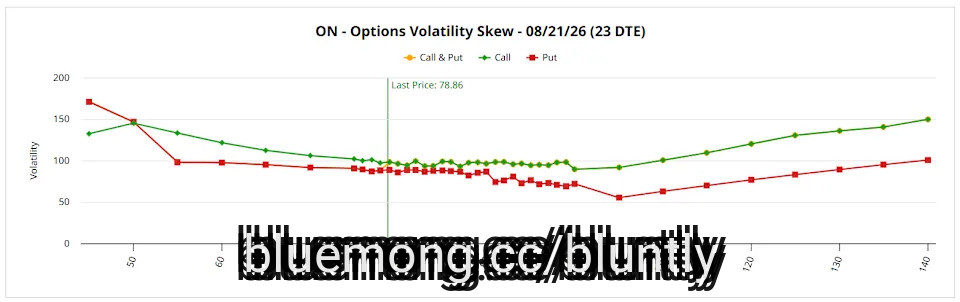
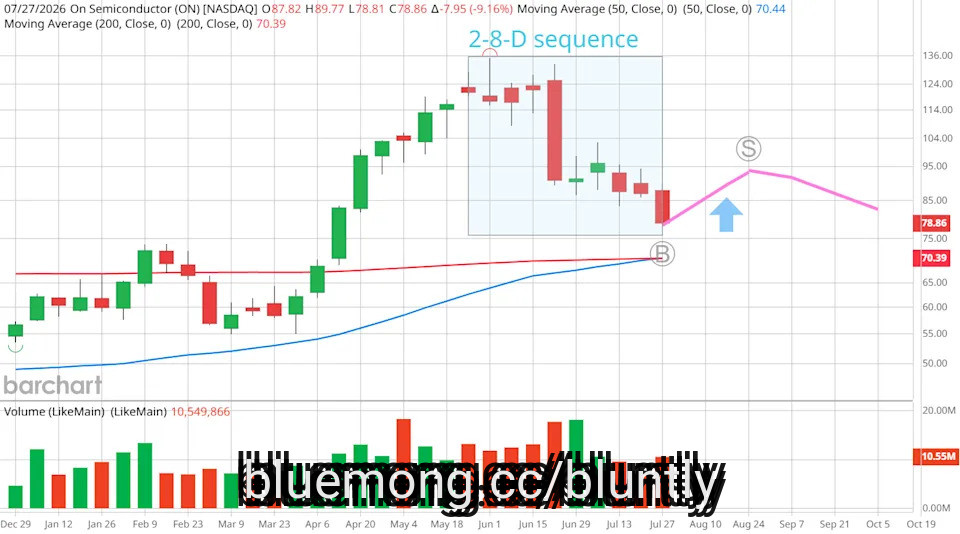
By no means is ON Semiconductor (ON) an easy trade to navigate. Investors are increasingly skeptical about execution risks, particularly tied to how the tech company can fully integrate its $7 billion all-stock deal to buy edge-AI and connectivity chipmaker Synaptics (SYNA). At the same time, the strategic decision should help the firm gain additional ground in the competitive AI ****** e, thus raising an interesting question for ON stock.
Basically, there's a compelling quantitative case that the ticker could be a discount, at least in the near term. It's not a matter of opinion but rather inductive logic. Previously, when ON stock suffered similar bearish cycles, the share price popped higher — perhaps due to dead-cat bounce mechanics — before settling into a consolidatory range.
Corning Delivers Strong FCF Results, But Investors Play GLW Stock's Drop With an Unusual Short-Put Play
How Volatility Clustering Could Trigger a Comeback in Baker Hughes (BKR) Stock
Long Call ****** erfly Trade Ideas for July 27th
#trade #synaptics #corning
Basically, there's a compelling quantitative case that the ticker could be a discount, at least in the near term. It's not a matter of opinion but rather inductive logic. Previously, when ON stock suffered similar bearish cycles, the share price popped higher — perhaps due to dead-cat bounce mechanics — before settling into a consolidatory range.
Corning Delivers Strong FCF Results, But Investors Play GLW Stock's Drop With an Unusual Short-Put Play
How Volatility Clustering Could Trigger a Comeback in Baker Hughes (BKR) Stock
Long Call ****** erfly Trade Ideas for July 27th
#trade #synaptics #corning

4 days ago
The AI buildout has resulted in an unanticipated casualty distant from Silicon Valley: telecom equipment manufacturers, who now compete with hyperscalers for the same memory chips. Three major companies, SK Hynix, Samsung, and Micron, control more than 95% of worldwide DRAM production, and as AI data centers use an increasing share of that output, memory chips used in telecom base stations become scarcer and more expensive as a direct result. That is the mechanism behind Telefonaktiebolaget LM Ericsson (NASDAQ:ERIC)'s worst single-day stock reaction in nearly three years.
The company's shares plunged about 12% on July 14, reaching their lowest level since February, after Ericsson warned that growing component costs, particularly memory chips, will affect margins in the future. Looking into Ericsson's Q2 2026 results, the market's harsh reaction was more about forward guidance rather than a breakdown in existing operational execution. Adjusted EPS was SEK 1.22 (~$0.13), which was in line with market expectations. Adjusted gross margin increased to 48.4%, a two-percentage-point year-over-year rise after normalizing for a prior-period IPR licensing settlement. Meanwhile, reported net sales declined 6% to SEK 52.7 billion ($5.62 billion), missing the SEK 53.71 billion forecast, while organic sales excluding currency and one-offs remained essentially flat.
What worried investors was guidance and cash flow, not the print itself. Free cash flow before M&A fell to SEK 0.4 billion from SEK 2.6 billion a year ago, owing to increased inventories being accumulated ahead of scheduled third-quarter deliveries. Management forecasted Q3 Networks adjusted gross margin to a range of 48% to 50%, a slight decrease from Q2 levels, noting a higher share of lower-margin network rollout projects and component inflation developing "gradually" during the second half of 2026 and into 2027.
Jefferies, which rated the stock at a Hold with a target price of 98 Kronor, framed the sales miss as being centered primarily on delayed India deliveries within the Networks division as opposed to broad-based demand weakness, and noted Ericsson is forecasting a stronger-than-seasonal third quarter as those delayed deliveries arrive.
The sudden selloff has generated an attractive valuation gap for long-term investors. Telefonaktiebolaget LM Ericsson (NASDAQ:ERIC) is currently trading at a 14.45x forward P/E multiple, representing a significant discount to key infrastructure rivals such as Nokia, which trade on similar 5G-cycle and edge-connectivity theses. The market's knee-jerk reaction appears to regard temporary component inflation as a permanent weakening of Ericsson's earnings potential, resulting in a clear disparity between price and underlying value.
#billion #adjusted #memory
The company's shares plunged about 12% on July 14, reaching their lowest level since February, after Ericsson warned that growing component costs, particularly memory chips, will affect margins in the future. Looking into Ericsson's Q2 2026 results, the market's harsh reaction was more about forward guidance rather than a breakdown in existing operational execution. Adjusted EPS was SEK 1.22 (~$0.13), which was in line with market expectations. Adjusted gross margin increased to 48.4%, a two-percentage-point year-over-year rise after normalizing for a prior-period IPR licensing settlement. Meanwhile, reported net sales declined 6% to SEK 52.7 billion ($5.62 billion), missing the SEK 53.71 billion forecast, while organic sales excluding currency and one-offs remained essentially flat.
What worried investors was guidance and cash flow, not the print itself. Free cash flow before M&A fell to SEK 0.4 billion from SEK 2.6 billion a year ago, owing to increased inventories being accumulated ahead of scheduled third-quarter deliveries. Management forecasted Q3 Networks adjusted gross margin to a range of 48% to 50%, a slight decrease from Q2 levels, noting a higher share of lower-margin network rollout projects and component inflation developing "gradually" during the second half of 2026 and into 2027.
Jefferies, which rated the stock at a Hold with a target price of 98 Kronor, framed the sales miss as being centered primarily on delayed India deliveries within the Networks division as opposed to broad-based demand weakness, and noted Ericsson is forecasting a stronger-than-seasonal third quarter as those delayed deliveries arrive.
The sudden selloff has generated an attractive valuation gap for long-term investors. Telefonaktiebolaget LM Ericsson (NASDAQ:ERIC) is currently trading at a 14.45x forward P/E multiple, representing a significant discount to key infrastructure rivals such as Nokia, which trade on similar 5G-cycle and edge-connectivity theses. The market's knee-jerk reaction appears to regard temporary component inflation as a permanent weakening of Ericsson's earnings potential, resulting in a clear disparity between price and underlying value.
#billion #adjusted #memory


4 days ago
With a market cap of $294.6 billion, RTX Corporation (RTX) is a global technology and aerospace leader with more than 180,000 employees, dedicated to advancing innovation in aviation, defense, and next-generation technologies. The company develops cutting-edge solutions that enhance global connectivity, strengthen security, and help customers address their most critical challenges.
Shares of the Arlington, Virginia-based company have significantly outperformed the broader market over the past 52 weeks. RTX stock has jumped 40.1% over this time frame, while the broader S&P 500 Index ($SPX) has rallied 16.3%. Moreover, shares of the company are up 19.2% on a YTD basis, compared to SPX's 8.5% rise.
Dear Sandisk Stock Fans, Mark Your Calendars for August 5
Nasdaq Futures Plunge as Chip Selloff Rages On, FOMC Meeting and Earnings on Tap
Ahead of Microsoft Earnings, Here's What Barchart Data Says Comes Next for MSFT Stock
#company #next
Shares of the Arlington, Virginia-based company have significantly outperformed the broader market over the past 52 weeks. RTX stock has jumped 40.1% over this time frame, while the broader S&P 500 Index ($SPX) has rallied 16.3%. Moreover, shares of the company are up 19.2% on a YTD basis, compared to SPX's 8.5% rise.
Dear Sandisk Stock Fans, Mark Your Calendars for August 5
Nasdaq Futures Plunge as Chip Selloff Rages On, FOMC Meeting and Earnings on Tap
Ahead of Microsoft Earnings, Here's What Barchart Data Says Comes Next for MSFT Stock
#company #next



4 days ago
Our **** ysts just identified a stock with the potential to be the next Nvidia. Tell us how you invest and we'll show you why it's our #1 pick. Tap here.
Management attributed solid second quarter performance to the breadth of the diversified employee benefits franchise, where strong results in Group Life and Colonial Life balanced elevated claims in specific disability segments.
The company reported underlying premium growth of approximately 5%, supported by stable persistency and successful digital connectivity investments like HR Connect and Total Leave.
U.S. Group Disability results were pressured by elevated short-term disability experience, primarily driven by higher claims activity in newer Paid Family and Medical Leave (PFML) markets.
Management characterized PFML as a developing market where they chose to participate early to support broader leave management capabilities, despite maturing claim data.
#results #claims
Management attributed solid second quarter performance to the breadth of the diversified employee benefits franchise, where strong results in Group Life and Colonial Life balanced elevated claims in specific disability segments.
The company reported underlying premium growth of approximately 5%, supported by stable persistency and successful digital connectivity investments like HR Connect and Total Leave.
U.S. Group Disability results were pressured by elevated short-term disability experience, primarily driven by higher claims activity in newer Paid Family and Medical Leave (PFML) markets.
Management characterized PFML as a developing market where they chose to participate early to support broader leave management capabilities, despite maturing claim data.
#results #claims


5 days ago
The physical infrastructure enabling artificial intelligence requires considerably more than just high-performance accelerators and primary grid connections. It also relies on millions of high-density connectors, backplane interconnects, and power-filtering devices to connect rack-level structures, areas where TE Connectivity plc (NYSE:TEL) holds a significant bottleneck position. As hyperscalers and enterprise data center operators ramp up capital expenditure deployment around the world, demand for critical electrical connector systems has transformed from a passive secondary tailwind to a direct beneficiary of the AI growth cycle.
The company's fiscal third-quarter 2026 report showed this demand in real time, with record top-line performance, order velocity, and profitability. Despite exceeding Wall Street expectations in every fundamental indicator, shares fell roughly 7% following the release, indicating the market's focus on sequential forecast trends over historical trailing figures.
Operational execution in the third quarter set new highs across numerous business areas. Net revenue increased 14% year-over-year to $5.16 billion, above Wall Street expectations by more than 3%. Adjusted earnings per share rose 22% year-over-year to $2.94, exceeding the average estimate of $2.85. The report's defining metric was order flow, which increased 27% year-over-year to a record $5.7 billion, reflecting over $1 billion in incremental booking expansion vs. the prior year period. Meanwhile, profitability increased significantly, with adjusted operating margins improving 90 basis points to 22% and quarterly free cash flow totaling $883 million.
The underlying sector distribution highlights where AI momentum is growing the fastest. Industrial Solutions revenue increased 22% year-over-year to $2.58 billion, driven mainly by data center rack deployments and energy infrastructure growth. Chief Executive Officer Terrence Curtin stated that AI cloud momentum is far above initial multi-year predictions, with data center connection and power distribution orders rising more than 70% year-to-date.
Moreover, to back up its power-handling portfolio, TE Connectivity plc (NYSE:TEL) signed a $1.4 billion formal agreement to acquire Astrodyne TDI. The acquisition includes specialized power management and electromagnetic filtering solutions for critical industrial, semiconductor, and defense applications, providing approximately $250 million in annual revenue to the Industrial Solutions segment once completed.
#year #solutions #data
The company's fiscal third-quarter 2026 report showed this demand in real time, with record top-line performance, order velocity, and profitability. Despite exceeding Wall Street expectations in every fundamental indicator, shares fell roughly 7% following the release, indicating the market's focus on sequential forecast trends over historical trailing figures.
Operational execution in the third quarter set new highs across numerous business areas. Net revenue increased 14% year-over-year to $5.16 billion, above Wall Street expectations by more than 3%. Adjusted earnings per share rose 22% year-over-year to $2.94, exceeding the average estimate of $2.85. The report's defining metric was order flow, which increased 27% year-over-year to a record $5.7 billion, reflecting over $1 billion in incremental booking expansion vs. the prior year period. Meanwhile, profitability increased significantly, with adjusted operating margins improving 90 basis points to 22% and quarterly free cash flow totaling $883 million.
The underlying sector distribution highlights where AI momentum is growing the fastest. Industrial Solutions revenue increased 22% year-over-year to $2.58 billion, driven mainly by data center rack deployments and energy infrastructure growth. Chief Executive Officer Terrence Curtin stated that AI cloud momentum is far above initial multi-year predictions, with data center connection and power distribution orders rising more than 70% year-to-date.
Moreover, to back up its power-handling portfolio, TE Connectivity plc (NYSE:TEL) signed a $1.4 billion formal agreement to acquire Astrodyne TDI. The acquisition includes specialized power management and electromagnetic filtering solutions for critical industrial, semiconductor, and defense applications, providing approximately $250 million in annual revenue to the Industrial Solutions segment once completed.
#year #solutions #data

5 days ago
LVS Advisory, a New York City-based full-service investment firm, recently released its second-quarter 2026 investor letter. A copy of the letter can be downloaded here. In the first half of 2026, the LVS Event-Driven Portfolio appreciated 4.6% (net), and the LVS Levered Event-Driven Portfolio gained 6.5% (net) while the LVS Growth Portfolio declined 4.2% (net). The first two portfolios outperformed, while the latter lagged. However, the firm believes that all three strategies are poised for improved performance. In addition, please check the Strategy's top five holdings to know its best picks in 2026.
In its Q2 2026 investor letter, LVS Advisory highlighted Vistance Networks, Inc. (NASDAQ:VISN). Vistance Networks, Inc. (NASDAQ:VISN) is a global provider of infrastructure solutions for communications, data center, and entertainment networks. On July 27, 2026, Vistance Networks, Inc. (NASDAQ:VISN) closed at $11.85 per share, reflecting a market capitalization of $2.67 billion. Vistance Networks, Inc. (NASDAQ:VISN) posted a one-month return of -7.95%, while its shares gained 38.79% over the past 52 weeks.
LVS Advisory stated the following regarding Vistance Networks, Inc. (NASDAQ:VISN) in its Q2 2026 investor update:
"Vistance Networks, Inc. (NASDAQ:VISN) is a busted roll-up in the telecom infrastructure industry. Formerly known as CommScope, the company sold cables, wires, fiber equipment, and wireless networking systems to data centers, internet service providers, and corporate campuses.
For years, the company employed an aggressive acquisition strategy to roll up the legacy cable and copper wire industry in an effort to become the leading end-to-end provider of wired and wireless communications. Vistance took on an enormous amount of debt to complete the $3 billion acquisition of BNS from TE Connectivity in 2015 and later the $7 billion acquisition of Arris in 2019. At its peak, the company had accumulated a total of $10.5 billion of debt with a net leverage ratio of 7.1x. The debt load became unsustainable, and the stock collapsed from The board ran a sale process in 2025 in a last-ditch effort to save the company from bankruptcy. This resulted in a series of **** et sales that paid down debt and returned capital to shareholders…" (Click here to read the full text)
#NASDAQ #billion #company
In its Q2 2026 investor letter, LVS Advisory highlighted Vistance Networks, Inc. (NASDAQ:VISN). Vistance Networks, Inc. (NASDAQ:VISN) is a global provider of infrastructure solutions for communications, data center, and entertainment networks. On July 27, 2026, Vistance Networks, Inc. (NASDAQ:VISN) closed at $11.85 per share, reflecting a market capitalization of $2.67 billion. Vistance Networks, Inc. (NASDAQ:VISN) posted a one-month return of -7.95%, while its shares gained 38.79% over the past 52 weeks.
LVS Advisory stated the following regarding Vistance Networks, Inc. (NASDAQ:VISN) in its Q2 2026 investor update:
"Vistance Networks, Inc. (NASDAQ:VISN) is a busted roll-up in the telecom infrastructure industry. Formerly known as CommScope, the company sold cables, wires, fiber equipment, and wireless networking systems to data centers, internet service providers, and corporate campuses.
For years, the company employed an aggressive acquisition strategy to roll up the legacy cable and copper wire industry in an effort to become the leading end-to-end provider of wired and wireless communications. Vistance took on an enormous amount of debt to complete the $3 billion acquisition of BNS from TE Connectivity in 2015 and later the $7 billion acquisition of Arris in 2019. At its peak, the company had accumulated a total of $10.5 billion of debt with a net leverage ratio of 7.1x. The debt load became unsustainable, and the stock collapsed from The board ran a sale process in 2025 in a last-ditch effort to save the company from bankruptcy. This resulted in a series of **** et sales that paid down debt and returned capital to shareholders…" (Click here to read the full text)
#NASDAQ #billion #company


5 days ago
O'Keeffe Stevens Advisory, an investment advisory firm, released its second-quarter 2026 investor letter. A copy of the letter can be downloaded here. During Q2 2026, the market experienced notable dispersion between perceived AI losers and winners. The firm has made investments early in AI infrastructure companies, which yielded gains during market repricing. The second quarter experienced strong equity rallies, with the S&P 500 gaining 15.2% and the Nasdaq 21.4%, marking the best quarter since Q2 2020. While the software sector faced challenges, with the iShares Software ETF dropping ~27% before a rally, reflecting high volatility. This volatility is seen as an opportunity, despite the potential for 'dead money' in underperforming stocks. The firm remains cautious, focuses on owning durable businesses at reasonable prices, holding cash, and hedging risks to navigate unpredictability. In addition, please check the Strategy's top five holdings to know its best picks in 2026.
In its Q2 2026 investor letter, O'Keeffe Stevens Advisory highlighted Corning Incorporated (NYSE:GLW). Corning Incorporated (NYSE:GLW) is a technology company that operates through its Optical Communication, Display Technologies, Environmental Technologies, Specialty Materials, and Life Sciences business segments. On July 27, 2026, Corning Incorporated (NYSE:GLW) closed at $143.36 per share. One-month return of Corning Incorporated (NYSE:GLW) was -43.88%, and its shares gained 131.30% over the past 52 weeks. Corning Incorporated (NYSE:GLW) has a market capitalization of $123.38 billion.
O'Keeffe Stevens Advisory stated the following regarding Corning Incorporated (NYSE:GLW) in its Q2 2026 investor update:
"Qualcomm and Corning Incorporated (NYSE:GLW) both appreciated materially in Q2. We trimmed both positions using a combination of options and stock sales.
Corning appreciated over 20% in Q2. Corning spent the second quarter signing up the biggest names in AI as customers and partners. In May, Nvidia and Corning announced a multiyear commercial and technology partnership under which Corning will increase its U.S. optical connectivity manufacturing capacity tenfold and expand U.S. Fiber production by more than 50%, including three new plants in North Carolina and Texas. Nvidia paid $500 million for rights to Corning shares, including warrants on up to 15 million shares at a $180 exercise price; if exercised in full, Nvidia's total equity investment could reach $3.2 billion. In June, Amazon signed a multiyear, multibillion-dollar agreement for Corning to supply the optical Fiber, cable, and connectivity for its expanding U.S. data centers. These follow the up to $6 billion supply agreement Meta signed in January. Historically, data centers used copper cables to connect their technology, some of which is switching to Fiber. Corning's Fiber may be a future bottleneck. As legacy data centers convert to newer, Fiber-connected racks, Corning contends with new data centers demand
In its Q2 2026 investor letter, O'Keeffe Stevens Advisory highlighted Corning Incorporated (NYSE:GLW). Corning Incorporated (NYSE:GLW) is a technology company that operates through its Optical Communication, Display Technologies, Environmental Technologies, Specialty Materials, and Life Sciences business segments. On July 27, 2026, Corning Incorporated (NYSE:GLW) closed at $143.36 per share. One-month return of Corning Incorporated (NYSE:GLW) was -43.88%, and its shares gained 131.30% over the past 52 weeks. Corning Incorporated (NYSE:GLW) has a market capitalization of $123.38 billion.
O'Keeffe Stevens Advisory stated the following regarding Corning Incorporated (NYSE:GLW) in its Q2 2026 investor update:
"Qualcomm and Corning Incorporated (NYSE:GLW) both appreciated materially in Q2. We trimmed both positions using a combination of options and stock sales.
Corning appreciated over 20% in Q2. Corning spent the second quarter signing up the biggest names in AI as customers and partners. In May, Nvidia and Corning announced a multiyear commercial and technology partnership under which Corning will increase its U.S. optical connectivity manufacturing capacity tenfold and expand U.S. Fiber production by more than 50%, including three new plants in North Carolina and Texas. Nvidia paid $500 million for rights to Corning shares, including warrants on up to 15 million shares at a $180 exercise price; if exercised in full, Nvidia's total equity investment could reach $3.2 billion. In June, Amazon signed a multiyear, multibillion-dollar agreement for Corning to supply the optical Fiber, cable, and connectivity for its expanding U.S. data centers. These follow the up to $6 billion supply agreement Meta signed in January. Historically, data centers used copper cables to connect their technology, some of which is switching to Fiber. Corning's Fiber may be a future bottleneck. As legacy data centers convert to newer, Fiber-connected racks, Corning contends with new data centers demand

5 days ago
Carillon Tower Advisers, an investment management company, released its second-quarter 2026 investor letter for the "Carillon Eagle Growth & Income Fund". A copy of the letter is available to download here. The second quarter of 2026 was driven by a sharp rally in AI-related stocks, although gains were concentrated in highly cyclical semiconductor, memory and optical companies. The S&P 500 gained 15.2%, while the semiconductor index surged 87.8%. Unlike earlier AI rallies led by megacaps and strong earnings growth, some smaller technology stocks rose 200% to 300%, making the advance more fragile. Software and services stocks declined as investors questioned the impact of AI disruption. Oil prices also rose during the Iran conflict before retreating, briefly increasing inflation and interest-rate concerns. Despite the volatility, economic data and corporate earnings remained strong. S&P 500 earnings are projected to rise 25% in 2026 and 15% in 2027, with the market trading near 20x earnings. The Fund continues to focus on financially strong companies with durable earnings growth that can perform across different economic conditions. In addition, please check the Fund's top five holdings to know its best picks in 2026.
In its second-quarter 2026 investor letter, Carillon Eagle Growth & Income Fund highlighted AT&T Inc. (NYSE:T). AT&T Inc. (NYSE:T) is a global provider of telecommunications and technology services worldwide. On July 27, 2026, AT&T Inc. (NYSE:T) closed at $24.42 per share. One-month return of AT&T Inc. (NYSE:T) was 17.97%, and its shares lost -10.91% over the past 52 weeks. AT&T Inc. (NYSE:T) has a market capitalization of about $165.35 billion with a 52-week trading range between $19.89 and $29.79.
Carillon Eagle Growth & Income Fund stated the following regarding AT&T Inc. (NYSE:T) in its Q2 2026 investor letter:
"AT&T Inc. (NYSE:T) lagged amid investor concerns about the emergence of a potential new competitor. Advances in low Earth orbit (LEO) satellite technology, alongside complementary terrestrial technologies, could enable lower-cost connectivity for mobile devices. AT&T's management reiterated confidence that its converged fiber and wireless offering remains well positioned competitively."
AT&T Inc. (NYSE:T) is not on our list of the 40 Most Popular Stocks Among Hedge Funds. As per our database, 72 hedge fund portfolios held AT&T Inc. (NYSE:T) at the end of the first quarter which was 77 in the previous quarter. While we acknowledge the potential of AT&T Inc. (NYSE:T) as an investment, we believe certain AI stocks offer greater upside potential and carry less downside risk. If you're looking for an extremely undervalued AI stock that also stands to benefit significantly from Trump-era tariffs and the onshoring trend, see our free report on the best short-term AI stock.
#NYSE #fund #carillon #letter
In its second-quarter 2026 investor letter, Carillon Eagle Growth & Income Fund highlighted AT&T Inc. (NYSE:T). AT&T Inc. (NYSE:T) is a global provider of telecommunications and technology services worldwide. On July 27, 2026, AT&T Inc. (NYSE:T) closed at $24.42 per share. One-month return of AT&T Inc. (NYSE:T) was 17.97%, and its shares lost -10.91% over the past 52 weeks. AT&T Inc. (NYSE:T) has a market capitalization of about $165.35 billion with a 52-week trading range between $19.89 and $29.79.
Carillon Eagle Growth & Income Fund stated the following regarding AT&T Inc. (NYSE:T) in its Q2 2026 investor letter:
"AT&T Inc. (NYSE:T) lagged amid investor concerns about the emergence of a potential new competitor. Advances in low Earth orbit (LEO) satellite technology, alongside complementary terrestrial technologies, could enable lower-cost connectivity for mobile devices. AT&T's management reiterated confidence that its converged fiber and wireless offering remains well positioned competitively."
AT&T Inc. (NYSE:T) is not on our list of the 40 Most Popular Stocks Among Hedge Funds. As per our database, 72 hedge fund portfolios held AT&T Inc. (NYSE:T) at the end of the first quarter which was 77 in the previous quarter. While we acknowledge the potential of AT&T Inc. (NYSE:T) as an investment, we believe certain AI stocks offer greater upside potential and carry less downside risk. If you're looking for an extremely undervalued AI stock that also stands to benefit significantly from Trump-era tariffs and the onshoring trend, see our free report on the best short-term AI stock.
#NYSE #fund #carillon #letter


5 days ago
Carillon Tower Advisers, an investment management company, released its second-quarter 2026 investor letter for the "Carillon Eagle Growth & Income Fund". A copy of the letter is available to download here. The second quarter of 2026 was driven by a sharp rally in AI-related stocks, although gains were concentrated in highly cyclical semiconductor, memory and optical companies. The S&P 500 gained 15.2%, while the semiconductor index surged 87.8%. Unlike earlier AI rallies led by megacaps and strong earnings growth, some smaller technology stocks rose 200% to 300%, making the advance more fragile. Software and services stocks declined as investors questioned the impact of AI disruption. Oil prices also rose during the Iran conflict before retreating, briefly increasing inflation and interest-rate concerns. Despite the volatility, economic data and corporate earnings remained strong. S&P 500 earnings are projected to rise 25% in 2026 and 15% in 2027, with the market trading near 20x earnings. The Fund continues to focus on financially strong companies with durable earnings growth that can perform across different economic conditions. In addition, please check the Fund's top five holdings to know its best picks in 2026.
In its second-quarter 2026 investor letter, Carillon Eagle Growth & Income Fund highlighted T-Mobile US, Inc. (NASDAQ:TMUS). T-Mobile US, Inc. (NASDAQ:TMUS) provides wireless communications services in the United States and internationally. On July 27, 2026, T-Mobile US, Inc. (NASDAQ:TMUS) closed at $177.21 per share. One-month return of T-Mobile US, Inc. (NASDAQ:TMUS) was 5.65%, and its shares lost -24.39% over the past 52 weeks. T-Mobile US, Inc. (NASDAQ:TMUS) has a market capitalization of about $190.08 billion.
Carillon Eagle Growth & Income Fund stated the following regarding T-Mobile US, Inc. (NASDAQ:TMUS) in its Q2 2026 investor letter:
"T-Mobile US, Inc. (NASDAQ:TMUS) lagged due to concerns over a competitor building its own terrestrial US mobile network. Advances in low Earth orbit (LEO) satellite technology, alongside complementary terrestrial technologies, could enable lower-cost connectivity for mobile devices."
T-Mobile US, Inc. (NASDAQ:TMUS) is not on our list of the 40 Most Popular Stocks Among Hedge Funds. As per our database, 85 hedge fund portfolios held T-Mobile US, Inc. (NASDAQ:TMUS) at the end of the first quarter which was 76 in the previous quarter. While we acknowledge the potential of T-Mobile US, Inc. (NASDAQ:TMUS) as an investment, we believe certain AI stocks offer greater upside potential and carry less downside risk. If you're looking for an extremely undervalued AI stock that also stands to benefit significantly from Trump-era tariffs and the onshoring trend, see our free report on the best short-term AI stock.
#mobile #quarter #earnings
In its second-quarter 2026 investor letter, Carillon Eagle Growth & Income Fund highlighted T-Mobile US, Inc. (NASDAQ:TMUS). T-Mobile US, Inc. (NASDAQ:TMUS) provides wireless communications services in the United States and internationally. On July 27, 2026, T-Mobile US, Inc. (NASDAQ:TMUS) closed at $177.21 per share. One-month return of T-Mobile US, Inc. (NASDAQ:TMUS) was 5.65%, and its shares lost -24.39% over the past 52 weeks. T-Mobile US, Inc. (NASDAQ:TMUS) has a market capitalization of about $190.08 billion.
Carillon Eagle Growth & Income Fund stated the following regarding T-Mobile US, Inc. (NASDAQ:TMUS) in its Q2 2026 investor letter:
"T-Mobile US, Inc. (NASDAQ:TMUS) lagged due to concerns over a competitor building its own terrestrial US mobile network. Advances in low Earth orbit (LEO) satellite technology, alongside complementary terrestrial technologies, could enable lower-cost connectivity for mobile devices."
T-Mobile US, Inc. (NASDAQ:TMUS) is not on our list of the 40 Most Popular Stocks Among Hedge Funds. As per our database, 85 hedge fund portfolios held T-Mobile US, Inc. (NASDAQ:TMUS) at the end of the first quarter which was 76 in the previous quarter. While we acknowledge the potential of T-Mobile US, Inc. (NASDAQ:TMUS) as an investment, we believe certain AI stocks offer greater upside potential and carry less downside risk. If you're looking for an extremely undervalued AI stock that also stands to benefit significantly from Trump-era tariffs and the onshoring trend, see our free report on the best short-term AI stock.
#mobile #quarter #earnings

6 days ago
The physical infrastructure enabling artificial intelligence requires considerably more than just high-performance accelerators and primary grid connections. It also relies on millions of high-density connectors, backplane interconnects, and power-filtering devices to connect rack-level structures, areas where TE Connectivity plc (NYSE:TEL) holds a significant bottleneck position. As hyperscalers and enterprise data center operators ramp up capital expenditure deployment around the world, demand for critical electrical connector systems has transformed from a passive secondary tailwind to a direct beneficiary of the AI growth cycle.
The company's fiscal third-quarter 2026 report showed this demand in real time, with record top-line performance, order velocity, and profitability. Despite exceeding Wall Street expectations in every fundamental indicator, shares fell roughly 7% following the release, indicating the market's focus on sequential forecast trends over historical trailing figures.
Operational execution in the third quarter set new highs across numerous business areas. Net revenue increased 14% year-over-year to $5.16 billion, above Wall Street expectations by more than 3%. Adjusted earnings per share rose 22% year-over-year to $2.94, exceeding the average estimate of $2.85. The report's defining metric was order flow, which increased 27% year-over-year to a record $5.7 billion, reflecting over $1 billion in incremental booking expansion vs. the prior year period. Meanwhile, profitability increased significantly, with adjusted operating margins improving 90 basis points to 22% and quarterly free cash flow totaling $883 million.
The underlying sector distribution highlights where AI momentum is growing the fastest. Industrial Solutions revenue increased 22% year-over-year to $2.58 billion, driven mainly by data center rack deployments and energy infrastructure growth. Chief Executive Officer Terrence Curtin stated that AI cloud momentum is far above initial multi-year predictions, with data center connection and power distribution orders rising more than 70% year-to-date.
Moreover, to back up its power-handling portfolio, TE Connectivity plc (NYSE:TEL) signed a $1.4 billion formal agreement to acquire Astrodyne TDI. The acquisition includes specialized power management and electromagnetic filtering solutions for critical industrial, semiconductor, and defense applications, providing approximately $250 million in annual revenue to the Industrial Solutions segment once completed.
#year #solutions #revenue
The company's fiscal third-quarter 2026 report showed this demand in real time, with record top-line performance, order velocity, and profitability. Despite exceeding Wall Street expectations in every fundamental indicator, shares fell roughly 7% following the release, indicating the market's focus on sequential forecast trends over historical trailing figures.
Operational execution in the third quarter set new highs across numerous business areas. Net revenue increased 14% year-over-year to $5.16 billion, above Wall Street expectations by more than 3%. Adjusted earnings per share rose 22% year-over-year to $2.94, exceeding the average estimate of $2.85. The report's defining metric was order flow, which increased 27% year-over-year to a record $5.7 billion, reflecting over $1 billion in incremental booking expansion vs. the prior year period. Meanwhile, profitability increased significantly, with adjusted operating margins improving 90 basis points to 22% and quarterly free cash flow totaling $883 million.
The underlying sector distribution highlights where AI momentum is growing the fastest. Industrial Solutions revenue increased 22% year-over-year to $2.58 billion, driven mainly by data center rack deployments and energy infrastructure growth. Chief Executive Officer Terrence Curtin stated that AI cloud momentum is far above initial multi-year predictions, with data center connection and power distribution orders rising more than 70% year-to-date.
Moreover, to back up its power-handling portfolio, TE Connectivity plc (NYSE:TEL) signed a $1.4 billion formal agreement to acquire Astrodyne TDI. The acquisition includes specialized power management and electromagnetic filtering solutions for critical industrial, semiconductor, and defense applications, providing approximately $250 million in annual revenue to the Industrial Solutions segment once completed.
#year #solutions #revenue


6 days ago
It seems like just yesterday, Elon Musk was anointed the world's first trillionaire by capital markets. Now, with **** e Exploration Technologies (NASDAQ: SPCX) stock down 43% from highs set in the days following its initial public offering (IPO), Musk's net worth is close to getting cut in half as bearish sentiment sets in.
Are we still far from intrinsic value, or is **** eX stock a screaming buy at $120 or below? When looking at the numbers, the answer is clear.
Missed Nvidia in 2009? This Rare Signal Is Flashing Again. In 2009, a "Double Down" signal flashed for a little-known chipmaker called Nvidia. For the first time in years, that same "Total Conviction" signal is flashing for a company 1/100th the size of Nvidia. Continue »
Wall Street and the tech community hyped up the **** eX initial public offering (IPO) because of the immense growth potential at play with this **** e economy and artificial intelligence (AI) stock. The key word in that statement is "potential."
SpaceX is the leader in commercial rocket launches, but it is a relatively small business, revenue-wise, given its current $1.5 trillion market capitalization. In 2025, the **** e segment only generated $4 billion in sales and actually lost money. **** eX's revenue and profit primarily come from its connectivity segment, Starlink satellite internet. This segment is growing 50% year over year and hit $11.4 billion in revenue last year.
#SpaceX #signal #down #flashing
Are we still far from intrinsic value, or is **** eX stock a screaming buy at $120 or below? When looking at the numbers, the answer is clear.
Missed Nvidia in 2009? This Rare Signal Is Flashing Again. In 2009, a "Double Down" signal flashed for a little-known chipmaker called Nvidia. For the first time in years, that same "Total Conviction" signal is flashing for a company 1/100th the size of Nvidia. Continue »
Wall Street and the tech community hyped up the **** eX initial public offering (IPO) because of the immense growth potential at play with this **** e economy and artificial intelligence (AI) stock. The key word in that statement is "potential."
SpaceX is the leader in commercial rocket launches, but it is a relatively small business, revenue-wise, given its current $1.5 trillion market capitalization. In 2025, the **** e segment only generated $4 billion in sales and actually lost money. **** eX's revenue and profit primarily come from its connectivity segment, Starlink satellite internet. This segment is growing 50% year over year and hit $11.4 billion in revenue last year.
#SpaceX #signal #down #flashing



6 days ago
Meta Platforms Inc (NASDAQ:META, XETRA:FB2A, SIX:FB) and BlackRock Inc (NYSE:BLK) have formed a joint venture to develop and operate a large-scale artificial intelligence data center campus in El Paso, Texas, as Meta looks to expand the infrastructure supporting its AI ambitions.
The venture will develop and own the data center campus, which is currently under construction and is expected to provide 1 gigawatt of compute capacity when it begins coming online in 2028. The project represents a total development cost of approximately $14 billion, including buildings and long-lived power, cooling and connectivity infrastructure.
Under the agreement, funds managed by BlackRock will own an 80% interest in the venture, while Meta will retain a 20% stake. The companies will fund their respective portions of the development costs, with BlackRock making an initial cash contribution of approximately $4.9 billion and Meta contributing land and construction-in-progress ****** ets valued at about $2.3 billion.
Meta will lease the entire campus from the venture and will remain the sole occupant upon completion. The company will provide construction management, administrative and property management services for the facility.
Meta founder and CEO Mark Zuckerberg wrote that the partnership would allow the company to scale its AI infrastructure efforts more quickly.
#meta #venture #scale #data
The venture will develop and own the data center campus, which is currently under construction and is expected to provide 1 gigawatt of compute capacity when it begins coming online in 2028. The project represents a total development cost of approximately $14 billion, including buildings and long-lived power, cooling and connectivity infrastructure.
Under the agreement, funds managed by BlackRock will own an 80% interest in the venture, while Meta will retain a 20% stake. The companies will fund their respective portions of the development costs, with BlackRock making an initial cash contribution of approximately $4.9 billion and Meta contributing land and construction-in-progress ****** ets valued at about $2.3 billion.
Meta will lease the entire campus from the venture and will remain the sole occupant upon completion. The company will provide construction management, administrative and property management services for the facility.
Meta founder and CEO Mark Zuckerberg wrote that the partnership would allow the company to scale its AI infrastructure efforts more quickly.
#meta #venture #scale #data

10 days ago
Marvell Technology (NASDAQ: MRVL) has emerged as a strong AI investment candidate throughout 2026. It has a great bull thesis and is right at the heart of the AI buildout.
Furthermore, Nvidia (NASDAQ: NVDA) has invested $2 billion into Marvell and announced several strategic partnerships to ensure that Nvidia's computing units function on Marvell's products. This is a big deal because Marvell is starting to grow its custom AI chip business, and this could be a major part of the company someday, especially with the two major clients that it has.
Missed Nvidia in 2009? This Rare Signal Is Flashing Again. In 2009, a "Double Down" signal flashed for a little-known chipmaker called Nvidia. For the first time in years, that same "Total Conviction" signal is flashing for a company 1/100th the size of Nvidia. Continue »
But is this enough to make Marvell the new Nvidia? Let's take a look.
Marvell makes connectivity devices for data centers and also ******* ists AI hyperscalers design custom chips. This is a great business to be in right now, as the AI buildout is full steam ahead. In its custom AI chip business, Marvel has captured two major clients: Amazon and Microsoft. These two companies operated the largest and second-largest cloud computing platforms in the world, and having these two as clients is a big deal for Marvell, as it gives them a major customer that wants to reduce reliance on Nvidia chips through designing their own.
#major #NASDAQ
Furthermore, Nvidia (NASDAQ: NVDA) has invested $2 billion into Marvell and announced several strategic partnerships to ensure that Nvidia's computing units function on Marvell's products. This is a big deal because Marvell is starting to grow its custom AI chip business, and this could be a major part of the company someday, especially with the two major clients that it has.
Missed Nvidia in 2009? This Rare Signal Is Flashing Again. In 2009, a "Double Down" signal flashed for a little-known chipmaker called Nvidia. For the first time in years, that same "Total Conviction" signal is flashing for a company 1/100th the size of Nvidia. Continue »
But is this enough to make Marvell the new Nvidia? Let's take a look.
Marvell makes connectivity devices for data centers and also ******* ists AI hyperscalers design custom chips. This is a great business to be in right now, as the AI buildout is full steam ahead. In its custom AI chip business, Marvel has captured two major clients: Amazon and Microsoft. These two companies operated the largest and second-largest cloud computing platforms in the world, and having these two as clients is a big deal for Marvell, as it gives them a major customer that wants to reduce reliance on Nvidia chips through designing their own.
#major #NASDAQ


10 days ago
Space Exploration Technologies (NASDAQ: SPCX) has already taken investors on a wild ride. Shares of the company are down nearly 46.9% from its post-initial public offering (IPO) high of $225.64 and even below its IPO price of $135 (as of July 20).
Investors can buy roughly 8.34 shares of ******* eX with $1,000. The company currently has approximately 13.2 billion shares outstanding, implying a market capitalization of nearly $1.58 trillion. This implies that the company is currently trading at nearly 40.4 times ******* ysts' estimated 2026 revenue of $39.1 billion.
Missed Nvidia in 2009? This Rare Signal Is Flashing Again. In 2009, a "Double Down" signal flashed for a little-known chipmaker called Nvidia. For the first time in years, that same "Total Conviction" signal is flashing for a company 1/100th the size of Nvidia. Continue »
Hence, ******* eX is still trading at a premium valuation that ******* umes near-perfect execution.
SpaceX's connectivity segment, powered by the Starlink satellite network, generated $11.4 billion in revenue and $4.4 billion in operating profit in 2025. Starlink also exited the first quarter of 2026 with 10.3 million subscribers, up 105% year over year. However, Starlink's average revenue per user fell 23% year over year to $66 in the first quarter, as ******* eX expanded into lower-priced international markets.
#company #revenue
Investors can buy roughly 8.34 shares of ******* eX with $1,000. The company currently has approximately 13.2 billion shares outstanding, implying a market capitalization of nearly $1.58 trillion. This implies that the company is currently trading at nearly 40.4 times ******* ysts' estimated 2026 revenue of $39.1 billion.
Missed Nvidia in 2009? This Rare Signal Is Flashing Again. In 2009, a "Double Down" signal flashed for a little-known chipmaker called Nvidia. For the first time in years, that same "Total Conviction" signal is flashing for a company 1/100th the size of Nvidia. Continue »
Hence, ******* eX is still trading at a premium valuation that ******* umes near-perfect execution.
SpaceX's connectivity segment, powered by the Starlink satellite network, generated $11.4 billion in revenue and $4.4 billion in operating profit in 2025. Starlink also exited the first quarter of 2026 with 10.3 million subscribers, up 105% year over year. However, Starlink's average revenue per user fell 23% year over year to $66 in the first quarter, as ******* eX expanded into lower-priced international markets.
#company #revenue


10 days ago
Space Exploration Technologies (NASDAQ: SPCX) had to abort its 13th Starship test flight after some of its engines failed to ignite. Starship is ****** eX's fully reusable super-heavy-lift vehicle, and once it's ready to operate commercially, it could significantly reduce the cost of putting payloads into ****** e, such as Starlink satellites or orbital data center satellites. Getting it off the ground (pun intended) will be key to the company achieving revenue growth and earnings that meet the market's high expectations.
SpaceX will have another go at the Starship test launch, and many more tests and launches will come over the next few years. A single aborted launch does not significantly impact the company's long-term viability.
Missed Nvidia in 2009? This Rare Signal Is Flashing Again. In 2009, a "Double Down" signal flashed for a little-known chipmaker called Nvidia. For the first time in years, that same "Total Conviction" signal is flashing for a company 1/100th the size of Nvidia. Continue »
The bigger risk to ****** eX and its investors involves what will happen if it successfully brings Starship into service: The company will need to raise massive amounts of capital over the better part of the next decade, even based on some of the most bullish outlooks for the business.
Morgan Stanley ****** ysts have put a $300 price target on ****** eX stock. They cite its "near-monopoly launch economics," which will enable its satellite connectivity and AI businesses to scale up at a cost advantage.
#significantly
SpaceX will have another go at the Starship test launch, and many more tests and launches will come over the next few years. A single aborted launch does not significantly impact the company's long-term viability.
Missed Nvidia in 2009? This Rare Signal Is Flashing Again. In 2009, a "Double Down" signal flashed for a little-known chipmaker called Nvidia. For the first time in years, that same "Total Conviction" signal is flashing for a company 1/100th the size of Nvidia. Continue »
The bigger risk to ****** eX and its investors involves what will happen if it successfully brings Starship into service: The company will need to raise massive amounts of capital over the better part of the next decade, even based on some of the most bullish outlooks for the business.
Morgan Stanley ****** ysts have put a $300 price target on ****** eX stock. They cite its "near-monopoly launch economics," which will enable its satellite connectivity and AI businesses to scale up at a cost advantage.
#significantly

10 days ago
Deep Sail Capital Partners, an investment management company, released its second-quarter 2026 investor letter. A copy of the letter can be downloaded here. In the second quarter, the fund significantly outperformed both of its benchmarks, the Russell 2000 Mid Cap Growth Index and the Russell 2000 Index, returning 41.6% net of fees while averaging 88% net long exposure. YTD, the fund returned 16.5% net of fees. long portfolio significantly outperformed both benchmarks, while the short portfolio was mixed in the quarter. The letter states that there was a notable performance push in Q1, which was reflected in Q2, driven by both the Iran War and idiosyncratic impacts on positions in the fund. In addition, please check the Fund's top five holdings to know its best picks in 2026.
In its Q2 2026 investor letter, Deep Sail Capital Partners highlighted Celestica Inc. (NYSE:CLS). Celestica Inc. (NYSE:CLS) is a leading technology and electronic manufacturing services company that offers supply chain solutions across multiple countries. On July 22, 2026, Celestica Inc. (NYSE:CLS) closed at $335.50 per share, reflecting a market capitalization of $38.57 billion. Celestica Inc. (NYSE:CLS) posted a one-month return of -7.17%, while its shares gained 104.60% over the past 52 weeks.
Deep Sail Capital Partners stated the following regarding Celestica Inc. (NYSE:CLS) in its Q2 2026 investor update:
"Celestica Inc. (NYSE:CLS) has transitioned from its legacy roots as an IBM captive manufacturer to become a design and technology integration leader within the AI and cloud infrastructure ***** e. Celestica was founded in 1994 as a subsidiary of IBM Canada. It was subsequently acquired by PE, and then IPOed in the late 1990s. The company's strategy from there was an acquisition model for the next two decades, acquiring various electronics and computer peripherals manufacturing and supply companies, highly tied to major OEMs like IBM, Avaya, and Lucent. At the beginning of the AI boom, the company found itself incredibly well positioned to provide specialized design, operational, and engineering services to large technology companies looking to build data centers or ***** ociated integrated rack systems.
The business segments of Celestica are split into two highly specialized operational segments: Advanced Technology Solutions (ATS) and Connectivity & Cloud Solutions (CCS). Within the CCS segment, the company serves enterprise AI companies and the hyperscalers, including Google, Meta, Dell, HPE, IBM, Juniper Networks, and Oracle Corporation, among others. Within the ATS segment, Celestica supports highly complex capital equipment, aerospace, and defense programs for Tier-1 customers such as Applied Materials, Honeywell, Lam Research, and Raytheon..." (Click here to read the full text)
#deep #solutions
In its Q2 2026 investor letter, Deep Sail Capital Partners highlighted Celestica Inc. (NYSE:CLS). Celestica Inc. (NYSE:CLS) is a leading technology and electronic manufacturing services company that offers supply chain solutions across multiple countries. On July 22, 2026, Celestica Inc. (NYSE:CLS) closed at $335.50 per share, reflecting a market capitalization of $38.57 billion. Celestica Inc. (NYSE:CLS) posted a one-month return of -7.17%, while its shares gained 104.60% over the past 52 weeks.
Deep Sail Capital Partners stated the following regarding Celestica Inc. (NYSE:CLS) in its Q2 2026 investor update:
"Celestica Inc. (NYSE:CLS) has transitioned from its legacy roots as an IBM captive manufacturer to become a design and technology integration leader within the AI and cloud infrastructure ***** e. Celestica was founded in 1994 as a subsidiary of IBM Canada. It was subsequently acquired by PE, and then IPOed in the late 1990s. The company's strategy from there was an acquisition model for the next two decades, acquiring various electronics and computer peripherals manufacturing and supply companies, highly tied to major OEMs like IBM, Avaya, and Lucent. At the beginning of the AI boom, the company found itself incredibly well positioned to provide specialized design, operational, and engineering services to large technology companies looking to build data centers or ***** ociated integrated rack systems.
The business segments of Celestica are split into two highly specialized operational segments: Advanced Technology Solutions (ATS) and Connectivity & Cloud Solutions (CCS). Within the CCS segment, the company serves enterprise AI companies and the hyperscalers, including Google, Meta, Dell, HPE, IBM, Juniper Networks, and Oracle Corporation, among others. Within the ATS segment, Celestica supports highly complex capital equipment, aerospace, and defense programs for Tier-1 customers such as Applied Materials, Honeywell, Lam Research, and Raytheon..." (Click here to read the full text)
#deep #solutions

11 days ago
Deep Sail Capital Partners, an investment management company, released its first-quarter 2026 investor letter. A copy of the letter can be downloaded here. In the second quarter, the fund significantly outperformed both of its benchmarks, the Russell 2000 Mid Cap Growth Index and the Russell 2000 Index, returning 41.6% net of fees while averaging 88% net long exposure. YTD, the fund returned 16.5% net of fees. long portfolio significantly outperformed both benchmarks, while the short portfolio was mixed in the quarter. The letter states that there was a notable performance push in Q1, which was reflected in Q2, driven by both the Iran War and idiosyncratic impacts on positions in the fund. In addition, please check the Fund's top five holdings to know its best picks in 2026.
In its Q2 2026 investor letter, Deep Sail Capital Partners highlighted Credo Technology Group Holding Ltd (NASDAQ:CRDO) as a notable performance contributor. Credo Technology Group Holding Ltd (NASDAQ:CRDO) is a semiconductor company that provides high-speed connectivity solutions for optical and electrical Ethernet and PCIe applications. On July 21, 2026, Credo Technology Group Holding Ltd (NASDAQ:CRDO) closed at $223.87 per share. One-month return of Credo Technology Group Holding Ltd (NASDAQ:CRDO) was -16.77%, and its shares gained 127.49% over the past 52 weeks. Credo Technology Group Holding Ltd (NASDAQ:CRDO) has a market capitalization of $41.75 billion.
Deep Sail Capital Partners stated the following regarding Credo Technology Group Holding Ltd (NASDAQ:CRDO) in its Q2 2026 investor update:
"There were a few large detractors at the end of the Q1 that have reversed in Q2 including our two biggest contributors in Q2 Credo Technology Group Holding Ltd (NASDAQ:CRDO) and Amplitech. Credo Technologies was down over 50% from its ATH by the end of March on the narrative that "Copper is dead" in data centers. That narrative has since changed in Q2 with the market beginning to realize that Credo's ZeroFlap optics platform is a real second leg for the company and the acquisition of Dust Photonics, an integrated circuit optics company, makes Credo a viable optics player. The company returned 191% in Q2. I continue to view the company favorably on a growth and valuation basis and it is one of the fund's largest holdings."
Credo Technology Group Holding Ltd (NASDAQ:CRDO) is not on our list of 40 Most Popular Stocks Among Hedge Funds Heading Into 2026. According to our database, 59 hedge fund portfolios held Credo Technology Group Holding Ltd (NASDAQ:CRDO) at the end of the first quarter, compared to 69 in the previous quarter. While we acknowledge the potential of Credo Technology Group Holding Ltd (NASDAQ:CRDO) as an investment, we believe certain AI stocks offer greater upside potential and carry less downside risk. If you're looking for an extremely undervalued AI stock that also stands to benefit significantly from Trump-era tariffs and the onshoring trend, see our free repor
In its Q2 2026 investor letter, Deep Sail Capital Partners highlighted Credo Technology Group Holding Ltd (NASDAQ:CRDO) as a notable performance contributor. Credo Technology Group Holding Ltd (NASDAQ:CRDO) is a semiconductor company that provides high-speed connectivity solutions for optical and electrical Ethernet and PCIe applications. On July 21, 2026, Credo Technology Group Holding Ltd (NASDAQ:CRDO) closed at $223.87 per share. One-month return of Credo Technology Group Holding Ltd (NASDAQ:CRDO) was -16.77%, and its shares gained 127.49% over the past 52 weeks. Credo Technology Group Holding Ltd (NASDAQ:CRDO) has a market capitalization of $41.75 billion.
Deep Sail Capital Partners stated the following regarding Credo Technology Group Holding Ltd (NASDAQ:CRDO) in its Q2 2026 investor update:
"There were a few large detractors at the end of the Q1 that have reversed in Q2 including our two biggest contributors in Q2 Credo Technology Group Holding Ltd (NASDAQ:CRDO) and Amplitech. Credo Technologies was down over 50% from its ATH by the end of March on the narrative that "Copper is dead" in data centers. That narrative has since changed in Q2 with the market beginning to realize that Credo's ZeroFlap optics platform is a real second leg for the company and the acquisition of Dust Photonics, an integrated circuit optics company, makes Credo a viable optics player. The company returned 191% in Q2. I continue to view the company favorably on a growth and valuation basis and it is one of the fund's largest holdings."
Credo Technology Group Holding Ltd (NASDAQ:CRDO) is not on our list of 40 Most Popular Stocks Among Hedge Funds Heading Into 2026. According to our database, 59 hedge fund portfolios held Credo Technology Group Holding Ltd (NASDAQ:CRDO) at the end of the first quarter, compared to 69 in the previous quarter. While we acknowledge the potential of Credo Technology Group Holding Ltd (NASDAQ:CRDO) as an investment, we believe certain AI stocks offer greater upside potential and carry less downside risk. If you're looking for an extremely undervalued AI stock that also stands to benefit significantly from Trump-era tariffs and the onshoring trend, see our free repor


11 days ago
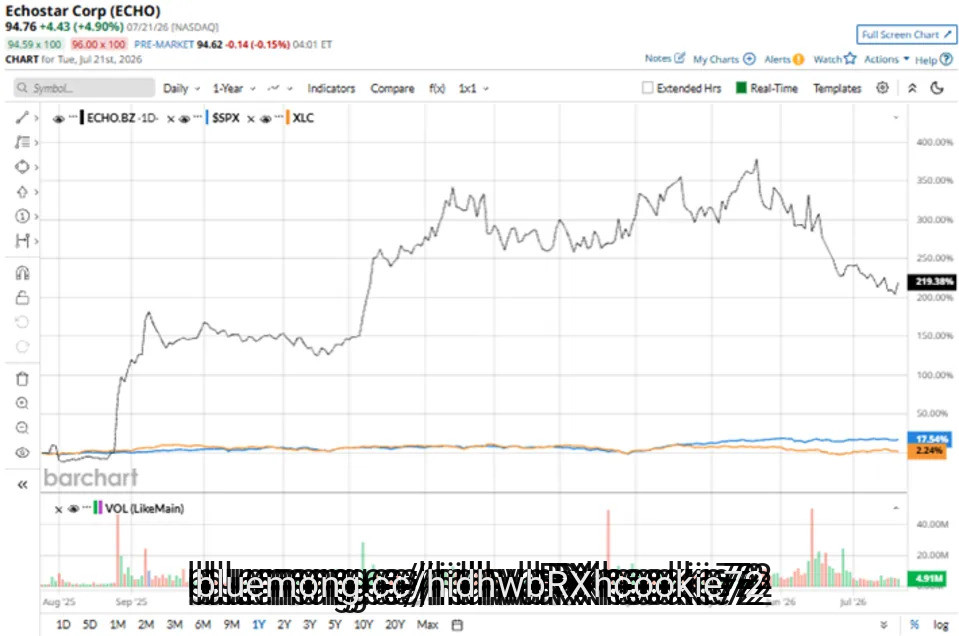
EchoStar Corporation (ECHO), headquartered in Englewood, Colorado, is a global communications company providing satellite, wireless, broadband, and video services. It delivers connectivity, networking, and content solutions for consumers, businesses, operators, and government customers, leveraging its technology, spectrum, engineering, and communications infrastructure worldwide. The company has a market capitalization of approximately $26.2 billion.
ECHO is set to report its Q2 earnings soon. Ahead of the release, **** ysts expect the company to post a loss of $0.28 per share, a 73.6% improvement from a loss of $1.06 per share in the year-ago quarter. ECHO has surpassed Wall Street's EPS estimates in three of the past four quarters, while missing expectations in one quarter.
PayPal Says a $53 Billion Takeover Offer from Stripe Undervalues It. How to Play PYPL Stock Here.
Billionaire Jeff Bezos Called Amazon's Customer Service to Prove a Point But Waited in Silence for More Than 10 Minutes — 'It Was Really Long'
Micron Stock Is Near Bear-Market Territory. Here's Why ASML's Guidance Says Buy the Dip.
#Stock
ECHO is set to report its Q2 earnings soon. Ahead of the release, **** ysts expect the company to post a loss of $0.28 per share, a 73.6% improvement from a loss of $1.06 per share in the year-ago quarter. ECHO has surpassed Wall Street's EPS estimates in three of the past four quarters, while missing expectations in one quarter.
PayPal Says a $53 Billion Takeover Offer from Stripe Undervalues It. How to Play PYPL Stock Here.
Billionaire Jeff Bezos Called Amazon's Customer Service to Prove a Point But Waited in Silence for More Than 10 Minutes — 'It Was Really Long'
Micron Stock Is Near Bear-Market Territory. Here's Why ASML's Guidance Says Buy the Dip.
#Stock



11 days ago
By Harshita Mary Varghese
July 22 (Reuters) - AT&T topped quarterly estimates for wireless subscriber additions on Wednesday as cheaper unlimited plans paired with bundled mobile-broadband offerings drew in value-conscious customers, sending its shares up 4%.
The gains build on AT&T's broader convergence strategy of selling multiple connectivity services to the same household to reduce churn and increase customer lifetime value as U.S. telecom providers chase the same finite pool of users.
The bundled offerings also helped the company post record broadband additions, with 367,000 new fiber internet users and 279,000 fixed wireless subscribers.
AT&T in March launched OneConnect, a single subscription that bundles unlimited wireless service with home internet under one monthly bill.
#wireless #broadband #same
July 22 (Reuters) - AT&T topped quarterly estimates for wireless subscriber additions on Wednesday as cheaper unlimited plans paired with bundled mobile-broadband offerings drew in value-conscious customers, sending its shares up 4%.
The gains build on AT&T's broader convergence strategy of selling multiple connectivity services to the same household to reduce churn and increase customer lifetime value as U.S. telecom providers chase the same finite pool of users.
The bundled offerings also helped the company post record broadband additions, with 367,000 new fiber internet users and 279,000 fixed wireless subscribers.
AT&T in March launched OneConnect, a single subscription that bundles unlimited wireless service with home internet under one monthly bill.
#wireless #broadband #same

11 days ago
By Anshuman Tripathy
July 22 (Reuters) - Electronic equipment maker TE Connectivity on Wednesday forecast fourth-quarter profit and revenue above Wall Street expectations, betting on a boom in demand for its AI-related tools and products.
Growing demand for AI-related tools and products has boosted investments in data centers and network equipment globally, benefiting companies like TE, which produces electrical connector systems used in data centers.
CEO Terrence Curtin told Reuters in an interview that the company would stick to its strategy of passing on higher raw material costs through price hikes to protect its margins, as the cost of oil-based products such as resins remains elevated amid renewed fighting between the U.S. and Iran.
When asked about refunds from President Donald Trump's tariffs, Curtin said the company had applied for them and had not "gotten big money back," adding that it would return the refunds to customers, rather than offering broad price cuts.
#company
July 22 (Reuters) - Electronic equipment maker TE Connectivity on Wednesday forecast fourth-quarter profit and revenue above Wall Street expectations, betting on a boom in demand for its AI-related tools and products.
Growing demand for AI-related tools and products has boosted investments in data centers and network equipment globally, benefiting companies like TE, which produces electrical connector systems used in data centers.
CEO Terrence Curtin told Reuters in an interview that the company would stick to its strategy of passing on higher raw material costs through price hikes to protect its margins, as the cost of oil-based products such as resins remains elevated amid renewed fighting between the U.S. and Iran.
When asked about refunds from President Donald Trump's tariffs, Curtin said the company had applied for them and had not "gotten big money back," adding that it would return the refunds to customers, rather than offering broad price cuts.
#company

12 days ago
Right now, the twin forces of the artificial intelligence (AI) build-out and relentless demand for connectivity are lifting some of the strongest names in technology and telecom. Here are five compelling stocks worth buying more of, starting with the one everyone is watching.
Missed Nvidia in 2009? This Rare Signal Is Flashing Again. In 2009, a "Double Down" signal flashed for a little-known chipmaker called Nvidia. For the first time in years, that same "Total Conviction" signal is flashing for a company 1/100th the size of Nvidia. Continue »
Broadcom (NASDAQ: AVGO) has quietly become one of the most important companies in AI. It designs the custom chips that giants, including Alphabet (NASDAQ: GOOG) (NASDAQ: GOOGL) and Meta Platforms, use to run their own AI systems, and it dominates the networking gear that ties thousands of those chips together inside a data center. On top of that, its infrastructure software business, anchored by VMware, throws off steady, high-margin revenue that cushions the more cyclical chip side. With a massive AI order backlog and a clear path toward much larger AI sales, Broadcom pairs explosive growth with a diversified base most chipmakers lack.
Taiwan Semiconductor Manufacturing (NYSE: TSM) is the company that builds the world's most advanced chips, including those designed by Broadcom and Nvidia. Its management recently called AI demand "extremely robust" and raised its growth outlook, while pouring another $100 billion into its Arizona campus and ramping its cutting-edge 2-nanometer technology. Because nearly every leading chip company depends on its factories, Taiwan Semiconductor sits at an irreplaceable chokepoint in the AI economy. That is about as wide a moat as you will find.
Alphabet combines the cash machine of Google Search with a fast-growing cloud business and its own leading AI models. The company is investing enormous sums, including a plan to raise tens of billions to fund its AI infrastructure, and it is weaving AI across its products rather than being disrupted by it. Notably, Berkshire Hathaway built a large stake in Alphabet, a vote of confidence from the most famous value investor's company that this is a wonderful business at a fair price.
#broadcom #alphabet #taiwan
Missed Nvidia in 2009? This Rare Signal Is Flashing Again. In 2009, a "Double Down" signal flashed for a little-known chipmaker called Nvidia. For the first time in years, that same "Total Conviction" signal is flashing for a company 1/100th the size of Nvidia. Continue »
Broadcom (NASDAQ: AVGO) has quietly become one of the most important companies in AI. It designs the custom chips that giants, including Alphabet (NASDAQ: GOOG) (NASDAQ: GOOGL) and Meta Platforms, use to run their own AI systems, and it dominates the networking gear that ties thousands of those chips together inside a data center. On top of that, its infrastructure software business, anchored by VMware, throws off steady, high-margin revenue that cushions the more cyclical chip side. With a massive AI order backlog and a clear path toward much larger AI sales, Broadcom pairs explosive growth with a diversified base most chipmakers lack.
Taiwan Semiconductor Manufacturing (NYSE: TSM) is the company that builds the world's most advanced chips, including those designed by Broadcom and Nvidia. Its management recently called AI demand "extremely robust" and raised its growth outlook, while pouring another $100 billion into its Arizona campus and ramping its cutting-edge 2-nanometer technology. Because nearly every leading chip company depends on its factories, Taiwan Semiconductor sits at an irreplaceable chokepoint in the AI economy. That is about as wide a moat as you will find.
Alphabet combines the cash machine of Google Search with a fast-growing cloud business and its own leading AI models. The company is investing enormous sums, including a plan to raise tens of billions to fund its AI infrastructure, and it is weaving AI across its products rather than being disrupted by it. Notably, Berkshire Hathaway built a large stake in Alphabet, a vote of confidence from the most famous value investor's company that this is a wonderful business at a fair price.
#broadcom #alphabet #taiwan


12 days ago
Fred Alger Management, an investment management company, released its "Alger Small Cap Focus Fund" second-quarter 2026 investor letter. A copy of the letter can be downloaded here. U.S. equities experienced a strong recovery in Q2 2026, with the S&P 500 Index gaining 15.2%, marking its best quarter since 2020. A ceasefire between the United States and Iran and accelerated investment in artificial intelligence (AI) fueled market optimism in the quarter, driving the Information Technology and Industrials sectors forward while Energy and Utilities lagged due to falling oil and gas prices. In June, the Federal Reserve maintained steady interest rates, but the meeting had a hawkish tone. As AI transitions into its agentic phase, opportunities are identified within sectors adopting the technology. The Alger Small Cap Focus Fund's Class A shares outperformed the Russell 2000 Growth Index in the quarter, driven by strong performances in the Industrials and Health Care sectors, while Financials and Consumer Discretionary detracted from the performance. In addition, please check the Fund's top five holdings to know its best picks in 2026.
In its Q2 2026 investor letter, Alger Small Cap Focus Fund highlighted Credo Technology Group Holding Ltd (NASDAQ:CRDO) as a notable performance contributor. Credo Technology Group Holding Ltd (NASDAQ:CRDO) is a US-based semiconductor company that provides high-speed connectivity solutions for optical and electrical Ethernet and PCIe applications. On July 20, 2026, Credo Technology Group Holding Ltd (NASDAQ:CRDO) closed at $212.07 per share. One-month return of Credo Technology Group Holding Ltd (NASDAQ:CRDO) was -20.23%, and its shares gained 133.50% over the past 52 weeks. Credo Technology Group Holding Ltd (NASDAQ:CRDO) has a market capitalization of $39.55 billion.
Alger Small Cap Focus Fund stated the following regarding Credo Technology Group Holding Ltd (NASDAQ:CRDO) in its Q2 2026 investor update:
"Credo Technology Group Holding Ltd (NASDAQ:CRDO) provides high-speed connectivity solutions used to move data across AI data centers and hyperscale networks, including active electrical cables, optical digital signal processors, and PCIe retimers. As AI systems become larger and more complex, the need to move data quickly and efficiently between servers, GPUs, and networking equipment has become increasingly important. We believe Credo benefits from this growing connectivity challenge, with an expanding product portfolio that gives the company multiple opportunities to support next-generation data center architectures. During the quarter, shares contributed positively to performance as investors responded favorably to the company's rapid revenue growth and rising demand from hyperscale customers. Investor sentiment was further supported by the view that Credo's expanding product portfolio and recent silicon photonics capabilities could help the company remain well aligned with the evolving connectivity needs of AI da
In its Q2 2026 investor letter, Alger Small Cap Focus Fund highlighted Credo Technology Group Holding Ltd (NASDAQ:CRDO) as a notable performance contributor. Credo Technology Group Holding Ltd (NASDAQ:CRDO) is a US-based semiconductor company that provides high-speed connectivity solutions for optical and electrical Ethernet and PCIe applications. On July 20, 2026, Credo Technology Group Holding Ltd (NASDAQ:CRDO) closed at $212.07 per share. One-month return of Credo Technology Group Holding Ltd (NASDAQ:CRDO) was -20.23%, and its shares gained 133.50% over the past 52 weeks. Credo Technology Group Holding Ltd (NASDAQ:CRDO) has a market capitalization of $39.55 billion.
Alger Small Cap Focus Fund stated the following regarding Credo Technology Group Holding Ltd (NASDAQ:CRDO) in its Q2 2026 investor update:
"Credo Technology Group Holding Ltd (NASDAQ:CRDO) provides high-speed connectivity solutions used to move data across AI data centers and hyperscale networks, including active electrical cables, optical digital signal processors, and PCIe retimers. As AI systems become larger and more complex, the need to move data quickly and efficiently between servers, GPUs, and networking equipment has become increasingly important. We believe Credo benefits from this growing connectivity challenge, with an expanding product portfolio that gives the company multiple opportunities to support next-generation data center architectures. During the quarter, shares contributed positively to performance as investors responded favorably to the company's rapid revenue growth and rising demand from hyperscale customers. Investor sentiment was further supported by the view that Credo's expanding product portfolio and recent silicon photonics capabilities could help the company remain well aligned with the evolving connectivity needs of AI da

12 days ago
Deep Sail Capital Partners, an investment management company, released its first-quarter 2026 investor letter. A copy of the letter can be downloaded here. In the second quarter, the fund significantly outperformed both of its benchmarks, the Russell 2000 Mid Cap Growth Index and the Russell 2000 Index, returning 41.6% net of fees while averaging 88% net long exposure. YTD, the fund returned 16.5% net of fees. long portfolio significantly outperformed both benchmarks, while the short portfolio was mixed in the quarter. The letter states that there was a notable performance push in Q1, which was reflected in Q2, driven by both the Iran War and idiosyncratic impacts on positions in the fund. In addition, please check the Fund's top five holdings to know its best picks in 2026.
In its Q2 2026 investor letter, Deep Sail Capital Partners highlighted Credo Technology Group Holding Ltd (NASDAQ:CRDO) as a notable performance contributor. Credo Technology Group Holding Ltd (NASDAQ:CRDO) is a semiconductor company that provides high-speed connectivity solutions for optical and electrical Ethernet and PCIe applications. On July 21, 2026, Credo Technology Group Holding Ltd (NASDAQ:CRDO) closed at $223.87 per share. One-month return of Credo Technology Group Holding Ltd (NASDAQ:CRDO) was -16.77%, and its shares gained 127.49% over the past 52 weeks. Credo Technology Group Holding Ltd (NASDAQ:CRDO) has a market capitalization of $41.75 billion.
Deep Sail Capital Partners stated the following regarding Credo Technology Group Holding Ltd (NASDAQ:CRDO) in its Q2 2026 investor update:
"There were a few large detractors at the end of the Q1 that have reversed in Q2 including our two biggest contributors in Q2 Credo Technology Group Holding Ltd (NASDAQ:CRDO) and Amplitech. Credo Technologies was down over 50% from its ATH by the end of March on the narrative that "Copper is dead" in data centers. That narrative has since changed in Q2 with the market beginning to realize that Credo's ZeroFlap optics platform is a real second leg for the company and the acquisition of Dust Photonics, an integrated circuit optics company, makes Credo a viable optics player. The company returned 191% in Q2. I continue to view the company favorably on a growth and valuation basis and it is one of the fund's largest holdings."
Credo Technology Group Holding Ltd (NASDAQ:CRDO) is not on our list of 40 Most Popular Stocks Among Hedge Funds Heading Into 2026. According to our database, 59 hedge fund portfolios held Credo Technology Group Holding Ltd (NASDAQ:CRDO) at the end of the first quarter, compared to 69 in the previous quarter. While we acknowledge the potential of Credo Technology Group Holding Ltd (NASDAQ:CRDO) as an investment, we believe certain AI stocks offer greater upside potential and carry less downside risk. If you're looking for an extremely undervalued AI stock that also stands to benefit significantly from Trump-era tariffs and the onshoring trend, see our free repor
In its Q2 2026 investor letter, Deep Sail Capital Partners highlighted Credo Technology Group Holding Ltd (NASDAQ:CRDO) as a notable performance contributor. Credo Technology Group Holding Ltd (NASDAQ:CRDO) is a semiconductor company that provides high-speed connectivity solutions for optical and electrical Ethernet and PCIe applications. On July 21, 2026, Credo Technology Group Holding Ltd (NASDAQ:CRDO) closed at $223.87 per share. One-month return of Credo Technology Group Holding Ltd (NASDAQ:CRDO) was -16.77%, and its shares gained 127.49% over the past 52 weeks. Credo Technology Group Holding Ltd (NASDAQ:CRDO) has a market capitalization of $41.75 billion.
Deep Sail Capital Partners stated the following regarding Credo Technology Group Holding Ltd (NASDAQ:CRDO) in its Q2 2026 investor update:
"There were a few large detractors at the end of the Q1 that have reversed in Q2 including our two biggest contributors in Q2 Credo Technology Group Holding Ltd (NASDAQ:CRDO) and Amplitech. Credo Technologies was down over 50% from its ATH by the end of March on the narrative that "Copper is dead" in data centers. That narrative has since changed in Q2 with the market beginning to realize that Credo's ZeroFlap optics platform is a real second leg for the company and the acquisition of Dust Photonics, an integrated circuit optics company, makes Credo a viable optics player. The company returned 191% in Q2. I continue to view the company favorably on a growth and valuation basis and it is one of the fund's largest holdings."
Credo Technology Group Holding Ltd (NASDAQ:CRDO) is not on our list of 40 Most Popular Stocks Among Hedge Funds Heading Into 2026. According to our database, 59 hedge fund portfolios held Credo Technology Group Holding Ltd (NASDAQ:CRDO) at the end of the first quarter, compared to 69 in the previous quarter. While we acknowledge the potential of Credo Technology Group Holding Ltd (NASDAQ:CRDO) as an investment, we believe certain AI stocks offer greater upside potential and carry less downside risk. If you're looking for an extremely undervalued AI stock that also stands to benefit significantly from Trump-era tariffs and the onshoring trend, see our free repor


12 days ago
Every country that builds things eventually faces the same question about a cheaper foreign rival, and there are only two honest answers to it.
You can wall the rival out and buy yourself time, or you can let the rival in and try to learn something before it eats you.
Both answers cost money. Only one of them tells you where you actually stand.
The United States picked the wall, and picked it hard. A 100% import duty on Chinese electric vehicles took effect in September 2024, according to the Office of the U.S. Trade Representative.
A separate Commerce Department rule bars Chinese-linked vehicle software starting with model year 2027 cars and Chinese-linked connectivity hardware from model year 2030, according to the Bureau of Industry and Security.
#according #year
You can wall the rival out and buy yourself time, or you can let the rival in and try to learn something before it eats you.
Both answers cost money. Only one of them tells you where you actually stand.
The United States picked the wall, and picked it hard. A 100% import duty on Chinese electric vehicles took effect in September 2024, according to the Office of the U.S. Trade Representative.
A separate Commerce Department rule bars Chinese-linked vehicle software starting with model year 2027 cars and Chinese-linked connectivity hardware from model year 2030, according to the Bureau of Industry and Security.
#according #year

13 days ago
Space Exploration Technologies (NASDAQ: SPCX) has transformed the aerospace industry by pioneering reusable rocket technology and its Starlink network of broadband internet satellites. Building on its innovations in launch services and satellite connectivity, ******* eX is now aggressively expanding into artificial intelligence (AI) infrastructure.
The company is building large-scale compute capacity to support model training and inference, aiming to become a competitive provider of sovereign, scalable AI platforms serving both commercial enterprises and the U.S. government.
Missed Nvidia in 2009? This Rare Signal Is Flashing Again. In 2009, a "Double Down" signal flashed for a little-known chipmaker called Nvidia. For the first time in years, that same "Total Conviction" signal is flashing for a company 1/100th the size of Nvidia. Continue »
SpaceX's S-1 filing underscored the demanding economics of its AI vision. Data center build-outs require enormous up-front investments in specialized hardware, power infrastructure, and supporting networks.
The AI cloud computing landscape is fiercely competitive, and dominated by established hyperscalers such as Amazon Web Services, Alphabet's Google Cloud Platform, and Microsoft Azure. Moreover, emerging neocloud providers like CoreWeave and Nebius Group add further pressure through specialized offerings and aggressive pricing. For ******* eX, meanwhile, AI remains an unproven business. In 2025, its AI segment posted an operating loss of $6.4 billion on revenue of just $3.2 billion.
#flashing #company
The company is building large-scale compute capacity to support model training and inference, aiming to become a competitive provider of sovereign, scalable AI platforms serving both commercial enterprises and the U.S. government.
Missed Nvidia in 2009? This Rare Signal Is Flashing Again. In 2009, a "Double Down" signal flashed for a little-known chipmaker called Nvidia. For the first time in years, that same "Total Conviction" signal is flashing for a company 1/100th the size of Nvidia. Continue »
SpaceX's S-1 filing underscored the demanding economics of its AI vision. Data center build-outs require enormous up-front investments in specialized hardware, power infrastructure, and supporting networks.
The AI cloud computing landscape is fiercely competitive, and dominated by established hyperscalers such as Amazon Web Services, Alphabet's Google Cloud Platform, and Microsoft Azure. Moreover, emerging neocloud providers like CoreWeave and Nebius Group add further pressure through specialized offerings and aggressive pricing. For ******* eX, meanwhile, AI remains an unproven business. In 2025, its AI segment posted an operating loss of $6.4 billion on revenue of just $3.2 billion.
#flashing #company


13 days ago
Right now, the twin forces of the artificial intelligence (AI) build-out and relentless demand for connectivity are lifting some of the strongest names in technology and telecom. Here are five compelling stocks worth buying more of, starting with the one everyone is watching.
Missed Nvidia in 2009? This Rare Signal Is Flashing Again. In 2009, a "Double Down" signal flashed for a little-known chipmaker called Nvidia. For the first time in years, that same "Total Conviction" signal is flashing for a company 1/100th the size of Nvidia. Continue »
Broadcom (NASDAQ: AVGO) has quietly become one of the most important companies in AI. It designs the custom chips that giants, including Alphabet (NASDAQ: GOOG) (NASDAQ: GOOGL) and Meta Platforms, use to run their own AI systems, and it dominates the networking gear that ties thousands of those chips together inside a data center. On top of that, its infrastructure software business, anchored by VMware, throws off steady, high-margin revenue that cushions the more cyclical chip side. With a massive AI order backlog and a clear path toward much larger AI sales, Broadcom pairs explosive growth with a diversified base most chipmakers lack.
Taiwan Semiconductor Manufacturing (NYSE: TSM) is the company that builds the world's most advanced chips, including those designed by Broadcom and Nvidia. Its management recently called AI demand "extremely robust" and raised its growth outlook, while pouring another $100 billion into its Arizona campus and ramping its cutting-edge 2-nanometer technology. Because nearly every leading chip company depends on its factories, Taiwan Semiconductor sits at an irreplaceable chokepoint in the AI economy. That is about as wide a moat as you will find.
Alphabet combines the cash machine of Google Search with a fast-growing cloud business and its own leading AI models. The company is investing enormous sums, including a plan to raise tens of billions to fund its AI infrastructure, and it is weaving AI across its products rather than being disrupted by it. Notably, Berkshire Hathaway built a large stake in Alphabet, a vote of confidence from the most famous value investor's company that this is a wonderful business at a fair price.
#NVIDIA #NASDAQ #business
Missed Nvidia in 2009? This Rare Signal Is Flashing Again. In 2009, a "Double Down" signal flashed for a little-known chipmaker called Nvidia. For the first time in years, that same "Total Conviction" signal is flashing for a company 1/100th the size of Nvidia. Continue »
Broadcom (NASDAQ: AVGO) has quietly become one of the most important companies in AI. It designs the custom chips that giants, including Alphabet (NASDAQ: GOOG) (NASDAQ: GOOGL) and Meta Platforms, use to run their own AI systems, and it dominates the networking gear that ties thousands of those chips together inside a data center. On top of that, its infrastructure software business, anchored by VMware, throws off steady, high-margin revenue that cushions the more cyclical chip side. With a massive AI order backlog and a clear path toward much larger AI sales, Broadcom pairs explosive growth with a diversified base most chipmakers lack.
Taiwan Semiconductor Manufacturing (NYSE: TSM) is the company that builds the world's most advanced chips, including those designed by Broadcom and Nvidia. Its management recently called AI demand "extremely robust" and raised its growth outlook, while pouring another $100 billion into its Arizona campus and ramping its cutting-edge 2-nanometer technology. Because nearly every leading chip company depends on its factories, Taiwan Semiconductor sits at an irreplaceable chokepoint in the AI economy. That is about as wide a moat as you will find.
Alphabet combines the cash machine of Google Search with a fast-growing cloud business and its own leading AI models. The company is investing enormous sums, including a plan to raise tens of billions to fund its AI infrastructure, and it is weaving AI across its products rather than being disrupted by it. Notably, Berkshire Hathaway built a large stake in Alphabet, a vote of confidence from the most famous value investor's company that this is a wonderful business at a fair price.
#NVIDIA #NASDAQ #business