3 days ago
Buying a new car is getting harder just as Ford Motor's stock is having one of its best days of the year.
Ford (F) shares jumped 12.4% Thursday after the automaker delivered better-than-expected adjusted earnings and raised the bottom end of its annual profit outlook.
For shareholders, that was welcome news.
For someone walking into a dealership, Ford's results revealed a less comfortable trend.
From a previous forecast of around $2 billion, Ford now anticipates increased commodity expenses of nearly $2.5 billion this year. The cost of steel, copper, computer chips, gasoline, and transportation is all rising.
#ford
Ford (F) shares jumped 12.4% Thursday after the automaker delivered better-than-expected adjusted earnings and raised the bottom end of its annual profit outlook.
For shareholders, that was welcome news.
For someone walking into a dealership, Ford's results revealed a less comfortable trend.
From a previous forecast of around $2 billion, Ford now anticipates increased commodity expenses of nearly $2.5 billion this year. The cost of steel, copper, computer chips, gasoline, and transportation is all rising.
#ford


8 days ago
Warren Buffett spent nearly 50 years drinking Pepsi. His son even nicknamed him "Pepsi Warren." Then a neighbor handed him samples of a new cherry-flavored Coca-Cola, and the legendary investor switched sides.
The soda switch made for a good story. The stock purchase that followed made history.
Buffett began buying Coca-Cola shares in 1988, and Berkshire Hathaway eventually built a 400 million-share position for about $1.3 billion. Today, that stake is worth roughly $37 billion at a share price of $93, while the annual dividend income has climbed to about $848 million.
Read more: Warren Buffett explained how he'd turn $10,000 into $30 billion if he were starting over
#buffett
The soda switch made for a good story. The stock purchase that followed made history.
Buffett began buying Coca-Cola shares in 1988, and Berkshire Hathaway eventually built a 400 million-share position for about $1.3 billion. Today, that stake is worth roughly $37 billion at a share price of $93, while the annual dividend income has climbed to about $848 million.
Read more: Warren Buffett explained how he'd turn $10,000 into $30 billion if he were starting over
#buffett


8 days ago
In a housing market where affordability is increasingly out of reach for many buyers, Vic Bulbon is looking at a type of property that's becoming less expensive: condominiums.
With national home prices near record highs and mortgage rates topping 7% in recent weeks, buying a home remains out of reach for many Americans. Condos appear to offer a rare bright spot, with prices falling across the country.
But even with cheaper sales prices, rising homeowners' **** ociation (HOA) fees and one-time special **** sments are driving up ownership costs.
Now, guidelines released this year by Fannie Mae and Freddie Mac, the government-sponsored agencies that back nearly half of all US home purchases, aim to reduce the financial and structural risks of condo buildings. Real estate agents told CNN that the changes could add pressure to the condo market by further driving up HOA fees, increasing the total monthly bill for condo owners, and potentially eroding the savings of a lower purchase price.
As of mid-October, condo sales prices lagged behind single-family home prices in 99 of the 100 largest markets in the United States, according to data from financial services company Intercontinental Exchange provided to CNN. Nationally, single-family home prices rose 1.5% from a year earlier, while condo prices fell 1.1%.
#prices #home #sales #year
With national home prices near record highs and mortgage rates topping 7% in recent weeks, buying a home remains out of reach for many Americans. Condos appear to offer a rare bright spot, with prices falling across the country.
But even with cheaper sales prices, rising homeowners' **** ociation (HOA) fees and one-time special **** sments are driving up ownership costs.
Now, guidelines released this year by Fannie Mae and Freddie Mac, the government-sponsored agencies that back nearly half of all US home purchases, aim to reduce the financial and structural risks of condo buildings. Real estate agents told CNN that the changes could add pressure to the condo market by further driving up HOA fees, increasing the total monthly bill for condo owners, and potentially eroding the savings of a lower purchase price.
As of mid-October, condo sales prices lagged behind single-family home prices in 99 of the 100 largest markets in the United States, according to data from financial services company Intercontinental Exchange provided to CNN. Nationally, single-family home prices rose 1.5% from a year earlier, while condo prices fell 1.1%.
#prices #home #sales #year




26 days ago
Starbucks slid 3% after the Financial Times reported it explored buying Chipotle, which surged 5% on buyout hopes alone.
McDonald's rose 2% while the S&P 500 edged down, isolating the split as deal-driven rather than broad market momentum.
Starbucks would absorb a full integration while its Back to Starbucks turnaround remains incomplete, and no formal offer exists.
Just released. Our **** ysts combed the entire stock market and named the ten best stocks to buy right now, and McDonald's didn't make the cut. Enter your email to see the names that beat MCD. The report is free. Enter your email and see if any of your stocks made the cut.
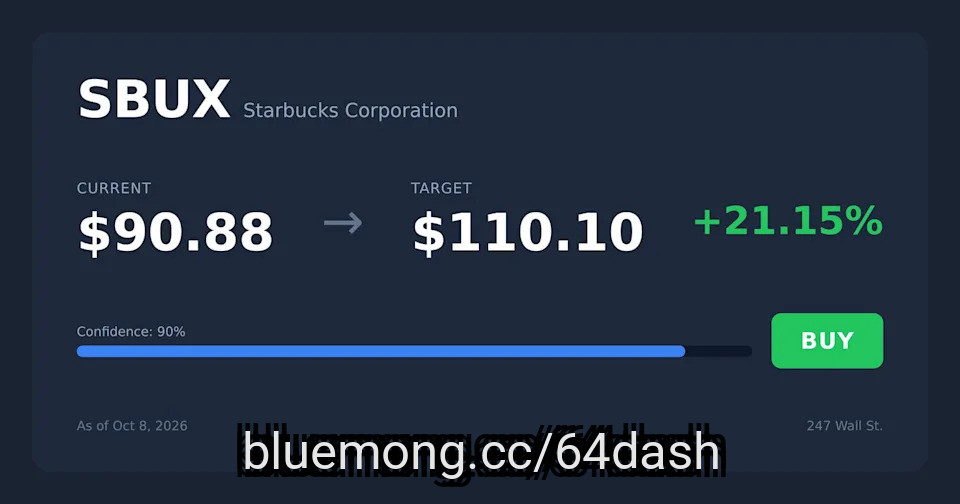
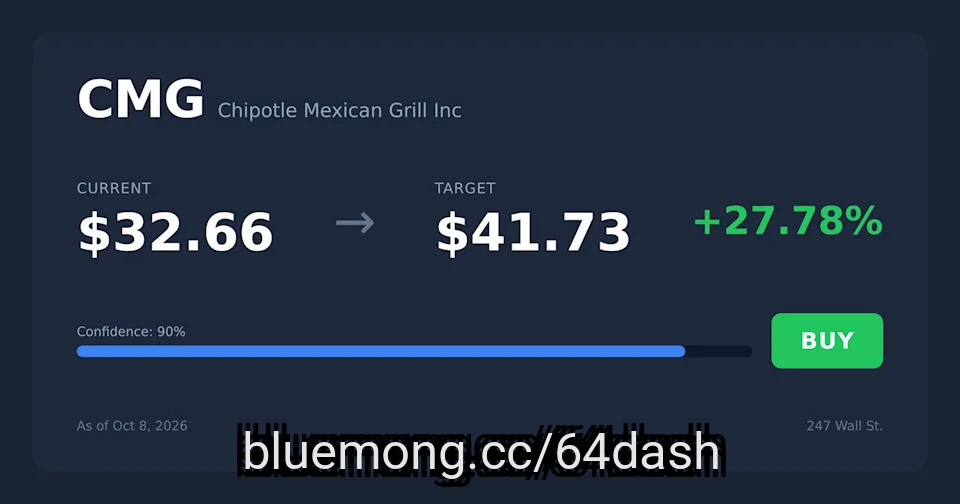
Starbucks (NASDAQ:SBUX) stock is at $90.31, down 3% in morning trading, after a report that the coffee giant has explored a takeover of a fast-casual rival. Meanwhile, Chipotle Mexican Grill (NYSE:CMG) stock is at $32.19, up 5%, as the potential target rallies on buyout hopes.
#down
McDonald's rose 2% while the S&P 500 edged down, isolating the split as deal-driven rather than broad market momentum.
Starbucks would absorb a full integration while its Back to Starbucks turnaround remains incomplete, and no formal offer exists.
Just released. Our **** ysts combed the entire stock market and named the ten best stocks to buy right now, and McDonald's didn't make the cut. Enter your email to see the names that beat MCD. The report is free. Enter your email and see if any of your stocks made the cut.
Starbucks (NASDAQ:SBUX) stock is at $90.31, down 3% in morning trading, after a report that the coffee giant has explored a takeover of a fast-casual rival. Meanwhile, Chipotle Mexican Grill (NYSE:CMG) stock is at $32.19, up 5%, as the potential target rallies on buyout hopes.
#down


26 days ago
Pfizer (NYSE: PFE) is offering a dividend yield of roughly 6% today. That is well above the roughly 1% yield on offer from the S&P 500 index (SNPINDEX: ^GSPC) and the 1.4% average yield of pharmaceutical stocks. There are good reasons for the negative view of Pfizer, but investors may be ignoring the company's over 100-year history of success. Here's why you may want to consider buying this out-of-favor dividend stock while others are fearful.
Pfizer's stock rocketed higher during the coronavirus pandemic, as investors myopically focused on the company's COVID vaccine. When COVID turned out to be a less serious long-term threat than originally believed, Wall Street dumped Pfizer. At this point, the stock is down more than 50% from its 2021 high. That is a big part of the story behind the high yield.
Missed Nvidia in 2009? This Rare Signal Is Flashing Again. In 2009, a "Double Down" signal flashed for a little-known chipmaker called Nvidia. For the first time in years, that same "Total Conviction" signal is flashing for a company 1/100th the size of Nvidia. Continue »
However, there's another piece that is more fundamental to the pharmaceutical industry. Like all drug makers, Pfizer's drugs receive time-limited patent protections. When patents expire, generic versions of the medications can be produced. That generally leads to a dramatic decline in revenue from Pfizer's drugs. Right now, Pfizer is facing down some notable patent expirations. This is a completely normal dynamic in the pharmaceutical sector.
Patent expirations are why drug companies are always on the lookout for new drugs. The problem is that patent expirations follow a set schedule, but drug development does not. Pfizer's drug pipeline isn't producing major new drugs right now, and it looks like it may have to work through a period in which new drugs won't fully offset revenue lost to patent expirations. This isn't uncommon, either, but investors are likely focusing on the short term rather than the long term when it comes to Pfizer.
#patent #yield #drug #expirations
Pfizer's stock rocketed higher during the coronavirus pandemic, as investors myopically focused on the company's COVID vaccine. When COVID turned out to be a less serious long-term threat than originally believed, Wall Street dumped Pfizer. At this point, the stock is down more than 50% from its 2021 high. That is a big part of the story behind the high yield.
Missed Nvidia in 2009? This Rare Signal Is Flashing Again. In 2009, a "Double Down" signal flashed for a little-known chipmaker called Nvidia. For the first time in years, that same "Total Conviction" signal is flashing for a company 1/100th the size of Nvidia. Continue »
However, there's another piece that is more fundamental to the pharmaceutical industry. Like all drug makers, Pfizer's drugs receive time-limited patent protections. When patents expire, generic versions of the medications can be produced. That generally leads to a dramatic decline in revenue from Pfizer's drugs. Right now, Pfizer is facing down some notable patent expirations. This is a completely normal dynamic in the pharmaceutical sector.
Patent expirations are why drug companies are always on the lookout for new drugs. The problem is that patent expirations follow a set schedule, but drug development does not. Pfizer's drug pipeline isn't producing major new drugs right now, and it looks like it may have to work through a period in which new drugs won't fully offset revenue lost to patent expirations. This isn't uncommon, either, but investors are likely focusing on the short term rather than the long term when it comes to Pfizer.
#patent #yield #drug #expirations


27 days ago
When a caller mentioned that they are thinking about adding to their position in Simon Property Group, Inc. (NYSE:SPG) during the October 2 episode of Mad Money, Jim Cramer commented:
I think you're absolutely right... I want you to add to the Simon Property Group... What a great man he (David Simon, previous CEO) was, and he built a fabulous company, and you should buy more of it.
A September 8 question about buying Simon Property Group led Cramer to bring another real estate stock into the conversation.
Simon Property Group, Inc. (NYSE:SPG) reported second-quarter real estate funds from operations of $3.29 per diluted share, up 7.9% year-over-year. Domestic property net operating income increased 8.5%. Occupancy at its U.S. malls and premium outlets remained at 96%, while base minimum rent increased 6.3% to $62.42 per square foot. Management raised its full-year real estate funds from operations outlook to $13.20 - $13.30 per share. These figures show rent and property-income growth without requiring an increase in occupancy. Leasing activity also remained substantial. During the earnings call, management reported signing approximately 1,200 leases covering more than 4.8 million square feet, with new-deal volume increasing more than 20%.
Stable occupancy does not mean every tenant is healthy. Simon Property Group, Inc. (NYSE:SPG) absorbed approximately one million square feet of ****** e returned through retailer bankruptcies during the quarter. Management said it successfully re-leased the ****** e, helping maintain occupancy. That shows leasing strength, but also a reminder of the work required to preserve rental income. Additional retailer failures could bring more vacancies and replacement costs, even when demand for the properties remains sound.
#occupancy #NYSE #management #estate
I think you're absolutely right... I want you to add to the Simon Property Group... What a great man he (David Simon, previous CEO) was, and he built a fabulous company, and you should buy more of it.
A September 8 question about buying Simon Property Group led Cramer to bring another real estate stock into the conversation.
Simon Property Group, Inc. (NYSE:SPG) reported second-quarter real estate funds from operations of $3.29 per diluted share, up 7.9% year-over-year. Domestic property net operating income increased 8.5%. Occupancy at its U.S. malls and premium outlets remained at 96%, while base minimum rent increased 6.3% to $62.42 per square foot. Management raised its full-year real estate funds from operations outlook to $13.20 - $13.30 per share. These figures show rent and property-income growth without requiring an increase in occupancy. Leasing activity also remained substantial. During the earnings call, management reported signing approximately 1,200 leases covering more than 4.8 million square feet, with new-deal volume increasing more than 20%.
Stable occupancy does not mean every tenant is healthy. Simon Property Group, Inc. (NYSE:SPG) absorbed approximately one million square feet of ****** e returned through retailer bankruptcies during the quarter. Management said it successfully re-leased the ****** e, helping maintain occupancy. That shows leasing strength, but also a reminder of the work required to preserve rental income. Additional retailer failures could bring more vacancies and replacement costs, even when demand for the properties remains sound.
#occupancy #NYSE #management #estate


27 days ago
Netflix gave up on buying Warner Bros. Discovery's studio and streaming business on Feb. 26. By the next day, Paramount Skydance, the company that outbid it, paid Netflix $2.8 billion.
The money was a breakup fee written into Netflix's own deal with Warner, and Paramount covered it as part of its winning bid, according to a Warner Bros. Discovery securities filing.
Jeff Bezos backs a platform that lets anyone invest in rental homes for as little as $100 — 6 ways to build wealth like a landlord without actually being one
A single line on your car insurance policy could be inflating your premium by up to 30% — here's what to change
Dave Ramsey warns nearly 50% of Americans are making 1 big Social Security mistake. Here's what it is and 3 simple steps to fix it ASAP
#warner #bros #jeff #ramsey
The money was a breakup fee written into Netflix's own deal with Warner, and Paramount covered it as part of its winning bid, according to a Warner Bros. Discovery securities filing.
Jeff Bezos backs a platform that lets anyone invest in rental homes for as little as $100 — 6 ways to build wealth like a landlord without actually being one
A single line on your car insurance policy could be inflating your premium by up to 30% — here's what to change
Dave Ramsey warns nearly 50% of Americans are making 1 big Social Security mistake. Here's what it is and 3 simple steps to fix it ASAP
#warner #bros #jeff #ramsey


27 days ago
This is one of the best letters that I have read in my lifetime ("We lived within our means: I earned $30,000 as a pastor and still retired comfortably"). I used to be a mortgage-loan officer; I would get a couple that each made six figures, but would have difficulty qualifying them for a loan amount they wanted because of their consumer-debt load.
Conversely, I would have a blue-collar "Joe Sixpack" that made substantially less but saved and saved and saved, and who got the loan he needed for a house. People in the U.S. need to wake up and not be compulsive: Quit buying things you really don't need. It's that way with the federal government as well, and based on that.
'People in the U.S. need to wake up': As a mortgage loan officer, I rejected applications from wealthy couples. Here's why.
Google makes a fresh bet on nuclear power as the AI energy crunch intensifies
We'd better get real quick or we're going to have a financial crisis that makes the Great Recession of 2008 look like a picnic.
#makes
Conversely, I would have a blue-collar "Joe Sixpack" that made substantially less but saved and saved and saved, and who got the loan he needed for a house. People in the U.S. need to wake up and not be compulsive: Quit buying things you really don't need. It's that way with the federal government as well, and based on that.
'People in the U.S. need to wake up': As a mortgage loan officer, I rejected applications from wealthy couples. Here's why.
Google makes a fresh bet on nuclear power as the AI energy crunch intensifies
We'd better get real quick or we're going to have a financial crisis that makes the Great Recession of 2008 look like a picnic.
#makes


27 days ago
The stock market has its dips, but historically, Apple (APPL) stock has done well for investors. As of Oct. 1, it traded for $330.32 — a nearly 30% yearly increase, according to Yahoo Finance. Take it back further to 2016, and the stock has gone up by a little over 1,063%.
As a new investor, you might be thinking Apple stock is the perfect buy. However, as with any other investment, it's not without risk. These are some of the most common mistakes investors make when buying stocks, according to financial advisors Ed Peagler and Xintian **** .
As per J.P. Morgan, the general advice when it comes to stocks is to put no more than 10% to 20% of your total portfolio in one stock. Of course, when you see the numbers rising on a particular stock, it's easy to get excited and make investment choices based on that.
This can be a mistake, though.
"Apple is a spectacular company that most people already know and love. It's no surprise, then, that many individuals end up with too large a position in their overall portfolio. And they don't feel like they have a high concentration stock because it's Apple. They trust it," said Xintian **** , CPA, senior tax manager at Alexander Accountants, CPAs. "But high concentration is high concentration. And it amplifies the risk of an unsafe, underestimated stock."
#concentration #according
As a new investor, you might be thinking Apple stock is the perfect buy. However, as with any other investment, it's not without risk. These are some of the most common mistakes investors make when buying stocks, according to financial advisors Ed Peagler and Xintian **** .
As per J.P. Morgan, the general advice when it comes to stocks is to put no more than 10% to 20% of your total portfolio in one stock. Of course, when you see the numbers rising on a particular stock, it's easy to get excited and make investment choices based on that.
This can be a mistake, though.
"Apple is a spectacular company that most people already know and love. It's no surprise, then, that many individuals end up with too large a position in their overall portfolio. And they don't feel like they have a high concentration stock because it's Apple. They trust it," said Xintian **** , CPA, senior tax manager at Alexander Accountants, CPAs. "But high concentration is high concentration. And it amplifies the risk of an unsafe, underestimated stock."
#concentration #according


27 days ago
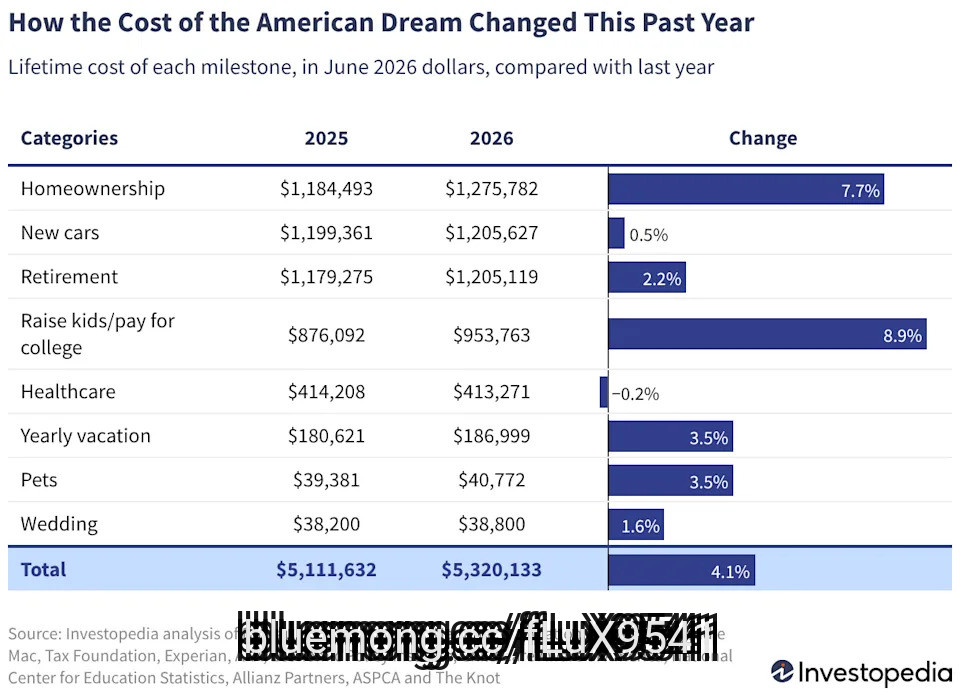
The "American Dream" costs about $5.3 million over a lifetime, up 4.1% from last year's updated total and faster than wages grew.
The costs of owning a house, paying for new cars and retirement expenses make up nearly 70% of the overall total.
Healthcare and car ownership prices were little changed from last year, but up substantially from five years ago.
The cost of the American Dream is rising faster than our paychecks can cover it.
That's according to an Investopedia ***** ysis of eight classic milestones: owning a home, buying new cars, raising two children and sending them to college, retiring, paying for healthcare, having a wedding, owning pets, and taking a yearly vacation. The lifetime tab, $5.3 million, is up 4.1% from a year ago. By comparison, private-sector wages and salaries in the 12 months through June rose 3.1%, according to the Bureau of Labor Statistics' Employment Cost Index.
#dream #last #total
The costs of owning a house, paying for new cars and retirement expenses make up nearly 70% of the overall total.
Healthcare and car ownership prices were little changed from last year, but up substantially from five years ago.
The cost of the American Dream is rising faster than our paychecks can cover it.
That's according to an Investopedia ***** ysis of eight classic milestones: owning a home, buying new cars, raising two children and sending them to college, retiring, paying for healthcare, having a wedding, owning pets, and taking a yearly vacation. The lifetime tab, $5.3 million, is up 4.1% from a year ago. By comparison, private-sector wages and salaries in the 12 months through June rose 3.1%, according to the Bureau of Labor Statistics' Employment Cost Index.
#dream #last #total


27 days ago
Realty Income (NYSE: O) buyers who entered at the 2013 acquisition milestone turned $1,000 into $2,444, a 144% total return through October 2026.
Buying when Realty Income joined the Dividend Aristocrats in 2020 at $54.21 left investors with just 0.07% total return after six years, as dividends failed to offset share price decline.
Prestige-driven entries consistently underperformed, while the best recent result came after shares already fell, with the 2024 Spirit Realty entry returning 13%.
Read More: Learn 7 ways to generate income with a $1,000,000+ portfolio (sponsor)
Realty Income (NYSE:O) built its reputation on reliable monthly income. (Seven of our favorite monthly payers are rounded up in this free report.) Among the key milestones discussed here, its first two were excellent entry points; the three that followed were poor ones. Each return below runs from the milestone's adjusted price to the October 6, 2026, close of $54.25, adjusted for splits and dividends.
#income #october #dividends #price
Buying when Realty Income joined the Dividend Aristocrats in 2020 at $54.21 left investors with just 0.07% total return after six years, as dividends failed to offset share price decline.
Prestige-driven entries consistently underperformed, while the best recent result came after shares already fell, with the 2024 Spirit Realty entry returning 13%.
Read More: Learn 7 ways to generate income with a $1,000,000+ portfolio (sponsor)
Realty Income (NYSE:O) built its reputation on reliable monthly income. (Seven of our favorite monthly payers are rounded up in this free report.) Among the key milestones discussed here, its first two were excellent entry points; the three that followed were poor ones. Each return below runs from the milestone's adjusted price to the October 6, 2026, close of $54.25, adjusted for splits and dividends.
#income #october #dividends #price

28 days ago
ARK Invest bought 2.57 million Archer shares for $11.9 million and 753,330 Joby shares for $1.3 million across three ETFs.
Joby is advancing real-world air-taxi flights through an FAA program.
Archer is expanding into defense by acquiring Boeing's Wisk Aero, SkyGrid and Insitu.
Cathie Wood's ARK Invest is doubling down on eVTOL (electric vertical take-off and landing) stocks, buying more than 2.56 million Archer Aviation (ACHR) shares and 753,000 Joby Aviation (JOBY) shares as institutional interest in air taxis and defense aviation heats up.
Both Archer Aviation and Joby Aviation stocks edged up 0.6% and 0.1%, respectively, overnight Tuesday.
#etfs
Joby is advancing real-world air-taxi flights through an FAA program.
Archer is expanding into defense by acquiring Boeing's Wisk Aero, SkyGrid and Insitu.
Cathie Wood's ARK Invest is doubling down on eVTOL (electric vertical take-off and landing) stocks, buying more than 2.56 million Archer Aviation (ACHR) shares and 753,000 Joby Aviation (JOBY) shares as institutional interest in air taxis and defense aviation heats up.
Both Archer Aviation and Joby Aviation stocks edged up 0.6% and 0.1%, respectively, overnight Tuesday.
#etfs



28 days ago
Jim Cramer has built a career on conviction calls, and few have been more consistent than his faith in Amazon (AMZN). For years, the Mad Money host has treated the retail giant as close to untouchable. A permanent fixture in nearly every portfolio he recommends.
That changed, briefly and publicly, after watching a rival's AI demo live on air. Here is what Cramer actually said, the stock moves that gave his comment real weight, and what it all means for anyone holding either name heading into the rest of the year.
Also read: Jim Cramer noticed something odd about the stock market
Cramer made the comment live on CNBC's Squawk on the Street on September 28, after watching a demonstration of Meta's (META) new AI shopping capability. "I'm an Amazon guy, but maybe I shouldn't be. This seemed impressive," he said, speaking as a shopper describing his own buying habits rather than making a stock call.
The timing gave the remark unusual weight. Meta shares had climbed roughly 24% over the prior month. Amazon fell roughly 8% over the same stretch. Investors were already debating which company was winning the fight for online shoppers before Cramer weighed in.
#cramer #amazon #roughly
That changed, briefly and publicly, after watching a rival's AI demo live on air. Here is what Cramer actually said, the stock moves that gave his comment real weight, and what it all means for anyone holding either name heading into the rest of the year.
Also read: Jim Cramer noticed something odd about the stock market
Cramer made the comment live on CNBC's Squawk on the Street on September 28, after watching a demonstration of Meta's (META) new AI shopping capability. "I'm an Amazon guy, but maybe I shouldn't be. This seemed impressive," he said, speaking as a shopper describing his own buying habits rather than making a stock call.
The timing gave the remark unusual weight. Meta shares had climbed roughly 24% over the prior month. Amazon fell roughly 8% over the same stretch. Investors were already debating which company was winning the fight for online shoppers before Cramer weighed in.
#cramer #amazon #roughly


28 days ago
This is one of the best letters that I have read in my lifetime ("We lived within our means: I earned $30,000 as a pastor and still retired comfortably"). I used to be a mortgage-loan officer; I would get a couple that each made six figures, but would have difficulty qualifying them for a loan amount they wanted because of their consumer-debt load.
Conversely, I would have a blue-collar "Joe Sixpack" that made substantially less but saved and saved and saved, and who got the loan he needed for a house. People in the U.S. need to wake up and not be compulsive: Quit buying things you really don't need. It's that way with the federal government as well, and based on that.
My wife never went back to work after raising our kids. Do I have to share my retirement savings 50/50?
Go ahead and get that poetry degree. Republican law won't prevent people with humanities majors from getting student loans.
We'd better get real quick or we're going to have a financial crisis that makes the Great Recession of 2008 look like a picnic.
#conversely
Conversely, I would have a blue-collar "Joe Sixpack" that made substantially less but saved and saved and saved, and who got the loan he needed for a house. People in the U.S. need to wake up and not be compulsive: Quit buying things you really don't need. It's that way with the federal government as well, and based on that.
My wife never went back to work after raising our kids. Do I have to share my retirement savings 50/50?
Go ahead and get that poetry degree. Republican law won't prevent people with humanities majors from getting student loans.
We'd better get real quick or we're going to have a financial crisis that makes the Great Recession of 2008 look like a picnic.
#conversely


28 days ago
One of the secrets of Berkshire Hathaway (NYSE: BRKA) (NYSE: BRKB) and its success in the stock market has been its focus on value. Whether led by former Chief Executive Officer Warren Buffett or its current leader, Greg Abel, Berkshire has always focused on buying stocks when they are significantly below their intrinsic value.
On top of that, Berkshire's management team has sought companies that have significant advantages over their competitors -- an economic moat -- operating in a mature industry with reliable cash flow.
Missed Nvidia in 2009? This Rare Signal Is Flashing Again. In 2009, a "Double Down" signal flashed for a little-known chipmaker called Nvidia. For the first time in years, that same "Total Conviction" signal is flashing for a company 1/100th the size of Nvidia. Continue »
That strategy has helped Berkshire Hathaway build an investment portfolio valued at about $350 billion -- and generate returns that averaged 19.7% during the past 60 years, nearly double the S&P 500's (SNPINDEX: ^GSPC) return.
In today's go-go market, which is focused so heavily on artificial intelligence, machine learning, and other technological advances, it's easy to forget that there are some great value stocks available -- and at comparatively dirt cheap prices. Three such stocks currently in Berkshire's portfolio are American Express (NYSE: AXP), The New York Times Company (NYSE: NYT), and DaVita (NYSE: DVA). Here's the case for buying and holding each of them right now.
#NVIDIA #value #stocks
On top of that, Berkshire's management team has sought companies that have significant advantages over their competitors -- an economic moat -- operating in a mature industry with reliable cash flow.
Missed Nvidia in 2009? This Rare Signal Is Flashing Again. In 2009, a "Double Down" signal flashed for a little-known chipmaker called Nvidia. For the first time in years, that same "Total Conviction" signal is flashing for a company 1/100th the size of Nvidia. Continue »
That strategy has helped Berkshire Hathaway build an investment portfolio valued at about $350 billion -- and generate returns that averaged 19.7% during the past 60 years, nearly double the S&P 500's (SNPINDEX: ^GSPC) return.
In today's go-go market, which is focused so heavily on artificial intelligence, machine learning, and other technological advances, it's easy to forget that there are some great value stocks available -- and at comparatively dirt cheap prices. Three such stocks currently in Berkshire's portfolio are American Express (NYSE: AXP), The New York Times Company (NYSE: NYT), and DaVita (NYSE: DVA). Here's the case for buying and holding each of them right now.
#NVIDIA #value #stocks
28 days ago
Buying a stock in the hopes of holding it for 20 years or longer can be a difficult task. Warren Buffett likes to say his favorite holding period is "forever," but his trading history shows he has sold holdings, even after owning them for decades.
Knowing that, investors should look for holdings with the potential to survive and thrive for decades. Fortunately, investors have plenty of options, and these three well-established consumer staples stocks should stand out.
Missed AI's "Act 1"? Act 2 Could Be 14x Bigger. Most investors think they missed the AI boat because they didn't buy Nvidia in 2005. But according to our ****** ysts, we're only at the end of "Act 1"—the R&D phase. "Act 2" is the global rollout. Continue »
The public knows PepsiCo (NASDAQ: PEP) best for its flagship cola. Nonetheless, the company owns numerous well-known beverage and food brands, including Gatorade, Mountain Dew, Tostitos, and Quaker.
Its stock had suffered in recent years as the public turned against unhealthy beverages and packaged foods. PepsiCo has since pivoted, emphasizing healthier ingredients in its products and buying brands such as Siete to bolster this reputation.
#investors #holdings
Knowing that, investors should look for holdings with the potential to survive and thrive for decades. Fortunately, investors have plenty of options, and these three well-established consumer staples stocks should stand out.
Missed AI's "Act 1"? Act 2 Could Be 14x Bigger. Most investors think they missed the AI boat because they didn't buy Nvidia in 2005. But according to our ****** ysts, we're only at the end of "Act 1"—the R&D phase. "Act 2" is the global rollout. Continue »
The public knows PepsiCo (NASDAQ: PEP) best for its flagship cola. Nonetheless, the company owns numerous well-known beverage and food brands, including Gatorade, Mountain Dew, Tostitos, and Quaker.
Its stock had suffered in recent years as the public turned against unhealthy beverages and packaged foods. PepsiCo has since pivoted, emphasizing healthier ingredients in its products and buying brands such as Siete to bolster this reputation.
#investors #holdings


28 days ago
Any semblance of sizzle has been pounded out of McDonald's (MCD) stock.
Shares of the high-calorie fast food seller dropped below $230 for the first time in more than four years on Monday.
Today's move is being driven by a relatively bearish note from Guggenheim ******* yst Gregory Francfort.
"It seems difficult to get positive on shares now without better evidence of a catalyst path over the next 12 months," Francfort said. "1Q27 comparisons do seem to get a lot easier than the Street models, which could be a catalyst, but we would like to see fundamental reasons that MCD's franchisees are buying into entry level value menu efforts or ops improvements than can drive traffic."
Francfort maintained a Neutral rating on McDonald's stock.
#guggenheim
Shares of the high-calorie fast food seller dropped below $230 for the first time in more than four years on Monday.
Today's move is being driven by a relatively bearish note from Guggenheim ******* yst Gregory Francfort.
"It seems difficult to get positive on shares now without better evidence of a catalyst path over the next 12 months," Francfort said. "1Q27 comparisons do seem to get a lot easier than the Street models, which could be a catalyst, but we would like to see fundamental reasons that MCD's franchisees are buying into entry level value menu efforts or ops improvements than can drive traffic."
Francfort maintained a Neutral rating on McDonald's stock.
#guggenheim


29 days ago
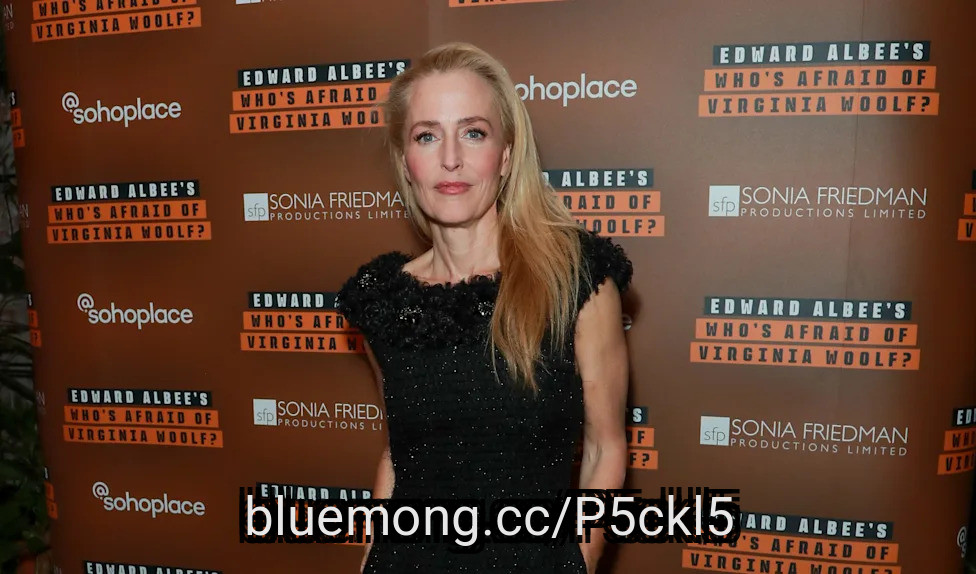
Gillian Anderson is clarifying a viral video that shows the actress confronting a group of superfans who repeatedly sit in the front row of her West End production of Who's Afraid of Virginia Woolf?
The video shows The X Files star having a conversation with a group of fans at the production's stage door and asking them to stop repeatedly buying tickets for the show's front row.
More from The Hollywood Reporter
'The Julia Set' Review: Chase Infiniti Leads a Strong Ensemble as a College Math Genius in Algebra That Doesn't Quite Balance the Equation
Why Chase Infiniti and Christopher Briney Would Have Moved Heaven and Earth to Star in 'The Julia Set'
#julia #chase #star
The video shows The X Files star having a conversation with a group of fans at the production's stage door and asking them to stop repeatedly buying tickets for the show's front row.
More from The Hollywood Reporter
'The Julia Set' Review: Chase Infiniti Leads a Strong Ensemble as a College Math Genius in Algebra That Doesn't Quite Balance the Equation
Why Chase Infiniti and Christopher Briney Would Have Moved Heaven and Earth to Star in 'The Julia Set'
#julia #chase #star

1 month ago
Mauricio Umansky has already made a name for himself. In addition to being the husband of "The Real Housewives of Beverly Hills" star Kyle Richards, Umansky is also a real estate mogul who sells luxury properties worldwide. And if that wasn't enough, Umansky also spent two seasons starring in his own Netflix show, "Buying Beverly Hills," alongside his daughters, Alexia and Farrah. So, what's next for the 56-year-old? He says he's considering a jump into politics, starting with a mayoral run in the coming years.
MEGA
Umansky recently spoke with USA Today about his growing interest in politics and said he's considered running for mayor of LA.
"I'm definitely into potentially running for mayor," he said, with his daughter confirming, "He's been talking about that."
MEGA
#hills #Politics #running #mauricio
MEGA
Umansky recently spoke with USA Today about his growing interest in politics and said he's considered running for mayor of LA.
"I'm definitely into potentially running for mayor," he said, with his daughter confirming, "He's been talking about that."
MEGA
#hills #Politics #running #mauricio




1 month ago
Love may not cost a thing, but a source tells In Touch Jacob Elordi has been draining his bank account for girlfriend Kendall Jenner.
"He's the one paying for everything," reveals the source. "It's not just nice dinners and a few gifts — Jacob is chartering private jets, renting out hotel suites that cost $60K a night and buying her all sorts of extravagant jewelry."
Since sparking romance rumors this spring, the supermodel, 30, and the Euphoria alum, 29, have crisscrossed the globe together, jetting everywhere from Tokyo and Hawaii to Italy and his native Australia.
As In Touch previously reported, the couple are also "actively looking" for a new home to move into together.
Now, the source suggests Elordi intends to foot the bill for that purchase too.
#elordi #together
"He's the one paying for everything," reveals the source. "It's not just nice dinners and a few gifts — Jacob is chartering private jets, renting out hotel suites that cost $60K a night and buying her all sorts of extravagant jewelry."
Since sparking romance rumors this spring, the supermodel, 30, and the Euphoria alum, 29, have crisscrossed the globe together, jetting everywhere from Tokyo and Hawaii to Italy and his native Australia.
As In Touch previously reported, the couple are also "actively looking" for a new home to move into together.
Now, the source suggests Elordi intends to foot the bill for that purchase too.
#elordi #together



1 month ago
When AI stocks rebounded last week, optical networking companies did not rebound equally.
Lumentum Holdings Inc. (NASDAQ:LITE) jumped nearly 10% in Wednesday trading and led the S&P 500, while Coherent rose 6.9%. Corning Incorporated (NYSE:GLW) managed only a 0.4% gain and remained down sharply for the week.
All three sit inside the same broad AI-connectivity buildout. The divergence suggests investors are beginning to distinguish between different pieces of that infrastructure rather than buying every optics name together.
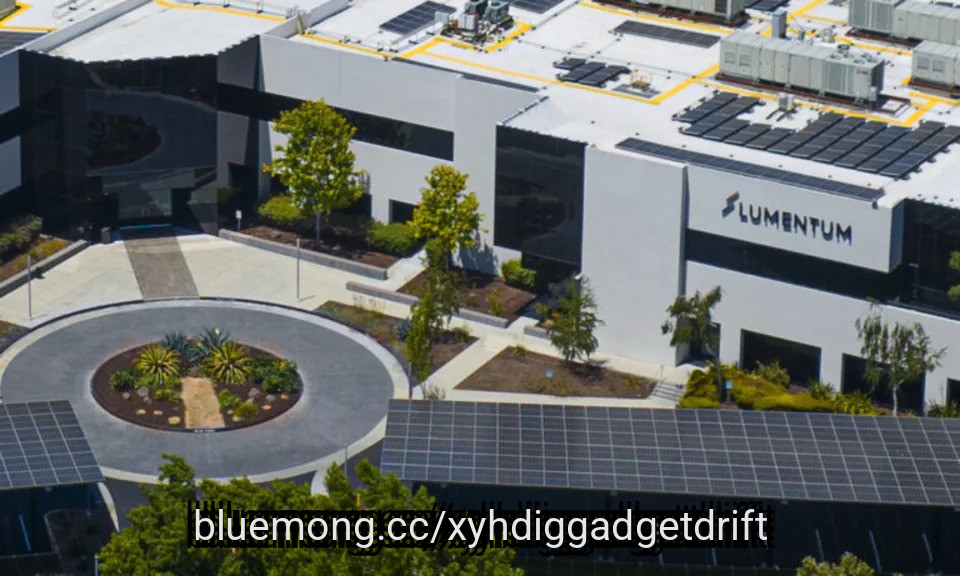
Photo from Lumentum Holdings website
AI clusters increasingly need optical connections as more accelerators communicate across larger physical distances. That drives demand for high-speed transceivers, lasers and other photonic components.
#NASDAQ #lite #wednesday #coherent
Lumentum Holdings Inc. (NASDAQ:LITE) jumped nearly 10% in Wednesday trading and led the S&P 500, while Coherent rose 6.9%. Corning Incorporated (NYSE:GLW) managed only a 0.4% gain and remained down sharply for the week.
All three sit inside the same broad AI-connectivity buildout. The divergence suggests investors are beginning to distinguish between different pieces of that infrastructure rather than buying every optics name together.
Photo from Lumentum Holdings website
AI clusters increasingly need optical connections as more accelerators communicate across larger physical distances. That drives demand for high-speed transceivers, lasers and other photonic components.
#NASDAQ #lite #wednesday #coherent
1 month ago
No matter how well you plan for retirement, there are surprises that could throw you for a loop. The stock market might crash unexpectedly. Your healthcare costs might increase. Or, worse yet, you could end up needing long-term care at some point.
But one hiccup you should know to plan for is inflation. Over time, the cost of living is likely to rise. And if you aren't prepared, you could easily end up losing out on buying power. These two adjustments to your retirement plan could help you avoid that fate.
Missed AI's "Act 1"? Act 2 Could Be 15x Bigger. Most investors think they missed the AI boat because they didn't buy Nvidia in 2005. But according to our ******* ysts, we're only at the end of "Act 1"—the R&D phase. "Act 2" is the global rollout. Continue »
It's fairly common for retirees to reduce their stock holdings to minimize risk in their portfolios. But while it's OK to de-risk to some degree, you don't want to dump your stocks completely. Doing so could cause your portfolio to trail inflation, leading you to lose buying power and putting your savings at risk of being depleted.
If you're not comfortable holding individual stocks in retirement, buy shares of an S&P 500 exchange-traded fund (ETF). This effectively gives you exposure to the market. Or load up on dividend ETFs that generate steady income.
#plan #market
But one hiccup you should know to plan for is inflation. Over time, the cost of living is likely to rise. And if you aren't prepared, you could easily end up losing out on buying power. These two adjustments to your retirement plan could help you avoid that fate.
Missed AI's "Act 1"? Act 2 Could Be 15x Bigger. Most investors think they missed the AI boat because they didn't buy Nvidia in 2005. But according to our ******* ysts, we're only at the end of "Act 1"—the R&D phase. "Act 2" is the global rollout. Continue »
It's fairly common for retirees to reduce their stock holdings to minimize risk in their portfolios. But while it's OK to de-risk to some degree, you don't want to dump your stocks completely. Doing so could cause your portfolio to trail inflation, leading you to lose buying power and putting your savings at risk of being depleted.
If you're not comfortable holding individual stocks in retirement, buy shares of an S&P 500 exchange-traded fund (ETF). This effectively gives you exposure to the market. Or load up on dividend ETFs that generate steady income.
#plan #market

1 month ago
Enbridge Inc. (NYSE:ENB) has declined by around 17% since hitting its record high in May, likely as a result of rising bond yields, lack of visibility on the company's 5% growth guidance through the end of the decade, and the recently closed equity offering intended to fund the midstream operator's strategic acquisitions.
However, BMO Capital sees this pullback as an opportunity and on September 15, the firm upgraded ENB from 'Market Perform' to 'Outperform', while also slightly raising its price target from C$79 to C$79.50. The target boost implies an upside of 18% from the current levels.
The **** yst believes that Enbridge's scale, limited commodity exposure, and diversified **** ets are underappreciated. BMO also cited the company's improving visibility on growth, robust backlog, opportunistic acquisitions, and improved balance sheet as reasons behind the upgrade.
Enbridge's aggressive expansion strategy adds significantly to its bull case. The company announced on September 9 that it would acquire Tallgrass Energy's crude oil business for $2.55 billion in cash, expanding its US liquids pipeline network by buying a majority stake in the Pony Express Pipeline and other **** ets. The midstream operator expects the acquisition to be accretive to distributable cash flow per share in the first full year of ownership.
Similarly, Enbridge announced last month that it had agreed to acquire Salt Creek Midstream's crude oil gathering business for $600 million in cash, further bolstering its presence in the prolific Permian Basin. The acquired **** ets have an average remaining contract life of about 10 years, providing stable long-term cash flows.
#visibility #target
However, BMO Capital sees this pullback as an opportunity and on September 15, the firm upgraded ENB from 'Market Perform' to 'Outperform', while also slightly raising its price target from C$79 to C$79.50. The target boost implies an upside of 18% from the current levels.
The **** yst believes that Enbridge's scale, limited commodity exposure, and diversified **** ets are underappreciated. BMO also cited the company's improving visibility on growth, robust backlog, opportunistic acquisitions, and improved balance sheet as reasons behind the upgrade.
Enbridge's aggressive expansion strategy adds significantly to its bull case. The company announced on September 9 that it would acquire Tallgrass Energy's crude oil business for $2.55 billion in cash, expanding its US liquids pipeline network by buying a majority stake in the Pony Express Pipeline and other **** ets. The midstream operator expects the acquisition to be accretive to distributable cash flow per share in the first full year of ownership.
Similarly, Enbridge announced last month that it had agreed to acquire Salt Creek Midstream's crude oil gathering business for $600 million in cash, further bolstering its presence in the prolific Permian Basin. The acquired **** ets have an average remaining contract life of about 10 years, providing stable long-term cash flows.
#visibility #target

1 month ago
On August 6, Targa Resources Corp. (NYSE:TRGP) reported a record second quarter. Adjusted EBITDA reached $1.60 billion, a 38% jump from the same period a year earlier, and management now expects full-year results near the top of its guidance range. Targa moves and processes natural gas and natural gas liquids out of the Permian Basin, and these numbers suggest that system is running fuller than ever.
The strength came from volume, not just price. Adjusted EBITDA also climbed 14% from the first quarter, helped by Permian gas volumes that added over 450 million cubic feet of daily throughput. Some producers held back output because Waha gas prices went negative, and Targa still set a volume record. Volumes for NGL pipelines, fractionation, and LPG exports also hit records, helped by Train 11, a new fractionator in Mont Belvieu, Texas, that started up early in the quarter.
Construction is also landing on time. East Driver, a new processing plant serving the Midland side of the Permian, started up late in the quarter and ahead of schedule, and the other gathering and logistics projects are tracking their plans. Shareholders get a cut too. On July 16, Targa declared a $1.25 per share quarterly dividend, 25% above the payout for the second quarter of 2025, payable August 14 to holders of record on July 31. It also spent $80 million buying back shares during the quarter.
Growth at this pace costs real money. Targa plans about $4.5 billion in net growth spending this year, and its consolidated debt stood at $19,578 million on June 30. About $3.2 billion of liquidity gives it a cushion. In July, it also extended its receivables securitization facility to July 30, 2027 and raised the size to as much as $800 million. More borrowing capacity helps, but it is still borrowing.
Not every dollar of the profit surge is as steady as a pipeline volume. Management tied the higher outlook partly to strong marketing margin and optimization work in the first two quarters, and the quarter's jump in marketing margin came from greater optimization opportunities. That kind of income can be lumpy. Meanwhile, lower natural gas prices trimmed margins in the gathering business, and the Waha curtailments showed that producers can pull back when local prices turn ugly.
#record
The strength came from volume, not just price. Adjusted EBITDA also climbed 14% from the first quarter, helped by Permian gas volumes that added over 450 million cubic feet of daily throughput. Some producers held back output because Waha gas prices went negative, and Targa still set a volume record. Volumes for NGL pipelines, fractionation, and LPG exports also hit records, helped by Train 11, a new fractionator in Mont Belvieu, Texas, that started up early in the quarter.
Construction is also landing on time. East Driver, a new processing plant serving the Midland side of the Permian, started up late in the quarter and ahead of schedule, and the other gathering and logistics projects are tracking their plans. Shareholders get a cut too. On July 16, Targa declared a $1.25 per share quarterly dividend, 25% above the payout for the second quarter of 2025, payable August 14 to holders of record on July 31. It also spent $80 million buying back shares during the quarter.
Growth at this pace costs real money. Targa plans about $4.5 billion in net growth spending this year, and its consolidated debt stood at $19,578 million on June 30. About $3.2 billion of liquidity gives it a cushion. In July, it also extended its receivables securitization facility to July 30, 2027 and raised the size to as much as $800 million. More borrowing capacity helps, but it is still borrowing.
Not every dollar of the profit surge is as steady as a pipeline volume. Management tied the higher outlook partly to strong marketing margin and optimization work in the first two quarters, and the quarter's jump in marketing margin came from greater optimization opportunities. That kind of income can be lumpy. Meanwhile, lower natural gas prices trimmed margins in the gathering business, and the Waha curtailments showed that producers can pull back when local prices turn ugly.
#record

1 month ago
On August 10, Simon Property Group (NYSE:SPG) reported results for the three months through June 30 and raised its full-year profit outlook once again. Real estate funds from operations (FFO), a cash-flow measure suited to landlords, hit $3.29 per share. Tenants are earning more from their stores, and management is confident enough to lift its guidance again. Yet the professionals who own the stock are heading the other way.
Start with the tenants, because they pay the rent. Reported retailer sales reached $838 per square foot over the year through June 30, up from $736 a year earlier, on June 30, 2025. Stronger sales tend to make higher rent easier to swallow, and base minimum rent per square foot did climb to $62.42 from $58.70.
That demand flowed through to profit. Real estate FFO rose to $3.29 per diluted share from $3.05, and net operating income at Simon's domestic properties grew 8.5%. Management responded by lifting its full-year real estate FFO range to $13.20 to $13.30 per share, moving the midpoint up by $0.08.
Shareholders get paid while they wait. The board declared a third-quarter dividend of $2.25 per share, $0.10 more than a year ago, to be paid on September 30 to anyone on the books by September 9. Simon also put $211.4 million into buying back stock at an average of $205.10 per share, and it finished June with about $9.3 billion of liquidity.
Now the less flattering side. Net income for common stockholders was $483.1 million, or $1.49 per diluted share, versus $1.70 a year earlier. The 2025 quarter included a non-cash gain of $0.21 per share from investment activity, which flatters that comparison. Still, plain FFO followed the same path, slipping to $3.12 from $3.15.
#Share #year #june #estate
Start with the tenants, because they pay the rent. Reported retailer sales reached $838 per square foot over the year through June 30, up from $736 a year earlier, on June 30, 2025. Stronger sales tend to make higher rent easier to swallow, and base minimum rent per square foot did climb to $62.42 from $58.70.
That demand flowed through to profit. Real estate FFO rose to $3.29 per diluted share from $3.05, and net operating income at Simon's domestic properties grew 8.5%. Management responded by lifting its full-year real estate FFO range to $13.20 to $13.30 per share, moving the midpoint up by $0.08.
Shareholders get paid while they wait. The board declared a third-quarter dividend of $2.25 per share, $0.10 more than a year ago, to be paid on September 30 to anyone on the books by September 9. Simon also put $211.4 million into buying back stock at an average of $205.10 per share, and it finished June with about $9.3 billion of liquidity.
Now the less flattering side. Net income for common stockholders was $483.1 million, or $1.49 per diluted share, versus $1.70 a year earlier. The 2025 quarter included a non-cash gain of $0.21 per share from investment activity, which flatters that comparison. Still, plain FFO followed the same path, slipping to $3.12 from $3.15.
#Share #year #june #estate


1 month ago
On August 6, Republic Services (NYSE:RSG) reported earnings of $1.84 per diluted share for the quarter that closed on June 30, up from $1.75 a year earlier, and lifted most of its full-year targets. Here is the odd part. The company moved less volume than it did a year ago and still grew profit. Understanding how that works, and how long it can last, is the whole story.
Start with pricing, because that is the engine. Core price on total revenue added 5.3% to growth, which helped lift total revenue by 4.6%. Inside the related business, price contributed 4.1% in the restricted portion and 7.8% in the open market. Management says price beat cost inflation, and the margin backs that up. Adjusted EBITDA reached $1.42 billion at a 32.1% margin, matching the prior year even after Republic absorbed a 50 basis point drag from event-driven landfill volumes it received in 2025.
Cash generation is just as sturdy. Through the first half of 2026, operations produced $2.38 billion, and adjusted free cash flow came to $1.58 billion. That paid for $860 million of acquisitions and $1.04 billion returned to shareholders, so Republic is buying growth and rewarding owners from the same pool. The board added 4.5 cents to the quarterly dividend, setting it at $0.670 per share with an October 2 record date and payment on October 15. Management also raised full-year revenue, adjusted EBITDA, and free cash flow guidance, and set adjusted earnings at $7.23 to $7.28 per share.
The catch is that volume is moving the wrong way. Average yield added 3.4% to total revenue, while volume took away 1.6%, and the related business gave up 1.9% to volume. That makes this a price-led story, and price can only carry so much weight if volumes keep shrinking. Acquisitions also supplied 1.1% of the 4.6% total growth, so organic growth is smaller than the headline suggests.
Other lines were softer too. The environmental solutions business slipped 0.2%, so it added no lift. Recycled commodities sold for an average of $136 per ton at Republic's recycling centers, which is $13 lower than a year earlier. Margin only matched last year's level, and adjusted earnings per share rose 4.5%, just under revenue growth, so profit grew in step with sales rather than faster.
#year
Start with pricing, because that is the engine. Core price on total revenue added 5.3% to growth, which helped lift total revenue by 4.6%. Inside the related business, price contributed 4.1% in the restricted portion and 7.8% in the open market. Management says price beat cost inflation, and the margin backs that up. Adjusted EBITDA reached $1.42 billion at a 32.1% margin, matching the prior year even after Republic absorbed a 50 basis point drag from event-driven landfill volumes it received in 2025.
Cash generation is just as sturdy. Through the first half of 2026, operations produced $2.38 billion, and adjusted free cash flow came to $1.58 billion. That paid for $860 million of acquisitions and $1.04 billion returned to shareholders, so Republic is buying growth and rewarding owners from the same pool. The board added 4.5 cents to the quarterly dividend, setting it at $0.670 per share with an October 2 record date and payment on October 15. Management also raised full-year revenue, adjusted EBITDA, and free cash flow guidance, and set adjusted earnings at $7.23 to $7.28 per share.
The catch is that volume is moving the wrong way. Average yield added 3.4% to total revenue, while volume took away 1.6%, and the related business gave up 1.9% to volume. That makes this a price-led story, and price can only carry so much weight if volumes keep shrinking. Acquisitions also supplied 1.1% of the 4.6% total growth, so organic growth is smaller than the headline suggests.
Other lines were softer too. The environmental solutions business slipped 0.2%, so it added no lift. Recycled commodities sold for an average of $136 per ton at Republic's recycling centers, which is $13 lower than a year earlier. Margin only matched last year's level, and adjusted earnings per share rose 4.5%, just under revenue growth, so profit grew in step with sales rather than faster.
#year

1 month ago
If you're trying to choose between the Vanguard S&P 500 ETF (NYSEMKT: VOO) and the State Street SPDR S&P 500 ETF (NYSEMKT: SPY), it might seem they're essentially interchangeable. They're both huge and track the same index.
At a high level, that's probably true. But if you want to dive deep and get picky, a few factors set them apart.
Missed AI's "Act 1"? Act 2 Could Be 15x Bigger. Most investors think they missed the AI boat because they didn't buy Nvidia in 2005. But according to our **** ysts, we're only at the end of "Act 1"—the R&D phase. "Act 2" is the global rollout. Continue »
The State Street SPDR S&P 500 ETF has an expense ratio of 0.0945%. The Vanguard S&P 500 ETF charges just 0.03%. Given that the index has historically returned about 10% per year, this fee difference may seem immaterial. But I will take any advantage I can get.
Because of their sizes, trading spreads (the difference between the buying (ask) price and the selling (bid) price of a stock) are virtually nothing, so spreads aren't really a consideration here. But if you can own the exact same index for a third of the cost, why not?
#index #same
At a high level, that's probably true. But if you want to dive deep and get picky, a few factors set them apart.
Missed AI's "Act 1"? Act 2 Could Be 15x Bigger. Most investors think they missed the AI boat because they didn't buy Nvidia in 2005. But according to our **** ysts, we're only at the end of "Act 1"—the R&D phase. "Act 2" is the global rollout. Continue »
The State Street SPDR S&P 500 ETF has an expense ratio of 0.0945%. The Vanguard S&P 500 ETF charges just 0.03%. Given that the index has historically returned about 10% per year, this fee difference may seem immaterial. But I will take any advantage I can get.
Because of their sizes, trading spreads (the difference between the buying (ask) price and the selling (bid) price of a stock) are virtually nothing, so spreads aren't really a consideration here. But if you can own the exact same index for a third of the cost, why not?
#index #same


1 month ago
For custom chip designer Broadcom Inc. (NASDAQ:AVGO), the debate is all about whether the demand for AI products will sustain and grow. It is among the few firms capable of designing custom AI chips that big technology firms rely on to supplement NVIDIA's high-power and expensive AI chips. Anthropic CEO Dario Amodei's latest remarks about the need to slow down AI development due to safety concerns have generated quite a buzz, and Cramer discussed what Broadcom Inc. (NASDAQ:AVGO)'s CEO told him when asked about AI infrastructure development losing traction:
"What's refuted by Hock Tan, of course, maybe Hock Tan is one of the biggest providers of semis, other than NVIDIA, and when I asked him about, give me a prediction about the AI slowdown, would there be one, he said, not in the least. We see the demand for compute infrastructure for development of AI and inference as extremely strong and durable. So I know those stocks were the most heavily hammered, other than the fiber stocks. But David, when you listen to what Hock Tan said last night on Mad Money, you are inclined to do buying.
"I think David, you recognize, and a lot of people don't, when you're speaking about Hock Tan, whom I had on, you're talking about a 1.6 trillion dollar company. This isn't just someone. . .worried about what orders are going to be. . .this man has more orders than almost anybody other than Jensen Huang. So I think Carl, when we get very, very negative we still have to rely on the facts And the facts do not support there are some people who are very worried about mankind, I did not get the mankind worry when I spoke yesterday."
The CNBC TV host's remarks about Broadcom Inc. (NASDAQ:AVGO) sit right at the center of the debate for the firm. This debate is about whether it will be able to continue to capture additional orders for custom AI chips. Looking at the third quarter earnings, released on September 2nd, the growth narrative appears to be quite strong.
It boosts Cramer's claims of Broadcom Inc. (NASDAQ:AVGO) experiencing strong orders, as during the quarter, the firm's revenue grew by 86%, AI semiconductor revenue jumped by 221% and fiscal year 2026 guidance implied 186% annual AI revenue growth. Not to mention, CEO Tan reaffirmed that Broadcom Inc. (NASDAQ:AVGO) could pull in $115 billion in annual AI chip sales in 2027 and a whopping $230 billion in 2028.
#orders #debate #strong
"What's refuted by Hock Tan, of course, maybe Hock Tan is one of the biggest providers of semis, other than NVIDIA, and when I asked him about, give me a prediction about the AI slowdown, would there be one, he said, not in the least. We see the demand for compute infrastructure for development of AI and inference as extremely strong and durable. So I know those stocks were the most heavily hammered, other than the fiber stocks. But David, when you listen to what Hock Tan said last night on Mad Money, you are inclined to do buying.
"I think David, you recognize, and a lot of people don't, when you're speaking about Hock Tan, whom I had on, you're talking about a 1.6 trillion dollar company. This isn't just someone. . .worried about what orders are going to be. . .this man has more orders than almost anybody other than Jensen Huang. So I think Carl, when we get very, very negative we still have to rely on the facts And the facts do not support there are some people who are very worried about mankind, I did not get the mankind worry when I spoke yesterday."
The CNBC TV host's remarks about Broadcom Inc. (NASDAQ:AVGO) sit right at the center of the debate for the firm. This debate is about whether it will be able to continue to capture additional orders for custom AI chips. Looking at the third quarter earnings, released on September 2nd, the growth narrative appears to be quite strong.
It boosts Cramer's claims of Broadcom Inc. (NASDAQ:AVGO) experiencing strong orders, as during the quarter, the firm's revenue grew by 86%, AI semiconductor revenue jumped by 221% and fiscal year 2026 guidance implied 186% annual AI revenue growth. Not to mention, CEO Tan reaffirmed that Broadcom Inc. (NASDAQ:AVGO) could pull in $115 billion in annual AI chip sales in 2027 and a whopping $230 billion in 2028.
#orders #debate #strong


1 month ago
Investing in high-yield dividend stocks can be a solid portfolio move and give investors some nice supplemental income. However, not all dividend stocks are created equal. Two dividend stocks I'd be buying now are Energy Transfer (NYSE: ET) and Verizon (NYSE: VZ), while one I would avoid is Pfizer (NYSE: PFE).
Let's take a closer look at each, starting with why I'd avoid investing in Pfizer.
Missed AI's "Act 1"? Act 2 Could Be 15x Bigger. Most investors think they missed the AI boat because they didn't buy Nvidia in 2005. But according to our **** ysts, we're only at the end of "Act 1"—the R&D phase. "Act 2" is the global rollout. Continue »
At one point, Pfizer was as blue chip of a pharmaceutical company as there was. However, the stock's 6.2% yield and cheap valuation reflect a company facing challenges ahead.
Pfizer took on significant debt when it acquired Seagen for $43 billion in December 2023 to strengthen its oncology portfolio. That has left the company with over $60 billion in debt and high interest expenses. The company paid out $9.7 billion in dividends last year while generating $9.1 billion in free cash flow, so it paid out more in dividends than it generated in cash. That has continued through the first six months of 2026.
#NYSE #stocks #missed #high
Let's take a closer look at each, starting with why I'd avoid investing in Pfizer.
Missed AI's "Act 1"? Act 2 Could Be 15x Bigger. Most investors think they missed the AI boat because they didn't buy Nvidia in 2005. But according to our **** ysts, we're only at the end of "Act 1"—the R&D phase. "Act 2" is the global rollout. Continue »
At one point, Pfizer was as blue chip of a pharmaceutical company as there was. However, the stock's 6.2% yield and cheap valuation reflect a company facing challenges ahead.
Pfizer took on significant debt when it acquired Seagen for $43 billion in December 2023 to strengthen its oncology portfolio. That has left the company with over $60 billion in debt and high interest expenses. The company paid out $9.7 billion in dividends last year while generating $9.1 billion in free cash flow, so it paid out more in dividends than it generated in cash. That has continued through the first six months of 2026.
#NYSE #stocks #missed #high


1 month ago
If you're trying to build a consumer-focused corner of your portfolio that can grow through a lot of different economic backdrops, three names stand out right now: Church & Dwight Co. (NYSE: CHD), YETI Holdings (NYSE: YETI), and Newell Brands (NASDAQ: NWL). Each of these is making deliberate moves in 2026 and into 2027 that communicate to me more about their future than any single rocky quarter's earnings line.
Missed Nvidia in 2009? This Rare Signal Is Flashing Again. In 2009, a "Double Down" signal flashed for a little-known chipmaker called Nvidia. For the first time in years, that same "Total Conviction" signal is flashing for a company 1/100th the size of Nvidia. Continue »
Church & Dwight has built its identity on everyday products like baking soda, laundry detergents, and cleaners that quietly show up in millions of homes. In May 2026, it moved to deepen that footprint by buying the Miss Mouth's Messy Eater brand, a fast-growing, non-toxic stain remover built for parents. It's a small thing on paper, but it fits this successful company's patterns: Keep layering niche, repeat-use products into an existing distribution machine instead of chasing flashy new categories.
The company's first-quarter 2026 update backs that strategy up. Organic sales rose 5% even though reported net sales were basically flat due to past portfolio pruning, per company management. Management described 2026 as a year of "volume-driven" organic growth, meaning they're focused on selling more units to real customers, not just leaning on price increases. On top of that, Church & Dwight extended its long dividend record yet again. Although it is not quite a Dividend King, it has consistently raised its dividend for 29 years.
For investors, my advice here is straightforward: Treat Church & Dwight as a core holding in a consumer bucket. It's unlikely to deliver fireworks in a single year, but it keeps making acquisitions to deepen its understanding of existing categories.
#flashing #organic
Missed Nvidia in 2009? This Rare Signal Is Flashing Again. In 2009, a "Double Down" signal flashed for a little-known chipmaker called Nvidia. For the first time in years, that same "Total Conviction" signal is flashing for a company 1/100th the size of Nvidia. Continue »
Church & Dwight has built its identity on everyday products like baking soda, laundry detergents, and cleaners that quietly show up in millions of homes. In May 2026, it moved to deepen that footprint by buying the Miss Mouth's Messy Eater brand, a fast-growing, non-toxic stain remover built for parents. It's a small thing on paper, but it fits this successful company's patterns: Keep layering niche, repeat-use products into an existing distribution machine instead of chasing flashy new categories.
The company's first-quarter 2026 update backs that strategy up. Organic sales rose 5% even though reported net sales were basically flat due to past portfolio pruning, per company management. Management described 2026 as a year of "volume-driven" organic growth, meaning they're focused on selling more units to real customers, not just leaning on price increases. On top of that, Church & Dwight extended its long dividend record yet again. Although it is not quite a Dividend King, it has consistently raised its dividend for 29 years.
For investors, my advice here is straightforward: Treat Church & Dwight as a core holding in a consumer bucket. It's unlikely to deliver fireworks in a single year, but it keeps making acquisitions to deepen its understanding of existing categories.
#flashing #organic