

28 mins. ago
The biggest return in the U.S. market this year came from the cost of moving oil across the ocean.
The Breakwave Tanker Shipping ETF (BWET) has climbed about 3,600% since the start of the year. That makes it the top-performing non-leveraged fund in the country, ahead of every AI and energy trade that grabbed headlines.
BWET now trades near $726 a share, up from under $20 in January. The huge increase traces back to one event that reshaped global shipping, and it carries a warning for anyone tempted to buy in now.
BWET tracks the price of moving oil by sea. It does that by holding short-dated freight futures, which are contracts that lock in the future cost of renting an oil tanker.
About 90% of the fund follows shipping agreements with the biggest tankers on the route from the Middle East to China. Those agreements lift BWET whenever hiring rates increase.
#cost #agreements
The Breakwave Tanker Shipping ETF (BWET) has climbed about 3,600% since the start of the year. That makes it the top-performing non-leveraged fund in the country, ahead of every AI and energy trade that grabbed headlines.
BWET now trades near $726 a share, up from under $20 in January. The huge increase traces back to one event that reshaped global shipping, and it carries a warning for anyone tempted to buy in now.
BWET tracks the price of moving oil by sea. It does that by holding short-dated freight futures, which are contracts that lock in the future cost of renting an oil tanker.
About 90% of the fund follows shipping agreements with the biggest tankers on the route from the Middle East to China. Those agreements lift BWET whenever hiring rates increase.
#cost #agreements


52 mins. ago
Generating $2,200 monthly in dividends requires between $264,000 at a 10% yield and $754,000 at a 3.5% yield, with higher yields carrying greater principal erosion risk.
A blended portfolio of SCHD (35%), DGRO (25%), VYM (20%), and JEPI (20%) hits a 3.9% weighted yield requiring about $670,000 to reach the $2,200 target.
A 3.5% yield growing 8% annually doubles income in roughly nine years, while a flat 10% yield stays stagnant or declines if distributions are cut.
Read More: Learn 7 secret wealth tips high net worth investors use that most investors miss (sponsor)
Turning zero into $2,200 a month in dividend income requires only two things: a target yield and the capital to support it. The annualized goal is $26,400, which lands somewhere between covering a mortgage payment and replacing a part-time salary. The capital needed depends entirely on the yield you choose, and the yield you choose determines how durable that income actually is.
#yield #choose #dgro
A blended portfolio of SCHD (35%), DGRO (25%), VYM (20%), and JEPI (20%) hits a 3.9% weighted yield requiring about $670,000 to reach the $2,200 target.
A 3.5% yield growing 8% annually doubles income in roughly nine years, while a flat 10% yield stays stagnant or declines if distributions are cut.
Read More: Learn 7 secret wealth tips high net worth investors use that most investors miss (sponsor)
Turning zero into $2,200 a month in dividend income requires only two things: a target yield and the capital to support it. The annualized goal is $26,400, which lands somewhere between covering a mortgage payment and replacing a part-time salary. The capital needed depends entirely on the yield you choose, and the yield you choose determines how durable that income actually is.
#yield #choose #dgro


2 hours ago
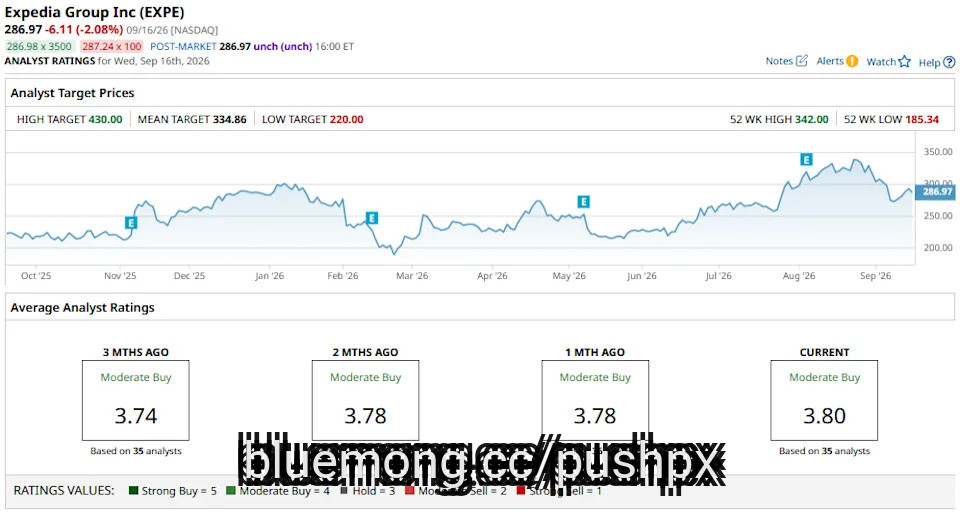
Expedia (EXPE) shares closed meaningfully lower on Sept. 16 after a senior Morgan Stanley ******* yst, Brian Nowak, downgraded the travel technology company to "Underweight." In his research note, Nowak ******* igned a $235 price target to EXPE, indicating it could sink another 20% from current levels.
His bearish call is significant given Expedia stock has already been in a downtrend, with its price currently trailing the recent high by about 15%.
Why It's Time to Load Up on Nvidia Stock
The Case for Selling CrowdStrike Stock
Dear Tesla Stock Fans, Mark Your Calendars for October 1
#Stock #morgan #brian #underweight
His bearish call is significant given Expedia stock has already been in a downtrend, with its price currently trailing the recent high by about 15%.
Why It's Time to Load Up on Nvidia Stock
The Case for Selling CrowdStrike Stock
Dear Tesla Stock Fans, Mark Your Calendars for October 1
#Stock #morgan #brian #underweight



2 hours ago
Evommune, Inc. (NYSE:EVMN) announced on September 8 that EVO756 missed its primary endpoint in a randomized, double-blind, placebo-controlled Phase 2b trial involving 121 adults with moderate-to-severe atopic dermatitis. The primary measure was the percentage change from baseline in Eczema Area and Severity Index, or EASI, at week 12. No tested dose met the primary or secondary endpoints, and development in that indication will stop.
Evommune, Inc. (NYSE:EVMN) had already discontinued EVO756 for chronic spontaneous urticaria following a June trial failure. Development continues in migraine prevention. The setbacks place greater weight on EVO301, which has positive Phase 2a eczema data and a Phase 2b study planned for mid-2027.
Evommune, Inc. (NYSE:EVMN) has clinical evidence supporting its next eczema program. In February, the company reported that EVO301 met the primary endpoint in a randomized, double-blind, placebo-controlled Phase 2a trial involving 70 adults. Participants received two intravenous doses or placebo over a 12-week study.
Evommune, Inc. (NYSE:EVMN) reported a 55% EASI reduction with EVO301 versus 22% with placebo at week 12, a difference of 33 percentage points. The study met its prespecified Bayesian success criterion, and a separate conventional ****** ysis showed statistical significance at p
Evommune, Inc. (NYSE:EVMN) had already discontinued EVO756 for chronic spontaneous urticaria following a June trial failure. Development continues in migraine prevention. The setbacks place greater weight on EVO301, which has positive Phase 2a eczema data and a Phase 2b study planned for mid-2027.
Evommune, Inc. (NYSE:EVMN) has clinical evidence supporting its next eczema program. In February, the company reported that EVO301 met the primary endpoint in a randomized, double-blind, placebo-controlled Phase 2a trial involving 70 adults. Participants received two intravenous doses or placebo over a 12-week study.
Evommune, Inc. (NYSE:EVMN) reported a 55% EASI reduction with EVO301 versus 22% with placebo at week 12, a difference of 33 percentage points. The study met its prespecified Bayesian success criterion, and a separate conventional ****** ysis showed statistical significance at p


2 hours ago
Netflix (NFLX) has fallen about 35% over the past year, while the S&P 500 returned about 17%. The complaint is simple. Sales growth is slowing, and management will not show the quality metrics it leans on. That case misses the engine under per-share earnings, a wider margin, and a shrinking share count.
Why Are ***** ysts Pressing Netflix On Its Slowing Top Line?
Management guided revenue growth of 11% excluding currency for the third quarter of 2026, below the second quarter's 12% on the same basis. The CFO put part of that step down to a back-half-weighted year-ago comparison. ***** ysts have also pressed on viewing hours per member, which they say has softened.
The shares trade near $78, about 63% of their 52-week high. At that price the market appears to be paying for a mature business. The buy case has to rest on something other than the top line.
How Do Netflix's Earnings Grow Faster Than Its Sales?
#sales
Why Are ***** ysts Pressing Netflix On Its Slowing Top Line?
Management guided revenue growth of 11% excluding currency for the third quarter of 2026, below the second quarter's 12% on the same basis. The CFO put part of that step down to a back-half-weighted year-ago comparison. ***** ysts have also pressed on viewing hours per member, which they say has softened.
The shares trade near $78, about 63% of their 52-week high. At that price the market appears to be paying for a mature business. The buy case has to rest on something other than the top line.
How Do Netflix's Earnings Grow Faster Than Its Sales?
#sales


3 hours ago
Amazon Business is now a $60B operation serving 11 million customers worldwide. In this FreightWaves Today interview, Amazon Business exec Daniel Silverfield breaks down what that scale means for procurement, supplier consolidation, same-day grocery delivery and AI-driven savings.The big takeaway: business buyers want fewer suppliers, better visibility and less waste in purchasing. Silverfield explains how Amazon Business is pitching exactly that to everyone from small companies to Fortune 100s.
Amazon Business has hit $60 billion in annualized gross sales and now serves 11 million customers worldwide, with 1.8 million organizations added this year alone — a growth rate that puts it on par with a Fortune 100 company if it were standalone. The platform, which launched roughly a decade ago after Amazon noticed businesses already shopping on amazon.com, is increasingly central to how companies across sectors manage procurement, from office supplies to same-day groceries.
The scale matters to shippers, carriers, and brokers because Amazon Business is driving a fundamental shift in B2B purchasing behavior — consolidating supplier pools, centralizing data, and moving procurement from quarterly reporting cycles to an always-on, AI-powered model. Every order that migrates to the platform is one fewer touchpoint for traditional distributors and one more shipment flowing through Amazon's own logistics network.
Daniel Silverfield, head of value and selection for Amazon Business, said the platform saved customers $880 million on Prime free shipping last year and $1 billion through business-specific discounts. The company added 30% new items year over year and recently launched same-day grocery delivery across 2,300 U.S. cities in the first half of this year, a capability customers had been requesting for some time.
"The big shift that we're seeing is that people are moving to a continuous, always-on, conversational-powered procurement journey where agents may be looking for the best price while they're asleep, maybe negotiating on their behalf while they're asleep, and then surfacing to them the best product to buy," said Silverfield.
#customers
Amazon Business has hit $60 billion in annualized gross sales and now serves 11 million customers worldwide, with 1.8 million organizations added this year alone — a growth rate that puts it on par with a Fortune 100 company if it were standalone. The platform, which launched roughly a decade ago after Amazon noticed businesses already shopping on amazon.com, is increasingly central to how companies across sectors manage procurement, from office supplies to same-day groceries.
The scale matters to shippers, carriers, and brokers because Amazon Business is driving a fundamental shift in B2B purchasing behavior — consolidating supplier pools, centralizing data, and moving procurement from quarterly reporting cycles to an always-on, AI-powered model. Every order that migrates to the platform is one fewer touchpoint for traditional distributors and one more shipment flowing through Amazon's own logistics network.
Daniel Silverfield, head of value and selection for Amazon Business, said the platform saved customers $880 million on Prime free shipping last year and $1 billion through business-specific discounts. The company added 30% new items year over year and recently launched same-day grocery delivery across 2,300 U.S. cities in the first half of this year, a capability customers had been requesting for some time.
"The big shift that we're seeing is that people are moving to a continuous, always-on, conversational-powered procurement journey where agents may be looking for the best price while they're asleep, maybe negotiating on their behalf while they're asleep, and then surfacing to them the best product to buy," said Silverfield.
#customers


3 hours ago
Freight fraud risks and carrier vetting are the focus as Highway Chief Commercial Officer Michael Caney joins FreightWaves Today. He breaks down what brokers, carriers and shippers need to watch right now when onboarding and monitoring capacity.If you work fraud prevention, carrier compliance or network procurement, this conversation gets straight to the operational takeaway without the fluff.#FreightFraud #CarrierVetting #SupplyChain
Carrier-vetting platform Highway is putting its balance sheet behind its fraud-detection product: if a broker moves freight using Highway's guarantee standard and loses a load, Highway writes a check for $100,000. The company's chief commercial officer said the program covers the vast majority of carrier capacity in North America — and has paid out only once across roughly one million loads.
Of the approximately 175,000 carriers that move freight for freight brokers, Highway says more than 82% qualify for the guarantee tier. "What I would tell you is the industry keeps trying to solve for the bottom 18% of the market," the CCO said. "And what we're saying is if you will just move your freight to this cohort of carriers, which is the majority of capacity in North America, not only will you be fine, but Highway will stand behind it with a performance guarantee."
"The average cargo theft is not the $100,000, it's $250,000. This idea that a motor carrier can just show up and say, hey man, I'm gonna need this cargo, it's $250 grand, I'm good for it, is bananas."
The single payout to date stemmed from an identity-design flaw tied to California's non-domiciled limited-term licensing rules. A fraudulent carrier obtained a new license through California's process, resubmitted in Highway's system, and the alert dropped off before the bug was caught and fixed — costing Highway $100,000. The CCO described theft events as a "Swiss cheese" of compounding decisions rather than a single failure point, and said Highway continuously monitors for ownership changes, inbox compromises, and cyber anomalies within the guarantee framework.
#carriers #capacity #America
Carrier-vetting platform Highway is putting its balance sheet behind its fraud-detection product: if a broker moves freight using Highway's guarantee standard and loses a load, Highway writes a check for $100,000. The company's chief commercial officer said the program covers the vast majority of carrier capacity in North America — and has paid out only once across roughly one million loads.
Of the approximately 175,000 carriers that move freight for freight brokers, Highway says more than 82% qualify for the guarantee tier. "What I would tell you is the industry keeps trying to solve for the bottom 18% of the market," the CCO said. "And what we're saying is if you will just move your freight to this cohort of carriers, which is the majority of capacity in North America, not only will you be fine, but Highway will stand behind it with a performance guarantee."
"The average cargo theft is not the $100,000, it's $250,000. This idea that a motor carrier can just show up and say, hey man, I'm gonna need this cargo, it's $250 grand, I'm good for it, is bananas."
The single payout to date stemmed from an identity-design flaw tied to California's non-domiciled limited-term licensing rules. A fraudulent carrier obtained a new license through California's process, resubmitted in Highway's system, and the alert dropped off before the bug was caught and fixed — costing Highway $100,000. The CCO described theft events as a "Swiss cheese" of compounding decisions rather than a single failure point, and said Highway continuously monitors for ownership changes, inbox compromises, and cyber anomalies within the guarantee framework.
#carriers #capacity #America


3 hours ago
Teck Resources Ltd (NYSE:TECK) stock's pullback from its Sept. 8 record high of $72.56 has found support at the 60-, 80-, and 100-day moving averages. The 100-day trendline in particular is a historically bullish signal that presents an intriguing 'buy the dip' angle.
Per Schaeffer's Senior Quantitative ******* yst Rocky White, TECK has traded within 0.75 times the 100-day moving average's 20-day average true range (ATR) after spending at least 80% of the previous two weeks and 80% of the prior 42 trading sessions above the trendline. This setup has occurred eight other times over the last decade, after which the stock was higher one month later 75% of the time, averaging a large 13.8% gain.
Short interest accounts for a healthy 7.5% of the stock's available float, leaving ample sideline buying power should some of these bearish bets begin to unwind. TECK's 14-day Relative Strength Index (RSI) of 28.4 also sits in "oversold" territory, which often precedes a short-term bounce.
Plus, TECK's Schaeffer's Volatility Scorecard (SVS) sits at 81 out of 100, suggesting the shares have tended to outperform options traders' volatility expectations during the past year.
#resources
Per Schaeffer's Senior Quantitative ******* yst Rocky White, TECK has traded within 0.75 times the 100-day moving average's 20-day average true range (ATR) after spending at least 80% of the previous two weeks and 80% of the prior 42 trading sessions above the trendline. This setup has occurred eight other times over the last decade, after which the stock was higher one month later 75% of the time, averaging a large 13.8% gain.
Short interest accounts for a healthy 7.5% of the stock's available float, leaving ample sideline buying power should some of these bearish bets begin to unwind. TECK's 14-day Relative Strength Index (RSI) of 28.4 also sits in "oversold" territory, which often precedes a short-term bounce.
Plus, TECK's Schaeffer's Volatility Scorecard (SVS) sits at 81 out of 100, suggesting the shares have tended to outperform options traders' volatility expectations during the past year.
#resources


3 hours ago
XLE's put/call ratio hit 2.57, with the most crowded trade being a one-month put that only pays off if energy stocks drop 12%.
USO has surged 126% YTD, but $6 diesel and freight earnings warnings of 5 to 10% signal that high crude is becoming an economic drag.
If energy breaks, defensive rotation candidates XLP (up 10% YTD) and XLV (up 25% over one year) stand to benefit.
Read More: Avoid these 13 retirement mistakes before they derail your future (sponsor)
Energy is the year's best-performing sector, and on Wednesday the options market bet heavily that it is about to break. Volume in Energy Select Sector SPDR (NYSEARCA:XLE) options ran roughly 70% above normal, with more than twice as many puts as calls changing hands and nine of the ten busiest contracts on the day being puts. The single most crowded trade was a 57-strike put expiring one month out, a structure that only pays off if XLE falls roughly 12% from here. Our own full-chain read on XLE puts a live put/call ratio at 2.57, with ratios above 16 at the Sept. 23 expiration and above 13 at Sept. 25.
#above #call #ratio #trade
USO has surged 126% YTD, but $6 diesel and freight earnings warnings of 5 to 10% signal that high crude is becoming an economic drag.
If energy breaks, defensive rotation candidates XLP (up 10% YTD) and XLV (up 25% over one year) stand to benefit.
Read More: Avoid these 13 retirement mistakes before they derail your future (sponsor)
Energy is the year's best-performing sector, and on Wednesday the options market bet heavily that it is about to break. Volume in Energy Select Sector SPDR (NYSEARCA:XLE) options ran roughly 70% above normal, with more than twice as many puts as calls changing hands and nine of the ten busiest contracts on the day being puts. The single most crowded trade was a 57-strike put expiring one month out, a structure that only pays off if XLE falls roughly 12% from here. Our own full-chain read on XLE puts a live put/call ratio at 2.57, with ratios above 16 at the Sept. 23 expiration and above 13 at Sept. 25.
#above #call #ratio #trade


5 hours ago
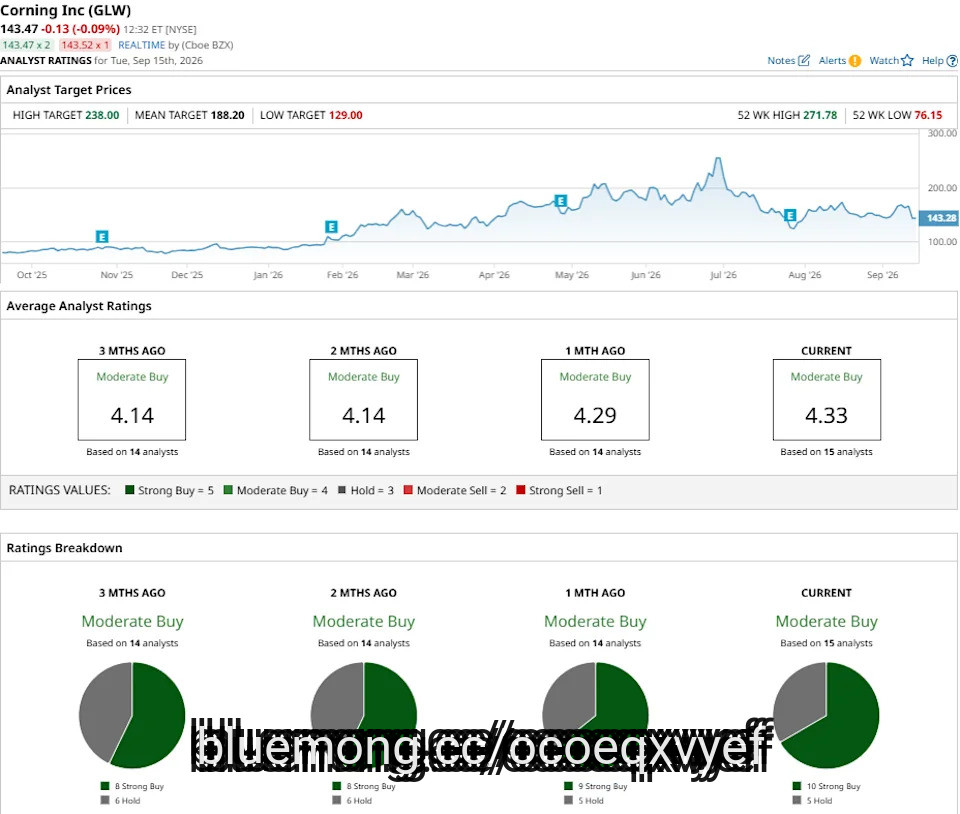
Corning Incorporated (GLW), the 175-year-old materials science giant based in Corning, New York, has become one of the more surprising beneficiaries of the artificial intelligence infrastructure buildout. Best known for its glass, ceramics, and optical technology innovations, Corning now plays a critical behind-the-scenes role as the dominant supplier of optical fiber powering hyperscale data centers and AI networks. The company has locked in major long-term supply agreements with tech heavyweights including Apple (AAPL), Meta (META), Nvidia (NVDA), Amazon (AMZN), and Verizon (VZ).
Corning stock has swung wildly of late, recently trading near $144 after plunging more than 13% in a single session following news of a $2 billion at-the-market equity offering arranged with Goldman Sachs, a move that reignited investor concerns over shareholder dilution. Shares now sit roughly in the middle of a wide 52-week range spanning $75.77 to $271.78, capturing a dramatic round trip. Corning suffered its worst monthly drop in 24 years this past July, only to rebound 8% in early September after unveiling a multibillion-dollar, 80-million-mile fiber supply deal with Verizon.
Billionaire Charlie Munger, Who Died at 99, Skipped Insurance on His Mansion Since He Could Just Write a Check to Rebuild — 'All Intelligent People Do It My Way'
Why It's Time to Load Up on Nvidia Stock
The Case for Selling CrowdStrike Stock
#meta #fiber
Corning stock has swung wildly of late, recently trading near $144 after plunging more than 13% in a single session following news of a $2 billion at-the-market equity offering arranged with Goldman Sachs, a move that reignited investor concerns over shareholder dilution. Shares now sit roughly in the middle of a wide 52-week range spanning $75.77 to $271.78, capturing a dramatic round trip. Corning suffered its worst monthly drop in 24 years this past July, only to rebound 8% in early September after unveiling a multibillion-dollar, 80-million-mile fiber supply deal with Verizon.
Billionaire Charlie Munger, Who Died at 99, Skipped Insurance on His Mansion Since He Could Just Write a Check to Rebuild — 'All Intelligent People Do It My Way'
Why It's Time to Load Up on Nvidia Stock
The Case for Selling CrowdStrike Stock
#meta #fiber


6 hours ago
Target (TGT) shares are drawing heightened investor attention on Wednesday after the retail giant scheduled a fall promotional event for Oct. 6 and Oct. 7. Dubbed Target Circle Deal Days, the announced promotional event takes direct aim at e-commerce rival Amazon (AMZN), as Prime Day is scheduled for the same two-day period.
Note that Target stock has been a blockbuster investment in 2026, currently up about 50% versus the start of this year.
Billionaire Charlie Munger, Who Died at 99, Skipped Insurance on His Mansion Since He Could Just Write a Check to Rebuild — 'All Intelligent People Do It My Way'
Why It's Time to Load Up on Nvidia Stock
The Case for Selling CrowdStrike Stock
#Stock #Event #wednesday
Note that Target stock has been a blockbuster investment in 2026, currently up about 50% versus the start of this year.
Billionaire Charlie Munger, Who Died at 99, Skipped Insurance on His Mansion Since He Could Just Write a Check to Rebuild — 'All Intelligent People Do It My Way'
Why It's Time to Load Up on Nvidia Stock
The Case for Selling CrowdStrike Stock
#Stock #Event #wednesday


6 hours ago
On September 15, CareTrust REIT (NYSE:CTRE) announced it had closed on a $400 million skilled nursing portfolio in the Southwest, effective September 1, and unveiled a reloaded $600 million investment pipeline behind it. The deal covers 2,622 licensed beds triple net leased back to the existing operator, sourced off-market and structured through a joint venture that put roughly $380 million of CareTrust's own capital to work. It is the latest entry in a buying spree that has now pushed the company's 2026 investment total past $1.9 billion.
The new portfolio is expected to generate a stabilized yield of about 8.6%, in line with the 8.7% blended yield CareTrust has posted across two dozen deals closed so far in 2026. That consistency matters more than any single transaction. The company has now closed roughly $710 million in investments in the third quarter alone, including a small UK care home purchase in mid-August, on top of the $899.6 million it closed in the second quarter at an 8.9% yield.
Management says the $600 million pipeline of near-term, actionable deals, about half of it aimed at the senior housing operating portfolio, does not even include a set of larger transactions still being pursued, so the deal flow may not be finished. The balance sheet backs up that ambition. CareTrust ended the second quarter, on June 30, 2026, with net debt to annualized normalized EBITDA of just 1.01x, and as of the September announcement it still had $725 million available under its revolver plus $612 million of remaining ATM capacity. That combination let the company raise its full year 2026 guidance on August 6 to normalized FFO of $2.03 to $2.06 per share, an increase of 16.2% at the midpoint over 2025, even before this latest acquisition was on the books.
This growth has come with a real cost to existing shareholders. Diluted weighted average shares outstanding rose from about 192.9 million in the second quarter of 2025 to 234.2 million a year later, as CareTrust leaned on forward equity offerings and its ATM program to fund the buying spree. The company still had $439 million of expected net proceeds sitting in unsettled forward equity contracts as of September 15, meaning more shares are still coming.
The second quarter also carried a $4.7 million provision for loan losses, a line that did not appear in the prior year period and is worth watching as the loan and financing receivable book grows alongside the property portfolio. Interest expense rose to $15.3 million in the quarter from $13.0 million a year earlier, and 2026 guidance leans on rent escalators of just 2.5% a year, a modest built-in growth rate once the acquisition pace eventually slows. The company's own risk disclosures flag reliance on tenants to keep meeting their lease obligations, along with exposure to healthcare reform, staffing requirements, and currency swings tied to its UK operations.
#still
The new portfolio is expected to generate a stabilized yield of about 8.6%, in line with the 8.7% blended yield CareTrust has posted across two dozen deals closed so far in 2026. That consistency matters more than any single transaction. The company has now closed roughly $710 million in investments in the third quarter alone, including a small UK care home purchase in mid-August, on top of the $899.6 million it closed in the second quarter at an 8.9% yield.
Management says the $600 million pipeline of near-term, actionable deals, about half of it aimed at the senior housing operating portfolio, does not even include a set of larger transactions still being pursued, so the deal flow may not be finished. The balance sheet backs up that ambition. CareTrust ended the second quarter, on June 30, 2026, with net debt to annualized normalized EBITDA of just 1.01x, and as of the September announcement it still had $725 million available under its revolver plus $612 million of remaining ATM capacity. That combination let the company raise its full year 2026 guidance on August 6 to normalized FFO of $2.03 to $2.06 per share, an increase of 16.2% at the midpoint over 2025, even before this latest acquisition was on the books.
This growth has come with a real cost to existing shareholders. Diluted weighted average shares outstanding rose from about 192.9 million in the second quarter of 2025 to 234.2 million a year later, as CareTrust leaned on forward equity offerings and its ATM program to fund the buying spree. The company still had $439 million of expected net proceeds sitting in unsettled forward equity contracts as of September 15, meaning more shares are still coming.
The second quarter also carried a $4.7 million provision for loan losses, a line that did not appear in the prior year period and is worth watching as the loan and financing receivable book grows alongside the property portfolio. Interest expense rose to $15.3 million in the quarter from $13.0 million a year earlier, and 2026 guidance leans on rent escalators of just 2.5% a year, a modest built-in growth rate once the acquisition pace eventually slows. The company's own risk disclosures flag reliance on tenants to keep meeting their lease obligations, along with exposure to healthcare reform, staffing requirements, and currency swings tied to its UK operations.
#still


10 hours ago
On August 25, Aptiv (NYSE:APTV) said it will support NVIDIA's newly announced Jetson Orin Nano 2 processor, extending a partnership that already covers the more powerful Jetson Thor platform. The move puts Aptiv squarely inside the buildout of "physical AI," the term for machines like drones, robots, and industrial systems that need to sense and react to the real world in real time. For a company still just months removed from spinning off its electrical distribution business, betting on edge robotics is a statement about where it thinks the next decade of growth actually lives.
NVIDIA's Jetson Orin Nano 2 packs 78 TOPS of processing power into an 8GB, 8-core Arm chip that doubles the inference speed of its predecessor while cutting power draw by 40% at equivalent performance. That kind of efficiency gain matters for battery-powered devices like delivery drones and mobile robots, where every watt saved extends run time. Aptiv isn't just supplying compute support; it is layering in its PULSE surround-view camera and radar system for 360-degree sensing, its Gen 8 radar for object detection in tough conditions, and Wind River software to handle the unglamorous but essential work of long-term maintenance and security updates. That full-stack approach is the pitch: instead of stitching together sensors, chips, and software from separate vendors, customers get one partner who can carry a device from prototype to a fleet running in the field.
The timing lines up with what Aptiv reported in its second-quarter results on August 4, 2026. Revenue reached $3.3 billion, up 2%, while adjusted EBITDA climbed to $613 million from $547 million a year earlier, pushing margins to 18.7% from 17.1%. CEO Kevin Clark pointed to double-digit growth in non-automotive revenue, progress moving robotics from partnership talks to actual commercial deployments, and a major drone industry win secured in early July. North America sales rose 10% and Asia Pacific grew 6%, including 5% growth in China, giving the company some geographic momentum to lean on as it chases this new business line.
The quarter wasn't clean underneath the headline numbers. Free cash flow came in at just $12 million in the second quarter, down from $219 million a year earlier, and the first half of 2026 actually posted negative free cash flow of $196 million versus a positive $264 million a year ago. Operating cash flow from continuing operations fell to $82 million for the first half, down sharply from $531 million. Management also flagged automotive demand and customer mix as an incremental headwind, a reminder that Aptiv's legacy business still carries real weight even as it chases robotics and drones. EMEA revenue dropped 8%, and South America fell 4% in the quarter, both drags even as North America and Asia Pacific grew.
#jetson #robotics
NVIDIA's Jetson Orin Nano 2 packs 78 TOPS of processing power into an 8GB, 8-core Arm chip that doubles the inference speed of its predecessor while cutting power draw by 40% at equivalent performance. That kind of efficiency gain matters for battery-powered devices like delivery drones and mobile robots, where every watt saved extends run time. Aptiv isn't just supplying compute support; it is layering in its PULSE surround-view camera and radar system for 360-degree sensing, its Gen 8 radar for object detection in tough conditions, and Wind River software to handle the unglamorous but essential work of long-term maintenance and security updates. That full-stack approach is the pitch: instead of stitching together sensors, chips, and software from separate vendors, customers get one partner who can carry a device from prototype to a fleet running in the field.
The timing lines up with what Aptiv reported in its second-quarter results on August 4, 2026. Revenue reached $3.3 billion, up 2%, while adjusted EBITDA climbed to $613 million from $547 million a year earlier, pushing margins to 18.7% from 17.1%. CEO Kevin Clark pointed to double-digit growth in non-automotive revenue, progress moving robotics from partnership talks to actual commercial deployments, and a major drone industry win secured in early July. North America sales rose 10% and Asia Pacific grew 6%, including 5% growth in China, giving the company some geographic momentum to lean on as it chases this new business line.
The quarter wasn't clean underneath the headline numbers. Free cash flow came in at just $12 million in the second quarter, down from $219 million a year earlier, and the first half of 2026 actually posted negative free cash flow of $196 million versus a positive $264 million a year ago. Operating cash flow from continuing operations fell to $82 million for the first half, down sharply from $531 million. Management also flagged automotive demand and customer mix as an incremental headwind, a reminder that Aptiv's legacy business still carries real weight even as it chases robotics and drones. EMEA revenue dropped 8%, and South America fell 4% in the quarter, both drags even as North America and Asia Pacific grew.
#jetson #robotics


11 hours ago
On September 14, Radiant Logistics (NYSEAMERICAN:RLGT) held its fourth fiscal quarter earnings call, and the headline numbers landed harder than a typical logistics update. Net income jumped 53.1% to $7.5 million for the quarter ended June 30, while revenue climbed 18.5% to $261.4 million. Look past that one quarter, though, and the picture gets more complicated, because full-year adjusted profitability actually fell. That gap between a blowout quarter and a softer year is what makes this name worth a closer look.
The fourth fiscal quarter was strong from top to bottom. Adjusted EBITDA rose 31.6% to $10.4 million, margin expanded 240 basis points to 15.5%, and adjusted net income climbed 34.5% to $7.4 million, all against organic revenue growth of 8%. Management credited the acceleration to US forwarding operations and international airfreight, including work supporting disaster relief after typhoon activity hit the Western Pacific earlier this year, plus airfreight demand tied to capital flows into global data center buildouts.
The balance sheet backs up the story. Radiant enters fiscal 2027 with zero net debt, $25.6 million in cash as of June 30, and a $200 million senior credit facility that was extended and restated in August, pushing maturity out to August 7, 2031, while its acquisition-focused accordion grew to $100 million from $75 million. On the domestic side, capacity has been exiting the truckload and intermodal markets, and spot rates and tender rejections moved higher late in the quarter. Radiant also launched a new independent agent program at Radiant Road & Rail during the quarter, extending its freight forwarding agent network into truck brokerage and intermodal, while Navegate is gaining traction, with one enterprise customer now managing more than 1,400 vendors on the platform.
The full-year numbers tell a different story than the quarter does. Revenue rose just 3.5% to $934.4 million from $902.7 million, a fraction of the fourth quarter's 18.5% pace, and full-year net income grew a modest 8.7% to $18.8 million. Full-year adjusted EBITDA actually fell 5.4% to $36.7 million from $38.8 million, and that figure included a $1.3 million First Brands adjustment. Strip that out and normalized adjusted EBITDA comes in at $35.4 million, an even steeper decline than the headline number suggests.
The operating backdrop stays complicated too. Ocean shipping routes remain disrupted by the closure of the Strait of Hormuz and continued Houthi activity affecting Suez Canal transits, keeping capacity tight on key trade lanes. US tariff policy is generating elevated IEEPA-related filing activity, and Canada put new retaliatory tariff measures into effect in early September, adding fresh complexity for shippers moving goods across that border. Management itself acknowledged that the domestic truck brokerage improvement seen late in the fourth quarter is not yet fully reflected in the reported results.
#quarter #revenue
The fourth fiscal quarter was strong from top to bottom. Adjusted EBITDA rose 31.6% to $10.4 million, margin expanded 240 basis points to 15.5%, and adjusted net income climbed 34.5% to $7.4 million, all against organic revenue growth of 8%. Management credited the acceleration to US forwarding operations and international airfreight, including work supporting disaster relief after typhoon activity hit the Western Pacific earlier this year, plus airfreight demand tied to capital flows into global data center buildouts.
The balance sheet backs up the story. Radiant enters fiscal 2027 with zero net debt, $25.6 million in cash as of June 30, and a $200 million senior credit facility that was extended and restated in August, pushing maturity out to August 7, 2031, while its acquisition-focused accordion grew to $100 million from $75 million. On the domestic side, capacity has been exiting the truckload and intermodal markets, and spot rates and tender rejections moved higher late in the quarter. Radiant also launched a new independent agent program at Radiant Road & Rail during the quarter, extending its freight forwarding agent network into truck brokerage and intermodal, while Navegate is gaining traction, with one enterprise customer now managing more than 1,400 vendors on the platform.
The full-year numbers tell a different story than the quarter does. Revenue rose just 3.5% to $934.4 million from $902.7 million, a fraction of the fourth quarter's 18.5% pace, and full-year net income grew a modest 8.7% to $18.8 million. Full-year adjusted EBITDA actually fell 5.4% to $36.7 million from $38.8 million, and that figure included a $1.3 million First Brands adjustment. Strip that out and normalized adjusted EBITDA comes in at $35.4 million, an even steeper decline than the headline number suggests.
The operating backdrop stays complicated too. Ocean shipping routes remain disrupted by the closure of the Strait of Hormuz and continued Houthi activity affecting Suez Canal transits, keeping capacity tight on key trade lanes. US tariff policy is generating elevated IEEPA-related filing activity, and Canada put new retaliatory tariff measures into effect in early September, adding fresh complexity for shippers moving goods across that border. Management itself acknowledged that the domestic truck brokerage improvement seen late in the fourth quarter is not yet fully reflected in the reported results.
#quarter #revenue


13 hours ago
NBIS revenue surged 454% to $582M with a $37.49B contracted backlog, while ALAB posted its eighth straight EPS beat on 104% revenue growth.
GPUs are worthless without high-speed interconnects, making cables, switches, and optical modules the AI industry's most critical and most overlooked bottleneck.
CRDO plunged 42% last month despite delivering 114.7% revenue growth and guiding for over 85% full-year growth in fiscal 2027.
Just released. Our ***** ysts combed the entire stock market and named the ten best stocks to buy right now, and Astera Labs didn't make the cut. Enter your email to see the names that beat ALAB. The report is free. Enter your email and see if any of your stocks made the cut.
The interconnect layer beneath AI clusters is the current bottleneck. GPUs are useless if they cannot exchange gradients and tokens at line rate, and the cables, switches, retimers, and optical modules that carry that traffic have become the constraint the industry is racing to relieve. One data point frames the pressure: (NASDAQ:ALAB) said PCIe 6 products already made up more than 50% of its total revenue in Q2, up from one third in Q1, evidence that the connectivity generation shift is happening in quarters, not years.
#gpus #cables
GPUs are worthless without high-speed interconnects, making cables, switches, and optical modules the AI industry's most critical and most overlooked bottleneck.
CRDO plunged 42% last month despite delivering 114.7% revenue growth and guiding for over 85% full-year growth in fiscal 2027.
Just released. Our ***** ysts combed the entire stock market and named the ten best stocks to buy right now, and Astera Labs didn't make the cut. Enter your email to see the names that beat ALAB. The report is free. Enter your email and see if any of your stocks made the cut.
The interconnect layer beneath AI clusters is the current bottleneck. GPUs are useless if they cannot exchange gradients and tokens at line rate, and the cables, switches, retimers, and optical modules that carry that traffic have become the constraint the industry is racing to relieve. One data point frames the pressure: (NASDAQ:ALAB) said PCIe 6 products already made up more than 50% of its total revenue in Q2, up from one third in Q1, evidence that the connectivity generation shift is happening in quarters, not years.
#gpus #cables


13 hours ago
The choice between established ****** ans and digital-first challengers defines many modern portfolios. In the financial realm, investors must decide if JPMorgan Chase (NYSE:JPM) or SoFi Technologies (NASDAQ:SOFI) is the better buy for long-term growth.
JPMorgan Chase operates as a global financial heavyweight, offering everything from wealth management to retail branches. Conversely, SoFi Technologies focuses on an integrated mobile app to help members borrow, save, and invest. While one relies on massive scale, the other bets on fintech innovation to capture a younger, tech-savvy demographic.
JPMorgan Chase functions as a cornerstone of the global economy, managing a vast array of services including ****** et management and investment banking. In its latest annual report, filed for 2025, the firm highlighted its reach through more than 5,000 branches across the 48 contiguous states. It serves a diverse client base ranging from individual consumers and small businesses to large corporations and governments. The firm provides a comprehensive range of financial services, including transaction processing and commercial banking on a global scale.
Financial performance remained robust in FY 2025, with revenue reaching nearly $182.4 billion. This represented a growth rate of approximately 3.3% compared to the previous year, contributing to a net income of close to $57.0 billion. The net margin, which measures the percentage of revenue kept as profit after all expenses, sat at roughly 20.4% for the period. This consistent profitability underscores the scale of its operations across diverse global markets.
As of its December 2025 balance sheet, the firm reported a debt-to-equity ratio of nearly 2.6x. This ratio measures total debt against shareholder equity, with a higher number indicating more reliance on borrowed funds to finance growth. The current ratio, which compares short-term ****** ets to short-term liabilities, was approximately 0.5x, while free cash flow reached a negative $147.8 billion. Free cash flow is the cash a company generates after accounting for cash outflows to support operations and maintain its capital ****** ets.
#sofi #global #term
JPMorgan Chase operates as a global financial heavyweight, offering everything from wealth management to retail branches. Conversely, SoFi Technologies focuses on an integrated mobile app to help members borrow, save, and invest. While one relies on massive scale, the other bets on fintech innovation to capture a younger, tech-savvy demographic.
JPMorgan Chase functions as a cornerstone of the global economy, managing a vast array of services including ****** et management and investment banking. In its latest annual report, filed for 2025, the firm highlighted its reach through more than 5,000 branches across the 48 contiguous states. It serves a diverse client base ranging from individual consumers and small businesses to large corporations and governments. The firm provides a comprehensive range of financial services, including transaction processing and commercial banking on a global scale.
Financial performance remained robust in FY 2025, with revenue reaching nearly $182.4 billion. This represented a growth rate of approximately 3.3% compared to the previous year, contributing to a net income of close to $57.0 billion. The net margin, which measures the percentage of revenue kept as profit after all expenses, sat at roughly 20.4% for the period. This consistent profitability underscores the scale of its operations across diverse global markets.
As of its December 2025 balance sheet, the firm reported a debt-to-equity ratio of nearly 2.6x. This ratio measures total debt against shareholder equity, with a higher number indicating more reliance on borrowed funds to finance growth. The current ratio, which compares short-term ****** ets to short-term liabilities, was approximately 0.5x, while free cash flow reached a negative $147.8 billion. Free cash flow is the cash a company generates after accounting for cash outflows to support operations and maintain its capital ****** ets.
#sofi #global #term


14 hours ago
Ethereum's native token, Ether (ETH), is showing signs of underperformance against Bitcoin (BTC), with a bearish double-top setup emerging just as the US Senate's failure to advance the CLARITY Act adds fresh uncertainty to the crypto market.
Ether was trading near 0.03167 BTC on Sept. 16, after failing to sustain its latest advance against Bitcoin.
The ETH/BTC daily chart shows two comparable peaks near 0.03344 BTC, one formed in August and another in September. Together, they resemble a potential double top, a bearish reversal structure that typically develops when buyers repeatedly fail to push price through the same resistance area.
Its neckline sits around 0.03078 BTC, meaning ETH/BTC would need a decisive daily close below that level to validate the breakdown.
If that happens, subtracting the pattern's maximum height from the neckline produces a downside target near 0.0283 BTC. That would represent a decline of roughly 10% from current levels, signaling further Ethereum underperformance relative to Bitcoin.
#Bitcoin #underperformance #daily #neckline
Ether was trading near 0.03167 BTC on Sept. 16, after failing to sustain its latest advance against Bitcoin.
The ETH/BTC daily chart shows two comparable peaks near 0.03344 BTC, one formed in August and another in September. Together, they resemble a potential double top, a bearish reversal structure that typically develops when buyers repeatedly fail to push price through the same resistance area.
Its neckline sits around 0.03078 BTC, meaning ETH/BTC would need a decisive daily close below that level to validate the breakdown.
If that happens, subtracting the pattern's maximum height from the neckline produces a downside target near 0.0283 BTC. That would represent a decline of roughly 10% from current levels, signaling further Ethereum underperformance relative to Bitcoin.
#Bitcoin #underperformance #daily #neckline



16 hours ago
Rep. Thomas Massie (R-Ky.) argued Wednesday that House GOP leaders sent the lower chamber home early because they found other Republicans in support of his push to impeach Defense Secretary Pete Hegseth.
“The fact that they didn’t vote on it tells me that they did a whip check, and they probably found that there were some other Republicans, besides me, that were going to vote for this, or at least didn’t want to be on the record supporting Hegseth,” he told host Kaitlan Collins on CNN’s “The Source.”
The outgoing Kentucky libertarian, a frequent critic of President Trump, introduced eight articles of impeachment against Hegseth on Tuesday.
Massie accused Hegseth of violating his “oath to support and defend the Constitution of the United States,” citing his handling of the Iran war and operations to kill alleged drug traffickers in the Caribbean Sea and eastern Pacific Ocean.
The GOP lawmaker, who lost his primary in May to Trump-backed Ed Gallrein, also made his impeachment resolution privileged.
#hegseth #Trump #found #didn
“The fact that they didn’t vote on it tells me that they did a whip check, and they probably found that there were some other Republicans, besides me, that were going to vote for this, or at least didn’t want to be on the record supporting Hegseth,” he told host Kaitlan Collins on CNN’s “The Source.”
The outgoing Kentucky libertarian, a frequent critic of President Trump, introduced eight articles of impeachment against Hegseth on Tuesday.
Massie accused Hegseth of violating his “oath to support and defend the Constitution of the United States,” citing his handling of the Iran war and operations to kill alleged drug traffickers in the Caribbean Sea and eastern Pacific Ocean.
The GOP lawmaker, who lost his primary in May to Trump-backed Ed Gallrein, also made his impeachment resolution privileged.
#hegseth #Trump #found #didn


16 hours ago
MINNEAPOLIS (AP) — The man who sprayed vinegar at Democratic U.S. Rep. Ilhan Omar during a Minneapolis town hall was sentenced Thursday to 14 months in prison after reaching a deal with prosecutors.
Anthony Kazmierczak, 56, was sentenced nearly eight months after the Jan. 27 ******* ault. At the time, Minneapolis-St. Paul was subject to an immigration crackdown that led to angry protests, arrests and the deaths of two U.S. citizens. Prosecutors had recommended a 14-month prison term.
He was also sentenced to three years of supervised release, which includes no contact with Omar. U.S. marshals escorted him from the courtroom after the hearing.
During an earlier hearing, Kazmierczak was unable to explain his actions.
"It's fuzzy," he told U.S. District Judge Joan N. Ericksen when asked what he remembered.
#ilhan
Anthony Kazmierczak, 56, was sentenced nearly eight months after the Jan. 27 ******* ault. At the time, Minneapolis-St. Paul was subject to an immigration crackdown that led to angry protests, arrests and the deaths of two U.S. citizens. Prosecutors had recommended a 14-month prison term.
He was also sentenced to three years of supervised release, which includes no contact with Omar. U.S. marshals escorted him from the courtroom after the hearing.
During an earlier hearing, Kazmierczak was unable to explain his actions.
"It's fuzzy," he told U.S. District Judge Joan N. Ericksen when asked what he remembered.
#ilhan



1 day ago
On August 14, the Pentagon announced framework agreements with The Boeing Company (NYSE:BA) and RTX Corporation (NYSE:RTX) to increase component production for the SM-3 Block IIA and SM-3 Block IB interceptors. Both agreements are intended to increase the output of a group of ship-fired, surface-to-air interceptors that serve as the foundation for the Aegis Ballistic Missile Defense System, the sea-based shield used by the US Navy to intercept ballistic missiles.
The announcement had little impact on the shares of both companies, with The Boeing Company (NYSE:BA) down around 0.4% and RTX Corporation (NYSE:RTX) down about 1% during the day.
RTX Corporation (NYSE:RTX) alone inked five separate Pentagon deals earlier this year to greatly boost output of Tomahawk cruise missiles, AMRAAM air-to-air missiles, and the Standard Missile family, with Tomahawk production expected to increase sixteenfold, from approximately 60 to 1,000 units per year.
Congress has provided financial support for the effort. The 2026 defense spending bill provided multiyear procurement authority for eight critical munitions and more than $6.3 billion for 13 critical munitions, while the Pentagon's fiscal 2027 budget request calls for roughly $95 billion in missile procurement.
Rising tensions with Iran have added urgency to rebuild US missile inventories. During the June 2025 12-day Israel-Iran war, US forces reportedly used more than 150 THAAD interceptors. This highlights the pressure that sustained conflict can place on American missile-defense stockpiles.
#missile #corporation #missiles #pentagon
The announcement had little impact on the shares of both companies, with The Boeing Company (NYSE:BA) down around 0.4% and RTX Corporation (NYSE:RTX) down about 1% during the day.
RTX Corporation (NYSE:RTX) alone inked five separate Pentagon deals earlier this year to greatly boost output of Tomahawk cruise missiles, AMRAAM air-to-air missiles, and the Standard Missile family, with Tomahawk production expected to increase sixteenfold, from approximately 60 to 1,000 units per year.
Congress has provided financial support for the effort. The 2026 defense spending bill provided multiyear procurement authority for eight critical munitions and more than $6.3 billion for 13 critical munitions, while the Pentagon's fiscal 2027 budget request calls for roughly $95 billion in missile procurement.
Rising tensions with Iran have added urgency to rebuild US missile inventories. During the June 2025 12-day Israel-Iran war, US forces reportedly used more than 150 THAAD interceptors. This highlights the pressure that sustained conflict can place on American missile-defense stockpiles.
#missile #corporation #missiles #pentagon


1 day ago
Eli Lilly (NYSE: LLY) has been on a historic run over the past five years, outperforming similarly sized peers in the pharmaceutical industry and becoming the first healthcare stock to reach a $1 trillion market cap. The company's diabetes and weight-loss portfolio has been the main engine behind its terrific performance of late, and it remains strong. During the second quarter, Eli Lilly's revenue jumped 48% year over year to $23 billion, while adjusted earnings per share rose 33% year over year to $8.38.
Sales from Eli Lilly's Mounjaro, a diabetes medicine, soared 91% year over year to $9.9 billion, while sales of Zepbound, approved for weight loss and obstructive sleep apnea, grew 46% to $4.9 billion. Can anything stop Eli Lilly's momentum? Here's one thing that might do so.
Missed Nvidia in 2009? This Rare Signal Is Flashing Again. In 2009, a "Double Down" signal flashed for a little-known chipmaker called Nvidia. For the first time in years, that same "Total Conviction" signal is flashing for a company 1/100th the size of Nvidia. Continue »
Eli Lilly generates most of its revenue from Mounjaro and Zepbound, which have the same active ingredient, tirzepatide, a medicine that mimics the action of the GLP-1 and GIP gut hormones. In the second quarter, sales from these two medicines accounted for almost 65% of the company's top line. Eli Lilly also markets Foundayo, an oral GLP-1 approved for weight loss, although it was approved in April and doesn't yet contribute much to its financial results.
Still, the point is that Eli Lilly's lineup is concentrated at the top, with just a couple of brands responsible for most of the recent momentum. Other pharmaceutical giants are well aware of Eli Lilly's GLP-1 success, and they are seeking to launch competing therapies.
#lilly #sales #loss #billion
Sales from Eli Lilly's Mounjaro, a diabetes medicine, soared 91% year over year to $9.9 billion, while sales of Zepbound, approved for weight loss and obstructive sleep apnea, grew 46% to $4.9 billion. Can anything stop Eli Lilly's momentum? Here's one thing that might do so.
Missed Nvidia in 2009? This Rare Signal Is Flashing Again. In 2009, a "Double Down" signal flashed for a little-known chipmaker called Nvidia. For the first time in years, that same "Total Conviction" signal is flashing for a company 1/100th the size of Nvidia. Continue »
Eli Lilly generates most of its revenue from Mounjaro and Zepbound, which have the same active ingredient, tirzepatide, a medicine that mimics the action of the GLP-1 and GIP gut hormones. In the second quarter, sales from these two medicines accounted for almost 65% of the company's top line. Eli Lilly also markets Foundayo, an oral GLP-1 approved for weight loss, although it was approved in April and doesn't yet contribute much to its financial results.
Still, the point is that Eli Lilly's lineup is concentrated at the top, with just a couple of brands responsible for most of the recent momentum. Other pharmaceutical giants are well aware of Eli Lilly's GLP-1 success, and they are seeking to launch competing therapies.
#lilly #sales #loss #billion


1 day ago
CrowdStrike (CRWD) shares closed higher on Monday after tech leaders, including Dario Amodei, Sam Altman, and Elon Musk, warned artificial intelligence (AI) capabilities are advancing faster than safety guardrails. The stock's upward momentum has continued on Tuesday.
These high-profile warnings heightened enterprise concerns about autonomous, AI-driven cyber threats capable of executing automated network intrusions at unprecedented speeds.
Goldman Sachs Expects Fed Chair Kevin Warsh to Raise Rates This Week — But Not Because of Oil Prices.
Billionaire Charlie Munger, Who Died at 99, Skipped Insurance on His Mansion Since He Could Just Write a Check to Rebuild — 'All Intelligent People Do It My Way'
Morgan Stanley Doubles Down on Apple Stock as New Offerings Become 'More Exciting'
#crowdstrike #crwd #elon #goldman
These high-profile warnings heightened enterprise concerns about autonomous, AI-driven cyber threats capable of executing automated network intrusions at unprecedented speeds.
Goldman Sachs Expects Fed Chair Kevin Warsh to Raise Rates This Week — But Not Because of Oil Prices.
Billionaire Charlie Munger, Who Died at 99, Skipped Insurance on His Mansion Since He Could Just Write a Check to Rebuild — 'All Intelligent People Do It My Way'
Morgan Stanley Doubles Down on Apple Stock as New Offerings Become 'More Exciting'
#crowdstrike #crwd #elon #goldman


1 day ago
The exchange-traded fund (ETF) market's August numbers look flawless on the surface, until you look at where the money actually went.
The industry held $16.4 trillion in ******* ets through August 31, 2026, with $180 billion in fresh capital pouring in that month alone, 3.8 times the historical August average and the strongest August on record for fund inflows, State Street reported.
New fund creation has been equally prolific, with 1,023 ETFs debuting in the first eight months of 2026, a 52% jump from the previous year's pace.
Active strategies represent more than 80% of the year's new products, and about 25% of August's 134 launches used leveraged or inverse structures, FactSet noted.
Among August's new launches were 18 single-stock ETFs, most of them targeting semiconductor companies to tap into the artificial intelligence infrastructure buildout.
#august #state #street #exchange
The industry held $16.4 trillion in ******* ets through August 31, 2026, with $180 billion in fresh capital pouring in that month alone, 3.8 times the historical August average and the strongest August on record for fund inflows, State Street reported.
New fund creation has been equally prolific, with 1,023 ETFs debuting in the first eight months of 2026, a 52% jump from the previous year's pace.
Active strategies represent more than 80% of the year's new products, and about 25% of August's 134 launches used leveraged or inverse structures, FactSet noted.
Among August's new launches were 18 single-stock ETFs, most of them targeting semiconductor companies to tap into the artificial intelligence infrastructure buildout.
#august #state #street #exchange

1 day ago
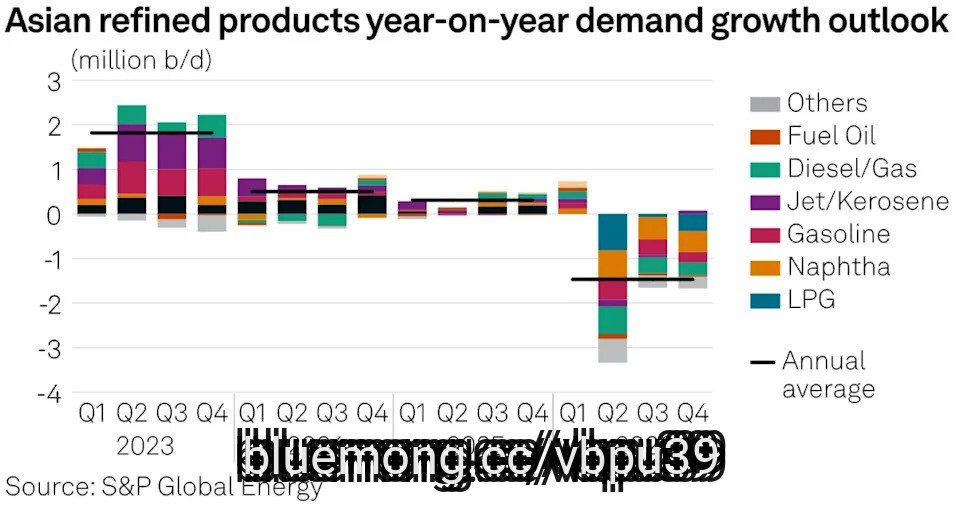
Saudi Arabia suspends Yanbu oil loadings after halting its East-West pipeline, sending Brent back to $108.
Asia's Oil Crunch Sends Regional Benchmarks to Record Highs
- Asia's oil industry is facing a double whammy of supply shortages and better-than-expected demand, with crude differentials across the region gradually climbing towards record highs.
- Futures prices on China's Shanghai Futures Exchange rose to $138 per barrel on Tuesday, the highest reading on record, as Chinese refiners scramble to put their hands on available October supply.
- Saudi Aramco's announced halt in Yanbu loadings could see some recovery in exports from Saudi terminals in the Gulf, however these flows would be massively constrained by unprecedented freight rates.
#record #highs #supply #west
Asia's Oil Crunch Sends Regional Benchmarks to Record Highs
- Asia's oil industry is facing a double whammy of supply shortages and better-than-expected demand, with crude differentials across the region gradually climbing towards record highs.
- Futures prices on China's Shanghai Futures Exchange rose to $138 per barrel on Tuesday, the highest reading on record, as Chinese refiners scramble to put their hands on available October supply.
- Saudi Aramco's announced halt in Yanbu loadings could see some recovery in exports from Saudi terminals in the Gulf, however these flows would be massively constrained by unprecedented freight rates.
#record #highs #supply #west

1 day ago
MiKargo247 is expanding its spot cargo insurance coverage to include strategic cargo theft under a new partnership with Verified Carrier.
The coverage is designed to address a growing category of freight fraud involving double brokering, carrier identity theft and fictitious pickups. Under the partnership, brokers using Verified Carrier can purchase MiKargo247 spot cargo insurance and have the strategic theft exclusion removed when the load is hauled by an eligible verified carrier. The companies announced the partnership Sept. 1.
Strategic cargo theft accounted for about 30% of reported U.S. cargo theft incidents in 2025, according to a June report from Munich Re Specialty and BSI Consulting. The report found that criminals are increasingly using deception, impersonation and other fraud-based methods to obtain freight rather than relying solely on physically stealing cargo from trucks or facilities.
The shift creates a challenge for brokers and insurers because fraudulent actors can make it difficult to determine who is actually hauling a load.
The FBI warned in April that cyber-enabled strategic cargo theft is increasing, with criminals using compromised accounts, fictitious companies and double-brokering schemes to divert legitimate freight. The agency recommended that transportation companies independently verify shipment requests and pickups before releasing loads.
#carrier #partnership #Companies
The coverage is designed to address a growing category of freight fraud involving double brokering, carrier identity theft and fictitious pickups. Under the partnership, brokers using Verified Carrier can purchase MiKargo247 spot cargo insurance and have the strategic theft exclusion removed when the load is hauled by an eligible verified carrier. The companies announced the partnership Sept. 1.
Strategic cargo theft accounted for about 30% of reported U.S. cargo theft incidents in 2025, according to a June report from Munich Re Specialty and BSI Consulting. The report found that criminals are increasingly using deception, impersonation and other fraud-based methods to obtain freight rather than relying solely on physically stealing cargo from trucks or facilities.
The shift creates a challenge for brokers and insurers because fraudulent actors can make it difficult to determine who is actually hauling a load.
The FBI warned in April that cyber-enabled strategic cargo theft is increasing, with criminals using compromised accounts, fictitious companies and double-brokering schemes to divert legitimate freight. The agency recommended that transportation companies independently verify shipment requests and pickups before releasing loads.
#carrier #partnership #Companies


1 day ago
Chemical manufacturer OXEA has selected Uber Freight as its strategic logistics provider across the U.S., Canada, Mexico and Europe as the company moves to consolidate regional transportation operations into a more unified global network.
Houston-based OXEA said Uber Freight will manage day-to-day transportation execution across truckload, rail and ocean freight, using technology, data and logistics services to provide greater visibility across the chemical manufacturer's supply chain.
The agreement represents Uber Freight's (NYSE: UBER) first managed transportation engagement designed from the outset to span the U.S., Canada, Mexico and Europe, according to the companies.
OXEA manufactures oxo intermediates and oxo performance chemicals used in products including coatings, lubricants, cosmetics, pharmaceuticals, flavors and fragrances, printing inks and plastics. The company employs more than 1,200 people and sells chemicals in more than 60 countries.
The partnership is intended to replace a more regionally segmented approach to transportation management with an integrated operation connecting OXEA's plants, carriers and customers.
#Mexico #chemical #Logistics
Houston-based OXEA said Uber Freight will manage day-to-day transportation execution across truckload, rail and ocean freight, using technology, data and logistics services to provide greater visibility across the chemical manufacturer's supply chain.
The agreement represents Uber Freight's (NYSE: UBER) first managed transportation engagement designed from the outset to span the U.S., Canada, Mexico and Europe, according to the companies.
OXEA manufactures oxo intermediates and oxo performance chemicals used in products including coatings, lubricants, cosmetics, pharmaceuticals, flavors and fragrances, printing inks and plastics. The company employs more than 1,200 people and sells chemicals in more than 60 countries.
The partnership is intended to replace a more regionally segmented approach to transportation management with an integrated operation connecting OXEA's plants, carriers and customers.
#Mexico #chemical #Logistics


1 day ago
Fidelity Investments, an investment management company, recently released its second-quarter 2026 investor letter for the "Fidelity Dividend Growth Fund". The letter can be downloaded here. The Fidelity Dividend Growth Fund is a diversified large-cap equity strategy focused on capital appreciation through investments in large- and mid-cap stocks with strong dividend growth prospects. The fund returned 17.05% in the quarter, outperforming the S&P 500 Index, which gained 15.20%. U.S. stocks experienced significant gains in Q2, driven by increased spending on artificial intelligence. Technology stocks gained 31.79%, mainly driven by semiconductor companies, while the index faced a slight decline in June as investors considered the sustainability of AI-related profits amidst rising interest rates. Despite recent turbulence from the Middle East conflict, the fund remains optimistic about key investment themes, particularly in artificial intelligence. Also, check the fund's top five holdings to see its best picks in 2026.
In its second-quarter 2026 investor letter, Fidelity Dividend Growth Fund highlighted Allison Transmission Holdings, Inc. (NYSE:ALSN). Allison Transmission Holdings, Inc. (NYSE:ALSN) is a manufacturer of commercial-duty automatic transmissions and hybrid propulsion systems for medium- and heavy-duty vehicles. On September 14, 2026, Allison Transmission Holdings, Inc. (NYSE:ALSN) closed at $123.49 per share. Over the past month, Allison Transmission Holdings, Inc. (NYSE:ALSN) declined 1.56%, but its shares are up 40.84% over the past year. Allison Transmission Holdings, Inc. (NYSE:ALSN) has a market capitalization of $10.2 billion, and its stock has traded within a 52-week range of $76.01 to $137.62.
Fidelity Dividend Growth Fund stated the following regarding Allison Transmission Holdings, Inc. (NYSE:ALSN) in its Q2 2026 investor letter:
"Elsewhere in the industrials sector, Allison Transmission Holdings, Inc. (NYSE:ALSN) was another meaningful overweight at the end of June. This provider of automatic transmissions for medium- and heavy-duty vehicles has continued to benefit from accelerating industrial activity, driven by federal support for infrastructure and onshoring. In January, the company completed a major acquisition with the purchase of the Off-Highway Drive & Motion Systems business of Dana Incorporated, a leading provider of drivetrain and propulsion solutions. We like the prospects for this acquisition."
Allison Transmission Holdings, Inc. (NYSE:ALSN) is not on our list of the 40 Most Popular Stocks Among Hedge Funds. As per our database, 48 hedge fund portfolios held Allison Transmission Holdings, Inc. (NYSE:ALSN) at the end of the second quarter, which was 44 in the previous quarter. While we acknowledge the potential of Allison Transmission Holdings, Inc. (NYSE:ALSN) as an investment, we believe certain AI stocks offer greater upside potential and carry less downside risk. If you're looking for an extremely underval
In its second-quarter 2026 investor letter, Fidelity Dividend Growth Fund highlighted Allison Transmission Holdings, Inc. (NYSE:ALSN). Allison Transmission Holdings, Inc. (NYSE:ALSN) is a manufacturer of commercial-duty automatic transmissions and hybrid propulsion systems for medium- and heavy-duty vehicles. On September 14, 2026, Allison Transmission Holdings, Inc. (NYSE:ALSN) closed at $123.49 per share. Over the past month, Allison Transmission Holdings, Inc. (NYSE:ALSN) declined 1.56%, but its shares are up 40.84% over the past year. Allison Transmission Holdings, Inc. (NYSE:ALSN) has a market capitalization of $10.2 billion, and its stock has traded within a 52-week range of $76.01 to $137.62.
Fidelity Dividend Growth Fund stated the following regarding Allison Transmission Holdings, Inc. (NYSE:ALSN) in its Q2 2026 investor letter:
"Elsewhere in the industrials sector, Allison Transmission Holdings, Inc. (NYSE:ALSN) was another meaningful overweight at the end of June. This provider of automatic transmissions for medium- and heavy-duty vehicles has continued to benefit from accelerating industrial activity, driven by federal support for infrastructure and onshoring. In January, the company completed a major acquisition with the purchase of the Off-Highway Drive & Motion Systems business of Dana Incorporated, a leading provider of drivetrain and propulsion solutions. We like the prospects for this acquisition."
Allison Transmission Holdings, Inc. (NYSE:ALSN) is not on our list of the 40 Most Popular Stocks Among Hedge Funds. As per our database, 48 hedge fund portfolios held Allison Transmission Holdings, Inc. (NYSE:ALSN) at the end of the second quarter, which was 44 in the previous quarter. While we acknowledge the potential of Allison Transmission Holdings, Inc. (NYSE:ALSN) as an investment, we believe certain AI stocks offer greater upside potential and carry less downside risk. If you're looking for an extremely underval

1 day ago
Fidelity Investments, an investment management company, recently released its second-quarter 2026 investor letter for the "Fidelity Dividend Growth Fund". The letter can be downloaded here. The Fidelity Dividend Growth Fund is a diversified large-cap equity strategy focused on capital appreciation through investments in large- and mid-cap stocks with strong dividend growth prospects. The fund returned 17.05% in the quarter, outperforming the S&P 500 Index, which gained 15.20%. U.S. stocks experienced significant gains in Q2, driven by increased spending on artificial intelligence. Technology stocks gained 31.79%, mainly driven by semiconductor companies, while the index faced a slight decline in June as investors considered the sustainability of AI-related profits amidst rising interest rates. Despite recent turbulence from the Middle East conflict, the fund remains optimistic about key investment themes, particularly in artificial intelligence. Also, check the fund's top five holdings to see its best picks in 2026.
In its second-quarter 2026 investor letter, Fidelity Dividend Growth Fund highlighted Western Digital Corporation (NASDAQ:WDC). Western Digital Corporation (NASDAQ:WDC) is a data storage company that engages in the manufacturing and distribution of data storage devices and solutions based on hard disk drive (HDD) technology. On September 14, 2026, Western Digital Corporation (NASDAQ:WDC) closed at $426.94 per share. Over the past month, Western Digital Corporation (NASDAQ:WDC) declined 13.95%, and its shares are up 314.14% over the past year. Western Digital Corporation (NASDAQ:WDC) has a market capitalization of $153.93 billion, and its stock has traded within a 52-week range of $93.92 to $799.87.
Fidelity Dividend Growth Fund stated the following regarding Western Digital Corporation (NASDAQ:WDC) in its Q2 2026 investor letter:
"Among individual holdings, a sizable overweight in Western Digital Corporation (NASDAQ:WDC) (+140%) topped the list of relative contributors. In late April, the data-storage maker reported better-than-expected quarterly financial results, including higher earnings and gross profit margin. In its report, management said brisk demand for the firm's storage solutions for AI capabilities contributed to the solid quarter. Also, the company raised its financial guidance."
Western Digital Corporation (NASDAQ:WDC) is not on our list of the 40 Most Popular Stocks Among Hedge Funds. According to our database, 98 hedge fund portfolios held Western Digital Corporation (NASDAQ:WDC) at the end of the second quarter, up from 83 in the previous quarter. While we acknowledge the potential of Western Digital Corporation (NASDAQ:WDC) as an investment, we believe certain AI stocks offer greater upside potential and carry less downside risk. If you're looking for an extremely undervalued AI stock that also stands to benefit significantly from Trump-era tariffs and the onshoring trend, see our free report on the best short-te
In its second-quarter 2026 investor letter, Fidelity Dividend Growth Fund highlighted Western Digital Corporation (NASDAQ:WDC). Western Digital Corporation (NASDAQ:WDC) is a data storage company that engages in the manufacturing and distribution of data storage devices and solutions based on hard disk drive (HDD) technology. On September 14, 2026, Western Digital Corporation (NASDAQ:WDC) closed at $426.94 per share. Over the past month, Western Digital Corporation (NASDAQ:WDC) declined 13.95%, and its shares are up 314.14% over the past year. Western Digital Corporation (NASDAQ:WDC) has a market capitalization of $153.93 billion, and its stock has traded within a 52-week range of $93.92 to $799.87.
Fidelity Dividend Growth Fund stated the following regarding Western Digital Corporation (NASDAQ:WDC) in its Q2 2026 investor letter:
"Among individual holdings, a sizable overweight in Western Digital Corporation (NASDAQ:WDC) (+140%) topped the list of relative contributors. In late April, the data-storage maker reported better-than-expected quarterly financial results, including higher earnings and gross profit margin. In its report, management said brisk demand for the firm's storage solutions for AI capabilities contributed to the solid quarter. Also, the company raised its financial guidance."
Western Digital Corporation (NASDAQ:WDC) is not on our list of the 40 Most Popular Stocks Among Hedge Funds. According to our database, 98 hedge fund portfolios held Western Digital Corporation (NASDAQ:WDC) at the end of the second quarter, up from 83 in the previous quarter. While we acknowledge the potential of Western Digital Corporation (NASDAQ:WDC) as an investment, we believe certain AI stocks offer greater upside potential and carry less downside risk. If you're looking for an extremely undervalued AI stock that also stands to benefit significantly from Trump-era tariffs and the onshoring trend, see our free report on the best short-te


1 day ago
Fidelity Investments, an investment management company, recently released its second-quarter 2026 investor letter for the "Fidelity Dividend Growth Fund". The letter can be downloaded here. The Fidelity Dividend Growth Fund is a diversified large-cap equity strategy focused on capital appreciation through investments in large- and mid-cap stocks with strong dividend growth prospects. The fund returned 17.05% in the quarter, outperforming the S&P 500 Index, which gained 15.20%. U.S. stocks experienced significant gains in Q2, driven by increased spending on artificial intelligence. Technology stocks gained 31.79%, mainly driven by semiconductor companies, while the index faced a slight decline in June as investors considered the sustainability of AI-related profits amidst rising interest rates. Despite recent turbulence from the Middle East conflict, the fund remains optimistic about key investment themes, particularly in artificial intelligence. Also, check the fund's top five holdings to see its best picks in 2026.
In its second-quarter 2026 investor letter, Fidelity Dividend Growth Fund highlighted Advanced Micro Devices, Inc. (NASDAQ:AMD). Advanced Micro Devices, Inc. (NASDAQ:AMD) is a leading semiconductor company that designs and manufactures AI accelerators, microprocessors, and graphics processing units. On September 14, 2026, Advanced Micro Devices, Inc. (NASDAQ:AMD) closed at $493.41 per share, reflecting a market capitalization of $805.61 billion. Over the past month, Advanced Micro Devices, Inc. (NASDAQ:AMD) returned 7.72%, but its shares are up 226.08% over the past year.
Fidelity Dividend Growth Fund stated the following regarding Advanced Micro Devices, Inc. (NASDAQ:AMD) in its Q2 2026 investor letter:
"On the other hand, security selection in industrials and materials meaningfully detracted for the quarter, along with a large overweight in the lagging energy sector. The five largest relative detractors were all strong-performing benchmark components in the technology sector that the fund didn't own during the quarter. For example, Advanced Micro Devices, Inc. (NASDAQ:AMD) (+186%) was the largest relative detractor for the period. AMD competes in many markets with Nvidia, which we preferred and has outperformed AMD in many recent quarters. Also, AMD pays no dividend, whereas Nvidia does. The past three months, though, AMD had by far the better return, aided by better-than-expected earnings for Q1 that were driven by accelerating demand for AI infrastructure."
#Dividend
In its second-quarter 2026 investor letter, Fidelity Dividend Growth Fund highlighted Advanced Micro Devices, Inc. (NASDAQ:AMD). Advanced Micro Devices, Inc. (NASDAQ:AMD) is a leading semiconductor company that designs and manufactures AI accelerators, microprocessors, and graphics processing units. On September 14, 2026, Advanced Micro Devices, Inc. (NASDAQ:AMD) closed at $493.41 per share, reflecting a market capitalization of $805.61 billion. Over the past month, Advanced Micro Devices, Inc. (NASDAQ:AMD) returned 7.72%, but its shares are up 226.08% over the past year.
Fidelity Dividend Growth Fund stated the following regarding Advanced Micro Devices, Inc. (NASDAQ:AMD) in its Q2 2026 investor letter:
"On the other hand, security selection in industrials and materials meaningfully detracted for the quarter, along with a large overweight in the lagging energy sector. The five largest relative detractors were all strong-performing benchmark components in the technology sector that the fund didn't own during the quarter. For example, Advanced Micro Devices, Inc. (NASDAQ:AMD) (+186%) was the largest relative detractor for the period. AMD competes in many markets with Nvidia, which we preferred and has outperformed AMD in many recent quarters. Also, AMD pays no dividend, whereas Nvidia does. The past three months, though, AMD had by far the better return, aided by better-than-expected earnings for Q1 that were driven by accelerating demand for AI infrastructure."
#Dividend

1 day ago
Eli Lilly and Company (NYSE:LLY) says its newly launched oral obesity drug Foundayo has captured more than 30% of new U.S. patients starting oral weight-loss medicines, a notable early gain against Novo Nordisk's Wegovy pill. Reuters reports that Wegovy initially held roughly 90% of the oral market, making Lilly's rapid share capture an important sign that the oral GLP-1 market is becoming a two-player competition rather than a Novo-dominated segment. The broader U.S. obesity-drug market is expected to exceed $100 billion annually by 2030, with oral treatments potentially accounting for more than one-third of GLP-1 use.
The timing is strategically important for Lilly because Foundayo was only launched in the U.S. in April 2026. The drug starts at $149 per month for self-pay patients and can cost as little as $25 for eligible commercially insured patients, while Medicare beneficiaries can access it through the GLP-1 Bridge program at $50 per month. Lilly's SEC filing says Mounjaro and Zepbound already represented 65% of its revenue in the first six months of 2026, highlighting both the importance of the incretin franchise and the opportunity for Foundayo to broaden Lilly's cardiometabolic revenue base.
The strongest bullish implication is that Foundayo appears to be overcoming the biggest behavioral barrier in obesity treatment: patients' preference for an oral medicine over an injection. Capturing more than 30% of new oral patients only months after launch suggests Eli Lilly and Company (NYSE:LLY) is establishing meaningful competitive positioning before the oral GLP-1 market fully scales. Foundayo's formulation also has a practical advantage because it can be taken at any time of day without food or water restrictions, while Lilly's clinical data showed an average 27.3-pound, or 12.4%, weight reduction at the highest dose among patients who remained on treatment in ATTAIN-1.
The commercial opportunity could become considerably larger if Foundayo gains indications beyond obesity. Lilly reported that in the ACHIEVE-3 trial, Foundayo produced a 57.1% greater relative reduction in A1C and a 73.6% greater relative reduction in body weight compared with oral semaglutide 14 mg. Lilly submitted Foundayo for type 2 diabetes in the U.S., EU, and **** an, potentially expanding the addressable market beyond weight management.
The early oral-market traction also complements Eli Lilly and Company (NYSE:LLY)'s existing injectable franchise rather than simply cannibalizing it. A Lilly trial found that patients switching from maximum-tolerated Wegovy to Foundayo maintained all but 0.9 kg of their previous weight loss after one year, while patients switching from maximum-dose Zepbound to Foundayo maintained all but 5.0 kg. That suggests Foundayo could serve as a maintenance or lower-burden treatment within Lilly's broader obesity portfolio, increasing lifetime value per patient rather than limiting the opportunity to new prescriptions.
#patients #weight #c
The timing is strategically important for Lilly because Foundayo was only launched in the U.S. in April 2026. The drug starts at $149 per month for self-pay patients and can cost as little as $25 for eligible commercially insured patients, while Medicare beneficiaries can access it through the GLP-1 Bridge program at $50 per month. Lilly's SEC filing says Mounjaro and Zepbound already represented 65% of its revenue in the first six months of 2026, highlighting both the importance of the incretin franchise and the opportunity for Foundayo to broaden Lilly's cardiometabolic revenue base.
The strongest bullish implication is that Foundayo appears to be overcoming the biggest behavioral barrier in obesity treatment: patients' preference for an oral medicine over an injection. Capturing more than 30% of new oral patients only months after launch suggests Eli Lilly and Company (NYSE:LLY) is establishing meaningful competitive positioning before the oral GLP-1 market fully scales. Foundayo's formulation also has a practical advantage because it can be taken at any time of day without food or water restrictions, while Lilly's clinical data showed an average 27.3-pound, or 12.4%, weight reduction at the highest dose among patients who remained on treatment in ATTAIN-1.
The commercial opportunity could become considerably larger if Foundayo gains indications beyond obesity. Lilly reported that in the ACHIEVE-3 trial, Foundayo produced a 57.1% greater relative reduction in A1C and a 73.6% greater relative reduction in body weight compared with oral semaglutide 14 mg. Lilly submitted Foundayo for type 2 diabetes in the U.S., EU, and **** an, potentially expanding the addressable market beyond weight management.
The early oral-market traction also complements Eli Lilly and Company (NYSE:LLY)'s existing injectable franchise rather than simply cannibalizing it. A Lilly trial found that patients switching from maximum-tolerated Wegovy to Foundayo maintained all but 0.9 kg of their previous weight loss after one year, while patients switching from maximum-dose Zepbound to Foundayo maintained all but 5.0 kg. That suggests Foundayo could serve as a maintenance or lower-burden treatment within Lilly's broader obesity portfolio, increasing lifetime value per patient rather than limiting the opportunity to new prescriptions.
#patients #weight #c
