

7 days ago
The NFL, the most parity-driven major sports league, feels even more wide open this year. Even the perceived powerhouses entering the season and teams with the best records have flaws that are already being picked at by opponents.
Betting markets and bettors are keeping plenty of teams alive. As of Thursday evening, FanDuel had 11 NFC teams with +164 or shorter odds to make the playoffs, and seven teams with +1100 odds or shorter to win the Super Bowl. Thirteen teams were at +2500 or shorter to hoist the Lombardi Trophy in February.
This open competition leads to opportunity. And opportunity leads to action. Even when the Nov. 10 trade deadline was still a ways away, teams started to address their weaknesses. The Dallas Cowboys added Joey Porter Jr., the Baltimore Ravens nabbed Cam Jurgens. Now with the deadline growing closer, NFL teams have decided to strike. First, Quenton Nelson was shipped off to the Seattle Seahawks from the sinking ship known as the Indianapolis Colts. Soon after, DeForest Buckner returned to the San Francisco 49ers to bolster their defensive front.
Then, on Thursday, the Chicago Bears fired a shot across the bow to the rest of the NFC and NFL, trading two future first-round draft picks and a fourth-rounder to the Tennessee ****** ans for defensive tackle Jeffery Simmons and a 2028 fifth-round selection.
Now that's some real action for a trade deadline!
#teams #deadline #open #odds
Betting markets and bettors are keeping plenty of teams alive. As of Thursday evening, FanDuel had 11 NFC teams with +164 or shorter odds to make the playoffs, and seven teams with +1100 odds or shorter to win the Super Bowl. Thirteen teams were at +2500 or shorter to hoist the Lombardi Trophy in February.
This open competition leads to opportunity. And opportunity leads to action. Even when the Nov. 10 trade deadline was still a ways away, teams started to address their weaknesses. The Dallas Cowboys added Joey Porter Jr., the Baltimore Ravens nabbed Cam Jurgens. Now with the deadline growing closer, NFL teams have decided to strike. First, Quenton Nelson was shipped off to the Seattle Seahawks from the sinking ship known as the Indianapolis Colts. Soon after, DeForest Buckner returned to the San Francisco 49ers to bolster their defensive front.
Then, on Thursday, the Chicago Bears fired a shot across the bow to the rest of the NFC and NFL, trading two future first-round draft picks and a fourth-rounder to the Tennessee ****** ans for defensive tackle Jeffery Simmons and a 2028 fifth-round selection.
Now that's some real action for a trade deadline!
#teams #deadline #open #odds



18 days ago
The Ballon d'Or may be heading to Germany, with Harry Kane back as the favourite to lift the trophy on betting sites.
After scoring 73 goals in 65 appearances for club and country, including six goals for England at the World Cup, Kane has been reinstalled as the favourite to clinch world football's top individual honour.
The race previously shifted in favour of Barcelona's Lamine Yamal, with the teenager going odds-on with the bookies after he played his part in Spain becoming the world champions for only the second time.
But ahead of the glittering ceremony on October 26, the England skipper could be about to add even more honours to his already impressive CV.
Were Kane to win the Ballon d'Or, he'd be only the fifth Englishman to clinch the prize and the first since Michael Owen in 2001. He was installed as the early frontrunner by football betting sites after a storming 2025/26 campaign.
#favourite
After scoring 73 goals in 65 appearances for club and country, including six goals for England at the World Cup, Kane has been reinstalled as the favourite to clinch world football's top individual honour.
The race previously shifted in favour of Barcelona's Lamine Yamal, with the teenager going odds-on with the bookies after he played his part in Spain becoming the world champions for only the second time.
But ahead of the glittering ceremony on October 26, the England skipper could be about to add even more honours to his already impressive CV.
Were Kane to win the Ballon d'Or, he'd be only the fifth Englishman to clinch the prize and the first since Michael Owen in 2001. He was installed as the early frontrunner by football betting sites after a storming 2025/26 campaign.
#favourite


18 days ago
Cowboys head coach Brian Schottenheimer defended his team's effort but not the results after Sunday night's loss to the Packers.
On a night when Dak Prescott threw two interceptions, Schottenheimer pointed the finger at turnovers.
"The effort is right, the fight is right, but mistakes are killing us," Schottenheimer said. "We've got to protect the football."
At 2-4, the Cowboys are not a good team right now, but there are no good teams in the NFC East and the Cowboys are actually the betting favorites to win the division. Schottenheimer thinks there's still a future for his team.
"We're in a hole. We've put ourselves there. There's one way out of it. I told our guys we've got to work, we've got to find solutions, we can't repeat mistakes. And they understand that," Schottenheimer said.
#schottenheimer #right #team #brian
On a night when Dak Prescott threw two interceptions, Schottenheimer pointed the finger at turnovers.
"The effort is right, the fight is right, but mistakes are killing us," Schottenheimer said. "We've got to protect the football."
At 2-4, the Cowboys are not a good team right now, but there are no good teams in the NFC East and the Cowboys are actually the betting favorites to win the division. Schottenheimer thinks there's still a future for his team.
"We're in a hole. We've put ourselves there. There's one way out of it. I told our guys we've got to work, we've got to find solutions, we can't repeat mistakes. And they understand that," Schottenheimer said.
#schottenheimer #right #team #brian


18 days ago
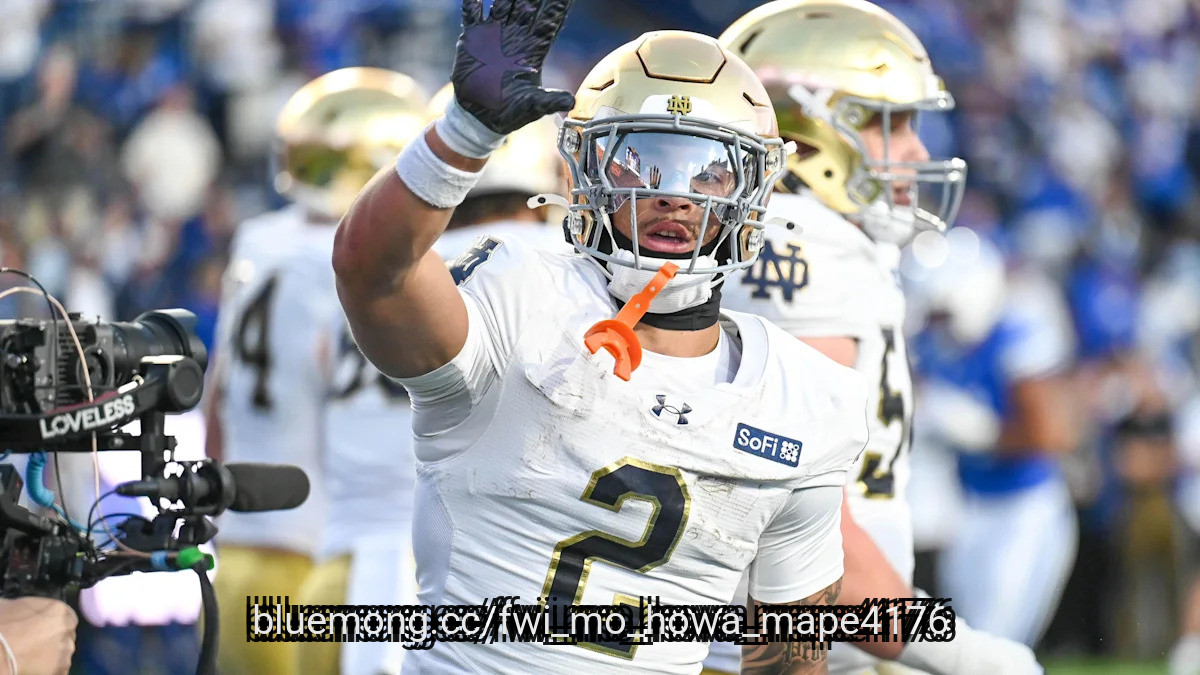
Notre Dame's 28-24 loss to BYU on Saturday night was all kinds of hurt. As we pointed out earlier, there are layers to his kind of loss (and that was barely scratching the surface). Obviously a loss like that is going to affect the rankings and the chances to win a national championship. Right?
Well… maybe.
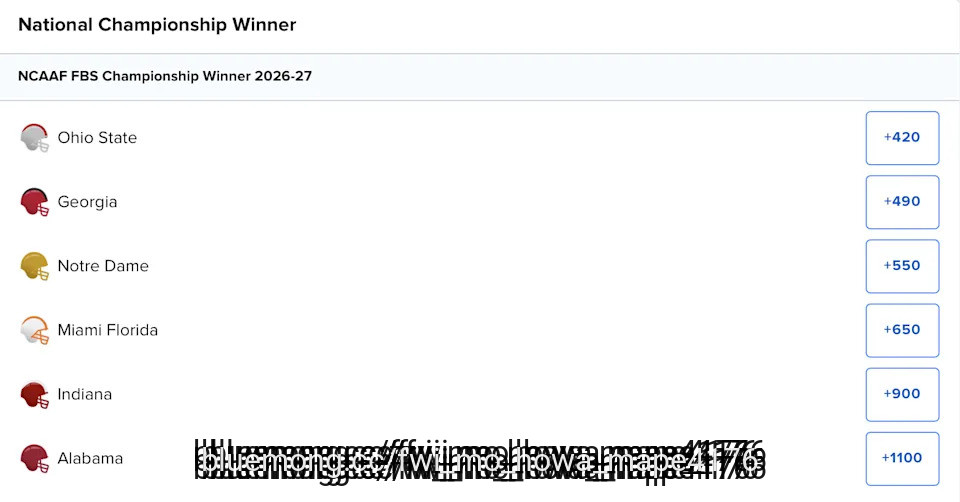
When the odds came out on Sunday, Notre Dame was one of the favorites to win the national championship. Some oddsmakers had the Irish having the nest odds in the country, but FanDuel Sportsbook had Notre Dame behind Ohio State — and now as of publishing this post, Georgia is ahead of the Irish too.
Betting odds aren't always the best predictors of future success, but it's quite something that even after a loss like the Irish just had to BYU — this whole season is still very much in play.
There are plenty of things we can rage about when it comes to this Notre Dame football team, but that is the case for most of the country as well. It's why a day like we just saw all over college football on Saturday happens. It's nuts, but that's what makes college football, college football.
#irish #Football
Well… maybe.
When the odds came out on Sunday, Notre Dame was one of the favorites to win the national championship. Some oddsmakers had the Irish having the nest odds in the country, but FanDuel Sportsbook had Notre Dame behind Ohio State — and now as of publishing this post, Georgia is ahead of the Irish too.
Betting odds aren't always the best predictors of future success, but it's quite something that even after a loss like the Irish just had to BYU — this whole season is still very much in play.
There are plenty of things we can rage about when it comes to this Notre Dame football team, but that is the case for most of the country as well. It's why a day like we just saw all over college football on Saturday happens. It's nuts, but that's what makes college football, college football.
#irish #Football

1 month ago
Sydney Sweeney recently found herself again at the center of a heated public conversation, this time over a provocative campaign that has divided opinions across sports and Hollywood.
What began as an advertisement for sports betting platform Novig quickly became a much bigger debate about women, sports, and the use of ***** appeal in advertising.
While some familiar names have been willing to make their feelings known, the silence of her former "Euphoria" costar, Zendaya, on the controversy has not gone unnoticed.
Image Press Agency / MEGA
As criticism continues to follow Sweeney's Novig campaign, Zendaya has chosen not to publicly join the conversation.
#sports #novig
What began as an advertisement for sports betting platform Novig quickly became a much bigger debate about women, sports, and the use of ***** appeal in advertising.
While some familiar names have been willing to make their feelings known, the silence of her former "Euphoria" costar, Zendaya, on the controversy has not gone unnoticed.
Image Press Agency / MEGA
As criticism continues to follow Sweeney's Novig campaign, Zendaya has chosen not to publicly join the conversation.
#sports #novig



2 months ago
Huntington Bancshares Incorporated (NASDAQ:HBAN) dropped 5.55% to $15.82 on September 16, 2026, close to its 52-week low. The price movement was triggered by a profit warning at a Barclays conference. Huntington brought down its 2027 EPS guidance from above $1.90 to the range of $1.75-$1.83, and its 2026 net interest income growth from 39%-43% to roughly 35%. What matters more than these numbers is the reason behind them. Deposit costs are rising, and loan pricing is tightening, and it landed on the day the Fed delivered its first interest rate hike since 2023. The drop therefore raises the question: is this an oversold bank or the opening crack in regional-bank margins?
A well-run bank has just lowered its guidance, citing intense competition for deposits and loans. If Huntington feels the margin pressure, then it is likely that its peers feel the same. This explains why Fifth Third shares slid 4.1% on the same afternoon alongside the whole financials group. The Fed's new hike makes the environment more unfavorable for the group in the near term. While rate increases eventually lift ***** et yields, banks must immediately offer higher deposit yields to retain balances, squeezing net interest margins in the near term. Furthermore, accelerated commercial real estate loan payoffs reduced total earning ***** ets, though these early payoffs lower credit risk on the loan book.
The selloff leans too much into the reset. A move to $1.75-$1.83 from above $1.90 is a modest single-digit trim. Huntington sustains its profit as well as its operational performance. Loans reached $189 billion from $50 billion in 2015. Deposits touched $222 billion. And one of the company's biggest growth engines, value-added fee income, compounded at a 14% annual rate since mid-2024, with year-to-date growth near 32%. The income helps offset a notable portion of the spread pressure and offers a competitive edge against pure spread lenders.
A higher-for-longer rate environment carries trade-offs for commercial banks. It drives up deposit expenses, reflecting the margin pressure Huntington reported. It also expands loan yields as credit ***** ets reprice. Deposit beta determines the net effect by measuring how much of each benchmark rate increase the bank transfers to depositors. After the rate hikes, deposit costs typically rise further, so betting on a near-term peak takes some faith. A lower beta allows fee revenue to support earnings, whereas a higher beta keeps the squeeze sustained over multiple quarters.
#bank #interest #Growth
A well-run bank has just lowered its guidance, citing intense competition for deposits and loans. If Huntington feels the margin pressure, then it is likely that its peers feel the same. This explains why Fifth Third shares slid 4.1% on the same afternoon alongside the whole financials group. The Fed's new hike makes the environment more unfavorable for the group in the near term. While rate increases eventually lift ***** et yields, banks must immediately offer higher deposit yields to retain balances, squeezing net interest margins in the near term. Furthermore, accelerated commercial real estate loan payoffs reduced total earning ***** ets, though these early payoffs lower credit risk on the loan book.
The selloff leans too much into the reset. A move to $1.75-$1.83 from above $1.90 is a modest single-digit trim. Huntington sustains its profit as well as its operational performance. Loans reached $189 billion from $50 billion in 2015. Deposits touched $222 billion. And one of the company's biggest growth engines, value-added fee income, compounded at a 14% annual rate since mid-2024, with year-to-date growth near 32%. The income helps offset a notable portion of the spread pressure and offers a competitive edge against pure spread lenders.
A higher-for-longer rate environment carries trade-offs for commercial banks. It drives up deposit expenses, reflecting the margin pressure Huntington reported. It also expands loan yields as credit ***** ets reprice. Deposit beta determines the net effect by measuring how much of each benchmark rate increase the bank transfers to depositors. After the rate hikes, deposit costs typically rise further, so betting on a near-term peak takes some faith. A lower beta allows fee revenue to support earnings, whereas a higher beta keeps the squeeze sustained over multiple quarters.
#bank #interest #Growth


2 months ago
Definium Therapeutics, Inc. (NASDAQ:DFTX) has now delivered a third consecutive positive Phase 3 readout for its LSD-based medication, the second in generalized anxiety disorder. The result puts the company on a viable route toward a potential FDA approval of an LSD-based treatment for generalized anxiety disorder, and considering how closely psychedelic stocks have historically traded on each other's data, the reading carries far more weight than Definium's own ticker.
On September 14, Definium Therapeutics, Inc. (NASDAQ:DFTX) announced that its drug DT120, an orally disintegrating tablet formulation of LSD, was successful in Panorama, the company's second late-stage anxiety trial. Over 12 weeks, patients who received a 100-microgram dose experienced a 9.8-point decline on the Hamilton Anxiety Rating Scale, a typical clinical measure, compared to a 4.7-point drop with placebo.
The resulting 5.1-point placebo-adjusted improvement is similar to what the company's first pivotal anxiety trial, Voyage, showed back in August: an 11.6-point improvement versus 6.2 for placebo, a 5.4-point separation that Jefferies called one of the strongest placebo-adjusted efficacy results ever seen in generalized anxiety disorder, and that Stifel simply described as "a clean win."
Psychedelic equities have a history of trading as a group rather than as individual names, and this tendency applies both ways. In February 2026, when Compass Pathways, the sector's other clinical leader developing a psilocybin-based drug for treatment-resistant depression, reported positive late-stage data, shares of Definium Therapeutics, Inc. (NASDAQ:DFTX), Atai Beckley, GH Research, and Helus Pharma all rose, some by double digits.
That correlation is significant here because Definium's win is an independent validation of the broader therapeutic argument on which Compass and others are betting: a single dose of a classic psychedelic, administered in a controlled clinical setting, can produce lasting improvements in serious mental health conditions via pathways different from existing SSRIs and other standard-of-care drugs.
#definium #placebo
On September 14, Definium Therapeutics, Inc. (NASDAQ:DFTX) announced that its drug DT120, an orally disintegrating tablet formulation of LSD, was successful in Panorama, the company's second late-stage anxiety trial. Over 12 weeks, patients who received a 100-microgram dose experienced a 9.8-point decline on the Hamilton Anxiety Rating Scale, a typical clinical measure, compared to a 4.7-point drop with placebo.
The resulting 5.1-point placebo-adjusted improvement is similar to what the company's first pivotal anxiety trial, Voyage, showed back in August: an 11.6-point improvement versus 6.2 for placebo, a 5.4-point separation that Jefferies called one of the strongest placebo-adjusted efficacy results ever seen in generalized anxiety disorder, and that Stifel simply described as "a clean win."
Psychedelic equities have a history of trading as a group rather than as individual names, and this tendency applies both ways. In February 2026, when Compass Pathways, the sector's other clinical leader developing a psilocybin-based drug for treatment-resistant depression, reported positive late-stage data, shares of Definium Therapeutics, Inc. (NASDAQ:DFTX), Atai Beckley, GH Research, and Helus Pharma all rose, some by double digits.
That correlation is significant here because Definium's win is an independent validation of the broader therapeutic argument on which Compass and others are betting: a single dose of a classic psychedelic, administered in a controlled clinical setting, can produce lasting improvements in serious mental health conditions via pathways different from existing SSRIs and other standard-of-care drugs.
#definium #placebo


2 months ago
Interested in Apollo Global Management Inc.? Here are five stocks we like better.
Apollo expects interest rates to remain higher for longer, while estimating only a 10%–20% chance of a recession over the next year. Consumer spending, inflation and AI infrastructure investment are supporting economic activity, though geopolitical and energy risks remain.
The firm views AI primarily as a large-scale financing opportunity, providing structured capital to investment-grade companies involved in digital infrastructure, energy, logistics and defense rather than betting on individual technology winners.
Apollo reported strong institutional fundraising, including a $12 billion first close for its Fund XI, and expects private-equity industry consolidation as smaller or overexpanded managers struggle to return capital. Its high-grade capital-solutions business has completed more than 200 transactions totaling roughly $150 billion.
Baggage Claim: Apollo's $7.7 Billion Bid to Acquire easyJet
#apollo #infrastructure #energy #grade
Apollo expects interest rates to remain higher for longer, while estimating only a 10%–20% chance of a recession over the next year. Consumer spending, inflation and AI infrastructure investment are supporting economic activity, though geopolitical and energy risks remain.
The firm views AI primarily as a large-scale financing opportunity, providing structured capital to investment-grade companies involved in digital infrastructure, energy, logistics and defense rather than betting on individual technology winners.
Apollo reported strong institutional fundraising, including a $12 billion first close for its Fund XI, and expects private-equity industry consolidation as smaller or overexpanded managers struggle to return capital. Its high-grade capital-solutions business has completed more than 200 transactions totaling roughly $150 billion.
Baggage Claim: Apollo's $7.7 Billion Bid to Acquire easyJet
#apollo #infrastructure #energy #grade


2 months ago
Zcash (ZEC) has climbed 177.8% in a month, and the traders betting against it are paying for that move.
One short was closed at a $10.68 million loss this week, and the largest position still open sits $33.87 million underwater on Hyperliquid.
Lookonchain flagged the closed trade before the exit, citing 26 consecutive wins and an 89% rate across 47 trades. That record had produced more than $9 million in profit.
The short covered 12,285 ZEC and was worth $18.31 million earlier, with liquidation set at $1,550.66. Hyperliquid data shows the account now holds no positions at all.
Garrett Jin holds the largest short still open, covering 37,999 ZEC worth $59.37 million. He built the position at an average price of $671.05, so it now shows an unrealized loss of $33.87 million.
#million #open
One short was closed at a $10.68 million loss this week, and the largest position still open sits $33.87 million underwater on Hyperliquid.
Lookonchain flagged the closed trade before the exit, citing 26 consecutive wins and an 89% rate across 47 trades. That record had produced more than $9 million in profit.
The short covered 12,285 ZEC and was worth $18.31 million earlier, with liquidation set at $1,550.66. Hyperliquid data shows the account now holds no positions at all.
Garrett Jin holds the largest short still open, covering 37,999 ZEC worth $59.37 million. He built the position at an average price of $671.05, so it now shows an unrealized loss of $33.87 million.
#million #open



2 months ago
SEIC provides investment processing, management, and operational platforms for private banks, financial advisors, institutional investors, and financial managers. SEIC's second-quarter fiscal 2026 report showed revenue of $641.6 million (a 14.7% year-over-year gain), adjusted per-share earnings of $1.66 (a 38% rise), $207 million in operating income (a 36% jump) – all of which were quarterly records – and the company has nearly $400 million in cash for more growth ahead.
It's no wonder SEIC shares are up 28% so far this year – and they could rise more. MoneyFlows data shows how Big Money investors are again betting heavily on the stock
Institutional volumes reveal plenty. Over the last year, SEIC has enjoyed strong investor demand, which we believe to be institutional support.
Each green bar signals unusually large volumes in SEIC shares. They reflect our proprietary inflow signal, pushing the stock higher:
Plenty of financials names are under accumulation right now. But there's a powerful fundamental story happening with SEI.
#institutional #investors #Stock
It's no wonder SEIC shares are up 28% so far this year – and they could rise more. MoneyFlows data shows how Big Money investors are again betting heavily on the stock
Institutional volumes reveal plenty. Over the last year, SEIC has enjoyed strong investor demand, which we believe to be institutional support.
Each green bar signals unusually large volumes in SEIC shares. They reflect our proprietary inflow signal, pushing the stock higher:
Plenty of financials names are under accumulation right now. But there's a powerful fundamental story happening with SEI.
#institutional #investors #Stock



2 months ago
An anonymous trader known only by their wallet address 0x3bca had their $7.19 million short position on the S&P 500 fully liquidated on Hyperliquid as the broader market rebounded on Wednesday. The liquidation was tracked via onchain data on Hypurrscan.
A short position is a trade that profits when an ***** et's price falls. The trader was betting the S&P 500 would decline, and when it moved in the opposite direction, the position was forcibly closed at a loss.
Related: Kevin O'Leary has a warning on Washington's tax plans
Liquidation happens when a leveraged trade moves far enough against the trader that the exchange automatically closes it to prevent further losses. Hyperliquid is a decentralized exchange that lets users trade perpetual contracts, derivatives that track an ***** et's price without an expiration date, on crypto, equities and commodities.
The Hypurrscan data shows the wallet held a total portfolio value of roughly $7.85 million at the time, with exposure to S&P 500, XYZ100, BTC and gold contracts. The transaction history reveals a flurry of activity in the seconds surrounding the liquidation, including multiple "Close Long" orders on Robinhood stock (xyz:HOOD) at $109.48 and fresh "Open Long" positions on BTC at approximately $76,568.
#trader #position #hyperliquid #short
A short position is a trade that profits when an ***** et's price falls. The trader was betting the S&P 500 would decline, and when it moved in the opposite direction, the position was forcibly closed at a loss.
Related: Kevin O'Leary has a warning on Washington's tax plans
Liquidation happens when a leveraged trade moves far enough against the trader that the exchange automatically closes it to prevent further losses. Hyperliquid is a decentralized exchange that lets users trade perpetual contracts, derivatives that track an ***** et's price without an expiration date, on crypto, equities and commodities.
The Hypurrscan data shows the wallet held a total portfolio value of roughly $7.85 million at the time, with exposure to S&P 500, XYZ100, BTC and gold contracts. The transaction history reveals a flurry of activity in the seconds surrounding the liquidation, including multiple "Close Long" orders on Robinhood stock (xyz:HOOD) at $109.48 and fresh "Open Long" positions on BTC at approximately $76,568.
#trader #position #hyperliquid #short


2 months ago
Tesla's (NASDAQ: TSLA) business is in an interesting spot. The company saw a significant sales rebound in the second quarter, with revenue rising 26% year over year to reach $22.5 billion. Recent reports also suggest that the company's share of the U.S. electric vehicle (EV) market has risen sharply amid a substantial sales contraction for the overall industry. And while the company's net income fell 5% annually in the second quarter, the business still recorded net income of $1.11 billion in the period.
On the other hand, positive net income doesn't tell the whole story because the metric doesn't include capital expenditures (capex) that are recorded as ****** ets on the balance sheet. With Tesla betting big on its robotaxi project, Optimus humanoid robots, and other potential growth drivers, the company recorded $5.79 billion in capex in Q2. As a result, the business posted -$1.1 billion in free cash flow (FCF) in the period. With FCF coming up negative lately, the company's $43.5 billion cash position provides a valuable cushion.
Missed Nvidia in 2009? This Rare Signal Is Flashing Again. In 2009, a "Double Down" signal flashed for a little-known chipmaker called Nvidia. For the first time in years, that same "Total Conviction" signal is flashing for a company 1/100th the size of Nvidia. Continue »
Tesla posted substantial sales growth in the second quarter as some of the pressures facing the brand eased, higher gas prices encouraged EV purchases, and price cuts helped spur demand. On the other hand, it remains to be seen whether this sales growth momentum is sustainable -- and banking on the core EV business to be an earnings driver that can support the company's highly growth-dependent valuation seems unwise.
While Tesla has seen competitors based in the U.S., ****** an, and South Korea reduce their focus on the EV market, BYD and other China-based rivals are making inroads in the market and continue to bet heavily on long-term growth in the category. CEO Elon Musk appears to have a good grasp on the challenging competitive landscape and has been positioning robotaxis, humanoid robots, and semiconductor projects as the core elements of his company's growth strategy.
#NVIDIA
On the other hand, positive net income doesn't tell the whole story because the metric doesn't include capital expenditures (capex) that are recorded as ****** ets on the balance sheet. With Tesla betting big on its robotaxi project, Optimus humanoid robots, and other potential growth drivers, the company recorded $5.79 billion in capex in Q2. As a result, the business posted -$1.1 billion in free cash flow (FCF) in the period. With FCF coming up negative lately, the company's $43.5 billion cash position provides a valuable cushion.
Missed Nvidia in 2009? This Rare Signal Is Flashing Again. In 2009, a "Double Down" signal flashed for a little-known chipmaker called Nvidia. For the first time in years, that same "Total Conviction" signal is flashing for a company 1/100th the size of Nvidia. Continue »
Tesla posted substantial sales growth in the second quarter as some of the pressures facing the brand eased, higher gas prices encouraged EV purchases, and price cuts helped spur demand. On the other hand, it remains to be seen whether this sales growth momentum is sustainable -- and banking on the core EV business to be an earnings driver that can support the company's highly growth-dependent valuation seems unwise.
While Tesla has seen competitors based in the U.S., ****** an, and South Korea reduce their focus on the EV market, BYD and other China-based rivals are making inroads in the market and continue to bet heavily on long-term growth in the category. CEO Elon Musk appears to have a good grasp on the challenging competitive landscape and has been positioning robotaxis, humanoid robots, and semiconductor projects as the core elements of his company's growth strategy.
#NVIDIA


2 months ago
The Commodity and Futures Trading Commission on Thursday paved the way to expand prediction markets and cryptocurrency trading on certain online platforms. DraftKings led a retreat for sports betting stocks Thursday.
The CFTC's Market Participation division issued a no-action letter, saying it will not take enforcement action against providers of what the agency called "passive software."
These passive software providers include companies and developers that offer prediction market, derivatives or crypto trading services, but do not take custody of user ***** ets.
"Subject to certain specified conditions, MPD will not recommend the Commission take enforcement action against any such provider or their relevant personnel for failure to register as an introducing broker or an ***** ociated person of an introducing broker," the regulator said in its announcement. However, this only applies to the "provision and marketing of software to facilitate trading" between users and registered futures commission merchants, introducing brokers, and designated contract merchants.
The decision follows a similar no-action letter from the CFTC in March, which responded to a request from self-custody crypto wallet provider Phantom Technologies, Bloomberg reported. Phantom Technologies partnered with Kalshi to offer predictions market trading to its more than 20 million crypto wallet holders.
#action
The CFTC's Market Participation division issued a no-action letter, saying it will not take enforcement action against providers of what the agency called "passive software."
These passive software providers include companies and developers that offer prediction market, derivatives or crypto trading services, but do not take custody of user ***** ets.
"Subject to certain specified conditions, MPD will not recommend the Commission take enforcement action against any such provider or their relevant personnel for failure to register as an introducing broker or an ***** ociated person of an introducing broker," the regulator said in its announcement. However, this only applies to the "provision and marketing of software to facilitate trading" between users and registered futures commission merchants, introducing brokers, and designated contract merchants.
The decision follows a similar no-action letter from the CFTC in March, which responded to a request from self-custody crypto wallet provider Phantom Technologies, Bloomberg reported. Phantom Technologies partnered with Kalshi to offer predictions market trading to its more than 20 million crypto wallet holders.
#action


2 months ago
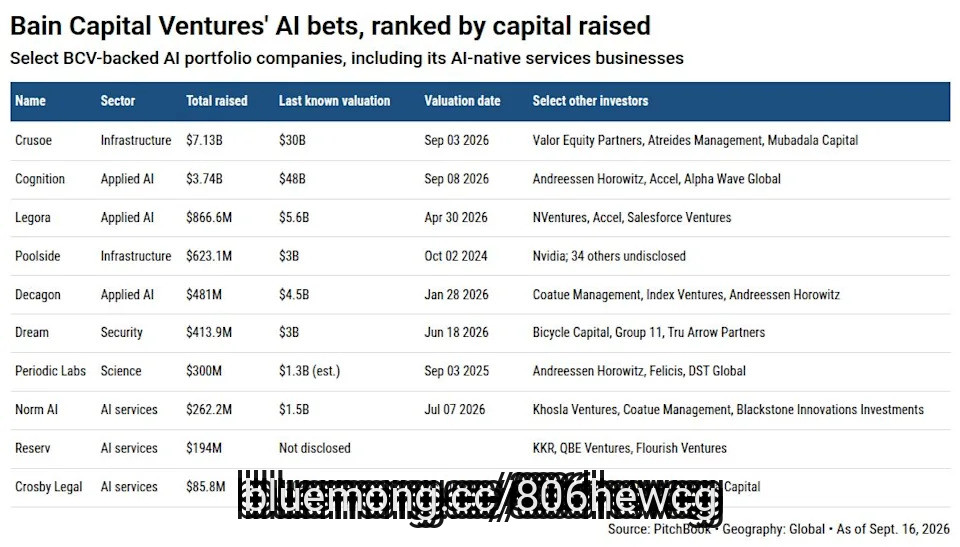
Bain Capital Ventures closed its 11th flagship fund at $1.6 billion on Wednesday, betting big on a "post-AGI world" that places AI agents as the chief economic driver of productivity.
The firm has been swapping software for something venture capital has never underwritten: AI-native companies that sell the work itself rather than the technology behind it.
Software startups made up 80% of Fund IX and around 20% of Fund X, said partner Matt Harris. For Fund X, AI-native startups made up 80% of the portfolio.
"The classic software startup is just not being born anymore," Harris said. "These companies where AI is just one feature among many, I think that's thoroughly uninteresting to us and, most importantly, to the most ambitious founders."
BCV defines "post-AGI" as AI agents being as productive as humans. This model's first proof point came in the form of Reserv, an AI-native insurance claims administration startup that the firm incubated with Altai Ventures and other partners. According to Harris, the company hit $100 million in revenue in its second full year. In May, the company raised a $125 million Series C.
#agents
The firm has been swapping software for something venture capital has never underwritten: AI-native companies that sell the work itself rather than the technology behind it.
Software startups made up 80% of Fund IX and around 20% of Fund X, said partner Matt Harris. For Fund X, AI-native startups made up 80% of the portfolio.
"The classic software startup is just not being born anymore," Harris said. "These companies where AI is just one feature among many, I think that's thoroughly uninteresting to us and, most importantly, to the most ambitious founders."
BCV defines "post-AGI" as AI agents being as productive as humans. This model's first proof point came in the form of Reserv, an AI-native insurance claims administration startup that the firm incubated with Altai Ventures and other partners. According to Harris, the company hit $100 million in revenue in its second full year. In May, the company raised a $125 million Series C.
#agents

2 months ago
On August 25, Aptiv (NYSE:APTV) said it will support NVIDIA's newly announced Jetson Orin Nano 2 processor, extending a partnership that already covers the more powerful Jetson Thor platform. The move puts Aptiv squarely inside the buildout of "physical AI," the term for machines like drones, robots, and industrial systems that need to sense and react to the real world in real time. For a company still just months removed from spinning off its electrical distribution business, betting on edge robotics is a statement about where it thinks the next decade of growth actually lives.
NVIDIA's Jetson Orin Nano 2 packs 78 TOPS of processing power into an 8GB, 8-core Arm chip that doubles the inference speed of its predecessor while cutting power draw by 40% at equivalent performance. That kind of efficiency gain matters for battery-powered devices like delivery drones and mobile robots, where every watt saved extends run time. Aptiv isn't just supplying compute support; it is layering in its PULSE surround-view camera and radar system for 360-degree sensing, its Gen 8 radar for object detection in tough conditions, and Wind River software to handle the unglamorous but essential work of long-term maintenance and security updates. That full-stack approach is the pitch: instead of stitching together sensors, chips, and software from separate vendors, customers get one partner who can carry a device from prototype to a fleet running in the field.
The timing lines up with what Aptiv reported in its second-quarter results on August 4, 2026. Revenue reached $3.3 billion, up 2%, while adjusted EBITDA climbed to $613 million from $547 million a year earlier, pushing margins to 18.7% from 17.1%. CEO Kevin Clark pointed to double-digit growth in non-automotive revenue, progress moving robotics from partnership talks to actual commercial deployments, and a major drone industry win secured in early July. North America sales rose 10% and Asia Pacific grew 6%, including 5% growth in China, giving the company some geographic momentum to lean on as it chases this new business line.
The quarter wasn't clean underneath the headline numbers. Free cash flow came in at just $12 million in the second quarter, down from $219 million a year earlier, and the first half of 2026 actually posted negative free cash flow of $196 million versus a positive $264 million a year ago. Operating cash flow from continuing operations fell to $82 million for the first half, down sharply from $531 million. Management also flagged automotive demand and customer mix as an incremental headwind, a reminder that Aptiv's legacy business still carries real weight even as it chases robotics and drones. EMEA revenue dropped 8%, and South America fell 4% in the quarter, both drags even as North America and Asia Pacific grew.
#jetson #robotics
NVIDIA's Jetson Orin Nano 2 packs 78 TOPS of processing power into an 8GB, 8-core Arm chip that doubles the inference speed of its predecessor while cutting power draw by 40% at equivalent performance. That kind of efficiency gain matters for battery-powered devices like delivery drones and mobile robots, where every watt saved extends run time. Aptiv isn't just supplying compute support; it is layering in its PULSE surround-view camera and radar system for 360-degree sensing, its Gen 8 radar for object detection in tough conditions, and Wind River software to handle the unglamorous but essential work of long-term maintenance and security updates. That full-stack approach is the pitch: instead of stitching together sensors, chips, and software from separate vendors, customers get one partner who can carry a device from prototype to a fleet running in the field.
The timing lines up with what Aptiv reported in its second-quarter results on August 4, 2026. Revenue reached $3.3 billion, up 2%, while adjusted EBITDA climbed to $613 million from $547 million a year earlier, pushing margins to 18.7% from 17.1%. CEO Kevin Clark pointed to double-digit growth in non-automotive revenue, progress moving robotics from partnership talks to actual commercial deployments, and a major drone industry win secured in early July. North America sales rose 10% and Asia Pacific grew 6%, including 5% growth in China, giving the company some geographic momentum to lean on as it chases this new business line.
The quarter wasn't clean underneath the headline numbers. Free cash flow came in at just $12 million in the second quarter, down from $219 million a year earlier, and the first half of 2026 actually posted negative free cash flow of $196 million versus a positive $264 million a year ago. Operating cash flow from continuing operations fell to $82 million for the first half, down sharply from $531 million. Management also flagged automotive demand and customer mix as an incremental headwind, a reminder that Aptiv's legacy business still carries real weight even as it chases robotics and drones. EMEA revenue dropped 8%, and South America fell 4% in the quarter, both drags even as North America and Asia Pacific grew.
#jetson #robotics

2 months ago
On August 5, Kinetik Holdings Inc. (NYSE:KNTK) reported the strongest quarterly results in company history and raised its full-year 2026 guidance. The Permian-focused midstream operator posted net income, including noncontrolling interest, of $123.1 million for the quarter ended June 30, while Adjusted EBITDA climbed to $280.8 million. Management didn't stop at celebrating the number. It used the quarter as the launchpad for a string of expansion decisions that stretch out to 2028.
The Midstream Logistics segment, Kinetik's largest, grew Adjusted EBITDA 35% year over year to $204.8 million in the second quarter, even though processed natural gas volumes held flat at 1.74 Bcf/d. That flat number actually undersells the quarter. It came despite roughly 250 million cubic feet per day of gas that had been shut in because of weak Waha-area pricing, with stronger natural gas liquid recoveries, condensate yields, and favorable commodity spreads carrying the segment instead.
Management is betting the growth continues well past 2026. In May, Kinetik reached a final investment decision on Kings Landing II, a roughly $260 million project that will lift sour gas processing capacity across the company's Delaware North complex above 700 MMcf/d and push total system capacity to 2.7 Bcf/d when it comes online in mid-2028, earlier than previously communicated. The ECCC Pipeline, which links the system's northern and southern halves between Eddy and Culberson Counties, is now in service, and right-of-way work has already begun on a follow-on expansion for 2027.
Kinetik also locked in new firm Gulf Coast access for residue gas starting in 2027 and signed fresh natural gas liquids transport agreements, both aimed at getting better prices for the gas it moves. On the back of that momentum, Kinetik raised its full-year 2026 Adjusted EBITDA guidance to a range of $1.04 billion to $1.1 billion, a 7% ***** p from the guidance it issued in February.
Not every part of the business is moving in the same direction. The Pipeline Transportation segment posted Adjusted EBITDA of $83.0 million in the quarter, down 14% year over year, a decline the company attributes to last year's divestiture of its equity stake in EPIC Crude Holdings. That sale removed a source of cash flow the rest of the business now has to make up for. Kinetik also expects gas curtailments to keep running at an average of 25 million cubic feet per day through the second half of 2026, on top of the Waha-driven shut-ins that already weighed on the quarter. Its own pricing ***** umptions underline the regional problem: the company is now modeling Waha Hub natural gas at negative $0.26 per MMBtu for the full year, meaning gas in parts of the Permian is priced so low that moving it out of the basin is the whole game.
#quarter
The Midstream Logistics segment, Kinetik's largest, grew Adjusted EBITDA 35% year over year to $204.8 million in the second quarter, even though processed natural gas volumes held flat at 1.74 Bcf/d. That flat number actually undersells the quarter. It came despite roughly 250 million cubic feet per day of gas that had been shut in because of weak Waha-area pricing, with stronger natural gas liquid recoveries, condensate yields, and favorable commodity spreads carrying the segment instead.
Management is betting the growth continues well past 2026. In May, Kinetik reached a final investment decision on Kings Landing II, a roughly $260 million project that will lift sour gas processing capacity across the company's Delaware North complex above 700 MMcf/d and push total system capacity to 2.7 Bcf/d when it comes online in mid-2028, earlier than previously communicated. The ECCC Pipeline, which links the system's northern and southern halves between Eddy and Culberson Counties, is now in service, and right-of-way work has already begun on a follow-on expansion for 2027.
Kinetik also locked in new firm Gulf Coast access for residue gas starting in 2027 and signed fresh natural gas liquids transport agreements, both aimed at getting better prices for the gas it moves. On the back of that momentum, Kinetik raised its full-year 2026 Adjusted EBITDA guidance to a range of $1.04 billion to $1.1 billion, a 7% ***** p from the guidance it issued in February.
Not every part of the business is moving in the same direction. The Pipeline Transportation segment posted Adjusted EBITDA of $83.0 million in the quarter, down 14% year over year, a decline the company attributes to last year's divestiture of its equity stake in EPIC Crude Holdings. That sale removed a source of cash flow the rest of the business now has to make up for. Kinetik also expects gas curtailments to keep running at an average of 25 million cubic feet per day through the second half of 2026, on top of the Waha-driven shut-ins that already weighed on the quarter. Its own pricing ***** umptions underline the regional problem: the company is now modeling Waha Hub natural gas at negative $0.26 per MMBtu for the full year, meaning gas in parts of the Permian is priced so low that moving it out of the basin is the whole game.
#quarter


2 months ago
"I am the house now," Treasury Secretary Scott Bessent told traders last week, as he defended the administration's increasingly interventionist approach to the bond market. He added that he had "asymmetric information" about what policymakers would do next and dared investors: "bet against me if you want."
On Wednesday, Federal Reserve chair Kevin Warsh might effectively take the other side of the bet.
It's been a hot American summer. Oil is hot, hovering around $110 a barrel. Bond yields are hot, too: the 10-year Treasury yield has pushed above 5%, around its highest level since 2007. Credit markets are running hot as well: U.S.-dollar debt issuance to finance AI and data-center development reached $308 billion through July. And all that borrowing is competing with U.S. national debt, which crossed $40 trillion less than a month ago. Stocks, despite a rough few days, are still up roughly 11% this year. Inflation, meanwhile, remains above 3%.
Put all that heat together, and the Federal Reserve is staring down a question it hasn't seriously confronted in three years: Is the U.S. economy actually overheating? Markets are betting the Fed thinks the answer is at least "maybe." Traders have priced a quarter-point hike Wednesday with near certainty.
But whether Wednesday amounts to a one-time course correction or the beginning of a new tightening cycle depends on what, exactly, is making the American economy hot. The last time the Fed began raising rates, in March 2022, Jerome Powell's Fed ultimately raised its benchmark rate by 525 basis points over 16 months.
Mohamed El-Erian, Wharton professor of practice and chief economic adviser at Allianz, parsed the current fervor and anxiety into four questions on X Tuesday: whether oil-supply disruptions persist, with China potentially acting as a "swing consumer"; whether Treasury Secretary Scott Bessent intervenes again to influence long-end yields; whether this week's hike proves "one and done" or the beginning of a cycle; and how markets balance AI's enormous promise against its enormous risks.
#secretary #federal #american
On Wednesday, Federal Reserve chair Kevin Warsh might effectively take the other side of the bet.
It's been a hot American summer. Oil is hot, hovering around $110 a barrel. Bond yields are hot, too: the 10-year Treasury yield has pushed above 5%, around its highest level since 2007. Credit markets are running hot as well: U.S.-dollar debt issuance to finance AI and data-center development reached $308 billion through July. And all that borrowing is competing with U.S. national debt, which crossed $40 trillion less than a month ago. Stocks, despite a rough few days, are still up roughly 11% this year. Inflation, meanwhile, remains above 3%.
Put all that heat together, and the Federal Reserve is staring down a question it hasn't seriously confronted in three years: Is the U.S. economy actually overheating? Markets are betting the Fed thinks the answer is at least "maybe." Traders have priced a quarter-point hike Wednesday with near certainty.
But whether Wednesday amounts to a one-time course correction or the beginning of a new tightening cycle depends on what, exactly, is making the American economy hot. The last time the Fed began raising rates, in March 2022, Jerome Powell's Fed ultimately raised its benchmark rate by 525 basis points over 16 months.
Mohamed El-Erian, Wharton professor of practice and chief economic adviser at Allianz, parsed the current fervor and anxiety into four questions on X Tuesday: whether oil-supply disruptions persist, with China potentially acting as a "swing consumer"; whether Treasury Secretary Scott Bessent intervenes again to influence long-end yields; whether this week's hike proves "one and done" or the beginning of a cycle; and how markets balance AI's enormous promise against its enormous risks.
#secretary #federal #american


2 months ago
On September 14, Dave & Buster's Entertainment (NASDAQ:PLAY) reported second-quarter fiscal 2026 results that read like two different companies at once. Revenue fell, and the company posted a net loss for the period ended August 4, yet comparable sales, which had been sliding for more than a year, kept getting less bad every month from June through the first five weeks of the third quarter. New CEO Darin Harper is betting that improvement compounds into something bigger.
The clearest evidence is the trend line itself. Comparable store sales fell 5.4% in the first quarter of fiscal 2026, then 2.9% in the second quarter, then just 1.6% in July after a 5% decline in June, and Harper said trends improved further over the first five weeks of the third quarter. Food and beverage sales are moving in the opposite direction entirely, up 7.6% in the quarter and positive for five straight quarters, helped by the Eat & Play Combo, a bundled meal and game credit offer sold through kiosks. Special event sales have now grown for seven consecutive quarters.
Behind that shift sits a rebuilt leadership bench. Dave & Buster's went more than a year without a chief marketing officer, and Harper has since added a CMO, a chief operations officer, a chief technology officer, and a chief legal officer since taking over. The company also leaned on new content, launching 10 games and attractions this year, including tie-ins with Mandalorian and Grogu, John Wick and Stranger Things, after research found more than 70% of guests said new games would bring them back more often. Changes to game pricing pushed play and dwell time up 16% to 20% or more. Six remodeled stores are already outperforming the rest of the chain, and management says the newest remodel template costs less to build than the last one. Net capital spending dropped to $127.6 million through the first half of the year from $155.4 million, and adjusted free cash flow swung to positive $19.5 million from negative $36.5 million, a $56 million improvement.
The headline figures were still rough. Total revenue slipped 2.4% to $544.1 million from $557.4 million a year earlier, and adjusted EBITDA dropped to $98.9 million, an 18.2% margin, from $129.8 million and a 23.3% margin. On a GAAP basis, the company posted a net loss of $12.5 million, or $0.36 per diluted share, versus net income of $11.4 million in the same quarter last year. About $15 million of the EBITDA decline came from items management calls non-normalized, including a $10 million noncash deferral adjustment that did not repeat this year, $3 million in extra preopening costs and $2 million in higher insurance expenses, but even stripped of those, the underlying decline was still roughly $16 million.
#year #first #harper #play
The clearest evidence is the trend line itself. Comparable store sales fell 5.4% in the first quarter of fiscal 2026, then 2.9% in the second quarter, then just 1.6% in July after a 5% decline in June, and Harper said trends improved further over the first five weeks of the third quarter. Food and beverage sales are moving in the opposite direction entirely, up 7.6% in the quarter and positive for five straight quarters, helped by the Eat & Play Combo, a bundled meal and game credit offer sold through kiosks. Special event sales have now grown for seven consecutive quarters.
Behind that shift sits a rebuilt leadership bench. Dave & Buster's went more than a year without a chief marketing officer, and Harper has since added a CMO, a chief operations officer, a chief technology officer, and a chief legal officer since taking over. The company also leaned on new content, launching 10 games and attractions this year, including tie-ins with Mandalorian and Grogu, John Wick and Stranger Things, after research found more than 70% of guests said new games would bring them back more often. Changes to game pricing pushed play and dwell time up 16% to 20% or more. Six remodeled stores are already outperforming the rest of the chain, and management says the newest remodel template costs less to build than the last one. Net capital spending dropped to $127.6 million through the first half of the year from $155.4 million, and adjusted free cash flow swung to positive $19.5 million from negative $36.5 million, a $56 million improvement.
The headline figures were still rough. Total revenue slipped 2.4% to $544.1 million from $557.4 million a year earlier, and adjusted EBITDA dropped to $98.9 million, an 18.2% margin, from $129.8 million and a 23.3% margin. On a GAAP basis, the company posted a net loss of $12.5 million, or $0.36 per diluted share, versus net income of $11.4 million in the same quarter last year. About $15 million of the EBITDA decline came from items management calls non-normalized, including a $10 million noncash deferral adjustment that did not repeat this year, $3 million in extra preopening costs and $2 million in higher insurance expenses, but even stripped of those, the underlying decline was still roughly $16 million.
#year #first #harper #play


2 months ago
On August 25, Aptiv (NYSE:APTV) said it will support NVIDIA's newly announced Jetson Orin Nano 2 processor, extending a partnership that already covers the more powerful Jetson Thor platform. The move puts Aptiv squarely inside the buildout of "physical AI," the term for machines like drones, robots, and industrial systems that need to sense and react to the real world in real time. For a company still just months removed from spinning off its electrical distribution business, betting on edge robotics is a statement about where it thinks the next decade of growth actually lives.
NVIDIA's Jetson Orin Nano 2 packs 78 TOPS of processing power into an 8GB, 8-core Arm chip that doubles the inference speed of its predecessor while cutting power draw by 40% at equivalent performance. That kind of efficiency gain matters for battery-powered devices like delivery drones and mobile robots, where every watt saved extends run time. Aptiv isn't just supplying compute support; it is layering in its PULSE surround-view camera and radar system for 360-degree sensing, its Gen 8 radar for object detection in tough conditions, and Wind River software to handle the unglamorous but essential work of long-term maintenance and security updates. That full-stack approach is the pitch: instead of stitching together sensors, chips, and software from separate vendors, customers get one partner who can carry a device from prototype to a fleet running in the field.
The timing lines up with what Aptiv reported in its second-quarter results on August 4, 2026. Revenue reached $3.3 billion, up 2%, while adjusted EBITDA climbed to $613 million from $547 million a year earlier, pushing margins to 18.7% from 17.1%. CEO Kevin Clark pointed to double-digit growth in non-automotive revenue, progress moving robotics from partnership talks to actual commercial deployments, and a major drone industry win secured in early July. North America sales rose 10% and Asia Pacific grew 6%, including 5% growth in China, giving the company some geographic momentum to lean on as it chases this new business line.
The quarter wasn't clean underneath the headline numbers. Free cash flow came in at just $12 million in the second quarter, down from $219 million a year earlier, and the first half of 2026 actually posted negative free cash flow of $196 million versus a positive $264 million a year ago. Operating cash flow from continuing operations fell to $82 million for the first half, down sharply from $531 million. Management also flagged automotive demand and customer mix as an incremental headwind, a reminder that Aptiv's legacy business still carries real weight even as it chases robotics and drones. EMEA revenue dropped 8%, and South America fell 4% in the quarter, both drags even as North America and Asia Pacific grew.
#America #real
NVIDIA's Jetson Orin Nano 2 packs 78 TOPS of processing power into an 8GB, 8-core Arm chip that doubles the inference speed of its predecessor while cutting power draw by 40% at equivalent performance. That kind of efficiency gain matters for battery-powered devices like delivery drones and mobile robots, where every watt saved extends run time. Aptiv isn't just supplying compute support; it is layering in its PULSE surround-view camera and radar system for 360-degree sensing, its Gen 8 radar for object detection in tough conditions, and Wind River software to handle the unglamorous but essential work of long-term maintenance and security updates. That full-stack approach is the pitch: instead of stitching together sensors, chips, and software from separate vendors, customers get one partner who can carry a device from prototype to a fleet running in the field.
The timing lines up with what Aptiv reported in its second-quarter results on August 4, 2026. Revenue reached $3.3 billion, up 2%, while adjusted EBITDA climbed to $613 million from $547 million a year earlier, pushing margins to 18.7% from 17.1%. CEO Kevin Clark pointed to double-digit growth in non-automotive revenue, progress moving robotics from partnership talks to actual commercial deployments, and a major drone industry win secured in early July. North America sales rose 10% and Asia Pacific grew 6%, including 5% growth in China, giving the company some geographic momentum to lean on as it chases this new business line.
The quarter wasn't clean underneath the headline numbers. Free cash flow came in at just $12 million in the second quarter, down from $219 million a year earlier, and the first half of 2026 actually posted negative free cash flow of $196 million versus a positive $264 million a year ago. Operating cash flow from continuing operations fell to $82 million for the first half, down sharply from $531 million. Management also flagged automotive demand and customer mix as an incremental headwind, a reminder that Aptiv's legacy business still carries real weight even as it chases robotics and drones. EMEA revenue dropped 8%, and South America fell 4% in the quarter, both drags even as North America and Asia Pacific grew.
#America #real


2 months ago
On August 5, Kinetik Holdings Inc. (NYSE:KNTK) reported the strongest quarterly results in company history and raised its full-year 2026 guidance. The Permian-focused midstream operator posted net income, including noncontrolling interest, of $123.1 million for the quarter ended June 30, while Adjusted EBITDA climbed to $280.8 million. Management didn't stop at celebrating the number. It used the quarter as the launchpad for a string of expansion decisions that stretch out to 2028.
The Midstream Logistics segment, Kinetik's largest, grew Adjusted EBITDA 35% year over year to $204.8 million in the second quarter, even though processed natural gas volumes held flat at 1.74 Bcf/d. That flat number actually undersells the quarter. It came despite roughly 250 million cubic feet per day of gas that had been shut in because of weak Waha-area pricing, with stronger natural gas liquid recoveries, condensate yields, and favorable commodity spreads carrying the segment instead.
Management is betting the growth continues well past 2026. In May, Kinetik reached a final investment decision on Kings Landing II, a roughly $260 million project that will lift sour gas processing capacity across the company's Delaware North complex above 700 MMcf/d and push total system capacity to 2.7 Bcf/d when it comes online in mid-2028, earlier than previously communicated. The ECCC Pipeline, which links the system's northern and southern halves between Eddy and Culberson Counties, is now in service, and right-of-way work has already begun on a follow-on expansion for 2027.
Kinetik also locked in new firm Gulf Coast access for residue gas starting in 2027 and signed fresh natural gas liquids transport agreements, both aimed at getting better prices for the gas it moves. On the back of that momentum, Kinetik raised its full-year 2026 Adjusted EBITDA guidance to a range of $1.04 billion to $1.1 billion, a 7% ***** p from the guidance it issued in February.
Not every part of the business is moving in the same direction. The Pipeline Transportation segment posted Adjusted EBITDA of $83.0 million in the quarter, down 14% year over year, a decline the company attributes to last year's divestiture of its equity stake in EPIC Crude Holdings. That sale removed a source of cash flow the rest of the business now has to make up for. Kinetik also expects gas curtailments to keep running at an average of 25 million cubic feet per day through the second half of 2026, on top of the Waha-driven shut-ins that already weighed on the quarter. Its own pricing ***** umptions underline the regional problem: the company is now modeling Waha Hub natural gas at negative $0.26 per MMBtu for the full year, meaning gas in parts of the Permian is priced so low that moving it out of the basin is the whole game.
#natural
The Midstream Logistics segment, Kinetik's largest, grew Adjusted EBITDA 35% year over year to $204.8 million in the second quarter, even though processed natural gas volumes held flat at 1.74 Bcf/d. That flat number actually undersells the quarter. It came despite roughly 250 million cubic feet per day of gas that had been shut in because of weak Waha-area pricing, with stronger natural gas liquid recoveries, condensate yields, and favorable commodity spreads carrying the segment instead.
Management is betting the growth continues well past 2026. In May, Kinetik reached a final investment decision on Kings Landing II, a roughly $260 million project that will lift sour gas processing capacity across the company's Delaware North complex above 700 MMcf/d and push total system capacity to 2.7 Bcf/d when it comes online in mid-2028, earlier than previously communicated. The ECCC Pipeline, which links the system's northern and southern halves between Eddy and Culberson Counties, is now in service, and right-of-way work has already begun on a follow-on expansion for 2027.
Kinetik also locked in new firm Gulf Coast access for residue gas starting in 2027 and signed fresh natural gas liquids transport agreements, both aimed at getting better prices for the gas it moves. On the back of that momentum, Kinetik raised its full-year 2026 Adjusted EBITDA guidance to a range of $1.04 billion to $1.1 billion, a 7% ***** p from the guidance it issued in February.
Not every part of the business is moving in the same direction. The Pipeline Transportation segment posted Adjusted EBITDA of $83.0 million in the quarter, down 14% year over year, a decline the company attributes to last year's divestiture of its equity stake in EPIC Crude Holdings. That sale removed a source of cash flow the rest of the business now has to make up for. Kinetik also expects gas curtailments to keep running at an average of 25 million cubic feet per day through the second half of 2026, on top of the Waha-driven shut-ins that already weighed on the quarter. Its own pricing ***** umptions underline the regional problem: the company is now modeling Waha Hub natural gas at negative $0.26 per MMBtu for the full year, meaning gas in parts of the Permian is priced so low that moving it out of the basin is the whole game.
#natural


2 months ago
On September 14, Dave & Buster's Entertainment (NASDAQ:PLAY) reported second-quarter fiscal 2026 results that read like two different companies at once. Revenue fell, and the company posted a net loss for the period ended August 4, yet comparable sales, which had been sliding for more than a year, kept getting less bad every month from June through the first five weeks of the third quarter. New CEO Darin Harper is betting that improvement compounds into something bigger.
The clearest evidence is the trend line itself. Comparable store sales fell 5.4% in the first quarter of fiscal 2026, then 2.9% in the second quarter, then just 1.6% in July after a 5% decline in June, and Harper said trends improved further over the first five weeks of the third quarter. Food and beverage sales are moving in the opposite direction entirely, up 7.6% in the quarter and positive for five straight quarters, helped by the Eat & Play Combo, a bundled meal and game credit offer sold through kiosks. Special event sales have now grown for seven consecutive quarters.
Behind that shift sits a rebuilt leadership bench. Dave & Buster's went more than a year without a chief marketing officer, and Harper has since added a CMO, a chief operations officer, a chief technology officer, and a chief legal officer since taking over. The company also leaned on new content, launching 10 games and attractions this year, including tie-ins with Mandalorian and Grogu, John Wick and Stranger Things, after research found more than 70% of guests said new games would bring them back more often. Changes to game pricing pushed play and dwell time up 16% to 20% or more. Six remodeled stores are already outperforming the rest of the chain, and management says the newest remodel template costs less to build than the last one. Net capital spending dropped to $127.6 million through the first half of the year from $155.4 million, and adjusted free cash flow swung to positive $19.5 million from negative $36.5 million, a $56 million improvement.
The headline figures were still rough. Total revenue slipped 2.4% to $544.1 million from $557.4 million a year earlier, and adjusted EBITDA dropped to $98.9 million, an 18.2% margin, from $129.8 million and a 23.3% margin. On a GAAP basis, the company posted a net loss of $12.5 million, or $0.36 per diluted share, versus net income of $11.4 million in the same quarter last year. About $15 million of the EBITDA decline came from items management calls non-normalized, including a $10 million noncash deferral adjustment that did not repeat this year, $3 million in extra preopening costs and $2 million in higher insurance expenses, but even stripped of those, the underlying decline was still roughly $16 million.
#quarter #sales
The clearest evidence is the trend line itself. Comparable store sales fell 5.4% in the first quarter of fiscal 2026, then 2.9% in the second quarter, then just 1.6% in July after a 5% decline in June, and Harper said trends improved further over the first five weeks of the third quarter. Food and beverage sales are moving in the opposite direction entirely, up 7.6% in the quarter and positive for five straight quarters, helped by the Eat & Play Combo, a bundled meal and game credit offer sold through kiosks. Special event sales have now grown for seven consecutive quarters.
Behind that shift sits a rebuilt leadership bench. Dave & Buster's went more than a year without a chief marketing officer, and Harper has since added a CMO, a chief operations officer, a chief technology officer, and a chief legal officer since taking over. The company also leaned on new content, launching 10 games and attractions this year, including tie-ins with Mandalorian and Grogu, John Wick and Stranger Things, after research found more than 70% of guests said new games would bring them back more often. Changes to game pricing pushed play and dwell time up 16% to 20% or more. Six remodeled stores are already outperforming the rest of the chain, and management says the newest remodel template costs less to build than the last one. Net capital spending dropped to $127.6 million through the first half of the year from $155.4 million, and adjusted free cash flow swung to positive $19.5 million from negative $36.5 million, a $56 million improvement.
The headline figures were still rough. Total revenue slipped 2.4% to $544.1 million from $557.4 million a year earlier, and adjusted EBITDA dropped to $98.9 million, an 18.2% margin, from $129.8 million and a 23.3% margin. On a GAAP basis, the company posted a net loss of $12.5 million, or $0.36 per diluted share, versus net income of $11.4 million in the same quarter last year. About $15 million of the EBITDA decline came from items management calls non-normalized, including a $10 million noncash deferral adjustment that did not repeat this year, $3 million in extra preopening costs and $2 million in higher insurance expenses, but even stripped of those, the underlying decline was still roughly $16 million.
#quarter #sales


2 months ago
Starbucks Corporation (NASDAQ:SBUX) is betting $1 billion that leather armchairs, rugs, and bookshelves can turn a recovering coffee business into a more profitable one. The company plans to upgrade as many as 9,000 North American stores into warmer, more comfortable **** es designed to bring back customers who stopped treating Starbucks as a place to sit and stay. The strategy arrives as CEO Brian Niccol's turnaround gains traction, but investors still need to see whether higher traffic can translate into stronger margins.
Pixabay/Public Domain
The store upgrades are part of Niccol's broader "Back to Starbucks" strategy, which has already helped reverse a prolonged sales slump. Global comparable-store sales increased 7.9% in the latest quarter, with transactions up 4.2% and average ticket up 3.5%. U.S. comparable sales also rose 7.9%, indicating that the recovery is being driven by more than higher prices.
Starbucks Corporation (NASDAQ:SBUX) is spending roughly $150,000 per store on the new uplifts, far below the cost of previous renovations, and the work can generally be completed overnight without closing stores. The company expects about 1,500 upgrades to be finished by the end of September and ultimately wants to reach 8,000 to 9,000 company-operated North American locations.
That matters because Starbucks Corporation (NASDAQ:SBUX) has gradually become optimized for transactions rather than lingering. Mobile orders now account for roughly one-third of U.S. transactions, more than twice their share in 2019. The new design is therefore an attempt to restore the "third place" concept without abandoning the convenience that has become central to the business.
#corporation #NASDAQ #sales #transactions
Pixabay/Public Domain
The store upgrades are part of Niccol's broader "Back to Starbucks" strategy, which has already helped reverse a prolonged sales slump. Global comparable-store sales increased 7.9% in the latest quarter, with transactions up 4.2% and average ticket up 3.5%. U.S. comparable sales also rose 7.9%, indicating that the recovery is being driven by more than higher prices.
Starbucks Corporation (NASDAQ:SBUX) is spending roughly $150,000 per store on the new uplifts, far below the cost of previous renovations, and the work can generally be completed overnight without closing stores. The company expects about 1,500 upgrades to be finished by the end of September and ultimately wants to reach 8,000 to 9,000 company-operated North American locations.
That matters because Starbucks Corporation (NASDAQ:SBUX) has gradually become optimized for transactions rather than lingering. Mobile orders now account for roughly one-third of U.S. transactions, more than twice their share in 2019. The new design is therefore an attempt to restore the "third place" concept without abandoning the convenience that has become central to the business.
#corporation #NASDAQ #sales #transactions


2 months ago
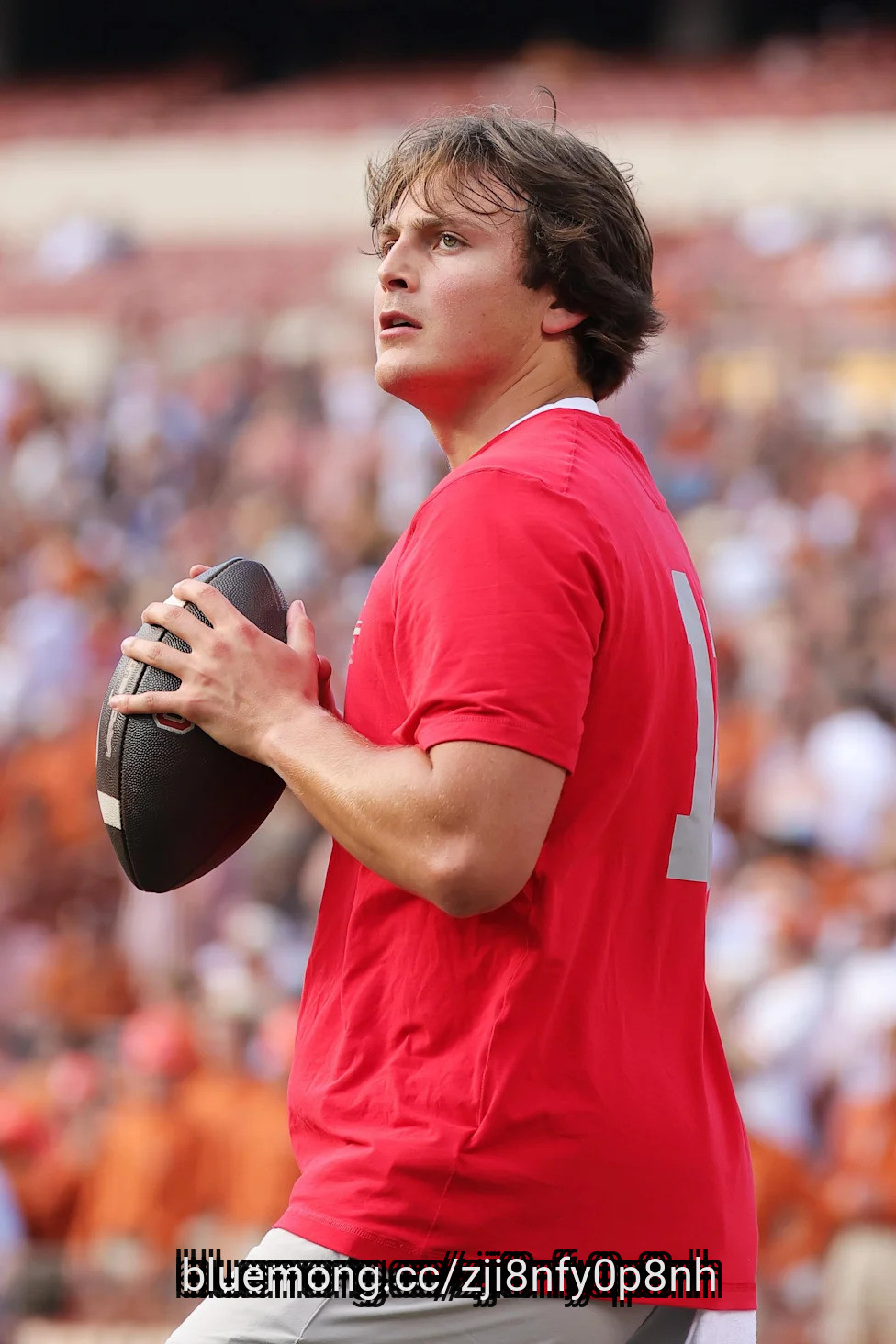
With the heat index at 110 degrees before kickoff at Darrell K Royal-Texas Memorial Stadium and the temperature on the artificial turf at Campbell-Williams Field reaching 160 degrees, the Ohio State Buckeyes were the only team on the field for pregame warmups.
Seeking an edge in a game with a betting line set at 1.5 points during the week, the Texas Longhorns were across the street in the school's brand-new, $80-million dollar Frank & Wofford Denius Football Training Complex.
"Figured they could go out in the heat," Texas senior quarterback Arch Manning said.
The decision was made by director of football sports medicine Donald Nguyen.
"You save yourself a little bit from the heat — it's all sweat that leaves your body when you go out there in the sun, so definitely helped, I thought," said fifth-year defensive tackle Hero Kanu.
#texas #heat #stadium
Seeking an edge in a game with a betting line set at 1.5 points during the week, the Texas Longhorns were across the street in the school's brand-new, $80-million dollar Frank & Wofford Denius Football Training Complex.
"Figured they could go out in the heat," Texas senior quarterback Arch Manning said.
The decision was made by director of football sports medicine Donald Nguyen.
"You save yourself a little bit from the heat — it's all sweat that leaves your body when you go out there in the sun, so definitely helped, I thought," said fifth-year defensive tackle Hero Kanu.
#texas #heat #stadium
2 months ago
On September 10, Copart (NASDAQ:CPRT) held its fourth-quarter earnings call and used it to unveil a deal that could reshape its business: an all-cash agreement to acquire ACV, a digital auto marketplace that moved roughly $10 billion of vehicles last year without owning a single lot. The announcement landed alongside a quarter that captured the company's central tension. Revenue rose, but net income fell, and management is now betting that pairing its junkyards with someone else's software can fix that.
The ACV deal is the headline, and for good reason. ACV brings more than 22,000 active buyers and inspection and valuation technology, while Copart contributes over 275 locations, roughly 4 million vehicles sold annually, and about 1 million members across more than 185 countries. Management structured it as an all-cash tender offer funded from cash on hand, with a close targeted by the end of the calendar year and earnings accretion expected in fiscal 2028. Executives framed the fit as physical scale meeting digital liquidity, giving dealers, banks, and fleet sellers a single partner for disposing of vehicles.
That diversification push is already showing up in the numbers. International revenue grew 11.7% to $222.1 million on 15% service revenue growth, and international buyers accounted for 45.7% of total US sales dollars despite making up only 38.2% of units, a sign they are chasing pricier vehicles. Domestically, non-insurance units returned to growth of 0.2% in the quarter after a full-year decline, dealer units rose 5.8%, and BluCar, which serves banks and fleets, expanded nearly 20%. Global average selling prices climbed 3.5%, evidence that Copart's auctions still command pricing power even as volumes soften.
The quarter's numbers show where the strain is. Consolidated revenue grew 2.4% to $1.2 billion, yet net income dropped 17.4% to $327.4 million and diluted earnings per share fell 14.6% to $0.35. Operating expense per car jumped 12.7% year over year as the company poured money into long-haul delivery, **** leExpress, and dedicated wholesale facilities, and US facility costs alone rose 7.7% in the quarter. Lower interest income, a byproduct of the $1.63 billion spent on buybacks earlier in the fiscal year, added to the squeeze.
The core insurance business is also cooling. Global insurance units fell 4.2%, with domestic insurance **** ignments down 7.5%, though management noted that figure would have been up 2.3% excluding the loss of a single customer. Collision claim frequency declined 3.4% even as total loss frequency hit a record 23.3% for a second quarter and severity topped $6,300 per claim, up 8.8%. And the ACV deal itself carries integration risk, since management expects only breakeven results before accretion arrives in fiscal 2028.
#quarter #vehicles #insurance
The ACV deal is the headline, and for good reason. ACV brings more than 22,000 active buyers and inspection and valuation technology, while Copart contributes over 275 locations, roughly 4 million vehicles sold annually, and about 1 million members across more than 185 countries. Management structured it as an all-cash tender offer funded from cash on hand, with a close targeted by the end of the calendar year and earnings accretion expected in fiscal 2028. Executives framed the fit as physical scale meeting digital liquidity, giving dealers, banks, and fleet sellers a single partner for disposing of vehicles.
That diversification push is already showing up in the numbers. International revenue grew 11.7% to $222.1 million on 15% service revenue growth, and international buyers accounted for 45.7% of total US sales dollars despite making up only 38.2% of units, a sign they are chasing pricier vehicles. Domestically, non-insurance units returned to growth of 0.2% in the quarter after a full-year decline, dealer units rose 5.8%, and BluCar, which serves banks and fleets, expanded nearly 20%. Global average selling prices climbed 3.5%, evidence that Copart's auctions still command pricing power even as volumes soften.
The quarter's numbers show where the strain is. Consolidated revenue grew 2.4% to $1.2 billion, yet net income dropped 17.4% to $327.4 million and diluted earnings per share fell 14.6% to $0.35. Operating expense per car jumped 12.7% year over year as the company poured money into long-haul delivery, **** leExpress, and dedicated wholesale facilities, and US facility costs alone rose 7.7% in the quarter. Lower interest income, a byproduct of the $1.63 billion spent on buybacks earlier in the fiscal year, added to the squeeze.
The core insurance business is also cooling. Global insurance units fell 4.2%, with domestic insurance **** ignments down 7.5%, though management noted that figure would have been up 2.3% excluding the loss of a single customer. Collision claim frequency declined 3.4% even as total loss frequency hit a record 23.3% for a second quarter and severity topped $6,300 per claim, up 8.8%. And the ACV deal itself carries integration risk, since management expects only breakeven results before accretion arrives in fiscal 2028.
#quarter #vehicles #insurance

2 months ago
CrowdStrike (CRWD) is among the largest cybersecurity companies globally. Valued at a market capitalization of more than $218 billion, CrowdStrike stock has returned more than 500% since its initial public offering (IPO) in 2019.
At its Fal.Con conference this week, the cybersecurity giant rolled out two major artificial intelligence (AI) products built to protect the growing army of AI agents running inside businesses. These announcements have arrived as CRWD stock draws fresh attention from Wall Street. CrowdStrike is betting that securing AI will soon be the key driver of its future growth engine.
Dear ****** eX Stock Fans, Mark Your Calendars for September 21
How to Play IBM Stock as It Teams Up with NASA to Launch a New Open-Source Model
GF Securities Says NAND Prices May Stabilize Later This Year. What This Means for Sandisk Stock.
#Stock #fans
At its Fal.Con conference this week, the cybersecurity giant rolled out two major artificial intelligence (AI) products built to protect the growing army of AI agents running inside businesses. These announcements have arrived as CRWD stock draws fresh attention from Wall Street. CrowdStrike is betting that securing AI will soon be the key driver of its future growth engine.
Dear ****** eX Stock Fans, Mark Your Calendars for September 21
How to Play IBM Stock as It Teams Up with NASA to Launch a New Open-Source Model
GF Securities Says NAND Prices May Stabilize Later This Year. What This Means for Sandisk Stock.
#Stock #fans

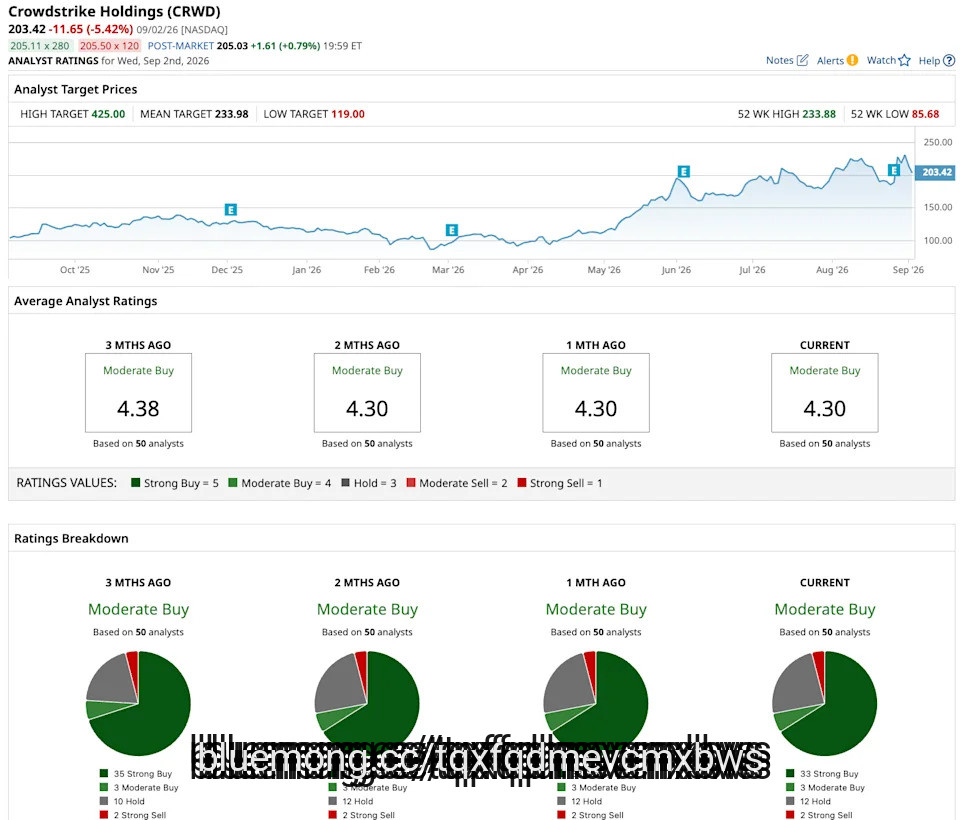

2 months ago
Thousands of Instagram users are smashing the "unfollow" **** on on Sydney Sweeney's profile after the actress was featured in and promoted a controversial sports-betting app in which she appears nude with sports equipment obscuring parts of her anatomy.
Last Wednesday, Sweeney shared the ad promoting sports-prediction market app Novig on Instagram — where it has racked up 1.1 million likes so far. In the 60-second ad, the "Euphoria" star appears fully or partially nude, posing with a variety of sports equipment like footballs, basketballs, a soccer ball and a hockey net.
More from Variety
Sydney Sweeney's Naked Sports Betting Ad Ignites Backlash From Olympic Athletes: 'Stop **** ualizing Women in Sport'
Sydney Sweeney Goes Nude in Provocative Ad for Novig Sports Trading App
#appears
Last Wednesday, Sweeney shared the ad promoting sports-prediction market app Novig on Instagram — where it has racked up 1.1 million likes so far. In the 60-second ad, the "Euphoria" star appears fully or partially nude, posing with a variety of sports equipment like footballs, basketballs, a soccer ball and a hockey net.
More from Variety
Sydney Sweeney's Naked Sports Betting Ad Ignites Backlash From Olympic Athletes: 'Stop **** ualizing Women in Sport'
Sydney Sweeney Goes Nude in Provocative Ad for Novig Sports Trading App
#appears


2 months ago
AL executive reveals why Phillies are serious World Series contenders originally appeared on The Sporting News. Add The Sporting News as a Preferred Source by clicking here.
The Philadelphia Phillies have had a bit of a roller coaster of a 2026 season. It's been hard to get a real gauge for what this team really is. Are they a real contender, or are they an inconsistent team that cannot be trusted when it matters most?
Both sides have strong arguments, but in the eyes of one American League executive, there are five strong reasons why the Phillies are legitimate ***** le contenders this season.
Jesse Rogers of ESPN shared the comment from an AL executive on the Phillies, who highlighted five players as reasons why the Phillies can contend for a ***** le this season.
"I know how good the Dodgers and Brewers are, but I'm not betting against [Cristopher] Sanchez, [Zack] Wheeler and [Jesus] Luzardo -- not to mention Bryce [Harper] and [Kyle] Schwarber," this anonymous AL executive told Rogers.
#season #rogers
The Philadelphia Phillies have had a bit of a roller coaster of a 2026 season. It's been hard to get a real gauge for what this team really is. Are they a real contender, or are they an inconsistent team that cannot be trusted when it matters most?
Both sides have strong arguments, but in the eyes of one American League executive, there are five strong reasons why the Phillies are legitimate ***** le contenders this season.
Jesse Rogers of ESPN shared the comment from an AL executive on the Phillies, who highlighted five players as reasons why the Phillies can contend for a ***** le this season.
"I know how good the Dodgers and Brewers are, but I'm not betting against [Cristopher] Sanchez, [Zack] Wheeler and [Jesus] Luzardo -- not to mention Bryce [Harper] and [Kyle] Schwarber," this anonymous AL executive told Rogers.
#season #rogers




2 months ago
Sydney Sweeney causes rage among Olympians with nude sports betting ad that's 'kick in face' to women athletes appeared first on ClutchPoints. Add ClutchPoints as a Preferred Source by clicking here.
As expected, the recent Sydney Sweeney nude sports betting ad for Novig caused a stir, as the Euphoria actress received some harsh feedback from female Olympians who found it to be a "kick in the face" of women athletes.
Reigning Olympic champion Ariarne **** mus reacted to the video on Instagram (via Deadline), and she was "infuriated" watching it.
"Not only is it a kick in the face to every woman who has dedicated her life to perfecting her craft, but every woman who enjoys sports for what it really is — teamwork, friendship, dedication, excellence, unity," **** mus wrote. "How do we live in a rowld where monetising a woman's body and **** ualising women's sport is still a thing?"
Watch sports LIVE with fuboTV (free trial)
#face #sydney #clutchpoints #nude
As expected, the recent Sydney Sweeney nude sports betting ad for Novig caused a stir, as the Euphoria actress received some harsh feedback from female Olympians who found it to be a "kick in the face" of women athletes.
Reigning Olympic champion Ariarne **** mus reacted to the video on Instagram (via Deadline), and she was "infuriated" watching it.
"Not only is it a kick in the face to every woman who has dedicated her life to perfecting her craft, but every woman who enjoys sports for what it really is — teamwork, friendship, dedication, excellence, unity," **** mus wrote. "How do we live in a rowld where monetising a woman's body and **** ualising women's sport is still a thing?"
Watch sports LIVE with fuboTV (free trial)
#face #sydney #clutchpoints #nude


2 months ago
Actress Sydney Sweeney made headlines last week when she starred in a new commercial for sports betting company Novig.
Sweeney doesn't have any reservations about appearing nude, just look at her work in Euphoria, The Voyeurs and The Housemaid just to name a few. She previously made it clear she won't stop appearing nude on screen.
"People forget that I'm playing a character," she explained.
"They think, 'Oh, she gets naked onscreen; she's a ***** symbol'. And I can't get past that. I have no problems with those scenes, and I won't stop doing them, but I wish there was an easier way to have an open conversation about what we're ***** uming about actors in the industry."
MORE: Sydney Sweeney lands Sports Illustrated cover for new role
#made
Sweeney doesn't have any reservations about appearing nude, just look at her work in Euphoria, The Voyeurs and The Housemaid just to name a few. She previously made it clear she won't stop appearing nude on screen.
"People forget that I'm playing a character," she explained.
"They think, 'Oh, she gets naked onscreen; she's a ***** symbol'. And I can't get past that. I have no problems with those scenes, and I won't stop doing them, but I wish there was an easier way to have an open conversation about what we're ***** uming about actors in the industry."
MORE: Sydney Sweeney lands Sports Illustrated cover for new role
#made


2 months ago
After days of facing backlash from sports fans for her nearly nude Novig ad, Sydney Sweeney is now facing backlash from proper female athletes, calling on the actress to "do better."
The ad spot, released last Wednesday, sees Sweeney strip down to virtually nothing, strategically covering herself with various pieces of sports equipment. Novig is a new sports trading and betting app, and in the ad, Sweeney notes that Novig is just sports: "No betting on wars or deaths and no politics," she says, "just you, your takes and sports."
"I don't know wtf Sydney Sweeney was doing, but it's 2026," British athlete Lucy Davis wrote in a post to Instagram. "Stop **** ualizing women in sport."
"We've got to always think about those young girls, always," she added in the caption.
The Novig ad criticism comes after the actress' American Eagle jeans ad went viral last year. Many called out the phrasing of "Sydney Sweeney has great jeans" as a play on "genes," and called it a promotion of eugenics.
#backlash
The ad spot, released last Wednesday, sees Sweeney strip down to virtually nothing, strategically covering herself with various pieces of sports equipment. Novig is a new sports trading and betting app, and in the ad, Sweeney notes that Novig is just sports: "No betting on wars or deaths and no politics," she says, "just you, your takes and sports."
"I don't know wtf Sydney Sweeney was doing, but it's 2026," British athlete Lucy Davis wrote in a post to Instagram. "Stop **** ualizing women in sport."
"We've got to always think about those young girls, always," she added in the caption.
The Novig ad criticism comes after the actress' American Eagle jeans ad went viral last year. Many called out the phrasing of "Sydney Sweeney has great jeans" as a play on "genes," and called it a promotion of eugenics.
#backlash



