
5 days ago
Space Exploration Technologies Corp. (NASDAQ:SPCX) is reportedly planning to raise $40 billion in bank loans and investment-grade debt, led by Apollo Global Management (NYSE:APO) , to buy Nvidia Corp. (NASDAQ:NVDA) chips.
The Elon Musk-led company is looking to raise about $10 billion in bank loans and $30 billion in investment-grade debt for the chip order, Reuters News reported, citing the Financial Times.
Apollo is expected to lead the deal and help place the debt with a broad range of investors, with Pimco among a small group of lenders in talks to provide financing, the newspaper reported citing people familiar with the matter.
The transaction is expected to close in 2027.
SpaceX, Apollo, and Nvidia did not immediately respond to Benzinga's request for comment, while Pimco declined to comment.
#NASDAQ #NVIDIA
The Elon Musk-led company is looking to raise about $10 billion in bank loans and $30 billion in investment-grade debt for the chip order, Reuters News reported, citing the Financial Times.
Apollo is expected to lead the deal and help place the debt with a broad range of investors, with Pimco among a small group of lenders in talks to provide financing, the newspaper reported citing people familiar with the matter.
The transaction is expected to close in 2027.
SpaceX, Apollo, and Nvidia did not immediately respond to Benzinga's request for comment, while Pimco declined to comment.
#NASDAQ #NVIDIA


9 days ago
Sebastian Bear-McClard and Alessandra Brawn reportedly expanded their family months ago without making a public announcement.
The film producer and his girlfriend welcomed their first child together, a baby boy believed to have arrived around May, according to Page Six. Multiple sources confirmed the birth to the outlet, with one saying the couple named their son Donte.
News of the baby surfaced after Bear-McClard was recently photographed walking with the child in New York City's SoHo neighborhood. Both declined Page Six's request for comment.
The new arrival joins a family that already included children from both parents' previous relationships. Bear-McClard shares 5-year-old Sylvester Apollo Bear with ex-wife Emily Ratajkowski, while Brawn was already a mother of two before her relationship with Bear-McClard became public.
The couple managed to keep both the pregnancy and reported spring birth largely outside public view. Page Six's report says Bear-McClard was only recently seen walking with the baby in SoHo, bringing the family update into public view several months after the child's reported arrival.
#page #months
The film producer and his girlfriend welcomed their first child together, a baby boy believed to have arrived around May, according to Page Six. Multiple sources confirmed the birth to the outlet, with one saying the couple named their son Donte.
News of the baby surfaced after Bear-McClard was recently photographed walking with the child in New York City's SoHo neighborhood. Both declined Page Six's request for comment.
The new arrival joins a family that already included children from both parents' previous relationships. Bear-McClard shares 5-year-old Sylvester Apollo Bear with ex-wife Emily Ratajkowski, while Brawn was already a mother of two before her relationship with Bear-McClard became public.
The couple managed to keep both the pregnancy and reported spring birth largely outside public view. Page Six's report says Bear-McClard was only recently seen walking with the baby in SoHo, bringing the family update into public view several months after the child's reported arrival.
#page #months

22 days ago
Interested in Apollo Global Management Inc.? Here are five stocks we like better.
Apollo expects interest rates to remain higher for longer, while estimating only a 10%–20% chance of a recession over the next year. Consumer spending, inflation and AI infrastructure investment are supporting economic activity, though geopolitical and energy risks remain.
The firm views AI primarily as a large-scale financing opportunity, providing structured capital to investment-grade companies involved in digital infrastructure, energy, logistics and defense rather than betting on individual technology winners.
Apollo reported strong institutional fundraising, including a $12 billion first close for its Fund XI, and expects private-equity industry consolidation as smaller or overexpanded managers struggle to return capital. Its high-grade capital-solutions business has completed more than 200 transactions totaling roughly $150 billion.
Baggage Claim: Apollo's $7.7 Billion Bid to Acquire easyJet
#apollo #infrastructure #energy #grade
Apollo expects interest rates to remain higher for longer, while estimating only a 10%–20% chance of a recession over the next year. Consumer spending, inflation and AI infrastructure investment are supporting economic activity, though geopolitical and energy risks remain.
The firm views AI primarily as a large-scale financing opportunity, providing structured capital to investment-grade companies involved in digital infrastructure, energy, logistics and defense rather than betting on individual technology winners.
Apollo reported strong institutional fundraising, including a $12 billion first close for its Fund XI, and expects private-equity industry consolidation as smaller or overexpanded managers struggle to return capital. Its high-grade capital-solutions business has completed more than 200 transactions totaling roughly $150 billion.
Baggage Claim: Apollo's $7.7 Billion Bid to Acquire easyJet
#apollo #infrastructure #energy #grade


23 days ago
Benzinga and Yahoo Finance LLC may earn commission or revenue on some items through the links below.
Apollo Global Management (NYSE:APO) is in talks to increase its loan to SoftBank's Vision Fund II from $5.4 billion to as much as $9 billion, potentially giving the ******* anese conglomerate additional financing capacity for its massive investment in OpenAI.
The deal size has not yet been determined, according to Bloomberg.
Apollo has previously extended financing to SoftBank's venture capital arm in 2021. The lender increased the facility by another $900 million last year, bringing its total size to $5.4 billion. NAV financing allows private capital managers to raise liquidity by using investments held with their funds as collateral.
Read Also:KKR Doubles Private Debt Deals to $80 Billion as AI Spending Explodes
#capital #finance #management
Apollo Global Management (NYSE:APO) is in talks to increase its loan to SoftBank's Vision Fund II from $5.4 billion to as much as $9 billion, potentially giving the ******* anese conglomerate additional financing capacity for its massive investment in OpenAI.
The deal size has not yet been determined, according to Bloomberg.
Apollo has previously extended financing to SoftBank's venture capital arm in 2021. The lender increased the facility by another $900 million last year, bringing its total size to $5.4 billion. NAV financing allows private capital managers to raise liquidity by using investments held with their funds as collateral.
Read Also:KKR Doubles Private Debt Deals to $80 Billion as AI Spending Explodes
#capital #finance #management



24 days ago
Apollo Global Management warned Wednesday that credit default swaps on hyperscaler debt are pricing in more risk. Chief economist Torsten Slok tied the shift to weakening credit fundamentals rather than routine bond-dealer hedging.
Hyperscalers are the cloud computing giants, including Amazon, Microsoft, Google, and Meta, that run the infrastructure behind the AI boom. They face a credit default swap (CDS) gap against bank debt, widened to about 60 basis points since October 2025.
Slok made the case in a Wednesday note reported by CNBC.
"What the market is repricing is hyperscaler credit fundamentals, namely a debt-financed AI capex cycle with rising leverage, negative free cash flow and uncertain payback on depreciating ****** ets."
Dan Alpert, founding managing partner of Westwood Capital, compared the setup to the run-up to the 2008 mortgage crisis. He said banks have since built far bigger equity buffers and are more diversified than they were then.
#slok
Hyperscalers are the cloud computing giants, including Amazon, Microsoft, Google, and Meta, that run the infrastructure behind the AI boom. They face a credit default swap (CDS) gap against bank debt, widened to about 60 basis points since October 2025.
Slok made the case in a Wednesday note reported by CNBC.
"What the market is repricing is hyperscaler credit fundamentals, namely a debt-financed AI capex cycle with rising leverage, negative free cash flow and uncertain payback on depreciating ****** ets."
Dan Alpert, founding managing partner of Westwood Capital, compared the setup to the run-up to the 2008 mortgage crisis. He said banks have since built far bigger equity buffers and are more diversified than they were then.
#slok

25 days ago
Once upon a time, the 'space race' meant the grand strategic competition between the USA and the USSR to gain control of the heavens. The superpowers designed and built satellites, manned capsules, orbital **** ecraft and long-endurance **** e stations, and NASA even sent the Apollo landers to put men on the Moon.
Today, the **** e race is heating up again, but in a very different way. Yes, the governments are still involved – NASA's Artemis program is targeting the Moon, the Russians have a Soyuz escape ship docked at the International **** e Station, and other powers such as the EU, China, and India have large-scale **** e programs. But the real difference – and a lot of the innovation – is coming from commercial players working alongside government **** e agencies.
This past summer, Elon Musk's **** eX went public, in Wall Street's largest ever IPO. The company is pioneering reusable large rockets, and has already made history with privately launched and/or publicly funded missions of the Falcon 9 rocket and Crew Dragon capsule.
Promotion
55% Off TipRanks
#once
Today, the **** e race is heating up again, but in a very different way. Yes, the governments are still involved – NASA's Artemis program is targeting the Moon, the Russians have a Soyuz escape ship docked at the International **** e Station, and other powers such as the EU, China, and India have large-scale **** e programs. But the real difference – and a lot of the innovation – is coming from commercial players working alongside government **** e agencies.
This past summer, Elon Musk's **** eX went public, in Wall Street's largest ever IPO. The company is pioneering reusable large rockets, and has already made history with privately launched and/or publicly funded missions of the Falcon 9 rocket and Crew Dragon capsule.
Promotion
55% Off TipRanks
#once


25 days ago
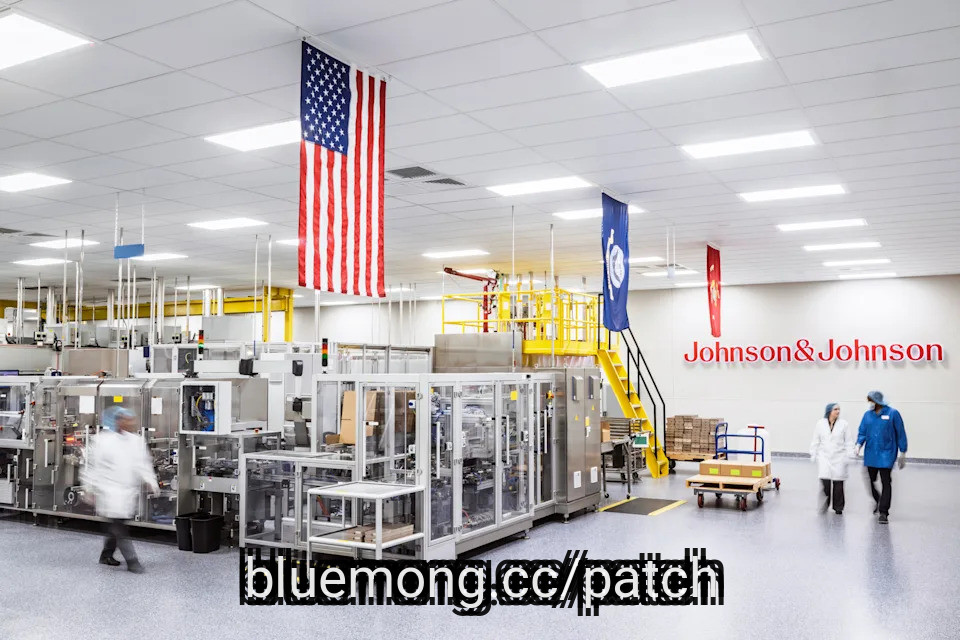
Apollo Global Management, Inc. (NYSE:APO) is reportedly in talks to acquire Johnson & Johnson (NYSE:JNJ) DePuy Synthes orthopedics business in a transaction that could value the unit at close to $20 billion, according to Bloomberg, as reported by Reuters. J&J generated $9.3 billion of revenue from the orthopedics business in 2025, making the potential transaction material for both companies. The discussions could reach an agreement within weeks, although J&J is also considering a public-market spin-off. This is consistent with J&J's October 2025 decision to separate DePuy Synthes within an expected 18-to-24-month timeframe and shift its MedTech portfolio toward higher-growth, higher-margin businesses.
For Apollo Global Management, Inc. (NYSE:APO), the attraction is the opportunity to acquire a large, established medical-device franchise with substantial recurring demand from joint-replacement and surgical procedures. A roughly $20 billion valuation against $9.3 billion of 2025 revenue implies a price-to-sales multiple of about 2.2x, giving Apollo room to pursue operational improvements, portfolio rationalization, and margin expansion if the business is acquired at an attractive valuation.
DePuy Synthes also has meaningful scale and leading positions across major orthopedics categories, while J&J has recently invested in technologies that could strengthen the franchise, including an agreement covering Gemtrack tracking technology for robotic and navigation-assisted joint procedures and the acquisition of Expanding Innovations for expandable spine implants. Apollo is also entering the potential deal from a position of considerable financial scale: it had approximately $1.05 trillion of ***** ets under management as of June 30, 2026, with $198 billion in equity strategies and $849 billion in credit strategies. Its second-quarter results included $111 billion of gross capital deployment, demonstrating the capacity to execute large transactions.
For Johnson & Johnson (NYSE:JNJ), a sale could accelerate the portfolio transformation that management has already identified as a strategic priority while potentially delivering a sizeable upfront cash inflow. J&J explicitly said its planned orthopedics separation should increase the company's top-line growth and operating margins by allowing it to concentrate on Oncology, Immunology, Neuroscience, Cardiovascular, Surgery and Vision.
The company has also been restructuring orthopedics, with $307 million of restructuring expense in 2025, following $167 million in 2024 and $319 million in 2023, primarily tied to market and product exits. A sale could therefore remove a business that has required restructuring resources while allowing J&J to redeploy capital toward areas it views as higher growth and higher margin.
#billion #depuy
For Apollo Global Management, Inc. (NYSE:APO), the attraction is the opportunity to acquire a large, established medical-device franchise with substantial recurring demand from joint-replacement and surgical procedures. A roughly $20 billion valuation against $9.3 billion of 2025 revenue implies a price-to-sales multiple of about 2.2x, giving Apollo room to pursue operational improvements, portfolio rationalization, and margin expansion if the business is acquired at an attractive valuation.
DePuy Synthes also has meaningful scale and leading positions across major orthopedics categories, while J&J has recently invested in technologies that could strengthen the franchise, including an agreement covering Gemtrack tracking technology for robotic and navigation-assisted joint procedures and the acquisition of Expanding Innovations for expandable spine implants. Apollo is also entering the potential deal from a position of considerable financial scale: it had approximately $1.05 trillion of ***** ets under management as of June 30, 2026, with $198 billion in equity strategies and $849 billion in credit strategies. Its second-quarter results included $111 billion of gross capital deployment, demonstrating the capacity to execute large transactions.
For Johnson & Johnson (NYSE:JNJ), a sale could accelerate the portfolio transformation that management has already identified as a strategic priority while potentially delivering a sizeable upfront cash inflow. J&J explicitly said its planned orthopedics separation should increase the company's top-line growth and operating margins by allowing it to concentrate on Oncology, Immunology, Neuroscience, Cardiovascular, Surgery and Vision.
The company has also been restructuring orthopedics, with $307 million of restructuring expense in 2025, following $167 million in 2024 and $319 million in 2023, primarily tied to market and product exits. A sale could therefore remove a business that has required restructuring resources while allowing J&J to redeploy capital toward areas it views as higher growth and higher margin.
#billion #depuy

25 days ago
Apollo Global Management, Inc. (NYSE:APO) is reportedly in talks to acquire Johnson & Johnson (NYSE:JNJ) DePuy Synthes orthopedics business in a transaction that could value the unit at close to $20 billion, according to Bloomberg, as reported by Reuters. J&J generated $9.3 billion of revenue from the orthopedics business in 2025, making the potential transaction material for both companies. The discussions could reach an agreement within weeks, although J&J is also considering a public-market spin-off. This is consistent with J&J's October 2025 decision to separate DePuy Synthes within an expected 18-to-24-month timeframe and shift its MedTech portfolio toward higher-growth, higher-margin businesses.
For Apollo Global Management, Inc. (NYSE:APO), the attraction is the opportunity to acquire a large, established medical-device franchise with substantial recurring demand from joint-replacement and surgical procedures. A roughly $20 billion valuation against $9.3 billion of 2025 revenue implies a price-to-sales multiple of about 2.2x, giving Apollo room to pursue operational improvements, portfolio rationalization, and margin expansion if the business is acquired at an attractive valuation.
DePuy Synthes also has meaningful scale and leading positions across major orthopedics categories, while J&J has recently invested in technologies that could strengthen the franchise, including an agreement covering Gemtrack tracking technology for robotic and navigation-assisted joint procedures and the acquisition of Expanding Innovations for expandable spine implants. Apollo is also entering the potential deal from a position of considerable financial scale: it had approximately $1.05 trillion of **** ets under management as of June 30, 2026, with $198 billion in equity strategies and $849 billion in credit strategies. Its second-quarter results included $111 billion of gross capital deployment, demonstrating the capacity to execute large transactions.
For Johnson & Johnson (NYSE:JNJ), a sale could accelerate the portfolio transformation that management has already identified as a strategic priority while potentially delivering a sizeable upfront cash inflow. J&J explicitly said its planned orthopedics separation should increase the company's top-line growth and operating margins by allowing it to concentrate on Oncology, Immunology, Neuroscience, Cardiovascular, Surgery and Vision.
The company has also been restructuring orthopedics, with $307 million of restructuring expense in 2025, following $167 million in 2024 and $319 million in 2023, primarily tied to market and product exits. A sale could therefore remove a business that has required restructuring resources while allowing J&J to redeploy capital toward areas it views as higher growth and higher margin.
#NYSE #johnson
For Apollo Global Management, Inc. (NYSE:APO), the attraction is the opportunity to acquire a large, established medical-device franchise with substantial recurring demand from joint-replacement and surgical procedures. A roughly $20 billion valuation against $9.3 billion of 2025 revenue implies a price-to-sales multiple of about 2.2x, giving Apollo room to pursue operational improvements, portfolio rationalization, and margin expansion if the business is acquired at an attractive valuation.
DePuy Synthes also has meaningful scale and leading positions across major orthopedics categories, while J&J has recently invested in technologies that could strengthen the franchise, including an agreement covering Gemtrack tracking technology for robotic and navigation-assisted joint procedures and the acquisition of Expanding Innovations for expandable spine implants. Apollo is also entering the potential deal from a position of considerable financial scale: it had approximately $1.05 trillion of **** ets under management as of June 30, 2026, with $198 billion in equity strategies and $849 billion in credit strategies. Its second-quarter results included $111 billion of gross capital deployment, demonstrating the capacity to execute large transactions.
For Johnson & Johnson (NYSE:JNJ), a sale could accelerate the portfolio transformation that management has already identified as a strategic priority while potentially delivering a sizeable upfront cash inflow. J&J explicitly said its planned orthopedics separation should increase the company's top-line growth and operating margins by allowing it to concentrate on Oncology, Immunology, Neuroscience, Cardiovascular, Surgery and Vision.
The company has also been restructuring orthopedics, with $307 million of restructuring expense in 2025, following $167 million in 2024 and $319 million in 2023, primarily tied to market and product exits. A sale could therefore remove a business that has required restructuring resources while allowing J&J to redeploy capital toward areas it views as higher growth and higher margin.
#NYSE #johnson

26 days ago
Realty Income (NYSE:O) aims to be the real estate partner to the world's leading companies. It has really leaned into forming new capital partnerships with leading institutional investors over the past year. It just formed a new joint venture (JV) with KKR, adding to prior strategic partnership deals with Apollo and GIC.
These partnerships might have income investors wondering if they're a sign of financial strength or weakness. Here's how they align with Realty Income's strategic plan to continue growing its high-yielding monthly dividend (currently 5.5%).
Missed Nvidia in 2009? This Rare Signal Is Flashing Again. In 2009, a "Double Down" signal flashed for a little-known chipmaker called Nvidia. For the first time in years, that same "Total Conviction" signal is flashing for a company 1/100th the size of Nvidia. Continue »
Image source: Getty Images.
Realty Income is a real estate investment trust (REIT) with a globally diversified portfolio of net lease real estate. It launched an investment management platform (Realty Income Investment Management or RIM) last year to allow institutional investors to invest alongside it through funds, JVs, and separately managed mandates. This strategy has four key advantages: accelerating its adjusted funds from operations (AFFO) per share growth through capital-light revenue, expanding its addressable market, reducing its reliance on public equity, and providing its partners with distinct, non-overlapping vehicles.
#income #estate #continue
These partnerships might have income investors wondering if they're a sign of financial strength or weakness. Here's how they align with Realty Income's strategic plan to continue growing its high-yielding monthly dividend (currently 5.5%).
Missed Nvidia in 2009? This Rare Signal Is Flashing Again. In 2009, a "Double Down" signal flashed for a little-known chipmaker called Nvidia. For the first time in years, that same "Total Conviction" signal is flashing for a company 1/100th the size of Nvidia. Continue »
Image source: Getty Images.
Realty Income is a real estate investment trust (REIT) with a globally diversified portfolio of net lease real estate. It launched an investment management platform (Realty Income Investment Management or RIM) last year to allow institutional investors to invest alongside it through funds, JVs, and separately managed mandates. This strategy has four key advantages: accelerating its adjusted funds from operations (AFFO) per share growth through capital-light revenue, expanding its addressable market, reducing its reliance on public equity, and providing its partners with distinct, non-overlapping vehicles.
#income #estate #continue

30 days ago
The Great North Run (GNR) returns to Tyneside this weekend, with 63,000 runners taking part in the world's biggest half marathon on Sunday.
Saturday's Mini and Junior events on Newcastle's Quayside are in their 40th year and saw 13,000 young people take on courses ranging from 50m (164ft) to 4km (2.5 miles).
Gladiators Alex Gray (Apollo), Emily Steel (Dynamite) and Matty Campbell (Bionic) are ringing Saturday's starters' bell alongside GNR mascot Tyney the Tortoise, while Newcastle captain Dan Burn is Sunday's starter.
Sunday's 13.1-mile (21km) event sees runners and wheelchair users begin in Newcastle, race through Gateshead and South Tyneside before finishing in South Shields.
According to organisers, this year's Mini and Junior events are the biggest in its 40-year history.
#tyneside #junior #south #year
Saturday's Mini and Junior events on Newcastle's Quayside are in their 40th year and saw 13,000 young people take on courses ranging from 50m (164ft) to 4km (2.5 miles).
Gladiators Alex Gray (Apollo), Emily Steel (Dynamite) and Matty Campbell (Bionic) are ringing Saturday's starters' bell alongside GNR mascot Tyney the Tortoise, while Newcastle captain Dan Burn is Sunday's starter.
Sunday's 13.1-mile (21km) event sees runners and wheelchair users begin in Newcastle, race through Gateshead and South Tyneside before finishing in South Shields.
According to organisers, this year's Mini and Junior events are the biggest in its 40-year history.
#tyneside #junior #south #year


30 days ago
Well STS readers, I come to you this week recovering from an extremely sobering experience last Saturday night. I predicted a fight even in a loss, and if it even qualified as a fight, it resembled Drago vs. Apollo in Rocky IV. Probably an adequate ******* ogy because Apollo USED to be great, but he was no match for the modernized superweapon Drago. Did the Soviets cheat to develop him? Absolutely, but at that point they were doing whatever it took to be superior no matter the morality of it. Clemson fans like me could be heard yelling "throw in the ******* towel!" by maybe the fourth possession of the game. It was that obvious that Clemson was completely and totally outmatched at the lines of scrimmage and the surrounding skill had zero chance because of it on either side of the ball.
How did it come to this? I posted this in a comment on the game review thread and will paste it here as it summarizes what I have painfully allowed myself to realize: "I hate it for Dabo and others who really want to do this the way it is supposed to be done, which is to develop men and grow boys to men and that takes time more often than not. That is what the transfer portal and NIL and lack of tampering control has created and as much as Dabo has tried to evolve I just don't see how he could ever get to what actually has to be done now if you want to be elite. I bet if you begin to track LSU, Ohio State, Texas, etc, going forward, you will see that maybe 50% of their rosters will start and finish with them and the other half will be brought in from elsewhere at some stage of their five-year playing window. Dabo swallows hard just to have the maybe 15% we are up to now that would check that box. I totally understand why, but either Dabo has to let go of that OR Clemson needs a huge break and actual sane rules return to CFB. Otherwise, we are back to 1995 where we might be able to beat ok teams and bad teams but are done beating anyone that is legit top 15 in stature."
I am a Clemson Tiger for life and lived through the lean years between Ford and Dabo. I'll still tune in and attend games when I can, but I know now that something has to give if Clemson is ever going to hope to compete at the highest level and it may get worse before it can get better. I'm still looking for pathways to wins, as many wins as this team can find a way to manage. I agree they are likely better than that product we saw in Baton Rouge, but that is not saying a lot either considering how FCS level the Tigers looked in that game.
I also want to add that I highly recommend gear from our sponsor Section 103. Their polos in particular have already become some of my favorites in the closet.
Do you want to support STS writers? You can do so by supporting our sponsor, Section 103. They deep dive school traditions to create thoughtful designs artfully applied to insanely comfortable tees, polos, hats, and more.Click here to explore.
#apollo
How did it come to this? I posted this in a comment on the game review thread and will paste it here as it summarizes what I have painfully allowed myself to realize: "I hate it for Dabo and others who really want to do this the way it is supposed to be done, which is to develop men and grow boys to men and that takes time more often than not. That is what the transfer portal and NIL and lack of tampering control has created and as much as Dabo has tried to evolve I just don't see how he could ever get to what actually has to be done now if you want to be elite. I bet if you begin to track LSU, Ohio State, Texas, etc, going forward, you will see that maybe 50% of their rosters will start and finish with them and the other half will be brought in from elsewhere at some stage of their five-year playing window. Dabo swallows hard just to have the maybe 15% we are up to now that would check that box. I totally understand why, but either Dabo has to let go of that OR Clemson needs a huge break and actual sane rules return to CFB. Otherwise, we are back to 1995 where we might be able to beat ok teams and bad teams but are done beating anyone that is legit top 15 in stature."
I am a Clemson Tiger for life and lived through the lean years between Ford and Dabo. I'll still tune in and attend games when I can, but I know now that something has to give if Clemson is ever going to hope to compete at the highest level and it may get worse before it can get better. I'm still looking for pathways to wins, as many wins as this team can find a way to manage. I agree they are likely better than that product we saw in Baton Rouge, but that is not saying a lot either considering how FCS level the Tigers looked in that game.
I also want to add that I highly recommend gear from our sponsor Section 103. Their polos in particular have already become some of my favorites in the closet.
Do you want to support STS writers? You can do so by supporting our sponsor, Section 103. They deep dive school traditions to create thoughtful designs artfully applied to insanely comfortable tees, polos, hats, and more.Click here to explore.
#apollo


1 month ago
In 2024, Catalent tapped direct lenders for a $4.2 billion term loan to fund its acquisition by Novo Holdings. Last month, the drug manufacturer refinanced with a $4.1 billion syndicated loan that it says will cut its annual interest expense by about $100 million.
Catalent's move captures a shift under way in the leveraged finance market, according to a new report from DC Advisory. Redemptions from retail investors are contributing to the erosion of private credit's pricing advantage, creating an opening for banks to win refinancing business.
The problems in the retail private credit market show few signs of abating.
All the largest direct lenders, such as Ares, Apollo and KKR, also run business development companies, the most common form of credit fund aimed at individual investors, all under varying degrees of pressure to redeem investors.
PitchBook LCD reported on Wednesday that investors in Cliffwater's direct lending interval fund sought to redeem 16% of shares outstanding in the third quarter, down from 17% in the prior quarter.
#billion #private
Catalent's move captures a shift under way in the leveraged finance market, according to a new report from DC Advisory. Redemptions from retail investors are contributing to the erosion of private credit's pricing advantage, creating an opening for banks to win refinancing business.
The problems in the retail private credit market show few signs of abating.
All the largest direct lenders, such as Ares, Apollo and KKR, also run business development companies, the most common form of credit fund aimed at individual investors, all under varying degrees of pressure to redeem investors.
PitchBook LCD reported on Wednesday that investors in Cliffwater's direct lending interval fund sought to redeem 16% of shares outstanding in the third quarter, down from 17% in the prior quarter.
#billion #private


1 month ago
Broadcom Inc. (NASDAQ:AVGO) could be one of the biggest beneficiaries of Anthropic's accelerating compute requirements. The opportunity comes amid growing concerns that Google's decision to develop more of its chips internally could threaten Broadcom's custom silicon business.
However, Macquarie ****** yst Arthur Lai argued on September 3 that many of these concerns may already be priced in. The stock is down by about 24% from its all-time high, while Google's work with MediaTek and its expanding relationship with Marvell have added to concerns about Broadcom losing share in future TPU programs.
According to Lai, the recent weakness could create an attractive entry point as Broadcom positions itself to capture what could become a $40 billion opportunity from Anthropic.
In April, Anthropic announced an expanded partnership with Google and Broadcom to secure next-generation TPU capacity. Anthropic plans to use its computing infrastructure to accelerate training and inference for its Claude family of artificial intelligence models as demand for AI applications continues to grow.
The partnership could provide Broadcom with an important avenue for expanding its custom AI semiconductor business. The company has also been expanding its AI infrastructure capabilities through partnerships with major financial institutions. Together with Apollo and Blackstone, it launched an AI XPV platform designed to support more than 20 gigawatts of compute capacity.
#broadcom #Opportunity #custom #business
However, Macquarie ****** yst Arthur Lai argued on September 3 that many of these concerns may already be priced in. The stock is down by about 24% from its all-time high, while Google's work with MediaTek and its expanding relationship with Marvell have added to concerns about Broadcom losing share in future TPU programs.
According to Lai, the recent weakness could create an attractive entry point as Broadcom positions itself to capture what could become a $40 billion opportunity from Anthropic.
In April, Anthropic announced an expanded partnership with Google and Broadcom to secure next-generation TPU capacity. Anthropic plans to use its computing infrastructure to accelerate training and inference for its Claude family of artificial intelligence models as demand for AI applications continues to grow.
The partnership could provide Broadcom with an important avenue for expanding its custom AI semiconductor business. The company has also been expanding its AI infrastructure capabilities through partnerships with major financial institutions. Together with Apollo and Blackstone, it launched an AI XPV platform designed to support more than 20 gigawatts of compute capacity.
#broadcom #Opportunity #custom #business

1 month ago
Reuters reported that McKesson Corporation (NYSE:MCK) said it would buy privately held Precision Medicine Group in a deal valued at about $2.25 billion as part of a "years-long effort to strengthen its higher-growth businesses."
McKesson has been reshaping its portfolio by exiting non-core **** ets and streamlining its operations while investing in businesses such as oncology and specialty care. Precision Medicine Group, based in Bethesda, Maryland, provides clinical research, laboratory testing, and commercialization services that help biopharma companies develop and launch new medicines. It will become part of McKesson's Oncology & Multispecialty segment once the deal closes, though McKesson gave no completion timeline. CEO Brian Tyler said the acquisition would "enhance our clinical research and commercialization services, strengthen clinical trial execution, and broaden our clinical service offerings."
The deal fits neatly into a growth strategy McKesson Corporation (NYSE:MCK) has already been executing, not a scattershot bet. The company has spent recent years exiting non-core **** ets while specifically building out oncology and specialty care. It means this acquisition extends a strategy management has already proven willing to follow through on.
McKesson is adding Precision Medicine to its strongest-performing division rather than using the acquisition to revive a struggling business. Revenue in the Oncology & Multispecialty segment jumped 33% to $14.2 billion in the first quarter of fiscal 2026, while JP Morgan **** yst Lisa Gill said the acquisition will likely strengthen McKesson's biopharma offerings.
The purchase reflects disciplined capital recycling, not new debt-fueled expansion. McKesson said in April it would sell a minority stake in its medical-surgical solutions business to Apollo Funds for $1.25 billion while pursuing an IPO for that unit, showing the company is actively shedding slower-growth **** ets to help fund investments like this one.
#medicine #acquisition #deal
McKesson has been reshaping its portfolio by exiting non-core **** ets and streamlining its operations while investing in businesses such as oncology and specialty care. Precision Medicine Group, based in Bethesda, Maryland, provides clinical research, laboratory testing, and commercialization services that help biopharma companies develop and launch new medicines. It will become part of McKesson's Oncology & Multispecialty segment once the deal closes, though McKesson gave no completion timeline. CEO Brian Tyler said the acquisition would "enhance our clinical research and commercialization services, strengthen clinical trial execution, and broaden our clinical service offerings."
The deal fits neatly into a growth strategy McKesson Corporation (NYSE:MCK) has already been executing, not a scattershot bet. The company has spent recent years exiting non-core **** ets while specifically building out oncology and specialty care. It means this acquisition extends a strategy management has already proven willing to follow through on.
McKesson is adding Precision Medicine to its strongest-performing division rather than using the acquisition to revive a struggling business. Revenue in the Oncology & Multispecialty segment jumped 33% to $14.2 billion in the first quarter of fiscal 2026, while JP Morgan **** yst Lisa Gill said the acquisition will likely strengthen McKesson's biopharma offerings.
The purchase reflects disciplined capital recycling, not new debt-fueled expansion. McKesson said in April it would sell a minority stake in its medical-surgical solutions business to Apollo Funds for $1.25 billion while pursuing an IPO for that unit, showing the company is actively shedding slower-growth **** ets to help fund investments like this one.
#medicine #acquisition #deal


1 month ago
Institutional investors are beginning to allocate capital to "evergreen" private market funds that Blackstone Inc. (NYSE:BX) and KKR & Co. Inc. (NYSE:KKR) originally built for wealthy individuals, the Financial Times reported.
Evergreen funds let investors access capital at set intervals rather than locking it up for a decade-long private equity fund life. Blackstone's wealth business has seen institutions begin allocating to its evergreen products, though they currently make up "only a small proportion of the capital raised," said Joan Solotar, who leads that business. KKR has separately raised the share of deals its evergreen K-Series funds can take from a longstanding 7.5% cap to as much as 20% in some cases, the FT reported.
Institutional investors are validating years of investment by Blackstone Inc. (NYSE:BX) and KKR & Co. Inc. (NYSE:KKR) in wealth-focused products. Both firms, along with Apollo, have expanded evergreen vehicles for individual investors, and institutions now choosing these funds provide another source of sophisticated capital for the products. That adoption could help Blackstone and KKR expand their wealth-management businesses beyond traditional individual investors.
KKR's renegotiated deal-allocation terms provide another sign of growing demand for its evergreen funds. KKR & Co. Inc. (NYSE:KKR) increased the co-investment cap for its K-Series funds from 7.5% to as much as 20% in vehicles such as its $8 billion European Fund VI. The larger allocation gives KKR's wealth-focused funds access to more investment opportunities and could help the company grow ****** ets and fee revenue from this channel.
Evergreen structures solve a current problem for institutional investors, not just individuals. Many institutions have grown more cautious about committing to traditional private equity as managers have struggled to exit investments and return capital. Evergreen funds' greater liquidity gives institutions an alternative way to stay invested without that same lockup risk.
#investors #capital #institutions #private
Evergreen funds let investors access capital at set intervals rather than locking it up for a decade-long private equity fund life. Blackstone's wealth business has seen institutions begin allocating to its evergreen products, though they currently make up "only a small proportion of the capital raised," said Joan Solotar, who leads that business. KKR has separately raised the share of deals its evergreen K-Series funds can take from a longstanding 7.5% cap to as much as 20% in some cases, the FT reported.
Institutional investors are validating years of investment by Blackstone Inc. (NYSE:BX) and KKR & Co. Inc. (NYSE:KKR) in wealth-focused products. Both firms, along with Apollo, have expanded evergreen vehicles for individual investors, and institutions now choosing these funds provide another source of sophisticated capital for the products. That adoption could help Blackstone and KKR expand their wealth-management businesses beyond traditional individual investors.
KKR's renegotiated deal-allocation terms provide another sign of growing demand for its evergreen funds. KKR & Co. Inc. (NYSE:KKR) increased the co-investment cap for its K-Series funds from 7.5% to as much as 20% in vehicles such as its $8 billion European Fund VI. The larger allocation gives KKR's wealth-focused funds access to more investment opportunities and could help the company grow ****** ets and fee revenue from this channel.
Evergreen structures solve a current problem for institutional investors, not just individuals. Many institutions have grown more cautious about committing to traditional private equity as managers have struggled to exit investments and return capital. Evergreen funds' greater liquidity gives institutions an alternative way to stay invested without that same lockup risk.
#investors #capital #institutions #private

1 month ago
ONEOK, Inc. (NYSE:OKE) has agreed to acquire Brazos Midstream's Permian Midland Basin natural-gas gathering and processing ***** ets for $4.425 billion in cash. The deal is being paired with a $9 billion nonvoting minority equity investment from Apollo, of which ONEOK plans to use about $5 billion to reduce existing debt. ONEOK expects the acquisition to be immediately accretive to earnings and free cash flow per share.
The transaction would more than double ONEOK, Inc. (NYSE:OKE)'s Midland Basin processing capacity to approximately 2.3 Bcf/d, including plants already under construction. The acquired platform includes roughly 700 miles of gathering infrastructure, 1.2 Bcf/d of processing capacity after the Cassidy II plant is completed, and approximately 600,000 dedicated acres backed by fixed-fee contracts with more than 12 years of weighted-average remaining term.
The biggest attraction is the quality and location of the ***** ets. The Permian remains one of the most economically important oil and gas-producing regions in the U.S., and the Brazos system gives ONEOK, Inc. (NYSE:OKE) additional exposure to ***** ociated natural-gas volumes generated by oil production. The acquired ***** ets are supported by 14 active drilling rigs operated by producers including ExxonMobil, Diamondback Energy, and Double Eagle. The long-term contracts provide ONEOK with considerable visibility into future volumes and cash flows. That makes this more than a simple capacity expansion. ONEOK is effectively adding infrastructure that can grow alongside production on the dedicated acreage.
The ***** ets fit closely with ONEOK's existing gathering, processing, NGL transportation and crude infrastructure. That creates an opportunity to extract more value from the same barrels and molecules as they move through ONEOK's network.
The company expects to connect the Brazos system with downstream ***** ets such as its West Texas NGL Pipeline and the Medford NGL fractionation facility. This broader integration could produce commercial and operational efficiencies that an independent owner of the ***** ets might not be able to capture. ONEOK estimates about $80 million of full-year synergies in its 2027 EBITDA calculation and expects additional commercial and capital efficiencies as the systems are integrated.
#cash #expects
The transaction would more than double ONEOK, Inc. (NYSE:OKE)'s Midland Basin processing capacity to approximately 2.3 Bcf/d, including plants already under construction. The acquired platform includes roughly 700 miles of gathering infrastructure, 1.2 Bcf/d of processing capacity after the Cassidy II plant is completed, and approximately 600,000 dedicated acres backed by fixed-fee contracts with more than 12 years of weighted-average remaining term.
The biggest attraction is the quality and location of the ***** ets. The Permian remains one of the most economically important oil and gas-producing regions in the U.S., and the Brazos system gives ONEOK, Inc. (NYSE:OKE) additional exposure to ***** ociated natural-gas volumes generated by oil production. The acquired ***** ets are supported by 14 active drilling rigs operated by producers including ExxonMobil, Diamondback Energy, and Double Eagle. The long-term contracts provide ONEOK with considerable visibility into future volumes and cash flows. That makes this more than a simple capacity expansion. ONEOK is effectively adding infrastructure that can grow alongside production on the dedicated acreage.
The ***** ets fit closely with ONEOK's existing gathering, processing, NGL transportation and crude infrastructure. That creates an opportunity to extract more value from the same barrels and molecules as they move through ONEOK's network.
The company expects to connect the Brazos system with downstream ***** ets such as its West Texas NGL Pipeline and the Medford NGL fractionation facility. This broader integration could produce commercial and operational efficiencies that an independent owner of the ***** ets might not be able to capture. ONEOK estimates about $80 million of full-year synergies in its 2027 EBITDA calculation and expects additional commercial and capital efficiencies as the systems are integrated.
#cash #expects

1 month ago
Growth in the evergreen fund market is being driven by the largest listed alternative managers. But there are ***** et classes in which size is likely to be a weakness rather than a strength in catering to individual investors.
This, at least, is what venture capital and growth equity manager Fairway Capital Management is banking on.
Founded in 2020 by a group of former executives with Adams Street Partners, led by former COO Kevin Callahan, the Chicago manager raised two venture-capital funds of funds with combined commitments of $52 million, including a sizeable GP commitment, before launching an evergreen fund of funds at the end of 2021.
Fairway Private Equity & Venture Capital Opportunities Fund, which makes VC, private equity and private credit investments, aims to offer individuals access to funds and managers "typically only available to large institutional investors." It held about $26.3 million in net ***** ets as of March 31, 2026, per regulatory filings.
While firms such as Blackstone and Apollo Global Management have had success launching evergreen products focused on easily scalable ***** et classes, such as infrastructure and large buyout, VC is inherently "capacity constrained," according to Callahan.
#venture
This, at least, is what venture capital and growth equity manager Fairway Capital Management is banking on.
Founded in 2020 by a group of former executives with Adams Street Partners, led by former COO Kevin Callahan, the Chicago manager raised two venture-capital funds of funds with combined commitments of $52 million, including a sizeable GP commitment, before launching an evergreen fund of funds at the end of 2021.
Fairway Private Equity & Venture Capital Opportunities Fund, which makes VC, private equity and private credit investments, aims to offer individuals access to funds and managers "typically only available to large institutional investors." It held about $26.3 million in net ***** ets as of March 31, 2026, per regulatory filings.
While firms such as Blackstone and Apollo Global Management have had success launching evergreen products focused on easily scalable ***** et classes, such as infrastructure and large buyout, VC is inherently "capacity constrained," according to Callahan.
#venture

1 month ago
(Bloomberg) -- Apollo Global Management Inc. is looking to turn another multibillion-dollar corporate equity deal into investment-grade debt it can sell to investors.
Most Read from Bloomberg
Nvidia to Invest $3.5 Billion in Chipmaker MediaTek
Trump Urges FCC to Probe Media Polling, Punish NBC Moderator
Forget GLP-1 Stocks, Baldness Drugs Are Wall Street's Next Goldmine
#management
Most Read from Bloomberg
Nvidia to Invest $3.5 Billion in Chipmaker MediaTek
Trump Urges FCC to Probe Media Polling, Punish NBC Moderator
Forget GLP-1 Stocks, Baldness Drugs Are Wall Street's Next Goldmine
#management


1 month ago
ONEOK has agreed to acquire Brazos Midstream's natural gas gathering and processing ******* ets in the Permian Basin's Midland sub-basin for $4.425 billion in cash, expanding the midstream operator's footprint in one of the largest U.S. oil and gas producing regions.
The acquisition will be funded as part of a separate $9 billion nonvoting minority equity investment from funds and affiliates managed by Apollo Global Management. ONEOK plans to use roughly $5 billion of the Apollo proceeds to extinguish existing debt, while the remainder will fund the Brazos acquisition.
The structure allows ONEOK to finance the transaction without issuing common equity. The company said the combination of the Apollo investment and planned debt reduction is expected to bring its pro forma 2027 debt-to-EBITDA ratio to about 3.25 times.
Brazos' Midland Basin system is supported by roughly 600,000 dedicated acres under fixed-fee contracts with a weighted average remaining term exceeding 12 years, according to ONEOK. Producers operating on the acreage include ExxonMobil, Diamondback Energy and Double Eagle, with 14 active drilling rigs currently supporting the system.
After completion of the Cassidy II processing plant, which ONEOK expects in the third quarter of 2027, the acquired system is expected to comprise about 700 miles of gathering infrastructure and 1.2 billion cubic feet per day of gas processing capacity across seven Midland Basin counties.
#basin
The acquisition will be funded as part of a separate $9 billion nonvoting minority equity investment from funds and affiliates managed by Apollo Global Management. ONEOK plans to use roughly $5 billion of the Apollo proceeds to extinguish existing debt, while the remainder will fund the Brazos acquisition.
The structure allows ONEOK to finance the transaction without issuing common equity. The company said the combination of the Apollo investment and planned debt reduction is expected to bring its pro forma 2027 debt-to-EBITDA ratio to about 3.25 times.
Brazos' Midland Basin system is supported by roughly 600,000 dedicated acres under fixed-fee contracts with a weighted average remaining term exceeding 12 years, according to ONEOK. Producers operating on the acreage include ExxonMobil, Diamondback Energy and Double Eagle, with 14 active drilling rigs currently supporting the system.
After completion of the Cassidy II processing plant, which ONEOK expects in the third quarter of 2027, the acquired system is expected to comprise about 700 miles of gathering infrastructure and 1.2 billion cubic feet per day of gas processing capacity across seven Midland Basin counties.
#basin


1 month ago
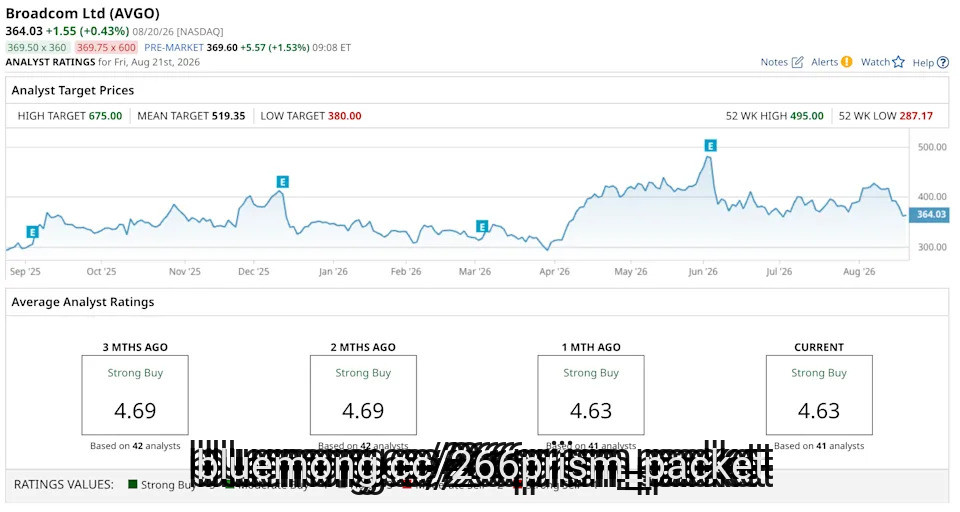
CNBC reported on August 21, 2026, that Broadcom Inc. (NASDAQ:AVGO) is in talks to raise $70 billion to $80 billion in debt for a chip financing deal supporting AI companies, including Anthropic. The senior tranche, repaid first, is expected to be around $45 billion, with a junior tranche around $35 billion, though the figures remain flexible. Bloomberg first reported the deal could reach $100 billion in total, with Blackstone and Apollo Global Management among the firms in talks to participate. The raise would extend a partnership Broadcom, Apollo, and Blackstone unveiled in June, which committed $35 billion to expand Anthropic's computing infrastructure using Broadcom's custom chips. Broadcom shares rose about 1% on the news.
The deal strengthens Broadcom Inc. (NASDAQ:AVGO)'s position as critical infrastructure for AI labs beyond Nvidia's ecosystem. Broadcom designs custom chips for Alphabet, Meta, Anthropic, and OpenAI, and this financing extends its role in helping major AI labs reduce dependence on a single chip supplier. That diversification of demand sources gives Broadcom a structurally different customer relationship than a pure merchant chip seller.
The financing structure keeps this exposure off Broadcom's own balance sheet in its rawest form. A special-purpose vehicle raises the debt and leases the chips back to customers like Anthropic, rather than Broadcom borrowing the money directly. Structuring growth capital this way lets Broadcom participate in AI infrastructure buildout without carrying the full debt load on its own books.
The scale of plans shows durable demand rather than a one-off transaction. The original June partnership targeted delivering over 20 gigawatts of compute to top AI labs by 2028, and this expansion moves toward that target. A multi-year capacity commitment of that size shows Broadcom's AI customers are planning for sustained growth and not a short-term spending burst.
Broadcom Inc. (NASDAQ:AVGO) is still on the hook if its customers cannot pay, even with the debt structured off-balance-sheet. CNBC's Kristina Partsinevelos explained that "Broadcom's job is to guarantee part of that debt, and that guarantee is where the risk sits." It means a slowdown at Anthropic or another financed customer could still hit Broadcom directly despite the SPV structure.
#NASDAQ
The deal strengthens Broadcom Inc. (NASDAQ:AVGO)'s position as critical infrastructure for AI labs beyond Nvidia's ecosystem. Broadcom designs custom chips for Alphabet, Meta, Anthropic, and OpenAI, and this financing extends its role in helping major AI labs reduce dependence on a single chip supplier. That diversification of demand sources gives Broadcom a structurally different customer relationship than a pure merchant chip seller.
The financing structure keeps this exposure off Broadcom's own balance sheet in its rawest form. A special-purpose vehicle raises the debt and leases the chips back to customers like Anthropic, rather than Broadcom borrowing the money directly. Structuring growth capital this way lets Broadcom participate in AI infrastructure buildout without carrying the full debt load on its own books.
The scale of plans shows durable demand rather than a one-off transaction. The original June partnership targeted delivering over 20 gigawatts of compute to top AI labs by 2028, and this expansion moves toward that target. A multi-year capacity commitment of that size shows Broadcom's AI customers are planning for sustained growth and not a short-term spending burst.
Broadcom Inc. (NASDAQ:AVGO) is still on the hook if its customers cannot pay, even with the debt structured off-balance-sheet. CNBC's Kristina Partsinevelos explained that "Broadcom's job is to guarantee part of that debt, and that guarantee is where the risk sits." It means a slowdown at Anthropic or another financed customer could still hit Broadcom directly despite the SPV structure.
#NASDAQ


1 month ago
Two Midwestern insurers hold $245 million in LeBron James Nike-backed bonds, with those same balance sheets also backing annuities from Jackson (JXN) and Apollo (APO).
Non-qualified annuity gains face ordinary income tax up to 37%, no capital gains rates apply, and heirs inherit no step-up in basis at death.
Read More: Learn 7 ways to generate income with a $1,000,000+ portfolio (sponsor)
Somewhere in the general accounts of two Midwestern life insurers sits roughly $245 million in bonds backed by LeBron James's Nike deal.
According to Bloomberg, an LLC named King James Funding borrowed almost $300 million in 2018 from North American Company for Life and Health Insurance and Midland National Life Insurance Co., with bonds due in 2049 at a 4.8% coupon. A follow-on $60 million in 34-year bonds priced at 5.75% in August 2022. Guggenheim Partners arranged the deal, and the pledged revenue stream includes James's lifetime Nike sponsorship.
#million #james
Non-qualified annuity gains face ordinary income tax up to 37%, no capital gains rates apply, and heirs inherit no step-up in basis at death.
Read More: Learn 7 ways to generate income with a $1,000,000+ portfolio (sponsor)
Somewhere in the general accounts of two Midwestern life insurers sits roughly $245 million in bonds backed by LeBron James's Nike deal.
According to Bloomberg, an LLC named King James Funding borrowed almost $300 million in 2018 from North American Company for Life and Health Insurance and Midland National Life Insurance Co., with bonds due in 2049 at a 4.8% coupon. A follow-on $60 million in 34-year bonds priced at 5.75% in August 2022. Guggenheim Partners arranged the deal, and the pledged revenue stream includes James's lifetime Nike sponsorship.
#million #james


2 months ago
Nvidia (NASDAQ: NVDA) has been a cornerstone of the artificial intelligence (AI) trade since OpenAI introduced ChatGPT in late 2022. Shares have advanced more than 1,300% since January 2023, and most Wall Street ******* ysts still view the stock as undervalued.
Nvidia recently announced a strategic partnership with six of the world's largest financial institutions to secure more than $500 billion in financing for potential customers. That capital will unlock demand by helping smaller enterprises and AI labs purchase Nvidia systems.
Missed Nvidia in 2009? This Rare Signal Is Flashing Again. In 2009, a "Double Down" signal flashed for a little-known chipmaker called Nvidia. For the first time in years, that same "Total Conviction" signal is flashing for a company 1/100th the size of Nvidia. Continue »
Here are the important details.
Nvidia recently partnered with six financial institutions -- Apollo Global, BlackRock, Blackstone, Brookfield, Goldman Sachs, and KKR -- to create new financing platforms designed to mobilize more than $500 billion in capital for artificial intelligence infrastructure. Nvidia itself may backstop up to $125 billion, or 25% of deals.
#intelligence #recently
Nvidia recently announced a strategic partnership with six of the world's largest financial institutions to secure more than $500 billion in financing for potential customers. That capital will unlock demand by helping smaller enterprises and AI labs purchase Nvidia systems.
Missed Nvidia in 2009? This Rare Signal Is Flashing Again. In 2009, a "Double Down" signal flashed for a little-known chipmaker called Nvidia. For the first time in years, that same "Total Conviction" signal is flashing for a company 1/100th the size of Nvidia. Continue »
Here are the important details.
Nvidia recently partnered with six financial institutions -- Apollo Global, BlackRock, Blackstone, Brookfield, Goldman Sachs, and KKR -- to create new financing platforms designed to mobilize more than $500 billion in capital for artificial intelligence infrastructure. Nvidia itself may backstop up to $125 billion, or 25% of deals.
#intelligence #recently

2 months ago
On August 21, Apollo Global Management (NYSE:APO) disclosed in a letter that hackers gained unauthorized access to some of its cloud platforms between July 6 and July 10, exposing names, dates of birth, addresses, and Social Security numbers. The breach lands weeks after Apollo told investors its **** ets under management had crossed $1 trillion for the first time, a milestone built in part on convincing individuals and retirees to trust the firm with their money. Now Apollo has to convince some of those same people it can protect their data too.
Apollo's second quarter showed why the growth story still has legs. **** ets under management reached $1.05 trillion, up 25% year over year, while fee-related earnings hit a record $785 million, also up 25%, and management fees climbed 23% as third-party money kept arriving across credit and equity strategies. Origination volume totaled $74 billion for the quarter, pushing the trailing 12-month figure to nearly $320 billion, and that tally does not yet include the $35 billion financing Apollo arranged for Broadcom's new AI computing platform, the largest private credit deal ever recorded, since Apollo only books revenue once financing closes rather than when it is announced.
CEO Marc Rowan frames Apollo's opportunity as bigger than private equity or credit alone. He argues the industry's client base is expanding from a single source of institutional demand into six categories, including individuals, insurance companies and 401(k) plans, and Apollo is building toward that shift with daily net **** et value pricing on its credit products and a partnership with Intercontinental Exchange that has already **** igned more than 2,000 identifiers to Apollo **** ets. Performance backs up the pitch: Apollo's Fund X has generated a 21% net internal rate of return, well ahead of the 14% industry benchmark for its 2023 vintage.
The breach is the more immediate problem, and it fits a pattern. Reuters has reported that dozens of financial institutions, including Uber and Levi Strauss, were recently targeted by the same kind of ransom-seeking hackers, who built fake websites designed to steal passwords from employees at private equity and financial firms through phone-based social engineering rather than any technical exploit. Apollo says its investigation is ongoing and it has found no evidence yet that the stolen information has been posted publicly or used for identity theft, and it is offering affected individuals free credit monitoring and identity protection.
#management #Equity #billion #july
Apollo's second quarter showed why the growth story still has legs. **** ets under management reached $1.05 trillion, up 25% year over year, while fee-related earnings hit a record $785 million, also up 25%, and management fees climbed 23% as third-party money kept arriving across credit and equity strategies. Origination volume totaled $74 billion for the quarter, pushing the trailing 12-month figure to nearly $320 billion, and that tally does not yet include the $35 billion financing Apollo arranged for Broadcom's new AI computing platform, the largest private credit deal ever recorded, since Apollo only books revenue once financing closes rather than when it is announced.
CEO Marc Rowan frames Apollo's opportunity as bigger than private equity or credit alone. He argues the industry's client base is expanding from a single source of institutional demand into six categories, including individuals, insurance companies and 401(k) plans, and Apollo is building toward that shift with daily net **** et value pricing on its credit products and a partnership with Intercontinental Exchange that has already **** igned more than 2,000 identifiers to Apollo **** ets. Performance backs up the pitch: Apollo's Fund X has generated a 21% net internal rate of return, well ahead of the 14% industry benchmark for its 2023 vintage.
The breach is the more immediate problem, and it fits a pattern. Reuters has reported that dozens of financial institutions, including Uber and Levi Strauss, were recently targeted by the same kind of ransom-seeking hackers, who built fake websites designed to steal passwords from employees at private equity and financial firms through phone-based social engineering rather than any technical exploit. Apollo says its investigation is ongoing and it has found no evidence yet that the stolen information has been posted publicly or used for identity theft, and it is offering affected individuals free credit monitoring and identity protection.
#management #Equity #billion #july


2 months ago
On August 21, Apollo Global Management (NYSE:APO) disclosed in a letter that hackers gained unauthorized access to some of its cloud platforms between July 6 and July 10, exposing names, dates of birth, addresses, and Social Security numbers. The breach lands weeks after Apollo told investors its ***** ets under management had crossed $1 trillion for the first time, a milestone built in part on convincing individuals and retirees to trust the firm with their money. Now Apollo has to convince some of those same people it can protect their data too.
Apollo's second quarter showed why the growth story still has legs. ***** ets under management reached $1.05 trillion, up 25% year over year, while fee-related earnings hit a record $785 million, also up 25%, and management fees climbed 23% as third-party money kept arriving across credit and equity strategies. Origination volume totaled $74 billion for the quarter, pushing the trailing 12-month figure to nearly $320 billion, and that tally does not yet include the $35 billion financing Apollo arranged for Broadcom's new AI computing platform, the largest private credit deal ever recorded, since Apollo only books revenue once financing closes rather than when it is announced.
CEO Marc Rowan frames Apollo's opportunity as bigger than private equity or credit alone. He argues the industry's client base is expanding from a single source of institutional demand into six categories, including individuals, insurance companies and 401(k) plans, and Apollo is building toward that shift with daily net ***** et value pricing on its credit products and a partnership with Intercontinental Exchange that has already ***** igned more than 2,000 identifiers to Apollo ***** ets. Performance backs up the pitch: Apollo's Fund X has generated a 21% net internal rate of return, well ahead of the 14% industry benchmark for its 2023 vintage.
The breach is the more immediate problem, and it fits a pattern. Reuters has reported that dozens of financial institutions, including Uber and Levi Strauss, were recently targeted by the same kind of ransom-seeking hackers, who built fake websites designed to steal passwords from employees at private equity and financial firms through phone-based social engineering rather than any technical exploit. Apollo says its investigation is ongoing and it has found no evidence yet that the stolen information has been posted publicly or used for identity theft, and it is offering affected individuals free credit monitoring and identity protection.
#apollo #credit #management #private
Apollo's second quarter showed why the growth story still has legs. ***** ets under management reached $1.05 trillion, up 25% year over year, while fee-related earnings hit a record $785 million, also up 25%, and management fees climbed 23% as third-party money kept arriving across credit and equity strategies. Origination volume totaled $74 billion for the quarter, pushing the trailing 12-month figure to nearly $320 billion, and that tally does not yet include the $35 billion financing Apollo arranged for Broadcom's new AI computing platform, the largest private credit deal ever recorded, since Apollo only books revenue once financing closes rather than when it is announced.
CEO Marc Rowan frames Apollo's opportunity as bigger than private equity or credit alone. He argues the industry's client base is expanding from a single source of institutional demand into six categories, including individuals, insurance companies and 401(k) plans, and Apollo is building toward that shift with daily net ***** et value pricing on its credit products and a partnership with Intercontinental Exchange that has already ***** igned more than 2,000 identifiers to Apollo ***** ets. Performance backs up the pitch: Apollo's Fund X has generated a 21% net internal rate of return, well ahead of the 14% industry benchmark for its 2023 vintage.
The breach is the more immediate problem, and it fits a pattern. Reuters has reported that dozens of financial institutions, including Uber and Levi Strauss, were recently targeted by the same kind of ransom-seeking hackers, who built fake websites designed to steal passwords from employees at private equity and financial firms through phone-based social engineering rather than any technical exploit. Apollo says its investigation is ongoing and it has found no evidence yet that the stolen information has been posted publicly or used for identity theft, and it is offering affected individuals free credit monitoring and identity protection.
#apollo #credit #management #private


2 months ago
Exxon is in the running for Shell's U.S. chemicals business that could fetch $8 billion, the Financial Times reported today, citing unnamed sources familiar with developments.
The U.S. supermajor is competing with LyondellBasell, Apollo Global Management, and the Kuwait Petroleum Corporation, the unnamed sources also told the publication. The potential buyers have submitted non-binding offers to Shell, with these ranging from offers to buy parts of the business to offers for the whole division.
Shell's chemicals business in the United States comprises four facilities in Louisiana, Texas, and Pennsylvania that make chemicals used in a range of industries, from plastics production to detergents.
Shell has made two **** et sales recently, one of its onshore wind and solar power business in Europe and the other of a stake in a gas project offshore Cyprus. The wind and solar power deal went to TotalEnergies and involved 500 megawatts of combined renewable generation capacity in operation and in development, as well as a pipeline of projects for future development across Italy, the Netherlands, Spain, and the UK.
The transaction is subject to regulatory approvals and is expected to complete by the end of 2026, Shell said earlier this month in the announcement of the deal with TotalEnergies.
#business #chemicals #unnamed #wind
The U.S. supermajor is competing with LyondellBasell, Apollo Global Management, and the Kuwait Petroleum Corporation, the unnamed sources also told the publication. The potential buyers have submitted non-binding offers to Shell, with these ranging from offers to buy parts of the business to offers for the whole division.
Shell's chemicals business in the United States comprises four facilities in Louisiana, Texas, and Pennsylvania that make chemicals used in a range of industries, from plastics production to detergents.
Shell has made two **** et sales recently, one of its onshore wind and solar power business in Europe and the other of a stake in a gas project offshore Cyprus. The wind and solar power deal went to TotalEnergies and involved 500 megawatts of combined renewable generation capacity in operation and in development, as well as a pipeline of projects for future development across Italy, the Netherlands, Spain, and the UK.
The transaction is subject to regulatory approvals and is expected to complete by the end of 2026, Shell said earlier this month in the announcement of the deal with TotalEnergies.
#business #chemicals #unnamed #wind


2 months ago
The ****** le of the "Bond King" is somewhat in contention. Many would give it to Bill Gross, though over the years, a younger Jeffrey Gundlach has at least shared the ****** le. In any case, when Gundlach posts something like this, it is worth . . . peeling back, shall we say?
Gundlach took aim at Wall Street's newest financial engineering trend. His beef? Nvidia's (NVDA) agreement with major private credit and ****** et management firms such as Apollo, BlackRock, Blackstone, KKR, and Goldman Sachs.
Third Point Starts to Raise Alarm Bells on Broadcom After Dumping AVGO Stock in Q2
Nvidia Q2 Preview: Strong Earnings and Low Valuation Set the Stage for Upside
A $28.7 Billion Reason to Buy SK hynix Stock Now
#gundlach #bill
Gundlach took aim at Wall Street's newest financial engineering trend. His beef? Nvidia's (NVDA) agreement with major private credit and ****** et management firms such as Apollo, BlackRock, Blackstone, KKR, and Goldman Sachs.
Third Point Starts to Raise Alarm Bells on Broadcom After Dumping AVGO Stock in Q2
Nvidia Q2 Preview: Strong Earnings and Low Valuation Set the Stage for Upside
A $28.7 Billion Reason to Buy SK hynix Stock Now
#gundlach #bill



2 months ago
Artificial intelligence is becoming as much a financing challenge as a technology challenge. The biggest AI developers are racing to deploy gigawatts of computing capacity, but the chips, networking equipment, and data centers required to support that expansion cost tens of billions of dollars. That is creating an opening for companies that can do more than manufacture the hardware.
Broadcom (AVGO) appears to be exploiting that opening. It is reportedly negotiating a financing package that could exceed $60 billion in senior debt and approach $100 billion when a potential $30 billion junior tranche is included. Apollo Global Management (APO) and Blackstone (BX) are considering participation.
Google Is Reportedly Working with AMD for Its New TPU. What This Means for AMD Stock.
IREN Just Passed Its Biggest AI Test as Microsoft and Nvidia Bet Billions
Paul Tudor Jones Just Liquidated His Entire Stake in Applied Materials Stock. I Don't Think He's 100% Bearish on AI Though… Yet
#reportedly #broadcom
Broadcom (AVGO) appears to be exploiting that opening. It is reportedly negotiating a financing package that could exceed $60 billion in senior debt and approach $100 billion when a potential $30 billion junior tranche is included. Apollo Global Management (APO) and Blackstone (BX) are considering participation.
Google Is Reportedly Working with AMD for Its New TPU. What This Means for AMD Stock.
IREN Just Passed Its Biggest AI Test as Microsoft and Nvidia Bet Billions
Paul Tudor Jones Just Liquidated His Entire Stake in Applied Materials Stock. I Don't Think He's 100% Bearish on AI Though… Yet
#reportedly #broadcom
2 months ago
Wall Street has spent the last week absorbing Nvidia's (NVDA) plan to arrange half a trillion dollars of other people's money, and the sharpest objection came from someone who was explicitly trying to argue the other side. Asked on the All-In podcast published Aug. 14 where the arrangement could break, David Sacks, while still an overall bull on AI and similar, is acutely aware of the risks of the massive, multi-trillion-dollar AI buildout, saying, "The biggest risk to me is not on the demand side," he said. "The biggest risk is that you get a glut of compute and you get an overbuild. And in the same way that we had dark fiber after the dotcom crash, if you had dark GPUs, that'd be a disaster for everyone."
On Aug. 10, Nvidia said it had signed memorandums of understanding with Apollo (APO), BlackRock (BLK), Blackstone (BX), Brookfield (BN), Goldman Sachs (GS), and KKR (KKR) to establish independent compute financing platforms to "mobilize over $500 billion of third-party capital for the buildout of AI infrastructure over time." The release adds that the partnerships "remain subject to execution of the final agreements." Meaning, that figure is an aspiration, not raised money, not committed money, and not Nvidia revenue. Several outlets blurred the distinction.
Barron Trump, 20, Now Worth $150 Million — More Than Mom, Melania — From Crypto And $39 Energy Drink
Billionaire Michael Saylor Warns Against Buying a House Because 'Every 36 Years You Actually Pay the Cost of the House in Tax to the Government'
QQQ Just 'Gamma Flipped' as Market Makers Were Forced to Sell. Here's What Our Top Chart Expert is Tracking Next.
#NVIDIA #trillion #side #dark
On Aug. 10, Nvidia said it had signed memorandums of understanding with Apollo (APO), BlackRock (BLK), Blackstone (BX), Brookfield (BN), Goldman Sachs (GS), and KKR (KKR) to establish independent compute financing platforms to "mobilize over $500 billion of third-party capital for the buildout of AI infrastructure over time." The release adds that the partnerships "remain subject to execution of the final agreements." Meaning, that figure is an aspiration, not raised money, not committed money, and not Nvidia revenue. Several outlets blurred the distinction.
Barron Trump, 20, Now Worth $150 Million — More Than Mom, Melania — From Crypto And $39 Energy Drink
Billionaire Michael Saylor Warns Against Buying a House Because 'Every 36 Years You Actually Pay the Cost of the House in Tax to the Government'
QQQ Just 'Gamma Flipped' as Market Makers Were Forced to Sell. Here's What Our Top Chart Expert is Tracking Next.
#NVIDIA #trillion #side #dark


2 months ago
On August 17, Nvidia (NASDAQ:NVDA) agreed to guarantee up to $105 billion to help OpenAI lease a massive data center in Pike County, Ohio, being developed by SoftBank-owned SB Energy. The site could reach 8 gigawatts of capacity, with the first 800 megawatts due online in 2028, and OpenAI has signed on for 20 years. Nvidia will also put $1.5 billion directly into SB Energy and will be the facility's exclusive chip supplier. It's the latest example of the company financing the very infrastructure that runs its own chips, a habit that keeps expanding even as it keeps drawing scrutiny.
The idea behind the guarantee is that Nvidia is using its balance sheet to lock up long-lived sites where its chips can run across multiple hardware generations, and the numbers behind that bet keep climbing. Revenue growth is expected to accelerate toward 97% this quarter, up from 85% the quarter before, as the company rolls out its new Rubin platform. Jensen Huang has floated $1 trillion in combined revenue across 2026 and 2027, which implies roughly $600 billion in fiscal 2028 alone. Demand isn't limited to hyperscalers, either.
SpaceX has said it will build its AI infrastructure exclusively on Nvidia chips, targeting 10 gigawatts of compute by the end of 2027, a build-out estimated to cost $150 billion to $250 billion. Add in the four largest hyperscalers, expected to spend roughly $700 billion on AI chips this year, plus a possible OpenAI or Anthropic IPO that could free up even more capital, and the picture is a company still early in monetizing an entire computing shift. The Ohio guarantee, paired with the $500 billion financing consortium Nvidia formed with six major financial institutions the week before, fits that same playbook: widen the pool of customers locked into its hardware so no single client's slowdown can shake the business.
The obvious pushback is circularity. Nvidia is effectively helping fund a customer's ability to buy Nvidia chips, first through the $500 billion consortium with BlackRock, Blackstone, KKR, Apollo, Brookfield and Goldman Sachs, and now through a direct guarantee tied to OpenAI's Ohio lease. Huang insists this isn't circular financing, but the plan to securitize AI infrastructure into a tradable ******* et class invites comparisons to how mortgage pools were packaged before 2008. Nvidia's exposure here isn't unlimited. It covers a portion of lease and power payments and a minimum-value commitment on the site, not the full $105 billion or all of OpenAI's obligations. But if OpenAI defaults, Nvidia still absorbs the difference between that floor value and whatever the site fetches if it's re-leased or sold.
#openai
The idea behind the guarantee is that Nvidia is using its balance sheet to lock up long-lived sites where its chips can run across multiple hardware generations, and the numbers behind that bet keep climbing. Revenue growth is expected to accelerate toward 97% this quarter, up from 85% the quarter before, as the company rolls out its new Rubin platform. Jensen Huang has floated $1 trillion in combined revenue across 2026 and 2027, which implies roughly $600 billion in fiscal 2028 alone. Demand isn't limited to hyperscalers, either.
SpaceX has said it will build its AI infrastructure exclusively on Nvidia chips, targeting 10 gigawatts of compute by the end of 2027, a build-out estimated to cost $150 billion to $250 billion. Add in the four largest hyperscalers, expected to spend roughly $700 billion on AI chips this year, plus a possible OpenAI or Anthropic IPO that could free up even more capital, and the picture is a company still early in monetizing an entire computing shift. The Ohio guarantee, paired with the $500 billion financing consortium Nvidia formed with six major financial institutions the week before, fits that same playbook: widen the pool of customers locked into its hardware so no single client's slowdown can shake the business.
The obvious pushback is circularity. Nvidia is effectively helping fund a customer's ability to buy Nvidia chips, first through the $500 billion consortium with BlackRock, Blackstone, KKR, Apollo, Brookfield and Goldman Sachs, and now through a direct guarantee tied to OpenAI's Ohio lease. Huang insists this isn't circular financing, but the plan to securitize AI infrastructure into a tradable ******* et class invites comparisons to how mortgage pools were packaged before 2008. Nvidia's exposure here isn't unlimited. It covers a portion of lease and power payments and a minimum-value commitment on the site, not the full $105 billion or all of OpenAI's obligations. But if OpenAI defaults, Nvidia still absorbs the difference between that floor value and whatever the site fetches if it's re-leased or sold.
#openai

2 months ago
Wall Street has spent the last week absorbing Nvidia's (NVDA) plan to arrange half a trillion dollars of other people's money, and the sharpest objection came from someone who was explicitly trying to argue the other side. Asked on the All-In podcast published Aug. 14 where the arrangement could break, David Sacks, while still an overall bull on AI and similar, is acutely aware of the risks of the massive, multi-trillion-dollar AI buildout, saying, "The biggest risk to me is not on the demand side," he said. "The biggest risk is that you get a glut of compute and you get an overbuild. And in the same way that we had dark fiber after the dotcom crash, if you had dark GPUs, that'd be a disaster for everyone."
On Aug. 10, Nvidia said it had signed memorandums of understanding with Apollo (APO), BlackRock (BLK), Blackstone (BX), Brookfield (BN), Goldman Sachs (GS), and KKR (KKR) to establish independent compute financing platforms to "mobilize over $500 billion of third-party capital for the buildout of AI infrastructure over time." The release adds that the partnerships "remain subject to execution of the final agreements." Meaning, that figure is an aspiration, not raised money, not committed money, and not Nvidia revenue. Several outlets blurred the distinction.
Barron Trump, 20, Now Worth $150 Million — More Than Mom, Melania — From Crypto And $39 Energy Drink
Billionaire Michael Saylor Warns Against Buying a House Because 'Every 36 Years You Actually Pay the Cost of the House in Tax to the Government'
QQQ Just 'Gamma Flipped' as Market Makers Were Forced to Sell. Here's What Our Top Chart Expert is Tracking Next.
#trillion #side #biggest #risk
On Aug. 10, Nvidia said it had signed memorandums of understanding with Apollo (APO), BlackRock (BLK), Blackstone (BX), Brookfield (BN), Goldman Sachs (GS), and KKR (KKR) to establish independent compute financing platforms to "mobilize over $500 billion of third-party capital for the buildout of AI infrastructure over time." The release adds that the partnerships "remain subject to execution of the final agreements." Meaning, that figure is an aspiration, not raised money, not committed money, and not Nvidia revenue. Several outlets blurred the distinction.
Barron Trump, 20, Now Worth $150 Million — More Than Mom, Melania — From Crypto And $39 Energy Drink
Billionaire Michael Saylor Warns Against Buying a House Because 'Every 36 Years You Actually Pay the Cost of the House in Tax to the Government'
QQQ Just 'Gamma Flipped' as Market Makers Were Forced to Sell. Here's What Our Top Chart Expert is Tracking Next.
#trillion #side #biggest #risk