
5 days ago
Sempra (NYSE:SRE) added a long-term customer commitment on September 14, when its infrastructure subsidiary announced a 20-year sales and purchase agreement with Petróleo Brasileiro S.A. - Petrobras (NYSE:PBR). The agreement covers approximately 0.8 million tonnes annually of liquefied natural gas, or LNG.
Supply will come from the subsidiary's contracted liquefaction capacity at Port Arthur LNG Phase 2 in Texas. The project is under construction, with trains 3 and 4 expected to begin commercial operations in 2030 and 2031, respectively. The agreement improves visibility into future sales, while the earnings contribution depends on delivery and contract economics.
Petróleo Brasileiro S.A. - Petrobras (NYSE:PBR) becomes the infrastructure subsidiary's first South American LNG customer. That broadens the geographic base of buyers and establishes a commercial relationship extending over two decades.
For Sempra (NYSE:SRE), the practical benefit is an external buyer for part of the subsidiary's contracted capacity. Securing that relationship before startup could reduce the need to find buyers for the covered volumes as production approaches, while supporting longer-term supply planning.
The annual commitment equals approximately 6.2% of Phase 2's planned 13-million-tonne annual capacity. This provides a measure of scale, although it does not establish the percentage of capacity still available for sale.
#agreement #petr #supply #term
Supply will come from the subsidiary's contracted liquefaction capacity at Port Arthur LNG Phase 2 in Texas. The project is under construction, with trains 3 and 4 expected to begin commercial operations in 2030 and 2031, respectively. The agreement improves visibility into future sales, while the earnings contribution depends on delivery and contract economics.
Petróleo Brasileiro S.A. - Petrobras (NYSE:PBR) becomes the infrastructure subsidiary's first South American LNG customer. That broadens the geographic base of buyers and establishes a commercial relationship extending over two decades.
For Sempra (NYSE:SRE), the practical benefit is an external buyer for part of the subsidiary's contracted capacity. Securing that relationship before startup could reduce the need to find buyers for the covered volumes as production approaches, while supporting longer-term supply planning.
The annual commitment equals approximately 6.2% of Phase 2's planned 13-million-tonne annual capacity. This provides a measure of scale, although it does not establish the percentage of capacity still available for sale.
#agreement #petr #supply #term


5 days ago
Though it's down by 33% over the last five years, Ethereum (CRYPTO: ETH) climbed from about $130 in early 2020 to over $4,800 in early November 2021, which would have been sufficient to turn an investment of $27,000 into about $1 million. It's natural for investors to wonder if another historic run is in the cards for the coin, given that it's more widely known now than it was then.
Today, with a market cap of $292 billion as of Sept. 15, Ethereum can still grow your wealth substantially, but it probably won't be a millionaire maker for those with small positions anytime soon. Let's first look at the math to see why, then examine its upcoming catalysts.
Missed AI's "Act 1"? Act 2 Could Be 15x Bigger. Most investors think they missed the AI boat because they didn't buy Nvidia in 2005. But according to our **** ysts, we're only at the end of "Act 1"—the R&D phase. "Act 2" is the global rollout. Continue »
Ethereum isn't going to be a millionaire-maker investment from here, even if you're willing to pony up a lot more capital than most investors have on hand or are willing to allocate to a lottery ticket, and even if it becomes the next cryptocurrency to explode.
Turning $10,000 into $1 million requires a 100x gain, which would boost Ethereum's market cap to $29.2 trillion.
#even
Today, with a market cap of $292 billion as of Sept. 15, Ethereum can still grow your wealth substantially, but it probably won't be a millionaire maker for those with small positions anytime soon. Let's first look at the math to see why, then examine its upcoming catalysts.
Missed AI's "Act 1"? Act 2 Could Be 15x Bigger. Most investors think they missed the AI boat because they didn't buy Nvidia in 2005. But according to our **** ysts, we're only at the end of "Act 1"—the R&D phase. "Act 2" is the global rollout. Continue »
Ethereum isn't going to be a millionaire-maker investment from here, even if you're willing to pony up a lot more capital than most investors have on hand or are willing to allocate to a lottery ticket, and even if it becomes the next cryptocurrency to explode.
Turning $10,000 into $1 million requires a 100x gain, which would boost Ethereum's market cap to $29.2 trillion.
#even


5 days ago
Gold is the ******* et people buy when they have stopped believing in promises. Then most of them hand it to a bank in another country for safekeeping, which is itself a promise.
That arrangement is older than most of the world's central banks. The Bank of England has provided gold custody services to developing nations for decades, according to Reuters, and it usually works for the simple reason that ******* ody involved has any incentive to argue about it.
Custody is boring. It stays boring right up until two governments claim the same account.
Then the metal in the vault ceases to be a reserve ******* et and becomes a legal exhibit. It does not move, and it does not get sold.
It sits in a basement in London, earning nothing and settling nothing, while lawyers on two continents argue over whose signature counts on the paperwork.
#reuters
That arrangement is older than most of the world's central banks. The Bank of England has provided gold custody services to developing nations for decades, according to Reuters, and it usually works for the simple reason that ******* ody involved has any incentive to argue about it.
Custody is boring. It stays boring right up until two governments claim the same account.
Then the metal in the vault ceases to be a reserve ******* et and becomes a legal exhibit. It does not move, and it does not get sold.
It sits in a basement in London, earning nothing and settling nothing, while lawyers on two continents argue over whose signature counts on the paperwork.
#reuters


5 days ago
Bloom Energy Corporation (NYSE:BE) garnered significant investor attention after it unveiled a new 800V DC-native fuel-cell power architecture on September 16, designed to supply continuous direct current to the next generation of AI data centers.
These solid-oxide fuel cells can generate continuous 800V DC power natively, rather than producing AC power that then has to be converted into DC that AI computing equipment ultimately consumes. This potentially removes several conversion stages, such as transformers and switchgear, thus lowering capital cost and energy losses.
Bloom claims that its technology can cut non-compute capital expenditures for a 1 GW data center by $3.6 billion, or 27%, and lower five-year total cost of ownership by $5.5 billion, or 9%, compared to traditional AC-based infrastructure.
With this technology, Bloom Energy is targeting one of the biggest bottlenecks in the ongoing AI boom – securing large amounts of reliable power quickly and economically. If 800V DC becomes widely adopted across AI data centers, the company will benefit not only from the soaring power demand, but also from a broader shift in how that power is generated and delivered.
Bloom Energy pointed to Nvidia's planned adoption of 800V DC architecture beginning with Rubin Ultra and Kyber systems as an indication of where data center power infrastructure is heading. In its 2026 Mid-Year Data Center Power Report, Bloom claimed that data center leaders expect DC-based architectures to account for 58% of new deployments by 2030, potentially creating a significant market for technologies designed around direct-current power delivery.
#energy #architecture
These solid-oxide fuel cells can generate continuous 800V DC power natively, rather than producing AC power that then has to be converted into DC that AI computing equipment ultimately consumes. This potentially removes several conversion stages, such as transformers and switchgear, thus lowering capital cost and energy losses.
Bloom claims that its technology can cut non-compute capital expenditures for a 1 GW data center by $3.6 billion, or 27%, and lower five-year total cost of ownership by $5.5 billion, or 9%, compared to traditional AC-based infrastructure.
With this technology, Bloom Energy is targeting one of the biggest bottlenecks in the ongoing AI boom – securing large amounts of reliable power quickly and economically. If 800V DC becomes widely adopted across AI data centers, the company will benefit not only from the soaring power demand, but also from a broader shift in how that power is generated and delivered.
Bloom Energy pointed to Nvidia's planned adoption of 800V DC architecture beginning with Rubin Ultra and Kyber systems as an indication of where data center power infrastructure is heading. In its 2026 Mid-Year Data Center Power Report, Bloom claimed that data center leaders expect DC-based architectures to account for 58% of new deployments by 2030, potentially creating a significant market for technologies designed around direct-current power delivery.
#energy #architecture


6 days ago
A home Medicaid excludes from **** et tests during life becomes fully exposed to estate recovery after death, potentially consuming most of an inheritance.
Transfers of a home within 60 months of a Medicaid application trigger a penalty period, and a stroke can eliminate the legal capacity needed to act.
Penalty-free exceptions exist, including spousal transfer, caregiver-child, and protected-relative rules, but qualifying circumstances must be in place well before a crisis.
Two retirees, same $1 million, same 4% rule, buy one finished with $1.4 million, the other hit $0 in 12 years. Our free reader guide explains the flaw that separated them, and the income-first method built to avoid it.
An 82-year-old widower has a stroke. From the hospital he moves to rehabilitation, then to permanent nursing-home care. His paid-off house is worth $340,000. His daughter asks the elder-law attorney whether they can deed her the house or drop it into an irrevocable trust before Medicaid pays a dime. The answer is the one no family wants to hear: probably not, because Dad no longer has the capacity to sign, and his durable power of attorney authorizes bill payment but not gifts or trust transfers.
#home #stroke #free
Transfers of a home within 60 months of a Medicaid application trigger a penalty period, and a stroke can eliminate the legal capacity needed to act.
Penalty-free exceptions exist, including spousal transfer, caregiver-child, and protected-relative rules, but qualifying circumstances must be in place well before a crisis.
Two retirees, same $1 million, same 4% rule, buy one finished with $1.4 million, the other hit $0 in 12 years. Our free reader guide explains the flaw that separated them, and the income-first method built to avoid it.
An 82-year-old widower has a stroke. From the hospital he moves to rehabilitation, then to permanent nursing-home care. His paid-off house is worth $340,000. His daughter asks the elder-law attorney whether they can deed her the house or drop it into an irrevocable trust before Medicaid pays a dime. The answer is the one no family wants to hear: probably not, because Dad no longer has the capacity to sign, and his durable power of attorney authorizes bill payment but not gifts or trust transfers.
#home #stroke #free


6 days ago
Interested in Ally Financial Inc.? Here are five stocks we like better.
Ally Financial reaffirmed its full-year net interest margin guidance of 3.6% to 3.7%, supported by balance-sheet growth in higher-yielding retail auto and Corporate Finance loans. However, about $20 million in third-quarter lease losses tied to recalled Stellantis vehicles is expected to keep sequential margin growth roughly flat.
Stellantis-related lease pressure is expected to persist through 2026 but ease in 2027 as Ally's lease portfolio becomes more diversified and protected leases begin to mature. Ally also reaffirmed its 2026 retail auto net charge-off guidance of 1.8% to 2%.
Ally reported growth across its core businesses, including a 7% year-over-year increase in deposit customers and roughly 25% loan growth in Corporate Finance since launching Focus Forward. The company maintained guidance for 3% to 5% average earning-asset growth and approximately 1% operating-expense growth while continuing capital returns.
OneMain's Yield Comes With a Catch
#year #stellantis
Ally Financial reaffirmed its full-year net interest margin guidance of 3.6% to 3.7%, supported by balance-sheet growth in higher-yielding retail auto and Corporate Finance loans. However, about $20 million in third-quarter lease losses tied to recalled Stellantis vehicles is expected to keep sequential margin growth roughly flat.
Stellantis-related lease pressure is expected to persist through 2026 but ease in 2027 as Ally's lease portfolio becomes more diversified and protected leases begin to mature. Ally also reaffirmed its 2026 retail auto net charge-off guidance of 1.8% to 2%.
Ally reported growth across its core businesses, including a 7% year-over-year increase in deposit customers and roughly 25% loan growth in Corporate Finance since launching Focus Forward. The company maintained guidance for 3% to 5% average earning-asset growth and approximately 1% operating-expense growth while continuing capital returns.
OneMain's Yield Comes With a Catch
#year #stellantis


6 days ago
Von Der Leyen's State of the Union address noted Europe needs to rebalance unfair trade, cut red tape, and strengthen its industrial and strategic autonomy.
But Euratex said it regretted that industrial competitiveness failed to muster as much attention as other issues in the address.
The trade body is calling on the Commission to match the political commitments with an equal sense of urgency on industrial competitiveness, and to place manufacturing sectors, such as textiles, more firmly at the centre of its agenda in the months ahead.
"Europe cannot build a strong defence, lead the green and digital transitions, or protect its social model on a weakening industrial base. Competitiveness is not just one chapter of the European project – it is the foundation all the others are built on; when we get that right, everything else becomes possible.", states Dirk Vantyghem, director general, Euratex.
Specifically, Euratex is urging action on trade-defence measures including stronger customs enforcement and imports monitoring for textile products, with particular regard to the trade deficit with China, which has "reached a tipping point."
#defence #state
But Euratex said it regretted that industrial competitiveness failed to muster as much attention as other issues in the address.
The trade body is calling on the Commission to match the political commitments with an equal sense of urgency on industrial competitiveness, and to place manufacturing sectors, such as textiles, more firmly at the centre of its agenda in the months ahead.
"Europe cannot build a strong defence, lead the green and digital transitions, or protect its social model on a weakening industrial base. Competitiveness is not just one chapter of the European project – it is the foundation all the others are built on; when we get that right, everything else becomes possible.", states Dirk Vantyghem, director general, Euratex.
Specifically, Euratex is urging action on trade-defence measures including stronger customs enforcement and imports monitoring for textile products, with particular regard to the trade deficit with China, which has "reached a tipping point."
#defence #state


7 days ago
Uber Technologies Inc. (NYSE:UBER) has secured Madrid as the fourth city covered by its partnership with WeRide, bringing Spain into its rapidly expanding autonomous vehicle network. The company's broader AV strategy covers more than 30 partners, while Uber expects to commit more than $10 billion across AV investments, infrastructure, and vehicle offtake over the coming years. At the center of that strategy is Uber's decision not to build self-driving technology itself. Instead, the company wants to become the indispensable demand layer for whichever AV providers ultimately emerge as winners. Yet the diversification strategy is facing pressure in key areas. One of its most prominent AV partners is pulling back, while another remains under an active safety investigation.
Uber, WeRide, and AVOMO have secured Spain's first national permit covering level 4 autonomous passenger vehicles. The permit was issued by Spain's Directorate General of Traffic and allows the companies to begin deployment preparations on public roads in Madrid. Under the permit, WeRide can test its GXR vehicles and conduct roadmapping throughout Madrid in preparation for a commercial launch planned for year-end. The rollout will begin with 20 vehicles, each supervised by an in-car specialist, operating across high-demand areas of Greater Madrid. Madrid becomes the fourth city included in the Uber-WeRide partnership, which plans to reach 15 cities globally by 2030. The expansion also fits Uber's broader ******* et-light AV strategy, which includes more than 30 partnerships while Uber expects to commit over $10 billion across AV investments, infrastructure, and vehicle offtake over the coming years.
The diversification of Uber's AV network does not eliminate risks from individual partners. Uber and Waymo confirmed in late June that their Phoenix partnership had ended, while Waymo is reportedly considering a broader exit from its relationship with Uber. This comes even as Uber executives have publicly criticized Waymo's model while investing substantial capital in competing fleets. Avride is facing a separate challenge, with the NHTSA investigating the Uber AV partner after multiple crashes. At the same time, Tesla is ramping up its own Cybercab fleet, while Waymo has raised $16 billion to accelerate its independent growth. Together, these moves could reduce Waymo's reliance on Uber while increasing competitive pressure on Uber's AV platform.
#madrid #waymo
Uber, WeRide, and AVOMO have secured Spain's first national permit covering level 4 autonomous passenger vehicles. The permit was issued by Spain's Directorate General of Traffic and allows the companies to begin deployment preparations on public roads in Madrid. Under the permit, WeRide can test its GXR vehicles and conduct roadmapping throughout Madrid in preparation for a commercial launch planned for year-end. The rollout will begin with 20 vehicles, each supervised by an in-car specialist, operating across high-demand areas of Greater Madrid. Madrid becomes the fourth city included in the Uber-WeRide partnership, which plans to reach 15 cities globally by 2030. The expansion also fits Uber's broader ******* et-light AV strategy, which includes more than 30 partnerships while Uber expects to commit over $10 billion across AV investments, infrastructure, and vehicle offtake over the coming years.
The diversification of Uber's AV network does not eliminate risks from individual partners. Uber and Waymo confirmed in late June that their Phoenix partnership had ended, while Waymo is reportedly considering a broader exit from its relationship with Uber. This comes even as Uber executives have publicly criticized Waymo's model while investing substantial capital in competing fleets. Avride is facing a separate challenge, with the NHTSA investigating the Uber AV partner after multiple crashes. At the same time, Tesla is ramping up its own Cybercab fleet, while Waymo has raised $16 billion to accelerate its independent growth. Together, these moves could reduce Waymo's reliance on Uber while increasing competitive pressure on Uber's AV platform.
#madrid #waymo


7 days ago
Ascendis Pharma A/S (NASDAQ:ASND) announced on September 14 that it will regain exclusive rights to develop, manufacture, and commercialize TransCon products in metabolic and cardiovascular diseases following the termination of its collaboration with Novo Nordisk A/S (NYSE:NVO).
The rights include once-monthly TransCon Semaglutide, an investigational long-acting prodrug of semaglutide intended for obesity and type 2 diabetes. Neither party will have continuing financial obligations to the other. Once termination becomes effective and the rights revert, management plans to initiate multiple programs across rare and large indications.
The investment question is whether greater control over future products can justify the resources needed to develop them.
Ascendis Pharma A/S (NASDAQ:ASND) would regain flexibility over which indications to pursue, how quickly to advance candidates, and whether to seek another partner. Successful independent development could retain more of a product's commercial economics, while a new collaboration could provide another way to share costs and risk.
Monthly dosing offers a clear development objective. If clinical studies demonstrate effective treatment with acceptable tolerability, fewer injections could make long-term therapy more convenient. That potential benefit would matter most if it helps patients stay on treatment without sacrificing outcomes.
#ascendis #pharma #asnd #regain
The rights include once-monthly TransCon Semaglutide, an investigational long-acting prodrug of semaglutide intended for obesity and type 2 diabetes. Neither party will have continuing financial obligations to the other. Once termination becomes effective and the rights revert, management plans to initiate multiple programs across rare and large indications.
The investment question is whether greater control over future products can justify the resources needed to develop them.
Ascendis Pharma A/S (NASDAQ:ASND) would regain flexibility over which indications to pursue, how quickly to advance candidates, and whether to seek another partner. Successful independent development could retain more of a product's commercial economics, while a new collaboration could provide another way to share costs and risk.
Monthly dosing offers a clear development objective. If clinical studies demonstrate effective treatment with acceptable tolerability, fewer injections could make long-term therapy more convenient. That potential benefit would matter most if it helps patients stay on treatment without sacrificing outcomes.
#ascendis #pharma #asnd #regain



8 days ago
When a spouse dies, Social Security drops to one check, but fixed costs like taxes, amenity fees, and utilities do not drop at all.
A surviving single filer's standard deduction drops from $31,500 to $15,750 and Medicare surcharges kick in at half the income threshold.
Run the survivor math now: fixed costs minus survivor income, divided by 3.5% withdrawal rate, reveals if the portfolio actually covers it.
Read More: Learn 7 secret wealth tips high net worth investors use that most investors miss (sponsor)
People often ask about retiring to a place like The Villages in central Florida, and the math usually works for a healthy couple. What almost **** ody asks, until it is too late to plan for, is what happens when the couple becomes one person in the same house. Widowhood, divorce, a spouse moving into memory care. One of you will almost certainly face it. Here is what the numbers actually look like on the other side of that day.
#income
A surviving single filer's standard deduction drops from $31,500 to $15,750 and Medicare surcharges kick in at half the income threshold.
Run the survivor math now: fixed costs minus survivor income, divided by 3.5% withdrawal rate, reveals if the portfolio actually covers it.
Read More: Learn 7 secret wealth tips high net worth investors use that most investors miss (sponsor)
People often ask about retiring to a place like The Villages in central Florida, and the math usually works for a healthy couple. What almost **** ody asks, until it is too late to plan for, is what happens when the couple becomes one person in the same house. Widowhood, divorce, a spouse moving into memory care. One of you will almost certainly face it. Here is what the numbers actually look like on the other side of that day.
#income

8 days ago
Investors continue to ask for more timely information, even as the volume available to them expands. A 2026 CFA Institute survey of 2,500 **** ysts and portfolio managers found that 62% opposed replacing quarterly reporting with semiannual reporting. Nearly 85% expressed concern about comparability if companies and investment managers could determine their own reporting frequency and format. Access remains important, while interpretation requires a separate discipline.
The demand also concerns the quality of disclosure. PwC's 2025 Global Investor Survey, covering 1,074 investment professionals across 26 countries and territories, found that only 37% believed companies disclosed enough about artificial intelligence strategies and policies. Respondents wanted greater transparency around innovation strategies, AI investment, and expected returns. These findings suggest that investors can face abundant commentary while still lacking the evidence needed to **** s a thesis.
Commercial incentives add another layer. A 2025 CFA Institute report examined continuation funds, in which a manager can oversee both the vehicle selling an **** et and the vehicle buying it. The report recognized the structure's liquidity role and identified conflicts requiring fair processes and governance. The example illustrates why informed **** ysis and aligned incentives are separate considerations.
That distinction applies beyond any single investment structure. Managers often possess valuable operational knowledge because they work directly with **** ets, tenants and financing markets. They may also be raising capital for the strategies they discuss. Their commercial interest becomes additional context for investors weighing forecasts, market narratives and recommendations alongside independently produced evidence. That context can help an investment committee separate a source's knowledge of the market from the confidence it should place in the source's preferred outcome during capital allocation.
Geoffrey Dohrmann, chairman, CEO and editor-in-chief of Institutional Real Estate, Inc., has watched those narratives develop across several market cycles. IREI is a media and market intelligence company covering institutional real estate and infrastructure through publications, research, data, events and consulting. Dohrmann explains its editorial role as independently recording where real-asset capital is moving and examining the explanations offered for those decisions.
#real #institute
The demand also concerns the quality of disclosure. PwC's 2025 Global Investor Survey, covering 1,074 investment professionals across 26 countries and territories, found that only 37% believed companies disclosed enough about artificial intelligence strategies and policies. Respondents wanted greater transparency around innovation strategies, AI investment, and expected returns. These findings suggest that investors can face abundant commentary while still lacking the evidence needed to **** s a thesis.
Commercial incentives add another layer. A 2025 CFA Institute report examined continuation funds, in which a manager can oversee both the vehicle selling an **** et and the vehicle buying it. The report recognized the structure's liquidity role and identified conflicts requiring fair processes and governance. The example illustrates why informed **** ysis and aligned incentives are separate considerations.
That distinction applies beyond any single investment structure. Managers often possess valuable operational knowledge because they work directly with **** ets, tenants and financing markets. They may also be raising capital for the strategies they discuss. Their commercial interest becomes additional context for investors weighing forecasts, market narratives and recommendations alongside independently produced evidence. That context can help an investment committee separate a source's knowledge of the market from the confidence it should place in the source's preferred outcome during capital allocation.
Geoffrey Dohrmann, chairman, CEO and editor-in-chief of Institutional Real Estate, Inc., has watched those narratives develop across several market cycles. IREI is a media and market intelligence company covering institutional real estate and infrastructure through publications, research, data, events and consulting. Dohrmann explains its editorial role as independently recording where real-asset capital is moving and examining the explanations offered for those decisions.
#real #institute


8 days ago
As markets anxiously await the outcome of the current FOMC meeting, Treasury yields notched new 19-year highs in trading Tuesday. The closely watched 10-year surpassed 5.0% Tuesday morning in a high not seen since July 2007. Even the 30-year Treasury yield rose sharply, hitting 5.4%, its highest since June 2007.
In addition to worries over persistent, rising core inflation (one of the Fed's preferred inflation measurements), skyrocketing oil prices and shortages create further pressure on Treasuries. Currently, the rolling one-month correlation between the 10-year Treasury yield and front-month WTI (West Texas Intermediate) crude sits at 0.96 per BMO Capital Markets ****** ysis.
Bond yields and oil prices have moved in tandem for much of this year as investors position for the longer-term inflationary impact of higher oil prices. And with major oil execs sounding the alarm on global supply cache shortages and strategic reserves depletion that help to temporarily soften spiking oil prices for consumers, these pricing pressures are likely to continue in the near-term. Saudi Arabia announced the closure of its East-West pipeline that bypassed the Strait of Hormuz after it came under attack late last week, and cancelled some shipments to Europe, reported Reuters.
"Normally, the relationship isn't as clean as it is now, but the geopolitical drivers behind the price of oil and global inflation are so prominent that the normally modest correlation has become much tighter," Steve Sosnick, Chief Strategist, Interactive Brokers told CNBC. "As long as oil prices remain firm and continue to drift higher, this will add pressure to interest rates."
As macro uncertainty continues and inflation persists, bonds and oil/energy will be categories to keep a weather eye towards and could see renewed ETF investor attention. Currently, investors are seizing the opportunity in longer-term bonds, with $9.7 billion flowing into the iShares 20+ Year Treasury Bond ETF (TLT) in the last three months though the fund is only up $3.4 billion net YTD according to FactSet data. It will be a category likely to see action in the wake of the FOMC rate decision. As bond yields climb, prices fall as they move inverse to each other, and should yields climb higher, investors may choose to scoop up longer duration bonds at depreciated prices for future gains. However, an exodus is more likely until the path of rate hikes becomes more certain.
#treasury #longer #higher
In addition to worries over persistent, rising core inflation (one of the Fed's preferred inflation measurements), skyrocketing oil prices and shortages create further pressure on Treasuries. Currently, the rolling one-month correlation between the 10-year Treasury yield and front-month WTI (West Texas Intermediate) crude sits at 0.96 per BMO Capital Markets ****** ysis.
Bond yields and oil prices have moved in tandem for much of this year as investors position for the longer-term inflationary impact of higher oil prices. And with major oil execs sounding the alarm on global supply cache shortages and strategic reserves depletion that help to temporarily soften spiking oil prices for consumers, these pricing pressures are likely to continue in the near-term. Saudi Arabia announced the closure of its East-West pipeline that bypassed the Strait of Hormuz after it came under attack late last week, and cancelled some shipments to Europe, reported Reuters.
"Normally, the relationship isn't as clean as it is now, but the geopolitical drivers behind the price of oil and global inflation are so prominent that the normally modest correlation has become much tighter," Steve Sosnick, Chief Strategist, Interactive Brokers told CNBC. "As long as oil prices remain firm and continue to drift higher, this will add pressure to interest rates."
As macro uncertainty continues and inflation persists, bonds and oil/energy will be categories to keep a weather eye towards and could see renewed ETF investor attention. Currently, investors are seizing the opportunity in longer-term bonds, with $9.7 billion flowing into the iShares 20+ Year Treasury Bond ETF (TLT) in the last three months though the fund is only up $3.4 billion net YTD according to FactSet data. It will be a category likely to see action in the wake of the FOMC rate decision. As bond yields climb, prices fall as they move inverse to each other, and should yields climb higher, investors may choose to scoop up longer duration bonds at depreciated prices for future gains. However, an exodus is more likely until the path of rate hikes becomes more certain.
#treasury #longer #higher


9 days ago
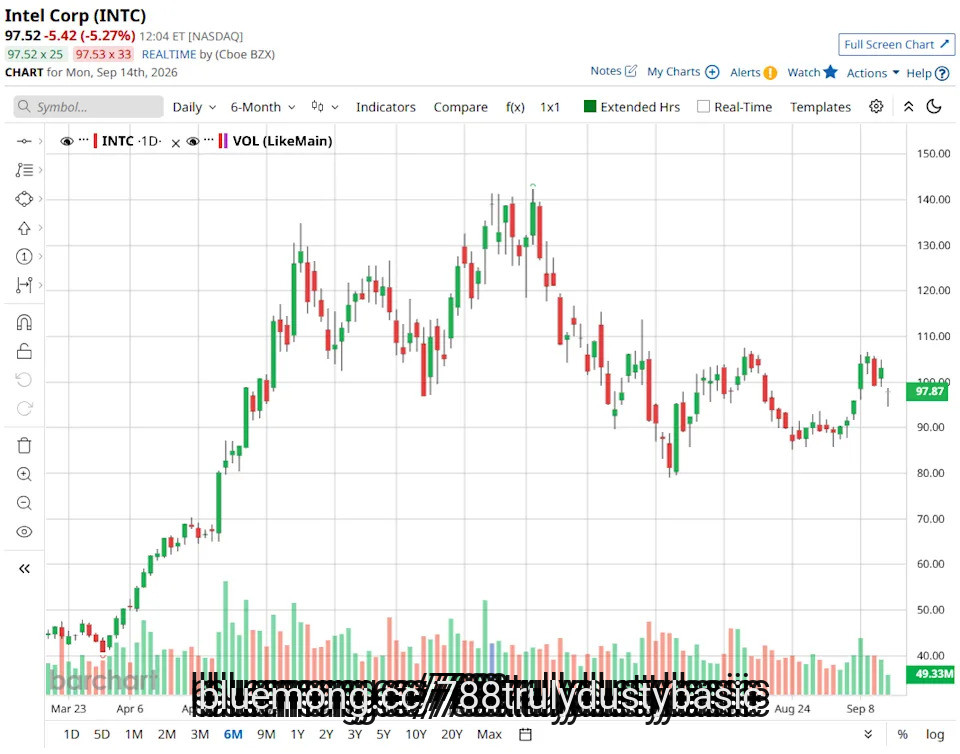
Mizuho has identified four clear tailwinds for Intel (INTC): ongoing CPU supply shortages, a stronger PC refresh cycle, accelerating demand for agentic AI, and growth in advanced packaging. Normally, such a setup would provide a reason to raise a price target. Instead, the firm cut its price target from $109 to $92, citing short-term multiple compression across Agentic AI stocks, and maintained a "Neutral" rating. The contradiction becomes more important because Intel's re-rating still depends on a foundry turnaround that has yet to prove itself.
Mizuho remains cautious on INTC stock despite outlining four separate tailwinds that could support the company's growth. The firm lowered its price target from $109 to $92 on Sept. 3, pointing to short-term multiple compression across agentic AI companies while keeping its "Neutral" rating unchanged. Mizuho **** yst Vijay Rakesh highlighted four developments that could support Intel's outlook. According to the **** yst, accelerating agentic AI demand could improve CPU-to-GPU ratios and drive additional server refreshers. Ongoing CPU supply constraints could also leave the company unable to fully meet demand through 2027. In addition, advanced packaging revenue is expected to reach $3.5 billion by 2029, with external foundry revenue potentially reaching a similar level through the 14A node. Finally, a stronger PC cycle could extend the upgrade cycle as corporate refreshes combine with ongoing memory tightness.
Goldman Sachs Expects Fed Chair Kevin Warsh to Raise Rates This Week — But Not Because of Oil Prices.
Billionaire Charlie Munger, Who Died at 99, Skipped Insurance on His Mansion Since He Could Just Write a Check to Rebuild — 'All Intelligent People Do It My Way'
The EV Bubble Has Burst. How to Play Rivian Stock Now.
#four
Mizuho remains cautious on INTC stock despite outlining four separate tailwinds that could support the company's growth. The firm lowered its price target from $109 to $92 on Sept. 3, pointing to short-term multiple compression across agentic AI companies while keeping its "Neutral" rating unchanged. Mizuho **** yst Vijay Rakesh highlighted four developments that could support Intel's outlook. According to the **** yst, accelerating agentic AI demand could improve CPU-to-GPU ratios and drive additional server refreshers. Ongoing CPU supply constraints could also leave the company unable to fully meet demand through 2027. In addition, advanced packaging revenue is expected to reach $3.5 billion by 2029, with external foundry revenue potentially reaching a similar level through the 14A node. Finally, a stronger PC cycle could extend the upgrade cycle as corporate refreshes combine with ongoing memory tightness.
Goldman Sachs Expects Fed Chair Kevin Warsh to Raise Rates This Week — But Not Because of Oil Prices.
Billionaire Charlie Munger, Who Died at 99, Skipped Insurance on His Mansion Since He Could Just Write a Check to Rebuild — 'All Intelligent People Do It My Way'
The EV Bubble Has Burst. How to Play Rivian Stock Now.
#four


9 days ago
BioNTech SE (NASDAQ:BNTX) reported that its investigational lung-cancer drug gotistobart produced a clinically meaningful overall-survival benefit in the Phase 3 PRESERVE-003 trial in patients with metastatic squamous non-small cell lung cancer whose disease had progressed after prior immunotherapy and chemotherapy. Reuters said gotistobart nearly doubled survival compared with standard-of-care chemotherapy, strengthening the case for the drug as a potential chemotherapy-free treatment in a population with significant unmet need.
The result builds on earlier Stage 1 data, where gotistobart reduced the risk of death by 54% versus docetaxel, with a hazard ratio of 0.46. Median overall survival was not yet reached for gotistobart versus 9.95 months for docetaxel, while the 12-month progression-free survival rate was 25.2% versus 0%. BioNTech is now awaiting the pivotal Stage 2 readout, making the latest result important not only for the drug's approval prospects but also for the credibility of BioNTech's broader transition from a COVID-vaccine company toward a multi-product oncology business.
The strongest bullish argument is that gotistobart now has repeated evidence of a meaningful survival advantage in a difficult-to-treat lung-cancer population. The earlier Stage 1 dataset showed 55.6% of patients alive in the gotistobart arm versus 23.8% with docetaxel, alongside a 54% reduction in the risk of death. The latest Phase 3 update reinforces that signal rather than introducing an entirely new hypothesis. If the pivotal Stage 2 data confirm the benefit, BioNTech SE (NASDAQ:BNTX) could have a differentiated therapy capable of competing on survival rather than simply response rates, potentially supporting meaningful pricing power and a commercially attractive oncology franchise.
The result also strengthens BioNTech's broader oncology strategy because gotistobart is one piece of a much larger pipeline rather than a standalone bet. BioNTech says it has 14 ongoing pivotal trials and more than 10 novel combination programs, while its lung-cancer strategy spans more than 16 ongoing clinical trials and five Phase 3 programs. Gotistobart's success therefore provides validation for the company's immuno-oncology capabilities, while other ****** ets such as pumitamig and antibody-drug conjugates advance toward additional indications. BioNTech has identified 17+ late-stage or pivotal readouts through 2030+, creating the possibility that a successful gotistobart launch becomes the first major commercial proof point in its planned transition to a multi-product oncology company.
#stage #survival
The result builds on earlier Stage 1 data, where gotistobart reduced the risk of death by 54% versus docetaxel, with a hazard ratio of 0.46. Median overall survival was not yet reached for gotistobart versus 9.95 months for docetaxel, while the 12-month progression-free survival rate was 25.2% versus 0%. BioNTech is now awaiting the pivotal Stage 2 readout, making the latest result important not only for the drug's approval prospects but also for the credibility of BioNTech's broader transition from a COVID-vaccine company toward a multi-product oncology business.
The strongest bullish argument is that gotistobart now has repeated evidence of a meaningful survival advantage in a difficult-to-treat lung-cancer population. The earlier Stage 1 dataset showed 55.6% of patients alive in the gotistobart arm versus 23.8% with docetaxel, alongside a 54% reduction in the risk of death. The latest Phase 3 update reinforces that signal rather than introducing an entirely new hypothesis. If the pivotal Stage 2 data confirm the benefit, BioNTech SE (NASDAQ:BNTX) could have a differentiated therapy capable of competing on survival rather than simply response rates, potentially supporting meaningful pricing power and a commercially attractive oncology franchise.
The result also strengthens BioNTech's broader oncology strategy because gotistobart is one piece of a much larger pipeline rather than a standalone bet. BioNTech says it has 14 ongoing pivotal trials and more than 10 novel combination programs, while its lung-cancer strategy spans more than 16 ongoing clinical trials and five Phase 3 programs. Gotistobart's success therefore provides validation for the company's immuno-oncology capabilities, while other ****** ets such as pumitamig and antibody-drug conjugates advance toward additional indications. BioNTech has identified 17+ late-stage or pivotal readouts through 2030+, creating the possibility that a successful gotistobart launch becomes the first major commercial proof point in its planned transition to a multi-product oncology company.
#stage #survival


9 days ago
Colgate-Palmolive Company (NYSE:CL) is reportedly exploring the sale of several mass-market personal care brands, including Softsoap, Irish Spring and Speed Stick, in a portfolio reshaping effort that could generate more than $1 billion. The company is working with Goldman Sachs on the potential divestiture. Personal care accounted for roughly 17% of Colgate-Palmolive's 2025 net sales, or about $3.5 billion, while oral care remains the company's largest business.
The move comes as Colgate faces pressure in its North American business. Although the company recently reported a 4.9% increase in net sales, organic sales in North America declined 3%, highlighting competitive pressure in a mature market. The strategy is also consistent with a broader consumer-goods shift toward simplifying portfolios and concentrating capital on higher-growth categories. Unilever, Nestlé, and other major consumer companies have similarly been selling slower-growing or non-core businesses.
The biggest positive is that Colgate-Palmolive Company (NYSE:CL) could become a more focused and potentially higher-quality business. Selling brands that no longer fit its highest-priority growth areas would allow management to concentrate capital, marketing spending, and management attention on oral care, pet nutrition, and other businesses where Colgate has stronger competitive advantages. The company's decision would therefore be less about abandoning personal care altogether and more about improving the quality of the remaining portfolio.
A sale could also unlock meaningful shareholder value. If the divestitures generate more than $1 billion, Colgate would have additional capital that could be used for debt reduction, share repurchases, acquisitions, or investment behind its strongest brands. In a mature consumer-staples company, disciplined capital allocation can have an outsized impact on earnings growth and shareholder returns. There is also evidence that portfolio simplification is becoming increasingly attractive across the consumer-goods industry. The Wall Street Journal has highlighted how companies such as Unilever and Nestlé are shedding businesses that add complexity without providing sufficient growth. The underlying argument is that the benefits of owning a very broad portfolio have diminished as consumer preferences become more fragmented and smaller brands become better at responding to trends.
Most importantly, the divestiture could improve Colgate-Palmolive Company (NYSE:CL)'s strategic focus at a time when North American competition is challenging. Rather than allocating resources to defend slower-growing personal-care brands, management could direct investment toward categories and geographies with better long-term growth prospects. That could ultimately support margins and organic growth even if the immediate revenue base becomes smaller.
#personal #NYSE #Portfolio
The move comes as Colgate faces pressure in its North American business. Although the company recently reported a 4.9% increase in net sales, organic sales in North America declined 3%, highlighting competitive pressure in a mature market. The strategy is also consistent with a broader consumer-goods shift toward simplifying portfolios and concentrating capital on higher-growth categories. Unilever, Nestlé, and other major consumer companies have similarly been selling slower-growing or non-core businesses.
The biggest positive is that Colgate-Palmolive Company (NYSE:CL) could become a more focused and potentially higher-quality business. Selling brands that no longer fit its highest-priority growth areas would allow management to concentrate capital, marketing spending, and management attention on oral care, pet nutrition, and other businesses where Colgate has stronger competitive advantages. The company's decision would therefore be less about abandoning personal care altogether and more about improving the quality of the remaining portfolio.
A sale could also unlock meaningful shareholder value. If the divestitures generate more than $1 billion, Colgate would have additional capital that could be used for debt reduction, share repurchases, acquisitions, or investment behind its strongest brands. In a mature consumer-staples company, disciplined capital allocation can have an outsized impact on earnings growth and shareholder returns. There is also evidence that portfolio simplification is becoming increasingly attractive across the consumer-goods industry. The Wall Street Journal has highlighted how companies such as Unilever and Nestlé are shedding businesses that add complexity without providing sufficient growth. The underlying argument is that the benefits of owning a very broad portfolio have diminished as consumer preferences become more fragmented and smaller brands become better at responding to trends.
Most importantly, the divestiture could improve Colgate-Palmolive Company (NYSE:CL)'s strategic focus at a time when North American competition is challenging. Rather than allocating resources to defend slower-growing personal-care brands, management could direct investment toward categories and geographies with better long-term growth prospects. That could ultimately support margins and organic growth even if the immediate revenue base becomes smaller.
#personal #NYSE #Portfolio


9 days ago
BioNTech SE (NASDAQ:BNTX) reported that its investigational lung-cancer drug gotistobart produced a clinically meaningful overall-survival benefit in the Phase 3 PRESERVE-003 trial in patients with metastatic squamous non-small cell lung cancer whose disease had progressed after prior immunotherapy and chemotherapy. Reuters said gotistobart nearly doubled survival compared with standard-of-care chemotherapy, strengthening the case for the drug as a potential chemotherapy-free treatment in a population with significant unmet need.
The result builds on earlier Stage 1 data, where gotistobart reduced the risk of death by 54% versus docetaxel, with a hazard ratio of 0.46. Median overall survival was not yet reached for gotistobart versus 9.95 months for docetaxel, while the 12-month progression-free survival rate was 25.2% versus 0%. BioNTech is now awaiting the pivotal Stage 2 readout, making the latest result important not only for the drug's approval prospects but also for the credibility of BioNTech's broader transition from a COVID-vaccine company toward a multi-product oncology business.
The strongest bullish argument is that gotistobart now has repeated evidence of a meaningful survival advantage in a difficult-to-treat lung-cancer population. The earlier Stage 1 dataset showed 55.6% of patients alive in the gotistobart arm versus 23.8% with docetaxel, alongside a 54% reduction in the risk of death. The latest Phase 3 update reinforces that signal rather than introducing an entirely new hypothesis. If the pivotal Stage 2 data confirm the benefit, BioNTech SE (NASDAQ:BNTX) could have a differentiated therapy capable of competing on survival rather than simply response rates, potentially supporting meaningful pricing power and a commercially attractive oncology franchise.
The result also strengthens BioNTech's broader oncology strategy because gotistobart is one piece of a much larger pipeline rather than a standalone bet. BioNTech says it has 14 ongoing pivotal trials and more than 10 novel combination programs, while its lung-cancer strategy spans more than 16 ongoing clinical trials and five Phase 3 programs. Gotistobart's success therefore provides validation for the company's immuno-oncology capabilities, while other ***** ets such as pumitamig and antibody-drug conjugates advance toward additional indications. BioNTech has identified 17+ late-stage or pivotal readouts through 2030+, creating the possibility that a successful gotistobart launch becomes the first major commercial proof point in its planned transition to a multi-product oncology company.
#biontech #survival
The result builds on earlier Stage 1 data, where gotistobart reduced the risk of death by 54% versus docetaxel, with a hazard ratio of 0.46. Median overall survival was not yet reached for gotistobart versus 9.95 months for docetaxel, while the 12-month progression-free survival rate was 25.2% versus 0%. BioNTech is now awaiting the pivotal Stage 2 readout, making the latest result important not only for the drug's approval prospects but also for the credibility of BioNTech's broader transition from a COVID-vaccine company toward a multi-product oncology business.
The strongest bullish argument is that gotistobart now has repeated evidence of a meaningful survival advantage in a difficult-to-treat lung-cancer population. The earlier Stage 1 dataset showed 55.6% of patients alive in the gotistobart arm versus 23.8% with docetaxel, alongside a 54% reduction in the risk of death. The latest Phase 3 update reinforces that signal rather than introducing an entirely new hypothesis. If the pivotal Stage 2 data confirm the benefit, BioNTech SE (NASDAQ:BNTX) could have a differentiated therapy capable of competing on survival rather than simply response rates, potentially supporting meaningful pricing power and a commercially attractive oncology franchise.
The result also strengthens BioNTech's broader oncology strategy because gotistobart is one piece of a much larger pipeline rather than a standalone bet. BioNTech says it has 14 ongoing pivotal trials and more than 10 novel combination programs, while its lung-cancer strategy spans more than 16 ongoing clinical trials and five Phase 3 programs. Gotistobart's success therefore provides validation for the company's immuno-oncology capabilities, while other ***** ets such as pumitamig and antibody-drug conjugates advance toward additional indications. BioNTech has identified 17+ late-stage or pivotal readouts through 2030+, creating the possibility that a successful gotistobart launch becomes the first major commercial proof point in its planned transition to a multi-product oncology company.
#biontech #survival


9 days ago
Colgate-Palmolive Company (NYSE:CL) is reportedly exploring the sale of several mass-market personal care brands, including Softsoap, Irish Spring and Speed Stick, in a portfolio reshaping effort that could generate more than $1 billion. The company is working with Goldman Sachs on the potential divestiture. Personal care accounted for roughly 17% of Colgate-Palmolive's 2025 net sales, or about $3.5 billion, while oral care remains the company's largest business.
The move comes as Colgate faces pressure in its North American business. Although the company recently reported a 4.9% increase in net sales, organic sales in North America declined 3%, highlighting competitive pressure in a mature market. The strategy is also consistent with a broader consumer-goods shift toward simplifying portfolios and concentrating capital on higher-growth categories. Unilever, Nestlé, and other major consumer companies have similarly been selling slower-growing or non-core businesses.
The biggest positive is that Colgate-Palmolive Company (NYSE:CL) could become a more focused and potentially higher-quality business. Selling brands that no longer fit its highest-priority growth areas would allow management to concentrate capital, marketing spending, and management attention on oral care, pet nutrition, and other businesses where Colgate has stronger competitive advantages. The company's decision would therefore be less about abandoning personal care altogether and more about improving the quality of the remaining portfolio.
A sale could also unlock meaningful shareholder value. If the divestitures generate more than $1 billion, Colgate would have additional capital that could be used for debt reduction, share repurchases, acquisitions, or investment behind its strongest brands. In a mature consumer-staples company, disciplined capital allocation can have an outsized impact on earnings growth and shareholder returns. There is also evidence that portfolio simplification is becoming increasingly attractive across the consumer-goods industry. The Wall Street Journal has highlighted how companies such as Unilever and Nestlé are shedding businesses that add complexity without providing sufficient growth. The underlying argument is that the benefits of owning a very broad portfolio have diminished as consumer preferences become more fragmented and smaller brands become better at responding to trends.
Most importantly, the divestiture could improve Colgate-Palmolive Company (NYSE:CL)'s strategic focus at a time when North American competition is challenging. Rather than allocating resources to defend slower-growing personal-care brands, management could direct investment toward categories and geographies with better long-term growth prospects. That could ultimately support margins and organic growth even if the immediate revenue base becomes smaller.
#colgate #company #care
The move comes as Colgate faces pressure in its North American business. Although the company recently reported a 4.9% increase in net sales, organic sales in North America declined 3%, highlighting competitive pressure in a mature market. The strategy is also consistent with a broader consumer-goods shift toward simplifying portfolios and concentrating capital on higher-growth categories. Unilever, Nestlé, and other major consumer companies have similarly been selling slower-growing or non-core businesses.
The biggest positive is that Colgate-Palmolive Company (NYSE:CL) could become a more focused and potentially higher-quality business. Selling brands that no longer fit its highest-priority growth areas would allow management to concentrate capital, marketing spending, and management attention on oral care, pet nutrition, and other businesses where Colgate has stronger competitive advantages. The company's decision would therefore be less about abandoning personal care altogether and more about improving the quality of the remaining portfolio.
A sale could also unlock meaningful shareholder value. If the divestitures generate more than $1 billion, Colgate would have additional capital that could be used for debt reduction, share repurchases, acquisitions, or investment behind its strongest brands. In a mature consumer-staples company, disciplined capital allocation can have an outsized impact on earnings growth and shareholder returns. There is also evidence that portfolio simplification is becoming increasingly attractive across the consumer-goods industry. The Wall Street Journal has highlighted how companies such as Unilever and Nestlé are shedding businesses that add complexity without providing sufficient growth. The underlying argument is that the benefits of owning a very broad portfolio have diminished as consumer preferences become more fragmented and smaller brands become better at responding to trends.
Most importantly, the divestiture could improve Colgate-Palmolive Company (NYSE:CL)'s strategic focus at a time when North American competition is challenging. Rather than allocating resources to defend slower-growing personal-care brands, management could direct investment toward categories and geographies with better long-term growth prospects. That could ultimately support margins and organic growth even if the immediate revenue base becomes smaller.
#colgate #company #care


11 days ago
September's debate over Chinese and American AI spending puts Alibaba Group Holding Limited (NYSE:BABA) and Amazon.com, Inc. (NASDAQ:AMZN) on opposite sides of the same investment question. Both report strong demand for computing services. Shareholders still need that demand to justify the infrastructure bill.
September 7 coverage of Jefferies' ***** ysis highlighted differences in spending intensity. The companies' own results suggest a more useful test than choosing a winner from headline capital expenditures: distinguish operating progress from cash committed ahead of future growth.
Alibaba's August 20 report showed June-quarter AI Cloud and Compute Services revenue increasing 45% to RMB48.44 billion. Segment adjusted EBITA reached RMB5.63 billion. The reporting group now combines its former Cloud Intelligence Group with T-Head, so investors should use the company's recast comparisons.
That operating improvement supports the case that computing demand can generate returns. It does not mean the spending cycle has already paid for itself. Group capital expenditures reached RMB67.68 billion, while free cash flow, a non-GAAP liquidity measure, was negative RMB44.67 billion for the quarter.
The opportunity is to keep expanding customer demand and utilization as new infrastructure becomes available. The risk is that cash outlays remain elevated while weaker returns elsewhere in the group reduce the room for error. Cloud growth alone cannot settle the value of the entire business.
#spending #cash #Services
September 7 coverage of Jefferies' ***** ysis highlighted differences in spending intensity. The companies' own results suggest a more useful test than choosing a winner from headline capital expenditures: distinguish operating progress from cash committed ahead of future growth.
Alibaba's August 20 report showed June-quarter AI Cloud and Compute Services revenue increasing 45% to RMB48.44 billion. Segment adjusted EBITA reached RMB5.63 billion. The reporting group now combines its former Cloud Intelligence Group with T-Head, so investors should use the company's recast comparisons.
That operating improvement supports the case that computing demand can generate returns. It does not mean the spending cycle has already paid for itself. Group capital expenditures reached RMB67.68 billion, while free cash flow, a non-GAAP liquidity measure, was negative RMB44.67 billion for the quarter.
The opportunity is to keep expanding customer demand and utilization as new infrastructure becomes available. The risk is that cash outlays remain elevated while weaker returns elsewhere in the group reduce the room for error. Cloud growth alone cannot settle the value of the entire business.
#spending #cash #Services


11 days ago
NVIDIA Corporation (NASDAQ:NVDA) has an argument against rapid hardware obsolescence: older accelerators still command rental prices. For CoreWeave, Inc. (NASDAQ:CRWV), which sells access to computing infrastructure, the harder question is how much of that rent becomes a return.
The September 7 settlement of a transaction-based GPU rental benchmark put NVIDIA's H100 SXM at $3.17 per GPU-hour and its older A100 SXM4 at $1.05. Those are market benchmarks, not CoreWeave's realized prices or the economics of its entire fleet.
The distinction matters because a chip can remain useful without every owner earning an attractive return on the equipment purchased around it.
NVIDIA benefits when buyers believe its systems can serve workloads across multiple product generations. A longer revenue-producing life can make the initial purchase easier to justify and reinforce confidence in its computing ecosystem.
That does not guarantee faster replacement demand. Customers able to run suitable tasks on older equipment may defer some upgrades. NVIDIA still needs new systems to offer advantages worth paying for, especially when power and facility capacity constrain deployment.
#NASDAQ #rental #computing #return
The September 7 settlement of a transaction-based GPU rental benchmark put NVIDIA's H100 SXM at $3.17 per GPU-hour and its older A100 SXM4 at $1.05. Those are market benchmarks, not CoreWeave's realized prices or the economics of its entire fleet.
The distinction matters because a chip can remain useful without every owner earning an attractive return on the equipment purchased around it.
NVIDIA benefits when buyers believe its systems can serve workloads across multiple product generations. A longer revenue-producing life can make the initial purchase easier to justify and reinforce confidence in its computing ecosystem.
That does not guarantee faster replacement demand. Customers able to run suitable tasks on older equipment may defer some upgrades. NVIDIA still needs new systems to offer advantages worth paying for, especially when power and facility capacity constrain deployment.
#NASDAQ #rental #computing #return

11 days ago
Vale S.A. (NYSE:VALE) is considering making its debut in China's domestic bond market as soon as this year, with CFO Marcelo Bacci saying the company is preparing for a potential Panda bond issuance. The move would be strategically significant because China accounts for roughly half of Vale's revenue, making renminbi financing a natural extension of its relationship with its largest market. Bloomberg reported that Vale is still ****** sing the market, including whether it can obtain a maturity longer than the typical two-, three-, or five-year terms available to international issuers.
The timing is also favorable for Vale because China's Panda bond market is expanding rapidly. Reuters reported that foreign issuers have increasingly turned to Asian bond markets to diversify funding sources, while Chinese yuan bond issuance has reached record levels in 2026. For Vale S.A. (NYSE:VALE), the potential transaction therefore looks less like a necessity for raising capital and more like an effort to diversify its investor base, potentially lower funding costs, and build a longer-term financing relationship with Chinese investors.
The strongest bullish argument is that Vale S.A. (NYSE:VALE) could potentially lower and diversify its cost of capital by accessing a large pool of Chinese investors at a time when renminbi funding remains relatively inexpensive. Reuters noted that Chinese onshore and offshore yuan bond markets have experienced record issuance this year, with foreign borrowers increasingly using these markets to diversify away from traditional funding currencies. If Vale can achieve competitive pricing, a Panda bond could provide an additional funding channel alongside its established dollar financing, reducing its dependence on a single market.
The move could also create a better natural match between Vale's revenues and its financing currency. Because China represents approximately half of Vale's revenue, raising at least some debt in renminbi could provide a degree of currency alignment with its Chinese business exposure. More importantly, establishing itself as a repeat issuer could strengthen Vale's relationships with Chinese banks and institutional investors, potentially giving it access to another source of capital when global dollar markets become less attractive.
There is also a broader strategic benefit. China is actively expanding the Panda bond market and encouraging international companies to use it. Official Chinese data showed that more than 160 billion yuan of Panda bonds were issued during the first half of 2026, up 69% year over year, demonstrating that the market is becoming more established and liquid. Vale entering this market could therefore position the company early in a growing financing ecosystem rather than waiting until it becomes more crowded.
#chinese #bond #panda #China
The timing is also favorable for Vale because China's Panda bond market is expanding rapidly. Reuters reported that foreign issuers have increasingly turned to Asian bond markets to diversify funding sources, while Chinese yuan bond issuance has reached record levels in 2026. For Vale S.A. (NYSE:VALE), the potential transaction therefore looks less like a necessity for raising capital and more like an effort to diversify its investor base, potentially lower funding costs, and build a longer-term financing relationship with Chinese investors.
The strongest bullish argument is that Vale S.A. (NYSE:VALE) could potentially lower and diversify its cost of capital by accessing a large pool of Chinese investors at a time when renminbi funding remains relatively inexpensive. Reuters noted that Chinese onshore and offshore yuan bond markets have experienced record issuance this year, with foreign borrowers increasingly using these markets to diversify away from traditional funding currencies. If Vale can achieve competitive pricing, a Panda bond could provide an additional funding channel alongside its established dollar financing, reducing its dependence on a single market.
The move could also create a better natural match between Vale's revenues and its financing currency. Because China represents approximately half of Vale's revenue, raising at least some debt in renminbi could provide a degree of currency alignment with its Chinese business exposure. More importantly, establishing itself as a repeat issuer could strengthen Vale's relationships with Chinese banks and institutional investors, potentially giving it access to another source of capital when global dollar markets become less attractive.
There is also a broader strategic benefit. China is actively expanding the Panda bond market and encouraging international companies to use it. Official Chinese data showed that more than 160 billion yuan of Panda bonds were issued during the first half of 2026, up 69% year over year, demonstrating that the market is becoming more established and liquid. Vale entering this market could therefore position the company early in a growing financing ecosystem rather than waiting until it becomes more crowded.
#chinese #bond #panda #China


11 days ago
September 14, 2010: Security workers reportedly stop Apple CEO Steve Jobs at **** an's Kansai International Airport. The reason? Jobs supposedly tried to bring ninja throwing stars onto his private plane while heading home from vacation. The "Steve Jobs ninja stars" story quickly becomes one of the most bizarre Apple stories ever.
The company, however, quickly spoils the internet's fun. Cupertino issues a statement describing the reports as "pure fiction" (although Apple acknowledges that Jobs visited **** an over the summer).
Few Steve Jobs stories sound more perfectly tailored to his larger-than-life persona than the tale of him being stopped at a **** anese airport with ninja throwing stars in his luggage. The problem: Apple said it never happened. Still, the story endured — perhaps because a notoriously intense, famously unconventional CEO carrying ninja weapons just feels like the kind of thing people want to believe.
Both Bloomberg and **** anese tabloid magazine Spa! covered the story prominently. Authorities stopped Jobs during a security scan at Kansai International Airport, the reports said, after detecting the ninja weapons in his carry-on luggage.
The stories cited unidentified airport officials and sources within **** an's transportation ministry. An airport spokesperson confirmed that the incident took place, but stopped short of identifying the individual involved.
#stars
The company, however, quickly spoils the internet's fun. Cupertino issues a statement describing the reports as "pure fiction" (although Apple acknowledges that Jobs visited **** an over the summer).
Few Steve Jobs stories sound more perfectly tailored to his larger-than-life persona than the tale of him being stopped at a **** anese airport with ninja throwing stars in his luggage. The problem: Apple said it never happened. Still, the story endured — perhaps because a notoriously intense, famously unconventional CEO carrying ninja weapons just feels like the kind of thing people want to believe.
Both Bloomberg and **** anese tabloid magazine Spa! covered the story prominently. Authorities stopped Jobs during a security scan at Kansai International Airport, the reports said, after detecting the ninja weapons in his carry-on luggage.
The stories cited unidentified airport officials and sources within **** an's transportation ministry. An airport spokesperson confirmed that the incident took place, but stopped short of identifying the individual involved.
#stars


11 days ago
Moneywise and Yahoo Finance LLC may earn commission or revenue through links in the content below.
For millions of Americans, handing a driver's license to a rental-car agent, hotel clerk or security guard is a routine transaction that barely warrants a second thought.
But what happens when the system designed to verify your identity becomes a tool that can help criminals steal it?
Jeff Bezos backs a platform that lets anyone invest in rental homes for as little as $100 — 6 ways to build wealth like a landlord without actually being one
A record 45% of central banks plan to grow gold reserves — and many investors are following suit. Get your free gold IRA guide from Priority Gold
#Gold #rental
For millions of Americans, handing a driver's license to a rental-car agent, hotel clerk or security guard is a routine transaction that barely warrants a second thought.
But what happens when the system designed to verify your identity becomes a tool that can help criminals steal it?
Jeff Bezos backs a platform that lets anyone invest in rental homes for as little as $100 — 6 ways to build wealth like a landlord without actually being one
A record 45% of central banks plan to grow gold reserves — and many investors are following suit. Get your free gold IRA guide from Priority Gold
#Gold #rental


13 days ago
Extreme weather is creating a more demanding environment for property owners, insurers, and communities. According to the National Centers for Environmental Information (NCEI), the United States recorded 27 confirmed billion-dollar weather and climate disasters in 2024, resulting in a total cost of $182.7 billion. These events spanned a wide range of extremes, including severe storm events, tropical cyclones, wildfires, drought/heat waves, and winter storm/cold wave events. Over the last decade, ***** ulative losses from these disasters have exceeded $1.4 trillion, driven significantly by population growth, material wealth, and increased development in hazard-prone areas. These figures suggest that the financial consequences of extreme events may increasingly depend on how accurately the value of exposed property is understood before a loss occurs.
That question becomes especially consequential during reconstruction. A 2026 report from Bloomberg, featured in Claims Journal, noted that surveys conducted by United Policyholders since 2007 found an average of two-thirds of wildfire survivors reporting that they were underinsured, with an average shortfall of $200,000 or more. The Insurance Information Institute has similarly estimated that two-thirds of American homeowners may be underinsured for wildfire losses, typically by about 20%, and in some cases by as much as 60%. These findings illustrate how the presence of an insurance policy can still leave a substantial difference between available coverage and the resources required to rebuild, particularly when construction costs rise after a catastrophe.
The financial implications can extend across the broader insurance ecosystem. Aon's 2026 Climate and Catastrophe Insight reported approximately $260 billion in global economic losses from natural catastrophes during 2025, compared with $127 billion in insured losses. For property stakeholders, such a figure may place greater attention on the relationship between the value ***** igned to an ***** et, the cost of restoring it, and the capital available when a loss occurs.
Frequency can add another layer to that calculation. Data from NCEI indicate that the average interval between U.S. billion-dollar disaster events was approximately 16 days during 2020–2024, compared with 82 days during the 1980s. NCEI notes that shorter intervals can leave less time and fewer resources for response, recovery, and preparation for subsequent events. As the time between major events contracts, property valuations may require more frequent attention because construction costs, labor conditions, materials, and local economic circumstances can change between policy reviews.
#property #losses #insurance #information
That question becomes especially consequential during reconstruction. A 2026 report from Bloomberg, featured in Claims Journal, noted that surveys conducted by United Policyholders since 2007 found an average of two-thirds of wildfire survivors reporting that they were underinsured, with an average shortfall of $200,000 or more. The Insurance Information Institute has similarly estimated that two-thirds of American homeowners may be underinsured for wildfire losses, typically by about 20%, and in some cases by as much as 60%. These findings illustrate how the presence of an insurance policy can still leave a substantial difference between available coverage and the resources required to rebuild, particularly when construction costs rise after a catastrophe.
The financial implications can extend across the broader insurance ecosystem. Aon's 2026 Climate and Catastrophe Insight reported approximately $260 billion in global economic losses from natural catastrophes during 2025, compared with $127 billion in insured losses. For property stakeholders, such a figure may place greater attention on the relationship between the value ***** igned to an ***** et, the cost of restoring it, and the capital available when a loss occurs.
Frequency can add another layer to that calculation. Data from NCEI indicate that the average interval between U.S. billion-dollar disaster events was approximately 16 days during 2020–2024, compared with 82 days during the 1980s. NCEI notes that shorter intervals can leave less time and fewer resources for response, recovery, and preparation for subsequent events. As the time between major events contracts, property valuations may require more frequent attention because construction costs, labor conditions, materials, and local economic circumstances can change between policy reviews.
#property #losses #insurance #information


13 days ago
The Dallas Cowboys are back! And, of course, it's another start to the season where the Cowboys roll into MetLife Stadium to take on the New York Giants. The Giants have many questions heading into the 2026 season with a whole new coaching staff after a season where they managed to win only four games. Let's break it down then get to some predictions.
Expect the Giants to make the running game the starting point of their new offense. John Harbaugh has brought in coaches with a history of building physical rushing attacks, while fullback Patrick Ricard and first-round offensive lineman Francis Mauigoa were added to help them play that way. Cam Skattebo gives them a powerful runner, but quarterback Jaxson Dart is just as important. Dart rushed for 487 yards and nine touchdowns as a rookie, so Dallas cannot simply chase the running back and forget about the quarterback.
The biggest opportunity for New York comes when Dallas starts worrying too much about the run. The Cowboys allowed 4,735 passing yards and 31 passing touchdowns last season, and Dart finished the year by completing 22 of 32 passes for 230 yards, two touchdowns and no interceptions in a 34-17 win over Dallas.
If Malik Nabers is cleared to play following his ACL recovery, his matchup against the Dallas secondary becomes even more important, although his Week 1 availability remains uncertain. The Giants' route to victory is to keep Dallas guessing with the running game and Skattebo, use Dart as a runner, then attack downfield when the Cowboys bring extra defenders toward the line.
Dallas should make New York prove immediately that its run defense has improved. The Giants surrendered 2,470 rushing yards last season, while Javonte Williams ran for 1,201 yards and scored 11 rushing touchdowns for Dallas. Running the football also has another benefit this week because the Cowboys will be without All-Pro guard Tyler Smith following thumb surgery. T.J. Bass will replace him, so giving the offensive line manageable situations rather than asking it to pass protect on every play makes sense.
#cowboys
Expect the Giants to make the running game the starting point of their new offense. John Harbaugh has brought in coaches with a history of building physical rushing attacks, while fullback Patrick Ricard and first-round offensive lineman Francis Mauigoa were added to help them play that way. Cam Skattebo gives them a powerful runner, but quarterback Jaxson Dart is just as important. Dart rushed for 487 yards and nine touchdowns as a rookie, so Dallas cannot simply chase the running back and forget about the quarterback.
The biggest opportunity for New York comes when Dallas starts worrying too much about the run. The Cowboys allowed 4,735 passing yards and 31 passing touchdowns last season, and Dart finished the year by completing 22 of 32 passes for 230 yards, two touchdowns and no interceptions in a 34-17 win over Dallas.
If Malik Nabers is cleared to play following his ACL recovery, his matchup against the Dallas secondary becomes even more important, although his Week 1 availability remains uncertain. The Giants' route to victory is to keep Dallas guessing with the running game and Skattebo, use Dart as a runner, then attack downfield when the Cowboys bring extra defenders toward the line.
Dallas should make New York prove immediately that its run defense has improved. The Giants surrendered 2,470 rushing yards last season, while Javonte Williams ran for 1,201 yards and scored 11 rushing touchdowns for Dallas. Running the football also has another benefit this week because the Cowboys will be without All-Pro guard Tyler Smith following thumb surgery. T.J. Bass will replace him, so giving the offensive line manageable situations rather than asking it to pass protect on every play makes sense.
#cowboys


13 days ago
Justin Verlander already knows when the Detroit Tigers will celebrate his career.
What he still does not know is whether he will get to finish it where he wants to finish it: standing on a Major League mound.
Verlander is expected to throw off a mound Saturday as he continues working back from left hip inflammation and a left hamstring strain, according to MLB's latest Tigers injury update. If his body responds, the 43-year-old could advance to a rehab ***** ignment and potentially pitch for Detroit before his retirement becomes official at the end of the season.
That makes Saturday considerably more important than a routine September bullpen session.
Verlander has already announced that 2026 will be his final season. Detroit has already planned the goodbye.
#tigers #mound #left #justin
What he still does not know is whether he will get to finish it where he wants to finish it: standing on a Major League mound.
Verlander is expected to throw off a mound Saturday as he continues working back from left hip inflammation and a left hamstring strain, according to MLB's latest Tigers injury update. If his body responds, the 43-year-old could advance to a rehab ***** ignment and potentially pitch for Detroit before his retirement becomes official at the end of the season.
That makes Saturday considerably more important than a routine September bullpen session.
Verlander has already announced that 2026 will be his final season. Detroit has already planned the goodbye.
#tigers #mound #left #justin


13 days ago
Brian McKnight is publicly celebrating one of his sons again—but this time, the birthday tribute is for his stepson Jack.
The R&B singer posted a video documenting an extravagant birthday outing for Jack, the son of his wife, Leilani Mendoza, whom McKnight has helped raise and openly calls his own. In the clip, McKnight takes the second-year law student shopping for a pickup truck of his choice while delivering an emotional tribute to the young man.
"Every once in a while, you're blessed with a child that becomes everything you could have ever hoped for and more," McKnight said. "That's Jack."
COMPLEX SHOP: Shop the brands you love, anytime and anywhere. Uncover what's next. Buy. Collect. Obsess.
McKnight didn't stop there.
#jack
The R&B singer posted a video documenting an extravagant birthday outing for Jack, the son of his wife, Leilani Mendoza, whom McKnight has helped raise and openly calls his own. In the clip, McKnight takes the second-year law student shopping for a pickup truck of his choice while delivering an emotional tribute to the young man.
"Every once in a while, you're blessed with a child that becomes everything you could have ever hoped for and more," McKnight said. "That's Jack."
COMPLEX SHOP: Shop the brands you love, anytime and anywhere. Uncover what's next. Buy. Collect. Obsess.
McKnight didn't stop there.
#jack



13 days ago
The New England Patriots are collecting former Buffalo Bills.
New England is signing veteran defensive tackle DaQuan Jones to a one-year contract worth up to $6 million, according to NFL Network's Ian Rapoport.
The deal includes a $3.5 million base salary.
Jones becomes the sixth former Bills player currently with the Patriots, joining fullback Reggie Gilliam, wide receiver Mack Hollins, offensive lineman Greg Van Roten, tight end Shane Zylstra and punter Mitch Wishnowsky.
Zylstra and Wishnowsky were released by the Bills as part of final roster cuts two weeks ago and are on New England's practice squad.
#england #jones #wishnowsky #daquan
New England is signing veteran defensive tackle DaQuan Jones to a one-year contract worth up to $6 million, according to NFL Network's Ian Rapoport.
The deal includes a $3.5 million base salary.
Jones becomes the sixth former Bills player currently with the Patriots, joining fullback Reggie Gilliam, wide receiver Mack Hollins, offensive lineman Greg Van Roten, tight end Shane Zylstra and punter Mitch Wishnowsky.
Zylstra and Wishnowsky were released by the Bills as part of final roster cuts two weeks ago and are on New England's practice squad.
#england #jones #wishnowsky #daquan

13 days ago
It's already a tired storyline, but we'll get through it together until it becomes totally exhausted. San Diego State is the Pac-12 team here, UCLA is the Big Ten team, and even if it doesn't quite feel right, it's a big game for both.
The Aztecs want to be a player in the hunt for a College Football Playoff spot, but this is the one shot to take down a Power Four program. Coming off a good 53-20 warm-up win over Portland State, SDSU is as ready as it's going to be.
UCLA is the big story, though. Bob Chesney's first game as the new head coach was close to perfect, with the ground game pounding away through Cal in a 45-24 win.
It seems like these two should've played more than 17 times. UCLA won the last meeting in 2023 and is 16-1 all-time in the series.
San Diego State can lose this and still be alive for the CFP, but it would need to beat James Madison next week. The Pac-12 season starts against Texas State in early October.
UCLA starts the Big Ten season next week when Purdue comes to Los Angeles. It gets Maryland after that before going to Oregon.
#diego #next #week #starts
The Aztecs want to be a player in the hunt for a College Football Playoff spot, but this is the one shot to take down a Power Four program. Coming off a good 53-20 warm-up win over Portland State, SDSU is as ready as it's going to be.
UCLA is the big story, though. Bob Chesney's first game as the new head coach was close to perfect, with the ground game pounding away through Cal in a 45-24 win.
It seems like these two should've played more than 17 times. UCLA won the last meeting in 2023 and is 16-1 all-time in the series.
San Diego State can lose this and still be alive for the CFP, but it would need to beat James Madison next week. The Pac-12 season starts against Texas State in early October.
UCLA starts the Big Ten season next week when Purdue comes to Los Angeles. It gets Maryland after that before going to Oregon.
#diego #next #week #starts


14 days ago
NBA ticket prices are turning live basketball into a luxury appeared first on ClutchPoints. Add ClutchPoints as a Preferred Source by clicking here.
The NBA sells access to its biggest moments, but opening-week prices for the 2026-27 season suggest that access increasingly belongs to fans with deep pockets. SeatPick examined the 41 games on the schedule from Oct. 20 through Oct. 25 and calculated a $326 average ticket price across the league.
That figure already represents a serious commitment for one seat. The market becomes even more extreme around marquee teams and matchups. At the opposite end, several fanbases can enter the building for a fraction of that amount. The result resembles two different NBA experiences: one that invites broad participation and another that treats entry as a luxury purchase.
Demand will always separate a major event from an ordinary night on the schedule. Still, a league fueled by emotional investment should care when its most devoted supporters can follow the moment more easily than they can afford to witness it.
Watch sports LIVE with fuboTV (free trial)
#schedule #preferred
The NBA sells access to its biggest moments, but opening-week prices for the 2026-27 season suggest that access increasingly belongs to fans with deep pockets. SeatPick examined the 41 games on the schedule from Oct. 20 through Oct. 25 and calculated a $326 average ticket price across the league.
That figure already represents a serious commitment for one seat. The market becomes even more extreme around marquee teams and matchups. At the opposite end, several fanbases can enter the building for a fraction of that amount. The result resembles two different NBA experiences: one that invites broad participation and another that treats entry as a luxury purchase.
Demand will always separate a major event from an ordinary night on the schedule. Still, a league fueled by emotional investment should care when its most devoted supporters can follow the moment more easily than they can afford to witness it.
Watch sports LIVE with fuboTV (free trial)
#schedule #preferred


14 days ago
Intellia Therapeutics, Inc. (NASDAQ:NTLA) entered a five-year senior secured credit facility with OrbiMed for up to $400 million and drew $75 million at closing. The remaining $325 million depends on milestones or further lender agreement.
The facility bears interest at an annual rate equal to the greater of 3% or the one-month Secured Overnight Financing Rate, plus 6.15%, payable monthly. The formula sets a 9.15% minimum. Applying that floor to the initial borrowing produces approximately $6.9 million of article-calculated annual interest before commitment, administrative, undrawn-amount, and facility fees.
The financing arrives as Intellia Therapeutics, Inc. (NASDAQ:NTLA) prepares for a potential U.S. launch of lonvoguran ziclumeran, or lonvo-z, for hereditary angioedema. Intellia Therapeutics, Inc. (NASDAQ:NTLA) held $628.4 million of cash, cash equivalents, and marketable securities as of June 30, but reported a $106.6 million second-quarter net loss.
The staged structure gives Intellia Therapeutics, Inc. (NASDAQ:NTLA) capital without issuing equity at closing and avoids drawing the full amount before milestones that could support additional debt.
A second $75 million tranche becomes available at the option of Intellia Therapeutics, Inc. (NASDAQ:NTLA) if the FDA approves the biologics license application for lonvo-z before a specified date. Three further $40 million tranches depend on lonvo-z revenue targets, while another $30 million requires an equity-fundraising milestone. This links most committed borrowing capacity to regulatory and commercial progress.
#million #therapeutics #ntla #lonvo
The facility bears interest at an annual rate equal to the greater of 3% or the one-month Secured Overnight Financing Rate, plus 6.15%, payable monthly. The formula sets a 9.15% minimum. Applying that floor to the initial borrowing produces approximately $6.9 million of article-calculated annual interest before commitment, administrative, undrawn-amount, and facility fees.
The financing arrives as Intellia Therapeutics, Inc. (NASDAQ:NTLA) prepares for a potential U.S. launch of lonvoguran ziclumeran, or lonvo-z, for hereditary angioedema. Intellia Therapeutics, Inc. (NASDAQ:NTLA) held $628.4 million of cash, cash equivalents, and marketable securities as of June 30, but reported a $106.6 million second-quarter net loss.
The staged structure gives Intellia Therapeutics, Inc. (NASDAQ:NTLA) capital without issuing equity at closing and avoids drawing the full amount before milestones that could support additional debt.
A second $75 million tranche becomes available at the option of Intellia Therapeutics, Inc. (NASDAQ:NTLA) if the FDA approves the biologics license application for lonvo-z before a specified date. Three further $40 million tranches depend on lonvo-z revenue targets, while another $30 million requires an equity-fundraising milestone. This links most committed borrowing capacity to regulatory and commercial progress.
#million #therapeutics #ntla #lonvo