6 days ago
On September 9, 2026, Apple Inc. (NASDAQ:AAPL) unveiled the iPhone Duo, its first foldable smartphone and the biggest change to the iPhone's design in nearly 20 years, at the first product launch event led by new CEO John Ternus since he succeeded Tim Cook on September 1. The book-style, passport-shaped device opens into a 7.6-inch display, Apple's largest ever, starts at $1,999 for the 256-gigabyte model and rises to $3,199 for 2 terabytes of storage. This makes it the most expensive iPhone Apple has ever sold, with availability set for October 23.
The iPhone Duo gives Apple Inc. (NASDAQ:AAPL) a new premium growth opportunity in a mature smartphone market. Apple entered the foldable market with the $1,999 Duo. It creates a new high-end product category within its largest hardware franchise. ******* ysts expect Apple to take a real share of the foldable market. The firm's brand strength and large installed base could help speed up use of foldable smartphones.
The Duo creates a materially different iPhone experience that could encourage upgrades and attract Android users. The device opens to a 7.6-inch display, supports side-by-side multitasking, and offers a tablet-like experience in a pocketable design. Apple also shows the Duo's ******* anium frame, custom hinge, A20 Pro chip, and Apple Intelligence features. It gives customers several reasons to pay a substantial premium for the new form factor.
The launch solidifies Apple's hardware innovation strategy under new CEO John Ternus. The Duo represents Apple's most significant iPhone redesign since the iPhone X. It gives Ternus an opportunity to reignite enthusiasm around the company's hardware portfolio. The product also expands Apple's ability to monetize its ecosystem through higher-value hardware, services, and accessories as customers spend more time using a larger, more versatile iPhone.
The $1,999 starting price could keep the Duo a niche product. Reuters reported that the global foldable market could account for less than 3% of smartphone sales in 2026. ******* ysts expect only about 6 million Duo units as Apple Inc. (NASDAQ:AAPL) enters the category. Even strong market share would turn into a relatively small contribution compared with Apple's broader iPhone business.
#iphone #aapl
The iPhone Duo gives Apple Inc. (NASDAQ:AAPL) a new premium growth opportunity in a mature smartphone market. Apple entered the foldable market with the $1,999 Duo. It creates a new high-end product category within its largest hardware franchise. ******* ysts expect Apple to take a real share of the foldable market. The firm's brand strength and large installed base could help speed up use of foldable smartphones.
The Duo creates a materially different iPhone experience that could encourage upgrades and attract Android users. The device opens to a 7.6-inch display, supports side-by-side multitasking, and offers a tablet-like experience in a pocketable design. Apple also shows the Duo's ******* anium frame, custom hinge, A20 Pro chip, and Apple Intelligence features. It gives customers several reasons to pay a substantial premium for the new form factor.
The launch solidifies Apple's hardware innovation strategy under new CEO John Ternus. The Duo represents Apple's most significant iPhone redesign since the iPhone X. It gives Ternus an opportunity to reignite enthusiasm around the company's hardware portfolio. The product also expands Apple's ability to monetize its ecosystem through higher-value hardware, services, and accessories as customers spend more time using a larger, more versatile iPhone.
The $1,999 starting price could keep the Duo a niche product. Reuters reported that the global foldable market could account for less than 3% of smartphone sales in 2026. ******* ysts expect only about 6 million Duo units as Apple Inc. (NASDAQ:AAPL) enters the category. Even strong market share would turn into a relatively small contribution compared with Apple's broader iPhone business.
#iphone #aapl

7 days ago
It's no secret that Arm Holdings (NASDAQ: ARM) is a crucial piece of the artificial intelligence (AI) puzzle. But how often do you think of Arm as a top-shelf AI investment? It's easy to forget this impressive compounder amid the glitzy hypergrowth of Nvidia's and AMD's expensive AI accelerators.
Arm doesn't build the chips that train large language models. The company doesn't actually build chips at all. Instead, Arm designs fundamental instruction sets and CPU cores. It licenses those designs to anyone with a fab contract and an ambition and collects a royalty on every unit shipped. It's basically a toll booth on a road that keeps getting wider.
Missed Nvidia in 2009? This Rare Signal Is Flashing Again. In 2009, a "Double Down" signal flashed for a little-known chipmaker called Nvidia. For the first time in years, that same "Total Conviction" signal is flashing for a company 1/100th the size of Nvidia. Continue »
Arm's toll road used to run almost entirely through smartphones. Now it runs through the data center too. Nvidia's Vera CPU pairs Arm cores with its accelerators. Amazon's Graviton, Microsoft's Cobalt, and Alphabet's Google Axion are all Arm-based, built in-house by companies that spend like nation-states on server capacity.
Every AI cluster on the planet needs general-purpose compute to feed the high-speed AI accelerators, handle networking, and run the orchestration layer. A growing share of that work sits on Arm designs.
#signal #flashing #build #chips
Arm doesn't build the chips that train large language models. The company doesn't actually build chips at all. Instead, Arm designs fundamental instruction sets and CPU cores. It licenses those designs to anyone with a fab contract and an ambition and collects a royalty on every unit shipped. It's basically a toll booth on a road that keeps getting wider.
Missed Nvidia in 2009? This Rare Signal Is Flashing Again. In 2009, a "Double Down" signal flashed for a little-known chipmaker called Nvidia. For the first time in years, that same "Total Conviction" signal is flashing for a company 1/100th the size of Nvidia. Continue »
Arm's toll road used to run almost entirely through smartphones. Now it runs through the data center too. Nvidia's Vera CPU pairs Arm cores with its accelerators. Amazon's Graviton, Microsoft's Cobalt, and Alphabet's Google Axion are all Arm-based, built in-house by companies that spend like nation-states on server capacity.
Every AI cluster on the planet needs general-purpose compute to feed the high-speed AI accelerators, handle networking, and run the orchestration layer. A growing share of that work sits on Arm designs.
#signal #flashing #build #chips


8 days ago
While he stepped down as CEO of Berkshire Hathaway at the end of last year, Warren Buffett's wealth, and thus his portfolio, is still tied to the conglomerate and its stock portfolio. On that end, Berkshire's top-three positions -- consisting of Apple (NASDAQ: AAPL), American Express (NYSE: AXP), and Alphabet (NASDAQ: GOOG) (NASDAQ: GOOGL) (Nasdaq) -- make up more than half of its equity portfolio.
All three are strong compounding businesses with wide moats, but which looks like the best of the group to buy today? Let's take a look at each.
Missed Nvidia in 2009? This Rare Signal Is Flashing Again. In 2009, a "Double Down" signal flashed for a little-known chipmaker called Nvidia. For the first time in years, that same "Total Conviction" signal is flashing for a company 1/100th the size of Nvidia. Continue »
Apple is Berkshire's largest holding, making up about 22% of its portfolio. The stock is a Buffett favorite because it has one of the best compounding business models out there.
Apple, of course, is best known for its iPhone and other devices. Smartphones and computers tend to have very predictable replacement cycles, which creates an almost recurring type of revenue stream for the company. However, the beauty of the business stems from its closed-garden ecosystem that helps lock in consumers, from which it then collects high-margin service revenue. This revenue comes from a variety of sources, including a search revenue-sharing deal with Alphabet, commissions on app downloads, Apple Pay, and subscriptions for things like cloud storage.
#NASDAQ #revenue #best #alphabet
All three are strong compounding businesses with wide moats, but which looks like the best of the group to buy today? Let's take a look at each.
Missed Nvidia in 2009? This Rare Signal Is Flashing Again. In 2009, a "Double Down" signal flashed for a little-known chipmaker called Nvidia. For the first time in years, that same "Total Conviction" signal is flashing for a company 1/100th the size of Nvidia. Continue »
Apple is Berkshire's largest holding, making up about 22% of its portfolio. The stock is a Buffett favorite because it has one of the best compounding business models out there.
Apple, of course, is best known for its iPhone and other devices. Smartphones and computers tend to have very predictable replacement cycles, which creates an almost recurring type of revenue stream for the company. However, the beauty of the business stems from its closed-garden ecosystem that helps lock in consumers, from which it then collects high-margin service revenue. This revenue comes from a variety of sources, including a search revenue-sharing deal with Alphabet, commissions on app downloads, Apple Pay, and subscriptions for things like cloud storage.
#NASDAQ #revenue #best #alphabet


16 days ago
Interested in Qualcomm Incorporated? Here are five stocks we like better.
Qualcomm's Amazon agreement gives its data center strategy a major anchor beyond smartphones.
Amazon's warrants are tied to up to $60 billion in potential purchases over a decade, making the deal meaningful but gradual.
Qualcomm's valuation still trails many AI infrastructure peers, but dilution risk and execution timing remain important factors.
Investors continue to seek disciplined strategies to participate in the evolving artificial intelligence (AI) economy without paying inflated multiples for standard graphics hardware. Capital remains focused on businesses positioned to sustain steady enterprise workload expansion while maintaining reasonable valuation metrics.
#interested #qualcomm
Qualcomm's Amazon agreement gives its data center strategy a major anchor beyond smartphones.
Amazon's warrants are tied to up to $60 billion in potential purchases over a decade, making the deal meaningful but gradual.
Qualcomm's valuation still trails many AI infrastructure peers, but dilution risk and execution timing remain important factors.
Investors continue to seek disciplined strategies to participate in the evolving artificial intelligence (AI) economy without paying inflated multiples for standard graphics hardware. Capital remains focused on businesses positioned to sustain steady enterprise workload expansion while maintaining reasonable valuation metrics.
#interested #qualcomm


18 days ago
Corning (GLW) stock rose Tuesday after the provider of optical communications gear for telecom networks and artificial intelligence data centers announced a multibillion-dollar agreement with longtime customer Verizon Communications (VZ). Corning stock has advanced 70% in 2026, but shares have retreated from a 52-week high set on June 30.
Under the deal, Verizon will buy optical fiber and connectivity products from 2027 to 2032 for its landline broadband network. Verizon also is building a new long-distance backbone network for cloud computing companies.
On the stock market today, Corning stock rose more than 7% to 165.70 in morning trading. Corning stock hit a high of 271.78 on June 30. Meanwhile, Verizon stock climbed nearly 1% to 50.51.
Corning was long known for its flat-panel display business and Gorilla Glass used in smartphones. But the company has pivoted to become a provider of fiber, cables, connectors and networking components needed to link AI computer servers inside and between AI data centers.
Nvidia (NVDA) recently agreed to invest up to $3.2 billion in Corning under a warrant deal. Corning plans to expand production capacity for AI data centers.
#Stock #centers
Under the deal, Verizon will buy optical fiber and connectivity products from 2027 to 2032 for its landline broadband network. Verizon also is building a new long-distance backbone network for cloud computing companies.
On the stock market today, Corning stock rose more than 7% to 165.70 in morning trading. Corning stock hit a high of 271.78 on June 30. Meanwhile, Verizon stock climbed nearly 1% to 50.51.
Corning was long known for its flat-panel display business and Gorilla Glass used in smartphones. But the company has pivoted to become a provider of fiber, cables, connectors and networking components needed to link AI computer servers inside and between AI data centers.
Nvidia (NVDA) recently agreed to invest up to $3.2 billion in Corning under a warrant deal. Corning plans to expand production capacity for AI data centers.
#Stock #centers


21 days ago
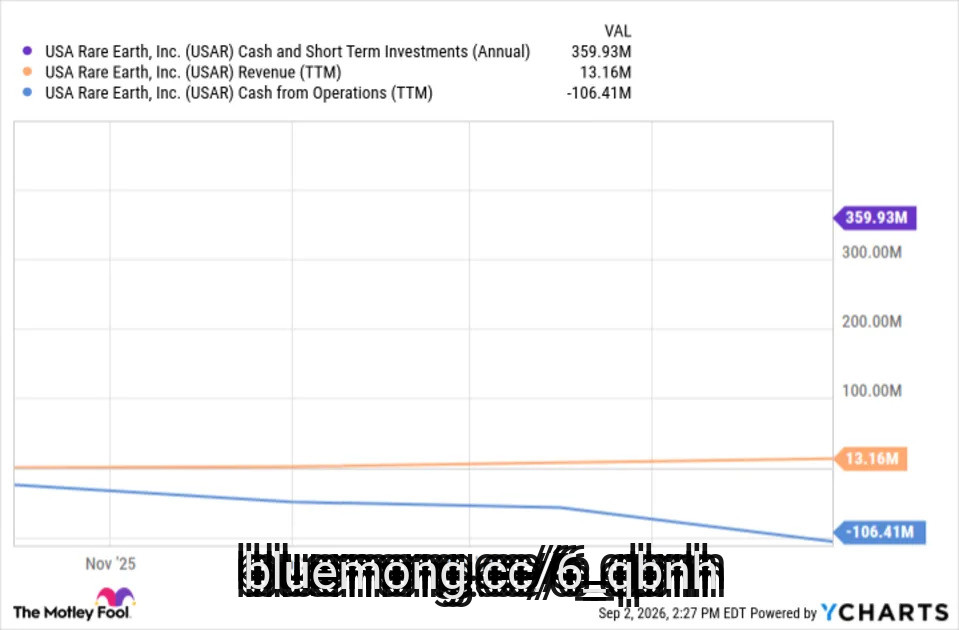
USA Rare Earth (NASDAQ: USAR) is quickly becoming one of America's most strategically important mining companies, at least if the economy, technology, and national security count for anything.
Why all the attention? Two words: rare earths. Indeed, rare-earth metals, as their name suggests, are a class of elements that are tough to find in economically useful deposits. They are essential to everything from smartphones and electric vehicles (EVs) to fighter jets and guided missiles, and China controls most of the world's capacity to process them.
Missed Nvidia in 2009? This Rare Signal Is Flashing Again. In 2009, a "Double Down" signal flashed for a little-known chipmaker called Nvidia. For the first time in years, that same "Total Conviction" signal is flashing for a company 1/100th the size of Nvidia. Continue »
USA Rare Earth is one of only a handful of American companies that control a rare-earth deposit on American soil. Its goal is to extract rare-earth elements from a deposit in Texas, process and separate them domestically, and turn them into permanent magnets for American companies out of its factory in Oklahoma.
For some time, this has been at the heart of USA Rare Earth's growth thesis; none of it is new. What is new, however, is its pending acquisition of Serra Verde, which could turn USA Rare Earth from a would-be miner with an uncertain start date into the owner of an operating rare-earth mine. That deal will likely close before its next earnings report -- expected in early November -- and could set the stage for a huge rally.
#american #Companies #time
Why all the attention? Two words: rare earths. Indeed, rare-earth metals, as their name suggests, are a class of elements that are tough to find in economically useful deposits. They are essential to everything from smartphones and electric vehicles (EVs) to fighter jets and guided missiles, and China controls most of the world's capacity to process them.
Missed Nvidia in 2009? This Rare Signal Is Flashing Again. In 2009, a "Double Down" signal flashed for a little-known chipmaker called Nvidia. For the first time in years, that same "Total Conviction" signal is flashing for a company 1/100th the size of Nvidia. Continue »
USA Rare Earth is one of only a handful of American companies that control a rare-earth deposit on American soil. Its goal is to extract rare-earth elements from a deposit in Texas, process and separate them domestically, and turn them into permanent magnets for American companies out of its factory in Oklahoma.
For some time, this has been at the heart of USA Rare Earth's growth thesis; none of it is new. What is new, however, is its pending acquisition of Serra Verde, which could turn USA Rare Earth from a would-be miner with an uncertain start date into the owner of an operating rare-earth mine. That deal will likely close before its next earnings report -- expected in early November -- and could set the stage for a huge rally.
#american #Companies #time


21 days ago
On August 5, Cirrus Logic (NASDAQ:CRUS) reported record first-quarter revenue of $459.7 million, up 13% year over year, alongside non-GAAP earnings per share of $1.84, a June quarter record for the company. Smartphone component demand carried the print, and executives struck a confident tone about content growth across cameras, batteries and power circuits. But that optimism sat next to a quieter admission: the company's PC segment outlook for fiscal 2027 just got smaller, and the reasons behind that cut matter for anyone weighing this stock's next chapter.
High-performance mixed-signal revenue climbed 26% year over year to $210.7 million, as Cirrus Logic expanded its footprint across camera, battery, and power applications inside smartphones. CEO John Forsyth pointed to a multi-generation collaboration with the company's largest customer on camera controllers, plus continued work on a Smart Power IC for 3D sensing that stayed on schedule through the quarter. Audio, the company's flagship business, still grew 3.7% to $249.0 million on demand for custom boosted amplifiers and smart codecs, and Forsyth said those parts should keep shipping across multiple future product generations.
The company is also pushing past smartphones. During the quarter, Cirrus Logic taped out a new family of ******* og front-end components aimed at smart meters, with sampling expected in the September quarter and potential spillover into EV charging, data center metrology and grid monitoring. On the PC side, a new low-power smart codec built for always-on wake word detection drew strong customer interest, and products using Nvidia's RTX Spark platform are expected to ship later in 2026 carrying Cirrus Logic amplifiers and codecs. A fresh wafer supply agreement with GlobalFoundries locks in capacity and pricing through calendar 2028 and advances a shift toward domestic manufacturing in Malta, New York. Underneath it all sits $1.2 billion in cash and investments, no debt, and $598.6 million in trailing 12-month operating cash flow, funding $34.5 million in share buybacks during the quarter and another $50.5 million afterward.
The company trimmed its fiscal 2027 PC segment outlook, and Forsyth laid out three specific culprits: constrained supply of a key industry platform, memory and component shortages pressuring pricing across the PC market, and OEMs responding by delaying new model launches and stretching the life of older platforms. Those delayed models typically carry higher content and higher volume for Cirrus Logic, so Forsyth said the slippage "pushes out some of the growth we would otherwise have seen in our PC business this year."
#cirrus #forsyth
High-performance mixed-signal revenue climbed 26% year over year to $210.7 million, as Cirrus Logic expanded its footprint across camera, battery, and power applications inside smartphones. CEO John Forsyth pointed to a multi-generation collaboration with the company's largest customer on camera controllers, plus continued work on a Smart Power IC for 3D sensing that stayed on schedule through the quarter. Audio, the company's flagship business, still grew 3.7% to $249.0 million on demand for custom boosted amplifiers and smart codecs, and Forsyth said those parts should keep shipping across multiple future product generations.
The company is also pushing past smartphones. During the quarter, Cirrus Logic taped out a new family of ******* og front-end components aimed at smart meters, with sampling expected in the September quarter and potential spillover into EV charging, data center metrology and grid monitoring. On the PC side, a new low-power smart codec built for always-on wake word detection drew strong customer interest, and products using Nvidia's RTX Spark platform are expected to ship later in 2026 carrying Cirrus Logic amplifiers and codecs. A fresh wafer supply agreement with GlobalFoundries locks in capacity and pricing through calendar 2028 and advances a shift toward domestic manufacturing in Malta, New York. Underneath it all sits $1.2 billion in cash and investments, no debt, and $598.6 million in trailing 12-month operating cash flow, funding $34.5 million in share buybacks during the quarter and another $50.5 million afterward.
The company trimmed its fiscal 2027 PC segment outlook, and Forsyth laid out three specific culprits: constrained supply of a key industry platform, memory and component shortages pressuring pricing across the PC market, and OEMs responding by delaying new model launches and stretching the life of older platforms. Those delayed models typically carry higher content and higher volume for Cirrus Logic, so Forsyth said the slippage "pushes out some of the growth we would otherwise have seen in our PC business this year."
#cirrus #forsyth


23 days ago
DraftKings is available on Texans' smartphones - but not through the traditional online sportsbook that operates in states where sports betting is legal.
Founded in Massachusetts in 2012, DraftKings is a digital sports entertainment and gaming company offering products that include online sports betting, daily fantasy sports, online casino games and prediction markets.
After the U.S. Supreme Court struck down the Professional and Amateur Sports Protection Act in 2018, states were allowed to decide whether to legalize sports betting. As of 2026, 39 states and Washington, D.C., have legalized it.
Texas has not.
So how can Texans legally use DraftKings? The answer comes down to which DraftKings product they use.
#texans #founded
Founded in Massachusetts in 2012, DraftKings is a digital sports entertainment and gaming company offering products that include online sports betting, daily fantasy sports, online casino games and prediction markets.
After the U.S. Supreme Court struck down the Professional and Amateur Sports Protection Act in 2018, states were allowed to decide whether to legalize sports betting. As of 2026, 39 states and Washington, D.C., have legalized it.
Texas has not.
So how can Texans legally use DraftKings? The answer comes down to which DraftKings product they use.
#texans #founded


25 days ago
NVIDIA Corporation (NASDAQ:NVDA) is investing $3.5 billion in Taiwan-based MediaTek through convertible bonds, taking an existing AI partnership a step further. The two companies plan to work together on local AI computing and AI-powered vehicle platforms, while also bringing Nvidia's accelerated-computing technology into more markets.
The investment comes soon after Nvidia reported another strong quarter and projected roughly 70% revenue growth for fiscal 2028. That outlook suggests management still expects AI demand to grow rather than reach a peak. For NVDA investors, the key question is whether the MediaTek deal will create new demand for Nvidia's technology or is mainly another case of the company using its balance sheet to support the wider AI ecosystem.
The clearest positive is that the MediaTek partnership could expand NVIDIA Corporation (NASDAQ:NVDA)'s addressable market beyond traditional data centers. MediaTek has a strong presence in smartphones, consumer electronics, connectivity and automotive chips. Pairing that reach with Nvidia's accelerated-computing technology could help Nvidia bring AI computing to edge devices, PCs and vehicles. The companies also launched the RTX Spark PC chip in June, showing that the relationship goes beyond a financial investment.
The automotive opportunity could be especially important. Nvidia is trying to make its technology a broader computing platform rather than remain mainly a supplier of data-center GPUs. Working with a major chip designer such as MediaTek could give Nvidia another path into AI-powered vehicles and other edge applications.
Investing through convertible bonds also gives Nvidia a strategic benefit. The company is not simply providing MediaTek with capital. It is building a closer financial relationship while potentially gaining equity exposure. If MediaTek's business grows as a result of the partnership, Nvidia could benefit financially while also seeing greater demand for its own technology.
#computing #demand #corporation
The investment comes soon after Nvidia reported another strong quarter and projected roughly 70% revenue growth for fiscal 2028. That outlook suggests management still expects AI demand to grow rather than reach a peak. For NVDA investors, the key question is whether the MediaTek deal will create new demand for Nvidia's technology or is mainly another case of the company using its balance sheet to support the wider AI ecosystem.
The clearest positive is that the MediaTek partnership could expand NVIDIA Corporation (NASDAQ:NVDA)'s addressable market beyond traditional data centers. MediaTek has a strong presence in smartphones, consumer electronics, connectivity and automotive chips. Pairing that reach with Nvidia's accelerated-computing technology could help Nvidia bring AI computing to edge devices, PCs and vehicles. The companies also launched the RTX Spark PC chip in June, showing that the relationship goes beyond a financial investment.
The automotive opportunity could be especially important. Nvidia is trying to make its technology a broader computing platform rather than remain mainly a supplier of data-center GPUs. Working with a major chip designer such as MediaTek could give Nvidia another path into AI-powered vehicles and other edge applications.
Investing through convertible bonds also gives Nvidia a strategic benefit. The company is not simply providing MediaTek with capital. It is building a closer financial relationship while potentially gaining equity exposure. If MediaTek's business grows as a result of the partnership, Nvidia could benefit financially while also seeing greater demand for its own technology.
#computing #demand #corporation

25 days ago
With shares up by roughly 1,200% over the last five years, Micron Technology (NASDAQ: MU) is a standout performer in the generative artificial intelligence (AI) megatrend. But the company's rocketship rally has come under threat. And shares are down around 23% from their all-time high of $1,213 reached on June 25th as investors grow nervous about competition and the sustainability of its high margins.
Let's dig deeper into Micron's pros and cons to decide whether the dip is a long-term buying opportunity or a sign of more trouble to come.
Missed Nvidia in 2009? This Rare Signal Is Flashing Again. In 2009, a "Double Down" signal flashed for a little-known chipmaker called Nvidia. For the first time in years, that same "Total Conviction" signal is flashing for a company 1/100th the size of Nvidia. Continue »
Usually, large corporations find their raison d'etre early in their life cycles. But Micron has been a late bloomer. The company has spent most of the last few decades providing memory hardware for consumer markets, such as personal computers and smartphones, where it has endured brutal competition and low margins. Shares barely budged in the two decades between the dot-com bubble and the COVID-19 pandemic.
However, the arrival of generative AI gave the company a new lease on life as data center operators quickly realized that high bandwidth memory had become one of the primary bottlenecks in creating more powerful large language models (LLMs).
#company #years
Let's dig deeper into Micron's pros and cons to decide whether the dip is a long-term buying opportunity or a sign of more trouble to come.
Missed Nvidia in 2009? This Rare Signal Is Flashing Again. In 2009, a "Double Down" signal flashed for a little-known chipmaker called Nvidia. For the first time in years, that same "Total Conviction" signal is flashing for a company 1/100th the size of Nvidia. Continue »
Usually, large corporations find their raison d'etre early in their life cycles. But Micron has been a late bloomer. The company has spent most of the last few decades providing memory hardware for consumer markets, such as personal computers and smartphones, where it has endured brutal competition and low margins. Shares barely budged in the two decades between the dot-com bubble and the COVID-19 pandemic.
However, the arrival of generative AI gave the company a new lease on life as data center operators quickly realized that high bandwidth memory had become one of the primary bottlenecks in creating more powerful large language models (LLMs).
#company #years

26 days ago
Diana, Princess of Wales (1961 - 1997) attends a dinner at the British Embassy in Washington, DC, November 1985. She is wearing an evening dress by Murray Arbeid and the Queen Mary tiara. (Photo by Terry Fincher/Princess Diana Archive/Getty Images)
I was in the eighth grade, preparing to enter high school, when Lady Diana Spencer married Prince Charles.
Some of the girls from my junior high softball team spent the night at our house because we had the big television—the kind not every family had in 1981. My mother woke us at around five o'clock in the morning so we could watch the royal wedding live from London.
She made tea and crumpets, little tea sandwiches and all kinds of treats. We gathered around that television, sleepy and excited, waiting to see the prince, the carriage and the beautiful young woman in the enormous ivory dress.
There were no smartphones, no social media, and no livestreams we could replay later. There was simply the television and the shared experience of watching a real-life fairy tale unfold before our eyes.
#diana #around #wales #embassy
I was in the eighth grade, preparing to enter high school, when Lady Diana Spencer married Prince Charles.
Some of the girls from my junior high softball team spent the night at our house because we had the big television—the kind not every family had in 1981. My mother woke us at around five o'clock in the morning so we could watch the royal wedding live from London.
She made tea and crumpets, little tea sandwiches and all kinds of treats. We gathered around that television, sleepy and excited, waiting to see the prince, the carriage and the beautiful young woman in the enormous ivory dress.
There were no smartphones, no social media, and no livestreams we could replay later. There was simply the television and the shared experience of watching a real-life fairy tale unfold before our eyes.
#diana #around #wales #embassy

29 days ago
Aristotle Capital Management, LLC, an investment management company, released its "Value Equity Fund" Q2 2026 investor letter. A copy of the letter can be downloaded here. The Fund delivered a 4.32% total return in Q2 2026, underperforming the 13.87% gain for the Russell 1000 Value Index and the 15.20% return for the S&P 500, while its 1.99% year-to-date return also lagged the Russell 1000 Value Index's 16.26% and the S&P 500's 10.21%. The Fund attributed the performance gap largely to limited exposure to the AI infrastructure spending boom, noting that the U.S. has about 4,000 existing data centers and nearly 3,000 more planned or under construction, while AI-related demand has created bottlenecks in processors and memory. The letter highlighted the scale of the cycle, with industry cash flows in key AI hardware areas rising sharply, while the Russell 1000 Value Index's top 10 contributors gained an average 182% year to date and accounted for 9.29 percentage points of the index's 16.23% return. Looking ahead, the fund expects investors to eventually reassess the sustainability of current AI infrastructure earnings and valuations. In addition, please check the Fund's top five holdings to know its best picks in 2026.
In its second-quarter 2026 investor letter, Aristotle Value Equity Fund highlighted stocks like QUALCOMM Incorporated (NASDAQ:QCOM). QUALCOMM Incorporated (NASDAQ:QCOM) develops wireless technologies and semiconductor solutions powering smartphones, automotive systems, and connected devices worldwide. The one-month return of QUALCOMM Incorporated (NASDAQ:QCOM) was 11.63% while its shares traded between $121.99 and $259.92 over the last 52 weeks. On August 27, 2026, QUALCOMM Incorporated (NASDAQ:QCOM) stock closed at approximately $163.72 per share, with a market capitalization of about $176.00 billion.
Aristotle Value Equity Fund stated the following regarding QUALCOMM Incorporated (NASDAQ:QCOM) in its Q2 2026 investor letter:
QUALCOMM Incorporated (NASDAQ:QCOM), a leading semiconductor and communications technology company, was the largest contributor for the quarter. Shares recovered as management indicated that the inventory adjustments and production constraints resulting from higher memory costs were progressing largely as expected and that handset revenues from Chinese customers were expected to reach a bottom. As we noted last quarter, we believed these headwinds to be cyclical rather than structural and did not alter our long-term investment thesis. The company also continued to make progress on its long-term strategy of evolving from a handset-centric company into a broader provider of connected computing technologies. Automotive revenue reached another record high, while Internet of Things (IoT) and newer businesses such as AI-enabled PCs, industrial applications, and data center computing continue to represent a growing portion of the company and remain central to its long-term diversification strategy. We believe Qualco
In its second-quarter 2026 investor letter, Aristotle Value Equity Fund highlighted stocks like QUALCOMM Incorporated (NASDAQ:QCOM). QUALCOMM Incorporated (NASDAQ:QCOM) develops wireless technologies and semiconductor solutions powering smartphones, automotive systems, and connected devices worldwide. The one-month return of QUALCOMM Incorporated (NASDAQ:QCOM) was 11.63% while its shares traded between $121.99 and $259.92 over the last 52 weeks. On August 27, 2026, QUALCOMM Incorporated (NASDAQ:QCOM) stock closed at approximately $163.72 per share, with a market capitalization of about $176.00 billion.
Aristotle Value Equity Fund stated the following regarding QUALCOMM Incorporated (NASDAQ:QCOM) in its Q2 2026 investor letter:
QUALCOMM Incorporated (NASDAQ:QCOM), a leading semiconductor and communications technology company, was the largest contributor for the quarter. Shares recovered as management indicated that the inventory adjustments and production constraints resulting from higher memory costs were progressing largely as expected and that handset revenues from Chinese customers were expected to reach a bottom. As we noted last quarter, we believed these headwinds to be cyclical rather than structural and did not alter our long-term investment thesis. The company also continued to make progress on its long-term strategy of evolving from a handset-centric company into a broader provider of connected computing technologies. Automotive revenue reached another record high, while Internet of Things (IoT) and newer businesses such as AI-enabled PCs, industrial applications, and data center computing continue to represent a growing portion of the company and remain central to its long-term diversification strategy. We believe Qualco


30 days ago
Xiaomi Corporation (OTC:XIACF) is no longer content to compete through hardware design and pricing alone. The Chinese smartphone maker has unveiled the Xring O3, which is the second generation of its proprietary handset processor, as it seeks greater control over the technology powering its devices.
The strategy could improve product differentiation and bolster Xiaomi's negotiating position with outside chip suppliers, all the while supporting its expansion into premium smartphones. However, the investment comes as rising component costs and weakening global handset demand are already pressuring the company's core business. Let's dive deeper into it.
Developing processors internally could give Xiaomi greater control over several features that influence the smartphone experience. A system-on-chip integrates computing, graphics, artificial intelligence processing, and imaging functions, allowing the company to optimize important capabilities around its own hardware and software. Xiaomi launched its first proprietary smartphone processor, the Xring O1, in 2025. During its latest earnings call, the company said ******* ulative shipments of O1-powered smartphones, tablets, and watches had surpassed one million units. Although Reuters' sources estimated that only approximately 150,000 of those shipments were smartphones, the broader total shows Xiaomi has already deployed the technology across multiple product categories.
The O3 could also support Xiaomi's push into more expensive devices. According to two people familiar with the plans, TSMC will manufacture the processor using its 3-nanometre technology. One source said the chip is expected to power Xiaomi's next flagship foldable phone, with shipments targeted at between 200,000 and 300,000 units. Foldables offer Xiaomi an opportunity to compete more directly in a premium category currently dominated in China by Huawei. Huawei shipped 1.6 million foldable smartphones in China during the second quarter, accounting for 68% of the market, according to data cited by Reuters.
The company's ambitions also extend beyond smartphones. Reuters reported that Xiaomi contracted TSMC to produce the Xring O100, a 6-nanometre neural-processing chip designed to support its MiMo artificial-intelligence model on consumer devices, and the Xring D100, a 3-nanometre autonomous-driving processor. Xiaomi said both chips have completed development and are scheduled for deployment next year. Together, these projects show that Xiaomi is extending its chip-development strategy beyond smartphones into AI-enabled consumer devices and autonomous driving.
#shipments
The strategy could improve product differentiation and bolster Xiaomi's negotiating position with outside chip suppliers, all the while supporting its expansion into premium smartphones. However, the investment comes as rising component costs and weakening global handset demand are already pressuring the company's core business. Let's dive deeper into it.
Developing processors internally could give Xiaomi greater control over several features that influence the smartphone experience. A system-on-chip integrates computing, graphics, artificial intelligence processing, and imaging functions, allowing the company to optimize important capabilities around its own hardware and software. Xiaomi launched its first proprietary smartphone processor, the Xring O1, in 2025. During its latest earnings call, the company said ******* ulative shipments of O1-powered smartphones, tablets, and watches had surpassed one million units. Although Reuters' sources estimated that only approximately 150,000 of those shipments were smartphones, the broader total shows Xiaomi has already deployed the technology across multiple product categories.
The O3 could also support Xiaomi's push into more expensive devices. According to two people familiar with the plans, TSMC will manufacture the processor using its 3-nanometre technology. One source said the chip is expected to power Xiaomi's next flagship foldable phone, with shipments targeted at between 200,000 and 300,000 units. Foldables offer Xiaomi an opportunity to compete more directly in a premium category currently dominated in China by Huawei. Huawei shipped 1.6 million foldable smartphones in China during the second quarter, accounting for 68% of the market, according to data cited by Reuters.
The company's ambitions also extend beyond smartphones. Reuters reported that Xiaomi contracted TSMC to produce the Xring O100, a 6-nanometre neural-processing chip designed to support its MiMo artificial-intelligence model on consumer devices, and the Xring D100, a 3-nanometre autonomous-driving processor. Xiaomi said both chips have completed development and are scheduled for deployment next year. Together, these projects show that Xiaomi is extending its chip-development strategy beyond smartphones into AI-enabled consumer devices and autonomous driving.
#shipments


30 days ago
On August 11, 2026, Sony Group Corporation (NYSE:SONY) and Taiwan Semiconductor Manufacturing Company Limited (NYSE:TSM) agreed to form a $4.7 billion joint venture to develop and manufacture next-generation image sensors for smartphones. Mass production is expected to begin in 2029.
Why This Matters
Sony is trying to limit its own capital spending on next-generation chip manufacturing while still capturing AI-era demand for camera "eyes" in machines.
So does partnering with TSMC give Sony the best of both worlds, or does it mean sharing a strategic manufacturing edge with a partner that also serves every other chip customer in the world?
Sony Group Corporation (NYSE:SONY) will be the venture's sole controlling shareholder and will lead development of core image-sensor technology and product design, contributing about $2.92 billion partly by transferring its newly built **** amoto chip factory. The structure is designed specifically to limit Sony's own capital spending while positioning it to capture rising demand for the "eyes" of machines as AI adoption grows. The companies are also counting on **** anese government support to help fund the venture's full planned capacity.
#NYSE #corporation #next #generation
Why This Matters
Sony is trying to limit its own capital spending on next-generation chip manufacturing while still capturing AI-era demand for camera "eyes" in machines.
So does partnering with TSMC give Sony the best of both worlds, or does it mean sharing a strategic manufacturing edge with a partner that also serves every other chip customer in the world?
Sony Group Corporation (NYSE:SONY) will be the venture's sole controlling shareholder and will lead development of core image-sensor technology and product design, contributing about $2.92 billion partly by transferring its newly built **** amoto chip factory. The structure is designed specifically to limit Sony's own capital spending while positioning it to capture rising demand for the "eyes" of machines as AI adoption grows. The companies are also counting on **** anese government support to help fund the venture's full planned capacity.
#NYSE #corporation #next #generation


1 month ago
Sustainable Growth Advisers (SGA), an investment management company, released its second-quarter 2026 investor letter for its "Global Growth Strategy." The letter can be downloaded here. The SGA Global Growth Portfolio returned 7.4% gross and 7.2% net, compared with 14.9% for the MSCI ACWI and 19.8% for the MSCI ACWI Growth Index. Momentum leadership and enthusiasm around AI infrastructure drove markets, with semiconductor, memory, and hardware stocks accounting for much of the gain. Although the portfolio owned AI beneficiaries, broader holdings lagged despite fundamentals, as median revenue and EPS growth reached 12% and 14% and more than 60% of the holdings beat expectations. SGA believes valuation compression reflects sentiment rather than weaker business quality, leaving the portfolio near its widest discount to the market since inception. The firm continues to favor durable compounders and expects 16% revenue growth and 20% earnings growth over three years. Also, please check the Fund's top five holdings to see its best picks for 2026.
In its second-quarter 2026 investor letter, SGA Global Growth Strategy highlighted Taiwan Semiconductor Manufacturing Company Limited (NYSE:TSM) as a top contributor to the performance. Taiwan Semiconductor Manufacturing Company Limited (NYSE:TSM) is the world's leading contract chip manufacturer, producing advanced semiconductors for major global technology companies. On August 21, 2026, Taiwan Semiconductor Manufacturing Company Limited (NYSE:TSM) closed at $418.95 per share. The one-month return of Taiwan Semiconductor Manufacturing Company Limited (NYSE:TSM) was 2.34%, and its shares gained 73.37% over the past 52 weeks. Taiwan Semiconductor Manufacturing Company Limited (NYSE:TSM) has a market capitalization of $1.9 trillion with a 52-week trading range between $223.70 - $479.00.
SGA Global Growth Strategy stated the following regarding Taiwan Semiconductor Manufacturing Company Limited (NYSE:TSM) in its Q2 2026 investor letter:
"Taiwan Semiconductor Manufacturing Company Limited (NYSE:TSM), the world's leading semiconductor foundry, was a top contributor to performance during the quarter. Shares were supported by sustained strength in demand for advanced logic and compute, with customers across AI accelerators and CPUs continuing to require additional capacity. TSMC remains firmly positioned at the leading edge of semiconductor manufacturing, benefiting from secular demand across high performance computing, smartphones, automotive, and AI applications. Its technology leadership and scale support sustained double digit growth, with revenue increasingly driven by recurring and repeatable categories that reduce cyclicality. Given TSMC's dominant competitive position, deep customer entrenchment, and the continued global need for advanced compute, TSMC remains well-positioned to deliver strong double-digit revenue and earnings growth over the coming years. We maintained an above average weight position du
In its second-quarter 2026 investor letter, SGA Global Growth Strategy highlighted Taiwan Semiconductor Manufacturing Company Limited (NYSE:TSM) as a top contributor to the performance. Taiwan Semiconductor Manufacturing Company Limited (NYSE:TSM) is the world's leading contract chip manufacturer, producing advanced semiconductors for major global technology companies. On August 21, 2026, Taiwan Semiconductor Manufacturing Company Limited (NYSE:TSM) closed at $418.95 per share. The one-month return of Taiwan Semiconductor Manufacturing Company Limited (NYSE:TSM) was 2.34%, and its shares gained 73.37% over the past 52 weeks. Taiwan Semiconductor Manufacturing Company Limited (NYSE:TSM) has a market capitalization of $1.9 trillion with a 52-week trading range between $223.70 - $479.00.
SGA Global Growth Strategy stated the following regarding Taiwan Semiconductor Manufacturing Company Limited (NYSE:TSM) in its Q2 2026 investor letter:
"Taiwan Semiconductor Manufacturing Company Limited (NYSE:TSM), the world's leading semiconductor foundry, was a top contributor to performance during the quarter. Shares were supported by sustained strength in demand for advanced logic and compute, with customers across AI accelerators and CPUs continuing to require additional capacity. TSMC remains firmly positioned at the leading edge of semiconductor manufacturing, benefiting from secular demand across high performance computing, smartphones, automotive, and AI applications. Its technology leadership and scale support sustained double digit growth, with revenue increasingly driven by recurring and repeatable categories that reduce cyclicality. Given TSMC's dominant competitive position, deep customer entrenchment, and the continued global need for advanced compute, TSMC remains well-positioned to deliver strong double-digit revenue and earnings growth over the coming years. We maintained an above average weight position du


1 month ago
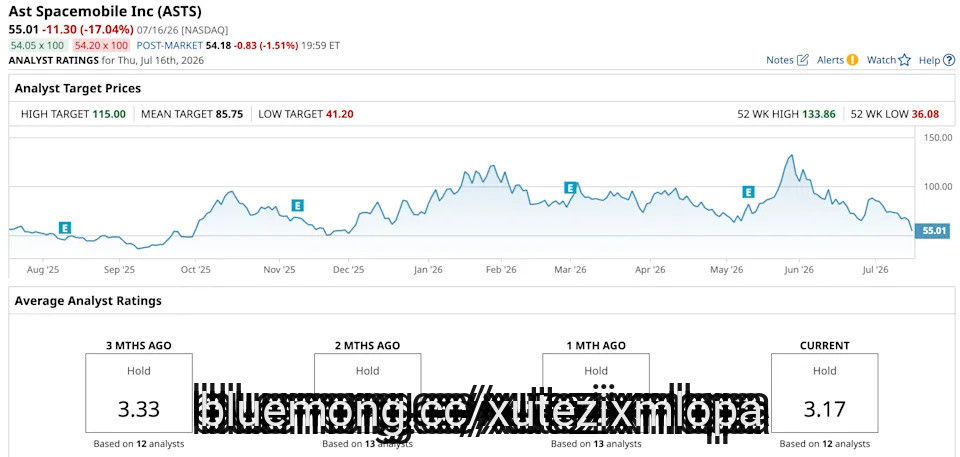
As we look toward 2027, the contrast between a high-flying satellite newcomer and a legacy aerospace giant creates a unique dilemma for investors. You must choose between AST ***** eMobile Inc (NASDAQ:ASTS) and Boeing Co (NYSE:BA).
AST ***** eMobile is pioneering a ***** e-based cellular network, while Boeing continues to be a ***** an in commercial aviation and defense. This comparison pits a speculative, rapid-growth technology story against a massive industrial turnaround effort. Deciding which to buy requires balancing the potential for massive disruption against the stability of established manufacturing.
AST ***** eMobile is building the first ***** e-based cellular broadband network designed to connect directly to standard smartphones for commercial and government use. Its strategy, detailed in its latest annual report, relies on partnering with mobile network operators like AT&T Inc (NYSE:T) and Verizon Communications (NYSE:VZ) to fill coverage gaps for nearly 3 billion subscribers. With definitive agreements with these major carriers and various U.S. government agencies, customer concentration like this adds a layer of risk to the business. That said, it also counts Vodafone Group (NASDAQ:VOD) and Saudi Telecom Co as strategic international partners who help it navigate local regulatory markets.
In FY 2025, revenue reached approximately $70.9 million, a substantial jump from the $4.4 million reported in the prior fiscal year. The company reported a net loss of nearly $342 million for the period. While revenue growth is accelerating as the company begins its commercial rollout, profitability remains a distant goal during this build-out phase.
The current debt-to-equity ratio is roughly 1.2x, showing the company relies more on debt than equity to fund its operations. Free cash flow, which is cash flow from operations minus capital expenditures, was more than negative $1.1 billion for FY 2025, as the firm invested heavily in its proprietary manufacturing and launch capabilities.
#boeing
AST ***** eMobile is pioneering a ***** e-based cellular network, while Boeing continues to be a ***** an in commercial aviation and defense. This comparison pits a speculative, rapid-growth technology story against a massive industrial turnaround effort. Deciding which to buy requires balancing the potential for massive disruption against the stability of established manufacturing.
AST ***** eMobile is building the first ***** e-based cellular broadband network designed to connect directly to standard smartphones for commercial and government use. Its strategy, detailed in its latest annual report, relies on partnering with mobile network operators like AT&T Inc (NYSE:T) and Verizon Communications (NYSE:VZ) to fill coverage gaps for nearly 3 billion subscribers. With definitive agreements with these major carriers and various U.S. government agencies, customer concentration like this adds a layer of risk to the business. That said, it also counts Vodafone Group (NASDAQ:VOD) and Saudi Telecom Co as strategic international partners who help it navigate local regulatory markets.
In FY 2025, revenue reached approximately $70.9 million, a substantial jump from the $4.4 million reported in the prior fiscal year. The company reported a net loss of nearly $342 million for the period. While revenue growth is accelerating as the company begins its commercial rollout, profitability remains a distant goal during this build-out phase.
The current debt-to-equity ratio is roughly 1.2x, showing the company relies more on debt than equity to fund its operations. Free cash flow, which is cash flow from operations minus capital expenditures, was more than negative $1.1 billion for FY 2025, as the firm invested heavily in its proprietary manufacturing and launch capabilities.
#boeing

1 month ago
Melissa Gilbert mourned the deaths of former child stars Hayden Panettiere, Daveigh Chase, and Michelle Trachtenberg: "Tragically, heartbreakingly, agonizingly too soon."
The actress partially blames smartphones for the hostile environment facing young celebrities: "Now everyone is a paparazzo. There is no privacy."
She argued that Hollywood should "establish accessible free mental health support for all child actors as they transition into young adulthood."
Melissa Gilbert is calling for systemic change after the death of Hayden Panettiere.
The Little House on the Prairie alum penned a Substack essay reflecting on the Heroes star's tragic death at 36, along with other former child stars who have died within the last 18 months.
#gilbert #panettiere #daveigh
The actress partially blames smartphones for the hostile environment facing young celebrities: "Now everyone is a paparazzo. There is no privacy."
She argued that Hollywood should "establish accessible free mental health support for all child actors as they transition into young adulthood."
Melissa Gilbert is calling for systemic change after the death of Hayden Panettiere.
The Little House on the Prairie alum penned a Substack essay reflecting on the Heroes star's tragic death at 36, along with other former child stars who have died within the last 18 months.
#gilbert #panettiere #daveigh




1 month ago
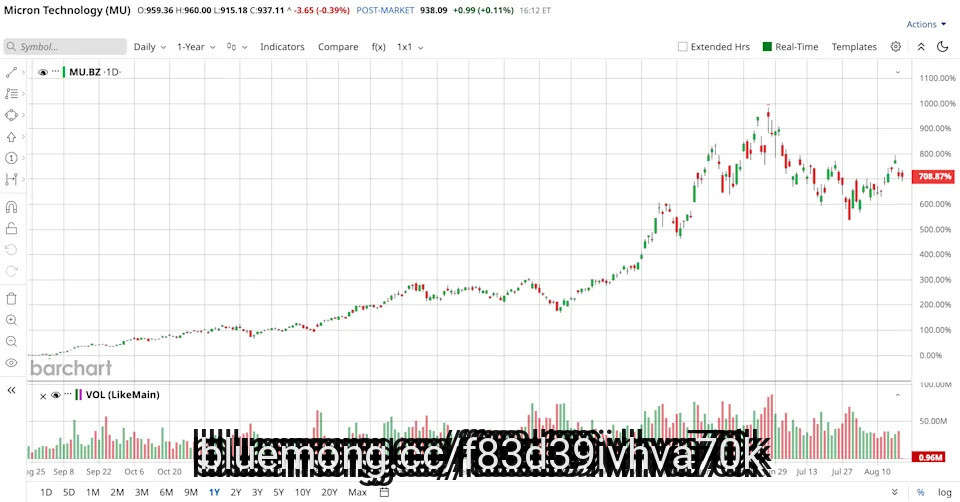
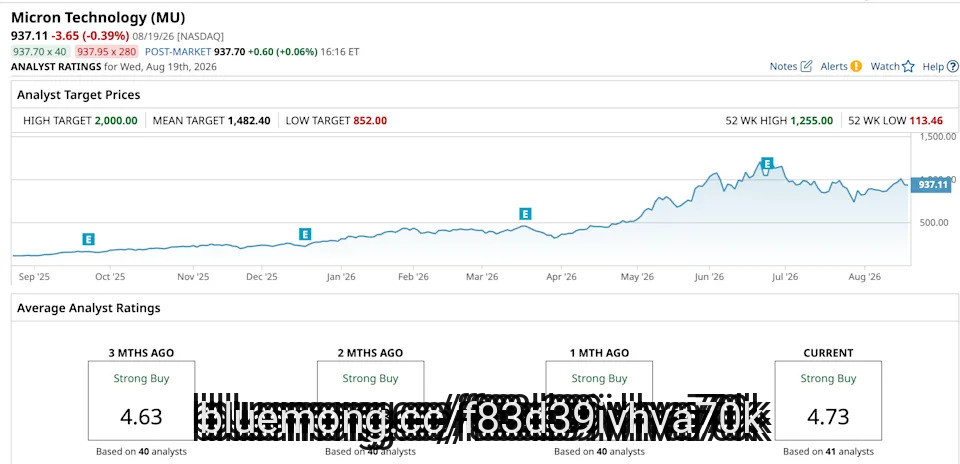
Micron Technology's (MU) rally has cooled as the stock has pulled back 9.6% from its recent high, reflecting profit-taking and growing investor concerns. After a strong run over the past year, investors have locked in gains, while worries about intensifying competition and softer memory-chip pricing in the coming quarters have added to selling pressure.
While Micron stock has receded, its growth isn't slowing. Demand for DRAM and NAND memory remains strong, driven by continued investment in AI infrastructure and rising memory requirements across consumer products such as PCs, smartphones, automobiles, and robotics. These end markets are creating a broad-based demand environment for Micron's products.
Here Is How to Play Tesla Stock After Its Robotaxi Breakthrough
Today's US Treasury Intervention in Bond Markets is a Buy Recommendation for Gold. Here's Why.
Strategy Just Sold $334 Million in Shares to Build Cash and Buy Back Preferred Stock. This Hits MSTR Stock Holders With Dilution.
#micron
While Micron stock has receded, its growth isn't slowing. Demand for DRAM and NAND memory remains strong, driven by continued investment in AI infrastructure and rising memory requirements across consumer products such as PCs, smartphones, automobiles, and robotics. These end markets are creating a broad-based demand environment for Micron's products.
Here Is How to Play Tesla Stock After Its Robotaxi Breakthrough
Today's US Treasury Intervention in Bond Markets is a Buy Recommendation for Gold. Here's Why.
Strategy Just Sold $334 Million in Shares to Build Cash and Buy Back Preferred Stock. This Hits MSTR Stock Holders With Dilution.
#micron

1 month ago
Inter vs. Monza, matchday 1 of the 2026/27 Serie A season, will be played on Saturday 22 August at 18:30 CEST and will be broadcast live exclusively on DAZN. The match can be watched via the DAZN app on smart TVs and streamed on devices such as PCs, smartphones and tablets through the app.
As always, Inter TV will provide updates and live coverage during the build-up to the match, with the latest news from San Siro ahead of kick-off. Our Livematch ahead of Inter vs. Monza will also be available on YouTube via the Club's official channel until 18:20 CEST. After the match, all the in-depth coverage, ****** ysis and interviews will be available.
#cest #dazn #coverage
As always, Inter TV will provide updates and live coverage during the build-up to the match, with the latest news from San Siro ahead of kick-off. Our Livematch ahead of Inter vs. Monza will also be available on YouTube via the Club's official channel until 18:20 CEST. After the match, all the in-depth coverage, ****** ysis and interviews will be available.
#cest #dazn #coverage

1 month ago
Crossroads Capital LLC, an investment management firm, published its second-quarter 2026 investor letter. A copy of the letter can be downloaded here. The Fund increased by 11.5% net of fees and expenses during the quarter. Since its founding, the fund has compounded at a net rate of 17.9%. By the end of June 2026, the fund's overall non-delta-adjusted gross and net exposures were 115.0% and 86.9%, respectively. In Q2, the S&P 500 rebounded 14.9%, its best since 2020, as market uncertainty eased. The oil market showed a transition, with Brent crude prices fluctuating. AI and semiconductors thrived, with 25% earnings growth. The quarter underscored a key principle: risk is priced continuously but resolved discontinuously. Small-cap benchmarks hit new highs, though the Magnificent 7 saw modest gains. In Q2, market activity focused on adjustments rather than facts, capitalizing on high option premiums. In addition, please check the Fund's top five holdings to know its best picks in 2026.
In its Q2 2026 investor letter, Crossroads Capital highlighted AST ***** eMobile, Inc. (NASDAQ:ASTS). AST ***** eMobile, Inc. (NASDAQ:ASTS) is a US-based satellite communication company developing a ***** e-based cellular broadband network designed to connect directly to smartphones through its BlueBird satellites. On August 19, 2026, AST ***** eMobile, Inc. (NASDAQ:ASTS) closed at $66.43 per share, reflecting a market capitalization of $25.85 billion. AST ***** eMobile, Inc. (NASDAQ:ASTS) posted a one‑month return of 12.25%, while its shares gained 47.69% over the past 52 weeks.
Crossroads Capital stated the following regarding AST ***** eMobile, Inc. (NASDAQ:ASTS) in its Q2 2026 investor letter:
"AST ***** eMobile, Inc. (NASDAQ:ASTS): Q2 picked up exactly where Q1 left off. As we've stated before, the transition we laid out last quarter—from R&D stage startup to operational scaleup—went from "underway" to "unmistakable" over the last three months. It charged us a toll along the way, however: The BB7 satellite launched on April 19 but was then lost when Blue Origin's New Glenn rocket failed during deployment. The failure was cleanly attributable to Blue Origin, not to AST; it amounted to a ~$125 million write-off (partially covered by launch insurance, and claims have been filed). AST's response on the May call was the right one, citing its 33 satellites (now 42, as of this writing) in advanced stages of production. So, yes, BB7 was a loss, but it's moving on to the next launch.
First-quarter results in May landed with modest revenue from gateways and government milestones, guidance reaffirmed, and. roughly $3.5B of cash. More important, the FCC granted commercial authorization for ***** eMobile service in the United States, covering a network of up to 248 satellites. So the regulatory question for the home market is now answered. Block 1 satellites also set a 98.9 Mbps peak-speed record to unmodified smartphones, with Block 2 expected to nearly double it..."
In its Q2 2026 investor letter, Crossroads Capital highlighted AST ***** eMobile, Inc. (NASDAQ:ASTS). AST ***** eMobile, Inc. (NASDAQ:ASTS) is a US-based satellite communication company developing a ***** e-based cellular broadband network designed to connect directly to smartphones through its BlueBird satellites. On August 19, 2026, AST ***** eMobile, Inc. (NASDAQ:ASTS) closed at $66.43 per share, reflecting a market capitalization of $25.85 billion. AST ***** eMobile, Inc. (NASDAQ:ASTS) posted a one‑month return of 12.25%, while its shares gained 47.69% over the past 52 weeks.
Crossroads Capital stated the following regarding AST ***** eMobile, Inc. (NASDAQ:ASTS) in its Q2 2026 investor letter:
"AST ***** eMobile, Inc. (NASDAQ:ASTS): Q2 picked up exactly where Q1 left off. As we've stated before, the transition we laid out last quarter—from R&D stage startup to operational scaleup—went from "underway" to "unmistakable" over the last three months. It charged us a toll along the way, however: The BB7 satellite launched on April 19 but was then lost when Blue Origin's New Glenn rocket failed during deployment. The failure was cleanly attributable to Blue Origin, not to AST; it amounted to a ~$125 million write-off (partially covered by launch insurance, and claims have been filed). AST's response on the May call was the right one, citing its 33 satellites (now 42, as of this writing) in advanced stages of production. So, yes, BB7 was a loss, but it's moving on to the next launch.
First-quarter results in May landed with modest revenue from gateways and government milestones, guidance reaffirmed, and. roughly $3.5B of cash. More important, the FCC granted commercial authorization for ***** eMobile service in the United States, covering a network of up to 248 satellites. So the regulatory question for the home market is now answered. Block 1 satellites also set a 98.9 Mbps peak-speed record to unmodified smartphones, with Block 2 expected to nearly double it..."


1 month ago
BEIJING, Aug 18 (Reuters) - China's Xiaomi Corp posted a fall of 42.6% in second-quarter net profit on Tuesday, missing ****** ysts' estimates, as higher costs of memory and other components squeezed margins for the maker of smartphones and electric vehicles.
Adjusted net profit of 6.2 billion yuan ($919.50 million)for the period from April to June, fell short of an average ****** yst estimate of 6.6 billion yuan, according to LSEG data.
"Significant increases in key component costs, including memory, along with intensified industry competition, continued to create headwinds for our business," Xiaomi said in its earnings statement.
Second-quarter revenue came in at 108.9 billion yuan, it added, missing the average estimate of 112.2 billion.
Xiaomi's smartphone revenue fell 7.5% year-on-year to 42.1 billion yuan, while its smartphone gross margin declined to 8.5% from 11.5% a year earlier, clipped by higher prices for key components.
#costs
Adjusted net profit of 6.2 billion yuan ($919.50 million)for the period from April to June, fell short of an average ****** yst estimate of 6.6 billion yuan, according to LSEG data.
"Significant increases in key component costs, including memory, along with intensified industry competition, continued to create headwinds for our business," Xiaomi said in its earnings statement.
Second-quarter revenue came in at 108.9 billion yuan, it added, missing the average estimate of 112.2 billion.
Xiaomi's smartphone revenue fell 7.5% year-on-year to 42.1 billion yuan, while its smartphone gross margin declined to 8.5% from 11.5% a year earlier, clipped by higher prices for key components.
#costs

2 months ago
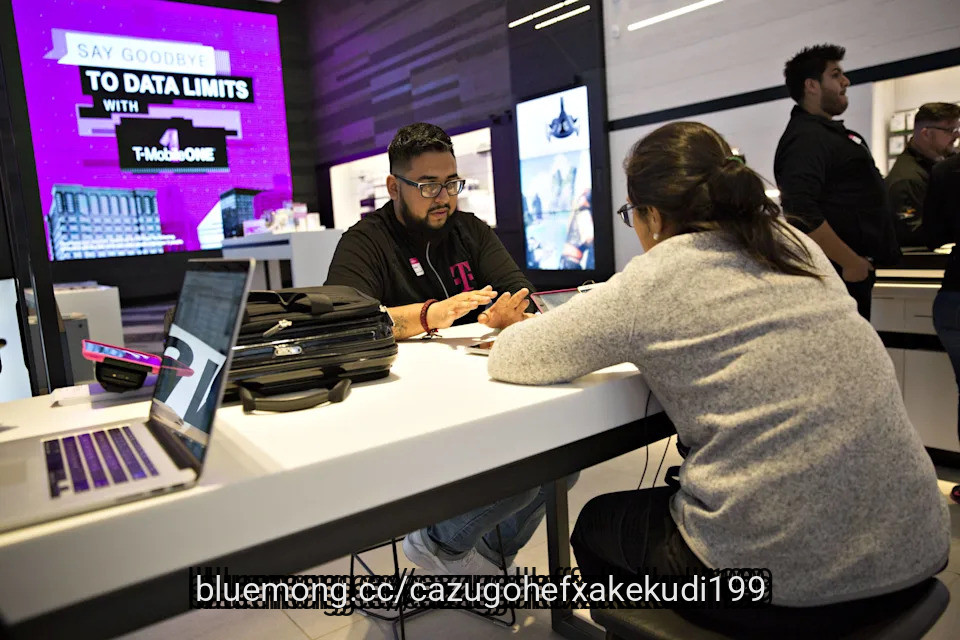
T-Mobile is changing how customers finance new devices after previously saying it would scale back free phone deals and device subsidies.
During an earnings call in February, T-Mobile CEO Srini Gopalan revealed that the company is moving away from device subsidies and will rethink its approach to these deals, noting that customers purchase new phones roughly once every three years.
He later doubled down on this plan during an earnings call in July, stating that the company has given consumers 250 reasons to switch to its network, extending beyond free phone offers. Gopalan also warned that customers will soon have to pay more for smartphones due to rising memory chip prices.
"What we're seeing is clearly the memory price increases are resulting in higher prices for smartphones across the board," he said. "Our intention, consistent with what we've said, is not to increase our subsidy levels. That's going to mean that customers will have to pay more. That's just the result of that dynamic."
Amid these changes, T-Mobile has announced its "Nothing" initiative, which is a new way for new and existing customers to pay $0 upfront for a new phone, according to a recent press release.
#free
During an earnings call in February, T-Mobile CEO Srini Gopalan revealed that the company is moving away from device subsidies and will rethink its approach to these deals, noting that customers purchase new phones roughly once every three years.
He later doubled down on this plan during an earnings call in July, stating that the company has given consumers 250 reasons to switch to its network, extending beyond free phone offers. Gopalan also warned that customers will soon have to pay more for smartphones due to rising memory chip prices.
"What we're seeing is clearly the memory price increases are resulting in higher prices for smartphones across the board," he said. "Our intention, consistent with what we've said, is not to increase our subsidy levels. That's going to mean that customers will have to pay more. That's just the result of that dynamic."
Amid these changes, T-Mobile has announced its "Nothing" initiative, which is a new way for new and existing customers to pay $0 upfront for a new phone, according to a recent press release.
#free
2 months ago
Qualcomm Incorporated (NASDAQ:QCOM) is entering a new phase of growth as two major catalysts—the expansion of its Samsung partnership and its push into AI infrastructure— begin reshaping the company's long-term outlook.
Its expanded collaboration with Samsung paves the way for Snapdragon platforms to power Samsung's latest Galaxy smartphones, smart watches, and future AI-powered smart glasses. The collaboration reinforces Qualcomm's dominance in premium Android smartphones, validates its leadership in on-device AI, and creates opportunities to expand Snapdragon into new categories such as AI PCs, XR devices, and connected technologies.
Securing Snapdragon chips for more Galaxy flagship models will provide Qualcomm with higher premium chipset shipments, stronger QCT segment revenue, and greater visibility into future earnings.
Kārlis Dambrāns/Flickr
While smartphones remain Qualcomm's largest business, management is increasingly focused on reducing its dependence on the cyclical handset market by expanding into AI infrastructure.
#Smartphones #qualcomm #infrastructure #premium
Its expanded collaboration with Samsung paves the way for Snapdragon platforms to power Samsung's latest Galaxy smartphones, smart watches, and future AI-powered smart glasses. The collaboration reinforces Qualcomm's dominance in premium Android smartphones, validates its leadership in on-device AI, and creates opportunities to expand Snapdragon into new categories such as AI PCs, XR devices, and connected technologies.
Securing Snapdragon chips for more Galaxy flagship models will provide Qualcomm with higher premium chipset shipments, stronger QCT segment revenue, and greater visibility into future earnings.
Kārlis Dambrāns/Flickr
While smartphones remain Qualcomm's largest business, management is increasingly focused on reducing its dependence on the cyclical handset market by expanding into AI infrastructure.
#Smartphones #qualcomm #infrastructure #premium

2 months ago
Every major AI chip story seems to lead back to Arm Holdings (ARM) as the industry's biggest players rely on the company's architecture to build their processors. As ARM gears up for its fiscal Q1 earnings on July 29, investors are eager to see if the company can continue to translate strong demand into sustained growth needed to justify its premium valuation.
Valued at $277.7 billion, Arm Holdings develops the processor technology that powers billions of chips globally, licenses that technology to semiconductor firms, and gets royalties on each chip shipped. The company earns money through licensing revenue and royalty revenue. While historically, Arm's business was dominated by smartphones, today its processors power PCs and laptops, cloud servers, AI data centers, automotive chips, smart TVs, IoT devices, and much more. Thanks to AI, the company now has new growth opportunities in Cloud AI, Edge AI, and Physical AI.
Dear **** eX Stock Fans, Mark Your Calendars for August 6
Amazon Stock Just Hit a Major Hurdle Ahead of Earnings
Elon Musk Just Revealed a Quiet Win for Tesla's AI Ambitions
#Stock #chip #processors
Valued at $277.7 billion, Arm Holdings develops the processor technology that powers billions of chips globally, licenses that technology to semiconductor firms, and gets royalties on each chip shipped. The company earns money through licensing revenue and royalty revenue. While historically, Arm's business was dominated by smartphones, today its processors power PCs and laptops, cloud servers, AI data centers, automotive chips, smart TVs, IoT devices, and much more. Thanks to AI, the company now has new growth opportunities in Cloud AI, Edge AI, and Physical AI.
Dear **** eX Stock Fans, Mark Your Calendars for August 6
Amazon Stock Just Hit a Major Hurdle Ahead of Earnings
Elon Musk Just Revealed a Quiet Win for Tesla's AI Ambitions
#Stock #chip #processors


2 months ago
SINGAPORE, July 24 (Reuters) - For months, Chinese chip manufacturer ChangXin Memory Technologies (CXMT) had been hiking prices on Huawei, one of the country's biggest technology companies. The chipmaker held firm when Huawei demanded relief from the escalating costs, according to two people familiar with the matter.
The standoff came to a head on CXMT's factory floor in June. A group of engineers from a chipmaking-equipment vendor with deep strategic ties to Huawei had been working in the cleanrooms at CXMT's core research and development zone in Hefei, Anhui province. Without warning, CXMT ordered the engineers, who had been helping with equipment maintenance, to pack their tools and leave the factory floor immediately, the two sources said.
Executives at the Huawei-connected equipment vendor, SiCarrier, concluded the confrontation was the result of the power struggle between CXMT and Huawei, the people told Reuters. The companies still do business but the engineers haven't been allowed back into the R&D zone, the two people said.
CXMT, Huawei and SiCarrier didn't respond to questions about the incident.
The clash illustrates the changing dynamics of China's semiconductor industry. CXMT has risen to become the world's fourth-biggest maker of memory, including the DRAM variety used in smartphones, laptops and servers. Now, the company is powerful enough to charge prices even Huawei can't stomach.
#engineers #memory
The standoff came to a head on CXMT's factory floor in June. A group of engineers from a chipmaking-equipment vendor with deep strategic ties to Huawei had been working in the cleanrooms at CXMT's core research and development zone in Hefei, Anhui province. Without warning, CXMT ordered the engineers, who had been helping with equipment maintenance, to pack their tools and leave the factory floor immediately, the two sources said.
Executives at the Huawei-connected equipment vendor, SiCarrier, concluded the confrontation was the result of the power struggle between CXMT and Huawei, the people told Reuters. The companies still do business but the engineers haven't been allowed back into the R&D zone, the two people said.
CXMT, Huawei and SiCarrier didn't respond to questions about the incident.
The clash illustrates the changing dynamics of China's semiconductor industry. CXMT has risen to become the world's fourth-biggest maker of memory, including the DRAM variety used in smartphones, laptops and servers. Now, the company is powerful enough to charge prices even Huawei can't stomach.
#engineers #memory

2 months ago
Two of the biggest heavyweights in the chip sector are Taiwan Semiconductor Manufacturing (NYSE: TSM) and Nvidia (NASDAQ: NVDA). They have a great working relationship in the real world, as Nvidia designs its logic chips and then sends them to TSMC to be fabricated. So, as one succeeds, so does the other. However, TSMC has plenty of other clients for which it does foundry work.
For those investors who may be curious about which of these behemoths is the better buy right now, let's compare them across a few key categories.
Missed Nvidia in 2009? This Rare Signal Is Flashing Again. In 2009, a "Double Down" signal flashed for a little-known chipmaker called Nvidia. For the first time in years, that same "Total Conviction" signal is flashing for a company 1/100th the size of Nvidia. Continue »
Taiwan Semiconductor has a large client list that includes Nvidia's primary competitors. It also has exposure to other industrial markets, and chips for everything from automobiles to smartphones. Nvidia, on the other hand, is at this point nearly a pure-play investment in artificial intelligence. While Nvidia has other products, the reality is that the vast majority of its revenue now comes from data center-related items. This focus is making Nvidia a boatload of money and has propelled it to the position of the world's largest company by market cap. So clearly, its bet on data center processors is paying off.
However, while that kind of business concentration can be incredible during boom times, it can be a disaster when spending in that focus area slows. There are no signs that will occur in the data center ****** e anytime soon, but when it does, it will hammer Nvidia.
#data #however
For those investors who may be curious about which of these behemoths is the better buy right now, let's compare them across a few key categories.
Missed Nvidia in 2009? This Rare Signal Is Flashing Again. In 2009, a "Double Down" signal flashed for a little-known chipmaker called Nvidia. For the first time in years, that same "Total Conviction" signal is flashing for a company 1/100th the size of Nvidia. Continue »
Taiwan Semiconductor has a large client list that includes Nvidia's primary competitors. It also has exposure to other industrial markets, and chips for everything from automobiles to smartphones. Nvidia, on the other hand, is at this point nearly a pure-play investment in artificial intelligence. While Nvidia has other products, the reality is that the vast majority of its revenue now comes from data center-related items. This focus is making Nvidia a boatload of money and has propelled it to the position of the world's largest company by market cap. So clearly, its bet on data center processors is paying off.
However, while that kind of business concentration can be incredible during boom times, it can be a disaster when spending in that focus area slows. There are no signs that will occur in the data center ****** e anytime soon, but when it does, it will hammer Nvidia.
#data #however



2 months ago
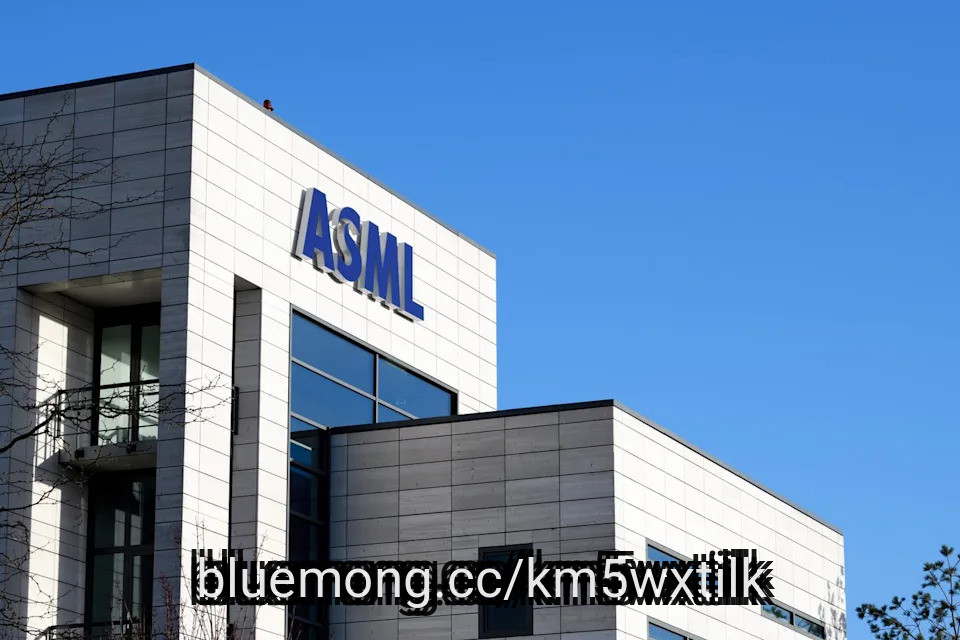
Any concerns about a slowdown in artificial intelligence (AI) infrastructure spending were put to rest by one of the most important semiconductor companies in the world -- ASML Holding (NASDAQ: ASML) -- when it released its second-quarter results on July 15.
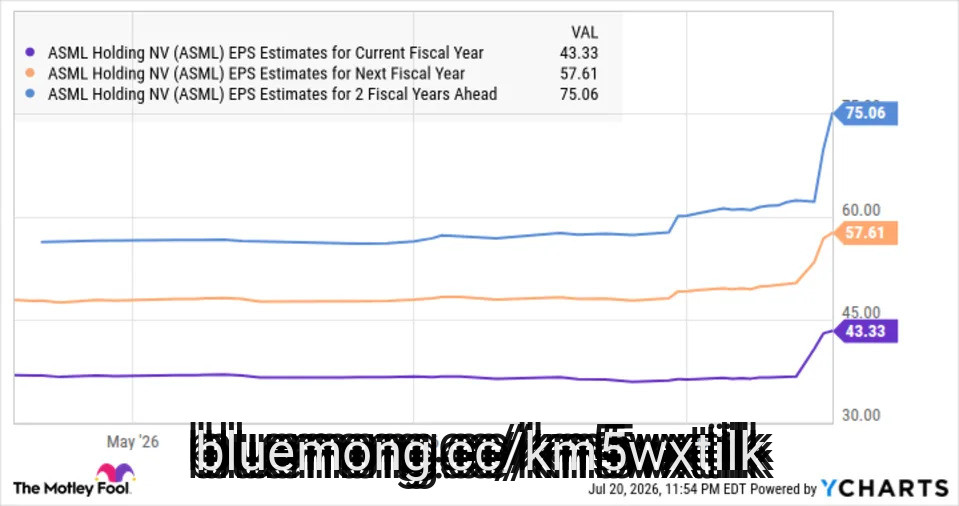
ASML's revenue and earnings blew past Wall Street's expectations. It also raised its full-year guidance. This terrific performance shouldn't come as a surprise considering the Dutch company's critical role in the global semiconductor market. ASML stock, which has already jumped nearly 50% in 2026, is now poised for stronger gains.
Missed Nvidia in 2009? This Rare Signal Is Flashing Again. In 2009, a "Double Down" signal flashed for a little-known chipmaker called Nvidia. For the first time in years, that same "Total Conviction" signal is flashing for a company 1/100th the size of Nvidia. Continue »
Let's take a look at a simple reason why investors should consider buying this semiconductor stock following its solid Q2 report.
ASML reported Q2 revenue of 9.3 billion euros and net income of 2.92 billion euros. ******* ysts would have settled for net income of 2.62 billion euros on revenue of 8.8 billion euros. However, the booming demand for advanced chipmaking equipment to serve the growing appetite for AI chips deployed in data centers, smartphones, and personal computers (PCs) helped ASML easily crush expectations.
#NVIDIA
ASML's revenue and earnings blew past Wall Street's expectations. It also raised its full-year guidance. This terrific performance shouldn't come as a surprise considering the Dutch company's critical role in the global semiconductor market. ASML stock, which has already jumped nearly 50% in 2026, is now poised for stronger gains.
Missed Nvidia in 2009? This Rare Signal Is Flashing Again. In 2009, a "Double Down" signal flashed for a little-known chipmaker called Nvidia. For the first time in years, that same "Total Conviction" signal is flashing for a company 1/100th the size of Nvidia. Continue »
Let's take a look at a simple reason why investors should consider buying this semiconductor stock following its solid Q2 report.
ASML reported Q2 revenue of 9.3 billion euros and net income of 2.92 billion euros. ******* ysts would have settled for net income of 2.62 billion euros on revenue of 8.8 billion euros. However, the booming demand for advanced chipmaking equipment to serve the growing appetite for AI chips deployed in data centers, smartphones, and personal computers (PCs) helped ASML easily crush expectations.
#NVIDIA

2 months ago
The chipmaker sent shareholders a fortune in cash, yet the stock itself went nowhere fast. Here's what owners actually got for their patience and what the trade-off really cost them.
Qualcomm (QCOM)'s stock has seen better days, trading around $170.32 a share after a recent 25% pullback from its one-month high. But behind the stock chart's noise is a much simpler story: the company has been a quiet, large cash-return machine. Over the last five years, Qualcomm handed back $43 billion to its owners through dividends and buybacks, an amount equal to 24% of its entire current market value. The question for any investor is whether that cash was a reward for a great business or a consolation prize for a stock that dramatically lagged the market.
The company's cash machine is built on two very different engines.
That $43 billion gusher, which dwarfs the $5.7 billion returned by the median S&P 500 company over the same period, comes from a business with formidable profitability. Qualcomm's operating margin over the last twelve months was 26%, well above the index median of 18.4%. The cash is generated by its two core segments: QCT, which designs the Snapdragon chipsets that power countless smartphones and, increasingly, cars and other connected devices; and QTL, its high-margin technology licensing arm.
Of the total returned to shareholders, $26 billion came from share repurchases, and another $17 billion was paid out as dividends. This is the financial brute force that underpins the investment case: a mature, highly profitable business dedicated to rewarding its owners.
#cash
Qualcomm (QCOM)'s stock has seen better days, trading around $170.32 a share after a recent 25% pullback from its one-month high. But behind the stock chart's noise is a much simpler story: the company has been a quiet, large cash-return machine. Over the last five years, Qualcomm handed back $43 billion to its owners through dividends and buybacks, an amount equal to 24% of its entire current market value. The question for any investor is whether that cash was a reward for a great business or a consolation prize for a stock that dramatically lagged the market.
The company's cash machine is built on two very different engines.
That $43 billion gusher, which dwarfs the $5.7 billion returned by the median S&P 500 company over the same period, comes from a business with formidable profitability. Qualcomm's operating margin over the last twelve months was 26%, well above the index median of 18.4%. The cash is generated by its two core segments: QCT, which designs the Snapdragon chipsets that power countless smartphones and, increasingly, cars and other connected devices; and QTL, its high-margin technology licensing arm.
Of the total returned to shareholders, $26 billion came from share repurchases, and another $17 billion was paid out as dividends. This is the financial brute force that underpins the investment case: a mature, highly profitable business dedicated to rewarding its owners.
#cash
2 months ago
Fred Alger Management, an investment management company, released its "Alger Weatherbie Specialized Growth Fund" second-quarter 2026 investor letter. A copy of the letter can be downloaded here. U.S. equities experienced a strong recovery in Q2 2026, with the S&P 500 Index gaining 15.2%, marking its best quarter since 2020. A ceasefire between the United States and Iran and accelerated investment in artificial intelligence (AI) regained market optimism in the quarter, leading the Information Technology and Industrials sectors upward, and Energy and Utilities lagged because of falling oil and gas prices. In June, the Federal Reserve maintained steady interest rates, but the meeting had a hawkish tone. As AI transitions into its agentic phase, opportunities are identified within sectors adopting the technology. The Weatherbie Specialized Growth Fund's Class A shares outperformed the Russell 2500 Growth Index in the quarter. The Industrials and Information Technology sectors contributed to the relative performance, whereas Financials and Consumer Discretionary sectors detracted. In addition, please check the Fund's top five holdings to know its best picks in 2026.
In its Q2 2026 investor letter, Alger Weatherbie Specialized Growth Fund highlighted Silicon Motion Technology Corporation (NASDAQ:SIMO) as a notable contributor. Silicon Motion Technology Corporation (NASDAQ:SIMO) is a leading provider of NAND flash controllers for solid-state drivers and related devices. On July 20, 2026, Silicon Motion Technology Corporation (NASDAQ:SIMO) closed at $252.61 per share, reflecting a market capitalization of $8.57 billion. Silicon Motion Technology Corporation (NASDAQ:SIMO) posted a one-month return of -15.48%, while its shares gained 251.53% over the past 52 weeks.
Alger Weatherbie Specialized Growth Fund stated the following regarding Silicon Motion Technology Corporation (NASDAQ:SIMO) in its Q2 2026 investor update:
"Silicon Motion Technology Corporation (NASDAQ:SIMO) develops and supplies semiconductor products used across the electronics market, including flash controllers and storage solutions for solid-state drives, smartphones, data center applications, and other connected devices. The company holds a strong position in NAND flash controllers and continues to benefit from demand for higher performance storage as devices and infrastructure require faster, more efficient data management. We believe the company's share gains across end markets, including data center applications tied to AI-related workloads, reflect continued demand for its storage solutions and a strengthening competitive position. During the quarter, shares contributed positively to performance after the company delivered strong operating results that exceeded expectations, supported by accelerating revenue growth, solid profitability, and disciplined expense management. Investor sentiment was further supported by an improved management outlook, reinforcing confidence in the compa
In its Q2 2026 investor letter, Alger Weatherbie Specialized Growth Fund highlighted Silicon Motion Technology Corporation (NASDAQ:SIMO) as a notable contributor. Silicon Motion Technology Corporation (NASDAQ:SIMO) is a leading provider of NAND flash controllers for solid-state drivers and related devices. On July 20, 2026, Silicon Motion Technology Corporation (NASDAQ:SIMO) closed at $252.61 per share, reflecting a market capitalization of $8.57 billion. Silicon Motion Technology Corporation (NASDAQ:SIMO) posted a one-month return of -15.48%, while its shares gained 251.53% over the past 52 weeks.
Alger Weatherbie Specialized Growth Fund stated the following regarding Silicon Motion Technology Corporation (NASDAQ:SIMO) in its Q2 2026 investor update:
"Silicon Motion Technology Corporation (NASDAQ:SIMO) develops and supplies semiconductor products used across the electronics market, including flash controllers and storage solutions for solid-state drives, smartphones, data center applications, and other connected devices. The company holds a strong position in NAND flash controllers and continues to benefit from demand for higher performance storage as devices and infrastructure require faster, more efficient data management. We believe the company's share gains across end markets, including data center applications tied to AI-related workloads, reflect continued demand for its storage solutions and a strengthening competitive position. During the quarter, shares contributed positively to performance after the company delivered strong operating results that exceeded expectations, supported by accelerating revenue growth, solid profitability, and disciplined expense management. Investor sentiment was further supported by an improved management outlook, reinforcing confidence in the compa

2 months ago
AST ****** eMobile (ASTS) is a Midland, Texas-based ****** e technology company founded in 2017 by CEO Abel Avellan. Its mission to eliminate the global mobile connectivity gap by building the world's first and only ****** e-based cellular broadband network capable of operating directly with standard, unmodified smartphones. The company's BlueBird satellite constellation operates in low Earth orbit, delivering direct-to-device broadband coverage for users on land, at sea, and in flight without requiring any hardware modifications.
AST ****** eMobile has nearly 60 mobile network operator partners covering over three billion subscribers globally, including AT&T (T), Verizon (VZ), Vodafone (VOD), and Rakuten (RKUNF), as well as FCC authorization, to provide Supplemental Coverage from ****** e across a network of up to 248 satellites. AST represents one of the most ambitious and potentially transformative bets in the global telecommunications infrastructure ****** e.
Mark Cuban Says If You've Got $100,000, You'll Get The 'Best Guaranteed' ROI Buying Bulk Toothpaste & Soup — Put the Rest in the Bank, 'Let It Earn Nothing'
Micron Is Signing Deals in the Automotive ****** e. What That Means for MU Stock Here.
5% Bond Returns Are a Gift for Retirement Investors. My Favorite Way to Invest in Treasurys Lets You Earn a Paycheck No Matter What the Market Does.
AST ****** eMobile has nearly 60 mobile network operator partners covering over three billion subscribers globally, including AT&T (T), Verizon (VZ), Vodafone (VOD), and Rakuten (RKUNF), as well as FCC authorization, to provide Supplemental Coverage from ****** e across a network of up to 248 satellites. AST represents one of the most ambitious and potentially transformative bets in the global telecommunications infrastructure ****** e.
Mark Cuban Says If You've Got $100,000, You'll Get The 'Best Guaranteed' ROI Buying Bulk Toothpaste & Soup — Put the Rest in the Bank, 'Let It Earn Nothing'
Micron Is Signing Deals in the Automotive ****** e. What That Means for MU Stock Here.
5% Bond Returns Are a Gift for Retirement Investors. My Favorite Way to Invest in Treasurys Lets You Earn a Paycheck No Matter What the Market Does.