

20 hours ago
On September 9, 2026, ****** og Devices, Inc. (NASDAQ:ADI) agreed to acquire privately held Alif Semiconductor for $1.35 billion in cash, with up to $200 million in additional contingent payments. It adds Alif's low-power, AI-native microcontrollers and fusion processors to ADI's portfolio of sensing, signal-processing and power-management technology. ADI CEO Vincent Roche described the deal as advancing "Physical Intelligence," letting systems sense, reason and act locally in real time. The acquisition is expected to close by the end of 2026 pending U.S. antitrust review.
Alif gives ****** og Devices, Inc. (NASDAQ:ADI) a direct foothold in the fast-growing edge-AI market. Alif's AI-native microcontrollers and fusion processors support low-latency inference, sensor fusion, and on-device AI. It allows systems to process information locally rather than relying entirely on the cloud. The acquisition also expands ADI's addressable market across industrial, data-center infrastructure, defense, energy, robotics, digital health and wearable applications.
ADI is acquiring technology that already has commercial traction. Alif's silicon already ships in production and has design wins with leading consumer and industrial customers. It gives ADI an established platform rather than an early-stage technology project. ADI can combine Alif's digital processing capabilities with its own sensing, signal-processing, power, connectivity and software technologies to offer more complete system solutions.
The acquisition fits ADI's push into AI while the core business makes strong cash flow. ADI completed its $1.5 billion Empower Semiconductor acquisition in July to strengthen power delivery for AI computing, while third-quarter revenue reached a record $4.02 billion, up 40% year over year, and trailing 12-month free cash flow reached $4.94 billion. The Alif deal therefore adds edge intelligence to an AI strategy while ADI retains substantial financial capacity to fund acquisitions and shareholder returns.
Analog Devices, Inc. (NASDAQ:ADI) must make enough returns to justify the $1.35 billion upfront price. The firm will pay $1.35 billion in cash at closing and could pay another $200 million in contingent consideration. It takes the potential consideration to $1.55 billion. ADI therefore needs Alif's technology, customer wins, and expanded addressable market to turn into real revenue and earnings growth rather than simply adding another promising technology platform to its portfolio.
#analog #NASDAQ #power #acquisition
Alif gives ****** og Devices, Inc. (NASDAQ:ADI) a direct foothold in the fast-growing edge-AI market. Alif's AI-native microcontrollers and fusion processors support low-latency inference, sensor fusion, and on-device AI. It allows systems to process information locally rather than relying entirely on the cloud. The acquisition also expands ADI's addressable market across industrial, data-center infrastructure, defense, energy, robotics, digital health and wearable applications.
ADI is acquiring technology that already has commercial traction. Alif's silicon already ships in production and has design wins with leading consumer and industrial customers. It gives ADI an established platform rather than an early-stage technology project. ADI can combine Alif's digital processing capabilities with its own sensing, signal-processing, power, connectivity and software technologies to offer more complete system solutions.
The acquisition fits ADI's push into AI while the core business makes strong cash flow. ADI completed its $1.5 billion Empower Semiconductor acquisition in July to strengthen power delivery for AI computing, while third-quarter revenue reached a record $4.02 billion, up 40% year over year, and trailing 12-month free cash flow reached $4.94 billion. The Alif deal therefore adds edge intelligence to an AI strategy while ADI retains substantial financial capacity to fund acquisitions and shareholder returns.
Analog Devices, Inc. (NASDAQ:ADI) must make enough returns to justify the $1.35 billion upfront price. The firm will pay $1.35 billion in cash at closing and could pay another $200 million in contingent consideration. It takes the potential consideration to $1.55 billion. ADI therefore needs Alif's technology, customer wins, and expanded addressable market to turn into real revenue and earnings growth rather than simply adding another promising technology platform to its portfolio.
#analog #NASDAQ #power #acquisition


21 hours ago
On September 8, 2026, Reuters reported that ASML Holding N.V. (NASDAQ:ASML) plans to work with major customers. It includes Taiwan Semiconductor Manufacturing Company Limited (NYSE:TSM), Nvidia, Intel, Samsung, and SK Hynix to adapt its next-generation "High NA" extreme ultraviolet lithography tools so they can print larger data-center chips. It addresses a current limitation where the newer machines use a smaller mask than ASML's widely deployed standard EUV tools.
ASML targets a pilot production line using the larger masks by 2031 and high-volume manufacturing readiness by 2033. Chief technology officer Marco Pieters said these changes could lift the productivity of these systems by roughly 40%.
The larger-mask project could create a new growth opportunity for ASML Holding N.V. (NASDAQ:ASML) while helping TSMC manufacture larger AI chips more efficiently. ASML plans to use its High NA EUV tools to handle chips as large as today's biggest data-center processors. The business expects the larger masks to increase system productivity by 40%. It could scale up demand for its next-generation equipment and help TSMC improve the economics of producing increasingly large and complex chips.
Taiwan Semiconductor Manufacturing Company Limited (NYSE:TSM)'s planned use gives ASML a clear path toward commercializing the technology. TSMC plans to introduce High NA EUV into advanced-node high-volume production from 2030. ASML aims to show its larger-mask technology through a pilot line in 2031. TSMC's commitment could give ASML greater visibility into future equipment demand. Early use could help TSMC maintain its advanced-chip manufacturing advantage.
The collaboration could solidify both companies' positions as chipmakers develop larger and more powerful processors. ASML can extend its High NA roadmap beyond its current chip-size limitation. TSMC can prepare its manufacturing processes for the next generation of AI chips. The partnership gives ASML an opportunity to deepen its relationship with one of its largest customers and gives TSMC access to a technology that could support future advanced-chip production.
#asml #technology #plans #next
ASML targets a pilot production line using the larger masks by 2031 and high-volume manufacturing readiness by 2033. Chief technology officer Marco Pieters said these changes could lift the productivity of these systems by roughly 40%.
The larger-mask project could create a new growth opportunity for ASML Holding N.V. (NASDAQ:ASML) while helping TSMC manufacture larger AI chips more efficiently. ASML plans to use its High NA EUV tools to handle chips as large as today's biggest data-center processors. The business expects the larger masks to increase system productivity by 40%. It could scale up demand for its next-generation equipment and help TSMC improve the economics of producing increasingly large and complex chips.
Taiwan Semiconductor Manufacturing Company Limited (NYSE:TSM)'s planned use gives ASML a clear path toward commercializing the technology. TSMC plans to introduce High NA EUV into advanced-node high-volume production from 2030. ASML aims to show its larger-mask technology through a pilot line in 2031. TSMC's commitment could give ASML greater visibility into future equipment demand. Early use could help TSMC maintain its advanced-chip manufacturing advantage.
The collaboration could solidify both companies' positions as chipmakers develop larger and more powerful processors. ASML can extend its High NA roadmap beyond its current chip-size limitation. TSMC can prepare its manufacturing processes for the next generation of AI chips. The partnership gives ASML an opportunity to deepen its relationship with one of its largest customers and gives TSMC access to a technology that could support future advanced-chip production.
#asml #technology #plans #next


1 day ago
Applied Materials (NASDAQ:AMAT) primarily generates its revenue by designing, developing, manufacturing, and selling the critical fabrication equipment, specialized factory automation software, and materials engineering solutions utilized to produce integrated circuits for customers globally.
While launching multiple new hardware systems to address technical production challenges in advanced memory scaling, it formalized a joint development agreement for augmented reality optics and reported a 34% operating margin for the quarter ended July 26, 2026.
Intel (NASDAQ:INTC) primarily generates its revenue by designing, developing, and manufacturing commercial central processing units, discrete graphics processors, and edge computing components, alongside operating its independent wafer fabrication and advanced packaging services.
It finalized a large-scale public common stock offering and confirmed pending organizational workforce reductions within its data center operations, while reporting a 12% operating margin for the quarter ended June 27, 2026.
Revenue establishes a fundamental baseline for investors seeking to measure the total incoming capital a business generates before any operating expenses, interest, or taxes are deducted. This metric reveals whether an organization is successfully attracting customers and growing its overall business volume over time.
#generates #primarily
While launching multiple new hardware systems to address technical production challenges in advanced memory scaling, it formalized a joint development agreement for augmented reality optics and reported a 34% operating margin for the quarter ended July 26, 2026.
Intel (NASDAQ:INTC) primarily generates its revenue by designing, developing, and manufacturing commercial central processing units, discrete graphics processors, and edge computing components, alongside operating its independent wafer fabrication and advanced packaging services.
It finalized a large-scale public common stock offering and confirmed pending organizational workforce reductions within its data center operations, while reporting a 12% operating margin for the quarter ended June 27, 2026.
Revenue establishes a fundamental baseline for investors seeking to measure the total incoming capital a business generates before any operating expenses, interest, or taxes are deducted. This metric reveals whether an organization is successfully attracting customers and growing its overall business volume over time.
#generates #primarily


3 days ago
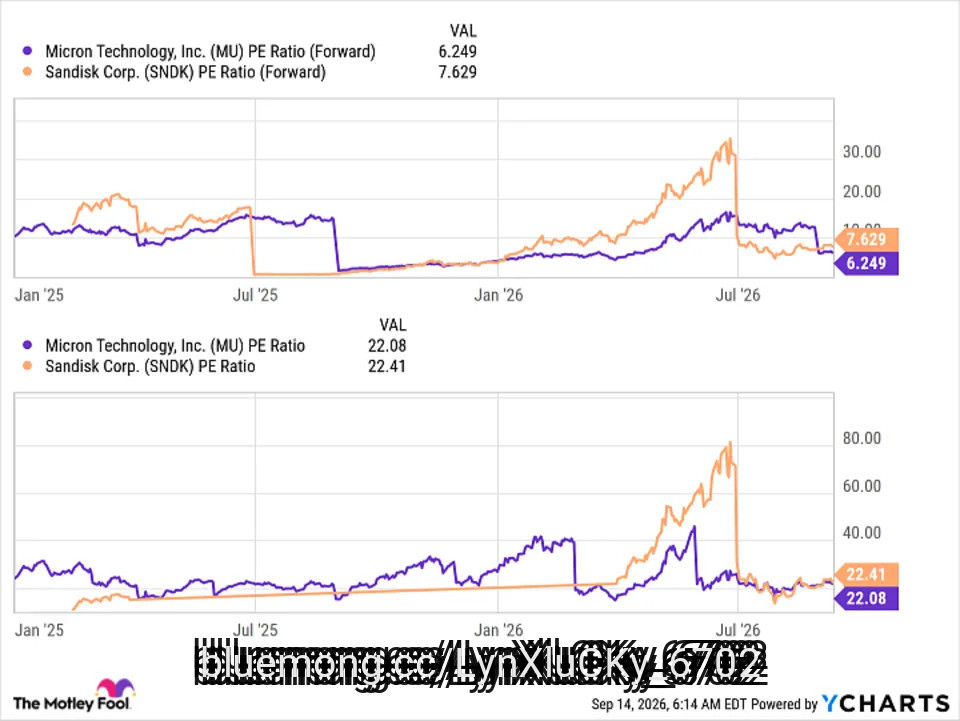
Micron (NASDAQ: MU) and Sandisk (NASDAQ: SNDK) have been two of the best-performing stocks in the S&P 500 (SNPINDEX: ^GSPC) so far this year. Sandisk is leading the way with an incredible 550% gain. Micron is in fourth place, up by over 220%. That means both of these stocks have tripled (or more than tripled in Sandisk's case), but I think that's just the beginning. In fact, if you invested $2,500 in each of these stocks, for a total of $5,000, I think that the combined value of those stakes will rise to $15,000 by the time 2028 arrives.
While that may sound far-fetched, the math backs it up, suggesting that these are two of the best investments you could make in the stock market right now.
Missed Nvidia in 2009? This Rare Signal Is Flashing Again. In 2009, a "Double Down" signal flashed for a little-known chipmaker called Nvidia. For the first time in years, that same "Total Conviction" signal is flashing for a company 1/100th the size of Nvidia. Continue »
The reason these two have done so well in 2026 is that there is no spare memory chip production capacity left. Micron and Sandisk are two of just three big players in this industry, and all of their production is being eaten up by massive demand for additional artificial intelligence computing power. AI processors and servers need heavy volumes of memory to function efficiently, and as a result, there's now a serious shortage of memory, so prices are skyrocketing.
This supply-and-demand imbalance is the culprit behind rising prices for consumer computing hardware, as these devices all require memory chips, too.
#NVIDIA #memory #flashing #best
While that may sound far-fetched, the math backs it up, suggesting that these are two of the best investments you could make in the stock market right now.
Missed Nvidia in 2009? This Rare Signal Is Flashing Again. In 2009, a "Double Down" signal flashed for a little-known chipmaker called Nvidia. For the first time in years, that same "Total Conviction" signal is flashing for a company 1/100th the size of Nvidia. Continue »
The reason these two have done so well in 2026 is that there is no spare memory chip production capacity left. Micron and Sandisk are two of just three big players in this industry, and all of their production is being eaten up by massive demand for additional artificial intelligence computing power. AI processors and servers need heavy volumes of memory to function efficiently, and as a result, there's now a serious shortage of memory, so prices are skyrocketing.
This supply-and-demand imbalance is the culprit behind rising prices for consumer computing hardware, as these devices all require memory chips, too.
#NVIDIA #memory #flashing #best


4 days ago
Apple (NASDAQ:AAPL) is reportedly considering a big move that could reshape the company. The Information reported on Wednesday that the iPhone maker was considering developing its own artificial intelligence server, which would be Apple's first activity in the enterprise server market since 2011.
The proposal would combine Apple's custom silicon with networking technology supplied by Nvidia (NASDAQ:NVDA) to develop AI servers that could be offered with either two or four M8 Ultra chips, which are Apple's top-performing processors, and geared specifically for AI inference.
Missed Nvidia in 2009? This Rare Signal Is Flashing Again. In 2009, a "Double Down" signal flashed for a little-known chipmaker called Nvidia. For the first time in years, that same "Total Conviction" signal is flashing for a company 1/100th the size of Nvidia. Continue »
Such a move, the first major action under new CEO John Ternus, would signal that Apple is ready to invest in AI architecture to use its custom-made chips in products beyond its consumer devices, which would be a significant shift in company strategy.
Image source: Getty Images.
#flashing
The proposal would combine Apple's custom silicon with networking technology supplied by Nvidia (NASDAQ:NVDA) to develop AI servers that could be offered with either two or four M8 Ultra chips, which are Apple's top-performing processors, and geared specifically for AI inference.
Missed Nvidia in 2009? This Rare Signal Is Flashing Again. In 2009, a "Double Down" signal flashed for a little-known chipmaker called Nvidia. For the first time in years, that same "Total Conviction" signal is flashing for a company 1/100th the size of Nvidia. Continue »
Such a move, the first major action under new CEO John Ternus, would signal that Apple is ready to invest in AI architecture to use its custom-made chips in products beyond its consumer devices, which would be a significant shift in company strategy.
Image source: Getty Images.
#flashing


4 days ago
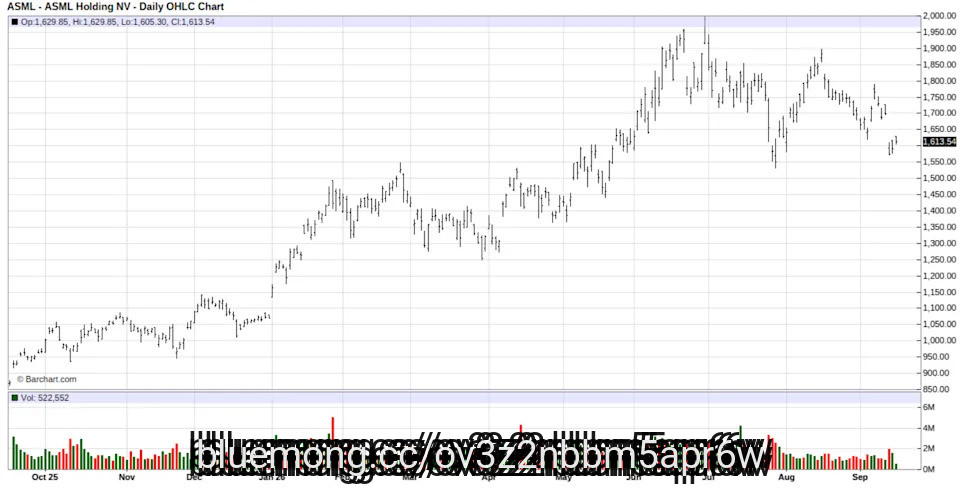
The U.S. has between 3,000 and 4,700 active data centers, with plans to build another 1,500. Globally, there are about 11,800, with plans to add about 100 gigawatts of new capacity by 2030. All of which creates substantial opportunity for beaten-down stocks such as ASML Holding (ASML). However, to run all of those data centers, the world needs advanced AI chips. Today's most advanced data-center AI processors, manufactured on 4nm, 5nm, and certain 7nm processes, depend heavily on ASML's lithography technology. And as the industry moves toward 2nm production, that dependence on ASML's EUV systems will become even more important.
Some of those companies include Samsung Electronics (SMSN.L.IX), Taiwan Semiconductor Manufacturing (TSM), and Intel (INTC). All of which are moving forward with ASML's High-Numerical Aperture extreme ultraviolet lithography systems, better known as High-NA EUV. In short, AI must have powerful chips to run. And those chips are becoming much harder to manufacture, with ASML producing the machines that make their production possible.
Billionaire Charlie Munger, Who Died at 99, Skipped Insurance on His Mansion Since He Could Just Write a Check to Rebuild — 'All Intelligent People Do It My Way'
The Case for Selling CrowdStrike Stock
Dear Tesla Stock Fans, Mark Your Calendars for October 1
#asml #advanced #lithography
Some of those companies include Samsung Electronics (SMSN.L.IX), Taiwan Semiconductor Manufacturing (TSM), and Intel (INTC). All of which are moving forward with ASML's High-Numerical Aperture extreme ultraviolet lithography systems, better known as High-NA EUV. In short, AI must have powerful chips to run. And those chips are becoming much harder to manufacture, with ASML producing the machines that make their production possible.
Billionaire Charlie Munger, Who Died at 99, Skipped Insurance on His Mansion Since He Could Just Write a Check to Rebuild — 'All Intelligent People Do It My Way'
The Case for Selling CrowdStrike Stock
Dear Tesla Stock Fans, Mark Your Calendars for October 1
#asml #advanced #lithography


5 days ago
On September 10, a caller outlined a detailed financial thesis showing Micron Technology, Inc. (NASDAQ:MU) reaching $1,400 and asked whether the **** ysis held water. In response, Mad Money host Jim Cramer said:
I mean, that's a remarkable **** ysis. It's spot on in every single number. Every single thing you said is true, which is why my Charitable Trust owns it, and why we are buying it aggressively. And by the way, can I just say if you listen to what… [the caller] said, he put some money away. He was fortunate enough to have money, which I know not everybody can have, but he had money. He put it in an individual stock. Now, if he put it in an index fund, he'd make some money, but he got really rich. And part of my job is not just to get you rich, but to hopefully get you really rich.
Micron Technology, Inc. (NASDAQ:MU) stands as one of three primary global manufacturers of dynamic random-access memory (DRAM) and NAND flash memory, positioning it at the center of the ongoing expansion in artificial intelligence infrastructure. Because advanced AI workloads require significantly higher memory bandwidth, demand has surged for Micron's High-Bandwidth Memory (HBM3E) architecture, which is integrated directly into top-tier AI graphics processors and data center accelerators. With memory production capacity for advanced AI chips remaining constrained industry-wide, Micron has secured long-term purchase agreements that cover its HBM output through 2026 and into 2027, providing visibility into top-line revenue growth.
Driven by accelerated AI server adoption and broader pricing recovery across traditional DRAM and NAND markets, it reported extraordinary growth in fiscal Q3. Revenue surged to $41.46 billion, more than quadrupling the $9.30 billion generated in the same period last year and stepping up sharply from $23.86 billion in the prior quarter. The company demonstrated exceptional operating leverage during the period, posting GAAP net income of $28.24 billion ($24.67 per diluted share) and non-GAAP net income of $28.86 billion ($25.11 per diluted share). Operating cash flow also scaled quickly, reaching $25.39 billion compared to $11.90 billion in the prior quarter and $4.61 billion in the prior-year period.
Despite its strong position in the AI supply chain, Micron Technology, Inc. (NASDAQ:MU) operates in a historically cyclical memory industry with some operational and market risks. Memory chip pricing remains sensitive to industry-wide supply-and-demand imbalances, where oversupply can rapidly compress profit margins during broader downturns in consumer electronics demand or corporate IT spending.
#billion #memory #NASDAQ #industry
I mean, that's a remarkable **** ysis. It's spot on in every single number. Every single thing you said is true, which is why my Charitable Trust owns it, and why we are buying it aggressively. And by the way, can I just say if you listen to what… [the caller] said, he put some money away. He was fortunate enough to have money, which I know not everybody can have, but he had money. He put it in an individual stock. Now, if he put it in an index fund, he'd make some money, but he got really rich. And part of my job is not just to get you rich, but to hopefully get you really rich.
Micron Technology, Inc. (NASDAQ:MU) stands as one of three primary global manufacturers of dynamic random-access memory (DRAM) and NAND flash memory, positioning it at the center of the ongoing expansion in artificial intelligence infrastructure. Because advanced AI workloads require significantly higher memory bandwidth, demand has surged for Micron's High-Bandwidth Memory (HBM3E) architecture, which is integrated directly into top-tier AI graphics processors and data center accelerators. With memory production capacity for advanced AI chips remaining constrained industry-wide, Micron has secured long-term purchase agreements that cover its HBM output through 2026 and into 2027, providing visibility into top-line revenue growth.
Driven by accelerated AI server adoption and broader pricing recovery across traditional DRAM and NAND markets, it reported extraordinary growth in fiscal Q3. Revenue surged to $41.46 billion, more than quadrupling the $9.30 billion generated in the same period last year and stepping up sharply from $23.86 billion in the prior quarter. The company demonstrated exceptional operating leverage during the period, posting GAAP net income of $28.24 billion ($24.67 per diluted share) and non-GAAP net income of $28.86 billion ($25.11 per diluted share). Operating cash flow also scaled quickly, reaching $25.39 billion compared to $11.90 billion in the prior quarter and $4.61 billion in the prior-year period.
Despite its strong position in the AI supply chain, Micron Technology, Inc. (NASDAQ:MU) operates in a historically cyclical memory industry with some operational and market risks. Memory chip pricing remains sensitive to industry-wide supply-and-demand imbalances, where oversupply can rapidly compress profit margins during broader downturns in consumer electronics demand or corporate IT spending.
#billion #memory #NASDAQ #industry

5 days ago
Interested in NVIDIA Corporation? Here are five stocks we like better.
NVIDIA released CUDA-Q Logical, an open-source software layer that links GPUs with quantum processors to solve practical error correction challenges.
Early testing by Fermilab and Sandia National Laboratories shows dramatic efficiency gains, including a seven-fold faster design cycle and reduced physical qubit requirements.
Quantum hardware firms IonQ, Rigetti Computing, and D-Wave Quantum could benefit as standardized software lowers development costs and enables deeper integration with NVIDIA's infrastructure.
Many investors view quantum hardware developers and classical semiconductor leaders as competing forces in high-performance computing. Recent developments demonstrate that the two architectures are becoming deeply interdependent.
#hardware #here
NVIDIA released CUDA-Q Logical, an open-source software layer that links GPUs with quantum processors to solve practical error correction challenges.
Early testing by Fermilab and Sandia National Laboratories shows dramatic efficiency gains, including a seven-fold faster design cycle and reduced physical qubit requirements.
Quantum hardware firms IonQ, Rigetti Computing, and D-Wave Quantum could benefit as standardized software lowers development costs and enables deeper integration with NVIDIA's infrastructure.
Many investors view quantum hardware developers and classical semiconductor leaders as competing forces in high-performance computing. Recent developments demonstrate that the two architectures are becoming deeply interdependent.
#hardware #here

5 days ago
Fidelity Investments, an investment management company, recently released its second-quarter 2026 investor letter for the "Fidelity Dividend Growth Fund". The letter can be downloaded here. The Fidelity Dividend Growth Fund is a diversified large-cap equity strategy focused on capital appreciation through investments in large- and mid-cap stocks with strong dividend growth prospects. The fund returned 17.05% in the quarter, outperforming the S&P 500 Index, which gained 15.20%. U.S. stocks experienced significant gains in Q2, driven by increased spending on artificial intelligence. Technology stocks gained 31.79%, mainly driven by semiconductor companies, while the index faced a slight decline in June as investors considered the sustainability of AI-related profits amidst rising interest rates. Despite recent turbulence from the Middle East conflict, the fund remains optimistic about key investment themes, particularly in artificial intelligence. Also, check the fund's top five holdings to see its best picks in 2026.
In its second-quarter 2026 investor letter, Fidelity Dividend Growth Fund highlighted Advanced Micro Devices, Inc. (NASDAQ:AMD). Advanced Micro Devices, Inc. (NASDAQ:AMD) is a leading semiconductor company that designs and manufactures AI accelerators, microprocessors, and graphics processing units. On September 14, 2026, Advanced Micro Devices, Inc. (NASDAQ:AMD) closed at $493.41 per share, reflecting a market capitalization of $805.61 billion. Over the past month, Advanced Micro Devices, Inc. (NASDAQ:AMD) returned 7.72%, but its shares are up 226.08% over the past year.
Fidelity Dividend Growth Fund stated the following regarding Advanced Micro Devices, Inc. (NASDAQ:AMD) in its Q2 2026 investor letter:
"On the other hand, security selection in industrials and materials meaningfully detracted for the quarter, along with a large overweight in the lagging energy sector. The five largest relative detractors were all strong-performing benchmark components in the technology sector that the fund didn't own during the quarter. For example, Advanced Micro Devices, Inc. (NASDAQ:AMD) (+186%) was the largest relative detractor for the period. AMD competes in many markets with Nvidia, which we preferred and has outperformed AMD in many recent quarters. Also, AMD pays no dividend, whereas Nvidia does. The past three months, though, AMD had by far the better return, aided by better-than-expected earnings for Q1 that were driven by accelerating demand for AI infrastructure."
#Dividend
In its second-quarter 2026 investor letter, Fidelity Dividend Growth Fund highlighted Advanced Micro Devices, Inc. (NASDAQ:AMD). Advanced Micro Devices, Inc. (NASDAQ:AMD) is a leading semiconductor company that designs and manufactures AI accelerators, microprocessors, and graphics processing units. On September 14, 2026, Advanced Micro Devices, Inc. (NASDAQ:AMD) closed at $493.41 per share, reflecting a market capitalization of $805.61 billion. Over the past month, Advanced Micro Devices, Inc. (NASDAQ:AMD) returned 7.72%, but its shares are up 226.08% over the past year.
Fidelity Dividend Growth Fund stated the following regarding Advanced Micro Devices, Inc. (NASDAQ:AMD) in its Q2 2026 investor letter:
"On the other hand, security selection in industrials and materials meaningfully detracted for the quarter, along with a large overweight in the lagging energy sector. The five largest relative detractors were all strong-performing benchmark components in the technology sector that the fund didn't own during the quarter. For example, Advanced Micro Devices, Inc. (NASDAQ:AMD) (+186%) was the largest relative detractor for the period. AMD competes in many markets with Nvidia, which we preferred and has outperformed AMD in many recent quarters. Also, AMD pays no dividend, whereas Nvidia does. The past three months, though, AMD had by far the better return, aided by better-than-expected earnings for Q1 that were driven by accelerating demand for AI infrastructure."
#Dividend

5 days ago
With Agentic AI accelerating CPU server chip demand, Wall Street believes Advanced Micro Devices, Inc. (NASDAQ:AMD) is one of the primary beneficiaries taking share. On September 9, Piper Sandler ******* yst David O'Connor initiated coverage on AMD (NASDAQ: AMD) with an Overweight rating and a $600 price target.
Analyst O'Connor estimates revenue for FY26-30 to grow at a 50% CAGR, while earnings per share compound at 65%.
The server-CPU share gain story for AMD is simple, Agentic AI is expected to increase demand for server CPUs. This is because the workloads require continuous control-plane activity, API calls, database queries and tool execution. AMD will benefit from this use based on its high-frequency and general-purpose processors with its Venice portfolio.
Even AMD executives have highlighted that AMD is now transitioning from merely a semiconductor supplier to a provider of rack-scale systems and software. It is also positioning its server CPU portfolio for increased demand from agentic AI workloads.
The company reported second-quarter revenue of $11.5 billion, beating ******* yst estimates. This includes $6.7 billion from data centers, up 107% year-over-year. The segment performance was attributed to EPYC processors and Instinct GPUs.
#workloads
Analyst O'Connor estimates revenue for FY26-30 to grow at a 50% CAGR, while earnings per share compound at 65%.
The server-CPU share gain story for AMD is simple, Agentic AI is expected to increase demand for server CPUs. This is because the workloads require continuous control-plane activity, API calls, database queries and tool execution. AMD will benefit from this use based on its high-frequency and general-purpose processors with its Venice portfolio.
Even AMD executives have highlighted that AMD is now transitioning from merely a semiconductor supplier to a provider of rack-scale systems and software. It is also positioning its server CPU portfolio for increased demand from agentic AI workloads.
The company reported second-quarter revenue of $11.5 billion, beating ******* yst estimates. This includes $6.7 billion from data centers, up 107% year-over-year. The segment performance was attributed to EPYC processors and Instinct GPUs.
#workloads


5 days ago
Fidelity Investments, an investment management company, recently released its second-quarter 2026 investor letter for the "Fidelity Dividend Growth Fund". The letter can be downloaded here. The Fidelity Dividend Growth Fund is a diversified large-cap equity strategy focused on capital appreciation through investments in large- and mid-cap stocks with strong dividend growth prospects. The fund returned 17.05% in the quarter, outperforming the S&P 500 Index, which gained 15.20%. U.S. stocks experienced significant gains in Q2, driven by increased spending on artificial intelligence. Technology stocks gained 31.79%, mainly driven by semiconductor companies, while the index faced a slight decline in June as investors considered the sustainability of AI-related profits amidst rising interest rates. Despite recent turbulence from the Middle East conflict, the fund remains optimistic about key investment themes, particularly in artificial intelligence. Also, check the fund's top five holdings to see its best picks in 2026.
In its second-quarter 2026 investor letter, Fidelity Dividend Growth Fund highlighted Advanced Micro Devices, Inc. (NASDAQ:AMD). Advanced Micro Devices, Inc. (NASDAQ:AMD) is a leading semiconductor company that designs and manufactures AI accelerators, microprocessors, and graphics processing units. On September 14, 2026, Advanced Micro Devices, Inc. (NASDAQ:AMD) closed at $493.41 per share, reflecting a market capitalization of $805.61 billion. Over the past month, Advanced Micro Devices, Inc. (NASDAQ:AMD) returned 7.72%, but its shares are up 226.08% over the past year.
Fidelity Dividend Growth Fund stated the following regarding Advanced Micro Devices, Inc. (NASDAQ:AMD) in its Q2 2026 investor letter:
"On the other hand, security selection in industrials and materials meaningfully detracted for the quarter, along with a large overweight in the lagging energy sector. The five largest relative detractors were all strong-performing benchmark components in the technology sector that the fund didn't own during the quarter. For example, Advanced Micro Devices, Inc. (NASDAQ:AMD) (+186%) was the largest relative detractor for the period. AMD competes in many markets with Nvidia, which we preferred and has outperformed AMD in many recent quarters. Also, AMD pays no dividend, whereas Nvidia does. The past three months, though, AMD had by far the better return, aided by better-than-expected earnings for Q1 that were driven by accelerating demand for AI infrastructure."
#devices #NASDAQ #letter
In its second-quarter 2026 investor letter, Fidelity Dividend Growth Fund highlighted Advanced Micro Devices, Inc. (NASDAQ:AMD). Advanced Micro Devices, Inc. (NASDAQ:AMD) is a leading semiconductor company that designs and manufactures AI accelerators, microprocessors, and graphics processing units. On September 14, 2026, Advanced Micro Devices, Inc. (NASDAQ:AMD) closed at $493.41 per share, reflecting a market capitalization of $805.61 billion. Over the past month, Advanced Micro Devices, Inc. (NASDAQ:AMD) returned 7.72%, but its shares are up 226.08% over the past year.
Fidelity Dividend Growth Fund stated the following regarding Advanced Micro Devices, Inc. (NASDAQ:AMD) in its Q2 2026 investor letter:
"On the other hand, security selection in industrials and materials meaningfully detracted for the quarter, along with a large overweight in the lagging energy sector. The five largest relative detractors were all strong-performing benchmark components in the technology sector that the fund didn't own during the quarter. For example, Advanced Micro Devices, Inc. (NASDAQ:AMD) (+186%) was the largest relative detractor for the period. AMD competes in many markets with Nvidia, which we preferred and has outperformed AMD in many recent quarters. Also, AMD pays no dividend, whereas Nvidia does. The past three months, though, AMD had by far the better return, aided by better-than-expected earnings for Q1 that were driven by accelerating demand for AI infrastructure."
#devices #NASDAQ #letter

5 days ago
ASML Holding N.V. (NASDAQ:ASML) is examining ways to produce more than 110 EUV lithography systems in 2028, according to JPMorgan ***** ysts following a meeting with CFO Roger Dassen. The company is already nearly sold out for 2027 and expects to produce at least 80 EUV systems that year, meaning output above 110 in 2028 would represent at least a 37.5% increase from the 2027 level. JPMorgan said the main constraint has shifted toward ***** embly speed rather than the availability of critical components, suggesting ASML believes additional capacity can be unlocked through manufacturing and ***** embly improvements.
The potential increase is being driven primarily by AI-related demand. ASML's existing EUV machines, which cost roughly $200 million each, are essential for manufacturing leading-edge AI processors, while customers including TSMC, Samsung, SK Hynix and Intel are expanding advanced-chip capacity. Reuters reported separately that virtually all of ASML's EUV production capacity is booked through 2027, while the company has begun construction of a new Eindhoven facility designed to accelerate tool ***** embly and eventually accommodate up to 20,000 workers.
The strongest bullish implication is that ASML Holding N.V. (NASDAQ:ASML) may be able to convert exceptionally strong demand into higher unit volumes rather than simply relying on price increases. Moving from at least 80 EUV systems in 2027 to more than 110 in 2028 would materially expand the number of high-value systems ASML can monetize. This comes after the company already raised its 2026 revenue outlook to €43 billion–€45 billion, compared with its previous €36 billion–€40 billion range, while targeting a 54%–56% gross margin. Reuters also reported that second-quarter revenue reached €9.3 billion with a 54% gross margin, demonstrating that stronger AI-driven demand is already translating into financial performance.
The longer-term competitive position is particularly favorable because ASML Holding N.V. (NASDAQ:ASML) effectively has no commercial competitor in EUV. JPMorgan estimates that ASML held 94% of the overall lithography market in 2025, while Reuters describes the company as having maintained a monopoly in EUV since the late 2010s. At the same time, customers are committing to ASML's next-generation High-NA technology: the machines cost approximately $400 million, can print features about 40% smaller than existing EUV systems, and TSMC, Samsung, and SK Hynix have all established plans for production adoption. If AI chip demand remains strong enough to support both higher low-NA volumes and eventual High-NA adoption, ASML could see a multi-year increase in system shipments, revenue, and potentially cash generation while strengthening its already exceptional competitive moat.
#company
The potential increase is being driven primarily by AI-related demand. ASML's existing EUV machines, which cost roughly $200 million each, are essential for manufacturing leading-edge AI processors, while customers including TSMC, Samsung, SK Hynix and Intel are expanding advanced-chip capacity. Reuters reported separately that virtually all of ASML's EUV production capacity is booked through 2027, while the company has begun construction of a new Eindhoven facility designed to accelerate tool ***** embly and eventually accommodate up to 20,000 workers.
The strongest bullish implication is that ASML Holding N.V. (NASDAQ:ASML) may be able to convert exceptionally strong demand into higher unit volumes rather than simply relying on price increases. Moving from at least 80 EUV systems in 2027 to more than 110 in 2028 would materially expand the number of high-value systems ASML can monetize. This comes after the company already raised its 2026 revenue outlook to €43 billion–€45 billion, compared with its previous €36 billion–€40 billion range, while targeting a 54%–56% gross margin. Reuters also reported that second-quarter revenue reached €9.3 billion with a 54% gross margin, demonstrating that stronger AI-driven demand is already translating into financial performance.
The longer-term competitive position is particularly favorable because ASML Holding N.V. (NASDAQ:ASML) effectively has no commercial competitor in EUV. JPMorgan estimates that ASML held 94% of the overall lithography market in 2025, while Reuters describes the company as having maintained a monopoly in EUV since the late 2010s. At the same time, customers are committing to ASML's next-generation High-NA technology: the machines cost approximately $400 million, can print features about 40% smaller than existing EUV systems, and TSMC, Samsung, and SK Hynix have all established plans for production adoption. If AI chip demand remains strong enough to support both higher low-NA volumes and eventual High-NA adoption, ASML could see a multi-year increase in system shipments, revenue, and potentially cash generation while strengthening its already exceptional competitive moat.
#company

7 days ago
AMD and Intel compete for processor customers, but they have a common interest in making developers comfortable staying with x86. A September 2 GCC commit added initial support for their AI Compute Extensions, or ACE, bringing that shared strategy into a widely used compiler's development code.
For Advanced Micro Devices, Inc. (NASDAQ:AMD) and Intel Corporation (NASDAQ:INTC), the potential payoff is broader software adoption. The immediate event is much narrower: compiler infrastructure, followed by instruction-support commits. It is not evidence that compatible processors have shipped or that GCC 17 is a finished release.
The x86 Ecosystem Advisory Group's April whitepaper describes a common matrix-acceleration architecture shaped by both companies. Matrix multiplication is central to many AI workloads. A shared instruction interface could reduce the effort needed to target those operations across future processors.
That matters commercially because buyers consider the software work required to use hardware, alongside its price and performance. If developers can support both suppliers more easily, a processor purchase may depend more on execution and less on maintaining separate software paths.
For Advanced Micro Devices, Inc. (NASDAQ:AMD), the bull case is an easier route for compatible future CPUs into AI-related workloads. The risk is that a shared standard also improves the rival's appeal. Compiler support alone cannot demonstrate AMD's eventual performance advantage, customer adoption or incremental profit.
#Intel
For Advanced Micro Devices, Inc. (NASDAQ:AMD) and Intel Corporation (NASDAQ:INTC), the potential payoff is broader software adoption. The immediate event is much narrower: compiler infrastructure, followed by instruction-support commits. It is not evidence that compatible processors have shipped or that GCC 17 is a finished release.
The x86 Ecosystem Advisory Group's April whitepaper describes a common matrix-acceleration architecture shaped by both companies. Matrix multiplication is central to many AI workloads. A shared instruction interface could reduce the effort needed to target those operations across future processors.
That matters commercially because buyers consider the software work required to use hardware, alongside its price and performance. If developers can support both suppliers more easily, a processor purchase may depend more on execution and less on maintaining separate software paths.
For Advanced Micro Devices, Inc. (NASDAQ:AMD), the bull case is an easier route for compatible future CPUs into AI-related workloads. The risk is that a shared standard also improves the rival's appeal. Compiler support alone cannot demonstrate AMD's eventual performance advantage, customer adoption or incremental profit.
#Intel

7 days ago
For much of the past year, the "AI trade" has been focused on infrastructure: processors, data centers, and cloud capacity. Snowflake Inc. (NYSE:SNOW)'s blowout quarter, which was reported after the market closed on September 2, provided something unique: clear evidence that AI is translating into real, incremental spending within software companies that are closer to the end customer. The reaction echoed throughout corporate software the next morning, adding to a rally that, for Salesforce, Inc. (NYSE:CRM) in particular, had already begun for its own reasons.
Snowflake Inc. (NYSE:SNOW) boosted its fiscal 2027 product revenues target to $6.07 billion from $5.84 billion, following a 37% increase in second-quarter product revenue to $1.49 billion. CEO Sridhar Ramaswamy stated that the company's AI products accounted for around half of that growth acceleration, which ****** ysts took as implying that AI demand is increasing Snowflake's core data platform, instead of just adoption of standalone AI add-ons. UBS ****** yst Karl Keirstead said the figures, together with Palantir and Databricks' rapid growth, gave compelling proof of robust enterprise AI adoption.
Snowflake's beat rippled across enterprise software, with ServiceNow, Atlassian, Adobe, Intuit, and Salesforce, Inc. (NYSE:CRM) all up 3.5% to 6% on the same day, while the sector-wide iShares Expanded Tech-Software ETF rose 3%.
That Snowflake-driven spike was piled on top of a much bigger adjustment made by Salesforce, Inc. (NYSE:CRM) on its own. The company released its second-quarter fiscal 2027 results on August 26, a week before Snowflake Inc. (NYSE:SNOW), with revenue of $11.35 billion, up 11% year-over-year, with current remaining performance obligations up 14% to $33.5 billion and adjusted EPS of $5.90, exceeding the $3.27 consensus. Along with those results, Salesforce and Anthropic announced Claudeforce, an expanded partnership that initially brings Salesforce data, workflows and business logic directly into Claude through a plugin with 37 prebuilt sales skills. The companies plan additional integrations across Claude, Salesforce and Slack. That said, Salesforce recorded $2.61 billion in net gains on strategic investments during the quarter, which added $2.53 per share to non-GAAP EPS.
Taken together, the two events suggest that enterprise AI adoption can increase the value and consumption of established software platforms when AI is connected to existing corporate data and workflows
#billion #software #data #quarter
Snowflake Inc. (NYSE:SNOW) boosted its fiscal 2027 product revenues target to $6.07 billion from $5.84 billion, following a 37% increase in second-quarter product revenue to $1.49 billion. CEO Sridhar Ramaswamy stated that the company's AI products accounted for around half of that growth acceleration, which ****** ysts took as implying that AI demand is increasing Snowflake's core data platform, instead of just adoption of standalone AI add-ons. UBS ****** yst Karl Keirstead said the figures, together with Palantir and Databricks' rapid growth, gave compelling proof of robust enterprise AI adoption.
Snowflake's beat rippled across enterprise software, with ServiceNow, Atlassian, Adobe, Intuit, and Salesforce, Inc. (NYSE:CRM) all up 3.5% to 6% on the same day, while the sector-wide iShares Expanded Tech-Software ETF rose 3%.
That Snowflake-driven spike was piled on top of a much bigger adjustment made by Salesforce, Inc. (NYSE:CRM) on its own. The company released its second-quarter fiscal 2027 results on August 26, a week before Snowflake Inc. (NYSE:SNOW), with revenue of $11.35 billion, up 11% year-over-year, with current remaining performance obligations up 14% to $33.5 billion and adjusted EPS of $5.90, exceeding the $3.27 consensus. Along with those results, Salesforce and Anthropic announced Claudeforce, an expanded partnership that initially brings Salesforce data, workflows and business logic directly into Claude through a plugin with 37 prebuilt sales skills. The companies plan additional integrations across Claude, Salesforce and Slack. That said, Salesforce recorded $2.61 billion in net gains on strategic investments during the quarter, which added $2.53 per share to non-GAAP EPS.
Taken together, the two events suggest that enterprise AI adoption can increase the value and consumption of established software platforms when AI is connected to existing corporate data and workflows
#billion #software #data #quarter


7 days ago
Goldman Sachs raised its 2035 humanoid robot forecast nearly 5x to 6.5 million units, now valuing the market at $138 billion.
Each humanoid robot carries between $3,000 and $6,000 in semiconductor content, potentially generating up to $39 billion in annual chip demand at full scale.
Picks-and-shovels suppliers like semiconductor and automation companies offer a smarter entry than betting on which humanoid robot manufacturer wins.
Just released. Our ***** ysts combed the entire stock market and named the ten best stocks to buy right now, and NVIDIA made the cut. Enter your email to see the other nine names and why NVDA earned its spot. The report is free. Enter your email and see the full list.
Artificial intelligence is moving out of the data center and into the physical world. Autonomous vehicles, warehouse robots, and increasingly capable machines are giving AI a body, creating what Goldman Sachs calls "physical AI." The investment opportunity could be much larger than the market for humanoid robots themselves. Every machine needs processors, memory, sensors, motors, and software, creating a new demand stream for companies already supplying the AI economy.
#robot #sachs
Each humanoid robot carries between $3,000 and $6,000 in semiconductor content, potentially generating up to $39 billion in annual chip demand at full scale.
Picks-and-shovels suppliers like semiconductor and automation companies offer a smarter entry than betting on which humanoid robot manufacturer wins.
Just released. Our ***** ysts combed the entire stock market and named the ten best stocks to buy right now, and NVIDIA made the cut. Enter your email to see the other nine names and why NVDA earned its spot. The report is free. Enter your email and see the full list.
Artificial intelligence is moving out of the data center and into the physical world. Autonomous vehicles, warehouse robots, and increasingly capable machines are giving AI a body, creating what Goldman Sachs calls "physical AI." The investment opportunity could be much larger than the market for humanoid robots themselves. Every machine needs processors, memory, sensors, motors, and software, creating a new demand stream for companies already supplying the AI economy.
#robot #sachs

9 days ago
Investors seeking exposure to artificial intelligence infrastructure must weigh the explosive growth of Astera Labs Inc (NASDAQ:ALAB) against the established scale and diverse portfolio of Marvell Technology Inc(NASDAQ:MRVL) to determine the better buy.
Both companies focus on the plumbing of the digital world, ensuring data moves quickly between processors and memory. While Astera Labs focuses on specialized connectivity for AI racks, Marvell offers a broader range of networking, storage, and custom compute solutions. This comparison explores which strategy offers more potential for long-term investors.
Astera Labs designs connectivity solutions that integrate various protocols to support rack-scale AI infrastructure, a high-growth niche among semiconductor stocks. The company serves major hyperscalers and equipment manufacturers who need to overcome data bottlenecks in massive data centers, though its revenue is highly concentrated. In 2025, one end customer -- Amazon.com Inc (NASDAQ:AMZN) -- accounted for over 70% of revenue, which adds a significant layer of risk to the business model.
According to its latest annual report, filed for the fiscal year ended Dec. 31, 2025, revenue reached close to $853 million, representing a significant jump of 115% compared with the prior fiscal year. This growth trajectory helped the company transition to a net income of just over $219 million after recording losses in the previous two years. The net margin for the latest year was close to 26%.
As of its December 2025 balance sheet, the debt-to-equity ratio was 0.0x, meaning the company carries no debt relative to its shareholder equity, while the so-called current ratio was 10.2x. Free cash flow for the period reached nearly $282 million. Note that stock-based compensation (SBC) represented roughly 50.1% of operating cash flow, which inflates reported cash generation since SBC is a non-cash expense added back in the cash flow statement.
#company #million
Both companies focus on the plumbing of the digital world, ensuring data moves quickly between processors and memory. While Astera Labs focuses on specialized connectivity for AI racks, Marvell offers a broader range of networking, storage, and custom compute solutions. This comparison explores which strategy offers more potential for long-term investors.
Astera Labs designs connectivity solutions that integrate various protocols to support rack-scale AI infrastructure, a high-growth niche among semiconductor stocks. The company serves major hyperscalers and equipment manufacturers who need to overcome data bottlenecks in massive data centers, though its revenue is highly concentrated. In 2025, one end customer -- Amazon.com Inc (NASDAQ:AMZN) -- accounted for over 70% of revenue, which adds a significant layer of risk to the business model.
According to its latest annual report, filed for the fiscal year ended Dec. 31, 2025, revenue reached close to $853 million, representing a significant jump of 115% compared with the prior fiscal year. This growth trajectory helped the company transition to a net income of just over $219 million after recording losses in the previous two years. The net margin for the latest year was close to 26%.
As of its December 2025 balance sheet, the debt-to-equity ratio was 0.0x, meaning the company carries no debt relative to its shareholder equity, while the so-called current ratio was 10.2x. Free cash flow for the period reached nearly $282 million. Note that stock-based compensation (SBC) represented roughly 50.1% of operating cash flow, which inflates reported cash generation since SBC is a non-cash expense added back in the cash flow statement.
#company #million


9 days ago
High-performance computing is currently undergoing a massive generational shift. Deciding between Astera Labs Inc (NASDAQ:ALAB) and Applied Materials Inc (NASDAQ:AMAT) means choosing between a fast-growing connectivity specialist and an established ******* an of manufacturing equipment.
Astera Labs focuses on the internal plumbing of data centers, providing chips that move data between processors. Applied Materials builds the actual machines that make those chips possible. While both benefit from artificial intelligence, they occupy very different rungs on the technology ladder.
Astera Labs sells high-speed connectivity hardware and software designed for AI-heavy data centers. Its primary products include PCIe and Ethernet solutions that help hyperscale cloud providers manage massive data workloads. In its latest annual report, filed for the period ending December 31, 2025, the company noted that one end customer represented more than 70% of its revenue. Customer concentration like this adds a layer of risk to the business.
In FY 2025, revenue reached nearly $853 million, which is an increase of approximately 115% over the prior year. This growth resulted in a net income of roughly $219 million, compared to a net loss in the previous fiscal year. The company recorded a net margin of close to 26% during this period. Such expansion is notable among semiconductor stocks catering to the cloud market.
The company carries no debt, resulting in a debt-to-equity ratio of 0.0x. This metric compares total debt to shareholder equity to show how a firm finances its ******* ets. As of its December 2025 balance sheet, the so-called current ratio was nearly 10.2x, indicating a strong ability to cover short-term debts. Free cash flow was roughly $282 million. Note that stock-based compensation represented just about 50% of operating cash flow, which inflates reported cash generation since SBC is a non-cash expense added back in the cash flow statement.
#million #flow #NASDAQ
Astera Labs focuses on the internal plumbing of data centers, providing chips that move data between processors. Applied Materials builds the actual machines that make those chips possible. While both benefit from artificial intelligence, they occupy very different rungs on the technology ladder.
Astera Labs sells high-speed connectivity hardware and software designed for AI-heavy data centers. Its primary products include PCIe and Ethernet solutions that help hyperscale cloud providers manage massive data workloads. In its latest annual report, filed for the period ending December 31, 2025, the company noted that one end customer represented more than 70% of its revenue. Customer concentration like this adds a layer of risk to the business.
In FY 2025, revenue reached nearly $853 million, which is an increase of approximately 115% over the prior year. This growth resulted in a net income of roughly $219 million, compared to a net loss in the previous fiscal year. The company recorded a net margin of close to 26% during this period. Such expansion is notable among semiconductor stocks catering to the cloud market.
The company carries no debt, resulting in a debt-to-equity ratio of 0.0x. This metric compares total debt to shareholder equity to show how a firm finances its ******* ets. As of its December 2025 balance sheet, the so-called current ratio was nearly 10.2x, indicating a strong ability to cover short-term debts. Free cash flow was roughly $282 million. Note that stock-based compensation represented just about 50% of operating cash flow, which inflates reported cash generation since SBC is a non-cash expense added back in the cash flow statement.
#million #flow #NASDAQ


9 days ago
As artificial intelligence matures, investors must decide between the high-growth niche players and the foundational giants. Choosing between Astera Labs Inc (NASDAQ:ALAB) and Taiwan Semiconductor Manufacturing Co (NYSE:TSM) involves weighing explosive potential against established dominance.
Astera Labs provides the critical connectivity infrastructure that allows AI chips to communicate within data centers. Meanwhile, Taiwan Semiconductor Manufacturing operates as the world's largest dedicated chip foundry, producing the actual processors for almost every major tech firm. Both companies are central to the future of semiconductor stocks.
Astera Labs specializes in connectivity solutions designed to remove bottlenecks in high-performance data centers. The company sells hardware and software that helps AI accelerators, such as those made by major chip designers, communicate efficiently across servers. Its customer base is highly concentrated, primarily consisting of the largest cloud providers and system manufacturers. In 2025, one end customer accounted for over 70% of total revenue. Customer concentration like this adds a layer of risk to the business.
In FY 2025, revenue reached more than $852.5 million, representing an impressive increase of roughly 115% compared to the prior year. This rapid growth helped the company pivot from a loss in previous years to a net income of approximately $219 million. The net margin, which measures how much of each dollar of sales remains as profit, stood at nearly 26%. This trajectory highlights the surging demand for the specialized connectivity chips required for large-scale AI deployments.
As of its December 2025 balance sheet, the company reported a debt-to-equity ratio of 0.0x, indicating it holds no debt relative to its shareholder equity. Its so-called current ratio, which compares short-term ******* ets to short-term liabilities, was a robust 10.2x. Free cash flow, or the cash left over after paying for operations and equipment, was approximately $282 million. Note that stock-based compensation represented roughly 50% of operating cash flow, which inflates reported cash generation since this is a non-cash expense added back in the cash flow statement.
#company
Astera Labs provides the critical connectivity infrastructure that allows AI chips to communicate within data centers. Meanwhile, Taiwan Semiconductor Manufacturing operates as the world's largest dedicated chip foundry, producing the actual processors for almost every major tech firm. Both companies are central to the future of semiconductor stocks.
Astera Labs specializes in connectivity solutions designed to remove bottlenecks in high-performance data centers. The company sells hardware and software that helps AI accelerators, such as those made by major chip designers, communicate efficiently across servers. Its customer base is highly concentrated, primarily consisting of the largest cloud providers and system manufacturers. In 2025, one end customer accounted for over 70% of total revenue. Customer concentration like this adds a layer of risk to the business.
In FY 2025, revenue reached more than $852.5 million, representing an impressive increase of roughly 115% compared to the prior year. This rapid growth helped the company pivot from a loss in previous years to a net income of approximately $219 million. The net margin, which measures how much of each dollar of sales remains as profit, stood at nearly 26%. This trajectory highlights the surging demand for the specialized connectivity chips required for large-scale AI deployments.
As of its December 2025 balance sheet, the company reported a debt-to-equity ratio of 0.0x, indicating it holds no debt relative to its shareholder equity. Its so-called current ratio, which compares short-term ******* ets to short-term liabilities, was a robust 10.2x. Free cash flow, or the cash left over after paying for operations and equipment, was approximately $282 million. Note that stock-based compensation represented roughly 50% of operating cash flow, which inflates reported cash generation since this is a non-cash expense added back in the cash flow statement.
#company


10 days ago
Intel Corporation (NASDAQ:INTC) and ASML Holding N.V. (NASDAQ: ASML) have recently provided fresh evidence that High-NA EUV lithography is advancing in commercial manufacturing. At the SPIE Photomask Technology + Extreme Ultraviolet Lithography conference, the two companies announced several updates related to this technology and next-generation chip production.
While the update offers evidence of High-NA's manufacturing readiness, Intel faces a financial test about whether production improvements translate into better foundry returns. For ASML, it is whether greater manufacturing readiness ultimately leads to broader customer adoption and demand.
According to the companies, more than one million wafers have now been processed using High-NA EUV across early tool certification and testing, research and development efforts, and volume production on select layers for a subset of Intel® Core™ Ultra Series 3 processors, code-named Panther Lake.
The products that have been manufactured on Intel 18A using High NA for select layers continue to deliver performance, the companies noted, meeting or exceeding comparable layers patterned using the NXE platform.
This offers Intel early production experience with the technology. Back in July, ASML noted how Intel was the first company to ship a high-volume logic product manufactured using ASML's High NA EUV lithography technology.
#Intel #asml #technology #production
While the update offers evidence of High-NA's manufacturing readiness, Intel faces a financial test about whether production improvements translate into better foundry returns. For ASML, it is whether greater manufacturing readiness ultimately leads to broader customer adoption and demand.
According to the companies, more than one million wafers have now been processed using High-NA EUV across early tool certification and testing, research and development efforts, and volume production on select layers for a subset of Intel® Core™ Ultra Series 3 processors, code-named Panther Lake.
The products that have been manufactured on Intel 18A using High NA for select layers continue to deliver performance, the companies noted, meeting or exceeding comparable layers patterned using the NXE platform.
This offers Intel early production experience with the technology. Back in July, ASML noted how Intel was the first company to ship a high-volume logic product manufactured using ASML's High NA EUV lithography technology.
#Intel #asml #technology #production


11 days ago
Chalk up another in the seemingly endless string of artificial-intelligence chip deals. Qualcomm
QCOM
+0.27%
has signed up Amazon.com
AMZN
-0.20%
as a customer for its processors, but the size and structure of the deal shows it’s still far from being a major threat to Nvidia
NVDA
-2.26%
.
QCOM
+0.27%
AMZN
#endless
QCOM
+0.27%
has signed up Amazon.com
AMZN
-0.20%
as a customer for its processors, but the size and structure of the deal shows it’s still far from being a major threat to Nvidia
NVDA
-2.26%
.
QCOM
+0.27%
AMZN
#endless

11 days ago
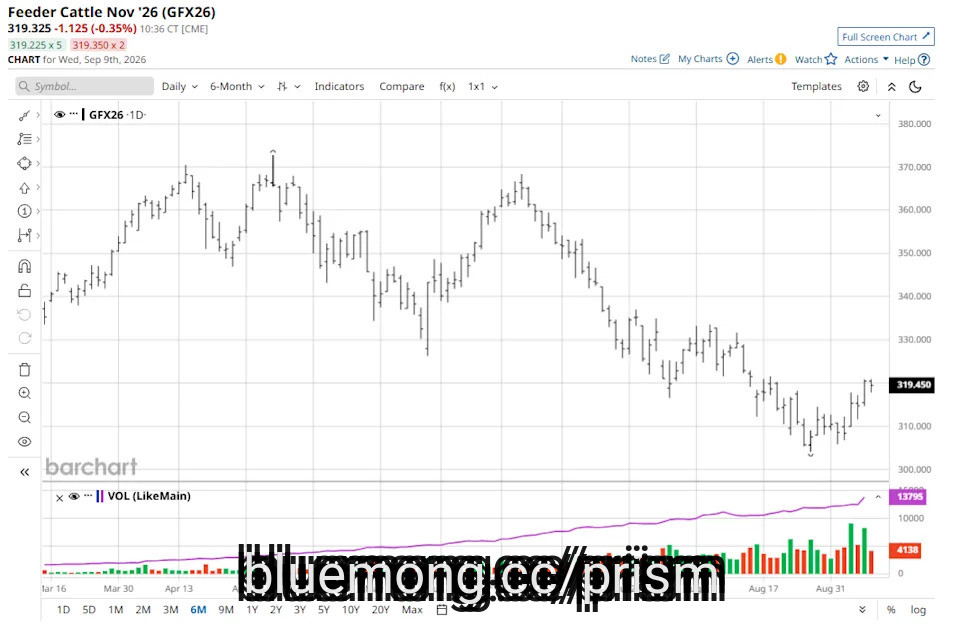
October live cattle (LEV26) futures on Tuesday rose $4.075 to $217.025 and hit a two-week high. November feeder cattle (GFX26) rose $5.725 to $320.45 and hit a three-week high. Both markets in morning trading on Wednesday were giving back some of Tuesday's strong gains to start the holiday-shortened trading week.
The cattle futures markets on Tuesday saw more solid short covering and perceived bargain buying by the speculators. President Donald Trump's recent overtures to get smaller U.S. beef processors ramped up appears to have also given a psychological boost to the cattle industry.
Will Corn's Bullish Trend Continue
Arabica Coffee Retreats as Brazil Supplies Hit the Market
Adequate Cocoa Supplies Pressure Prices
#cattle
The cattle futures markets on Tuesday saw more solid short covering and perceived bargain buying by the speculators. President Donald Trump's recent overtures to get smaller U.S. beef processors ramped up appears to have also given a psychological boost to the cattle industry.
Will Corn's Bullish Trend Continue
Arabica Coffee Retreats as Brazil Supplies Hit the Market
Adequate Cocoa Supplies Pressure Prices
#cattle

11 days ago
Credo Technology Group Holding Ltd (NASDAQ:CRDO) reported fiscal first-quarter 2027 revenue of $479.0 million, up 9.6% sequentially. Management said the company's connectivity portfolio now spans copper and optical products, while total revenue increased 114.7% year over year. GAAP gross margin fell to 64.5% from 68.2% in the preceding quarter and 67.4% one year earlier.
GAAP operating expenses increased to $188.4 million from $142.2 million sequentially, while GAAP operating income declined to $120.7 million from $155.8 million. Credo Technology Group Holding Ltd (NASDAQ:CRDO) nevertheless expects another quarter of growth, guiding fiscal second-quarter revenue to $525 million to $535 million. The $530 million midpoint implies approximately 10.6% sequential expansion.
The question is whether revenue growth and the broader AI connectivity portfolio can offset acquisition-related costs and rising operating expenses.
Revenue scale remains the central strength. Credo Technology Group Holding Ltd (NASDAQ:CRDO) offers active electrical cables, optical transceivers, digital signal processors, silicon-photonics components, retimers, and chip-to-chip connectivity. These products address connections spanning short distances inside AI systems through longer links across clusters.
Absolute GAAP gross profit still increased to $309.1 million from $298.1 million sequentially despite the lower margin. Credo Technology Group Holding Ltd (NASDAQ:CRDO) ended the quarter with $764.3 million in cash and short-term investments, down from approximately $1.44 billion following completion of the DustPhotonics acquisition during the quarter. The remaining liquidity supports research, product development, and capacity requirements.
#crdo
GAAP operating expenses increased to $188.4 million from $142.2 million sequentially, while GAAP operating income declined to $120.7 million from $155.8 million. Credo Technology Group Holding Ltd (NASDAQ:CRDO) nevertheless expects another quarter of growth, guiding fiscal second-quarter revenue to $525 million to $535 million. The $530 million midpoint implies approximately 10.6% sequential expansion.
The question is whether revenue growth and the broader AI connectivity portfolio can offset acquisition-related costs and rising operating expenses.
Revenue scale remains the central strength. Credo Technology Group Holding Ltd (NASDAQ:CRDO) offers active electrical cables, optical transceivers, digital signal processors, silicon-photonics components, retimers, and chip-to-chip connectivity. These products address connections spanning short distances inside AI systems through longer links across clusters.
Absolute GAAP gross profit still increased to $309.1 million from $298.1 million sequentially despite the lower margin. Credo Technology Group Holding Ltd (NASDAQ:CRDO) ended the quarter with $764.3 million in cash and short-term investments, down from approximately $1.44 billion following completion of the DustPhotonics acquisition during the quarter. The remaining liquidity supports research, product development, and capacity requirements.
#crdo
0.00$ raised of 0.00$ goal
0 donations
0.00$
to go
13 days ago
Impax ******* et Management, based in London and specializing in sustainable investing, released its Q2 2026 investor letter for the "Impax US Sustainable Economy Fund". The letter can be downloaded here. The US Sustainable Economy portfolio outperformed the Russell 1000 in Q2 2026, with Institutional Class at 17.96%, Investor Class at 17.95%, and Class A at 17.92%, versus the index's 15.14%. Sector allocation and stock selection drove performance. The sustainability tools, including the Impax Sustainability Lens and Corporate Resilience framework, contributed positively. Equity markets rallied, with both the S&P 500 and Nasdaq reaching new highs before retreating. A key trend was rotation into AI and tech stocks, supported by mega-cap earnings and data center investments (US$750bn to US$1tn). In the second half of 2026, markets may remain volatile amid debates on AI adoption pace and economic momentum. However, growth tied to energy security and efficiency remains compelling, with demand for power, grid, and resource-efficient solutions supporting companies that benefit. The team focuses on businesses with strong growth, sound management, and attractive valuations, adjusting holdings as needed. This approach aims to build well-diversified, differentiated portfolios. Also, please check the fund's top five holdings for its best picks in 2026.
In its second-quarter 2026 investor letter, Impax US Sustainable Economy Fund highlighted Advanced Micro Devices, Inc. (NASDAQ:AMD) as a key contributor. Advanced Micro Devices, Inc. (NASDAQ:AMD) is a leading semiconductor company that designs and manufactures AI accelerators, microprocessors, and graphics processing units. On September 04, 2026, Advanced Micro Devices, Inc. (NASDAQ:AMD) closed at $477.57 per share, reflecting a market capitalization of $779.62 billion. Over the past month, Advanced Micro Devices, Inc. (NASDAQ:AMD) returned 1.71%, but its shares are up 215.42% over the past year.
Impax US Sustainable Economy Fund stated the following regarding Advanced Micro Devices, Inc. (NASDAQ:AMD) in its Q2 2026 investor letter:
"Advanced Micro Devices, Inc. (NASDAQ:AMD) (Semiconductors, Information Technology) is held for its attractive sustainability opportunity set, particularly in Digital Infrastructure, and for its high Corporate Resilience score across environmental and governance dimensions. The stock rose substantially in the quarter, driven by strong adoption of its AI-optimized GPU (graphics processing unit) and data center processor products. A series of major partnership announcements with cloud computing providers and continued evidence of market share gains in AI accelerator hardware reinforced investor confidence in the company's multi-year earnings growth trajectory."
#NASDAQ #impax #sustainable #letter
In its second-quarter 2026 investor letter, Impax US Sustainable Economy Fund highlighted Advanced Micro Devices, Inc. (NASDAQ:AMD) as a key contributor. Advanced Micro Devices, Inc. (NASDAQ:AMD) is a leading semiconductor company that designs and manufactures AI accelerators, microprocessors, and graphics processing units. On September 04, 2026, Advanced Micro Devices, Inc. (NASDAQ:AMD) closed at $477.57 per share, reflecting a market capitalization of $779.62 billion. Over the past month, Advanced Micro Devices, Inc. (NASDAQ:AMD) returned 1.71%, but its shares are up 215.42% over the past year.
Impax US Sustainable Economy Fund stated the following regarding Advanced Micro Devices, Inc. (NASDAQ:AMD) in its Q2 2026 investor letter:
"Advanced Micro Devices, Inc. (NASDAQ:AMD) (Semiconductors, Information Technology) is held for its attractive sustainability opportunity set, particularly in Digital Infrastructure, and for its high Corporate Resilience score across environmental and governance dimensions. The stock rose substantially in the quarter, driven by strong adoption of its AI-optimized GPU (graphics processing unit) and data center processor products. A series of major partnership announcements with cloud computing providers and continued evidence of market share gains in AI accelerator hardware reinforced investor confidence in the company's multi-year earnings growth trajectory."
#NASDAQ #impax #sustainable #letter

14 days ago
AMD gained 4.7% and Intel rose 4.5% on September 4, while Nvidia added only 0.8%. The one-session gap is consistent with investors widening the AI trade beyond Nvidia, but it cannot identify buyer motive or prove a lasting rotation. Advanced Micro Devices, Inc. (NASDAQ:AMD) and Intel Corporation (NASDAQ:INTC) each offer a route to AI spending that does not require Nvidia to lose outright.
AMD's second-quarter revenue reached a record $11.5 billion, up 50% year over year, and Data Center represented 58% of the company. Its portfolio includes MI450 accelerators, sixth-generation EPYC processors, Helios rack-scale systems, and Pensando networking. Customers seeking a credible second source and more negotiating leverage support the bull case. The countercase is software maturity, execution across a broad roadmap, and the capital required to challenge Nvidia's ecosystem.
Insider Monkey's database counted 164 hedge funds holding Advanced Micro Devices, Inc. (NASDAQ:AMD) in Q2 2026, up from 134 in Q1 2026. Marshall Wace reported 3,898,210 shares, about 3% more than in Q1. The quarter-end filings predate the September 4 rally and cannot show whether funds reacted to it.
Intel's second-quarter Data Center and AI revenue was $6.3 billion, up 59% year over year. A resilient CPU franchise, custom silicon, advanced packaging, and a domestic foundry network form the bull case. The cost and uncertain returns of rebuilding manufacturing leadership form the bear case. Intel generated $1.8 billion of GAAP operating income, while its $2.16 GAAP loss per share was driven largely by a $12.5 billion noncash mark-to-market loss on escrowed shares. Negative $8.4 billion adjusted free cash flow still makes capital efficiency a real concern.
The Q2 2026 database counted 138 hedge funds holding Intel Corporation (NASDAQ:INTC), up from 112 in Q1 2026. AQR Capital Management reported 10,742,567 shares after cutting its position by about 6% from Q1. That disclosure also predates the September rally, so it is historical positioning rather than a reaction.
#billion #advanced #quarter
AMD's second-quarter revenue reached a record $11.5 billion, up 50% year over year, and Data Center represented 58% of the company. Its portfolio includes MI450 accelerators, sixth-generation EPYC processors, Helios rack-scale systems, and Pensando networking. Customers seeking a credible second source and more negotiating leverage support the bull case. The countercase is software maturity, execution across a broad roadmap, and the capital required to challenge Nvidia's ecosystem.
Insider Monkey's database counted 164 hedge funds holding Advanced Micro Devices, Inc. (NASDAQ:AMD) in Q2 2026, up from 134 in Q1 2026. Marshall Wace reported 3,898,210 shares, about 3% more than in Q1. The quarter-end filings predate the September 4 rally and cannot show whether funds reacted to it.
Intel's second-quarter Data Center and AI revenue was $6.3 billion, up 59% year over year. A resilient CPU franchise, custom silicon, advanced packaging, and a domestic foundry network form the bull case. The cost and uncertain returns of rebuilding manufacturing leadership form the bear case. Intel generated $1.8 billion of GAAP operating income, while its $2.16 GAAP loss per share was driven largely by a $12.5 billion noncash mark-to-market loss on escrowed shares. Negative $8.4 billion adjusted free cash flow still makes capital efficiency a real concern.
The Q2 2026 database counted 138 hedge funds holding Intel Corporation (NASDAQ:INTC), up from 112 in Q1 2026. AQR Capital Management reported 10,742,567 shares after cutting its position by about 6% from Q1. That disclosure also predates the September rally, so it is historical positioning rather than a reaction.
#billion #advanced #quarter


16 days ago
Artificial intelligence companies are racing to secure one increasingly valuable resource: computing power.
That race has resulted in massive investment in Nvidia (NVDA) processors, data centers, and power. It has also spawned a new breed of specialist cloud providers promising to provide the infrastructure necessary to train and operate ever more advanced AI models.
Now firms are putting a stunning amount behind that demand.
U.K.-based AI infrastructure firm Nscale is telling potential investors that it has about $103 billion in total contracted revenue, according to documents reviewed by The Information and cited by Reuters. The Nvidia-backed startup might launch an initial public offering as early as September.
However, the headline figure comes with a crucial caveat.
#reuters
That race has resulted in massive investment in Nvidia (NVDA) processors, data centers, and power. It has also spawned a new breed of specialist cloud providers promising to provide the infrastructure necessary to train and operate ever more advanced AI models.
Now firms are putting a stunning amount behind that demand.
U.K.-based AI infrastructure firm Nscale is telling potential investors that it has about $103 billion in total contracted revenue, according to documents reviewed by The Information and cited by Reuters. The Nvidia-backed startup might launch an initial public offering as early as September.
However, the headline figure comes with a crucial caveat.
#reuters

16 days ago
Nvidia rose only 0.8% on September 4, while Astera Labs jumped 9.8% and Marvell gained 7.1%. The comparison was consistent with investors broadening the AI trade beyond accelerators into connectivity suppliers. Astera's rally also coincided with speculation that the company could be added to the S&P 500, although it was ultimately not selected in the September rebalance. Bigger accelerator clusters need retimers, switches, optical links, and custom silicon to move data without leaving expensive processors idle. Astera Labs, Inc. (NASDAQ:ALAB) and Marvell Technology, Inc. (NASDAQ:MRVL) monetize that connectivity bottleneck from different positions.
Photo from Astera Labs
Astera is the focused rack-scale connectivity play. Its second-quarter update said a Q3 production ramp of the Scorpio X-Series 320-lane fabric switch was expected to drive the next revenue inflection, alongside growth opportunities across Aries, Taurus, and Leo. The bull case is content growth: each new generation of AI rack can require more connectivity silicon and software. The bear case is dependence on a concentrated group of hyperscale customers, product-transition timing, and a valuation that ***** umes strong adoption before every design win becomes revenue.
Hedge-fund breadth strengthened before the rally. Insider Monkey counted 73 funds holding Astera Labs, Inc. (NASDAQ:ALAB) at June 30, up from 53 at March 31. Lee Ainslie's Maverick Capital disclosed 1,067,215 shares, 12% more than in Q1. The quarter-end filing cannot show whether Maverick participated in the September move.
Marvell is more diversified. Its data-center business spans custom compute, electro-optics, switching, and interconnect, giving it multiple ways to benefit as cloud companies redesign AI systems. That breadth is the bull case because one customer's architecture can pull several product families. It is also the risk: custom programs can be lumpy, development costs arrive before revenue, and investors may overestimate the near-term contribution of announced wins.
#september #alab
Photo from Astera Labs
Astera is the focused rack-scale connectivity play. Its second-quarter update said a Q3 production ramp of the Scorpio X-Series 320-lane fabric switch was expected to drive the next revenue inflection, alongside growth opportunities across Aries, Taurus, and Leo. The bull case is content growth: each new generation of AI rack can require more connectivity silicon and software. The bear case is dependence on a concentrated group of hyperscale customers, product-transition timing, and a valuation that ***** umes strong adoption before every design win becomes revenue.
Hedge-fund breadth strengthened before the rally. Insider Monkey counted 73 funds holding Astera Labs, Inc. (NASDAQ:ALAB) at June 30, up from 53 at March 31. Lee Ainslie's Maverick Capital disclosed 1,067,215 shares, 12% more than in Q1. The quarter-end filing cannot show whether Maverick participated in the September move.
Marvell is more diversified. Its data-center business spans custom compute, electro-optics, switching, and interconnect, giving it multiple ways to benefit as cloud companies redesign AI systems. That breadth is the bull case because one customer's architecture can pull several product families. It is also the risk: custom programs can be lumpy, development costs arrive before revenue, and investors may overestimate the near-term contribution of announced wins.
#september #alab

17 days ago
Cathie Wood appears to have made a sharp choice inside the same AI trade. ARK Invest's August 28 transaction disclosure showed sales of 156,286 shares of Advanced Micro Devices, Inc. (NASDAQ:AMD) and purchases of 243,707 shares of NVIDIA Corporation (NASDAQ:NVDA). Based on the August 28 closing prices, the moves were worth an estimated $72.8 million and $53.0 million, respectively. ARK also bought Broadcom, making the message look less like a retreat from AI chips than a reordering of which suppliers offer the best risk-adjusted exposure.
The bull case for the switch is execution. NVIDIA Corporation (NASDAQ:NVDA) reported quarterly revenue of $96.2 billion, including $89 billion from its data-center business. Its scale, software ecosystem, and ability to sell complete systems give it a clearer path to monetizing every new cluster. Advanced Micro Devices, Inc. (NASDAQ:AMD) is growing rapidly from a smaller base, with second-quarter revenue up 50% and data-center revenue up 107%, but it still has to convert product momentum into durable share gains against a rival that sets much of the market's pace.
That does not make AMD the obvious loser. Its Instinct accelerators and EPYC server processors give customers a credible second source, while hyperscalers have strong incentives to prevent one vendor from controlling their economics. If AMD keeps improving its software and wins larger deployments, its smaller revenue base could produce more upside. Nvidia's strength also creates its own bear case: enormous expectations, customer concentration, export restrictions, and the risk that buyers increasingly favor custom silicon can punish even excellent results.
ARK's filing does not disclose its rationale. The same-day trade reduced AMD exposure and increased Nvidia exposure, but it does not mean AMD's thesis has broken. Hedge-fund holder counts rose for both names. At the end of Q2, 164 hedge funds owned AMD, up from 134 one quarter earlier, while Nvidia ownership rose to 285 funds from 275. Marshall Wace increased its AMD common-share position 3% to 3.9 million shares, and Fisher **** et Management raised its Nvidia stake 3% to 90.9 million shares.
AMD's reported short positioning was not exceptionally high. As of the August 14 settlement date, 40.1 million shares were sold short, equal to 2.47% of the float and 1.5 days of average trading volume. The trade is striking, but the fuller picture is a two-winner market: Nvidia offers the cleaner execution story, while AMD offers the more demanding and potentially more explosive share-gain story.
#NASDAQ #revenue #trade #advanced
The bull case for the switch is execution. NVIDIA Corporation (NASDAQ:NVDA) reported quarterly revenue of $96.2 billion, including $89 billion from its data-center business. Its scale, software ecosystem, and ability to sell complete systems give it a clearer path to monetizing every new cluster. Advanced Micro Devices, Inc. (NASDAQ:AMD) is growing rapidly from a smaller base, with second-quarter revenue up 50% and data-center revenue up 107%, but it still has to convert product momentum into durable share gains against a rival that sets much of the market's pace.
That does not make AMD the obvious loser. Its Instinct accelerators and EPYC server processors give customers a credible second source, while hyperscalers have strong incentives to prevent one vendor from controlling their economics. If AMD keeps improving its software and wins larger deployments, its smaller revenue base could produce more upside. Nvidia's strength also creates its own bear case: enormous expectations, customer concentration, export restrictions, and the risk that buyers increasingly favor custom silicon can punish even excellent results.
ARK's filing does not disclose its rationale. The same-day trade reduced AMD exposure and increased Nvidia exposure, but it does not mean AMD's thesis has broken. Hedge-fund holder counts rose for both names. At the end of Q2, 164 hedge funds owned AMD, up from 134 one quarter earlier, while Nvidia ownership rose to 285 funds from 275. Marshall Wace increased its AMD common-share position 3% to 3.9 million shares, and Fisher **** et Management raised its Nvidia stake 3% to 90.9 million shares.
AMD's reported short positioning was not exceptionally high. As of the August 14 settlement date, 40.1 million shares were sold short, equal to 2.47% of the float and 1.5 days of average trading volume. The trade is striking, but the fuller picture is a two-winner market: Nvidia offers the cleaner execution story, while AMD offers the more demanding and potentially more explosive share-gain story.
#NASDAQ #revenue #trade #advanced


17 days ago
While Texas Instruments (TXN) doesn't always get the attention it deserves when it comes to relevance for the artificial intelligence boom, the semiconductor specialist — which focuses on ******* og chips and embedded processors — remains a pivotal cornerstone entity. Year-to-date, TXN stock is up nearly 47%. However, a recent downturn may be setting up a mean-reversion play.
To be sure, the print isn't very encouraging at the moment. In the past two months, TXN stock has lost roughly 15% of equity value. At the same time, the fundamental underpinning is vital for AI applications. Because AI servers and data centers consume massive amounts of electricity (and thus run extremely hot), they require specialized ******* og chips — that's where Texas Instruments fills the gap.
Unusually Heavy Volume in Snowflake Call Options Ahead of Earnings Today
Home Depot Bear Put Spread Could Return 181% in 45 Days
After Nvidia's Earnings Pop, Options Traders Set Their Sights on $260. What It Will Take to Get There.
#chips #Stock
To be sure, the print isn't very encouraging at the moment. In the past two months, TXN stock has lost roughly 15% of equity value. At the same time, the fundamental underpinning is vital for AI applications. Because AI servers and data centers consume massive amounts of electricity (and thus run extremely hot), they require specialized ******* og chips — that's where Texas Instruments fills the gap.
Unusually Heavy Volume in Snowflake Call Options Ahead of Earnings Today
Home Depot Bear Put Spread Could Return 181% in 45 Days
After Nvidia's Earnings Pop, Options Traders Set Their Sights on $260. What It Will Take to Get There.
#chips #Stock



17 days ago
With a market cap of $79.7 billion, Synopsys, Inc. (SNPS) is a leading provider of design automation and design IP solutions for the semiconductor and electronics industries. It also offers pre-verified, silicon-proven IP solutions including processors, security IP, SoC infrastructure, and automotive-focused offerings.
Companies valued at more than $10 billion are generally considered "large-cap" stocks, and Synopsys fits this criterion perfectly. Operating through its Design Automation and Design IP segments, the company delivers advanced tools for digital and custom IC design, verification, FPGA design, TCAD, manufacturing ***** ytics, and AI-driven electronic design automation (EDA).
Nvidia CEO Jensen Huang Says His $3.5 Billion MediaTek Deal Is 'Not Circular' Because 'They Do Their Own Business'
Strategy's Strategy Appears to Have Failed, and the Outlook of MSTR Stock Is Unfavorable
A Potential ***** eX Deal Could Meaningfully Accelerate Growth for Technip Stock
#synopsys #Companies
Companies valued at more than $10 billion are generally considered "large-cap" stocks, and Synopsys fits this criterion perfectly. Operating through its Design Automation and Design IP segments, the company delivers advanced tools for digital and custom IC design, verification, FPGA design, TCAD, manufacturing ***** ytics, and AI-driven electronic design automation (EDA).
Nvidia CEO Jensen Huang Says His $3.5 Billion MediaTek Deal Is 'Not Circular' Because 'They Do Their Own Business'
Strategy's Strategy Appears to Have Failed, and the Outlook of MSTR Stock Is Unfavorable
A Potential ***** eX Deal Could Meaningfully Accelerate Growth for Technip Stock
#synopsys #Companies

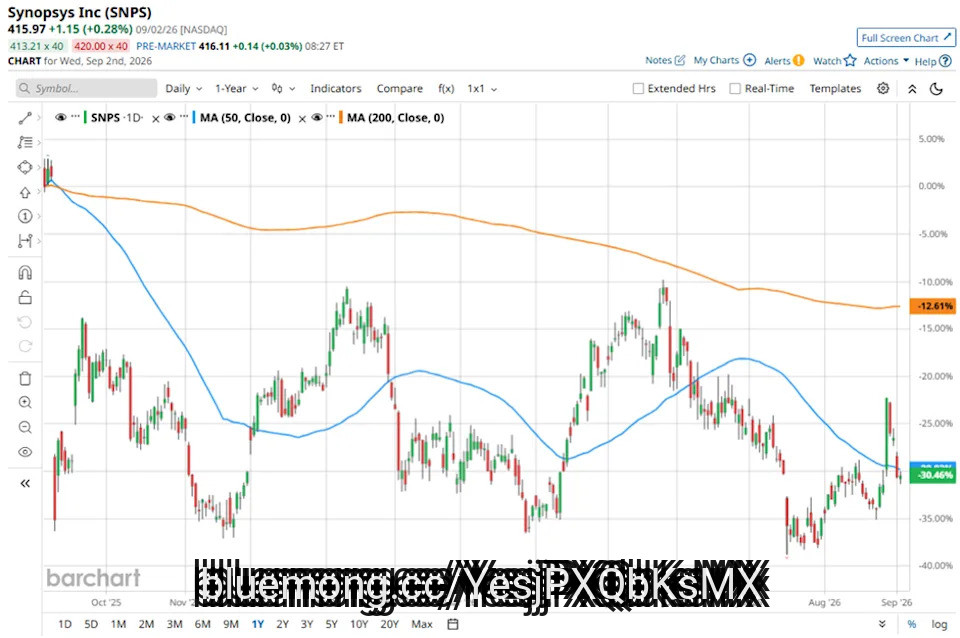
17 days ago
Broadcom Inc (NASDAQ:AVGO, XETRA:1YD), the American chip designer behind custom AI processors for Google, Meta and OpenAI, delivered another quarter of results that beat Wall Street's expectations.
Yet its shares slipped 0.8% in after-hours trading, a sign that investors are growing warier of even strong AI-related earnings.
The muted reaction stemmed largely from Broadcom's fourth-quarter revenue forecast of $34.8 billion, which fell short of the $35.03 billion ******* ysts had pencilled in.
For a stock that has already lagged the wider market this year, up just 6% against the S&P 500's 12% gain, that miss carried extra weight.
The scale of the AI build-out
#NASDAQ #avgo
Yet its shares slipped 0.8% in after-hours trading, a sign that investors are growing warier of even strong AI-related earnings.
The muted reaction stemmed largely from Broadcom's fourth-quarter revenue forecast of $34.8 billion, which fell short of the $35.03 billion ******* ysts had pencilled in.
For a stock that has already lagged the wider market this year, up just 6% against the S&P 500's 12% gain, that miss carried extra weight.
The scale of the AI build-out
#NASDAQ #avgo