
21 days ago
America's older households sit on nearly $140 trillion in wealth, and much of it showed up recently.
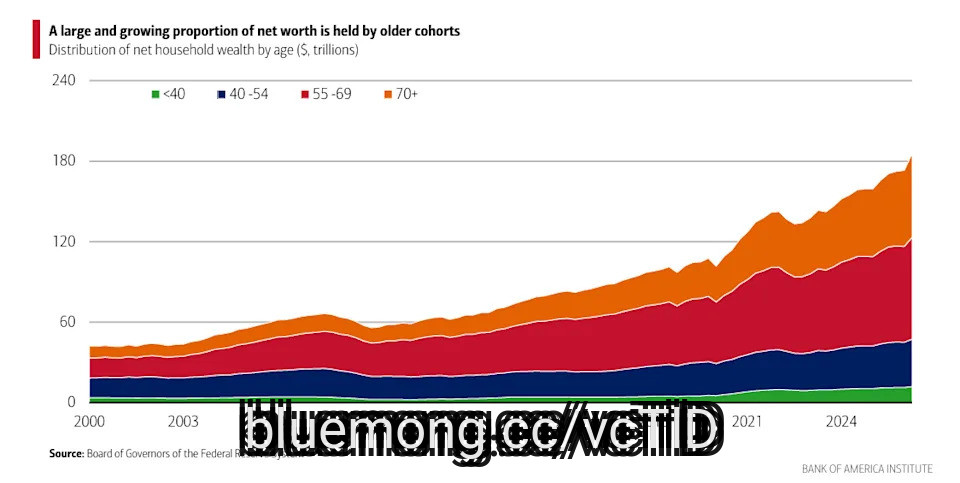
Households age 55 and over held around three-quarters of the nation's total net worth in the second quarter of 2026, according to an Oct. 1 report from Bank of America Institute, based on ******* ysis of Federal Reserve data. "With equity markets rising strongly," wrote senior economist David Michael Tinsley, those households have seen "a more than 20% increase in their net worth over the past two years."
That rally has run on AI. The Magnificent Seven accounted for more than half of the S&P 500's gains last year, Fortune reported in April, and Goldman Sachs strategists found technology stocks drove 85% of the index's return through mid-May this year. "AI-driven return has been the single most important structural driver of equity performance," Capgemini's Luca Russignan told Yahoo Finance in June. Boomers own 54% of all U.S. stocks.
That's a lopsided split. Americans 55 and over make up about 31% of the population, according to Census Bureau estimates, but control roughly 75% of its net worth.
The pile gives many older Americans what the institute calls "considerable capacity to spend on travel and other leisure categories." Add their growing share of the population and their extra free time, and they become an increasingly influential market for businesses chasing consumer dollars. The BofA report focused mainly on the economic implications of a growing mass of older consumers, but the generational wealth composition was striking.
#households #institute #according #report

1 month ago
Six months into a conflict that has proven complex, costly, and highly unpopular, there remains no end in sight to the war in Iran. That's left the energy market — and the ****** ysts and strategists who study it — with a deep lack of clarity.
"For the first time since the start of the Iran conflict, we don't have a baseline view," commodities strategists at JPMorgan, led by Natasha Kaneva, wrote to clients on Thursday. "We simply don't know how to model the endgame."
As the war enters its seventh month, the conflict has broadened to multiple fronts.
In the mouth of the Persian Gulf, the Strait of Hormuz — the world's most critical chokepoint for global energy flows — remains essentially closed to through traffic as Tehran's Revolutionary Guard Corps continues to threaten vessels in the region. Daily crossings of the waterway have remained in the low double digits, far below the average of more than 120 daily transits before the outbreak of war.
Read more: How oil price shocks ripple through your wallet, from gas to groceries
#Iran



1 month ago
The broader benchmark S&P 500 (SNPINDEX:^GSPC) has seemingly hit a wall over the past month, down about 2.3%.
On the whole, the S&P 500 is still having a decent year, but considering the Iran war and high inflation expectations, among other concerns, it's not hard to see why investors and market strategists have grown concerned.
Missed Nvidia in 2009? This Rare Signal Is Flashing Again. In 2009, a "Double Down" signal flashed for a little-known chipmaker called Nvidia. For the first time in years, that same "Total Conviction" signal is flashing for a company 1/100th the size of Nvidia. Continue »
Recently, one of Wall Street's most bullish strategists trimmed his S&P 500 price target for the year.
Ed Yardeni of Yardeni Research recently slashed his forecast from 8,400 to 7,900, which suggests minimal upside in the final 3.5 months of the year, with the index already around 7,600. 8,400 had been the highest price target on the Street.
#yardeni #recently #price


1 month ago
Brace for minor market tremors now that the Fed has hiked interest rates by 0.25%.
Although if history holds up, any losses could prove short-lived.
The S&P 500 (^GSPC) has declined by an average of 4.0% over the six weeks following the first Fed rate hike of a cycle across seven such episodes since 1988, per new ****** ysis from strategists at The Kobeissi Letter.
Stocks recovered all of those losses over the next five to six weeks on average.
In the six months following the first interest rate hike, the S&P 500 returned 4% on average. After 12 months, the S&P 500's average gain tallied 9%. Positive returns have occurred in every episode except 2022 over the 12 months.
"Fed rate hikes have historically been great buying opportunities," the strategists added.
Read more: Follow live coverage of the Fed meeting
The decision by the Fed to lift rates comes as sticky inflation readings — from the CPI to PPI — and rising energy costs force central bankers back into tightening mode. The rate hike marks the central bank's first interest rate increase since July 2023.
Investors are also focused on the updated economic projections and the Fed's "dot plot" to gauge future moves on rates — said dot plot didn't rule out one more hike this year. A hawkish dot plot as was received and follow up commentary from Fed Chairman Kevin Warsh could further elevate borrowing costs and pressure stocks initially around the world.
#rate #hike #first #plot



1 month ago
What happened: The 10-year Treasury yield (^TNX) climbed past the 5% threshold on Monday for the first time since October 2023. Meanwhile, the 30-year Treasury (^TYX) yield hovered at 5.38%.
What's behind the move: Bond yields continued their ascent as Brent crude climbed to $108 a barrel, stoking inflation fears and leading investors to price in rate hikes ahead of the Federal Reserve's policy meeting this week.
Goldman Sachs revised its forecast for this week from no change to a rate hike following Friday's August inflation print.
"The report had little impact on our inflation view but pushed market pricing of a hike to nearly 90%, high enough that the FOMC will likely want to avoid the market reaction that would likely follow from remaining on hold," Goldman Sachs' chief economist David Mericle wrote on Sunday night.
Some strategists believe long-dated bond yields may ease if the Fed hikes rates at its Sept. 15-16 meeting.
#inflation #goldman #bond #year



1 month ago
What happened: The 10-year Treasury yield (^TNX) climbed to 4.97% on Monday, just 3 basis points away from the 5% threshold. Meanwhile, the 30-year Treasury (^TYX) yield hovered at 5.35%.
What's behind the move: Bond yields stayed elevated as Brent crude climbed to $107 a barrel, stoking inflation fears and leading investors to price in rate hikes ahead of the Federal Reserve's policy meeting this week.
Goldman Sachs revised its forecast for this week from no change to a rate hike following Friday's August inflation print.
"The report had little impact on our inflation view but pushed market pricing of a hike to nearly 90%, high enough that the FOMC will likely want to avoid the market reaction that would likely follow from remaining on hold," Goldman Sachs' chief economist David Mericle wrote on Sunday night.
Some strategists believe long-dated bond yields may ease if the Fed hikes rates at its Sept. 15-16 meeting.
#yield



2 months ago
Bitcoin news today shows the price rose more than 5% on September 3 to trade briefly above $82,000, as concerns about a Federal Reserve rate hike eased and Treasury yields fell. Fundstrat head of digital ******* ets Sean Farrell called the move important data worth respecting, while noting Bitcoin has bucked its historically weak September pattern over the past three years.
This is not simply a one-day rebound. It is the latest data point in a debate among strategists over whether the crypto bear market has already bottomed, a thesis complicated by volatile spot Bitcoin ETF flows and a seasonal track record that still favors caution.
DISCOVER: Upcoming Binance Listings
The token's move above $82,000 follows a 25% rally in August, a month strategists have flagged as a turning point after the Treasury Department's intervention in the bond market and ******* istance to ******* an helped lift both gold and crypto prices. Some of those August gains were erased when oil prices surged and hawkish remarks from Fed Chairman Kevin Warsh raised concerns about the central bank's September rate decision, before Fed governor Christopher Waller signaled openness to holding rates steady if inflation continues to ease.
Despite the rebound, Bitcoin remains roughly 7% lower year to date and about 35% below the all-time high of more than $126,000 it reached in early October 2025. September itself carries an unfavorable base rate: Farrell noted Bitcoin has posted negative returns in nine of the past 15 years during the month, though he cautioned that seasonality is a helpful data point rather than a foolproof trading system. For more on how Treasury-yield dynamics have shaped this resilience, see Bitcoin's macro pressure and resilience, and on the ETF side, BlackRock's IBIT and the current price setup.
#september #treasury #point #farrell


2 months ago
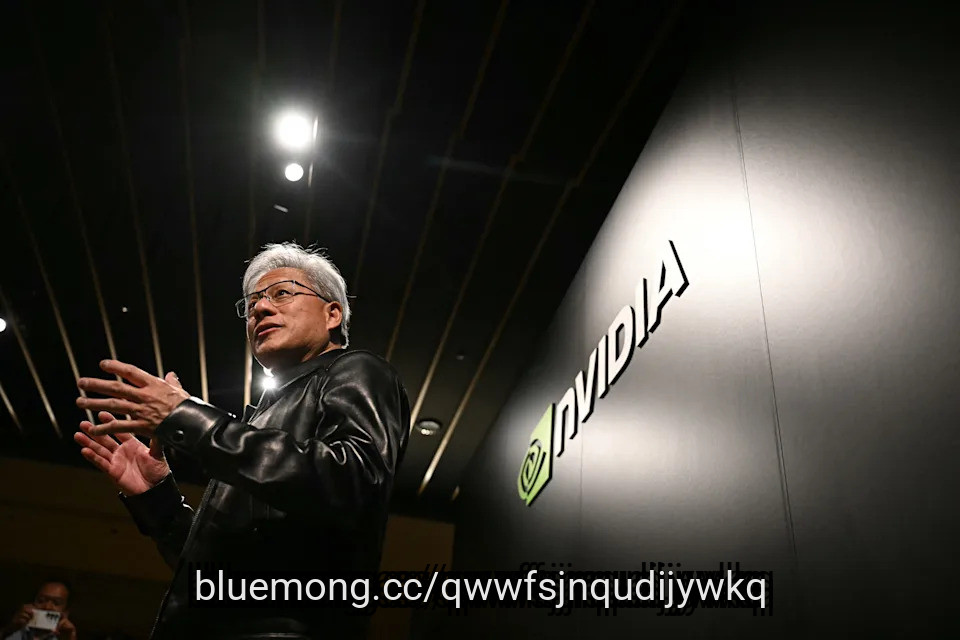
The numbers don't lie: Nvidia (NVDA) has never had more influence on the broader stock market than right now.
Nvidia now accounts for about 8% of the S&P 500's (^GSPC) market cap, near its highest proportion on record per data from Augur Infinity (chart below). At a market cap of $5.4 trillion (and climbing), Nvidia's value is now bigger than that of five of the S&P 500's 11 sectors.
The AI chip darling's market cap also exceeds the combined value of the energy, utilities, real estate, and materials sectors in the S&P 500.
"Nvidia is making history," strategists at The Kobeissi Letter said.
The history is not coming without a host of very good reasons.
Nvidia said after reporting its fiscal second quarter earnings that it sees 70% revenue growth for fiscal year 2028. This was above **** yst forecasts for 45% growth. The sales gain would be larger — think in excess of 100% — if not for memory chip shortages, said Nvidia CEO Jensen Huang.
The company saw adjusted earnings per share of $2.22 on revenue of $96.2 billion in its just-reported quarter. These were better than the $2.09 per share the Street had expected and revenue of $92.3 billion.
#market #history #quarter #earnings


2 months ago
Get your expectations in check, bulled-up investors: One of Goldman Sachs' top stock strategists sees more gradual stock gains over the next 12 months.
"We should acknowledge that the S&P 500 and indeed other equity markets around the world have had a phenomenal return over the course of the last year and year to date," Goldman Sachs chief global equity strategist Peter Oppenheimer told Yahoo Finance in an exclusive interview on Opening Bid (video above). "So we've already had a lot of good returns behind us. We would expect lower returns from here."
Oppenheimer has a loyal following on the Street for many prescient calls on stocks over the years. In early March, he took a cautious view of markets before stocks hit their lows for the year later that month.
"In most cases, we're talking about mid- to high-single-digit [percentage] returns over the next 12 months, lower than we've been seeing in every region in the last 12 months," Oppenheimer added. "But still, you know, relatively decent so long as economic growth continues. That's our expectation."
To be sure, the factors are in place for a more muted backdrop for stocks heading into the end of the year, after a 12% gain for the S&P 500 (^GSPC) so far in 2026.
#year #months #returns #next


2 months ago
The ugly US debt picture seems to get uglier by the day.
Case in point: rising interest payments on some $40 trillion in debt, in part powered by a recent climb in Treasury yields.
US annual interest expense is up to a record 18.5% of federal government revenue, according to fresh ****** ysis from bond investment firm Doubleline (see chart below). This is now officially above the previous record of 18.4% set in 1991.
"The US debt crisis is in uncharted territory," strategists at the Kobeissi Letter wrote in a note.
Consider this: The aforementioned percentage has more than quadrupled over the past four years. The US annual interest expense now stands at a record $1.25 trillion, more than four times the level seen in 1991.
#debt


2 months ago
Nvidia (NVDA) posted a banner quarter on Wednesday that sent a clear message to Wall Street: AI demand is still hot, no matter the doubters.
And yet, shares in Marvell Technology (MRVL) — another major chip designer — plunged after its own strong earnings report.
The tech trade, strategists told Yahoo Finance, isn't as simple as it once was.
Take software, for example. After spending much of 2026 getting hammered by investors, software stocks came roaring back over the past week as the narrative turned away from redundancy and toward resilience.
"This earnings season has caused investors to look at the issue of potential AI disruption in software in a little bit more of a nuanced fashion," Steve Koenig, Macquarie US head of software and services research, told Yahoo Finance.
#software #nvda

2 months ago
The second quarter earnings season is nearly complete, and Nvidia's (NVDA) Q2 earnings beat on Wednesday served as a keystone to a remarkably strong stretch of corporate reports.
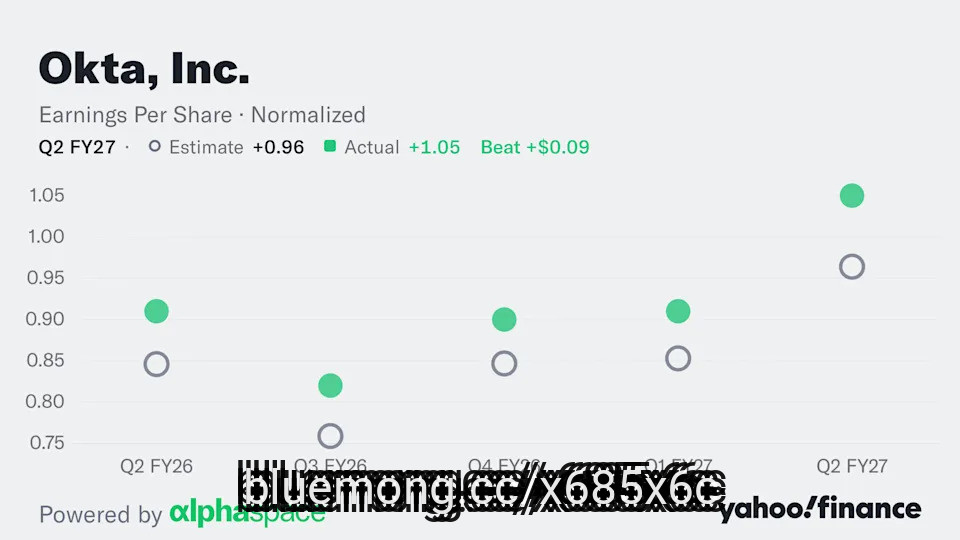
Nvidia stock jumped 8% on Thursday following the company's earnings release. Software and cybersecurity stocks also rose following a string of strong earnings reports. Salesforce (CRM), CrowdStrike (CRWD), and Okta (OKTA) stocks lifted by double digits in afternoon trading.
According to FactSet data, second quarter earnings for S&P 500 companies are on pace to rise 50% year over year, the highest growth rate since 2021. Artificial intelligence has been the growth engine of that broad-based earnings growth, Bank of America strategists noted.
In addition to Nvidia's results, investors weighed key updates this week from dollar stores Dollar Tree (DLTR) and Dollar General (DG), software companies Intuit (INTU) and Zoom (ZM), and other retailers like ******* 's Sporting Goods (DKS) and Kohl's (KSS).
Marvell (MRVL) stock dipped after the data center chip manufacturer's second quarter earnings beat and guidance raise wasn't enough for Wall Street investors.
#earnings #second #beat
2 months ago
Treasury Secretary Scott Bessent moved fast to calm the bond market this month. Two of the biggest names on Wall Street just moved just as fast to say it probably will not be enough. A rebuttal that landed within days of his own announcement.
The pushback lands at an awkward moment for Bessent. The national debt just hit a fresh milestone and a closely watched Federal Reserve speech is only days away. Both developments raise the stakes for whatever the Treasury decides to do next.
Interest rate strategists at Goldman Sachs and Wells Fargo both said the Treasury Department's expanded bond buybacks will do little to reverse the recent jump in long-term yields. Rates on 10- and 30-year Treasuries briefly dropped after the announcement, then rose again, erasing much of the initial relief, Bloomberg reported.
Goldman Sachs strategists George Cole and William Marshall wrote in an August 21 research note that the buyback expansion "does not address what we see as the main sources of recent long-end volatility." They added that the buybacks are "unlikely to meaningfully reset rate levels even if scaled up."
Wells Fargo strategists led by Erik Nelson made a similar case in their own August 21 note, arguing that lowering long-end yields would require macroeconomic shifts rather than Treasury market operations. They pointed to a slowdown in growth and inflation, less uncertainty around Federal Reserve policy, fiscal consolidation, or a decline in investment-grade corporate bond issuance as the kinds of catalysts actually needed to move yields lower.
#strategists


2 months ago
The second quarter earnings season is nearly complete, and Nvidia's (NVDA) Q2 earnings beat on Wednesday served as a keystone to a remarkably strong stretch of corporate reports.
Nvidia stock jumped 5% during premarket trading on Thursday following the company's earnings release.
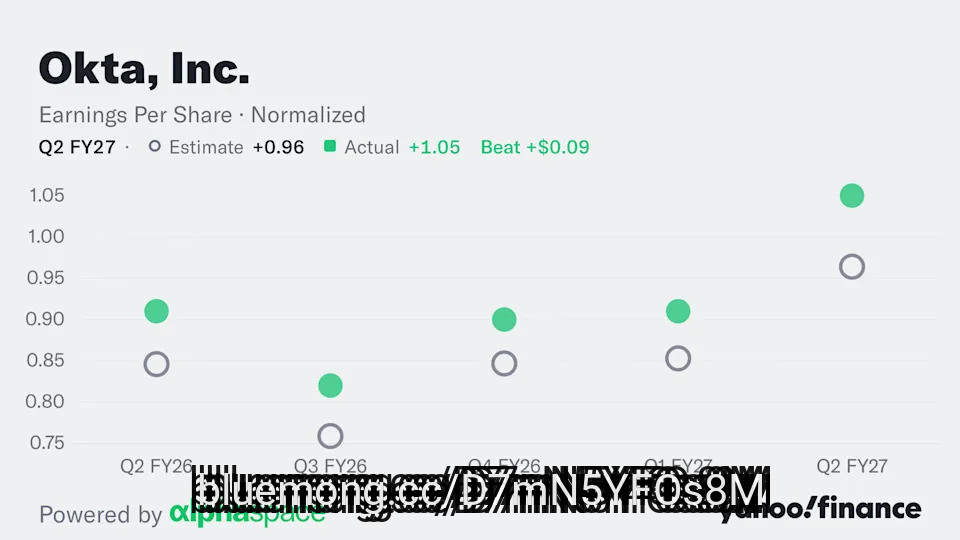
Software and cybersecurity stocks also rose before the bell on Thursday following a string of strong earnings reports. Salesforce (CRM), CrowdStrike (CRWD), and Okta (OKTA) stocks lifted by double digits in premarket trading.
According to FactSet data, second quarter earnings for S&P 500 companies are on pace to rise 50% year over year, the highest growth rate since 2021. Artificial intelligence has been the growth engine of that broad-based earnings growth, Bank of America strategists noted.
In addition to Nvidia's results, investors weighed key updates this week from dollar stores Dollar Tree (DLTR) and Dollar General (DG), software companies Intuit (INTU) and Zoom (ZM), and other retailers like **** 's Sporting Goods (DKS) and Kohl's (KSS).
#dollar #Growth #thursday #okta
2 months ago
The second quarter earnings season is nearly complete, with Nvidia's (NVDA) Q2 results on Wednesday serving as a keystone to a remarkably strong stretch of corporate reports.
According to FactSet data, second quarter earnings for S&P 500 companies are on pace to rise 50% year over year, the highest growth rate since 2021. Artificial intelligence has been the growth engine of that broad-based earnings growth, Bank of America strategists noted.
In addition to Nvidia's results, investors watched for key updates from dollar stores Dollar Tree (DLTR) and Dollar General (DG); software companies, such as Salesforce (CRM), Intuit (INTU), and Zoom (ZM); and other retailers like ****** 's Sporting Goods (DKS) and Kohl's (KSS).
Abercrombie & Fitch (ANF) shares jumped 9% in premarket trading after the retailer reported an earnings beat
In Q2, Abercrombie reported net income per share of $4.17, inclusive of a $1.75 benefit from tariff refunds. That surpassed Wall Street ****** yst expectations for earnings of $1.97, per S&P Global Market Intelligence.
#abercrombie


2 months ago
The second quarter earnings season is nearly complete, with Nvidia's (NVDA) Q2 results on Wednesday serving as a keystone to a remarkably strong stretch of corporate reports.
According to FactSet data, second quarter earnings for S&P 500 companies are on pace to rise 50% year over year, the highest growth rate since 2021. Artificial intelligence has been the growth engine of that broad-based earnings growth, Bank of America strategists noted.
In addition to Nvidia's results, investors watched for key updates from dollar stores Dollar Tree (DLTR) and Dollar General (DG); software companies, such as Salesforce (CRM), Intuit (INTU), and Zoom (ZM); and other retailers like ******* 's Sporting Goods (DKS) and Kohl's (KSS).
Dick's Sporting Goods (DKS) plunged further into the red on Tuesday after the footwear and apparel retailer warned that headwinds may get worse for the remainder of the year.
"We're going to go through some pain," ******* 's executive chairman Edward Stack said in the company's earnings call. "Every once in a while, an industry has to go through a little bit of pain to reset, and we're going through that right now. But we're going to come out the other side, the industry and ******* 's Inc., stronger than we've gone into it."
#earnings #Growth #second


2 months ago
Investor optimism has climbed to its third-highest level since 2022, according to Bank of America's August Global Fund Manager Survey, with portfolio cash holdings approaching historic lows and allocations to equities reaching their strongest level in nearly five years.
Cash declined to 3.5% of **** ets under management in August from 3.6% in July, representing the sixth-lowest reading since the survey began in 1998. BofA's Global FMS Cash Rule, which is designed as a contrarian indicator, therefore remains on "sell," as the signal is activated whenever cash allocations fall to 4.0% or below.
At the same time, global equity exposure increased to a net 56% overweight, its highest level since November 2021. Fund managers have now maintained an overweight position in equities for 14 consecutive months.
Confidence in the economic outlook has also strengthened significantly. A record 56% of respondents anticipate a "no landing" scenario, while 43% expect a "boom" outcome, the highest proportion since February 2022.
"Consensus conviction is no macro landing, no Fed hike, no AI capex cut, no DEM sweep, no bears," BofA strategists led by Michael Hartnett said in a note.
#since #august #allocations


2 months ago
Amidst the AI infrastructure boom and strong earnings by technology giants, there seems to be lingering fear of a potential bubble. Michael Hartnett, managing director and chief investment strategist at the Bank of America, is one of the strategists who believes that an AI bubble bust is impending. Harnett also opines that with the IPO of **** eX (SPCX) and the potential IPOs of OpenAI and Anthropic, market concentration of technology stocks in the S&P 500 ($SPX) is likely to increase to 48%. This, in his view, is another worrying sign.
On the other hand, technology sector leaders like Nvidia (NVDA) continue to create value. In the last 52 weeks, NVDA stock has trended higher by 24%. During this period, revenue growth has been robust, and cash flow acceleration has been meaningful.
Third Point Starts to Raise Alarm Bells on Broadcom After Dumping AVGO Stock in Q2
Nvidia Q2 Preview: Strong Earnings and Low Valuation Set the Stage for Upside
A $28.7 Billion Reason to Buy SK hynix Stock Now
#nvda #earnings #Potential #amidst



2 months ago
Second-quarter earnings across the S&P 500 were robust, with companies tied to artificial intelligence infrastructure continuing to account for a substantial portion of overall profit growth.
S&P 500 earnings per share increased 31% from a year earlier during the quarter when excluding one-off income related to private investment holdings. AI infrastructure companies, including hyperscalers, generated approximately half of that increase, with earnings among the group climbing 54% year-over-year.
Strength was not confined to AI-related businesses. Excluding the energy sector, which received a boost from higher oil prices, the median S&P 500 company recorded earnings growth of 14% compared with the same period last year.
However, Goldman Sachs strategists led by Ben Snider said evidence that corporate adoption of AI is translating directly into earnings improvements remains limited. Only 11% of S&P 500 companies quantified productivity benefits from AI for a specific business application during their earnings calls, such as software coding or customer support. Just 2% put a figure on AI's direct contribution to earnings, unchanged from the first quarter.
Goldman's ***** ysis also found little difference in earnings performance between companies reporting measurable AI productivity improvements and those that did not.
#earnings #Companies #year #productivity


2 months ago
The numbers have reached a scale that markets can no longer ignore. The U.S. fiscal deficit jumped to $432 billion in July alone, the biggest monthly shortfall since early 2021, pushing the year-to-date gap to nearly $1.8 trillion, with the full-year deficit expected to approach $2 trillion. The national debt is nearing the $40 trillion milestone, and the cost of financing it has ballooned to roughly $1.2 trillion so far this year, on pace for about $1.37 trillion for the full fiscal year.
The result has been a sharp move higher in long-term Treasury yields. The 30-year bond hit 5.33% in mid-August — its highest level in 19 years — while the 10-year note pushed toward 4.75%, a 20-month high before the Treasury stepped in this week to announce increased buying of longer dated bonds. Bond strategists point to a combination of forces for the recent high: mounting deficit concerns, inflation still stuck above the Fed's 2% target, and a wave of corporate debt issuance competing with Treasurys for investor cash. Some are calling it the return of the "bond vigilantes" — investors demanding higher yields to keep funding a government that keeps borrowing more.
Because bond prices move opposite to yields, when yields rise, existing bonds — which pay lower fixed rates — become less valuable, so their prices fall. And the longer a bond's maturity (its duration), the more its price drops for a given rise in yields. A 25 basis point rise in long-term yields can translate to roughly a 4% price loss in a long-duration bond fund.
That's why the debt story is fundamentally an ETF story. The funds holding long-dated Treasurys were absorbing the full force of the yield spike, while short-duration and alternative funds are becoming the market's refuge. While yields have since retreated post-Treasury announcement and there is a potential for a surge in buying 20+ year bond ETFs, the longer term impact to long-dated bonds remains to seen.
TLT is ground zero for the debt-and-yields story. As the most popular long-duration Treasury ETF, it holds bonds with 20+ years to maturity — exactly the part of the curve recently hammered as the 30-year yield hit multi-decade highs. TLT has slumped into a correction and touched a 22-year low in August, and investors have pulled more than $4.4 billion out of the fund this year. Strikingly, even a near-5% yield wasn't enough to stem the slide: the price losses from rising rates have overwhelmed the income the fund pays. TLT is the clearest example of how duration risk works against investors when the government's borrowing costs climb.
#year

2 months ago
(Bloomberg) -- Success in the midterm elections for the Republicans and the Texas gubernatorial contest would set up stocks for a further rally, according to Bank of America Corp. strategists.
Most Read from Bloomberg
Selena Gomez Accused of Fraud by Mental-Health Startup Investors
Costliest US Bond Sale Since 2001 Is Investor Warning to Bessent
Anthropic in Talks to Buy AI Startup Decart for $6 Billion
#Startup #republicans #bank #selena
Most Read from Bloomberg
Selena Gomez Accused of Fraud by Mental-Health Startup Investors
Costliest US Bond Sale Since 2001 Is Investor Warning to Bessent
Anthropic in Talks to Buy AI Startup Decart for $6 Billion
#Startup #republicans #bank #selena

2 months ago
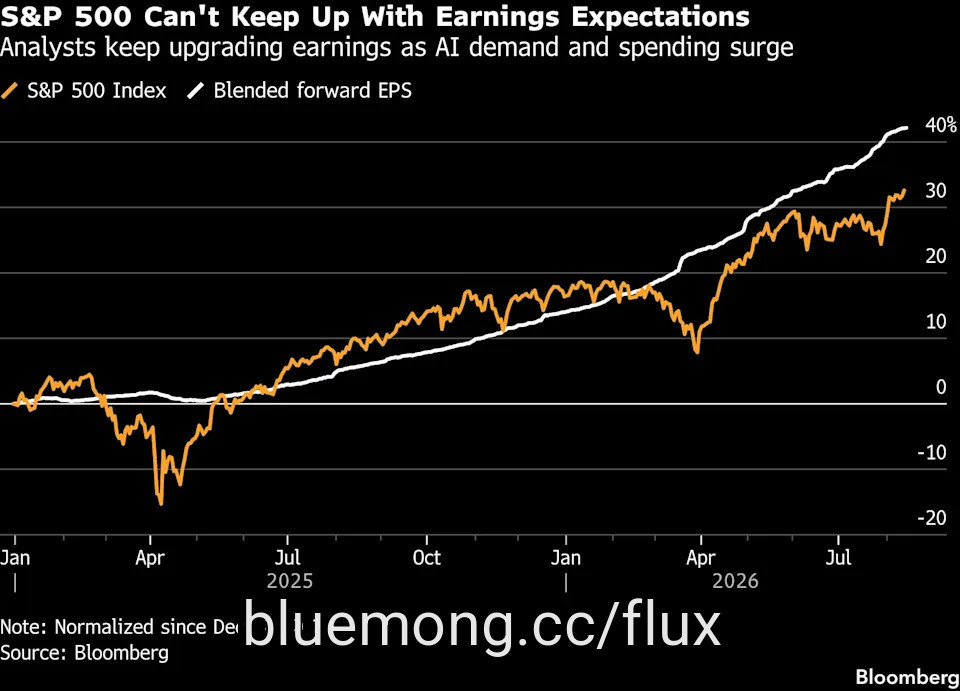
The second quarter earnings season is beginning to wind down, with nearly 90% of S&P 500 (^GSPC) companies having already reported.
The takeaway from the quarter so far has been unbridled strength. According to FactSet data, second quarter earnings for S&P 500 companies are on pace to rise 50% year over year, the highest growth rate since 2021. Artificial intelligence has been the growth engine of that broad-based earnings growth, Bank of America strategists noted.
The next test comes this week from key players in different branches of the AI boom. Cloud provider CoreWeave (CRWV), AI server maker Supermicro (SMCI), and chip equipment manufacturer Applied Materials (AMAT) are among the key companies reporting results this week.
Applied Materials (AMAT) stock fell over 3% in after-hours trading despite the chip equipment maker posting record revenue of $9.12 billion, which topped ****** yst expectations.
Earnings per share rose 43% year over year to $3.17 in the fiscal third quarter as "rapid global adoption of AI drives unprecedented demand for our materials engineering solutions," the company stated.
#Growth #week


3 months ago
As the second quarter earnings season begins to wind down, Wall Street and Main Street alike are tallying up the scores, and the numbers have been unquestionably strong.
With just under 90% of companies in the S&P 500 (^GSPC) having released second quarter earnings, roughly 80% have reported year-on-year EPS growth, putting the quarter in the 94th percentile for the metric, per Bank of America research.
Those results, plus Wall Street consensus forecasts for the third and fourth quarters, put the S&P 500 on track for four consecutive quarters of EPS growth exceeding 20%, per BofA, a phenomenon that has only happened 10 times since 1936.
Part of that story, according to Bank of America strategists led by Savita Subramanian, is the AI boom that has largely been driving the US equity market.
The second quarter has seen broad earnings growth, with 10 out of 11 sectors on pace for positive year-on-year movement, BofA noted. Yet, "even so, AI remained the index's primary growth engine," the strategists wrote. While the median AI-related stock notched EPS growth of 28%, the median non-AI-related stock saw growth of just 12%.
#quarter #street #second #America



3 months ago
Money managers have reduced their bullish bets on both Brent and WTI crude futures over the past two weeks despite little progress on a potential reopening of the Strait of Hormuz.
In the latest reporting week to August 4, portfolio managers trimmed their net long position in NYMEX WTI by 7,257 lots to 101,050 lots, data from the exchanges found. The net long position, the difference between bullish and bearish bets, in ICE Brent crude oil futures was slashed by 11%, or by 20,361 lots to 164,722 lots.
This was the second consecutive weekly decline in speculative positions in the two key crude oil futures benchmarks as traders and speculators are hesitant to add more bullish bets on a price rally.
Oil prices have dropped over the past two weeks amid hopes that the Strait of Hormuz could reopen and Iran and Oman could reach a deal on a joint management of some of the lanes.
"Speculative sentiment turned more cautious last week," ING's commodities strategists Warren Patterson and Ewa Manthey wrote in a note early on Monday.
#managers

3 months ago
With the U.S. midterm elections now just three months away, Goldman Sachs believes political developments are likely to become a more influential driver of market sentiment, potentially leading to higher volatility in the S&P 500 over the coming months.
Strategists led by Ben Snider said historical trends support the expectation that uncertainty surrounding economic policy typically increases as election season approaches.
"In past cycles, economic policy uncertainty has usually risen in the August ahead of midterm elections and remained elevated in the subsequent few months," strategists led by Ben Snider said in a note.
According to Goldman Sachs, that historical pattern strengthens the argument for maintaining exposure to equity index volatility in the near term.
The bank noted that unusually low correlations between individual stocks have helped keep overall index volatility subdued, despite significantly higher volatility at both the stock and factor levels.
#midterm #historical

3 months ago
The reaction to SK Hynix's (SKHY) capex guidance on Wednesday only highlights the stunning summer rout in semiconductor stocks.
Shares of the South Korean chip play tanked as the company said it expects its capital expenditures to surge 50% this year to at least $31 billion. The company is attempting to meet the strong demand for its memory chips, which are playing a key role in the AI boom.
Quick insight: The SK Hynix rout will unlikely do anything to reawaken animal spirits in the chips ***** e. All the stocks of the closely watched Philadelphia Semiconductor Index (^SOX) are now trading below their 50-day moving averages, the first such occurrence since April 2025, according to FactSet data.
The SOX has declined 18.9% so far in July, and is on track for its largest monthly loss since 2008.
"Chip stocks are becoming oversold," strategists at The Kobeissi Letter wrote in a note.
#wednesday


3 months ago
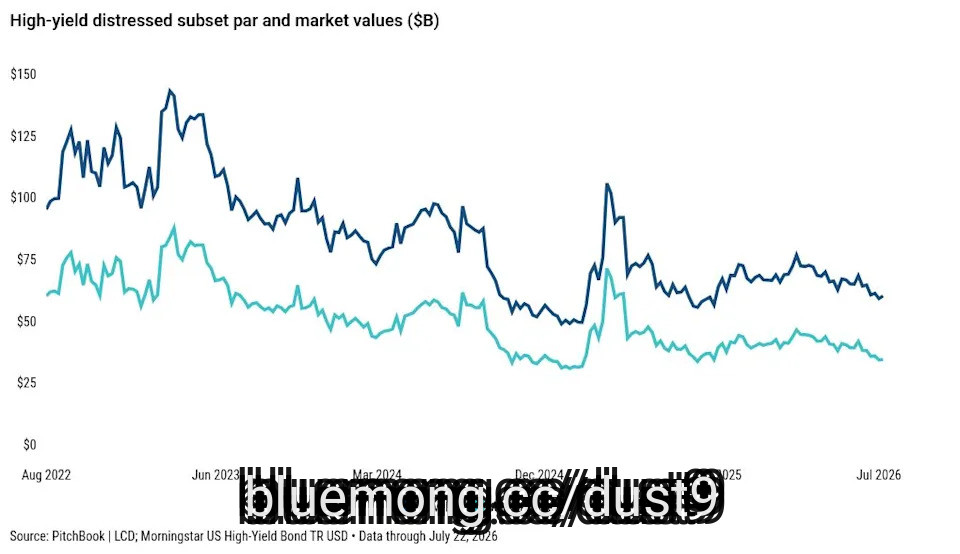
Distressed investors are, by their nature, optimists. They must be, since they see bargains and opportunities where other investors fear to tread. True to form, recent conversations with a number of distressed players reveal a significant distressed opportunity set in the back half of 2026 in the face of a roaring US equity bull market and a vibrant US economy.
Beginning on a positive note, "the US economy is doing well and isn't likely to turn south in the next six to 12 months," says Jeremy Burton, managing director and portfolio manager at PineBridge Investments. Even the rise of oil prices isn't of great concern for Burton, as he believes that the hit to consumers from rising oil prices in one region of the country will be offset by a healthy oil-and-gas-based economy in another region. As a result, the opportunities are more sector-specific, he believes.
Concurring with Burton's relatively sunny view are Morgan Stanley strategists Vishwas Patka and Joyce Jiang, who, in a recent piece covering their mid-year outlook, said "capex growth and a resilient consumer support a stable macro environment with strong earnings, while attractive yields anchor robust [debt] demand." This bodes well for business growth and equity generally, the pair said.
That health is reflected in the numbers. PitchBook LCD reported on July 1 that the trailing 12-month default rate for the Morningstar LSTA US Leveraged Loan index was only 0.97% by dollar amount and 1.34% by issuer count. The default rate by count, including Liability Management Exercises (LMEs), was 2.77%.
But danger in the leveraged loan index lurks. The index's distress ratio by amount (defined as the share of loans trading below 80 cents on the dollar) rose 34 bps in June, to 6.87%. In fact, the distress ratio has trended higher over the past nine months after plumbing a near-term low of 2.59% in September 2025. The peak for 2026 is 7.23% in March, which was the result of six consecutive monthly increases and marked the highest level since the distress ratio hit 7.36% in December 2022, in the midst of a series of US fed funds rate hikes by the FOMC. Roughly 45% of the debt trading under 80 is in software-related sectors.
#distressed #ratio #leveraged


3 months ago
The biggest companies leading the artificial intelligence infrastructure build-out have said they expect hundreds of billions of dollars in capital expenditures through 2026. That trend is only set to accelerate and will be funded increasingly with debt, according to Goldman Sachs.
"While the exact magnitude and mix of future debt issuance from the hyperscalers is uncertain, our review of management commentary leaves us expecting a growing role for debt financing in the AI buildout in the years ahead," credit strategists led by Amanda Lynam said in a research note this week.
A hyperscaler is a large tech company that builds and operates massive data center infrastructure for computing, storage, and AI processing.
Over the past year and a half, capital expenditures from the leading hyperscalers — Meta (META), Microsoft (MSFT), Alphabet (GOOG), Amazon (AMZN), and Oracle (ORCL) — have boomed, as those companies have entered into an arms race focused on the build-out of vast infrastructure underpinning AI development.
In 2025, the companies collectively reported $405 billion in capex. By year end for 2026, that figure is expected to reach $750 billion, per Goldman Sachs, before nearing $1.2 trillion in 2027.
#leading



3 months ago
Barclays believes the next phase for equity markets will be determined by upcoming Big Tech earnings and a series of central bank meetings, as investors balance resilient corporate performance against mounting macroeconomic risks.
The bank said strong earnings have helped equities withstand higher bond yields, rising oil prices and renewed concerns over artificial intelligence spending, but warned that the investment backdrop is becoming more challenging.
According to Barclays, early second-quarter earnings have exceeded expectations on both sides of the Atlantic, reinforcing confidence in corporate fundamentals.
Despite higher interest rates and elevated energy prices, markets have remained resilient so far this reporting season. However, strategists led by Emmanuel Cau said oil prices and bond yields have now reached levels where downside risks are becoming more ****** ounced.
With no breakthrough in the conflict between the United States and Iran, Brent crude has climbed back to around $100 per barrel.
#bank #bond

3 months ago
Investors in AI hyperscalers are set to digest yet another huge quarter of capital expenditures when results begin to trickle in later this month.
The unanswered question: Are the free-spending ways of tech execs finally reflected in the much lower stock valuations of their companies?
Big Tech capital expenditures/sales are expected to reach an all-time peak in the third quarter of this year, Barclays strategists pointed out in a new note (chart below). That essentially means aggressive AI spending continues to yield limited impact on sales and, by extension, profits.
Concerns in the market about hyperscaler capital expenditures aren't too hard to find.
All "Magnificent Seven" stocks have underperformed the S&P 500 (^GSPC) in 2026 except for Alphabet (GOOG, GOOGL), which has notched a 15% year-to-date gain versus the benchmark index's 9.5% advance.