
1 hr. ago
Investor optimism has climbed to its third-highest level since 2022, according to Bank of America's August Global Fund Manager Survey, with portfolio cash holdings approaching historic lows and allocations to equities reaching their strongest level in nearly five years.
Cash declined to 3.5% of **** ets under management in August from 3.6% in July, representing the sixth-lowest reading since the survey began in 1998. BofA's Global FMS Cash Rule, which is designed as a contrarian indicator, therefore remains on "sell," as the signal is activated whenever cash allocations fall to 4.0% or below.
At the same time, global equity exposure increased to a net 56% overweight, its highest level since November 2021. Fund managers have now maintained an overweight position in equities for 14 consecutive months.
Confidence in the economic outlook has also strengthened significantly. A record 56% of respondents anticipate a "no landing" scenario, while 43% expect a "boom" outcome, the highest proportion since February 2022.
"Consensus conviction is no macro landing, no Fed hike, no AI capex cut, no DEM sweep, no bears," BofA strategists led by Michael Hartnett said in a note.
#since #august #allocations
Cash declined to 3.5% of **** ets under management in August from 3.6% in July, representing the sixth-lowest reading since the survey began in 1998. BofA's Global FMS Cash Rule, which is designed as a contrarian indicator, therefore remains on "sell," as the signal is activated whenever cash allocations fall to 4.0% or below.
At the same time, global equity exposure increased to a net 56% overweight, its highest level since November 2021. Fund managers have now maintained an overweight position in equities for 14 consecutive months.
Confidence in the economic outlook has also strengthened significantly. A record 56% of respondents anticipate a "no landing" scenario, while 43% expect a "boom" outcome, the highest proportion since February 2022.
"Consensus conviction is no macro landing, no Fed hike, no AI capex cut, no DEM sweep, no bears," BofA strategists led by Michael Hartnett said in a note.
#since #august #allocations


11 hours ago
J.P. Morgan's Jason Hunter warns of autumn S&P 500 weakness, citing AI stock divergence that mirrors the 1999 to 2000 tech crash alongside rising Treasury yields.
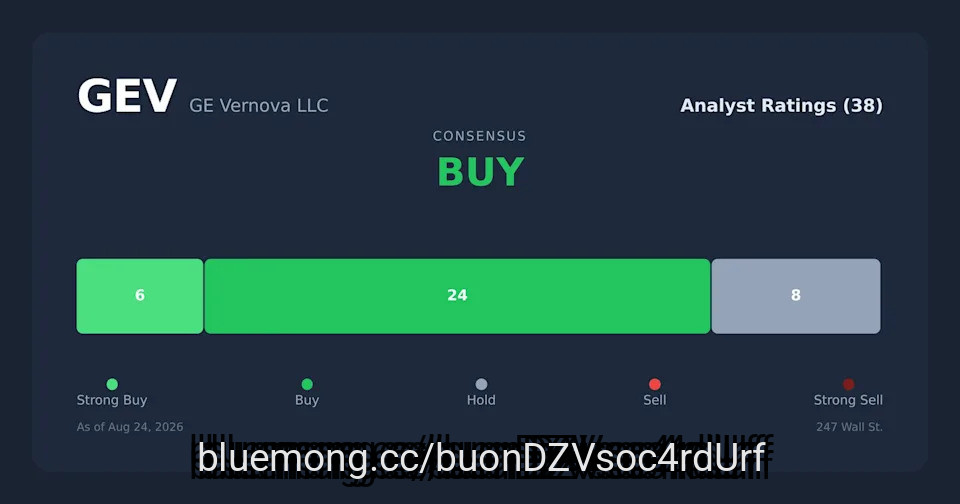
BMY yields nearly 4% with JPMorgan's recently raised $73 target, while GEV carries a $1,330 target as the firm's top electrification conviction pick.
Act now: the ***** yst who called NVIDIA in 2010 just named his top 10 AI stocks — and Walmart didn't make the cut. Grab the names FREE today.
Each year, September rolls around, and it tends to be the worst month for stocks. Historical data show that September is the worst-performing month for the stock market. Since 1928, the S&P 500 has averaged a negative return of about 0.7% to 1% in September, making it the weakest month of the year. Institutional investors and large funds often sell off stocks near the end of the third quarter to lock in gains or adjust ***** et allocations. Some fund managers take advantage of improved liquidity after the summer months to tax-harvest portfolios by selling losers. In addition, traders return from vacations to reevaluate portfolios and often move to more defensive risk-off strategies.
The technical team at J.P. Morgan sees a storm brewing and published reports had this to say:
#yields #worst
BMY yields nearly 4% with JPMorgan's recently raised $73 target, while GEV carries a $1,330 target as the firm's top electrification conviction pick.
Act now: the ***** yst who called NVIDIA in 2010 just named his top 10 AI stocks — and Walmart didn't make the cut. Grab the names FREE today.
Each year, September rolls around, and it tends to be the worst month for stocks. Historical data show that September is the worst-performing month for the stock market. Since 1928, the S&P 500 has averaged a negative return of about 0.7% to 1% in September, making it the weakest month of the year. Institutional investors and large funds often sell off stocks near the end of the third quarter to lock in gains or adjust ***** et allocations. Some fund managers take advantage of improved liquidity after the summer months to tax-harvest portfolios by selling losers. In addition, traders return from vacations to reevaluate portfolios and often move to more defensive risk-off strategies.
The technical team at J.P. Morgan sees a storm brewing and published reports had this to say:
#yields #worst



4 days ago
Schwab International Equity ETF (NYSEMKT:SCHF) and State Street SPDR Portfolio Developed World ex-US ETF (NYSEMKT:SPDW) provide nearly identical low-cost exposure to non-U.S. developed markets, differing primarily in index provider and portfolio depth.
These exchange-traded funds serve as core international building blocks for investors seeking geographic diversification. By excluding U.S. stocks, they allow for precise control over domestic versus international allocations. While their portfolios overlap significantly, their underlying benchmarks and total number of securities provide slight variations in market coverage that may appeal to different types of investors.
Metric
SPDW
SCHF
#nysemkt
These exchange-traded funds serve as core international building blocks for investors seeking geographic diversification. By excluding U.S. stocks, they allow for precise control over domestic versus international allocations. While their portfolios overlap significantly, their underlying benchmarks and total number of securities provide slight variations in market coverage that may appeal to different types of investors.
Metric
SPDW
SCHF
#nysemkt


10 days ago
VTBIX quietly anchors most Vanguard 401(k) bond allocations, bundling thousands of investment-grade U.S. bonds into one near-zero-cost institutional fund.
BND, VTBIX's tradeable ETF twin, lost 1.4% on price over five years but has gained over 14% over ten.
VTBIX holds no junk bonds, no TIPS, and no emerging-market debt, making it a poor fit for yield-seekers or inflation hedgers.
Act now: the ****** yst who called NVIDIA in 2010 just named his top 10 AI stocks — and VTBIX didn't make the cut. Grab the names FREE today.
Only about 3% of Vanguard 401(k) contribution dollars in 2024 went into dedicated bond funds, and a big chunk of that money sits in one place most participants never open a fact sheet for: the institutional bond index fund quietly stapled to the back of their plan menu.
#vanguard #fund
BND, VTBIX's tradeable ETF twin, lost 1.4% on price over five years but has gained over 14% over ten.
VTBIX holds no junk bonds, no TIPS, and no emerging-market debt, making it a poor fit for yield-seekers or inflation hedgers.
Act now: the ****** yst who called NVIDIA in 2010 just named his top 10 AI stocks — and VTBIX didn't make the cut. Grab the names FREE today.
Only about 3% of Vanguard 401(k) contribution dollars in 2024 went into dedicated bond funds, and a big chunk of that money sits in one place most participants never open a fact sheet for: the institutional bond index fund quietly stapled to the back of their plan menu.
#vanguard #fund


14 days ago
COLORADO SPRINGS, Colo. (AP) — USA Swimming placed its chief financial officer, Cory Hilliard, on leave Monday after learning of his arrest on charges of theft and embezzlement at his previous job as an administrator in the University of Colorado athletic department.
The district attorney's office in Boulder said Hilliard is accused of misappropriating funds from the school's Nike Elite program for personal use. The DA said the school lost $9,510 due to Hilliard's actions.
Hilliard, 54, was hired last December as CFO of USA Swimming, which oversees the sport from the grassroots to the Olympic level in the U.S. The organization said it learned of his arrest Monday and "immediately placed Cory on leave and terminated all access to any company data and financial controls."
It said it was conducting its own investigation.
As the administrator for Colorado's Nike Elite program, Hilliard was "responsible for managing employee product benefit allocations," the DA's office said.
#Monday #financial #leave
The district attorney's office in Boulder said Hilliard is accused of misappropriating funds from the school's Nike Elite program for personal use. The DA said the school lost $9,510 due to Hilliard's actions.
Hilliard, 54, was hired last December as CFO of USA Swimming, which oversees the sport from the grassroots to the Olympic level in the U.S. The organization said it learned of his arrest Monday and "immediately placed Cory on leave and terminated all access to any company data and financial controls."
It said it was conducting its own investigation.
As the administrator for Colorado's Nike Elite program, Hilliard was "responsible for managing employee product benefit allocations," the DA's office said.
#Monday #financial #leave



19 days ago
Samsung said on July 30 that memory shortages could worsen in 2027 and persist through 2028. The warning strengthened the pricing outlook for Micron Technology, Inc. (NASDAQ:MU) while exposing a potential supply constraint for NVIDIA Corporation (NASDAQ:NVDA). Micron shares jumped 18.4% that day as Samsung's report revived confidence in the memory cycle.
Samsung has signed supply agreements with the five largest global data-center companies and is nearing deals with five more. It aims to place about two-thirds of its longer-term memory output under contracts lasting at least five years, typically with upfront payments and price floors. Customers are paying for supply certainty before new fabrication capacity can materially relieve the shortage. Micron Technology, Inc. (NASDAQ:MU) has already moved in the same direction. On June 24, it disclosed 16 strategic customer agreements covering roughly 20% of its DRAM volume and one-third of its NAND volume through 2030. The agreements contain take-or-pay commitments, while the largest generally include floor prices that Micron says would protect gross margins above previous cycle peaks.
The other side of scarcity runs through Nvidia's systems. On March 16, Micron said it had begun volume shipments of HBM4 designed for Nvidia's Vera Rubin platform. Advanced memory must arrive alongside processors, packaging, and networking components before demand can become completed systems. Tight HBM allocations could therefore slow shipments even when accelerator orders remain strong. NVIDIA Corporation (NASDAQ:NVDA) has some protection through multiple suppliers. Samsung counts Nvidia among its HBM customers and expects its HBM4 revenue to more than triple in the third quarter, which could make the constraint manageable.
Portogas D Ace/Shutterstock.com
The data supports staying constructive on Micron, although the 18.4% jump makes chasing the stock less attractive. Long-term commitments give Micron more pricing visibility than in previous memory cycles, while scarcity could strengthen prices on uncontracted output. The limitation is that HBM, conventional DRAM, and NAND can loosen at different rates, and new capacity or better manufacturing yields could weaken pricing before 2028. For Nvidia, the shortage warrants monitoring but does not justify a bearish shift. It threatens deployment timing more directly than demand, and supplier diversification reduces the risk that one producer becomes a single point of failure.
#agreements
Samsung has signed supply agreements with the five largest global data-center companies and is nearing deals with five more. It aims to place about two-thirds of its longer-term memory output under contracts lasting at least five years, typically with upfront payments and price floors. Customers are paying for supply certainty before new fabrication capacity can materially relieve the shortage. Micron Technology, Inc. (NASDAQ:MU) has already moved in the same direction. On June 24, it disclosed 16 strategic customer agreements covering roughly 20% of its DRAM volume and one-third of its NAND volume through 2030. The agreements contain take-or-pay commitments, while the largest generally include floor prices that Micron says would protect gross margins above previous cycle peaks.
The other side of scarcity runs through Nvidia's systems. On March 16, Micron said it had begun volume shipments of HBM4 designed for Nvidia's Vera Rubin platform. Advanced memory must arrive alongside processors, packaging, and networking components before demand can become completed systems. Tight HBM allocations could therefore slow shipments even when accelerator orders remain strong. NVIDIA Corporation (NASDAQ:NVDA) has some protection through multiple suppliers. Samsung counts Nvidia among its HBM customers and expects its HBM4 revenue to more than triple in the third quarter, which could make the constraint manageable.
Portogas D Ace/Shutterstock.com
The data supports staying constructive on Micron, although the 18.4% jump makes chasing the stock less attractive. Long-term commitments give Micron more pricing visibility than in previous memory cycles, while scarcity could strengthen prices on uncontracted output. The limitation is that HBM, conventional DRAM, and NAND can loosen at different rates, and new capacity or better manufacturing yields could weaken pricing before 2028. For Nvidia, the shortage warrants monitoring but does not justify a bearish shift. It threatens deployment timing more directly than demand, and supplier diversification reduces the risk that one producer becomes a single point of failure.
#agreements

20 days ago
During the July 21 episode of CNBC's Mad Money, host Jim Cramer addressed viewer complaints about managing technology allocations as memory and storage stocks experience short-term price surges. Cramer defended his commitment to mega-cap tech leaders, noting that short-term performance gaps do not change the long-term dominance of primary platform owners. Acknowledging recent market movements, Cramer noted:
I certainly don't rebel at owning tech. Hey, my Charitable Trust's largest positions are Apple and NVIDIA, for heaven's sake. Sure, these haven't kept up with Sandisk or Western Digital lately, but they are unique, excellent companies that are making fortunes.
For investors looking for direct, targeted exposure to individual hardware components within the artificial intelligence infrastructure buildout, Cramer outlined a clear breakdown of his preferred market leaders across each category:
So here's my advice: If you want to go own a memory chip maker, I like Micron. If you want GPUs, to me, that's AMD or NVIDIA. If you want CPUs, that's Intel. Racks, call Dell. Optics, make it Corning.
Cramer's framework breaks down the artificial intelligence infrastructure stack into distinct, specialized categories rather than treating the semiconductor sector as a single, uniform trade. At the memory layer, Micron Technology, Inc. (NASDAQ:MU) serves as his primary pick for high-speed DRAM and High Bandwidth Memory modules that feed real-time data into complex AI processors. Storage-focused peers like Western Digital Corporation (NASDAQ:WDC), Sandisk Corporation (NASDAQ:SNDK), and Seagate Technology Holdings plc (NASDAQ:STX) complement the ecosystem by providing the flash storage and mass-capacity hard drives required for secondary data retention, but they operate outside the high-margin primary compute memory layer where Micron Technology, Inc. (NASDAQ:MU) maintains a core competitive advantage.
#cramer #technology #micron
I certainly don't rebel at owning tech. Hey, my Charitable Trust's largest positions are Apple and NVIDIA, for heaven's sake. Sure, these haven't kept up with Sandisk or Western Digital lately, but they are unique, excellent companies that are making fortunes.
For investors looking for direct, targeted exposure to individual hardware components within the artificial intelligence infrastructure buildout, Cramer outlined a clear breakdown of his preferred market leaders across each category:
So here's my advice: If you want to go own a memory chip maker, I like Micron. If you want GPUs, to me, that's AMD or NVIDIA. If you want CPUs, that's Intel. Racks, call Dell. Optics, make it Corning.
Cramer's framework breaks down the artificial intelligence infrastructure stack into distinct, specialized categories rather than treating the semiconductor sector as a single, uniform trade. At the memory layer, Micron Technology, Inc. (NASDAQ:MU) serves as his primary pick for high-speed DRAM and High Bandwidth Memory modules that feed real-time data into complex AI processors. Storage-focused peers like Western Digital Corporation (NASDAQ:WDC), Sandisk Corporation (NASDAQ:SNDK), and Seagate Technology Holdings plc (NASDAQ:STX) complement the ecosystem by providing the flash storage and mass-capacity hard drives required for secondary data retention, but they operate outside the high-margin primary compute memory layer where Micron Technology, Inc. (NASDAQ:MU) maintains a core competitive advantage.
#cramer #technology #micron


27 days ago
Global defense spending is entering a historic expansion phase, driven by geopolitical flashpoints from Ukraine to the Indo‑Pacific and record Pentagon budgets. NATO allies are racing to meet or exceed 2% of GDP defense commitments, while the U.S. has proposed a $1.5 trillion military budget for FY2027. Against this backdrop of rising military allocations and urgent weapons replenishment, Lockheed Martin Corp. (NYSE:LMT) has emerged as the sector's anchor, converting its record $230.4 billion backlog into profitable growth and securing new Pentagon contracts that reinforce its leadership in advanced defense systems.
Lockheed Martin Corp. (NYSE:LMT) shares surged more than 10% on July 23 after the company reported strong Q2 2026 earnings and secured additional business with the Pentagon. The stock is up more than 15% since the beginning of the year. This rally shows investor confidence in the company's ability to convert its massive backlog into profitable growth, even amid defense budget politics.
Jordan Tan / Shutterstock.com
Lockheed has won $67.7 million from the Pentagon for a new pair of contracts. One of the contracts covers US Navy submarine systems upgrades and is worth up to $44.6 million. The other covers F-35 fighter jet maintenance depots for allied nations and is worth $23.1 million.
Lockheed's latest Pentagon contract awards arrive as defense spending continues to rise. Amid persistent geopolitical tensions, countries are moving to upgrade their defense capabilities and replenish weapon inventories.
#million #martin #corp #NYSE
Lockheed Martin Corp. (NYSE:LMT) shares surged more than 10% on July 23 after the company reported strong Q2 2026 earnings and secured additional business with the Pentagon. The stock is up more than 15% since the beginning of the year. This rally shows investor confidence in the company's ability to convert its massive backlog into profitable growth, even amid defense budget politics.
Jordan Tan / Shutterstock.com
Lockheed has won $67.7 million from the Pentagon for a new pair of contracts. One of the contracts covers US Navy submarine systems upgrades and is worth up to $44.6 million. The other covers F-35 fighter jet maintenance depots for allied nations and is worth $23.1 million.
Lockheed's latest Pentagon contract awards arrive as defense spending continues to rise. Amid persistent geopolitical tensions, countries are moving to upgrade their defense capabilities and replenish weapon inventories.
#million #martin #corp #NYSE


1 month ago
In this episode of Behind the Ticker, Brad Roth, CIO of Thor Financial Technologies, chats with Young Jae Lee, Senior Investment Manager at Pictet ******* et Management about what traditional emerging market ETFs capture, what they don't, and why the Pictet Emerging Markets Rising Economies ETF (RISE) offers true diversification.
Prefer to watch this conversation? You can do that here or on our YouTube channel.
Emerging markets ETFs are secretly tech bets. The top five holdings in the MSCI EM benchmark mirror the top five in the S&P 500 almost sector-for-sector. Buy traditional EM ETFs and you're really just doubling down on the same tech risk.
Pictet's new ETF, RISE, kicks out the biggest names in EM. It excludes Korea, Taiwan, and China entirely, even though those three countries make up more than 70% of the standard benchmark. The bet: real emerging-market exposure means growing working-age populations, not aging economies riding on legacy index weight.
Demographics are EM's version of AI. Borrowing from the Solow Growth Model, Young Jae Lee argues population growth is what actually drives GDP in developing markets like India, Brazil, Indonesia, and Mexico. That demographic engine deserves the same portfolio spotlight in EM allocations that AI gets in US ones.
#traditional #market
Prefer to watch this conversation? You can do that here or on our YouTube channel.
Emerging markets ETFs are secretly tech bets. The top five holdings in the MSCI EM benchmark mirror the top five in the S&P 500 almost sector-for-sector. Buy traditional EM ETFs and you're really just doubling down on the same tech risk.
Pictet's new ETF, RISE, kicks out the biggest names in EM. It excludes Korea, Taiwan, and China entirely, even though those three countries make up more than 70% of the standard benchmark. The bet: real emerging-market exposure means growing working-age populations, not aging economies riding on legacy index weight.
Demographics are EM's version of AI. Borrowing from the Solow Growth Model, Young Jae Lee argues population growth is what actually drives GDP in developing markets like India, Brazil, Indonesia, and Mexico. That demographic engine deserves the same portfolio spotlight in EM allocations that AI gets in US ones.
#traditional #market

1 month ago
On July 21, during CNBC's Mad Money program, host Jim Cramer used the daily chart **** ysis by options trader Bob Lang, founder of Explosive Options, to examine American Express Company (NYSE:AXP). Cramer pointed to the company's distinct cardholder demographic and high-margin annual fee structure, as he highlighted why the premium card issuer remains a long-time favorite for core portfolio allocations:
Now finally, there's one that I have been near and dear for as long as I can remember, and that's American Express. Now, this only has 10% of purchase volume with fewer cards in circulation, but their cardholders tend to spend a lot more money. Plus, they charge fees for their best cards, basically making you pay for access to their generous rewards programs. It's a fantastic business model. But remember, they do have credit risk.
Under Cramer's framework, American Express occupies a specialized niche compared to rival payment networks Visa Inc. (NYSE:V) and Mastercard Incorporated (NYSE:MA). While Visa controls 60% of cardholders and Mastercard holds 25% to 30%, American Express Company (NYSE:AXP) commands roughly 10% of purchase volume. However, unlike Visa and Mastercard, which operate strictly as neutral tollbooths with zero balance-sheet risk, American Express operates as a direct card issuer. That closed-loop structure allows the company to capture premium annual membership fees and higher per-cardholder spending, though it requires absorbing credit default risk when consumers fall behind on payments.
On the technical side, Cramer highlighted that Lang noted that American Express Company (NYSE:AXP) has shown exceptional relative strength during recent broader market chop. After breaking out above its 200-day moving average in early June, the stock successfully retested that key support level on multiple occasions before surging higher on heavy volume. With the MACD indicator continuing to flash a buy signal, Lang sees a clear path toward $350, with a secondary upside target at its February peak of $370. It is the exact price level where sellers previously emerged. Furthermore, heading into Friday's quarterly report, Cramer shared Lang's bullish fundamental outlook on travel demand while offering his own tactical trading playbook for retail investors:
Now, I've gotta tell you, in his view, American Express is the best in class. Given that we've seen big numbers in travel here, Lang expects that Amex will shoot the lights out when it reports on Friday… I agree with him that this company's best of breed, but I also want to point out that American Express' stock, no matter what they seem to report, tends to sell off in response to earnings on that Friday even when the numbers are terrific. Then it gradually finds its footing afterwards and mounts strong rallies in between quarters, which is why I always say, you know, around like 10:30, 11, you might want to buy this one. I'm not kidding. It's been a good prediction so far.
#volume
Now finally, there's one that I have been near and dear for as long as I can remember, and that's American Express. Now, this only has 10% of purchase volume with fewer cards in circulation, but their cardholders tend to spend a lot more money. Plus, they charge fees for their best cards, basically making you pay for access to their generous rewards programs. It's a fantastic business model. But remember, they do have credit risk.
Under Cramer's framework, American Express occupies a specialized niche compared to rival payment networks Visa Inc. (NYSE:V) and Mastercard Incorporated (NYSE:MA). While Visa controls 60% of cardholders and Mastercard holds 25% to 30%, American Express Company (NYSE:AXP) commands roughly 10% of purchase volume. However, unlike Visa and Mastercard, which operate strictly as neutral tollbooths with zero balance-sheet risk, American Express operates as a direct card issuer. That closed-loop structure allows the company to capture premium annual membership fees and higher per-cardholder spending, though it requires absorbing credit default risk when consumers fall behind on payments.
On the technical side, Cramer highlighted that Lang noted that American Express Company (NYSE:AXP) has shown exceptional relative strength during recent broader market chop. After breaking out above its 200-day moving average in early June, the stock successfully retested that key support level on multiple occasions before surging higher on heavy volume. With the MACD indicator continuing to flash a buy signal, Lang sees a clear path toward $350, with a secondary upside target at its February peak of $370. It is the exact price level where sellers previously emerged. Furthermore, heading into Friday's quarterly report, Cramer shared Lang's bullish fundamental outlook on travel demand while offering his own tactical trading playbook for retail investors:
Now, I've gotta tell you, in his view, American Express is the best in class. Given that we've seen big numbers in travel here, Lang expects that Amex will shoot the lights out when it reports on Friday… I agree with him that this company's best of breed, but I also want to point out that American Express' stock, no matter what they seem to report, tends to sell off in response to earnings on that Friday even when the numbers are terrific. Then it gradually finds its footing afterwards and mounts strong rallies in between quarters, which is why I always say, you know, around like 10:30, 11, you might want to buy this one. I'm not kidding. It's been a good prediction so far.
#volume


1 month ago
July 23 (Reuters) - U.S. equity holdings have surpassed real estate as a share of net financial wealth for the first time since World War Two, Goldman Sachs said, underscoring how stocks have become a dominant driver of household wealth and consumer spending."Equity gains have been the dominant driver of household wealth accumulation and the main contributor to a positive wealth effect on consumer spending," the brokerage said in a note on Thursday.
Here are some details:
• Equity allocations among U.S. and Australasian households are approaching 50% of financial ****** ets, surpassing the levels seen during the dot-com era, Goldman noted.
• Households in the U.S., Australia and Sweden have the highest exposure to equities, while those in Europe and ****** an remain comparatively under-invested in stocks and hold a larger share of their wealth in cash, the bank said.
• Strong stock-market gains since the global financial crisis, particularly over the past three to four years, have increased equities' share of global financial ****** ets and investor portfolios, with technology stocks accounting for a growing portion of those holdings, Goldman said.
#Equity #Share #dominant
Here are some details:
• Equity allocations among U.S. and Australasian households are approaching 50% of financial ****** ets, surpassing the levels seen during the dot-com era, Goldman noted.
• Households in the U.S., Australia and Sweden have the highest exposure to equities, while those in Europe and ****** an remain comparatively under-invested in stocks and hold a larger share of their wealth in cash, the bank said.
• Strong stock-market gains since the global financial crisis, particularly over the past three to four years, have increased equities' share of global financial ****** ets and investor portfolios, with technology stocks accounting for a growing portion of those holdings, Goldman said.
#Equity #Share #dominant


1 month ago
Wednesday's World Cup semifinal game between England and Argentina carries plenty of drama. On the field and off.
Via the London Times, a meeting of FIFA, the FBI, and the Atlanta police department has resulted in a determination that it will be the "highest risk" game of the entire tournament.
There's a history between the teams — and the countries. Per the report, the Falklands War of 1982 continues to be a sticking point, 44 years later.
The FIFA ticketing policy will result in the fans being intermingled throughout much of Mercedes-Benz Stadium. However, official ticket allocations for the two teams will be at opposite ends of the stadium, with each group having its own entrance in order to limit the possibility of incidents.
The two teams last faced each other in a 2005 "friendly." Three years earlier, England beat Argentina on a penalty kick by David Beckham. (The attempt was the result of a foul committed by Mauricio Pochettino, the current coach of the U.S. team.)
Via the London Times, a meeting of FIFA, the FBI, and the Atlanta police department has resulted in a determination that it will be the "highest risk" game of the entire tournament.
There's a history between the teams — and the countries. Per the report, the Falklands War of 1982 continues to be a sticking point, 44 years later.
The FIFA ticketing policy will result in the fans being intermingled throughout much of Mercedes-Benz Stadium. However, official ticket allocations for the two teams will be at opposite ends of the stadium, with each group having its own entrance in order to limit the possibility of incidents.
The two teams last faced each other in a 2005 "friendly." Three years earlier, England beat Argentina on a penalty kick by David Beckham. (The attempt was the result of a foul committed by Mauricio Pochettino, the current coach of the U.S. team.)



1 month ago
MILAN, July 14 (Reuters) - Global investor sentiment has climbed to its strongest level since February, with fund managers growing more optimistic on the economic outlook, artificial intelligence-linked spending and the prospect of a dovish Federal Reserve, Bank of America's latest Global Fund Manager Survey showed.
Cash allocations fell to an "uber-low" of 3.6% from 4.1% in June, level that triggered BofA's contrarian sell signal, while a record share of respondents said they expect a "no landing" for the global economy.
The survey was carried out between July 2 and July 9, after the interim deal to end the U.S.-Iran war and largely before hostilities resumed.
Key findings from the July survey in more detail:
• Investor sentiment rose to its highest level since February, reflecting optimism about economic growth, AI-related capital expenditure and expectations for easier monetary policy.
Cash allocations fell to an "uber-low" of 3.6% from 4.1% in June, level that triggered BofA's contrarian sell signal, while a record share of respondents said they expect a "no landing" for the global economy.
The survey was carried out between July 2 and July 9, after the interim deal to end the U.S.-Iran war and largely before hostilities resumed.
Key findings from the July survey in more detail:
• Investor sentiment rose to its highest level since February, reflecting optimism about economic growth, AI-related capital expenditure and expectations for easier monetary policy.


1 month ago
By Gregor Stuart Hunter and Harry Robertson
SINGAPORE/LONDON, July 13 (Reuters) - The dollar slipped on Monday after giving up earlier gains as investors focused on renewed hostilities in the Gulf, while the yen slid following a Reuters report that ****** an had no immediate plan to change state pension funds' ****** et allocations.
The U.S. currency rose earlier in the session along with oil prices but later lost ground, with the euro up 0.15% at $1.143. Sterling slipped very slightly to $1.339, while the Australian dollar was flat at $0.695.
U.S. and Iranian forces exchanged heavy missile and drone ****** aults at the weekend, with Tehran targeting U.S. facilities in states across the Gulf on Sunday and saying it had again closed the vital Strait of Hormuz shipping route.
Oil prices rose, with Brent crude futures up 3.5% at $78.65 a barrel.
SINGAPORE/LONDON, July 13 (Reuters) - The dollar slipped on Monday after giving up earlier gains as investors focused on renewed hostilities in the Gulf, while the yen slid following a Reuters report that ****** an had no immediate plan to change state pension funds' ****** et allocations.
The U.S. currency rose earlier in the session along with oil prices but later lost ground, with the euro up 0.15% at $1.143. Sterling slipped very slightly to $1.339, while the Australian dollar was flat at $0.695.
U.S. and Iranian forces exchanged heavy missile and drone ****** aults at the weekend, with Tehran targeting U.S. facilities in states across the Gulf on Sunday and saying it had again closed the vital Strait of Hormuz shipping route.
Oil prices rose, with Brent crude futures up 3.5% at $78.65 a barrel.

2 months ago
We are getting close! The rookies report in a little over two weeks. We are almost back baby!
As usual, there is not much to discuss but you know what and it shows up in the links. It simply is what comes up when I google "Vikings News". Don't shoot the messenger because he will shoot back!
I was thinking about our new GM and wondered if he would have done things differently if he was here before free agency and could have had some input into the decisions made. I wonder if he has inherited a couple of problems he might not have wanted to have if he had been here. I asked yore friend for some help. It's up to you how you take it.
Your AI question …
When I look at what the Vikings did this offseason without having their new GM, I wonder how many of those moves he may not have made?
Operating without a permanent general manager for nearly five months is highly unusual in the NFL, and it is almost certain that new GM Nolan Teasley would have altered some of the critical resource allocations made during the interim period.
As usual, there is not much to discuss but you know what and it shows up in the links. It simply is what comes up when I google "Vikings News". Don't shoot the messenger because he will shoot back!
I was thinking about our new GM and wondered if he would have done things differently if he was here before free agency and could have had some input into the decisions made. I wonder if he has inherited a couple of problems he might not have wanted to have if he had been here. I asked yore friend for some help. It's up to you how you take it.
Your AI question …
When I look at what the Vikings did this offseason without having their new GM, I wonder how many of those moves he may not have made?
Operating without a permanent general manager for nearly five months is highly unusual in the NFL, and it is almost certain that new GM Nolan Teasley would have altered some of the critical resource allocations made during the interim period.


2 months ago
The British Virgin Islands (BVI) have spent the last several years pitching itself as a digital-asset hub. At BVI Finance's Fintech on the Seas conference on Necker Island, one of the people buying that pitch is Kingsley Advani, founder of Advani Family Offices and CEO of fund-infrastructure platform Allocations.
Advani has invested in 200+ companies over roughly a decade, securing early stakes in ******* eX, Anthropic, OpenAI, Coinbase, Robinhood and Kraken. He manages over $2B in ******* ets across borders and industries, and has pivoted to "investing in the infrastructure to invest."
Advani's argument is that the BVI's faster formations and improved regulation make it increasingly attractive for new entities as a home base, and that AI will compress entity setup even further from weeks to seconds.
Related: American veterans to receive $10,000 in XRP from Ripple
"If they want to spin up a BVI entity or SPV on their phone, they should be able to with AI in a few seconds. That's the end goal," he said in a conversation with TheStreet Roundtable.
Advani has invested in 200+ companies over roughly a decade, securing early stakes in ******* eX, Anthropic, OpenAI, Coinbase, Robinhood and Kraken. He manages over $2B in ******* ets across borders and industries, and has pivoted to "investing in the infrastructure to invest."
Advani's argument is that the BVI's faster formations and improved regulation make it increasingly attractive for new entities as a home base, and that AI will compress entity setup even further from weeks to seconds.
Related: American veterans to receive $10,000 in XRP from Ripple
"If they want to spin up a BVI entity or SPV on their phone, they should be able to with AI in a few seconds. That's the end goal," he said in a conversation with TheStreet Roundtable.


2 months ago
By Libby George
LONDON, June 30 (Reuters) - More of the world's central banks plan to cut dollar allocations than increase them in the coming decade as political risks ******* ociated with the U.S. currency rise, an OMFIF survey of public investors released on Tuesday showed.
It is the first time the survey, carried out by the Official Monetary and Financial Institutions Forum, has found such a shift away from the dollar.
The findings dovetail with a global debate about the U.S. dollar's role as the primary reserve currency that has been stoked by U.S. policy uncertainty and heightened geopolitical risks.
The London-based thinktank set up in 2010 also found an eagerness among the 90 central banks, public pension funds and sovereign funds surveyed to significantly increase the use of AI from current levels.
LONDON, June 30 (Reuters) - More of the world's central banks plan to cut dollar allocations than increase them in the coming decade as political risks ******* ociated with the U.S. currency rise, an OMFIF survey of public investors released on Tuesday showed.
It is the first time the survey, carried out by the Official Monetary and Financial Institutions Forum, has found such a shift away from the dollar.
The findings dovetail with a global debate about the U.S. dollar's role as the primary reserve currency that has been stoked by U.S. policy uncertainty and heightened geopolitical risks.
The London-based thinktank set up in 2010 also found an eagerness among the 90 central banks, public pension funds and sovereign funds surveyed to significantly increase the use of AI from current levels.


2 months ago
Key Takeaways
BlackRock recommends a 1%-2% Bitcoin allocation for investors seeking diversification and long-term return potential within traditional portfolios.
The ****** et manager views Bitcoin as a complementary diversifier, citing its decentralized structure and relatively low long-term correlation with traditional ****** ets.
The move could accelerate advisor adoption of Bitcoin exposure, providing wealth managers with a formal framework for discussing crypto allocations with clients.
BlackRock, the world's largest ****** et manager, has formally recommended that investors consider allocating 1% to 2% of their portfolios to Bitcoin, marking another milestone in the cryptocurrency's growing acceptance among institutional investors.
BlackRock recommends a 1%-2% Bitcoin allocation for investors seeking diversification and long-term return potential within traditional portfolios.
The ****** et manager views Bitcoin as a complementary diversifier, citing its decentralized structure and relatively low long-term correlation with traditional ****** ets.
The move could accelerate advisor adoption of Bitcoin exposure, providing wealth managers with a formal framework for discussing crypto allocations with clients.
BlackRock, the world's largest ****** et manager, has formally recommended that investors consider allocating 1% to 2% of their portfolios to Bitcoin, marking another milestone in the cryptocurrency's growing acceptance among institutional investors.


2 months ago
Concerned about an AI bubble? Sign up for The Daily Upside for smart and actionable market news, built for investors.
Pivot. Pivot! PIVOT!
That's not just what Ross screamed as he, Chandler and Rachel tried to haul a couch up a tight staircase in an episode of Friends. It's also a niche strategy in the ETF world.
Moving from one **** et to another in response to market conditions isn't new, but its use inside ETFs remains relatively uncommon. Alongside buffer ETFs and low-volatility funds, trend-following products fit into broader risk-management strategies. Clients give up some upside in exchange for a measure of downside protection by shifting into more defensive **** ets when markets slip. There are some 32 trend-following ETFs now trading on US exchanges with total **** ets under management of $3.5 billion, per etf.com data. As advisors increasingly seek protection from market swings, issuers are positioning trend-following products as a core allocation in portfolios.
"If you're looking at these from a total return perspective, you're not going to get as much because you're probably getting out early," said Dan Sotiroff, **** ociate director at Morningstar. He added that these strategies can also be vulnerable to false signals and whipsaws, causing allocations to change at inopportune times.
Pivot. Pivot! PIVOT!
That's not just what Ross screamed as he, Chandler and Rachel tried to haul a couch up a tight staircase in an episode of Friends. It's also a niche strategy in the ETF world.
Moving from one **** et to another in response to market conditions isn't new, but its use inside ETFs remains relatively uncommon. Alongside buffer ETFs and low-volatility funds, trend-following products fit into broader risk-management strategies. Clients give up some upside in exchange for a measure of downside protection by shifting into more defensive **** ets when markets slip. There are some 32 trend-following ETFs now trading on US exchanges with total **** ets under management of $3.5 billion, per etf.com data. As advisors increasingly seek protection from market swings, issuers are positioning trend-following products as a core allocation in portfolios.
"If you're looking at these from a total return perspective, you're not going to get as much because you're probably getting out early," said Dan Sotiroff, **** ociate director at Morningstar. He added that these strategies can also be vulnerable to false signals and whipsaws, causing allocations to change at inopportune times.

3 months ago
Bybit is pushing tokenized equities closer to the IPO market with the launch of IPO Express, a new product that will start with **** eX as its first offering.
The exchange said eligible users will be able to subscribe to tokenized representations of IPO shares through Payward Services’ xStocks infrastructure, giving crypto-native investors a way to access primary-market pricing from inside a Bybit account. Registration and subscription for the **** eX offering run from June 7 to June 11, with allocation scheduled for June 11 to June 12 and spot trading on Bybit expected to begin June 12.
The launch lands during one of the most closely watched public listings in years. **** eX has set a $135 share price for its IPO and is aiming to raise $75 billion at a $1.75 trillion valuation, according to Reuters. Demand has already been running at roughly double the amount the company is seeking to raise, making access to allocations a major part of the market story.
More From Cryptoprowl:
Ripple, The Company Behind XRP, Is Valued At $50 Billion
The exchange said eligible users will be able to subscribe to tokenized representations of IPO shares through Payward Services’ xStocks infrastructure, giving crypto-native investors a way to access primary-market pricing from inside a Bybit account. Registration and subscription for the **** eX offering run from June 7 to June 11, with allocation scheduled for June 11 to June 12 and spot trading on Bybit expected to begin June 12.
The launch lands during one of the most closely watched public listings in years. **** eX has set a $135 share price for its IPO and is aiming to raise $75 billion at a $1.75 trillion valuation, according to Reuters. Demand has already been running at roughly double the amount the company is seeking to raise, making access to allocations a major part of the market story.
More From Cryptoprowl:
Ripple, The Company Behind XRP, Is Valued At $50 Billion

3 months ago
Bybit is pushing tokenized equities closer to the IPO market with the launch of IPO Express, a new product that will start with ***** eX as its first offering.
The exchange said eligible users will be able to subscribe to tokenized representations of IPO shares through Payward Services' xStocks infrastructure, giving crypto-native investors a way to access primary-market pricing from inside a Bybit account. Registration and subscription for the ***** eX offering run from June 7 to June 11, with allocation scheduled for June 11 to June 12 and spot trading on Bybit expected to begin June 12.
The launch lands during one of the most closely watched public listings in years. ***** eX has set a $135 share price for its IPO and is aiming to raise $75 billion at a $1.75 trillion valuation, according to Reuters. Demand has already been running at roughly double the amount the company is seeking to raise, making access to allocations a major part of the market story.
More From Cryptoprowl:
Ripple, The Company Behind XRP, Is Valued At $50 Billion
The exchange said eligible users will be able to subscribe to tokenized representations of IPO shares through Payward Services' xStocks infrastructure, giving crypto-native investors a way to access primary-market pricing from inside a Bybit account. Registration and subscription for the ***** eX offering run from June 7 to June 11, with allocation scheduled for June 11 to June 12 and spot trading on Bybit expected to begin June 12.
The launch lands during one of the most closely watched public listings in years. ***** eX has set a $135 share price for its IPO and is aiming to raise $75 billion at a $1.75 trillion valuation, according to Reuters. Demand has already been running at roughly double the amount the company is seeking to raise, making access to allocations a major part of the market story.
More From Cryptoprowl:
Ripple, The Company Behind XRP, Is Valued At $50 Billion

3 months ago
By Isla Binnie and Echo ******
NEW YORK, June 5 (Reuters) - ****** eX has drawn investor demand of about $150 billion for its IPO, about double the $75 billion it is seeking to raise, said two people familiar with the matter on Friday.
An oversubscription rate of two times would be considered modest for most highly anticipated market flotations, but bankers and investors said that demand is impressive for the ****** eX offering since it is the largest IPO ever.
The company remains in the early stages of the marketing process, sources cautioned. Investor demand is still subject to change before the IPO prices next week.
The sources added that some large institutional investors tend to submit orders late in IPO processes, and that current subscription figures reflect indications of interest rather than final allocations, which will be set at pricing.
NEW YORK, June 5 (Reuters) - ****** eX has drawn investor demand of about $150 billion for its IPO, about double the $75 billion it is seeking to raise, said two people familiar with the matter on Friday.
An oversubscription rate of two times would be considered modest for most highly anticipated market flotations, but bankers and investors said that demand is impressive for the ****** eX offering since it is the largest IPO ever.
The company remains in the early stages of the marketing process, sources cautioned. Investor demand is still subject to change before the IPO prices next week.
The sources added that some large institutional investors tend to submit orders late in IPO processes, and that current subscription figures reflect indications of interest rather than final allocations, which will be set at pricing.


3 months ago
By Pritam Biswas and Noel Randewich
June 4 (Reuters) - S&P Global said on Thursday it was not changing the requirements for entry into its major indices, dealing a setback to Elon Musk's **** eX by effectively ruling out a swift entry for the world's biggest-ever IPO into the benchmark S&P 500 index.
Musk has rewritten the IPO playbook for **** eX in many ways from planning to give retail investors a bigger role in allocations to pushing for early index inclusion, and structuring governance to preserve strong founder control.
The company is raising $75 billion and targeting a $1.75 trillion valuation that would place it among the top 10 most valuable U.S.-listed firms, even as only a fraction of its shares are available for trading.
But S&P said "exceptions to the financial viability, seasoning, and IWF (investable weight factor) requirements should not be granted solely based on market capitalization".
June 4 (Reuters) - S&P Global said on Thursday it was not changing the requirements for entry into its major indices, dealing a setback to Elon Musk's **** eX by effectively ruling out a swift entry for the world's biggest-ever IPO into the benchmark S&P 500 index.
Musk has rewritten the IPO playbook for **** eX in many ways from planning to give retail investors a bigger role in allocations to pushing for early index inclusion, and structuring governance to preserve strong founder control.
The company is raising $75 billion and targeting a $1.75 trillion valuation that would place it among the top 10 most valuable U.S.-listed firms, even as only a fraction of its shares are available for trading.
But S&P said "exceptions to the financial viability, seasoning, and IWF (investable weight factor) requirements should not be granted solely based on market capitalization".


3 months ago
On June 1, ***** eX issued an amended registration statement for its upcoming IPO that contains a couple of noteworthy additions to the original filing submitted two weeks earlier. In one new provision, the rocket and AI giant announced that it will reserve 5% of the offering's shares for "certain employees and persons… which may include parties with whom we have business relationships and friends and families of our executive officers." The document adds that these grants "will not be subject to a lockup restriction." In other words, the folks who receive these allocations, unlike Elon Musk and top execs who can't sell for around a year, are free to unload their holdings any time after ***** eX's debut, slated for mid-June.
These recipients could pocket gigantic windfalls overnight. It's now widely reported that in the IPO, ***** eX will issue 555.6 million shares at $135 each to raise roughly $75 billion. So it's handing friends and family and chosen employees the right to buy $3.75 billion in shares (5% of $75 billion) at the insider price paid by investors, primarily anointed big institutions, that purchased in the underwriting phase. How much the executives, their relatives and ***** eX business partners gain right away depends on how much ***** eX's stock pops on day one. Of course, we don't know what will happen to ***** eX shares once the bell rings at the Nasdaq. A substantial rise over the pre-trading price would send the valuation into the stratospheric $2 trillion range or higher.
But IPO jumps typically average around 20%, and a strong pop is highly valued by both issuers and book-running bankers as the hallmark of the deal's success. If ***** eX scores a 20% ***** p, the group would reap an immediate gain of $750 million. At 30%, we're talking $1.125 billion. And once again, they're free to exit at any time.
An extra surprise buried in the amended S-1 could provide a pivotal clue for ***** eX's future plans. It's a single new sentence on page 51, in the "Acquisitions, Divestitures and Other Strategic Transactions" section. ***** eX states, for the first time, that it "may issue a significant amount of equity in connection with future transactions." A number of Wall Street observers noted that this declaration is too strong to be dismissed as boilerplate language, and suggested that it boosts the probability that ***** eX will purchase Musk's second largest holding, Tesla. This writer explored this strong possibility in a piece last week.
The "may issue a significant amount of equity" alert trained the spotlight on a big potential deal ***** eX had already discussed in the first S-1, but didn't then attract much notice: Its option to purchase venture-backed AI coding ***** istant Cursor for $60 billion in an all-stock transaction. The acquisition looks highly likely, since if ***** eX cancels, it's agreed to pay a total of $10 billion in breakup and service fees. The looming buy raises a red flag for ***** eX shareholders; a Curs
These recipients could pocket gigantic windfalls overnight. It's now widely reported that in the IPO, ***** eX will issue 555.6 million shares at $135 each to raise roughly $75 billion. So it's handing friends and family and chosen employees the right to buy $3.75 billion in shares (5% of $75 billion) at the insider price paid by investors, primarily anointed big institutions, that purchased in the underwriting phase. How much the executives, their relatives and ***** eX business partners gain right away depends on how much ***** eX's stock pops on day one. Of course, we don't know what will happen to ***** eX shares once the bell rings at the Nasdaq. A substantial rise over the pre-trading price would send the valuation into the stratospheric $2 trillion range or higher.
But IPO jumps typically average around 20%, and a strong pop is highly valued by both issuers and book-running bankers as the hallmark of the deal's success. If ***** eX scores a 20% ***** p, the group would reap an immediate gain of $750 million. At 30%, we're talking $1.125 billion. And once again, they're free to exit at any time.
An extra surprise buried in the amended S-1 could provide a pivotal clue for ***** eX's future plans. It's a single new sentence on page 51, in the "Acquisitions, Divestitures and Other Strategic Transactions" section. ***** eX states, for the first time, that it "may issue a significant amount of equity in connection with future transactions." A number of Wall Street observers noted that this declaration is too strong to be dismissed as boilerplate language, and suggested that it boosts the probability that ***** eX will purchase Musk's second largest holding, Tesla. This writer explored this strong possibility in a piece last week.
The "may issue a significant amount of equity" alert trained the spotlight on a big potential deal ***** eX had already discussed in the first S-1, but didn't then attract much notice: Its option to purchase venture-backed AI coding ***** istant Cursor for $60 billion in an all-stock transaction. The acquisition looks highly likely, since if ***** eX cancels, it's agreed to pay a total of $10 billion in breakup and service fees. The looming buy raises a red flag for ***** eX shareholders; a Curs

3 months ago
We just covered From Fired Researcher to $13.7 Billion King: How Leopold Aschenbrenner Broke the Hedge Fund World and Micron Technology, Inc. (NASDAQ:MU) ranks 8th on this list.
Micron Technology, Inc. (NASDAQ:MU) is a new addition to the 13F portfolio of Situational Awareness LP. The fund declared a new stake in the company in filings for the first quarter of 2026. This stake consists of PUT bets worth close to 1.7 million shares. Previously, Leopold Aschenbrenner had bought a stake in this chip giant in the third quarter of 2025. This position consisted of PUT bets worth 300,000 shares and was sold off completely by the next quarter. Micron designs, develops, manufactures, and sells memory and storage products. Latest reports from Goldman Sachs suggest that NVIDIA and Micron together will account for a third of S&P 500 EPS growth this year alone.
READ MORE: Mark Cuban Stock Portfolio: 8 Best Stocks to Buy.
Even as Micron Technology (NASDAQ:MU) rides the AI wave, it is facing competitive headwinds. With calendar 2026 HBM capacity fully locked in, supply chain allocations for upcoming advanced architectures show a distinct shift. NVIDIA reportedly selected SK Hynix and Samsung over Micron for the primary, high-volume supply allocations of top-tier ultra-advanced platforms. Memory is historically a commodity. If Micron loses out on the highest-margin, tier-1 architectural slots to SK Hynix and Samsung, it will be forced to compete on price for secondary allocations. Hedge funds argue that Micron is being priced at a premium multiple, yet it remains highly vulnerable to being out-scaled by foreign competitors who operate with lower structural capital costs.
While we acknowledge the potential of MU as an investment, we believe certain AI stocks offer greater upside potential and carry less downside risk. If you're looking for an extremely undervalued AI stock that also stands to benefit significantly from Trump-era tariffs and the onshoring trend, see our free report on the best short-term AI stock.
Micron Technology, Inc. (NASDAQ:MU) is a new addition to the 13F portfolio of Situational Awareness LP. The fund declared a new stake in the company in filings for the first quarter of 2026. This stake consists of PUT bets worth close to 1.7 million shares. Previously, Leopold Aschenbrenner had bought a stake in this chip giant in the third quarter of 2025. This position consisted of PUT bets worth 300,000 shares and was sold off completely by the next quarter. Micron designs, develops, manufactures, and sells memory and storage products. Latest reports from Goldman Sachs suggest that NVIDIA and Micron together will account for a third of S&P 500 EPS growth this year alone.
READ MORE: Mark Cuban Stock Portfolio: 8 Best Stocks to Buy.
Even as Micron Technology (NASDAQ:MU) rides the AI wave, it is facing competitive headwinds. With calendar 2026 HBM capacity fully locked in, supply chain allocations for upcoming advanced architectures show a distinct shift. NVIDIA reportedly selected SK Hynix and Samsung over Micron for the primary, high-volume supply allocations of top-tier ultra-advanced platforms. Memory is historically a commodity. If Micron loses out on the highest-margin, tier-1 architectural slots to SK Hynix and Samsung, it will be forced to compete on price for secondary allocations. Hedge funds argue that Micron is being priced at a premium multiple, yet it remains highly vulnerable to being out-scaled by foreign competitors who operate with lower structural capital costs.
While we acknowledge the potential of MU as an investment, we believe certain AI stocks offer greater upside potential and carry less downside risk. If you're looking for an extremely undervalued AI stock that also stands to benefit significantly from Trump-era tariffs and the onshoring trend, see our free report on the best short-term AI stock.


4 months ago
Is Bitcoin Back? Buy in With Protected Bitcoin ETFs | ETF Trends
The weather isn’t the only thing getting warmer as of late — the crypto winter may finally be over.
At least, that’s what some ****** ysts are hoping is currently happening. Here’s why: After spending a few months well below the $70k price mark, the price of bitcoin is now on the rise. As of April 24, 2026, bitcoin sits around $78k, and is approaching the $80k goalpost.
Bitcoin’s price comeback is naturally causing many bitcoin bulls to hope that the crypto winter is but a thing of the past. In fact, some are even hopeful that bitcoin can renew its trend of pushing past the $100k mark once more.
Institutional investors are also looking to increase their bitcoin allocations right now. Recently, Michael Saylor’s Strategy eclipsed BlackRock as the largest institutional bitcoin holder in the world, following a $2.5 billion bitcoin buy.
https://www.etftrends.com/...
The weather isn’t the only thing getting warmer as of late — the crypto winter may finally be over.
At least, that’s what some ****** ysts are hoping is currently happening. Here’s why: After spending a few months well below the $70k price mark, the price of bitcoin is now on the rise. As of April 24, 2026, bitcoin sits around $78k, and is approaching the $80k goalpost.
Bitcoin’s price comeback is naturally causing many bitcoin bulls to hope that the crypto winter is but a thing of the past. In fact, some are even hopeful that bitcoin can renew its trend of pushing past the $100k mark once more.
Institutional investors are also looking to increase their bitcoin allocations right now. Recently, Michael Saylor’s Strategy eclipsed BlackRock as the largest institutional bitcoin holder in the world, following a $2.5 billion bitcoin buy.
https://www.etftrends.com/...



9 months ago
Before most of us even finish arguing over leftovers, ****** erball is already gearing up for next year’s Thanksgiving. “Preparation for the next Thanksgiving season starts shortly after the current one concludes,” says Dan Bohlman, Director of Logistics at ****** erball. While the rest of us are settling into winter, his team is mapping out cold storage allocations in January and kicking transportation planning into gear by Q3.
It’s a year-long warm-up for a holiday that hits the same week every year but somehow never plays out the same way twice.
Forecasting for Thanksgiving sits in that s
It’s a year-long warm-up for a holiday that hits the same week every year but somehow never plays out the same way twice.
Forecasting for Thanksgiving sits in that s