
1 month ago
On September 8, 2026, Reuters reported that ASML Holding N.V. (NASDAQ:ASML) plans to work with major customers. It includes Taiwan Semiconductor Manufacturing Company Limited (NYSE:TSM), Nvidia, Intel, Samsung, and SK Hynix to adapt its next-generation "High NA" extreme ultraviolet lithography tools so they can print larger data-center chips. It addresses a current limitation where the newer machines use a smaller mask than ASML's widely deployed standard EUV tools.
ASML targets a pilot production line using the larger masks by 2031 and high-volume manufacturing readiness by 2033. Chief technology officer Marco Pieters said these changes could lift the productivity of these systems by roughly 40%.
The larger-mask project could create a new growth opportunity for ASML Holding N.V. (NASDAQ:ASML) while helping TSMC manufacture larger AI chips more efficiently. ASML plans to use its High NA EUV tools to handle chips as large as today's biggest data-center processors. The business expects the larger masks to increase system productivity by 40%. It could scale up demand for its next-generation equipment and help TSMC improve the economics of producing increasingly large and complex chips.
Taiwan Semiconductor Manufacturing Company Limited (NYSE:TSM)'s planned use gives ASML a clear path toward commercializing the technology. TSMC plans to introduce High NA EUV into advanced-node high-volume production from 2030. ASML aims to show its larger-mask technology through a pilot line in 2031. TSMC's commitment could give ASML greater visibility into future equipment demand. Early use could help TSMC maintain its advanced-chip manufacturing advantage.
The collaboration could solidify both companies' positions as chipmakers develop larger and more powerful processors. ASML can extend its High NA roadmap beyond its current chip-size limitation. TSMC can prepare its manufacturing processes for the next generation of AI chips. The partnership gives ASML an opportunity to deepen its relationship with one of its largest customers and gives TSMC access to a technology that could support future advanced-chip production.
#asml #technology #plans #next
ASML targets a pilot production line using the larger masks by 2031 and high-volume manufacturing readiness by 2033. Chief technology officer Marco Pieters said these changes could lift the productivity of these systems by roughly 40%.
The larger-mask project could create a new growth opportunity for ASML Holding N.V. (NASDAQ:ASML) while helping TSMC manufacture larger AI chips more efficiently. ASML plans to use its High NA EUV tools to handle chips as large as today's biggest data-center processors. The business expects the larger masks to increase system productivity by 40%. It could scale up demand for its next-generation equipment and help TSMC improve the economics of producing increasingly large and complex chips.
Taiwan Semiconductor Manufacturing Company Limited (NYSE:TSM)'s planned use gives ASML a clear path toward commercializing the technology. TSMC plans to introduce High NA EUV into advanced-node high-volume production from 2030. ASML aims to show its larger-mask technology through a pilot line in 2031. TSMC's commitment could give ASML greater visibility into future equipment demand. Early use could help TSMC maintain its advanced-chip manufacturing advantage.
The collaboration could solidify both companies' positions as chipmakers develop larger and more powerful processors. ASML can extend its High NA roadmap beyond its current chip-size limitation. TSMC can prepare its manufacturing processes for the next generation of AI chips. The partnership gives ASML an opportunity to deepen its relationship with one of its largest customers and gives TSMC access to a technology that could support future advanced-chip production.
#asml #technology #plans #next


1 month ago
On September 9, 2026, Reuters reported that CEO Brian Niccol's first two years as Starbucks Corporation (NASDAQ:SBUX) CEO have succeeded in bringing customers back to the coffee chain. Comparable sales rose 7.9% in the fiscal third quarter for a fourth straight quarter of improvement, but his "Back to Starbucks" restructuring has raised costs and squeezed margins along the way. Global operating margin has fallen to 12.9% from 15.8% two years earlier. Niccol, who marks his second anniversary in the role, now faces pressure to convert the sales recovery into the sustainable profit growth investors are demanding.
Niccol's turnaround strategy has already restored customer momentum at Starbucks Corporation (NASDAQ:SBUX). The "Back to Starbucks" strategy reversed six consecutive quarters of declining comparable sales as the company focused on reducing wait times, simplifying menus, improving store ambiance, and increasing staffing. Starbucks has moved beyond the sales deterioration that preceded Niccol's tenure. It gives investors a stronger foundation for the next phase of the turnaround. If management can sustain traffic gains while improving productivity, the sales recovery could provide a path toward stronger earnings growth.
The China joint venture with Boyu Capital gives Starbucks a more capital-efficient way to participate in China's growth. Starbucks sold control of its China retail operations to Boyu. It retained a 40% stake and continues to own and license its brand and intellectual property. The structure reduces Starbucks' direct capital requirements while allowing it to retain economic exposure to the Chinese market. Reuters cited ****** ysts who said the arrangement leaves Starbucks well positioned to convert stronger organic sales growth into profit growth, which could support returns as the recovery progresses.
Starbucks now has an opportunity to turn its customer investments into margin expansion. The firm committed at least $500 million toward labor as part of the restructuring. Niccol prioritized staffing and store improvements to rebuild the customer experience. That spending helped help the sales recovery. But it also pushed global operating margins down to 12.9% from 15.8% over two years. With sales now improving, management can focus more heavily on productivity, cost control, and operating leverage. It creates an opportunity for stronger earnings if it can improve margins without damaging customer traffic.
Labor tensions could undermine Starbucks Corporation (NASDAQ:SBUX)' recovery and keep costs elevated. Starbucks has yet to reach a first contract with its U.S. barista union. The union called for a consumer boycott in August. Negotiations or labor actions could disrupt store operations, increase labor costs, and create reputational pressure just as Starbucks tries to improve profitability. Therefore, investors face a risk that labor issues could offset some of the productivity gains management needs to expand margins.
#
Niccol's turnaround strategy has already restored customer momentum at Starbucks Corporation (NASDAQ:SBUX). The "Back to Starbucks" strategy reversed six consecutive quarters of declining comparable sales as the company focused on reducing wait times, simplifying menus, improving store ambiance, and increasing staffing. Starbucks has moved beyond the sales deterioration that preceded Niccol's tenure. It gives investors a stronger foundation for the next phase of the turnaround. If management can sustain traffic gains while improving productivity, the sales recovery could provide a path toward stronger earnings growth.
The China joint venture with Boyu Capital gives Starbucks a more capital-efficient way to participate in China's growth. Starbucks sold control of its China retail operations to Boyu. It retained a 40% stake and continues to own and license its brand and intellectual property. The structure reduces Starbucks' direct capital requirements while allowing it to retain economic exposure to the Chinese market. Reuters cited ****** ysts who said the arrangement leaves Starbucks well positioned to convert stronger organic sales growth into profit growth, which could support returns as the recovery progresses.
Starbucks now has an opportunity to turn its customer investments into margin expansion. The firm committed at least $500 million toward labor as part of the restructuring. Niccol prioritized staffing and store improvements to rebuild the customer experience. That spending helped help the sales recovery. But it also pushed global operating margins down to 12.9% from 15.8% over two years. With sales now improving, management can focus more heavily on productivity, cost control, and operating leverage. It creates an opportunity for stronger earnings if it can improve margins without damaging customer traffic.
Labor tensions could undermine Starbucks Corporation (NASDAQ:SBUX)' recovery and keep costs elevated. Starbucks has yet to reach a first contract with its U.S. barista union. The union called for a consumer boycott in August. Negotiations or labor actions could disrupt store operations, increase labor costs, and create reputational pressure just as Starbucks tries to improve profitability. Therefore, investors face a risk that labor issues could offset some of the productivity gains management needs to expand margins.
#


1 month ago
GOOG trades at a P/E of 14 versus META's 24, with Cloud revenue surging 82% while META's operating margins collapsed from 43% to 31%.
META's Reality Labs bleeds roughly $4B per quarter, 2026 capex is projected between $130B and $145B, and active litigation makes it a volatile aggressive-growth bet rather than a retirement hold.
Just released. Our ******* ysts combed the entire stock market and named the ten best stocks to buy right now, and Google didn't make the cut. Enter your email to see the names that beat GOOG. The report is free. Enter your email and see if any of your stocks made the cut.
Alphabet (NASDAQ:GOOG) and Meta Platforms (NASDAQ:META) just unleashed rival consumer AI agents (Google's family-focused CC, a shared agent supporting up to six family members, and Meta's single-user Muse, aiming for higher autonomy across a user's digital life, including commerce), and the retirement-focused investor writing one check today needs a clear answer: which mega-cap deserves the slot?
Both stocks are pouring tens of billions into AI infrastructure. Both consumer AI agents (not just chatbots) are designed to take real actions on a user's behalf rather than only answering questions. However, CC is a family-oriented productivity and logistics agent tightly tied to the Google ecosystem. Muse is a more general-purpose personal agent aiming for higher autonomy across a user's digital life, including commerce. They compete in the emerging "AI agent that actually does things" category, but target different use cases and user models.
#stocks #family
META's Reality Labs bleeds roughly $4B per quarter, 2026 capex is projected between $130B and $145B, and active litigation makes it a volatile aggressive-growth bet rather than a retirement hold.
Just released. Our ******* ysts combed the entire stock market and named the ten best stocks to buy right now, and Google didn't make the cut. Enter your email to see the names that beat GOOG. The report is free. Enter your email and see if any of your stocks made the cut.
Alphabet (NASDAQ:GOOG) and Meta Platforms (NASDAQ:META) just unleashed rival consumer AI agents (Google's family-focused CC, a shared agent supporting up to six family members, and Meta's single-user Muse, aiming for higher autonomy across a user's digital life, including commerce), and the retirement-focused investor writing one check today needs a clear answer: which mega-cap deserves the slot?
Both stocks are pouring tens of billions into AI infrastructure. Both consumer AI agents (not just chatbots) are designed to take real actions on a user's behalf rather than only answering questions. However, CC is a family-oriented productivity and logistics agent tightly tied to the Google ecosystem. Muse is a more general-purpose personal agent aiming for higher autonomy across a user's digital life, including commerce. They compete in the emerging "AI agent that actually does things" category, but target different use cases and user models.
#stocks #family



1 month ago
On September 16, IDEXX Laboratories (NASDAQ:IDXX) announced it had bought CoVetAI, a fast-growing veterinary software company whose tool listens during appointments and organizes what gets said and done. It sounds like a productivity gadget. But IDEXX is pitching it as a way to put the right patient details in front of a vet at the moment they decide what to test. The price was not disclosed, so the strategy is the story.
Start with the customer base IDEXX already has. More than 10,000 clinics worldwide run on its cloud practice software, and CoVet will plug into that system, including a link to IDEXX VetConnect PLUS. That hands a new product a ready audience. CoVet also works with practice systems IDEXX does not make, and IDEXX plans to keep supporting rival scribes, so the tool can reach clinics and regions the company does not serve today.
Then there is the engine this could feed. On August 4, IDEXX reported second-quarter revenue growth of 10%, and its recurring diagnostics business grew 11%, powered by higher volumes. That says vets are already running more tests, which is the behavior a smarter workflow tool is meant to encourage. The company also placed more than 1,600 inVue Dx ****** yzers in the quarter, lifting the installed base past 9,000, and it counts that instrument among its AI-driven products. Software and hardware are pointing in the same direction.
The biggest problem is what we can't see. Without deal terms, there is no way to judge what IDEXX paid or how much CoVet matters to earnings. And the company describes the payoff in future tense, saying these capabilities can raise diagnostic use over time. That is a hope, not a result yet. CoVet's openness to other systems cuts both ways too. It widens reach, but it also means a clinic can use CoVet without going deeper into IDEXX's ecosystem.
The second quarter also needs a careful read. Earnings per share rose 18%, but that included tax benefits from stock-based pay and a currency boost, and growth on a comparable basis was 15%. Some of the gain, in other words, did not come from selling more to vets. IDEXX also says it is spending more on commercial and innovation priorities, so its higher full-year earnings outlook comes with added costs attached.
#company #software #earnings #already
Start with the customer base IDEXX already has. More than 10,000 clinics worldwide run on its cloud practice software, and CoVet will plug into that system, including a link to IDEXX VetConnect PLUS. That hands a new product a ready audience. CoVet also works with practice systems IDEXX does not make, and IDEXX plans to keep supporting rival scribes, so the tool can reach clinics and regions the company does not serve today.
Then there is the engine this could feed. On August 4, IDEXX reported second-quarter revenue growth of 10%, and its recurring diagnostics business grew 11%, powered by higher volumes. That says vets are already running more tests, which is the behavior a smarter workflow tool is meant to encourage. The company also placed more than 1,600 inVue Dx ****** yzers in the quarter, lifting the installed base past 9,000, and it counts that instrument among its AI-driven products. Software and hardware are pointing in the same direction.
The biggest problem is what we can't see. Without deal terms, there is no way to judge what IDEXX paid or how much CoVet matters to earnings. And the company describes the payoff in future tense, saying these capabilities can raise diagnostic use over time. That is a hope, not a result yet. CoVet's openness to other systems cuts both ways too. It widens reach, but it also means a clinic can use CoVet without going deeper into IDEXX's ecosystem.
The second quarter also needs a careful read. Earnings per share rose 18%, but that included tax benefits from stock-based pay and a currency boost, and growth on a comparable basis was 15%. Some of the gain, in other words, did not come from selling more to vets. IDEXX also says it is spending more on commercial and innovation priorities, so its higher full-year earnings outlook comes with added costs attached.
#company #software #earnings #already


1 month ago
While it's extremely difficult to predict a stock market pullback, there are certainly harbingers that the market could be in for a rough ride over the coming month. The September-October period ahead of U.S. mid-term elections is historically a volatile one. In fact, Cantor Fitzgerald notes that the S&P 500 index has fallen by 5% or more during these two months in 15 of the past 24 midterm election cycles.
At the same time, two major market valuation indicators point to stocks being at extremely frothy valuations. The S&P 500 Shiller CAPE (cyclically adjusted price-to-earnings) ratio is at over 40 times for the first time since before the dot.com market crash. The so-called Buffett indicator (U.S. stock market value divided by gross domestic product), named after Warren Buffett, is over 230%, well above the 120% where the market is considered overvalued. Throw in a war and a stressed consumer, and the ingredients for a market pullback are there.
Missed Nvidia in 2009? This Rare Signal Is Flashing Again. In 2009, a "Double Down" signal flashed for a little-known chipmaker called Nvidia. For the first time in years, that same "Total Conviction" signal is flashing for a company 1/100th the size of Nvidia. Continue »
There is no guarantee of a big market dip, and even if there were one, I wouldn't panic. Instead, I'd view it as a strong buying opportunity. AI has changed the equation, leading to big productivity gains that are just beginning, and stocks are generally cheap on a forward basis. The market today is very different than in the past. The S&P 500 is no longer led by cyclical and financial companies. Instead, it's dominated by large tech companies with strong balance sheets that produce enormous operating cash flow.
Let's look at five exchange-traded funds (ETFs) to scoop up if the market dips in the coming month.
#NVIDIA #time #pullback
At the same time, two major market valuation indicators point to stocks being at extremely frothy valuations. The S&P 500 Shiller CAPE (cyclically adjusted price-to-earnings) ratio is at over 40 times for the first time since before the dot.com market crash. The so-called Buffett indicator (U.S. stock market value divided by gross domestic product), named after Warren Buffett, is over 230%, well above the 120% where the market is considered overvalued. Throw in a war and a stressed consumer, and the ingredients for a market pullback are there.
Missed Nvidia in 2009? This Rare Signal Is Flashing Again. In 2009, a "Double Down" signal flashed for a little-known chipmaker called Nvidia. For the first time in years, that same "Total Conviction" signal is flashing for a company 1/100th the size of Nvidia. Continue »
There is no guarantee of a big market dip, and even if there were one, I wouldn't panic. Instead, I'd view it as a strong buying opportunity. AI has changed the equation, leading to big productivity gains that are just beginning, and stocks are generally cheap on a forward basis. The market today is very different than in the past. The S&P 500 is no longer led by cyclical and financial companies. Instead, it's dominated by large tech companies with strong balance sheets that produce enormous operating cash flow.
Let's look at five exchange-traded funds (ETFs) to scoop up if the market dips in the coming month.
#NVIDIA #time #pullback

1 month ago
Hub Group, Inc. (NASDAQ:HUBG) disclosed on September 14 that preliminary, unaudited first-half 2026 revenue was expected to reach $1.7 billion to $1.8 billion, near management's expectations. Yet management anticipated an operating loss before one-time charges. This non-GAAP presentation excludes those charges, but neither the loss nor the exclusions were quantified.
Hub Group, Inc. (NASDAQ:HUBG) identified higher fuel, rail, and drayage costs, excess warehouse capacity, and accounting-review and restatement expenses. The central issue is whether pricing and efficiency improvements can restore profitability on the revenue already moving through the business.
Hub Group, Inc. (NASDAQ:HUBG) began implementing rate increases in the third quarter, after transportation costs had pressured first-half results. Relatively stable intermodal volume trends suggest an existing customer base on which better pricing could improve margins. If increases hold without significant volume losses, revenue could become more profitable without requiring a broad freight recovery.
Hub Group, Inc. (NASDAQ:HUBG) also launched additional efficiency initiatives in the second quarter, including warehouse consolidation and improvements in driver and warehouse-worker productivity. These actions address specific weaknesses: underused ***** e spreads fixed costs across fewer orders, while low productivity raises the cost of each shipment or handling task. Better utilization could reinforce the benefit of higher rates.
Hub Group, Inc. (NASDAQ:HUBG) is also targeting order-to-cash processes, which cover the steps from taking orders through billing and collection. Improvements could reduce administrative friction and accelerate cash collection. That would support liquidity while operational changes take effect, although faster collections alone would not repair an operating loss.
#improvements #better
Hub Group, Inc. (NASDAQ:HUBG) identified higher fuel, rail, and drayage costs, excess warehouse capacity, and accounting-review and restatement expenses. The central issue is whether pricing and efficiency improvements can restore profitability on the revenue already moving through the business.
Hub Group, Inc. (NASDAQ:HUBG) began implementing rate increases in the third quarter, after transportation costs had pressured first-half results. Relatively stable intermodal volume trends suggest an existing customer base on which better pricing could improve margins. If increases hold without significant volume losses, revenue could become more profitable without requiring a broad freight recovery.
Hub Group, Inc. (NASDAQ:HUBG) also launched additional efficiency initiatives in the second quarter, including warehouse consolidation and improvements in driver and warehouse-worker productivity. These actions address specific weaknesses: underused ***** e spreads fixed costs across fewer orders, while low productivity raises the cost of each shipment or handling task. Better utilization could reinforce the benefit of higher rates.
Hub Group, Inc. (NASDAQ:HUBG) is also targeting order-to-cash processes, which cover the steps from taking orders through billing and collection. Improvements could reduce administrative friction and accelerate cash collection. That would support liquidity while operational changes take effect, although faster collections alone would not repair an operating loss.
#improvements #better


1 month ago
Vertiv (VRT) supplies the power and cooling systems inside AI data centers, and its stock sits near $240, about 64% of its 52-week high. It is still up about 73% over the past twelve months. The open question is delivery, after some revenue from large projects slipped out of the second quarter of 2026. Even so, Vertiv's operating margin has widened in each of the last three years.
How Far Has Vertiv's Operating Margin Climbed?
Vertiv's operating margin was 9.6% three years ago. It rose to 15.1%, then 17.4%, and reached 19.4% over the last twelve months. That is roughly twice as much operating profit from every dollar of sales.
For the adjusted margin gain in the second quarter of 2026, management cites productivity and pricing that ran ahead of costs. Tariffs took back part of it. The company expects price to stay ahead of cost across 2026, tariffs included.
Does The Delivery Slip Show Up In Vertiv's Profits?
#Margin
How Far Has Vertiv's Operating Margin Climbed?
Vertiv's operating margin was 9.6% three years ago. It rose to 15.1%, then 17.4%, and reached 19.4% over the last twelve months. That is roughly twice as much operating profit from every dollar of sales.
For the adjusted margin gain in the second quarter of 2026, management cites productivity and pricing that ran ahead of costs. Tariffs took back part of it. The company expects price to stay ahead of cost across 2026, tariffs included.
Does The Delivery Slip Show Up In Vertiv's Profits?
#Margin

1 month ago
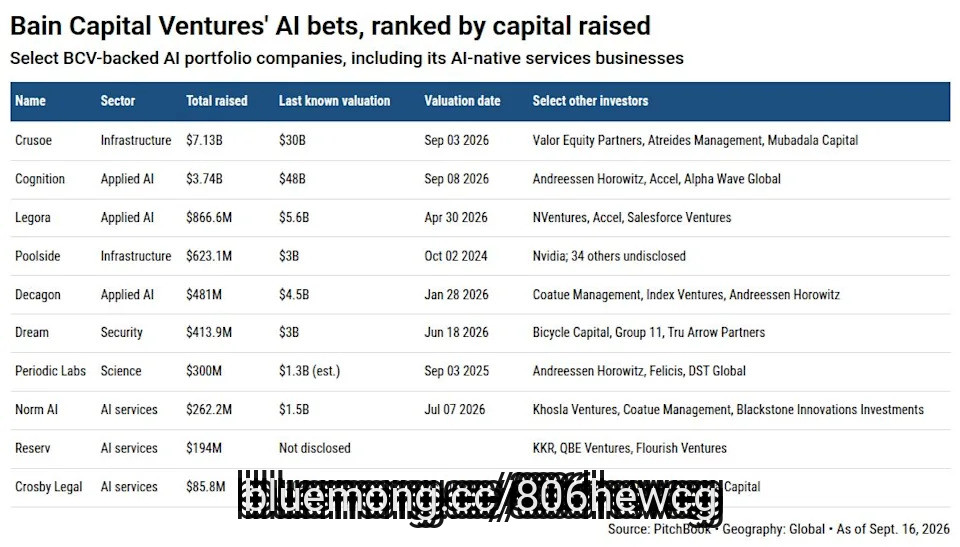
Bain Capital Ventures closed its 11th flagship fund at $1.6 billion on Wednesday, betting big on a "post-AGI world" that places AI agents as the chief economic driver of productivity.
The firm has been swapping software for something venture capital has never underwritten: AI-native companies that sell the work itself rather than the technology behind it.
Software startups made up 80% of Fund IX and around 20% of Fund X, said partner Matt Harris. For Fund X, AI-native startups made up 80% of the portfolio.
"The classic software startup is just not being born anymore," Harris said. "These companies where AI is just one feature among many, I think that's thoroughly uninteresting to us and, most importantly, to the most ambitious founders."
BCV defines "post-AGI" as AI agents being as productive as humans. This model's first proof point came in the form of Reserv, an AI-native insurance claims administration startup that the firm incubated with Altai Ventures and other partners. According to Harris, the company hit $100 million in revenue in its second full year. In May, the company raised a $125 million Series C.
#agents
The firm has been swapping software for something venture capital has never underwritten: AI-native companies that sell the work itself rather than the technology behind it.
Software startups made up 80% of Fund IX and around 20% of Fund X, said partner Matt Harris. For Fund X, AI-native startups made up 80% of the portfolio.
"The classic software startup is just not being born anymore," Harris said. "These companies where AI is just one feature among many, I think that's thoroughly uninteresting to us and, most importantly, to the most ambitious founders."
BCV defines "post-AGI" as AI agents being as productive as humans. This model's first proof point came in the form of Reserv, an AI-native insurance claims administration startup that the firm incubated with Altai Ventures and other partners. According to Harris, the company hit $100 million in revenue in its second full year. In May, the company raised a $125 million Series C.
#agents

1 month ago
MSFT's new government AI suite goes on sale October 1, but agencies must commit annual budgets before all features clear security accreditation.
Microsoft hasn't disclosed per-seat pricing or paid conversion rates from earlier no-cost federal Copilot deployments, making any government revenue forecast impossible.
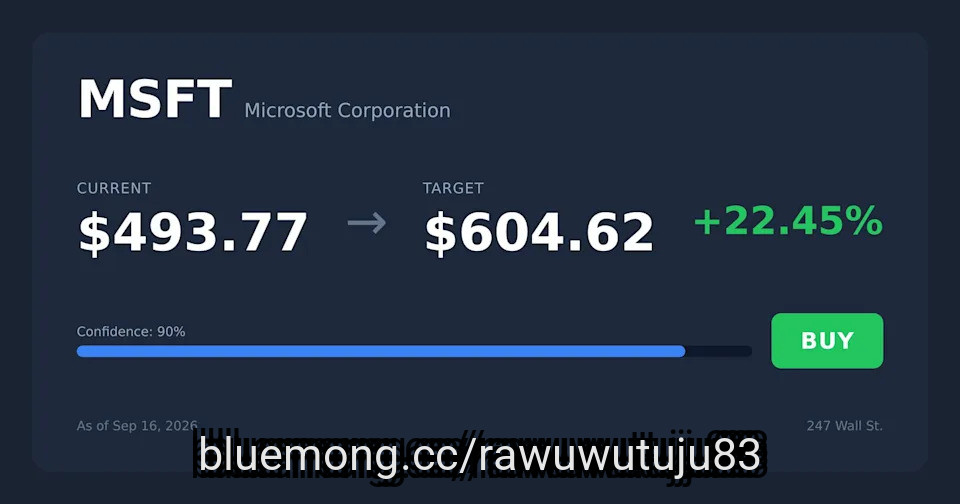
With $116 billion in capex and free cash flow falling 23%, Microsoft's AI monetization curve in government remains unproven against a $573 ***** yst price target.
Just released. Our ***** ysts combed the entire stock market and named the ten best stocks to buy right now, and Microsoft didn't make the cut. Enter your email to see the names that beat MSFT. The report is free. Enter your email and see if any of your stocks made the cut.
Microsoft (NASDAQ:MSFT) has told federal buyers that a new top government tier of its productivity suite, plus a companion agent-management product, will be available for Government Community Cloud customers to purchase on October 1. Individual capabilities will light up in phases as each workload clears its required government security accreditation, and additional Copilot features are slated for the months after general availability.
#government #features
Microsoft hasn't disclosed per-seat pricing or paid conversion rates from earlier no-cost federal Copilot deployments, making any government revenue forecast impossible.
With $116 billion in capex and free cash flow falling 23%, Microsoft's AI monetization curve in government remains unproven against a $573 ***** yst price target.
Just released. Our ***** ysts combed the entire stock market and named the ten best stocks to buy right now, and Microsoft didn't make the cut. Enter your email to see the names that beat MSFT. The report is free. Enter your email and see if any of your stocks made the cut.
Microsoft (NASDAQ:MSFT) has told federal buyers that a new top government tier of its productivity suite, plus a companion agent-management product, will be available for Government Community Cloud customers to purchase on October 1. Individual capabilities will light up in phases as each workload clears its required government security accreditation, and additional Copilot features are slated for the months after general availability.
#government #features



1 month ago
This story was originally published on Construction Dive. To receive daily news and insights, subscribe to our free daily Construction Dive newsletter.
The combined application of six artificial intelligence-enabled levers can cut project costs by 17% to 20% while trimming schedules by 22% to 25%, according to an ***** ysis of a sample, 180,000-square-foot multifamily project by Suffolk Construction and the Massachusetts Institute of Technology.
Suffolk and MIT published a white paper that tags six interrelated construction processes where AI can spur productivity gains.
The study's authors cite improvements in AI models, the tech's ability to sift through mounds of construction data and economic pressures to adopt AI as the driving forces behind the industry's increasing focus on AI.
The paper, ***** led "Construction in the Age of AI," defines the six key levers as:
#suffolk #published #levers #institute
The combined application of six artificial intelligence-enabled levers can cut project costs by 17% to 20% while trimming schedules by 22% to 25%, according to an ***** ysis of a sample, 180,000-square-foot multifamily project by Suffolk Construction and the Massachusetts Institute of Technology.
Suffolk and MIT published a white paper that tags six interrelated construction processes where AI can spur productivity gains.
The study's authors cite improvements in AI models, the tech's ability to sift through mounds of construction data and economic pressures to adopt AI as the driving forces behind the industry's increasing focus on AI.
The paper, ***** led "Construction in the Age of AI," defines the six key levers as:
#suffolk #published #levers #institute


1 month ago
Weitz Investment Management, an investment management firm, released its second-quarter Q2 2026 investor letter for the "Multi Cap Equity Fund". The letter can be downloaded here. The Multi Cap Equity Fund's Institutional Class returned 7.90% in Q2, underperforming the Bloomberg U.S. 3000 Index's 15.71% gain. Markets rose in the quarter on hopes of de-escalating Middle East tensions and easing oil flow. Investor focus shifted back to artificial intelligence, despite component shortages like processing chips affecting profits and valuations. Valuation-sensitive investors are selective within the AI sector, in contrast to valuation-agnostic indexes that adopt a more relaxed strategy. Additionally, reviewing the Fund's top five holdings could help identify its best picks for 2026.
In its second-quarter 2026 investor letter, Weitz Multi Cap Equity Fund highlighted Mettler-Toledo International Inc. (NYSE:MTD). Mettler-Toledo International Inc. (NYSE:MTD) manufactures and supplies precision instruments and services in the Americas, Europe, Asia, and internationally. On September 15, 2026, Mettler-Toledo International Inc. (NYSE:MTD) closed at $1,330.40 per share. Over the past month, Mettler-Toledo International Inc. (NYSE:MTD) declined 6.64%, and its shares gained 4.43% over the past 52 weeks. Mettler-Toledo International Inc. (NYSE:MTD) has a market capitalization of $26.66 billion.
Weitz Multi Cap Equity Fund stated the following regarding Mettler-Toledo International Inc. (NYSE:MTD) in its Q2 2026 investor letter:
"Less familiar to shareholders may be our new position in Mettler-Toledo International Inc. (NYSE:MTD), a global supplier of precision measurement instruments across laboratory, industrial and food retailing applications where accuracy, reliability and regulatory compliance are vital. Its highly specialized sales and service organization is a key competitive advantage, working collaboratively with customers to optimize their workflows and improve productivity, reinforcing long-term customer relationships. We have long admired Mettler's business and purchased a small position during a brief period of price dislocation during the quarter."
Mettler-Toledo International Inc. (NYSE:MTD) is not on our list of the 40 Most Popular Stocks Among Hedge Funds. According to our database, 48 hedge fund portfolios held Mettler-Toledo International Inc. (NYSE:MTD) at the end of the second quarter, down from 50 in the previous quarter. While we acknowledge the potential of Mettler-Toledo International Inc. (NYSE:MTD) as an investment, we believe certain AI stocks offer greater upside potential and carry less downside risk. If you're looking for an extremely undervalued AI stock that also stands to benefit significantly from Trump-era tariffs and the onshoring trend, see our free report on the best short-term AI stock.
#mettler #quarter
In its second-quarter 2026 investor letter, Weitz Multi Cap Equity Fund highlighted Mettler-Toledo International Inc. (NYSE:MTD). Mettler-Toledo International Inc. (NYSE:MTD) manufactures and supplies precision instruments and services in the Americas, Europe, Asia, and internationally. On September 15, 2026, Mettler-Toledo International Inc. (NYSE:MTD) closed at $1,330.40 per share. Over the past month, Mettler-Toledo International Inc. (NYSE:MTD) declined 6.64%, and its shares gained 4.43% over the past 52 weeks. Mettler-Toledo International Inc. (NYSE:MTD) has a market capitalization of $26.66 billion.
Weitz Multi Cap Equity Fund stated the following regarding Mettler-Toledo International Inc. (NYSE:MTD) in its Q2 2026 investor letter:
"Less familiar to shareholders may be our new position in Mettler-Toledo International Inc. (NYSE:MTD), a global supplier of precision measurement instruments across laboratory, industrial and food retailing applications where accuracy, reliability and regulatory compliance are vital. Its highly specialized sales and service organization is a key competitive advantage, working collaboratively with customers to optimize their workflows and improve productivity, reinforcing long-term customer relationships. We have long admired Mettler's business and purchased a small position during a brief period of price dislocation during the quarter."
Mettler-Toledo International Inc. (NYSE:MTD) is not on our list of the 40 Most Popular Stocks Among Hedge Funds. According to our database, 48 hedge fund portfolios held Mettler-Toledo International Inc. (NYSE:MTD) at the end of the second quarter, down from 50 in the previous quarter. While we acknowledge the potential of Mettler-Toledo International Inc. (NYSE:MTD) as an investment, we believe certain AI stocks offer greater upside potential and carry less downside risk. If you're looking for an extremely undervalued AI stock that also stands to benefit significantly from Trump-era tariffs and the onshoring trend, see our free report on the best short-term AI stock.
#mettler #quarter

1 month ago
Answering a caller's query about The Procter & Gamble Company (NYSE:PG) during the lightning round of the September 10 episode of Mad Money, Jim Cramer said:
It's a tough stock. It's a tough stock because they don't have the growth that I want. They do have the 3% yield, but that's not enough. So, I'm going to say, you know, we sold it for the club. Don't look back.
The Procter & Gamble Company's (NYSE:PG) upside relies on elite operational execution and pricing power in high-margin categories. Continuous supply chain savings and an aggressive premiumization push toward items like Tide PODS help protect profitability. Combined with strong free cash flow productivity, management returned roughly $15 billion in FY 2026 through dividends and share buybacks, ensuring a steady earnings floor despite slow top-line growth.
The primary headwind is weak top-line momentum, with organic sales flat in the second quarter as challenging consumer trends, particularly in the U.S., weighed on growth. Foreign exchange friction and cost pressures further cap near-term earnings acceleration. Additionally, while the stock offers a reliable 3% dividend yield, that income profile creates a steep opportunity cost when risk-free ******* ets and higher-growth stocks offer attractive returns. We recently discussed what Cramer thinks is the ideal valuation for a good entry point in our article, "Jim Cramer Discusses Procter & Gamble (PG) Valuation and Growth."
According to Insider Monkey's data, 83 hedge funds had a stake in The Procter & Gamble Company (NYSE:PG) in Q2 compared to 78 in the prior quarter. Short percentage of the float is 1.21%, showing its status as a defensive holding rather than a short target. While the company provides exceptional balance sheet stability and reliable cash returns for defensive portfolios, its modest top-line growth trajectory and premium valuation continue to test investor patience, validating Cramer's decision to reallocate capital toward faster-moving opportunities.
#company
It's a tough stock. It's a tough stock because they don't have the growth that I want. They do have the 3% yield, but that's not enough. So, I'm going to say, you know, we sold it for the club. Don't look back.
The Procter & Gamble Company's (NYSE:PG) upside relies on elite operational execution and pricing power in high-margin categories. Continuous supply chain savings and an aggressive premiumization push toward items like Tide PODS help protect profitability. Combined with strong free cash flow productivity, management returned roughly $15 billion in FY 2026 through dividends and share buybacks, ensuring a steady earnings floor despite slow top-line growth.
The primary headwind is weak top-line momentum, with organic sales flat in the second quarter as challenging consumer trends, particularly in the U.S., weighed on growth. Foreign exchange friction and cost pressures further cap near-term earnings acceleration. Additionally, while the stock offers a reliable 3% dividend yield, that income profile creates a steep opportunity cost when risk-free ******* ets and higher-growth stocks offer attractive returns. We recently discussed what Cramer thinks is the ideal valuation for a good entry point in our article, "Jim Cramer Discusses Procter & Gamble (PG) Valuation and Growth."
According to Insider Monkey's data, 83 hedge funds had a stake in The Procter & Gamble Company (NYSE:PG) in Q2 compared to 78 in the prior quarter. Short percentage of the float is 1.21%, showing its status as a defensive holding rather than a short target. While the company provides exceptional balance sheet stability and reliable cash returns for defensive portfolios, its modest top-line growth trajectory and premium valuation continue to test investor patience, validating Cramer's decision to reallocate capital toward faster-moving opportunities.
#company


1 month ago
On September 8, United Natural Foods Inc. (NYSE:UNFI) announced its fourth quarter and full FY26 results. For the final quarter, the company posted an adjusted EBITDA of $172 million, which grew 48.3% compared to Q4 FY25. United's fourth quarter adjusted EPS of $0.69 took a sharp turn relative to a $0.11 adjusted loss per share for the same period last year. Cash flow from operating activities for the quarter stood at $197 million, along with free cash flow of $80 million.
Nejron Photo/Shutterstock.com
Amid a favorable customer mix and network optimizations, United delivered Q4 gross profit of $1,050 million, increasing marginally by 1.9% from the same period last year. This led to a gross margin of 13.7%, compared to 13.4% recorded in Q4 FY25. Cost-saving initiatives, which included efficient productivity through distribution centers and network optimizations, translated into lower operating expenses on a year-over-year basis. It helped United jump from an $87 million net loss for Q4 FY25 to a net income of $35 million during the recently concluded quarter.
For the complete fiscal year, the company delivered an adjusted EBITDA of $701 million, showcasing a 27% growth compared to FY25. Full-year adjusted EPS also climbed from $0.71 last year to $2.65. United generated FY26 operating cash flow of $540 million and free cash flow of $323 million.
Several encouraging operational developments took place during the fourth quarter. United initiated onboarding additional business from its existing customer base, as well as the new ones. Topline impact of such additions will be seen during FY27, once the broader optimization initiatives have cycled through. For its Lean Daily Management (LDM) program, the company concluded a preliminary rollout covering 44 distribution centers. This resulted in year-over-year enhancement in fill rates, throughput, and on-time deliveries, for four consecutive quarters.
#cash #flow #fourth #company
Nejron Photo/Shutterstock.com
Amid a favorable customer mix and network optimizations, United delivered Q4 gross profit of $1,050 million, increasing marginally by 1.9% from the same period last year. This led to a gross margin of 13.7%, compared to 13.4% recorded in Q4 FY25. Cost-saving initiatives, which included efficient productivity through distribution centers and network optimizations, translated into lower operating expenses on a year-over-year basis. It helped United jump from an $87 million net loss for Q4 FY25 to a net income of $35 million during the recently concluded quarter.
For the complete fiscal year, the company delivered an adjusted EBITDA of $701 million, showcasing a 27% growth compared to FY25. Full-year adjusted EPS also climbed from $0.71 last year to $2.65. United generated FY26 operating cash flow of $540 million and free cash flow of $323 million.
Several encouraging operational developments took place during the fourth quarter. United initiated onboarding additional business from its existing customer base, as well as the new ones. Topline impact of such additions will be seen during FY27, once the broader optimization initiatives have cycled through. For its Lean Daily Management (LDM) program, the company concluded a preliminary rollout covering 44 distribution centers. This resulted in year-over-year enhancement in fill rates, throughput, and on-time deliveries, for four consecutive quarters.
#cash #flow #fourth #company


1 month ago
Our ****** ysts just identified a stock with the potential to be the next Nvidia. Tell us how you invest and we'll show you why it's our #1 pick. Tap here.
Delivered total revenue growth of 1.1%, marking the second consecutive quarter of expansion as the Project Sunshine transformation gains traction.
Direct segment revenue grew 8% with comparable sales up 9.2%, serving as the primary indicator of customer resonance with new product and marketing strategies.
Gross margin expanded by more than 40 basis points (excluding tariff refunds) through disciplined pricing, promotion governance, and improved product ****** ortment productivity.
Indirect channel revenue contracted 39% due to intentional shifts in marketplace strategy and a strategic reduction in liquidation sales to protect brand equity.
#tell
Delivered total revenue growth of 1.1%, marking the second consecutive quarter of expansion as the Project Sunshine transformation gains traction.
Direct segment revenue grew 8% with comparable sales up 9.2%, serving as the primary indicator of customer resonance with new product and marketing strategies.
Gross margin expanded by more than 40 basis points (excluding tariff refunds) through disciplined pricing, promotion governance, and improved product ****** ortment productivity.
Indirect channel revenue contracted 39% due to intentional shifts in marketplace strategy and a strategic reduction in liquidation sales to protect brand equity.
#tell

1 month ago
Weitz Investment Management, an investment management firm, released its second-quarter Q2 2026 investor letter for the "Multi Cap Equity Fund". The letter can be downloaded here. The Multi Cap Equity Fund's Institutional Class returned 7.90% in Q2, underperforming the Bloomberg U.S. 3000 Index's 15.71% gain. Markets rose in the quarter on hopes of de-escalating Middle East tensions and easing oil flow. Investor focus shifted back to artificial intelligence, despite component shortages like processing chips affecting profits and valuations. Valuation-sensitive investors are selective within the AI sector, in contrast to valuation-agnostic indexes that adopt a more relaxed strategy. Additionally, reviewing the Fund's top five holdings could help identify its best picks for 2026.
In its second-quarter 2026 investor letter, Weitz Multi Cap Equity Fund highlighted Mettler-Toledo International Inc. (NYSE:MTD). Mettler-Toledo International Inc. (NYSE:MTD) manufactures and supplies precision instruments and services in the Americas, Europe, Asia, and internationally. On September 15, 2026, Mettler-Toledo International Inc. (NYSE:MTD) closed at $1,330.40 per share. Over the past month, Mettler-Toledo International Inc. (NYSE:MTD) declined 6.64%, and its shares gained 4.43% over the past 52 weeks. Mettler-Toledo International Inc. (NYSE:MTD) has a market capitalization of $26.66 billion.
Weitz Multi Cap Equity Fund stated the following regarding Mettler-Toledo International Inc. (NYSE:MTD) in its Q2 2026 investor letter:
"Less familiar to shareholders may be our new position in Mettler-Toledo International Inc. (NYSE:MTD), a global supplier of precision measurement instruments across laboratory, industrial and food retailing applications where accuracy, reliability and regulatory compliance are vital. Its highly specialized sales and service organization is a key competitive advantage, working collaboratively with customers to optimize their workflows and improve productivity, reinforcing long-term customer relationships. We have long admired Mettler's business and purchased a small position during a brief period of price dislocation during the quarter."
Mettler-Toledo International Inc. (NYSE:MTD) is not on our list of the 40 Most Popular Stocks Among Hedge Funds. According to our database, 48 hedge fund portfolios held Mettler-Toledo International Inc. (NYSE:MTD) at the end of the second quarter, down from 50 in the previous quarter. While we acknowledge the potential of Mettler-Toledo International Inc. (NYSE:MTD) as an investment, we believe certain AI stocks offer greater upside potential and carry less downside risk. If you're looking for an extremely undervalued AI stock that also stands to benefit significantly from Trump-era tariffs and the onshoring trend, see our free report on the best short-term AI stock.
#Equity #fund #weitz
In its second-quarter 2026 investor letter, Weitz Multi Cap Equity Fund highlighted Mettler-Toledo International Inc. (NYSE:MTD). Mettler-Toledo International Inc. (NYSE:MTD) manufactures and supplies precision instruments and services in the Americas, Europe, Asia, and internationally. On September 15, 2026, Mettler-Toledo International Inc. (NYSE:MTD) closed at $1,330.40 per share. Over the past month, Mettler-Toledo International Inc. (NYSE:MTD) declined 6.64%, and its shares gained 4.43% over the past 52 weeks. Mettler-Toledo International Inc. (NYSE:MTD) has a market capitalization of $26.66 billion.
Weitz Multi Cap Equity Fund stated the following regarding Mettler-Toledo International Inc. (NYSE:MTD) in its Q2 2026 investor letter:
"Less familiar to shareholders may be our new position in Mettler-Toledo International Inc. (NYSE:MTD), a global supplier of precision measurement instruments across laboratory, industrial and food retailing applications where accuracy, reliability and regulatory compliance are vital. Its highly specialized sales and service organization is a key competitive advantage, working collaboratively with customers to optimize their workflows and improve productivity, reinforcing long-term customer relationships. We have long admired Mettler's business and purchased a small position during a brief period of price dislocation during the quarter."
Mettler-Toledo International Inc. (NYSE:MTD) is not on our list of the 40 Most Popular Stocks Among Hedge Funds. According to our database, 48 hedge fund portfolios held Mettler-Toledo International Inc. (NYSE:MTD) at the end of the second quarter, down from 50 in the previous quarter. While we acknowledge the potential of Mettler-Toledo International Inc. (NYSE:MTD) as an investment, we believe certain AI stocks offer greater upside potential and carry less downside risk. If you're looking for an extremely undervalued AI stock that also stands to benefit significantly from Trump-era tariffs and the onshoring trend, see our free report on the best short-term AI stock.
#Equity #fund #weitz


1 month ago
The Cooper Companies Inc. (NASDAQ:COO), a leading medical device company, announced its third quarter fiscal 2026 results on September 9. Topline went up 1% to $1.066 billion in comparison with the same quarter last year, which also included 1% organic growth. The company posted quarterly adjusted diluted EPS of $1.15, which represented a 4% jump from Q3 FY25. During the quarter, $339.1 million was spent on repurchasing around 4.9 million of the company's common shares. This leaves management with $1.5 billion of repurchase capacity, which remains available after the Board had raised its buyback authorization from $2 billion to $3 billion.
The quarter featured several encouraging highlights. These include earnings that exceeded projections, notable growth across the fertility segment within CooperSurgical, record free cash flow generation, and a major tax resolution in the company's favor.
GAAP gross margin went up from 65% in Q3 FY25 to 67% during the recent quarter, largely reflecting the comparison against fiscal 2025 inventory write-downs tied to a CooperSurgical product line exit. Adjusted operating margin improved by 30 basis points to 26%, supported by cost discipline and productivity gains, though partly offset by currency headwinds.
Interest expense fell to $21.5 million from $25.4 million a year prior, reflecting lower rates and reduced average debt. Free cash flow surged 66% to $273.0 million, driven by $341.7 million in operating cash flow less $68.7 million in capital spending.
Due to unfavorable currency movements and rising manufacturing costs, the Q3 gross margin settled at 67% on adjusted basis. This was a 60 basis point drop from Q3 FY25. Certain areas of the business grant caution, such as the CooperVision segment. It generated flat organic growth amid notable weakness across the Asia Pacific and Americas regions.
#billion #cash
The quarter featured several encouraging highlights. These include earnings that exceeded projections, notable growth across the fertility segment within CooperSurgical, record free cash flow generation, and a major tax resolution in the company's favor.
GAAP gross margin went up from 65% in Q3 FY25 to 67% during the recent quarter, largely reflecting the comparison against fiscal 2025 inventory write-downs tied to a CooperSurgical product line exit. Adjusted operating margin improved by 30 basis points to 26%, supported by cost discipline and productivity gains, though partly offset by currency headwinds.
Interest expense fell to $21.5 million from $25.4 million a year prior, reflecting lower rates and reduced average debt. Free cash flow surged 66% to $273.0 million, driven by $341.7 million in operating cash flow less $68.7 million in capital spending.
Due to unfavorable currency movements and rising manufacturing costs, the Q3 gross margin settled at 67% on adjusted basis. This was a 60 basis point drop from Q3 FY25. Certain areas of the business grant caution, such as the CooperVision segment. It generated flat organic growth amid notable weakness across the Asia Pacific and Americas regions.
#billion #cash


1 month ago
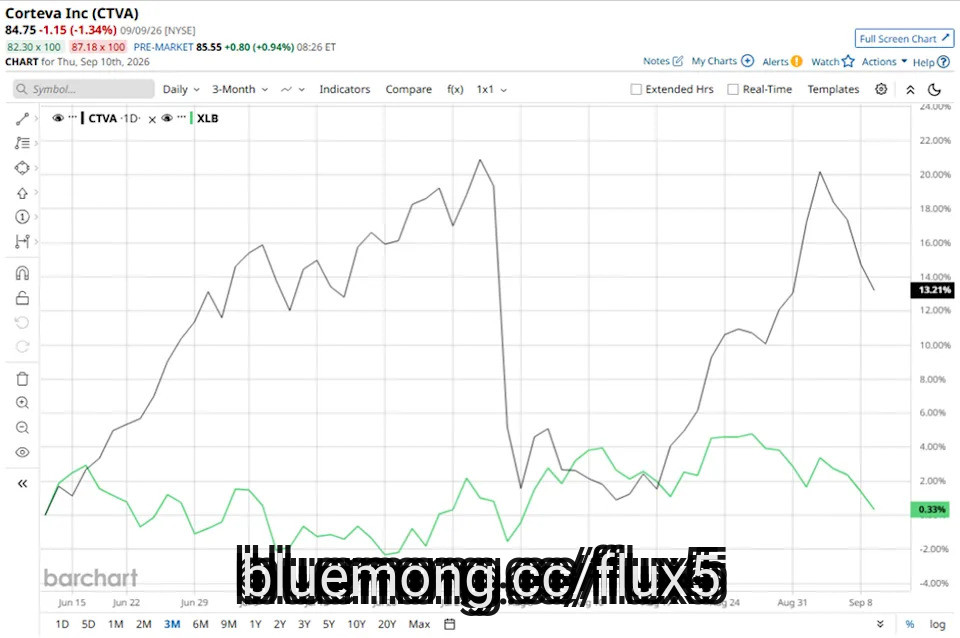
With a market cap of $56.5 billion, Corteva, Inc. (CTVA) is an agriculture company, serving markets across North America, Latin America, Asia Pacific, Europe, the Middle East, and Africa. The company operates through two main segments: Seed and Crop Protection, developing advanced seed genetics, traits, and crop protection products to help improve farm productivity and resilience.
Companies worth more than $10 billion are generally labeled as "large-cap" stocks and Corteva fits this criterion perfectly. It also provides herbicides, insecticides, nitrogen stabilizers, and digital farming solutions that support farmers in optimizing crop yield and profitability.
'Not Tens Of Billions, But Tens Of Trillions': Nvidia CEO Jensen Huang Says AI Is Like the New Electricity and the Scale Is Unlike Any Tech in History
What It Means for MSFT Stock Investors as Microsoft Switches to 2 Business Segments
RKLB Stock Jumps as Rocket Lab Debuts New Solar Cell for ******* e
#protection #billion #company
Companies worth more than $10 billion are generally labeled as "large-cap" stocks and Corteva fits this criterion perfectly. It also provides herbicides, insecticides, nitrogen stabilizers, and digital farming solutions that support farmers in optimizing crop yield and profitability.
'Not Tens Of Billions, But Tens Of Trillions': Nvidia CEO Jensen Huang Says AI Is Like the New Electricity and the Scale Is Unlike Any Tech in History
What It Means for MSFT Stock Investors as Microsoft Switches to 2 Business Segments
RKLB Stock Jumps as Rocket Lab Debuts New Solar Cell for ******* e
#protection #billion #company


1 month ago
By Sai Ishwarbharath B and Abhirami G
BENGALURU, Sept 10 (Reuters) - Wipro's AI initiatives have increased productivity equivalent to the output of 20,000 employees, who have since been redeployed within the Indian IT firm, its chief technology officer said.
The comments come as India's $315 billion software services industry grapples with adoption of AI, which is reshaping hiring, software development and contracts.
Wipro, with about 243,000 employees in June, is shifting to a "human-AI operating model," with more than 100,000 employees receiving advanced AI-related training and certifications, Sandhya Arun said in an interview.
"It could be the same engineer managing a bunch of agents, deployed on other projects or being trained for some other role. It doesn't necessarily mean person-to-person replacement by an agent."
#employees #ishwarbharath
BENGALURU, Sept 10 (Reuters) - Wipro's AI initiatives have increased productivity equivalent to the output of 20,000 employees, who have since been redeployed within the Indian IT firm, its chief technology officer said.
The comments come as India's $315 billion software services industry grapples with adoption of AI, which is reshaping hiring, software development and contracts.
Wipro, with about 243,000 employees in June, is shifting to a "human-AI operating model," with more than 100,000 employees receiving advanced AI-related training and certifications, Sandhya Arun said in an interview.
"It could be the same engineer managing a bunch of agents, deployed on other projects or being trained for some other role. It doesn't necessarily mean person-to-person replacement by an agent."
#employees #ishwarbharath


1 month ago
Artificial intelligence (AI) software demand is increasing at a healthy clip, which isn't surprising considering the productivity gains this technology can deliver.
A recent survey by McKinsey revealed that 80% of respondents who use AI report higher productivity, while 50% report better decision-making. Not surprisingly, the generative AI tools offered by Palantir Technologies (NASDAQ:PLTR) are in high demand, as evidenced by the company's phenomenal growth.
Missed Nvidia in 2009? This Rare Signal Is Flashing Again. In 2009, a "Double Down" signal flashed for a little-known chipmaker called Nvidia. For the first time in years, that same "Total Conviction" signal is flashing for a company 1/100th the size of Nvidia. Continue »
Palantir is one of the pioneers in AI software. The productivity gains delivered by its Artificial Intelligence Platform (AIP) are driving solid revenue and earnings growth for Palantir by helping it land bigger deals and more customers. However, Palantir stock is expensively valued, and that's one of the reasons it has lost over 4% of its value in 2026.
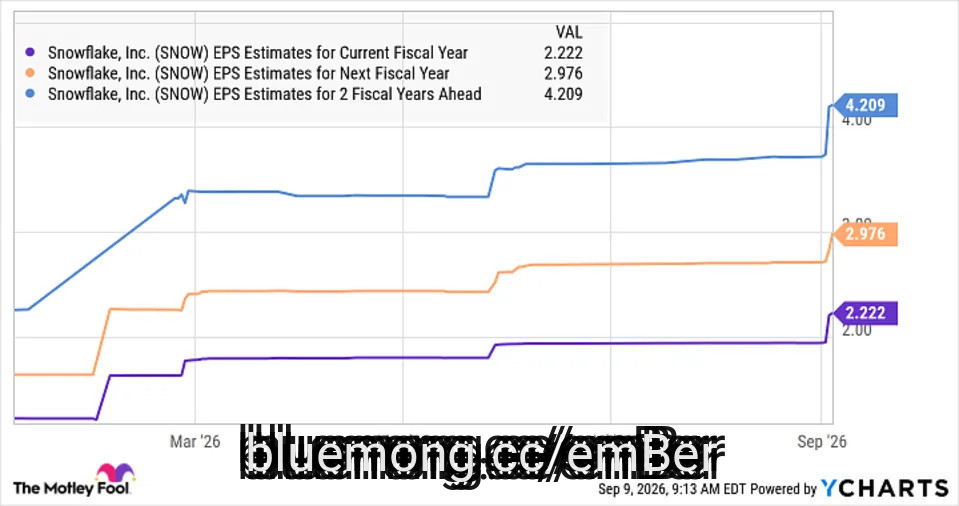
But the same isn't true for Snowflake (NYSE:SNOW), another AI software company whose stock price has jumped 53% this year. Let's see why that has been the case and check whether it is too late to buy this AI software specialist.
#intelligence #flashing #demand
A recent survey by McKinsey revealed that 80% of respondents who use AI report higher productivity, while 50% report better decision-making. Not surprisingly, the generative AI tools offered by Palantir Technologies (NASDAQ:PLTR) are in high demand, as evidenced by the company's phenomenal growth.
Missed Nvidia in 2009? This Rare Signal Is Flashing Again. In 2009, a "Double Down" signal flashed for a little-known chipmaker called Nvidia. For the first time in years, that same "Total Conviction" signal is flashing for a company 1/100th the size of Nvidia. Continue »
Palantir is one of the pioneers in AI software. The productivity gains delivered by its Artificial Intelligence Platform (AIP) are driving solid revenue and earnings growth for Palantir by helping it land bigger deals and more customers. However, Palantir stock is expensively valued, and that's one of the reasons it has lost over 4% of its value in 2026.
But the same isn't true for Snowflake (NYSE:SNOW), another AI software company whose stock price has jumped 53% this year. Let's see why that has been the case and check whether it is too late to buy this AI software specialist.
#intelligence #flashing #demand


1 month ago
CNBC reported that Chris Churchman, The Goldman Sachs Group, Inc. (NYSE:GS) partner who leads the bank's Marquee digital platform for institutional clients, warned that AI's spread across Wall Street risks eroding the reasoning skills of the next generation of bankers.
Churchman said on Goldman's internal "Exchanges" podcast, "There's a huge danger here that in the era of AI, we outsource our reasoning to these models, and we have cognitive atrophy that stops us being able to reason from first principles ourselves." He compared it to how GPS and search engines eroded navigation skills and said much of banking's knowledge is learned only "by doing." Churchman said the firm has not yet determined how it will manage the transition.
The Goldman Sachs Group, Inc. (NYSE:GS) is surfacing this risk proactively, through its own senior AI leadership, rather than being caught off guard by it later. Having the executive who leads Marquee flag the danger publicly signals internal scrutiny that could help Goldman build safeguards into its AI rollout before problems show up in deal execution. It is an advantage over firms deploying AI without asking the same questions.
The near-term efficiency case for AI remains fully intact regardless of the long-term talent question. CNBC itself framed the tradeoff as a "devil's bargain" that could make the industry more profitable today while potentially eroding the talent it needs for tomorrow. It means Goldman still captures AI's productivity benefits now even as it works out the downstream risk.
Marquee itself is a genuine strategic **** et getting AI investment. The platform, through which hedge funds and other large institutional clients access Goldman's market data, research, **** ytics, and execution tools, is being built out with AI features, which positions it as a differentiated offering for Goldman's most valuable client relationships.
#churchman #marquee #cnbc #sachs
Churchman said on Goldman's internal "Exchanges" podcast, "There's a huge danger here that in the era of AI, we outsource our reasoning to these models, and we have cognitive atrophy that stops us being able to reason from first principles ourselves." He compared it to how GPS and search engines eroded navigation skills and said much of banking's knowledge is learned only "by doing." Churchman said the firm has not yet determined how it will manage the transition.
The Goldman Sachs Group, Inc. (NYSE:GS) is surfacing this risk proactively, through its own senior AI leadership, rather than being caught off guard by it later. Having the executive who leads Marquee flag the danger publicly signals internal scrutiny that could help Goldman build safeguards into its AI rollout before problems show up in deal execution. It is an advantage over firms deploying AI without asking the same questions.
The near-term efficiency case for AI remains fully intact regardless of the long-term talent question. CNBC itself framed the tradeoff as a "devil's bargain" that could make the industry more profitable today while potentially eroding the talent it needs for tomorrow. It means Goldman still captures AI's productivity benefits now even as it works out the downstream risk.
Marquee itself is a genuine strategic **** et getting AI investment. The platform, through which hedge funds and other large institutional clients access Goldman's market data, research, **** ytics, and execution tools, is being built out with AI features, which positions it as a differentiated offering for Goldman's most valuable client relationships.
#churchman #marquee #cnbc #sachs


1 month ago
Adobe is handing over control to a new CEO after the current CEO spent 18 years in the role, as artificial intelligence is set to disrupt the software company that powers Photoshop and Creative Cloud.
Adobe (ADBE) is undergoing one of its largest leadership overhauls ever at a particularly challenging time for investors.
Anil Chakravarthy will become president and CEO of software giant Adobe, succeeding Shantanu Narayen, who has been at the helm for more than 18 years. Chakravarthy will take over on Dec. 1, and Narayen will move to the role of executive chair.
But Wall Street's response hinted at the scale of the task confronting Adobe's new boss.
Adobe shares fell nearly 7% on Sept. 4, after the leadership announcement and David Wadhwani's departure. Wadhwani ran Adobe's creativity and productivity business and was a potential CEO candidate.
#chakravarthy #years #software #photoshop
Adobe (ADBE) is undergoing one of its largest leadership overhauls ever at a particularly challenging time for investors.
Anil Chakravarthy will become president and CEO of software giant Adobe, succeeding Shantanu Narayen, who has been at the helm for more than 18 years. Chakravarthy will take over on Dec. 1, and Narayen will move to the role of executive chair.
But Wall Street's response hinted at the scale of the task confronting Adobe's new boss.
Adobe shares fell nearly 7% on Sept. 4, after the leadership announcement and David Wadhwani's departure. Wadhwani ran Adobe's creativity and productivity business and was a potential CEO candidate.
#chakravarthy #years #software #photoshop

1 month ago
Palantir shares gained 7.7% on September 3, the same day PwC US expanded an alliance built around enterprise AI, M&A, and ERP modernization. The companies described an AI-native deals platform intended to execute transactions up to 50% faster and cut one-time costs by as much as 45%, but disclosed no new contract value. The same day, Globant introduced a MuleSoft AI Pod for Salesforce integration. Palantir Technologies Inc. (NASDAQ:PLTR) and Globant S.A. (NYSE:GLOB) are packaging expertise around software in very different ways.
Palantir's bull case is productized delivery. PwC can bring industry relationships and implementation capacity, while Foundry and AIP remain the recurring platform. Palantir's Q2 revenue rose 93% to $1.94 billion, including 149% growth in U.S. commercial revenue, so the alliance lands on real momentum. Arrowstreet Capital held 20,517,115 shares at June 30 after increasing its stake by 97%.
The valuation is the obvious counterweight. A partnership announcement without disclosed revenue cannot by itself justify a large daily move. Receivables concentration, stock-based compensation, and competition from clouds and consultants deserve attention. Hedge-fund breadth had already weakened: Insider Monkey counted 86 funds holding Palantir at June 30, down from 96 at March 31.
Globant's AI Pod offers a more explicit delivery unit. Configurations support roughly six, 12, or 24 integration flows or APIs per month, and the company cited benchmarks including up to 80% automation and 15% to 25% faster time to value. That makes capacity tangible. Twenty-three hedge funds held Globant S.A. (NYSE:GLOB) in Q2, down from 25 in Q1. Pzena Investment Management reported 3,859,718 shares after adding 31%.
Globant's problem is that reusable pods can still be labor businesses. The service remains on a waitlist, the benchmark outcomes are not guaranteed customer results, and AI may pressure billing rates even as it improves productivity.
#glob
Palantir's bull case is productized delivery. PwC can bring industry relationships and implementation capacity, while Foundry and AIP remain the recurring platform. Palantir's Q2 revenue rose 93% to $1.94 billion, including 149% growth in U.S. commercial revenue, so the alliance lands on real momentum. Arrowstreet Capital held 20,517,115 shares at June 30 after increasing its stake by 97%.
The valuation is the obvious counterweight. A partnership announcement without disclosed revenue cannot by itself justify a large daily move. Receivables concentration, stock-based compensation, and competition from clouds and consultants deserve attention. Hedge-fund breadth had already weakened: Insider Monkey counted 86 funds holding Palantir at June 30, down from 96 at March 31.
Globant's AI Pod offers a more explicit delivery unit. Configurations support roughly six, 12, or 24 integration flows or APIs per month, and the company cited benchmarks including up to 80% automation and 15% to 25% faster time to value. That makes capacity tangible. Twenty-three hedge funds held Globant S.A. (NYSE:GLOB) in Q2, down from 25 in Q1. Pzena Investment Management reported 3,859,718 shares after adding 31%.
Globant's problem is that reusable pods can still be labor businesses. The service remains on a waitlist, the benchmark outcomes are not guaranteed customer results, and AI may pressure billing rates even as it improves productivity.
#glob

2 months ago
Palantir shares gained 7.7% on September 3, the same day PwC US expanded an alliance built around enterprise AI, M&A, and ERP modernization. The companies described an AI-native deals platform intended to execute transactions up to 50% faster and cut one-time costs by as much as 45%, but disclosed no new contract value. The same day, Globant introduced a MuleSoft AI Pod for Salesforce integration. Palantir Technologies Inc. (NASDAQ:PLTR) and Globant S.A. (NYSE:GLOB) are packaging expertise around software in very different ways.
Palantir's bull case is productized delivery. PwC can bring industry relationships and implementation capacity, while Foundry and AIP remain the recurring platform. Palantir's Q2 revenue rose 93% to $1.94 billion, including 149% growth in U.S. commercial revenue, so the alliance lands on real momentum. Arrowstreet Capital held 20,517,115 shares at June 30 after increasing its stake by 97%.
The valuation is the obvious counterweight. A partnership announcement without disclosed revenue cannot by itself justify a large daily move. Receivables concentration, stock-based compensation, and competition from clouds and consultants deserve attention. Hedge-fund breadth had already weakened: Insider Monkey counted 86 funds holding Palantir at June 30, down from 96 at March 31.
Globant's AI Pod offers a more explicit delivery unit. Configurations support roughly six, 12, or 24 integration flows or APIs per month, and the company cited benchmarks including up to 80% automation and 15% to 25% faster time to value. That makes capacity tangible. Twenty-three hedge funds held Globant S.A. (NYSE:GLOB) in Q2, down from 25 in Q1. Pzena Investment Management reported 3,859,718 shares after adding 31%.
Globant's problem is that reusable pods can still be labor businesses. The service remains on a waitlist, the benchmark outcomes are not guaranteed customer results, and AI may pressure billing rates even as it improves productivity.
#palantir #globant #shares #june
Palantir's bull case is productized delivery. PwC can bring industry relationships and implementation capacity, while Foundry and AIP remain the recurring platform. Palantir's Q2 revenue rose 93% to $1.94 billion, including 149% growth in U.S. commercial revenue, so the alliance lands on real momentum. Arrowstreet Capital held 20,517,115 shares at June 30 after increasing its stake by 97%.
The valuation is the obvious counterweight. A partnership announcement without disclosed revenue cannot by itself justify a large daily move. Receivables concentration, stock-based compensation, and competition from clouds and consultants deserve attention. Hedge-fund breadth had already weakened: Insider Monkey counted 86 funds holding Palantir at June 30, down from 96 at March 31.
Globant's AI Pod offers a more explicit delivery unit. Configurations support roughly six, 12, or 24 integration flows or APIs per month, and the company cited benchmarks including up to 80% automation and 15% to 25% faster time to value. That makes capacity tangible. Twenty-three hedge funds held Globant S.A. (NYSE:GLOB) in Q2, down from 25 in Q1. Pzena Investment Management reported 3,859,718 shares after adding 31%.
Globant's problem is that reusable pods can still be labor businesses. The service remains on a waitlist, the benchmark outcomes are not guaranteed customer results, and AI may pressure billing rates even as it improves productivity.
#palantir #globant #shares #june


2 months ago
Download the Complete Report Here
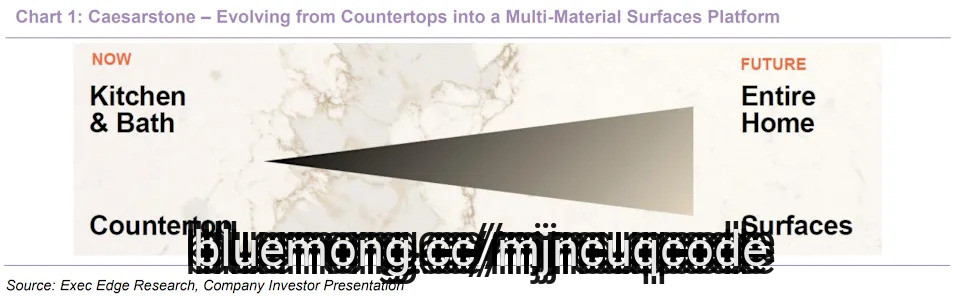
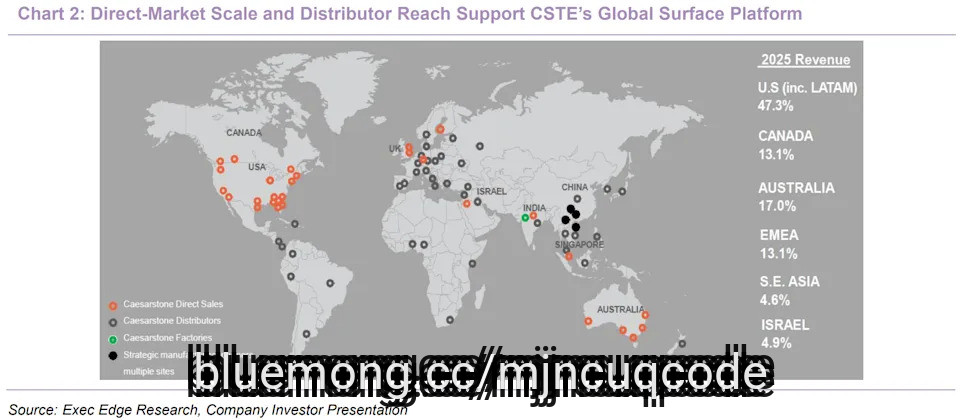
A premium multi-material surfaces platform becoming structurally lighter and more flexible. CSTE designs, develops, sources and markets premium quartz, ICON, porcelain, natural stone and complementary surface products, generating $397.2 million of revenue in 2025, with direct sales contributing 89% of revenue across its largest markets. The company has transitioned quartz production to external partners while retaining product development, quality, brand and customer control, with Lioli providing owned porcelain capacity. This broadens CSTE beyond legacy quartz while reducing fixed manufacturing exposure and increasing sourcing flexibility.
A differentiated model built on reinforcing sourcing, design, brand and direct-market capabilities supports commercial relevance across materials. CSTE combines partner-led quartz production with proprietary formulations, quality ***** urance, design know-how, premium brand recognition and local sales infrastructure. ICON provides the clearest proof point, with Australia delivering four consecutive quarters of y/y growth following the full rollout of CSTE's crystalline-silica-free collection. Porcelain extends the same commercial platform into additional applications, broadening the competitive advantage beyond any single product or manufacturing ***** et.
Growth strategy pairs a structural cost reset with targeted commercial and category expansion. CSTE is completing the partner-led production transition, rebuilding North American customer and channel engagement, sustaining Australia's ICON-led momentum, expanding porcelain and extending brand-led geographic reach. The restructuring targets more than $100 million of annualized savings by 2027 versus 2023, including approximately $22 million from the Bar-Lev closure. Execution is now focused on stabilizing core volumes, improving Lioli's commercial alignment, expanding channel productivity and mitigating the new U.S. quartz tariffs.
Material substitution and selective regional recovery broaden CSTE's addressable opportunity beyond legacy quartz. CSTE's existing and adjacent categories span approximately 53% of global countertop volume, while engineered quartz is forecast to recover and porcelain offers materially faster growth from a smaller base. Natural stone adds further U.S. optionality, while Australia demonstrates how regulatory change can redirect rather than eliminate premium-surface demand. North America remains the largest earnings opportunity, with renovation, ageing housing stock and material substitution providing recovery potential even before a full housing upcycle.
#porcelain #premium #icon #material
A premium multi-material surfaces platform becoming structurally lighter and more flexible. CSTE designs, develops, sources and markets premium quartz, ICON, porcelain, natural stone and complementary surface products, generating $397.2 million of revenue in 2025, with direct sales contributing 89% of revenue across its largest markets. The company has transitioned quartz production to external partners while retaining product development, quality, brand and customer control, with Lioli providing owned porcelain capacity. This broadens CSTE beyond legacy quartz while reducing fixed manufacturing exposure and increasing sourcing flexibility.
A differentiated model built on reinforcing sourcing, design, brand and direct-market capabilities supports commercial relevance across materials. CSTE combines partner-led quartz production with proprietary formulations, quality ***** urance, design know-how, premium brand recognition and local sales infrastructure. ICON provides the clearest proof point, with Australia delivering four consecutive quarters of y/y growth following the full rollout of CSTE's crystalline-silica-free collection. Porcelain extends the same commercial platform into additional applications, broadening the competitive advantage beyond any single product or manufacturing ***** et.
Growth strategy pairs a structural cost reset with targeted commercial and category expansion. CSTE is completing the partner-led production transition, rebuilding North American customer and channel engagement, sustaining Australia's ICON-led momentum, expanding porcelain and extending brand-led geographic reach. The restructuring targets more than $100 million of annualized savings by 2027 versus 2023, including approximately $22 million from the Bar-Lev closure. Execution is now focused on stabilizing core volumes, improving Lioli's commercial alignment, expanding channel productivity and mitigating the new U.S. quartz tariffs.
Material substitution and selective regional recovery broaden CSTE's addressable opportunity beyond legacy quartz. CSTE's existing and adjacent categories span approximately 53% of global countertop volume, while engineered quartz is forecast to recover and porcelain offers materially faster growth from a smaller base. Natural stone adds further U.S. optionality, while Australia demonstrates how regulatory change can redirect rather than eliminate premium-surface demand. North America remains the largest earnings opportunity, with renovation, ageing housing stock and material substitution providing recovery potential even before a full housing upcycle.
#porcelain #premium #icon #material

2 months ago
Our ***** ysts just identified a stock with the potential to be the next Nvidia. Tell us how you invest and we'll show you why it's our #1 pick. Tap here.
Research publishing momentum is driven by record submission levels, up 31%, and a widening scale advantage that management believes creates a structural moat for large-scale publishers.
The 'Wiley Flywheel' strategy integrates proprietary research content with AI and data ***** ytics, where publishing fuels AI training and AI tools subsequently increase researcher productivity.
AI revenue growth is shifting toward a more favorable mix, with recurring revenue growing 2x to 3x over the prior year as the company expands beyond life sciences into chemistry and finance.
The Emerald acquisition is performing ahead of schedule, providing immediate scale in business and finance disciplines while contributing to research margin expansion through early cost synergies.
#Research #finance #NVIDIA #tell
Research publishing momentum is driven by record submission levels, up 31%, and a widening scale advantage that management believes creates a structural moat for large-scale publishers.
The 'Wiley Flywheel' strategy integrates proprietary research content with AI and data ***** ytics, where publishing fuels AI training and AI tools subsequently increase researcher productivity.
AI revenue growth is shifting toward a more favorable mix, with recurring revenue growing 2x to 3x over the prior year as the company expands beyond life sciences into chemistry and finance.
The Emerald acquisition is performing ahead of schedule, providing immediate scale in business and finance disciplines while contributing to research margin expansion through early cost synergies.
#Research #finance #NVIDIA #tell


2 months ago
Jefferies reiterated a Hold rating on Adobe Inc. (NASDAQ:ADBE) and raised the price target to $285 from $230 on August 30, citing expectations that the company will deliver results in line with expectations. The research firm has echoed the company's long-term prospects amid heightened focus on user acquisition and engagement.
During the second-quarter earnings call, management reiterated the new focus in response to the way artificial intelligence is changing the way users discover and buy creative and productivity tools. According to CEO Shantanu Narayen, AI is accelerating customer behavior, and Adobe must respond.
Therefore, the focus is on enabling friction-free onboarding for new users through "freemium" artificial intelligence offerings, rather than pushing them into direct paid journeys. Amid the new push, Jefferies expects Adobe to reiterate its fiscal 2026 outlook for 10.2% year-over-year growth in total ending ARR. The company also expects revenue of between $26.5 billion and $26.6 billion for fiscal 2026.
Adobe Inc. (NASDAQ:ADBE)'s opportunity hinges on its ability to turn Firefly, Acrobat AI, and AI-powered Creative Cloud features into monetized products, even as it focuses on attracting new users and enhancing engagement levels. The company is already seeing increasing Firefly adoption and AI-first ARR as Creative Cloud's huge installed base gives it millions of potential new AI customers.
Earlier on August 19, BofA reiterated an Underperform rating on Adobe and raised the price target to $220 from $190. BofA remains concerned that generative AI could pressure Adobe's longer-term growth as lower-cost, AI-native alternatives increase competition and Adobe's AI monetization has yet to materially accelerate overall growth. Additionally, its core products, including Photoshop, are under immense pressure from AI. Free or low cost AI native tools are making it harder for the company to expand its revenue base.
#adobe #creative #users #jefferies
During the second-quarter earnings call, management reiterated the new focus in response to the way artificial intelligence is changing the way users discover and buy creative and productivity tools. According to CEO Shantanu Narayen, AI is accelerating customer behavior, and Adobe must respond.
Therefore, the focus is on enabling friction-free onboarding for new users through "freemium" artificial intelligence offerings, rather than pushing them into direct paid journeys. Amid the new push, Jefferies expects Adobe to reiterate its fiscal 2026 outlook for 10.2% year-over-year growth in total ending ARR. The company also expects revenue of between $26.5 billion and $26.6 billion for fiscal 2026.
Adobe Inc. (NASDAQ:ADBE)'s opportunity hinges on its ability to turn Firefly, Acrobat AI, and AI-powered Creative Cloud features into monetized products, even as it focuses on attracting new users and enhancing engagement levels. The company is already seeing increasing Firefly adoption and AI-first ARR as Creative Cloud's huge installed base gives it millions of potential new AI customers.
Earlier on August 19, BofA reiterated an Underperform rating on Adobe and raised the price target to $220 from $190. BofA remains concerned that generative AI could pressure Adobe's longer-term growth as lower-cost, AI-native alternatives increase competition and Adobe's AI monetization has yet to materially accelerate overall growth. Additionally, its core products, including Photoshop, are under immense pressure from AI. Free or low cost AI native tools are making it harder for the company to expand its revenue base.
#adobe #creative #users #jefferies

2 months ago
Our **** ysts just identified a stock with the potential to be the next Nvidia. Tell us how you invest and we'll show you why it's our #1 pick. Tap here.
Management is repositioning Brady from a classic industrial company to an industrial technology firm following the acquisition of Honeywell's Productivity Solutions and Services (PSS) business.
The acquisition immediately secures the number 2 market position in the Automatic Identification and Data Capture (AIDC) sector, expanding the addressable market to $14 billion.
Record performance was driven by 8.4% organic growth in the core business during the fourth quarter, while full year fiscal 2026 organic sales growth was 1.2%., particularly within wire identification for data centers and commercial construction.
Gross profit margin expansion of 110 basis points (adjusted) resulted from a shift toward high-margin printers and specialty adhesive materials, alongside benefits from prior facility consolidations.
#business #Margin #NVIDIA
Management is repositioning Brady from a classic industrial company to an industrial technology firm following the acquisition of Honeywell's Productivity Solutions and Services (PSS) business.
The acquisition immediately secures the number 2 market position in the Automatic Identification and Data Capture (AIDC) sector, expanding the addressable market to $14 billion.
Record performance was driven by 8.4% organic growth in the core business during the fourth quarter, while full year fiscal 2026 organic sales growth was 1.2%., particularly within wire identification for data centers and commercial construction.
Gross profit margin expansion of 110 basis points (adjusted) resulted from a shift toward high-margin printers and specialty adhesive materials, alongside benefits from prior facility consolidations.
#business #Margin #NVIDIA


2 months ago
Andvari ****** ociates, an investment management firm, released its second-quarter 2026 investor letter. The letter can be downloaded here. Andvari's portfolio has performed strongly in the quarter, highlighted by Constellation Software's 19.9% revenue growth and its plans to spend on acquisitions in 2026. The company is also focusing on AI tools to enhance productivity and customer relationships. However, the AI sector is experiencing extreme hype, leading to a growing disconnect between valuations and future cash flows. Predictions suggest the AI investment phase may decline in 1-3 years, despite current high demand for AI infrastructure, which is expected to attract significant competition. Concerns about overbuilding and risky financial behaviors, like Oracle's downgraded credit rating amid a $90-$95 billion AI cloud investment, reflect potential pitfalls. Andvari has minimized exposure to this sector, aiming to protect and grow ****** ets through disciplined investments in stable industries despite recent underperformance during the AI boom. Also, check the fund's top five holdings to see its best picks in 2026.
In its second-quarter 2026 investor letter, Andvari ****** ociates highlighted Texas Instruments Incorporated (NASDAQ:TXN), a semiconductor manufacturer providing chips and solutions for electronics designers and manufacturers. On September 02, 2026, Texas Instruments Incorporated (NASDAQ:TXN) closed at $254.80 per share. Over the past month, Texas Instruments Incorporated (NASDAQ:TXN) fell 8.48%, while its shares gained 36.05% over the past 52 weeks. Texas Instruments Incorporated (NASDAQ:TXN) has a market capitalization of $232.7 billion.
Andvari ****** ociates stated the following regarding Texas Instruments Incorporated (NASDAQ:TXN) in its Q2 2026 investor letter:
"I also added Texas Instruments Incorporated (NASDAQ:TXN), which makes ****** og and power management chips. Texas Instruments and Martin Marietta might be getting a nice temporary ****** p in profits and revenues from helping build out AI infrastructure, but AI and data center-related revenues are by no means the majority of revenues for either of these two companies."
Texas Instruments Incorporated (NASDAQ:TXN) is not on our list of 40 Most Popular Stocks Among Hedge Funds Heading Into 2026. According to our database, 111 hedge fund portfolios held Texas Instruments Incorporated (NASDAQ:TXN) at the end of the second quarter, up from 71 in the previous quarter. While we acknowledge the potential of Texas Instruments Incorporated (NASDAQ:TXN) as an investment, we believe certain AI stocks offer greater upside potential and carry less downside risk. If you're looking for an extremely undervalued AI stock that also stands to benefit significantly from Trump-era tariffs and the onshoring trend, see our free report on the best short-term AI stock.
#andvari
In its second-quarter 2026 investor letter, Andvari ****** ociates highlighted Texas Instruments Incorporated (NASDAQ:TXN), a semiconductor manufacturer providing chips and solutions for electronics designers and manufacturers. On September 02, 2026, Texas Instruments Incorporated (NASDAQ:TXN) closed at $254.80 per share. Over the past month, Texas Instruments Incorporated (NASDAQ:TXN) fell 8.48%, while its shares gained 36.05% over the past 52 weeks. Texas Instruments Incorporated (NASDAQ:TXN) has a market capitalization of $232.7 billion.
Andvari ****** ociates stated the following regarding Texas Instruments Incorporated (NASDAQ:TXN) in its Q2 2026 investor letter:
"I also added Texas Instruments Incorporated (NASDAQ:TXN), which makes ****** og and power management chips. Texas Instruments and Martin Marietta might be getting a nice temporary ****** p in profits and revenues from helping build out AI infrastructure, but AI and data center-related revenues are by no means the majority of revenues for either of these two companies."
Texas Instruments Incorporated (NASDAQ:TXN) is not on our list of 40 Most Popular Stocks Among Hedge Funds Heading Into 2026. According to our database, 111 hedge fund portfolios held Texas Instruments Incorporated (NASDAQ:TXN) at the end of the second quarter, up from 71 in the previous quarter. While we acknowledge the potential of Texas Instruments Incorporated (NASDAQ:TXN) as an investment, we believe certain AI stocks offer greater upside potential and carry less downside risk. If you're looking for an extremely undervalued AI stock that also stands to benefit significantly from Trump-era tariffs and the onshoring trend, see our free report on the best short-term AI stock.
#andvari


2 months ago
Andvari **** ociates, an investment management firm, released its second-quarter 2026 investor letter. The letter can be downloaded here. Andvari's portfolio has performed strongly in the quarter, highlighted by Constellation Software's 19.9% revenue growth and its plans to spend on acquisitions in 2026. The company is also focusing on AI tools to enhance productivity and customer relationships. However, the AI sector is experiencing extreme hype, leading to a growing disconnect between valuations and future cash flows. Predictions suggest the AI investment phase may decline in 1-3 years, despite current high demand for AI infrastructure, which is expected to attract significant competition. Concerns about overbuilding and risky financial behaviors, like Oracle's downgraded credit rating amid a $90-$95 billion AI cloud investment, reflect potential pitfalls. Andvari has minimized exposure to this sector, aiming to protect and grow **** ets through disciplined investments in stable industries despite recent underperformance during the AI boom. Also, check the fund's top five holdings to see its best picks in 2026.
In its second-quarter 2026 investor letter, Andvari **** ociates highlighted Martin Marietta Materials, Inc. (NYSE:MLM). Martin Marietta Materials, Inc. (NYSE:MLM) is a building materials company that supplies aggregates and heavy-side building materials to the construction industry. On September 02, 2026, Martin Marietta Materials, Inc. (NYSE:MLM) closed at $517.07 per share, reflecting a market capitalization of $36.72 billion. Martin Marietta Materials, Inc. (NYSE:MLM) posted a one‑month return of ‑3.94%, while its shares lost 16.46% over the past 52 weeks.
Andvari **** ociates stated the following regarding Martin Marietta Materials, Inc. (NYSE:MLM) in its Q2 2026 investor letter:
"All this said, Andvari does have some exposure to the AI theme. Martin Marietta Materials, Inc. (NYSE:MLM) one of the largest aggregates companies in the U.S., is also a minor beneficiary of the AI theme given robust construction activity in data centers and power generation. Texas Instruments and Martin Marietta might be getting a nice temporary **** p in profits and revenues from helping build out AI infrastructure, but AI and data center-related revenues are by no means the majority of revenues for either of these two companies."
Martin Marietta Materials, Inc. (NYSE:MLM) is not on our list of the 40 Most Popular Stocks Among Hedge Funds. As per our database, 67 hedge fund portfolios held Martin Marietta Materials, Inc. (NYSE:MLM) at the end of the second quarter, which was 65 in the previous quarter. While we acknowledge the potential of Martin Marietta Materials, Inc. (NYSE:MLM) as an investment, we believe certain AI stocks offer greater upside potential and carry less downside risk. If you're looking for an extremely undervalued AI stock that also stands to benefit significantly from Trump-era tariffs and the onshoring trend, see our free report
In its second-quarter 2026 investor letter, Andvari **** ociates highlighted Martin Marietta Materials, Inc. (NYSE:MLM). Martin Marietta Materials, Inc. (NYSE:MLM) is a building materials company that supplies aggregates and heavy-side building materials to the construction industry. On September 02, 2026, Martin Marietta Materials, Inc. (NYSE:MLM) closed at $517.07 per share, reflecting a market capitalization of $36.72 billion. Martin Marietta Materials, Inc. (NYSE:MLM) posted a one‑month return of ‑3.94%, while its shares lost 16.46% over the past 52 weeks.
Andvari **** ociates stated the following regarding Martin Marietta Materials, Inc. (NYSE:MLM) in its Q2 2026 investor letter:
"All this said, Andvari does have some exposure to the AI theme. Martin Marietta Materials, Inc. (NYSE:MLM) one of the largest aggregates companies in the U.S., is also a minor beneficiary of the AI theme given robust construction activity in data centers and power generation. Texas Instruments and Martin Marietta might be getting a nice temporary **** p in profits and revenues from helping build out AI infrastructure, but AI and data center-related revenues are by no means the majority of revenues for either of these two companies."
Martin Marietta Materials, Inc. (NYSE:MLM) is not on our list of the 40 Most Popular Stocks Among Hedge Funds. As per our database, 67 hedge fund portfolios held Martin Marietta Materials, Inc. (NYSE:MLM) at the end of the second quarter, which was 65 in the previous quarter. While we acknowledge the potential of Martin Marietta Materials, Inc. (NYSE:MLM) as an investment, we believe certain AI stocks offer greater upside potential and carry less downside risk. If you're looking for an extremely undervalued AI stock that also stands to benefit significantly from Trump-era tariffs and the onshoring trend, see our free report


2 months ago
Microsoft announced a new financial reporting structure on Wednesday, collapsing its three operating segments into two as artificial intelligence reshapes how the company organizes its business. The change takes effect in fiscal year 2027.
The two new segments are Agents and Infra, and Devices and Consumer. Those three categories — Productivity and Business Processes, Intelligent Cloud, and More Personal Computing — dated to 2015, according to CNBC.
Agents and Infra will include Azure cloud infrastructure, Microsoft 365, GitHub, productivity and server licensing, industry solutions, and frontier and support services. Devices and Consumer will cover search and advertising, Xbox, Windows operating system licenses, and device sales. The restructuring brings Microsoft's advertising businesses together under one segment, the company said.
"There's no question AI represents a profound shift in both technology and business," Chairman and Chief Executive Officer Satya Nadella wrote in the presentation. "It is changing what we build and how we operate, and it is blurring the boundaries between our products and reshaping our business models."
As part of the changes, Microsoft will begin reporting quarterly Azure revenue figures — a disclosure it has not previously made. Under the new, narrower definition of Azure, which excludes GitHub cloud services, developer cloud services, the Security Copilot **** istant, and healthcare and life sciences cloud products, Azure revenue grew 42% to $29.42 billion in the June quarter. That compares with 43% growth under the old Azure and other cloud services metric. Azure represented roughly 33% of Microsoft's total revenue in that period.
#Services #agents
The two new segments are Agents and Infra, and Devices and Consumer. Those three categories — Productivity and Business Processes, Intelligent Cloud, and More Personal Computing — dated to 2015, according to CNBC.
Agents and Infra will include Azure cloud infrastructure, Microsoft 365, GitHub, productivity and server licensing, industry solutions, and frontier and support services. Devices and Consumer will cover search and advertising, Xbox, Windows operating system licenses, and device sales. The restructuring brings Microsoft's advertising businesses together under one segment, the company said.
"There's no question AI represents a profound shift in both technology and business," Chairman and Chief Executive Officer Satya Nadella wrote in the presentation. "It is changing what we build and how we operate, and it is blurring the boundaries between our products and reshaping our business models."
As part of the changes, Microsoft will begin reporting quarterly Azure revenue figures — a disclosure it has not previously made. Under the new, narrower definition of Azure, which excludes GitHub cloud services, developer cloud services, the Security Copilot **** istant, and healthcare and life sciences cloud products, Azure revenue grew 42% to $29.42 billion in the June quarter. That compares with 43% growth under the old Azure and other cloud services metric. Azure represented roughly 33% of Microsoft's total revenue in that period.
#Services #agents