

10 hours ago
A 2022 Nasdaq crash turned $10,000 into just $2,100 with TQQQ but preserved $3,900 with QLD's lower 2x leverage.
Recovering from TQQQ's 79% loss requires a 376% gain just to break even, making the extra leverage a costly bet.
QLD's 5-year annualized return of 17% beat TQQQ's 15% as volatility drag quietly eroded the extra leverage's advantage.
Just released. Our ****** ysts combed the entire stock market and named the ten best stocks to buy right now. The report is free. Enter your email and see if any of your stocks made the cut.
Leveraged ETFs have become an increasingly popular way to participate in the recent AI-driven technology boom. One such fund favored by investors and traders alike is the ProShares UltraPro QQQ (NASDAQ:TQQQ), an ETF that targets three times the Nasdaq's daily return. For investors who are uncomfortable with the 3x target, the ProShares Ultra QQQ (NYSEARCA:QLD) offers similar exposure but targets 2x the Nasdaq-100's daily move. When the Nasdaq is advancing higher, TQQQ seems like the obvious choice, but during a serious selloff, the reduced leverage of QLD can dramatically change the amount of capital left standing when the decline is over.
#leverage
Recovering from TQQQ's 79% loss requires a 376% gain just to break even, making the extra leverage a costly bet.
QLD's 5-year annualized return of 17% beat TQQQ's 15% as volatility drag quietly eroded the extra leverage's advantage.
Just released. Our ****** ysts combed the entire stock market and named the ten best stocks to buy right now. The report is free. Enter your email and see if any of your stocks made the cut.
Leveraged ETFs have become an increasingly popular way to participate in the recent AI-driven technology boom. One such fund favored by investors and traders alike is the ProShares UltraPro QQQ (NASDAQ:TQQQ), an ETF that targets three times the Nasdaq's daily return. For investors who are uncomfortable with the 3x target, the ProShares Ultra QQQ (NYSEARCA:QLD) offers similar exposure but targets 2x the Nasdaq-100's daily move. When the Nasdaq is advancing higher, TQQQ seems like the obvious choice, but during a serious selloff, the reduced leverage of QLD can dramatically change the amount of capital left standing when the decline is over.
#leverage

21 hours ago
Coinbase Global (NASDAQ: $COIN) has filed for regulatory approval to list perpetual futures tied to individual large-cap U.S. stocks, opening the door to 24/7 leveraged trading of shares such as Apple, Microsoft, Tesla and Nvidia on a regulated U.S. platform.
The exchange plans to offer contracts linked to roughly 50 to 60 major stocks, with trading potentially starting later this year if regulators approve the products, according to The Wall Street Journal.
Perpetual futures, commonly known as perps, are derivatives that do not have an expiration date. Traders can keep positions open indefinitely, while leverage can magnify both gains and losses.
More From Cryptoprowl:
U.S. Regulators Push Crypto Rules As Clarity Act Stalls
#perpetual #global #coin
The exchange plans to offer contracts linked to roughly 50 to 60 major stocks, with trading potentially starting later this year if regulators approve the products, according to The Wall Street Journal.
Perpetual futures, commonly known as perps, are derivatives that do not have an expiration date. Traders can keep positions open indefinitely, while leverage can magnify both gains and losses.
More From Cryptoprowl:
U.S. Regulators Push Crypto Rules As Clarity Act Stalls
#perpetual #global #coin


1 day ago
Margin debt hit $1.45 trillion in August, up 140% since 2022 and outpacing the S&P 500's 98% gain, which leaves the market carrying far more forced-selling risk.
At roughly 4.5% of GDP, margin debt now exceeds the dot-com bubble's peak, meaning a routine correction could cascade into broker-forced liquidations across the market.
The real danger isn't high leverage itself but the simultaneous forced selling that erupts when overleveraged investors all need cash at once.
Just released. Our ***** ysts combed the entire stock market and named the ten best stocks to buy right now. The report is free. Enter your email and see if any of your stocks made the cut.
The longer-term comparison is even more striking. Since the end of 2022 -- and the start of the current AI-dominated era -- investor borrowing has increased by $847 billion, or 140%, versus a 98% gain for the S&P 500 over the same period. That means leverage has grown faster than the market value investors have accumulated, presumably as they took on debt to buy into the AI boom.
#market #leverage #investors
At roughly 4.5% of GDP, margin debt now exceeds the dot-com bubble's peak, meaning a routine correction could cascade into broker-forced liquidations across the market.
The real danger isn't high leverage itself but the simultaneous forced selling that erupts when overleveraged investors all need cash at once.
Just released. Our ***** ysts combed the entire stock market and named the ten best stocks to buy right now. The report is free. Enter your email and see if any of your stocks made the cut.
The longer-term comparison is even more striking. Since the end of 2022 -- and the start of the current AI-dominated era -- investor borrowing has increased by $847 billion, or 140%, versus a 98% gain for the S&P 500 over the same period. That means leverage has grown faster than the market value investors have accumulated, presumably as they took on debt to buy into the AI boom.
#market #leverage #investors


1 day ago
AGNC Investment (NASDAQ: AGNC) completed its IPO in May 2008 at $20 per share. Today, shares of the mortgage REIT trade at around $10 per share, a staggering 50% below their IPO price.
However, the company's monthly dividends have more than offset the slump in its share price. AGNC has paid out over $50 per share in ****** ulative dividends since its IPO, more than double its IPO price. With dividends reinvested, it has significantly outperformed mortgage REITs and other financial stocks since its IPO.
Missed Nvidia in 2009? This Rare Signal Is Flashing Again. In 2009, a "Double Down" signal flashed for a little-known chipmaker called Nvidia. For the first time in years, that same "Total Conviction" signal is flashing for a company 1/100th the size of Nvidia. Continue »
AGNC Investment's founders formed it in the depths of the financial crisis, seeing an opportunity to create a leading Agency MBS (mortgage-backed securities guaranteed against credit losses by government agencies like Fannie Mae). It invests in Agency MBS on a leveraged basis, primarily through repurchase agreements, and uses dynamic risk management strategies to navigate market risks, including interest rate changes.
The company has had to maneuver around several market cycles, unexpected events, and market volatility over the years, which have weighed on its investment returns and earnings. AGNC Investment has still managed to significantly expand its Agency MBS portfolio (it reached $97.2 billion at the end of the second quarter), financed primarily by selling stock. As a result, its shares outstanding have risen a staggering 7,660% since its IPO. This combination of earnings volatility and dilution is why its share prices have fallen 50% since the IPO.
#since #agency #dividends
However, the company's monthly dividends have more than offset the slump in its share price. AGNC has paid out over $50 per share in ****** ulative dividends since its IPO, more than double its IPO price. With dividends reinvested, it has significantly outperformed mortgage REITs and other financial stocks since its IPO.
Missed Nvidia in 2009? This Rare Signal Is Flashing Again. In 2009, a "Double Down" signal flashed for a little-known chipmaker called Nvidia. For the first time in years, that same "Total Conviction" signal is flashing for a company 1/100th the size of Nvidia. Continue »
AGNC Investment's founders formed it in the depths of the financial crisis, seeing an opportunity to create a leading Agency MBS (mortgage-backed securities guaranteed against credit losses by government agencies like Fannie Mae). It invests in Agency MBS on a leveraged basis, primarily through repurchase agreements, and uses dynamic risk management strategies to navigate market risks, including interest rate changes.
The company has had to maneuver around several market cycles, unexpected events, and market volatility over the years, which have weighed on its investment returns and earnings. AGNC Investment has still managed to significantly expand its Agency MBS portfolio (it reached $97.2 billion at the end of the second quarter), financed primarily by selling stock. As a result, its shares outstanding have risen a staggering 7,660% since its IPO. This combination of earnings volatility and dilution is why its share prices have fallen 50% since the IPO.
#since #agency #dividends



2 days ago
An anonymous trader known only by their wallet address 0x3bca had their $7.19 million short position on the S&P 500 fully liquidated on Hyperliquid as the broader market rebounded on Wednesday. The liquidation was tracked via onchain data on Hypurrscan.
A short position is a trade that profits when an ***** et's price falls. The trader was betting the S&P 500 would decline, and when it moved in the opposite direction, the position was forcibly closed at a loss.
Related: Kevin O'Leary has a warning on Washington's tax plans
Liquidation happens when a leveraged trade moves far enough against the trader that the exchange automatically closes it to prevent further losses. Hyperliquid is a decentralized exchange that lets users trade perpetual contracts, derivatives that track an ***** et's price without an expiration date, on crypto, equities and commodities.
The Hypurrscan data shows the wallet held a total portfolio value of roughly $7.85 million at the time, with exposure to S&P 500, XYZ100, BTC and gold contracts. The transaction history reveals a flurry of activity in the seconds surrounding the liquidation, including multiple "Close Long" orders on Robinhood stock (xyz:HOOD) at $109.48 and fresh "Open Long" positions on BTC at approximately $76,568.
#trader #position #hyperliquid #short
A short position is a trade that profits when an ***** et's price falls. The trader was betting the S&P 500 would decline, and when it moved in the opposite direction, the position was forcibly closed at a loss.
Related: Kevin O'Leary has a warning on Washington's tax plans
Liquidation happens when a leveraged trade moves far enough against the trader that the exchange automatically closes it to prevent further losses. Hyperliquid is a decentralized exchange that lets users trade perpetual contracts, derivatives that track an ***** et's price without an expiration date, on crypto, equities and commodities.
The Hypurrscan data shows the wallet held a total portfolio value of roughly $7.85 million at the time, with exposure to S&P 500, XYZ100, BTC and gold contracts. The transaction history reveals a flurry of activity in the seconds surrounding the liquidation, including multiple "Close Long" orders on Robinhood stock (xyz:HOOD) at $109.48 and fresh "Open Long" positions on BTC at approximately $76,568.
#trader #position #hyperliquid #short


2 days ago
The Federal Communications Commission on Thursday granted Paramount Skydance's request to allow Middle Eastern royal families to hold a substantial stake in a merged Paramount-Warner Bros. Discovery.
Foreign investors, including the sovereign wealth funds of Saudi Arabia, Qatar and Abu Dhabi, are slated to indirectly own nearly 50% of the equity in David Ellison's proposed mega-studio. That will give them a hefty stake in CBS, CNN, Comedy Central, HBO and two historic Hollywood film studios.
Paramount also asked the commission, led by President Trump's appointee Brendan Carr, to allow the foreign investors to eventually take on an even bigger stake because the company expects that it will need more capital to run the merged entity after closing the highly leveraged deal.
The FCC's Media Bureau granted Paramount's petition. Ellison needed FCC approval because the deal will change the ownership structure of CBS.
As part of the Communications Act of 1934, Congress placed restrictions on foreign ownership of broadcast outlets because of concerns about national security. Current rules prevent foreign investors from owning more than 25% of a company that holds a U.S. broadcast license — unless the FCC determines that foreign ownership would serve a public interest.
#stake
Foreign investors, including the sovereign wealth funds of Saudi Arabia, Qatar and Abu Dhabi, are slated to indirectly own nearly 50% of the equity in David Ellison's proposed mega-studio. That will give them a hefty stake in CBS, CNN, Comedy Central, HBO and two historic Hollywood film studios.
Paramount also asked the commission, led by President Trump's appointee Brendan Carr, to allow the foreign investors to eventually take on an even bigger stake because the company expects that it will need more capital to run the merged entity after closing the highly leveraged deal.
The FCC's Media Bureau granted Paramount's petition. Ellison needed FCC approval because the deal will change the ownership structure of CBS.
As part of the Communications Act of 1934, Congress placed restrictions on foreign ownership of broadcast outlets because of concerns about national security. Current rules prevent foreign investors from owning more than 25% of a company that holds a U.S. broadcast license — unless the FCC determines that foreign ownership would serve a public interest.
#stake



3 days ago
The biggest return in the U.S. market this year came from the cost of moving oil across the ocean.
The Breakwave Tanker Shipping ETF (BWET) has climbed about 3,600% since the start of the year. That makes it the top-performing non-leveraged fund in the country, ahead of every AI and energy trade that grabbed headlines.
BWET now trades near $726 a share, up from under $20 in January. The huge increase traces back to one event that reshaped global shipping, and it carries a warning for anyone tempted to buy in now.
BWET tracks the price of moving oil by sea. It does that by holding short-dated freight futures, which are contracts that lock in the future cost of renting an oil tanker.
About 90% of the fund follows shipping agreements with the biggest tankers on the route from the Middle East to China. Those agreements lift BWET whenever hiring rates increase.
#cost #agreements
The Breakwave Tanker Shipping ETF (BWET) has climbed about 3,600% since the start of the year. That makes it the top-performing non-leveraged fund in the country, ahead of every AI and energy trade that grabbed headlines.
BWET now trades near $726 a share, up from under $20 in January. The huge increase traces back to one event that reshaped global shipping, and it carries a warning for anyone tempted to buy in now.
BWET tracks the price of moving oil by sea. It does that by holding short-dated freight futures, which are contracts that lock in the future cost of renting an oil tanker.
About 90% of the fund follows shipping agreements with the biggest tankers on the route from the Middle East to China. Those agreements lift BWET whenever hiring rates increase.
#cost #agreements


4 days ago
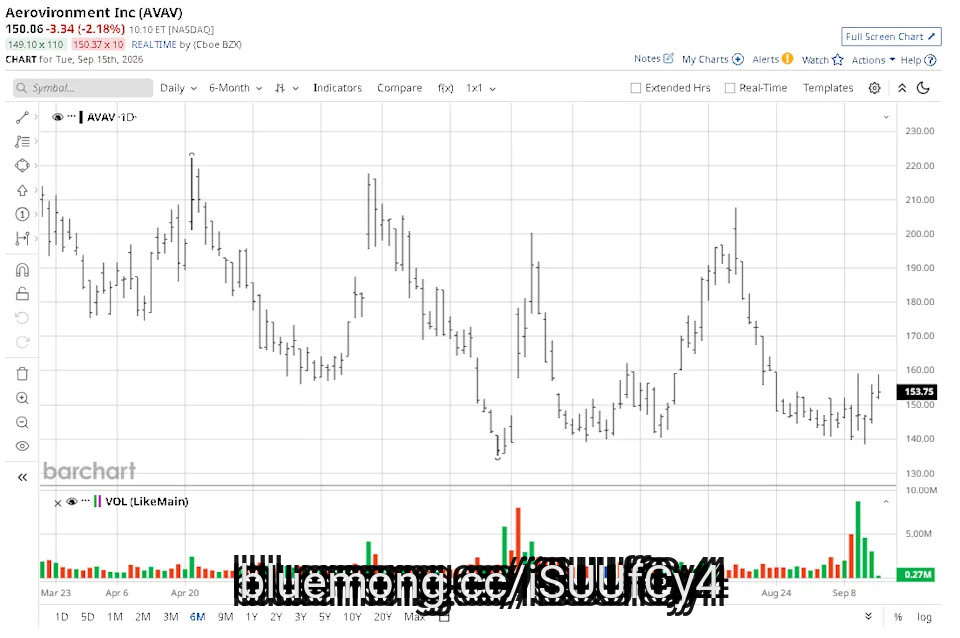
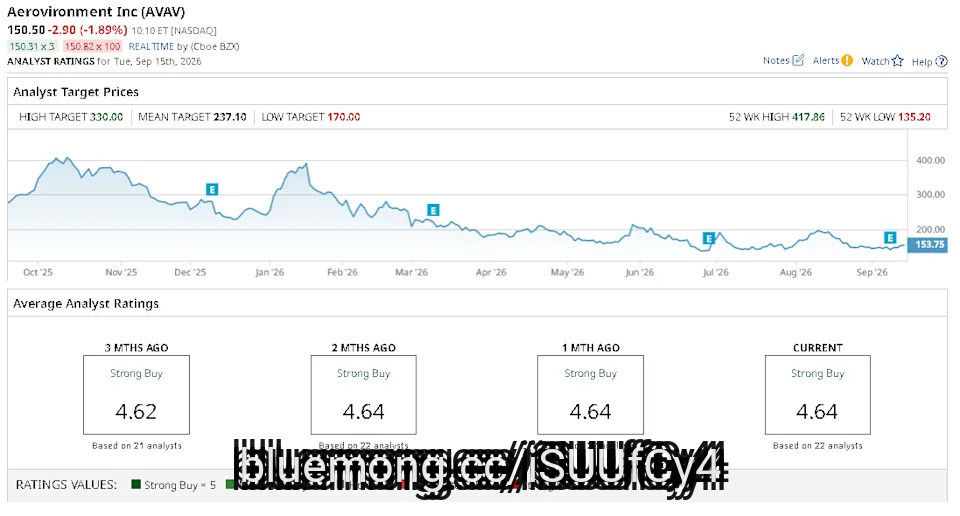
AeroVironment (AVAV) stock extended gains on Sept. 15 after the company's BlueHalo unit landed a landmark defense contract potentially worth up to $99.8 million. In its press release, AVAV said this new U.S. Air Force award — designed to advance military ******* e systems under the Leveraged Orbital Battlespace Optimization program — runs through August 2031.
The announcement arrives as AeroVironment shares are struggling to regain investor interest, currently down more than 60% versus their year-to-date high.
Goldman Sachs Expects Fed Chair Kevin Warsh to Raise Rates This Week — But Not Because of Oil Prices.
Billionaire Charlie Munger, Who Died at 99, Skipped Insurance on His Mansion Since He Could Just Write a Check to Rebuild — 'All Intelligent People Do It My Way'
The EV Bubble Has Burst. How to Play Rivian Stock Now.
#sept
The announcement arrives as AeroVironment shares are struggling to regain investor interest, currently down more than 60% versus their year-to-date high.
Goldman Sachs Expects Fed Chair Kevin Warsh to Raise Rates This Week — But Not Because of Oil Prices.
Billionaire Charlie Munger, Who Died at 99, Skipped Insurance on His Mansion Since He Could Just Write a Check to Rebuild — 'All Intelligent People Do It My Way'
The EV Bubble Has Burst. How to Play Rivian Stock Now.
#sept

4 days ago
Applied Digital turned negative for the year after a 24% monthly slide, while peers Core Scientific and Cipher Mining each fell between 4% and 5% on Tuesday despite staying positive year to date.
The sector ETF DTCR fell just 0.6% as selling stays concentrated in leveraged buildout names, not the broader infrastructure basket.
Despite $36 billion in contracted lease value and strong Q4 results, Applied Digital's $2.7 billion debt load raises dilution risk as its share price falls.
Read More: Learn 7 secret wealth tips high net worth investors use that most investors miss (sponsor)
Applied Digital's slide Tuesday afternoon matters most for what it does to the year. Applied Digital (NASDAQ:APLD) stock is down 4% to $23.72, pushing the year-to-date figure to a decline of 3%. That's a stark reversal for a name that was among the market's most favored artificial intelligence (AI) capacity plays earlier in 2026, and it caps a month in which the group has bled steadily lower.
#year #despite #date #billion
The sector ETF DTCR fell just 0.6% as selling stays concentrated in leveraged buildout names, not the broader infrastructure basket.
Despite $36 billion in contracted lease value and strong Q4 results, Applied Digital's $2.7 billion debt load raises dilution risk as its share price falls.
Read More: Learn 7 secret wealth tips high net worth investors use that most investors miss (sponsor)
Applied Digital's slide Tuesday afternoon matters most for what it does to the year. Applied Digital (NASDAQ:APLD) stock is down 4% to $23.72, pushing the year-to-date figure to a decline of 3%. That's a stark reversal for a name that was among the market's most favored artificial intelligence (AI) capacity plays earlier in 2026, and it caps a month in which the group has bled steadily lower.
#year #despite #date #billion


4 days ago
Two former Robinhood engineers were charged with fraud on Tuesday in a Hyperliquid insider trading case, accused of buying futures contracts before their employer announced new token listings.
Hefu Chai, 36, and Huaisong Xiang, 30, each face one count of violating the Commodity Exchange Act and one count of wire fraud. Prosecutors say the pair made more than $50,000 apiece.
"Robinhood takes market integrity seriously and has zero tolerance for insider trading. We have robust insider trading policies and procedures in place, including for new crypto listings. We immediately investigated and reported this matter to law enforcement and regulators, and will continue to cooperate with the investigations," a Robinhood spokesperson told BeInCrypto.
Follow us on X to get the latest news as it happens
Hyperliquid runs a decentralized exchange built around perpetual futures. These are leveraged bets on a token's price that never expire, so a trader can hold the position indefinitely.
#robinhood #exchange #tuesday
Hefu Chai, 36, and Huaisong Xiang, 30, each face one count of violating the Commodity Exchange Act and one count of wire fraud. Prosecutors say the pair made more than $50,000 apiece.
"Robinhood takes market integrity seriously and has zero tolerance for insider trading. We have robust insider trading policies and procedures in place, including for new crypto listings. We immediately investigated and reported this matter to law enforcement and regulators, and will continue to cooperate with the investigations," a Robinhood spokesperson told BeInCrypto.
Follow us on X to get the latest news as it happens
Hyperliquid runs a decentralized exchange built around perpetual futures. These are leveraged bets on a token's price that never expire, so a trader can hold the position indefinitely.
#robinhood #exchange #tuesday


4 days ago
The exchange-traded fund (ETF) market's August numbers look flawless on the surface, until you look at where the money actually went.
The industry held $16.4 trillion in ******* ets through August 31, 2026, with $180 billion in fresh capital pouring in that month alone, 3.8 times the historical August average and the strongest August on record for fund inflows, State Street reported.
New fund creation has been equally prolific, with 1,023 ETFs debuting in the first eight months of 2026, a 52% jump from the previous year's pace.
Active strategies represent more than 80% of the year's new products, and about 25% of August's 134 launches used leveraged or inverse structures, FactSet noted.
Among August's new launches were 18 single-stock ETFs, most of them targeting semiconductor companies to tap into the artificial intelligence infrastructure buildout.
#august #state #street #exchange
The industry held $16.4 trillion in ******* ets through August 31, 2026, with $180 billion in fresh capital pouring in that month alone, 3.8 times the historical August average and the strongest August on record for fund inflows, State Street reported.
New fund creation has been equally prolific, with 1,023 ETFs debuting in the first eight months of 2026, a 52% jump from the previous year's pace.
Active strategies represent more than 80% of the year's new products, and about 25% of August's 134 launches used leveraged or inverse structures, FactSet noted.
Among August's new launches were 18 single-stock ETFs, most of them targeting semiconductor companies to tap into the artificial intelligence infrastructure buildout.
#august #state #street #exchange

4 days ago
Our ****** ysts just identified a stock with the potential to be the next Nvidia. Tell us how you invest and we'll show you why it's our #1 pick. Tap here.
Launched ReefIQ in June as a proprietary substrate layer designed to convert unstructured biological data into structured representations for pharmaceutical AI models.
Transitioned the commercial strategy from discrete fee-for-service projects to broader platform partnerships where MindWalk participates in the long-term economics of created ****** ets.
Achieved a significant infrastructure milestone by validating OpenFold3 on AMD Instinct MI325X GPUs, enhancing discovery scale and ReefIQ's biological context layer.
Leveraged a deep wet-lab discovery franchise, including relationships with 19 of the top 20 global pharma companies, as a primary distribution channel for new AI platform adoption.
#june
Launched ReefIQ in June as a proprietary substrate layer designed to convert unstructured biological data into structured representations for pharmaceutical AI models.
Transitioned the commercial strategy from discrete fee-for-service projects to broader platform partnerships where MindWalk participates in the long-term economics of created ****** ets.
Achieved a significant infrastructure milestone by validating OpenFold3 on AMD Instinct MI325X GPUs, enhancing discovery scale and ReefIQ's biological context layer.
Leveraged a deep wet-lab discovery franchise, including relationships with 19 of the top 20 global pharma companies, as a primary distribution channel for new AI platform adoption.
#june

4 days ago
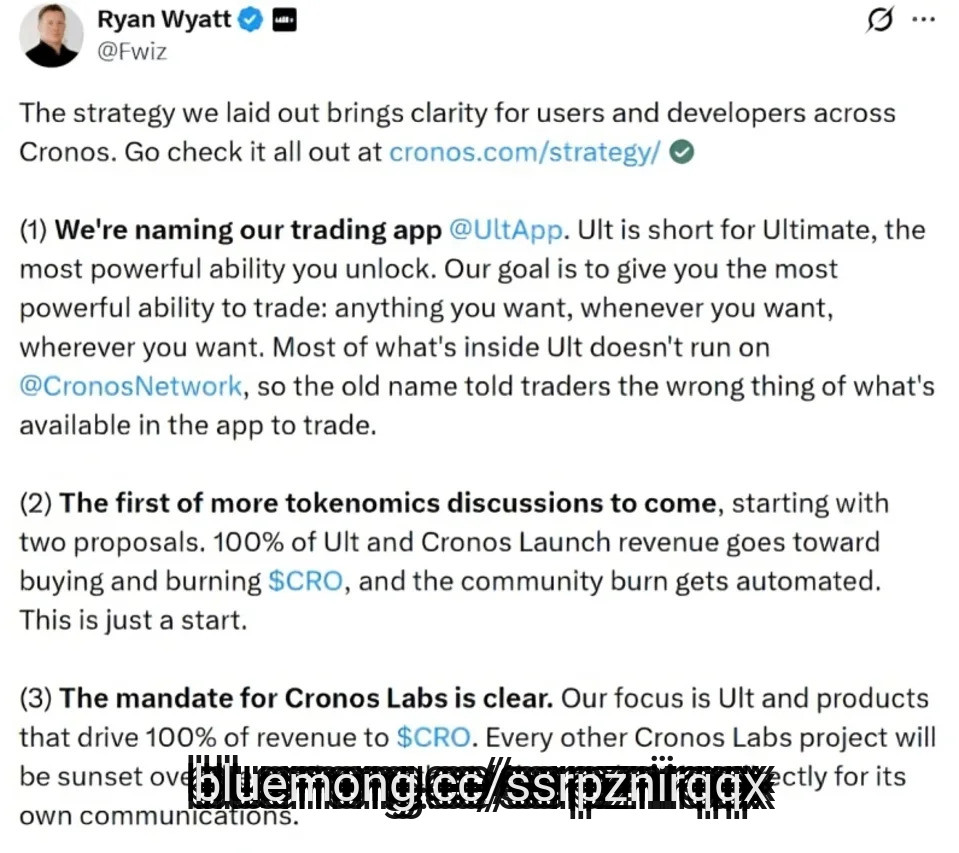
Cronos rebrands its trading app as Ult, expanding beyond crypto into prediction markets, perpetuals and tokenized **** ets.
Ult targets 100+ countries with 24/7/365 trading, 10 sports prediction categories and around 40 leveraged markets at launch.
Cronos Network could see more trading flow as Ult brings users, **** ets and liquidity into the ecosystem, with plans to move more markets onchain as volume grows.
Cronos, the blockchain ecosystem **** ociated with Crypto.com, is reshaping its product strategy around a new trading application called Ult. It has introduced a revenue-linked mechanism designed to support its native CRO token.
Cronos CEO Ryan Wyatt announced the changes on X, saying the new strategy is intended to provide greater clarity for users and developers. It aims to put a stronger focus on products that generate value for CRO.
#markets
Ult targets 100+ countries with 24/7/365 trading, 10 sports prediction categories and around 40 leveraged markets at launch.
Cronos Network could see more trading flow as Ult brings users, **** ets and liquidity into the ecosystem, with plans to move more markets onchain as volume grows.
Cronos, the blockchain ecosystem **** ociated with Crypto.com, is reshaping its product strategy around a new trading application called Ult. It has introduced a revenue-linked mechanism designed to support its native CRO token.
Cronos CEO Ryan Wyatt announced the changes on X, saying the new strategy is intended to provide greater clarity for users and developers. It aims to put a stronger focus on products that generate value for CRO.
#markets



4 days ago
Our **** ysts just identified a stock with the potential to be the next Nvidia. Tell us how you invest and we'll show you why it's our #1 pick. Tap here.
Launched ReefIQ in June as a proprietary substrate layer designed to convert unstructured biological data into structured representations for pharmaceutical AI models.
Transitioned the commercial strategy from discrete fee-for-service projects to broader platform partnerships where MindWalk participates in the long-term economics of created **** ets.
Achieved a significant infrastructure milestone by validating OpenFold3 on AMD Instinct MI325X GPUs, enhancing discovery scale and ReefIQ's biological context layer.
Leveraged a deep wet-lab discovery franchise, including relationships with 19 of the top 20 global pharma companies, as a primary distribution channel for new AI platform adoption.
#reefiq
Launched ReefIQ in June as a proprietary substrate layer designed to convert unstructured biological data into structured representations for pharmaceutical AI models.
Transitioned the commercial strategy from discrete fee-for-service projects to broader platform partnerships where MindWalk participates in the long-term economics of created **** ets.
Achieved a significant infrastructure milestone by validating OpenFold3 on AMD Instinct MI325X GPUs, enhancing discovery scale and ReefIQ's biological context layer.
Leveraged a deep wet-lab discovery franchise, including relationships with 19 of the top 20 global pharma companies, as a primary distribution channel for new AI platform adoption.
#reefiq

9 days ago
In 2024, Catalent tapped direct lenders for a $4.2 billion term loan to fund its acquisition by Novo Holdings. Last month, the drug manufacturer refinanced with a $4.1 billion syndicated loan that it says will cut its annual interest expense by about $100 million.
Catalent's move captures a shift under way in the leveraged finance market, according to a new report from DC Advisory. Redemptions from retail investors are contributing to the erosion of private credit's pricing advantage, creating an opening for banks to win refinancing business.
The problems in the retail private credit market show few signs of abating.
All the largest direct lenders, such as Ares, Apollo and KKR, also run business development companies, the most common form of credit fund aimed at individual investors, all under varying degrees of pressure to redeem investors.
PitchBook LCD reported on Wednesday that investors in Cliffwater's direct lending interval fund sought to redeem 16% of shares outstanding in the third quarter, down from 17% in the prior quarter.
#billion #private
Catalent's move captures a shift under way in the leveraged finance market, according to a new report from DC Advisory. Redemptions from retail investors are contributing to the erosion of private credit's pricing advantage, creating an opening for banks to win refinancing business.
The problems in the retail private credit market show few signs of abating.
All the largest direct lenders, such as Ares, Apollo and KKR, also run business development companies, the most common form of credit fund aimed at individual investors, all under varying degrees of pressure to redeem investors.
PitchBook LCD reported on Wednesday that investors in Cliffwater's direct lending interval fund sought to redeem 16% of shares outstanding in the third quarter, down from 17% in the prior quarter.
#billion #private


9 days ago
This week's ETF Zoo crew takes a lay of the land as summer comes to a close and some new and interesting developments crop up. ETF.com hosts Dave Nadig, President & Director of Research, and Sumit Roy, Senior ETF ****** yst, are joined in this episode by Cinthia Murphy, Director of Research at TMX VettaFi, and James Seyffart, CFA, CAIA, Senior Research ****** yst at Bloomberg Intelligence. Together the group talks about some of the big M&A announcements lately, dig into the AI chokepoint perspective, and more.
You can view this episode here or on our YouTube channel or listen on Spotify or Apple Podcasts.
M&A land grab in full swing. Billions in ETF acquisitions, including Victory Capital/First Eagle, Vanguard/Altruist, and more, signal that scale instead of organic growth now drives the industry. The Zoo crew debated whether firms are buying hit products, talent, or distribution, and what could be ahead for the industry.
Leverage and gambling push into new territory. Defiance's hourly-reset leveraged ETFs barely differ from daily resets despite pulling in huge fees, while Korea and ****** an crack down on single-stock leverage entirely. New NHL-linked sports-betting ETFs raised bigger concerns about routing gambling risk through the same rails as retirement savings.
AI concentration is everywhere, even where you don't expect it. Thematic and datacenter ETFs quietly hold the same chokepoint stocks like Micron and Nvidia, sparking debate over whether that's a feature or a vulnerability. However, real revenue growth at companies like Anthropic and OpenAI kept the Zoo Crew from sounding the alarm just yet.
#land #chokepoint
You can view this episode here or on our YouTube channel or listen on Spotify or Apple Podcasts.
M&A land grab in full swing. Billions in ETF acquisitions, including Victory Capital/First Eagle, Vanguard/Altruist, and more, signal that scale instead of organic growth now drives the industry. The Zoo crew debated whether firms are buying hit products, talent, or distribution, and what could be ahead for the industry.
Leverage and gambling push into new territory. Defiance's hourly-reset leveraged ETFs barely differ from daily resets despite pulling in huge fees, while Korea and ****** an crack down on single-stock leverage entirely. New NHL-linked sports-betting ETFs raised bigger concerns about routing gambling risk through the same rails as retirement savings.
AI concentration is everywhere, even where you don't expect it. Thematic and datacenter ETFs quietly hold the same chokepoint stocks like Micron and Nvidia, sparking debate over whether that's a feature or a vulnerability. However, real revenue growth at companies like Anthropic and OpenAI kept the Zoo Crew from sounding the alarm just yet.
#land #chokepoint


10 days ago
Our ******* ysts just identified a stock with the potential to be the next Nvidia. Tell us how you invest and we'll show you why it's our #1 pick. Tap here.
Achieved a sixth consecutive quarter of top-line growth, driven by broad-based strength across all regions and industry groups despite macroeconomic headwinds.
Completed the acquisition of AMS to create a global leader in talent and organizational consulting, significantly expanding capabilities in contingent workforce solutions and early career recruiting.
Transitioned to a new geographic reporting structure (Americas, EMEA, APAC) to better align with 'We Are Korn Ferry' go-to-market initiatives and holistic client engagement.
Leveraged proprietary data and IP—including 113 million executive ******* sments—to differentiate services in an AI-saturated market where resume quality has become commoditized.
#market #NVIDIA #tell #americas
Achieved a sixth consecutive quarter of top-line growth, driven by broad-based strength across all regions and industry groups despite macroeconomic headwinds.
Completed the acquisition of AMS to create a global leader in talent and organizational consulting, significantly expanding capabilities in contingent workforce solutions and early career recruiting.
Transitioned to a new geographic reporting structure (Americas, EMEA, APAC) to better align with 'We Are Korn Ferry' go-to-market initiatives and holistic client engagement.
Leveraged proprietary data and IP—including 113 million executive ******* sments—to differentiate services in an AI-saturated market where resume quality has become commoditized.
#market #NVIDIA #tell #americas
10 days ago
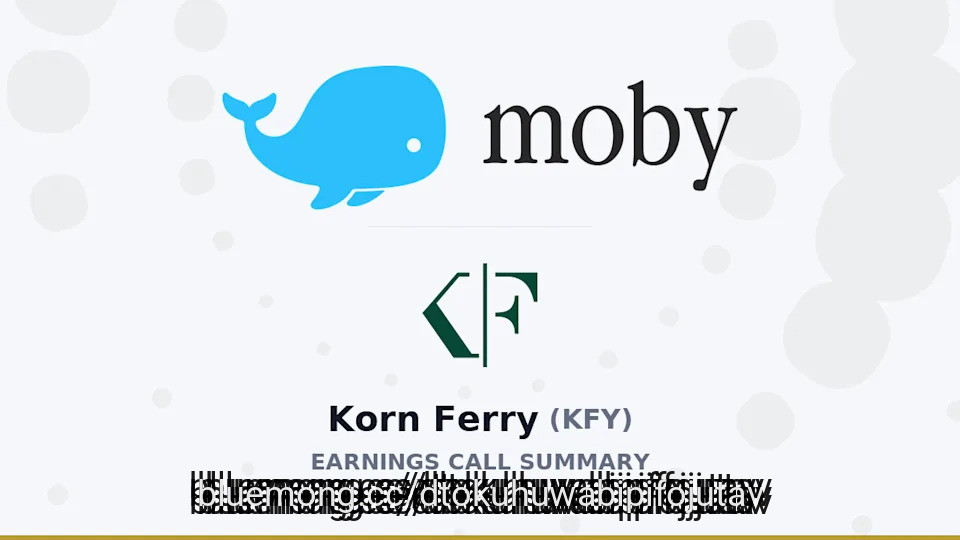
Useless (USELESS), a Solana-based memecoin, has surged more than 900% from its August low to trade near $0.337 on Wednesday, its highest level since October 2025.
In my view, these gains won't hold for too long, which may lead USELESS down at least 50% from its current levels. Let's examine.
USELESS's one-week liquidation heatmap shows a large imbalance in leveraged positions, with substantially more long positions exposed below the current price than short positions sitting above it.
If USELESS extends its rally to around $0.347, roughly $540,000 worth of ****** ulative short positions could be liquidated, according to CoinGlass data. That is relatively small compared with the downside exposure.
A decline toward $0.10, for instance, could wipe out nearly $6.70 million in ****** ulative leveraged long positions. In other words, traders betting on further gains currently have far more capital vulnerable to forced liquidation than bears betting on a decline.
#long #gains #liquidation #decline
In my view, these gains won't hold for too long, which may lead USELESS down at least 50% from its current levels. Let's examine.
USELESS's one-week liquidation heatmap shows a large imbalance in leveraged positions, with substantially more long positions exposed below the current price than short positions sitting above it.
If USELESS extends its rally to around $0.347, roughly $540,000 worth of ****** ulative short positions could be liquidated, according to CoinGlass data. That is relatively small compared with the downside exposure.
A decline toward $0.10, for instance, could wipe out nearly $6.70 million in ****** ulative leveraged long positions. In other words, traders betting on further gains currently have far more capital vulnerable to forced liquidation than bears betting on a decline.
#long #gains #liquidation #decline

0.00$ raised of 0.00$ goal
0 donations
0.00$
to go

10 days ago
Our ***** ysts just identified a stock with the potential to be the next Nvidia. Tell us how you invest and we'll show you why it's our #1 pick. Tap here.
Performance was anchored by the 'Reimagined 200' stores, which outperformed the broader fleet by 80 basis points, validating the strategy of enhanced staffing and curated ***** ortments.
Bloomingdale's achieved its highest second-quarter sales volume in its 154-year history, driven by a 1,700 basis point step-change on a two-year stack as it captures market share in premium and luxury segments.
Management attributed the 9% increase in Average Unit Retail (AUR) to a deliberate shift toward 'fashion authority' positioning, prioritizing better/best brand tiers over high-volume, low-margin units.
The company successfully leveraged enterprise-wide capabilities, such as Macy's is leveraging its marketplace business to fill white-space opportunities, while dermatological skincare brands like SkinCeuticals drove growth at Bluemercury.
#volume #year #management #average
Performance was anchored by the 'Reimagined 200' stores, which outperformed the broader fleet by 80 basis points, validating the strategy of enhanced staffing and curated ***** ortments.
Bloomingdale's achieved its highest second-quarter sales volume in its 154-year history, driven by a 1,700 basis point step-change on a two-year stack as it captures market share in premium and luxury segments.
Management attributed the 9% increase in Average Unit Retail (AUR) to a deliberate shift toward 'fashion authority' positioning, prioritizing better/best brand tiers over high-volume, low-margin units.
The company successfully leveraged enterprise-wide capabilities, such as Macy's is leveraging its marketplace business to fill white-space opportunities, while dermatological skincare brands like SkinCeuticals drove growth at Bluemercury.
#volume #year #management #average
0.00$ raised of 0.00$ goal
0 donations
0.00$
to go

13 days ago
The yields on 10-year Treasury notes have been hovering near multi-year highs, at around 4.8%. When the 10-year yield hit 4.818% earlier this month, it reached its highest level since November 2023. A combination of inflation and geopolitical risk tied to the U.S.-Iran conflict has largely driven yields higher.
If you're an income-oriented investor, 10-Year Treasuries are an option, but if you're looking for higher yields to better help you keep up with inflation, these three dividend stocks could be great options.
Missed Nvidia in 2009? This Rare Signal Is Flashing Again. In 2009, a "Double Down" signal flashed for a little-known chipmaker called Nvidia. For the first time in years, that same "Total Conviction" signal is flashing for a company 1/100th the size of Nvidia. Continue »
AGNC Investment's (NASDAQ: AGNC) 13.5% yield is nearly three times that of the 10-Year Treasury, and the stock pays a monthly dividend. For those unfamiliar with AGNC, it is a mortgage real estate investment trust (REIT) that owns a leveraged portfolio of agency-backed mortgage-backed securities (MBS). Since its MBS investments are backed by government agencies, they carry little default risk. However, interest rates and narrowing and widening spreads between mortgage rates and 10-year Treasury yields can impact the underlying value of its portfolio.
Spreads tend to be the biggest driver of MBS performance and are currently sitting around 2 percentage points. That is below the 3 percentage points they shot to a few years ago, but it is still historically on the high side. With the Fed earlier this year starting to buy back $200 billion in agency MBS and net new MBS supply projected to drop this year, there are the elements in place for spreads to narrow, which would be bullish for AGNC. Overall, this makes it a relatively good environment to own the stock and to collect its juicy yield.
#yields #NVIDIA #spreads #yield
If you're an income-oriented investor, 10-Year Treasuries are an option, but if you're looking for higher yields to better help you keep up with inflation, these three dividend stocks could be great options.
Missed Nvidia in 2009? This Rare Signal Is Flashing Again. In 2009, a "Double Down" signal flashed for a little-known chipmaker called Nvidia. For the first time in years, that same "Total Conviction" signal is flashing for a company 1/100th the size of Nvidia. Continue »
AGNC Investment's (NASDAQ: AGNC) 13.5% yield is nearly three times that of the 10-Year Treasury, and the stock pays a monthly dividend. For those unfamiliar with AGNC, it is a mortgage real estate investment trust (REIT) that owns a leveraged portfolio of agency-backed mortgage-backed securities (MBS). Since its MBS investments are backed by government agencies, they carry little default risk. However, interest rates and narrowing and widening spreads between mortgage rates and 10-year Treasury yields can impact the underlying value of its portfolio.
Spreads tend to be the biggest driver of MBS performance and are currently sitting around 2 percentage points. That is below the 3 percentage points they shot to a few years ago, but it is still historically on the high side. With the Fed earlier this year starting to buy back $200 billion in agency MBS and net new MBS supply projected to drop this year, there are the elements in place for spreads to narrow, which would be bullish for AGNC. Overall, this makes it a relatively good environment to own the stock and to collect its juicy yield.
#yields #NVIDIA #spreads #yield


17 days ago
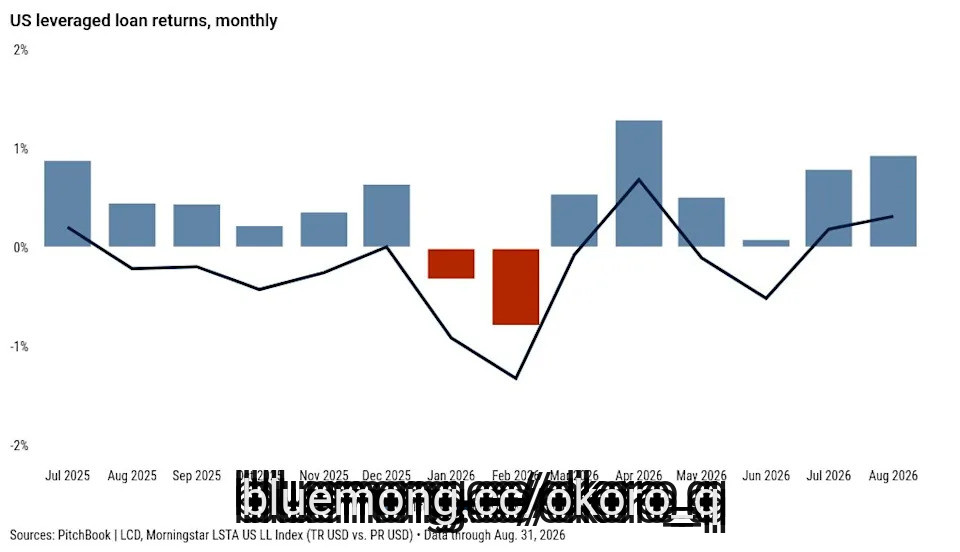
The US syndicated loan market returned 0.93% in August, exceeding July's performance as software loans rebounded to pare the sector's YTD loss to 2.60% and close the gap with the broader market.
August market highlights:
Loans returned 0.93% in August, according to the Morningstar LSTA US Leveraged Loan Index, the second-best showing in 12 months, led by software issuers.
Performing software loan prices gained 127 bps in August, to 87.73% of par, while non-software loans gained 22 bps, to 97.06.
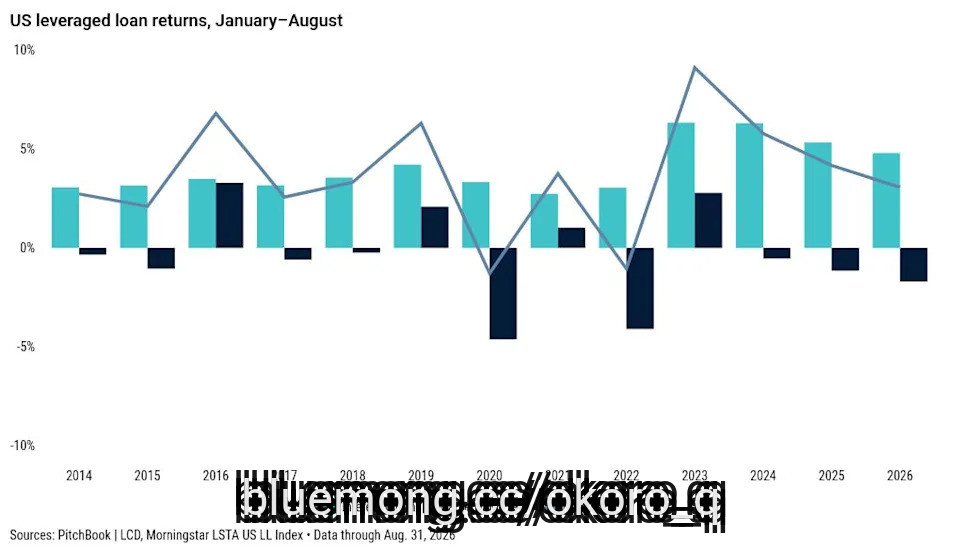
YTD software returns have narrowed to negative 2.60%; software is the only industry segment with a market-value weight above 1% that is negative for the year. The overall index has gained 3.07% in 2026.
#loan #morningstar
August market highlights:
Loans returned 0.93% in August, according to the Morningstar LSTA US Leveraged Loan Index, the second-best showing in 12 months, led by software issuers.
Performing software loan prices gained 127 bps in August, to 87.73% of par, while non-software loans gained 22 bps, to 97.06.
YTD software returns have narrowed to negative 2.60%; software is the only industry segment with a market-value weight above 1% that is negative for the year. The overall index has gained 3.07% in 2026.
#loan #morningstar


17 days ago
The payment default rates of the Morningstar LSTA US Leveraged Loan Index (LLI) declined to 0.87% (by amount) and 1.17% (by count) in August as two companies rolled off the trailing 12-month window. There were two liability management exercises (LMEs) and one payment default during the month. The dual-track default rate (by count) at month-end was 2.88%, essentially unchanged from the 2.87% reading in July.
The distress ratio eased 39 bps to 6.50% on a broad rebound in bids, though distress remains elevated.
As of Aug. 31, the trailing 12-month default rates of the LLI were as follows:
Payment default rate by amount: 0.87%, down from 0.93% in July
Payment default rate by issuer count: 1.17%, down from 1.25% in July
#july #count #rate #rates
The distress ratio eased 39 bps to 6.50% on a broad rebound in bids, though distress remains elevated.
As of Aug. 31, the trailing 12-month default rates of the LLI were as follows:
Payment default rate by amount: 0.87%, down from 0.93% in July
Payment default rate by issuer count: 1.17%, down from 1.25% in July
#july #count #rate #rates



17 days ago
The SEC has taken a page out of the Big 12 playbook.
Displeased with unfavorable state-court rulings, the conferences turned to federal court. For the Big 12, a federal lawsuit prompted Texas Tech to abandon a plan to play quarterback Brendan Sorsby, who had won an injunction against an NCAA-imposed gambling suspension. For the SEC, the lawsuit against LSU, coach Lane Kiffin, and others has a goal of keeping LSU from adding players who have been on NFL 90-man rosters.
The lawsuit was filed Thursday in the U.S. District Court for the Northern District of Alabama.
Via Amanda Christovich of Front Office Sports, the complaint alleges that LSU and Kiffin "waged a deliberate and coordinated campaign to recruit professional athletes to play football for LSU during the 2026-27 season, including players who had signed NFL contracts with the Cleveland Browns, New Orleans Saints, and Tampa Bay Buccaneers."
The move comes on the same day a pending state-court lawsuit was due to return to court on the question of whether a temporary restraining order allowing LSU to add the former NFL players would proceed. It serves only to add to the current state of college-football chaos, which surely will be leveraged by the powers-that-be into renewed efforts to pass the Protect College Sports Act.
#play
Displeased with unfavorable state-court rulings, the conferences turned to federal court. For the Big 12, a federal lawsuit prompted Texas Tech to abandon a plan to play quarterback Brendan Sorsby, who had won an injunction against an NCAA-imposed gambling suspension. For the SEC, the lawsuit against LSU, coach Lane Kiffin, and others has a goal of keeping LSU from adding players who have been on NFL 90-man rosters.
The lawsuit was filed Thursday in the U.S. District Court for the Northern District of Alabama.
Via Amanda Christovich of Front Office Sports, the complaint alleges that LSU and Kiffin "waged a deliberate and coordinated campaign to recruit professional athletes to play football for LSU during the 2026-27 season, including players who had signed NFL contracts with the Cleveland Browns, New Orleans Saints, and Tampa Bay Buccaneers."
The move comes on the same day a pending state-court lawsuit was due to return to court on the question of whether a temporary restraining order allowing LSU to add the former NFL players would proceed. It serves only to add to the current state of college-football chaos, which surely will be leveraged by the powers-that-be into renewed efforts to pass the Protect College Sports Act.
#play


18 days ago
On August 25, Citi Trends (NASDAQ:CTRN) reported second-quarter results that pushed its comparable sales growth streak to eight consecutive quarters, and this time the momentum showed up on the bottom line. Total sales rose 10.9% to $211.6 million, comparable sales climbed 10.5%, and adjusted EBITDA swung from a $1.1 million loss a year ago to $5.5 million. That improvement helped push first-half EBITDA to $19.4 million, already ahead of everything the company generated in all of fiscal 2025. Management responded by raising its full-year outlook across nearly every metric that matters.
The eighth straight quarter of comparable sales growth stands out on its own, especially with the two-year stack running at 19.7%, but the more telling shift is what happened underneath it. Gross margin expanded 60 basis points to 40.6% on better merchandise margin and lower shrinkage, while adjusted SG&A leveraged 260 basis points as fixed costs spread across a bigger sales base. Store payroll leveraged 70 basis points, and distribution center costs fell 60 basis points year to date, evidencing that the efficiency gains are showing up across the operation rather than in one line item. That combination pushed adjusted EBITDA margin to 2.6% for the quarter, and management raised full-year sales guidance to 10% to 12% growth, comparable sales guidance to 9% to 11%, and adjusted EBITDA guidance to $38 million to $42 million.
The balance sheet backs up the story. Citi Trends ended the quarter with $55.9 million in cash, no debt, and no draw on its $75 million credit facility, even as merchandise inventory grew a controlled 7.5% against double-digit comparable sales growth. The company is also leaning on a customer base broader than the discount label suggests: shoppers with household incomes between $75,000 and $150,000 make up 25% of customers but generate more than 40% of revenue. Management is funding growth accordingly, shifting capital toward its remodel program, now expected to cover 60 to 65 stores this year, up from 50, while building newer levers like the Insiders Club loyalty platform launched July 15 and AI tools for allocation and site selection. CEO Kenneth Seipel described the program as one that "turns traffic into loyalty, loyalty into frequency, and frequency into EBITDA."
Not everything in the print was clean. CFO Heather Plutino noted that rising fuel surcharges are pushing freight costs higher and said the pressure should continue for the rest of the year, a headwind that partially offset the gross margin gains. New store openings were also trimmed, with fiscal 2026 guidance cut to around 20 locations from a prior target of 25 due to timing, even as capital shifted toward remodels instead of new boxes.
#sales #million #comparable #quarter
The eighth straight quarter of comparable sales growth stands out on its own, especially with the two-year stack running at 19.7%, but the more telling shift is what happened underneath it. Gross margin expanded 60 basis points to 40.6% on better merchandise margin and lower shrinkage, while adjusted SG&A leveraged 260 basis points as fixed costs spread across a bigger sales base. Store payroll leveraged 70 basis points, and distribution center costs fell 60 basis points year to date, evidencing that the efficiency gains are showing up across the operation rather than in one line item. That combination pushed adjusted EBITDA margin to 2.6% for the quarter, and management raised full-year sales guidance to 10% to 12% growth, comparable sales guidance to 9% to 11%, and adjusted EBITDA guidance to $38 million to $42 million.
The balance sheet backs up the story. Citi Trends ended the quarter with $55.9 million in cash, no debt, and no draw on its $75 million credit facility, even as merchandise inventory grew a controlled 7.5% against double-digit comparable sales growth. The company is also leaning on a customer base broader than the discount label suggests: shoppers with household incomes between $75,000 and $150,000 make up 25% of customers but generate more than 40% of revenue. Management is funding growth accordingly, shifting capital toward its remodel program, now expected to cover 60 to 65 stores this year, up from 50, while building newer levers like the Insiders Club loyalty platform launched July 15 and AI tools for allocation and site selection. CEO Kenneth Seipel described the program as one that "turns traffic into loyalty, loyalty into frequency, and frequency into EBITDA."
Not everything in the print was clean. CFO Heather Plutino noted that rising fuel surcharges are pushing freight costs higher and said the pressure should continue for the rest of the year, a headwind that partially offset the gross margin gains. New store openings were also trimmed, with fiscal 2026 guidance cut to around 20 locations from a prior target of 25 due to timing, even as capital shifted toward remodels instead of new boxes.
#sales #million #comparable #quarter


19 days ago
On August 25, Citi Trends (NASDAQ:CTRN) reported second-quarter results that pushed its comparable sales growth streak to eight consecutive quarters, and this time the momentum showed up on the bottom line. Total sales rose 10.9% to $211.6 million, comparable sales climbed 10.5%, and adjusted EBITDA swung from a $1.1 million loss a year ago to $5.5 million. That improvement helped push first-half EBITDA to $19.4 million, already ahead of everything the company generated in all of fiscal 2025. Management responded by raising its full-year outlook across nearly every metric that matters.
The eighth straight quarter of comparable sales growth stands out on its own, especially with the two-year stack running at 19.7%, but the more telling shift is what happened underneath it. Gross margin expanded 60 basis points to 40.6% on better merchandise margin and lower shrinkage, while adjusted SG&A leveraged 260 basis points as fixed costs spread across a bigger sales base. Store payroll leveraged 70 basis points, and distribution center costs fell 60 basis points year to date, evidencing that the efficiency gains are showing up across the operation rather than in one line item. That combination pushed adjusted EBITDA margin to 2.6% for the quarter, and management raised full-year sales guidance to 10% to 12% growth, comparable sales guidance to 9% to 11%, and adjusted EBITDA guidance to $38 million to $42 million.
The balance sheet backs up the story. Citi Trends ended the quarter with $55.9 million in cash, no debt, and no draw on its $75 million credit facility, even as merchandise inventory grew a controlled 7.5% against double-digit comparable sales growth. The company is also leaning on a customer base broader than the discount label suggests: shoppers with household incomes between $75,000 and $150,000 make up 25% of customers but generate more than 40% of revenue. Management is funding growth accordingly, shifting capital toward its remodel program, now expected to cover 60 to 65 stores this year, up from 50, while building newer levers like the Insiders Club loyalty platform launched July 15 and AI tools for allocation and site selection. CEO Kenneth Seipel described the program as one that "turns traffic into loyalty, loyalty into frequency, and frequency into EBITDA."
Not everything in the print was clean. CFO Heather Plutino noted that rising fuel surcharges are pushing freight costs higher and said the pressure should continue for the rest of the year, a headwind that partially offset the gross margin gains. New store openings were also trimmed, with fiscal 2026 guidance cut to around 20 locations from a prior target of 25 due to timing, even as capital shifted toward remodels instead of new boxes.
#year #ebitda #quarter #Margin
The eighth straight quarter of comparable sales growth stands out on its own, especially with the two-year stack running at 19.7%, but the more telling shift is what happened underneath it. Gross margin expanded 60 basis points to 40.6% on better merchandise margin and lower shrinkage, while adjusted SG&A leveraged 260 basis points as fixed costs spread across a bigger sales base. Store payroll leveraged 70 basis points, and distribution center costs fell 60 basis points year to date, evidencing that the efficiency gains are showing up across the operation rather than in one line item. That combination pushed adjusted EBITDA margin to 2.6% for the quarter, and management raised full-year sales guidance to 10% to 12% growth, comparable sales guidance to 9% to 11%, and adjusted EBITDA guidance to $38 million to $42 million.
The balance sheet backs up the story. Citi Trends ended the quarter with $55.9 million in cash, no debt, and no draw on its $75 million credit facility, even as merchandise inventory grew a controlled 7.5% against double-digit comparable sales growth. The company is also leaning on a customer base broader than the discount label suggests: shoppers with household incomes between $75,000 and $150,000 make up 25% of customers but generate more than 40% of revenue. Management is funding growth accordingly, shifting capital toward its remodel program, now expected to cover 60 to 65 stores this year, up from 50, while building newer levers like the Insiders Club loyalty platform launched July 15 and AI tools for allocation and site selection. CEO Kenneth Seipel described the program as one that "turns traffic into loyalty, loyalty into frequency, and frequency into EBITDA."
Not everything in the print was clean. CFO Heather Plutino noted that rising fuel surcharges are pushing freight costs higher and said the pressure should continue for the rest of the year, a headwind that partially offset the gross margin gains. New store openings were also trimmed, with fiscal 2026 guidance cut to around 20 locations from a prior target of 25 due to timing, even as capital shifted toward remodels instead of new boxes.
#year #ebitda #quarter #Margin


19 days ago
Moderna led the S&P 500 in August after reporting promising results from a late-stage trial of a personalized mRNA cancer vaccine it co-developed with Merck, according to CNBC. The data challenged years of skepticism about whether the company's mRNA technology could produce another major breakthrough following the decline of its Covid-19 vaccine business. "This is miraculous, so it got a miraculous welcome," CNBC's Jim Cramer said Monday.
Enterprise software stocks accounted for many of the index's other top performers. Palantir, Veeva Systems, Salesforce, and ServiceNow had each come under sustained selling pressure as investors grew skeptical that traditional software models could remain competitive against the backdrop of accelerating AI development, according to the outlet. Those declines were compounded by large short positions held by Situational Awareness, a leveraged hedge fund that had bet against software companies based on that thesis. When the fund was forced to unwind its trades in late July, those shorts became a tailwind for the stocks it had targeted. "As August comes to a grinding end, it's hard to believe that the reverberations of a hedge fund implosion could color so much of the month's action," Cramer said.
Situational Awareness, which was run by Leopold Aschenbrenner and peaked at $45 billion in **** ets at the start of July, lost roughly $35 billion after margin calls from prime brokers Bank of America, Goldman Sachs, and JPMorgan Chase forced a distressed sale of its publicly traded holdings to Ken Griffin's Citadel. The fund had used as much as 400% leverage and held large short positions in software names including Adobe alongside bullish bets on AI infrastructure stocks.
Among individual software stocks, Salesforce bounced back after better-than-expected quarterly results quieted fears of what Cramer called a "SaaSpocalypse," while ServiceNow gained ground after showing investors that AI could be folded into its platform without disrupting existing operations. Veeva Systems climbed in tandem with the wider software sector after the anticipated AI threat to its life sciences niche failed to materialize in any meaningful way. Gartner also joined the recovery, as worries that large AI models would erode the market for its research and advisory services turned out not to be borne out by the company's actual results.
Outside software, Newmont benefited from a recovery in gold prices, while Coinbase climbed as cryptocurrencies rebounded amid concerns about U.S. debt and government spending. Super Micro Computer and Sandisk also surged on strong demand for memory used in AI data centers.
#cramer
Enterprise software stocks accounted for many of the index's other top performers. Palantir, Veeva Systems, Salesforce, and ServiceNow had each come under sustained selling pressure as investors grew skeptical that traditional software models could remain competitive against the backdrop of accelerating AI development, according to the outlet. Those declines were compounded by large short positions held by Situational Awareness, a leveraged hedge fund that had bet against software companies based on that thesis. When the fund was forced to unwind its trades in late July, those shorts became a tailwind for the stocks it had targeted. "As August comes to a grinding end, it's hard to believe that the reverberations of a hedge fund implosion could color so much of the month's action," Cramer said.
Situational Awareness, which was run by Leopold Aschenbrenner and peaked at $45 billion in **** ets at the start of July, lost roughly $35 billion after margin calls from prime brokers Bank of America, Goldman Sachs, and JPMorgan Chase forced a distressed sale of its publicly traded holdings to Ken Griffin's Citadel. The fund had used as much as 400% leverage and held large short positions in software names including Adobe alongside bullish bets on AI infrastructure stocks.
Among individual software stocks, Salesforce bounced back after better-than-expected quarterly results quieted fears of what Cramer called a "SaaSpocalypse," while ServiceNow gained ground after showing investors that AI could be folded into its platform without disrupting existing operations. Veeva Systems climbed in tandem with the wider software sector after the anticipated AI threat to its life sciences niche failed to materialize in any meaningful way. Gartner also joined the recovery, as worries that large AI models would erode the market for its research and advisory services turned out not to be borne out by the company's actual results.
Outside software, Newmont benefited from a recovery in gold prices, while Coinbase climbed as cryptocurrencies rebounded amid concerns about U.S. debt and government spending. Super Micro Computer and Sandisk also surged on strong demand for memory used in AI data centers.
#cramer


20 days ago
Broadcom (NASDAQ: AVGO) and Advanced Micro Devices (NASDAQ: AMD) sit side by side in many artificial intelligence (AI) hardware conversations, yet the market makes it clear they are not the same kind of stock. Broadcom looks like a cash-rich infrastructure utility. AMD looks more like a leveraged bet on a shift in which players will supply the brains of data centers. That difference, more than any single metric, is what their valuations are signaling.
Missed Nvidia in 2009? This Rare Signal Is Flashing Again. In 2009, a "Double Down" signal flashed for a little-known chipmaker called Nvidia. For the first time in years, that same "Total Conviction" signal is flashing for a company 1/100th the size of Nvidia. Continue »
Broadcom's AI business is built around selling high-speed networking equipment and designing custom accelerators for hyperscalers that want their own bespoke silicon. It co-designs application-specific integrated circuits (ASICs) for customers such as Microsoft, Alphabet, Amazon, and Meta Platforms.
Each of these chips is narrowly built for the specific model mix and power envelope of the buyer, in contrast to the general-purpose GPUs sold by AMD, Nvidia (NASDAQ: NVDA), and others. Because of this, ASICs can be more efficient and less costly to use than GPUs for the precise types of workloads they are designed for.
Those ASIC programs are large. Broadcom's AI semiconductor revenue sits near $8.4 billion per quarter, with a disclosed AI chip backlog of around $73 billion, and management is now talking about a line of sight to more than $100 billion in AI revenue in 2027. Custom ASIC servers are on track to reach about 27.8% of AI server shipments in 2026, with ASIC sales volumes growing 44.6% year over year, well ahead of the growth pace of merchant GPUs.
#asic
Missed Nvidia in 2009? This Rare Signal Is Flashing Again. In 2009, a "Double Down" signal flashed for a little-known chipmaker called Nvidia. For the first time in years, that same "Total Conviction" signal is flashing for a company 1/100th the size of Nvidia. Continue »
Broadcom's AI business is built around selling high-speed networking equipment and designing custom accelerators for hyperscalers that want their own bespoke silicon. It co-designs application-specific integrated circuits (ASICs) for customers such as Microsoft, Alphabet, Amazon, and Meta Platforms.
Each of these chips is narrowly built for the specific model mix and power envelope of the buyer, in contrast to the general-purpose GPUs sold by AMD, Nvidia (NASDAQ: NVDA), and others. Because of this, ASICs can be more efficient and less costly to use than GPUs for the precise types of workloads they are designed for.
Those ASIC programs are large. Broadcom's AI semiconductor revenue sits near $8.4 billion per quarter, with a disclosed AI chip backlog of around $73 billion, and management is now talking about a line of sight to more than $100 billion in AI revenue in 2027. Custom ASIC servers are on track to reach about 27.8% of AI server shipments in 2026, with ASIC sales volumes growing 44.6% year over year, well ahead of the growth pace of merchant GPUs.
#asic


20 days ago
A 35/30/35 allocation across O, JNJ, and PFF blends to a 5.2% yield, converting $1.41M into $6,100 monthly without leveraged products.
Aggressive 10%-yield products require only $732K in capital but risk permanent principal loss, making them unsuitable for retirees who can't rebuild savings.
Subtracting Social Security from your monthly income gap and accounting for tax treatment across holdings can shift the required capital by five figures.
Read More: Learn 7 ways to generate income with a $1,000,000+ portfolio (sponsor)
A 79-year-old widow who needs $6,100 a month to cover her fixed expenses is looking at a $73,200 annual income problem. She solved it with a three-holding portfolio anchored by Realty Income (NYSE:O), Johnson & Johnson (NYSE:JNJ), and the iShares Preferred and Income Securities ETF (NASDAQ:PFF). The blend targets a 5.2% yield on roughly $1,410,000, which is worth studying because the math applies to anyone trying to convert a nest egg into a paycheck.
#income #yield #across #monthly
Aggressive 10%-yield products require only $732K in capital but risk permanent principal loss, making them unsuitable for retirees who can't rebuild savings.
Subtracting Social Security from your monthly income gap and accounting for tax treatment across holdings can shift the required capital by five figures.
Read More: Learn 7 ways to generate income with a $1,000,000+ portfolio (sponsor)
A 79-year-old widow who needs $6,100 a month to cover her fixed expenses is looking at a $73,200 annual income problem. She solved it with a three-holding portfolio anchored by Realty Income (NYSE:O), Johnson & Johnson (NYSE:JNJ), and the iShares Preferred and Income Securities ETF (NASDAQ:PFF). The blend targets a 5.2% yield on roughly $1,410,000, which is worth studying because the math applies to anyone trying to convert a nest egg into a paycheck.
#income #yield #across #monthly

20 days ago
Demand for high-risk leveraged and inverse single-stock exchange-traded funds in the US may be losing some momentum after a rapid expansion in new products.
A volatile bull market has encouraged investors to seek products capable of magnifying daily moves in some of the market's most popular and volatile stocks. The surge in speculative offerings has been substantial, with leveraged products accounting for as much as half of all new ETF launches in June alone.
However, ****** ysts are increasingly questioning whether the pace of expansion can continue as competition intensifies and ****** ets become concentrated among a relatively small number of successful funds.
"The market for these is saturated and there's only so much money out there chasing this kind of product," said Morningstar ****** yst Daniel Sotiroff. "A few firms at the top end up commanding the lion's share of the money, and then there's a long tail of also-rans who are struggling to attract ****** ets."
ETF industry ****** ysts, including Sotiroff and Cerulli ****** ociates, generally consider between $50 million and $100 million in ****** ets within a fund's first one or two years as an important benchmark for long-term viability. Funds that remain below that range can find it more difficult for their sponsors to cover operating costs.
#volatile #market
A volatile bull market has encouraged investors to seek products capable of magnifying daily moves in some of the market's most popular and volatile stocks. The surge in speculative offerings has been substantial, with leveraged products accounting for as much as half of all new ETF launches in June alone.
However, ****** ysts are increasingly questioning whether the pace of expansion can continue as competition intensifies and ****** ets become concentrated among a relatively small number of successful funds.
"The market for these is saturated and there's only so much money out there chasing this kind of product," said Morningstar ****** yst Daniel Sotiroff. "A few firms at the top end up commanding the lion's share of the money, and then there's a long tail of also-rans who are struggling to attract ****** ets."
ETF industry ****** ysts, including Sotiroff and Cerulli ****** ociates, generally consider between $50 million and $100 million in ****** ets within a fund's first one or two years as an important benchmark for long-term viability. Funds that remain below that range can find it more difficult for their sponsors to cover operating costs.
#volatile #market