
23 days ago
Clark Howard calls Medicare Advantage plans "disadvantage plans," warning the new SCAN Costco HMO prioritizes cost savings over patient care through prior authorization denials.
In a serious illness year, a $0-premium Advantage plan can cost $6,807 more than Original Medicare plus Medigap Plan G, which caps costs at $283 annually.
Choosing Advantage at 65 may permanently lock you out of Medigap coverage if you get sick later, since most states allow insurers to deny or upcharge applicants.
Read More: Learn 7 ways to generate income with a $1,000,000+ portfolio (sponsor)
"Costco. Do you know what you're doing here? You know who you're messing around with?" Consumer advocate Clark Howard, usually one of the warehouse club's biggest fans, said that on his show on October 5.
#clark #plan #plans


1 month ago
Oscar Health (OSCR) raised its full-year earnings outlook while lowering its expected medical costs to cover benefits for its nearly 3 million Affordable Care Act exchange members. OSCR stock climbed in early Wednesday stock market action ahead of its 9 a.m. ET investor conference.
Oscar, which made an aggressive play to gain ACA market share, has seen enrollment surge 47% from a year ago as of June 30, even as overall enrollment has plunged due to the expiration of enhanced premium subsidies. As of now, it looks like the bet is paying off in a big way, with shares up 126% this year through Tuesday. But it's still a bit early to know, because Oscar's earnings depend not only on its own members' costs, but also those of other ACA insurers.
The ACA's No. 2 insurer by membership behind Centene (CNC) said that it now expects its medical loss ratio, or benefit costs as a share of premiums, to be in the 81% to 82% range, down from the prior outlook of 81.5% to 82.5%.
Oscar boosted its outlook for earnings from operations by $100 million at both ends to a range of $600 million to $800 million. The unchanged revenue outlook, between $18.7 billion and $19 billion, implies that no additional customer churn is expected.
Here is what investors should keep in mind. Compared to the overall ACA risk pool, Oscar's enrollment is relatively young, healthy and more likely to sign up for very-high-deductible bronze plans. Yet based on its relatively healthy risk pool, Oscar expects about 20% of its premiums will be paid out via risk adjustment to other carriers under ACA rules. That means results in the second half of this year depend to a large degree on the level of healthcare utilization by non-Oscar members. As of now, it's a bit early to tell, since healthcare spending tends to rise as the year progresses and insured members exhaust their deductibles.
#oscar #year


1 month ago
Sept 15, 2026, 2:38 pm EDT
For months, investors and banking industry executives have privately speculated Wells Fargo could be poised to acquire a smaller lender.
Copyright ©2026 Dow Jones & Company, Inc. All Rights Reserved. 87990cbe856818d5eddac44c7b1cdeb8
Insurers like Humana are canceling some Medicare Advantage plans. How to make the best of it.
#sept #wells #reserved #humana


1 month ago
MiKargo247 is expanding its spot cargo insurance coverage to include strategic cargo theft under a new partnership with Verified Carrier.
The coverage is designed to address a growing category of freight fraud involving double brokering, carrier identity theft and fictitious pickups. Under the partnership, brokers using Verified Carrier can purchase MiKargo247 spot cargo insurance and have the strategic theft exclusion removed when the load is hauled by an eligible verified carrier. The companies announced the partnership Sept. 1.
Strategic cargo theft accounted for about 30% of reported U.S. cargo theft incidents in 2025, according to a June report from Munich Re Specialty and BSI Consulting. The report found that criminals are increasingly using deception, impersonation and other fraud-based methods to obtain freight rather than relying solely on physically stealing cargo from trucks or facilities.
The shift creates a challenge for brokers and insurers because fraudulent actors can make it difficult to determine who is actually hauling a load.
The FBI warned in April that cyber-enabled strategic cargo theft is increasing, with criminals using compromised accounts, fictitious companies and double-brokering schemes to divert legitimate freight. The agency recommended that transportation companies independently verify shipment requests and pickups before releasing loads.
#carrier #partnership #Companies


2 months ago
Extreme weather is creating a more demanding environment for property owners, insurers, and communities. According to the National Centers for Environmental Information (NCEI), the United States recorded 27 confirmed billion-dollar weather and climate disasters in 2024, resulting in a total cost of $182.7 billion. These events spanned a wide range of extremes, including severe storm events, tropical cyclones, wildfires, drought/heat waves, and winter storm/cold wave events. Over the last decade, ***** ulative losses from these disasters have exceeded $1.4 trillion, driven significantly by population growth, material wealth, and increased development in hazard-prone areas. These figures suggest that the financial consequences of extreme events may increasingly depend on how accurately the value of exposed property is understood before a loss occurs.
That question becomes especially consequential during reconstruction. A 2026 report from Bloomberg, featured in Claims Journal, noted that surveys conducted by United Policyholders since 2007 found an average of two-thirds of wildfire survivors reporting that they were underinsured, with an average shortfall of $200,000 or more. The Insurance Information Institute has similarly estimated that two-thirds of American homeowners may be underinsured for wildfire losses, typically by about 20%, and in some cases by as much as 60%. These findings illustrate how the presence of an insurance policy can still leave a substantial difference between available coverage and the resources required to rebuild, particularly when construction costs rise after a catastrophe.
The financial implications can extend across the broader insurance ecosystem. Aon's 2026 Climate and Catastrophe Insight reported approximately $260 billion in global economic losses from natural catastrophes during 2025, compared with $127 billion in insured losses. For property stakeholders, such a figure may place greater attention on the relationship between the value ***** igned to an ***** et, the cost of restoring it, and the capital available when a loss occurs.
Frequency can add another layer to that calculation. Data from NCEI indicate that the average interval between U.S. billion-dollar disaster events was approximately 16 days during 2020–2024, compared with 82 days during the 1980s. NCEI notes that shorter intervals can leave less time and fewer resources for response, recovery, and preparation for subsequent events. As the time between major events contracts, property valuations may require more frequent attention because construction costs, labor conditions, materials, and local economic circumstances can change between policy reviews.
#property #losses #insurance #information


2 months ago
On August 5, Primerica (NYSE:PRI) reported second-quarter results that read as two different companies bolted together. Net income climbed 13% to $202 million, and earnings per diluted share jumped 19% to $6.45, pushing return on stockholders' equity to 32.1%. Total revenue reached $865 million, up 9% from a year earlier. But those headline figures obscure a split story. The investment arm is sprinting to record highs while the life insurance sales force is quietly getting smaller. Here is what is actually moving the numbers.
Investment and savings product sales hit a record $4.4 billion in the quarter, up 23% from a year ago, while client ***** et values ended the period at an all-time high of $140 billion, up 16%. Net inflows added another $397 million. That growth translated directly into profit. ISP segment revenue rose 21% to $361 million, and pretax income jumped 31% to $104 million, meaning the segment's margin expanded even as it grew. The reason: ***** et-based commission revenue climbed 28%, outpacing the 19% rise in average client ***** ets, thanks to a shift toward higher-margin US managed accounts and Canadian mutual funds.
Primerica also returned $172 million to shareholders in the quarter through $135 million in buybacks and roughly $37 million in dividends, bringing year-to-date capital returns to $352 million. Its effective tax rate improved to 21.7% from 23.9% a year earlier, and its life insurer's statutory risk-based capital ratio stood at approximately 440%, a cushion most insurers would envy.
The company's distribution engine tells a rougher story. The life-licensed sales force fell 3% year over year to 148,612 representatives. Recruiting rose 2% to 82,346 recruits, but far fewer of them actually got licensed: new life-licensed representatives dropped 15% to 11,020. That gap between recruiting and licensing shows up directly in output. The company issued 78,904 life insurance policies, down 12%, with total face amount issued falling 8% to $27.7 billion.
Term Life revenue was roughly flat at $444 million even as adjusted direct premiums rose 3%, and segment pretax income fell 4% to $148 million. Part of that came from cost creep rather than claims: the benefits and claims ratio held steady at 57.9%, but the insurance expense ratio rose to 8.4% from 7.6% a year earlier, eating into a segment that is supposed to be Primerica's stable, predictable cash generator.
#million #year #rose #sales


2 months ago
On August 5, Primerica (NYSE:PRI) reported second-quarter results that read as two different companies bolted together. Net income climbed 13% to $202 million, and earnings per diluted share jumped 19% to $6.45, pushing return on stockholders' equity to 32.1%. Total revenue reached $865 million, up 9% from a year earlier. But those headline figures obscure a split story. The investment arm is sprinting to record highs while the life insurance sales force is quietly getting smaller. Here is what is actually moving the numbers.
Investment and savings product sales hit a record $4.4 billion in the quarter, up 23% from a year ago, while client ****** et values ended the period at an all-time high of $140 billion, up 16%. Net inflows added another $397 million. That growth translated directly into profit. ISP segment revenue rose 21% to $361 million, and pretax income jumped 31% to $104 million, meaning the segment's margin expanded even as it grew. The reason: ****** et-based commission revenue climbed 28%, outpacing the 19% rise in average client ****** ets, thanks to a shift toward higher-margin US managed accounts and Canadian mutual funds.
Primerica also returned $172 million to shareholders in the quarter through $135 million in buybacks and roughly $37 million in dividends, bringing year-to-date capital returns to $352 million. Its effective tax rate improved to 21.7% from 23.9% a year earlier, and its life insurer's statutory risk-based capital ratio stood at approximately 440%, a cushion most insurers would envy.
The company's distribution engine tells a rougher story. The life-licensed sales force fell 3% year over year to 148,612 representatives. Recruiting rose 2% to 82,346 recruits, but far fewer of them actually got licensed: new life-licensed representatives dropped 15% to 11,020. That gap between recruiting and licensing shows up directly in output. The company issued 78,904 life insurance policies, down 12%, with total face amount issued falling 8% to $27.7 billion.
Term Life revenue was roughly flat at $444 million even as adjusted direct premiums rose 3%, and segment pretax income fell 4% to $148 million. Part of that came from cost creep rather than claims: the benefits and claims ratio held steady at 57.9%, but the insurance expense ratio rose to 8.4% from 7.6% a year earlier, eating into a segment that is supposed to be Primerica's stable, predictable cash generator.
#sales


2 months ago
Humana (HUM) confirmed 600,000 affected members and UNH projects 1.1 million fewer enrollees as carriers cut lower-rated 2027 Medicare Advantage plans.
A plan termination triggers a rare guaranteed-issue Medigap window, but only for members who are returning to Original Medicare. Those switching to another Advantage plan do not qualify.
Nonrenewal notices arrive October 2, leaving only 66 days before Open Enrollment closes December 7. Members should save the letter and price both coverage paths immediately.
Read More: Learn 7 ways to generate income with a $1,000,000+ portfolio (sponsor)
Somewhere inside the Centers for Medicare & Medicaid Services (CMS) sits the list of Medicare Advantage plans that will stop existing on December 31, 2026. Insurers submitted their 2027 bids in June. Wall Street **** ysts have dissected the implications on earnings calls all summer. The people enrolled in those plans will find out by mail.
#plans #plan #only #medigap


2 months ago
Hotchkis & Wiley, an investment management company, released its second-quarter 2026 investor letter for the "Large Cap Fundamental Value Fund." A copy can be downloaded here. Equity markets posted strong returns, with the Russell 1000 Value Index rising by 13.9%, although many individual stocks lagged. Notably, semiconductor stocks and AI-related sectors saw exceptional gains. The rally appeared speculative, marked by a stark difference in performance between high-beta and low-volatility stocks, along with momentum stocks outperforming the market significantly. Despite heightened enthusiasm for AI investments, concerns arise over inflated valuations reminiscent of the dot-com era. While there is substantial capital investment in AI, future earnings growth must justify these expenditures. The fund maintains a cautious approach towards perceived beneficiaries of AI, suggesting that select high-quality businesses with reasonable valuations may be better positioned. Historical trends suggest that speculative markets often revert to valuations based on fundamental economic realities, and the chosen investments are believed to be well-prepared for such a shift. The fund underperformed the index in the quarter and returned 5.69% vs. 13.87% for the Russell 1000 Value Index, largely due to a lack of exposure to high-performing sectors like semiconductors, while stock selection in healthcare provided a positive contribution. Also, check the fund's top five holdings to see its best picks in 2026.
In its second-quarter 2026 investor letter, Hotchkis & Wiley Large Cap Fundamental Value Fund highlighted Elevance Health, Inc. (NYSE:ELV) as a notable contributor. Elevance Health, Inc. (NYSE:ELV) is a US-based health benefits company. On August 31, 2026, Elevance Health, Inc. (NYSE:ELV) closed at $392.54 per share. Over the past month, Elevance Health, Inc. (NYSE:ELV) reported 3.85%, but its shares are up 21.78% over the past year. Elevance Health, Inc. (NYSE:ELV) has a market capitalization of $85.13 billion, and its stock has traded within a 52-week range of $274.84 to $436.24.
Hotchkis & Wiley Large Cap Fundamental Value Fund stated the following regarding Elevance Health, Inc. (NYSE:ELV) in its Q2 2026 investor letter:
"Elevance Health, Inc. (NYSE:ELV) is the second largest health insurer, and one of the largest commercial insurers in the United States. Shares rose during the quarter after the company reported quarterly earnings that beat consensus estimates. It was further supported by news that the US agreed to increase 2027 payments for private Medicare Advantage plans above the initial proposal. The company is priced at a discount to the market, driven by skepticism surrounding margins and growth, despite being a superior business that grows above GDP while returning most of its cash to shareholders."
#NYSE #fund #fundamental #wiley

2 months ago
On August 25, SelectQuote (NASDAQ:SLQT) told investors that cash generation, not growth, is now the entire point of owning the stock. Fiscal 2026 revenue reached $1.62 billion, up 6% year over year, and operating cash flow climbed $44 million from the prior year. But the same release showed a fourth-quarter net loss of $16.8 million, a reversal from $12.9 million in net income a year earlier, and a fiscal 2027 guide that points meaningfully lower on the top line. That gap between the narrative and the numbers underneath it is worth sitting with.
Healthcare Services, built around the company's SelectRx pharmacy, generated $845 million in revenue for fiscal 2026, up 14% even as Inflation Reduction Act drug pricing changes cut into the segment starting in the back half of the year. That business exited the fourth quarter at an annualized adjusted EBITDA run rate of nearly $50 million, roughly double the $25 million it produced across the full year, and management expects those margins to keep expanding as more prescriptions route through the company's Olathe, Kansas facility, which is already shipping about 30% more efficiently than its older sites.
Layered on top, SelectQuote identified more than $30 million in annualized run rate savings from AI-enabled enrollment tools and workflow automation. The Senior segment, meanwhile, held a 26% adjusted EBITDA margin for a fourth straight year in the mid-20% range, evidence that the agent-led distribution model keeps producing steady profit even when Medicare Advantage carriers shift benefits underneath it. Add in a commissions receivable balance north of $1 billion, and the company argues its underlying earnings power is bigger than its stock price reflects.
The guidance tells a different story. SelectQuote expects fiscal 2027 revenue of $1.35 billion to $1.45 billion, roughly 14% below fiscal 2026 at the midpoint, with Medicare Advantage approved policies projected to fall another 10% to 15% after already declining 4% this past year. Senior segment revenue already dropped 4% in fiscal 2026 to $576 million, partly because a major carrier partner pulled back its own marketing spending, a reminder of how much SelectQuote's results depend on decisions made by insurers it does not control.
The Inflation Reduction Act will keep pressuring Healthcare Services revenue through fiscal 2027, with especially messy comparisons in the first half. SelectRx membership already moderated to 109,039 members and is expected to dip further before recovering. Underneath all of it sits $800 million in debt and preferred equity carrying a roughly 12% funding cost, translating into $45 million of annual cash interest that has to be paid regardless of how enrollment season goes. Management itself called the term life insurance market competitive on customer acquisition costs, a small but telling admission that not every corner of the business is running cleanly.
#million #fiscal #already


2 months ago
Sept 1 (Reuters) - UnitedHealth's insurance unit said on Tuesday that a broad range of conditions will no longer need prior approval, effective October 1, as it aims to eliminate prior authorization for 30% of healthcare services by the end of this year.
Here are the details:
• The reduction spans a broad mix of services across multiple clinical specialties, including cardiology, genetic and laboratory testing, chiropractic care, physical, occupational and speech therapy, orthopedic and musculoskeletal procedures, among others.
• The prior authorization requirements are being eliminated across its commercial plans, Medicare Advantage for older adults and individual insurance under the Affordable Care Act, also known as Obamacare, and some other types of plans.
• Health insurers have been taking measures to simplify their requirements for prior authorization on medicines and medical services after complaints from patients and doctors over excessive paperwork that can delay or even deny needed care.
#prior


2 months ago
Hotchkis & Wiley, an investment management company, released its second-quarter 2026 investor letter for the "Large Cap Fundamental Value Fund." A copy can be downloaded here. Equity markets posted strong returns, with the Russell 1000 Value Index rising by 13.9%, although many individual stocks lagged. Notably, semiconductor stocks and AI-related sectors saw exceptional gains. The rally appeared speculative, marked by a stark difference in performance between high-beta and low-volatility stocks, along with momentum stocks outperforming the market significantly. Despite heightened enthusiasm for AI investments, concerns arise over inflated valuations reminiscent of the dot-com era. While there is substantial capital investment in AI, future earnings growth must justify these expenditures. The fund maintains a cautious approach towards perceived beneficiaries of AI, suggesting that select high-quality businesses with reasonable valuations may be better positioned. Historical trends suggest that speculative markets often revert to valuations based on fundamental economic realities, and the chosen investments are believed to be well-prepared for such a shift. The fund underperformed the index in the quarter and returned 5.69% vs. 13.87% for the Russell 1000 Value Index, largely due to a lack of exposure to high-performing sectors like semiconductors, while stock selection in healthcare provided a positive contribution. Also, check the fund's top five holdings to see its best picks in 2026.
In its second-quarter 2026 investor letter, Hotchkis & Wiley Large Cap Fundamental Value Fund highlighted Elevance Health, Inc. (NYSE:ELV) as a notable contributor. Elevance Health, Inc. (NYSE:ELV) is a US-based health benefits company. On August 31, 2026, Elevance Health, Inc. (NYSE:ELV) closed at $392.54 per share. Over the past month, Elevance Health, Inc. (NYSE:ELV) reported 3.85%, but its shares are up 21.78% over the past year. Elevance Health, Inc. (NYSE:ELV) has a market capitalization of $85.13 billion, and its stock has traded within a 52-week range of $274.84 to $436.24.
Hotchkis & Wiley Large Cap Fundamental Value Fund stated the following regarding Elevance Health, Inc. (NYSE:ELV) in its Q2 2026 investor letter:
"Elevance Health, Inc. (NYSE:ELV) is the second largest health insurer, and one of the largest commercial insurers in the United States. Shares rose during the quarter after the company reported quarterly earnings that beat consensus estimates. It was further supported by news that the US agreed to increase 2027 payments for private Medicare Advantage plans above the initial proposal. The company is priced at a discount to the market, driven by skepticism surrounding margins and growth, despite being a superior business that grows above GDP while returning most of its cash to shareholders."
#value #company


2 months ago
On August 25, SelectQuote (NASDAQ:SLQT) told investors that cash generation, not growth, is now the entire point of owning the stock. Fiscal 2026 revenue reached $1.62 billion, up 6% year over year, and operating cash flow climbed $44 million from the prior year. But the same release showed a fourth-quarter net loss of $16.8 million, a reversal from $12.9 million in net income a year earlier, and a fiscal 2027 guide that points meaningfully lower on the top line. That gap between the narrative and the numbers underneath it is worth sitting with.
Healthcare Services, built around the company's SelectRx pharmacy, generated $845 million in revenue for fiscal 2026, up 14% even as Inflation Reduction Act drug pricing changes cut into the segment starting in the back half of the year. That business exited the fourth quarter at an annualized adjusted EBITDA run rate of nearly $50 million, roughly double the $25 million it produced across the full year, and management expects those margins to keep expanding as more prescriptions route through the company's Olathe, Kansas facility, which is already shipping about 30% more efficiently than its older sites.
Layered on top, SelectQuote identified more than $30 million in annualized run rate savings from AI-enabled enrollment tools and workflow automation. The Senior segment, meanwhile, held a 26% adjusted EBITDA margin for a fourth straight year in the mid-20% range, evidence that the agent-led distribution model keeps producing steady profit even when Medicare Advantage carriers shift benefits underneath it. Add in a commissions receivable balance north of $1 billion, and the company argues its underlying earnings power is bigger than its stock price reflects.
The guidance tells a different story. SelectQuote expects fiscal 2027 revenue of $1.35 billion to $1.45 billion, roughly 14% below fiscal 2026 at the midpoint, with Medicare Advantage approved policies projected to fall another 10% to 15% after already declining 4% this past year. Senior segment revenue already dropped 4% in fiscal 2026 to $576 million, partly because a major carrier partner pulled back its own marketing spending, a reminder of how much SelectQuote's results depend on decisions made by insurers it does not control.
The Inflation Reduction Act will keep pressuring Healthcare Services revenue through fiscal 2027, with especially messy comparisons in the first half. SelectRx membership already moderated to 109,039 members and is expected to dip further before recovering. Underneath all of it sits $800 million in debt and preferred equity carrying a roughly 12% funding cost, translating into $45 million of annual cash interest that has to be paid regardless of how enrollment season goes. Management itself called the term life insurance market competitive on customer acquisition costs, a small but telling admission that not every corner of the business is running cleanly.
#million


2 months ago
Humana is exiting Medicare Advantage plans affecting 600,000 members in 2027, with federally required non-renewal notices dated October 2.
Federal law grants a guaranteed-issue Medigap right when an MA plan exits, barring insurers from rejecting applicants or charging more for pre-existing conditions.
Before accepting any replacement Advantage plan, members should price Medigap Plan G and verify new coverage includes their doctors, drugs, and hospitals.
Read More: Learn 7 ways to generate income with a $1,000,000+ portfolio (sponsor)
A Humana (NYSE: HUM) Medicare Advantage (MA) member could open the mail in early October and discover that coverage ending December 31 will not be back next year. Humana told investors in July that targeted 2027 exits will affect approximately 600,000 members.
#plan #medicare

2 months ago
About a million Americans had to find new health insurance at the start of 2026. CVS Health's Aetna subsidiary pulled out of the Affordable Care Act marketplace in 17 states, and at least a dozen more carriers announced they'll stop selling plans next year. When that happens, several hundred thousand more people will need to find coverage elsewhere.
The departures aren't random. When enhanced federal subsidies expired at the end of 2025, premiums jumped, and healthier enrollees dropped coverage. Insurers found themselves covering a smaller, sicker group, and one by one, they decided to stop. The numbers were no longer adding up.
Texas has lost three carriers in two years. Oregon is down another two. For the millions of people who depend on marketplace coverage, every exit gives the insurers who stay less reason to keep prices low.
CVS Health was the first major provider to leave. Its Aetna marketplace enrollees were running up medical bills that exceeded what the company collected in premiums, and CVS projected losses of up to $400 million on its ACA plans in 2025. It was the company's second retreat from the exchanges: Aetna had pulled out in 2017, returned in 2022, expanded into more states in 2023, and still couldn't make the business work.
Cigna followed in late April. The insurer's marketplace enrollment had already fallen 17% from a year earlier, and its president and incoming CEO, Brian Evanko, told ***** ysts there was no viable path to growth. Cigna will leave all 11 states where it sells plans, displacing about 369,000 enrollees, according to healthinsurance.org and Becker's Payer Issues.
#coverage #Health #insurers


2 months ago
Two Midwestern insurers hold $245 million in LeBron James Nike-backed bonds, with those same balance sheets also backing annuities from Jackson (JXN) and Apollo (APO).
Non-qualified annuity gains face ordinary income tax up to 37%, no capital gains rates apply, and heirs inherit no step-up in basis at death.
Read More: Learn 7 ways to generate income with a $1,000,000+ portfolio (sponsor)
Somewhere in the general accounts of two Midwestern life insurers sits roughly $245 million in bonds backed by LeBron James's Nike deal.
According to Bloomberg, an LLC named King James Funding borrowed almost $300 million in 2018 from North American Company for Life and Health Insurance and Midland National Life Insurance Co., with bonds due in 2049 at a 4.8% coupon. A follow-on $60 million in 34-year bonds priced at 5.75% in August 2022. Guggenheim Partners arranged the deal, and the pledged revenue stream includes James's lifetime Nike sponsorship.
#million #james


2 months ago
A fixed annuity guarantees the dollar amount, not purchasing power. With PCE inflation at 3.7%, a $1,900 check buys meaningfully less each decade.
Social Security's annual COLA, tracking 3.1% for 2027, preserves purchasing power over time in a way fixed private annuities fundamentally cannot.
Retirees can fight inflation erosion by adding a COLA rider, laddering annuity purchases across ages, or keeping part of the portfolio invested outside the contract.
Read More: Learn 7 ways to generate income with a $1,000,000+ portfolio (sponsor)
A $1,900 monthly annuity check that lands on the first of every month solves one problem exceptionally well. You cannot outlive it. That is really the case for annuitization in a single sentence, and it is exactly why insurers can market these contracts as guaranteed for life. But here is the catch. That guarantee covers the nominal dollar amount, not what it can buy. A decade later, that same $1,900 is going to buy a smaller basket of groceries, a smaller share of a Medicare supplement premium, and a much smaller slice of any long-term care bill.
#purchasing

2 months ago
Orbis Investment Management, an investment management company, released its Q2 2026 investor letter for "Orbis Global Equity Strategy". The letter can be downloaded here. In the first half of 2026, the Global Equity Strategy returned 19.9%, surpassing the MSCI All Country World Index by 7.8%. The market faced narrow breadth in the quarter. The strategy focuses on AI investments categorized into four groups: "Core" (direct exposure), "Enablers" (supporting businesses), "AI Powered" (companies enhanced by AI), and "Overlooked" (misjudged resilient companies). The firm emphasizes maintaining strong but flexible convictions in a fluctuating market, prioritizing disciplined, evidence-based investment over emotional decision-making. Also, check the fund's top five holdings to see its best picks in 2026.
In its Q2 2026 investor letter, Orbis Global Equity Strategy highlighted Ryan Specialty Holdings, Inc. (NYSE:RYAN). Ryan Specialty Holdings, Inc. (NYSE:RYAN) is a specialty insurance services company that provides distribution, underwriting, product development, administration, and risk management services. On August 24, 2026, Ryan Specialty Holdings, Inc. (NYSE:RYAN) closed at $44.34 per share. The one-month return of Ryan Specialty Holdings, Inc. (NYSE:RYAN) was -3.63%, and its shares lost 23.17% over the past 52 weeks. Ryan Specialty Holdings, Inc. (NYSE:RYAN) has a market capitalization of $17.29 billion.
Orbis Global Equity Strategy stated the following regarding Ryan Specialty Holdings, Inc. (NYSE:RYAN) in its Q2 2026 investor letter:
"The biggest winners have been concentrated in AI. But not all AI exposure is equal. We frame ours in four groups. The first is the "Core", the second is "Enablers", the third is AI "Powered" and the fourth is the "Overlooked": resilient businesses the market has mispriced as AI casualties. The first three are widely understood. The fourth is where we believe the market is most wrong, and where we are hunting.
Take insurance brokerage. Brown & Brown and Ryan Specialty Holdings, Inc. (NYSE:RYAN) are brokers: they sit between companies and insurers, matching clients to the right coverage and placing it for a fee, without carrying the risk themselves. Both are priced as AI casualties. Two fears weigh on the stocks: a softening pricing cycle and AI disintermediation. The pricing cycle is already in the price. On AI, we disagree. Ryan Specialty makes the case from the other end of the market: a leading specialist in excess and surplus, the part of insurance built for complex, hard-to-place, and emerging risk. That market is structurally expanding, and we view Ryan as its most capable navigator. The pattern holds across the Overlooked. We are not buying businesses AI leaves alone. We are buying businesses that put AI to work. Scaled brokers with proprietary data are sharpened by it, not replaced."
#NYSE #strategy #orbis


2 months ago
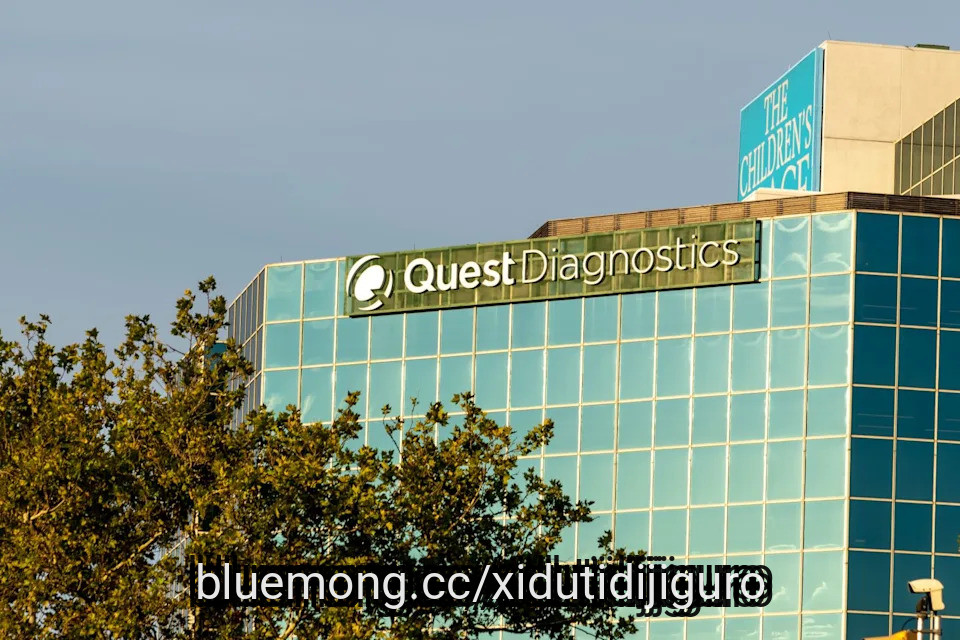
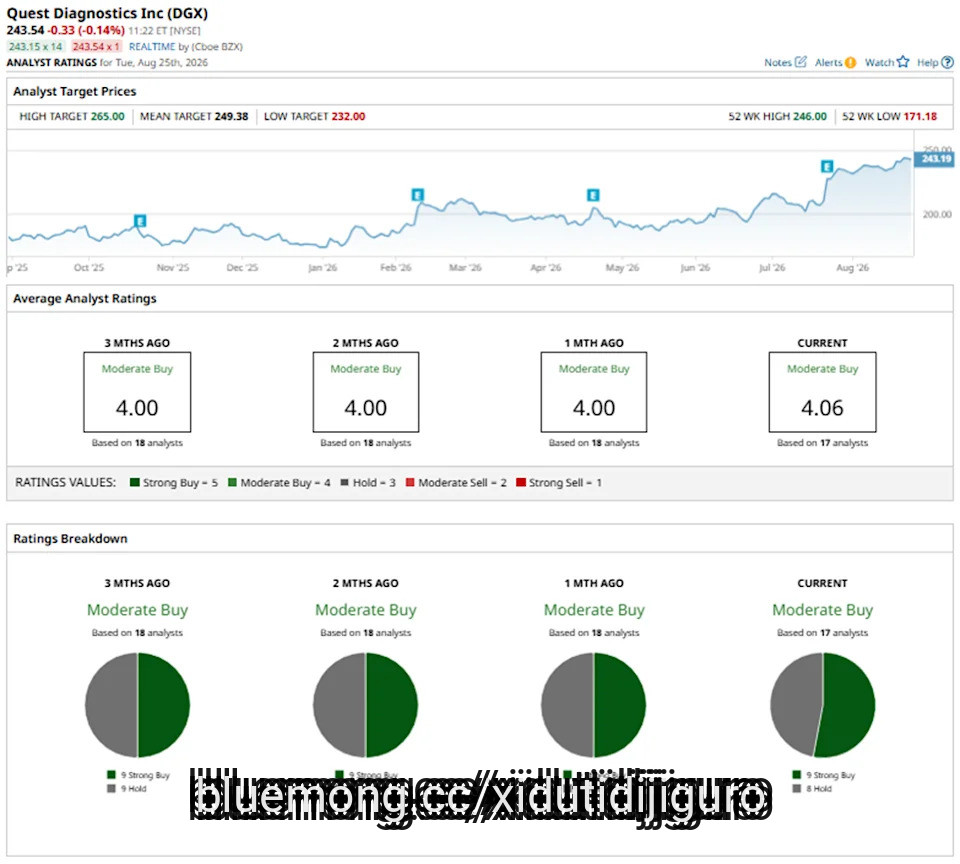
With a market cap of $26.9 billion, Quest Diagnostics Incorporated (DGX) is a leading provider of diagnostic testing services in the United States and internationally. The company delivers a wide range of routine and advanced diagnostic information services through its brands and network of laboratories, serving healthcare providers, insurers, employers, and government institutions.
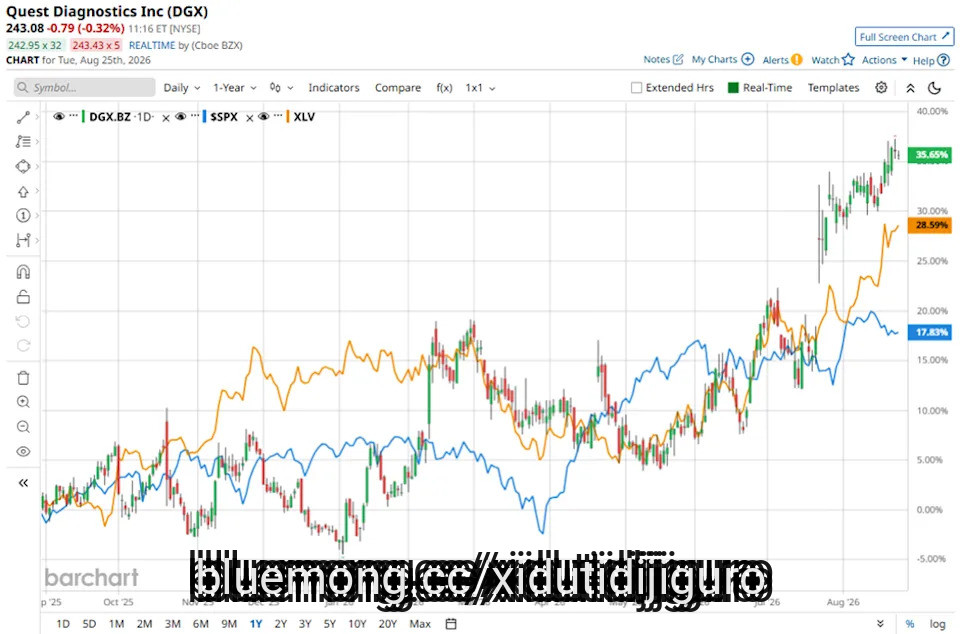
Shares of the Secaucus, New Jersey-based company have outperformed the broader market over the past 52 weeks. DGX stock has returned 36.3% over this time frame, while the broader S&P 500 Index ($SPX) has gained 19.1%. Moreover, the stock has soared 40.4% on a YTD basis, compared to SPX's 12% increase.
IonQ vs. Rigetti: The Better Quantum Computing Stock for Long-Term Investors
QQQ is Still in a Negative Gamma Regime. Here's How a 'Put Wall' and Fibonacci Support Could Come Into Play.
IBM Just Hit a New Quantum Computing Milestone. How to Play IBM Stock Now.
#quantum #computing #market #quest

2 months ago
Orbis Investment Management, an investment management company, released its Q2 2026 investor letter for "Orbis Global Equity Strategy". The letter can be downloaded here. In the first half of 2026, the Global Equity Strategy returned 19.9%, surpassing the MSCI All Country World Index by 7.8%. The market faced narrow breadth in the quarter. The strategy focuses on AI investments categorized into four groups: "Core" (direct exposure), "Enablers" (supporting businesses), "AI Powered" (companies enhanced by AI), and "Overlooked" (misjudged resilient companies). The firm emphasizes maintaining strong but flexible convictions in a fluctuating market, prioritizing disciplined, evidence-based investment over emotional decision-making. Also, check the fund's top five holdings to see its best picks in 2026.
In its Q2 2026 investor letter, Orbis Global Equity Strategy highlighted Brown & Brown, Inc. (NYSE:BRO). Brown & Brown, Inc. (NYSE:BRO) is a leading insurance brokerage firm operating through Retail and Specialty Distribution segments. On August 24, 2026, Brown & Brown, Inc. (NYSE:BRO) closed at $74.62 per share, reflecting a market capitalization of $24.97 billion. Brown & Brown, Inc. (NYSE:BRO) posted a one‑month return of 1.32%, while its shares lost 22.31% over the past 52 weeks.
Orbis Global Equity Strategy stated the following regarding Brown & Brown, Inc. (NYSE:BRO) in its Q2 2026 investor letter:
"The biggest winners have been concentrated in AI. But not all AI exposure is equal. We frame ours in four groups. The first is the "Core": direct exposure through companies like Samsung Electronics, Taiwan Semiconductor, and SK Square. The second is "Enablers": the businesses providing the power, materials, and real estate that hyperscalers need to operate. The third is AI "Powered": companies where AI accelerates an already compelling model, like Alphabet. The fourth is the "Overlooked": resilient businesses the market has mispriced as AI casualties. The first three are widely understood. The fourth is where we believe the market is most wrong, and where we are hunting.
Take insurance brokerage. Brown & Brown, Inc. (NYSE:BRO) and Ryan Specialty are brokers: they sit between companies and insurers, matching clients to the right coverage and placing it for a fee, without carrying the risk themselves. Both are priced as AI casualties. Two fears weigh on the stocks: a softening pricing cycle and AI disintermediation. The pricing cycle is already in the price. On AI, we disagree. AI may automate commodity cover like personal auto, but that is under 5% of Brown & Brown's book. The rest is commercial and specialty insurance, where the broker exercises judgement and answers for a denied claim. It is a people business, and Brown & Brown has spent more than eighty years serving mid sized companies that lack the in-house expertise in insurance."
#strategy #Equity


2 months ago
I think David Tepper made a mistake selling UnitedHealth Group (NYSE: UNH), and not a small mistake either. When I look at what this company is doing and where healthcare is headed, I would rather buy the stock than walk away.
For context, here's what happened: Tepper is a billionaire hedge fund manager, the founder and president of Appaloosa Management. Tepper didn't trim his stake in UnitedHealth. He sold every share, about 90,000 in total, refocusing his portfolio toward artificial intelligence (AI) with purchases of Amazon (NASDAQ: AMZN), Micron (NASDAQ: MU), and Taiwan Semiconductor (NYSE: TSM), which now account for nearly 40% of his fund. That tells me his move was about concentrating on a narrower theme, not about UnitedHealth losing its edge. In earlier filings, UnitedHealth ranked among his top positions, accounting for more than 10% of the portfolio, indicating he once saw it as a core holding.
Missed Nvidia in 2009? This Rare Signal Is Flashing Again. In 2009, a "Double Down" signal flashed for a little-known chipmaker called Nvidia. For the first time in years, that same "Total Conviction" signal is flashing for a company 1/100th the size of Nvidia. Continue »
So what changed? The obvious worry is medical cost pressure, especially from GLP‑1 weight loss drugs and broader inflation in care. UnitedHealth's Q2 2026 numbers show medical costs of $75.36 billion and a medical care ratio of 86.7%, down from 89.4% a year earlier but still above the mid-80s range the company had framed as its target (lower is better). Some investors see that as a sign that margins will stay under pressure and that insurers will never fully catch up to medical care's rising cost curve. Tepper may have decided that the headache was not worth the trouble.
When I dig into the details, I see something different. UnitedHealth is not sitting still and hoping costs fall. It's reshaping how care is delivered across its UnitedHealthcare insurance arm and Optum pharmacy management services. On GLP‑1 drugs, the company has drawn a clear line, covering them for diabetes and cardiovascular risk under tight medical necessity rules and restricting coverage for weight loss alone. It has launched programs like Total Weight Support to combine medication with coaching and digital tools, which gives it a way to manage outcomes rather than paying for pills without structure. That kind of strategy matters when drug costs can top $1,000 per member each month.
#medical #costs


2 months ago
LeBron James is the latest NBA player to have his finances come under scrutiny following a new report from Bloomberg that was published on Tuesday. According to the story's headline, "LeBron James Borrowed $300 Million From Insurers Arranged by Guggenheim."
Guggenheim is the financial services firm run by Mark Walter, the guy who owned the Los Angeles Lakers for about a year. He recently sold the team to Josh Kushner and Bob Iger. The Dodgers might be next. You're probably familiar with all that.
MORE: LeBron James leaving Los Angeles looks even better now
If you are familiar with all that, the headline sounds pretty juicy. However, if you actually reading the article it sounds more like LeBron James was doing some basic rich guy stuff. So anyone expecting a year-long investigation into the Lakers committing cap circumvention is going to be disappointed. The story doesn't seem to have anything to do with LeBron choosing or re-signing with the Lakers. Via Bloomberg:
"James' borrowing from the two Midwestern insurers — structured as sales of ***** et-backed bonds — began when he was at the Cleveland Cavaliers and his career was poised for new heights."
#Lakers #insurers #year

2 months ago
Orbis Investment Management, an investment management company, released its Q2 2026 investor letter for "Orbis Global Equity Strategy". The letter can be downloaded here. In the first half of 2026, the Global Equity Strategy returned 19.9%, surpassing the MSCI All Country World Index by 7.8%. The market faced narrow breadth in the quarter. The strategy focuses on AI investments categorized into four groups: "Core" (direct exposure), "Enablers" (supporting businesses), "AI Powered" (companies enhanced by AI), and "Overlooked" (misjudged resilient companies). The firm emphasizes maintaining strong but flexible convictions in a fluctuating market, prioritizing disciplined, evidence-based investment over emotional decision-making. Also, check the fund's top five holdings to see its best picks in 2026.
In its Q2 2026 investor letter, Orbis Global Equity Strategy highlighted Ryan Specialty Holdings, Inc. (NYSE:RYAN). Ryan Specialty Holdings, Inc. (NYSE:RYAN) is a specialty insurance services company that provides distribution, underwriting, product development, administration, and risk management services. On August 24, 2026, Ryan Specialty Holdings, Inc. (NYSE:RYAN) closed at $44.34 per share. The one-month return of Ryan Specialty Holdings, Inc. (NYSE:RYAN) was -3.63%, and its shares lost 23.17% over the past 52 weeks. Ryan Specialty Holdings, Inc. (NYSE:RYAN) has a market capitalization of $17.29 billion.
Orbis Global Equity Strategy stated the following regarding Ryan Specialty Holdings, Inc. (NYSE:RYAN) in its Q2 2026 investor letter:
"The biggest winners have been concentrated in AI. But not all AI exposure is equal. We frame ours in four groups. The first is the "Core", the second is "Enablers", the third is AI "Powered" and the fourth is the "Overlooked": resilient businesses the market has mispriced as AI casualties. The first three are widely understood. The fourth is where we believe the market is most wrong, and where we are hunting.
Take insurance brokerage. Brown & Brown and Ryan Specialty Holdings, Inc. (NYSE:RYAN) are brokers: they sit between companies and insurers, matching clients to the right coverage and placing it for a fee, without carrying the risk themselves. Both are priced as AI casualties. Two fears weigh on the stocks: a softening pricing cycle and AI disintermediation. The pricing cycle is already in the price. On AI, we disagree. Ryan Specialty makes the case from the other end of the market: a leading specialist in excess and surplus, the part of insurance built for complex, hard-to-place, and emerging risk. That market is structurally expanding, and we view Ryan as its most capable navigator. The pattern holds across the Overlooked. We are not buying businesses AI leaves alone. We are buying businesses that put AI to work. Scaled brokers with proprietary data are sharpened by it, not replaced."
#market #letter


2 months ago
Orbis Investment Management, an investment management company, released its Q2 2026 investor letter for "Orbis Global Equity Strategy". The letter can be downloaded here. In the first half of 2026, the Global Equity Strategy returned 19.9%, surpassing the MSCI All Country World Index by 7.8%. The market faced narrow breadth in the quarter. The strategy focuses on AI investments categorized into four groups: "Core" (direct exposure), "Enablers" (supporting businesses), "AI Powered" (companies enhanced by AI), and "Overlooked" (misjudged resilient companies). The firm emphasizes maintaining strong but flexible convictions in a fluctuating market, prioritizing disciplined, evidence-based investment over emotional decision-making. Also, check the fund's top five holdings to see its best picks in 2026.
In its Q2 2026 investor letter, Orbis Global Equity Strategy highlighted Brown & Brown, Inc. (NYSE:BRO). Brown & Brown, Inc. (NYSE:BRO) is a leading insurance brokerage firm operating through Retail and Specialty Distribution segments. On August 24, 2026, Brown & Brown, Inc. (NYSE:BRO) closed at $74.62 per share, reflecting a market capitalization of $24.97 billion. Brown & Brown, Inc. (NYSE:BRO) posted a one‑month return of 1.32%, while its shares lost 22.31% over the past 52 weeks.
Orbis Global Equity Strategy stated the following regarding Brown & Brown, Inc. (NYSE:BRO) in its Q2 2026 investor letter:
"The biggest winners have been concentrated in AI. But not all AI exposure is equal. We frame ours in four groups. The first is the "Core": direct exposure through companies like Samsung Electronics, Taiwan Semiconductor, and SK Square. The second is "Enablers": the businesses providing the power, materials, and real estate that hyperscalers need to operate. The third is AI "Powered": companies where AI accelerates an already compelling model, like Alphabet. The fourth is the "Overlooked": resilient businesses the market has mispriced as AI casualties. The first three are widely understood. The fourth is where we believe the market is most wrong, and where we are hunting.
Take insurance brokerage. Brown & Brown, Inc. (NYSE:BRO) and Ryan Specialty are brokers: they sit between companies and insurers, matching clients to the right coverage and placing it for a fee, without carrying the risk themselves. Both are priced as AI casualties. Two fears weigh on the stocks: a softening pricing cycle and AI disintermediation. The pricing cycle is already in the price. On AI, we disagree. AI may automate commodity cover like personal auto, but that is under 5% of Brown & Brown's book. The rest is commercial and specialty insurance, where the broker exercises judgement and answers for a denied claim. It is a people business, and Brown & Brown has spent more than eighty years serving mid sized companies that lack the in-house expertise in insurance."
#global


2 months ago
Home insurance is supposed to be there when things go wrong. A fire, flood or damaged roof can leave homeowners facing tens of thousands of dollars in repairs and insurance is meant to help soften that financial blow.
But while homeowners wait for that money, insurers can continue earning investment income on funds they haven't yet paid out.
Jeff Bezos backs a platform that lets anyone invest in rental homes for as little as $100 — 6 ways to build wealth like a landlord without actually being one
Dave Ramsey warns nearly 50% of Americans are making 1 big Social Security mistake. Here's what it is and 3 simple steps to fix it ASAP
The tax breaks in Trump's 'big beautiful bill' expire after 2028. Here are 4 moves to make before the window closes
#insurance #bezos #dave #security


2 months ago
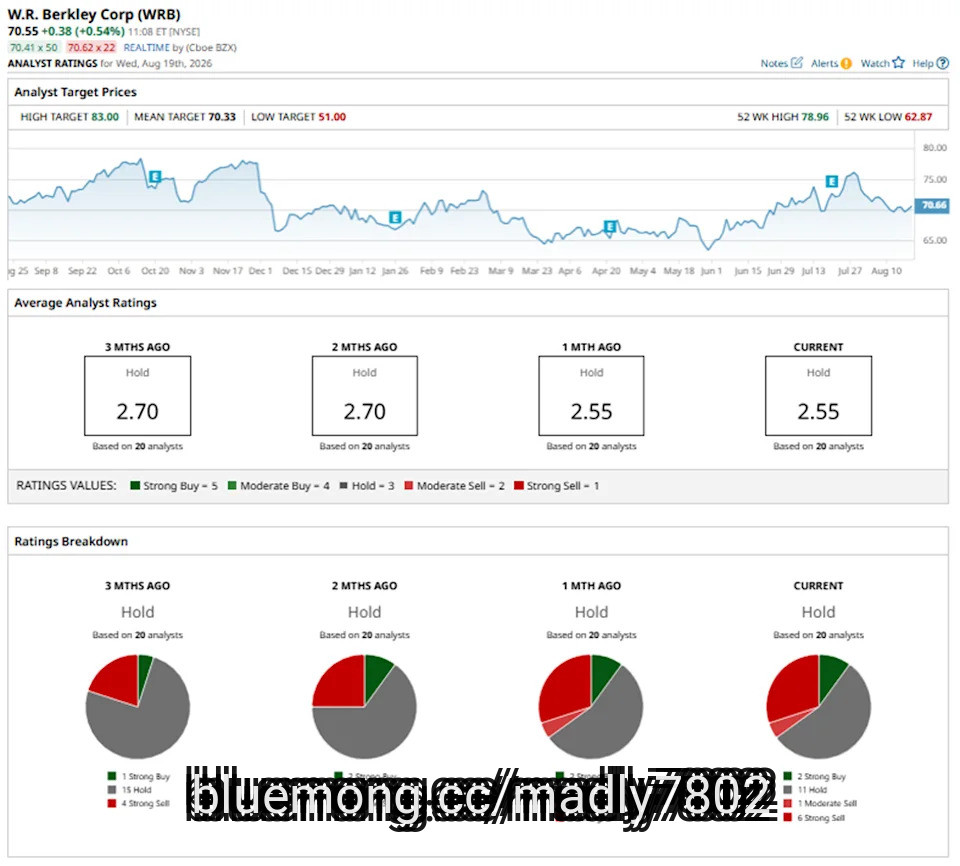
With a market cap of $26 billion, W. R. Berkley Corporation (WRB) is a leading insurance holding company and one of the largest commercial lines insurers in the United States, with operations spanning global markets. The company operates through two core property and casualty segments: Insurance and Reinsurance & Monoline Excess, providing a broad range of insurance solutions to its customers.
Shares of the Greenwich, Connecticut-based company have lagged behind the broader market over the past 52 weeks. WRB stock has fallen marginally over this time frame, while the broader S&P 500 Index ($SPX) has returned 20.4%. Moreover, shares of the company are up 1.5% on a YTD basis, compared to SPX's 12.7% gain.
Barron Trump, 20, Now Worth $150 Million — More Than Mom, Melania — From Crypto And $39 Energy Drink
Billionaire Michael Saylor Warns Against Buying a House Because 'Every 36 Years You Actually Pay the Cost of the House in Tax to the Government'
QQQ Just 'Gamma Flipped' as Market Makers Were Forced to Sell. Here's What Our Top Chart Expert is Tracking Next.
#insurance



2 months ago
Our ***** ysts just identified a stock with the potential to be the next Nvidia. Tell us how you invest and we'll show you why it's our #1 pick. Tap here.
Consolidated revenue growth of 9% was driven by a strategic shift toward high-complexity services, including a 20% sequential increase in oncology treatments in Mexico.
Adjusted EBITDA declined 9% due to temporary margin pressures from investments in medical leadership talent in Mexico and billing reconciliation penalties in Peru.
In Mexico, the company successfully secured improved tier classifications with major insurers, which accelerated patient volume recovery following operational enhancements implemented last year.
The Colombia segment demonstrated a successful pivot in payer mix, with risk-sharing agreements now representing 24% of revenue, up from 14% a year ago, enhancing cash predictability.
#year #NVIDIA #colombia

2 months ago
With a market cap of $26 billion, W. R. Berkley Corporation (WRB) is a leading insurance holding company and one of the largest commercial lines insurers in the United States, with operations spanning global markets. The company operates through two core property and casualty segments: Insurance and Reinsurance & Monoline Excess, providing a broad range of insurance solutions to its customers.
Shares of the Greenwich, Connecticut-based company have lagged behind the broader market over the past 52 weeks. WRB stock has fallen marginally over this time frame, while the broader S&P 500 Index ($SPX) has returned 20.4%. Moreover, shares of the company are up 1.5% on a YTD basis, compared to SPX's 12.7% gain.
Barron Trump, 20, Now Worth $150 Million — More Than Mom, Melania — From Crypto And $39 Energy Drink
Billionaire Michael Saylor Warns Against Buying a House Because 'Every 36 Years You Actually Pay the Cost of the House in Tax to the Government'
QQQ Just 'Gamma Flipped' as Market Makers Were Forced to Sell. Here's What Our Top Chart Expert is Tracking Next.
#House #shares #corporation


2 months ago
Our ******* ysts just identified a stock with the potential to be the next Nvidia. Tell us how you invest and we'll show you why it's our #1 pick. Tap here.
Consolidated revenue growth of 9% was driven by a strategic shift toward high-complexity services, including a 20% sequential increase in oncology treatments in Mexico.
Adjusted EBITDA declined 9% due to temporary margin pressures from investments in medical leadership talent in Mexico and billing reconciliation penalties in Peru.
In Mexico, the company successfully secured improved tier classifications with major insurers, which accelerated patient volume recovery following operational enhancements implemented last year.
The Colombia segment demonstrated a successful pivot in payer mix, with risk-sharing agreements now representing 24% of revenue, up from 14% a year ago, enhancing cash predictability.
#adjusted

2 months ago
Brown Brothers Harriman, an investment management company, released its Q2 2026 investor letter for the "BBH Select Mid Cap ETF". A copy of the letter can be downloaded here. In the quarter, the fund increased 9.7% on a total return basis compared to the Russell Midcap Index's 13.8% return. Artificial intelligence is a key factor influencing market performance, with high-valuation and high-beta companies consistently outperforming others. The portfolio saw gains from being overweight in technology and industrials but missed opportunities due to underweighting more cyclical stocks. At the end of Q2 2026, the Fund held positions in 27 companies, with 48% of **** ets concentrated in the top 10 holdings. The Fund's strategy focuses on companies priced below intrinsic value to ensure a margin of safety, rather than on whether valuations are high or low. Additionally, reviewing the Fund's top five holdings could help identify its best picks for 2026.
In its Q2 2026 investor letter, BBH Select Mid Cap ETF highlighted Guidewire Software, Inc. (NYSE:GWRE). Guidewire Software, Inc. (NYSE:GWRE) provides a platform for property and casualty (P&C) insurers. On August 19, 2026, Guidewire Software, Inc. (NYSE:GWRE) closed at $181.18 per share, reflecting a market capitalization of $15.08 billion. Guidewire Software, Inc. (NYSE:GWRE) posted a one‑month return of 37.91%, while its shares lost 14.98% over the past 52 weeks.
BBH Select Mid Cap ETF stated the following regarding Guidewire Software, Inc. (NYSE:GWRE) in its Q2 2026 investor letter:
"The Fund's largest detractors to performance in the quarter were Guidewire Software, Inc. (NYSE:GWRE) and Dar ling Ingredients Inc. (Darling). Guidewire declined -17.7% during the quarter, ending with a weight of 3.1%. Guidewire is the leading provider of core systems software to the property and casualty (P&C) insurance industry. Guidewire reported strong fiscal third quarter results (its fiscal year ends in July), with revenue growth of 27% and profitability well ahead of guidance, and management raised full-year guidance for both. The shares nevertheless declined because annual recurring revenue (ARR) growth of 19% finished at the midpoint of guidance, the first quarter since 2022 that ARR did not meet or exceed the high end of its guidance, as a couple of deals slipped past quarter end. We believe the slippage reflects timing rather than demand. The pipeline remains healthy, and management noted the fiscal fourth quarter is off to a good start and could be a record quarter. Fully ramped ARR continues to grow faster than reported ARR, and management expects it to grow above the 22% achieved in fiscal year 25, which supports continued growth into future years. While AI is perceived as a risk by the market, a modern core system is a prerequisite for insurers to deploy AI, and early customer pilots using AI tooling have reduced cloud migration costs by approximately 35%, lowering the largest cost barrier to modernizatio