
23 days ago
Ari Kytsya has never pretended that making adult content is all big checks, flexible hours, and glamorous trips. Long before the allegations surrounding the so-called "Cornell 7" case reignited a national conversation about consent, exploitation, and women's safety, the TikTok personality warned that adult creators can face harassment, privacy violations, predatory contracts, and frightening encounters with people who refuse to let their online relationships remain online.
Kytsya has not publicly connected her experiences to the Cornell case. However, her warnings offer another look into the risks women say they face when money, **** , and entitlement collide.
ZUMAPRESS.com / MEGA
Kytsya, who has built an audience of millions across TikTok and other social media platforms, has been unusually open about the realities of working in the adult-content industry. In a video highlighted by Yahoo Entertainment, the OF creator pushed back against the idea that selling explicit content offers an easy path to wealth. "This job is not easy money," she declared, arguing that she works just as hard, or harder, than she did in her previous jobs.
Kytsya also claimed that some creators lie about how much they earn. According to her, those making significant amounts of money generally entered the industry with an established audience rather than building a profitable account from nothing. Even successful creators cannot depend on a consistent paycheck, she explained. One month's income can be extremely high, then fall dramatically the next.
#money #TikTok #case #face



1 month ago
Experienced investors know the advantages of buying and holding S&P 500 index funds like the Vanguard S&P 500 ETF (NYSEMKT: VOO) or the SPDR S&P 500 ETF Trust (NYSEMKT: SPY). Not only are they super simple, but statistically speaking, you're likely to get better performance from them than you are by picking individual stocks or by owning an actively managed fund.
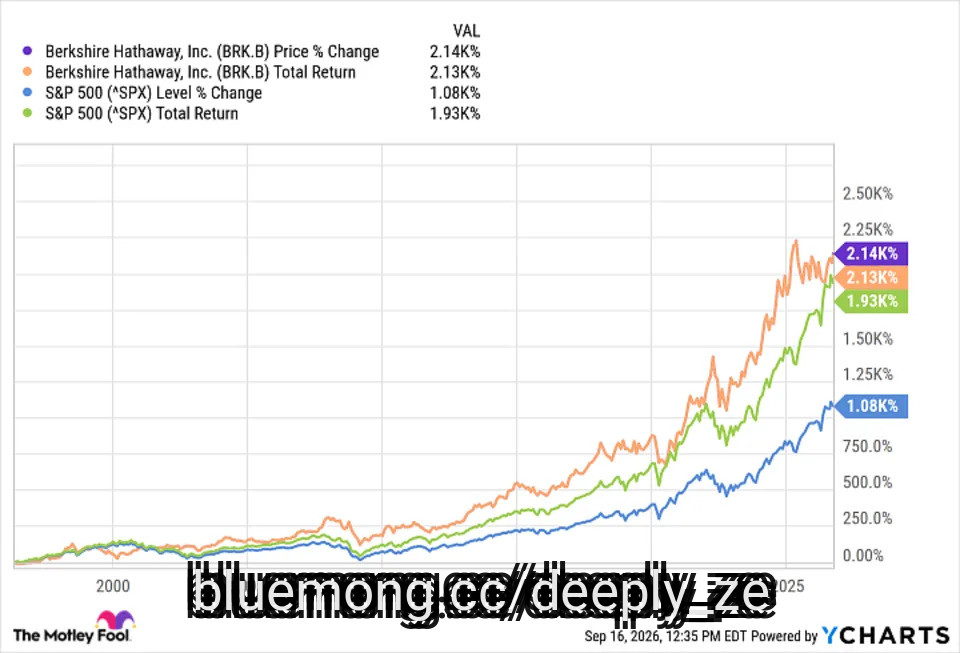
Nevertheless, given its long-term (and often market-beating) track record, even the most disciplined of investors might have the itch to step into a stake in Berkshire Hathaway (NYSE: BRKA) (NYSE: BRKB). But is it actually the better buy?
Missed Nvidia in 2009? This Rare Signal Is Flashing Again. In 2009, a "Double Down" signal flashed for a little-known chipmaker called Nvidia. For the first time in years, that same "Total Conviction" signal is flashing for a company 1/100th the size of Nvidia. Continue »
Berkshire Hathaway is a conglomerate consisting of several dozen reliable cash-producing businesses as well as a portfolio of hand-picked stocks. Brought to prominence by Warren Buffett, the company's flexible structure has enabled its shares to consistently outperform the S&P 500 since Buffett first took the helm in 1965.
It hasn't beaten the market every year since then, to be clear. Some years it did. Other years it didn't. It typically achieved the feat in five-year time frames.
#signal #years #buffett #flashing


1 month ago
Travel credit cards offer points and miles rewards on your spending, which you can use toward travel-related redemptions, such as flights, hotel stays, and car rentals. You'll often earn the highest rewards rate on travel purchases with a travel credit card. However, many also offer boosted rewards on everyday purchases like groceries, gas, and more.
When you're comparing travel credit cards, it's useful to separate them into two distinct types: general travel rewards cards and co-branded airline and hotel credit cards.
With a general travel credit card, you'll have a number of flexible redemption options when you're ready to redeem your points and miles.
Travel card issuers generally have their own travel portals, like Chase Travel or American Express Travel, where you can book flights, hotels, rental cars, and more. These programs also have a number of travel transfer partners to which you can directly transfer points or miles. For example, American Express Membership Rewards points transfer to Delta SkyMiles at a rate of 1:1.
The flexibility of general travel cards means you can use your rewards to travel with different airlines or hotel brands. Each time you're ready to book, simply shop around between the portal or partners and compare the best options for your specific travel plans.
#rewards #points #you 're




1 month ago
Travel credit cards offer points and miles rewards on your spending, which you can use toward travel-related redemptions, such as flights, hotel stays, and car rentals. You'll often earn the highest rewards rate on travel purchases with a travel credit card. However, many also offer boosted rewards on everyday purchases like groceries, gas, and more.
When you're comparing travel credit cards, it's useful to separate them into two distinct types: general travel rewards cards and co-branded airline and hotel credit cards.
With a general travel credit card, you'll have a number of flexible redemption options when you're ready to redeem your points and miles.
Travel card issuers generally have their own travel portals, like Chase Travel or American Express Travel, where you can book flights, hotels, rental cars, and more. These programs also have a number of travel transfer partners to which you can directly transfer points or miles. For example, American Express Membership Rewards points transfer to Delta SkyMiles at a rate of 1:1.
The flexibility of general travel cards means you can use your rewards to travel with different airlines or hotel brands. Each time you're ready to book, simply shop around between the portal or partners and compare the best options for your specific travel plans.
#credit #hotel #general




2 months ago
Horizon Technology Finance Corp., an affiliate of Monroe Capital, on September 10 said that the RoHo Capital Opportunity Fund LLC, a joint venture formed by Horizon and CR Financial Holdings, Inc., the holding company for Roth Capital Partners, LLC, has provided a $20-million senior credit facility to NeoVolta, Inc., with the ability to increase the facility to $30 million upon mutual agreement. An initial $20 million was funded at closing to support NeoVolta's continued growth.NeoVolta is an energy technology company focused on developing and manufacturing domestic battery energy storage systems (BESS). Together with its joint venture partner LONGi, NeoVolta is developing a 210,600-square-foot manufacturing facility in Pendergrass, Georgia, to produce BESS systems designed to meet U.S. domestic content and supply-chain requirements. The facility is expected to have an initial annual production capacity of up to 2 GWh, with the potential to scale to 8 GWh over time."Providing growth capital to innovative companies operating in attractive, high-growth markets is a core focus of RoHo's investment strategy," said Paul Seitz, chief investment officer of Horizon. "Formed by Horizon and Roth Capital, RoHo pairs Horizon's venture lending and structuring expertise with Roth's deep public markets relationships to deliver flexible growth capital to small- and micro-cap public companies. We are pleased to support NeoVolta's growth plans with a tailored financing solution and look forward to continuing to deploy capital through RoHo in support of innovative public companies pursuing significant market opportunities.""Horizon and Roth Capital bring valuable experience and a collaborative approach as we advance NeoVolta's domestic battery energy storage systems manufacturing platform," said Ardes Johnson, CEO of NeoVolta. "As we ramp our Georgia facility and pursue larger commercial and utility-scale opportunities, this relationship supports our ability to execute on our long-term growth strategy."Horizon Technology Finance Corp. is a specialty finance company that provides capital in the form of secured loans to venture capital and private equity-backed companies and publicly traded companies in the technology, life science, healthcare information and services, and sustainability industries. The investment objective of Horizon is to maximize its investment portfolio's return by generating current income from the debt investments it makes and capital appreciation from the warrants it receives when making such debt investments. Horizon is headquartered in Farmington, Connecticut, with a regional office in Pleasanton, California, and investment professionals located throughout the U.S.Monroe Capital is a premier ****** et management firm specializing in private credit markets across various strategies, including direct lending, technology finance, venture debt, opportunistic, structured credit, real estate and equity.CR Financial Holdings, Inc., is a private hol



2 months ago
Some offers on this page are from advertisers who pay us, which may affect which products we write about, but not our recommendations. See our Advertiser Disclosure.
A health savings account (HSA) is a type of account that lets you save — and potentially invest — for healthcare expenses while earning tax benefits along the way. Depending on your financial situation and immediate medical needs, an HSA can even be a valuable retirement planning tool. But HSAs aren't available to everyone. Continue reading to learn how HSAs work, their rules, and pros and cons.
A health savings account is a tax-advantaged account you can use to pay for qualifying medical expenses, including prescription medications, eyeglasses, doctor's visits, and more. Some HSAs function like a savings account, while others give you the option to invest your funds for future use.
HSAs are known for their triple tax advantage: You fund them with pre-tax dollars, your contributions grow tax-free, and withdrawals are tax-free as long as you use them for qualifying medical expenses. For this reason, HSAs can be a valuable retirement savings tool if you don't need the funds to pay for immediate medical needs.
Unlike flexible spending accounts (FSAs), HSA contributions don't expire at the end of the year. This means you can contribute to your account year after year without the need to "use it or lose it." HSAs aren't subject to required minimum distributions, either.
#account #medical #year


2 months ago
Matchroom Boxing's CEO has highlighted a problem in the ongoing talks between Anthony Joshua and Tyson Fury, with their super-fight at risk of collapsing.
This year, British heavyweights Joshua and Fury signed to fight each other at long last, five years after they previously signed a deal that fell through. Once again, however, a problem has arisen.
Joshua's contract is for a clash in the UK, while Fury's contract is flexible on location. Fury and certain key figures are pushing for a 20 November showdown in New York City, while "AJ" is digging in his heels in hopes of boxing at Wembley Stadium.
Anthony Joshua (left) with Kristian Prenga after beating the Albanian (Getty)
And Matchroom's Frank Smith has pointed to an issue with the "narrative" around the negotiations, while speaking to Playbook Boxing – powered by Betway.
#fury #boxing #contract #matchroom



2 months ago
CNBC reported that American Airlines Group Inc. (NASDAQ:AAL) announced seven new international routes for its summer 2027 schedule, most flown on its Airbus A321XLR.
New destinations include Philadelphia to Porto and Vienna and JFK to Amsterdam and Nice, alongside a returning Reykjavik route and Charlotte-Barcelona and Chicago-Tokyo Narita service on widebody jets. American's SVP of network and schedule planning, Brian Znotins, said the XLR "really opens up the menu for all these destinations that are just too small for a widebody." The announcement came the same week that rival United Airlines, which flies more international routes than any other U.S. carrier, unveiled its own 2027 international additions. American has said its flying is split roughly 80% domestic and 20% international.
The XLR gives American Airlines Group Inc. (NASDAQ:AAL) a more flexible way to expand its international network. The smaller, long-range aircraft lets American serve thinner transatlantic markets without committing the capacity of a larger widebody jet. That flexibility opens opportunities such as Philadelphia-Vienna and Philadelphia-Porto and gives American another way to grow international revenue.
The XLR's premium-heavy configuration also gives American more room to target higher-value travelers. American designed the aircraft's new interior with more premium seating than its other aircraft, allowing the airline to offer a stronger premium product on long-haul routes. If American can fill those seats at attractive fares, the aircraft could improve the economics of its international expansion.
American also gains a competitive advantage on Philadelphia-Vienna. The airline said it will become the only U.S. carrier offering nonstop service between the two cities. That position gives American a differentiated product on the route and could help it capture travelers who value nonstop service.
#american #airlines #widebody

2 months ago
The federal interest burden has reached a new height, exceeding even the 1991 record, but **** ysts warn the risks **** ociated with servicing the ever-growing national debt today are much higher than they were 35 years ago, **** ysts warn.
A recent **** ysis from investment management firm Doubleline noted that in 2025, the federal net interest payment on the U.S.'s now-$40 trillion national debt reached 18.5% of revenue, surpassing 1991's record 18.4%. That means the U.S. is collecting nearly 19% of all taxes and revenue just to pay off interest on its ballooning debt, equivalent to $1.25 trillion—more than the entire 2026 defense budget.
Growing interest payments create a cycle: the government must borrow more just to cover the interest, leaving it less flexible to spend on infrastructure, education, and other investments that drive growth.
The amount of money needed just to pay the interest on America's debt has swelled over the last decade as interest rates have grown, with interest expense as a percentage of revenue tripling since 2015, according to global market commentator the Kobeissi Letter, citing the Congressional Budget Office, which predicts interest expense levels to climb to 25% by 2036.
"The US debt crisis is in uncharted territory," the Kobeissi Letter wrote on a social media post. "These projections **** ume no major slowdown, recession, or significant rise in Treasury yields over this period."
#interest #kobeissi #letter #record


2 months ago
A B Graphic International (ABG) has renamed Enprom Solutions as ABG Girona, as part of the continued integration of its Spain-based operation into the wider group.
The move follows the 2019 acquisition of the business by ABG and Kocher+Beck and affirms the site as the group's centre of excellence for flexible packaging.
Based in Girona, the operation designs and builds machinery, converting systems, sleeve products and automated production lines for the flexible packaging and label sectors.
Within the ABG group, the Girona business is set to take on a larger role in flexible packaging work, including the FlexPack range.
The name change is intended to clarify the Girona operation's position within the group for customers while retaining the technical knowledge developed by the existing team.
#packaging #based #business #international

2 months ago
Many parents eventually run into the same uncomfortable math.
The money you put aside for a child does the most work in the years when you have the least of it to spare. Time is the ****** et. Cash is the constraint.
A dollar deposited in a baby's first year outruns several dollars deposited in that child's teens. Almost ****** ody manages it, because the first year of a child's life is also the most expensive one you have had so far.
Workplace benefits were never really built to solve that problem. Your 401(k) match helps you. Your health plan keeps your family upright. Your flexible spending account gets raided by December.
Very little in a standard benefits package puts money into an account that belongs to your child, sits in an index fund, and does not get touched for 18 years.
#money #child #year


2 months ago
Download the Complete Report Here
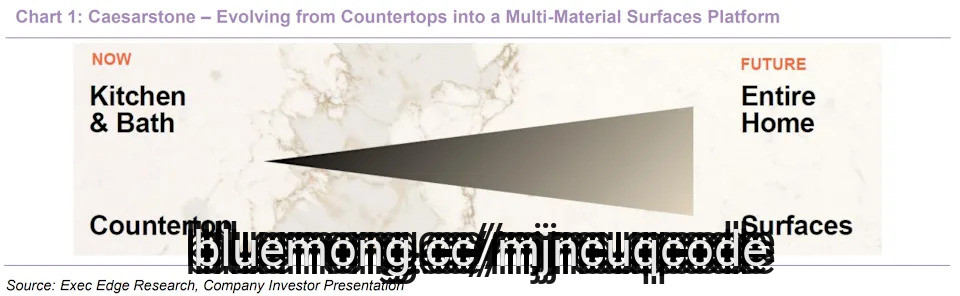
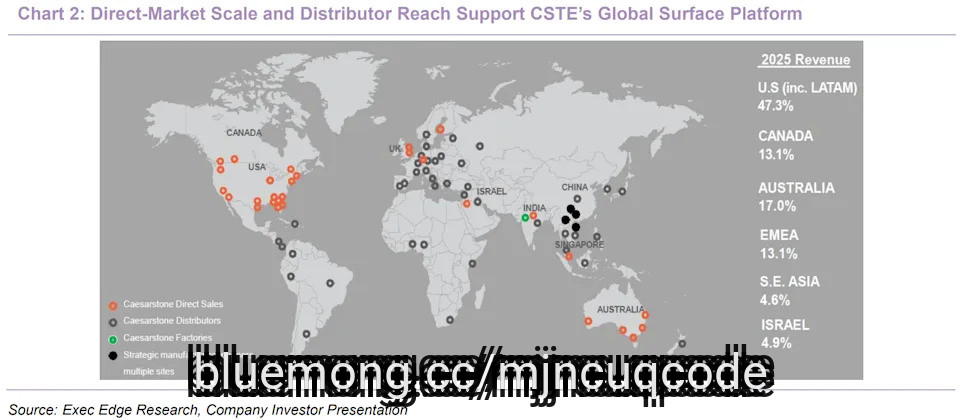
A premium multi-material surfaces platform becoming structurally lighter and more flexible. CSTE designs, develops, sources and markets premium quartz, ICON, porcelain, natural stone and complementary surface products, generating $397.2 million of revenue in 2025, with direct sales contributing 89% of revenue across its largest markets. The company has transitioned quartz production to external partners while retaining product development, quality, brand and customer control, with Lioli providing owned porcelain capacity. This broadens CSTE beyond legacy quartz while reducing fixed manufacturing exposure and increasing sourcing flexibility.
A differentiated model built on reinforcing sourcing, design, brand and direct-market capabilities supports commercial relevance across materials. CSTE combines partner-led quartz production with proprietary formulations, quality ***** urance, design know-how, premium brand recognition and local sales infrastructure. ICON provides the clearest proof point, with Australia delivering four consecutive quarters of y/y growth following the full rollout of CSTE's crystalline-silica-free collection. Porcelain extends the same commercial platform into additional applications, broadening the competitive advantage beyond any single product or manufacturing ***** et.
Growth strategy pairs a structural cost reset with targeted commercial and category expansion. CSTE is completing the partner-led production transition, rebuilding North American customer and channel engagement, sustaining Australia's ICON-led momentum, expanding porcelain and extending brand-led geographic reach. The restructuring targets more than $100 million of annualized savings by 2027 versus 2023, including approximately $22 million from the Bar-Lev closure. Execution is now focused on stabilizing core volumes, improving Lioli's commercial alignment, expanding channel productivity and mitigating the new U.S. quartz tariffs.
Material substitution and selective regional recovery broaden CSTE's addressable opportunity beyond legacy quartz. CSTE's existing and adjacent categories span approximately 53% of global countertop volume, while engineered quartz is forecast to recover and porcelain offers materially faster growth from a smaller base. Natural stone adds further U.S. optionality, while Australia demonstrates how regulatory change can redirect rather than eliminate premium-surface demand. North America remains the largest earnings opportunity, with renovation, ageing housing stock and material substitution providing recovery potential even before a full housing upcycle.
#porcelain #premium #icon #material


2 months ago
Laura Dern found the ideal sneaker to wear with a summery dress. The Oscar winner was spotted at the Hotel Excelsior on the Venice Lido pier during the 83rd Venice International Film Festival on Thursday, wearing a Gabriela Hearst outfit with casual and affordable Vivaia sneakers. Laura Dern is seen at the Hotel Excelsior on the Venice Lido pier during the 83rd Venice International Film Festival on Thursday in Venice, Italy. Getty Images She opted for the Vivaia Lexi round-toe casual sneakers in the seashell and castle wall colorway, which retail for $159. The style is a lightweight everyday sneaker that blends soft nylon on the upper with a beige and white toe area, with a sculptural bubble design on the rubber outsole. Those details help the shoe be part of both the current low-profile sneakers and two-tone shoe trends for fall. The Lexi is also made with a flexible, non-restrictive upper, with upgraded cushioning and a supportive insole that create a soft, steady underfoot feel. The sneaker is also available in chestnut brown, dark green, and black. The Vivaia Lexi Sneakers. The "Marriage Story" star paired the cream shoes with a Gabriela Hearst Maude Pleated Mia's Flowers Midi Shirtdress in ivory. The dress
Follow Footwear News on Twitter or become a fan on Facebook.
#venice
Follow Footwear News on Twitter or become a fan on Facebook.
#venice


2 months ago
Some offers on this page are from advertisers who pay us, which may affect which products we write about, but not our recommendations. See our Advertiser Disclosure.
Why we like it: We like the Chase Sapphire Preferred as a travel card that can help you make the most of your spending today toward future trips with flexible ways to earn and redeem rewards. At $95, it's not the most expensive travel credit card — and you may even earn back that fee with benefits alone, like the $100 annual Chase Travel hotel credit.
What really makes the Chase Sapphire Preferred valuable is the boost for redeeming points for travel through Chase Travel, up to 1.5x.
Read our full review of the Chase Sapphire Preferred Card.
Why we like it: With the Chase Freedom Unlimited, you can maximize bonus categories while earning a competitive flat cash-back rate. The bonus rewards categories include both travel (through Chase Travel) and everyday spending on dining and drugstores. But you're also guaranteed at least 1.5% on every non-category purchase — putting this card in competition with other cash-back cards that earn only those flat cash-back rewards.
#travel #like


2 months ago
Some offers on this page are from advertisers who pay us, which may affect which products we write about, but not our recommendations. See our Advertiser Disclosure.
Why we like it: The Capital One Venture Rewards makes sense if you want to earn travel rewards on your everyday purchases. It's easy to use and provides a flexible rewards rate that works with any eligible purchase. That's especially useful because Walmart stores aren't typically categorized as a "grocery store" or "supermarket" for credit card purchases.
Read our full Capital One Venture Rewards review
Why we like it: The Blue Cash Everyday is an excellent gas and grocery card, but those types of purchases don't typically apply to Walmart. However, this card also offers 3% cash back on US online retail purchases of up to $6,000 per year, then 1%*. This category includes purchases on Walmart.com. Some reports say that using Walmart Pay in-store could also trigger this spending category.
*Cash back is received in the form of Reward Dollars that can be redeemed as a statement credit or on Amazon.com at checkout
#walmart #like



2 months ago
Investment management company First Pacific Advisors recently released its "FPA Queens Road Small Cap Value Fund" second-quarter 2026 investor letter. A copy of the letter can be downloaded here. The Fund returned 27.02% in the first half of 2026, outperforming the Russell 2000 Value Index's 22.99% gain and the S&P 600 Index's 23.90% return. Small-cap earnings growth also began accelerating relative to large caps, while the small-cap technology sector surged nearly 100% in 26H1. The fund's technology holdings gained 72.39%, contributing 14.87 percentage points, compared with a 95.27% return and 7.10-point contribution from the benchmark's technology sector. Excluding IT and cash, the Fund contributed 12.73% versus 15.89% for the Russell 2000 Value Index; on a fully invested basis, the figures were 16.62% and 17.59%, respectively. The portfolio continued to trim appreciated technology holdings amid the AI-driven rally, while maintaining a bottom-up approach and avoiding beaten-down SaaS stocks due to the widening range of AI-related outcomes. The fund also eliminated about $62 million in capital gains during Q2 and approximately $140 million year-to-date through July, while ending the quarter with 10.2% in cash. In addition, please check the Fund's top five holdings to know its best picks in 2026.
In its second-quarter 2026 investor letter, FPA Queens Road Small Cap Value Fund highlighted stocks like Upbound Group (NASDAQ:UPBD). Upbound Group (NASDAQ:UPBD) provides consumer leasing and retail solutions through brands including Rent-A-Center, serving customers seeking flexible payment options. The one-month return of Upbound Group (NASDAQ:UPBD) was -10.86% while its shares traded between $15.82 and $28.03 over the last 52 weeks. On August 28, 2026, Upbound Group (NASDAQ:UPBD) stock closed at approximately $19.22 per share, with a market capitalization of about $1.07 billion.
FPA Queens Road Small Cap Value Fund stated the following regarding Upbound Group (NASDAQ:UPBD) in its Q2 2026 investor letter:
"Upbound Group (NASDAQ:UPBD) lends to sub-prime consumers in two primary segments: Rent-a-Center, which focuses on furniture and appliances through physical stores; and Acima, which offers last-look financing through ***** ociated retailers including electronics and tire shops ("Buy Now Pay Later"). Sub-prime consumers are struggling but Upbound's operating results remain stable. The company has been slow to de-lever after purchasing Acima in 2021 and made another incremental acquisition on Jan. 31, 2025 when it bought Brigit, an app that charges subscription fees to access payday lending. UPBD's stock is cheap at less than five times earnings. But we have been slow to add given the company's leverage and concerns regarding the Buy Now Pay Later segment".
#letter


2 months ago
Some offers on this page are from advertisers who pay us, which may affect which products we write about, but not our recommendations. See our Advertiser Disclosure.
Why we like it: We like the Chase Sapphire Preferred as a travel card that can help you make the most of your spending today toward future trips with flexible ways to earn and redeem rewards. At $95, it's not the most expensive travel credit card — and you may even earn back that fee with benefits alone, like the $100 annual Chase Travel hotel credit.
What really makes the Chase Sapphire Preferred valuable is the boost for redeeming points for travel through Chase Travel, up to 1.5x.
Read our full review of the Chase Sapphire Preferred Card.
Why we like it: With the Chase Freedom Unlimited, you can maximize bonus categories while earning a competitive flat cash-back rate. The bonus rewards categories include both travel (through Chase Travel) and everyday spending on dining and drugstores. But you're also guaranteed at least 1.5% on every non-category purchase — putting this card in competition with other cash-back cards that earn only those flat cash-back rewards.
#earn #rewards #cash


2 months ago
Some offers on this page are from advertisers who pay us, which may affect which products we write about, but not our recommendations. See our Advertiser Disclosure.
Secured personal loans are simply loans backed by collateral, such as a car or bank account. By pledging something of value, you could more easily qualify for a loan or get a more competitive interest rate. But these loans may also be risky for some borrowers — if you fail to pay back the money you borrow, you lose the collateral to your lender.
Learn more about our top secured personal loan picks today and all the details you should know before you apply.
Our take: First Tech Federal Credit Union offers personal loans you can secure with either your savings account or a share certificate. There are no fees, flexible loan terms, and you can access your funds quickly.
Loan amount: $500-$500,000
#account
2 months ago
Some offers on this page are from advertisers who pay us, which may affect which products we write about, but not our recommendations. See our Advertiser Disclosure.
Why we like it: We like the Chase Sapphire Preferred as a travel card that can help you make the most of your spending today toward future trips with flexible ways to earn and redeem rewards. At $95, it's not the most expensive travel credit card — and you may even earn back that fee with benefits alone, like the $100 annual Chase Travel hotel credit.
What really makes the Chase Sapphire Preferred valuable is the boost for redeeming points for travel through Chase Travel, up to 1.5x.
Read our full review of the Chase Sapphire Preferred Card.
Why we like it: With the Chase Freedom Unlimited, you can maximize bonus categories while earning a competitive flat cash-back rate. The bonus rewards categories include both travel (through Chase Travel) and everyday spending on dining and drugstores. But you're also guaranteed at least 1.5% on every non-category purchase — putting this card in competition with other cash-back cards that earn only those flat cash-back rewards.
#like #back


2 months ago
America is debating data centers as though technological leadership and affordable electricity are competing goals. That framing misses the opportunity. Hyperscale campuses should enter the grid as integrated energy projects that add generation, storage, flexibility, and resilience, not merely as large loads.An April 2026 Pew Research Center **** ysis found more than 3,000 operating U.S. data centers and more than 1,500 in development, with 67% of planned facilities in rural communities. Lawrence Berkeley National Laboratory projects data centers could consume 11.8% of U.S. electricity by 2030. Goldman Sachs projects demand could rise from 31 GW in 2025 to 66 GW in 2027.
COMMENTARY
Those figures demand a legal and regulatory model that rewards projects capable of solving the problems they create. Hyperscale facilities seeking expedited approval should bring enough new supply and flexibility to serve contracted demand, pay the infrastructure costs they cause, and provide enforceable grid support during emergencies.A 2025 executive order accelerated permitting for qualifying artificial intelligence (AI) data centers and supporting power infrastructure. The White House's 2026 Ratepayer Protection Pledge called on hyperscalers to bring new generation, pay grid costs, and protect existing customers.In October 2025, the Energy Secretary used Section 403 of the Department of Energy Organization Act to ask the Federal Energy Regulatory Commission (FERC) to consider reforms for loads generally exceeding 20 MW in Docket No. RM26-4-000. FERC declined to impose one national process, instead opening separate Federal Power Act Section 206 proceedings in June 2026 for all six regional transmission organizations (RTOs) and independent system operators (ISOs), Docket Nos. EL26-67-000 through EL26-72-000.The orders question whether existing tariffs are just and reasonable, and identify five reform areas: study procedures, cost-shifting protections, co-location and behind-the-meter generation, flexible transmission service, and generation serving nearby loads.
[evtx_block slug="ep-dpx-26-textblock"]
Texas has responded by requiring large-load customers to shoulder infrastructure costs and by developing curtailment and co-location rules under Senate Bill 6. New York has paused certain hyperscale permits while it develops ratepayer, grid, water, and community protections. Both approaches point toward the same durable result: a power-positive approval pathway that converts legitimate public concerns into measurable design and operating obligations.Other states are building tariffs around that principle. Wisconsin extended its very-large-customer tariff to a 15-year minimum, lowered eligibility to 100 MW, and strengthened cost-shift protections. Long commitments, minimum-demand payments, security requirements, and exit charges are now central project economics.That makes the interconnection agreement co-equal with the engineering, procurement, and construction cont


2 months ago
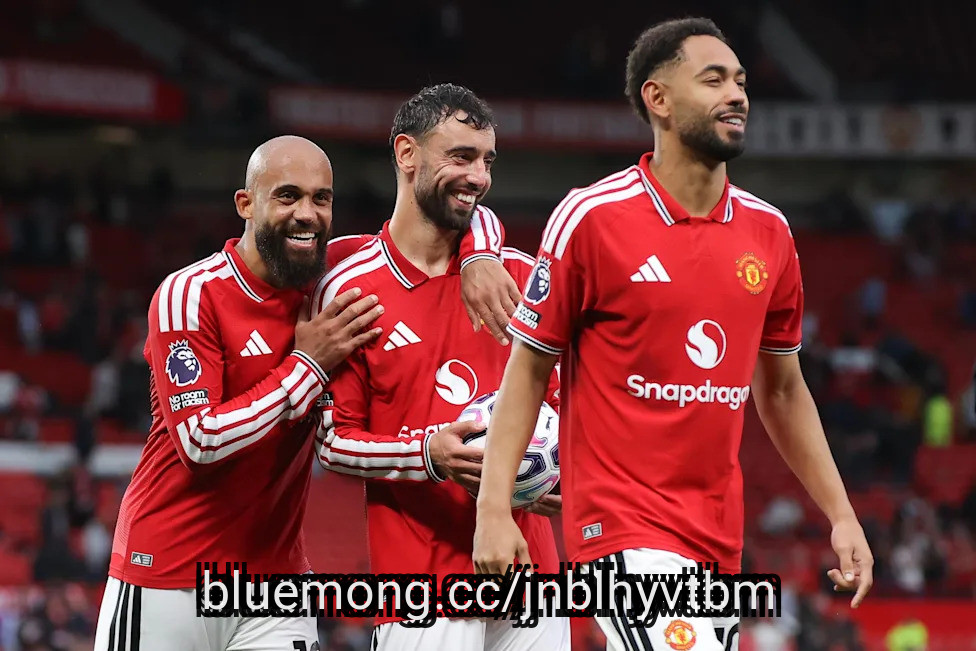
Manchester United looked very good in the second half against Ipswich Town on Sunday, but the side's goals did not come from the forward line. Harry Maguire, Bruno Fernandes and Kobbie Mainoo were the driving force behind the three goals, with the captain recording his first hat-trick in five years.
The front three of Matheus Cunha at striker and Marcus Rashford and Bryan Mbeumo on the flanks did not look poor. Cunha **** isted Bruno's first goal and Mbeumo finished an odd chip for the fifth and final goal, meanwhile Rashford had two excellent chances denied by the goalkeeper and last-ditch defending. There was balance, but it was still evidently a solution to a personnel problem.
Amad's preseason injury made the right wing options limited to Mbeumo, despite the Cameroonian's emergence as a good No. 9 option this season. Benjamin Sesko missed the entire preseason but has been fit enough to make appearances off the bench. Cunha, who typically played on the left last season, played as a No. 9 for Brazil at the World Cup and fit there with Rashford as a natural option on the left.
The options aren't bad for Michael Carrick to choose from. All three players have been flexible positionally in their careers and offer a balance of qualities. Rashford looked particularly comfortable playing with Luke Shaw again and he made a good effort out of possession to stay involved as well. He didn't get the goal his performance might have deserved, but overall it was a good homecoming.
Cunha was the only real odd fit, operating similarly to Bruno Fernandes and dropping into similar areas. It allowed the No. 10 to make good runs beyond the striker, but Cunha's lack of striker presence was felt at times, especially in the first half.
#striker

2 months ago
Ina Garten has never looked back at the life she and Jeffrey Garten built together and wished they had made a different decision about children.
At 78, the Barefoot Contessa star told The New York Times that becoming parents would have changed both her career and her marriage. "I think it would have been difficult, and I think Jeffrey and I would have had a different life together," she said.
Jeffrey once moved to **** an to start a business while Garten stayed in East Hampton, and the two traveled back and forth. At the same time, she was putting long hours into the Barefoot Contessa specialty-food store and its catering operation.
She said she understands why friends love raising families, but motherhood was never something she wanted for herself. "I've never looked back on the decision and thought, I should have done it differently," she said. "I'm really happy that I didn't."
Garten's answer centered less on what she believes she gave up and more on what the couple was able to do because their lives remained flexible. Jeffrey could pursue the opportunity in **** an while she continued running her business in the Hamptons, even though that meant living apart and traveling to see each other.
#contessa #together

2 months ago
Tuniu Corporation's (NASDAQ:TOUR) ADSs closed lower after the company reported its second-quarter results. Net revenue increased 3.0% year over year to RMB138.9 million, while packaged-tour revenue rose 6.8% to RMB121.1 million as organized tours continued to grow.
However, cost of revenue increased 27.9% to RMB62.5 million, substantially outpacing the top line. Gross profit declined 11.1% to RMB76.4 million, and gross margin contracted to 55.0% from 63.8%. Tuniu consequently swung to a RMB6.1 million operating loss from RMB7.1 million of operating income a year earlier.
Packaged-tour growth indicates that demand for Tuniu's core travel products remains intact. The company has been expanding small-group, private and customized tour offerings in response to demand for more personalized and flexible travel options.
Tuniu also remained marginally profitable below the operating line. GAAP net income attributable to ordinary shareholders was RMB0.7 million. Company-defined non-GAAP net income attributable to ordinary shareholders was RMB2.2 million after excluding share-based compensation and amortization of acquired intangible **** ets.
Liquidity provides additional room to absorb uneven travel demand. Tuniu ended June with approximately RMB1.0 billion in cash and cash equivalents, restricted cash, short-term investments, and long-term deposits. Management said during the earnings call that Tuniu generated RMB46.9 million of operating cash flow while recording RMB1.4 million of capital expenditures.
#tuniu #company #revenue #demand


2 months ago
CNBC reported on August 21, 2026, that Broadcom Inc. (NASDAQ:AVGO) is in talks to raise $70 billion to $80 billion in debt for a chip financing deal supporting AI companies, including Anthropic. The senior tranche, repaid first, is expected to be around $45 billion, with a junior tranche around $35 billion, though the figures remain flexible. Bloomberg first reported the deal could reach $100 billion in total, with Blackstone and Apollo Global Management among the firms in talks to participate. The raise would extend a partnership Broadcom, Apollo, and Blackstone unveiled in June, which committed $35 billion to expand Anthropic's computing infrastructure using Broadcom's custom chips. Broadcom shares rose about 1% on the news.
The deal strengthens Broadcom Inc. (NASDAQ:AVGO)'s position as critical infrastructure for AI labs beyond Nvidia's ecosystem. Broadcom designs custom chips for Alphabet, Meta, Anthropic, and OpenAI, and this financing extends its role in helping major AI labs reduce dependence on a single chip supplier. That diversification of demand sources gives Broadcom a structurally different customer relationship than a pure merchant chip seller.
The financing structure keeps this exposure off Broadcom's own balance sheet in its rawest form. A special-purpose vehicle raises the debt and leases the chips back to customers like Anthropic, rather than Broadcom borrowing the money directly. Structuring growth capital this way lets Broadcom participate in AI infrastructure buildout without carrying the full debt load on its own books.
The scale of plans shows durable demand rather than a one-off transaction. The original June partnership targeted delivering over 20 gigawatts of compute to top AI labs by 2028, and this expansion moves toward that target. A multi-year capacity commitment of that size shows Broadcom's AI customers are planning for sustained growth and not a short-term spending burst.
Broadcom Inc. (NASDAQ:AVGO) is still on the hook if its customers cannot pay, even with the debt structured off-balance-sheet. CNBC's Kristina Partsinevelos explained that "Broadcom's job is to guarantee part of that debt, and that guarantee is where the risk sits." It means a slowdown at Anthropic or another financed customer could still hit Broadcom directly despite the SPV structure.
#NASDAQ

2 months ago
Georgia Power has secured regulatory approval for a contract to supply OpenAI's planned project in Effingham County, Georgia, adding 3,200 megawatts of potential new electricity demand to one of the fastest-growing large-load markets in the United States.
The agreement, approved through the Georgia Public Service Commission's regulatory process, requires OpenAI to cover the full cost of infrastructure needed specifically to serve the project, according to Georgia Power.
OpenAI has also committed to make as much as 1,000 MW of its demand flexible. That would allow Georgia Power to curtail power deliveries to the facility during periods of high system demand, potentially reducing the amount of new generation capacity the utility needs to build solely to accommodate load growth.
The scale of the contract illustrates how artificial intelligence and data center development are reshaping US electricity demand. A 3.2-GW load is comparable to the output of several large conventional power plants and represents a substantial addition to Georgia Power's system.
Georgia Power said revenues from OpenAI and other large-load customers already announced, together with projected additional growth, are expected to generate approximately $950 million in annual savings for customers beginning in 2029.
#georgia #openai #regulatory


2 months ago
Orbis Investment Management, an investment management company, released its Q2 2026 investor letter for "Orbis Global Equity Strategy". The letter can be downloaded here. In the first half of 2026, the Global Equity Strategy returned 19.9%, surpassing the MSCI All Country World Index by 7.8%. The market faced narrow breadth in the quarter. The strategy focuses on AI investments categorized into four groups: "Core" (direct exposure), "Enablers" (supporting businesses), "AI Powered" (companies enhanced by AI), and "Overlooked" (misjudged resilient companies). The firm emphasizes maintaining strong but flexible convictions in a fluctuating market, prioritizing disciplined, evidence-based investment over emotional decision-making. Also, check the fund's top five holdings to see its best picks in 2026.
In its Q2 2026 investor letter, Orbis Global Equity Strategy highlighted Ryan Specialty Holdings, Inc. (NYSE:RYAN). Ryan Specialty Holdings, Inc. (NYSE:RYAN) is a specialty insurance services company that provides distribution, underwriting, product development, administration, and risk management services. On August 24, 2026, Ryan Specialty Holdings, Inc. (NYSE:RYAN) closed at $44.34 per share. The one-month return of Ryan Specialty Holdings, Inc. (NYSE:RYAN) was -3.63%, and its shares lost 23.17% over the past 52 weeks. Ryan Specialty Holdings, Inc. (NYSE:RYAN) has a market capitalization of $17.29 billion.
Orbis Global Equity Strategy stated the following regarding Ryan Specialty Holdings, Inc. (NYSE:RYAN) in its Q2 2026 investor letter:
"The biggest winners have been concentrated in AI. But not all AI exposure is equal. We frame ours in four groups. The first is the "Core", the second is "Enablers", the third is AI "Powered" and the fourth is the "Overlooked": resilient businesses the market has mispriced as AI casualties. The first three are widely understood. The fourth is where we believe the market is most wrong, and where we are hunting.
Take insurance brokerage. Brown & Brown and Ryan Specialty Holdings, Inc. (NYSE:RYAN) are brokers: they sit between companies and insurers, matching clients to the right coverage and placing it for a fee, without carrying the risk themselves. Both are priced as AI casualties. Two fears weigh on the stocks: a softening pricing cycle and AI disintermediation. The pricing cycle is already in the price. On AI, we disagree. Ryan Specialty makes the case from the other end of the market: a leading specialist in excess and surplus, the part of insurance built for complex, hard-to-place, and emerging risk. That market is structurally expanding, and we view Ryan as its most capable navigator. The pattern holds across the Overlooked. We are not buying businesses AI leaves alone. We are buying businesses that put AI to work. Scaled brokers with proprietary data are sharpened by it, not replaced."
#NYSE #strategy #orbis

2 months ago
Orbis Investment Management, an investment management company, released its Q2 2026 investor letter for "Orbis Global Equity Strategy". The letter can be downloaded here. In the first half of 2026, the Global Equity Strategy returned 19.9%, surpassing the MSCI All Country World Index by 7.8%. The market faced narrow breadth in the quarter. The strategy focuses on AI investments categorized into four groups: "Core" (direct exposure), "Enablers" (supporting businesses), "AI Powered" (companies enhanced by AI), and "Overlooked" (misjudged resilient companies). The firm emphasizes maintaining strong but flexible convictions in a fluctuating market, prioritizing disciplined, evidence-based investment over emotional decision-making. Also, check the fund's top five holdings to see its best picks in 2026.
In its Q2 2026 investor letter, Orbis Global Equity Strategy highlighted Brown & Brown, Inc. (NYSE:BRO). Brown & Brown, Inc. (NYSE:BRO) is a leading insurance brokerage firm operating through Retail and Specialty Distribution segments. On August 24, 2026, Brown & Brown, Inc. (NYSE:BRO) closed at $74.62 per share, reflecting a market capitalization of $24.97 billion. Brown & Brown, Inc. (NYSE:BRO) posted a one‑month return of 1.32%, while its shares lost 22.31% over the past 52 weeks.
Orbis Global Equity Strategy stated the following regarding Brown & Brown, Inc. (NYSE:BRO) in its Q2 2026 investor letter:
"The biggest winners have been concentrated in AI. But not all AI exposure is equal. We frame ours in four groups. The first is the "Core": direct exposure through companies like Samsung Electronics, Taiwan Semiconductor, and SK Square. The second is "Enablers": the businesses providing the power, materials, and real estate that hyperscalers need to operate. The third is AI "Powered": companies where AI accelerates an already compelling model, like Alphabet. The fourth is the "Overlooked": resilient businesses the market has mispriced as AI casualties. The first three are widely understood. The fourth is where we believe the market is most wrong, and where we are hunting.
Take insurance brokerage. Brown & Brown, Inc. (NYSE:BRO) and Ryan Specialty are brokers: they sit between companies and insurers, matching clients to the right coverage and placing it for a fee, without carrying the risk themselves. Both are priced as AI casualties. Two fears weigh on the stocks: a softening pricing cycle and AI disintermediation. The pricing cycle is already in the price. On AI, we disagree. AI may automate commodity cover like personal auto, but that is under 5% of Brown & Brown's book. The rest is commercial and specialty insurance, where the broker exercises judgement and answers for a denied claim. It is a people business, and Brown & Brown has spent more than eighty years serving mid sized companies that lack the in-house expertise in insurance."
#strategy #Equity


2 months ago
Aug 24 (Reuters) - Michael Saylor's Strategy set aside about $1.6 billion in cash to fund future treasury operations, including potential bitcoin purchases and share buybacks, the company disclosed in a regulatory filing on Monday.
The world's largest corporate buyer of bitcoin dubbed the liquidity pool "USD Cash," which will be different from a reserve it set up earlier to fund dividends on its preferred stock and interest on its outstanding debt.
The new cash pool will have more flexible uses and could be used for bitcoin purchases, share buybacks and other corporate events.
It could also give Strategy more flexibility to navigate bitcoin market downturns, allowing it to maintain cash on hand, while continuing to pursue its bitcoin-buying strategy.
The move comes after a robust week for bitcoin, which gained a little over 13% in the last five sessions after U.S. President Donald Trump urged Congress to pass legislation establishing clear rules for digital ******* ets.
#cash #strategy #fund


2 months ago
Orbis Investment Management, an investment management company, released its Q2 2026 investor letter for "Orbis Global Equity Strategy". The letter can be downloaded here. In the first half of 2026, the Global Equity Strategy returned 19.9%, surpassing the MSCI All Country World Index by 7.8%. The market faced narrow breadth in the quarter. The strategy focuses on AI investments categorized into four groups: "Core" (direct exposure), "Enablers" (supporting businesses), "AI Powered" (companies enhanced by AI), and "Overlooked" (misjudged resilient companies). The firm emphasizes maintaining strong but flexible convictions in a fluctuating market, prioritizing disciplined, evidence-based investment over emotional decision-making. Also, check the fund's top five holdings to see its best picks in 2026.
In its Q2 2026 investor letter, Orbis Global Equity Strategy highlighted QXO, Inc. (NYSE:QXO). QXO, Inc. (NYSE:QXO) is a leading US-based roofing, waterproofing, and complementary building products distributor. On August 24, 2026, QXO, Inc. (NYSE:QXO) closed at $13.41 per share, reflecting a market capitalization of $13.91 billion. QXO, Inc. (NYSE:QXO) posted a one-month return of -5.89%, while its shares lost 35.93% over the past 52 weeks.
Orbis Global Equity Strategy stated the following regarding QXO, Inc. (NYSE:QXO) in its Q2 2026 investor letter:
"We think about AI through the same lens. Most early corporate AI adoption is a motor swap: existing workflows, existing structures, existing ***** umptions, with AI bolted on. The companies that compound the most value are those willing to redesign the floor. This is a question I ask of every management team I invest behind. QXO, Inc. (NYSE:QXO) is doing exactly that. As it consolidates the prosaic, low-tech business of building products distribution, it is rebuilding the operating model itself, from pricing and procurement to inventory and branch data, rather than bolting technology onto the old way of working."
QXO, Inc. (NYSE:QXO) is not on our list of 40 Most Popular Stocks Among Hedge Funds Heading Into 2026. According to our database, 83 hedge fund portfolios held QXO, Inc. (NYSE:QXO) at the end of the second quarter, up from 65 in the previous quarter. While we acknowledge the potential of QXO, Inc. (NYSE:QXO) as an investment, we believe certain AI stocks offer greater upside potential and carry less downside risk. If you're looking for an extremely undervalued AI stock that also stands to benefit significantly from Trump-era tariffs and the onshoring trend, see our free report on the best short-term AI stock.
#strategy

2 months ago
Orbis Investment Management, an investment management company, released its Q2 2026 investor letter for "Orbis Global Equity Strategy". The letter can be downloaded here. In the first half of 2026, the Global Equity Strategy returned 19.9%, surpassing the MSCI All Country World Index by 7.8%. The market faced narrow breadth in the quarter. The strategy focuses on AI investments categorized into four groups: "Core" (direct exposure), "Enablers" (supporting businesses), "AI Powered" (companies enhanced by AI), and "Overlooked" (misjudged resilient companies). The firm emphasizes maintaining strong but flexible convictions in a fluctuating market, prioritizing disciplined, evidence-based investment over emotional decision-making. Also, check the fund's top five holdings to see its best picks in 2026.
In its Q2 2026 investor letter, Orbis Global Equity Strategy highlighted Ryan Specialty Holdings, Inc. (NYSE:RYAN). Ryan Specialty Holdings, Inc. (NYSE:RYAN) is a specialty insurance services company that provides distribution, underwriting, product development, administration, and risk management services. On August 24, 2026, Ryan Specialty Holdings, Inc. (NYSE:RYAN) closed at $44.34 per share. The one-month return of Ryan Specialty Holdings, Inc. (NYSE:RYAN) was -3.63%, and its shares lost 23.17% over the past 52 weeks. Ryan Specialty Holdings, Inc. (NYSE:RYAN) has a market capitalization of $17.29 billion.
Orbis Global Equity Strategy stated the following regarding Ryan Specialty Holdings, Inc. (NYSE:RYAN) in its Q2 2026 investor letter:
"The biggest winners have been concentrated in AI. But not all AI exposure is equal. We frame ours in four groups. The first is the "Core", the second is "Enablers", the third is AI "Powered" and the fourth is the "Overlooked": resilient businesses the market has mispriced as AI casualties. The first three are widely understood. The fourth is where we believe the market is most wrong, and where we are hunting.
Take insurance brokerage. Brown & Brown and Ryan Specialty Holdings, Inc. (NYSE:RYAN) are brokers: they sit between companies and insurers, matching clients to the right coverage and placing it for a fee, without carrying the risk themselves. Both are priced as AI casualties. Two fears weigh on the stocks: a softening pricing cycle and AI disintermediation. The pricing cycle is already in the price. On AI, we disagree. Ryan Specialty makes the case from the other end of the market: a leading specialist in excess and surplus, the part of insurance built for complex, hard-to-place, and emerging risk. That market is structurally expanding, and we view Ryan as its most capable navigator. The pattern holds across the Overlooked. We are not buying businesses AI leaves alone. We are buying businesses that put AI to work. Scaled brokers with proprietary data are sharpened by it, not replaced."
#market #letter