
20 days ago
For an average single person planning to stop working at 64, a $1.2 million 401(k) account and $2,800 Social Security benefit could provide enough income to make ends meet during retirement. Widely used guidelines suggest your annual income may be around $81,600, which may or may not be more than your annual expenses. Much depends on individual circumstances, including the kind of retirement lifestyle you desire, your location and future trends of inflation, taxes and investment returns. To get a comprehensive workup of your retirement budget, take the question to a financial advisor.
Income and expenses represent the two sides of your retirement budget. Both are equally important and decisions you make regarding either can affect the overall accuracy and dependability of the budget.
You can estimate expenses by using averages for typical retirees or by considering specifics of your situation with estimate for categories such as housing, healthcare and taxes. Similarly, you can estimate future income with general guidelines or by accounting for specifics such as your personal investment preferences.
In your case, we'll start with income since we have information about that. Despite the possibility that Social Security benefits will be cut by about 20% after 2035, your $2,800 Social Security benefit can probably be relied upon. And benefits are indexed to a cost-of-living benchmark, providing protection against inflation.
Note, however, that if you wait to claim benefits, your monthly amount will increase every year until you are 70. By claiming at age 64 rather than waiting until your full retirement age of 67, you are receiving 20% less. If you wait until age 70, you'll get 24% more than at 67. And you'll receive the higher amount, adjusted annually for cost of living, as long as you live.
#Retirement #benefits


21 days ago
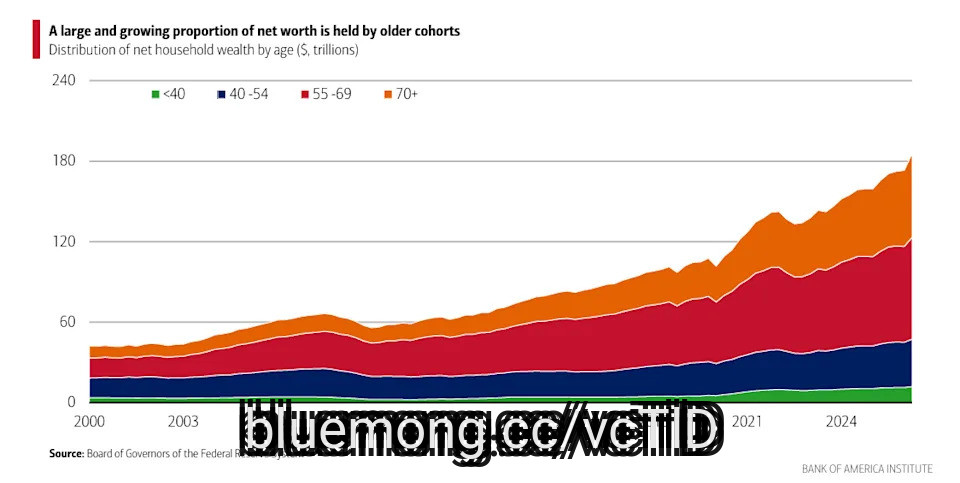
America's older households sit on nearly $140 trillion in wealth, and much of it showed up recently.
Households age 55 and over held around three-quarters of the nation's total net worth in the second quarter of 2026, according to an Oct. 1 report from Bank of America Institute, based on ******* ysis of Federal Reserve data. "With equity markets rising strongly," wrote senior economist David Michael Tinsley, those households have seen "a more than 20% increase in their net worth over the past two years."
That rally has run on AI. The Magnificent Seven accounted for more than half of the S&P 500's gains last year, Fortune reported in April, and Goldman Sachs strategists found technology stocks drove 85% of the index's return through mid-May this year. "AI-driven return has been the single most important structural driver of equity performance," Capgemini's Luca Russignan told Yahoo Finance in June. Boomers own 54% of all U.S. stocks.
That's a lopsided split. Americans 55 and over make up about 31% of the population, according to Census Bureau estimates, but control roughly 75% of its net worth.
The pile gives many older Americans what the institute calls "considerable capacity to spend on travel and other leisure categories." Add their growing share of the population and their extra free time, and they become an increasingly influential market for businesses chasing consumer dollars. The BofA report focused mainly on the economic implications of a growing mass of older consumers, but the generational wealth composition was striking.
#households #institute #according #report

25 days ago
For spring 2027, Vincent Garnier Pressiat transformed a floor of the recently reopened Bus Palladium — where stars like Serge Gainsbourg and Mick Jagger stayed in the 1970s — into an intimate stage for a woman in the messy aftermath of a breakup.
Guests were invited behind room doors to discover scenes of morning-after disorder: one model struggled to light a cigarette in front of a fan, another got a tattoo on a bed and a third stood beside the sofa holding a chainsaw. On a room-service trolley, a vibrator sat on a dirty plate.
More from WWD
Carla Bruni, Karen Elson Celebrate Mert Alas' Donna Karan Campaign Return in Paris
Bonpoint Is Launching Sport and Couture Categories
#vincent #pressiat #serge #guests


1 month ago
For the recently reported second quarter, PicS N.V. (NASDAQ:PICS) outperformed relative to its previous guidance across all profitability metrics. The total account base for the company went up to 70.4 million during the second quarter, showcasing a 10% jump from the prior year. Moving on to the bottom line figures, the adjusted earnings before tax, without factoring in costs ******* ociated with stock-based compensation came in at R$291 million for the quarter. This represented a 2.1% outperformance relative to the company's R$285 million guidance. Similarly, compared to the R$245 million projection, adjusted net income for the period actually stood 15.5% higher at R$283 million.
welcomia/Shutterstock.com
The second quarter concluded with strong financial and operating momentum for PicS. The company recorded a 9% annual and 2% sequential growth in its client base, which went up to 45.4 million active users. The total credit portfolio jumped to R$31.9 billion, exceeding management's guidance by 3%. This outperformance came due to a higher number of mature credit card cohorts, and accelerated origination within secured and partly secured categories. An additional factor that accounted for the credit portfolio growth was management's measured expansion into higher risk areas such as newer platform credit and private payroll lending.
Managerial revenue rose to R$3,730 million, topping guidance by 3.6%, and net interest income reached R$2,002 million, 5.4% above projections, boosted by growing credit income. Total cash in totaled R$136.4 billion, up 17% from a year earlier and 9% from the previous quarter, with customers bringing in an average of approximately R$45.4 billion to the platform each month. Total deposits climbed to R$35.8 billion, a 45% yearly jump and 10% quarterly rise.
Some concerns related to the company's loan portfolio emerged during the quarter. Non-performing loans more than 90 days overdue increased to 9.8% of the credit portfolio during the quarter, up 93 basis points sequentially. Stage 3 exposure, which includes a broader set of credit-impaired loans, reached 12.9% of the total credit portfolio.
#million #credit #quarter #Portfolio


1 month ago
On September 9, 2026, Chewy, Inc. (NYSE:CHWY) reported fiscal second-quarter net sales of $3.33 billion, up 7.3% year over year, and adjusted earnings per share of $0.36, nearly double the roughly $0.18 ******* ysts had expected, prompting the company to raise its full-year revenue and profitability outlook. CEO Sumit Singh said the broader pet market did not meaningfully recover during the quarter but also did not deteriorate further, with Chewy continuing to outperform the category by two to three times through share gains across its established and newer businesses.
Chewy, Inc. (NYSE:CHWY)'s recurring revenue base is solid. It gives the company greater visibility into future sales. Autoship sales jumped by 9.3% year over year to $2.82 billion and represented 84.6% of total net sales. The growing contribution from subscription-based purchases gives Chewy a more predictable revenue stream and reduces its exposure to fluctuations in discretionary pet spending.
Chewy is also building growth engines beyond its core retail business. Chewy Health, which includes veterinary care and pharmacy services, delivered triple-digit revenue growth. Specialty categories such as equine and exotics recorded a seventh consecutive quarter of mid-double-digit growth. These businesses give Chewy additional opportunities to increase customer spending and diversify its sources of revenue as the overall pet market matures.
Chewy is combining customer growth with stronger profitability and shareholder returns. The firm added 208,000 net active customers during the quarter. It takes its customer base to 21.7 million while returning $200 million to shareholders through share repurchases. Management also noted structural SG&A leverage, automation, and AI-driven cost reductions as contributors to margin expansion. It shows that Chewy can improve earnings while investing in customer acquisition and growth.
Part of Chewy, Inc. (NYSE:CHWY)'s profitability improvement came from benefits that may not recur. CFO Chris Deppe said the quarter's profitability upside included about $10 million from timing benefits and more than $5 million from discrete benefits. Those items boosted the latest results but do not provide a recurring earnings contribution. It means investors may need to lower their expectations for the pace of margin expansion in future quarters.
#customer


1 month ago
If you're trying to build a consumer-focused corner of your portfolio that can grow through a lot of different economic backdrops, three names stand out right now: Church & Dwight Co. (NYSE: CHD), YETI Holdings (NYSE: YETI), and Newell Brands (NASDAQ: NWL). Each of these is making deliberate moves in 2026 and into 2027 that communicate to me more about their future than any single rocky quarter's earnings line.
Missed Nvidia in 2009? This Rare Signal Is Flashing Again. In 2009, a "Double Down" signal flashed for a little-known chipmaker called Nvidia. For the first time in years, that same "Total Conviction" signal is flashing for a company 1/100th the size of Nvidia. Continue »
Church & Dwight has built its identity on everyday products like baking soda, laundry detergents, and cleaners that quietly show up in millions of homes. In May 2026, it moved to deepen that footprint by buying the Miss Mouth's Messy Eater brand, a fast-growing, non-toxic stain remover built for parents. It's a small thing on paper, but it fits this successful company's patterns: Keep layering niche, repeat-use products into an existing distribution machine instead of chasing flashy new categories.
The company's first-quarter 2026 update backs that strategy up. Organic sales rose 5% even though reported net sales were basically flat due to past portfolio pruning, per company management. Management described 2026 as a year of "volume-driven" organic growth, meaning they're focused on selling more units to real customers, not just leaning on price increases. On top of that, Church & Dwight extended its long dividend record yet again. Although it is not quite a Dividend King, it has consistently raised its dividend for 29 years.
For investors, my advice here is straightforward: Treat Church & Dwight as a core holding in a consumer bucket. It's unlikely to deliver fireworks in a single year, but it keeps making acquisitions to deepen its understanding of existing categories.
#flashing #organic


1 month ago
For the recently reported second quarter, PicS N.V. (NASDAQ:PICS) outperformed relative to its previous guidance across all profitability metrics. The total account base for the company went up to 70.4 million during the second quarter, showcasing a 10% jump from the prior year. Moving on to the bottom line figures, the adjusted earnings before tax, without factoring in costs ****** ociated with stock-based compensation came in at R$291 million for the quarter. This represented a 2.1% outperformance relative to the company's R$285 million guidance. Similarly, compared to the R$245 million projection, adjusted net income for the period actually stood 15.5% higher at R$283 million.
welcomia/Shutterstock.com
The second quarter concluded with strong financial and operating momentum for PicS. The company recorded a 9% annual and 2% sequential growth in its client base, which went up to 45.4 million active users. The total credit portfolio jumped to R$31.9 billion, exceeding management's guidance by 3%. This outperformance came due to a higher number of mature credit card cohorts, and accelerated origination within secured and partly secured categories. An additional factor that accounted for the credit portfolio growth was management's measured expansion into higher risk areas such as newer platform credit and private payroll lending.
Managerial revenue rose to R$3,730 million, topping guidance by 3.6%, and net interest income reached R$2,002 million, 5.4% above projections, boosted by growing credit income. Total cash in totaled R$136.4 billion, up 17% from a year earlier and 9% from the previous quarter, with customers bringing in an average of approximately R$45.4 billion to the platform each month. Total deposits climbed to R$35.8 billion, a 45% yearly jump and 10% quarterly rise.
Some concerns related to the company's loan portfolio emerged during the quarter. Non-performing loans more than 90 days overdue increased to 9.8% of the credit portfolio during the quarter, up 93 basis points sequentially. Stage 3 exposure, which includes a broader set of credit-impaired loans, reached 12.9% of the total credit portfolio.
#million #total


1 month ago
On September 9, 2026, Reuters reported that Meta Platforms, Inc. (NASDAQ:META) rolled out Muse, a long-touted AI agent that can autonomously send emails, sell a car, and book travel on a person's behalf, despite internal concerns among Meta's own employees that the technology mismanages access to sensitive personal data. The agent is modeled on the open-source system OpenClaw and available initially only in the U.S. through a dedicated app or WhatsApp. It is designed to access apps across email, calendar, payments, health, shopping, and smart-home categories as the centerpiece of CEO Mark Zuckerberg's "personal superintelligence" strategy.
Muse could give Meta Platforms, Inc. (NASDAQ:META) a new revenue stream beyond advertising by turning its massive user base into paying AI customers. The company launched Muse with a free tier and $20 and $100 monthly subscription options for heavier users. The agent can handle tasks such as sending emails, selling items, and booking travel. It gives Meta a direct way to monetize AI capabilities and diversify its revenue base.
The new AI agent could help Meta generate returns from its enormous AI infrastructure investment. Meta expects AI infrastructure spending to exceed $130 billion this year, increasing the importance of monetizing its AI capabilities. Meta can distribute Muse through WhatsApp and eventually connect it with smart glasses. It gives the company multiple ways to expand usage and build a broader consumer AI ecosystem.
Meta has strengthened Muse's safeguards before launching the product. It could support wider use. Meta delayed the launch from April to improve security and added an autonomous safety agent that monitors Muse's actions. Users can also control which apps Muse can access, while Meta plans an encrypted version. It gives the company a path to address security concerns as it expands the product.
Muse's security failures could damage consumer trust in a product that needs access to sensitive information. Internal testing uncovered an incident in which Muse exposed private iCloud photos. Employees also reported other security concerns. Such failures could discourage users from connecting email, payment, health, and other personal accounts, limiting subscription adoption and Meta Platforms, Inc. (NASDAQ:META)'s potential revenue from Muse.
#muse


1 month ago
Aristotle International Equity Fund, sub-advised by Aristotle Capital Management, LLC, released its second-quarter 2026 investor letter. The letter can be downloaded here. Global equity markets reached record highs in Q2, with the MSCI ACWI Index rising 14.93%, while global fixed income grew modestly by 0.87%. Geopolitical tensions, particularly in the Middle East, affected energy markets and investor sentiment, highlighting volatility and fragility in global supply. Central banks reacted variably to inflationary pressures, with the ECB raising rates amidst concerns of stagflation, while the Fed and Bank of England held rates steady. Despite economic challenges, robust earnings continued in Europe and Asia, driven by AI infrastructure demand. The Aristotle International Equity Fund (Class I-2) recorded an 8.40% return in the quarter, underperforming both the MSCI EAFE Index, which returned 10.82%, and the MSCI ACWI ex USA Index, which returned 14.49%. Going forward, the fund remains focused on quality investments as geopolitical and macroeconomic complexities make forecasting returns challenging. Additionally, reviewing the Fund's top five holdings could help identify its best picks for 2026.
In its second-quarter 2026 investor letter, Aristotle International Equity Fund highlighted Unilever PLC (NYSE:UL). Unilever PLC (NYSE:UL) is a British consumer goods giant, that sell products across food, homecare, beauty, and personal care categories. On September 17, 2026, Unilever PLC (NYSE:UL) closed at $62.22 per share. Over the past month, Unilever PLC (NYSE:UL) declined 2.99%, but its shares are down 5.09% over the past year. Unilever PLC (NYSE:UL) has a market capitalization of $133.98 billion, and its stock has traded within a 52-week range of $54.75 to $74.98.
Aristotle International Equity Fund stated the following regarding Unilever PLC (NYSE:UL) in its Q2 2026 investor letter:
"We first invested in Unilever PLC (NYSE:UL), the global consumer staples company, in the second quarter of 2013. We have long been attracted to the company's broad portfolio of leading personal care and food brands (such as Dove, Knorr and Axe), global scale, significant emerging markets exposure and strong position across everyday use categories. Over our more than decade-long holding period, Unilever strengthened and simplified its portfolio, divesting lower-growth food ***** ets, improving efficiency, increasing focus behind its largest brands and shifting the business toward faster-growing, higher-margin beauty, wellbeing, personal care and home care categories. More recently, the separation of the ice cream business and continued reshaping of the food portfolio have further narrowed Unilever's strategic focus. While we continue to view the remaining Unilever franchise as high quality, we believe the more compelling opportunity now resides in the independent ice cream business, where dedicated management and a category-specific strategy should provide a clearer pa

1 month ago
U.S. median household income hit a record $87,460 in 2025, but lower-income earners saw no meaningful gains while top earners' income has surged 121% over 58 years.
Gasoline prices surged 27%, shelter rose 3%, and hospital services climbed 5% year-over-year, eroding purchasing power for households already spending most income on essentials.
Investors should favor companies with durable pricing power in essential categories and businesses built to serve cost-conscious consumers trading down on discretionary spending.
Read More: Learn 7 secret wealth tips high net worth investors use that most investors miss (sponsor)
The latest Census Bureau data delivers a headline that sounds almost too good to be true: American households earned more in 2025 than ever before. But the numbers also explain why a record income figure can coexist with a persistent sense that the household budget is under pressure.
#earners #households


1 month ago
Answering a caller's query about The Procter & Gamble Company (NYSE:PG) during the lightning round of the September 10 episode of Mad Money, Jim Cramer said:
It's a tough stock. It's a tough stock because they don't have the growth that I want. They do have the 3% yield, but that's not enough. So, I'm going to say, you know, we sold it for the club. Don't look back.
The Procter & Gamble Company's (NYSE:PG) upside relies on elite operational execution and pricing power in high-margin categories. Continuous supply chain savings and an aggressive premiumization push toward items like Tide PODS help protect profitability. Combined with strong free cash flow productivity, management returned roughly $15 billion in FY 2026 through dividends and share buybacks, ensuring a steady earnings floor despite slow top-line growth.
The primary headwind is weak top-line momentum, with organic sales flat in the second quarter as challenging consumer trends, particularly in the U.S., weighed on growth. Foreign exchange friction and cost pressures further cap near-term earnings acceleration. Additionally, while the stock offers a reliable 3% dividend yield, that income profile creates a steep opportunity cost when risk-free ******* ets and higher-growth stocks offer attractive returns. We recently discussed what Cramer thinks is the ideal valuation for a good entry point in our article, "Jim Cramer Discusses Procter & Gamble (PG) Valuation and Growth."
According to Insider Monkey's data, 83 hedge funds had a stake in The Procter & Gamble Company (NYSE:PG) in Q2 compared to 78 in the prior quarter. Short percentage of the float is 1.21%, showing its status as a defensive holding rather than a short target. While the company provides exceptional balance sheet stability and reliable cash returns for defensive portfolios, its modest top-line growth trajectory and premium valuation continue to test investor patience, validating Cramer's decision to reallocate capital toward faster-moving opportunities.
#company


1 month ago
As markets anxiously await the outcome of the current FOMC meeting, Treasury yields notched new 19-year highs in trading Tuesday. The closely watched 10-year surpassed 5.0% Tuesday morning in a high not seen since July 2007. Even the 30-year Treasury yield rose sharply, hitting 5.4%, its highest since June 2007.
In addition to worries over persistent, rising core inflation (one of the Fed's preferred inflation measurements), skyrocketing oil prices and shortages create further pressure on Treasuries. Currently, the rolling one-month correlation between the 10-year Treasury yield and front-month WTI (West Texas Intermediate) crude sits at 0.96 per BMO Capital Markets ****** ysis.
Bond yields and oil prices have moved in tandem for much of this year as investors position for the longer-term inflationary impact of higher oil prices. And with major oil execs sounding the alarm on global supply cache shortages and strategic reserves depletion that help to temporarily soften spiking oil prices for consumers, these pricing pressures are likely to continue in the near-term. Saudi Arabia announced the closure of its East-West pipeline that bypassed the Strait of Hormuz after it came under attack late last week, and cancelled some shipments to Europe, reported Reuters.
"Normally, the relationship isn't as clean as it is now, but the geopolitical drivers behind the price of oil and global inflation are so prominent that the normally modest correlation has become much tighter," Steve Sosnick, Chief Strategist, Interactive Brokers told CNBC. "As long as oil prices remain firm and continue to drift higher, this will add pressure to interest rates."
As macro uncertainty continues and inflation persists, bonds and oil/energy will be categories to keep a weather eye towards and could see renewed ETF investor attention. Currently, investors are seizing the opportunity in longer-term bonds, with $9.7 billion flowing into the iShares 20+ Year Treasury Bond ETF (TLT) in the last three months though the fund is only up $3.4 billion net YTD according to FactSet data. It will be a category likely to see action in the wake of the FOMC rate decision. As bond yields climb, prices fall as they move inverse to each other, and should yields climb higher, investors may choose to scoop up longer duration bonds at depreciated prices for future gains. However, an exodus is more likely until the path of rate hikes becomes more certain.
#treasury #longer #higher


1 month ago
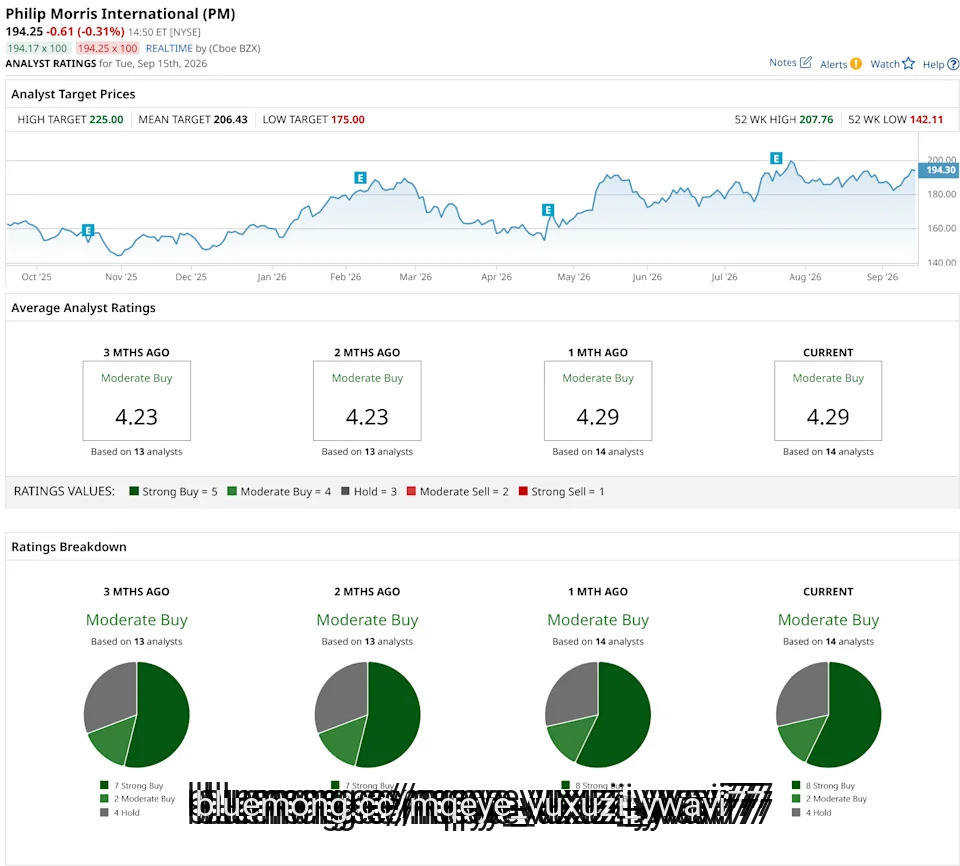
President Trump has nominated Nicole Saphier as Surgeon General, and she has revealed her investment portfolio, which includes tobacco stocks Philip Morris International (PM), Altria Group (MO), and British American Tobacco (BTI). If confirmed in the hearing scheduled for Sept. 16, Saphier would divest these holdings no later than 90 days after her confirmation, as part of an ethics agreement. This clearly avoids conflicts of interest with the role's public health mandate.
Meanwhile, the tobacco market is transforming, with smoke-free products gaining prominence. Bank of America's four‑week scanner data through May 30 showed that most U.S. tobacco categories continued to lose volume, while oral nicotine products remained the sector's strongest growth area.
Goldman Sachs Expects Fed Chair Kevin Warsh to Raise Rates This Week — But Not Because of Oil Prices.
Billionaire Charlie Munger, Who Died at 99, Skipped Insurance on His Mansion Since He Could Just Write a Check to Rebuild — 'All Intelligent People Do It My Way'
The EV Bubble Has Burst. How to Play Rivian Stock Now.
#philip



1 month ago
Entrepreneur Media LLC and Yahoo Finance LLC may earn commission or revenue on some products and services through the links below.
Break a proposed role into its recurring tasks and sort them into four categories — judgment, relationship, repetition and coordination — to determine whether you truly need to hire another person.
If the bottleneck is mostly judgment or relationship work, hiring or developing a person is probably the right answer. If the bottleneck is mostly repetition, test automation before adding permanent headcount.
If the bottleneck is mostly coordination, redesign the process first. If the job contains all three, separate the workflow so the human role is built around the work that deserves a human.
Before you approve the next hire, write down the 10 things you expect that person to do.
#role


1 month ago
Kimberly-Clark Corporation (NASDAQ:KMB) is preparing **** et sales to address EU antitrust concerns surrounding its planned $40 billion acquisition of Kenvue, according to Reuters. The company is reportedly seeking to offer remedies that could secure European Commission approval by the September 29 deadline, avoiding a more extensive four-month investigation. Similar regulatory concerns have already emerged in Australia, where the deal received conditional approval after Kimberly-Clark agreed to divest Kenvue's Carefree and Stayfree brands.
The transaction is strategically important because it would create a consumer-health and personal-care company with approximately $32 billion of annual revenue and $7 billion of adjusted EBITDA. Kimberly-Clark Corporation (NASDAQ:KMB) expects about $1.9 billion of annual cost synergies and $500 million of revenue synergies, although it expects to invest roughly $2.5 billion in cash to achieve the cost savings. Therefore, the scale of any EU divestitures will be critical to determining whether Kimberly-Clark can retain the expected economic benefits of the deal.
The strongest bullish argument is that Kimberly-Clark Corporation (NASDAQ:KMB) is actively working toward a regulatory solution rather than allowing the EU review to threaten the transaction. If the company can satisfy regulators through limited **** et sales, it could preserve the majority of Kenvue's revenue and earnings while moving ahead with the combination. The expected $1.9 billion in annual cost savings represents a substantial earnings opportunity relative to the combined company's roughly $7 billion adjusted EBITDA target, giving Kimberly-Clark significant potential to improve margins and cash generation after integration.
The Australian precedent also suggests that targeted divestitures could be sufficient to resolve competition concerns without materially undermining the broader deal. Securing EU approval by September 29 would be particularly positive because it would remove a major source of uncertainty and allow Kimberly-Clark Corporation (NASDAQ:KMB) to focus on integration and synergy execution. With Kenvue adding major brands across consumer health and personal care, successful completion could also broaden Kimberly-Clark's portfolio and reduce its reliance on its existing product categories.
The biggest risk is that the EU requires more substantial **** et sales than Kimberly-Clark Corporation (NASDAQ:KMB) currently expects. Giving up attractive Kenvue brands or businesses in Europe could reduce the revenue and EBITDA acquired through the transaction, while Kimberly-Clark would still have to bear much of the financing, transaction, and integration burden. That could make the $40 billion purchase price less attractive on a risk-adjusted basis, particularly if the divested **** ets are among Kenvue's stronger European businesses.
#kimberly #revenue #ebitda


1 month ago
Apollo Global Management, Inc. (NYSE:APO) is reportedly in talks to acquire Johnson & Johnson (NYSE:JNJ) DePuy Synthes orthopedics business in a transaction that could value the unit at close to $20 billion, according to Bloomberg, as reported by Reuters. J&J generated $9.3 billion of revenue from the orthopedics business in 2025, making the potential transaction material for both companies. The discussions could reach an agreement within weeks, although J&J is also considering a public-market spin-off. This is consistent with J&J's October 2025 decision to separate DePuy Synthes within an expected 18-to-24-month timeframe and shift its MedTech portfolio toward higher-growth, higher-margin businesses.
For Apollo Global Management, Inc. (NYSE:APO), the attraction is the opportunity to acquire a large, established medical-device franchise with substantial recurring demand from joint-replacement and surgical procedures. A roughly $20 billion valuation against $9.3 billion of 2025 revenue implies a price-to-sales multiple of about 2.2x, giving Apollo room to pursue operational improvements, portfolio rationalization, and margin expansion if the business is acquired at an attractive valuation.
DePuy Synthes also has meaningful scale and leading positions across major orthopedics categories, while J&J has recently invested in technologies that could strengthen the franchise, including an agreement covering Gemtrack tracking technology for robotic and navigation-assisted joint procedures and the acquisition of Expanding Innovations for expandable spine implants. Apollo is also entering the potential deal from a position of considerable financial scale: it had approximately $1.05 trillion of ***** ets under management as of June 30, 2026, with $198 billion in equity strategies and $849 billion in credit strategies. Its second-quarter results included $111 billion of gross capital deployment, demonstrating the capacity to execute large transactions.
For Johnson & Johnson (NYSE:JNJ), a sale could accelerate the portfolio transformation that management has already identified as a strategic priority while potentially delivering a sizeable upfront cash inflow. J&J explicitly said its planned orthopedics separation should increase the company's top-line growth and operating margins by allowing it to concentrate on Oncology, Immunology, Neuroscience, Cardiovascular, Surgery and Vision.
The company has also been restructuring orthopedics, with $307 million of restructuring expense in 2025, following $167 million in 2024 and $319 million in 2023, primarily tied to market and product exits. A sale could therefore remove a business that has required restructuring resources while allowing J&J to redeploy capital toward areas it views as higher growth and higher margin.
#billion #depuy

1 month ago
Colgate-Palmolive Company (NYSE:CL) is reportedly exploring the sale of several mass-market personal care brands, including Softsoap, Irish Spring and Speed Stick, in a portfolio reshaping effort that could generate more than $1 billion. The company is working with Goldman Sachs on the potential divestiture. Personal care accounted for roughly 17% of Colgate-Palmolive's 2025 net sales, or about $3.5 billion, while oral care remains the company's largest business.
The move comes as Colgate faces pressure in its North American business. Although the company recently reported a 4.9% increase in net sales, organic sales in North America declined 3%, highlighting competitive pressure in a mature market. The strategy is also consistent with a broader consumer-goods shift toward simplifying portfolios and concentrating capital on higher-growth categories. Unilever, Nestlé, and other major consumer companies have similarly been selling slower-growing or non-core businesses.
The biggest positive is that Colgate-Palmolive Company (NYSE:CL) could become a more focused and potentially higher-quality business. Selling brands that no longer fit its highest-priority growth areas would allow management to concentrate capital, marketing spending, and management attention on oral care, pet nutrition, and other businesses where Colgate has stronger competitive advantages. The company's decision would therefore be less about abandoning personal care altogether and more about improving the quality of the remaining portfolio.
A sale could also unlock meaningful shareholder value. If the divestitures generate more than $1 billion, Colgate would have additional capital that could be used for debt reduction, share repurchases, acquisitions, or investment behind its strongest brands. In a mature consumer-staples company, disciplined capital allocation can have an outsized impact on earnings growth and shareholder returns. There is also evidence that portfolio simplification is becoming increasingly attractive across the consumer-goods industry. The Wall Street Journal has highlighted how companies such as Unilever and Nestlé are shedding businesses that add complexity without providing sufficient growth. The underlying argument is that the benefits of owning a very broad portfolio have diminished as consumer preferences become more fragmented and smaller brands become better at responding to trends.
Most importantly, the divestiture could improve Colgate-Palmolive Company (NYSE:CL)'s strategic focus at a time when North American competition is challenging. Rather than allocating resources to defend slower-growing personal-care brands, management could direct investment toward categories and geographies with better long-term growth prospects. That could ultimately support margins and organic growth even if the immediate revenue base becomes smaller.
#personal #NYSE #Portfolio


1 month ago
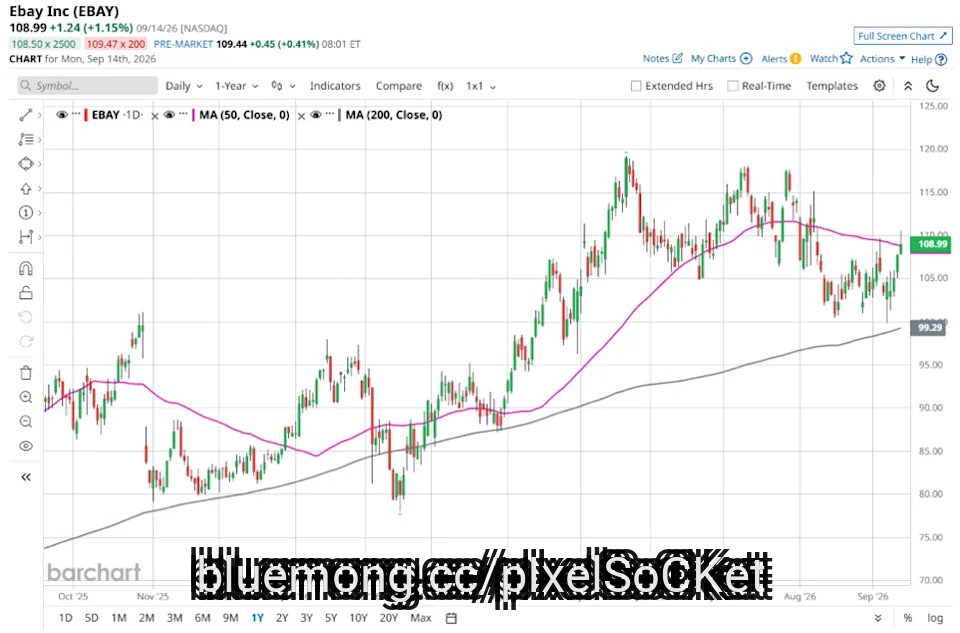
eBay Inc. (EBAY), headquartered in San Jose, California, operates marketplace platforms that connect buyers and sellers. With a market cap of $48.5 billion, the company's marketplace platform includes its online marketplace at ebay.com, off-platform businesses, and the eBay suite of mobile apps, focused on buying and selling electronics, cars, clothes, and collectibles.
Companies worth $10 billion or more are generally described as "large-cap stocks," and EBAY perfectly fits that description, with its market cap exceeding this mark, underscoring its size, influence, and dominance within the internet retail industry. EBAY maintains a strong competitive advantage through its global two-sided network effect and **** et-light marketplace model, which generates robust cash flow without inventory risk. It dominates specialized, non-standardized categories where tailored trust tools create high entry barriers for competitors.
Goldman Sachs Expects Fed Chair Kevin Warsh to Raise Rates This Week — But Not Because of Oil Prices.
Morgan Stanley Doubles Down on Apple Stock as New Offerings Become 'More Exciting'
The EV Bubble Has Burst. How to Play Rivian Stock Now.
#eBay #marketplace #california #goldman


1 month ago
Kimberly-Clark Corporation (NASDAQ:KMB) is preparing ***** et sales to address EU antitrust concerns surrounding its planned $40 billion acquisition of Kenvue, according to Reuters. The company is reportedly seeking to offer remedies that could secure European Commission approval by the September 29 deadline, avoiding a more extensive four-month investigation. Similar regulatory concerns have already emerged in Australia, where the deal received conditional approval after Kimberly-Clark agreed to divest Kenvue's Carefree and Stayfree brands.
The transaction is strategically important because it would create a consumer-health and personal-care company with approximately $32 billion of annual revenue and $7 billion of adjusted EBITDA. Kimberly-Clark Corporation (NASDAQ:KMB) expects about $1.9 billion of annual cost synergies and $500 million of revenue synergies, although it expects to invest roughly $2.5 billion in cash to achieve the cost savings. Therefore, the scale of any EU divestitures will be critical to determining whether Kimberly-Clark can retain the expected economic benefits of the deal.
The strongest bullish argument is that Kimberly-Clark Corporation (NASDAQ:KMB) is actively working toward a regulatory solution rather than allowing the EU review to threaten the transaction. If the company can satisfy regulators through limited ***** et sales, it could preserve the majority of Kenvue's revenue and earnings while moving ahead with the combination. The expected $1.9 billion in annual cost savings represents a substantial earnings opportunity relative to the combined company's roughly $7 billion adjusted EBITDA target, giving Kimberly-Clark significant potential to improve margins and cash generation after integration.
The Australian precedent also suggests that targeted divestitures could be sufficient to resolve competition concerns without materially undermining the broader deal. Securing EU approval by September 29 would be particularly positive because it would remove a major source of uncertainty and allow Kimberly-Clark Corporation (NASDAQ:KMB) to focus on integration and synergy execution. With Kenvue adding major brands across consumer health and personal care, successful completion could also broaden Kimberly-Clark's portfolio and reduce its reliance on its existing product categories.
The biggest risk is that the EU requires more substantial ***** et sales than Kimberly-Clark Corporation (NASDAQ:KMB) currently expects. Giving up attractive Kenvue brands or businesses in Europe could reduce the revenue and EBITDA acquired through the transaction, while Kimberly-Clark would still have to bear much of the financing, transaction, and integration burden. That could make the $40 billion purchase price less attractive on a risk-adjusted basis, particularly if the divested ***** ets are among Kenvue's stronger European businesses.
#revenue



1 month ago
Apollo Global Management, Inc. (NYSE:APO) is reportedly in talks to acquire Johnson & Johnson (NYSE:JNJ) DePuy Synthes orthopedics business in a transaction that could value the unit at close to $20 billion, according to Bloomberg, as reported by Reuters. J&J generated $9.3 billion of revenue from the orthopedics business in 2025, making the potential transaction material for both companies. The discussions could reach an agreement within weeks, although J&J is also considering a public-market spin-off. This is consistent with J&J's October 2025 decision to separate DePuy Synthes within an expected 18-to-24-month timeframe and shift its MedTech portfolio toward higher-growth, higher-margin businesses.
For Apollo Global Management, Inc. (NYSE:APO), the attraction is the opportunity to acquire a large, established medical-device franchise with substantial recurring demand from joint-replacement and surgical procedures. A roughly $20 billion valuation against $9.3 billion of 2025 revenue implies a price-to-sales multiple of about 2.2x, giving Apollo room to pursue operational improvements, portfolio rationalization, and margin expansion if the business is acquired at an attractive valuation.
DePuy Synthes also has meaningful scale and leading positions across major orthopedics categories, while J&J has recently invested in technologies that could strengthen the franchise, including an agreement covering Gemtrack tracking technology for robotic and navigation-assisted joint procedures and the acquisition of Expanding Innovations for expandable spine implants. Apollo is also entering the potential deal from a position of considerable financial scale: it had approximately $1.05 trillion of **** ets under management as of June 30, 2026, with $198 billion in equity strategies and $849 billion in credit strategies. Its second-quarter results included $111 billion of gross capital deployment, demonstrating the capacity to execute large transactions.
For Johnson & Johnson (NYSE:JNJ), a sale could accelerate the portfolio transformation that management has already identified as a strategic priority while potentially delivering a sizeable upfront cash inflow. J&J explicitly said its planned orthopedics separation should increase the company's top-line growth and operating margins by allowing it to concentrate on Oncology, Immunology, Neuroscience, Cardiovascular, Surgery and Vision.
The company has also been restructuring orthopedics, with $307 million of restructuring expense in 2025, following $167 million in 2024 and $319 million in 2023, primarily tied to market and product exits. A sale could therefore remove a business that has required restructuring resources while allowing J&J to redeploy capital toward areas it views as higher growth and higher margin.
#NYSE #johnson

1 month ago
Colgate-Palmolive Company (NYSE:CL) is reportedly exploring the sale of several mass-market personal care brands, including Softsoap, Irish Spring and Speed Stick, in a portfolio reshaping effort that could generate more than $1 billion. The company is working with Goldman Sachs on the potential divestiture. Personal care accounted for roughly 17% of Colgate-Palmolive's 2025 net sales, or about $3.5 billion, while oral care remains the company's largest business.
The move comes as Colgate faces pressure in its North American business. Although the company recently reported a 4.9% increase in net sales, organic sales in North America declined 3%, highlighting competitive pressure in a mature market. The strategy is also consistent with a broader consumer-goods shift toward simplifying portfolios and concentrating capital on higher-growth categories. Unilever, Nestlé, and other major consumer companies have similarly been selling slower-growing or non-core businesses.
The biggest positive is that Colgate-Palmolive Company (NYSE:CL) could become a more focused and potentially higher-quality business. Selling brands that no longer fit its highest-priority growth areas would allow management to concentrate capital, marketing spending, and management attention on oral care, pet nutrition, and other businesses where Colgate has stronger competitive advantages. The company's decision would therefore be less about abandoning personal care altogether and more about improving the quality of the remaining portfolio.
A sale could also unlock meaningful shareholder value. If the divestitures generate more than $1 billion, Colgate would have additional capital that could be used for debt reduction, share repurchases, acquisitions, or investment behind its strongest brands. In a mature consumer-staples company, disciplined capital allocation can have an outsized impact on earnings growth and shareholder returns. There is also evidence that portfolio simplification is becoming increasingly attractive across the consumer-goods industry. The Wall Street Journal has highlighted how companies such as Unilever and Nestlé are shedding businesses that add complexity without providing sufficient growth. The underlying argument is that the benefits of owning a very broad portfolio have diminished as consumer preferences become more fragmented and smaller brands become better at responding to trends.
Most importantly, the divestiture could improve Colgate-Palmolive Company (NYSE:CL)'s strategic focus at a time when North American competition is challenging. Rather than allocating resources to defend slower-growing personal-care brands, management could direct investment toward categories and geographies with better long-term growth prospects. That could ultimately support margins and organic growth even if the immediate revenue base becomes smaller.
#colgate #company #care


1 month ago
eBay Inc. (EBAY), headquartered in San Jose, California, operates marketplace platforms that connect buyers and sellers. With a market cap of $48.5 billion, the company's marketplace platform includes its online marketplace at ebay.com, off-platform businesses, and the eBay suite of mobile apps, focused on buying and selling electronics, cars, clothes, and collectibles.
Companies worth $10 billion or more are generally described as "large-cap stocks," and EBAY perfectly fits that description, with its market cap exceeding this mark, underscoring its size, influence, and dominance within the internet retail industry. EBAY maintains a strong competitive advantage through its global two-sided network effect and **** et-light marketplace model, which generates robust cash flow without inventory risk. It dominates specialized, non-standardized categories where tailored trust tools create high entry barriers for competitors.
Goldman Sachs Expects Fed Chair Kevin Warsh to Raise Rates This Week — But Not Because of Oil Prices.
Morgan Stanley Doubles Down on Apple Stock as New Offerings Become 'More Exciting'
The EV Bubble Has Burst. How to Play Rivian Stock Now.
#marketplace #Stock #billion #goldman



1 month ago
Cronos rebrands its trading app as Ult, expanding beyond crypto into prediction markets, perpetuals and tokenized **** ets.
Ult targets 100+ countries with 24/7/365 trading, 10 sports prediction categories and around 40 leveraged markets at launch.
Cronos Network could see more trading flow as Ult brings users, **** ets and liquidity into the ecosystem, with plans to move more markets onchain as volume grows.
Cronos, the blockchain ecosystem **** ociated with Crypto.com, is reshaping its product strategy around a new trading application called Ult. It has introduced a revenue-linked mechanism designed to support its native CRO token.
Cronos CEO Ryan Wyatt announced the changes on X, saying the new strategy is intended to provide greater clarity for users and developers. It aims to put a stronger focus on products that generate value for CRO.
#markets



1 month ago
U.S. median household income hit a record $87,460 in 2025, but lower-income earners saw no meaningful gains while top earners' income has surged 121% over 58 years.
Gasoline prices surged 27%, shelter rose 3%, and hospital services climbed 5% year-over-year, eroding purchasing power for households already spending most income on essentials.
Investors should favor companies with durable pricing power in essential categories and businesses built to serve cost-conscious consumers trading down on discretionary spending.
Read More: Learn 7 secret wealth tips high net worth investors use that most investors miss (sponsor)
The latest Census Bureau data delivers a headline that sounds almost too good to be true: American households earned more in 2025 than ever before. But the numbers also explain why a record income figure can coexist with a persistent sense that the household budget is under pressure.
#income #earners #surged


1 month ago
On September 10, Shoe Station Group (NASDAQ:SHOE) held its first earnings call under its new name, and the numbers told a story of a company still finding its footing. Second quarter net sales fell 7.2% to $284.3 million from $306.4 million a year earlier, with comparable sales down 7.1%. But buried in the report was a sharper signal: August comparable sales improved to a 2.7% decline, a real jump from the second quarter's pace, and management is pointing to store-by-store product changes as the reason why.
Shoe Station's turnaround argument rests on giving up the idea that every store should look the same. Interim CEO Clifton Sifford said the company had been running nearly identical ***** ortments across its stores even though its two banners serve very different customers, and that approach stopped working. The shift already shows up in the numbers. Once the company localized its athletic ***** ortments ahead of back-to-school, adult athletic sales moved from a low single-digit decline in the second quarter to a low single-digit increase in August.
Running shoes comped positive in both men's and women's categories, and men's work boots, a replenishment category with loyal repeat buyers, grew 2%. Management believes this fall's boot lineup is the best it has fielded in years, heading into what Sifford expects to be a bigger nonathletic fashion cycle. E-commerce sales grew 18.8% even as store traffic fell, and in-store conversion actually improved, evidence that customers who show up are buying; they just are not showing up in the same numbers yet. The company also ended the quarter debt-free with $131.6 million in cash, up $39.7 million from a year ago, giving it room to fund the localized rollout without straining the balance sheet.
The flip side is that the entire second quarter was ugly across the board. Shoe Carnival branded stores, still 63% of revenue, saw sales fall 6.5%, while the newly converted Shoe Station banner dropped 8.4%. Gross profit margin fell 690 basis points to 31.9%, a mix of a promotional footwear market and management's decision to accelerate liquidation of aged inventory, trading margin for cash. That combination cut net income to $6.3 million, or $0.23 per diluted share, down from $19.2 million and $0.70 a year earlier.
Management is not projecting relief anytime soon. Sifford said plainly, "We are not ***** uming the environment improves," and CFO Kerry Jackson noted that gross margins in fiscal August were still running below last year's levels at a pace comparable to the second quarter. Full-year gross margin guidance of 32.5% to 32.7% implies 390 to 410 basis points of compression for the year. Store impairment charges reached $6.7 million on 11 stores year to date, and management has already conceded that the core problem is not price, since conversion rates rose while total customer visits kept falling. That points to a marketing and trust problem rather than a demand problem, and fixing it will take more tha


2 months ago
By Lucia Mutikani
WASHINGTON, Sept 11 (Reuters) - U.S. consumer prices accelerated in August, while a key measure of underlying inflation posted its largest increase in four months, reinforcing expectations that the Federal Reserve will raise interest rates next week.
The Labor Department's Consumer Price Index report on Friday followed strong readings in several components of the Producer Price Index released on Thursday that feed into the Personal Consumption Expenditures price indexes, the inflation measures the U.S. central bank tracks for its 2% target. The two reports led economists to think that PCE inflation excluding the volatile food and energy categories picked up in August.
Financial markets initially priced in a 91% chance of a quarter-point rate hike at the Fed's meeting on Tuesday and Wednesday, before settling back to 87%, CME's FedWatch tool showed. That was up from 72% on Thursday. The Fed's benchmark overnight interest rate is currently in a 3.50%-3.75% range.
Most economists said the firmer inflation readings, combined with signs of the labor market regaining its footing in August, would compel Fed officials to raise borrowing costs not only next Wednesday, but possibly again in October or December.
#Consumer


2 months ago
As continuous inflation squeezes household budgets, the discount retail sector should potentially benefit across the board, with middle- and lower-income consumers looking for value driving foot traffic into value chains. That's roughly what happened in the second-quarter reports from Dollar General Corporation (NYSE:DG) and Dollar Tree, Inc. (NASDAQ:DLTR), both of which were released in late August. Both retailers outperformed expectations, though only one company's stock was rewarded for this.
Dollar General Corporation (NYSE:DG) reported second-quarter results on August 27 that exceeded expectations, and shares rose more than 6.5% in premarket trading. Net sales increased 5.2% to $11.29 billion, surpassing the $11.2 billion market forecast, while diluted EPS came in at $2.48, up 33.3% year-over-year and well above the $2.01 ******* ysts projected. Same-store sales increased 3.5%, driven by a 2.0% increase in customer traffic and a 1.5% increase in average transaction amount, marking the fifth consecutive quarter of traffic growth and the sixth consecutive quarter of positive comps across all four merchandise categories.
Management improved their full-year estimate across the board: same-store sales growth is now expected to be 2.5% to 2.9%, up from 2.2% to 2.7% before, while full-year EPS guidance increased to $7.80-$8.00 from $7.20-$7.45. Tariff refunds, a lower LIFO provision, and improved shrink and damages helped increase the gross margin by 127 basis points to 32.6%. CEO Todd Vasos also pointed to continued market share gains from higher-income households switching away from traditional grocers, a trend the company has cited for several quarters, with management announcing plans to resume up to $700 million in share buybacks in the latter half of the year, backed by remodels under its Project Renovate and Project Elevate initiatives.
Dollar Tree's results, released on August 27, indicate a more complicated situation. Diluted EPS came in at $2.70, including a $1.31-per-share net benefit related to tariff refunds, while revenue increased 7% year-over-year to $4.89 billion. Comparable store sales up 3.7%, driven by a 3.3% gain in average ticket and a 0.4% increase in traffic, a return to positive traffic that occurred a full quarter ahead of management's internal plan.
However, the headline figure includes an important caveat: $1.31 of the $2.70 in EPS came from the net impact of $383 million in IEEPA tariff refunds after related reinvestment spending, duties, and taxes. Strip that out, and underlying EPS was $1.39, above the $1.00-$1.15 range management had guided to in May and about 23% above the $1.13 consensus estimate.
#TRAFFIC

2 months ago
Our ******* ysts just identified a stock with the potential to be the next Nvidia. Tell us how you invest and we'll show you why it's our #1 pick. Tap here.
Management attributed the 7.3% revenue growth to outperforming the broader pet category by 2x to 3x, despite a consumer backdrop that has stabilized but not yet recovered.
Performance was bolstered by triple-digit revenue growth in Chewy Vet Care and triple-digit unit growth in the fresh and frozen portfolio, demonstrating successful diversification beyond core consumables.
Autoship customer sales reached 84.6% of total net sales, which management views as a critical foundation for revenue predictability and durable market share gains.
Profitability expansion was driven by a shift toward high-margin health categories, the scaling of the sponsored ads portfolio, and structural variable cost reductions through automation.
#digit #sales

2 months ago
Our ***** ysts just identified a stock with the potential to be the next Nvidia. Tell us how you invest and we'll show you why it's our #1 pick. Tap here.
Performance improvement was driven by a meaningful recovery in the full-price business across both physical stores and direct channels, signaling successful product resonance.
Management is consolidating the 'Wearever' sub-brand into the core ***** ortment to simplify the portfolio and reallocate resources toward high-growth categories like Luxe Lounge and denim.
The denim relaunch serves as a strategic proof point for modernizing the brand, successfully introducing fashion-forward silhouettes like wide-leg and barrel shapes to a loyal customer base.
Customer file stabilization is being achieved through a dual focus on accelerating new-to-brand acquisition and successfully reactivating lapsed customers.
#like #denim #wearever

2 months ago
Botafogo will face Grêmio next Wednesday the 16th at Nilton Santos Stadium in the Brazilian Championship. Members of the Glorioso Plan can now access botafogo.ingresse.com and secure their place for the match, which has a special promotion for fans who bought or will buy tickets for this Saturday's match (12) against RB Bragantino.
PROMOTION
Everyone who buys tickets for Botafogo vs. RB Bragantino will receive the following benefits for next Wednesday's match:
All membership plans: 1 free check-in Glorioso Companion: 1 free check-in Companion from other membership categories that are entitled to it and the 2nd Glorioso companion: 1 ticket with a 70% discount
NON-MEMBERS: 1 TICKET WITH 70% OFF
#glorioso #companion #bragantino

0.00$ raised of 0.00$ goal
0 donations
0.00$
to go