

2 months ago
On August 25, Aptiv (NYSE:APTV) said it will support NVIDIA's newly announced Jetson Orin Nano 2 processor, extending a partnership that already covers the more powerful Jetson Thor platform. The move puts Aptiv squarely inside the buildout of "physical AI," the term for machines like drones, robots, and industrial systems that need to sense and react to the real world in real time. For a company still just months removed from spinning off its electrical distribution business, betting on edge robotics is a statement about where it thinks the next decade of growth actually lives.
NVIDIA's Jetson Orin Nano 2 packs 78 TOPS of processing power into an 8GB, 8-core Arm chip that doubles the inference speed of its predecessor while cutting power draw by 40% at equivalent performance. That kind of efficiency gain matters for battery-powered devices like delivery drones and mobile robots, where every watt saved extends run time. Aptiv isn't just supplying compute support; it is layering in its PULSE surround-view camera and radar system for 360-degree sensing, its Gen 8 radar for object detection in tough conditions, and Wind River software to handle the unglamorous but essential work of long-term maintenance and security updates. That full-stack approach is the pitch: instead of stitching together sensors, chips, and software from separate vendors, customers get one partner who can carry a device from prototype to a fleet running in the field.
The timing lines up with what Aptiv reported in its second-quarter results on August 4, 2026. Revenue reached $3.3 billion, up 2%, while adjusted EBITDA climbed to $613 million from $547 million a year earlier, pushing margins to 18.7% from 17.1%. CEO Kevin Clark pointed to double-digit growth in non-automotive revenue, progress moving robotics from partnership talks to actual commercial deployments, and a major drone industry win secured in early July. North America sales rose 10% and Asia Pacific grew 6%, including 5% growth in China, giving the company some geographic momentum to lean on as it chases this new business line.
The quarter wasn't clean underneath the headline numbers. Free cash flow came in at just $12 million in the second quarter, down from $219 million a year earlier, and the first half of 2026 actually posted negative free cash flow of $196 million versus a positive $264 million a year ago. Operating cash flow from continuing operations fell to $82 million for the first half, down sharply from $531 million. Management also flagged automotive demand and customer mix as an incremental headwind, a reminder that Aptiv's legacy business still carries real weight even as it chases robotics and drones. EMEA revenue dropped 8%, and South America fell 4% in the quarter, both drags even as North America and Asia Pacific grew.
#jetson #robotics
NVIDIA's Jetson Orin Nano 2 packs 78 TOPS of processing power into an 8GB, 8-core Arm chip that doubles the inference speed of its predecessor while cutting power draw by 40% at equivalent performance. That kind of efficiency gain matters for battery-powered devices like delivery drones and mobile robots, where every watt saved extends run time. Aptiv isn't just supplying compute support; it is layering in its PULSE surround-view camera and radar system for 360-degree sensing, its Gen 8 radar for object detection in tough conditions, and Wind River software to handle the unglamorous but essential work of long-term maintenance and security updates. That full-stack approach is the pitch: instead of stitching together sensors, chips, and software from separate vendors, customers get one partner who can carry a device from prototype to a fleet running in the field.
The timing lines up with what Aptiv reported in its second-quarter results on August 4, 2026. Revenue reached $3.3 billion, up 2%, while adjusted EBITDA climbed to $613 million from $547 million a year earlier, pushing margins to 18.7% from 17.1%. CEO Kevin Clark pointed to double-digit growth in non-automotive revenue, progress moving robotics from partnership talks to actual commercial deployments, and a major drone industry win secured in early July. North America sales rose 10% and Asia Pacific grew 6%, including 5% growth in China, giving the company some geographic momentum to lean on as it chases this new business line.
The quarter wasn't clean underneath the headline numbers. Free cash flow came in at just $12 million in the second quarter, down from $219 million a year earlier, and the first half of 2026 actually posted negative free cash flow of $196 million versus a positive $264 million a year ago. Operating cash flow from continuing operations fell to $82 million for the first half, down sharply from $531 million. Management also flagged automotive demand and customer mix as an incremental headwind, a reminder that Aptiv's legacy business still carries real weight even as it chases robotics and drones. EMEA revenue dropped 8%, and South America fell 4% in the quarter, both drags even as North America and Asia Pacific grew.
#jetson #robotics


2 months ago
On September 14, Radiant Logistics (NYSEAMERICAN:RLGT) held its fourth fiscal quarter earnings call, and the headline numbers landed harder than a typical logistics update. Net income jumped 53.1% to $7.5 million for the quarter ended June 30, while revenue climbed 18.5% to $261.4 million. Look past that one quarter, though, and the picture gets more complicated, because full-year adjusted profitability actually fell. That gap between a blowout quarter and a softer year is what makes this name worth a closer look.
The fourth fiscal quarter was strong from top to bottom. Adjusted EBITDA rose 31.6% to $10.4 million, margin expanded 240 basis points to 15.5%, and adjusted net income climbed 34.5% to $7.4 million, all against organic revenue growth of 8%. Management credited the acceleration to US forwarding operations and international airfreight, including work supporting disaster relief after typhoon activity hit the Western Pacific earlier this year, plus airfreight demand tied to capital flows into global data center buildouts.
The balance sheet backs up the story. Radiant enters fiscal 2027 with zero net debt, $25.6 million in cash as of June 30, and a $200 million senior credit facility that was extended and restated in August, pushing maturity out to August 7, 2031, while its acquisition-focused accordion grew to $100 million from $75 million. On the domestic side, capacity has been exiting the truckload and intermodal markets, and spot rates and tender rejections moved higher late in the quarter. Radiant also launched a new independent agent program at Radiant Road & Rail during the quarter, extending its freight forwarding agent network into truck brokerage and intermodal, while Navegate is gaining traction, with one enterprise customer now managing more than 1,400 vendors on the platform.
The full-year numbers tell a different story than the quarter does. Revenue rose just 3.5% to $934.4 million from $902.7 million, a fraction of the fourth quarter's 18.5% pace, and full-year net income grew a modest 8.7% to $18.8 million. Full-year adjusted EBITDA actually fell 5.4% to $36.7 million from $38.8 million, and that figure included a $1.3 million First Brands adjustment. Strip that out and normalized adjusted EBITDA comes in at $35.4 million, an even steeper decline than the headline number suggests.
The operating backdrop stays complicated too. Ocean shipping routes remain disrupted by the closure of the Strait of Hormuz and continued Houthi activity affecting Suez Canal transits, keeping capacity tight on key trade lanes. US tariff policy is generating elevated IEEPA-related filing activity, and Canada put new retaliatory tariff measures into effect in early September, adding fresh complexity for shippers moving goods across that border. Management itself acknowledged that the domestic truck brokerage improvement seen late in the fourth quarter is not yet fully reflected in the reported results.
#quarter #revenue
The fourth fiscal quarter was strong from top to bottom. Adjusted EBITDA rose 31.6% to $10.4 million, margin expanded 240 basis points to 15.5%, and adjusted net income climbed 34.5% to $7.4 million, all against organic revenue growth of 8%. Management credited the acceleration to US forwarding operations and international airfreight, including work supporting disaster relief after typhoon activity hit the Western Pacific earlier this year, plus airfreight demand tied to capital flows into global data center buildouts.
The balance sheet backs up the story. Radiant enters fiscal 2027 with zero net debt, $25.6 million in cash as of June 30, and a $200 million senior credit facility that was extended and restated in August, pushing maturity out to August 7, 2031, while its acquisition-focused accordion grew to $100 million from $75 million. On the domestic side, capacity has been exiting the truckload and intermodal markets, and spot rates and tender rejections moved higher late in the quarter. Radiant also launched a new independent agent program at Radiant Road & Rail during the quarter, extending its freight forwarding agent network into truck brokerage and intermodal, while Navegate is gaining traction, with one enterprise customer now managing more than 1,400 vendors on the platform.
The full-year numbers tell a different story than the quarter does. Revenue rose just 3.5% to $934.4 million from $902.7 million, a fraction of the fourth quarter's 18.5% pace, and full-year net income grew a modest 8.7% to $18.8 million. Full-year adjusted EBITDA actually fell 5.4% to $36.7 million from $38.8 million, and that figure included a $1.3 million First Brands adjustment. Strip that out and normalized adjusted EBITDA comes in at $35.4 million, an even steeper decline than the headline number suggests.
The operating backdrop stays complicated too. Ocean shipping routes remain disrupted by the closure of the Strait of Hormuz and continued Houthi activity affecting Suez Canal transits, keeping capacity tight on key trade lanes. US tariff policy is generating elevated IEEPA-related filing activity, and Canada put new retaliatory tariff measures into effect in early September, adding fresh complexity for shippers moving goods across that border. Management itself acknowledged that the domestic truck brokerage improvement seen late in the fourth quarter is not yet fully reflected in the reported results.
#quarter #revenue


2 months ago
On September 11, Dell Technologies Inc. (NYSE:DELL) shares jumped more than 11% after RBC Capital Markets initiated coverage of the company with an Outperform rating and a price target of $640.
The latest rally adds to an already strong year for Dell Technologies Inc. (NYSE:DELL), with the stock having gained over 300% so far in 2026. The company has become one of the biggest vendors for Nvidia-based servers and related equipment, benefiting from strong demand for AI infrastructure from cloud companies and enterprises.
Photo by Pok Rie on Pexels
RBC ***** yst David Paige wrote in a note that Dell Technologies Inc. (NYSE:DELL) is showing no signs of slowing. RBC believes that the company "continues to be well positioned to benefit from a multi-year AI infrastructure spending cycle."
Paige pointed out that "Dell Technologies Inc.'s (NYSE:DELL) best-in-class supply chain represents a competitive moat that differentiates the company during periods of supply disruption, as customers increasingly turn to Dell Technologies Inc. (NYSE:DELL) for a 'calming hand' during periods of supply volatility/constraints."
#paige
The latest rally adds to an already strong year for Dell Technologies Inc. (NYSE:DELL), with the stock having gained over 300% so far in 2026. The company has become one of the biggest vendors for Nvidia-based servers and related equipment, benefiting from strong demand for AI infrastructure from cloud companies and enterprises.
Photo by Pok Rie on Pexels
RBC ***** yst David Paige wrote in a note that Dell Technologies Inc. (NYSE:DELL) is showing no signs of slowing. RBC believes that the company "continues to be well positioned to benefit from a multi-year AI infrastructure spending cycle."
Paige pointed out that "Dell Technologies Inc.'s (NYSE:DELL) best-in-class supply chain represents a competitive moat that differentiates the company during periods of supply disruption, as customers increasingly turn to Dell Technologies Inc. (NYSE:DELL) for a 'calming hand' during periods of supply volatility/constraints."
#paige


2 months ago
Our ****** ysts just identified a stock with the potential to be the next Nvidia. Tell us how you invest and we'll show you why it's our #1 pick. Tap here.
Performance was driven by U.S. forwarding operations and international airfreight strength, particularly in disaster relief efforts following Western Pacific typhoons.
The Navegate platform is acting as a growth catalyst, enabling enterprise customers to manage complex supply chains, including one client managing over 1,400 vendors.
Domestic market dynamics are improving as capacity exits the North America truckload and intermodal sectors through carrier attrition and tighter driver availability.
Management observed constructive cyclical indicators, including rising spot rates and tender rejections, which began to manifest late in the fourth fiscal quarter.
#tell #navegate #America
Performance was driven by U.S. forwarding operations and international airfreight strength, particularly in disaster relief efforts following Western Pacific typhoons.
The Navegate platform is acting as a growth catalyst, enabling enterprise customers to manage complex supply chains, including one client managing over 1,400 vendors.
Domestic market dynamics are improving as capacity exits the North America truckload and intermodal sectors through carrier attrition and tighter driver availability.
Management observed constructive cyclical indicators, including rising spot rates and tender rejections, which began to manifest late in the fourth fiscal quarter.
#tell #navegate #America


2 months ago
On August 25, Aptiv (NYSE:APTV) said it will support NVIDIA's newly announced Jetson Orin Nano 2 processor, extending a partnership that already covers the more powerful Jetson Thor platform. The move puts Aptiv squarely inside the buildout of "physical AI," the term for machines like drones, robots, and industrial systems that need to sense and react to the real world in real time. For a company still just months removed from spinning off its electrical distribution business, betting on edge robotics is a statement about where it thinks the next decade of growth actually lives.
NVIDIA's Jetson Orin Nano 2 packs 78 TOPS of processing power into an 8GB, 8-core Arm chip that doubles the inference speed of its predecessor while cutting power draw by 40% at equivalent performance. That kind of efficiency gain matters for battery-powered devices like delivery drones and mobile robots, where every watt saved extends run time. Aptiv isn't just supplying compute support; it is layering in its PULSE surround-view camera and radar system for 360-degree sensing, its Gen 8 radar for object detection in tough conditions, and Wind River software to handle the unglamorous but essential work of long-term maintenance and security updates. That full-stack approach is the pitch: instead of stitching together sensors, chips, and software from separate vendors, customers get one partner who can carry a device from prototype to a fleet running in the field.
The timing lines up with what Aptiv reported in its second-quarter results on August 4, 2026. Revenue reached $3.3 billion, up 2%, while adjusted EBITDA climbed to $613 million from $547 million a year earlier, pushing margins to 18.7% from 17.1%. CEO Kevin Clark pointed to double-digit growth in non-automotive revenue, progress moving robotics from partnership talks to actual commercial deployments, and a major drone industry win secured in early July. North America sales rose 10% and Asia Pacific grew 6%, including 5% growth in China, giving the company some geographic momentum to lean on as it chases this new business line.
The quarter wasn't clean underneath the headline numbers. Free cash flow came in at just $12 million in the second quarter, down from $219 million a year earlier, and the first half of 2026 actually posted negative free cash flow of $196 million versus a positive $264 million a year ago. Operating cash flow from continuing operations fell to $82 million for the first half, down sharply from $531 million. Management also flagged automotive demand and customer mix as an incremental headwind, a reminder that Aptiv's legacy business still carries real weight even as it chases robotics and drones. EMEA revenue dropped 8%, and South America fell 4% in the quarter, both drags even as North America and Asia Pacific grew.
#America #real
NVIDIA's Jetson Orin Nano 2 packs 78 TOPS of processing power into an 8GB, 8-core Arm chip that doubles the inference speed of its predecessor while cutting power draw by 40% at equivalent performance. That kind of efficiency gain matters for battery-powered devices like delivery drones and mobile robots, where every watt saved extends run time. Aptiv isn't just supplying compute support; it is layering in its PULSE surround-view camera and radar system for 360-degree sensing, its Gen 8 radar for object detection in tough conditions, and Wind River software to handle the unglamorous but essential work of long-term maintenance and security updates. That full-stack approach is the pitch: instead of stitching together sensors, chips, and software from separate vendors, customers get one partner who can carry a device from prototype to a fleet running in the field.
The timing lines up with what Aptiv reported in its second-quarter results on August 4, 2026. Revenue reached $3.3 billion, up 2%, while adjusted EBITDA climbed to $613 million from $547 million a year earlier, pushing margins to 18.7% from 17.1%. CEO Kevin Clark pointed to double-digit growth in non-automotive revenue, progress moving robotics from partnership talks to actual commercial deployments, and a major drone industry win secured in early July. North America sales rose 10% and Asia Pacific grew 6%, including 5% growth in China, giving the company some geographic momentum to lean on as it chases this new business line.
The quarter wasn't clean underneath the headline numbers. Free cash flow came in at just $12 million in the second quarter, down from $219 million a year earlier, and the first half of 2026 actually posted negative free cash flow of $196 million versus a positive $264 million a year ago. Operating cash flow from continuing operations fell to $82 million for the first half, down sharply from $531 million. Management also flagged automotive demand and customer mix as an incremental headwind, a reminder that Aptiv's legacy business still carries real weight even as it chases robotics and drones. EMEA revenue dropped 8%, and South America fell 4% in the quarter, both drags even as North America and Asia Pacific grew.
#America #real


2 months ago
On September 14, Radiant Logistics (NYSEAMERICAN:RLGT) held its fourth fiscal quarter earnings call, and the headline numbers landed harder than a typical logistics update. Net income jumped 53.1% to $7.5 million for the quarter ended June 30, while revenue climbed 18.5% to $261.4 million. Look past that one quarter, though, and the picture gets more complicated, because full-year adjusted profitability actually fell. That gap between a blowout quarter and a softer year is what makes this name worth a closer look.
The fourth fiscal quarter was strong from top to bottom. Adjusted EBITDA rose 31.6% to $10.4 million, margin expanded 240 basis points to 15.5%, and adjusted net income climbed 34.5% to $7.4 million, all against organic revenue growth of 8%. Management credited the acceleration to US forwarding operations and international airfreight, including work supporting disaster relief after typhoon activity hit the Western Pacific earlier this year, plus airfreight demand tied to capital flows into global data center buildouts.
The balance sheet backs up the story. Radiant enters fiscal 2027 with zero net debt, $25.6 million in cash as of June 30, and a $200 million senior credit facility that was extended and restated in August, pushing maturity out to August 7, 2031, while its acquisition-focused accordion grew to $100 million from $75 million. On the domestic side, capacity has been exiting the truckload and intermodal markets, and spot rates and tender rejections moved higher late in the quarter. Radiant also launched a new independent agent program at Radiant Road & Rail during the quarter, extending its freight forwarding agent network into truck brokerage and intermodal, while Navegate is gaining traction, with one enterprise customer now managing more than 1,400 vendors on the platform.
The full-year numbers tell a different story than the quarter does. Revenue rose just 3.5% to $934.4 million from $902.7 million, a fraction of the fourth quarter's 18.5% pace, and full-year net income grew a modest 8.7% to $18.8 million. Full-year adjusted EBITDA actually fell 5.4% to $36.7 million from $38.8 million, and that figure included a $1.3 million First Brands adjustment. Strip that out and normalized adjusted EBITDA comes in at $35.4 million, an even steeper decline than the headline number suggests.
The operating backdrop stays complicated too. Ocean shipping routes remain disrupted by the closure of the Strait of Hormuz and continued Houthi activity affecting Suez Canal transits, keeping capacity tight on key trade lanes. US tariff policy is generating elevated IEEPA-related filing activity, and Canada put new retaliatory tariff measures into effect in early September, adding fresh complexity for shippers moving goods across that border. Management itself acknowledged that the domestic truck brokerage improvement seen late in the fourth quarter is not yet fully reflected in the reported results.
#million #quarter #revenue #fiscal
The fourth fiscal quarter was strong from top to bottom. Adjusted EBITDA rose 31.6% to $10.4 million, margin expanded 240 basis points to 15.5%, and adjusted net income climbed 34.5% to $7.4 million, all against organic revenue growth of 8%. Management credited the acceleration to US forwarding operations and international airfreight, including work supporting disaster relief after typhoon activity hit the Western Pacific earlier this year, plus airfreight demand tied to capital flows into global data center buildouts.
The balance sheet backs up the story. Radiant enters fiscal 2027 with zero net debt, $25.6 million in cash as of June 30, and a $200 million senior credit facility that was extended and restated in August, pushing maturity out to August 7, 2031, while its acquisition-focused accordion grew to $100 million from $75 million. On the domestic side, capacity has been exiting the truckload and intermodal markets, and spot rates and tender rejections moved higher late in the quarter. Radiant also launched a new independent agent program at Radiant Road & Rail during the quarter, extending its freight forwarding agent network into truck brokerage and intermodal, while Navegate is gaining traction, with one enterprise customer now managing more than 1,400 vendors on the platform.
The full-year numbers tell a different story than the quarter does. Revenue rose just 3.5% to $934.4 million from $902.7 million, a fraction of the fourth quarter's 18.5% pace, and full-year net income grew a modest 8.7% to $18.8 million. Full-year adjusted EBITDA actually fell 5.4% to $36.7 million from $38.8 million, and that figure included a $1.3 million First Brands adjustment. Strip that out and normalized adjusted EBITDA comes in at $35.4 million, an even steeper decline than the headline number suggests.
The operating backdrop stays complicated too. Ocean shipping routes remain disrupted by the closure of the Strait of Hormuz and continued Houthi activity affecting Suez Canal transits, keeping capacity tight on key trade lanes. US tariff policy is generating elevated IEEPA-related filing activity, and Canada put new retaliatory tariff measures into effect in early September, adding fresh complexity for shippers moving goods across that border. Management itself acknowledged that the domestic truck brokerage improvement seen late in the fourth quarter is not yet fully reflected in the reported results.
#million #quarter #revenue #fiscal


2 months ago
Prosper Stars & Stripes, a long/short equity fund, recently released its second-quarter 2026 investor letter. The letter can be downloaded here. In Q2 2026, the portfolio delivered a strong net return of +30.1% compared to the Russell 2000 Index's +21.5% return and the HFRX Equity Hedge Index's +10.3% return. The long book drove performance, generating a 43.2% gross contribution, while average net exposure remained relatively modest at 47%. U.S. economic growth remained resilient despite inflation concerns, elevated energy prices, and geopolitical uncertainty. Markets rallied sharply after easing U.S.-Iran tensions pushed oil prices lower, supporting renewed risk appetite. Small-cap equities benefited significantly, with Information Technology, Industrials, and Health Care leading gains, while Energy declined as crude prices fell. Year to date, the Composite returned +23.7%, slightly ahead of the Russell 2000's +22.6% and well above the HFRI Equity Hedge Index's +9.7%. Additionally, you can review the Portfolio's top 5 holdings to see its best picks for 2026.
In its second-quarter 2026 investor letter, Prosper Stars & Stripes highlighted TechTarget, Inc. (NASDAQ:TTGT) as the largest contributor to the portfolio's short book. TechTarget, Inc. (NASDAQ:TTGT) provides sales and support of purchase intent-driven advertising campaigns. On September 9, 2026, TechTarget, Inc. (NASDAQ:TTGT) closed at $3.89 per share. Over the past month, TechTarget, Inc. (NASDAQ:TTGT) returned 1.57% and its shares lost 35.17% over the past 52 weeks. TechTarget, Inc. (NASDAQ:TTGT) has a market capitalization of $281.37 million, and its stock has traded within a 52-week range of $3.37 to $7.15.
Prosper Stars & Stripes stated the following regarding TechTarget, Inc. (NASDAQ:TTGT) in its Q2 2026 investor letter:
"TechTarget, Inc. (NASDAQ:TTGT) was the largest contributor to our short book during the quarter. The company monetizes the purchase research behavior of enterprise IT buyers by operating a network of websites where buyers register to consume technical content, then selling those intent signals as leads to IT vendors. We first shorted the company after it completed a value-destroying acquisition in December 2024 that led to significant impairment charges in Q1 2025 and again in Q1 2026. We believe AI is likely to dismantle search-based discovery and commoditize content, the two pillars of TechTarget's value propositions. Results have validated our concerns, with management describing its market as mature, with 2% to 3% top-line growth, and EBITDA margins that peaked in 2022 falling to 7% in Q1 2026. Notably, revenue growth began deteriorating before ChatGPT launched in November 2022, suggesting that problems run deeper than AI alone. We continue to believe generative AI will weigh on TechTarget's prospects and remain short the company."
#techtarget #NASDAQ
In its second-quarter 2026 investor letter, Prosper Stars & Stripes highlighted TechTarget, Inc. (NASDAQ:TTGT) as the largest contributor to the portfolio's short book. TechTarget, Inc. (NASDAQ:TTGT) provides sales and support of purchase intent-driven advertising campaigns. On September 9, 2026, TechTarget, Inc. (NASDAQ:TTGT) closed at $3.89 per share. Over the past month, TechTarget, Inc. (NASDAQ:TTGT) returned 1.57% and its shares lost 35.17% over the past 52 weeks. TechTarget, Inc. (NASDAQ:TTGT) has a market capitalization of $281.37 million, and its stock has traded within a 52-week range of $3.37 to $7.15.
Prosper Stars & Stripes stated the following regarding TechTarget, Inc. (NASDAQ:TTGT) in its Q2 2026 investor letter:
"TechTarget, Inc. (NASDAQ:TTGT) was the largest contributor to our short book during the quarter. The company monetizes the purchase research behavior of enterprise IT buyers by operating a network of websites where buyers register to consume technical content, then selling those intent signals as leads to IT vendors. We first shorted the company after it completed a value-destroying acquisition in December 2024 that led to significant impairment charges in Q1 2025 and again in Q1 2026. We believe AI is likely to dismantle search-based discovery and commoditize content, the two pillars of TechTarget's value propositions. Results have validated our concerns, with management describing its market as mature, with 2% to 3% top-line growth, and EBITDA margins that peaked in 2022 falling to 7% in Q1 2026. Notably, revenue growth began deteriorating before ChatGPT launched in November 2022, suggesting that problems run deeper than AI alone. We continue to believe generative AI will weigh on TechTarget's prospects and remain short the company."
#techtarget #NASDAQ

2 months ago
Hewlett Packard Enterprise said on September 2 that Oracle may deploy its Juniper networking equipment across Oracle Cloud Infrastructure data centers under a multi-year collaboration. The potential footprint includes PTX and MX routing plus QFX and EX switching, along with support and financing. Hewlett Packard Enterprise Company (NYSE:HPE) also issued warrants to Oracle Corporation (NYSE:ORCL), making the arrangement strategically important without turning every possible deployment into booked revenue.
For HPE, the bull case is that AI clusters are becoming networking systems, not merely collections of GPUs. Training at enormous scale requires fast links inside a data center and between facilities. Juniper gives HPE credible routing and switching ******* ets, while Oracle supplies a demanding reference customer. Insider Monkey counted 85 hedge funds holding HPE at June 30, up from 58 at March 31. Elliott Management held 32,271,985 shares after increasing its disclosed position by 18% during the quarter.
The bear case is conversion. The release describes potential deployments and several product families but discloses neither guaranteed purchase volume nor revenue. Warrants can align the customer while diluting existing owners if exercised. HPE also must integrate Juniper, defend margins, and compete with entrenched networking vendors while customers bargain aggressively over large orders.
Oracle's advantage is supply-chain flexibility. Adding HPE gives OCI another route to build high-bandwidth infrastructure as AI demand strains capacity. Oracle can combine cloud contracts, database relationships, and financing to pull customers onto its infrastructure. Hedge-fund participation remained broad: 119 funds held Oracle Corporation (NYSE:ORCL) in Q2, up from 115 in Q1. Fisher ******* et Management reported 13,261,451 shares, 39% more than in the previous filing.
Oracle still carries the heavier capital burden. Data centers require chips, land, power, and debt-funded construction before contracted demand becomes cash. A networking partnership improves execution options but does not protect returns if utilization or pricing disappoints.
#oracle #Networking #NYSE #enterprise
For HPE, the bull case is that AI clusters are becoming networking systems, not merely collections of GPUs. Training at enormous scale requires fast links inside a data center and between facilities. Juniper gives HPE credible routing and switching ******* ets, while Oracle supplies a demanding reference customer. Insider Monkey counted 85 hedge funds holding HPE at June 30, up from 58 at March 31. Elliott Management held 32,271,985 shares after increasing its disclosed position by 18% during the quarter.
The bear case is conversion. The release describes potential deployments and several product families but discloses neither guaranteed purchase volume nor revenue. Warrants can align the customer while diluting existing owners if exercised. HPE also must integrate Juniper, defend margins, and compete with entrenched networking vendors while customers bargain aggressively over large orders.
Oracle's advantage is supply-chain flexibility. Adding HPE gives OCI another route to build high-bandwidth infrastructure as AI demand strains capacity. Oracle can combine cloud contracts, database relationships, and financing to pull customers onto its infrastructure. Hedge-fund participation remained broad: 119 funds held Oracle Corporation (NYSE:ORCL) in Q2, up from 115 in Q1. Fisher ******* et Management reported 13,261,451 shares, 39% more than in the previous filing.
Oracle still carries the heavier capital burden. Data centers require chips, land, power, and debt-funded construction before contracted demand becomes cash. A networking partnership improves execution options but does not protect returns if utilization or pricing disappoints.
#oracle #Networking #NYSE #enterprise

2 months ago
Vertiv, Applied Optoelectronics, and Innodata entered September well below their 2026 highs despite strong operating growth. The pullbacks do not make them interchangeable bargains. Vertiv Holdings Co. (NYSE:VRT) sells power and cooling, Applied Optoelectronics, Inc. (NASDAQ:AAOI) supplies optical transceivers, and Innodata Inc. (NASDAQ:INOD) provides data engineering and model-evaluation services.
Vertiv's second-quarter sales rose 24% to $3.27 billion, adjusted operating margin expanded 410 basis points to 22.6%, and adjusted free cash flow reached $925 million. The bull case is rising power and thermal content per AI rack. The bear case is project timing, supply congestion, and expectations built around long-duration demand. Insider Monkey counted 112 hedge funds holding Vertiv Holdings Co. (NYSE:VRT) in Q2, up from 96 in Q1. Cliff Asness's AQR Capital reported 2,686,683 shares, 0.5% more sequentially.
Applied Optoelectronics posted record revenue of $191.9 million, while 800G volume more than doubled from Q1. Management expects 800G and 1.6-terabit demand to exceed production capacity through mid-2027. That capacity ramp is the bull case; a 27.7% GAAP gross margin, a $22.8 million GAAP loss, customer concentration, and execution are the bear case. Fifty-four hedge funds held Applied Optoelectronics, Inc. (NASDAQ:AAOI), down from 55. Value Aligned Research disclosed 1,595,124 shares, 26% more sequentially.
Innodata's revenue grew 58% to $92.1 million and adjusted EBITDA rose 92% to $25.4 million. Its reusable data sets and evaluation work can expand margins, but large-customer dependence and rapidly changing model-training methods create risk. Twenty-five hedge funds held Innodata Inc. (NASDAQ:INOD), up from 20. Mitch Rubin's RiverPark Advisors reported 2,042 shares, 18% more than in Q1.
AAOI's August 14 short-interest settlement showed 10,421,985 shares sold short, equal to 12.81% of float, with 0.69 days to cover..The elevated short-float percentage signals substantial bearish positioning, while the low days-to-cover ratio suggests shorts could cover relatively quickly at recent trading volumes.Vertiv has the strongest cash generation, AAOI the sharpest capacity upside, and Innodata the lightest physical footprint. A buying opportunity exists only if margins, customer diversification, and cash conversion justify each stock's remaining expectations. The risks also differ in timing. Vertiv can lose on delayed data-center construction, AAOI can lose during the manufacturing ramp, and Innodata can lose when a major customer changes vendors or training methods. Investors should therefore avoid using distance from a high as valuation ******* ysis. Order conversion, gross-margin durability, customer concentration, and diluted share growth are the comparable checkpoints. The pullback improves entry prices, but only operating evidence can establish value. Balance-sheet resilience matters most when capacity plans meet a weaker cycle.
#innodata
Vertiv's second-quarter sales rose 24% to $3.27 billion, adjusted operating margin expanded 410 basis points to 22.6%, and adjusted free cash flow reached $925 million. The bull case is rising power and thermal content per AI rack. The bear case is project timing, supply congestion, and expectations built around long-duration demand. Insider Monkey counted 112 hedge funds holding Vertiv Holdings Co. (NYSE:VRT) in Q2, up from 96 in Q1. Cliff Asness's AQR Capital reported 2,686,683 shares, 0.5% more sequentially.
Applied Optoelectronics posted record revenue of $191.9 million, while 800G volume more than doubled from Q1. Management expects 800G and 1.6-terabit demand to exceed production capacity through mid-2027. That capacity ramp is the bull case; a 27.7% GAAP gross margin, a $22.8 million GAAP loss, customer concentration, and execution are the bear case. Fifty-four hedge funds held Applied Optoelectronics, Inc. (NASDAQ:AAOI), down from 55. Value Aligned Research disclosed 1,595,124 shares, 26% more sequentially.
Innodata's revenue grew 58% to $92.1 million and adjusted EBITDA rose 92% to $25.4 million. Its reusable data sets and evaluation work can expand margins, but large-customer dependence and rapidly changing model-training methods create risk. Twenty-five hedge funds held Innodata Inc. (NASDAQ:INOD), up from 20. Mitch Rubin's RiverPark Advisors reported 2,042 shares, 18% more than in Q1.
AAOI's August 14 short-interest settlement showed 10,421,985 shares sold short, equal to 12.81% of float, with 0.69 days to cover..The elevated short-float percentage signals substantial bearish positioning, while the low days-to-cover ratio suggests shorts could cover relatively quickly at recent trading volumes.Vertiv has the strongest cash generation, AAOI the sharpest capacity upside, and Innodata the lightest physical footprint. A buying opportunity exists only if margins, customer diversification, and cash conversion justify each stock's remaining expectations. The risks also differ in timing. Vertiv can lose on delayed data-center construction, AAOI can lose during the manufacturing ramp, and Innodata can lose when a major customer changes vendors or training methods. Investors should therefore avoid using distance from a high as valuation ******* ysis. Order conversion, gross-margin durability, customer concentration, and diluted share growth are the comparable checkpoints. The pullback improves entry prices, but only operating evidence can establish value. Balance-sheet resilience matters most when capacity plans meet a weaker cycle.
#innodata


2 months ago
On August 25, Box Inc. (NYSE:BOX) reported second-quarter fiscal 2027 results that beat management's own guidance across the board, with revenue climbing 9% to $321.1 million as customers piled into the company's priciest tier, Enterprise Advanced. The bigger story sits underneath the headline number. Box is repositioning itself as the security layer that lets AI agents from Anthropic, Databricks, and Slack actually touch a company's files, and that shift is starting to show up in the billings line.
Billings jumped 17% to $309.5 million, a figure management tied directly to booking strength and record second-quarter wins, which suggests customers are signing bigger contracts rather than trickling in seat by seat. Net retention rose to 106%, ahead of the 105% the company had guided to, driven by both seat expansion and higher price per seat. That combination matters because it means existing customers are both growing their headcount on the platform and paying more per person, a dual engine that is harder to replicate than growth from new logos alone. Suites, Box's bundled higher-tier offering, now make up 69% of revenue, up from 63% a year earlier, and customers paying at least $100,000 annually grew 10% year over year.
A major federal agency illustrated the pattern in the flesh, upgrading to Enterprise Advanced with a fourfold seat expansion to replace several separate software vendors it had been using for contract management and research. Operating margin expanded to 29.4%, and free cash flow jumped 67% to $59.7 million, evidence that the growth is not being bought with discounts. Box also introduced new Model Context Protocol integrations with partners including Anthropic, Databricks, and Slack, letting AI agents execute multistep tasks directly inside a customer's Box environment rather than just answering questions about files stored there.
Not everything in the quarter was clean. CFO Dylan Smith flagged that gross margin faces a constraint tied to "limited access to certain components of the infrastructure," language that points to capacity limits at the cloud providers Box relies on to run its AI features, and management guided third-quarter gross margin down to roughly 80.5% from the 81.2% just posted. Operating margin guidance for the third quarter also steps down to about 28%, a full percentage point below the 29.4% Box just delivered, even as the top line keeps growing.
Currency is another drag that will not disappear on its own. The company absorbed a $0.04 per share hit from foreign exchange in the quarter and expects roughly $0.09 off full-year earnings per share, which is baked into the raised full-year EPS guidance of $1.54. And while 9% reported revenue growth beat expectations, it is still a business growing in the high single digits, a pace that leaves little room for stumbles if Enterprise Advanced adoption cools or larger AI platforms decide to build competing file-governance tools of their own rather than partner with B
Billings jumped 17% to $309.5 million, a figure management tied directly to booking strength and record second-quarter wins, which suggests customers are signing bigger contracts rather than trickling in seat by seat. Net retention rose to 106%, ahead of the 105% the company had guided to, driven by both seat expansion and higher price per seat. That combination matters because it means existing customers are both growing their headcount on the platform and paying more per person, a dual engine that is harder to replicate than growth from new logos alone. Suites, Box's bundled higher-tier offering, now make up 69% of revenue, up from 63% a year earlier, and customers paying at least $100,000 annually grew 10% year over year.
A major federal agency illustrated the pattern in the flesh, upgrading to Enterprise Advanced with a fourfold seat expansion to replace several separate software vendors it had been using for contract management and research. Operating margin expanded to 29.4%, and free cash flow jumped 67% to $59.7 million, evidence that the growth is not being bought with discounts. Box also introduced new Model Context Protocol integrations with partners including Anthropic, Databricks, and Slack, letting AI agents execute multistep tasks directly inside a customer's Box environment rather than just answering questions about files stored there.
Not everything in the quarter was clean. CFO Dylan Smith flagged that gross margin faces a constraint tied to "limited access to certain components of the infrastructure," language that points to capacity limits at the cloud providers Box relies on to run its AI features, and management guided third-quarter gross margin down to roughly 80.5% from the 81.2% just posted. Operating margin guidance for the third quarter also steps down to about 28%, a full percentage point below the 29.4% Box just delivered, even as the top line keeps growing.
Currency is another drag that will not disappear on its own. The company absorbed a $0.04 per share hit from foreign exchange in the quarter and expects roughly $0.09 off full-year earnings per share, which is baked into the raised full-year EPS guidance of $1.54. And while 9% reported revenue growth beat expectations, it is still a business growing in the high single digits, a pace that leaves little room for stumbles if Enterprise Advanced adoption cools or larger AI platforms decide to build competing file-governance tools of their own rather than partner with B


2 months ago
As the artificial intelligence build-out matures, investors must decide whether to back a specialized connectivity player like Astera Labs (NASDAQ:ALAB) or the industry ******* an NVIDIA (NASDAQ:NVDA) for their portfolios.
Astera Labs focuses on the high-speed connectivity needed to move data between processors, while NVIDIA provides the massive computing power that defines the modern data center. While both benefit from infrastructure demand, they offer different scales and market roles. Comparing their financial health and valuations reveals which provides a better balance of risk and reward.
Astera Labs designs semiconductor-based connectivity solutions that address data bottlenecks in rack-scale AI infrastructure. The company works closely with hyperscalers and AI accelerator vendors like Amazon to ensure seamless data flow. One end customer accounted for over 70% of revenue in the fiscal year ended Dec. 31, 2025, while the top three customers represented roughly 86%. Customer concentration like this adds a layer of risk to the business.
Financial performance has been strong, driven by the rapid expansion of AI data centers. In the fiscal year ended Dec. 31, 2025, revenue reached $852.5 million, representing a growth of 115.1% compared with the prior year. The company reported net income of $219.1 million, which resulted in a net margin of 25.7% for the period.
As of its December 2025 balance sheet, the current ratio stands at 10.2x. This ratio measures a company's ability to cover short term obligations with short term ******* ets, where a higher number suggests a strong liquidity position. The debt-to-equity ratio is zero, indicating that the company carries virtually no debt relative to the value of its shareholders' equity. Free cash flow reached $281.8 million in the fiscal year ended Dec. 31, 2025. Note that stock-based compensation (SBC) represented 50.1% of operating cash flow, which inflates reported cash generation since SBC is a non-cash expense added back in the cash flow statement.
#flow #year #company #fiscal
Astera Labs focuses on the high-speed connectivity needed to move data between processors, while NVIDIA provides the massive computing power that defines the modern data center. While both benefit from infrastructure demand, they offer different scales and market roles. Comparing their financial health and valuations reveals which provides a better balance of risk and reward.
Astera Labs designs semiconductor-based connectivity solutions that address data bottlenecks in rack-scale AI infrastructure. The company works closely with hyperscalers and AI accelerator vendors like Amazon to ensure seamless data flow. One end customer accounted for over 70% of revenue in the fiscal year ended Dec. 31, 2025, while the top three customers represented roughly 86%. Customer concentration like this adds a layer of risk to the business.
Financial performance has been strong, driven by the rapid expansion of AI data centers. In the fiscal year ended Dec. 31, 2025, revenue reached $852.5 million, representing a growth of 115.1% compared with the prior year. The company reported net income of $219.1 million, which resulted in a net margin of 25.7% for the period.
As of its December 2025 balance sheet, the current ratio stands at 10.2x. This ratio measures a company's ability to cover short term obligations with short term ******* ets, where a higher number suggests a strong liquidity position. The debt-to-equity ratio is zero, indicating that the company carries virtually no debt relative to the value of its shareholders' equity. Free cash flow reached $281.8 million in the fiscal year ended Dec. 31, 2025. Note that stock-based compensation (SBC) represented 50.1% of operating cash flow, which inflates reported cash generation since SBC is a non-cash expense added back in the cash flow statement.
#flow #year #company #fiscal


2 months ago
Sands Capital, an investment management company, released its "Sands Capital Select Growth Fund" Q2 2026 investor letter. The letter can be downloaded here. Select Growth Fund targets U.S. businesses driving significant structural change through disruptive innovation. The fund returned 23.2% in the quarter, outperforming the Russell 1000 Growth Index's 16.7%. U.S. large-cap growth equities rebounded sharply, driven by improving corporate fundamentals and renewed investor confidence in AI, despite geopolitical uncertainties. However, the market's gains were narrow, concentrated among AI beneficiaries. The portfolio's success stemmed from strength in AI infrastructure holdings, especially memory and storage, supported by better pricing and tightening supply. As AI development advances, continuous demand for compute capacity is expected, prompting investments in memory, CPUs, AI chips, and semiconductor manufacturing to address emerging bottlenecks essential for scaling AI. Also, check the fund's top five holdings to see its best picks in 2026.
In its second-quarter 2026 investor letter, Sands Capital Select Growth Fund highlighted Intercontinental Exchange, Inc. (NYSE:ICE), a US-based financial services company that provides technology, data, and market infrastructure to financial institutions, corporations, and government entities. On September 1, 2026, Intercontinental Exchange, Inc. (NYSE:ICE) closed at $159.60 per share. Over the past month, Intercontinental Exchange, Inc. (NYSE:ICE) returned 4.85%, while its shares have declined 10.30% in the last 52 weeks. Intercontinental Exchange, Inc. (NYSE:ICE) has a market capitalization of $89.6 billion, and its stock has traded within a 52-week range of $121.79 to $177.00.
Sands Capital Select Growth Fund stated the following regarding Intercontinental Exchange, Inc. (NYSE:ICE) in its Q2 2026 investor letter:
"Intercontinental Exchange, Inc. (NYSE:ICE) is one of the world's largest operators of financial exchanges and clearinghouses. Shares declined as investor concerns around AI disruption in ICE's Mortgage business and potential competition from perpetual futures contracts weighed on the stock. Much of the underperformance appears to reflect multiple compression rather than a weakening of fundamentals, which remain solid. In our view, the market is overestimating the risk that AI will displace ICE Mortgage. The business is not simply a workflow solution; it is a platform that connects lenders, data vendors, and other participants required to originate, sell, and service mortgages, while also serving as a system of record for a significant portion of the U.S. mortgage ecosystem. We also believe concerns around perpetual futures competition are overstated, as the structure of these products may limit their use in institutional hedging and risk management, particularly before accounting for liquidity. As such, we believe the recent sell-off more than discounts these risks."
#investor
In its second-quarter 2026 investor letter, Sands Capital Select Growth Fund highlighted Intercontinental Exchange, Inc. (NYSE:ICE), a US-based financial services company that provides technology, data, and market infrastructure to financial institutions, corporations, and government entities. On September 1, 2026, Intercontinental Exchange, Inc. (NYSE:ICE) closed at $159.60 per share. Over the past month, Intercontinental Exchange, Inc. (NYSE:ICE) returned 4.85%, while its shares have declined 10.30% in the last 52 weeks. Intercontinental Exchange, Inc. (NYSE:ICE) has a market capitalization of $89.6 billion, and its stock has traded within a 52-week range of $121.79 to $177.00.
Sands Capital Select Growth Fund stated the following regarding Intercontinental Exchange, Inc. (NYSE:ICE) in its Q2 2026 investor letter:
"Intercontinental Exchange, Inc. (NYSE:ICE) is one of the world's largest operators of financial exchanges and clearinghouses. Shares declined as investor concerns around AI disruption in ICE's Mortgage business and potential competition from perpetual futures contracts weighed on the stock. Much of the underperformance appears to reflect multiple compression rather than a weakening of fundamentals, which remain solid. In our view, the market is overestimating the risk that AI will displace ICE Mortgage. The business is not simply a workflow solution; it is a platform that connects lenders, data vendors, and other participants required to originate, sell, and service mortgages, while also serving as a system of record for a significant portion of the U.S. mortgage ecosystem. We also believe concerns around perpetual futures competition are overstated, as the structure of these products may limit their use in institutional hedging and risk management, particularly before accounting for liquidity. As such, we believe the recent sell-off more than discounts these risks."
#investor


2 months ago
Shakespeare's Pizza and several other Columbia-area favorites are joining the food lineup at Memorial Stadium as Mizzou Athletics rolls out new concessions and hospitality offerings for football fans this season.
The additions come through a partnership involving Sodexo Live!, Mizzou Athletics and Columbia-based Upper Crust Food Service, according to a community announcement. Fans attending games will see new local vendors, updated menu items and expanded hospitality options throughout the stadium.
For the first time, Shakespeare's Pizza will be available inside Memorial Stadium, bringing one of Columbia's best-known food brands into the game-day experience.
"As we looked at the new hospitality offerings we wanted to bring to fans this season, we wanted to focus on food that feels like home while giving fans new reasons to explore and enjoy the game-day experience," Brian Gaskill, regional vice president of Sodexo Live!, said in the announcement. "Shakespeare's is a huge part of Columbia, and we know how excited fans will be to see it in the stadium. We're bringing a strong lineup of local favorites, Missouri flavors and some fun new takes on game-day classics straight to fans."
The partnership also brings several other local businesses into the stadium, including Champ's Chicken, Buck's Ice Cream and Mya's Gourmet Popcorn.
#game
The additions come through a partnership involving Sodexo Live!, Mizzou Athletics and Columbia-based Upper Crust Food Service, according to a community announcement. Fans attending games will see new local vendors, updated menu items and expanded hospitality options throughout the stadium.
For the first time, Shakespeare's Pizza will be available inside Memorial Stadium, bringing one of Columbia's best-known food brands into the game-day experience.
"As we looked at the new hospitality offerings we wanted to bring to fans this season, we wanted to focus on food that feels like home while giving fans new reasons to explore and enjoy the game-day experience," Brian Gaskill, regional vice president of Sodexo Live!, said in the announcement. "Shakespeare's is a huge part of Columbia, and we know how excited fans will be to see it in the stadium. We're bringing a strong lineup of local favorites, Missouri flavors and some fun new takes on game-day classics straight to fans."
The partnership also brings several other local businesses into the stadium, including Champ's Chicken, Buck's Ice Cream and Mya's Gourmet Popcorn.
#game


2 months ago
Hotchkis & Wiley, an investment management company, released its second-quarter 2026 investor letter for the "Large Cap Fundamental Value Fund." A copy can be downloaded here. Equity markets posted strong returns, with the Russell 1000 Value Index rising by 13.9%, although many individual stocks lagged. Notably, semiconductor stocks and AI-related sectors saw exceptional gains. The rally appeared speculative, marked by a stark difference in performance between high-beta and low-volatility stocks, along with momentum stocks outperforming the market significantly. Despite heightened enthusiasm for AI investments, concerns arise over inflated valuations reminiscent of the dot-com era. While there is substantial capital investment in AI, future earnings growth must justify these expenditures. The fund maintains a cautious approach towards perceived beneficiaries of AI, suggesting that select high-quality businesses with reasonable valuations may be better positioned. Historical trends suggest that speculative markets often revert to valuations based on fundamental economic realities, and the chosen investments are believed to be well-prepared for such a shift. The fund underperformed the index in the quarter and returned 5.69% vs. 13.87% for the Russell 1000 Value Index, largely due to a lack of exposure to high-performing sectors like semiconductors, while stock selection in healthcare provided a positive contribution. Also, check the fund's top five holdings to see its best picks in 2026.
In its second-quarter 2026 investor letter, Hotchkis & Wiley Large Cap Fundamental Value Fund highlighted Workday, Inc. (NASDAQ:WDAY). Workday, Inc. (NASDAQ:WDAY), a leading enterprise software company that provides cloud applications for human resources and financial management, detracted from performance this quarter. On August 31, 2026, Workday, Inc. (NASDAQ:WDAY) closed at $197.45 per share. Over the past month, Workday, Inc. (NASDAQ:WDAY) returned 15.87%, but its shares are down 13.29% over the past year. Workday, Inc. (NASDAQ:WDAY) has a market capitalization of $47.59 billion.
Hotchkis & Wiley Large Cap Fundamental Value Fund stated the following regarding Workday, Inc. (NASDAQ:WDAY) in its Q2 2026 investor letter:
Workday, Inc. (NASDAQ:WDAY) is a leader in cloud software for back-office business functions, spanning human capital management (HCM), financial management, and adjacent ERP (enterprise resource planning) products, with 60% of the Fortune 500 as HCM customers. Shares declined over the period, pressured by investor concerns that AI could disrupt application software vendors. The most recent quarter, however, did not show evidence of this. Subscription revenue grew 14%, 12-month backlog grew 16%, retention remained industry leading, margins expanded, and management reiterated full-year subscription revenue guidance while raising operating margin guidance. AI adoption also appears to be progressing, with Workday-developed agents now used by more
In its second-quarter 2026 investor letter, Hotchkis & Wiley Large Cap Fundamental Value Fund highlighted Workday, Inc. (NASDAQ:WDAY). Workday, Inc. (NASDAQ:WDAY), a leading enterprise software company that provides cloud applications for human resources and financial management, detracted from performance this quarter. On August 31, 2026, Workday, Inc. (NASDAQ:WDAY) closed at $197.45 per share. Over the past month, Workday, Inc. (NASDAQ:WDAY) returned 15.87%, but its shares are down 13.29% over the past year. Workday, Inc. (NASDAQ:WDAY) has a market capitalization of $47.59 billion.
Hotchkis & Wiley Large Cap Fundamental Value Fund stated the following regarding Workday, Inc. (NASDAQ:WDAY) in its Q2 2026 investor letter:
Workday, Inc. (NASDAQ:WDAY) is a leader in cloud software for back-office business functions, spanning human capital management (HCM), financial management, and adjacent ERP (enterprise resource planning) products, with 60% of the Fortune 500 as HCM customers. Shares declined over the period, pressured by investor concerns that AI could disrupt application software vendors. The most recent quarter, however, did not show evidence of this. Subscription revenue grew 14%, 12-month backlog grew 16%, retention remained industry leading, margins expanded, and management reiterated full-year subscription revenue guidance while raising operating margin guidance. AI adoption also appears to be progressing, with Workday-developed agents now used by more

2 months ago
MD Sass, a boutique ****** et management firm, published its second-quarter investor update for its flagship, the "MD Sass Concentrated Value Strategy." The letter can be downloaded here. In the first half of 2026, AI infrastructure stocks led the market, with the Russell 1000 Value increasing by 16.3%, outpacing the S&P 500 (10.2%) and Russell 1000 Growth (5.3%). This growth was fueled by semiconductor, memory, and hardware companies benefiting from AI development, even though they are considered cyclical. These sectors, representing only 7.7% of the Russell 1000 Value at the start of the year, contributed nearly 70% of its returns. The portfolio gained 10.0% in the second quarter, net of fees, compared to 13.9% for the Russell 1000 Value Index. Year-to-date, the strategy returned 6.6%, net of fees, versus 16.3% for the Index. The portfolio faced challenges due to limited exposure to companies with the greatest upside from AI infrastructure investments. It also lacked exposure to the Energy sector, which returned about 20% in the first half amid geopolitical tensions with Iran that increased commodity prices, affecting performance. The firm recognizes the importance of adapting its strategies while maintaining core investment principles as it explores future opportunities in emerging technological themes. Also, check the fund's top five holdings to see its best picks in 2026.
In its second-quarter 2026 investor letter, MD Sass Concentrated Value Strategy highlighted TD SYNNEX Corporation (NYSE:SNX) as a new portfolio holding. TD SYNNEX Corporation (NYSE:SNX) is a leading distributor and solutions aggregator for the information technology (IT) ecosystem. On August 28, 2026, TD SYNNEX Corporation (NYSE:SNX) closed at $253.97 per share. Over the past month, TD SYNNEX Corporation (NYSE:SNX) returned -1.12%, while its shares have declined 69.50% in the last 52 weeks. TD SYNNEX Corporation (NYSE:SNX) has a market capitalization of $20.31 billion.
MD Sass Concentrated Value Strategy stated the following regarding TD SYNNEX Corporation (NYSE:SNX) in its Q2 2026 investor letter:
"During the quarter, we initiated a position in TD SYNNEX Corporation (NYSE:SNX), one of the world's largest IT distributors and a critical intermediary between technology vendors and more than 150,000 customers across over 100 countries. Its core Distribution business aggregates hardware, software, cloud products, and services while providing inventory, financing, configuration, and technical support to resellers and systems integrators. Distribution is a low-margin business, but scale matters, and SNX is increasingly benefiting as major vendors consolidate their channel relationships around a smaller number of global partners.
The crux of our thesis, however, is Hyve Solutions, a hidden growth engine that we believe the market continues to value as part of a traditional IT distributor. Hyve, a wholly owned subsidiary of SNX, designs, manufactures, integrates, and manages th
In its second-quarter 2026 investor letter, MD Sass Concentrated Value Strategy highlighted TD SYNNEX Corporation (NYSE:SNX) as a new portfolio holding. TD SYNNEX Corporation (NYSE:SNX) is a leading distributor and solutions aggregator for the information technology (IT) ecosystem. On August 28, 2026, TD SYNNEX Corporation (NYSE:SNX) closed at $253.97 per share. Over the past month, TD SYNNEX Corporation (NYSE:SNX) returned -1.12%, while its shares have declined 69.50% in the last 52 weeks. TD SYNNEX Corporation (NYSE:SNX) has a market capitalization of $20.31 billion.
MD Sass Concentrated Value Strategy stated the following regarding TD SYNNEX Corporation (NYSE:SNX) in its Q2 2026 investor letter:
"During the quarter, we initiated a position in TD SYNNEX Corporation (NYSE:SNX), one of the world's largest IT distributors and a critical intermediary between technology vendors and more than 150,000 customers across over 100 countries. Its core Distribution business aggregates hardware, software, cloud products, and services while providing inventory, financing, configuration, and technical support to resellers and systems integrators. Distribution is a low-margin business, but scale matters, and SNX is increasingly benefiting as major vendors consolidate their channel relationships around a smaller number of global partners.
The crux of our thesis, however, is Hyve Solutions, a hidden growth engine that we believe the market continues to value as part of a traditional IT distributor. Hyve, a wholly owned subsidiary of SNX, designs, manufactures, integrates, and manages th

2 months ago
Hotchkis & Wiley, an investment management company, released its second-quarter 2026 investor letter for the "Large Cap Fundamental Value Fund." A copy can be downloaded here. Equity markets posted strong returns, with the Russell 1000 Value Index rising by 13.9%, although many individual stocks lagged. Notably, semiconductor stocks and AI-related sectors saw exceptional gains. The rally appeared speculative, marked by a stark difference in performance between high-beta and low-volatility stocks, along with momentum stocks outperforming the market significantly. Despite heightened enthusiasm for AI investments, concerns arise over inflated valuations reminiscent of the dot-com era. While there is substantial capital investment in AI, future earnings growth must justify these expenditures. The fund maintains a cautious approach towards perceived beneficiaries of AI, suggesting that select high-quality businesses with reasonable valuations may be better positioned. Historical trends suggest that speculative markets often revert to valuations based on fundamental economic realities, and the chosen investments are believed to be well-prepared for such a shift. The fund underperformed the index in the quarter and returned 5.69% vs. 13.87% for the Russell 1000 Value Index, largely due to a lack of exposure to high-performing sectors like semiconductors, while stock selection in healthcare provided a positive contribution. Also, check the fund's top five holdings to see its best picks in 2026.
In its second-quarter 2026 investor letter, Hotchkis & Wiley Large Cap Fundamental Value Fund highlighted Workday, Inc. (NASDAQ:WDAY). Workday, Inc. (NASDAQ:WDAY), a leading enterprise software company that provides cloud applications for human resources and financial management, detracted from performance this quarter. On August 31, 2026, Workday, Inc. (NASDAQ:WDAY) closed at $197.45 per share. Over the past month, Workday, Inc. (NASDAQ:WDAY) returned 15.87%, but its shares are down 13.29% over the past year. Workday, Inc. (NASDAQ:WDAY) has a market capitalization of $47.59 billion.
Hotchkis & Wiley Large Cap Fundamental Value Fund stated the following regarding Workday, Inc. (NASDAQ:WDAY) in its Q2 2026 investor letter:
Workday, Inc. (NASDAQ:WDAY) is a leader in cloud software for back-office business functions, spanning human capital management (HCM), financial management, and adjacent ERP (enterprise resource planning) products, with 60% of the Fortune 500 as HCM customers. Shares declined over the period, pressured by investor concerns that AI could disrupt application software vendors. The most recent quarter, however, did not show evidence of this. Subscription revenue grew 14%, 12-month backlog grew 16%, retention remained industry leading, margins expanded, and management reiterated full-year subscription revenue guidance while raising operating margin guidance. AI adoption also appears to be progressing, with Workday-developed agents now used by more
In its second-quarter 2026 investor letter, Hotchkis & Wiley Large Cap Fundamental Value Fund highlighted Workday, Inc. (NASDAQ:WDAY). Workday, Inc. (NASDAQ:WDAY), a leading enterprise software company that provides cloud applications for human resources and financial management, detracted from performance this quarter. On August 31, 2026, Workday, Inc. (NASDAQ:WDAY) closed at $197.45 per share. Over the past month, Workday, Inc. (NASDAQ:WDAY) returned 15.87%, but its shares are down 13.29% over the past year. Workday, Inc. (NASDAQ:WDAY) has a market capitalization of $47.59 billion.
Hotchkis & Wiley Large Cap Fundamental Value Fund stated the following regarding Workday, Inc. (NASDAQ:WDAY) in its Q2 2026 investor letter:
Workday, Inc. (NASDAQ:WDAY) is a leader in cloud software for back-office business functions, spanning human capital management (HCM), financial management, and adjacent ERP (enterprise resource planning) products, with 60% of the Fortune 500 as HCM customers. Shares declined over the period, pressured by investor concerns that AI could disrupt application software vendors. The most recent quarter, however, did not show evidence of this. Subscription revenue grew 14%, 12-month backlog grew 16%, retention remained industry leading, margins expanded, and management reiterated full-year subscription revenue guidance while raising operating margin guidance. AI adoption also appears to be progressing, with Workday-developed agents now used by more

2 months ago
CHICAGO — On the last day of June, the flags danced in a stiff wind above Wrigley Field and Moe Mullins arrived more than three hours before first pitch, just like usual. He set up his camping chair under the ash tree at the corner of Waveland and Kenmore, across the street from the back of the left-field bleachers, and the neighborhood slowly came to life.
In time, the street vendors appeared and the merchandise stands opened and the patio at Murphy's, a block away, started to fill in. Soon, the spectators gathered along the brick wall and waited for the bleacher gates to open. For a while, though, it was quiet, and the last refuge of old Wrigley, and its old neighborhood, belonged to Mullins.
He is the unofficial mayor of Waveland and Kenmore avenues, the elder statesman among the characters who give it character. The Chicago Cubs this weekend celebrated their 150th anniversary as a National League member. They've spent 110 of those years at Wrigley, where the corner just beyond left field remains old-school, a small throwback in the middle of ever-expanding change.
The Cubs have bought up many of the nearby buildings. The rooftops are a little less organically charming and a lot more expensive. Trendy bars and restaurants have moved in all over. Even Wrigley's iconic marquee comes with a corporate sponsor, and has for more than a decade.
The corner, though, remains the corner. Lawn chairs. Lifers. Good banter, some of which is even suitable for children. The most prominent ad there is handwritten, for the Gatorade that Dave Davison sells out of a cooler: $3 for Cubs fans and $4 for Cards fans, with the $5 for White Sox fans crossed out and replaced with "stay thirsty."
#wrigley #fans
In time, the street vendors appeared and the merchandise stands opened and the patio at Murphy's, a block away, started to fill in. Soon, the spectators gathered along the brick wall and waited for the bleacher gates to open. For a while, though, it was quiet, and the last refuge of old Wrigley, and its old neighborhood, belonged to Mullins.
He is the unofficial mayor of Waveland and Kenmore avenues, the elder statesman among the characters who give it character. The Chicago Cubs this weekend celebrated their 150th anniversary as a National League member. They've spent 110 of those years at Wrigley, where the corner just beyond left field remains old-school, a small throwback in the middle of ever-expanding change.
The Cubs have bought up many of the nearby buildings. The rooftops are a little less organically charming and a lot more expensive. Trendy bars and restaurants have moved in all over. Even Wrigley's iconic marquee comes with a corporate sponsor, and has for more than a decade.
The corner, though, remains the corner. Lawn chairs. Lifers. Good banter, some of which is even suitable for children. The most prominent ad there is handwritten, for the Gatorade that Dave Davison sells out of a cooler: $3 for Cubs fans and $4 for Cards fans, with the $5 for White Sox fans crossed out and replaced with "stay thirsty."
#wrigley #fans

2 months ago
On August 19, The TJX Companies (NYSE:TJX) reported second-quarter results that beat its own plan, even though its largest division could not keep pace with the rest of the business. Consolidated comparable sales rose 4%, adjusted earnings per share climbed 11% to $1.22, and management raised its full-year profit outlook. The catch is that Marmaxx, the TJ Maxx and Marshalls business that generates the bulk of TJX's revenue, grew comparable sales just 1%. Everything else in the portfolio ran hot enough to cover for it.
HomeGoods was the standout, with comparable sales jumping 7% on a higher average basket and more shoppers walking through the door at both the HomeGoods and Homesense banners. Segment profit margin there widened 240 basis points to 12.4%, helped by top-line growth and lower tariff costs. Management pointed to a year-round gifting push at HomeGoods as a way to keep the home category relevant between major holidays. TJX Canada and TJX International were just as strong, posting comparable sales growth of 6% and 7%. International margin expanded 210 basis points to 7.3% on a constant currency basis, and executives described customer response to the company's second TK Maxx store in Spain in glowing terms.
Behind all of it sits a sourcing network of roughly 21,000 vendors that management says keeps merchandise flowing faster than the company can buy it. That confidence showed up in TJX's growth plans: the company lifted its long-term store target by 500 locations to 7,500 and said it will accelerate new store openings to a 4% pace starting next year. Shareholders also got $1.3 billion back in the quarter, split between $798 million in buybacks and $529 million in dividends.
Marmaxx is where the story gets complicated. Comparable sales rose just 1%, entirely from a bigger average basket, while the number of transactions actually slipped. CEO Ernie Herrman was direct about the cause, saying the company "could have executed our store mix better" by not always having the right goods in the right stores at the right time. Segment profit margin held flat at 14.2%, and adjusted SG&A crept up 20 basis points companywide on higher store wage and payroll costs.
Management expects added pressure into the third quarter, pointing to higher fuel rates in the back half that are set to weigh on gross margin. Freight costs carry their own separate strain too, tied to a shrinking pool of new truck drivers entering the industry. Third quarter earnings guidance reflects some of that caution, with adjusted EPS projected at just $1.30 to $1.32, only 2% to 3% growth versus a year earlier. Inventory also grew faster than the store base, up 7% year over year heading into the fall and holiday season, meaning the company is betting heavily that Marmaxx's self-inflicted problems get fixed before that merchandise needs to move.
#store #comparable #management #Margin
HomeGoods was the standout, with comparable sales jumping 7% on a higher average basket and more shoppers walking through the door at both the HomeGoods and Homesense banners. Segment profit margin there widened 240 basis points to 12.4%, helped by top-line growth and lower tariff costs. Management pointed to a year-round gifting push at HomeGoods as a way to keep the home category relevant between major holidays. TJX Canada and TJX International were just as strong, posting comparable sales growth of 6% and 7%. International margin expanded 210 basis points to 7.3% on a constant currency basis, and executives described customer response to the company's second TK Maxx store in Spain in glowing terms.
Behind all of it sits a sourcing network of roughly 21,000 vendors that management says keeps merchandise flowing faster than the company can buy it. That confidence showed up in TJX's growth plans: the company lifted its long-term store target by 500 locations to 7,500 and said it will accelerate new store openings to a 4% pace starting next year. Shareholders also got $1.3 billion back in the quarter, split between $798 million in buybacks and $529 million in dividends.
Marmaxx is where the story gets complicated. Comparable sales rose just 1%, entirely from a bigger average basket, while the number of transactions actually slipped. CEO Ernie Herrman was direct about the cause, saying the company "could have executed our store mix better" by not always having the right goods in the right stores at the right time. Segment profit margin held flat at 14.2%, and adjusted SG&A crept up 20 basis points companywide on higher store wage and payroll costs.
Management expects added pressure into the third quarter, pointing to higher fuel rates in the back half that are set to weigh on gross margin. Freight costs carry their own separate strain too, tied to a shrinking pool of new truck drivers entering the industry. Third quarter earnings guidance reflects some of that caution, with adjusted EPS projected at just $1.30 to $1.32, only 2% to 3% growth versus a year earlier. Inventory also grew faster than the store base, up 7% year over year heading into the fall and holiday season, meaning the company is betting heavily that Marmaxx's self-inflicted problems get fixed before that merchandise needs to move.
#store #comparable #management #Margin

3 months ago
Loomis Sayles, an investment management company, released its "Global Growth Fund" investor letter for Q2 2026. You can download a copy of the letter here. The fund returned 6.43%, underperforming the MSCI ACWI Index's 14.93% return. The fund employs a long-term private equity investment strategy, focusing on high-quality businesses with sustainable competitive advantages, investing at significant discounts to intrinsic value. At quarter-end, the fund maintained an overweight in communication services, consumer discretionary and healthcare sectors, and an underweight in information technology, financials, industrials, and consumer staples sectors. Also, please check the Fund's top five holdings to see its best picks for 2026.
In its Q2 2026 investor letter, Loomis Sayles Global Growth Fund highlighted Alphabet Inc. (NASDAQ:GOOG) as a leading performance contributor. Alphabet Inc. (NASDAQ:GOOG), the parent company of Google, offers various platforms and services, including online search and advertising, cloud solutions, and artificial intelligence. On August 21, 2026, Alphabet Inc. (NASDAQ:GOOG) closed at $341.75 per share, reflecting a market capitalization of $4.2 trillion. Alphabet Inc. (NASDAQ:GOOG) posted a one-month return of 4.65%, while its shares gained 63.39% over the past 52 weeks.
Loomis Sayles Global Growth Fund stated the following regarding Alphabet Inc. (NASDAQ:GOOG) in its Q2 2026 investor letter:
"Alphabet Inc. (NASDAQ:GOOG) is a holding company that owns a collection of businesses, the largest and most important of which by far is Google. Google is the global leader in online search and advertising and also offers cloud solutions to businesses and consumers globally, with a goal of organizing the world's information and making it universally accessible and useful. Google dominates the US and global traditional search market with a greater than 80% share of search volumes. As a function of seeing more searches, Google is able to provide better search results, resulting in a higher customer conversion rate for advertisers and enabling Google to capture a leading share of search revenue. Google's large network of consumers, advertisers, and publishers is a powerful business ecosystem as third-party participants such as marketing affiliates and independent software vendors add value to the user experience. As a result, we believe consumers get their best and most relevant search results and advertisers get the best returns on their advertising dollars. Such a robust ecosystem attracts increasing numbers of participants and thereby creates a virtuous cycle for a sustainable business model and long-term growth. In its emerging cloud business, we estimate that Google captures less than 10% market share of the global market for public cloud services. We believe Google remains one of the few global companies that has the scale, research and development (R&D), and technical talent to effectively compete in this market over the long te
In its Q2 2026 investor letter, Loomis Sayles Global Growth Fund highlighted Alphabet Inc. (NASDAQ:GOOG) as a leading performance contributor. Alphabet Inc. (NASDAQ:GOOG), the parent company of Google, offers various platforms and services, including online search and advertising, cloud solutions, and artificial intelligence. On August 21, 2026, Alphabet Inc. (NASDAQ:GOOG) closed at $341.75 per share, reflecting a market capitalization of $4.2 trillion. Alphabet Inc. (NASDAQ:GOOG) posted a one-month return of 4.65%, while its shares gained 63.39% over the past 52 weeks.
Loomis Sayles Global Growth Fund stated the following regarding Alphabet Inc. (NASDAQ:GOOG) in its Q2 2026 investor letter:
"Alphabet Inc. (NASDAQ:GOOG) is a holding company that owns a collection of businesses, the largest and most important of which by far is Google. Google is the global leader in online search and advertising and also offers cloud solutions to businesses and consumers globally, with a goal of organizing the world's information and making it universally accessible and useful. Google dominates the US and global traditional search market with a greater than 80% share of search volumes. As a function of seeing more searches, Google is able to provide better search results, resulting in a higher customer conversion rate for advertisers and enabling Google to capture a leading share of search revenue. Google's large network of consumers, advertisers, and publishers is a powerful business ecosystem as third-party participants such as marketing affiliates and independent software vendors add value to the user experience. As a result, we believe consumers get their best and most relevant search results and advertisers get the best returns on their advertising dollars. Such a robust ecosystem attracts increasing numbers of participants and thereby creates a virtuous cycle for a sustainable business model and long-term growth. In its emerging cloud business, we estimate that Google captures less than 10% market share of the global market for public cloud services. We believe Google remains one of the few global companies that has the scale, research and development (R&D), and technical talent to effectively compete in this market over the long te


3 months ago
Loomis Sayles, an investment management company, released its "Global Growth Fund" investor letter for Q2 2026. You can download a copy of the letter here. The fund returned 6.43%, underperforming the MSCI ACWI Index's 14.93% return. The fund employs a long-term private equity investment strategy, focusing on high-quality businesses with sustainable competitive advantages, investing at significant discounts to intrinsic value. At quarter-end, the fund maintained an overweight in communication services, consumer discretionary and healthcare sectors, and an underweight in information technology, financials, industrials, and consumer staples sectors. Also, please check the Fund's top five holdings to see its best picks for 2026.
In its Q2 2026 investor letter, Loomis Sayles Global Growth Fund highlighted Alphabet Inc. (NASDAQ:GOOG) as a leading performance contributor. Alphabet Inc. (NASDAQ:GOOG), the parent company of Google, offers various platforms and services, including online search and advertising, cloud solutions, and artificial intelligence. On August 21, 2026, Alphabet Inc. (NASDAQ:GOOG) closed at $341.75 per share, reflecting a market capitalization of $4.2 trillion. Alphabet Inc. (NASDAQ:GOOG) posted a one-month return of 4.65%, while its shares gained 63.39% over the past 52 weeks.
Loomis Sayles Global Growth Fund stated the following regarding Alphabet Inc. (NASDAQ:GOOG) in its Q2 2026 investor letter:
"Alphabet Inc. (NASDAQ:GOOG) is a holding company that owns a collection of businesses, the largest and most important of which by far is Google. Google is the global leader in online search and advertising and also offers cloud solutions to businesses and consumers globally, with a goal of organizing the world's information and making it universally accessible and useful. Google dominates the US and global traditional search market with a greater than 80% share of search volumes. As a function of seeing more searches, Google is able to provide better search results, resulting in a higher customer conversion rate for advertisers and enabling Google to capture a leading share of search revenue. Google's large network of consumers, advertisers, and publishers is a powerful business ecosystem as third-party participants such as marketing affiliates and independent software vendors add value to the user experience. As a result, we believe consumers get their best and most relevant search results and advertisers get the best returns on their advertising dollars. Such a robust ecosystem attracts increasing numbers of participants and thereby creates a virtuous cycle for a sustainable business model and long-term growth. In its emerging cloud business, we estimate that Google captures less than 10% market share of the global market for public cloud services. We believe Google remains one of the few global companies that has the scale, research and development (R&D), and technical talent to effectively compete in this market over the long te
In its Q2 2026 investor letter, Loomis Sayles Global Growth Fund highlighted Alphabet Inc. (NASDAQ:GOOG) as a leading performance contributor. Alphabet Inc. (NASDAQ:GOOG), the parent company of Google, offers various platforms and services, including online search and advertising, cloud solutions, and artificial intelligence. On August 21, 2026, Alphabet Inc. (NASDAQ:GOOG) closed at $341.75 per share, reflecting a market capitalization of $4.2 trillion. Alphabet Inc. (NASDAQ:GOOG) posted a one-month return of 4.65%, while its shares gained 63.39% over the past 52 weeks.
Loomis Sayles Global Growth Fund stated the following regarding Alphabet Inc. (NASDAQ:GOOG) in its Q2 2026 investor letter:
"Alphabet Inc. (NASDAQ:GOOG) is a holding company that owns a collection of businesses, the largest and most important of which by far is Google. Google is the global leader in online search and advertising and also offers cloud solutions to businesses and consumers globally, with a goal of organizing the world's information and making it universally accessible and useful. Google dominates the US and global traditional search market with a greater than 80% share of search volumes. As a function of seeing more searches, Google is able to provide better search results, resulting in a higher customer conversion rate for advertisers and enabling Google to capture a leading share of search revenue. Google's large network of consumers, advertisers, and publishers is a powerful business ecosystem as third-party participants such as marketing affiliates and independent software vendors add value to the user experience. As a result, we believe consumers get their best and most relevant search results and advertisers get the best returns on their advertising dollars. Such a robust ecosystem attracts increasing numbers of participants and thereby creates a virtuous cycle for a sustainable business model and long-term growth. In its emerging cloud business, we estimate that Google captures less than 10% market share of the global market for public cloud services. We believe Google remains one of the few global companies that has the scale, research and development (R&D), and technical talent to effectively compete in this market over the long te


3 months ago
Retail sales in Canada rose 0.6% to C$74.3bn ($53.67bn) in June 2026, with seven of nine sub-sectors recording higher sales, according to Statistics Canada.
Core retail sales, which exclude gasoline stations and fuel vendors, as well as motor vehicle and parts dealers, increased 1.2% during the month, marking their second consecutive monthly rise.
Seasonally adjusted retail e-commerce sales climbed 9.9% to C$5.7bn in June.
Online sales accounted for 7.7% of total retail trade, compared with 7.1% in May.
General merchandise retailers posted a 2.7% increase while sales at clothing, clothing accessories, jewellery, leather goods, luggage and shoe retailers climbed 3.1%.
#sales #canada #climbed #statistics
Core retail sales, which exclude gasoline stations and fuel vendors, as well as motor vehicle and parts dealers, increased 1.2% during the month, marking their second consecutive monthly rise.
Seasonally adjusted retail e-commerce sales climbed 9.9% to C$5.7bn in June.
Online sales accounted for 7.7% of total retail trade, compared with 7.1% in May.
General merchandise retailers posted a 2.7% increase while sales at clothing, clothing accessories, jewellery, leather goods, luggage and shoe retailers climbed 3.1%.
#sales #canada #climbed #statistics


3 months ago
While the market looks for AI plays, billionaire Dan Loeb bought a new stake in a food service distributor.
Recent filings show billionaire Loeb's Third Point bought Performance Food Group (NYSE:PFGC) in the second quarter. The stake is worth about $75.5 million, and it's a new position for the fund.
Performance Food Group is one of the largest food distributors in North America. It buys food, drinks, and supplies from thousands of vendors and sends them to places that sell food away from home. It runs three businesses. Foodservice is the biggest. It supplies restaurants, from independent diners to chains like Jersey Mike's. This is where most of the profit comes from.
Convenience supplies convenience stores and gas stations with snacks, candy, drinks, and cigarettes. Specialty supplies vending machines, movie theaters, concession stands, and offices.
The stock recently fell after the company posted earnings. Revenue and earnings missed estimates. Net income jumped 23%, gross profit grew 8.3%, and adjusted profit grew 7.4%.
#group #billionaire #drinks
Recent filings show billionaire Loeb's Third Point bought Performance Food Group (NYSE:PFGC) in the second quarter. The stake is worth about $75.5 million, and it's a new position for the fund.
Performance Food Group is one of the largest food distributors in North America. It buys food, drinks, and supplies from thousands of vendors and sends them to places that sell food away from home. It runs three businesses. Foodservice is the biggest. It supplies restaurants, from independent diners to chains like Jersey Mike's. This is where most of the profit comes from.
Convenience supplies convenience stores and gas stations with snacks, candy, drinks, and cigarettes. Specialty supplies vending machines, movie theaters, concession stands, and offices.
The stock recently fell after the company posted earnings. Revenue and earnings missed estimates. Net income jumped 23%, gross profit grew 8.3%, and adjusted profit grew 7.4%.
#group #billionaire #drinks

3 months ago
SMCI fell 4% and DELL dropped 3% after Netlist filed an ITC complaint over DDR5 patents, though SMCI remains up 28% for the week.
Micron rallied 4% despite being named in the Netlist filing, while SOXX gained 2%, both signaling sector rotation rather than fading AI demand.
Super Micro booked over $60 billion in new orders last quarter and guided fiscal 2027 revenue of $65 to $72 billion, driving last week's surge.
Act now: the ****** yst who called NVIDIA in 2010 just named his top 10 AI stocks — and Dell Technologies didn't make the cut. Grab the names FREE today.
Shares of Super Micro Computer (NASDAQ:SMCI) are down 4% to $38.4 Monday morning, giving back part of last week's rally as a fresh patent complaint over DDR5 memory modules lands on the AI server builders. The complaint names several major hardware vendors alongside memory supplier Micron Technology (NASDAQ:MU).
#last #netlist #ddr5
Micron rallied 4% despite being named in the Netlist filing, while SOXX gained 2%, both signaling sector rotation rather than fading AI demand.
Super Micro booked over $60 billion in new orders last quarter and guided fiscal 2027 revenue of $65 to $72 billion, driving last week's surge.
Act now: the ****** yst who called NVIDIA in 2010 just named his top 10 AI stocks — and Dell Technologies didn't make the cut. Grab the names FREE today.
Shares of Super Micro Computer (NASDAQ:SMCI) are down 4% to $38.4 Monday morning, giving back part of last week's rally as a fresh patent complaint over DDR5 memory modules lands on the AI server builders. The complaint names several major hardware vendors alongside memory supplier Micron Technology (NASDAQ:MU).
#last #netlist #ddr5


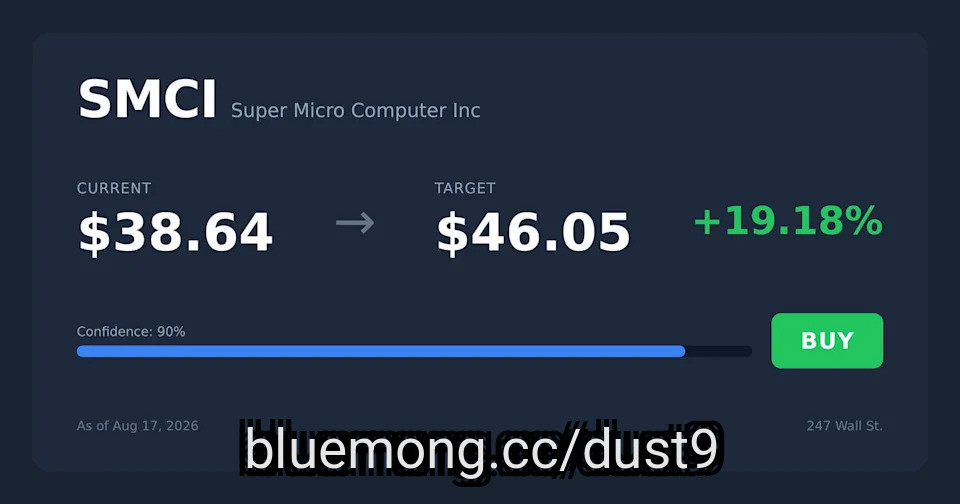

3 months ago
LIV Golf might be preparing for its next chapter with new investors, but more contractors and vendors claim they're owed money by the league.
The credit division of private investment firm BC Partners is exploring a funding deal with LIV to help the league continue operating in 2027 and beyond. This week's LIV Golf Indianapolis event is set to pay out $30 million in prize money, but details about LIV's expected-to-be-canceled $40 million team championship in Michigan still remain scarce.
As the tumultuous 2026 season comes to a close, no full-time employees are known to have seen any missed paychecks since the Saudi PIF announced in April it would no longer fund LIV after this season.
But many contract workers—both past and present—say they're owed money for services rendered earlier this year, and remain in the dark about when or if they will receive those payments. Like many professional sports entities, LIV outsources services like video production, data collection, merchandising, tournament food and beverage operations, among others. Front Office Sports spoke with several such people and verified their current or former affiliation with LIV; they were granted anonymity for this story in order to preserve their identity as they continue working for LIV or continue their efforts to get paid.
The amounts owed to individuals by LIV range from several thousand dollars to nearly $100,000, according to the people who spoke with FOS, some of whom have worked with LIV since its first event in 2022. Other contractors and vendors that have so far stayed quiet could be owed even more, those people say.
#like #contractors #vendors #they 're
The credit division of private investment firm BC Partners is exploring a funding deal with LIV to help the league continue operating in 2027 and beyond. This week's LIV Golf Indianapolis event is set to pay out $30 million in prize money, but details about LIV's expected-to-be-canceled $40 million team championship in Michigan still remain scarce.
As the tumultuous 2026 season comes to a close, no full-time employees are known to have seen any missed paychecks since the Saudi PIF announced in April it would no longer fund LIV after this season.
But many contract workers—both past and present—say they're owed money for services rendered earlier this year, and remain in the dark about when or if they will receive those payments. Like many professional sports entities, LIV outsources services like video production, data collection, merchandising, tournament food and beverage operations, among others. Front Office Sports spoke with several such people and verified their current or former affiliation with LIV; they were granted anonymity for this story in order to preserve their identity as they continue working for LIV or continue their efforts to get paid.
The amounts owed to individuals by LIV range from several thousand dollars to nearly $100,000, according to the people who spoke with FOS, some of whom have worked with LIV since its first event in 2022. Other contractors and vendors that have so far stayed quiet could be owed even more, those people say.
#like #contractors #vendors #they 're


3 months ago
Nvidia shares have shown explosive growth since ChatGPT launched in late 2022. The stock minted a lot of millionaires and retail investors rejoiced. But doubts are creeping in now and growth is not what it used to be. The logical question every long-term investor asks is this: what is the next Nvidia? Which stocks can you get in early on for the big gains?
To find out what retail investors are betting on, we went through long discussion threads on the Reddit subreddits r/Stocks_Picks and r/TheRaceTo10Million. We skipped the one-word ticker drops and the pump posts. We picked two stocks where Redditors named specific reasons for their bullishness. Let's see whether their arguments have juice.
Zeta sells enterprise marketing software. Big brands use its platform to find customers, target them, and message them through one system instead of paying five different vendors. Its moat is the data. Zeta owns its consumer dataset rather than renting it, covering more than 535 million profiles.
Redditors like the growing market Zeta is moving into and two partnerships the company signed this year. Earlier this year, Zeta partnered with OpenAI and Palantir. Under the Palantir deal, Zeta rebuilds its data cloud on Palantir's Foundry software. Redditors also point out that Zeta is expanding from marketing software into business intelligence, which is a much bigger market. One commenter gave a careful two-sided read. He flagged the shift to positive GAAP profitability and the raised fiscal 2026 guidance, but said he would not chase the stock short term unless the price holds above the post-earnings range.
Bull case. Zeta is solving a key problem for major companies. Paying five vendors costs more, and the separate systems do not share data properly, so the marketing team ends up with an incomplete picture of its own customers. Zeta's pitch is that one platform handles all of it. That pitch is working on the customers that matter most. In the second quarter of fiscal 2026, super-scaled account count grew 17% year over year to 197, and the average revenue from each of those accounts grew 17%.
#Marketing #data
To find out what retail investors are betting on, we went through long discussion threads on the Reddit subreddits r/Stocks_Picks and r/TheRaceTo10Million. We skipped the one-word ticker drops and the pump posts. We picked two stocks where Redditors named specific reasons for their bullishness. Let's see whether their arguments have juice.
Zeta sells enterprise marketing software. Big brands use its platform to find customers, target them, and message them through one system instead of paying five different vendors. Its moat is the data. Zeta owns its consumer dataset rather than renting it, covering more than 535 million profiles.
Redditors like the growing market Zeta is moving into and two partnerships the company signed this year. Earlier this year, Zeta partnered with OpenAI and Palantir. Under the Palantir deal, Zeta rebuilds its data cloud on Palantir's Foundry software. Redditors also point out that Zeta is expanding from marketing software into business intelligence, which is a much bigger market. One commenter gave a careful two-sided read. He flagged the shift to positive GAAP profitability and the raised fiscal 2026 guidance, but said he would not chase the stock short term unless the price holds above the post-earnings range.
Bull case. Zeta is solving a key problem for major companies. Paying five vendors costs more, and the separate systems do not share data properly, so the marketing team ends up with an incomplete picture of its own customers. Zeta's pitch is that one platform handles all of it. That pitch is working on the customers that matter most. In the second quarter of fiscal 2026, super-scaled account count grew 17% year over year to 197, and the average revenue from each of those accounts grew 17%.
#Marketing #data


3 months ago
Bad weather in the area forced the Chicago Bears inside the Walter Payton Center for practice today, so, for the second time this year, fans were sent home. My advice for fans traveling a long way for practice: have a backup plan. Don't just drive in for a 90ish-minute practice that may get canceled if it's raining. Camp is an enjoyable experience, and the Bears have several vendors and events lined up to make it a fun, family-friendly time, but last-minute cancellations are always a possibility.
As for the on-field action at today's practice, would you believe that multiple beat reporters praised second-year linebacker Ruben Hyppolite? 1) "Nice day for Ruben Hyppolite out there. He made a few really nice plays, including getting into the backfield." 2) "Ruben Hyppolite had his best practice of camp. Very active on defense." 3) "Made some plays. Sniffed out a screen to Loveland, made the tackle." But we also had this: "Ruben Hyppolite times fast but struggled covering Cole Kmet on routes."
The Bear Report's Zack Pearson shared, "Mixed day for the offense overall. Big play ended practice as Tyson Bagent hit Kaden Davis for a long touchdown. The WR made a nice catch in coverage. Good ball." He also wrote, "Early in practice, Caleb Williams found Jahdae Walker deep for a 61-yard touchdown. The very next play, Case Keenum hit Kaden Davis for a 60-yard touchdown. A lot of that was YAC." He also shared that corner Tyrique Stevenson, who was dinged up yesterday, was back and picked off Caleb in a drill.
CHGO's Adam Jahns said that the blitzes from defensive coordinator Dennis Allen "gave Caleb Williams and Co. plenty of problems in one team period today at practice."
Also, in case you missed it, with Allen in Canton yesterday for Drew Brees' Hall of Fame induction, Al Harris took over as the defensive coordinator during practice.
#made #caleb #touchdown #kaden
As for the on-field action at today's practice, would you believe that multiple beat reporters praised second-year linebacker Ruben Hyppolite? 1) "Nice day for Ruben Hyppolite out there. He made a few really nice plays, including getting into the backfield." 2) "Ruben Hyppolite had his best practice of camp. Very active on defense." 3) "Made some plays. Sniffed out a screen to Loveland, made the tackle." But we also had this: "Ruben Hyppolite times fast but struggled covering Cole Kmet on routes."
The Bear Report's Zack Pearson shared, "Mixed day for the offense overall. Big play ended practice as Tyson Bagent hit Kaden Davis for a long touchdown. The WR made a nice catch in coverage. Good ball." He also wrote, "Early in practice, Caleb Williams found Jahdae Walker deep for a 61-yard touchdown. The very next play, Case Keenum hit Kaden Davis for a 60-yard touchdown. A lot of that was YAC." He also shared that corner Tyrique Stevenson, who was dinged up yesterday, was back and picked off Caleb in a drill.
CHGO's Adam Jahns said that the blitzes from defensive coordinator Dennis Allen "gave Caleb Williams and Co. plenty of problems in one team period today at practice."
Also, in case you missed it, with Allen in Canton yesterday for Drew Brees' Hall of Fame induction, Al Harris took over as the defensive coordinator during practice.
#made #caleb #touchdown #kaden


3 months ago
ServiceNow (NYSE:NOW) has quietly built one of the fastest-growing cybersecurity businesses in the industry, and on August 4, it made that ambition explicit. The company rolled out six new Autonomous Security solutions built to catch and fix threats before they turn into breaches, tied together under what it calls Shift Zero. The timing lines up with a security unit that is already outgrowing dedicated cybersecurity vendors, and the announcement explains why.
ServiceNow's security and risk franchise crossed $1 billion in annual contract value, backed by Q2 2026 subscription revenues of $3.88 billion (up 23% year-over-year in constant currency) and a remaining performance obligation base of $29 billion. CEO Bill McDermott notes it is growing faster than top standalone cybersecurity peers, aided by a 98% renewal rate. Those products were included in 16 of the company's top 20 deals, and cyber solutions appeared in 80% of its largest contracts overall. McDermott put it plainly: "we're in the party now."
The new release leans into that position. The average enterprise runs more than 70 separate security tools, and ServiceNow is trying to fold that sprawl into a single, governed system spanning exposure management, identity, cyber-physical ******* ets, incident response, and compliance. Acquired technology does the heavy lifting: Armis brings real-time visibility across billions of connected devices, and Veza's Access Graph maps permissions across human, machine, and AI identities. Where a detection-focused vendor can flag a threat, ServiceNow's configuration database can trace which system, owner, and workflow the fix actually touches.
The stock's recent bounce hides how much ground it still has to make up. Shares remained down 41% over the trailing 12 months even after jumping as much as 13.8% in the week of July 31, when ServiceNow beat guidance and raised its full-year subscription revenue outlook to $15.76 billion. That kind of gap between a strong quarter and a still-depressed share price points to a deeper worry: if AI agents can run enterprise workflows on their own, investors question how much terminal value an expensive workflow software stock deserves, no matter how good the next print looks.
The Autonomous Security rollout does not fully answer that worry yet, because it is not finished. Several of the pieces ServiceNow is counting on to make the "most complete" claim stick, including the Tier 2 SOC AI Specialist, the Vulnerability Resolution AI Specialist, continuous control monitoring, and cryptographic ******* et compliance, are not scheduled to ship until December this year. Until then, the platform's promise of governing every ******* et, identity, and agent in one motion rests partly on capabilities customers cannot yet test, leaving a gap between what ServiceNow announced and what it can currently prove in production.
#servicenow
ServiceNow's security and risk franchise crossed $1 billion in annual contract value, backed by Q2 2026 subscription revenues of $3.88 billion (up 23% year-over-year in constant currency) and a remaining performance obligation base of $29 billion. CEO Bill McDermott notes it is growing faster than top standalone cybersecurity peers, aided by a 98% renewal rate. Those products were included in 16 of the company's top 20 deals, and cyber solutions appeared in 80% of its largest contracts overall. McDermott put it plainly: "we're in the party now."
The new release leans into that position. The average enterprise runs more than 70 separate security tools, and ServiceNow is trying to fold that sprawl into a single, governed system spanning exposure management, identity, cyber-physical ******* ets, incident response, and compliance. Acquired technology does the heavy lifting: Armis brings real-time visibility across billions of connected devices, and Veza's Access Graph maps permissions across human, machine, and AI identities. Where a detection-focused vendor can flag a threat, ServiceNow's configuration database can trace which system, owner, and workflow the fix actually touches.
The stock's recent bounce hides how much ground it still has to make up. Shares remained down 41% over the trailing 12 months even after jumping as much as 13.8% in the week of July 31, when ServiceNow beat guidance and raised its full-year subscription revenue outlook to $15.76 billion. That kind of gap between a strong quarter and a still-depressed share price points to a deeper worry: if AI agents can run enterprise workflows on their own, investors question how much terminal value an expensive workflow software stock deserves, no matter how good the next print looks.
The Autonomous Security rollout does not fully answer that worry yet, because it is not finished. Several of the pieces ServiceNow is counting on to make the "most complete" claim stick, including the Tier 2 SOC AI Specialist, the Vulnerability Resolution AI Specialist, continuous control monitoring, and cryptographic ******* et compliance, are not scheduled to ship until December this year. Until then, the platform's promise of governing every ******* et, identity, and agent in one motion rests partly on capabilities customers cannot yet test, leaving a gap between what ServiceNow announced and what it can currently prove in production.
#servicenow
3 months ago
On August 6, Comcast (NASDAQ:CMCSA) Business announced a private wireless deployment at the Annapolis headquarters of Smartlink, a national digital infrastructure firm, combining carrier-grade Neutral Host cellular coverage with a dedicated CBRS private network in one managed platform. It is a small deal in dollar terms, but it points to where Comcast wants growth to come from next: enterprise connectivity rather than residential cable.
The Smartlink deployment replaces the kind of Distributed Antenna System infrastructure that used to require separate vendors and separate budgets. Comcast Business now delivers cellular coverage and a private network for cameras, access control, and occupancy sensors through a single platform built on licensed CBRS spectrum. It is not an isolated experiment either. Comcast has already rolled out similar systems at the University of Virginia, The Sound Hotel Seattle Belltown, and Rocket Arena for the Cleveland Cavaliers, and the company is positioning Smartlink as a replicable model for other commercial landlords.
That enterprise push sits on top of a business that still throws off enormous cash. Comcast generated free cash flow of nearly $21.9 billion in fiscal 2025 on revenue of about $123.7 billion, with net income near $20.0 billion, a net margin of 16.2%. Peacock turned profitable for the first time, wireless lines crossed a major subscriber milestone, and the company beat earnings estimates in its most recent quarter. Following the separation of Versant Media Group, management has also sharpened its focus toward the Content and Experiences segments, spanning film, television, and theme parks, giving the enterprise wireless buildout room to grow alongside a leaner core.
The residential side of the business tells a different story. Broadband subscribers keep declining, and fiber operators and fixed wireless providers like Verizon and T-Mobile keep pressing on price and coverage. Comcast paused its share buyback program ahead of a planned NBCUniversal spinoff, a move that adds another layer of complexity for investors trying to track where the company is headed.
Security and legal costs have also piled up. Comcast agreed to a $117.5 million settlement over an Xfinity data breach, and cyberattack risk remains an ongoing concern given the scale of its subscriber base. The company also absorbed a noncash impairment charge of $8.6 billion tied to a Sky writedown, and rising costs for sports rights including the NFL and NBA are squeezing profitability in the media segment. With a debt-to-equity ratio of 1.1x and a current ratio of 0.9x, the balance sheet leaves less cushion than some peers to absorb further shocks.
#comcast
The Smartlink deployment replaces the kind of Distributed Antenna System infrastructure that used to require separate vendors and separate budgets. Comcast Business now delivers cellular coverage and a private network for cameras, access control, and occupancy sensors through a single platform built on licensed CBRS spectrum. It is not an isolated experiment either. Comcast has already rolled out similar systems at the University of Virginia, The Sound Hotel Seattle Belltown, and Rocket Arena for the Cleveland Cavaliers, and the company is positioning Smartlink as a replicable model for other commercial landlords.
That enterprise push sits on top of a business that still throws off enormous cash. Comcast generated free cash flow of nearly $21.9 billion in fiscal 2025 on revenue of about $123.7 billion, with net income near $20.0 billion, a net margin of 16.2%. Peacock turned profitable for the first time, wireless lines crossed a major subscriber milestone, and the company beat earnings estimates in its most recent quarter. Following the separation of Versant Media Group, management has also sharpened its focus toward the Content and Experiences segments, spanning film, television, and theme parks, giving the enterprise wireless buildout room to grow alongside a leaner core.
The residential side of the business tells a different story. Broadband subscribers keep declining, and fiber operators and fixed wireless providers like Verizon and T-Mobile keep pressing on price and coverage. Comcast paused its share buyback program ahead of a planned NBCUniversal spinoff, a move that adds another layer of complexity for investors trying to track where the company is headed.
Security and legal costs have also piled up. Comcast agreed to a $117.5 million settlement over an Xfinity data breach, and cyberattack risk remains an ongoing concern given the scale of its subscriber base. The company also absorbed a noncash impairment charge of $8.6 billion tied to a Sky writedown, and rising costs for sports rights including the NFL and NBA are squeezing profitability in the media segment. With a debt-to-equity ratio of 1.1x and a current ratio of 0.9x, the balance sheet leaves less cushion than some peers to absorb further shocks.
#comcast
3 months ago
SanDisk's datacenter revenue surged 645% and Micron's jumped 346% YoY, helping to fuel today's 8% and 6% rallies after both stocks fell sharply last month.
RBC Capital initiated SK Hynix at Outperform with a $200 target as Seagate posted record fiscal 2026 free cash flow of $3.1 billion.
SanDisk and SK Hynix unveiled the first High Bandwidth Flash industry standard, a blueprint that could expand the AI memory addressable market across chip vendors.
Act now: the ******* yst who called NVIDIA in 2010 just named his top 10 AI stocks — and Micron Technology didn't make the cut. Grab the names FREE today.
Memory and storage stocks are surging Tuesday morning, with SanDisk (NASDAQ:SNDK) leading a broad rebound across the group. SanDisk stock is up 8% to $1,393. Micron Technology shares are up 6% to $880, and SK Hynix (NASDAQ:SKHY) shares are climbing 4% to $148.
#stocks #micron #NASDAQ
RBC Capital initiated SK Hynix at Outperform with a $200 target as Seagate posted record fiscal 2026 free cash flow of $3.1 billion.
SanDisk and SK Hynix unveiled the first High Bandwidth Flash industry standard, a blueprint that could expand the AI memory addressable market across chip vendors.
Act now: the ******* yst who called NVIDIA in 2010 just named his top 10 AI stocks — and Micron Technology didn't make the cut. Grab the names FREE today.
Memory and storage stocks are surging Tuesday morning, with SanDisk (NASDAQ:SNDK) leading a broad rebound across the group. SanDisk stock is up 8% to $1,393. Micron Technology shares are up 6% to $880, and SK Hynix (NASDAQ:SKHY) shares are climbing 4% to $148.
#stocks #micron #NASDAQ

3 months ago
ZANESVILLE – Efforts to bring the Gus Macker basketball tournament back to Zanesville took a major step forward with the selection of a host site at Ohio University Zanesville/Zane State College and the YMCA of Zanesville, as community partners, sponsors and organizers work toward the event's return in July 2027.
Next, the Gus Macker executive committee will have a 30- to 40-minute site walkthrough in August with facility, campus and concession representatives to review the venue layouts and complete the proposed site plan. That'll include mapping out the areas for the hoops, parking, overflow, and food vendors, added Dominique Proctor, the Gus Macker Zanesville committee's executive chair.
Then, the committee can start working on a final contract with the tournament's headquarters. Discussions are expected to start after Labor Day.
More: Will Gus Macker basketball tournaments return to Zanesville?
The contract is a three-year agreement with a first-year opt-out, in case 2027's tournament falls short of expectations. Though, a well-attended event could secure two more in 2028 and 2029, the TR previously reported. Another agreement could be looked at after that.
#tournament #committee #contract
Next, the Gus Macker executive committee will have a 30- to 40-minute site walkthrough in August with facility, campus and concession representatives to review the venue layouts and complete the proposed site plan. That'll include mapping out the areas for the hoops, parking, overflow, and food vendors, added Dominique Proctor, the Gus Macker Zanesville committee's executive chair.
Then, the committee can start working on a final contract with the tournament's headquarters. Discussions are expected to start after Labor Day.
More: Will Gus Macker basketball tournaments return to Zanesville?
The contract is a three-year agreement with a first-year opt-out, in case 2027's tournament falls short of expectations. Though, a well-attended event could secure two more in 2028 and 2029, the TR previously reported. Another agreement could be looked at after that.
#tournament #committee #contract