
1 hr. ago
The S&P 500 (SNPINDEX:^GSPC) gained 0.62% to 7,758 to reach a record high. The Nasdaq Composite (NASDAQINDEX:^IXIC) rose 1.30% to 26,691 and the Dow Jones Industrial Average (DJINDICES:^DJI) climbed 0.28% to 54,037 as a surprising contraction in July payrolls fueled interest rate optimism.
Gold prices climbed 2.31% to $4,339.11 as of U.S. market close, and the 10-Year Treasury yield fell 0.03% to 4.65%. Communication services and energy were the only sectors to drop, while industrials and basic materials led the gainers.
Atlassian soared 35%, and Twilio gained 25% on robust quarterly results. Airbnb surged after an earnings beat while Trade Desk tumbled on disappointing earnings. Meanwhile, Papa John's International extended its losses after **** ysts downgraded the stock following yesterday's guidance cut.
Today's jobs data gave markets a boost, as surprise figures showed employers cut jobs in July. Nonfarm payrolls fell by 23,000, and unemployment fell to 4.1%. A weaker-than-expected jobs market means the Federal Reserve is more likely to hold interest rates steady in September, making traders less risk-averse.
After yesterday's sell-off in software stocks, today's earnings tell a more nuanced story: Both Atlassian and Twilio posted dramatic gains on the back of impressive earnings. Investors seem to be looking at how artificial intelligence (AI) is impacting demand for each firms' services and rewarding those who are turning the new technology to their advantage.
#earnings #gained #climbed #payrolls
Gold prices climbed 2.31% to $4,339.11 as of U.S. market close, and the 10-Year Treasury yield fell 0.03% to 4.65%. Communication services and energy were the only sectors to drop, while industrials and basic materials led the gainers.
Atlassian soared 35%, and Twilio gained 25% on robust quarterly results. Airbnb surged after an earnings beat while Trade Desk tumbled on disappointing earnings. Meanwhile, Papa John's International extended its losses after **** ysts downgraded the stock following yesterday's guidance cut.
Today's jobs data gave markets a boost, as surprise figures showed employers cut jobs in July. Nonfarm payrolls fell by 23,000, and unemployment fell to 4.1%. A weaker-than-expected jobs market means the Federal Reserve is more likely to hold interest rates steady in September, making traders less risk-averse.
After yesterday's sell-off in software stocks, today's earnings tell a more nuanced story: Both Atlassian and Twilio posted dramatic gains on the back of impressive earnings. Investors seem to be looking at how artificial intelligence (AI) is impacting demand for each firms' services and rewarding those who are turning the new technology to their advantage.
#earnings #gained #climbed #payrolls


1 hr. ago
(By Oil & Gas 360) – This week underscored how quickly geopolitical uncertainty can reshape market sentiment, even as companies remain focused on long-term capital discipline. Oil prices strengthened on renewed uncertainty surrounding the Iran conflict, while producers continued investing in natural gas, offshore development, and high-quality shale **** ets.
At the same time, mergers and acquisitions slowed, balance sheets strengthened, and executive leadership changes signaled the industry's continued focus on creating shareholder value through disciplined growth rather than aggressive expansion.
Brent crude climbed as uncertainty surrounding the Iran conflict returned to the forefront. Goldman Sachs said Brent is likely to trade in an $80 to $90 per barrel range until markets receive clarity through either a U.S.–Iran agreement or a significant escalation. Meanwhile, reports indicated a proposed Strait of Hormuz agreement could give Iran greater control over inbound shipping traffic, adding another layer of uncertainty to global energy markets. ADNOC also issued a statement clarifying reports surrounding attacks on its facilities.
Why it matters:
Markets continue to trade on geopolitical expectations rather than purely on supply and demand. The future of Hormuz remains one of the most important variables influencing global oil prices.
U.S. upstream mergers and acquisitions declined sharply during the second quarter as commodity price volatility made buyers more cautious. Despite the slowdown, demand for high-quality Permian Basin **** ets remained strong. **** ex agreed to acquire U.S. tight oil and gas **** ets for $320 million, while bp expanded its natural gas portfolio by acquiring Woodside's stake in Trinidad's Calypso gas project.
#Iran #uncertainty #markets #surrounding
At the same time, mergers and acquisitions slowed, balance sheets strengthened, and executive leadership changes signaled the industry's continued focus on creating shareholder value through disciplined growth rather than aggressive expansion.
Brent crude climbed as uncertainty surrounding the Iran conflict returned to the forefront. Goldman Sachs said Brent is likely to trade in an $80 to $90 per barrel range until markets receive clarity through either a U.S.–Iran agreement or a significant escalation. Meanwhile, reports indicated a proposed Strait of Hormuz agreement could give Iran greater control over inbound shipping traffic, adding another layer of uncertainty to global energy markets. ADNOC also issued a statement clarifying reports surrounding attacks on its facilities.
Why it matters:
Markets continue to trade on geopolitical expectations rather than purely on supply and demand. The future of Hormuz remains one of the most important variables influencing global oil prices.
U.S. upstream mergers and acquisitions declined sharply during the second quarter as commodity price volatility made buyers more cautious. Despite the slowdown, demand for high-quality Permian Basin **** ets remained strong. **** ex agreed to acquire U.S. tight oil and gas **** ets for $320 million, while bp expanded its natural gas portfolio by acquiring Woodside's stake in Trinidad's Calypso gas project.
#Iran #uncertainty #markets #surrounding


2 hours ago
On August 7, Google Cloud switched on Google Security Operations in its new Taiwan Region, giving local banks, hospitals and chipmakers an AI-powered defense platform they can run without sending sensitive data offshore. It's a small announcement next to Alphabet's (NASDAQ:GOOGL) roughly $4.6 trillion market value, but it captures why investors are paying attention. Alphabet keeps turning AI into products regulated industries will pay to run on their own terms, and that pattern shows up across the business.
The Taiwan launch fits a broader push. Google Cloud revenue jumped 82% to $24.8 billion last quarter, and the segment's operating margin climbed from 20.7% to 35.6% over the same stretch, proof that scale is finally showing up in profit, not just growth. Part of that strength comes from a business model that doesn't depend on who wins the AI race. Anthropic pays Google Cloud for computing power even while competing against Alphabet's own models, and that kind of recurring usage revenue keeps flowing regardless of which lab's chatbot wins.
Alphabet is also pushing further into chips. The company recently began selling its custom Tensor Processing Units directly to outside customers for use in external data centers, a direct challenge to Nvidia's grip on the roughly $300 billion AI accelerator market. D.A. Davidson's Gil Luria has floated Alphabet capturing 20% of AI infrastructure spending, which would value the chip business near $900 billion, while Morgan Stanley expects custom silicon to reach 24% of accelerator sales by 2030, up from 15% today. The Taiwan security launch shows that same platform reach extending into compliance-heavy sectors like finance and healthcare, widening the base of customers Alphabet can sell to.
None of this comes cheap. Alphabet raised its 2026 capital expenditure guidance to a range of $195 billion to $205 billion, and quarterly capex has climbed for five straight quarters, doubling year-over-year to $44.9 billion last quarter. That spending eventually shows up as depreciation, a charge that grows every year and has to be outrun by profit growth.
The headline numbers also need a closer look. Net income nearly quadrupled to $112.1 billion last quarter, but $6.26 of the $9.11 in EPS came from a $99 billion gain on equity securities that is mostly unrealized. Strip that out and underlying earnings were closer to $2.85 per share, which puts the stock nearer 28x forward earnings than the 19x headline multiple suggests. On the chip side, Nvidia's CUDA software remains a deep moat, since switching a team's pipelines off it is expensive, and TPUs are built for narrower workloads than general-purpose GPUs.
#Google
The Taiwan launch fits a broader push. Google Cloud revenue jumped 82% to $24.8 billion last quarter, and the segment's operating margin climbed from 20.7% to 35.6% over the same stretch, proof that scale is finally showing up in profit, not just growth. Part of that strength comes from a business model that doesn't depend on who wins the AI race. Anthropic pays Google Cloud for computing power even while competing against Alphabet's own models, and that kind of recurring usage revenue keeps flowing regardless of which lab's chatbot wins.
Alphabet is also pushing further into chips. The company recently began selling its custom Tensor Processing Units directly to outside customers for use in external data centers, a direct challenge to Nvidia's grip on the roughly $300 billion AI accelerator market. D.A. Davidson's Gil Luria has floated Alphabet capturing 20% of AI infrastructure spending, which would value the chip business near $900 billion, while Morgan Stanley expects custom silicon to reach 24% of accelerator sales by 2030, up from 15% today. The Taiwan security launch shows that same platform reach extending into compliance-heavy sectors like finance and healthcare, widening the base of customers Alphabet can sell to.
None of this comes cheap. Alphabet raised its 2026 capital expenditure guidance to a range of $195 billion to $205 billion, and quarterly capex has climbed for five straight quarters, doubling year-over-year to $44.9 billion last quarter. That spending eventually shows up as depreciation, a charge that grows every year and has to be outrun by profit growth.
The headline numbers also need a closer look. Net income nearly quadrupled to $112.1 billion last quarter, but $6.26 of the $9.11 in EPS came from a $99 billion gain on equity securities that is mostly unrealized. Strip that out and underlying earnings were closer to $2.85 per share, which puts the stock nearer 28x forward earnings than the 19x headline multiple suggests. On the chip side, Nvidia's CUDA software remains a deep moat, since switching a team's pipelines off it is expensive, and TPUs are built for narrower workloads than general-purpose GPUs.


3 hours ago
Fewer cargo theft reports did not mean smaller losses during the second quarter, according to Verisk CargoNet's ******* ysis. The intelligence network documented 677 incidents across the United States and Canada. That total fell 26% from Q2 2025. It also dropped 14% from the previous quarter.
Estimated cargo losses nevertheless climbed to $304.6 million during the three-month period. That figure more than doubled the $135.7 million reported during Q2 2025. The average reported commodity value reached $564,009. Several multimillion-dollar thefts involving metals and enterprise technology heavily influenced that average.
"Lower incident volume should not be mistaken for lower risk," Keith Lewis, Verisk CargoNet's vice president of operations, said. "The groups driving the largest losses are not necessarily trying to steal more freight; they are trying to identify the right shipment." Lewis pointed to metals and enterprise technology as areas attracting organized theft groups. Those shipments can offer major value and established resale opportunities.
Scott Cornell, EVP, Crime and Theft Specialist at SPG Cargo & Logistics and chair of TAPA Americas, discussed the results during a recent FreightWaves interview. He described the decrease as welcome news after years when theft activity stayed elevated. Cornell also urged the industry to avoid treating one quarter as proof of a broader shift. "It's not going to be a trend until we see it for maybe two or three quarters consecutively," Cornell said.
Cornell noted that cargo theft numbers have historically moved up and down. He said recent law-enforcement arrests could be contributing to the quarterly decrease. Those efforts included operations in New York, New Jersey, California and Canada, along with FBI and Homeland Security cases. Cornell called the results from law enforcement and private-sector cooperation encouraging.
#theft #lower
Estimated cargo losses nevertheless climbed to $304.6 million during the three-month period. That figure more than doubled the $135.7 million reported during Q2 2025. The average reported commodity value reached $564,009. Several multimillion-dollar thefts involving metals and enterprise technology heavily influenced that average.
"Lower incident volume should not be mistaken for lower risk," Keith Lewis, Verisk CargoNet's vice president of operations, said. "The groups driving the largest losses are not necessarily trying to steal more freight; they are trying to identify the right shipment." Lewis pointed to metals and enterprise technology as areas attracting organized theft groups. Those shipments can offer major value and established resale opportunities.
Scott Cornell, EVP, Crime and Theft Specialist at SPG Cargo & Logistics and chair of TAPA Americas, discussed the results during a recent FreightWaves interview. He described the decrease as welcome news after years when theft activity stayed elevated. Cornell also urged the industry to avoid treating one quarter as proof of a broader shift. "It's not going to be a trend until we see it for maybe two or three quarters consecutively," Cornell said.
Cornell noted that cargo theft numbers have historically moved up and down. He said recent law-enforcement arrests could be contributing to the quarterly decrease. Those efforts included operations in New York, New Jersey, California and Canada, along with FBI and Homeland Security cases. Cornell called the results from law enforcement and private-sector cooperation encouraging.
#theft #lower


3 hours ago
On August 4, Nvidia Corporation (NASDAQ:NVDA) opened up commercial use of Alpamayo 2 Super, a reasoning model built for robotaxis and self-driving cars. The move signals where the company wants its next growth chapter to come from, even as investors argue over what its core chip business is worth today.
Alpamayo 2 Super is the newest entry in what Nvidia calls the most downloaded family of open reasoning models for autonomous driving on Hugging Face, with the lineup topping 500,000 downloads. It ships under OpenMDW 1.1, the Linux Foundation's open license, which lets automakers and suppliers fine-tune and sell products built on it without asking Nvidia for extra permission. That turns a research release into a business: developers can build proprietary self-driving stacks on Nvidia's foundation without paying frontier-model prices for every task. On the LingoQA driving benchmark, Nvidia says the model beat Gemini 2.5 Pro by 15.1 points and GPT-4o by 23.2 points, and it can output a full driving trajectory alongside a plain-language explanation of its reasoning, a feature built for safety reviewers as much as for a leaderboard.
That expansion sits on top of a business already growing faster than its size would suggest. Trailing 12-month revenue climbed 71% to $253 billion, and the pace has been accelerating rather than cooling, moving from 56% growth a year ago to 85% in the most recent quarter. Data center revenue, the business autonomous-vehicle compute rides on, rose 92% year over year to $75.2 billion, and Nvidia raised its quarterly dividend from a penny to $0.25 a share while authorizing an $80 billion buyback. Demand from its biggest customers backs that up: Alphabet (NASDAQ:GOOGL) raised its 2026 capital spending guidance toward $195 billion to $205 billion, Amazon (NASDAQ:AMZN) lifted its own estimate toward $220 billion, and ******* eX (NASDAQ:SPCX) CEO Elon Musk said his company is "exclusive to Nvidia" for its next computing architecture.
The market's response to all that growth has cooled. Nvidia's stock has fallen or barely moved after each of its last several earnings reports, even on beats, and it reports fiscal second-quarter results again on August 26. Some of the caution is arithmetic. Nvidia's market capitalization has reached roughly $5 trillion, about a sixth of annual US economic output, a size that makes the kind of percentage gains that built early fortunes in the stock difficult to repeat.
#NVIDIA #model #Growth
Alpamayo 2 Super is the newest entry in what Nvidia calls the most downloaded family of open reasoning models for autonomous driving on Hugging Face, with the lineup topping 500,000 downloads. It ships under OpenMDW 1.1, the Linux Foundation's open license, which lets automakers and suppliers fine-tune and sell products built on it without asking Nvidia for extra permission. That turns a research release into a business: developers can build proprietary self-driving stacks on Nvidia's foundation without paying frontier-model prices for every task. On the LingoQA driving benchmark, Nvidia says the model beat Gemini 2.5 Pro by 15.1 points and GPT-4o by 23.2 points, and it can output a full driving trajectory alongside a plain-language explanation of its reasoning, a feature built for safety reviewers as much as for a leaderboard.
That expansion sits on top of a business already growing faster than its size would suggest. Trailing 12-month revenue climbed 71% to $253 billion, and the pace has been accelerating rather than cooling, moving from 56% growth a year ago to 85% in the most recent quarter. Data center revenue, the business autonomous-vehicle compute rides on, rose 92% year over year to $75.2 billion, and Nvidia raised its quarterly dividend from a penny to $0.25 a share while authorizing an $80 billion buyback. Demand from its biggest customers backs that up: Alphabet (NASDAQ:GOOGL) raised its 2026 capital spending guidance toward $195 billion to $205 billion, Amazon (NASDAQ:AMZN) lifted its own estimate toward $220 billion, and ******* eX (NASDAQ:SPCX) CEO Elon Musk said his company is "exclusive to Nvidia" for its next computing architecture.
The market's response to all that growth has cooled. Nvidia's stock has fallen or barely moved after each of its last several earnings reports, even on beats, and it reports fiscal second-quarter results again on August 26. Some of the caution is arithmetic. Nvidia's market capitalization has reached roughly $5 trillion, about a sixth of annual US economic output, a size that makes the kind of percentage gains that built early fortunes in the stock difficult to repeat.
#NVIDIA #model #Growth


3 hours ago
On July 30, Apple Inc. (NASDAQ:AAPL) released its fiscal third-quarter 2026 report, and the company's shares dropped as much as 10% in the sell-off. This was a striking reaction to a quarter that produced record earnings per share and beat Wall Street's revenue estimates. The drop says less about what Apple just did and more about what investors think comes next: a memory chip shortage squeezing costs, and guidance that fell short of what ******* ysts wanted to see.
Start with the iPhone, still Apple's biggest business by far. Global smartphone shipments fell 6.7% year over year, per IDC data, and Apple was one of only two major manufacturers to grow instead of shrink. Its iPhone shipments climbed 15.3% year over year, outpacing Samsung's 8.1% increase and marking the second straight quarter Apple posted the industry's fastest unit growth. iPhone revenue reached $54.25 billion, up nearly 22% and above the $53.86 billion Wall Street expected. Because revenue grew faster than estimated unit shipments, average selling prices trended higher for the period.
The iPhone 17, released late last year, drove what CEO Tim Cook called an "incredible blowout" quarter, and customers continue to upgrade ahead of Apple's traditional autumn product cycle and expected software enhancements.
Apple is dealing with a DRAM and NAND shortage pushing supply costs higher industrywide, and management expects to pay even more for memory this quarter than it just did. Apple guided fiscal fourth-quarter gross margin to 47% to 48%, down from the 50.1% it just posted, a sign memory costs keep climbing. Apple can either absorb that hit to margins or pass the cost to consumers who are already watching their spending.
That's part of why the outlook disappointed. ******* ysts had modeled 12% revenue growth for the fourth quarter, but Apple guided to just 9% to 11%, with supply constraints expected to weigh on iPhone, iPad and Mac sales. Services revenue also missed, coming in at $30.7 billion for growth of about 12%, the slowest of Apple's three largest categories even as it extended a streak of 12 straight quarters of double-digit growth. That matters because Apple's premium valuation leans heavily on services staying the high-margin engine that keeps expanding.
#Apple #quarter #billion
Start with the iPhone, still Apple's biggest business by far. Global smartphone shipments fell 6.7% year over year, per IDC data, and Apple was one of only two major manufacturers to grow instead of shrink. Its iPhone shipments climbed 15.3% year over year, outpacing Samsung's 8.1% increase and marking the second straight quarter Apple posted the industry's fastest unit growth. iPhone revenue reached $54.25 billion, up nearly 22% and above the $53.86 billion Wall Street expected. Because revenue grew faster than estimated unit shipments, average selling prices trended higher for the period.
The iPhone 17, released late last year, drove what CEO Tim Cook called an "incredible blowout" quarter, and customers continue to upgrade ahead of Apple's traditional autumn product cycle and expected software enhancements.
Apple is dealing with a DRAM and NAND shortage pushing supply costs higher industrywide, and management expects to pay even more for memory this quarter than it just did. Apple guided fiscal fourth-quarter gross margin to 47% to 48%, down from the 50.1% it just posted, a sign memory costs keep climbing. Apple can either absorb that hit to margins or pass the cost to consumers who are already watching their spending.
That's part of why the outlook disappointed. ******* ysts had modeled 12% revenue growth for the fourth quarter, but Apple guided to just 9% to 11%, with supply constraints expected to weigh on iPhone, iPad and Mac sales. Services revenue also missed, coming in at $30.7 billion for growth of about 12%, the slowest of Apple's three largest categories even as it extended a streak of 12 straight quarters of double-digit growth. That matters because Apple's premium valuation leans heavily on services staying the high-margin engine that keeps expanding.
#Apple #quarter #billion


3 hours ago
HOUSTON, Aug 7 (Reuters) - Brent crude oil climbed more than $1 a barrel on Friday over ongoing uncertainty about the negotiations in progress that determine control of, and reopen, the key shipping artery of the Strait of Hormuz.
Brent crude futures settled at $83.55 a barrel, gaining $1.06, or 1.3%. West Texas Intermediate futures finished at $78.18 a barrel, up 89 cents, or 1.15%.
Oil futures settled more than $3 a barrel higher on Thursday as Iran reviewed a bill to ban U.S. and Israeli vessels from the Strait of Hormuz, through which roughly a fifth of the world's oil and liquefied natural gas normally passed before the war began at the end of February.
Oil prices fell earlier in the week as a possible solution to the conflict looked more likely, part of an on-again, off-again pattern that has persisted since the U.S. and Israel jointly struck the nation in late February, igniting a conflict that has now stretched into a sixth month. Brent was on course for a weekly loss of more than 8%, while WTI lost more than 7%.
While this week's signals on a potential deal have sent a roller-coaster ride in market sentiment, the market remains in the dark as to what needs to happen for the agreement to be clinched, said Vandana Hari, founder of oil market ****** ysis provider Vanda Insights.
#futures
Brent crude futures settled at $83.55 a barrel, gaining $1.06, or 1.3%. West Texas Intermediate futures finished at $78.18 a barrel, up 89 cents, or 1.15%.
Oil futures settled more than $3 a barrel higher on Thursday as Iran reviewed a bill to ban U.S. and Israeli vessels from the Strait of Hormuz, through which roughly a fifth of the world's oil and liquefied natural gas normally passed before the war began at the end of February.
Oil prices fell earlier in the week as a possible solution to the conflict looked more likely, part of an on-again, off-again pattern that has persisted since the U.S. and Israel jointly struck the nation in late February, igniting a conflict that has now stretched into a sixth month. Brent was on course for a weekly loss of more than 8%, while WTI lost more than 7%.
While this week's signals on a potential deal have sent a roller-coaster ride in market sentiment, the market remains in the dark as to what needs to happen for the agreement to be clinched, said Vandana Hari, founder of oil market ****** ysis provider Vanda Insights.
#futures


3 hours ago
Microchip Technology (MCHP) stock jumped Friday after the chipmaker delivered a beat-and-raise earnings report. MCHP stock fueled a rise in the Philadelphia semiconductor index, known as SOX.
The Chandler, Ariz.-based company late Thursday said it earned an adjusted 76 cents a share on sales of $1.48 billion in its fiscal first quarter ended June 30. **** ysts polled by FactSet had expected Microchip earnings of 70 cents a share on sales of $1.46 billion. On a year-over-year basis, Microchip earnings surged 181% while sales climbed 38%.
For the current quarter, Microchip forecast adjusted earnings of 93 cents a share, up 166% year over year, on sales of $1.6 billion, up 40%. That's based on the midpoint of its guidance. Wall Street had been modeling earnings of 80 cents a share on sales of $1.56 billion in fiscal Q2.
Microchip makes control chips for connectivity, data centers and other applications.
On the stock market today, MCHP stock surged 13.9% to close at 84.69. It was the top performer on the SOX, which includes the 30 largest chip stocks traded in the U.S.
#sales #mchp #year #based
The Chandler, Ariz.-based company late Thursday said it earned an adjusted 76 cents a share on sales of $1.48 billion in its fiscal first quarter ended June 30. **** ysts polled by FactSet had expected Microchip earnings of 70 cents a share on sales of $1.46 billion. On a year-over-year basis, Microchip earnings surged 181% while sales climbed 38%.
For the current quarter, Microchip forecast adjusted earnings of 93 cents a share, up 166% year over year, on sales of $1.6 billion, up 40%. That's based on the midpoint of its guidance. Wall Street had been modeling earnings of 80 cents a share on sales of $1.56 billion in fiscal Q2.
Microchip makes control chips for connectivity, data centers and other applications.
On the stock market today, MCHP stock surged 13.9% to close at 84.69. It was the top performer on the SOX, which includes the 30 largest chip stocks traded in the U.S.
#sales #mchp #year #based


11 hours ago
Interested in Materion Corporation? Here are five stocks we like better.
Record Q2 performance: Value-added sales rose 15% year over year to $308.2 million, while adjusted EPS climbed 39% to a record $1.90. Adjusted EBITDA increased 29% to $71.8 million, with margins expanding to 23.3%.
Broad-based demand and backlog growth: Semiconductor sales grew 23%, telecom and data-center sales nearly 50%, and energy shipments more than 20%. Backlog rose roughly 30% year over year, supported by strong defense, ***** e, semiconductor and aerospace orders.
Raised 2026 outlook: Materion now expects mid-teens sales growth and adjusted EPS of $6.80–$7.20, up from its previous $6.00–$6.50 forecast, reflecting continued momentum across its operating segments.
Materion (NYSE:MTRN) reported record second-quarter sales and earnings, supported by double-digit growth across its three operating segments and rising demand from semiconductor, aerospace and defense, energy, industrial, and telecom and data-center customers.
#sales #Growth #million
Record Q2 performance: Value-added sales rose 15% year over year to $308.2 million, while adjusted EPS climbed 39% to a record $1.90. Adjusted EBITDA increased 29% to $71.8 million, with margins expanding to 23.3%.
Broad-based demand and backlog growth: Semiconductor sales grew 23%, telecom and data-center sales nearly 50%, and energy shipments more than 20%. Backlog rose roughly 30% year over year, supported by strong defense, ***** e, semiconductor and aerospace orders.
Raised 2026 outlook: Materion now expects mid-teens sales growth and adjusted EPS of $6.80–$7.20, up from its previous $6.00–$6.50 forecast, reflecting continued momentum across its operating segments.
Materion (NYSE:MTRN) reported record second-quarter sales and earnings, supported by double-digit growth across its three operating segments and rising demand from semiconductor, aerospace and defense, energy, industrial, and telecom and data-center customers.
#sales #Growth #million


12 hours ago
Berkshire Hathaway reported better-than-expected earnings while the conglomerate, no longer run by Warren Buffett, announced a big increase in share buybacks and a significant decline in its cash **** d. The stock is in a buy zone.
Berkshire Hathaway (BRKB) reported Q2 operating earnings of $12.98 billion, up 16% vs. a year earlier. Revenue climbed 10% to $101.8 billion. Both beat views.
Manufacturing, service and retailing units and Berkshire Hathaway Energy were strong performers, offsetting insurance weakness.
Berkshire bought back $4.5 billion of its own stock, up from $235 million in Q1. Various filings indicate that buybacks continued in July.
Berkshire also bought $19.8 billion net in equities, ending a 14-quarter decline in net stock purchases. The company sold $8.1 billion worth in Q1.
#berkshire #hathaway
Berkshire Hathaway (BRKB) reported Q2 operating earnings of $12.98 billion, up 16% vs. a year earlier. Revenue climbed 10% to $101.8 billion. Both beat views.
Manufacturing, service and retailing units and Berkshire Hathaway Energy were strong performers, offsetting insurance weakness.
Berkshire bought back $4.5 billion of its own stock, up from $235 million in Q1. Various filings indicate that buybacks continued in July.
Berkshire also bought $19.8 billion net in equities, ending a 14-quarter decline in net stock purchases. The company sold $8.1 billion worth in Q1.
#berkshire #hathaway

2 days ago
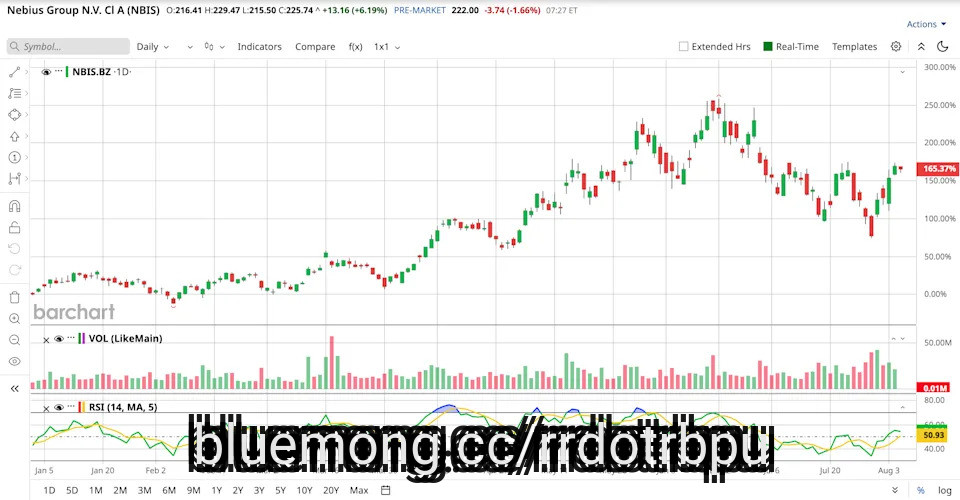
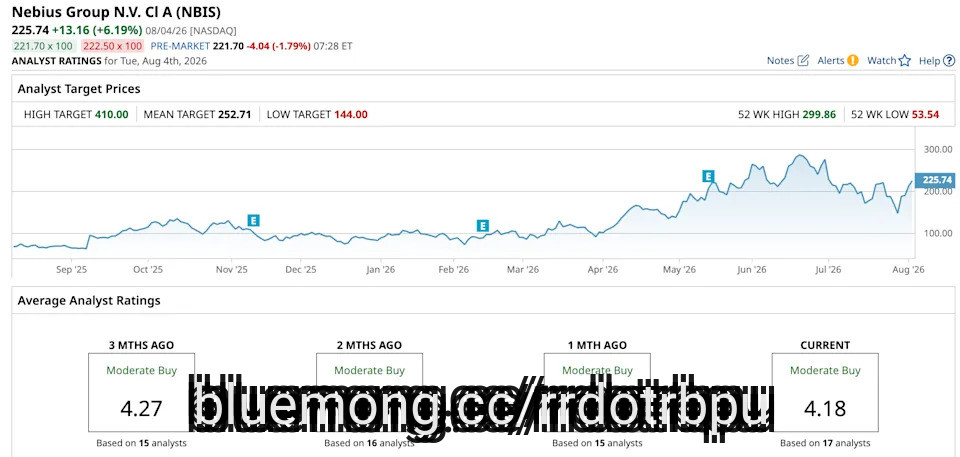
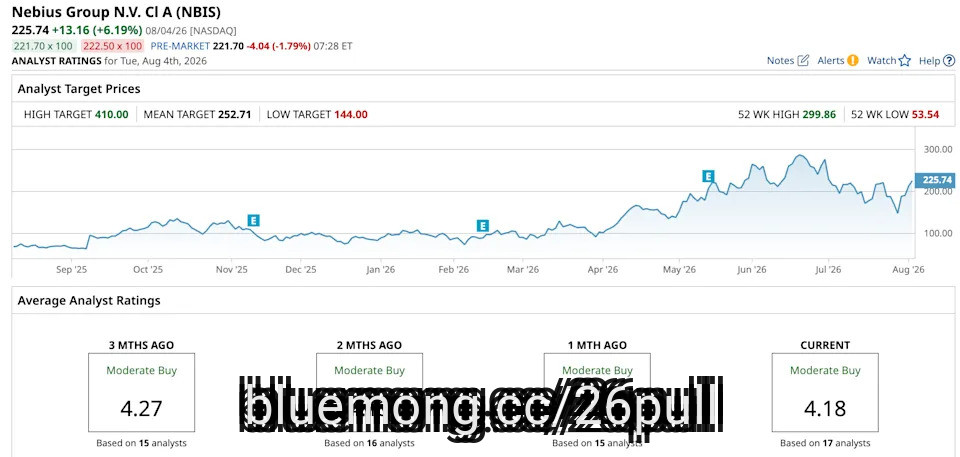
When Nvidia (NVDA) invests in a company, investors pay attention. The chip giant doesn't hand out multi-billion-dollar investments lightly. According to Nvidia's recent filing, the company now owns 22.2 million Nebius (NBIS) shares, representing a 9.3% stake in the AI cloud company. Nvidia's trust in Nebius didn't just appear overnight. The chip giant first became an investor in late 2024 through Nebius' $700 million private placement and has steadily increased its stake since then. Nebius stock has climbed an impressive 147.6% year-to-date (YTD), surpassing the overall market.
But Nvidia's backing isn't just about capital. It signals that Nvidia sees Nebius as an important partner in the AI infrastructure ecosystem. The business is growing at a staggering pace. However, the challenge is that much of that expectation appears to be already priced into the stock. Nebius is set to report its Q2 earnings on August 12. Is Nebius stock a buy now?
Jeff Bezos Says He's Selling $1 Billion In Amazon Stock Every Year to Fund Blue Origin — 'It's The Most Important Work I'm Doing'
Apple's New CEO Is Bringing a Familiar Face Back From Retirement. The Shift Is Happening.
Nasdaq Futures Climb as Tech Rally Continues on Palantir Boost, U.S. JOLTS Report and ******* eX Earnings on Tap
#Stock #company #NVIDIA #report
But Nvidia's backing isn't just about capital. It signals that Nvidia sees Nebius as an important partner in the AI infrastructure ecosystem. The business is growing at a staggering pace. However, the challenge is that much of that expectation appears to be already priced into the stock. Nebius is set to report its Q2 earnings on August 12. Is Nebius stock a buy now?
Jeff Bezos Says He's Selling $1 Billion In Amazon Stock Every Year to Fund Blue Origin — 'It's The Most Important Work I'm Doing'
Apple's New CEO Is Bringing a Familiar Face Back From Retirement. The Shift Is Happening.
Nasdaq Futures Climb as Tech Rally Continues on Palantir Boost, U.S. JOLTS Report and ******* eX Earnings on Tap
#Stock #company #NVIDIA #report

2 days ago
Dynatrace (NYSE:DT) shares climbed more than 7% in pre-market trading after the software company reported first-quarter fiscal 2027 results that topped Wall Street expectations, supported by continued demand for its AI-powered observability platform.
The company posted adjusted earnings of $0.48 per share, beating the ****** yst consensus estimate of $0.44. Revenue increased 16% year over year to $554.5 million, ahead of the expected $549.3 million.
Chief Executive Officer Rick McConnell said enterprise customers continue to invest heavily in cloud infrastructure and artificial intelligence initiatives.
"Dynatrace delivered an exceptional quarter, led by 41% organic net new ARR growth," McConnell said. "Demand continues to strengthen as enterprises expand cloud-native workloads and accelerate their AI initiatives."
Annual recurring revenue (ARR) rose 17% from a year earlier to $2.136 billion on both a reported and constant-currency basis.
#mcconnell #cloud
The company posted adjusted earnings of $0.48 per share, beating the ****** yst consensus estimate of $0.44. Revenue increased 16% year over year to $554.5 million, ahead of the expected $549.3 million.
Chief Executive Officer Rick McConnell said enterprise customers continue to invest heavily in cloud infrastructure and artificial intelligence initiatives.
"Dynatrace delivered an exceptional quarter, led by 41% organic net new ARR growth," McConnell said. "Demand continues to strengthen as enterprises expand cloud-native workloads and accelerate their AI initiatives."
Annual recurring revenue (ARR) rose 17% from a year earlier to $2.136 billion on both a reported and constant-currency basis.
#mcconnell #cloud


2 days ago
Nio's (NIO) latest delivery update puts the stock back in the spotlight at exactly the right time. The company delivered 35,934 vehicles in July 2026, up 71.0% year-over-year (YOY), while year-to-date (YTD) deliveries climbed to 227,057 units, a 68.0% increase YOY.
This momentum arrives at a pivotal time for Nio, which has now surpassed 1.22 million ****** ulative deliveries. That solidifies July as another record month for the Chinese electric vehicle (EV) maker, even though deliveries were down 11.49% from June, marking the company's first sequential decline in three months.
Jeff Bezos Says He's Selling $1 Billion In Amazon Stock Every Year to Fund Blue Origin — 'It's The Most Important Work I'm Doing'
Apple's New CEO Is Bringing a Familiar Face Back From Retirement. The Shift Is Happening.
Nasdaq Futures Climb as Tech Rally Continues on Palantir Boost, U.S. JOLTS Report and ****** eX Earnings on Tap
#year #time #jeff
This momentum arrives at a pivotal time for Nio, which has now surpassed 1.22 million ****** ulative deliveries. That solidifies July as another record month for the Chinese electric vehicle (EV) maker, even though deliveries were down 11.49% from June, marking the company's first sequential decline in three months.
Jeff Bezos Says He's Selling $1 Billion In Amazon Stock Every Year to Fund Blue Origin — 'It's The Most Important Work I'm Doing'
Apple's New CEO Is Bringing a Familiar Face Back From Retirement. The Shift Is Happening.
Nasdaq Futures Climb as Tech Rally Continues on Palantir Boost, U.S. JOLTS Report and ****** eX Earnings on Tap
#year #time #jeff


2 days ago
Palantir Technologies (PLTR) has posted the kind of earnings report that makes a pricey company seem nearly fair.
Revenue surged 93% year over year. U.S. commercial sales jumped 149%. Government revenue climbed 90%. Profit margins expanded while growth accelerated, an unusual combination for any software company, let alone one approaching $2 billion in quarterly revenue.
And they responded accordingly.
Palantir shares surged 29.5% on Aug. 4, according to CNBC, its highest one-day percentage gain since February 2024, after the firm raised its annual projection and beat Wall Street's second-quarter estimates.
That surge presented a difficult dilemma for shareholders and would-be buyers.
#surged #year #technologies
Revenue surged 93% year over year. U.S. commercial sales jumped 149%. Government revenue climbed 90%. Profit margins expanded while growth accelerated, an unusual combination for any software company, let alone one approaching $2 billion in quarterly revenue.
And they responded accordingly.
Palantir shares surged 29.5% on Aug. 4, according to CNBC, its highest one-day percentage gain since February 2024, after the firm raised its annual projection and beat Wall Street's second-quarter estimates.
That surge presented a difficult dilemma for shareholders and would-be buyers.
#surged #year #technologies


2 days ago
Shares are down roughly a fifth over the past year, and the risk that matters now is a spending plan with no stated payback date.
Meta Platforms (META) has spent the past year losing an argument with its own shareholders. The business is not the problem: revenue grew 28% year over year in the second quarter of 2026. The problem is what that growth now costs to produce, and the biggest risk to the stock is that ***** ody has put a date on when the spending pays.
Where The Twenty-Eight Percent Goes
Total expenses climbed 55% to $42 billion in that quarter, and operating income went backwards, falling 8% to $18.8 billion on revenue of $60.8 billion. Legal charges of $2.4 billion and $1.2 billion of severance from the May 2026 head count reduction account for part of that, and both are one-off items. Strip them out, though, and management's own arithmetic still leaves operating income up only 9% against 28% revenue growth, because much of the durable pressure sits in the infrastructure line: higher depreciation, the cost of running data centers, and third-party cloud spend, all rising to serve a compute build that management itself calls a big bet.
The Cash The Build Is Eating
#year #spending
Meta Platforms (META) has spent the past year losing an argument with its own shareholders. The business is not the problem: revenue grew 28% year over year in the second quarter of 2026. The problem is what that growth now costs to produce, and the biggest risk to the stock is that ***** ody has put a date on when the spending pays.
Where The Twenty-Eight Percent Goes
Total expenses climbed 55% to $42 billion in that quarter, and operating income went backwards, falling 8% to $18.8 billion on revenue of $60.8 billion. Legal charges of $2.4 billion and $1.2 billion of severance from the May 2026 head count reduction account for part of that, and both are one-off items. Strip them out, though, and management's own arithmetic still leaves operating income up only 9% against 28% revenue growth, because much of the durable pressure sits in the infrastructure line: higher depreciation, the cost of running data centers, and third-party cloud spend, all rising to serve a compute build that management itself calls a big bet.
The Cash The Build Is Eating
#year #spending


2 days ago
Amgen reported second-quarter results on Tuesday that topped expectations, raised its full-year outlook, and disclosed it was ending development of an early-stage weight loss drug candidate.
The Thousand Oaks, California-based biotech earned $2.38 billion in the second quarter, translating to $4.37 per diluted share, a significant jump from the $1.43 billion, or $2.65 per share, it recorded in the year-ago period. On an adjusted basis, earnings came to $6.29 per share, up 4% year over year. **** ysts had expected adjusted earnings of $5.62 per share, according to the Wall Street Journal.
Total revenue climbed 10% to $10.05 billion, compared with $9.18 billion in the second quarter of 2025, the company said. Product sales grew 9% to $9.54 billion, driven by volume growth. **** ysts had expected revenue of $9.43 billion, according to the Journal.
Among the top performers, cholesterol drug Repatha posted sales of $953 million, up 37% year over year, while bone drug Evenity generated $714 million, up 38%. Rare disease treatment Uplizna grew 90% to $335 million. Cancer drug Imdelltra rose 115% to $288 million.
Amgen lifted its full-year 2026 guidance, now targeting total revenue in a range of $38.2 billion to $39.4 billion, which compares favorably to its previous forecast of $37.1 billion to $38.5 billion. On the earnings side, the company set an adjusted EPS target of $22.30 to $23.50, stepping up from its prior range of $21.70 to $23.10.
#billion #drug #million #quarter
The Thousand Oaks, California-based biotech earned $2.38 billion in the second quarter, translating to $4.37 per diluted share, a significant jump from the $1.43 billion, or $2.65 per share, it recorded in the year-ago period. On an adjusted basis, earnings came to $6.29 per share, up 4% year over year. **** ysts had expected adjusted earnings of $5.62 per share, according to the Wall Street Journal.
Total revenue climbed 10% to $10.05 billion, compared with $9.18 billion in the second quarter of 2025, the company said. Product sales grew 9% to $9.54 billion, driven by volume growth. **** ysts had expected revenue of $9.43 billion, according to the Journal.
Among the top performers, cholesterol drug Repatha posted sales of $953 million, up 37% year over year, while bone drug Evenity generated $714 million, up 38%. Rare disease treatment Uplizna grew 90% to $335 million. Cancer drug Imdelltra rose 115% to $288 million.
Amgen lifted its full-year 2026 guidance, now targeting total revenue in a range of $38.2 billion to $39.4 billion, which compares favorably to its previous forecast of $37.1 billion to $38.5 billion. On the earnings side, the company set an adjusted EPS target of $22.30 to $23.50, stepping up from its prior range of $21.70 to $23.10.
#billion #drug #million #quarter


2 days ago
When Nvidia (NVDA) invests in a company, investors pay attention. The chip giant doesn't hand out multi-billion-dollar investments lightly. According to Nvidia's recent filing, the company now owns 22.2 million Nebius (NBIS) shares, representing a 9.3% stake in the AI cloud company. Nvidia's trust in Nebius didn't just appear overnight. The chip giant first became an investor in late 2024 through Nebius' $700 million private placement and has steadily increased its stake since then. Nebius stock has climbed an impressive 147.6% year-to-date (YTD), surpassing the overall market.
But Nvidia's backing isn't just about capital. It signals that Nvidia sees Nebius as an important partner in the AI infrastructure ecosystem. The business is growing at a staggering pace. However, the challenge is that much of that expectation appears to be already priced into the stock. Nebius is set to report its Q2 earnings on August 12. Is Nebius stock a buy now?
Jeff Bezos Says He's Selling $1 Billion In Amazon Stock Every Year to Fund Blue Origin — 'It's The Most Important Work I'm Doing'
Apple's New CEO Is Bringing a Familiar Face Back From Retirement. The Shift Is Happening.
Nasdaq Futures Climb as Tech Rally Continues on Palantir Boost, U.S. JOLTS Report and ***** eX Earnings on Tap
#company
But Nvidia's backing isn't just about capital. It signals that Nvidia sees Nebius as an important partner in the AI infrastructure ecosystem. The business is growing at a staggering pace. However, the challenge is that much of that expectation appears to be already priced into the stock. Nebius is set to report its Q2 earnings on August 12. Is Nebius stock a buy now?
Jeff Bezos Says He's Selling $1 Billion In Amazon Stock Every Year to Fund Blue Origin — 'It's The Most Important Work I'm Doing'
Apple's New CEO Is Bringing a Familiar Face Back From Retirement. The Shift Is Happening.
Nasdaq Futures Climb as Tech Rally Continues on Palantir Boost, U.S. JOLTS Report and ***** eX Earnings on Tap
#company



2 days ago
Explained: Why runs in the Hundred are counted in total T20 runs of a batter originally appeared on Cricket News. Add Cricket News as a Preferred Source by clicking here.
The Hundred has counted in T20 records since the tournament began in 2021.
ICC classifies both men's and women's Hundred as official List A T20.
Statistician explains the decision matched precedent set by other formats.
When Jos ******* ler recently climbed past Chris Gayle to become men's cricket's leading T20 run-scorer, the news caught plenty of people off guard.
#list #buttler
The Hundred has counted in T20 records since the tournament began in 2021.
ICC classifies both men's and women's Hundred as official List A T20.
Statistician explains the decision matched precedent set by other formats.
When Jos ******* ler recently climbed past Chris Gayle to become men's cricket's leading T20 run-scorer, the news caught plenty of people off guard.
#list #buttler



3 days ago
SoFi Technologies (NASDAQ:SOFI) just posted the best quarter in its history, and the stock fell anyway. Membership hit a record, loan originations hit a record, and tangible book value grew faster than almost anyone expected. Yet shares dropped roughly 9% the day the numbers came out, part of a stretch that has left the stock down nearly 42% this year. The gap between what the business is doing and what the market is doing has rarely been this wide.
The growth engine behind that record quarter keeps compounding. SoFi added 1.1 million new members in FQ2 2026, a record, pushing its base to 15.8 million people, up 35% year over year. What matters more is how it is selling to them: 51% of new products went to existing members, up from 43% the prior quarter and 35% a year earlier, and the average member now uses 1.54 products, up from 1.46 twelve months ago. That is a company getting cheaper to grow, since selling another product to someone already banking with you costs far less than acquiring a stranger.
The balance sheet backs up that growth. Tangible book value jumped 80% year over year to $9.5 billion, or $7.34 per share, while deposits reached $45.5 billion and the total capital ratio sat at 18.8%, comfortably above the 10.5% regulatory minimum. Loan originations hit a record $14.8 billion, up 69%, and the personal loan charge-off rate actually fell 21 basis points even as that book expanded, a sign SoFi is not chasing volume by loosening standards. SoFi's brokerage arm was also among the firms chosen for the record-breaking ***** e Exploration Technologies IPO, and brokerage revenue climbed 141% for the quarter. William Blair's Andrew Jeffrey called the results reason to "aggressively accumulate" the stock, arguing the larger balance sheet efficiently supports management's 20% to 30% long-term return-on-equity target.
Pixabay/Public Domain
None of that explains why the profit outlook didn't move. Management raised full-year adjusted net revenue guidance to $4.75 billion to $4.85 billion, up from $4.66 billion, but left adjusted EBITDA guidance at $1.6 billion and adjusted earnings per share at $0.60. More revenue with no more profit attached is exactly the kind of detail the market prices quickly. CEO Anthony Noto pointed to a shift in the bank's own rate expectations, from two cuts to two hikes this year, as the reason for the caution, alongside a choice to reinvest rather than bank the upside.
#year #record #book #revenue
The growth engine behind that record quarter keeps compounding. SoFi added 1.1 million new members in FQ2 2026, a record, pushing its base to 15.8 million people, up 35% year over year. What matters more is how it is selling to them: 51% of new products went to existing members, up from 43% the prior quarter and 35% a year earlier, and the average member now uses 1.54 products, up from 1.46 twelve months ago. That is a company getting cheaper to grow, since selling another product to someone already banking with you costs far less than acquiring a stranger.
The balance sheet backs up that growth. Tangible book value jumped 80% year over year to $9.5 billion, or $7.34 per share, while deposits reached $45.5 billion and the total capital ratio sat at 18.8%, comfortably above the 10.5% regulatory minimum. Loan originations hit a record $14.8 billion, up 69%, and the personal loan charge-off rate actually fell 21 basis points even as that book expanded, a sign SoFi is not chasing volume by loosening standards. SoFi's brokerage arm was also among the firms chosen for the record-breaking ***** e Exploration Technologies IPO, and brokerage revenue climbed 141% for the quarter. William Blair's Andrew Jeffrey called the results reason to "aggressively accumulate" the stock, arguing the larger balance sheet efficiently supports management's 20% to 30% long-term return-on-equity target.
Pixabay/Public Domain
None of that explains why the profit outlook didn't move. Management raised full-year adjusted net revenue guidance to $4.75 billion to $4.85 billion, up from $4.66 billion, but left adjusted EBITDA guidance at $1.6 billion and adjusted earnings per share at $0.60. More revenue with no more profit attached is exactly the kind of detail the market prices quickly. CEO Anthony Noto pointed to a shift in the bank's own rate expectations, from two cuts to two hikes this year, as the reason for the caution, alongside a choice to reinvest rather than bank the upside.
#year #record #book #revenue

3 days ago
PepsiCo (NASDAQ:PEP) has spent close to a year going nowhere while the broader market climbed steadily, and shares recently traded near a 52-week low even after the company posted higher revenue and earnings. That gap between decent headline numbers and a beaten-down stock price is the whole story right now. Investors are trying to figure out whether a business that looks strong overseas and stuck at home is worth paying up for, all while collecting one of the most dependable dividends around.
ja-san-miguel-xYSp0kkIUio-unsplash
Outside the United States, PepsiCo's business is humming. International beverage volume climbed 5% last quarter and revenue jumped 11%, or 9% once currency swings are stripped out, and none of that came from acquisitions since those deals were concentrated on U.S. brands. Snacks told a similar story abroad, with Asia Pacific revenue up 15% and Latin America up 12%. That geographic spread matters because it's cushioning a domestic business that isn't pulling its weight. On top of that, volume is finally moving in the right direction everywhere: PepsiCo posted its fastest volume sales growth since 2022, and global organic sales volume through the first half of fiscal 2026 was the highest in four years, a sign that recent price cuts aimed at cost-conscious shoppers are working rather than just squeezing margins.
The stock's price tag adds to the case. Shares trade around 16 times forward earnings, a discount to its five-year median near 22. Layer on a dividend that's been raised for 54 straight years, with the payout still covered by adjusted earnings. Management is "restaging" four core brands, Lay's, Tostitos, Gatorade, and Quaker, with new packaging, marketing, and ingredients, while rolling out products like protein chips and probiotic drinks. Activist investor Elliott Investment Management has also been in the mix, pushing the company to move faster on growth and cost cuts.
The trouble is that PepsiCo's biggest market is still shrinking in the ways that matter. North American food sales fell 2% last quarter, and beverage volume in that region dropped 4% even as reported beverage revenue ticked up. Management pointed to higher gas prices as one culprit, arguing that pricier fill-ups are cutting into convenience store traffic, a channel where impulse buys of chips and soda matter a lot. Strip out acquisitions, and organic growth in North American beverages was just 1%.
#beverage #Growth
ja-san-miguel-xYSp0kkIUio-unsplash
Outside the United States, PepsiCo's business is humming. International beverage volume climbed 5% last quarter and revenue jumped 11%, or 9% once currency swings are stripped out, and none of that came from acquisitions since those deals were concentrated on U.S. brands. Snacks told a similar story abroad, with Asia Pacific revenue up 15% and Latin America up 12%. That geographic spread matters because it's cushioning a domestic business that isn't pulling its weight. On top of that, volume is finally moving in the right direction everywhere: PepsiCo posted its fastest volume sales growth since 2022, and global organic sales volume through the first half of fiscal 2026 was the highest in four years, a sign that recent price cuts aimed at cost-conscious shoppers are working rather than just squeezing margins.
The stock's price tag adds to the case. Shares trade around 16 times forward earnings, a discount to its five-year median near 22. Layer on a dividend that's been raised for 54 straight years, with the payout still covered by adjusted earnings. Management is "restaging" four core brands, Lay's, Tostitos, Gatorade, and Quaker, with new packaging, marketing, and ingredients, while rolling out products like protein chips and probiotic drinks. Activist investor Elliott Investment Management has also been in the mix, pushing the company to move faster on growth and cost cuts.
The trouble is that PepsiCo's biggest market is still shrinking in the ways that matter. North American food sales fell 2% last quarter, and beverage volume in that region dropped 4% even as reported beverage revenue ticked up. Management pointed to higher gas prices as one culprit, arguing that pricier fill-ups are cutting into convenience store traffic, a channel where impulse buys of chips and soda matter a lot. Strip out acquisitions, and organic growth in North American beverages was just 1%.
#beverage #Growth

3 days ago
Micron Technology (MU) shares dropped in late July when a Chinese rival's stock market debut instantly minted one of the country's most valuable companies.
Investors read it as a warning sign for the world's AI memory leaders. Bank of America read the same headlines and reached the opposite conclusion.
On August 3, BofA ***** yst Vivek Arya reiterated his Buy rating on Micron and held his price objective at $1,550, implying steep upside from current levels, according to a BofA Research note. Shares climbed as much as 8.3% that day.
That anxiety is understandable on the surface. CXMT, formally ChangXin Memory Technologies, held just 8% of the global DRAM market as of the second quarter, compared with Micron's 22%, according to Counterpoint Research data cited by CNBC. But the company is scaling capacity at a pace few Western chipmakers have managed.
Related: Bank of America doubles down on Micron stock price for 2026
#bofa
Investors read it as a warning sign for the world's AI memory leaders. Bank of America read the same headlines and reached the opposite conclusion.
On August 3, BofA ***** yst Vivek Arya reiterated his Buy rating on Micron and held his price objective at $1,550, implying steep upside from current levels, according to a BofA Research note. Shares climbed as much as 8.3% that day.
That anxiety is understandable on the surface. CXMT, formally ChangXin Memory Technologies, held just 8% of the global DRAM market as of the second quarter, compared with Micron's 22%, according to Counterpoint Research data cited by CNBC. But the company is scaling capacity at a pace few Western chipmakers have managed.
Related: Bank of America doubles down on Micron stock price for 2026
#bofa


3 days ago
Los Angeles Rams defensive tackle Kobie Turner has established himself as one of the league's premier interior defenders, and Pro Football Focus' latest rankings back that up.
The **** ytics outlet slotted the Rams defensive tackle at No. 9 in its top 32 interior defenders ahead of the 2026 season, highlighting his continued growth as a pass rusher.
Turner has developed into a really strong pass-rusher from the defensive interior, and is still just 27 years old. He has totalled 50, 62 and 69 pressures in each of the past three seasons, respectively, and set a career-high with an 83.9 PFF pass-rush grade last year. He's been solid against the run too, with a PFF run-defense grade above 66.0 in each of those three seasons.
Turner's pressure numbers have climbed every year since entering the league, and last season's career-best grade suggests he's still trending upward rather than plateauing. Combined with steady run-defense marks, PFF's ranking reflects a player who has become a well-rounded force up front rather than a one-dimensional rusher. In terms of raw production, Turner tallied seven sacks in 2025 (fewer than the eight and nine he had in his first two seasons, respectively), with 48 combined tackles, nine tackles for a loss, one interception and 14 quarterback hits.
The recognition stands in contrast to how Turner fared in a separate survey last month. ESPN polled NFL coaches, executives and scouts on the league's top defensive tackles, and Turner didn't crack the top 10 or even land among the honorable mentions, instead landing in the "also receiving votes" tier alongside players like Cameron Heyward and Kenny Clark.
#interior
The **** ytics outlet slotted the Rams defensive tackle at No. 9 in its top 32 interior defenders ahead of the 2026 season, highlighting his continued growth as a pass rusher.
Turner has developed into a really strong pass-rusher from the defensive interior, and is still just 27 years old. He has totalled 50, 62 and 69 pressures in each of the past three seasons, respectively, and set a career-high with an 83.9 PFF pass-rush grade last year. He's been solid against the run too, with a PFF run-defense grade above 66.0 in each of those three seasons.
Turner's pressure numbers have climbed every year since entering the league, and last season's career-best grade suggests he's still trending upward rather than plateauing. Combined with steady run-defense marks, PFF's ranking reflects a player who has become a well-rounded force up front rather than a one-dimensional rusher. In terms of raw production, Turner tallied seven sacks in 2025 (fewer than the eight and nine he had in his first two seasons, respectively), with 48 combined tackles, nine tackles for a loss, one interception and 14 quarterback hits.
The recognition stands in contrast to how Turner fared in a separate survey last month. ESPN polled NFL coaches, executives and scouts on the league's top defensive tackles, and Turner didn't crack the top 10 or even land among the honorable mentions, instead landing in the "also receiving votes" tier alongside players like Cameron Heyward and Kenny Clark.
#interior



3 days ago
Angel Reese broke another WNBA record in the Atlanta Dream's 96-82 victory over the Phoenix Mercury.
Reese contributed 14 points, 10 rebounds and four ******* ists as the Dream climbed to fourth in the league standings.
The 24-year-old is one of the WNBA's most polarising players, as she regularly draws attention both on and off the court.
Reese is often trolled online for her mistakes, such as missed open layups, but she remains a key player for the Dream.
Perhaps the three-time All-Star's latest WNBA record will quiet her critics for a short while.
#phoenix
Reese contributed 14 points, 10 rebounds and four ******* ists as the Dream climbed to fourth in the league standings.
The 24-year-old is one of the WNBA's most polarising players, as she regularly draws attention both on and off the court.
Reese is often trolled online for her mistakes, such as missed open layups, but she remains a key player for the Dream.
Perhaps the three-time All-Star's latest WNBA record will quiet her critics for a short while.
#phoenix


3 days ago
There is a difference between becoming a champion and learning how to carry yourself like one.
Notre Dame had already climbed the mountain in 1988, finishing a perfect season with a national championship and establishing itself once again among college football's elite. But championships do not buy much patience the following fall. If anything, they make the target bigger. Every opponent wants to be the one that knocks off the defending champion, every close call becomes evidence of vulnerability, and every week brings another test of whether the magic of the year before can somehow survive.
By November 18, 1989, Notre Dame had answered every one of those questions.
The Irish arrived at Penn State 10–0, ranked No. 1 in the country and riding a 22-game winning streak that stretched all the way back to the beginning of their championship season. Yet Beaver Stadium represented something Notre Dame still had not conquered. The Irish had played there four times and lost all four, including a painful 21–20 defeat in 1987 that helped extinguish their national championship hopes.
This time, Notre Dame arrived as the team everyone else was trying to derail.
#notre
Notre Dame had already climbed the mountain in 1988, finishing a perfect season with a national championship and establishing itself once again among college football's elite. But championships do not buy much patience the following fall. If anything, they make the target bigger. Every opponent wants to be the one that knocks off the defending champion, every close call becomes evidence of vulnerability, and every week brings another test of whether the magic of the year before can somehow survive.
By November 18, 1989, Notre Dame had answered every one of those questions.
The Irish arrived at Penn State 10–0, ranked No. 1 in the country and riding a 22-game winning streak that stretched all the way back to the beginning of their championship season. Yet Beaver Stadium represented something Notre Dame still had not conquered. The Irish had played there four times and lost all four, including a painful 21–20 defeat in 1987 that helped extinguish their national championship hopes.
This time, Notre Dame arrived as the team everyone else was trying to derail.
#notre


3 days ago
Pakistan climbed one place in the World Test Championship (WTC) 2025-27 points table after beating the West Indies by eight wickets in the second Test in Trinidad. The win helped Pakistan level the two-match series 1-1 and move above the West Indies in the standings.
Earlier, Pakistan had slipped to the bottom of the table after losing the opening Test. They now have two wins from six matches and a points percentage (PCT) of 22.22.
Pakistan also ended their eight-match away losing streak in Test cricket with the victory.
Chasing a target of 77, Pakistan reached 77/2 shortly after lunch on Day 4. Abdullah Shafique, who scored a century in the first innings, remained unbeaten on 24 along with captain Babar Azam, who also finished on 24 not out.
Babar sealed the win by hitting back-to-back sixes off left-arm spinner Jomel Warrican.
West Indies had won the first Test by 90 runs in Tarouba, but Pakistan bounced back strongly in the second match. Spinners Sajid Khan and Ali Usman made the most of the conditions at Queen's Park Oval as Pakistan remained unbeaten in a Test series against the West Indies since 2000.
1. Australia (1st): Australia remain at the top of the World Test Championship standings. They have won seven of their eight matches, lost one, collected 84 points and have the best Points Percentage (PCT) of 87.50.
2. South Africa (2nd): South Africa are second with three wins and one defeat in four matches. They have 36 points and a PCT of 75.00.
3. New Zealand (3rd): New Zealand are third after winning four of their six Tests. They have one loss and one draw, with 52 points and a PCT of 72.22.
Pos
#test #match
Earlier, Pakistan had slipped to the bottom of the table after losing the opening Test. They now have two wins from six matches and a points percentage (PCT) of 22.22.
Pakistan also ended their eight-match away losing streak in Test cricket with the victory.
Chasing a target of 77, Pakistan reached 77/2 shortly after lunch on Day 4. Abdullah Shafique, who scored a century in the first innings, remained unbeaten on 24 along with captain Babar Azam, who also finished on 24 not out.
Babar sealed the win by hitting back-to-back sixes off left-arm spinner Jomel Warrican.
West Indies had won the first Test by 90 runs in Tarouba, but Pakistan bounced back strongly in the second match. Spinners Sajid Khan and Ali Usman made the most of the conditions at Queen's Park Oval as Pakistan remained unbeaten in a Test series against the West Indies since 2000.
1. Australia (1st): Australia remain at the top of the World Test Championship standings. They have won seven of their eight matches, lost one, collected 84 points and have the best Points Percentage (PCT) of 87.50.
2. South Africa (2nd): South Africa are second with three wins and one defeat in four matches. They have 36 points and a PCT of 75.00.
3. New Zealand (3rd): New Zealand are third after winning four of their six Tests. They have one loss and one draw, with 52 points and a PCT of 72.22.
Pos
#test #match


3 days ago
AMD's Meta partnership anchors its MI450 GPU ramp toward $700, while Micron's 5x forward P/E makes a $1,600 price target surprisingly defensible.
Marvell set an all-time design-win record in FY2026, with Data Center now 76% of revenue and CEO Matt Murphy raising his FY2028 outlook.
Act now: the ***** yst who called NVIDIA in 2010 just named his top 10 AI stocks — and AMD didn't make the cut. Grab the names FREE today.
The AI infrastructure buildout has re-rated an entire tier of semiconductor names in 2026, and three stand out as candidates for a fresh leg higher into 2027. AMD (NASDAQ: AMD) is up 122.33% year to date, Micron Technology (NASDAQ: MU) has gained 188.55%, and Marvell Technology (NASDAQ: MRVL) has climbed 121.03%.
After a summer pullback, I want to walk through what it would take for each to notch another round-number milestone in 2027.
#NASDAQ #technology #mi450 #data
Marvell set an all-time design-win record in FY2026, with Data Center now 76% of revenue and CEO Matt Murphy raising his FY2028 outlook.
Act now: the ***** yst who called NVIDIA in 2010 just named his top 10 AI stocks — and AMD didn't make the cut. Grab the names FREE today.
The AI infrastructure buildout has re-rated an entire tier of semiconductor names in 2026, and three stand out as candidates for a fresh leg higher into 2027. AMD (NASDAQ: AMD) is up 122.33% year to date, Micron Technology (NASDAQ: MU) has gained 188.55%, and Marvell Technology (NASDAQ: MRVL) has climbed 121.03%.
After a summer pullback, I want to walk through what it would take for each to notch another round-number milestone in 2027.
#NASDAQ #technology #mi450 #data


3 days ago
Our ***** ysts just identified a stock with the potential to be the next Nvidia. Tell us how you invest and we'll show you why it's our #1 pick. Tap here.
What do you do when you look up and realize that a rival has almost completely stolen your pre-IPO thunder? You ask private equity to justify a silly huge valuation, of course.
Polymarket is reportedly in talks for a fresh fundraising round that would value the company north of $20 billion, according to Bloomberg. If it closes, this would be the second markup in four months. Polymarket previously raised money all the way back in April at a $15 billion valuation, a round that included a $600 million direct investment from Intercontinental Exchange, the company that owns the New York Stock Exchange. That was already a lot of institutional money betting that betting on the future is itself a good bet.
Polymarket told CNBC in late June that its annualized revenue had climbed well above $1 billion following the May launch of its regulated U.S. exchange. Volume backs that up: north of $100 million in daily notional volume domestically, up from roughly $75 million at the end of May, with the international platform running above $150 million a day.
One stock. Nvidia-level potential. 30M+ investors trust Moby to find it first. Get the pick. Tap here.
#pick #here
What do you do when you look up and realize that a rival has almost completely stolen your pre-IPO thunder? You ask private equity to justify a silly huge valuation, of course.
Polymarket is reportedly in talks for a fresh fundraising round that would value the company north of $20 billion, according to Bloomberg. If it closes, this would be the second markup in four months. Polymarket previously raised money all the way back in April at a $15 billion valuation, a round that included a $600 million direct investment from Intercontinental Exchange, the company that owns the New York Stock Exchange. That was already a lot of institutional money betting that betting on the future is itself a good bet.
Polymarket told CNBC in late June that its annualized revenue had climbed well above $1 billion following the May launch of its regulated U.S. exchange. Volume backs that up: north of $100 million in daily notional volume domestically, up from roughly $75 million at the end of May, with the international platform running above $150 million a day.
One stock. Nvidia-level potential. 30M+ investors trust Moby to find it first. Get the pick. Tap here.
#pick #here

3 days ago
Our ****** ysts just identified a stock with the potential to be the next Nvidia. Tell us how you invest and we'll show you why it's our #1 pick. Tap here.
Turns out the safest bet in toys right now isn't a toy at all. It's a piece of cardboard with a cartoon monster on it. Asmodee just proved that trading cards are quietly the best business in the building, better margins, more heat, more staying power than anything with a board and a rulebook attached. Investors bought in for CATAN. They're staying for the booster packs.
Asmodee shares jumped to a record high after a first-quarter earnings beat that had Pokémon doing most of the heavy lifting.
Net sales rose 20.9% to €422.1 million (about $486.2 million), ahead of expectations near €404 million, with organic growth just over 20%, meaning this wasn't acquisitions doing the work. Trading card games led the way, up 23.1% to €285 million on demand for Pokémon, Magic: The Gathering, Yu-Gi-Oh, One Piece and a run of newer ****** les. Board games grew 16% to €103 million, helped by evergreen franchises like CATAN and Dobble, new releases and expansions, plus a contribution from recently acquired ATM Gaming.
Profitability outran sales. Adjusted EBITDA climbed 55% to €61.9 million from €39.9 million, and the margin expanded to 14.7% from 11.4%. EBIT rose to €40.5 million, and profit attributable to shareholders swung to €17 million from a €1.6 million loss a year earlier. Shares rose as much as 10% on the news.
#trading
Turns out the safest bet in toys right now isn't a toy at all. It's a piece of cardboard with a cartoon monster on it. Asmodee just proved that trading cards are quietly the best business in the building, better margins, more heat, more staying power than anything with a board and a rulebook attached. Investors bought in for CATAN. They're staying for the booster packs.
Asmodee shares jumped to a record high after a first-quarter earnings beat that had Pokémon doing most of the heavy lifting.
Net sales rose 20.9% to €422.1 million (about $486.2 million), ahead of expectations near €404 million, with organic growth just over 20%, meaning this wasn't acquisitions doing the work. Trading card games led the way, up 23.1% to €285 million on demand for Pokémon, Magic: The Gathering, Yu-Gi-Oh, One Piece and a run of newer ****** les. Board games grew 16% to €103 million, helped by evergreen franchises like CATAN and Dobble, new releases and expansions, plus a contribution from recently acquired ATM Gaming.
Profitability outran sales. Adjusted EBITDA climbed 55% to €61.9 million from €39.9 million, and the margin expanded to 14.7% from 11.4%. EBIT rose to €40.5 million, and profit attributable to shareholders swung to €17 million from a €1.6 million loss a year earlier. Shares rose as much as 10% on the news.
#trading


3 days ago
Spotify Technology SA (NYSE:SPOT) reported second-quarter profitability well above last year's results on Tuesday, as the music streaming giant crossed 300 million premium.
The Stockholm-based company posted revenue of €4.78 billion for the quarter, up 14% from a year earlier, though just shy of ****** yst estimates of €4.79 billion. Diluted earnings per share came in at €2.61.
Premium subscribers rose 9% year-over-year to 300 million, edging past estimates of 299 million. Monthly active users climbed 12% to 777 million, narrowly missing forecasts of 778 million.
Net income reached €545 million, a sharp reversal from an €86 million loss in the same period last year. Operating income totaled €655 million, with operating margin at 13.7%. Free cash flow rose 14% to €797 million, bringing the trailing twelve-month figure to €3.3 billion.
Premium segment revenue grew 15% to €4.33 billion, while ad-supported revenue rose just 1% to €446 million. Ad-supported monthly active users increased 14% to 494 million.
#last
The Stockholm-based company posted revenue of €4.78 billion for the quarter, up 14% from a year earlier, though just shy of ****** yst estimates of €4.79 billion. Diluted earnings per share came in at €2.61.
Premium subscribers rose 9% year-over-year to 300 million, edging past estimates of 299 million. Monthly active users climbed 12% to 777 million, narrowly missing forecasts of 778 million.
Net income reached €545 million, a sharp reversal from an €86 million loss in the same period last year. Operating income totaled €655 million, with operating margin at 13.7%. Free cash flow rose 14% to €797 million, bringing the trailing twelve-month figure to €3.3 billion.
Premium segment revenue grew 15% to €4.33 billion, while ad-supported revenue rose just 1% to €446 million. Ad-supported monthly active users increased 14% to 494 million.
#last

3 days ago
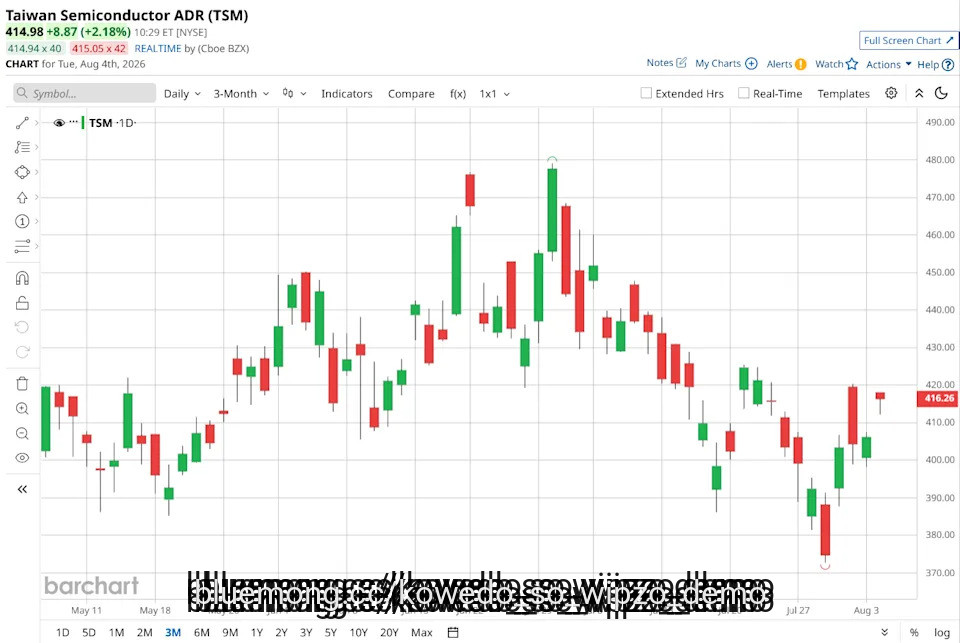
It is not often that TSMC (TSM) takes cues from Intel (INTC), but that is undoubtedly what's happening. According to The Information, the world's largest contract chipmaker is quietly building a new packaging technology modeled on Intel's EMIB. TSMC's own engineers are reportedly calling the project "EMIB-like" in-house. The company is developing it with a Taiwanese substrate maker, Kinsus Interconnect Technology. Following the report, TSMC's U.S.-listed shares rose about 8%, while Intel climbed roughly 11% on July 30. For a company that usually defines the industry's direction, TSMC borrowing ideas from Intel is worth a closer look.
The fight is all about how chips get packaged. TSMC's main method, CoWoS, uses a large and expensive silicon layer to link chips together. Intel's EMIB takes a leaner route, embedding tiny silicon bridges only where the chips actually connect. That makes it cheaper and potentially better suited to the increasingly large AI chip designs. The timing makes this sting more for the Taiwanese company. TSMC's CoWoS is sold out into 2027, with some customers waiting well over a year. That backlog is pushing buyers to look for alternate suppliers, and Intel is ready. Its newest version, EMIB-T, recently hit a 98% yield rate, matching CoWoS in that metric, and has already drawn interest from Google (GOOG) (GOOGL), Amazon (AMZN), and Nvidia (NVDA). Every customer who leaves over the wait chips away at TSMC's lead.
General Motors vs. Ford: 1 Auto Giant Is Winning the EV Race
1 ***** anese Company Just Waved a Red Flag for Micron Stock. How to Play It Here.
Billionaire Ken Griffin Just Saved Situational Awareness, But Here's What a Rescue Call From Citadel Really Sounds Like — 'I… Heard the Grim Reaper's Scythe'
#emib #tsmc #taiwanese
The fight is all about how chips get packaged. TSMC's main method, CoWoS, uses a large and expensive silicon layer to link chips together. Intel's EMIB takes a leaner route, embedding tiny silicon bridges only where the chips actually connect. That makes it cheaper and potentially better suited to the increasingly large AI chip designs. The timing makes this sting more for the Taiwanese company. TSMC's CoWoS is sold out into 2027, with some customers waiting well over a year. That backlog is pushing buyers to look for alternate suppliers, and Intel is ready. Its newest version, EMIB-T, recently hit a 98% yield rate, matching CoWoS in that metric, and has already drawn interest from Google (GOOG) (GOOGL), Amazon (AMZN), and Nvidia (NVDA). Every customer who leaves over the wait chips away at TSMC's lead.
General Motors vs. Ford: 1 Auto Giant Is Winning the EV Race
1 ***** anese Company Just Waved a Red Flag for Micron Stock. How to Play It Here.
Billionaire Ken Griffin Just Saved Situational Awareness, But Here's What a Rescue Call From Citadel Really Sounds Like — 'I… Heard the Grim Reaper's Scythe'
#emib #tsmc #taiwanese