

8 days ago
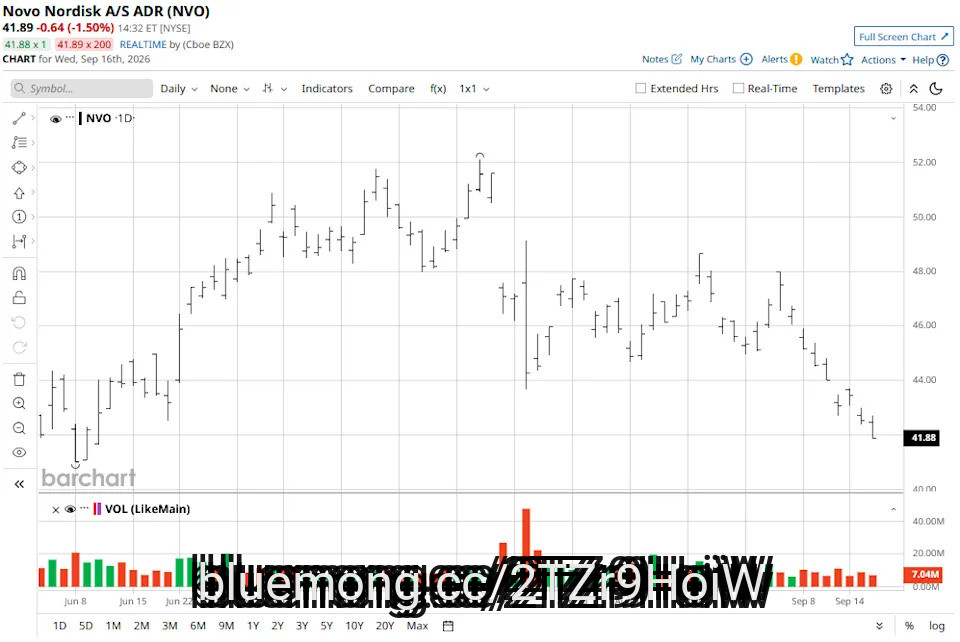
Morgan Stanley has cut Novo Nordisk A/S (NYSE:NVO) to Underweight on September 11, 2026. Semaglutide, the underlying molecule for Wegovy and Ozempic, generates roughly 75% of 2026 revenue. Morgan Stanley models that it will still represent 59% of total sales when its patent protection expires in 2031. And according to the firm, the valuation does not price in the impact it has on Novo's terminal value. The stock, currently trading at 10.6x earnings and down 33% from its 52-week high, slipped another 2% following the call. At this point, the question isn't about whether the patent cliff is real or not, but whether the 10x multiple reflects an actual bargain.
Semaglutide loses exclusivity in Europe in 2031 and the US in 2032. And Morgan Stanley believes Novo's oral-obesity business, projected to reach $10 billion by 2031, could not offset the pricing collapse after the arrival of generics. Growth decelerates to a 4% compound rate between 2027 and 2030. If the deceleration continues, it will justify 10x earnings as a fair price instead of a cheap one.
The 10.6x multiple already prices aggressive pessimism into a market leader of one of the fastest-growing drug classes in history. Morgan Stanley fueled the pessimism by discounting a 2031 cliff five years earlier. However, pharmaceutical patent expirations frequently face extensions and prove difficult to time. Second, the ***** umption that oral obesity treatments cannot offset patent losses relies on oral semaglutide being the bridge. But Novo's next-generation portfolio, including CagriSema and amycretin, offers a significant defense against the patent cliff. This remains unproven, however, specifically after CagriSema's earlier weight-loss data failed to impress, yet Morgan Stanley's terminal-value model discounts this pipeline almost entirely. The company is also expanding its franchise. On September 7, the STEP Young trial hit its endpoint in children aged six to twelve, strengthening the base its successors inherit.
The smart money is leaning in. As per the Insider Monkey database, 59 hedge funds held NVO in the second quarter of 2026, up from 55 in the first, indicating a slight increase in the modest institutional interest in the stock. Short interest on the ADR is negligible at about 0.7%. The positioning reflects a beaten-down value stock quietly seeing institutional accumulation while Wall Street turns increasingly bearish.
#semaglutide #oral
Semaglutide loses exclusivity in Europe in 2031 and the US in 2032. And Morgan Stanley believes Novo's oral-obesity business, projected to reach $10 billion by 2031, could not offset the pricing collapse after the arrival of generics. Growth decelerates to a 4% compound rate between 2027 and 2030. If the deceleration continues, it will justify 10x earnings as a fair price instead of a cheap one.
The 10.6x multiple already prices aggressive pessimism into a market leader of one of the fastest-growing drug classes in history. Morgan Stanley fueled the pessimism by discounting a 2031 cliff five years earlier. However, pharmaceutical patent expirations frequently face extensions and prove difficult to time. Second, the ***** umption that oral obesity treatments cannot offset patent losses relies on oral semaglutide being the bridge. But Novo's next-generation portfolio, including CagriSema and amycretin, offers a significant defense against the patent cliff. This remains unproven, however, specifically after CagriSema's earlier weight-loss data failed to impress, yet Morgan Stanley's terminal-value model discounts this pipeline almost entirely. The company is also expanding its franchise. On September 7, the STEP Young trial hit its endpoint in children aged six to twelve, strengthening the base its successors inherit.
The smart money is leaning in. As per the Insider Monkey database, 59 hedge funds held NVO in the second quarter of 2026, up from 55 in the first, indicating a slight increase in the modest institutional interest in the stock. Short interest on the ADR is negligible at about 0.7%. The positioning reflects a beaten-down value stock quietly seeing institutional accumulation while Wall Street turns increasingly bearish.
#semaglutide #oral


10 days ago
Danish pharmaceutical company Novo Nordisk (NVO) has teamed up with artificial intelligence (AI) leader Anthropic to leverage frontier AI models, including Claude Science, to supercharge its drug discovery and research and development (R&D) operations.
The collaboration aims to address complex biological challenges, streamline software engineering, and compress the timelines required to bring treatments for chronic diseases to market.
Billionaire Charlie Munger, Who Died at 99, Skipped Insurance on His Mansion Since He Could Just Write a Check to Rebuild — 'All Intelligent People Do It My Way'
Why It's Time to Load Up on Nvidia Stock
The Case for Selling CrowdStrike Stock
#Stock #danish #science
The collaboration aims to address complex biological challenges, streamline software engineering, and compress the timelines required to bring treatments for chronic diseases to market.
Billionaire Charlie Munger, Who Died at 99, Skipped Insurance on His Mansion Since He Could Just Write a Check to Rebuild — 'All Intelligent People Do It My Way'
Why It's Time to Load Up on Nvidia Stock
The Case for Selling CrowdStrike Stock
#Stock #danish #science


11 days ago
Pfizer Inc. (NYSE:PFE) and Valneva SE (NASDAQ:VALN) reported on August 14 that the European Medicines Agency has validated the Marketing Authorization Application for PF-07307405, the companies' experimental Lyme disease vaccine candidate, and will now begin the official review.
For a vaccine candidate first proposed in a 2020 collaboration deal between Pfizer Inc. (NYSE:PFE) and French biotech Valneva SE (NASDAQ:VALN), this represents the formal transition from years of clinical development into European regulatory review.
The application is based on the Phase 3 VALOR trial, a placebo-controlled, randomized study of 9,437 participants aged five and older from high-incidence Lyme disease locations in US, Canada, and Europe. Participants got four doses on a phased schedule: one at months 0, 2, and 5-9, followed by a fourth dosage around a year later, shortly before the start of the next Lyme season. Topline data released in March 2026 demonstrated efficacy of over 70% in reducing confirmed Lyme disease cases, with the vaccine generally tolerated and no safety issues detected. However, the statistical picture was less clean than the headline efficacy suggests. The first prespecified **** ysis, which served as the primary endpoint, showed 73.2% efficacy but failed the trial's predefined statistical criterion because the lower bound of the 95% confidence interval was 15.8%, below the required 20%. A second prespecified **** ysis showed 74.8% efficacy and did meet that threshold.
Valneva SE (NASDAQ:VALN), the smallest of the two partners, views the vaccine as a clean competitive setup. According to the company, PF-07307405 is the most advanced Lyme disease vaccine candidate currently in clinical development, a rare spot in the vaccine industry where new entrants often face competition from existing treatments. Under the terms of the 2020 partnership and license agreement, Pfizer Inc. (NYSE:PFE) will have exclusive rights to produce and commercialize the vaccine if it is approved, while Valneva SE (NASDAQ:VALN) will benefit as a development partner.
The institutional stance is very different between the two companies, reflecting their very different sizes. Pfizer Inc. (NYSE:PFE) is still a strong name in the institutional **** e, with hedge fund ownership stable at 83 funds in the second quarter of 2026, the same as the first quarter, reflecting its position as a large, diversified pharmaceutical holding, rather than a name driven by a specific pipeline event. Valneva SE (NASDAQ:VALN), however, has little hedge fund exposure, with only 4 funds holding a position in the second quarter, up from 1 in the first quarter, reflecting the continued lack of visibility of the smaller partner among institutional investors.
#vaccine #pfizer #NYSE
For a vaccine candidate first proposed in a 2020 collaboration deal between Pfizer Inc. (NYSE:PFE) and French biotech Valneva SE (NASDAQ:VALN), this represents the formal transition from years of clinical development into European regulatory review.
The application is based on the Phase 3 VALOR trial, a placebo-controlled, randomized study of 9,437 participants aged five and older from high-incidence Lyme disease locations in US, Canada, and Europe. Participants got four doses on a phased schedule: one at months 0, 2, and 5-9, followed by a fourth dosage around a year later, shortly before the start of the next Lyme season. Topline data released in March 2026 demonstrated efficacy of over 70% in reducing confirmed Lyme disease cases, with the vaccine generally tolerated and no safety issues detected. However, the statistical picture was less clean than the headline efficacy suggests. The first prespecified **** ysis, which served as the primary endpoint, showed 73.2% efficacy but failed the trial's predefined statistical criterion because the lower bound of the 95% confidence interval was 15.8%, below the required 20%. A second prespecified **** ysis showed 74.8% efficacy and did meet that threshold.
Valneva SE (NASDAQ:VALN), the smallest of the two partners, views the vaccine as a clean competitive setup. According to the company, PF-07307405 is the most advanced Lyme disease vaccine candidate currently in clinical development, a rare spot in the vaccine industry where new entrants often face competition from existing treatments. Under the terms of the 2020 partnership and license agreement, Pfizer Inc. (NYSE:PFE) will have exclusive rights to produce and commercialize the vaccine if it is approved, while Valneva SE (NASDAQ:VALN) will benefit as a development partner.
The institutional stance is very different between the two companies, reflecting their very different sizes. Pfizer Inc. (NYSE:PFE) is still a strong name in the institutional **** e, with hedge fund ownership stable at 83 funds in the second quarter of 2026, the same as the first quarter, reflecting its position as a large, diversified pharmaceutical holding, rather than a name driven by a specific pipeline event. Valneva SE (NASDAQ:VALN), however, has little hedge fund exposure, with only 4 funds holding a position in the second quarter, up from 1 in the first quarter, reflecting the continued lack of visibility of the smaller partner among institutional investors.
#vaccine #pfizer #NYSE


11 days ago
Eli Lilly and Company (NYSE:LLY) says its newly launched oral obesity drug Foundayo has captured more than 30% of new U.S. patients starting oral weight-loss medicines, a notable early gain against Novo Nordisk's Wegovy pill. Reuters reports that Wegovy initially held roughly 90% of the oral market, making Lilly's rapid share capture an important sign that the oral GLP-1 market is becoming a two-player competition rather than a Novo-dominated segment. The broader U.S. obesity-drug market is expected to exceed $100 billion annually by 2030, with oral treatments potentially accounting for more than one-third of GLP-1 use.
The timing is strategically important for Lilly because Foundayo was only launched in the U.S. in April 2026. The drug starts at $149 per month for self-pay patients and can cost as little as $25 for eligible commercially insured patients, while Medicare beneficiaries can access it through the GLP-1 Bridge program at $50 per month. Lilly's SEC filing says Mounjaro and Zepbound already represented 65% of its revenue in the first six months of 2026, highlighting both the importance of the incretin franchise and the opportunity for Foundayo to broaden Lilly's cardiometabolic revenue base.
The strongest bullish implication is that Foundayo appears to be overcoming the biggest behavioral barrier in obesity treatment: patients' preference for an oral medicine over an injection. Capturing more than 30% of new oral patients only months after launch suggests Eli Lilly and Company (NYSE:LLY) is establishing meaningful competitive positioning before the oral GLP-1 market fully scales. Foundayo's formulation also has a practical advantage because it can be taken at any time of day without food or water restrictions, while Lilly's clinical data showed an average 27.3-pound, or 12.4%, weight reduction at the highest dose among patients who remained on treatment in ATTAIN-1.
The commercial opportunity could become considerably larger if Foundayo gains indications beyond obesity. Lilly reported that in the ACHIEVE-3 trial, Foundayo produced a 57.1% greater relative reduction in A1C and a 73.6% greater relative reduction in body weight compared with oral semaglutide 14 mg. Lilly submitted Foundayo for type 2 diabetes in the U.S., EU, and **** an, potentially expanding the addressable market beyond weight management.
The early oral-market traction also complements Eli Lilly and Company (NYSE:LLY)'s existing injectable franchise rather than simply cannibalizing it. A Lilly trial found that patients switching from maximum-tolerated Wegovy to Foundayo maintained all but 0.9 kg of their previous weight loss after one year, while patients switching from maximum-dose Zepbound to Foundayo maintained all but 5.0 kg. That suggests Foundayo could serve as a maintenance or lower-burden treatment within Lilly's broader obesity portfolio, increasing lifetime value per patient rather than limiting the opportunity to new prescriptions.
#patients #weight #c
The timing is strategically important for Lilly because Foundayo was only launched in the U.S. in April 2026. The drug starts at $149 per month for self-pay patients and can cost as little as $25 for eligible commercially insured patients, while Medicare beneficiaries can access it through the GLP-1 Bridge program at $50 per month. Lilly's SEC filing says Mounjaro and Zepbound already represented 65% of its revenue in the first six months of 2026, highlighting both the importance of the incretin franchise and the opportunity for Foundayo to broaden Lilly's cardiometabolic revenue base.
The strongest bullish implication is that Foundayo appears to be overcoming the biggest behavioral barrier in obesity treatment: patients' preference for an oral medicine over an injection. Capturing more than 30% of new oral patients only months after launch suggests Eli Lilly and Company (NYSE:LLY) is establishing meaningful competitive positioning before the oral GLP-1 market fully scales. Foundayo's formulation also has a practical advantage because it can be taken at any time of day without food or water restrictions, while Lilly's clinical data showed an average 27.3-pound, or 12.4%, weight reduction at the highest dose among patients who remained on treatment in ATTAIN-1.
The commercial opportunity could become considerably larger if Foundayo gains indications beyond obesity. Lilly reported that in the ACHIEVE-3 trial, Foundayo produced a 57.1% greater relative reduction in A1C and a 73.6% greater relative reduction in body weight compared with oral semaglutide 14 mg. Lilly submitted Foundayo for type 2 diabetes in the U.S., EU, and **** an, potentially expanding the addressable market beyond weight management.
The early oral-market traction also complements Eli Lilly and Company (NYSE:LLY)'s existing injectable franchise rather than simply cannibalizing it. A Lilly trial found that patients switching from maximum-tolerated Wegovy to Foundayo maintained all but 0.9 kg of their previous weight loss after one year, while patients switching from maximum-dose Zepbound to Foundayo maintained all but 5.0 kg. That suggests Foundayo could serve as a maintenance or lower-burden treatment within Lilly's broader obesity portfolio, increasing lifetime value per patient rather than limiting the opportunity to new prescriptions.
#patients #weight #c


11 days ago
Novo Nordisk A/S (NYSE:NVO)'s decision to rebrand its day-to-day identity as "Novo" and launch a cultural reset is primarily a strategic response to the company's loss of momentum in the obesity-drug market, rather than a financial restructuring in itself. Reuters reports that the company is trying to regain competitiveness as pressure from Eli Lilly intensifies. The move comes as Novo prepares to unveil new strategic ambitions at its September 21 Capital Markets Day, making the cultural reset potentially important if it leads to faster decision-making, stronger commercial execution and a more aggressive R&D approach.
The underlying business still has substantial scale to protect. Novo generated DKK 309.1 billion of 2025 sales and DKK 127.7 billion of operating profit, while obesity-care sales rose 31% at constant exchange rates to DKK 82.3 billion. However, the company also spent around DKK 8 billion on its transformation in 2025, and its diabetes value-market share fell 3.6 percentage points to 30.1%. The reset therefore comes at a critical point: Novo remains the global obesity-market leader, with a 59.6% branded-volume share in 2025, but Lilly is rapidly narrowing the competitive gap.
A successful cultural reset could improve Novo Nordisk A/S (NYSE:NVO)'s execution at a time when the company needs to convert its scientific and commercial ******* ets into faster growth. Reuters reported that CEO Mike Doustdar is already seeking to accelerate R&D and streamline decision-making following investor concerns about the pipeline and competition from Lilly. If the reorganization reduces internal bureaucracy and improves the speed of clinical, regulatory and commercial decisions, it could help Novo extract more value from its existing obesity portfolio while advancing next-generation treatments before the semaglutide patent cliff expected early next decade.
The company also has ******* ets that give a cultural and operational reset something concrete to build around. Wegovy was available in 52 countries by the end of 2025, while the company's higher-dose Wegovy achieved 20.7% weight loss in Phase 3 studies and its oral Wegovy achieved 16.6% weight loss. More recently, Wegovy received approval in China for MASH, expanding its potential beyond weight management and cardiovascular benefits into another large metabolic-disease market. If Novo Nordisk A/S (NYSE:NVO) can combine these products with better execution, the reset could support higher patient volumes and extend the commercial life of its GLP-1 franchise, helping defend revenue and cash flow despite pricing pressure.
#nordisk #lilly
The underlying business still has substantial scale to protect. Novo generated DKK 309.1 billion of 2025 sales and DKK 127.7 billion of operating profit, while obesity-care sales rose 31% at constant exchange rates to DKK 82.3 billion. However, the company also spent around DKK 8 billion on its transformation in 2025, and its diabetes value-market share fell 3.6 percentage points to 30.1%. The reset therefore comes at a critical point: Novo remains the global obesity-market leader, with a 59.6% branded-volume share in 2025, but Lilly is rapidly narrowing the competitive gap.
A successful cultural reset could improve Novo Nordisk A/S (NYSE:NVO)'s execution at a time when the company needs to convert its scientific and commercial ******* ets into faster growth. Reuters reported that CEO Mike Doustdar is already seeking to accelerate R&D and streamline decision-making following investor concerns about the pipeline and competition from Lilly. If the reorganization reduces internal bureaucracy and improves the speed of clinical, regulatory and commercial decisions, it could help Novo extract more value from its existing obesity portfolio while advancing next-generation treatments before the semaglutide patent cliff expected early next decade.
The company also has ******* ets that give a cultural and operational reset something concrete to build around. Wegovy was available in 52 countries by the end of 2025, while the company's higher-dose Wegovy achieved 20.7% weight loss in Phase 3 studies and its oral Wegovy achieved 16.6% weight loss. More recently, Wegovy received approval in China for MASH, expanding its potential beyond weight management and cardiovascular benefits into another large metabolic-disease market. If Novo Nordisk A/S (NYSE:NVO) can combine these products with better execution, the reset could support higher patient volumes and extend the commercial life of its GLP-1 franchise, helping defend revenue and cash flow despite pricing pressure.
#nordisk #lilly


12 days ago
Pfizer Inc. (NYSE:PFE) and Valneva SE (NASDAQ:VALN) reported on August 14 that the European Medicines Agency has validated the Marketing Authorization Application for PF-07307405, the companies' experimental Lyme disease vaccine candidate, and will now begin the official review.
For a vaccine candidate first proposed in a 2020 collaboration deal between Pfizer Inc. (NYSE:PFE) and French biotech Valneva SE (NASDAQ:VALN), this represents the formal transition from years of clinical development into European regulatory review.
The application is based on the Phase 3 VALOR trial, a placebo-controlled, randomized study of 9,437 participants aged five and older from high-incidence Lyme disease locations in US, Canada, and Europe. Participants got four doses on a phased schedule: one at months 0, 2, and 5-9, followed by a fourth dosage around a year later, shortly before the start of the next Lyme season. Topline data released in March 2026 demonstrated efficacy of over 70% in reducing confirmed Lyme disease cases, with the vaccine generally tolerated and no safety issues detected. However, the statistical picture was less clean than the headline efficacy suggests. The first prespecified **** ysis, which served as the primary endpoint, showed 73.2% efficacy but failed the trial's predefined statistical criterion because the lower bound of the 95% confidence interval was 15.8%, below the required 20%. A second prespecified **** ysis showed 74.8% efficacy and did meet that threshold.
Valneva SE (NASDAQ:VALN), the smallest of the two partners, views the vaccine as a clean competitive setup. According to the company, PF-07307405 is the most advanced Lyme disease vaccine candidate currently in clinical development, a rare spot in the vaccine industry where new entrants often face competition from existing treatments. Under the terms of the 2020 partnership and license agreement, Pfizer Inc. (NYSE:PFE) will have exclusive rights to produce and commercialize the vaccine if it is approved, while Valneva SE (NASDAQ:VALN) will benefit as a development partner.
The institutional stance is very different between the two companies, reflecting their very different sizes. Pfizer Inc. (NYSE:PFE) is still a strong name in the institutional **** e, with hedge fund ownership stable at 83 funds in the second quarter of 2026, the same as the first quarter, reflecting its position as a large, diversified pharmaceutical holding, rather than a name driven by a specific pipeline event. Valneva SE (NASDAQ:VALN), however, has little hedge fund exposure, with only 4 funds holding a position in the second quarter, up from 1 in the first quarter, reflecting the continued lack of visibility of the smaller partner among institutional investors.
#disease
For a vaccine candidate first proposed in a 2020 collaboration deal between Pfizer Inc. (NYSE:PFE) and French biotech Valneva SE (NASDAQ:VALN), this represents the formal transition from years of clinical development into European regulatory review.
The application is based on the Phase 3 VALOR trial, a placebo-controlled, randomized study of 9,437 participants aged five and older from high-incidence Lyme disease locations in US, Canada, and Europe. Participants got four doses on a phased schedule: one at months 0, 2, and 5-9, followed by a fourth dosage around a year later, shortly before the start of the next Lyme season. Topline data released in March 2026 demonstrated efficacy of over 70% in reducing confirmed Lyme disease cases, with the vaccine generally tolerated and no safety issues detected. However, the statistical picture was less clean than the headline efficacy suggests. The first prespecified **** ysis, which served as the primary endpoint, showed 73.2% efficacy but failed the trial's predefined statistical criterion because the lower bound of the 95% confidence interval was 15.8%, below the required 20%. A second prespecified **** ysis showed 74.8% efficacy and did meet that threshold.
Valneva SE (NASDAQ:VALN), the smallest of the two partners, views the vaccine as a clean competitive setup. According to the company, PF-07307405 is the most advanced Lyme disease vaccine candidate currently in clinical development, a rare spot in the vaccine industry where new entrants often face competition from existing treatments. Under the terms of the 2020 partnership and license agreement, Pfizer Inc. (NYSE:PFE) will have exclusive rights to produce and commercialize the vaccine if it is approved, while Valneva SE (NASDAQ:VALN) will benefit as a development partner.
The institutional stance is very different between the two companies, reflecting their very different sizes. Pfizer Inc. (NYSE:PFE) is still a strong name in the institutional **** e, with hedge fund ownership stable at 83 funds in the second quarter of 2026, the same as the first quarter, reflecting its position as a large, diversified pharmaceutical holding, rather than a name driven by a specific pipeline event. Valneva SE (NASDAQ:VALN), however, has little hedge fund exposure, with only 4 funds holding a position in the second quarter, up from 1 in the first quarter, reflecting the continued lack of visibility of the smaller partner among institutional investors.
#disease


12 days ago
White House chief of staff Susie Wiles is "cancer free," she announced on X on Sept. 16, 2026. "Some personal news I'm grateful to share. After a medical appointment at the Mayo Clinic this week, my pathology results came back clear," she explained.
Wiles was diagnosed with early-stage breast cancer in March and told the New York Times that her prognosis was "strong." Wiles did not disclose at the time what treatment she would undergo, but said it would last several weeks — during which time she planned to continue working. Noting that one in eight American women develops breast cancer at some point in their lives, Wiles posted on X at the time: "Every day, these women continue to raise their families, go to work and serve their communities with strength and determination. I now join their ranks."
A breast cancer diagnosis is life-altering, but Wiles's comments highlighted the progress that's been made in recent years. Breast cancer is now detected at Stage 0 or 1 — before it has spread — in the majority of cases. Survival rates have risen dramatically, but "the treatments we use to treat early-stage breast cancer have become more tailored" and less disruptive to women's lives, Dr. Lynn Dengel, a University of Virginia surgical oncologist, told Yahoo in March.
"Because [Wiles] was taking care of her health [and getting screened], not only will her prognosis be better, but it will probably minimize what treatment she has to go through and will benefit her work-life and overall balance," Dengel said. She added that most of her patients are diagnosed early and can continue to work while undergoing breast cancer treatment, reducing the financial burden and overall disruption to their lives.
Wiles was diagnosed at age 68 — slightly older than the median age (62) when most women learn they have breast cancer. More than 380,000 American women are diagnosed with some form of breast cancer each year, according to the American Cancer Society (ACS).
Breast cancer remains the most common form of cancer among women in the U.S., except for skin cancers. And rates are rising. But there's good news: More women are surviving the disease. Treatments have also improved, becoming tolerable enough that many women still work, as Wiles intends to do. Here's what to know about the disease, why rates are rising and how women can reduce their risks.
#breast #diagnosed
Wiles was diagnosed with early-stage breast cancer in March and told the New York Times that her prognosis was "strong." Wiles did not disclose at the time what treatment she would undergo, but said it would last several weeks — during which time she planned to continue working. Noting that one in eight American women develops breast cancer at some point in their lives, Wiles posted on X at the time: "Every day, these women continue to raise their families, go to work and serve their communities with strength and determination. I now join their ranks."
A breast cancer diagnosis is life-altering, but Wiles's comments highlighted the progress that's been made in recent years. Breast cancer is now detected at Stage 0 or 1 — before it has spread — in the majority of cases. Survival rates have risen dramatically, but "the treatments we use to treat early-stage breast cancer have become more tailored" and less disruptive to women's lives, Dr. Lynn Dengel, a University of Virginia surgical oncologist, told Yahoo in March.
"Because [Wiles] was taking care of her health [and getting screened], not only will her prognosis be better, but it will probably minimize what treatment she has to go through and will benefit her work-life and overall balance," Dengel said. She added that most of her patients are diagnosed early and can continue to work while undergoing breast cancer treatment, reducing the financial burden and overall disruption to their lives.
Wiles was diagnosed at age 68 — slightly older than the median age (62) when most women learn they have breast cancer. More than 380,000 American women are diagnosed with some form of breast cancer each year, according to the American Cancer Society (ACS).
Breast cancer remains the most common form of cancer among women in the U.S., except for skin cancers. And rates are rising. But there's good news: More women are surviving the disease. Treatments have also improved, becoming tolerable enough that many women still work, as Wiles intends to do. Here's what to know about the disease, why rates are rising and how women can reduce their risks.
#breast #diagnosed




12 days ago
Eli Lilly and Company (NYSE:LLY) says its newly launched oral obesity drug Foundayo has captured more than 30% of new U.S. patients starting oral weight-loss medicines, a notable early gain against Novo Nordisk's Wegovy pill. Reuters reports that Wegovy initially held roughly 90% of the oral market, making Lilly's rapid share capture an important sign that the oral GLP-1 market is becoming a two-player competition rather than a Novo-dominated segment. The broader U.S. obesity-drug market is expected to exceed $100 billion annually by 2030, with oral treatments potentially accounting for more than one-third of GLP-1 use.
The timing is strategically important for Lilly because Foundayo was only launched in the U.S. in April 2026. The drug starts at $149 per month for self-pay patients and can cost as little as $25 for eligible commercially insured patients, while Medicare beneficiaries can access it through the GLP-1 Bridge program at $50 per month. Lilly's SEC filing says Mounjaro and Zepbound already represented 65% of its revenue in the first six months of 2026, highlighting both the importance of the incretin franchise and the opportunity for Foundayo to broaden Lilly's cardiometabolic revenue base.
The strongest bullish implication is that Foundayo appears to be overcoming the biggest behavioral barrier in obesity treatment: patients' preference for an oral medicine over an injection. Capturing more than 30% of new oral patients only months after launch suggests Eli Lilly and Company (NYSE:LLY) is establishing meaningful competitive positioning before the oral GLP-1 market fully scales. Foundayo's formulation also has a practical advantage because it can be taken at any time of day without food or water restrictions, while Lilly's clinical data showed an average 27.3-pound, or 12.4%, weight reduction at the highest dose among patients who remained on treatment in ATTAIN-1.
The commercial opportunity could become considerably larger if Foundayo gains indications beyond obesity. Lilly reported that in the ACHIEVE-3 trial, Foundayo produced a 57.1% greater relative reduction in A1C and a 73.6% greater relative reduction in body weight compared with oral semaglutide 14 mg. Lilly submitted Foundayo for type 2 diabetes in the U.S., EU, and ***** an, potentially expanding the addressable market beyond weight management.
The early oral-market traction also complements Eli Lilly and Company (NYSE:LLY)'s existing injectable franchise rather than simply cannibalizing it. A Lilly trial found that patients switching from maximum-tolerated Wegovy to Foundayo maintained all but 0.9 kg of their previous weight loss after one year, while patients switching from maximum-dose Zepbound to Foundayo maintained all but 5.0 kg. That suggests Foundayo could serve as a maintenance or lower-burden treatment within Lilly's broader obesity portfolio, increasing lifetime value per patient rather than limiting the opportunity to new prescriptions.
#weight
The timing is strategically important for Lilly because Foundayo was only launched in the U.S. in April 2026. The drug starts at $149 per month for self-pay patients and can cost as little as $25 for eligible commercially insured patients, while Medicare beneficiaries can access it through the GLP-1 Bridge program at $50 per month. Lilly's SEC filing says Mounjaro and Zepbound already represented 65% of its revenue in the first six months of 2026, highlighting both the importance of the incretin franchise and the opportunity for Foundayo to broaden Lilly's cardiometabolic revenue base.
The strongest bullish implication is that Foundayo appears to be overcoming the biggest behavioral barrier in obesity treatment: patients' preference for an oral medicine over an injection. Capturing more than 30% of new oral patients only months after launch suggests Eli Lilly and Company (NYSE:LLY) is establishing meaningful competitive positioning before the oral GLP-1 market fully scales. Foundayo's formulation also has a practical advantage because it can be taken at any time of day without food or water restrictions, while Lilly's clinical data showed an average 27.3-pound, or 12.4%, weight reduction at the highest dose among patients who remained on treatment in ATTAIN-1.
The commercial opportunity could become considerably larger if Foundayo gains indications beyond obesity. Lilly reported that in the ACHIEVE-3 trial, Foundayo produced a 57.1% greater relative reduction in A1C and a 73.6% greater relative reduction in body weight compared with oral semaglutide 14 mg. Lilly submitted Foundayo for type 2 diabetes in the U.S., EU, and ***** an, potentially expanding the addressable market beyond weight management.
The early oral-market traction also complements Eli Lilly and Company (NYSE:LLY)'s existing injectable franchise rather than simply cannibalizing it. A Lilly trial found that patients switching from maximum-tolerated Wegovy to Foundayo maintained all but 0.9 kg of their previous weight loss after one year, while patients switching from maximum-dose Zepbound to Foundayo maintained all but 5.0 kg. That suggests Foundayo could serve as a maintenance or lower-burden treatment within Lilly's broader obesity portfolio, increasing lifetime value per patient rather than limiting the opportunity to new prescriptions.
#weight


12 days ago
Novo Nordisk A/S (NYSE:NVO)'s decision to rebrand its day-to-day identity as "Novo" and launch a cultural reset is primarily a strategic response to the company's loss of momentum in the obesity-drug market, rather than a financial restructuring in itself. Reuters reports that the company is trying to regain competitiveness as pressure from Eli Lilly intensifies. The move comes as Novo prepares to unveil new strategic ambitions at its September 21 Capital Markets Day, making the cultural reset potentially important if it leads to faster decision-making, stronger commercial execution and a more aggressive R&D approach.
The underlying business still has substantial scale to protect. Novo generated DKK 309.1 billion of 2025 sales and DKK 127.7 billion of operating profit, while obesity-care sales rose 31% at constant exchange rates to DKK 82.3 billion. However, the company also spent around DKK 8 billion on its transformation in 2025, and its diabetes value-market share fell 3.6 percentage points to 30.1%. The reset therefore comes at a critical point: Novo remains the global obesity-market leader, with a 59.6% branded-volume share in 2025, but Lilly is rapidly narrowing the competitive gap.
A successful cultural reset could improve Novo Nordisk A/S (NYSE:NVO)'s execution at a time when the company needs to convert its scientific and commercial ***** ets into faster growth. Reuters reported that CEO Mike Doustdar is already seeking to accelerate R&D and streamline decision-making following investor concerns about the pipeline and competition from Lilly. If the reorganization reduces internal bureaucracy and improves the speed of clinical, regulatory and commercial decisions, it could help Novo extract more value from its existing obesity portfolio while advancing next-generation treatments before the semaglutide patent cliff expected early next decade.
The company also has ***** ets that give a cultural and operational reset something concrete to build around. Wegovy was available in 52 countries by the end of 2025, while the company's higher-dose Wegovy achieved 20.7% weight loss in Phase 3 studies and its oral Wegovy achieved 16.6% weight loss. More recently, Wegovy received approval in China for MASH, expanding its potential beyond weight management and cardiovascular benefits into another large metabolic-disease market. If Novo Nordisk A/S (NYSE:NVO) can combine these products with better execution, the reset could support higher patient volumes and extend the commercial life of its GLP-1 franchise, helping defend revenue and cash flow despite pricing pressure.
#cultural #company #lilly
The underlying business still has substantial scale to protect. Novo generated DKK 309.1 billion of 2025 sales and DKK 127.7 billion of operating profit, while obesity-care sales rose 31% at constant exchange rates to DKK 82.3 billion. However, the company also spent around DKK 8 billion on its transformation in 2025, and its diabetes value-market share fell 3.6 percentage points to 30.1%. The reset therefore comes at a critical point: Novo remains the global obesity-market leader, with a 59.6% branded-volume share in 2025, but Lilly is rapidly narrowing the competitive gap.
A successful cultural reset could improve Novo Nordisk A/S (NYSE:NVO)'s execution at a time when the company needs to convert its scientific and commercial ***** ets into faster growth. Reuters reported that CEO Mike Doustdar is already seeking to accelerate R&D and streamline decision-making following investor concerns about the pipeline and competition from Lilly. If the reorganization reduces internal bureaucracy and improves the speed of clinical, regulatory and commercial decisions, it could help Novo extract more value from its existing obesity portfolio while advancing next-generation treatments before the semaglutide patent cliff expected early next decade.
The company also has ***** ets that give a cultural and operational reset something concrete to build around. Wegovy was available in 52 countries by the end of 2025, while the company's higher-dose Wegovy achieved 20.7% weight loss in Phase 3 studies and its oral Wegovy achieved 16.6% weight loss. More recently, Wegovy received approval in China for MASH, expanding its potential beyond weight management and cardiovascular benefits into another large metabolic-disease market. If Novo Nordisk A/S (NYSE:NVO) can combine these products with better execution, the reset could support higher patient volumes and extend the commercial life of its GLP-1 franchise, helping defend revenue and cash flow despite pricing pressure.
#cultural #company #lilly


14 days ago
Interested in Johnson & Johnson? Here are five stocks we like better.
Johnson & Johnson raised its growth ambitions, forecasting 6.5% adjusted operational sales growth and 7.3% adjusted EPS growth in 2026, with revenue expected to surpass $100 billion. Executives see 2027 improving further and aim for double-digit growth by the end of the decade despite STELARA biosimilar competition.
The company plans to detail its long-term growth strategy at an enterprise review in December, highlighting new product launches, a pipeline that includes 12 proof-of-concept molecules in Phase III, and the durability of growth beyond 2030.
Capital spending is focused on Innovative Medicine and MedTech launches, including ICOTYDE, cancer treatments, and the OTTAVA robotic surgical system. J&J also expects continued momentum from its myeloma therapies, ICOTYDE's expanding coverage, and MedTech products, while using acquisitions mainly to support growth beyond the current decade.
5 Defensive Stocks to Watch as CPI and the Fed Put the Rally to the Test
#adjusted #interested
Johnson & Johnson raised its growth ambitions, forecasting 6.5% adjusted operational sales growth and 7.3% adjusted EPS growth in 2026, with revenue expected to surpass $100 billion. Executives see 2027 improving further and aim for double-digit growth by the end of the decade despite STELARA biosimilar competition.
The company plans to detail its long-term growth strategy at an enterprise review in December, highlighting new product launches, a pipeline that includes 12 proof-of-concept molecules in Phase III, and the durability of growth beyond 2030.
Capital spending is focused on Innovative Medicine and MedTech launches, including ICOTYDE, cancer treatments, and the OTTAVA robotic surgical system. J&J also expects continued momentum from its myeloma therapies, ICOTYDE's expanding coverage, and MedTech products, while using acquisitions mainly to support growth beyond the current decade.
5 Defensive Stocks to Watch as CPI and the Fed Put the Rally to the Test
#adjusted #interested

14 days ago
Ashley St. Clair, former girlfriend of billionaire Elon Musk and mother to one of his children, told Don Lemon she personally witnessed the billionaire using ketamine recreationally and taking psychedelic mushrooms as she opened up about his alleged drug use.
St. Clair, who shares son Romulus with the Tesla and ***** eX chief, made the claims during an interview with Lemon after the podcast host recalled questioning Musk about his acknowledged use of prescription ketamine.
Musk has previously said he was prescribed ketamine for depression, but St. Clair claimed the drug use she witnessed went beyond therapeutic treatment.
"I have family members who have had great success from ketamine or ayahuasca treatments with professionals. The way I saw him –" she said. "Yeah. There's there but that's not the way he was using it. At least from my observation."
Pressed on what she meant, St. Clair replied: "I saw him use it recreationally."
#musk #lemon #recreationally #drug
St. Clair, who shares son Romulus with the Tesla and ***** eX chief, made the claims during an interview with Lemon after the podcast host recalled questioning Musk about his acknowledged use of prescription ketamine.
Musk has previously said he was prescribed ketamine for depression, but St. Clair claimed the drug use she witnessed went beyond therapeutic treatment.
"I have family members who have had great success from ketamine or ayahuasca treatments with professionals. The way I saw him –" she said. "Yeah. There's there but that's not the way he was using it. At least from my observation."
Pressed on what she meant, St. Clair replied: "I saw him use it recreationally."
#musk #lemon #recreationally #drug


15 days ago
Toward the end of the lightning round on September 8, when a caller inquired about AstraZeneca PLC (NYSE:AZN), Mad Money host Jim Cramer commented:
Alright, now, AstraZeneca reminds me of a company, it's not unlike Novartis. I'm a little nervous about it. It's been missing some of its trials. I don't think COPD is enough to change my mind… I am not going to put my money on AstraZeneca.
AstraZeneca PLC (NYSE:AZN) maintains a solid financial foundation supported by steady top-line growth and disciplined cost management. In its second-quarter report, the company generated total revenue of $15.38 billion, marking a 6.4% increase compared to the same period last year. Adjusted earnings per share reached $2.63, outperforming ****** yst consensus estimates.
The profitability was driven by strong global demand for core oncology and rare disease treatments, which successfully offset revenue headwinds from generic competition affecting older blockbusters like Farxiga and Brilinta. With a net margin hovering around 17.02% and management reiterating its full-year guidance for mid-to-high single-digit revenue growth along with low double-digit core EPS expansion, the core business continues to demonstrate commercial resilience.
The primary driver behind the skepticism could be based on tangible execution risks and regulatory hurdles that threaten AstraZeneca PLC's (NYSE:AZN) long-term top line. A significant blow to the rare disease division came when anselamimab failed to achieve statistical significance for the primary endpoint in the overall AL amyloidosis population in the Phase III CARES program, although AstraZeneca reported encouraging results in a prespecified subgroup of patients with kappa light-chain amyloidosis.
#management
Alright, now, AstraZeneca reminds me of a company, it's not unlike Novartis. I'm a little nervous about it. It's been missing some of its trials. I don't think COPD is enough to change my mind… I am not going to put my money on AstraZeneca.
AstraZeneca PLC (NYSE:AZN) maintains a solid financial foundation supported by steady top-line growth and disciplined cost management. In its second-quarter report, the company generated total revenue of $15.38 billion, marking a 6.4% increase compared to the same period last year. Adjusted earnings per share reached $2.63, outperforming ****** yst consensus estimates.
The profitability was driven by strong global demand for core oncology and rare disease treatments, which successfully offset revenue headwinds from generic competition affecting older blockbusters like Farxiga and Brilinta. With a net margin hovering around 17.02% and management reiterating its full-year guidance for mid-to-high single-digit revenue growth along with low double-digit core EPS expansion, the core business continues to demonstrate commercial resilience.
The primary driver behind the skepticism could be based on tangible execution risks and regulatory hurdles that threaten AstraZeneca PLC's (NYSE:AZN) long-term top line. A significant blow to the rare disease division came when anselamimab failed to achieve statistical significance for the primary endpoint in the overall AL amyloidosis population in the Phase III CARES program, although AstraZeneca reported encouraging results in a prespecified subgroup of patients with kappa light-chain amyloidosis.
#management

16 days ago
Nyxoah SA (NASDAQ:NYXH) announced the first patient implantation in BREATHE on September 7. The prospective, single-arm U.S. post-approval study will evaluate Genio hypoglossal-nerve stimulation in adults aged 22 or older with moderate to severe obstructive sleep apnea for whom standard-care treatments have failed, cannot be tolerated, or are unsuitable. Plans call for up to 229 patients at up to 25 centers, with follow-up lasting up to five years.
For Nyxoah SA (NASDAQ:NYXH), the milestone begins a new phase of evidence collection following Genio's August 2025 FDA approval. The co-primary effectiveness endpoints are apnea-hypopnea-index and oxygen-desaturation-index responder rates at 12 months. Device- and procedure-related serious adverse events will be **** sed at 12 months and annually thereafter. The investment question is whether that evidence can help turn clinical credibility into sustained commercial adoption.
Nyxoah SA (NASDAQ:NYXH) has an opportunity to demonstrate how Genio performs across different physicians and treatment settings. Consistent outcomes across participating centers could give referring sleep physicians and implanting surgeons greater confidence in patient selection and treatment delivery.
The product offers a distinct approach. Genio stimulates hypoglossal nerves on both sides of the tongue, using a battery-free implant powered by an external wearable. For Nyxoah SA (NASDAQ:NYXH), documenting effectiveness and safety in routine practice could help physicians **** s how that design fits their patients' needs.
Longer follow-up could also strengthen the evidence available to payers. Nyxoah SA (NASDAQ:NYXH) could use sustained responses and safety findings to support coverage discussions, while participating centers gain practical experience with implantation and follow-up. That would make BREATHE valuable beyond a single headline response rate.
#nyxoah #NASDAQ #nyxh
For Nyxoah SA (NASDAQ:NYXH), the milestone begins a new phase of evidence collection following Genio's August 2025 FDA approval. The co-primary effectiveness endpoints are apnea-hypopnea-index and oxygen-desaturation-index responder rates at 12 months. Device- and procedure-related serious adverse events will be **** sed at 12 months and annually thereafter. The investment question is whether that evidence can help turn clinical credibility into sustained commercial adoption.
Nyxoah SA (NASDAQ:NYXH) has an opportunity to demonstrate how Genio performs across different physicians and treatment settings. Consistent outcomes across participating centers could give referring sleep physicians and implanting surgeons greater confidence in patient selection and treatment delivery.
The product offers a distinct approach. Genio stimulates hypoglossal nerves on both sides of the tongue, using a battery-free implant powered by an external wearable. For Nyxoah SA (NASDAQ:NYXH), documenting effectiveness and safety in routine practice could help physicians **** s how that design fits their patients' needs.
Longer follow-up could also strengthen the evidence available to payers. Nyxoah SA (NASDAQ:NYXH) could use sustained responses and safety findings to support coverage discussions, while participating centers gain practical experience with implantation and follow-up. That would make BREATHE valuable beyond a single headline response rate.
#nyxoah #NASDAQ #nyxh


17 days ago
Durham, North Carolina-based IQVIA Holdings Inc. (IQV) provides healthcare research services. Valued at $42.3 billion by market cap, the company offers ******* ytics, technology solutions, and clinical research services to the life sciences industry which helps them in the clinical development and commercialization of medical treatments that improve healthcare outcomes for patients.
Companies worth $10 billion or more are generally described as "large-cap stocks," and IQV perfectly fits that description, with its market cap exceeding this mark, underscoring its size, influence, and dominance within the diagnostics & research industry. With strong revenue growth and a global presence in over 100 countries, IQVIA's expertise and scale provide a competitive edge that is hard to replicate.
'Not Tens Of Billions, But Tens Of Trillions': Nvidia CEO Jensen Huang Says AI Is Like the New Electricity and the Scale Is Unlike Any Tech in History
What It Means for MSFT Stock Investors as Microsoft Switches to 2 Business Segments
RKLB Stock Jumps as Rocket Lab Debuts New Solar Cell for ******* e
#Research #Stock #healthcare
Companies worth $10 billion or more are generally described as "large-cap stocks," and IQV perfectly fits that description, with its market cap exceeding this mark, underscoring its size, influence, and dominance within the diagnostics & research industry. With strong revenue growth and a global presence in over 100 countries, IQVIA's expertise and scale provide a competitive edge that is hard to replicate.
'Not Tens Of Billions, But Tens Of Trillions': Nvidia CEO Jensen Huang Says AI Is Like the New Electricity and the Scale Is Unlike Any Tech in History
What It Means for MSFT Stock Investors as Microsoft Switches to 2 Business Segments
RKLB Stock Jumps as Rocket Lab Debuts New Solar Cell for ******* e
#Research #Stock #healthcare



18 days ago
Is it better to own a company already selling drugs or one with a potential blockbuster in testing? Investors are weighing Axsome Therapeutics (NASDAQ:AXSM) against Viking Therapeutics (NASDAQ:VKTX) to decide.
Axsome focuses on commercializing treatments for depression and sleep disorders, showing significant revenue growth. Viking is a clinical-stage developer targeting the massive obesity market but has no products on the market yet. Both represent different stages of growth within the biotech world, making them popular choices for healthcare-minded portfolios.
Axsome develops and sells treatments for central nervous system conditions such as depression, migraines, and narcolepsy. It is a prominent name among biotech stocks, with a portfolio that includes Auvelity, Sunosi, and Symbravo. The company recently entered a settlement that grants license rights to five generic manufacturers for Sunosi starting in 2040, providing long-term clarity on its patent life and market position. In its latest annual report, filed in early 2026, the company noted it had over 900 full-time employees to support its commercial reach.
In FY 2025, revenue reached nearly $638.5 million, marking growth of close to 65.5% compared to the prior year. This increase was driven by the continued expansion of its key central nervous system treatments into new geographic markets. The company reported a net loss of approximately $183.2 million, resulting in a negative net margin, which is the percentage of revenue left after all expenses are paid, of roughly 28.7%. Some investors focus on the P/S ratio to value the business relative to this growing revenue.
As of December 2025, the debt-to-equity ratio was nearly 2.7x, meaning the company uses significant debt relative to its equity. The current ratio of approximately 1.6x indicates it has $1.60 in ****** ets for every $1.00 in liabilities due within a year. Free cash flow, or cash from operations minus capital spending, was nearly negative $93.9 million as the company continues to invest in its commercial pipeline. This spending is intended to support the long-term growth of its approved products and the development of new candidates.
#ratio #therapeutics
Axsome focuses on commercializing treatments for depression and sleep disorders, showing significant revenue growth. Viking is a clinical-stage developer targeting the massive obesity market but has no products on the market yet. Both represent different stages of growth within the biotech world, making them popular choices for healthcare-minded portfolios.
Axsome develops and sells treatments for central nervous system conditions such as depression, migraines, and narcolepsy. It is a prominent name among biotech stocks, with a portfolio that includes Auvelity, Sunosi, and Symbravo. The company recently entered a settlement that grants license rights to five generic manufacturers for Sunosi starting in 2040, providing long-term clarity on its patent life and market position. In its latest annual report, filed in early 2026, the company noted it had over 900 full-time employees to support its commercial reach.
In FY 2025, revenue reached nearly $638.5 million, marking growth of close to 65.5% compared to the prior year. This increase was driven by the continued expansion of its key central nervous system treatments into new geographic markets. The company reported a net loss of approximately $183.2 million, resulting in a negative net margin, which is the percentage of revenue left after all expenses are paid, of roughly 28.7%. Some investors focus on the P/S ratio to value the business relative to this growing revenue.
As of December 2025, the debt-to-equity ratio was nearly 2.7x, meaning the company uses significant debt relative to its equity. The current ratio of approximately 1.6x indicates it has $1.60 in ****** ets for every $1.00 in liabilities due within a year. Free cash flow, or cash from operations minus capital spending, was nearly negative $93.9 million as the company continues to invest in its commercial pipeline. This spending is intended to support the long-term growth of its approved products and the development of new candidates.
#ratio #therapeutics
0.00$ raised of 0.00$ goal
0 donations
0.00$
to go

20 days ago
Pamela Anderson says a doctor told her she probably had only 10 years to live after she was diagnosed with hepatitis C, leaving her terrified about what would happen to her two young sons.
Anderson revisited the diagnosis while accepting amfAR's Award of Courage at the organization's Sept. 6 gala in Venice. She described hepatitis C as a "death sentence" at the time because the treatments then available had not given her the certainty that later antiviral drugs would provide.
She ultimately completed a 12-week antiviral treatment and announced in 2015 that she was free of the virus. During her Venice speech, however, Anderson said the years surrounding the diagnosis affected her decisions and left behind feelings of shame and guilt that did not disappear with the medical result.
The 59-year-old actress ended her remarks by rejecting the victim label attached to difficult periods in her life. "I'm not a victim, I'm a victor," she told the audience. "I'm not the damsel in distress, no matter how easy that role is to play."
Anderson publicly disclosed in 2002 that she had hepatitis C. Looking back on that period at the amfAR Gala Venezia, she said the prognosis she received was stark.
#gala #told #years
Anderson revisited the diagnosis while accepting amfAR's Award of Courage at the organization's Sept. 6 gala in Venice. She described hepatitis C as a "death sentence" at the time because the treatments then available had not given her the certainty that later antiviral drugs would provide.
She ultimately completed a 12-week antiviral treatment and announced in 2015 that she was free of the virus. During her Venice speech, however, Anderson said the years surrounding the diagnosis affected her decisions and left behind feelings of shame and guilt that did not disappear with the medical result.
The 59-year-old actress ended her remarks by rejecting the victim label attached to difficult periods in her life. "I'm not a victim, I'm a victor," she told the audience. "I'm not the damsel in distress, no matter how easy that role is to play."
Anderson publicly disclosed in 2002 that she had hepatitis C. Looking back on that period at the amfAR Gala Venezia, she said the prognosis she received was stark.
#gala #told #years


21 days ago
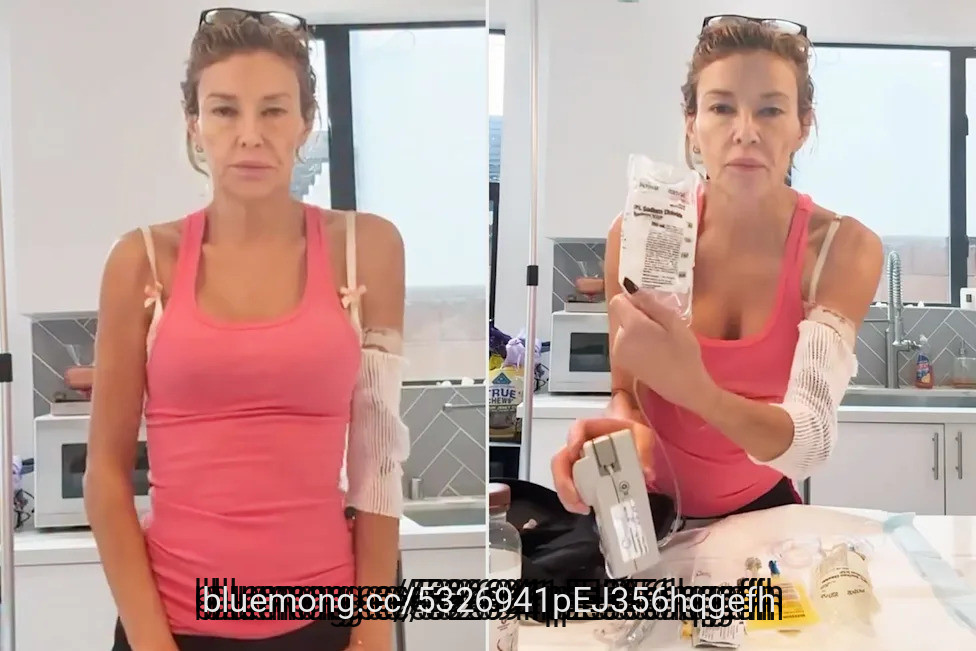
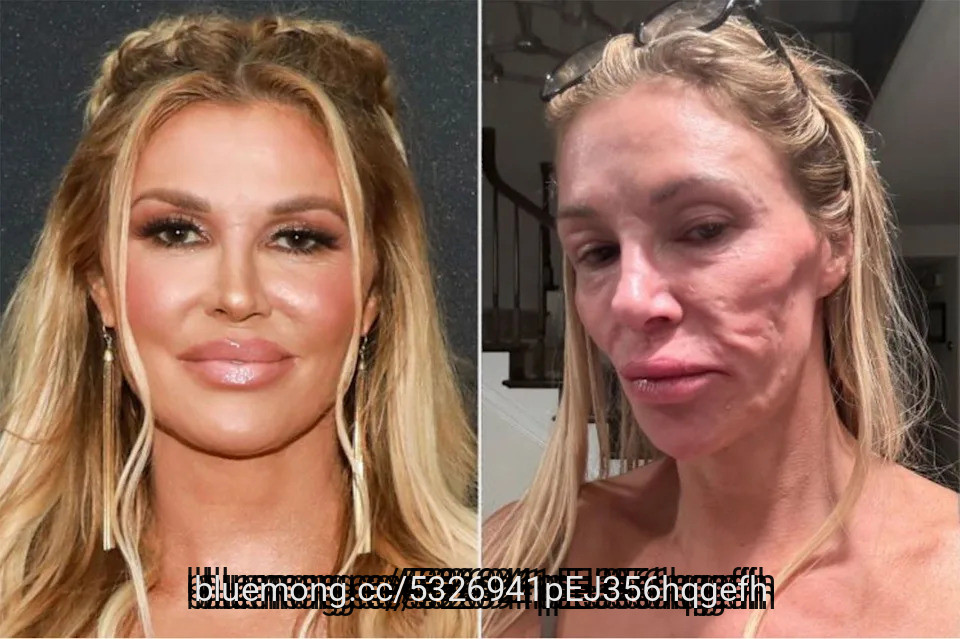
Brandi Glanville shares the treatment she is using amid her ongoing battle with a facial parasite.
The Real Housewives alum detailed her 18-hour IV treatment in a two-part video.
"I feel like death. I look like death," she told followers.
Brandi Glanville is taking fans behind the scenes with her latest health update.
The former Bravo star, who has been candid about her battle with a facial parasite and a face tumor, is undergoing IV treatments to address the issues. On Sunday, Glanville shared a video talking fans through the 18-hour regimen that she said has made her "so skinny right now."
#glanville #treatment #fans
The Real Housewives alum detailed her 18-hour IV treatment in a two-part video.
"I feel like death. I look like death," she told followers.
Brandi Glanville is taking fans behind the scenes with her latest health update.
The former Bravo star, who has been candid about her battle with a facial parasite and a face tumor, is undergoing IV treatments to address the issues. On Sunday, Glanville shared a video talking fans through the 18-hour regimen that she said has made her "so skinny right now."
#glanville #treatment #fans


21 days ago
Bruce Campbell recently gave an update about his cancer diagnosis. The Evil Dead star recently shared details about his diagnosis and revealed that he may have around five years left to live.
Bruce Campbell recently spoke about his cancer journey on The Adam Carolla Show. The actor said doctors have given him a five-year prognosis.
Campbell said, "I'm in a five-year prognosis. With the type of cancer that I have, which I don't want to get into, the current thing is a five-year deal."
He described the timeframe as "Give or take." The 68-year-old actor also stated that he believes treatments could improve and that medical advancements could potentially change his outlook.
Campbell continued, "I've decided, though, pretty specifically, though, to live with it, not die from it because you can go down a massive rabbit hole. The cancer rabbit hole is enormous. You can go into focus groups of 10,000 guys who have exactly what you have. I won't touch it with a 10-foot pole."
#cancer #diagnosis #prognosis
Bruce Campbell recently spoke about his cancer journey on The Adam Carolla Show. The actor said doctors have given him a five-year prognosis.
Campbell said, "I'm in a five-year prognosis. With the type of cancer that I have, which I don't want to get into, the current thing is a five-year deal."
He described the timeframe as "Give or take." The 68-year-old actor also stated that he believes treatments could improve and that medical advancements could potentially change his outlook.
Campbell continued, "I've decided, though, pretty specifically, though, to live with it, not die from it because you can go down a massive rabbit hole. The cancer rabbit hole is enormous. You can go into focus groups of 10,000 guys who have exactly what you have. I won't touch it with a 10-foot pole."
#cancer #diagnosis #prognosis


22 days ago
Chelsea's Women's Soccer Team has been the most successful in England over the past decade. They have invested a lot of money in bringing quality players to play for the club.
However, their most recent investment is all about the well-being of their players.
They became the first English club to set up a fund to freeze eggs and provide other fertility services to their players. Chelsea follows the NWSL and the WNBA, as both leagues offer this to their players.
Treatments within this fund include freezing eggs, IVF, and gynaecological treatments. According to The Observer, the fund is worth at least £189,000 ($255,448).
The cost of egg freezing at a clinic is around £7,000. As part of the fund, Chelsea players are allowed to either freeze their eggs or avail other fertility treatments at the Fertility Plus Clinic in London.
#eggs #Chelsea #clinic #club
However, their most recent investment is all about the well-being of their players.
They became the first English club to set up a fund to freeze eggs and provide other fertility services to their players. Chelsea follows the NWSL and the WNBA, as both leagues offer this to their players.
Treatments within this fund include freezing eggs, IVF, and gynaecological treatments. According to The Observer, the fund is worth at least £189,000 ($255,448).
The cost of egg freezing at a clinic is around £7,000. As part of the fund, Chelsea players are allowed to either freeze their eggs or avail other fertility treatments at the Fertility Plus Clinic in London.
#eggs #Chelsea #clinic #club


23 days ago
Evil Dead actor Bruce Campbell has shared that his doctor estimates he has about five years to live, "give or take."
Months after disclosing his cancer diagnosis, 68-year-old Campbell shared that he may only have a few years left.
"I'm in a five-year prognosis," the horror icon told The Adam Carolla Show in an episode released on Wednesday. "With the type of cancer that I have, which I don't want to get into, the current thing is a five-year deal."
When the host asked Campbell if that meant "the prognosis is you have five years to live," the horror icon confirmed the news. "Give or take," he told Carolla.
Despite the scary prognosis, the actor is choosing to be upbeat and hopes that treatments for his undisclosed form of cancer could advance.
#campbell #five #give #actor
Months after disclosing his cancer diagnosis, 68-year-old Campbell shared that he may only have a few years left.
"I'm in a five-year prognosis," the horror icon told The Adam Carolla Show in an episode released on Wednesday. "With the type of cancer that I have, which I don't want to get into, the current thing is a five-year deal."
When the host asked Campbell if that meant "the prognosis is you have five years to live," the horror icon confirmed the news. "Give or take," he told Carolla.
Despite the scary prognosis, the actor is choosing to be upbeat and hopes that treatments for his undisclosed form of cancer could advance.
#campbell #five #give #actor


24 days ago
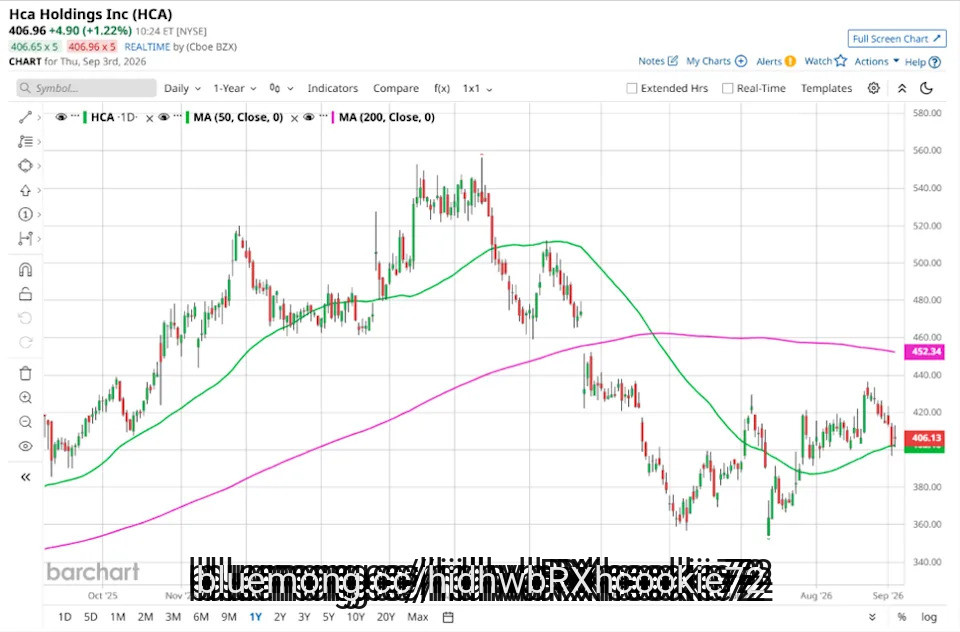
HCA Healthcare, Inc. (HCA), headquartered in Nashville, Tennessee, owns and operates hospitals and related healthcare entities. Valued at $87 billion by market cap, the company provides diagnosis, treatments, consultancy, nursing, surgeries, and other services, as well as medical education, physician resource center, and training programs.
Companies worth $10 billion or more are generally described as "large-cap stocks," and HCA definitely fits that description, with its market cap exceeding this threshold, reflecting its substantial size, influence, and dominance in the medical care facilities industry. HCA's strengths include its scale, cost leadership, and diversified portfolio. With a strong presence in high-growth states like Florida, Texas, and Tennessee, HCA leverages favorable demographics and growing healthcare demand. Its brand recognition fosters patient trust, and innovation through tech partnerships and digital health investments drives growth. HCA prioritizes talent management, positioning itself for long-term success in value-based care and telehealth trends.
Nvidia CEO Jensen Huang Says His $3.5 Billion MediaTek Deal Is 'Not Circular' Because 'They Do Their Own Business'
Strategy's Strategy Appears to Have Failed, and the Outlook of MSTR Stock Is Unfavorable
A Potential ****** eX Deal Could Meaningfully Accelerate Growth for Technip Stock
#market #medical
Companies worth $10 billion or more are generally described as "large-cap stocks," and HCA definitely fits that description, with its market cap exceeding this threshold, reflecting its substantial size, influence, and dominance in the medical care facilities industry. HCA's strengths include its scale, cost leadership, and diversified portfolio. With a strong presence in high-growth states like Florida, Texas, and Tennessee, HCA leverages favorable demographics and growing healthcare demand. Its brand recognition fosters patient trust, and innovation through tech partnerships and digital health investments drives growth. HCA prioritizes talent management, positioning itself for long-term success in value-based care and telehealth trends.
Nvidia CEO Jensen Huang Says His $3.5 Billion MediaTek Deal Is 'Not Circular' Because 'They Do Their Own Business'
Strategy's Strategy Appears to Have Failed, and the Outlook of MSTR Stock Is Unfavorable
A Potential ****** eX Deal Could Meaningfully Accelerate Growth for Technip Stock
#market #medical


24 days ago
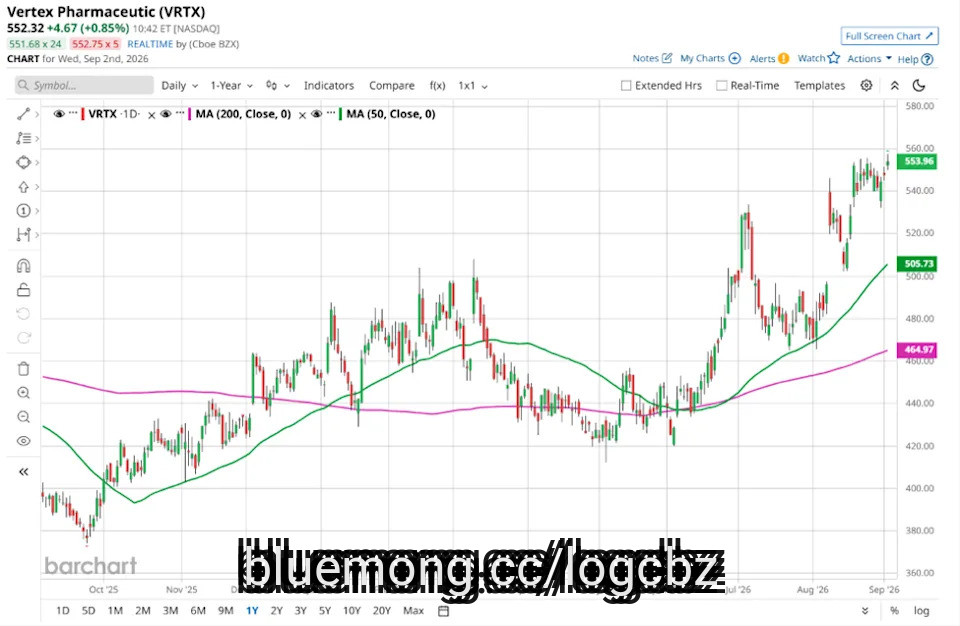
Boston, Massachusetts-based Vertex Pharmaceuticals Incorporated (VRTX) develops and commercializes therapies for treating cystic fibrosis (CF). Valued at $139 billion by market cap, the company invests in scientific innovation to create transformative medicines for people with serious diseases.
Companies worth $10 billion or more are generally described as "large-cap stocks," and VRTX perfectly fits that description, with its market cap exceeding this mark, underscoring its size, influence, and dominance within the biotechnology industry. VRTX derives its primary competitive strength from its global monopoly in CF treatments, anchored by flagship blockbusters like Trikafta/Katori which generate robust cash flow to fuel its high-impact clinical pipeline.
Dear GameStop Stock Fans, Mark Your Calendars for September 8
SMCI vs. CoreWeave: 1 AI Infrastructure Model Has the Bigger Opportunity
Why **** ysts Think Sellas Life Sciences Stock Can Gain 150% From Here
#vrtx #massachusetts
Companies worth $10 billion or more are generally described as "large-cap stocks," and VRTX perfectly fits that description, with its market cap exceeding this mark, underscoring its size, influence, and dominance within the biotechnology industry. VRTX derives its primary competitive strength from its global monopoly in CF treatments, anchored by flagship blockbusters like Trikafta/Katori which generate robust cash flow to fuel its high-impact clinical pipeline.
Dear GameStop Stock Fans, Mark Your Calendars for September 8
SMCI vs. CoreWeave: 1 AI Infrastructure Model Has the Bigger Opportunity
Why **** ysts Think Sellas Life Sciences Stock Can Gain 150% From Here
#vrtx #massachusetts


25 days ago
King Charles and Queen Camilla attended a garden party marking the 125th anniversary of a charity organization, where the monarch met Pakistan's national cricket team while the Queen mingled with dancers. The outing also marked their first public appearance since Prince Harry and Meghan Markle returned to the UK last month.
King Charles and Queen Camilla attended the Victoria League for Commonwealth Friendship's 125th anniversary. At Clarence House, the monarch also met Pakistan's national cricket team. On the other hand, Queen Camilla conversed with dancers from the Royal Academy of Dance at the London headquarters.
There, she met professionals from various classes, including those aged 55 and over, those undergoing cancer treatments, and people from underprivileged backgrounds. During her visit, she also handed over the Queen Elizabeth II Coronation Award to Christopher Wheeldon, OBE.
Following their royal engagements, they then headed to the British Museum, where they were also joined by French President Emmanuel Macron and first lady Brigitte Macron. Moreover, U.K. Prime Minister Andy Burnham and his wife, Marie-France van Heel, were also present at the museum.
In this visit, they viewed the Bayeux Tapestry, which showcases the Norman conquest of England. The tapestry was loaned to the UK for the first time since its creation, and in exchange, the country promised to send some national treasures to France (via PEOPLE).
#charles
King Charles and Queen Camilla attended the Victoria League for Commonwealth Friendship's 125th anniversary. At Clarence House, the monarch also met Pakistan's national cricket team. On the other hand, Queen Camilla conversed with dancers from the Royal Academy of Dance at the London headquarters.
There, she met professionals from various classes, including those aged 55 and over, those undergoing cancer treatments, and people from underprivileged backgrounds. During her visit, she also handed over the Queen Elizabeth II Coronation Award to Christopher Wheeldon, OBE.
Following their royal engagements, they then headed to the British Museum, where they were also joined by French President Emmanuel Macron and first lady Brigitte Macron. Moreover, U.K. Prime Minister Andy Burnham and his wife, Marie-France van Heel, were also present at the museum.
In this visit, they viewed the Bayeux Tapestry, which showcases the Norman conquest of England. The tapestry was loaned to the UK for the first time since its creation, and in exchange, the country promised to send some national treasures to France (via PEOPLE).
#charles

26 days ago
Hims & Hers Health, Inc. (NYSE:HIMS) has entered Australia, marking its first expansion into the Asia-Pacific market. The move follows its acquisition of Australian digital-health platform Eucalyptus, which includes men's health brand Pilot and women's health brand Juniper. Hims is initially rolling out weight-loss and men's health treatments, with plans to introduce women's health services later this year.
The Australian launch allows Hims & Hers Health, Inc. (NYSE:HIMS) to replicate its U.S. and European model in another large, digitally connected healthcare market. It also gives the company access to local infrastructure and clinical expertise rather than requiring it to build the business entirely from scratch. The company has said international expansion has already helped increase monthly revenue per subscriber by 21% year over year, although international growth has also pressured gross margins.
Australia could become another meaningful growth engine for Hims & Hers Health, Inc. (NYSE:HIMS) as the company expands beyond its core U.S. market. The acquisition of Eucalyptus gives Hims an established local presence, existing brands and clinicians, which should reduce some of the execution risk normally ******* ociated with entering a new country.
The opportunity is particularly attractive because Hims can introduce multiple healthcare categories rather than relying on a single product. Weight loss, men's health, and eventually women's health give the company several avenues to increase customer acquisition and spending per subscriber. Combining services Australians previously purchased separately could also increase customer lifetime value.
The Australian market could also strengthen Hims' international scale. The company has already expanded into Europe through its acquisition of Zava, and Australia provides another market in which the company can leverage its technology, brand and telehealth infrastructure. If Hims & Hers Health, Inc. (NYSE:HIMS) can successfully replicate its customer-acquisition model internationally, the Australian business could become an important contributor toward its long-term $6.5 billion revenue target for 2030.
#Health #company #acquisition #australia
The Australian launch allows Hims & Hers Health, Inc. (NYSE:HIMS) to replicate its U.S. and European model in another large, digitally connected healthcare market. It also gives the company access to local infrastructure and clinical expertise rather than requiring it to build the business entirely from scratch. The company has said international expansion has already helped increase monthly revenue per subscriber by 21% year over year, although international growth has also pressured gross margins.
Australia could become another meaningful growth engine for Hims & Hers Health, Inc. (NYSE:HIMS) as the company expands beyond its core U.S. market. The acquisition of Eucalyptus gives Hims an established local presence, existing brands and clinicians, which should reduce some of the execution risk normally ******* ociated with entering a new country.
The opportunity is particularly attractive because Hims can introduce multiple healthcare categories rather than relying on a single product. Weight loss, men's health, and eventually women's health give the company several avenues to increase customer acquisition and spending per subscriber. Combining services Australians previously purchased separately could also increase customer lifetime value.
The Australian market could also strengthen Hims' international scale. The company has already expanded into Europe through its acquisition of Zava, and Australia provides another market in which the company can leverage its technology, brand and telehealth infrastructure. If Hims & Hers Health, Inc. (NYSE:HIMS) can successfully replicate its customer-acquisition model internationally, the Australian business could become an important contributor toward its long-term $6.5 billion revenue target for 2030.
#Health #company #acquisition #australia

1 month ago
Hormone therapy may protect a woman's aging brain, but timing is critical.
Experts agree the "window of opportunity" for HRT is typically in the late 40s or early 50s.
"Early intervention promotes and sustains brain health," neuroscientist Roberta Brinton said.
Get in there early. That seems to be the growing consensus around hormone replacement therapy (HRT) for women.
New study data suggests that middle-aged women could use these treatments to protect their brains, contradicting old concerns about a potential dementia risk.
#brain #women
Experts agree the "window of opportunity" for HRT is typically in the late 40s or early 50s.
"Early intervention promotes and sustains brain health," neuroscientist Roberta Brinton said.
Get in there early. That seems to be the growing consensus around hormone replacement therapy (HRT) for women.
New study data suggests that middle-aged women could use these treatments to protect their brains, contradicting old concerns about a potential dementia risk.
#brain #women



1 month ago
On August 13, Nektar Therapeutics (NASDAQ:NKTR) held its second-quarter earnings call and laid out where its lead drug candidate stands after years of development. Rezpegaldesleukin, known as rezpeg, is now enrolling patients in Phase 3 trials for two separate autoimmune conditions, atopic dermatitis and alopecia areata. Management framed the quarter around two numbers that matter most to investors right now: a $1.02 billion cash balance that provides a runway into 2028, and a drug program that finally has late-stage data on the calendar.
Nektar's Phase 3 program for atopic dermatitis, called ZENITH AD, began randomizing patients in July 2026 across two pivotal studies, each enrolling 510 adolescent and adult patients. A third study in patients who have already tried other treatments is set to start by the end of September 2026. Management expects top-line data from the first studies in mid-2028, with a Biologics License Application submission to follow in 2029 if results hold up. After an end-of-Phase 2 meeting with the FDA, Nektar also finalized a single registrational Phase 3 study for alopecia areata, called ZENITH AA, which will enroll 850 patients and use a SALT score of 20 or less at week 52, meaning 80% or more scalp hair coverage, as its primary endpoint.
The case for rezpeg goes beyond trial design. CEO Howard Robin noted that roughly 15 million people in the U.S. have moderate to severe atopic dermatitis, and fewer than 10% currently get a systemic therapy, leaving room for the market itself to grow. He also pointed out that about half of patients on IL-13 drugs such as Dupixent either stop responding or never respond at all. In alopecia areata, where JAK inhibitors carry boxed warnings that keep many dermatologists away, the market for approved treatments is still projected to reach $5 billion by 2033. Nektar's own market research found that 150 of 151 physicians surveyed preferred rezpeg's short-lived injection site reactions over the longer-lasting conjunctivitis tied to current options, a result management used to argue rezpeg could compete across first, second, and third-line patients.
None of this comes cheap. Nektar's operating loss widened to $42.3 million in the second quarter, up from $36.2 million a year earlier, and the net loss came in at $40.6 million, or $1.23 per share. Research and development spending is set to climb further, with full-year guidance now at $210 million to $230 million as the Phase 3 programs and manufacturing activities ramp up. The company's only revenue right now is $10.1 million in noncash royalty income, down from $11.2 million a year ago, and full-year revenue guidance tops out at $45 million. That gap between spending and revenue is why Nektar leaned on a public stock offering that raised $373.8 million in gross proceeds in April 2026, a move that keeps the lights on but also dilutes existing shareholders.
#quarter
Nektar's Phase 3 program for atopic dermatitis, called ZENITH AD, began randomizing patients in July 2026 across two pivotal studies, each enrolling 510 adolescent and adult patients. A third study in patients who have already tried other treatments is set to start by the end of September 2026. Management expects top-line data from the first studies in mid-2028, with a Biologics License Application submission to follow in 2029 if results hold up. After an end-of-Phase 2 meeting with the FDA, Nektar also finalized a single registrational Phase 3 study for alopecia areata, called ZENITH AA, which will enroll 850 patients and use a SALT score of 20 or less at week 52, meaning 80% or more scalp hair coverage, as its primary endpoint.
The case for rezpeg goes beyond trial design. CEO Howard Robin noted that roughly 15 million people in the U.S. have moderate to severe atopic dermatitis, and fewer than 10% currently get a systemic therapy, leaving room for the market itself to grow. He also pointed out that about half of patients on IL-13 drugs such as Dupixent either stop responding or never respond at all. In alopecia areata, where JAK inhibitors carry boxed warnings that keep many dermatologists away, the market for approved treatments is still projected to reach $5 billion by 2033. Nektar's own market research found that 150 of 151 physicians surveyed preferred rezpeg's short-lived injection site reactions over the longer-lasting conjunctivitis tied to current options, a result management used to argue rezpeg could compete across first, second, and third-line patients.
None of this comes cheap. Nektar's operating loss widened to $42.3 million in the second quarter, up from $36.2 million a year earlier, and the net loss came in at $40.6 million, or $1.23 per share. Research and development spending is set to climb further, with full-year guidance now at $210 million to $230 million as the Phase 3 programs and manufacturing activities ramp up. The company's only revenue right now is $10.1 million in noncash royalty income, down from $11.2 million a year ago, and full-year revenue guidance tops out at $45 million. That gap between spending and revenue is why Nektar leaned on a public stock offering that raised $373.8 million in gross proceeds in April 2026, a move that keeps the lights on but also dilutes existing shareholders.
#quarter


1 month ago
Dolly Parton's sister Stella says the singer planned to allow doctors to use experimental treatments on her to help others, even when her own prognosis was uncertain
Her sister Stella shared that they had weekly coffee chats, a cherished tradition rooted in their upbringing
Stella encouraged fans to honor Dolly's legacy by showing kindness and lifting others, as she always did
As the tributes pour in for Dolly Parton in the wake of her death at age 80, her younger sister, Stella Parton, is sharing a new detail about her final days.
Stella, 77, a fellow country singer-songwriter, posted a tribute to her big sister on Thursday, Aug. 27, sharing on Facebook, "Dolly got her wings this past Tuesday."
#dolly
Her sister Stella shared that they had weekly coffee chats, a cherished tradition rooted in their upbringing
Stella encouraged fans to honor Dolly's legacy by showing kindness and lifting others, as she always did
As the tributes pour in for Dolly Parton in the wake of her death at age 80, her younger sister, Stella Parton, is sharing a new detail about her final days.
Stella, 77, a fellow country singer-songwriter, posted a tribute to her big sister on Thursday, Aug. 27, sharing on Facebook, "Dolly got her wings this past Tuesday."
#dolly


1 month ago
Over-the-counter anti-aging supplements taken by millions of Americans to boost energy and lessen the side effects of chemotherapy may actually impair cancer treatments, a new study suggests.
Researchers at the Case Western Reserve University School of Medicine found that popular vitamin B3 derivatives – including nicotinamide mononucleotide (NMN), nicotinamide riboside (NR) and nicotinamide (NAM) – could help cancer cells survive chemotherapy.
Those compounds are used by the body to produce NAD+, a molecule that helps cells generate energy and repair damage.
Iv Therapy And Supplements Under Scrutiny As Experts Warn Of Potential Side Effects
The study, published in the journal Cancer Letters, examined how these supplements interact with treatments for pancreatic cancer, a particularly deadly form of the disease with a 13% five-year survival rate, according to the American Cancer Society.
#nicotinamide #energy #chemotherapy
Researchers at the Case Western Reserve University School of Medicine found that popular vitamin B3 derivatives – including nicotinamide mononucleotide (NMN), nicotinamide riboside (NR) and nicotinamide (NAM) – could help cancer cells survive chemotherapy.
Those compounds are used by the body to produce NAD+, a molecule that helps cells generate energy and repair damage.
Iv Therapy And Supplements Under Scrutiny As Experts Warn Of Potential Side Effects
The study, published in the journal Cancer Letters, examined how these supplements interact with treatments for pancreatic cancer, a particularly deadly form of the disease with a 13% five-year survival rate, according to the American Cancer Society.
#nicotinamide #energy #chemotherapy


1 month ago
Gilead Sciences, Inc. (NASDAQ:GILD) delivered its strongest commercial momentum in several years during fiscal Q2 2026, with growth extending across HIV, oncology, and liver disease. Total revenue increased 10% year over year to approximately $7.8 billion, while product sales rose 8% to $7.6 billion.
Yet, the income statement tells a considerably less flattering story. Gilead (NASDAQ:GILD) reported a substantial quarterly loss after recording more than $11 billion in acquired research and development expenses. Investors may look at the earnings as a strengthening commercial business, but not without an expensive attempt to build its next generation of growth.
Gilead's (NASDAQ:GILD) underlying business performed strongly during the quarter. Product sales excluding Veklury increased 10% to $7.6 billion, demonstrating that growth was driven by the company's core portfolio rather than its declining COVID-19 treatment. HIV remained the principal contributor, with sales rising 12% to $5.7 billion. Biktarvy revenue increased 7% to $3.8 billion, while Descovy sales climbed 48% to $967 million. Yeztugo, Gilead's (NASDAQ:GILD) twice-yearly injectable HIV-prevention medicine, generated $232 million as its launch continued to gain traction.
It is significant to note that growth in the quarter was not limited to HIV. Liver-disease sales increased 10% to $877 million, supported primarily by higher demand for Livdelzi and treatments for chronic hepatitis B and hepatitis delta. Livdelzi alone generated $167 million, more than doubling year over year.
Trodelvy also strengthened Gilead's (NASDAQ:GILD) oncology case. Driven by higher demand, sales of the breast-cancer treatment increased 26% to $457 million. Although oncology remains much smaller than HIV, Trodelvy's growth provides evidence that Gilead (NASDAQ:GILD) is developing another meaningful commercial franchise. Management responded to the quarter by raising the lower end of its 2026 product-sales guidance. The company now expects 30.1–30.4 billion, compared with 30.0–30.4 billion previously. It also increased its product-sales forecast excluding Veklury to 29.8–30.1 billion, up from 29.4–29.8 billion.
#gild #increased
Yet, the income statement tells a considerably less flattering story. Gilead (NASDAQ:GILD) reported a substantial quarterly loss after recording more than $11 billion in acquired research and development expenses. Investors may look at the earnings as a strengthening commercial business, but not without an expensive attempt to build its next generation of growth.
Gilead's (NASDAQ:GILD) underlying business performed strongly during the quarter. Product sales excluding Veklury increased 10% to $7.6 billion, demonstrating that growth was driven by the company's core portfolio rather than its declining COVID-19 treatment. HIV remained the principal contributor, with sales rising 12% to $5.7 billion. Biktarvy revenue increased 7% to $3.8 billion, while Descovy sales climbed 48% to $967 million. Yeztugo, Gilead's (NASDAQ:GILD) twice-yearly injectable HIV-prevention medicine, generated $232 million as its launch continued to gain traction.
It is significant to note that growth in the quarter was not limited to HIV. Liver-disease sales increased 10% to $877 million, supported primarily by higher demand for Livdelzi and treatments for chronic hepatitis B and hepatitis delta. Livdelzi alone generated $167 million, more than doubling year over year.
Trodelvy also strengthened Gilead's (NASDAQ:GILD) oncology case. Driven by higher demand, sales of the breast-cancer treatment increased 26% to $457 million. Although oncology remains much smaller than HIV, Trodelvy's growth provides evidence that Gilead (NASDAQ:GILD) is developing another meaningful commercial franchise. Management responded to the quarter by raising the lower end of its 2026 product-sales guidance. The company now expects 30.1–30.4 billion, compared with 30.0–30.4 billion previously. It also increased its product-sales forecast excluding Veklury to 29.8–30.1 billion, up from 29.4–29.8 billion.
#gild #increased


1 month ago
Zoetis Inc. (NYSE:ZTS) entered 2026 as a leader in animal health, but its latest earnings show that even a strong market position cannot fully insulate the company from weaker consumer demand. Fiscal Q2 2026 revenue remained flat at $2.5 billion and declined 1% on an organic operational basis, as pressure in the U.S. companion-animal market offset growth in livestock and international markets.
The quarter therefore presents investors with two different versions of Zoetis (NYSE:ZTS), as an established companion-animal business facing near-term pressure and a diversified animal-health platform still investing in its next generation of products.
Zoetis's (NYSE:ZTS) diversification provided an important source of resilience during the quarter. Livestock revenue increased 12% on a reported basis, supported by cattle and poultry products. In the United States, livestock sales grew 23% on both a reported and organic operational basis in the quarter, benefiting from favorable beef-cattle economics, supply timing, and increased poultry-vaccine sales **** ociated with disease outbreaks.
International performance was also encouraging. Revenue outside the United States rose 8% on a reported basis and 6% organically to $1.2 billion. International companion-animal sales grew 5% organically, supported by parasiticides such as Simparica Trio, Revolution and Stronghold, as well as diagnostics and newer osteoarthritis treatments. This geographic contrast demonstrates that the weakness was not uniform across Zoetis's (NYSE:ZTS) business. Demand for its products remains healthy in several markets, even as U.S. pet owners become more price-sensitive.
However, innovation could provide another route back to growth, as Zoetis (NYSE:ZTS) says that its pipeline contains more than 12 potential blockbuster candidates across chronic kidney disease, oncology, cardiology, anxiety, and obesity. The company also launched Lenivia and Portela, long-acting osteoarthritis treatments offering dogs and cats up to three months of pain relief from one injection.
#revenue #quarter
The quarter therefore presents investors with two different versions of Zoetis (NYSE:ZTS), as an established companion-animal business facing near-term pressure and a diversified animal-health platform still investing in its next generation of products.
Zoetis's (NYSE:ZTS) diversification provided an important source of resilience during the quarter. Livestock revenue increased 12% on a reported basis, supported by cattle and poultry products. In the United States, livestock sales grew 23% on both a reported and organic operational basis in the quarter, benefiting from favorable beef-cattle economics, supply timing, and increased poultry-vaccine sales **** ociated with disease outbreaks.
International performance was also encouraging. Revenue outside the United States rose 8% on a reported basis and 6% organically to $1.2 billion. International companion-animal sales grew 5% organically, supported by parasiticides such as Simparica Trio, Revolution and Stronghold, as well as diagnostics and newer osteoarthritis treatments. This geographic contrast demonstrates that the weakness was not uniform across Zoetis's (NYSE:ZTS) business. Demand for its products remains healthy in several markets, even as U.S. pet owners become more price-sensitive.
However, innovation could provide another route back to growth, as Zoetis (NYSE:ZTS) says that its pipeline contains more than 12 potential blockbuster candidates across chronic kidney disease, oncology, cardiology, anxiety, and obesity. The company also launched Lenivia and Portela, long-acting osteoarthritis treatments offering dogs and cats up to three months of pain relief from one injection.
#revenue #quarter