
16 days ago
Michael Douglas has finally revealed why he refused to appear on David Letterman's talk show for almost two decades.
In his new memoir One ****** uva Ride, the Wall Street actor recounted how he had promoted various projects on the Late Show with David Letterman.
"I had been a regular guest on Letterman's show earlier in my career, but the last time I was on, I felt David went too far," he shared.
Douglas went on to recall how Letterman had played "without warning" a TV commercial that his actress mother, Diana Dill, had appeared in.
"(Letterman) started grilling me about it. It felt like he was making fun of my mother," the 82-year-old continued. "(That appearance) left me feeling like he had a real nasty sense of humour... After that, whenever the producers of the show requested to have me back on, I always refused. I said no for 18 straight years. Dave wrote me personal letters to apologise, but my feelings didn't change. He had crossed a line."
However, Douglas decided to "bury the hatchet" and announce that he was battling advanced tongue cancer during an interview on the Late Show with David Letterman while promoting his movie Wall Street: Money Never Sleeps in 2010. He has since recovered from the cancer after undergoing chemotherapy and radiation treatments.
#letterman #late #refused #felt



19 days ago
Marc Summers has lived with chronic lymphocytic leukemia for 15 years and takes daily medication after chemotherapy stopped working
The 75-year-old still enjoys long walks and recently logged 13 miles in one day
Summers is celebrating Double Dare's 40th anniversary and says he's lucky to do what he loves, and to be alive and healthy
Former Double Dare and Unwrapped host Marc Summers says he's more than lucky to be alive after cheating death not once, but twice.
In 2010, Summers was diagnosed with chronic lymphocytic leukemia, which he tells PEOPLE he's managed for 15 years.
#chronic




23 days ago
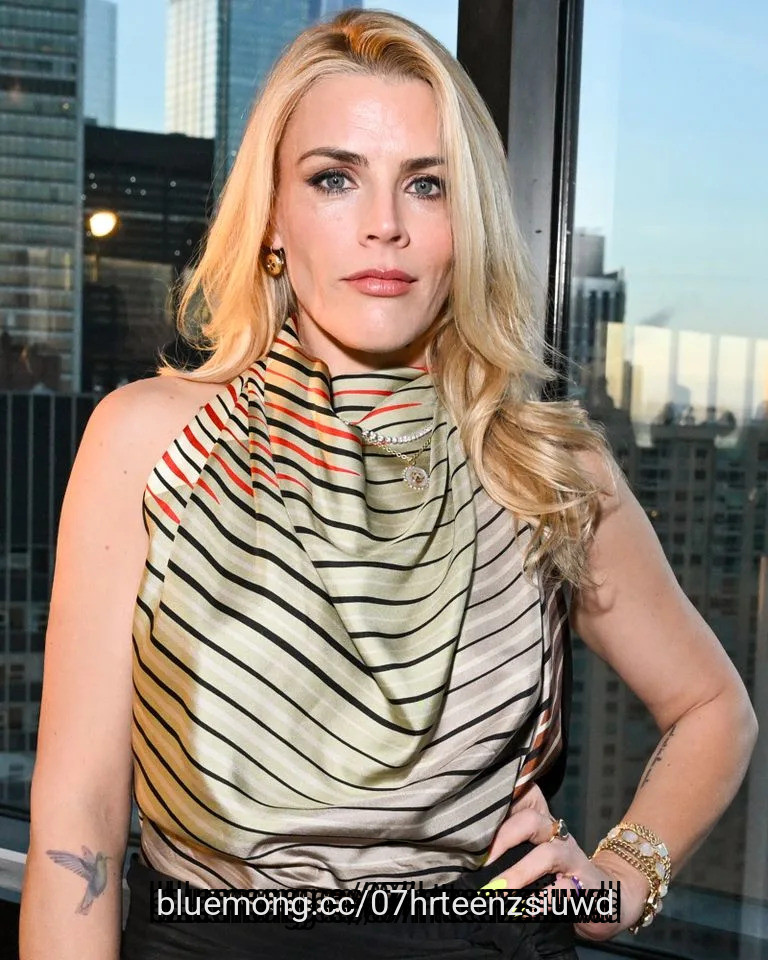
Busy Philipps tells PEOPLE her oncologist confirmed her latest scan was clear after she was diagnosed with a brain tumor
Doctors discovered the rare tumor during a full-body MRI in February
Philipps underwent two surgeries and did not need chemotherapy or radiation
Busy Philipps shared a positive update amid her ongoing health journey after she was diagnosed with a brain tumor earlier this year.
"I chatted with my oncologist today," the Cupertino star, 47, tells PEOPLE exclusively at the Wednesday, Sept. 30, premiere of the CBS show in New York City. The Silicon Valley-set legal drama was her doctor's preferred topic of conversation, Philipps shars.
#tumor #people



1 month ago
BioNTech SE (NASDAQ:BNTX) reported that its investigational lung-cancer drug gotistobart produced a clinically meaningful overall-survival benefit in the Phase 3 PRESERVE-003 trial in patients with metastatic squamous non-small cell lung cancer whose disease had progressed after prior immunotherapy and chemotherapy. Reuters said gotistobart nearly doubled survival compared with standard-of-care chemotherapy, strengthening the case for the drug as a potential chemotherapy-free treatment in a population with significant unmet need.
The result builds on earlier Stage 1 data, where gotistobart reduced the risk of death by 54% versus docetaxel, with a hazard ratio of 0.46. Median overall survival was not yet reached for gotistobart versus 9.95 months for docetaxel, while the 12-month progression-free survival rate was 25.2% versus 0%. BioNTech is now awaiting the pivotal Stage 2 readout, making the latest result important not only for the drug's approval prospects but also for the credibility of BioNTech's broader transition from a COVID-vaccine company toward a multi-product oncology business.
The strongest bullish argument is that gotistobart now has repeated evidence of a meaningful survival advantage in a difficult-to-treat lung-cancer population. The earlier Stage 1 dataset showed 55.6% of patients alive in the gotistobart arm versus 23.8% with docetaxel, alongside a 54% reduction in the risk of death. The latest Phase 3 update reinforces that signal rather than introducing an entirely new hypothesis. If the pivotal Stage 2 data confirm the benefit, BioNTech SE (NASDAQ:BNTX) could have a differentiated therapy capable of competing on survival rather than simply response rates, potentially supporting meaningful pricing power and a commercially attractive oncology franchise.
The result also strengthens BioNTech's broader oncology strategy because gotistobart is one piece of a much larger pipeline rather than a standalone bet. BioNTech says it has 14 ongoing pivotal trials and more than 10 novel combination programs, while its lung-cancer strategy spans more than 16 ongoing clinical trials and five Phase 3 programs. Gotistobart's success therefore provides validation for the company's immuno-oncology capabilities, while other ****** ets such as pumitamig and antibody-drug conjugates advance toward additional indications. BioNTech has identified 17+ late-stage or pivotal readouts through 2030+, creating the possibility that a successful gotistobart launch becomes the first major commercial proof point in its planned transition to a multi-product oncology company.
#stage #survival


1 month ago
BioNTech SE (NASDAQ:BNTX) reported that its investigational lung-cancer drug gotistobart produced a clinically meaningful overall-survival benefit in the Phase 3 PRESERVE-003 trial in patients with metastatic squamous non-small cell lung cancer whose disease had progressed after prior immunotherapy and chemotherapy. Reuters said gotistobart nearly doubled survival compared with standard-of-care chemotherapy, strengthening the case for the drug as a potential chemotherapy-free treatment in a population with significant unmet need.
The result builds on earlier Stage 1 data, where gotistobart reduced the risk of death by 54% versus docetaxel, with a hazard ratio of 0.46. Median overall survival was not yet reached for gotistobart versus 9.95 months for docetaxel, while the 12-month progression-free survival rate was 25.2% versus 0%. BioNTech is now awaiting the pivotal Stage 2 readout, making the latest result important not only for the drug's approval prospects but also for the credibility of BioNTech's broader transition from a COVID-vaccine company toward a multi-product oncology business.
The strongest bullish argument is that gotistobart now has repeated evidence of a meaningful survival advantage in a difficult-to-treat lung-cancer population. The earlier Stage 1 dataset showed 55.6% of patients alive in the gotistobart arm versus 23.8% with docetaxel, alongside a 54% reduction in the risk of death. The latest Phase 3 update reinforces that signal rather than introducing an entirely new hypothesis. If the pivotal Stage 2 data confirm the benefit, BioNTech SE (NASDAQ:BNTX) could have a differentiated therapy capable of competing on survival rather than simply response rates, potentially supporting meaningful pricing power and a commercially attractive oncology franchise.
The result also strengthens BioNTech's broader oncology strategy because gotistobart is one piece of a much larger pipeline rather than a standalone bet. BioNTech says it has 14 ongoing pivotal trials and more than 10 novel combination programs, while its lung-cancer strategy spans more than 16 ongoing clinical trials and five Phase 3 programs. Gotistobart's success therefore provides validation for the company's immuno-oncology capabilities, while other ***** ets such as pumitamig and antibody-drug conjugates advance toward additional indications. BioNTech has identified 17+ late-stage or pivotal readouts through 2030+, creating the possibility that a successful gotistobart launch becomes the first major commercial proof point in its planned transition to a multi-product oncology company.
#biontech #survival


2 months ago
Revolution Medicines, Inc. (NASDAQ:RVMD) received FDA approval for Rasonque, or daraxonrasib, following an expedited review. The once-daily oral RAS inhibitor is approved for adults with metastatic pancreatic adenocarcinoma who have received at least one prior systemic therapy or are not candidates for multiagent systemic therapy.
Revolution Medicines, Inc. (NASDAQ:RVMD) set a wholesale acquisition cost (WAC) of $39,800 for a 30-day supply. Twelve 30-day supplies would total $477,600 at WAC before discounts, rebates, or ******* istance. Rasonque is available in the United States, with (ON)Path offering insurance navigation and financial-assistance resources, including copay support for eligible commercially insured patients.
The approval was based on RASolute 302, a randomized Phase 3 trial involving 500 patients with previously treated metastatic pancreatic adenocarcinoma. In the overall population, median overall survival reached 13.2 months with Rasonque versus 6.7 months with chemotherapy. The hazard ratio of 0.40 represented a 60% lower hazard of death during trial follow-up. Median progression-free survival was 7.2 months versus 3.6 months, while objective response rates were 30% and 11%, respectively.
The survival benefit gives Rasonque a strong clinical argument for reimbursement. Pancreatic cancer is aggressive, treatment options after progression are limited, and Rasonque improved overall survival, progression-free survival, and response rates in a randomized comparison. Oral dosing may also reduce the burden of intravenous chemotherapy.
The approved population is broader than a single mutation-defined subgroup. Rasonque can be prescribed with or without an identified RAS tumor mutation and does not require a companion diagnostic. That reduces testing friction within the approved treatment setting.
#months #pancreatic #progression #medicines


2 months ago
New York Giants quarterback Jaxson Dart announced a partnership with PSD Underwear earlier this month. On the surface, it looked like a standard marketing deal. The story behind it is not.
Years before the announcement, Dart met PSD founder Curt Flaitz and Flaitz's son, Rookie, who was diagnosed with acute lymphoblastic leukemia just before his second birthday. Rookie finished chemotherapy in January. When his hair finally grew back enough for a first haircut, the family asked him what he wanted it to look like. He did not hesitate.
"When I wrestle my brothers, I'm Jaxson Dart. When I wear my chain, I feel like Jaxson. And I wanted my hair to look like Jaxson too," Rookie said.
Coming later today: A heartwarming story on Jaxson Dart and his bond with Rookie, a young cancer survivor. pic.twitter.com/Z8G4CBbGVb
Dart invited him to the Giants facility so the haircut could happen there.
#dart #Giants #hair #look


2 months ago
Revolution Medicines, Inc. (NASDAQ:RVMD) touched an all-time high above $224 on August 27, 2026, following FDA approval of Rasonque (daraxonrasib) – the first broad RAS-targeted therapy cleared for metastatic pancreatic cancer. Creating a milestone, the approval came roughly five weeks after filing under the agency's national priority voucher. The pivotal RASolute 302 trial nearly doubled median overall survival, to 13.2 months from 6.7 on chemotherapy. While the clinical benefit is substantial, a $47 billion valuation suggests the market had already priced in this success.
RVMD carries essentially no product revenue yet. Its price rests entirely on the future. Evercore ISI has raised the next-year sales estimate for Rasonque to ~$2.4 billion. Additionally, the $47 billion valuation discounts much of a long-term pancreatic opportunity which the Evercore **** yst estimates Rasonque could generate about $15.1 billion in pancreatic-cancer sales by 2034. However, a few details complicate this math. First, the approved label applies strictly to second-line or multiagent-ineligible patients. The front-line indication represents the larger market opportunity but remains pending, meaning a notable portion of the TAM is not yet accessible. Second, RVMD's current valuation also sits well above the $28 billion–$32 billion takeover valuation reportedly discussed with Merck earlier this year. Bulls argue lung and colorectal trials justify the $47 billion beyond pancreatic cancer, though that pipeline potential remains unproven.
That matters because Revolution Medicines must now execute its first commercial launch independently in one of oncology's most challenging indications characterized by short survival, high patient frailty, and a U.S. list price of $39,800 for a 30-day supply. Commercialization will require heavy spending. The second-quarter net loss widened to $644 million, and full-year operating expense guidance increased to between $2.1 and $2.2 billion. While a $3.9 billion cash balance and up to $1.5 billion in committed royalty financing fund the launch, operational execution remains the primary risk.
Insiders were net sellers of roughly $21.5 million over the past 90 days with zero buying. Hedge fund data on the stock is flat. As per the Insider Monkey database, 105 funds held RVMD in the second quarter of 2026, modestly down from 106 in the first, indicating strong conviction among institutional investors. Short interest sits near 6% of float, representing a modest level of bets against the stock.
#first


2 months ago
Over-the-counter anti-aging supplements taken by millions of Americans to boost energy and lessen the side effects of chemotherapy may actually impair cancer treatments, a new study suggests.
Researchers at the Case Western Reserve University School of Medicine found that popular vitamin B3 derivatives – including nicotinamide mononucleotide (NMN), nicotinamide riboside (NR) and nicotinamide (NAM) – could help cancer cells survive chemotherapy.
Those compounds are used by the body to produce NAD+, a molecule that helps cells generate energy and repair damage.
Iv Therapy And Supplements Under Scrutiny As Experts Warn Of Potential Side Effects
The study, published in the journal Cancer Letters, examined how these supplements interact with treatments for pancreatic cancer, a particularly deadly form of the disease with a 13% five-year survival rate, according to the American Cancer Society.
#nicotinamide #energy #chemotherapy



2 months ago
AstraZeneca PLC (NYSE:AZN) is paying $600 million upfront to secure global rights to Zegfrovy from Dizal Pharmaceutical Co., Ltd, adding another targeted therapy to one of the pharmaceutical industry's largest oncology portfolios. Dizal Pharmaceutical could receive an additional $900 million if specified development, regulatory, and sales milestones are achieved, bringing the agreement's potential value to $1.5 billion. Dizal will also receive tiered royalties on the global sales of Zegfrovy.
Zegfrovy, also known as sunvozertinib, is an oral treatment approved in the United States and China for certain adults with locally advanced or metastatic non-small cell lung cancer with EGFR exon 20 insertion mutations, whose disease has progressed on or after platinum-based chemotherapy. Under the agreement, AstraZeneca (NYSE:AZN) will take responsibility for the treatment's global development and commercialisation.
For AstraZeneca (NYSE:AZN) shareholders, the transaction offers an opportunity to ****** s whether another targeted lung-cancer medicine can reinforce the company's oncology leadership, or whether the price adds further execution risk to an already extensive pipeline.
The agreement strengthens AstraZeneca's (NYSE:AZN) position in a therapeutic area where it already has substantial scientific and commercial experience. The company has built a major lung-cancer business around treatments including Tagrisso, Imfinzi, and Enhertu. That existing infrastructure could help AstraZeneca (NYSE:AZN) introduce Zegfrovy to physicians and patients more efficiently than a smaller developer with a limited global presence.
Zegfrovy also addresses a specific group of patients with EGFR exon 20 insertion mutations, for whom treatment options remain limited. In the Phase III WU-KONG28 trial, Zegfrovy produced median progression-free survival of 10.3 months, compared with 7.5 months for chemotherapy. AstraZeneca (NYSE:AZN) therefore gains an approved medicine supported by late-stage comparative evidence rather than an early experimental ****** et whose clinical viability remains largely unknown.
#lung #egfr


2 months ago
CHICAGO, Aug 19 (Reuters) - Merck and Moderna's success with a personalized cancer vaccine designed to keep melanoma at bay opens a new avenue of treatment that doctors hope will work against many types of tumors.
Unlike chemotherapy, which kills both healthy and cancerous cells, or immunotherapy, which revs up the immune system, personalized cancer vaccines train the immune system to specifically target mutations found only on a person's tumor.
Merck and Moderna said on Wednesday their vaccine helped prevent the return and spread of disease in a large trial involving more than 1,000 melanoma patients. They had localized tumors that were removed surgically, but had a high risk of recurrence. Moderna expects that thousands of melanoma patients could benefit within the first few years of approval.
"It is a big deal for the field in general," said Dr. Ryan Sullivan, director of the Center for Melanoma at Mass General Brigham Cancer Institute. "With this positive study, there is hope (and likely investment to follow) that these approaches may change the way we treat cancer more broadly."
The trial result is "a monumental leap forward," validating mRNA technology as a cancer treatment, said Dr. Julie Gralow, chief medical officer of the American Society of Clinical Oncology.
#cancer #merck #general


2 months ago
Former Orioles fan favorite slugger announces retirement from MLB originally appeared on The Sporting News. Add The Sporting News as a Preferred Source by clicking here.
Former Baltimore Orioles fan favorite Trey Mancini announced his retirement from professional baseball on Tuesday.
Mancini, who also spent time with the Chicago Cubs, Houston Astros, and most recently, the Los Angeles Angels, played eight seasons in the Majors.
The 34-year-old was diagnosed with stage 3 colon cancer in 2020, but returned to the Orioles in 2021 after undergoing six months of chemotherapy.
The best season of Mancini's career came with the Orioles in 2019, when he hit a career-high 35 home runs with a 134 OPS+ in 154 games.
#Retirement


2 months ago
Craig Melvin's family is celebrating a major milestone in his mother's breast cancer journey.
While taping the "Today" show on Monday, Aug. 17, the 47-year-old co-anchor announced that his mom, Betty Jo Melvin, "rang the bell" to celebrate the end of her cancer treatment. He shared the news after Jenna Bush Hager's "Morning Boost" segment showed a woman's granddaughter surprising her on her final day of chemotherapy.
"Oh Craig, you have the Monday feels over there!" Bush Hager said after the clip was played.
USA TODAY has reached out to a "Today" representative for more information.
Betty Jo Melvin was diagnosed with breast cancer in June 2025 after undergoing a routine annual mammogram, she told WIS News 10 in an August 2025 appearance on the news station.
#cancer #betty




2 months ago
Ricky Gervais has joined a wave of friends, former co-stars and fans reaching out to offer public support to Lucy Davis after the actress shared her terminal cancer diagnosis.
The 53-year-old star, who captured hearts as receptionist Dawn Tinsley in the original BBC hit The Office, revealed on Instagram that she was diagnosed with stage 4 breast cancer 18 months ago.
Explaining that the disease has spread to her spine, right hip, and ribs, Lucy stated that the cancer is incurable and it is now too late for chemotherapy.
Following her candid post, The Office co-creator Ricky reached out directly on social media to send his love alongside a host of fellow actors, including The Office US star Jenna Fischer and filmmaker Edgar Wright.
Ricky showed his support by leaving a heart emoji beneath the post. Jenna, 52, played Pam Beesly – the US counterpart to Lucy's character Dawn Tinsley – in the long-running American adaptation of The Office.
#office #ricky #lucy #support




2 months ago
The Office star Jenna Fischer has shared a message of support for Lucy Davis after the British actor revealed that she has Stage 4 breast cancer.
Davis played receptionist Dawn Tinsley in the original British version of the sitcom, while Fischer played her U.S. counterpart, Pam Beesly, in the NBC adaptation.
In a post on Instagram, Davis said that she was diagnosed with Stage 4 breast cancer a year and a half ago. She said the cancer is incurable and that it is "too late for chemo."
"Beautiful post. Love you lots," Fischer wrote in the comments. She also praised Davis for speaking about continuing to work following her diagnosis, adding, "Let's spread that message far and wide! How working is such a comfort!"
In 2024, Fischer revealed she had been diagnosed with Stage 1 triple-positive breast cancer a year earlier. After undergoing surgery, chemotherapy and radiation, she announced she was "cancer-free."
#revealed



2 months ago
Lucy has revealed she has incurable stage four breast cancer.
The actor, who is best known for playing Dawn Tinsley in The Office, shared that she was diagnosed a year and a half ago when the disease had already metastasised to her bones, making it too late for chemotherapy.
Davis wrote on Instagram on Tuesday, "As of now, I'm trying to live out whatever might be left of my life in as fun a way as I possibly can.
"I always like to find the teachable moments in anything negative that happens. And cancer has not disappointed in that regard; there's a lot I have learned from it, and I'm grateful for that.
"As some of you will know, the pain can really be something else. Standing and walking for too long a time can be hard, and I need to use a wheelchair sometimes (so if you see me toddling around in one, feel free to give me a push!)."
Davis, the daughter of the comedian Jasper Carrott, noted that humour was one of the things that had helped.
#office

2 months ago
Lucy Davis, who is known for her appearance in The Office, has been diagnosed with terminal cancer. The star took to her Instagram account to post this heartbreaking news.
According to her update, the actor has been diagnosed with stage 4 breast cancer. Following her revelation, The Office star also pointed out that the cancer was incurable, as it has already metastasized into her bones. Furthermore, such a situation also leaves her in a helpless state, as chemotherapy will probably not help her situation.
Elaborating on her illness, Davis pointed out how she had a small lump on her breast. However, since the lump was small, the 53-year-old ignored it, which led to the cancer spreading further. Advising her followers, Davis asked them not to disregard any symptoms and get checked immediately.
Davis wrote on her Instagram, "As of now, I'm trying to live out whatever might be left of my life in as fun a way as I possibly can. I always like to find the teachable moments in anything negative that happens. And cancer has not disappointed in that regard; there's a lot I have learned from it, and I'm grateful for that. As some of you will know, the pain can really be something else. Standing and walking for too long a time can be hard, and I need to use a wheelchair sometimes (so if you see me toddling around in one, feel free to give me a push!)"
Continuing with her long message, The Office actor also made an important request to all her friends and family. She stated that everybody must continue making fun of her and teasing her like before. The 53-year-old further reflected that there was no worse feeling for a sick person than when their family treats them as if they were unwell.
#cancer #office #star #situation


3 months ago
ATLANTA (AP) — An Atlanta-area woman alleges that she was wrongly diagnosed with cancer and underwent an unneeded hysterectomy because of a labeling error.
Cassandra Barksdale and her attorneys filed a lawsuit Tuesday against Kaiser Permanente alleging the mix-up led to the surgery and months of physical and emotional pain.
According to the lawsuit, another patient's tissue sample was mistakenly labeled as belonging to Barksdale, who at age 43 then underwent a full hysterectomy on May 15, 2025, and was told she would get instructions about chemotherapy.
It's unclear how the mix-up occurred. In September, Barksdale was informed that a DNA ****** ysis found the tissue sample showing an aggressive form of endometrial uterine cancer belonged to a different patient and not to her, the lawsuit says.
"She came into Kaiser Permanente looking for answers, and she left with a diagnosis that did not belong to her. And every step that was taken after that was based off of misinformation," her attorney Shannan Young said.
#underwent #hysterectomy



3 months ago
Baron Capital, an investment management company, released its Q2 2026 investor letter for the "Baron Health Care Fund". A copy of the letter is available to download here. The Fund gained 11.99% during the quarter, compared with the 10.48% gain for the Russell 3000 Health Care Index and the 15.44% gain for the Russell 3000 Index. Since inception, the Fund appreciated 10.61% on an annualized basis, compared with 10.02% for the Benchmark and 14.83% for the Index. Strong stock selection in pharmaceuticals, biotechnology, health care equipment, and life sciences tools and services supported the Fund's outperformance, although limited exposure to managed care stocks reduced relative returns. The Fund remains positive on health care due to improving biotechnology funding, strong acquisition activity, recovering managed care margins, and growth from an aging population, chronic disease, medical innovation, and higher health care spending. In addition, please check the Fund's top five holdings to know best picks in 2026.
In its second-quarter 2026 investor letter, Baron Health Care Fund highlighted Revolution Medicines, Inc. (NASDAQ:RVMD) as a new addition. Revolution Medicines, Inc. (NASDAQ:RVMD) is a clinical-stage precision oncology company that develops novel targeted therapies for RAS-addicted cancers. On August 3, 2026, Revolution Medicines, Inc. (NASDAQ:RVMD) closed at $182.45 per share. The one-month return of Revolution Medicines, Inc. (NASDAQ:RVMD) was -4.21% and its shares gained 375.25% over the past 52 weeks. Revolution Medicines, Inc. (NASDAQ:RVMD) has a market capitalization of $38.79 billion.
Baron Health Care Fund stated the following regarding Revolution Medicines, Inc. (NASDAQ:RVMD) in its Q2 2026 investor letter:
"We added to our position in Revolution Medicines, Inc., a biotechnology company developing medicines to treat cancers driven by rat sarcoma (RAS) mutations. The company estimates there are 190,000 new cancer diagnoses each year in the U.S. that are driven by RAS mutations, including approximately 60,000 patients with non-small cell lung cancer, 75,000 patients with colorectal cancer, and 56,000 patients with pancreatic cancer. In April, the company released topline results from its RASolute 302 trial in which patients with advanced pancreatic cancer who received the company's medicine Daraxonrasib in the second line had a median overall survival of 13.2 months compared to 6.7 months for the patients who received chemotherapy. Subsequently at the annual meeting of the American Society of Clinical Oncology (ASCO), the clinical trial investigators presented the full data which confirmed the groundbreaking results. In this patient population, Daraxonrasib reduced the risk of death by 60% compared with chemotherapy. The presentation at ASCO received a standing ovation, which is rare in oncology and even rarer in pancreatic cancer. Daraxonrasib represents the first major advance in pancreatic cancer in over 30 years. Also, duri


3 months ago
Sydney Towle's family has shared that the 26-year-old TikTok creator has entered hospice care following nearly three years of treatment for stage 4 bile duct cancer.
Her brother, Austin Towle, announced the change on August 4th in a TikTok post featuring a photograph of Sydney surrounded by relatives and friends.
The family thanked the online community that has followed Sydney's treatment since she was diagnosed with cholangiocarcinoma at age 23. She has documented her hospital stays, chemotherapy and clinical-trial treatment for more than 1.1 million TikTok followers.
The hospice announcement followed months of difficult medical updates, including the discovery of tumors in her lungs and further growth in her liver.
Image Credit: Austin Towle/TikTok.
#austin #hospice


3 months ago
Chadwick Boseman built one of the most purposeful careers in modern Hollywood, and he did it in barely a decade. He played Jackie Robinson, James Brown and Thurgood Marshall. Then came King T'Challa, the role that turned a Marvel movie into a cultural event. In August 2020, he was gone at 43. Fans learned only afterward that he had been fighting colon cancer the entire time.
What he left behind is smaller than most people **** ume, and far more complicated. Boseman died without a will. Nearly six years later, his estate is back in a Los Angeles courtroom. His brothers and his widow now sit on opposite sides of the filing. Here is a closer look at how he died and who he married. We also break down his net worth and why the fight over his legacy drags on.
Boseman died on Aug. 28, 2020, at his home in the Los Angeles area. He was 43. Ultimately, his family confirmed the cause as colon cancer in a statement posted to his social accounts. He died with his wife and family beside him.
Notably, doctors diagnosed him with stage III colon cancer in 2016, and the disease later progressed to stage IV. Yet he never disclosed it publicly. Instead, he kept filming through surgeries and chemotherapy. That stretch produced "Marshall," "Black Panther," "Avengers: Infinity War" and "Avengers: Endgame." It also produced "Da 5 Bloods" and "Ma Rainey's Black Bottom." That final role earned him a posthumous Academy Award nomination.
Boseman was born on Nov. 29, 1976, in Anderson, South Carolina, to Carolyn, a nurse, and Leroy, who worked in a textile factory. He studied at Howard University under Phylicia Rashad. A summer program at Oxford accepted him, but he could not afford it. So Rashad quietly raised the money from her friends. One of those donors turned out to be Denzel Washington, as Boseman revealed publicly in 2019. "There is no Black Panther without Denzel Washington," he told an AFI audience.
#died #black #panther #avengers

3 months ago
Kate Middleton has grown into one of the most popular members of the royal family. According to one royal expert, she is the monarchy's "greatest ****** et." Experts believe King Charles III and Kate now share a stronger relationship following their cancer diagnoses.
Royal expert Katie Nicholl, who serves as Vanity Fair's royal correspondent and co-hosts The Royals Uncensored, said, "I think Catherine, the Princess of Wales, has always been a very valuable ****** et to the royal family."
"She is the commoner who married into the royal family … [She has made] a seamless transition into that unique world of royalty. It's not easy … There's a huge amount of sacrifice that goes into being a member of the royal family," the expert told Fox News.
Nicholl said Catherine has made many personal sacrifices but has handled them with grace, dignity, and a smile. She added that both Charles and Queen Camilla deeply admire Catherine. Buckingham Palace announced the King's diagnosis in 2024. In December 2025, Charles shared that his treatment would be reduced in 2026.
On the other hand, the mother of three shared in September 2024 that she had finished chemotherapy and considered herself "cancer-free." She later announced in January 2025 that she was in remission. British broadcaster Helena Chard noted that King Charles, 77, has been greatly inspired by Kate's strength.
#family

3 months ago
Former Real Housewives of Orange County star Jeana Keough was diagnosed with squamous cell carcinoma of the tongue, her daughter Kara and son Shane revealed on July 19
As a result of her chemotherapy and radiation, she has suffered severe pain, malnutrition and a blood clot
Her daughter announced on Monday, July 27, that due to the pain and treatment, her mother can't speak
Jeana Keough continues to face difficult challenges amid her tongue cancer treatment.
The two older children of the Real Housewives of Orange County alum, 70, Kara, 37, and Shane, 39, revealed on July 19 that their mother was diagnosed with squamous cell carcinoma of the tongue after she noticed a painful spot on her tongue and decided to get a biopsy. (Jeana also shares 34-year-old son Colton with her late husband, Matt Keough.)
#county


3 months ago
We can separate high-yield dividend stocks into two broad categories. The first group consists of companies with stable businesses that generate consistent cash flow and are very likely to continue paying -- and perhaps raising -- their dividends for the foreseeable future. The second are distressed corporations. They boast high yields because their share prices have fallen substantially, reflecting weak business fundamentals.
Many investors would put Pfizer (NYSE: PFE) in the second group. The drugmaker's shares have lost significant value over the past five years, as the company has failed to sustain the amazing success it achieved in the coronavirus market. However, there is much more to the story. Let's discuss why Pfizer's 7% forward yield is more sustainable than it appears at first glance.
Missed Nvidia in 2009? This Rare Signal Is Flashing Again. In 2009, a "Double Down" signal flashed for a little-known chipmaker called Nvidia. For the first time in years, that same "Total Conviction" signal is flashing for a company 1/100th the size of Nvidia. Continue »
Pfizer's revenue and earnings have declined over the past five years, while it has maintained and even increased its dividend. The company's payout ratio has soared as a result -- it is currently about 127%. That looks unsustainable. But Pfizer's cash payout ratio, a much better measure of whether the company can maintain its dividend program intact, looks less scary at 107.7%. Management is confident of the company's ability to sustain, and even increase, the payout moving forward. That isn't just wishful thinking: Pfizer could improve its business in the coming years and eventually post much stronger financial results.
Consider that Pfizer boasts highly promising programs in the pipeline that will yield brand-new approvals and label expansions. For instance, the company's Padcev is a cancer medicine that is currently one of its better-performing products. On July 10, Padcev earned approval for the treatment of muscle-invasive bladder cancer in combination with Merck's (NYSE: MRK) Keytruda. Padcev was granted the green light regardless of whether patients are eligible for Cisplatin, a chemotherapy drug for bladder cancer that is effective but comes with significant side effects. That's a big deal since many drugs for bladder cancer (including Padcev, initially) aren't approved regardless of Cisplatin eligibility.
#NVIDIA #yield #first


3 months ago
William Shatner and his youngest daughter, Melanie Shatner Gretsch, were both fighting separate stage 4 cancer diagnoses at the same time several years ago. It was a terrifying chapter that the two are only now fully opening up about after both becoming cancer-free.
The pair told People that Shatner Gretsch, 61, was already about a year into her stage 4 breast cancer diagnosis when her father learned that he, too, had cancer.
In June 2023, the Star Trek icon learned he had stage 4 malignant melanoma that had spread to both his brain and his lungs.
"I remember vividly thinking, 'I don't have the strength to take care of myself and lost my father at the same time,'" Shatner Gretsch shared.
She also recalled a time during her chemotherapy treatments when she called her father, telling him, "I think I'm dying."
#time #william


4 months ago
We recently compiled a list of the 10 Best Innovative Healthcare Stocks to Buy Now. Genmab A/S (NASDAQ:GMAB) is one of the best healthcare stocks on our list.
TheFly reported on July 2 that H.C. Wainwright **** yst Raghuram Selvaraju increased the price target on GMAB to $40 from $38 while reaffirming a Buy rating on the shares. The revision followed the company's announcement that the EPCORE DLBCL-4 trial achieved its primary endpoint. Based on the trial outcome, the firm raised its estimated likelihood of regulatory approval for Epkinly to 70% in the first-line setting and 95% in the second-line setting.
In a major secondary development on July 6, Genmab A/S (NASDAQ:GMAB) announced that the European Commission approved marketing authorization for TEPKINLY in combination with lenalidomide and rituximab for adults with relapsed or refractory follicular lymphoma. The approval was supported by findings from the Phase 3 EPCORE FL-1 trial, which evaluated a fixed-duration TEPKINLY plus R2 regimen against the standard R2 treatment. GMAB highlighted that the results demonstrated the therapy's potential to deliver durable responses through a chemotherapy-free approach for patients with limited treatment options. Epcoritamab is being jointly developed with AbbVie (ABBV) through their oncology partnership, with both companies sharing commercial responsibilities in the U.S. and **** an, while AbbVie manages additional global commercialization.
Genmab A/S (NASDAQ:GMAB) is a global biotechnology company headquartered in Copenhagen, Denmark, focused on developing innovative antibody-based therapies for cancer and other serious diseases. The company uses advanced AI, computational science, and proprietary platforms to create next-generation medicines, including DuoBody bispecific antibodies, HexaBody immune-enhancing technology, and ADC platforms expanded through its acquisition of ProfoundBio.
While we acknowledge the potential of GMAB as an investment, we believe certain AI stocks offer greater upside potential and carry less downside risk. If you're looking for an extremely undervalued AI stock that also stands to benefit significantly from Trump-era tariffs and the onshoring trend, see our free report on the best short-term AI stock.


4 months ago
Tributes have been paid after the death of comedian Paul Sneddon - better known as Vladimir McTavish.
Announcing his death, The Stand Comedy Club in Glasgow said he was "a much treasured and loved" part of the Scottish comedy circuit.
Sneddon became a mainstay of the Edinburgh Festival Fringe during a 30-year long stand-up career and appeared on several BBC radio and TV programmes.
He was due to perform at the festival in August, with a show exploring "three months of chemotherapy" he underwent at the start of the year.
In a statement, The Stand said: "He was as known for his kindness, encouragement and generosity as he was for his immense talent.


4 months ago
Tennis Hall of Famer Chris Evert announced Thursday that her ovarian cancer is back and that she won’t be at Wimbledon this year.
Evert, 71, is an 18-time Grand Slam singles champion and a major voice in the sport who serves as an ***** yst for ESPN. But ovarian cancer, which she was first diagnosed with in December 2021, has taken her away from the game at points in recent years.
She also missed ESPN’s 2024 Australian Open broadcast after the cancer’s recurrence in December 2023.
“I have always believed in being open and honest about my health journey,” Evert wrote in a statement she posted to social media on Thursday.
“This past weekend, after undergoing CT and PET scans, I learned that my ovarian cancer has returned. I have already undergone surgery as the first step in my treatment and recovery and will begin chemotherapy in the coming weeks.”


4 months ago
Chris Evert revealed her ovarian cancer has returned after an abnormal CT scan led to exploratory surgery
The tennis legend will undergo chemotherapy and step back from professional commitments to focus on her health
Evert hopes her openness about her journey raises awareness about the importance of early detection
Chris Evert revealed that she has been diagnosed with cancer for the third time.
On Thursday, June 25, the tennis legend posted on Instagram and shared that her ovarian cancer returned. The disease was detected earlier this week when the 71-year-old underwent an exploratory surgery following an abnormal CT scan.


4 months ago
Original Medicare's uncapped 20% coinsurance can leave a retiree owing $40,000 on a $200,000 cancer treatment with no annual ceiling to stop it.
Medigap Plan G converts that unlimited liability into roughly $2,640 a year, capping all exposure after a single $283 deductible.
Choosing Medicare Advantage at 65 is effectively permanent. Once the six-month guaranteed-issue window closes, insurers can deny Medigap coverage based on pre-existing conditions.
A recent study identified one single habit that doubled Americans' retirement savings and moved retirement from dream, to reality. Read more here.
A 67-year-old retiree on Original Medicare gets a stage III colon cancer diagnosis in March. Surgery, chemotherapy, imaging, and specialist visits generate roughly $200,000 in Medicare-approved Part B charges over nine months. After the deductible, Medicare generally pays 80% of covered Part B costs and the beneficiary is responsible for the remaining 20%. Without supplemental coverage, that share could approach $40,000.