59 mins. ago
Tate McRae traded stagewear for a softer kind of drama at Schiaparelli, arriving at the fashion house's Spring/Summer 2027 show in Paris in a sweeping champagne-toned satin look.
The 23-year-old singer attended the October 1 presentation in a deeply plunging blazer paired with a matching floor-length slip skirt. Her hair was worn long and loose, while the styling remained relatively spare, allowing the reflective fabric and dramatic neckline to carry most of the look.
CNN Style identified the outfit as a champagne blazer and coordinating slip skirt, clearing up a detail that was easy to miss from photographs because the uninterrupted satin silhouette could initially read as a gown. McRae joined other music figures at the Schiaparelli presentation, including Peggy Gou and JT.
The front-row appearance came during an unusually significant day for McRae away from the concert stage. October 1 also marked the official launch of TATE 01, her debut fragrance and first major move into the beauty business, putting a new entrepreneurial project alongside one of her most prominent Paris Fashion Week appearances.
From a distance, the fluid line of McRae's outfit made the satin ensemble resemble a single dress. CNN Style's Paris Fashion Week coverage, however, described it as a plunging champagne blazer worn with a matching slip skirt.
#champagne #slip #skirt #tate
The 23-year-old singer attended the October 1 presentation in a deeply plunging blazer paired with a matching floor-length slip skirt. Her hair was worn long and loose, while the styling remained relatively spare, allowing the reflective fabric and dramatic neckline to carry most of the look.
CNN Style identified the outfit as a champagne blazer and coordinating slip skirt, clearing up a detail that was easy to miss from photographs because the uninterrupted satin silhouette could initially read as a gown. McRae joined other music figures at the Schiaparelli presentation, including Peggy Gou and JT.
The front-row appearance came during an unusually significant day for McRae away from the concert stage. October 1 also marked the official launch of TATE 01, her debut fragrance and first major move into the beauty business, putting a new entrepreneurial project alongside one of her most prominent Paris Fashion Week appearances.
From a distance, the fluid line of McRae's outfit made the satin ensemble resemble a single dress. CNN Style's Paris Fashion Week coverage, however, described it as a plunging champagne blazer worn with a matching slip skirt.
#champagne #slip #skirt #tate


1 day ago
Hailey Bieber paid homage to Carolyn Bessette in the Narciso Rodriguez slip dress that Bessette wore for her and John F. Kennedy Jr.'s rehearsal dinner.
The champagne-colored dress and gown Bessette wore for her wedding day were both designed by Rodriguez, whom Bessette met while working at Calvin Klein.
"Someone I loved very much asked me to make the most important dress of her life," Rodriguez said in 2018 of the wedding gown.
Hailey Bieber's latest fashion statement came straight from 1996.
The model wore the champagne-colored slip dress that Carolyn Bessette wore for her and John F. Kennedy Jr.'s rehearsal dinner on Sept. 28 while in Paris for Fashion Week — almost 30 years since Bessette and JFK Jr. tied the knot.
#carolyn #john #kennedy
The champagne-colored dress and gown Bessette wore for her wedding day were both designed by Rodriguez, whom Bessette met while working at Calvin Klein.
"Someone I loved very much asked me to make the most important dress of her life," Rodriguez said in 2018 of the wedding gown.
Hailey Bieber's latest fashion statement came straight from 1996.
The model wore the champagne-colored slip dress that Carolyn Bessette wore for her and John F. Kennedy Jr.'s rehearsal dinner on Sept. 28 while in Paris for Fashion Week — almost 30 years since Bessette and JFK Jr. tied the knot.
#carolyn #john #kennedy



1 day ago
JPNP/WENN
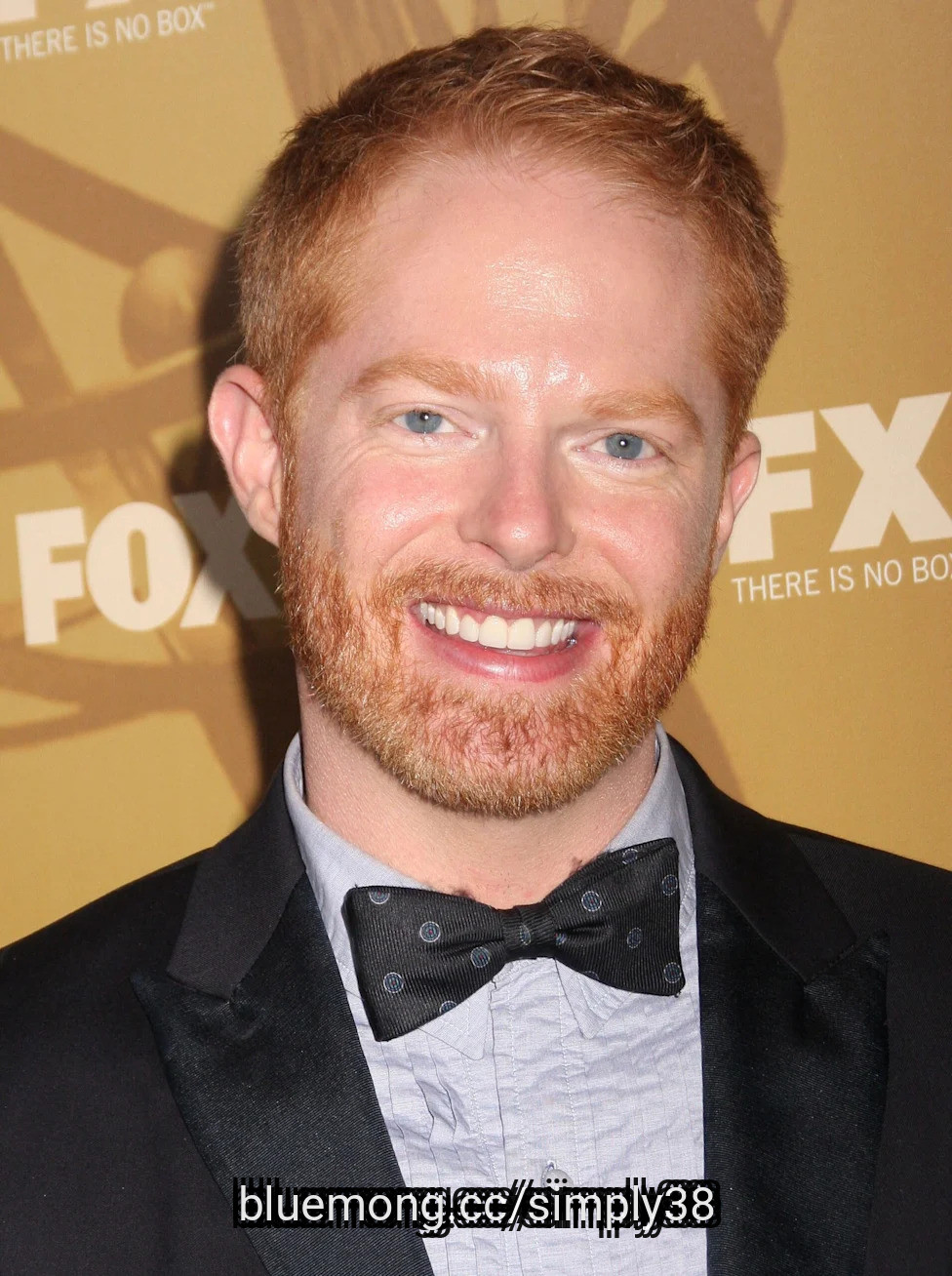
Jesse Tyler Ferguson recalled how his attempt to honor late friend Joan Rivers took a comically awkward turn.
After Joan died on September 14, 2014, at age 81, a shiva — the traditional seven days of mourning — was held in her memory. Ferguson, 50, thought he could slip over during a break in filming Modern Family.
"I got to know Joan Rivers a little bit at the end of her life, and I was invited to her shiva when she passed away," he told guest Arturo Castro on the Tuesday, September 29 episode of his Dinner on Me podcast. "There was an extra long break on either side of lunch where I wasn't needed, so I thought, 'I'm going to go to Joan's house and attend her shiva for a moment.'"
Once there, he explained, he found a "who's who of comedy," but then a text came in: Ferguson's scenes had been moved up and he was needed back in five minutes.
#ferguson
Jesse Tyler Ferguson recalled how his attempt to honor late friend Joan Rivers took a comically awkward turn.
After Joan died on September 14, 2014, at age 81, a shiva — the traditional seven days of mourning — was held in her memory. Ferguson, 50, thought he could slip over during a break in filming Modern Family.
"I got to know Joan Rivers a little bit at the end of her life, and I was invited to her shiva when she passed away," he told guest Arturo Castro on the Tuesday, September 29 episode of his Dinner on Me podcast. "There was an extra long break on either side of lunch where I wasn't needed, so I thought, 'I'm going to go to Joan's house and attend her shiva for a moment.'"
Once there, he explained, he found a "who's who of comedy," but then a text came in: Ferguson's scenes had been moved up and he was needed back in five minutes.
#ferguson


1 day ago
"Hearst Magazines and Yahoo may earn commission or revenue on some items through these links."
CBK meet HRB. While in Paris for the Spring/Summer 2027 shows, Hailey Bieber celebrated fashion week with a piece of fashion history—stepping out in one of Carolyn Bessette-Kennedy's most-recognizable looks.
Sourced by London-based curator My Runway Archive and styled by Dani Michelle, the white midi dress seen on Bieber was first worn by her It girl predecessor during her rehearsal dinner with John F. Kennedy Jr. And while it's typically Bessette-Kennedy's minimalist bias-cut silk slip wedding dress that gets all the recognition, this backless number was a quieter star of the weekend—with its sleeveless silhouette, low V neckline, and shimmering transparent fabric.
The piece (see here) was designed by CBK's longtime friend and collaborator, Narciso Rodriguez, for his Spring/Summer 1997 collection for Cerruti. The house's then-creative director first met his muse while they were both working at Calvin Klein—him as a designer, her as a publicist—and went on to design several of her most-beloved looks, including the aforementioned wedding dress, which helped kick-start his solo career.
In fact, their creative relationship was so central to Bessette-Kennedy's story that Ryan Murphy gave it ample air time on Love Story, even dreaming up a dramatized sequence in which the two had to frantically sew her into the dress last minute, which Rodriguez has since clarified was a fictional addition.
#rodriguez
CBK meet HRB. While in Paris for the Spring/Summer 2027 shows, Hailey Bieber celebrated fashion week with a piece of fashion history—stepping out in one of Carolyn Bessette-Kennedy's most-recognizable looks.
Sourced by London-based curator My Runway Archive and styled by Dani Michelle, the white midi dress seen on Bieber was first worn by her It girl predecessor during her rehearsal dinner with John F. Kennedy Jr. And while it's typically Bessette-Kennedy's minimalist bias-cut silk slip wedding dress that gets all the recognition, this backless number was a quieter star of the weekend—with its sleeveless silhouette, low V neckline, and shimmering transparent fabric.
The piece (see here) was designed by CBK's longtime friend and collaborator, Narciso Rodriguez, for his Spring/Summer 1997 collection for Cerruti. The house's then-creative director first met his muse while they were both working at Calvin Klein—him as a designer, her as a publicist—and went on to design several of her most-beloved looks, including the aforementioned wedding dress, which helped kick-start his solo career.
In fact, their creative relationship was so central to Bessette-Kennedy's story that Ryan Murphy gave it ample air time on Love Story, even dreaming up a dramatized sequence in which the two had to frantically sew her into the dress last minute, which Rodriguez has since clarified was a fictional addition.
#rodriguez


1 day ago
There's no denying that Hailey Bieber's sartorial agenda is infused with 90s style codes. Beyond reinterpreting the decade's classic silhouettes, she frequently dives into the fashion archives to resurrect genuine vintage gems.
For a party at the private Harry's Bar in Mayfair, London, on September 28, Hailey slipped into a Cerruti by Narciso Rodriguez spring/summer 1997 dress sourced from My Runway Archive. The champagne-hued midi dress is adorned with crystal embellishments and features a bias-cut with a plunging neckline, sleeveless design, and a figure-hugging silhouette.
The garment is the same dress that Carolyn Bessette Kennedy wore to her wedding rehearsal dinner in 1996. Carolyn first met the designer in 1990, when they worked together at Calvin Klein, and soon after enlisted Narciso to craft her wedding dress. The pearlescent silk crepe wedding gown was worn on September 21, 1996, when Carolyn married John F. Kennedy Jr.
Hailey Bieber looked ethereal in a Cerruti by Narciso Rodriguez spring/summer 1997 dress (@ Instagram)
The celebration was held at the Greyfield Inn on ***** berland Island, Georgia. Carolyn's blonde locks were swept back into a simple bun.
#dress #spring
For a party at the private Harry's Bar in Mayfair, London, on September 28, Hailey slipped into a Cerruti by Narciso Rodriguez spring/summer 1997 dress sourced from My Runway Archive. The champagne-hued midi dress is adorned with crystal embellishments and features a bias-cut with a plunging neckline, sleeveless design, and a figure-hugging silhouette.
The garment is the same dress that Carolyn Bessette Kennedy wore to her wedding rehearsal dinner in 1996. Carolyn first met the designer in 1990, when they worked together at Calvin Klein, and soon after enlisted Narciso to craft her wedding dress. The pearlescent silk crepe wedding gown was worn on September 21, 1996, when Carolyn married John F. Kennedy Jr.
Hailey Bieber looked ethereal in a Cerruti by Narciso Rodriguez spring/summer 1997 dress (@ Instagram)
The celebration was held at the Greyfield Inn on ***** berland Island, Georgia. Carolyn's blonde locks were swept back into a simple bun.
#dress #spring




4 days ago
Tiffany Trump's toddler son looked adorable in his mom's embrace in the latest photos. US President Donald Trump's daughter shared a couple of pictures on her Instagram Story. They included the mother-son duo posing near a lake. For those unversed, the 32-year-old shares one child, Alexander Trump Boulos, with her husband, Michael Boulos.
Tiffany Trump's toddler son's latest NYC photos have melted the internet. On her Instagram Story, the mother of one shared two photos of herself holding her child near a lake. It appeared to be a beautiful day, hinting at the upcoming fall season.
Tiffany wore a loose jacket, a black T-shirt, denim jeans, and high boots. With her hair let loose, Alexander's mom looked gorgeous yet sassy. But her expression had a gentle smile and love for her son in her arms.
The little one donned a comfortable T-shirt and pants with slip-on baby shoes. His hair seemed to have grown, as it was pulled up in a messy ponytail.
In the first photo, the two looked straight into the camera, clearly posing for a good snap. The background looked perfect, with New York City buildings that seemed near yet far. Big green trees, bushes, and a serene lake came between the buildings and the mother-son duo.
#tiffany #lake #story #boulos
Tiffany Trump's toddler son's latest NYC photos have melted the internet. On her Instagram Story, the mother of one shared two photos of herself holding her child near a lake. It appeared to be a beautiful day, hinting at the upcoming fall season.
Tiffany wore a loose jacket, a black T-shirt, denim jeans, and high boots. With her hair let loose, Alexander's mom looked gorgeous yet sassy. But her expression had a gentle smile and love for her son in her arms.
The little one donned a comfortable T-shirt and pants with slip-on baby shoes. His hair seemed to have grown, as it was pulled up in a messy ponytail.
In the first photo, the two looked straight into the camera, clearly posing for a good snap. The background looked perfect, with New York City buildings that seemed near yet far. Big green trees, bushes, and a serene lake came between the buildings and the mother-son duo.
#tiffany #lake #story #boulos


12 days ago
On August 6, Aflac (NYSE:AFL) reported second-quarter numbers that point in opposite directions. Net earnings climbed to $825 million, helped along by investment losses that shrank to $153 million from $421 million a year ago. Adjusted earnings, though, fell 7.7% to $883 million. Both numbers are real, but they answer different questions. Which measure you trust changes the story, so here is what sits underneath.
Start with the yen, because it is muddying the picture. The average rate was 159.45 to the dollar, 9.3% weaker than a year earlier, and that cost adjusted earnings $0.05 a share. Take the currency out of the first half and adjusted earnings per share rose 4.1% to $3.57. ******* an is also running more profitably. Its pretax adjusted margin widened to 34.3% from 32.0% as claims took a smaller bite out of premiums, and yen-based pretax adjusted earnings rose 3.4%. So part of the decline in ******* an's dollar-reported profit is currency, not operations.
The US business is still growing at the top line. Net earned premiums rose 2.3% to $1.5 billion, and sales climbed 2.6% to $349 million, led by group voluntary benefits along with dental and vision plans. In ******* an, the refreshed Tsumitasu life policy and the new Anshin Palette medical product grew strongly in the quarter, and first-half sales rose 7.0% to ¥37.3 billion. Then there is the cash. Aflac returned $1.3 billion to shareholders in the quarter, $983 million of it through buybacks, and declared a $0.61 third-quarter dividend, payable September 1 to holders of record on August 19, 2026. Management notes 43 straight years of dividend increases through 2025 and says the board is on a path to extend that in 2026.
The catch is that ******* an's profit gains came from lower claims, not a bigger business. Net earned premiums in yen fell 3.7%, mainly because of a new external reinsurance deal and older limited-pay policies reaching paid-up status. Premium persistency, the share of policies customers keep, slipped to 92.7% from 93.7%. ******* an's pretax adjusted earnings still fell 2.1% once currency is stripped out, and new sales dipped 5.6% in the quarter against a tough comparison for the Miraito cancer product, which launched in March 2025.
The US segment has its own soft spot. Pretax adjusted earnings fell 4.6% to $370 million, and the margin narrowed to 20.9% from 22.5% as claims and benefits took a bigger share of premiums. Corporate and Other swung to a $10 million pretax adjusted loss from a $20 million gain a year earlier, with interest expense up 21.6% to $62 million. And adjusted book value per share, excluding foreign currency remeasurement, slid to $41.22 at June 30 from $42.97 a year earlier.
#earnings #fell
Start with the yen, because it is muddying the picture. The average rate was 159.45 to the dollar, 9.3% weaker than a year earlier, and that cost adjusted earnings $0.05 a share. Take the currency out of the first half and adjusted earnings per share rose 4.1% to $3.57. ******* an is also running more profitably. Its pretax adjusted margin widened to 34.3% from 32.0% as claims took a smaller bite out of premiums, and yen-based pretax adjusted earnings rose 3.4%. So part of the decline in ******* an's dollar-reported profit is currency, not operations.
The US business is still growing at the top line. Net earned premiums rose 2.3% to $1.5 billion, and sales climbed 2.6% to $349 million, led by group voluntary benefits along with dental and vision plans. In ******* an, the refreshed Tsumitasu life policy and the new Anshin Palette medical product grew strongly in the quarter, and first-half sales rose 7.0% to ¥37.3 billion. Then there is the cash. Aflac returned $1.3 billion to shareholders in the quarter, $983 million of it through buybacks, and declared a $0.61 third-quarter dividend, payable September 1 to holders of record on August 19, 2026. Management notes 43 straight years of dividend increases through 2025 and says the board is on a path to extend that in 2026.
The catch is that ******* an's profit gains came from lower claims, not a bigger business. Net earned premiums in yen fell 3.7%, mainly because of a new external reinsurance deal and older limited-pay policies reaching paid-up status. Premium persistency, the share of policies customers keep, slipped to 92.7% from 93.7%. ******* an's pretax adjusted earnings still fell 2.1% once currency is stripped out, and new sales dipped 5.6% in the quarter against a tough comparison for the Miraito cancer product, which launched in March 2025.
The US segment has its own soft spot. Pretax adjusted earnings fell 4.6% to $370 million, and the margin narrowed to 20.9% from 22.5% as claims and benefits took a bigger share of premiums. Corporate and Other swung to a $10 million pretax adjusted loss from a $20 million gain a year earlier, with interest expense up 21.6% to $62 million. And adjusted book value per share, excluding foreign currency remeasurement, slid to $41.22 at June 30 from $42.97 a year earlier.
#earnings #fell

12 days ago
Morgan Stanley has cut Novo Nordisk A/S (NYSE:NVO) to Underweight on September 11, 2026. Semaglutide, the underlying molecule for Wegovy and Ozempic, generates roughly 75% of 2026 revenue. Morgan Stanley models that it will still represent 59% of total sales when its patent protection expires in 2031. And according to the firm, the valuation does not price in the impact it has on Novo's terminal value. The stock, currently trading at 10.6x earnings and down 33% from its 52-week high, slipped another 2% following the call. At this point, the question isn't about whether the patent cliff is real or not, but whether the 10x multiple reflects an actual bargain.
Semaglutide loses exclusivity in Europe in 2031 and the US in 2032. And Morgan Stanley believes Novo's oral-obesity business, projected to reach $10 billion by 2031, could not offset the pricing collapse after the arrival of generics. Growth decelerates to a 4% compound rate between 2027 and 2030. If the deceleration continues, it will justify 10x earnings as a fair price instead of a cheap one.
The 10.6x multiple already prices aggressive pessimism into a market leader of one of the fastest-growing drug classes in history. Morgan Stanley fueled the pessimism by discounting a 2031 cliff five years earlier. However, pharmaceutical patent expirations frequently face extensions and prove difficult to time. Second, the ***** umption that oral obesity treatments cannot offset patent losses relies on oral semaglutide being the bridge. But Novo's next-generation portfolio, including CagriSema and amycretin, offers a significant defense against the patent cliff. This remains unproven, however, specifically after CagriSema's earlier weight-loss data failed to impress, yet Morgan Stanley's terminal-value model discounts this pipeline almost entirely. The company is also expanding its franchise. On September 7, the STEP Young trial hit its endpoint in children aged six to twelve, strengthening the base its successors inherit.
The smart money is leaning in. As per the Insider Monkey database, 59 hedge funds held NVO in the second quarter of 2026, up from 55 in the first, indicating a slight increase in the modest institutional interest in the stock. Short interest on the ADR is negligible at about 0.7%. The positioning reflects a beaten-down value stock quietly seeing institutional accumulation while Wall Street turns increasingly bearish.
#semaglutide #oral
Semaglutide loses exclusivity in Europe in 2031 and the US in 2032. And Morgan Stanley believes Novo's oral-obesity business, projected to reach $10 billion by 2031, could not offset the pricing collapse after the arrival of generics. Growth decelerates to a 4% compound rate between 2027 and 2030. If the deceleration continues, it will justify 10x earnings as a fair price instead of a cheap one.
The 10.6x multiple already prices aggressive pessimism into a market leader of one of the fastest-growing drug classes in history. Morgan Stanley fueled the pessimism by discounting a 2031 cliff five years earlier. However, pharmaceutical patent expirations frequently face extensions and prove difficult to time. Second, the ***** umption that oral obesity treatments cannot offset patent losses relies on oral semaglutide being the bridge. But Novo's next-generation portfolio, including CagriSema and amycretin, offers a significant defense against the patent cliff. This remains unproven, however, specifically after CagriSema's earlier weight-loss data failed to impress, yet Morgan Stanley's terminal-value model discounts this pipeline almost entirely. The company is also expanding its franchise. On September 7, the STEP Young trial hit its endpoint in children aged six to twelve, strengthening the base its successors inherit.
The smart money is leaning in. As per the Insider Monkey database, 59 hedge funds held NVO in the second quarter of 2026, up from 55 in the first, indicating a slight increase in the modest institutional interest in the stock. Short interest on the ADR is negligible at about 0.7%. The positioning reflects a beaten-down value stock quietly seeing institutional accumulation while Wall Street turns increasingly bearish.
#semaglutide #oral


12 days ago
On September 17, Ferrari N.V. (NYSE:RACE) announced a partnership with the technology company Rakuten Group, Inc., effective January 1, 2027. The announcement gives no scope and no price tag, so it works better as a signal than as a number. The real substance sits in the results Ferrari posted on July 30, when it raised its 2026 guidance because buyers are ordering more personalization than the company expected.
In the second quarter, revenue rose 8%, but operating profit rose 10%, which means each euro of sales is leaving more behind. Ferrari credits a richer mix of cars, with the F80 helping, along with more buyers paying up for personalization. Strip out currency swings, and the gap widens, with revenue up 11% and operating profit up 16%. Deliveries of the Purosangue and the 296 Speciale family grew even in the middle of a planned model changeover.
Cash and demand back that up. Industrial free cash flow jumped 39% to €276 million, and Ferrari also returned more than €800 million to shareholders through a dividend and buybacks. Racing helped too, as higher sponsorships and engine rentals to other Formula 1 teams lifted revenue. Meanwhile, the order book covers 2027 in full, and the new 12Cilindri Manuale is already fully allocated, which is about as strong a demand signal as a carmaker can send. Those trends are why revenue guidance moved up to about €7.60 billion from about €7.50 billion.
Part of the strength is timing. Operating profit got a boost from temporarily lower depreciation and amortization while Ferrari swaps out models, and the company says those charges will climb once the new cars enter production. Net profit also leaned on a 23.0% tax rate, which reflects an estimated benefit from the new Patent Box. Neither says much about how profitable the cars themselves are.
Costs are climbing too. Higher industrial and marketing expenses weighed on operating profit, EBITDA margin slipped to 39.0% from 39.7% a year earlier, and management expects heavier brand, racing and digital spending for the year. Currency is a drag as well, mostly from the dollar and the yen, which is why 11% growth at constant currency shrank to 8% as reported. Deliveries totaled 3,366 cars while the 296 GTS, Roma Spider and SF90 XX family wound down, and sponsorship, commercial and brand revenue grew just 2%. And the whole outlook leans on current visibility into the Middle East crisis, which Ferrari cannot control.
#Ferrari
In the second quarter, revenue rose 8%, but operating profit rose 10%, which means each euro of sales is leaving more behind. Ferrari credits a richer mix of cars, with the F80 helping, along with more buyers paying up for personalization. Strip out currency swings, and the gap widens, with revenue up 11% and operating profit up 16%. Deliveries of the Purosangue and the 296 Speciale family grew even in the middle of a planned model changeover.
Cash and demand back that up. Industrial free cash flow jumped 39% to €276 million, and Ferrari also returned more than €800 million to shareholders through a dividend and buybacks. Racing helped too, as higher sponsorships and engine rentals to other Formula 1 teams lifted revenue. Meanwhile, the order book covers 2027 in full, and the new 12Cilindri Manuale is already fully allocated, which is about as strong a demand signal as a carmaker can send. Those trends are why revenue guidance moved up to about €7.60 billion from about €7.50 billion.
Part of the strength is timing. Operating profit got a boost from temporarily lower depreciation and amortization while Ferrari swaps out models, and the company says those charges will climb once the new cars enter production. Net profit also leaned on a 23.0% tax rate, which reflects an estimated benefit from the new Patent Box. Neither says much about how profitable the cars themselves are.
Costs are climbing too. Higher industrial and marketing expenses weighed on operating profit, EBITDA margin slipped to 39.0% from 39.7% a year earlier, and management expects heavier brand, racing and digital spending for the year. Currency is a drag as well, mostly from the dollar and the yen, which is why 11% growth at constant currency shrank to 8% as reported. Deliveries totaled 3,366 cars while the 296 GTS, Roma Spider and SF90 XX family wound down, and sponsorship, commercial and brand revenue grew just 2%. And the whole outlook leans on current visibility into the Middle East crisis, which Ferrari cannot control.
#Ferrari


12 days ago
On August 10, Simon Property Group (NYSE:SPG) reported results for the three months through June 30 and raised its full-year profit outlook once again. Real estate funds from operations (FFO), a cash-flow measure suited to landlords, hit $3.29 per share. Tenants are earning more from their stores, and management is confident enough to lift its guidance again. Yet the professionals who own the stock are heading the other way.
Start with the tenants, because they pay the rent. Reported retailer sales reached $838 per square foot over the year through June 30, up from $736 a year earlier, on June 30, 2025. Stronger sales tend to make higher rent easier to swallow, and base minimum rent per square foot did climb to $62.42 from $58.70.
That demand flowed through to profit. Real estate FFO rose to $3.29 per diluted share from $3.05, and net operating income at Simon's domestic properties grew 8.5%. Management responded by lifting its full-year real estate FFO range to $13.20 to $13.30 per share, moving the midpoint up by $0.08.
Shareholders get paid while they wait. The board declared a third-quarter dividend of $2.25 per share, $0.10 more than a year ago, to be paid on September 30 to anyone on the books by September 9. Simon also put $211.4 million into buying back stock at an average of $205.10 per share, and it finished June with about $9.3 billion of liquidity.
Now the less flattering side. Net income for common stockholders was $483.1 million, or $1.49 per diluted share, versus $1.70 a year earlier. The 2025 quarter included a non-cash gain of $0.21 per share from investment activity, which flatters that comparison. Still, plain FFO followed the same path, slipping to $3.12 from $3.15.
#Share #year #june #estate
Start with the tenants, because they pay the rent. Reported retailer sales reached $838 per square foot over the year through June 30, up from $736 a year earlier, on June 30, 2025. Stronger sales tend to make higher rent easier to swallow, and base minimum rent per square foot did climb to $62.42 from $58.70.
That demand flowed through to profit. Real estate FFO rose to $3.29 per diluted share from $3.05, and net operating income at Simon's domestic properties grew 8.5%. Management responded by lifting its full-year real estate FFO range to $13.20 to $13.30 per share, moving the midpoint up by $0.08.
Shareholders get paid while they wait. The board declared a third-quarter dividend of $2.25 per share, $0.10 more than a year ago, to be paid on September 30 to anyone on the books by September 9. Simon also put $211.4 million into buying back stock at an average of $205.10 per share, and it finished June with about $9.3 billion of liquidity.
Now the less flattering side. Net income for common stockholders was $483.1 million, or $1.49 per diluted share, versus $1.70 a year earlier. The 2025 quarter included a non-cash gain of $0.21 per share from investment activity, which flatters that comparison. Still, plain FFO followed the same path, slipping to $3.12 from $3.15.
#Share #year #june #estate


12 days ago
On August 6, Republic Services (NYSE:RSG) reported earnings of $1.84 per diluted share for the quarter that closed on June 30, up from $1.75 a year earlier, and lifted most of its full-year targets. Here is the odd part. The company moved less volume than it did a year ago and still grew profit. Understanding how that works, and how long it can last, is the whole story.
Start with pricing, because that is the engine. Core price on total revenue added 5.3% to growth, which helped lift total revenue by 4.6%. Inside the related business, price contributed 4.1% in the restricted portion and 7.8% in the open market. Management says price beat cost inflation, and the margin backs that up. Adjusted EBITDA reached $1.42 billion at a 32.1% margin, matching the prior year even after Republic absorbed a 50 basis point drag from event-driven landfill volumes it received in 2025.
Cash generation is just as sturdy. Through the first half of 2026, operations produced $2.38 billion, and adjusted free cash flow came to $1.58 billion. That paid for $860 million of acquisitions and $1.04 billion returned to shareholders, so Republic is buying growth and rewarding owners from the same pool. The board added 4.5 cents to the quarterly dividend, setting it at $0.670 per share with an October 2 record date and payment on October 15. Management also raised full-year revenue, adjusted EBITDA, and free cash flow guidance, and set adjusted earnings at $7.23 to $7.28 per share.
The catch is that volume is moving the wrong way. Average yield added 3.4% to total revenue, while volume took away 1.6%, and the related business gave up 1.9% to volume. That makes this a price-led story, and price can only carry so much weight if volumes keep shrinking. Acquisitions also supplied 1.1% of the 4.6% total growth, so organic growth is smaller than the headline suggests.
Other lines were softer too. The environmental solutions business slipped 0.2%, so it added no lift. Recycled commodities sold for an average of $136 per ton at Republic's recycling centers, which is $13 lower than a year earlier. Margin only matched last year's level, and adjusted earnings per share rose 4.5%, just under revenue growth, so profit grew in step with sales rather than faster.
#year
Start with pricing, because that is the engine. Core price on total revenue added 5.3% to growth, which helped lift total revenue by 4.6%. Inside the related business, price contributed 4.1% in the restricted portion and 7.8% in the open market. Management says price beat cost inflation, and the margin backs that up. Adjusted EBITDA reached $1.42 billion at a 32.1% margin, matching the prior year even after Republic absorbed a 50 basis point drag from event-driven landfill volumes it received in 2025.
Cash generation is just as sturdy. Through the first half of 2026, operations produced $2.38 billion, and adjusted free cash flow came to $1.58 billion. That paid for $860 million of acquisitions and $1.04 billion returned to shareholders, so Republic is buying growth and rewarding owners from the same pool. The board added 4.5 cents to the quarterly dividend, setting it at $0.670 per share with an October 2 record date and payment on October 15. Management also raised full-year revenue, adjusted EBITDA, and free cash flow guidance, and set adjusted earnings at $7.23 to $7.28 per share.
The catch is that volume is moving the wrong way. Average yield added 3.4% to total revenue, while volume took away 1.6%, and the related business gave up 1.9% to volume. That makes this a price-led story, and price can only carry so much weight if volumes keep shrinking. Acquisitions also supplied 1.1% of the 4.6% total growth, so organic growth is smaller than the headline suggests.
Other lines were softer too. The environmental solutions business slipped 0.2%, so it added no lift. Recycled commodities sold for an average of $136 per ton at Republic's recycling centers, which is $13 lower than a year earlier. Margin only matched last year's level, and adjusted earnings per share rose 4.5%, just under revenue growth, so profit grew in step with sales rather than faster.
#year


12 days ago
On August 6, Wheaton Precious Metals (NYSE:WPM) reported second-quarter net earnings of $543 million on $929 million of revenue, both records. Through the first half, net earnings rose 106% to $1.1 billion. During the quarter, the company also made net upfront cash payments of $4.5 billion relative to mineral stream interests, and it now carries $2.0 billion of total debt against $100 million of cash on hand. Here is what that trade looks like up close.
Start with what the streaming model does when prices climb. Wheaton sold 14% more gold equivalent ounces than a year ago, but the average realized gold equivalent price jumped 61% in Q2, and that higher price explains most of the revenue surge. Costs per ounce rose from $406 to $568, yet the cash operating margin per ounce still grew 65% to $3,875, faster than gold itself appreciated. Operating cash flow hit $650 million in the quarter and $1.4 billion for the half.
The second argument is that plenty of growth hasn't arrived yet. Only about 3% of this year's production comes from **** ets still in construction or ramp-up, and the company forecasts a rise of roughly 50% to 1,200,000 gold equivalent ounces by 2030. Some of that ramp has dates attached. Ivanhoe now expects commercial production at Platreef in the fourth quarter of 2026, and Montage Gold is targeting first gold at Koné in late Q4. Effective April 1, Wheaton expanded its share of silver production from Antamina from 33.75% to 67.5% through the newly acquired BHP Antamina PMPA.
Growth on this scale wasn't free. Wheaton had no bank debt at the end of 2025. On April 1, it drew $1.5 billion on a new two-year term loan to help pay for Antamina, and finance costs that were negligible a year ago now take a real bite. Net debt stands at $1.9 billion. Taxes are heavier too. Wheaton paid $109 million of global minimum tax on June 24, and another Cdn$346 million is due around March 31, 2027.
Operations also gave investors a few reasons for caution. Gold ounces produced slipped 2.6% year over year, so the 6% rise in gold equivalent production leaned heavily on the Antamina purchase. Gold output at Salobo fell 11% on lower grades. At Constancia, it fell 35% after mining at the higher-grade Pampacancha pit finished in the fourth quarter of 2025. Hemlo Mining said on July 20 that its second-quarter output fell below the first quarter's, and Rio2 said on May 15 that Fenix missed planned tonnes and grade in Q1. And because the revenue jump came mainly from price, the same leverage works in reverse if metals slip.
#wheaton
Start with what the streaming model does when prices climb. Wheaton sold 14% more gold equivalent ounces than a year ago, but the average realized gold equivalent price jumped 61% in Q2, and that higher price explains most of the revenue surge. Costs per ounce rose from $406 to $568, yet the cash operating margin per ounce still grew 65% to $3,875, faster than gold itself appreciated. Operating cash flow hit $650 million in the quarter and $1.4 billion for the half.
The second argument is that plenty of growth hasn't arrived yet. Only about 3% of this year's production comes from **** ets still in construction or ramp-up, and the company forecasts a rise of roughly 50% to 1,200,000 gold equivalent ounces by 2030. Some of that ramp has dates attached. Ivanhoe now expects commercial production at Platreef in the fourth quarter of 2026, and Montage Gold is targeting first gold at Koné in late Q4. Effective April 1, Wheaton expanded its share of silver production from Antamina from 33.75% to 67.5% through the newly acquired BHP Antamina PMPA.
Growth on this scale wasn't free. Wheaton had no bank debt at the end of 2025. On April 1, it drew $1.5 billion on a new two-year term loan to help pay for Antamina, and finance costs that were negligible a year ago now take a real bite. Net debt stands at $1.9 billion. Taxes are heavier too. Wheaton paid $109 million of global minimum tax on June 24, and another Cdn$346 million is due around March 31, 2027.
Operations also gave investors a few reasons for caution. Gold ounces produced slipped 2.6% year over year, so the 6% rise in gold equivalent production leaned heavily on the Antamina purchase. Gold output at Salobo fell 11% on lower grades. At Constancia, it fell 35% after mining at the higher-grade Pampacancha pit finished in the fourth quarter of 2025. Hemlo Mining said on July 20 that its second-quarter output fell below the first quarter's, and Rio2 said on May 15 that Fenix missed planned tonnes and grade in Q1. And because the revenue jump came mainly from price, the same leverage works in reverse if metals slip.
#wheaton


13 days ago
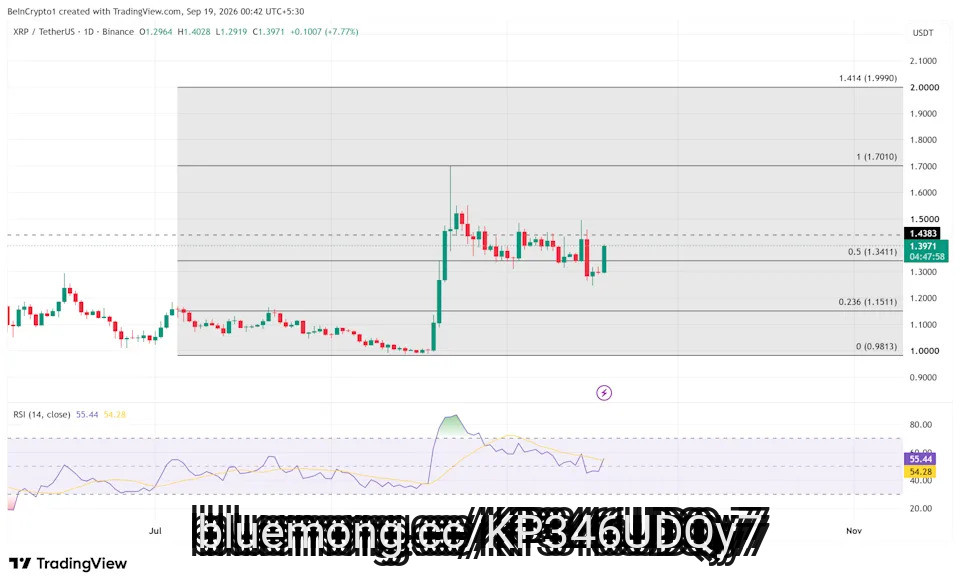
XRP shook off a sharp regulatory setback this week, climbing more than 7% over 24 hours to trade near $1.39 after briefly touching lows around $1.27.
The rebound followed a rocky 48 hours that combined a failed Senate vote with the Federal Reserve's first rate hike since 2023.
Cloture is the Senate procedure required to end debate and move a bill toward a final vote, needing 60 senators to succeed. On September 15, the CLARITY Act fell short in a narrow 50-49 tally, missing that threshold and stalling a proposed federal framework for digital **** ets.
XRP dropped more than 8% in the immediate aftermath, touching lows near $1.27 to $1.28. Pressure intensified the next day when the Fed raised its benchmark rate by 25 basis points to a range of 3.75% to 4.00%, a move that typically weighs on risk **** ets broadly.
The sell-off, however, proved short-lived. XRP has since rebounded to $1.39, up 7.23% over 24 hours, even as the token slipped slightly by 0.30% in the past hour. Trading volume held near $3.9 billion, close to its 30-day average, suggesting genuine buying rather than thin, low-liquidity trading.
#near #senate #since
The rebound followed a rocky 48 hours that combined a failed Senate vote with the Federal Reserve's first rate hike since 2023.
Cloture is the Senate procedure required to end debate and move a bill toward a final vote, needing 60 senators to succeed. On September 15, the CLARITY Act fell short in a narrow 50-49 tally, missing that threshold and stalling a proposed federal framework for digital **** ets.
XRP dropped more than 8% in the immediate aftermath, touching lows near $1.27 to $1.28. Pressure intensified the next day when the Fed raised its benchmark rate by 25 basis points to a range of 3.75% to 4.00%, a move that typically weighs on risk **** ets broadly.
The sell-off, however, proved short-lived. XRP has since rebounded to $1.39, up 7.23% over 24 hours, even as the token slipped slightly by 0.30% in the past hour. Trading volume held near $3.9 billion, close to its 30-day average, suggesting genuine buying rather than thin, low-liquidity trading.
#near #senate #since


13 days ago
Xenon Pharmaceuticals (XENE) shares crashed on Friday after the biopharmaceutical firm said it has paused new patient enrollment in its clinical trials evaluating azetukalner. As investors responded to the setback involving XENE's lead drug candidate for major depressive disorder, its relative strength index (RSI) slipped into the early teens, indicating extremely oversold conditions.
Following today's decline, Xenon Pharmaceuticals stock is trading nearly 40% below its year-to-date high.
Bank of America Just Declared a 'Generational Entry Point' in U.S. Bonds. Why Investors Should Be Backing Up the Truck on Treasuries Here.
Mark Cuban Says He Was Dizzy for Months, So He Built a VR Fix That Does at Home 'Much Of What A 180k Machine' Does
JPMorgan Gives Up Forecasting Iran War Endgame as Trump Tells Reporters 'Anything Could Happen With Me'
#xene #following #America
Following today's decline, Xenon Pharmaceuticals stock is trading nearly 40% below its year-to-date high.
Bank of America Just Declared a 'Generational Entry Point' in U.S. Bonds. Why Investors Should Be Backing Up the Truck on Treasuries Here.
Mark Cuban Says He Was Dizzy for Months, So He Built a VR Fix That Does at Home 'Much Of What A 180k Machine' Does
JPMorgan Gives Up Forecasting Iran War Endgame as Trump Tells Reporters 'Anything Could Happen With Me'
#xene #following #America


13 days ago
On August 10, Ferguson Enterprises Inc. (NYSE:FERG) reported results for the quarter ended June 30, and the numbers show a company growing straight through a soft housing market. Sales rose 4.6% to $8.8 billion, and management lifted its outlook for the full year. But profit grew more slowly than sales, and that gap is what makes this report worth a closer look.
The strongest engine was non-residential work, where US revenue jumped 8% on share gains in what management called a mixed market. Large capital projects are part of the story, with open order volumes growing and bidding activity strong, so there is a pipeline behind the current numbers. Housing, roughly half of revenue, is the weak spot. Yet residential sales still rose 2% in the US even though new construction is weak and repair work is soft, which means Ferguson is beating its markets rather than riding them.
Capital deployment is the second pillar. Ferguson closed five acquisitions in the quarter, and on July 13, it announced a deal for FWI Holdings, known as FloWorks, an industrial distributor of valves and flow-control products that is expected to close in the third quarter. The eight deals announced this year carry about $1.4 billion in annualized revenue, a second growth path alongside organic sales. Net debt sits at 1.3 times adjusted EBITDA, a level management calls strong. The company also returned cash, buying back $202 million of stock in the quarter and declaring a $0.89 dividend payable October 7 to holders of record on August 21. Management raised its full-year sales outlook to mid-single-digit growth, before counting FloWorks.
Start with the gap between sales and profit. Adjusted operating profit rose 2.9%, behind the 4.6% sales gain, and gross margin slipped 20 basis points to 31.0%. Ferguson notes that last year's gross margin was temporarily lifted by the timing of supplier price increases, which is fair context, but the direction is still down. Reported earnings per share of $3.43 rose 6.9%, while the adjusted figure of $3.39 grew a slower 5.3%.
Then there are the soft spots. About half of revenue comes from residential markets that management describes as subdued, so a 2% gain there is modest. Canada's sales slipped 1.9%, with a business divestment outweighing organic growth, and management calls the market there challenging, especially in residential. Management also describes the economic environment as uncertain, and the margin part of the guidance raise is small. The low end of the adjusted operating margin range moved from 9.4% to 9.5%, while the top stayed at 9.8%. The guidance also leaves out FloWorks, and net debt to adjusted EBITDA is 1.3 times, against 1.2 times a year ago.
#management
The strongest engine was non-residential work, where US revenue jumped 8% on share gains in what management called a mixed market. Large capital projects are part of the story, with open order volumes growing and bidding activity strong, so there is a pipeline behind the current numbers. Housing, roughly half of revenue, is the weak spot. Yet residential sales still rose 2% in the US even though new construction is weak and repair work is soft, which means Ferguson is beating its markets rather than riding them.
Capital deployment is the second pillar. Ferguson closed five acquisitions in the quarter, and on July 13, it announced a deal for FWI Holdings, known as FloWorks, an industrial distributor of valves and flow-control products that is expected to close in the third quarter. The eight deals announced this year carry about $1.4 billion in annualized revenue, a second growth path alongside organic sales. Net debt sits at 1.3 times adjusted EBITDA, a level management calls strong. The company also returned cash, buying back $202 million of stock in the quarter and declaring a $0.89 dividend payable October 7 to holders of record on August 21. Management raised its full-year sales outlook to mid-single-digit growth, before counting FloWorks.
Start with the gap between sales and profit. Adjusted operating profit rose 2.9%, behind the 4.6% sales gain, and gross margin slipped 20 basis points to 31.0%. Ferguson notes that last year's gross margin was temporarily lifted by the timing of supplier price increases, which is fair context, but the direction is still down. Reported earnings per share of $3.43 rose 6.9%, while the adjusted figure of $3.39 grew a slower 5.3%.
Then there are the soft spots. About half of revenue comes from residential markets that management describes as subdued, so a 2% gain there is modest. Canada's sales slipped 1.9%, with a business divestment outweighing organic growth, and management calls the market there challenging, especially in residential. Management also describes the economic environment as uncertain, and the margin part of the guidance raise is small. The low end of the adjusted operating margin range moved from 9.4% to 9.5%, while the top stayed at 9.8%. The guidance also leaves out FloWorks, and net debt to adjusted EBITDA is 1.3 times, against 1.2 times a year ago.
#management


13 days ago
On September 15, Arthur J. Gallagher & Co. (NYSE:AJG) announced that it had bought McMillan Insurance & Bonding Inc., an Englewood, Colorado, firm that operates as Innovise Business Consultants. Gallagher did not say what it paid. On its own, the deal is a footnote. But it is one of many, and the way those deals show up in earnings is where the debate over this stock really lives.
On July 30, Gallagher reported results for the quarter ended June 30, and the top line was hard to argue with. Revenue from its combined Brokerage and Risk Management businesses grew 24%, and organic growth, which leaves out acquisitions, was 6%. That second number shows clients are staying and spending. It was not confined to one corner, either, since organic fees in the risk management arm rose 12%. Management adds that retention is strong and customers want broader help from the platform. Adjusted earnings per share climbed to $2.84 from $2.30, which means growth is reaching profit once one-time acquisition costs are set aside.
Innovise fits the pattern. It sells surety bonds and commercial insurance brokerage with a focus on manufacturing, energy, construction and real estate, and Chairman and CEO J. Patrick Gallagher, Jr. said that niche expertise adds depth in Colorado. Jason McMillan's team will move into Gallagher's Denver office and work under Bret VanderVoort, who oversees retail property/casualty brokerage for the Western Zone. Buying specialists and folding them into existing offices is a repeatable playbook, and Gallagher closed 14 brokerage acquisitions in the first six months of 2026.
Now look at reported earnings, because that is where you see the cost. Diluted earnings per share fell to $1.25, from $1.40 in the second quarter of 2025, even though revenue jumped. Much of the gap between reported and adjusted results is the price of buying growth. Amortization of acquired intangibles alone weighs on brokerage net earnings by $218 million, up from $130 million a year ago, and integration costs rose as well. Adjusted figures set those aside, but they are real expenses, and they keep landing as long as Gallagher keeps buying.
Margins tell a similar story. The brokerage segment's adjusted EBITDAC margin, a stand-in for operating profit, slipped to 33.3% from 36.1%. Gallagher points to last year's interest income on cash raised for the ***** uredPartners deal, which closed in the third quarter of 2025, plus seasonality and newly added tuck-ins. That is a fair explanation. But the debt behind the deal is still here, including $9.55 billion of public debt, plus more in private placements and on a credit line. And the deal flow is thinner: brokerage acquisitions closed in the first six months of 2026 carried $107 million of annualized revenue, versus $354 million a year earlier, which puts more weight on organic growth.
#Growth
On July 30, Gallagher reported results for the quarter ended June 30, and the top line was hard to argue with. Revenue from its combined Brokerage and Risk Management businesses grew 24%, and organic growth, which leaves out acquisitions, was 6%. That second number shows clients are staying and spending. It was not confined to one corner, either, since organic fees in the risk management arm rose 12%. Management adds that retention is strong and customers want broader help from the platform. Adjusted earnings per share climbed to $2.84 from $2.30, which means growth is reaching profit once one-time acquisition costs are set aside.
Innovise fits the pattern. It sells surety bonds and commercial insurance brokerage with a focus on manufacturing, energy, construction and real estate, and Chairman and CEO J. Patrick Gallagher, Jr. said that niche expertise adds depth in Colorado. Jason McMillan's team will move into Gallagher's Denver office and work under Bret VanderVoort, who oversees retail property/casualty brokerage for the Western Zone. Buying specialists and folding them into existing offices is a repeatable playbook, and Gallagher closed 14 brokerage acquisitions in the first six months of 2026.
Now look at reported earnings, because that is where you see the cost. Diluted earnings per share fell to $1.25, from $1.40 in the second quarter of 2025, even though revenue jumped. Much of the gap between reported and adjusted results is the price of buying growth. Amortization of acquired intangibles alone weighs on brokerage net earnings by $218 million, up from $130 million a year ago, and integration costs rose as well. Adjusted figures set those aside, but they are real expenses, and they keep landing as long as Gallagher keeps buying.
Margins tell a similar story. The brokerage segment's adjusted EBITDAC margin, a stand-in for operating profit, slipped to 33.3% from 36.1%. Gallagher points to last year's interest income on cash raised for the ***** uredPartners deal, which closed in the third quarter of 2025, plus seasonality and newly added tuck-ins. That is a fair explanation. But the debt behind the deal is still here, including $9.55 billion of public debt, plus more in private placements and on a credit line. And the deal flow is thinner: brokerage acquisitions closed in the first six months of 2026 carried $107 million of annualized revenue, versus $354 million a year earlier, which puts more weight on organic growth.
#Growth

13 days ago
On August 6, Aflac (NYSE:AFL) reported second-quarter numbers that point in opposite directions. Net earnings climbed to $825 million, helped along by investment losses that shrank to $153 million from $421 million a year ago. Adjusted earnings, though, fell 7.7% to $883 million. Both numbers are real, but they answer different questions. Which measure you trust changes the story, so here is what sits underneath.
Start with the yen, because it is muddying the picture. The average rate was 159.45 to the dollar, 9.3% weaker than a year earlier, and that cost adjusted earnings $0.05 a share. Take the currency out of the first half and adjusted earnings per share rose 4.1% to $3.57. **** an is also running more profitably. Its pretax adjusted margin widened to 34.3% from 32.0% as claims took a smaller bite out of premiums, and yen-based pretax adjusted earnings rose 3.4%. So part of the decline in **** an's dollar-reported profit is currency, not operations.
The US business is still growing at the top line. Net earned premiums rose 2.3% to $1.5 billion, and sales climbed 2.6% to $349 million, led by group voluntary benefits along with dental and vision plans. In **** an, the refreshed Tsumitasu life policy and the new Anshin Palette medical product grew strongly in the quarter, and first-half sales rose 7.0% to ¥37.3 billion. Then there is the cash. Aflac returned $1.3 billion to shareholders in the quarter, $983 million of it through buybacks, and declared a $0.61 third-quarter dividend, payable September 1 to holders of record on August 19, 2026. Management notes 43 straight years of dividend increases through 2025 and says the board is on a path to extend that in 2026.
The catch is that **** an's profit gains came from lower claims, not a bigger business. Net earned premiums in yen fell 3.7%, mainly because of a new external reinsurance deal and older limited-pay policies reaching paid-up status. Premium persistency, the share of policies customers keep, slipped to 92.7% from 93.7%. **** an's pretax adjusted earnings still fell 2.1% once currency is stripped out, and new sales dipped 5.6% in the quarter against a tough comparison for the Miraito cancer product, which launched in March 2025.
The US segment has its own soft spot. Pretax adjusted earnings fell 4.6% to $370 million, and the margin narrowed to 20.9% from 22.5% as claims and benefits took a bigger share of premiums. Corporate and Other swung to a $10 million pretax adjusted loss from a $20 million gain a year earlier, with interest expense up 21.6% to $62 million. And adjusted book value per share, excluding foreign currency remeasurement, slid to $41.22 at June 30 from $42.97 a year earlier.
#adjusted #pretax
Start with the yen, because it is muddying the picture. The average rate was 159.45 to the dollar, 9.3% weaker than a year earlier, and that cost adjusted earnings $0.05 a share. Take the currency out of the first half and adjusted earnings per share rose 4.1% to $3.57. **** an is also running more profitably. Its pretax adjusted margin widened to 34.3% from 32.0% as claims took a smaller bite out of premiums, and yen-based pretax adjusted earnings rose 3.4%. So part of the decline in **** an's dollar-reported profit is currency, not operations.
The US business is still growing at the top line. Net earned premiums rose 2.3% to $1.5 billion, and sales climbed 2.6% to $349 million, led by group voluntary benefits along with dental and vision plans. In **** an, the refreshed Tsumitasu life policy and the new Anshin Palette medical product grew strongly in the quarter, and first-half sales rose 7.0% to ¥37.3 billion. Then there is the cash. Aflac returned $1.3 billion to shareholders in the quarter, $983 million of it through buybacks, and declared a $0.61 third-quarter dividend, payable September 1 to holders of record on August 19, 2026. Management notes 43 straight years of dividend increases through 2025 and says the board is on a path to extend that in 2026.
The catch is that **** an's profit gains came from lower claims, not a bigger business. Net earned premiums in yen fell 3.7%, mainly because of a new external reinsurance deal and older limited-pay policies reaching paid-up status. Premium persistency, the share of policies customers keep, slipped to 92.7% from 93.7%. **** an's pretax adjusted earnings still fell 2.1% once currency is stripped out, and new sales dipped 5.6% in the quarter against a tough comparison for the Miraito cancer product, which launched in March 2025.
The US segment has its own soft spot. Pretax adjusted earnings fell 4.6% to $370 million, and the margin narrowed to 20.9% from 22.5% as claims and benefits took a bigger share of premiums. Corporate and Other swung to a $10 million pretax adjusted loss from a $20 million gain a year earlier, with interest expense up 21.6% to $62 million. And adjusted book value per share, excluding foreign currency remeasurement, slid to $41.22 at June 30 from $42.97 a year earlier.
#adjusted #pretax


13 days ago
Bettors on Polymarket, the cryptocurrency-based prediction market, put the chance of Bitcoin dropping to $75,000 before the end of September at about 51%.
The same market gives the world's largest cryptocurrency a 70% chance of climbing back to $80,000 within the month, pointing to a choppy few weeks rather than a clear trend.
Bitcoin was trading just below $77,000 on Friday, down more than a third from the record high near $126,000 it set last October.
The wagering reflects a bruising September, a month traders nickname "Rektember" for its habit of delivering losses.
Prices have fallen steadily since 4 September, slipping below $80,000 and then $76,000 as investors braced for tighter monetary policy.
#Cryptocurrency #month
The same market gives the world's largest cryptocurrency a 70% chance of climbing back to $80,000 within the month, pointing to a choppy few weeks rather than a clear trend.
Bitcoin was trading just below $77,000 on Friday, down more than a third from the record high near $126,000 it set last October.
The wagering reflects a bruising September, a month traders nickname "Rektember" for its habit of delivering losses.
Prices have fallen steadily since 4 September, slipping below $80,000 and then $76,000 as investors braced for tighter monetary policy.
#Cryptocurrency #month


13 days ago
NEW YORK (AP) — Wall Street capped an up -and- down week Friday with a mixed finish for U.S. stock indexes, as elevated bond yields and oil prices weighed on the market.
The S&P 500 inched 0.2% higher after drifting between modest gains and losses for much of the day. The benchmark index also posted its second straight weekly loss.
The Dow Jones Industrial Average slipped 0.2%, and the Nasdaq composite added 0.4%.
The majority of stocks on Wall Street fell, and helping to weaken them was rising pressure from the bond market. The yield on the 10-year Treasury climbed to 5% from 4.94% late Thursday after it topped the 5% level early this week for the first time since 2023.
Higher yields slow the overall economy by making it more expensive for everyone to borrow money, from the U.S. government to people looking to buy houses to businesses wanting to build AI data centers. They also tend to undercut prices for stocks and other investments.
#street
The S&P 500 inched 0.2% higher after drifting between modest gains and losses for much of the day. The benchmark index also posted its second straight weekly loss.
The Dow Jones Industrial Average slipped 0.2%, and the Nasdaq composite added 0.4%.
The majority of stocks on Wall Street fell, and helping to weaken them was rising pressure from the bond market. The yield on the 10-year Treasury climbed to 5% from 4.94% late Thursday after it topped the 5% level early this week for the first time since 2023.
Higher yields slow the overall economy by making it more expensive for everyone to borrow money, from the U.S. government to people looking to buy houses to businesses wanting to build AI data centers. They also tend to undercut prices for stocks and other investments.
#street


14 days ago
High Tide Inc. (NASDAQ:HITI) reported record fiscal third-quarter revenue of C$198.8 million on September 14, up 33% year over year. Operating income increased 133% to C$8.7 million for the quarter ended July 31, 2026, yet net cash provided by operating activities slipped to C$10.1 million from C$10.7 million.
High Tide Inc. (NASDAQ:HITI) generated C$11.9 million of operating cash flow before changes in non-cash working capital, up 44%. Working capital then absorbed C$1.8 million, compared with a C$2.4 million release a year earlier. That approximately C$4.2 million unfavorable swing outweighed the improvement before working-capital movements. The question is whether expansion will keep requiring a larger cash commitment.
High Tide Inc. (NASDAQ:HITI) is translating sales growth into stronger operating profitability. Operating income represented approximately 4.4% of revenue, compared with 2.5% a year earlier. That improvement gives the business more room to absorb the costs of expansion.
High Tide Inc. (NASDAQ:HITI) opened four Canadian stores and acquired four more during the quarter. Its German medical-cannabis subsidiary, Remexian, generated C$38.2 million in revenue, up from C$31.6 million sequentially. Remexian distributed 10.2 tonnes, a 35% sequential increase. Both markets offer opportunities to build sales across a larger operating base.
High Tide Inc. (NASDAQ:HITI) also improved operating cash flow to C$4.4 million in the second quarter. For the first nine months, operating cash flow reached C$20.4 million versus C$19.6 million a year earlier. Those comparisons show that the quarterly year-over-year decline sits alongside improving cash generation over other periods.
#high
High Tide Inc. (NASDAQ:HITI) generated C$11.9 million of operating cash flow before changes in non-cash working capital, up 44%. Working capital then absorbed C$1.8 million, compared with a C$2.4 million release a year earlier. That approximately C$4.2 million unfavorable swing outweighed the improvement before working-capital movements. The question is whether expansion will keep requiring a larger cash commitment.
High Tide Inc. (NASDAQ:HITI) is translating sales growth into stronger operating profitability. Operating income represented approximately 4.4% of revenue, compared with 2.5% a year earlier. That improvement gives the business more room to absorb the costs of expansion.
High Tide Inc. (NASDAQ:HITI) opened four Canadian stores and acquired four more during the quarter. Its German medical-cannabis subsidiary, Remexian, generated C$38.2 million in revenue, up from C$31.6 million sequentially. Remexian distributed 10.2 tonnes, a 35% sequential increase. Both markets offer opportunities to build sales across a larger operating base.
High Tide Inc. (NASDAQ:HITI) also improved operating cash flow to C$4.4 million in the second quarter. For the first nine months, operating cash flow reached C$20.4 million versus C$19.6 million a year earlier. Those comparisons show that the quarterly year-over-year decline sits alongside improving cash generation over other periods.
#high

14 days ago
Vertiv (VRT) supplies the power and cooling systems inside AI data centers, and its stock sits near $240, about 64% of its 52-week high. It is still up about 73% over the past twelve months. The open question is delivery, after some revenue from large projects slipped out of the second quarter of 2026. Even so, Vertiv's operating margin has widened in each of the last three years.
How Far Has Vertiv's Operating Margin Climbed?
Vertiv's operating margin was 9.6% three years ago. It rose to 15.1%, then 17.4%, and reached 19.4% over the last twelve months. That is roughly twice as much operating profit from every dollar of sales.
For the adjusted margin gain in the second quarter of 2026, management cites productivity and pricing that ran ahead of costs. Tariffs took back part of it. The company expects price to stay ahead of cost across 2026, tariffs included.
Does The Delivery Slip Show Up In Vertiv's Profits?
#Margin
How Far Has Vertiv's Operating Margin Climbed?
Vertiv's operating margin was 9.6% three years ago. It rose to 15.1%, then 17.4%, and reached 19.4% over the last twelve months. That is roughly twice as much operating profit from every dollar of sales.
For the adjusted margin gain in the second quarter of 2026, management cites productivity and pricing that ran ahead of costs. Tariffs took back part of it. The company expects price to stay ahead of cost across 2026, tariffs included.
Does The Delivery Slip Show Up In Vertiv's Profits?
#Margin


14 days ago
Updated Sept. 17, 2026 2:46 pm ET
Listen
(3 min)
1443 ET – Precious metal futures settle higher in New York, recovering from a swoon in the wake of yesterday’s Federal Reserve interest-rate increase. “My sense is that they will lag while we’re in a rate-hiking cycle, and right now we’re fairly clearly in a rate-hiking cycle,” says David Russell, global head of market strategy at TradeStation. There are a lot of arguments in favor of gold, in terms of central bank buying and an alternative to the dollar, but the current macro environment “is not in any way textbook favorable for gold and silver,” he adds. Front-month gold settles up 0.3% to $4,360.20 a troy ounce, and silver rises 1.8% to $65.47 a troy ounce. (anthony.harrupwsj.com)
1118 ET – Gold futures recover losses that followed the Fed’s rate hike as Treasury yields move lower and the dollar slips, while oil prices extend their pullback to a second day. “Gold is rangebound with two-way risk, but the large bull market we had seen earlier in the year is considered on pause for now,” Pepperstone strategist Ahmad ******* iri says in a note. The bull market could continue at some stage with underlying drivers such as central bank demand, macro uncertainty, and fiscal concerns, he says. But “the path of oil prices and their transmission into Fed policy remains the single most important variable from now till year-end.” The December contract is up 0.4% in New York at $4,404.90 a troy ounce. Silver rises 2.3% to $66.44 a troy ounce. (anthony.harrupwsj.com)
#Gold #york #futures
Listen
(3 min)
1443 ET – Precious metal futures settle higher in New York, recovering from a swoon in the wake of yesterday’s Federal Reserve interest-rate increase. “My sense is that they will lag while we’re in a rate-hiking cycle, and right now we’re fairly clearly in a rate-hiking cycle,” says David Russell, global head of market strategy at TradeStation. There are a lot of arguments in favor of gold, in terms of central bank buying and an alternative to the dollar, but the current macro environment “is not in any way textbook favorable for gold and silver,” he adds. Front-month gold settles up 0.3% to $4,360.20 a troy ounce, and silver rises 1.8% to $65.47 a troy ounce. (anthony.harrupwsj.com)
1118 ET – Gold futures recover losses that followed the Fed’s rate hike as Treasury yields move lower and the dollar slips, while oil prices extend their pullback to a second day. “Gold is rangebound with two-way risk, but the large bull market we had seen earlier in the year is considered on pause for now,” Pepperstone strategist Ahmad ******* iri says in a note. The bull market could continue at some stage with underlying drivers such as central bank demand, macro uncertainty, and fiscal concerns, he says. But “the path of oil prices and their transmission into Fed policy remains the single most important variable from now till year-end.” The December contract is up 0.4% in New York at $4,404.90 a troy ounce. Silver rises 2.3% to $66.44 a troy ounce. (anthony.harrupwsj.com)
#Gold #york #futures





14 days ago
Grab Holdings (NASDAQ:GRAB), a super-app for ride-hailing, deliveries, and digital financial services, closed at $2.87, down 1.37%. The stock moved after Grab announced a $1.49 billion cash deal for a 60% stake in Atome Financial. Investors are watching the financial services expansion and consumer lending reach looking ahead. Trading volume reached 82.1M shares, coming in about 72% above its three-month average of 47.6M shares. Grab Holdings IPO'd in 2020 and has fallen 76% since going public.
The S&P 500 (SNPINDEX:^GSPC) fell 0.43% to 7,553, and the Nasdaq Composite (NASDAQINDEX:^IXIC) slipped 0.01% to 25,978. Among ride-hailing, delivery, and consumer fintech platforms, Uber Technologies (NYSE:UBER) closed at $71.01, down 0.59%, while Lyft (NASDAQ:LYFT) finished at $15.69, unchanged, as mobility peers remained in focus.
Grab, the Southeast Asian delivery, mobility, and financial services upstart, continues to show it intends to become the leading "superapp" in its niche after acquiring 60% of Atome Financial for $1.49 billion today. Prior to the deal, Grab held over $6 billion in cash versus minimal debt, so the deal shouldn't be a funding problem by any means.
Atome Financial operates in five of Grab's six markets and brings over 25 million unique transacting users, helping to beef up the latter's fintech offerings. Atome has seen its gross merchandise volume grow ninefold over the last six years and is profitable on an adjusted EBITDA basis.
As of 2024, merely 5% of Southeast Asian adults owned a credit card and only 14% had borrowed from a financial institution, so the potential here for Grab could be massive if they execute successfully upon this opportunity.
#billion #deal #lyft
The S&P 500 (SNPINDEX:^GSPC) fell 0.43% to 7,553, and the Nasdaq Composite (NASDAQINDEX:^IXIC) slipped 0.01% to 25,978. Among ride-hailing, delivery, and consumer fintech platforms, Uber Technologies (NYSE:UBER) closed at $71.01, down 0.59%, while Lyft (NASDAQ:LYFT) finished at $15.69, unchanged, as mobility peers remained in focus.
Grab, the Southeast Asian delivery, mobility, and financial services upstart, continues to show it intends to become the leading "superapp" in its niche after acquiring 60% of Atome Financial for $1.49 billion today. Prior to the deal, Grab held over $6 billion in cash versus minimal debt, so the deal shouldn't be a funding problem by any means.
Atome Financial operates in five of Grab's six markets and brings over 25 million unique transacting users, helping to beef up the latter's fintech offerings. Atome has seen its gross merchandise volume grow ninefold over the last six years and is profitable on an adjusted EBITDA basis.
As of 2024, merely 5% of Southeast Asian adults owned a credit card and only 14% had borrowed from a financial institution, so the potential here for Grab could be massive if they execute successfully upon this opportunity.
#billion #deal #lyft


14 days ago
Sept 16 (Reuters) - Top U.S. banks raised their prime lending rate on Wednesday after the Federal Reserve lifted its benchmark interest rate, a move that would increase borrowing costs for consumers and businesses with loans.
Following the Fed's first rate hike since 2023, the prime rate of JPMorgan , Bank of America, Citigroup, Wells Fargo, KeyCorp, Huntington Bancshares, Fifth Third Bancorp and Truist Financial from Thursday will rise to 7% from 6.75%.
The Fed raised rates by a quarter of a percentage point on Wednesday and flagged further increases in borrowing costs in the coming months as policymakers focus on addressing persistent inflation.
Shares of big banks ended lower amid broader weakness in U.S. stocks. BofA closed down 2.7%, Citi 2.4%, Wells Fargo 3%, and JPMorgan 1%. Morgan Stanley slipped 1.9% and Goldman Sachs fell 4%.
The prime rate, which follows the federal funds rate, is used by U.S. banks as a reference for setting rates on many financial products such as credit cards and personal loans.
#prime #jpmorgan #raised
Following the Fed's first rate hike since 2023, the prime rate of JPMorgan , Bank of America, Citigroup, Wells Fargo, KeyCorp, Huntington Bancshares, Fifth Third Bancorp and Truist Financial from Thursday will rise to 7% from 6.75%.
The Fed raised rates by a quarter of a percentage point on Wednesday and flagged further increases in borrowing costs in the coming months as policymakers focus on addressing persistent inflation.
Shares of big banks ended lower amid broader weakness in U.S. stocks. BofA closed down 2.7%, Citi 2.4%, Wells Fargo 3%, and JPMorgan 1%. Morgan Stanley slipped 1.9% and Goldman Sachs fell 4%.
The prime rate, which follows the federal funds rate, is used by U.S. banks as a reference for setting rates on many financial products such as credit cards and personal loans.
#prime #jpmorgan #raised

14 days ago
Argentina's controversial right-wing president, Javier Milei, slashed inflation with a brutal dose of economic austerity, but this came at a steep social cost. The cost of living is spiraling higher, fueling household debt, loan delinquencies, and economic hardship. Industrial output, since Milei took office, has declined sharply, with local companies closing at an alarming rate. While parts of the economy are falling into chaos, Argentina's oil and gas sector is experiencing a generational boom driven by the Vaca Muerta shale.
Argentina's vital hydrocarbon sector continues to surge, with oil production hitting yet another record in July 2026. Output reached 902,920 barrels per day, almost 1% above June and 12% higher than a year earlier, marking the country's highest oil production on record. Natural gas production has also expanded strongly, although output slipped 0.5% month over month and 1.6% year over year in July to average 5.6 billion cubic feet per day. That modest setback barely dents the bigger picture: economically crucial gas production has surged 21% over the past five years.
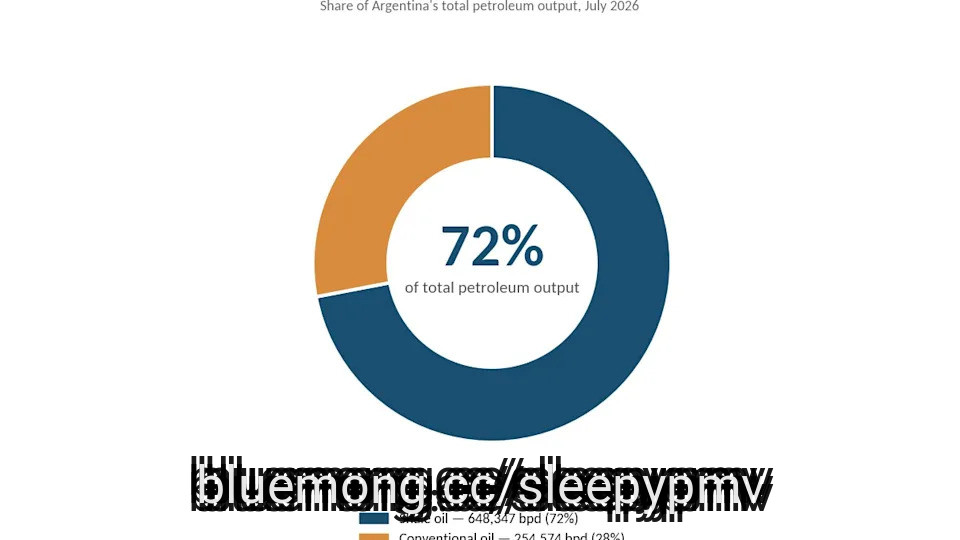
It is the ongoing and growing exploitation of the Vaca Muerta shale, situated in northern Patagonia in Neuquén Province which is responsible for Argentina's booming oil and natural gas complex. For July 2026, shale oil production rose by 1.2% month over month and a whopping 26% year over year to an all-time high of 648,347 barrels per day. As a result, shale oil now comprises a record 72% of Argentina's total petroleum output. This is also responsible for bolstering energy security in the Americas.
Shale gas production is also expanding at a healthy clip. For July 2026, Argentina lifted an average of 3.9 billion cubic feet per day of the fossil, which, despite being nearly 1% less than a month prior, was almost 4% higher year over year. That is the second-highest monthly shale gas production ever recorded. It was only eclipsed by June 2026 output, which hit 3.94 billion cubic feet per day. Shale gas now makes up 70% of Argentina's natural gas output, which is the highest level ever recorded.
Shale oil and gas production will keep growing at a solid pace, with Argentina on track to become a pure unconventional producer. You see, conventional oil output is in decline and has been for over a decade. Argentina's conventional fields are well past their prime, in many cases having hit peak production a decade ago with output now truly in decline. Government data shows July 2026 conventional oil production of 254,574 barrels per day, which is 2% lower than a month prior and 13% less year over year, indicating conventional oil output is 50% lower than a decade ago.
#shale #july #higher #record
Argentina's vital hydrocarbon sector continues to surge, with oil production hitting yet another record in July 2026. Output reached 902,920 barrels per day, almost 1% above June and 12% higher than a year earlier, marking the country's highest oil production on record. Natural gas production has also expanded strongly, although output slipped 0.5% month over month and 1.6% year over year in July to average 5.6 billion cubic feet per day. That modest setback barely dents the bigger picture: economically crucial gas production has surged 21% over the past five years.
It is the ongoing and growing exploitation of the Vaca Muerta shale, situated in northern Patagonia in Neuquén Province which is responsible for Argentina's booming oil and natural gas complex. For July 2026, shale oil production rose by 1.2% month over month and a whopping 26% year over year to an all-time high of 648,347 barrels per day. As a result, shale oil now comprises a record 72% of Argentina's total petroleum output. This is also responsible for bolstering energy security in the Americas.
Shale gas production is also expanding at a healthy clip. For July 2026, Argentina lifted an average of 3.9 billion cubic feet per day of the fossil, which, despite being nearly 1% less than a month prior, was almost 4% higher year over year. That is the second-highest monthly shale gas production ever recorded. It was only eclipsed by June 2026 output, which hit 3.94 billion cubic feet per day. Shale gas now makes up 70% of Argentina's natural gas output, which is the highest level ever recorded.
Shale oil and gas production will keep growing at a solid pace, with Argentina on track to become a pure unconventional producer. You see, conventional oil output is in decline and has been for over a decade. Argentina's conventional fields are well past their prime, in many cases having hit peak production a decade ago with output now truly in decline. Government data shows July 2026 conventional oil production of 254,574 barrels per day, which is 2% lower than a month prior and 13% less year over year, indicating conventional oil output is 50% lower than a decade ago.
#shale #july #higher #record

14 days ago
US stocks slipped after the Federal Reserve raised interest rates by 25 basis points to a target range of 3.75%-4% and hinted at another rate hike in 2026.
The Dow Jones Industrial Average (^DJI) fell 1.2%, while the S&P 500 (^GSPC) dropped 0.4%. The Nasdaq Composite (^IXIC) was little changed.
Long-dated bond yields rose, with the 10-year yield (^TNX) topping 5% once again.
The Fed's decision to hike interest rates for the first time in three years was a unanimous decision. The Fed's Summary of Economic Projections showed that officials see one more rate hike this year.
"Today's policy action will support a timelier return to the Committee's 2 percent goal," the FOMC policy statement said, which Warsh underscored in his press conference.
#interest #federal #reserve
The Dow Jones Industrial Average (^DJI) fell 1.2%, while the S&P 500 (^GSPC) dropped 0.4%. The Nasdaq Composite (^IXIC) was little changed.
Long-dated bond yields rose, with the 10-year yield (^TNX) topping 5% once again.
The Fed's decision to hike interest rates for the first time in three years was a unanimous decision. The Fed's Summary of Economic Projections showed that officials see one more rate hike this year.
"Today's policy action will support a timelier return to the Committee's 2 percent goal," the FOMC policy statement said, which Warsh underscored in his press conference.
#interest #federal #reserve
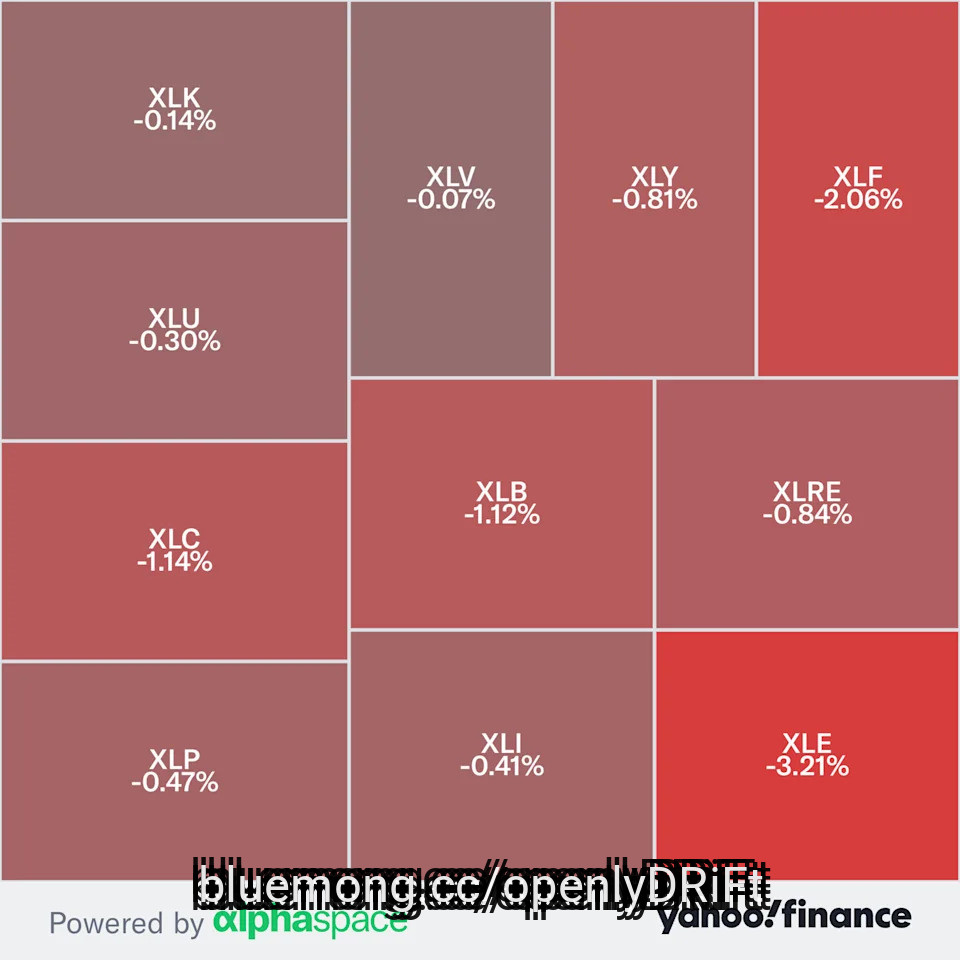
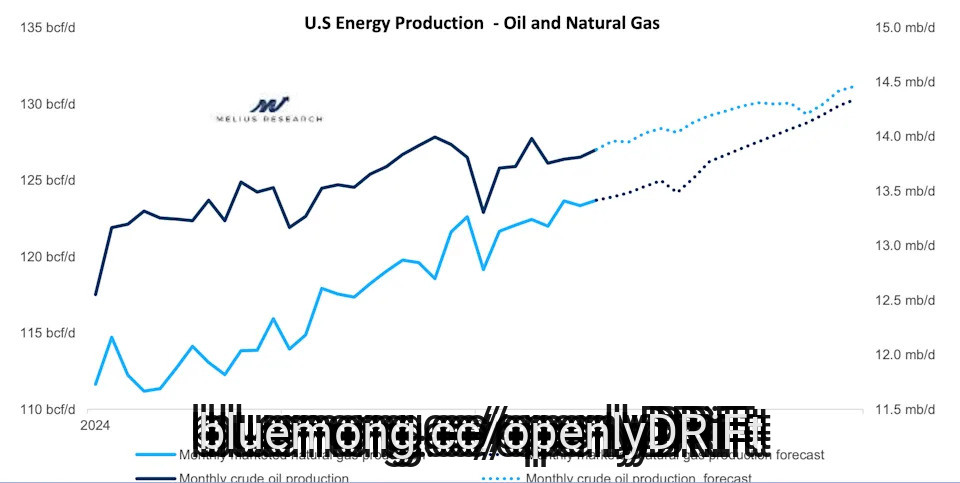
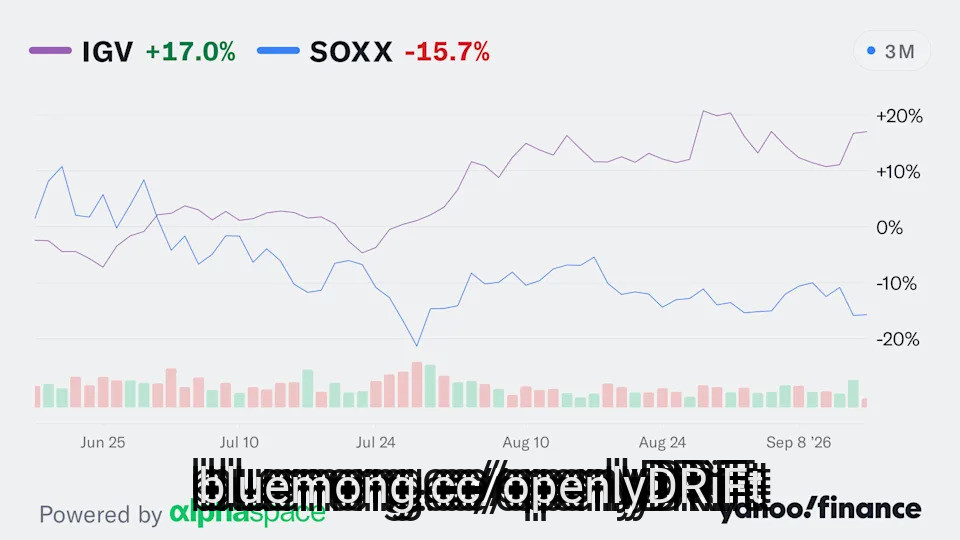

15 days ago
On August 4, Westlake Corporation (NYSE:WLK) reported second-quarter results that erased two consecutive quarterly losses in a single swing. Net income landed at $260 million, or $2.01 per share, compared with a $169 million loss just three months earlier and a $142 million loss a year ago. EBITDA nearly tripled from the second quarter of 2025. The numbers mark a sharp reversal for a company whose chemicals business had been bleeding red ink.
The turnaround centers on Performance and Essential Materials, the segment that makes chlorovinyls and other basic chemicals. PEM swung from a $318 million operating loss in the second quarter of 2025 to $185 million in income this quarter, while EBITDA excluding identified items jumped from a 3% margin to 21%. The driver was pricing: average sales prices across PEM rose 14% year over year, more than offsetting a 3% price decline in the Housing and Infrastructure Products segment. Combined with a 7% increase in companywide sales volume, excluding the effects of plant shutdowns and an acquisition, the pricing recovery pushed companywide EBITDA to $679 million from $210 million a year earlier.
Westlake is also working the balance sheet alongside the market recovery. The company reduced debt by $500 million during the quarter and returned $99 million to shareholders through dividends and share repurchases. Management says its three-pillar profitability improvement plan remains on track to deliver a $600 million operating income benefit, a target that, if it holds, would layer structural cost savings on top of whatever the market gives back in pricing.
Not every part of the story improved together. Housing and Infrastructure Products, the segment tied to home construction and building products, saw its EBITDA margin slip to 22% from 24% a year earlier, even as volume rose 6% excluding the ACI acquisition. Average sales prices in that segment fell 3% year over year, a sign that pricing power in housing products has softened even as the company sells more of it.
The improvement in the core chemicals business also leans heavily on price rather than volume. PEM's turnaround came from a 14% jump in average sales price, a figure that can move in either direction with commodity cycles. The first quarter of 2026 was a reminder of how quickly conditions shift: Westlake posted a $169 million net loss just three months before this result, weighed down by $85 million in identified items, including a $67 million charge to settle litigation over PVC pipe and fittings and $18 million tied to facility shutdowns. A year earlier, in the second quarter of 2025, the company absorbed another $130 million in shutdown-related charges. Restructuring and legal charges showed up in two of the last three reported quarters.
#million #year #quarter #loss
The turnaround centers on Performance and Essential Materials, the segment that makes chlorovinyls and other basic chemicals. PEM swung from a $318 million operating loss in the second quarter of 2025 to $185 million in income this quarter, while EBITDA excluding identified items jumped from a 3% margin to 21%. The driver was pricing: average sales prices across PEM rose 14% year over year, more than offsetting a 3% price decline in the Housing and Infrastructure Products segment. Combined with a 7% increase in companywide sales volume, excluding the effects of plant shutdowns and an acquisition, the pricing recovery pushed companywide EBITDA to $679 million from $210 million a year earlier.
Westlake is also working the balance sheet alongside the market recovery. The company reduced debt by $500 million during the quarter and returned $99 million to shareholders through dividends and share repurchases. Management says its three-pillar profitability improvement plan remains on track to deliver a $600 million operating income benefit, a target that, if it holds, would layer structural cost savings on top of whatever the market gives back in pricing.
Not every part of the story improved together. Housing and Infrastructure Products, the segment tied to home construction and building products, saw its EBITDA margin slip to 22% from 24% a year earlier, even as volume rose 6% excluding the ACI acquisition. Average sales prices in that segment fell 3% year over year, a sign that pricing power in housing products has softened even as the company sells more of it.
The improvement in the core chemicals business also leans heavily on price rather than volume. PEM's turnaround came from a 14% jump in average sales price, a figure that can move in either direction with commodity cycles. The first quarter of 2026 was a reminder of how quickly conditions shift: Westlake posted a $169 million net loss just three months before this result, weighed down by $85 million in identified items, including a $67 million charge to settle litigation over PVC pipe and fittings and $18 million tied to facility shutdowns. A year earlier, in the second quarter of 2025, the company absorbed another $130 million in shutdown-related charges. Restructuring and legal charges showed up in two of the last three reported quarters.
#million #year #quarter #loss

15 days ago
Over the past few months, **** eX (SPCX) has hogged so much of the limelight that Elon Musk's "other" company, Tesla (TSLA), has slipped completely under the radar. Yet, the EV leader is looking to go back to the past to grow in the future.
An event scheduled for Oct. 1 is expected to provide a major glimpse into the second-generation Roadster—a car that the company sold between 2008 and 2012 and was the one that put it on the automobile map of the world. Described as the company's first production vehicle and built with a Lotus Elise Chassis, the Roadster offered things that no other electric vehicle did at that time. 0-60 mph in 39 seconds, had a top speed of 120 mph, and an initial range of 200+ miles, which eventually rose to 245.
Billionaire Charlie Munger, Who Died at 99, Skipped Insurance on His Mansion Since He Could Just Write a Check to Rebuild — 'All Intelligent People Do It My Way'
The Case for Selling CrowdStrike Stock
Nvidia CEO Jensen Huang Just Dropped Huge News for This Cybersecurity Stock
#company #SpaceX #spcx #Tsla
An event scheduled for Oct. 1 is expected to provide a major glimpse into the second-generation Roadster—a car that the company sold between 2008 and 2012 and was the one that put it on the automobile map of the world. Described as the company's first production vehicle and built with a Lotus Elise Chassis, the Roadster offered things that no other electric vehicle did at that time. 0-60 mph in 39 seconds, had a top speed of 120 mph, and an initial range of 200+ miles, which eventually rose to 245.
Billionaire Charlie Munger, Who Died at 99, Skipped Insurance on His Mansion Since He Could Just Write a Check to Rebuild — 'All Intelligent People Do It My Way'
The Case for Selling CrowdStrike Stock
Nvidia CEO Jensen Huang Just Dropped Huge News for This Cybersecurity Stock
#company #SpaceX #spcx #Tsla


15 days ago
On September 14, Dave & Buster's Entertainment (NASDAQ:PLAY) reported second-quarter fiscal 2026 results that read like two different companies at once. Revenue fell, and the company posted a net loss for the period ended August 4, yet comparable sales, which had been sliding for more than a year, kept getting less bad every month from June through the first five weeks of the third quarter. New CEO Darin Harper is betting that improvement compounds into something bigger.
The clearest evidence is the trend line itself. Comparable store sales fell 5.4% in the first quarter of fiscal 2026, then 2.9% in the second quarter, then just 1.6% in July after a 5% decline in June, and Harper said trends improved further over the first five weeks of the third quarter. Food and beverage sales are moving in the opposite direction entirely, up 7.6% in the quarter and positive for five straight quarters, helped by the Eat & Play Combo, a bundled meal and game credit offer sold through kiosks. Special event sales have now grown for seven consecutive quarters.
Behind that shift sits a rebuilt leadership bench. Dave & Buster's went more than a year without a chief marketing officer, and Harper has since added a CMO, a chief operations officer, a chief technology officer, and a chief legal officer since taking over. The company also leaned on new content, launching 10 games and attractions this year, including tie-ins with Mandalorian and Grogu, John Wick and Stranger Things, after research found more than 70% of guests said new games would bring them back more often. Changes to game pricing pushed play and dwell time up 16% to 20% or more. Six remodeled stores are already outperforming the rest of the chain, and management says the newest remodel template costs less to build than the last one. Net capital spending dropped to $127.6 million through the first half of the year from $155.4 million, and adjusted free cash flow swung to positive $19.5 million from negative $36.5 million, a $56 million improvement.
The headline figures were still rough. Total revenue slipped 2.4% to $544.1 million from $557.4 million a year earlier, and adjusted EBITDA dropped to $98.9 million, an 18.2% margin, from $129.8 million and a 23.3% margin. On a GAAP basis, the company posted a net loss of $12.5 million, or $0.36 per diluted share, versus net income of $11.4 million in the same quarter last year. About $15 million of the EBITDA decline came from items management calls non-normalized, including a $10 million noncash deferral adjustment that did not repeat this year, $3 million in extra preopening costs and $2 million in higher insurance expenses, but even stripped of those, the underlying decline was still roughly $16 million.
#year #first #harper #play
The clearest evidence is the trend line itself. Comparable store sales fell 5.4% in the first quarter of fiscal 2026, then 2.9% in the second quarter, then just 1.6% in July after a 5% decline in June, and Harper said trends improved further over the first five weeks of the third quarter. Food and beverage sales are moving in the opposite direction entirely, up 7.6% in the quarter and positive for five straight quarters, helped by the Eat & Play Combo, a bundled meal and game credit offer sold through kiosks. Special event sales have now grown for seven consecutive quarters.
Behind that shift sits a rebuilt leadership bench. Dave & Buster's went more than a year without a chief marketing officer, and Harper has since added a CMO, a chief operations officer, a chief technology officer, and a chief legal officer since taking over. The company also leaned on new content, launching 10 games and attractions this year, including tie-ins with Mandalorian and Grogu, John Wick and Stranger Things, after research found more than 70% of guests said new games would bring them back more often. Changes to game pricing pushed play and dwell time up 16% to 20% or more. Six remodeled stores are already outperforming the rest of the chain, and management says the newest remodel template costs less to build than the last one. Net capital spending dropped to $127.6 million through the first half of the year from $155.4 million, and adjusted free cash flow swung to positive $19.5 million from negative $36.5 million, a $56 million improvement.
The headline figures were still rough. Total revenue slipped 2.4% to $544.1 million from $557.4 million a year earlier, and adjusted EBITDA dropped to $98.9 million, an 18.2% margin, from $129.8 million and a 23.3% margin. On a GAAP basis, the company posted a net loss of $12.5 million, or $0.36 per diluted share, versus net income of $11.4 million in the same quarter last year. About $15 million of the EBITDA decline came from items management calls non-normalized, including a $10 million noncash deferral adjustment that did not repeat this year, $3 million in extra preopening costs and $2 million in higher insurance expenses, but even stripped of those, the underlying decline was still roughly $16 million.
#year #first #harper #play


15 days ago
The stock market is rarely boring, but 2026 has seemed especially wild, if you ask me. After narrowly avoiding a correction to begin the year, the S&P 500 (SNPINDEX: ^GSPC) is up 20% from its low in March. The Dow Jones Industrial Average (DJINDICES: ^DJI) and the tech-heavy Nasdaq Composite (NASDAQINDEX: ^IXIC) both slipped into full correction territory -- meaning a decline of 20% or more -- but are now up 16% and 26%, respectively.
All three stock indexes are just a few percentage points off their all-time highs. That has some investors nervous.
Missed Nvidia in 2009? This Rare Signal Is Flashing Again. In 2009, a "Double Down" signal flashed for a little-known chipmaker called Nvidia. For the first time in years, that same "Total Conviction" signal is flashing for a company 1/100th the size of Nvidia. Continue »
And now, an important stock market indicator has reached a level we've seen only once before -- during the dot-com bubble.
So what does history have to tell us? What should investors do with that information?
#snpindex
All three stock indexes are just a few percentage points off their all-time highs. That has some investors nervous.
Missed Nvidia in 2009? This Rare Signal Is Flashing Again. In 2009, a "Double Down" signal flashed for a little-known chipmaker called Nvidia. For the first time in years, that same "Total Conviction" signal is flashing for a company 1/100th the size of Nvidia. Continue »
And now, an important stock market indicator has reached a level we've seen only once before -- during the dot-com bubble.
So what does history have to tell us? What should investors do with that information?
#snpindex