
10 days ago
Toward the end of the lightning round on September 8, when a caller inquired about AstraZeneca PLC (NYSE:AZN), Mad Money host Jim Cramer commented:
Alright, now, AstraZeneca reminds me of a company, it's not unlike Novartis. I'm a little nervous about it. It's been missing some of its trials. I don't think COPD is enough to change my mind… I am not going to put my money on AstraZeneca.
AstraZeneca PLC (NYSE:AZN) maintains a solid financial foundation supported by steady top-line growth and disciplined cost management. In its second-quarter report, the company generated total revenue of $15.38 billion, marking a 6.4% increase compared to the same period last year. Adjusted earnings per share reached $2.63, outperforming ****** yst consensus estimates.
The profitability was driven by strong global demand for core oncology and rare disease treatments, which successfully offset revenue headwinds from generic competition affecting older blockbusters like Farxiga and Brilinta. With a net margin hovering around 17.02% and management reiterating its full-year guidance for mid-to-high single-digit revenue growth along with low double-digit core EPS expansion, the core business continues to demonstrate commercial resilience.
The primary driver behind the skepticism could be based on tangible execution risks and regulatory hurdles that threaten AstraZeneca PLC's (NYSE:AZN) long-term top line. A significant blow to the rare disease division came when anselamimab failed to achieve statistical significance for the primary endpoint in the overall AL amyloidosis population in the Phase III CARES program, although AstraZeneca reported encouraging results in a prespecified subgroup of patients with kappa light-chain amyloidosis.
#management
Alright, now, AstraZeneca reminds me of a company, it's not unlike Novartis. I'm a little nervous about it. It's been missing some of its trials. I don't think COPD is enough to change my mind… I am not going to put my money on AstraZeneca.
AstraZeneca PLC (NYSE:AZN) maintains a solid financial foundation supported by steady top-line growth and disciplined cost management. In its second-quarter report, the company generated total revenue of $15.38 billion, marking a 6.4% increase compared to the same period last year. Adjusted earnings per share reached $2.63, outperforming ****** yst consensus estimates.
The profitability was driven by strong global demand for core oncology and rare disease treatments, which successfully offset revenue headwinds from generic competition affecting older blockbusters like Farxiga and Brilinta. With a net margin hovering around 17.02% and management reiterating its full-year guidance for mid-to-high single-digit revenue growth along with low double-digit core EPS expansion, the core business continues to demonstrate commercial resilience.
The primary driver behind the skepticism could be based on tangible execution risks and regulatory hurdles that threaten AstraZeneca PLC's (NYSE:AZN) long-term top line. A significant blow to the rare disease division came when anselamimab failed to achieve statistical significance for the primary endpoint in the overall AL amyloidosis population in the Phase III CARES program, although AstraZeneca reported encouraging results in a prespecified subgroup of patients with kappa light-chain amyloidosis.
#management


11 days ago
On August 27, AstraZeneca PLC (NYSE:AZN) and Amgen Inc. (NASDAQ:AMGN) scored a shared clinical victory. Positive high-level results from the Phase III CROSSING trial showed that their co-developed severe asthma drug, TEZSPIRE, achieved statistically significant and clinically meaningful improvements across both co-primary endpoints, histologic remission and the frequency/severity of dysphagia, and all key secondary endpoints at week 24 in patients with eosinophilic esophagitis. These benefits were sustained through week 52 across both tested doses, accompanied by a safety profile consistent with its approved indications. While CROSSING highlights their joint R&D success, a closer look at their standalone financial performance reveals distinct growth trajectories.
Both pharmaceutical giants delivered solid Q2 2026 results, but AstraZeneca is showing stronger overall financial momentum. AstraZeneca PLC (NYSE:AZN)'s Q2 revenue increased 6% year over year to $15.38 billion, supported by its Oncology franchise, which grew 18% in H1 to $14.12 billion, and its Rare Disease portfolio, which increased 13%. Core EPS rose 21% to $2.63, beating expectations, while management reaffirmed its full-year 2026 outlook for mid-to-high single-digit revenue growth and low double-digit Core EPS growth.
Amgen Inc. (NASDAQ:AMGN) reported Q2 revenue of $10.1 billion, up 10% year over year, while non-GAAP EPS increased 4% to $6.29. Although its key growth products advanced 26%, mature products faced significant biosimilar pressure, with Prolia revenue declining 32% and XGEVA falling 34%. Amgen nevertheless raised its 2026 revenue guidance midpoint to $39.4 billion.
Overall, AZN holds the financial edge due to stronger EPS growth, broader portfolio momentum, and less exposure to the biosimilar erosion affecting AMGN's mature products.
Amgen's bull case is supported by robust growth in key products, which increased 26%, and $3.5 billion in Q2 free cash flow, providing substantial capital flexibility. Wells Fargo raised its Amgen price target to $435 from $400 on September 4, citing potential upside from HORIZON and pipeline ****** ets such as olpasiran. New Phase III VESALIUS-CV data also showed Repatha reduced the risk of death by 20% in high-risk adults without a prior heart attack or stroke, with heart attack risk reductions emerging as early as six months. However, accelerating biosimilar competition affecting legacy franchises such as Prolia and XGEVA remains a key risk to sustained margin expansion.
#revenue #astrazeneca #increased #products
Both pharmaceutical giants delivered solid Q2 2026 results, but AstraZeneca is showing stronger overall financial momentum. AstraZeneca PLC (NYSE:AZN)'s Q2 revenue increased 6% year over year to $15.38 billion, supported by its Oncology franchise, which grew 18% in H1 to $14.12 billion, and its Rare Disease portfolio, which increased 13%. Core EPS rose 21% to $2.63, beating expectations, while management reaffirmed its full-year 2026 outlook for mid-to-high single-digit revenue growth and low double-digit Core EPS growth.
Amgen Inc. (NASDAQ:AMGN) reported Q2 revenue of $10.1 billion, up 10% year over year, while non-GAAP EPS increased 4% to $6.29. Although its key growth products advanced 26%, mature products faced significant biosimilar pressure, with Prolia revenue declining 32% and XGEVA falling 34%. Amgen nevertheless raised its 2026 revenue guidance midpoint to $39.4 billion.
Overall, AZN holds the financial edge due to stronger EPS growth, broader portfolio momentum, and less exposure to the biosimilar erosion affecting AMGN's mature products.
Amgen's bull case is supported by robust growth in key products, which increased 26%, and $3.5 billion in Q2 free cash flow, providing substantial capital flexibility. Wells Fargo raised its Amgen price target to $435 from $400 on September 4, citing potential upside from HORIZON and pipeline ****** ets such as olpasiran. New Phase III VESALIUS-CV data also showed Repatha reduced the risk of death by 20% in high-risk adults without a prior heart attack or stroke, with heart attack risk reductions emerging as early as six months. However, accelerating biosimilar competition affecting legacy franchises such as Prolia and XGEVA remains a key risk to sustained margin expansion.
#revenue #astrazeneca #increased #products


19 days ago
By Sahil Pandey
Sept 2 (Reuters) - AI company Owkin said on Wednesday it has signed a licensing deal with Germany's Boehringer Ingelheim, giving the drugmaker access to its AI research platform and patient data to speed up discovery of drugs for cancer and immunity-related diseases.
The deal adds Boehringer to a growing list of drugmakers using Owkin's AI technology, "K Pro". AstraZeneca licensed it in May, while Sanofi expanded its partnership with a five-year agreement in June.
Here are some more details:
• The deal builds on the companies' pilot project in 2025, in which Owkin used its patient tumor samples and related biological datasets to help Boehringer prioritize potential drug targets, the AI company's CEO, Thomas Clozel, told Reuters.
#deal #patient
Sept 2 (Reuters) - AI company Owkin said on Wednesday it has signed a licensing deal with Germany's Boehringer Ingelheim, giving the drugmaker access to its AI research platform and patient data to speed up discovery of drugs for cancer and immunity-related diseases.
The deal adds Boehringer to a growing list of drugmakers using Owkin's AI technology, "K Pro". AstraZeneca licensed it in May, while Sanofi expanded its partnership with a five-year agreement in June.
Here are some more details:
• The deal builds on the companies' pilot project in 2025, in which Owkin used its patient tumor samples and related biological datasets to help Boehringer prioritize potential drug targets, the AI company's CEO, Thomas Clozel, told Reuters.
#deal #patient


19 days ago
On August 12, Royalty Pharma (NASDAQ:RPRX) agreed to pay Zealand Pharma $100 million for the rights to future royalties on rusfertide, an experimental treatment for a rare blood disorder called polycythemia vera. It is Royalty Pharma's second collaboration with Zealand, and it arrives just as rusfertide awaits a decision from the FDA. For a company that makes its living buying pieces of other companies' drugs, the timing says a lot about how it weighs risk against reward before a regulatory verdict even lands.
Royalty Pharma's business depends on picking the right moment to buy into a drug's future, and this deal fits that pattern. Under the agreement, $50 million changes hands at closing and the remaining $50 million arrives on the first anniversary, in exchange for a 1% royalty on rusfertide's global sales plus any regulatory and commercial milestones. Rusfertide, a once-weekly self-injected therapy that mimics the hormone hepcidin to control iron levels in polycythemia vera patients, already has an FDA goal date set for the third quarter of 2026, with Takeda lined up to handle commercialization worldwide. That is a near-term catalyst most royalty purchases do not carry.
The broader portfolio backs up the confidence. Royalty Receipts grew 14% to $768 million in the second quarter of 2026, lifted by Tremfya, Voranigo, Imdelltra and Evrysdi, and the company raised its full-year 2026 guidance for Portfolio Receipts to a range of $3.4 billion to $3.5 billion, the second increase this year. Capital deployment has already topped $1 billion in 2026, including a July 2026 royalty purchase tied to AstraZeneca's cliramitug, pushing the development-stage pipeline to 19 potential therapies. Even after repaying a $380 million term loan in July 2026, Royalty Pharma still paid a quarterly dividend of $0.235 per share and bought back $45 million of stock in the second quarter alone.
Not every royalty ages well, and Royalty Pharma's own numbers show it. Promacta royalties fell 75% in the second quarter of 2026 to just $8 million as US generic competition took hold, and Imbruvica payments slipped 16% to $36 million, a reminder that patent cliffs eventually catch up to even the steadiest cash flows. That same risk sits underneath every new deal the company signs, including the one with Zealand.
The rusfertide agreement carries its own strings. Royalty Pharma's 1% royalty stops scaling once global sales pass $1.5 billion, at which point Zealand keeps a 0.25% cut and Royalty Pharma only 0.75%, so the largest commercial outcomes get split rather than fully captured. And rusfertide still has not cleared the FDA. The agency's goal date only falls in the third quarter of 2026, meaning the second $50 million payment is committed before regulators finish their review. Layer that onto a balance sheet carrying $9.2 billion in total debt principal against $812 million of cash as of June 30, 2026, and it becomes clear this is a company funding new bets with borrowed as w
Royalty Pharma's business depends on picking the right moment to buy into a drug's future, and this deal fits that pattern. Under the agreement, $50 million changes hands at closing and the remaining $50 million arrives on the first anniversary, in exchange for a 1% royalty on rusfertide's global sales plus any regulatory and commercial milestones. Rusfertide, a once-weekly self-injected therapy that mimics the hormone hepcidin to control iron levels in polycythemia vera patients, already has an FDA goal date set for the third quarter of 2026, with Takeda lined up to handle commercialization worldwide. That is a near-term catalyst most royalty purchases do not carry.
The broader portfolio backs up the confidence. Royalty Receipts grew 14% to $768 million in the second quarter of 2026, lifted by Tremfya, Voranigo, Imdelltra and Evrysdi, and the company raised its full-year 2026 guidance for Portfolio Receipts to a range of $3.4 billion to $3.5 billion, the second increase this year. Capital deployment has already topped $1 billion in 2026, including a July 2026 royalty purchase tied to AstraZeneca's cliramitug, pushing the development-stage pipeline to 19 potential therapies. Even after repaying a $380 million term loan in July 2026, Royalty Pharma still paid a quarterly dividend of $0.235 per share and bought back $45 million of stock in the second quarter alone.
Not every royalty ages well, and Royalty Pharma's own numbers show it. Promacta royalties fell 75% in the second quarter of 2026 to just $8 million as US generic competition took hold, and Imbruvica payments slipped 16% to $36 million, a reminder that patent cliffs eventually catch up to even the steadiest cash flows. That same risk sits underneath every new deal the company signs, including the one with Zealand.
The rusfertide agreement carries its own strings. Royalty Pharma's 1% royalty stops scaling once global sales pass $1.5 billion, at which point Zealand keeps a 0.25% cut and Royalty Pharma only 0.75%, so the largest commercial outcomes get split rather than fully captured. And rusfertide still has not cleared the FDA. The agency's goal date only falls in the third quarter of 2026, meaning the second $50 million payment is committed before regulators finish their review. Layer that onto a balance sheet carrying $9.2 billion in total debt principal against $812 million of cash as of June 30, 2026, and it becomes clear this is a company funding new bets with borrowed as w


20 days ago
By Sahil Pandey
Sept 2 (Reuters) - AI company Owkin said on Wednesday it has signed a licensing deal with Germany's Boehringer Ingelheim, giving the drugmaker access to its AI research platform and patient data to speed up discovery of drugs for cancer and immunity-related diseases.
The deal adds Boehringer to a growing list of drugmakers using Owkin's AI technology, "K Pro". AstraZeneca licensed it in May, while Sanofi expanded its partnership with a five-year agreement in June.
Here are some more details:
• The deal builds on the companies' pilot project in 2025, in which Owkin used its patient tumor samples and related biological datasets to help Boehringer prioritize potential drug targets, the AI company's CEO, Thomas Clozel, told Reuters.
#patient
Sept 2 (Reuters) - AI company Owkin said on Wednesday it has signed a licensing deal with Germany's Boehringer Ingelheim, giving the drugmaker access to its AI research platform and patient data to speed up discovery of drugs for cancer and immunity-related diseases.
The deal adds Boehringer to a growing list of drugmakers using Owkin's AI technology, "K Pro". AstraZeneca licensed it in May, while Sanofi expanded its partnership with a five-year agreement in June.
Here are some more details:
• The deal builds on the companies' pilot project in 2025, in which Owkin used its patient tumor samples and related biological datasets to help Boehringer prioritize potential drug targets, the AI company's CEO, Thomas Clozel, told Reuters.
#patient

28 days ago
AstraZeneca PLC (NYSE:AZN) is paying $600 million upfront to secure global rights to Zegfrovy from Dizal Pharmaceutical Co., Ltd, adding another targeted therapy to one of the pharmaceutical industry's largest oncology portfolios. Dizal Pharmaceutical could receive an additional $900 million if specified development, regulatory, and sales milestones are achieved, bringing the agreement's potential value to $1.5 billion. Dizal will also receive tiered royalties on the global sales of Zegfrovy.
Zegfrovy, also known as sunvozertinib, is an oral treatment approved in the United States and China for certain adults with locally advanced or metastatic non-small cell lung cancer with EGFR exon 20 insertion mutations, whose disease has progressed on or after platinum-based chemotherapy. Under the agreement, AstraZeneca (NYSE:AZN) will take responsibility for the treatment's global development and commercialisation.
For AstraZeneca (NYSE:AZN) shareholders, the transaction offers an opportunity to ****** s whether another targeted lung-cancer medicine can reinforce the company's oncology leadership, or whether the price adds further execution risk to an already extensive pipeline.
The agreement strengthens AstraZeneca's (NYSE:AZN) position in a therapeutic area where it already has substantial scientific and commercial experience. The company has built a major lung-cancer business around treatments including Tagrisso, Imfinzi, and Enhertu. That existing infrastructure could help AstraZeneca (NYSE:AZN) introduce Zegfrovy to physicians and patients more efficiently than a smaller developer with a limited global presence.
Zegfrovy also addresses a specific group of patients with EGFR exon 20 insertion mutations, for whom treatment options remain limited. In the Phase III WU-KONG28 trial, Zegfrovy produced median progression-free survival of 10.3 months, compared with 7.5 months for chemotherapy. AstraZeneca (NYSE:AZN) therefore gains an approved medicine supported by late-stage comparative evidence rather than an early experimental ****** et whose clinical viability remains largely unknown.
#lung #egfr
Zegfrovy, also known as sunvozertinib, is an oral treatment approved in the United States and China for certain adults with locally advanced or metastatic non-small cell lung cancer with EGFR exon 20 insertion mutations, whose disease has progressed on or after platinum-based chemotherapy. Under the agreement, AstraZeneca (NYSE:AZN) will take responsibility for the treatment's global development and commercialisation.
For AstraZeneca (NYSE:AZN) shareholders, the transaction offers an opportunity to ****** s whether another targeted lung-cancer medicine can reinforce the company's oncology leadership, or whether the price adds further execution risk to an already extensive pipeline.
The agreement strengthens AstraZeneca's (NYSE:AZN) position in a therapeutic area where it already has substantial scientific and commercial experience. The company has built a major lung-cancer business around treatments including Tagrisso, Imfinzi, and Enhertu. That existing infrastructure could help AstraZeneca (NYSE:AZN) introduce Zegfrovy to physicians and patients more efficiently than a smaller developer with a limited global presence.
Zegfrovy also addresses a specific group of patients with EGFR exon 20 insertion mutations, for whom treatment options remain limited. In the Phase III WU-KONG28 trial, Zegfrovy produced median progression-free survival of 10.3 months, compared with 7.5 months for chemotherapy. AstraZeneca (NYSE:AZN) therefore gains an approved medicine supported by late-stage comparative evidence rather than an early experimental ****** et whose clinical viability remains largely unknown.
#lung #egfr


29 days ago
Gold surged to $4,602 and crypto rallied on U.S. Treasury buyback plans while Monday futures traded lower entering the final week of August.
Baird cut both CMG and DPZ to Neutral while UBS upgraded CLS to Buy, lifting its target price to $430 from $410.
Jersey Mike's Subs received Outperform or Overweight initiations from three firms following its recent IPO. Those firms were Piper Sandler, Baird, and RBC Capital.
Act now: the ***** yst who called NVIDIA in 2010 just named his top 10 AI stocks — and AstraZeneca didn't make the cut. Grab the names FREE today.
Futures are trading lower as we enter the final week of August, after a big risk-on Friday when traders and investors shook off a rough Thursday and all major indices finished the session higher. Financial media cited strong earnings, some positive economic numbers, and surging cryptocurrency strength as major reasons. The Dow Jones Industrials led the charge, closing up 0.98% at 53,277, and despite the solid bounce-back, the legacy index still posted back-to-back weekly losses. The small-cap Russell 2000 also had a strong session on Friday, closing up 0.85% at 3,017, and still leads all of the major indices up 21% in 2026. The S&P 500 closed Friday at 7,674, up 0.43%, and the tech-heavy Nasdaq closed out the day at 26,180, up 0.44%.
#futures #firms
Baird cut both CMG and DPZ to Neutral while UBS upgraded CLS to Buy, lifting its target price to $430 from $410.
Jersey Mike's Subs received Outperform or Overweight initiations from three firms following its recent IPO. Those firms were Piper Sandler, Baird, and RBC Capital.
Act now: the ***** yst who called NVIDIA in 2010 just named his top 10 AI stocks — and AstraZeneca didn't make the cut. Grab the names FREE today.
Futures are trading lower as we enter the final week of August, after a big risk-on Friday when traders and investors shook off a rough Thursday and all major indices finished the session higher. Financial media cited strong earnings, some positive economic numbers, and surging cryptocurrency strength as major reasons. The Dow Jones Industrials led the charge, closing up 0.98% at 53,277, and despite the solid bounce-back, the legacy index still posted back-to-back weekly losses. The small-cap Russell 2000 also had a strong session on Friday, closing up 0.85% at 3,017, and still leads all of the major indices up 21% in 2026. The S&P 500 closed Friday at 7,674, up 0.43%, and the tech-heavy Nasdaq closed out the day at 26,180, up 0.44%.
#futures #firms


1 month ago
It was reported on July 27 that AstraZeneca PLC (NASDAQ:AZN) shares outperformed in European trading after the company reported second-quarter earnings that beat Wall Street expectations and reiterated its full-year 2026 guidance. Core earnings per share (EPS) jumped 18% on a constant exchange rate (FXN) basis year-over-year to $2.63, comfortably ahead of the $2.48 ***** yst consensus. Total revenue reached $15.38 billion, up 5% at constant exchange rates, driven primarily by sustained momentum in its Oncology and Rare Disease units. Management reconfirmed its full-year 2026 outlook of mid-to-high single-digit revenue growth and low double-digit Core EPS growth, expressing confidence in reaching its $80 billion total revenue target by 2030 despite near-term headwind shocks.
The quarter demonstrated strong commercial execution in core growth engines. Oncology revenue rose 16% to $7.33 billion, supported by strong demand for Tagrisso ($1.94 billion), Imfinzi ($1.85 billion), and Enhertu (+31%). Rare Disease contributed $4.9 billion, led by Ultomiris. These gains successfully offset severe pressures in the Cardiovascular, Renal & Metabolism (CVRM) segment, which declined 15% due to the loss of exclusivity (LOE) for Farxiga in the U.S. and ongoing Volume-Based Procurement (VBP) price cuts in China.
Meanwhile, pipeline updates presented a mixed picture. On July 27, AZN disclosed that a Phase 3 study evaluating Ultomiris in hematopoietic stem cell transplant-associated thrombotic microangiopathy (HSCT-TMA) failed to hit its primary endpoint of event-free survival at week 26 versus placebo. Following the readout, H.C. Wainwright noted that the trial miss represents a "clear positive" for competitor Omeros (OMER), removing a major near-term competitive overhang on its drug Yartemlea and driving Omeros shares up 11% in morning trading.
AstraZeneca PLC (NASDAQ:AZN)'s core profitability remains elite, with core operating margins expanding to 34% in Q2 despite top-line headwinds from generic entry. High gross and net margins signal durable pricing power across its branded specialty portfolio. This strong profitability generates predictable cash flow to fund heavy R&D investments, commercial rollouts, and growing shareholder returns, including a 3-cent increase in the interim dividend to $1.06 per share, while buffering the company against pricing pressure.
The company's expansive late-stage pipeline and high volume of regulatory approvals underpin a multi-year growth trajectory. With 30 major regional approvals since late 2025 and more than 20 high-value trial readouts scheduled over the next 18 months, AZN possesses broad commercial optionality. Continued expansions in oncology (e.g., Enhertu and Imfinzi) and respiratory therapies (such as Breztri and Tezspire) provide direct revenue replacement for legacy products facing patent expiration.
#high #july
The quarter demonstrated strong commercial execution in core growth engines. Oncology revenue rose 16% to $7.33 billion, supported by strong demand for Tagrisso ($1.94 billion), Imfinzi ($1.85 billion), and Enhertu (+31%). Rare Disease contributed $4.9 billion, led by Ultomiris. These gains successfully offset severe pressures in the Cardiovascular, Renal & Metabolism (CVRM) segment, which declined 15% due to the loss of exclusivity (LOE) for Farxiga in the U.S. and ongoing Volume-Based Procurement (VBP) price cuts in China.
Meanwhile, pipeline updates presented a mixed picture. On July 27, AZN disclosed that a Phase 3 study evaluating Ultomiris in hematopoietic stem cell transplant-associated thrombotic microangiopathy (HSCT-TMA) failed to hit its primary endpoint of event-free survival at week 26 versus placebo. Following the readout, H.C. Wainwright noted that the trial miss represents a "clear positive" for competitor Omeros (OMER), removing a major near-term competitive overhang on its drug Yartemlea and driving Omeros shares up 11% in morning trading.
AstraZeneca PLC (NASDAQ:AZN)'s core profitability remains elite, with core operating margins expanding to 34% in Q2 despite top-line headwinds from generic entry. High gross and net margins signal durable pricing power across its branded specialty portfolio. This strong profitability generates predictable cash flow to fund heavy R&D investments, commercial rollouts, and growing shareholder returns, including a 3-cent increase in the interim dividend to $1.06 per share, while buffering the company against pricing pressure.
The company's expansive late-stage pipeline and high volume of regulatory approvals underpin a multi-year growth trajectory. With 30 major regional approvals since late 2025 and more than 20 high-value trial readouts scheduled over the next 18 months, AZN possesses broad commercial optionality. Continued expansions in oncology (e.g., Enhertu and Imfinzi) and respiratory therapies (such as Breztri and Tezspire) provide direct revenue replacement for legacy products facing patent expiration.
#high #july

1 month ago
Aug 10 (Reuters) - Global drugmakers are expanding their U.S. footprint, pledging billions of dollars to ramp up manufacturing capacity and research in the country.
Pharmaceutical companies including Eli Lilly, Pfizer, AstraZeneca and Roche have announced roughly $500 billion in U.S. investments as they seek to strengthen infrastructure, mitigate supply-chain risks and reassure investors.
Pfizer
Pfizer reached a deal with President Donald Trump on September 30 to invest $70 billion in research and development and domestic manufacturing, and received a three-year grace period exempting its products from the pharmaceutical-targeted tariffs.
GSK
#pfizer #pharmaceutical #lilly
Pharmaceutical companies including Eli Lilly, Pfizer, AstraZeneca and Roche have announced roughly $500 billion in U.S. investments as they seek to strengthen infrastructure, mitigate supply-chain risks and reassure investors.
Pfizer
Pfizer reached a deal with President Donald Trump on September 30 to invest $70 billion in research and development and domestic manufacturing, and received a three-year grace period exempting its products from the pharmaceutical-targeted tariffs.
GSK
#pfizer #pharmaceutical #lilly

2 months ago
By Maggie Fick and Sabrina Valle
Aug 5 (Reuters) - There are "no discussions" ongoing between AstraZeneca and Bristol Myers Squibb over a potential deal, a senior source close to the matter told Reuters on Wednesday, quashing the prospect of a mooted mega merger between the drugmakers.
"There is no deal between AstraZeneca and BMS. There never was a deal to be done, and there are no discussions between the companies," said the source, speaking on condition of anonymity.
AstraZeneca and Bristol Myers Squibb both declined to comment on emailed questions from Reuters.
AstraZeneca shares rose 2.9% on the Reuters report, while Bristol Myers Squibb shares were down 2.6% at 1341 GMT.
#astrazeneca #discussions
Aug 5 (Reuters) - There are "no discussions" ongoing between AstraZeneca and Bristol Myers Squibb over a potential deal, a senior source close to the matter told Reuters on Wednesday, quashing the prospect of a mooted mega merger between the drugmakers.
"There is no deal between AstraZeneca and BMS. There never was a deal to be done, and there are no discussions between the companies," said the source, speaking on condition of anonymity.
AstraZeneca and Bristol Myers Squibb both declined to comment on emailed questions from Reuters.
AstraZeneca shares rose 2.9% on the Reuters report, while Bristol Myers Squibb shares were down 2.6% at 1341 GMT.
#astrazeneca #discussions

2 months ago
AstraZeneca and Bristol Myers Squibb never held merger discussions and are not in talks now, a senior source close to the matter told Reuters on Wednesday.
"There is no deal between AstraZeneca and BMS. There never was a deal to be done, and there are no discussions between the companies," the source said, under the cover of anonymity. Neither company offered a comment when contacted by Reuters.
The denial came days after reports that the two pharmaceutical companies had been in preliminary discussions about a combination that could have created a company worth close to $400 billion. The Financial Times first reported the story. Reuters, which broke the Sunday story on the preliminary talks, noted at the time that it could not confirm whether those conversations were still active.
AstraZeneca shares dropped roughly 9% in the wake of the deal reports, while Bristol Myers Squibb shares weathered the news with relatively little movement.
When the merger reports first surfaced, as covered earlier this week, AstraZeneca stock tumbled as much as 7% on Monday. Bristol Myers Squibb stock rose 6% in U.S. premarket trading. **** ysts at Jefferies questioned the strategic rationale, writing that AstraZeneca was a company that did not need "financial engineering." Citi **** ysts called the reported talks a "surprise" given AstraZeneca's pipeline, according to CNBC.
#astrazeneca #bristol #reuters #reports
"There is no deal between AstraZeneca and BMS. There never was a deal to be done, and there are no discussions between the companies," the source said, under the cover of anonymity. Neither company offered a comment when contacted by Reuters.
The denial came days after reports that the two pharmaceutical companies had been in preliminary discussions about a combination that could have created a company worth close to $400 billion. The Financial Times first reported the story. Reuters, which broke the Sunday story on the preliminary talks, noted at the time that it could not confirm whether those conversations were still active.
AstraZeneca shares dropped roughly 9% in the wake of the deal reports, while Bristol Myers Squibb shares weathered the news with relatively little movement.
When the merger reports first surfaced, as covered earlier this week, AstraZeneca stock tumbled as much as 7% on Monday. Bristol Myers Squibb stock rose 6% in U.S. premarket trading. **** ysts at Jefferies questioned the strategic rationale, writing that AstraZeneca was a company that did not need "financial engineering." Citi **** ysts called the reported talks a "surprise" given AstraZeneca's pipeline, according to CNBC.
#astrazeneca #bristol #reuters #reports


2 months ago
Updated Aug 04, 2026, 7:53 am EDT / Original Aug 04, 2026, 1:30 am EDT
A possible tie-up between Bristol Myers Squibb
BMY
-3.43%
and AstraZeneca might seem like a long shot to Wall Street skeptics, but the market’s enthusiasm around a potential deal points toward a broader trend that can’t be ignored.
BMY
-3.43%
Copyright ©2026 Dow Jones & Company, Inc. All Rights Reserved. 87990cbe856818d5eddac44c7b1cdeb8
#updated #original #myers #wall
A possible tie-up between Bristol Myers Squibb
BMY
-3.43%
and AstraZeneca might seem like a long shot to Wall Street skeptics, but the market’s enthusiasm around a potential deal points toward a broader trend that can’t be ignored.
BMY
-3.43%
Copyright ©2026 Dow Jones & Company, Inc. All Rights Reserved. 87990cbe856818d5eddac44c7b1cdeb8
#updated #original #myers #wall

2 months ago
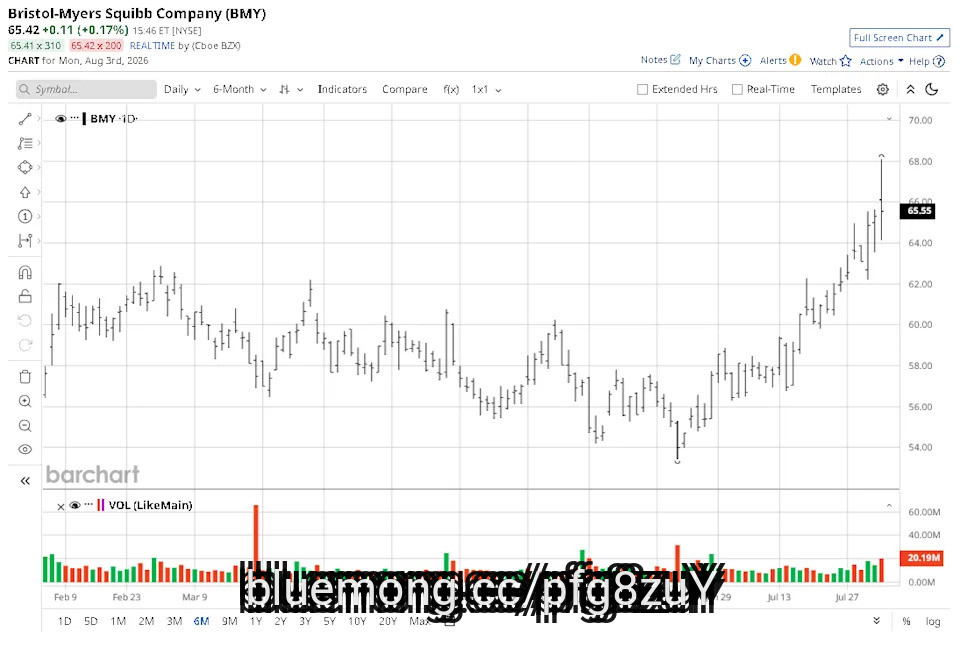
Bristol-Myers Squibb (BMY) shares opened higher on Monday following reports that the U.S. pharma giant held preliminary merger talks with UK rival AstraZeneca (AZN). If finalized, this reported transaction would create the world's largest drugmaker (by revenue) with a market cap approaching $400 billion.
The AstraZeneca rumors arrive at a time when Bristol-Myers stock is already in a massive uptrend, currently up more than 20% versus its low in mid-June.
General Motors vs. Ford: 1 Auto Giant Is Winning the EV Race
1 ******* anese Company Just Waved a Red Flag for Micron Stock. How to Play It Here.
Billionaire Ken Griffin Just Saved Situational Awareness, But Here's What a Rescue Call From Citadel Really Sounds Like — 'I… Heard the Grim Reaper's Scythe'
#bristol #myers #astrazeneca #giant
The AstraZeneca rumors arrive at a time when Bristol-Myers stock is already in a massive uptrend, currently up more than 20% versus its low in mid-June.
General Motors vs. Ford: 1 Auto Giant Is Winning the EV Race
1 ******* anese Company Just Waved a Red Flag for Micron Stock. How to Play It Here.
Billionaire Ken Griffin Just Saved Situational Awareness, But Here's What a Rescue Call From Citadel Really Sounds Like — 'I… Heard the Grim Reaper's Scythe'
#bristol #myers #astrazeneca #giant

2 months ago
AstraZeneca (AZN) stock took a nosedive Monday amid reports it's mulling a megamerger with Bristol Myers Squibb (BMY).
The combined company would be worth roughly $400 billion, "making it one of the biggest pharmaceutical mergers in history," RBC Capital Markets ******* yst Trung Huynh said in a report. The Financial Times first reported the early merger talks. AstraZeneca declined to comment to Investor's Business Daily. Bristol Myers didn't immediately respond.
The deal would merge two oncology powerhouses, and likely trigger an antitrust review. Bristol Myers fills portfolio gaps in blood cancer, immunology, cardiovascular diseases and central nervous system conditions where AstraZeneca lacks scale today, Huynh said.
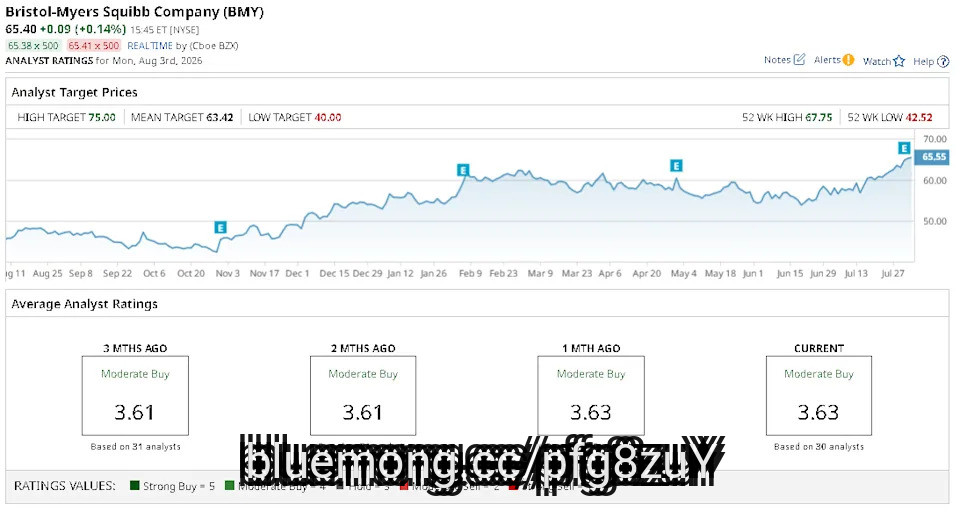
AstraZeneca stock tumbled 6.9% to 157.97. Shares are already trading below their 21-day, 50-day and 200-day moving averages. Bristol Myers Squibb stock, on the other hand, inched a fraction higher to 65.47. The stock ended the regular session in a buy zone that runs up to 66.03.
Given the size of the two companies, the deal would likely be mostly stock-based, resulting in Bristol Myers shareholders owning roughly a third of the combined company, William Blair ******* yst Matt Phipps said in a client note. He says $160 billion makes sense as a price tag for Bristol Myers Squibb.
#astrazeneca #huynh #combined
The combined company would be worth roughly $400 billion, "making it one of the biggest pharmaceutical mergers in history," RBC Capital Markets ******* yst Trung Huynh said in a report. The Financial Times first reported the early merger talks. AstraZeneca declined to comment to Investor's Business Daily. Bristol Myers didn't immediately respond.
The deal would merge two oncology powerhouses, and likely trigger an antitrust review. Bristol Myers fills portfolio gaps in blood cancer, immunology, cardiovascular diseases and central nervous system conditions where AstraZeneca lacks scale today, Huynh said.
AstraZeneca stock tumbled 6.9% to 157.97. Shares are already trading below their 21-day, 50-day and 200-day moving averages. Bristol Myers Squibb stock, on the other hand, inched a fraction higher to 65.47. The stock ended the regular session in a buy zone that runs up to 66.03.
Given the size of the two companies, the deal would likely be mostly stock-based, resulting in Bristol Myers shareholders owning roughly a third of the combined company, William Blair ******* yst Matt Phipps said in a client note. He says $160 billion makes sense as a price tag for Bristol Myers Squibb.
#astrazeneca #huynh #combined


2 months ago
July 27, 2026 12:34 pm ET
Listen
(4 min)
The latest Market Talks covering the Health Care sector. Published exclusively on Dow Jones Newswires at 4:20 ET, 12:20 ET and 16:50 ET.
0849 ET – While many artificial-intelligence startups are exploring the technology’s potential to find new drugs, AstraZeneca executives say the company is using it in other areas. AI is important in drug development, which entails large, expensive risks, AstraZeneca CEO Pascal Soriot says on a call with reporters. If AI can help fine-tune the design of a clinical trial to improve its chances of success, that could end up being a big benefit, Soriot says. The U.K. drugmaker is also using AI to improve productivity across the business, in areas like regulatory submissions, CFO Aradhana Sarin says on the call. AstraZeneca doesn’t expect any direct impact on jobs from AI as its portfolio continues to grow, Sarin adds. Shares rise 1.2%. (adria.calatayudwsj.com)
#using #market
Listen
(4 min)
The latest Market Talks covering the Health Care sector. Published exclusively on Dow Jones Newswires at 4:20 ET, 12:20 ET and 16:50 ET.
0849 ET – While many artificial-intelligence startups are exploring the technology’s potential to find new drugs, AstraZeneca executives say the company is using it in other areas. AI is important in drug development, which entails large, expensive risks, AstraZeneca CEO Pascal Soriot says on a call with reporters. If AI can help fine-tune the design of a clinical trial to improve its chances of success, that could end up being a big benefit, Soriot says. The U.K. drugmaker is also using AI to improve productivity across the business, in areas like regulatory submissions, CFO Aradhana Sarin says on the call. AstraZeneca doesn’t expect any direct impact on jobs from AI as its portfolio continues to grow, Sarin adds. Shares rise 1.2%. (adria.calatayudwsj.com)
#using #market


2 months ago
By Maggie Fick
LONDON, July 24 (Reuters) - AstraZeneca's long-time CEO Pascal Soriot has rarely put a foot wrong. The company's shares have more that quadrupled in price during his 14-year tenure, soaring above the wider FTSE 100 index and main British rival GSK.
AstraZeneca's huge diversity and number of drugs on the market and success in clinical trials in different therapeutic areas set it apart from peers, giving Soriot the golden touch in the eyes of investors.
Now, though, investors have some cause for concern after news this month of the unexpected failure of nerve drug Wainua in a late-stage heart disease trial, which hammered the shares and turned attention on the firm's drug R&D pipeline.
AstraZeneca's shares are down 10% this year and trail GSK and the wider London stock index over two years, with attention now on two other late-stage trials that could shape confidence in AstraZeneca's research engine and long-term growth outlook.
#soriot
LONDON, July 24 (Reuters) - AstraZeneca's long-time CEO Pascal Soriot has rarely put a foot wrong. The company's shares have more that quadrupled in price during his 14-year tenure, soaring above the wider FTSE 100 index and main British rival GSK.
AstraZeneca's huge diversity and number of drugs on the market and success in clinical trials in different therapeutic areas set it apart from peers, giving Soriot the golden touch in the eyes of investors.
Now, though, investors have some cause for concern after news this month of the unexpected failure of nerve drug Wainua in a late-stage heart disease trial, which hammered the shares and turned attention on the firm's drug R&D pipeline.
AstraZeneca's shares are down 10% this year and trail GSK and the wider London stock index over two years, with attention now on two other late-stage trials that could shape confidence in AstraZeneca's research engine and long-term growth outlook.
#soriot




2 months ago
Cathie Wood's ARK Genomic Revolution ETF (NYSEMKT: ARKG) focuses on companies in the genomics sector, especially in healthcare. Since the beginning of July, Wood has, through this Ark Invest exchange-traded fund (ETF), bought $15.3 million worth of Ionis Pharmaceuticals (NASDAQ: IONS), a biotech company based in Carlsbad, California.
The stock is down nearly 37% from its 2026 high earlier this month, with much of that decline coming after it and its partner AstraZeneca announced a surprise late-stage trial failure regarding eplontersen, a medicine used to treat patients with transthyretin amyloidosis cardiomyopathy, or ATTR-CM, a rare heart disease. All of Wood's recent Ionis purchases came after that announcement, suggesting she is taking advantage of the stock's decline to buy more shares while maintaining a long-term view that the company is worth investing in.
Missed Nvidia in 2009? This Rare Signal Is Flashing Again. In 2009, a "Double Down" signal flashed for a little-known chipmaker called Nvidia. For the first time in years, that same "Total Conviction" signal is flashing for a company 1/100th the size of Nvidia. Continue »
Let's see what she may be seeing.
In June 2026, the Food and Drug Administration (FDA) approved Ionis's drug Tryngolza (olezarsen) for treatment of severe hypertriglyceridemia (sHTG), a condition characterized by elevated blood triglyceride levels. Tryngolza's initial approval in 2024 was for familial chylomicronemia syndrome (FCS), a rare disease that causes high levels of triglycerides in the blood. FCS affects only about 3,000 people in the U.S., but the new sHTG approval expands its target market to more than 3 million potential patients in the U.S. alone.
The stock is down nearly 37% from its 2026 high earlier this month, with much of that decline coming after it and its partner AstraZeneca announced a surprise late-stage trial failure regarding eplontersen, a medicine used to treat patients with transthyretin amyloidosis cardiomyopathy, or ATTR-CM, a rare heart disease. All of Wood's recent Ionis purchases came after that announcement, suggesting she is taking advantage of the stock's decline to buy more shares while maintaining a long-term view that the company is worth investing in.
Missed Nvidia in 2009? This Rare Signal Is Flashing Again. In 2009, a "Double Down" signal flashed for a little-known chipmaker called Nvidia. For the first time in years, that same "Total Conviction" signal is flashing for a company 1/100th the size of Nvidia. Continue »
Let's see what she may be seeing.
In June 2026, the Food and Drug Administration (FDA) approved Ionis's drug Tryngolza (olezarsen) for treatment of severe hypertriglyceridemia (sHTG), a condition characterized by elevated blood triglyceride levels. Tryngolza's initial approval in 2024 was for familial chylomicronemia syndrome (FCS), a rare disease that causes high levels of triglycerides in the blood. FCS affects only about 3,000 people in the U.S., but the new sHTG approval expands its target market to more than 3 million potential patients in the U.S. alone.

2 months ago
Harris Oakmark recently released its second-quarter 2026 investor letter for the "Oakmark Global Fund". A copy of the letter can be downloaded here. It is a non-diversified fund that focuses on long-term capital appreciation by investing in common stocks of U.S. and non-U.S. companies. In the second quarter, the fund (Investor Class) delivered a return of 7.89%, lagging the benchmark, the MSCI World Index's 13.76% return. Energy and industrials were the top performance contributors at the sector level, while health care and consumer discretionary detracted from performance. AI remains a key market theme. The firm focuses on evaluating companies based on their competitive advantages, long-term cash flow potential, and valuation, not predictions. In addition, you can check the Fund's top five holdings to determine its best picks for 2026.
In its Q2 2026 investor letter, Oakmark Global Fund highlighted AstraZeneca PLC (NYSE:AZN) as a newly added position. AstraZeneca PLC (NYSE:AZN) is a leading multinational biopharmaceutical company focusing on the development and discovery of prescription medicines. On July 15, 2026, AstraZeneca PLC (NYSE:AZN) closed at $168.37 per share, reflecting a market capitalization of $261.12 billion. AstraZeneca PLC (NYSE:AZN) posted a one-month return of -3.75%, while its shares gained 18.55% over the past 52 weeks.
Oakmark Global Fund stated the following regarding AstraZeneca PLC (NYSE:AZN) in its Q2 2026 investor update:
"AstraZeneca PLC (NYSE:AZN) is one of the largest pharmaceutical companies in the world. It researches, develops and commercializes prescription medicines designed to treat lung and breast cancers, cardiorenal diseases, respiratory problems and other rare diseases. We believe AstraZeneca's robust on-market portfolio and sector-leading late-stage pipeline provide an attractive growth profile. Moreover, we believe the company can build on its long track record of a productive research and development program, thanks to its innovative culture and exceptional management team. In our view, CEO Pascal Soriot is one of the industry's best executives, and he has cultivated a deep bench of talent, a robust decision-making framework and a differentiated R&D culture that should drive strong growth for years to come, in our view. Recent concerns over United States regulations have overshadowed AstraZeneca's merits and weighed on the broader pharmaceutical industry. This opened a window for us to purchase shares of this company at a price well below our estimate of its intrinsic value."
In its Q2 2026 investor letter, Oakmark Global Fund highlighted AstraZeneca PLC (NYSE:AZN) as a newly added position. AstraZeneca PLC (NYSE:AZN) is a leading multinational biopharmaceutical company focusing on the development and discovery of prescription medicines. On July 15, 2026, AstraZeneca PLC (NYSE:AZN) closed at $168.37 per share, reflecting a market capitalization of $261.12 billion. AstraZeneca PLC (NYSE:AZN) posted a one-month return of -3.75%, while its shares gained 18.55% over the past 52 weeks.
Oakmark Global Fund stated the following regarding AstraZeneca PLC (NYSE:AZN) in its Q2 2026 investor update:
"AstraZeneca PLC (NYSE:AZN) is one of the largest pharmaceutical companies in the world. It researches, develops and commercializes prescription medicines designed to treat lung and breast cancers, cardiorenal diseases, respiratory problems and other rare diseases. We believe AstraZeneca's robust on-market portfolio and sector-leading late-stage pipeline provide an attractive growth profile. Moreover, we believe the company can build on its long track record of a productive research and development program, thanks to its innovative culture and exceptional management team. In our view, CEO Pascal Soriot is one of the industry's best executives, and he has cultivated a deep bench of talent, a robust decision-making framework and a differentiated R&D culture that should drive strong growth for years to come, in our view. Recent concerns over United States regulations have overshadowed AstraZeneca's merits and weighed on the broader pharmaceutical industry. This opened a window for us to purchase shares of this company at a price well below our estimate of its intrinsic value."


2 months ago
July 10, 2026 6:15 am ET
Listen
(3 min)
The latest Market Talks covering the Health Care sector. Published exclusively on Dow Jones Newswires at 4:20 ET, 12:20 ET and 16:50 ET.
1622 GMT – The failure of Wainua, a heart disease drug developed by AstraZeneca and Ionis, to meet a primary endpoint in a phase 3 trial is a positive for both BridgeBio Pharma and Alnylam Pharmaceuticals, according to Jefferies **** ysts. For BridgeBio, the news is a potential clearing event for its Attruby drug, an oral stabilizer that addresses the same rare heart disease known as transthyretin amyloid cardiomyopathy. It’s also a headwind for Alnylam, whose Amvuttra treatment will remain the only gene silencer for ATTR-CM, the **** ysts write, although long-term questions remain for the company’s next-generation silencer. Alnylam stock is up 2.4%, erasing some gains after opening up 16%. BridgeBio shares gain 15%. (elias.schisgallwsj.com)
Listen
(3 min)
The latest Market Talks covering the Health Care sector. Published exclusively on Dow Jones Newswires at 4:20 ET, 12:20 ET and 16:50 ET.
1622 GMT – The failure of Wainua, a heart disease drug developed by AstraZeneca and Ionis, to meet a primary endpoint in a phase 3 trial is a positive for both BridgeBio Pharma and Alnylam Pharmaceuticals, according to Jefferies **** ysts. For BridgeBio, the news is a potential clearing event for its Attruby drug, an oral stabilizer that addresses the same rare heart disease known as transthyretin amyloid cardiomyopathy. It’s also a headwind for Alnylam, whose Amvuttra treatment will remain the only gene silencer for ATTR-CM, the **** ysts write, although long-term questions remain for the company’s next-generation silencer. Alnylam stock is up 2.4%, erasing some gains after opening up 16%. BridgeBio shares gain 15%. (elias.schisgallwsj.com)


2 months ago
Concerned about an AI bubble? Sign up for The Daily Upside for smart and actionable market news, built for investors.
It was just another manic market day, at least for AstraZeneca.
Shares of the British-Swedish biopharmaceutical company tumbled Thursday after it shared the surprising failure of its drug Wainua to meet its target in a recent clinical trial. AstraZeneca and Ionis Pharmaceuticals said the heart disease treatment didn't outperform the placebo in preventing heart problems in patients with transthyretin-mediated amyloid cardiomyopathy (or ATTR-CM), a rare and potentially fatal disease.
It was a blow ***** ysts weren't expecting, and AstraZeneca's shares fell as much as 10.6% in London, its largest intraday plummet since 2017, per Bloomberg. The company's New York Stock Exchange-listed shares ended Thursday down 5.7%.
Sign up for The Daily Upside at no cost for premium ***** ysis on all your favorite stocks.
It was just another manic market day, at least for AstraZeneca.
Shares of the British-Swedish biopharmaceutical company tumbled Thursday after it shared the surprising failure of its drug Wainua to meet its target in a recent clinical trial. AstraZeneca and Ionis Pharmaceuticals said the heart disease treatment didn't outperform the placebo in preventing heart problems in patients with transthyretin-mediated amyloid cardiomyopathy (or ATTR-CM), a rare and potentially fatal disease.
It was a blow ***** ysts weren't expecting, and AstraZeneca's shares fell as much as 10.6% in London, its largest intraday plummet since 2017, per Bloomberg. The company's New York Stock Exchange-listed shares ended Thursday down 5.7%.
Sign up for The Daily Upside at no cost for premium ***** ysis on all your favorite stocks.


2 months ago
Concerned about an AI bubble? Sign up for The Daily Upside for smart and actionable market news, built for investors.
The only thing more in-demand than SK Hynix memory chips? Demand for SK Hynix Nasdaq-listed stock.
The premier South Korean memory chipmaker, which already trades on the Korea Exchange, makes its US debut today, and investors are so desperate to get another piece of the company that it's arriving more than seven times oversubscribed, according to a Bloomberg report. Now, one big question remains: Can the company break free from the sector's historically cyclical nature?
Sign up for The Daily Upside at no cost for premium **** ysis on all your favorite stocks.
READ ALSO: AstraZeneca Plunges After New Heart Disease Drug Fails Trial and Apple Edges Closer to Dethroning Nvidia After $30B Broadcom Chips Deal
The only thing more in-demand than SK Hynix memory chips? Demand for SK Hynix Nasdaq-listed stock.
The premier South Korean memory chipmaker, which already trades on the Korea Exchange, makes its US debut today, and investors are so desperate to get another piece of the company that it's arriving more than seven times oversubscribed, according to a Bloomberg report. Now, one big question remains: Can the company break free from the sector's historically cyclical nature?
Sign up for The Daily Upside at no cost for premium **** ysis on all your favorite stocks.
READ ALSO: AstraZeneca Plunges After New Heart Disease Drug Fails Trial and Apple Edges Closer to Dethroning Nvidia After $30B Broadcom Chips Deal

2 months ago
Concerned about an AI bubble? Sign up for The Daily Upside for smart and actionable market news, built for investors.
Shares in the membership-based retailer Costco fell 4.1% on Thursday after a June sales update failed to meet Wall Street's lofty expectations.
That continued a weeks-long slump, but it also means the stock is looking more and more like one of the chain's hot dog deals.
Sign up for The Daily Upside at no cost for premium ****** ysis on all your favorite stocks.
READ ALSO: Can SK Hynix Escape Chipmaking's Cyclical Curse After Nasdaq Debut? and AstraZeneca Plunges After New Heart Disease Drug Fails Trial
Shares in the membership-based retailer Costco fell 4.1% on Thursday after a June sales update failed to meet Wall Street's lofty expectations.
That continued a weeks-long slump, but it also means the stock is looking more and more like one of the chain's hot dog deals.
Sign up for The Daily Upside at no cost for premium ****** ysis on all your favorite stocks.
READ ALSO: Can SK Hynix Escape Chipmaking's Cyclical Curse After Nasdaq Debut? and AstraZeneca Plunges After New Heart Disease Drug Fails Trial

2 months ago
A rival drug failure can sometimes move a biotech stock almost as much as a company's own clinical data.
That is what happened to BridgeBio on July 9.
BridgeBio (BBIO) shares jumped after AstraZeneca and Ionis said Wainua failed to meet the main goal in a late-stage trial for transthyretin-mediated amyloid cardiomyopathy, or ATTR-CM, a heart disease caused by protein buildup that can make it harder for the heart to pump blood.
BridgeBio stock was recently trading at $89.86, up 14.7% from the previous close. The stock opened at $84 and traded as high as $93.31 during July 9's session.
The rally added roughly $2.2 billion to BridgeBio's market value based on its intraday market capitalization. The move shows investors were not just reacting to a failed trial. They were reassessing the competitive field around a drug BridgeBio already sells.
That is what happened to BridgeBio on July 9.
BridgeBio (BBIO) shares jumped after AstraZeneca and Ionis said Wainua failed to meet the main goal in a late-stage trial for transthyretin-mediated amyloid cardiomyopathy, or ATTR-CM, a heart disease caused by protein buildup that can make it harder for the heart to pump blood.
BridgeBio stock was recently trading at $89.86, up 14.7% from the previous close. The stock opened at $84 and traded as high as $93.31 during July 9's session.
The rally added roughly $2.2 billion to BridgeBio's market value based on its intraday market capitalization. The move shows investors were not just reacting to a failed trial. They were reassessing the competitive field around a drug BridgeBio already sells.

2 months ago
Concerned about an AI bubble? Sign up for The Daily Upside for smart and actionable market news, built for investors.
Sometimes, markets can be a harsher judge than the fashion police.
Levi Strauss & Co. reported top- and bottom-line figures Wednesday that beat Wall Street's second-quarter forecasts, hiked its earnings guidance and increased its dividend. Shares in the jeansmaker nonetheless fell 5% in after-hours trading. With demand for denim steady, why did investors react like it's cheap rayon?
Sign up for The Daily Upside at no cost for premium **** ysis on all your favorite stocks.
READ ALSO: Can SK Hynix Escape Chipmaking's Cyclical Curse After Nasdaq Debut? and AstraZeneca Plunges After New Heart Disease Drug Fails Trial
Sometimes, markets can be a harsher judge than the fashion police.
Levi Strauss & Co. reported top- and bottom-line figures Wednesday that beat Wall Street's second-quarter forecasts, hiked its earnings guidance and increased its dividend. Shares in the jeansmaker nonetheless fell 5% in after-hours trading. With demand for denim steady, why did investors react like it's cheap rayon?
Sign up for The Daily Upside at no cost for premium **** ysis on all your favorite stocks.
READ ALSO: Can SK Hynix Escape Chipmaking's Cyclical Curse After Nasdaq Debut? and AstraZeneca Plunges After New Heart Disease Drug Fails Trial


3 months ago
We recently compiled a list of the 10 Best Weight Loss Drug Stocks to Buy in 2026. AstraZeneca PLC (NYSE:AZN) is one of the best weight loss drugs on this list.
TheFly reported on June 15 that AZN announced that its supplemental Biologics License Application (sBLA) for Ultomiris (ravulizumab) was accepted and granted Priority Review by the U.S. Food and Drug Administration (FDA). The application seeks approval for the treatment of adults with immunoglobulin A nephropathy (IgAN), a rare kidney disorder. The FDA's Priority Review designation is given to therapies that have the potential to provide meaningful improvements in treatment options through benefits such as improved safety, effectiveness, or patient care. The FDA's final decision on the application is expected in the fourth quarter of 2026.
15 States with the Best Healthcare in the US
This regulatory milestone closely follows another major commercial victory for the company's oncology franchise. On June 12, AstraZeneca PLC (NYSE:AZN) announced that the U.S. Food and Drug Administration approved Truqap (capivasertib) in combination with abiraterone and prednisone for the treatment of adults with PTEN-deficient metastatic prostate cancer. The approval applies to patients with metastatic androgen pathway modulation-naive or sensitive disease, identified through an FDA-authorized diagnostic test. The decision positions Truqap as a targeted treatment option for this specific patient population and expands AstraZeneca's oncology portfolio with a new approach for managing advanced prostate cancer.
AstraZeneca PLC (NYSE:AZN) is a global biopharma company and is expanding into the obesity market with next-generation weight-loss therapies, including oral GLP-1 drugs and monthly injectables. The company aims to compete with market leaders while combining obesity treatments with its strong cardiovascular and metabolic disease portfolio.
TheFly reported on June 15 that AZN announced that its supplemental Biologics License Application (sBLA) for Ultomiris (ravulizumab) was accepted and granted Priority Review by the U.S. Food and Drug Administration (FDA). The application seeks approval for the treatment of adults with immunoglobulin A nephropathy (IgAN), a rare kidney disorder. The FDA's Priority Review designation is given to therapies that have the potential to provide meaningful improvements in treatment options through benefits such as improved safety, effectiveness, or patient care. The FDA's final decision on the application is expected in the fourth quarter of 2026.
15 States with the Best Healthcare in the US
This regulatory milestone closely follows another major commercial victory for the company's oncology franchise. On June 12, AstraZeneca PLC (NYSE:AZN) announced that the U.S. Food and Drug Administration approved Truqap (capivasertib) in combination with abiraterone and prednisone for the treatment of adults with PTEN-deficient metastatic prostate cancer. The approval applies to patients with metastatic androgen pathway modulation-naive or sensitive disease, identified through an FDA-authorized diagnostic test. The decision positions Truqap as a targeted treatment option for this specific patient population and expands AstraZeneca's oncology portfolio with a new approach for managing advanced prostate cancer.
AstraZeneca PLC (NYSE:AZN) is a global biopharma company and is expanding into the obesity market with next-generation weight-loss therapies, including oral GLP-1 drugs and monthly injectables. The company aims to compete with market leaders while combining obesity treatments with its strong cardiovascular and metabolic disease portfolio.


3 months ago
June 15 (Reuters) - Global drugmakers are expanding their U.S. footprint, pledging billions of dollars to ramp up manufacturing capacity and research in the country.
Pharmaceutical companies including Eli Lilly, Pfizer, AstraZeneca and Roche have announced roughly $500 billion in U.S. investments as they seek to strengthen infrastructure, mitigate supply-chain risks and reassure investors.
Pfizer
Pfizer reached a deal with President Donald Trump on September 30 to invest $70 billion in research and development and domestic manufacturing, and received a three-year grace period exempting its products from the pharmaceutical-targeted tariffs.
GSK
Pharmaceutical companies including Eli Lilly, Pfizer, AstraZeneca and Roche have announced roughly $500 billion in U.S. investments as they seek to strengthen infrastructure, mitigate supply-chain risks and reassure investors.
Pfizer
Pfizer reached a deal with President Donald Trump on September 30 to invest $70 billion in research and development and domestic manufacturing, and received a three-year grace period exempting its products from the pharmaceutical-targeted tariffs.
GSK

3 months ago
June 15 (Reuters) - Global drugmakers have been ramping up U.S. manufacturing and stockpiling inventory as the Trump administration moves to impose 100% tariffs on branded drugs unless companies cut prices or make medicines domestically.
Although enforcement is delayed for companies investing in U.S. manufacturing, the policy has already prompted fast-tracked projects, price cuts and direct-to-consumer sales.
Pfizer and AstraZeneca secured multi-year tariff exemptions through pricing deals and commitments to the new TrumpRx.gov platform. Eli Lilly, Johnson & Johnson and Merck have pledged billions to expand U.S. operations to avoid penalties.
Here's what drugmakers are doing to mitigate supply-chain risks and reassure investors:
Pfizer
Although enforcement is delayed for companies investing in U.S. manufacturing, the policy has already prompted fast-tracked projects, price cuts and direct-to-consumer sales.
Pfizer and AstraZeneca secured multi-year tariff exemptions through pricing deals and commitments to the new TrumpRx.gov platform. Eli Lilly, Johnson & Johnson and Merck have pledged billions to expand U.S. operations to avoid penalties.
Here's what drugmakers are doing to mitigate supply-chain risks and reassure investors:
Pfizer


4 months ago
AstraZeneca PLC (NYSE:AZN) is one of the best stocks to buy now for long term growth. AstraZeneca PLC (NYSE:AZN) reported on May 29 that the global CARES Phase III clinical programme showed that treatment with anselamimab led to “nominally statistically significant and highly clinically meaningful benefit in adults with advanced kappa light chain (AL) amyloidosis as first-line therapy added to standard of care plasma cell dyscrasia (PCD) treatments, compared to placebo”. Anselamimab is a potential first-in-class anti-fibril therapy. The company added that in the overall population of patients with AL amyloidosis, treatment with anselamimab did not meet the primary endpoint, defined as “a hierarchical combination of time to all-cause mortality (ACM) and frequency of cardiovascular hospitalisations (CVH), as previously disclosed”.
In a separate development, AstraZeneca PLC (NYSE:AZN) reported on May 28 that its Imfinzi (durvalumab), in combination with Bacillus Calmette-Guérin (BCG) induction and maintenance therapy, received approval by the FDA in the U.S. to treat adult patients with BCG-naïve, high-risk non-muscle-invasive bladder cancer (NMIBC). Management stated that the FDA’s approval is based on positive results from the POTOMAC Phase III trial.
AstraZeneca PLC (NYSE:AZN) is a biopharmaceutical company that explores, develops, manufactures, and commercializes prescription medicines. It supplies its products and services to specialty and primary care physicians, and is involved in exploring novel immuno-oncology treatment approaches. AstraZeneca PLC (NYSE:AZN) distributes its products and services through local representative offices and distributors.
While we acknowledge the potential of AZN as an investment, we believe certain AI stocks offer greater upside potential and carry less downside risk. If you're looking for an extremely undervalued AI stock that also stands to benefit significantly from Trump-era tariffs and the onshoring trend, see our free report on the best short-term AI stock.
READ NEXT: 15 Stocks That Will Make You Rich in 10 Years AND 12 Best Stocks That Will Always Grow.
In a separate development, AstraZeneca PLC (NYSE:AZN) reported on May 28 that its Imfinzi (durvalumab), in combination with Bacillus Calmette-Guérin (BCG) induction and maintenance therapy, received approval by the FDA in the U.S. to treat adult patients with BCG-naïve, high-risk non-muscle-invasive bladder cancer (NMIBC). Management stated that the FDA’s approval is based on positive results from the POTOMAC Phase III trial.
AstraZeneca PLC (NYSE:AZN) is a biopharmaceutical company that explores, develops, manufactures, and commercializes prescription medicines. It supplies its products and services to specialty and primary care physicians, and is involved in exploring novel immuno-oncology treatment approaches. AstraZeneca PLC (NYSE:AZN) distributes its products and services through local representative offices and distributors.
While we acknowledge the potential of AZN as an investment, we believe certain AI stocks offer greater upside potential and carry less downside risk. If you're looking for an extremely undervalued AI stock that also stands to benefit significantly from Trump-era tariffs and the onshoring trend, see our free report on the best short-term AI stock.
READ NEXT: 15 Stocks That Will Make You Rich in 10 Years AND 12 Best Stocks That Will Always Grow.