

23 days ago
On September 9, 2026, Reuters reported that Stellantis N.V. (NYSE:STLA) is recalling 201,976 Jeep vehicles in the U.S., including certain Grand Cherokee, Wagoneer and Grand Wagoneer models. It happened after the National Highway Traffic Safety Administration found a software error that can prevent the tire-pressure monitoring system from detecting low tire pressure or alerting the driver, raising crash risk.
Dealers will update the affected radio-frequency hub software free of charge. The recall is the latest in a year that has already included a 1.5-million-vehicle Ram seat-belt recall, a 955,000-vehicle camera-glitch recall in August, and more than 1 million Wranglers and Gladiators recalled in June for fire risk.
The recall should carry a relatively limited direct financial burden because Stellantis N.V. (NYSE:STLA) can fix the defect with a software update. The recall covers 201,976 Jeep vehicles, but Stellantis does not need to replace a physical component. A software-based remedy should reduce parts and labor costs and allow dealers to complete the repair relatively quickly, limiting the recall's immediate impact on earnings and cash flow.
Stellantis has already begun rebuilding its financial performance, giving investors a stronger foundation to absorb another recall. Second-quarter net profit reached €293 million compared with a €1.87 billion loss a year earlier. Revenue surged 13% to €43.5 billion. The business also generated €1 billion in industrial free cash flow during the quarter, showing real improvement as CEO Antonio Filosa executes his turnaround plan.
Strong North American demand shows the recall has not yet undermined demand for Stellantis' key Jeep and Ram products. Second-quarter North American shipments increased 38% to 445,000 vehicles. It was backed up by refreshed models, including the Jeep Grand Wagoneer and Grand Cherokee and the Ram 1500. So the company enters this recall with improving volumes and strong demand for several of the brands that matter most to its North American turnaround.
#software
Dealers will update the affected radio-frequency hub software free of charge. The recall is the latest in a year that has already included a 1.5-million-vehicle Ram seat-belt recall, a 955,000-vehicle camera-glitch recall in August, and more than 1 million Wranglers and Gladiators recalled in June for fire risk.
The recall should carry a relatively limited direct financial burden because Stellantis N.V. (NYSE:STLA) can fix the defect with a software update. The recall covers 201,976 Jeep vehicles, but Stellantis does not need to replace a physical component. A software-based remedy should reduce parts and labor costs and allow dealers to complete the repair relatively quickly, limiting the recall's immediate impact on earnings and cash flow.
Stellantis has already begun rebuilding its financial performance, giving investors a stronger foundation to absorb another recall. Second-quarter net profit reached €293 million compared with a €1.87 billion loss a year earlier. Revenue surged 13% to €43.5 billion. The business also generated €1 billion in industrial free cash flow during the quarter, showing real improvement as CEO Antonio Filosa executes his turnaround plan.
Strong North American demand shows the recall has not yet undermined demand for Stellantis' key Jeep and Ram products. Second-quarter North American shipments increased 38% to 445,000 vehicles. It was backed up by refreshed models, including the Jeep Grand Wagoneer and Grand Cherokee and the Ram 1500. So the company enters this recall with improving volumes and strong demand for several of the brands that matter most to its North American turnaround.
#software


24 days ago
The shipping industry group continues to show why it's one of the best in the current stock market, with boatloads of stocks making new highs. Among them, Scorpio Tankers (STNG) and Matson (MATX) remain in buy zones.
Shares of Monaco-based Scorpio climbed above the 87.39 buy point from an 18-week pattern. The buy zone goes to 91.76. It had already climbed above resistance around 81, a level that could have been treated as an early entry.
After slumping for much of 2024 and 2025, earnings growth surged 157%, 193% and 232% the past three quarters. Sales growth accelerated 26%, 48% and 76%. Scorpio, Tuesday's IBD Stock of the Day, has a 98 IBD Composite Rating.
Matson made new highs the past week but has settled back near its 230.74 buy point from a seven-week base. The buy range goes to 242.28. The company, which mainly serves the Hawaiian islands, has a 98 Composite Rating.
Genco Shipping & Trading (GNK) is at the top of a buy range in choppy trading following a breakout past a 26.80 handle buy point. Genco is the largest U.S.-based shipper of dry-bulk commodities. Iron ore is one of its principal shipments. It made a 52-week high Thursday.
#scorpio #genco
Shares of Monaco-based Scorpio climbed above the 87.39 buy point from an 18-week pattern. The buy zone goes to 91.76. It had already climbed above resistance around 81, a level that could have been treated as an early entry.
After slumping for much of 2024 and 2025, earnings growth surged 157%, 193% and 232% the past three quarters. Sales growth accelerated 26%, 48% and 76%. Scorpio, Tuesday's IBD Stock of the Day, has a 98 IBD Composite Rating.
Matson made new highs the past week but has settled back near its 230.74 buy point from a seven-week base. The buy range goes to 242.28. The company, which mainly serves the Hawaiian islands, has a 98 Composite Rating.
Genco Shipping & Trading (GNK) is at the top of a buy range in choppy trading following a breakout past a 26.80 handle buy point. Genco is the largest U.S.-based shipper of dry-bulk commodities. Iron ore is one of its principal shipments. It made a 52-week high Thursday.
#scorpio #genco


25 days ago
Millions in Cuba were left without power on Friday as the country was plunged into yet another major blackout.
The country's entire electricity grid suffered "total disconnection" that triggered a nationwide outage, Cuba's energy ministry said.
Power was restored to some priority areas by late evening, including those near hospitals and water pumping stations in the capital Havana, grid operator UNE said.
It is at least the sixth partial or total blackout to hit Cuba this year, where ageing electricity infrastructure and chronic fuel shortages have been placed under further strain by a US blockade on oil shipments to the communist-run nation.
UNE said the outage started just before 14:00 local time on Friday (18:00 GMT) due to a transmission fault coupled with poor weather conditions in central Cuba.
#grid
The country's entire electricity grid suffered "total disconnection" that triggered a nationwide outage, Cuba's energy ministry said.
Power was restored to some priority areas by late evening, including those near hospitals and water pumping stations in the capital Havana, grid operator UNE said.
It is at least the sixth partial or total blackout to hit Cuba this year, where ageing electricity infrastructure and chronic fuel shortages have been placed under further strain by a US blockade on oil shipments to the communist-run nation.
UNE said the outage started just before 14:00 local time on Friday (18:00 GMT) due to a transmission fault coupled with poor weather conditions in central Cuba.
#grid


25 days ago
On August 6, James Hardie Industries (NYSE:JHX) reported results for the quarter ended June 30 and beat its own numbers by enough to raise guidance just three months into the fiscal year. Net sales jumped 64% year over year to $1.475 billion, adjusted EBITDA climbed 79% to $422.1 million, and both figures came in ahead of what management had originally guided investors to expect. For a company that closed a transformative acquisition less than a year earlier, that kind of overshoot forces a reassessment of the growth story ahead.
The headline growth number is inflated by the AZEK Exteriors deal folded into the base, so the more telling figure is the 12% pro forma net sales growth, which also beat original guidance. Siding & Trim, the core fiber cement business, posted organic net sales growth of 20% as North American fiber cement volumes returned to growth for the first time in several quarters. CEO Aaron Erter tied that to share gains against vinyl and other competing materials, along with programs like ColorPlus and Expanded Statement drawing more of the higher-end repair and remodel market. Adjusted EBITDA margin in that segment expanded 140 basis points to 33.5%, powered by favorable pricing, cheaper raw materials, and continued savings from the company's Hardie Manufacturing Operating System even as freight costs rose.
Management also said cost synergies from the AZEK integration are running ahead of schedule and revenue synergies are on track, evidenced by newly expanded nationwide distribution partnerships with Boise Cascade and other regional distributors. In Deck, Rail & Accessories, sell-through accelerated every month of the quarter and outpaced shipments, pulling channel inventory back to normal levels and setting up a cleaner back half of the year. Free cash flow more than doubled to $254.2 million, and the company used the cash to pay down $400 million of senior unsecured notes.
Erter was careful to frame the beat as execution rather than a healthier market, telling investors the company is "not ***** uming a housing market improvement" for the rest of fiscal 2027. Part of the quarter's strength came from an easy comparison, since channel inventory was deliberately reduced a year earlier, and management said that benefit is expected to moderate as the year goes on. Deck, Rail & Accessories net sales actually fell 5% on a pro forma basis because the company intentionally cut production to work down channel inventory, leaving the segment with an operating loss of $3.3 million for the quarter.
#Growth #sales #management
The headline growth number is inflated by the AZEK Exteriors deal folded into the base, so the more telling figure is the 12% pro forma net sales growth, which also beat original guidance. Siding & Trim, the core fiber cement business, posted organic net sales growth of 20% as North American fiber cement volumes returned to growth for the first time in several quarters. CEO Aaron Erter tied that to share gains against vinyl and other competing materials, along with programs like ColorPlus and Expanded Statement drawing more of the higher-end repair and remodel market. Adjusted EBITDA margin in that segment expanded 140 basis points to 33.5%, powered by favorable pricing, cheaper raw materials, and continued savings from the company's Hardie Manufacturing Operating System even as freight costs rose.
Management also said cost synergies from the AZEK integration are running ahead of schedule and revenue synergies are on track, evidenced by newly expanded nationwide distribution partnerships with Boise Cascade and other regional distributors. In Deck, Rail & Accessories, sell-through accelerated every month of the quarter and outpaced shipments, pulling channel inventory back to normal levels and setting up a cleaner back half of the year. Free cash flow more than doubled to $254.2 million, and the company used the cash to pay down $400 million of senior unsecured notes.
Erter was careful to frame the beat as execution rather than a healthier market, telling investors the company is "not ***** uming a housing market improvement" for the rest of fiscal 2027. Part of the quarter's strength came from an easy comparison, since channel inventory was deliberately reduced a year earlier, and management said that benefit is expected to moderate as the year goes on. Deck, Rail & Accessories net sales actually fell 5% on a pro forma basis because the company intentionally cut production to work down channel inventory, leaving the segment with an operating loss of $3.3 million for the quarter.
#Growth #sales #management


25 days ago
GE Aerospace's $11.75 billion purchase of Consolidated Precision Products, announced September 8, is billed as fixing the castings bottleneck behind the company's $170 billion services backlog and a spare-parts delinquency rate that grew 20% sequentially in the second quarter.
The deal will not close until the second half of 2027, covers roughly a quarter of GE's airfoil needs, and CFO Rahul Ghai has told investors twice this month that "broad vertical integration is not the solution," calling CPP a "unique situation."
Sell-side price targets jumped hard after the announcement, with the mean target rising from $350.95 on June 30 to $401.00 by September 16, pushing the target-to-price ratio to 128.2%, the widest gap in over a year.
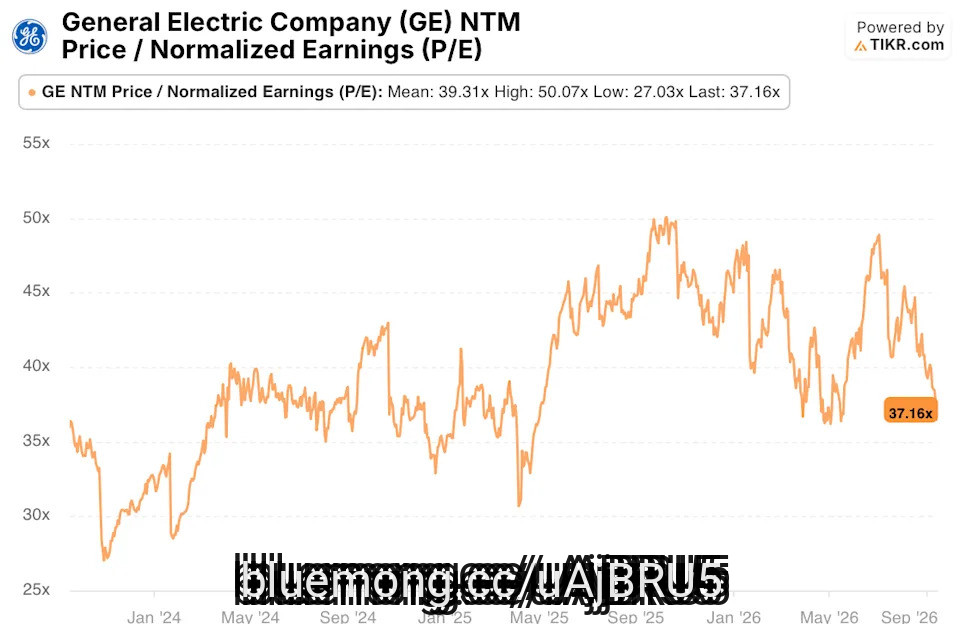
Over that same window, GE's share price fell from $373.73 to $312.90 and its NTM P/E multiple compressed to 37.16x, below its own two-year average of 39.31x and well off the roughly 50x peak reached a year earlier, even as consensus EPS estimates kept climbing smoothly through 2030 with no visible step-up.
GE Aerospace's (GE) own numbers make the case for urgency. Services backlog sits near $170 billion, internal shop visit capacity is running 40% oversubscribed, and spare-parts delinquency, shipments delayed by material shortages, grew 20% sequentially in the second quarter even as revenue rose. Management has said engines removed but not yet inducted into shops are up 60% year over year. That is the backdrop against which GE agreed to buy CPP, the world's third-largest maker of precision castings used in turbine blades and vanes.
#year #billion
The deal will not close until the second half of 2027, covers roughly a quarter of GE's airfoil needs, and CFO Rahul Ghai has told investors twice this month that "broad vertical integration is not the solution," calling CPP a "unique situation."
Sell-side price targets jumped hard after the announcement, with the mean target rising from $350.95 on June 30 to $401.00 by September 16, pushing the target-to-price ratio to 128.2%, the widest gap in over a year.
Over that same window, GE's share price fell from $373.73 to $312.90 and its NTM P/E multiple compressed to 37.16x, below its own two-year average of 39.31x and well off the roughly 50x peak reached a year earlier, even as consensus EPS estimates kept climbing smoothly through 2030 with no visible step-up.
GE Aerospace's (GE) own numbers make the case for urgency. Services backlog sits near $170 billion, internal shop visit capacity is running 40% oversubscribed, and spare-parts delinquency, shipments delayed by material shortages, grew 20% sequentially in the second quarter even as revenue rose. Management has said engines removed but not yet inducted into shops are up 60% year over year. That is the backdrop against which GE agreed to buy CPP, the world's third-largest maker of precision castings used in turbine blades and vanes.
#year #billion



25 days ago
Hub Group, Inc. (NASDAQ:HUBG) disclosed on September 14 that preliminary, unaudited first-half 2026 revenue was expected to reach $1.7 billion to $1.8 billion, near management's expectations. Yet management anticipated an operating loss before one-time charges. This non-GAAP presentation excludes those charges, but neither the loss nor the exclusions were quantified.
Hub Group, Inc. (NASDAQ:HUBG) identified higher fuel, rail, and drayage costs, excess warehouse capacity, and accounting-review and restatement expenses. The central issue is whether pricing and efficiency improvements can restore profitability on the revenue already moving through the business.
Hub Group, Inc. (NASDAQ:HUBG) began implementing rate increases in the third quarter, after transportation costs had pressured first-half results. Relatively stable intermodal volume trends suggest an existing customer base on which better pricing could improve margins. If increases hold without significant volume losses, revenue could become more profitable without requiring a broad freight recovery.
Hub Group, Inc. (NASDAQ:HUBG) also launched additional efficiency initiatives in the second quarter, including warehouse consolidation and improvements in driver and warehouse-worker productivity. These actions address specific weaknesses: underused ***** e spreads fixed costs across fewer orders, while low productivity raises the cost of each shipment or handling task. Better utilization could reinforce the benefit of higher rates.
Hub Group, Inc. (NASDAQ:HUBG) is also targeting order-to-cash processes, which cover the steps from taking orders through billing and collection. Improvements could reduce administrative friction and accelerate cash collection. That would support liquidity while operational changes take effect, although faster collections alone would not repair an operating loss.
#improvements #better
Hub Group, Inc. (NASDAQ:HUBG) identified higher fuel, rail, and drayage costs, excess warehouse capacity, and accounting-review and restatement expenses. The central issue is whether pricing and efficiency improvements can restore profitability on the revenue already moving through the business.
Hub Group, Inc. (NASDAQ:HUBG) began implementing rate increases in the third quarter, after transportation costs had pressured first-half results. Relatively stable intermodal volume trends suggest an existing customer base on which better pricing could improve margins. If increases hold without significant volume losses, revenue could become more profitable without requiring a broad freight recovery.
Hub Group, Inc. (NASDAQ:HUBG) also launched additional efficiency initiatives in the second quarter, including warehouse consolidation and improvements in driver and warehouse-worker productivity. These actions address specific weaknesses: underused ***** e spreads fixed costs across fewer orders, while low productivity raises the cost of each shipment or handling task. Better utilization could reinforce the benefit of higher rates.
Hub Group, Inc. (NASDAQ:HUBG) is also targeting order-to-cash processes, which cover the steps from taking orders through billing and collection. Improvements could reduce administrative friction and accelerate cash collection. That would support liquidity while operational changes take effect, although faster collections alone would not repair an operating loss.
#improvements #better


26 days ago
MercadoLibre, Inc. (NASDAQ:MELI) priced $1 billion of senior unsecured notes on September 9, 2026, with settlement scheduled for September 14 and maturity on September 14, 2036. As of September 10, the transaction had not settled.
The notes carry a 5.85% coupon, with proceeds intended for general corporate purposes. Once settled, they would require $58.5 million in annual coupon payments on the full principal outstanding, alongside repayment of $1 billion at maturity.
Management retains discretion over deployment. Logistics, payments, credit and commerce represent potential uses within the business, rather than disclosed allocations of this particular offering.
Ten-year funding can better match investments whose benefits emerge over several years. Logistics facilities need time to attract shipment volume, while financial-services products require investment in technology, customer acquisition and risk management before reaching scale.
For MercadoLibre, Inc. (NASDAQ:MELI), that longer horizon could reduce dependence on repeated short-term refinancing. A fixed coupon also makes contractual dollar interest payments more predictable if market borrowing rates rise.
#payments
The notes carry a 5.85% coupon, with proceeds intended for general corporate purposes. Once settled, they would require $58.5 million in annual coupon payments on the full principal outstanding, alongside repayment of $1 billion at maturity.
Management retains discretion over deployment. Logistics, payments, credit and commerce represent potential uses within the business, rather than disclosed allocations of this particular offering.
Ten-year funding can better match investments whose benefits emerge over several years. Logistics facilities need time to attract shipment volume, while financial-services products require investment in technology, customer acquisition and risk management before reaching scale.
For MercadoLibre, Inc. (NASDAQ:MELI), that longer horizon could reduce dependence on repeated short-term refinancing. A fixed coupon also makes contractual dollar interest payments more predictable if market borrowing rates rise.
#payments


26 days ago
Amazon Business is now a $60B operation serving 11 million customers worldwide. In this FreightWaves Today interview, Amazon Business exec Daniel Silverfield breaks down what that scale means for procurement, supplier consolidation, same-day grocery delivery and AI-driven savings.The big takeaway: business buyers want fewer suppliers, better visibility and less waste in purchasing. Silverfield explains how Amazon Business is pitching exactly that to everyone from small companies to Fortune 100s.
Amazon Business has hit $60 billion in annualized gross sales and now serves 11 million customers worldwide, with 1.8 million organizations added this year alone — a growth rate that puts it on par with a Fortune 100 company if it were standalone. The platform, which launched roughly a decade ago after Amazon noticed businesses already shopping on amazon.com, is increasingly central to how companies across sectors manage procurement, from office supplies to same-day groceries.
The scale matters to shippers, carriers, and brokers because Amazon Business is driving a fundamental shift in B2B purchasing behavior — consolidating supplier pools, centralizing data, and moving procurement from quarterly reporting cycles to an always-on, AI-powered model. Every order that migrates to the platform is one fewer touchpoint for traditional distributors and one more shipment flowing through Amazon's own logistics network.
Daniel Silverfield, head of value and selection for Amazon Business, said the platform saved customers $880 million on Prime free shipping last year and $1 billion through business-specific discounts. The company added 30% new items year over year and recently launched same-day grocery delivery across 2,300 U.S. cities in the first half of this year, a capability customers had been requesting for some time.
"The big shift that we're seeing is that people are moving to a continuous, always-on, conversational-powered procurement journey where agents may be looking for the best price while they're asleep, maybe negotiating on their behalf while they're asleep, and then surfacing to them the best product to buy," said Silverfield.
#customers
Amazon Business has hit $60 billion in annualized gross sales and now serves 11 million customers worldwide, with 1.8 million organizations added this year alone — a growth rate that puts it on par with a Fortune 100 company if it were standalone. The platform, which launched roughly a decade ago after Amazon noticed businesses already shopping on amazon.com, is increasingly central to how companies across sectors manage procurement, from office supplies to same-day groceries.
The scale matters to shippers, carriers, and brokers because Amazon Business is driving a fundamental shift in B2B purchasing behavior — consolidating supplier pools, centralizing data, and moving procurement from quarterly reporting cycles to an always-on, AI-powered model. Every order that migrates to the platform is one fewer touchpoint for traditional distributors and one more shipment flowing through Amazon's own logistics network.
Daniel Silverfield, head of value and selection for Amazon Business, said the platform saved customers $880 million on Prime free shipping last year and $1 billion through business-specific discounts. The company added 30% new items year over year and recently launched same-day grocery delivery across 2,300 U.S. cities in the first half of this year, a capability customers had been requesting for some time.
"The big shift that we're seeing is that people are moving to a continuous, always-on, conversational-powered procurement journey where agents may be looking for the best price while they're asleep, maybe negotiating on their behalf while they're asleep, and then surfacing to them the best product to buy," said Silverfield.
#customers


26 days ago
Union Pacific Corp (NYSE:UNP, XETRA:UNP) received a UBS upgrade to Buy from Neutral as the broker forecast stronger 2027 growth, excluding potential NSC merger benefits from its base case.
UBS raised its price target from $310 to $339, applying an unchanged multiple of 21 times its 2028 earnings forecast of $16.15 per share.
The bank expects intermodal volumes to grow 6% to 7% in 2027, citing current volume momentum and the relationship between intermodal performance and truckload pricing cycles.
Alongside industrial growth and a roughly neutral contribution from coal and grain, those intermodal gains underpin UBS's forecast for 3.5% total volume growth in 2027.
Low inventories should support steel shipments, while elevated energy prices should sustain petroleum and products volumes, the broker said.
#volume #union #pacific #corp
UBS raised its price target from $310 to $339, applying an unchanged multiple of 21 times its 2028 earnings forecast of $16.15 per share.
The bank expects intermodal volumes to grow 6% to 7% in 2027, citing current volume momentum and the relationship between intermodal performance and truckload pricing cycles.
Alongside industrial growth and a roughly neutral contribution from coal and grain, those intermodal gains underpin UBS's forecast for 3.5% total volume growth in 2027.
Low inventories should support steel shipments, while elevated energy prices should sustain petroleum and products volumes, the broker said.
#volume #union #pacific #corp


26 days ago
An **** ysis of recent filings from American politicians shows that Accenture (NYSE: ACN) and Boston Scientific (NYSE: BSX) saw an uptick in purchases from notable politicians. Rep. Gilbert Ray Cisneros, Jr. (D-CA) bought Boston Scientific shares, according to a filing earlier this month. The trade was made on August 18, 2026. Rep. Ro Khanna (D-CA) also bought the stock twice, on August 3 and August 10, 2026, according to a filing filed on September 4, 2026. Neither politician sold Boston Scientific shares in the same period. Cisneros and Khanna were also the two buyers of Accenture shares in July and August.
This is based on data from Quiver Quantitative, a platform that tracks congressional stock trades from politicians.
Let's focus on BSX in this article.
BSX is down about 50% so far this year amid a cyberattack that disrupted manufacturing, order processing and shipments, forcing the company to withdraw its previous third-quarter and full-year outlook. Bulls say the market has priced in too severe an outcome. By Sept. 8, the company said its major distribution centers were shipping at or above normal levels, sterilization facilities were operating, and manufacturing had restarted at most plants. Bulls believe much of the disrupted revenue could be delayed rather than permanently lost as hospitals wait for products, reschedule procedures and the company works through its backlog.
Bulls also point to a business that was still growing. Second-quarter revenue rose 7.5% year over year and organic growth was 7%. Several core franchises delivered double-digit organic growth, including Interventional Cardiology and Vascular Therapies, Interventional Oncology and Embolization, and Neuromodulation.
#august #NYSE
This is based on data from Quiver Quantitative, a platform that tracks congressional stock trades from politicians.
Let's focus on BSX in this article.
BSX is down about 50% so far this year amid a cyberattack that disrupted manufacturing, order processing and shipments, forcing the company to withdraw its previous third-quarter and full-year outlook. Bulls say the market has priced in too severe an outcome. By Sept. 8, the company said its major distribution centers were shipping at or above normal levels, sterilization facilities were operating, and manufacturing had restarted at most plants. Bulls believe much of the disrupted revenue could be delayed rather than permanently lost as hospitals wait for products, reschedule procedures and the company works through its backlog.
Bulls also point to a business that was still growing. Second-quarter revenue rose 7.5% year over year and organic growth was 7%. Several core franchises delivered double-digit organic growth, including Interventional Cardiology and Vascular Therapies, Interventional Oncology and Embolization, and Neuromodulation.
#august #NYSE


27 days ago
As markets anxiously await the outcome of the current FOMC meeting, Treasury yields notched new 19-year highs in trading Tuesday. The closely watched 10-year surpassed 5.0% Tuesday morning in a high not seen since July 2007. Even the 30-year Treasury yield rose sharply, hitting 5.4%, its highest since June 2007.
In addition to worries over persistent, rising core inflation (one of the Fed's preferred inflation measurements), skyrocketing oil prices and shortages create further pressure on Treasuries. Currently, the rolling one-month correlation between the 10-year Treasury yield and front-month WTI (West Texas Intermediate) crude sits at 0.96 per BMO Capital Markets ****** ysis.
Bond yields and oil prices have moved in tandem for much of this year as investors position for the longer-term inflationary impact of higher oil prices. And with major oil execs sounding the alarm on global supply cache shortages and strategic reserves depletion that help to temporarily soften spiking oil prices for consumers, these pricing pressures are likely to continue in the near-term. Saudi Arabia announced the closure of its East-West pipeline that bypassed the Strait of Hormuz after it came under attack late last week, and cancelled some shipments to Europe, reported Reuters.
"Normally, the relationship isn't as clean as it is now, but the geopolitical drivers behind the price of oil and global inflation are so prominent that the normally modest correlation has become much tighter," Steve Sosnick, Chief Strategist, Interactive Brokers told CNBC. "As long as oil prices remain firm and continue to drift higher, this will add pressure to interest rates."
As macro uncertainty continues and inflation persists, bonds and oil/energy will be categories to keep a weather eye towards and could see renewed ETF investor attention. Currently, investors are seizing the opportunity in longer-term bonds, with $9.7 billion flowing into the iShares 20+ Year Treasury Bond ETF (TLT) in the last three months though the fund is only up $3.4 billion net YTD according to FactSet data. It will be a category likely to see action in the wake of the FOMC rate decision. As bond yields climb, prices fall as they move inverse to each other, and should yields climb higher, investors may choose to scoop up longer duration bonds at depreciated prices for future gains. However, an exodus is more likely until the path of rate hikes becomes more certain.
#treasury #longer #higher
In addition to worries over persistent, rising core inflation (one of the Fed's preferred inflation measurements), skyrocketing oil prices and shortages create further pressure on Treasuries. Currently, the rolling one-month correlation between the 10-year Treasury yield and front-month WTI (West Texas Intermediate) crude sits at 0.96 per BMO Capital Markets ****** ysis.
Bond yields and oil prices have moved in tandem for much of this year as investors position for the longer-term inflationary impact of higher oil prices. And with major oil execs sounding the alarm on global supply cache shortages and strategic reserves depletion that help to temporarily soften spiking oil prices for consumers, these pricing pressures are likely to continue in the near-term. Saudi Arabia announced the closure of its East-West pipeline that bypassed the Strait of Hormuz after it came under attack late last week, and cancelled some shipments to Europe, reported Reuters.
"Normally, the relationship isn't as clean as it is now, but the geopolitical drivers behind the price of oil and global inflation are so prominent that the normally modest correlation has become much tighter," Steve Sosnick, Chief Strategist, Interactive Brokers told CNBC. "As long as oil prices remain firm and continue to drift higher, this will add pressure to interest rates."
As macro uncertainty continues and inflation persists, bonds and oil/energy will be categories to keep a weather eye towards and could see renewed ETF investor attention. Currently, investors are seizing the opportunity in longer-term bonds, with $9.7 billion flowing into the iShares 20+ Year Treasury Bond ETF (TLT) in the last three months though the fund is only up $3.4 billion net YTD according to FactSet data. It will be a category likely to see action in the wake of the FOMC rate decision. As bond yields climb, prices fall as they move inverse to each other, and should yields climb higher, investors may choose to scoop up longer duration bonds at depreciated prices for future gains. However, an exodus is more likely until the path of rate hikes becomes more certain.
#treasury #longer #higher


27 days ago
GE Aerospace (GE) trades near $318, up 13.4% over the past twelve months. Behind that price sits a commercial services backlog of roughly $170 billion, work on engines already flying. The easy read is that the good news is in the price, and the coming three years just work that backlog off. A three-year scenario on the company's own numbers puts a size on what is left.
Revenue does most of the work. The scenario grows it 17.4% a year for three years, down from the 21.7% pace of the past twelve months, and net margin recovers some of the ground it has lost. Together they lift earnings about 67%.
The constraint is not demand. Management said in July that what lies ahead is much more a supply-side challenge than a demand one. Spare parts delinquencies, shipments held up for want of material, grew 20% sequentially in the second quarter of 2026.
GE Aerospace agreed in September to buy the castings maker Consolidated Precision Products. The deal shows where the bottleneck sits.
Then the multiple takes its cut. The scenario trims the P/E from 36.8x to 32.9x, because a slower revenue pace will not support what the market pays today. On those ******* umptions the stock would be worth about $475 in three years, roughly 50% above today.
#aerospace #revenue #price
Revenue does most of the work. The scenario grows it 17.4% a year for three years, down from the 21.7% pace of the past twelve months, and net margin recovers some of the ground it has lost. Together they lift earnings about 67%.
The constraint is not demand. Management said in July that what lies ahead is much more a supply-side challenge than a demand one. Spare parts delinquencies, shipments held up for want of material, grew 20% sequentially in the second quarter of 2026.
GE Aerospace agreed in September to buy the castings maker Consolidated Precision Products. The deal shows where the bottleneck sits.
Then the multiple takes its cut. The scenario trims the P/E from 36.8x to 32.9x, because a slower revenue pace will not support what the market pays today. On those ******* umptions the stock would be worth about $475 in three years, roughly 50% above today.
#aerospace #revenue #price


27 days ago
Brent crude climbed above $108 a barrel on Tuesday as traders grew increasingly uncertain about when Saudi Arabia's East-West Pipeline would reopen, with fresh Houthi attacks on the kingdom and suspended oil loadings at its Red Sea export terminal adding to supply fears.
By 1:00 p.m. ET, Brent futures had climbed 3% to $108.88 per barrel, with U.S. West Texas Intermediate up 4.7% at $106.12. A close at those levels would mark the highest settlement for either contract in close to four months, according to Reuters. Prices have risen around 20% this month as fighting in the Persian Gulf has escalated.
According to shipping industry sources who spoke with Reuters, crude loadings at the Yanbu terminal on Saudi Arabia's Red Sea coast had been halted as of Tuesday. Separately, sources told Reuters that Saudi officials had notified European buyers that certain crude shipments scheduled for late September would not proceed.
Saudi Arabia shut down the East-West Pipeline after drone attacks originating from Iraq struck it last week, forcing the kingdom to halt the export route it had been using to bypass the Strait of Hormuz during the U.S.-Iran war. The pipeline can move up to 7 million barrels per day. Saudi officials have described the closure as a precautionary measure but have not provided a damage ******* sment or a timeline for resuming operations. U.K. authorities fear the pipeline may remain mostly shut for six weeks, according to Bloomberg.
Iran-backed Houthi militants in Yemen carried out additional strikes on Saudi Arabia on Monday. According to a spokesperson for the Saudi-led military coalition in Yemen, the group fired drones and ballistic missiles targeting the cities of Khamis Mushait, Abha, and Taif. According to Reuters, the Houthis claimed to have struck a military air base in Khamis Mushait, with their stated targets including hangars, radar installations, runway infrastructure, and stores of ammunition.
#west #east
By 1:00 p.m. ET, Brent futures had climbed 3% to $108.88 per barrel, with U.S. West Texas Intermediate up 4.7% at $106.12. A close at those levels would mark the highest settlement for either contract in close to four months, according to Reuters. Prices have risen around 20% this month as fighting in the Persian Gulf has escalated.
According to shipping industry sources who spoke with Reuters, crude loadings at the Yanbu terminal on Saudi Arabia's Red Sea coast had been halted as of Tuesday. Separately, sources told Reuters that Saudi officials had notified European buyers that certain crude shipments scheduled for late September would not proceed.
Saudi Arabia shut down the East-West Pipeline after drone attacks originating from Iraq struck it last week, forcing the kingdom to halt the export route it had been using to bypass the Strait of Hormuz during the U.S.-Iran war. The pipeline can move up to 7 million barrels per day. Saudi officials have described the closure as a precautionary measure but have not provided a damage ******* sment or a timeline for resuming operations. U.K. authorities fear the pipeline may remain mostly shut for six weeks, according to Bloomberg.
Iran-backed Houthi militants in Yemen carried out additional strikes on Saudi Arabia on Monday. According to a spokesperson for the Saudi-led military coalition in Yemen, the group fired drones and ballistic missiles targeting the cities of Khamis Mushait, Abha, and Taif. According to Reuters, the Houthis claimed to have struck a military air base in Khamis Mushait, with their stated targets including hangars, radar installations, runway infrastructure, and stores of ammunition.
#west #east

27 days ago
MiKargo247 is expanding its spot cargo insurance coverage to include strategic cargo theft under a new partnership with Verified Carrier.
The coverage is designed to address a growing category of freight fraud involving double brokering, carrier identity theft and fictitious pickups. Under the partnership, brokers using Verified Carrier can purchase MiKargo247 spot cargo insurance and have the strategic theft exclusion removed when the load is hauled by an eligible verified carrier. The companies announced the partnership Sept. 1.
Strategic cargo theft accounted for about 30% of reported U.S. cargo theft incidents in 2025, according to a June report from Munich Re Specialty and BSI Consulting. The report found that criminals are increasingly using deception, impersonation and other fraud-based methods to obtain freight rather than relying solely on physically stealing cargo from trucks or facilities.
The shift creates a challenge for brokers and insurers because fraudulent actors can make it difficult to determine who is actually hauling a load.
The FBI warned in April that cyber-enabled strategic cargo theft is increasing, with criminals using compromised accounts, fictitious companies and double-brokering schemes to divert legitimate freight. The agency recommended that transportation companies independently verify shipment requests and pickups before releasing loads.
#carrier #partnership #Companies
The coverage is designed to address a growing category of freight fraud involving double brokering, carrier identity theft and fictitious pickups. Under the partnership, brokers using Verified Carrier can purchase MiKargo247 spot cargo insurance and have the strategic theft exclusion removed when the load is hauled by an eligible verified carrier. The companies announced the partnership Sept. 1.
Strategic cargo theft accounted for about 30% of reported U.S. cargo theft incidents in 2025, according to a June report from Munich Re Specialty and BSI Consulting. The report found that criminals are increasingly using deception, impersonation and other fraud-based methods to obtain freight rather than relying solely on physically stealing cargo from trucks or facilities.
The shift creates a challenge for brokers and insurers because fraudulent actors can make it difficult to determine who is actually hauling a load.
The FBI warned in April that cyber-enabled strategic cargo theft is increasing, with criminals using compromised accounts, fictitious companies and double-brokering schemes to divert legitimate freight. The agency recommended that transportation companies independently verify shipment requests and pickups before releasing loads.
#carrier #partnership #Companies

27 days ago
Third-party logistics provider Radiant Logistics beat fiscal fourth-quarter expectations Monday after the market closed. A volatile trade landscape is driving demand higher for its customs brokerage and compliance services. It also flagged further tightening in the domestic truckload and intermodal markets, which will propel financial results over time.
"While these market trends are not fully reflected in our results for the June quarter, we view these developments as constructive for our domestic operations in general and our U.S. Brokerage operations, in particular," said Bohn Crain, founder and CEO, in a news release. "If these trends continue, we believe they support a more broad-based and durable recovery for the domestic freight market."
The report sent shares of RLGT 16% higher in early trading on Tuesday versus the S&P 500, which was down 0.2%.
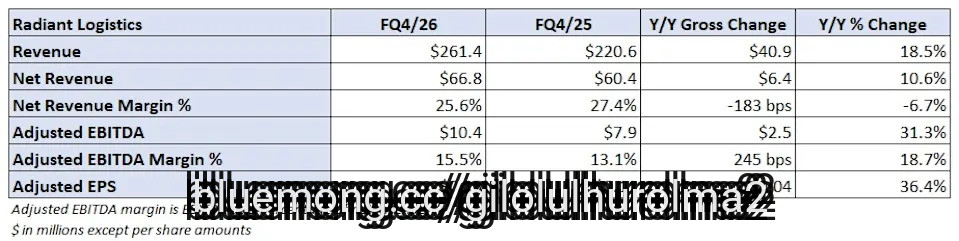
The Renton, Washington-based company reported revenue of $261 million for its fiscal fourth quarter, ended June 30. The result was 19% higher year over year and $30 million ahead of the consensus estimate.
Adjusted earnings per share of 15 cents ($7.4 million) were 4 cents higher y/y and 6 cents ahead of consensus. Disaster relief shipments following typhoons in the Western Pacific drove international airfreight results higher in the period.
#june
"While these market trends are not fully reflected in our results for the June quarter, we view these developments as constructive for our domestic operations in general and our U.S. Brokerage operations, in particular," said Bohn Crain, founder and CEO, in a news release. "If these trends continue, we believe they support a more broad-based and durable recovery for the domestic freight market."
The report sent shares of RLGT 16% higher in early trading on Tuesday versus the S&P 500, which was down 0.2%.
The Renton, Washington-based company reported revenue of $261 million for its fiscal fourth quarter, ended June 30. The result was 19% higher year over year and $30 million ahead of the consensus estimate.
Adjusted earnings per share of 15 cents ($7.4 million) were 4 cents higher y/y and 6 cents ahead of consensus. Disaster relief shipments following typhoons in the Western Pacific drove international airfreight results higher in the period.
#june


27 days ago
The yuan-denominated crude oil futures trading in China hit this week their highest level since the contract was launched in 2018 as escalating threats to Middle East's oil supply and increased purchases by Chinese refiners push prices higher.
Launched in March 2018, the INE crude oil futures contract (SC) is a physical-settlement contract priced and traded in Chinese yuan on the Shanghai International Energy Exchange.
The crude futures soared to as much as 929.4 yuan, or $138.50 per barrel, on the exchange, according to data compiled by Bloomberg.
The price spike followed the intensified concerns about supply from the Middle East after the East-West oil pipeline in Saudi Arabia was attacked by drones late last week, forcing the Kingdom to temporarily shut it down.
The international crude oil benchmarks also rallied at the start of this week. As of Tuesday, no timeline has been given as to when the pipeline would come back and continue helping Saudi Arabia bypass the Strait of Hormuz with shipments out of the Red Sea port of Yanbu.
#contract #east #saudi
Launched in March 2018, the INE crude oil futures contract (SC) is a physical-settlement contract priced and traded in Chinese yuan on the Shanghai International Energy Exchange.
The crude futures soared to as much as 929.4 yuan, or $138.50 per barrel, on the exchange, according to data compiled by Bloomberg.
The price spike followed the intensified concerns about supply from the Middle East after the East-West oil pipeline in Saudi Arabia was attacked by drones late last week, forcing the Kingdom to temporarily shut it down.
The international crude oil benchmarks also rallied at the start of this week. As of Tuesday, no timeline has been given as to when the pipeline would come back and continue helping Saudi Arabia bypass the Strait of Hormuz with shipments out of the Red Sea port of Yanbu.
#contract #east #saudi

27 days ago
ASML Holding N.V. (NASDAQ:ASML) is examining ways to produce more than 110 EUV lithography systems in 2028, according to JPMorgan ***** ysts following a meeting with CFO Roger Dassen. The company is already nearly sold out for 2027 and expects to produce at least 80 EUV systems that year, meaning output above 110 in 2028 would represent at least a 37.5% increase from the 2027 level. JPMorgan said the main constraint has shifted toward ***** embly speed rather than the availability of critical components, suggesting ASML believes additional capacity can be unlocked through manufacturing and ***** embly improvements.
The potential increase is being driven primarily by AI-related demand. ASML's existing EUV machines, which cost roughly $200 million each, are essential for manufacturing leading-edge AI processors, while customers including TSMC, Samsung, SK Hynix and Intel are expanding advanced-chip capacity. Reuters reported separately that virtually all of ASML's EUV production capacity is booked through 2027, while the company has begun construction of a new Eindhoven facility designed to accelerate tool ***** embly and eventually accommodate up to 20,000 workers.
The strongest bullish implication is that ASML Holding N.V. (NASDAQ:ASML) may be able to convert exceptionally strong demand into higher unit volumes rather than simply relying on price increases. Moving from at least 80 EUV systems in 2027 to more than 110 in 2028 would materially expand the number of high-value systems ASML can monetize. This comes after the company already raised its 2026 revenue outlook to €43 billion–€45 billion, compared with its previous €36 billion–€40 billion range, while targeting a 54%–56% gross margin. Reuters also reported that second-quarter revenue reached €9.3 billion with a 54% gross margin, demonstrating that stronger AI-driven demand is already translating into financial performance.
The longer-term competitive position is particularly favorable because ASML Holding N.V. (NASDAQ:ASML) effectively has no commercial competitor in EUV. JPMorgan estimates that ASML held 94% of the overall lithography market in 2025, while Reuters describes the company as having maintained a monopoly in EUV since the late 2010s. At the same time, customers are committing to ASML's next-generation High-NA technology: the machines cost approximately $400 million, can print features about 40% smaller than existing EUV systems, and TSMC, Samsung, and SK Hynix have all established plans for production adoption. If AI chip demand remains strong enough to support both higher low-NA volumes and eventual High-NA adoption, ASML could see a multi-year increase in system shipments, revenue, and potentially cash generation while strengthening its already exceptional competitive moat.
#company
The potential increase is being driven primarily by AI-related demand. ASML's existing EUV machines, which cost roughly $200 million each, are essential for manufacturing leading-edge AI processors, while customers including TSMC, Samsung, SK Hynix and Intel are expanding advanced-chip capacity. Reuters reported separately that virtually all of ASML's EUV production capacity is booked through 2027, while the company has begun construction of a new Eindhoven facility designed to accelerate tool ***** embly and eventually accommodate up to 20,000 workers.
The strongest bullish implication is that ASML Holding N.V. (NASDAQ:ASML) may be able to convert exceptionally strong demand into higher unit volumes rather than simply relying on price increases. Moving from at least 80 EUV systems in 2027 to more than 110 in 2028 would materially expand the number of high-value systems ASML can monetize. This comes after the company already raised its 2026 revenue outlook to €43 billion–€45 billion, compared with its previous €36 billion–€40 billion range, while targeting a 54%–56% gross margin. Reuters also reported that second-quarter revenue reached €9.3 billion with a 54% gross margin, demonstrating that stronger AI-driven demand is already translating into financial performance.
The longer-term competitive position is particularly favorable because ASML Holding N.V. (NASDAQ:ASML) effectively has no commercial competitor in EUV. JPMorgan estimates that ASML held 94% of the overall lithography market in 2025, while Reuters describes the company as having maintained a monopoly in EUV since the late 2010s. At the same time, customers are committing to ASML's next-generation High-NA technology: the machines cost approximately $400 million, can print features about 40% smaller than existing EUV systems, and TSMC, Samsung, and SK Hynix have all established plans for production adoption. If AI chip demand remains strong enough to support both higher low-NA volumes and eventual High-NA adoption, ASML could see a multi-year increase in system shipments, revenue, and potentially cash generation while strengthening its already exceptional competitive moat.
#company


28 days ago
The yuan-denominated crude oil futures trading in China hit this week their highest level since the contract was launched in 2018 as escalating threats to Middle East's oil supply and increased purchases by Chinese refiners push prices higher.
Launched in March 2018, the INE crude oil futures contract (SC) is a physical-settlement contract priced and traded in Chinese yuan on the Shanghai International Energy Exchange.
The crude futures soared to as much as 929.4 yuan, or $138.50 per barrel, on the exchange, according to data compiled by Bloomberg.
The price spike followed the intensified concerns about supply from the Middle East after the East-West oil pipeline in Saudi Arabia was attacked by drones late last week, forcing the Kingdom to temporarily shut it down.
The international crude oil benchmarks also rallied at the start of this week. As of Tuesday, no timeline has been given as to when the pipeline would come back and continue helping Saudi Arabia bypass the Strait of Hormuz with shipments out of the Red Sea port of Yanbu.
#crude #futures #middle #saudi
Launched in March 2018, the INE crude oil futures contract (SC) is a physical-settlement contract priced and traded in Chinese yuan on the Shanghai International Energy Exchange.
The crude futures soared to as much as 929.4 yuan, or $138.50 per barrel, on the exchange, according to data compiled by Bloomberg.
The price spike followed the intensified concerns about supply from the Middle East after the East-West oil pipeline in Saudi Arabia was attacked by drones late last week, forcing the Kingdom to temporarily shut it down.
The international crude oil benchmarks also rallied at the start of this week. As of Tuesday, no timeline has been given as to when the pipeline would come back and continue helping Saudi Arabia bypass the Strait of Hormuz with shipments out of the Red Sea port of Yanbu.
#crude #futures #middle #saudi

28 days ago
An ******* ysis of recent filings from American politicians shows that Accenture (NYSE: ACN) and Boston Scientific (NYSE: BSX) saw an uptick in purchases from notable politicians. Rep. Gilbert Ray Cisneros, Jr. (D-CA) bought Boston Scientific shares, according to a filing earlier this month. The trade was made on August 18, 2026. Rep. Ro Khanna (D-CA) also bought the stock twice, on August 3 and August 10, 2026, according to a filing filed on September 4, 2026. Neither politician sold Boston Scientific shares in the same period. Cisneros and Khanna were also the two buyers of Accenture shares in July and August.
This is based on data from Quiver Quantitative, a platform that tracks congressional stock trades from politicians.
Let's focus on BSX in this article.
BSX is down about 50% so far this year amid a cyberattack that disrupted manufacturing, order processing and shipments, forcing the company to withdraw its previous third-quarter and full-year outlook. Bulls say the market has priced in too severe an outcome. By Sept. 8, the company said its major distribution centers were shipping at or above normal levels, sterilization facilities were operating, and manufacturing had restarted at most plants. Bulls believe much of the disrupted revenue could be delayed rather than permanently lost as hospitals wait for products, reschedule procedures and the company works through its backlog.
Bulls also point to a business that was still growing. Second-quarter revenue rose 7.5% year over year and organic growth was 7%. Several core franchises delivered double-digit organic growth, including Interventional Cardiology and Vascular Therapies, Interventional Oncology and Embolization, and Neuromodulation.
#accenture
This is based on data from Quiver Quantitative, a platform that tracks congressional stock trades from politicians.
Let's focus on BSX in this article.
BSX is down about 50% so far this year amid a cyberattack that disrupted manufacturing, order processing and shipments, forcing the company to withdraw its previous third-quarter and full-year outlook. Bulls say the market has priced in too severe an outcome. By Sept. 8, the company said its major distribution centers were shipping at or above normal levels, sterilization facilities were operating, and manufacturing had restarted at most plants. Bulls believe much of the disrupted revenue could be delayed rather than permanently lost as hospitals wait for products, reschedule procedures and the company works through its backlog.
Bulls also point to a business that was still growing. Second-quarter revenue rose 7.5% year over year and organic growth was 7%. Several core franchises delivered double-digit organic growth, including Interventional Cardiology and Vascular Therapies, Interventional Oncology and Embolization, and Neuromodulation.
#accenture

30 days ago
KYIV, Ukraine (AP) — U.S. President Donald Trump on Sunday called on Ukrainian President Volodymyr Zelenskyy to halt strikes on Russian oil refineries and other infrastructure used to produce and distribute diesel, saying the attacks are causing a global shortage. He spoke after diesel prices in the U.S. hit a record on Friday, soaring past $6 a gallon on average.
Ukraine has for months been targeting Russia's oil and gas industry with long-range strikes, prompting fuel rationing across the country and causing Moscow to ban diesel exports in July, removing supplies from the already tight global market.
But the global crunch also came after the war on Iran curtailed oil shipments through the Strait of Hormuz.
Fuel prices are weighing on Americans as they prepare to vote in midterm elections in November.
Trump was asked by a reporter if he had spoken with Zelenskyy following his recent conversation with Russia's Vladimir Putin. He responded by calling on Zelenskyy to halt strikes against Russia.
#zelenskyy #global #Trump
Ukraine has for months been targeting Russia's oil and gas industry with long-range strikes, prompting fuel rationing across the country and causing Moscow to ban diesel exports in July, removing supplies from the already tight global market.
But the global crunch also came after the war on Iran curtailed oil shipments through the Strait of Hormuz.
Fuel prices are weighing on Americans as they prepare to vote in midterm elections in November.
Trump was asked by a reporter if he had spoken with Zelenskyy following his recent conversation with Russia's Vladimir Putin. He responded by calling on Zelenskyy to halt strikes against Russia.
#zelenskyy #global #Trump


1 month ago
A Palestinian fashion designer says she nearly closed down her fashion brand until Olivia Rodrigo stepped in.
In a new interview, designer Yasmeen Mjalli told Vogue Arabia that her brand Nöl Collective, founded in 2020, almost exclusively imported natural fibers to create their clothes. She recalled the numerous challenges and hardships of creating new pieces in the West Bank.
Mjalli told the magazine she once ordered a shipment of naturally dyed handwoven wool for the brand's autumn collection, only for it to have been held and ultimately destroyed by Israeli customs. She said she made an attempt to source replacement fabric in Jerusalem, but her efforts were thwarted due to the army closing down roads out of Ramallah.
"I was genuinely like, maybe we should stop, maybe this is our last effort. I was just so tired," Mjalli said.
COMPLEX SHOP: Shop the brands you love, anytime and anywhere. Uncover what's next. Buy. Collect. Obsess.
#down
In a new interview, designer Yasmeen Mjalli told Vogue Arabia that her brand Nöl Collective, founded in 2020, almost exclusively imported natural fibers to create their clothes. She recalled the numerous challenges and hardships of creating new pieces in the West Bank.
Mjalli told the magazine she once ordered a shipment of naturally dyed handwoven wool for the brand's autumn collection, only for it to have been held and ultimately destroyed by Israeli customs. She said she made an attempt to source replacement fabric in Jerusalem, but her efforts were thwarted due to the army closing down roads out of Ramallah.
"I was genuinely like, maybe we should stop, maybe this is our last effort. I was just so tired," Mjalli said.
COMPLEX SHOP: Shop the brands you love, anytime and anywhere. Uncover what's next. Buy. Collect. Obsess.
#down




1 month ago
Dell Technologies (DELL) stock more than quadrupled over the past year, a 323% gain, against about 18% for the S&P 500, and even Hewlett Packard Enterprise (HPE), up 130.6%, finished far behind. Management had described most of the drivers before the run began: customers sitting on old servers, AI orders that had outrun shipments earlier in the year, and costs falling while sales rose. Those signs could not tell you how far the stock would go.
What Was Dell Seeing In Its Customers' Data Centers?
In February 2025, management said customers still ran a very large base of Dell's 13th and 14th generation servers, ready to be replaced. AI demand, already under discussion then, was exceptionally strong by May 2025, with $12.1 billion of AI server orders in fiscal Q1 2026, more than Dell's AI server shipments for all of fiscal 2025.
In August 2025, management said over 70% of its installed base was running on 14th generation servers or older, and that one 17th generation server could replace six or seven old ones. The results were uneven. In fiscal Q2 2026, traditional server revenue rose again and international demand grew, but demand in North America, its most profitable region, was weak.
Why Were Dell's Costs Falling While Its Sales Rose?
#server
What Was Dell Seeing In Its Customers' Data Centers?
In February 2025, management said customers still ran a very large base of Dell's 13th and 14th generation servers, ready to be replaced. AI demand, already under discussion then, was exceptionally strong by May 2025, with $12.1 billion of AI server orders in fiscal Q1 2026, more than Dell's AI server shipments for all of fiscal 2025.
In August 2025, management said over 70% of its installed base was running on 14th generation servers or older, and that one 17th generation server could replace six or seven old ones. The results were uneven. In fiscal Q2 2026, traditional server revenue rose again and international demand grew, but demand in North America, its most profitable region, was weak.
Why Were Dell's Costs Falling While Its Sales Rose?
#server

1 month ago
Saia, Inc. (NASDAQ:SAIA) reported that August less-than-truckload shipments per workday increased 1.1% year over year, while tonnage per workday rose 8.7% and weight per shipment increased 7.5%. For July and August combined, shipments per workday increased 1.0%, tonnage per workday rose 8.3%, and weight per shipment grew 7.2%.
The data show higher freight intensity, but most of the tonnage growth came from heavier shipments rather than strong shipment-count growth. The investment question is whether that mix can improve trailer utilization and spread terminal, driver, and line-haul costs across more freight without weakening yield or service.
Heavier shipments can support operating leverage when added weight fills available trailer capacity and moves through the network efficiently. The 218-terminal network of Saia, Inc. (NASDAQ:SAIA) may provide room to absorb incremental tonnage, although Saia, Inc. (NASDAQ:SAIA) did not disclose network utilization.
Second-quarter results offer evidence that higher volume can translate into improved economics. Saia, Inc. (NASDAQ:SAIA) increased tonnage per workday 8.4%, grew revenue 17.1%, and increased operating income 26%. The operating ratio improved to 86.9% from 87.8%, meaning operating expenses consumed a smaller share of revenue.
Pricing and shipment economics were mixed but constructive. Second-quarter revenue per shipment, excluding fuel surcharge revenue, increased 1.5%. If heavier freight continues to raise revenue per shipment while fixed network costs grow more slowly, Saia, Inc. (NASDAQ:SAIA) could produce additional operating leverage.
#operating #revenue #shipments
The data show higher freight intensity, but most of the tonnage growth came from heavier shipments rather than strong shipment-count growth. The investment question is whether that mix can improve trailer utilization and spread terminal, driver, and line-haul costs across more freight without weakening yield or service.
Heavier shipments can support operating leverage when added weight fills available trailer capacity and moves through the network efficiently. The 218-terminal network of Saia, Inc. (NASDAQ:SAIA) may provide room to absorb incremental tonnage, although Saia, Inc. (NASDAQ:SAIA) did not disclose network utilization.
Second-quarter results offer evidence that higher volume can translate into improved economics. Saia, Inc. (NASDAQ:SAIA) increased tonnage per workday 8.4%, grew revenue 17.1%, and increased operating income 26%. The operating ratio improved to 86.9% from 87.8%, meaning operating expenses consumed a smaller share of revenue.
Pricing and shipment economics were mixed but constructive. Second-quarter revenue per shipment, excluding fuel surcharge revenue, increased 1.5%. If heavier freight continues to raise revenue per shipment while fixed network costs grow more slowly, Saia, Inc. (NASDAQ:SAIA) could produce additional operating leverage.
#operating #revenue #shipments

1 month ago
XPO, Inc. (NYSE:XPO) reported that preliminary August 2026 North American less-than-truckload, or LTL, tonnage per day increased 3.7% from a year earlier. Shipments per day rose 5.7%, while average weight per shipment declined 1.8%. Final July figures showed tonnage per day increasing 5.8%, shipments per day rising 5.9%, and weight per shipment slipping 0.2%.
The two months indicate stronger shipment activity, but August's wider gap between shipment and tonnage growth points to lighter freight. The investment question is whether XPO, Inc. (NYSE:XPO) can convert additional shipments into better network density and fixed-cost absorption without allowing extra handling costs to dilute margins.
Higher shipment counts can improve the utilization of routes, service centers, dock doors, and equipment. XPO, Inc. (NYSE:XPO) operates an ****** et-based North American LTL network that moves approximately 16 billion pounds of freight annually. More shipments moving through that infrastructure can spread terminal, technology, and equipment costs across a larger revenue base.
The second quarter provides evidence that XPO, Inc. (NYSE:XPO) has recently translated volume and pricing growth into stronger economics. North American LTL revenue increased 15.2% to $1.43 billion. Fuel-surcharge revenue accounted for part of that increase, rising to $314 million from $183 million. Separately, yield excluding fuel increased 4.4%, shipments per day rose 2.8%, and tonnage per day increased 1.0%.
XPO, Inc. (NYSE:XPO) reported a company-defined non-GAAP adjusted operating ratio of 79.9%, an improvement of 300 basis points. XPO, Inc. (NYSE:XPO) calculates adjusted operating ratio as one minus adjusted operating income divided by segment revenue, using unrounded amounts. Adjusted operating income removes amortization and restructuring costs and adjusts for gains on real estate transactions. XPO, Inc. (NYSE:XPO) also reported a damage claims ratio below 0.2%.
#adjusted #north #operating
The two months indicate stronger shipment activity, but August's wider gap between shipment and tonnage growth points to lighter freight. The investment question is whether XPO, Inc. (NYSE:XPO) can convert additional shipments into better network density and fixed-cost absorption without allowing extra handling costs to dilute margins.
Higher shipment counts can improve the utilization of routes, service centers, dock doors, and equipment. XPO, Inc. (NYSE:XPO) operates an ****** et-based North American LTL network that moves approximately 16 billion pounds of freight annually. More shipments moving through that infrastructure can spread terminal, technology, and equipment costs across a larger revenue base.
The second quarter provides evidence that XPO, Inc. (NYSE:XPO) has recently translated volume and pricing growth into stronger economics. North American LTL revenue increased 15.2% to $1.43 billion. Fuel-surcharge revenue accounted for part of that increase, rising to $314 million from $183 million. Separately, yield excluding fuel increased 4.4%, shipments per day rose 2.8%, and tonnage per day increased 1.0%.
XPO, Inc. (NYSE:XPO) reported a company-defined non-GAAP adjusted operating ratio of 79.9%, an improvement of 300 basis points. XPO, Inc. (NYSE:XPO) calculates adjusted operating ratio as one minus adjusted operating income divided by segment revenue, using unrounded amounts. Adjusted operating income removes amortization and restructuring costs and adjusts for gains on real estate transactions. XPO, Inc. (NYSE:XPO) also reported a damage claims ratio below 0.2%.
#adjusted #north #operating


1 month ago
The European Central Bank (ECB) on Thursday raised its three key interest rates by 25 basis points, lifting the deposit facility rate to 2.50%, the main refinancing rate to 2.65%, and the marginal lending facility rate to 2.90%, effective September 16.
The unanimous decision, which ECB President Christine Lagarde called a "no brainer," marks the ECB's second rate hike of 2026 following its June increase. The move comes directly in response to persistent inflation pressures generated by the ongoing U.S.-Iran conflict, which has disrupted energy shipments through the Strait of Hormuz and sent oil prices (CLV26) back above $100 per barrel.
Crude Oil Prices Soar on Escalation of Middle East Hostilities
Nat-Gas Prices Sink on the Outlook for Weaker US Demand
Crude Oil Prices Soar on Fears US-Iran War to Persist
#Iran #soar #european #central
The unanimous decision, which ECB President Christine Lagarde called a "no brainer," marks the ECB's second rate hike of 2026 following its June increase. The move comes directly in response to persistent inflation pressures generated by the ongoing U.S.-Iran conflict, which has disrupted energy shipments through the Strait of Hormuz and sent oil prices (CLV26) back above $100 per barrel.
Crude Oil Prices Soar on Escalation of Middle East Hostilities
Nat-Gas Prices Sink on the Outlook for Weaker US Demand
Crude Oil Prices Soar on Fears US-Iran War to Persist
#Iran #soar #european #central

1 month ago
By Ella Cao and Naveen Thukral
BEIJING/SINGAPORE, Sept 10 (Reuters) - China bought 14 to 15 cargoes of U.S. soybeans this week, or around 1 million metric tons, four traders told Reuters, as the world's top oilseed buyer steps up purchases ahead of Chinese President Xi Jinping's visit to Washington later this month.
The purchases take China's total U.S. soybean buying to nearly half of the 25 million tons the White House said Beijing had committed to annually through 2028.
Chinese state stockpiler Sinograin booked the cargoes for shipment from U.S. Gulf terminals between December and February, traders said.
Sinograin did not immediately respond to Reuters' requests for comment.
#cargoes #tons #purchases #ella
BEIJING/SINGAPORE, Sept 10 (Reuters) - China bought 14 to 15 cargoes of U.S. soybeans this week, or around 1 million metric tons, four traders told Reuters, as the world's top oilseed buyer steps up purchases ahead of Chinese President Xi Jinping's visit to Washington later this month.
The purchases take China's total U.S. soybean buying to nearly half of the 25 million tons the White House said Beijing had committed to annually through 2028.
Chinese state stockpiler Sinograin booked the cargoes for shipment from U.S. Gulf terminals between December and February, traders said.
Sinograin did not immediately respond to Reuters' requests for comment.
#cargoes #tons #purchases #ella


1 month ago
Corn futures closed the Wednesday session with contracts slipping 3 to 5 ¾ cents and near session lows. The CmdtyView national average Cash Corn price was down 5 3/4 cents at $4.81.
USDA reported a private export sale of 182,880 MT of corn to Mexico this morning for 2026/27 shipment.
Cocoa Prices Gain After Ghana Proposes Raising Farmer Pay
Coffee Prices Settle Higher on Tight ICE Inventories and Vietnam Weather
Sugar Prices Finish Sharply Higher as Crude Oil Surges
#prices #corn #session #wednesday
USDA reported a private export sale of 182,880 MT of corn to Mexico this morning for 2026/27 shipment.
Cocoa Prices Gain After Ghana Proposes Raising Farmer Pay
Coffee Prices Settle Higher on Tight ICE Inventories and Vietnam Weather
Sugar Prices Finish Sharply Higher as Crude Oil Surges
#prices #corn #session #wednesday


1 month ago
President Donald Trump is making his mark on the U.S. economy. The Trump administration's tariff policies (including a trade war with Canada) and the war with Iran have driven up energy prices and contributed to accelerating inflation. This "Trumpflation" is driving up costs across the economy.
Research from the non-profit ****** ytics group Tax Foundation indicates that Trump-backed tariffs increased costs by about $1,000 per U.S. household in 2025 and $840 per household so far in 2026. Tariffs are import taxes levied on goods imported from other countries. Those costs are ultimately borne by U.S. businesses or are often passed on to American consumers.
Missed Nvidia in 2009? This Rare Signal Is Flashing Again. In 2009, a "Double Down" signal flashed for a little-known chipmaker called Nvidia. For the first time in years, that same "Total Conviction" signal is flashing for a company 1/100th the size of Nvidia. Continue »
Trump's war with Iran has caused major disruptions to global shipments of oil and natural gas from the strategically vital Strait of Hormuz. That has caused energy prices to go up in 2026. U.S. gasoline prices are back on the rise (but remain down somewhat from their March 2026 high), and diesel prices reached an all-time high national average of $5.897 per gallon as of Sept. 6, according to AAA research. Higher diesel costs are likely to lead to higher inflation for groceries and many consumer products on store shelves that rely on diesel-fueled trucks for distribution to retailers.
Trump seems unlikely to give up on his tariff policies anytime soon, and the Iran conflict might not truly "end" in 2026 or 2027. With an uncertain future of possibly higher inflation and higher energy prices, how should you invest?
#prices #higher #costs #NVIDIA
Research from the non-profit ****** ytics group Tax Foundation indicates that Trump-backed tariffs increased costs by about $1,000 per U.S. household in 2025 and $840 per household so far in 2026. Tariffs are import taxes levied on goods imported from other countries. Those costs are ultimately borne by U.S. businesses or are often passed on to American consumers.
Missed Nvidia in 2009? This Rare Signal Is Flashing Again. In 2009, a "Double Down" signal flashed for a little-known chipmaker called Nvidia. For the first time in years, that same "Total Conviction" signal is flashing for a company 1/100th the size of Nvidia. Continue »
Trump's war with Iran has caused major disruptions to global shipments of oil and natural gas from the strategically vital Strait of Hormuz. That has caused energy prices to go up in 2026. U.S. gasoline prices are back on the rise (but remain down somewhat from their March 2026 high), and diesel prices reached an all-time high national average of $5.897 per gallon as of Sept. 6, according to AAA research. Higher diesel costs are likely to lead to higher inflation for groceries and many consumer products on store shelves that rely on diesel-fueled trucks for distribution to retailers.
Trump seems unlikely to give up on his tariff policies anytime soon, and the Iran conflict might not truly "end" in 2026 or 2027. With an uncertain future of possibly higher inflation and higher energy prices, how should you invest?
#prices #higher #costs #NVIDIA


1 month ago
Corn futures are down 2 to 3 1/2 cents so far on Wednesday. The CmdtyView national average Cash Corn price is down 3 cents at $4.84 1/2.
USDA reported a private export sale of 182,880 MT of corn to Mexico this morning for 2026/27 shipment.
Will Corn's Bullish Trend Continue
Arabica Coffee Retreats as Brazil Supplies Hit the Market
Adequate Cocoa Supplies Pressure Prices
#cents #wednesday #cash
USDA reported a private export sale of 182,880 MT of corn to Mexico this morning for 2026/27 shipment.
Will Corn's Bullish Trend Continue
Arabica Coffee Retreats as Brazil Supplies Hit the Market
Adequate Cocoa Supplies Pressure Prices
#cents #wednesday #cash

1 month ago
The conflict between Iran and the United States has significantly affected global energy markets, disrupting petroleum shipments and raising fuel prices. After almost six months, the fighting has stopped most shipping via the Strait of Hormuz, a vital waterway that used to handle a fifth of the world's oil and natural gas.
This disruption has left consumers facing higher fuel costs and shortages, while creating a favorable environment for major oil producers. Chevron (CVX) , based in Houston, Texas, nearly quadrupled its profits in Q2 FY2026 as stronger energy prices supported its results.
Dear Nvidia Stock Fans, Mark Your Calendars for September 10
Rocket Lab Keeps Landing Defense Deals. Here's Why **** ysts Aren't Getting More Bullish.
Why Stifel Just Revamped Its Price Target for Microsoft Stock
#Iran #hormuz
This disruption has left consumers facing higher fuel costs and shortages, while creating a favorable environment for major oil producers. Chevron (CVX) , based in Houston, Texas, nearly quadrupled its profits in Q2 FY2026 as stronger energy prices supported its results.
Dear Nvidia Stock Fans, Mark Your Calendars for September 10
Rocket Lab Keeps Landing Defense Deals. Here's Why **** ysts Aren't Getting More Bullish.
Why Stifel Just Revamped Its Price Target for Microsoft Stock
#Iran #hormuz



0.00$ raised of 0.00$ goal
0 donations
0.00$
to go

