

28 mins. ago
HSBC Holdings plc (NYSE:HSBC) is winding down its transaction services business in Germany, with more than 300 positions at HSBC Transaction Services GmbH and HSBC Service Company Germany GmbH expected to be phased out by 2028. The division provides securities processing, administration and custody services.
HSBC said the move is part of its broader strategy to strengthen its position in businesses where it has competitive advantages and sees stronger growth opportunities. The decision follows HSBC Germany's sale of its private banking business to BNP Paribas last year, highlighting the bank's continued effort to streamline its European operations.
Northfoto/Shutterstock.com
The biggest positive for HSBC Holdings plc (NYSE:HSBC) is that the German exit could improve the bank's efficiency and profitability over time. Rather than continuing to allocate capital and employees to a transaction-services operation that HSBC apparently sees as less strategically attractive, the bank can redirect resources toward areas where it has stronger competitive advantages. This fits CEO Georges Elhedery's broader restructuring strategy of reducing complexity, cutting costs and concentrating HSBC on businesses with better growth prospects. Reuters has reported that HSBC has already been selling non-core operations as part of this transformation, while its shares have risen substantially since the restructuring began.
The timing could also be constructive. Germany's economy remains under pressure, with industrial production falling unexpectedly in July and manufacturing activity still facing significant challenges. Reducing exposure to a business tied to the German market could therefore protect HSBC Holdings plc (NYSE:HSBC) from maintaining costs in an environment where growth is relatively weak.
#german
HSBC said the move is part of its broader strategy to strengthen its position in businesses where it has competitive advantages and sees stronger growth opportunities. The decision follows HSBC Germany's sale of its private banking business to BNP Paribas last year, highlighting the bank's continued effort to streamline its European operations.
Northfoto/Shutterstock.com
The biggest positive for HSBC Holdings plc (NYSE:HSBC) is that the German exit could improve the bank's efficiency and profitability over time. Rather than continuing to allocate capital and employees to a transaction-services operation that HSBC apparently sees as less strategically attractive, the bank can redirect resources toward areas where it has stronger competitive advantages. This fits CEO Georges Elhedery's broader restructuring strategy of reducing complexity, cutting costs and concentrating HSBC on businesses with better growth prospects. Reuters has reported that HSBC has already been selling non-core operations as part of this transformation, while its shares have risen substantially since the restructuring began.
The timing could also be constructive. Germany's economy remains under pressure, with industrial production falling unexpectedly in July and manufacturing activity still facing significant challenges. Reducing exposure to a business tied to the German market could therefore protect HSBC Holdings plc (NYSE:HSBC) from maintaining costs in an environment where growth is relatively weak.
#german


2 hours ago
Oracle disclosed in a regulatory filing that it is expanding its planned job cuts by approximately $700 million, bringing the total estimated cost of its 2026 Restructuring Plan to roughly $2.8 billion as the company presses forward with a costly AI data center buildout.
The additional costs reflect "additional actions that we expect to take," the company said. The plan, approved during fiscal 2026, encompasses severance payments, contract termination fees, and related exit costs, with a portion of the reduction linked to how Oracle is deploying AI across parts of its business.
Through August 31, Oracle had recorded roughly $2.1 billion in charges against the plan. The expansion was disclosed after the close of the company's fiscal first quarter, which ended August 31.
The restructuring push is unfolding as Oracle absorbs a steep rise in capital spending. Cash used for capital expenditures climbed to $28.5 billion in the quarter ended August 31, up from $8.5 billion in the same period a year earlier, the company said, driven by expansion of its data centers. Oracle reported negative free cash flow of $5.4 billion for the quarter.
To fund its buildout, the company said it raised $19.9 billion by selling approximately 141 million shares of common stock through an at-the-market offering program during the quarter. Oracle has said it plans to raise approximately $40 billion through a combination of debt and equity in its current fiscal year.
#plan #restructuring
The additional costs reflect "additional actions that we expect to take," the company said. The plan, approved during fiscal 2026, encompasses severance payments, contract termination fees, and related exit costs, with a portion of the reduction linked to how Oracle is deploying AI across parts of its business.
Through August 31, Oracle had recorded roughly $2.1 billion in charges against the plan. The expansion was disclosed after the close of the company's fiscal first quarter, which ended August 31.
The restructuring push is unfolding as Oracle absorbs a steep rise in capital spending. Cash used for capital expenditures climbed to $28.5 billion in the quarter ended August 31, up from $8.5 billion in the same period a year earlier, the company said, driven by expansion of its data centers. Oracle reported negative free cash flow of $5.4 billion for the quarter.
To fund its buildout, the company said it raised $19.9 billion by selling approximately 141 million shares of common stock through an at-the-market offering program during the quarter. Oracle has said it plans to raise approximately $40 billion through a combination of debt and equity in its current fiscal year.
#plan #restructuring


3 days ago
XPO, Inc. (NYSE:XPO) reported that preliminary August 2026 North American less-than-truckload, or LTL, tonnage per day increased 3.7% from a year earlier. Shipments per day rose 5.7%, while average weight per shipment declined 1.8%. Final July figures showed tonnage per day increasing 5.8%, shipments per day rising 5.9%, and weight per shipment slipping 0.2%.
The two months indicate stronger shipment activity, but August's wider gap between shipment and tonnage growth points to lighter freight. The investment question is whether XPO, Inc. (NYSE:XPO) can convert additional shipments into better network density and fixed-cost absorption without allowing extra handling costs to dilute margins.
Higher shipment counts can improve the utilization of routes, service centers, dock doors, and equipment. XPO, Inc. (NYSE:XPO) operates an ****** et-based North American LTL network that moves approximately 16 billion pounds of freight annually. More shipments moving through that infrastructure can spread terminal, technology, and equipment costs across a larger revenue base.
The second quarter provides evidence that XPO, Inc. (NYSE:XPO) has recently translated volume and pricing growth into stronger economics. North American LTL revenue increased 15.2% to $1.43 billion. Fuel-surcharge revenue accounted for part of that increase, rising to $314 million from $183 million. Separately, yield excluding fuel increased 4.4%, shipments per day rose 2.8%, and tonnage per day increased 1.0%.
XPO, Inc. (NYSE:XPO) reported a company-defined non-GAAP adjusted operating ratio of 79.9%, an improvement of 300 basis points. XPO, Inc. (NYSE:XPO) calculates adjusted operating ratio as one minus adjusted operating income divided by segment revenue, using unrounded amounts. Adjusted operating income removes amortization and restructuring costs and adjusts for gains on real estate transactions. XPO, Inc. (NYSE:XPO) also reported a damage claims ratio below 0.2%.
#adjusted #north #operating
The two months indicate stronger shipment activity, but August's wider gap between shipment and tonnage growth points to lighter freight. The investment question is whether XPO, Inc. (NYSE:XPO) can convert additional shipments into better network density and fixed-cost absorption without allowing extra handling costs to dilute margins.
Higher shipment counts can improve the utilization of routes, service centers, dock doors, and equipment. XPO, Inc. (NYSE:XPO) operates an ****** et-based North American LTL network that moves approximately 16 billion pounds of freight annually. More shipments moving through that infrastructure can spread terminal, technology, and equipment costs across a larger revenue base.
The second quarter provides evidence that XPO, Inc. (NYSE:XPO) has recently translated volume and pricing growth into stronger economics. North American LTL revenue increased 15.2% to $1.43 billion. Fuel-surcharge revenue accounted for part of that increase, rising to $314 million from $183 million. Separately, yield excluding fuel increased 4.4%, shipments per day rose 2.8%, and tonnage per day increased 1.0%.
XPO, Inc. (NYSE:XPO) reported a company-defined non-GAAP adjusted operating ratio of 79.9%, an improvement of 300 basis points. XPO, Inc. (NYSE:XPO) calculates adjusted operating ratio as one minus adjusted operating income divided by segment revenue, using unrounded amounts. Adjusted operating income removes amortization and restructuring costs and adjusts for gains on real estate transactions. XPO, Inc. (NYSE:XPO) also reported a damage claims ratio below 0.2%.
#adjusted #north #operating



3 days ago
The Campbell's Company (NASDAQ:CPB) is taking aggressive steps to turn around its fortunes, but the food company faces a difficult test. It's whether the $500 million cost-savings plan can rebuild margins and earnings as weak demand continues to pressure sales.
The company has already cut more than 550 jobs and closed two snack plants as part of the cost-cutting efforts. Moreover, it has reduced its quarterly dividend by 36% to conserve cash. Yet management expects another year of declining sales. That means the turnaround hinges on Campbell's ability to improve efficiency while stabilizing sales.
The need for restructuring became clear in the latest quarter. Sales fell 8% to $2.1 billion, and the company swung to a $69 million loss from a $145 million profit a year ago.
The Campbell's Company (NASDAQ:CPB) now plans to cut $500 million in costs by fiscal 2030. The savings are expected to support margin and allow greater investment in the brands. The cost-cutting program includes the closure of two snack plants and a workforce reduction affecting around 13% of Campbell's salaried employees.
Campbell's strategy has a clear financial logic. Lower costs should improve cash flow, help the company absorb inflationary pressures, and provide greater flexibility to invest in strengthening its brands. But the desired turnaround would only be possible if Campbell's can stabilize its underlying business at the same time.
#sales
The company has already cut more than 550 jobs and closed two snack plants as part of the cost-cutting efforts. Moreover, it has reduced its quarterly dividend by 36% to conserve cash. Yet management expects another year of declining sales. That means the turnaround hinges on Campbell's ability to improve efficiency while stabilizing sales.
The need for restructuring became clear in the latest quarter. Sales fell 8% to $2.1 billion, and the company swung to a $69 million loss from a $145 million profit a year ago.
The Campbell's Company (NASDAQ:CPB) now plans to cut $500 million in costs by fiscal 2030. The savings are expected to support margin and allow greater investment in the brands. The cost-cutting program includes the closure of two snack plants and a workforce reduction affecting around 13% of Campbell's salaried employees.
Campbell's strategy has a clear financial logic. Lower costs should improve cash flow, help the company absorb inflationary pressures, and provide greater flexibility to invest in strengthening its brands. But the desired turnaround would only be possible if Campbell's can stabilize its underlying business at the same time.
#sales


3 days ago
Wall Street has bid up defense contractors on geopolitical tensions alongside expanded missile-defense funding, but Northrop Grumman Corporation (NYSE:NOC) remains an outlier. On September 4, 2026, the company secured a $508.5 million Missile Defense Agency contract for ICBM and IRBM target flight-test support running through 2035. The non-competitive contract follows the $3 billion (approx.) in framework agreements to expand solid-rocket-motor production for PAC-3 and THAAD interceptors. Despite these bookings, stock slipped 2.5% to $515. The stock is trading near 16 times earnings and 33% below its peak, making Northrop one of the lowest-multiple prime defense contractors.
Northrop is one of the largest-cap defense contractors with exposure to Golden Dome through ******* e sensors and interceptors, while the Sentinel ICBM and the B-21 bomber provide additional exposure to broader U.S. strategic modernization. The recent bookings back that up: the $508.5 million MDA award, the ~$3 billion PAC-3 and THAAD agreements that will double and triple solid-rocket-motor capacity, and $1.4 billion of IBCS-related U.S. and Polish air-and-missile-defense awards announced in 2025. The latest MDA contract includes cost-plus, cost-reimbursable, and fixed-price-incentive elements, which reduce some financial exposure compared with purely fixed-price development work. Long-term missile-shield funding, however, remains tied to both political and defense bets. Legislative approval introduces timing risk, but the bull thesis is already working.
Execution problems explain the valuation discount. The Sentinel ICBM program triggered a critical Nunn-McCurdy breach after projected costs rose 81% to roughly $141 billion, forcing a Pentagon program restructuring. Concurrently, low-rate initial production on the B-21 bomber generated approximately $2 billion in pre-tax charges on fixed-price commitments. Management must demonstrate that these losses have ceased. Till then, multiple expansion will remain limited. Lockheed trades at roughly 19 times earnings compared with Northrop at about 16 times.
Institutional positioning does not point to aggressiveness in short trades. Our Insider Monkey database tracked 59 hedge funds holding NOC in the second quarter of 2026, compared to 62 in the first quarter. Short interest sits at 1.7% of the float, representing a low number of bets against the stock. Paired with -0.11 beta and a 1.9% dividend yield, the stock offers portfolio diversification at a discounted entry multiple.
#northrop
Northrop is one of the largest-cap defense contractors with exposure to Golden Dome through ******* e sensors and interceptors, while the Sentinel ICBM and the B-21 bomber provide additional exposure to broader U.S. strategic modernization. The recent bookings back that up: the $508.5 million MDA award, the ~$3 billion PAC-3 and THAAD agreements that will double and triple solid-rocket-motor capacity, and $1.4 billion of IBCS-related U.S. and Polish air-and-missile-defense awards announced in 2025. The latest MDA contract includes cost-plus, cost-reimbursable, and fixed-price-incentive elements, which reduce some financial exposure compared with purely fixed-price development work. Long-term missile-shield funding, however, remains tied to both political and defense bets. Legislative approval introduces timing risk, but the bull thesis is already working.
Execution problems explain the valuation discount. The Sentinel ICBM program triggered a critical Nunn-McCurdy breach after projected costs rose 81% to roughly $141 billion, forcing a Pentagon program restructuring. Concurrently, low-rate initial production on the B-21 bomber generated approximately $2 billion in pre-tax charges on fixed-price commitments. Management must demonstrate that these losses have ceased. Till then, multiple expansion will remain limited. Lockheed trades at roughly 19 times earnings compared with Northrop at about 16 times.
Institutional positioning does not point to aggressiveness in short trades. Our Insider Monkey database tracked 59 hedge funds holding NOC in the second quarter of 2026, compared to 62 in the first quarter. Short interest sits at 1.7% of the float, representing a low number of bets against the stock. Paired with -0.11 beta and a 1.9% dividend yield, the stock offers portfolio diversification at a discounted entry multiple.
#northrop


4 days ago
Stanley Black & Decker, Inc. (NYSE:SWK) entered into a definitive agreement to sell Excel Industries to Bad Boy Mowers. Excel Industries, which includes the Hustler Turf Equipment brand, is expected to generate approximately $300 million of fiscal 2026 revenue.
The purchase price and expected proceeds were not disclosed. The transaction remains subject to regulatory approval and customary closing conditions. Until closing, Excel Industries will remain in continuing operations and will not be classified as a discontinued operation.
Stanley Black & Decker, Inc. (NYSE:SWK) does not expect the transaction to dilute adjusted EPS. Adjusted EPS is a company-defined non-GAAP measure calculated as diluted GAAP EPS excluding certain gains and charges, including divestiture-related items, restructuring, footprint actions, and gains or losses on business sales.
The sale advances the portfolio-simplification strategy of Stanley Black & Decker, Inc. (NYSE:SWK). Divesting a specialized turf-equipment platform could reduce complexity and concentrate investment on larger brands and markets.
Stanley Black & Decker, Inc. (NYSE:SWK) plans to continue investing in its Outdoor business, including electrical products and high-performance residential ride-on and zero-turn mowers. The remaining portfolio includes DEWALT, CRAFTSMAN, Cub Cadet, Troy-Bilt and BLACK+DECKER, providing established platforms for outdoor growth.
#black #industries
The purchase price and expected proceeds were not disclosed. The transaction remains subject to regulatory approval and customary closing conditions. Until closing, Excel Industries will remain in continuing operations and will not be classified as a discontinued operation.
Stanley Black & Decker, Inc. (NYSE:SWK) does not expect the transaction to dilute adjusted EPS. Adjusted EPS is a company-defined non-GAAP measure calculated as diluted GAAP EPS excluding certain gains and charges, including divestiture-related items, restructuring, footprint actions, and gains or losses on business sales.
The sale advances the portfolio-simplification strategy of Stanley Black & Decker, Inc. (NYSE:SWK). Divesting a specialized turf-equipment platform could reduce complexity and concentrate investment on larger brands and markets.
Stanley Black & Decker, Inc. (NYSE:SWK) plans to continue investing in its Outdoor business, including electrical products and high-performance residential ride-on and zero-turn mowers. The remaining portfolio includes DEWALT, CRAFTSMAN, Cub Cadet, Troy-Bilt and BLACK+DECKER, providing established platforms for outdoor growth.
#black #industries

0.00$ raised of 0.00$ goal
0 donations
0.00$
to go

6 days ago
Synopsys (SNPS), a leading provider of software used to design, verify, and test semiconductor chips, remains one of the most dominant players in electronic design automation (EDA). Its EDA software and semiconductor intellectual property (IP) solutions play a critical role in the development of increasingly sophisticated chips.
Moreover, the company has expanded its capabilities with its approximately $35 billion acquisition of Ansys, bringing semiconductor design and engineering simulation under one roof. However, the integration has also brought restructuring and workforce reductions.
Micron Stock More Than Tripled in 2026. Now Taiwan Strike Threat Could Shake the AI Boom.
Dear Adobe Stock Fans, Mark Your Calendars for September 10
Apple Stock: September Surprise Could Be Bigger Than a New iPhone
#Stock #synopsys
Moreover, the company has expanded its capabilities with its approximately $35 billion acquisition of Ansys, bringing semiconductor design and engineering simulation under one roof. However, the integration has also brought restructuring and workforce reductions.
Micron Stock More Than Tripled in 2026. Now Taiwan Strike Threat Could Shake the AI Boom.
Dear Adobe Stock Fans, Mark Your Calendars for September 10
Apple Stock: September Surprise Could Be Bigger Than a New iPhone
#Stock #synopsys



8 days ago
Brasileirão Women's A3 trophy and medals Credits: Luiz Neto / Staff Images / CBF
The biggest edition in the history of the Brasileirão Women's A3 came to an end on Saturday night (5), with Planalto-GO's players and coaching staff celebrating the ******* le won over Juventude-SE at Lourival Batista Stadium in Aracaju. Away from home, the Planaltinas repeated the 1-0 scoreline from the first leg and were crowned champions.
For the first time, the tournament, added to the national calendar in 2022, surpassed the 100-match mark in a single season, jumping from 78 to 126 games. The move was part of the restructuring of the national calendar aimed at promoting and consolidating the sport ahead of the World Cup in Brazil.
The tournament adopted a home-and-away format in the first phase and increased from 11 to 14 dates. In its inaugural edition, in 2022, it was played entirely as a knockout competition. Each team played at least two matches. Now, six fixtures are guaranteed.
Just by taking part in Série A3, all 32 teams qualify for the Women's Copa do Brasil, which automatically guarantees them a fuller calendar and greater competitiveness during the season.
#edition #home #national #season
The biggest edition in the history of the Brasileirão Women's A3 came to an end on Saturday night (5), with Planalto-GO's players and coaching staff celebrating the ******* le won over Juventude-SE at Lourival Batista Stadium in Aracaju. Away from home, the Planaltinas repeated the 1-0 scoreline from the first leg and were crowned champions.
For the first time, the tournament, added to the national calendar in 2022, surpassed the 100-match mark in a single season, jumping from 78 to 126 games. The move was part of the restructuring of the national calendar aimed at promoting and consolidating the sport ahead of the World Cup in Brazil.
The tournament adopted a home-and-away format in the first phase and increased from 11 to 14 dates. In its inaugural edition, in 2022, it was played entirely as a knockout competition. Each team played at least two matches. Now, six fixtures are guaranteed.
Just by taking part in Série A3, all 32 teams qualify for the Women's Copa do Brasil, which automatically guarantees them a fuller calendar and greater competitiveness during the season.
#edition #home #national #season




10 days ago
Download the Complete Report Here
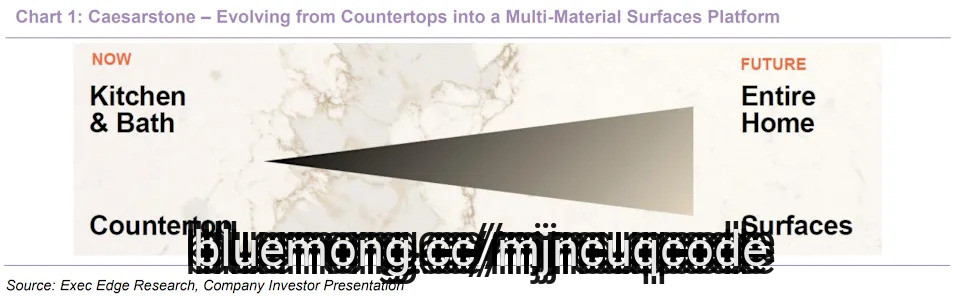
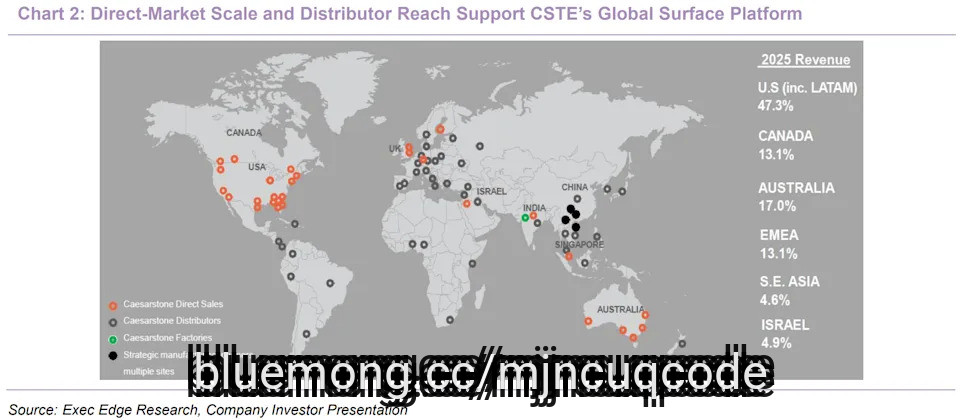
A premium multi-material surfaces platform becoming structurally lighter and more flexible. CSTE designs, develops, sources and markets premium quartz, ICON, porcelain, natural stone and complementary surface products, generating $397.2 million of revenue in 2025, with direct sales contributing 89% of revenue across its largest markets. The company has transitioned quartz production to external partners while retaining product development, quality, brand and customer control, with Lioli providing owned porcelain capacity. This broadens CSTE beyond legacy quartz while reducing fixed manufacturing exposure and increasing sourcing flexibility.
A differentiated model built on reinforcing sourcing, design, brand and direct-market capabilities supports commercial relevance across materials. CSTE combines partner-led quartz production with proprietary formulations, quality ***** urance, design know-how, premium brand recognition and local sales infrastructure. ICON provides the clearest proof point, with Australia delivering four consecutive quarters of y/y growth following the full rollout of CSTE's crystalline-silica-free collection. Porcelain extends the same commercial platform into additional applications, broadening the competitive advantage beyond any single product or manufacturing ***** et.
Growth strategy pairs a structural cost reset with targeted commercial and category expansion. CSTE is completing the partner-led production transition, rebuilding North American customer and channel engagement, sustaining Australia's ICON-led momentum, expanding porcelain and extending brand-led geographic reach. The restructuring targets more than $100 million of annualized savings by 2027 versus 2023, including approximately $22 million from the Bar-Lev closure. Execution is now focused on stabilizing core volumes, improving Lioli's commercial alignment, expanding channel productivity and mitigating the new U.S. quartz tariffs.
Material substitution and selective regional recovery broaden CSTE's addressable opportunity beyond legacy quartz. CSTE's existing and adjacent categories span approximately 53% of global countertop volume, while engineered quartz is forecast to recover and porcelain offers materially faster growth from a smaller base. Natural stone adds further U.S. optionality, while Australia demonstrates how regulatory change can redirect rather than eliminate premium-surface demand. North America remains the largest earnings opportunity, with renovation, ageing housing stock and material substitution providing recovery potential even before a full housing upcycle.
#porcelain #premium #icon #material
A premium multi-material surfaces platform becoming structurally lighter and more flexible. CSTE designs, develops, sources and markets premium quartz, ICON, porcelain, natural stone and complementary surface products, generating $397.2 million of revenue in 2025, with direct sales contributing 89% of revenue across its largest markets. The company has transitioned quartz production to external partners while retaining product development, quality, brand and customer control, with Lioli providing owned porcelain capacity. This broadens CSTE beyond legacy quartz while reducing fixed manufacturing exposure and increasing sourcing flexibility.
A differentiated model built on reinforcing sourcing, design, brand and direct-market capabilities supports commercial relevance across materials. CSTE combines partner-led quartz production with proprietary formulations, quality ***** urance, design know-how, premium brand recognition and local sales infrastructure. ICON provides the clearest proof point, with Australia delivering four consecutive quarters of y/y growth following the full rollout of CSTE's crystalline-silica-free collection. Porcelain extends the same commercial platform into additional applications, broadening the competitive advantage beyond any single product or manufacturing ***** et.
Growth strategy pairs a structural cost reset with targeted commercial and category expansion. CSTE is completing the partner-led production transition, rebuilding North American customer and channel engagement, sustaining Australia's ICON-led momentum, expanding porcelain and extending brand-led geographic reach. The restructuring targets more than $100 million of annualized savings by 2027 versus 2023, including approximately $22 million from the Bar-Lev closure. Execution is now focused on stabilizing core volumes, improving Lioli's commercial alignment, expanding channel productivity and mitigating the new U.S. quartz tariffs.
Material substitution and selective regional recovery broaden CSTE's addressable opportunity beyond legacy quartz. CSTE's existing and adjacent categories span approximately 53% of global countertop volume, while engineered quartz is forecast to recover and porcelain offers materially faster growth from a smaller base. Natural stone adds further U.S. optionality, while Australia demonstrates how regulatory change can redirect rather than eliminate premium-surface demand. North America remains the largest earnings opportunity, with renovation, ageing housing stock and material substitution providing recovery potential even before a full housing upcycle.
#porcelain #premium #icon #material


10 days ago
Microsoft announced a new financial reporting structure on Wednesday, collapsing its three operating segments into two as artificial intelligence reshapes how the company organizes its business. The change takes effect in fiscal year 2027.
The two new segments are Agents and Infra, and Devices and Consumer. Those three categories — Productivity and Business Processes, Intelligent Cloud, and More Personal Computing — dated to 2015, according to CNBC.
Agents and Infra will include Azure cloud infrastructure, Microsoft 365, GitHub, productivity and server licensing, industry solutions, and frontier and support services. Devices and Consumer will cover search and advertising, Xbox, Windows operating system licenses, and device sales. The restructuring brings Microsoft's advertising businesses together under one segment, the company said.
"There's no question AI represents a profound shift in both technology and business," Chairman and Chief Executive Officer Satya Nadella wrote in the presentation. "It is changing what we build and how we operate, and it is blurring the boundaries between our products and reshaping our business models."
As part of the changes, Microsoft will begin reporting quarterly Azure revenue figures — a disclosure it has not previously made. Under the new, narrower definition of Azure, which excludes GitHub cloud services, developer cloud services, the Security Copilot **** istant, and healthcare and life sciences cloud products, Azure revenue grew 42% to $29.42 billion in the June quarter. That compares with 43% growth under the old Azure and other cloud services metric. Azure represented roughly 33% of Microsoft's total revenue in that period.
#Services #agents
The two new segments are Agents and Infra, and Devices and Consumer. Those three categories — Productivity and Business Processes, Intelligent Cloud, and More Personal Computing — dated to 2015, according to CNBC.
Agents and Infra will include Azure cloud infrastructure, Microsoft 365, GitHub, productivity and server licensing, industry solutions, and frontier and support services. Devices and Consumer will cover search and advertising, Xbox, Windows operating system licenses, and device sales. The restructuring brings Microsoft's advertising businesses together under one segment, the company said.
"There's no question AI represents a profound shift in both technology and business," Chairman and Chief Executive Officer Satya Nadella wrote in the presentation. "It is changing what we build and how we operate, and it is blurring the boundaries between our products and reshaping our business models."
As part of the changes, Microsoft will begin reporting quarterly Azure revenue figures — a disclosure it has not previously made. Under the new, narrower definition of Azure, which excludes GitHub cloud services, developer cloud services, the Security Copilot **** istant, and healthcare and life sciences cloud products, Azure revenue grew 42% to $29.42 billion in the June quarter. That compares with 43% growth under the old Azure and other cloud services metric. Azure represented roughly 33% of Microsoft's total revenue in that period.
#Services #agents


10 days ago
On August 6, Peloton Interactive (NASDAQ:PTON) reported results for its fiscal fourth quarter and full year ended June 30, and the headline number is one the company has chased for years: a full year of positive net income. Total revenue for fiscal 2026 came in at $2.446 billion, and quarterly revenue of $608 million ticked up $1 million from a year earlier. The bigger story sits beneath the top line, in a business that finally converted cost cuts into cash while its subscriber base kept shrinking.
Fiscal 2026 marked the first time in Peloton's history that the company posted positive net income and operating income for a full year, with GAAP net income landing at $63 million. Adjusted EBITDA rose 16% year over year to $468 million, even after absorbing a $23.8 million nonrecurring legal accrual tied to patent litigation in the fourth quarter. Free cash flow climbed to $378 million, up $54 million, and management used that cash to cut net debt by 80% to just $93 million from $459 million a year earlier. CEO Peter Stern credited the turnaround to an improved revenue trajectory paired with cost restructuring, and the company said it exceeded its own target of more than $100 million in run-rate savings by the end of the fiscal year.
Growth is showing up outside the core bike and treadmill business too. The Commercial Business Unit grew revenue by double digits for the year, Peloton expanded its digital footprint through a partnership with Spotify, and it closed the acquisition of Skōp to push further into connected Pilates. Microstores beat their internal sales goals as an efficient in-person retail channel, and Peloton plans to double that store fleet in fiscal 2027. New training programs also drove engagement, with the Pace Your Race Marathon Training Program and a Live Spring Cross-Training Plan generating more than 850,000 completed workouts in the fourth quarter alone.
The profitability story cannot hide what is happening to the customer base. Ending Paid Connected Fitness Subscriptions fell 8.8% year over year to 2.553 million, and monthly churn rose to 2.2% in the fourth quarter from 1.8% a year earlier. Hardware sales are choppy too. Connected Fitness Products revenue dropped 14% year over year in the quarter to $171 million, and gross margin on that hardware segment swung to 13.4% from 17.3% a year ago before recovering some ground quarter over quarter. Peloton's own guidance signals the subscriber slide is not over.
#year #revenue #fourth #connected
Fiscal 2026 marked the first time in Peloton's history that the company posted positive net income and operating income for a full year, with GAAP net income landing at $63 million. Adjusted EBITDA rose 16% year over year to $468 million, even after absorbing a $23.8 million nonrecurring legal accrual tied to patent litigation in the fourth quarter. Free cash flow climbed to $378 million, up $54 million, and management used that cash to cut net debt by 80% to just $93 million from $459 million a year earlier. CEO Peter Stern credited the turnaround to an improved revenue trajectory paired with cost restructuring, and the company said it exceeded its own target of more than $100 million in run-rate savings by the end of the fiscal year.
Growth is showing up outside the core bike and treadmill business too. The Commercial Business Unit grew revenue by double digits for the year, Peloton expanded its digital footprint through a partnership with Spotify, and it closed the acquisition of Skōp to push further into connected Pilates. Microstores beat their internal sales goals as an efficient in-person retail channel, and Peloton plans to double that store fleet in fiscal 2027. New training programs also drove engagement, with the Pace Your Race Marathon Training Program and a Live Spring Cross-Training Plan generating more than 850,000 completed workouts in the fourth quarter alone.
The profitability story cannot hide what is happening to the customer base. Ending Paid Connected Fitness Subscriptions fell 8.8% year over year to 2.553 million, and monthly churn rose to 2.2% in the fourth quarter from 1.8% a year earlier. Hardware sales are choppy too. Connected Fitness Products revenue dropped 14% year over year in the quarter to $171 million, and gross margin on that hardware segment swung to 13.4% from 17.3% a year ago before recovering some ground quarter over quarter. Peloton's own guidance signals the subscriber slide is not over.
#year #revenue #fourth #connected


10 days ago
On August 6, Dentsply Sirona (NASDAQ:XRAY) reported second-quarter 2026 results that pulled the stock in two directions at once. Net sales fell 4.1% year over year to $898 million, yet the company swung from a $45 million net loss a year earlier to $37 million in net income, with diluted earnings per share of $0.18 versus a $0.22 loss. Investors are left weighing a real profitability turnaround against a top line that is still shrinking.
GAAP gross margin climbed to 54.9% from 52.4% a year ago, and adjusted gross margin came in at 56.4%. Adjusted EBITDA margin ticked up slightly to 21.3% from 21.1%. Cash generation improved even more sharply. Operating cash flow jumped to $99 million from $48 million in the second quarter of 2025, helped by roughly $44 million in tariff refunds along with tighter management of inventory and payables. Free cash flow more than tripled to $55 million from $16 million. The company used some of that cash to repurchase 1.3 million shares for about $12 million during the quarter, and it also expanded its partnership with Medline Sinclair to broaden access to its Connected Technology Solutions portfolio across Canada.
Wellspect Healthcare was the lone segment posting real growth, with net sales up 7.1% to $86 million, and EMEA sales as reported were essentially flat at 0.2% growth. There were no goodwill or intangible ***** et impairments this quarter, a contrast to the $235 million charge taken in the same period last year. Despite the sales decline, the company reiterated its full-year 2026 outlook of $3.5 billion to $3.6 billion in net sales and adjusted EPS of $1.40 to $1.50.
The headline sales decline understates the underlying softness. On a constant currency basis, net sales fell 6.3%, meaning currency translation actually flattered the reported number. Orthodontic and Implant Solutions was the weakest segment, with sales dropping 13.2% to $197 million from $226 million a year ago. The Americas region fared worst geographically, with net sales down 10.7% as reported and 11.6% in constant currency.
Even the adjusted numbers show cracks: adjusted EPS of $0.52 was actually down 1.6% from a year earlier, despite the improved GAAP figures. The balance sheet tightened too, with cash and equivalents falling to $239 million from $326 million at the end of 2025, against long-term debt of nearly $2 billion. Restructuring and other costs for the first six months of 2026 totaled $69 million, up sharply from $13 million in the same period a year ago, tied in part to costs from a new global ERP system.
#year #company
GAAP gross margin climbed to 54.9% from 52.4% a year ago, and adjusted gross margin came in at 56.4%. Adjusted EBITDA margin ticked up slightly to 21.3% from 21.1%. Cash generation improved even more sharply. Operating cash flow jumped to $99 million from $48 million in the second quarter of 2025, helped by roughly $44 million in tariff refunds along with tighter management of inventory and payables. Free cash flow more than tripled to $55 million from $16 million. The company used some of that cash to repurchase 1.3 million shares for about $12 million during the quarter, and it also expanded its partnership with Medline Sinclair to broaden access to its Connected Technology Solutions portfolio across Canada.
Wellspect Healthcare was the lone segment posting real growth, with net sales up 7.1% to $86 million, and EMEA sales as reported were essentially flat at 0.2% growth. There were no goodwill or intangible ***** et impairments this quarter, a contrast to the $235 million charge taken in the same period last year. Despite the sales decline, the company reiterated its full-year 2026 outlook of $3.5 billion to $3.6 billion in net sales and adjusted EPS of $1.40 to $1.50.
The headline sales decline understates the underlying softness. On a constant currency basis, net sales fell 6.3%, meaning currency translation actually flattered the reported number. Orthodontic and Implant Solutions was the weakest segment, with sales dropping 13.2% to $197 million from $226 million a year ago. The Americas region fared worst geographically, with net sales down 10.7% as reported and 11.6% in constant currency.
Even the adjusted numbers show cracks: adjusted EPS of $0.52 was actually down 1.6% from a year earlier, despite the improved GAAP figures. The balance sheet tightened too, with cash and equivalents falling to $239 million from $326 million at the end of 2025, against long-term debt of nearly $2 billion. Restructuring and other costs for the first six months of 2026 totaled $69 million, up sharply from $13 million in the same period a year ago, tied in part to costs from a new global ERP system.
#year #company


10 days ago
The NFL season is just around the corner, and the Chicago Bears are hoping running back D'Andre Swift's latest injury scare does not turn into a significant setback before their season opener.
Swift reportedly left Thursday's practice in "significant discomfort" while holding his midsection. The veteran running back was believed to be dealing with a cramp, providing some relief for the Bears as they await further evaluation.
Chicago is scheduled to have several days off before beginning its final preparations for the Sept. 13 opener against the Carolina Panthers. The timing gives Swift an opportunity to recover, and the Bears will be hoping the issue proves to be nothing more than a temporary problem.
MORE: Cowboys linked to Maxx Crosby again following contract restructuring
Aug 22, 2025; Kansas City, Missouri, USA; Chicago Bears running back D'Andre Swift (4) runs the ball during the first half against the Kansas City Chiefs at GEHA Field at Arrowhead Stadium. Mandatory Credit: Jay Biggerstaff-Imagn Images
#Chicago #running #back
Swift reportedly left Thursday's practice in "significant discomfort" while holding his midsection. The veteran running back was believed to be dealing with a cramp, providing some relief for the Bears as they await further evaluation.
Chicago is scheduled to have several days off before beginning its final preparations for the Sept. 13 opener against the Carolina Panthers. The timing gives Swift an opportunity to recover, and the Bears will be hoping the issue proves to be nothing more than a temporary problem.
MORE: Cowboys linked to Maxx Crosby again following contract restructuring
Aug 22, 2025; Kansas City, Missouri, USA; Chicago Bears running back D'Andre Swift (4) runs the ball during the first half against the Kansas City Chiefs at GEHA Field at Arrowhead Stadium. Mandatory Credit: Jay Biggerstaff-Imagn Images
#Chicago #running #back

11 days ago
Uber Technologies (NYSE:UBER) shares rose 2.4% on Wednesday morning following a Bloomberg report that the company plans to eliminate approximately 3,300 positions, representing about 10% of its global workforce, as part of an organizational restructuring.
The changes are intended to reduce management layers and simplify the company's organizational structure, according to the report.
A company spokesperson said the restructuring will reduce the number of managers at Uber by approximately 20%, with some managers moving into individual contributor positions.
In an email obtained by Bloomberg News, Chief Executive Officer Dara Khosrowshahi said Uber's growth had resulted in "more layers, more coordination, more fragmented ownership, and in some cases structures that made sense when businesses were smaller but no longer serve us well at our current scale."
As part of the restructuring, Uber plans to reduce by nearly half the number of teams consisting of only one or two employees.
#plans #approximately
The changes are intended to reduce management layers and simplify the company's organizational structure, according to the report.
A company spokesperson said the restructuring will reduce the number of managers at Uber by approximately 20%, with some managers moving into individual contributor positions.
In an email obtained by Bloomberg News, Chief Executive Officer Dara Khosrowshahi said Uber's growth had resulted in "more layers, more coordination, more fragmented ownership, and in some cases structures that made sense when businesses were smaller but no longer serve us well at our current scale."
As part of the restructuring, Uber plans to reduce by nearly half the number of teams consisting of only one or two employees.
#plans #approximately


11 days ago
Ethena is taking USDe directly to consumers with Ethena Pay, a self-custodial money app offering savings rewards, global transfers, and card spending.
Ethena Pay Goes Live: Ethena launched Ethena Pay, a self-custodial neobank built on Avalanche. The app lets users hold USDe, earn rewards, spend through Visa, and send fiat or crypto globally. The beta starts with 400 users across 49 countries, with the U.S., EU, U.K., and Canada coming later.
Tiered Rewards: Standard users earn 5% on up to $5K with 4% cashback, while Pro and VIP offer 6% yields with higher balance limits and up to 5% cashback. Cashback is paid in AVAX.
New ENA Utility: Users can unlock Pro by locking $2K of ENA or referring 10 users, while VIP requires $10K of ENA or 50 referrals, tying ENA directly into Ethena Pay's rewards system.
Ethena's Busy Week: The launch follows several ENA-focused changes, including investor lockup restructuring, a proposed ENA buyback mechanism, and plans to expand USDe's basis trade into equity perps. Ethena Pay now adds a consumer distribution layer for USDe while creating another use for ENA.
#cashback #custodial
Ethena Pay Goes Live: Ethena launched Ethena Pay, a self-custodial neobank built on Avalanche. The app lets users hold USDe, earn rewards, spend through Visa, and send fiat or crypto globally. The beta starts with 400 users across 49 countries, with the U.S., EU, U.K., and Canada coming later.
Tiered Rewards: Standard users earn 5% on up to $5K with 4% cashback, while Pro and VIP offer 6% yields with higher balance limits and up to 5% cashback. Cashback is paid in AVAX.
New ENA Utility: Users can unlock Pro by locking $2K of ENA or referring 10 users, while VIP requires $10K of ENA or 50 referrals, tying ENA directly into Ethena Pay's rewards system.
Ethena's Busy Week: The launch follows several ENA-focused changes, including investor lockup restructuring, a proposed ENA buyback mechanism, and plans to expand USDe's basis trade into equity perps. Ethena Pay now adds a consumer distribution layer for USDe while creating another use for ENA.
#cashback #custodial


12 days ago
SentinelOne (NYSE:S) reported solid second-quarter performance when it reported on August 27. Despite a clean beat, shares surged down in extended and post-announcement trading, with investors focused instead on a trimmed profit/ EPS outlook for future quarters and high restructuring costs.
However, not everyone on Wall Street is pessimistic about SentinelOne's story. On August 28, Scotiabank ******* yst Patrick Colville raised the firm's price target on the stock to $26 from $23.50 and kept an Outperform rating on the shares.
For the second quarter, total revenue for S grew 21% to $292 million, compared to $242 million in the same quarter last year. Annualized recurring revenue (ARR) grew 22% to $1,218 million, while customers with ARR of $100,000 or more grew 13% to 1,715. These customer additions are a reflection of the company's market penetration and strategic demand for its platform. Non-GAAP diluted earnings per share was $0.08, double the prior year.
Despite the obvious beats, the one factor Scotiabank particularly focused on was new Annual Recurring Revenue, coming in above management's guidance. Net new ARR measures how much new recurring revenue the company is adding to each quarter. The firm slightly increased its third and fourth quarter net new annual recurring revenue estimates as management indicated expectations for fiscal 2027 annual recurring revenue growth in the mid-single digits. This is up from prior guidance of low-single digit growth.
Another factor bulls pointed out for SentinelOne has been its AI readiness spending acceleration broadening across industries. SentinelOne's core endpoint and AI native products including agentic SOC, Purple, and runtime security are likely to benefit from improved demand based on this acceleration.
#revenue #million #despite
However, not everyone on Wall Street is pessimistic about SentinelOne's story. On August 28, Scotiabank ******* yst Patrick Colville raised the firm's price target on the stock to $26 from $23.50 and kept an Outperform rating on the shares.
For the second quarter, total revenue for S grew 21% to $292 million, compared to $242 million in the same quarter last year. Annualized recurring revenue (ARR) grew 22% to $1,218 million, while customers with ARR of $100,000 or more grew 13% to 1,715. These customer additions are a reflection of the company's market penetration and strategic demand for its platform. Non-GAAP diluted earnings per share was $0.08, double the prior year.
Despite the obvious beats, the one factor Scotiabank particularly focused on was new Annual Recurring Revenue, coming in above management's guidance. Net new ARR measures how much new recurring revenue the company is adding to each quarter. The firm slightly increased its third and fourth quarter net new annual recurring revenue estimates as management indicated expectations for fiscal 2027 annual recurring revenue growth in the mid-single digits. This is up from prior guidance of low-single digit growth.
Another factor bulls pointed out for SentinelOne has been its AI readiness spending acceleration broadening across industries. SentinelOne's core endpoint and AI native products including agentic SOC, Purple, and runtime security are likely to benefit from improved demand based on this acceleration.
#revenue #million #despite


13 days ago
As parents continue to feel pressures on their household budgets, increasingly skipping specialty clothing stores in favor of one-stop shopping at big-box giants like Target and Walmart, another children's apparel retailer is closing stores.
Industry data confirms this shift, revealing that mass merchants now capture 80% of planned spending in the back-to-school category, according to Deloitte.
This shift in consumer spending habits, paired with the shrinking malls data, including projection from Capital One Shopping suggesting that up to 87% of traditional shopping malls could close over the next decade, has forced a number of mall clothing retailers to shut a number of underperforming locations.
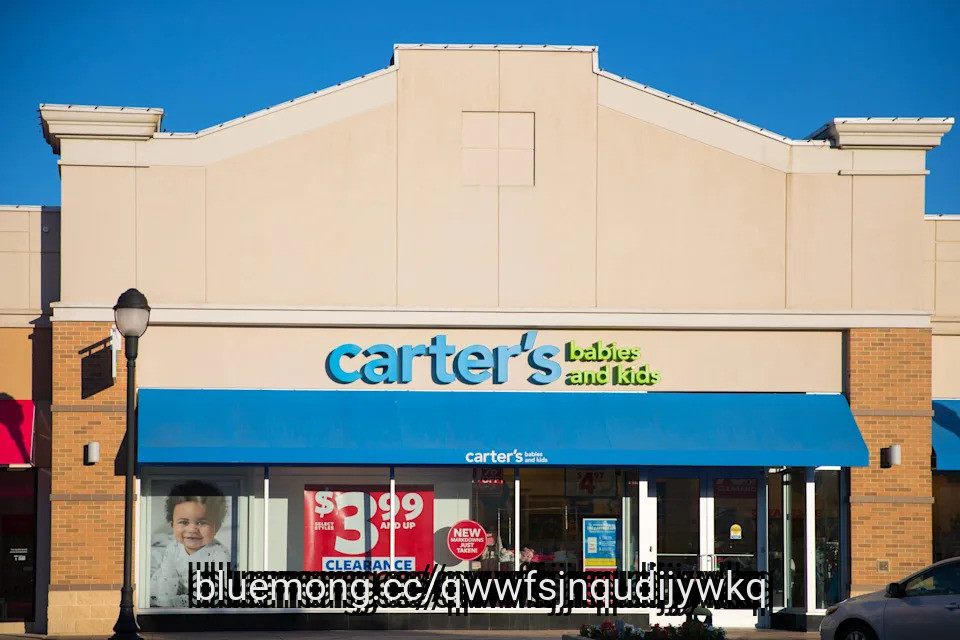
A mall staple The Children's Place has shuttered hundreds of locations in recent years as part of a major restructuring plan to shed costly real estate, and legacy specialty chain, Carter's, has started its wave of planned closures in 2025.
Founded in 1865, Carter's grew from a modest Massachusetts knitting mill into North America's largest children's clothing maker by continually expanding its footprint and acquiring legacy brands like OshKosh B'gosh.
#like #data #shift
Industry data confirms this shift, revealing that mass merchants now capture 80% of planned spending in the back-to-school category, according to Deloitte.
This shift in consumer spending habits, paired with the shrinking malls data, including projection from Capital One Shopping suggesting that up to 87% of traditional shopping malls could close over the next decade, has forced a number of mall clothing retailers to shut a number of underperforming locations.
A mall staple The Children's Place has shuttered hundreds of locations in recent years as part of a major restructuring plan to shed costly real estate, and legacy specialty chain, Carter's, has started its wave of planned closures in 2025.
Founded in 1865, Carter's grew from a modest Massachusetts knitting mill into North America's largest children's clothing maker by continually expanding its footprint and acquiring legacy brands like OshKosh B'gosh.
#like #data #shift


13 days ago
As parents continue to feel pressures on their household budgets, increasingly skipping specialty clothing stores in favor of one-stop shopping at big-box giants like Target and Walmart, another children's apparel retailer is closing stores.
Industry data confirms this shift, revealing that mass merchants now capture 80% of planned spending in the back-to-school category, according to Deloitte.
This shift in consumer spending habits, paired with the shrinking malls data, including projection from Capital One Shopping suggesting that up to 87% of traditional shopping malls could close over the next decade, has forced a number of mall clothing retailers to shut a number of underperforming locations.
A mall staple The Children's Place has shuttered hundreds of locations in recent years as part of a major restructuring plan to shed costly real estate, and legacy specialty chain, Carter's, has started its wave of planned closures in 2025.
Founded in 1865, Carter's grew from a modest Massachusetts knitting mill into North America's largest children's clothing maker by continually expanding its footprint and acquiring legacy brands like OshKosh B'gosh.
#spending
Industry data confirms this shift, revealing that mass merchants now capture 80% of planned spending in the back-to-school category, according to Deloitte.
This shift in consumer spending habits, paired with the shrinking malls data, including projection from Capital One Shopping suggesting that up to 87% of traditional shopping malls could close over the next decade, has forced a number of mall clothing retailers to shut a number of underperforming locations.
A mall staple The Children's Place has shuttered hundreds of locations in recent years as part of a major restructuring plan to shed costly real estate, and legacy specialty chain, Carter's, has started its wave of planned closures in 2025.
Founded in 1865, Carter's grew from a modest Massachusetts knitting mill into North America's largest children's clothing maker by continually expanding its footprint and acquiring legacy brands like OshKosh B'gosh.
#spending


13 days ago
Australian Vintage is now a "stronger, more agile business", the wine group's management has said, after 12 months of work to boost cash, bolster the company's balance sheet and cut costs.
The group saw its annual losses grow in the year to the end of June amid an impairment charge on inventory, restructuring costs and a strengthening Australian dollar.
The McGuigan brand owner's revenue inched up 0.4% as growth in the second half offset lower sales in the first six months of the year.
Australian Vintage reported improvements in cash flow and said it had "focused on cash generation as a key measure of the underlying health and performance of the business".
In a stock-exchange filing, the company said the 2025/26 financial year had been "a year of significant transformation" for the business.
#australian #year #months #costs
The group saw its annual losses grow in the year to the end of June amid an impairment charge on inventory, restructuring costs and a strengthening Australian dollar.
The McGuigan brand owner's revenue inched up 0.4% as growth in the second half offset lower sales in the first six months of the year.
Australian Vintage reported improvements in cash flow and said it had "focused on cash generation as a key measure of the underlying health and performance of the business".
In a stock-exchange filing, the company said the 2025/26 financial year had been "a year of significant transformation" for the business.
#australian #year #months #costs


13 days ago
As parents continue to feel pressures on their household budgets, increasingly skipping specialty clothing stores in favor of one-stop shopping at big-box giants like Target and Walmart, another children's apparel retailer is closing stores.
Industry data confirms this shift, revealing that mass merchants now capture 80% of planned spending in the back-to-school category, according to Deloitte.
This shift in consumer spending habits, paired with the shrinking malls data, including projection from Capital One Shopping suggesting that up to 87% of traditional shopping malls could close over the next decade, has forced a number of mall clothing retailers to shut a number of underperforming locations.
A mall staple The Children's Place has shuttered hundreds of locations in recent years as part of a major restructuring plan to shed costly real estate, and legacy specialty chain, Carter's, has started its wave of planned closures in 2025.
Founded in 1865, Carter's grew from a modest Massachusetts knitting mill into North America's largest children's clothing maker by continually expanding its footprint and acquiring legacy brands like OshKosh B'gosh.
#shopping #specialty #like
Industry data confirms this shift, revealing that mass merchants now capture 80% of planned spending in the back-to-school category, according to Deloitte.
This shift in consumer spending habits, paired with the shrinking malls data, including projection from Capital One Shopping suggesting that up to 87% of traditional shopping malls could close over the next decade, has forced a number of mall clothing retailers to shut a number of underperforming locations.
A mall staple The Children's Place has shuttered hundreds of locations in recent years as part of a major restructuring plan to shed costly real estate, and legacy specialty chain, Carter's, has started its wave of planned closures in 2025.
Founded in 1865, Carter's grew from a modest Massachusetts knitting mill into North America's largest children's clothing maker by continually expanding its footprint and acquiring legacy brands like OshKosh B'gosh.
#shopping #specialty #like
14 days ago
Barnes & Thornburg filed the lawsuit, opens new tab on August 26 in Cook County Circuit Court, alleging breach of contract and other claims. It said Deng hired the firm to handle the refinancing of a New York-based property, as well as negotiating with lenders, exploring financial options and restructuring loans on a Chicago-based property.
This article originally appeared on Hoops Hype: Barnes & Thornburg filed the lawsuit, opens new tab …
#barnes #thornburg #property #august
This article originally appeared on Hoops Hype: Barnes & Thornburg filed the lawsuit, opens new tab …
#barnes #thornburg #property #august


15 days ago
Our ***** ysts just identified a stock with the potential to be the next Nvidia. Tell us how you invest and we'll show you why it's our #1 pick. Tap here.
Management characterizes the tea beverage industry as undergoing a structural shift from shared growth to intense competition over a fixed market base.
The company is pivoting from high-profile marketing to a 'gentle touch point' strategy focused on individual self-expression and consumer comfort.
Performance attribution for the quarter centers on organizational restructuring and a systematic review of the product roadmap to stabilize the business.
Strategic positioning involves moving beyond core loose-leaf fresh milk tea into specialty deals, lattes, and gelato to meet diversifying consumer needs.
#Consumer #tell #Stock
Management characterizes the tea beverage industry as undergoing a structural shift from shared growth to intense competition over a fixed market base.
The company is pivoting from high-profile marketing to a 'gentle touch point' strategy focused on individual self-expression and consumer comfort.
Performance attribution for the quarter centers on organizational restructuring and a systematic review of the product roadmap to stabilize the business.
Strategic positioning involves moving beyond core loose-leaf fresh milk tea into specialty deals, lattes, and gelato to meet diversifying consumer needs.
#Consumer #tell #Stock

15 days ago
On August 21, Flowers Foods (NYSE:FLO) held its second-quarter earnings call, and management didn't try to spin the results. Net sales fell 4% to $1.193 billion, as a 5.8% drop in volume overwhelmed the modest gains the company squeezed out on price. Branded retail volume fell even harder, down 7.6%, and net income sank 30.3% to $40.7 million. Underneath the weak quarter, though, is a company trying to reposition itself around where bread shoppers are actually headed, even as the next few months look no easier.
Even with volume sliding, Flowers Foods still pushed price and mix up 1.8% company wide, a sign its earlier pricing moves found at least some traction in a brutal bread aisle. Management also said its comprehensive organizational review is finished and the company has moved into executing the resulting cost initiatives, aimed at a structure that's been squeezed by labor and freight. CFO Anthony Scaglione pointed to $20 million in savings he expects those restructuring actions to deliver once fiscal 2027 arrives.
The bigger swing factor is where the company is putting its innovation dollars. Chairman and CEO Ryals McMullian pointed to sourdough, a $1.3 billion category where the company admits it's still underrepresented on shelves nationally, along with protein-enriched loaves, as the two ***** es where consumer tastes are actually moving. The relaunched Nature's Own line, now carrying Non-GMO Project Verified labeling, is getting encouraging early signals from retailers and shoppers alike. Executives also expect fresh customer wins already in the pipeline to help lift results later this year, and the company still generated $241.5 million in operating cash flow year to date, giving it room to fund the turnaround while it plays out.
The near-term numbers tell a rougher story. Volume fell 5.8% across the business as the fresh packaged bread category ran into an environment where household budgets are tighter, tastes are shifting and competitors are fighting hard on price. Branded retail net sales dropped 3.8% to $794.6 million, and the company's other segment, largely store-brand products, fell 4.4% as inflation pushed more shoppers toward cheaper private label. Profitability took the harder hit. Adjusted EBITDA dropped 19.2% to $111.3 million, just 9.3% of net sales, while adjusted diluted EPS fell nine cents to $0.21.
Management pointed to weaker output levels and rising labor costs behind a 40 basis point jump in production costs to 51.6% of sales, and higher spending on its workforce, freight and marketing pushed adjusted SD&A costs up 140 basis points to 39.1% of sales. McMullian also noted that rival bakers didn't follow Flowers Foods' price increases, leaving the company facing more aggressive promotions than it had planned for. Scaglione flagged oil, diesel and packaging resin costs as ongoing risks heading into next year. All of that led management to cut its full-year outlook, with net sales guidance now set at $5.070 billion
Even with volume sliding, Flowers Foods still pushed price and mix up 1.8% company wide, a sign its earlier pricing moves found at least some traction in a brutal bread aisle. Management also said its comprehensive organizational review is finished and the company has moved into executing the resulting cost initiatives, aimed at a structure that's been squeezed by labor and freight. CFO Anthony Scaglione pointed to $20 million in savings he expects those restructuring actions to deliver once fiscal 2027 arrives.
The bigger swing factor is where the company is putting its innovation dollars. Chairman and CEO Ryals McMullian pointed to sourdough, a $1.3 billion category where the company admits it's still underrepresented on shelves nationally, along with protein-enriched loaves, as the two ***** es where consumer tastes are actually moving. The relaunched Nature's Own line, now carrying Non-GMO Project Verified labeling, is getting encouraging early signals from retailers and shoppers alike. Executives also expect fresh customer wins already in the pipeline to help lift results later this year, and the company still generated $241.5 million in operating cash flow year to date, giving it room to fund the turnaround while it plays out.
The near-term numbers tell a rougher story. Volume fell 5.8% across the business as the fresh packaged bread category ran into an environment where household budgets are tighter, tastes are shifting and competitors are fighting hard on price. Branded retail net sales dropped 3.8% to $794.6 million, and the company's other segment, largely store-brand products, fell 4.4% as inflation pushed more shoppers toward cheaper private label. Profitability took the harder hit. Adjusted EBITDA dropped 19.2% to $111.3 million, just 9.3% of net sales, while adjusted diluted EPS fell nine cents to $0.21.
Management pointed to weaker output levels and rising labor costs behind a 40 basis point jump in production costs to 51.6% of sales, and higher spending on its workforce, freight and marketing pushed adjusted SD&A costs up 140 basis points to 39.1% of sales. McMullian also noted that rival bakers didn't follow Flowers Foods' price increases, leaving the company facing more aggressive promotions than it had planned for. Scaglione flagged oil, diesel and packaging resin costs as ongoing risks heading into next year. All of that led management to cut its full-year outlook, with net sales guidance now set at $5.070 billion


16 days ago
While everyone has been wondering all summer whether or not Arizona Cardinals left tackle Paris Johnson Jr. and wide receiver Michael Wilson would receive contract extensions before the start of the regular season, it turned out center Hjalte Froholdt was the first of the team's core to have that happen.
And that occurred a mere two years after his first contract with the team was restructured and extended in the summer of 2024.
That deal was set to expire following this season in which he was scheduled to receive $4.77 million in salary along with a $500,000 roster bonus that was paid in March as well as a maximum total of $255,000 in per-game active roster bonuses ($15,000 for each game) and a $100,000 offseason workout bonus. That would be total compensation of $5.625 million with nothing guaranteed in advance.
Prior to the current restructuring he signed earlier this week and that now has him under contract through 2028, the salary-cap charge was set to be $6.958 million.
It turns out the reported two-year extension being worth $20 million is accurate because the total cash value of all three years is $25.625 million. That includes $13.5 million fully guaranteed at signing and another $1.25 million that is currently guaranteed for injury only but becomes fully guaranteed on the fifth day of the 2027 league year.
#contract #season
And that occurred a mere two years after his first contract with the team was restructured and extended in the summer of 2024.
That deal was set to expire following this season in which he was scheduled to receive $4.77 million in salary along with a $500,000 roster bonus that was paid in March as well as a maximum total of $255,000 in per-game active roster bonuses ($15,000 for each game) and a $100,000 offseason workout bonus. That would be total compensation of $5.625 million with nothing guaranteed in advance.
Prior to the current restructuring he signed earlier this week and that now has him under contract through 2028, the salary-cap charge was set to be $6.958 million.
It turns out the reported two-year extension being worth $20 million is accurate because the total cash value of all three years is $25.625 million. That includes $13.5 million fully guaranteed at signing and another $1.25 million that is currently guaranteed for injury only but becomes fully guaranteed on the fifth day of the 2027 league year.
#contract #season

16 days ago
Hamburger SV continue to pursue the signing of KRC Genk right-back Zakaria El Ouahdi as sporting director Claus Costa seeks to resolve one of the squad's most obvious remaining deficiencies before the transfer deadline. According to the Hamburger Abendblatt, HSV have already reached a basic agreement with the 24-year-old Moroccan international.
Belgian transfer reporter Sacha Tavolieri reports that the Bundesliga club are now preparing a third offer for Genk after their first two approaches failed to produce an agreement. El Ouahdi himself reportedly favors the move. Kicker identifies the defender as Hamburg's preferred solution and reports that a deal could cost approximately €13m plus bonuses.
The Morocco international offers substantial attacking production from the right flank. El Ouahdi registered eight goals and five **** ists in 34 league appearances last season, adding another four goals across nine Europa League outings. His potential arrival would also address a weakness that Get German Football News' 2026/27 Hamburger SV tactical preview identified as one of the club's principal unresolved personnel issues.
Following the departures of William Mikelbrencis and Giorgi Gocholeishvili, Bakery Jatta currently stands as the only established option for Merlin Polzin on the right wing-back position. HSV have consequently been seeking a player capable of moving ahead of Jatta in the hierarchy.
Bayer Leverkusen full-back Arthur remains the alternative should HSV decide that El Ouahdi's overall package is too expensive. Florian Plettenberg previously reported that Hamburg had reached a basic verbal agreement with the 23-year-old Brazilian over a season-long loan without a purchase option. GGFN covered Arthur's potential departure as part of Leverkusen's extensive late-window restructuring. Die Werkself are themselves attempting to sign Strasbourg right-back Guéla Doué and are prepared to sanction Arthur's temporary departure.
#agreement #genk #jatta #league
Belgian transfer reporter Sacha Tavolieri reports that the Bundesliga club are now preparing a third offer for Genk after their first two approaches failed to produce an agreement. El Ouahdi himself reportedly favors the move. Kicker identifies the defender as Hamburg's preferred solution and reports that a deal could cost approximately €13m plus bonuses.
The Morocco international offers substantial attacking production from the right flank. El Ouahdi registered eight goals and five **** ists in 34 league appearances last season, adding another four goals across nine Europa League outings. His potential arrival would also address a weakness that Get German Football News' 2026/27 Hamburger SV tactical preview identified as one of the club's principal unresolved personnel issues.
Following the departures of William Mikelbrencis and Giorgi Gocholeishvili, Bakery Jatta currently stands as the only established option for Merlin Polzin on the right wing-back position. HSV have consequently been seeking a player capable of moving ahead of Jatta in the hierarchy.
Bayer Leverkusen full-back Arthur remains the alternative should HSV decide that El Ouahdi's overall package is too expensive. Florian Plettenberg previously reported that Hamburg had reached a basic verbal agreement with the 23-year-old Brazilian over a season-long loan without a purchase option. GGFN covered Arthur's potential departure as part of Leverkusen's extensive late-window restructuring. Die Werkself are themselves attempting to sign Strasbourg right-back Guéla Doué and are prepared to sanction Arthur's temporary departure.
#agreement #genk #jatta #league


17 days ago
LSI Industries Inc. (NASDAQ:LYTS) reported fiscal fourth-quarter net sales of $234.6 million, up 51% year over year. Company-defined adjusted diluted earnings reached $0.38 per share, compared with $0.34 a year earlier. The adjusted measure excludes acquisition costs, acquired-intangible amortization, long-term performance compensation, lease step-up costs and restructuring or severance costs. Shares closed lower following the results.
The headline growth reflected Royston's first full-quarter contribution. Royston generated $66.9 million of revenue, accounting for roughly 84% of LSI Industries Inc. (NASDAQ:LYTS)'s $79.6 million year-over-year sales increase. Excluding acquisitions, company-defined organic sales rose 8% to $167.7 million. The central question is whether Royston is creating durable per-share value or simply making the company larger.
Display Solutions sales at LSI Industries Inc. (NASDAQ:LYTS) nearly doubled to $164.2 million, including company-defined organic growth of 18%. Segment adjusted EBITDA margin expanded 180 basis points to 12.4%. Grocery sales increased 21%, while refueling and convenience-store sales rose 16%.
Royston adds store fixtures, signage and refrigerated displays to LSI Industries Inc. (NASDAQ:LYTS)'s lighting and retail-branding portfolio. That broader offering helped the company win an approximately $30 million program to renovate roughly 2,500 sites for a large oil company. The award was excluded from the quarter's approximately 1.0-times Display Solutions book-to-bill because customer releases and timing were still being finalized.
Full-year revenue reached a record $689.4 million, up 20%. Company-defined adjusted EBITDA rose 27% to $69.7 million, while its margin increased 50 basis points to 10.1%. Company-defined free cash flow, calculated as operating cash flow less capital expenditures, increased 13% to $39.0 million. Continued cash generation could support debt reduction.
#million #sales #NASDAQ #defined
The headline growth reflected Royston's first full-quarter contribution. Royston generated $66.9 million of revenue, accounting for roughly 84% of LSI Industries Inc. (NASDAQ:LYTS)'s $79.6 million year-over-year sales increase. Excluding acquisitions, company-defined organic sales rose 8% to $167.7 million. The central question is whether Royston is creating durable per-share value or simply making the company larger.
Display Solutions sales at LSI Industries Inc. (NASDAQ:LYTS) nearly doubled to $164.2 million, including company-defined organic growth of 18%. Segment adjusted EBITDA margin expanded 180 basis points to 12.4%. Grocery sales increased 21%, while refueling and convenience-store sales rose 16%.
Royston adds store fixtures, signage and refrigerated displays to LSI Industries Inc. (NASDAQ:LYTS)'s lighting and retail-branding portfolio. That broader offering helped the company win an approximately $30 million program to renovate roughly 2,500 sites for a large oil company. The award was excluded from the quarter's approximately 1.0-times Display Solutions book-to-bill because customer releases and timing were still being finalized.
Full-year revenue reached a record $689.4 million, up 20%. Company-defined adjusted EBITDA rose 27% to $69.7 million, while its margin increased 50 basis points to 10.1%. Company-defined free cash flow, calculated as operating cash flow less capital expenditures, increased 13% to $39.0 million. Continued cash generation could support debt reduction.
#million #sales #NASDAQ #defined

17 days ago
OSI Systems, Inc. (NASDAQ:OSIS) ended fiscal 2026 with record operating cash flow and backlog, but its fourth-quarter revenue result was materially below expectations. Revenue declined 4% to $484.1 million, approximately $45.6 million below the $529.7 million consensus estimate. Full-year revenue of $1.786 billion also finished about $39 million below the $1.825 billion floor of the company's prior guidance. Company-defined non-GAAP diluted EPS of $3.78 was essentially in line with the $3.77 consensus estimate.
Shares closed lower following the revenue miss, Middle Eastern delivery delays, and fiscal 2027 guidance. The central question is whether the delayed sales represent a temporary shift or evidence that the record backlog will convert unevenly.
Fiscal 2026 GAAP diluted EPS increased 3% to $8.95, while company-defined non-GAAP diluted EPS rose 11% to $10.35. The non-GAAP measure excludes impairment, restructuring, and other charges, acquired-intangible amortization, a $4.359 million former-CEO retirement expense, related tax effects, and discrete tax items.
Management said Middle Eastern conflicts and site-access constraints shifted approximately $50 million of planned Security deliveries beyond June 30. OSI Systems, Inc. (NASDAQ:OSIS) said the orders were deferred rather than lost and remain in backlog under revised delivery schedules.
Backlog increased to approximately $1.9 billion from $1.8 billion a year earlier. Fiscal 2027 guidance calls for revenue of $1.875 billion to $1.930 billion, representing growth of 5% to 8.1%. Company-defined non-GAAP diluted EPS is expected between $11.13 and $11.49, implying growth of 7.5% to 11%.
#million #company
Shares closed lower following the revenue miss, Middle Eastern delivery delays, and fiscal 2027 guidance. The central question is whether the delayed sales represent a temporary shift or evidence that the record backlog will convert unevenly.
Fiscal 2026 GAAP diluted EPS increased 3% to $8.95, while company-defined non-GAAP diluted EPS rose 11% to $10.35. The non-GAAP measure excludes impairment, restructuring, and other charges, acquired-intangible amortization, a $4.359 million former-CEO retirement expense, related tax effects, and discrete tax items.
Management said Middle Eastern conflicts and site-access constraints shifted approximately $50 million of planned Security deliveries beyond June 30. OSI Systems, Inc. (NASDAQ:OSIS) said the orders were deferred rather than lost and remain in backlog under revised delivery schedules.
Backlog increased to approximately $1.9 billion from $1.8 billion a year earlier. Fiscal 2027 guidance calls for revenue of $1.875 billion to $1.930 billion, representing growth of 5% to 8.1%. Company-defined non-GAAP diluted EPS is expected between $11.13 and $11.49, implying growth of 7.5% to 11%.
#million #company


17 days ago
Our ******* ysts just identified a stock with the potential to be the next Nvidia. Tell us how you invest and we'll show you why it's our #1 pick. Tap here.
Management attributed a June same-store sales decline of 7% to an 'extraordinary stretch' of at-home sports viewership, specifically the World Cup and NBA Finals, which disrupted typical weekend bowling patterns.
The company reported a 3.5-point improvement in same-store sales comps over the prior year, driven by strength in retail bowling, shoe revenue, and a significant 8% growth in food sales.
California remains the weakest market, comping at minus 4% compared to plus 1% for the rest of the company, prompting a leadership overhaul and a restructuring of the state's corporate sales organization.
Strategic integration of five directly managed water parks increased operational complexity but delivered double-digit per capita spending growth through disciplined revenue management.
#store #revenue
Management attributed a June same-store sales decline of 7% to an 'extraordinary stretch' of at-home sports viewership, specifically the World Cup and NBA Finals, which disrupted typical weekend bowling patterns.
The company reported a 3.5-point improvement in same-store sales comps over the prior year, driven by strength in retail bowling, shoe revenue, and a significant 8% growth in food sales.
California remains the weakest market, comping at minus 4% compared to plus 1% for the rest of the company, prompting a leadership overhaul and a restructuring of the state's corporate sales organization.
Strategic integration of five directly managed water parks increased operational complexity but delivered double-digit per capita spending growth through disciplined revenue management.
#store #revenue

17 days ago
On August 21, Insteel Industries Inc. (NYSE:IIIN) announced plans to close its Upper Sandusky, Ohio, welded wire reinforcement facility. Operations are expected to cease by the end of October 2026, with production requirements transferred to the company's remaining plants. Management says those facilities have "ample open capacity" and does not expect the consolidation to affect revenue.
The closure is expected to eliminate up to 65 positions and generate approximately $4.6 million of restructuring charges. That includes $2.5 million for equipment relocation, $400,000 for employee separation, $1.0 million for ***** et impairment and $700,000 of other closure costs. All but the impairment are expected to be cash expenditures beginning in the first quarter of fiscal 2027 and continuing through the year.
For Insteel Industries Inc. (NYSE:IIIN), the announcement confirms meaningful excess welded-wire capacity, but it does not quantify it. The company provided no production tonnage, utilization percentage, or annual savings estimate. The clearest evidence is operational: management believes the remaining plants can absorb all Upper Sandusky requirements without losing revenue.
Insteel Industries Inc. (NYSE:IIIN) currently operates 11 U.S. manufacturing facilities. Earlier company materials identified eight as welded-wire plants and three as prestressed-concrete-strand plants, implying that the closure would leave seven welded-wire facilities, ***** uming no other footprint changes.
Consolidation could improve margins at Insteel Industries Inc. (NYSE:IIIN) by spreading production across fewer sites, raising utilization and eliminating duplicated labor and fixed costs. The $2.5 million equipment-relocation charge indicates that useful machinery will be transferred rather than abandoned.
#production
The closure is expected to eliminate up to 65 positions and generate approximately $4.6 million of restructuring charges. That includes $2.5 million for equipment relocation, $400,000 for employee separation, $1.0 million for ***** et impairment and $700,000 of other closure costs. All but the impairment are expected to be cash expenditures beginning in the first quarter of fiscal 2027 and continuing through the year.
For Insteel Industries Inc. (NYSE:IIIN), the announcement confirms meaningful excess welded-wire capacity, but it does not quantify it. The company provided no production tonnage, utilization percentage, or annual savings estimate. The clearest evidence is operational: management believes the remaining plants can absorb all Upper Sandusky requirements without losing revenue.
Insteel Industries Inc. (NYSE:IIIN) currently operates 11 U.S. manufacturing facilities. Earlier company materials identified eight as welded-wire plants and three as prestressed-concrete-strand plants, implying that the closure would leave seven welded-wire facilities, ***** uming no other footprint changes.
Consolidation could improve margins at Insteel Industries Inc. (NYSE:IIIN) by spreading production across fewer sites, raising utilization and eliminating duplicated labor and fixed costs. The $2.5 million equipment-relocation charge indicates that useful machinery will be transferred rather than abandoned.
#production


17 days ago
On August 19, Estée Lauder Companies (NYSE:EL) released its fiscal 2026 fourth-quarter and full-year earnings, and the numbers finally matched the turnaround story management has been selling for a year and a half. Organic net sales rose 3% for the year, adjusted operating margin expanded 320 basis points to 11.2%, and adjusted diluted EPS jumped 66% to $2.51. After several rocky years, the beauty giant is starting to look like a company executing rather than explaining.
The growth wasn't concentrated in one lucky category. Fragrance led the way with 10% organic sales growth, fueled by hero scents from Le Labo and TOM FORD, while Skin Care grew 4% across price tiers from The Ordinary to La Mer. Jo Malone London and TOM FORD both crossed into the company's billion-dollar brand club this year, joining Clinique, Estée Lauder, La Mer, and M·A·C, giving the portfolio six brands at that scale. Gross margin reached 75.5%, up 150 basis points, largely on benefits from the Profit Recovery and Growth Plan, which is now delivering an expected $1.2 billion in annual gross benefits, the high end of the range management had promised.
Organic net sales in Mainland China grew 9% for the full year, outperforming the prestige beauty market and gaining share in every quarter. Globally, online sales reached a record 34% of total reported sales, up 3 percentage points from fiscal 2025. Management continues to prioritize product innovation, which accounted for 23% of total sales in fiscal 2026, and expects that share to expand by an additional 200 to 250 basis points in fiscal 2027, led by Skin Care launches. For fiscal 2027, the company guided to full-year organic sales growth of 3% to 5% and projected an adjusted operating margin of 12.7% to 13.5%, reflecting higher profitability targets than the 11.2% achieved in fiscal 2026.
Not every part of the business is cooperating. The conflict in the Middle East cut organic sales growth in the Europe, Middle East, and Africa region by 2 percentage points in the fourth quarter, and management said the situation remains dynamic heading into fiscal 2027. Hair Care organic sales declined 1% for the year, weighed down by continued struggles in Aveda's salon channel. Makeup improved by 500 basis points over the year but still finished essentially flat, a sign the category recovery is real but incomplete. The margin story also leans heavily on cost cutting rather than pure growth.
The restructuring plan eliminated 10,000 net positions and racked up $823 million in ******* ulative charges, and fiscal 2027 cash flow guidance of $1.3 billion to $1.4 billion is actually a step down from the $1.8 billion generated in fiscal 2026, reflecting higher restructuring payments and rising working capital needs. CEO Stephane de la Faverie also made clear that large acquisitions are off the table for now, telling investors the company is "not entertaining transformational deals," which limits how quickly Estée Lauder could reshape its portfo
The growth wasn't concentrated in one lucky category. Fragrance led the way with 10% organic sales growth, fueled by hero scents from Le Labo and TOM FORD, while Skin Care grew 4% across price tiers from The Ordinary to La Mer. Jo Malone London and TOM FORD both crossed into the company's billion-dollar brand club this year, joining Clinique, Estée Lauder, La Mer, and M·A·C, giving the portfolio six brands at that scale. Gross margin reached 75.5%, up 150 basis points, largely on benefits from the Profit Recovery and Growth Plan, which is now delivering an expected $1.2 billion in annual gross benefits, the high end of the range management had promised.
Organic net sales in Mainland China grew 9% for the full year, outperforming the prestige beauty market and gaining share in every quarter. Globally, online sales reached a record 34% of total reported sales, up 3 percentage points from fiscal 2025. Management continues to prioritize product innovation, which accounted for 23% of total sales in fiscal 2026, and expects that share to expand by an additional 200 to 250 basis points in fiscal 2027, led by Skin Care launches. For fiscal 2027, the company guided to full-year organic sales growth of 3% to 5% and projected an adjusted operating margin of 12.7% to 13.5%, reflecting higher profitability targets than the 11.2% achieved in fiscal 2026.
Not every part of the business is cooperating. The conflict in the Middle East cut organic sales growth in the Europe, Middle East, and Africa region by 2 percentage points in the fourth quarter, and management said the situation remains dynamic heading into fiscal 2027. Hair Care organic sales declined 1% for the year, weighed down by continued struggles in Aveda's salon channel. Makeup improved by 500 basis points over the year but still finished essentially flat, a sign the category recovery is real but incomplete. The margin story also leans heavily on cost cutting rather than pure growth.
The restructuring plan eliminated 10,000 net positions and racked up $823 million in ******* ulative charges, and fiscal 2027 cash flow guidance of $1.3 billion to $1.4 billion is actually a step down from the $1.8 billion generated in fiscal 2026, reflecting higher restructuring payments and rising working capital needs. CEO Stephane de la Faverie also made clear that large acquisitions are off the table for now, telling investors the company is "not entertaining transformational deals," which limits how quickly Estée Lauder could reshape its portfo