

1 month ago
On September 9, 2026, Reuters reported that Alphabet Inc. (NASDAQ:GOOGL)'s Google will invest at least €13 billion, or about $15.1 billion, in AI infrastructure in Finland over the next two years, its biggest European investment, including three new data centers and a 22-year deal for up to 50% of the output of one of Finland's two nuclear power plants. The agreement with Finnish utility Fortum is Google's first nuclear energy deal outside the United States, and Fortum's stock jumped as much as 15.5% on the news, its biggest gain in Europe that day.
Finland gives Alphabet Inc. (NASDAQ:GOOGL) a potentially more cost-efficient location for its expanding AI infrastructure. Google plans to invest at least €13 billion ($15.1 billion) in three new data centers and related infrastructure in Finland during 2027 and 2028. The country's cold climate can reduce the need for energy-intensive cooling. The investment will also help grid improvements, clean-energy projects and battery storage.
The 22-year nuclear power agreement gives Google greater control over a critical input for AI infrastructure. Google will purchase up to 50% of the electricity generated by Finland's Loviisa nuclear plant, providing a long-term source of low-carbon power for its data-center operations. The agreement also gives Fortum greater economic certainty to extend and upgrade the plant through 2050. Google and Fortum plan to explore more nuclear and renewable projects.
Alphabet has strong demand drivers that can justify investment in AI capacity. The firm has increased its 2026 global capital investment target to $195 billion-$205 billion as it seeks to capture growing AI computing demand. Google is using the additional infrastructure to support Gemini, Search, Maps, and YouTube. It gives Alphabet multiple major products through which it can monetize greater AI capacity over time.
The Finland project adds another major commitment to Alphabet Inc. (NASDAQ:GOOGL)'s already enormous AI spending program. Alphabet expects to spend $195 billion-$205 billion on capital investment globally in 2026. The Finnish project will require at least another €13 billion during 2027 and 2028. Investors need Alphabet to make enough incremental revenue and cash flow from AI services to justify an infrastructure buildout that is rapidly increasing the company's capital requirements.
#billion #Google #investment #googl
Finland gives Alphabet Inc. (NASDAQ:GOOGL) a potentially more cost-efficient location for its expanding AI infrastructure. Google plans to invest at least €13 billion ($15.1 billion) in three new data centers and related infrastructure in Finland during 2027 and 2028. The country's cold climate can reduce the need for energy-intensive cooling. The investment will also help grid improvements, clean-energy projects and battery storage.
The 22-year nuclear power agreement gives Google greater control over a critical input for AI infrastructure. Google will purchase up to 50% of the electricity generated by Finland's Loviisa nuclear plant, providing a long-term source of low-carbon power for its data-center operations. The agreement also gives Fortum greater economic certainty to extend and upgrade the plant through 2050. Google and Fortum plan to explore more nuclear and renewable projects.
Alphabet has strong demand drivers that can justify investment in AI capacity. The firm has increased its 2026 global capital investment target to $195 billion-$205 billion as it seeks to capture growing AI computing demand. Google is using the additional infrastructure to support Gemini, Search, Maps, and YouTube. It gives Alphabet multiple major products through which it can monetize greater AI capacity over time.
The Finland project adds another major commitment to Alphabet Inc. (NASDAQ:GOOGL)'s already enormous AI spending program. Alphabet expects to spend $195 billion-$205 billion on capital investment globally in 2026. The Finnish project will require at least another €13 billion during 2027 and 2028. Investors need Alphabet to make enough incremental revenue and cash flow from AI services to justify an infrastructure buildout that is rapidly increasing the company's capital requirements.
#billion #Google #investment #googl


1 month ago
The transition toward renewable energy is creating massive opportunities for infrastructure providers. Eos Energy Enterprises (NASDAQ:EOSE) and GE Vernova (NYSE:GEV) represent two distinct ways to play this trend in 2026.
Eos focuses on specialized zinc-based batteries for long-duration energy storage. GE Vernova is a diversified giant that services a massive portion of the world's electricity grid. Comparing these two helps clarify whether you prefer a high-growth disruptor or an established power leader.
Eos Energy Enterprises produces aqueous zinc batteries designed as a safer, scalable alternative to lithium-ion. It operates primarily within the industrial stocks **** e, targeting utilities and commercial developers. Customer concentration like this adds a layer of risk to the business, as two clients accounted for approximately 70% of total revenue in 2025.
In FY 2025, revenue reached approximately $114.2 million. This represents growth of nearly 631.8% compared to the prior fiscal year. The company reported a pre-tax net loss of roughly $969.6 million, resulting in a negative net margin of approximately 849.1%.
As of its December 2025 balance sheet, the company had a debt-to-equity ratio of -1.0x. This value indicates that total liabilities exceed shareholder equity. The current ratio, which measures the ability to cover short term obligations with short term **** ets, was approximately 4.9x, while free cash flow was nearly negative $265.0 million.
#enterprises #massive #Growth
Eos focuses on specialized zinc-based batteries for long-duration energy storage. GE Vernova is a diversified giant that services a massive portion of the world's electricity grid. Comparing these two helps clarify whether you prefer a high-growth disruptor or an established power leader.
Eos Energy Enterprises produces aqueous zinc batteries designed as a safer, scalable alternative to lithium-ion. It operates primarily within the industrial stocks **** e, targeting utilities and commercial developers. Customer concentration like this adds a layer of risk to the business, as two clients accounted for approximately 70% of total revenue in 2025.
In FY 2025, revenue reached approximately $114.2 million. This represents growth of nearly 631.8% compared to the prior fiscal year. The company reported a pre-tax net loss of roughly $969.6 million, resulting in a negative net margin of approximately 849.1%.
As of its December 2025 balance sheet, the company had a debt-to-equity ratio of -1.0x. This value indicates that total liabilities exceed shareholder equity. The current ratio, which measures the ability to cover short term obligations with short term **** ets, was approximately 4.9x, while free cash flow was nearly negative $265.0 million.
#enterprises #massive #Growth


1 month ago
Phillips 66 (NYSE:PSX) has been on a strong rally this year, posting gains of over 110% since the beginning of 2026. The outperformance has been driven by an unusually sharp surge in global refining margins amid the war in the Middle East, which has significantly tightened the world's refining capacity and reduced supplies of gasoline, diesel, and jet fuel.
Given Phillips 66's substantial outperformance compared to the wider market, investors may be questioning whether the stock's record-setting run has reached its peak. However, the ****** ysts over at BMO Capital see further upside ahead. On September 17, the firm raised its price target on PSX from $260 to $310, while maintaining an 'Outperform' rating on the shares. The target boost implies an upside of 13% from the current levels and even exceeds the stock's all-time high of over $274 achieved earlier this month.
BMO Capital highlighted Phillips 66's integrated business model, noting that it has gained momentum and outperformed its individual segments, supported by strong execution across the portfolio. While Refining and Renewables remain the cyclical leaders, BMO also sees a favorable medium-term growth outlook for the company's Midstream business.
BMO Capital's vote of confidence comes amid a broader optimism surrounding Phillips 66, with ****** ysts from Morgan Stanley, Raymon James, UBS, and several others also improving their respective outlooks on PSX. This suggests that Wall Street expects the ongoing refining upcycle to last longer than previously expected, particularly following the renewed escalations between Iran and the United States.
The supply disruptions now extend beyond the troubled region, as a recent wave of Ukrainian attacks on Russian refineries has further reduced global refining capacity and provided further support to margins.
#further #margins #amid
Given Phillips 66's substantial outperformance compared to the wider market, investors may be questioning whether the stock's record-setting run has reached its peak. However, the ****** ysts over at BMO Capital see further upside ahead. On September 17, the firm raised its price target on PSX from $260 to $310, while maintaining an 'Outperform' rating on the shares. The target boost implies an upside of 13% from the current levels and even exceeds the stock's all-time high of over $274 achieved earlier this month.
BMO Capital highlighted Phillips 66's integrated business model, noting that it has gained momentum and outperformed its individual segments, supported by strong execution across the portfolio. While Refining and Renewables remain the cyclical leaders, BMO also sees a favorable medium-term growth outlook for the company's Midstream business.
BMO Capital's vote of confidence comes amid a broader optimism surrounding Phillips 66, with ****** ysts from Morgan Stanley, Raymon James, UBS, and several others also improving their respective outlooks on PSX. This suggests that Wall Street expects the ongoing refining upcycle to last longer than previously expected, particularly following the renewed escalations between Iran and the United States.
The supply disruptions now extend beyond the troubled region, as a recent wave of Ukrainian attacks on Russian refineries has further reduced global refining capacity and provided further support to margins.
#further #margins #amid


1 month ago
With a market cap of $48 billion, Entergy Corporation (ETR) is an energy company that generates, transmits, and distributes electricity to millions of customers across Arkansas, Louisiana, Mississippi, and Texas. The company focuses on providing reliable and affordable energy while investing in a more resilient and cleaner energy system through natural gas, nuclear, and renewable generation.
Companies valued at $10 billion or more are generally considered "large-cap" stocks, and Entergy fits this criterion perfectly. Entergy also contributes to the communities it serves through philanthropy, volunteerism, and advocacy, reinforcing its commitment to sustainability and corporate citizenship.
Billionaire Charlie Munger, Who Died at 99, Skipped Insurance on His Mansion Since He Could Just Write a Check to Rebuild — 'All Intelligent People Do It My Way'
The Case for Selling CrowdStrike Stock
Dear Tesla Stock Fans, Mark Your Calendars for October 1
#energy #company
Companies valued at $10 billion or more are generally considered "large-cap" stocks, and Entergy fits this criterion perfectly. Entergy also contributes to the communities it serves through philanthropy, volunteerism, and advocacy, reinforcing its commitment to sustainability and corporate citizenship.
Billionaire Charlie Munger, Who Died at 99, Skipped Insurance on His Mansion Since He Could Just Write a Check to Rebuild — 'All Intelligent People Do It My Way'
The Case for Selling CrowdStrike Stock
Dear Tesla Stock Fans, Mark Your Calendars for October 1
#energy #company


1 month ago
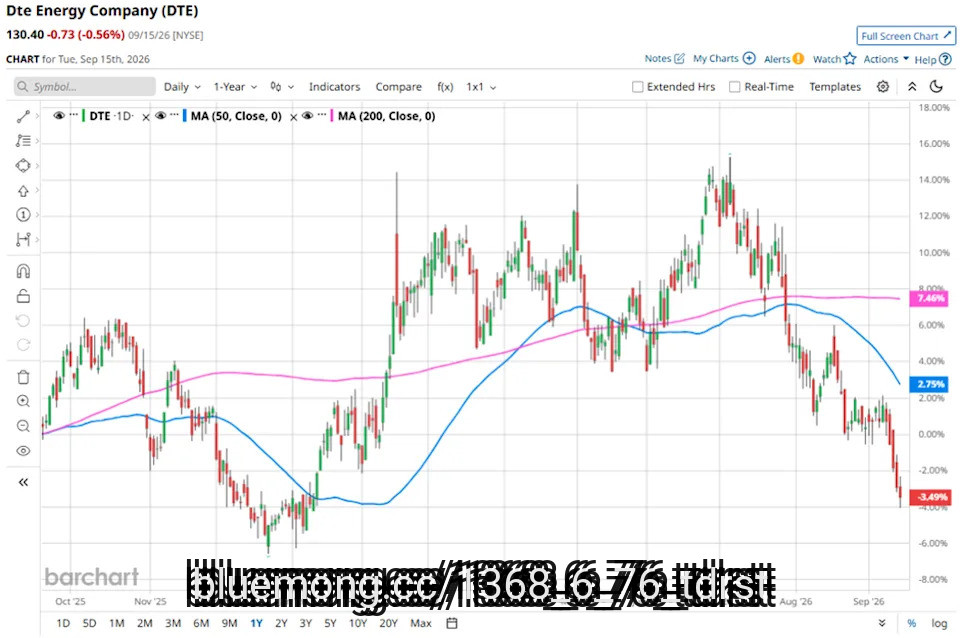
With a market cap of $27.1 billion, DTE Energy Company (DTE) is a diversified energy company engaged in energy-related businesses and services across the United States. Its operations include electric and natural gas utilities serving millions of customers in Michigan, along with businesses focused on custom energy solutions, renewable energy, and energy marketing and trading.
Companies worth more than $10 billion are generally labeled as "large-cap" stocks and DTE Energy fits this criterion perfectly. DTE Energy is also committed to accelerating carbon reduction, supporting community development, and promoting economic progress through philanthropy, education, employment initiatives, and volunteerism
Billionaire Charlie Munger, Who Died at 99, Skipped Insurance on His Mansion Since He Could Just Write a Check to Rebuild — 'All Intelligent People Do It My Way'
Nvidia CEO Jensen Huang Just Dropped Huge News for This Cybersecurity Stock
How to Play GME Stock as GameStop CEO Ryan Cohen Buys $20.3 Million in Shares
#energy #billion #businesses #states
Companies worth more than $10 billion are generally labeled as "large-cap" stocks and DTE Energy fits this criterion perfectly. DTE Energy is also committed to accelerating carbon reduction, supporting community development, and promoting economic progress through philanthropy, education, employment initiatives, and volunteerism
Billionaire Charlie Munger, Who Died at 99, Skipped Insurance on His Mansion Since He Could Just Write a Check to Rebuild — 'All Intelligent People Do It My Way'
Nvidia CEO Jensen Huang Just Dropped Huge News for This Cybersecurity Stock
How to Play GME Stock as GameStop CEO Ryan Cohen Buys $20.3 Million in Shares
#energy #billion #businesses #states


1 month ago
A European independent power producer is expanding its ******* et base on the continent. Israel-headquartered Econergy on September 15 said it is entering the French market with a €134-million ($155 million) acquisition of Escofi, a private wind energy platform of about 740 MW.Econergy, which has offices across Europe, said the deal significantly expands the company's European wind ******* et base, bringing its total renewable portfolio to 13 GW. Escofi, founded in 1988, originates, finances, builds, and operates onshore wind projects, with its wind energy portfolio across four development stages: 128 MW in commercial operation, 34 MW under construction, 147 MW in advanced development stage (with building permits and grid connection approvals in place and construction due to commence between 2028 and 2030), and 432 MW in early and mid-stage development.Escofi's portfolio is concentrated in the Hauts-de-France and Grand Est regions of northern France, which officials said have the strongest onshore wind conditions and regulatory environments in the country.
More than 90% of Escofi's operational and under-construction capacity benefits from 20-year contracted revenues under France's Contracts for Difference (CfDs) regime, providing a stable, long-term revenue stream for the portfolio. Escofi in July of this year secured additional CfDs for three more projects totaling 46 MW at prices above €80/MWh ($92/MWh) for 20-year terms, further strengthening the portfolio's contracted revenue base."The acquisition of Escofi is a significant strategic step for Econergy, establishing our presence in France and materially expanding our European wind platform," said Eyal Podhorzer, CEO of Econergy. "Escofi brings us a proven, 37-year-old French onshore wind operator with a high-quality operational fleet and a strong pipeline of projects with 20-year CfD revenues located in the best wind regions in France. Combined with our existing European platform, this gives Econergy a stronger and more geographically diversified base of long-term, contracted cash flows to build on."Escofi's 309 MW of operational, under-construction, and advanced-development projects are expected to generate annual revenues of €59-65 million and EBITDA of €47-53 million on a representative-year basis. By 2030, on completion of the projects under construction and the 147-MW advanced pipeline, Escofi's operational capacity is expected to reach about 300 MW, with project-level EBITDA of about €42–44 million. Escofi's effective ownership across projects stands at about 91%, and the 432-MW early- and mid-stage pipeline provides the platform's long-term growth runway, according to the company.
#econergy
More than 90% of Escofi's operational and under-construction capacity benefits from 20-year contracted revenues under France's Contracts for Difference (CfDs) regime, providing a stable, long-term revenue stream for the portfolio. Escofi in July of this year secured additional CfDs for three more projects totaling 46 MW at prices above €80/MWh ($92/MWh) for 20-year terms, further strengthening the portfolio's contracted revenue base."The acquisition of Escofi is a significant strategic step for Econergy, establishing our presence in France and materially expanding our European wind platform," said Eyal Podhorzer, CEO of Econergy. "Escofi brings us a proven, 37-year-old French onshore wind operator with a high-quality operational fleet and a strong pipeline of projects with 20-year CfD revenues located in the best wind regions in France. Combined with our existing European platform, this gives Econergy a stronger and more geographically diversified base of long-term, contracted cash flows to build on."Escofi's 309 MW of operational, under-construction, and advanced-development projects are expected to generate annual revenues of €59-65 million and EBITDA of €47-53 million on a representative-year basis. By 2030, on completion of the projects under construction and the 147-MW advanced pipeline, Escofi's operational capacity is expected to reach about 300 MW, with project-level EBITDA of about €42–44 million. Escofi's effective ownership across projects stands at about 91%, and the 432-MW early- and mid-stage pipeline provides the platform's long-term growth runway, according to the company.
#econergy


1 month ago
Choosing between a clean energy innovator and a traditional oil giant reflects a core tension in today's market. Investors must decide if Bloom Energy (NYSE:BE) or Diamondback Energy (NASDAQ:FANG) is the better buy.
Bloom Energy manufactures solid oxide fuel cells that provide reliable onsite power, targeting the surging demand from artificial intelligence infrastructure. Diamondback Energy focuses on extracting oil and gas from the Permian Basin, prioritizing operational efficiency and shareholder returns. While both operate in the energy **** e, their business models, risk profiles, and valuation metrics differ significantly for 2026 investors.
Bloom Energy serves as a prominent player among renewable energy stocks, focusing on solid oxide technology for onsite electricity and hydrogen production. The company targets large-load customers in the data center, semiconductor, and industrial sectors where power reliability is critical. Key partnerships include an agreement with American Electric Power (NASDAQ:AEP) to provide up to one gigawatt of fuel cells and a financing framework worth nearly $5.0 billion with Brookfield (NYSE:BN).
In FY 2025, Bloom Energy reported revenue of approximately $2.0 billion, which represents a growth rate of roughly 37.3% compared to the prior year. Despite this robust top-line performance, the company reported a net loss of nearly $88.4 million for the same period. This loss widened from a net loss of approximately $29.2 million in FY 2024, although the net margin of negative 4.4% in FY 2025 was a significant improvement over the negative 22.7% margin seen in FY 2023.
As of its December 2025 balance sheet, Bloom Energy holds a debt-to-equity ratio of 3.9x. This ratio measures total debt against shareholder equity, indicating the company relies moderately on borrowed funds to fuel its expansion. The current ratio, which measures a company's ability to cover short-term debts with its short-term **** ets, stands at a strong 6.0x. For FY 2025, free cash flow reached close to $57.2 million, which is the cash remaining after paying for operating costs and equipment investments.
#bloom #million
Bloom Energy manufactures solid oxide fuel cells that provide reliable onsite power, targeting the surging demand from artificial intelligence infrastructure. Diamondback Energy focuses on extracting oil and gas from the Permian Basin, prioritizing operational efficiency and shareholder returns. While both operate in the energy **** e, their business models, risk profiles, and valuation metrics differ significantly for 2026 investors.
Bloom Energy serves as a prominent player among renewable energy stocks, focusing on solid oxide technology for onsite electricity and hydrogen production. The company targets large-load customers in the data center, semiconductor, and industrial sectors where power reliability is critical. Key partnerships include an agreement with American Electric Power (NASDAQ:AEP) to provide up to one gigawatt of fuel cells and a financing framework worth nearly $5.0 billion with Brookfield (NYSE:BN).
In FY 2025, Bloom Energy reported revenue of approximately $2.0 billion, which represents a growth rate of roughly 37.3% compared to the prior year. Despite this robust top-line performance, the company reported a net loss of nearly $88.4 million for the same period. This loss widened from a net loss of approximately $29.2 million in FY 2024, although the net margin of negative 4.4% in FY 2025 was a significant improvement over the negative 22.7% margin seen in FY 2023.
As of its December 2025 balance sheet, Bloom Energy holds a debt-to-equity ratio of 3.9x. This ratio measures total debt against shareholder equity, indicating the company relies moderately on borrowed funds to fuel its expansion. The current ratio, which measures a company's ability to cover short-term debts with its short-term **** ets, stands at a strong 6.0x. For FY 2025, free cash flow reached close to $57.2 million, which is the cash remaining after paying for operating costs and equipment investments.
#bloom #million


1 month ago
Quanta Services, Inc. (PWR) is a leading specialty infrastructure contractor that designs, builds, upgrades, repairs, and maintains critical energy and communications infrastructure across the U.S., Canada, Australia, and select international markets.
With a market cap of $96.1 billion, Quanta Services fits squarely within the large-cap stock category. It is particularly well positioned to benefit from the surging demand for electricity and grid investment. Data-center expansion, AI infrastructure, manufacturing reshoring, electrification, renewable-energy buildouts, and grid modernization are all driving demand for the infrastructure Quanta provides.
'Not Tens Of Billions, But Tens Of Trillions': Nvidia CEO Jensen Huang Says AI Is Like the New Electricity and the Scale Is Unlike Any Tech in History
What It Means for MSFT Stock Investors as Microsoft Switches to 2 Business Segments
RKLB Stock Jumps as Rocket Lab Debuts New Solar Cell for ******* e
#energy
With a market cap of $96.1 billion, Quanta Services fits squarely within the large-cap stock category. It is particularly well positioned to benefit from the surging demand for electricity and grid investment. Data-center expansion, AI infrastructure, manufacturing reshoring, electrification, renewable-energy buildouts, and grid modernization are all driving demand for the infrastructure Quanta provides.
'Not Tens Of Billions, But Tens Of Trillions': Nvidia CEO Jensen Huang Says AI Is Like the New Electricity and the Scale Is Unlike Any Tech in History
What It Means for MSFT Stock Investors as Microsoft Switches to 2 Business Segments
RKLB Stock Jumps as Rocket Lab Debuts New Solar Cell for ******* e
#energy



1 month ago
Investment in what most call clean technologies dropped by 17% over the first half of the year, as China switched from subsidies to a market-based approach to those industries, a report from Rhodium Group has revealed.
Investments in things such as wind and solar power rose in other parts of the world, but China's decline more than offset that growth because of China's position as the top investor in clean tech, far ahead of everyone else.
"Geographically, the decline was driven by China, the world's largest cleantech investor, where a shift to market-based pricing put pressure on new renewable power investments," said the author of the report, Hannah Pitt, as quoted by Reuters.
"China's transition toward market-based pricing for new renewable generation in 2025 drove a rush of installations ahead of the deadline, followed by an uneven pullback. Beijing also phased out consumer EV purchase-tax exemptions starting January 2026," the report pointed out.
These decisions led to a sharp slump in alternative energy and electric transport investment of 49% for China, translating into $133 billion. This trend also slashed China's share of clean tech investment from 52% at the end of 2025 to 39% by June this year.
#Investments
Investments in things such as wind and solar power rose in other parts of the world, but China's decline more than offset that growth because of China's position as the top investor in clean tech, far ahead of everyone else.
"Geographically, the decline was driven by China, the world's largest cleantech investor, where a shift to market-based pricing put pressure on new renewable power investments," said the author of the report, Hannah Pitt, as quoted by Reuters.
"China's transition toward market-based pricing for new renewable generation in 2025 drove a rush of installations ahead of the deadline, followed by an uneven pullback. Beijing also phased out consumer EV purchase-tax exemptions starting January 2026," the report pointed out.
These decisions led to a sharp slump in alternative energy and electric transport investment of 49% for China, translating into $133 billion. This trend also slashed China's share of clean tech investment from 52% at the end of 2025 to 39% by June this year.
#Investments

1 month ago
An independent energy development company and a long-time manufacturer of wood products have signed an agreement to develop geothermal projects in Washington and Oregon.Hexagon Energy and Weyerhaeuser Co. on September 10 said they have closed a deal covering that could provide an estimated 3 GW of geothermal power generation capacity in the Pacific Northwest. The land is part of Weyerhaeuser's portfolio of holdings. The company is one of the largest private owners of timberland in North America."Geothermal energy represents an emerging opportunity to provide clean and reliable, around-the-clock power, and our ownership presents a unique platform to evaluate that potential in the Pacific Northwest," said Kendall Fountain, vice president of Energy and Natural Resources for Weyerhaeuser. "This agreement supports the continued growth of our Climate Solutions business while aligning with our commitment to responsible land stewardship, sustainability and long-term value creation."
Hexagon Energy under the agreement will develop geothermal projects on Weyerhaeuser's landholdings in the two states. Hexagon said it has leased geothermal rights on about 145,000 acres across Washington and Oregon."We are excited to partner with Weyerhaeuser to develop this significant geothermal resource and bring abundant, clean, baseload energy to the Pacific Northwest." said Matthew Hantzmon, CEO of Hexagon Energy. "Our team is grateful that Weyerhaeuser entrusted us to unlock this valuable ***** et for them."
Read more about Hexagon Energy's work in this feature article in POWER, "Meet the Tools Helping Power Companies Separate Threats from Noise". To learn more about geothermal projects and trends worldwide, check out this geothermal article archive at powermag.com.
The companies on Thursday noted that their collaboration is concurrent with a rise in demand for geothermal energy, as part of an industry-wide push for more baseload, carbon-free power during a period of an increased need for electricity. Demand from artificial intelligence and data centers, among other power users, has driven a rise in projects utilizing both renewable and thermal energy.Hexagon Energy, headquartered in Charlottesville, Virginia, develops utility-scale wind, solar, standalone storage, and geothermal energy project across the U.S. The company has said its work covers the full spectrum of development and finance, including market ***** ysis, environmental diligence, site control, transmission ***** ysis, community engagement, state and local permitting, engineering, and financial modeling. Hexagon has developed and financed more than 3 GW of power generation capacity for U.S. electric utilities, representing more than $4.5 billion in investment. The company's current pipeline includes more than 10 GW of power under active development.Weyerhaeuser Co., based in Seattle, Washington, is among the world's largest private owners of timberlands. The company began operations in 1900 and today o
Hexagon Energy under the agreement will develop geothermal projects on Weyerhaeuser's landholdings in the two states. Hexagon said it has leased geothermal rights on about 145,000 acres across Washington and Oregon."We are excited to partner with Weyerhaeuser to develop this significant geothermal resource and bring abundant, clean, baseload energy to the Pacific Northwest." said Matthew Hantzmon, CEO of Hexagon Energy. "Our team is grateful that Weyerhaeuser entrusted us to unlock this valuable ***** et for them."
Read more about Hexagon Energy's work in this feature article in POWER, "Meet the Tools Helping Power Companies Separate Threats from Noise". To learn more about geothermal projects and trends worldwide, check out this geothermal article archive at powermag.com.
The companies on Thursday noted that their collaboration is concurrent with a rise in demand for geothermal energy, as part of an industry-wide push for more baseload, carbon-free power during a period of an increased need for electricity. Demand from artificial intelligence and data centers, among other power users, has driven a rise in projects utilizing both renewable and thermal energy.Hexagon Energy, headquartered in Charlottesville, Virginia, develops utility-scale wind, solar, standalone storage, and geothermal energy project across the U.S. The company has said its work covers the full spectrum of development and finance, including market ***** ysis, environmental diligence, site control, transmission ***** ysis, community engagement, state and local permitting, engineering, and financial modeling. Hexagon has developed and financed more than 3 GW of power generation capacity for U.S. electric utilities, representing more than $4.5 billion in investment. The company's current pipeline includes more than 10 GW of power under active development.Weyerhaeuser Co., based in Seattle, Washington, is among the world's largest private owners of timberlands. The company began operations in 1900 and today o

0.00$ raised of 0.00$ goal
0 donations
0.00$
to go

2 months ago
Our **** ysts just identified a stock with the potential to be the next Nvidia. Tell us how you invest and we'll show you why it's our #1 pick. Tap here.
French energy distributor Rubis just proved that expensive oil does not have to mean ugly numbers. First-half profits jumped, guidance went up and investors rewarded the French energy distributor with a roughly 5% share-price pop.
Rubis shares climbed after the French energy distribution and renewables group delivered a strong first half and upgraded its full-year outlook.
Revenue rose 24% to €4.07 billion (about $4.8 billion) in the six months to June, while EBITDA increased 18% to €434 million from €369 million a year earlier.
Net income attributable to shareholders climbed 17% to €191 million, with diluted earnings per share also rising 17% to €1.85.
#rubis #distributor #half
French energy distributor Rubis just proved that expensive oil does not have to mean ugly numbers. First-half profits jumped, guidance went up and investors rewarded the French energy distributor with a roughly 5% share-price pop.
Rubis shares climbed after the French energy distribution and renewables group delivered a strong first half and upgraded its full-year outlook.
Revenue rose 24% to €4.07 billion (about $4.8 billion) in the six months to June, while EBITDA increased 18% to €434 million from €369 million a year earlier.
Net income attributable to shareholders climbed 17% to €191 million, with diluted earnings per share also rising 17% to €1.85.
#rubis #distributor #half


2 months ago
If you are old enough, you remember a time before the internet. And you also remember Yahoo! and America Online being two of the most dominant internet companies early in the internet's development. The stocks were hot way back then, but today, both have basically flamed out and been swallowed up by other companies. Other internet companies became more dominant.
This isn't unusual in the tech sector, and investors piling into artificial intelligence (AI) stocks should keep that in mind. Sure, you could make a big bet on an AI stock that you think has winning tech, like a high-powered chip or a specialized application, or you could go with a picks-and-shovels play like Brookfield Renewable (NYSE: BEP)(NYSE: BEPC). Here's why this clean energy company could be the better bet.
Missed Nvidia in 2009? This Rare Signal Is Flashing Again. In 2009, a "Double Down" signal flashed for a little-known chipmaker called Nvidia. For the first time in years, that same "Total Conviction" signal is flashing for a company 1/100th the size of Nvidia. Continue »
Right now, artificial intelligence is a hot sector. Too many investors see it as a way to get rich quickly. And that has had pretty predictable consequences. For example, SoundHound (NASDAQ: SOUN) provides AI voice services. That's exciting, but probably not unique enough to build a business around. Still, its stock skyrocketed as investors jumped on the next hot thing. The shares have since plunged back to earth, down 70% from their 2024 peak.
The same could be happening now with Western Digital (NASDAQ: WDC), a maker of data storage devices. Huge demand from the AI build got investors excited about the stock, but that excitement has begun to fade. The stock has fallen roughly 40% from its recent highs. That's actually the second huge drawdown over the last three years. Even AI poster-child Nvidia (NASDAQ: NVDA) has proven to be a highly volatile stock.
#NASDAQ #internet #NYSE
This isn't unusual in the tech sector, and investors piling into artificial intelligence (AI) stocks should keep that in mind. Sure, you could make a big bet on an AI stock that you think has winning tech, like a high-powered chip or a specialized application, or you could go with a picks-and-shovels play like Brookfield Renewable (NYSE: BEP)(NYSE: BEPC). Here's why this clean energy company could be the better bet.
Missed Nvidia in 2009? This Rare Signal Is Flashing Again. In 2009, a "Double Down" signal flashed for a little-known chipmaker called Nvidia. For the first time in years, that same "Total Conviction" signal is flashing for a company 1/100th the size of Nvidia. Continue »
Right now, artificial intelligence is a hot sector. Too many investors see it as a way to get rich quickly. And that has had pretty predictable consequences. For example, SoundHound (NASDAQ: SOUN) provides AI voice services. That's exciting, but probably not unique enough to build a business around. Still, its stock skyrocketed as investors jumped on the next hot thing. The shares have since plunged back to earth, down 70% from their 2024 peak.
The same could be happening now with Western Digital (NASDAQ: WDC), a maker of data storage devices. Huge demand from the AI build got investors excited about the stock, but that excitement has begun to fade. The stock has fallen roughly 40% from its recent highs. That's actually the second huge drawdown over the last three years. Even AI poster-child Nvidia (NASDAQ: NVDA) has proven to be a highly volatile stock.
#NASDAQ #internet #NYSE


2 months ago
On August 5, Murphy USA (NYSE:MUSA) reported second-quarter results that make the case for its unglamorous business model. Net income came in at $209.1 million, or $11.27 per diluted share, up from $145.6 million and $7.36 per share in the same quarter of 2025. Adjusted EBITDA climbed to $377.3 million from $286.0 million. For a company that mostly sells gasoline and convenience store snacks, that is a striking jump, and it did not come from a single lucky quarter.
The engine behind the gain was fuel. Total fuel contribution reached 40.6 cents per gallon in the quarter, up from 32.0 cents a year earlier, while the retail fuel margin alone rose 20.2% to 35.1 cents per gallon. Volume grew at the same time, with total retail gallons up 3.9% and same-store sales volumes up 0.5%, so Murphy USA was not just pricing better; it was also moving more gas through its pumps. Merchandise held up its end too, with contribution dollars up 4.0% to $227.4 million on unit margins of 20.1%, as nicotine contribution rose 6.1% and non-nicotine contribution grew 2.9%.
The company kept returning cash to shareholders through it all, buying back 143.1 thousand shares for $76.8 million and raising its quarterly dividend 28.0% year over year to $0.64 per share. In May, it issued $500 million of notes due 2034 and used the proceeds to retire $300 million of 2027 notes, pushing out its debt maturities while continuing to open new stores, with 6 net additions in the quarter and 36 more under construction.
The quarter's growth came with a heavier expense load. Total store and other operating expenses rose to $308.7 million from $275.2 million, and the company said two-thirds of that increase came from payment processing fees, which climb automatically as retail fuel prices rise. SG&A costs increased to $60.5 million from $50.9 million on higher employee costs and incentive accruals, and the effective tax rate ticked up to 24.7% from 24.4%, with guidance now pointing to the higher end of the company's 23% to 25% full-year range.
Fuel supply contribution, excluding renewable credits, was negative $54.9 million, a wider loss than the negative $25.9 million posted a year earlier. Management's own full-year outlook **** umes some cooling ahead: its projection of roughly $636 million in net income and $1.25 billion in Adjusted EBITDA is built on second-half fuel margins averaging 35 cents per gallon, down from 37.9 cents in the first half. Capital expenditures are also being guided to the higher end of the $475 million to $525 million range, meaning the spending pace is not slowing even as margins are expected to.
#million #fuel #total #same
The engine behind the gain was fuel. Total fuel contribution reached 40.6 cents per gallon in the quarter, up from 32.0 cents a year earlier, while the retail fuel margin alone rose 20.2% to 35.1 cents per gallon. Volume grew at the same time, with total retail gallons up 3.9% and same-store sales volumes up 0.5%, so Murphy USA was not just pricing better; it was also moving more gas through its pumps. Merchandise held up its end too, with contribution dollars up 4.0% to $227.4 million on unit margins of 20.1%, as nicotine contribution rose 6.1% and non-nicotine contribution grew 2.9%.
The company kept returning cash to shareholders through it all, buying back 143.1 thousand shares for $76.8 million and raising its quarterly dividend 28.0% year over year to $0.64 per share. In May, it issued $500 million of notes due 2034 and used the proceeds to retire $300 million of 2027 notes, pushing out its debt maturities while continuing to open new stores, with 6 net additions in the quarter and 36 more under construction.
The quarter's growth came with a heavier expense load. Total store and other operating expenses rose to $308.7 million from $275.2 million, and the company said two-thirds of that increase came from payment processing fees, which climb automatically as retail fuel prices rise. SG&A costs increased to $60.5 million from $50.9 million on higher employee costs and incentive accruals, and the effective tax rate ticked up to 24.7% from 24.4%, with guidance now pointing to the higher end of the company's 23% to 25% full-year range.
Fuel supply contribution, excluding renewable credits, was negative $54.9 million, a wider loss than the negative $25.9 million posted a year earlier. Management's own full-year outlook **** umes some cooling ahead: its projection of roughly $636 million in net income and $1.25 billion in Adjusted EBITDA is built on second-half fuel margins averaging 35 cents per gallon, down from 37.9 cents in the first half. Capital expenditures are also being guided to the higher end of the $475 million to $525 million range, meaning the spending pace is not slowing even as margins are expected to.
#million #fuel #total #same


2 months ago
On August 5, Murphy USA (NYSE:MUSA) reported second-quarter results that make the case for its unglamorous business model. Net income came in at $209.1 million, or $11.27 per diluted share, up from $145.6 million and $7.36 per share in the same quarter of 2025. Adjusted EBITDA climbed to $377.3 million from $286.0 million. For a company that mostly sells gasoline and convenience store snacks, that is a striking jump, and it did not come from a single lucky quarter.
The engine behind the gain was fuel. Total fuel contribution reached 40.6 cents per gallon in the quarter, up from 32.0 cents a year earlier, while the retail fuel margin alone rose 20.2% to 35.1 cents per gallon. Volume grew at the same time, with total retail gallons up 3.9% and same-store sales volumes up 0.5%, so Murphy USA was not just pricing better; it was also moving more gas through its pumps. Merchandise held up its end too, with contribution dollars up 4.0% to $227.4 million on unit margins of 20.1%, as nicotine contribution rose 6.1% and non-nicotine contribution grew 2.9%.
The company kept returning cash to shareholders through it all, buying back 143.1 thousand shares for $76.8 million and raising its quarterly dividend 28.0% year over year to $0.64 per share. In May, it issued $500 million of notes due 2034 and used the proceeds to retire $300 million of 2027 notes, pushing out its debt maturities while continuing to open new stores, with 6 net additions in the quarter and 36 more under construction.
The quarter's growth came with a heavier expense load. Total store and other operating expenses rose to $308.7 million from $275.2 million, and the company said two-thirds of that increase came from payment processing fees, which climb automatically as retail fuel prices rise. SG&A costs increased to $60.5 million from $50.9 million on higher employee costs and incentive accruals, and the effective tax rate ticked up to 24.7% from 24.4%, with guidance now pointing to the higher end of the company's 23% to 25% full-year range.
Fuel supply contribution, excluding renewable credits, was negative $54.9 million, a wider loss than the negative $25.9 million posted a year earlier. Management's own full-year outlook ***** umes some cooling ahead: its projection of roughly $636 million in net income and $1.25 billion in Adjusted EBITDA is built on second-half fuel margins averaging 35 cents per gallon, down from 37.9 cents in the first half. Capital expenditures are also being guided to the higher end of the $475 million to $525 million range, meaning the spending pace is not slowing even as margins are expected to.
#million #cents #total #Share
The engine behind the gain was fuel. Total fuel contribution reached 40.6 cents per gallon in the quarter, up from 32.0 cents a year earlier, while the retail fuel margin alone rose 20.2% to 35.1 cents per gallon. Volume grew at the same time, with total retail gallons up 3.9% and same-store sales volumes up 0.5%, so Murphy USA was not just pricing better; it was also moving more gas through its pumps. Merchandise held up its end too, with contribution dollars up 4.0% to $227.4 million on unit margins of 20.1%, as nicotine contribution rose 6.1% and non-nicotine contribution grew 2.9%.
The company kept returning cash to shareholders through it all, buying back 143.1 thousand shares for $76.8 million and raising its quarterly dividend 28.0% year over year to $0.64 per share. In May, it issued $500 million of notes due 2034 and used the proceeds to retire $300 million of 2027 notes, pushing out its debt maturities while continuing to open new stores, with 6 net additions in the quarter and 36 more under construction.
The quarter's growth came with a heavier expense load. Total store and other operating expenses rose to $308.7 million from $275.2 million, and the company said two-thirds of that increase came from payment processing fees, which climb automatically as retail fuel prices rise. SG&A costs increased to $60.5 million from $50.9 million on higher employee costs and incentive accruals, and the effective tax rate ticked up to 24.7% from 24.4%, with guidance now pointing to the higher end of the company's 23% to 25% full-year range.
Fuel supply contribution, excluding renewable credits, was negative $54.9 million, a wider loss than the negative $25.9 million posted a year earlier. Management's own full-year outlook ***** umes some cooling ahead: its projection of roughly $636 million in net income and $1.25 billion in Adjusted EBITDA is built on second-half fuel margins averaging 35 cents per gallon, down from 37.9 cents in the first half. Capital expenditures are also being guided to the higher end of the $475 million to $525 million range, meaning the spending pace is not slowing even as margins are expected to.
#million #cents #total #Share


2 months ago
More than half (53%) of Northern Ireland's electricity came from renewable sources in the year to June – beating the level previously set in 2022.
And for the first time renewable generation has consistently exceeded non-renewable generation since January.
Even when imported electricity was taken into account, the amount of renewables equalled the previous record of 50%, set in 2022/23.
The Economy Minister Caoimhe Archibald said the increasing level of renewable energy would help Northern Ireland "move away from price volatility and towards more stable and fairer prices" .
Almost three-quarters (74%) of renewable electricity came from wind. Bioenergy – anaerobic digestion, incineration and fermentation – provided just under one-fifth (18%).
#renewable #june #economy
And for the first time renewable generation has consistently exceeded non-renewable generation since January.
Even when imported electricity was taken into account, the amount of renewables equalled the previous record of 50%, set in 2022/23.
The Economy Minister Caoimhe Archibald said the increasing level of renewable energy would help Northern Ireland "move away from price volatility and towards more stable and fairer prices" .
Almost three-quarters (74%) of renewable electricity came from wind. Bioenergy – anaerobic digestion, incineration and fermentation – provided just under one-fifth (18%).
#renewable #june #economy


2 months ago
Ameresco insiders have been buying into a steep decline instead of waiting for the chart to improve. Form 4 filings show open-market purchases of roughly $1.9 million since August 7, including about $738,000 over the latest one-week sequence. CEO George Sakellaris accounted for approximately $574,000 across several purchases. Directors Brian ***** , Jennifer Miller, and Joseph Sutton also bought shares of Ameresco, Inc. (NYSE:AMRC). The cluster spread the bullish signal across four insiders rather than one executive.
The timing is interesting because the stock had fallen about 28% over six months. Ameresco develops energy infrastructure, including efficiency projects, renewable ***** ets, battery storage, and power systems that can support data centers. Its opportunity is not to predict which AI model wins. It is to help customers build the electricity and resilience those models require. Second-quarter revenue rose 9.1% to $515.5 million, showing that the operating business was still expanding during the selloff.
Insider buying is a useful signal, but it is not a guarantee. Executives may have long time horizons, personal tax considerations, or confidence that does not translate into near-term returns. Ameresco's projects carry construction, financing, customer-concentration, and execution risk. Diluted EPS of $0.18 fell 25% year over year in Q2, demonstrating that higher revenue does not automatically deliver better profitability. Large AI-related power awards can also produce uneven working-capital needs before cash arrives.
The hedge-fund picture was weaker than the insider activity. Insider Monkey tracked 17 hedge funds holding Ameresco, Inc. (NYSE:AMRC) in Q2, down from 22 in Q1. Millennium Management sharply increased its position by 490% to 1,487,282 shares, however, making the quarter more nuanced than the falling holder count suggests. One large buyer can coexist with broad caution.
Short positioning reinforces that caution. At the August 14 settlement, 4.51 million shares were sold short, equal to about 15% of the reported float and 5.36 days of average volume. The insider cluster suggests people closest to the company see value after the decline. A durable rebound still requires Ameresco to turn AI-power demand and project awards into margins, cash flow, and a balance sheet investors can underwrite without heroic ***** umptions.
#shares #power #august #amrc
The timing is interesting because the stock had fallen about 28% over six months. Ameresco develops energy infrastructure, including efficiency projects, renewable ***** ets, battery storage, and power systems that can support data centers. Its opportunity is not to predict which AI model wins. It is to help customers build the electricity and resilience those models require. Second-quarter revenue rose 9.1% to $515.5 million, showing that the operating business was still expanding during the selloff.
Insider buying is a useful signal, but it is not a guarantee. Executives may have long time horizons, personal tax considerations, or confidence that does not translate into near-term returns. Ameresco's projects carry construction, financing, customer-concentration, and execution risk. Diluted EPS of $0.18 fell 25% year over year in Q2, demonstrating that higher revenue does not automatically deliver better profitability. Large AI-related power awards can also produce uneven working-capital needs before cash arrives.
The hedge-fund picture was weaker than the insider activity. Insider Monkey tracked 17 hedge funds holding Ameresco, Inc. (NYSE:AMRC) in Q2, down from 22 in Q1. Millennium Management sharply increased its position by 490% to 1,487,282 shares, however, making the quarter more nuanced than the falling holder count suggests. One large buyer can coexist with broad caution.
Short positioning reinforces that caution. At the August 14 settlement, 4.51 million shares were sold short, equal to about 15% of the reported float and 5.36 days of average volume. The insider cluster suggests people closest to the company see value after the decline. A durable rebound still requires Ameresco to turn AI-power demand and project awards into margins, cash flow, and a balance sheet investors can underwrite without heroic ***** umptions.
#shares #power #august #amrc

2 months ago
As electricity demand surges amid AI data center growth, two utility companies stand out. NextEra Energy (NYSE: NEE) and Constellation Energy (NASDAQ: CEG) are both incredibly strong businesses, but are taking different approaches to this new chapter in North American power.
NextEra is both a traditional utility provider and a powerhouse in renewable energy. It is planning to spend $94 billion through 2030 in an aggressive push to build out its footprint. In May, the energy giant announced an all-stock agreement to acquire Dominion Energy. This deal will make NextEra the world's largest utility business, but the megamerger is facing intense regulatory scrutiny.
Missed Nvidia in 2009? This Rare Signal Is Flashing Again. In 2009, a "Double Down" signal flashed for a little-known chipmaker called Nvidia. For the first time in years, that same "Total Conviction" signal is flashing for a company 1/100th the size of Nvidia. Continue »
The company's dividend yield is holding strong at over 3%. The stock has risen just 2% this year. NextEra is a reliable income producer, but could see substantial growth through the early 2030s.
Constellation's approach is completely different from NextEra's. Constellation is the largest nuclear power operator in the U.S. It's also an independent power producer, meaning it sells electricity on the open market and not through a regulated utility model. This gives it greater pricing volatility, but potentially more upside.
#energy #flashing
NextEra is both a traditional utility provider and a powerhouse in renewable energy. It is planning to spend $94 billion through 2030 in an aggressive push to build out its footprint. In May, the energy giant announced an all-stock agreement to acquire Dominion Energy. This deal will make NextEra the world's largest utility business, but the megamerger is facing intense regulatory scrutiny.
Missed Nvidia in 2009? This Rare Signal Is Flashing Again. In 2009, a "Double Down" signal flashed for a little-known chipmaker called Nvidia. For the first time in years, that same "Total Conviction" signal is flashing for a company 1/100th the size of Nvidia. Continue »
The company's dividend yield is holding strong at over 3%. The stock has risen just 2% this year. NextEra is a reliable income producer, but could see substantial growth through the early 2030s.
Constellation's approach is completely different from NextEra's. Constellation is the largest nuclear power operator in the U.S. It's also an independent power producer, meaning it sells electricity on the open market and not through a regulated utility model. This gives it greater pricing volatility, but potentially more upside.
#energy #flashing

2 months ago
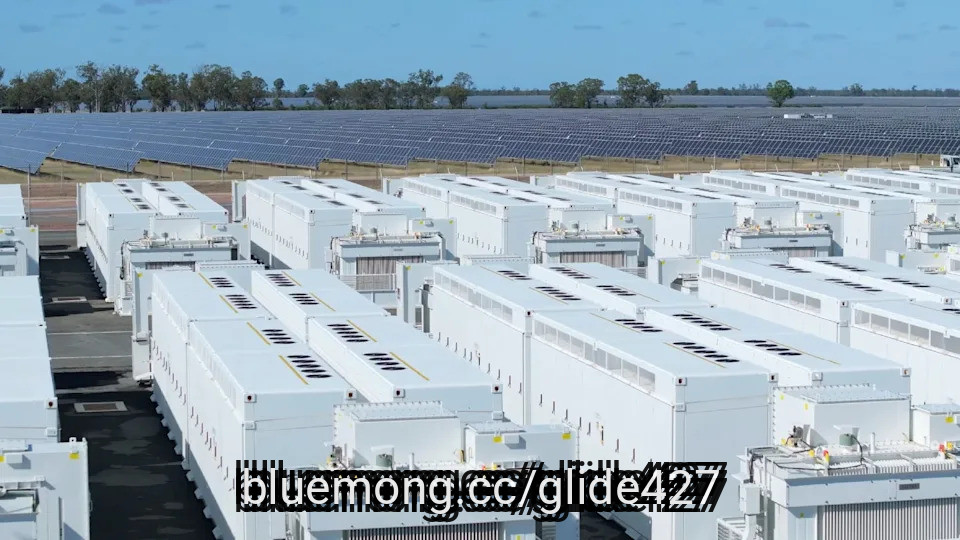
MN8 Energy, Eos Energy Enterprises and Google have announced a joint project in West Virginia, US, that aims to deliver new clean energy resources to the PJM grid, supporting increasing demand in the region.
The development will combine 86MW of utility-scale solar, 70MW/280MWh of lithium-ion energy storage and 10MW/100MWh of Eos' zinc-based long-duration energy storage (LDES).
MN8 will own and operate the facility, which is planned to support Google's data centres in the area, including a project slated for West Virginia.
The solar component of the project is planned to begin commercial operations in 2028, with lithium-ion storage expected in 2029 and long-duration storage following in 2030.
MN8 has designed the Mammoth Solar project in Kanawha County as an integrated system, pairing both short and long-duration storage to convert intermittent renewable energy into a dispatchable source. This development becomes West Virginia's first commercial-scale deployment of LDES.
#storage #project #west #long
The development will combine 86MW of utility-scale solar, 70MW/280MWh of lithium-ion energy storage and 10MW/100MWh of Eos' zinc-based long-duration energy storage (LDES).
MN8 will own and operate the facility, which is planned to support Google's data centres in the area, including a project slated for West Virginia.
The solar component of the project is planned to begin commercial operations in 2028, with lithium-ion storage expected in 2029 and long-duration storage following in 2030.
MN8 has designed the Mammoth Solar project in Kanawha County as an integrated system, pairing both short and long-duration storage to convert intermittent renewable energy into a dispatchable source. This development becomes West Virginia's first commercial-scale deployment of LDES.
#storage #project #west #long
2 months ago
On August 26, JinkoSolar (NASDAQ:JKS) reported a quarter that looked rough on the surface but revealed a company quietly rebuilding itself underneath. Revenue fell 31.3% year over year to $1.82 billion, and the net loss widened to RMB 697.3 million from RMB 463.5 million in the prior quarter. Yet the same earnings call showed a business leaning harder into storage, high-efficiency manufacturing and a growing side portfolio of outside investments, all while its core panel business absorbs a brutal pricing environment.
Module shipments climbed 16.7% sequentially to 15,961 megawatts, and overseas markets made up more than 70% of first-half 2026 volume. Its Tiger Neo 3.0 line still commands roughly a $0.10 per watt premium over conventional panels, and the newer Tiger Neo 5.0 modules reached 25.91% mass-production efficiency with output topping 700 watts. JinkoSolar expects 40 gigawatts of TOPCon 3.0 capacity by year-end, built to clear the toughest efficiency tier under China's new national standard taking effect in January 2027, a rule under which underperforming products "will not be permitted for production or sales," according to CEO Du.
Energy storage is scaling too. Shipments hit 3.1 gigawatt-hours in the first half of 2026, a sharp increase from a year earlier, with 1.5 gigawatt-hours already recognized as revenue, including more than 1 gigawatt-hour in the second quarter alone. Beyond the core business, JinkoSolar's strategic investment arm now holds stakes in more than 40 companies spanning solar, storage and artificial intelligence, worth RMB 1.99 billion in fair value and generating RMB 490 million in first-half gains. That included a divestment of its LAPLACE Renewable Energy Technology stake for more than RMB 300 million in cash and a ***** ulative realized gain topping RMB 250 million, plus a sale of its U.S. subsidiary that brought in RMB 1.31 billion in cash. The board still declared a $1.50 per ADS dividend in June 2026.
The core problem is that panels are getting cheaper to sell and more expensive to make. Gross margin slid to 4.2% from 8.3% in the first quarter of 2026 as average selling prices dropped, while the cost of ramping up high-efficiency production stayed elevated. Operating loss margin widened to 11.6% from 4.8% a quarter earlier, and total operating expenses rose 21.3% sequentially to $287.3 million on higher expected credit losses. Cash on hand fell to $2.5 billion from $3.3 billion in a single quarter, and JinkoSolar cut its full-year shipment guidance to a range of 60 to 70 gigawatts.
#efficiency
Module shipments climbed 16.7% sequentially to 15,961 megawatts, and overseas markets made up more than 70% of first-half 2026 volume. Its Tiger Neo 3.0 line still commands roughly a $0.10 per watt premium over conventional panels, and the newer Tiger Neo 5.0 modules reached 25.91% mass-production efficiency with output topping 700 watts. JinkoSolar expects 40 gigawatts of TOPCon 3.0 capacity by year-end, built to clear the toughest efficiency tier under China's new national standard taking effect in January 2027, a rule under which underperforming products "will not be permitted for production or sales," according to CEO Du.
Energy storage is scaling too. Shipments hit 3.1 gigawatt-hours in the first half of 2026, a sharp increase from a year earlier, with 1.5 gigawatt-hours already recognized as revenue, including more than 1 gigawatt-hour in the second quarter alone. Beyond the core business, JinkoSolar's strategic investment arm now holds stakes in more than 40 companies spanning solar, storage and artificial intelligence, worth RMB 1.99 billion in fair value and generating RMB 490 million in first-half gains. That included a divestment of its LAPLACE Renewable Energy Technology stake for more than RMB 300 million in cash and a ***** ulative realized gain topping RMB 250 million, plus a sale of its U.S. subsidiary that brought in RMB 1.31 billion in cash. The board still declared a $1.50 per ADS dividend in June 2026.
The core problem is that panels are getting cheaper to sell and more expensive to make. Gross margin slid to 4.2% from 8.3% in the first quarter of 2026 as average selling prices dropped, while the cost of ramping up high-efficiency production stayed elevated. Operating loss margin widened to 11.6% from 4.8% a quarter earlier, and total operating expenses rose 21.3% sequentially to $287.3 million on higher expected credit losses. Cash on hand fell to $2.5 billion from $3.3 billion in a single quarter, and JinkoSolar cut its full-year shipment guidance to a range of 60 to 70 gigawatts.
#efficiency

2 months ago
On September 1, Sasol Limited (NYSE:SSL) posted fiscal 2026 results that looked nothing like the shaky operator investors have grown used to. Net debt fell to its lowest level in ten years, Secunda output hit a five-year high, and adjusted EBITDA jumped 17% year over year to ZAR 61 billion. The numbers suggest a turnaround that finally has traction, even as chemical markets stay stuck in a rut.
The clearest thread running through the quarter is that Sasol's core Southern African operations are simply working better than they have in years. Secunda production reached 7.26 million tonnes, a five-year high, driven by improved coal quality and gas availability after the company installed a destoning plant that pushed sinks below 12%. That reliability helped cut the Southern African oil breakeven to $49 per barrel. Management is also weaning the business off external coal, planning to cut purchases from 8.8 million tonnes down to a range of 5 million to 7 million tonnes in fiscal 2027 as own production climbs toward 34 million tonnes by 2028.
The balance sheet tells a similar story. Net debt dropped 11% to $3.3 billion, and available liquidity rose 21% to roughly $5 billion after a bond swap that better matched debt currency to cash generation. Free cash flow of ZAR 11.9 billion was actually up 26% once you strip out a one-time legal settlement from the prior year. International Chemicals, long the drag on the portfolio, posted $604 million in adjusted EBITDA on a 7% cut in fixed costs and a stronger fourth quarter market. Retail fuel market share climbed to 13% from 9% five years ago, and renewable capacity reached 500 megawatts on the way to a 2 gigawatt target by 2030.
Not everything is fixed. Sasol lost two colleagues during the year, a reminder that operational improvement has not erased safety risk. Currency remains a persistent headwind, with CFO Walt Bruns noting that "the stronger rand remained a significant earnings headwind given the U.S. dollar-linked nature of much of our revenue." That same stronger rand outlook, combined with weaker long-term polyethylene pricing, drove impairments on the Secunda liquid fuels refinery and the South African polyethylene unit.
Management was explicit that global chemical markets have not turned a corner, warning that "excess capacity and weaker demand" continue pressuring prices with only a gradual recovery expected. Working capital also ran hot at 18.3% of trailing turnover, above the 15.5% to 16.5% target range, due to pricing volatility and elevated inventory. Fiscal 2027 capital spending guidance of ZAR 23 billion to ZAR 26 billion is also higher than the year just completed, and dividends stay off the table until net debt is sustainably below $3 billion, a threshold the company has approached but not yet crossed.
#debt #fiscal #years #five
The clearest thread running through the quarter is that Sasol's core Southern African operations are simply working better than they have in years. Secunda production reached 7.26 million tonnes, a five-year high, driven by improved coal quality and gas availability after the company installed a destoning plant that pushed sinks below 12%. That reliability helped cut the Southern African oil breakeven to $49 per barrel. Management is also weaning the business off external coal, planning to cut purchases from 8.8 million tonnes down to a range of 5 million to 7 million tonnes in fiscal 2027 as own production climbs toward 34 million tonnes by 2028.
The balance sheet tells a similar story. Net debt dropped 11% to $3.3 billion, and available liquidity rose 21% to roughly $5 billion after a bond swap that better matched debt currency to cash generation. Free cash flow of ZAR 11.9 billion was actually up 26% once you strip out a one-time legal settlement from the prior year. International Chemicals, long the drag on the portfolio, posted $604 million in adjusted EBITDA on a 7% cut in fixed costs and a stronger fourth quarter market. Retail fuel market share climbed to 13% from 9% five years ago, and renewable capacity reached 500 megawatts on the way to a 2 gigawatt target by 2030.
Not everything is fixed. Sasol lost two colleagues during the year, a reminder that operational improvement has not erased safety risk. Currency remains a persistent headwind, with CFO Walt Bruns noting that "the stronger rand remained a significant earnings headwind given the U.S. dollar-linked nature of much of our revenue." That same stronger rand outlook, combined with weaker long-term polyethylene pricing, drove impairments on the Secunda liquid fuels refinery and the South African polyethylene unit.
Management was explicit that global chemical markets have not turned a corner, warning that "excess capacity and weaker demand" continue pressuring prices with only a gradual recovery expected. Working capital also ran hot at 18.3% of trailing turnover, above the 15.5% to 16.5% target range, due to pricing volatility and elevated inventory. Fiscal 2027 capital spending guidance of ZAR 23 billion to ZAR 26 billion is also higher than the year just completed, and dividends stay off the table until net debt is sustainably below $3 billion, a threshold the company has approached but not yet crossed.
#debt #fiscal #years #five


2 months ago
Pro Football Hall of Famer Emmitt Smith and several business partners are facing a civil fraud lawsuit over a $2.5 million loan that was supposed to help a joint venture acquire an interest in a planned Texas solar development.
Kituwah Energy Project #2 LLC, an affiliate of Kituwah LLC, the economic development arm of the Eastern Band of Cherokee Indians, filed the lawsuit Aug. 31 in Delaware's Court of Chancery. It accuses Smith, longtime business partner David Mosley and others of inducing the company to participate in a renewable energy venture known as Project Exodus.
The proposed project was presented as a major solar development expected to begin operating by the end of 2024 and generate nearly $13.8 million in first-year net income. Kituwah says it ultimately provided a $2.5 million loan to the parties' newly created joint venture after being told the money would help acquire rights and ownership interests connected to the project.
The lawsuit alleges the money instead went to another business that had previously financed ventures involving Smith and Mosley's company. The loan matured Feb. 1, 2024, and Kituwah says none of the principal has been repaid. The allegations have not been proven in court, and NBC 5 DFW reported that the defendants had not responded to its requests for comment.
Smith and Mosley co-founded Dallas-based 4 13 Solutions Inc., a real estate and renewable energy company. According to the complaint, they approached Kituwah in early 2023 about participating in Project Exodus, a proposed solar development in Caldwell County, Texas.
#business
Kituwah Energy Project #2 LLC, an affiliate of Kituwah LLC, the economic development arm of the Eastern Band of Cherokee Indians, filed the lawsuit Aug. 31 in Delaware's Court of Chancery. It accuses Smith, longtime business partner David Mosley and others of inducing the company to participate in a renewable energy venture known as Project Exodus.
The proposed project was presented as a major solar development expected to begin operating by the end of 2024 and generate nearly $13.8 million in first-year net income. Kituwah says it ultimately provided a $2.5 million loan to the parties' newly created joint venture after being told the money would help acquire rights and ownership interests connected to the project.
The lawsuit alleges the money instead went to another business that had previously financed ventures involving Smith and Mosley's company. The loan matured Feb. 1, 2024, and Kituwah says none of the principal has been repaid. The allegations have not been proven in court, and NBC 5 DFW reported that the defendants had not responded to its requests for comment.
Smith and Mosley co-founded Dallas-based 4 13 Solutions Inc., a real estate and renewable energy company. According to the complaint, they approached Kituwah in early 2023 about participating in Project Exodus, a proposed solar development in Caldwell County, Texas.
#business


2 months ago
On August 3, The Andersons Inc. (NASDAQ:ANDE) reported second-quarter results that dwarfed last year's numbers, with net income attributable to the company climbing to $57 million, or $1.65 per diluted share, from just $7.9 million, or $0.23 per share, a year earlier. Adjusted net income reached $74 million, or $2.15 per share, versus $8.4 million, or $0.24 per share, in the second quarter of 2025. The turnaround leaned almost entirely on one business: renewable fuels.
Renewables did the heavy lifting. The segment posted a record second-quarter pretax income of $65 million, with the adjusted figure reaching $88 million, on record plant output and strong merchandising execution. Andersons credited its low-carbon strategy for $24 million in 45Z producer tax credits during the quarter, plus the first-quarter finalization of the Renewable Volume Obligations, which firmed up commodity markets and opened trading opportunities for the merchandising desk. Gains in distillers corn oil and RIN pricing also helped. Segment adjusted EBITDA came in at $103 million, more than triple the $30 million posted a year earlier.
Agribusiness improved too, if more modestly, with pretax income of $20 million, both on a GAAP and adjusted basis, up from $17 million in the prior-year quarter. Fertilizer margins strengthened even as volumes fell, and merchandising benefited from higher commodity prices and early-quarter volatility. The company is pushing further into low-carbon fuels, preparing a debottlenecking project at its Clymers, Indiana ethanol plant and advancing a Class VI well permit to capture more 45Z value. A new soybean meal export operation at the Port of Houston is expected online in the fourth quarter. Operating cash flow of $488 million for the quarter, up from $299 million a year earlier, gave the company room to keep funding those projects while holding long-term debt to EBITDA below its 2.5-times target.
The numbers come with caveats. Cash and cash equivalents stood at just $66.5 million at the end of the second quarter, down from $351 million a year earlier, even as short-term debt climbed to $314 million from $104 million. Much of that swing traces to working capital timing and investment spending rather than distress, but it leaves less cushion than the company carried a year ago.
In Agribusiness, the fertilizer and merchandising gains were partly offset by fuel surcharges, a reminder that the segment's profitability still moves with input costs it does not control. Andersons also warned that a drier stretch across its western growing regions could weigh on grain-asset profits this fall, even though better conditions in the eastern corn belt cut the other way, and that grower economics could limit fertilizer purchasing heading into the fall application season.
#million #year #income #Share
Renewables did the heavy lifting. The segment posted a record second-quarter pretax income of $65 million, with the adjusted figure reaching $88 million, on record plant output and strong merchandising execution. Andersons credited its low-carbon strategy for $24 million in 45Z producer tax credits during the quarter, plus the first-quarter finalization of the Renewable Volume Obligations, which firmed up commodity markets and opened trading opportunities for the merchandising desk. Gains in distillers corn oil and RIN pricing also helped. Segment adjusted EBITDA came in at $103 million, more than triple the $30 million posted a year earlier.
Agribusiness improved too, if more modestly, with pretax income of $20 million, both on a GAAP and adjusted basis, up from $17 million in the prior-year quarter. Fertilizer margins strengthened even as volumes fell, and merchandising benefited from higher commodity prices and early-quarter volatility. The company is pushing further into low-carbon fuels, preparing a debottlenecking project at its Clymers, Indiana ethanol plant and advancing a Class VI well permit to capture more 45Z value. A new soybean meal export operation at the Port of Houston is expected online in the fourth quarter. Operating cash flow of $488 million for the quarter, up from $299 million a year earlier, gave the company room to keep funding those projects while holding long-term debt to EBITDA below its 2.5-times target.
The numbers come with caveats. Cash and cash equivalents stood at just $66.5 million at the end of the second quarter, down from $351 million a year earlier, even as short-term debt climbed to $314 million from $104 million. Much of that swing traces to working capital timing and investment spending rather than distress, but it leaves less cushion than the company carried a year ago.
In Agribusiness, the fertilizer and merchandising gains were partly offset by fuel surcharges, a reminder that the segment's profitability still moves with input costs it does not control. Andersons also warned that a drier stretch across its western growing regions could weigh on grain-asset profits this fall, even though better conditions in the eastern corn belt cut the other way, and that grower economics could limit fertilizer purchasing heading into the fall application season.
#million #year #income #Share


2 months ago
As AI and automation reshape workers' daily lives, they are also reshaping which jobs can expect major gains and losses over the next decade, according to new projections from the Bureau of Labor Statistics.
The U.S. economy is expected to add 5.9 million jobs, an increase of 3.5%, between 2025 and 2035, but growth will be slower than it was in the previous decade, according to data released Aug. 27. Total employment is projected to increase from 170.3 million to 176.2 million, with healthcare, technology and renewable energy expected to lead those gains.
Artificial intelligence, a major player in who sees gains and losses, is also driving demand for workers in fields such as data ***** ysis, cybersecurity and software development. But federal data predicts that increased automation will reduce demand for many office support, sales and production jobs.
Administrative jobs, such as clerks, typists and data entry specialists, are expected to take an especially hard hit with a 4% drop in employment, the largest projected in any category, thanks to what the Labor Department called "continued integration of automation tools, including those powered by AI."
Sales, along with the farming, fishing and forestry industries, are also expected to see losses.
#data #gains #losses
The U.S. economy is expected to add 5.9 million jobs, an increase of 3.5%, between 2025 and 2035, but growth will be slower than it was in the previous decade, according to data released Aug. 27. Total employment is projected to increase from 170.3 million to 176.2 million, with healthcare, technology and renewable energy expected to lead those gains.
Artificial intelligence, a major player in who sees gains and losses, is also driving demand for workers in fields such as data ***** ysis, cybersecurity and software development. But federal data predicts that increased automation will reduce demand for many office support, sales and production jobs.
Administrative jobs, such as clerks, typists and data entry specialists, are expected to take an especially hard hit with a 4% drop in employment, the largest projected in any category, thanks to what the Labor Department called "continued integration of automation tools, including those powered by AI."
Sales, along with the farming, fishing and forestry industries, are also expected to see losses.
#data #gains #losses


2 months ago
Saudi Arabia's power stations, desalination plants, factories and farms consume more than 1 million barrels per day of liquid fuel that the kingdom aims to displace by 2030. Natural gas and renewables will provide most of the replacement energy. Nuclear power could reduce domestic oil consumption further after 2030 as electricity demand continues to grow.
On July 22, the United States and Saudi Arabia signed a 30-year civil nuclear cooperation agreement, clearing the way for U.S. companies to potentially supply the kingdom with reactors, nuclear materials and technical services. Similar agreements with Turkey and the UAE entered into force in June 2008 and December 2009, respectively.
The commercial opportunity is in Saudi Arabia's search for additional generating capacity. The IEA estimates that the kingdom's electricity demand grew by 3.8% in 2025 and forecasts average annual growth of 3.1% through 2030.
Related: U.S. Shale Producers Lose Bid to Kill Oil Price-Fixing Case
Saudi consumption of crude oil and fuel oil for power generation rises sharply during the summer, when air-conditioning demand peaks. Combined burn reached 1.42 million b/d in June 2024, according to the EIA. It fell to an average of 678,000 b/d in January and February 2025 (the lowest level for that period since 2016) with February alone registering an 11-year monthly low of 589,000 b/d. Reducing domestic oil-fired generation can leave more petroleum available for export or other uses.
#demand #february #million #fuel
On July 22, the United States and Saudi Arabia signed a 30-year civil nuclear cooperation agreement, clearing the way for U.S. companies to potentially supply the kingdom with reactors, nuclear materials and technical services. Similar agreements with Turkey and the UAE entered into force in June 2008 and December 2009, respectively.
The commercial opportunity is in Saudi Arabia's search for additional generating capacity. The IEA estimates that the kingdom's electricity demand grew by 3.8% in 2025 and forecasts average annual growth of 3.1% through 2030.
Related: U.S. Shale Producers Lose Bid to Kill Oil Price-Fixing Case
Saudi consumption of crude oil and fuel oil for power generation rises sharply during the summer, when air-conditioning demand peaks. Combined burn reached 1.42 million b/d in June 2024, according to the EIA. It fell to an average of 678,000 b/d in January and February 2025 (the lowest level for that period since 2016) with February alone registering an 11-year monthly low of 589,000 b/d. Reducing domestic oil-fired generation can leave more petroleum available for export or other uses.
#demand #february #million #fuel


2 months ago
Microsoft's next major AI constraint may be measured in turbines rather than processors. On June 22, Microsoft Corporation (NASDAQ:MSFT) entered a 20-year power purchase agreement with Energy Forge One LLC, a wholly owned subsidiary of Chevron Corporation (NYSE:CVX), for a planned West Texas data-center project. The Kilby development targets 2.67 gigawatts of generation, with initial power expected in 2028. Its scale suggests that securing dependable electricity is becoming as strategic to hyperscalers as securing accelerators.
Tupungato / Shutterstock.com
Microsoft Corporation (NASDAQ:MSFT) gets a dedicated path to capacity in a grid-constrained market. Natural gas can provide round-the-clock generation that complements intermittent renewables and supports the reliability AI clusters require. A two-decade contract can also give developers confidence to finance construction. The bull case is simple: Microsoft protects its cloud growth by solving power locally instead of waiting years for transmission expansion.
Chevron Corporation (NYSE:CVX) gains a new outlet for its gas and an opportunity to move downstream into integrated power. If Kilby works, Chevron can replicate a model that converts energy resources and project expertise into long-duration data-center cash flows. Yet the project has not reached a final investment decision. Construction, permitting, fuel costs, emissions rules, and customer requirements can all change the economics before power begins flowing.
Those uncertainties create bear cases for both companies. Microsoft is committing to an energy pathway as AI hardware and efficiency evolve rapidly, and a long contract can become less attractive if power markets change. Chevron and its partners must commit capital years before the **** et is operational while managing construction, fuel-cost and carbon-policy risks. Gas solves the reliability problem, but it may intensify political and regulatory scrutiny around AI's environmental footprint. The critical milestones are final investment approval, permitting, construction costs, and data showing that the first power date remains achievable. Until those arrive, the agreement secures intent rather than operating supply.
#power #data
Tupungato / Shutterstock.com
Microsoft Corporation (NASDAQ:MSFT) gets a dedicated path to capacity in a grid-constrained market. Natural gas can provide round-the-clock generation that complements intermittent renewables and supports the reliability AI clusters require. A two-decade contract can also give developers confidence to finance construction. The bull case is simple: Microsoft protects its cloud growth by solving power locally instead of waiting years for transmission expansion.
Chevron Corporation (NYSE:CVX) gains a new outlet for its gas and an opportunity to move downstream into integrated power. If Kilby works, Chevron can replicate a model that converts energy resources and project expertise into long-duration data-center cash flows. Yet the project has not reached a final investment decision. Construction, permitting, fuel costs, emissions rules, and customer requirements can all change the economics before power begins flowing.
Those uncertainties create bear cases for both companies. Microsoft is committing to an energy pathway as AI hardware and efficiency evolve rapidly, and a long contract can become less attractive if power markets change. Chevron and its partners must commit capital years before the **** et is operational while managing construction, fuel-cost and carbon-policy risks. Gas solves the reliability problem, but it may intensify political and regulatory scrutiny around AI's environmental footprint. The critical milestones are final investment approval, permitting, construction costs, and data showing that the first power date remains achievable. Until those arrive, the agreement secures intent rather than operating supply.
#power #data

2 months ago
On August 4, Archer-Daniels-Midland (NYSE:ADM) executives told investors on an earnings call that the company would expand capacity at four US oilseed-crushing plants, a roughly $100 million push into a business that just posted its strongest quarter in years. The plants sit in Frankfort, Indiana; Deerfield, Missouri; Lincoln, Nebraska; and Spiritwood, North Dakota, the last a joint venture with Marathon Petroleum. Together, the upgrades are expected to add about 700,000 metric tons of crush capacity by 2028 or 2029, and six more sites have already been flagged for possible future growth.
CEO Juan Luciano framed the projects as a cheap way to add output, estimating the cost at roughly a quarter of what a brand-new facility would require. That math matters because ADM just reported second-quarter adjusted earnings per share of $1.84, well above the $1.44 ***** ysts expected, and raised its full-year 2026 adjusted EPS guidance to a range of $5.15 to $5.60 from a prior $4.15 to $4.70. Operating profit in the ag services and oilseeds segment, ADM's largest, jumped 129% year over year to $867 million, with the crushing subsegment alone up $330 million as oilseed volumes climbed about 5%.
The company has now identified 10 US soy processing plants for potential expansion in total, and Luciano said top buyer China appears on track to meet its commitment to purchase 25 million metric tons of US soybeans this year. Nutrition, long a laggard, also grew 51% to $172 million on strength in flavors. Even so, Luciano described the crushing expansion as a "phased approach to allow for offramps," language that suggests management wants room to pull back if the current environment does not hold. The projects are expected to fit inside ADM's existing 2026 capital expenditure range of $1.3 billion to $1.5 billion, following expansions at two Brazilian plants last year and an extension completed this year in Uberlandia.
The strength behind these numbers leans heavily on conditions ADM does not control. Finalized 2026 and 2027 renewable volume obligations under the US Renewable Fuel Standard, locked in only this past March, are doing much of the work behind crushing margins, alongside energy prices that climbed after the Iran war. Roughly $100 million of the ag services and oilseeds profit came from net positive mark-to-market and timing impacts, gains tied to commodity pricing swings rather than the underlying business.
Not every part of the portfolio moved in the same direction. The refined products and other subsegment posted a 3% profit decline on negative mark-to-market impacts and supply and demand imbalances in South America, and equity earnings from ADM's stake in Wilmar fell 22%. Those soft spots, paired with a crush expansion built with explicit offramps, hint that management sees more uncertainty in the setup than the headline guidance raise suggests.
#luciano #quarter #expected
CEO Juan Luciano framed the projects as a cheap way to add output, estimating the cost at roughly a quarter of what a brand-new facility would require. That math matters because ADM just reported second-quarter adjusted earnings per share of $1.84, well above the $1.44 ***** ysts expected, and raised its full-year 2026 adjusted EPS guidance to a range of $5.15 to $5.60 from a prior $4.15 to $4.70. Operating profit in the ag services and oilseeds segment, ADM's largest, jumped 129% year over year to $867 million, with the crushing subsegment alone up $330 million as oilseed volumes climbed about 5%.
The company has now identified 10 US soy processing plants for potential expansion in total, and Luciano said top buyer China appears on track to meet its commitment to purchase 25 million metric tons of US soybeans this year. Nutrition, long a laggard, also grew 51% to $172 million on strength in flavors. Even so, Luciano described the crushing expansion as a "phased approach to allow for offramps," language that suggests management wants room to pull back if the current environment does not hold. The projects are expected to fit inside ADM's existing 2026 capital expenditure range of $1.3 billion to $1.5 billion, following expansions at two Brazilian plants last year and an extension completed this year in Uberlandia.
The strength behind these numbers leans heavily on conditions ADM does not control. Finalized 2026 and 2027 renewable volume obligations under the US Renewable Fuel Standard, locked in only this past March, are doing much of the work behind crushing margins, alongside energy prices that climbed after the Iran war. Roughly $100 million of the ag services and oilseeds profit came from net positive mark-to-market and timing impacts, gains tied to commodity pricing swings rather than the underlying business.
Not every part of the portfolio moved in the same direction. The refined products and other subsegment posted a 3% profit decline on negative mark-to-market impacts and supply and demand imbalances in South America, and equity earnings from ADM's stake in Wilmar fell 22%. Those soft spots, paired with a crush expansion built with explicit offramps, hint that management sees more uncertainty in the setup than the headline guidance raise suggests.
#luciano #quarter #expected


2 months ago
India-based business conglomerate Sanmar Group has acquired a majority stake in renewable energy platform AltEons Energy, investing an undisclosed sum to support the development of more than 1.5GW of renewable energy projects across India.
The collaboration will focus on delivering cleaner power solutions for corporate and industrial customers.
AltEons Energy is expanding its integrated platform, combining solar, wind, energy storage and energy management technologies to provide clients with round-the-clock renewable power.
Its current pipeline includes a 210MW hybrid project under construction in Maharashtra featuring wind, solar and battery energy storage systems (BESS).
This project aims to meet the rising energy requirements of businesses operating in the state.
#energy #India
The collaboration will focus on delivering cleaner power solutions for corporate and industrial customers.
AltEons Energy is expanding its integrated platform, combining solar, wind, energy storage and energy management technologies to provide clients with round-the-clock renewable power.
Its current pipeline includes a 210MW hybrid project under construction in Maharashtra featuring wind, solar and battery energy storage systems (BESS).
This project aims to meet the rising energy requirements of businesses operating in the state.
#energy #India
2 months ago
When investors want to play the AI power boom, the first names that come to mind are hot stocks in emerging energy technologies, such as advanced fuel cell maker Bloom Energy (NYSE:BE) and small modular reactor developer Oklo (NYSE:OKLO). Bloom has major AI partnerships with Oracle and Brookfield, while Oklo has deals with Meta Platforms and Switch.
One company almost no one is talking about is the high-yielding clean-power producer Clearway Energy (NYSE:CWEN). That's a mistake. Its parent (Clearway Energy Group) quietly signed a nearly 1.2-gigawatt (GW) deal to build renewable power for Alphabet (NASDAQ:GOOG)(NASDAQ:GOOGL), and it's getting paid much more for the power produced at some of its legacy ***** ets because the new power buyer is a hyperscaler with voracious energy needs.
Missed Nvidia in 2009? This Rare Signal Is Flashing Again. In 2009, a "Double Down" signal flashed for a little-known chipmaker called Nvidia. For the first time in years, that same "Total Conviction" signal is flashing for a company 1/100th the size of Nvidia. Continue »
That's only the beginning. AI power is one of the catalysts that make Clearway among the top renewable energy stocks to buy.
Image source: Getty Images.
#NYSE #bloom
One company almost no one is talking about is the high-yielding clean-power producer Clearway Energy (NYSE:CWEN). That's a mistake. Its parent (Clearway Energy Group) quietly signed a nearly 1.2-gigawatt (GW) deal to build renewable power for Alphabet (NASDAQ:GOOG)(NASDAQ:GOOGL), and it's getting paid much more for the power produced at some of its legacy ***** ets because the new power buyer is a hyperscaler with voracious energy needs.
Missed Nvidia in 2009? This Rare Signal Is Flashing Again. In 2009, a "Double Down" signal flashed for a little-known chipmaker called Nvidia. For the first time in years, that same "Total Conviction" signal is flashing for a company 1/100th the size of Nvidia. Continue »
That's only the beginning. AI power is one of the catalysts that make Clearway among the top renewable energy stocks to buy.
Image source: Getty Images.
#NYSE #bloom

2 months ago
On August 3, TotalEnergies SE (NYSE:TTE) signed an agreement to acquire Shell plc (NYSE:SHEL)'s entire onshore renewables business in Europe. The acquisition includes 500 MW of operational or under-construction solar and wind ******* ets primarily in Italy and the Netherlands, alongside a 3.5 GW pipeline of solar, wind, and battery storage projects across Italy, the UK, and Spain. Set for completion by late 2026 pending regulatory approval, the deal directly advances TotalEnergies' European Integrated Power strategy, bolstering its existing portfolio of roughly 10 GW in gross capacity/construction and 27 GW under development. Following the news on August 3, Piper Sandler ******* yst John Royall raised Shell's price target from $88 to $89 while maintaining a Neutral rating, citing strong Q2 trading beats.
Both Big Oil majors reported robust Q2 2026 results driven by operational efficiency, yet distinct financial profiles emerge. TotalEnergies SE (NYSE:TTE) generated adjusted net income of $6.0 billion and cash flow from operations (CFFO) of $9.8 billion on 2.395 Mboe/d production, keeping Upstream operating costs down to $5/b despite Middle East transit disruptions. Shell outperformed on sheer cash generation, posting $9.8 billion in Adjusted Earnings and CFFO of $21.4 billion, supported by record upstream production in Brazil, record refinery utilization, and a $3.4 billion working capital inflow.
TotalEnergies retains a leaner debt profile with a gearing ratio of 13.1% ($3.3 billion net debt reduction), whereas Shell holds a 19% gearing ratio with $42 billion in net debt ($12 billion excluding leases). While Shell plc (NYSE:SHEL) leads on top-line cash generation, TotalEnergies displays superior balance sheet leverage and higher quarter-over-quarter cash flow growth (+15%).
TotalEnergies' bull case is supported by strong execution of its Integrated Power strategy, with expanding high-margin renewable power capacity alongside low Upstream costs of approximately $5 per barrel. Its healthy balance sheet, reflected in 13.1% gearing, provides financial flexibility to support a 5.9% dividend increase to €0.90 per share while continuing $1.5 billion in quarterly share buybacks. However, the bear case centers on weakness in Integrated LNG, particularly from underperforming European gas trading. Continued exposure to geopolitical disruptions along Middle Eastern transit corridors could also restrict physical oil liftings and weigh on operations.
#TotalEnergies #shell #upstream
Both Big Oil majors reported robust Q2 2026 results driven by operational efficiency, yet distinct financial profiles emerge. TotalEnergies SE (NYSE:TTE) generated adjusted net income of $6.0 billion and cash flow from operations (CFFO) of $9.8 billion on 2.395 Mboe/d production, keeping Upstream operating costs down to $5/b despite Middle East transit disruptions. Shell outperformed on sheer cash generation, posting $9.8 billion in Adjusted Earnings and CFFO of $21.4 billion, supported by record upstream production in Brazil, record refinery utilization, and a $3.4 billion working capital inflow.
TotalEnergies retains a leaner debt profile with a gearing ratio of 13.1% ($3.3 billion net debt reduction), whereas Shell holds a 19% gearing ratio with $42 billion in net debt ($12 billion excluding leases). While Shell plc (NYSE:SHEL) leads on top-line cash generation, TotalEnergies displays superior balance sheet leverage and higher quarter-over-quarter cash flow growth (+15%).
TotalEnergies' bull case is supported by strong execution of its Integrated Power strategy, with expanding high-margin renewable power capacity alongside low Upstream costs of approximately $5 per barrel. Its healthy balance sheet, reflected in 13.1% gearing, provides financial flexibility to support a 5.9% dividend increase to €0.90 per share while continuing $1.5 billion in quarterly share buybacks. However, the bear case centers on weakness in Integrated LNG, particularly from underperforming European gas trading. Continued exposure to geopolitical disruptions along Middle Eastern transit corridors could also restrict physical oil liftings and weigh on operations.
#TotalEnergies #shell #upstream


2 months ago
Oil prices have been all over the place in 2026. Brent crude fell nearly 40% from its year-to-date (YTD) high of $118.35 on March 31 to $71.44 by July 1 after a U.S.-Iran peace deal reopened the Strait of Hormuz. Prices then rebounded more than 16% from that July low after the ceasefire broke down on July 8, helping make energy the best-performing S&P 500 sector ($SPX) during that period.
Shell (SHEL) has used the volatility to reshape its business. The company has sold ****** ets that no longer fit its focus on oil, gas, and LNG, including India's Sprng Energy for $1.8 billion, Gulf of Mexico stakes for $1.7 billion, and Jiffy Lube International and Premium Velocity Auto for $1.3 billion. It also sold its European onshore renewables portfolio to TotalEnergies SE (TTE) and agreed to acquire Canada's ARC Resources Ltd. (ARX) in a deal valued at about $13.6 billion.
Seagate vs. Western Digital: Which One is The Best AI Storage Play for Dividend Investors?
Tired of missing midday reversals? The FREE Barchart Brief newsletter keeps you in the know. Sign up now!
Next could be Shell's U.S. chemicals business. The company has reportedly drawn interest from potential buyers, including ExxonMobil Corporation (XOM) and LyondellBasell Industries N.V. (LYB), in a deal that could fetch up to $8 billion.
#prices
Shell (SHEL) has used the volatility to reshape its business. The company has sold ****** ets that no longer fit its focus on oil, gas, and LNG, including India's Sprng Energy for $1.8 billion, Gulf of Mexico stakes for $1.7 billion, and Jiffy Lube International and Premium Velocity Auto for $1.3 billion. It also sold its European onshore renewables portfolio to TotalEnergies SE (TTE) and agreed to acquire Canada's ARC Resources Ltd. (ARX) in a deal valued at about $13.6 billion.
Seagate vs. Western Digital: Which One is The Best AI Storage Play for Dividend Investors?
Tired of missing midday reversals? The FREE Barchart Brief newsletter keeps you in the know. Sign up now!
Next could be Shell's U.S. chemicals business. The company has reportedly drawn interest from potential buyers, including ExxonMobil Corporation (XOM) and LyondellBasell Industries N.V. (LYB), in a deal that could fetch up to $8 billion.
#prices