

1 month ago
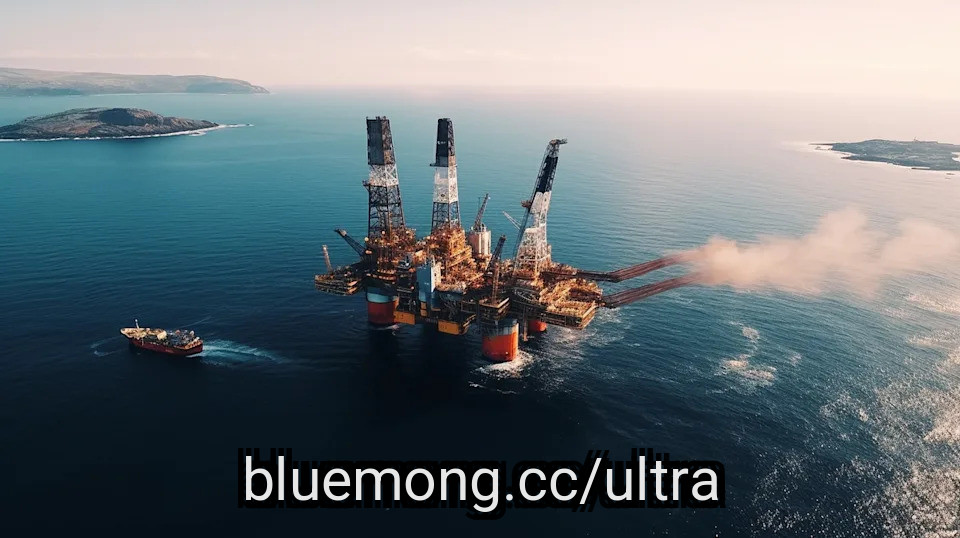
TotalEnergies SE (NYSE:TTE) plans to invest $10 billion alongside its partners in Angola over the next five years, with the goal of maintaining and potentially increasing its oil production in the country. TotalEnergies currently produces around 450,000 barrels per day in Angola, making it the country's largest oil operator and accounting for more than 40% of its total output.
The investment will go toward existing operations, new exploration, and projects aimed at replacing production from Angola's aging offshore fields. One of the biggest projects in the pipeline is the $6 billion Kaminho development, which is expected to start producing oil in 2028. TotalEnergies SE (NYSE:TTE) is also expanding its exploration efforts after signing agreements for two additional offshore blocks. On top of that, the company recently announced a new discovery in Block 17 that could add roughly 6,000 barrels per day to production.
The investment strengthens TotalEnergies SE (NYSE:TTE)'s position in one of Africa's key oil-producing markets and, perhaps more importantly, helps protect a major source of existing production. With around 450,000 barrels per day already coming from Angola, simply keeping output at current levels could continue to provide a meaningful contribution to the company's upstream cash flow. Any additional production from new discoveries and projects would offer further upside.
The current oil-price environment also works in TotalEnergies' favor. Brent crude recently climbed above $100 a barrel amid supply concerns and geopolitical tensions and is currently trading near this range. If prices remain elevated, projects designed to maintain or increase Angolan production could generate strong returns and make the company's investment more attractive.
There are also signs that TotalEnergies SE (NYSE:TTE) is doing more than just trying to slow production declines. Its recent Acacia-5 discovery in Block 17 could add around 6,000 barrels per day, while the company is expanding its exploration presence through new offshore blocks in the Lower Congo Basin. Angola's efforts to reform its oil sector and attract more exploration investment could also create a more favorable environment for TotalEnergies over the longer term.
#investment #offshore
The investment will go toward existing operations, new exploration, and projects aimed at replacing production from Angola's aging offshore fields. One of the biggest projects in the pipeline is the $6 billion Kaminho development, which is expected to start producing oil in 2028. TotalEnergies SE (NYSE:TTE) is also expanding its exploration efforts after signing agreements for two additional offshore blocks. On top of that, the company recently announced a new discovery in Block 17 that could add roughly 6,000 barrels per day to production.
The investment strengthens TotalEnergies SE (NYSE:TTE)'s position in one of Africa's key oil-producing markets and, perhaps more importantly, helps protect a major source of existing production. With around 450,000 barrels per day already coming from Angola, simply keeping output at current levels could continue to provide a meaningful contribution to the company's upstream cash flow. Any additional production from new discoveries and projects would offer further upside.
The current oil-price environment also works in TotalEnergies' favor. Brent crude recently climbed above $100 a barrel amid supply concerns and geopolitical tensions and is currently trading near this range. If prices remain elevated, projects designed to maintain or increase Angolan production could generate strong returns and make the company's investment more attractive.
There are also signs that TotalEnergies SE (NYSE:TTE) is doing more than just trying to slow production declines. Its recent Acacia-5 discovery in Block 17 could add around 6,000 barrels per day, while the company is expanding its exploration presence through new offshore blocks in the Lower Congo Basin. Angola's efforts to reform its oil sector and attract more exploration investment could also create a more favorable environment for TotalEnergies over the longer term.
#investment #offshore


1 month ago
ExxonMobil Holdings Corporation (NYSE:XOM) agreed to increase its Papua LNG interest from 28.7% to 34.1% and ***** ume operatorship, as disclosed on September 7. The proposed ownership percentages reflect Papua New Guinea's state participation rights.
Papua LNG targets a fourth-quarter 2026 final investment decision, or FID. Santos Limited (ASX:STO) disclosed FID as a closing condition for its own stake acquisition; the operatorship announcement did not specify an equivalent condition.
TotalEnergies SE (NYSE:TTE) said redesign and contractor rebidding had reduced estimated development spending by nearly $4 billion since 2024 to approximately $14 billion. The project would produce 5.6 million tonnes of liquefied natural gas annually. The question is whether that smaller budget can support attractive returns through construction and an uncertain LNG market.
ExxonMobil Holdings Corporation (NYSE:XOM) already operates neighboring PNG LNG. Combining operatorship could improve coordination during construction and operations, including the redesigned handling of upstream condensate. That gives the proposed efficiency gains a practical basis in existing infrastructure and local experience.
The cost reduction is substantial. Mechanically, nearly $4 billion off an approximately $18 billion previous estimate represents about 22%. For ExxonMobil Holdings Corporation (NYSE:XOM), lower development spending would reduce the capital required to generate each future dollar of project cash flow, ***** uming production and operating economics hold.
#holdings #operatorship
Papua LNG targets a fourth-quarter 2026 final investment decision, or FID. Santos Limited (ASX:STO) disclosed FID as a closing condition for its own stake acquisition; the operatorship announcement did not specify an equivalent condition.
TotalEnergies SE (NYSE:TTE) said redesign and contractor rebidding had reduced estimated development spending by nearly $4 billion since 2024 to approximately $14 billion. The project would produce 5.6 million tonnes of liquefied natural gas annually. The question is whether that smaller budget can support attractive returns through construction and an uncertain LNG market.
ExxonMobil Holdings Corporation (NYSE:XOM) already operates neighboring PNG LNG. Combining operatorship could improve coordination during construction and operations, including the redesigned handling of upstream condensate. That gives the proposed efficiency gains a practical basis in existing infrastructure and local experience.
The cost reduction is substantial. Mechanically, nearly $4 billion off an approximately $18 billion previous estimate represents about 22%. For ExxonMobil Holdings Corporation (NYSE:XOM), lower development spending would reduce the capital required to generate each future dollar of project cash flow, ***** uming production and operating economics hold.
#holdings #operatorship

2 months ago
Chevron Corporation (NYSE:CVX) and TotalEnergies SE (NYSE:TTE) are making major moves in Sub-Saharan Africa, underscored by Chevron's August 17 announcement of a significant oil and gas condensate discovery in offshore Angola's Block 0. The 105-4X exploration well in the Lower Congo Basin encountered over 600 meters of column with 90 meters of net pay in the primary Pinda reservoir. Operated by Chevron's subsidiary CABGOC (39.2% interest) alongside Sonangol E&P, Azule Energy, and TotalEnergies, the ****** et will likely be tied back to nearby existing infrastructure for low-cost production. The discovery highlights Chevron's broader Sub-Saharan push, which generates ~300k boed net and includes recent additions in Nigeria, Guinea-Bissau, Equatorial Guinea, and Angola's Blocks 49, 50, 33, and 14/23, alongside the upcoming Nabba-1X well in Namibia.
Photo from Fervo Energy website
Looking at Q2 2026 financial metrics, both energy giants posted robust results, but Chevron outperformed TotalEnergies across absolute top- and bottom-line figures as well as capital efficiency.
Chevron Corporation (NYSE:CVX) generated $70.1 billion in revenue and reported net income of $12.1 billion ($6.11 per share), with adjusted earnings hitting $12.0 billion. Driven by record production of 4.07 million boed (up 20% year-over-year) and strong refining throughput, Chevron produced an impressive $22.6 billion in operating cash flow and $18.1 billion in free cash flow, delivering a return on capital employed (ROCE) of 21.4%.
TotalEnergies SE (NYSE:TTE) also delivered solid top-line cash generation but came in lower in net profitability. Leveraging higher commodity prices during the Middle East conflict, TotalEnergies generated $9.8 billion in cash flow and $6.0 billion in adjusted net income for Q2 2026, with oil and gas production averaging 2.395 Mboe/d. Its Exploration & Production unit posted $3.2 billion in adjusted net operating income and $5.8 billion in cash flow, while Downstream contributed $2.9 billion in cash flow and Integrated Power generated $700 million. Both energy majors maintain strong, identical balance-sheet leverage, with each firm posting a net debt gearing ratio of 13.1% at the close of Q2. Overall, Chevron leads in total profitability, cash flow generation, and return on capital, making it the stronger financial performer this quarter.
#cash #TotalEnergies #flow #well
Photo from Fervo Energy website
Looking at Q2 2026 financial metrics, both energy giants posted robust results, but Chevron outperformed TotalEnergies across absolute top- and bottom-line figures as well as capital efficiency.
Chevron Corporation (NYSE:CVX) generated $70.1 billion in revenue and reported net income of $12.1 billion ($6.11 per share), with adjusted earnings hitting $12.0 billion. Driven by record production of 4.07 million boed (up 20% year-over-year) and strong refining throughput, Chevron produced an impressive $22.6 billion in operating cash flow and $18.1 billion in free cash flow, delivering a return on capital employed (ROCE) of 21.4%.
TotalEnergies SE (NYSE:TTE) also delivered solid top-line cash generation but came in lower in net profitability. Leveraging higher commodity prices during the Middle East conflict, TotalEnergies generated $9.8 billion in cash flow and $6.0 billion in adjusted net income for Q2 2026, with oil and gas production averaging 2.395 Mboe/d. Its Exploration & Production unit posted $3.2 billion in adjusted net operating income and $5.8 billion in cash flow, while Downstream contributed $2.9 billion in cash flow and Integrated Power generated $700 million. Both energy majors maintain strong, identical balance-sheet leverage, with each firm posting a net debt gearing ratio of 13.1% at the close of Q2. Overall, Chevron leads in total profitability, cash flow generation, and return on capital, making it the stronger financial performer this quarter.
#cash #TotalEnergies #flow #well


2 months ago
On August 3, TotalEnergies SE (NYSE:TTE) signed an agreement to acquire Shell plc (NYSE:SHEL)'s entire onshore renewables business in Europe. The acquisition includes 500 MW of operational or under-construction solar and wind ******* ets primarily in Italy and the Netherlands, alongside a 3.5 GW pipeline of solar, wind, and battery storage projects across Italy, the UK, and Spain. Set for completion by late 2026 pending regulatory approval, the deal directly advances TotalEnergies' European Integrated Power strategy, bolstering its existing portfolio of roughly 10 GW in gross capacity/construction and 27 GW under development. Following the news on August 3, Piper Sandler ******* yst John Royall raised Shell's price target from $88 to $89 while maintaining a Neutral rating, citing strong Q2 trading beats.
Both Big Oil majors reported robust Q2 2026 results driven by operational efficiency, yet distinct financial profiles emerge. TotalEnergies SE (NYSE:TTE) generated adjusted net income of $6.0 billion and cash flow from operations (CFFO) of $9.8 billion on 2.395 Mboe/d production, keeping Upstream operating costs down to $5/b despite Middle East transit disruptions. Shell outperformed on sheer cash generation, posting $9.8 billion in Adjusted Earnings and CFFO of $21.4 billion, supported by record upstream production in Brazil, record refinery utilization, and a $3.4 billion working capital inflow.
TotalEnergies retains a leaner debt profile with a gearing ratio of 13.1% ($3.3 billion net debt reduction), whereas Shell holds a 19% gearing ratio with $42 billion in net debt ($12 billion excluding leases). While Shell plc (NYSE:SHEL) leads on top-line cash generation, TotalEnergies displays superior balance sheet leverage and higher quarter-over-quarter cash flow growth (+15%).
TotalEnergies' bull case is supported by strong execution of its Integrated Power strategy, with expanding high-margin renewable power capacity alongside low Upstream costs of approximately $5 per barrel. Its healthy balance sheet, reflected in 13.1% gearing, provides financial flexibility to support a 5.9% dividend increase to €0.90 per share while continuing $1.5 billion in quarterly share buybacks. However, the bear case centers on weakness in Integrated LNG, particularly from underperforming European gas trading. Continued exposure to geopolitical disruptions along Middle Eastern transit corridors could also restrict physical oil liftings and weigh on operations.
#TotalEnergies #shell #upstream
Both Big Oil majors reported robust Q2 2026 results driven by operational efficiency, yet distinct financial profiles emerge. TotalEnergies SE (NYSE:TTE) generated adjusted net income of $6.0 billion and cash flow from operations (CFFO) of $9.8 billion on 2.395 Mboe/d production, keeping Upstream operating costs down to $5/b despite Middle East transit disruptions. Shell outperformed on sheer cash generation, posting $9.8 billion in Adjusted Earnings and CFFO of $21.4 billion, supported by record upstream production in Brazil, record refinery utilization, and a $3.4 billion working capital inflow.
TotalEnergies retains a leaner debt profile with a gearing ratio of 13.1% ($3.3 billion net debt reduction), whereas Shell holds a 19% gearing ratio with $42 billion in net debt ($12 billion excluding leases). While Shell plc (NYSE:SHEL) leads on top-line cash generation, TotalEnergies displays superior balance sheet leverage and higher quarter-over-quarter cash flow growth (+15%).
TotalEnergies' bull case is supported by strong execution of its Integrated Power strategy, with expanding high-margin renewable power capacity alongside low Upstream costs of approximately $5 per barrel. Its healthy balance sheet, reflected in 13.1% gearing, provides financial flexibility to support a 5.9% dividend increase to €0.90 per share while continuing $1.5 billion in quarterly share buybacks. However, the bear case centers on weakness in Integrated LNG, particularly from underperforming European gas trading. Continued exposure to geopolitical disruptions along Middle Eastern transit corridors could also restrict physical oil liftings and weigh on operations.
#TotalEnergies #shell #upstream


2 months ago
Oil prices have been all over the place in 2026. Brent crude fell nearly 40% from its year-to-date (YTD) high of $118.35 on March 31 to $71.44 by July 1 after a U.S.-Iran peace deal reopened the Strait of Hormuz. Prices then rebounded more than 16% from that July low after the ceasefire broke down on July 8, helping make energy the best-performing S&P 500 sector ($SPX) during that period.
Shell (SHEL) has used the volatility to reshape its business. The company has sold ****** ets that no longer fit its focus on oil, gas, and LNG, including India's Sprng Energy for $1.8 billion, Gulf of Mexico stakes for $1.7 billion, and Jiffy Lube International and Premium Velocity Auto for $1.3 billion. It also sold its European onshore renewables portfolio to TotalEnergies SE (TTE) and agreed to acquire Canada's ARC Resources Ltd. (ARX) in a deal valued at about $13.6 billion.
Seagate vs. Western Digital: Which One is The Best AI Storage Play for Dividend Investors?
Tired of missing midday reversals? The FREE Barchart Brief newsletter keeps you in the know. Sign up now!
Next could be Shell's U.S. chemicals business. The company has reportedly drawn interest from potential buyers, including ExxonMobil Corporation (XOM) and LyondellBasell Industries N.V. (LYB), in a deal that could fetch up to $8 billion.
#prices
Shell (SHEL) has used the volatility to reshape its business. The company has sold ****** ets that no longer fit its focus on oil, gas, and LNG, including India's Sprng Energy for $1.8 billion, Gulf of Mexico stakes for $1.7 billion, and Jiffy Lube International and Premium Velocity Auto for $1.3 billion. It also sold its European onshore renewables portfolio to TotalEnergies SE (TTE) and agreed to acquire Canada's ARC Resources Ltd. (ARX) in a deal valued at about $13.6 billion.
Seagate vs. Western Digital: Which One is The Best AI Storage Play for Dividend Investors?
Tired of missing midday reversals? The FREE Barchart Brief newsletter keeps you in the know. Sign up now!
Next could be Shell's U.S. chemicals business. The company has reportedly drawn interest from potential buyers, including ExxonMobil Corporation (XOM) and LyondellBasell Industries N.V. (LYB), in a deal that could fetch up to $8 billion.
#prices


2 months ago
Norway's energy major Equinor hopes to make a "pretty big" oil discovery offshore Namibia, the global exploration hotspot it has just entered, a senior company official said on Tuesday.
Equinor hopes that the Petroleum Exploration License 90 (PEL 90) offshore Namibia could hold a big discovery similar to those TotalEnergies and Galp have made in recent years in the same Orange basin, Philippe Mathieu, Executive Vice President, Exploration & Production International, at Equinor, told reporters on the sidelines of an energy conference in Norway's city of Stavanger.
A week ago, the Norwegian oil and gas major entered the Namibian exploration rush by signing an agreement with Harmattan Energy Limited, a Chevron subsidiary in Namibia, to buy a 17.4% participating interest in Petroleum Exploration License 90 (PEL 90) in the Orange Basin offshore Namibia.
The deal with the U.S. supermajor marks Equinor's entry into Namibia, and the license provides access to a drill-ready prospect scheduled for testing in 2026, the Norwegian company said last week.
"This transaction aligns with our strategy to strengthen and replenish our international portfolio through focused and disciplined growth," Mathieu said last week.
#namibia #exploration #energy
Equinor hopes that the Petroleum Exploration License 90 (PEL 90) offshore Namibia could hold a big discovery similar to those TotalEnergies and Galp have made in recent years in the same Orange basin, Philippe Mathieu, Executive Vice President, Exploration & Production International, at Equinor, told reporters on the sidelines of an energy conference in Norway's city of Stavanger.
A week ago, the Norwegian oil and gas major entered the Namibian exploration rush by signing an agreement with Harmattan Energy Limited, a Chevron subsidiary in Namibia, to buy a 17.4% participating interest in Petroleum Exploration License 90 (PEL 90) in the Orange Basin offshore Namibia.
The deal with the U.S. supermajor marks Equinor's entry into Namibia, and the license provides access to a drill-ready prospect scheduled for testing in 2026, the Norwegian company said last week.
"This transaction aligns with our strategy to strengthen and replenish our international portfolio through focused and disciplined growth," Mathieu said last week.
#namibia #exploration #energy
2 months ago
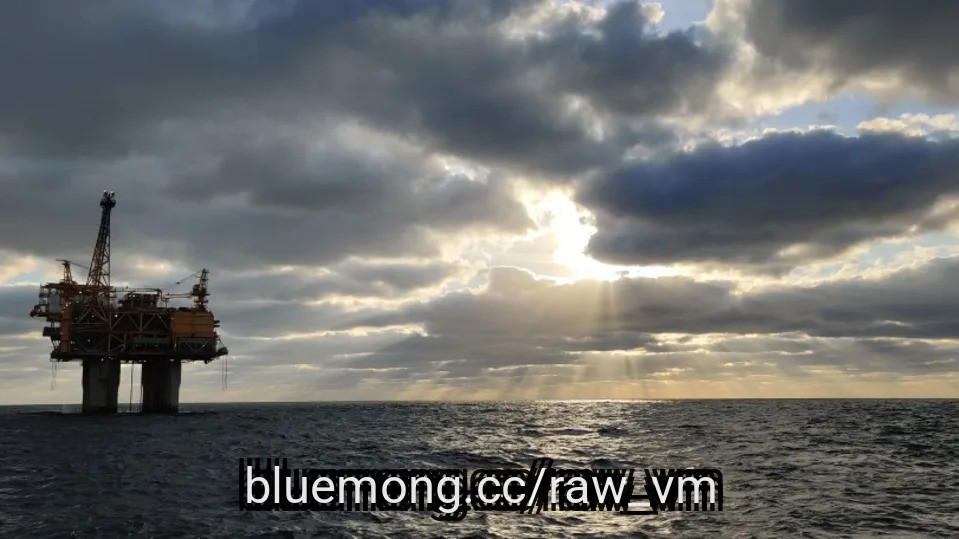
ADNOC has awarded McDermott a contract worth more than $1 billion for a major offshore pressure-boosting facility at Abu Dhabi's Umm Shaif field, as the UAE accelerates investment in natural gas production.
The engineering, procurement, construction and installation contract covers Package 4 of ADNOC's Umm Shaif Integrated Gas Cap and Surface Pressure Boosting Project. McDermott and its Qingdao McDermott Wuchuan consortium will construct and install a new jacket and topside while modifying existing offshore infrastructure.
McDermott did not disclose the exact contract value but classified it as a "mega" award, which the company defines as exceeding $1 billion. The company said the completed topside will be among the heaviest offshore modules ever installed in the Middle East.
The contract follows ADNOC's $6.2-billion final investment decision in July to develop the Umm Shaif Gas Cap alongside TotalEnergies, Eni and China National Petroleum Corporation. The wider project includes three EPC contracts worth a combined $5.1 billion and a 14-well drilling program.
ADNOC expects the development to unlock more than 600 million standard cubic feet per day of natural gas and ***** ociated liquids, equivalent to roughly 10% of current UAE domestic gas consumption. First production is targeted for 2030.
#mcdermott
The engineering, procurement, construction and installation contract covers Package 4 of ADNOC's Umm Shaif Integrated Gas Cap and Surface Pressure Boosting Project. McDermott and its Qingdao McDermott Wuchuan consortium will construct and install a new jacket and topside while modifying existing offshore infrastructure.
McDermott did not disclose the exact contract value but classified it as a "mega" award, which the company defines as exceeding $1 billion. The company said the completed topside will be among the heaviest offshore modules ever installed in the Middle East.
The contract follows ADNOC's $6.2-billion final investment decision in July to develop the Umm Shaif Gas Cap alongside TotalEnergies, Eni and China National Petroleum Corporation. The wider project includes three EPC contracts worth a combined $5.1 billion and a 14-well drilling program.
ADNOC expects the development to unlock more than 600 million standard cubic feet per day of natural gas and ***** ociated liquids, equivalent to roughly 10% of current UAE domestic gas consumption. First production is targeted for 2030.
#mcdermott


2 months ago
ExxonMobil (NYSE: XOM) recently warned Kazakhstan that the Central Asian nation's largest oil field, Tengiz, will hit its production peak next year. Worse yet, output from the field will begin to decline. Exxon estimates it will fall nearly 40% by 2035 to around 500,000 barrels per day (bpd). That also has implications for Chevron, as it helped develop the field through its 50% interest in the Tengizchevroil (TCO) partnership.
However, while Tengiz is about to plateau and decline, that's not a crisis for ExxonMobil. Here's why.
Missed Nvidia in 2009? This Rare Signal Is Flashing Again. In 2009, a "Double Down" signal flashed for a little-known chipmaker called Nvidia. For the first time in years, that same "Total Conviction" signal is flashing for a company 1/100th the size of Nvidia. Continue »
Even though output at Tengiz is about to peak and start declining, Exxon has another opportunity in Kazakhstan: Kashagan. The giant offshore field in the Caspian Sea is operated by a partnership that includes Exxon, Shell, TotalEnergies, and others. Exxon sees the potential for an $80 billion joint investment to develop the western part of the field. This expansion could produce up to 600,000 bpd.
However, the field is part of a long-running dispute between Kazakhstan and the operating consortium. Kazakhstan levied a $5 billion environmental fine that the field's operator hasn't paid. Additionally, the government says the partners owe it $150 billion for lost revenue due to development delays, a claim currently before international arbitration. Exxon and its partners won't invest the capital needed to boost production in this field until they resolve the dispute with the government.
#billion
However, while Tengiz is about to plateau and decline, that's not a crisis for ExxonMobil. Here's why.
Missed Nvidia in 2009? This Rare Signal Is Flashing Again. In 2009, a "Double Down" signal flashed for a little-known chipmaker called Nvidia. For the first time in years, that same "Total Conviction" signal is flashing for a company 1/100th the size of Nvidia. Continue »
Even though output at Tengiz is about to peak and start declining, Exxon has another opportunity in Kazakhstan: Kashagan. The giant offshore field in the Caspian Sea is operated by a partnership that includes Exxon, Shell, TotalEnergies, and others. Exxon sees the potential for an $80 billion joint investment to develop the western part of the field. This expansion could produce up to 600,000 bpd.
However, the field is part of a long-running dispute between Kazakhstan and the operating consortium. Kazakhstan levied a $5 billion environmental fine that the field's operator hasn't paid. Additionally, the government says the partners owe it $150 billion for lost revenue due to development delays, a claim currently before international arbitration. Exxon and its partners won't invest the capital needed to boost production in this field until they resolve the dispute with the government.
#billion


2 months ago
Pouyanne revealed moving a supertanker through Hormuz costs only $10 per barrel, far below what panicked investors feared.
Iraq's SOMO offered discounts up to $29.80 per barrel on Basrah crude, more than covering the $10 Hormuz shipping premium.
TotalEnergies generated $9.8 billion in Q2 cash flow and authorized $1.5 billion in buybacks while its trading arm added $500 million in outperformance.
Act now: the ***** yst who called NVIDIA in 2010 just named his top 10 AI stocks — and TotalEnergies didn't make the cut. Grab the names FREE today.
Oil has become the thread running through the global inflation story. The Iran war has disrupted production, refining, shipping, and the routes connecting them, pushing energy costs higher across transportation, manufacturing, food, and household budgets.
#NVIDIA
Iraq's SOMO offered discounts up to $29.80 per barrel on Basrah crude, more than covering the $10 Hormuz shipping premium.
TotalEnergies generated $9.8 billion in Q2 cash flow and authorized $1.5 billion in buybacks while its trading arm added $500 million in outperformance.
Act now: the ***** yst who called NVIDIA in 2010 just named his top 10 AI stocks — and TotalEnergies didn't make the cut. Grab the names FREE today.
Oil has become the thread running through the global inflation story. The Iran war has disrupted production, refining, shipping, and the routes connecting them, pushing energy costs higher across transportation, manufacturing, food, and household budgets.
#NVIDIA

2 months ago
Exxon is in the running for Shell's U.S. chemicals business that could fetch $8 billion, the Financial Times reported today, citing unnamed sources familiar with developments.
The U.S. supermajor is competing with LyondellBasell, Apollo Global Management, and the Kuwait Petroleum Corporation, the unnamed sources also told the publication. The potential buyers have submitted non-binding offers to Shell, with these ranging from offers to buy parts of the business to offers for the whole division.
Shell's chemicals business in the United States comprises four facilities in Louisiana, Texas, and Pennsylvania that make chemicals used in a range of industries, from plastics production to detergents.
Shell has made two **** et sales recently, one of its onshore wind and solar power business in Europe and the other of a stake in a gas project offshore Cyprus. The wind and solar power deal went to TotalEnergies and involved 500 megawatts of combined renewable generation capacity in operation and in development, as well as a pipeline of projects for future development across Italy, the Netherlands, Spain, and the UK.
The transaction is subject to regulatory approvals and is expected to complete by the end of 2026, Shell said earlier this month in the announcement of the deal with TotalEnergies.
#business #chemicals #unnamed #wind
The U.S. supermajor is competing with LyondellBasell, Apollo Global Management, and the Kuwait Petroleum Corporation, the unnamed sources also told the publication. The potential buyers have submitted non-binding offers to Shell, with these ranging from offers to buy parts of the business to offers for the whole division.
Shell's chemicals business in the United States comprises four facilities in Louisiana, Texas, and Pennsylvania that make chemicals used in a range of industries, from plastics production to detergents.
Shell has made two **** et sales recently, one of its onshore wind and solar power business in Europe and the other of a stake in a gas project offshore Cyprus. The wind and solar power deal went to TotalEnergies and involved 500 megawatts of combined renewable generation capacity in operation and in development, as well as a pipeline of projects for future development across Italy, the Netherlands, Spain, and the UK.
The transaction is subject to regulatory approvals and is expected to complete by the end of 2026, Shell said earlier this month in the announcement of the deal with TotalEnergies.
#business #chemicals #unnamed #wind


2 months ago
Oil prices have soared in recent months as a result of the almost complete closure of the Strait of Hormuz, a key trade corridor connecting Asia and Europe. High fossil fuel prices have helped to drive up the profits of oil and gas companies around the globe, particularly in the United States and Europe. As a few companies boost production to fill the gap, some oil majors have seen record earnings in the first half of the year, a trend that is expected to continue for as long as Hormuz trade remains restricted.
Eight of the largest oil firms achieved combined profits of over $90 billion in the three months from April to June, following the U.S.-Israeli attack on Iran and the subsequent war. Iran's decision to close the Strait of Hormuz, the waterway between Oman and Iran that connects the Persian Gulf with the Gulf of Oman and the Arabian Sea, has led to the biggest disruption of fossil fuel supplies in the market's history. As a few oil majors from the United States, Europe, and the Middle East step in to fill the gap and oil prices are pushed higher, a few companies have come out on top.
The phenomenon has also demonstrated that the world remains overly dependent on fossil fuels, with countries willing to pay a premium to secure their oil and gas supplies in the face of major global shortages. Environmentalists are concerned about what this reliance means for climate change, as greenhouse emissions remain high. The lack of energy diversification and the heavy dependence on fossil fuels also poses a threat to energy security for many countries.
The eight companies ***** sed – Aramco, BP, Shell, Equinor, TotalEnergies, Eni, Chevron, and ExxonMobil – have almost doubled their combined profits, from just below $50 billion in the second quarter of 2025. The increase in oil prices has driven up consumer energy bills worldwide, while oil companies continue to profit. This has reignited the discussion around windfall tax, as governments call for oil companies to pay higher levies to subsidise energy bills and environmentalists believe extra taxes could help pay to address the environmental damage caused by oil operations.
The Brent Benchmark put oil prices at around $68 a barrel at the end of February, rising to highs of nearly $100 a barrel in May. Saudi Arabia's Aramco benefited the most from the price increase over the spring, reporting a 34 per cent rise in its quarterly net income, at over $33 billion. Aramco saw high profits even following damage to its infrastructure by drone and missile strikes from Iranian and Houthi forces. The company's record oil sales meant that it was responsible for more carbon emissions than any company in history, according to the database Carbon Majors.
#Companies #prices #hormuz #Europe
Eight of the largest oil firms achieved combined profits of over $90 billion in the three months from April to June, following the U.S.-Israeli attack on Iran and the subsequent war. Iran's decision to close the Strait of Hormuz, the waterway between Oman and Iran that connects the Persian Gulf with the Gulf of Oman and the Arabian Sea, has led to the biggest disruption of fossil fuel supplies in the market's history. As a few oil majors from the United States, Europe, and the Middle East step in to fill the gap and oil prices are pushed higher, a few companies have come out on top.
The phenomenon has also demonstrated that the world remains overly dependent on fossil fuels, with countries willing to pay a premium to secure their oil and gas supplies in the face of major global shortages. Environmentalists are concerned about what this reliance means for climate change, as greenhouse emissions remain high. The lack of energy diversification and the heavy dependence on fossil fuels also poses a threat to energy security for many countries.
The eight companies ***** sed – Aramco, BP, Shell, Equinor, TotalEnergies, Eni, Chevron, and ExxonMobil – have almost doubled their combined profits, from just below $50 billion in the second quarter of 2025. The increase in oil prices has driven up consumer energy bills worldwide, while oil companies continue to profit. This has reignited the discussion around windfall tax, as governments call for oil companies to pay higher levies to subsidise energy bills and environmentalists believe extra taxes could help pay to address the environmental damage caused by oil operations.
The Brent Benchmark put oil prices at around $68 a barrel at the end of February, rising to highs of nearly $100 a barrel in May. Saudi Arabia's Aramco benefited the most from the price increase over the spring, reporting a 34 per cent rise in its quarterly net income, at over $33 billion. Aramco saw high profits even following damage to its infrastructure by drone and missile strikes from Iranian and Houthi forces. The company's record oil sales meant that it was responsible for more carbon emissions than any company in history, according to the database Carbon Majors.
#Companies #prices #hormuz #Europe

2 months ago
Antipodes Partners published its "Antipodes Global Strategy" second-quarter 2026 investor letter, highlighting the key performance stocks, portfolio changes, and the market outlook. A copy of the letter can be downloaded here. The second quarter of 2026 delivered one of the strongest equity market recoveries in recent history, as global equities gained 14.9% in US dollar terms. Renewed enthusiasm for artificial intelligence, strong corporate earnings, and easing tensions with Iran supported the rebound, while growth stocks outperformed value and emerging markets led gains, particularly Korea and Taiwan. The Antipodes Global Value Strategy underperformed its benchmark during the quarter and over the 12 months to June 30, 2026, as returns became concentrated in a narrow group of semiconductor and hardware stocks. Consumer staples and consumer discretionary holdings supported performance, while information technology, software, and internet exposure detracted. The firm remains cautious on expensive memory companies because pricing and supply remain cyclical despite AI demand. The Strategy continues to favor valued infrastructure, specialty semiconductors, resilient software, and quality businesses. For insights into its key selections for 2026, please review the Strategy's top five holdings.
In its Q2 2026 investor letter, Antipodes Global Strategy highlighted TotalEnergies SE (NYSE:TTE). TotalEnergies SE (NYSE:TTE) is a leading energy company that produces and markets oil and biofuels, natural gas, biogas, and low-carbon hydrogen, renewables, and electricity. On August 7, 2026, TotalEnergies SE (NYSE:TTE) closed at $85.83 per share. The one-month return of TotalEnergies SE (NYSE:TTE) was 7.49%, and its shares gained 43.01% over the past 52 weeks. TotalEnergies SE (NYSE:TTE) has a market capitalization of $190.44 billion.
Antipodes Global Strategy stated the following regarding TotalEnergies SE (NYSE:TTE) in its Q2 2026 investor letter:
"TotalEnergies SE (NYSE:TTE) underperformed as weaker crude oil and natural gas prices reduced earnings expectations and cash-flow forecasts across the integrated energy sector in line with geopolitical tensions easing over the Quarter. Concerns over slowing global economic growth and softer fuel demand also weighed on commodity markets, while increased OPEC+ supply expectations added further pressure to oil prices. Although TotalEnergies continued to benefit from its diversified LNG, power and renewable energy portfolio, these positives were outweighed by declining upstream earnings expectations. A broader rotation away from defensive energy stocks toward higher-growth sectors and profit taking after a stronger period also contributed to weakness."
#strategy #letter #stocks
In its Q2 2026 investor letter, Antipodes Global Strategy highlighted TotalEnergies SE (NYSE:TTE). TotalEnergies SE (NYSE:TTE) is a leading energy company that produces and markets oil and biofuels, natural gas, biogas, and low-carbon hydrogen, renewables, and electricity. On August 7, 2026, TotalEnergies SE (NYSE:TTE) closed at $85.83 per share. The one-month return of TotalEnergies SE (NYSE:TTE) was 7.49%, and its shares gained 43.01% over the past 52 weeks. TotalEnergies SE (NYSE:TTE) has a market capitalization of $190.44 billion.
Antipodes Global Strategy stated the following regarding TotalEnergies SE (NYSE:TTE) in its Q2 2026 investor letter:
"TotalEnergies SE (NYSE:TTE) underperformed as weaker crude oil and natural gas prices reduced earnings expectations and cash-flow forecasts across the integrated energy sector in line with geopolitical tensions easing over the Quarter. Concerns over slowing global economic growth and softer fuel demand also weighed on commodity markets, while increased OPEC+ supply expectations added further pressure to oil prices. Although TotalEnergies continued to benefit from its diversified LNG, power and renewable energy portfolio, these positives were outweighed by declining upstream earnings expectations. A broader rotation away from defensive energy stocks toward higher-growth sectors and profit taking after a stronger period also contributed to weakness."
#strategy #letter #stocks


2 months ago
ExxonMobil (NYSE:XOM) reported second-quarter 2026 results on July 31, and the headline number disappointed. Adjusted earnings came in at $3.52 per share, short of the $3.60 ***** ysts expected, even though that figure was up sharply from a year earlier. Reported earnings were $14.5 billion, or $3.48 per share. But the company also generated $23.6 billion in cash from operations and $17.2 billion in free cash flow, enough to fund $9.4 billion in shareholder distributions with room to spare. The miss made headlines. The cash didn't miss anything.
Exxon's operating results told a different story than the earnings line. The company posted its highest upstream production in more than two decades, excluding disruptions in the Middle East, and Permian output topped 1.8 million oil-equivalent barrels per day, a record pace consistent with its planned 9% annual growth rate through 2030. A fifth Guyana production vessel set sail during the quarter, with startup on track for the fourth quarter of 2026 and 250,000 barrels per day of new capacity coming online. Diesel production also hit a second-quarter record. None of that shows up directly in a per-share earnings number, but it is the foundation the company is building future cash flow on.
Cost discipline reinforced the picture. Exxon has now banked $16.3 billion in ***** ulative structural cost savings since 2019, including $1.2 billion added in the first half of 2026 alone, a total the company says exceeds what BP, Chevron, Shell, and TotalEnergies have saved combined. It kept investing anyway, spending $13.0 billion in cash capital expenditures through midyear, about 20% more than its nearest rival. Growing production while cutting costs is the combination that funds a rising dividend.
The earnings miss wasn't the only soft spot. The first quarter of 2026 generated just $2.7 billion in free cash flow against $9.2 billion in shareholder distributions, forcing Exxon to lean on its balance sheet, with debt-to-capital reaching 15.4% at the time. Zoom out to the full first half and the math is tighter than the strong second quarter suggests: $19.9 billion in free cash flow covered $18.6 billion in distributions, leaving only about $1.3 billion of cushion. The company reduced debt by $7 billion in the second quarter and brought net debt-to-capital down to 11%, but the episode is a reminder that commodity earnings swing hard from quarter to quarter, and the roughly $37 billion a year Exxon is committing to dividends and buybacks needs strong quarters to keep showing up.
#quarter #cash
Exxon's operating results told a different story than the earnings line. The company posted its highest upstream production in more than two decades, excluding disruptions in the Middle East, and Permian output topped 1.8 million oil-equivalent barrels per day, a record pace consistent with its planned 9% annual growth rate through 2030. A fifth Guyana production vessel set sail during the quarter, with startup on track for the fourth quarter of 2026 and 250,000 barrels per day of new capacity coming online. Diesel production also hit a second-quarter record. None of that shows up directly in a per-share earnings number, but it is the foundation the company is building future cash flow on.
Cost discipline reinforced the picture. Exxon has now banked $16.3 billion in ***** ulative structural cost savings since 2019, including $1.2 billion added in the first half of 2026 alone, a total the company says exceeds what BP, Chevron, Shell, and TotalEnergies have saved combined. It kept investing anyway, spending $13.0 billion in cash capital expenditures through midyear, about 20% more than its nearest rival. Growing production while cutting costs is the combination that funds a rising dividend.
The earnings miss wasn't the only soft spot. The first quarter of 2026 generated just $2.7 billion in free cash flow against $9.2 billion in shareholder distributions, forcing Exxon to lean on its balance sheet, with debt-to-capital reaching 15.4% at the time. Zoom out to the full first half and the math is tighter than the strong second quarter suggests: $19.9 billion in free cash flow covered $18.6 billion in distributions, leaving only about $1.3 billion of cushion. The company reduced debt by $7 billion in the second quarter and brought net debt-to-capital down to 11%, but the episode is a reminder that commodity earnings swing hard from quarter to quarter, and the roughly $37 billion a year Exxon is committing to dividends and buybacks needs strong quarters to keep showing up.
#quarter #cash


3 months ago
Namibia is rapidly emerging as Africa's next major oil producer while neighboring South Africa, which controls roughly two-thirds of the same Orange Basin petroleum province, remains years behind in developing essentially the same petroleum system. The Orange Basin, an offshore deepwater petroleum province spanning the Atlantic maritime border between the two countries, is estimated to contain more than 20 billion barrels of oil equivalent. Yet while Namibia has attracted a succession of world-class discoveries and moved rapidly toward commercial development, South Africa has struggled to translate the same geological opportunity into producing **** ets.
TotalEnergies' (NYSE:TTE) deepwater Venus Project in offshore Namibia now targets an initial production capacity of roughly 150,000 barrels of oil per day, with first oil aimed for 2030. Venus-1X is estimated to contain 1.5 billion barrels of light crude and 4.8 trillion cubic feet of gas. TotalEnergies has also taken over operations of the massive Mopane discovery from Portugal's Galp Energia (OTCPK:GLPEF).
Last month, Shell Plc (NYSE:SHEL) and its JV partners reported a major oil discovery at the Merlin-1X exploration well within Petroleum Exploration Licence 39 (PEL 39). Located in Namibia's Orange Basin roughly 290 kilometers off the coast, the resource has recoverable reserves estimated at 750 million barrels for Phase 1. The success of Merlin-1X marks a critical turnaround for the consortium.
In early 2025, Shell booked a $400 million impairment on its Namibian offshore portfolio following engineering hurdles at older discovery wells with complex geology and high gas-to-oil ratios, including Graff-1X and Jonker-1X. Those challenges had initially slowed commercialization plans, but the Merlin-1X discovery has significantly improved the outlook for the company's Namibian acreage.
Related: Harold Hamm Bets Bigger on Argentina's Vaca Muerta Shale Boom
#petroleum #orange #roughly #offshore
TotalEnergies' (NYSE:TTE) deepwater Venus Project in offshore Namibia now targets an initial production capacity of roughly 150,000 barrels of oil per day, with first oil aimed for 2030. Venus-1X is estimated to contain 1.5 billion barrels of light crude and 4.8 trillion cubic feet of gas. TotalEnergies has also taken over operations of the massive Mopane discovery from Portugal's Galp Energia (OTCPK:GLPEF).
Last month, Shell Plc (NYSE:SHEL) and its JV partners reported a major oil discovery at the Merlin-1X exploration well within Petroleum Exploration Licence 39 (PEL 39). Located in Namibia's Orange Basin roughly 290 kilometers off the coast, the resource has recoverable reserves estimated at 750 million barrels for Phase 1. The success of Merlin-1X marks a critical turnaround for the consortium.
In early 2025, Shell booked a $400 million impairment on its Namibian offshore portfolio following engineering hurdles at older discovery wells with complex geology and high gas-to-oil ratios, including Graff-1X and Jonker-1X. Those challenges had initially slowed commercialization plans, but the Merlin-1X discovery has significantly improved the outlook for the company's Namibian acreage.
Related: Harold Hamm Bets Bigger on Argentina's Vaca Muerta Shale Boom
#petroleum #orange #roughly #offshore


3 months ago
Middle East turmoil, centered on the U.S. war with Iran, is playing havoc with world energy markets. An ongoing dispute over access to the Strait of Hormuz, through which a fifth of world oil and natural gas supply is shipped, is causing prices to surge. This is a boon for South America's oil industry, particularly Suriname's emerging petroleum boom, which was delayed by conflicting drilling results and seismic data. The former Dutch colony is on the cusp of becoming South America's next major oil-producing nation.
Since 2019, Suriname's government in the capital Paramaribo has hungrily eyed Guyana's booming petroleum sector, which delivered a massive economic windfall for the former British colony. Five major oil discoveries in offshore Block 58, which started in 2020 with the Maka Central-1 exploration well, confirmed the presence of commercially exploitable hydrocarbons in Suriname's portion of the offshore Guyana-Suriname Basin.
After a series of delays, beginning in 2022, due to mismatched drilling results and seismic data along with a high gas-to-oil ratio, TotalEnergies, the operator of Block 58, approved a final investment decision (FID). TotalEnergies, which holds a 50% working interest in offshore Block 58, and 50% partner APA Corporation approved the development of the deepwater GranMorgu project. This changed the project's ownership structure. Forty percent was retained by the operator TotalEnergies with another 40% retained by APA, and the remainder granted to Staatsolie.
The state-controlled energy company's acquisition was in accordance with Staatsolie's rights set out in the production-sharing contract (PSC) for Block 52. The company used a $1.6 billion loan from a banking consortium and a March 2025 bond issue to finance the acquisition. Staatsolie's share of GranMorgu will multiply the earnings delivered to Paramaribo, which has been battling an economic crisis since 2021. Indeed, the situation was so severe that rioting engulfed parts of the capital and parliament was stormed by protestors in 2023.
GranMorgu, which will come online in 2028, is a game changer for an economically challenged Suriname. The project's floating production, storage and offloading unit (FPSO) vessel, on completion, will have capacity of 220,000 barrels per day.
#south #World
Since 2019, Suriname's government in the capital Paramaribo has hungrily eyed Guyana's booming petroleum sector, which delivered a massive economic windfall for the former British colony. Five major oil discoveries in offshore Block 58, which started in 2020 with the Maka Central-1 exploration well, confirmed the presence of commercially exploitable hydrocarbons in Suriname's portion of the offshore Guyana-Suriname Basin.
After a series of delays, beginning in 2022, due to mismatched drilling results and seismic data along with a high gas-to-oil ratio, TotalEnergies, the operator of Block 58, approved a final investment decision (FID). TotalEnergies, which holds a 50% working interest in offshore Block 58, and 50% partner APA Corporation approved the development of the deepwater GranMorgu project. This changed the project's ownership structure. Forty percent was retained by the operator TotalEnergies with another 40% retained by APA, and the remainder granted to Staatsolie.
The state-controlled energy company's acquisition was in accordance with Staatsolie's rights set out in the production-sharing contract (PSC) for Block 52. The company used a $1.6 billion loan from a banking consortium and a March 2025 bond issue to finance the acquisition. Staatsolie's share of GranMorgu will multiply the earnings delivered to Paramaribo, which has been battling an economic crisis since 2021. Indeed, the situation was so severe that rioting engulfed parts of the capital and parliament was stormed by protestors in 2023.
GranMorgu, which will come online in 2028, is a game changer for an economically challenged Suriname. The project's floating production, storage and offloading unit (FPSO) vessel, on completion, will have capacity of 220,000 barrels per day.
#south #World


3 months ago
Middle East turmoil, centered on the U.S. war with Iran, is playing havoc with world energy markets. An ongoing dispute over access to the Strait of Hormuz, through which a fifth of world oil and natural gas supply is shipped, is causing prices to surge. This is a boon for South America's oil industry, particularly Suriname's emerging petroleum boom, which was delayed by conflicting drilling results and seismic data. The former Dutch colony is on the cusp of becoming South America's next major oil-producing nation.
Since 2019, Suriname's government in the capital Paramaribo has hungrily eyed Guyana's booming petroleum sector, which delivered a massive economic windfall for the former British colony. Five major oil discoveries in offshore Block 58, which started in 2020 with the Maka Central-1 exploration well, confirmed the presence of commercially exploitable hydrocarbons in Suriname's portion of the offshore Guyana-Suriname Basin.
After a series of delays, beginning in 2022, due to mismatched drilling results and seismic data along with a high gas-to-oil ratio, TotalEnergies, the operator of Block 58, approved a final investment decision (FID). TotalEnergies, which holds a 50% working interest in offshore Block 58, and 50% partner APA Corporation approved the development of the deepwater GranMorgu project. This changed the project's ownership structure. Forty percent was retained by the operator TotalEnergies with another 40% retained by APA, and the remainder granted to Staatsolie.
The state-controlled energy company's acquisition was in accordance with Staatsolie's rights set out in the production-sharing contract (PSC) for Block 52. The company used a $1.6 billion loan from a banking consortium and a March 2025 bond issue to finance the acquisition. Staatsolie's share of GranMorgu will multiply the earnings delivered to Paramaribo, which has been battling an economic crisis since 2021. Indeed, the situation was so severe that rioting engulfed parts of the capital and parliament was stormed by protestors in 2023.
GranMorgu, which will come online in 2028, is a game changer for an economically challenged Suriname. The project's floating production, storage and offloading unit (FPSO) vessel, on completion, will have capacity of 220,000 barrels per day.
#suriname #since #World #energy
Since 2019, Suriname's government in the capital Paramaribo has hungrily eyed Guyana's booming petroleum sector, which delivered a massive economic windfall for the former British colony. Five major oil discoveries in offshore Block 58, which started in 2020 with the Maka Central-1 exploration well, confirmed the presence of commercially exploitable hydrocarbons in Suriname's portion of the offshore Guyana-Suriname Basin.
After a series of delays, beginning in 2022, due to mismatched drilling results and seismic data along with a high gas-to-oil ratio, TotalEnergies, the operator of Block 58, approved a final investment decision (FID). TotalEnergies, which holds a 50% working interest in offshore Block 58, and 50% partner APA Corporation approved the development of the deepwater GranMorgu project. This changed the project's ownership structure. Forty percent was retained by the operator TotalEnergies with another 40% retained by APA, and the remainder granted to Staatsolie.
The state-controlled energy company's acquisition was in accordance with Staatsolie's rights set out in the production-sharing contract (PSC) for Block 52. The company used a $1.6 billion loan from a banking consortium and a March 2025 bond issue to finance the acquisition. Staatsolie's share of GranMorgu will multiply the earnings delivered to Paramaribo, which has been battling an economic crisis since 2021. Indeed, the situation was so severe that rioting engulfed parts of the capital and parliament was stormed by protestors in 2023.
GranMorgu, which will come online in 2028, is a game changer for an economically challenged Suriname. The project's floating production, storage and offloading unit (FPSO) vessel, on completion, will have capacity of 220,000 barrels per day.
#suriname #since #World #energy


3 months ago
TotalEnergies SE (NYSE:TTE) reported second-quarter adjusted net income of $6 billion on July 23, 2026, up 67% year-over-year and its best quarter in nearly three years.
The gain traced almost entirely to the Iran war, as Hormuz disruption pushed crude and gas prices to multi-year highs and lifted European refining margins while Middle East capacity stayed offline. Refining and chemicals income rose 362% to $1.8 billion, and exploration and production earnings climbed 64% to $3.2 billion.
CEO Patrick Pouyanné called the strait a battleground and said closures could become normal, leaving the real question: what the company looks like once that windfall fades.
LNG is where that question starts to get answered, and the quarter alone was not encouraging.
The segment earned $807 million, a 22% decline the company attributed to trading underperformance amid flat European demand, though Pouyanné said prices rallied in July.
#july #european #question
The gain traced almost entirely to the Iran war, as Hormuz disruption pushed crude and gas prices to multi-year highs and lifted European refining margins while Middle East capacity stayed offline. Refining and chemicals income rose 362% to $1.8 billion, and exploration and production earnings climbed 64% to $3.2 billion.
CEO Patrick Pouyanné called the strait a battleground and said closures could become normal, leaving the real question: what the company looks like once that windfall fades.
LNG is where that question starts to get answered, and the quarter alone was not encouraging.
The segment earned $807 million, a 22% decline the company attributed to trading underperformance amid flat European demand, though Pouyanné said prices rallied in July.
#july #european #question
3 months ago
ADNOC has approved a $6.2 billion final investment decision to develop the Umm Shaif Gas Cap, marking another step in its strategy to expand natural gas production and liquefied natural gas exports as global demand for gas continues to rise.
The offshore project, located at Abu Dhabi's longest-producing offshore field, is expected to deliver more than 600 million standard cubic feet per day of natural gas and ******* ociated gas liquids by 2030. According to ADNOC, that volume is equivalent to nearly 10% of the UAE's current daily gas consumption, supporting domestic energy security while increasing supplies available for international markets.
The development will be carried out alongside ADNOC's concession partners TotalEnergies, Eni and China National Petroleum Corporation.
As part of the project, ADNOC awarded three engineering, procurement and construction contracts worth a combined $5.1 billion to consortiums of UAE and international contractors. The company also approved a $365 million drilling program covering 14 wells, which will be executed by ADNOC Drilling over 18 months using three existing rigs.
The investment forms part of ADNOC's broader gas expansion strategy, which seeks to monetize the UAE's vast natural gas resources while growing its global LNG business. The company has previously announced plans to build a global LNG marketing and trading platform and is targeting 47 million tonnes per annum of marketable LNG capacity by 2035.
#natural #million #investment #offshore
The offshore project, located at Abu Dhabi's longest-producing offshore field, is expected to deliver more than 600 million standard cubic feet per day of natural gas and ******* ociated gas liquids by 2030. According to ADNOC, that volume is equivalent to nearly 10% of the UAE's current daily gas consumption, supporting domestic energy security while increasing supplies available for international markets.
The development will be carried out alongside ADNOC's concession partners TotalEnergies, Eni and China National Petroleum Corporation.
As part of the project, ADNOC awarded three engineering, procurement and construction contracts worth a combined $5.1 billion to consortiums of UAE and international contractors. The company also approved a $365 million drilling program covering 14 wells, which will be executed by ADNOC Drilling over 18 months using three existing rigs.
The investment forms part of ADNOC's broader gas expansion strategy, which seeks to monetize the UAE's vast natural gas resources while growing its global LNG business. The company has previously announced plans to build a global LNG marketing and trading platform and is targeting 47 million tonnes per annum of marketable LNG capacity by 2035.
#natural #million #investment #offshore


3 months ago
Halliburton has been awarded contracts to provide integrated drilling and completions services for the GranMorgu deepwater oil development located around 150km off Suriname's coast.
The deal covers a long-term programme and will see Halliburton implement a digital and automation execution model designed to connect planning, engineering and operations.
For the GranMorgu project, Halliburton plans to use integrated digital workflows, real-time data and remote operations control.
These methods aim to improve well placement accuracy and delivery ***** urance, helping to connect surface activities with subsurface objectives.
According to the company, this approach is expected to help enhance recovery and reduce overall ownership costs for TotalEnergies.
The deal covers a long-term programme and will see Halliburton implement a digital and automation execution model designed to connect planning, engineering and operations.
For the GranMorgu project, Halliburton plans to use integrated digital workflows, real-time data and remote operations control.
These methods aim to improve well placement accuracy and delivery ***** urance, helping to connect surface activities with subsurface objectives.
According to the company, this approach is expected to help enhance recovery and reduce overall ownership costs for TotalEnergies.

4 months ago
FEZ bundles 50 Eurozone blue chips at 0.29%, but a 10% euro swing shifts your dollar distribution by roughly the same amount.
ASML raised its dividend 17% backed by a €45 billion order backlog, while TotalEnergies is the only top FEZ holding with real cyclical risk.
Act now: the **** yst who called NVIDIA in 2010 just named his top 10 AI stocks — and ASML didn't make the cut. Grab the names FREE today.
SPDR EURO STOXX 50 ETF (NYSEARCA:FEZ) gives U.S. investors a simple way to own the 50 largest Eurozone blue chips in a single ticker, and the income it generates is a big part of the appeal. FEZ passes through dividends paid by underlying companies twice a year, and at a recent price of $67 with an expense ratio of 0.29%, holders are buying a basket of European cash-generative giants. The question is whether that income stream is durable, or whether currency swings and geopolitical pressure could thin it out.
FEZ is a passive equity fund tracking the EURO STOXX 50 Index. There are no options premiums, no leverage, no synthetic exposure. The distribution you receive is simply the dollar value of euro-denominated dividends paid by underlying companies, after fees. Two forces drive your check: underlying corporate payout policies and the EUR/USD exchange rate, currently around 1.156. A 10% move in the euro can swing your distribution by roughly the same amount even if every company pays exactly what it did last year.
ASML raised its dividend 17% backed by a €45 billion order backlog, while TotalEnergies is the only top FEZ holding with real cyclical risk.
Act now: the **** yst who called NVIDIA in 2010 just named his top 10 AI stocks — and ASML didn't make the cut. Grab the names FREE today.
SPDR EURO STOXX 50 ETF (NYSEARCA:FEZ) gives U.S. investors a simple way to own the 50 largest Eurozone blue chips in a single ticker, and the income it generates is a big part of the appeal. FEZ passes through dividends paid by underlying companies twice a year, and at a recent price of $67 with an expense ratio of 0.29%, holders are buying a basket of European cash-generative giants. The question is whether that income stream is durable, or whether currency swings and geopolitical pressure could thin it out.
FEZ is a passive equity fund tracking the EURO STOXX 50 Index. There are no options premiums, no leverage, no synthetic exposure. The distribution you receive is simply the dollar value of euro-denominated dividends paid by underlying companies, after fees. Two forces drive your check: underlying corporate payout policies and the EUR/USD exchange rate, currently around 1.156. A 10% move in the euro can swing your distribution by roughly the same amount even if every company pays exactly what it did last year.

4 months ago
The national oil company of the United Arab Emirates, ADNOC, has signed agreements with BP and TotalEnergies to let the European oil and gas supermajors take 10% each in the consortium developing one of Abu Dhabi's largest gas fields.
Both BP and TotalEnergies announced on Thursday they had signed their respective concession agreements to join the development of the Bab Gas Cap project in Abu Dhabi.
BP will now hold a 10% interest in the Bab Gas Cap concession, which is expected to produce up to 1.5 billion cubic feet per day (bcfd) of gas. The Bab Gas Cap project, the largest gas cap development of its kind globally, is made up of three reservoirs in the Bab Field – one of Abu Dhabi's largest onshore oil fields – and involves the co-production of gas and condensate.
The new concession for the Bab Gas Cap project will be operated by ADNOC Onshore, with ADNOC holding 60%, BP and TotalEnergies 10% each, China's CNPC with an 8% interest, ****** anese JODCO/INPEX with 5%, China's ZhenHua (4%), and South Korea's GS Energy with 3%.
"The Bab Gas Cap project is well in line with TotalEnergies' Upstream strategy by adding low-cost, low-emissions resources with significant potential for production growth," Patrick Pouyanné, chairman and chief executive of TotalEnergies, said in a statement today.
Both BP and TotalEnergies announced on Thursday they had signed their respective concession agreements to join the development of the Bab Gas Cap project in Abu Dhabi.
BP will now hold a 10% interest in the Bab Gas Cap concession, which is expected to produce up to 1.5 billion cubic feet per day (bcfd) of gas. The Bab Gas Cap project, the largest gas cap development of its kind globally, is made up of three reservoirs in the Bab Field – one of Abu Dhabi's largest onshore oil fields – and involves the co-production of gas and condensate.
The new concession for the Bab Gas Cap project will be operated by ADNOC Onshore, with ADNOC holding 60%, BP and TotalEnergies 10% each, China's CNPC with an 8% interest, ****** anese JODCO/INPEX with 5%, China's ZhenHua (4%), and South Korea's GS Energy with 3%.
"The Bab Gas Cap project is well in line with TotalEnergies' Upstream strategy by adding low-cost, low-emissions resources with significant potential for production growth," Patrick Pouyanné, chairman and chief executive of TotalEnergies, said in a statement today.


4 months ago
French energy major TotalEnergies has signed an agreement to acquire a 10% interest in the Bab Gas Cap Concession in Abu Dhabi, strengthening its long-standing partnership with the Abu Dhabi National Oil Company (ADNOC) as the UAE accelerates development of its natural gas resources.
The concession will be operated by ADNOC Onshore, which holds a 60% stake, alongside partners bp (10%), CNPC (8%), JODCO/INPEX (5%), ZhenHua (4%), and GS Energy (3%). The project is designed to develop the extensive gas cap resources above the Bab onshore oil field and is targeting production of 1.5 billion cubic feet of gas per day.
The development builds on the 40-year renewal of Abu Dhabi's onshore oil concession in 2015, when international partners, including TotalEnergies, secured continued participation in one of the emirate's largest producing ******* ets. Since then, the companies have advanced plans to commercialize the Bab field's gas resources, which also contain valuable condensates.
The project supports Abu Dhabi's strategy to expand domestic gas production, increase condensate output, and strengthen its growing liquefied natural gas (LNG) business. Additional gas supplies are expected to feed the UAE's expanding LNG value chain, including the Ruwais LNG project, where TotalEnergies also owns a 10% stake following its investment in 2024.
"The Bab Gas Cap project is well in line with TotalEnergies' Upstream strategy by adding low-cost, low-emissions resources with significant potential for production growth," Chairman and CEO Patrick Pouyanné said.
The concession will be operated by ADNOC Onshore, which holds a 60% stake, alongside partners bp (10%), CNPC (8%), JODCO/INPEX (5%), ZhenHua (4%), and GS Energy (3%). The project is designed to develop the extensive gas cap resources above the Bab onshore oil field and is targeting production of 1.5 billion cubic feet of gas per day.
The development builds on the 40-year renewal of Abu Dhabi's onshore oil concession in 2015, when international partners, including TotalEnergies, secured continued participation in one of the emirate's largest producing ******* ets. Since then, the companies have advanced plans to commercialize the Bab field's gas resources, which also contain valuable condensates.
The project supports Abu Dhabi's strategy to expand domestic gas production, increase condensate output, and strengthen its growing liquefied natural gas (LNG) business. Additional gas supplies are expected to feed the UAE's expanding LNG value chain, including the Ruwais LNG project, where TotalEnergies also owns a 10% stake following its investment in 2024.
"The Bab Gas Cap project is well in line with TotalEnergies' Upstream strategy by adding low-cost, low-emissions resources with significant potential for production growth," Chairman and CEO Patrick Pouyanné said.

4 months ago
ExxonMobil is ***** sing possible acquisition targets that include Australia-based Woodside Energy Group, according to a report from Bloomberg News, citing unnamed sources.
The US-based oil and gas company is said to be holding initial internal discussions as it seeks to expand further into the liquefied natural gas (LNG) sector and reinforce its foothold in Asian energy markets.
The sources, who requested anonymity as they are not authorised to speak publicly, stated that ExxonMobil has not made any decisions. There is also no certainty that these considerations will result in a formal bid for Woodside or any other entity, said the sources.
A prospective acquisition of Woodside, Australia's largest LNG exporter, would represent a strategic shift for ExxonMobil, which completed a $60bn deal for US shale producer Pioneer Natural Resources in 2024.
Bloomberg reported that the acquisition of Woodside would broaden ExxonMobil's operational reach outside the US. It would also give the company a greater stake in LNG, an area where it trails behind operators such as Shell and TotalEnergies, the publication said.
The US-based oil and gas company is said to be holding initial internal discussions as it seeks to expand further into the liquefied natural gas (LNG) sector and reinforce its foothold in Asian energy markets.
The sources, who requested anonymity as they are not authorised to speak publicly, stated that ExxonMobil has not made any decisions. There is also no certainty that these considerations will result in a formal bid for Woodside or any other entity, said the sources.
A prospective acquisition of Woodside, Australia's largest LNG exporter, would represent a strategic shift for ExxonMobil, which completed a $60bn deal for US shale producer Pioneer Natural Resources in 2024.
Bloomberg reported that the acquisition of Woodside would broaden ExxonMobil's operational reach outside the US. It would also give the company a greater stake in LNG, an area where it trails behind operators such as Shell and TotalEnergies, the publication said.

5 months ago
A coalition of seven blue states sued the Trump administration Tuesday after it paid a French company nearly $1 billion in taxpayer money to not build offshore wind farms.
The lawsuit, led by New York attorney general Letitia James, argued that the deal struck between TotalEnergies and the Trump administration earlier this year deprived their states of much-needed power, and could raise electricity costs in the New England and mid-Atlantic regions.
In March, the Trump administration announced it would pay French energy giant TotalEnergies $928 million in taxpayer funds to reimburse the company for leases it had purchased under the Biden administration, allowing it to develop two offshore wind farms in waters near New York and North Carolina. The vast majority of that — $795 million — would have gone towards developing the New York project.
In exchange, TotalEnergies would spend that reimbursed money on the development of a new liquified natural gas plant in Texas, helping export US LNG overseas to Europe, CEO Patrick Pouyanné said in a statement at the time.
In April, the administration announced it would spend another nearly $900 million to repay two more wind energy developers to not build projects in New York and California (the April deal is not part of the current lawsuit).
The lawsuit, led by New York attorney general Letitia James, argued that the deal struck between TotalEnergies and the Trump administration earlier this year deprived their states of much-needed power, and could raise electricity costs in the New England and mid-Atlantic regions.
In March, the Trump administration announced it would pay French energy giant TotalEnergies $928 million in taxpayer funds to reimburse the company for leases it had purchased under the Biden administration, allowing it to develop two offshore wind farms in waters near New York and North Carolina. The vast majority of that — $795 million — would have gone towards developing the New York project.
In exchange, TotalEnergies would spend that reimbursed money on the development of a new liquified natural gas plant in Texas, helping export US LNG overseas to Europe, CEO Patrick Pouyanné said in a statement at the time.
In April, the administration announced it would spend another nearly $900 million to repay two more wind energy developers to not build projects in New York and California (the April deal is not part of the current lawsuit).

1 yr. ago
Top 15 Weekly Business News Roundup For Latest Nigeria News: ShareHere is the New Telegraph’s weekly business news roundup of the top 15 latest Nigerian news stories making headlines from Monday, May 26, to Saturday, May 31, 2025. TotalEnergies Sells…
1 yr. ago
Lusa - Business News - Mozambique: Cabo Delgado LNG project to be restarted this year - TotalEnergies
1 yr. ago
Marsa LNG Project : TotalEnergies and OQEP begin construction in Sohar, Oman https://business-news-toda... #TotalEnergies #TTE #OQEP #MarsaLNG #Sohar #Oman #EnergyTransition #CleanShipping #LNGbunkering #InvestorSentiment #RenewableEnergy #NetZero
https://business-news-toda...
https://business-news-toda...