

8 hours ago
The economy, inflation and how those forces could impact the lives of Americans were front and center over the past week. Trips to the grocery store and gas station are more painful than they were last year, and rising costs are impacting the decisions of both households and businesses.
Here's a snapshot of prominent economic data and news that occurred over the past week and what it potentially means for you.
U.S. inflation accelerated last month as gas prices spiked in the wake of renewed fighting in the Middle East, underscoring the affordability challenges that are top of mind for many voters as midterm elections near.
The Labor Department said Friday that the consumer price index rose 3.4% last month compared with a year ago, the same as in July. But on a monthly basis, inflation accelerated, as costs jumped 0.4% from July to August, up from an increase of just 0.1% the previous month.
The figures show that inflation remains stubbornly elevated, more than five years after prices first soared as the economy emerged from the COVID pandemic. Persistent inflation has presented a major challenge for the inflation-fighters at the Federal Reserve and has soured many voters on the Trump administration's economic management.
#year
Here's a snapshot of prominent economic data and news that occurred over the past week and what it potentially means for you.
U.S. inflation accelerated last month as gas prices spiked in the wake of renewed fighting in the Middle East, underscoring the affordability challenges that are top of mind for many voters as midterm elections near.
The Labor Department said Friday that the consumer price index rose 3.4% last month compared with a year ago, the same as in July. But on a monthly basis, inflation accelerated, as costs jumped 0.4% from July to August, up from an increase of just 0.1% the previous month.
The figures show that inflation remains stubbornly elevated, more than five years after prices first soared as the economy emerged from the COVID pandemic. Persistent inflation has presented a major challenge for the inflation-fighters at the Federal Reserve and has soured many voters on the Trump administration's economic management.
#year




11 hours ago
Pennsylvania state Rep. David Maloney, a Republican, is asking President Donald Trump to rename Lake Erie to "Lake Pennsylvania" following similar renaming efforts by the president.
Maloney is preparing a resolution calling on Trump, Interior Secretary Doug Burgum and lawmakers on Capitol Hill to take steps to rename Lake Erie to "Lake Pennsylvania," arguing that the change is needed to reflect the lake's modern identity.
"This is Pennsylvania's only Great Lake. Its modern economy and identity are increasingly tied to the boaters, anglers, families and tourists who come to enjoy it," Maloney said in a statement. "Ohio has plenty of shoreline. New York already has two Great Lakes. Canada has four others."
New York Gov Hochul Rejects Trump's 'Lake America' Renaming With Blunt Message
Pennsylvania state Rep. David Maloney, a Republican, is asking President Donald Trump to rename Lake Erie to "Lake Pennsylvania."
#republican
Maloney is preparing a resolution calling on Trump, Interior Secretary Doug Burgum and lawmakers on Capitol Hill to take steps to rename Lake Erie to "Lake Pennsylvania," arguing that the change is needed to reflect the lake's modern identity.
"This is Pennsylvania's only Great Lake. Its modern economy and identity are increasingly tied to the boaters, anglers, families and tourists who come to enjoy it," Maloney said in a statement. "Ohio has plenty of shoreline. New York already has two Great Lakes. Canada has four others."
New York Gov Hochul Rejects Trump's 'Lake America' Renaming With Blunt Message
Pennsylvania state Rep. David Maloney, a Republican, is asking President Donald Trump to rename Lake Erie to "Lake Pennsylvania."
#republican



1 day ago
The desperate pleas for air cover from Yemeni generals started coming mid-morning on Thursday. An advance by the Iran-backed Houthis toward Yemen's strategic port city of Mocha was in full swing, and backup support from chief ally Saudi Arabia was nowhere in sight.
"The Houthis committed everything they had – waves upon waves of fighters … along with their available ballistic missiles and weapons," a senior Yemeni source attached to their military forces told CNN. The source said he contacted the United States Central Command (CENTCOM) and was ******* ured the US was "watching the situation closely and that Saudi air support was coming."
"But the air support never came," the source said. "And Mocha has now fallen."
Hours later, on Friday, the Houthis captured another key coastal ******* et, Perim Island, at the mouth of the Red Sea. The island splits the Bab al-Mandeb Strait in two, giving Tehran de facto control over another key shipping route.
The Houthis' rapid advance amounts to an extraordinary 36 hours in a conflict that had been largely on ice for years. But the kindling for renewed fighting had been laid for months amid the conflict between the United States and Iran, as Tehran seeks to use oil prices – and their impact on the global economy – as leverage.
#saudi
"The Houthis committed everything they had – waves upon waves of fighters … along with their available ballistic missiles and weapons," a senior Yemeni source attached to their military forces told CNN. The source said he contacted the United States Central Command (CENTCOM) and was ******* ured the US was "watching the situation closely and that Saudi air support was coming."
"But the air support never came," the source said. "And Mocha has now fallen."
Hours later, on Friday, the Houthis captured another key coastal ******* et, Perim Island, at the mouth of the Red Sea. The island splits the Bab al-Mandeb Strait in two, giving Tehran de facto control over another key shipping route.
The Houthis' rapid advance amounts to an extraordinary 36 hours in a conflict that had been largely on ice for years. But the kindling for renewed fighting had been laid for months amid the conflict between the United States and Iran, as Tehran seeks to use oil prices – and their impact on the global economy – as leverage.
#saudi


1 day ago
The European Central Bank is likely to deliver a 25 basis-point rate hike at its meeting concluding today. But while the direction of travel may be clear for now, the path beyond September is anything but.
The ECB is likely to keep its powder dry beyond today, with the path thereafter determined by how the economy and, above all, inflation respond to the renewed energy shock. The key message from the Governing Council is therefore likely to be hawkish: further hike(s) may be warranted if inflation risks intensify, but policymakers will want to retain flexibility rather than pre-commit to any specific policy path.
There is only modest evidence so far that inflation expectations are becoming less firmly anchored, although there may be growing concern that second-round effects may eventually turn a temporary energy shock into a more persistent inflation problem. The challenge for the ECB is that the economy has so far proven more resilient than expected, making an upside revision to its growth projections probable. Output rose more than anticipated during the second quarter, and business surveys are suggesting solid momentum ahead.
That resilience matters. A weaker economy would give policymakers more room to look through an energy-driven inflation spike. A more robust economy, by contrast, makes it harder to ***** ume that higher energy prices may simply wash through absent affecting wages, services prices and broader inflation behaviour.
Euro area headline inflation rose to 3.3% year on year last month (Figure 1), although the easing in core inflation to 2.4% does offer some reassurance. Underlying inflation measures have stayed comparatively moderate, wage pressures are still contained and there is, as yet, only sparse evidence that the energy shock is generating widespread second-round effects.
#economy #path #shock #today
The ECB is likely to keep its powder dry beyond today, with the path thereafter determined by how the economy and, above all, inflation respond to the renewed energy shock. The key message from the Governing Council is therefore likely to be hawkish: further hike(s) may be warranted if inflation risks intensify, but policymakers will want to retain flexibility rather than pre-commit to any specific policy path.
There is only modest evidence so far that inflation expectations are becoming less firmly anchored, although there may be growing concern that second-round effects may eventually turn a temporary energy shock into a more persistent inflation problem. The challenge for the ECB is that the economy has so far proven more resilient than expected, making an upside revision to its growth projections probable. Output rose more than anticipated during the second quarter, and business surveys are suggesting solid momentum ahead.
That resilience matters. A weaker economy would give policymakers more room to look through an energy-driven inflation spike. A more robust economy, by contrast, makes it harder to ***** ume that higher energy prices may simply wash through absent affecting wages, services prices and broader inflation behaviour.
Euro area headline inflation rose to 3.3% year on year last month (Figure 1), although the easing in core inflation to 2.4% does offer some reassurance. Underlying inflation measures have stayed comparatively moderate, wage pressures are still contained and there is, as yet, only sparse evidence that the energy shock is generating widespread second-round effects.
#economy #path #shock #today


2 days ago
Interested in Qualcomm Incorporated? Here are five stocks we like better.
Qualcomm's Amazon agreement gives its data center strategy a major anchor beyond smartphones.
Amazon's warrants are tied to up to $60 billion in potential purchases over a decade, making the deal meaningful but gradual.
Qualcomm's valuation still trails many AI infrastructure peers, but dilution risk and execution timing remain important factors.
Investors continue to seek disciplined strategies to participate in the evolving artificial intelligence (AI) economy without paying inflated multiples for standard graphics hardware. Capital remains focused on businesses positioned to sustain steady enterprise workload expansion while maintaining reasonable valuation metrics.
#interested #qualcomm
Qualcomm's Amazon agreement gives its data center strategy a major anchor beyond smartphones.
Amazon's warrants are tied to up to $60 billion in potential purchases over a decade, making the deal meaningful but gradual.
Qualcomm's valuation still trails many AI infrastructure peers, but dilution risk and execution timing remain important factors.
Investors continue to seek disciplined strategies to participate in the evolving artificial intelligence (AI) economy without paying inflated multiples for standard graphics hardware. Capital remains focused on businesses positioned to sustain steady enterprise workload expansion while maintaining reasonable valuation metrics.
#interested #qualcomm


2 days ago
President Donald Trump is making his mark on the U.S. economy. The Trump administration's tariff policies (including a trade war with Canada) and the war with Iran have driven up energy prices and contributed to accelerating inflation. This "Trumpflation" is driving up costs across the economy.
Research from the non-profit ****** ytics group Tax Foundation indicates that Trump-backed tariffs increased costs by about $1,000 per U.S. household in 2025 and $840 per household so far in 2026. Tariffs are import taxes levied on goods imported from other countries. Those costs are ultimately borne by U.S. businesses or are often passed on to American consumers.
Missed Nvidia in 2009? This Rare Signal Is Flashing Again. In 2009, a "Double Down" signal flashed for a little-known chipmaker called Nvidia. For the first time in years, that same "Total Conviction" signal is flashing for a company 1/100th the size of Nvidia. Continue »
Trump's war with Iran has caused major disruptions to global shipments of oil and natural gas from the strategically vital Strait of Hormuz. That has caused energy prices to go up in 2026. U.S. gasoline prices are back on the rise (but remain down somewhat from their March 2026 high), and diesel prices reached an all-time high national average of $5.897 per gallon as of Sept. 6, according to AAA research. Higher diesel costs are likely to lead to higher inflation for groceries and many consumer products on store shelves that rely on diesel-fueled trucks for distribution to retailers.
Trump seems unlikely to give up on his tariff policies anytime soon, and the Iran conflict might not truly "end" in 2026 or 2027. With an uncertain future of possibly higher inflation and higher energy prices, how should you invest?
#prices #higher #costs #NVIDIA
Research from the non-profit ****** ytics group Tax Foundation indicates that Trump-backed tariffs increased costs by about $1,000 per U.S. household in 2025 and $840 per household so far in 2026. Tariffs are import taxes levied on goods imported from other countries. Those costs are ultimately borne by U.S. businesses or are often passed on to American consumers.
Missed Nvidia in 2009? This Rare Signal Is Flashing Again. In 2009, a "Double Down" signal flashed for a little-known chipmaker called Nvidia. For the first time in years, that same "Total Conviction" signal is flashing for a company 1/100th the size of Nvidia. Continue »
Trump's war with Iran has caused major disruptions to global shipments of oil and natural gas from the strategically vital Strait of Hormuz. That has caused energy prices to go up in 2026. U.S. gasoline prices are back on the rise (but remain down somewhat from their March 2026 high), and diesel prices reached an all-time high national average of $5.897 per gallon as of Sept. 6, according to AAA research. Higher diesel costs are likely to lead to higher inflation for groceries and many consumer products on store shelves that rely on diesel-fueled trucks for distribution to retailers.
Trump seems unlikely to give up on his tariff policies anytime soon, and the Iran conflict might not truly "end" in 2026 or 2027. With an uncertain future of possibly higher inflation and higher energy prices, how should you invest?
#prices #higher #costs #NVIDIA


2 days ago
U.S. Dollar Index is losing some ground as traders focus on Treasury's decision to boost bond buybacks to $6 billion. Bessent continues his attempts to put pressure on yields, but they are rising amid rally in the oil markets. Worries about long-term sustainability of U.S. finances also push yields higher.
The yield of 10-year Treasuries climbed towards the 4.85% level, while the yield of 30-year Treasuries tested the psychologically important 5.30% level.
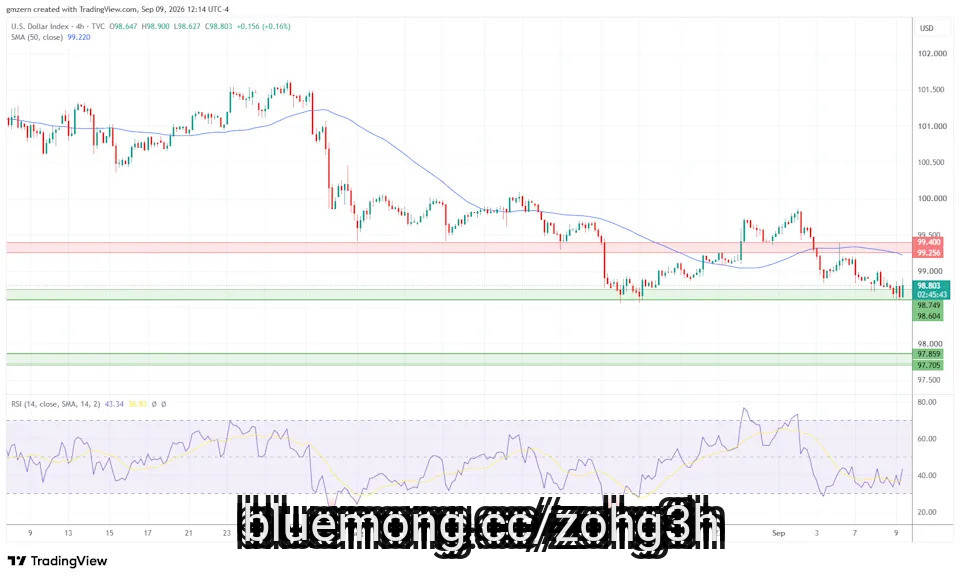
U.S. Dollar Index continues its attempts to settle below the support level at 98.60 – 98.75. In case U.S. Dollar Index manages to settle below the 98.60 level, it will head towards the next support at 97.70 – 97.85. RSI is in the moderate territory, so there is plenty of room to gain additional downside momentum in the near term.
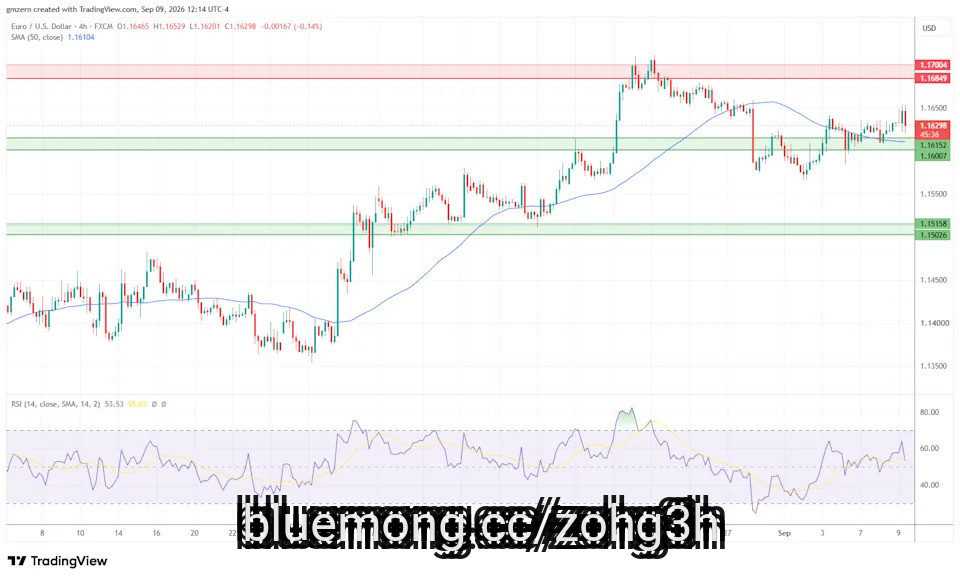
EUR/USD gained some ground as traders prepared for ECB Interest Rate Decision, which will be released tomorrow. ***** ysts expect that ECB will raise the interest rate from 2.4% to 2.65% due to rising oil prices.
The European Central Bank is forced to raise rates as the EU economy will face inflationary pressure due to high energy prices. It remains to be seen whether winter will be cold, but energy prices will likely stay high anyway.
#dollar #treasuries #interest #rate
The yield of 10-year Treasuries climbed towards the 4.85% level, while the yield of 30-year Treasuries tested the psychologically important 5.30% level.
U.S. Dollar Index continues its attempts to settle below the support level at 98.60 – 98.75. In case U.S. Dollar Index manages to settle below the 98.60 level, it will head towards the next support at 97.70 – 97.85. RSI is in the moderate territory, so there is plenty of room to gain additional downside momentum in the near term.
EUR/USD gained some ground as traders prepared for ECB Interest Rate Decision, which will be released tomorrow. ***** ysts expect that ECB will raise the interest rate from 2.4% to 2.65% due to rising oil prices.
The European Central Bank is forced to raise rates as the EU economy will face inflationary pressure due to high energy prices. It remains to be seen whether winter will be cold, but energy prices will likely stay high anyway.
#dollar #treasuries #interest #rate


2 days ago
WASHINGTON (AP) — Donald Trump's pitch to send Americans $5,000 checks should Republicans prevail in the November midterms is drawing scorn from some members of Congress — the very people who have constitutional authority over federal spending.
Economists and other political observers are voicing concerns about the potential effects on inflation and the national balance sheet. Taken together, it's a swift reaction that makes clear that Trump's dubious election-year gambit is likely little more than another grand promise from a politician with a long history of them.
"Donald Trump is a known liar. This is the biggest liar to ever serve in government. Period," said Rep. Robert Garcia, a California Democrat who was in Dallas on Thursday as part of his party's effort to counter Republicans' midterm convention. "The dividend is not happening."
Trump previously pledged to use savings from the Department of Government Efficiency and revenue from tariffs on foreign imports to distribute payments of $2,000 or more, but none of that came to pass.
His latest idea comes as the U.S. economy is reckoning with persistent inflation and rising interest rates, two forces that have politically undermined Republicans after previously helping them reclaim power from Democrats. Trump claimed the payments would be possible because of the economy's strength, yet consumer sentiment is weak as gasoline prices are increasing because of the war with Iran and wages are struggling to keep pace with inflation.
#inflation
Economists and other political observers are voicing concerns about the potential effects on inflation and the national balance sheet. Taken together, it's a swift reaction that makes clear that Trump's dubious election-year gambit is likely little more than another grand promise from a politician with a long history of them.
"Donald Trump is a known liar. This is the biggest liar to ever serve in government. Period," said Rep. Robert Garcia, a California Democrat who was in Dallas on Thursday as part of his party's effort to counter Republicans' midterm convention. "The dividend is not happening."
Trump previously pledged to use savings from the Department of Government Efficiency and revenue from tariffs on foreign imports to distribute payments of $2,000 or more, but none of that came to pass.
His latest idea comes as the U.S. economy is reckoning with persistent inflation and rising interest rates, two forces that have politically undermined Republicans after previously helping them reclaim power from Democrats. Trump claimed the payments would be possible because of the economy's strength, yet consumer sentiment is weak as gasoline prices are increasing because of the war with Iran and wages are struggling to keep pace with inflation.
#inflation

0.00$ raised of 0.00$ goal
0 donations
0.00$
to go

3 days ago
Our ****** ysts just identified a stock with the potential to be the next Nvidia. Tell us how you invest and we'll show you why it's our #1 pick. Tap here.
Delivered record Q2 sales outside of the holiday period despite a 'K-shaped' economy and aggressive industry-wide promotional activity.
Performance was bifurcated by price point, with double-digit growth in premium configurations over $6,000 while the under-$6,000 segment remained pressured by inflation and interest rates.
Management is pivoting from a single-platform focus to a multi-platform 'Sactionals sofa company' strategy to address broader market segments and aesthetic preferences.
Operational efficiency improved through the 'Fuel for Growth' program and sourcing diversification, helping to insulate the P&L from volatile ocean freight and domestic shipping costs.
#management
Delivered record Q2 sales outside of the holiday period despite a 'K-shaped' economy and aggressive industry-wide promotional activity.
Performance was bifurcated by price point, with double-digit growth in premium configurations over $6,000 while the under-$6,000 segment remained pressured by inflation and interest rates.
Management is pivoting from a single-platform focus to a multi-platform 'Sactionals sofa company' strategy to address broader market segments and aesthetic preferences.
Operational efficiency improved through the 'Fuel for Growth' program and sourcing diversification, helping to insulate the P&L from volatile ocean freight and domestic shipping costs.
#management

0.00$ raised of 0.00$ goal
0 donations
0.00$
to go

5 days ago
Impax ***** et Management, based in London and specializing in sustainable investing, released its Q2 2026 investor letter for the "Impax US Sustainable Economy Fund". The letter can be downloaded here. The US Sustainable Economy portfolio outperformed the Russell 1000 in Q2 2026, with Institutional Class at 17.96%, Investor Class at 17.95%, and Class A at 17.92%, versus the index's 15.14%. Sector allocation and stock selection drove performance. The sustainability tools, including the Impax Sustainability Lens and Corporate Resilience framework, contributed positively. Equity markets rallied, with both the S&P 500 and Nasdaq reaching new highs before retreating. A key trend was rotation into AI and tech stocks, supported by mega-cap earnings and data center investments (US$750bn to US$1tn). In the second half of 2026, markets may remain volatile amid debates on AI adoption pace and economic momentum. However, growth tied to energy security and efficiency remains compelling, with demand for power, grid, and resource-efficient solutions supporting companies that benefit. The team focuses on businesses with strong growth, sound management, and attractive valuations, adjusting holdings as needed. This approach aims to build well-diversified, differentiated portfolios. Also, please check the fund's top five holdings for its best picks in 2026.
In its second-quarter 2026 investor letter, Impax US Sustainable Economy Fund highlighted Verizon Communications Inc. (NYSE:VZ). Verizon Communications Inc. (NYSE:VZ) is a leading telecommunication company that engages in the provision of communications, technology, information, and streaming products and services. On September 04, 2026, Verizon Communications Inc. (NYSE:VZ) closed at $50.14 per share. Over the past month, Verizon Communications Inc. (NYSE:VZ) returned 6.61%, but its shares are up 15.74% over the past year. Verizon Communications Inc. (NYSE:VZ) has a market capitalization of $208.32 billion, and its stock has traded within a 52-week range of $38.39 to $51.68.
Impax US Sustainable Economy Fund stated the following regarding Verizon Communications Inc. (NYSE:VZ) in its Q2 2026 investor letter:
"Verizon Communications Inc. (NYSE:VZ) (Wireless Telecommunication Services, Communication Services) is held for its high Corporate Resilience score and its sustainability opportunity exposure in areas including Digital Infrastructure and Meeting Basic Needs. The stock fell during the quarter as investor focus shifted away from defensive yield plays toward growth and cyclical sectors. Concerns about subscriber churn in a highly competitive wireless market, and the heavy capital expenditure requirements of continued network infrastructure investment, weighed on the share price."
#sustainable
In its second-quarter 2026 investor letter, Impax US Sustainable Economy Fund highlighted Verizon Communications Inc. (NYSE:VZ). Verizon Communications Inc. (NYSE:VZ) is a leading telecommunication company that engages in the provision of communications, technology, information, and streaming products and services. On September 04, 2026, Verizon Communications Inc. (NYSE:VZ) closed at $50.14 per share. Over the past month, Verizon Communications Inc. (NYSE:VZ) returned 6.61%, but its shares are up 15.74% over the past year. Verizon Communications Inc. (NYSE:VZ) has a market capitalization of $208.32 billion, and its stock has traded within a 52-week range of $38.39 to $51.68.
Impax US Sustainable Economy Fund stated the following regarding Verizon Communications Inc. (NYSE:VZ) in its Q2 2026 investor letter:
"Verizon Communications Inc. (NYSE:VZ) (Wireless Telecommunication Services, Communication Services) is held for its high Corporate Resilience score and its sustainability opportunity exposure in areas including Digital Infrastructure and Meeting Basic Needs. The stock fell during the quarter as investor focus shifted away from defensive yield plays toward growth and cyclical sectors. Concerns about subscriber churn in a highly competitive wireless market, and the heavy capital expenditure requirements of continued network infrastructure investment, weighed on the share price."
#sustainable

5 days ago
Impax ***** et Management, based in London and specializing in sustainable investing, released its Q2 2026 investor letter for the "Impax US Sustainable Economy Fund". The letter can be downloaded here. The US Sustainable Economy portfolio outperformed the Russell 1000 in Q2 2026, with Institutional Class at 17.96%, Investor Class at 17.95%, and Class A at 17.92%, versus the index's 15.14%. Sector allocation and stock selection drove performance. The sustainability tools, including the Impax Sustainability Lens and Corporate Resilience framework, contributed positively. Equity markets rallied, with both the S&P 500 and Nasdaq reaching new highs before retreating. A key trend was rotation into AI and tech stocks, supported by mega-cap earnings and data center investments (US$750bn to US$1tn). In the second half of 2026, markets may remain volatile amid debates on AI adoption pace and economic momentum. However, growth tied to energy security and efficiency remains compelling, with demand for power, grid, and resource-efficient solutions supporting companies that benefit. The team focuses on businesses with strong growth, sound management, and attractive valuations, adjusting holdings as needed. This approach aims to build well-diversified, differentiated portfolios. Also, please check the fund's top five holdings for its best picks in 2026.
In its second-quarter 2026 investor letter, Impax US Sustainable Economy Fund highlighted Zoetis Inc. (NYSE:ZTS). Zoetis Inc. (NYSE:ZTS), an animal health company focused on animal health medications, vaccines, and diagnostic products, detracted from the Fund's performance during the quarter. On September 04, 2026, Zoetis Inc. (NYSE:ZTS) closed at $75.81 per share. Over the past month, Zoetis Inc. (NYSE:ZTS) returned 1.31%, but its shares are down 50.04% over the past year. Zoetis Inc. (NYSE:ZTS) has a market capitalization of $31.33 billion.
Impax US Sustainable Economy Fund stated the following regarding Zoetis Inc. (NYSE:ZTS) in its Q2 2026 investor letter:
"Zoetis Inc. (NYSE:ZTS) (Pharmaceuticals, Health Care) is owned for its attractive sustainability opportunity profile in areas including Wellbeing and Evolving Health Care Challenge, as well as its strong governance profile. The stock declined sharply in the quarter following a downward revision to near-term earnings guidance. Sales of Librela, the company's key canine arthritis pain management product, continued to face headwinds from safety perception concerns among some veterinarians, and management indicated that the ramp-up of next-generation product launches would extend into the following year."
#economy #Health
In its second-quarter 2026 investor letter, Impax US Sustainable Economy Fund highlighted Zoetis Inc. (NYSE:ZTS). Zoetis Inc. (NYSE:ZTS), an animal health company focused on animal health medications, vaccines, and diagnostic products, detracted from the Fund's performance during the quarter. On September 04, 2026, Zoetis Inc. (NYSE:ZTS) closed at $75.81 per share. Over the past month, Zoetis Inc. (NYSE:ZTS) returned 1.31%, but its shares are down 50.04% over the past year. Zoetis Inc. (NYSE:ZTS) has a market capitalization of $31.33 billion.
Impax US Sustainable Economy Fund stated the following regarding Zoetis Inc. (NYSE:ZTS) in its Q2 2026 investor letter:
"Zoetis Inc. (NYSE:ZTS) (Pharmaceuticals, Health Care) is owned for its attractive sustainability opportunity profile in areas including Wellbeing and Evolving Health Care Challenge, as well as its strong governance profile. The stock declined sharply in the quarter following a downward revision to near-term earnings guidance. Sales of Librela, the company's key canine arthritis pain management product, continued to face headwinds from safety perception concerns among some veterinarians, and management indicated that the ramp-up of next-generation product launches would extend into the following year."
#economy #Health


5 days ago
Impax ****** et Management, based in London and specializing in sustainable investing, released its Q2 2026 investor letter for the "Impax US Sustainable Economy Fund". The letter can be downloaded here. The US Sustainable Economy portfolio outperformed the Russell 1000 in Q2 2026, with Institutional Class at 17.96%, Investor Class at 17.95%, and Class A at 17.92%, versus the index's 15.14%. Sector allocation and stock selection drove performance. The sustainability tools, including the Impax Sustainability Lens and Corporate Resilience framework, contributed positively. Equity markets rallied, with both the S&P 500 and Nasdaq reaching new highs before retreating. A key trend was rotation into AI and tech stocks, supported by mega-cap earnings and data center investments (US$750bn to US$1tn). In the second half of 2026, markets may remain volatile amid debates on AI adoption pace and economic momentum. However, growth tied to energy security and efficiency remains compelling, with demand for power, grid, and resource-efficient solutions supporting companies that benefit. The team focuses on businesses with strong growth, sound management, and attractive valuations, adjusting holdings as needed. This approach aims to build well-diversified, differentiated portfolios. Also, please check the fund's top five holdings for its best picks in 2026.
In its second-quarter 2026 investor letter, Impax US Sustainable Economy Fund highlighted Adobe Inc. (NASDAQ:ADBE). Adobe Inc. (NASDAQ:ADBE) is a multinational technology company that offers creative, digital media, and document management products. On September 04, 2026, Adobe Inc. (NASDAQ:ADBE) closed at $266.51 per share. Over the past month, Adobe Inc. (NASDAQ:ADBE) declined 2.36%, but its shares are down 25.69% over the past year. Adobe Inc. (NASDAQ:ADBE) has a market capitalization of $105.94 billion.
Impax US Sustainable Economy Fund stated the following regarding Adobe Inc. (NASDAQ:ADBE) in its Q2 2026 investor letter:
"Adobe Inc. (NASDAQ:ADBE) (Application Software, Information Technology) is held for its high Sustainability Lens opportunity profile across Digital Infrastructure and Education themes and its strong Corporate Resilience score. The stock declined in the quarter following results that, while solid in absolute terms, fell short of the elevated investor expectations that had built over the prior year. Concerns about the pace of monetization from its AI-integrated creative tools, and competitive pressure from lower-cost generative AI platforms, weighed on sentiment and drove a valuation de-rating."
#letter
In its second-quarter 2026 investor letter, Impax US Sustainable Economy Fund highlighted Adobe Inc. (NASDAQ:ADBE). Adobe Inc. (NASDAQ:ADBE) is a multinational technology company that offers creative, digital media, and document management products. On September 04, 2026, Adobe Inc. (NASDAQ:ADBE) closed at $266.51 per share. Over the past month, Adobe Inc. (NASDAQ:ADBE) declined 2.36%, but its shares are down 25.69% over the past year. Adobe Inc. (NASDAQ:ADBE) has a market capitalization of $105.94 billion.
Impax US Sustainable Economy Fund stated the following regarding Adobe Inc. (NASDAQ:ADBE) in its Q2 2026 investor letter:
"Adobe Inc. (NASDAQ:ADBE) (Application Software, Information Technology) is held for its high Sustainability Lens opportunity profile across Digital Infrastructure and Education themes and its strong Corporate Resilience score. The stock declined in the quarter following results that, while solid in absolute terms, fell short of the elevated investor expectations that had built over the prior year. Concerns about the pace of monetization from its AI-integrated creative tools, and competitive pressure from lower-cost generative AI platforms, weighed on sentiment and drove a valuation de-rating."
#letter


5 days ago
Impax **** et Management, based in London and specializing in sustainable investing, released its Q2 2026 investor letter for the "Impax US Sustainable Economy Fund". The letter can be downloaded here. The US Sustainable Economy portfolio outperformed the Russell 1000 in Q2 2026, with Institutional Class at 17.96%, Investor Class at 17.95%, and Class A at 17.92%, versus the index's 15.14%. Sector allocation and stock selection drove performance. The sustainability tools, including the Impax Sustainability Lens and Corporate Resilience framework, contributed positively. Equity markets rallied, with both the S&P 500 and Nasdaq reaching new highs before retreating. A key trend was rotation into AI and tech stocks, supported by mega-cap earnings and data center investments (US$750bn to US$1tn). In the second half of 2026, markets may remain volatile amid debates on AI adoption pace and economic momentum. However, growth tied to energy security and efficiency remains compelling, with demand for power, grid, and resource-efficient solutions supporting companies that benefit. The team focuses on businesses with strong growth, sound management, and attractive valuations, adjusting holdings as needed. This approach aims to build well-diversified, differentiated portfolios. Also, please check the fund's top five holdings for its best picks in 2026.
In its second-quarter 2026 investor letter, Impax US Sustainable Economy Fund highlighted Micron Technology, Inc. (NASDAQ:MU) as a material contributor to performance. Micron Technology, Inc. is a leading semiconductor company that manufactures memory and storage products, delivering solutions for a wide range of applications. On September 04, 2026, Micron Technology, Inc. (NASDAQ:MU) closed at $1,016.59 per share. The one-month return of Micron Technology, Inc. (NASDAQ:MU) was 18.07% and its shares gained 673.31% over the past 52 weeks. Micron Technology, Inc. (NASDAQ:MU) has a market capitalization of $1.15 trillion.
Impax US Sustainable Economy Fund stated the following regarding Micron Technology, Inc. (NASDAQ:MU) in its Q2 2026 investor letter:
"Micron Technology, Inc. (NASDAQ:MU) (Semiconductors, Information Technology) is held for its high Sustainability Lens opportunity profile across Digital Infrastructure, Meeting Basic Needs and Education themes, and carries a strong Corporate Resilience score. The stock surged during the quarter as demand for high-bandwidth memory used in AI training and inference applications accelerated sharply. The data center build-out by hyperscale providers drove a significant uplift to Micron's pricing power and volume outlook, and the company revised its forward guidance meaningfully higher, prompting a sharp re-rating from investors."
#NASDAQ #sustainable #economy #class
In its second-quarter 2026 investor letter, Impax US Sustainable Economy Fund highlighted Micron Technology, Inc. (NASDAQ:MU) as a material contributor to performance. Micron Technology, Inc. is a leading semiconductor company that manufactures memory and storage products, delivering solutions for a wide range of applications. On September 04, 2026, Micron Technology, Inc. (NASDAQ:MU) closed at $1,016.59 per share. The one-month return of Micron Technology, Inc. (NASDAQ:MU) was 18.07% and its shares gained 673.31% over the past 52 weeks. Micron Technology, Inc. (NASDAQ:MU) has a market capitalization of $1.15 trillion.
Impax US Sustainable Economy Fund stated the following regarding Micron Technology, Inc. (NASDAQ:MU) in its Q2 2026 investor letter:
"Micron Technology, Inc. (NASDAQ:MU) (Semiconductors, Information Technology) is held for its high Sustainability Lens opportunity profile across Digital Infrastructure, Meeting Basic Needs and Education themes, and carries a strong Corporate Resilience score. The stock surged during the quarter as demand for high-bandwidth memory used in AI training and inference applications accelerated sharply. The data center build-out by hyperscale providers drove a significant uplift to Micron's pricing power and volume outlook, and the company revised its forward guidance meaningfully higher, prompting a sharp re-rating from investors."
#NASDAQ #sustainable #economy #class

5 days ago
Impax ******* et Management, based in London and specializing in sustainable investing, released its Q2 2026 investor letter for the "Impax US Sustainable Economy Fund". The letter can be downloaded here. The US Sustainable Economy portfolio outperformed the Russell 1000 in Q2 2026, with Institutional Class at 17.96%, Investor Class at 17.95%, and Class A at 17.92%, versus the index's 15.14%. Sector allocation and stock selection drove performance. The sustainability tools, including the Impax Sustainability Lens and Corporate Resilience framework, contributed positively. Equity markets rallied, with both the S&P 500 and Nasdaq reaching new highs before retreating. A key trend was rotation into AI and tech stocks, supported by mega-cap earnings and data center investments (US$750bn to US$1tn). In the second half of 2026, markets may remain volatile amid debates on AI adoption pace and economic momentum. However, growth tied to energy security and efficiency remains compelling, with demand for power, grid, and resource-efficient solutions supporting companies that benefit. The team focuses on businesses with strong growth, sound management, and attractive valuations, adjusting holdings as needed. This approach aims to build well-diversified, differentiated portfolios. Also, please check the fund's top five holdings for its best picks in 2026.
In its second-quarter 2026 investor letter, Impax US Sustainable Economy Fund highlighted Advanced Micro Devices, Inc. (NASDAQ:AMD) as a key contributor. Advanced Micro Devices, Inc. (NASDAQ:AMD) is a leading semiconductor company that designs and manufactures AI accelerators, microprocessors, and graphics processing units. On September 04, 2026, Advanced Micro Devices, Inc. (NASDAQ:AMD) closed at $477.57 per share, reflecting a market capitalization of $779.62 billion. Over the past month, Advanced Micro Devices, Inc. (NASDAQ:AMD) returned 1.71%, but its shares are up 215.42% over the past year.
Impax US Sustainable Economy Fund stated the following regarding Advanced Micro Devices, Inc. (NASDAQ:AMD) in its Q2 2026 investor letter:
"Advanced Micro Devices, Inc. (NASDAQ:AMD) (Semiconductors, Information Technology) is held for its attractive sustainability opportunity set, particularly in Digital Infrastructure, and for its high Corporate Resilience score across environmental and governance dimensions. The stock rose substantially in the quarter, driven by strong adoption of its AI-optimized GPU (graphics processing unit) and data center processor products. A series of major partnership announcements with cloud computing providers and continued evidence of market share gains in AI accelerator hardware reinforced investor confidence in the company's multi-year earnings growth trajectory."
#NASDAQ #impax #sustainable #letter
In its second-quarter 2026 investor letter, Impax US Sustainable Economy Fund highlighted Advanced Micro Devices, Inc. (NASDAQ:AMD) as a key contributor. Advanced Micro Devices, Inc. (NASDAQ:AMD) is a leading semiconductor company that designs and manufactures AI accelerators, microprocessors, and graphics processing units. On September 04, 2026, Advanced Micro Devices, Inc. (NASDAQ:AMD) closed at $477.57 per share, reflecting a market capitalization of $779.62 billion. Over the past month, Advanced Micro Devices, Inc. (NASDAQ:AMD) returned 1.71%, but its shares are up 215.42% over the past year.
Impax US Sustainable Economy Fund stated the following regarding Advanced Micro Devices, Inc. (NASDAQ:AMD) in its Q2 2026 investor letter:
"Advanced Micro Devices, Inc. (NASDAQ:AMD) (Semiconductors, Information Technology) is held for its attractive sustainability opportunity set, particularly in Digital Infrastructure, and for its high Corporate Resilience score across environmental and governance dimensions. The stock rose substantially in the quarter, driven by strong adoption of its AI-optimized GPU (graphics processing unit) and data center processor products. A series of major partnership announcements with cloud computing providers and continued evidence of market share gains in AI accelerator hardware reinforced investor confidence in the company's multi-year earnings growth trajectory."
#NASDAQ #impax #sustainable #letter


5 days ago
Impax ******* et Management, based in London and specializing in sustainable investing, released its Q2 2026 investor letter for the "Impax US Sustainable Economy Fund". The letter can be downloaded here. The US Sustainable Economy portfolio outperformed the Russell 1000 in Q2 2026, with Institutional Class at 17.96%, Investor Class at 17.95%, and Class A at 17.92%, versus the index's 15.14%. Sector allocation and stock selection drove performance. The sustainability tools, including the Impax Sustainability Lens and Corporate Resilience framework, contributed positively. Equity markets rallied, with both the S&P 500 and Nasdaq reaching new highs before retreating. A key trend was rotation into AI and tech stocks, supported by mega-cap earnings and data center investments (US$750bn to US$1tn). In the second half of 2026, markets may remain volatile amid debates on AI adoption pace and economic momentum. However, growth tied to energy security and efficiency remains compelling, with demand for power, grid, and resource-efficient solutions supporting companies that benefit. The team focuses on businesses with strong growth, sound management, and attractive valuations, adjusting holdings as needed. This approach aims to build well-diversified, differentiated portfolios. Also, please check the fund's top five holdings for its best picks in 2026.
In its second-quarter 2026 investor letter, Impax US Sustainable Economy Fund highlighted Applied Materials, Inc. (NASDAQ:AMAT) as a notable contributor to performance. Applied Materials, Inc. (NASDAQ:AMAT) provides materials engineering solutions, equipment, services, and software to the semiconductor and related industries. On September 04, 2026, Applied Materials, Inc. (NASDAQ:AMAT) closed at $454.71 per share. Over the past month, Applied Materials, Inc. (NASDAQ:AMAT) declined 12.91%, but its shares are up 180.60% over the past year. Applied Materials, Inc. (NASDAQ:AMAT) has a market capitalization of $360.86 billion, and its stock has traded within a 52-week range of $161.75 - $739.67
Impax US Sustainable Economy Fund stated the following regarding Applied Materials, Inc. (NASDAQ:AMAT) in its Q2 2026 investor letter:
"Applied Materials, Inc. (NASDAQ:AMAT) (Semiconductor Equipment, Information Technology) is owned for its Sustainability Lens exposure to Digital Infrastructure and Education themes, and for its high Corporate Resilience score. The stock benefited from a recovery in semiconductor capital expenditure, with leading-edge logic and memory chipmakers restarting investment programs deferred from the prior year. Applied Materials reported strong order intake and revised its full-year guidance upward, reflecting the broad-based nature of the semiconductor equipment recovery."
#NASDAQ #sustainable #economy
In its second-quarter 2026 investor letter, Impax US Sustainable Economy Fund highlighted Applied Materials, Inc. (NASDAQ:AMAT) as a notable contributor to performance. Applied Materials, Inc. (NASDAQ:AMAT) provides materials engineering solutions, equipment, services, and software to the semiconductor and related industries. On September 04, 2026, Applied Materials, Inc. (NASDAQ:AMAT) closed at $454.71 per share. Over the past month, Applied Materials, Inc. (NASDAQ:AMAT) declined 12.91%, but its shares are up 180.60% over the past year. Applied Materials, Inc. (NASDAQ:AMAT) has a market capitalization of $360.86 billion, and its stock has traded within a 52-week range of $161.75 - $739.67
Impax US Sustainable Economy Fund stated the following regarding Applied Materials, Inc. (NASDAQ:AMAT) in its Q2 2026 investor letter:
"Applied Materials, Inc. (NASDAQ:AMAT) (Semiconductor Equipment, Information Technology) is owned for its Sustainability Lens exposure to Digital Infrastructure and Education themes, and for its high Corporate Resilience score. The stock benefited from a recovery in semiconductor capital expenditure, with leading-edge logic and memory chipmakers restarting investment programs deferred from the prior year. Applied Materials reported strong order intake and revised its full-year guidance upward, reflecting the broad-based nature of the semiconductor equipment recovery."
#NASDAQ #sustainable #economy

5 days ago
Besides the artificial intelligence trade, investors have been obsessed with any macroeconomic news that hits headlines. And it's hard to find a story in recent weeks that captured the market's attention like the U.S surpassing $40 trillion in gross federal debt. By any measure, this is an absolutely mind-boggling number.
The debt balance has expanded by 377% in the past two decades. And it currently represents 123% of the country's total GDP figure. The Congressional Budget Office estimates that it will continue climbing, reaching $64 trillion by 2036.
Missed Nvidia in 2009? This Rare Signal Is Flashing Again. In 2009, a "Double Down" signal flashed for a little-known chipmaker called Nvidia. For the first time in years, that same "Total Conviction" signal is flashing for a company 1/100th the size of Nvidia. Continue »
Investors had better get used to hearing more about the U.S. national debt problem. Here's what this macro trend means for your portfolio in 2026 and beyond.
The U.S. has the world's largest and most advanced economy, driven by dominance in the technology sector. It controls the global reserve currency in the dollar. And it has the most robust and liquid capital markets. These advantageous traits support the argument that the nation can keep borrowing indefinitely.
#NVIDIA #signal #debt #investors
The debt balance has expanded by 377% in the past two decades. And it currently represents 123% of the country's total GDP figure. The Congressional Budget Office estimates that it will continue climbing, reaching $64 trillion by 2036.
Missed Nvidia in 2009? This Rare Signal Is Flashing Again. In 2009, a "Double Down" signal flashed for a little-known chipmaker called Nvidia. For the first time in years, that same "Total Conviction" signal is flashing for a company 1/100th the size of Nvidia. Continue »
Investors had better get used to hearing more about the U.S. national debt problem. Here's what this macro trend means for your portfolio in 2026 and beyond.
The U.S. has the world's largest and most advanced economy, driven by dominance in the technology sector. It controls the global reserve currency in the dollar. And it has the most robust and liquid capital markets. These advantageous traits support the argument that the nation can keep borrowing indefinitely.
#NVIDIA #signal #debt #investors



5 days ago
Moneywise and Yahoo Finance LLC may earn commission or revenue through links in the content below.
Being a millionaire is considered table stakes for a comfortable retirement. The magic number for the average American is $1.46 million, according to a 2026 survey by Northwestern Mutual (1).
But is hitting that target really a guarantee of a smooth-sailing retirement? In 2026, the answer isn't exactly straightforward. To understand the chilling reality of retirement in the modern economy, you need to look beyond the headlines at all the other variables that impact your senior years.
Jeff Bezos backs a platform that lets anyone invest in rental homes for as little as $100 — 6 ways to build wealth like a landlord without actually being one
JPMorgan sees gold hitting $5,000/oz by Q4 — and savvy investors are protecting their wealth with a tax-advantaged Gold IRA. Get your free guide from Priority Gold
#Gold #moneywise #mutual
Being a millionaire is considered table stakes for a comfortable retirement. The magic number for the average American is $1.46 million, according to a 2026 survey by Northwestern Mutual (1).
But is hitting that target really a guarantee of a smooth-sailing retirement? In 2026, the answer isn't exactly straightforward. To understand the chilling reality of retirement in the modern economy, you need to look beyond the headlines at all the other variables that impact your senior years.
Jeff Bezos backs a platform that lets anyone invest in rental homes for as little as $100 — 6 ways to build wealth like a landlord without actually being one
JPMorgan sees gold hitting $5,000/oz by Q4 — and savvy investors are protecting their wealth with a tax-advantaged Gold IRA. Get your free guide from Priority Gold
#Gold #moneywise #mutual

5 days ago
By Ayose Naranjo
HAVANA, Sept 7 (Reuters) - Cuba's top diplomat said on Monday there are no talks underway with the United States, nor were there any plans for future negotiations, amid a "genocidal" blockade that Cuba says has cost the island nation over $8 billion in economic damages in the last year.
"There are no negotiations or agendas, although a willingness to stay in contact remains despite the lack of progress," Cuba's foreign minister, Bruno Rodriguez, told reporters at a press conference in Havana.
Rodriguez said that damages caused by the decades-old U.S. trade embargo against Cuba had jumped 7 percent in 2025 versus the previous year, to $8.1 billion.
Cuba's foreign minister said the financial hit to Cuba`s economy would balloon in the first months of 2026, after the Trump administration imposed an oil blockade on the island that has all but decimated output and led to nationwide blackouts that now span days.
#havana #billion
HAVANA, Sept 7 (Reuters) - Cuba's top diplomat said on Monday there are no talks underway with the United States, nor were there any plans for future negotiations, amid a "genocidal" blockade that Cuba says has cost the island nation over $8 billion in economic damages in the last year.
"There are no negotiations or agendas, although a willingness to stay in contact remains despite the lack of progress," Cuba's foreign minister, Bruno Rodriguez, told reporters at a press conference in Havana.
Rodriguez said that damages caused by the decades-old U.S. trade embargo against Cuba had jumped 7 percent in 2025 versus the previous year, to $8.1 billion.
Cuba's foreign minister said the financial hit to Cuba`s economy would balloon in the first months of 2026, after the Trump administration imposed an oil blockade on the island that has all but decimated output and led to nationwide blackouts that now span days.
#havana #billion


5 days ago
Kenya's government sought to reassure foreign traders that they have legal protection to operate in the country after President William Ruto raised doubts over their status in East Africa's biggest economy. Ruto reportedly ordered authorities to begin shutting down foreign-owned businesses from Sept. 7 as part of a move to restrict small-scale retail to Kenyans. However, the principal secretary for foreign affairs on Sunday said the president's comments related to a debate about proposed employment legislation.
Ruto reportedly made the remarks last week, days before ordering Tata Chemicals to leave the country, accusing it of failing to create jobs and process minerals locally.
The president, who will seek a second term in a poll next August, has increasingly focused on employment and wealth creation in his reelection pitch. He took office four years ago, after an election campaign in which he vowed to improve the lives of the poorest Kenyans. But his popularity plummeted amid tax hikes that prompted street protests.
— Alexis Akwagyiram
#ruto #kenyans #east
Ruto reportedly made the remarks last week, days before ordering Tata Chemicals to leave the country, accusing it of failing to create jobs and process minerals locally.
The president, who will seek a second term in a poll next August, has increasingly focused on employment and wealth creation in his reelection pitch. He took office four years ago, after an election campaign in which he vowed to improve the lives of the poorest Kenyans. But his popularity plummeted amid tax hikes that prompted street protests.
— Alexis Akwagyiram
#ruto #kenyans #east


5 days ago
If you have a workplace retirement savings account, then you might be happy to hear that — despite market fluctuations, fears of an AI bubble and an uncertain economy — account balances have reached record highs.
That's according to Fidelity's Q2 2026 retirement ***** ysis, which shows that retirement savings benefitted from a strong stock market after a slight drop in returns in the first quarter of this year, with 401(k) and 403(b) plans rebounding to new levels.
Jeff Bezos backs a platform that lets anyone invest in rental homes for as little as $100 — 6 ways to build wealth like a landlord without actually being one
Dave Ramsey warns nearly 50% of Americans are making 1 big Social Security mistake. Here's what it is and 3 simple steps to fix it ASAP
The tax breaks in Trump's 'big beautiful bill' expire after 2028. Here are 4 moves to make before the window closes
#bezos #ramsey #americans
That's according to Fidelity's Q2 2026 retirement ***** ysis, which shows that retirement savings benefitted from a strong stock market after a slight drop in returns in the first quarter of this year, with 401(k) and 403(b) plans rebounding to new levels.
Jeff Bezos backs a platform that lets anyone invest in rental homes for as little as $100 — 6 ways to build wealth like a landlord without actually being one
Dave Ramsey warns nearly 50% of Americans are making 1 big Social Security mistake. Here's what it is and 3 simple steps to fix it ASAP
The tax breaks in Trump's 'big beautiful bill' expire after 2028. Here are 4 moves to make before the window closes
#bezos #ramsey #americans

5 days ago
Moneywise and Yahoo Finance LLC may earn commission or revenue through links in the content below.
Many Americans are feeling bearish about the economy, with May's Economic Confidence Index hitting the lowest level since 2022. While the numbers have rebounded slightly to -39 in August from -45 in May, consumer confidence remains low (1).
But some Americans are more optimistic than others, and Julio Gonzalez, founder of Engineered Tax Services, is one of them, writing in a Sept. 3 Fox News op-ed that "the pessimists are wrong, and the numbers prove it (2)."
Jeff Bezos backs a platform that lets anyone invest in rental homes for as little as $100 — 6 ways to build wealth like a landlord without actually being one
JPMorgan sees gold hitting $5,000/oz by Q4 — and savvy investors are protecting their wealth with a tax-advantaged Gold IRA. Get your free guide from Priority Gold
#wealth
Many Americans are feeling bearish about the economy, with May's Economic Confidence Index hitting the lowest level since 2022. While the numbers have rebounded slightly to -39 in August from -45 in May, consumer confidence remains low (1).
But some Americans are more optimistic than others, and Julio Gonzalez, founder of Engineered Tax Services, is one of them, writing in a Sept. 3 Fox News op-ed that "the pessimists are wrong, and the numbers prove it (2)."
Jeff Bezos backs a platform that lets anyone invest in rental homes for as little as $100 — 6 ways to build wealth like a landlord without actually being one
JPMorgan sees gold hitting $5,000/oz by Q4 — and savvy investors are protecting their wealth with a tax-advantaged Gold IRA. Get your free guide from Priority Gold
#wealth

6 days ago
While President Donald Trump's tariffs have caused much heartburn on Wall Street, China's cheap and overwhelming exports have also been rippling through the global economy.
But the Chinese growth model is running out of road, setting the stage for another global economic crisis, according to Michael Froman, a former U.S. Trade Representative and current president of the Council on Foreign Relations.
Writing in Foreign Affairs last month, he warned "the world's ability to absorb Chinese overcapacity is approaching a breaking point."
For example, the International Monetary Funds estimated that global GDP growth is running around 3.1% this year, while China's trade surplus expanded more than 20% in early 2026. That's after China posted a $1.2 trillion trade surplus in 2025—the largest in recorded history—growing three times faster than global goods trade.
Now there's widespread pushback against the flood of Chinese exports. Most notably, Trump hiked tariffs on China last year and made it the centerpiece of his "Liberation Day" trade war. But even once-stalwart defenders of open markets, like the European Union, are racing to put up trade barriers against China.
#trade
But the Chinese growth model is running out of road, setting the stage for another global economic crisis, according to Michael Froman, a former U.S. Trade Representative and current president of the Council on Foreign Relations.
Writing in Foreign Affairs last month, he warned "the world's ability to absorb Chinese overcapacity is approaching a breaking point."
For example, the International Monetary Funds estimated that global GDP growth is running around 3.1% this year, while China's trade surplus expanded more than 20% in early 2026. That's after China posted a $1.2 trillion trade surplus in 2025—the largest in recorded history—growing three times faster than global goods trade.
Now there's widespread pushback against the flood of Chinese exports. Most notably, Trump hiked tariffs on China last year and made it the centerpiece of his "Liberation Day" trade war. But even once-stalwart defenders of open markets, like the European Union, are racing to put up trade barriers against China.
#trade


7 days ago
September has a bit of a bad rep on Wall Street. The ninth month of the year has historically delivered negative or weaker returns with such consistency that it has even been dubbed "The September Effect."
It's a market anomaly -- an unusual pattern -- but this year it is compounded with real market uncertainty. Among investor concerns: sticky inflation, rising energy prices, hawkish signals from bankers, high yields on U.S. Treasury bonds, a trade war between the U.S. and Canada, an actual war between U.S. and Iran, plus ballooning national debt and continued fears over an AI bubble.
Missed Nvidia in 2009? This Rare Signal Is Flashing Again. In 2009, a "Double Down" signal flashed for a little-known chipmaker called Nvidia. For the first time in years, that same "Total Conviction" signal is flashing for a company 1/100th the size of Nvidia. Continue »
These are, to be fair, just the negatives, and a complete picture would have to add the positives, such as soaring profits for S&P 500 (SNPINDEX: ^GSPC) companies, steady growth in the U.S. economy, and a stock market that is broadening beyond a few megacap leaders.
There is, however, one persistent concern that goes beyond September's historically weak performance. One of the market's most reliable valuation metrics has been flashing a warning light for months. And, if history is any guide, Wall Street won't like what's coming next.
#flashing
It's a market anomaly -- an unusual pattern -- but this year it is compounded with real market uncertainty. Among investor concerns: sticky inflation, rising energy prices, hawkish signals from bankers, high yields on U.S. Treasury bonds, a trade war between the U.S. and Canada, an actual war between U.S. and Iran, plus ballooning national debt and continued fears over an AI bubble.
Missed Nvidia in 2009? This Rare Signal Is Flashing Again. In 2009, a "Double Down" signal flashed for a little-known chipmaker called Nvidia. For the first time in years, that same "Total Conviction" signal is flashing for a company 1/100th the size of Nvidia. Continue »
These are, to be fair, just the negatives, and a complete picture would have to add the positives, such as soaring profits for S&P 500 (SNPINDEX: ^GSPC) companies, steady growth in the U.S. economy, and a stock market that is broadening beyond a few megacap leaders.
There is, however, one persistent concern that goes beyond September's historically weak performance. One of the market's most reliable valuation metrics has been flashing a warning light for months. And, if history is any guide, Wall Street won't like what's coming next.
#flashing


7 days ago
DUBAI, Sept 6 (Reuters) - Iran said it will step up efforts to tackle problems created by the U.S. sanctions that are crippling its economy, while a senior Iranian official warned of a "painful response" if it comes under further attack.
Six months after U.S.-Israeli strikes against Iran, the war appears to be at a stalemate. A preliminary ceasefire accord reached in June has unravelled and little progress has been made in diplomatic efforts to get the peace process back on track.
After a pause in military action for much of August, ******* -for-tat strikes have resumed with U.S. Central Command saying it hit three Iranian tankers on Saturday after Iran's Islamic Revolutionary Guard Corps launched ballistic missiles at two U.S. Navy ships.
Following the attacks, Iran's Parliament Speaker Mohammad Baqer Qalibaf said on Sunday that the U.S. should understand that the rules of the game in the war against Iran have changed "before it is too late".
"From now on, any attack against Iran's interests and security will receive a faster, heavier and more painful response," he said in a speech published on his Telegram channel.
#Iran #painful
Six months after U.S.-Israeli strikes against Iran, the war appears to be at a stalemate. A preliminary ceasefire accord reached in June has unravelled and little progress has been made in diplomatic efforts to get the peace process back on track.
After a pause in military action for much of August, ******* -for-tat strikes have resumed with U.S. Central Command saying it hit three Iranian tankers on Saturday after Iran's Islamic Revolutionary Guard Corps launched ballistic missiles at two U.S. Navy ships.
Following the attacks, Iran's Parliament Speaker Mohammad Baqer Qalibaf said on Sunday that the U.S. should understand that the rules of the game in the war against Iran have changed "before it is too late".
"From now on, any attack against Iran's interests and security will receive a faster, heavier and more painful response," he said in a speech published on his Telegram channel.
#Iran #painful



7 days ago
Wall Street sees a blowout jobs report and spiking Treasury yields as another sign that the Fed is going to have to hike rates to clamp down on inflation.
The US economy added 162,000 jobs last month, blowing past economists' expectations. If the Fed was looking for clues of a slowing economy, this report wasn't it.
"They're a little bit behind the curve," Joe Brusuelas, RSM chief economist, told Yahoo Finance, in reference to the central bank. "They're going to need to hike rates if they want to reinforce their credibility, and that's going to cause a lot of problems at 1600 Pennsylvania Avenue."
The Trump administration has been pushing hard for lower rates to bring borrowing costs down and flatten the yield curve, with the president threatening a trade embargo if they don't.
Read more: How jobs, inflation, and the Fed are all related
#Jobs #rates #curve
The US economy added 162,000 jobs last month, blowing past economists' expectations. If the Fed was looking for clues of a slowing economy, this report wasn't it.
"They're a little bit behind the curve," Joe Brusuelas, RSM chief economist, told Yahoo Finance, in reference to the central bank. "They're going to need to hike rates if they want to reinforce their credibility, and that's going to cause a lot of problems at 1600 Pennsylvania Avenue."
The Trump administration has been pushing hard for lower rates to bring borrowing costs down and flatten the yield curve, with the president threatening a trade embargo if they don't.
Read more: How jobs, inflation, and the Fed are all related
#Jobs #rates #curve
7 days ago
Moneywise and Yahoo Finance LLC may earn commission or revenue through links in the content below.
Being a millionaire is considered table stakes for a comfortable retirement. The magic number for the average American is $1.46 million, according to a 2026 survey by Northwestern Mutual (1).
But is hitting that target really a guarantee of a smooth-sailing retirement? In 2026, the answer isn't exactly straightforward. To understand the chilling reality of retirement in the modern economy, you need to look beyond the headlines at all the other variables that impact your senior years.
Jeff Bezos backs a platform that lets anyone invest in rental homes for as little as $100 — 6 ways to build wealth like a landlord without actually being one
JPMorgan sees gold hitting $5,000/oz by Q4 — and savvy investors are protecting their wealth with a tax-advantaged Gold IRA. Get your free guide from Priority Gold
#finance
Being a millionaire is considered table stakes for a comfortable retirement. The magic number for the average American is $1.46 million, according to a 2026 survey by Northwestern Mutual (1).
But is hitting that target really a guarantee of a smooth-sailing retirement? In 2026, the answer isn't exactly straightforward. To understand the chilling reality of retirement in the modern economy, you need to look beyond the headlines at all the other variables that impact your senior years.
Jeff Bezos backs a platform that lets anyone invest in rental homes for as little as $100 — 6 ways to build wealth like a landlord without actually being one
JPMorgan sees gold hitting $5,000/oz by Q4 — and savvy investors are protecting their wealth with a tax-advantaged Gold IRA. Get your free guide from Priority Gold
#finance

7 days ago
Moneywise and Yahoo Finance LLC may earn commission or revenue through links in the content below.
CNBC's Rick Santelli has ******* yzed countless economic releases during his decades at the network. But the veteran market commentator could barely contain his surprise when the latest U.S. jobs numbers crossed the screen.
"Hold on to your seats, folks," Santelli said (1) during CNBC's live coverage on the morning of Sept. 4. "Nonfarm payrolls for the month of August: up 162,000. That's basically three times what expectations are."
The official numbers confirmed the magnitude of the surprise. The U.S. economy added 162,000 nonfarm payroll jobs in August, according to the U.S. Bureau of Labor Statistics (2) — more than three times the 53,000 jobs economists had expected (3).
Jeff Bezos backs a platform that lets anyone invest in rental homes for as little as $100 — 6 ways to build wealth like a landlord without actually being one
#moneywise
CNBC's Rick Santelli has ******* yzed countless economic releases during his decades at the network. But the veteran market commentator could barely contain his surprise when the latest U.S. jobs numbers crossed the screen.
"Hold on to your seats, folks," Santelli said (1) during CNBC's live coverage on the morning of Sept. 4. "Nonfarm payrolls for the month of August: up 162,000. That's basically three times what expectations are."
The official numbers confirmed the magnitude of the surprise. The U.S. economy added 162,000 nonfarm payroll jobs in August, according to the U.S. Bureau of Labor Statistics (2) — more than three times the 53,000 jobs economists had expected (3).
Jeff Bezos backs a platform that lets anyone invest in rental homes for as little as $100 — 6 ways to build wealth like a landlord without actually being one
#moneywise

8 days ago
This summer, we saw the debut of ***** e Exploration Technologies -- otherwise known as ***** eX -- stock in a massive initial public offering (IPO). We also saw share prices across ***** e-economy stocks collapse after said IPO, with no better example than Rocket Lab (NASDAQ: RKLB), one of the sector's biggest names in public markets.
Shares of the rocket flight and ***** e services company trade down about 58% from the highs set earlier this year, even though its revenue grew 62% year over year last quarter. A falling share price and a growing business can develop into a great buying opportunity.
Missed Nvidia in 2009? This Rare Signal Is Flashing Again. In 2009, a "Double Down" signal flashed for a little-known chipmaker called Nvidia. For the first time in years, that same "Total Conviction" signal is flashing for a company 1/100th the size of Nvidia. Continue »
Does that mean now is the time to buy the dip on Rocket Lab stock?
There is a lot going on with Rocket Lab's business, but none is more important to its future than a product that doesn't generate any revenue today: its Neutron rocket.
#NVIDIA #year #down
Shares of the rocket flight and ***** e services company trade down about 58% from the highs set earlier this year, even though its revenue grew 62% year over year last quarter. A falling share price and a growing business can develop into a great buying opportunity.
Missed Nvidia in 2009? This Rare Signal Is Flashing Again. In 2009, a "Double Down" signal flashed for a little-known chipmaker called Nvidia. For the first time in years, that same "Total Conviction" signal is flashing for a company 1/100th the size of Nvidia. Continue »
Does that mean now is the time to buy the dip on Rocket Lab stock?
There is a lot going on with Rocket Lab's business, but none is more important to its future than a product that doesn't generate any revenue today: its Neutron rocket.
#NVIDIA #year #down



8 days ago
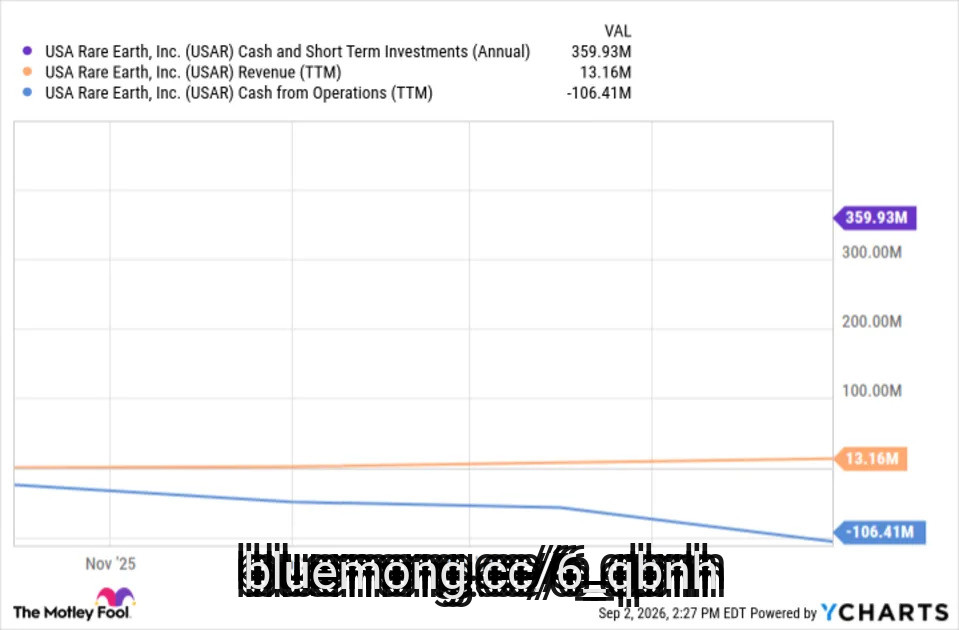
USA Rare Earth (NASDAQ: USAR) is quickly becoming one of America's most strategically important mining companies, at least if the economy, technology, and national security count for anything.
Why all the attention? Two words: rare earths. Indeed, rare-earth metals, as their name suggests, are a class of elements that are tough to find in economically useful deposits. They are essential to everything from smartphones and electric vehicles (EVs) to fighter jets and guided missiles, and China controls most of the world's capacity to process them.
Missed Nvidia in 2009? This Rare Signal Is Flashing Again. In 2009, a "Double Down" signal flashed for a little-known chipmaker called Nvidia. For the first time in years, that same "Total Conviction" signal is flashing for a company 1/100th the size of Nvidia. Continue »
USA Rare Earth is one of only a handful of American companies that control a rare-earth deposit on American soil. Its goal is to extract rare-earth elements from a deposit in Texas, process and separate them domestically, and turn them into permanent magnets for American companies out of its factory in Oklahoma.
For some time, this has been at the heart of USA Rare Earth's growth thesis; none of it is new. What is new, however, is its pending acquisition of Serra Verde, which could turn USA Rare Earth from a would-be miner with an uncertain start date into the owner of an operating rare-earth mine. That deal will likely close before its next earnings report -- expected in early November -- and could set the stage for a huge rally.
#american #Companies #time
Why all the attention? Two words: rare earths. Indeed, rare-earth metals, as their name suggests, are a class of elements that are tough to find in economically useful deposits. They are essential to everything from smartphones and electric vehicles (EVs) to fighter jets and guided missiles, and China controls most of the world's capacity to process them.
Missed Nvidia in 2009? This Rare Signal Is Flashing Again. In 2009, a "Double Down" signal flashed for a little-known chipmaker called Nvidia. For the first time in years, that same "Total Conviction" signal is flashing for a company 1/100th the size of Nvidia. Continue »
USA Rare Earth is one of only a handful of American companies that control a rare-earth deposit on American soil. Its goal is to extract rare-earth elements from a deposit in Texas, process and separate them domestically, and turn them into permanent magnets for American companies out of its factory in Oklahoma.
For some time, this has been at the heart of USA Rare Earth's growth thesis; none of it is new. What is new, however, is its pending acquisition of Serra Verde, which could turn USA Rare Earth from a would-be miner with an uncertain start date into the owner of an operating rare-earth mine. That deal will likely close before its next earnings report -- expected in early November -- and could set the stage for a huge rally.
#american #Companies #time

8 days ago
WASHINGTON (AP) — President Donald Trump has spent 20 months promising that America was on the cusp of an economic boom. But Friday's surprisingly positive jobs report ultimately provoked frustration from Trump.
The August job numbers might have been a welcome break from after months of sluggish hiring and concerns about inflation that have been weighing on Trump and his party two months from Election Day. But speaking from the Oval Office, Trump instead launched into a grievance session about inflation and interest rates. His anger was aimed at the financial markets, the Federal Reserve and U.S. trade partners. He objected to the commonly accepted notion in economics that the surprise gain of 162,000 jobs in August could contribute to inflationary pressures.
"Success does not cause inflation. Stupidity causes inflation," Trump vented in the Oval Office, as he declared it "crazy" that the stock markets fell Friday on inflation concerns.
The combination over his second term of a drop-off in hiring and higher prices has dogged Trump and his pledge to instantly unleash historic levels of growth. "When I win the election, we will immediately begin a brand new Trump economic boom," Trump said at an August 2024 rally in North Carolina. But so far, the economy has grown at roughly 2% annually, slower than the gains during the Biden administration.
Trump blamed his inability to deliver stronger growth on higher interest rates for U.S. government debt, saying on social media that America could retaliate by stopping trade with foreign countries. Rates have been climbing in response to persistently high inflation fueled by Trump's tariffs and oil shortages from the Iran war. The national debt has now crossed the daunting threshold of $40 trillion and rates on the 10-year U.S. Treasury note on Friday rose to 4.79%.
#august
The August job numbers might have been a welcome break from after months of sluggish hiring and concerns about inflation that have been weighing on Trump and his party two months from Election Day. But speaking from the Oval Office, Trump instead launched into a grievance session about inflation and interest rates. His anger was aimed at the financial markets, the Federal Reserve and U.S. trade partners. He objected to the commonly accepted notion in economics that the surprise gain of 162,000 jobs in August could contribute to inflationary pressures.
"Success does not cause inflation. Stupidity causes inflation," Trump vented in the Oval Office, as he declared it "crazy" that the stock markets fell Friday on inflation concerns.
The combination over his second term of a drop-off in hiring and higher prices has dogged Trump and his pledge to instantly unleash historic levels of growth. "When I win the election, we will immediately begin a brand new Trump economic boom," Trump said at an August 2024 rally in North Carolina. But so far, the economy has grown at roughly 2% annually, slower than the gains during the Biden administration.
Trump blamed his inability to deliver stronger growth on higher interest rates for U.S. government debt, saying on social media that America could retaliate by stopping trade with foreign countries. Rates have been climbing in response to persistently high inflation fueled by Trump's tariffs and oil shortages from the Iran war. The national debt has now crossed the daunting threshold of $40 trillion and rates on the 10-year U.S. Treasury note on Friday rose to 4.79%.
#august