


26 days ago
MD Sass, a boutique **** et management firm, published its second-quarter investor update for its flagship, the "MD Sass Concentrated Value Strategy." The letter can be downloaded here. In the first half of 2026, AI infrastructure stocks led the market, with the Russell 1000 Value increasing by 16.3%, outpacing the S&P 500 (10.2%) and Russell 1000 Growth (5.3%). This growth was fueled by semiconductor, memory, and hardware companies benefiting from AI development, even though they are considered cyclical. These sectors, representing only 7.7% of the Russell 1000 Value at the start of the year, contributed nearly 70% of its returns. The portfolio gained 10.0% in the second quarter, net of fees, compared to 13.9% for the Russell 1000 Value Index. Year-to-date, the strategy returned 6.6%, net of fees, versus 16.3% for the Index. The portfolio faced challenges due to limited exposure to companies with the greatest upside from AI infrastructure investments. It also lacked exposure to the Energy sector, which returned about 20% in the first half amid geopolitical tensions with Iran that increased commodity prices, affecting performance. The firm recognizes the importance of adapting its strategies while maintaining core investment principles as it explores future opportunities in emerging technological themes. Also, check the fund's top five holdings to see its best picks in 2026.
In its second-quarter 2026 investor letter, MD Sass Concentrated Value Strategy highlighted Primo Brands Corporation (NYSE:PRMB) as a notable contributor. Primo Brands Corporation (NYSE:PRMB) operates as a branded beverage company in North America. On August 28, 2026, Primo Brands Corporation (NYSE:PRMB) closed at $23.00 per share. Over the past month, Primo Brands Corporation (NYSE:PRMB) returned 3.00%, while its shares have declined 8.40% in the last 52 weeks. Primo Brands Corporation (NYSE:PRMB) has a market capitalization of $8.32 billion, and its stock has traded within a 52-week range of $14.36 to $26.21.
MD Sass Concentrated Value Strategy stated the following regarding Primo Brands Corporation (NYSE:PRMB) in its Q2 2026 investor letter:
"The largest positive contributors to performance in Q2 were Primo Brands Corporation (NYSE:PRMB), Micron Technology (MU), and Henry Schein (HSIC), which collectively contributed approximately 382 bps. PRMB, a leading North American branded water company with a significant retail and home and office delivery business, declined 23% from its March 3 year-to-date peak amid concerns about commodity inflation following the onset of the conflict in Iran. Prices for plastic resins and other oil-related inputs rose sharply from the end of February through mid-April, raising concerns that PRMB would need to cut guidance given its exposure to PET resin and other packaging costs. The company's May 7 financial results and earnings call provided a big sigh of relief. Management explained that a combination of hedging, forward purchase agreements
In its second-quarter 2026 investor letter, MD Sass Concentrated Value Strategy highlighted Primo Brands Corporation (NYSE:PRMB) as a notable contributor. Primo Brands Corporation (NYSE:PRMB) operates as a branded beverage company in North America. On August 28, 2026, Primo Brands Corporation (NYSE:PRMB) closed at $23.00 per share. Over the past month, Primo Brands Corporation (NYSE:PRMB) returned 3.00%, while its shares have declined 8.40% in the last 52 weeks. Primo Brands Corporation (NYSE:PRMB) has a market capitalization of $8.32 billion, and its stock has traded within a 52-week range of $14.36 to $26.21.
MD Sass Concentrated Value Strategy stated the following regarding Primo Brands Corporation (NYSE:PRMB) in its Q2 2026 investor letter:
"The largest positive contributors to performance in Q2 were Primo Brands Corporation (NYSE:PRMB), Micron Technology (MU), and Henry Schein (HSIC), which collectively contributed approximately 382 bps. PRMB, a leading North American branded water company with a significant retail and home and office delivery business, declined 23% from its March 3 year-to-date peak amid concerns about commodity inflation following the onset of the conflict in Iran. Prices for plastic resins and other oil-related inputs rose sharply from the end of February through mid-April, raising concerns that PRMB would need to cut guidance given its exposure to PET resin and other packaging costs. The company's May 7 financial results and earnings call provided a big sigh of relief. Management explained that a combination of hedging, forward purchase agreements

26 days ago
Some offers on this page are from advertisers who pay us, which may affect which products we write about, but not our recommendations. See our Advertiser Disclosure.
Why we like this card: The Hilton Honors Amex Card proves that you don't have to pay a big annual fee to get big rewards. While you'll earn the most rewards on your stays with Hilton, you can also earn a solid 5x points on everyday spending at U.S. supermarkets, restaurants, and gas stations — plus 3x rewards in all non-category spending. With Hilton Honors reward nights starting at 5,000 points per night, those extra points can take you far.
You can also get a lot of value from your complimentary Silver status the Hilton Honors American Express Card offers. Status perks include a 20% points bonus on Hilton stays, your fifth night free on award stays, elite rollover nights, and more. If you score the Gold status upgrade (after spending $20,000 in a calendar year), you'll also receive room upgrades when available, daily food and beverage credits, milestone bonuses, and a boosted 80% points bonus on stays.
Why we like this card: We like the value you can get from the Chase Sapphire Preferred, whether you're a seasoned travel pro or a beginner to travel rewards. For hotels specifically, the up to $100 annual credit for hotel stays purchased through Chase Travel can offset the annual fee on its own.
#points
Why we like this card: The Hilton Honors Amex Card proves that you don't have to pay a big annual fee to get big rewards. While you'll earn the most rewards on your stays with Hilton, you can also earn a solid 5x points on everyday spending at U.S. supermarkets, restaurants, and gas stations — plus 3x rewards in all non-category spending. With Hilton Honors reward nights starting at 5,000 points per night, those extra points can take you far.
You can also get a lot of value from your complimentary Silver status the Hilton Honors American Express Card offers. Status perks include a 20% points bonus on Hilton stays, your fifth night free on award stays, elite rollover nights, and more. If you score the Gold status upgrade (after spending $20,000 in a calendar year), you'll also receive room upgrades when available, daily food and beverage credits, milestone bonuses, and a boosted 80% points bonus on stays.
Why we like this card: We like the value you can get from the Chase Sapphire Preferred, whether you're a seasoned travel pro or a beginner to travel rewards. For hotels specifically, the up to $100 annual credit for hotel stays purchased through Chase Travel can offset the annual fee on its own.
#points


1 month ago
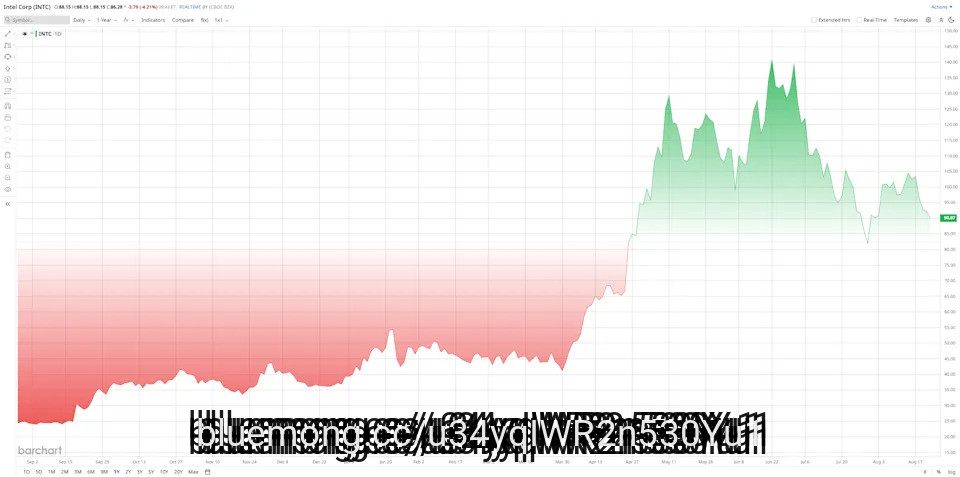
Intel (INTC) is having one of the biggest turnarounds in the semiconductor market. The stock has climbed roughly 140% in 2026, but now another potential catalyst is grabbing investors' attention: GPU prices are rising sharply.
Wedbush ****** yst Matt Bryson says Intel's Arc Pro B70 workstation GPU has seen price increases of as much as 48% across markets in roughly one month. The move highlights how rising memory costs are being passed through the hardware market.
Soros Fund Management Opened a New Position in Nebius During Q2. What This Means for NBIS Stock.
Nvidia Earnings, Jackson Hole and Other Key Things to Watch this Week
Ahead of Nvidia Earnings, Here's What Barchart Data Says Comes Next for NVDA Stock
#NVIDIA #earnings
Wedbush ****** yst Matt Bryson says Intel's Arc Pro B70 workstation GPU has seen price increases of as much as 48% across markets in roughly one month. The move highlights how rising memory costs are being passed through the hardware market.
Soros Fund Management Opened a New Position in Nebius During Q2. What This Means for NBIS Stock.
Nvidia Earnings, Jackson Hole and Other Key Things to Watch this Week
Ahead of Nvidia Earnings, Here's What Barchart Data Says Comes Next for NVDA Stock
#NVIDIA #earnings
1 month ago
Guinness Global Innovators, an investment management company, recently released its Q2 2026 quarterly investor update for its "Guinness Global Innovators Fund". You can download the letter here. The Guinness Global Innovators Fund focuses on investing in global companies that benefit from innovation in technology, communication, globalization, and management strategies. In the second quarter of 2026, the Guinness Global Innovators Fund returned 13.8% in GBP, compared with 13.0% for the MSCI World Index and 13.1% for the IA Global sector average. Easing Middle East tensions, falling oil prices, and renewed enthusiasm for artificial intelligence helped reverse much of the caution seen earlier in the year, with investors rotating back toward growth stocks and AI infrastructure beneficiaries. The Fund benefited from its overweight position in the Information Technology sector, while its overweight position in Communication Services detracted. Avoiding weaker Utilities, Materials, and Energy also supported relative performance. Also, please check the Fund's top five holdings to see its best picks for 2026.
In its second-quarter 2026 investor letter, Guinness Global Innovators Fund highlighted Adobe Inc. (NASDAQ:ADBE). Adobe Inc. (NASDAQ:ADBE) a leading technology company, was sold during the quarter. On August 21, 2026, Adobe Inc. (NASDAQ:ADBE) closed at $275.30 per share. One-month return of Adobe Inc. (NASDAQ:ADBE) was 15.79% and its shares lost 24.20% over the past 52 weeks. Adobe Inc. (NASDAQ:ADBE) has a market capitalization of $109.43 billion.
Guinness Global Innovators Fund stated the following regarding Adobe Inc. (NASDAQ:ADBE) in its Q2 2026 investor letter:
"We initially bought Adobe Inc. (NASDAQ:ADBE) for its high-quality fundamentals: a subscription-based model that generated over 96% of revenue, profit margins approaching 30%, and a deep distribution network supported by strong brand equity. We believed these attributes would provide a durable competitive edge and saw potential for Adobe to expand into historically underpenetrated segments such as non-traditional enterprise users and individual creators to enable deeper monetisation. However, the shares have struggled recently due to the rapidly changing and increasingly competitive landscape in the creative design and data ***** ytics markets. Initially, Adobe was seen as a beneficiary of the AI boom as its flagship tool Firefly quickly gained momentum, generated over 16 billion creative outputs and set adoption records. Despite this early promise, the picture has since been muddied by a disconnect between upbeat management commentary and the lack of a growth inflection that would be expected to follow." (Click here to read the full text)
#fund
In its second-quarter 2026 investor letter, Guinness Global Innovators Fund highlighted Adobe Inc. (NASDAQ:ADBE). Adobe Inc. (NASDAQ:ADBE) a leading technology company, was sold during the quarter. On August 21, 2026, Adobe Inc. (NASDAQ:ADBE) closed at $275.30 per share. One-month return of Adobe Inc. (NASDAQ:ADBE) was 15.79% and its shares lost 24.20% over the past 52 weeks. Adobe Inc. (NASDAQ:ADBE) has a market capitalization of $109.43 billion.
Guinness Global Innovators Fund stated the following regarding Adobe Inc. (NASDAQ:ADBE) in its Q2 2026 investor letter:
"We initially bought Adobe Inc. (NASDAQ:ADBE) for its high-quality fundamentals: a subscription-based model that generated over 96% of revenue, profit margins approaching 30%, and a deep distribution network supported by strong brand equity. We believed these attributes would provide a durable competitive edge and saw potential for Adobe to expand into historically underpenetrated segments such as non-traditional enterprise users and individual creators to enable deeper monetisation. However, the shares have struggled recently due to the rapidly changing and increasingly competitive landscape in the creative design and data ***** ytics markets. Initially, Adobe was seen as a beneficiary of the AI boom as its flagship tool Firefly quickly gained momentum, generated over 16 billion creative outputs and set adoption records. Despite this early promise, the picture has since been muddied by a disconnect between upbeat management commentary and the lack of a growth inflection that would be expected to follow." (Click here to read the full text)
#fund
1 month ago
On August 13, Brookfield (NYSE:BN) held its second-quarter earnings call, and the story management told was less about property spreadsheets and more about power lines and reactors. Distributable earnings before realizations climbed 15% year over year to $1.4 billion for the quarter, and executives spent much of the call explaining how a $100 billion Kentucky data center project and a nuclear buildout fit into that growth.
Brookfield's pitch centers on a gap between AI's appetite for electricity and the grid's ability to supply it. CEO Bruce Flatt described a $100 billion partnership with the US Department of Energy to build an AI campus in Kentucky on federally owned land, a deal he said requires few approvals because of that federal ownership. Alongside that, the Department of Energy committed a further $17.5 billion to Brookfield and its utility partners to acquire long lead time items for Westinghouse's reactor pipeline, which the company says is now under construction on 14 reactors with visibility into 40 more and another 100 beyond that.
The ****** et management engine backing these bets had its own strong quarter. Fundraising hit a record $77 billion, pushing fee-bearing capital up 19% to $672 billion and fee-related earnings up 20% from a year earlier. The Oaktree acquisition closed in July, and Wealth Solutions distributable earnings rose 23% year over year to $480 million as the newly acquired Just Group added $45 billion of insurance ****** ets. Real estate leasing added another data point: office tenants signed 4.5 million square feet globally at net rents 19% above what was expiring, including leases in Canada priced more than double prior rates.
Flatt opened his remarks by naming the risks directly, pointing to geopolitical conflict, higher energy prices and uncertainty around interest rates as factors shaping the near-term market environment. That acknowledgment sits alongside a Just Group integration that is still a work in progress. Management said it exited an early-stage direct-to-consumer initiative and is still working through reducing the business's cost base, and Just contributed just $29 million of earnings in its first quarter under Brookfield ownership, a starting return on equity of about 12%.
Capital return also raises questions for income-focused shareholders. The board declared a quarterly dividend of only $0.07 per share, while the company spent roughly $580 million on buybacks year to date at an average price of $42, showing where management prefers to direct spare cash. Separately, the approved simplification of Brookfield's capital structure requires taxable Canadian and UK shareholders to actively file an election if they want a tax-deferred share exchange, an administrative step that falls on investors rather than the company. Management also acknowledged the annuity business operates in a competitive market, even as it held spreads above 200 basis points.
#energy #company
Brookfield's pitch centers on a gap between AI's appetite for electricity and the grid's ability to supply it. CEO Bruce Flatt described a $100 billion partnership with the US Department of Energy to build an AI campus in Kentucky on federally owned land, a deal he said requires few approvals because of that federal ownership. Alongside that, the Department of Energy committed a further $17.5 billion to Brookfield and its utility partners to acquire long lead time items for Westinghouse's reactor pipeline, which the company says is now under construction on 14 reactors with visibility into 40 more and another 100 beyond that.
The ****** et management engine backing these bets had its own strong quarter. Fundraising hit a record $77 billion, pushing fee-bearing capital up 19% to $672 billion and fee-related earnings up 20% from a year earlier. The Oaktree acquisition closed in July, and Wealth Solutions distributable earnings rose 23% year over year to $480 million as the newly acquired Just Group added $45 billion of insurance ****** ets. Real estate leasing added another data point: office tenants signed 4.5 million square feet globally at net rents 19% above what was expiring, including leases in Canada priced more than double prior rates.
Flatt opened his remarks by naming the risks directly, pointing to geopolitical conflict, higher energy prices and uncertainty around interest rates as factors shaping the near-term market environment. That acknowledgment sits alongside a Just Group integration that is still a work in progress. Management said it exited an early-stage direct-to-consumer initiative and is still working through reducing the business's cost base, and Just contributed just $29 million of earnings in its first quarter under Brookfield ownership, a starting return on equity of about 12%.
Capital return also raises questions for income-focused shareholders. The board declared a quarterly dividend of only $0.07 per share, while the company spent roughly $580 million on buybacks year to date at an average price of $42, showing where management prefers to direct spare cash. Separately, the approved simplification of Brookfield's capital structure requires taxable Canadian and UK shareholders to actively file an election if they want a tax-deferred share exchange, an administrative step that falls on investors rather than the company. Management also acknowledged the annuity business operates in a competitive market, even as it held spreads above 200 basis points.
#energy #company

1 month ago
In the second quarter of 2026, **** eX's (NASDAQ: SPCX) revenue surged 92% year over year to $7.8 billion, and it narrowed its net loss from $1.01 billion to $541 million. However, its total capex surged more than sixfold year over year, from $2.83 billion to $18.37 billion. It allocated $15.8 billion of that capex to expanding its AI business. Let's see where all that money went.
Missed Nvidia in 2009? This Rare Signal Is Flashing Again. In 2009, a "Double Down" signal flashed for a little-known chipmaker called Nvidia. For the first time in years, that same "Total Conviction" signal is flashing for a company 1/100th the size of Nvidia. Continue »
SpaceX originally operated two main businesses: its Starlink satellite internet services and its rocket launch services. But in Feb. 2026, it acquired xAI -- which owns Grok, X, and its other AI **** ets -- in an all-stock transaction to form its new AI business. It also acquired the AI start-up Cursor earlier this month. Elon Musk believes its AI revenue will jump from $3.5 billion in 2025 to $700-$750 billion in 2030.
To sow the seeds for that expansion, **** eX spent most of its second-quarter capex on Nvidia's (NASDAQ: NVDA) data center GPUs and other AI accelerators. The rest was used to deploy, acquire, and build more high-power data centers to increase its active capacity from 1.4 GW today to its target of 10 GW by next year.
That would give it a lot more bandwidth to handle its multi-billion-dollar compute hosting contracts with external enterprise clients. However, the expansion of that unprofitable AI business could offset Starlink's profits and keep its bottom line in the red.
#billion
Missed Nvidia in 2009? This Rare Signal Is Flashing Again. In 2009, a "Double Down" signal flashed for a little-known chipmaker called Nvidia. For the first time in years, that same "Total Conviction" signal is flashing for a company 1/100th the size of Nvidia. Continue »
SpaceX originally operated two main businesses: its Starlink satellite internet services and its rocket launch services. But in Feb. 2026, it acquired xAI -- which owns Grok, X, and its other AI **** ets -- in an all-stock transaction to form its new AI business. It also acquired the AI start-up Cursor earlier this month. Elon Musk believes its AI revenue will jump from $3.5 billion in 2025 to $700-$750 billion in 2030.
To sow the seeds for that expansion, **** eX spent most of its second-quarter capex on Nvidia's (NASDAQ: NVDA) data center GPUs and other AI accelerators. The rest was used to deploy, acquire, and build more high-power data centers to increase its active capacity from 1.4 GW today to its target of 10 GW by next year.
That would give it a lot more bandwidth to handle its multi-billion-dollar compute hosting contracts with external enterprise clients. However, the expansion of that unprofitable AI business could offset Starlink's profits and keep its bottom line in the red.
#billion

1 month ago
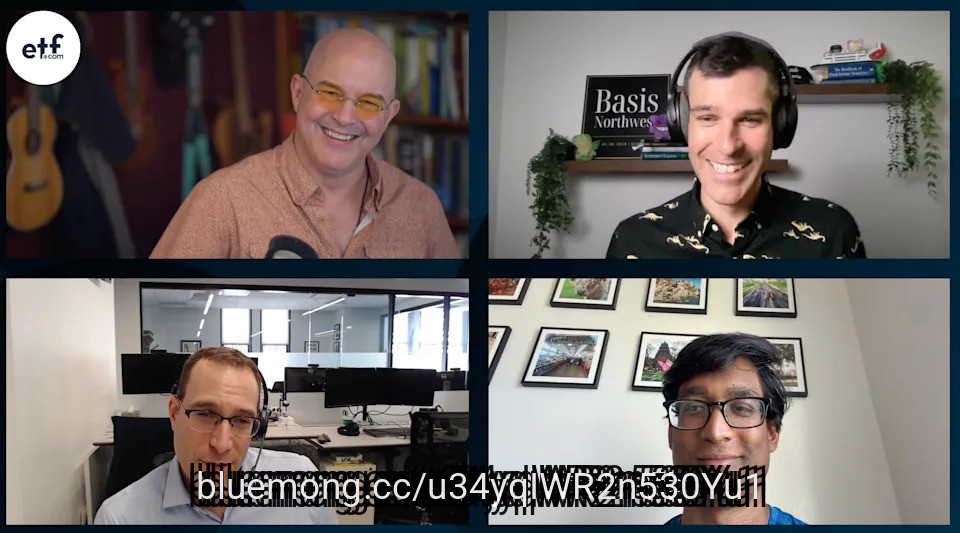
The tax man is coming for ETFs… eventually. This week's ETF Zoo digs into the recent action from the Treasury looking into newer ETF structures that include box spreads and 351 exchanges, what Goldman Sach's acquisition of NEOS says about the broader options income category, and why the struggling consumer matters less and less to markets. ETF.com hosts Dave Nadig, President and Director of Research, and Sumit Roy, Senior ETF ***** yst, are joined this week by Brent Sullivan, Editor of Tax Alpha Insider and Todd Sohn, Chief ETF Strategist at Baird Strategas.
You can also find this episode on our YouTube channel, as well as Spotify and Apple Podcasts.
Goldman Sachs just dropped $2.3 billion on NEOS, its second major ETF acquisition after Innovator, vaulting the bank into the top ten issuers with roughly $130 billion on platform. The Zoo crew believes it's a straight-up bet on retiring boomers hungry for income and downside protection. But the real intrigue is under the hood, where NEOS's covered-call funds lean heavily on return-of-capital distributions (untaxed, tax-efficient income) via 1256 contracts, a structure that's genuinely different from rivals like JEPI/JEPQ. While they're great products, tune in to find out what concerns the crew had.
From there the conversation zooms out to the bigger income-obsession story eating the market. Options income ETFs are going parabolic even as the S&P grinds higher and 30-year Treasury yields sit near multi-decade highs. Todd Sohn's theory: these products are quietly stealing market share from boring old dividend ETFs, especially with younger investors looking to add something more dynamic to their portfolios. Meanwhile, there's something strange happening in the market. Consumer stocks have practically vanished from index influence, with tech (and AI subscriptions) soaking up the wallet share that used to go to staples and discretionary names. Equal-weight and small-/mid-cap stocks are having a surprise moment, potentially riding the AI wave's downstream productivity gains rather than getting crushed by it.
The back half got spicier on taxes: Brent Sullivan previewed a coming reckoning as Treasury scrutinizes aggressive structures, including 351 exchanges, box spreads, dividend-avoidance ETFs. When the cards are on the table, we'll find out who's been bluffing. He expects enforcement to start with the most public, most obviously aggressive cases, though a timeline is anyone's guess. The group also piled on a Bloomberg feature that used Cliff Asness as the poster child for tax-aware long/short strategies, finding a strange scapegoat in Asness and the criticism unnecessarily pointed. Things then close on a cautionary tale of a Market Wizards-famous manager's ETF that's down a brutal 96-97% year-to-date after leaning into short-dated QQQ options. Investors would do well to remember that in this corner of the ETF world, someone's always selling you something.
#etfs #market #neos #brent
You can also find this episode on our YouTube channel, as well as Spotify and Apple Podcasts.
Goldman Sachs just dropped $2.3 billion on NEOS, its second major ETF acquisition after Innovator, vaulting the bank into the top ten issuers with roughly $130 billion on platform. The Zoo crew believes it's a straight-up bet on retiring boomers hungry for income and downside protection. But the real intrigue is under the hood, where NEOS's covered-call funds lean heavily on return-of-capital distributions (untaxed, tax-efficient income) via 1256 contracts, a structure that's genuinely different from rivals like JEPI/JEPQ. While they're great products, tune in to find out what concerns the crew had.
From there the conversation zooms out to the bigger income-obsession story eating the market. Options income ETFs are going parabolic even as the S&P grinds higher and 30-year Treasury yields sit near multi-decade highs. Todd Sohn's theory: these products are quietly stealing market share from boring old dividend ETFs, especially with younger investors looking to add something more dynamic to their portfolios. Meanwhile, there's something strange happening in the market. Consumer stocks have practically vanished from index influence, with tech (and AI subscriptions) soaking up the wallet share that used to go to staples and discretionary names. Equal-weight and small-/mid-cap stocks are having a surprise moment, potentially riding the AI wave's downstream productivity gains rather than getting crushed by it.
The back half got spicier on taxes: Brent Sullivan previewed a coming reckoning as Treasury scrutinizes aggressive structures, including 351 exchanges, box spreads, dividend-avoidance ETFs. When the cards are on the table, we'll find out who's been bluffing. He expects enforcement to start with the most public, most obviously aggressive cases, though a timeline is anyone's guess. The group also piled on a Bloomberg feature that used Cliff Asness as the poster child for tax-aware long/short strategies, finding a strange scapegoat in Asness and the criticism unnecessarily pointed. Things then close on a cautionary tale of a Market Wizards-famous manager's ETF that's down a brutal 96-97% year-to-date after leaning into short-dated QQQ options. Investors would do well to remember that in this corner of the ETF world, someone's always selling you something.
#etfs #market #neos #brent
1 month ago
The trillion-dollar conglomerate that Warren Buffett built entered uncharted territory in 2026. Following the Oracle of Omaha's Dec. 31 retirement as CEO of Berkshire Hathaway (NYSE: BRKA)(NYSE: BRKB), the company's day-to-day operations and the oversight of its $355 billion investment portfolio fell to his successor, Greg Abel.
Abel has wasted little time making his mark. During the first quarter, he completely revamped Berkshire's portfolio by jettisoning 16 holdings and reducing six others. But he didn't stop there.
Missed Nvidia in 2009? This Rare Signal Is Flashing Again. In 2009, a "Double Down" signal flashed for a little-known chipmaker called Nvidia. For the first time in years, that same "Total Conviction" signal is flashing for a company 1/100th the size of Nvidia. Continue »
According to Berkshire's second-quarter operating results, released this past weekend, Abel ended a 14-quarter streak of net stock sales that began with Buffett in late 2022. The consolidated cash flow statement shows that $23.47 billion in equity securities were purchased compared to just $3.69 billion in sales.
This roughly $19.8 billion in net purchases is of massive interest to Wall Street and investors -- and in mere hours, we're going to know exactly what Warren Buffett's protégé has been buying.
#NVIDIA #Portfolio
Abel has wasted little time making his mark. During the first quarter, he completely revamped Berkshire's portfolio by jettisoning 16 holdings and reducing six others. But he didn't stop there.
Missed Nvidia in 2009? This Rare Signal Is Flashing Again. In 2009, a "Double Down" signal flashed for a little-known chipmaker called Nvidia. For the first time in years, that same "Total Conviction" signal is flashing for a company 1/100th the size of Nvidia. Continue »
According to Berkshire's second-quarter operating results, released this past weekend, Abel ended a 14-quarter streak of net stock sales that began with Buffett in late 2022. The consolidated cash flow statement shows that $23.47 billion in equity securities were purchased compared to just $3.69 billion in sales.
This roughly $19.8 billion in net purchases is of massive interest to Wall Street and investors -- and in mere hours, we're going to know exactly what Warren Buffett's protégé has been buying.
#NVIDIA #Portfolio

2 months ago
Good morning. Stocks were little changed on Monday morning as investors looked ahead to key inflation data and earnings later on in the week. Oil prices rose, with the US benchmark WTI crude oil futures (CL=F) trading above $80 per barrel.
Here's a check of the markets in early trading, as of 10:30 a.m. ET, based on a heat map powered by Yahoo Finance AlphaSpace data.
Energy (XLE) led sector gains, while Technology (XLK) traded roughly flat on balance. Within tech, hardware stocks gained, while shares of semiconductor makers and consumer electronics providers were under pressure.
Here are the top stocks Yahoo Finance readers viewed this morning: **** eX (SPCX), Intel (INTC), Supermicro (SMCI), Arm (ARM), and CrowdStrike (CRWD).
The retail investor tide may be turning on **** eX (SPCX) after 59 days in the public markets.
#morning #finance #trading
Here's a check of the markets in early trading, as of 10:30 a.m. ET, based on a heat map powered by Yahoo Finance AlphaSpace data.
Energy (XLE) led sector gains, while Technology (XLK) traded roughly flat on balance. Within tech, hardware stocks gained, while shares of semiconductor makers and consumer electronics providers were under pressure.
Here are the top stocks Yahoo Finance readers viewed this morning: **** eX (SPCX), Intel (INTC), Supermicro (SMCI), Arm (ARM), and CrowdStrike (CRWD).
The retail investor tide may be turning on **** eX (SPCX) after 59 days in the public markets.
#morning #finance #trading