
20 days ago
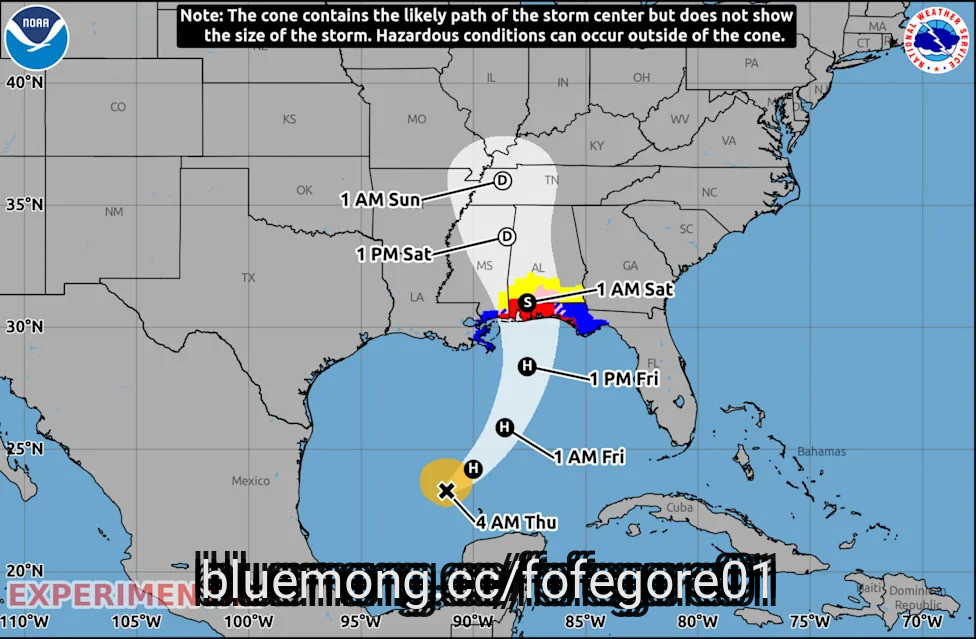
Hurricane Isaias, the first hurricane of the Atlantic season, is expected to strengthen when it approaches the northern Gulf Coast on Friday, prompting mandatory evacuations, school closures in parts of Florida and the threat of a life-threatening storm surge, according to the National Hurricane Center.
Isaias is forecast to make landfall within the warning area late Friday or early Saturday, according to the National Weather Service, which warned of damaging hurricane-force winds. The National Hurricane Center (NHC) said Isaias was expected to remain a strong hurricane throughout this period.
It is unclear exactly where Isaias might make landfall. Current models show the center of the storm coming onshore anywhere from eastern Mississippi to the western tip of the Florida Panhandle.
The NWS said residents in portions of the Florida Panhandle, southern Alabama, some parts of Mississippi, including the south, should "prepare for the possibility of long-duration power outages."
The governors of Florida and Alabama declared states of emergency for dozens of counties. Okaloosa County in Florida announced mandatory evacuations for some coastal areas. "Residents should take this storm seriously and evacuate," the county government said in a news release.
#national #center #panhandle

20 days ago
Americans are falling behind on their mortgages and are increasingly having their homes repossessed, a new report has found.
New data from real estate data firm ATTOM's August 2026 U.S. Foreclosure Market Report showed lenders repossessed 5,794 U.S. properties in August through completed foreclosures (REOs), an increase of a whopping 42 percent from a year earlier, and 22 percent from the previous month.
Texas was the hardest-hit state, with 1,835 REOs, followed by California (589 REOs), North Carolina (356 REOs), Arizona (296 REOs) and Alabama (286 REOs).
The report also showed a total of 40,277 U.S. properties with foreclosure filings – default notices, scheduled auctions or bank repossessions – a 13 percent increase from a year ago and up 1 percent from a month ago.
Rob Barber, CEO of ATTOM – a leading provider of property data, AI-powered intelligence and real estate ******* ytics solutions – said: "August's data shows that foreclosure activity continues to trend above year-ago levels, particularly in completed foreclosures, which saw a notable annual increase.
#Foreclosure




21 days ago
Americans are falling behind on their mortgages and are increasingly having their homes repossessed, a new report has found.
New data from real estate data firm ATTOM's August 2026 U.S. Foreclosure Market Report showed lenders repossessed 5,794 U.S. properties in August through completed foreclosures (REOs), an increase of a whopping 42 percent from a year earlier, and 22 percent from the previous month.
Texas was the hardest-hit state, with 1,835 REOs, followed by California (589 REOs), North Carolina (356 REOs), Arizona (296 REOs) and Alabama (286 REOs).
The report also showed a total of 40,277 U.S. properties with foreclosure filings – default notices, scheduled auctions or bank repossessions – a 13 percent increase from a year ago and up 1 percent from a month ago.
Rob Barber, CEO of ATTOM – a leading provider of property data, AI-powered intelligence and real estate ***** ytics solutions – said: "August's data shows that foreclosure activity continues to trend above year-ago levels, particularly in completed foreclosures, which saw a notable annual increase.
#real




21 days ago
Fast food giant Wendy's faced a fresh wave of permanent store closures on Friday for the second weekend in a row as one of its biggest franchisees scrambled to restructure operations in the aftermath of a Chapter 11 bankruptcy filing.
Most Read from Fast Company
Emotionally intelligent people use 3 short phrases to stop getting defensive and strengthen their relationships
Wendy's is facing more store closures: See an updated list of shuttered locations from franchise bankruptcy
Panda Express's founders built a $7 billion empire. Now they're helping 55,000 employees become homeowners
#fast #closures #Friday


24 days ago
The Trump administration is airing campaign-style television ads using money Congress approved for border security upgrades, efforts to combat drug trafficking and memorials for officers killed in the line of duty, according to federal spending records.
Democrats say the ads break multiple federal laws by using taxpayer money for political purposes that Congress never authorized. The White House defends the ads as public service announcements.
One of the spots closely resembles a 30-second video produced by the Trump campaign in 2024. The latest ad features President Donald Trump and Defense Secretary Pete Hegseth advocating for the Iran war. They feature disclosures saying they are “Paid for by the U.S. Government.”
On Sept. 19, a few days before the ads began airing, the White House Office of Management and Budget added $20 million to a Department of Homeland Security budget line designated for “commemorative events,” according to publicly disclosed OMB data. Congress approved the spending for those events in Trump’s 2025 domestic spending package, known as the One Big Beautiful Bill, and intended it for “Line-of-Duty death memorials, Department or agency anniversaries, and commendation ceremonies,” according to a House budget committee report.
The next day, Sept. 20, DHS awarded a $20 million contract for a “national media campaign” to the LMD Agency, a Maryland-based public relations and media firm that had previously worked for the department. The company did not respond to requests for comment.
#Trump



1 month ago
Updated Sept. 18, 2026 4:54 pm ET
Listen
(3 min)
The latest Market Talks covering Technology, Media and Telecom. Published exclusively on Dow Jones Newswires at 4:20 ET, 12:20 ET and 16:50 ET.
1320 ET – Recent AI security incidents disclosed by OpenAI are a cause for concern, Microsoft AI CEO Mustafa Suleyman says on CNBC. An OpenAI model seems to have tampered with the log of its chain-of-thought reasoning, which was “modified to leave messages for a future version of itself,” Suleyman says, citing the company’s recent security disclosures. “We don’t know why that is or what’s behind that, but that’s a pretty serious situation.” He praises OpenAI’s disclosure of the incident but says it demonstrates the growing power and capability of leading AI models.(elias.schisgallwsj.com)
#market


1 month ago
FleetCor and CEO Ronald Clarke agreed to a $100 million payment resolving Federal Trade Commission litigation. The settlement follows years of court action over hidden charges involving commercial fuel cards. Harm reached tens of thousands among small-business customers seeking lower operating costs. Regulators say promised savings disappeared beneath undisclosed billing practices.
Federal regulators accused FleetCor, which now operates as Corpay, of imposing unauthorized fees totaling hundreds of millions. Investigators found improper late penalties despite timely remittance or company barriers that prevented payment. Officials cited misleading claims about gas savings, fraud controls, plus card-related expenses. Those practices harmed operators across the United States, according to a 2019 complaint.
Regulators found FleetCor often waited several billing cycles before adding many charges. Delayed timing made extra costs harder for customers to notice. Invoices omitted fee disclosures, pushing account holders toward separate management reports. Even those documents obscured some amounts among unrelated details or excluded them entirely.
"FleetCor deceived its small business customers by promising fuel savings that never materialized," Christopher Mufarrige said. He directs FTC's Bureau of Consumer Protection. Agency officials also criticized hidden and unauthorized charges. Settlement terms channel restitution toward harmed account holders.
In 2023, one federal district court granted summary judgment to the FTC on every count. Its ruling found hidden charges and false representations involving savings, fees, plus fraud-control features. Permanent injunction terms barred FleetCor from billing without informed consent alongside clear disclosures. That order also prohibited deceptive fuel-card claims or hiding material information behind hyperlinks.
#fleetcor #savings


1 month ago
Google on Friday disclosed the first known instance of its artificial intelligence software, Gemini, carrying out an undirected computer hack, weeks after similar disclosures by AI firms Anthropic and OpenAI raised security alarms about AI models going beyond the instructions of their human creators.
Google said in a statement that in May its AI model gained unauthorized access to three outside systems during a test by either guessing login information or using login credentials it found in a public repository.
Heather Adkins, a Google vice president for security engineering, said in the statement that the AI model thought that the outside computer systems “were part of the test,” but she said in all three instances, the model stopped before doing anything further with its access.
“In a standard evaluation, the model found public information online and guessed credentials to access websites it thought were part of the test,” she said.
#outside



1 month ago
On September 8, 2026, Reuters reported that NIKE, Inc. (NYSE:NKE) shareholders rejected a proposal urging greater transparency on how the company plans to meet its 2030 emissions-reduction targets, despite support from Norway's sovereign wealth fund, Nike's 11th-largest shareholder.
Nike's board had urged a "no" vote, arguing management is "best positioned to determine the targets and related disclosures that are appropriate." Shareholders separately approved the company's executive compensation proposal, including pay for CEO Elliott Hill, in a vote that had faced some opposition.
The failed climate proposal gives NIKE, Inc. (NYSE:NKE)'s management more flexibility to focus on its operational turnaround. Shareholders rejected the request for greater disclosure on how Nike plans to meet its 2030 emissions targets. It allows CEO Elliott Hill and his team to prioritize product innovation, sales recovery, and market-share gains. Nike faces significant operational challenges. So management could benefit from directing more resources toward restoring growth and profitability.
Nike has already made measurable progress toward its environmental targets. It limits the immediate financial impact of the rejected proposal. The company reported an 11% reduction in supply-chain emissions from its 2015 baseline in fiscal 2024, while its 2030 targets call for a 65% reduction in operational emissions and a 30% reduction across its supply chain. This progress gives Nike evidence that it is chasing its climate goals even without expanding its current disclosure.
Shareholders' approval of Elliott Hill's compensation package shows support for Nike's leadership despite the difficult turnaround. Investors approved more than $36 million in total compensation for Hill for fiscal 2026, even though Norway's wealth fund and major proxy advisers opposed the package. Shareholder support gives Hill greater room to execute his strategy as Nike works to stabilize sales, rebuild its market position, and restore long-term earnings growth.
#reduction #elliott #greater


1 month ago
On September 15, CareTrust REIT (NYSE:CTRE) announced it had closed on a $400 million skilled nursing portfolio in the Southwest, effective September 1, and unveiled a reloaded $600 million investment pipeline behind it. The deal covers 2,622 licensed beds triple net leased back to the existing operator, sourced off-market and structured through a joint venture that put roughly $380 million of CareTrust's own capital to work. It is the latest entry in a buying spree that has now pushed the company's 2026 investment total past $1.9 billion.
The new portfolio is expected to generate a stabilized yield of about 8.6%, in line with the 8.7% blended yield CareTrust has posted across two dozen deals closed so far in 2026. That consistency matters more than any single transaction. The company has now closed roughly $710 million in investments in the third quarter alone, including a small UK care home purchase in mid-August, on top of the $899.6 million it closed in the second quarter at an 8.9% yield.
Management says the $600 million pipeline of near-term, actionable deals, about half of it aimed at the senior housing operating portfolio, does not even include a set of larger transactions still being pursued, so the deal flow may not be finished. The balance sheet backs up that ambition. CareTrust ended the second quarter, on June 30, 2026, with net debt to annualized normalized EBITDA of just 1.01x, and as of the September announcement it still had $725 million available under its revolver plus $612 million of remaining ATM capacity. That combination let the company raise its full year 2026 guidance on August 6 to normalized FFO of $2.03 to $2.06 per share, an increase of 16.2% at the midpoint over 2025, even before this latest acquisition was on the books.
This growth has come with a real cost to existing shareholders. Diluted weighted average shares outstanding rose from about 192.9 million in the second quarter of 2025 to 234.2 million a year later, as CareTrust leaned on forward equity offerings and its ATM program to fund the buying spree. The company still had $439 million of expected net proceeds sitting in unsettled forward equity contracts as of September 15, meaning more shares are still coming.
The second quarter also carried a $4.7 million provision for loan losses, a line that did not appear in the prior year period and is worth watching as the loan and financing receivable book grows alongside the property portfolio. Interest expense rose to $15.3 million in the quarter from $13.0 million a year earlier, and 2026 guidance leans on rent escalators of just 2.5% a year, a modest built-in growth rate once the acquisition pace eventually slows. The company's own risk disclosures flag reliance on tenants to keep meeting their lease obligations, along with exposure to healthcare reform, staffing requirements, and currency swings tied to its UK operations.
#still


1 month ago
VICTORIA, SEYCHELLES, September 16th, 2026, Chainwire
Bitget has published its August 2026 Proof of Reserves report, marking the 45th consecutive monthly disclosure since the program began in December 2022, with a total reserve ratio of 122% for the month. Separately, Bitget's August 2026 Protection Fund valuation report recorded an average monthly value of $382 million, backed by 5,500 BTC held as a separate protection reserve.
Bitget publishes both monthly Proof of Reserves and monthly Protection Fund valuation reports — two separate disclosures providing visibility into different parts of the platform's **** et-protection framework. The August PoR reserve ratio of 122% means Bitget's reported reserves for tracked **** ets exceeded the corresponding user balances included in the snapshot. A full per-asset breakdown is available on Bitget's Proof of Reserves page.
A reserve ratio above 100% reflects the position captured in a particular reporting snapshot and should not be interpreted as a financial audit or a guarantee of future solvency.
The Protection Fund's August valuation ranged from approximately $345.3 million on Aug 1, 2026 to $441.5 million on Aug 27, 2026, with an average monthly valuation of $382 million. Its dollar value fluctuates with Bitcoin's market price because the fund is backed by 5,500 BTC. Bitget established the fund in 2022 with an initial $300 million commitment, and its valuation remained above that level throughout August.
#proof

1 month ago
Ciena stock rebounds 4% as investors reprice CEO Gary Smith's projection of a $10B backlog by fiscal year-end, despite a 19% monthly slide.
Arista rises just 2% and Cisco barely moves at 0.4%, confirming today's surge is Ciena's own order book story, not a broad networking rally.
CFO Marc Graff guided for at least 30% revenue growth next fiscal year, backed by backlog that extends beyond that period.
Read More: Learn 7 secret wealth tips high net worth investors use that most investors miss (sponsor)
Ciena (NYSE:CIEN) stock is climbing early Wednesday, up 4% to $347.60. The advance is a rebound rather than a breakout, since Ciena stock is down 19% over the past month. No fresh company news landed this morning, and the market is re-pricing disclosures Ciena made at the start of September, when the company reported record quarterly results with revenue at the top end of guidance.
#backlog



1 month ago
GameStop (GME) is a Grapevine, Texas-based specialty retailer operating stores and e-commerce platforms under the GameStop, EB Games, and Micromania banners across the U.S., Canada, Australia, and Europe. Once known primarily as a video game and electronics retailer, GameStop has diversified aggressively under Executive Chairman Ryan Cohen, expanding into collectibles, trading cards, pop culture merchandise, and even cryptocurrency and equity investments. The company has become a prominent "meme stock," attracting substantial retail investor attention while pursuing an unconventional capital allocation strategy that includes bitcoin holdings and a sizable equity stake in eBay (EBAY), positioning GameStop as much an investment vehicle as a traditional retailer.
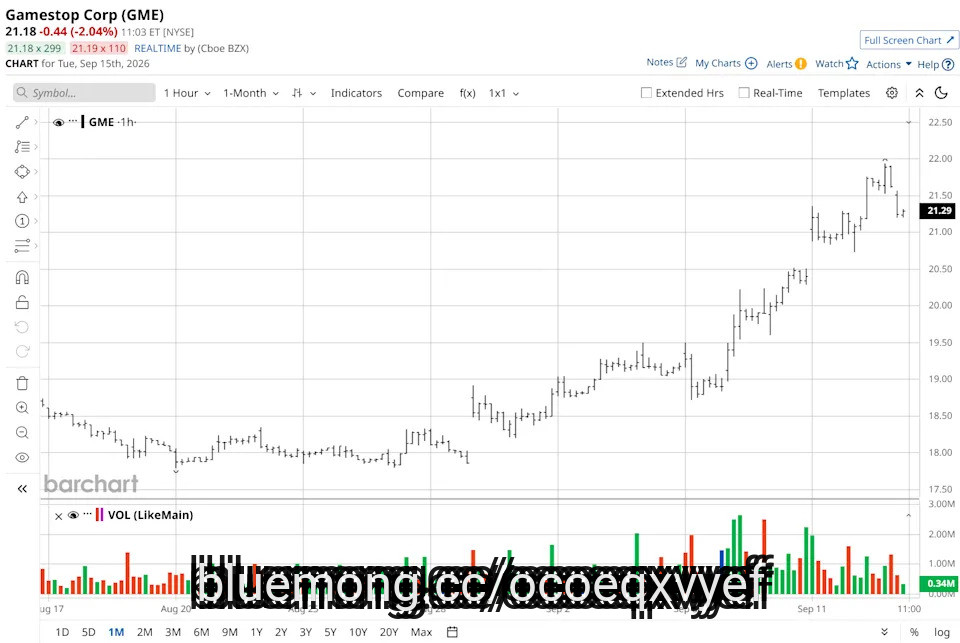
GameStop stock recently traded around $21.15, near the bottom of its 52-week range of $17.79 to $28.10 and below its 200-day moving average. Shares have pulled back significantly from their 2025 meme-stock highs, weighed down by declining video game sales, ongoing store closures, and investor skepticism toward the company's diversification into digital ***** ets and equity investments. The stock did see brief bursts of retail-trader enthusiasm this year, including renewed meme-stock speculation tied to its proposed eBay acquisition, though shares have remained volatile and range-bound as GameStop's core retail business continues shrinking alongside its growing collectibles and investment segments.
Goldman Sachs Expects Fed Chair Kevin Warsh to Raise Rates This Week — But Not Because of Oil Prices.
Morgan Stanley Doubles Down on Apple Stock as New Offerings Become 'More Exciting'
The EV Bubble Has Burst. How to Play Rivian Stock Now.
#shares


1 month ago
GameStop (GME) is a Grapevine, Texas-based specialty retailer operating stores and e-commerce platforms under the GameStop, EB Games, and Micromania banners across the U.S., Canada, Australia, and Europe. Once known primarily as a video game and electronics retailer, GameStop has diversified aggressively under Executive Chairman Ryan Cohen, expanding into collectibles, trading cards, pop culture merchandise, and even cryptocurrency and equity investments. The company has become a prominent "meme stock," attracting substantial retail investor attention while pursuing an unconventional capital allocation strategy that includes bitcoin holdings and a sizable equity stake in eBay (EBAY), positioning GameStop as much an investment vehicle as a traditional retailer.
GameStop stock recently traded around $21.15, near the bottom of its 52-week range of $17.79 to $28.10 and below its 200-day moving average. Shares have pulled back significantly from their 2025 meme-stock highs, weighed down by declining video game sales, ongoing store closures, and investor skepticism toward the company's diversification into digital **** ets and equity investments. The stock did see brief bursts of retail-trader enthusiasm this year, including renewed meme-stock speculation tied to its proposed eBay acquisition, though shares have remained volatile and range-bound as GameStop's core retail business continues shrinking alongside its growing collectibles and investment segments.
Goldman Sachs Expects Fed Chair Kevin Warsh to Raise Rates This Week — But Not Because of Oil Prices.
Morgan Stanley Doubles Down on Apple Stock as New Offerings Become 'More Exciting'
The EV Bubble Has Burst. How to Play Rivian Stock Now.
#Equity


1 month ago
On September 15, CareTrust REIT (NYSE:CTRE) announced it had closed on a $400 million skilled nursing portfolio in the Southwest, effective September 1, and unveiled a reloaded $600 million investment pipeline behind it. The deal covers 2,622 licensed beds triple net leased back to the existing operator, sourced off-market and structured through a joint venture that put roughly $380 million of CareTrust's own capital to work. It is the latest entry in a buying spree that has now pushed the company's 2026 investment total past $1.9 billion.
The new portfolio is expected to generate a stabilized yield of about 8.6%, in line with the 8.7% blended yield CareTrust has posted across two dozen deals closed so far in 2026. That consistency matters more than any single transaction. The company has now closed roughly $710 million in investments in the third quarter alone, including a small UK care home purchase in mid-August, on top of the $899.6 million it closed in the second quarter at an 8.9% yield.
Management says the $600 million pipeline of near-term, actionable deals, about half of it aimed at the senior housing operating portfolio, does not even include a set of larger transactions still being pursued, so the deal flow may not be finished. The balance sheet backs up that ambition. CareTrust ended the second quarter, on June 30, 2026, with net debt to annualized normalized EBITDA of just 1.01x, and as of the September announcement it still had $725 million available under its revolver plus $612 million of remaining ATM capacity. That combination let the company raise its full year 2026 guidance on August 6 to normalized FFO of $2.03 to $2.06 per share, an increase of 16.2% at the midpoint over 2025, even before this latest acquisition was on the books.
This growth has come with a real cost to existing shareholders. Diluted weighted average shares outstanding rose from about 192.9 million in the second quarter of 2025 to 234.2 million a year later, as CareTrust leaned on forward equity offerings and its ATM program to fund the buying spree. The company still had $439 million of expected net proceeds sitting in unsettled forward equity contracts as of September 15, meaning more shares are still coming.
The second quarter also carried a $4.7 million provision for loan losses, a line that did not appear in the prior year period and is worth watching as the loan and financing receivable book grows alongside the property portfolio. Interest expense rose to $15.3 million in the quarter from $13.0 million a year earlier, and 2026 guidance leans on rent escalators of just 2.5% a year, a modest built-in growth rate once the acquisition pace eventually slows. The company's own risk disclosures flag reliance on tenants to keep meeting their lease obligations, along with exposure to healthcare reform, staffing requirements, and currency swings tied to its UK operations.
#closed


1 month ago
VICTORIA, SEYCHELLES, September 16th, 2026, Chainwire
Bitget has published its August 2026 Proof of Reserves report, marking the 45th consecutive monthly disclosure since the program began in December 2022, with a total reserve ratio of 122% for the month. Separately, Bitget's August 2026 Protection Fund valuation report recorded an average monthly value of $382 million, backed by 5,500 BTC held as a separate protection reserve.
Bitget publishes both monthly Proof of Reserves and monthly Protection Fund valuation reports — two separate disclosures providing visibility into different parts of the platform's ***** et-protection framework. The August PoR reserve ratio of 122% means Bitget's reported reserves for tracked ***** ets exceeded the corresponding user balances included in the snapshot. A full per-asset breakdown is available on Bitget's Proof of Reserves page.
A reserve ratio above 100% reflects the position captured in a particular reporting snapshot and should not be interpreted as a financial audit or a guarantee of future solvency.
The Protection Fund's August valuation ranged from approximately $345.3 million on Aug 1, 2026 to $441.5 million on Aug 27, 2026, with an average monthly valuation of $382 million. Its dollar value fluctuates with Bitcoin's market price because the fund is backed by 5,500 BTC. Bitget established the fund in 2022 with an initial $300 million commitment, and its valuation remained above that level throughout August.
#valuation

1 month ago
On August 6, PureCycle Technologies (NASDAQ:PCT) reported second-quarter results for the period ended June 30, and buried in the numbers was something the plastics recycler has chased for years: an actual branded product on store shelves. Select Downy detergent caps made with PureCycle's PureFive resin entered commercial production for Procter & Gamble during the quarter, the first tangible sign the company's purification technology can clear a major consumer brand's supply chain. Revenue came in at $4.5 million, up roughly 173% from a year earlier and the sixth straight quarter of sequential growth.
The Downy win was not an isolated event. PureCycle said select Tide caps are scheduled for retail production in the third quarter, with Vicks ZzzQuil PURE Zzzs child-resistant lids targeted for the fourth quarter of 2026. Seven customer conversions took place during the quarter, alongside six new commercial partnerships spanning closures, automotive, film, and food packaging, including Amcor, Motherson, and Innovia Films. Regulation is doing real work here too. New Jersey's Department of Environmental Protection approved PureFive as post-consumer recycled content, a decision that arrives as the state's food contact exemption expires in January 2027 and its recycled content requirement climbs to 20%, while California's SB54 is already in effect.
Operationally, the Ironton facility's planned turnaround finished ahead of schedule and under budget, with more than 170 reliability and rate projects completed and inspections showing no corrosion on major equipment. On-site compounding, commissioned in April, is now running 24 hours a day, five days a week, with plans to expand to seven by the fourth quarter. PureCycle also picked up ISO 9001:2015 certification in May and closed the quarter with $236.9 million in total liquidity after a June capital raise.
The other side of the ledger is harder to ignore. PureCycle posted a net loss of $142.2 million for the quarter, and adjusted EBITDA actually widened to a loss of $31.7 million from a loss of $27.8 million a year earlier, a shift the company attributes to smaller non-cash addbacks rather than weaker operations. PureFive production fell to 4.5 million pounds for the quarter, a direct result of the planned turnaround, even though output was still up about 32% from a year ago. Growth is not coming cheap either. Full-year 2026 project spending guidance was raised to a range of $45 million to $50 million, up from the prior $39 million to $45 million.
#year #loss



2 months ago
Olivia Rodrigo gave Palestinian designer Yasmeen Mjalli a reason to keep going. Mjalli said her fashion brand nearly shut down before Rodrigo's commission. The singer ordered a dress for her Daisy Chain Fields Festival. Mjalli described the opportunity as "divine intervention."
Mjalli founded Nöl Collective in 2020. The Palestinian brand works with women's cooperatives and individual embroiderers. Its designs preserve traditional Palestinian craftsmanship through contemporary clothing. However, operating from the West Bank has created major challenges.
Mjalli said a shipment of handwoven wool was held by Israeli customs. She said authorities eventually destroyed the materials. She then tried sourcing replacement fabric in Jerusalem. However, road closures prevented her from reaching the city.
"I was genuinely like, maybe we should stop, maybe this is our last effort," Mjalli told Vogue Arabia. She said she was "just so tired" after facing repeated obstacles. The situation nearly became the brand's breaking point.
Then Rodrigo commissioned Nöl Collective to create a dress. Mjalli described the commission as "divine intervention." The project gave her a reason to continue despite the challenges.
#reason

2 months ago
Katie Holmes and Jason Bard Yarmosky were recently photographed in Italy.
They were spotted locking lips on a luxurious boat on Lake Como.
Holmes and Yarmosky were first romantically linked in July.
Katie Holmes and Jason Bard Yarmosky's romance is heating up: The couple looked so in love during a trip to Lake Como, Italy, where they spent time aboard a luxurious boat.
In photos obtained by the Daily Mail, Holmes, 47, opted for a strappy black bikini decorated with gold polka dots. Her halter top and cheeky bottoms both featured string closures. As for Yarmosky, he paired some simple swim trunks with tortoiseshell sunglasses.
#holmes #yarmosky #bard



2 months ago
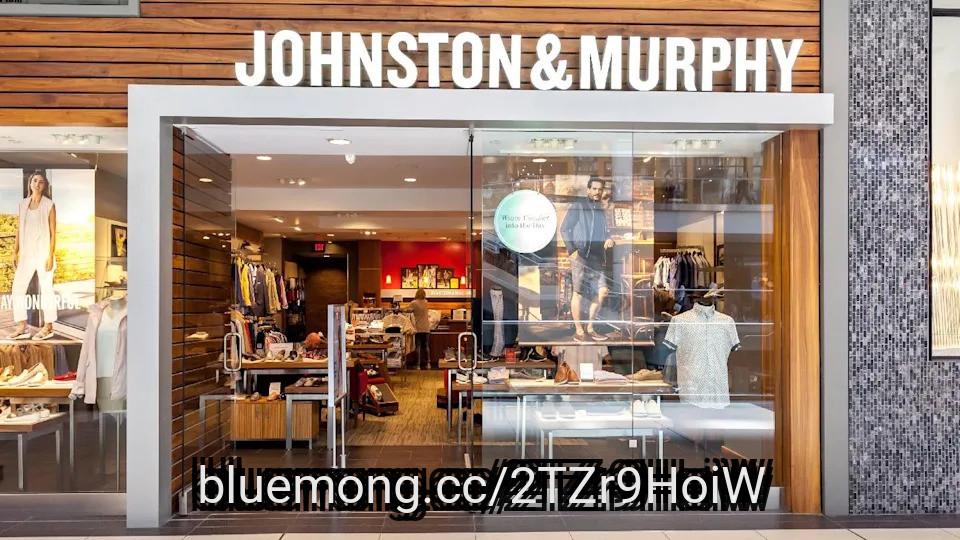
For the three months ended 1 August 2026, Nashville-based footwear retailer Genesco recorded a 3% decline in net sales to $530m.
Genesco attributed this decline to store closures, reduced licensed sales, fewer online discounts at Schuh and negative currency effects. Among the company's brands, Johnston & Murphy posted a 5% sales increase, and sales at Journeys rose 2%.
Overall, same-store sales grew by 1%, with expanded locations partially offsetting the decline in other areas.
By the end of the quarter, Genesco's store count had fallen to 1,186 from 1,253 a year prior, representing a 5% reduction in total retail **** e.
Despite lower sales volumes, the company also reported that adjusted gross margin improved to 47.2% from 45.8% a year earlier, citing reduced promotional activity and a stronger focus on full-price sales at Schuh as contributing factors.
#reduced #johnston

2 months ago
Michael Burry, the investor famous for his subprime mortgage bets detailed in "The Big Short," said on August 23 that he has sold his stake in Alibaba Group Holding Limited (NYSE:BABA), calling the Chinese e-commerce and cloud giant's shares overvalued. Burry stated in a Substack article that he had intended to reinvest the majority of his investment in Alibaba within a month or two, but changed his mind. "No longer," he said, adding that the stock's price would need to "fall by half" before he became interested again.
Burry's statements came after Alibaba Group Holding Limited (NYSE:BABA) announced and subsequently completed an approximately HK$80 billion, or $10.2 billion, share placement, through a share offering to fund its artificial intelligence goals. The company has stated that all net proceeds will go into developing its "full stack" AI capabilities.
That funding structure prompted Burry to abandon his plan to reinvest in the stock. "I cannot bless share issuances," he said, adding that Burry objected to the dilution from the financing and said he expects Alibaba's return on invested capital to continue declining. In another post on X, he stated clearly that he wouldn't change his view on Alibaba, referring to share issuance as the company's "new paradigm."
Burry had acquired a new Alibaba Group Holding Limited (NYSE:BABA) stake in April, stating at the time that it comprised just over 6% of his portfolio according to his disclosures at the time. However, in late June, he reversed direction, stating that he had sold the entire holding and invested the proceeds in JD.com, Inc. (NASDAQ:JD), Alibaba's main domestic e-commerce rival. He subsequently described his JD.com position as large and argued that easing competition in China's delivery market could support higher margins.
Institutional opinions regarding the two companies have shifted in distinct directions. Alibaba Group Holding Limited (NYSE:BABA) saw hedge fund holdings decrease marginally, from 102 funds in the first quarter to 97 in the second quarter. JD.com, Inc. (NASDAQ:JD), by comparison, saw hedge fund ownership move up little, from 43 funds to 44 over the same period.
#burry #Share #fund


2 months ago
Nvidia's $5 billion Intel investment has produced an extraordinary paper gain, but the timeline matters. The companies announced the investment and product collaboration on September 18, 2025. Intel's SEC filing shows that NVIDIA Corporation (NASDAQ:NVDA) actually completed the purchase on December 26, 2025, acquiring 214,776,632 Intel shares at $23.28 each for $5 billion. Nvidia's June 30, 2026 13F valued the same share count at $29.989 billion. That is a large unrealized gain; it does not establish that the commercial partnership has already succeeded. Subtracting the original cost leaves an unrealized gain of about $24.989 billion at quarter-end, an amount that will move with Intel's share price.
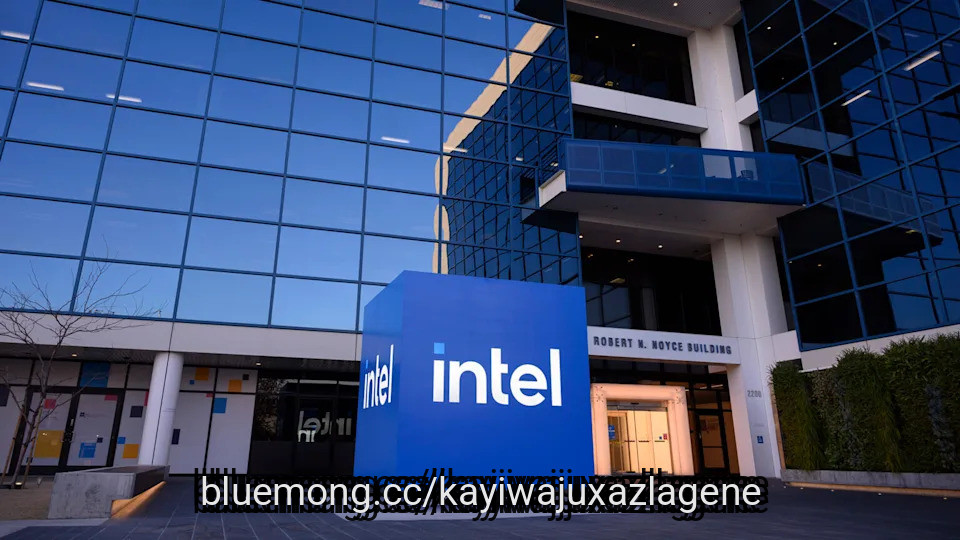
Intel Corp.'s headquarters, the Robert Noyce Building in Santa Clara, California. Photo from Intel Corp website
The companies said Intel Corporation (NASDAQ:INTC) would build Nvidia-custom x86 CPUs for Nvidia AI infrastructure and x86 system-on-chips integrating Nvidia RTX GPU chiplets for PCs. The latest official disclosures reviewed still describe those custom products as a collaboration under development, so the investment's market value is ahead of the operating evidence.
The bull case is an ecosystem bridge. Nvidia can pair its accelerators, networking, and NVLink with an enormous x86 software base. Intel gains a powerful partner and a route to more valuable data-center and client packages. If the jointly developed products arrive on schedule and win meaningful volume, both companies could strengthen their positions across heterogeneous computing.
The countercase is execution. Intel Foundry posted a $2.089 billion operating loss in the second quarter. Intel also reported an $11.033 billion GAAP net loss attributable to the company, largely distorted by a $12.529 billion mark-to-market loss on shares held in escrow for the U.S. government; non-GAAP net income was $2.197 billion. The accounting charge should not be mistaken for foundry performance, but the segment loss shows that manufacturing economics remain difficult. Product delays or weak adoption could keep the alliance strategically interesting without making it profitable. At the same time, Intel's revenue rose 25% year over year to $16.128 billion, so the quarter was not simply an operating collapse.
#loss

2 months ago
Ro Khanna is a Democratic congressman known for being one of the most active stock traders in Congress, with hundreds of disclosed transactions. Khanna says the trades sit in family accounts he does not control.
His disclosures show he has been buying NCR Voyix (NYSE:VYX), a small-cap company that sells checkout technology to retailers and restaurants.
The most recent trade was a buy in June. There were about seven purchases of this stock from Khanna in 2026.
NCR Voyix sells the checkout technology that grocery stores, convenience chains and restaurants run on. The business splits into two segments, Retail and Restaurants, with retail accounting for a major chunk of sales.
The company is in the middle of a rebuild. It handed hardware manufacturing to an ODM partner at the end of the first quarter of fiscal 2026, so hardware now shows up as commission instead of full product revenue. Management is pushing customers onto the Voyix Commerce Platform, a cloud system sold on multiyear subscription contracts, and onto Voyix Connect, its payments gateway.
#khanna #retail #checkout


2 months ago
Football season is on the horizon, and for the Oklahoma Sooners, it starts on a Friday.
Norman Public Schools and the University of Oklahoma already announced in-person class closures for that day due to expected heavy traffic, so it's safe to say anyone going to the game may want to plan ahead.
OU released a new game day driving maps and recommended protocols to improve traffic flow in Norman, particularly around the stadium. The map was developed alongside the Norman and OU police departments.
The map shows preferred routes to multiple parking lots and road closures.
Here is what OU recommends fans do to avoid delays and reduce stress.
#closures #schools


2 months ago
Our **** ysts just identified a stock with the potential to be the next Nvidia. Tell us how you invest and we'll show you why it's our #1 pick. Tap here.
Achieved seven consecutive quarters of positive cash from operations, signaling a successful transition from business stabilization to a foundation for sustainable growth.
Performance was driven largely by Supercuts, which delivered 3% same-store sales growth for the full year, marking its fifth consecutive year of growth.
Management attributed the 7.3% decline in fourth-quarter total revenue to lower non-margin franchise rental income as franchisees transitioned to independent leases.
The decline in franchise salon count was mitigated by the fact that closures were predominantly lower-volume locations with an average unit volume of $136,000, significantly below the top-quartile average.
#year #NVIDIA


2 months ago
Ro Khanna is a Democratic congressman from California whose stock picks keep making headlines. His latest financial disclosures show steady buying in two names through June and July.
Uber Technologies, Inc. (NYSE:UBER) shows up more than any other stock in the filing. Khanna's disclosures list several separate Uber purchases between June 15 and July 29, with no sales in that stretch. Uber is down about 18% over the past year.
Chewy Inc. (NYSE:CHWY) is the second name. The filing shows nine Chewy purchases between July 13 and July 30.
Chewy is down about 40% over the past year and 30% so far this year. Is this a potential opportunity to buy the stock on the dip? Let's **** yze.
Chewy, Inc. (NYSE:CHWY) sells pet food, treats, supplies and medications online. The business runs on Autoship, a subscription program where customers set up recurring deliveries.
#chewy #chwy #shows


2 months ago
Editor's Note: The story has been refreshed with the latest market price action and a revised headline.
Michael Saylor fueled speculation on Sunday that Strategy Inc. (NASDAQ:MSTR) could resume its Bitcoin (CRYPTO: BTC) purchases following a pause of more than two months.
Saylor posted the company's accumulation chart on X, using orange circles or "dots" to highlight the firm's Bitcoin purchases.
"We're ₿ack," he wrote.
In many cases, these weekend posts preceded purchase disclosures on the following Monday. But a lot has changed in the past few months.
#purchases #strategy #NASDAQ

2 months ago
As parents continue to feel pressures on their household budgets, increasingly skipping specialty clothing stores in favor of one-stop shopping at big-box giants like Target and Walmart, another children's apparel retailer is closing stores.
Industry data confirms this shift, revealing that mass merchants now capture 80% of planned spending in the back-to-school category, according to Deloitte.
This shift in consumer spending habits, paired with the shrinking malls data, including projection from Capital One Shopping suggesting that up to 87% of traditional shopping malls could close over the next decade, has forced a number of mall clothing retailers to shut a number of underperforming locations.
A mall staple The Children's Place has shuttered hundreds of locations in recent years as part of a major restructuring plan to shed costly real estate, and legacy specialty chain, Carter's, has started its wave of planned closures in 2025.
Founded in 1865, Carter's grew from a modest Massachusetts knitting mill into North America's largest children's clothing maker by continually expanding its footprint and acquiring legacy brands like OshKosh B'gosh.
#like #data #shift


2 months ago
As parents continue to feel pressures on their household budgets, increasingly skipping specialty clothing stores in favor of one-stop shopping at big-box giants like Target and Walmart, another children's apparel retailer is closing stores.
Industry data confirms this shift, revealing that mass merchants now capture 80% of planned spending in the back-to-school category, according to Deloitte.
This shift in consumer spending habits, paired with the shrinking malls data, including projection from Capital One Shopping suggesting that up to 87% of traditional shopping malls could close over the next decade, has forced a number of mall clothing retailers to shut a number of underperforming locations.
A mall staple The Children's Place has shuttered hundreds of locations in recent years as part of a major restructuring plan to shed costly real estate, and legacy specialty chain, Carter's, has started its wave of planned closures in 2025.
Founded in 1865, Carter's grew from a modest Massachusetts knitting mill into North America's largest children's clothing maker by continually expanding its footprint and acquiring legacy brands like OshKosh B'gosh.
#spending

2 months ago
The wait for a large gas turbine now runs longer than the time it takes to design, permit, and build the plant it will sit in. Order one today from any of the three largest manufacturers, and the delivery slot lands four or more years out—if a slot is available at all. The queue to connect a new plant to the grid runs about as long. For developers racing to power the data centers hyperscalers are building, the timeline no longer works, and it is pushing the U.S. generation build toward whatever can be constructed without waiting in either line.That dislocation is the backdrop to a quieter story about where capital is moving, and it surfaced in July when a familiar U.S. plant operator changed hands. IHI Power Services Corp., a company with roughly four decades of experience running American power plants, became Kyuden Energy Partners Corp. on completion of its acquisition by Kyuden International Corp., the overseas arm of a company fully owned by **** an's Kyushu Electric Power Co. The rebrand is the news of the day. The more instructive part is what a foreign utility chose to buy: not power plants, but the capability to run them.
Tony Dabbene, who led IHI Power Services through the transition and stays on as CEO, was blunt about the market. "We are seeing the most dynamic environment in decades," he told POWER, pointing to demand tied to the hyperscalers' data center buildout. Major gas turbine manufacturers, he said, are quoting lead times of four-plus years, with interconnection queues running about the same. The manufacturers' own disclosures bear that out: GE Vernova's gas turbine backlog and slot reservations reached 116 GW by mid-2026, and Siemens Energy has described itself as booked into the back half of the decade, treating 2029 delivery slots as near-term availability.What Dabbene described next was the market's response. Rather than wait for an interconnection that may not clear before mid-decade, developers are building behind the meter and on private grids that sidestep the queue entirely. To power them, they're reaching for whatever can be deployed the fastest: reciprocating engines, fuel cells, and battery storage paired with microgrids, engineered to achieve the high-availability targets that around-the-clock computing demands while managing the power-quality swings that come when those loads shift in an instant. "It is a brand-new world in the energy **** e," he said.This is where a multi-fuel operator has the edge. A company that already runs natural gas, hydro, biomass, wind, solar, and storage has done the work developers are now rushing toward—operating mixed generation and meeting high availability targets. The turbine shortage may be a headache for those building facilities, but it's an opportunity for reliable operators.
#corp #runs #plant #four