
1 day ago
ESPN's decision to air an interview with U.S. Sen. Ted Cruz on College GameDay this week was bound to get attention.
That's why they did it.
The backlash the network is facing has a lot more to do with its refusal to balance Cruz's perspective with anyone on the GameDay panel or from another guest — and what Bomani Jones, in an episode of his podcast The Right Time on Sunday, called "pretty dire consequences" that could come from "shilling" for the Senate's Protect College Sports Act.
Jones called out ESPN for not bringing on an opponent of the PCSA on the show, and for compounding its partnership with the powers that be with another unusual decision during its broadcast from the University of Texas on Saturday.
"There are serious consequences to what ESPN chose to do," he said. "What they did was flatly wrong, and it is possible that it will contribute to limiting the ability of players to cash in, their chance to cash in in this life. I think those are pretty dire consequences, and I think that there should be a pretty loud uproar about that."
#jones #decision
That's why they did it.
The backlash the network is facing has a lot more to do with its refusal to balance Cruz's perspective with anyone on the GameDay panel or from another guest — and what Bomani Jones, in an episode of his podcast The Right Time on Sunday, called "pretty dire consequences" that could come from "shilling" for the Senate's Protect College Sports Act.
Jones called out ESPN for not bringing on an opponent of the PCSA on the show, and for compounding its partnership with the powers that be with another unusual decision during its broadcast from the University of Texas on Saturday.
"There are serious consequences to what ESPN chose to do," he said. "What they did was flatly wrong, and it is possible that it will contribute to limiting the ability of players to cash in, their chance to cash in in this life. I think those are pretty dire consequences, and I think that there should be a pretty loud uproar about that."
#jones #decision


1 day ago
On August 4, Willis Lease Finance Corporation (NASDAQ:WLFC) reported second-quarter results that pulled in two directions at once. The lessor of commercial aircraft engines grew its operating business at a healthy clip, yet net income fell by more than half, a split that makes this quarter harder to read than the headline suggests.
Income from operations climbed 20.2% to $34.0 million in the quarter ended June 30, 2026, and the engine underneath that number is lease rent revenue, which rose 6.7% to $77.1 million as the average size of Willis Lease's portfolio expanded from a year earlier. Over the first six months of 2026, lease rent revenue is up 10.4% to $154.5 million, a steadier pace than the quarterly figure alone implies.
The company's trading business added to that. Willis Lease booked a $32.0 million gain on the sale of leased equipment, up 16.2%, after selling 21 engines and other parts and equipment during the quarter, compared with 14 engines and two airframes a year earlier. That kind of turnover matters for a leasing company, since selling ****** ets at a gain confirms that engine values in the market are holding up.
The bigger story sits in how Willis Lease is expanding beyond its own balance sheet. ****** ets under management, which folds in the company's on-balance-sheet fleet along with its Willis Aviation Capital business, grew 21% year over year to $4.4 billion. CEO Austin C. Willis tied that growth directly to building out Willis Aviation Capital, and the fee income backs that up: management and advisory fees jumped 113.4% to $5.5 million in the quarter and 194.9% to $13.4 million over six months. Two new investment fund partnerships, one with Liberty Mutual Investments that began operating in March 2026 and one with Blackstone Credit & Insurance that started in April 2026, are the mechanics behind that shift toward managing other people's capital rather than only deploying its own.
Net income attributable to common shareholders fell 51.2% to $28.7 million, and diluted earnings per share dropped from $2.81 to $1.31. Some of that gap traces to a tough comparison rather than a weaker quarter, since the second quarter of 2025 included a $43.0 million gain from the sale of the BAML business that had no counterpart this year. Willis Lease also recognized a $5.4 million loss on debt extinguishment in the quarter, and $12.4 million over six months, a cost tied to refinancing that simply was not there in 2025.
#lease #capital #months
Income from operations climbed 20.2% to $34.0 million in the quarter ended June 30, 2026, and the engine underneath that number is lease rent revenue, which rose 6.7% to $77.1 million as the average size of Willis Lease's portfolio expanded from a year earlier. Over the first six months of 2026, lease rent revenue is up 10.4% to $154.5 million, a steadier pace than the quarterly figure alone implies.
The company's trading business added to that. Willis Lease booked a $32.0 million gain on the sale of leased equipment, up 16.2%, after selling 21 engines and other parts and equipment during the quarter, compared with 14 engines and two airframes a year earlier. That kind of turnover matters for a leasing company, since selling ****** ets at a gain confirms that engine values in the market are holding up.
The bigger story sits in how Willis Lease is expanding beyond its own balance sheet. ****** ets under management, which folds in the company's on-balance-sheet fleet along with its Willis Aviation Capital business, grew 21% year over year to $4.4 billion. CEO Austin C. Willis tied that growth directly to building out Willis Aviation Capital, and the fee income backs that up: management and advisory fees jumped 113.4% to $5.5 million in the quarter and 194.9% to $13.4 million over six months. Two new investment fund partnerships, one with Liberty Mutual Investments that began operating in March 2026 and one with Blackstone Credit & Insurance that started in April 2026, are the mechanics behind that shift toward managing other people's capital rather than only deploying its own.
Net income attributable to common shareholders fell 51.2% to $28.7 million, and diluted earnings per share dropped from $2.81 to $1.31. Some of that gap traces to a tough comparison rather than a weaker quarter, since the second quarter of 2025 included a $43.0 million gain from the sale of the BAML business that had no counterpart this year. Willis Lease also recognized a $5.4 million loss on debt extinguishment in the quarter, and $12.4 million over six months, a cost tied to refinancing that simply was not there in 2025.
#lease #capital #months


1 day ago
On August 10, Red Violet Inc. (NASDAQ:RDVT) reported second-quarter 2026 results for the period ended June 30 that showed the company converting growth into profit at an accelerating clip. Revenue rose 23% to $26.7 million, and net income nearly doubled to $5 million. For a company built on selling identity intelligence to businesses, watching net margin move from 12% to 19% says that growth is not costing more to produce.
Gross profit climbed 29% to $20.2 million, pushing gross margin to 76% from 72%, while adjusted EBITDA jumped 48% to $11.2 million as its margin widened to 42% from 35%. Adjusted net income rose 58% to $7.2 million. Cash generation told the same story: operating cash flow increased 42% to a record $10.6 million for the quarter. None of that came from adding customers who barely move the needle. Red Violet signed on 447 new IDI customers in the quarter, a company record, ending with 10,869 customers on the platform.
FOREWARN, its product built for real estate agents, picked up 25,493 new users to reach 443,173, and 660 REALTOR ****** ociations across the country are now under contract to use it. The company also closed an underwritten public offering in August that sold 1,916,667 shares, including 250,000 shares from the underwriters' full exercise of their option, generating net proceeds of about $109.0 million. Between the funds already on hand and this new raise, Red Violet says it holds over $160 million in cash and carries no debt, money earmarked for working capital and possible acquisitions.
CEO Derek Dubner called it what he described as "the strongest pipeline of strategic initiatives" in the company's history. The company also repurchased 74,500 shares by June 30, paying $41.87 per share on average, and had $15.5 million left on its buyback authorization.
The August offering that padded Red Violet's cash balance also added 1,916,667 new shares to the count, arriving in the same year that per-share profit is climbing fastest. Diluted earnings came in a penny below basic at $0.34, and adjusted diluted earnings landed at $0.50 versus $0.51 on a basic basis, a gap new shares will only widen going forward. There is also a timing tension worth sitting with: Red Violet spent part of the quarter buying back its own stock at an average of $41.87 a share, then turned around weeks later and sold new shares to the public.
#million
Gross profit climbed 29% to $20.2 million, pushing gross margin to 76% from 72%, while adjusted EBITDA jumped 48% to $11.2 million as its margin widened to 42% from 35%. Adjusted net income rose 58% to $7.2 million. Cash generation told the same story: operating cash flow increased 42% to a record $10.6 million for the quarter. None of that came from adding customers who barely move the needle. Red Violet signed on 447 new IDI customers in the quarter, a company record, ending with 10,869 customers on the platform.
FOREWARN, its product built for real estate agents, picked up 25,493 new users to reach 443,173, and 660 REALTOR ****** ociations across the country are now under contract to use it. The company also closed an underwritten public offering in August that sold 1,916,667 shares, including 250,000 shares from the underwriters' full exercise of their option, generating net proceeds of about $109.0 million. Between the funds already on hand and this new raise, Red Violet says it holds over $160 million in cash and carries no debt, money earmarked for working capital and possible acquisitions.
CEO Derek Dubner called it what he described as "the strongest pipeline of strategic initiatives" in the company's history. The company also repurchased 74,500 shares by June 30, paying $41.87 per share on average, and had $15.5 million left on its buyback authorization.
The August offering that padded Red Violet's cash balance also added 1,916,667 new shares to the count, arriving in the same year that per-share profit is climbing fastest. Diluted earnings came in a penny below basic at $0.34, and adjusted diluted earnings landed at $0.50 versus $0.51 on a basic basis, a gap new shares will only widen going forward. There is also a timing tension worth sitting with: Red Violet spent part of the quarter buying back its own stock at an average of $41.87 a share, then turned around weeks later and sold new shares to the public.
#million


1 day ago
On September 10, Lovesac (NASDAQ:LOVE) reported record second quarter revenue of $161.2 million, its highest Q2 total ever, even as its entry-level furniture shopper kept pulling back. The 0.4% sales increase came almost entirely from showrooms rather than higher-margin online orders, and the quarter's real profit boost was traced to a one-time source. A $20 million tariff refund lifted gross margin by 1,200 basis points to 68.4%, masking an underlying business that actually lost money once that windfall is stripped out.
Configurations priced above $6,000 grew by double digits during the quarter, even against a strong comparison from a year earlier, and management pointed to that segment as the clearest sign the brand's value proposition still resonates. Showroom net sales climbed 4.6% to $114.1 million, helped by 14 net new locations opened over the past year and a double-digit jump in conversion rates that offset softer foot traffic.
The Snugg platform, a smaller and more digitally oriented sofa line, helped push "other products" revenue up 198.2%, with more than half of Snugg sales happening online, giving Lovesac a lower-priced entry point into the brand. The Loved by Lovesac resale program is doing similar work, with 70% of its customers new to the company.
Behind all of this sits a pipeline of four major launches set for the second half: a personalized comfort feature for Sactionals, an entirely new large-format premium seating platform, Snugg accessories including a corner piece and swivel base, and the start of onshore Sactionals seat manufacturing, alongside a national rollout of White Glove and Room of Choice delivery. The balance sheet backs it up, with $68.8 million in cash, no debt, $34 million in unused borrowing capacity, and $7.2 million in buybacks with $46.9 million left under the current authorization.
Omni-channel comparable sales fell 1.9%, driven by demand pressure below $6,000, where management said inflation, higher interest rates, and a spike in gas prices have hit the same buyers for several quarters running. Internet sales dropped 5.3%, Sacs sales fell 8.6%, and the exit of the Best Buy shop-in-shop partnership cut "other" net sales by 23.2%. Strip out the tariff refund and adjusted EBITDA was actually a loss of $1.3 million, compared with income of $0.8 million a year earlier, a sign the core business is less profitable than the headline numbers suggest.
#million #quarter #revenue
Configurations priced above $6,000 grew by double digits during the quarter, even against a strong comparison from a year earlier, and management pointed to that segment as the clearest sign the brand's value proposition still resonates. Showroom net sales climbed 4.6% to $114.1 million, helped by 14 net new locations opened over the past year and a double-digit jump in conversion rates that offset softer foot traffic.
The Snugg platform, a smaller and more digitally oriented sofa line, helped push "other products" revenue up 198.2%, with more than half of Snugg sales happening online, giving Lovesac a lower-priced entry point into the brand. The Loved by Lovesac resale program is doing similar work, with 70% of its customers new to the company.
Behind all of this sits a pipeline of four major launches set for the second half: a personalized comfort feature for Sactionals, an entirely new large-format premium seating platform, Snugg accessories including a corner piece and swivel base, and the start of onshore Sactionals seat manufacturing, alongside a national rollout of White Glove and Room of Choice delivery. The balance sheet backs it up, with $68.8 million in cash, no debt, $34 million in unused borrowing capacity, and $7.2 million in buybacks with $46.9 million left under the current authorization.
Omni-channel comparable sales fell 1.9%, driven by demand pressure below $6,000, where management said inflation, higher interest rates, and a spike in gas prices have hit the same buyers for several quarters running. Internet sales dropped 5.3%, Sacs sales fell 8.6%, and the exit of the Best Buy shop-in-shop partnership cut "other" net sales by 23.2%. Strip out the tariff refund and adjusted EBITDA was actually a loss of $1.3 million, compared with income of $0.8 million a year earlier, a sign the core business is less profitable than the headline numbers suggest.
#million #quarter #revenue

1 day ago
On September 10, Shoe Station Group (NASDAQ:SHOE) held its first earnings call under its new name, and the numbers told a story of a company still finding its footing. Second quarter net sales fell 7.2% to $284.3 million from $306.4 million a year earlier, with comparable sales down 7.1%. But buried in the report was a sharper signal: August comparable sales improved to a 2.7% decline, a real jump from the second quarter's pace, and management is pointing to store-by-store product changes as the reason why.
Shoe Station's turnaround argument rests on giving up the idea that every store should look the same. Interim CEO Clifton Sifford said the company had been running nearly identical ***** ortments across its stores even though its two banners serve very different customers, and that approach stopped working. The shift already shows up in the numbers. Once the company localized its athletic ***** ortments ahead of back-to-school, adult athletic sales moved from a low single-digit decline in the second quarter to a low single-digit increase in August.
Running shoes comped positive in both men's and women's categories, and men's work boots, a replenishment category with loyal repeat buyers, grew 2%. Management believes this fall's boot lineup is the best it has fielded in years, heading into what Sifford expects to be a bigger nonathletic fashion cycle. E-commerce sales grew 18.8% even as store traffic fell, and in-store conversion actually improved, evidence that customers who show up are buying; they just are not showing up in the same numbers yet. The company also ended the quarter debt-free with $131.6 million in cash, up $39.7 million from a year ago, giving it room to fund the localized rollout without straining the balance sheet.
The flip side is that the entire second quarter was ugly across the board. Shoe Carnival branded stores, still 63% of revenue, saw sales fall 6.5%, while the newly converted Shoe Station banner dropped 8.4%. Gross profit margin fell 690 basis points to 31.9%, a mix of a promotional footwear market and management's decision to accelerate liquidation of aged inventory, trading margin for cash. That combination cut net income to $6.3 million, or $0.23 per diluted share, down from $19.2 million and $0.70 a year earlier.
Management is not projecting relief anytime soon. Sifford said plainly, "We are not ***** uming the environment improves," and CFO Kerry Jackson noted that gross margins in fiscal August were still running below last year's levels at a pace comparable to the second quarter. Full-year gross margin guidance of 32.5% to 32.7% implies 390 to 410 basis points of compression for the year. Store impairment charges reached $6.7 million on 11 stores year to date, and management has already conceded that the core problem is not price, since conversion rates rose while total customer visits kept falling. That points to a marketing and trust problem rather than a demand problem, and fixing it will take more tha
Shoe Station's turnaround argument rests on giving up the idea that every store should look the same. Interim CEO Clifton Sifford said the company had been running nearly identical ***** ortments across its stores even though its two banners serve very different customers, and that approach stopped working. The shift already shows up in the numbers. Once the company localized its athletic ***** ortments ahead of back-to-school, adult athletic sales moved from a low single-digit decline in the second quarter to a low single-digit increase in August.
Running shoes comped positive in both men's and women's categories, and men's work boots, a replenishment category with loyal repeat buyers, grew 2%. Management believes this fall's boot lineup is the best it has fielded in years, heading into what Sifford expects to be a bigger nonathletic fashion cycle. E-commerce sales grew 18.8% even as store traffic fell, and in-store conversion actually improved, evidence that customers who show up are buying; they just are not showing up in the same numbers yet. The company also ended the quarter debt-free with $131.6 million in cash, up $39.7 million from a year ago, giving it room to fund the localized rollout without straining the balance sheet.
The flip side is that the entire second quarter was ugly across the board. Shoe Carnival branded stores, still 63% of revenue, saw sales fall 6.5%, while the newly converted Shoe Station banner dropped 8.4%. Gross profit margin fell 690 basis points to 31.9%, a mix of a promotional footwear market and management's decision to accelerate liquidation of aged inventory, trading margin for cash. That combination cut net income to $6.3 million, or $0.23 per diluted share, down from $19.2 million and $0.70 a year earlier.
Management is not projecting relief anytime soon. Sifford said plainly, "We are not ***** uming the environment improves," and CFO Kerry Jackson noted that gross margins in fiscal August were still running below last year's levels at a pace comparable to the second quarter. Full-year gross margin guidance of 32.5% to 32.7% implies 390 to 410 basis points of compression for the year. Store impairment charges reached $6.7 million on 11 stores year to date, and management has already conceded that the core problem is not price, since conversion rates rose while total customer visits kept falling. That points to a marketing and trust problem rather than a demand problem, and fixing it will take more tha


1 day ago
Seattle Seahawks quarterback Drew Lock is preparing to lead the team in Week 2 against the Arizona Cardinals with Sam Darnold set to sit out for the game.
Lock gave the Seahawks a timely lift in the opener, stepping in after Darnold left the game due to injury and delivering a quality performance that led to a win. He completed 16 of 22 passes for 187 yards and a touchdown, and took care of the football in the affair.
Lock is equipped to provide Seattle with quick decisions, controlled passing and a balanced rushing attack against Arizona. Lock's mobility will be useful if the Cardinals create a great amount of pressure and force him to scramble outside the pocket.
The larger test will be maintaining that composure for a full game on the road. Seattle will need Lock to protect the football, keep the offense on schedule and capitalize on scoring chances. If he does, the Seahawks will have a realistic path to another important early-season victory.
This article originally appeared on Seahawks Wire: What to expect from Seahawks QB Drew Lock against Cardinals
#lock #drew #Football
Lock gave the Seahawks a timely lift in the opener, stepping in after Darnold left the game due to injury and delivering a quality performance that led to a win. He completed 16 of 22 passes for 187 yards and a touchdown, and took care of the football in the affair.
Lock is equipped to provide Seattle with quick decisions, controlled passing and a balanced rushing attack against Arizona. Lock's mobility will be useful if the Cardinals create a great amount of pressure and force him to scramble outside the pocket.
The larger test will be maintaining that composure for a full game on the road. Seattle will need Lock to protect the football, keep the offense on schedule and capitalize on scoring chances. If he does, the Seahawks will have a realistic path to another important early-season victory.
This article originally appeared on Seahawks Wire: What to expect from Seahawks QB Drew Lock against Cardinals
#lock #drew #Football


1 day ago
On September 10, Designer Brands (NYSE:DBI) reported second-quarter results that pushed full-year earnings guidance sharply higher, even as net sales slipped 1% year over year to $730.6 million. Adjusted operating income reached $39.4 million for the quarter, and management raised its adjusted diluted earnings per share outlook to a range of $0.47 to $0.52, up from $0.28 to $0.38. That kind of upward revision usually calms skeptics. Here, more than a third of the float is still sold short.
The clearest story in this report is a company reorganizing itself around its own brands rather than its stores. Brand portfolio sales climbed 18% in the quarter to $86.3 million, and the growth showed up on the bottom line too, with year-to-date adjusted operating income of $58.8 million, more than doubling what Designer Brands produced over the same stretch last year. Topo grew revenue more than 24% during the quarter, and management now expects the brand to clear $100 million in 2027. Jessica Simpson sales rose about 24% as well, with growth across every major account, and intercompany sales between the brand and retail segments rose by double digits, a sign the two sides of the business are reinforcing each other rather than splitting the same customer dollar.
Profitability improved even where the headlines are less flashy. Gross margin expanded 430 basis points to 47.9%, and while $20.2 million in tariff refunds accounted for much of that, the company still added 150 basis points of margin from better ***** ortment and inventory management alone. Merchandise margin in retail widened 140 basis points, with 100 of those points coming from less markdown activity, meaning more inventory is selling at full price. Debt fell by $93 million to $423.1 million compared with a year earlier, and total liquidity stood at roughly $198 million, funding room for projects like the Topo sourcing integration and the new Edit at DSW store-within-a-store pilot without leaning further on the balance sheet.
The retail side of the business is still the drag. CEO Doug Howe said sandals, the company's largest seasonal category, "were pressured by early weather-related headwinds and never fully rebounded," and that alone accounted for roughly 200 basis points of the retail segment's 2% sales decline. Comparable sales fell 2.6% in retail and 2.4% companywide, and the segment battled a sequential traffic headwind even as average unit retail and average dollars per sale held firm. Strip out the brand portfolio's 18% growth, and the underlying store business is still shrinking.
#million #brands
The clearest story in this report is a company reorganizing itself around its own brands rather than its stores. Brand portfolio sales climbed 18% in the quarter to $86.3 million, and the growth showed up on the bottom line too, with year-to-date adjusted operating income of $58.8 million, more than doubling what Designer Brands produced over the same stretch last year. Topo grew revenue more than 24% during the quarter, and management now expects the brand to clear $100 million in 2027. Jessica Simpson sales rose about 24% as well, with growth across every major account, and intercompany sales between the brand and retail segments rose by double digits, a sign the two sides of the business are reinforcing each other rather than splitting the same customer dollar.
Profitability improved even where the headlines are less flashy. Gross margin expanded 430 basis points to 47.9%, and while $20.2 million in tariff refunds accounted for much of that, the company still added 150 basis points of margin from better ***** ortment and inventory management alone. Merchandise margin in retail widened 140 basis points, with 100 of those points coming from less markdown activity, meaning more inventory is selling at full price. Debt fell by $93 million to $423.1 million compared with a year earlier, and total liquidity stood at roughly $198 million, funding room for projects like the Topo sourcing integration and the new Edit at DSW store-within-a-store pilot without leaning further on the balance sheet.
The retail side of the business is still the drag. CEO Doug Howe said sandals, the company's largest seasonal category, "were pressured by early weather-related headwinds and never fully rebounded," and that alone accounted for roughly 200 basis points of the retail segment's 2% sales decline. Comparable sales fell 2.6% in retail and 2.4% companywide, and the segment battled a sequential traffic headwind even as average unit retail and average dollars per sale held firm. Strip out the brand portfolio's 18% growth, and the underlying store business is still shrinking.
#million #brands


1 day ago
Sept 14 (Reuters) - Hollywood designer Bob Mackie, known for making stars such as Cher and Elton John sparkle, died on Monday at 87, according to a post on his official Instagram account.
His career spanned five decades and included designing a Barbie doll clothes collection.
Born in 1939 into a middle-class family in Monterey Park, California, he was nominated for more than 30 Emmys, winning nine. He received Academy Award nominations for costumes worn in the films "Lady Sings the Blues," "Funny Lady," and "Pennies From Heaven."
"His genius and extraordinary designs will live on forever, continuing to bring beauty into this world," his team said in an Instagram post. His cause of death was not stated.
Mackie was known for sequins, rhinestones and glitter, but also humor. The highlight of his 11-year run for The Carol Burnett Show was the "curtain dress" worn by Burnett in a sketch parodying 1939 film classic "Gone with the Wind." The costume, now in the collection of the Smithsonian's American History Museum, included a brass curtain rod balanced on Burnett's shoulders and a bit of valance worn as a hat.
#post
His career spanned five decades and included designing a Barbie doll clothes collection.
Born in 1939 into a middle-class family in Monterey Park, California, he was nominated for more than 30 Emmys, winning nine. He received Academy Award nominations for costumes worn in the films "Lady Sings the Blues," "Funny Lady," and "Pennies From Heaven."
"His genius and extraordinary designs will live on forever, continuing to bring beauty into this world," his team said in an Instagram post. His cause of death was not stated.
Mackie was known for sequins, rhinestones and glitter, but also humor. The highlight of his 11-year run for The Carol Burnett Show was the "curtain dress" worn by Burnett in a sketch parodying 1939 film classic "Gone with the Wind." The costume, now in the collection of the Smithsonian's American History Museum, included a brass curtain rod balanced on Burnett's shoulders and a bit of valance worn as a hat.
#post



2 days ago
Geno Smith and the New York Jets were efficient, effective and mostly productive on offense in their season opener.
Wait, who are these guys?
After trotting out one of the NFL's worst offenses last year, Aaron Glenn and the Jets made several significant changes in the offseason to revamp that side of the ball. Among them: They acquired Smith, who began his career with the franchise in 2013, from Las Vegas; hired Frank Reich as offensive coordinator; bolstered their offensive line; and added a few young playmakers in tight end Kenyon Sadiq and wide receiver Omar Cooper Jr., a pair of first-rounders.
They all helped lead the Jets to an impressive 23-10 victory over the **** ans in Tennessee on Sunday.
"Our offense, how balanced we were — running the ball, throwing the ball," Glenn said Monday. "Very efficient on how we wanted to operate. The O-line was outstanding, giving Geno time to be able to create some of these explosive plays down the field."
#ball #smith #offensive
Wait, who are these guys?
After trotting out one of the NFL's worst offenses last year, Aaron Glenn and the Jets made several significant changes in the offseason to revamp that side of the ball. Among them: They acquired Smith, who began his career with the franchise in 2013, from Las Vegas; hired Frank Reich as offensive coordinator; bolstered their offensive line; and added a few young playmakers in tight end Kenyon Sadiq and wide receiver Omar Cooper Jr., a pair of first-rounders.
They all helped lead the Jets to an impressive 23-10 victory over the **** ans in Tennessee on Sunday.
"Our offense, how balanced we were — running the ball, throwing the ball," Glenn said Monday. "Very efficient on how we wanted to operate. The O-line was outstanding, giving Geno time to be able to create some of these explosive plays down the field."
#ball #smith #offensive




2 days ago
(NewsNation) — A new study found that a rare but serious brain condition has been identified in a small number of people taking popular weight-loss drugs such as Ozempic, Wegovy, Mounjaro and Zepbound.
Wernicke encephalopathy is a rare neurological disorder caused by a severe deficiency of vitamin B1, also known as thiamine.
GLP-1 prescriptions for kids up more than 30,000% since 2019
Researchers identified 15 cases reported in 2023 and 2024 among people taking GLP-1 medications containing semaglutide, found in Ozempic and Wegovy, or tirzepatide, found in Mounjaro and Zepbound.
Vitamin B1 is essential for proper nerve function. Without enough of it, patients can develop confusion, problems with balance and coordination, and abnormal eye movements.
#zepbound #vitamin #identified
Wernicke encephalopathy is a rare neurological disorder caused by a severe deficiency of vitamin B1, also known as thiamine.
GLP-1 prescriptions for kids up more than 30,000% since 2019
Researchers identified 15 cases reported in 2023 and 2024 among people taking GLP-1 medications containing semaglutide, found in Ozempic and Wegovy, or tirzepatide, found in Mounjaro and Zepbound.
Vitamin B1 is essential for proper nerve function. Without enough of it, patients can develop confusion, problems with balance and coordination, and abnormal eye movements.
#zepbound #vitamin #identified


2 days ago
You can find original article here WealthManagement. Subscribe to our free daily WealthManagement newsletters.
The giant artificial intelligence company Anthropic has rolled out Claude for Financial Advisors, a suite of artificial intelligence connectors and what the company refers to as "workflow skills" designed to help advisors automate research, meeting preparation and documentation tasks.
Its new product includes connectors to custodians, ***** et managers and wealth technology providers, such as Charles Schwab, BlackRock, Addepar, Envestnet, iCapital, Orion, SS&C Black Diamond, Wealthbox, Wealth.com, Vanguard and Zocks, along with previously available integrations with Microsoft 365, Salesforce, DocuSign, Box, FactSet, S&P Global and Morningstar.
The platform includes skills for advisor onboarding, alternative investments briefing, compliance and AI policy review, estate and tax briefing, portfolio rebalance review, post-meeting notes and follow-up, pre-meeting preparation and prospect intake, according to Anthropic.
"We aren't trying to replace any of the tools out there," said Peter Nolan, head of ***** et and wealth management at Anthropic, during an interview with WealthManagement, when asked whether this puts Anthropic in the position of competing with and potentially upending the developing ecosystem of entrepreneurs and developers working with it and other major AI model providers.
#advisors
The giant artificial intelligence company Anthropic has rolled out Claude for Financial Advisors, a suite of artificial intelligence connectors and what the company refers to as "workflow skills" designed to help advisors automate research, meeting preparation and documentation tasks.
Its new product includes connectors to custodians, ***** et managers and wealth technology providers, such as Charles Schwab, BlackRock, Addepar, Envestnet, iCapital, Orion, SS&C Black Diamond, Wealthbox, Wealth.com, Vanguard and Zocks, along with previously available integrations with Microsoft 365, Salesforce, DocuSign, Box, FactSet, S&P Global and Morningstar.
The platform includes skills for advisor onboarding, alternative investments briefing, compliance and AI policy review, estate and tax briefing, portfolio rebalance review, post-meeting notes and follow-up, pre-meeting preparation and prospect intake, according to Anthropic.
"We aren't trying to replace any of the tools out there," said Peter Nolan, head of ***** et and wealth management at Anthropic, during an interview with WealthManagement, when asked whether this puts Anthropic in the position of competing with and potentially upending the developing ecosystem of entrepreneurs and developers working with it and other major AI model providers.
#advisors


2 days ago
SPY surged 11% year-to-date while home prices hit all-time highs, powering a record $12.5 trillion single-quarter wealth gain to $185.7 trillion total.
The personal saving rate collapsed to 2.8% from 5.8% a year ago as Americans spend paper gains concentrated among the wealthiest households.
Household net worth hit 571% of GDP, just shy of the 574% record that previously preceded the Fed's most aggressive rate-hiking cycle in four decades.
Just released. Our ***** ysts combed the entire stock market and named the ten best stocks to buy right now. The report is free. Enter your email and see if any of your stocks made the cut.
American households just booked the largest quarterly wealth gain in history, and most Americans do not feel any richer. Federal Reserve data released this month shows U.S. household net worth jumped $12.5 trillion in the second quarter of 2026, reaching a record $185.7 trillion. That single-quarter increase exceeds the annual gross domestic product of every country on earth except the United States and China. It is the eleventh straight quarter of gains, a streak that has added $43.4 trillion to household balance sheets and pushed ***** ulative wealth creation since the 2020 pandemic to $83.9 trillion. Yet the University of Michigan's consumer sentiment index came in at 55.2 in July, a level the survey's own interpretation guide classifies as recessionary.
#trillion #quarter #record #year
The personal saving rate collapsed to 2.8% from 5.8% a year ago as Americans spend paper gains concentrated among the wealthiest households.
Household net worth hit 571% of GDP, just shy of the 574% record that previously preceded the Fed's most aggressive rate-hiking cycle in four decades.
Just released. Our ***** ysts combed the entire stock market and named the ten best stocks to buy right now. The report is free. Enter your email and see if any of your stocks made the cut.
American households just booked the largest quarterly wealth gain in history, and most Americans do not feel any richer. Federal Reserve data released this month shows U.S. household net worth jumped $12.5 trillion in the second quarter of 2026, reaching a record $185.7 trillion. That single-quarter increase exceeds the annual gross domestic product of every country on earth except the United States and China. It is the eleventh straight quarter of gains, a streak that has added $43.4 trillion to household balance sheets and pushed ***** ulative wealth creation since the 2020 pandemic to $83.9 trillion. Yet the University of Michigan's consumer sentiment index came in at 55.2 in July, a level the survey's own interpretation guide classifies as recessionary.
#trillion #quarter #record #year


2 days ago
Dow Inc. (NYSE:DOW) is reportedly considering selling its 35% stake in Sadara Chemical, its $20 billion chemicals joint venture with Saudi Aramco, as the company continues to reshape its portfolio amid a prolonged downturn in the global chemicals industry. No final decision has been made, and Aramco or another strategic or financial investor could potentially acquire Dow's stake.
The potential exit comes as Sadara has become a significant financial burden for Dow. As of June 30, Dow Inc. (NYSE:DOW) had a negative investment balance of $793 million in Sadara and had suspended recognition of its share of the venture's equity losses in the first quarter. Dow has also been exposed to Sadara's financing obligations and previously disclosed that the venture had drawn on a credit facility.
At the same time, Sadara remains a major industrial ****** et, operating a complex in Jubail with more than 3 million metric tons of annual chemicals and plastics capacity. Its operations were disrupted earlier this year by the Middle East conflict, adding transportation, supply-chain, and operating pressures to an industry already dealing with weak demand and global oversupply.
The strongest argument for Dow Inc. (NYSE:DOW) is that exiting Sadara could remove a persistent drag on cash flow and allow management to redirect capital toward businesses with better returns. Dow's exposure to Sadara is no longer simply an investment in a large Saudi chemicals complex; the company has accumulated a negative investment balance and financial obligations ****** ociated with the venture. A sale could therefore reduce Dow's exposure to future funding requirements and limit the amount of capital that could otherwise have to be committed to the partnership.
That would be particularly valuable because Dow is already trying to improve its cash generation. Management has said its objective is to reach free-cash-flow breakeven while pursuing significant cost reductions. In March, CEO Jim Fitterling said Dow's goal was to avoid putting additional cash into Sadara during 2026, while describing the venture as having low operating cash costs but more challenging fixed costs and financing obligations.
#chemicals
The potential exit comes as Sadara has become a significant financial burden for Dow. As of June 30, Dow Inc. (NYSE:DOW) had a negative investment balance of $793 million in Sadara and had suspended recognition of its share of the venture's equity losses in the first quarter. Dow has also been exposed to Sadara's financing obligations and previously disclosed that the venture had drawn on a credit facility.
At the same time, Sadara remains a major industrial ****** et, operating a complex in Jubail with more than 3 million metric tons of annual chemicals and plastics capacity. Its operations were disrupted earlier this year by the Middle East conflict, adding transportation, supply-chain, and operating pressures to an industry already dealing with weak demand and global oversupply.
The strongest argument for Dow Inc. (NYSE:DOW) is that exiting Sadara could remove a persistent drag on cash flow and allow management to redirect capital toward businesses with better returns. Dow's exposure to Sadara is no longer simply an investment in a large Saudi chemicals complex; the company has accumulated a negative investment balance and financial obligations ****** ociated with the venture. A sale could therefore reduce Dow's exposure to future funding requirements and limit the amount of capital that could otherwise have to be committed to the partnership.
That would be particularly valuable because Dow is already trying to improve its cash generation. Management has said its objective is to reach free-cash-flow breakeven while pursuing significant cost reductions. In March, CEO Jim Fitterling said Dow's goal was to avoid putting additional cash into Sadara during 2026, while describing the venture as having low operating cash costs but more challenging fixed costs and financing obligations.
#chemicals


2 days ago
Strategy (NASDAQ: $MSTR) has again left its Bitcoin (CRYPTO: $BTC) holdings unchanged as it focuses on repurchasing its preferred stock (NASDAQ: $STRC).
The serial cryptocurrency acquirer bought back 1.42 million of its preferred shares over the past week at a cost of $139.3 million U.S.
A regulatory filing with the U.S. Securities and Exchange Commission (SEC) shows that Strategy funded the stock repurchases through its cash reserve.
As of Sept. 14, the balance on the company's cash reserve stood at $6.4 billion U.S.
More From Cryptoprowl:
MEXC Launches Earn Plus With Limited-Time Event Offering Up to 800% APR Booster
#preferred
The serial cryptocurrency acquirer bought back 1.42 million of its preferred shares over the past week at a cost of $139.3 million U.S.
A regulatory filing with the U.S. Securities and Exchange Commission (SEC) shows that Strategy funded the stock repurchases through its cash reserve.
As of Sept. 14, the balance on the company's cash reserve stood at $6.4 billion U.S.
More From Cryptoprowl:
MEXC Launches Earn Plus With Limited-Time Event Offering Up to 800% APR Booster
#preferred


2 days ago
New Balance has announced it has added Golden Globe Award-winning actor Ayo Edebiri to its roster of brand ambassadors.
New Balance says its latest partnership with Edebiri makes for a natural fit given her upbringing in Boston, which is also where the brand's global headquarters is located. Edebiri's launch campaign captures her in her hometown of Dorchester while wearing the iconic New Balance 574.
"New Balance has always been part of the backdrop of my life growing up in Boston, so there was already a familiarity there. But as I learned more about the brand through conversations with the amazing team, the fit became about more than just the Boston connection," Edebiri said about joining New Balance. "I love how New Balance has such a clear sense of who they are, while still leaving room for self-expression and creativity, allowing people to make the brand their own. That balance of identity and individuality is something I value in both my personal style and my work, and is what makes this relationship feel like such a natural fit."
New Balance confirmed that Edebiri will appear in future campaigns and storytelling opportunities.
COMPLEX SHOP: Shop the brands you love, anytime and anywhere. Uncover what's next. Buy. Collect. Obsess.
#brand #golden
New Balance says its latest partnership with Edebiri makes for a natural fit given her upbringing in Boston, which is also where the brand's global headquarters is located. Edebiri's launch campaign captures her in her hometown of Dorchester while wearing the iconic New Balance 574.
"New Balance has always been part of the backdrop of my life growing up in Boston, so there was already a familiarity there. But as I learned more about the brand through conversations with the amazing team, the fit became about more than just the Boston connection," Edebiri said about joining New Balance. "I love how New Balance has such a clear sense of who they are, while still leaving room for self-expression and creativity, allowing people to make the brand their own. That balance of identity and individuality is something I value in both my personal style and my work, and is what makes this relationship feel like such a natural fit."
New Balance confirmed that Edebiri will appear in future campaigns and storytelling opportunities.
COMPLEX SHOP: Shop the brands you love, anytime and anywhere. Uncover what's next. Buy. Collect. Obsess.
#brand #golden



3 days ago
Some offers on this page are from advertisers who pay us, which may affect which products we write about, but not our recommendations. See our Advertiser Disclosure.
Bank accounts are important financial tools that help protect your money and even allow you to earn interest. But depending on where you bank — and how you use your account — certain fees can chip away at your balance. From monthly maintenance charges to overdraft penalties, these costs can add up quickly if you're not paying attention.
Understanding the most common bank fees, why financial institutions charge them, and how to avoid them can help you keep more of your money.
Fees serve as added revenue for banks. If a bank charges a fee for account maintenance or an optional service, the institution can put those funds toward operational expenses and even generate additional income — at the customer's expense. After all, a bank is a business, and a business's goal is to earn money.
Recent data shows that banks have become increasingly dependent on fees over the years, especially those charged for overdrafts and non-sufficient funds (NSF). In fact, according to the Consumer Finance Protection Bureau (CFPB), NSF and overdraft fees account for about two-thirds of a typical bank's fee-based revenue.
#financial #Help
Bank accounts are important financial tools that help protect your money and even allow you to earn interest. But depending on where you bank — and how you use your account — certain fees can chip away at your balance. From monthly maintenance charges to overdraft penalties, these costs can add up quickly if you're not paying attention.
Understanding the most common bank fees, why financial institutions charge them, and how to avoid them can help you keep more of your money.
Fees serve as added revenue for banks. If a bank charges a fee for account maintenance or an optional service, the institution can put those funds toward operational expenses and even generate additional income — at the customer's expense. After all, a bank is a business, and a business's goal is to earn money.
Recent data shows that banks have become increasingly dependent on fees over the years, especially those charged for overdrafts and non-sufficient funds (NSF). In fact, according to the Consumer Finance Protection Bureau (CFPB), NSF and overdraft fees account for about two-thirds of a typical bank's fee-based revenue.
#financial #Help




3 days ago
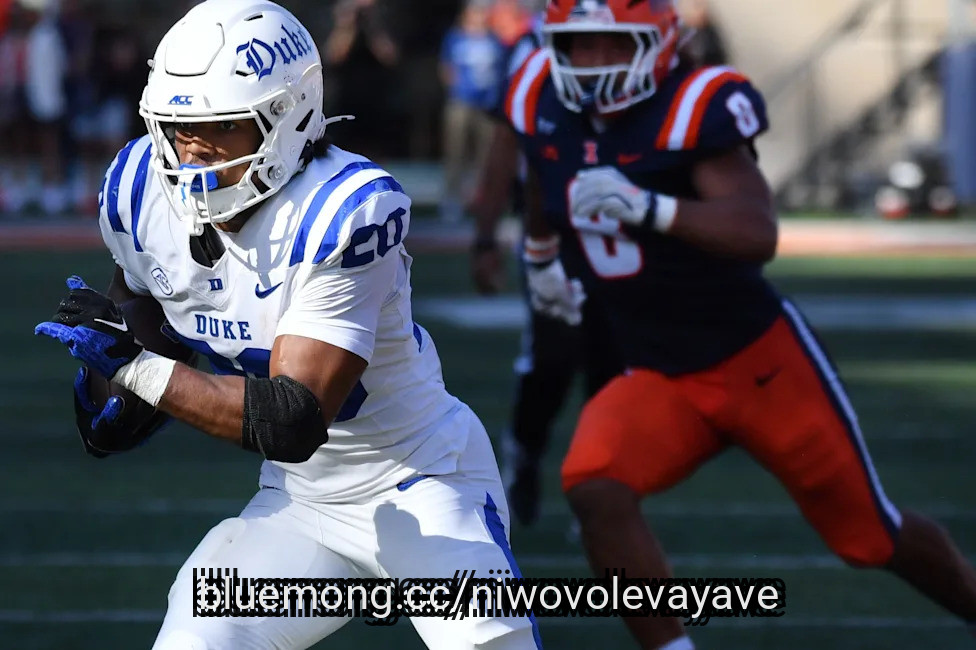
Facing 4th-and-1 with a four-point lead and 1:54 left on the clock, Duke decided to go for the jugular and clinch the game.
The 60,000-plus people in Gies Memorial Stadium knew where the ball was going. Illinois' defense knew who was getting the ball. Duke's offense definitely knew who they trusted.
Nate Sheppard, who had already scored three touchdowns on the day, ran up the middle for two yards, and the Blue Devils were able to run out the clock for a massive 31-27 victory in Champaign against the Fighting Illini.
"I think everybody knew right there where the ball was going," Sheppard said. "I think the whole stadium knew where the ball was going. It was just a matter of could we execute."
It was the 24th carry of Sheppard's day, with the sophomore running for 147 yards and a touchdown while also catching five passes for 41 yards and two scores. Despite the three trips to the end zone, his most impressive run might have been the one that set up his first touchdown of the game: a 19-yard run where he continued to evade would-be tacklers somehow and keep his balance.
#ball #three
The 60,000-plus people in Gies Memorial Stadium knew where the ball was going. Illinois' defense knew who was getting the ball. Duke's offense definitely knew who they trusted.
Nate Sheppard, who had already scored three touchdowns on the day, ran up the middle for two yards, and the Blue Devils were able to run out the clock for a massive 31-27 victory in Champaign against the Fighting Illini.
"I think everybody knew right there where the ball was going," Sheppard said. "I think the whole stadium knew where the ball was going. It was just a matter of could we execute."
It was the 24th carry of Sheppard's day, with the sophomore running for 147 yards and a touchdown while also catching five passes for 41 yards and two scores. Despite the three trips to the end zone, his most impressive run might have been the one that set up his first touchdown of the game: a 19-yard run where he continued to evade would-be tacklers somehow and keep his balance.
#ball #three
3 days ago
Americans ages 65–74 have a median net worth of $410,000, the highest of any age group.
About 76% own a home and 51% have a retirement account, making home equity and savings the biggest drivers of wealth at this stage.
Debt is less common but still present, with roughly 65% carrying some debt and about a third holding a credit card balance.
Americans ages 65–74 are typically in retirement or just a few years removed from full-time work, making this a key moment to ******* s how wealth looks once paychecks have largely stopped. For many households, this stage represents the high-water mark for net worth before savings begin to be drawn down.
According to the Federal Reserve's latest Survey of Consumer Finances, the median net worth for households in this age range is $410,000, the highest of any age group in the U.S.
#americans #highest
About 76% own a home and 51% have a retirement account, making home equity and savings the biggest drivers of wealth at this stage.
Debt is less common but still present, with roughly 65% carrying some debt and about a third holding a credit card balance.
Americans ages 65–74 are typically in retirement or just a few years removed from full-time work, making this a key moment to ******* s how wealth looks once paychecks have largely stopped. For many households, this stage represents the high-water mark for net worth before savings begin to be drawn down.
According to the Federal Reserve's latest Survey of Consumer Finances, the median net worth for households in this age range is $410,000, the highest of any age group in the U.S.
#americans #highest



3 days ago
Lululemon Athletica Inc. (NASDAQ:LULU) recently issued its second guidance cut of the year, and investors responded immediately by sending shares down roughly 18%. That selloff came despite an EPS beat, but the headline result was heavily supported by a tariff refund rather than underlying business strength. Brand sentiment, traffic, and leggings sales are all weakening across the company's two largest markets. The key issue for investors is no longer whether the quarter was weak, but whether the stock's low valuation and new CEO can provide the catalyst for a meaningful recovery.
Lululemon shares dropped 18% after the company lowered its full-year guidance for the second time this year. Revenue is now projected to range from $10.35 billion to $10.5 billion, while EPS guidance was reduced to $9.48 to $9.73. Both represent sharp reductions from its earlier guidance ranges. Second-quarter revenue was particularly weak, falling 4% to $2.4 billion and coming in below consensus estimates, while comparable sales dropped 9%, or 10% on a constant-dollar basis. According to the company, negative commentary had affected traffic in both the U.S. and China, while leggings sales slowed more than expected. Although reported EPS beat estimates, nearly all of that upside came from an $0.86 per share tariff refund. For the third quarter, management expects revenue to decline another 10% to 11%.
Lululemon still has several financial advantages that could support the business through its current slowdown. The company has no outstanding borrowings and maintains $1.4 billion in cash. First-half operating cash flow climbed to $589 million, more than double the prior year. Inventory per unit also declined roughly 7% year over year, reducing the risk of a margin-damaging clearance event. Meanwhile, shares have fallen over 50% year-to-date and now trade at a historically depressed valuation, potentially creating an out-of-favor-setup for investors. At the same time, management continued its buyback program, repurchasing $330 million worth of shares during the quarter.
The weakness in traffic and leggings sales cannot be ignored, and both remain serious concerns. However, the company has a debt-free balance sheet, stronger cash generation, and a valuation that already reflects much of the recent bad news. That gives Lululemon room to prove that its current struggles are mainly execution-related rather than signs of a structural decline.
#year #shares #company
Lululemon shares dropped 18% after the company lowered its full-year guidance for the second time this year. Revenue is now projected to range from $10.35 billion to $10.5 billion, while EPS guidance was reduced to $9.48 to $9.73. Both represent sharp reductions from its earlier guidance ranges. Second-quarter revenue was particularly weak, falling 4% to $2.4 billion and coming in below consensus estimates, while comparable sales dropped 9%, or 10% on a constant-dollar basis. According to the company, negative commentary had affected traffic in both the U.S. and China, while leggings sales slowed more than expected. Although reported EPS beat estimates, nearly all of that upside came from an $0.86 per share tariff refund. For the third quarter, management expects revenue to decline another 10% to 11%.
Lululemon still has several financial advantages that could support the business through its current slowdown. The company has no outstanding borrowings and maintains $1.4 billion in cash. First-half operating cash flow climbed to $589 million, more than double the prior year. Inventory per unit also declined roughly 7% year over year, reducing the risk of a margin-damaging clearance event. Meanwhile, shares have fallen over 50% year-to-date and now trade at a historically depressed valuation, potentially creating an out-of-favor-setup for investors. At the same time, management continued its buyback program, repurchasing $330 million worth of shares during the quarter.
The weakness in traffic and leggings sales cannot be ignored, and both remain serious concerns. However, the company has a debt-free balance sheet, stronger cash generation, and a valuation that already reflects much of the recent bad news. That gives Lululemon room to prove that its current struggles are mainly execution-related rather than signs of a structural decline.
#year #shares #company


3 days ago
A ~$1.7M portfolio split evenly between SCHD and JEPI targets $7,700/month using each fund's forward payout rate.
JEPI's monthly distributions have dropped sharply since 2022 as volatility fell, and recent payouts still vary from $0.34 to $0.45 per share.
Hold JEPI in an IRA and SCHD in a taxable account to maximize after-tax income from this two-fund strategy.
Read More: Learn 7 ways to generate income with a $1,000,000+ portfolio (sponsor)
A portfolio of roughly $1.7 million, split evenly between SCHD and JEPI, targets $7,700 a month in distributions using each fund's current forward payout rate. Two tickers, one brokerage screen, nothing to rebalance beyond keeping the halves even. For a reader who finds a seven-holding portfolio intimidating, that simplicity is genuinely appealing, and it deserves to be said before the caveats begin.
#targets
JEPI's monthly distributions have dropped sharply since 2022 as volatility fell, and recent payouts still vary from $0.34 to $0.45 per share.
Hold JEPI in an IRA and SCHD in a taxable account to maximize after-tax income from this two-fund strategy.
Read More: Learn 7 ways to generate income with a $1,000,000+ portfolio (sponsor)
A portfolio of roughly $1.7 million, split evenly between SCHD and JEPI, targets $7,700 a month in distributions using each fund's current forward payout rate. Two tickers, one brokerage screen, nothing to rebalance beyond keeping the halves even. For a reader who finds a seven-holding portfolio intimidating, that simplicity is genuinely appealing, and it deserves to be said before the caveats begin.
#targets


3 days ago
Investors seeking exposure to artificial intelligence infrastructure must weigh the explosive growth of Astera Labs Inc (NASDAQ:ALAB) against the established scale and diverse portfolio of Marvell Technology Inc(NASDAQ:MRVL) to determine the better buy.
Both companies focus on the plumbing of the digital world, ensuring data moves quickly between processors and memory. While Astera Labs focuses on specialized connectivity for AI racks, Marvell offers a broader range of networking, storage, and custom compute solutions. This comparison explores which strategy offers more potential for long-term investors.
Astera Labs designs connectivity solutions that integrate various protocols to support rack-scale AI infrastructure, a high-growth niche among semiconductor stocks. The company serves major hyperscalers and equipment manufacturers who need to overcome data bottlenecks in massive data centers, though its revenue is highly concentrated. In 2025, one end customer -- Amazon.com Inc (NASDAQ:AMZN) -- accounted for over 70% of revenue, which adds a significant layer of risk to the business model.
According to its latest annual report, filed for the fiscal year ended Dec. 31, 2025, revenue reached close to $853 million, representing a significant jump of 115% compared with the prior fiscal year. This growth trajectory helped the company transition to a net income of just over $219 million after recording losses in the previous two years. The net margin for the latest year was close to 26%.
As of its December 2025 balance sheet, the debt-to-equity ratio was 0.0x, meaning the company carries no debt relative to its shareholder equity, while the so-called current ratio was 10.2x. Free cash flow for the period reached nearly $282 million. Note that stock-based compensation (SBC) represented roughly 50.1% of operating cash flow, which inflates reported cash generation since SBC is a non-cash expense added back in the cash flow statement.
#company #million
Both companies focus on the plumbing of the digital world, ensuring data moves quickly between processors and memory. While Astera Labs focuses on specialized connectivity for AI racks, Marvell offers a broader range of networking, storage, and custom compute solutions. This comparison explores which strategy offers more potential for long-term investors.
Astera Labs designs connectivity solutions that integrate various protocols to support rack-scale AI infrastructure, a high-growth niche among semiconductor stocks. The company serves major hyperscalers and equipment manufacturers who need to overcome data bottlenecks in massive data centers, though its revenue is highly concentrated. In 2025, one end customer -- Amazon.com Inc (NASDAQ:AMZN) -- accounted for over 70% of revenue, which adds a significant layer of risk to the business model.
According to its latest annual report, filed for the fiscal year ended Dec. 31, 2025, revenue reached close to $853 million, representing a significant jump of 115% compared with the prior fiscal year. This growth trajectory helped the company transition to a net income of just over $219 million after recording losses in the previous two years. The net margin for the latest year was close to 26%.
As of its December 2025 balance sheet, the debt-to-equity ratio was 0.0x, meaning the company carries no debt relative to its shareholder equity, while the so-called current ratio was 10.2x. Free cash flow for the period reached nearly $282 million. Note that stock-based compensation (SBC) represented roughly 50.1% of operating cash flow, which inflates reported cash generation since SBC is a non-cash expense added back in the cash flow statement.
#company #million


3 days ago
Two retirees with identical $1.65M portfolios face different tax outcomes based solely on withdrawal order and account placement, not holdings.
Drawing down or converting a traditional IRA to Roth before age 73 shrinks future RMDs and keeps income below IRMAA Medicare surcharge thresholds.
VTEB's tax-exempt municipal interest still counts fully toward IRMAA calculations, making it a hidden Medicare cost trap for retirees.
Read More: Learn 7 ways to generate income with a $1,000,000+ portfolio (sponsor)
Two retirees, same age, same $1.65 million balance, same seven holdings in identical weights. One will pay a Medicare premium surcharge stacked on top of a rising required withdrawal starting at 73. The other will not. Only the order they draw from, and the accounts those draws come from, separates the outcomes.
#medicare #irmaa #holdings
Drawing down or converting a traditional IRA to Roth before age 73 shrinks future RMDs and keeps income below IRMAA Medicare surcharge thresholds.
VTEB's tax-exempt municipal interest still counts fully toward IRMAA calculations, making it a hidden Medicare cost trap for retirees.
Read More: Learn 7 ways to generate income with a $1,000,000+ portfolio (sponsor)
Two retirees, same age, same $1.65 million balance, same seven holdings in identical weights. One will pay a Medicare premium surcharge stacked on top of a rising required withdrawal starting at 73. The other will not. Only the order they draw from, and the accounts those draws come from, separates the outcomes.
#medicare #irmaa #holdings


3 days ago
High-performance computing is currently undergoing a massive generational shift. Deciding between Astera Labs Inc (NASDAQ:ALAB) and Applied Materials Inc (NASDAQ:AMAT) means choosing between a fast-growing connectivity specialist and an established ******* an of manufacturing equipment.
Astera Labs focuses on the internal plumbing of data centers, providing chips that move data between processors. Applied Materials builds the actual machines that make those chips possible. While both benefit from artificial intelligence, they occupy very different rungs on the technology ladder.
Astera Labs sells high-speed connectivity hardware and software designed for AI-heavy data centers. Its primary products include PCIe and Ethernet solutions that help hyperscale cloud providers manage massive data workloads. In its latest annual report, filed for the period ending December 31, 2025, the company noted that one end customer represented more than 70% of its revenue. Customer concentration like this adds a layer of risk to the business.
In FY 2025, revenue reached nearly $853 million, which is an increase of approximately 115% over the prior year. This growth resulted in a net income of roughly $219 million, compared to a net loss in the previous fiscal year. The company recorded a net margin of close to 26% during this period. Such expansion is notable among semiconductor stocks catering to the cloud market.
The company carries no debt, resulting in a debt-to-equity ratio of 0.0x. This metric compares total debt to shareholder equity to show how a firm finances its ******* ets. As of its December 2025 balance sheet, the so-called current ratio was nearly 10.2x, indicating a strong ability to cover short-term debts. Free cash flow was roughly $282 million. Note that stock-based compensation represented just about 50% of operating cash flow, which inflates reported cash generation since SBC is a non-cash expense added back in the cash flow statement.
#million #flow #NASDAQ
Astera Labs focuses on the internal plumbing of data centers, providing chips that move data between processors. Applied Materials builds the actual machines that make those chips possible. While both benefit from artificial intelligence, they occupy very different rungs on the technology ladder.
Astera Labs sells high-speed connectivity hardware and software designed for AI-heavy data centers. Its primary products include PCIe and Ethernet solutions that help hyperscale cloud providers manage massive data workloads. In its latest annual report, filed for the period ending December 31, 2025, the company noted that one end customer represented more than 70% of its revenue. Customer concentration like this adds a layer of risk to the business.
In FY 2025, revenue reached nearly $853 million, which is an increase of approximately 115% over the prior year. This growth resulted in a net income of roughly $219 million, compared to a net loss in the previous fiscal year. The company recorded a net margin of close to 26% during this period. Such expansion is notable among semiconductor stocks catering to the cloud market.
The company carries no debt, resulting in a debt-to-equity ratio of 0.0x. This metric compares total debt to shareholder equity to show how a firm finances its ******* ets. As of its December 2025 balance sheet, the so-called current ratio was nearly 10.2x, indicating a strong ability to cover short-term debts. Free cash flow was roughly $282 million. Note that stock-based compensation represented just about 50% of operating cash flow, which inflates reported cash generation since SBC is a non-cash expense added back in the cash flow statement.
#million #flow #NASDAQ

3 days ago
Greg Abel took over as CEO of Berkshire Hathaway (NYSE: BRKA)(NYSE: BRKB) at the start of 2026. Former CEO Warren Buffett left Abel a huge gift: nearly $400 billion in cash on the company's balance sheet. Abel has put some of that cash to work buying Taylor Morrison Home, and some has been spent on publicly traded stock investments. However, Abel has also decided to buy back Berkshire Hathaway stock. That could be a positive sign. Here's why.
Under Warren Buffett, Berkshire Hathaway didn't make a habit of buying back stock. The world-famous investor preferred to put cash to work by buying shares in other companies or buying companies outright. When he did buy back Berkshire Hathaway stock, it was because he believed the shares were undervalued.
Missed Nvidia in 2009? This Rare Signal Is Flashing Again. In 2009, a "Double Down" signal flashed for a little-known chipmaker called Nvidia. For the first time in years, that same "Total Conviction" signal is flashing for a company 1/100th the size of Nvidia. Continue »
This dynamic is clearly explained in the company's 2025 10k, where the company states: "Berkshire's common stock repurchase program currently permits Berkshire to repurchase shares any time that Berkshire's Chief Executive Officer, after consultation with the Chairman of the Board, believes that the repurchase price is below Berkshire's intrinsic value, conservatively determined." The only limit on repurchase activity is that it can't reduce the company's cash and short-term investment balance below $30 billion.
Some market watchers had hypothesized that Berkshire Hathaway bought as much as $11 billion of its own stock in the second quarter, but the real number turned out to be roughly $4.5 billion. That said, the number was still quite large and, even then, given the huge cash balance the company has, it didn't put the company anywhere near the $30 billion cash limitation.
#Stock
Under Warren Buffett, Berkshire Hathaway didn't make a habit of buying back stock. The world-famous investor preferred to put cash to work by buying shares in other companies or buying companies outright. When he did buy back Berkshire Hathaway stock, it was because he believed the shares were undervalued.
Missed Nvidia in 2009? This Rare Signal Is Flashing Again. In 2009, a "Double Down" signal flashed for a little-known chipmaker called Nvidia. For the first time in years, that same "Total Conviction" signal is flashing for a company 1/100th the size of Nvidia. Continue »
This dynamic is clearly explained in the company's 2025 10k, where the company states: "Berkshire's common stock repurchase program currently permits Berkshire to repurchase shares any time that Berkshire's Chief Executive Officer, after consultation with the Chairman of the Board, believes that the repurchase price is below Berkshire's intrinsic value, conservatively determined." The only limit on repurchase activity is that it can't reduce the company's cash and short-term investment balance below $30 billion.
Some market watchers had hypothesized that Berkshire Hathaway bought as much as $11 billion of its own stock in the second quarter, but the real number turned out to be roughly $4.5 billion. That said, the number was still quite large and, even then, given the huge cash balance the company has, it didn't put the company anywhere near the $30 billion cash limitation.
#Stock


3 days ago
As artificial intelligence matures, investors must decide between the high-growth niche players and the foundational giants. Choosing between Astera Labs Inc (NASDAQ:ALAB) and Taiwan Semiconductor Manufacturing Co (NYSE:TSM) involves weighing explosive potential against established dominance.
Astera Labs provides the critical connectivity infrastructure that allows AI chips to communicate within data centers. Meanwhile, Taiwan Semiconductor Manufacturing operates as the world's largest dedicated chip foundry, producing the actual processors for almost every major tech firm. Both companies are central to the future of semiconductor stocks.
Astera Labs specializes in connectivity solutions designed to remove bottlenecks in high-performance data centers. The company sells hardware and software that helps AI accelerators, such as those made by major chip designers, communicate efficiently across servers. Its customer base is highly concentrated, primarily consisting of the largest cloud providers and system manufacturers. In 2025, one end customer accounted for over 70% of total revenue. Customer concentration like this adds a layer of risk to the business.
In FY 2025, revenue reached more than $852.5 million, representing an impressive increase of roughly 115% compared to the prior year. This rapid growth helped the company pivot from a loss in previous years to a net income of approximately $219 million. The net margin, which measures how much of each dollar of sales remains as profit, stood at nearly 26%. This trajectory highlights the surging demand for the specialized connectivity chips required for large-scale AI deployments.
As of its December 2025 balance sheet, the company reported a debt-to-equity ratio of 0.0x, indicating it holds no debt relative to its shareholder equity. Its so-called current ratio, which compares short-term ******* ets to short-term liabilities, was a robust 10.2x. Free cash flow, or the cash left over after paying for operations and equipment, was approximately $282 million. Note that stock-based compensation represented roughly 50% of operating cash flow, which inflates reported cash generation since this is a non-cash expense added back in the cash flow statement.
#company
Astera Labs provides the critical connectivity infrastructure that allows AI chips to communicate within data centers. Meanwhile, Taiwan Semiconductor Manufacturing operates as the world's largest dedicated chip foundry, producing the actual processors for almost every major tech firm. Both companies are central to the future of semiconductor stocks.
Astera Labs specializes in connectivity solutions designed to remove bottlenecks in high-performance data centers. The company sells hardware and software that helps AI accelerators, such as those made by major chip designers, communicate efficiently across servers. Its customer base is highly concentrated, primarily consisting of the largest cloud providers and system manufacturers. In 2025, one end customer accounted for over 70% of total revenue. Customer concentration like this adds a layer of risk to the business.
In FY 2025, revenue reached more than $852.5 million, representing an impressive increase of roughly 115% compared to the prior year. This rapid growth helped the company pivot from a loss in previous years to a net income of approximately $219 million. The net margin, which measures how much of each dollar of sales remains as profit, stood at nearly 26%. This trajectory highlights the surging demand for the specialized connectivity chips required for large-scale AI deployments.
As of its December 2025 balance sheet, the company reported a debt-to-equity ratio of 0.0x, indicating it holds no debt relative to its shareholder equity. Its so-called current ratio, which compares short-term ******* ets to short-term liabilities, was a robust 10.2x. Free cash flow, or the cash left over after paying for operations and equipment, was approximately $282 million. Note that stock-based compensation represented roughly 50% of operating cash flow, which inflates reported cash generation since this is a non-cash expense added back in the cash flow statement.
#company


3 days ago
Mizzou volleyball found its rhythm early and never let it go Saturday, sweeping Wichita State 25-19, 25-13, 25-18 to close out another dominant performance at the Mizzou Tournament.
The Tigers controlled the match with a balanced offensive attack and stingy defense, finishing with a .347 hitting percentage while holding Wichita State to .177. Mizzou used contributions throughout its lineup, with Grace O'Reilly, Kimani Johnson and the Tigers' middle blockers helping fuel the three-set victory.
"Always great to play at Hearnes," Mizzou coach Dawn Sullivan said. "I thought it was a team kind of game tonight, and it was really fun to, one, just kind of see them find their rhythm out there."
Johnson set the tone in the opening set, recording five kills on six attempts as Mizzou pulled away for a 25-19 win. After Wichita State cut the Tigers' lead to 12-11, Mizzou responded with a block from Ceylin Kuyan and Lauren Larkin before gradually rebuilding its advantage.
Paige Felder sealed the first set with a kill, giving the Tigers an early 1-0 match lead.
#tigers
The Tigers controlled the match with a balanced offensive attack and stingy defense, finishing with a .347 hitting percentage while holding Wichita State to .177. Mizzou used contributions throughout its lineup, with Grace O'Reilly, Kimani Johnson and the Tigers' middle blockers helping fuel the three-set victory.
"Always great to play at Hearnes," Mizzou coach Dawn Sullivan said. "I thought it was a team kind of game tonight, and it was really fun to, one, just kind of see them find their rhythm out there."
Johnson set the tone in the opening set, recording five kills on six attempts as Mizzou pulled away for a 25-19 win. After Wichita State cut the Tigers' lead to 12-11, Mizzou responded with a block from Ceylin Kuyan and Lauren Larkin before gradually rebuilding its advantage.
Paige Felder sealed the first set with a kill, giving the Tigers an early 1-0 match lead.
#tigers


3 days ago
Some offers on this page are from advertisers who pay us, which may affect which products we write about, but not our recommendations. See our Advertiser Disclosure.
Debt consolidation combines multiple debts into one loan, usually at a lower interest rate, and you repay the full balance. Debt settlement involves negotiating with creditors to pay less than you owe, but it damages your credit and isn't guaranteed to work.
Understanding how both options work can help you determine which would better fit your financial situation.
Debt consolidation involves replacing your current debts with a new loan or line of credit, ideally with a better interest rate. If you consolidate multiple debts, you can also simplify repayment into a single monthly payment.
There are multiple ways to consolidate debt, including:
#interest
Debt consolidation combines multiple debts into one loan, usually at a lower interest rate, and you repay the full balance. Debt settlement involves negotiating with creditors to pay less than you owe, but it damages your credit and isn't guaranteed to work.
Understanding how both options work can help you determine which would better fit your financial situation.
Debt consolidation involves replacing your current debts with a new loan or line of credit, ideally with a better interest rate. If you consolidate multiple debts, you can also simplify repayment into a single monthly payment.
There are multiple ways to consolidate debt, including:
#interest


3 days ago
On September 10, Piper Sandler **** yst Bill Carcache initiated coverage of Q2 Holdings, Inc. (NYSE:QTWO), giving the stock an Overweight rating and setting the price target at $82.
The research firm started coverage on companies in the payments and consumer finance group and named Q2 Holdings, Inc. (NYSE:QTWO) as its preferred name in the sector.
According to Piper Sandler, the company offers the "clearest combination" of subscription revenue growth, visibility into annual recurring revenue, and improving free cash flow conversion. The firm also highlighted the company's growing margins and debt-free balance sheet. Piper Sandler said these factors support what it sees as the clearest path toward durable growth among the payments and consumer finance group.
Q2 Holdings, Inc. (NYSE:QTWO) delivered strong financial performance in Q2 2026. The company reported revenue of $219.8 million, an increase of 13% year-over-year and 2% sequentially. GAAP gross margin improved to 59.2% from 53.6% in the prior-year quarter, while GAAP net income rose to $29.9 million from $11.8 million.
Adjusted EBITDA reached a record $62.8 million, up 37% year-over-year. The company said it delivered another quarter of consistent execution, with strong bookings across its solutions.
#year #NYSE #revenue
The research firm started coverage on companies in the payments and consumer finance group and named Q2 Holdings, Inc. (NYSE:QTWO) as its preferred name in the sector.
According to Piper Sandler, the company offers the "clearest combination" of subscription revenue growth, visibility into annual recurring revenue, and improving free cash flow conversion. The firm also highlighted the company's growing margins and debt-free balance sheet. Piper Sandler said these factors support what it sees as the clearest path toward durable growth among the payments and consumer finance group.
Q2 Holdings, Inc. (NYSE:QTWO) delivered strong financial performance in Q2 2026. The company reported revenue of $219.8 million, an increase of 13% year-over-year and 2% sequentially. GAAP gross margin improved to 59.2% from 53.6% in the prior-year quarter, while GAAP net income rose to $29.9 million from $11.8 million.
Adjusted EBITDA reached a record $62.8 million, up 37% year-over-year. The company said it delivered another quarter of consistent execution, with strong bookings across its solutions.
#year #NYSE #revenue


3 days ago
U.S. Bancorp (NYSE:USB) has raised its quarterly dividend by 3.8% to $0.54 per share. That brings the annualized payout at $2.16 and the yield at 3.5%.
For income-focused investors, the increase adds to the bank's appeal. But the more important point is what supports the higher payout.
U.S. Bancorp enters the second half of 2026 on firm footing. The bank's latest results show accelerating earnings, strong loan growth, and a solid capital position.
U.S. Bancorp (NYSE:USB)'s revenue increased 10% YoY in Q2 to a record $7.7 billion. Net interest margin jumped to 2.79%, up from 2.66% a year ago. That helped push the net income attributable to the bank up 20% to $2.18 billion. Diluted EPS rose 21.6% to $1.35.
The bank's balance sheet also continued to expand. Average loans increased 7.1% to $405.5 billion, supported by strong commercial, commercial real estate and credit card lending activity. Average deposits increased 2.4% to $515.1 billion, providing low-cost funding for the loan growth.
#Growth
For income-focused investors, the increase adds to the bank's appeal. But the more important point is what supports the higher payout.
U.S. Bancorp enters the second half of 2026 on firm footing. The bank's latest results show accelerating earnings, strong loan growth, and a solid capital position.
U.S. Bancorp (NYSE:USB)'s revenue increased 10% YoY in Q2 to a record $7.7 billion. Net interest margin jumped to 2.79%, up from 2.66% a year ago. That helped push the net income attributable to the bank up 20% to $2.18 billion. Diluted EPS rose 21.6% to $1.35.
The bank's balance sheet also continued to expand. Average loans increased 7.1% to $405.5 billion, supported by strong commercial, commercial real estate and credit card lending activity. Average deposits increased 2.4% to $515.1 billion, providing low-cost funding for the loan growth.
#Growth


4 days ago
If part of the challenge for Andoni Iraola when he took the Liverpool job was mastering the art of winning Premier League games after midweek Champions League dates, he failed his first test. An Anfield afternoon against a side with the wrong sort of 100 percent record ought to have been the ideal introduction to such ******* ignments.
Instead, Fulham got their first point of the season. A Spanish manager with a playing career at right-back had much to savour; but it was Alvaro Arbeloa, not Iraola. A terrific defender under Rafa Benitez, Arbeloa contributed to many a clean sheet in his time at Liverpool. Now Fulham have a first in the Premier League in his reign. Having conceded three goals to left wing-backs against Crystal Palace last week, they conceded none to Liverpool's three £100m men.
Alvaro Arbeloa could celebrate a first point in the Premier League with Fulham (Getty)
"Happy with the point and more happy with the performance," said Arbeloa. "We were more balanced today. We defended so well." He had made the bold decision to give the Austrian centre-back David Affengruber a debut at Anfield. "He proved how good he is," Arbeloa said.
But Iraola's side delivered a disjointed display, failing to touch the heights they reached in their comeback against Atletico Madrid and failing to score for the first time under him. "What was lacking was quite clear. It is the first game we had problems to create chances and score goals," he admitted.
#first #league #point #alvaro
Instead, Fulham got their first point of the season. A Spanish manager with a playing career at right-back had much to savour; but it was Alvaro Arbeloa, not Iraola. A terrific defender under Rafa Benitez, Arbeloa contributed to many a clean sheet in his time at Liverpool. Now Fulham have a first in the Premier League in his reign. Having conceded three goals to left wing-backs against Crystal Palace last week, they conceded none to Liverpool's three £100m men.
Alvaro Arbeloa could celebrate a first point in the Premier League with Fulham (Getty)
"Happy with the point and more happy with the performance," said Arbeloa. "We were more balanced today. We defended so well." He had made the bold decision to give the Austrian centre-back David Affengruber a debut at Anfield. "He proved how good he is," Arbeloa said.
But Iraola's side delivered a disjointed display, failing to touch the heights they reached in their comeback against Atletico Madrid and failing to score for the first time under him. "What was lacking was quite clear. It is the first game we had problems to create chances and score goals," he admitted.
#first #league #point #alvaro