

44 mins. ago
India's refineries have been running at 105% to 108% capacity utilization in the past six months as demand for diesel soars and international fuel markets tighten amid the ongoing Middle East crisis.
Refinery capacity utilization in the world's third-largest crude oil importer has been between 105% and 108% since the war began, a senior executive at Mangalore Refinery and Petrochemicals Limited (MRPL) said at the APPEC petroleum conference in Singapore on Wednesday.
"Most of our refiners are complex, can take a wide variety of crude from an API range of something like 16 to 45 or 48," Nandakumar Pillai, a company director at MRPL, said at the event, as carried by Reuters.
MRPL operates a refinery with the capacity to process 300,000 barrels per day (bpd) on the coast of India's southern state of Karnataka. The refinery has a versatile design with complex secondary processing units and high flexibility to process crudes of various API, delivering a variety of quality products, the refiner says.
MRPL will continue to run its refinery at above 100% until March 2027, Pillai told Reuters on the sidelines of the conference.
#mrpl #utilization #crude
Refinery capacity utilization in the world's third-largest crude oil importer has been between 105% and 108% since the war began, a senior executive at Mangalore Refinery and Petrochemicals Limited (MRPL) said at the APPEC petroleum conference in Singapore on Wednesday.
"Most of our refiners are complex, can take a wide variety of crude from an API range of something like 16 to 45 or 48," Nandakumar Pillai, a company director at MRPL, said at the event, as carried by Reuters.
MRPL operates a refinery with the capacity to process 300,000 barrels per day (bpd) on the coast of India's southern state of Karnataka. The refinery has a versatile design with complex secondary processing units and high flexibility to process crudes of various API, delivering a variety of quality products, the refiner says.
MRPL will continue to run its refinery at above 100% until March 2027, Pillai told Reuters on the sidelines of the conference.
#mrpl #utilization #crude

0.00$ raised of 0.00$ goal
0 donations
0.00$
to go

3 hours ago
Our ****** ysts just identified a stock with the potential to be the next Nvidia. Tell us how you invest and we'll show you why it's our #1 pick. Tap here.
Record quarterly revenue of $87.1 million was driven by vigorous fleet expansion and strong market rates across both tanker and dry bulk segments.
Net income for the first half of 2026 reached $62.8 million, already exceeding the total profitability for the full year of 2025.
Operational utilization decreased to 73.5% due to a strategic decision to manage a concentrated schedule of six dry dockings to ensure future efficiency.
Suezmax rates surged in excess of $200 thousand a day following the end of the ceasefire period and Houthi-led trade disruptions in the Red Sea.
#houthi #analysts
Record quarterly revenue of $87.1 million was driven by vigorous fleet expansion and strong market rates across both tanker and dry bulk segments.
Net income for the first half of 2026 reached $62.8 million, already exceeding the total profitability for the full year of 2025.
Operational utilization decreased to 73.5% due to a strategic decision to manage a concentrated schedule of six dry dockings to ensure future efficiency.
Suezmax rates surged in excess of $200 thousand a day following the end of the ceasefire period and Houthi-led trade disruptions in the Red Sea.
#houthi #analysts
0.00$ raised of 0.00$ goal
0 donations
0.00$
to go

2 days ago
Moerus Capital Management LLC, an investment management firm, recently released its "Worldwide Fund " second-quarter 2026 investor letter. A copy of the letter can be downloaded here. The fund navigated a highly bifurcated investment environment in the second quarter of 2026, as investor enthusiasm for artificial intelligence and technology drove a sharp rally in growth stocks while capital moved away from more traditional, value-oriented areas. The Fund's Institutional Class returned 0.14% in Q2, compared with 14.49% for the MSCI ACWI ex USA and 14.93% for the MSCI ACWI, while its first-half return stood at 5.37%, versus 13.69% and 11.25%, respectively, for the two benchmarks. The relative underperformance was primarily driven by the Fund's limited exposure to Information Technology as semiconductor and AI-related stocks surged, while its Energy holdings also gave back some earlier gains as oil prices declined; however, the Fund benefited from several energy-related investments during the first half. Looking ahead, Moerus views the extreme gap between expensive AI-focused areas and neglected parts of the market as an opportunity, maintaining its long-term deep-value approach of investing in unpopular businesses and ****** ets at significant discounts to intrinsic value and using market volatility to identify potentially attractive investments. In addition, please check the Fund's top five holdings to know its best picks in 2026.
In its second-quarter 2026 investor letter, Moerus Worldwide Fund highlighted stocks like Tidewater Inc. (NYSE:TDW). Tidewater Inc. is an offshore supply vessel operator that provides support services to the offshore energy industry. Moerus identified Tidewater as one of the Fund's five most significant positive contributors during the first half of 2026. The one-month return of Tidewater Inc. (NYSE:TDW) was 3.68% while its shares traded between $46.65 and $101.58 over the last 52 weeks. On September 7, 2026, Tidewater Inc. (NYSE:TDW) stock closed at approximately $94.26 per share, with a market capitalization of about $4.61 billion.
Moerus Worldwide Fund stated the following regarding Tidewater Inc. (NYSE:TDW) in its Q2 2026 investor letter:
"Similarly, we'd argue that offshore supply vessel (OSV) operator Tidewater Inc. (NYSE:TDW) has grown the per share value of its business dramatically since 2018 through a combination of a relentless focus on costs, share repurchases, and most notably, the utilization of its OSV industry-leading balance sheet to make three acquisitions of ****** ets (with a fourth pending) from distressed and/or motivated sellers at deep discounts to replacement costs during a years-long industry depression."
#tidewater #fund #energy #second
In its second-quarter 2026 investor letter, Moerus Worldwide Fund highlighted stocks like Tidewater Inc. (NYSE:TDW). Tidewater Inc. is an offshore supply vessel operator that provides support services to the offshore energy industry. Moerus identified Tidewater as one of the Fund's five most significant positive contributors during the first half of 2026. The one-month return of Tidewater Inc. (NYSE:TDW) was 3.68% while its shares traded between $46.65 and $101.58 over the last 52 weeks. On September 7, 2026, Tidewater Inc. (NYSE:TDW) stock closed at approximately $94.26 per share, with a market capitalization of about $4.61 billion.
Moerus Worldwide Fund stated the following regarding Tidewater Inc. (NYSE:TDW) in its Q2 2026 investor letter:
"Similarly, we'd argue that offshore supply vessel (OSV) operator Tidewater Inc. (NYSE:TDW) has grown the per share value of its business dramatically since 2018 through a combination of a relentless focus on costs, share repurchases, and most notably, the utilization of its OSV industry-leading balance sheet to make three acquisitions of ****** ets (with a fourth pending) from distressed and/or motivated sellers at deep discounts to replacement costs during a years-long industry depression."
#tidewater #fund #energy #second


3 days ago
Hewlett Packard Enterprise said on September 2 that Oracle may deploy its Juniper networking equipment across Oracle Cloud Infrastructure data centers under a multi-year collaboration. The potential footprint includes PTX and MX routing plus QFX and EX switching, along with support and financing. Hewlett Packard Enterprise Company (NYSE:HPE) also issued warrants to Oracle Corporation (NYSE:ORCL), making the arrangement strategically important without turning every possible deployment into booked revenue.
For HPE, the bull case is that AI clusters are becoming networking systems, not merely collections of GPUs. Training at enormous scale requires fast links inside a data center and between facilities. Juniper gives HPE credible routing and switching ******* ets, while Oracle supplies a demanding reference customer. Insider Monkey counted 85 hedge funds holding HPE at June 30, up from 58 at March 31. Elliott Management held 32,271,985 shares after increasing its disclosed position by 18% during the quarter.
The bear case is conversion. The release describes potential deployments and several product families but discloses neither guaranteed purchase volume nor revenue. Warrants can align the customer while diluting existing owners if exercised. HPE also must integrate Juniper, defend margins, and compete with entrenched networking vendors while customers bargain aggressively over large orders.
Oracle's advantage is supply-chain flexibility. Adding HPE gives OCI another route to build high-bandwidth infrastructure as AI demand strains capacity. Oracle can combine cloud contracts, database relationships, and financing to pull customers onto its infrastructure. Hedge-fund participation remained broad: 119 funds held Oracle Corporation (NYSE:ORCL) in Q2, up from 115 in Q1. Fisher ******* et Management reported 13,261,451 shares, 39% more than in the previous filing.
Oracle still carries the heavier capital burden. Data centers require chips, land, power, and debt-funded construction before contracted demand becomes cash. A networking partnership improves execution options but does not protect returns if utilization or pricing disappoints.
#oracle #Networking #NYSE #enterprise
For HPE, the bull case is that AI clusters are becoming networking systems, not merely collections of GPUs. Training at enormous scale requires fast links inside a data center and between facilities. Juniper gives HPE credible routing and switching ******* ets, while Oracle supplies a demanding reference customer. Insider Monkey counted 85 hedge funds holding HPE at June 30, up from 58 at March 31. Elliott Management held 32,271,985 shares after increasing its disclosed position by 18% during the quarter.
The bear case is conversion. The release describes potential deployments and several product families but discloses neither guaranteed purchase volume nor revenue. Warrants can align the customer while diluting existing owners if exercised. HPE also must integrate Juniper, defend margins, and compete with entrenched networking vendors while customers bargain aggressively over large orders.
Oracle's advantage is supply-chain flexibility. Adding HPE gives OCI another route to build high-bandwidth infrastructure as AI demand strains capacity. Oracle can combine cloud contracts, database relationships, and financing to pull customers onto its infrastructure. Hedge-fund participation remained broad: 119 funds held Oracle Corporation (NYSE:ORCL) in Q2, up from 115 in Q1. Fisher ******* et Management reported 13,261,451 shares, 39% more than in the previous filing.
Oracle still carries the heavier capital burden. Data centers require chips, land, power, and debt-funded construction before contracted demand becomes cash. A networking partnership improves execution options but does not protect returns if utilization or pricing disappoints.
#oracle #Networking #NYSE #enterprise

5 days ago
On August 4, Archrock (NYSE:AROC) posted second-quarter results that told two different stories at once. Revenue slipped to $371.2 million from $383.2 million a year earlier, yet net income climbed to $66.7 million, and earnings per share rose to $0.38. That gap between a shrinking top line and a growing bottom line is the puzzle this quarter leaves investors to sort out.
The clearest bull signal came from a new long-term agreement with an existing strategic customer covering roughly 665,000 horsepower, structured with an eight-year base term and a two-year extension option. That kind of commitment locks in cash flow well into the next decade and reinforces management's multi-year growth capital expenditure guidance of $1.4 billion to $1.6 billion **** ulatively from 2027 through 2030. The core contract operations segment backed that confidence with real numbers. Revenue there rose 3% to $329.3 million, and adjusted gross margin improved to 71% from 70%, with period-end utilization at 94.4%.
The balance sheet also moved in the right direction. Archrock's leverage ratio fell to 2.6x as of June 30, down from 3.3x a year earlier, even after the company redeemed its entire $800 million of 6.250% senior notes due 2028 on April 1. The board kept rewarding shareholders through it all, declaring a quarterly dividend of $0.23 per share, about 10% higher than a year ago, marking the fifth increase in two years, with coverage still comfortable at 3.1x.
The softer parts of this quarter center on aftermarket services and forward guidance. That segment's revenue fell to $42.0 million from $64.8 million, as last year's non-recurring sales of overhauled engines did not repeat and maintenance demand skipped its usual mid-year seasonal **** p. Total operating horsepower also declined to 4.5 million from 4.7 million, partly from the sale of about 165,000 non-strategic units.
On the guidance front, Archrock tightened its full-year adjusted EBITDA range to $865 million to $885 million, down from a prior range of $865 million to $915 million, pointing to lube oil cost pressure, higher make-ready spending to reactivate idle equipment, and increased SG&A tied to stock-based incentive compensation. Adjusted net income actually dipped to $66.5 million and adjusted EPS to $0.38, both slightly below last year's $68.4 million and $0.39. Long-term debt still sits at $2.3 billion, and Archrock did not repurchase any shares during the quarter, leaving $113.2 million of buyback capacity untouched.
#million
The clearest bull signal came from a new long-term agreement with an existing strategic customer covering roughly 665,000 horsepower, structured with an eight-year base term and a two-year extension option. That kind of commitment locks in cash flow well into the next decade and reinforces management's multi-year growth capital expenditure guidance of $1.4 billion to $1.6 billion **** ulatively from 2027 through 2030. The core contract operations segment backed that confidence with real numbers. Revenue there rose 3% to $329.3 million, and adjusted gross margin improved to 71% from 70%, with period-end utilization at 94.4%.
The balance sheet also moved in the right direction. Archrock's leverage ratio fell to 2.6x as of June 30, down from 3.3x a year earlier, even after the company redeemed its entire $800 million of 6.250% senior notes due 2028 on April 1. The board kept rewarding shareholders through it all, declaring a quarterly dividend of $0.23 per share, about 10% higher than a year ago, marking the fifth increase in two years, with coverage still comfortable at 3.1x.
The softer parts of this quarter center on aftermarket services and forward guidance. That segment's revenue fell to $42.0 million from $64.8 million, as last year's non-recurring sales of overhauled engines did not repeat and maintenance demand skipped its usual mid-year seasonal **** p. Total operating horsepower also declined to 4.5 million from 4.7 million, partly from the sale of about 165,000 non-strategic units.
On the guidance front, Archrock tightened its full-year adjusted EBITDA range to $865 million to $885 million, down from a prior range of $865 million to $915 million, pointing to lube oil cost pressure, higher make-ready spending to reactivate idle equipment, and increased SG&A tied to stock-based incentive compensation. Adjusted net income actually dipped to $66.5 million and adjusted EPS to $0.38, both slightly below last year's $68.4 million and $0.39. Long-term debt still sits at $2.3 billion, and Archrock did not repurchase any shares during the quarter, leaving $113.2 million of buyback capacity untouched.
#million


6 days ago
Billionaire Stanley Druckenmiller made two very different-looking AI purchases in the second quarter that share one underlying thesis. Duquesne Family Office increased its Amazon.com, Inc. (NASDAQ:AMZN) position by 1,083% to 541,600 shares and opened a 72,900-share stake in Advanced Micro Devices, Inc. (NASDAQ:AMD). One company rents computing capacity through AWS; the other supplies accelerators and server processors. Together, the positions give Duquesne exposure to an AI infrastructure platform and a credible alternative chip supplier, although the filing does not disclose Druckenmiller's rationale.
Amazon.com, Inc. (NASDAQ:AMZN) offers the demand platform. AWS revenue grew 36.7% in the second quarter, while Amazon's capital-spending trajectory approached roughly $220 billion. The bull case is that its cloud customer relationships, custom silicon, and enormous infrastructure base let it capture AI usage across models and chips. The bear case is that depreciation, power, and construction costs arrive before utilization. Even strong cloud growth must eventually produce returns on a spending program larger than many national economies.
Advanced Micro Devices, Inc. (NASDAQ:AMD) offers more direct operating leverage. Its data-center revenue more than doubled, and customers want an alternative to Nvidia for accelerators and CPUs. If AMD's software improves and hyperscalers deploy Instinct at scale, revenue can grow faster than the broader infrastructure market. Yet it must compete against an entrenched platform while also funding an aggressive roadmap. A second-source narrative is valuable, but only sustained deployments turn it into durable margins.
The common exposure works because Amazon can profit from rising AI consumption regardless of which merchant chip gains share, while AMD can benefit if that consumption creates room for multiple suppliers. The risks also interact. Amazon's own chips could limit AMD's opportunity, and slower cloud utilization would pressure both the buyer of infrastructure and the seller of processors. Both positions could benefit if the market grows faster than those internal conflicts.
Hedge funds moved in the same direction. Amazon ownership rose to 369 funds in the second quarter from 353, while AMD ownership jumped to 164 from 134. Arrowstreet Capital increased its Amazon position 24% to 40.3 million shares, and Marshall Wace raised its AMD common-share stake 3% to 3.9 million shares. As of August 14, 40.1 million AMD shares were sold short, equal to 2.47% of the float and 1.5 days of trading volume. The modest short-interest snapshot shows limited reported short positioning in AMD; it does not resolve whether AMD can capture enough of the spending Amazon is helping unleash.
#amazon #shares
Amazon.com, Inc. (NASDAQ:AMZN) offers the demand platform. AWS revenue grew 36.7% in the second quarter, while Amazon's capital-spending trajectory approached roughly $220 billion. The bull case is that its cloud customer relationships, custom silicon, and enormous infrastructure base let it capture AI usage across models and chips. The bear case is that depreciation, power, and construction costs arrive before utilization. Even strong cloud growth must eventually produce returns on a spending program larger than many national economies.
Advanced Micro Devices, Inc. (NASDAQ:AMD) offers more direct operating leverage. Its data-center revenue more than doubled, and customers want an alternative to Nvidia for accelerators and CPUs. If AMD's software improves and hyperscalers deploy Instinct at scale, revenue can grow faster than the broader infrastructure market. Yet it must compete against an entrenched platform while also funding an aggressive roadmap. A second-source narrative is valuable, but only sustained deployments turn it into durable margins.
The common exposure works because Amazon can profit from rising AI consumption regardless of which merchant chip gains share, while AMD can benefit if that consumption creates room for multiple suppliers. The risks also interact. Amazon's own chips could limit AMD's opportunity, and slower cloud utilization would pressure both the buyer of infrastructure and the seller of processors. Both positions could benefit if the market grows faster than those internal conflicts.
Hedge funds moved in the same direction. Amazon ownership rose to 369 funds in the second quarter from 353, while AMD ownership jumped to 164 from 134. Arrowstreet Capital increased its Amazon position 24% to 40.3 million shares, and Marshall Wace raised its AMD common-share stake 3% to 3.9 million shares. As of August 14, 40.1 million AMD shares were sold short, equal to 2.47% of the float and 1.5 days of trading volume. The modest short-interest snapshot shows limited reported short positioning in AMD; it does not resolve whether AMD can capture enough of the spending Amazon is helping unleash.
#amazon #shares

7 days ago
Personal loans are dangerously easy to get. You can have cash in your account the same day you apply — no collateral, minimal friction, maximum temptation. And that's exactly the problem. Just because you can borrow doesn't mean you should. The difference between a smart financial move and a debt spiral often comes down to one thing: understanding why you're borrowing in the first place.
Personal loans aren't inherently good or bad. They're a tool. And like any tool, they can either solve your problem or make it worse. Below, we break down the situations where borrowing actually makes sense and the ones where walking away is the smarter play.
Personal loans hover around 12% APR for borrowers with solid credit. Credit cards? Try 20%. If you're juggling multiple cards with balances, rolling that debt into a single personal loan can save you serious money on interest. Plus, you get one predictable payment instead of the payment shuffle.
But the catch is that you actually have to stop using your credit cards. Too many people consolidate their debt, feel relieved and then rack up new balances within a year. Now they've got two problems instead of one. So, before you borrow, compare rates, map out your payoff timeline and be honest about your spending habits. If you know you'll just max out those cards again, a personal loan won't save you. It'll only bury you deeper.
Your credit utilization ratio — basically, how much of your available credit you're actually using — accounts for 30% of your FICO credit score. Since personal loans are installment debt, they don't count toward that ratio the way credit cards do.
#debt #borrow #down
Personal loans aren't inherently good or bad. They're a tool. And like any tool, they can either solve your problem or make it worse. Below, we break down the situations where borrowing actually makes sense and the ones where walking away is the smarter play.
Personal loans hover around 12% APR for borrowers with solid credit. Credit cards? Try 20%. If you're juggling multiple cards with balances, rolling that debt into a single personal loan can save you serious money on interest. Plus, you get one predictable payment instead of the payment shuffle.
But the catch is that you actually have to stop using your credit cards. Too many people consolidate their debt, feel relieved and then rack up new balances within a year. Now they've got two problems instead of one. So, before you borrow, compare rates, map out your payoff timeline and be honest about your spending habits. If you know you'll just max out those cards again, a personal loan won't save you. It'll only bury you deeper.
Your credit utilization ratio — basically, how much of your available credit you're actually using — accounts for 30% of your FICO credit score. Since personal loans are installment debt, they don't count toward that ratio the way credit cards do.
#debt #borrow #down


7 days ago
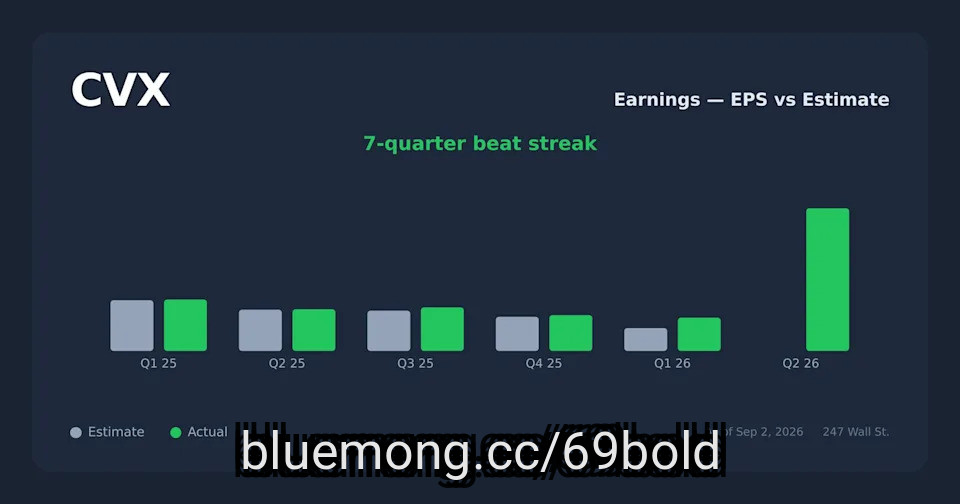
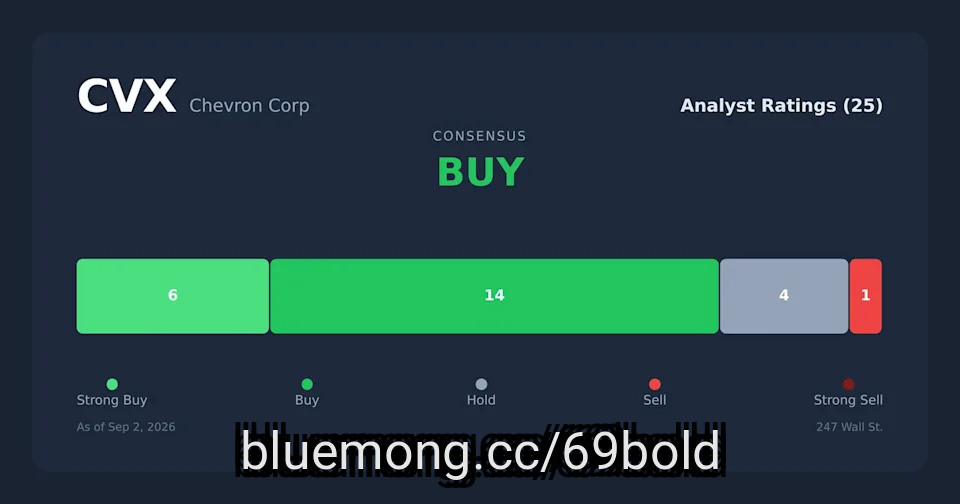
Cramer called CVX a steal above $200 after Chevron's downstream earnings surged from $737 million to $4.87 billion year over year.
Chevron's P/E of 34 runs richer than Exxon's 23, while ConocoPhillips offers more crude upside, up 49% year to date.
A 20-year Microsoft power deal and Hess synergies running 50% above target give Chevron cash flows insulated from crude swings.
Just released. Our ***** ysts combed the entire stock market and named the ten best stocks to buy right now. The report is free. Enter your email and see if any of your stocks made the cut.
Jim Cramer opened Squawk on the Street on the first trading day of September with a market backdrop he described in blunt terms. Two ships had been fired on in the Strait of Hormuz, Treasury yields were pushing higher across the curve, and diesel prices were climbing amid a supply picture already strained by Ukrainian strikes on Russian refining capacity and U.S. refiners operating near full utilization. Cramer called the combination "unholy" and said the AI trade had gone nowhere for about a year. Then he offered a single actionable idea.
#above
Chevron's P/E of 34 runs richer than Exxon's 23, while ConocoPhillips offers more crude upside, up 49% year to date.
A 20-year Microsoft power deal and Hess synergies running 50% above target give Chevron cash flows insulated from crude swings.
Just released. Our ***** ysts combed the entire stock market and named the ten best stocks to buy right now. The report is free. Enter your email and see if any of your stocks made the cut.
Jim Cramer opened Squawk on the Street on the first trading day of September with a market backdrop he described in blunt terms. Two ships had been fired on in the Strait of Hormuz, Treasury yields were pushing higher across the curve, and diesel prices were climbing amid a supply picture already strained by Ukrainian strikes on Russian refining capacity and U.S. refiners operating near full utilization. Cramer called the combination "unholy" and said the AI trade had gone nowhere for about a year. Then he offered a single actionable idea.
#above


7 days ago
Sands Capital, an investment management company, released its "Sands Capital Select Growth Fund" Q2 2026 investor letter. The letter can be downloaded here. Select Growth Fund targets U.S. businesses driving significant structural change through disruptive innovation. The fund returned 23.2% in the quarter, outperforming the Russell 1000 Growth Index's 16.7%. U.S. large-cap growth equities rebounded sharply, driven by improving corporate fundamentals and renewed investor confidence in AI, despite geopolitical uncertainties. However, the market's gains were narrow, concentrated among AI beneficiaries. The portfolio's success stemmed from strength in AI infrastructure holdings, especially memory and storage, supported by better pricing and tightening supply. As AI development advances, continuous demand for compute capacity is expected, prompting investments in memory, CPUs, AI chips, and semiconductor manufacturing to address emerging bottlenecks essential for scaling AI. Also, check the fund's top five holdings to see its best picks in 2026.
In its second-quarter 2026 investor letter, Sands Capital Select Growth Fund highlighted Sphere Entertainment Co. (NYSE:SPHR). Sphere Entertainment Co. (NYSE:SPHR) is a US-based live entertainment and media company. On September 1, 2026, Sphere Entertainment Co. (NYSE:SPHR) closed at $133.30 per share, reflecting a market capitalization of $4.79 billion. Sphere Entertainment Co. (NYSE:SPHR) posted a one-month return of -17.02%, while its shares gained 175.53% over the past 52 weeks.
Sands Capital Select Growth Fund stated the following regarding Sphere Entertainment Co. (NYSE:SPHR) in its Q2 2026 investor letter:
"Sphere Entertainment Co. (NYSE:SPHR) and ****** e Exploration Technologies (SpaceX) were added as more idiosyncratic growth opportunities. Sphere is creating a new category of immersive live entertainment, where we believe premium in-person experiences may become more valuable as digital content becomes increasingly abundant. Its Las Vegas venue combines live events, original content, and proprietary technology, creating the potential for high utilization and attractive venue-level economics. Over time, the investment case depends on Sphere's ability to scale beyond Las Vegas through additional venues, licensing, and high-margin content monetization."
Sphere Entertainment Co. (NYSE:SPHR) is not on our list of the 40 Most Popular Stocks Among Hedge Funds. As per our database, 1 hedge fund portfolios held Sphere Entertainment Co. (NYSE:SPHR) at the end of the second quarter, which was 2 in the previous quarter. While we acknowledge the potential of Sphere Entertainment Co. (NYSE:SPHR) as an investment, we believe certain AI stocks offer greater upside potential and carry less downside risk. If you're looking for an extremely undervalued AI stock that also stands to benefit significantly from Trump-era tariffs and the onshoring trend, see our free report on the best short-term AI stock.
#NYSE #s
In its second-quarter 2026 investor letter, Sands Capital Select Growth Fund highlighted Sphere Entertainment Co. (NYSE:SPHR). Sphere Entertainment Co. (NYSE:SPHR) is a US-based live entertainment and media company. On September 1, 2026, Sphere Entertainment Co. (NYSE:SPHR) closed at $133.30 per share, reflecting a market capitalization of $4.79 billion. Sphere Entertainment Co. (NYSE:SPHR) posted a one-month return of -17.02%, while its shares gained 175.53% over the past 52 weeks.
Sands Capital Select Growth Fund stated the following regarding Sphere Entertainment Co. (NYSE:SPHR) in its Q2 2026 investor letter:
"Sphere Entertainment Co. (NYSE:SPHR) and ****** e Exploration Technologies (SpaceX) were added as more idiosyncratic growth opportunities. Sphere is creating a new category of immersive live entertainment, where we believe premium in-person experiences may become more valuable as digital content becomes increasingly abundant. Its Las Vegas venue combines live events, original content, and proprietary technology, creating the potential for high utilization and attractive venue-level economics. Over time, the investment case depends on Sphere's ability to scale beyond Las Vegas through additional venues, licensing, and high-margin content monetization."
Sphere Entertainment Co. (NYSE:SPHR) is not on our list of the 40 Most Popular Stocks Among Hedge Funds. As per our database, 1 hedge fund portfolios held Sphere Entertainment Co. (NYSE:SPHR) at the end of the second quarter, which was 2 in the previous quarter. While we acknowledge the potential of Sphere Entertainment Co. (NYSE:SPHR) as an investment, we believe certain AI stocks offer greater upside potential and carry less downside risk. If you're looking for an extremely undervalued AI stock that also stands to benefit significantly from Trump-era tariffs and the onshoring trend, see our free report on the best short-term AI stock.
#NYSE #s


8 days ago
First Eagle Investment Management, an investment management company, released its Q2 2026 investor update for "First Eagle Global Fund". The letter can be downloaded here. Easing tensions in the Middle East led to a strong rally in risk markets in Q2. The S&P 500 Index rose 15.2%, while the MSCI EAFE Index gained 10.8%. Growth stocks outperformed, with the MSCI World Growth Index significantly exceeding value returns. A notable shift in U.S. interest rate expectations followed Kevin Warsh's appointment as chair of the Federal Open Market Committee, pushing Treasury yields higher and strengthening the dollar. Despite the optimistic market environment, concerns about fiscal constraints and limited policy flexibility remain. Tighter credit spreads and elevated equity valuations reflect strong demand for financial ***** ets, with household wealth in equities at a post-WWII high. Earnings expectations are buoyant, driven by AI infrastructure developments. Against this backdrop, Global Fund A Shares returned 2.86% in Q2 2026, with emerging markets and developed Europe as the primary contributors. Developed Asia (excluding ***** an) was the only detractor, and ***** an lagged. Information technology and financials led among equity sectors, while materials and energy detracted. The fund underperformed relative to the MSCI World Index during this period. Also, check the fund's top five holdings to see its best picks in 2026.
In its second-quarter 2026 investor letter, First Eagle Global Fund highlighted Elevance Health, Inc. (NYSE:ELV) as a notable contributor. Elevance Health, Inc. (NYSE:ELV) is a US-based health benefits company. On August 31, 2026, Elevance Health, Inc. (NYSE:ELV) closed at $392.54 per share. Over the past month, Elevance Health, Inc. (NYSE:ELV) reported 3.85%, but its shares are up 21.78% over the past year. Elevance Health, Inc. (NYSE:ELV) has a market capitalization of $85.13 billion, and its stock has traded within a 52-week range of $274.84 to $436.24.
First Eagle Global Fund stated the following regarding Elevance Health, Inc. (NYSE:ELV) in its Q2 2026 investor letter:
"Shares of Elevance Health, Inc. (NYSE:ELV), the health insurer and healthcare-services provider formerly known as Anthem, rallied during the quarter as margins expanded—after a protracted decline—due to declining medical costs, stronger pricing and increased utilization with higher premiums."
Elevance Health, Inc. (NYSE:ELV) is not on our list of the 40 Most Popular Stocks Among Hedge Funds. As per our database, 84 hedge fund portfolios held Elevance Health, Inc. (NYSE:ELV) at the end of the second quarter, which was 87 in the previous quarter. While we acknowledge the potential of Elevance Health, Inc. (NYSE:ELV) as an investment, we believe certain AI stocks offer greater upside potential and carry less downside risk. If you're looking for an extremely undervalued AI stock that also stands to benefit significantly from Trump-era tariffs and the onshoring tr
In its second-quarter 2026 investor letter, First Eagle Global Fund highlighted Elevance Health, Inc. (NYSE:ELV) as a notable contributor. Elevance Health, Inc. (NYSE:ELV) is a US-based health benefits company. On August 31, 2026, Elevance Health, Inc. (NYSE:ELV) closed at $392.54 per share. Over the past month, Elevance Health, Inc. (NYSE:ELV) reported 3.85%, but its shares are up 21.78% over the past year. Elevance Health, Inc. (NYSE:ELV) has a market capitalization of $85.13 billion, and its stock has traded within a 52-week range of $274.84 to $436.24.
First Eagle Global Fund stated the following regarding Elevance Health, Inc. (NYSE:ELV) in its Q2 2026 investor letter:
"Shares of Elevance Health, Inc. (NYSE:ELV), the health insurer and healthcare-services provider formerly known as Anthem, rallied during the quarter as margins expanded—after a protracted decline—due to declining medical costs, stronger pricing and increased utilization with higher premiums."
Elevance Health, Inc. (NYSE:ELV) is not on our list of the 40 Most Popular Stocks Among Hedge Funds. As per our database, 84 hedge fund portfolios held Elevance Health, Inc. (NYSE:ELV) at the end of the second quarter, which was 87 in the previous quarter. While we acknowledge the potential of Elevance Health, Inc. (NYSE:ELV) as an investment, we believe certain AI stocks offer greater upside potential and carry less downside risk. If you're looking for an extremely undervalued AI stock that also stands to benefit significantly from Trump-era tariffs and the onshoring tr


8 days ago
Billionaire Philippe Laffont made two of Coatue Management's most revealing second-quarter moves at opposite ends of the AI supply chain. The fund increased its Micron Technology, Inc. (NASDAQ:MU) position by 1,794% to 3.14 million shares and expanded its Amazon.com, Inc. (NASDAQ:AMZN) stake 49% to 11.83 million shares. Micron sells the high-bandwidth memory AI systems consume; Amazon turns those systems into cloud services. The paired positions give Coatue exposure to both the component bottleneck and the infrastructure owner, although the filing does not disclose Laffont's rationale.
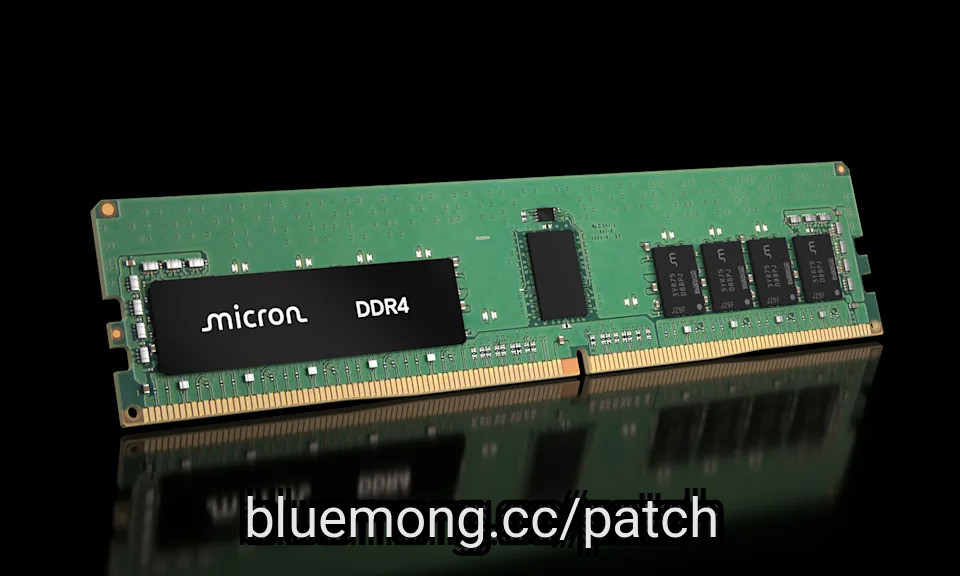
Source: Micron Technology
Micron Technology, Inc. (NASDAQ:MU) has direct exposure to scarcity. Its record fiscal third-quarter results reflected surging HBM demand, and every new accelerator requires large amounts of advanced memory. Tight supply and higher-value products can lift margins dramatically. The danger is that memory remains cyclical, although the traditional boom-and-bust framework may be getting outdated. See why here.
Micron plans more than $25 billion of capital spending, and competitors responding to shortages could eventually weaken pricing just as new factories become expensive to operate.
Amazon.com, Inc. (NASDAQ:AMZN) provides a more diversified route. AWS revenue grew 36.7% in the second quarter, and Amazon can monetize computing, storage, networking, models, and its own chips. That breadth reduces dependence on any single hardware cycle. It also requires roughly $220 billion of capital spending, however, creating a high return threshold. If customers optimize workloads or AI revenue develops more slowly than capacity, depreciation can outrun utilization.
#NASDAQ #amzn #second
Source: Micron Technology
Micron Technology, Inc. (NASDAQ:MU) has direct exposure to scarcity. Its record fiscal third-quarter results reflected surging HBM demand, and every new accelerator requires large amounts of advanced memory. Tight supply and higher-value products can lift margins dramatically. The danger is that memory remains cyclical, although the traditional boom-and-bust framework may be getting outdated. See why here.
Micron plans more than $25 billion of capital spending, and competitors responding to shortages could eventually weaken pricing just as new factories become expensive to operate.
Amazon.com, Inc. (NASDAQ:AMZN) provides a more diversified route. AWS revenue grew 36.7% in the second quarter, and Amazon can monetize computing, storage, networking, models, and its own chips. That breadth reduces dependence on any single hardware cycle. It also requires roughly $220 billion of capital spending, however, creating a high return threshold. If customers optimize workloads or AI revenue develops more slowly than capacity, depreciation can outrun utilization.
#NASDAQ #amzn #second

9 days ago
Hennessy Fund's Q2 2026 investor letter for the Hennessy Equity and Income Fund. The letter can be downloaded here. The letter discusses portfolio changes, emphasizing opportunities in equity and fixed income markets that can withstand economic uncertainty. The portfolio held businesses with a 23.0% pre-tax return on invested capital versus 16.1% for the S&P 500. The letter notes a reversal in U.S. equities, driven by AI spending and strong earnings, despite cautious sentiment among lower-income households. The focus on high-quality firms with durable advantages is expected to yield positive outcomes as valuation pressures mount, indicating that future market performance may hinge on fundamentals rather than speculative trends. The portfolio aims to capitalize on the overlooked valuations of quality companies, presenting significant investment opportunities. Also, check the fund's top five holdings to see its best picks in 2026.
In its second-quarter 2026 investor letter, Hennessy Equity and Income Fund highlighted Entegris, Inc. (NASDAQ:ENTG) as a leading contributor. Headquartered in Billerica, Massachusetts, Entegris, Inc. (NASDAQ:ENTG) provides materials and process solutions for the semiconductor and other high-technology industries. On August 28, 2026, Entegris, Inc. (NASDAQ:ENTG) closed at $134.92 per share, reflecting a market capitalization of $20.62 billion. Entegris, Inc. (NASDAQ:ENTG) posted a one‑month return of 7.76%, while its shares gained 61.12% over the past 52 weeks.
Hennessy Equity and Income Fund stated the following regarding Entegris, Inc. (NASDAQ:ENTG) in its Q2 2026 investor letter:
"The largest contributor year-to-date based on relative performance vs. the benchmark was Entegris, Inc. (NASDAQ:ENTG), as it benefited from improving fab utilization and accelerating AI-driven semiconductor demand. The company continues to gain share as advanced node transitions increase materials intensity per wafer, while improving memory and logic markets support broader growth. With its investment cycle largely complete, margin expansion and improving free cash flow should drive the next phase of earnings growth. We remain attracted to Entegris' strong competitive positioning and high barriers to entry."
Entegris, Inc. (NASDAQ:ENTG) is not on our list of the 40 Most Popular Stocks Among Hedge Funds. As per our database, 47 hedge fund portfolios held Entegris, Inc. (NASDAQ:ENTG) at the end of the second quarter, the same as in the previous quarter. While we acknowledge the potential of Entegris, Inc. (NASDAQ:ENTG) as an investment, we believe certain AI stocks offer greater upside potential and carry less downside risk. If you're looking for an extremely undervalued AI stock that also stands to benefit significantly from Trump-era tariffs and the onshoring trend, see our free report on the best short-term AI stock.
#NASDAQ #income #hennessy
In its second-quarter 2026 investor letter, Hennessy Equity and Income Fund highlighted Entegris, Inc. (NASDAQ:ENTG) as a leading contributor. Headquartered in Billerica, Massachusetts, Entegris, Inc. (NASDAQ:ENTG) provides materials and process solutions for the semiconductor and other high-technology industries. On August 28, 2026, Entegris, Inc. (NASDAQ:ENTG) closed at $134.92 per share, reflecting a market capitalization of $20.62 billion. Entegris, Inc. (NASDAQ:ENTG) posted a one‑month return of 7.76%, while its shares gained 61.12% over the past 52 weeks.
Hennessy Equity and Income Fund stated the following regarding Entegris, Inc. (NASDAQ:ENTG) in its Q2 2026 investor letter:
"The largest contributor year-to-date based on relative performance vs. the benchmark was Entegris, Inc. (NASDAQ:ENTG), as it benefited from improving fab utilization and accelerating AI-driven semiconductor demand. The company continues to gain share as advanced node transitions increase materials intensity per wafer, while improving memory and logic markets support broader growth. With its investment cycle largely complete, margin expansion and improving free cash flow should drive the next phase of earnings growth. We remain attracted to Entegris' strong competitive positioning and high barriers to entry."
Entegris, Inc. (NASDAQ:ENTG) is not on our list of the 40 Most Popular Stocks Among Hedge Funds. As per our database, 47 hedge fund portfolios held Entegris, Inc. (NASDAQ:ENTG) at the end of the second quarter, the same as in the previous quarter. While we acknowledge the potential of Entegris, Inc. (NASDAQ:ENTG) as an investment, we believe certain AI stocks offer greater upside potential and carry less downside risk. If you're looking for an extremely undervalued AI stock that also stands to benefit significantly from Trump-era tariffs and the onshoring trend, see our free report on the best short-term AI stock.
#NASDAQ #income #hennessy

9 days ago
First Eagle Investment Management, an investment management company, released its Q2 2026 investor update for "First Eagle Global Fund". The letter can be downloaded here. Easing tensions in the Middle East led to a strong rally in risk markets in Q2. The S&P 500 Index rose 15.2%, while the MSCI EAFE Index gained 10.8%. Growth stocks outperformed, with the MSCI World Growth Index significantly exceeding value returns. A notable shift in U.S. interest rate expectations followed Kevin Warsh's appointment as chair of the Federal Open Market Committee, pushing Treasury yields higher and strengthening the dollar. Despite the optimistic market environment, concerns about fiscal constraints and limited policy flexibility remain. Tighter credit spreads and elevated equity valuations reflect strong demand for financial ******* ets, with household wealth in equities at a post-WWII high. Earnings expectations are buoyant, driven by AI infrastructure developments. Against this backdrop, Global Fund A Shares returned 2.86% in Q2 2026, with emerging markets and developed Europe as the primary contributors. Developed Asia (excluding ******* an) was the only detractor, and ******* an lagged. Information technology and financials led among equity sectors, while materials and energy detracted. The fund underperformed relative to the MSCI World Index during this period. Also, check the fund's top five holdings to see its best picks in 2026.
In its second-quarter 2026 investor letter, First Eagle Global Fund highlighted Elevance Health, Inc. (NYSE:ELV) as a notable contributor. Elevance Health, Inc. (NYSE:ELV) is a US-based health benefits company. On August 31, 2026, Elevance Health, Inc. (NYSE:ELV) closed at $392.54 per share. Over the past month, Elevance Health, Inc. (NYSE:ELV) reported 3.85%, but its shares are up 21.78% over the past year. Elevance Health, Inc. (NYSE:ELV) has a market capitalization of $85.13 billion, and its stock has traded within a 52-week range of $274.84 to $436.24.
First Eagle Global Fund stated the following regarding Elevance Health, Inc. (NYSE:ELV) in its Q2 2026 investor letter:
"Shares of Elevance Health, Inc. (NYSE:ELV), the health insurer and healthcare-services provider formerly known as Anthem, rallied during the quarter as margins expanded—after a protracted decline—due to declining medical costs, stronger pricing and increased utilization with higher premiums."
Elevance Health, Inc. (NYSE:ELV) is not on our list of the 40 Most Popular Stocks Among Hedge Funds. As per our database, 84 hedge fund portfolios held Elevance Health, Inc. (NYSE:ELV) at the end of the second quarter, which was 87 in the previous quarter. While we acknowledge the potential of Elevance Health, Inc. (NYSE:ELV) as an investment, we believe certain AI stocks offer greater upside potential and carry less downside risk. If you're looking for an extremely undervalued AI stock that also stands to benefit significantly from Trump-era tariffs and the onshor
In its second-quarter 2026 investor letter, First Eagle Global Fund highlighted Elevance Health, Inc. (NYSE:ELV) as a notable contributor. Elevance Health, Inc. (NYSE:ELV) is a US-based health benefits company. On August 31, 2026, Elevance Health, Inc. (NYSE:ELV) closed at $392.54 per share. Over the past month, Elevance Health, Inc. (NYSE:ELV) reported 3.85%, but its shares are up 21.78% over the past year. Elevance Health, Inc. (NYSE:ELV) has a market capitalization of $85.13 billion, and its stock has traded within a 52-week range of $274.84 to $436.24.
First Eagle Global Fund stated the following regarding Elevance Health, Inc. (NYSE:ELV) in its Q2 2026 investor letter:
"Shares of Elevance Health, Inc. (NYSE:ELV), the health insurer and healthcare-services provider formerly known as Anthem, rallied during the quarter as margins expanded—after a protracted decline—due to declining medical costs, stronger pricing and increased utilization with higher premiums."
Elevance Health, Inc. (NYSE:ELV) is not on our list of the 40 Most Popular Stocks Among Hedge Funds. As per our database, 84 hedge fund portfolios held Elevance Health, Inc. (NYSE:ELV) at the end of the second quarter, which was 87 in the previous quarter. While we acknowledge the potential of Elevance Health, Inc. (NYSE:ELV) as an investment, we believe certain AI stocks offer greater upside potential and carry less downside risk. If you're looking for an extremely undervalued AI stock that also stands to benefit significantly from Trump-era tariffs and the onshor

12 days ago
On August 3, TotalEnergies SE (NYSE:TTE) signed an agreement to acquire Shell plc (NYSE:SHEL)'s entire onshore renewables business in Europe. The acquisition includes 500 MW of operational or under-construction solar and wind ******* ets primarily in Italy and the Netherlands, alongside a 3.5 GW pipeline of solar, wind, and battery storage projects across Italy, the UK, and Spain. Set for completion by late 2026 pending regulatory approval, the deal directly advances TotalEnergies' European Integrated Power strategy, bolstering its existing portfolio of roughly 10 GW in gross capacity/construction and 27 GW under development. Following the news on August 3, Piper Sandler ******* yst John Royall raised Shell's price target from $88 to $89 while maintaining a Neutral rating, citing strong Q2 trading beats.
Both Big Oil majors reported robust Q2 2026 results driven by operational efficiency, yet distinct financial profiles emerge. TotalEnergies SE (NYSE:TTE) generated adjusted net income of $6.0 billion and cash flow from operations (CFFO) of $9.8 billion on 2.395 Mboe/d production, keeping Upstream operating costs down to $5/b despite Middle East transit disruptions. Shell outperformed on sheer cash generation, posting $9.8 billion in Adjusted Earnings and CFFO of $21.4 billion, supported by record upstream production in Brazil, record refinery utilization, and a $3.4 billion working capital inflow.
TotalEnergies retains a leaner debt profile with a gearing ratio of 13.1% ($3.3 billion net debt reduction), whereas Shell holds a 19% gearing ratio with $42 billion in net debt ($12 billion excluding leases). While Shell plc (NYSE:SHEL) leads on top-line cash generation, TotalEnergies displays superior balance sheet leverage and higher quarter-over-quarter cash flow growth (+15%).
TotalEnergies' bull case is supported by strong execution of its Integrated Power strategy, with expanding high-margin renewable power capacity alongside low Upstream costs of approximately $5 per barrel. Its healthy balance sheet, reflected in 13.1% gearing, provides financial flexibility to support a 5.9% dividend increase to €0.90 per share while continuing $1.5 billion in quarterly share buybacks. However, the bear case centers on weakness in Integrated LNG, particularly from underperforming European gas trading. Continued exposure to geopolitical disruptions along Middle Eastern transit corridors could also restrict physical oil liftings and weigh on operations.
#TotalEnergies #shell #upstream
Both Big Oil majors reported robust Q2 2026 results driven by operational efficiency, yet distinct financial profiles emerge. TotalEnergies SE (NYSE:TTE) generated adjusted net income of $6.0 billion and cash flow from operations (CFFO) of $9.8 billion on 2.395 Mboe/d production, keeping Upstream operating costs down to $5/b despite Middle East transit disruptions. Shell outperformed on sheer cash generation, posting $9.8 billion in Adjusted Earnings and CFFO of $21.4 billion, supported by record upstream production in Brazil, record refinery utilization, and a $3.4 billion working capital inflow.
TotalEnergies retains a leaner debt profile with a gearing ratio of 13.1% ($3.3 billion net debt reduction), whereas Shell holds a 19% gearing ratio with $42 billion in net debt ($12 billion excluding leases). While Shell plc (NYSE:SHEL) leads on top-line cash generation, TotalEnergies displays superior balance sheet leverage and higher quarter-over-quarter cash flow growth (+15%).
TotalEnergies' bull case is supported by strong execution of its Integrated Power strategy, with expanding high-margin renewable power capacity alongside low Upstream costs of approximately $5 per barrel. Its healthy balance sheet, reflected in 13.1% gearing, provides financial flexibility to support a 5.9% dividend increase to €0.90 per share while continuing $1.5 billion in quarterly share buybacks. However, the bear case centers on weakness in Integrated LNG, particularly from underperforming European gas trading. Continued exposure to geopolitical disruptions along Middle Eastern transit corridors could also restrict physical oil liftings and weigh on operations.
#TotalEnergies #shell #upstream


13 days ago
On August 21, Insteel Industries Inc. (NYSE:IIIN) announced plans to close its Upper Sandusky, Ohio, welded wire reinforcement facility. Operations are expected to cease by the end of October 2026, with production requirements transferred to the company's remaining plants. Management says those facilities have "ample open capacity" and does not expect the consolidation to affect revenue.
The closure is expected to eliminate up to 65 positions and generate approximately $4.6 million of restructuring charges. That includes $2.5 million for equipment relocation, $400,000 for employee separation, $1.0 million for ***** et impairment and $700,000 of other closure costs. All but the impairment are expected to be cash expenditures beginning in the first quarter of fiscal 2027 and continuing through the year.
For Insteel Industries Inc. (NYSE:IIIN), the announcement confirms meaningful excess welded-wire capacity, but it does not quantify it. The company provided no production tonnage, utilization percentage, or annual savings estimate. The clearest evidence is operational: management believes the remaining plants can absorb all Upper Sandusky requirements without losing revenue.
Insteel Industries Inc. (NYSE:IIIN) currently operates 11 U.S. manufacturing facilities. Earlier company materials identified eight as welded-wire plants and three as prestressed-concrete-strand plants, implying that the closure would leave seven welded-wire facilities, ***** uming no other footprint changes.
Consolidation could improve margins at Insteel Industries Inc. (NYSE:IIIN) by spreading production across fewer sites, raising utilization and eliminating duplicated labor and fixed costs. The $2.5 million equipment-relocation charge indicates that useful machinery will be transferred rather than abandoned.
#production
The closure is expected to eliminate up to 65 positions and generate approximately $4.6 million of restructuring charges. That includes $2.5 million for equipment relocation, $400,000 for employee separation, $1.0 million for ***** et impairment and $700,000 of other closure costs. All but the impairment are expected to be cash expenditures beginning in the first quarter of fiscal 2027 and continuing through the year.
For Insteel Industries Inc. (NYSE:IIIN), the announcement confirms meaningful excess welded-wire capacity, but it does not quantify it. The company provided no production tonnage, utilization percentage, or annual savings estimate. The clearest evidence is operational: management believes the remaining plants can absorb all Upper Sandusky requirements without losing revenue.
Insteel Industries Inc. (NYSE:IIIN) currently operates 11 U.S. manufacturing facilities. Earlier company materials identified eight as welded-wire plants and three as prestressed-concrete-strand plants, implying that the closure would leave seven welded-wire facilities, ***** uming no other footprint changes.
Consolidation could improve margins at Insteel Industries Inc. (NYSE:IIIN) by spreading production across fewer sites, raising utilization and eliminating duplicated labor and fixed costs. The $2.5 million equipment-relocation charge indicates that useful machinery will be transferred rather than abandoned.
#production

13 days ago
Our **** ysts just identified a stock with the potential to be the next Nvidia. Tell us how you invest and we'll show you why it's our #1 pick. Tap here.
The closure of the Strait of Hormuz has fundamentally shifted global LPG trade flows, forcing a reliance on U.S. Gulf exports to compensate for a 46% decline in Middle Eastern volumes.
Shipping TCE income of $74,000 per available day was impacted by $16.4 million in IFRS 15 adjustments and $12 million in FFA adjustments, despite strong underlying spot performance.
Product Services achieved a realized trading gain of $127 million, though reported results were masked by a $145 million unrealized mark-to-market valuation loss on open positions.
Operational efficiency was maintained with 96% fleet utilization despite a heavy dry-docking schedule involving 99 days in Q2 and 58 expected in Q3.
#adjustments #NVIDIA #gulf
The closure of the Strait of Hormuz has fundamentally shifted global LPG trade flows, forcing a reliance on U.S. Gulf exports to compensate for a 46% decline in Middle Eastern volumes.
Shipping TCE income of $74,000 per available day was impacted by $16.4 million in IFRS 15 adjustments and $12 million in FFA adjustments, despite strong underlying spot performance.
Product Services achieved a realized trading gain of $127 million, though reported results were masked by a $145 million unrealized mark-to-market valuation loss on open positions.
Operational efficiency was maintained with 96% fleet utilization despite a heavy dry-docking schedule involving 99 days in Q2 and 58 expected in Q3.
#adjustments #NVIDIA #gulf


13 days ago
Our **** ysts just identified a stock with the potential to be the next Nvidia. Tell us how you invest and we'll show you why it's our #1 pick. Tap here.
Achieved a 20% quarter-over-quarter increase in EBITDA equivalent cash flow, primarily driven by two Suezmax tankers operating in a high-rate spot market environment.
Capitalized on a 'booming' tanker market where Suezmax spot rates reached $133,000 per day, significantly exceeding the previous long-term charter rate of $30,000 per day.
Expanded the car carrier portfolio through the order of four dual-fuel newbuildings and new three-year charters for older vessels, adding $233 million to the firm backlog.
Maintained high fleet utilization across shipping segments, with container, car carrier, and tanker segments all operating at 99.3% or higher.
#operating #market #tanker
Achieved a 20% quarter-over-quarter increase in EBITDA equivalent cash flow, primarily driven by two Suezmax tankers operating in a high-rate spot market environment.
Capitalized on a 'booming' tanker market where Suezmax spot rates reached $133,000 per day, significantly exceeding the previous long-term charter rate of $30,000 per day.
Expanded the car carrier portfolio through the order of four dual-fuel newbuildings and new three-year charters for older vessels, adding $233 million to the firm backlog.
Maintained high fleet utilization across shipping segments, with container, car carrier, and tanker segments all operating at 99.3% or higher.
#operating #market #tanker


14 days ago
The London Company, an investment management company, released its second-quarter 2026 investor letter for its "Small-Mid Cap Strategy." The letter can be downloaded here. U.S. equities rebounded sharply in Q2, with the Russell 3000 gaining 15.4%, supported by AI infrastructure spending, strong earnings, and easing Middle East tensions. Technology led the rally as semiconductors recovered, while Energy and defensive sectors lagged. The portfolio returned 12.1% gross and 11.8% net compared with a 20.3% gain in the Russell 2500 Index. Stock selection weighed on relative performance, as high-beta and high-volatility stocks dominated returns while Quality remained weak, although results improved in June as market participation broadened. Looking ahead, resilient earnings and AI productivity support a constructive outlook, but negative hyperscaler cash flow, sticky inflation, geopolitical risks, index concentration, and elevated valuations warrant caution. The strategy continues to emphasize quality, downside protection, and active management. Additionally, reviewing the Fund's top five holdings could also highlight its best ideas for 2026.
In its second-quarter 2026 investor letter, London Company SMID Cap Strategy highlighted Entegris, Inc. (NASDAQ:ENTG) as a leading contributor. Headquartered in Billerica, Massachusetts, Entegris, Inc. (NASDAQ:ENTG) provides materials and process solutions for the semiconductor and other high-technology industries. On August 26, 2026, Entegris, Inc. (NASDAQ:ENTG) closed at $142.46 per share, reflecting a market capitalization of $21.77 billion. Entegris, Inc. (NASDAQ:ENTG) posted a one‑month return of 22.74%, while its shares gained 71.40% over the past 52 weeks.
London Company SMID Cap Strategy stated the following regarding Entegris, Inc. (NASDAQ:ENTG) in its Q2 2026 investor letter:
"Entegris, Inc. (NASDAQ:ENTG) was a top contributor, benefiting from improving semiconductor demand, accelerating AI investment, and rising fab utilization. Beyond the industry recovery, management outlined a clear path to structurally higher earnings through manufacturing optimization, improved working capital, and rebuilding the operating model over time. We remain attracted to ENTG's strong competitive position, high barriers to entry, and long runway for free cash flow expansion."
Entegris, Inc. (NASDAQ:ENTG) is not on our list of the 40 Most Popular Stocks Among Hedge Funds. As per our database, 47 hedge fund portfolios held Entegris, Inc. (NASDAQ:ENTG) at the end of the second quarter, the same as in the previous quarter. While we acknowledge the potential of Entegris, Inc. (NASDAQ:ENTG) as an investment, we believe certain AI stocks offer greater upside potential and carry less downside risk. If you're looking for an extremely undervalued AI stock that also stands to benefit significantly from Trump-era tariffs and the onshoring trend, see our free report on the best short-term AI stock.
#entg #Stock
In its second-quarter 2026 investor letter, London Company SMID Cap Strategy highlighted Entegris, Inc. (NASDAQ:ENTG) as a leading contributor. Headquartered in Billerica, Massachusetts, Entegris, Inc. (NASDAQ:ENTG) provides materials and process solutions for the semiconductor and other high-technology industries. On August 26, 2026, Entegris, Inc. (NASDAQ:ENTG) closed at $142.46 per share, reflecting a market capitalization of $21.77 billion. Entegris, Inc. (NASDAQ:ENTG) posted a one‑month return of 22.74%, while its shares gained 71.40% over the past 52 weeks.
London Company SMID Cap Strategy stated the following regarding Entegris, Inc. (NASDAQ:ENTG) in its Q2 2026 investor letter:
"Entegris, Inc. (NASDAQ:ENTG) was a top contributor, benefiting from improving semiconductor demand, accelerating AI investment, and rising fab utilization. Beyond the industry recovery, management outlined a clear path to structurally higher earnings through manufacturing optimization, improved working capital, and rebuilding the operating model over time. We remain attracted to ENTG's strong competitive position, high barriers to entry, and long runway for free cash flow expansion."
Entegris, Inc. (NASDAQ:ENTG) is not on our list of the 40 Most Popular Stocks Among Hedge Funds. As per our database, 47 hedge fund portfolios held Entegris, Inc. (NASDAQ:ENTG) at the end of the second quarter, the same as in the previous quarter. While we acknowledge the potential of Entegris, Inc. (NASDAQ:ENTG) as an investment, we believe certain AI stocks offer greater upside potential and carry less downside risk. If you're looking for an extremely undervalued AI stock that also stands to benefit significantly from Trump-era tariffs and the onshoring trend, see our free report on the best short-term AI stock.
#entg #Stock


15 days ago
CoreWeave scaled data center capacity from 70 MW to 1.5 GW by mid-2026, backed by a $104 billion contracted revenue backlog confirming real, multi-year demand.
Despite genuine growth, $35 billion in debt and $640 million in quarterly interest keep CoreWeave cash flow negative and GAAP results in the red.
Peers Nebius and IREN offer similar AI infrastructure exposure with far lower debt loads and greater reliance on customer prepayments than CoreWeave carries.
Act now: the ***** yst who called NVIDIA in 2010 just named his top 10 AI stocks — and CoreWeave, Inc. Class A Common Stock didn't make the cut. Grab the names FREE today.
The AI infrastructure buildout continues to reshape capital markets in 2026, with specialized providers racing to deliver the power and GPUs that large language models demand. Investors have piled into the sector on the promise of multi-year contracts and soaring utilization. Yet not every high-growth name deserves a place in a retail portfolio.
#multi
Despite genuine growth, $35 billion in debt and $640 million in quarterly interest keep CoreWeave cash flow negative and GAAP results in the red.
Peers Nebius and IREN offer similar AI infrastructure exposure with far lower debt loads and greater reliance on customer prepayments than CoreWeave carries.
Act now: the ***** yst who called NVIDIA in 2010 just named his top 10 AI stocks — and CoreWeave, Inc. Class A Common Stock didn't make the cut. Grab the names FREE today.
The AI infrastructure buildout continues to reshape capital markets in 2026, with specialized providers racing to deliver the power and GPUs that large language models demand. Investors have piled into the sector on the promise of multi-year contracts and soaring utilization. Yet not every high-growth name deserves a place in a retail portfolio.
#multi


16 days ago
Sustainable Growth Advisers (SGA), an investment management company, released its second-quarter 2026 investor letter for its "Global Growth Strategy." The letter can be downloaded here. The SGA Global Growth Portfolio returned 7.4% gross and 7.2% net, compared with 14.9% for the MSCI ACWI and 19.8% for the MSCI ACWI Growth Index. Momentum leadership and enthusiasm around AI infrastructure drove markets, with semiconductor, memory, and hardware stocks accounting for much of the gain. Although the portfolio owned AI beneficiaries, broader holdings lagged despite fundamentals, as median revenue and EPS growth reached 12% and 14% and more than 60% of the holdings beat expectations. SGA believes valuation compression reflects sentiment rather than weaker business quality, leaving the portfolio near its widest discount to the market since inception. The firm continues to favor durable compounders and expects 16% revenue growth and 20% earnings growth over three years. Also, please check the Fund's top five holdings to see its best picks for 2026.
In its second-quarter 2026 investor letter, SGA Global Growth Strategy highlighted Linde plc (NASDAQ:LIN) as a new holding. Linde plc (NASDAQ:LIN) operates as the world's leading industrial gas company. On August 21, 2026, Linde plc (NASDAQ:LIN) closed at $487.57 per share. The one-month return of Linde plc (NASDAQ:LIN) was -3.84%, and its shares gained 2.03% over the past 52 weeks. Linde plc (NASDAQ:LIN) has a market capitalization of $224.76 billion.
SGA Global Growth Strategy stated the following regarding Linde plc (NASDAQ:LIN) in its Q2 2026 investor letter:
"Linde plc (NASDAQ:LIN), the world's largest industrial gas company, was added to the portfolio in April. We had previously exited the position in 2024 due to valuation considerations and forced attrition; since then, the stock price has consolidated while fundamentals continued to progress. Linde remains an attractive long-term investment, supported by a highly durable business model and meaningful structural advantages. A large share of revenue is generated from long-term, recurring customer contracts in essential end markets, providing strong pricing power and cash flow visibility even in a slower growth environment. The company's strengths are rooted in its production efficiency and broad exposure across diverse end markets, including healthcare, manufacturing, electronics, chemicals, and energy.
Looking ahead, Linde is well-positioned to benefit from structural improvements and a potential acceleration in global growth across several of its core markets over the medium term. The U.S., which accounts for roughly 45% of revenue, is likely to see improved growth driven by an industrial recovery, increased semiconductor manufacturing, and higher refinery utilization. Europe (approximately 25% of revenue) has been a headwind in recent years due to negative volume growth, but is expected to stabilize over the medium term, with the potential for mo
In its second-quarter 2026 investor letter, SGA Global Growth Strategy highlighted Linde plc (NASDAQ:LIN) as a new holding. Linde plc (NASDAQ:LIN) operates as the world's leading industrial gas company. On August 21, 2026, Linde plc (NASDAQ:LIN) closed at $487.57 per share. The one-month return of Linde plc (NASDAQ:LIN) was -3.84%, and its shares gained 2.03% over the past 52 weeks. Linde plc (NASDAQ:LIN) has a market capitalization of $224.76 billion.
SGA Global Growth Strategy stated the following regarding Linde plc (NASDAQ:LIN) in its Q2 2026 investor letter:
"Linde plc (NASDAQ:LIN), the world's largest industrial gas company, was added to the portfolio in April. We had previously exited the position in 2024 due to valuation considerations and forced attrition; since then, the stock price has consolidated while fundamentals continued to progress. Linde remains an attractive long-term investment, supported by a highly durable business model and meaningful structural advantages. A large share of revenue is generated from long-term, recurring customer contracts in essential end markets, providing strong pricing power and cash flow visibility even in a slower growth environment. The company's strengths are rooted in its production efficiency and broad exposure across diverse end markets, including healthcare, manufacturing, electronics, chemicals, and energy.
Looking ahead, Linde is well-positioned to benefit from structural improvements and a potential acceleration in global growth across several of its core markets over the medium term. The U.S., which accounts for roughly 45% of revenue, is likely to see improved growth driven by an industrial recovery, increased semiconductor manufacturing, and higher refinery utilization. Europe (approximately 25% of revenue) has been a headwind in recent years due to negative volume growth, but is expected to stabilize over the medium term, with the potential for mo


16 days ago
Solana's real-world-asset ecosystem crossed $4 billion in total value on August 23, according to a post from the official Solana account. The milestone came two days after validators activated SIMD-0525 at epoch 1020, cutting the network's slot time from 400 milliseconds to 350 milliseconds for the first time since launch.
In the six days before epoch 1020, Solana Compass network ***** ytics recorded average user throughput of 1,710 transactions per second and 27.7% compute utilization against the 400ms block ceiling.
DISCOVER: Best Meme Coins to Buy in 2026
Motley Fool's ***** ysis of the 30 days ending August 19 put Solana's RWA inflows at $263 million, while Ethereum's RWA ecosystem recorded $337 million in outflows over the same window. The report put Solana's 30-day growth rate at 10.6%, compared with Ethereum's 1.3%.
Tokenized U.S. Treasury products accounted for $1.2 billion of Solana's reported RWA ecosystem total, up 16.1% over the same period, according to the same report. Backed Finance's xStocks product offers more than 60 U.S. stocks and ETFs as SPL tokens, with trading available on Raydium, Jupiter, and Kamino Finance.
#Solana #time
In the six days before epoch 1020, Solana Compass network ***** ytics recorded average user throughput of 1,710 transactions per second and 27.7% compute utilization against the 400ms block ceiling.
DISCOVER: Best Meme Coins to Buy in 2026
Motley Fool's ***** ysis of the 30 days ending August 19 put Solana's RWA inflows at $263 million, while Ethereum's RWA ecosystem recorded $337 million in outflows over the same window. The report put Solana's 30-day growth rate at 10.6%, compared with Ethereum's 1.3%.
Tokenized U.S. Treasury products accounted for $1.2 billion of Solana's reported RWA ecosystem total, up 16.1% over the same period, according to the same report. Backed Finance's xStocks product offers more than 60 U.S. stocks and ETFs as SPL tokens, with trading available on Raydium, Jupiter, and Kamino Finance.
#Solana #time

16 days ago
By Amina Niasse
NEW YORK, Aug 25 (Reuters) - About 14% of employers in the United States have already or plan to drop GLP-1 drugs in 2027, as companies see rising healthcare costs, according to a survey released on Tuesday by the Business Group on Health.
Healthcare costs are set to increase 9.2% if employers do not make changes to manage costs in 2027, up from 8.5% in 2026, the group said. Two-thirds of employers surveyed said they saw rising utilization of the drugs.
GLP-1 weight-loss drugs, such as Novo Nordisk's Wegovy and Eli Lilly's Zepbound and Foundayo, help people lose weight by mimicking a hormone that keeps the stomach feeling full. Zepbound and Wegovy cost $499 and $1,349.02, respectively, per month according to list prices on manufacturer websites.
"This represents an unfortunate new reality for employers, who now face growing difficulty in budgeting and forecasting," said Ellen Kelsay, president of the Business Group on Health. "It's a call to take a more disruptive approach and rethink how to deliver value and improved health outcomes."
#group #drugs
NEW YORK, Aug 25 (Reuters) - About 14% of employers in the United States have already or plan to drop GLP-1 drugs in 2027, as companies see rising healthcare costs, according to a survey released on Tuesday by the Business Group on Health.
Healthcare costs are set to increase 9.2% if employers do not make changes to manage costs in 2027, up from 8.5% in 2026, the group said. Two-thirds of employers surveyed said they saw rising utilization of the drugs.
GLP-1 weight-loss drugs, such as Novo Nordisk's Wegovy and Eli Lilly's Zepbound and Foundayo, help people lose weight by mimicking a hormone that keeps the stomach feeling full. Zepbound and Wegovy cost $499 and $1,349.02, respectively, per month according to list prices on manufacturer websites.
"This represents an unfortunate new reality for employers, who now face growing difficulty in budgeting and forecasting," said Ellen Kelsay, president of the Business Group on Health. "It's a call to take a more disruptive approach and rethink how to deliver value and improved health outcomes."
#group #drugs

17 days ago
The next few years will test whether Pfizer Inc. (NYSE:PFE) can replace yesterday's blockbusters, and whether Gilead Sciences, Inc. (NASDAQ:GILD) can become more than an HIV company. Pfizer's (NYSE:PFE) newer medicines are gaining traction, but that growth has yet to accelerate the wider business. Gilead (NASDAQ:GILD) is expanding faster, although its performance remains concentrated in one therapeutic area. For investors, this is ultimately a choice between an unfinished turnaround and a stronger growth story still searching for greater breadth.
Pfizer's (NYSE:PFE) strongest result was the performance of its non-COVID portfolio. Revenue excluding Comirnaty and Paxlovid grew 5% operationally, while launched and acquired products generated $3.2 billion and increased 18% operationally. Growth also came from several franchises. Padcev revenue rose 23% operationally to $667 million, supported by increased market share in bladder cancer. The Vyndaqel family generated $1.76 billion, up 8% operationally, while Lorbrena grew 37% operationally. These products give Pfizer more than one avenue for rebuilding revenue as COVID-related demand declines.
Pfizer (NYSE:PFE) lowered its 2026 COVID-product forecast from approximately $5 billion to $4 billion after low infection levels weighed on Paxlovid utilization. Nevertheless, stronger-than-expected non-COVID sales allowed the company to raise the midpoint of its total revenue guidance by $500 million. Cost reductions provide additional support for the company. Pfizer (NYSE:PFE) expects approximately $6.7 billion in savings from its cost-realignment program through 2029. A separate manufacturing-optimization program is expected to generate another $3 billion, bringing anticipated savings across the two programs to approximately $9.7 billion. This leaner cost base could help Pfizer (NYSE:PFE) preserve margins and continue investing in areas such as oncology and obesity.
Gilead (NASDAQ:GILD), however, is currently delivering much stronger underlying growth. Product sales excluding Veklury increased 10% to $7.6 billion, and HIV sales rose 12% to $5.7 billion, with Biktarvy revenue increasing 7% to $3.8 billion and Descovy sales climbing 48% to $967 million. Yeztugo, Gilead's (NASDAQ:GILD) twice-yearly injectable HIV-prevention medicine, contributed $232 million as its launch gained momentum. The product adds a potentially important growth driver to an already dominant HIV portfolio.
Growth, however, was not confined to HIV alone, as liver-disease sales increased 10% to $877 million, while Livdelzi revenue more than doubled from $78 million to $167 million. Trodelvy sales rose 26% to $457 million, providing further evidence that Gilead (NASDAQ:GILD) is building a meaningful oncology franchise. Management subsequently raised its 2026 product-sales outlook to $30.1–$30.4 billion and increased guidance for product sales excluding Veklury to $29.8–$30.1 billion.
#NYSE #million #gild
Pfizer's (NYSE:PFE) strongest result was the performance of its non-COVID portfolio. Revenue excluding Comirnaty and Paxlovid grew 5% operationally, while launched and acquired products generated $3.2 billion and increased 18% operationally. Growth also came from several franchises. Padcev revenue rose 23% operationally to $667 million, supported by increased market share in bladder cancer. The Vyndaqel family generated $1.76 billion, up 8% operationally, while Lorbrena grew 37% operationally. These products give Pfizer more than one avenue for rebuilding revenue as COVID-related demand declines.
Pfizer (NYSE:PFE) lowered its 2026 COVID-product forecast from approximately $5 billion to $4 billion after low infection levels weighed on Paxlovid utilization. Nevertheless, stronger-than-expected non-COVID sales allowed the company to raise the midpoint of its total revenue guidance by $500 million. Cost reductions provide additional support for the company. Pfizer (NYSE:PFE) expects approximately $6.7 billion in savings from its cost-realignment program through 2029. A separate manufacturing-optimization program is expected to generate another $3 billion, bringing anticipated savings across the two programs to approximately $9.7 billion. This leaner cost base could help Pfizer (NYSE:PFE) preserve margins and continue investing in areas such as oncology and obesity.
Gilead (NASDAQ:GILD), however, is currently delivering much stronger underlying growth. Product sales excluding Veklury increased 10% to $7.6 billion, and HIV sales rose 12% to $5.7 billion, with Biktarvy revenue increasing 7% to $3.8 billion and Descovy sales climbing 48% to $967 million. Yeztugo, Gilead's (NASDAQ:GILD) twice-yearly injectable HIV-prevention medicine, contributed $232 million as its launch gained momentum. The product adds a potentially important growth driver to an already dominant HIV portfolio.
Growth, however, was not confined to HIV alone, as liver-disease sales increased 10% to $877 million, while Livdelzi revenue more than doubled from $78 million to $167 million. Trodelvy sales rose 26% to $457 million, providing further evidence that Gilead (NASDAQ:GILD) is building a meaningful oncology franchise. Management subsequently raised its 2026 product-sales outlook to $30.1–$30.4 billion and increased guidance for product sales excluding Veklury to $29.8–$30.1 billion.
#NYSE #million #gild


17 days ago
Sustainable Growth Advisers (SGA), an investment management company, released its second-quarter 2026 investor letter for its "Global Growth Strategy." The letter can be downloaded here. The SGA Global Growth Portfolio returned 7.4% gross and 7.2% net, compared with 14.9% for the MSCI ACWI and 19.8% for the MSCI ACWI Growth Index. Momentum leadership and enthusiasm around AI infrastructure drove markets, with semiconductor, memory, and hardware stocks accounting for much of the gain. Although the portfolio owned AI beneficiaries, broader holdings lagged despite fundamentals, as median revenue and EPS growth reached 12% and 14% and more than 60% of the holdings beat expectations. SGA believes valuation compression reflects sentiment rather than weaker business quality, leaving the portfolio near its widest discount to the market since inception. The firm continues to favor durable compounders and expects 16% revenue growth and 20% earnings growth over three years. Also, please check the Fund's top five holdings to see its best picks for 2026.
In its second-quarter 2026 investor letter, SGA Global Growth Strategy highlighted Linde plc (NASDAQ:LIN) as a new holding. Linde plc (NASDAQ:LIN) operates as the world's leading industrial gas company. On August 21, 2026, Linde plc (NASDAQ:LIN) closed at $487.57 per share. The one-month return of Linde plc (NASDAQ:LIN) was -3.84%, and its shares gained 2.03% over the past 52 weeks. Linde plc (NASDAQ:LIN) has a market capitalization of $224.76 billion.
SGA Global Growth Strategy stated the following regarding Linde plc (NASDAQ:LIN) in its Q2 2026 investor letter:
"Linde plc (NASDAQ:LIN), the world's largest industrial gas company, was added to the portfolio in April. We had previously exited the position in 2024 due to valuation considerations and forced attrition; since then, the stock price has consolidated while fundamentals continued to progress. Linde remains an attractive long-term investment, supported by a highly durable business model and meaningful structural advantages. A large share of revenue is generated from long-term, recurring customer contracts in essential end markets, providing strong pricing power and cash flow visibility even in a slower growth environment. The company's strengths are rooted in its production efficiency and broad exposure across diverse end markets, including healthcare, manufacturing, electronics, chemicals, and energy.
Looking ahead, Linde is well-positioned to benefit from structural improvements and a potential acceleration in global growth across several of its core markets over the medium term. The U.S., which accounts for roughly 45% of revenue, is likely to see improved growth driven by an industrial recovery, increased semiconductor manufacturing, and higher refinery utilization. Europe (approximately 25% of revenue) has been a headwind in recent years due to negative volume growth, but is expected to stabilize over the medium term, with the potential for mo
In its second-quarter 2026 investor letter, SGA Global Growth Strategy highlighted Linde plc (NASDAQ:LIN) as a new holding. Linde plc (NASDAQ:LIN) operates as the world's leading industrial gas company. On August 21, 2026, Linde plc (NASDAQ:LIN) closed at $487.57 per share. The one-month return of Linde plc (NASDAQ:LIN) was -3.84%, and its shares gained 2.03% over the past 52 weeks. Linde plc (NASDAQ:LIN) has a market capitalization of $224.76 billion.
SGA Global Growth Strategy stated the following regarding Linde plc (NASDAQ:LIN) in its Q2 2026 investor letter:
"Linde plc (NASDAQ:LIN), the world's largest industrial gas company, was added to the portfolio in April. We had previously exited the position in 2024 due to valuation considerations and forced attrition; since then, the stock price has consolidated while fundamentals continued to progress. Linde remains an attractive long-term investment, supported by a highly durable business model and meaningful structural advantages. A large share of revenue is generated from long-term, recurring customer contracts in essential end markets, providing strong pricing power and cash flow visibility even in a slower growth environment. The company's strengths are rooted in its production efficiency and broad exposure across diverse end markets, including healthcare, manufacturing, electronics, chemicals, and energy.
Looking ahead, Linde is well-positioned to benefit from structural improvements and a potential acceleration in global growth across several of its core markets over the medium term. The U.S., which accounts for roughly 45% of revenue, is likely to see improved growth driven by an industrial recovery, increased semiconductor manufacturing, and higher refinery utilization. Europe (approximately 25% of revenue) has been a headwind in recent years due to negative volume growth, but is expected to stabilize over the medium term, with the potential for mo


20 days ago
The autonomous driving industry is moving rapidly towards commercialization, with competition intensifying as firms race to commercialize robotaxi services both domestically and overseas. China, in particular, is gaining growing recognition as a major player in the autonomous driving race.
Driverless vehicles are becoming a common sight in China, with companies including Baidu, Inc. (NASDAQ: BIDU), WeRide and Pony AI Inc. (NASDAQ:PONY) operating commercial robotaxi services within select areas. The country's self-driving industry stands apart because it builds around a network of companies.
Autonomous vehicles are being made by established carmakers, specialists develop the software, and use the same batteries, sensors, and chips and as electric cars. The government is backing up the initiative through pilot programs, and China's complex traffic environment helps generate vast amounts of data to improve software.
In its latest endeavor, Chinese autonomous driving company Pony.ai has announced a planned and potential overseas robotaxi deployments of more than 4,000 vehicles, aiming to expand beyond China. This macro setup remains favorable for long-term demand, but profitability inherently depends on factors such as regulatory approvals, vehicle economics, and utilization.
A driverless vehicle navigating city traffic, equipped with ADAS and safety features.
#driving #vehicles #industry
Driverless vehicles are becoming a common sight in China, with companies including Baidu, Inc. (NASDAQ: BIDU), WeRide and Pony AI Inc. (NASDAQ:PONY) operating commercial robotaxi services within select areas. The country's self-driving industry stands apart because it builds around a network of companies.
Autonomous vehicles are being made by established carmakers, specialists develop the software, and use the same batteries, sensors, and chips and as electric cars. The government is backing up the initiative through pilot programs, and China's complex traffic environment helps generate vast amounts of data to improve software.
In its latest endeavor, Chinese autonomous driving company Pony.ai has announced a planned and potential overseas robotaxi deployments of more than 4,000 vehicles, aiming to expand beyond China. This macro setup remains favorable for long-term demand, but profitability inherently depends on factors such as regulatory approvals, vehicle economics, and utilization.
A driverless vehicle navigating city traffic, equipped with ADAS and safety features.
#driving #vehicles #industry


20 days ago
Our ****** ysts just identified a stock with the potential to be the next Nvidia. Tell us how you invest and we'll show you why it's our #1 pick. Tap here.
Achieved first-ever positive adjusted EBITDA, signaling that the company's marketplace scale is successfully translating into sustainable profitability.
Revenue growth of 141% was primarily driven by the successful monetization of platform subscription packages and increased trip volume across the network.
Expanded the ride-hailing footprint from 20 to 30 cities, now covering approximately 85% of Türkiye's GDP to capture structural demand from urban congestion.
Leveraged a multi-service 'super app' strategy where delivery adoption among existing mobility users drives higher driver utilization and superior unit economics.
#ebitda #leveraged
Achieved first-ever positive adjusted EBITDA, signaling that the company's marketplace scale is successfully translating into sustainable profitability.
Revenue growth of 141% was primarily driven by the successful monetization of platform subscription packages and increased trip volume across the network.
Expanded the ride-hailing footprint from 20 to 30 cities, now covering approximately 85% of Türkiye's GDP to capture structural demand from urban congestion.
Leveraged a multi-service 'super app' strategy where delivery adoption among existing mobility users drives higher driver utilization and superior unit economics.
#ebitda #leveraged

21 days ago
Not long ago, the idea of playing an NFL game on a Wednesday seemed completely foreign. Now, Wednesday has become an increasingly important day of the week on the NFL calendar.
The upcoming season will feature two Wednesday contests: A Super Bowl rematch between the Seattle Seahawks and New England Patriots on NBC opening night, and a new "Thanksgiving Eve" game between the Green Bay Packers and Los Angeles Rams on Netflix the day before Thanksgiving. Just a couple years ago, the NFL made some unprecedented scheduling tweaks to ensure it could air two games on Christmas Day, which fell on a Wednesday, when only a year prior the league suggested it wouldn't utilize the holiday if it fell on Wednesday.
The willingness to schedule games on days of the week that it had not previously considered viable is part and parcel with the league's ambition to add more standalone window national games. But don't expect the league to roll out a weekly "Wednesday Night Football" package anytime soon.
When asked about the NFL's utilization of Wednesday during a conference call this week, the league's top media executive Hans Schroeder indicated Wednesday will still be used sparingly.
"I don't know if we're looking at Wednesday night football as a night for regularly scheduled NFL game," Schroeder said. "I do think if you look at the growth of Thanksgiving specifically, and that holiday, and how core football, and food, and family, and bringing all that together, that the growth of Thanksgiving over the last handful of years has just been tremendous."
#wednesday #night #schroeder #fell
The upcoming season will feature two Wednesday contests: A Super Bowl rematch between the Seattle Seahawks and New England Patriots on NBC opening night, and a new "Thanksgiving Eve" game between the Green Bay Packers and Los Angeles Rams on Netflix the day before Thanksgiving. Just a couple years ago, the NFL made some unprecedented scheduling tweaks to ensure it could air two games on Christmas Day, which fell on a Wednesday, when only a year prior the league suggested it wouldn't utilize the holiday if it fell on Wednesday.
The willingness to schedule games on days of the week that it had not previously considered viable is part and parcel with the league's ambition to add more standalone window national games. But don't expect the league to roll out a weekly "Wednesday Night Football" package anytime soon.
When asked about the NFL's utilization of Wednesday during a conference call this week, the league's top media executive Hans Schroeder indicated Wednesday will still be used sparingly.
"I don't know if we're looking at Wednesday night football as a night for regularly scheduled NFL game," Schroeder said. "I do think if you look at the growth of Thanksgiving specifically, and that holiday, and how core football, and food, and family, and bringing all that together, that the growth of Thanksgiving over the last handful of years has just been tremendous."
#wednesday #night #schroeder #fell


23 days ago
On August 7, Kodiak Gas Services (NYSE:KGS) held its second-quarter 2026 earnings call, and the numbers backed up the excitement. Revenue climbed 21% year-over-year to $391 million, while adjusted EBITDA hit a company record of $217 million, up 22% from a year earlier. Adjusted net income landed at $54 million, or $0.55 per diluted share. Management used the call to lay out how Kodiak plans to turn a compression business already running near full capacity into a much bigger power infrastructure company by 2030.
Kodiak's core contract compression business kept climbing. The company ended the quarter with 4.4 million revenue-generating horsepower and fleet utilization of 98.2%, and it priced that equipment at $23.80 per horsepower, a 4.5% increase from a year ago. Compression infrastructure adjusted gross margin reached 70% for a second straight quarter, up 170 basis points year-over-year, even as the company absorbed higher lube oil costs tied to the war in Iran. Kodiak has already locked in large horsepower compressor packages for 2027 through 2029 and is roughly 50% contracted for next year's deliveries, giving it unusual visibility into future revenue.
The bigger story is power. Kodiak signed a multiyear turbine supply deal with Baker Hughes for 1 gigawatt of capacity by 2030, with an option to grow that to 1.8 gigawatts, and it has secured about 1.8 gigawatts of power generation overall toward its 2-gigawatt target. The current power fleet is about 90% utilized, and the company executed a limited notice to proceed on a West Texas data center project tied to a hyperscaler, invoicing an initial deposit while it negotiates a long-term contract to begin supplying power in early 2027. Total capital spending among the top four hyperscalers rose roughly 80% year over year in the quarter, a demand backdrop Kodiak is positioning to serve.
Power infrastructure remains far less profitable than compression for now. The segment generated $33 million in revenue with an adjusted gross margin of 65%, well below compression's 70%, and building it out is expensive: Kodiak estimates roughly $1.2 million per megawatt before balance of plant costs. Power infrastructure growth capital spending alone was $134 million in the quarter. Net debt stood at about $2.6 billion at quarter-end, and while an $836 million equity raise in May pushed leverage down to 3.1 times, a company-record low, that debt load will grow as gigawatt-scale turbine and power projects come online through 2030. The West Texas data center deal, still under negotiation, also underscores how much of Kodiak's power growth depends on locking in long-term contracts with a small number of hyperscale counterparties.
#million #company #compression
Kodiak's core contract compression business kept climbing. The company ended the quarter with 4.4 million revenue-generating horsepower and fleet utilization of 98.2%, and it priced that equipment at $23.80 per horsepower, a 4.5% increase from a year ago. Compression infrastructure adjusted gross margin reached 70% for a second straight quarter, up 170 basis points year-over-year, even as the company absorbed higher lube oil costs tied to the war in Iran. Kodiak has already locked in large horsepower compressor packages for 2027 through 2029 and is roughly 50% contracted for next year's deliveries, giving it unusual visibility into future revenue.
The bigger story is power. Kodiak signed a multiyear turbine supply deal with Baker Hughes for 1 gigawatt of capacity by 2030, with an option to grow that to 1.8 gigawatts, and it has secured about 1.8 gigawatts of power generation overall toward its 2-gigawatt target. The current power fleet is about 90% utilized, and the company executed a limited notice to proceed on a West Texas data center project tied to a hyperscaler, invoicing an initial deposit while it negotiates a long-term contract to begin supplying power in early 2027. Total capital spending among the top four hyperscalers rose roughly 80% year over year in the quarter, a demand backdrop Kodiak is positioning to serve.
Power infrastructure remains far less profitable than compression for now. The segment generated $33 million in revenue with an adjusted gross margin of 65%, well below compression's 70%, and building it out is expensive: Kodiak estimates roughly $1.2 million per megawatt before balance of plant costs. Power infrastructure growth capital spending alone was $134 million in the quarter. Net debt stood at about $2.6 billion at quarter-end, and while an $836 million equity raise in May pushed leverage down to 3.1 times, a company-record low, that debt load will grow as gigawatt-scale turbine and power projects come online through 2030. The West Texas data center deal, still under negotiation, also underscores how much of Kodiak's power growth depends on locking in long-term contracts with a small number of hyperscale counterparties.
#million #company #compression

23 days ago
Latest 13F filings show that billionaire Stanley Druckenmiller's family office fund and Brad Gerstner's Altimeter Capital both sold Broadcom Inc. (NASDAQ: AVGO) during the second quarter and opened new stakes in Lam Research Corporation (NASDAQ: LRCX) instead.
Bulls say Lam's multiple compression is due to the overall semiconductor selloff, not a fundamental issue. In fiscal Q4, the company beat earnings estimates and guided to a 52% gross margin for Q1, well above previous expectations. Wafer fab equipment demand remains strong, with memory and advanced packaging contributing more meaningfully. Industry-wide equipment spending guidance for fiscal 2027 was also raised. Advanced packaging growth guidance was raised. The company is expected to benefit from rising capex as companies spend to complete AI infrastructure buildouts.
However, bears point to risks that spending on wafer fab equipment will prove less durable. The company's EPS estimates ******* ume demand will stay strong, but customers can delay deliveries if memory prices weaken and utilization rates fall. Despite the multiple compression, its multiple of over 30x is still above the company's historical average, and cyclical volatility could create valuation issues if the AI capex cycle slows.
Brad Gerstner of Altimeter CapitalBroadcom Falling Out of Favor?
AVGO is up just about 13% so far this year. The stock recently wavered amid disclosure of a security vulnerability in VMware. In Q2, the company signed over $30 billion in AI orders during the quarter. For fiscal Q3, the company expects AI semiconductor revenue up 200% year over year. For fiscal 2027, Broadcom expects $100 billion in AI revenue.
#year #altimeter #broadcom
Bulls say Lam's multiple compression is due to the overall semiconductor selloff, not a fundamental issue. In fiscal Q4, the company beat earnings estimates and guided to a 52% gross margin for Q1, well above previous expectations. Wafer fab equipment demand remains strong, with memory and advanced packaging contributing more meaningfully. Industry-wide equipment spending guidance for fiscal 2027 was also raised. Advanced packaging growth guidance was raised. The company is expected to benefit from rising capex as companies spend to complete AI infrastructure buildouts.
However, bears point to risks that spending on wafer fab equipment will prove less durable. The company's EPS estimates ******* ume demand will stay strong, but customers can delay deliveries if memory prices weaken and utilization rates fall. Despite the multiple compression, its multiple of over 30x is still above the company's historical average, and cyclical volatility could create valuation issues if the AI capex cycle slows.
Brad Gerstner of Altimeter CapitalBroadcom Falling Out of Favor?
AVGO is up just about 13% so far this year. The stock recently wavered amid disclosure of a security vulnerability in VMware. In Q2, the company signed over $30 billion in AI orders during the quarter. For fiscal Q3, the company expects AI semiconductor revenue up 200% year over year. For fiscal 2027, Broadcom expects $100 billion in AI revenue.
#year #altimeter #broadcom

23 days ago
On August 6, Petrobras (NYSE:PBR) held its second-quarter 2026 earnings webcast, reporting strong quarterly net profit and gross profit driven by record production volumes rather than peak Brent prices. Executives said the quarter delivered the highest recurring net profit and the highest gross profit in company history, even though oil prices in the period ranked outside the ten highest quarters Petrobras has ever posted. That distinction matters, because it points to something more durable than a commodity tailwind: production that keeps beating its own targets.
Petrobras pumped 2.7 million barrels of oil per day in the quarter, a 15% jump from a year earlier and 200,000 barrels per day above its own 2.5 million target. Several platforms are doing more than they were built for. The Almirante Tamandare FPSO at Buzios has a nameplate capacity of 225,000 barrels per day but hit a peak of 270,000, making it the highest-producing platform in Brazil. Six other platforms are running above their original capacity too, adding more than 100,000 barrels per day combined, output the company says required no new construction spending.
Refining kept pace. Utilization topped 100% for the quarter and hit 102% in April and May, while the company held its mix of diesel, jet fuel, and gasoline steady rather than shifting toward cheaper output. That let Petrobras cut oil product imports by 40% from the prior quarter and lift exports by 12%. Adjusted EBITDA, excluding one-off items, reached $20 billion, up 70% from the first quarter and nearly double a year earlier, while operating cash flow climbed almost 50% quarter-over-quarter to $12.3 billion.
Growth this fast isn't free. Petrobras spent $5.3 billion on capital projects in the quarter, up 4% from the first quarter's $5.1 billion, with 82% of that aimed at exploration and production. First-half operating expenses reached $11.7 billion, already more than half the full-year plan of $20.2 billion, pressured by freight and logistics costs tied to the added output plus exchange-rate swings. Management said expenses could exceed that plan if logistics costs and the exchange rate hold at current levels.
Debt tells a mixed story. Petrobras prepaid $2.9 billion in loans and bonds during the quarter and is targeting $65 billion in net debt over its plan horizon, versus the $60.4 billion net debt and $70.8 billion gross debt it reported. But renegotiating recharter and well-service contracts to save over $1 billion through 2030 required reorganizing lease liabilities right away, pushing them higher near-term even as future payments shrink. And despite record output, Petrobras still needs imports to fully cover diesel demand.
#debt #highest #barrels #first
Petrobras pumped 2.7 million barrels of oil per day in the quarter, a 15% jump from a year earlier and 200,000 barrels per day above its own 2.5 million target. Several platforms are doing more than they were built for. The Almirante Tamandare FPSO at Buzios has a nameplate capacity of 225,000 barrels per day but hit a peak of 270,000, making it the highest-producing platform in Brazil. Six other platforms are running above their original capacity too, adding more than 100,000 barrels per day combined, output the company says required no new construction spending.
Refining kept pace. Utilization topped 100% for the quarter and hit 102% in April and May, while the company held its mix of diesel, jet fuel, and gasoline steady rather than shifting toward cheaper output. That let Petrobras cut oil product imports by 40% from the prior quarter and lift exports by 12%. Adjusted EBITDA, excluding one-off items, reached $20 billion, up 70% from the first quarter and nearly double a year earlier, while operating cash flow climbed almost 50% quarter-over-quarter to $12.3 billion.
Growth this fast isn't free. Petrobras spent $5.3 billion on capital projects in the quarter, up 4% from the first quarter's $5.1 billion, with 82% of that aimed at exploration and production. First-half operating expenses reached $11.7 billion, already more than half the full-year plan of $20.2 billion, pressured by freight and logistics costs tied to the added output plus exchange-rate swings. Management said expenses could exceed that plan if logistics costs and the exchange rate hold at current levels.
Debt tells a mixed story. Petrobras prepaid $2.9 billion in loans and bonds during the quarter and is targeting $65 billion in net debt over its plan horizon, versus the $60.4 billion net debt and $70.8 billion gross debt it reported. But renegotiating recharter and well-service contracts to save over $1 billion through 2030 required reorganizing lease liabilities right away, pushing them higher near-term even as future payments shrink. And despite record output, Petrobras still needs imports to fully cover diesel demand.
#debt #highest #barrels #first